Barry Butlin’s belter at Selhurst helped revive Forest career

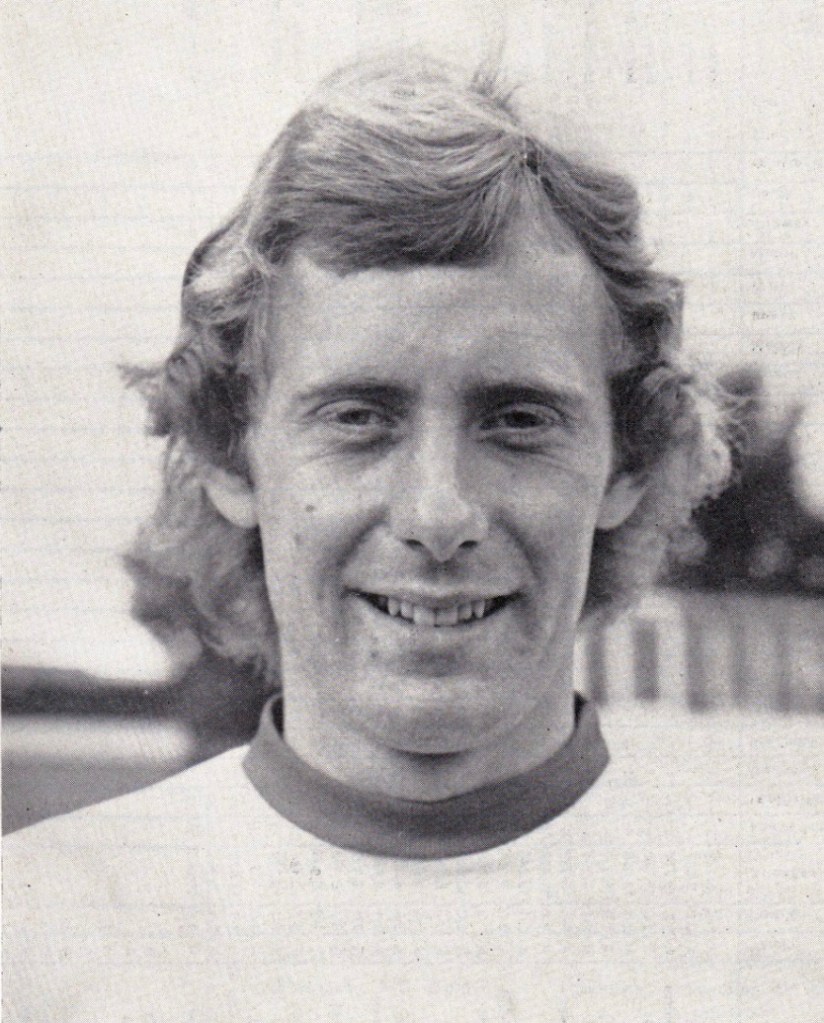
BARRY BUTLIN is one of that pantheon of players who’ve scored winning goals for the Albion against Crystal Palace.

He may sound like the alliterative title of a south Wales holiday camp, but this was a moustachioed striker who’d joined Third Division Brighton on loan from Second Division Nottingham Forest.

When former Albion boss Brian Clough couldn’t find a place for him in his Forest line-up in September 1975, previous managerial partner, Peter Taylor, going it alone at the Albion, was more than happy to add Butlin to his forward line options.

Butlin had started his career at Derby County on the periphery of Clough and Taylor’s squad at the Baseball Ground.

During his five years as a Rams player, he’d twice been out on loan to Notts County, scoring eight in 20 games in 1968-69 and another five in 10 appearances in the 1969-70 season.

While Derby won the First Division title in 1972, Butlin was sold for £50,000 to Luton Town, where he made his mark with an impressive 24 goals in 57 matches.
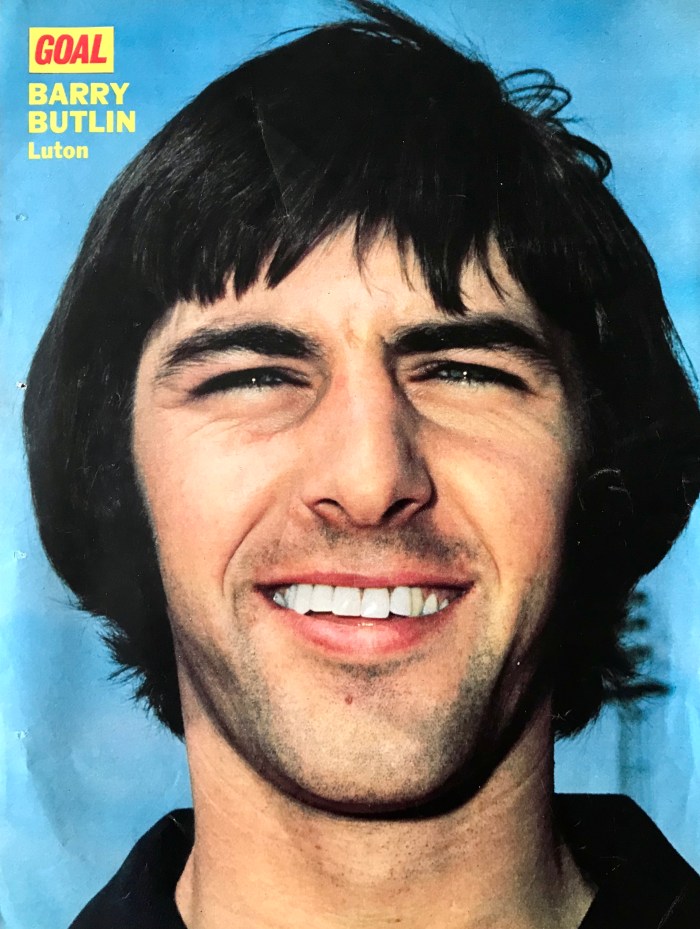
One of them came in a 1-1 draw at Elland Road during Clough’s ill-fated 44-day spell as Leeds manager, and, in a typically odd Clough way, in the post-match press conference he put his arm around Butlin and told the journalists: “This is who you want to write about after that wonderful goal. He deserves it.”

The following month, Butlin’s goalscoring exploits for the Hatters saw Forest boss Allan Brown take him to the City Ground for a fee of £120,000.

Imagine how he must have felt when his old Derby boss Clough arrived to take over at Forest in January 1975!
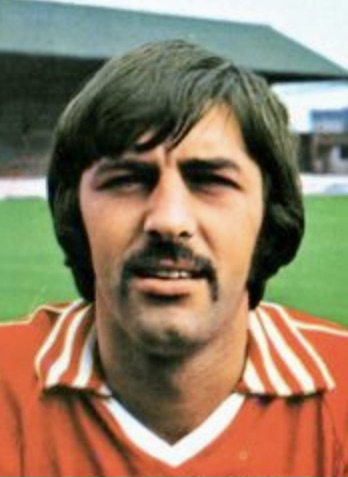
Nevertheless, the striker said all the right things publicly ahead of the manager’s first game, a third round FA Cup replay against Spurs, as recorded in Jonathan Wilson’s excellent book Brian Clough: Nobody Ever Says Thank You The Biography (Orion Books 2011).

“The lads all know that everybody is starting from scratch with everything to prove,” said Butlin. “Brian Clough has the ability to make an average player good and a good player great.”

Such a show of loyalty might have been understandable in the circumstances but Wilson also recalls Clough’s eccentric attitude towards players when they were injured. Butlin fractured his cheek in a training ground incident when at Derby.

“As he lay on the ground, Clough screamed at him to get up, insisting there was nothing wrong with him,” wrote Wilson. “Even after he’d been taken to hospital, Clough refused to believe anything was the matter.

“When Butlin’s wife turned up looking for her husband and mentioned an ‘accident’ to Clough, he snapped: ‘I’ll tell you when there’s been an accident’.”

Although Butlin feared the worst when Clough arrived at Forest, he wasn’t instantly discarded, finishing that season with seven goals in 33 games (plus one as a sub), while fellow forward Neil Martin netted 12 in 30 matches (plus two as a sub).
Butlin had a front row seat in this Forest line-up

But Clough clearly had other ideas about who he wanted in attack and brought in John O’Hare, who had done well for him at Derby, but less well during the ill-fated spell at Leeds, and introduced a young Tony Woodcock.

Intriguingly, that summer Martin was reunited with Taylor at Brighton and, within a matter of weeks, Butlin was also heading to the Albion, although his move was only temporary.

As it happened, Martin got off to a decent start alongside Fred Binney up front, scoring three times in the opening matches. But Taylor obviously considered Butlin offered a more potent threat; and it wasn’t long before fans saw why.

Butlin lets fly and scores the winner at Selhurst Park in 1975

In only his second game, in the third minute of Albion’s clash with Palace at Selhurst Park on 23 September 1975, Butlin got on the end of a Gerry Fell cross and hit an unstoppable shot that turned out to be the only goal of a pulsating game played in front of a crowd of 25,606 – a quite remarkable number for a third tier fixture.

“It still sticks with me, that one,” Butlin told Spencer Vignes, in his book Bloody Southerners (Biteback Publishing), which details the Clough-Taylor period at the Goldstone.

“It was the start of a cracking time down at Brighton,” said Butlin. “I only wish I could have gone on a little longer.”

Butlin soars to connect with this header

Butlin followed up that midweek winner at Palace with another goal on his home debut four days later when Chesterfield were beaten 3-0 (Peter O’Sullivan and Binney the other scorers).

Although not on the scoresheet, he also featured in two more wins (2-1 at Shrewsbury Town and 1-0 at home to Preston). However, in his absence Forest had gone through a mini slump, losing four out of five matches.

Butlin had taken his wife and children to Sussex with him, staying in the Courtlands Hotel in Hove. They all really liked the area, and the player had hopes of making the move a permanent one. Clough had other ideas.

“Brighton made me so welcome, but Forest weren’t doing very well at all,” Butlin told Vignes. “When I came to the end of my loan period, Brian got me straight back up to Forest and I had a real purple patch during which I played really well.”

In fact, he finished the season with eight goals from 38 games played as Forest finished eighth in the old Second Division.
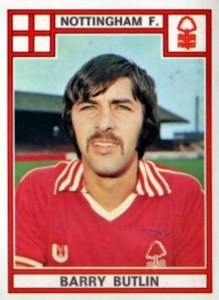
Collector’s item

“We had this team meeting before one game and Brian said: ‘If sending you down to Brighton gives you that impetus, then I’d better start sending some more players down there!’

“I’d seen the seafront and the wonderful countryside and thought it was the prelude to us staying there as a family, but it wasn’t to be. I was disappointed to say the least.”

Born in the south Derbyshire village of Rosliston, on 9 November 1949, Butlin attended Granville County Secondary School in Woodville from 1961 to 1966, and proudly records on his LinkedIn profile that he obtained six GCEs. He was also the school football captain.

He signed on for Derby in July 1967 but the likes of Richie Barker and Frank Wignall initially, then O’Hare and Kevin Hector, were ahead of him as the Rams progressed from the old Second Division into the First, before winning the title in 1972.

Chances for Butlin were few and far between. He made just four first team appearances in five years but those loan spells at Notts County at least demonstrated there was a player in the making, able to find the back of the net.

A knee injury prevented him making an immediate impact at Luton, after Harry Haslam had signed him, but he was the top scorer as Town gained promotion to the elite in second place in 1973-74.

The Hatters assured promotion by securing a 1-1 draw at West Brom in the penultimate game of the season, and midfield player Alan West relived the moment in an interview with theleaguepaper.com.

“I remember Barry Butlin, who was magnificent in the old centre forward’s role that season, got the vital goal,” he said. “I played in midfield with Peter Anderson and Jimmy Ryan. Peter was a great player and finished that season as our second highest scorer behind Barry.”

Just before Christmas in 2014, Butlin and West were among several former players who got together for a 40th anniversary celebration dinner. Also there were John Faulkner, Gordon Hindson, Alan Garner, Jimmy Husband, John Ryan, Jimmy Ryan, Don Shanks and Ken Goodeve.

Luton history website hattersheritage.co.uk remembers Butlin as “brilliant in the air and no slouch on the ground” and mentions the shock fans felt when he was sold to Forest, particularly as Town were desperate for goals at the time.

In the 1976-77 season, Butlin once more went out on loan, this time to Reading, and the heave-ho from Forest he had long expected finally came when Peter Withe was brought in.

Butlin was sold to Peterborough United and in two seasons with the Posh he scored 14 goals in 77 matches. His teammates at London Road included former Forest colleagues Jim Barron and Peter Hindley as well as former Albion midfielder Billy McEwan.

United just missed out on promotion from the Third Division, finishing fourth in 1977-78. It was a disastrously different second season, by which time another former Albion player, Lammie Robertson had joined them – when Posh were relegated to Division Four.

Butlin’s final club was Sheffield United, as they faced their first season outside the top two divisions. Signed by his former Luton boss Harry Haslam, Butlin scored 12 times in 53 matches for the Blades, but by the end of 1980-81 season, after Martin Peters had taken over, United were relegated to the fourth tier for the first time in their history.

Butlin retired and spent three decades working as a financial adviser and mortgage manager in Sherwood, Nottingham.

He lived in Derby and between July 2000 and October 2010 was secretary and treasurer of the Derby County Former Players’ Association.

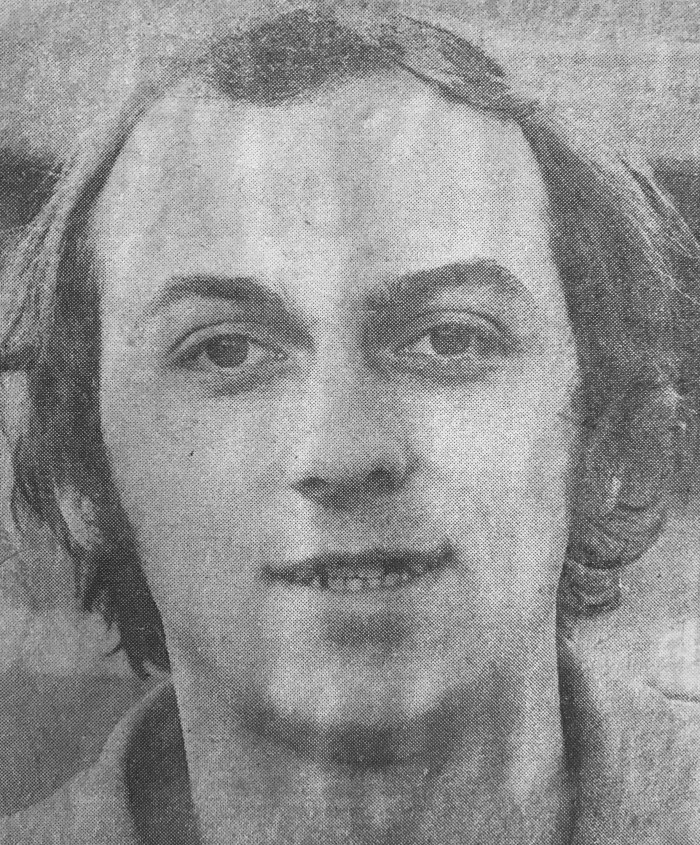
First signing Goodeve was bad day for Clough and Taylor

BRIAN CLOUGH and Peter Taylor were shrewd operators in the transfer market but their first signing for Brighton was a flop.

Possibly panicked into making changes to a side shipping goals at an alarming rate, their spending of £20,000 on Ken Goodeve was money wasted.

The former Manchester United youth captain managed only six appearances and left the club seven months later.

In the autumn of 1973, fresh with a transfer fund previous manager Pat Saward could only have dreamt of, the former Derby County managerial duo bought Goodeve from Luton Town, where he’d struggled for games after leaving Old Trafford.

Clough and Taylor had been less than impressed with the squad they’d inherited at the Goldstone Ground – particularly after witnessing successive capitulations to Bristol Rovers (8-2) and non-league Walton & Hersham (4-0).

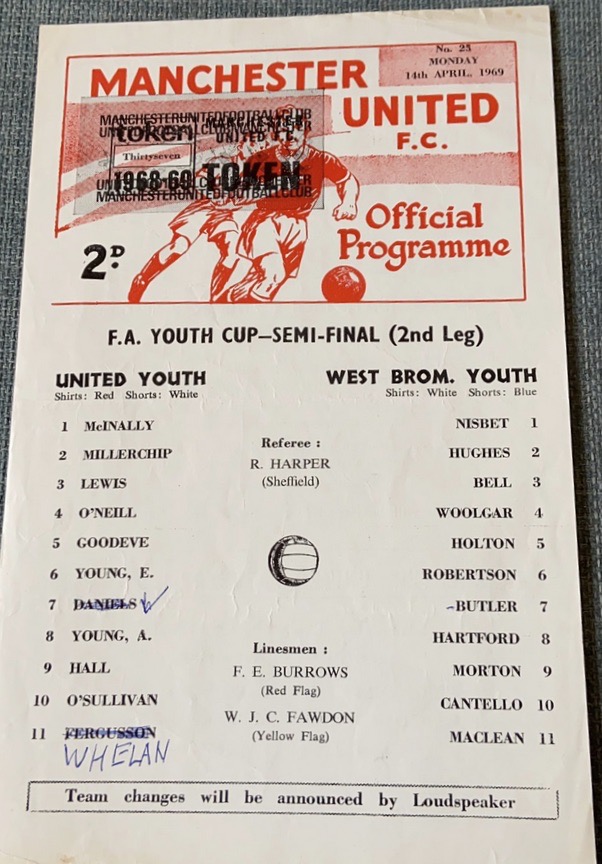
As they sought to shape the side with their own players, the first arrival through the door was Goodeve, who would at least have found one familiar face in the dressing room. He and Peter O’Sullivan played in the same Manchester United youth and reserve sides (see programme line-ups below).

In April 1969, they had reached the FA Youth Cup semi-finals where West Brom beat them 5-3 on aggregate, winning 3-2 at home in the first leg and 2-1 at Old Trafford, when it was reported a crowd of 20,000 were watching.

Goodeve and O’Sullivan played in the same United reserve side as the likes of Jimmy Rimmer in goal, John Fitzpatrick, Nobby Stiles and Don Givens.

In April 1970, Goodeve was one of four fringe United players – Givens, Jimmy Ryan and Peter Woods were the others – who were sold to Luton for a combined total of £35,000.

In two seasons at Kenilworth Road, Goodeve captained the Town reserve side but managed only nine appearances, plus six as a sub for the first team.

He was still only 23 when he joined the Albion. He was handed the no.6 shirt alongside Norman Gall for the away game at Tranmere Rovers on 8 December, along with fellow debutant Peter Grummitt, initially on loan from Sheffield Wednesday, in goal.

But neither new boy could halt the slump, as Albion caved in to a 4-1 defeat. Left-back George Ley didn’t play another game for the club after that game at Prenton Park.

Young Steve Piper was drafted in to play alongside Gall in the following match – a 1-0 defeat at Watford – and Goodeve was handed Eddie Spearritt’s no.4 shirt instead.

He retained his place in the side for the Boxing Day clash with Aldershot (when Burnley youngsters Harry Wilson and Ronnie Welch made their debuts) but this time in place of Ronnie Howell in midfield. Again, Albion lost 1-0.

Clough and Taylor continued to chop and change and Goodeve was dropped to the bench for the next four matches, only getting a brief look-in on the action when going on for Welch in the 2-1 home win over Rochdale on 19 January.

John Vinicombe, Albion writer for the Evening Argus, was not impressed. “The chief disappointment so far has been the failure of Ken Goodeve to recapture his Luton form. Goodeve, who started in the back four with Albion at Tranmere, has subsequently appeared in midfield and so far not made his mark,” he wrote.

Goodeve found himself playing in the reserves with a growing band of former first-teamers and, it wasn’t until 25 March that he got another sniff of first team action.

That was when he stood in at right-back for Paul Fuschillo away to Wrexham (0-1) and five days later at York City (0-3). But that was it. After five starts and one appearance as a sub, he didn’t play for the Albion again.

In the close season, he was offloaded to Watford for half the amount Albion had forked out seven months earlier.

At last, at Vicarage Road, he got plenty of playing time under his former Luton teammate, Mike Keen, who had taken over as Hornets manager.

Indeed, in only the second month of the new season, Goodeve was back at the Goldstone in the Watford side beaten 2-0 courtesy of goals by Ricky Marlowe and Welch.

Goodeve in action for Watford against Albion’s Fred Binney

Born in Manchester on 3 September 1950, Goodeve joined United on schoolboy terms in October 1965 and was signed up as an apprentice the following year. In September 1967, he signed a professional contract at Old Trafford.

By the time he departed Old Trafford in April 1970, he’d not managed to make the step up to the United first team.

At Luton, his teammates included John Moore, who’d previously been on loan with Brighton, Barry Butlin, who played five games on loan at Brighton in 1975, and Don Shanks, who was a Mike Bailey signing in 1981.

After the sparse playing time with Brighton, Goodeve played 69 consecutive games for Watford between 1974 and 1976 but a groin strain ended his professional career.

He was able to pursue a non-league career at Bedford Town for five years and was in their 1980-81 side that won the Southern League Cup.

He subsequently played for a number of non-league outfits in the same region, as detailed in this Watford FC archive and ended up as player-manager of Bedfordshire side Wootton Blue Cross between 1993 and 1997.

According to the Hatters Heritage website, Goodeve continued to play football until he was 47 before becoming customer care manager for Galliard Homes in London, commuting from Wootton every day.

Left back Harry Wilson “something of a fire-eater”

BRIGHTON boss Brian Clough turned up at Burnley to capture the signings of two of their fringe first team players – and ended up having pie and chips with the groundsman!

When Clough arrived at Turf Moor, he found manager Jimmy Adamson, chairman Bob Lord and secretary Albert Maddox were nowhere in sight, it being lunchtime.

In their absence, as recounted to respected writer Dave Thomas, groundsman Roy Oldfield made the famous visitor a cup of tea, popped to a nearby chippy to get them both pie and chips and chatted all things football until the office re-opened after lunch.

Although Clough hadn’t got quite what he expected on arrival, his journey did bear fruit. In exchange for £70,000, he secured the services of left-back Harry Wilson, a 20-year-old who had made 12 appearances for the Clarets, and midfielder Ronnie Welch, 21, who had played one game.

At the time, Clough was desperately trying to bring in new recruits to a beleaguered Brighton side that he and sidekick Peter Taylor had taken on in October 1973, a period covered in detail in a recent book, Bloody Southerners, by author and journalist Spencer Vignes.

The man who only the season before had led unfashionable Derby County to the First Division Championship, couldn’t quite believe what he had inherited at Third Division Albion.

The players seemed bewildered by what the new celebrity boss expected of them.

Heavy defeats – 4-0 to non-league Walton and Hersham in the FA Cup; 8-2 at home to Bristol Rovers and 4-1 away to Tranmere Rovers in the league – reflected the disarray.

Clough and Taylor weren’t slow in pointing the finger. Their only solution was to find replacements – and quickly.

Former Manchester United reserve Ken Goodeve was first to arrive, from Luton Town, although he failed to impress and made only a handful of appearances before joining Watford at the end of the season.

Goalkeeper Brian Powney was axed in favour of former England under 23 international, Peter Grummitt, initially on loan from Sheffield Wednesday.

Experienced left-back George Ley never played for the Albion again after the defeat at Tranmere, while utility man and former captain, Eddie Spearritt, also lost his place (although he eventually forced his way back into the side briefly).

Lammie Robertson, who knew the pair from his early days at Burnley, was asked to introduce them to their new teammates in the dressing room before an away game at Watford (they’d not been signed in time to play).

Robertson told Spencer Vignes in a matchday programme interview how Wilson was sporting a rather loud checked suit at the time and, in his own inimitable style, Clough boomed out: “Flipping hell, I never want to see that suit again.”

Needless to say the players laughed out loud, only for Clough to say: “What the hell are you all laughing at? They’ll be in the team next week.” And sure enough, they were.

Wilson and Welch made their debuts against Aldershot in a home game on Boxing Day when a crowd of 14,769 saw Albion slump to their fifth successive defeat, although at least the deficit this time was only 1-0.

A win finally came in the next game, a 1-0 success at home to Plymouth Argyle – Ken Beamish scoring the solitary goal.

In a 2010 matchday programme article, Wilson said: “I really didn’t want to go to Brighton. No disrespect but I loved it up at Burnley.

“The people there had been so friendly and helpful when I arrived from the North East so it broke my heart to leave. That said, I thoroughly enjoyed my time at Brighton and met some fantastic people, so, looking back now, I’m glad that Jimmy Adamson let me go.”

In the Evening Argus, reporter John Vinicombe purred about the impact of the new recruits from Burnley, saying Wilson “is looking something of a fire-eater. He has a rare zest for the game and relishes the close, physical contact that is synonymous with his position.

“He knows how to destroy and create, and does both in a manner befitting a five-year background at the academy of fine footballing arts (editor’s note: at the time, Burnley had a reputation for producing highly-talented young players).

“His colleague from Turf Moor, Ronnie Welch, is not so completely extrovert, but is no less involved in midfield, and has a fine turn of speed. He made one mistake through trying to play the ball instead of hoofing it away, but this can only be described as a ‘good’ fault.”

Further signings followed and the ship was steadied. Wilson kept the no.3 shirt through to the end of the season. But Welch made only 36 appearances for Albion before Taylor, by then under his own steam, traded in him and fellow midfielder Billy McEwan as a makeweight in the transfer that brought full-back Ken Tiler to the Goldstone from Chesterfield.

Wilson, meanwhile, became a mainstay in Albion’s left-back spot for three years, including being ever-present in the 1975-76 season.

5 HW action v MillwallEver-present Wilson in action against Millwall at The Den

Suited for England!

Born in Hetton-le-Hole, near Durham, on 29 November 1953, Wilson played for Durham County Schools and made four appearances for England schoolboys (under 15s) in the 1968-69 season. He was taken on as an apprentice at Burnley before signing professional forms in December 1970.

In 1971, he earned an England Youth cap going on as a sub for Coventry’s Alan Dugdale in a 3-2 defeat against Spain in Pamplona. Don Shanks also played in that game.

He made his first-team debut at home to Chelsea on 26 April 1971 and the last of his 12 appearances for the Clarets was on 3 April 1972: away to Sunderland.

Young apprentice Wilson with experienced pros John Angus and Colin Waldron

He was part of Alan Mullery’s Third Division promotion-winning squad in 1976-77, although he was restricted to 22 appearances. The arrival of the experienced Chris Cattlin meant he was no longer first choice left-back, although in several games they both played – the versatile Cattlin being equally at home as right-back.

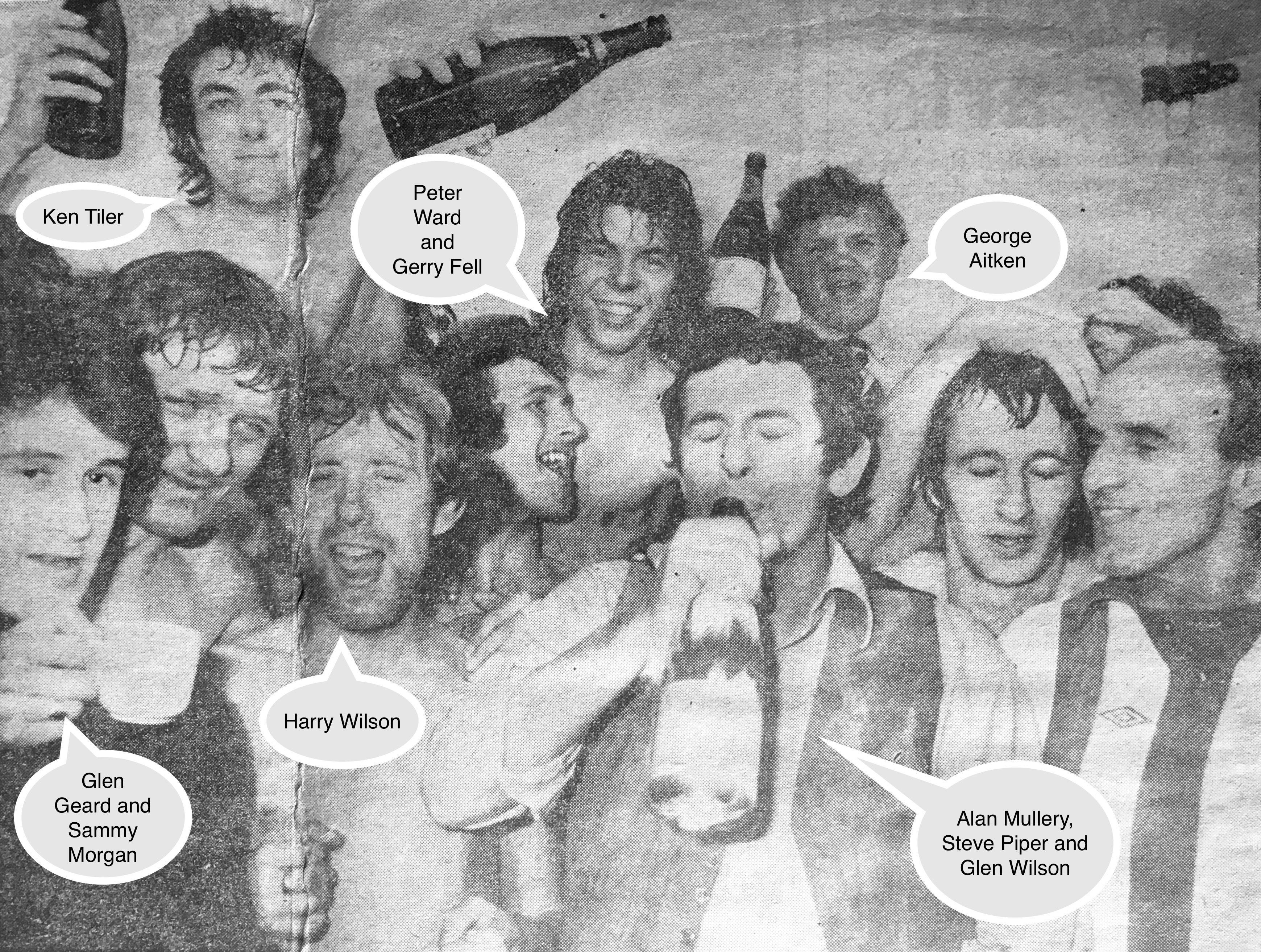
6 HW promotionA bare-chested Wilson was pictured (above) in the Albion dressing room alongside Mullery enjoying the celebratory champagne after promotion was clinched courtesy of a 3-2 win over Sheffield Wednesday on 3 May 1977. But that game was his Goldstone swansong.

He’d made a total of 146 appearances for the Albion – as well as chipping in with four goals – but when Mullery signed Mark Lawrenson and Gary Williams from Preston that summer, Wilson went in the opposite direction along with Graham Cross.

Only six months after arriving at Preston, Wilson was badly injured in a road accident after his car skidded on black ice and collided with a transit van. He suffered a punctured lung and damage to his knees. Doctors told him he wouldn’t play again, but he proved them wrong and ended up spending three years at Preston, playing 42 games.

“I suppose I was lucky to be alive,” he said in an Albion matchday programme article. “I lost a couple of yards of pace, but then again I ws never exactly the quickest of players.”

With his best days behind him, he moved back to his native north-east in 1980 to play for Darlington, making 85 appearances in three years.

He stayed in the north east in 1983, switching to Hartlepool for a season, but only played 16 times for them before dropping out of the league to play for Crook Town.

According to The Football League Paper, Wilson stayed in the game as manager of Seaham Red Star and, in 1988-89, Whitby Town.

He then worked as a community officer for Sunderland before joining the coaching staff at Burnley in the 1990s.

When Chris Waddle took over as manager, Wilson was sacked but he took the club to an industrial tribunal, which found in his favour.

He later worked for his long-term friend, Stan Ternent, at Bury, and as a monitor for the Football League, a job that saw him checking that the right procedures were being followed by the youth development set-ups of clubs in the north-west.

Wilson was in the news in 2007 when Ternent appeared at Lancaster Crown Court accused of assaulting Wilson’s son, Greg, on the steps of Burnley Cricket Club (a venue familiar to visiting supporters as a popular watering hole before games at the neighbouring football ground).

Greg Wilson required hospital treatment for a deep cut above his left eyebrow and needed nine stitches in his forehead.

Ternent said he had accidentally clashed heads, denied causing actually bodily harm, and was cleared by a jury.

4 HW colour laugh w WardWilson in an Albion line-up alongside Peter Ward
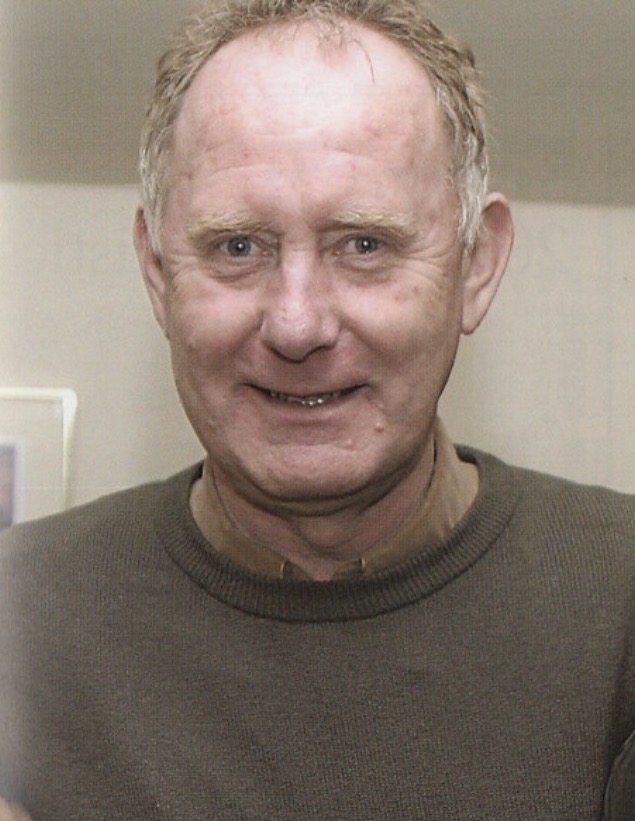
Wilson pictured in 2010