Seething Knight dumped O’Callaghan for telling him how to run the Albion

CORK-BORN George O’Callaghan had something of a yo-yo footballing career after bursting onto the professional scene as a talented teenager.

Eyed by Arsenal and Spurs when he was in his formative years at Port Vale (then in the Championship), he turned to drink when ex-Albion captain and manager Brian Horton dropped him from the Vale first team.

Although the tall midfielder worked his way back into contention, he returned home to Ireland to rebuild his career before making several other attempts to succeed in the English game.

Over the course of five years, he was an influential cog in Cork’s League of Ireland side, the highlight coming with a championship win in 2005 when he scored eleven goals from midfield and was voted League Player of the Season.

He survived meningitis in 2006 just a handful of months before another Championship side, Ipswich Town, gave him another opportunity to make it in England but he struggled to hold down a place at Portman Road.

After only 13 appearances, the Tractor Boys were prepared to offload him to third tier Brighton. A deal was agreed in August 2007 but he made the move on loan rather than permanently because he still thought he could make it in Suffolk.

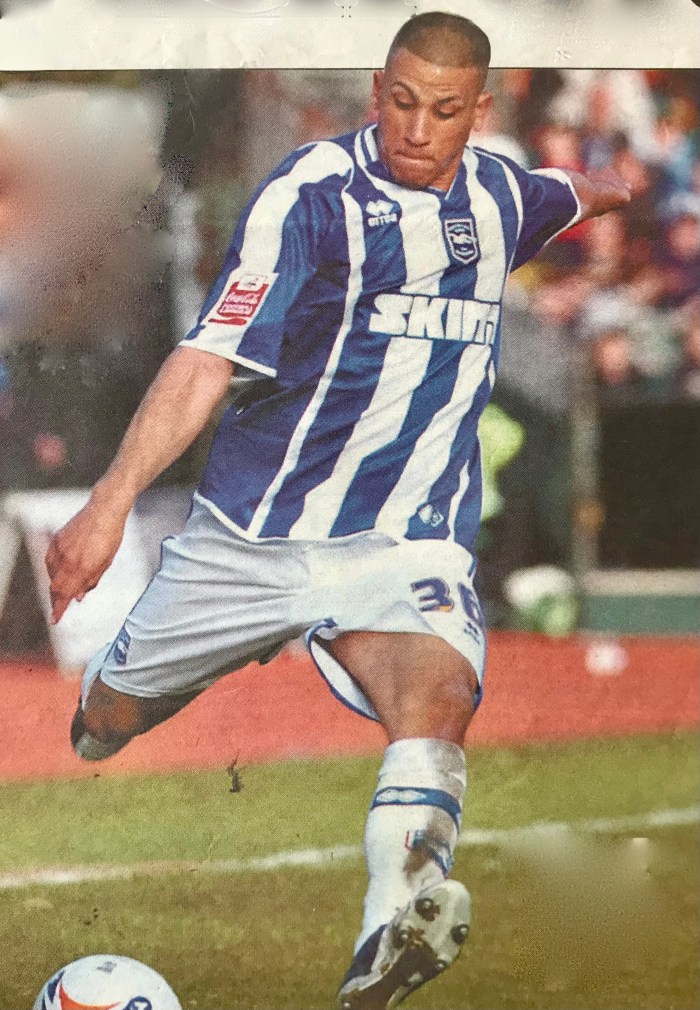
By then 28, the player brought experience and creativity to Dean Wilkins’ largely young side, slotting in effectively in the centre of Albion’s midfield alongside Dean Hammond, making 16 starts and one appearance off the bench.

But his Irish gift of the gab brought it all to a messy end. He publicly criticised chairman Dick Knight’s handling of contract negotiations in an explosive article in The Argus and didn’t play for the Seagulls again.

The Irishman told reporter Andy Naylor he thought the team was in danger of falling apart because chairman Knight had been too slow to sort out contracts and loans.

Knight countered: “We have given him the chance to shine and show his talents. It’s not George O’Callaghan’s business to tell the club what we should be doing.”

The midfielder spoke out after Albion capitulated 3-0 at Millwall on Boxing Day. He told Naylor: “There are a lot of lads who are very important to this team that don’t know if they are coming or going and I think it’s about time the club got a grip on it and sorted it out, because it has dragged on for too long and I feel it is starting to affect the players.

“I just don’t think it is right and it’s something the club needs to look at. It used to happen at Cork City when I was there and we lost a lot of good players. We lost Kevin Doyle and Shane Long for peanuts over contracts not being sorted out early and quickly.

“It makes you angry as a player. I can cope with it, because I am a lot older than the other lads, but the young lads are really upset and it’s not right.”

O’Callaghan’s version of events the club would have wanted to keep to themselves plainly differed from Knight’s while Wilkins was stuck in the middle.

“I know the manager tries his best behind the scenes,” said O’Callaghan. “He is fantastic. I think he works with a very small budget. It must be more frustrating for him, because he has built a team and it could easily fall apart now.

No holding back where O’Callaghan was concerned

“Things should have been sorted out a lot quicker. It has been a big thing in the squad in the last few weeks. I’ve mentioned it and the club need to sort it out now.”

The Irishman said he had encountered something similar at Ipswich the previous season, pointing out players just needed to know where they stood.

“I don’t want to stay and then see our best lads go, like Hammo,” he reasoned. “If we want to make that push for the play-offs and get back into the Championship it needs to be sorted.”

Knight was in no mood to take that sort of broadside from a loan player and told the reporter: “The team’s performance was absolutely woeful. I think certain players should be looking at themselves before trying to deflect criticism elsewhere. I thought it was a disgrace.

“George O’Callaghan is totally out of order. I would suggest he is trying to deflect attention away from his own performance, which was frankly poor, and he wasn’t the only one.

“Young players within the club are dealt with contract wise as and when the time is right.”

Knight maintained that he’d already agreed with Ipswich that both O’Callaghan and fellow Town loanee Matt Richards could extend their loans until the end of the season but neither player wanted to commit to it until they’d explored other options.

Unsurprisingly, O’Callaghan’s stay with the Seagulls came to an abrupt end and he returned to Portman Road.

Sidestepping the spat with Knight, O’Callaghan reckoned his return to Ipswich was his decision, telling The Argus: “I enjoyed playing regularly at Brighton but I spoke with the gaffer and decided it is right to try again at Ipswich and try to get first team action.

“They are a good bunch of lads at Brighton and I enjoyed playing with them so I hope things work out for them.”

When a month later there was no look-in happening with the Tractor Boys, he returned to Ireland once again to play for his old club, Cork City. It was part of a familiar pattern.
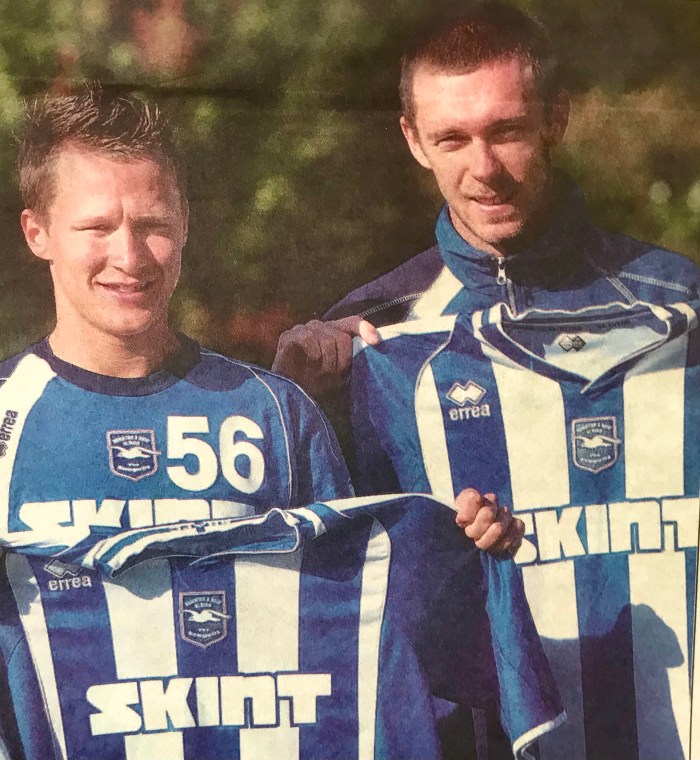
Deadline day signings David Martot and George O’Callaghan

O’Callaghan had joined the Albion on loan (the same day David Martot signed a similar arrangement from Le Havre) on August transfer deadline day having rejected a permanent move earlier that month (the clubs had agreed a £60,000 deal plus £15,000 based on appearances).

The player said at the time: “It would be a shame to leave Ipswich because the supporters have been brilliant to me, even though they never saw enough of me, and all the lads are fantastic, but I need to be playing regular football.”

Town manager Jim Magilton praised O’Callaghan’s ability and attitude and empathised with his frustration at not getting a run in the side. He said: “I don’t want to lose George but I wouldn’t stand in his way. He has been great since he has been here. He is very popular in the dressing room and he has done very well.

Tractor Boy O’Callaghan

“But he is 28 years of age and needs to be playing games. I have been there, so totally understand how frustrating it can be. We will do anything we can to help him.

“I have absolutely no problems with George. He has been top class since he came here. His attitude is first-class in training and in games.”

O’Callaghan had impressed Knight in a reserves match when Ipswich beat the Seagulls’ second string.

When O’Callaghan finally agreed the temporary move, Albion also wanted his Town teammate Richards on loan, but he too prevaricated, only to change his mind the following month. It was the first of three loan spells with the Albion. Brighton also wanted a third Ipswich player, injury-prone Dean Bowditch, who had briefly been on loan the previous season, and he eventually returned for a month in 2008.

Born in Cork on 5 September 1979, O’Callaghan left Ireland as a teenager to pursue his football dream and in a March 2020 podcast with the Irish Examiner, he talked about his early days at Port Vale when he was regarded as one of the hottest properties in football.

“Arsenal came in for me when I was 18,” he said. “I was waiting outside the manager John Rudge’s office and Pat Rice, who was Arsene Wenge’s assistant at the time, came out and said: ‘George, we can’t get you this time, we’ll get you next time,’.”

When the youngster protested to Rudge, he was told Arsenal had only offered £1m for him and Vale wanted £2m. O’Callaghan continued to progress in Vale’s Championship team but when Rudge was replaced by Horton, he was demoted back to the youth team.

In another podcast, A Footballer’s Life, O’Callaghan admitted to Graham Cummins that he turned to drink as his promising career stalled. “You’re responsible for your own actions so it’s ultimately your own fault. But nobody looked out for me or had my back at the club. Nobody caught me and said, ‘George, what’s going on, you’re not yourself’.

“Those days, the clubs didn’t care, it was old school, you were put out to do the job and if you didn’t you were replaced.

“You never asked anyone for help in those days. I kind of went into meltdown. Everything unravelled, I didn’t know what I was doing.”

When he eventually got back in the first team picture, he said Arsenal’s north London rivals Spurs then showed an interest in him. “David Pleat tried to sign me for Tottenham. But Brian Horton said: ‘You’re doing really well,’ and offered me a two-year deal and doubled my money.”

He asked Rudge’s opinion about the situation and when told he should stay at Vale because he’d struggle to get games for Spurs, he stayed put. “I took his advice and signed the contract. Within about 14 months I was finished, sent home.

“It was a massive mistake, a big, big mistake. I was too comfortable in the situation I was in. I probably didn’t have the guts to go ahead with it. I loved playing for Port Vale but I should have pushed for Arsenal and Tottenham. And then you can always go out on loan if it doesn’t work out.”

One of O’Callaghan’s early matches for Albion was against his old club and unsurprisingly he was a natural interviewee before the game. “It is a very special club to me because I started off my career there when I was only 15,” he told The Argus.

The Irishman scored four goals in 22 league starts plus 12 sub appearances for Vale and felt he probably had a point to prove coming up against them (Albion won 1-0 with a goal from Alex Revell).

“I never showed Port Vale fans what I can do,” he said. “I took a few wrong roads when I was a kid and it has taken me a while to get back to where I am now.

“It will be nice to put on a good performance and show them what they have missed; the player I have turned into. I never fulfilled my potential there.

“I started off doing well there as a kid but I didn’t really have the right guidance and it all went pear-shaped. As soon as John Rudge left as manager and Brian Horton came in, my chances were limited. I think that is where it all went wrong.

“Obviously, I wasn’t his type of footballer. People said he was a good footballer, but he wanted physical lads.

“Maybe at the time I wasn’t physical enough and he didn’t fancy me. I don’t blame him in any way because at the end of the day it is all down to yourself and how you look after yourself.”

He added: “I had so many knocks there that it took the fire out of me. I had to go back to Cork to get that fire back into me and build my career again.

“It was a big learning curve in my life. I lost my career in English football for a while and had to battle hard to get back.”

The player’s topsy-turvy career continued back at Cork City before he had another go in England, spending eight months at Tranmere Rovers. Once again he returned to Ireland, this time to play for Dundalk, but the lure of the English game beckoned again.

O’Callaghan linked up with Yeovil Town in the summer of 2009 and played in three pre-season friendlies. In the opening months of the season, he made 15 appearances (including six from the bench) but found it difficult to break into the team past the partnership of Jean-Paul Kalala and Shaun MacDonald.

Next stop, in December that year, was Waterford but before long he was back at Cork City once again. Brentford took him on a two-week trial but nothing came of it and instead he went to then Conference side Cambridge United but didn’t feature.

The wandering Irishman at one point tied his luck with Brunei side Duli Pengiran Muda Mahkota but he got into trouble for failing to bow to the Crown Prince.

His old Brighton and Ipswich teammate Nicky Forster took him on at Dover Athletic but he only played once for the Conference South team, and he announced his retirement on Christmas Eve 2012.

He briefly managed Sabah in the Malaysia Premier League in 2014 but he struggled to deal with El Hadji Diouf and was sacked in January 2015 when he started missing training sessions.

Four years after playing what he thought was his last game, he turned out for junior Cork club Rockmount.

After packing up playing, O’Callaghan became an agent and spent a year as a business development manager for William Hill. He was a general manager for gym chain Anytime Fitness for two years and later co-founded agency TEN Sports Management.
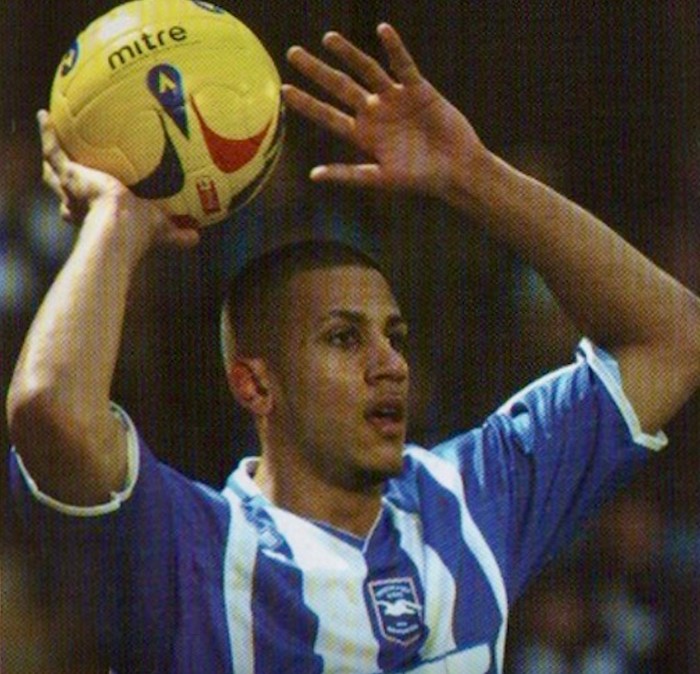
O’Cearuill treated cruel on strange football odyssey

O’Cearuill given a run of games at Brighton

TEENAGE Arsenal defender Joe O’Cearuill certainly had a baptism of fire when he moved to the Albion on loan in early 2007.

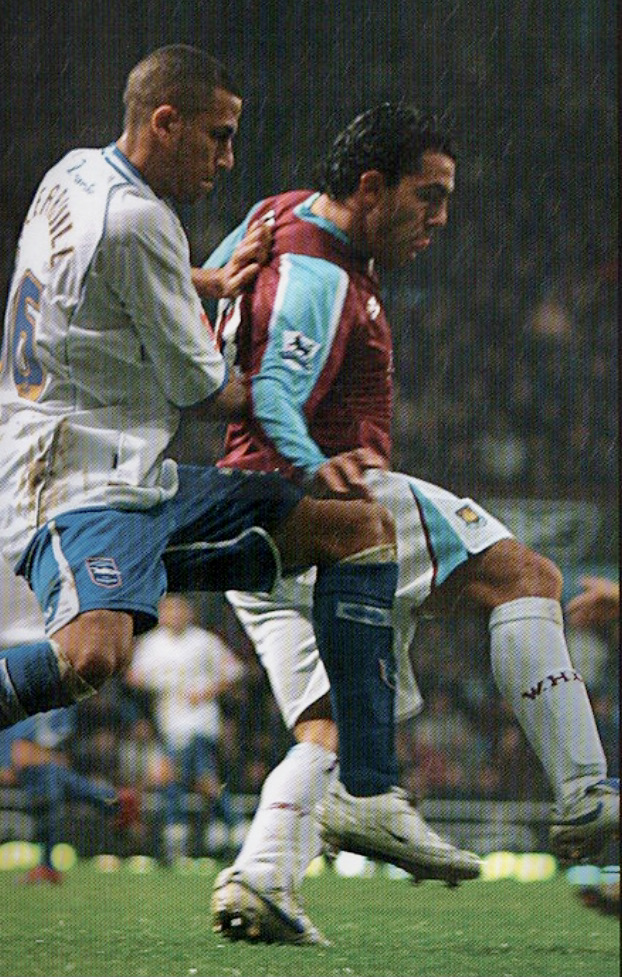
The youngster was played out of position at right-back in a third round FA Cup tie away to West Ham.

The match at the old Boleyn Ground on 6 January 2007 pitched the Premier League Hammers under Alan Curbishley up against his old Seagulls teammate Dean Wilkins, who had taken over the reigns at League One Brighton just four months previously.

West Ham, FA Cup finalists the previous season, were just too good for the mainly young lower league side on the day and, with big-money Argentine striker Carlos Tevez up front, comfortably won the tie 3-0 (Mark Noble, Carlton Cole and Haydn Mullins the scorers).

Albion put up a reasonable fight in a goalless first half although O’Cearuill was fortunate not to concede a penalty when he put in a clumsy challenge on debutant Luis Boa Morte which referee Mark Halsey chose not to penalise.

The second half was only four minutes old when Noble scored his first ever West Ham goal, Cole added a second nine minutes later before being replaced by former Albion favourite Bobby Zamora, and Mullins struck in injury time to round off the win.

Wilkins had turned to the Arsenal youngster when Jack Hinshelwood’s dad Adam suffered a cruciate ligament injury in a Boxing Day match against Yeovil that ruled him out for nine months.

O’Cearuill’s stay on the south coast lasted three months during which he made seven starts and three sub appearances. His final Seagulls match came in a 1-1 home draw against Scunthorpe United.

The Argus reckoned his form was “patchy” and at one point he was dropped to the bench “after a below-par performance” in defeat at Brentford.

Only on a couple of occasions did he get the chance to play in his favoured centre back position; those positions were occupied most of the time by Joel Lynch and Guy Butters.

But after he’d gone on for the injured Lynch in the centre away to Gillingham, he helped the visitors to a 1-0 win and Wilkins said: “I thought he fitted in well. He went into the game at a difficult period. There were a lot of high balls to deal with, which he coped with well.”

That first half of 2007 was pretty much the highlight of his career because on an end of season tour of America he won two full caps for the Republic of Ireland.

Although born in Edmonton on 9 February 1987, he elected to represent the Republic of Ireland and having played for them at under-17, under-19 and under-21 level,

A senior cap for the Republic of Ireland

His first senior cap came when he was one of six substitutes made by manager Steve Staunton in a 1-1 draw against Ecuador at the Giants Stadium, New Jersey, on 23 May 2007.

He replaced Stephen O’Halloran in the 73rd minute and managed to pick up a yellow card in his short time on the pitch. Kevin Doyle headed the Irish equaliser a minute before half time.

O’Cearuill then started at right-back three days later in the Republic’s 1-1 draw with Bolivia in Boston. Shane Long scored his first goal for his country and in the second half former Albion goalkeeper Wayne Henderson took over in goal from Barnsley’s Nick Colgan. The side was captained by Kevin Kilbane.

Curiously, O’Cearuill had been let go by both Leyton Orient and Watford before he was given a chance by Arsenal. He played 27 youth team games for the Os in 2004-05 but was released in August 2005.

Watford picked him up and he played for their youth and reserve teams for a season, but again found himself released. Then, in the summer of 2006, after impressing Arsenal’s reserve team coach Neil Banfield in a trial game against Watford, he joined the Gunners.

He made his debut in a goalless pre-season friendly at Barnet on 15 July and a week later played in half of Dennis Bergkamp’s testimonial against Ajax of Amsterdam.

On a tour of Austria, he played another half as Arsenal beat Mattersburg 2-1 and got 30 minutes as a sub when the Gunners trounced Schwadorf 8-1.

The closest he came to competitive first team action was when he was on the bench for Arsenal’s Carling Cup match away to West Bromwich Albion on October 24, 2006, although he did not get on in the 2-0 win in which Jeremie Aliadiere scored both the goals.

Released by Arsenal, O’Cearuill’s career then drifted from one non-league club to another: Barnet, St Patrick’s Athletic (Dublin), Harlow Town, Borehamwood, Forest Green Rovers (pictured left), Bishop’s Stortford, Tooting & Mitcham United, Haringey Borough, Enfield and Heybridge Swifts.

When he sought to resurrect his career with Conference Premier side Dover Athletic in 2015, he was suitably phlegmatic in an interview with Kent Online.

“It’s certainly been a journey,” he said. “From getting everything on a plate at Arsenal and then for Ireland, to then be washing your own kit and boots.

“I took being a professional for granted and I wasn’t really ready for it – I was too young to take it all in.

“When Arsenal released me, I discovered there was a lot more to life than playing football and I lost the motivation to play at a decent level. I even gave the game up for a while.

“I was then happy to play wherever and go with the flow. I had a couple of great years playing with my mates at Haringey Borough. But that’s all in the past now. The days for playing for fun are behind me.

“I am ready for the next chapter in my life because I’ve got the hunger and desire back to play the game at a level I know I am capable of.”

Released by Dover at the end of the season, former Albion striker Nicky Forster, by then manager of Staines Town, took him on for the Isthmian League Premier Division team.

“We are delighted to have secured the services of Joe this season, he has a great attitude for success and will sit well alongside Darren Purse at the back,” he told the club website.

His last port of call was back at Haringey in the summer of 2016 and he retired from playing in October that year.

In his LinkedIn profile, O’Cearuill describes himself as a senior manager for The Elms Sport in Schools programme.

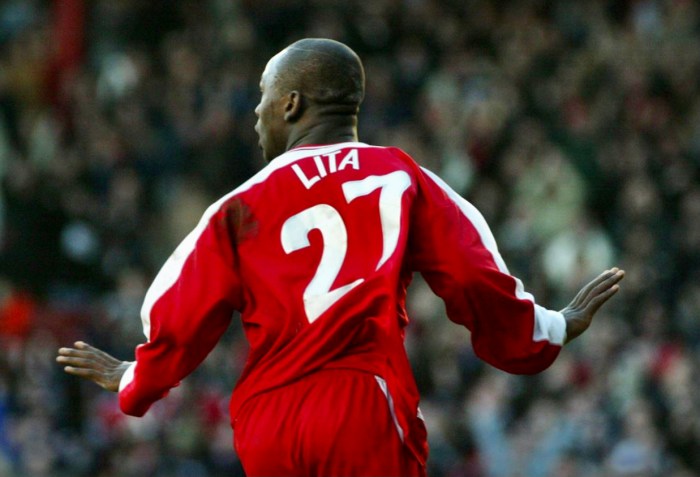
Did Albion fans only get to see half a Lita?

PROLIFIC second tier goalscorer Leroy Lita was a Gareth Southgate free transfer signing for Middlesbrough where he scored 20 in 82 games.

Two years after Boro cashed in and sold him for £1.75m to newly promoted Premier League side Swansea City, Lita joined an injury-hit Brighton side three months into Oscar Garcia’s reign.

Goals had been harder to come by for Lita after Brendan Rodgers had signed him for the Swans and he was sent out on loan, spending time back in the Championship with Birmingham City and Sheffield Wednesday.

It was a familiar story for Lita who had been Reading’s first £1m player when Steve Coppell signed him from Bristol City in 2005.

He netted a goal every three games for the Royals, but towards the end of his four years at the Madejski Stadium, he’d gone on loan to Charlton Athletic and Norwich City.

By the autumn of 2013, Lita had become something of a footballing nomad, fed up with a lack of first team action under Michael Laudrup.

With Albion’s leading striker Leo Ulloa out for two months with a broken foot, and Craig Mackail-Smith and Will Hoskins also sidelined, Garcia brought the diminutive striker to Brighton on a three-month loan arrangement.

“He is strong, fast and direct, and he has shown he can score goals in the Championship,” Garcia told the club website. “He offers us something different going forward.”

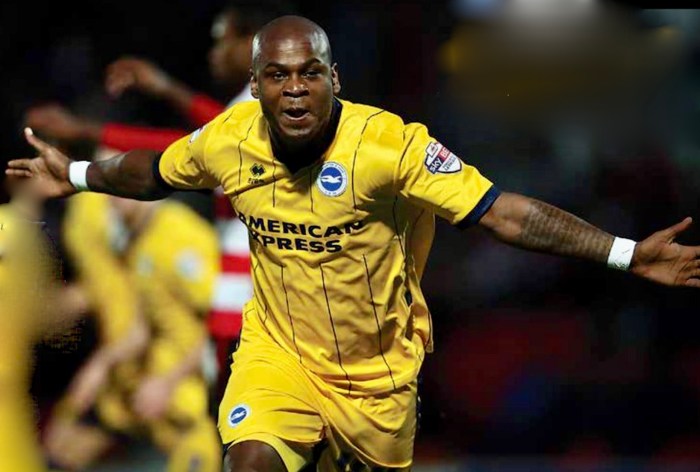
I can remember being at the Keepmoat Stadium, Doncaster, when he scored his only goal for the club two minutes after going on as a substitute for Jake Forster-Caskey (he’d played with his stepdad Nicky Forster at Reading).

Forster-Caskey had scored a wonder goal with his left foot from 35 yards before Rovers equalised but visiting Albion went on to collect three points in a 3-1 win (David Lopez scored the other with a long range free kick).

Lita had made his debut in a 0-0 draw at Yeovil on 11 October, going on as a sub for Ashley Barnes and his home debut saw him replacing another loanee, Craig Conway, in a 1-1 draw with Watford.

The eager striker made a public plea via the Argus to be given a start but Garcia only ever used Lita off the bench for the Seagulls (he went on as a sub on five occasions and was an unused sub for three games).

“The staff have a bit of doubt but I feel fine,” Lita said. “When I am on the pitch my mind just takes over anyway.
“I don’t ever feel tired or not match fit. I know you still need your match fitness, but you have to get that at some point, so hopefully this week.”

Having got off the mark for the fifth Championship club he had served on loan, he added: “Once you get that first goal you are thinking about the next one and the next one. I am just looking forward to scoring plenty of goals.

“I know I can score goals wherever I go so I’ve never had that doubt. Whoever has doubted me it’s up to them. My belief in myself is not going to end until I am 50 years old and can’t move!”

But with Ulloa’s fitness restored, Lita’s final appearance in an Albion shirt was on 3 December when he went on for Barnes at the Amex as the Seagulls succumbed 2-1 to Barnsley.

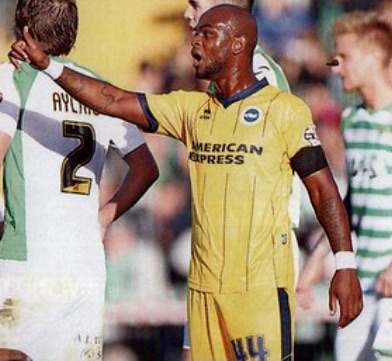
Maybe Lita’s Albion spell was cursed from the start when he was handed squad number 44 (all the fours, droopy drawers)?

He was still only 28 when he arrived at the Amex with an impressive record of 101 goals in 330 league and cup games, 14 of which had been in Reading’s 2006-07 Premier League season.

“I know the Championship well,” Lita said in the matchday programme. “Consistency is the main thing at this level because everyone beats everyone; some teams start well and drop off, while others start badly then pick up a run of results. So, it’s all about putting a good run together then you never know what might happen.”

Lita followed in the footsteps of former Swansea teammates Kemy Agustien and Andrea Orlandi to the Amex, but he also knew Liam Bridcutt and Andrew Crofts from his time as a youngster at Chelsea.

He recalled summer training camps at Horsham with Bridcutt and he played in the same Chelsea junior side as Crofts. “They have both gone on to become really good players,” he said.

“It helps when you go to a club and know a few people but I think the style of play here will also suit me.

“It is similar to Swansea and the club only signs players here who know the system.

“I played against Brighton last season, scoring on my home debut for Sheffield Wednesday, and although we won that day, I was still impressed by the way the team played.” He had also played at the Amex before when he was on loan at Birmingham and (below right) was the subject of a page feature in the matchday programme.

Born in Kinshasa in the Democratic Republic of Congo on 28 December 1984, it was as a teenager on Chelsea’s books that he couldn’t believe his luck to be sharing a training pitch with Jimmy Floyd Hasselbaink and Eidur Gudjohnsen.

“I would go home and see them on TV and the next day I would be training with them,” he told The Guardian. “It was unbelievable.”

Reporter Jon Brodkin wrote: “Chelsea broke his heart by releasing him but his three years at the club he supports were hardly wasted. The thrill of being a ballboy was surpassed by training with the first team’s front two.”

Lita told him: “I was 15 and the academy director said he had spoken to my school and I could have a couple of days off a week to train with the first team and the ressies [reserves]. It was a great opportunity and I learned a lot from it.

“Hasselbaink’s finishing was unbelievable, he didn’t mess about. He could place it and smash it. I mainly did finishing with them, not much else, but I could see as well how professional they were and how they looked after themselves.”

After Lita’s release, he contacted a few clubs – Fulham were interested but didn’t offer a contract – and he was aware that after leaving Arsenal Andy Cole had made a new start to his successful career at Bristol City.

It was the Robins who gave Lita an opportunity and former Albion skipper Danny Wilson handed him his first team debut at the beginning of the 2002-03 season when he was still only 17.

His first league goal was a late winner on 28 September 2002 to secure a 3-2 victory after going on as a substitute at Port Vale (for whom an 18-year-old Billy Paynter had scored).

“The striker hit a glorious goal to end Vale’s hopes of a point after they had fought back to level matters just a minute earlier,” said the BBC report of the game.

It wasn’t until the following season that he was given a professional contract and it was only after Brian Tinnion succeeded Wilson as manager in 2004-05 that Lita established himself in the City side. He scored 29 goals in all competitions and that form earned him a call-up to the England under-21s, Lita having decided not to play for his birth country.

He scored on his debut on 8 February 2005 when he went on as a sub for Justin Hoyte in a 2-1 defeat against the Netherlands at Derby’s Pride Park.

Those goals also earned him a £1m move to Reading, even though Tinnion advised him against the move, believing a Premiership club would come in for him.

“Once I got down here, I knew it was right,” Lita told The Guardian. “I want to go a step at a time. Reading are a good club, they’re looking to get into the Premiership and that’s where I want to be.”

He went on to score 15 goals in 25 league and cup games (+ seven as a sub) as Reading topped the Championship, and he returned to the England under-21 fold in February 2006.

He was on home turf at the Madejski Stadium when he earned his second cap, again as a sub, replacing David Nugent in a 3-1 win over Norway (future Albion loanee Liam Ridgewell was among his teammates).

A year later, after finding the net in the Premier League with Reading, Lita got a third cap as a substitute (for James Milner) and scored again in a 2-2 draw against Spain at Pride Park. Liam Rosenior was also a substitute that day.

Lita’s first start for the under 21s came the following month, on 24 March, in a 3-3 draw with Italy in the first game played at the new Wembley Stadium, in front of 55,700. On 5 June the same year, Lita scored England’s fifth goal in a 5-0 win over Slovakia at Carrow Road after he’d gone on as a sub for Nigel Reo-Coker.

Lita was an overage player in the 2007 UEFA European Under 21 Championship: he missed an 88th minute penalty after going on as a sub in a 0-0 draw with the Czech Republic but scored in each of the three games he started: 2-2 v Italy, 2-0 v Serbia and 1-1 v the Netherlands (who won the tie 13-12 on penalties). But a full cap eluded him.

Lita was a regular throughout Reading’s first top-flight campaign. In a side that include Ivar Ingimarsson and Steve Sidwell, Lita scored 14 times in 26 league and cup starts plus 12 appearances off the bench.

But with Kevin Doyle and Dave Kitson the preferred strike duo in 2007-08, Lita’s game time was much reduced and he went on loan to Charlton in March 2008.

It was a similar story the following season when he scored seven times in 16 games during a three-month loan at Norwich City – the haul included a hat-trick against eventual champions Wolves.

The excellent Flown From The Nest website, that profiles former Norwich players, recalled how that treble attracted the interest of plenty of other clubs, but City boss Glenn Roeder said: “It’s a better problem to have than him not scoring and playing rubbish – then none of us want him. What can you do?

“He was brought here to score goals. He was a little bit rusty in his first game which was understandable. He did better in the second game against Bristol City when he had a couple of chances which unfortunately never went in, and then in the third game on Tuesday night, we saw the real Leroy Lita and what he is all about.”

Lita returned to Reading and played in a FA Cup third round defeat at Cardiff and although Sheffield United made a bid for him, he preferred to stay with the Royals.

Nevertheless, at the end of the season, he finally left the Madejski and headed to Teesside on a three-year deal.

On signing for Boro, Lita said: “The manager has been after me for about a year, it’s great to feel wanted. I have a lot of respect for the gaffer and I want to do well for him and the club.

“I aim to repay him for his faith in me with goals. That’s the main strength to my game and I’m looking forward to scoring goals for Middlesbrough.”

He told the Northern Echo: “I’m raring to go. I haven’t enjoyed the last two seasons one bit, but this is a fresh start and I’m excited about the challenge.

“Other clubs were interested in signing me, but there was only once place I wanted to go and that was Middlesbrough.”

Southgate added: “Leroy has a hunger to score goals and his goalscoring record in the Championship in particular is very strong.

“His record says he gets one in two at this level so that will be important for us. I think he has a point to prove and, when he’s fully fit, he will relish the challenge.”

It wasn’t long before Southgate was succeeded by Gordon Strachan but Lita made the second highest number of appearances (41) in that season’s squad and scored nine goals as Boro finished mid-table.

There was yet another managerial change the following season, with the return of former player Tony Mowbray, but Boro once again finished mid-table with a side that featured Joe Bennett at left back and Jason Steele in goal.

Lita scored 11 times in 40 matches, which was enough to attract newly-promoted Swansea. “I’ve had a good chat with Leroy,” said Mowbray. “He has a chance to play in the Premier League and good on him. His talent has earned him that chance.”

But he only scored twice in six starts (+ 12 appearances off the bench) all season and in September 2012, Lee Clark signed him on a three-month loan for Birmingham.

“I know Leroy very well having worked with him at Norwich during a loan spell in which he scored seven goals in 16 games,” said Clark. “He’s a proven goalscorer who has power and pace and there’s no doubt that he’ll add quality to my squad.”

Lita scored three goals in 10 games for Birmingham before being recalled early, but in late January 2013, he joined Sheffield Wednesday on loan until the end of the season.

Wednesday manager Dave Jones told BBC Radio Sheffield: “Leroy has a lot of experience at this level and the one above. It could be with a view to a permanent deal. This lets us have a look at him and he can have a look at us.” But he only scored twice in nine appearances for the Owls.

Released by Swansea at the end of the 2013-14 season, Lita was then reunited with Danny Wilson, manager at newly relegated League One Barnsley.

“He was my first manager and I like the way he works,” said Lita. “He’s got a lot of trust in me and I’ve got a lot of trust in him.

“I enjoyed my time under him as a youngster. He helped me a lot and helped me progress in my career so far. I just want to get back to playing football regularly again and I’m going to get that opportunity here.”

He scored in his first two league games but didn’t register again for 21 games. When Wilson was replaced by Lee Johnson in February 2015, within a matter of weeks Lita joined lowly Notts County on loan until the end of the season but was unable to prevent their relegation.

On expiry of his Barnsley contract, Lita moved to Crete side AO Chania in August 2015 but was back in England the following March, signing a short term deal with League Two Yeovil Town, where he scored once in eight games. That was his last league club in England.

He scored five goals in 21 games for Thai Premier League side Sisaket in 2017 and on his return to the UK turned out for a number of non-league clubs: Margate, Haverhill Rovers, Salisbury and Chelmsford City.

In May 2020, the Coventry Evening Telegraph hailed his signing for Nuneaton Borough, whose manager Jimmy Ginnelly told the newspaper: “His partner is from Nuneaton and they’ve recently moved into a house on The Longshoot, which is just five minutes from the ground, so this is a win-win situation for both parties.

“These sorts of players don’t come onto Nuneaton’s radar very often so we moved quickly and obviously all of us here at the Boro are very excited.”

He scored eight goals in 33 appearances for Nuneaton, went on to play for Southern League Premier Division Central rivals Stratford Town before moving on to Hednesford Town, where he’s still playing.

In March 2022, the Express and Star reported: “Lita lit up Keys Park last night as he smashed a debut hat-trick to help Hednesford to a 3-1 victory over Stourbridge.”