Admirable Crichton on standby for the Seagulls at 39

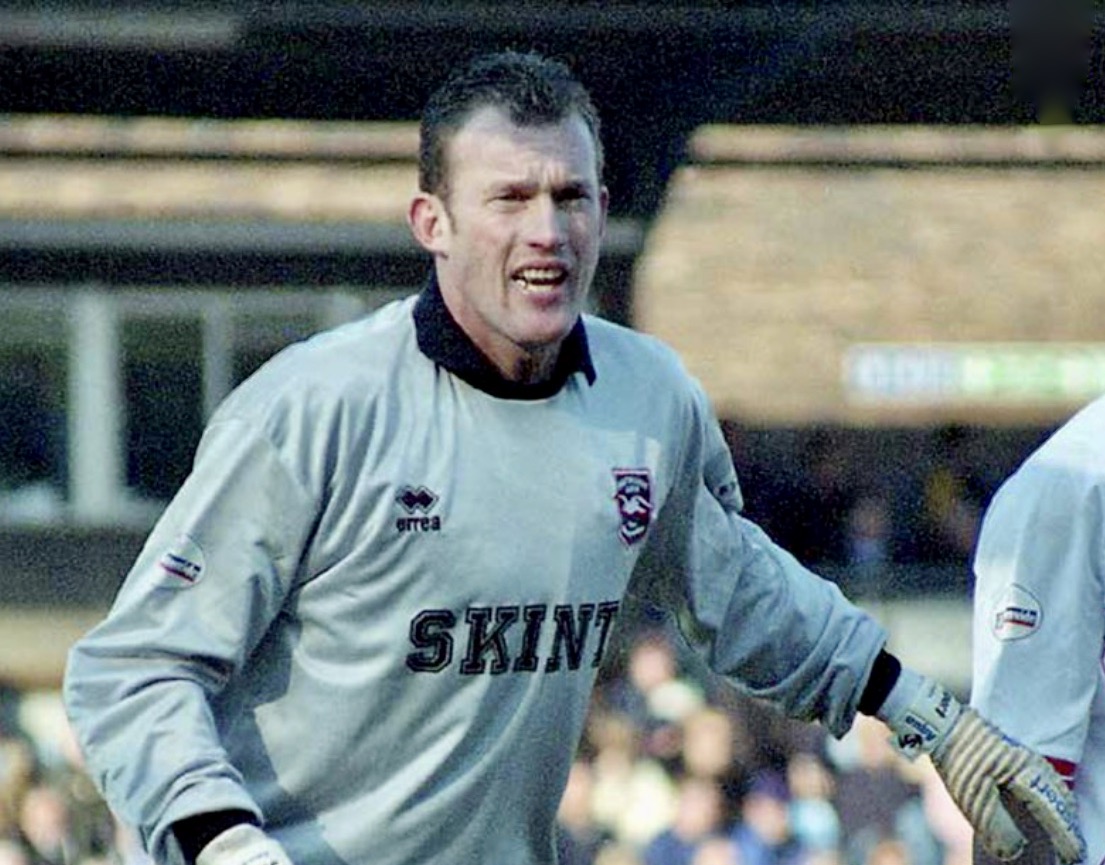
JOURNEYMAN goalkeeper Paul Crichton played 540 games in a 22-year career and, even at the age of 39, found himself on the Brighton subs bench ready to be called on in an emergency.

As things turned out, the former Burnley custodian’s time with the Seagulls remained in a coaching capacity, helping to develop youngster John Sullivan and improve no.1 Michel Kuipers.

However, he was registered as a player and when either Kuipers or Sullivan were unavailable, Crichton answered the call as stand-by ‘keeper, as well as making an appearance as a sub in a pre-season friendly.

Much of Crichton’s career was as a back-up no.1 but he stepped up as a coach, working with the likes of Rob Green and Fraser Forster, and obtained a UEFA A licence in outfield and goalkeeper coaching.

Crichton arrived at Withdean in July 2007 after previous goalkeeping coach John Keeley moved along the coast to take up a similar role with Portsmouth.

Manager Dean Wilkins told the club website: “Paul has impressive coaching qualifications and we have already seen him in action on the training ground.

“He also has a huge amount of experience from over 20 years playing professional football.”
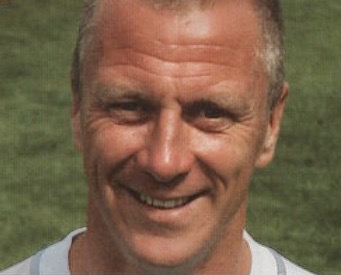
No. 1 Kuipers certainly appreciated the influence the coach had on his game. He told an Albion matchday programme: “Paul approaches things from a different angle. He has given me extra information and a different opinion on how I can get the best out of myself.

“His input has improved me as a goalkeeper and my performances on the pitch have improved. We’ve worked on me playing more as a kind of sweeper, letting the defence sit a little higher up the pitch. It helps the defenders out as they don’t have to worry as much about the space behind them and allows them to go tighter on the strikers and gives them a better opportunity to win the ball or defend against strikers.”

Kuipers said he also felt more confident leaving his goal to claim crosses, and with his kicking. “It’s an aspect I feel has improved,” he said. “Paul and I have practised it on an almost daily basis in training, and the more I am doing it, the better I am getting at it.”

Sullivan was also grateful for Crichton’s input, telling the matchday programme: “Paul’s brought some great new ideas into the club – he’sa very, very good coach. Paul is not long retired so he’s well aware of how the modern game has changed so much for ‘keepers.”

Crichton remained in post until February 2009 when the lure of returning to Norwich City, one of his former clubs, four and a half years after leaving the club as a player, was too great and he went back to East Anglia, even though he had started to put down roots in Sussex.

“We’d just started to get settled in Eastbourne,” he told pinkun.com. “The manager, Micky Adams, and the backroom staff have been fantastic and I’m sad to leave. But I had three great years here, ending in the Championship winning season.

“I didn’t play many games, but I just wanted to return – it’s a great place.”

Adams told the Argus: “I am very disappointed to lose Paul. He was a hard-working and highly-valued member of the backroom staff and he has done a fantastic job with all the goalkeepers at the club.

“I have no doubt he is going to be one of the top goalkeeping coaches in years to come but, after he expressed a desire to go back to Norwich for both footballing and family reasons, it was not right for us to stand in his way.”

Crichton had been understudy to the aforementioned Green during his time as a player at Carrow Road, and boss Bryan Gunn (a former City goalkeeper himself) told the pinkun.com: “We want someone to continue to develop not only the first team goalkeepers but those in the academy and I know he’s looking forward to putting a development programme in place, which is important as we’ve had a good record in this position in recent years.”

Crichton had first moved to City on a two-year contract in June 2001, signed for £150,000 by former Burnley coach Nigel Worthington, who’d taken charge of the Canaries.

At Turf Moor, Crichton had been one of Stan Ternent’s first signings after he took over as manager from Chris Waddle in 1998. He made his debut on 8 August 1998 in a 2-1 win at home to Bristol Rovers and was a regular in their third-tier side, helping them to promotion in 2000.

Clarets fans have mixed opinions of his attributes, if a 2019 discussion on uptheclarets.com is anything to go by. For example, ‘jdrobbo’ said: “Used to be a big fan of his. Thought his kicking was excellent for a keeper at that level. Occasionally left stranded off his line. A key player in our 2000 promotion side, but not good enough for the next level up.”

‘ClaretTony’ reckoned: “A master of a goalkeeper at not being where he should be. Never known a goalkeeper out of position so much.”

Although ‘Lord Beamish’ said: “A key part of the last Burnley team to play in the third tier. He’ll always be fondly remembered by this Claret fan.”

Born in Pontefract, Yorkshire, on 3 October 1968, Crichton began his career with Nottingham Forest, turning professional in 1986. But with Hans Segers and Steve Sutton ahead of him, he didn’t break into the first team at the City Ground and went out on loan to six different league clubs to get games, making his debut across the Trent at Notts County.

Eventually he moved on permanently, in 1988, initially spending two years with Peterborough United, then three years with Doncaster Rovers.

Alan Buckley signed him on a free transfer for Grimsby Town, where he played the most games (133) for any of the clubs he represented. Mariners Memories on Facebook, noted: “Crichton was a good shot stopper…..he was made the Supporters Player of the Season in 1994”.

In September 1996, he followed Buckley to West Bromwich Albion for £250,000.

It was during his time at West Brom that he had two loan spells with Burnley in 1998 before joining them permanently for £100,000 in November that year.

His playing career following his departure from Carrow Road took him to eight different clubs, Gillingham and Cambridge United among them, together with some non-league outfits. During a brief and controversial spell at York City, when he was alleged to have clashed with supporters, he coached a young David Stockdale. He moved to the Albion from King’s Lynn.

His subsequent return to Carrow Road was briefer than expected when Paul Lambert took over from Gunn and brought in his own goalkeeping coach.

In March 2010, Crichton became goalkeeping coach at Northampton Town but, in the summer of 2010, he linked up with Danny Wilson at Sheffield United, where he was also registered as a player to provide emergency cover. He spent two seasons at Bramall Lane before becoming part of Simon Grayson’s management team at Huddersfield Town.

After two years with the Terriers, he switched to Blackpool and spent just over a year working as goalkeeper coach and interim assistant manager alongside Jose Riga.
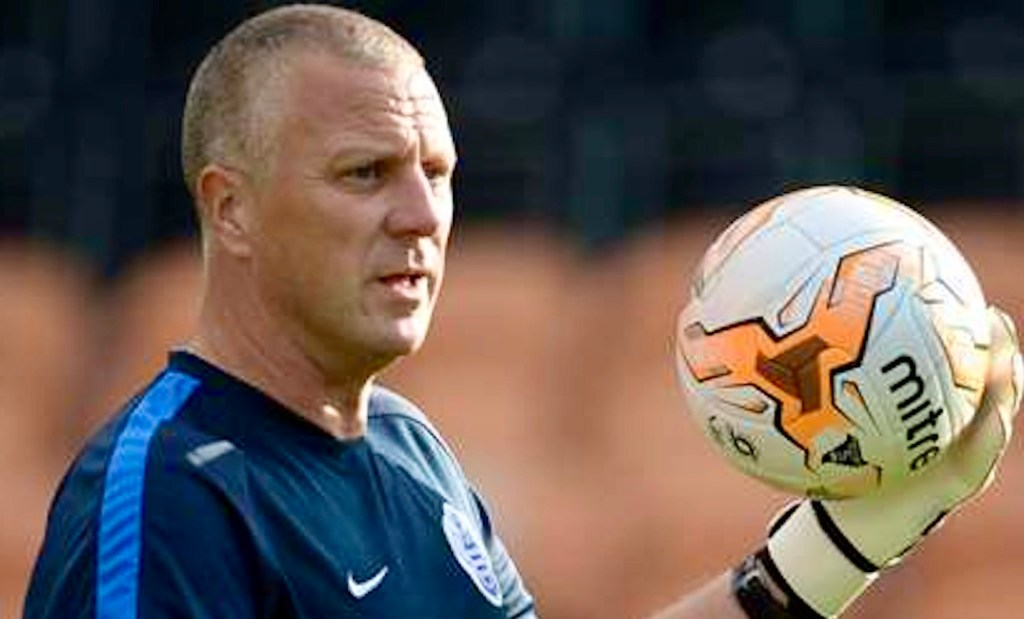
Next up was a brief spell in London, at QPR, where he was appointed by former Albion full-back Chris Ramsey to succeed Kevin Hitchcock.

After leaving the Hoops in early 2016, his next port of call was Swindon Town, to work under Luke Williams, Brighton’s former under-21s manager, but he left after only a couple of months to move to America.

He had several short spells coaching with different clubs in Florida before becoming assistant head coach at The Miami FC in January 2020, when head coach was Kenny Dalglish’s son, Paul.

He became goalkeeper and interim assistant coach for North American professional women’s team the Washington Spirit during the 2021 and 2022 seasons, helping lead goalkeeper Aubrey Kingsbury to the 2021 NWSL Goalkeeper of the Year award and guiding the club to the 2021 NWSL Championship.

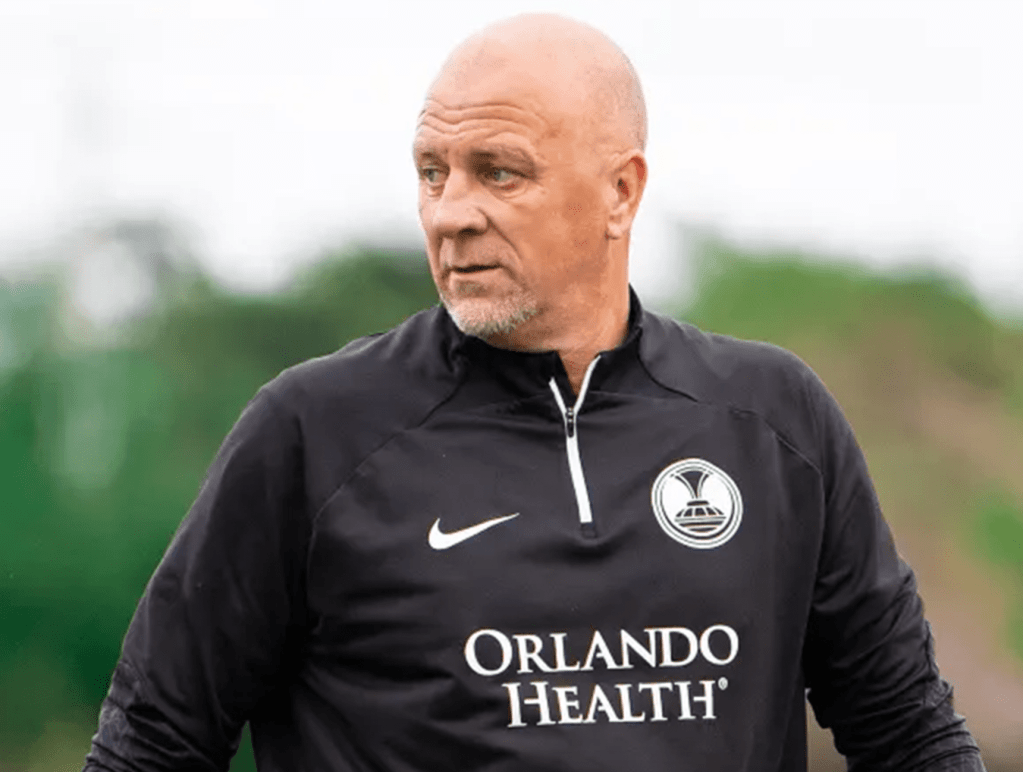
Then in April 2023 he switched in a similar role to Florida based women’s team Orlando Pride.
Albion rookie Richard Martin became Sven goalie at City

RICHARD MARTIN could justifiably be dubbed ‘The Nearly Man’ of goalkeeping.

Once thought to have the potential to play 200 games for the Albion, he left the Seagulls having only ever warmed the first team bench.

In an unlikely turn of events, he went from back-up League One Seagulls ‘keeper to no.3 behind Kasper Schmeichel and Joe Hart at Premier League Manchester City, thanks to former England boss Sven-Goran Eriksson.

After two years at City, he went on loan to Burton Albion, then worked under Ben Roberts and Nathan Jones as back-up ‘keeper at Yeovil Town before enjoying fleeting fame on the Caribbean island of Puerto Rico.

Doubtless it wasn’t the career he expected when his teenage promise between the sticks led to him earning trials with Liverpool and Everton.

Born in Chelmsford on 1 September 1987, Martin spent part of his childhood in Liverpool but the family were living in Burgess Hill when the young goalkeeper was picked up by the Albion.

Martin was only 16 when Liverpool took him on a week-long trial and Albion manager Mark McGhee went public in the Argus on 4 February 2004, explaining why he thought the youngster should stick with the Seagulls.

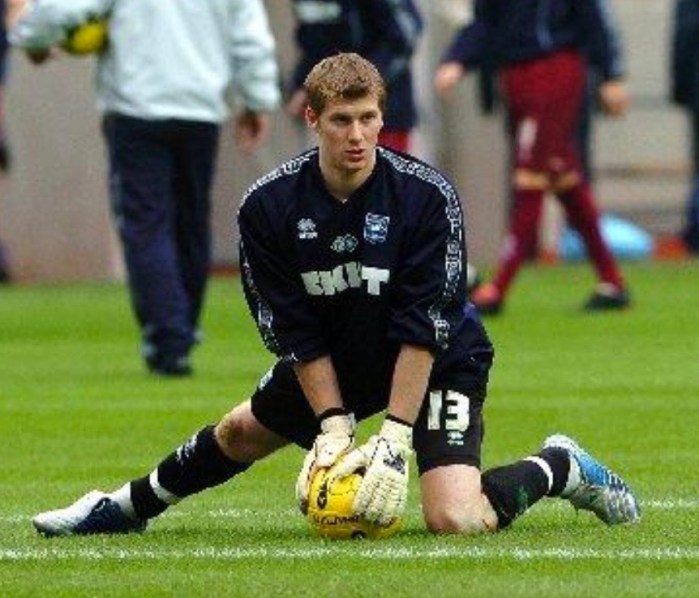
Warming up for the Albion (pictured by the Argus)

“We have put forward a reasonable argument to the boy and to his parents as to why we think he should stay here,” said McGhee. “The thing we can promise him at a club like ours, like any other young player in any other position, is that if he is good enough he will be fast-tracked into the first team or certainly onto the bench.

“If he goes to Liverpool there is no chance of that happening. At the very best he is going to spend two or three years at youth level, then at reserve level and in five years’ time he might start to make an impression in the first team squad.

“By that time, he would have played 200 games for us and be worth a lot of money and move to Liverpool under different circumstances.”

The Argus reckoned Albion could have got compensation of at least £200,000 if Martin, a Liverpool supporter, had ended up at Anfield. But Liverpool didn’t take him on, he remained an Albion scholar, progressed through the youth ranks and was awarded a two-year professional contract in the summer of 2005, before his scholarship was due to expire.

With Michel Kuipers sidelined by injury, Martin and fellow young ‘keeper John Sullivan shared opportunities to play for the first team in pre-season friendlies ahead of the 2005-06 season. Martin appeared against Le Havre, Oxford United and Bournemouth, as well as coming on as a sub in two other matches.

A sizeable Albion following went over to France to watch Albion’s 2-0 defeat to Le Havre when Martin began in goal in the absence of Michel Kuipers. The Argus reported: “Martin flew high to his right to brilliantly tip away a 12th-minute thunderbolt from Jean-Michel Lesage which was dipping and swerving towards the top corner from 25 yards.”

Goalkeeping coach John Keeley went further and told the matchday programme: “That was an absolute world-class save. I’m sure if Michel had made it people would still have been talking about it – it was that good..

“He can take big positives out of that and the other bits he had to do in the first half.”

When the season proper got under way, Martin found himself on the bench for 14 matches as Irish international Wayne Henderson, on loan from Aston Villa, was the established first choice. But then Frenchman Florent Chaigneau arrived on a year-long loan from Rennes.

In December 2005, Everton took Martin on trial and for a while there was speculation that a nice fat transfer fee from selling the youngster could be reinvested in signing a much-needed striker for the first team. But the move didn’t materialise because Everton boss David Moyes didn’t think Martin was big enough.

The Argus reported: “Martin impressed during a recent trial with the Merseyside giants but Goodison boss Moyes has decided not to sign the slimly-built 18-year-old from Burgess Hill due to his size.”

Instead of heading to Goodison, Martin went on loan to non-league Kingstonian, competition for the no.1 spot at Albion having increased with the permanent signing of Henderson from Villa.

Martin was part of the successful Albion youth side of 2006 from which six players went on to play first team football. But even at youth level he was competing with Sullivan, who eventually edged ahead of him and did manage to break through into the first team.

Competitive football game-time was considered the best option for Martin and the following season he went on a season-long loan deal to Conference South Dorchester Town. But his stay was cut short by injury. Once recovered, in the second half of the season, he joined Folkestone Invicta where he played 12 matches.

However, on his return to the Albion his contract wasn’t renewed, and he was without a club until the surprise opportunity arose at Manchester City, where the goalkeeping coach at the time was ex-Albion No. 1 Eric Steele.

Martin told the Argus: “This is completely unexpected. I’d like to think Brighton were wrong to let me go but these things happen.

“I went up to City initially just for a week to do a bit of training, because my agent knows Eric.

“(First choice Andreas) Isaksson and Joe Hart picked up injuries, they had a reserve game which I played in and then I carried on training.

“I don’t think I am in contention for the first team, I will just be in the reserves and go from there. Hopefully the month will be extended if I can keep on doing well.”

Sure enough, it was and boss Eriksson was happy to give Martin a season-long contract.

His only first-team action came on 22 May 2008 when replacing Schmeichel for the second half in an end-of-season charity match in Hong Kong against a South China Invitational XI.

Even after Steele switched allegiance to Manchester United and Eriksson had moved on, Martin had done enough to establish himself as third in line behind Hart and Schmeichel.

Mark Hughes took over as manager and Martin remained at the club working with ex-Chelsea ‘keeper Kevin Hitchcock, who Hughes had taken with him from Blackburn.

Martin was given the no.13 squad number for the 2008-09 Premier League and UEFA Cup campaign and it was an irresistible opportunity for the Argus to catch up with him ahead of Brighton’s home Carling Cup tie against City at Withdean in September 2008 when Albion sprung a big shock by winning the penalty shoot-out.

Reporter Andy Naylor discovered Martin had been philosophical, rather than disappointed, about the way things turned out with Albion. “When I look back at the situation at that time it was all about getting results and Michel (Kuipers) and Wayne (Henderson) were the two generally ahead of me,” he said. “I got a lot of good experience at Brighton and that set me in good stead for coming up to Manchester.”

Unfortunately, a knee injury Martin sustained shortly after sidelined him until the following March. Then in April, City allowed him to move temporarily to Burton Albion as cover because their first choice ‘keeper Kevin Poole was injured.

When released by City in the summer of 2009, more Albion connections provided him with his next opportunity, and finally the opportunity to play league football, at Yeovil Town.

Martin at Yeovil (picture by YTFC Digital)

In the Seagulls’ 2004 play-off winning season, Martin was a youth-teamer when Glovers assistant boss Jones was Albion’s left-back and goalkeeping coach Roberts was between the sticks.

Ahead of Brighton’s 2-2 draw at Huish Park on 10 October 2009, Martin told Brian Owen of the Argus: “I was fortunate I got the call from Yeovil in the summer and went down there for a trial. They liked what they saw. Of course, I know Nathan and Ben well and the fact they knew about me must have helped them make a decision.”

Martin was on the bench for the Albion fixture but had made his league debut shortly before as a substitute when first-choice Alex McCarthy (at the time on loan from Reading) was sent-off 20 minutes into a 2-2 draw with Stockport County. With McCarthy banned, Martin got his first start in a defeat at Southampton.

However, in total he made just three league and two cup appearances in that first half of the season and in January 2010 was loaned to Conference National bottom-placed side Grays Athletic – and within the space of a fortnight had conceded 11 goals in three matches!

Although he returned to Yeovil after a month, McCarthy’s fine form denied him any further first team action at Huish Park and he was released in July 2010. After brief spells with Havant & Waterlooville and Crawley Town, Yeovil re-signed him on 31 December 2010.

Plenty to say in goal for Puerto Rico Islanders

However, in March 2011 he had the opportunity to head to the Caribbean and play for Puerto Rico Islanders, who at the time were in the second tier of the North American Soccer League. He made his debut in May 2011 having initially been back-up ‘keeper and then signed for a second season, during which he established himself as first choice and played a total of 33 matches.

Talking on camera after the NASL player of the month award

In August 2012 he was named NASL player of the month, and he was interviewed about the experience of playing for the Islanders. There is an excellent montage feature in which the commentator purrs in this YouTube footage: “Richard Martin has the reflexes of a jungle cat.”  

Back in the UK in 2013, Martin played briefly for Whitehawk and Burgess Hill before retiring.

Cup Final hero Dave Beasant was Brighton’s oldest player

Beasant BHA

THE FIRST goalkeeper to save a penalty in an FA Cup Final – and the first to captain his team in the historic end of season finale – played between the sticks for Brighton at the ripe old age of 44.

Admittedly Dave Beasant is better known for his years playing for Wimbledon, during which time he laid down those FA Cup milestones in the 1988 final against Liverpool.

Nicknamed Lurch after the butler in The Addams family, Beasant’s heroics to keep out John Aldridge’s spot kick and preserve the 1-0 lead given to the humble south west London club by Lawrie Sanchez, led to the giant goalkeeper lifting the cup.

It also turned out to be the last ever game he played for Wimbledon. A month after that Wembley triumph, Newcastle paid £750,000 for his services – a transfer fee record for a goalkeeper at that time.

Not a bad return on Wimbledon’s £1,000 investment ten years earlier after he had impressed Dario Gradi playing for Edgware Town against the Dons in a pre-season friendly.

Beasant made his league debut against Blackpool in January 1979, and, remarkably, between August 1981 and the end of that 1987-88 season, made 304 consecutive league appearances for the Dons as they rose through the leagues.

When Newcastle sold Paul Gascoigne to Spurs for £2.2 million, they decided to splash £750,000 of it on the big Wimbledon goalkeeper.

Sadly, it was not money well spent. Beasant’s spell on Tyneside lasted just five months and certainly didn’t match the fairytale ending at Wimbledon.

Newcastle struggled at the foot of the table in 1988-89, and were relegated, but before the trapdoor opened Beasant had already departed after just 20 appearances.

He moved back to London in January 1989 to join Chelsea, where he played 193 times, initially under Ian Porterfield, until falling out of favour in 1992.

It was towards the end of 1989 that Beasant won two England caps, playing against Italy and Yugoslavia, and an injury to David Seaman saw Beasant selected for Bobby Robson’s 1990 England World Cup squad, although he didn’t play.

When Glenn Hoddle took over at Stamford Bridge, Beasant was relegated to number three ‘keeper behind Dmitri Kharine and Kevin Hitchcock, so he went out on loan for brief spells at Grimsby Town (six games) and Wolves (four games) before securing a £300,000 move to Southampton in 1993 to succeed Tim Flowers as their no.1.

He played 105 times for Saints but several managerial changes saw his fortunes fluctuate and, in 1997, he once again found himself third choice – this time behind Maik Taylor and Paul Jones – and he was on the move again.

By this time he was 38, but retirement was still not on his agenda. After joining on loan initially, Beasant moved permanently to Nottingham Forest in November 1997 and played 139 games in four years.

It was back to the south coast again in 2001, when Portsmouth needed a goalie following the death in a road accident of their regular ‘keeper, Aaron Flahavan. Beasant played 27 times for Pompey.

Emergency loan spells then followed successively at Tottenham, Bradford City and Wigan Athletic, although he didn’t play any first team games for any of them.

It was from Wigan, just a few weeks before his 44th birthday in 2003, that he once again headed south, this time to join Brighton’s brave but ultimately unsuccessful attempt under Steve Coppell to stave off relegation from Division One.

With Michel Kuipers out of the side with a thigh injury and loan replacement, Ben Roberts, suffering from ‘flu, Beasant was drafted in.

In the Bradford City v Brighton programme in February 2003, Colin Benson wrote almost poetically about the legendary goalkeeper.

Beasant landsc“The unmistakeable figure of Dave Beasant stood tall under the Brighton crossbar at the Bescot Stadium a fortnight ago marking his debut for his 11th club at 43 years of age by brilliantly saving from Leitao’s shot on the rebound after beating out an effort from Corica,” he wrote. “Unfortunately he could not crown the day with a match winning clean sheet for Walsall pinched a 1-0 victory but it amply demonstrated that after 20 years between the posts he has lost none of his technique or resilience.”

In a 2018 interview with Spencer Vignes, Beasant said: “Stevie Coppell gave me a bell. I think you’d lost 12 straight games. I remember looking at the table thinking ‘They’re going down’. But there was also something about it that I quite liked. It was a challenge.”

Beasant said that morale was good despite the league position, and he added: “Wherever I go, I can add something on the field and off it. And that’s what happened. We clicked really well together.”

He played 16 games through to the end of the season and although ultimately the bid to stay up was not successful, no blame could be laid at Beasant’s door for lack of effort.

Never was it more evident than in the final game of the season away to Grimsby. With the score 2-2 and all hope virtually extinct, Beasant was still giving his all when other players’ heads had dropped.

I chatted briefly to Beasant at the club’s end of season dinner and remarked how I had been impressed by his never-say-die attitude right to the very end of that game, even though it was a lost cause.

Obviously the consummate professional, he said to me that however unlikely a win would be, you had to continue to play in the hope things might change round.

What a pro and exactly the sort of attitude that meant Beasant endeared himself to the Albion faithful. In a prophetic assessment after the Grimsby game, he told the Argus:

“You feel for those fans because they have been superb. They are gearing themselves for next season already and hopefully the players can set the same target as the fans and, obviously, that is to bounce straight back.”

Beasant cemented his place in the record books as Albion’s oldest-ever player while Albion, of course, went on and did just as he thought they might on that glorious day at the Millennium Stadium in Cardiff.

Although Coppell offered Beasant the chance to stay on with the Seagulls, he didn’t want to drop down to the third tier and instead took up Chris Coleman’s offer to become a player-coach at Fulham. He was proud to say that on his 45th birthday he was on the bench when Fulham played Chelsea.

Beasant remained on the Fulham coaching staff after Coleman’s departure under his old Wimbledon teammate Lawrie Sanchez (he had already worked with Sanchez in his previous role as Northern Ireland manager). But when Sanchez was fired, Beasant went too.

He subsequently worked for his son, Sam, at Stevenage, and at the age of 55 was famously registered as part of the squad for the 2015 play-off final, even though he didn’t play.

Between 2015 and 2018, Beasant was goalkeeping coach at Reading.