AIDAN NEWHOUSE scored twice on his Albion debut but only started two games for the Seagulls!
The former Fulham striker netted two of Brighton’s six goals in the 1999-2000 season opening match at the Withdean Stadium.
He replaced hat-trick man Darren Freeman with the Albion 4-0 up on 7 August 1999 and promptly added two more goals to complete a 6-0 rout of Mansfield Town (pictures below).
Newhouse, wearing the no.25 later worn iconically by Bobby Zamora, was given a start in a 2-0 league cup defeat away to Torquay United. Although he regularly went on as a substitute, often for Freeman, he only began one other game: a 1-0 home league win over Cheltenham Town.
Newhousehad limited opportunities in Albion colours
Newhouse had previously played under manager Micky Adams at Fulham in 1997, and, unluckily for him, Freeman and Gary Hart were the first choice forward choices in those opening months.
Competition for places intensified in the autumn with the arrival of Warren Aspinall and Lorenzo Pinamonte. Newhouse was swiftly on his way to Conference club Sutton United.
When they were relegated at the end of the season, he switched to Northwich Victoria in 2001, but only played one match before quitting and becoming a schoolteacher.
Born in the Wirral town of Wallasey on 23 May 1972, Newhouse showed so much early promise that he made his debut for Chester City before his 16th birthday.
He was just 15 years and 350 days old when he was sent on as a substitute by manager Harry McNally on the final day of the 1987–88 season as Chester won away at Bury 1–0 in the Third Division.
The talented teenager was in David Burnside’s 1988-89 England side for the UEFA Under-18 Championship preliminary matches against Greece (home and away), France and Czechoslovakia, scoring in the 3-0 win away to Greece on 8 March 1989. He played up front with Andrew Cole, later of Manchester United and Newcastle United fame.
The following season he went on as a sub for Cole in a 0-0 draw with Denmark at Wembley; a game which was played at Wembley before the England-Brazil full international. Three weeks later he scored England’s third when he started in a 3-0 win over Poland, another game played before a full international (England v Denmark).
In July the same year, he started all three of England’s matches (a draw and two defeats) when they finished fourth in the UEFA Under-18 Championship in Hungary.
Chester cashed in on their young prodigy, selling him to then First Division Wimbledon for £100,000 in February 1990.
First team opportunities for Wimbledon were few and far between for Newhouse and he is in the same exalted company as former Albion loanee Gary Bull in being one of only four players to have scored on their single Premier League appearance.
Wimbledon scorer
Ironically, it came in a match in 1992-93 against Aston Villa best remembered for Dalian Atkinson’s individual goal that won the BBC’s Goal of the Season award. “It was deflected past the goalkeeper,” Newhouse told premierleague.com. “It was a bit of a low-life goal compared to Dalian Atkinson’s.”
It was Bobby Gould who gave him his Wimbledon debut but a stomach injury halted his progress under Gould’s successor Ray Harford, as well as the form of John Fashanu and Terry Gibson.
In a 1990-91 season matchday programme article, Newhouse said: “I was really looking forward to this season. Bobby Gould had given me a taste of first team action and I felt I was ready to really stake a claim for a place.
“Then I picked up the injury and it took me months even to get back into full training let alone playing well.”
Although he was a Wimbledon player for seven years, he went out on loan on four occasions: to Tranmere Rovers, Port Vale, Portsmouth and Torquay United. He eventually left permanently for Fulham in 1997.
He scored four goals in only 12 league and cup matches for Fulham: three in a two-legged League Cup match against Wycombe Wanderers and one in the league in a 2-0 win away to Bristol City on 2 September 1997 (Richard Carpenter scored the other). But, only a few weeks’ later, Adams was controversially replaced by Ray Wilkins and Kevin Keegan under the new Mohammed Al-Fayed regime.
Scoring for Fulham
Before long, Newhouse was on his way too. A £30,000 fee took him to Swansea City although, by the time he had arrived, Adams’ short tenure as boss was already over, his role filled by his former no.2 Alan Cork.
It’s probably an understatement to say things didn’t work out for Newhouse in South Wales. Indeed, in a FourFourTwo magazine poll inviting supporters to name their club’s worst player, Newhouse earned the tag from Swansea fans.
He failed to score in 17 appearances across two seasons and Steven Carroll, of the SOS Fanzine, cited a particular game in February 1999, when Carlisle visited the Vetch Field, to back up the claim.
“Due to injuries and suspensions, Newhouse was awarded a rare start. Early on, he was put through on goal and fouled by the ‘keeper inside the box – but while the referee looked set to award a penalty, with said goalkeeper on the floor and both Newhouse/the ball free, our hapless striker shot from close range and missed an open goal. No penalty.
“In the second half, Stuart Roberts received the ball on the edge on the box and was about to shoot, only for Newhouse to kick him in the back of the leg. He never played again after that.”
After retiring from the game in 2001, Newhouse became a maths teacher and he told premierleague.com: “Not all of us are Stevie G and the likes of Neymar,” he said. “I played 13 years, made about £250 a week on average.
“It shows you that, you know, we can do all sorts of things and eventually, to do a job that you enjoy, you will need some education. You will need that to give you an option and a choice.
“Teaching…it’s one of those things. It’s like football, there’s a camaraderie between you and the class.
“Once the guys realise they’re part of a team, there are some similarities. You can have a laugh with the lads and they realise you are there to try and help them succeed.”
EXPLOSIVE pace, a feint of the shoulder, and a thunderbolt shot were trademarks of Kazenga LuaLua’s contribution to Brighton’s rise from the third tier.
Not to mention a somersault flipping goal celebration that delighted supporters but gave managers kittens as they could only see an injury in the making.
Sadly, that explosive pace came at a price — hamstrings that were all too often easily damaged, resulting in lengthy spells on the treatment table and in recovery. Ankle, knee and groin injuries also sidelined the pacy winger for long periods.
Left-sided LuaLua had three spells on loan to Brighton from Newcastle United before joining permanently, and his six seasons in Brighton colours were rarely dull. He was undoubtedly a crowd-pleaser when he was on top of his game, leaving full backs trailing in his wake to lay on chances or cutting inside and netting some memorable goals.
However, he invariably made most impact when entering the fray from the substitutes’ bench, although the ‘supersub’ moniker frustrated him.
“You don’t just want to come on as a sub,” he told the matchday programme. “Obviously it’s good in one respect as it means the team needs you, but as a footballer you want to be in the starting 11 in every game.
“I don’t view myself as just an impact player and I know that I can play 90 minutes of football.”
Albion fans first saw the Congolese game-changer in February 2010. Manager Gus Poyet had been tipped the wink about LuaLua by his former Swindon and Leeds managerial partner, Dennis Wise, who had been executive director at Newcastle.
Ashley Barnes celebrates with Albion’s speedy loanee winger
LuaLua started nine games (and went on as a sub twice) as Albion consolidated their position in League One. His impact on the side was appreciated by his teammates, as defender Tommy Elphick explained to the Argus in March 2010. After the 19-year-old winger had run Exeter full-back Steve Tully ragged, Elphick said: “He’s unbelievable for us. He really does stretch the game for you.
“It’s that raw pace and power which I personally think we have been missing for the last two years. Benno (Elliott Bennett) gives you something totally different. He is more technical. Kaz reminds me of Bas Savage in the sort of job he used to do for us in stretching the game and getting us up the pitch.
“It gives the defenders a chance to get to the halfway line and defend a bit higher.”
When Poyet secured his services for a second loan spell for the opening half of the 2010-11 season, he was delighted. “Kazenga is unique. He is pure power and speed,” said the manager. “That nowadays in football is very important and we didn’t have that.
“I don’t think there is another player like him in the division. He gives us something totally different.
“We are very pleased to have him. We know what we are getting and that is the key. He will fit in as a player, and in the dressing room.”
Poyet added: “He made a very big impact during his time here last season and I am hoping he can do the same and add a few goals to his game this time around.”
No sooner said than done; LuaLua marked his second debut with a 25-yard rocket of a free-kick to give Albion the lead in a 2-0 home win over MK Dons.
LuaLua departs the action injured
Sadly, after just seven starts plus four appearances off the bench, his involvement in that promotion season came to an end in November 2010 when a bad tackle in a 3-1 away defeat at Hartlepool left him with a broken ankle.
Born in Kinshasa, Zaire (now the Democratic Republic of the Congo), on 10 December 1990, LuaLua came to England as a small child with his father and famous older brother, Lomana.
It was from Lomana that he perfected the thunderbolt shot — and the celebratory somersault.
“I have always had a hard shot on me,” he told the Albion matchday programme. “I think a lot of it comes from when I was a boy back in Newcastle and I would play with my brother.
“He would always strike a ball hard and I would try to copy him.”
It was football all the way from a young age, LuaLua recalled. “When I was growing up in Kinshasa, I remember skipping school to play football with my friends,” he said. “We were football mad and, as my brother had already moved to England, I wanted to follow in his footsteps.
“Lomana got me in at Newcastle. He moved to London with our dad some time earlier, but once he’d broken into football and moved from Colchester United up to Newcastle, then the rest of the family came over from our homeland.
“I had only been in the country a couple of months when Lomana arranged for me to have a trial at Newcastle and I was taken on straight away. It was fantastic for me and also for him; we’d go into training together and he was always there for advice when I needed it. He has been a massive influence on my career.”
The winger continued: “It was tough to begin with; I was in a new country and had to go to a new school, which was hard in itself given where I’d come from, and then I was brought into a professional football club and one of the biggest in the country.
“But Newcastle were very helpful. All the coaching staff were great towards me, and helped me find my feet. I learned such a lot from them and I quickly made new friends. I was close to Nile Ranger, Sami Adjei, Sami Ameobi, many players, and I learnt so much in terms of coaching and how to conduct myself as a professional.”
Kazenga progressed through the Toon academy and was part of the Toon youth team that reached the semi-finals of the FA Youth Cup in 2005-06. He even earned a first-team squad call-up while still only 16, although he didn’t get to play.
LuaLua’s Newcastle chances were limited
Eventually, he got his first team chance as a substitute for Damien Duff in a 0-0 FA Cup third round match at Stoke in January 2008, right at the end of Sam Allardyce’s reign on Tyneside. It was Michael Owen’s first FA Cup game for Newcastle.
The game was being shown live on TV so LuaLua’s extended family back home in the DR Congo were able to see the moment. “I was one of the club’s youngest debutants at 17,” he said.
He also went on (for Charles N’Zogbia) in the replay at St James’s Park which Toon, under caretaker boss Nigel Pearson, won comfortably 4-1. “To play in front of 52,000 people took my breath away,” he said.
He made his Premier League debut three days later, going on as an 80th-minute sub for Duff at St James’s Park, in Kevin Keegan’s first match back in charge — a disappointing 0-0 draw with Bolton Wanderers.
Although a non-playing sub on other occasions, he got on in the last game of the season, replacing Jose Enrique in the 79th-minute as United went down 3-1 to Everton at Goodison Park.
Against the backdrop of the tumultuous 2008-09 season, when Toon were relegated from the Premier League after a veritable managerial merry-go-round, LuaLua made just four substitute appearances (three in the league and one in the FA Cup), and in January 2009 he was sent out on loan to Doncaster Rovers, then in the Championship, where he played four matches in six weeks under Sean O’Driscoll.
Once Toon settled on Chris Hughton to get them promoted from the Championship, LuaLua found chances hard to come by.
He started in a Carling Cup second round match at home to Huddersfield Town, when Toon edged it 4-3, but picked up a groin injury playing in the next round, a 2-0 defeat at Peterborough in September 2009 (future Brighton teammate Craig Mackail-Smith was one of the Posh scorers).
Three months later, with his fitness restored, he was itching to be given a first team chance and told the Chronicle: “I want to be part of this team. My aim has always been to play for the first team at Newcastle United.
“I’ve been here a long time, and last season I was involved in the first team before going out on loan.”
“I have been playing for the reserves for a while now, and I’m keen to play football at first team level.
“I would go out on loan if they let me.”
That opportunity finally came a couple of months later when Hughton sanctioned the move to Brighton. LuaLua told Albion matchday programme reporter Luke Nicoli: “They are a big club and are using a lot of experienced players at the moment, so it’s been difficult for me to break into the team.
“I’ve been playing reserve team football a lot and I just want to be playing games that mean something again. I want to be playing for points and I want to be learning all the time. I want to be in a position where I can return to Newcastle a better player.”
Immediately before re-joining the Seagulls for his second loan spell, LuaLua made only his second start for Newcastle in a 3-2 Carling Cup win over Accrington Stanley and was selected by Sky Sports as the Man of the Match.
After that broken ankle at Hartlepool had taken him back to Newcastle to recuperate, he recovered to make a Premier League appearance in the penultimate game of the season, a 2–2 draw away to Chelsea. Hughton’s successor, Alan Pardew, sent him on as a 69th minute substitute for Shane Ferguson and it was LuaLua’s run and cut inside around Branislav Ivanovic that won Toon a corner from which Steven Taylor scored a late equaliser.
Nevertheless, Poyet wasn’t giving up on taking LuaLua back to the Seagulls once more and, in July 2011, he took him on another six-month deal with a view to a permanent move.
Poyet told the club website at the time: “Kazenga was one of our main summer targets and I am delighted we have finally come to an agreement with Newcastle. I am sure the fans will be equally delighted to see him back at the club.”
The permanent move went through a month before the loan was due to expire and LuaLua told the club website: “Since I came to the club it has always been my intention to sign a permanent deal so this is a really happy day for me.
“When you are on loan you are never quite sure what the future will hold, but now I’ve signed this contract I can put my mind at rest and focus completely on my football.
“I have come here because I feel Brighton is the place where I can really kick on with my career. At Newcastle I wasn’t really involved in the first-team squad and at my age I want to start playing regular football.
“From the first day I came to the club on loan, everyone was so friendly and that helped me settle very quickly. Now I want to pay that back with my performances on the pitch.”
Albion famously suffered an ignominious 6-1 drubbing in the fifth round of the FA Cup at Anfield in February 2012, but it was LuaLua who temporarily gave the Seagulls parity after Martin Skrtel’s early opener for Liverpool.
LuaLua unleashed an unstoppable 25-yard shot past ‘keeper Pepe Reina and BBC Sport’s Neil Johnston said: “It was a goal worthy of winning a Wembley FA Cup Final.”
Few doubted LuaLua’s ability but inconsistency was one of his demons which often led to him being introduced as an impact substitute rather than starting games.
Poyet wasn’t afraid to explain his selection policy and in March 2012, when he gave the winger a start against high-flying Derby County, he was rewarded with a 2-0 win at the Amex.
“I thought it was the game for Kazenga,” Poyet told the Argus. “I know he played well in his first spell and my first season here, but I don’t remember a better performance from Kazenga for Brighton.
“It was his best performance against a team that has been in the Premier League and in the top ten in the Championship. That shows what he can do. It was his game and he’s a happy boy.
“He has probably been a little annoyed not to be playing, but that is natural and he is always very respectful and always talking to me.”
A troublesome knee affected LuaLua’s involvement
LuaLua ended up playing under four different Albion managers and Oscar Garcia quickly realised the limitations he faced when in September 2013 he told the Argus: “Kaz has a problem on his knee and he cannot play many minutes in all the games. We knew before if he had played for the whole game then maybe on Tuesday we cannot use him.
“Sometimes he has pain, sometimes not, but, if he plays many minutes, he has pain. He’s had this from the start of the season,” he said. “Sometimes he has to rest, he cannot train. We have to manage this.”
The following February, LuaLua was still troubled by knee tendon soreness but was contributing as a substitute.
For example, he went on to set up Leonardo Ulloa to score the only goal of the game at home to Leeds and Garcia told the Argus: “We thought in this game he could come off the bench and make an immediate impact and he did it.
“He is a player who can change a game. We are very happy with him, because every game when he has to come off the bench he comes on with the right attitude and plays really well.”
Happy days with Beram Kayal and Joe Bennett
Even though Sami Hyypia’s time in charge was short-lived, the winger impressed the new boss until a knee injury sidelined him in November 2014.
“He has the ability to hurt people one v one and maybe one v two as well sometimes,” said Hyypia. “He’s done well this season, he has been very concentrated all the time.”
By the time LuaLua returned to fitness, his old Newcastle coach and manager, Hughton, was at the helm.
LuaLua told the matchday programme: “It was difficult for me when he first came here because I was injured, but he was great with me, always stopping to talk to me about the injury, making sure I was okay, and he told me not to rush things. That’s what I’ve done and hopefully I can now show him what I can do on the pitch now that I’m fully fit.”
Although it was a few months before that happened, arguably LuaLua’s best spell with the club came at the start of the 2015-16 season, which coincided with a change of squad number for the player.
The returning Bobby Zamora resumed the no.25 that he’d worn during his first spell at Brighton, and at other clubs, and LuaLua admitted: “I had to give the number 25 to Bobby. There was no way I was going to refuse. He’s a legend at the club and it’s nice to have him back in the squad.”
With 30 on his back, LuaLua scored four goals in the opening seven games and won the Championship Player of the Month award (above). Hughton was simultaneously Manager of the Month and said: “Kaz thoroughly deserves his award, he’s had a wonderful start. The area where he has excelled in his game is where he has got on the ball and provided an end product.”
Once again, though, injury brought the purple patch to an end. LuaLua sustained a groin injury in training that eventually needed surgery. Coach Nathan Jones told the Argus in December: “There is no real timescale on it because someone like Kazenga is so important to the squad and what we do. You can’t rush him and he is such a potent athlete, that’s the problem.”
Hughton also lost Solly March to injury that autumn but Rajiv van La Parra was brought in as a temporary solution. He already had Jamie Murphy as a wide option and then Anthony Knockaert and Jiri Skalak were added, so, by the time LuaLua had recovered, competition for places was intense.
The run-in to the end of the season saw him mainly in a watching brief from the bench, although he did play in successive matches in April – 2-1 wins away to Birmingham and Nottingham Forest.
LuaLua’s Albion days were clearly numbered as the 2016-17 season got under way. He started two League Cup games in August – the 4-0 win over Colchester United and the 4-2 victory over Oxford United, when he scored Albion’s second goal. But he only managed three league appearances as a substitute. By January, it was time for a change of scene, and he was sent on a half-season loan to QPR.
At least he got some games in Ian Holloway’s Championship side, appearing 11 times and scoring once. Having missed out on Albion’s promotion to the Premier League at the end of that season, it was no surprise that he returned on loan at Loftus Road at the start of the 2017-18 season.
However, he left west London at the beginning of December 2017, Rangers boss Holloway telling the Argus: “I don’t feel he was doing as well as some of my lads who I’ve brought here.
“Unless he rips it up and shows me – and he’s trying to – I think the loss of confidence and loss of his father has really hit him.”
In January 2018, LuaLua finally cut his ties with the Albion when he joined Chris Coleman’s Sunderland on a free transfer on a deal until the end of the season. By then 27, the winger told the Sunderland website: “I’m excited to be here and get back out on to the pitch because it’s been a long time without playing football.
“I know the North East well and I know Sunderland are one of the big clubs, not just in the North East but England, so I’m really excited to get started.”
An unfortunate turn of phrase because he didn’t start a game as Sunderland fell through the Championship trapdoor. He made just six substitute appearances.
Released at the end of that season, his former Brighton coach Jones revitalised what looked like a flagging career by signing him for promotion-chasing League One side Luton Town.
Jones told the club website: “He’s a fantastic talent. He has something that not many have, totally different from what we have here.
“He’s a quick, powerful, potent attacking player which is something that is in rare supply – and is something we felt we needed.
“The fact that we’ve been able to get him in and persuade him to come here is a good coup for us.”
And the player said: “I know Nathan from Brighton, and he’s a very good coach. He’s good at what he does, so it made it so easy for me to come in and train with the boys here.”
LuaLua spent three years at Kenilworth Road and clearly enjoyed a good relationship with their supporters. After he signed a new deal with the club following their promotion to the Championship, he told the club website: “The supporters have made me feel welcome since the moment I arrived here.
“When they get behind you, like they did since I have arrived, it gives you a massive buzz. It’s a really nice feeling. It was a really special season. I think they liked the way I play, they got behind me and I really appreciated it.”
Once again, though, his involvement was more as a substitute than a starter (37 starts plus 50 appearances off the bench) and when his contract came to an end in the summer of 2021, he decided to continue his career in Turkey, once again following in the footsteps of brother Lomana, who played for a number of Turkish clubs.
“It was the right time for me to move on with my football career,” he said. “I always wanted to go abroad before I stopped playing football.
“Before signing, I was worried. I’ve never played abroad before. But it has been good. There’s a lot of boys here who speak English, including the manager, which helps a lot. I’m enjoying it.”
LuaLua then switched from Turkey to Greece and spent 18 months with Levadiakos before returning to the UK in March 2024 when Nathan Jones signed him for Charlton Athletic on a short-term deal, although he made just five substitute appearances for the League One side.
It was back to the north east for a third time in November 2024 when he signed for National League Hartlepool United under Brighton-born Lennie Lawrence, a former Luton and Charlton manager.
A CAREER highlight saw Welshman Mark Walton keep goal for Norwich City in a FA Cup semi-final in front of 40,000 at Hillsborough but his time with the Seagulls was marred by Brighton’s boo boys.
Walton’s first action in an Albion shirt was in front of only a few Albion followers because Brian Horton signed him in the summer of 1998 when the side was playing in exile at Gillingham’s Priestfield Stadium.
Walton, who’d been part of Micky Adams’ fourth tier Fulham promotion side in 1996-97, found himself out of favour at Craven Cottage once Kevin Keegan had been installed as manager following the club’s takeover by Mohamed Al-Fayed.
Not wishing to play second fiddle to Northern Ireland international Maik Taylor, Walton moved for £20,000 to Brighton, who were a ‘keeper light after Nicky Rust’s departure to Barnet. Walton was Horton’s first choice between the sticks in the opening 16 games of the season.
“When Maik arrived, it was a matter of when I went rather than anything else,” he told fulhamfocus.com. “I was at a stage in my career that I just wanted to play, so moving was a necessity. In retrospect, I probably should have thought harder about my decision to join Brighton.”
After he’d shipped six goals in two successive 3-1 defeats in October, young Mark Ormerod took over and kept the ‘keeper’s jersey until Horton quit to take over at Port Vale shortly into the new year.
Caretaker boss, Jeff Wood, who’d been a goalkeeper himself, reinstated Walton to the starting line-up for five matches, but he damaged a hamstring in a 3-0 defeat at Southend on 20 February and didn’t play again that season.
Walton must have been encouraged when his old boss Adams took over from Wood, and he shed a stone and a half during the summer to get back into shape. Although Ormerod started the first five games of the new season back in Brighton, Walton was then reinstated as first choice ‘keeper.
But a gaffe — wearebrighton.com recounted how Walton’s attempted clearance from a back pass cannoned into the back of Paul Watson and into the net for an own goal — as Albion succumbed 3-2 to previously winless Chester City on 18 September (despite a goalscoring debut for Danny Cullip) saw feelings running high.
Adams had the players in for an extra training session the following day and Walton was dropped for the next match. Before the month was over, he submitted a transfer request citing the stick he was receiving as his reason for wanting to go.
“It’s one of those things you cannot really do too much about,” he told The Argus. “I am not the first and I won’t be the last. Everybody hears it. It’s just general abuse from boo boys and it’s the same home and away.
“It is obviously not the best feeling in the world, but you are paid to do a job and you go out and give your best.”
The manager was clearly upset that Walton felt he had to leave because of criticism from supporters.
“I’m immensely disappointed that a boy has come in to see me and wants to leave the club because he feels he is not being given a fair crack of the whip by the fans,” Adams told The Argus. “I am disappointed it has come to this and that he feels he has got to bow to fan pressure.
“Mark is a great lad. Whichever eleven lads I put out on the pitch in the blue and white stripes, they are representing Albion and the fans have got to get behind them. They are going out to give their best for the supporters and the club.”
Support came too from part-time goalkeeping coach John Keeley, who said: “Mark looks ever so fit now and the way he has trained and looked after himself in the summer shows he wants to prove to people he is a good goalie.
“As a goalkeeper you want the crowd on your side because it gives you a certain amount of confidence, especially when you are playing at home.”
Adams showed his faith in Walton by restoring him to the starting line-up and he was rewarded for his loyalty by two shut-outs on the road as Albion drew 0-0 at Peterborough and beat Carlisle United 1-0.
The matchday programme noted of the big ‘keeper’s performance at London Road: “Walton didn’t put a foot, or should that be hand, wrong during the 90 minutes, prompting praise from supporters, who chanted his name at the final whistle.”
Adams added: “Mark was terrific. I cannot speak highly enough of him. He is a good, honest pro and he answered his critics.”
Walton collected a player of the month award for conceding only one goal in five matches during October. He kept the shirt for the rest of the season, only missing two games towards the end, and playing a total of 45 games.
But the last-day 1-0 home win over Carlisle United turned out to be his last for the Seagulls. It was reported he’d verbally agreed a new contract but just before the start of the new season he chose to move on to Cardiff, along the road from where he was born in Merthyr Tydfil on 1 June 1969.
As it turned out, the move worked out well all round because Walton helped the Bluebirds win promotion from Division Three as runners up behind the Seagulls in top spot, Adams having unearthed a more than capable replacement in Michel Kuipers.
In an interview with Dan Smith in 2018 for fulhamfocus.com, Walton explained how his footballing life began at South Wales valleys village side Georgetown Boys Club and, because he suffered from severe asthma when he was 12, he decided it would be better to play in goal than in an outfield position. He was inspired by Phil Parkes of West Ham, Jimmy Rimmer of Aston Villa and Everton’s Neville Southall.
Walton played youth team football for Swansea City but his first senior professional club was Luton Town, where he spent six months. With the experienced Les Sealey and Andy Dibble ahead of him, he wasn’t able to break through to the first team. He moved initially on loan to Colchester United, managed by Mike Walker, who’d previously kept goal for the Us after a distinguished career at Watford.
Walker gave him his debut at Layer Road as an 18-year-old in August 1987 and he went on to make a total of 56 appearances for United, having moved permanently for £17,500 in December 1987, by which time Roger Brown was in charge.
Walker, meanwhile, had moved on to take charge of Norwich’s reserve side and, on his recommendation, City signed the Welsh goalkeeper for £75,000 in 1989.
“I owe Mike Walker a debt of gratitude to this day, as he basically taught me from scratch and helped develop me into a solid keeper with a sound technique,” Walton told Ed Couzens-Lake in a 2013 article for myfootballwriter.com.
Walton spent most of his three years at Carrow Road as understudy to first choice Bryan Gunn. It was because of a serious back injury to Gunn that Walton found himself facing Sunderland in the 1992 FA Cup semi-final, when a single goal from John Byrne settled the tie.
Looking back on his time with the Canaries, Walton told Couzens-Lake: “I loved my football and I loved Norwich, and, for me, it is still ‘my club’. The camaraderie of the dressing room was fantastic – indeed, whilst I don’t miss playing one bit, I do miss the changing room banter, all the characters, bad and good, and those shared triumphs, disasters and the shared sense of humour.”
The admirable Flown From The Nest website notes Walton made 28 appearances for the first team and 114 for their reserves. He had loan spells with Wrexham and Dundee United, trials with St Johnstone and West Ham, but it was Bolton Wanderers during Bruce Rioch’s reign that he next saw first team action, playing three games for the Trotters.
After his release from Norwich, a bizarre series of circumstances which he explained to fulhamfocus.com saw him spend two years out of the game before a Fulham fan, who was a member of the Norfolk cricket club he’d been playing for, wrote to Adams and suggested he give Walton another crack at league football.
“Micky telephoned and invited me for a trial. After three weeks, I was offered a year’s contract,” he said.
When ousted by the upheaval at the Cottage, Walton went on loan to Gillingham in March 1998 but couldn’t agree terms for a permanent move and on transfer deadline day ended up back at Norwich on loan as cover for Andy Marshall.
After his stint with the Albion and initial success at Cardiff, Walton slipped down the pecking order and briefly tried his luck with a semi-professional side in Melbourne, Australia.
He returned to South Wales after retiring from playing and went on to gain a first-class sports psychology degree at Cardiff Metropolitan University, a Masters degreeand a Postgraduate Certificate in Education (PGCE) which led him to become a teacher for 10 years.
“Cricket has always been a passion of mine,” he told his new employers’ website. “I’ve always played but that became more sporadic when I focused on football, but I always tried to sneak in the odd game here and there which was often in midweek.
“I played some league cricket in Norfolk, Essex and Wales and was able to represent Wales Minor Counties. Then about 20 years ago I fell into coaching and it’s prospered from there and I’ve coached every age group within Cricket Wales.”
• Pictures from the Albion matchday programme and online sources.
Steve Foster challenges Spurs’ Steve Archibald at White Hart Lane
LEGEND is overused far too much in football circles but, in some circumstances, it is justified. That applies to Steve Foster.
He played 800 games in a 21-year career which included nine years with Brighton in two separate spells.
His performances in the top-flight for Brighton led him to play for England at the 1982 World Cup and he lifted the League Cup in 1988 as the captain of Luton Town.
He might have enjoyed a longer spell at Aston Villa if the European Cup-winning manager who signed him hadn’t been unceremoniously dumped by ‘Deadly’ Doug Ellis.
Foster became – and, to older fans, still is – synonymous with Brighton & Hove Albion, and football followers the world over could readily identify the captain with the white headband.
In several interviews over the years, he has explained how the distinctive headpiece was actually a piece of padded white towel designed to protect a forehead split open in collisions with centre forwards Andy Gray and Justin Fashanu.
I wonder if physio Mike Yaxley’s wife Sharon, who made up the dressing before every game, realised at the time the key role she played in helping to make Foster one of the most identifiable characters in football.
Foster’s illustrious career is warmly documented in Spencer Vignes’ excellent 2007 book A Few Good Men (Breedon Books Publishing), featuring an interview with the player himself and those who played with him.
For example, Gerry Ryan told Vignes: “Fozzie was a huge player with a huge personality, a real leader and deceptively quick for a big man.
“When he played against the best, like Ian Rush and Kenny Dalglish, he was the best. People talk about giving 100 per cent, but Fozzie gave 150 per cent in everything he did, and I mean off the field as well.”
Gordon Smith added: “He was a fantastic person, great fun and a terrific centre half.”
Vignes himself observed: “Steve’s willingness to put his neck on the line for the cause earned him hero status among the fans, together with the complete respect of the dressing room.”
Unsurprisingly, Foster pulls no punches in describing the various characters and events surrounding his colourful career, for instance describing Chris Cattlin as “definitely the wrong man. I told him the truth and what I thought of him.” And, of predecessor Jimmy Melia: “When Jimmy took over it was more like a circus than a football club.”
Foster said the two biggest influences on his career were Frank Burrows, the manager of his first club, Portsmouth, who taught him about balance as the key to strength on the pitch, and Brian Horton, the dynamic midfield driving force he succeeded as Albion captain.
“He shouted and screamed for 90 minutes to help us get results, and to keep everyone on their toes,” said Foster. “If he made a mistake, 10 other people would shout and scream at him, and he would take it. When I was captain at Brighton, and my other clubs, that’s how I tried to be.”
Such a recognisable figure as Albion’s centre-half
Fortunately, sufficient archive film footage remains for fans of different generations to see what a dominant force Foster was at the heart of Brighton’s defence, while I retain plenty of now-yellowing cuttings from the numerous columns of newsprint he filled during his pomp.
Born on 24 September 1957 in Portsmouth, Foster went to St Swithin’s Junior School before moving on to St John’s College. A centre-forward in the early days, he played for the Portsmouth Schools under-12s side but it was Southampton who took him on as an associate schoolboy.
He played in the same youth team as Steve Williams and Nick Holmes, who both went on to have long careers.
But Saints boss Lawrie McMenemy let Foster go at 16, urging him to go elsewhere and prove him wrong. After Foster won his first England cap, McMenemy sent him a congratulatory telegram. “That was class, nothing but class,” Foster told Vignes.
Southampton’s loss was Portsmouth’s gain, courtesy of a tip off from local schoolteacher Harry Bourne to Pompey youth team coach Ray Crawford (who’d previously held a similar role under Pat Saward at Brighton). Bourne ran the Portsmouth and Hampshire schools teams.
Crawford describes in his excellent autobiography Curse of the Jungle Boy (PB Publishing 2007) how he called at the family’s house in Gladys Avenue, Portsmouth, but Foster’s mother was at a works disco at the local Allders store. Wasting no time, he immediately went in pursuit and, against a backdrop of deafening music and flashing lights, shouted above the din that they were interested in signing her son.
Foster called the club the following day and he was invited to play in a youth team game for Portsmouth – against Southampton! “I scored twice because I was playing as a centre-forward then, and they ended up offering me an apprenticeship on £5 per week which was my entry into the professional game,” said Foster.
Reg Tyrell, a respected former chief scout from Crawford’s time at Ipswich, watched the young striker in a youth team training game and declared: “That no.9, he’s no centre-forward but he’d make a good number 5.” A few weeks’ later, manager Ron Tindall’s successor, Ian St John (later Saint and Greavsie TV show partner of Jimmy Greaves), gave Foster his debut as a centre half!
Foster played more than 100 games during Pompey’s slide down through the divisions, and, at 21, had developed something of a fiery reputation. But Brighton boss Alan Mullery saw him as “big and brave, strong in the tackle and good in the air” providing “much-needed stability at the back” as the Seagulls began their first adventure into the top-flight of English football in 1979. He was signed for £150,000.
A couple of disciplinary issues in the early days of the new season looked like proving the doubters right to have warned Mullery off signing him, but an injury to first choice centre back Andy Rollings forced the manager to backtrack on a temporary ban he’d handed out. Foster made the most of his reprieve and never looked back.
By the end of a season in which the side grew collectively Foster was named Player of the Year and he earned international recognition, gaining an England under 21 cap as a substitute for Terry Butcher in a 1-0 defeat against East Germany in Jena on 23 April 1980 (Peter Ward was playing up front).
While the 1980-81 season saw Albion struggle and flirt with relegation, Foster’s tussles with some of the top strikers in the game saw his reputation grow, and he even chipped in with a vital goal in the final home game of the season against Leeds.
When Horton and Mullery departed at the end of that season, Foster took over the captaincy under new boss Mike Bailey, and, even though fans didn’t much like the way Bailey set up his side, Foster thrived with the emphasis on defence first.
England boss Ron Greenwood, who lived in Hove, was in the process of shaping his squad for the 1992 World Cup in Spain and, with injuries affecting some of the other centre backs in contention, Foster was given a chance to prove himself.
I can remember travelling to Wembley on 23 February 1982 to watch him make his debut against Northern Ireland, a game England won 4-0 courtesy of goals from Ray Wilkins, Kevin Keegan, Bryan Robson and Glenn Hoddle.
I had been to the stadium 10 years before to watch another Albion player – Willie Irvine – make his international comeback in a 1-0 win for the Irish, but it was something special – and rare – to see a Brighton player line up for England.
To break through to the senior team in a World Cup year was a notable achievement, although, by his own admission, he accepted his good fortune directly correlated to injuries ruling out other players.
Although the record books show Foster earned three caps, in fact he represented the country four times that year.
A month after his debut against Northern Ireland, on 23 March, Foster played for an England XI in Bilbao against Athletic Bilbao. The game finished 1-1 with Keegan scoring for England. It didn’t qualify for a cap because it was a testimonial match for retiring Bilbao player Txetxu Rojo, but Greenwood used the fixture to familiarise the players with what was the venue for England’s opening round matches at the World Cup.
Foster also featured in a 2-0 friendly win over the Netherlands (goals by Tony Woodcock and Graham Rix) on 25 May as Greenwood continued to assess his options.
Foster (circled) in Ron Greenwood’s 1982 World Cup squad
When it was clear neither Alvin Martin nor Dave Watson would be fit for the tournament in Spain, Foster was selected as back-up to first choice centre back pairing Terry Butcher and Phil Thompson. Ahead of the third group match, Greenwood didn’t want to risk a ban for the already-booked Butcher, so Foster played alongside Thompson and England won 1-0 against Kuwait; Trevor Francis getting the England goal.
When England didn’t progress past the second phase, Greenwood’s spell as boss came to an end and he was replaced by Bobby Robson who, for his first game in charge, partnered Russell Osman with Butcher – both having played under him at Ipswich Town.
Foster didn’t play for England again.
Much has been written already about the 1982-83 season and Albion’s path to the FA Cup Final. Foster demonstrated real heroism in the semi-final at Highbury, playing through the pain of a septic elbow, and, memorably, towards the end of the game, launched into an overhead kick to clear a goal-bound shot to safety (pictured above).
History records Foster being suspended for the Cup Final – a well-documented appeal to the High Court against a two-game ban for accumulated bookings couldn’t get the decision reversed – but, as is often the case in football, his misfortune presented a golden opportunity for stand-in Gary Stevens who capped a man-of-the-match performance with the equalising goal. What he did that day persuaded Spurs to sign him.
Foster, of course, eventually got his Wembley chance in the replay but with a rampant Manchester United running out easy 4-0 winners, their fans also rather cruelly derided the Albion skipper with the chant I can still hear ringing around Wembley that evening: “Stevie Foster, Stevie Foster, what a difference you have made!”
In truth the whole defence lacked balance in the replay because manager Melia had elected to fill the right-back berth vacated by injury to Chris Ramsey with the left-footed Steve Gatting. He figured Stevens couldn’t be moved from the centre where he had performed so well on the Saturday, but it was a mistake, especially as Stevens had often played right back previously.
The relegation that went in tandem with Albion’s Wembley loss sparked the beginning of a big clear-out of the best players. First to go was Stevens, closely followed by Michael Robinson.
It wasn’t until the following March that Foster followed them through the exit, although, according to Foster, he might have gone sooner – even though he didn’t want to leave; a point he made clear in an interview with Match Weekly shortly after he signed for Villa for £150,000.
“I never wanted to move,” he said. “I had nearly seven years of my contract to run at Brighton and would have quite happily played out my career there. It’s a great little club.
“But economies dictated otherwise and, although manager Chris Cattlin wanted to keep me, he was under pressure to sell me and help ease the club’s financial problems.
“It was a wrench to leave Brighton because the club has treated me tremendously well and I’ve had some great times there – not least the FA Cup run last season.”
Cattlin had a slightly different take about the transaction in his matchday programme notes. “I feel that Steve Foster has been a fine player during his four-and-a-half years at the Goldstone, but I felt that the time was right and the offer good enough to let him go,” he said.
“I hope the move will benefit both Steve and the club. I hope it rejuvenates his career because he has been unlucky with injuries this season. It gives me breathing space for Eric Young to develop and it will also allow me to strengthen other positions if necessary.”
In a rather oblique reference to the need to get rid of high-earning players, Cattlin added in another matchday programme article: “Certain players have left Brighton in moves which I feel are important for our future. Salaries and bonuses of individual players are confidential and obviously I cannot disclose details, but the moves I have made I am certain are right.”
He added: “I can’t explain all the matters that have been considered but I will once again emphasise that we are building for the future and every move I make in the transfer market is being made with this in mind.”
Foster revealed that Villa boss Tony Barton, a former coach at Foster’s first club, Portsmouth, had tried to sign him twice before, but the clubs hadn’t been able to agree on a fee. Eventually, the transfer saw defender Mark Jones (who’d made seven top-flight appearances for Villa that season) move in the opposite direction, in addition to a £150,000 fee.
Barton wanted Foster to tighten up a leaky defence, to fill the position previously occupied by former European Cup winning centre-half Ken McNaught, who had moved to West Brom.
The relatively inexperienced Brendan Ormsby had been playing alongside McNaught’s former partner, Allan Evans, and the signing of Foster put his nose well and truly out of joint. “It’s obvious that I’m just going to be used as cover for Steve Foster or Allan Evans now and so it’s probably in my best interests to try and find another club,” he told Match Weekly.
As it turned out, it was Barton who was ousted; Ormsby stayed, and new manager Graham Turner decreed it would be Foster who was the odd one out. But I jump ahead too soon.
Foster’s arrival at Villa Park as featured on a matchday programme cover
A picture of Foster being introduced to the Villa faithful appeared on the front cover of the programme for the 17 March home game against Nottingham Forest although he didn’t make his Villa debut until 14 April 1984, away to Leicester City, which ended in a 2-0 defeat.
Foster made seven appearances by the end of the season and he got on the scoresheet in only his third game, netting together with future Albion player Dennis Mortimer, in a 2-1 win over Watford on 21 April.
Villa finished the season in 10th place but it wasn’t good enough for the erratic chairman Ellis. Suddenly Foster found the man who signed him had been sacked, and the side Barton had led to European Cup success was gradually dismantled.
To the astonishment of the Villa faithful, Barton was succeeded by former Shrewsbury Town boss Turner.
Foster played 10 games under the new boss, and scored twice, once in a 4-2 win over Chelsea on 15 September and then again the following Saturday in a 3-3 draw away to Watford.
He’d started the season alongside Evans but Turner then offered a way back to Ormsby. While Foster played a couple of games alongside Ormsby, Turner preferred Evans and Ormsby together, making the new man surplus to requirements.
His last game for Villa was away to Everton on 13 October and the following month he was sold to Luton for £70,000 – less than half the fee Villa had paid for him eight months earlier. Foster simply put it down to his face not fitting with the new man.
It was a completely different story with Luton boss David Pleat and Foster’s time at Kenilworth Road coincided with the club’s most successful period in their history, even though Pleat left to manage Spurs.
Alongside representing his country, Foster said the best moment of his career was captaining the Hatters as they won the League Cup (then sponsored by Littlewoods) at Wembley in 1988 with a 3-2 win over Arsenal, his former Brighton teammate Danny Wilson scoring one of their goals (Brian Stein got the other two).
They reached the final of the same competition the following year too, but on that occasion lost 3-1 to Nottingham Forest. By then Foster was assistant manager to Ray Harford, and it looked like he was on a path to become a boss in his own right.
But that summer, when his old Albion captain, Horton, who had taken over from Mark Lawrenson as the manager of Oxford United, asked him to join him as a player at the Manor Ground, he was unable to resist and a new chapter in his career began.
It meant a drop down a division but Foster accepted the challenge and went on to play more than 100 games for United, many being quite a struggle as the side fought for survival at the foot of the second tier.
In the autumn of 1991, injury sidelined Foster from the U’s team and he believed it could have been the end of his career.
However, when the following summer he was contemplating whether or not to retire, he gave Brighton boss Barry Lloyd a call and asked if he could keep his fitness going by joining in pre-season training with the Seagulls.
Lloyd could see that the former skipper was still able to perform and, although the club was in a downward spiral, Foster seized the opportunity to extend his career and help out his old side.
Another veteran of that side, Clive Walker, told Vignes for A Few Good Men: “Fozzie might not have been so mobile then but his positional sense was absolutely brilliant, as was his ability in the air.”
Foster said: “Funnily enough during that second period I played probably some of my best football. I had to because of the position the club was in. There was no money so you had to pull out all the stops.”
Foster continued to play after Lloyd had departed, and he vented his anger publicly about the off-field shenanigans new boss Liam Brady was having to operate under.
Foster eventually called it a day at the end of the 1995-96 season, saddened at the club’s plight. He was granted a testimonial match against Sheffield Wednesday, played as a pre-season friendly in July 1996. Throughout Foster’s career he had continued to live in Hove and he retains his affection for the Albion to this day.
During his second spell at the club, Foster was the PFA rep and he had to deal with the heartbreak of telling the parents of a young player (Billly Logan) that an ankle injury was going to end his career. The youngster got just £1,500 compensation.
As a result, after his own playing days were over, Foster set up an insurance business (Pro-Secure) which continues to this day, making sure players are properly covered and get suitably recompensed if things don’t turn out as they’d hoped.
Although Foster hasn’t always been popular with the Albion’s hierarchy (courtesy of suggested involvement in potential takeovers), his association with the club hasn’t dimmed and Seagulls fans of two generations took him to their hearts for his on-field performances and leadership spanning a total of 332 games.
• Pictures from my scrapbook, the Albion matchday programme over several seasons, and some online sources.
MARTIN KEOWN, who was born in Oxford six days before England won the World Cup in 1966, made his breakthrough into what became an illustrious playing career with Brighton.
The TV pundit football fans see today was famously a stalwart defender for Arsenal, Everton and Aston Villa, not to mention England.
But as an emerging player yet to break through at the Gunners, he got the chance of first team football courtesy of Brighton boss Chris Cattlin, who negotiated with Arsenal boss Don Howe to secure his services on loan.
“He is a young player with plenty of potential,” Cattlin wrote in his Albion matchday programme notes. “He is still learning and will make the odd mistake, but these are all part of learning and I feel he will be a very good player in the very near future.”
He made his debut away to Manchester City in February 1985 and, in two spells, stayed a total of six months with the Seagulls, making 23 appearances. It wasn’t long before he earned the divisional young player of the month award and Cattlin said: “Martin has done very well and done himself great credit in coming into the heat and tension of a promotion battle and coping well.”
He made such a great impression, it wasn’t long before the Albion matchday programme went to town with a somewhat gushing feature about the young man.
“Fans and Albion players alike have been impressed by the character and maturity displayed by the 18-year-old English Youth International,” said Tony Norman. “No less a judge than former England manager Ron Greenwood was instrumental in Martin’s recent Robinson Young Player of the Month award.
“So, the young man from Oxford must have something special going for him. On the field he is a sharp, decisive player, but away from the game he is quietly spoken and unassuming.”
Some things obviously changed!
“His progress in football has not gone to his head and he is quick to thank the special people who have helped him find success,” Norman continued.
Keown told him: “Going back to the early days in Oxford, I think my parents were the greatest help of all. I played for several different teams, so there was never a particular coach who helped me. But my family were always there giving me their full encouragement and support.”
At Highbury, he credited the scout who took him to Arsenal, Terry Murphy, as his greatest help in his early years, helping him to settle into the professional game.
“He was very good to me,” said Keown. “I was only 15 when I joined Arsenal as an apprentice. I was in digs in North London and it was all quite a change from life in Oxford. It took a bit of getting used to.”
The former Chelsea midfield player John Hollins, who played for Arsenal between 1979 and 1983, was also an influence.
“He always had a word of encouragement for the youngsters,” said Keown. “He is the kind of man who can make a club happier just by being there. I liked and respected him a great deal. He was a model professional.”
During his time with Brighton, young Keown lived with physiotherapist Malcom Stuart and his family. “They have made me feel very much at home,” he said. “It has been a happy time for me.”
Unfortunately for Brighton, Keown returned to Highbury and it wasn’t long before Howe, the former coach who’d become Arsenal manager, gave him his first team debut on 23 November 1985 in a 0-0 draw away to West Brom.
In much the same way he has become something of a Marmite pundit on the TV, Keown wasn’t every manager’s flavour. When George Graham was appointed Arsenal boss in 1986, Keown didn’t figure in his plans and he sold him to Aston Villa (see picture below) for £200,000.
Three years later, he became what Colin Harvey described as his best signing during his time as boss of Everton. A fee of £750,000 took him to Goodison.
In an interview with the Liverpool Echo back in 2013, Keown declared: “I thoroughly enjoyed my time at Everton. The only disappointment was that I couldn’t contribute to the club winning anything tangible in my four years there.
“I played under Colin Harvey and Howard Kendall and I was eternally grateful to them for the opportunity to play at a club like Everton.
“Looking back, in hindsight it was probably a bit much to ask a young lad, which I was then, to step into the boots of a club legend like Kevin Ratcliffe. But I always gave absolutely everything.”
Keown added: “The atmosphere was always superb at Goodison. Even though I played a lot of my career at Highbury, I loved Goodison.”
It was during his time at Everton that he won the first of his 43 England caps, getting the call-up from Graham Taylor to join the squad in 1992 to replace Mark Wright. When Terry Venables took over, he didn’t get a look-in.
But Glenn Hoddle restored him to the squad in 1997 and, although he was part of the 1998 World Cup squad, he didn’t get a game. He was a regular under Kevin Keegan and, in a game against Finland, had the honour of captaining the side. Age began to count against him by the time Sven-Goran Eriksson took charge of England and, although he was part of the 2002 World Cup squad, he wasn’t selected for any games.
His return to Arsenal in February 1993 meant he was the first player since the days of the Second World War to rejoin the Gunners, and it went on to become a 10-year spell in which he helped the club to win three Premier League titles and the FA Cup three times.
Arsenal paid a £2m fee to bring back their former apprentice and he and Andy Linighan were more than able deputies who kept established first choices Steve Bould and Tony Adams on their toes.
“Martin was deployed most frequently at centre-half where his formidable pace and thunderous tackling combined to thwart both target men and strikers running in behind,” declared an article on arsenal.com, lauding the merits of the ‘50 greatest Arsenal players’. “It meant, too, that he was vastly capable in an anchoring midfield role; something utilised by his manager.”
While not always a regular, Keown became an integral part of Arsene Wenger’s double-winning sides of 1998 and 2002 and remained a part of the set-up through to the winning of the FA Cup against Southampton in Cardiff in 2003.
The following season included the much-repeated TV moment when Keown mocked Ruud van Nistelrooy for missing a late penalty in a 0-0 draw at Old Trafford, an incident still being discussed only last summer.
Although Arsenal went on to win the title, Keown played only 10 league games and was given a free transfer at the end of the season.
He joined Leicester City, where he played 17 games but moved on to Reading six months later, ending his league career with five games at the Madejski.
Since calling time on his playing career, Keown has, of course, become known for his TV punditry with both the BBC and BT Sport, as well as being a newspaper columnist and contributor to many different media.
On Twitter, @martinkeown5 has 278,000 followers! He has also coached back at Arsenal and been a regular on the football speaker circuit.
AFTER three promotions and one relegation in five years, Danny Cullip left Brighton for Sheffield United in December 2004.
Hard-up Albion needed the cash at the time and Cullip was keen to join a side who were pushing for promotion to the Premier League.
“They were a massive side and I felt that it was too good an opportunity to miss,” Cullip said in Match of My Life (knowthescorebooks.com), edited by Paul Camillin. “I felt if I didn’t take the opportunity, I would end up regretting it, and although things didn’t work out, I don’t regret it, as I would have lived the rest of my life wondering what might have happened.”
Cullip was virtually ever-present during his three months with the Blades but a clash of personalities with fiery manager Neil Warnock saw him offloaded on loan to Watford before the end of the season.
The player who had been an inspirational captain for the Seagulls has chosen not to go into detail about what happened although Warnock had plenty to say in his autobiography, ghostwritten by journalist Oliver Holt.
“At Sheffield United I bought a centre-half, Danny Cullip, with a view to him being my leader on the pitch, my captain,” he said. “I thought he was a good talker. I realised within a week he talked a better game than he played. The only answer was to get shot of him quickly.”
Cullip swerved the controversy in an Albion matchday programme interview in 2019-20, saying instead: “We won my first three games in succession and ended up taking maximum points from five of the first six games.
“It was a great start and I was really enjoying my football but then, out of the blue, Neil said he wanted to bring in another striker, Danny Webber from Watford.
“Ray Lewington, who was coach at Watford at the time and knew me from out time together at Brentford, said they would only sanction it if they could get me in return. It was going to be a permanent move but ended up being a loan as Ray was sacked the following week, which wasn’t ideal.
“My Sheffield United career was over though before it had even begun, which was so disappointing because I’d been playing well and we’d been getting results.”
Sheffield United’s Cullip gets to grips with ex- Albion teammate Guy Butters
Lee Connor on footballleagueworld.co.uk reckoned Cullip was one of the top 5 most pointless signings in Sheffield United’s history which seems a harsh assessment of a player who made 216 appearances for Brighton.
The £250,000 fee Brighton received for their captain was certainly much needed at the time and was a good return on the £50,000 they invested in signing him from Brentford for £50,000 on 13 October 1999.
Born on 17 September 1976 in Bracknell, Berkshire, Cullip was scouted by Oxford United while playing Sunday football and shone during a set of trial games. After getting into their under-16s, he then earned a two-year YTS apprenticeship where he was coached by future England manager Steve McLaren.
Oxford were managed by that redoubtable former centre half Denis Smith at the time and Cullip was given a one-year professional contract but faced stiff competition to make the breakthrough to the first team, where future Leicester City stalwart Matt Elliott was excelling.
“I went out on loan to Kettering Town in the Conference,” Cullip told fulhamfocus.com. “Gary Johnson was their manager and I learned a lot from him and played well there.”
Cullip had a trial at Shrewsbury and could have joined them or Kettering. But he chose to join then Fourth Division Fulham because his dad was a Fulham fan, he told fulhamfc.com in an April 2016 interview. Micky Adams had been newly appointed in his first managerial job and handed Cullip his league debut in the first game of the 1996-97 season.
It was a season fondly remembered by Fulham fans because they won promotion but the regime change the following year, when Mohammed Al Fayed took over, saw Adams dumped in favour of Kevin Keegan and Ray Wilkins and eventually Cullip rejoined Adams at Brentford in exchange for a £75,000 fee in February 1998.
Cullip found himself back in the basement division when the Bees were relegated and then on the treatment table for much of the season after suffering a cruciate knee ligament injury.
Having not played a first team game for 13 months because of the injury, Cullip was thrown a lifeline when Adams, by now in charge at Brighton, took him on a month’s loan in September 1999.
He impressed sufficiently for Adams to persuade chairman Dick Knight to make the transfer permanent, beginning an association with the club which continues to this day.
Cullip became a mainstay of the defence during the back-to-back promotions of 2001-02 and 2002-03 and famously scored the headed winner in a 1-0 win over Chesterfield at Withdean that clinched the third-tier championship.
Cullip took over the captaincy from Paul Rogers and recalls the “unbelievable day” he lifted the play-off final trophy at the Millennium Stadium, Cardiff, in 2004.
After his Blades spell was cut short, and his brief Watford loan came to an end, Cullip joined Nottingham Forest where his manager was Gary Megson. “I really liked him,” said Cullip. “He was an honest guy; what you see is what you get with him.
“Unfortunately, I missed my first pre-season with Forest due to what was ongoing at United, so I was playing catch-up with the rest of the lads and ended up suffering a hamstring injury. It was a problem that would dog me for the rest of my career.”
He was restricted to a handful of appearances in his first season with Forest but he eventually became a regular in a three-man defence alongside Wes Morgan and Ian Breckin.
Cullip in action for Forest, marking Albion’s Alex Revell
In January 2007, he was on the move again, to Queens Park Rangers, where former Albion player John Gregory was in charge. But his 18-month deal was terminated early after one of their many managerial changes saw him surplus to requirements.
With his family based in Sussex, Cullip looked for an opening in the south and spent six weeks training with Millwall before linking up with Gillingham, where he played from February 2008 to the end of the 2007-08 season.
PAUL BROOKER, a winger at one time mentioned in the same breath as Ryan Giggs, played more games for Brighton – 147 – than any of his other clubs but only managed a Premier League cameo with Leicester City.
Brooker certainly had the capacity to excite fans but there could be frustration in equal measure and, although he won back-to-back promotions with the Albion, his career didn’t come close to the achievements of the great Manchester United winger.
The national football fanzine, When Saturday Comes, ran a superb piece about Brooker in April 2002, in which Adam Powley talked about his “conspicuous talent” and maintained: “Brooker was indeed very good, blessed with real pace and an ability to keep control while running at full pelt.”
Born in Hammersmith on 25 November 1976, Brooker was with Chelsea as a schoolboy but it was Fulham who picked him up and gave him his professional opening.
Ian Branfoot handed him his first team debut – in a 0-0 draw away to Bury on 14 October 1995 – and he was part of Micky Adams’ promotion-winning Fulham side of 1997.
Amazingly, he made just 18 starts for Fulham, but came off the bench 54 times. Across those 72 appearances, he scored six goals. He was eventually frozen out in the Kevin Keegan era, playing his last first team game in September 1998, and then spent time on loan at Stevenage, where he played eight games.
In February 2000, he joined his former Fulham boss, Adams, on loan at Brighton and, after a 15-game spell, he joined Albion permanently for a £25,000 fee.
Brooker scored after only three minutes in a 2-0 win away to Plymouth Argyle on 14 April 2001 (celebrating above) which secured promotion for the Seagulls, and he was a regular on the wing that season, making a total of 41 appearances. He remained a key member of Albion’s third tier promotion-winning squad in 2001-02, Argus reporter Andy Naylor summing up his contribution thus: “Most wingers have an inconsistent streak and ‘Bozzy’ is no exception, but he is a matchwinner on his day.
“Quick and an elusive runner with the ball, he hit scoring form as well towards the end of the campaign with three goals in eight games. The First Division should suit his style.”
Brooker also featured in Steve Coppell’s 2002-03 side – I remember seeing him score in a 2-1 away win at the Madjeski Stadium – but as Brighton exited the second tier at the wrong end in 2003, so Brooker ended his association with the club.
Coppell had hoped he would stay, telling The Argus: “We obviously want to keep him at the club. I think he is a terrific asset. He has still got a lot to add to his game and improve but he makes us that little bit different.
“He is hard to tie down. Teams cannot afford to leave him and yet they don’t really want to assign somebody to him.”
For his part, Brooker told Howard Griggs of The Argus in an April 2011 interview: “I absolutely loved my time at Brighton; it was the best three years of my career.
“By nature I am a Chelsea fan but I always look out for Brighton and so do a lot of my family and friends.”
A free transfer move to Leicester City, once again working under Adams, finally gave Brooker a Premier League platform to display his talent but his chances were limited and he ended up starting just two League Cup games as well as getting on as a substitute in three League games and a FA Cup match.
With his top tier opportunities limited, he elected to play under Coppell again and joined Championship side Reading on loan. He made 11 appearances in 2004 before joining the Royals permanently in July 2004.
After just one season at Reading, when he played 34 games, Martin Allen signed him on a free transfer for Brentford.
He had two seasons with the Bees but his time at Griffin Park came to an end shortly after the start of the 2007-08 season.
“When Terry Butcher came in, I think he’d made his mind up about me before he’d even seen me play,” Brooker told fulhamfc.com. “We just didn’t see eye to eye about things, and that was the end of it for me there.”
A Brentford blog, the entertaining BFC Talk, spoke about Brooker in a July 2015 piece. “Paul Brooker was another who flattered to deceive and throughout his career never did justice to his vast ability,” it said.
“He scored a goal of sheer brilliance after running the length of the pitch at Swindon, but on other days he appeared to be lethargic, disinterested and peripheral to the action.
“He did not take criticism well, either from fans, or indeed, his manager, Terry Butcher, and reacted badly before having his contract cancelled.” Although Brooker started taking his coaching badges, he admitted to the Fulham website: “I’ve not really kicked a football since I left Brentford; I lost a lot of my passion and love for the game.
“I’ve set up a carpet cleaning business with a friend just for something to do and that’s going quite well. I’m enjoying doing something different from football.”
Brooker played non-league for Chertsey Town in 2008-09 although he did have a short spell back training at the Albion, during Adams’ brief return as manager.
He also turned out for Havant & Waterlooville and Dorking Wanderers. After his playing days ended, he took up after school sports coaching in the Kingston, Twickenham and Hounslow areas.
Pictures from the matchday programme; Simon Dack in the Argus, and the Reading website.
MARK LAWRENSON was without doubt in my mind the best player ever to play for Brighton and Hove Albion. Peter Ward was exceptional but Lawrenson did it for Brighton and went on to have a glittering career with Liverpool, the top club in the country at the time.
And, whatever your thoughts about his contribution as a pundit – and many are very disparaging – you can’t take away his longevity on our TV screens and across our media.
Although now slightly less prominent as a TV pundit, for a good many years, Lawrenson reprised his successful Liverpool central defensive partnership with Alan Hansen in the BBC Match of the Day studios.
But where did it all begin? Born on 2 June 1957 in Penwortham, Lancashire, Lawrenson joined nearby Preston at 17 in 1974, who at the time were managed by the legendary Bobby Charlton.
Lawrenson made his full debut for the Lilywhites the following year, two months before his 18th birthday. However, it was Charlton’s fellow World Cup winner, Nobby Stiles, to whom Lawrenson was most grateful.
“I was a winger when I joined Preston, while he was coach, and he was the one who converted me to my present position – in the middle of the back four,” Lawrenson told Keir Radnedge in Football Weekly News.
“Nobby was very good with the youngsters. He was almost like a father-figure. He commanded respect not only because of what he’d achieved himself but because of the way he’d help iron out your faults.”
At the age of 19, and thinking he’d never be good enough to play for England, Lawrenson opted to play for the Republic of Ireland when player-manager Johnny Giles (perhaps not coincidentally, Nobby’s brother-in-law) found out that he qualified to play for them through his grandfather.
That debut for Ireland in April 1977, in a 0-0 draw with Poland, came at the end of a season in which he was voted Preston’s Player of the Year.
Within weeks, he joined the Albion for £112,000 (£100,000 + VAT @ 12 per cent) after Brighton manager Alan Mullery persuaded Albion to outbid Liverpool to get their man.
Mullery recalled in his 2006 autobiography how he had taken the board of directors to see Lawrenson perform superbly in an end-of-season game at Crystal Palace, where he marked their new star striker Mike Flanagan out of the game.
Lawrenson recollects how he was on an end-of-season ‘jolly’ in Spain with his Preston team-mates when Brighton chairman Mike Bamber and director Dudley Sizen turned up and ‘sold’ the club to him in a Benidorm beachside bar.
There was nearly a hitch in the deal when his medical showed high sugar levels in his blood – but it turned out he had been drinking blackcurrant-flavoured Guinness while on the Spanish holiday.
Mullery was building on the success of guiding the Seagulls to promotion from Division Three in his first season in charge, and the young defender replaced the experienced Graham Cross, who went to Preston in part-exchange.
Shortly after signing Lawrenson, Mullery told Shoot magazine: “I know a lot of people have not heard too much about him yet. But they will – believe me, they will. He is only 20, is big and strong and will make his mark in a big way.”
And, in his autobiography, Mullery said: “Any manager would love to have a player of Mark’s ability in their side. He had a calm, strong temperament, he never caused any problems and he always performed brilliantly on the field. His presence helped to lift the team to a whole new level of performance in the 1977-78 season.”
Lawrenson made his Brighton debut on the 20 August 1977 in a 1-1 draw against Southampton at The Dell and went on to make 40 league appearances by the end of his first season at the club.
The following season, when Albion went one better and earned promotion to the top division for the first time, Lawrenson was a stand-out performer. In his book, A Few Good Men, author Spencer Vignes said: “His timing in the tackle and ability to read the game belied his relative youth, but what really caught the eye was his skill on the ball, which, for a centre-back still earning his wages in English football’s second tier, was little short of remarkable.”
Skipper Brian Horton told Vignes: “The way he used to bring the ball out from the back had to be seen to be believed.”
In a special Argus supplement of April 1997, to mark Albion’s departure from the Goldstone, Lawrenson was interviewed by Mike Donovan, and told him: “The Goldstone was a great place to play and I was extremely happy there.
“It was an excellent team that played good football the way it should be played – by passing it around. Also, we had a great team spirit, mainly because a lot of the team were outsiders coming in and stuck together. We all played and socialised together.”
Unfortunately, Albion’s first season amongst the elite was only five games in when Lawrenson received a serious injury in a clash with Glenn Hoddle at White Hart Lane.
Badly torn ankle ligaments and a chipped bone was the diagnosis and it sidelined Lawrenson for 12 matches, although his absence created an opportunity for young Gary Stevens.
When Lawrenson was fit to return, Mullery sprung a surprise by utilising him in midfield, but it was an inspired decision and he stayed there for the rest of the season, helping Albion to finish a respectable 16th of 22.
He went on to make 152 league appearances by the end of 1980-81.
It was his sale to Liverpool in the summer of 1981 that was part of the reason Mullery’s reign at the club came to an end. Mullery had negotiated with Ron Atkinson to sell him to Manchester United with two United players coming to Brighton as part of the deal.
But, behind his back, chairman Bamber had been talking to Liverpool and, in exchange for what was then a Liverpool club transfer record of £900,000, he was destined to be heading back to the North West with midfielder Jimmy Case coming South as part of the deal.
Interestingly, though, Lawrenson revealed in his autobiography how new manager Mike Bailey had actually made him Albion captain, but then asked him how he saw his future, which sowed a seed of doubt about the club’s intentions.
“I don’t know if there was a financial crisis and they were looking for a big transfer fee from my sale to sort themselves out, but the uncertainty did unsettle me,” he wrote. Lawrenson was sent off in an ill-tempered pre-season friendly (against FC Utrecht in the Dordrecht Tournament) and put it down to his personal frustration.
“On our return flight, there was a message that Terry Neill of Arsenal was waiting to meet the chairman at Gatwick,” Lawrenson recalled. “Somehow they missed each other and the next day there was talk of me going to Manchester United.
“But then Mike Bailey asked me if I would meet Liverpool, and I travelled to the Aerial Hotel at Heathrow to meet Bob Paisley, Peter Robinson and Liverpool chairman John Smith.
“Terry Neill was, at the time, waiting in the next hotel in case discussions broke down. He missed out because it only took me 15 minutes to agree to move to Liverpool.
“I travelled North and had a medical at 11.30 at night. I even took the registration forms to the League offices myself, because they are only a few doors away from my mother’s home at St Annes.”
Lawrenson went on to form a formidable central defensive partnership with Hansen after England centre back Phil Thompson suffered an injury, but, as he had showed at Brighton, he was versatile enough also to play at full back or in midfield.
Indeed, Lawrenson made his first start for Liverpool at left-back in a 1-0 league defeat to Wolves. In his first season, Liverpool won the League championship and the League Cup. They won it again in 1982 and retained both for another two seasons, becoming only the third club in history to win three titles in a row. They also added the club’s fourth European Cup in 1984.
Many believed Lawrenson and Hansen were the best central defensive partnership in English football by the time Liverpool clinched the League and FA Cup “double” in 1986.
But Lawrenson was being put under pressure by young centre back Gary Gillespie and an Achilles tendon injury in 1988 prematurely ended his career after 332 appearances and 18 goals, although he earned a fifth and final title medal when that season ended.
Lawrenson tried his hand at management at Oxford United in 1988 but, in almost a mirror image of the situation over his own transfer from Brighton, he resigned after their star striker Dean Saunders, the former Albion player, was sold by the board of directors without Lawrenson’s blessing.
Lawrenson later managed Peterborough United for 14 months between September 1989 and November 1990, but it was a largely unsuccessful tenure.
Apart from one brief foray back into football as a defensive coach at Newcastle during Kevin Keegan’s first reign in the North East, Lawrenson’s involvement since has been one step removed as a pundit and newspaper columnist.
At the 2018 World Cup, Lawrenson particularly hit the headlines when many observed his cantankerous and sarcastic observations were just too much.
Never shy of voicing his opinions, they once led to him losing what at the time was a trademark moustache!
He was so convinced that Bolton would be relegated that he said live on Football Focus that he would shave it off if they proved him wrong, which they did!
In 2003, my friend Andrew Setten somehow blagged tickets which gave us the opportunity to go into the exclusive Football Association area at the FA Cup Final between Arsenal and Southampton at the Millennium Stadium and, all those years later, I finally got the chance to meet Lawro and to get his autograph.
• Pictures from Shoot magazine, cuttings from the Evening Argus and the matchday programme.
STEVE Coppell was not the first former Manchester United player I saw become manager of Brighton. More than 30 years previously Busby Babe Freddie Goodwin had been at the helm when my Albion-watching passion began.
Unfortunately, there was a parallel in their outcomes: both were wooed by better opportunities elsewhere (Goodwin to Birmingham; Coppell to Reading). One other parallel to record, though, is that each of their successors (Pat Saward and Mark McGhee) got Albion promoted.
Hindsight is a wonderful thing, but, if Coppell hadn’t been jet lagged the first time chairman Dick Knight interviewed him for the Brighton job, the 2002-03 season may have panned out differently…and Kolo Touré, a future Premier League winner with Arsenal and Manchester City, might have spent a season helping the Seagulls to retain their recently-won second tier status. Let me explain.
Coppell had been out of the country in Thailand during the summer of 2002 and, although Knight wanted to interview him with a view to appointing him as Peter Taylor’s successor, when the meeting in London eventually came about, Coppell began to nod off with the effects of his long-distance travel.
A frustrated Knight, under pressure on several fronts that summer (as told in his autobiography Mad Man: From the Gutter to the Stars, the Ad Man who saved Brighton) left him to it and took the decision to appoint third choice Martin Hinshelwood instead. (Knight had also considered German Winfried Schäfer, who had just managed Cameroon at the World Cup, but his poor command of English went against him).
As the opening to the season drew closer, Knight went with Hinshelwood to watch an Arsenal under 23 side in a friendly at Barnet. He was running the rule over Steve Sidwell with a view to taking him on a season-long loan but the stand-out player who caught his eye was Touré, and Albion’s cheeky chairman said he’d take the pair of them.
To his delight, Arsène Wenger and Liam Brady agreed…but astonishingly Hinshelwood said they weren’t needed because, in his opinion, they weren’t any better than Albion’s own youngsters, who he had been coaching, and who he was now intending to blood in the first team. An incredulous Knight kept schtum, believing he needed to support his new manager.
When they started the season with a 3-1 win at Burnley, it seemed maybe Hinshelwood had a point. But, after a disastrous run of 12 defeats, leading to the inevitable sacking of Hinshelwood, Knight reverted to Plan A and succeeded in attracting Coppell to manage the side.
He then swiftly went back to Arsenal to secure the loan services of Sidwell (who’d played for Coppell at Brentford the previous season). But he was too late as far as Touré was concerned. He’d already played his way into first team contention for the Gunners and was no longer available.
With Albion at the foot of the table, Coppell had a rocky start at the helm of the Seagulls, including an embarrassing 5-0 defeat to Palace, but he quickly brought in some quality players such as Dean Blackwell and Simon Rodger, and, together with Bobby Zamora up front and the busy Sidwell in midfield, they put together some decent results that dared to suggest a great escape was possible.
Albion notched up some surprise results, including a 1-0 Boxing Day win at Norwich and a 4-1 home win over Wolves, who ended up in the play-offs. There was also a memorable 2-2 draw at Ipswich, a 4-0 home win over Watford and a 2-1 win at Reading, most notable for a rare appearance and goal from former Premiership striker Paul Kitson, who had been injured for much of the season.
Sadly, it wasn’t quite enough to keep the Seagulls in the division and they went down second from bottom, five points adrift of 21st placed Stoke City.
The following season was in its infancy when West Ham decided to sack Glenn Roeder as their boss. The Hammers were determined to replace him with Reading’s Alan Pardew; and Reading, once they realised their fight to keep Pardew was fruitless, turned to third tier Albion’s Coppell as his replacement.
Chairman Knight knew Reading could offer Coppell the opportunities that were still some way in the distance if he’d stayed at the Albion, so he did the next best thing which was to get a healthy sum in compensation which went a long way to funding that season’s wage bill.
Knight was a big fan of Coppell and admired his meticulous preparation for games through in-depth viewing of opponents.
In an interview with The Guardian, Knight said: “He is probably the most analytical mind brought to football management for many a year. His preparations are detailed to the point of fastidious. His briefings are second to none. He spent hours with the video in the afternoons breaking down moves in slow-mo to work out how the opposition operate. He is very perceptive.”
Knight added: “People say he’s cold and uncaring, but he came to one of our marches on the seafront to campaign about the new stadium at Falmer long after he left for Reading. That’s Steve. He left a big impression on us.”
Coppell left the Albion with a 36.7 per cent win ratio over his 49 games in charge, just over three percentage points behind his first spell as Palace manager, but higher than his other three spells at Selhurst.
To avoid this blog post turning into War and Peace, I’m not going to cover the whole of Coppell’s career but, in the circumstances, it is worth touching on how he came to be a star on the wing for Manchester United and England.
The Liverpool lad went to the same Quarry Bank Grammar School that produced Joe Royle and Beatle John Lennon, but head teacher William Pobjoy ensured football mad Coppell stuck to his studies.
It didn’t deter Coppell from having a trial with Liverpool and playing for an Everton junior side a couple of nights a week. But both rejected him as too small and his dad Jim told playupliverpool.com: “He lost faith in ever becoming a footballer and took up golf and became quite good.” He still played football for a local side but that was just for pleasure.
A Tranmere Rovers scout made several approaches but Steve wasn’t interested, and decided he was going to go to Liverpool University to take a degree in economics and social history.
Ron Yeats, the famous colossus around who Bill Shankly built his Liverpool team in the 1960s, became Tranmere manager in the early 1970s. He remembered of Coppell: “We signed him so he could combine it with university.”
Around the same time, Coppell shot up from 4ft 11in to 5ft 7in in a year, and went on to play 38 times for Tranmere, scoring 10 goals.
Word reached Manchester United boss Tommy Docherty who paid a £35,000 fee to take him to Old Trafford. He was playing for United in the old second division while still completing the third year of his degree course. United’s deal with Tranmere had it built in that they’d pay an extra £20,000 if Coppell made it to 50 appearances. They paid it after only two games, such was the impact Docherty knew he was going to have.
Indeed, he went on to make 373 appearances for United and scored 70 goals; and the 207 games he played between 1977 and 1981 broke the record for the most consecutive appearances for an outfield Manchester United player, and still stands to this day.
He played in three FA Cup Finals for United, in 1976, 1977 and 1979, only ending up with a winners’ medal when Liverpool were beaten 2-1 in 1977.
Coppell was still at United in 1983, and had been United’s top scorer on the way to the Milk Cup Final that season, but he was recovering from a cartilage operation on his damaged left knee so was unable to play in the FA Cup Final against Brighton.
He told Match magazine: “I was always fighting a losing battle against time to get fit for the final. In my heart of hearts, I knew when I had the cartilage operation that five weeks wasn’t enough time to get fit for a match of this importance. I was struggling to make it from the off.”
Coppell told Amy Lawrence of The Guardian: “’I had nine wonderful years there and I still remember running on at Old Trafford for the first time. It was a real heart-in-the-mouth moment, an incredible experience for a 19-year-old whose biggest crowd before then was probably about 5,000.”
He also won 42 caps for England and Sir Trevor Booking, one of his contemporaries in the England team, spoke in glowing terms about Coppell the player in his book My Life in Football (Simon & Schuster, 2014).
England international
“He was a winger at a time when wingers were unfashionable,” he said. “He had the pace to reach a 30-yard pass, the skill to wriggle past a defender and send over the perfect cross. But he also had the energy to run back and provide cover for his defensive team-mates down the right flank that set him apart from so many other wingers at that time.
“When his team lost possession, Steve didn’t hang about on the flank waiting for someone to win it back. He wanted to win it back himself. He was involved all the time – a quality that is a prerequisite for today’s wide players.”
Coppell made his England debut under Ron Greenwood against Italy at Wembley in 1977 in a very exciting line-up that saw him play on the right, Peter Barnes on the left, and Bob Latchford and Kevin Keegan as a twin strikeforce. It was a favoured foursome for Greenwood and when they all played together against Scotland in 1979, Coppell, Keegan and Barnes all scored in a 3-1 win.
It was while on England duty that Coppell picked up the injury that would eventually lead to a premature end to his career. Brooking recalled: “A tackle by the Hungarian József Tóth at Wembley in November 1981 damaged his knee and although he played on for a year or so more, the knee condition worsened.
“He was able to play in the first four games of the 1982 World Cup but the problem flared up after the goalless draw with West Germany and he had to miss the decisive match against Spain.”
From 2016, Coppell spent three years as a manager in India. Amongst the players he worked with at Kerala Blasters (owned by cricketing great Sachin Tendulkar) in 2016-17 was Aaron Hughes, who had a season with Albion.
The following season Coppell became the first head coach of newly-formed Jamshedpur, owned by Tata Steel, and for the 2018-19 season he took charge of Indian Super League club ATK, once part-owned by Atletico Madrid. Among its owners were former Indian cricket captain Sourav Ganguly.
THE PLAYER who led out Brighton at Wembley for the 1983 FA Cup Final against Manchester United was an experienced Republic of Ireland international who went on to play for West Bromwich Albion.
Tony ‘Paddy’ Grealish, sadly no longer with us having died of cancer aged only 56 in 2013, was given his international debut against Norway in 1976 by the legendary Johnny Giles, who knew a thing or two about midfield play.
In fact it was Giles, in his second spell as WBA manager, who took Grealish to The Hawthorns in 1984 as the break-up of the Brighton cup final squad continued.
After his untimely death, Giles told the Irish Times: “I obviously knew him at that stage from the Ireland set-up and knew what to expect.
“He wasn’t the classiest of players but he was one of the most hard working and you knew exactly what you were going to get.
“He was a great lad; a social animal who liked a drink after a game but gave you absolutely everything during it.”
Born in Paddington, London, on 21 September 1956, Grealish qualified to play for the Republic through his father, Packie, who was born in Athenry, Galway, and his mother Nora’s parents, both from Limerick.
He began his career across the other side of London, at Orient, and played 171 games for the Os, one of the last being the memorable 3-3 draw against Brighton in 1979 which featured on The Big Match. One of his teammates that day was Henry Hughton, brother of subsequent Brighton manager, Chris.
The previous year Grealish had been part of the Orient side that made it through to the FA Cup semi final against Arsenal, played at Stamford Bridge, but they were beaten 3-0 (the Gunners lost 1-0 to Ipswich in the final).
In 1979, David Pleat paid £150,000 to take him for Luton Town for whom he played 78 games in two seasons.
The managerial upheaval at the Goldstone Ground in the summer of 1981 saw the arrival of Mike Bailey in place of Alan Mullery, and one of his first moves was to bring in Grealish as part of a swap for Brian Horton, the ageing, inspirational captain who led Brighton from the old Third Division to the First.
Grealish was definitely what you’d call a players’ player, someone who did the hard work in the engine room of the team to enable players with more flair to shine.
He talked about just that scenario in an interview with the Daily Mail after Brighton had beaten Sheffield Wednesday at Highbury in that 1983 cup semi-final.
Referring to an incident when he’d charged down a free kick, he told Brian Scovell: “That’s my job. I’m the bloke with the ugly mug so they get me to do it.”
It was Grealish who rolled the ball to Jimmy Case to smash home that memorable opening goal and he relished his teammate’s strike, saying: “It wasn’t just the power, it was the way the ball swerved away from the ‘keeper that did it.”
After the disappointment of missing out in 1978, reaching the cup final was extra special for Grealish and he found himself thrust centre stage as a result of usual captain Steve Foster’s suspension from the first match.
Even all this time later, people remember how Grealish wore the trademark Foster headband as he led Brighton out. “It was a small protest over Steve’s exclusion from the final,” he told the media after the game.
In the News of the World, Fred Burcombe began his report: “Tony Grealish, Brighton’s stand-in skipper, yesterday entered the Wembley arena with a gesture of defiance and left for home in a blaze of confidence.”
In fact, Grealish was involved in both Brighton’s goals in the 2-2 draw. James Mossop reported in the Sunday Express: “Brighton stayed on the attack after a corner. Tony Grealish collected the ball and his teammates began to fan out, all eager for a pass. He chose Neil Smillie on the right. Smillie gave young Gary Howlett the chance to centre – and as the ball curved in Smith met it ideally, sending his header over the ‘keeper’s outstretched forearm and into the net.”
And with the clock ticking down, United by now 2-1 up, it was Grealish who drilled the ball hard into the penalty box where Gary Stevens controlled it and fired the ball past Gary Bailey to net the equaliser.
Grealish lived in Peacehaven during his time with the Seagulls and clearly enjoyed the social life with his teammates.
“The atmosphere at Brighton is particularly good,” he told Tony Norman in a club programme feature. “There’s always plenty going on. I enjoy our Wednesday golf games. There’s often as many as 10 of the players there. That’s always a laugh.”
Following relegation to the second tier, the Seagulls squad was broken up bit by bit; Gary Stevens and Michael Robinson going first. Grealish lasted a little longer and played two thirds of the 1983-84 season before being sold to West Brom in March.
It didn’t stop him being selected alongside teammate Case in the PFA representative side that season (the centre half selection was Mick McCarthy and the forwards included Kevin Keegan and Mark Hateley).
In total, Grealish played 116 games plus five as a sub for Brighton, and his last game for the Seagulls saw him score in a 1-1 home draw with Manchester City, who he would subsequently join in 1986-87. He played 65 games for West Brom, and 11 times for City, who also had former Seagull Neil McNab in their line-up.
In August 1987, Grealish moved to Rotherham United and played 110 games for the Millers before moving to Walsall (36 appearances).
During his time at Rotherham, in 1988-89, he once again found himself in the PFA representative selection, this time for Division Four. Grealish then did the rounds of various non-league clubs in the Midlands: Bromsgove Rovers, Moor Green, Halesowen Harriers, Sutton Coldfield and Evesham United.
He returned to Bromsgrove Rovers as player-manager before calling it a day, and then worked in the scrap metal business. His career record showed he played a total of 589 league games, plus 45 for the Republic of Ireland; 17 of them as captain.
Little surprise, then, that when he died in 2013, the Football Association of Ireland paid a warm tribute. FAI president Paddy McCaul said: “He will be remembered as a great servant of Irish football who was part of the international set-up under John Giles and Eoin Hand that came so close to qualifying for major tournaments and helped change Ireland’s fortunes at that level of the game.”
FAI chief executive John Delaney added: “Tony Grealish was one of my footballing heroes when I was a child and I always remembered him as a great competitor who always gave his all for Ireland.”
It was during Alan Kelly’s brief reign in charge, in 1980, that Grealish was first made Eire skipper – against Switzerland – and he was a central figure in successor Eoin Hand’s team.
“He was a great character,” said Hand. “I don’t think I ever selected a team during my time in charge that didn’t have him in it.
“I think it’s fair to say he raised his game when he was playing international football. I’d say he was a great club player but the commitment he gave for Ireland; he just couldn’t have given that on a twice weekly basis playing club football. He gave absolutely everything.
“He contributed so much (including eight international goals), had an infectious enthusiasm for it all. If ever there was someone who showed how proud he could be to represent his country then Tony was it. He was very much part of it all; a great ambassador; very generous.”
Hand added: “He was a great example to others in the way he dealt with people; other players, supporters, kids….a really wonderful guy. I was very lucky to have him around when I was manager.”
Pictures from my scrapbook show Grealish on an Albion matchday programme cover, a Match magazine pic of him in WBA colours via Football Past on Twitter, on the front of the 1983 FA Cup Final preview edition of Shoot!, and, below, a montage of various headlines and images.


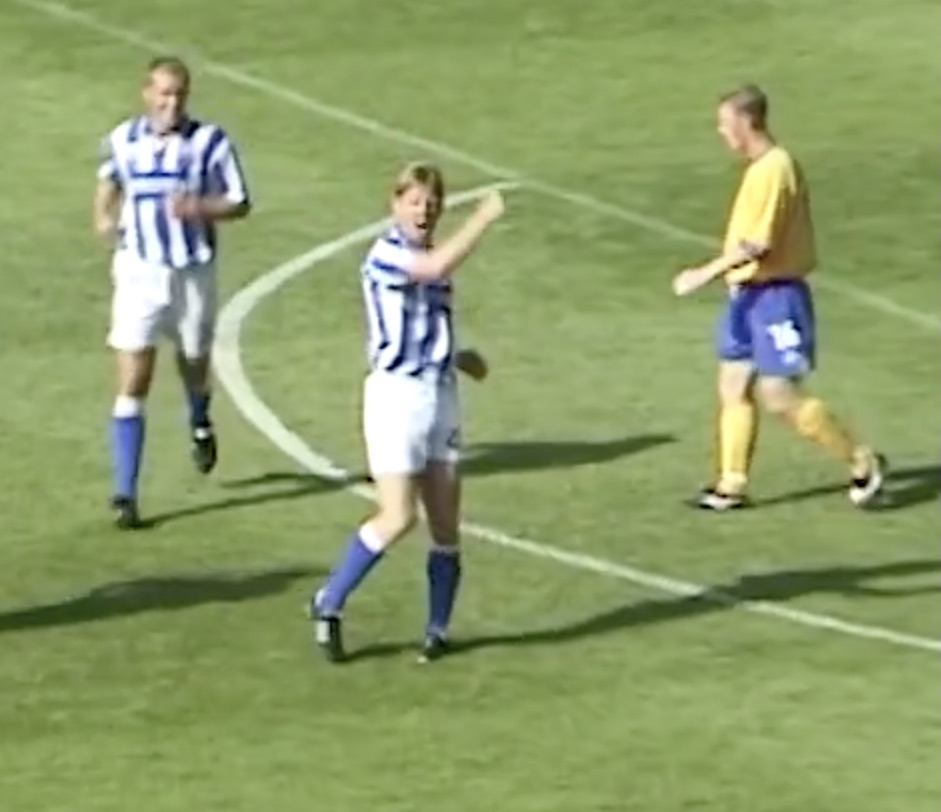


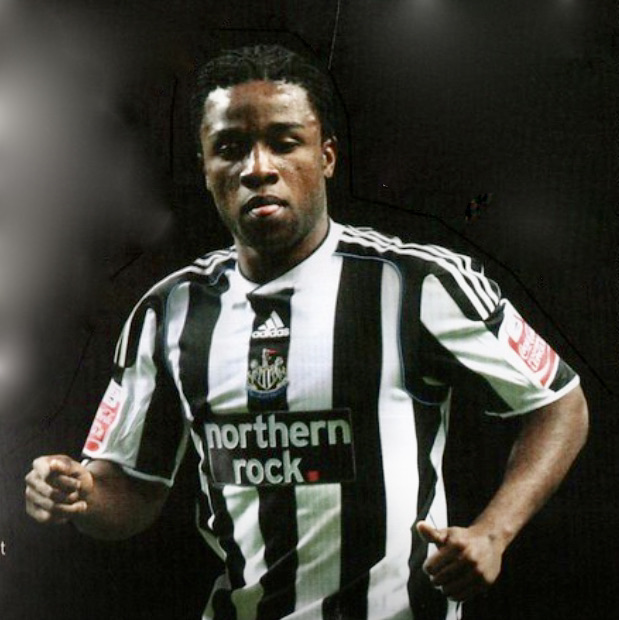
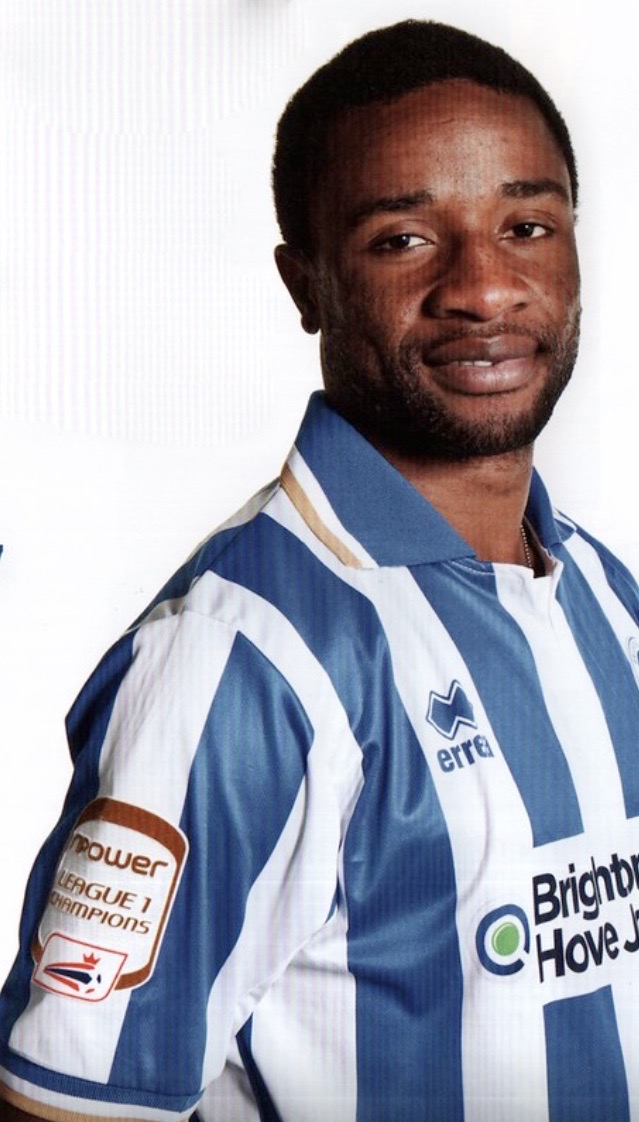

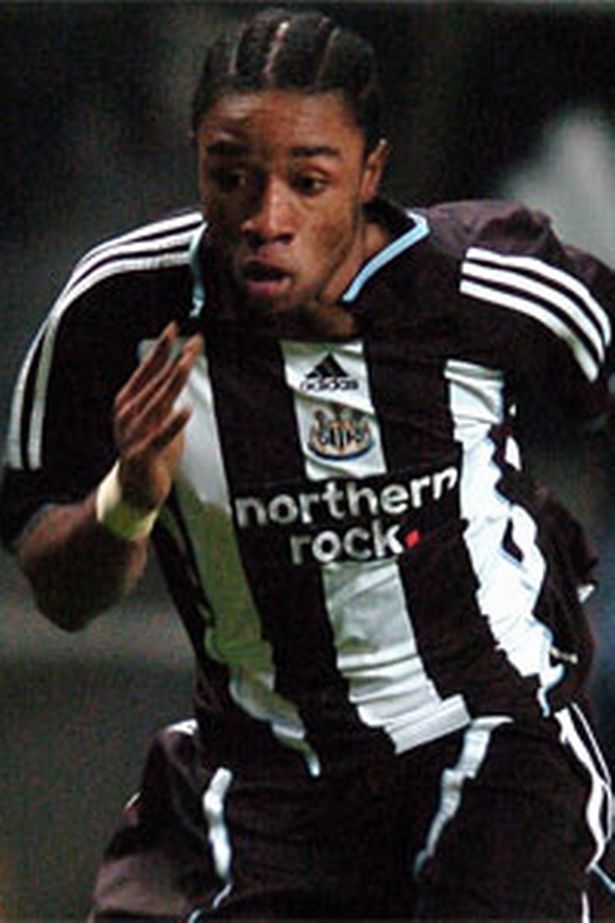
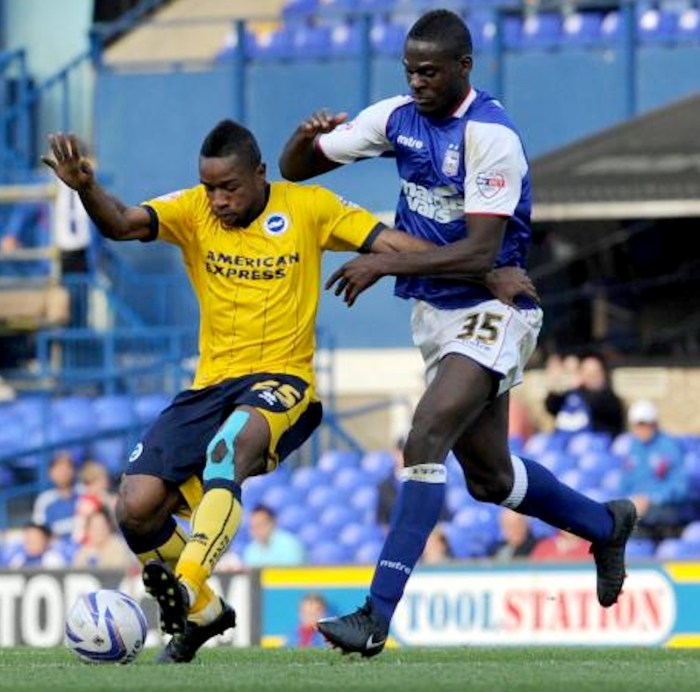

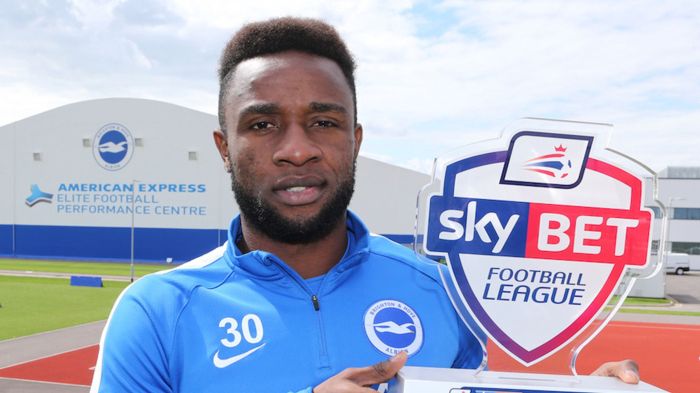


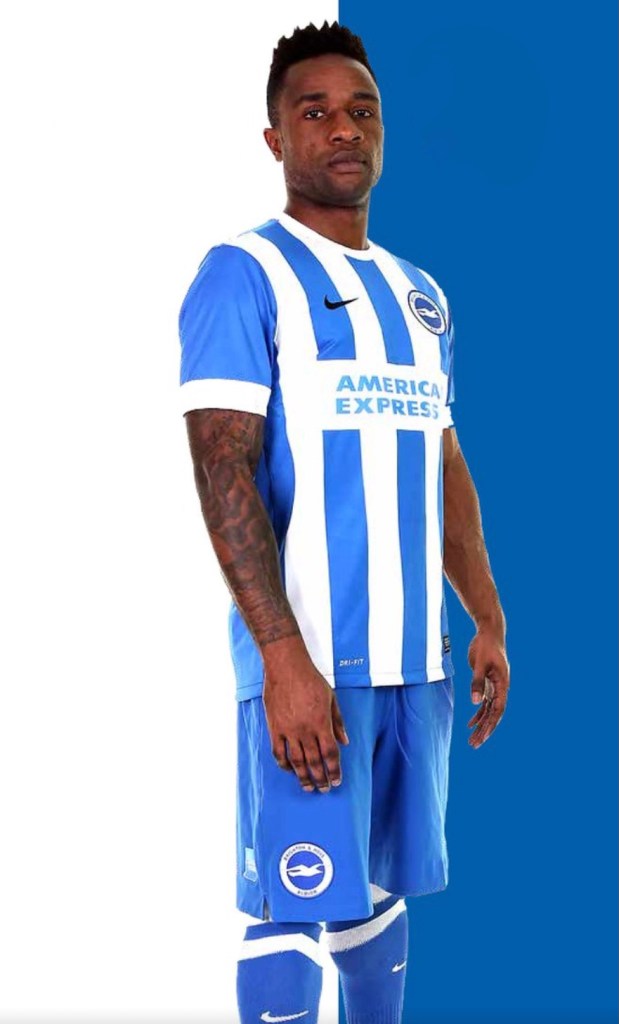

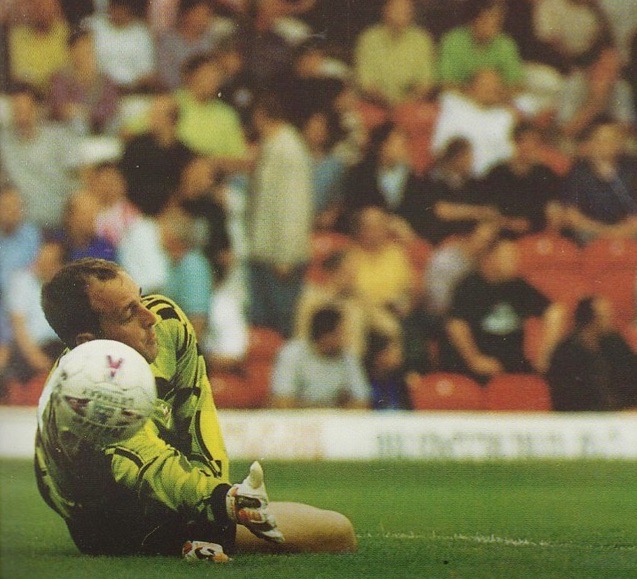
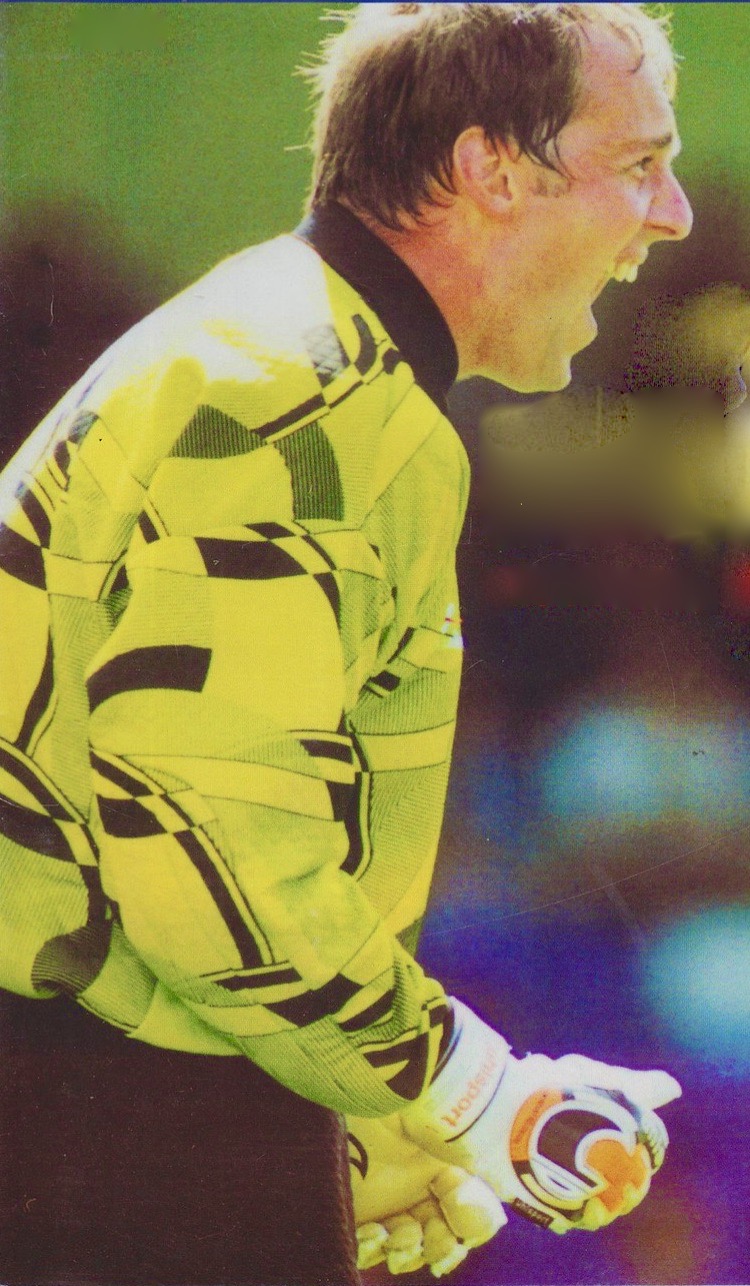
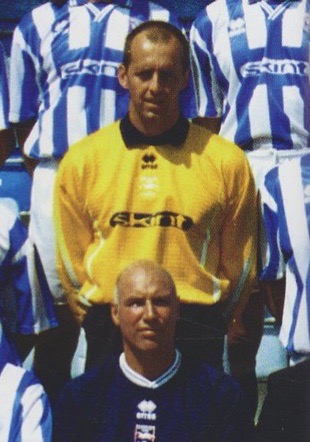
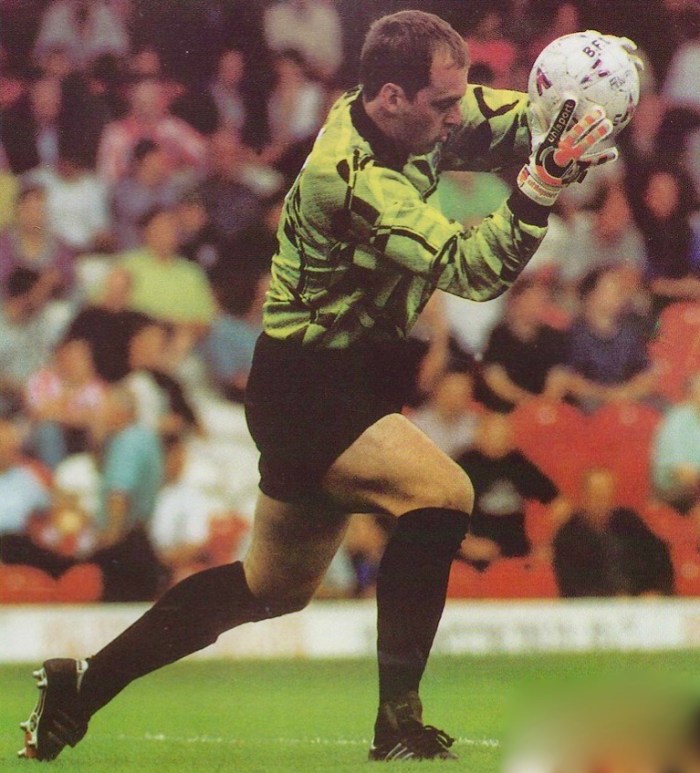

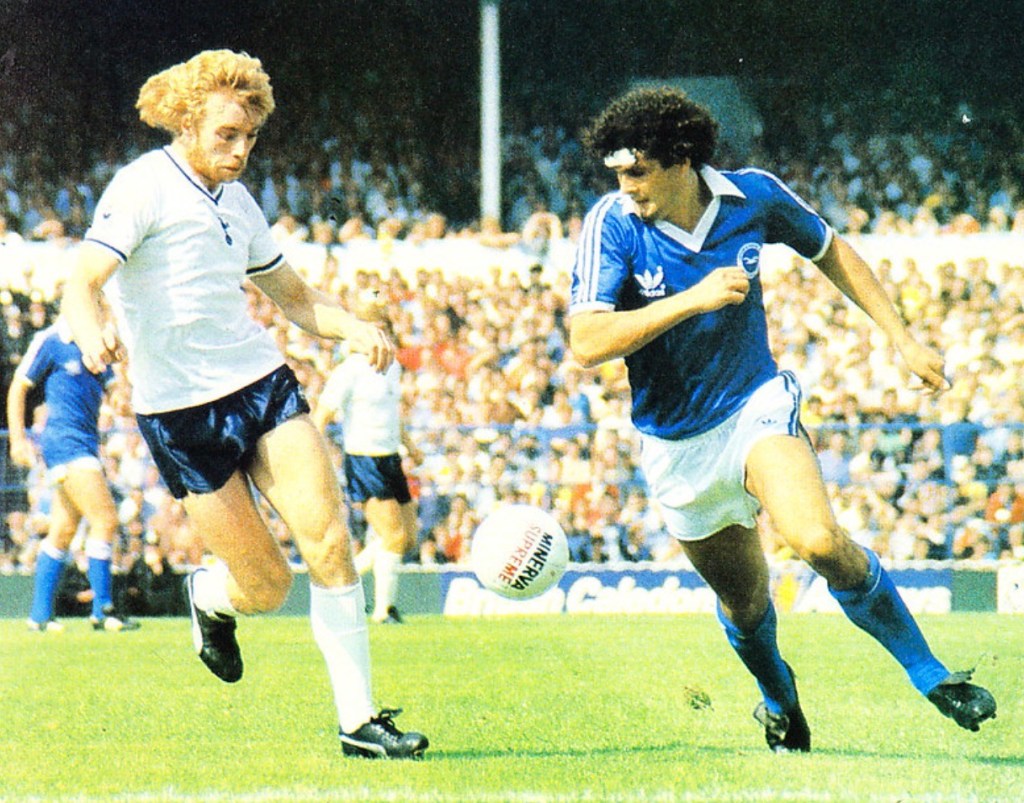
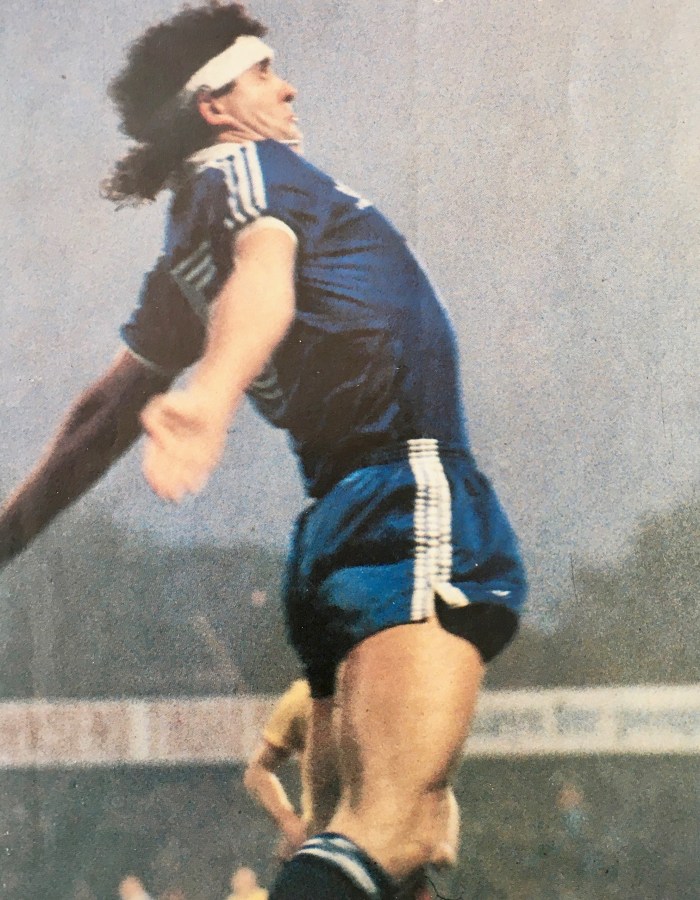
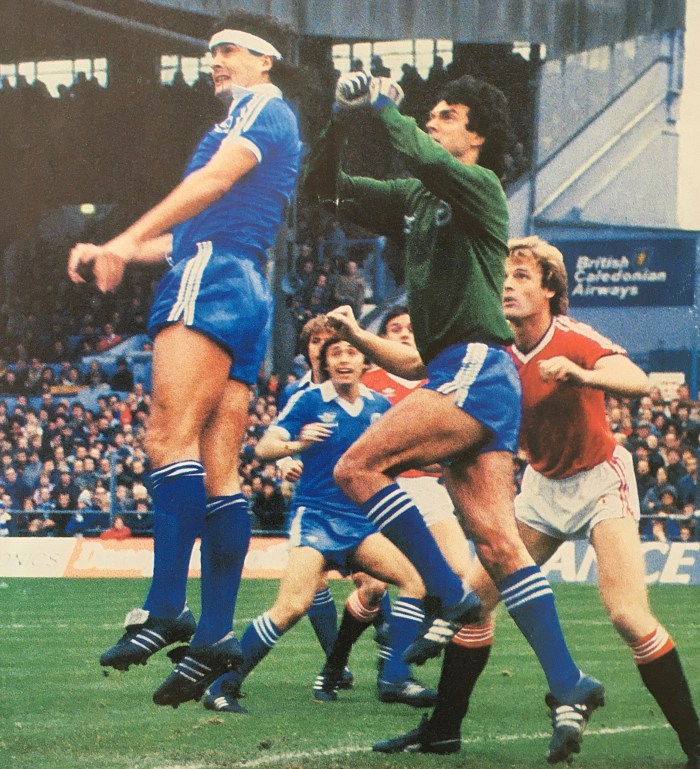


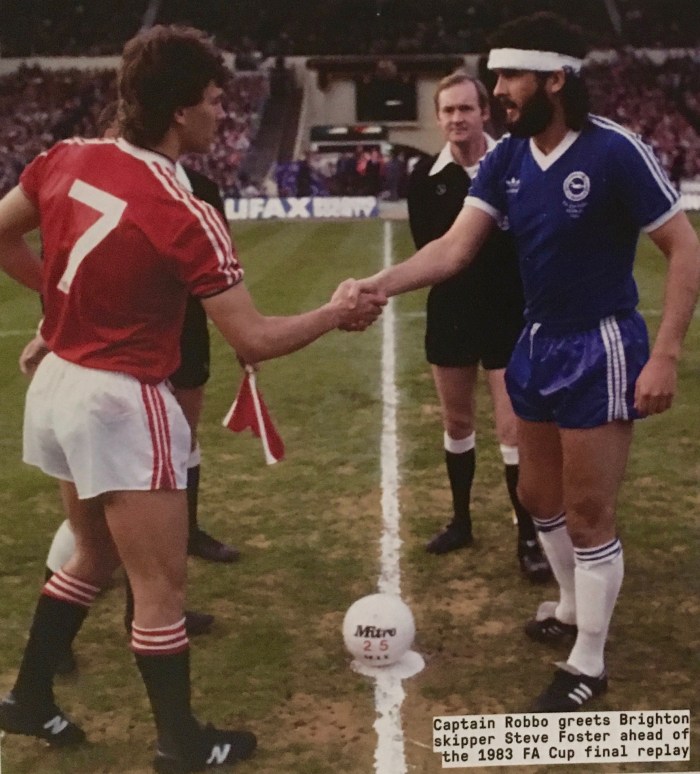
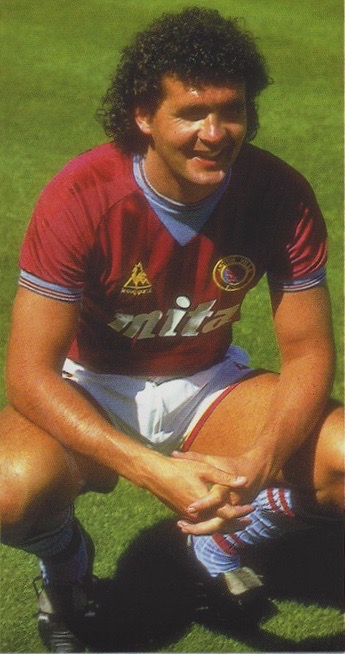
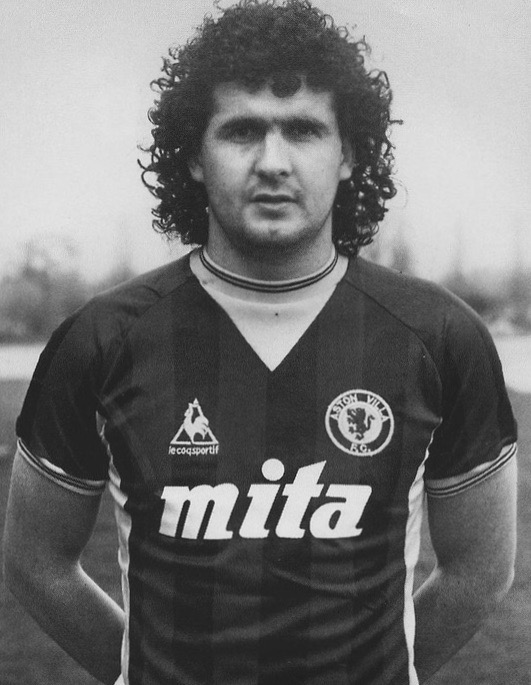


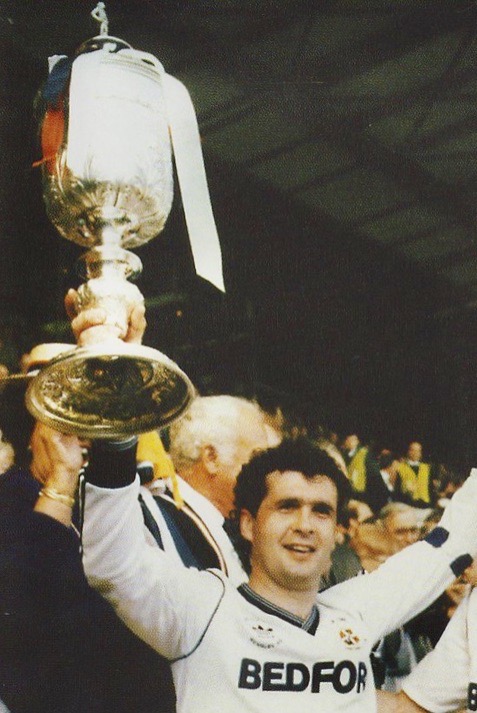
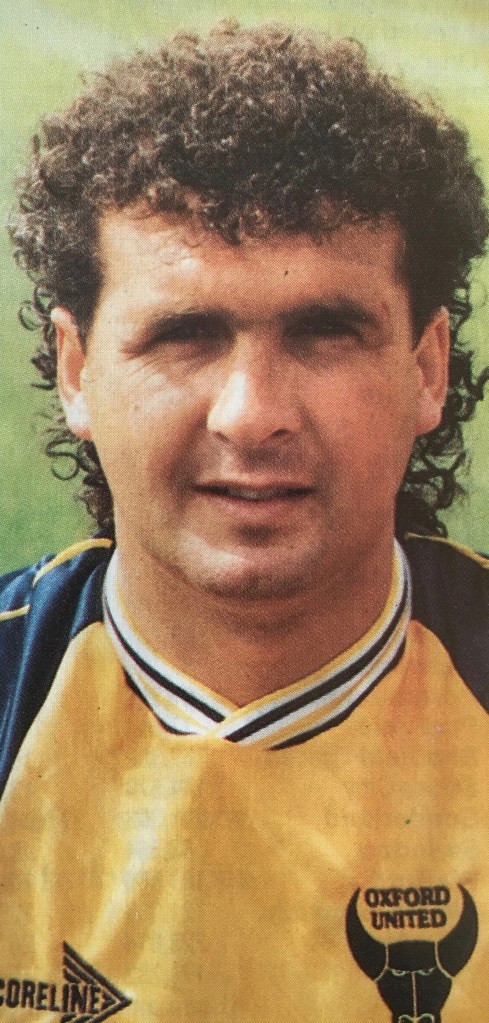



 He made his debut away to Manchester City in February 1985 and, in two spells, stayed a total of six months with the Seagulls, making 23 appearances. It wasn’t long before he earned the divisional young player of the month award and Cattlin said: “Martin has done very well and done himself great credit in coming into the heat and tension of a promotion battle and coping well.”
 “So, the young man from Oxford must have something special going for him. On the field he is a sharp, decisive player, but away from the game he is quietly spoken and unassuming.”
 Unfortunately for Brighton, Keown returned to Highbury and it wasn’t long before Howe, the former coach who’d become Arsenal manager, gave him his first team debut on 23 November 1985 in a 0-0 draw away to West Brom.
 Three years later, he became what Colin Harvey described as his best signing during his time as boss of Everton. A fee of £750,000 took him to Goodison.
 The player who had been an inspirational captain for the Seagulls has chosen not to go into detail about what happened although Warnock had plenty to say in his autobiography, ghostwritten by journalist Oliver Holt.
 Sheffield United’s Cullip gets to grips with ex- Albion teammate Guy Butters
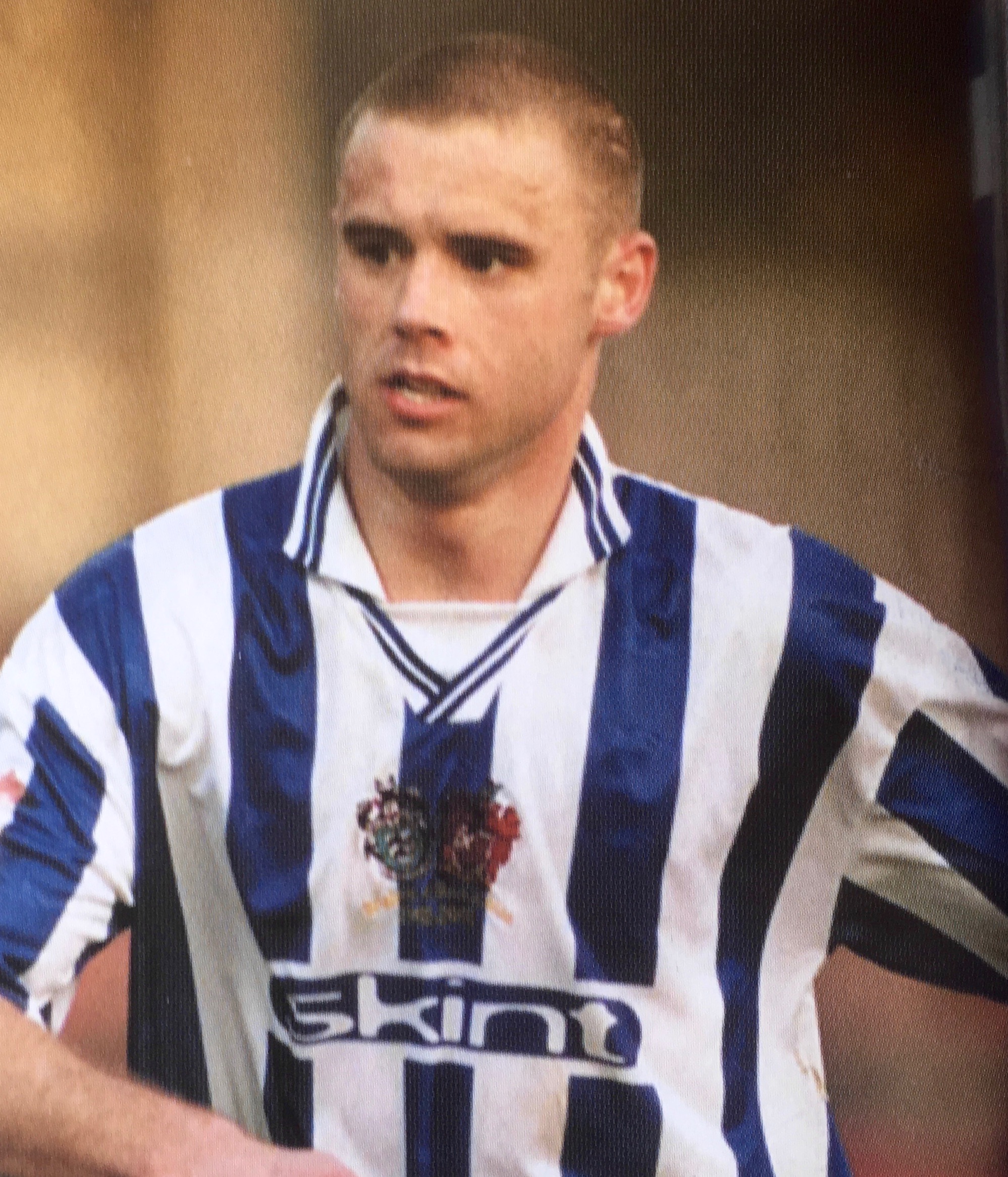 He impressed sufficiently for Adams to persuade chairman Dick Knight to make the transfer permanent, beginning an association with the club which continues to this day.

 Cullip in action for Forest, marking Albion’s Alex Revell
 Brooker scored after only three minutes in a 2-0 win away to Plymouth Argyle on 14 April 2001 (celebrating above) which secured promotion for the Seagulls, and he was a regular on the wing that season, making a total of 41 appearances. He remained a key member of Albion’s third tier promotion-winning squad in 2001-02, Argus reporter Andy Naylor summing up his contribution thus: “Most wingers have an inconsistent streak and ‘Bozzy’ is no exception, but he is a matchwinner on his day.


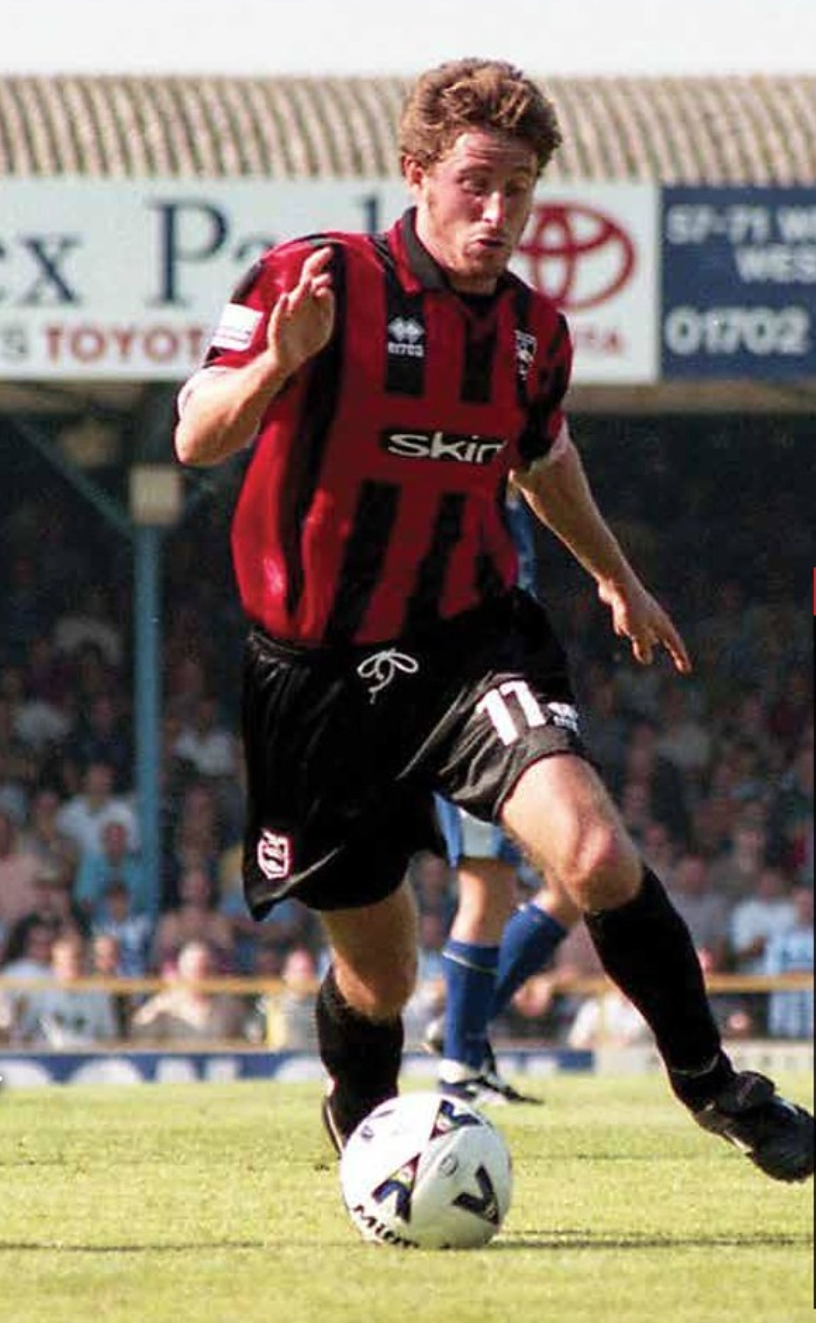


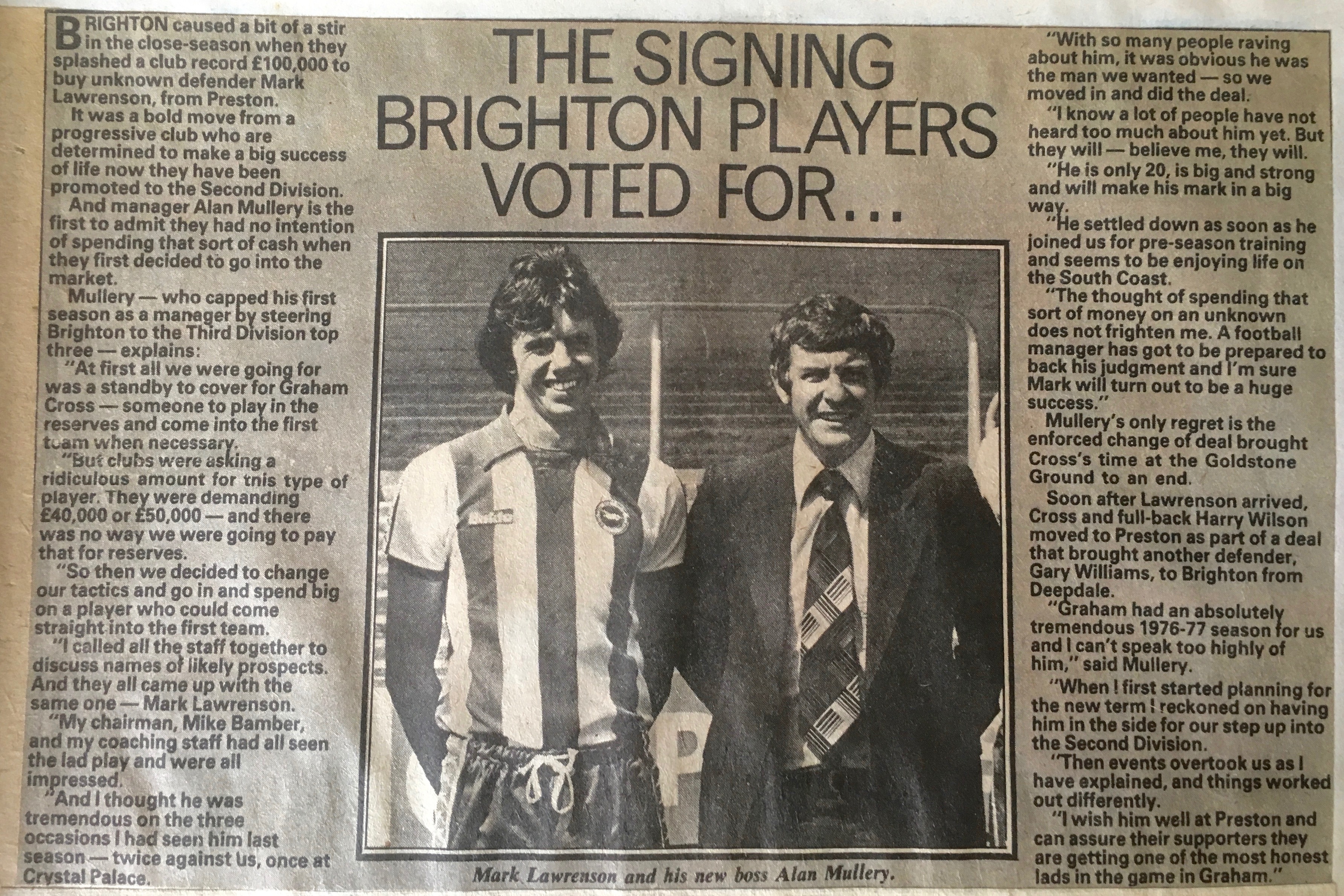
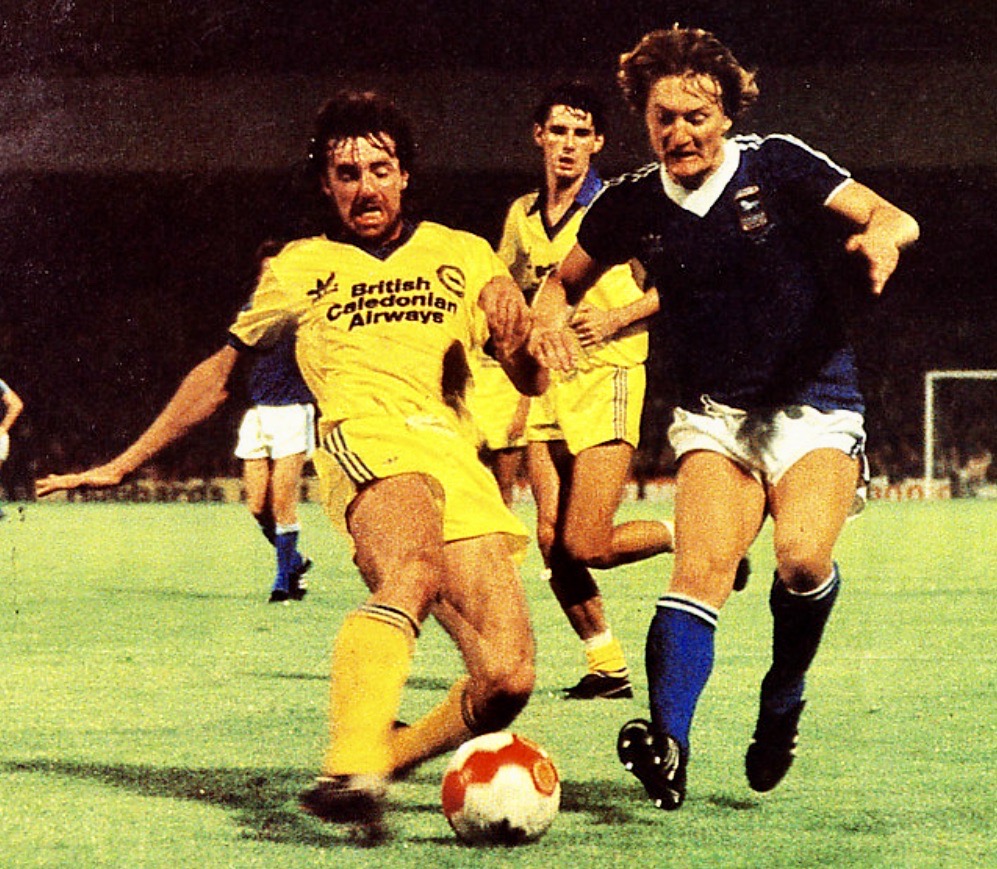 When Lawrenson was fit to return, Mullery sprung a surprise by utilising him in midfield, but it was an inspired decision and he stayed there for the rest of the season, helping Albion to finish a respectable 16th of 22.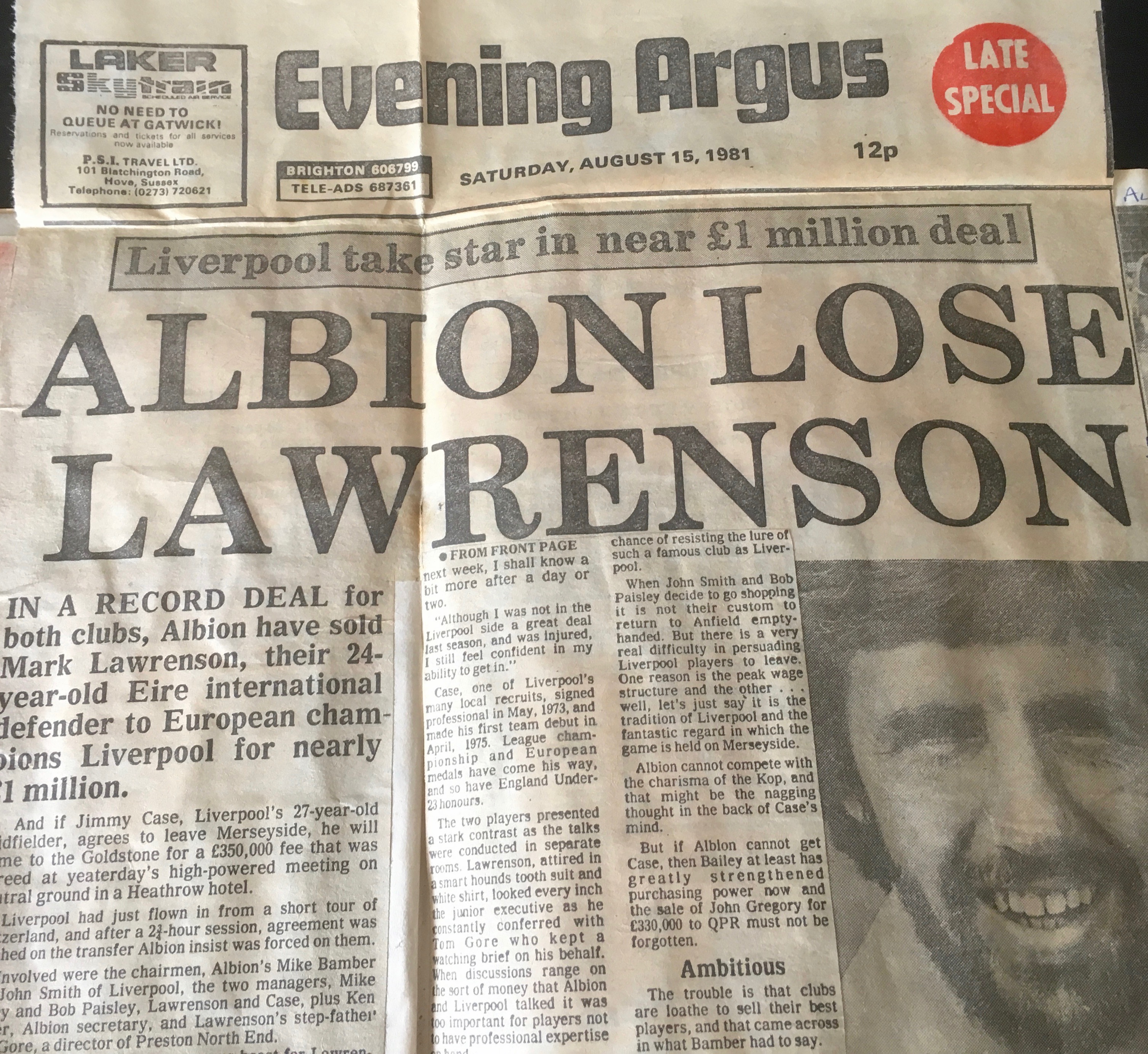
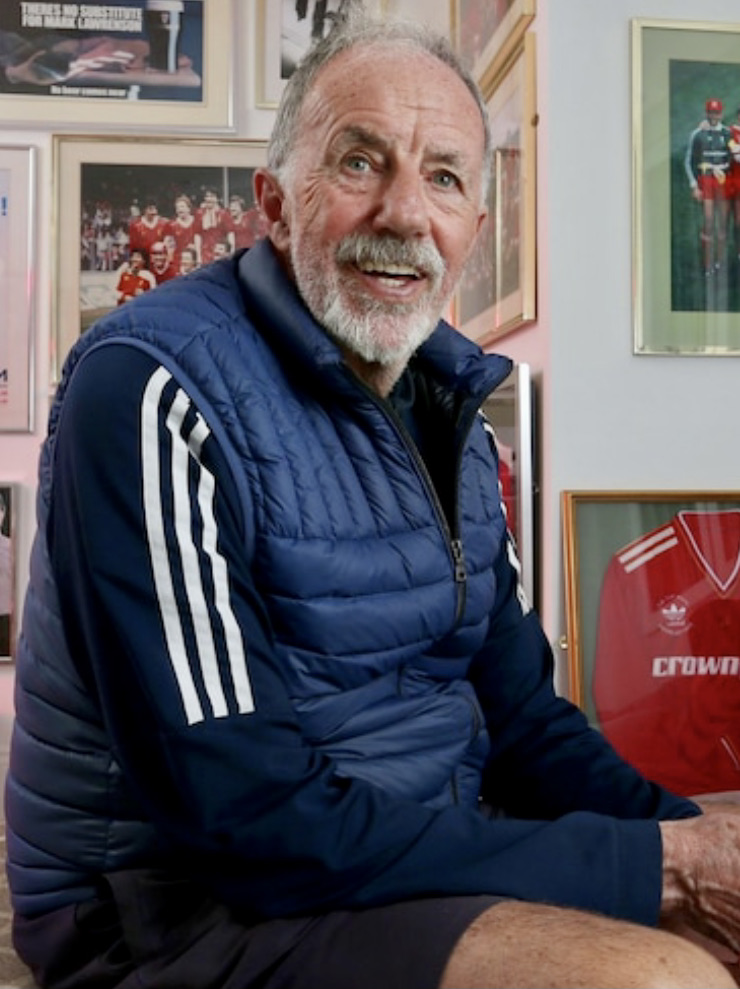
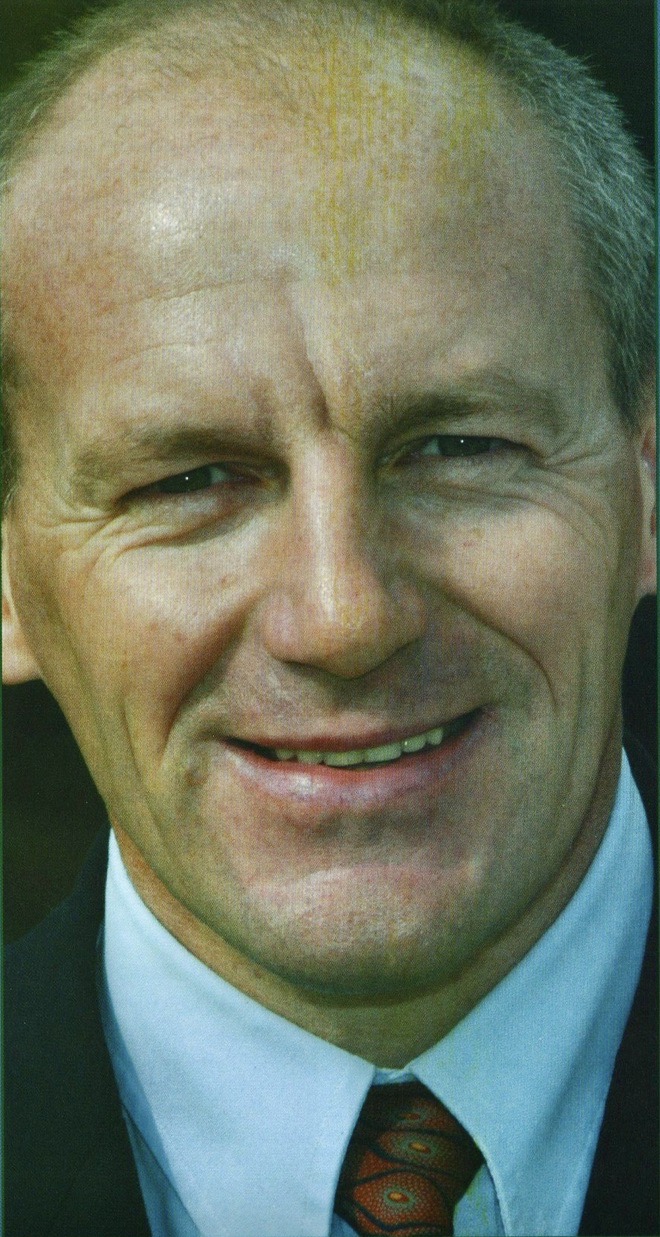 STEVE Coppell was not the first former Manchester United player I saw become manager of Brighton. More than 30 years previously Busby Babe
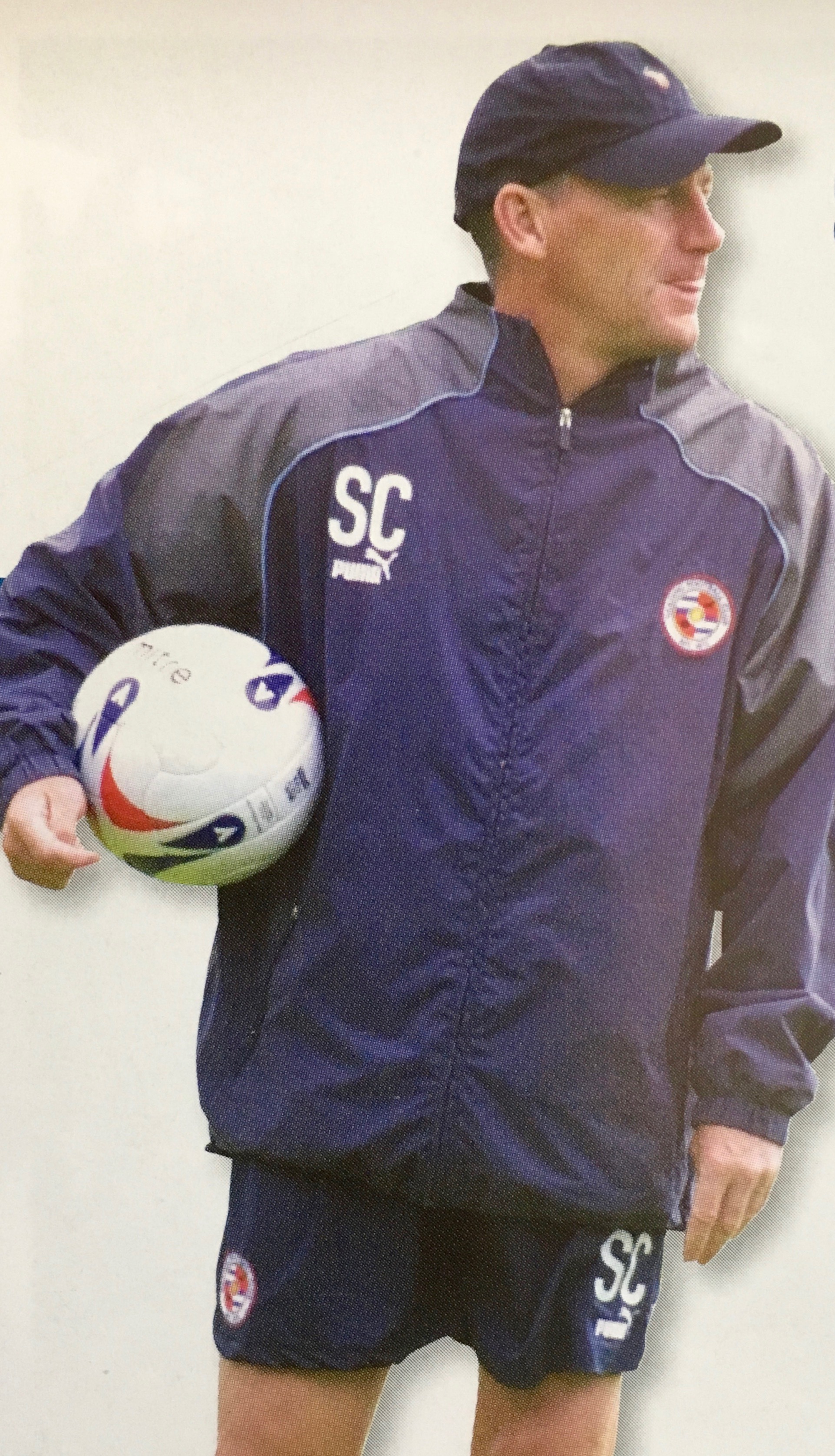


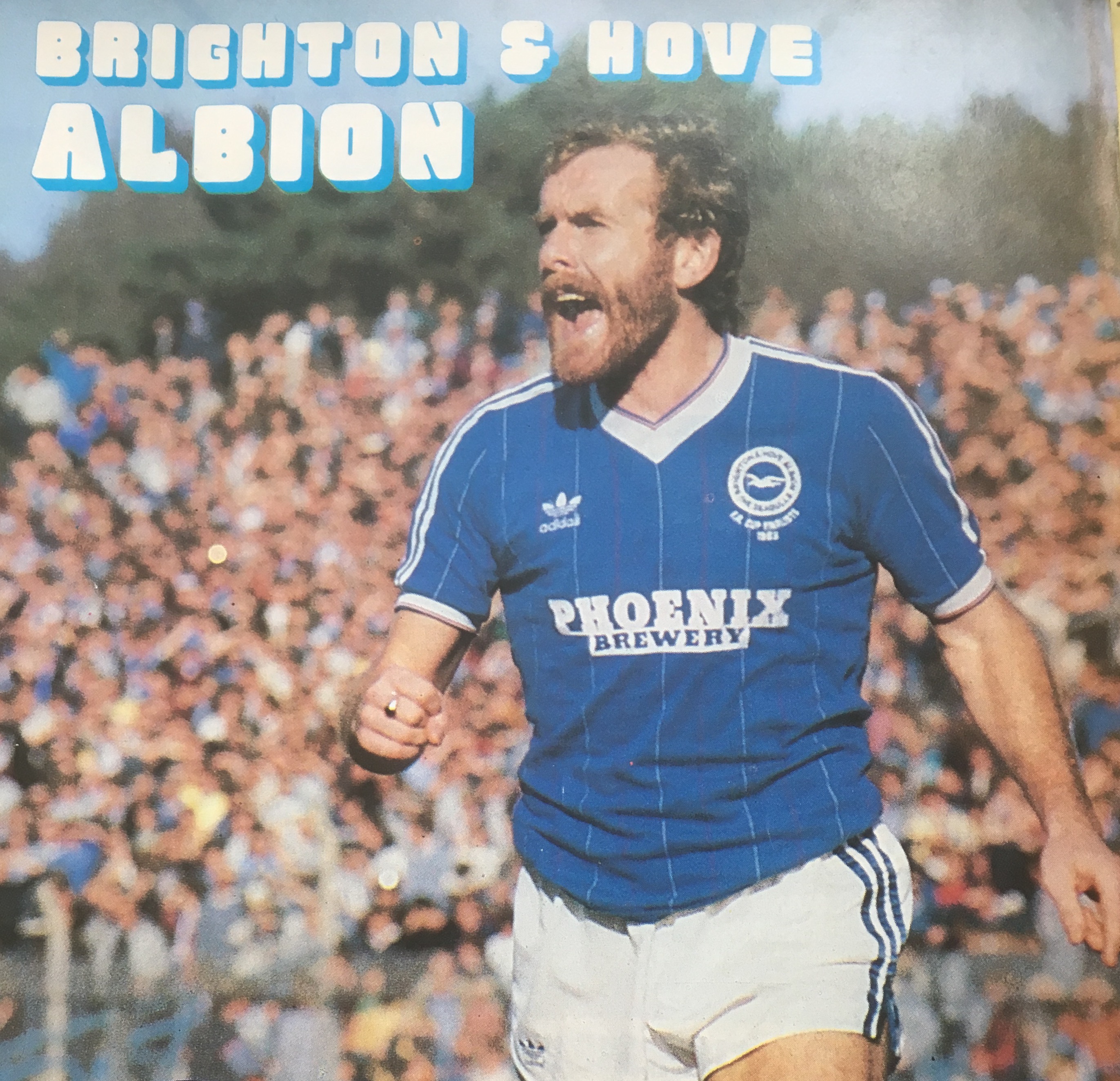 THE PLAYER who led out Brighton at Wembley for the 1983 FA Cup Final against Manchester United was an experienced Republic of Ireland international who went on to play for West Bromwich Albion.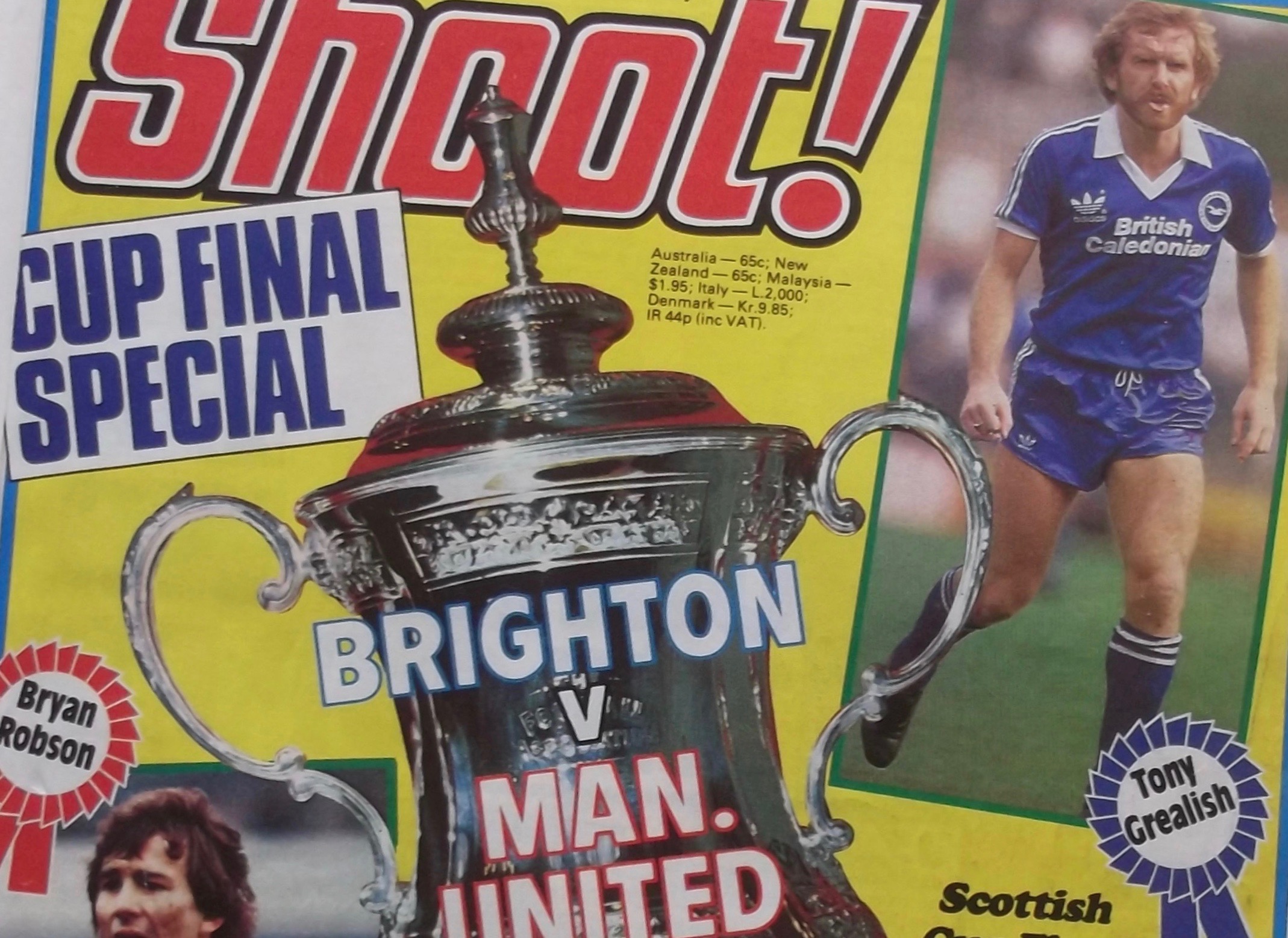
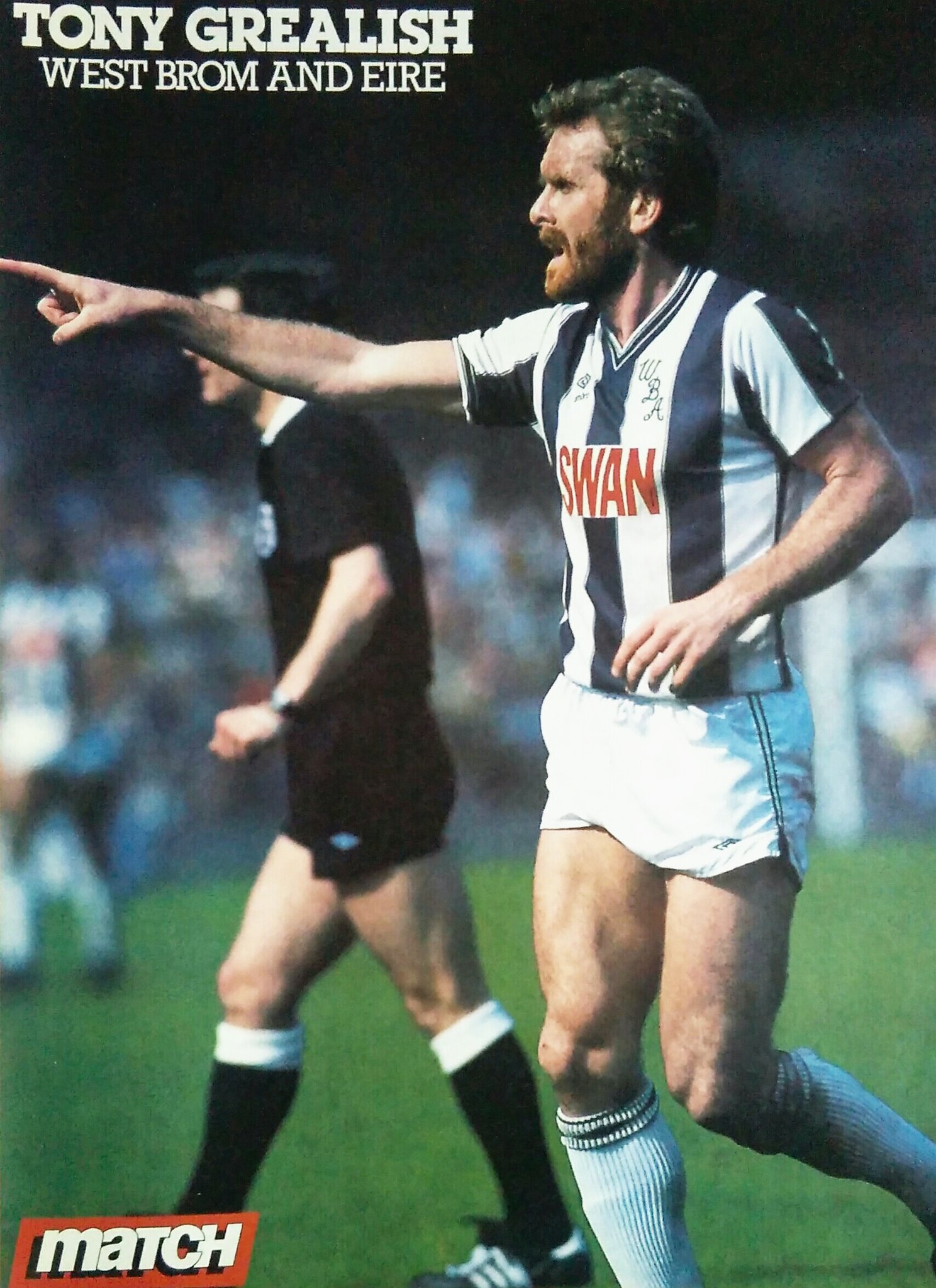


 In parallel lines