

THE FORMER Orient and Millwall manager who introduced Laurie Cunningham to the football world was twice caretaker boss of Brighton ten years apart.
George Petchey, once a player then coach at Crystal Palace, was assistant manager to Chris Cattlin in the mid ‘80s and returned to Brighton in the ‘90s as youth development manager under Liam Brady, before becoming no.2 to Jimmy Case.
Working for the Albion was certainly geographically convenient for Petchey because, even when he played, coached or managed in London, he lived in Southwick.
Petchey first arrived at the Albion in 1983 to take charge of youth development and, as described by wearebrighton.com, was the man responsible for introducing Ian Wright on trial, having been impressed when the future Arsenal and England star had tried to begin his career at Millwall, where Petchey was manager between January 1978 and November 1980.
It’s now part of football folklore that Albion rejected Wright and Cattlin opted to take on another triallist, Steve Penney, instead. Meanwhile, in November 1984, Petchey was promoted to assist the relatively inexperienced Cattlin with the first team.
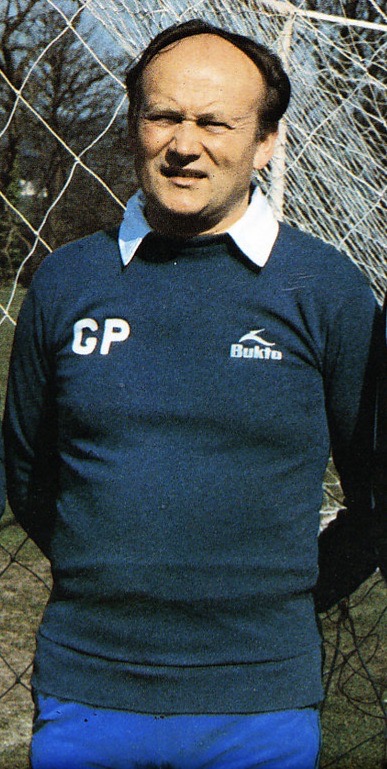
Although he was seen as a figure in the background, a profile article in the matchday programme gave a little insight into his approach.
“I can’t understand people who earn a living from football and still criticise the game,” he told interviewer Tony Norman. “I’ve been involved with it since the age of 14 and I wouldn’t change a thing.
“Molly (his wife) and I have met a lot of good people. We’ve loved the game and it has been good to us. No complaints.”
When Cattlin was sacked in April 1986, Petchey stepped up to manage the side for the final game of the season (a 2-0 defeat away to Hull City) before Alan Mullery returned as boss.
Petchey’s second stint at the Albion began in January 1994, shortly after Brady had been appointed as manager. With finances perilous during that time, bringing through youngsters was seen as an important route and Petchey was appointed to oversee that side of things.
In explaining the appointment, Brady wrote in his programme notes: “I don’t think there are many better in their field than George Petchey.
“He has had a lot of experience at management level and he has always been able to develop young players and this is something we are determined to do here.”
Brady had been to watch the youth team progress in the FA Youth Cup and he added: “There are several outstanding prospects in the side and I am sure George will guide them in the right direction.”
Within a couple of months, Brady had given a first team debut to one of them in Mark Fox.
The Argus later noted how Gareth Barry was among the young players who came through Albion’s centre of excellence under Petchey, Vic Bragg and Steve Avory.

When Brady couldn’t stomach the shenanigans of the Bill Archer-David Bellotti regime any longer, Case took charge and promoted Petchey to be his deputy, but with the background interference affecting performances on the field, Case was relieved of his duties in early December 1996.
Petchey stepped forward once again to take temporary charge, although he made it clear he didn’t want the job on a permanent basis. Indeed, he recommended two of his former Orient players be considered for the post.
“I was asked for my suggestions and I recommended Dennis Rofe and Glenn Roeder,” said Petchey, who was 65 at the time. “Hopefully, it will be one of them.”
It was perhaps par for the course that the hierarchy decided to choose someone else, and, within a week, Steve Gritt was appointed.
When Petchey – the first English coach to complete his UEFA coaching qualifications – died aged 88 on 23 December 2019, the tributes paid to him reflected the impact this highly respected football man had on a good many people.
The football writer Neil Harman said: “We often overlook the genuine, honest people, who made football what it is, who went the extra mile, who turned people’s lives around. RIP the great Leyton Orient manager George Petchey who set Laurie Cunningham and many others on the road to stardom.”
David Gipp, a Brighton player in the late ‘80s, tweeted: “took me from London at 14; taught me so much” and John Sitton, who played under Petchey at Millwall, described him as “one of the best managers in the game”.
Born on 24 June 1931 in Whitechapel, London, Petchey’s early footballing experience was in Essex with the Romford and Hornchurch Schools teams. The excellent theyflysohigh.co.uk website details his career, revealing how, on leaving school he played for Upminster Minors and Juniors from 1945 to 1947 before joining West Ham United as an amateur in August 1947.
He signed professional on August 31, 1948, and two days later made his first appearance as a professional against Chelsea ‘A’ at Upton Park in the Eastern Counties League.
The website explains how National Service interrupted Petchey’s career, although he was still able to play fairly regularly for the Hammers’ ‘A’ team and Football Combination side. It wasn’t until 1 September 1952 that he made his senior debut at the age of 21, playing alongside Ernie Gregory, Malcolm Allison and Frank O’Farrell in a goalless Second Division draw with Hull City at the Boleyn Ground.
Wearing the no.10 shirt, Petchey kept his place for the next game, a 2-1 home defeat by Birmingham City, but he only made one other first-team appearance, on 13 November that year, starting alongside Allison, Noel Cantwell and debuting forward Tommy Dixon in a 3-2 Essex Professional Cup win at Colchester United.
A wing-half, he was described by whufc.com as “a tough-tackling, hard-working defensive midfielder who could also pass the ball with vision and accuracy”.
In July 1953, Petchey moved on to Queens Park Rangers, scoring on his league debut in a 2-1 win at Bristol City on 22 August. Even then, he was commuting to London from Portslade.
QPR supporter Steve Russell spoke fondly of Petchey in an article for indyrs.co.uk, remembering a “tough-tackling, fearless, dynamic” player who took no prisoners.
Petchey scored 24 goals in 278 league and cup appearances for QPR, in the days when they were a Third Division side.
He dropped down to the old Fourth Division to sign for Palace in June 1960 but helped them to promotion in his first season at Selhurst Park.
Petchey’s playing days at Palace came to an early conclusion due to a serious eye injury but the esteem in which he was held was reflected in the quality of players on show at his testimonial match at Selhurst Park on 15 November 1967.
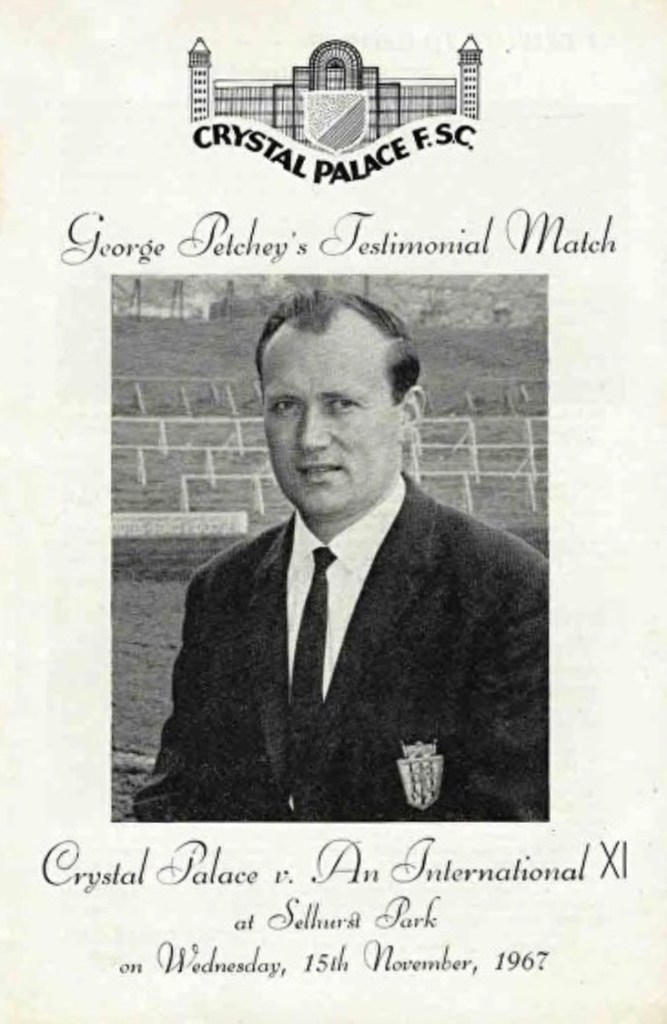
Palace took on an international XI which featured West Ham’s World Cup winning trio of Bobby Moore, Geoff Hurst and Martin Peters, together with the likes of Chelsea’s Peter Osgood and Manchester City’s Colin Bell in front of a crowd of 10,243.
Petchey turned to coaching at Palace, initially under Arthur Rowe and then Bert Head, under whom Palace won promotion to the old First Division in 1969. That side’s goalkeeper, John Jackson – who subsequently followed Petchey to Orient, Millwall, and the Albion as a coach – attributed his achievements to Petchey, telling cpfc.co.uk: “He used to work me hard but the harder you worked at your game the more you learned and the better you would become.

“He made me a more confident player which led to me being more vocal behind the back four, and I always remember Thursday being called shooting practice day so it would become a session where I would put in a massive shift!”
When Jimmy Bloomfield was lured from Brisbane Road to manage Leicester City in 1971, the Os turned to Petchey to continue to build the side the former Arsenal player had developed.
He did just that over six Second Division seasons between 1971 and 1977, Petchey recruiting a number of players who’d previously played under him at Palace; the likes of goalkeeper Jackson, John Sewell, David Payne, Bill Roffey, Alan Whittle and Gerry Queen.
They came agonisingly close to winning promotion to the elite, missing out by a single point in 1973-74, and they took some notable scalps as cup giant-killers.
It was during his reign at Brisbane Road that Petchey discovered Tony Grealish playing on Hackney Marshes and unearthed the raw talent of the mercurial Cunningham, who he would later reluctantly sell for big money to West Bromwich Albion.
Petchey and his assistant Peter Angell carefully nurtured the young Cunningham, hoping his obvious talent would outweigh some of the demons in his life.
“We had one or two problems with him in the early days,” admitted Petchey, as told here. “There was a time when Peter Angell and I wondered if we could win Laurie over. He had to struggle in life and was the sort of youngster who was used to living on his wits.
“He was suspicious of people outside his own circle. He took a long time to trust other people. He often turned up late for training, the eyes flashed when we fined him, but for all that I loved the spark that made him tick.”
Cunningham later admitted: “It was George Petchey and Peter Angell who showed me that the only person who could make my dreams come true was, in fact, myself.”
Petchey gave 18-year-old Cunningham his first-team debut in the short-lived Texaco Cup tournament against West Ham at Upton Park on 3 August 1974. Although Orient lost 1–0, Petchey said afterwards: “It took him a little time to get adjusted to the pace of the game but I was delighted with the way he played from then on. He has a natural talent. He has the speed and agility to take on men. He never gives up. There’s a big future ahead for him.”
Cunningham’s rise to playing for England and Real Madrid was told in the 2013 documentary film First Among Equals and Petchey was a prominent interviewee featured.

When eventually Orient couldn’t resist big money offers for him any longer, the winger went to West Brom for £110,000 plus two players (Joe Mayo and Allan Glover) on 6 March 1977.
“I did not want to sell him, but we were over our limit at the bank and West Brom were ready with a cheque,” said Petchey at the time. “Obviously I’m very disappointed at losing a player who I have seen progress from the age of 15 and I think he was as reluctant to leave as we were to see him go. But it was an offer of First Division football which he could not refuse.”
Petchey enjoyed less success at Millwall. Although he managed to stave off relegation after succeeding Gordon Jago in early 1978, the Lions were relegated from the second tier the following season.
It was during that term he bought Brighton winger Tony Towner for £65,000 after the Sussex lad had lost his place to new signing Gerry Ryan. It wasn’t all doom and gloom though because Millwall’s youngsters won the FA Youth Cup in 1979, beating Manchester City 2-0 (over two legs).
After he’d left the Albion for a second time, Petchey continued to work in football, appointed chief scout at Newcastle United by Sir Bobby Robson, and he later took on a coaching role.

 BRIGHTON fans never got to witness the best of prolific goalscorer Gary Rowell who, to this day, Sunderland fans eulogise in the same way Albion fans still sing about


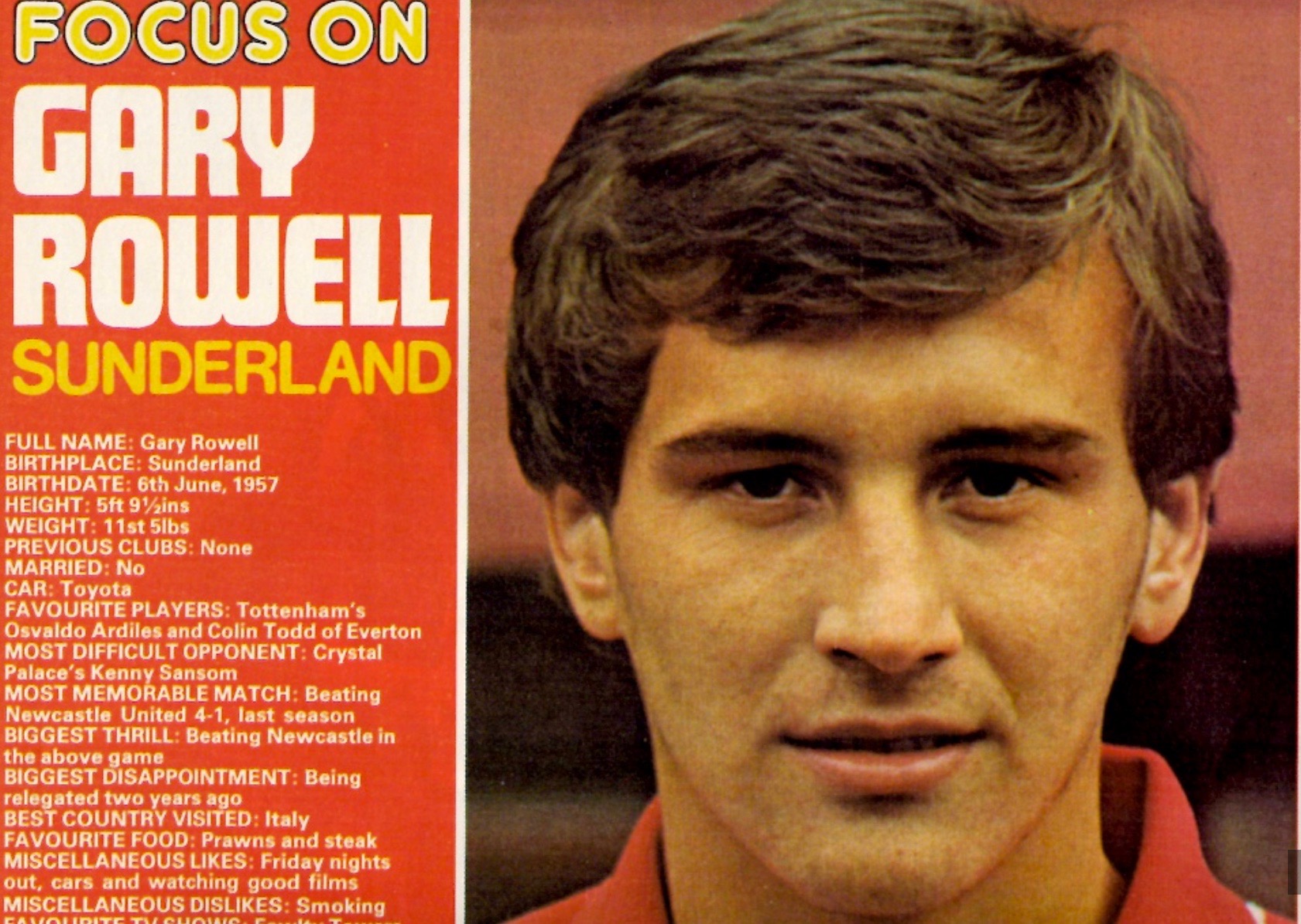 Undoubtedly, the stand-out moment of Rowell’s Sunderland career came when he


 In parallel lines