Zamora found the F in Fulham for barracking boo boys

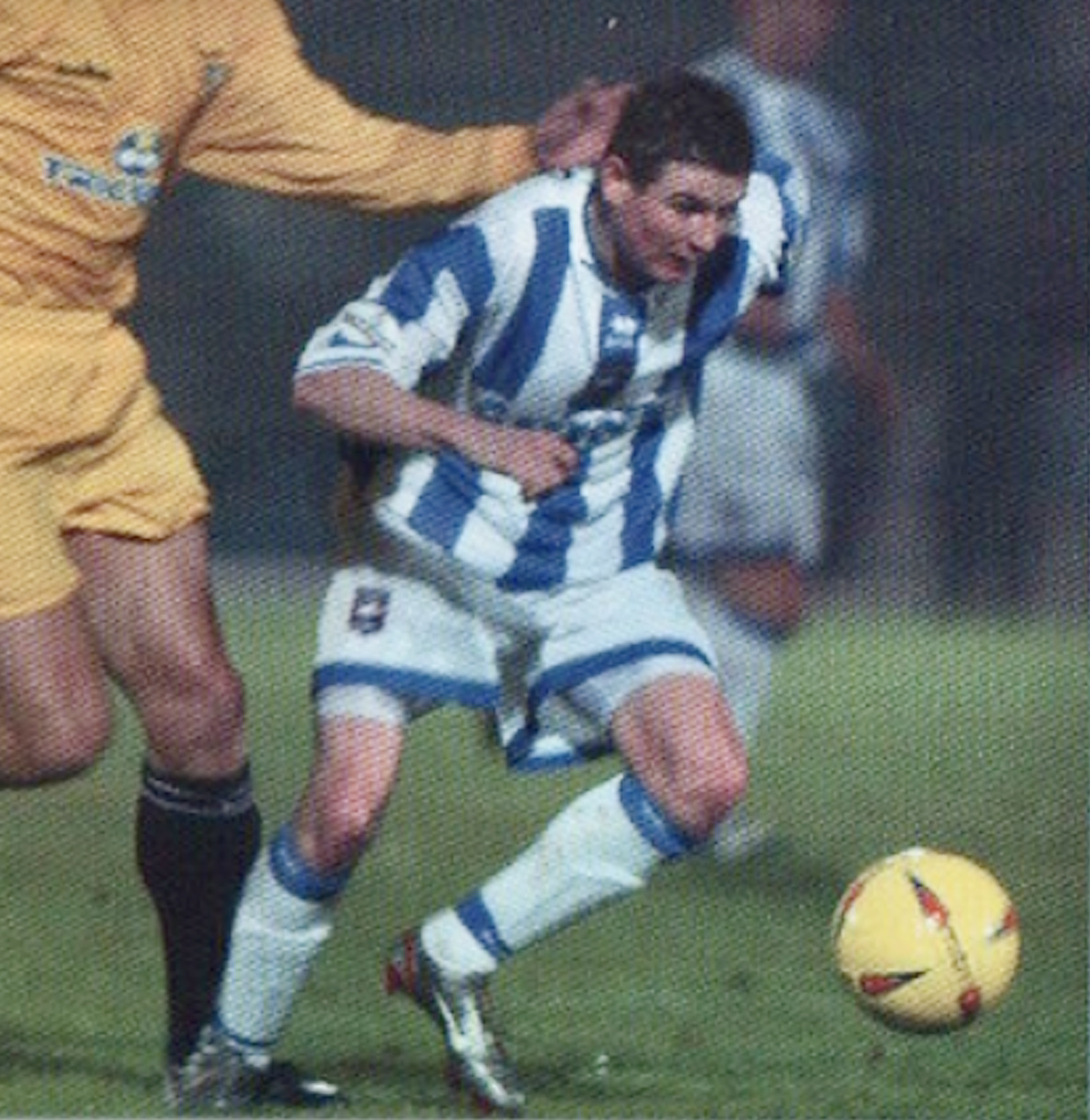
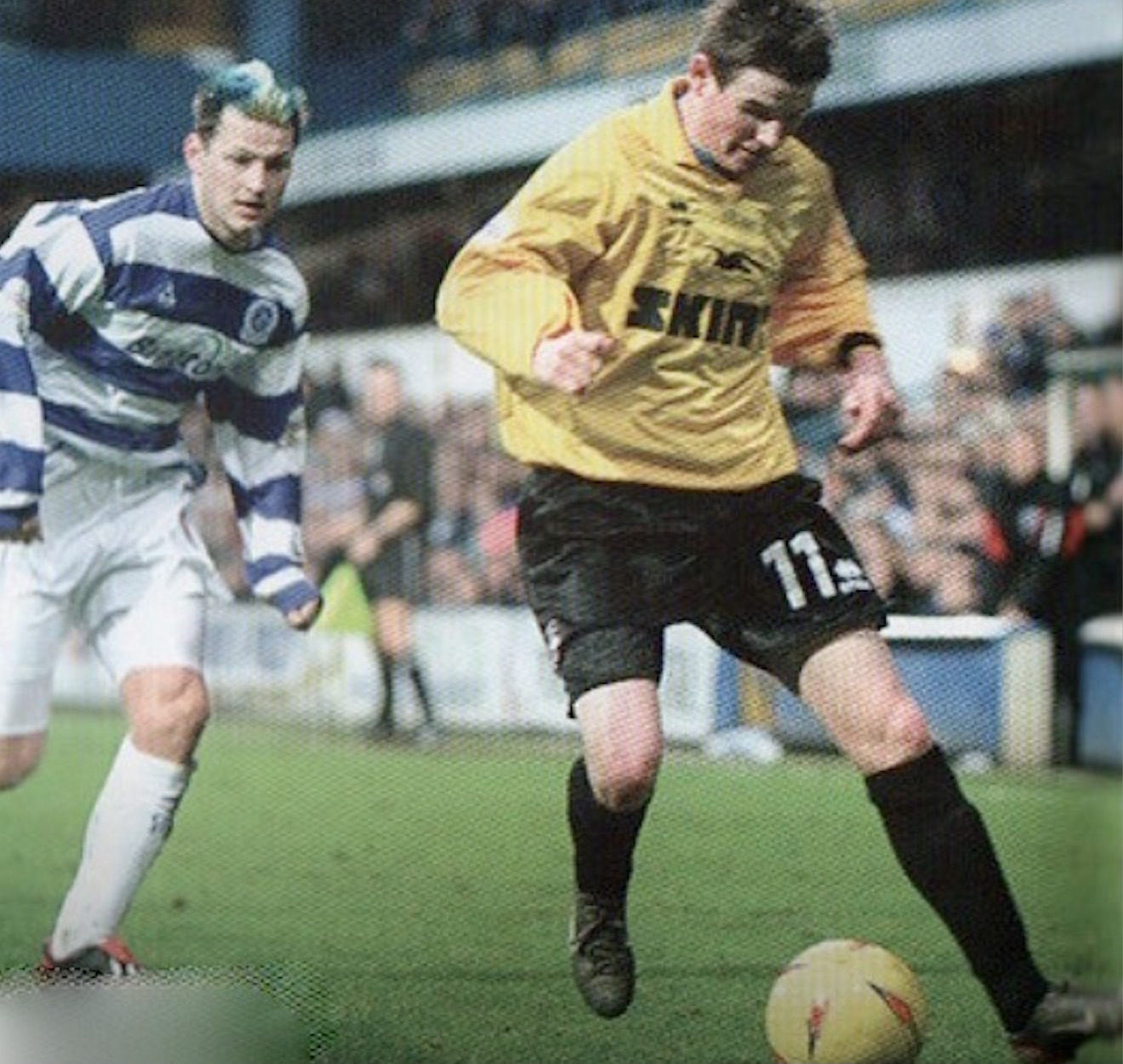
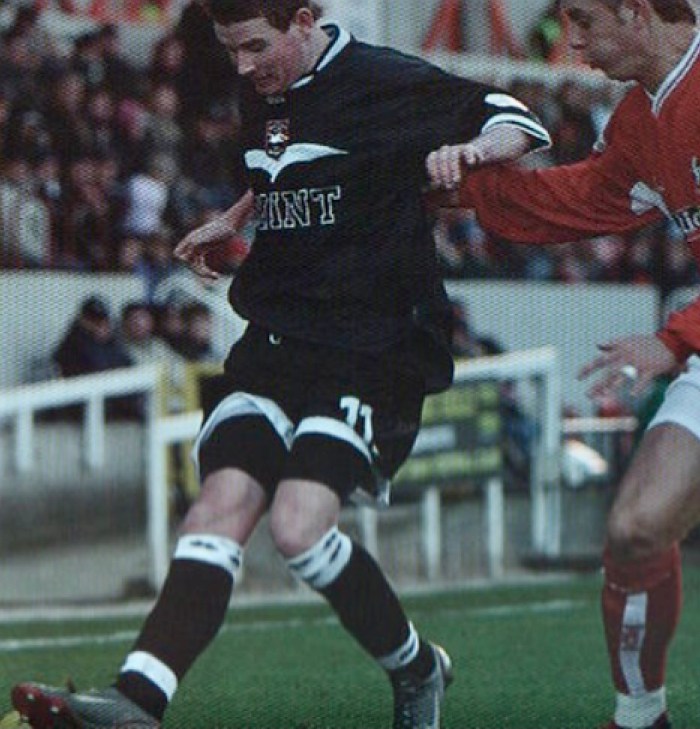
Albion favourite Bobby Zamora

BOBBY ZAMORA was arguably at the top of his game when he played for Fulham, even though some supporters begged to differ.

Although he had played Premier League football for Spurs and West Ham, the form he showed in Roy Hodgson’s side finally propelled him into the England reckoning.

And he might even have gone on to greater heights after the rich goalscoring vein he hit in the 2009-10 season: Hodgson wanted to sign him for Liverpool, but he preferred to stay in the south.
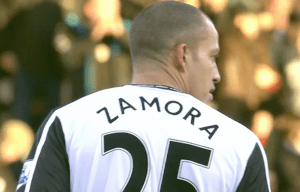
Zamora had been surprised to discover West Ham had sold him to Fulham without any consultation at the start of the 2008-09 season, but he knuckled down to play a supporting role as Fulham finished seventh in the Premier League.

Certain sections of the Fulham faithful were expecting more than the four goals he scored, even though the player was fulfilling the manager’s brief, and let their feelings be known.

The player eventually had enough of the barracking and, after he had scored the only goal of the game to beat Sunderland in December 2009, he confronted them and invited them to “shut your fucking mouths”.

Hodgson defended him saying: “He has been a key player for us. Just a very good player.”

Finding the net for Fulham

In no mood to apologise for his outburst, Zamora told Amy Lawrence of The Guardian he found some of the stick unacceptable.

“I just can’t get my head round some people,” he said. “If you are a supporter, support your team. You expect it at away grounds, fair enough, but from your own supporters it is a bit strange.

“It wouldn’t make me want to leave but it’s not nice. I wish at times football could be a happier environment.
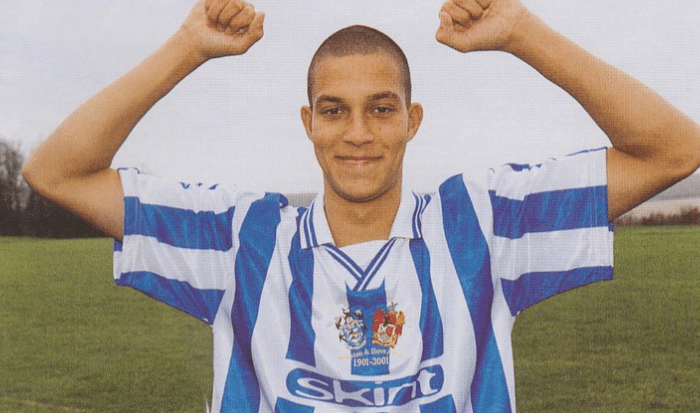
Young Zamora scored goals for fun at Brighton

While Brighton fans had witnessed Zamora leading from the front and scoring goals for fun, at Fulham he was asked to play a different role, and it disappointed him that people were only judging him on goals alone.

“If you ask Joe Bloggs down the street how many assists I have had this season they wouldn’t be able to tell you. Or how many team-mates I have set up for a shot at goal. Or pass completion. They just know goals, full stop,” he said.

“I was asked to play more as a defensive centre forward,” he said in an interview with the Fulham website. “It’s a job I did and I enjoyed putting AJ (Andrew Johnson) through.

“The team appreciated it; the fans possibly not. We didn’t finish seventh because I didn’t do a job. Ultimately it helped the team. Roy had faith in me and I’d like to think I repaid him.”

Zamora added: “The gaffer has been behind me from day one. There was a lot of pressure on me to score goals. Because I wasn’t, the press and the fans didn’t think I should be playing. But the gaffer and the players appreciated what I was doing for the team. That’s all that matters.”

‘Gentleman Jim’ on friendsoffulham.com recalled: “He had it in for some fans who kept booing him or saying he was not the best player and not supporting him.

“He was quite harshly criticised at the time by the fan base because he wasn’t scoring, but his general play and hold up play was very good for most of his time here.

“Whilst he could’ve managed the situation differently to endear himself more to the fans, he was combative and ended up doing very well for us.”

On the same forum, Graham Leggat said: “His best was as good as Mitro (Aleksandar Mitrovic) at his best for us and Saha (before we sold him to Man Utd). I would say even higher. He was absolutely unplayable, even if he didn’t bang in as many as the other two. A true Fulham great.”

Zamora might have escaped the Fulham boo boys if he’d accepted an approach from Hull City but he chose to stay, much to Hodgson’s delight, and went on to produce his best form.

He scored 19 goals in the season when Fulham finished 12th in the Premier League and made it through to the final of the Europa League (the first season of the revamped competition previously known as the UEFA Cup).

Zamora had been a fitness doubt before the game against Athletico Madrid in the People’s Park Stadium in Hamburg and he had to give way to Clint Dempsey 10 minutes into the second half.

The game went into extra time with the score 1-1 after 90 minutes and agonisingly Fulham succumbed to an extra time winner scored by ex-Man Utd striker Diego Forlan. Sergio Aguero, later of Man City fame, beat defender Aaron Hughes and crossed for Forlan to flick the ball home four minutes from the end.

The achilles injury Zamora had picked up prevented him from joining Fabio Capello’s England squad for the 2010 World Cup and he underwent surgery instead of heading out to South Africa.

As described in a previous blog post, Capello nevertheless kept Zamora in mind and the striker did eventually get his chance with the national side.

It was that same summer that Hodgson left Fulham to take over at Anfield and as the August transfer deadline loomed the manager hoped to persuade Zamora to join him at Liverpool.

But the player’s wife had just had twin daughters and he didn’t want to uproot the family. He was also getting on well with Hodgson’s successor Mark Hughes.

“I enjoyed my time with Mark, he came at the start of the season, I had a good pre-season with him,” he told the Say It and Spray It podcast. “Roy came in for me at Liverpool and Harry Redknapp came in for me at Spurs, but Mark said he wanted me to stay, and I’d just had my twins in August.

In the event, Zamora signed a new four-year contract – and the very next day suffered a broken leg in a tackle by Wolves’ Karl Henry.

He was sidelined for five months but managed to return before the end of the season, scored seven goals in 16 appearances and finally got to play for England that summer.

When Hughes decided to leave Fulham after just one season in charge, Zamora expressed his shock in newspaper interviews. “There was no hint of it,” he told the Mirror. “It was going well. Everyone had bought into his ideas and were just starting to play the way he wanted.

“He has decided not to stay and we go on and try and find another manager and hope we do well.

“But Mark has got his reasons. I don’t blame him at all. It’s one of those things. Managers and players come and go.”
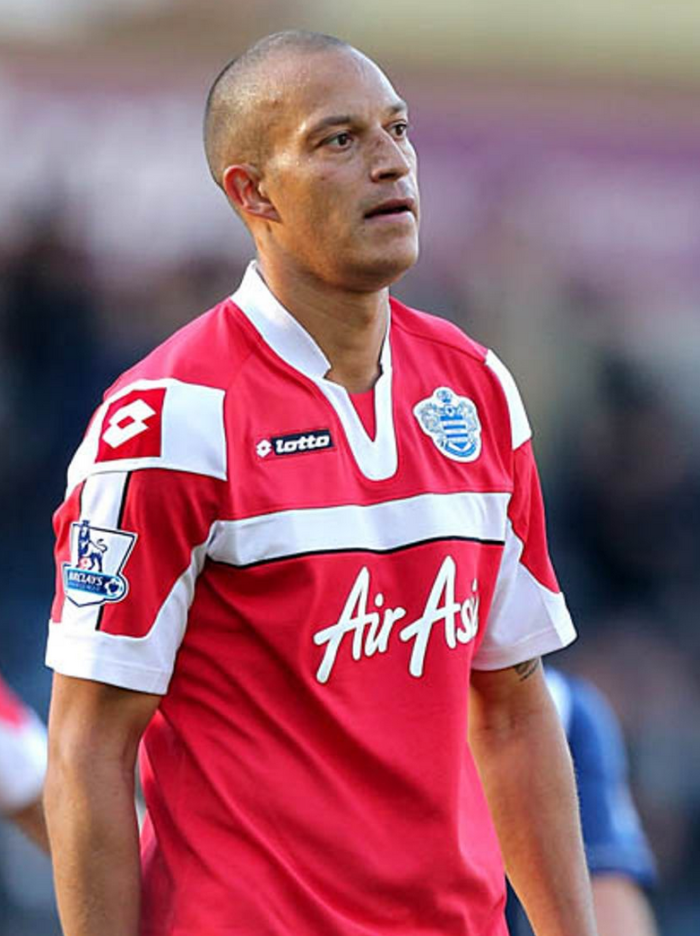
Seven months later, Zamora left Fulham himself to rejoin Hughes, who had taken over at QPR.

Zamora didn’t see eye to eye with Hughes’ successor at Craven Cottage, Martin Jol, who he said had not got the best out of him, although he had scored seven goals in 29 appearances at the time of his departure.

Jol tried to deny there had been a rift with the player saying any talk of a disagreement between them had been inflated by the press.

“If you look at the media, they started this Bobby thing in August,” said Jol. “They said we had a bust up at the start of the season, but you always have a little bit of a disagreement.

“I don’t think there is any problem,” said Jol. “I said to him a few weeks ago ‘Do you love this club?’ and he said ‘Yes, I love this club, I love this team’.”

Nevertheless, Zamora joined QPR on deadline day in January 2012 for £4.5m and was given a two-and-a-half-year contract.

“We needed a player of his ilk at the football club and I couldn’t be more delighted, he’s a great foil for any team,” said Hughes, who’d only replaced Neil Warnock a few weeks earlier. “Bobby is a guy that makes things happen on the pitch, be it scoring goals or creating chances for others.

“He’s got great power and pace and his technical ability is top class. He’s got an excellent left foot.”

For his part, Zamora, by then 31, said: “I got on really well with the manager at Fulham. We all grew to like Mark. I think that will be the case here. He’s looking to take the club forward.

“This was the right time for me to have a fresh challenge. I had some great experiences at Fulham. Going to a European final is special. But this is a new challenge and I’m thoroughly looking forward to it.”

If Zamora hadn’t always seen eye to eye with Fulham’s followers, it didn’t get much better at Loftus Road – although he ended up the hero when he once again scored the winner in a Championship Play-Off Final.

A Wembley winner with QPR

Replicating the feat he achieved at West Ham, in May 2014 he went on as a substitute in the Championship play-off showdown at Wembley and his 91st-minute goal was enough to beat Derby County (who’d beaten Oscar Garcia’s Brighton in the semi-finals) to restore the Rs to the Premiership.

They’d only narrowly avoided relegation, by a point, at the end of the 2011-12 season and after Hughes had been sacked in November 2012, new boss Harry Redknapp couldn’t save them from the drop in 2013. Rangers went down in last place and Zamora made only 17 starts plus seven off the bench, scoring five goals.

Nevertheless, he was hailed as an example to others for putting himself through the pain barrier for the Hoops’ cause.

A troublesome hip injury hindered his involvement and some questioned why the former manager had paid big money for ‘veterans and cast-offs’. Paul Doyle in The Guardian reported that fans didn’t like an interview Zamora gave in which he said that he did not regularly watch football on television, which some took to mean he did not care about sport and was only interested in the money.

“Fans wondered aloud whether he was even bothered about getting fit enough to play again,” wrote Doyle. But he went on: “All that has changed. Now he is considered the embodiment of the warrior spirit that QPR need if they are to pull off the great escape from relegation. Zamora did not score against Sunderland but he led the line strongly, combined well with his new strike partner Loïc Rémy and, most of all, lifted his team-mates by battling manfully through pain.”

Redknapp reckoned that Zamora was only 60 per cent fit, and the persistent hip trouble was further aggravated by ankle ligament damage.

“That’s the sort of character we need,” said Redknapp. “He’s waiting for a hip operation and he has torn ankle ligaments but he’s played through that.

“At half-time we have to keep him on the move because if he sits down he’ll seize up. So, he puts a water bottle on his hip and stands at the wall doing stretches. He can’t get in his car after the game. But he’s a proper bloke. He’s not an idiot, he’s a sensible guy. He’s good for the team. He talks to people and is a big influence in the dressing room.”

QPR chairman, Tony Fernandes, also chipped in to acclaim Zamora, tweeting: “There are many young professionals who could learn a thing from Bobby Zamora. He’s an ultimate club man.”

Sadly, Rangers couldn’t avoid the drop but they bounced straight back via the aforementioned play-offs after finishing fourth in the Championship, 13 points behind second-placed Burnley, and 17 points adrift of champions Leicester City.

QPR had five fewer points than third-placed Derby and in the final at Wembley Redknapp admitted they were hanging on for their lives against the Rams having had Gary O’Neil sent off on the hour mark.

The lottery of extra time and penalties was looming when substitute Zamora struck in the dying embers of the match. “It was a fantastic goal to win the game and I couldn’t be more pleased,” Redknapp told The Standard.

“I would be a liar if I said I thought I would see us scoring. They had 11 men, were probing us and we were hanging on.

“That was a one off where you stand on the touchline, hanging on for grim death and get a goal like that.”

Once again Rangers found the Premier League too hot to handle and Zamora’s ongoing hip problem limited his involvement to 19 starts and 14 appearances off the bench. He scored just three goals as QPR went down in last place.

Redknapp, who was replaced by former Albion full-back Chris Ramsey in February 2015, described how managing Zamora’s game time had been similar to the way he had to manage Ledley King at Tottenham.

“Ledley didn’t train at all to be fair,” said Redknapp. “To think he didn’t train one day and then play 90 minutes was unbelievable.

“It does take Bobby a few days to recover after a game, so it’s always on how he feels. He’s as good as anybody at doing what he does, holding the ball up and bringing people into play.”

Redknapp continued: “Bobby has been very important for us. After about 60 to 65 minutes he has to come off, but when he’s on the pitch he has been outstanding.

“We were bringing him off the bench to start with, but we’ve reversed it and started him recently. He’s been captain and great in the dressing room, I couldn’t be more pleased with Bobby.

“He’s got his hip but he manages it and when he plays he’s been great and his attitude has been first class.”

The return of Zamora to the Seagulls

Released in the summer of 2015, Zamora’s long-held desire to end his career back at Brighton was fulfilled when Chris Hughton invited him to join the bid for promotion from the Championship.

Back amongst the goals

Hughton had previously worked with Zamora at Spurs and said: “He is a great professional. I know he will bring plenty of experience to the team, having played Premier League, European and international football.

“He will also bring a lot in terms of character to the club and to the dressing room – but most importantly, having played more than 30 times for QPR last season, he brings top quality to our offensive options.”

There was frustration all round that in spite of a handful of vital goals he registered in that 2015-16 season, the injury issues prevented him from being able to help the Albion to promotion from the Championship.

In retirement, Zamora has tried his hand at various ventures and indulges one of his great loves away from football, carp fishing, in the Grand Fishing Adventure series with Ali Hamidi on ITV 4.

Catching carp with Ali Hamidi

Unsurprisingly, he’s also often seen as a pundit commenting on televised games involving his former clubs and is a popular guest on all sorts of podcasts, looking back at his playing days.

For example, he told the Albion podcast in November 2023: “When I came to retirement it was painful, I couldn’t carry on playing with the aches and the pains day-to-day. It was a nice relief, not having to take painkillers, anti-inflammatories that aren’t good for your stomach and liver.

“Christmas and New Year, being able to go skiing for the first time, it’s really nice. I am seven years into retirement now, but after three or four years you start to miss it; the boys and the banter in the dressing room.”

Zamora has also been involved in property development and is one of a multitude of top former players who are ambassadors with Football Escapes, football-based holiday experiences at exclusive hotels and resorts around the world.

Zamora also works in an ambassadorial role for the Albion, such as being an interviewee at the 2023 event when the club showcased the value its success has brought to the city of Brighton and Hove.

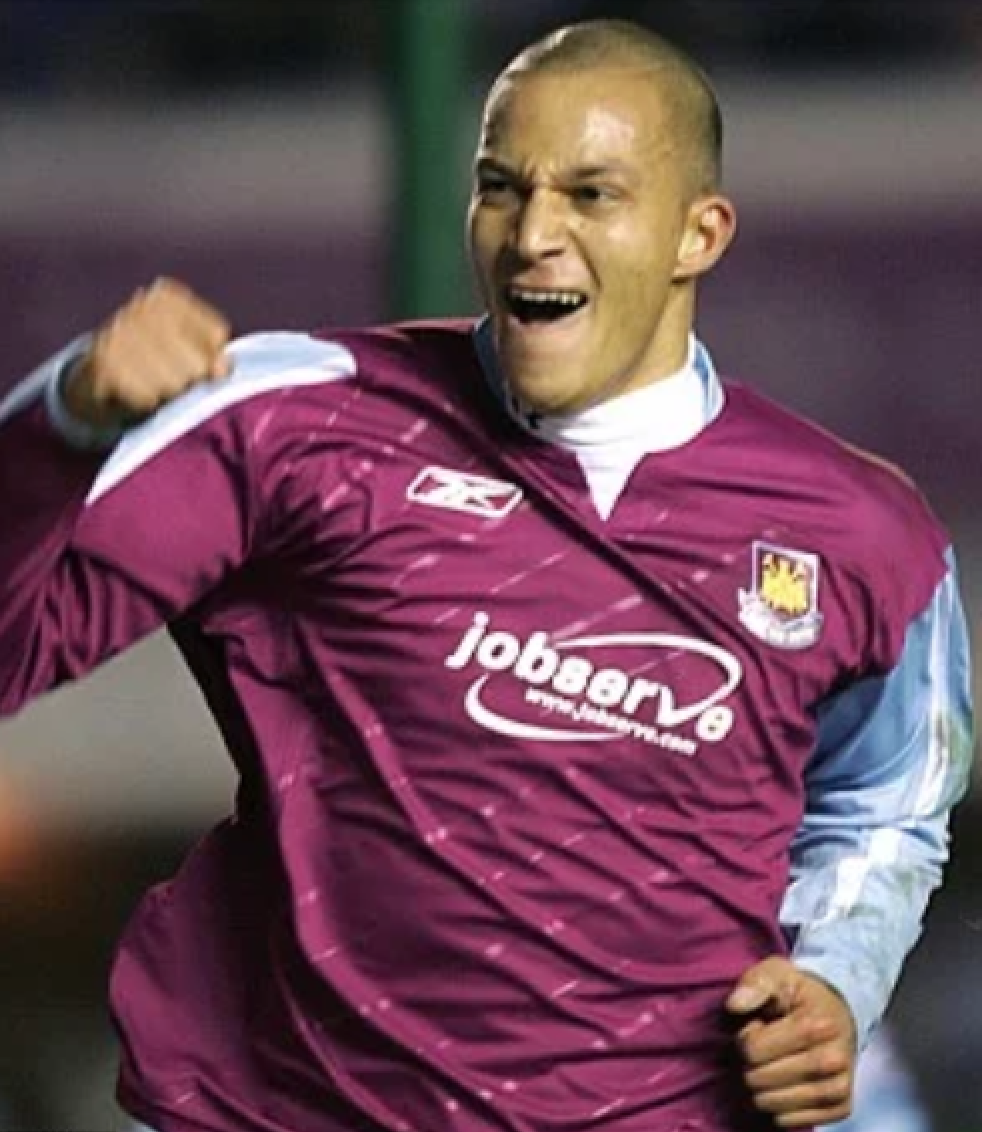
The Barking boy who became a Hammers play-off final hero

IT WAS A DREAM come true for Bobby Zamora to play for West Ham, the team he supported as a boy.

Born in Barking on 16 January 1981, he explained: “They were my local team and having been spotted by the club playing for my Sunday side, Senrab, I signed schoolboy forms and we’d be given tickets to watch the team on a Saturday afternoon at the Boleyn.”

Zamora’s favourite player was Tony Cottee and the side at that time included the likes of George Parris and Julian Dicks. “It was always a great atmosphere down there, singing ‘Bubbles’, and I count myself honoured and privileged to have played for the club that I grew up supporting,” he said.

Fellow Senrab players John Terry, Paul Konchesky, Ledley King and JLloyd Samuel were all snapped up by the Hammers at the same time but when the club decided to merge two centres of excellence they found themselves playing fewer games which prompted them all to leave.

Zamora joined Terry at Chelsea but suffered Osgood-Schlatter disease (which causes pain and swelling below the knee joint)and had to stop playing for six months. He described in the Undr The Cosh podcast how Norwich kept in touch with him to see how the injury was progressing so, when he was fit again he joined them and spent a season in Norfolk.

“They had a lot of London lads in their side but it was like playing in the Land of the Giants,” he explained in a matchday programme article. “They were all 15 going on 18, much bigger physically and taller than me, and I was released for being too small.”

His friend Luke Williams was also released but the pair of them were offered a trial by Bristol Rovers and, after only playing half a match, both were offered apprenticeships.

As described in my previous post, it was from Rovers that Zamora joined Brighton, while Williams played non-league before moving into coaching, which included a spell as development coach at Brighton.

When Spurs decided to swap Zamora for Jermain Defoe, a move to the Boleyn was a bit of a no-brainer for the former fan, although Premier League Leeds United were also keen to take him.

“The pull of West Ham was too great and although it was a drop into the Championship, the squad they had under Alan Pardew was more than good enough to go up,” he said.

Zamora got off to a good start with the Hammers, scoring on his debut and again on his home debut. That first goal came after he had gone on as a sub in a 2-1 win at Bradford City on 7 February 2004. He followed it up with the only goal of the game in a home win over Cardiff on 28 February.

Three more goals followed before the end of the 2003-04 campaign, but the season ended in disappointment when the Hammers lost in the Championship play-off final at the Millennium Stadium, Cardiff, against Crystal Palace the day before Brighton’s famous League One play-off win against Bristol City in the same stadium.

Zamora had a first half effort saved at point blank range by Palace keeper Nico Vaesen and a second half ‘goal’ ruled out for offside before being subbed off on 68 minutes as Palace won promotion courtesy of a Neil Shipperley goal.

All was put right a year later, though, when at the same ground Zamora was the Hammers hero. It was his turn to score the only goal of the game, against Preston North End, getting on the end of a Matthew Etherington cross to slot home from six yards in the 57th minute.

Play-off final scorer

Across the season, Zamora made 20 starts and 19 sub appearances, scoring 13 goals. His first double for the club came in a 3-2 League Cup second round win over Notts County at Upton Park on 21 September 2004.

Competition for forward places was fierce with Marlon Harewood, Teddy Sheringham and Sergei Rebrov also pushing for a place up front.

As well as scoring in that play-off final, Zamora had emphasised his claim to a starting berth by scoring in the 2-2 semi-final first leg home draw with Ipswich then twice in a 2-0 win at Portman Road in the second leg.

Pete Ellis on claretandhugh.info reckoned Zamora “played a key role for the Hammers at a pivotal point in our recent history” and he added: “The promotion season in 2005, where he and Etherington played like men possessed in the play-offs, still fills me with great pride.”

Back in the Premiership, Zamora scored 10 goals in 20 starts and 22 appearances off the bench and Ellis remembered “some great displays showing his ability to hold the ball up and have the craft and guile to bag a few tasty goals in the process.

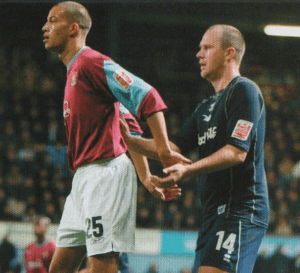
Zamora marked by former Brighton teammate Guy Butters who scored Albion’s goal in a 1-0 win for the Seagulls at the Boleyn Ground

“A proper character around the club, I enjoyed watching Bobby play and thought he never really got the plaudits that his talents and performances deserved.”

Amongst memorable goals in 2005-06 were a stunning solo effort in a 2-1 win at Birmingham and a goal in a 3-2 win at Highbury. Unfortunately, he’s also remembered for having his penalty saved by Pepe Reina in the FA Cup Final shoot-out with Liverpool.

The 2006-07 season saw Zamora make 30 starts and seven sub appearances, scoring 11 goals and named runner-up to Carlos Tevez in the Hammer of the Year contest.

A terrific start to the season saw him score five goals in his first four matches, including two against Charlton in a 3-1 opening day win.

A four-month barren spell came as the Irons struggled but he scored crucial goals against Blackburn, Everton, Middlesbrough and Arsenal (the last time West Ham played at Highbury).

Fans remember too his goal the following season – a chip over Jens Lehmann – that sealed a vital win for the Hammers at Arsenal’s new Emirates Stadium, with a heroic performance from ‘keeper Rob Green keeping out the Gunners at the other end.

The arrival of Craig Bellamy and return from injury of Dean Ashton added competition for Zamora, who missed seven months of the 2007-08 season with tendinitis.

His last Hammers goal was in a 2-1 win at the Boleyn against Derby on 19 April 2008, and his last game for the club was in a 2-2 draw at home to Aston Villa the following month. He had scored a total of 40 goals in 152 appearances for West Ham.

Even though he had missed a lot of games, and only scored once in 12 starts plus two off the bench across the whole season, he had no inkling he wouldn’t be offered a new contract.

“I went in at the start of the next season expecting to be talking about a new contract and they told me they’d agreed a deal to sell me to Fulham,” he told the Fulham website in a 2019 interview.

“It was obvious I wasn’t wanted and I made my way down to Motspur Park,” he said.

Zamora and team-mate John Paintsil moved to Fulham for a joint fee of £6.3m (Zamora was valued at £4.8m).

• I’ll explore how Zamora got on at Fulham ahead of Brighton’s game with them in March. His form with the Cottagers hit sufficient heights as to earn him two England caps.

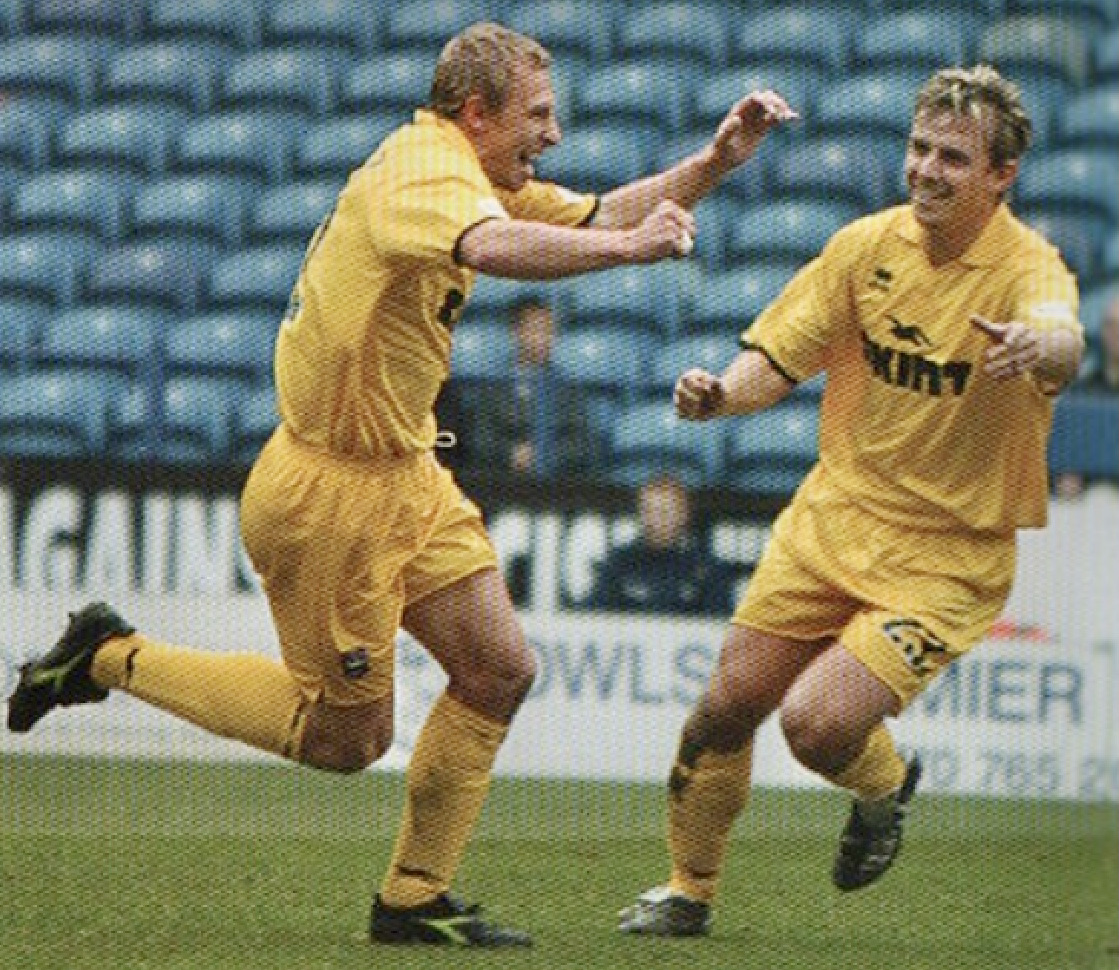
Fate dealt blows throughout Essex lad David Lee’s career

IT MAY simply have been David Lee’s misfortune that he joined Brighton at a time when they weren’t short of decent midfield players.

Nevertheless, a player who had gone through the ranks at Spurs alongside the likes of Peter Crouch and Ledley King might have been expected to make more of an impression.

As it was, the manager who signed him moved on and he ended up starting just one league game in two and a half years with the club.

Ultimately a horror injury brought a premature end to Lee’s career at the age of 28, but he stayed in the game as an agent – Lewis Dunk being one of his clients.

It was in January 2002 that Peter Taylor, a one-time Spurs player himself, brought Lee to the Albion from Hull City in direct exchange for fringe player Matthew Wicks.

Taylor had been close to signing him when he was manager of Gillingham but, after moving on to Leicester City, Taylor recommended him to Southend United instead.

By the time Lee arrived at the Albion, they were already on an upward trajectory towards promotion from the third tier and he had to be content largely with reserve team football and a seat on the first-team subs bench.

The first Albion fans got to see of him came on 23 February 2002 at home to Wrexham when he went on as a 23rd minute substitute for Gary Hart alongside inexperienced Chris McPhee, who was playing in the absence of goal king Bobby Zamora.

Wrexham brought Albion’s run of five straight home wins to an end in what the Argus described as “a dour deadlock” and in the process became the first side to stop the Seagulls from scoring at Withdean Stadium for 13 months.

In fact, sharper-eyed Albion watchers might have recognised the newcomer as a player who’d scored against the Seagulls twice the previous season.

He marked his debut for Southend in the opening match of the 2000-2001 season with an 83rd-minute second goal that sealed a 2-0 win for the home side.

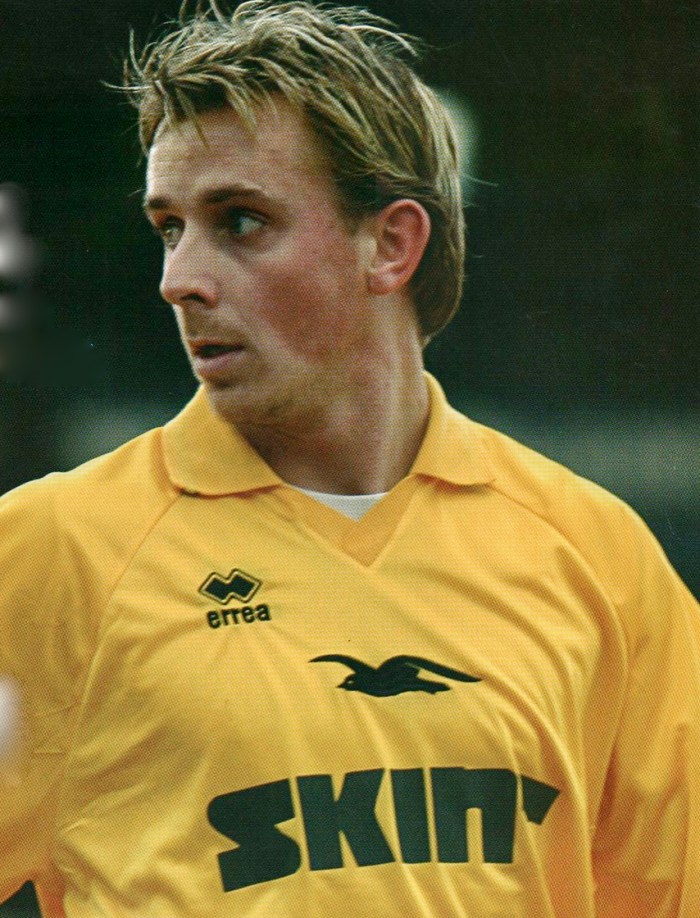
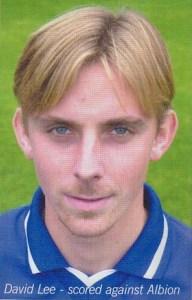
Then, in the reverse fixture, he scored again as United completed the double over the Seagulls on a quagmire of a pitch at Withdean on New Year’s Day 2001. On that occasion, Lee went on as a 77th minute substitute for Ben Abbey and scored five minutes later as the Shrimpers again won 2-0.

Described by Spurs history website ‘My Eyes Have Seen The Glory’ as “a slightly built, but athletic midfielder, who had an eye for an attacking option as he used his passing to try and open up opposition defences”, Lee spent a season at Roots Hall, initially under Alan Little, scoring 10 goals in 52 games. “I played nearly every game so it couldn’t have gone much better really,” Lee told the Basildon Canvey and Southend Echo.

But after just one season with Southend, Lee joined Division Three Hull City, managed by previous manager Little’s brother Brian (better known for his time in charge of Leicester and Aston Villa). It was a decision Lee later rued.

“Looking back, I do regret it,” he said. “I left because the (Southend) manager Dave Webb said he thought I’d had a good season and that Leicester were interested in me.

“My form wasn’t good at the end of the season so he told me they would be coming back to have another look at the start of the next season. Then he told me I’d have to take a pay cut to stay.

“At the same time, Hull offered to double my money for three years.” Hence he ended up with the Tigers.

He made his debut as a substitute in the League Cup and followed up that appearance with brief cameo roles off the bench in the league. One saw him score Hull’s fourth goal in a comprehensive 4-0 thumping of York City for whom Graham Potter was playing!

Lee made a rare start in a 1-1 draw away to Shrewsbury Town and kept his place for the next game (a 1-0 win over Torquay United), but it was back to appearances off the bench after that.

It was Taylor, fired by Leicester but installed as Micky Adams’ replacement at promotion-seeking Albion, who rescued him from Hull, signing him on a two-year contract in January 2002.

Unsurprisingly, Lee saw it as a “massive blow” when Taylor quit the Albion after steering the side to promotion because he didn’t believe enough was going to be spent on investing in the squad to compete at the higher level.

“I’m disappointed because he brought me to the club in the first place,” Lee told the Argus. “When I came, he wasn’t looking for me to get straight into the first team.

“He told me next year he would look to get me more involved. Now he has left it’s going to be difficult. When the new manager comes in, I have got to make sure I am fit and try to impress him.

“It’s a huge stage for a young player in the First Division and I need to be playing.”

Of course, if Lee had hung on at Hull slightly longer, he’d have been joined there by Taylor!

“I should have stayed there for longer but I went to Brighton,” Lee told the Basildon Canvey and Southend Echo. “I did three and a half years there (ed. it was two and a half) and had some great times winning the promotions but I never did hold down a first team place and, when Peter Taylor left, I was well out of it.”

Indeed, in the 2002-03 season, Lee didn’t make a single league or cup appearance for the Albion, although, in October 2002, after Steve Coppell’s appointment as manager, he appeared – and scored – in the first half on a rainy, gale-battered evening alongside trialists Simon Rodger and Dean Blackwell when an Albion XI beat Hassocks 5-0 in a game to mark the opening of a new stand for the County League side. While Blackwell and Rodger subsequently signed up, Lee was sent on loan to Bristol Rovers, but only stayed for a month.

Pretty clear his future didn’t lie with the Albion, on 23 April 2003 he played in a trial match for Cambridge United’s reserves against Gillingham in a 3-0 win. Impressing in another reserve match against Colchester, the U’s manager said he would like to sign Lee on a permanent basis. But nothing came of it, and he remained on Albion’s books.

As if to emphasise what they missed out on, in August 2003 Lee scored against Cambridge in a comprehensive Albion Reserves win. The 3-0 win was the opening fixture for the Seagulls’ second string in the Pontin’s Holidays Combination League.

A short spell on loan to Ryman League Thurrock followed in October 2003 but, in the time he was away, Brighton had a new manager; Mark McGhee replacing Coppell, who had moved to Reading.

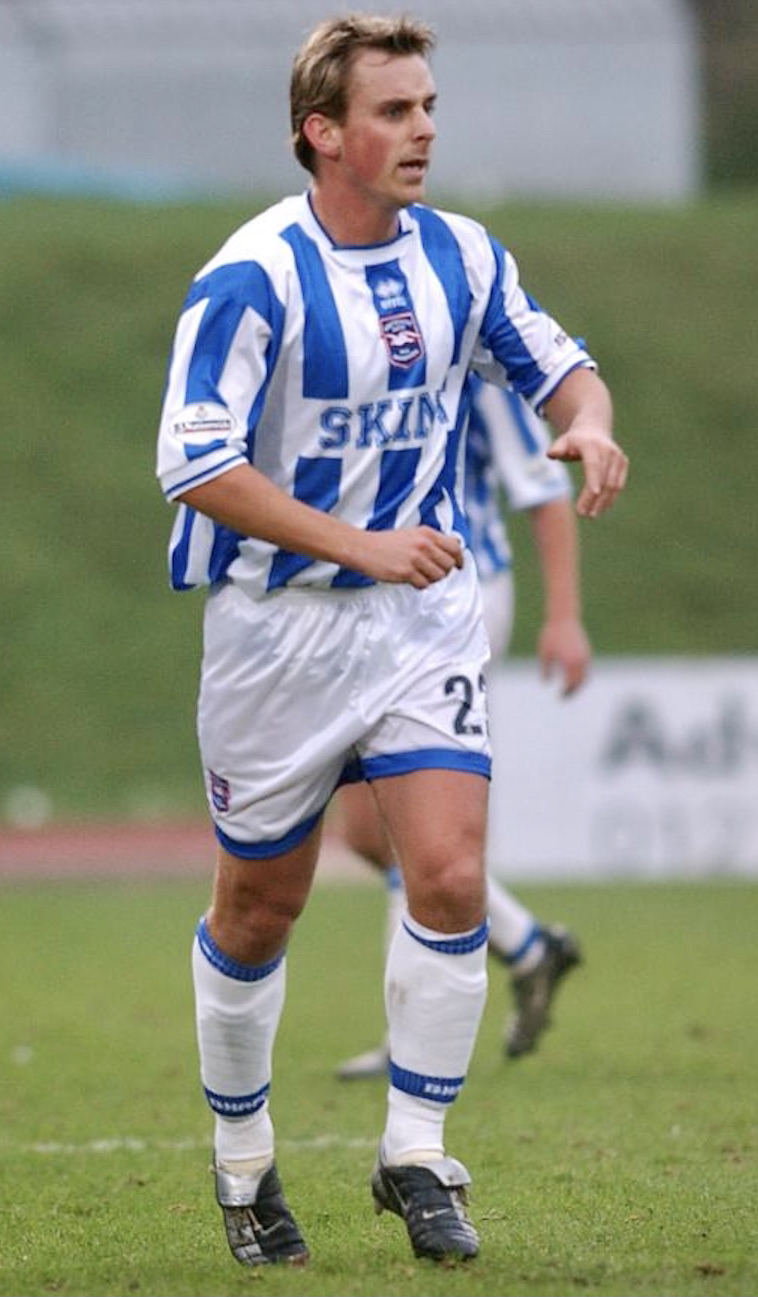
And so it was, in December 2003, that Lee finally made his full Albion debut, away to QPR in the LDV Vans Trophy. Albion narrowly lost 2-1, and he was subbed off on the hour mark, being replaced by Gary Hart, but McGhee defended his selection in the following matchday programme.

“I saw the game as an opportunity to find out about players who haven’t had the chance since my arrival,” he said. “The inclusion of David Lee and Dan Harding in particular did not result in us losing the game. Basic defensive errors led to the defeat. However, I did learn a lot about Dan and David and I do believe that both players will continue to make a contribution this season. So, as an exercise, there were positives to take out of the game.”

While Harding would go on to become an established member of McGhee’s side, Lee was a perennial bench warmer and only started one league match: a 2-1 defeat at Sheffield Wednesday on 27 March 2004.

“That was a nice surprise,” he said. “I thought I did okay, apart obviously from the result.”

But Lee realised his Albion future was up in the air, telling the Argus: “I’ve had a meeting with the gaffer and he said he is going to have to wait and see where we are next season, so it’s touch and go for me.”

He admitted he’d been close to moving to Grimsby just before the transfer deadline, but Town boss Nicky Law had chosen alternative options.

Lee was able to join in the celebrations that followed Albion’s promotion via the play-off final win over Bristol City at the Millennium Stadium in Cardiff, but he was only ever on the periphery.

He was given one last chance to prove himself when he was handed a three-month deal in July 2004. But, over that period, Albion brought in Darren Currie and Alexis Nicolas, so, on the expiry of the short term deal, Lee was released.

Assistant manager Bob Booker said: “David worked extremely hard but just fell a little short to make the first team.”

While Lee told the Argus: “I never really got started all the time I was at Brighton. But I worked really hard in the summer, and I did quite well pre-season. That’s why I am disappointed to be going now.”

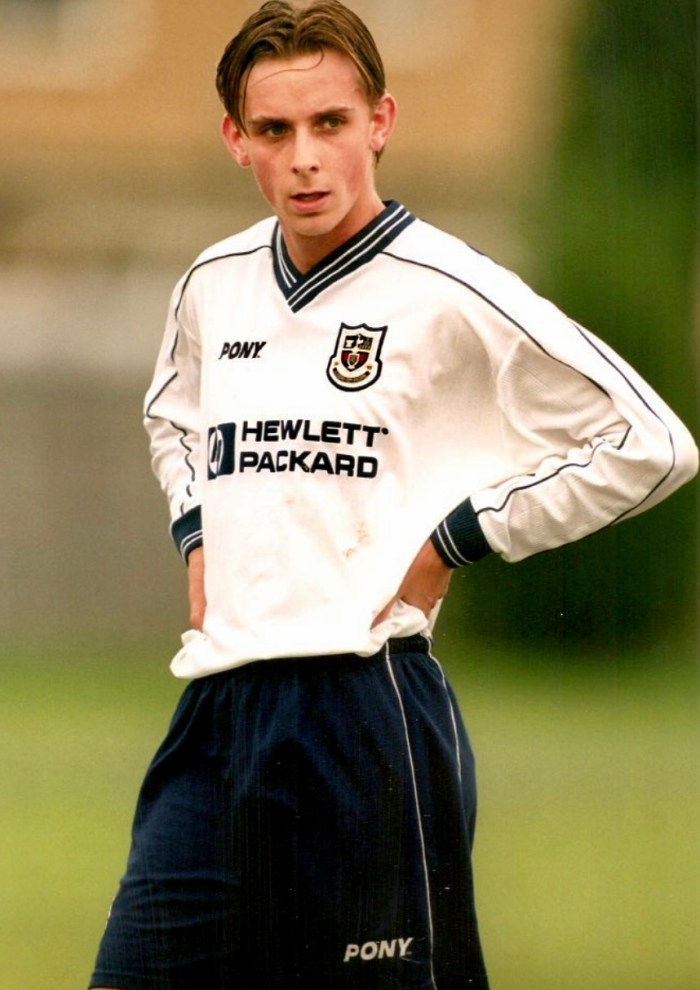
Born in Basildon, Essex, on 28 March 1980, Lee went to Gable Hall School in Thurrock from 1991 to 1996 and his young footballing talent was spotted as an under 10 by Spurs scout Lenny Cheesewright.

Lee talked at length about his career to Lennon Branagan in August 2020 for the excellent SuperHotspur blog.

He developed through the different age groups at Spurs under various coaches, citing in particular Tommy Cunningham really putting him through his paces aged 15-16, then Bobby Arber after he’d signed a scholarship. “He was a real top coach who taught me a lot about tactics and positioning and the ugly side of the game.”

The highlight of his time at Spurs came when he was captain of the 1996 Spurs youth team that won the Northern Ireland Milk Cup, an annual international youth tournament. Spurs beat Blackburn in the final by a single goal scored by John Piercy, who later also moved to Brighton.

Another memorable moment came when Lee, aged only 16, scored the winning goal for Spurs Reserves against Bristol City in a testimonial for Leroy Rosenior (father of Liam).

In Spurs’ youth team, Lee was managed by the former West Ham winger Patsy Holland, who he felt never really rated him. Eventually, in Spurs’ reserve side, he was managed by Chris Hughton – “one of the best coaches that I’ve played for and had the pleasure of working with”.

While contemporaries such as Luke Young progressed to the first team, Lee fell just short and he was honest enough to admit: “Looking back now, I think the thing that you look at was did I really show the coaches that I wanted it enough? And did I really give absolutely everything to be a top player? And probably the answer’s no, if I’m being honest with myself. That’s the biggest regret or the real shame that I have really.”

Ironically, it was when his friend Piercy got a first team call-up instead of him that he decided to move on from Spurs although, once again with the benefit of hindsight, he reckons he was probably too hasty in his decision.

George Graham was manager at the time and Lee reckoned he wasn’t his type of player. Although he still had 18 months left on his contract, he decided to move on because he couldn’t see himself making it at Spurs. But not long afterwards, Glenn Hoddle took over as manager and Lee reckons if he had stayed he might have had a better chance of training with the first team a bit more, and improving as a player.

After the Seagulls released Lee in September 2004, he trained with Oldham Athletic and signed on a non-contract basis for a month but was not retained.

He returned to Thurrock, had a trial at Kidderminster Harriers, signed for Conference side Stevenage Borough in February 2005, but then changed his mind and signed for Aldershot instead.

Football agent Lee

It was during a game for the Shots against Canvey Island in August 2005 that he suffered a horrific injury that doctors told him would end his career.

“I was actually only an hour away from losing my foot and it was all quite worrying as you would expect,” said Lee. “When I was in hospital they told me I would never play again.”

The injury forced him to miss the majority of the 2005-06 season, and, although he extended his contract by a year on 30 May 2006, he eventually left the Shots at the end of January 2007 and signed for Ryman League Division One Harlow Town. That didn’t last long; he had a short spell with Braintree, then AFC Hornchurch and then Canvey Island.

In an interview with Chris Phillips of the Basildon Canvey and Southend Echo in June 2008, Lee said he was pleased to have proved the doctors wrong in managing to get back playing football, but he admitted: “I’ve been playing non-league this season, but my heart hasn’t been in it.”

Lee turned to football agency work that year and has continued in that line ever since. He was with Skillequal for 10 years before switching to ICM Stellar Sports in April 2018.

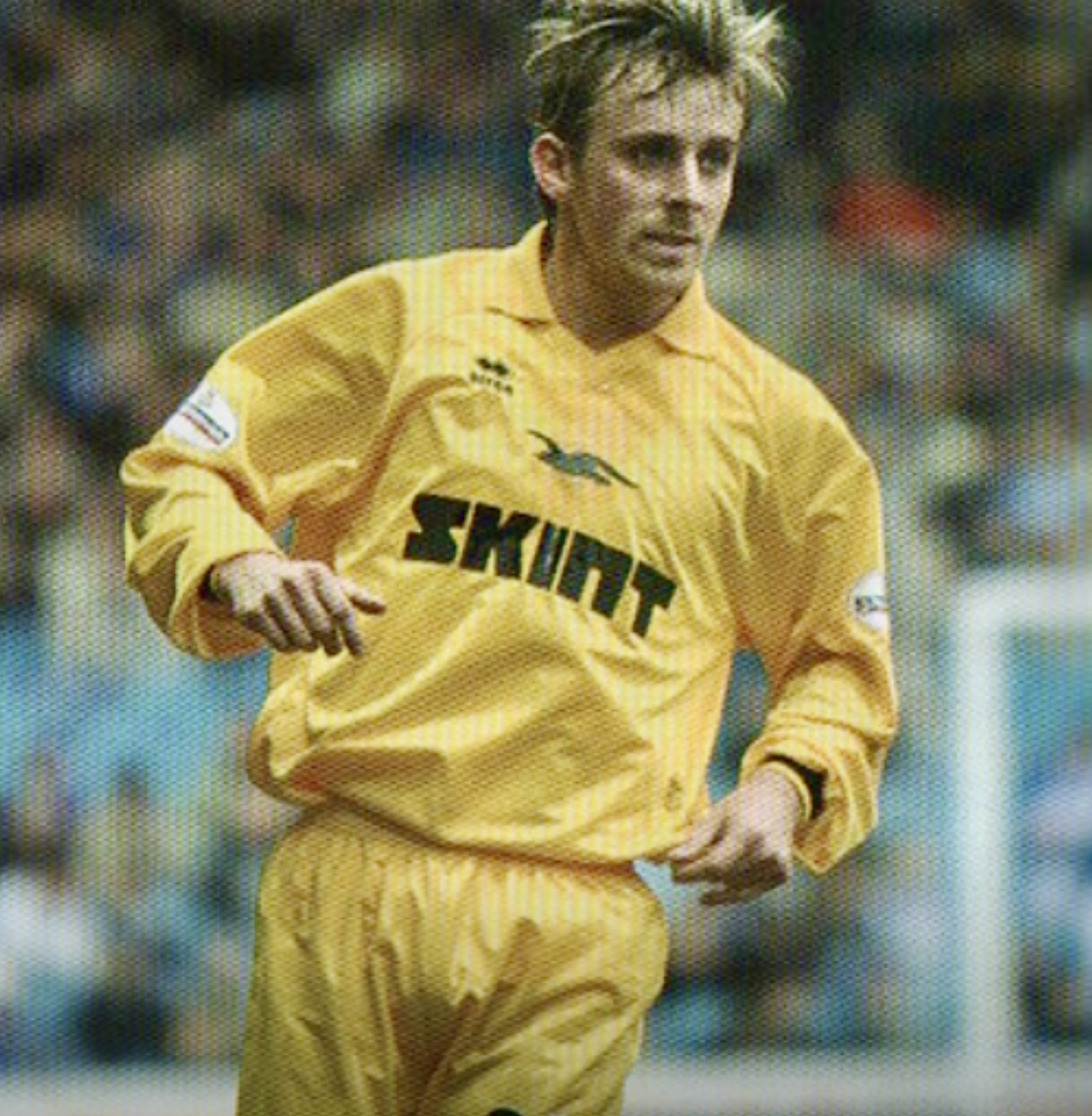
McGhee provided Albion platform for playmaker Mark Yeates

TRICKY playmaker Mark Yeates spent five years as a Tottenham Hotspur player but it was with Brighton that he played his first competitive football.

Yeates looked like a useful loan signing when he joined new manager Mark McGhee’s Albion squad in November 2003. He drew plenty of admirers and featured in 10 games over two months.

It wasn’t long before McGhee was talking about the possibility of signing him on a permanent basis, but Spurs had other ideas. He eventually had to leave north London to pursue his career but he ultimately made nearly 500 professional appearances.

Eighteen-year-old Yeates arrived on the south coast shortly after Zesh Rehman had also signed on loan (from Fulham), Albion having lost midfield duo Charlie Oatway and Simon Rodger to injuries.

The diminutive Irishman made his debut in McGhee’s first match in charge: a 4-1 defeat to Sheffield United at Withdean.

The matchday programme’s assessment was thus: “The second half was better. Mark Yeates moved into the centre of midfield and so had an opportunity to show what he can do. He could beat players, look up, and try a perceptive through ball. Wide on the left in the first half, he’d been exposed and given the ball away too often.”

On the day England won the Rugby World Cup, Yeates was one of six Albion players booked as the Seagulls beat Notts County 2-1 at Meadow Lane; an eventful game which saw Adam El-Abd make his league debut, Leon Knight score twice and John Piercy sent off for two bookable offences.

After only his third game, Yeates was off on international duty, playing for the Republic of Ireland under 19s away to France.

It was in early December that McGhee spoke about wanting to take Yeates on a permanent basis, telling the club’s website: “I’ve said already that I knew before he came here what a good player he is and I imagined he would do well in this team, and he has done that.”

McGhee told the Argus: “He has a kind of Gaelic confidence. Robbie Keane had it and Mark is similar in that respect.

“His character is perfect really for the way he plays. It goes with the ability and flair.”

Yeates hailed from the same Tallaght district of Dublin as Keane – a player McGhee knew well having given him his English football debut at 17 when manager of Wolves.

After extending his stay at the Albion to a second month, Yeates told the Argus: “Before I came here I had never really played in the centre of midfield. I usually play up front off a big man.

Yeates takes control watched by Adam Hinshelwood

“The gaffer tried me up front in the first half at QPR (in the LDV Vans Trophy) but we didn’t get the ball into mine and Leon’s feet, and with two little men you are not going to get much joy.

“At Tottenham we play with wingbacks and two holding midfielders and I am allowed a free role.

“I have to be a bit more disciplined here. Sometimes I can go running about a bit, it’s just up to the lads to call me back in to help out.”

Yeates appreciated the opportunity Albion had given him to taste senior football, telling the newspaper: “It’s great for me just to be getting first team football, plus the reason I am staying here is because they are a good bunch down here.”

He observed: “It’s a lot more fast and furious because everyone is playing for their living. You have to give a bit more and get more out of yourself which you probably wouldn’t get in a reserve game.

“In reserve football, players are going through the motions. It’s just a matter of playing a game.”

After he’d played his final game on loan, a 0-0 home draw with Oldham Athletic, the matchday programme observed: “Yeates showed some neat touches and was Albion’s most creative outlet once again.”

When Albion struggled to beat Barnsley 1-0 in the FA Cup, the matchday programme noted: “The passing abilities of Mark Yeates, and his desire to get into the penalty area, were sorely missed.”

Back at Spurs, Yeates had to wait until the very last game of the season to make his Premier League debut. He’d previously been an unused substitute when Glenn Hoddle’s Tottenham were thrashed 5-1 by Middlesbrough at the end of the 2002-03 season.

But in May 2004, David Pleat selected him to start in a side also featuring Ledley King, Jamie Redknapp, Christian Ziege, Jermain Defoe and Robbie Keane.

The fixture at Molineux ended in a 2-0 win for the visitors and Yeates helped Spurs take the lead against the run of play, laying on a cross for Keane to score against his former club. Defoe netted a second to seal the win.

Born in Tallaght on 11 January 1985, Yeates was the eldest son of former Shelbourne, Shamrock Rovers, Athlone Town and Kilkenny City striker Stephen Yeates, who died aged just 38 following a tragic accident, just as Mark was making his way through the youth ranks at Spurs.

The young Yeates first played competitive football with Greenhills Boys, a club who his grandfather and father had been involved with, and then moved on to Cherry Orchard, a Dublin side renowned for producing a number of players who went on to have successful professional careers.

In an extended interview with Lennon Branagan for superhotspur.com, Yeates recalled how Tottenham scout Terry Arber did a two-day coaching course at Cherry Orchard, after which he, Willo Flood (later to play for Manchester City and Dundee United) and Stephen Quinn (who went on to play for Sheffield United) were invited to London for a trial with Spurs.

Yeates was only 15 but he was taken on and had to up sticks from home and move into digs in London.

“As a skilful dribbler who was regularly a source of assists and goals in the youth set-up, Yeates quickly demonstrated to the coaching staff at Tottenham that he possessed the raw materials required to graduate to the next level,” wrote Paul Dollery in an October 2021 article for the42.ie.

Sadly, his progress through the youth ranks was interrupted by the shock news of his father’s death in an accident. Yeates told Dollery how it could have all gone the wrong way, but he thankfully remained focused.

“It was really tough, but you’d ask yourself what else you could do if you didn’t keep going – go home to your estate in Tallaght, drink cans every weekend and get roped into whatever else? 

“I could have done that, or I could look at the three-year contract that was on the table at Tottenham and get my head down to go after that.

“It was hard, but a bit of willpower and the desire to be a footballer – which I had since I started kicking a ball – got me through it.”

In his interview with Branagan, Yeates said: “I started to train with the first team at a decent age and really being involved quite a bit as well as being a regular with the reserves group with Colin Calderwood and Chris Hughton at the time.

“I’ve just got so many unbelievable things to say when I look back now and I can only say so many good things about Spurs because it sort of built me and gave me so much.”

It was in January 2005 when Yeates next appeared for the Spurs first team, Martin Jol sending him on as a sub in the third round FA Cup tie against Brighton at White Hart Lane when Tottenham edged it 2-1.

The following week he once again replaced Pedro Mendes as a sub when a star-studded Chelsea side won 2-0 on their way to winning their first Premier League title under Jose Mourinho. He also got on in the next game, as Spurs crashed 3-0 at Crystal Palace,

While he could have continued to bide his time at Spurs, he preferred to go out on loan again to get some games under his belt. He played four times for League One Swindon Town and then had a season-long loan at Colchester United, helping them to promotion from League One in 2005-06 in a squad which included Greg Halford and Chris Iwelumo.

Further loan spells followed at Hull City and Leicester City but, in the summer of 2007, he joined Colchester on a permanent deal.

Yeates scored 21 goals in 81 games for United drawing him to the attention of future England manager Gareth Southgate who took him to Middlesbrough (who had just been relegated from the Premier League) for a £500,000 fee.

On signing a three-year deal, Yeates said: “This is massive for me. There was interest from other clubs but there was only one thing on my mind once my agent told me Middlesbrough had been in touch.

“This club belongs in the Premier League, the fans deserve to be there and I can’t wait to play in front of them. It’s a Premiership club in my mind – all you have to do is look around the facilities, the training ground, the stadium, everything is spot on.”

Yeates reckoned his versatility would suit Boro. “I can play on the right or the left,” he said. “I played a full season’s Championship football on the right for Colchester, while I played most of last season on the left. But then, in probably eight of the last 10 games, I played behind the front two.

“For a winger, I think my goals record is quite good,” he added. “I got 14 last season and nine by Christmas the season before I got injured.

“I like to get on the ball and take on defenders. The number one job of being a wide man is creating chances and I certainly like to do that, but scoring goals isn’t a bad habit to have either. I promise the fans I’ll give 110 per cent. I’m hungry to prove that I deserve to be here.”

Fine words but it didn’t pan out well for him because Southgate was sacked in October 2009 and his successor Gordon Strachan shunned the Irishman. By January 2010, Yeates was on the move again, this time to Sheffield United.

Blades boss Kevin Blackwell told the club’s website: “He’s a player we have looked at before, I’ve had my eye on him for a year or two but we couldn’t agree terms with Colchester. I’m delighted to finally get my man, although I was surprised that Boro would let him go.”

Yeates was reunited with Stephen Quinn and another former Albion loanee, Darius Henderson, was up front for the Blades. Yeates reckoned he had his best ever spell playing under Blackwell’s successor, Gary Speed.

“He was just an unbelievable man and, going back to when I was at Tottenham as a young lad, he was the prime example of the player you should aspire to be like,” he said. “He had faith in me.”

Unfortunately, when Speed left to manage Wales, former Albion boss Micky Adams took charge and the pair didn’t see eye to eye, as he explained to watfordlegends.com.

“I was at Sheffield United and it was the season when we went from the Championship to League One. Micky Adams was the manager and we weren’t getting on. In the summer Micky was sacked and Danny Wilson came in as manager.

“I trained for the full pre-season with the club, but I was aware that there were a couple of clubs keeping an eye on my situation throughout the summer. It was Blackpool and Watford who put in offers for me, and I spoke with both clubs, but when I met Dychey (Sean Dyche) I decided to sign for Watford.

“I still had a house in Loughton so overall it was a good opportunity to get back down south, and everything that Sean said to me on the phone really appealed to me.”

Yeates was at Watford for two seasons, initially under Dyche and then Gianfranco Zola, but his contract wasn’t renewed in the summer of 2013 and he decided to link up once again with his former Colchester and Hull boss, Phil Parkinson, at League One Bradford City.

He was one of the goalscorers for Bradford when they completed a massive upset by beating Premier League table toppers Chelsea 4-2 at Stamford Bridge in the fourth round of the 2015 FA Cup.

However, released that summer, he switched across the Pennines to join Oldham Athletic and six months later was on the move again, this time to Blackpool.

“Since leaving Hull it’s been a bit up and down,” he told Branagan. “I was on a short term deal at Oldham which went alright before then deciding to go to Blackpool because of a longer contract which was put in front of me which I don’t regret, as I’ve been living around the St Annes area now for five years and my children have grown up here and are at school and it’s a great area to raise a family in.”

His final league club as a player was Notts County, who he joined on a short-term deal in January 2017, and he appeared in 11 games plus three as a substitute as new manager Kevin Nolan’s side turned what at one point looked like relegation from the league into a 16th place finish (although two years later County lost the league status they’d held for 157 years).

After playing non-league for Eastleigh, in 2019 Yeates moved closer to home and signed for AFC Fylde. In September 2021, he became an academy coach at Fleetwood Town, although he continued to keep his hand in as a player at Bamber Bridge.

Reflecting on the player’s career, Dollery wrote: “With a ball at his feet, Yeates was one of the most technically accomplished Irish players of his generation, cut from the same cloth as the likes of (Wes) Hoolahan and Andy Reid.

“That such a claim isn’t backed up by international achievements can perhaps be partly explained by his own admission that he didn’t marry his talent with a devotion to other aspects of the game that were beginning to play a more prominent role in the life of a professional footballer.

“If fitness coaches scheduled a gym session, Yeates felt his time would be better spent by staying on the training pitch to perfect his free kicks. A predilection for crisps, fizzy drinks and nights out didn’t aid his cause either.”

Yeates recognised he could have done things differently and said: “The reality was that I didn’t live like a saint.

“Everyone who knows me would know that that’s just not my personality. I’ve always been a fella who likes a bit of craic; just a normal Irish lad from an estate who happened to love playing football.”

• Pictures from the Albion matchday programme and various online sources.

Outcast Peter Suddaby was Albion top-flight saviour

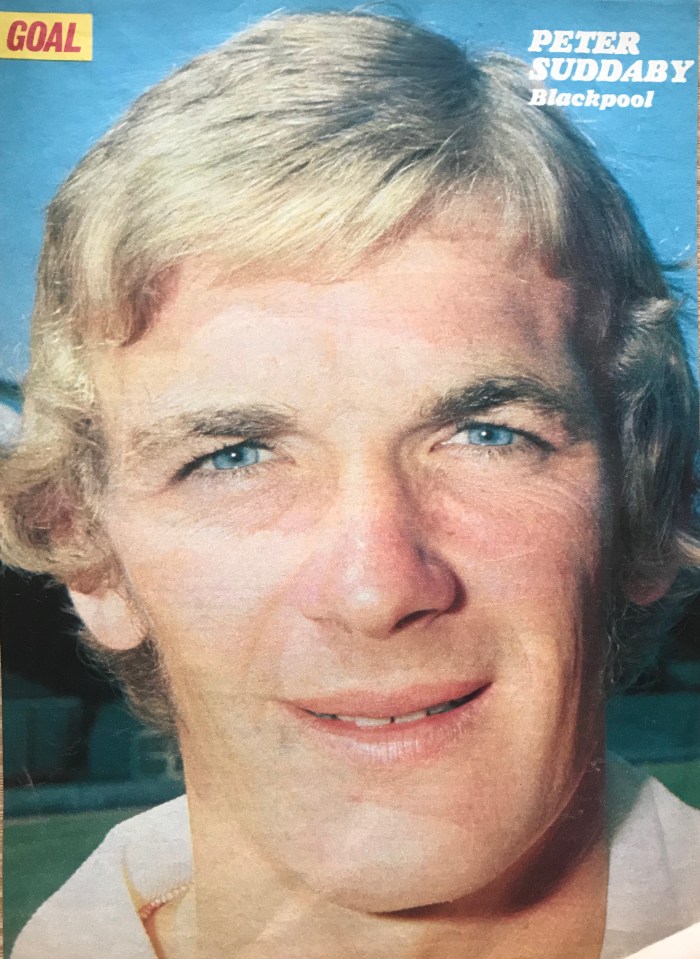
PETER SUDDABY spent nearly 10 years at Blackpool before playing a key role in Brighton’s inaugural top-flight season. The university graduate later spent a season with the Seagulls as a coach.

Albion had been struggling to adjust to the old First Division after promotion from the second tier in 1979 and it hadn’t helped that star defender Mark Lawrenson missed 12 matches following a bad ankle ligament injury at Spurs.

When Lawrenson was ready to return for a crunch match away to Nottingham Forest on 17 November 1979, instead of putting Lawrenson in the back line, manager Alan Mullery put him in midfield and thrust new free transfer signing Suddaby into the defence alongside Steve Foster.

Suddaby was 31 and had been playing for Third Division Blackpool’s reserve side at the time, so it was certainly a bold step but Mullery said: “I signed Peter because of his attitude to football. Whenever I played against him he struck me as being one of the worst losers in the game.

“If Blackpool were losing by five goals, he’d still be trying as hard as ever, and that is the sort of character we needed in the team.”

Mullery’s gamble paid off because at the City Ground Gerry Ryan’s 11th minute goal (not to mention Graham Moseley saving a John Robertson penalty on the stroke of half-time) gave Albion an unexpected victory against a Forest side who hadn’t lost at home for two years.

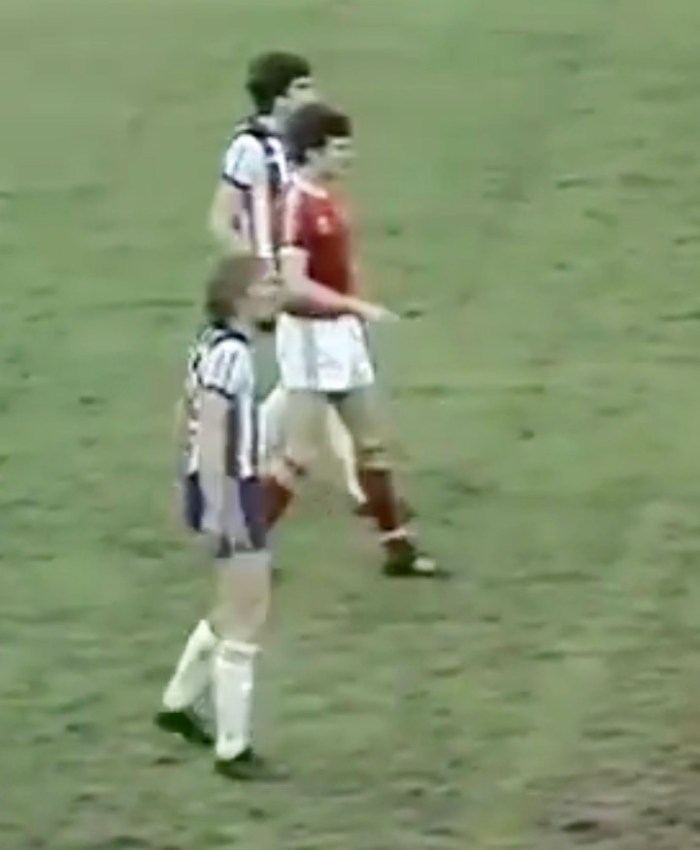
The game earned top billing on Match of the Day and Mullery hailed Suddaby after the game, telling commentator Barry Davies: “He’s got something to live up to, the boy, because he had a tremendous game today up against Garry Birtles.” (see still from footage, above)

Suddaby later told Shoot! magazine: “Forest are a very good side, but we defended well against them and had that little bit of luck we needed. Everyone in the Brighton side buckled down and gave everything.

“Alan Mullery has given me a chance to prove myself in the best league in the world, and I certainly do not wish to let him down now.”

Plaudits from journalists continued as Albion built on the victory at the City Ground with successive victories over Christmas against Wolves and Crystal Palace taking the club out of the bottom three for the first time that season.

Suddaby in an aerial battle with Coventry’s Garry Thompson at the fenced-in Goldstone

Jack Steggles in the Daily Mirror wrote: “Alan Mullery, ready to spend a million to buy his way out of trouble, could find salvation in a man who cost him nothing. For Brighton’s chances of survival have looked a lot brighter since he signed university graduate Peter Suddaby on a free transfer from Blackpool. Suddaby’s arrival has stiffened the defence and Brighton have bagged five points from three games.” (there were only two points for a win in those days).

thegoldstonewrap.com recalled: “Suddaby definitely didn’t let Brighton down. His strong, determined tackling and ability in the air at the heart of defence was an important factor in moving Albion up the table.”

Mullery told Shoot! that he’d tried to sign Suddaby the previous season but Bob Stokoe, Blackpool’s manager at the time, refused to let him go. “He’s a tremendous winner and is just the sort of player we needed,” said Mullery.

When Suddaby lost his place in the Tangerines side under Stokoe’s successor, Stan Ternent, Mullery was quick to seize the moment.

“My career wasn’t going anywhere, and a move to the First Division was the perfect remedy,” said Suddaby, who admitted he’d been hoping for a return to the top flight since Blackpool dropped out of it. “Obviously it wasn’t easy to adjust after playing two games in the reserves and I was sad about leaving Blackpool,” he said. “But it was made clear to me that I was fourth in line for the centre-half position, so I made up my mind to move if the opportunity arose.”

Suddaby continued: “I wanted a challenge and still felt I had something to offer which is why it didn’t worry me to join a struggling club.”

Even back then, Blackpool, who’d dropped down to the Third Division, were beset with boardroom issues which the defender said had “rubbed off on the players and gave the club an unsettled atmosphere”.

Albion only lost five of the 21 games Suddaby played in and succeeded in avoiding relegation. In another Shoot! article, Mullery said of Suddaby: “He may not be a big name, but Peter does it for me week in, week out. I know I can rely on him to turn in a good performance.”

Suddaby looked forward and said: “We have enough good players to build on what we did last season.

“The club think big and I’m delighted to be part of their success. I didn’t think I’d ever play in the First Division again, but now I’ve been given this chance I mean to make the most of it.”

Unfortunately, in May 1980, Suddaby’s back gave way while out walking – a reaction to an operation five years previously when two discs were removed – and, instead of being part of Albion’s second season at the top, he spent nine months trying to recuperate.

Mullery told Phil Jones of BBC Radio Brighton: “The football club needs players of his calibre. He’s good for everybody – a tremendous professional who immediately stamped his authority on the place. I cannot speak too highly of his service to the Albion.”

Sadly, while Suddaby did recover to play for Albion’s reserves, he was not fit enough to return to first team duties.

He tried to extend his playing days with a move to Wimbledon, where he made half a dozen appearances, and then returned to his former club Wycombe Wanderers. He played 10 games in 1982, and then moved on to Isthmian League Hayes in December 1982, eventually becoming player-coach in September 1984. At the same time, he reverted to his original plan and taught maths at the American School in Uxbridge.

Born in Stockport on 23 December 1947, Suddaby was the only son of a garage proprietor, and when he was still young the family moved to north Wales where his father took over a caravan park.

Suddaby started school at Gronant Primary School near Prestatyn, where no football was played, but the local village under 16s played him on the wing when he was aged just 10, and he developed a liking for the game.

When he moved on to St Asaph Grammar School, he became a regular in the school teams. In those days he was a centre-forward and it was in that position he earned his first representative honour when he was selected for Flintshire County Schools.

Suddaby earned A-level passes in Maths, Physics and Chemistry with an eye to moving on to university although, while in the sixth form, he turned out for various Welsh League clubs and for Rhyl in the Cheshire League.

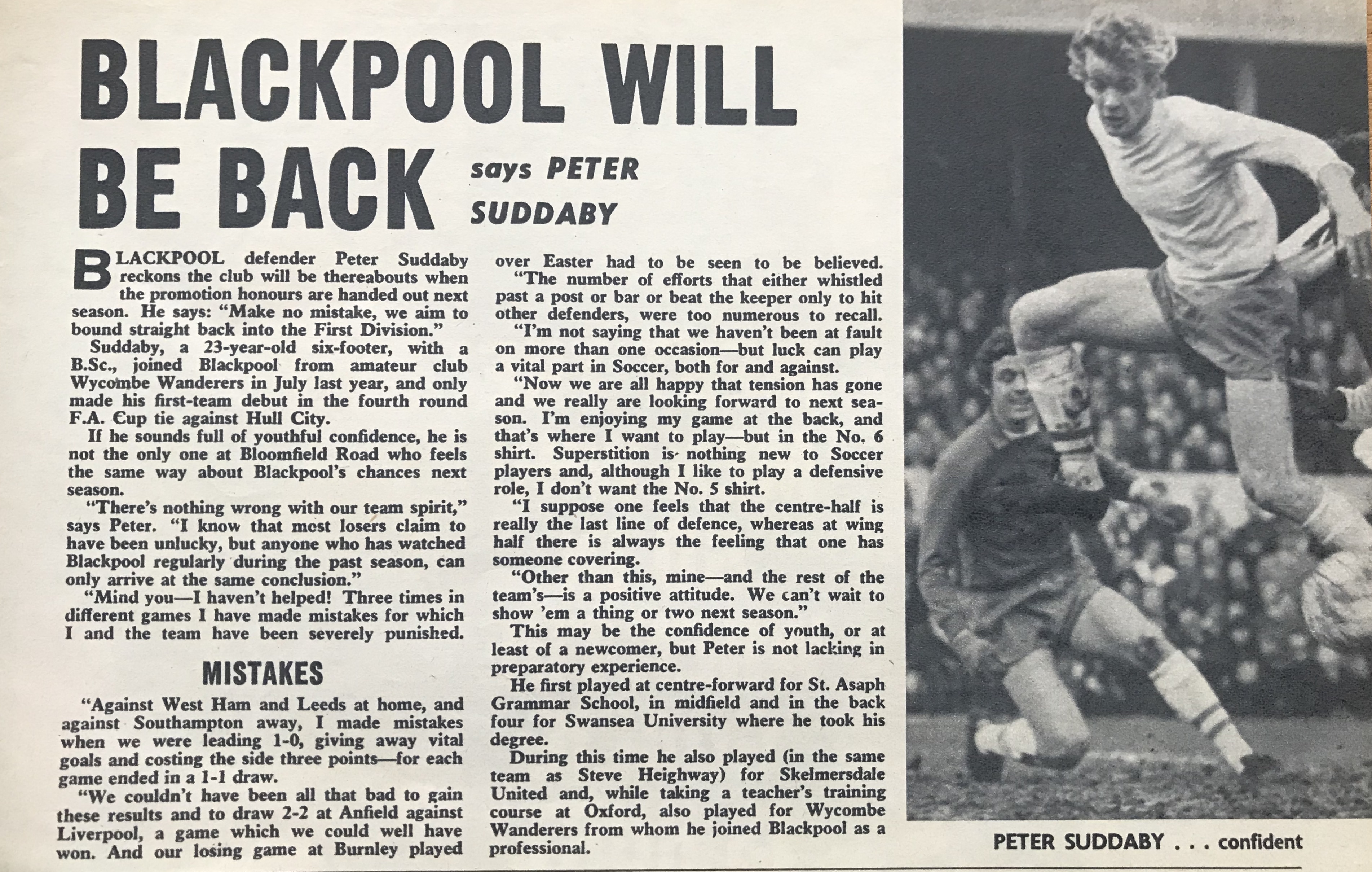
He gained a place at Swansea University and, while doing a three-year BSc course in Maths, played football for the university and Welsh Universities and British Universities, by now as a defender.

After going to Lilleshall on a university coaching course, he was chosen by former Hove Grammar School teacher Mike Smith, later the manager of Wales, for a universities team to play against several non-league sides, one of which was Skelmersdale United.

They were among the top amateur sides at the time and Suddaby agreed to join them, travelling each weekend from Swansea back to the family home in north Wales, from where he was just over an hour’s drive to Skelmersdale.

Amongst his teammates were Steve Heighway, later to gain fame at Liverpool, and Micky Burns, who became a playing colleague at Blackpool.

After gaining his degree at Swansea, Suddaby took a post-graduate course at Oxford University to gain the necessary qualification to become a teacher.

While there, he started playing for Wycombe (then non-league) and gained a Blue playing for Oxford University in the Varsity match at Wembley in December 1970.

Three days later he earned the first of three amateur international caps when he was chosen to play for England against Wales at Cardiff.

With his teacher qualification under his belt, he signed for Blackpool as an amateur in the summer of 1970 and played a few games towards the end of 1970-71 season, when they were relegated from Division One, and then turned professional.

“1 hadn’t really thought too much about becoming a professional,” he told Shoot! “I’d virtually decided that my future was as a teacher.

“Looking back, I have no regrets apart, possibly, that I didn’t join a league club a couple of years earlier. On the other hand, I am happy that I finished my education. University life taught me a lot and developed my character.”

Suddaby ended up spending nine and a half years at Blackpool, making 331 appearances, most of which came in the second tier where the Tangerines were a top 10 side for six consecutive seasons, narrowly missing out on promotion back to the elite in 1974 and 1977, but then being relegated to the old Third Division in 1978.

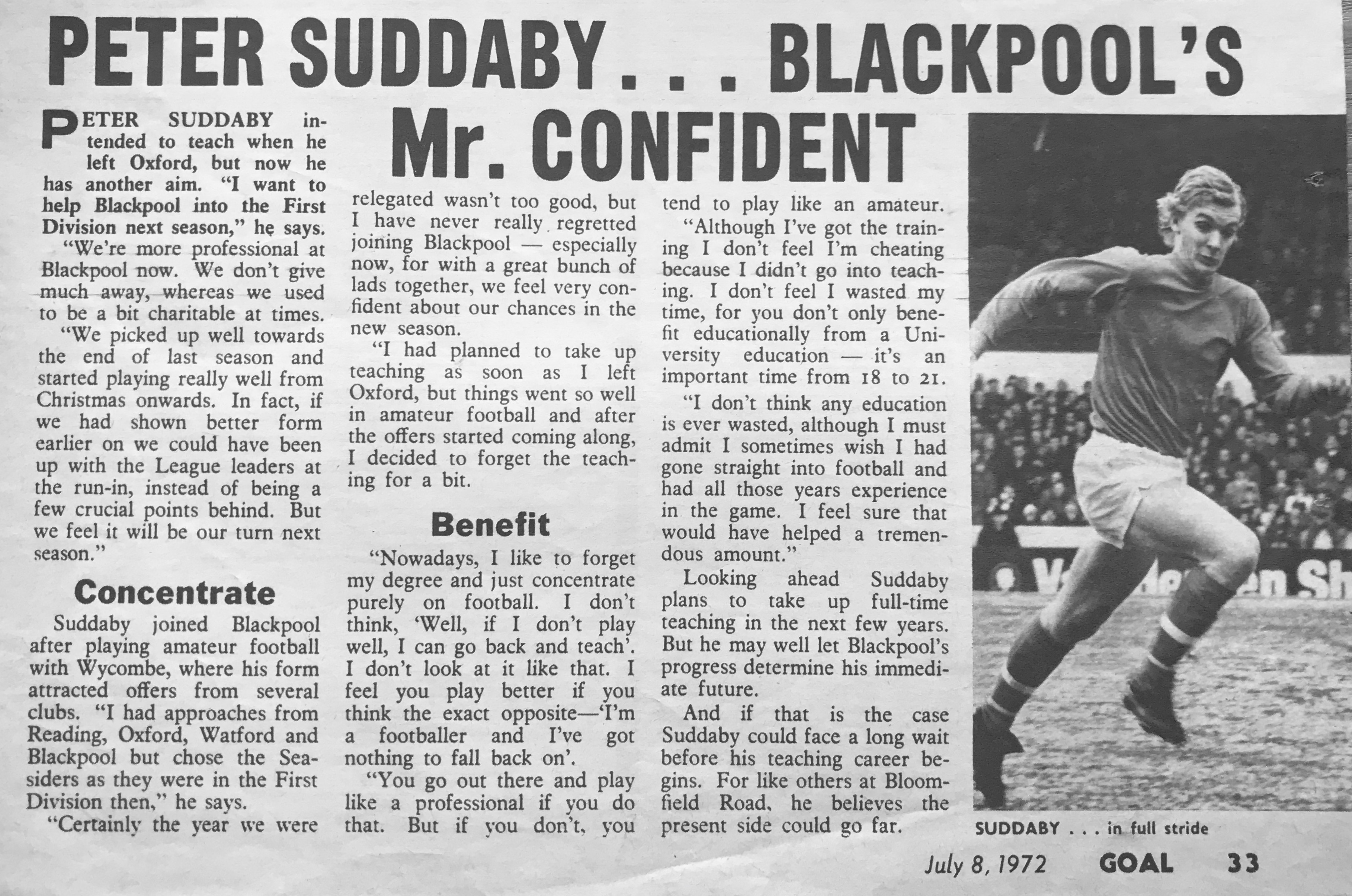
“I had approaches from Reading, Oxford, Watford and Blackpool but chose the Seasiders as they were in the First Division then,” he told Goal magazine in a July 1972 article. “The year we were relegated wasn’t too good, but I have never really regretted joining Blackpool.

“I had planned to take up teaching as soon as I left Oxford, but things went so well in amateur football and, after the offers started coming along, I decided to forget the teaching for a bit.”

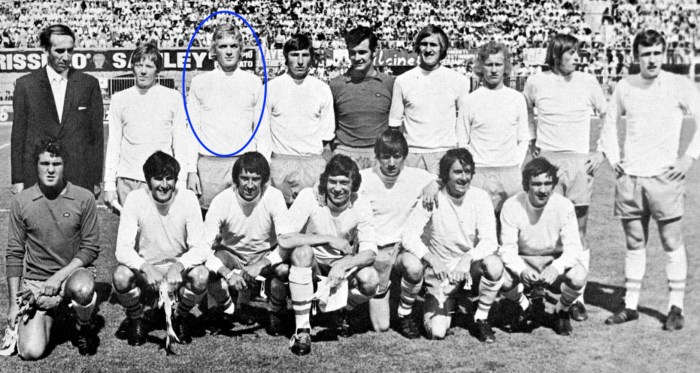
He was part of Blackpool’s 1971 Anglo-Italian Cup winning team (below), managed by Stokoe, alongside the likes of Tony Green, Paul Hart, Alan Ainscow and Tony Evans.

Unlike many players, Suddaby always knew he had teaching to fall back on as a career, but he also got coaching qualifications to enable him to stay in the game as a coach or manager.

When Mullery returned to manage Brighton in the summer of 1985, he appointed Suddaby as his first team coach while Barry Lloyd was put in charge of the reserves.

Brighton coach Suddaby

Mullery’s second term ended acrimoniously in early January 1986. Suddaby stayed on at the Albion under Lloyd but left at the end of the season. He went back to Wycombe as manager in August 1987 but was only in charge for five months.

Suddaby subsequently joined the coaching staff at Tottenham Hotspur, serving as the club’s academy director between July 1995 and April 2004.

During that period, he helped nurture the talent of the future, seeing the likes of Peter Crouch and Ledley King break through into first team football.

They didn’t all turn to gold though. Leigh Mills was at Spurs for five years, captained the England under-16s and was capped for his country at under-17 level.

“By his regular selection for the England under-17 team, Leigh has been recognised as a leading player at his age in the country,” Suddaby told theguardian.com in November 2004. “He has an excellent attitude to maintaining his football progress, and we have great hopes that he will play at a very high level.”

However, Mills ended up on loan at Brentford and Gillingham briefly before playing non-league.

When youngster Phil Ifil broke into the Spurs first team, in 2004, Suddaby said in an interview with the Standard: “Neither I nor my coaches will ever say we made Phil Ifil or any other player. We provide them with an opportunity, and they make themselves.

“The satisfaction we get from seeing them make it is massive, though. We try to get kids from local areas and we use that as a lever because they can see if they come here, they will get a chance.

“It is difficult for kids in football these days, particularly at big clubs. But at Spurs we try and give them knowledge about all sorts of things including the media and even driving lessons. We try to make them confident young men and give them a chance.

“As an academy, we sometimes don’t push ourselves into the limelight but we have produced players like Stephen Clemence and Luke Young, both playing in the Premiership, as well as those now getting their chance in the first team at Spurs.

“But without doubt Ledley is our jewel in the crown. We can only show them the door to success – it’s up to the kids to kick it down.”

After leaving Spurs, Suddaby reverted to maths teaching, working at independent girls school Maltmans Green, in Chalfont St Peter, for nearly 13 years before retiring in August 2018.

The following year, it was reported Suddaby suffered a stroke and, in February 2020, he and former Wycombe teammate Keith Samuels visited Buckinghamshire Neurorehabilitation Unit (BNRU) at Amersham Hospital to make a donation towards the sort of equipment that helped Suddaby recover from his illness.

Pictures from Goal magazine, the Argus, the matchday programme and online sources.

Did Chris Ramsey’s injury alter outcome of 1983 FA Cup Final?

2-near-post-guardBRIGHTON & HOVE Albion’s May 1983 FA Cup Final clash with Manchester United was historic for the club and for their 21-year-old right back it was even more eventful.
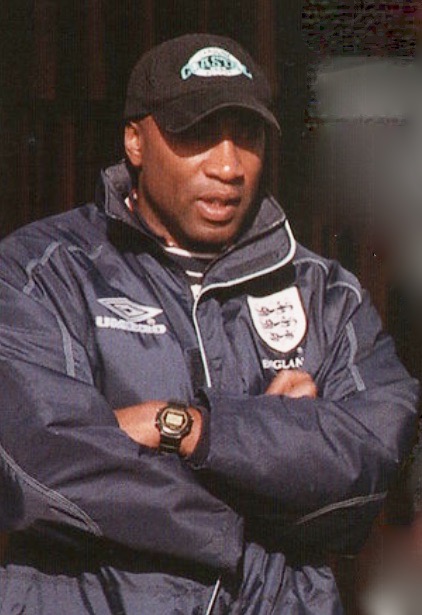
Who would have known that former Bristol City apprentice Chris Ramsey’s ignominious departure from the field in a firemen’s lift on Glen Wilson’s shoulder would more or less be the end of an all-too-brief playing spell in the top echelons of the English game?

Might the match – and Ramsey’s career – have panned out differently if it hadn’t been for that diabolical tackle by Norman Whiteside?

Trouble had been brewing in the weeks leading up to the final and the national media, looking for every possible angle to pick at, had singled out Ramsey for criticism. Did that stoke the fire?

Let’s rewind a little and explore what happened.

Born in Birmingham on 28 April 1962 , Ramsey, whose father came to the UK from St Lucia, was one of two boys and five girls. Rejected by Charlton Athletic as a schoolboy, he became an apprentice at Ashton Gate but was then released and, after a successful trial, Brighton took him on.

The 1980-81 season was Albion’s second in the top division and, as it drew towards its close, it was looking increasingly likely they were heading for relegation.

Manager Alan Mullery was openly criticising his players for their efforts and his big ally off the field, vice-chairman Harry Bloom (current chairman Tony Bloom’s granddad) had died of a heart attack on the team coach on an away trip to Stoke.

Something had to change and, at the tender age of 19, Ramsey was called up from the reserves and plunged in at the deep end.

In three of the last four games, he took over the no.2 shirt after Mullery switched John Gregory from right back into midfield. Ramsey’s debut came in a crucial Easter Saturday clash away to rivals Crystal Palace when, released from the shackles of defending, Gregory scored twice in a 3-0 win. Ramsey also played in the wins over Sunderland away and Leeds at home.

The Seagulls stayed up by the skin of their teeth and Evening Argus reporter John Vinicombe said in his end of season analysis that Ramsey had been “a revelation” in those three games.

Within a matter of weeks, Mullery quit as manager in the furore over chairman Mike Bamber selling Mark Lawrenson to Liverpool (after Mullery had already agreed a deal to sell him to Manchester United).

Gregory was sold to QPR for £300,000 but, far from that move opening up an opportunity for Ramsey, Mullery’s replacement Mike Bailey brought in on a free transfer from Loftus Road the experienced Don Shanks, who was immediately installed as the first choice right back.

Indeed Bailey froze out Ramsey for the following 19 months! At one point he was transfer listed but it was Bailey who departed the Goldstone first – his sacking working to the advantage of the young defender.

When George Aitken and Jimmy Melia took over in December 1982, Ramsey was instantly promoted from the reserves and seized his opportunity.

In a profile in an Albion matchday programme in February 1983, Ramsey told Tony Norman: “Like any other young apprentice, my dream was to play in the First Division. I must admit that even after coming to Brighton, I had times when I wondered if I’d make it. But now I’ve got my chance and I’m keen to make the most of it.”

In one of the most comprehensive profiles on Ramsey, former Brighton teammate, Andy Ritchie, told Adam Ellis of The Football League Paper: “He was quite a shy lad back then but he had everything you want in a full back. Aggression, pace, agility – and he could tackle like a demon.”

These were the attributes that Melia appreciated too. In a Daily Mail preview of the Norwich quarter final, Melia told reporter Brian Scovell: “The other players love playing with him. He’s a great competitor, tackles well and uses the ball with a bit of style.

“I’m pleased he’s taken his chance. He deserves to play at Wembley if we manage to get there.”ramsey + mel

As it turned out, Ramsey’s place was in jeopardy because of two sendings off in the league in April which led to him being banned for the semi-final against Sheffield Wednesday at Highbury.

After being sent off in a 2-1 home win over Spurs, Terry McNeill reported in the News of the World: “Ramsey was lucky to stay on earlier after bringing down Mark Falco in a probable scoring position. When he took the striker again from behind, there was no escape.”

The 20-year-old Ramsey was fairly phlegmatic about the situation and told Alex Montgomery of The Sun: “Whatever I did, I did for the club. You can’t think about Cup games when you are struggling for points at the bottom of the First Division.”

His second dismissal, along with Coventry’s Steve Jacobs (who later played for the Albion under Chris Cattlin) after a scuffle in a 1-0 win at the Goldstone, was lambasted by one of the pre-eminent football writers of the day, Frank McGhee of the Daily Mirror.

“Can Brighton afford to field at Wembley a man who by then won’t have been able to play for 19 days?” he intoned. “And can they trust Ramsey not to sully soccer’s great state occasion by a moment of blind madness?”

Nevertheless, after Wednesday were beaten, Melia was happy to restore his first-choice right back to the starting line-up but one wonders now whether Ramsey had a sense of foreboding about how the big occasion would unfold.

Reflecting on those dismissals in the build-up to the final, he told The Sun’s Montgomery: “I just hope people aren’t looking for me. I’ll certainly be careful. I honestly don’t think I deserve the reputation which I’ve been saddled with in the last few weeks.

“The dismissals were just coincidences – nothing more than that. I know I am an aggressive type of player but that is my game. I always want to give 100 per cent for the club. The last thing I want is trouble at Wembley.”

After Albion had taken a shock lead through Gordon Smith’s header, United piled on the pressure and Ramsey headed a goalbound Gordon McQueen effort off the line.

But then came a pivotal moment early in the second half. Tim Carder and Roger Harris record it thus in their excellent Seagulls! The Story of Brighton & Hove Albion FC: “Whiteside went in high on Ramsey’s shin as the Albion full back cleared, and then trod on his ankle. The referee had a strong word with the United forward but did not signal a foul.”

The tackle had rendered Ramsey lame and while he tried in vain to carry on, two minutes later he wasn’t able to challenge for a ball to the far post which Frank Stapleton duly dispatched to equalise.

Those of us watching in the stadium, together with millions glued to TV screens around the world, saw Ramsey carried from the Wembley turf and, in those days of only one substitute, wondered how Albion would cope with a makeshift defender in the shape of Gerry Ryan.

After United took the lead through Ray Wilkins, Ramsey’s friend – and fellow England under-20 teammate – Gary Stevens’ equalised to send the game into extra time and ultimately a replay. Stevens was adamant about the impact Whiteside’s challenge had on the game.

In Match of My Life, edited by Paul Camillin, he said: “It was a bad tackle and perhaps cost us the game. In those days we only had one substitute and Gerry Ryan came on and did a great job at right back, even though he was a midfield player, but we did miss Chris because he had been having a great game.”

Whiteside was unapologetic about the challenge but Ramsey fumed to The Sun’s Montgomery: “It could have broken my leg. If I’d done it, I’d have been off. I just can’t understand how Whiteside got away with it.”

The injury deprived Ramsey of the chance to play in the replay five days later and, after that sad exit, his playing career never reached similar heights again.

Indeed he actually only played 37 games for the Albion, most of those coming in that 1982-83 season. He played only a handful of games in the following season and in August 1984 went on loan to Swindon Town before joining them permanently four months later.

There, he played alongside the likes of Sky Sports reporter Chris Kamara and one-time Albion assistant manager Colin Calderwood and clocked up over 120 appearances, including being part of Lou Macari’s Fourth Division champions in 1986 and Third Division play-off winners in 1987.

In August 1987, he joined Southend United but played just 13 games for them before persistent back injuries forced his early retirement at the age of just 26.

Some business ventures he embarked on didn’t work out and former Albion right back rival Shanks set him up with a trial for a team in Malta, Naxxar Lions, where he made a playing comeback.

Eventually the ongoing injury problems made him look to other ways of making a living. He coached in the United States but also started studying like crazy.

Amongst lots of qualifications, he got a Master’s degree at the University of North London in Health, Physical Education and Recreation (a qualification which enabled him to become a primary school teacher) and simultaneously obtained his UEFA coaching badges.

That Football League Paper piece records: “With an MSc, ten diplomas and myriad other qualifications, Ramsey is so highly educated that he actually sets the test for pro licence candidates.”

ramsey EngA stint in charge of youth development at Leyton Orient and coaching Newham Ladies was followed by an FA appointment as coach to the England under-20 side in the 1999 FIFA World Youth Championship when among the players under his direction were Ashley Cole, Peter Crouch, Matthew Etherington and John Piercy, who later played for the Albion. At the FA he learned from the likes of Les Reed and one-time Albion winger Howard Wilkinson.

He had a short and unsuccessful three-month spell as assistant to Ricky Hill at Luton Town, and he said: “Ricky Hill was a massive inspiration to me.”

Just when it appeared new offers had dried up, Ramsey got the chance to manage Charleston Battery in the USA, where he stayed for three years.

Winning the USL A-League (second division) with Battery in 2003 brought him to the attention of Spurs, and, as head of player development, many of the young players he coached in tandem with Les Ferdinand and Tim Sherwood were Harry Kane, Ryan Mason, Danny Rose, Nabil Bentaleb, Andros Townsend, Steven Caulker and Jake Livermore.

“He was massive for all of us,” French midfielder Bentaleb told The Football League Paper. “He believed in us, he encouraged us. He told the manager we were ready when everyone else believed we were not. He was not shy or scared of anybody and he knew exactly what he wanted.”

chris ramsey (spurs)In the Evening Standard in 2012, Spurs and England centre back, Ledley King, said: “He is one of the best coaches in the country. The youngsters love the way he works and they have really bought into his methods.”

Ramsey left Spurs in 2014 to take up a coaching role at QPR, and when Harry Redknapp left the floundering Hoops in February 2015, Ramsey stepped up to become a fully-fledged Premier League manager.

He was not able to halt Rangers’ relegation from the elite, though, and lasted only until November in charge of the side as they struggled to come to terms with life back in the Championship.

However, in January 2016, he was appointed technical director at QPR to oversee the club’s academy coaching and player development.

The club’s director of football, Ferdinand, told The Guardian: “While we were disappointed things didn’t work out with Chris at first team level, we were determined to retain his services. As such, we actually put a clause in his contract which allowed us to retain Chris’s services in a player-development role should things not work out for him as head coach.”

Ramsey finally left QPR in January 2024. By then 61, the head of coaching and technical director told the club website: “I have had a fantastic nine years at QPR and the club will always have a special place in my heart.”

The club’s chairman Lee Hoos said: “Chris has been a great servant to the club. I cannot thank him enough for his incredible hard work, dedication and guidance.

“However, as we thoroughly rationalise everything we do, and following very amicable discussions with Chris, it is felt this move is in the best interests of all parties. He will always remain a friend of the club.”

  • Shootthedefence.com did a face-to-face interview with Ramsey on 23 September 2016 which is well worth a listen as he talks in detail about his whole career.
  • In pictures from my scrapbook, Ramsey graces the cover of an Albion matchday programme; (top) he defends the near post during the 1983 FA Cup Final with Gordon McQueen in attendance; he is photographed by Tony Norman outside the Goldstone and criticised in the Daily Mirror by Frank McGhee.