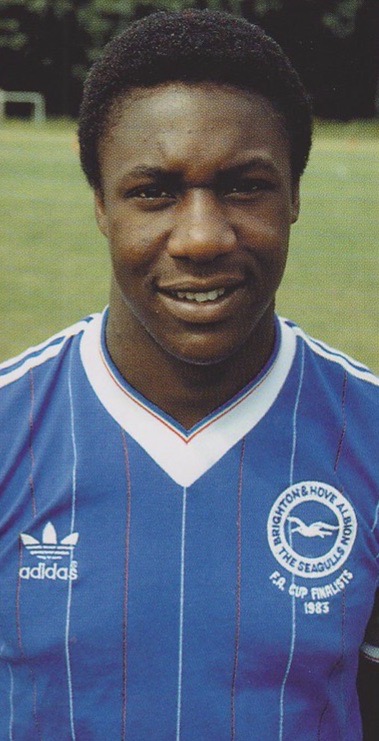
Terry Connor had an eye for goal for Leeds and Brighton

Connor action 1TERRY CONNOR is a familiar face to today’s football fans as a loyal assistant manager to Mick McCarthy.

But Leeds United and Brighton fans of a certain vintage remember him as a pacy striker with an eye for goal.

His time with the Albion saw him at his most prolific with a record of almost a goal every three games (51 in 156 appearances) – form which earned him a solitary England under 21 cap as an over-age player.

Relegation-bound Brighton took the Leeds-born forward south in exchange for Andy Ritchie shortly after they had made it through to the semi-final of the 1983 FA Cup, but the new signing could take no part because he’d already played in the competition for Leeds.

If Brian Clough had allowed Peter Ward to have remained on loan to the Seagulls that spring, who knows whether Connor would have joined, but, when the former golden boy sought an extension of his loan from Nottingham Forest, which would have enabled him to continue to be part of the progress to Wembley, according to Ward in He Shot, He Scored, the eccentric Forest boss told him: ‘Son, I’ve never been to a Cup Final and neither will you’.

So the Connor-Ritchie swap went ahead and, with the rest of the team’s focus on the glory of the cup, the new arrival scored just the once in five appearances, plus two as sub, as the Seagulls forfeited the elite status they’d held for four seasons.
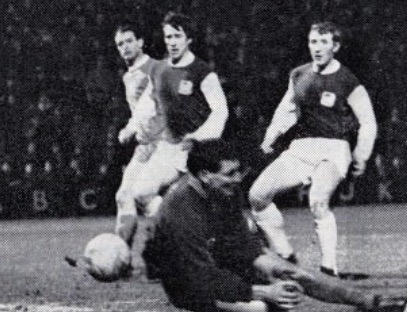
lpool goalConnor would have his moment of cup glory (celebration above) in the following season, though, as the TV watching nation saw him and Gerry Ryan score in a 2-0 win over Liverpool at the Goldstone; the second successive season Albion had dumped the mighty Reds out of the FA Cup.

Connor was best man when teammate Hans Kraay got married. Frank Worthington (right) was there too.

Born in Leeds on 9 November 1962, Connor went to Foxwood School on the Seacroft estate in Leeds. He burst onto the football scene at just 17, scoring the only goal of the game after going on as a sub for Paul Madeley to make his hometown club debut in November 1979 against West Brom.

connor leeds

“I got such an early break at Leeds because the club were rebuilding their side after those days when they were riding high,” Connor told Shoot! magazine. “Eddie Gray was still in the team when I came in. He was the model professional. It was terrific to have someone with his experience alongside you.”

Connor went on to make a total of 108 appearances for Leeds over four seasons, scoring 22 goals, before the by-then manager Gray did the swap deal with Ritchie.

In February 2016, voice-online.co.uk carried an interview in which Connor recalled racial abuse he received as a player.

“It was difficult for black players to thrive. I can remember going to many away games and there were bananas thrown on the pitch and `monkey’ chants from the stands,” he said.

“I remember receiving mail from Leeds fans telling me not to wear the white shirt, even though I was born and bred in Leeds. I had bullets sent to me and the police were called on a couple of occasions.”

Even so, the move to Brighton still came as a bit of a shock to him.

“‘I’d never imagined myself playing for anyone else but Leeds,” he told Shoot! at the time. “I was born and bred in the city. My parents and friends live there, and really Elland Road was a second home to me.”

Unfortunately for Connor, manager Jimmy Melia gave him the impression he was going to be forming a double spearhead with Michael Robinson. But after relegation, Robinson and several others from the halcyon days were sold, in Robinson’s case to Liverpool.

TC phoenixThe man who bought him didn’t last long either; Melia making way for Chris Cattlin in the autumn of 1983. It didn’t stop Connor making his mark in the second tier and despite having several different striking partners of varying quality, his goalscoring record was good at a time when the side itself was struggling to return to the top with the Cup Final squad being dismantled and under investment in replacements.

In his first full season, he missed only two first team games all season and was top scorer with 17 goals as Albion finished ninth in the league. His main strike partner Alan Young scored 12.

Connor got only one fewer in the 1984-85 season when the side finished sixth; the veteran Frank Worthington chipping in with eight goals in his only season with the Seagulls.

TC v Sunderland

In 1985-86 Connor had two different strike partners in Justin Fashanu and the misfiring Mick Ferguson but still managed another 16 goals, including four braces.

The disastrous relegation season of 1986-87 contained a personal high for Connor when, in November 1986, he was selected as an over-age player (at 24) for England under 21s and scored in a 1-1 draw with Yugoslavia.

He had formed a useful partnership with Dean Saunders but, as money issues loomed, Saunders was sold to Oxford and soon, after being voted player of the season, Connor also left as the Albion were relegated; Barry Lloyd being unable to halt the slide back to the third tier.

Reflecting on his time at Brighton in a matchday programme interview, Connor said: “I really enjoyed my football, playing on the south coast. We also loved the lifestyle and my eldest daughter was born there, I loved playing in the atmosphere created at the Goldstone. There was a bond with the players and their partners, with Jimmy Melia and Mike Bamber, and it was like one big happy family.”

As Lloyd was forced to sell players, Connor returned to the top flight via a £200,000 move along the coast to newly-promoted Portsmouth. A terrible run of injuries plagued his Pompey career meaning he only managed 58 appearances and scored 14 goals over the course of three seasons.

A £150,000 transfer fee saw him join then Third Division Swansea City for the 1990-91 season and although he managed 39 appearances, he scored only six times.

Next stop was Bristol City in September 1991 for £190,000 but he scored only once in 16 games for the Robins. By the summer of 1993 he dropped out of the league to play for Conference side Yeovil Town and when he retired from playing he became a coach at Swindon Town.

John Ward took Connor as a coach to three clubs he managed, Bristol Rovers and City and then Wolverhampton Wanderers, where, across the reigns of several managers, he remained for the next 13 years. He worked at youth, reserve and first team level before becoming McCarthy’s assistant in 2008. He briefly took the reigns himself after McCarthy was sacked in early 2012 but, unable to halt the team’s relegation from the Premiership, reverted to assistant under the newly-appointed Ståle Solbakken for just four games of the new season before leaving Molineux.

Within three months, he resumed his role as McCarthy’s assistant when the pair were appointed at Portman Road. When McCarthy took over as the Republic of Ireland boss in November 2018, Connor once again was his assistant and in 2020 the pair found themselves at the top Cypriot side APOEL. In early 2021, McCarthy and Connor were back in tandem at Championship side Cardiff City.

In the 2018-19 season, Connor had the chance to work with the England under 21s when the FA decided to provide placements for BAME coaches

Howard Wilkinson – aka ‘Sergeant Wilko’ – began coaching at Albion

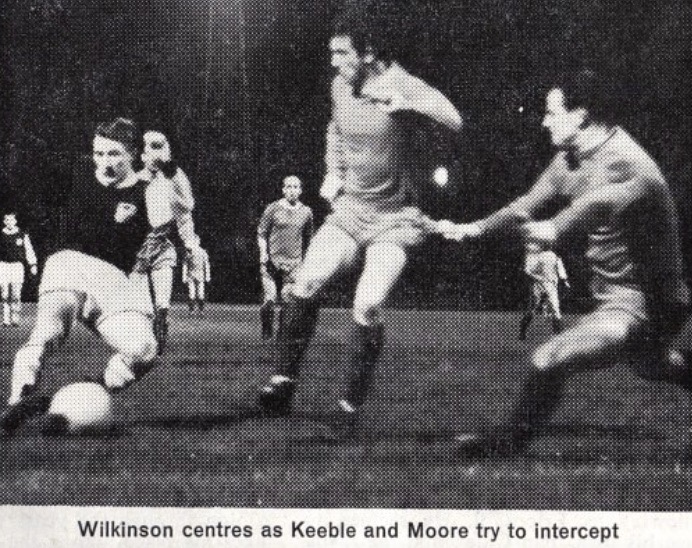
wilko bhaYORKSHIREMAN Howard Wilkinson was a key part of the first Albion side I watched. The former Sheffield Wednesday player was a speedy winger in Freddie Goodwin’s 1969 team.

But away from The Goldstone, he had already been sowing the seeds of his future coaching and managerial success.

My father was a founder of local amateur side Shoreham United, a Brighton League team, and the future “Sergeant Wilko” (as the press liked to dub him) was brought in to do some expert coaching with United’s first team.

I well remember as a young boy sitting on the sidelines in Buckingham Park, Shoreham, watching him put the players through their paces with various routines.

I waited eagerly with my autograph book as Wilkinson shared the benefit of his skills and experience with the willing amateurs.

I was chuffed to bits when he rewarded my patience with his signature at the end of the session but who would have thought the man before me would go on to manage League Champions Leeds United as well as the England national team!

I’ve since discovered how Wilkinson had taken his preliminary coaching badge shortly after joining Brighton in the summer of 1966. Readers of the matchday programme were told how Wilkinson was one of six Albion players who were taking the badge at Whitehawk under former Brighton wing half Steve Burtenshaw, who’d turned to coaching that year after his Albion playing career had come to an end.

By the summer of 1968, Wilkinson had already taken his full FA coaching badge at Lilleshall when only 25, and, as well as Shoreham United, he was coaching youngsters at Fawcett Secondary School, Brighton Boys, Sussex University and the Sussex County XI.

Born in the Netherthorpe district of Sheffield on 13 November 1943, he earned early recognition for his footballing ability playing for Yorkshire Grammar Schools and England Grammar Schools.

Wilkinson earned five caps for England Youth in 1962. He scored on his debut in a 4-0 win over Wales at the County Ground, Swindon, on 17 March 1962 in a side that also featured future full England international Paul Madeley (Leeds United).

He also appeared in the UEFA Youth Tournament in Romania the following month when England were beaten 5-0 by Yugoslavia, 3-0 by the Netherlands and drew 0-0 with Bulgaria. The following month he was in the England side beaten 2-1 by Northern Ireland in Londonderry in the Amateur Youth Championship for the British Association.

Wilkinson played local football with Hallam when he started to attract attention and was initially on the books of Sheffield United but it was city rivals Wednesday who took him on as a professional. The manager at the time was Vic Buckingham, known as the pioneer of ‘total football’, the philosophy later adopted by his protege Johann Cruyff.  But it wasn’t until the 1964-65 season under Alan Brown that Wilkinson broke into the first team, making his debut on 9 September 1964.

“My football league debut was a tough one against Chelsea, who were then top of the league, at Stamford Bridge,” he said. “We forced a 1-1 draw and I quite enjoyed the match.” He also played the following Saturday in the return fixture when they lost 3-2 at home to Chelsea (Bert Murray scored two of Chelsea’s goals). Wilkinson made 12 appearances across the season as Wednesday finished sixth in the old First Division.

The following season he scored both Wednesday goals in a 4-2 defeat away to West Ham United on 16 October 1965 and on 8 January he was on the scoresheet in a home 2-1 defeat versus Leicester City, but he only made eight appearances all season, playing his last game for the Owls on 19 March 1966. He wasn’t part of the Wednesday team who lost 3-2 to Everton in the 1966 FA Cup Final.

Wilkinson left Hillsborough for the Albion a few days after England won the World Cup and scored on his debut in the opening match of the season as Brighton drew 2-2 at home to Swindon Town. He was on the mark again two games later getting Albion’s goal in a 1-1 draw at Reading. He was also a scorer in one of the few highlights of that first season, when third tier Brighton beat Jimmy Hill’s top tier Coventry City 3-1 in a League Cup replay.

The winger from Wednesday continued to earn rave reviews for his performances until suffering concussion and a fractured cheekbone during a match away to Middlesbrough. In the days when medicine still had a long way to go, Wilkinson was out of the side for ages.

“I seemed to be out for an eternity after that injury,” Wilkinson told journalist Spencer Vignes in a matchday programme article. “They didn’t have the technology back then that they do today to mend injuries like that. I had an operation, they reset it, and I was on fluids for ages. It wasn’t nice.”

I’m grateful to the excellent Albion retro blog, The Goldstone Wrap, for digging out a quote from Wilkinson’s 1992 book, Managing to Succeed, in which he revealed this nugget about life on the south coast:

“When I was a player at Brighton, under manager Archie Macaulay’s guidance, we had some remarkable preparations for important matches and cup-ties. There were liberal doses of sherry and raw eggs, calves foot jelly, fillet steak, and plenty of walks on the seafront where we were taken to fill our lungs with the ozone.”

In five years with Brighton, he made 130 appearances (plus 17 as a sub), scoring 19 goals. He always had an eye towards what would happen after his playing days, explaining: “It was during my last year at Brighton that I decided to try and do a teaching qualification combined with a degree, ready for when I finished playing.”

He moved on from the Albion at the end of Pat Saward’s first season, having made only 18 starts under the new Irish manager. Jim Smith had contacted him to ask if he would join him at Boston United as player-coach. “It turned out that I would be on just as much money as I was at Brighton, even though Boston were non-league, so I went.”

Wilkinson enrolled on a degree course in Physical Education at Sheffield University and over four years combined coaching and playing with being a student, a husband and a father. On top of that, he ended up as manager after Smith left. Boston won the Northern Premier League title four times in his six years at the club and people started to take notice.

The FA appointed him as their regional coach for the Sheffield area and by 1978 he was helping out Dave Sexton and Terry Venables with the England under-21s. In December 1979, he joined Notts County as a coach under Jimmy Sirrel, eventually taking over as team manager for the 1982-83 season when County were a top-tier side.

In June 1983, he returned to Wednesday as manager and, in his first season in charge, steered them to promotion from the second tier. He kept them among the elite for four seasons.

Undoubtedly the pinnacle of his career was guiding Leeds United to the League Championship in 1992. He moved to Elland Road in 1988 and built a decent side captained by the future Scotland manager Gordon Strachan.

They won the last of the old Football League Division One titles and, remarkably, to this day Wilkinson remains the last English manager to achieve that feat. Not surprisingly he was that season’s Manager of the Year.

United fanzine The Square Ball had only good things to say about the man in a 2011 article. “Howard Wilkinson gave Leeds three fantastic seasons of unforgettable glory in 1989/90, 1990/91 and 1991/92; and the Charity Shield at Wembley and the European glory nights against Stuttgart and Monaco stand with the best memories of Leeds’ modern era. More than that, he gave Leeds United back its sense of justifiable self-worth; no longer living in the past, no longer derided in playgrounds, Leeds were a proper football club again, fit for the modern era.”

Sacked by Leeds in 1996, he then began to move ‘upstairs’ so to speak and was appointed as the Football Association’s technical director as the forerunner to several executive-style appointments.

However, he twice found himself in temporary charge of the England national team, firstly after Glenn Hoddle was forced to resign.

He oversaw a 2-0 defeat to France in a friendly at Wembley before Kevin Keegan took the reigns. Twenty months later he stepped into the breach again when Keegan quit and took charge of a World Cup preliminary match in Helsinki, England drawing 0-0 against Finland.

After England, he had a brief unsuccessful spell at Sunderland, assisted by Steve Cotterill, and later was involved in and around the boardroom back at Hillsborough.

Wilkinson’s work as technical director of the FA between 1998 and 2002 has been hailed as having a major impact and influence on the domestic game, providing a blueprint for the subsequent building of the National Football Centre at St. George’s Park.

In the 2024 New Year Honours List, having just turned 80, Wilkinson was awarded an OBE for his services to football and charity, including ongoing work as chairman of the League Managers Association. LMA chief executive Richard Bevan OBE said: “Howard’s legacy in English football may be one of the most unheralded yet important in the modern game.

“Universally respected and loved by his colleagues and peers in the game, he has built an association of professional football managers, which is globally recognised as one of the most progressive organisations in world sport.

“As one of English football’s greatest thinkers, he has supported thousands of managers, coaches, players and administrators in the game to fulfil their potential and build impactful careers in football.

“He has achieved so much in his life, whilst retaining the values, humility and decorum that were instilled in him as a young coach, passing on these values to everyone he has worked with and for.”


‘Yogi’ Baird knows about last game drama

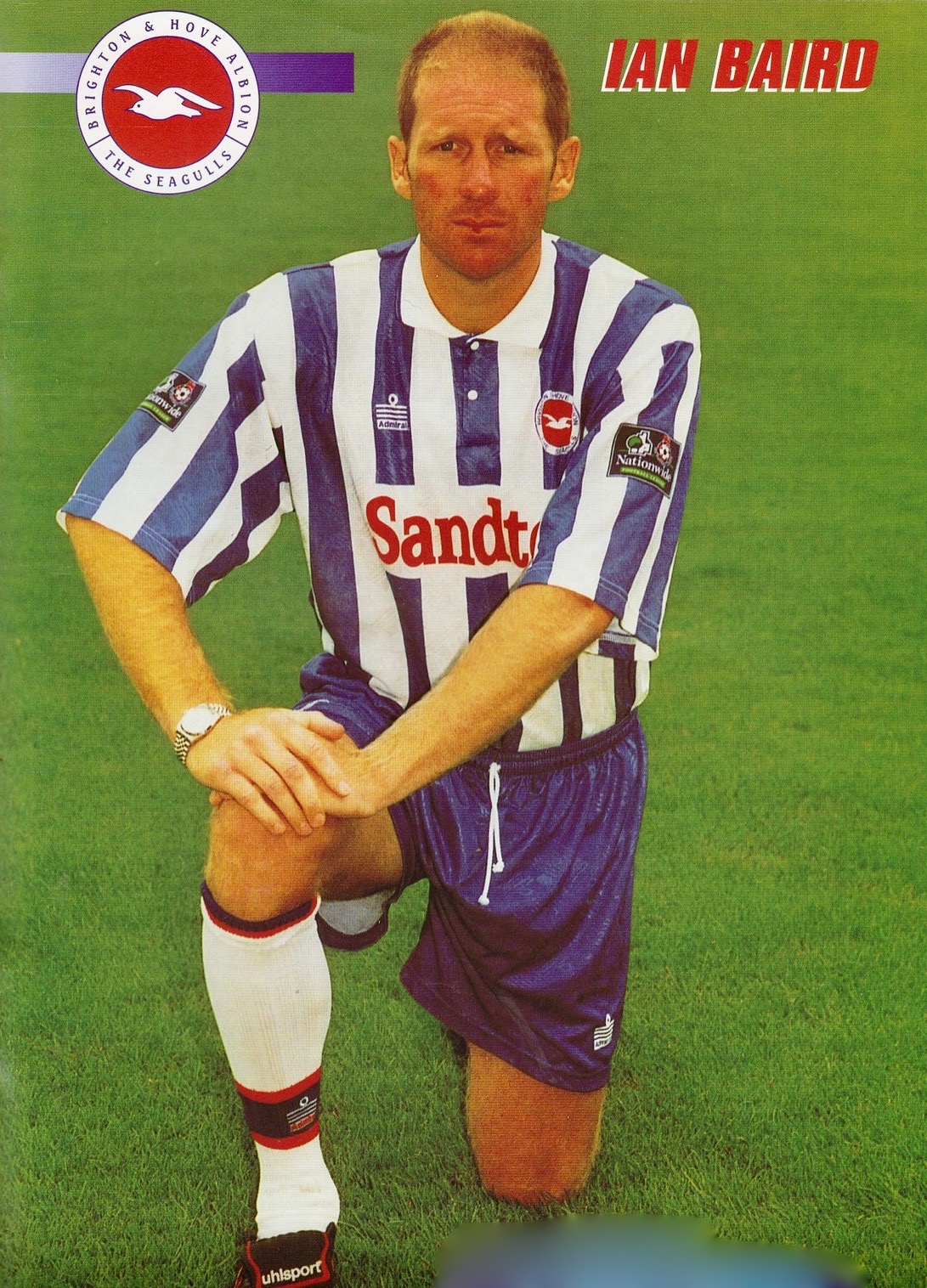
A STRIKER who brought last-game-of-the-season smiles to the faces of Middlesbrough fans earned only notoriety in Brighton & Hove Albion’s final game at the Goldstone Ground.

Journeyman hard man forward Ian Baird earned his place in Teesside folklore by scoring two goals in an end-of-season clash that not only kept Boro up but prevented north east neighbours Newcastle from getting automatic promotion to the elite.

But Brighton fans witnessed Baird, captain at the time, being sent off just 18 minutes into the 1997 game against Doncaster Rovers which thankfully nonetheless ended up in victory courtesy of Stuart Storer’s memorable winner.

The dismissal meant, though, that Baird would not be able to play in what has since been recognised as the most important game in the club’s history: away to Hereford United.

Perhaps we should not have been surprised. Baird was sent off 11 times in his career and he later told portsmouth.co.uk: “It was just a natural thing really. Sometimes my enthusiasm got the better of me. There were plenty of times I chinned someone or got into trouble.Bairdy leap

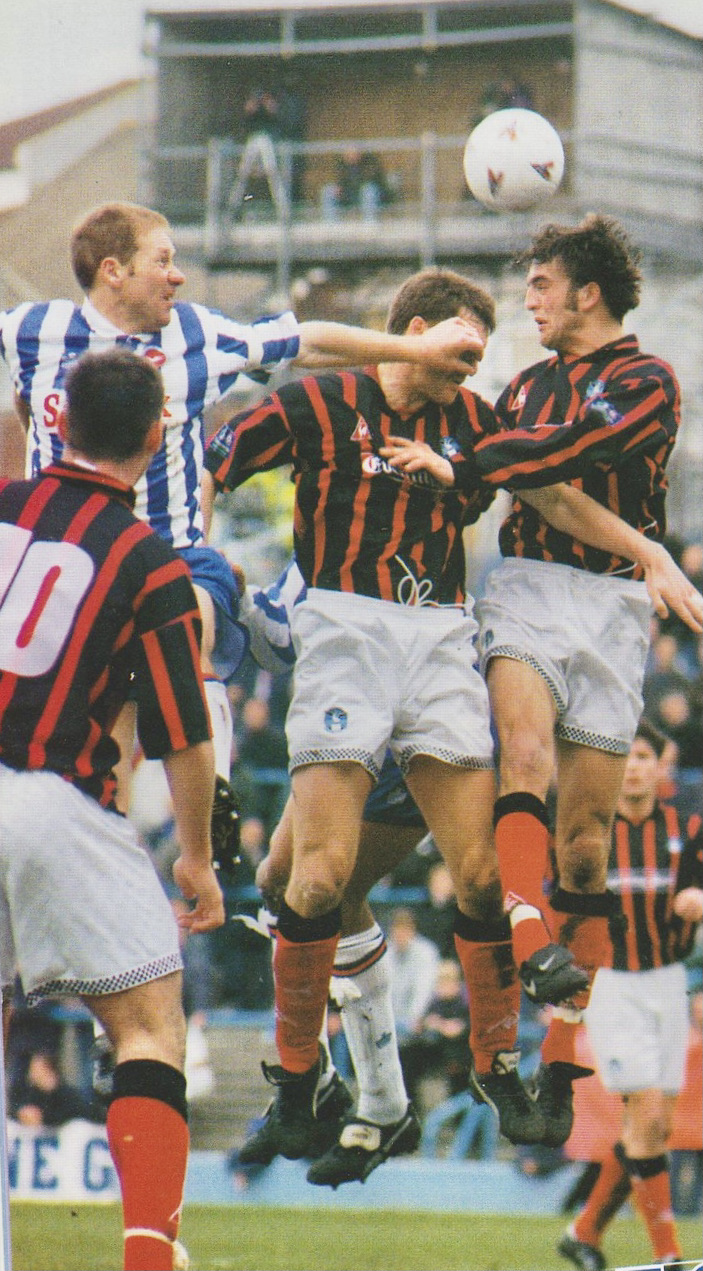
“The most stupid one was when me and Darren Moore had a fight. He was playing for Doncaster and I was playing for Brighton in the last game at their old Goldstone Ground.

“He came through the back of me, there was a bit of afters and I ended up trying to give him a right hook and there was a bit of a ruck.

“We had a bit of rough and tumble and I was just lucky he didn’t chase me up the tunnel because he’s huge!”

Screen Shot 2021-04-29 at 19.52.10To be fair, Baird had a reasonable goalscoring record at Brighton, netting 14 in 41 games following a £35,000 move from Plymouth Argyle.

Brighton was his 10th and last league club and over the 17 years of his league career he commanded a total of £1.7m in transfer fees, the £500,000 Boro paid Leeds being the highest.

At the start of the 1989-90 campaign, Baird scored the winner for Leeds against Newcastle at Elland Road and then, following his £500,000 January move to Teesside, scored twice in a 4-1 win over United on the final day of the season at Ayresome Park.

Those goals – along with a Bernie Slaven brace – helped prevent Boro going down and meant Newcastle missed out on automatic promotion (they then lost the play-off semi-final to Sunderland).

Years later Baird told chroniclelive.co.uk, ahead of the writing of his autobiography: “Yeah, I enjoyed that. That was some game, given what was at stake. And I loved playing for Boro. We had a great team eventually and Bernie Slaven and myself were a pretty decent partnership.”

Interviewed by Stuart Whittingham in 2013 for borobrickroad.co.uk, Baird explained how he moved to Boro because ex-Albion winger Howard Wilkinson, then manager of Leeds, signed Lee Chapman.

“I felt a little aggrieved and basically I spat the dummy out and asked for a move,” he said. “He (Wilkinson) said that he didn’t want me to go but I insisted and within 24 hours I was speaking to Bruce Rioch and Colin Todd and I was on my way to Middlesbrough.”

Undoubtedly his most successful playing years came at Leeds where in two spells he played more than 160 matches and scored 50 goals. In the 1986-87 season, manager Billy Bremner made him captain. The Yorkshire Evening Post spoke of “the powerhouse striker’s fearless commitment, no-holds-barred approach and goalscoring ability”.

The blurb introducing his autobiography Bairdy’s Gonna Get Ya! (written by Leeds fan Marc Bracha) says “he’s best remembered for his spells at Leeds, where goals, endless running, will to win and fearless approach ensured he was adored by the fans”.

On leaving Middlesbrough, Baird spent two years playing for Hearts in Scotland, persuaded to move north of the border by Joe Jordan, his former Southampton teammate, who was the manager there at the time.

A torn thigh muscle restricted the number of appearances he’d hoped to make and at the end of his deal he moved back to England and signed for Bristol City, initially under Russell Osman and then Jordan once again.

Baird was assistant manager at Sutton United under Paul Doswell for four and a half years between October 2014 and March 2019, and caretaker manager for a month after Doswell left. The pair were reunited as manager and assistant at Havant and Waterlooville in May 2019.

Pictures from the autobiography front cover and the Albion matchday programme.

Willie Bell rang last orders on his playing career at Brighton

High-flying Willie Bell in night game action versus Rotherham at the Goldstone Ground

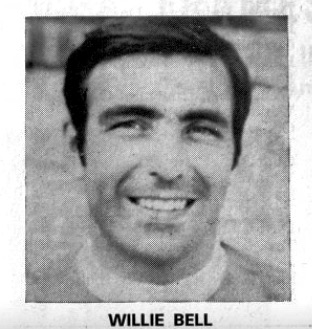
LEFT-BACK Willie Bell was a key part of the first successful Leeds United side built by Don Revie. A Scottish international, his illustrious playing career ended with the then Division Three Brighton.

Bell missed only two games during Albion’s 1969-70 season having been signed as a player-coach by his former Leeds United teammate, Freddie Goodwin, from the 1969 FA Cup Finalists Leicester City.

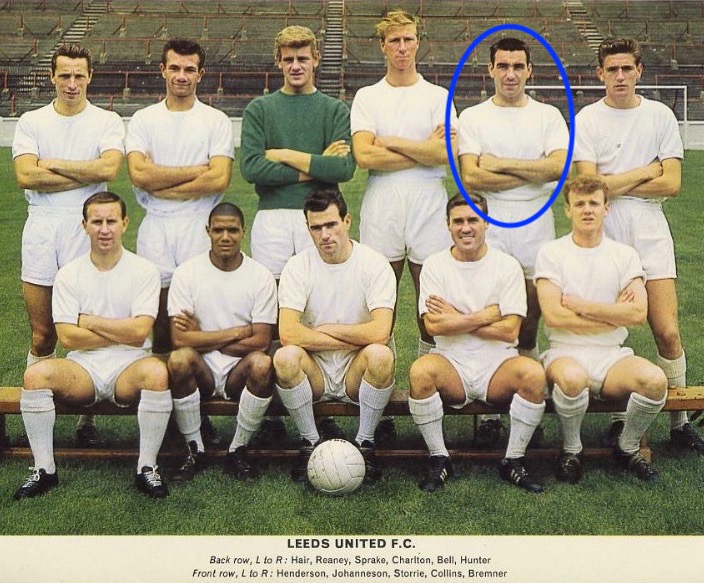
Screen Shot 2019-03-03 at 08.51.01Goodwin (pictured below alongside Bell in a Leeds line-up) obviously knew the pedigree of the player and mightyleeds.co.uk covers in depth how Bell was an unsung hero of that famous Don Revie side as it rose to prominence between 1962 and 1967.
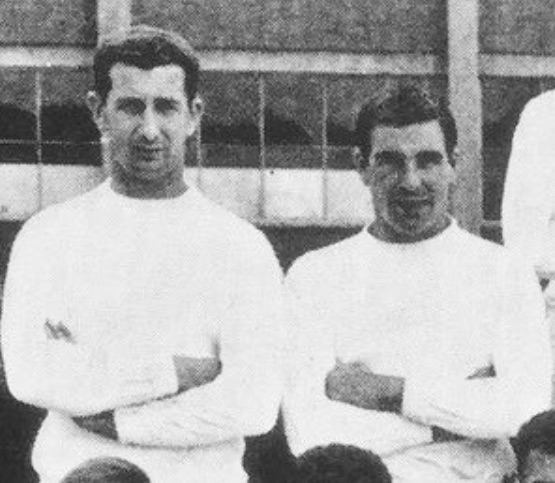
Legendary Leeds hardman Norman Hunter is quoted as saying: “Willie Bell was one of the bravest men I have seen in my life. He never blinked, he never flinched, he just went for it.”

And Scottish international winger Eddie Gray remembered something similar. “Willie was a natural defender; a big, strong player who epitomised the old school of British full-backs in his discipline in sticking rigidly to the basic defensive requirements of his job.”

Good+Willie

However, he stands accused of contributing to what Welsh Evertonian Roy Vernon labelled one of the most “savage confrontations” on a football pitch: an Everton v Leeds match in November 1964.

Everton full-back Sandy Brown had been sent off in only the fourth minute when he decked Johnny Giles for a tackle that left stud marks in the defender’s chest.

“Things came to a head in the 35th minute when full-back Willie Bell launched a two-footed tackle at Derek Temple near the touchline,” it was said in Blue Dragon: The Roy Vernon Story. “It was around neck high and one of the worst seen outside a wrestling ring.” The Everton winger had to be stretchered off by St John Ambulance attendants.

Born in Johnstone, Renfrewshire, on 3 September 1937, Bell began his career as a wing-half and in 1957 transferred from Neilston Juniors to Scottish amateur side Queens Park. While he was there, he won two Scottish amateur caps which attracted the attention of Leeds manager Jack Taylor.

Bell, aged 22, joined Leeds in the summer of 1960 after they had been relegated to the old Second Division. The Scot struggled to adapt to the English game initially and only featured sporadically in the Leeds first team. It was Taylor’s successor Revie who switched him to left-back to replace the long estanlished Grenville Hair and he only became a regular in the 1963-64 season.

He developed a great understanding with left winger Albert Johanesson as Leeds won the Second Division title and, by the end of the following season, he was part of the Leeds side that reached the  1965 FA Cup Final, only to lose to Liverpool after extra time.

England international Terry Cooper eventually replaced him at Leeds, but his performances for the Elland Road outfit earned him two full caps for Scotland in 1966, against Portugal and Brazil.

Leeds transferred Bell to Leicester in 1967 for £40,000 and he was their captain for a while but the emerging, future England international David Nish became their first choice left back and, in the summer of 1969, Bell linked up with Goodwin at Brighton.

It was halfway through the season when Bell was put in charge of Albion’s reserve side and they couldn’t have made a better start for him because they hammered Southend United 6-1 with goals from Andy Marchant, Brian Tawse, Paul Flood, Ken Blackburn, Barrie Wright and Dave Armstrong.

Bell headshotThe matchday programme noted: “Willie is continuing his career as a player, but devotes a good deal of his time to the reserve side. He’s thoroughly enjoying this new phase to a fine career in the game.”
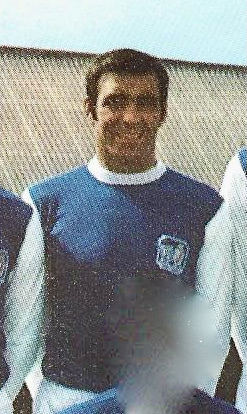
When Goodwin left Brighton for Birmingham, he took Bell and youth coach George Dalton with him, but Goodwin was so eager to hire his old pal that he made an illegal approach to him while he was still under contract at Brighton and Birmingham were later fined £5,000 for the offence.

Goodwin and Bell launched the career of Trevor Francis, the first £1m footballer, as a teenage starlet at Birmingham. In 1972, Francis, Bob Latchford and Bob Hatton spearheaded promotion for the Blues and a place in the FA Cup semi finals.

When Goodwin was sacked at the end of the 1974-75 season, Bell became caretaker manager and, after a successful spell in temporary charge, got the position on a permanent basis.

Screenshot
Birmingham City manager

Bell brought in Syd Owen, the former Leeds United trainer, as a coach, but the team struggled, finishing one place above the relegation zone at the end of their 1975-76 centenary season.

He led them to an improved 13th in the following season but after losing the opening five matches of the 1977-78 season, Bell’s managerial career at St Andrews came to an end. His successor was none other than former England boss Sir Alf Ramsey, who was by then a Birmingham director.

Bell meanwhile went on to manage Third Division Lincoln City, following the unsuccessful George Kerr in trying to emulate the heights enjoyed by the Imps under Graham Taylor, who had gone on to manage Watford. It wasn’t to be, though, and on leaving Lincoln in October 1978, Bell emigrated to the USA and coached at Liberty University in Virginia.

After suffering a heart attack in 1993, he turned to religion and became active in the church. In 2001 he and his wife Mary retired to Yorkshire and in 2014 published an autobiography called The Light At The End of the Tunnel.

Bell died aged 85 on 21 March 2023 after suffering a stroke.