
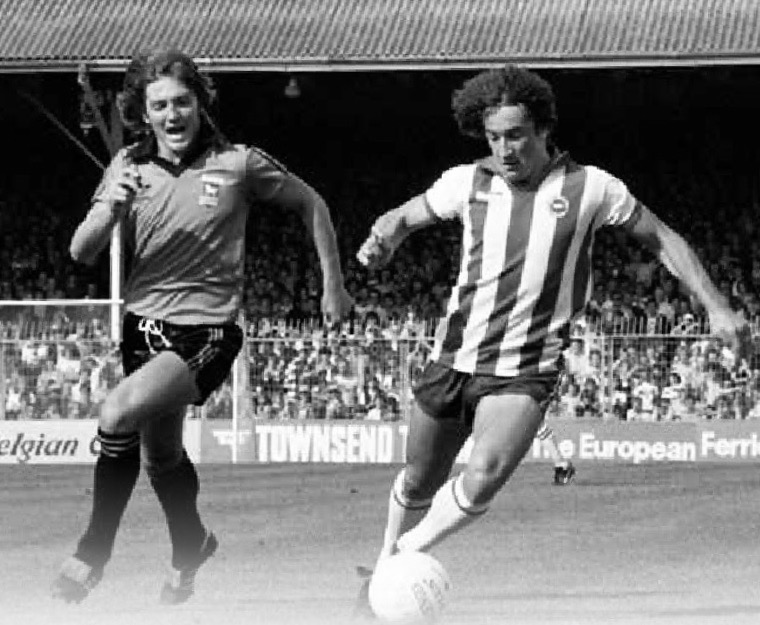
NIMBLE-footed Peter Sayer was certainly a player for the big occasion: a Cardiff City legend and briefly a Welsh national team star.
At Brighton & Hove Albion, he was part of the team that memorably won promotion to the top division for the first time in its history.
He signed for the Seagulls for £100,000 just nine months after playing for his country in what was the only Wales victory over England at Wembley (on 31 May 1977).
Sayer was part of a Welsh team captained by Terry Yorath (father of TV presenter Gabby Logan) but with far fewer household names than their illustrious opponents.
Wales were managed by Mike Smith, the former Hove Grammar School teacher, while Don Revie’s England were captained by Kevin Keegan, playing up front alongside Stuart Pearson and Mick Channon.
The BBC highlights of the match show the diminutive Sayer getting on the end of a Leighton James cross but steering his header wide before James scored the only goal of the game from the penalty spot after he’d been upended by Peter Shilton.
Neil Moxley, for dailymail.co.uk in September 2011 discovered what had happened to that Welsh team since, which included jobs ranging from Wales boss to toilet roll business managers. Sayer, he reported, had become steward at a golf club in Preston, where he moved to after Brighton, and then run a pub in the area.
In Back Pass magazine in August 2013, Sayer was quoted as saying: “It was an excellent time at Brighton. There were some very good players at the club and I was playing well.
“I especially remember when we won promotion to the old First Division at Newcastle in 1978-79.
 “We had our own train which we used to travel on to away games. It was great for team morale.”
He added: “I ended up in the reserves even though I was playing well. I got asked to go to Newcastle but failed the medical.
“The club then had an opportunity to sell me to Preston and they perhaps felt they needed to offload some players. Maybe I should have dug my heels in and fought.”
Sayer wasn’t a prolific goalscorer but he did get on the scoresheet in a memorable 3-3 draw at Orient that I went to in April 1979, when Martin Chivers scored his only goal for the Albion and another former Spurs star, Ralph Coates, was among the scorers for the Os.
The game was covered by ITV’s The Big Match and broadcast to the nation the day after the game. Sayer scored after ‘keeper John Jackson, who later became a goalkeeping coach at Brighton, parried a Paul Clark thunderbolt and the Welshman cracked in the rebound.
There’s a very detailed look back at Sayer’s career on pneformerplayers.co.uk by Ian Rigby. His report says: “Occasionally he quietly attends Deepdale to watch North End, but on his return to Cardiff City, as a guest, he is treated as a former star player, which he was.”
A televised third round FA Cup tie between Cardiff and Spurs in January 1977 thrust Sayer into the limelight when his winning goal was seen by millions and can still be seen on YouTube today.
Rigby recounts: “He controlled the ball with his head and, with four defenders converging upon him, he smashed the ball past Pat Jennings. A sponsored car was just one of the perks that came Peter’s way after that goal.”
Born in Cardiff on 2 May 1955, Sayer grew up in the city and went to Trelai Primary School then Cantonian Comprehensive School. He played for his school at all levels and at each successive age group for the Cardiff Schools representative side. That led to him winning Welsh international caps at schoolboy level and later at youth, under-21 and full levels too.
He was awarded a professional contract with Cardiff in July 1973 by then manager Jimmy Scoular but he had to wait until February 1974, by which time Scoular had been replaced by former Leicester and Man Utd boss Frank O’Farrell, to make his league debut as a substitute against Blackpool.
By 1975, just as he was beginning to establish himself, he suffered a broken leg and dislocated ankle in a game at Southampton. Eighteen months later, though, he had recovered sufficiently well to earn his first international honour, playing for Wales Under-21s against England, at Molineux.
Sayer ultimately earned seven full international caps including that Home International win against England and two World Cup qualifying games, one being the controversial game against Scotland at Anfield when a diabolical refereeing decision robbed the Welsh.
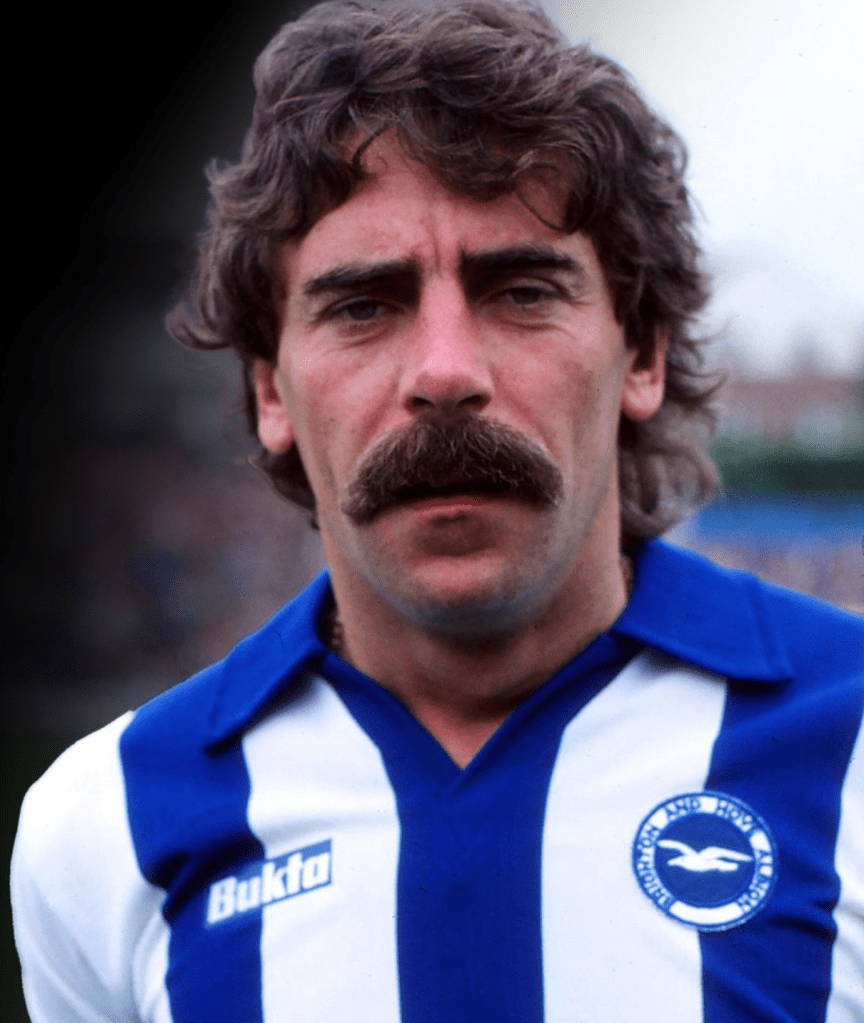
Nicknamed ‘Leo’ because he sported the same-style perm as the 70s Shoreham-born pop singer who shared the same surname, Sayer was a regular in the Albion’s 1978-79 promotion-winning side.
He initially retained his place as Brighton strove to come to terms with the top division but when Alan Mullery decided to switch the mercurial Mark Lawrenson from defence to midfield, it was at Sayer’s expense.
In August 1980, Preston manager Nobby Stiles, the England World Cup winner, paid £85,000 to take Sayer to Deepdale, but his career there was beset by injuries and he was released at the end of the 1983-84 season and signed for Chester City for one season.
He subsequently played non-league for Morecambe, Northwich Victoria, Chorley and Southport.


Pictures from my scrapbook show the Albion matchday programme photograph of Sayer scoring in that game against Orient and, from the BBC coverage of England v Wales at Wembley in 1977, the winger looking exasperated after his header has gone wide. Sayer was quite a dab hand at snooker, too.
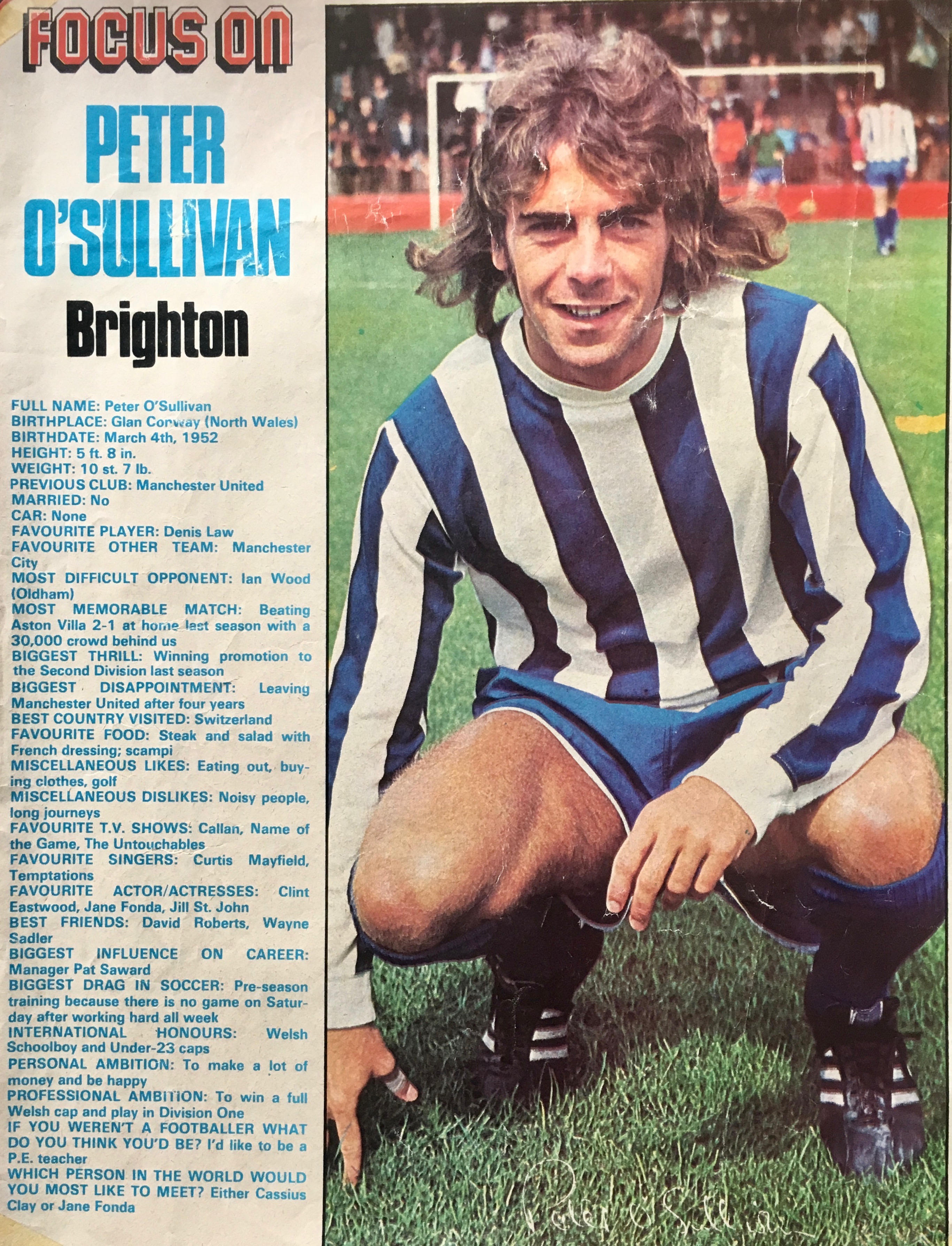


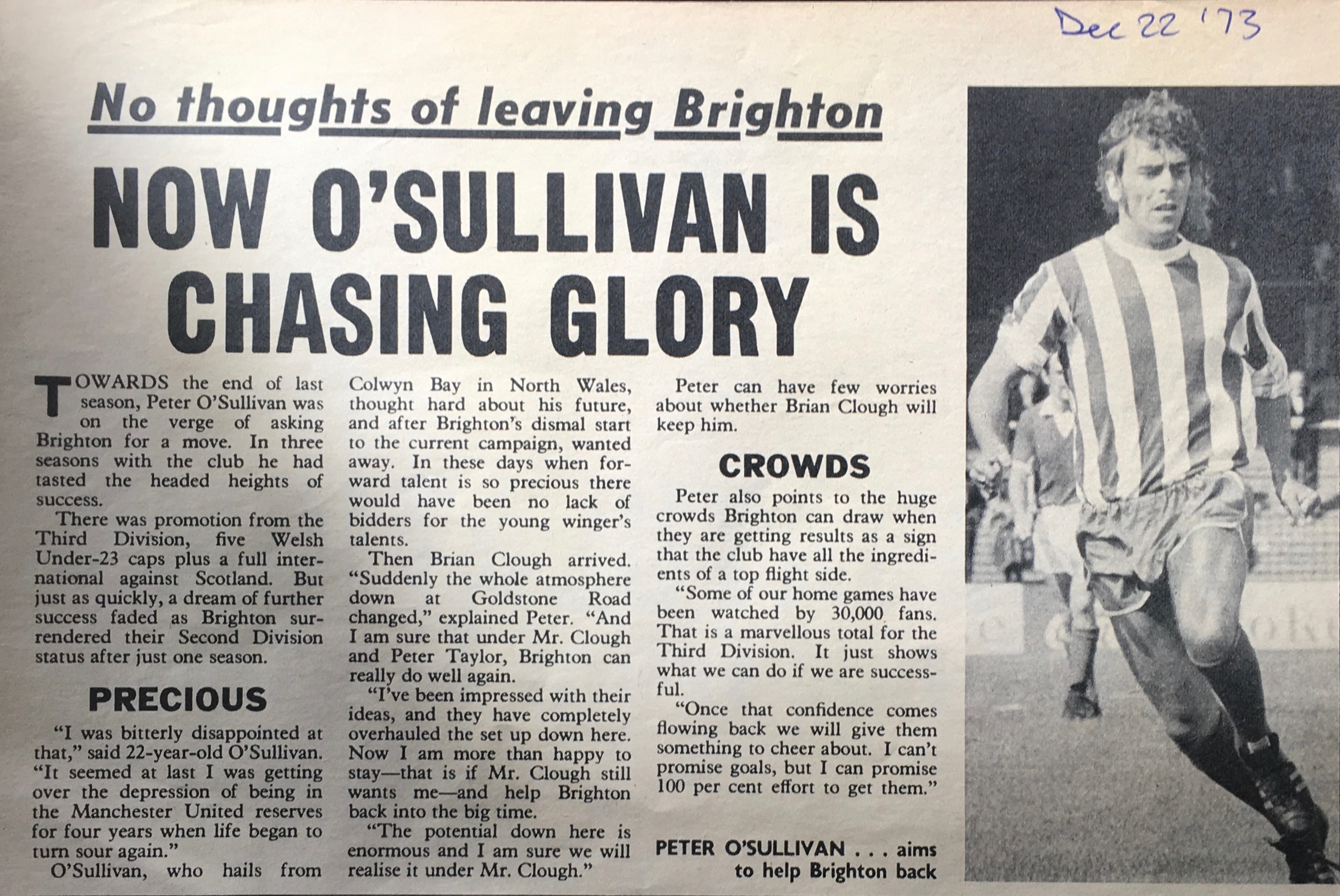
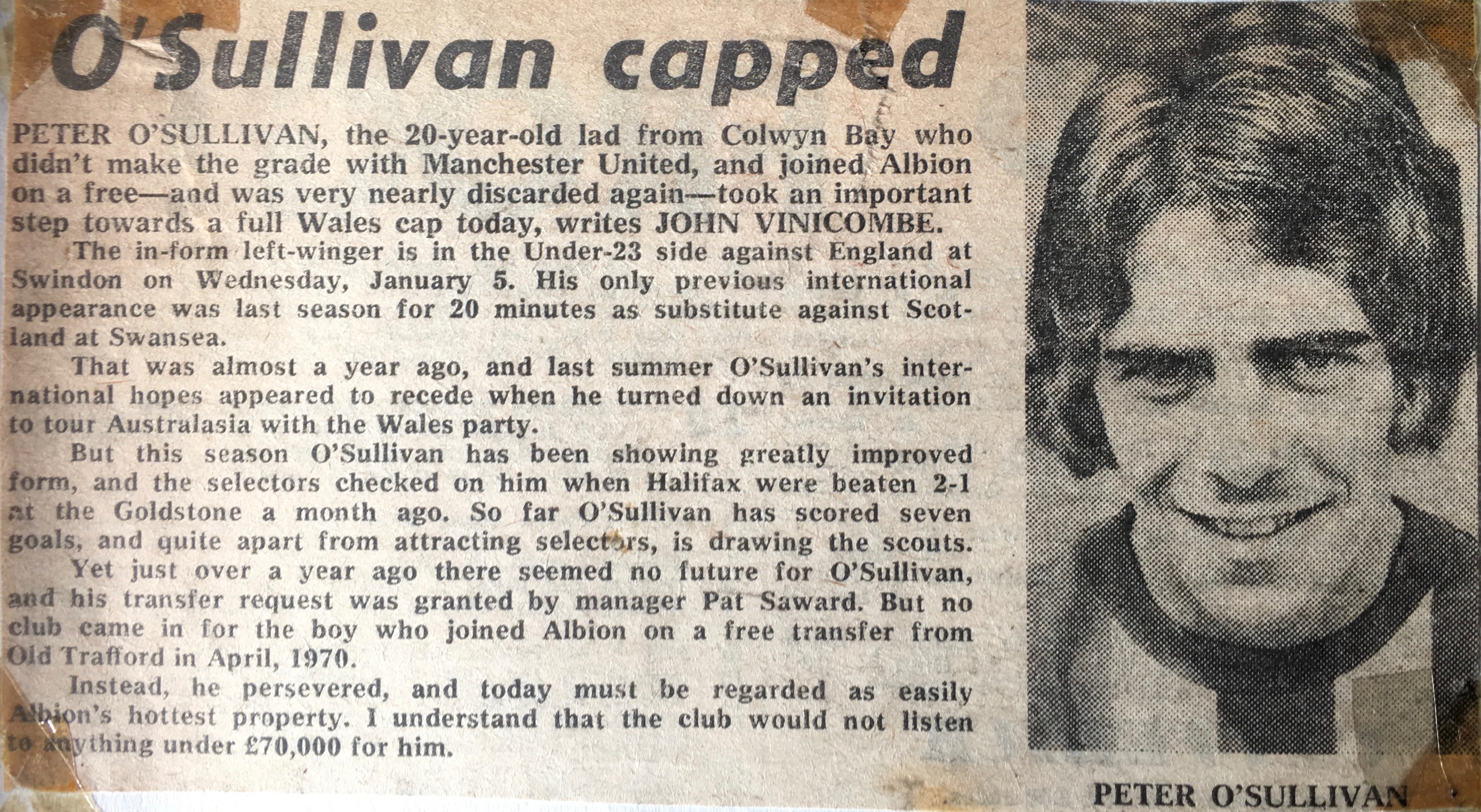 The performances of the lad from Colwyn Bay also saw him earn three international caps for Wales, two against Scotland and one in a rout against Malta when he also got on the scoresheet. Unfortunately for him, during the same period, a superb left-sided player called Leighton James was the first choice for the national side.
 In parallel lines