The geography was all wrong for O’Grady’s Seagulls excursion

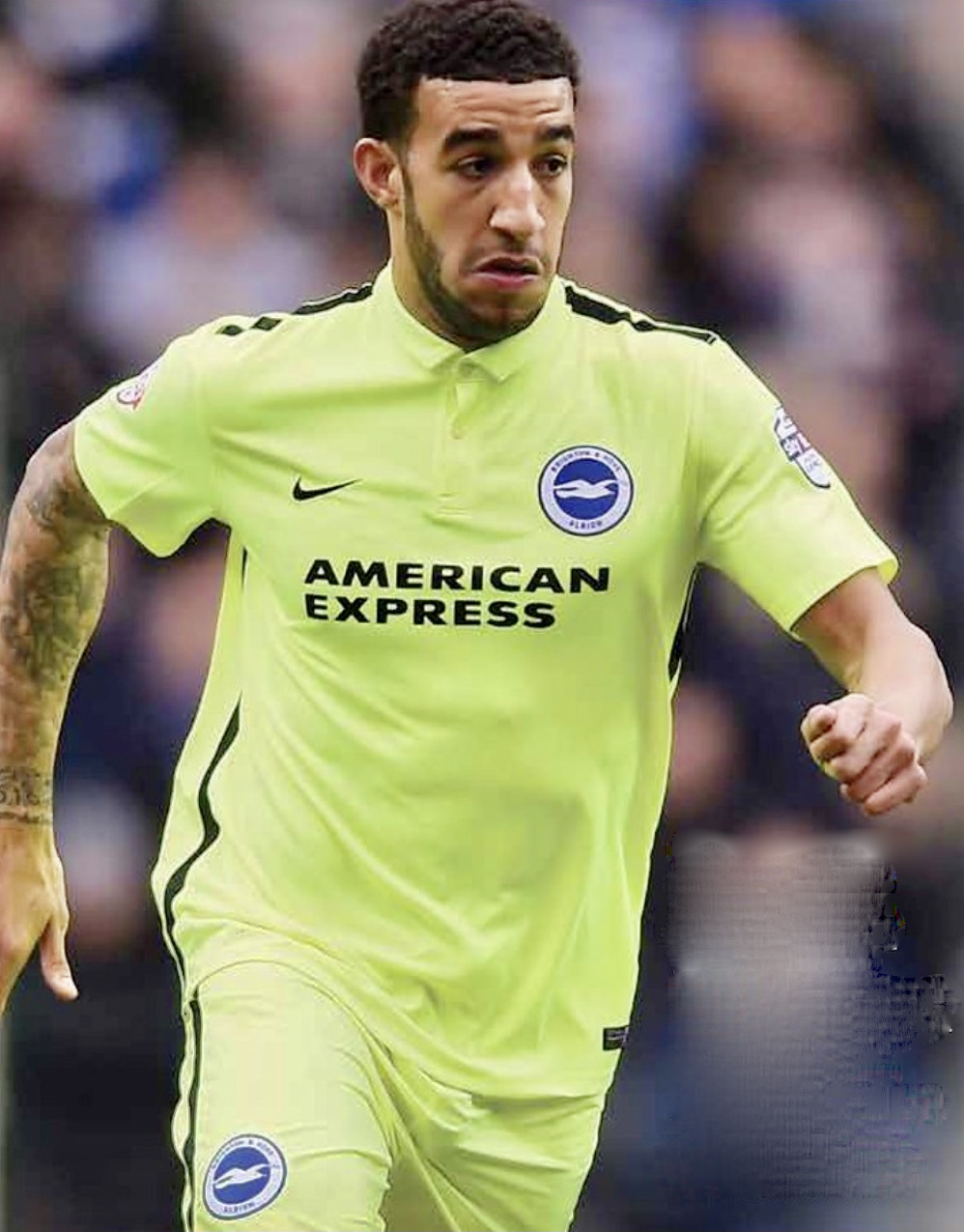
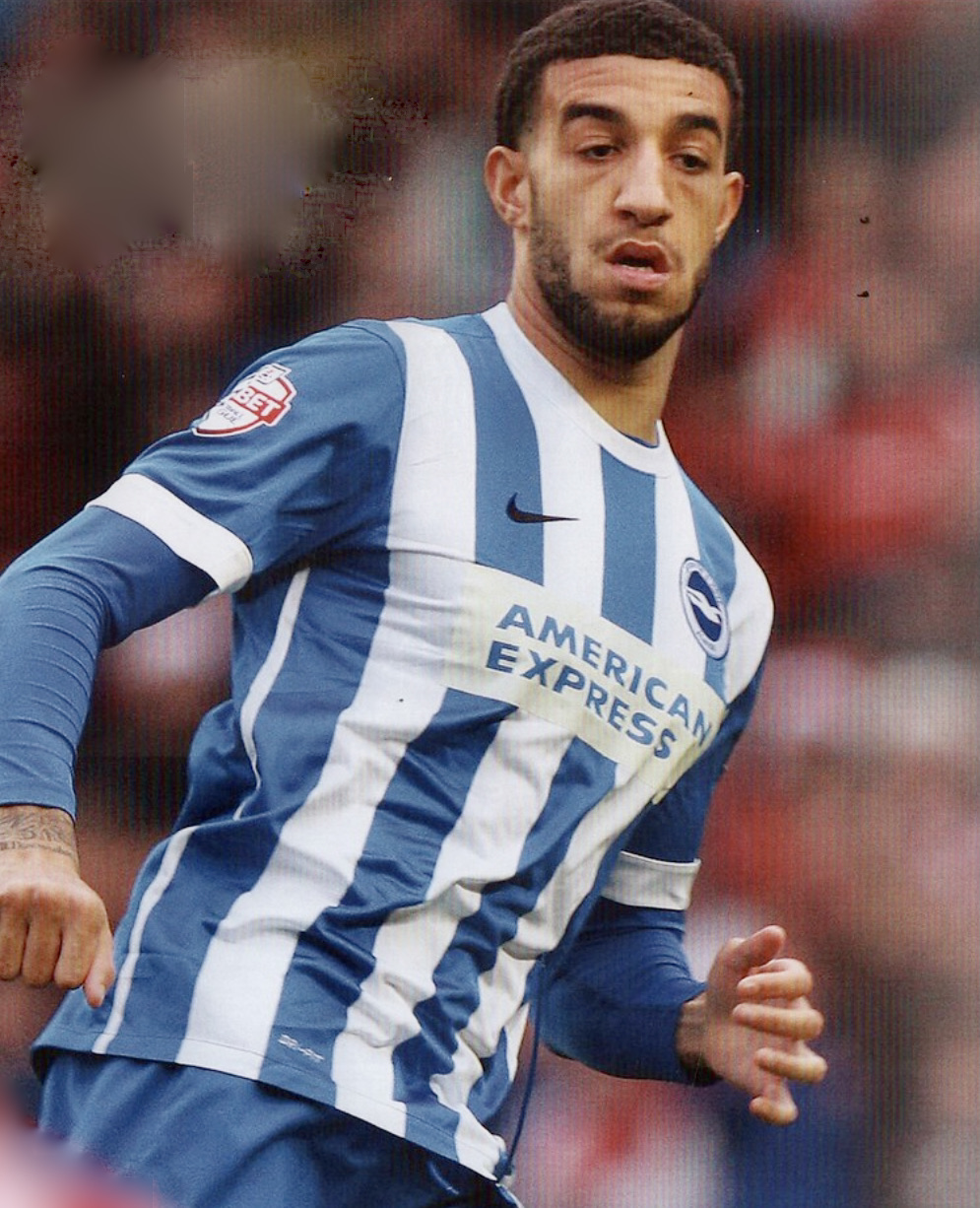
SHEFFIELD UNITED and Brighton once went head to head for the services of journeyman striker Chris O’Grady.

It might be said many Albion followers were somewhat disappointed that the Seagulls pipped the Blades to signing the player from Barnsley in the summer of 2014!

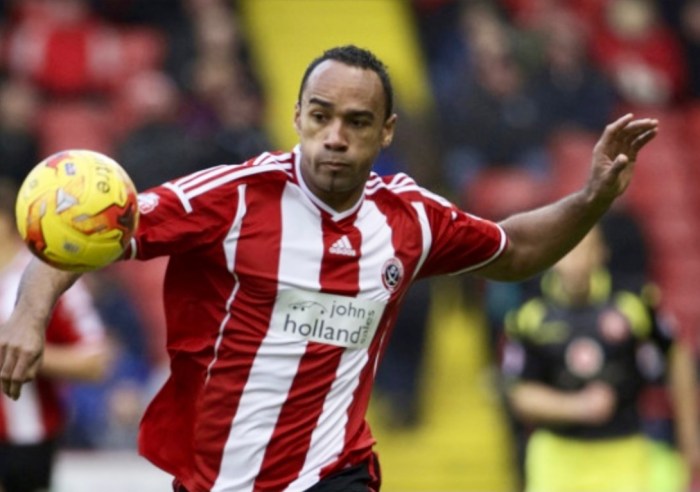
It wasn’t long, however, before United, then in League One, landed their man when he failed to score in 11 appearances and struggled to settle in Sussex.

On taking O’Grady on loan, United manager Nigel Clough said: “There aren’t too many strikers of Chris’s calibre around at the moment.

“We liked him last season at Barnsley and he has got good Championship experience. Chris was a target for us in the summer but Brighton came in with a deal we simply couldn’t match in terms of wages and what they could have been potentially offering him as a playing challenge.”

The 28-year-old impressed in four Blades starts, scoring once in a draw with Walsall at Bramall Lane, and Clough remained hopeful of eventually doing a permanent deal for the player.

But Albion head coach Sami Hyypia left the club shortly before Christmas and O’Grady was recalled to cover a mini injury crisis amongst the available forwards.

Under caretaker manager Nathan Jones, O’Grady was introduced off the bench at Fulham and set up a goal for Solly March in a 2-0 win.

Then, in Chris Hughton’s first match in charge, a third round FA Cup tie at Brentford, O’Grady bagged his first Seagulls goal in another 2-0 win. On as a 67th minute substitute for Mackail-Smith, O’Grady hit a post, saw an effort trickle wide and then scored a decisive stoppage time second goal against the Bees to secure Albion’s passage through to the fourth round.

It was in the third minute of added on time when, put clear through by Adam Chicksen, he doubled the lead gained when Lewis Dunk headed in an 88th-minute opener at Griffin Park, thus helping Hughton’s reign get off to a winning start against Mark Warburton’s side.

After the match, O’Grady opened up about his struggles in an interview with BBC Sussex. “It’s been extremely tough,” he said. “It has tested a lot of relationships in my life. Thankfully the strongest one, my family, is still together which is the most important thing.”

O’Grady had spent all of his career playing in the Midlands, Yorkshire or the North West and said settling on the south coast with his partner and three children had proved difficult.

“We’ve been trying to settle in the area and it’s not quite happened on the pitch,” he said.

“We’ve got a home we’ve had for quite a few years back up north and we’ve been half in that and half down here as we don’t know what’s going on.

“I’ve been doing my best but it was not working out. I got a chance to go back up north and find myself and get some fitness.

“My whole career I have performed for people who believe in me. I felt I wasn’t sure why I was here.”

O’Grady was fighting an uphill battle at the Albion from the moment he was signed by head of football, David Burke. The Seagulls had banked £8m from the sale of Leonardo Ulloa to Leicester and obtaining O’Grady’s services from relegated Barnsley (he’d scored 15 goals as they went down) was seen by fans as inadequate recompense, even though the club tried to insist it wasn’t a like-for-like transaction.

Hyypia said at the time: “This is an area we want to strengthen, and Chris is a good start. He is a strong, physical presence and gives us something different to the other strikers we already have here at the club.

“You need that option in the squad of a forward with power and strength, and Chris can give us that – as well as scoring goals.

“We still want some extra attacking additions, and in other areas of the team, but I’m pleased we have another one of our targets.”

Those “extra attacking additions” turned out to be Adrian Colunga and Sam Baldock the following month and both largely put paid to O’Grady’s hopes of gaining a regular starting spot.

Not that O’Grady felt overawed by the challenge. “For the past two seasons I’ve hit double figures and that has been a reflection of the desire and hunger that I have to succeed at this level,” he said.

“Having played for Leicester City and Sheffield Wednesday in the past, I know what it’s like to play for a big club – and Brighton certainly fall into that category.

“Earlier in my career playing for those clubs might have been a bit daunting for me, but at my age I know how to deal with the expectation and to win the fans over. It’s fantastic to be joining a club with such big ambitions and to be joining in the peak years of my career.”

O’Grady started the first three games of the season, but the presence of incumbent Craig Mackail-Smith plus the late August signings of Colunga and Baldock soon indicated competition for forward places was going to get a lot tougher.

Injuries to Baldock and Mackail-Smith gave him some limited game time but Hyypia told the Argus he expected more from the bustling big man.

“He is training well, he’s doing his work and he can be a tricky player for the centre-backs because he is so strong.

“I know that he can be dangerous. Sometimes I wish he would go forward a little bit more.

“He’s not slow so he could give the centre-backs more problems if he didn’t always come to the ball.”

Nigel Clough’s Sheffield United were keen to sign O’Grady permanently

It seemed the FA Cup suited O’Grady because he also pulled a goal back for the Seagulls in the 50th minute of the glamour fourth round tie against holders Arsenal, in front of a 30,278 crowd, although they eventually lost 3-2.

Although Clough was keen to take O’Grady back to south Yorkshire, Hughton made it plain he wanted him to stay and fight for his place

“This is a player that came here and had a difficult time, went away on loan and has been excellent for us since he came back,” Hughton told the Argus. “I must admit I’m still getting to know him. I knew him from his time at Barnsley, I don’t know him as much from his time here.

“He certainly couldn’t have done any more than he has in the last two games. He is no different to any other player, you want to be playing and involved, and if you are you are generally happier. At the moment, I think he’s in a nice place.”

O’Grady admitted: “I’m just getting a chance to play. I’m taking it and doing my very best for however long I am wanted here.

“I am being professional and doing my very best. Since I’ve been back, there is a freshness and a chance to get involved and contribute. That’s all I’ve ever really wanted.”

Buoyed by the change in management, and with his family settled, O’Grady told the Argus in early February: “I’ve succeeded at all the clubs I’ve been at in the past five years, which has led me to be here.

“I started in League Two and if you do fail at any club at any time then you are only going to go down. Failure is not really an option. You have to work as hard as possible to succeed.

“Even though the first half of the season didn’t go well, it would have been too easy to give up and just write it off as ‘this one didn’t really work out’.

“That’s a lesson that if you persevere with a situation it will eventually come good if you deserve it.”

Unfortunately, Hughton thought Leon Best on loan from Blackburn Rovers might be a better option, and Baldock or Mackail-Smith invariably were ahead of him as the manager shuffled his pack in a battle to stay in the division.

It wasn’t until 10 March 2015 when O’Grady, making a rare start away to Reading, scored his first – and only – league goal for the Seagulls, netting from the penalty spot as the Albion went down 2-1.

Come the start of the 2015-16 season, Tomer Hemed and the returning Bobby Zamora made O’Grady’s future involvement a lot less likely.

His only action came in two League Cup matches, away to Southend and Walsall, and he missed a penalty as the Saddlers dumped out the Albion 2-1.

So, it was no surprise he was sent out on a season-long loan to Nottingham Forest, the club who’d let him go as a young boy. During that temporary return to Forest in 2015-16, he scored twice in 21 games.

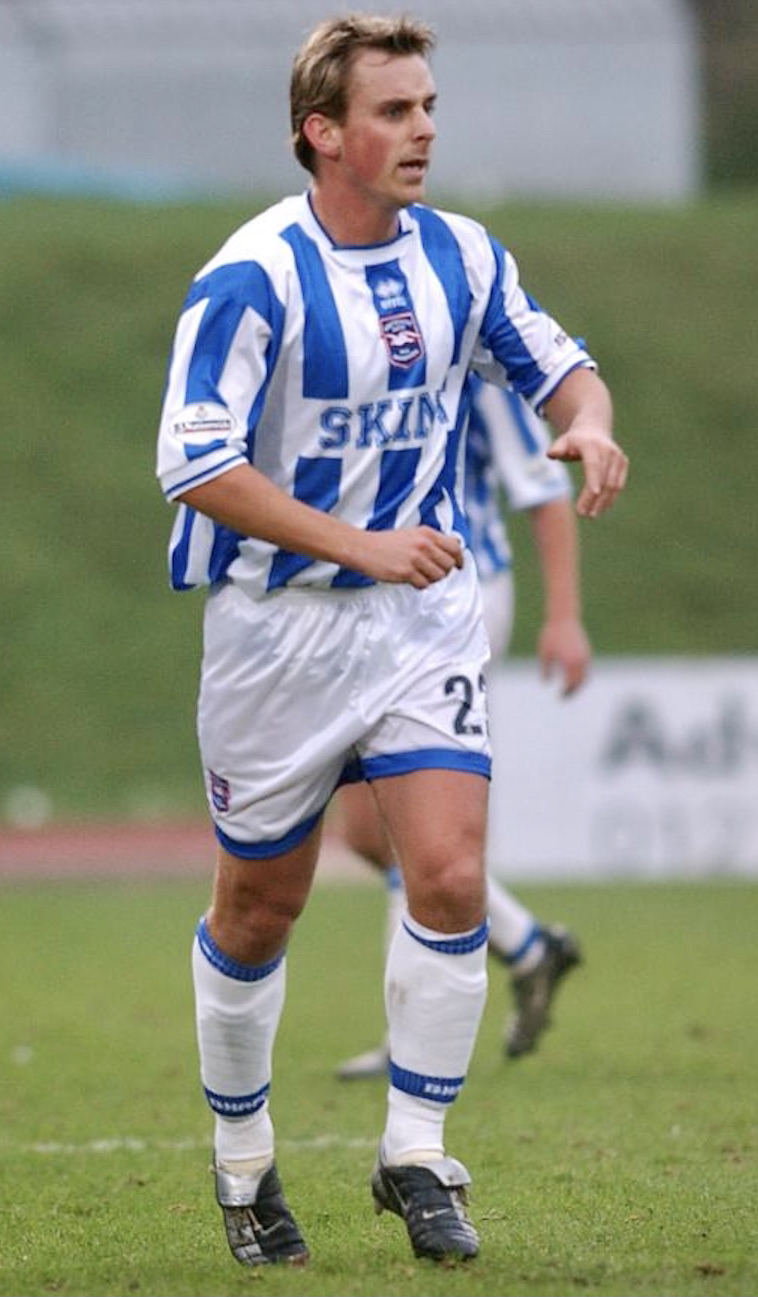
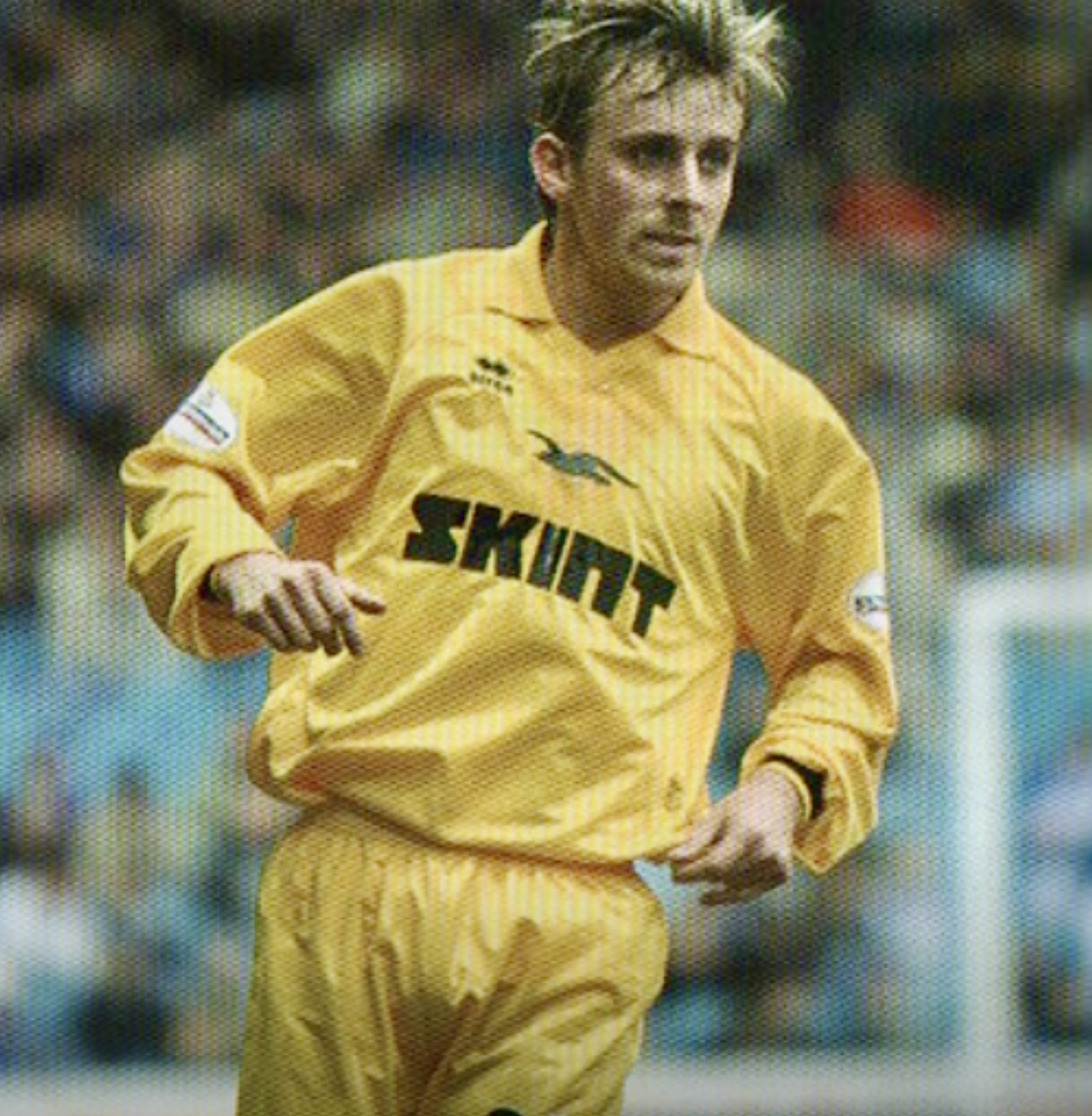
In the last year of his Albion contract, 2016-17, he was reunited with Nigel Clough, this time at Burton Albion, (pictured in action below) where he scored once in 26 games. While he was a regular in the first half of the season, he made only five appearances after the turn of the year following the arrivals of Cauley Woodrow, Luke Varney and Marvin Sordell.

Born in Nottingham on 25 January 1986, O’Grady was at Forest from the age of 10 to 13. “I dropped out of football for a while but then got back into it at 15,” he told Albion’s matchday programme. “I wrote to the clubs local to me: Leicester and Derby. Leicester were doing open trials at the time, and I progressed through that, then on to proper trials at the training ground, and I eventually got signed up.”

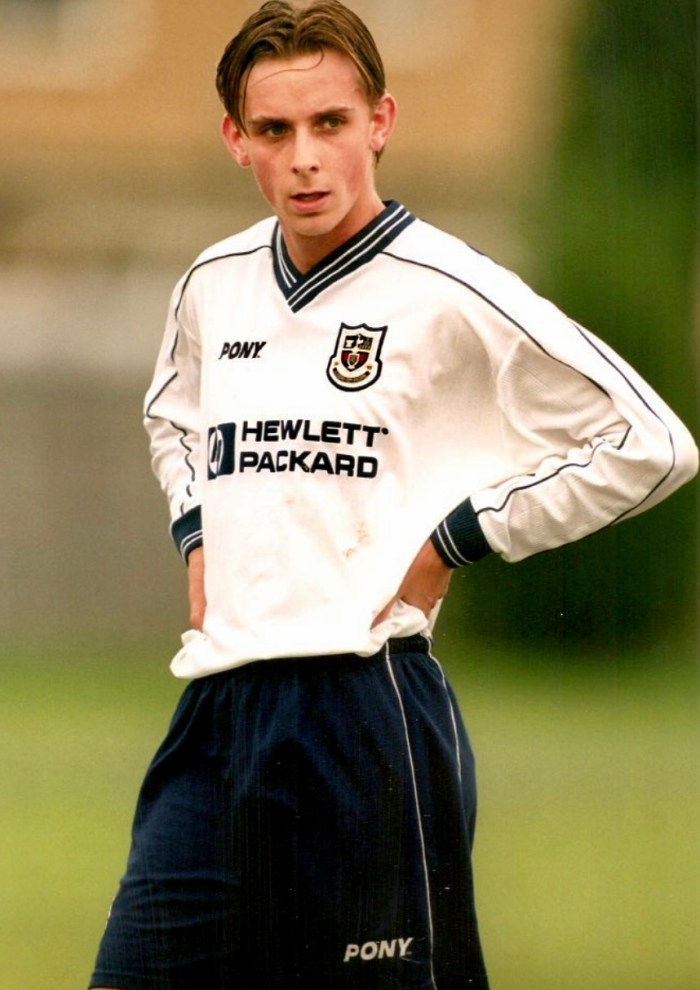
A young Chris O’Grady in his Leicester days

It was during his time at Leicester that he took up yoga, inspired by the knowledge Ryan Giggs was an advocate of it. “It definitely helps,” said O’Grady. “I was a young lad in the youth team at Leicester and quite big physically but not very flexible with it.

“I was also picking up injuries at the time so I just knew I needed to do something. Once I started with the yoga all the injuries kind of went away and I’ve never really had a muscle injury since.”

After he’d got on the scoresheet regularly at under 18 and reserve level, former Albion boss Micky Adams gave him his first team chance with the Foxes.

He also won an England Youth cap in a 3-0 defeat away to France in Limoges on 13 November 2002. When he couldn’t pin down a regular place at City, he had loan stints with Notts County and Rushden and Diamonds and, although he returned to Leicester and played a handful of games in the Championship, in January 2007 he was sold to Rotherham United, where he spent 18 months.

Next up was Oldham but, in two years on their books, he had loan spells at Bury, Bradford City, Stockport County and Rochdale.

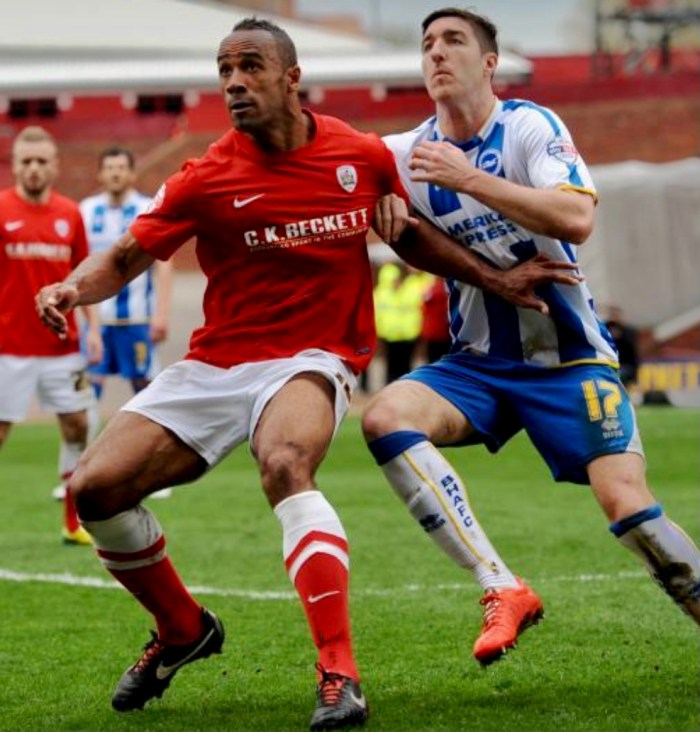
O’Grady in action for Barnsley against Albion’s Stephen Ward

His 31 goals in 95 matches for Dale earned him a move to Sheffield Wednesday on a three-year deal in the summer of 2011 but on transfer deadline day in January 2013 he made the short journey to Barnsley and then made the move permanent that summer.

At the end of his three-year Brighton deal, O’Grady moved to League Two Chesterfield for a season, but when they lost their league status he moved on in 2018-19 to his former club, Oldham Athletic, by then in League Two, where he scored eight goals in 47 matches.

The following season he moved up a division and played for League One Bolton Wanderers but their relegation to League Two brought down the curtain on O’Grady’s league playing days.

After he was released, he spent a year out of football. But in May 2022 he signed for Southern League Premier Division Central side Ilkeston Town, where he scored seven goals in 19 games. The side’s manager Martin Carruthers declared on signing him: “Chris is an excellent addition to our squad and brings with him a wealth of experience.

“He is a big, powerful unit and super fit, he will certainly be of huge benefit to our current strikers who will all be able to learn and develop from Chris this season.

“He will give us different attacking options and I’m sure will bring plenty of goals to the team.This is a real coup for the club.”

In February 2023, at the age of 37, O’Grady joined ‘The Gingerbreads’ – Northern Premier League Division One East side Grantham Town – where he played alongside former Nottingham Forest and Derby County forward Nathan Tyson. He scored just the once in eight matches, in a 3-0 win over Brighouse Town (Tyson scored the other two).

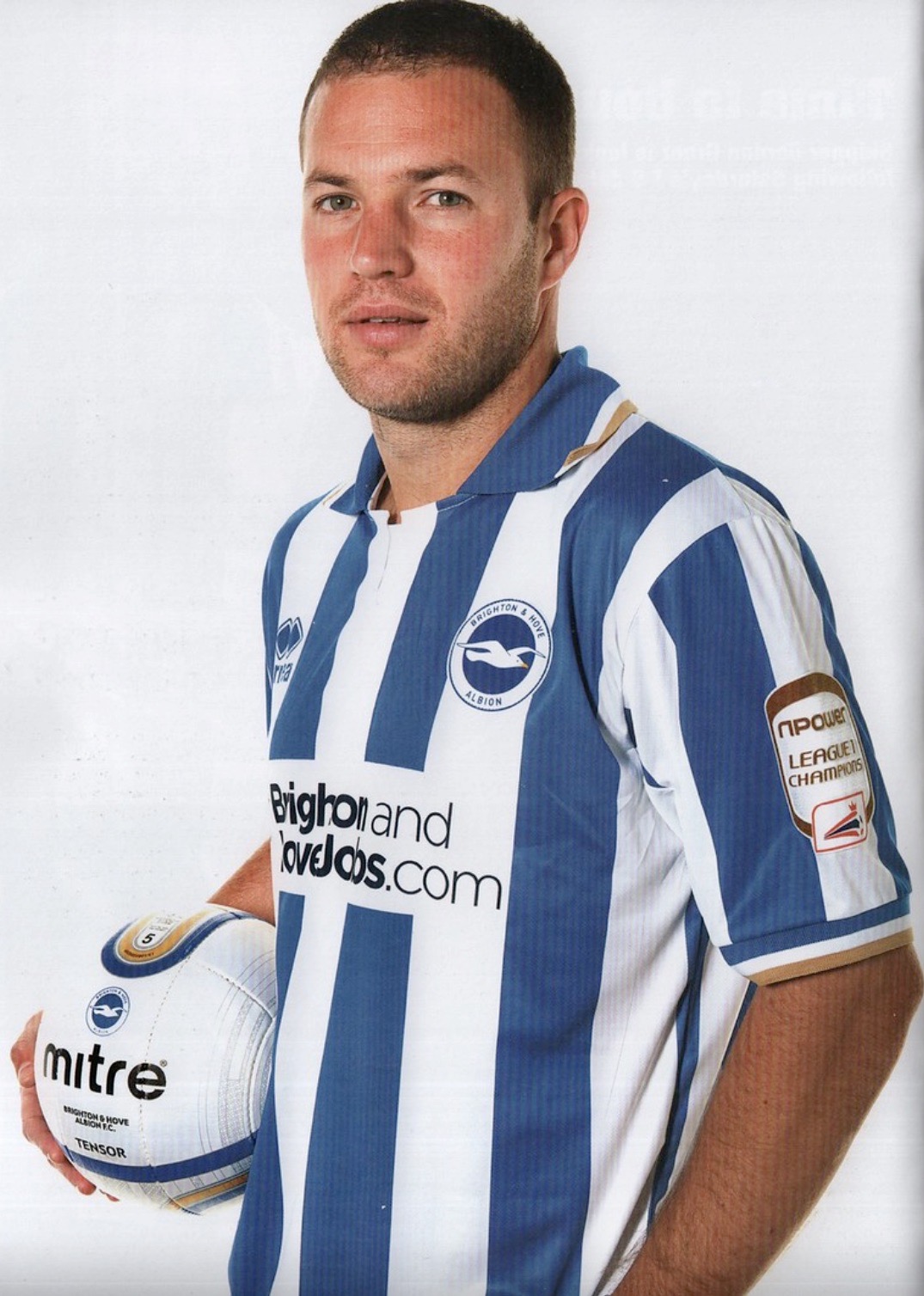
The only way was up after Tomori’s awkward Albion debut

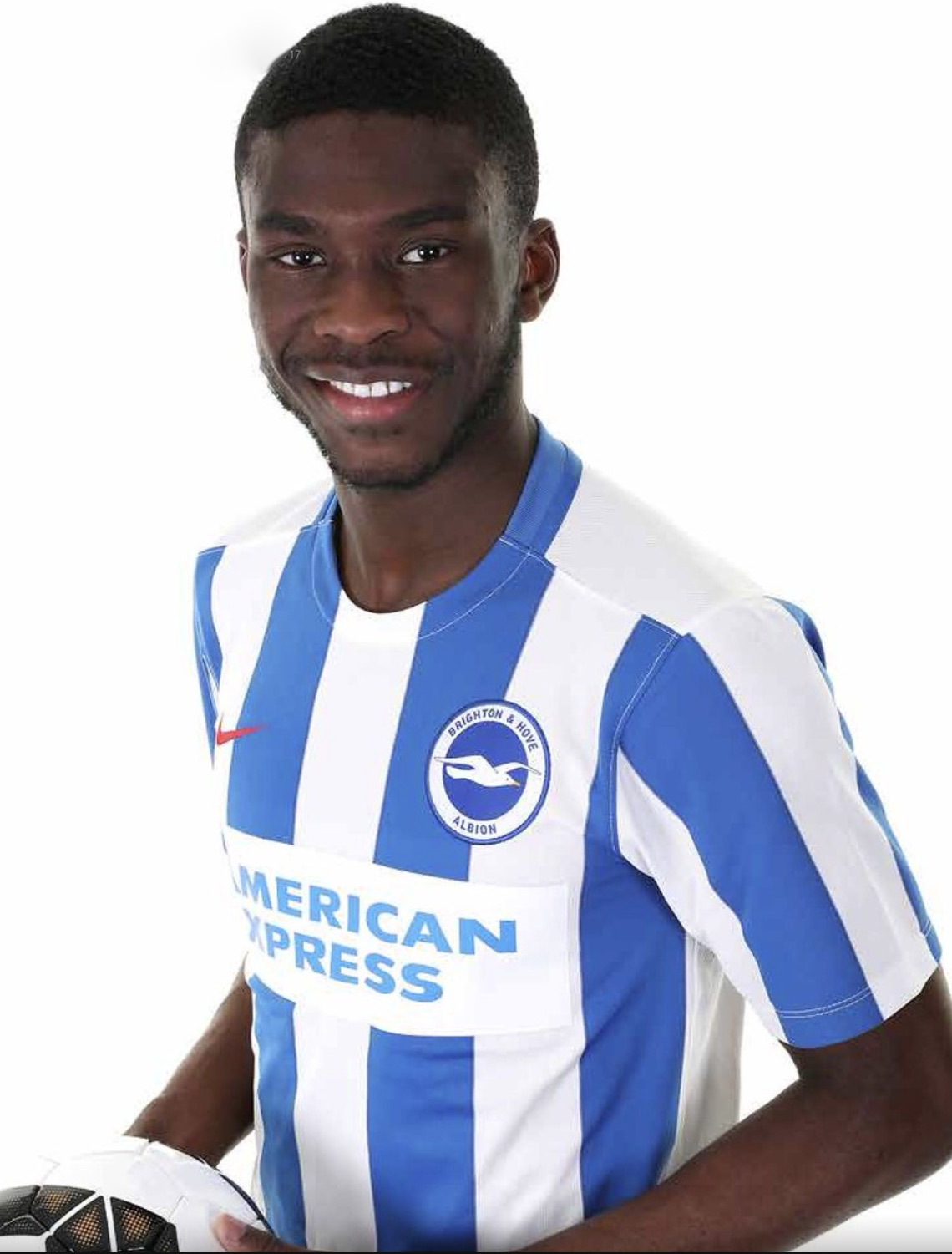
FIKAYO TOMORI couldn’t have had a worse debut for Brighton.

The teenage defender on loan from Chelsea was booked on 37 minutes and scored an own goal in the 62nd as Brighton were humiliated 3-1 in the FA Cup by non-league opponents, National League Lincoln City.

Tomori, playing at right back, sliced Nathan Arnold’s cross past a startled Casper Ankergren who’d only just come on as a sub for the injured Niki Mäenpää.

In fact, Tomori wasn’t on the winning side in any of the three matches he started for the Seagulls.

However, he saw plenty of action when making seven appearances off the bench. For example, he played an hour in Albion’s 3-1 home win over Birmingham City when sickness forced off Lewis Dunk on the half-hour mark and slotted in alongside Uwe Huenemeier, who himself was deputising for injured Shane Duffy.

“We knew Lewis wasn’t quite right before the game and everyone had told me to be ready,” he said later. The matchday programme observed: “Tomori looked as if he’d been playing all season alongside Uwe, such was their understanding.”

The two were also paired together in the second half of the 2-1 win away to QPR when Tomori replaced Dunk at half-time. And Tomori lined up alongside Dunk in the centre of defence for the last game of the season at Villa Park when Jack Grealish’s last-minute equaliser denied Albion the Championship title.

Nevertheless, the talented youngster, who went on to be capped by England, was recognised as having played his part in the Albion winning promotion that 2016-17 season.

“I would have liked to play more football but this team’s pushing for promotion and I knew before I came here that getting in the side was going to be difficult,” he said in a matchday programme interview.

“I’ve had to be make sure I’ve been ready when called upon and take any opportunities that have come my way. It’s a challenge I’ve embraced. The manager has been really good to me and I’ve taken a lot of confidence from the fact that when we have had injuries in defence, I’m pretty much the first player to come on.

“I’ve really enjoyed it here. Being involved with a club that’s going for promotion has been a different sort of challenge to what I’ve been used to.”

Reflecting on that period a few years later, Tomori said: “It was a big part of my development, playing every day with professionals who have been playing the game for 10, 15 years.

“That focus, will to win and need to be at the top of your game every game was something I had to learn, and it was really important for my development.”

He added: “They were trying to get their first promotion to the Premier League. The team was really together and focused, and when the games came, they were really on it.

“It was my first taste of senior football and being in a senior changing room and being part of a matchday and stuff like that. It was a great learning experience and obviously we got promoted which was great.”

Born in Calgary, Canada, on 19 December 1997 to wealthy Nigerian parents, Yinka and Mo, who originate from Osun in the south west region of Nigeria, Tomori was less than a year old when the family moved to England.

The family home was in Woolwich and he enjoyed a kickabout with his friends from the age of five or six before starting organised football with Riverview United. The youngster admitted he modelled his game on Thierry Henry.

“I wore my socks above my knees like him, I wore gloves like him even if it wasn’t cold, and I celebrated like him,” he said. “I loved everything about him. Back then it was all about having fun and never did I think that one day I would end up playing for Chelsea.”

Tomori was taken on by the Chelsea academy as a seven-year-old but it wasn’t all about football and, after passing his 11+ exams, he attained 10 GCSEs (six As, three Bs and a C) at Gravesend Grammar School, where he was a pupil between 2009 and 2014.

Assistant head James Fotheringham told The Sun Tomori was the first Gravesend pupil to “really make it” as a footballer, pointing out: “We’ve had a number of boys promised the world by different football clubs and then they get dropped and end up nowhere.

“I asked Chelsea, ‘What makes Fikayo different?’ The guy said, ‘Because he’s got all the attributes of a footballer’s skills but he’s incredibly bright and he just reads the game. He’s got a couple of yards on people because he’s so bright’.”

At Chelsea, Tomori bonded with Tammy Abraham from an early age. They became good friends and made their way through the ranks and were part of the team that recorded back-to-back wins in the UEFA Youth League and the FA Youth Cup in 2015 and 2016.

The 2015-16 season saw Tomori named the Chelsea Academy Player of the Year and he rounded it off by making his first team debut as a substitute against Leicester City on the final day. He described it as “the proudest moment of his career” and explained: “To be out there playing with the likes of Eden Hazard and Willian was a fantastic feeling for me and my family.”

As Albion adjusted to the demands of the Premier League, Tomori remained in the Championship having gone on loan to a Hull City side battling to avoid the drop – a very different experience to his time with the Seagulls.

“My first full season on loan was at Hull and it was my first time away from home too,” he said. “We were hovering over the relegation zone for the whole season, so that was a different kind of challenge mentally.

“You weren’t sure if you were going to be in the team the next week if we had lost the game, because the club needed the points to stay up.

“Those loans really gave me a good outlook on football. Coming from Chelsea, you’re winning a lot of games and trophies, and are protected in a way. Those loans were what moulded me as a person and as a man and made me grow up a lot quicker.”

Tomori’s rapid progress earned him England international recognition and, in 2017, he was in the England under 20 team who won the World Cup in South Korea and in 2018 was with the under 21s when they won the Toulon tournament.

As a forerunner to his breakthrough at Chelsea, Tomori spent the 2018-19 season on loan at Derby County, where Frank Lampard had taken over as manager.

Fikayo played a total of 55 league and cup matches as County made it all the way to the play-off final where their tilt for promotion to the Premier League was finally quashed when Aston Villa beat them 2-1 at Wembley.

Nevertheless, the young defender was named as Derby’s Player of the Year, and perhaps it was no surprise that when Lampard’s next move was to become manager of Chelsea, he was quick to put Tomori into the first team at Stamford Bridge.

The majority of his 27 matches for Chelsea came in that 2019-20 season, and, although defending might have been his priority, he popped up with a couple of goals. A long-range screamer he scored against Wolves was voted Chelsea Goal of the Year.

The same season, Tomori stepped up to the full England side and made his debut as an 84th-minute substitute for Trent Alexander-Arnold in the 4-0 away win against Kosovo in a Euro 2020 qualifier in November 2019. In doing so, he became the 50th Chelsea player to be capped by England.

However, it was another two years before Gareth Southgate selected him again, by which time he had moved to AC Milan.

After falling out of contention at Chelsea, he joined the Italian side on loan initially in January 2021 but then made the move permanent in June 2021, signing a four-year deal.

In a lengthy interview with Sky Sports, he spoke about how his career had turned round after the disappointment of losing his place at Chelsea.

“It was a difficult time – every footballer wants to play, and every footballer wants to show themselves on the pitch,” he said.

“When you are not able to do that, it is difficult – and being able to overcome and forget about that is part of the reason why it is now going so well.

“I didn’t really dwell on it and just moved on and put it as part of football, part of life.

“I had a really good support system with my family and my friends – and now I’ve overcome that I want to take it further and keep progressing.”

On 9 October 2021, Tomori was a 60th minute substitute for John Stones in England’s 5-0 thrashing of Andorra, when his good friend Abraham was among the scorers.

The pair were up against each other 22 days later when Tomori’s Milan beat Abraham’s AS Roma 2-1 in a Serie A clash. Zlatan Ibrahimovic scored his 400th league goal (and 150th in Italian football).

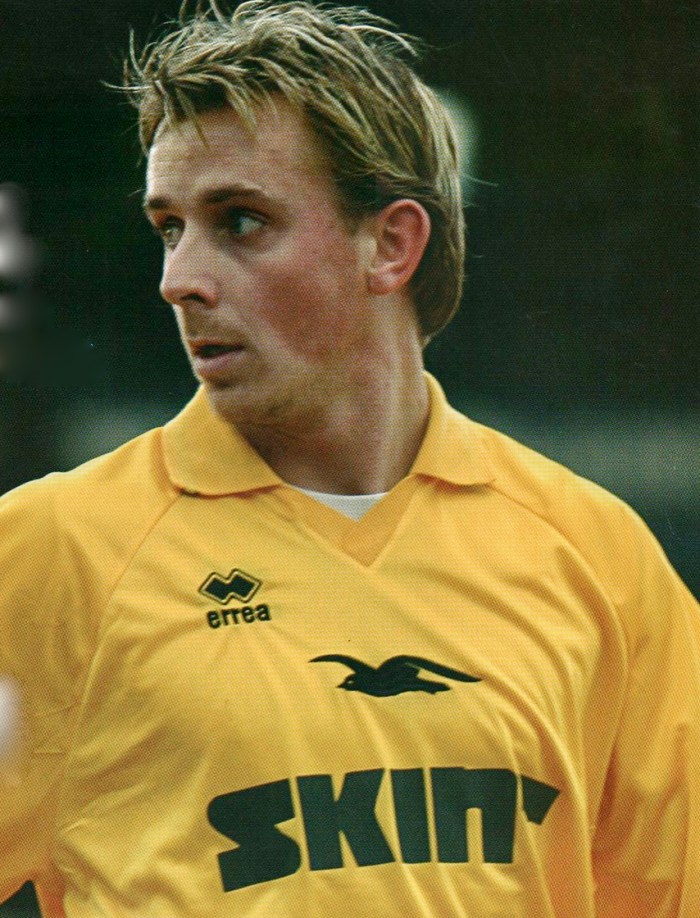
Tano incurred the wrath of plenty during Spurs playing days

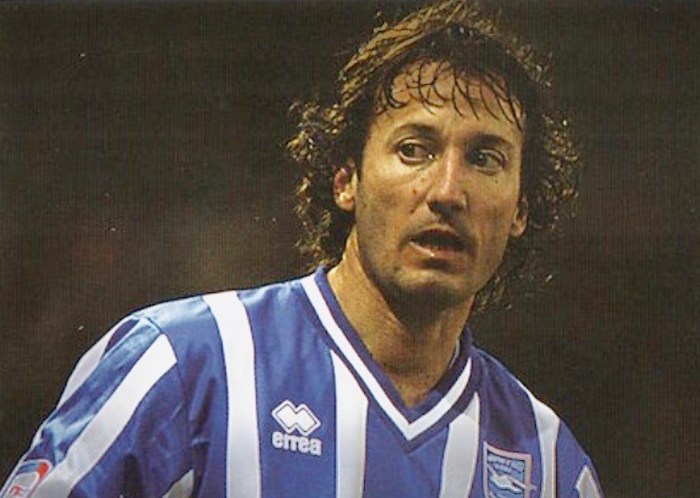
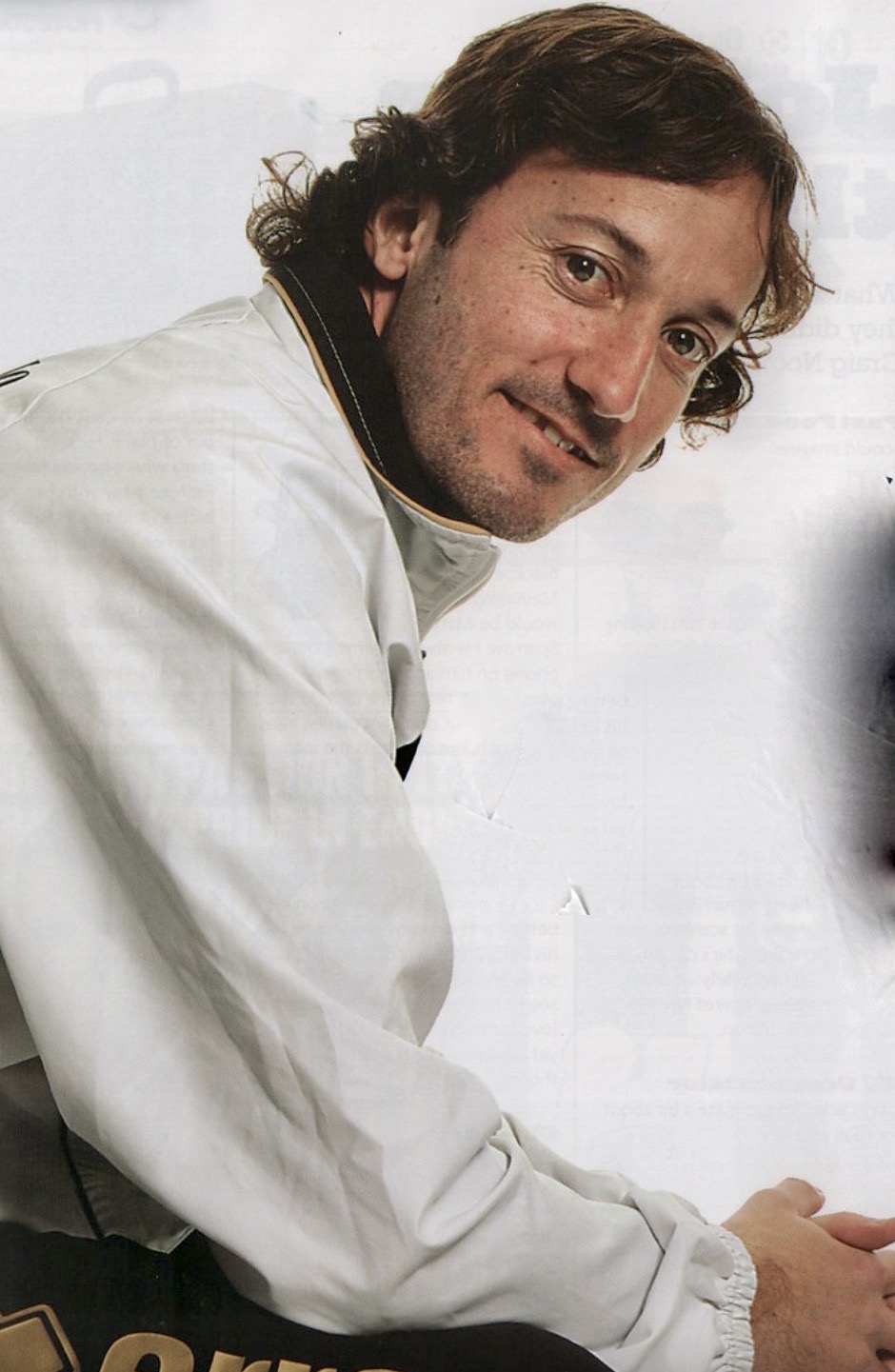
GUS POYET’s loyal deputy, Mauricio Taricco, once labelled ‘The Premiership’s most hated footballer’, had a late and unexpected swansong to his playing career with Brighton.

It came six years after the Argentinian full-back thought his playing days were over when he sustained a bad injury on his debut for West Ham, having switched across London from Tottenham Hotspur, where he played alongside Poyet.

Taricco was no stranger to a red card during his days playing at the top level and he was also sent for an early bath in his comeback game when the Seagulls beat Woking on penalties in the FA Cup.

Some of Taricco’s actions drew fierce cricitism when he was at White Hart Lane, for instance the BBC’s chief football writer, Phil McNulty, wrote an excoriating piece which he began: “Taricco may have a modicum of limited talent, but he hides it brilliantly behind a selection of all that is sneaky and cynical in football.”

Spitting, diving and feigning injury were among the accusations levelled at Taricco, and he left Everton’s Thomas Gravesen nursing a shin wound that required 30 stitches.

After two sendings off in three games in 2002, McNulty said the Argentine was “swiftly becoming the Premiership’s most hated footballer” and concluded: “Taricco is a scar on the Premiership and on a club with a name for a certain style – and (Glenn) Hoddle must operate to remove it.”

Strong stuff but the BBC man was not alone in his scathing criticism; Leicester boss Dave Bassett was incensed when Taricco feigned injury to try to get Foxes’ Andy Impey sent off at White Hart Lane. “That man should be done away with,” said Bassett. “He is a disgrace to the game.”

After Taricco had been sent off at Old Trafford, and then again following “a wild lunge” on Graeme Le Saux in a match against Chelsea at Stamford Bridge, Hoddle stood up for the Argentine defender, saying he’d been harshly criticised and that the reaction was disproportionate.

“I’m not saying that there haven’t been times this season that he’s done some silly things, and he admits that, but the two sendings off, in my eyes, have not been warranted,” said Hoddle. “The press have gone OTT on it.”

Not everyone viewed him harshly. Jonas Ahrell, of sports internet company Sportal, said: “A string of assured performances, along with great control, touch and distribution, has shown him to be a shrewd purchase by Spurs boss George Graham, who knows a thing or two about defenders.”

He explained how his nickname Tano is Argentine for Italian – his father was from Sardinia – and he described the defender as “articulate, impeccably-mannered and an all-round lovely bloke”.

Born in Buenos Aires on 10 March 1973, Taricco grew up playing football in the capital’s streets and he would eventually follow in the footsteps of Argentina’s famous World Cup stars Ossie Ardiles and Ricky Villa to White Hart Lane.

It was John Lyall who was instrumental in his arrival on European soil. Taricco had been playing for home city club Argentinos Juniors for only a year when Ipswich Town boss Lyall and experienced scout Charlie Woods were in South America on the hunt for new talent. Their main target was Uruguayan midfielder Adrián Paz, but they took a chance on 21-year-old Taricco too for whom a £175,000 fee was paid.

“You often see two players coming over together to help each other with a new culture and a new way of life but it proved to be me who stayed,” Taricco recalled in an Albion matchday programme article. “Although I was playing in the top league in my homeland, it was always an ambition to play in Europe.

“I think that Adrian leaving after a few months helped me. I was now more isolated, but it helped me to stand on my own two feet. I had to understand the language and mix with people.”

While Taricco quickly made his debut in the League Cup against Bolton Wanderers, he mainly had to be content with reserve team football initially until a change of management – from Lyall to George Burley – and relegation from the Premier League eventually worked in his favour.

Taricco made 167 starts for Town and although defending was his priority, he also scored half a dozen goals – memorably in a 2-0 League Cup win over Manchester United in 1997 and a 3-0 league win against Crystal Palace in 1998 which followed a solo run from inside his own half.

In a March 2020 interview with the East Anglian Daily Times, Taricco looked back fondly on his days at Portman Road, telling Richard Woodall: “I have great memories of being an Ipswich player – in particular the derby games against Norwich. I always knew what that game meant for the fans and for everybody involved with the club. Winning the derby, oh my god, it was a nice feeling.”

Woodall said fans remembered him as a big game player; for example, following a pre-match presentation of his Supporters’ Player of the Year award in 1997, he went on to score in that evening’s 2-0 win against Norwich. The Argentinian described the award at the time as the “greatest honour of my career”.

His cult status among Tractor Boys fans was best described by Csaba Abrahall in a piece for When Saturday Comes and, when he was sold to Spurs for £1.75m in November 1998, there was widespread outcry amongst the faithful.

Taricco became the first signing of Graham’s reign as manager at White Hart Lane, although he was injured at the time, causing a delay before he could make his debut.

“It was always my ambition to move to the Premier League, although I still left Ipswich with a heavy heart,” he said. “I was George Graham’s first signing, but I didn’t see that as an extra pressure – I knew Spurs had been watching me for a while, so I just got on with my football and I coped with the step up – I was a regular for much of my time at the club.

“At Ipswich, we lost in the play-offs and I was absolutely devastated because my dream had gone, that’s why I was so determined to make the most of the opportunity to play at the top level.”

Taricco maintained: “I think the fans at Ipswich and Tottenham liked me because they could relate to me. I’m like a fan when I’m playing. I want to win. When fans get a penalty, even if their player has dived, they jump for joy. I was the same and I’m on the pitch! I didn’t care about other players, fans, clubs. I was playing for my team and nothing else mattered.

“I always got stuck in. You don’t have to be big but you have to have the will to do it. Sometimes you give it, sometimes you take it, that’s football.

“Saying that, there were things I only learnt when I came here. For instance, when you see a 50-50 tackle here and someone gets hurt you just say ‘both players were committed’ and you carry on. In Argentina, there would be a red card and a fight breaking out. So, I learnt that I could get away with things here. If a bad tackle’s coming in and I knew a player was not going to get booked, I had to ‘manage’ things.”

Off the field, there were several managerial changes during his time at the Lane but Taricco learned most from Hoddle. “He was a very technical type of manager, as he was a player, and it was of prime importance to him to have his teams playing a particular type of football,” he said. 

“I really appreciated this as someone who always wanted to play the ball on the ground, think forward and create lots of goal-scoring opportunities.  He was a really positive manager and I can take a lot from my days working under him.”

The other important take from his time there was getting to know Poyet well (after the midfielder’s move from Chelsea in 2001) and developing a strong bond of friendship that would last through appointments at Albion and several other clubs.

Taricco’s time at Spurs came to an end in 2004 after 149 games (plus seven as a sub) when French manager Jacques Santini told him he was not part of his plans. He missed the start of the season through injury and then suspension and was allowed to join West Ham on a free transfer. It’s now quite well known that he sustained a bad injury on his Hammers debut against Millwall and voluntarily tore up his contract.

He moved to Sardinia with his wife and children, managed a property portfolio by day and kept himself fit turning out for his local team.

The idyll lasted five years before his old friend Poyet asked if he’d be interested in becoming his no.2 at Brighton. “Gus is a person I respect both as a man and for his football brain,” he said. “When he asked if I wanted to join him, I said ‘yes’ straight away – I was willing to swap everything I had for Brighton and it’s been a great decision.”

While the plan was always for him to use his knowledge and experience on the training ground and in the dugout, on 18 August 2010 there was a hint of a comeback when he suddenly played 45 minutes for Albion reserves in a 0-0 draw with Gillingham at Culver Road, Lancing. By then he was 37.

The matchday programme observed how he “turned in a cultured display, likewise one feisty challenge that has become a hallmark of an illustrious career”.

The assistant manager himself said: “It was a normal match and nothing more – there was not a lot of thinking behind my decision to play.

“West Ham v Millwall was my last professional game, although I played amateur league (for Castiadas) and regional league football (for Villasimius) in Sardinia right up until last November when I arrived at Brighton.

“But I’m not thinking about coming back to play, I’m just thinking about getting myself as fit as I can.”

However, he added: “If something happens with the team regarding an injury crisis or suspension and I can get fit enough and powerful enough to cope with League One, then who knows?

“I will now try to push myself more and try to get involved in training more often, when I can. If I can mix it up and do my own specific programme to get my sharpness and explosive power back, then I’m sure I will.”

Sure enough, three months later, Taricco stepped into first team action in the FA Cup, playing against Woking on 16 November 2010, although his involvement ended prematurely when he was sent off for two yellow cards – the second one for dissent.

He also played in the next round when it took two games to see off FC United and he finally made his 350th senior appearance after a six-year absence from playing professionally.

“I love playing football, so it’s nice to play, although I feel like I need a bit more power in my legs,” he said. “If I can get that bit more power for the first four or five yards I’ll be happier, but I am 37 years old.

“Any game could be your last, so you have got to make the most of every opportunity. Every player needs to give his all because that’s what you need to make it to the top. That goes for training as well as matches and it’s the way I’ve always approached the game of football.”

He didn’t expect to play regularly, though, and said: “I still see myself as part of the coaching staff rather than the playing staff. I’m there if we need to rest players or if somebody is recovering from an injury, because it is a very long and intense season.

“It is nice to play, don’t get me wrong, and I have enjoyed training with the team, but there are players with better legs than me in the squad.”

By the end of the season in which Albion won promotion to the Championship, he’d started five games and been sub twice, but he was still not done with playing.

The following season, Poyet called on his assistant’s playing experience on nine occasions (plus three as a sub) although Taricco was never far from the headlines for the wrong reasons.

Taricco looks back in anger after seeing red at St Mary’s

I can remember watching at St Mary’s as Taricco so hotly disputed a controversial penalty award by Peter Walton when Lewis Dunk downed Jose Fonte, quite clearly outside the box, that his protests gained him a straight red card.

Taricco also didn’t cover himself in glory at the Madejski Stadium on Boxing Day when lively wideman Jobi McAnuff gave him a torrid time and got two goals in a 3-0 win.

He featured in a six-game spell spanning December and early January but the surprise New Year 3-0 home win over Saints, when young Grant Hall replaced him in the 54th minute, turned out to be his last appearance as a player.

After his departure from the Seagulls with Poyet following the defeat to Palace in the 2013 Championship play-offs, Taricco followed his friend to Sunderland, AEK Athens, Real Betis, Shanghai Shenhua and FC Bordeaux.

He told the East Anglian Daily Times: “When I choose who to work with, I want to know that they are a decent human being, and Gus Poyet is certainly that. This quality is not always easy to find in football.

“Both of us come from similar cultures and we think about football the same way. As well as wanting to win, we both want to put our players in situations where they will flourish. Both of us feel that sometimes as players, our managers didn’t necessarily give us that chance.”

In October 2020, Taricco told the EADT: “Not being a coach now means I’ve had the time to think a lot, and I’m currently learning about world finance, how the world’s monetary system works, and why poverty still exists, so quite big topics!”

But he added: “When the phone goes and the right opportunity comes along, I’ll be ready to be assistant manager again!”

• Pictures from online sources and matchday programmes.

Injury-plagued Alan Navarro’s loyalties taken as Red

Nav v Suarez

A FORMER midfield partner of Steven Gerrard scored a memorable winner for the Seagulls at Elland Road, but it was a rare highlight in a promising career dogged by injuries.

Alan Navarro trained alongside Gerrard and played with him for Liverpool Reserves. While one went on to become a Liverpool legend and captain his country, the other had to forge a career mainly in the lower leagues.

Navarro talked to the Liverpool Echo about his former illustrious teammate when he prepared to return to Anfield with Brighton a decade after leaving the Merseyside giants.

“I came through as a full-back but then they decided to try me in midfield and I played with Steven a few times,” said Navarro. “It was a good thing but also a bad thing because you knew that you were going to be competing for a place with Steven.

“I trained with him every day for a few seasons….he was always head and shoulders above everyone else. His football, his brain, his pace, his strength, the way he tackles, everything about him was brilliant. He was the player you wanted to be.”

Navarro was talking in a preview to the FA Cup 5th round tie which saw Liverpool steamroller the Seagulls 6-1, courtesy of three own goals (two for Liam Bridcutt, one for Lewis Dunk).

Apart from the disastrous result, Navarro also picked up a booking on his return to Anfield. It was the second time the Liverpudlian had played against the side who nurtured him: he was also in the Albion side who lost 2-1 to the Reds in a League Cup game at the Amex in September 2011.

Nav stripesThe Scouser joined the Seagulls on a free transfer from MK Dons in the summer of 2009, and manager Russell Slade told the Argus: “Alan likes to get on the ball. He is the passer, the one that links you up and tries to make you play. He’s impressed us.”

After picking up an injury early on, he found it difficult to get back in the side until Gus Poyet arrived, and, with his ability to pick a pass for teammates to benefit from, slotted in well.

A cruciate ligament injury in his right knee, suffered in a League Cup game against Northampton Town at the beginning of the 2010-11 season, ruled him out for the season.

Having previously suffered a similar injury in his other knee eight years earlier, he knew what to expect, which he described to Andy Naylor in the Argus.

He later recalled how he feared it might have been the end of his career, but, after proving his fitness to Poyet, he went on to play 39 games for the Albion in the 2011-12 season – finally getting the chance to perform at a level he always felt he was capable of.

Navarro had previously had to contend with life in the bottom two tiers, but he enjoyed a new lease of life playing in the Championship, as he talked about in the Argus.

He played a total of 85 games for the Albion between 2009 and 2012 and only ever scored one goal. But what a memorable one!

Nav Leeds celeb

It came in the 90th minute of a Championship game at Elland Road on 11 February 2012, when his final touch after good work from Liam Bridcutt proved to be the winner as the Seagulls prevailed 2-1.

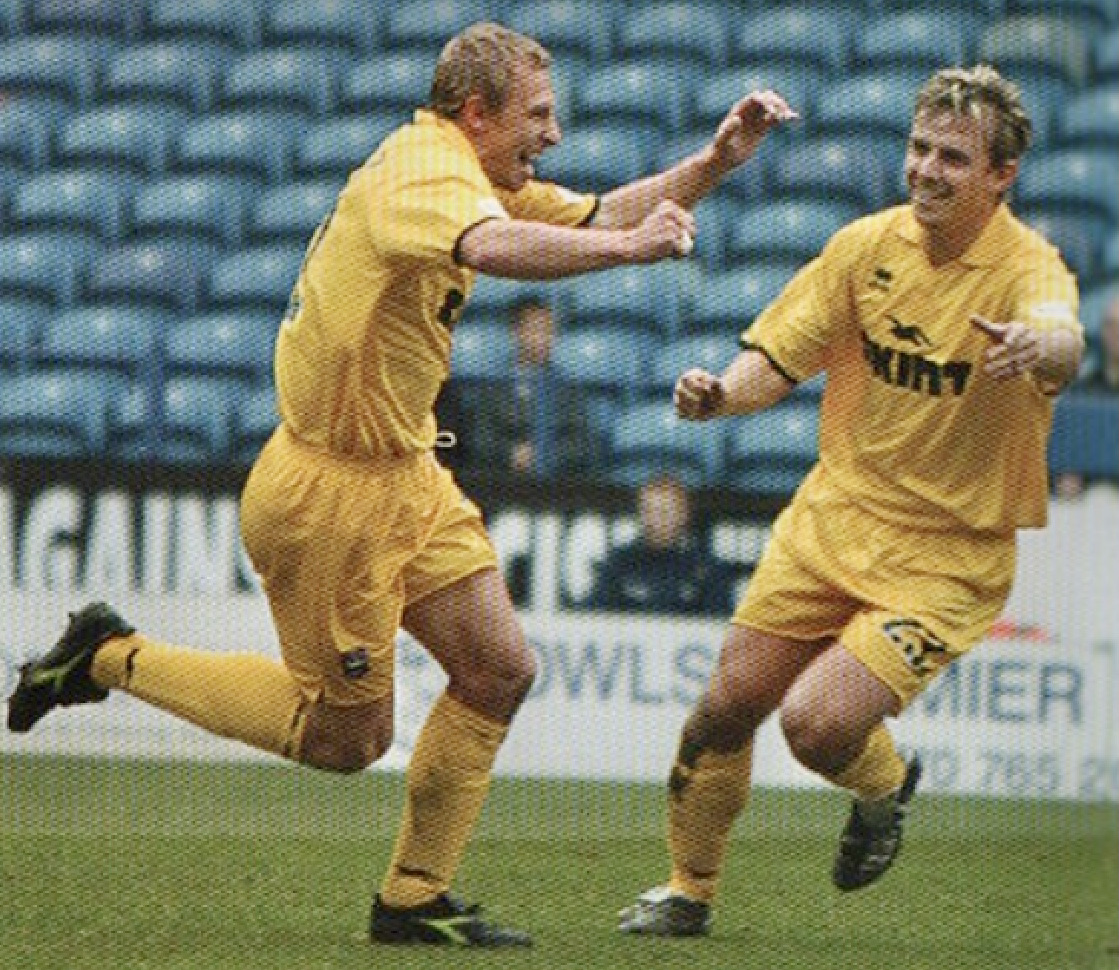
Craig Mackail-Smith (pictured above celebrating with Navarro and Craig Noone) had opened the scoring for the Seagulls but Luciano Becchio equalised and, just as it appeared the game would finish in a draw, up popped unlikely scorer Navarro.

Born in Liverpool on 31 May 1981, Navarro’s home was in Venmore Street, close to Anfield. “Funnily enough I was a Blue when I was younger,” he told the Albion matchday programme. “My family were Evertonians and a couple of cousins really drilled the club into me from an early age. But when I was 10 or 11, we moved to a house right next to Anfield and I fell in love with Liverpool.

“I loved watching John Barnes, Ronnie Whelan and then Robbie Fowler, even though he was not that much older than me. My mum still lives there, six doors away from The Kop.”

He joined the Reds in 1996, signed professional in 2000, and was a regular in the Reserves. He also had occasional travels with the first team, for example to Russia, Porto and Rome, as well as Chelsea, Newcastle and Sunderland for league games.

“It was strange going from fan to playing for the club, but an unbelievable experience,” he said. “From growing up on the club’s doorstep, I was in the youth team, then playing for the reserves and travelling with the first team to some big games.”

player_navarroIn the 1999-2000 season, Liverpool Reserves won the Premier Reserve League title with Navarro and Layton Maxwell pulling the strings in midfield.

Navarro only made it onto the first team substitutes’ bench twice but got his first taste of competitive action on loan at League One Crewe Alexandra.

He also went on loan to nearby Tranmere Rovers, whose manager, Dave Watson, told the Liverpool Echo: “Alan is a good quality player who has been in Liverpool’s reserves for a while now.

“I have seen him play several times and so have my assistant, Ray Mathias, and our chief scout, Dave Philpotts. (Anfield coach) Sammy Lee speaks very highly of the lad’s work at Liverpool and he’s certainly worth a look.”

After impressing on loan, Navarro made a permanent switch to Rovers in January 2002, signing a three-and-a-half-year contract. “It was difficult to leave because I love the club and a big part of my heart will always be there, but I needed to get my career up and running. I cherish my time there; I was taught the game by the best.”

Things didn’t go according to plan at Tranmere where he suffered a cruciate knee ligament injury and he went out on loan to Chester City and Macclesfield Town.

Navarro moved on from Tranmere in the summer of 2005, initially linking up with Conference National side Accrington Stanley for a month before Macclesfield boss Brian Horton secured his services on a permanent basis. Horton told the club website: “I’m delighted Alan has joined the team. I think he’s going to fit in extremely well.

“We had him here last season and couldn’t quite come to an agreement with Tranmere to sign him, so he went back there and we missed him badly.

“It was no coincidence that his departure came at the time when our form dipped so we’ve been keeping an eye on him for a long time and we’re delighted to have him.”

After his experience at Tranmere made him contemplate quitting the game altogether, it was Horton’s successor at Macclesfield, former Liverpool midfielder Paul Ince, who helped to reignite his passion for football.

“When he came to Macclesfield, he got me wanting to play football again,” he told the matchday programme. “He gave me the spark that helped me fall back in love with the game, and he took me from Macclesfield to MK Dons, where we had a lot of success.

“He remembered me from Liverpool, while his assistant Ray Mathias had me at Tranmere and knew me really well. It just clicked. I knew what Paul wanted from me and vice-versa.”

In August 2007, Navarro followed Ince to MK Dons, where he made 89 appearances over two seasons.

After his three years with the Seagulls, and following a season in which he played 33 matches, it was a little surprising that he was released in the summer of 2012, although supporter Alan Wares told thewashbag.com: “He will be remembered as a player who never gave less than 100 per cent every time he pulled on the shirt.

“It’s a shame to see such a quality player leave, but it shows how far Brighton have come as a club that Gus Poyet feels he can afford to release him.”

How ironic that his debut for new club Swindon should come in the League Cup against Brighton in August 2012 – Navarro scored twice and made the other in a 3-0 win!

However, that was pretty much as good as it got in his spell with the Robins. His Town career comprised only 15 starts plus five as a substitute, and a subsequent knee injury brought his career to an end.

Halford’s timely role in helping Albion avoid the drop

TIME was of the essence when utility player Greg Halford agreed to make a temporary move to Brighton.

He penned a deal to join the Seagulls temporarily at Nottingham Forest’s training ground at 12.30pm and then got in his car to drive to Brighton for 6pm in time to be involved in the squad for that evening’s game at the Amex against Wigan Athletic.

It was 4 November 2014 and he was Sami Hyypia’s sixth loan signing – even though only five were eligible to play in any matchday squad (emergency loan goalkeeper Ali Al-Habsi only played one game).

Regular centre backs Gordon Greer and Lewis Dunk were perilously close to suspension and deputy Aaron Hughes was sidelined with an ankle injury, so Hyypia moved to bring in an experienced back-up.

Albion hadn’t registered a win in the previous 11 league matches but the 29-year-old Halford proved to be a lucky charm as the side finally reacquainted themselves with the taste of victory. Fellow loanee Gary Gardner got the only goal of the game and Halford made an appearance off the bench towards the end of the game.

“I wasn’t really expecting to get any game time. I thought I’d just be in and around the lads, to get a feel for how everything works,” he told the club programme. “But I’m glad I got a few minutes at the end.”

Halford explained how he’d agreed to join the Seagulls because he’d been frozen out at Forest after Stuart Pearce took over as manager.

The player said he was familiar with the south coast having previously played for Portsmouth.

Asked what he could bring to the side, he added: “I can add a bit of height, I can score goals and obviously I can defend, which is my main attribute. I’m here to help the team and manager in any way I can.”

It wasn’t long before he was helping out a different manager as the side’s run of poor form brought a premature end to Hyypia’s brief time in charge.

Halford, though, hung around at the Amex, his loan extended by Hyypia’s successor, Chris Hughton, and he had made 14 starts and five substitute appearances by the season’s end, when the Seagulls narrowly escaped the drop back to the third tier.

Born on 8 December 1984 in Chelmsford, Essex, Halford began his professional career at nearby Colchester United. I well remember a Chelmsford-based work colleague telling me about this talented young footballer who’d been head and shoulders the best player in a local schoolboy football team his son had played for.

That player was Halford, who progressed from Colchester’s youth team and made his first team debut in April 2003. Loan spells at non-league Aylesbury Town and Braintree Town were part of his development, but he eventually made his mark at Colchester and was named in the PFA League One team of the year in 2005-06.

Played mainly at right-back, Halford’s speciality was his ability to deliver searching long throws which led to a good proportion of goals for Colchester.

After playing more than 150 games in five years for the Us, Halford wanted to prove himself at the highest level. He got a move to Premier League Reading in January 2007 but he couldn’t make the breakthrough there and ended up switching to Sunderland, signed by Roy Keane.

Just six months later, Sunderland made him available on loan and he joined Championship side Charlton until the end of the season. Then he spent the whole of the 2008-09 season on loan to Sheffield United, featuring in 49 of their 56 games that season.

His personal highlight was scoring the only goal of the game as United beat Preston to reach the 2008-09 play-off final.

Unfortunately, United lost the final 1-0 to Burnley, and that summer Halford was on the move again, this time to newly-promoted Wolverhampton Wanderers. Although he featured in 20 games, a regular starting berth eluded him and, in October 2010, he joined Championship side Portsmouth. Initially on loan, he eventually joined Pompey on a permanent basis but relegation to the third tier brought with it the need to trim budgets and in July 2012, they offloaded Halford to Nottingham Forest.

GH ForestUnder Billy Davies, Halford was generally deployed as a striker but when Pearce took over at the City Ground, he didn’t get close to the first team. On his return from Brighton at the end of the 2014-15 season, he was released by Forest and joined Rotherham United on a free transfer.

Manager Steve Evans appointed him captain but, after a winless run of five games, he was deposed and only played one more game for the Millers before joining Birmingham City on loan.

GH CardThat spell was also brief and although he returned to Rotherham and played 15 games for them in the 2016-17 season, he then joined Cardiff City and made 33 appearances in two seasons for Neil Warnock’s side.

Without a club for six months, in February 2019, he joined Scottish Premiership side Aberdeen as defensive cover but only made two appearances.

The multi-million pound striker who scored on his Albion debut

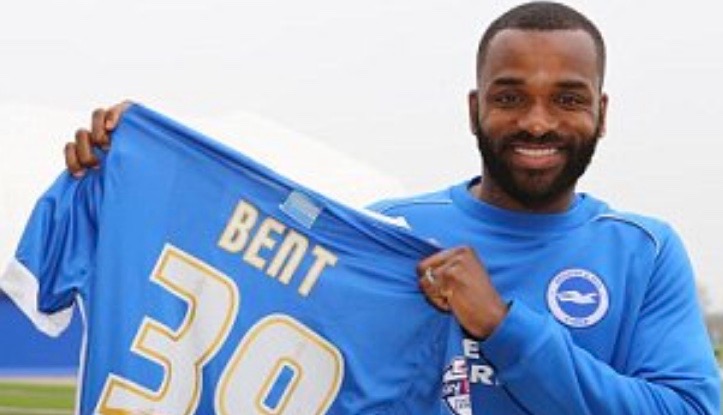
STRIKER Darren Bent spent the last month of 2014 with Championship-struggling Brighton as the hapless Sami Hyypia tried to bring a halt to a dismal run of form.

Unable to command a regular starting spot at Aston Villa, Bent made an encouraging enough start, scoring on his debut against Fulham.

But the game ended in a 2-1 defeat and his only other goal came at Molineux two days before the axe fell on Hyypia’s time in the hotseat as Albion drew 1-1 with Wolves.

Bent told BBC Radio Sussex he’d reached “boiling point” in his frustration at the lack of starts under Paul Lambert at Villa. Previous boss Gerard Houllier had smashed Villa’s transfer fee record to take Bent from Sunderland for an initial £18m in January 2011, but, after Lambert became manager in 2012, he made just 13 Premier League appearances.

albion D BentAt the time he headed to the Amex, Bent had scored 184 goals in 464 career appearances, not to mention scoring four while winning 13 caps for England.

“I hope he will score plenty of goals for us during his time with us,” Hyypia had told the club website. “His record speaks for itself. He is a top-class striker with more than 100 Premier League goals with Charlton, Spurs, Sunderland and Aston Villa.

“Three years ago, he was a regular in the England squad under Fabio Capello; there is no doubting his ability to score goals.

“He also wants to play regular games and that is evident in his willingness to step down from the Premier League to the Championship.”

Bent told the matchday programme: “It doesn’t bother me that I’ve had to drop down a division to play football. Anyone who knows me knows that all I care about is football.

“It has never been about money or anything like that. It has always been about playing football. I’m always at my happiest when I’m playing.”

At least Bent found some familiar faces in the Albion dressing room in fellow Villa loanees Joe Bennett and Gary Gardner and former Fulham teammates David Stockdale and Aaron Hughes.

“Brighton felt like the perfect place to come and play football, especially for someone like Sami Hyypia, who I’ve played against many times over the years,” Bent added. “As a manager, I think he is the right man. He is the kind of guy I want to play for.”

Bent goalBent returned to Villa after playing in five games and although new boss Chris Hughton indicated a willingness to bring him back, the striker was soon on his way to Derby County for the remainder of the season.

He scored 12 in 17 games for Steve McLaren’s Rams and subsequently joined them on a permanent basis in the summer of 2015. After two seasons in the Championship with Derby, scoring 14 in 67 matches, a hamstring injury sidelined him for the start of the 2017-18 season and in January 2018 he went on loan to Championship strugglers Burton Albion.

Having been without a club since released by Derby in the summer of 2018, he announced his retirement at 35 in July 2019.

Since then, he has joined the football pundit circuit, although not everyone is convinced he’s making that good a job of it!

pundit D BentNevertheless, Talksport and Sky Sports are happy to give him a platform and, in an interview with Metro, he suggested what might be the most difficult aspect of it. “I played with some of these guys and regard them as friends so, when they have had a bad game, will I be able to dig them out? It’s finding the line between being objective and respectfully constructive.”

Only in January 2020, Bent could be found arguing the case for Lewis Dunk to be recalled by England. The former striker is also active on Twitter with @DarrenBent attracting just short of 492,000 followers.

Born in Tooting, south London, on 6 February 1984, Bent was probably destined to be a footballer because his dad Mervyn had been on the books of Wimbledon and Brentford as a youngster.

The family moved to Cambridgeshire when the young Bent was only 10 and his early football career was nurtured at Godmanchester Rovers.

Ipswich Town picked him up as a 14-year-old and nurtured him through their youth ranks until he eventually made it to the first team in November 2001.

In four seasons with Ipswich, he scored 56 goals in 141 appearances before then Premier League Charlton Athletic paid a fee of £2.5m to take him to The Valley.

After two successful seasons in which he bagged 37 goals in 79 games for the Valiants, he made another big money move, this time to North London to join Spurs.

It was in June 2007 they paid a club record £16.5m and he scored 25 in 79 games for them before a similar fee saw him move to Sunderland, then in the Premier League, in the summer of 2009.

After 18 months in the North East, Bent put in for a transfer and Aston Villa paid £24m to sign him on a four-and-a-half year contract. He marked his debut with the only goal of the game in a win over Manchester City.

In his second season with Villa, Bent took on the captaincy for a while but managerial changes meant his face didn’t always fit and he spent the whole of the 2013-14 season on loan to Fulham, where he scored six in 30 matches.

Skilful Joao Teixeira scored six as Seagulls escaped the drop

THERE were few positive aspects to Sami Hyypia’s reign as Brighton manager but his Liverpool connections served the club sufficiently well enough to enable them to secure the loan signing of Joao Teixeira.

Here was a highly talented young player who often had supporters on the edge of their seats when he was on the ball.

It seems remarkable to think his six goals in 35 games (28 starts + seven as sub) for the Seagulls made him second top scorer behind Lewis Dunk’s seven in the 2014-15 season, when Albion narrowly avoided dropping out of the Championship.

Joao THis performances earned him the Young Player of the Year accolade even though his season was cut short by injury.

Having impressed as a substitute going on for Albion against Birmingham, Teixeira was on the scoresheet in his first full start, in a 2-0 win away to Leeds United. Hyypiä told Sky Sports: “Of course I am grateful to them for letting Joao come to us and get the games he needs, but it works both ways. They can benefit too because his time with us can hopefully be a stepping stone towards Liverpool’s first team.

“He is a young player and Liverpool have a very big squad. A player of his age needs to play games to improve. We have a quality player and I am very happy to have him with us.”

JT BHAFCThe Portuguese youngster scored again four days later, netting the winner as Albion came from behind to beat Bolton Wanderers 2-1 at the Amex.

Sadly, with the Seagulls floundering under the puzzling direction of the former Liverpool central defender, Teixeira didn’t get back on the scoresheet until after Chris Hughton arrived on New Year’s Eve 2014.

He twice scored braces (in a 3-2 home win over Ipswich on 21 January and a 4-3 home win over Birmingham on 21 February) but a leg break in a home game against Huddersfield Town on 14 April brought his season, and Albion career, to a premature end.

Born in Braga, Portugal, on 18 January 1993, he first caught the eye with his hometown club, before being snapped up by Sporting Lisbon where he continued to make progress through its youth teams.

Liverpool paid £830,000 in the January 2012 transfer window to take him to Anfield and he impressed playing for their under 21 side which led to him making a loan move to League One Brentford in August 2013. But what was originally due to be a six-month arrangement was cut short in October after only two substitute appearances because the Bees couldn’t guarantee him the game time Liverpool had been expecting him to get.

Back on Merseyside, he made it into the first team squad and on 12 February 2014 Brendan Rodgers sent him on as a substitute for Raheem Sterling in a 3-2 win at Fulham.

getty liv TeixCaptain Steven Gerrard told the Liverpool FC website: “I watched this kid a couple of years ago playing for Sporting Lisbon against Liverpool at Anfield in a youth game; I could see straight away he was the best player on the pitch.

“Credit to him, he has kept working hard. He has been invited to train with the first team. He is competing, he is trying to improve and learn. He listens – I’ve just been speaking to him in the dressing room and you can see he wants to learn and listen.

“He has got respect for the other players in the dressing room. This is the start for him now; I’ve just told him that he needs to push on, keep learning and building on what he has just achieved. He deserved his debut and he made a special tackle which helped us get over the line.”

As it turned out, his next senior action came at Brighton and he had to wait until October 2015 before his next chance at Liverpool. That came in a League Cup game in a 1-0 win over Bournemouth. He went on to make five cup appearances for Jurgen Klopp’s Reds in 2015-16, and scored his only goal for the club in a 3-0 FA Cup win over Exeter City. But he appeared only once in the Premier League.

Although Liverpool offered him a new contract, he chose to return to Portugal and join Porto. After making only eight appearances during the 2016-17 season, Teixeira joined hometown club Braga on a season-long loan, and this season is playing for Primeira Liga side Vitoria Guimaraes.

To what extent might the summer of 2019 mirror the summer of 1981?


BECAUSE this blog is all about Albion parallels, it has set me wondering how closely the summer of 2019 might mirror the events of the summer of 1981?

Brighton’s 2019 survival at the end of their second season amongst the elite came about somewhat less convincingly than in 1981 when four wins in the last four games had kept the Albion in the top flight.

As in 2019, relegation had loomed large 38 years ago but the status was retained with that late upturn in performances. Nevertheless, behind the scenes, big changes were about to happen with the departure of a former Spurs stalwart who’d done an excellent job as manager.

That boss (Alan Mullery), who’d led the side so successfully for the previous five years, left under a cloud, albeit of his own volition after a disagreement with the chairman (Mike Bamber) over the sale of star player Mark Lawrenson and a request to cut costs by dispensing with some of his backroom staff.

In a mirror moment to Bruno’s farewell versus Manchester City, Mullery’s captain, Brian Horton, played his last game for the club in the final match at home to Leeds – the difference being Horton had no inkling it would be his last game for the Seagulls.

That fixture also saw the last appearances of Lawrenson, long-serving Peter O’Sullivan and, in John Gregory, a player who would subsequently go on to play for England.

As we await developments regarding the appointment of Chris Hughton’s successor as manager, may we once again see potentially seismic changes on the playing side?

Bruno’s retirement certainly means there is a need to sign a replacement right-back, even though Martin Montoya might consider he can fill the gap.

It’s largely considered Albion’s star players are international defenders Lewis Dunk and Shane Duffy: will one or other of them be sold for big money to enable investment elsewhere in the team?

Lawrenson’s departure in 1981 was mourned by many but it paved the way for the arrival of European Cup winner Jimmy Case, and generated funds new boss Mike Bailey was able to invest in bringing in new players.

While Bailey had a similar top-level background to Mullery as a player, captaining Wolverhampton Wanderers to some of their best achievements, his managerial CV was less impressive, although he had just got Charlton Athletic promoted from the old Third Division.

However, with Case bringing a new top level dimension to the re-shaped side, and Horton’s younger replacement, Eire international Tony Grealish adding bite to the midfield, Bailey, and his relatively unknown coach John Collins, guided the Albion to the club’s highest ever finish of 13th place in his first season in charge.

O’Sullivan had been a fixture under several managers for a decade (apart from a brief stint in the USA) and one wonders whether the not-quite-so-long-serving Dale Stephens might have played his last game for the Albion.

In 1981, Bailey had a busy summer in the transfer market (courtesy of the cash from the sale of Lawrenson to Liverpool) and, in Steve Gatting from Arsenal, signed a quality player who went on to serve the club for a decade. The experienced Northern Ireland international left-back, Sammy Nelson, also arrived from the Gunners.

Might we see again the signing of a squad player (or two) from a top six side who will add much-needed quality to the Albion?

Don’t bet against it!