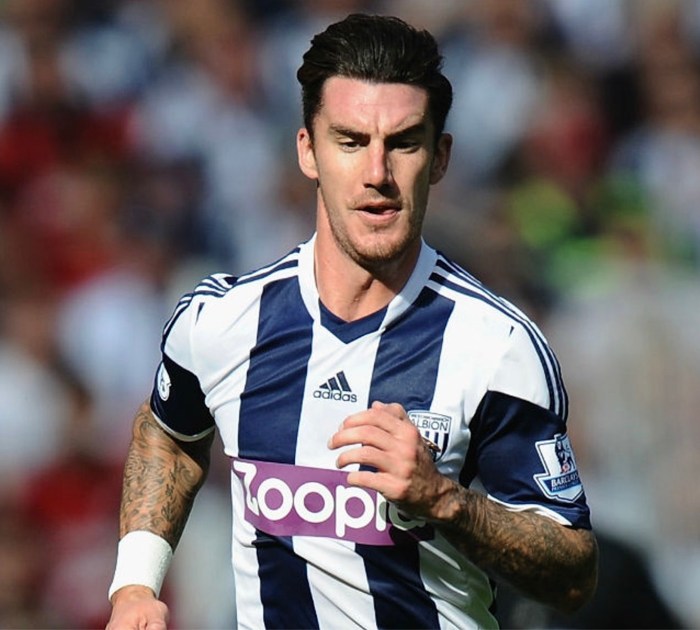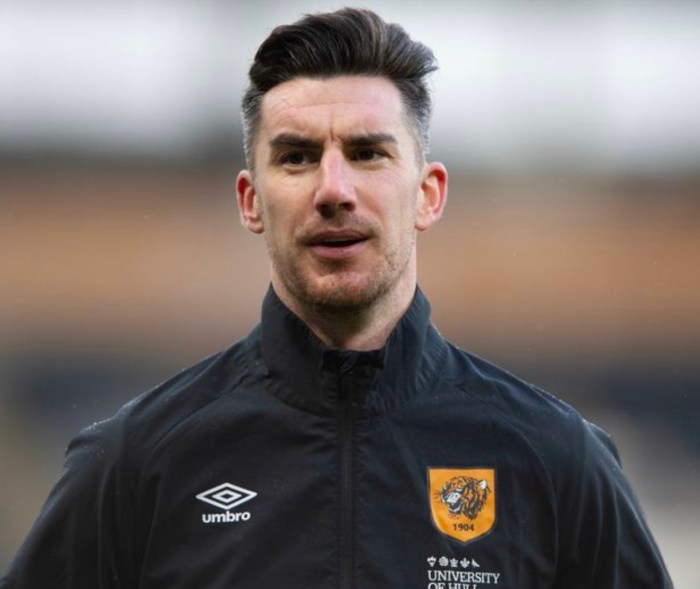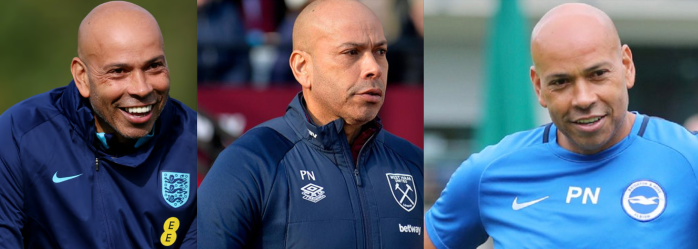
Tigana ‘disciple’ Paul Nevin the respected analytical coach

PAUL NEVIN didn’t rise to great heights as a player but he became “one of the most respected and most widely experienced coaches in the country”.

He was a Premier League coach at Brighton and West Ham, not to mention being part of Gareth Southgate’s coaching team for England.

They were just three of a broad variety of coaching jobs he has filled in different corners of the world – and, interestingly, Jean Tigana, one of the top French footballers of his generation, influenced Nevin the most (more of which, later).

All a far cry for a lad born in Lewisham, south east London, on 23 June 1969 who had a humble playing career that began at Division Two Shrewsbury Town and later involved short spells at Carlisle United and Yeovil Town.
Nevin the player

He was a former teammate of Albion’s head of football David Weir for three years when both played for the University of Evansville’s Purple Aces team in Missouri, America.

Having taken his A-levels while playing for Shrewsbury reserves, Nevin wanted a back-up career in case football didn’t work out and he took a scholarship to gain a bachelor’s degree in communications while playing for the American college team.

After gaining his degree, he returned to the UK and spent the 1991-92 season with Fourth Division Carlisle before moving south to join then Conference side Yeovil. He was there for two years but suffered a bad back injury that forced him to retire from playing when still only 24.

Nevin picked up the story in an interview with the Albion matchday programme. “While I was playing at Yeovil, I also volunteered at a children’s home and as a result I was soon offered a job as a social worker in Wandsworth, south London.”

He later explained: “That gave me the opportunity to develop a lot of skills that transcend into coaching – counselling skills, working with young people, trying to build self-esteem and motivation – which I can take into a sporting arena.”

He kept in touch with football, though, by working part-time for Fulham’s Centre of Excellence.

It was during the period when since-disgraced Mohamed Al Fayed took over Fulham, sacked Micky Adams and appointed Ray Wilkins and Kevin Keegan.

In the shake-up, Nevin worked his way up the academy system, eventually becoming youth team coach and then reserve team manager working alongside Chris Coleman. Within a year he had become full-time and by 2000 was working under Fulham boss Tigana.

“He had a major influence on my coaching career and my philosophy towards football,” said Nevin.

“The methodology of training, his highly technical approach, working with sports scientist and nutritionists, it was all new in this country and made a big impression on me.”

Together with Christian Damiano, the pair’s methods had been nurtured at the French national academy in Clairefontaine and had a profound effect on Nevin.

“We had a core of good young players coming through the club, the likes of Liam Rosenior, Zat Knight, Sean Davies, Zesh Rehman and Mark Hudson, who all went on the have successful careers in the game.”

In 2006, by which time he already held the Uefa Pro Licence as a coach, he moved with his wife and two children to Auckland to become manager of the New Zealand Knights, who played in the Australian A League.

That lasted a year before he moved to the Middle East and spent five years as football performance manager at the Aspire Academy in Qatar working with young players and coaches.

Chris Hughton brought him back to the UK to become first team coach at Norwich City when they were in the Premier League in the 2013-14 season.
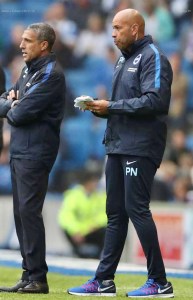
Nevin was reunited with Chris Hughton at Brighton having worked with him at Norwich.

From Carrow Road, he then worked as head of coaching for the Premier League, a role that saw him run a diploma course to develop coaches with great potential as well as acting as a sounding board for coaches working in Premier League academies.

Nevin was reunited with Hughton at Brighton just ahead of the club’s debut season in the Premier League, replacing Simon Rusk who had stepped up temporarily from being under 21 coach when Nathan Jones left to become manager of Luton Town.

Hughton said: “Paul is an excellent coach and a good appointment for the club. I’m delighted he is on board and looking forward to working with him again.”

Asked whether his lack of high level playing experience was a hindrance to working as a Premier League coach, Nevin replied: “Coaching and playing are very different things. While I might not have played Premier League football, I am a real student of the game and have worked alongside some great coaches and managers. I have developed a healthy understanding of top-level football from a coaching perspective.”

On England duty with Gareth Southgate

When Lewis Dunk made his England debut in a 3-0 friendly win over USA at Wembley in October, 2018, Nevin was part of the coaching team supporting Gareth Southgate as part of an initiative to place black, Asian and minority ethnic coaches in all England squads. Formally known as the Elite Coach Placement programme, it was a key strand of the FA’s Pursuit of Progress strategy, designed to increase diversity in coaching roles.

However, Nevin and Southgate were already known to each other. At Fulham, he was assistant academy manager to former Crystal Palace boss Alan Smith, who had managed Southgate at Selhurst. Nevin got to know Southgate through Smith.

“I was a little unsure as to what the setup would be like, but to get the opportunity to work with Gareth Southgate, Steve Holland (the assistant manager) and the rest of the senior men’s setup was something I couldn’t turn down,” Nevin told the FA’s in-house media.

“The biggest challenge I found was that, if working inside a club, you get to work with the players and other coaches on ideas each day. You start preparing for a match at the weekend at the beginning of the week, with days to get the clarity of message through.

“But on the international stage, there’s a finite amount of time to get critical information across and to develop strong harmony across the squad. It’s a challenge that makes you acutely aware that every moment during an international camp counts.”

It wasn’t the first time that Nevin had worked for the FA, though. When he was head of coaching at the Premier League, between August 2014 and April 2016, he coached England’s under-16s who at the time included Phil Foden and Jadon Sancho.

Nevin, by then 49, said: “When I got the call, I was absolutely delighted and feel it’s a very privileged position. First and foremost, I’m very thankful to Gareth and The FA for the opportunity.”
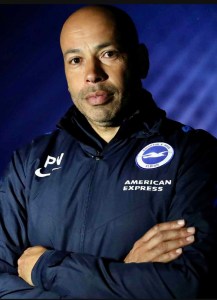
Albion happy to see Nevin develop with England

He appreciated Brighton giving him the time to do something which was a development opportunity and added: “This is a chance to work with the best players in the country. Obviously, I see them week-to-week in the Premier League but working with them en-masse in a squad setting is going to be immense.

“Having had a brief experience of working at international youth development levels, it’s a chance to see the final product that’s coming through the system while working alongside the top coaches in the country.

“Being a part of that environment at the highest level of international football and looking at how they work and function will have the biggest impact on me. I previously had a spell working in coach development at the Premier League so I’m aware of the need to give opportunities to the quality BAME coaches out there.”
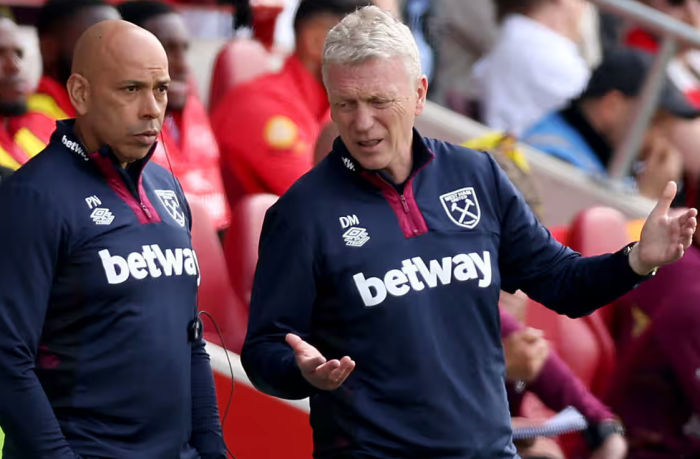
Nevin parted company with the Seagulls when Hughton was relieved of his duties at the end of the 2018-19 season but he wasn’t away from football’s top table for long because in February 2020 he joined West Ham along with former Hammers captain Kevin Nolan to work with David Moyes and his assistant Alan Irvine.

In October 2022, Malik Ouzia in The Standard wrote: “Nevin is one of the most respected and most widely experienced coaches in the country, a key lieutenant under David Moyes, as well as Gareth Southgate at England.”

According to Roshane Thomas, writing for The Athletic in December 2022, Nevin’s role at West Ham was to focus on creation and delivery in attacking set-plays and analysing opponents’ set-plays.

“I’m fluent in analysis tools so I can do my own analysis, I have done that for 20-odd years,” Nevin explained in an interview with premierleague.com.

Hammering home a point

The Hammers achieved European qualification in each of Nevin’s three seasons with them and he left shortly after they won the UEFA Europa Conference League trophy. Manager Moyes said: “Paul has played an important role for us during his time here and I would like to thank him for all his support and hard work during his time at West Ham United.
“He is highly ambitious as a coach and is keen to test himself in a new environment and we wish him well in doing so.”

Nevin said: “I’ll always look back on my time and the opportunity I had to work at West Ham with great fondness.

“In the three and a half years, we enjoyed a period of great success in West Ham’s history, culminating in the Europa Conference League win last season, which gives the club a fantastic opportunity and platform to go on to even greater levels in the future.”

From West Ham, he moved to French Ligue 1 side Strasbourg, where he worked as first-team coach under Patrick Vieira, who was appointed head coach by the club’s new owners, BlueCo, who also own Chelsea. Nevin didn’t stay on when Vieira left after one season to be replaced by former Albion player Liam Rosenior.

Last minute instructions for Cole Palmer at the 2024 Euros

Nevin had rejoined the senior England men’s team coaching staff in August 2021 and was part of Southgate’s support team through to the 2024 Euros in Germany. In August 2024, he took charge of England’s Elite League Squad on an interim basis when Ben Futcher stepped up to Under-21s manager following Lee Carsley’s temporary rise to take the full England team.

When asked whether he held ambitions to become a manager in his own right, Nevin told The Standard: “I owe it to myself and the people I’ve worked with.

“If the right opportunity came at the right time, then I need to give it a go because maybe with that nudge at the door, if I’m successful, it can allow me to bring others in and give others opportunities.”

Expanding on his experience in that premierleague.com interview, he said:“I’ve worked with young people outside of football, within social work, trying to study languages as well. When I’ve worked with French players and Spanish players – and I’m not saying I’m fluent by any means – but just a little bit of connection there, those little things help.

“I’ve worked in this game around the globe as well, so it’s not like I’ve just been at domestic level. I was a manager in the Australian League, I’ve worked in Qatar with the junior national teams. It’s just getting that variety and taking opportunities when they come.

“It may not necessarily be the thing you want at that particular moment, but if it opens an opportunity to show what you can do and to learn, then I think it’s always worth grasping that.”

And on a philosophical note about the art of coaching, he said: “A coach, first and foremost, has to have the knowledge and credibility to deliver, but you’re dealing with human beings.
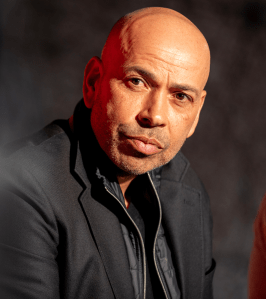
“A lot of people can have the knowledge, but it’s about transmitting that, making the players feel valued and being able to develop relationships which help them reach their fullest potential.

“It’s probably that aspect, really getting into the human being that drives the performance, which is my strongest.”

Nevin returned to club football in January 2025 when he was appointed as one of two assistant managers to Mark Robins at Stoke City. He stood down from his role as interim England under-20s manager, where he was undefeated in six matches, to take the job.
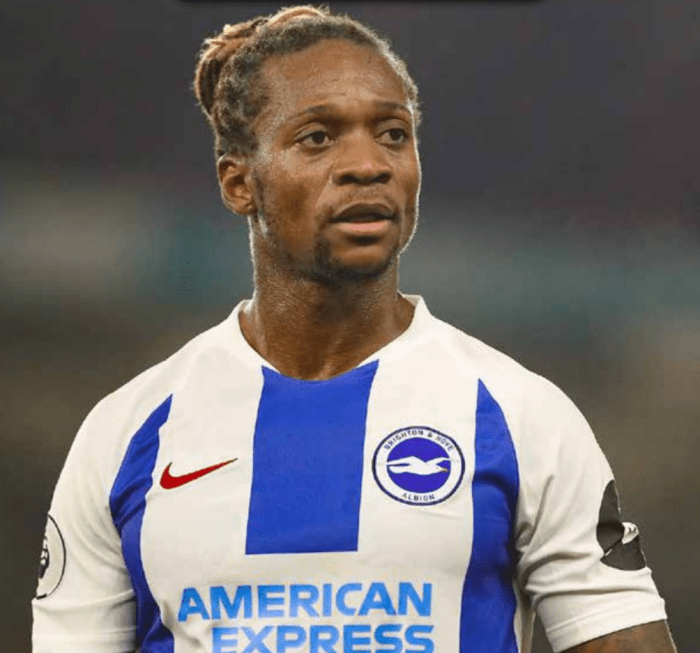
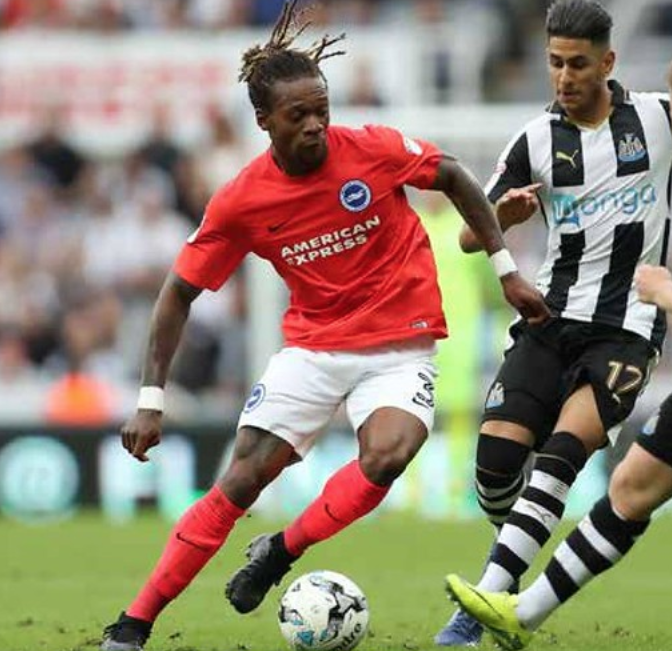
An Albion promotion winner but Bong didn’t chime at Forest

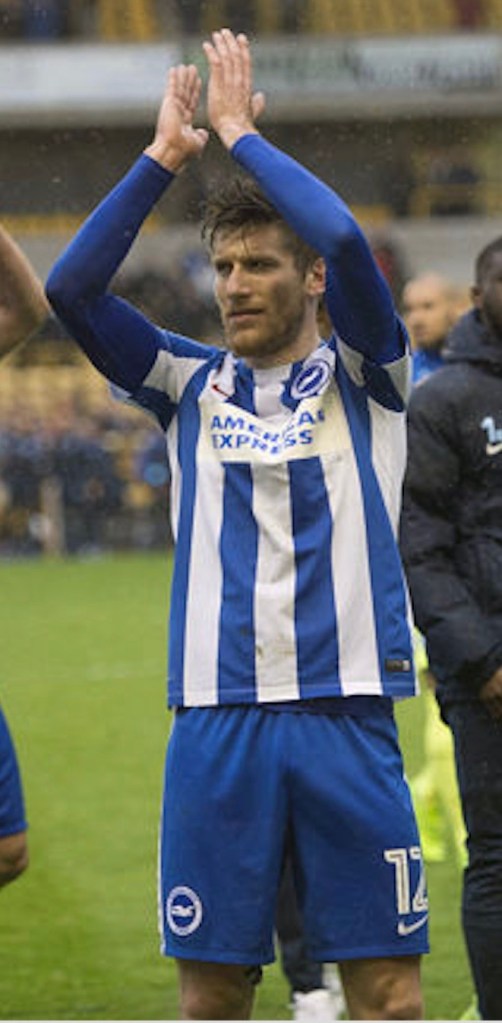
IT WAS WHILE I was adding the DW Stadium, Wigan, to my list of grounds visited that I first noticed Gaetan Bong.

On the afternoon of 18 April 2015, Bong was playing AGAINST Brighton in one of 14 appearances for Wigan Athletic having moved to the UK on a short term contract from Greek side Olympiakos three months earlier.

Bong up against Inigo Calderon while playing for Wigan

Within three months, he was playing FOR Brighton, joining Chris Hughton’s side as a free agent.

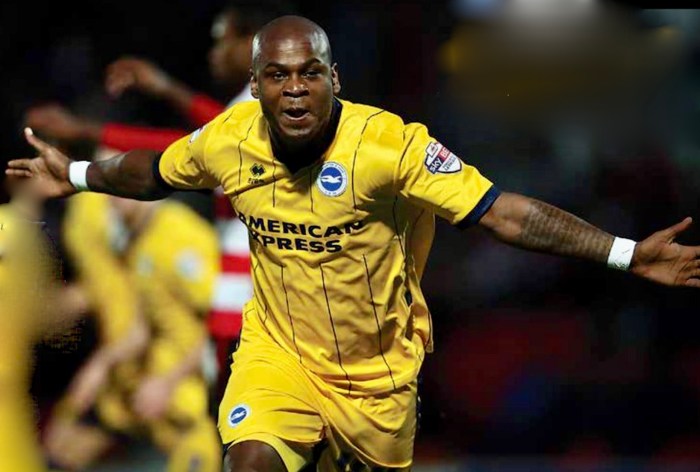
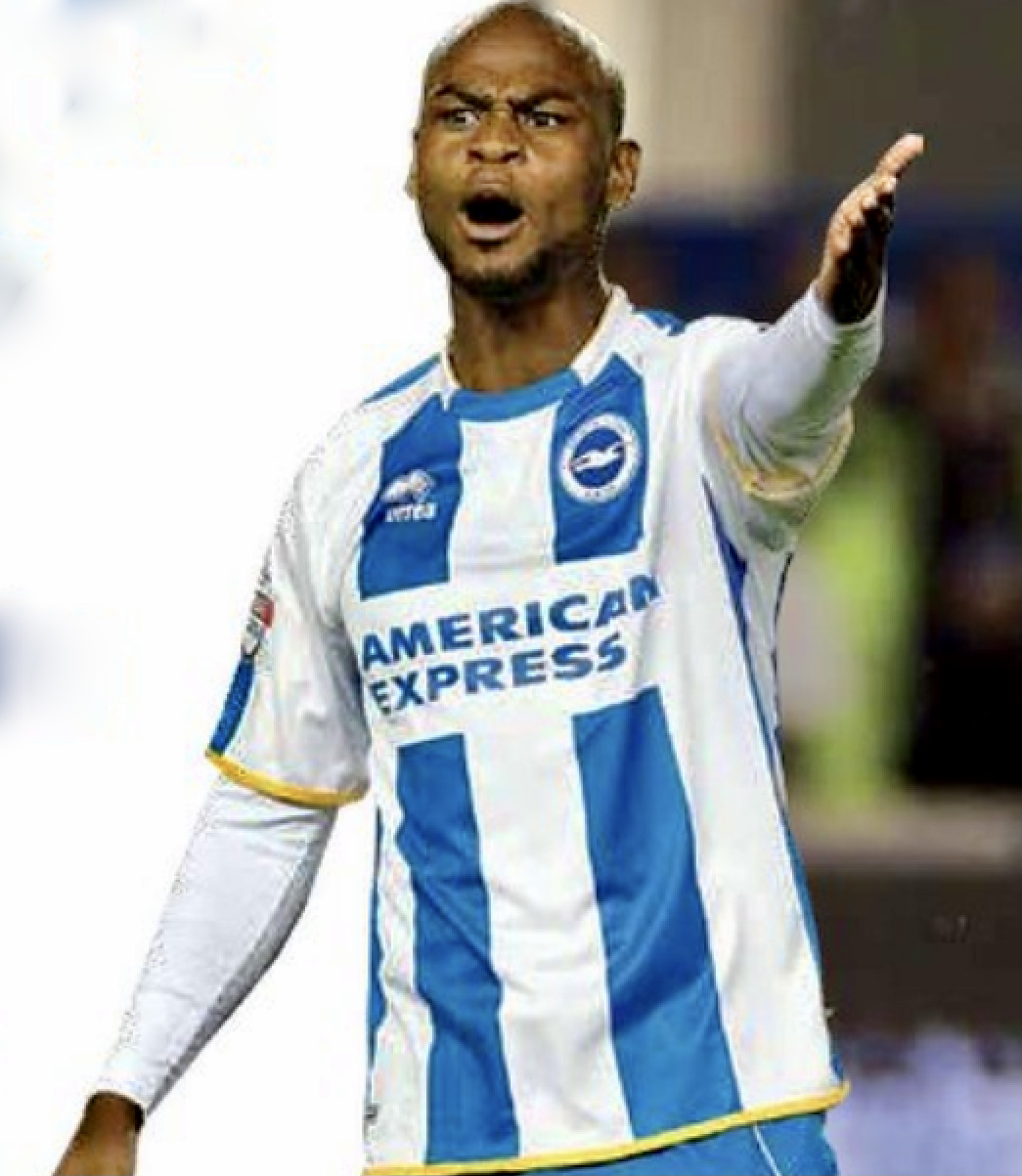
The Cameroon international, who had played top flight football in France and Greece, became a regular in the left-back berth for four seasons, including being a Championship promotion winner in 2017, playing 102 times for Brighton, including 51 games in the Premier League.

Bong was the first permanent left-back Albion had signed since the days of Marcos Painter, having had three successive seasons of season-long loan players in that position: Wayne Bridge, Stephen Ward and Joe Bennett.

“Gaetan is a player that we were aware of while he was at Olympiakos,” said Hughton, on signing the player. “He is very athletic, he is a natural left-sided player and it is important to have that balance in the squad.”

Back to that bottom-of-the-table battle in April, though, and Bong was on the left of a back four that also included a certain Harry Maguire (on loan from Hull City).

It was former player Gary Caldwell’s first match in charge after the sacking of Malky Mackay and both sides were struggling to avoid the drop from the Championship.

I probably decided to go to that game anticipating a win for Brighton because Wigan hadn’t won at home since the previous August! But, as sure as eggs is eggs when watching the Albion, Athletic finally registered another win in front of their own supporters: 2-1. It’s always the hope that kills you!

Albion played Player of the Season full-back Inigo Calderon as a makeshift right-winger that day and he got so little change out of his attempts to get past Athletic’s left-back that he was eventually subbed off.

In spite of the result that day, Albion managed to stay up while Wigan went down with Blackpool and Millwall.

Bong made his Brighton debut in the season-opener at home to Nottingham Forest (a 1-0 win courtesy of a Kazenga LuaLua goal), the club he would join four and a half years later, after he’d lost his regular place at the Albion.

Introduced to Brighton fans in the programme for that match, Bong said: “Once I had spoken to the manager and learned of the plans for the club, then I wanted to be part of this adventure.

“I could have gone elsewhere, I had offers, but I was excited by coming to Brighton. Now I just want to get playing and show the fans what I am about.”

Hughton had problems at left-back in the 2015-16 season when Bong was out for four months with a thigh injury, and back-up Liam Rosenior was also sidelined. Inigo Calderon filled in on occasion and Liam Ridgewell was signed on a short-term deal from Portland Timbers. Although Bong returned to the squad in March, the rest of the season was mainly a watching brief from the bench as Rosenior played out the season in that position.

Back as first choice the following season, a knee injury robbed him of his place for several weeks – loan signing Sebastien Pocognoli filled in – but he still played in 28 matches as the Albion finally won promotion to the Premier League.

Born on 25 April 1988 in Sackbayeme, a suburb of Cameroon’s capital Yaounde, he moved to France as a teenager to join Metz, where he rose through their youth ranks before making his professional debut at 17.

Injuries meant his progress wasn’t as rapid as it might have been but he had a successful loan spell with French second tier side Tours, and then moved to Valenciennes in 2009.

Bong won an under-21 cap for France but went on to win 16 caps for Cameroon. He was in their 2010 World Cup squad but only played in their final group game against Holland. Not entirely happy with the country’s set-up, he briefly retired from international football but returned when renowned former Dutch international Clarence Seedorf was appointed head coach in 2018. Bong even captained his country in a 1-0 friendly defeat against Brazil played at MK Dons in November 2018.

Cameroon international Bong

Bong played for Valenciennes for four years (for the first two playing under former Forest boss Philippe Montanier) and made 117 appearances.

Greek club Olympiakos took him to Athens in August 2013 and he went on to establish himself as a first-team regular, including playing in four Champions League matches and featuring in their league title winning side of 2013-14, before falling out with a new head coach.

Asked by The Athletic to sum up Bong’s attributes, his former Brighton teammate, David Stockdale said: “He comes to win a game. Nothing else. He is strong, he is athletic, he is enthusiastic.

“He is a good person to have around a squad, because he is very professional, he always does his homework before games and generally just looks after himself. He is just strong — that is the word. He is strong, reliable and does what it says on the tin.”

Stockdale added: “He had that drive; that inner drive. He was always going off to do his own work in the gym, to make sure he was properly fit all the time.

“He is one who will say what he wants to say when he feels he needs to. He does know a lot about football, he certainly knows a lot about his position and what he needs to get out of the players around him.”

The goalkeeper pointed out that Bong always had a desire to do well for the team, pointing out: “He was very much a mainstay of the side when I was at Brighton. He is a player you can rely on.”

Unfortunately, a small part of Bong’s time playing in Albion’s colours will also be remembered for an unsavoury incident when he alleged he was racially abused by West Brom’s former Burnley striker Jay Rodriguez.

Rodriguez appeared to pinch his nose after the players clashed during WBA’s 2-0 win over the Seagulls in January 2018, and Bong spoke to the referee about what he said he heard.

A subsequent FA investigation into the matter said the allegation was “not proven” and added there was “no suggestion by any party involved in this case that this was a malicious or fabricated complaint”.

Nevertheless, Bong insisted he heard Rodriguez say: “You’re black and you stink.” The striker denied what he described as a “false allegation” – he claimed he had instead said “breath fucking stinks”.

The dispute led Bong to issue a statement in which he said: “Please let me be clear: I know what I heard and I did not mishear. My conscience in raising the complaint is therefore entirely clear.

“This was my first such experience in more than three years in this country and I would never seek to bring a false charge against a fellow professional. Those who have accused me of doing that do not know me.

“Equally those who have expressed an opinion were not there on the pitch at the time and only Mr Rodriguez and I know exactly what was said and I stand by my original complaint.”

If everyone involved thought that was the end of the matter, Burnley fans had other ideas and I was at Turf Moor in April that year when the home ‘support’ disgracefully booed Bong every time he got the ball.

Albion manager Chris Hughton described their reaction as “shameful” and said of the player: “He’s an incredibly disciplined and straight individual – as honest a person as you will meet. It’s something that happened, it’s not nice at all and of course he’s big enough and strong enough to cope with it. As showed by his performance (the game finished 0-0).”

The respect Albion held for the player was best demonstrated as his time at the club was coming to an end. Bong was going to be a free agent after four years with the club but was handed a one-year extension shortly before Hughton was replaced by Graham Potter.

Chief executive Paul Barber explained to The Argus: “We all felt Gaetan had earned another contract. It is a position we felt we had an opportunity with a player we know, who is a fantastic character.

“The supporters will see what Gaetan does on the pitch — solid, consistent, strong, difficult to get around — but what they won’t know is off the pitch he is a very high-quality person, someone who is very respected and liked throughout the club. Just a decent man, supportive of the young players.

“Those sort of attributes and qualities are so valuable in a club of our size and for the coaching staff and the players. You know whether he plays 10 games, 20 games or 38 games, he is going to be fit, reliable, positive, focused, enthusiastic, consistent and decent.

“All of those things, if you were going out to recruit a left-back, you would be looking for.”

Ultimately, Potter preferred Dan Burn or Bernardo in that position and Bong moved on having made 91 starts and 11 substitute appearances, but only four appearances from the bench in the Premier League under Potter.

His final appearance for Brighton came in the disappointing 1-0 FA Cup third round home defeat to Championship side Sheffield Wednesday. Sadly, when he was subbed off in the 71st minute, there was a chorus of ironic cheers from the home crowd.

Nevertheless, Potter said of the player: “I have only worked with Gaetan for six months or so, but I do know all about the part he played in helping the club get to the Premier League and then establish itself at this level. I’m sure his contribution over the last four years will not be forgotten by our supporters.”

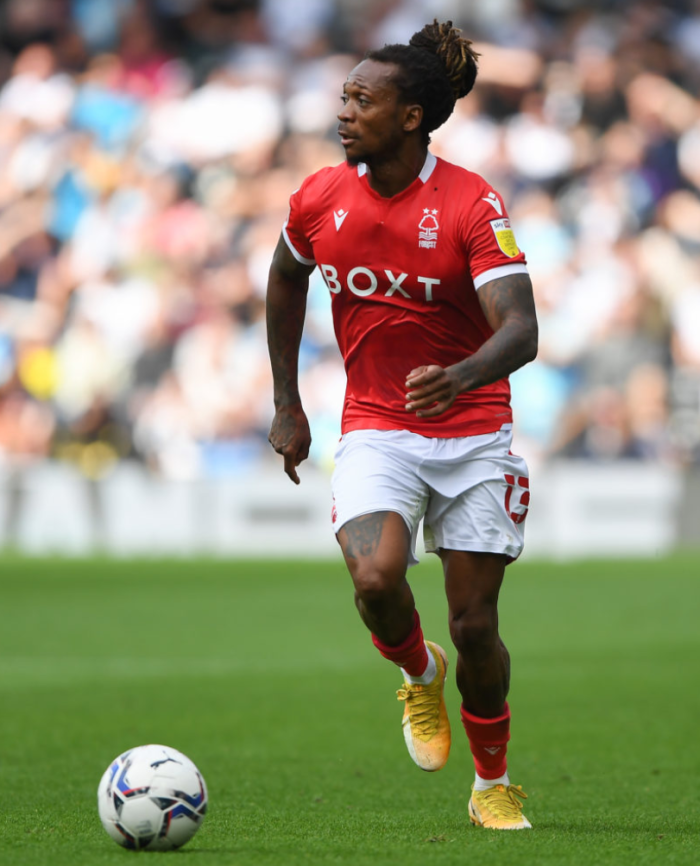
Somewhat bizarrely, it appears that Bong’s move to Nottingham Forest (in the Championship) wasn’t exactly welcomed by head coach Sabri Lamouchi and Nick Miller for The Athletic was brutal in his description of the player’s debut.

“Bong lasted 59 minutes against Charlton, a harrowing hour in which he lost his man for the only goal in the first half, and his eventual removal felt more like an act of mercy than a substitution.”

He didn’t even make the bench for the rest of the season and it was only when his old boss Hughton arrived at the City Ground that he got back into the Forest first team. He played 11 matches under Hughton but only seven in 2021-22 when Hughton’s successor Steve Cooper got them promotion via a play-off final win over Huddersfield Town.

Even so, Cooper was appreciative of the defender’s contributions off the pitch. “We have a good mix of old players – good role models, like Gaetan Bong,” he told The Athletic.

“He doesn’t play much but is a positive influence and I’m sure has conversations with the younger players, which I encourage. The learning players do with each other is a powerful thing.”

After hanging up his boots, Bong set up Ballers & Family Consulting Ltd, a consulting agency which, according to his LinkedIn profile, helps aspiring players to optimise their potential, families to understand the demands of professional football and football clubs to manage/avoid issues concerning certain players.

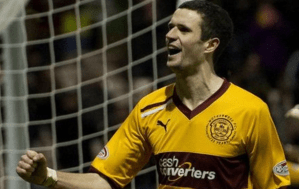
Three-time Clough signing Jamie Murphy was an Albion promotion winner

BRIGHTON provided a step up in class for Jamie Murphy when they bought the Scottish winger from League One Sheffield United in August 2015.

“I feel like I’ve been able to play in the Championship but I’ve never been given the opportunity,” he said. “It’s thanks to the club for giving me that opportunity.”

Murphy was 25 when he joined the Albion on a four-year deal. The fee was undisclosed but was reported to be £1.8m.

He was Albion’s ninth summer signing and his arrival was somewhat overshadowed by the return of Bobby Zamora to the Albion. But boss Chris Hughton said at the time: “He is somebody we monitored very closely last season and he was one of Sheffield United’s most influential and creative players.

“He’s a winger who can play on either flank and he will give us extra options in both wide positions. He’s a very good age, an age where he can continue to develop as a player and build on his experience.”

Murphy quickly settled at the club, finding a few familiar voices in the likes of captain Gordon Greer (he discovered their respective parents lived round the corner from each other in Glasgow and even drank in the same pub!), sports therapist Antony Stuart who Murphy knew at his first club, Motherwell, and assistant manager Colin Calderwood, whose Hibernian side he had played against.

He scored his first goal for the club in a 2-2 draw at Bolton on 26 September 2015 – but was later sent off in the same match. Zamora, making his first Albion start since returning to the club, set up Dale Stephens to put Albion ahead and Murphy increased the lead after a surging run into the penalty area by Liam Rosenior.

Neil Danns pulled one back before half time and Murphy saw red for a heavy tackle on Danns in the 75th minute. Albion had to settle for a point when Gary Madine headed an injury-time equaliser.

Impressive displays and another goal, against MK Dons, helped to earn him the November player of the month award – and, courtesy of the sponsor, the opportunity to drive a Porsche for 48 hours.

Murphy scored four more goals in a season’s total of 31 starts plus six appearances off the bench and he revealed in a matchday programme article how his eye for a goal stemmed from playing as a striker earlier in his career.

“When I was a kid, I was always the quickest so I always scored a lot of goals but as I got older and then turned professional with Motherwell it got harder and harder. I’m not the biggest player in the world, so I got moved out to the wing, but I still think like a striker when I’m in front of goal.”

Unfortunately, the campaign ended in disappointment when Albion missed out on promotion from the Championship. Hughton’s side finished third and Murphy’s form for Brighton earned him a call-up to the Scotland squad for two friendlies in March 2016, although he remained an unused sub.

When Albion lost in the two-legged Championship play-off semi-final to Sheffield Wednesday, Murphy was an unused sub (Anthony Knockaert and Jiri Skalak got the nod) but it was a familiar feeling for Murphy who had experienced semi-final heartache in two League One play-offs (2013 and 2015) for Wednesday’s fierce city rivals.

Hughton had plenty of competition for the wide spots in Albion’s 2016-17 promotion challenge, reducing Murphy’s starts to 20 plus 15 appearances off the bench.

He tried hard to seize his chance when it was presented. He scored twice in a 4-0 League Cup win over Colchester United at the start of the season and was the ‘other’ scorer in the Bonfire Night 2-0 win at Bristol City when Steve Sidwell scored a worldy from the halfway line.

A 3-0 home win over Reading at the end of February saw Murphy put in a man-of-the-match performance and he scored his first goal in 16 matches (Sam Baldock and Knockaert the other scorers).

He was praised for his pace on the break and excellent decision-making and later told the matchday programme: “It was one of my best performances. I always feel as if I’ve given 100 per cent – but sometimes things go for you, sometimes they don’t.

“I was delighted to get the goal; it’s been coming these past couple of weeks. But all across the team we’ve played well, done our jobs and obviously come away with a great win. It was a big game and we put in a very professional performance.”

Expanding on the whole-squad approach, Murphy said: “Anyone can come in and do a job. When I was on the bench I always felt there was a chance for me coming and I’m sure the boys on the bench feel that as well.

“We’re in this as a squad, it’s not just about the starting 11.” And he also spoke about the part the Amex crowd played. “It’s great as a player when you know you’ve got that backing of the fans behind you.

“When this place is rocking it really makes a big difference to us as a team. The fans get right behind us home and away.”

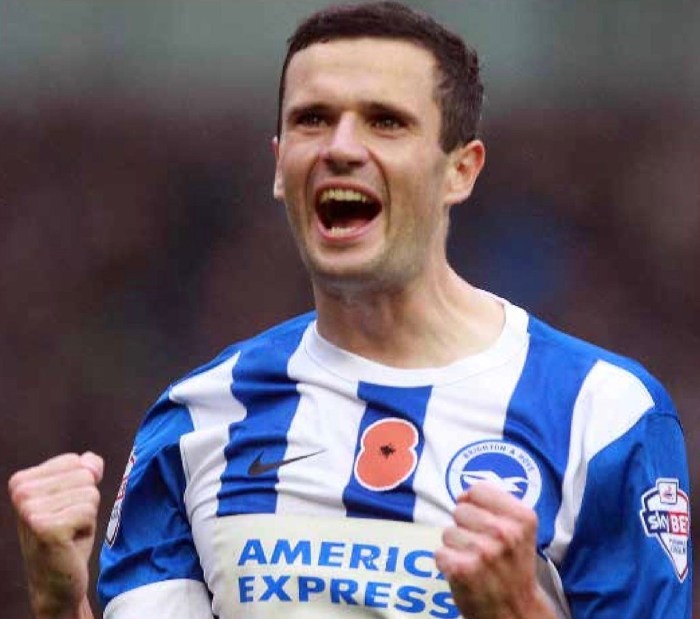
Murphy was certainly at the heart of the celebrations (above) when the Seagulls finally made it over the promotion finishing line, via a 2-1 win over Wigan Athletic, and he fondly recalled crowdsurfing (together with teammates Ollie Norwood and Skalak) on a happy, packed train from Falmer to the centre of Brighton as players joined with fans to celebrate the achievement.

The players were headed to a party in central Brighton laid on by chairman Tony Bloom and Murphy told The Athletic’s Andy Naylor in 2021: “There was no other way to get from the stadium to the party. The train station is 100 yards away, so we thought, ‘Why not just jump on a train?’.

“I don’t know what we were thinking, or if we thought it was going to be empty. Obviously, it wasn’t!

“It’s one of the best memories I have of that day. I’ve still got the video on my phone of us crowdsurfing and then coming off the train and getting carried down on someone’s shoulders, all the way down to the party.”

Once the Albion were in the Premier League, Murphy’s playing time was virtually non-existent (one start and three sub appearances in the league; one League Cup outing), and although speculation arose about a possible move, Hughton tried to play it down.

In December 2017, he told the Argus: “At this moment, if I am looking at the options I have in the wide areas, it’s been unfortunate for Jamie because of what we’ve had and no injuries in that area.

“He is still very much part of our plans. It only takes a lack of form, an injury or a couple of injuries and then he is very much back in the squad.”

Murphy in action for Glasgow Rangers

Within weeks, though, the winger joined Glasgow Rangers (the team he supported as a boy), initially on loan until the end of the season, before making the move permanent in the summer of 2018.

Hughton told the club website: “Jamie is a great lad, a fantastic professional and has a desire to play – and while we were in no hurry to see him leave, we do understand his desire to play for his boyhood team and one of the biggest clubs in Scotland.

“He’s been excellent for the club, ever since we signed him from Sheffield United, and wrote himself into club folklore as a crucial part of our promotion-winning side last season.”

Murphy played 18 league and cup matches (plus one as a sub) as Graeme Murty’s reign came to an end and during that initial time back in Scotland earned two full caps to go with his previous under 21 honours. They came in friendlies against Costa Rica and Peru: going on as an 87th minute sub for Matt Ritchie in a 1-0 win over Costa Rica and starting in a May 2018 2-0 defeat in Peru ((he was replaced by Oli McBurnie in the 67th minute).

Murphy signed a three-year contract with Rangers and was the club’s first goalscorer under new manager Steven Gerrard, netting the opener in front of a crowd of 49,309 at Ibrox in a Europa League qualifying match against North Macedonian side Shkupi.

He had played in just five Europa League games and two Scottish Premiership games before suffering a career-changing injury in a League Cup tie at Kilmarnock in late August.

The anterior cruciate ligament tear in his left knee, sustained on the astroturf pitch at Rugby Park in an innocuous coming-together with an opponent, put him out of action for 14 months.

Gerrard told the Glasgow Times: “Jamie’s coming to terms with it. He’s found it tough. He was upset at the beginning and understandably so.

“It is a tough one to take as a footballer. But we will give him every bit of help and support off the pitch that he needs. We will make sure that he sees the right specialists and gets the job done properly.

“Then as a team we will rally around him and make sure he is in good spirits. He is here for the long term. He is a big player for us.

“What Jamie has to do now and what we have to help him do is make sure he does everything in his powers to come back strong and doesn’t have any setbacks.

“He has got an opportunity to work on his whole body and make sure he comes back really strong.”

“It is a big blow. He found consistency straight away. He was on a big buzz from signing long-term for the club.

“He knows the league, he knows the club, he is very well-liked in the dressing room. We have had a big cog, a big piece of the jigsaw, taken away from us.

“We are still coming to terms with it. I know Jamie is as well. I’m not going to try and play it down. It’s a big blow.”

As it turned out, Murphy played only two more matches for Rangers after returning to fitness in October 2019 and in January 2020 linked up once again with his former Sheffield United boss Nigel Clough on a six-month loan at League One Burton Albion.

“I have worked with Nigel Clough before and had some of my greatest moments as a footballer under him, so it was an easy one to pick,” he said. “I want to be back enjoying football again. It has been a nightmare time with my knee but I’m now just looking forward to playing again.

Clough said: “To get a player from Rangers of Jamie’s quality is brilliant. The fact that we have worked with him before and that we get on well with his agent has helped.

“He wants to get out and play some football. He was out for a while with a knee injury, which is one of the reasons he’s coming out, but he’s fully fit now. What he did for us at Sheffield United and how he played there means we are very excited to have him on board.

“He plays wide mainly but can play up the middle as well. He carries the ball very well, makes goals and scores goals. He will be a great asset as we try and push for a place in the top six.”

He scored seven goals in 10 matches but then returned to Scotland and joined Hibernian, initially on loan and then permanently.

After making a total of 50 league and cup appearances for Hibs, he linked up with Clough for a third time in February 2022, signing on loan at League Two Mansfield Town. He scored once in 16 appearances for the Stags.

Murphy joined Ayr United in 2023

When he left Hibs at the end of his contract in June 2022, he switched to Perth for a year to play for St Johnstone where he scored five times in 29 appearances and in June 2023 was on the move again, this time to Scottish Championship side Ayr United.

Born in Glasgow on 28 August 1989, Murphy was inspired by Rangers strikers Ally McCoist and Mark Hateley as a boy and played junior football at Westwood Rovers and Drumchapel Thistle before linking up with Clyde. He joined Motherwell aged 11 and broke through to the first team at 17 in 2006 under former Albion boss Mark McGhee.

He said of McGhee: “He was the first man to give me a real chance in the first team. I played a good run of games, played in Europe and played well so he was big for me at the time.”

In 11 years at Fir Park, Murphy helped the club reach a Scottish Cup Final and regularly qualify for European football.

Having scored 50 goals in 215 games for Motherwell, he was then bought in January 2013 by former Albion captain Danny Wilson, who had switched allegiance in Sheffield to manage United.

It was Stuart McCall who sold Murphy to a club he had served as a player and a manager, and he believed at a reported fee of £106,000 they were getting a bargain for the 23-year-old.

McCall told the Daily Record: “We are not getting anywhere near what he is worth but he has given this club great service over the years. He is a great kid and goes with our blessing.

“It is probably the right time for Jamie to move on and flourish elsewhere.

“I would love to have kept him until the summer and it is disappointing for us. But Jamie is a talented boy and can force himself into the Sheffield United team.

“Sheffield United may be a League One side now but they are a great club for him to go to.

“I am hopeful they will be in the Championship next season and they are a Premiership club in the making as they have that status.”

McCall added: “I told Jamie they have a great fanbase, fantastic set-up and good manager in Danny Wilson.” However, Wilson’s two-year tenure at Bramall Lane came to an end in May that year. He was replaced by David Weir (now Albion’s technical director) and Murphy’s third United boss was Clough, who, on awarding Murphy a two-year contract extension in January 2015 said: “Jamie has caused Premier League defenders countless problems in our cup runs.”

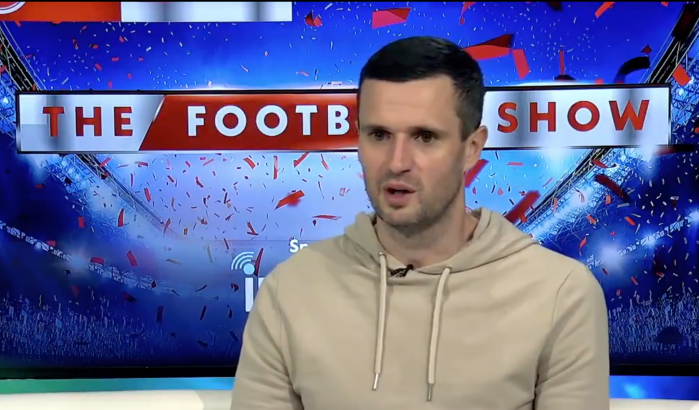
With his playing days now winding down, Murphy has an eye on the future and on X (formerly Twitter) in October 2023 he posted that he had successfully passed the UEFA A coaching licence.

In an extended interview with the Hibernian club website in January 2021, he spoke about his desire to become a manager. “That’s something I definitely want to try,” he said. “I like the problem-solving aspect of it, being able to watch a game and pick apart a team’s strengths and weaknesses.

“I probably watch games in a different way now and it started when I was injured. I wasn’t able to train for the best part of a year, so I found myself taking down notes in a journal whenever I’d watch a game – about how teams would play, how they won or lost the game.”

Did Albion fans only get to see half a Lita?

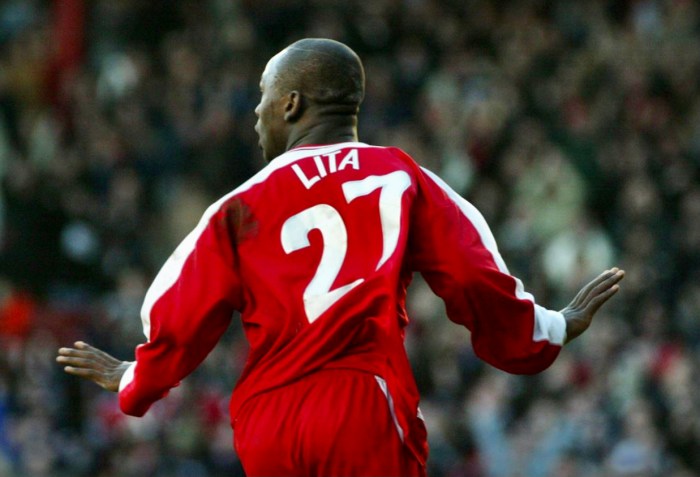
PROLIFIC second tier goalscorer Leroy Lita was a Gareth Southgate free transfer signing for Middlesbrough where he scored 20 in 82 games.

Two years after Boro cashed in and sold him for £1.75m to newly promoted Premier League side Swansea City, Lita joined an injury-hit Brighton side three months into Oscar Garcia’s reign.

Goals had been harder to come by for Lita after Brendan Rodgers had signed him for the Swans and he was sent out on loan, spending time back in the Championship with Birmingham City and Sheffield Wednesday.

It was a familiar story for Lita who had been Reading’s first £1m player when Steve Coppell signed him from Bristol City in 2005.

He netted a goal every three games for the Royals, but towards the end of his four years at the Madejski Stadium, he’d gone on loan to Charlton Athletic and Norwich City.

By the autumn of 2013, Lita had become something of a footballing nomad, fed up with a lack of first team action under Michael Laudrup.

With Albion’s leading striker Leo Ulloa out for two months with a broken foot, and Craig Mackail-Smith and Will Hoskins also sidelined, Garcia brought the diminutive striker to Brighton on a three-month loan arrangement.

“He is strong, fast and direct, and he has shown he can score goals in the Championship,” Garcia told the club website. “He offers us something different going forward.”

I can remember being at the Keepmoat Stadium, Doncaster, when he scored his only goal for the club two minutes after going on as a substitute for Jake Forster-Caskey (he’d played with his stepdad Nicky Forster at Reading).

Forster-Caskey had scored a wonder goal with his left foot from 35 yards before Rovers equalised but visiting Albion went on to collect three points in a 3-1 win (David Lopez scored the other with a long range free kick).

Lita had made his debut in a 0-0 draw at Yeovil on 11 October, going on as a sub for Ashley Barnes and his home debut saw him replacing another loanee, Craig Conway, in a 1-1 draw with Watford.

The eager striker made a public plea via the Argus to be given a start but Garcia only ever used Lita off the bench for the Seagulls (he went on as a sub on five occasions and was an unused sub for three games).

“The staff have a bit of doubt but I feel fine,” Lita said. “When I am on the pitch my mind just takes over anyway.
“I don’t ever feel tired or not match fit. I know you still need your match fitness, but you have to get that at some point, so hopefully this week.”

Having got off the mark for the fifth Championship club he had served on loan, he added: “Once you get that first goal you are thinking about the next one and the next one. I am just looking forward to scoring plenty of goals.

“I know I can score goals wherever I go so I’ve never had that doubt. Whoever has doubted me it’s up to them. My belief in myself is not going to end until I am 50 years old and can’t move!”

But with Ulloa’s fitness restored, Lita’s final appearance in an Albion shirt was on 3 December when he went on for Barnes at the Amex as the Seagulls succumbed 2-1 to Barnsley.

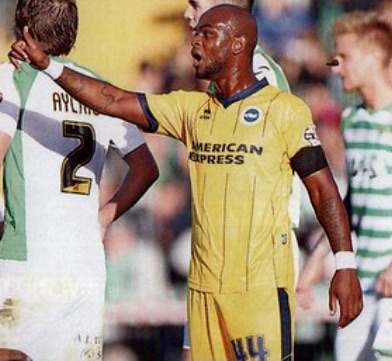
Maybe Lita’s Albion spell was cursed from the start when he was handed squad number 44 (all the fours, droopy drawers)?

He was still only 28 when he arrived at the Amex with an impressive record of 101 goals in 330 league and cup games, 14 of which had been in Reading’s 2006-07 Premier League season.

“I know the Championship well,” Lita said in the matchday programme. “Consistency is the main thing at this level because everyone beats everyone; some teams start well and drop off, while others start badly then pick up a run of results. So, it’s all about putting a good run together then you never know what might happen.”

Lita followed in the footsteps of former Swansea teammates Kemy Agustien and Andrea Orlandi to the Amex, but he also knew Liam Bridcutt and Andrew Crofts from his time as a youngster at Chelsea.

He recalled summer training camps at Horsham with Bridcutt and he played in the same Chelsea junior side as Crofts. “They have both gone on to become really good players,” he said.

“It helps when you go to a club and know a few people but I think the style of play here will also suit me.

“It is similar to Swansea and the club only signs players here who know the system.

“I played against Brighton last season, scoring on my home debut for Sheffield Wednesday, and although we won that day, I was still impressed by the way the team played.” He had also played at the Amex before when he was on loan at Birmingham and (below right) was the subject of a page feature in the matchday programme.

Born in Kinshasa in the Democratic Republic of Congo on 28 December 1984, it was as a teenager on Chelsea’s books that he couldn’t believe his luck to be sharing a training pitch with Jimmy Floyd Hasselbaink and Eidur Gudjohnsen.

“I would go home and see them on TV and the next day I would be training with them,” he told The Guardian. “It was unbelievable.”

Reporter Jon Brodkin wrote: “Chelsea broke his heart by releasing him but his three years at the club he supports were hardly wasted. The thrill of being a ballboy was surpassed by training with the first team’s front two.”

Lita told him: “I was 15 and the academy director said he had spoken to my school and I could have a couple of days off a week to train with the first team and the ressies [reserves]. It was a great opportunity and I learned a lot from it.

“Hasselbaink’s finishing was unbelievable, he didn’t mess about. He could place it and smash it. I mainly did finishing with them, not much else, but I could see as well how professional they were and how they looked after themselves.”

After Lita’s release, he contacted a few clubs – Fulham were interested but didn’t offer a contract – and he was aware that after leaving Arsenal Andy Cole had made a new start to his successful career at Bristol City.

It was the Robins who gave Lita an opportunity and former Albion skipper Danny Wilson handed him his first team debut at the beginning of the 2002-03 season when he was still only 17.

His first league goal was a late winner on 28 September 2002 to secure a 3-2 victory after going on as a substitute at Port Vale (for whom an 18-year-old Billy Paynter had scored).

“The striker hit a glorious goal to end Vale’s hopes of a point after they had fought back to level matters just a minute earlier,” said the BBC report of the game.

It wasn’t until the following season that he was given a professional contract and it was only after Brian Tinnion succeeded Wilson as manager in 2004-05 that Lita established himself in the City side. He scored 29 goals in all competitions and that form earned him a call-up to the England under-21s, Lita having decided not to play for his birth country.

He scored on his debut on 8 February 2005 when he went on as a sub for Justin Hoyte in a 2-1 defeat against the Netherlands at Derby’s Pride Park.

Those goals also earned him a £1m move to Reading, even though Tinnion advised him against the move, believing a Premiership club would come in for him.

“Once I got down here, I knew it was right,” Lita told The Guardian. “I want to go a step at a time. Reading are a good club, they’re looking to get into the Premiership and that’s where I want to be.”

He went on to score 15 goals in 25 league and cup games (+ seven as a sub) as Reading topped the Championship, and he returned to the England under-21 fold in February 2006.

He was on home turf at the Madejski Stadium when he earned his second cap, again as a sub, replacing David Nugent in a 3-1 win over Norway (future Albion loanee Liam Ridgewell was among his teammates).

A year later, after finding the net in the Premier League with Reading, Lita got a third cap as a substitute (for James Milner) and scored again in a 2-2 draw against Spain at Pride Park. Liam Rosenior was also a substitute that day.

Lita’s first start for the under 21s came the following month, on 24 March, in a 3-3 draw with Italy in the first game played at the new Wembley Stadium, in front of 55,700. On 5 June the same year, Lita scored England’s fifth goal in a 5-0 win over Slovakia at Carrow Road after he’d gone on as a sub for Nigel Reo-Coker.

Lita was an overage player in the 2007 UEFA European Under 21 Championship: he missed an 88th minute penalty after going on as a sub in a 0-0 draw with the Czech Republic but scored in each of the three games he started: 2-2 v Italy, 2-0 v Serbia and 1-1 v the Netherlands (who won the tie 13-12 on penalties). But a full cap eluded him.

Lita was a regular throughout Reading’s first top-flight campaign. In a side that include Ivar Ingimarsson and Steve Sidwell, Lita scored 14 times in 26 league and cup starts plus 12 appearances off the bench.

But with Kevin Doyle and Dave Kitson the preferred strike duo in 2007-08, Lita’s game time was much reduced and he went on loan to Charlton in March 2008.

It was a similar story the following season when he scored seven times in 16 games during a three-month loan at Norwich City – the haul included a hat-trick against eventual champions Wolves.

The excellent Flown From The Nest website, that profiles former Norwich players, recalled how that treble attracted the interest of plenty of other clubs, but City boss Glenn Roeder said: “It’s a better problem to have than him not scoring and playing rubbish – then none of us want him. What can you do?

“He was brought here to score goals. He was a little bit rusty in his first game which was understandable. He did better in the second game against Bristol City when he had a couple of chances which unfortunately never went in, and then in the third game on Tuesday night, we saw the real Leroy Lita and what he is all about.”

Lita returned to Reading and played in a FA Cup third round defeat at Cardiff and although Sheffield United made a bid for him, he preferred to stay with the Royals.

Nevertheless, at the end of the season, he finally left the Madejski and headed to Teesside on a three-year deal.

On signing for Boro, Lita said: “The manager has been after me for about a year, it’s great to feel wanted. I have a lot of respect for the gaffer and I want to do well for him and the club.

“I aim to repay him for his faith in me with goals. That’s the main strength to my game and I’m looking forward to scoring goals for Middlesbrough.”

He told the Northern Echo: “I’m raring to go. I haven’t enjoyed the last two seasons one bit, but this is a fresh start and I’m excited about the challenge.

“Other clubs were interested in signing me, but there was only once place I wanted to go and that was Middlesbrough.”

Southgate added: “Leroy has a hunger to score goals and his goalscoring record in the Championship in particular is very strong.

“His record says he gets one in two at this level so that will be important for us. I think he has a point to prove and, when he’s fully fit, he will relish the challenge.”

It wasn’t long before Southgate was succeeded by Gordon Strachan but Lita made the second highest number of appearances (41) in that season’s squad and scored nine goals as Boro finished mid-table.

There was yet another managerial change the following season, with the return of former player Tony Mowbray, but Boro once again finished mid-table with a side that featured Joe Bennett at left back and Jason Steele in goal.

Lita scored 11 times in 40 matches, which was enough to attract newly-promoted Swansea. “I’ve had a good chat with Leroy,” said Mowbray. “He has a chance to play in the Premier League and good on him. His talent has earned him that chance.”

But he only scored twice in six starts (+ 12 appearances off the bench) all season and in September 2012, Lee Clark signed him on a three-month loan for Birmingham.

“I know Leroy very well having worked with him at Norwich during a loan spell in which he scored seven goals in 16 games,” said Clark. “He’s a proven goalscorer who has power and pace and there’s no doubt that he’ll add quality to my squad.”

Lita scored three goals in 10 games for Birmingham before being recalled early, but in late January 2013, he joined Sheffield Wednesday on loan until the end of the season.

Wednesday manager Dave Jones told BBC Radio Sheffield: “Leroy has a lot of experience at this level and the one above. It could be with a view to a permanent deal. This lets us have a look at him and he can have a look at us.” But he only scored twice in nine appearances for the Owls.

Released by Swansea at the end of the 2013-14 season, Lita was then reunited with Danny Wilson, manager at newly relegated League One Barnsley.

“He was my first manager and I like the way he works,” said Lita. “He’s got a lot of trust in me and I’ve got a lot of trust in him.

“I enjoyed my time under him as a youngster. He helped me a lot and helped me progress in my career so far. I just want to get back to playing football regularly again and I’m going to get that opportunity here.”

He scored in his first two league games but didn’t register again for 21 games. When Wilson was replaced by Lee Johnson in February 2015, within a matter of weeks Lita joined lowly Notts County on loan until the end of the season but was unable to prevent their relegation.

On expiry of his Barnsley contract, Lita moved to Crete side AO Chania in August 2015 but was back in England the following March, signing a short term deal with League Two Yeovil Town, where he scored once in eight games. That was his last league club in England.

He scored five goals in 21 games for Thai Premier League side Sisaket in 2017 and on his return to the UK turned out for a number of non-league clubs: Margate, Haverhill Rovers, Salisbury and Chelmsford City.

In May 2020, the Coventry Evening Telegraph hailed his signing for Nuneaton Borough, whose manager Jimmy Ginnelly told the newspaper: “His partner is from Nuneaton and they’ve recently moved into a house on The Longshoot, which is just five minutes from the ground, so this is a win-win situation for both parties.

“These sorts of players don’t come onto Nuneaton’s radar very often so we moved quickly and obviously all of us here at the Boro are very excited.”

He scored eight goals in 33 appearances for Nuneaton, went on to play for Southern League Premier Division Central rivals Stratford Town before moving on to Hednesford Town, where he’s still playing.

In March 2022, the Express and Star reported: “Lita lit up Keys Park last night as he smashed a debut hat-trick to help Hednesford to a 3-1 victory over Stourbridge.”

Ridgy rides in to shore up injury-ravaged defence

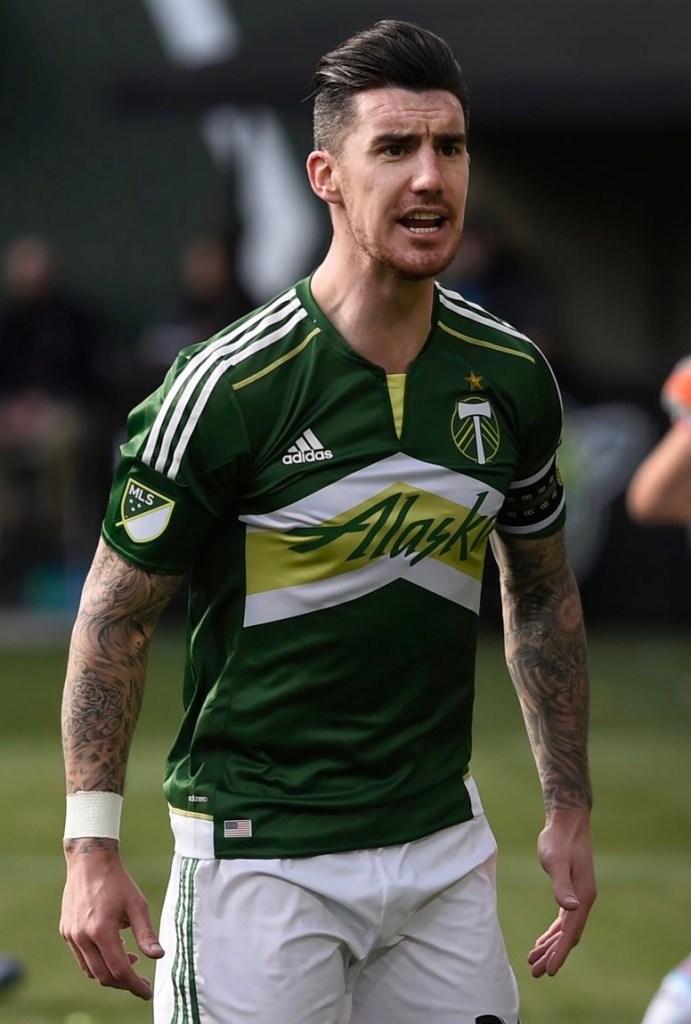
FORMER WEST BROM defender Liam Ridgewell played six games on loan for Brighton in the early part of 2016.

Ridgewell helped out when first choice left-back Gaetan Bong and deputy Liam Rosenior were both out injured.

He made six starts, starting in the FA Cup away to his old boss Steve Bruce’s Hull City, who won the tie with a single goal. His next game was also away, at Rotherham United, where Albion went down 2-0.

After that, he was on the winning side four times, as Albion beat Blackburn Rovers away and Huddersfield, Brentford and Bolton at home.

Albion’s matchday programme devoted a double-page spread to the loanee

Brighton wanted to extend the experienced defender’s loan but his parent club – MLS (Major League Soccer) outfit Portland Timbers – wouldn’t allow it and he returned to the States.

Albion manager Chris Hughton told The Argus: “He has certainly brought us a wealth of experience. We have to abide by the situation. In any way we could extend it for whatever, a further week or so, we’d be delighted to be able to do that, but I certainly can’t speak out of turn when he’s not our player.

Ridgewell returned to Portland Timbers after his brief loan with the Seagulls

“We have to respect everything his parent club want. He has certainly fitted in very well.”

Ridgewell explained the background to joining the Seagulls in an Argus interview with Andy Naylor, and on clinching the deal, Hughton said: “I know Liam very well from my time as manager at Birmingham City, and he is an excellent and important addition for us.

“He will bring extra experience to our defence at a crucial time and will give me an option both in the centre of defence and at left-back.

“Liam has played the vast majority of his career in the Premier League with more than 350 senior appearances and he’s also got experience of the Europa League and Championship from his time at Birmingham.”

Born in Bexleyheath on 21 July 1984, Ridgewell went to Bexleyheath School and was on West Ham’s books for two years between 1999 and 2001.

After looking at the quality of players breaking through there, he took the bold decision to quit the Hammers and join Aston Villa’s youth set-up instead, which he spoke about in an interview with the Birmingham Mail.

“I had looked at what was already in the team – you had Michael Carrick coming through, Joe Cole, Rio Ferdinand, Richard Garcia – and I thought it might be time for a change.

“I was a south London boy, grew up around there and had all my friends there. But I thought if I got away it might focus me a bit more. It was a tough decision.

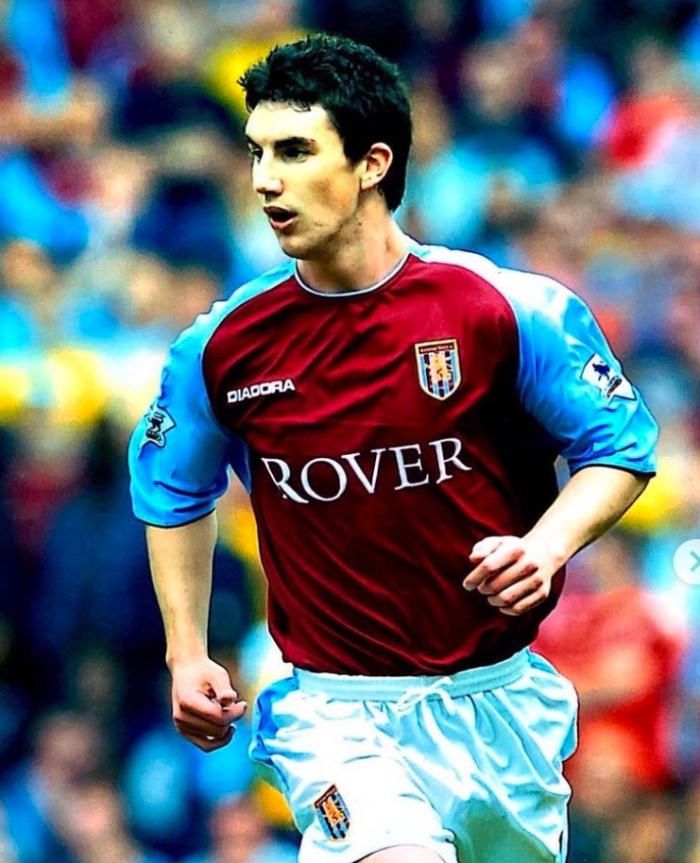
A youthful-looking Ridgewell made his breakthrough with Aston Villa

“I used to leave school early on a Friday afternoon to travel up to Villa for the weekends.

“I used to get the bus from my house to the train station, get a tube from Charing Cross to Euston and a train from London up to Birmingham all on my own.”

After joining Villa in February 2001, he was part of their 2002 FA Youth Cup winning side. They beat an Everton team featuring Wayne Rooney 4-2 over two legs. Villa’s goalkeeper was another Wayne – Henderson – who would later move to Brighton. The side also included Steven Davis, who went on to play for Southampton.

In the same year, Ridgewell was selected for the England under-19s and was sent out on loan to AFC Bournemouth, then in Division 3, where he made his league debut as part of a five-game loan spell.

Back at Villa Park, former England boss Graham Taylor gave him his first-team debut in a FA Cup tie against Blackburn in January 2003 when he came on as a substitute in a 4-1 defeat. He had to wait until December that year before getting his Premier League bow, again as a substitute, but this time in a 3-0 win over Fulham. He went on to make 11 appearances by the season’s end.

Under David O’Leary and, for a season, Martin O’Neill, Ridgewell made a total of 93 appearances for Villa before making what some fans would consider a controversial move.

In August 2007, Ridgewell became the first Villa player in 23 years to be transferred to bitter city rivals Birmingham. Des Bremner, brother of one-time Brighton striker Kevin, had been the last one, in 1984.

Steve Bruce’s £2m signing then found himself wearing the captain’s armband on his debut. “It’s one of the greatest achievements in my career,” Ridgewell told the Birmingham Mail. “It’s a real honour. I thank the gaffer for that. Hopefully I can continue as captain for a few more games before a few of the others come back in.

“It was fantastic to do it. I only found out before the game when we were on the pitch. The gaffer came up to me and asked would I have any problems doing it? I said none at all. It’s what I’m made for, it’s what I want to do. I want to captain sides and have a responsibility on me.”

Ridgewell subsequently played under Alex McLeish and Hughton for the Blues, winning promotion back to the Premier League in 2009 and the League Cup in 2011.

After a total of 175 appearances in four years, and on the back of a 6-0 win for Birmingham at Millwall, Ridgewell joined West Brom on deadline day in January 2012.

Ridgewell settled in quickly at West Brom

He couldn’t have wished for a better debut, as Albion recorded a memorable 5-1 win over Black Country rivals Wolverhampton Wanderers.

The Baggies were managed by Roy Hodgson at the time and, having initially been flirting with relegation from the Premier League, stayed up with results like a 4-0 victory over Sunderland and a 1-0 win over Chelsea that cost Andre Villas-Boas his job.
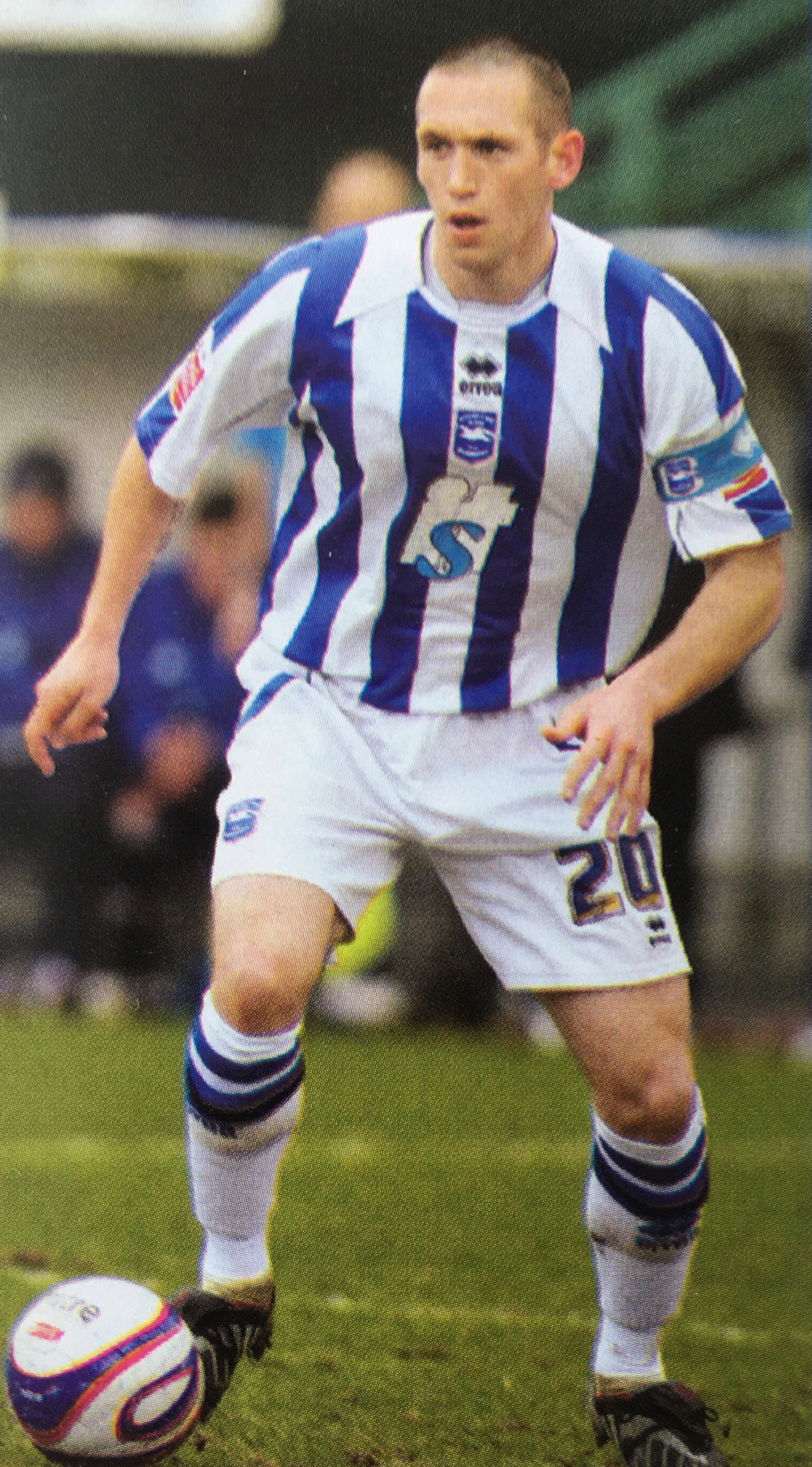
“Roy Hodgson was brilliant,” Ridgewell told The Athletic, in an interview in 2020.  “Roy knew how to make players feel and perform better than they were,” he said. “Everything was positional based. He let you do your own thing but he gave you the tools and the words to make sure you did it to the best of your ability in your own position. It was a clear message for me of how a manager gets the best out of players.”

When Hodgson left to manage England, Ridgewell continued as a Baggies regular for the next two seasons under Steve Clarke. Baggies escaped the drop by just three points in 2014, after Pepe Mel had taken over the managerial hotseat in January.

That summer, Ridgewell wanted to try something different and headed for the States to join Major League Soccer’s Portland Timbers.

In his five years with the Timbers, one of his highlights was captaining the side to a 2-1 MLS Cup win over Columbus Crew, a few weeks before his loan spell with Brighton during the American season’s winter break.

The previous season he’d returned to the UK in a similar arrangement to play six games on loan for Wigan Athletic in the Championship.

Ridgewell spoke about his time in the States on his return to the UK in January 2019, when he joined Hull City until the end of the season.

Back in the UK, Ridgewell spent half a season at Hull City

“I wanted to try something different and go out there with an open mind,” he told the Hull Daily Mail. “The league is completely different to what a lot of people expect. It’s grown bigger and stronger. I feel as fresh and as fit as when I first went there.”

To illustrate the point, he mentioned how he’d been up against the likes of Miguel Almiron, who subsequently joined Newcastle United for £20m.

“I loved it, it was great, really refreshing for me. It gave me another lease of life. It was something I needed to do, and I really loved it.”

In the summer of 2019, Ridgewell joined League One Southend United, but, having made only one appearance by December, quit playing to take up coaching.

He took to Instagram to reflect on his career, writing: “Football has given me the best life any little boy could wish for. There have been some massive highs and lows but now it’s time to hang up my boots and move on to the next chapter of my career.

“I’d like to say a massive thank you to all the coaches and managers who moulded me into the player I was. A special thank you to the late, great Graham Taylor for giving me my debut and the reason I was able to pursue my dream.”

In April 2020, Ridgewell spoke at length to Gregg Evans for an article on The Athletic, describing how lockdown had interrupted his plans to drop in on some of his old managers to gain knowledge and information in pursuit of his goal of becoming a manager.

“Moving into management has always been my aim,” he said. “I’ve always had a speaking role at every club I’ve been at. Whether it’s on the training pitch or during a game, I’ve always tried to help people out, too. With me being so vocal, I try to marshal teams in a certain way.”

He did some work with Aston Villa’s youngsters towards the end of 2020 but took on his first official coaching post in December 2020, as first team coach at Dover Athletic under former Gillingham boss Andy Hessenthaler.

It’s no surprise to discover Ridgewell (or Ridgy 6 as he’s known) has a veritable army of followers on Twitter – more than 42,000. Away from football, Ridgewell co-owns luxury swimwear business Thomas Royall, with fellow footballers John Terry and Sam Saunders.

Pictures from various online sources, and the Albion matchday programme.

Andrew Crofts just couldn’t stay away from the Seagulls

ANDREW Crofts is one of that rare breed of player who had three separate spells at Brighton, although the latter time was only as player-coach with the under-23s.

The Welsh international midfielder returned to the Seagulls after only a month as player-coach at Yeovil Town when Liam Rosenior left the Albion to move to Derby County.

His signing as an over-age player as well as a coach was explained by technical director Dan Ashworth, who hailed the “innovative step” and told the club website: “The thinking behind the playing role is to have someone of his experience out there on the pitch alongside our younger players, and to impart that crucial knowledge he has gained from his time in the game.

“To have that experience out on the field, in the pressure situation of a game, will be of enormous benefit to our young players and have a positive impact on their collective and individual development.”

Crofts first joined the club in the summer of 2009 during Russell Slade’s managerial reign and, when Gus Poyet took over the managerial chair, he appointed Crofts as captain for his first game in charge.

The midfielder repaid the faith in that televised away game at St Mary’s on 15 November by scoring in Albion’s memorable 3-1 win. Crofts retained the armband through to the end of the season and his form had caught the attention of Championship side Norwich City.

Crofts made the switch to Carrow Road and played 44 games as Paul Lambert’s outfit won promotion to the Premier League in runners up spot.

In the top-flight, though, Crofts was no longer a mainstay of the midfield, starting just 15 matches in 2011-12, and coming off the bench on 10 occasions.

“Towards the end of the season I was in and out,” he told the Albion matchday programme in 2019. “Paul then went to Aston Villa and when the chance came up to return to the Albion I jumped at it.”

“It felt like coming home and I wanted to replicate what we had done with Norwich. It was a completely different club compared to the one I’d left, with the Amex Stadium and plans for the new training ground.”

Poyet wasted no time in seizing the chance to re-sign him, telling the club website: “When we knew about the possibility to bring him back we worked very hard to do that.

“I am delighted to have him back. He is going to be a very important player.

“He is coming back to a club that he knows and he was happy to come back – that shows his commitment,” said Poyet. “He leads by example and we want players like that on the pitch.”

Unfortunately, that season his playing time was limited by two long-term spells out injured, and the following season it got worse. After sustaining a serious cruciate knee ligament injury in January 2014, he was sidelined by an almost identical injury again in October 2014.

When the player suffered the first injury in an away game at Birmingham, Poyet’s successor, Oscar Garcia, said: “He will be a big loss and I feel sorry for Crofty. He has been excellent and has been a key player.”

Crofts battled over many months to regain fitness only to suffer a partial tear of his anterior cruciate ligament and a tear to the meniscus in a match against Watford in October 2014, putting paid to any involvement in the rest of the 2014-15 season.

Head coach Sami Hyypia told the club website: “We are all devastated for Crofty. He is an important member of our squad and worked incredibly hard to get back to full fitness after last season’s knee injury.

“Crofty is a very strong character and he will continue to receive the best possible care and treatment from our medical staff throughout his rehabilitation.”

Unfortunately for him, by the time he was fit again, another new manager was in place and Dale Stephens and Beram Kayal were firmly established as Chris Hughton’s preferred midfield pairing. So, in March 2016, Albion loaned him back to his first club, Gillingham, until the end of the season.

On leaving the Seagulls that summer, he moved to Charlton Athletic under his former Albion boss Slade, on a one-year contract, and made a total of 54 appearances for the Addicks.

Although born in Chatham, Kent, Crofts qualified to play for Wales because his grandfather hailed from the principality. He earned a total of 29 caps, spread over 13 seasons, initially under John Toshack, most coming under Gary Speed, before making his final appearance against Panama in November 2017, in Chris Coleman’s last game as Wales manager.

Crofts v Rooney in a Wales v England match
Welsh international

Crofts was on Chelsea’s books from the age of 10 to 15, going through the ranks with John Terry, with whom he shared digs. One of his coaches was ex-Albion and Chelsea defender Gary Chivers. After being released by Chelsea, he linked up with Gillingham as a trainee and worked his way through the youth and reserve sides, making a surprise first team debut against Watford in May 2001 when only 16.

It wasn’t until 2004 and 2005 that he became a first team regular. His first Gills goal was scored in the Championship clash at the Withdean Stadium on Boxing Day 2004 when the Seagulls won 2-1.

Crofts eventually took over the captaincy at Gillingham but, after the side were relegated to League One, manager Mark Stimson believed the role was too much of a burden on the player. After more than 200 appearances for the Gills, he was made available for transfer and, in 2008-09, went out on loan to Peterborough United and then Conference side Wrexham under former Albion striker Dean Saunders.

When he joined Albion on a free transfer in June 2009, boss Slade said: “He’s an international player so that’s not bad for a start. He’s got good pedigree and was an important player for a good Gillingham team at the time.

“He can sit in for you defensively or he can get forward. He has got a good work ethic and I’m pleased to get him.”

Towards the end of his league playing days, Crofts had spells at Scunthorpe United in 2017-18 then Newport County for the 2018-19 season, playing under his former Gillingham teammate Michael Flynn, who he played alongside at Priestfield between 2005 and 2007,

Flynn made his old pal captain and said: “He’s a gentleman and he’s somebody I trust a lot. So signing him was really a no-brainer.

“Andrew coming in is a massive signing for the club. He’s the ultimate professional and he’s in fantastic condition.”

Crofts himself said: “I played with Michael Flynn at Gillingham and he was a winner. I loved playing with him and I can’t wait to play for him now with him being my gaffer.”

Unfortunately, injury issues restricted Crofts to just 12 appearances for Newport and he was released at the end of the season.

On leaving County, Crofts moved to Yeovil Town as player-coach with manager Darren Sarll saying: “To bring a player of Andrew’s experience into the club at this time is a great coup.

“He still has a thirst and hunger for playing and winning promotions and it’s refreshing to be part of the very early stages of his coaching career.

“He’ll be a valuable asset to the squad both as a player and in terms of passing on his experience and knowledge to the younger members of the squad.”

But then the opening arose with the Albion and he didn’t hesitate to return. When Graham Potter left the Albion, Crofts temporarily took on the head coach position and was retained as a first team coach under Roberto De Zerbi and his successor, Fabian Hurzeler.

• In an interview with Andy Naylor of The Athletic in December 2020, Crofts talked at length about his career, his coaching ambitions and some of the big names he played alongside.

Unstoppable free kick earned Poco’s place in Albion folklore

SÉBASTIEN Pocognoli will forever be remembered by Brighton fans for a spectacular free-kick goal he scored against Queens Park Rangers en route to promotion from the Championship.

Glenn Murray had given the Seagulls the lead in the April 2017 encounter at Loftus Road before, as the BBC reported, Pocognoli “executed a pinpoint free-kick with his left foot which flew in off the crossbar for an unstoppable second”.

Although Rangers pulled a goal back, Albion’s advantage gave them their first win at QPR for nearly 60 years and sent them back to the top of the league.

It was Pocognoli’s first competitive goal for six years and such a sweet strike etched his name in Brighton folklore.

Injuries and suspension dogged the left-back slot during that promotion season. Pocognoli had signed on a season-long loan from West Brom in August 2016 as cover for Gaetan Bong; Liam Rosenior having suffered an ankle injury.

But the loanee himself was troubled by a groin injury and made only 18 appearances for the Seagulls (plus three as a sub).

“Sebastien has a vast amount of experience having played in some of the top divisions in Europe,” Brighton manager Chris Hughton said on the day Pocognoli signed. “He is the type of quality player we want to add to the squad, and we are looking forward to working with him.”

The Belgian international came to the UK in 2014 having played top-flight football in Belgium, Holland and Germany.

Injury denied him the chance of going to Brazil to play in that summer’s World Cup for his country, but his disappointment was tempered by securing a move to the Premier League.

Unfortunately for him, his West Brom career barely got off the ground because the head coach who signed him – Alan Irvine – was soon replaced by Tony Pulis, who preferred Chris Brunt, Chris Baird or Joleon Lescott as left-back.

According to the uefa.com website, Pocognoli is a “technically-assured player, primarily a left-back but can also operate in midfield and is a specialist from dead-ball situations”. You can say that again!

Born in Seraing, near Liege, on 1 August 1987, Pocognoli represented Standard Liège at junior level but joined Genk aged 15, making his first team debut a year later, in 2004.

However, he had to be content with reserve team football until the 2006-07 season when he became a first-team regular, helping the club finish second in the Belgian first division.

In June 2007, Pocognoli joined Eredivisie side AZ Alkmaar, and featured in 33 games under Louis van Gaal, later renowned for managing Holland and Manchester United.

“I was 19 years old, and I worked for two years under him,” he told the West Brom website. “He helped my formation as a footballer, pass-control-pass, tactically, because defensively I was not so strong. And also my personality, because he likes players with personality.

“He’s not only a good trainer but he’s also a good human being.”

After three years at AZ, his first club, Standard Liege, bought him and gave him a three-year contract. He became the established left-back for two seasons but in 2012-13 missed lots of games when sidelined by injury.

With only six months of his contract remaining, German club Hannover 96 took the opportunity to sign him in January 2013. He made an inauspicious start, getting sent off on his debut, and faced competition for the left-back spot.

Only 18 months into a three-year deal, he made the switch to the Premier League with West Brom, head coach Irvine telling the club website: “Sébastien is an experienced left-back who has played at a high level for many years.

“After being named in Belgium’s provisional World Cup squad, he just missed out on Brazil, mainly because he hadn’t played enough games towards the end of the season.

“But he’s joined us with a real hunger to prove himself at Albion and get back into the international set-up.

“We’ve done our due diligence on Sébastien in terms of people who have worked with him, including Romelu Lukaku and Kevin Mirallas.

“You make your own mind up about a player’s ability from watching him play but you put these calls in to find out about their personality. The feedback on Sébastien was very positive.”

The defender had gained international recognition from an early age and played for Belgium’s under 16s, under 17s, under 19s and under 21s. He was called up to the senior squad in 2008 and won 13 caps for his country.

After his Brighton loan expired, he returned to West Brom but was not retained. He expected to re-join Standard Liege when interviewed by the expressandstar.com, saying: “It all adds up: I will soon be a free agent, they need new blood and I’m an ex-player of Les Rouches. At the moment there is no contact, but the board is looking for players who are interested in their project.

“If I did go to Standard, I am one of the leaders in the dressing rooms anyway – not by shouting loudly, by setting a good example. I certainly would be an example for the young players.”

The move was duly confirmed and in his third spell with the club Pocognoli made 32 appearances, including, in March 2018, in the Belgian Cup Final, when Liege beat his former club Genk 1-0.

In 2020, Pocognoli switched to Royale Union Saint-Gilloise, the club owned by Albion owner and chairman Tony Bloom.

Flu-hit Flinders came to the rescue in a goalkeeping crisis

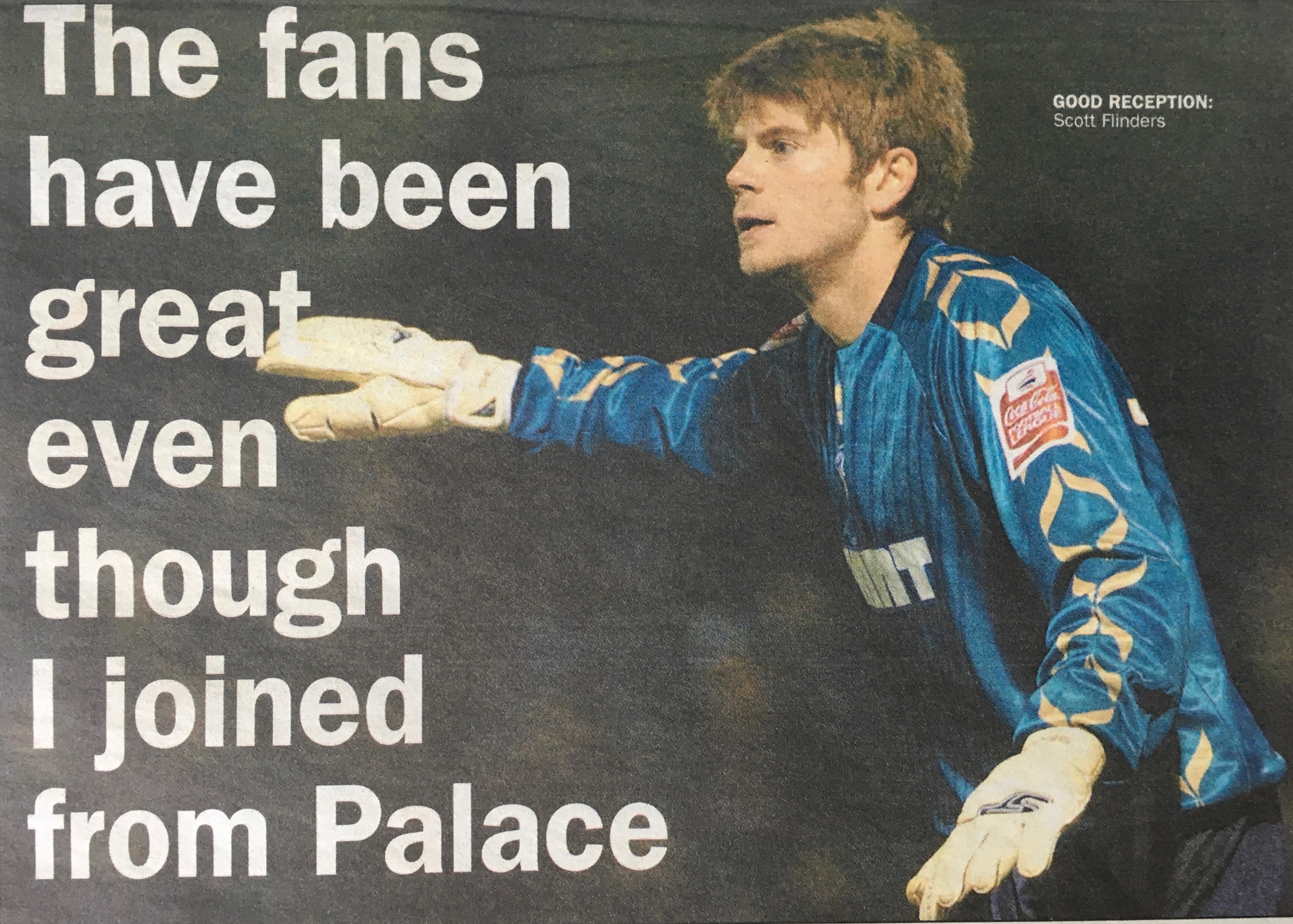
AN UNDERSTUDY to eccentric Crystal Palace goalkeeper Gabor Kiraly played a dozen games in goal for Brighton in the spring of 2007.

Scott Flinders was just 20, and suffering from the effects of a bout of ‘flu, when he answered a call from fledgling manager Dean Wilkins to help solve a goalkeeper crisis.

With first choice Michel Kuipers injured, Wilkins considered it too early to risk rookie ‘keepers Richard Martin and John Sullivan, so he turned to Albion’s arch rivals to borrow 6’ 4” Flinders.

“I always thought Millwall were Palace’s biggest rivals but then I got told, I think it was by Dougie Freedman or Clinton Morrison, that it is Brighton,” Flinders told The Argus. “It didn’t put me off signing. It is just about playing games.”

IMG_6009Flinders made a slightly shaky start in a win away to Gillingham, and in a defeat to Bristol City on his first appearance at Withdean, but he made some important stops to help earn points in consecutive away draws at Crewe and Blackpool.

Manager Wilkins told The Argus: “We knew we were bringing in somebody who was not 100 per cent for the first couple of matches. Scott has recovered from that and he has done very well for us.

“We are still in a position where we need another ‘keeper with a bit more experience than the young lads we’ve got.”

Flinders seemed happy to extend his loan from one month to two and said: “The fans have been absolutely excellent towards me, even though I am coming from a rival club.

“John Keeley, the goalkeeping coach, has been different class and I am delighted to be here.”

Unfortunately, Albion lost all five of their matches in April and finished 18th, six points clear of relegation.

Born in Rotherham on 12 June 1986, Flinders joined nearby Barnsley as a youth trainee in 2003 and made it through to the first team in 2005 when former Albion striker Andy Ritchie was the manager.

He took over from Ross Turnbull and featured in 11 games over three months before losing his place and subsequently having to settle for being understudy to Republic of Ireland international Nick Colgan.

However, Flinders earned his own international recognition in the shape of five caps for the England under 20 side, three of them in the 2005 Toulon tournament. He made his debut in a 3-0 win against the Korean Republic in a side which also featured Liam Ridgewell, Liam Rosenior and Greg Halford.

He kept his place three days later in a 0-0 draw with France, then came on as a sub three days later in a 1-1 draw with Mexico.

In August the same year, he started against Russia but was substituted as the side went down 4-0. A teammate in that one was Will Hoskins. His final match was at Turf Moor when England drew 2-2 with Holland, although he was subbed off again. In that England team was future England centre-back Gary Cahill while the left-back was Gary Borrowdale, who played on loan at Brighton under Russell Slade in 2009.

Frustrated playing second fiddle at Barnsley, Flinders had trials at Chelsea and Wigan Athletic but he ended up at Crystal Palace in 2006 as part of an exchange deal involving midfield player Sam Togwell.

It’s believed Palace paid an initial fee of £250,000 with additional instalments to be paid according to appearances.

However, Flinders only made one league cup appearance before being sent on loan to Gillingham. It was the first of five loans away from Selhurst Park, the lengthiest being his time at Brighton.

Other loan spells saw him spend time with Yeovil Town, Blackpool and Falkirk and he was released by Palace in May 2009 after playing just 13 games for them in three years.

His years of understudying finally came to an end when he headed to the north east in the summer of 2009 and joined Hartlepool United, where he established himself as first-choice ‘keeper.

Flinders even got on the scoresheet while at Hartlepool, scoring with a 94th minute header against Bournemouth on 30 April 2011 to earn his side a point in the last home game of the season.

The 2012-13 season was a particular triumph for him when he earned the accolades of Player’s Player, Supporter’s Player, Away Player of the Year and Hartlepool Mail SportsMail Player of the Year.

In six years at Hartlepool, he made more appearances – 276 – than any other ‘keeper in the club’s history, eventually moving on in June 2015 to League Two York City.

Flinders received a five-match ban from the Football Association in August 2016 following an incident in a League Two game between York and AFC Wimbledon on 19 March that year.

It was alleged Dons striker Lyle Taylor grabbed Flinders by the testicles and, as he retaliated, the goalkeeper was alleged to have used racist abuse.

Flinders denied the charge but was found guilty by the FA following an independent regulatory commission. Fined £1,250, Flinders was also warned about his future conduct and ordered to complete an education course.

York initially suspended Flinders but then loaned him out to National League rivals Macclesfield Town, who he subsequently joined on a contract from January to June 2017.

On deadline day in August 2017, he joined League Two Cheltenham Town, with boss Gary Johnson telling the club’s website: “Scott has played over 400 league and cup games in his career and there is no substitute for experience.”

In January 2020, Flinders suffered a broken leg in a game against Oldham which put him out of the game for nine months.

  • Pictures and headlines from The Argus.