BARRY BUTLIN is one of that pantheon of players who’ve scored winning goals for the Albion against Crystal Palace.
He may sound like the alliterative title of a south Wales holiday camp, but this was a moustachioed striker who’d joined Third Division Brighton on loan from Second Division Nottingham Forest.
When former Albion boss Brian Clough couldn’t find a place for him in his Forest line-up in September 1975, previous managerial partner, Peter Taylor, going it alone at the Albion, was more than happy to add Butlin to his forward line options.
Butlin had started his career at Derby County on the periphery of Clough and Taylor’s squad at the Baseball Ground.
During his five years as a Rams player, he’d twice been out on loan to Notts County, scoring eight in 20 games in 1968-69 and another five in 10 appearances in the 1969-70 season.
While Derby won the First Division title in 1972, Butlin was sold for £50,000 to Luton Town, where he made his mark with an impressive 24 goals in 57 matches.
One of them came in a 1-1 draw at Elland Road during Clough’s ill-fated 44-day spell as Leeds manager, and, in a typically odd Clough way, in the post-match press conference he put his arm around Butlin and told the journalists: “This is who you want to write about after that wonderful goal. He deserves it.”
The following month, Butlin’s goalscoring exploits for the Hatters saw Forest boss Allan Brown take him to the City Ground for a fee of £120,000.
Imagine how he must have felt when his old Derby boss Clough arrived to take over at Forest in January 1975!
Nevertheless, the striker said all the right things publicly ahead of the manager’s first game, a third round FA Cup replay against Spurs, as recorded in Jonathan Wilson’s excellent book Brian Clough: Nobody Ever Says Thank YouThe Biography (Orion Books 2011).
“The lads all know that everybody is starting from scratch with everything to prove,” said Butlin. “Brian Clough has the ability to make an average player good and a good player great.”
Such a show of loyalty might have been understandable in the circumstances but Wilson also recalls Clough’s eccentric attitude towards players when they were injured. Butlin fractured his cheek in a training ground incident when at Derby.
“As he lay on the ground, Clough screamed at him to get up, insisting there was nothing wrong with him,” wrote Wilson. “Even after he’d been taken to hospital, Clough refused to believe anything was the matter.
“When Butlin’s wife turned up looking for her husband and mentioned an ‘accident’ to Clough, he snapped: ‘I’ll tell you when there’s been an accident’.”
Although Butlin feared the worst when Clough arrived at Forest, he wasn’t instantly discarded, finishing that season with seven goals in 33 games (plus one as a sub), while fellow forward Neil Martin netted 12 in 30 matches (plus two as a sub).
Butlin had a front row seat in this Forest line-up
But Clough clearly had other ideas about who he wanted in attack and brought in John O’Hare, who had done well for him at Derby, but less well during the ill-fated spell at Leeds, and introduced a young Tony Woodcock.
Intriguingly, that summer Martin was reunited with Taylor at Brighton and, within a matter of weeks, Butlin was also heading to the Albion, although his move was only temporary.
As it happened, Martin got off to a decent start alongside Fred Binney up front, scoring three times in the opening matches. But Taylor obviously considered Butlin offered a more potent threat; and it wasn’t long before fans saw why.
Butlin lets fly and scores the winner at Selhurst Park in 1975
In only his second game, in the third minute of Albion’s clash with Palace at Selhurst Park on 23 September 1975, Butlin got on the end of a Gerry Fell cross and hit an unstoppable shot that turned out to be the only goal of a pulsating game played in front of a crowd of 25,606 – a quite remarkable number for a third tier fixture.
“It still sticks with me, that one,” Butlin told Spencer Vignes, in his book Bloody Southerners (Biteback Publishing), which details the Clough-Taylor period at the Goldstone.
“It was the start of a cracking time down at Brighton,” said Butlin. “I only wish I could have gone on a little longer.”
Butlin soars to connect with this header
Butlin followed up that midweek winner at Palace with another goal on his home debut four days later when Chesterfield were beaten 3-0 (Peter O’Sullivan and Binney the other scorers).
Although not on the scoresheet, he also featured in two more wins (2-1 at Shrewsbury Town and 1-0 at home to Preston). However, in his absence Forest had gone through a mini slump, losing four out of five matches.
Butlin had taken his wife and children to Sussex with him, staying in the Courtlands Hotel in Hove. They all really liked the area, and the player had hopes of making the move a permanent one. Clough had other ideas.
“Brighton made me so welcome, but Forest weren’t doing very well at all,” Butlin told Vignes. “When I came to the end of my loan period, Brian got me straight back up to Forest and I had a real purple patch during which I played really well.”
In fact, he finished the season with eight goals from 38 games played as Forest finished eighth in the old Second Division.
Collector’s item
“We had this team meeting before one game and Brian said: ‘If sending you down to Brighton gives you that impetus, then I’d better start sending some more players down there!’
“I’d seen the seafront and the wonderful countryside and thought it was the prelude to us staying there as a family, but it wasn’t to be. I was disappointed to say the least.”
Born in the south Derbyshire village of Rosliston, on 9 November 1949, Butlin attended Granville County Secondary School in Woodville from 1961 to 1966, and proudly records on his LinkedIn profile that he obtained six GCEs. He was also the school football captain.
He signed on for Derby in July 1967 but the likes of Richie Barker and Frank Wignall initially, then O’Hare and Kevin Hector, were ahead of him as the Rams progressed from the old Second Division into the First, before winning the title in 1972.
Chances for Butlin were few and far between. He made just four first team appearances in five years but those loan spells at Notts County at least demonstrated there was a player in the making, able to find the back of the net.
A knee injury prevented him making an immediate impact at Luton, after Harry Haslam had signed him, but he was the top scorer as Town gained promotion to the elite in second place in 1973-74.
The Hatters assured promotion by securing a 1-1 draw at West Brom in the penultimate game of the season, and midfield player Alan West relived the moment in an interview with theleaguepaper.com.
“I remember Barry Butlin, who was magnificent in the old centre forward’s role that season, got the vital goal,” he said. “I played in midfield with Peter Anderson and Jimmy Ryan. Peter was a great player and finished that season as our second highest scorer behind Barry.”
Just before Christmas in 2014, Butlin and West were among several former players who got together for a 40th anniversary celebration dinner. Also there were John Faulkner, Gordon Hindson, Alan Garner, Jimmy Husband, John Ryan, Jimmy Ryan, Don Shanks and Ken Goodeve.
Luton history website hattersheritage.co.uk remembers Butlin as “brilliant in the air and no slouch on the ground” and mentions the shock fans felt when he was sold to Forest, particularly as Town were desperate for goals at the time.
In the 1976-77 season, Butlin once more went out on loan, this time to Reading, and the heave-ho from Forest he had long expected finally came when Peter Withe was brought in.
Butlin was sold to Peterborough United and in two seasons with the Posh he scored 14 goals in 77 matches. His teammates at London Road included former Forest colleagues Jim Barron and Peter Hindley as well as former Albion midfielder Billy McEwan.
United just missed out on promotion from the Third Division, finishing fourth in 1977-78. It was a disastrously different second season, by which time another former Albion player, Lammie Robertson had joined them – when Posh were relegated to Division Four.
Butlin’s final club was Sheffield United, as they faced their first season outside the top two divisions. Signed by his former Luton boss Harry Haslam, Butlin scored 12 times in 53 matches for the Blades, but by the end of 1980-81 season, after Martin Peters had taken over, United were relegated to the fourth tier for the first time in their history.
Butlin retired and spent three decades working as a financial adviser and mortgage manager in Sherwood, Nottingham.
He lived in Derby and between July 2000 and October 2010 was secretary and treasurer of the Derby County Former Players’ Association.
EXPLOSIVE pace, a feint of the shoulder, and a thunderbolt shot were trademarks of Kazenga LuaLua’s contribution to Brighton’s rise from the third tier.
Not to mention a somersault flipping goal celebration that delighted supporters but gave managers kittens as they could only see an injury in the making.
Sadly, that explosive pace came at a price — hamstrings that were all too often easily damaged, resulting in lengthy spells on the treatment table and in recovery. Ankle, knee and groin injuries also sidelined the pacy winger for long periods.
Left-sided LuaLua had three spells on loan to Brighton from Newcastle United before joining permanently, and his six seasons in Brighton colours were rarely dull. He was undoubtedly a crowd-pleaser when he was on top of his game, leaving full backs trailing in his wake to lay on chances or cutting inside and netting some memorable goals.
However, he invariably made most impact when entering the fray from the substitutes’ bench, although the ‘supersub’ moniker frustrated him.
“You don’t just want to come on as a sub,” he told the matchday programme. “Obviously it’s good in one respect as it means the team needs you, but as a footballer you want to be in the starting 11 in every game.
“I don’t view myself as just an impact player and I know that I can play 90 minutes of football.”
Albion fans first saw the Congolese game-changer in February 2010. Manager Gus Poyet had been tipped the wink about LuaLua by his former Swindon and Leeds managerial partner, Dennis Wise, who had been executive director at Newcastle.
Ashley Barnes celebrates with Albion’s speedy loanee winger
LuaLua started nine games (and went on as a sub twice) as Albion consolidated their position in League One. His impact on the side was appreciated by his teammates, as defender Tommy Elphick explained to the Argus in March 2010. After the 19-year-old winger had run Exeter full-back Steve Tully ragged, Elphick said: “He’s unbelievable for us. He really does stretch the game for you.
“It’s that raw pace and power which I personally think we have been missing for the last two years. Benno (Elliott Bennett) gives you something totally different. He is more technical. Kaz reminds me of Bas Savage in the sort of job he used to do for us in stretching the game and getting us up the pitch.
“It gives the defenders a chance to get to the halfway line and defend a bit higher.”
When Poyet secured his services for a second loan spell for the opening half of the 2010-11 season, he was delighted. “Kazenga is unique. He is pure power and speed,” said the manager. “That nowadays in football is very important and we didn’t have that.
“I don’t think there is another player like him in the division. He gives us something totally different.
“We are very pleased to have him. We know what we are getting and that is the key. He will fit in as a player, and in the dressing room.”
Poyet added: “He made a very big impact during his time here last season and I am hoping he can do the same and add a few goals to his game this time around.”
No sooner said than done; LuaLua marked his second debut with a 25-yard rocket of a free-kick to give Albion the lead in a 2-0 home win over MK Dons.
LuaLua departs the action injured
Sadly, after just seven starts plus four appearances off the bench, his involvement in that promotion season came to an end in November 2010 when a bad tackle in a 3-1 away defeat at Hartlepool left him with a broken ankle.
Born in Kinshasa, Zaire (now the Democratic Republic of the Congo), on 10 December 1990, LuaLua came to England as a small child with his father and famous older brother, Lomana.
It was from Lomana that he perfected the thunderbolt shot — and the celebratory somersault.
“I have always had a hard shot on me,” he told the Albion matchday programme. “I think a lot of it comes from when I was a boy back in Newcastle and I would play with my brother.
“He would always strike a ball hard and I would try to copy him.”
It was football all the way from a young age, LuaLua recalled. “When I was growing up in Kinshasa, I remember skipping school to play football with my friends,” he said. “We were football mad and, as my brother had already moved to England, I wanted to follow in his footsteps.
“Lomana got me in at Newcastle. He moved to London with our dad some time earlier, but once he’d broken into football and moved from Colchester United up to Newcastle, then the rest of the family came over from our homeland.
“I had only been in the country a couple of months when Lomana arranged for me to have a trial at Newcastle and I was taken on straight away. It was fantastic for me and also for him; we’d go into training together and he was always there for advice when I needed it. He has been a massive influence on my career.”
The winger continued: “It was tough to begin with; I was in a new country and had to go to a new school, which was hard in itself given where I’d come from, and then I was brought into a professional football club and one of the biggest in the country.
“But Newcastle were very helpful. All the coaching staff were great towards me, and helped me find my feet. I learned such a lot from them and I quickly made new friends. I was close to Nile Ranger, Sami Adjei, Sami Ameobi, many players, and I learnt so much in terms of coaching and how to conduct myself as a professional.”
Kazenga progressed through the Toon academy and was part of the Toon youth team that reached the semi-finals of the FA Youth Cup in 2005-06. He even earned a first-team squad call-up while still only 16, although he didn’t get to play.
LuaLua’s Newcastle chances were limited
Eventually, he got his first team chance as a substitute for Damien Duff in a 0-0 FA Cup third round match at Stoke in January 2008, right at the end of Sam Allardyce’s reign on Tyneside. It was Michael Owen’s first FA Cup game for Newcastle.
The game was being shown live on TV so LuaLua’s extended family back home in the DR Congo were able to see the moment. “I was one of the club’s youngest debutants at 17,” he said.
He also went on (for Charles N’Zogbia) in the replay at St James’s Park which Toon, under caretaker boss Nigel Pearson, won comfortably 4-1. “To play in front of 52,000 people took my breath away,” he said.
He made his Premier League debut three days later, going on as an 80th-minute sub for Duff at St James’s Park, in Kevin Keegan’s first match back in charge — a disappointing 0-0 draw with Bolton Wanderers.
Although a non-playing sub on other occasions, he got on in the last game of the season, replacing Jose Enrique in the 79th-minute as United went down 3-1 to Everton at Goodison Park.
Against the backdrop of the tumultuous 2008-09 season, when Toon were relegated from the Premier League after a veritable managerial merry-go-round, LuaLua made just four substitute appearances (three in the league and one in the FA Cup), and in January 2009 he was sent out on loan to Doncaster Rovers, then in the Championship, where he played four matches in six weeks under Sean O’Driscoll.
Once Toon settled on Chris Hughton to get them promoted from the Championship, LuaLua found chances hard to come by.
He started in a Carling Cup second round match at home to Huddersfield Town, when Toon edged it 4-3, but picked up a groin injury playing in the next round, a 2-0 defeat at Peterborough in September 2009 (future Brighton teammate Craig Mackail-Smith was one of the Posh scorers).
Three months later, with his fitness restored, he was itching to be given a first team chance and told the Chronicle: “I want to be part of this team. My aim has always been to play for the first team at Newcastle United.
“I’ve been here a long time, and last season I was involved in the first team before going out on loan.”
“I have been playing for the reserves for a while now, and I’m keen to play football at first team level.
“I would go out on loan if they let me.”
That opportunity finally came a couple of months later when Hughton sanctioned the move to Brighton. LuaLua told Albion matchday programme reporter Luke Nicoli: “They are a big club and are using a lot of experienced players at the moment, so it’s been difficult for me to break into the team.
“I’ve been playing reserve team football a lot and I just want to be playing games that mean something again. I want to be playing for points and I want to be learning all the time. I want to be in a position where I can return to Newcastle a better player.”
Immediately before re-joining the Seagulls for his second loan spell, LuaLua made only his second start for Newcastle in a 3-2 Carling Cup win over Accrington Stanley and was selected by Sky Sports as the Man of the Match.
After that broken ankle at Hartlepool had taken him back to Newcastle to recuperate, he recovered to make a Premier League appearance in the penultimate game of the season, a 2–2 draw away to Chelsea. Hughton’s successor, Alan Pardew, sent him on as a 69th minute substitute for Shane Ferguson and it was LuaLua’s run and cut inside around Branislav Ivanovic that won Toon a corner from which Steven Taylor scored a late equaliser.
Nevertheless, Poyet wasn’t giving up on taking LuaLua back to the Seagulls once more and, in July 2011, he took him on another six-month deal with a view to a permanent move.
Poyet told the club website at the time: “Kazenga was one of our main summer targets and I am delighted we have finally come to an agreement with Newcastle. I am sure the fans will be equally delighted to see him back at the club.”
The permanent move went through a month before the loan was due to expire and LuaLua told the club website: “Since I came to the club it has always been my intention to sign a permanent deal so this is a really happy day for me.
“When you are on loan you are never quite sure what the future will hold, but now I’ve signed this contract I can put my mind at rest and focus completely on my football.
“I have come here because I feel Brighton is the place where I can really kick on with my career. At Newcastle I wasn’t really involved in the first-team squad and at my age I want to start playing regular football.
“From the first day I came to the club on loan, everyone was so friendly and that helped me settle very quickly. Now I want to pay that back with my performances on the pitch.”
Albion famously suffered an ignominious 6-1 drubbing in the fifth round of the FA Cup at Anfield in February 2012, but it was LuaLua who temporarily gave the Seagulls parity after Martin Skrtel’s early opener for Liverpool.
LuaLua unleashed an unstoppable 25-yard shot past ‘keeper Pepe Reina and BBC Sport’s Neil Johnston said: “It was a goal worthy of winning a Wembley FA Cup Final.”
Few doubted LuaLua’s ability but inconsistency was one of his demons which often led to him being introduced as an impact substitute rather than starting games.
Poyet wasn’t afraid to explain his selection policy and in March 2012, when he gave the winger a start against high-flying Derby County, he was rewarded with a 2-0 win at the Amex.
“I thought it was the game for Kazenga,” Poyet told the Argus. “I know he played well in his first spell and my first season here, but I don’t remember a better performance from Kazenga for Brighton.
“It was his best performance against a team that has been in the Premier League and in the top ten in the Championship. That shows what he can do. It was his game and he’s a happy boy.
“He has probably been a little annoyed not to be playing, but that is natural and he is always very respectful and always talking to me.”
A troublesome knee affected LuaLua’s involvement
LuaLua ended up playing under four different Albion managers and Oscar Garcia quickly realised the limitations he faced when in September 2013 he told the Argus: “Kaz has a problem on his knee and he cannot play many minutes in all the games. We knew before if he had played for the whole game then maybe on Tuesday we cannot use him.
“Sometimes he has pain, sometimes not, but, if he plays many minutes, he has pain. He’s had this from the start of the season,” he said. “Sometimes he has to rest, he cannot train. We have to manage this.”
The following February, LuaLua was still troubled by knee tendon soreness but was contributing as a substitute.
For example, he went on to set up Leonardo Ulloa to score the only goal of the game at home to Leeds and Garcia told the Argus: “We thought in this game he could come off the bench and make an immediate impact and he did it.
“He is a player who can change a game. We are very happy with him, because every game when he has to come off the bench he comes on with the right attitude and plays really well.”
Happy days with Beram Kayal and Joe Bennett
Even though Sami Hyypia’s time in charge was short-lived, the winger impressed the new boss until a knee injury sidelined him in November 2014.
“He has the ability to hurt people one v one and maybe one v two as well sometimes,” said Hyypia. “He’s done well this season, he has been very concentrated all the time.”
By the time LuaLua returned to fitness, his old Newcastle coach and manager, Hughton, was at the helm.
LuaLua told the matchday programme: “It was difficult for me when he first came here because I was injured, but he was great with me, always stopping to talk to me about the injury, making sure I was okay, and he told me not to rush things. That’s what I’ve done and hopefully I can now show him what I can do on the pitch now that I’m fully fit.”
Although it was a few months before that happened, arguably LuaLua’s best spell with the club came at the start of the 2015-16 season, which coincided with a change of squad number for the player.
The returning Bobby Zamora resumed the no.25 that he’d worn during his first spell at Brighton, and at other clubs, and LuaLua admitted: “I had to give the number 25 to Bobby. There was no way I was going to refuse. He’s a legend at the club and it’s nice to have him back in the squad.”
With 30 on his back, LuaLua scored four goals in the opening seven games and won the Championship Player of the Month award (above). Hughton was simultaneously Manager of the Month and said: “Kaz thoroughly deserves his award, he’s had a wonderful start. The area where he has excelled in his game is where he has got on the ball and provided an end product.”
Once again, though, injury brought the purple patch to an end. LuaLua sustained a groin injury in training that eventually needed surgery. Coach Nathan Jones told the Argus in December: “There is no real timescale on it because someone like Kazenga is so important to the squad and what we do. You can’t rush him and he is such a potent athlete, that’s the problem.”
Hughton also lost Solly March to injury that autumn but Rajiv van La Parra was brought in as a temporary solution. He already had Jamie Murphy as a wide option and then Anthony Knockaert and Jiri Skalak were added, so, by the time LuaLua had recovered, competition for places was intense.
The run-in to the end of the season saw him mainly in a watching brief from the bench, although he did play in successive matches in April – 2-1 wins away to Birmingham and Nottingham Forest.
LuaLua’s Albion days were clearly numbered as the 2016-17 season got under way. He started two League Cup games in August – the 4-0 win over Colchester United and the 4-2 victory over Oxford United, when he scored Albion’s second goal. But he only managed three league appearances as a substitute. By January, it was time for a change of scene, and he was sent on a half-season loan to QPR.
At least he got some games in Ian Holloway’s Championship side, appearing 11 times and scoring once. Having missed out on Albion’s promotion to the Premier League at the end of that season, it was no surprise that he returned on loan at Loftus Road at the start of the 2017-18 season.
However, he left west London at the beginning of December 2017, Rangers boss Holloway telling the Argus: “I don’t feel he was doing as well as some of my lads who I’ve brought here.
“Unless he rips it up and shows me – and he’s trying to – I think the loss of confidence and loss of his father has really hit him.”
In January 2018, LuaLua finally cut his ties with the Albion when he joined Chris Coleman’s Sunderland on a free transfer on a deal until the end of the season. By then 27, the winger told the Sunderland website: “I’m excited to be here and get back out on to the pitch because it’s been a long time without playing football.
“I know the North East well and I know Sunderland are one of the big clubs, not just in the North East but England, so I’m really excited to get started.”
An unfortunate turn of phrase because he didn’t start a game as Sunderland fell through the Championship trapdoor. He made just six substitute appearances.
Released at the end of that season, his former Brighton coach Jones revitalised what looked like a flagging career by signing him for promotion-chasing League One side Luton Town.
Jones told the club website: “He’s a fantastic talent. He has something that not many have, totally different from what we have here.
“He’s a quick, powerful, potent attacking player which is something that is in rare supply – and is something we felt we needed.
“The fact that we’ve been able to get him in and persuade him to come here is a good coup for us.”
And the player said: “I know Nathan from Brighton, and he’s a very good coach. He’s good at what he does, so it made it so easy for me to come in and train with the boys here.”
LuaLua spent three years at Kenilworth Road and clearly enjoyed a good relationship with their supporters. After he signed a new deal with the club following their promotion to the Championship, he told the club website: “The supporters have made me feel welcome since the moment I arrived here.
“When they get behind you, like they did since I have arrived, it gives you a massive buzz. It’s a really nice feeling. It was a really special season. I think they liked the way I play, they got behind me and I really appreciated it.”
Once again, though, his involvement was more as a substitute than a starter (37 starts plus 50 appearances off the bench) and when his contract came to an end in the summer of 2021, he decided to continue his career in Turkey, once again following in the footsteps of brother Lomana, who played for a number of Turkish clubs.
“It was the right time for me to move on with my football career,” he said. “I always wanted to go abroad before I stopped playing football.
“Before signing, I was worried. I’ve never played abroad before. But it has been good. There’s a lot of boys here who speak English, including the manager, which helps a lot. I’m enjoying it.”
LuaLua then switched from Turkey to Greece and spent 18 months with Levadiakos before returning to the UK in March 2024 when Nathan Jones signed him for Charlton Athletic on a short-term deal, although he made just five substitute appearances for the League One side.
It was back to the north east for a third time in November 2024 when he signed for National League Hartlepool United under Brighton-born Lennie Lawrence, a former Luton and Charlton manager.
A CAREER highlight saw Welshman Mark Walton keep goal for Norwich City in a FA Cup semi-final in front of 40,000 at Hillsborough but his time with the Seagulls was marred by Brighton’s boo boys.
Walton’s first action in an Albion shirt was in front of only a few Albion followers because Brian Horton signed him in the summer of 1998 when the side was playing in exile at Gillingham’s Priestfield Stadium.
Walton, who’d been part of Micky Adams’ fourth tier Fulham promotion side in 1996-97, found himself out of favour at Craven Cottage once Kevin Keegan had been installed as manager following the club’s takeover by Mohamed Al-Fayed.
Not wishing to play second fiddle to Northern Ireland international Maik Taylor, Walton moved for £20,000 to Brighton, who were a ‘keeper light after Nicky Rust’s departure to Barnet. Walton was Horton’s first choice between the sticks in the opening 16 games of the season.
“When Maik arrived, it was a matter of when I went rather than anything else,” he told fulhamfocus.com. “I was at a stage in my career that I just wanted to play, so moving was a necessity. In retrospect, I probably should have thought harder about my decision to join Brighton.”
After he’d shipped six goals in two successive 3-1 defeats in October, young Mark Ormerod took over and kept the ‘keeper’s jersey until Horton quit to take over at Port Vale shortly into the new year.
Caretaker boss, Jeff Wood, who’d been a goalkeeper himself, reinstated Walton to the starting line-up for five matches, but he damaged a hamstring in a 3-0 defeat at Southend on 20 February and didn’t play again that season.
Walton must have been encouraged when his old boss Adams took over from Wood, and he shed a stone and a half during the summer to get back into shape. Although Ormerod started the first five games of the new season back in Brighton, Walton was then reinstated as first choice ‘keeper.
But a gaffe — wearebrighton.com recounted how Walton’s attempted clearance from a back pass cannoned into the back of Paul Watson and into the net for an own goal — as Albion succumbed 3-2 to previously winless Chester City on 18 September (despite a goalscoring debut for Danny Cullip) saw feelings running high.
Adams had the players in for an extra training session the following day and Walton was dropped for the next match. Before the month was over, he submitted a transfer request citing the stick he was receiving as his reason for wanting to go.
“It’s one of those things you cannot really do too much about,” he told The Argus. “I am not the first and I won’t be the last. Everybody hears it. It’s just general abuse from boo boys and it’s the same home and away.
“It is obviously not the best feeling in the world, but you are paid to do a job and you go out and give your best.”
The manager was clearly upset that Walton felt he had to leave because of criticism from supporters.
“I’m immensely disappointed that a boy has come in to see me and wants to leave the club because he feels he is not being given a fair crack of the whip by the fans,” Adams told The Argus. “I am disappointed it has come to this and that he feels he has got to bow to fan pressure.
“Mark is a great lad. Whichever eleven lads I put out on the pitch in the blue and white stripes, they are representing Albion and the fans have got to get behind them. They are going out to give their best for the supporters and the club.”
Support came too from part-time goalkeeping coach John Keeley, who said: “Mark looks ever so fit now and the way he has trained and looked after himself in the summer shows he wants to prove to people he is a good goalie.
“As a goalkeeper you want the crowd on your side because it gives you a certain amount of confidence, especially when you are playing at home.”
Adams showed his faith in Walton by restoring him to the starting line-up and he was rewarded for his loyalty by two shut-outs on the road as Albion drew 0-0 at Peterborough and beat Carlisle United 1-0.
The matchday programme noted of the big ‘keeper’s performance at London Road: “Walton didn’t put a foot, or should that be hand, wrong during the 90 minutes, prompting praise from supporters, who chanted his name at the final whistle.”
Adams added: “Mark was terrific. I cannot speak highly enough of him. He is a good, honest pro and he answered his critics.”
Walton collected a player of the month award for conceding only one goal in five matches during October. He kept the shirt for the rest of the season, only missing two games towards the end, and playing a total of 45 games.
But the last-day 1-0 home win over Carlisle United turned out to be his last for the Seagulls. It was reported he’d verbally agreed a new contract but just before the start of the new season he chose to move on to Cardiff, along the road from where he was born in Merthyr Tydfil on 1 June 1969.
As it turned out, the move worked out well all round because Walton helped the Bluebirds win promotion from Division Three as runners up behind the Seagulls in top spot, Adams having unearthed a more than capable replacement in Michel Kuipers.
In an interview with Dan Smith in 2018 for fulhamfocus.com, Walton explained how his footballing life began at South Wales valleys village side Georgetown Boys Club and, because he suffered from severe asthma when he was 12, he decided it would be better to play in goal than in an outfield position. He was inspired by Phil Parkes of West Ham, Jimmy Rimmer of Aston Villa and Everton’s Neville Southall.
Walton played youth team football for Swansea City but his first senior professional club was Luton Town, where he spent six months. With the experienced Les Sealey and Andy Dibble ahead of him, he wasn’t able to break through to the first team. He moved initially on loan to Colchester United, managed by Mike Walker, who’d previously kept goal for the Us after a distinguished career at Watford.
Walker gave him his debut at Layer Road as an 18-year-old in August 1987 and he went on to make a total of 56 appearances for United, having moved permanently for £17,500 in December 1987, by which time Roger Brown was in charge.
Walker, meanwhile, had moved on to take charge of Norwich’s reserve side and, on his recommendation, City signed the Welsh goalkeeper for £75,000 in 1989.
“I owe Mike Walker a debt of gratitude to this day, as he basically taught me from scratch and helped develop me into a solid keeper with a sound technique,” Walton told Ed Couzens-Lake in a 2013 article for myfootballwriter.com.
Walton spent most of his three years at Carrow Road as understudy to first choice Bryan Gunn. It was because of a serious back injury to Gunn that Walton found himself facing Sunderland in the 1992 FA Cup semi-final, when a single goal from John Byrne settled the tie.
Looking back on his time with the Canaries, Walton told Couzens-Lake: “I loved my football and I loved Norwich, and, for me, it is still ‘my club’. The camaraderie of the dressing room was fantastic – indeed, whilst I don’t miss playing one bit, I do miss the changing room banter, all the characters, bad and good, and those shared triumphs, disasters and the shared sense of humour.”
The admirable Flown From The Nest website notes Walton made 28 appearances for the first team and 114 for their reserves. He had loan spells with Wrexham and Dundee United, trials with St Johnstone and West Ham, but it was Bolton Wanderers during Bruce Rioch’s reign that he next saw first team action, playing three games for the Trotters.
After his release from Norwich, a bizarre series of circumstances which he explained to fulhamfocus.com saw him spend two years out of the game before a Fulham fan, who was a member of the Norfolk cricket club he’d been playing for, wrote to Adams and suggested he give Walton another crack at league football.
“Micky telephoned and invited me for a trial. After three weeks, I was offered a year’s contract,” he said.
When ousted by the upheaval at the Cottage, Walton went on loan to Gillingham in March 1998 but couldn’t agree terms for a permanent move and on transfer deadline day ended up back at Norwich on loan as cover for Andy Marshall.
After his stint with the Albion and initial success at Cardiff, Walton slipped down the pecking order and briefly tried his luck with a semi-professional side in Melbourne, Australia.
He returned to South Wales after retiring from playing and went on to gain a first-class sports psychology degree at Cardiff Metropolitan University, a Masters degreeand a Postgraduate Certificate in Education (PGCE) which led him to become a teacher for 10 years.
“Cricket has always been a passion of mine,” he told his new employers’ website. “I’ve always played but that became more sporadic when I focused on football, but I always tried to sneak in the odd game here and there which was often in midweek.
“I played some league cricket in Norfolk, Essex and Wales and was able to represent Wales Minor Counties. Then about 20 years ago I fell into coaching and it’s prospered from there and I’ve coached every age group within Cricket Wales.”
• Pictures from the Albion matchday programme and online sources.
ROBERT CODNER, Brighton’s first black captain in the early ‘90s, was an enigma for plenty of managers throughout his playing days but, by his own admission, the much-maligned Barry Lloyd got the best out of him.
A dynamic midfielder with a terrific shot in his locker, Codner made way more appearances for the Albion than any other club he went to and his attachment to the Seagulls continued into the modern era when he was Solly March’s agent.
Of Lloyd, he told Albion’s matchday programme: “Barry Lloyd was good for me and I don’t think he gets the acknowledgement he deserves as he steered the club through some difficult times. I know I had my moments on and off the pitch, but he always stood by me and backed me all the way.”
Born in Walthamstow on 23 January 1965, nearby Tottenham Hotspur were Codner’s first club and, although he featured in their youth team alongside future first-teamers Ian Crook, Mark Bowen and Tony Parks, he didn’t take the next step with them.
“It is very difficult to come through at White Hart Lane, they always seemed keener to go and buy someone than risk a youngster,” Codner told Shoot! magazine.
And in a matchday programme interview with Dave Beckett, he said: “At 18, Tottenham told me that they wouldn’t put me on a professional contract, so I ended up at Leicester under Gordon Milne for about 18 months.
“I never managed to make a break into the first team which I thought I deserved, and that’s why I left in the end.”
In a slightly different telling of the story, he said: “At the end of my contract he (Milne) didn’t offer me another one which was a bitter disappointment. I felt let down and was disillusioned with the game.”
After a spell working on a building site, he tried to get fixed up with Luton Town but their manager, David Pleat, urged him to get experience playing non-League football while they kept tabs on him.
“That’s why I joined Dagenham for four or five months, but I didn’t particularly like it there, so when Barnet offered me a good deal and Luton said they couldn’t top it, I switched clubs,” he said.
His form for Barnet brought him selection for the England semi-professional side; Wimbledon showed some interest but in a pre-season game in August 1988, as a triallist for Millwall, he played against the Albion.
Brighton boss Lloyd was sufficiently impressed that he was prepared to fork out what at the time seemed like an amazing sum of £115,000 for a non-league player to give him another chance to make it as a professional. (Only a matter of days previously, Lloyd paid the same sum to secure the services of centre back Nicky Bissett from Barnet).
The ebullient Barry Fry, Barnet manager at the time, said: “Codner is a super athlete with two good feet, pace and an ability to score goals.”
The conundrum at the time was that away from football Codner had begun to pursue a successful career in the City, having turned the tables on a would-be finance salesman suggesting he could do a better job.
The salesman’s employers agreed and Codner was suddenly thrust into the world of advising on unit trusts, pensions, mortgages and insurance.
It prompted a description of him in that Shoot! article as the ‘City whizz-kid with talent in his boots and balance sheets in his briefcase’.
In an interview with John Vinicombe in the Argus, Codner denied he was not utterly dedicated to playing.
“That is not so,” he said. “I’m more dedicated because I choose to play. I always believed I would get a second chance after what happened at Leicester, and Brighton have given me that chance.
“Players have to look ahead, and, ten years from now, I want to be comfortably off.
“Of course, I’m ambitious. I want to be a millionaire as a footballer and be a millionaire financial consultant too.
“I’m lucky because I don’t have football as the be all and end all, I play because that’s what I enjoy doing.”
He added: “People may ridicule me sometimes for carrying on in business as well, but a lot of footballers end up on the scrapheap; I’m determined not to be one of them.
“Having been given a second bite of the cherry, I’ll make sure I don’t end up with nothing.”
His time with the Seagulls was certainly not a smooth ride, however, and even the club’s own mouthpiece – ie the matchday programme – said: “His time at the Goldstone has not been without controversy. Earlier this season he failed to report on time for the game at West Bromwich Albion.
“At the beginning of the season the manager said he was hoping that Robert would be one of those players who, having benefited from the experience of more than a season in the league, would play a prominent part in the club’s performances this campaign. However, he is still striving to reach a high level of consistency and his name has now been circulated to other clubs as being available for transfer.”
A retrospective article in a subsequent matchday programme also didn’t spare the midfielder’s feelings. “Codner made an immediate impact and went on to score some brilliant goals, but his relationship with the supporters, like his form, eventually blew hot and cold.
“Several clubs were interested in Codner during his time with the Albion, including West Ham, who were reported to have bid £500,000 for the player in 1991.”
Codner was almost a permanent fixture in the no.10 shirt as Albion reached the 1990-91 end-of-season play-offs with the chance to return to the top tier. He scored in both the home and away semi-final legs against Millwall as the Seagulls guaranteed a place in the Wembley final v Notts County with a 6-2 aggregate win.
After the disappointment of losing 3-1 to Neil Warnock’s County, Codner said: “We’d put in so much to get to the final and unfortunately we didn’t really turn up when it mattered most. We had phenomenal support that day at Wembley but it just didn’t happen for us.”
Albion began to implode financially and were relegated at the end of the next season. Codner was still a mainstay of the midfield, though, making more appearances than any other player, and it was a spot he shared with Mark Beeney and Gary Chivers in the 1992-93 campaign.
Perhaps it was fitting that both Codner and Bissett should be the scorers in the first game after Lloyd parted company with the Albion (Martin Hinshelwood was in temporary charge). Bissett’s 89th-minute goal salvaged a point in a 2-2 draw at Hartlepool on 11 December 1993 but Albion supporter The Groundhog remembered Codner’s 54th-minute goal for the Seagulls thus: “You can’t not love a guy who, at Hartlepool’s Victoria Ground in 1993, while the away fans were shielding themselves from freezing sideways daggers of rain blowing in off the North Sea onto the exposed corner terrace, unleashes a 35-yard thunderbolt thwang-er-wang-er-wanging off the underside of the bar to score. You just can’t.”
While Codner appeared in new manager Liam Brady’s first game in charge, a 1-0 defeat at home to Bradford City, his off-field demons caught up with him when he had to serve three weeks in Lewes Prison for driving offences.
Codner was restored to the side towards the end of January and retained his place through to the end of the season.
A subsequent matchday programme noted: “He emerged from prison a more focused player, but, after an alleged bust-up with (Liam) Brady, was dropped in early 1995 and then released at the end of the season.”
Although Codner had been a regular under Brady in the first half of the 1994-95 season, he didn’t play for the first team again after being part of the side thrashed 4-0 at Crewe Alexandra on 14 January. Brady maintained in his programme notes: “The attitude on the day was not what we were looking for and that’s what contributed largely to losing as badly as we did.”
After finally leaving the Albion with more than 260 appearances for the club under his belt, Codner popped up at a multitude of clubs subsequently (Wikipedia lists 17 he was associated with), playing a handful of games for Reading, Peterborough and Southend United, and having a slightly longer spell back at Barnet in the 1996-97 season.
Codner now operates his own Epsom-based football agency, RC Ballers Ltd.
JOE KINNEAR was no stranger to expletive-filled rants so we can only imagine how he reacted when his former Tottenham Hotspur teammate Alan Mullery told him he was a stone overweight and shouldn’t expect any special treatment at Brighton.
The right-back who’d won silverware alongside the former Spurs skipper ended up leaving the Goldstone acrimoniously after his former colleague took over as Albion boss.
Having made 258 appearances in 10 years at White Hart Lane, Kinnear only played 18 games for Brighton after being signed by Mullery’s predecessor, Peter Taylor in August 1975.
He’d followed fellow former Spurs defender Phil Beal to third-tier Brighton, both having been eased out of the door as Tottenham’s new boss Terry Neill re-shaped the award-winning squad built up by the legendary Bill Nicholson and his faithful assistant, Eddie Baily.
Back when Taylor and Brian Clough were turning round the fortunes of Derby County, they had acquired the services of former Spurs hardman Dave Mackay, a friend of Kinnear’s, so he was no stranger to turning to experienced old pros.
“I left Tottenham because although I was good enough to hold down a regular first team place, manager Terry Neill didn’t think so,” Kinnear told Shoot! magazine. “I’m 28-years-of-age and have plenty of soccer at senior level left in me. Brighton have the potential to become as big-time as Spurs once were.”
Three days after signing, the Irishman made his Albion debut at right-back in a 1-0 home defeat to Cardiff City and, while he played in the following game too, previous regular right-back Ken Tiler was restored to the line-up for the next three months.
Nevertheless, his lack of involvement at Brighton didn’t stop the Republic of Ireland selecting him and he made what was his last and 26th appearance for his country as an 83rd minute substitute for Tony Dunne in a 4-0 win over Turkey at Dalymount Park, Dublin, on 29 October (Don Givens scored all four).
Kinnear was on Brighton’s bench a few times in the days of only one substitute, and he managed four consecutive starts in December, but he had to bide his time for his next starting spot, which only came when a bad injury in mid-March brought an end to Tiler’s involvement in Albion’s promotion push.
It was timely because on 23 March a testimonial match for him against Spurs took place at the Goldstone. It had been part of the arrangement made when he signed, and the Albion XI who took to the field in front of 7,124 fans included Kinnear’s old teammates Terry Venables, Mackay and Jimmy Greaves, along with guest star Rodney Marsh.
Spurs were in no mood for sentiment, though, and ran out 6-1 winners, with Kinnear scoring a consolation for Albion from the penalty spot.
As Albion’s promotion bid unravelled, Kinnear played in 10 league matches, only three of which were won. Although he was successful with another penalty, this time against Chesterfield, the Spireites won 2-1 with two penalties of their own.
Fingers were pointed at Kinnear for a gaffe in a decisive Easter game at promotion rivals Millwall which Albion ended up losing 3-1.
In his end-of-season summary, the Evening Argus Albion watcher John Vinicombe pointedly considered it was the injury ruling out Tiler that had been a key turning point in the failure to gain a promotion spot.
Kinnear himself suffered a serious knee injury in the penultimate game of the season, a 1-1 home draw against Gillingham, capping a dismal afternoon in which he also had a penalty saved. His departure on a stretcher on 19 April 1976 was his last appearance in an Albion shirt, other than being pictured kneeling on the end of the front row in the August pre-season team photo.
What happened next was covered in some detail in a 2013 blog post on thegoldstonewrap.com. In short, Mullery had arrived as manager following Taylor’s decision to quit and link up again with Clough, who’d taken over at Nottingham Forest.
Mullery was unimpressed by his former teammate’s level of fitness and attitude and called him out in front of the squad. Peter Ward, the new kid on the block at that point, thought it was the wrong approach and, in Matthew Horner’s book He Shot, He Scored, said: “It seemed that Mullery and Kinnear didn’t get on very well.”
Contractually, Albion still owed Kinnear money but it was evident he wasn’t going to feature while Mullery was in charge and a settlement had to be reached. Eventually Kinnear moved on to become player-manager of non-league Woodford Town, beginning a career in coaching and management that ultimately took him back to the top level of the game, albeit frequently attracting headlines for some extraordinary and controversial behaviour.
But let’s stick with Kinnear the player for the moment. Born in Kimmage, Dublin, on 27 December 1946, he moved to Watford at the age of seven. After leaving school, he became an apprentice machine minder in a print works and played amateur football for St Albans City. It was there he was spotted by the aforementioned Baily, who invited him to join Spurs’ pre-season training. He initially signed as an amateur in 1963, turning professional two years later.
His breakthrough season was 1966-67. He made his debut for the Republic of Ireland on 22 February 1967 in a 2-1 defeat to Turkey and won a regular place in the Spurs side when Phil Beal was sidelined with a broken arm. Kinnear performed well in Beal’s absence and he ended it as a member of the side which beat Chelsea 2-1 in the 1967 FA Cup Final.
“I was 20 when we played in the 1967 FA Cup Final and I got Man of the Match, so it was a great start for me,” Kinnear told tottenhamhotspur.com.
All was going well until January 1969 when in a home game against Leeds United he broke his right leg in two places, and he was out of the side for a long while.
Kinnear’s misfortune provided an opportunity for emerging youngster Ray Evans, as this Spurs archive website recalls: “When he got his chance through an injury to regular right back Joe Kinnear, Evans took over in that position and provided a threat with fast, over-lapping runs along with a notable fierce shot that chipped in with a few goals for the club. Strong in the tackle and quick to recover his position, his height also helped him when teams tried to play diagonal passes in behind him.”
Evans had long spells in the side, especially in the 1973-74 season when Kinnear barely got a look-in, but the Irishman battled for his place and was first-choice right-back in Spurs’ League Cup winning sides of 1971 and 1973, and the UEFA Cup winning line-up in 1972.
The revered Nicholson had encouraged Kinnear to become a coach once his playing days were over, but he struggled to get a foot on the ladder in the UK. Ex-Derby boss Mackay, with whom he used to go to Walthamstow dogs after training, took him on as his assistant in the United Arab Emirates and Malaysia, then later at Doncaster Rovers after Kinnear had spent time in India and Nepal.
Eventually, in 1992, he got his chance at Wimbledon, defying the purists with a brand of football that saw them finish in sixth place in 1993-94 – and Kinnear won the League Managers’ Association Manager of the Year award.
Over seven years, The Dons played 364 games under him, winning 130, drawing 109 and losing 125. Despite not even playing at their own ground – they played home matches at Selhurst Park – Wimbledon continued to defy the critics with their resilience in the Premier League and progress in the cups but in 1999 Kinnear stood down as manager after suffering a minor heart attack.
He later enjoyed success in two years (2001-03) at Luton Town and had colourful spells as manager of Nottingham Forest (2004) and manager (2008-09) then director of football (2013-14) at Newcastle United.
Acres of newsprint and plenty of clips on YouTube record some extraordinary behaviour following his appointment by Mike Ashley at Newcastle. Perhaps one of the best summaries is on planetfootball.com, with reporter Benedict O’Neill saying: “Mike Ashley’s mismanagement of Newcastle has been a long-term affair with many bizarre decisions, but his appointment of the long-forgotten Joe Kinnear — twice! — may just be the strangest of all.”
Kinnear, who was diagnosed with dementia in 2015, died aged 77 on 7 April 2024.
Pictures from my personal scrapbook, matchday programmes and various online sources.
THE PINPOINT accuracy of Darren Currie’s passing and shooting was a joy to watch, even though a lack of pace stopped him being as good a player as his famous uncle.
Currie was a decent player in his own right, making nearly 700 appearances for 15 different clubs, but wherever he went he was always known as the nephew of the former Sheffield United, Leeds, QPR and England creative midfielder Tony Currie.
Perhaps with a hint of family bias, Uncle Tony said in an interview for ITV Digital: “Darren is, without doubt, the best crosser of the ball, after Beckham, in the country. He’ll produce nine times out of ten, right foot or left foot.”
The young Currie attributed his crowd-pleasing skills to the start he was given in the game by West Ham. After 10 years stuck in the lower leagues, Currie was given a platform to perform in the Championship by Brighton, and he very nearly made it to the top when transferred for £250,000 to high-flying Ipswich Town.
As if by a cruel twist of fate, Ipswich lost to the Hammers in the 2004-05 Championship play-off semi-finals having just missed out on automatic promotion.
“Playing for West Ham at youth and reserve levels was a terrific way to start a career,” Currie told the Ipswich Star. “They gave me everything but my debut.”
He certainly came close though, featuring alongside recognised first-teamers like Lee Chapman and Frank Lampard in friendlies and testimonials, but he had to move elsewhere to gain competitive first-team action.
Initially he had loan spells with Shrewsbury Town and Leyton Orient, and when the Shrews bid £70,000 for him in 1996, he chose to drop down a couple of divisions to get regular football.
“The difference in money was only about £50. The then West Ham manager Harry Redknapp called me in and said that I was an adult and had to think about continuing to play regular first team football,” Currie explained. “I was given the opportunity to have a new contract at West Ham or moving permanently to Shrewsbury.
“I was a young pro at West Ham and I had been out on loan a couple of times and I got the buzz for playing at three o’clock on a Saturday afternoon. There was no other feeling like it.
“I thought to myself I’ll go to Shrewsbury and I’ll play really well for a year and I’ll get a move back up to the top.
“My naivety kicked in then because it didn’t quite happen. I thought I’d done OK and I was linked with a couple of moves but the route back to the top wasn’t as simple as I thought it would be in my head.”
Indeed, it was a decade in which, after three seasons with the Shrews, he moved on briefly to Plymouth Argyle, then to Barnet (three seasons) and Wycombe Wanderers (three seasons).
Currie said it got to a point where Wycombe couldn’t afford to keep him, and boss Tony Adams made it clear he was free to look elsewhere.
Mark McGhee invited him to Brighton for a trial and was impressed with the way he knuckled down in training to get himself fit following a programme devised by McGhee’s deputy, Bob Booker.
Currie was offered a 12-month contract but it was more about the opportunity to play at a higher level that prompted him to sign.
“It wasn’t a fantastic offer – put it this way, Peterborough offered me three years – but it wasn’t about the money,” Currie told Spencer Vignes in an Albion matchday programme article.
“It was about the football and playing in the Championship. I was determined to do well and to prove myself, which I did. That’s when people began to sit up and take notice.”
Currie’s ability on the ball carved him out to be a crowd-pleaser and the first of two goals for the Albion typically came from a free kick in a 3-2 home defeat to QPR that left Argus reporter Andy Naylor purring over its execution.
“Currie, having shaved a post and hit the bar with two earlier free-kicks, made it third time lucky from 20 yards just before the break. It was a sumptuous effort from the set-piece expert which rendered Rangers’ keeper Chris Day motionless.”
His other goal came in a 1-1 draw at home to Sheffield United, more noted for Albion wearing the limited-edition Palookaville strip to help publicise backer Fatboy Slim’s latest album.
Injury-hit Albion considered it a point gained rather than two dropped and Naylor complimented Leon Knight for “superbly crafting” Currie’s goal by evading his marker and threading a square pass through the legs of Leigh Bromby.
“Currie, with time as well as room, picked his spot to score, which meant even more to him because of the opposition,” wrote Naylor, informing readers that the Yorkshire side had rejected him as a 16-year-old following a fortnight’s trial.
Unfortunately for Currie, he was only on the bench when the Albion travelled to Upton Park on 13 November 2004. After three successive defeats, McGhee confessed he set the side up not to lose rather than go for a win.
Somewhat ironically, the Seagulls blagged a 1-0 win courtesy of a Guy Butters goal, in a real backs-to-the-wall match, with veteran striker Steve Claridge ploughing a lone furrow up front.
It was only in the 90th minute of the match that McGhee introduced Currie in place of Claridge to play out the final few minutes of the game.
Currie only played 22 games for Brighton over four months but the fee they received for him from Ipswich gave a vital boost to club funds when they were struggling to compete in the division because of the restricted crowd numbers at Withdean. Having signed him on a free transfer, the deal was a no-brainer for the Albion hierarchy, even if it weakened a squad who subsequently only avoided relegation back to the third tier by a single point.
McGhee wasn’t that surprised to see Currie go, telling the Argus: “He was obviously happy here, but I thought he was doing so well that he would keep his options open.
“I cannot see Darren being a regular for Ipswich in the Premiership if they are promoted, but his skills and touch are good enough to justify him making a contribution to a squad in the Premiership.”
It didn’t pan out like that, but Currie was nonetheless grateful to the Albion, and told Vignes: “I am so pleased I had the chance to be a part of it all down there, to see what the support is like and to play with a group of lads who stick together through thick and thin.
“I played at the Goldstone when I was a kid, playing youth team football with West Ham, so I know how important the stadium issue is for everyone. I always will be extremely grateful to the Brighton fans and Mark McGhee because without a doubt without their help this opportunity wouldn’t have come along.”
Currie explained in a matchday programme article how McGhee had helped to develop his game and to add other dimensions which improved him. “I owe a helluva lot to Mark and Bob Booker,” he said.
Currie became an instant hit with the Tractor Boys fans earning the man of the match accolade in two of his first four games.
“I tend to build up a rapport with supporters wherever I go,” he told the Ipswich Star. “I am my own biggest critic and I know when I have done well, and I am very satisfied with my contribution so far.”
After his brief cameo for the Seagulls at West Ham, he got the chance to play against his boyhood club three times that season with Ipswich.
He was in the Town side that lost 2-0 at home to the Hammers on New Year’s Day 2005. Then, in the first leg of the play-off semi-final, Currie and Matt Richards (later a loanee with the Albion) were half-time substitutes who helped Ipswich to recover a deficit to draw 2-2.
Currie started the second leg and had Ipswich’s best opportunities with a shot straight at James Walker, then a long-range drive 10 minutes before the interval which the goalkeeper hopelessly misjudged but fumbled to safety. But they failed to make the final when Bobby Zamora scored two second half goals for West Ham to earn them a 2-0 second leg win. West Ham beat Preston in the play-off final.
Born in Hampstead on 29 November 1974, Currie’s early footballing talent drew interest from Watford and Chelsea, but he decided to join West Ham’s academy.
“The facilities were great, the training for us there as kids was first class and I really enjoyed my time there,” Currie said.
“A lot of the player I became was what I was taught as a kid at West Ham,” he told twtd.co.uk. “It was all about the ball and all about the technical skill and how to manipulate the ball. It was a way I enjoyed playing anyway so it was a really good fit for me.”
After signing professional in 1993, he was a regular in the West Ham reserve side and a trawl through the excellent archive website whu-programmes.co.uk records show he played in a Football Combination game away to Brighton on 1 April 1994, and later the same month was up against Guy Butters in Portsmouth’s reserve side at the Boleyn Ground. Mark Flatts and Paul Dickov were in opposition when the Hammers stiffs entertained their Arsenal counterparts at home on 11 May.
In an Avon Insurance Combination match at the Goldstone Ground on 30 November 1994, Currie scored the only goal of the game from the penalty spot in a West Ham side also featuring Lee Chapman and Frank Lampard.
The following summer, Currie played in four matches when he was part of West Ham’s squad on a centenary tour of Australia.
Shrewsbury boss Fred Davies, a former playing colleague of Redknapp’s at Bournemouth, took Currie on full time after his two loan spells at Gay Meadow.
He moved on to Plymouth Argyle in 1998 but only played five matches in three months, then switched to Barnet where he made 136 appearances, plus seven as a sub, in three years.
Wycombe Wanderers paid £200,000 to sign him in the summer of 2001 and manager Lawrie Sanchez told BBC Three Counties Radio: “He’s obviously a quality player. He gets crosses in and that’s an area where we weren’t very good last year. He’s come to add that to our game and his free kicks will trouble the ‘keeper as well.
“It was quite a lot of money for our club to spend but I’ve got to back my judgement. I’d looked at him for a while and quite liked him. He gives us something we haven’t got, he’s a great technician. He hasn’t got particularly great pace but what he does with the ball is tremendous. We’re hoping he does all the things he was doing at Barnet and a little bit more for us.”
Sanchez added: “A lot of people looked at him for a long time. He’s always been considered one of the best players in the Third Division and hopefully we’ll give him the stage where he can prove he’s one of the best players in the Second Division.”
After Currie’s flirtation with promotion to the Premier League ended in disappointment, Joe Royle left Portman Road and his replacement Jim Magilton axed Currie from the side in the 2006-07 season. He was sent on loan to fellow Championship sides Coventry City and Derby County, for whom he made a play-offs appearance as a substitute, although he wasn’t involved in the final when County beat West Brom 1-0.
That summer, on the expiry of his Ipswich contract, Currie moved on a free transfer to League One Luton Town. He made 38 appearances for the Hatters but when they went into administration, were deducted 10 points and relegated, he was among several players given a free transfer.
Micky Adams, back in the hotseat at the Albion, was hopeful of getting Currie back to Brighton for a second spell, telling BBC Southern Counties Radio on 11 July: “He’s a player I’ve admired for a long, long time. We want him, and he wants to come back. He’d offer competition for places and fantastic delivery from set pieces.”
But at the end of the month the player rejected the terms on offer and took up a three-year contract at Chesterfield instead.
While the first year at Saltergate went OK, in the second season, the manager who signed him, Lee Richardson, had been replaced by John Sheridan, and Currie was out of the picture. He went on loan to fellow League Two side Dagenham & Redbridge and the deal was made permanent in January 2010. Currie played in 16 matches as the Daggers won promotion to League One.
They went straight back down the following season, and Currie departed for Conference South outfit Borehamwood as player assistant manager. He was there less than three months before moving to Isthmian League Hendon for a year as a player.
In October 2012, Currie returned to Dagenham & Redbridge, initially as a development coach and later as assistant manager under John Still.
In June 2018, Currie was appointed assistant manager at National League side Barnet, working under Still. He succeeded Still in December 2018, initially as caretaker, before landing the role permanently in January 2019.
Steve Foster challenges Spurs’ Steve Archibald at White Hart Lane
LEGEND is overused far too much in football circles but, in some circumstances, it is justified. That applies to Steve Foster.
He played 800 games in a 21-year career which included nine years with Brighton in two separate spells.
His performances in the top-flight for Brighton led him to play for England at the 1982 World Cup and he lifted the League Cup in 1988 as the captain of Luton Town.
He might have enjoyed a longer spell at Aston Villa if the European Cup-winning manager who signed him hadn’t been unceremoniously dumped by ‘Deadly’ Doug Ellis.
Foster became – and, to older fans, still is – synonymous with Brighton & Hove Albion, and football followers the world over could readily identify the captain with the white headband.
In several interviews over the years, he has explained how the distinctive headpiece was actually a piece of padded white towel designed to protect a forehead split open in collisions with centre forwards Andy Gray and Justin Fashanu.
I wonder if physio Mike Yaxley’s wife Sharon, who made up the dressing before every game, realised at the time the key role she played in helping to make Foster one of the most identifiable characters in football.
Foster’s illustrious career is warmly documented in Spencer Vignes’ excellent 2007 book A Few Good Men (Breedon Books Publishing), featuring an interview with the player himself and those who played with him.
For example, Gerry Ryan told Vignes: “Fozzie was a huge player with a huge personality, a real leader and deceptively quick for a big man.
“When he played against the best, like Ian Rush and Kenny Dalglish, he was the best. People talk about giving 100 per cent, but Fozzie gave 150 per cent in everything he did, and I mean off the field as well.”
Gordon Smith added: “He was a fantastic person, great fun and a terrific centre half.”
Vignes himself observed: “Steve’s willingness to put his neck on the line for the cause earned him hero status among the fans, together with the complete respect of the dressing room.”
Unsurprisingly, Foster pulls no punches in describing the various characters and events surrounding his colourful career, for instance describing Chris Cattlin as “definitely the wrong man. I told him the truth and what I thought of him.” And, of predecessor Jimmy Melia: “When Jimmy took over it was more like a circus than a football club.”
Foster said the two biggest influences on his career were Frank Burrows, the manager of his first club, Portsmouth, who taught him about balance as the key to strength on the pitch, and Brian Horton, the dynamic midfield driving force he succeeded as Albion captain.
“He shouted and screamed for 90 minutes to help us get results, and to keep everyone on their toes,” said Foster. “If he made a mistake, 10 other people would shout and scream at him, and he would take it. When I was captain at Brighton, and my other clubs, that’s how I tried to be.”
Such a recognisable figure as Albion’s centre-half
Fortunately, sufficient archive film footage remains for fans of different generations to see what a dominant force Foster was at the heart of Brighton’s defence, while I retain plenty of now-yellowing cuttings from the numerous columns of newsprint he filled during his pomp.
Born on 24 September 1957 in Portsmouth, Foster went to St Swithin’s Junior School before moving on to St John’s College. A centre-forward in the early days, he played for the Portsmouth Schools under-12s side but it was Southampton who took him on as an associate schoolboy.
He played in the same youth team as Steve Williams and Nick Holmes, who both went on to have long careers.
But Saints boss Lawrie McMenemy let Foster go at 16, urging him to go elsewhere and prove him wrong. After Foster won his first England cap, McMenemy sent him a congratulatory telegram. “That was class, nothing but class,” Foster told Vignes.
Southampton’s loss was Portsmouth’s gain, courtesy of a tip off from local schoolteacher Harry Bourne to Pompey youth team coach Ray Crawford (who’d previously held a similar role under Pat Saward at Brighton). Bourne ran the Portsmouth and Hampshire schools teams.
Crawford describes in his excellent autobiography Curse of the Jungle Boy (PB Publishing 2007) how he called at the family’s house in Gladys Avenue, Portsmouth, but Foster’s mother was at a works disco at the local Allders store. Wasting no time, he immediately went in pursuit and, against a backdrop of deafening music and flashing lights, shouted above the din that they were interested in signing her son.
Foster called the club the following day and he was invited to play in a youth team game for Portsmouth – against Southampton! “I scored twice because I was playing as a centre-forward then, and they ended up offering me an apprenticeship on £5 per week which was my entry into the professional game,” said Foster.
Reg Tyrell, a respected former chief scout from Crawford’s time at Ipswich, watched the young striker in a youth team training game and declared: “That no.9, he’s no centre-forward but he’d make a good number 5.” A few weeks’ later, manager Ron Tindall’s successor, Ian St John (later Saint and Greavsie TV show partner of Jimmy Greaves), gave Foster his debut as a centre half!
Foster played more than 100 games during Pompey’s slide down through the divisions, and, at 21, had developed something of a fiery reputation. But Brighton boss Alan Mullery saw him as “big and brave, strong in the tackle and good in the air” providing “much-needed stability at the back” as the Seagulls began their first adventure into the top-flight of English football in 1979. He was signed for £150,000.
A couple of disciplinary issues in the early days of the new season looked like proving the doubters right to have warned Mullery off signing him, but an injury to first choice centre back Andy Rollings forced the manager to backtrack on a temporary ban he’d handed out. Foster made the most of his reprieve and never looked back.
By the end of a season in which the side grew collectively Foster was named Player of the Year and he earned international recognition, gaining an England under 21 cap as a substitute for Terry Butcher in a 1-0 defeat against East Germany in Jena on 23 April 1980 (Peter Ward was playing up front).
While the 1980-81 season saw Albion struggle and flirt with relegation, Foster’s tussles with some of the top strikers in the game saw his reputation grow, and he even chipped in with a vital goal in the final home game of the season against Leeds.
When Horton and Mullery departed at the end of that season, Foster took over the captaincy under new boss Mike Bailey, and, even though fans didn’t much like the way Bailey set up his side, Foster thrived with the emphasis on defence first.
England boss Ron Greenwood, who lived in Hove, was in the process of shaping his squad for the 1992 World Cup in Spain and, with injuries affecting some of the other centre backs in contention, Foster was given a chance to prove himself.
I can remember travelling to Wembley on 23 February 1982 to watch him make his debut against Northern Ireland, a game England won 4-0 courtesy of goals from Ray Wilkins, Kevin Keegan, Bryan Robson and Glenn Hoddle.
I had been to the stadium 10 years before to watch another Albion player – Willie Irvine – make his international comeback in a 1-0 win for the Irish, but it was something special – and rare – to see a Brighton player line up for England.
To break through to the senior team in a World Cup year was a notable achievement, although, by his own admission, he accepted his good fortune directly correlated to injuries ruling out other players.
Although the record books show Foster earned three caps, in fact he represented the country four times that year.
A month after his debut against Northern Ireland, on 23 March, Foster played for an England XI in Bilbao against Athletic Bilbao. The game finished 1-1 with Keegan scoring for England. It didn’t qualify for a cap because it was a testimonial match for retiring Bilbao player Txetxu Rojo, but Greenwood used the fixture to familiarise the players with what was the venue for England’s opening round matches at the World Cup.
Foster also featured in a 2-0 friendly win over the Netherlands (goals by Tony Woodcock and Graham Rix) on 25 May as Greenwood continued to assess his options.
Foster (circled) in Ron Greenwood’s 1982 World Cup squad
When it was clear neither Alvin Martin nor Dave Watson would be fit for the tournament in Spain, Foster was selected as back-up to first choice centre back pairing Terry Butcher and Phil Thompson. Ahead of the third group match, Greenwood didn’t want to risk a ban for the already-booked Butcher, so Foster played alongside Thompson and England won 1-0 against Kuwait; Trevor Francis getting the England goal.
When England didn’t progress past the second phase, Greenwood’s spell as boss came to an end and he was replaced by Bobby Robson who, for his first game in charge, partnered Russell Osman with Butcher – both having played under him at Ipswich Town.
Foster didn’t play for England again.
Much has been written already about the 1982-83 season and Albion’s path to the FA Cup Final. Foster demonstrated real heroism in the semi-final at Highbury, playing through the pain of a septic elbow, and, memorably, towards the end of the game, launched into an overhead kick to clear a goal-bound shot to safety (pictured above).
History records Foster being suspended for the Cup Final – a well-documented appeal to the High Court against a two-game ban for accumulated bookings couldn’t get the decision reversed – but, as is often the case in football, his misfortune presented a golden opportunity for stand-in Gary Stevens who capped a man-of-the-match performance with the equalising goal. What he did that day persuaded Spurs to sign him.
Foster, of course, eventually got his Wembley chance in the replay but with a rampant Manchester United running out easy 4-0 winners, their fans also rather cruelly derided the Albion skipper with the chant I can still hear ringing around Wembley that evening: “Stevie Foster, Stevie Foster, what a difference you have made!”
In truth the whole defence lacked balance in the replay because manager Melia had elected to fill the right-back berth vacated by injury to Chris Ramsey with the left-footed Steve Gatting. He figured Stevens couldn’t be moved from the centre where he had performed so well on the Saturday, but it was a mistake, especially as Stevens had often played right back previously.
The relegation that went in tandem with Albion’s Wembley loss sparked the beginning of a big clear-out of the best players. First to go was Stevens, closely followed by Michael Robinson.
It wasn’t until the following March that Foster followed them through the exit, although, according to Foster, he might have gone sooner – even though he didn’t want to leave; a point he made clear in an interview with Match Weekly shortly after he signed for Villa for £150,000.
“I never wanted to move,” he said. “I had nearly seven years of my contract to run at Brighton and would have quite happily played out my career there. It’s a great little club.
“But economies dictated otherwise and, although manager Chris Cattlin wanted to keep me, he was under pressure to sell me and help ease the club’s financial problems.
“It was a wrench to leave Brighton because the club has treated me tremendously well and I’ve had some great times there – not least the FA Cup run last season.”
Cattlin had a slightly different take about the transaction in his matchday programme notes. “I feel that Steve Foster has been a fine player during his four-and-a-half years at the Goldstone, but I felt that the time was right and the offer good enough to let him go,” he said.
“I hope the move will benefit both Steve and the club. I hope it rejuvenates his career because he has been unlucky with injuries this season. It gives me breathing space for Eric Young to develop and it will also allow me to strengthen other positions if necessary.”
In a rather oblique reference to the need to get rid of high-earning players, Cattlin added in another matchday programme article: “Certain players have left Brighton in moves which I feel are important for our future. Salaries and bonuses of individual players are confidential and obviously I cannot disclose details, but the moves I have made I am certain are right.”
He added: “I can’t explain all the matters that have been considered but I will once again emphasise that we are building for the future and every move I make in the transfer market is being made with this in mind.”
Foster revealed that Villa boss Tony Barton, a former coach at Foster’s first club, Portsmouth, had tried to sign him twice before, but the clubs hadn’t been able to agree on a fee. Eventually, the transfer saw defender Mark Jones (who’d made seven top-flight appearances for Villa that season) move in the opposite direction, in addition to a £150,000 fee.
Barton wanted Foster to tighten up a leaky defence, to fill the position previously occupied by former European Cup winning centre-half Ken McNaught, who had moved to West Brom.
The relatively inexperienced Brendan Ormsby had been playing alongside McNaught’s former partner, Allan Evans, and the signing of Foster put his nose well and truly out of joint. “It’s obvious that I’m just going to be used as cover for Steve Foster or Allan Evans now and so it’s probably in my best interests to try and find another club,” he told Match Weekly.
As it turned out, it was Barton who was ousted; Ormsby stayed, and new manager Graham Turner decreed it would be Foster who was the odd one out. But I jump ahead too soon.
Foster’s arrival at Villa Park as featured on a matchday programme cover
A picture of Foster being introduced to the Villa faithful appeared on the front cover of the programme for the 17 March home game against Nottingham Forest although he didn’t make his Villa debut until 14 April 1984, away to Leicester City, which ended in a 2-0 defeat.
Foster made seven appearances by the end of the season and he got on the scoresheet in only his third game, netting together with future Albion player Dennis Mortimer, in a 2-1 win over Watford on 21 April.
Villa finished the season in 10th place but it wasn’t good enough for the erratic chairman Ellis. Suddenly Foster found the man who signed him had been sacked, and the side Barton had led to European Cup success was gradually dismantled.
To the astonishment of the Villa faithful, Barton was succeeded by former Shrewsbury Town boss Turner.
Foster played 10 games under the new boss, and scored twice, once in a 4-2 win over Chelsea on 15 September and then again the following Saturday in a 3-3 draw away to Watford.
He’d started the season alongside Evans but Turner then offered a way back to Ormsby. While Foster played a couple of games alongside Ormsby, Turner preferred Evans and Ormsby together, making the new man surplus to requirements.
His last game for Villa was away to Everton on 13 October and the following month he was sold to Luton for £70,000 – less than half the fee Villa had paid for him eight months earlier. Foster simply put it down to his face not fitting with the new man.
It was a completely different story with Luton boss David Pleat and Foster’s time at Kenilworth Road coincided with the club’s most successful period in their history, even though Pleat left to manage Spurs.
Alongside representing his country, Foster said the best moment of his career was captaining the Hatters as they won the League Cup (then sponsored by Littlewoods) at Wembley in 1988 with a 3-2 win over Arsenal, his former Brighton teammate Danny Wilson scoring one of their goals (Brian Stein got the other two).
They reached the final of the same competition the following year too, but on that occasion lost 3-1 to Nottingham Forest. By then Foster was assistant manager to Ray Harford, and it looked like he was on a path to become a boss in his own right.
But that summer, when his old Albion captain, Horton, who had taken over from Mark Lawrenson as the manager of Oxford United, asked him to join him as a player at the Manor Ground, he was unable to resist and a new chapter in his career began.
It meant a drop down a division but Foster accepted the challenge and went on to play more than 100 games for United, many being quite a struggle as the side fought for survival at the foot of the second tier.
In the autumn of 1991, injury sidelined Foster from the U’s team and he believed it could have been the end of his career.
However, when the following summer he was contemplating whether or not to retire, he gave Brighton boss Barry Lloyd a call and asked if he could keep his fitness going by joining in pre-season training with the Seagulls.
Lloyd could see that the former skipper was still able to perform and, although the club was in a downward spiral, Foster seized the opportunity to extend his career and help out his old side.
Another veteran of that side, Clive Walker, told Vignes for A Few Good Men: “Fozzie might not have been so mobile then but his positional sense was absolutely brilliant, as was his ability in the air.”
Foster said: “Funnily enough during that second period I played probably some of my best football. I had to because of the position the club was in. There was no money so you had to pull out all the stops.”
Foster continued to play after Lloyd had departed, and he vented his anger publicly about the off-field shenanigans new boss Liam Brady was having to operate under.
Foster eventually called it a day at the end of the 1995-96 season, saddened at the club’s plight. He was granted a testimonial match against Sheffield Wednesday, played as a pre-season friendly in July 1996. Throughout Foster’s career he had continued to live in Hove and he retains his affection for the Albion to this day.
During his second spell at the club, Foster was the PFA rep and he had to deal with the heartbreak of telling the parents of a young player (Billly Logan) that an ankle injury was going to end his career. The youngster got just £1,500 compensation.
As a result, after his own playing days were over, Foster set up an insurance business (Pro-Secure) which continues to this day, making sure players are properly covered and get suitably recompensed if things don’t turn out as they’d hoped.
Although Foster hasn’t always been popular with the Albion’s hierarchy (courtesy of suggested involvement in potential takeovers), his association with the club hasn’t dimmed and Seagulls fans of two generations took him to their hearts for his on-field performances and leadership spanning a total of 332 games.
• Pictures from my scrapbook, the Albion matchday programme over several seasons, and some online sources.
FEW Brighton players have made such an impact in such a short time as Lloyd Owusu, a Ghana international who in 2009 struck seven goals in 14 appearances to help Russell Slade’s Albion retain their League One status.
The popular Slough-born goalscorer also earned legendary status amongst Sheffield Wednesday fans even though his playing time for the Owls was similarly fairly limited. His most prolific time as a striker came in two spells at Brentford, but he was happy to travel and ended up playing in Australia.
Born in Slough on 12 December 1976, Owusu started his career with local GM Vauxhall Conference club Slough Town, managed at the time by future Reading boss Brian McDermott.
Owusu rose through the ranks at youth and reserve team level before breaking into the first team in September 1996. Owusu marked his full league debut for Slough with four goals in a 6-0 win over Telford United.
In 1998, after netting 18 goals in 59 appearances for Slough, Brentford, then managed by former Palace chairman Ron Noades, took him to Griffin Park for a fee of £25,000, but it was under future Albion boss Steve Coppell that saw the majority of his best playing days.
Owusu scored 76 goals in two spells with the Bees, and, in the 1998-99 season, his 24 goals in 53 games in all competitions saw him lead the scoring charts in Nationwide Division Three (now Football League Two) with Brentford crowned champions.
While two below par seasons followed, in 2001-02 he was back on top form, scoring 22 goals to help Brentford reach the Division Two play-off final at the Millennium Stadium. However, the Bees lost 2-0 to Stoke City and Owusu’s contract was not renewed.
Sheffield Wednesday, then in the Championship, signed him on a free transfer and he became an instant Wednesday legend. Coming on as a substitute in a typical fierce Steel City derby match against Sheffield United, he headed a goal with his first touch.
“Scoring with my first touch for Wednesday was a dream come true. I actually dreamt that I was going to score on my debut with my first touch,” Owusu told beatsandrhymesfc.com. “All I remember was the ball coming off the cross bar from a (Shefki) Kuqi header and me being there to put it in the net past Paddy Kenny.”
Although the Owls went on to win the match 2-0, Owusu subsequently had limited game time, starting only 13 games out of a possible 34 in all competitions in that 2002-03 season.
“I missed pre-season due to a knee operation so I was always on the backburner and could never reproduce my best performances,” Owusu explained.
When a similar story followed in 2003-04, he went on loan to Reading, and then moved permanently to the Royals in the summer of 2004. In the 2004-05 season, Owusu scored six goals in 14 league starts.
The striker rejoined Brentford on a free transfer in the summer of 2005, the same year he won his first cap for Ghana. Unfortunately, he tore a groin muscle in a friendly match playing for Ghana in April 2006 and was sidelined for nearly a year.
He finally made his comeback in March 2007, but he was released by Brentford two months later and signed on a free transfer for Russell Slade’s Yeovil Town in July 2007.
In September that year, he was a scorer at the Withdean Stadium as the Glovers left with all three points courtesy of a 2-1 win. But on transfer deadline day, 1 September 2008, Owusu joined Coca-Cola League 1 side Cheltenham Town on a one-year deal.
It was in March 2009, with Cheltenham looking to cut costs, that Owusu linked up with the Seagulls on loan until the end of the season. “Going to Brighton was one of my best memories of my career,” Owusu told gloucestershirelive.co.uk.
Owusu grabbed the headlines as he scored seven goals in 14 League appearances for Brighton, helping Russell Slade’s side to avoid relegation from League One. He was even named Powerade League One player of the month for April 2009.
On the strength of his performances, Owusu was offered an extended contract by the Seagulls but he chose to try his luck in Australia, where he has since returned to work.
He initially joined A-League side Adelaide United on a two-year deal but was struck by swine flu and pneumonia, and struggled to make an impact on the pitch. He had a short spell at Chinese Super League club Guangzhou Evergrande, but his contract was terminated by mutual consent at the end of December 2010.
Back in the UK, he linked up with Luton Town, at the time trying to get back into the Football League. He scored seven in 13 games but the team missed out on promotion after losing on penalties to AFC Wimbledon in the play-off final at the City of Manchester Stadium (as it was then).
After spending pre-season with Cypriot side AEP Paphos in the summer of 2011, Owusu returned to the UK to make a handful of appearances for Barnet and Hayes & Yeading United (on loan), but picked up an injury and left Barnet after his contract expired.
In February 2012, he re-signed for Slough to help manager, and former teammate, Steve Bateman achieve promotion, before returning to Adelaide with White City. He has since developed a coaching and acting career Down Under.
Owusu took his coaching badges in Australia and, as well as coaching at some of the top private schools in Sydney, has launched his own coaching company, XL Soccer.
“There has also been a bit of modelling, TV commercials and the odd appearances in a documentaries and movies,” he told gloucestershirelive.co.uk. “I was in Gods of Egypt with Gerard Butler and also appeared in the TV shows Danger5 and Deadly Women along with ads for OPSM (opticians) and HomeAway (holiday rentals).”
His LinkedIn profile says his current role is general duties master at Cranbrook School in Sydney.
A POCKET dynamo of a striker who became a Manchester City cult hero never forgot the goalscoring platform a short spell with Brighton provided him.
Paul Dickov is fondly remembered by the City faithful, particularly for his equalising goal (above) in the fifth minute of added on time in the League Two play-off final at Wembley in 1999 (City famously went on to win the penalty shoot-out in which Guy Butters missed a vital spot-kick for Gillingham).
The diminutive Dickov had wowed Brighton fans during the dark days of the 1993-94 season when Barry Lloyd’s replacement as manager, legendary Liam Brady, had secured the striker’s services on loan from his old club Arsenal.
Dickov had managed to break through to the Arsenal first team under George Graham in the latter stages of the 1992-93 season. But his chances were limited by the manager’s preference for the more experienced Ian Wright and Kevin Campbell.
Earlier in the 1993-94 season, the young forward left Highbury for a 15-game spell with League One Luton Town, but only managed one goal.
His goalscoring fortunes changed when Brady persuaded his former employers to let Dickov join the struggling Seagulls, who, at the time, were fighting to avoid relegation from League Two.
The tenacious Dickov relished the opportunity and scored on his debut in a 2-0 home win over Plymouth Argyle on 30 March 1994. It was the first of five goals in eight games to help Brighton avoid the drop. (Pictured below, Dickov scores from close range against Fulham).
“I had a great time there. I loved every minute of it, and it has stuck with me,” Dickov told the Argus some years later. “I’ve always looked out for Brighton since then and I want them to do well.”
Born in Livingston, Scotland, on 1 November 1972, Dickov came to the attention of the Gunners while playing for Scotland at the 1989 FIFA Under-16 World Championship.
Having shown his goalscoring potential in Arsenal’s reserve side, Dickov got his first team opportunity when Graham rested players ahead of the FA Cup Final (in which they beat Sheffield Wednesday after a replay).
Dickov made his Arsenal debut against Southampton on 20 March 1993, and he went on to score against Crystal Palace and Tottenham Hotspur at the end of the season.
Over the following three seasons, although on the fringes of the first team, he was competing against the likes of Dennis Bergkamp, Wright and John Hartson and he was restricted to just 17 appearances in which he scored once.
Despite the disappointment of not quite making it at Arsenal, he is still fondly remembered there, with their history recording: “He never gave anything less than his all in an Arsenal shirt and, despite question marks over his height, Dickov compensated for his 5’5” frame with heart and endeavour.
“He was quick, skilful and scurried around up front causing problems for defenders.”
On 23 August 1996, City paid £1m to take him to Maine Road.
Over six seasons with the club, he was involved in two promotions and two relegations, which saw him play in three different divisions.
For all their success in more recent times, that memorable play-off at Wembley in 1999 was still being talked about 20 years later.
In 2000, Dickov won his first full international cap for Scotland and he earned 10 caps between then and 2004.
By then, he had moved on from City to try to keep Dave Bassett’s Leicester City in the top division. He joined the Foxes in February 2002, and, although he scored four goals as Leicester valiantly tried to maintain their Premiership status, they were not enough to prevent them being relegated to the Championship.
When former Albion boss Micky Adams took over the following season, Dickov thrived up front, netting a career-high 20 goals as Leicester won an instant return to the top-flight, finishing second behind champions Portsmouth.
Dickov scored 13 goals in the Premier League the following season but once again the Foxes were relegated. Even so, Dickov almost had a dream final game of the season against the team who had first give him his chance in the English game.
Arsenal were unbeaten throughout the season going into the Highbury finale but Dickov gave Leicester a shock headed lead before Thierry Henry and Patrick Vieira turned the game back in the Gunners’ favour to earn them the ‘Invincibles’ crown for their achievement.
That season at Leicester was also blighted by a shocking series of events during a training camp in La Manga, Spain, when Dickov and teammates Keith Gillespie and Frank Sinclair were falsely accused of sexual assault.
At the season’s end, Dickov took up an option on his contract which allowed him to leave for a top-flight club and Graeme Souness signed him for Blackburn Rovers. It was not long before Mark Hughes took over and Dickov scored 10 goals in 35 games. Craig Bellamy was Rovers’ main man up front the following season and Dickov’s Premier League appearances were confined to 17 games plus four as a sub.
With his contract at an end, he rejoined Manchester City for the 2006-07 season but his time there was dogged by a series of injuries and he ended up having loan spells at Crystal Palace and Blackpool before returning to Leicester in 2008.
During that spell, when City were in League One, he was mainly back-up to Matty Fryatt and Steve Howard, but managed a further 20 appearances and scored two goals to help the club to promotion back to the Championship.
Eventually, he ended up going out on loan, this time to Derby County to help them out in an injury crisis. His Leicester contract was terminated in February 2010 and he took up a short-term deal to the end of the season with League One Leeds United, who ended the season earning promotion to the Championship.
Dickov’s next move, though, was into management. He initially joined Oldham Athletic as player-manager, before packing up playing in May 2011.
In Dickov’s first game as manager, a young Dale Stephens scored both goals as the Latics beat Tranmere Rovers 2-1. The highlight of his tenure at Oldham was leading the Latics to a shock 3-2 win over Liverpool in the FA Cup fourth round in January 2013, but he resigned a few weeks later because of the side’s poor league form.
Three months later, he took over at Doncaster Rovers, with former Albion captain and manager Brian Horton as his assistant.
Since leaving Rovers in September 2015, Dickov has been on the football speakers circuit and is also a frequent eloquent contributor as a pundit.
ISLINGTON-born Raphael Meade joined Arsenal as a schoolboy and made it through the ranks to play more than 50 times for the Gunners.
A rather eclectic career saw him play in Portugal, Spain, Scotland, Denmark, Hong Kong and back in England.
Brighton boss Barry Lloyd had something of a penchant for picking up players from these shores who’d rather lost their way playing abroad and, while forwards Mike Small and John Byrne would count as great successes of that genre, Meade was largely a disappointment.
He played 40 times and scored 12 goals in the 1991-92 season, but the Albion were relegated to the third tier, so it was memorable for all the wrong reasons.
Born on 22 November 1962, Meade was on the Gunners’ books from June 1977 to the summer of 1985.
The superb thegoldstonewrap.com unearthed the Arsenal annual for 1981 in its research; it said of the young Meade: “He’s got a hell of a lot of pace and is fantastically brave in the box. He’s got all the makings of a top player. However, he’s another one who has got to work on his control like Brian McDermott with tighter controls and lay-offs. But with his type of pace he will always be a threat.”
The reality was that with the likes of initially Alan Sunderland and John Hawley ahead of him in the pecking order, then Tony Woodcock and Lee Chapman, followed by the arrival of Charlie Nicholas and former Ipswich striker Paul Mariner, his first team chances at Highbury were restricted.
While he was prolific in the Reserves (24 goals in 27 league games in 1983-84), his first team appearances over four years were somewhat sporadic.
Manager Terry Neill handed him his debut in a 3-0 UEFA Cup away win against Panathinaikos on 16 September 1981 and he scored a spectacular goal with his very first kick! His league debut came a month later – and he scored again, netting the only goal in a 1-0 win at home to Manchester City. The 1981-82 season saw the majority of his first team involvement: he played a total of 22 games, scoring five times.
A cartilage injury sidelined him for a large part of the 1982-83 season but when he did return in February 1983 he scored twice against Brighton in a 3-1 win.
The following season, Meade scored a hat-trick in the 3-1 win over Watford, which began Don Howe’s tenure as Arsenal manager, and he also earned a special place in Gunners’ fans hearts when scoring twice (pictured celebrating above with Charlie Nicholas, who also got two) in Arsenal’s 4-2 victory over arch-rivals Spurs on Boxing Day 1983.
Unfortunately, they were sporadic highlights and, in the summer of 1985, he was sold to Sporting Lisbon.
“Sporting Lisbon provided me with a great experience. I really enjoyed myself because the climate was great and, as well as finishing third in the league one season, we also reached the quarter finals of the UEFA Cup,” Meade said in a Shoot/Goal article.
He said it was the arrival of former Spurs boss Keith Burkinshaw that precipitated the end of his time in Portugal because he wanted him to play in an unfamiliar right midfield role.
Thus he was loaned to Spanish side Real Betis towards the end of his three-year contract, and, on his return, was transferred to Dundee United where he made 16 starts, plus six substitute appearances, scoring seven goals.
However, United boss Jim McLean made public his dissatisfaction with the striker and questioned his fitness. Meade hit back saying he was fit but being played out of position on the wing.
Subsequently a shoulder injury saw him sidelined and unable to regain his place and he joined a struggling Luton Town side for a £250,000 fee.
But after only four games for the Hatters he was on his way again, this time to Odense BK in Denmark.
During two years on their books, he had loan spells back in the UK, playing once for Ipswich Town and five times for Plymouth Argyle.
As the 1991-92 season got under way, cash-strapped Brighton were forced to sell the previous season’s successful strike duo of Small (to West Ham) and Byrne (to Sunderland).
Byrne’s departure didn’t happen until October, and it was while playing alongside the popular Republic of Ireland international that Meade scored his first goal for the Seagulls, in a 3-1 home win over Port Vale.
He had found himself in the right place at the right time in only the fourth game of the season when an injury sidelined Bryan Wade, who had started the first three games alongside Byrne.
Lloyd had watched the former Arsenal striker score in a 2-0 win for the reserves against Fulham and pitched him in against Wolves – a 3-3 thriller in which Mark Barham, Gary O’Reilly and John Robinson netted for the Albion.
“Ideally, I needed one or two games to get match fit but it was great to get the chance in the first team and I wasn’t going to waste it,” said Meade.
Meade in action with another former Gunner, and ex-Albion defender, Steve Gatting (in Charlton’s colours), and a man of the match award for a brace against Grimsby Town.
After Byrne’s departure to the north east, there was seldom a regular strike partner for Meade. The busy and bustling Mark Gall, signed from non-league Maidstone United for £45,000, managed 14 goals but was some way short of Byrne or Small’s quality. And another of Lloyd’s overseas ‘finds’- Mark Farrington from Feyenoord – was an almighty flop.
Meade popped up with the occasional goal and one of those rare glimmers of light in an otherwise dark season came in a game I went to see at Vicarage Road on 31 March 1992.
Although Albion were ultimately headed back to Division 3, a brief respite from that tumble came against the Hornets courtesy of a howler by David ‘Calamity’ James in their goal. James came to the edge of his area to collect a routine-looking through ball, spilled it rather than gathering it cleanly and Meade was on hand to pick up the loose ball, round the stranded ‘keeper and slot what turned out to be the only goal of the game.
Meade scored twice more before the season’s end but Albion lost four of the final six games and were relegated along with Port Vale and Plymouth. Meade elected to leave the club and head for Hong Kong.
After a season with Sea Bee, he returned to England and rejoined Brighton but only featured in three games. He moved on to Crawley Town in 1995-96, where he ended his playing days.
Pictures from various sources including the matchday programme, Shoot/Goal, and online.


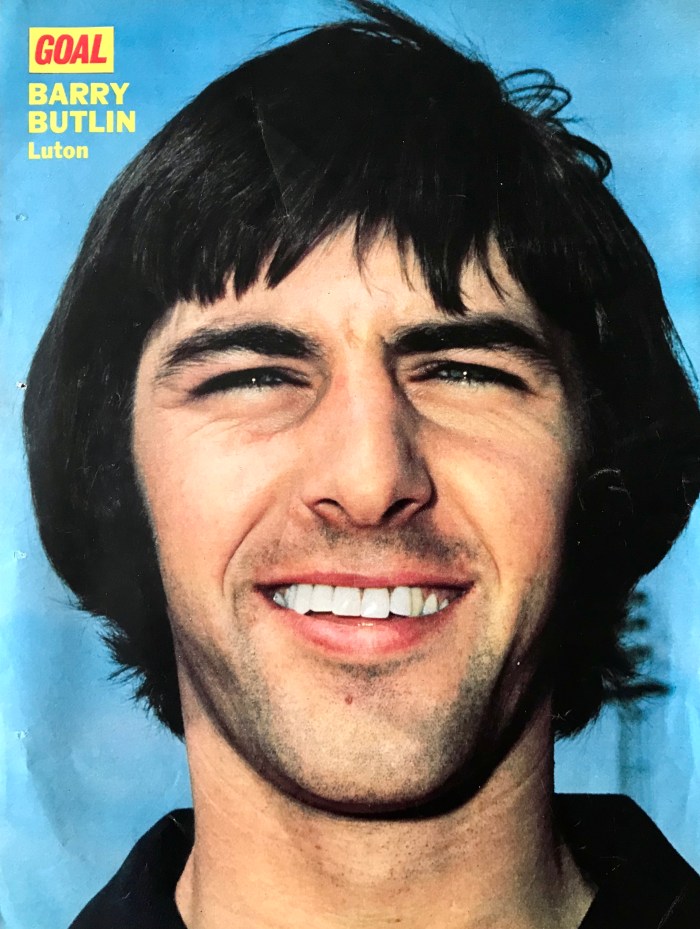
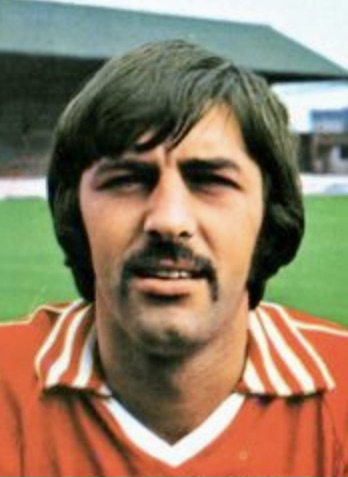


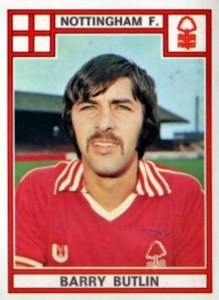


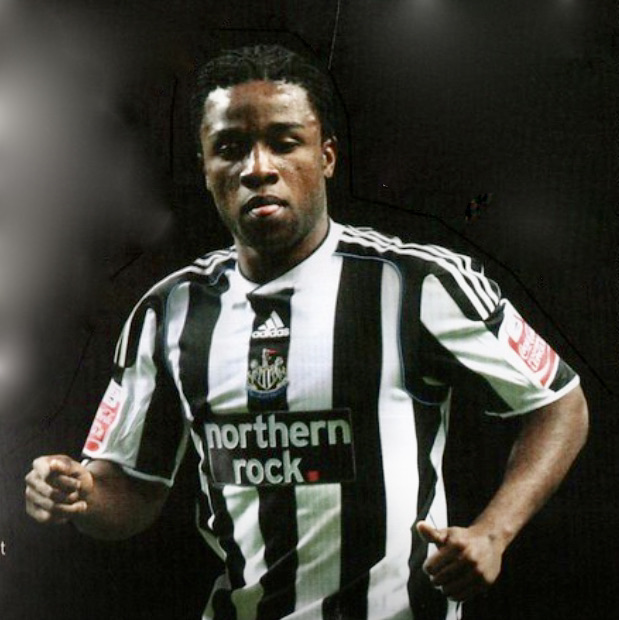
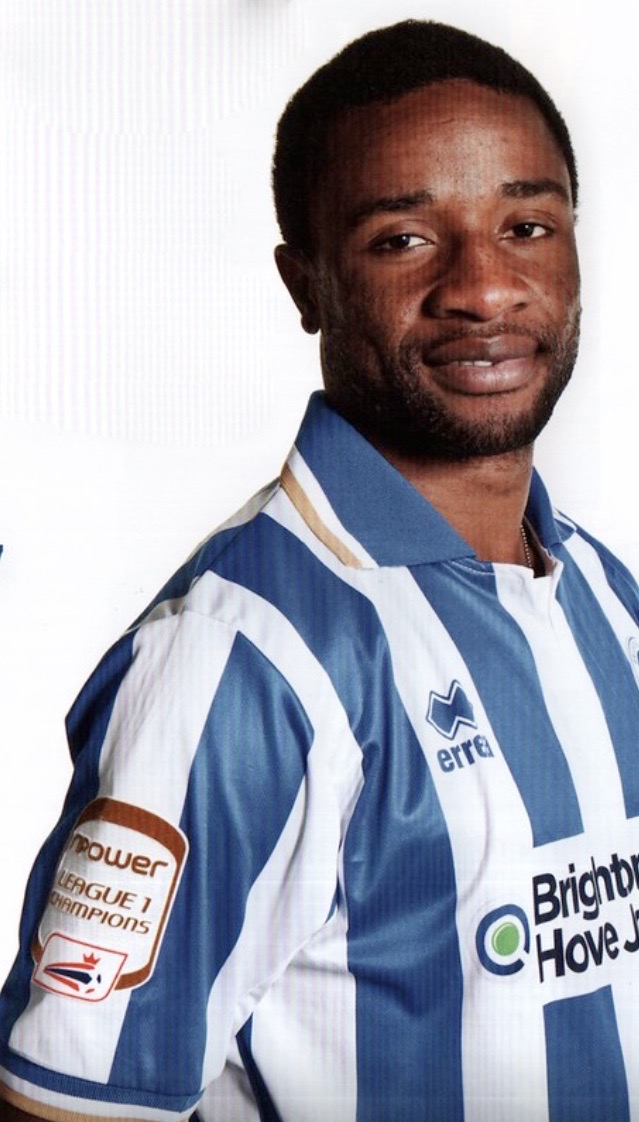

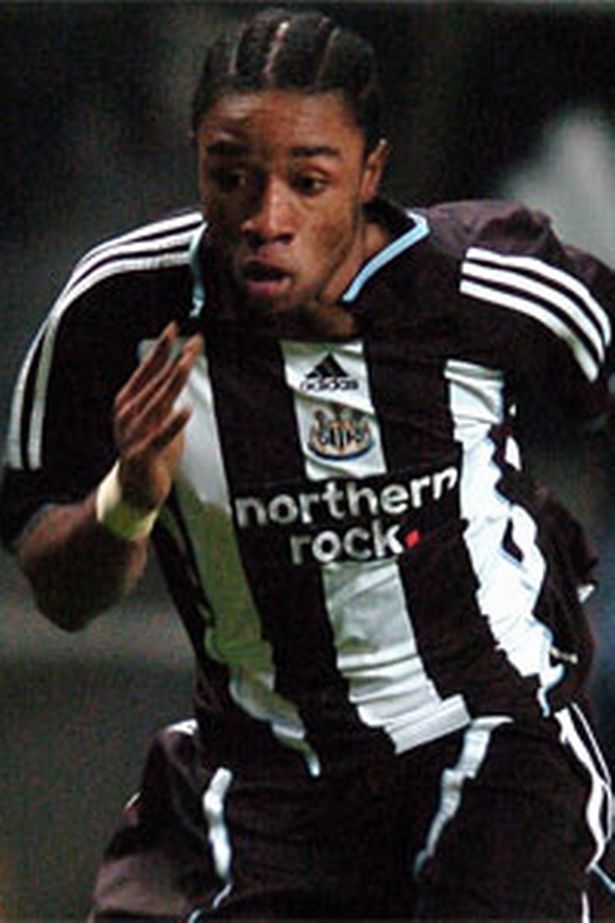
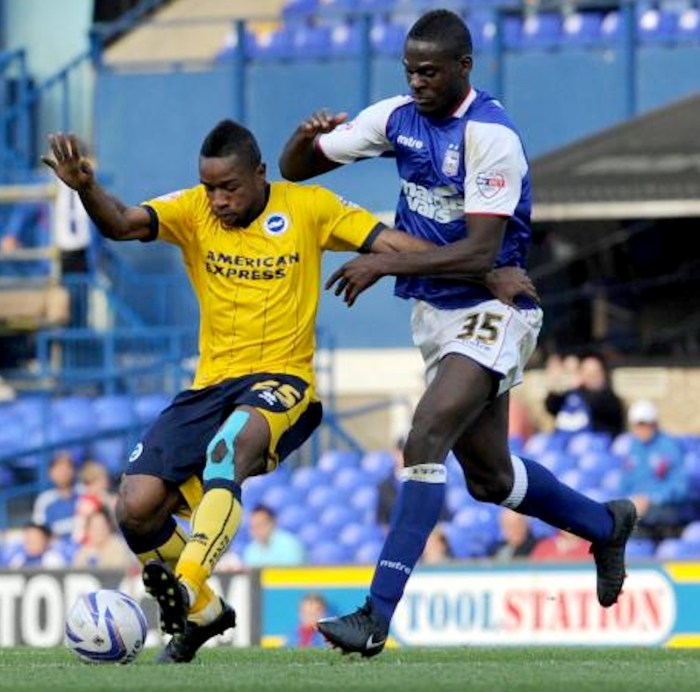

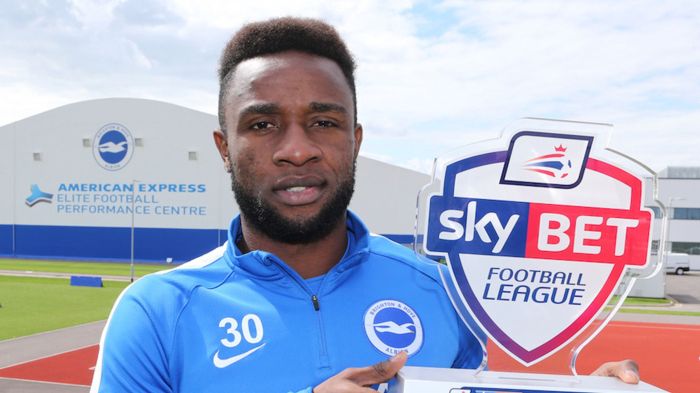


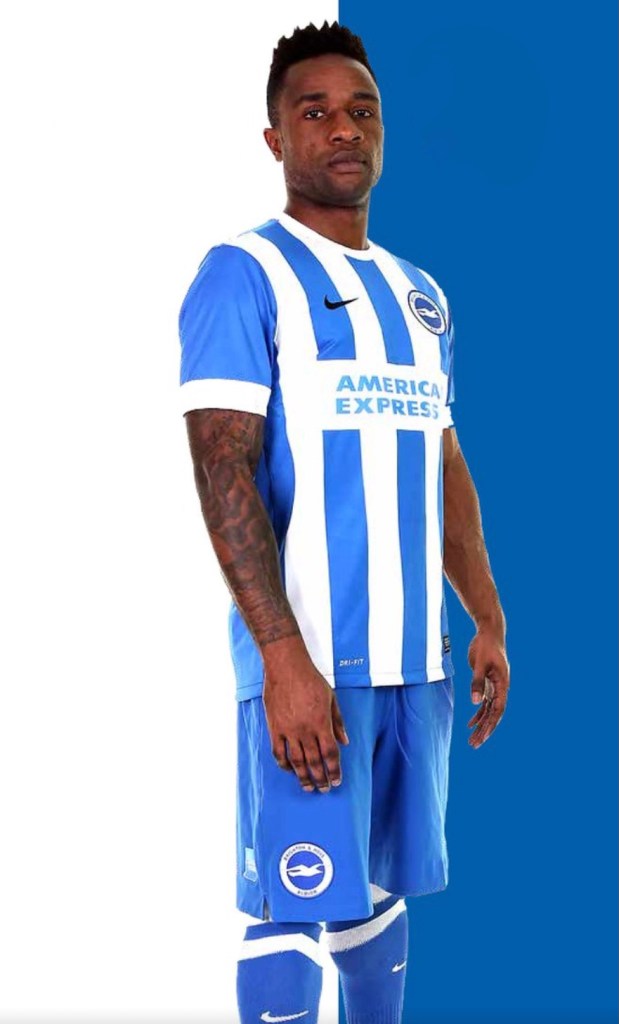

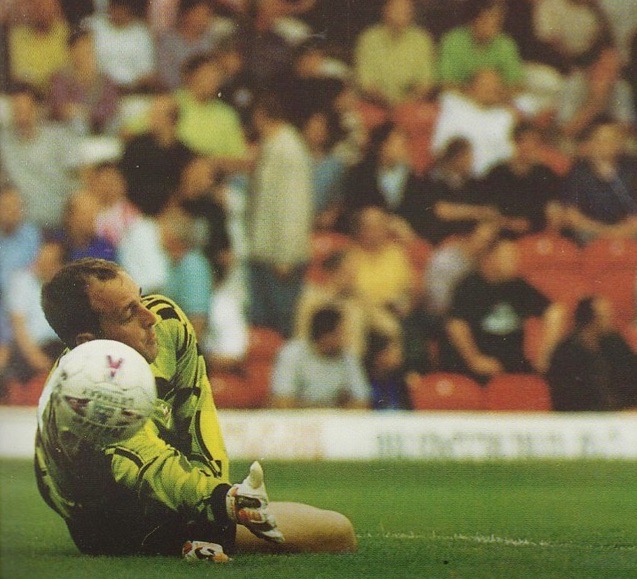
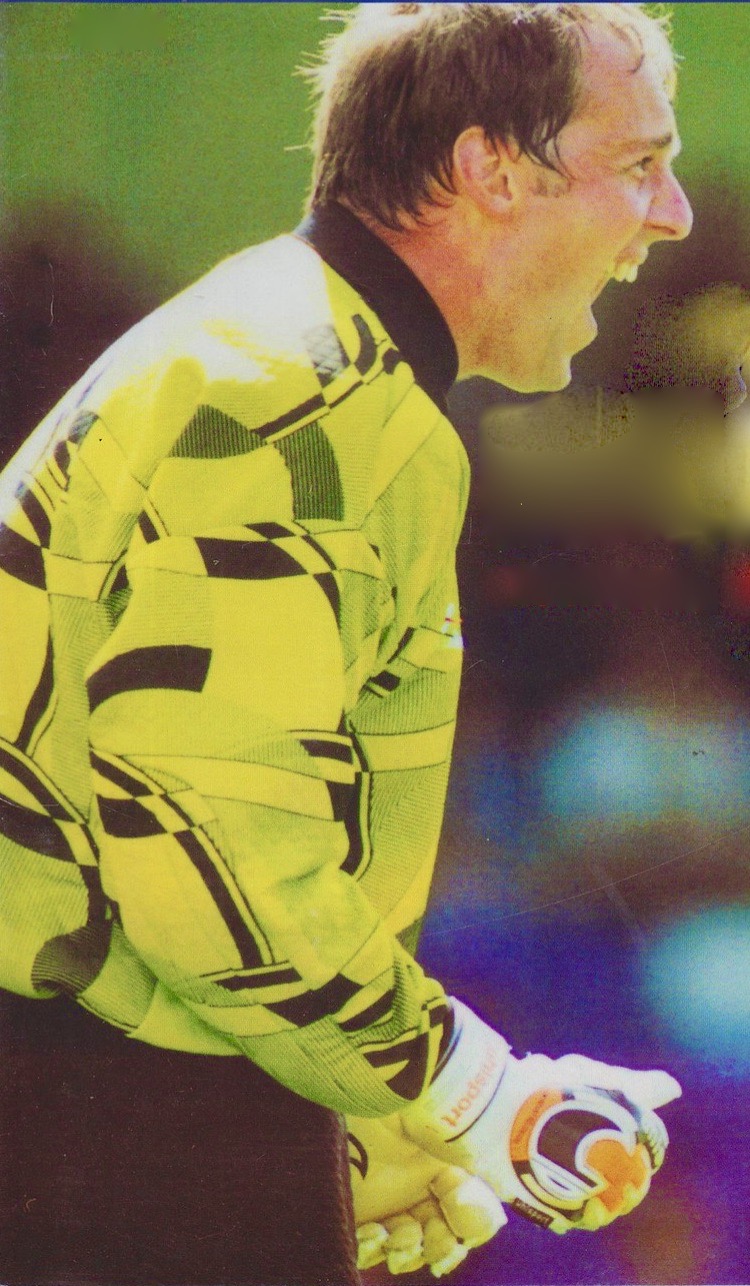
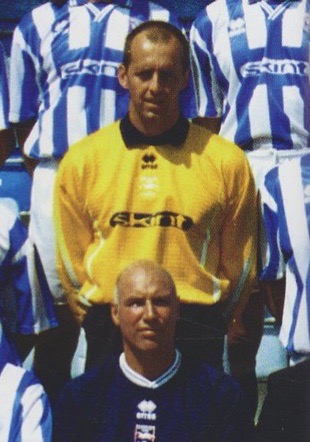
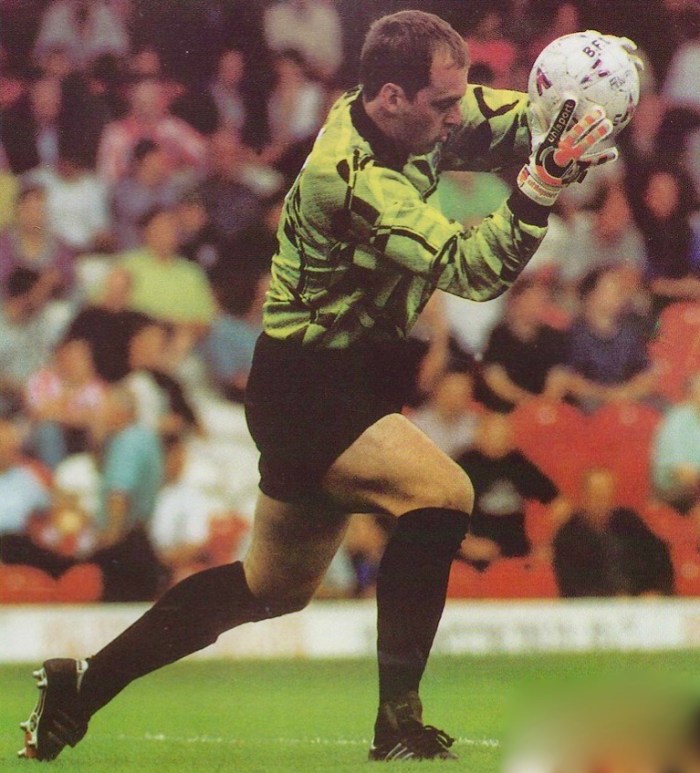


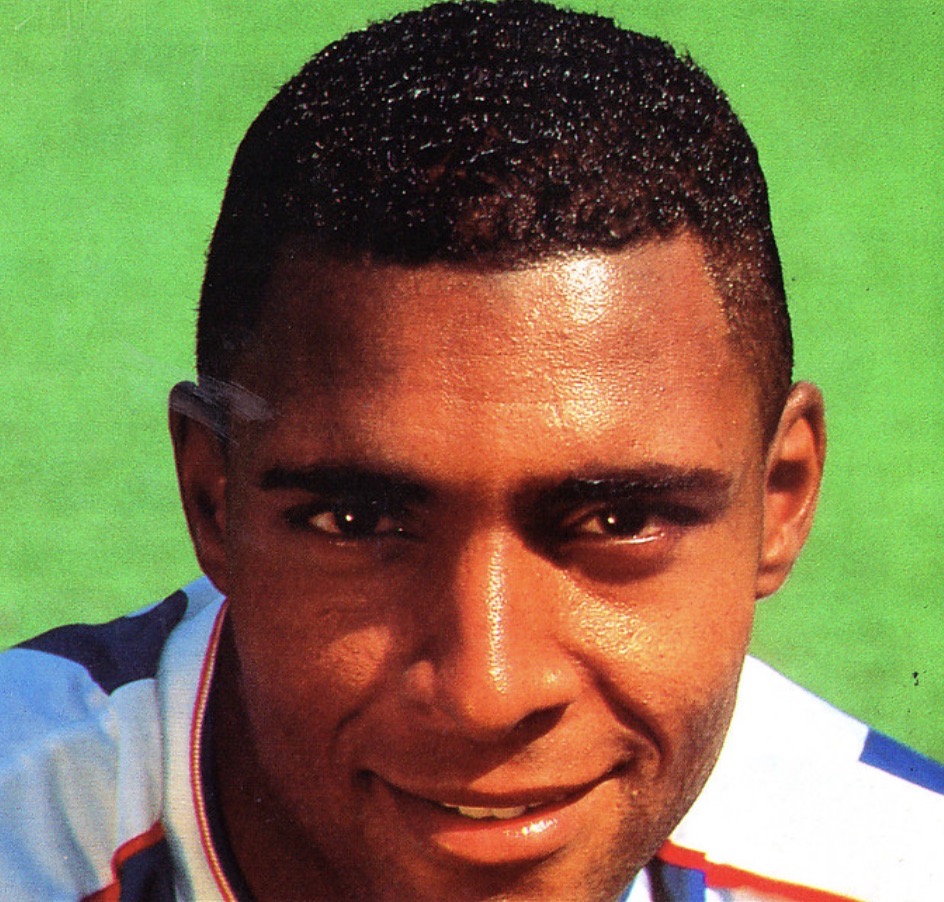
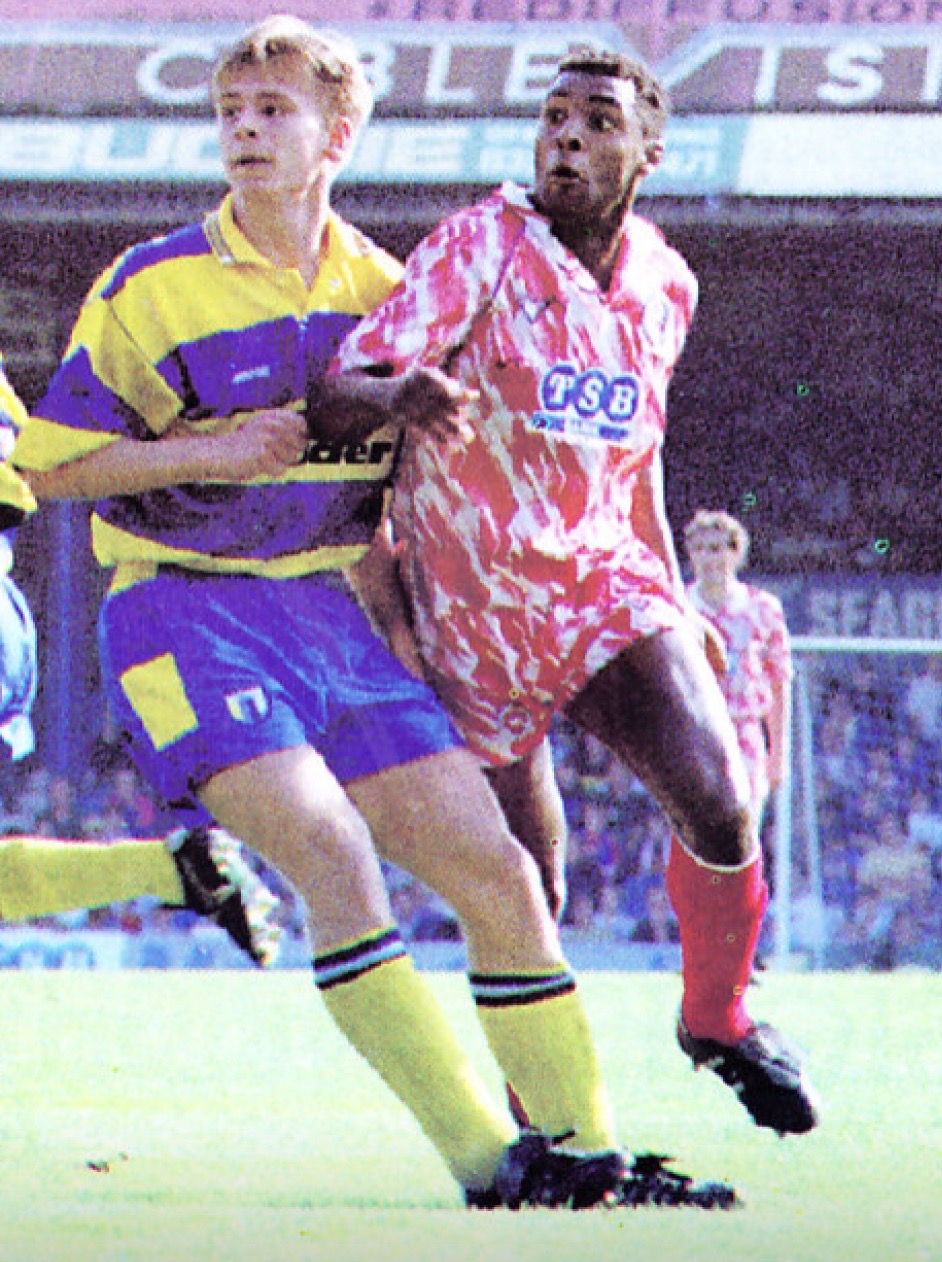

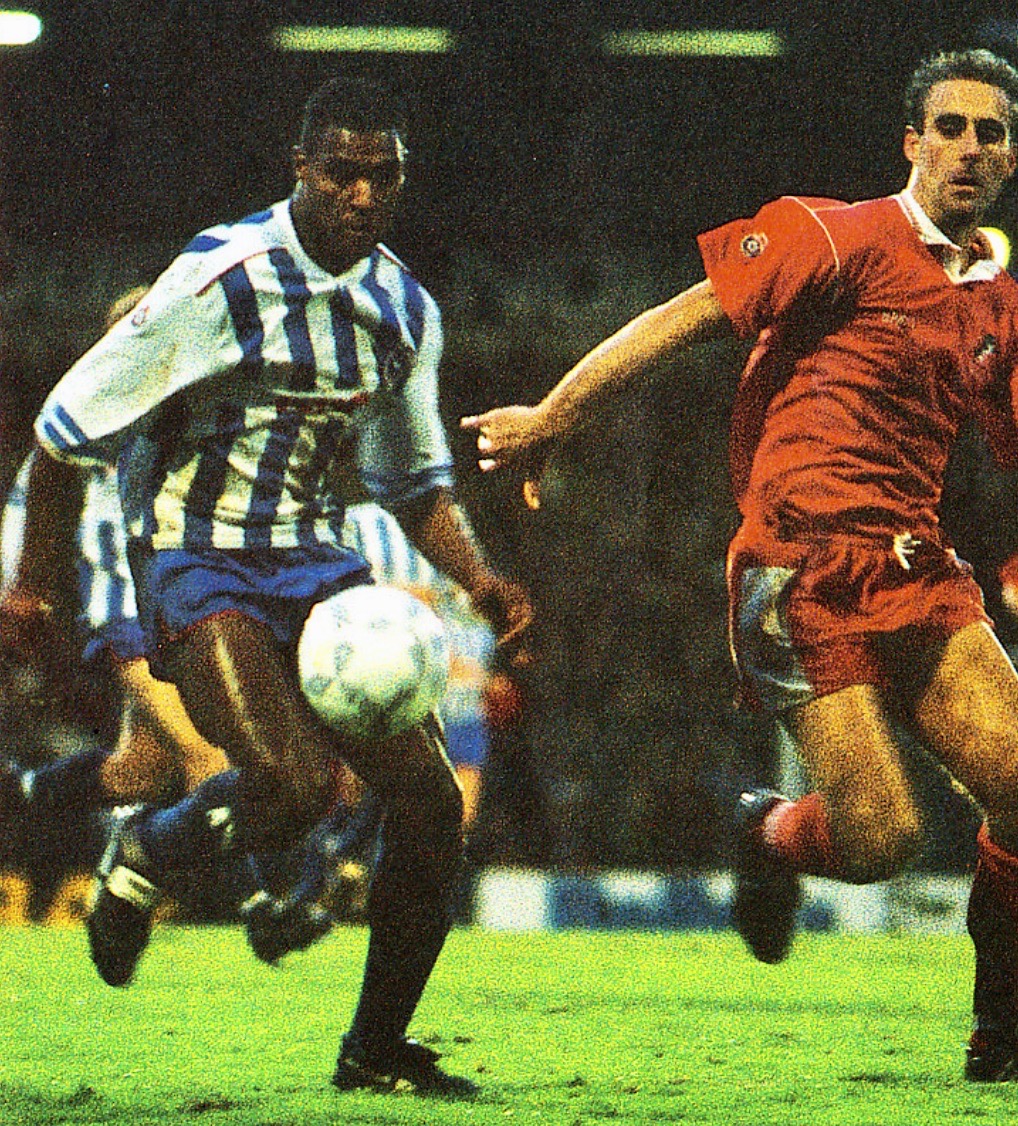

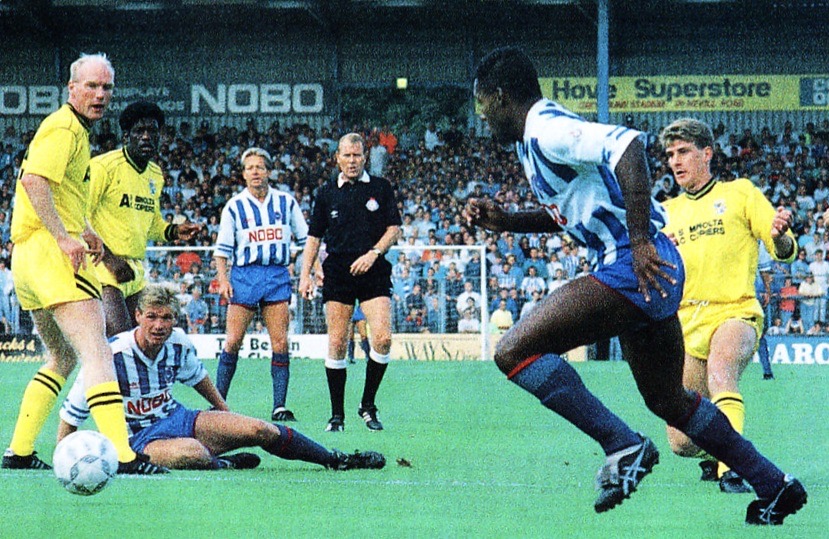


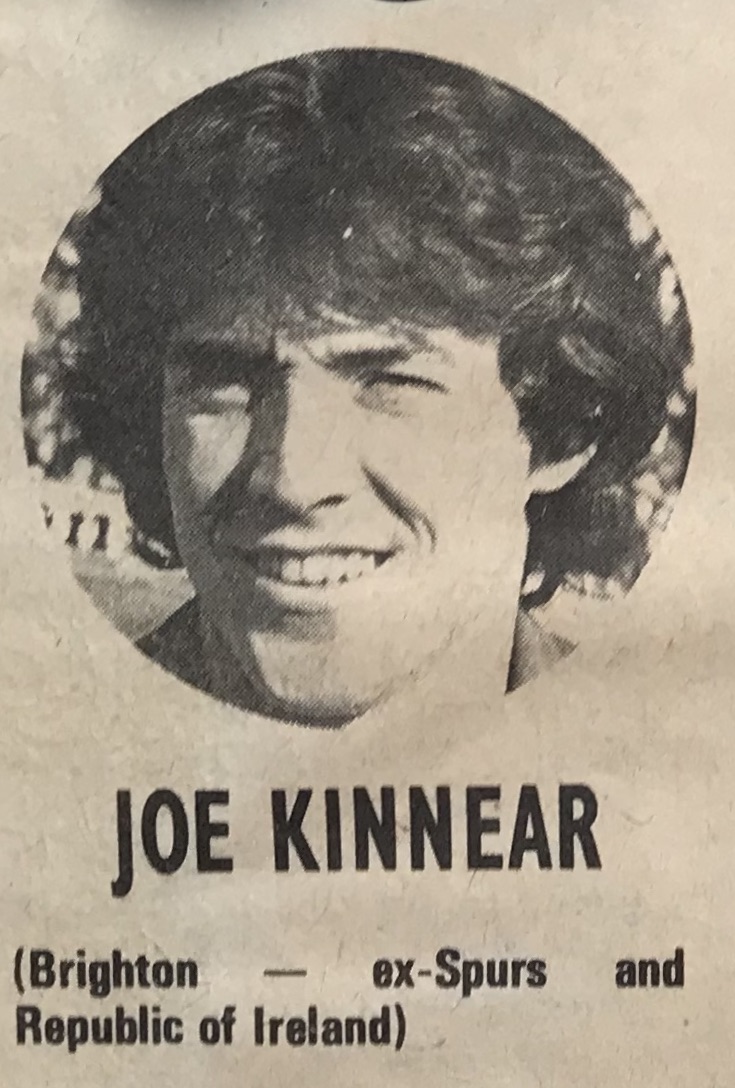

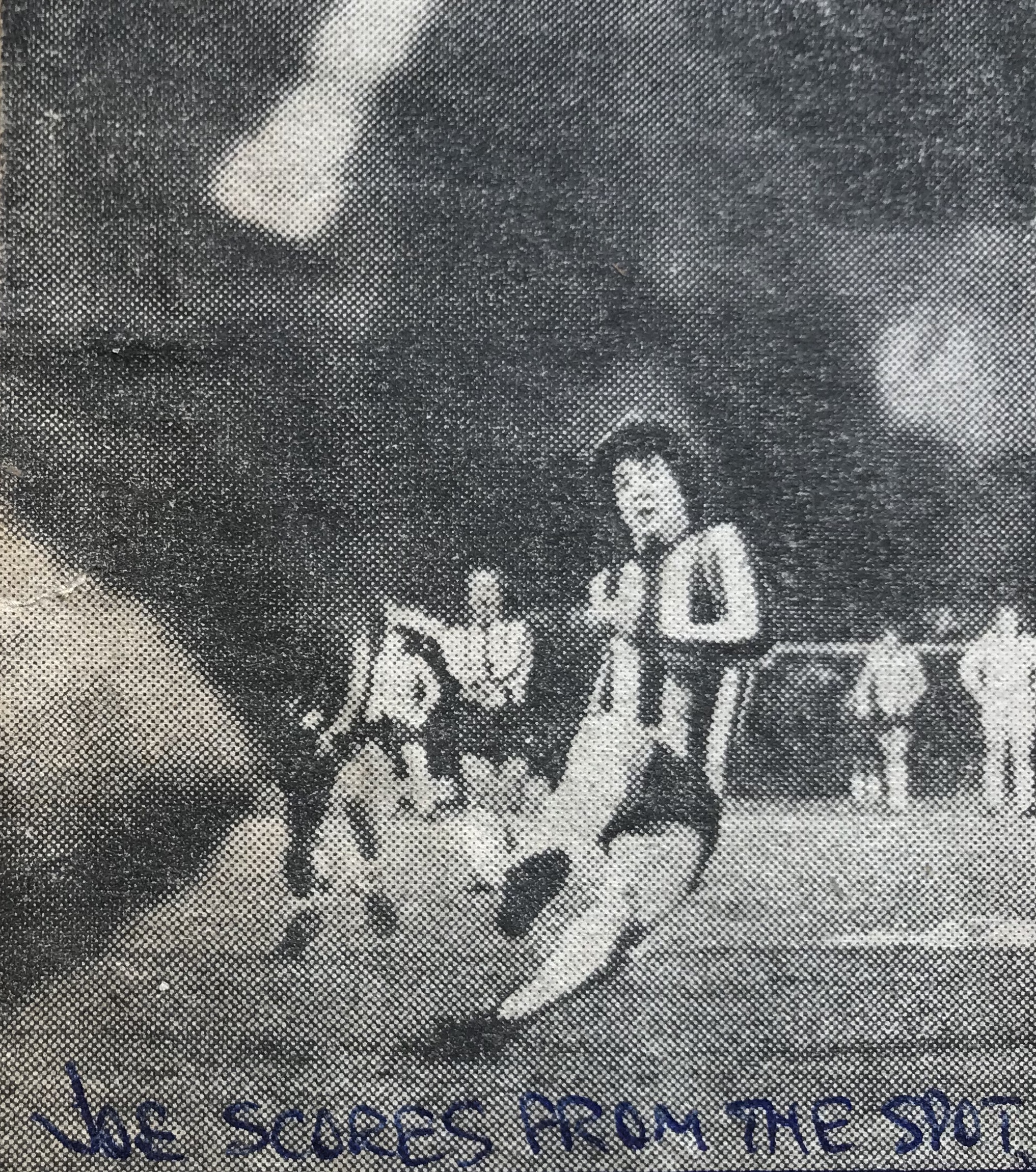

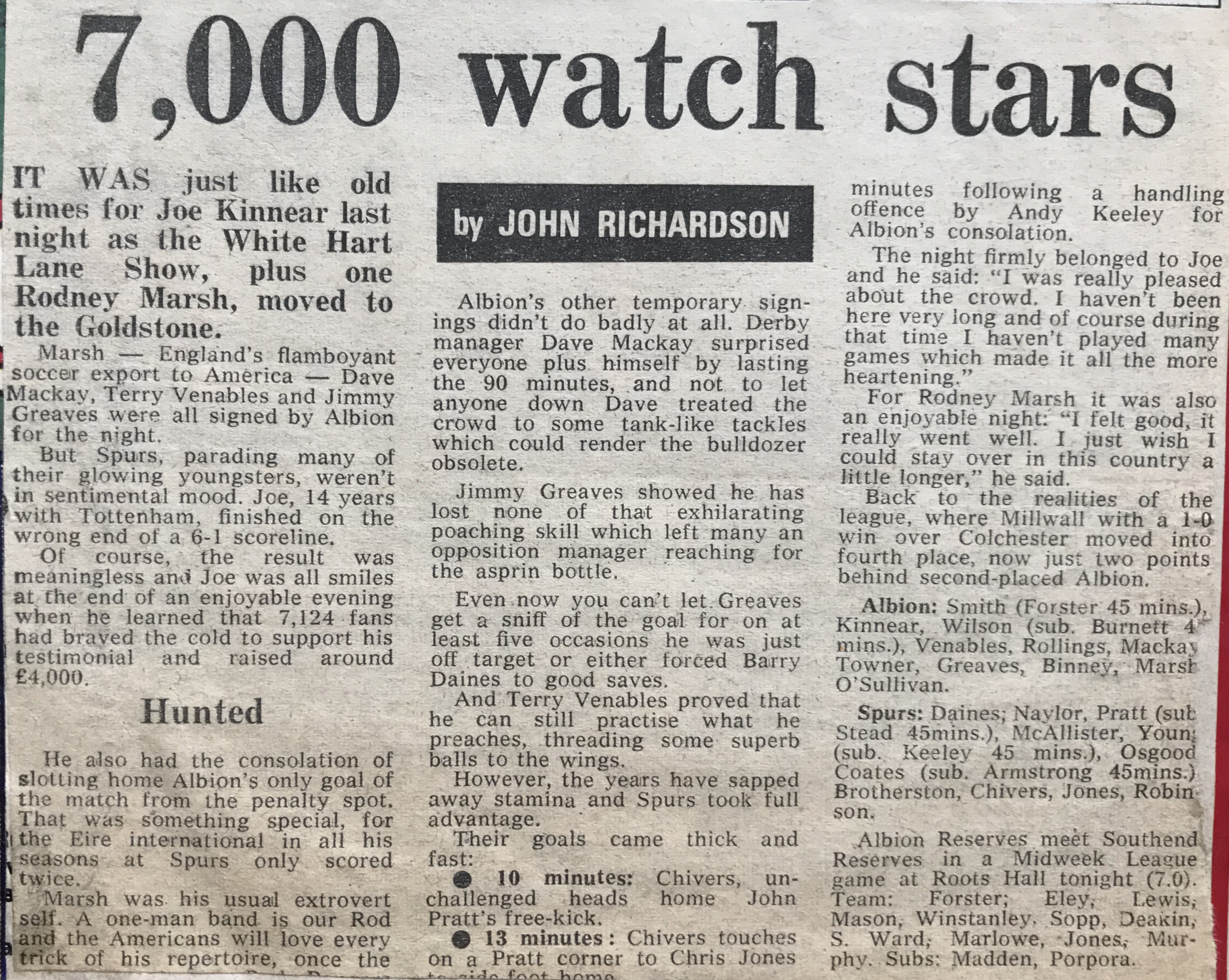


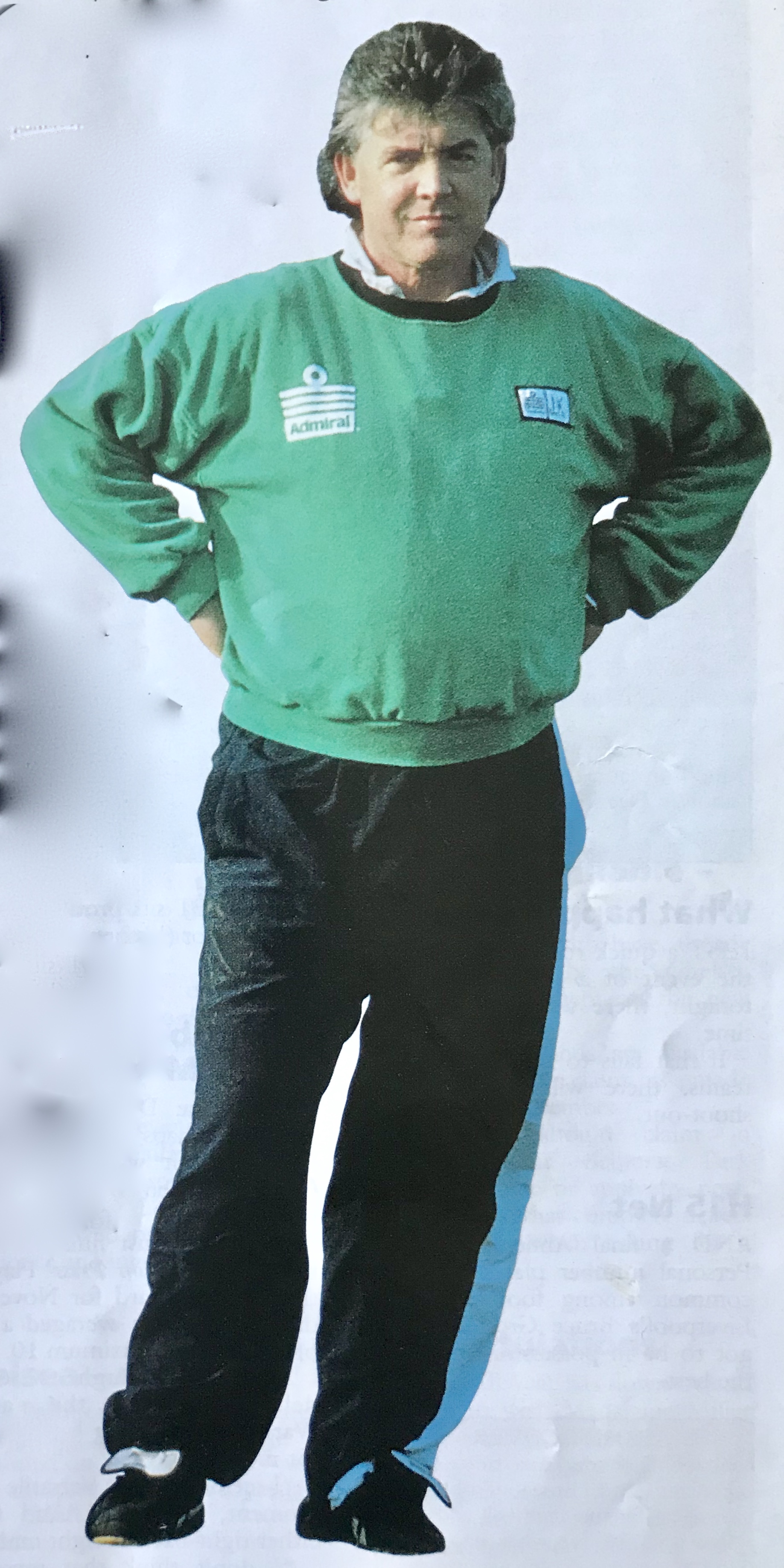


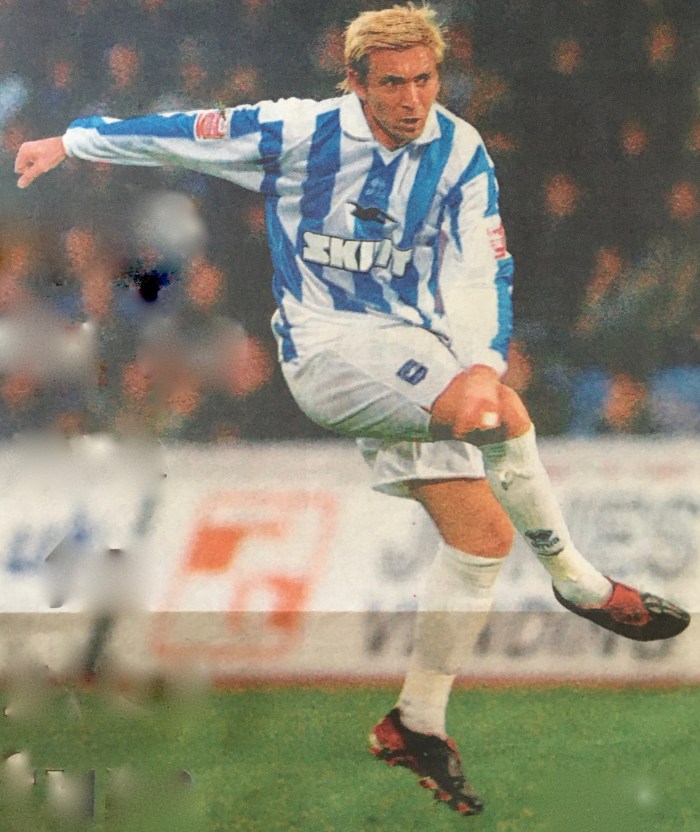
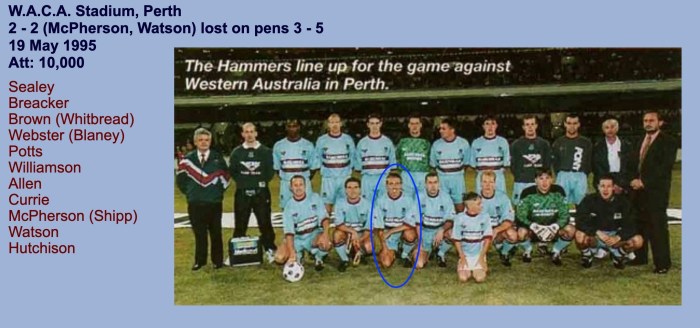
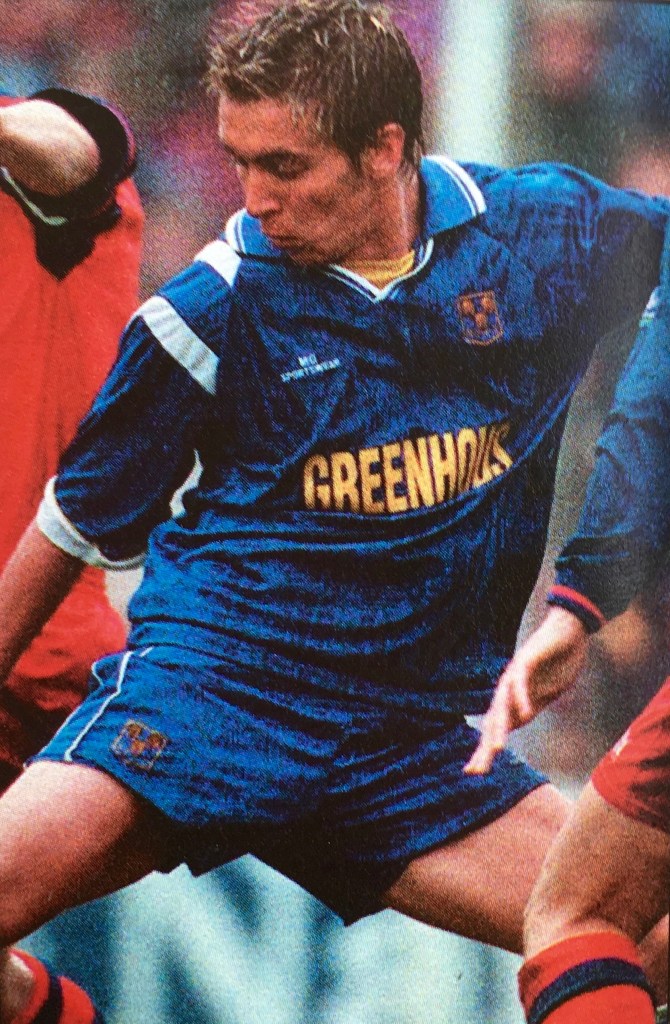
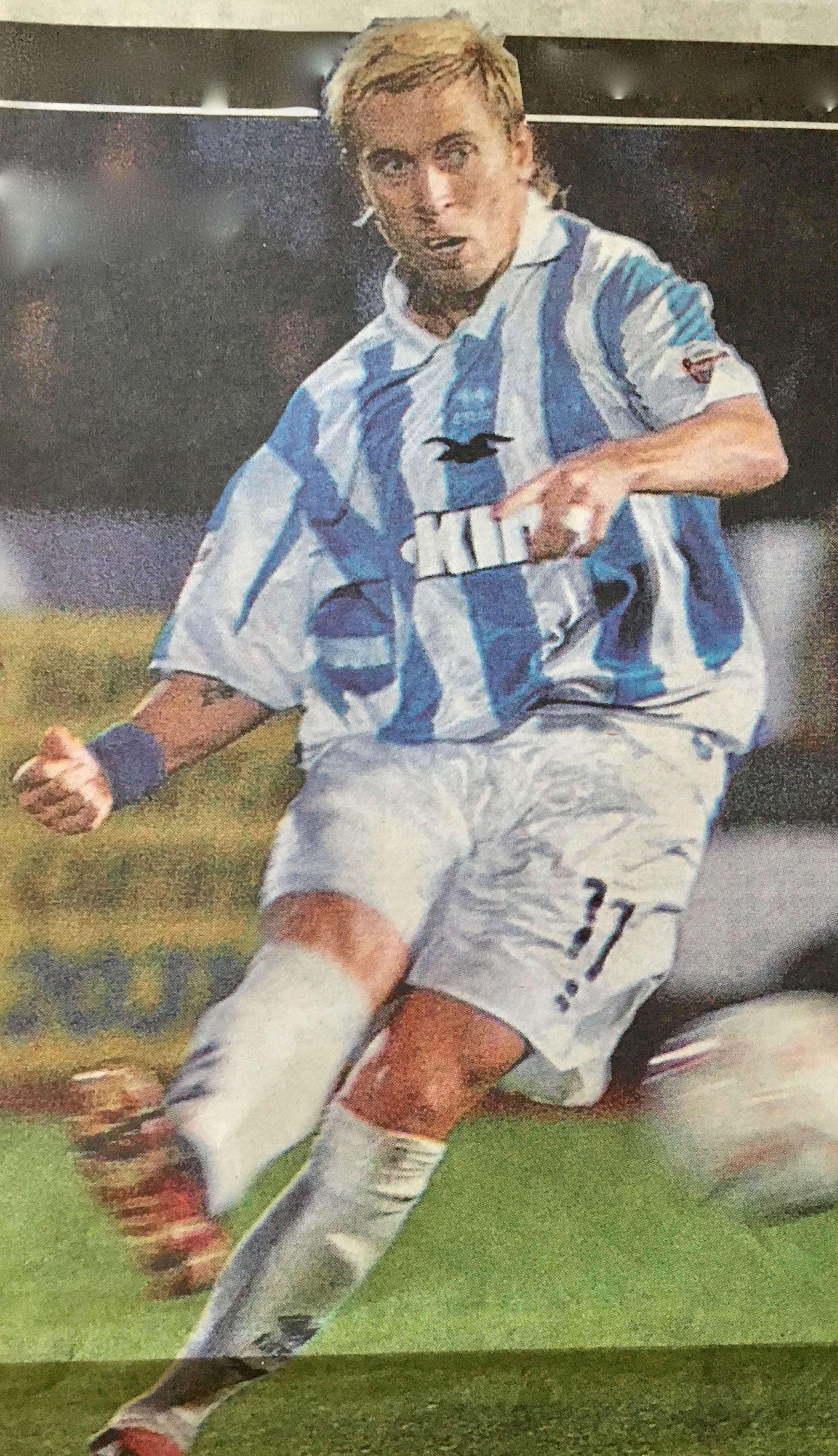
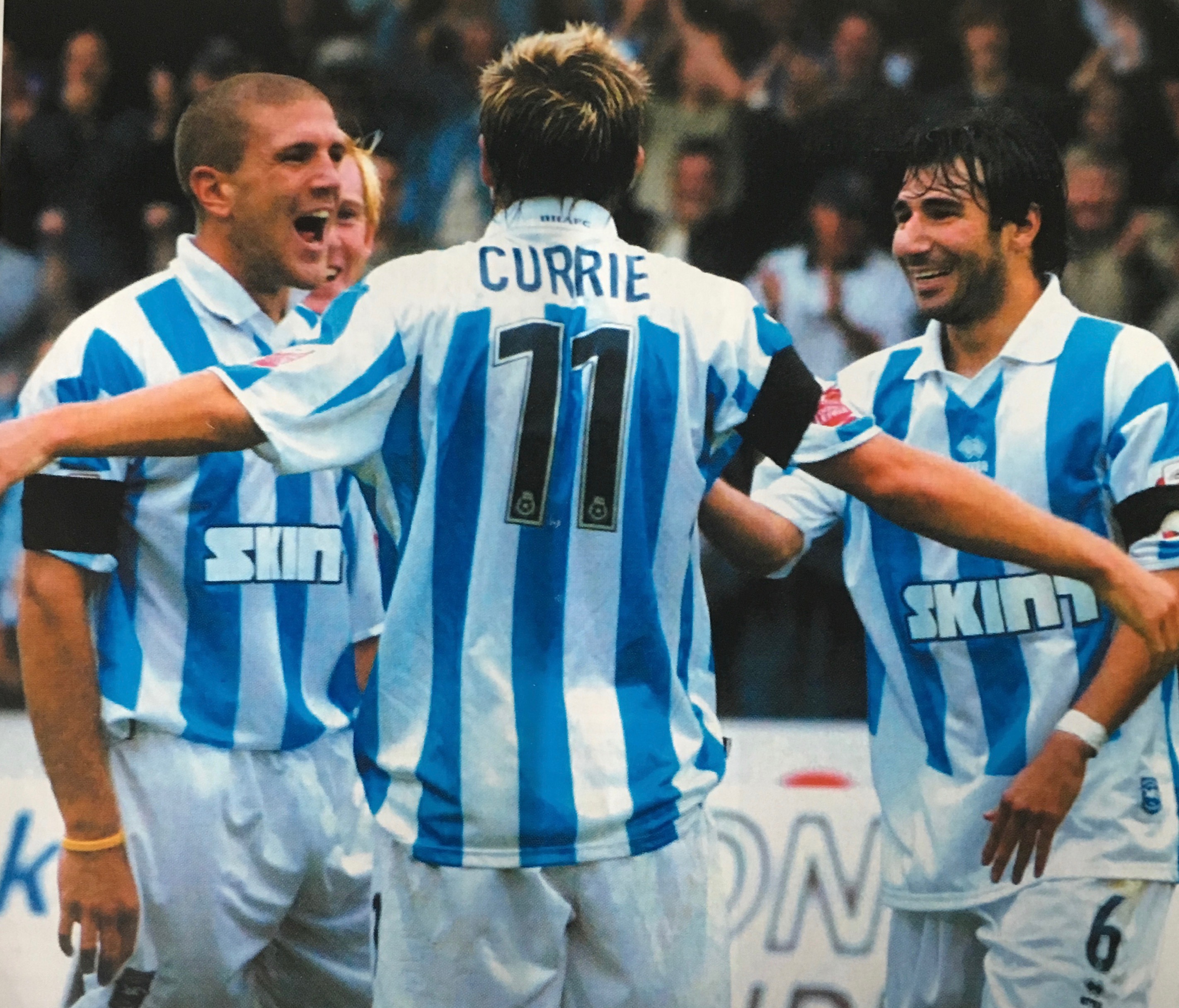


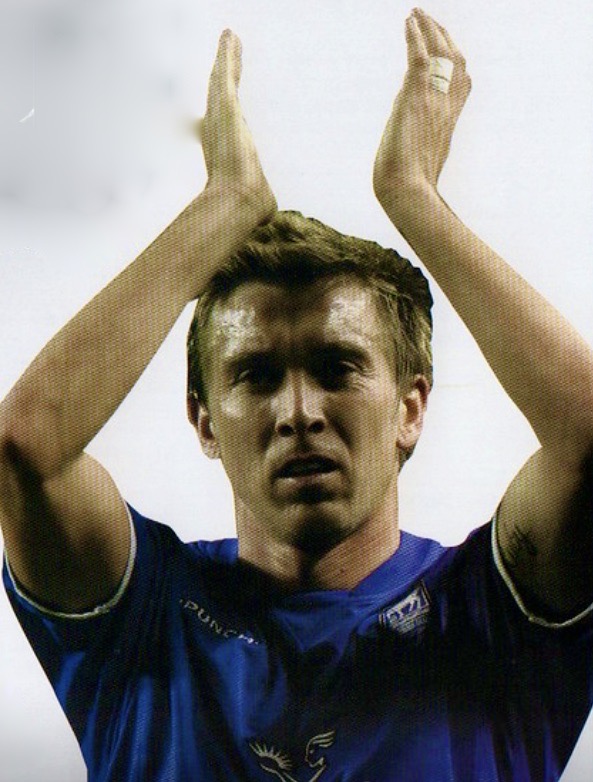

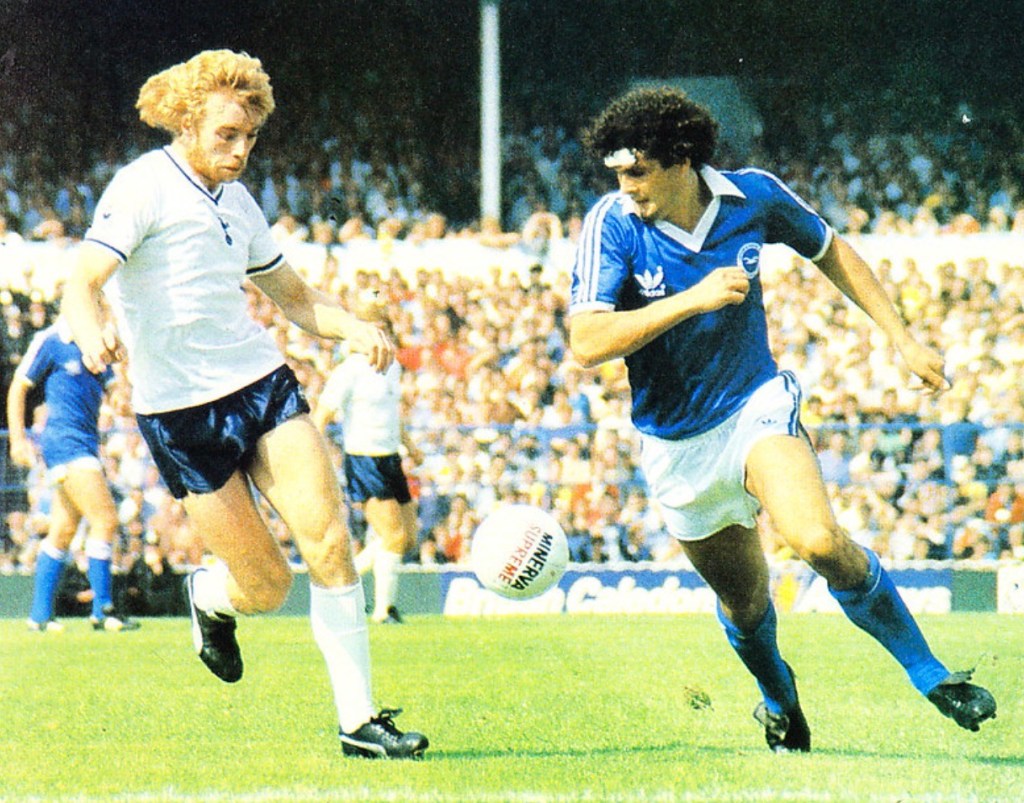
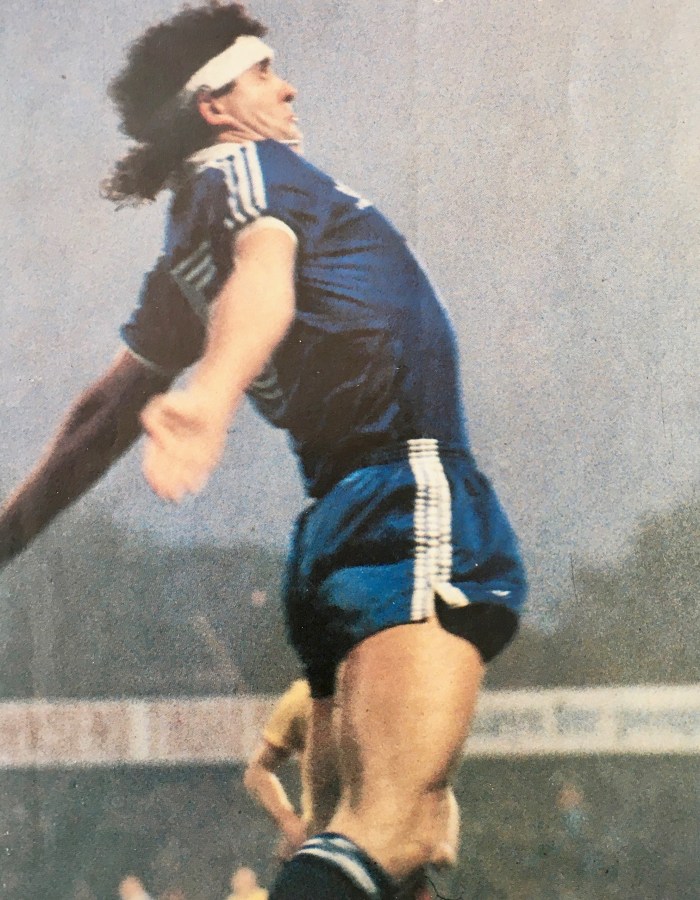
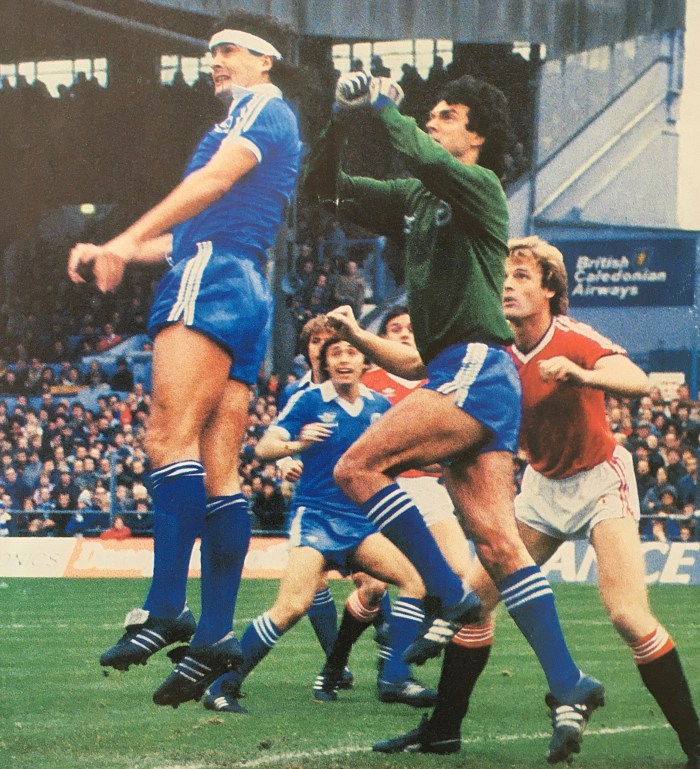


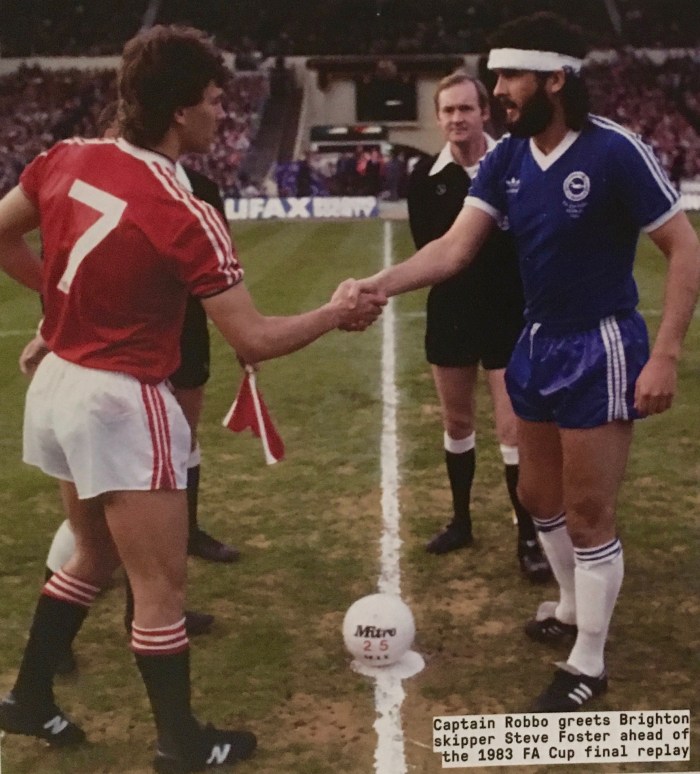
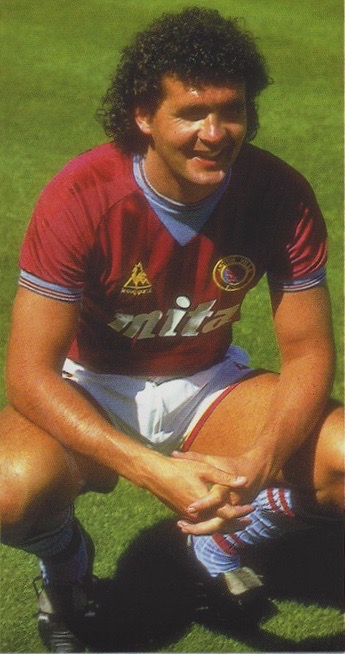
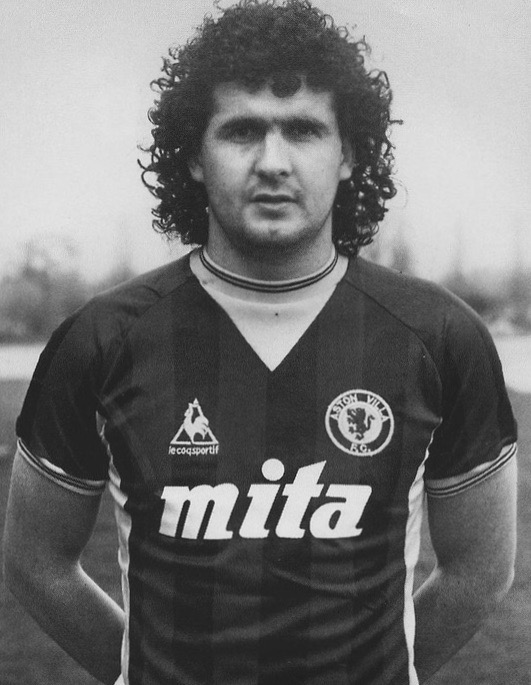


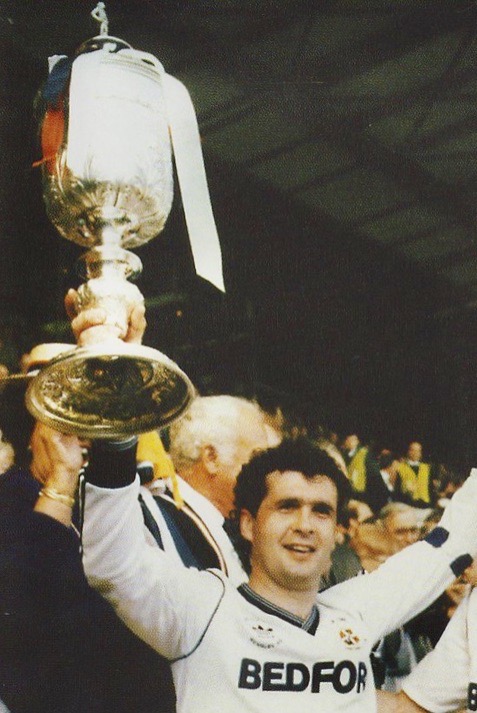
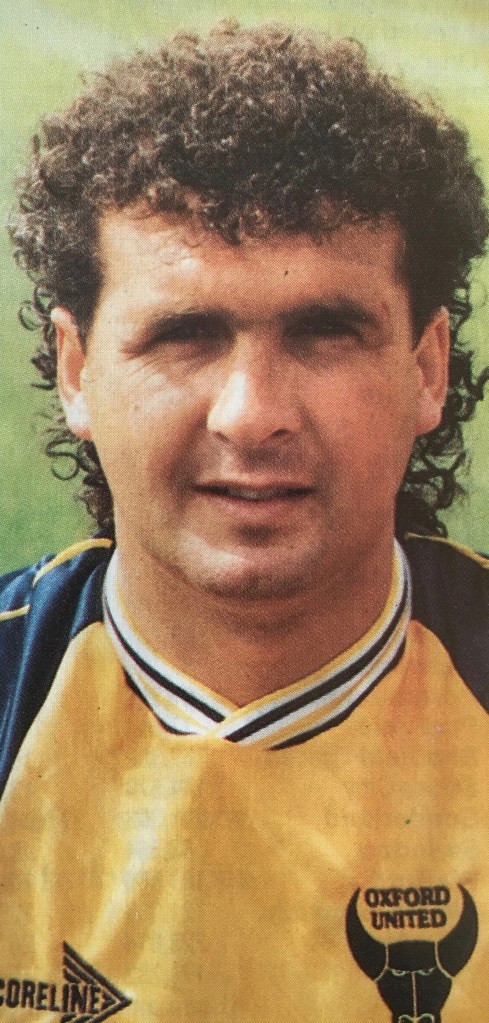


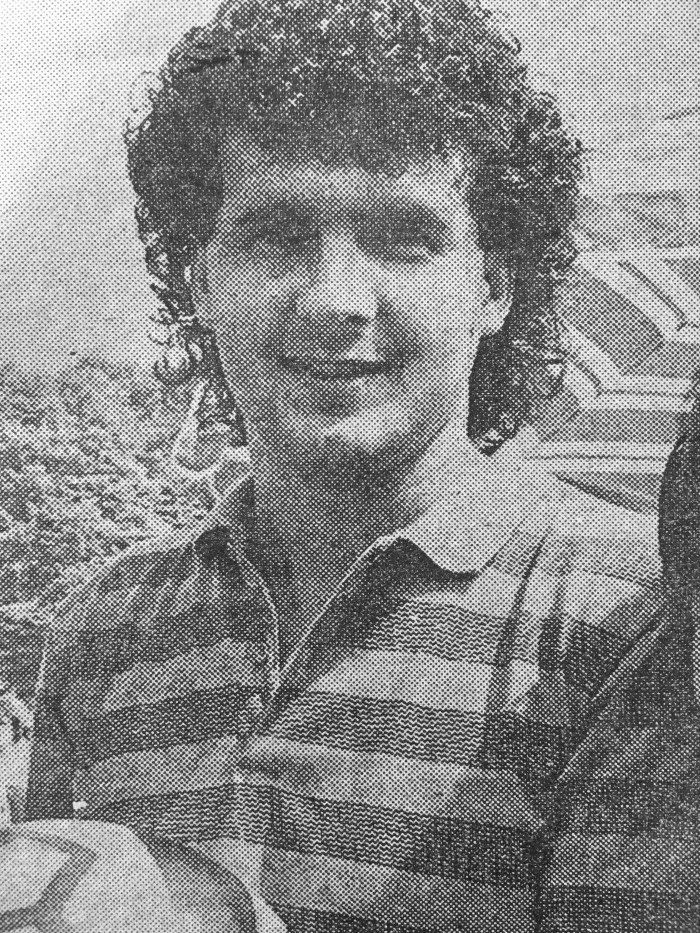

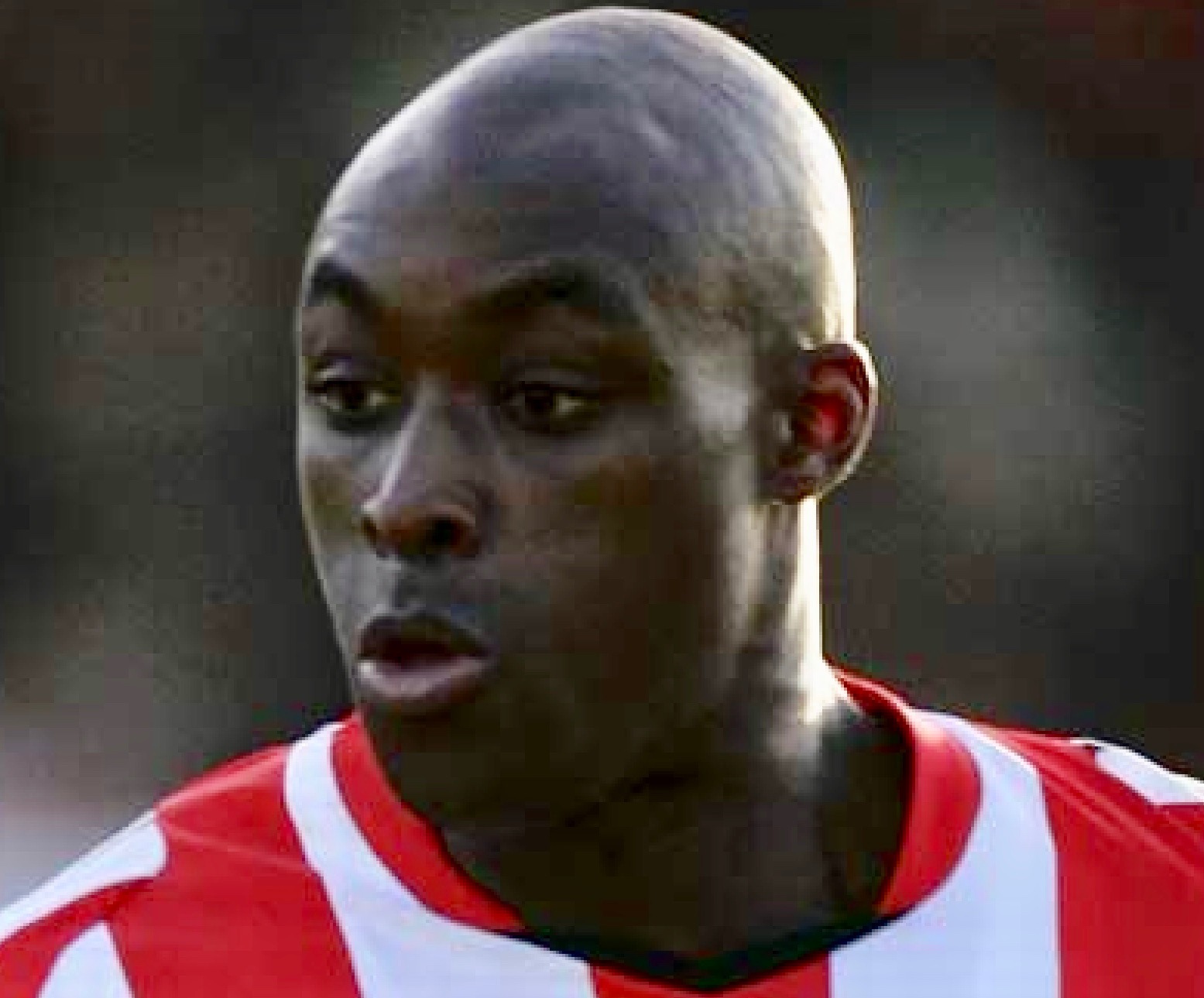 Owusu scored 76 goals in two spells with the Bees, and, in the 1998-99 season, his 24 goals in 53 games in all competitions saw him lead the scoring charts in Nationwide Division Three (now Football League Two) with Brentford crowned champions.


 At the season’s end, Dickov took up an option on his contract which allowed him to leave for a top-flight club and Graeme Souness signed him for Blackburn Rovers. It was not long before Mark Hughes took over and Dickov scored 10 goals in 35 games. Craig Bellamy was Rovers’ main man up front the following season and Dickov’s Premier League appearances were confined to 17 games plus four as a sub.
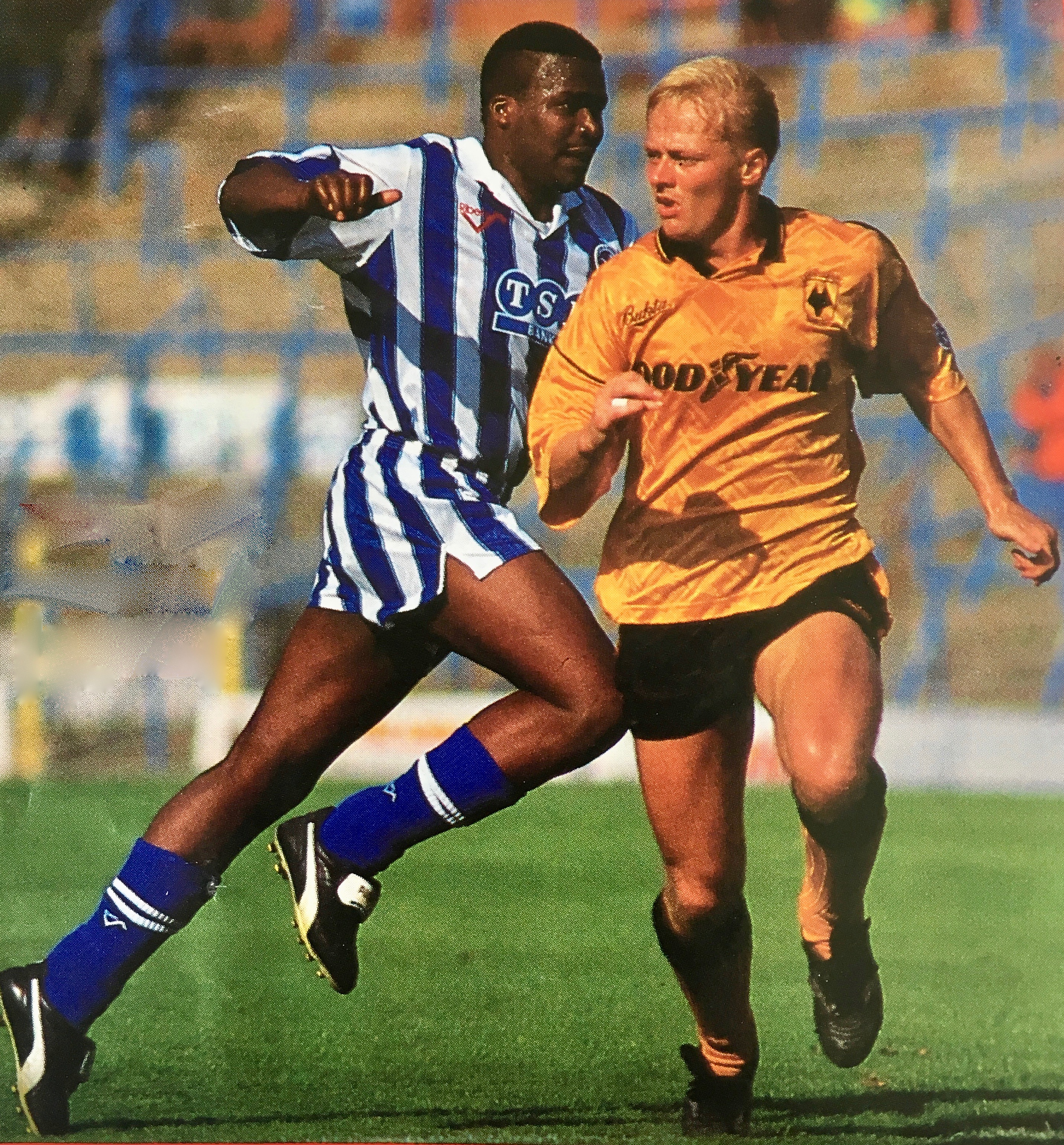


 The following season, Meade scored a hat-trick in the 3-1 win over Watford, which began Don Howe’s tenure as Arsenal manager, and he also earned a special place in Gunners’ fans hearts when scoring twice (pictured celebrating above with Charlie Nicholas, who also got two) in Arsenal’s 4-2 victory over arch-rivals Spurs on Boxing Day 1983.

 But after only four games for the Hatters he was on his way again, this time to Odense BK in Denmark.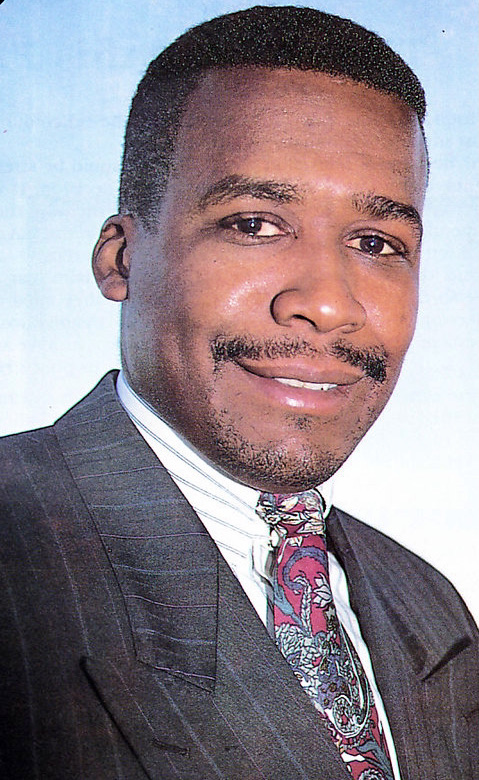




 In parallel lines