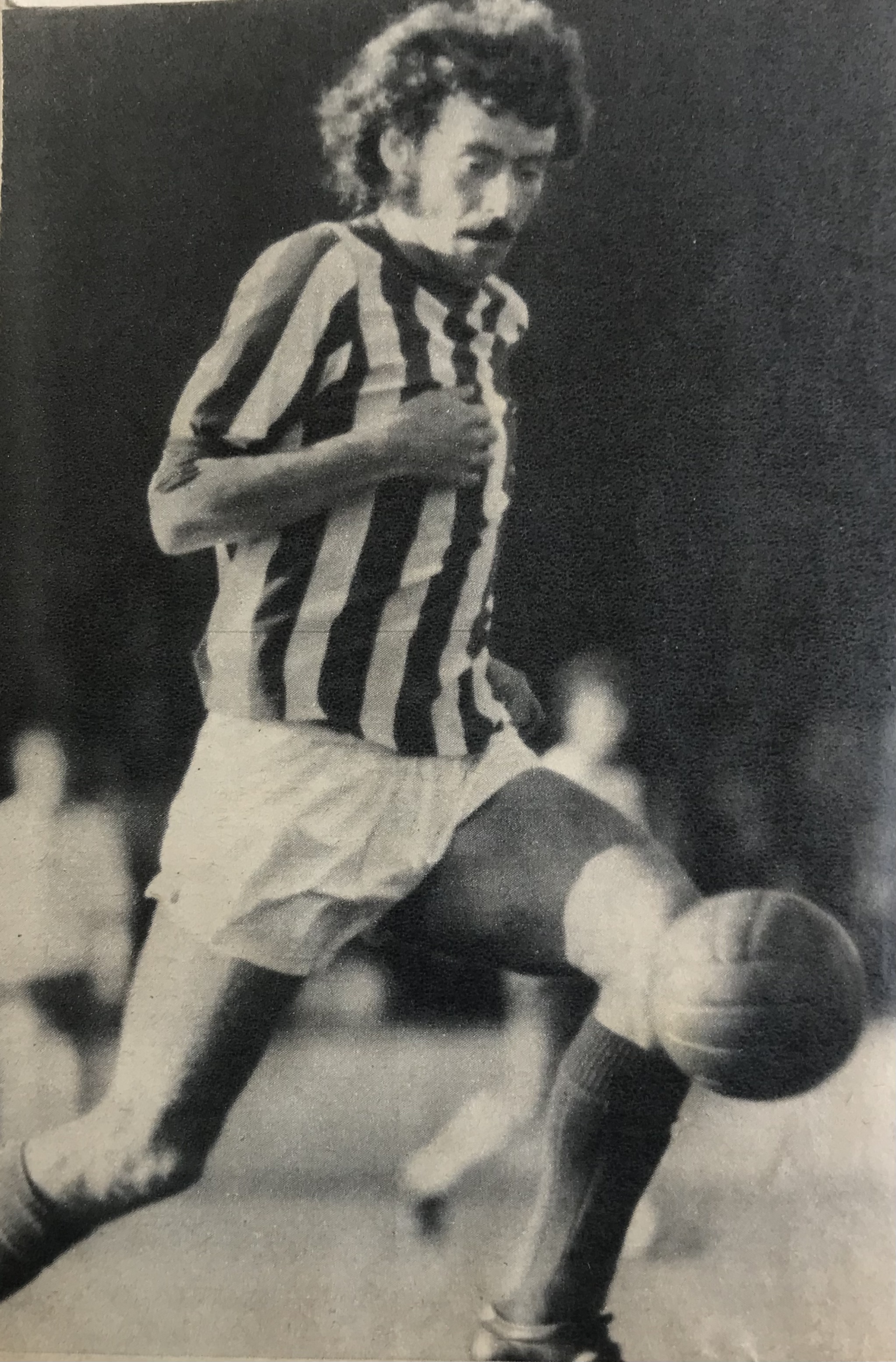
Toon scourge Ian Baird no stranger to red cards

A GOALSCORING scourge of Newcastle United once pulled on the famous black and white stripes – and was booked in three of the five games he played for them!

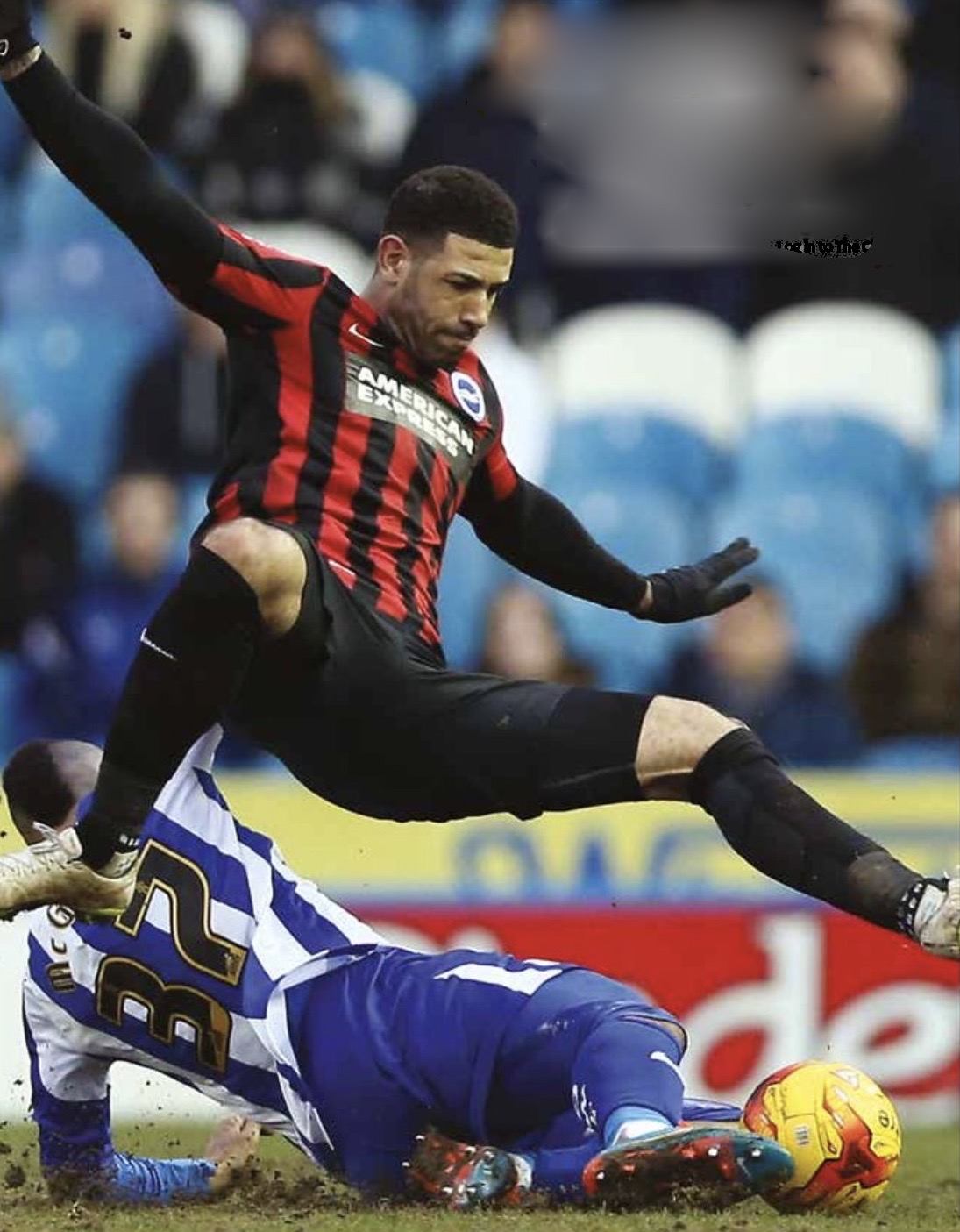
Baird, who notoriously got himself sent off in the crucial last ever game Brighton played at the Goldstone Ground, led the line in an infamously fiery New Year’s Day derby between Newcastle and Sunderland when the Toon won 3-1 courtesy of a hat-trick by Peter Beardsley.

Jeff Clarke, who’d previously spent seven years at Sunderland and had five games on loan at Brighton at the start of that season, was at the back for Newcastle and future Albion veteran Clive Walker was in attack for the visitors.

A crowd of 36,529 watched the First Division fixture on 1 January 1985 when Sunderland were reduced to nine men through the sendings off of Howard Gayle and Gary Bennett. Baird was one of five bookings made by ref David Scott.

It was Baird’s fourth match for Newcastle after England World Cup winner Jack Charlton signed him on loan from Southampton. He made his debut three days before Christmas 1984 in a 4-0 defeat away to Aston Villa when his former England Schoolboys strike partner Paul Rideout scored a hat-trick. Baird’s only goal for United came in a Boxing Day 2-1 defeat at West Brom.

Three days later, as United lost 3-1 at home to Arsenal, Baird’s involvement was from the bench as a sub for David McCreery. His last game, on 12 January, was another tonking, 4-0 away to champions-in-waiting Everton.

Five years after his Toon cameo, Baird twice stymied Newcastle’s hopes of promotion from the second tier, scoring against them for Leeds in a 1-0 win in December 1989 (it turned out to be his last goal for them) and, after he’d fallen out with manager Howard Wilkinson and been transferred to Middlesbrough in January 1990, netted twice for Boro as they beat Newcastle 4-1 in the last game of the season.
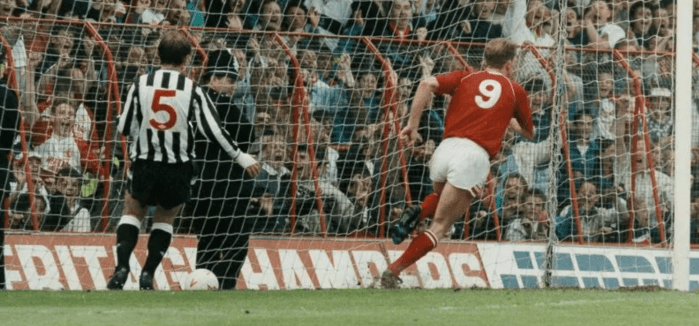
Baird nets for Boro against the Toon

Leeds finished that campaign as second tier champions (Newcastle, who by then had Mark McGhee up front, were five points behind in third place) and Baird’s goals in Boro’s win put paid to the Magpies’ hopes of automatic promotion. To add salt to the wound, Newcastle lost to Sunderland in the semi-final of the play-offs.

Six years later Baird was Brighton’s captain in the penultimate must-win game of the season, when Doncaster Rovers were the visitors.

Albion needed all three points to give themselves a chance of avoiding relegation out of the league when they travelled to Hereford the following week for the final fixture of that tumultuous season.

What they really didn’t need was for the captain to get himself sent off after just 18 minutes of the match!

Talking to The Athletic about it in a 2022 interview, Baird recalled: “I was fired up for it. Darren (Moore) had come right through me, literally in the first minute. The referee didn’t give anything.

“Then he came through me again, and the referee gave a foul. The third time, I lost it. I just turned around and tried to wallop him. There was a big melee. Everyone knew what was at stake.”

Both players were dismissed (it was one of 11 sendings off in Baird’s career) and thankfully Stuart Storer’s memorably-scrambled goal in the 67th minute settled the game in Albion’s favour, although Baird admitted: “It was nerve-racking. I felt guilty that I’d let my team-mates down, let everybody down by getting sent off. It was a massive relief when we won.”

Thankfully, disciplinary rules were different back then (bans were only applied 14 days after the offence) and Baird was able to play his part in the match at Hereford when a 1-1 draw ensured Albion stayed up and The Bulls went down.
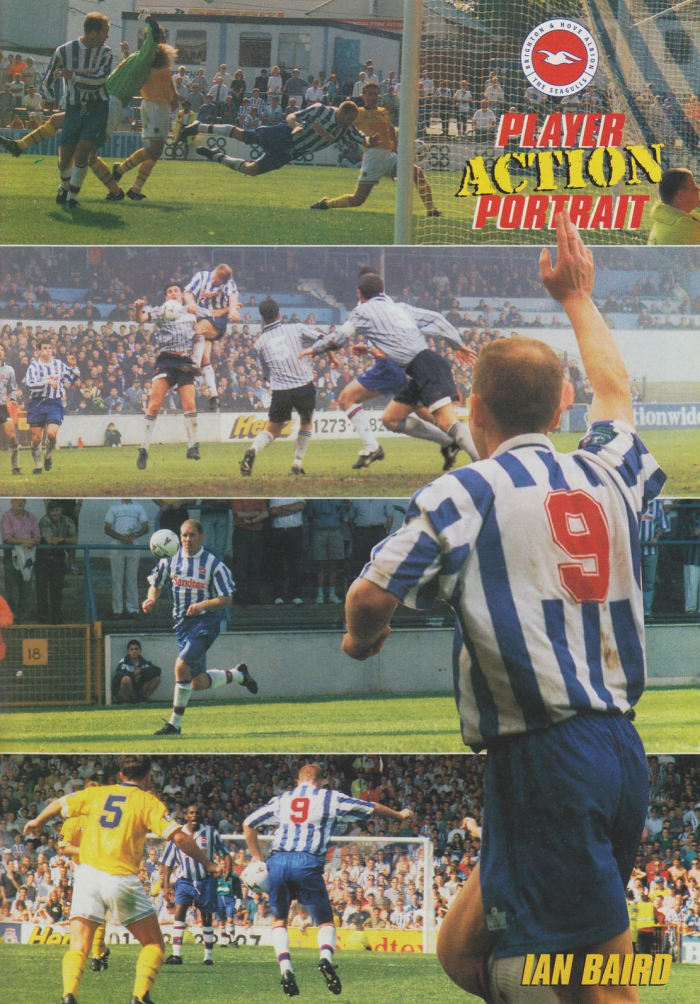
Baird’s exploits for the Albion highlighted in the matchday programme

Brighton were the tenth and last league club Baird had played for and he had only ended up with the Seagulls because of a pre-season falling out with Plymouth Argyle manager Neil Warnock.

Living near Southampton, only a 15-minute drive from Brighton manager Jimmy Case, a move east along the coast made good geographical sense, and a £35,000 fee took him to the Goldstone at the start of the 1996-97 season.

“Whenever I’d played against Brighton, I seemed to score,” Baird told The Athletic. “I loved the Goldstone Ground and there was the lure of playing for Jimmy.”

Although born in Rotherham on 1 April 1964, Baird had moved to Southampton with his family, via Glasgow, when he was a young lad, his father having sailed from the port when he worked on the Queen Mary.

After surviving meningitis as a six-year-old, Baird’s footballing ability saw him turn out for Bitterne Saints, St. Mary’s College, Southampton, Southampton and Hampshire Schools. He joined Southampton on schoolboy terms after he’d been spotted in the same boys’ team, Sarisbury Sparks, as Lawrie McMenemy’s son, Sean.

Baird won two England schoolboy caps: he was in England’s Victory Shield team that beat Wales 2-1 at Wrexham’s Racecourse Ground on 27 April 1979, playing alongside Rideout and winger Mark Walters, who went on to star for Aston Villa, Rangers and Liverpool.

In the same competition, he also played at St James’ Park – two days after Brighton had won 3-1 on the same pitch to win promotion to the top division for the first time in the club’s history.

On 7 May 1979, young England drew 1-1 with Scotland and 14-year-old Rideout’s goal was enough to enable England to retain the Victory Shield. The following month, Baird was an unused sub when England drew 2-2 with West Germany at Wembley.
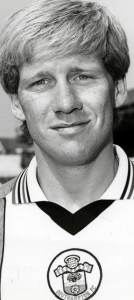
A Saint with hair!

Baird was offered pro terms by Swindon, but he chose instead to sign for his adopted home town club. However, with McMenemy preferring the more experienced Frank Worthington and Joe Jordan, Baird was restricted to 21 starts and three sub appearances for Saints, and, after that loan spell at Newcastle, he moved to Leeds.

His two spells at Leeds (sandwiched either side of an unhappy time at Portsmouth) produced 50 goals in more than 160 appearances and he was in the Leeds side alongside Mervyn Day and Micky Adams that lost the 1986-87 Division Two play-off final to a Charlton Athletic team that included his future Brighton boss Steve Gritt and teammate John Humphrey.

Baird scored 19 goals that season for Billy Bremner’s side, four of them in the FA Cup as United reached the semi-final where they were beaten 3-2 by eventual cup winners Coventry City.

He had taken Saints’ teammate Jordan’s advice to move to Leeds and his next move was to Scotland where Jordan was in charge of Hearts. He later played under the Scottish international striker at Bristol City too.

The Pilgrim who fell out with Neil Warnock

Baird scored six in 29 appearances for Plymouth before that move to Brighton. Discipline might have been a problem but Baird scored eight goals in 10 games from January 1997 as nine wins and a draw at the Goldstone went a huge way to enabling Albion to escape the drop.

As Albion began the 1997-98 season in exile at Gillingham, Baird began the campaign with a three-match ban for that red card against Doncaster — and it wasn’t long before he was seeing red again!

It came in the 13th game of the season and it was certainly unlucky for Baird, well, unlucky in that a linesman spotted his off-the-ball headbutt on a Chester defender. Gritt publicly condemned Baird’s “out of order” behaviour and stripped him of the captaincy.

The following month, with another knee operation required, a surgeon advised him to pack in the game and he left Brighton in December that year having scored 14 goals in 41 appearances in 16 months.

“At least we kept Brighton up,” he told The Athletic. “There were a multitude of problems, it was a weird period, but it was a big thing.”

Post-Brighton, Baird ended up coaching in Hong Kong and was put in charge of the national side for three Asian Cup qualifiers, playing in Jakarta in front of 75,000 people, and then in Cambodia in front of 1,200 people. “It was certainly an experience, that is for sure,” he said.

Baird eventually returned to Hampshire, developed business interests in the vehicle sales and leasing and sports gear industries, while keeping his football links going in non-league circles: at Eastleigh, Sutton United and Havant & Waterlooville.
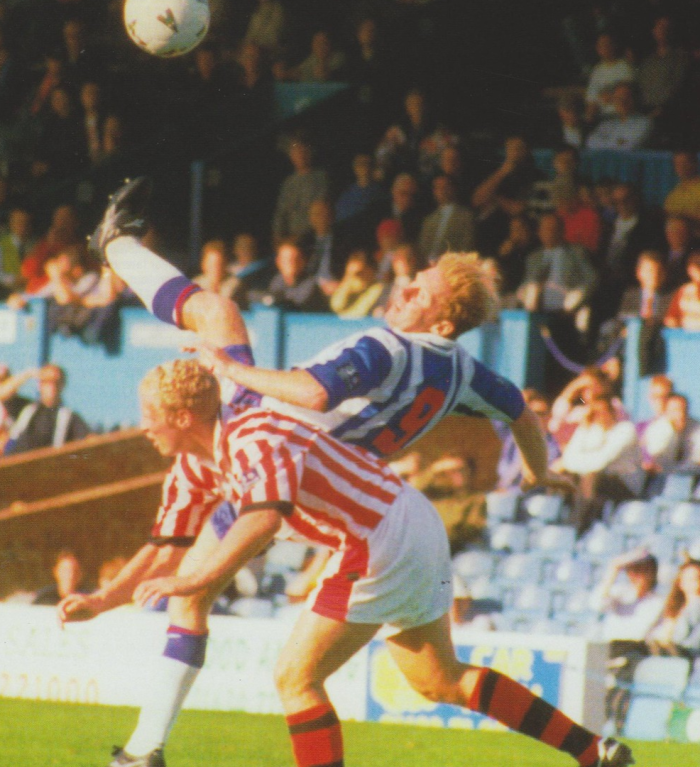
Baird certainly never ducked a challenge

Krul luck as Ryan kept Dutch penalty ‘master’ at bay

AN international goalkeeper whose prowess at saving penalties took his country through to the World Cup semi-finals barely got a look-in between the sticks for Brighton.

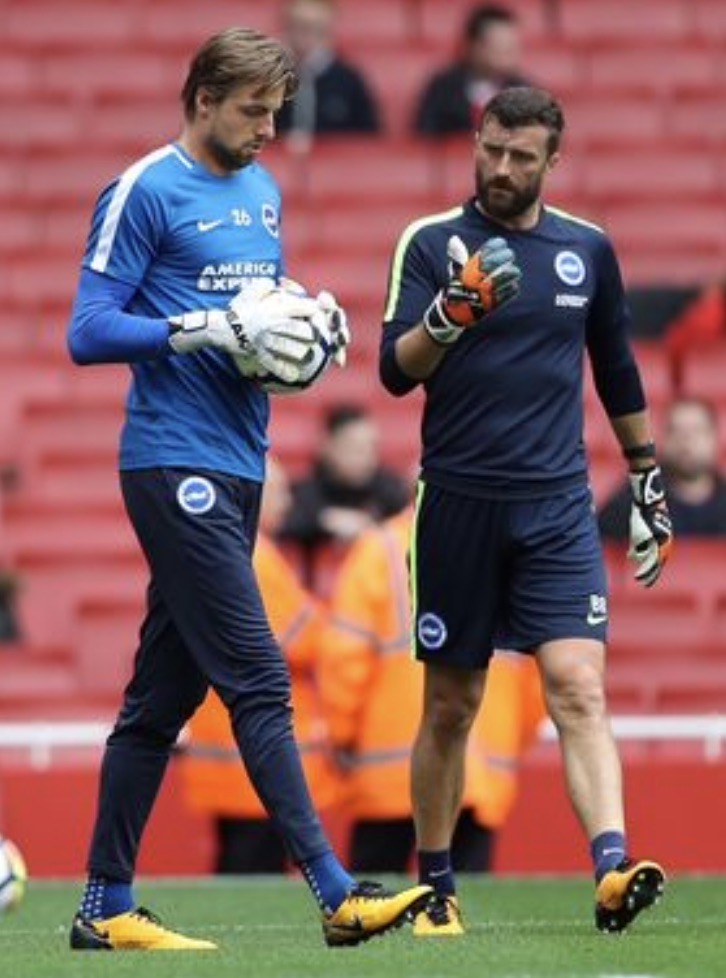
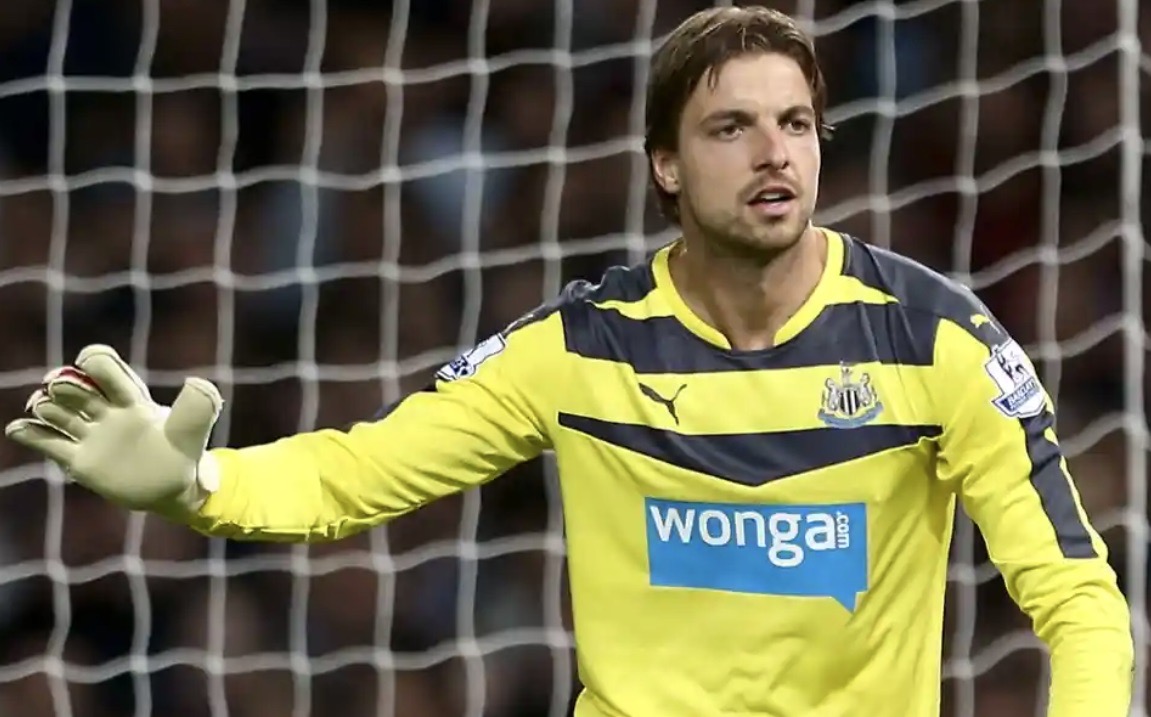
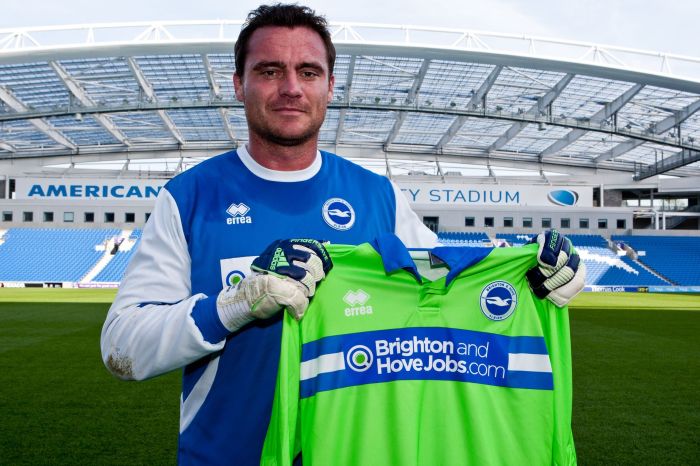
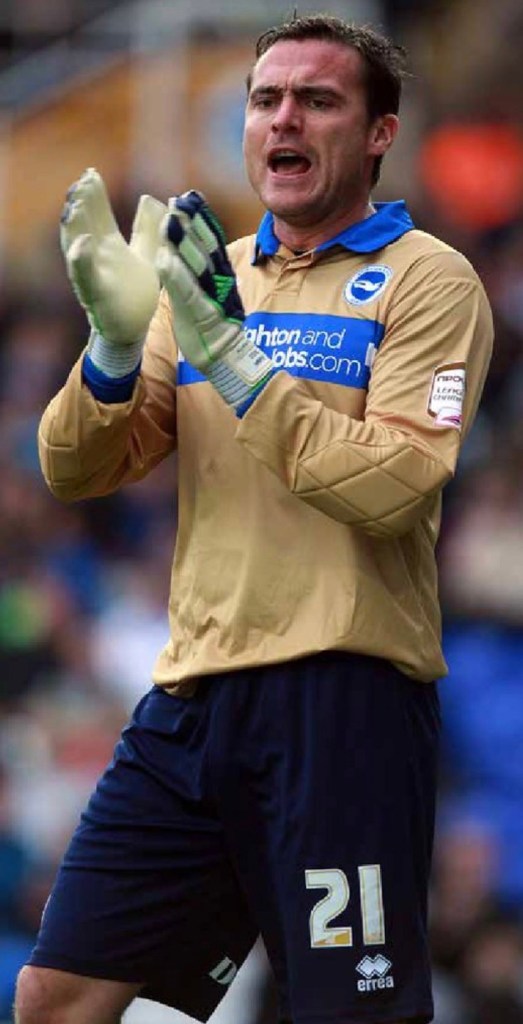
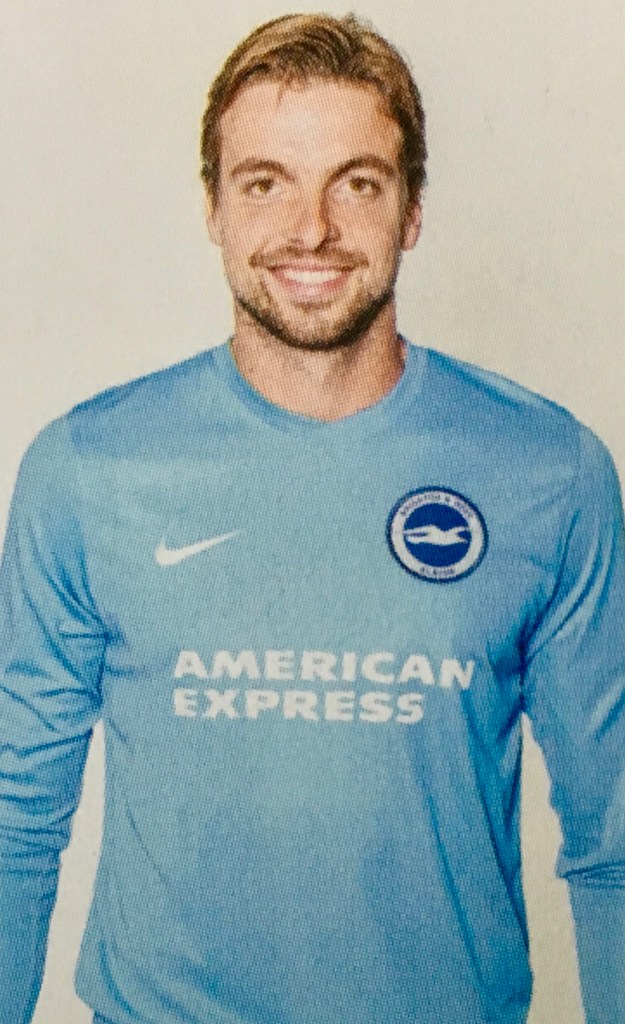
Experienced Dutchman Tim Krul, who played 184 games for Newcastle United over 12 years, kept goal for the Seagulls on only five occasions during the 2017-18 season.

The form of Mat Ryan, himself an Australian international, meant Krul’s involvement was restricted to cup matches and a watching brief from the substitute’s bench.

Krul initially signed on a season-long loan deal on deadline day in August 2017 but the move was made permanent the day after he made his Albion first team debut in a 1-0 League Cup defeat at Bournemouth.

Manager Chris Hughton said: “I know Tim from my time at Newcastle and he is an excellent professional that has a vast amount of experience at both club and international level.

“He’s played an extensive amount of games in the Premier League, as well as playing in the Europa League and his experience will also help benefit the other keepers in the squad.”

Having experienced some in and out spells during his time on Tyneside, Krul understood the situation when interviewed by The Argus in November 2017.

“I’m working hard every day to push Mat Ryan. He’s done great so far and we’re picking up points, that’s what it’s all about.

“If the gaffer needs us or Mat got injured, I need to be ready and literally it can happen any second.”

Krul admitted: “It’s a different position for myself, because I’m used to playing week in, week out.”

The move to Albion had been the chance to reignite his career after a long spell on the sidelines having suffered a cruciate knee ligament injury on international duty in 2015.

Krul is powerless to stop Romelu Lukaku’s winning goal for Manchester United in Brighton’s FA Cup fifth round tie at Old Trafford

Before he made the move, he consulted Steve Harper, who’d been on loan at Brighton during the Gus Poyet era. Harper told the matchday programme: “I told him it woud be a great move for him and it will also be a great signing for the club. He was outstanding in the season Newcastle finished fifth in the Premier League and he’s an international ‘keeper for the Netherlands who has played at the World Cup.”

After he’d played in Albion’s FA Cup fifth round defeat to Manchester United at Old Trafford, Krul told The Argus: “Obviously when I came, I was hoping to get a bit more (game time) maybe, but at the time I walked through the door Maty’s performances went up a level, so that is testament to him.

“The level we are training at with Ben Roberts every day is really high. He has been showing that in the games. I’ve been around long enough to see when a goalkeeper is playing well you take that. I’m 29, I’m back fit, I’m feeling better than I’ve ever done so I’m ready to play. I just have to be patient again.

“I had to be patient at the start of my career and you have to do that again now. But my chance will come. There’s a lot of years left.”

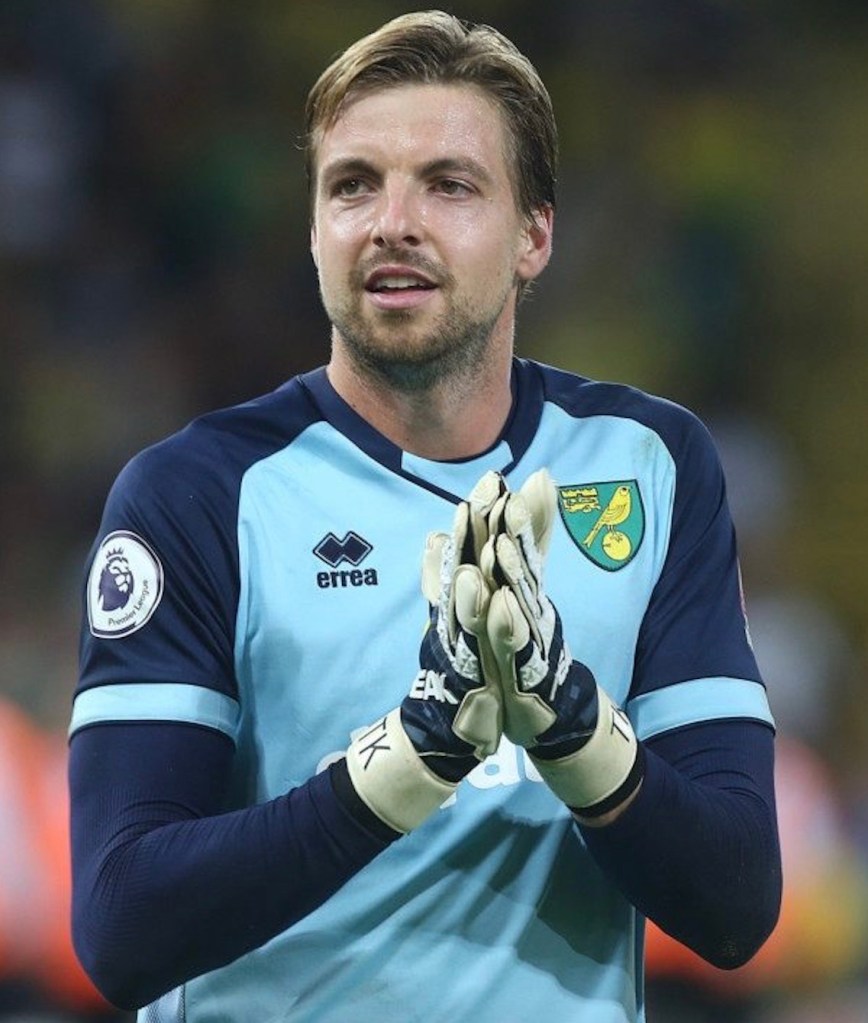
Krul finally got regular playing time again when he moved to Norwich City

Unfortunately, that didn’t happen with the Albion but Krul certainly resurrected his career with Norwich City and, after signing an initial two-and-a-half-year deal in the summer of 2018, earned a further three-and-a-half-year contract in December 2020.

He then contracted Covid-19, announcing it on Twitter, where he has a huge following of more than 349,000. “I feel under the weather and fatigued,” he wrote. “It’s an important reminder to stay safe, this virus is not a hoax.”

Thankfully, by the end of January, he had recovered and returned to the side to clock up 100 appearances for the Canaries.

Born in The Hague, Holland, on 3 April 1988, from a young age Krul played for his hometown club RAS and was with ADO Den Haag between the ages of 12 and 17. Graeme Souness was still boss when Krul joined Newcastle in the summer of 2005. Shay Given and Steve Harper were the established ‘keepers in those days.

Shortly after making his debut in a UEFA Cup match in November 2006, he suffered injuries which ruled him out of action for six months. After returning to playing in the spring of 2007, he earned a new four-year deal with Newcastle.

An eventful loan spell in Scotland followed as Krul sought to gain league experience at Falkirk. He conceded 11 goals in two games early on (four to Celtic, seven to Rangers), he was sent off in a game on 2 January 2008, and then dislocated a shoulder in a cup match against Aberdeen, bringing the loan to a premature end.

When Given left St James’ Park for Manchester City, Krul was no.2 behind Harper in Newcastle’s 2009-10 season in the Championship. He deputised if Harper was injured and was given starts in cup matches. By the season’s end, when the Toon had won promotion back to the Premier League, Krul was awarded a new four-year deal and made his debut at that level when replacing the injured Harper in a 1-0 win away at Everton in September 2010.

He ended that campaign having played 25 first team matches, and the following season, established himself as the no.1, with Rob Elliot as his deputy. Out-in-the-cold Harper was allowed to spend a month on loan with the Albion.

Under Alan Pardew, Krul was the preferred first choice ‘keeper, and he signed a five-year contract with the Magpies in 2012. Several different injuries in 2012-13 restricted him to 30 appearances.

Another six-week injury lay-off over Christmas 2014 interrupted a period when there was yet another managerial change on Tyneside and the 2015-16 season under Steve McLaren was only a couple of months old before Krul was ruled out for the remainder of the season when he ruptured an anterior cruciate ligament in his right knee playing in the Netherlands’ 2-1 European Qualifiers win in Kazakhstan.

McLaren was sacked in March 2016 and his replacement Rafa Benitez couldn’t prevent them from being relegated. Krul signed a one-year contract extension in the summer of 2016 but, with Elliot and Karl Darlow ahead of him, he was sent on loan to Ajax as Newcastle successfully bounced back to the elite, pipping Albion to the Championship title.

Meanwhile, things didn’t work out as planned for Krul. He only got a handful of games for the Ajax reserve side and he spent the second half of the season at AZ Alkmaar instead.

Krul has played for his country at every age level and made his full international debut in a friendly against Brazil in 2011. Maarten Stekelenburg and Jasper Cillessen have normally been ahead of him but he has won 11 caps, including three in 2020 after a five-year absence from the side. However, it was what happened at the 2014 World Cup in Brazil that most fans will remember.

Head coach Louis van Gaal took off Cillessen in the final seconds of extra time with the Dutch still drawing 0-0 with Costa Rica and sent Krul on because of his reputation for saving penalties. Sure enough, he made two saves in the subsequent shoot-out and Holland went through to the semi-finals (where they went out 4-2 on penalties to Argentina).

The story behind the decision emerged in an article by Michael Bailey for The Athletic on 5 March 2020. The Dutch goalkeeping coach at the tournament, Frans Hoek, explained how Krul had responded best of the three ‘keepers to special training he put them through.

“When we came together with the national team, the three goalkeepers were more or less at the same level in stopping penalties. And that level was low,” Hoek told The Athletic. “We decided to do things in a different way and when you do that you have to believe in it, practice it and then show it. Basically, Tim responded best to that.

“He had some advantages. He’s very big, he has an enormous reach. He is impressive when you’re standing the other side of him and maybe because he’s from Den Haag area, he can be a little bit provocative. Michel Vorm is too nice a guy, so is Cillessen. But Tim can get away with it. It’s just something he has.”

A look back through the archives reveals Krul was displaying his prowess saving penalties as far back as his youth playing days. In an FA Youth Cup match for Newcastle against Brighton, he made saves from Tommy Fraser and Scott Chamberlain as Toon edged it 3-2 on penalties.

Albion goalkeeper coach Roberts was full of praise when asked about the big Dutch ‘keeper. “He has an aura about him and the self-belief to think he will save everything,” said Roberts. “I’m delighted for him as lots wrote him off when he had his bad knee injury. He’s since shown how much his hard work and dedication has paid off.”

After putting pen to paper on his new Norwich contract, Krul told the club website: “Proud is the big word. I’m excited to commit my future to Norwich and have had an amazing two and a half years already at this club, so I’m excited to add another three and a half years to that.

“The plan the club has got for the next few years is exciting and there’s some young, exciting talent coming through the ranks as well. From top to bottom, it’s a club I want to be at; one that’s run really well from Michael and Delia to the kitman. It’s an exciting time for the club, for sure.

“As a player, you want to be loved and I’ve got a great relationship with the fans. The club giving me this three-and-a-half-year contract shows the belief they’ve still got in me.”

Manager Daniel Farke added: “It’s fantastic news for us to have a player of Tim’s quality and personality. He’s by far the best goalkeeper in this league and was impressive in the Premier League.

“He’s still in a really good age for a goalkeeper and can play many more years. It’s good news he was willing to sign a long-term contract because there is lots of interest in a player of his quality and experience.”

Krul was a key part of Norwich’s Championship-winning sides of 2018-19 (when he was ever-present) and 2020-21. But in August 2023 he returned to the Premier League when he was signed by newly-promoted Luton Town.

Town boss Rob Edwards said: “Tim’s a leader and a top goalkeeper who is still very and ambitious and very hungry. He wants to play.

“It’s great to have someone of his level in the group with that ambition and to be that driven, and it’s going to add great competition to the goalkeeper department, which is what we’ve wanted.”

Pictures from online sources and matchday programmes.

Steve Harper’s part in the Seagulls-Magpies goalkeeping ‘trade’

BRIGHTON and Newcastle United clearly have a similar eye for goalkeepers with a string of custodians having played for both clubs.

A few years before I started watching, Dave Hollins, older brother of ex-Chelsea midfielder John, moved to Tyneside in 1960 after three years with the Albion, and played twice as many games for Newcastle in the early part of that decade than he had for Brighton.

Back in the first Alan Mullery era, Eric Steele, who went through the Newcastle ranks without making the first team, arrived at Brighton to replace the injured Peter Grummitt in 1977 and was in the side that won promotion to the elite via a 3-1 win at St James’ Park in 1979.

Dave Beasant, who Newcastle bought from Wimbledon for £850,000 in 1988 – although he only played 20 games for the Magpies – was between the sticks for the Albion for 16 games in 2003.

More recently, Dutchman Tim Krul – who’d been at Newcastle a decade – spent a couple of seasons as back-up to Mat Ryan and would probably be disappointed he didn’t get more game time.

My post on this occasion, though, is about Steve Harper, United’s longest-ever serving player having been there 20 years. He later went back as one of the coaches working with Steve Bruce, as well as being goalkeeping coach to the Northern Ireland international side.

Harper is a qualified UEFA A coach and UEFA A goalkeeping coach, and holds a Masters degree in Sport Directorship.

Back in 2011, Harper was happy to lend his experience to the second tier Seagulls during Gus Poyet’s tenure as manager, a decision applauded by Alan Pardew, Toon boss at the time.

“He just wanted to play,” Pardew told the Chronicle. “Not all the top players in the country would have gone on loan – you’re vulnerable.

“You’re going down a division, but he was prepared to do that, and fair play to him.”

For his part, Harper told BBC Sport: “Everybody knows I haven’t played enough football until the last two-and-a-half years.

“I hadn’t played a competitive game for about six months so it was nice to blow the cobwebs out.”

In his first Seagulls match, unfortunately Albion lost against West Ham to a single goal from Harper’s former teammate Kevin Nolan, and he said: “It was disappointing to lose against West Ham with the possession we had.

“Now I’m here, it’s time to get stuck in. We want Brighton to consolidate and finish as high as we can. People tell me it’s a lovely city. I’m looking forward to seeing more of it.”

Harper recalled the time fondly in an interview for the Albion website in 2019.

He featured in five games for the Seagulls, keeping two clean sheets. While he conceded five goals, three came away to Southampton when the Seagulls were unjustly punished by referee Peter Walton.

Harper told journalist Nick Szczepanik: “I would have stayed longer given the opportunity. They made me feel very welcome.”

He even managed to give two of his new teammates a surprise when he started speaking to them in Spanish. Playing behind Spanish speakers Inigo Calderon and Gonzalo Jara Reyes, he explained to Andy Naylor, then of The Argus: “After five years of Bobby Robson and his multi-lingual team talks my Spanish is okay.

“Calde got quite a shock with how much Spanish I know, but I had Colocinni and Enrique in the team with me at Newcastle.”

After his brief spell with the Albion, Harper returned to Newcastle and played nine more games for them the following season before moving on to Hull City (at the time managed by current Toon boss Bruce), where he played alongside Liam Rosenior.

Born in Seaham on 14 March 1975, Harper grew up in the County Durham mining village of Easington and went to its local comprehensive school. Originally a striker at local Sunday league level, he only started playing in goal from the age of 17 and he turned out for Newcastle’s youth team while he was still at college doing A levels.

In fact he was offered a place at John Moores University in Liverpool to study for a Sports Science degree but he deferred it when Newcastle offered him a one-year contract. He signed in 1993 as a back-up for first choice Pavel Srnicek, later Shaka Hislop and subsequently Shay Given.

Much of his time at Newcastle was as a more than capable deputy to whoever was first choice although in United’s 2009-10 season in the Championship, under Chris Hughton, he was the main man and played 45 matches.

Harper had nothing but praise for Hughton, telling chroniclelive.co.uk: “He came in at an incredibly difficult, turbulent time after relegation.

“Chris was the man at the centre of a perfect storm who steered us through some very choppy waters.

“He did a wonderful job and I don’t think he got enough credit. It was no surprise to me to see him go on to do an excellent job at Birmingham City and then at Brighton.”

In total, Harper played 199 games for Newcastle, featuring under nine different managers – Kevin Keegan and Bobby Robson being his favourites.

Periodically over the years, he went out on loan to gain first-team action, appearing between the sticks for Bradford City, Gateshead, Stockport County, Hartlepool and Huddersfield. The Brighton move was his sixth spell out on loan.

Harper’s long service for Newcastle was rewarded with a testimonial against AC Milan in 2013 before he left the club to join Hull, where he spent two seasons.

Six months after his departure from Hull, he was taken on by then Premier League Sunderland as cover for Jordan Pickford and Vito Mannone, but he didn’t make a first-team appearance and was released at the end of the season.

Ups and downs of medal-laden Mark McGhee’s career

MARK McGHEE saw highs and lows as Brighton & Hove Albion manager after a medal-laden playing career that took him from his native Scotland to England and also to Germany.

McGhee was in charge when the Seagulls memorably won the 2004 play-off final to gain promotion from the third tier, beating Bristol City at the Millennium Stadium, Cardiff.

Play off final boss

Keeping the Seagulls up the following season was arguably an even greater achievement considering at the time playing home games at the crowd-restricted Withdean Stadium meant the club was at a huge disadvantage compared to most clubs in the division.

With the Amex still a distant dream, relegation came at the end of the 2005-06 season, and it wasn’t long into the following season that Dick Knight wielded the axe on the Glaswegian’s time in charge.

“It was hard to sack Mark, but we had to have a change,” Knight wrote in his autobiography, Mad Man: From the Gutter to the Stars. “Everyone recognised what he had done in taking up and keeping up a team that was not that great, to be honest. Hats off to him, he had done a terrific job. And he is a very intelligent, personable guy.”

Knight took decisive action when part of the crowd became vociferous in wanting McGhee out, and the chairman also felt some of the young players drafted into the team weren’t responding to him.

He was finally toppled over lunch at Topolino’s, and Knight admitted: “It was a difficult decision. There was strong vocal opposition to McGhee, but also a large, less noisy element who were behind him.”

McGhee liked Brighton so much he made it his home despite subsequently taking on a series of other roles the length and breadth of the country.

It’s probably fair to say the Scot has never been afraid to speak his mind, which his former Newcastle boss Bill McGarry mentioned to him. McGhee recounted in an interview with theleaguepaper.com: “I was managing Wolves at the time. He said ‘Mark, you talk too much. Tone it down a bit’. I tried to take his advice, give nothing away in media briefings. Then, somebody would say something interesting and I wasn’t able to stop myself.”

It’s probably what helped him gain a place on the Sky Sports Soccer Saturday panel when he was in between management jobs.

McGhee would most likely look back on some jobs he’d perhaps have been wiser to stay away from, for example taking temporary charge of Eastbourne Borough in 2018, although his enthusiasm was undimmed as he revealed in an interview with thenonleaguefootballpaper.com.

Born in Glasgow on 20 May 1957, his father was an electrical engineer and his mother a fertility consultant at Glasgow Royal Infirmary. McGhee was on the books of Bristol City at the start of his long career but he returned to Scotland and became a part-timer with Greenock Morton while also training to be an architect.

Aforementioned manager McGarry signed him for Newcastle for a £150,000 fee on 30 December 1977 and he made his debut on 2 January 1978.

His face didn’t fit after Arthur Cox took over as boss, but Alex Ferguson took a punt on him in March 1979 and signed him for Aberdeen, and it proved to be one of many shrewd decisions the esteemed Scot would make in his career.

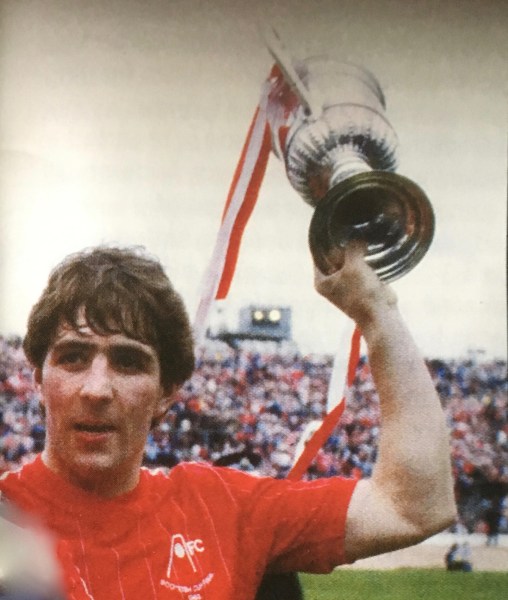
McGhee was named Scottish PFA Players’ Player of the Year in 1982, and the following year was part of the Aberdeen side who beat Real Madrid 2–1 to lift the 1983 European Cup Winners’ Cup in Gothenburg.

mcg cup

He also scored the second goal as Aberdeen defeated Hamburg 2-0 to win the UEFA Super Cup in the same year.

Asked about the best goal he scored, he said: “Probably the winning goal in my last game for Aberdeen.”

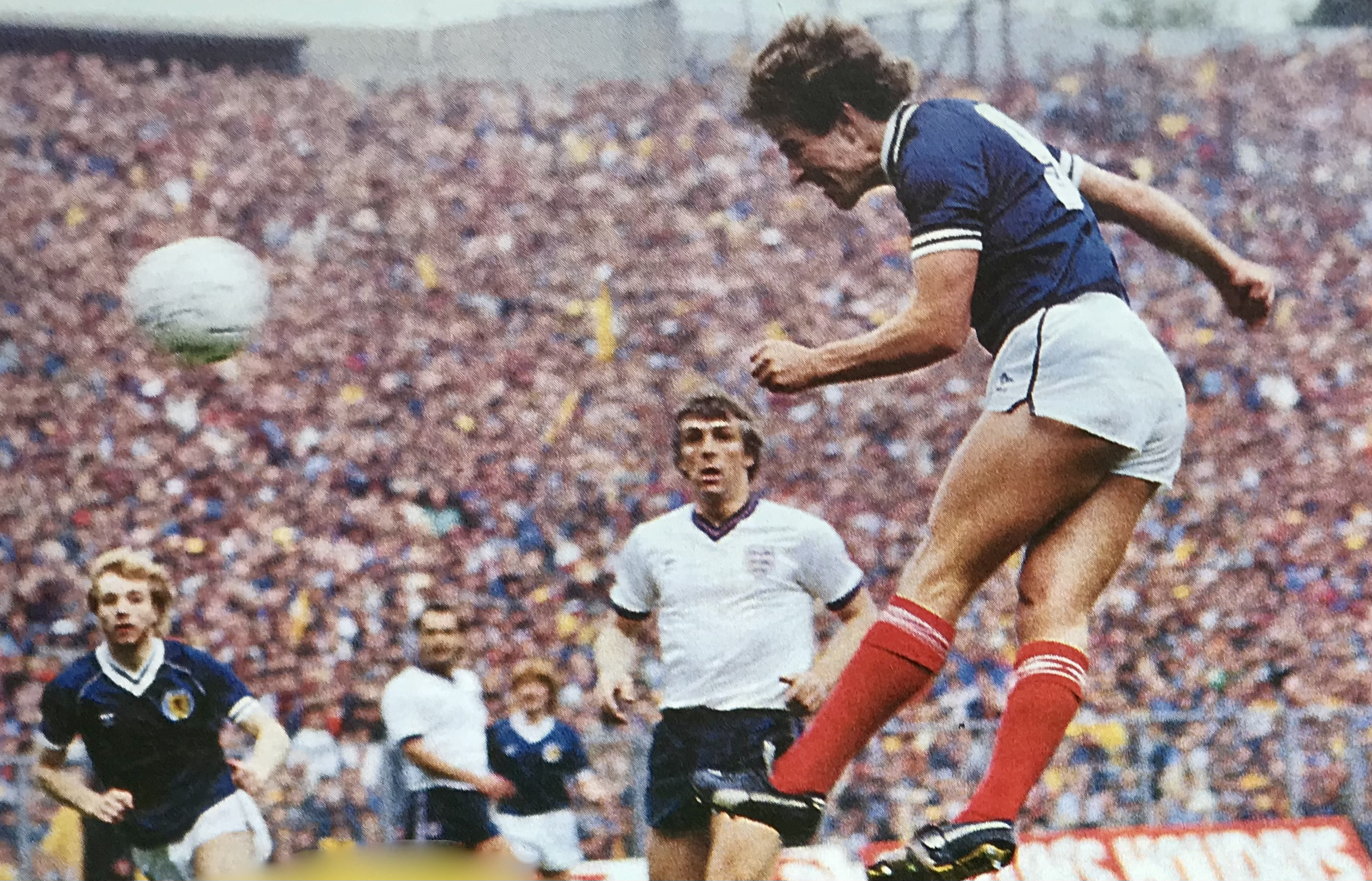
McGhee reckoned his best moment in football came on 26 May 1984 when he scored against England at Hampden Park. He headed in a cross (as pictured) from his great pal Gordon Strachan past Peter Shilton.

McG v Eng

“It put us 1-0 up but Tony Woodcock equalised to make the final score 1-1.”

It was one of four caps he won for his country. Nearly two decades later, in January 2013, Strachan appointed him as his no.2 with the Scottish national side.

M McGhee Old Football PhotosBut back to those playing days, and with two Scottish league titles and three Cup wins behind him, McGhee tried his hand at European football and spent 16 months at Hamburg. The spell was probably more of an education than a success, with injuries limiting his game time.

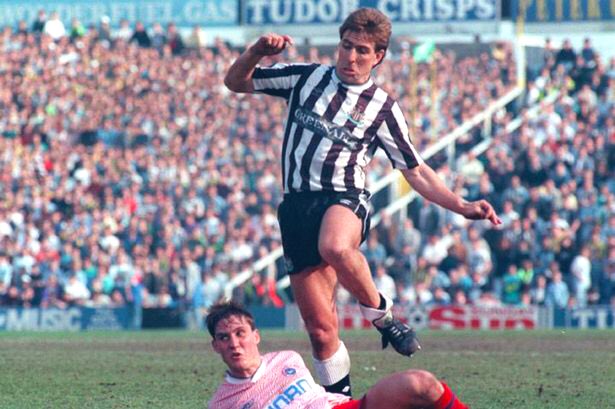
A £170,000 fee took him back to Scotland, to Celtic, where he had mixed fortunes during four years with the Glasgow giants. He was, though, part of the squad that won a League and Cup double in their centenary season.

After winning another Scottish Cup winners’ medal in 1989, he was on the move again, back to Newcastle.

Now with Jim Smith in charge, Newcastle paid £200,000 to take McGhee back to St James’ Park, where he formed an impressive strike partnership with the legendary Micky Quinn as Toon finished third in the old Division Two.

“We were good friends, but we didn’t blend on the pitch like Toshack and Keegan, Quinn told theleaguepaper.com. “Mark was a free spirit. He’d get the ball and drift left or right and drop deep.

“He’d turn defenders and drag them out of position. He would hold the ball up well for me to get into the box and score goals. He went where he wanted, but it worked.”

football back then McGhee

This Football Back Then picture shows McGhee in action for Newcastle against Albion’s Nicky Bissett.

His farewell performance came on 6 April 1991, not long after Ossie Ardiles had taken over as manager, and McGhee departed having scored a total of 36 goals in 115 appearances for the Magpies.

Next stop was Sweden, where he played briefly for IK Brage, but he seized the opportunity to try his hand at management by taking up the role of player-manager at Reading in the summer of 1991.

He’d been recommended for the role by his old boss Ferguson, and, after quitting playing through injury in 1993, he led the Royals to promotion from the third tier the following year.

A struggling Leicester City gave him a chance to manage in the Premier League but he was unable to keep them up and, less than a year after joining, decided to switch to Wolverhampton Wanderers, to succeed Graham Taylor.

Wolves just failed to gain promotion in 1996-97 (they lost in the play-off semi-finals) and were ninth the following campaign. Four months into the 1998-99 season, following a string of poor results, McGhee was fired.

It would be 20 months before he gained his next opportunity, this time at Millwall where he enjoyed initial success, leading them to promotion from the third tier, and then narrowly missing out on another promotion when they lost in the play-off semi-finals to Birmingham City.

McGhee apptWhen he parted company from Millwall in October 2003, he wasn’t out of work long because Brighton needed a replacement for Steve Coppell, who’d been wooed to take over at Reading (pictured above, with chairman Dick Knight, at his unveiling as Albion manager).

Those Albion fans who stuck by the team in the humble surroundings of the Withdean Stadium enjoyed some good moments during McGhee’s time as manager, in particular promotion via the play-off final in 2004.

He certainly found a formula to get the best out of certain players, as Adam Virgo, converted from defender to goalscorer, observed in that theleaguepaper.com article. “Mark is a very good communicator and very experienced,” he said. “He can make you feel ten feet tall. He’s very good at being honest, at analysing your game and telling you what you’re good at.”

After his departure from the Albion, McGhee was out of the game for nine months but got back in at Motherwell, turning them from near relegation candidates to qualifiers for European competition.

The lure of his old club, Aberdeen, proved too strong in the summer of 2009, but his tenure proved to be disastrous – and brief.

He spent the majority of 2012 as manager of Bristol Rovers, where one of the squad he inherited was former Brighton defender-turned-striker, Virgo. The following year, his old pal, Strachan, appointed him as assistant coach to the Scottish national side.

He later combined the role part-time when he returned to Motherwell but there were mixed fortunes second time round, and he left them again in early 2017. Towards the end of that year, he popped up at League Two Barnet, but the arrangement lasted only two months before he was moved to a ‘head of technical’ role, and then dismissed in March 2018.

McGhee was ‘slaughtered’ on Twitter when he took over as interim manager of National South side Eastbourne Borough in the spring of 2019, after being beaten 3-0 by Wealdstone in his first match in charge, his new side reduced to nine men after two players were sent off. Borough won just once in 11 matches.

When Albion under 23s coach Simon Rusk was appointed manager of Vanarama National League side Stockport County in January 2021, McGhee was appointed as one of his assistants.

His final managerial post was at Dundee in February 2022 when he took temporary charge of the Scottish Premiership side until the end of the season (with Rusk as his assistant), but they couldn’t avoid them being relegated, overseeing just one win in 13 matches.

McGhee finally announced his retirement from the game in September 2022 at the age of 65, telling the Sunday Post: “I won’t be pursuing any other managerial vacancies, and nor would I want to be a director of football or a head of recruitment. That’s not what I am – I’m a manager.

“I feel that players now deserve a young manager who can give them the energy I was able to when I started out. They don’t need a 65-year-old with a dodgy ankle.”

Goal-shy journeyman striker Leon Best drew derision

FOR SOMEONE purporting to be a striker, Leon Best fired blanks at a good many of the clubs he played for.

Such was his time at Brighton where he failed to get on the scoresheet in 13 games (six as a starter, seven as a substitute).

When he featured for AFC Bournemouth in the third tier, he fared slightly better. He managed three goals in 14 starts plus three as a substitute when on loan from Premier League Southampton during the 2006-07 season.

The somewhat derogatory phrase ‘journeyman’ was tailor-made for the likes of Best, who appeared for 13 different league clubs, failing to score for five of them and only registering double figure tallies at three.

Brighton supporters, on the whole, are normally supportive of anyone who appears for their team, but feelings boiled over at Best’s apparent lack of desire when pulling on the Seagulls stripes.

He was part of the struggling 2014-15 side which narrowly avoided the drop from the Championship, and I recall him being booed when he came on as a substitute at the Amex. On reflection, of course, such derision was unlikely to improve his demeanour.

The keyboard warriors of North Stand Chat weren’t slow to vent their anger, with one correspondent suggesting: “We’ve not seen much in the way of desire, endeavour, hunger or appetite from someone you would hope feels he has something to prove.”

Chris Hughton had not long been in the manager’s chair when he was casting around for players to help Albion climb away from the foot of the table.

Perhaps not unreasonably, he turned to a player who’d scored goals for him in the Premier League during his time at Newcastle United.

Hughton told the Argus: “I know Leon very well, having signed him during my time at Newcastle and I am delighted to have him here.

Screen Shot 2021-06-10 at 14.55.50“He is a strong, physical presence, he knows the Championship and knows the position we are in. We wanted new faces, to freshen up the squad, and Leon will add competition alongside our existing strikers.

“I signed him previously at Newcastle. I know he can be a very good player and he did very well for me both in the Championship and Premier League. He also had a very good spell with Newcastle after I left the club.”

Best scored 10 in 46 games for the Magpies but, at his next club, Blackburn Rovers, he managed only two in 16, hence them sending him out on loan.

While Best had scored five in 16 playing on loan at Sheffield Wednesday in 2013-14, he scored a big fat zero in 20 games for Derby County earlier in the 2014-15 season so perhaps expectations should not have been high when he arrived at Brighton on 20 January 2015.

Nevertheless, Hughton told Brian Owen: “I am very pleased he is here. He gives us another attacking option and I hope he can produce the same form he did for me when we worked together at Newcastle.” In short, he didn’t.

Born in Nottingham on 19 September 1986, his first steps into the professional game came with his local side Notts County. When international recognition came calling, he chose to represent his mother’s birth country, the Republic of Ireland, and was capped at under 17, under 19 and under 21 levels before gaining seven full caps in 2009-10.

Southampton snapped up Best in 2004 and gave him his league debut aged 18, ironically against his future employer, Newcastle.

But opportunities were limited with the Saints and over the course of three years on their books they loaned him out to QPR, Sheffield Wednesday, Bournemouth and Yeovil Town.

In 2007, Best transferred to then Championship side Coventry City for £650,000 and arguably his most successful goalscoring spell came during his time there, as he netted 23 goals in 104 appearances over three seasons.

It prompted Hughton to spend £1.5m of Mike Ashley’s money to take Best to Tyneside on 1 February 2010.

Maybe the warning bells should have been sounding in those first few months on Tyneside when he didn’t register a goal in 13 Championship appearances and fell behind Andy Carroll and Peter Lovenkrands in the pecking order.

Although he managed a couple of goals in pre-season matches, the early part of the 2010-11 season was marred by a cruciate knee ligament injury. Nevertheless, when he returned to action in the January, he did it in some style, bagging a hat-trick in a 5-0 win over West Ham. He got a further three goals before injury ruled him out once again.

3490663In the following season, he went 12 games without scoring but in the summer of 2012, Blackburn Rovers paid £3m to take him to Ewood Park – only for him to pick up an anterior cruciate knee injury one month into the season, ruling him out of action for six months.
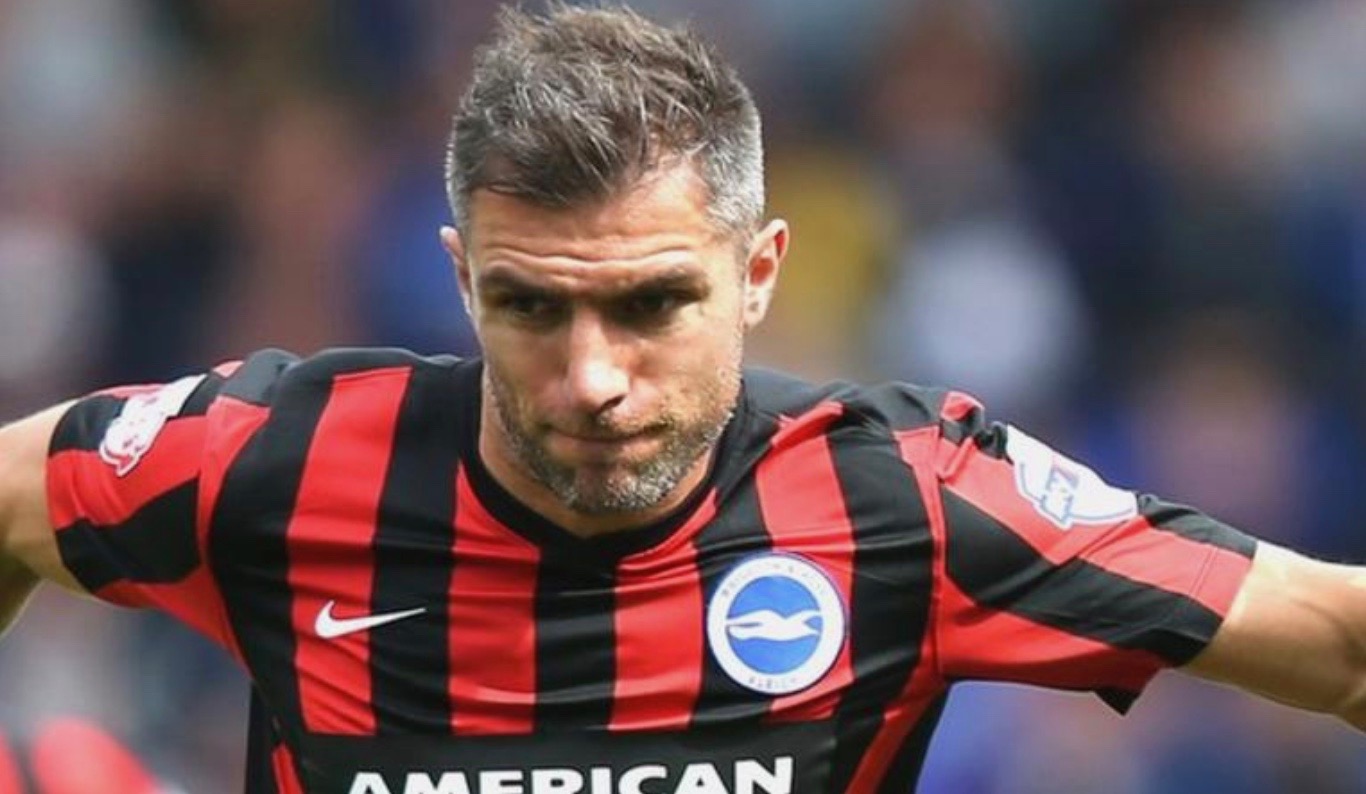
The temporary move to Brighton was one of three loans away from Blackburn before they finally released him by mutual consent in July 2015.

It wasn’t until November 2015 he managed to find another club, pitching up for six months at Championship side Rotherham United. When he couldn’t agree terms on a new deal with the Millers, he instead moved to Ipswich Town, ostensibly as a replacement for Daryl Murphy.

He made six starts and six appearances as a substitute without scoring and, by January 2017, manager Mick McCarthy had lost patience with him and declared he wouldn’t play another game for the club.

Released by Town in the summer of 2017, Best managed to secure a two-month deal with Charlton Athletic in November 2017 but he sustained a knee injury on New Year’s Day 2018 and hasn’t played since.

Northern Irish legend Aaron Hughes was talk of the Toon

AH red blackVETERAN Northern Irishman Aaron Hughes only brought down the curtain on his lengthy playing career in June 2019 at the age of 39.

On 12 June he finally confirmed his playing days were over in an emotional speech to his Northern Ireland team-mates in the Borisov Arena after the country’s 1-0 victory over Belarus.

Remarkably, Hughes had first been called up to the Northern Ireland squad at the age of 17, before he’d even broken through at Newcastle United.

“Having known Aaron Hughes for nearly 25 years, it was an honour to be present to witness his typically classy speech to all of the Northern Ireland players and staff to announce his retirement from the game after an amazing career,” former Newcastle keeper and current Northern Ireland coach Steve Harper told the Belfast Telegraph.

Amongst many others paying tribute, former international Paddy McCourt added: “Without doubt the best professional I encountered during my football career. I was fortunate enough to play alongside Aaron Hughes at Brighton and we also spent many years together with Northern Ireland. A true gentleman and brilliant player.”

He had just the one season with Brighton & Hove Albion – in 2014-15. Mainly a central defender, Hughes could also play comfortably in either full-back position or midfield.

He was the first Brighton signing of Sami Hyypia’s ill-fated spell as manager, and Hyypia told the club website: “We wanted to bring another experienced defender, and Aaron fits the bill – having played at Premier League, Champions League and international level.

“I have played against Aaron a few times during my time at Liverpool and also for Finland, and I know his qualities and what he will give us.

“He has a very good footballing pedigree, is an intelligent player, and he has a great mentality and good approach to the game.

“He has that experience I wanted to bring into the squad, which alongside our other senior players, will help our younger players continue to develop and progress in the first-team squad.”

As it turned out, Hughes was only used as cover and during his season with the Seagulls made only 13 appearances.

Nevertheless, Hughes’ stay on the south coast clearly left an impression and fellow Northern Ireland international Oliver Norwood described how Hughes played a part in persuading him to join the Seagulls in 2016.

“I spoke to Hughesy about his time here and he spoke so highly of the club, mentioning the facilities, the stadium and that it’s set up to go to the Premier League,” Norwood told the club website. “He’s a wonderful person that’s achieved so much.

“I know he didn’t get the game time he would have liked here, but if I have half the career he has, then I’ll be very happy.”

Born in Cookstown, County Tyrone, on 8 November 1979, Hughes joined Newcastle United’s youth ranks at 17 and, over eight years, he made 279 appearances for the Magpies.

A Hughes superb footy picsEyebrows were raised when former Northern Ireland manager Bryan Hamilton took Hughes to Portugal for a World Cup qualifier in October 1997, when he was still only 17, but Hamilton told the Belfast Telegraph: “There was something special in him, even at a young age, and I wanted him in the squad. I felt he could be an outstanding player for Northern Ireland and I knew that coming in early wouldn’t affect or faze him.”

Hughes had to wait until Lawrie McMenemy succeeded Hamilton to make his international debut the following March, and by then he’d made a memorable debut for Newcastle in November 1997 against Barcelona at the Nou Camp. Selected by manager Kenny Dalglish, despite the 1-0 defeat, the 18-year-old showed tremendous promise against the likes of Figo, Ronaldo and Stoichkov. He eventually held down a regular first team place under Dalglish’s successor Ruud Gullitt before Bobby Robson took the helm.

Hughes made his name at St James’s Park in the centre of Newcastle’s defence, playing alongside Sylvain Distin in a side also featuring Craig Bellamy, Gary Speed and Alan Shearer. He spoke about his time playing under Dalglish and Robson in an interview with the Guardian.

Discerning followers of Toon were quick to join in the tributes paid to Hughes when he announced his retirement. Elsewhere they have vented their spleen at the decision Graeme Souness took to sell him to Aston Villa.

Hughes had three seasons at Villa, having been signed by David O’Leary in the 2005-06 season. But Villa fans are a tough lot to please and, despite his previous success at Newcastle, it seems they expected more. “Hughes, despite filling his role admirably as a centre back, never felt integral to our defence as he found himself chopped and changed with (Olof) Melberg, and fellow signing Wilfried Bouma,” declared readastonvilla.com.

Eventually with injury-hit defender Martin Laursen returning to the side under new manager Martin O’Neill, Hughes became more of a squad player at Villa Park. He was allowed to leave to join Fulham and was signed by a former Northern Irish international teammate, Lawrie Sanchez.

hughes fulhamAt Fulham, he formed a formidable defensive partnership with Brede Hangeland and fulhamfc.com said: “The pair worked brilliantly together, with the fans soon referring to them as our very own Thames Barrier. Their styles complemented each other perfectly, and while Hughes wasn’t the tallest of centre-backs, his leap and reading of the game more than made up for it.”

Hughes was one of three ever-presents – with Mark Schwarzer and Danny Murphy – when Fulham finished seventh in the Premier League in 2008-09, which led to European qualification.

He was part of the side captained by Murphy, with Bobby Zamora up front, who went on a gloriously unexpected UEFA Cup journey in 2010, only to be pipped to the trophy in extra time by Atletico Madrid.

“The way we lost, right at the end of extra-time, still grates with me, so the final is a bitter-sweet memory,” Hughes reflected in a 2014 interview for Albion’s matchday programme. “The Juventus game stands out more, where we came back from 3-1 down from the first leg in Italy to win 4-1 at Craven Cottage.”

On transfer deadline day in January 2014, Hughes signed a short-term deal for Harry Redknapp’s Queens Park Rangers for whom he made 11 Championship appearances.

After his season with Brighton, even at the age of 36 Hughes had no intention of packing up playing. Instead, he headed to Australia and played for Melbourne City and then linked up with India’s Kerala Blasters before he joined Hearts for his final two seasons.

His last club game saw Hearts bring him on in the 68th minute of their final league game of the season, a 2-1 defeat to Celtic at Celtic Park. Upon replacing John Souttar, the 39-year-old Hughes took the captain’s armband for the final few minutes of a career stretching across an impressive 22 years.

Hughes won an amazing 112 caps for his country across 20 years – a record for an outfield player. He was second only to the legendary Pat Jennings as most-capped player and was captain of his country for eight years. Small wonder, then, that he should be so grateful to so many at the Irish FA for the longevity of his international career.

hughes NI

  • Pictures from various online sources.

Cattlin wasn’t backed to buy ex-City defender Jeff Clarke for £6,500

HARD-UP Albion wanted to sign dominant centre-back Jeff Clarke in 1984 but, unable to meet Newcastle United’s modest asking price, they were forced to walk away from a deal.

Clarke, who began his career at Manchester City, had plenty of experience to bring to a young Brighton side having played more than 300 games for north-east giants Sunderland and the Magpies.

At the start of the 1984-85 season, Clarke found himself on the outside looking in at St James’ Park, following the arrival of the legendary Jack Charlton as manager.

Although Arthur Cox had led them to promotion to the old First Division, he quit during the close season because he didn’t feel the club’s owners were investing enough in the playing side (some things never change!).

Former England World Cup winner Charlton, whose uncle ‘Wor’ Jackie Milburn was a Newcastle legend, took the hot seat and his preferred centre back pairing at the start of the season was John Anderson and Glenn Roeder.

Down on the south coast, Brighton boss Chris Cattlin was keen to bring some experience to the spine of the team he was rebuilding, and he took Clarke on loan to play alongside the emerging Eric Young, as well as introducing his old Huddersfield teammate Frank Worthington up front.

Clarke and Worthington made their debuts in an opening day 3-0 win at Carlisle United on 25 August (Danny Wilson, Terry Connor and Steve Penney the goalscorers).

The on-loan defender couldn’t have had a more eventful home debut three days later, in an ill-tempered evening game at home to Larry Lloyd’s Notts County, who had Justin Fashanu playing up front.

A clash between Fashanu and Clarke saw the defender come off worse, a back injury forcing him to be substituted with only 36 minutes gone (replaced by sub Neil Smillie).

In a game which saw seven players booked, fellow central defender Young joined him in hospital having been concussed by a stray Fashanu elbow. In the days before multiple substitutes, the Seagulls were forced to play the second half with only ten men, but nevertheless ran out 2-1 winners. Steve Jacobs opened the scoring on 22 minutes, Fashanu equalised on 55 but Worthington marked his home debut with the winner in the 67th minute. (The following June, Fashanu joined the Albion for a fee of £115,000).

jeff clarke BWClarke had sustained a fracture to a bone in his back but he was fit enought to return to the side on 22 September, in a 1-0 defeat away to Oldham Athletic, and was then on the winning side in the following two games: a 3-1 first leg Milk Cup win over Aldershot and a 2-0 home win over Fulham.

Unfortunately, that proved to be his last game for the Seagulls. Cattlin wanted to sign him permanently and Newcastle wanted just £6,500 for Clarke but the Albion board wouldn’t sanction the fee, as Cattlin explained at the Albion Roar live show in December 2018 (skip to 28 minutes in), which he believes signalled the beginning of the end of his time at the club.

In his matchday programme notes at the time, Cattlin said: “With the current cash crisis at the club, I could not finalise what I think is a very important deal in the long-term for this club. Clarke is a fine professional who, in many ways, reminds me of Peter Withe in his outstanding professionalism and leadership qualities.”

That sounds like he felt the captaincy of the side wasn’t in the right hands, and later in the same notes he explained how he had taken the job of skipper from Jimmy Case (“he needs to get his own game back to what we know he is capable of”) and given the role to Danny Wilson (“his leadership qualities on the park have become self evident”).

Born 18 January 1954 in the West Yorkshire mining town of Hemsworth, near Wakefield, Clarke was a Sheffield Wednesday fan as a boy and admired Owls central defender Vic Mobley.

However, it was on the other side of the Pennines that he made his breakthrough as a professional, with Manchester City.

Manager Tony Book handed Clarke his debut in a 4-0 home win over West Ham United on 17 August 1974 but he only played 15 games for the Maine Road outfit, his last game coming in a 2-1 home defeat to Carlisle United on 19 March 1975.

Clarke moved to Sunderland as a makeweight in the deal which saw the Sunderland and England international centre back Dave Watson move to City in the summer of 1975.

J Clarke Sund BW

The move to Roker Park finally saw his career take off and in seven years he made 213 appearances for the Wearsiders, many as captain (as seen in team photo above), including helping them to promotion to the top flight in 1976.

The excellent MatchDayMemories.com unearthed a Shoot/Goal profile of Clarke which revealed he had earned schoolboy under 18 international honours, his favourite food was peanut butter sandwiches and Brian Kidd, then of Arsenal, had been his most difficult opponent.

In 1982, at the age of 28, he switched to north east rivals Newcastle United on a free transfer, and stayed with the Magpies for five years.

When his two-month loan on the south coast wasn’t made permanent, he had other loan spells in Turkey and at Darlington but then returned to Newcastle and was restored to the first team, and featured in a New Year’s Day win over Sunderland in which future Albion winger Clive Walker was an opponent.

When Charlton quit as boss on the eve of the 1985-86 season, it signalled better fortunes for Clarke and under Willie McFaul he became a regular alongside Roeder, racking up 45 appearances and chipping in with three goals. The following season he played only seven games and hung up his boots in 1987.

Clarke stayed at St James’ Park in a coaching capacity after his playing days were over but simultaneously he took a degree in physiotherapy at the University of Salford, graduating in 1996.

He later became physio at former club Sunderland before moving to Leeds United in 2001. Made redundant at Elland Road in 2003, he moved to Dundee United in November the same year and has been the first team physio ever since.

Kit Napier top scorer for Brighton in five of six seasons

FORMER Newcastle United centre forward Kit Napier, who moved from the Magpies to Brighton in 1966, was playing up front alongside Alex Dawson when I first started watching the Albion (in 1969).

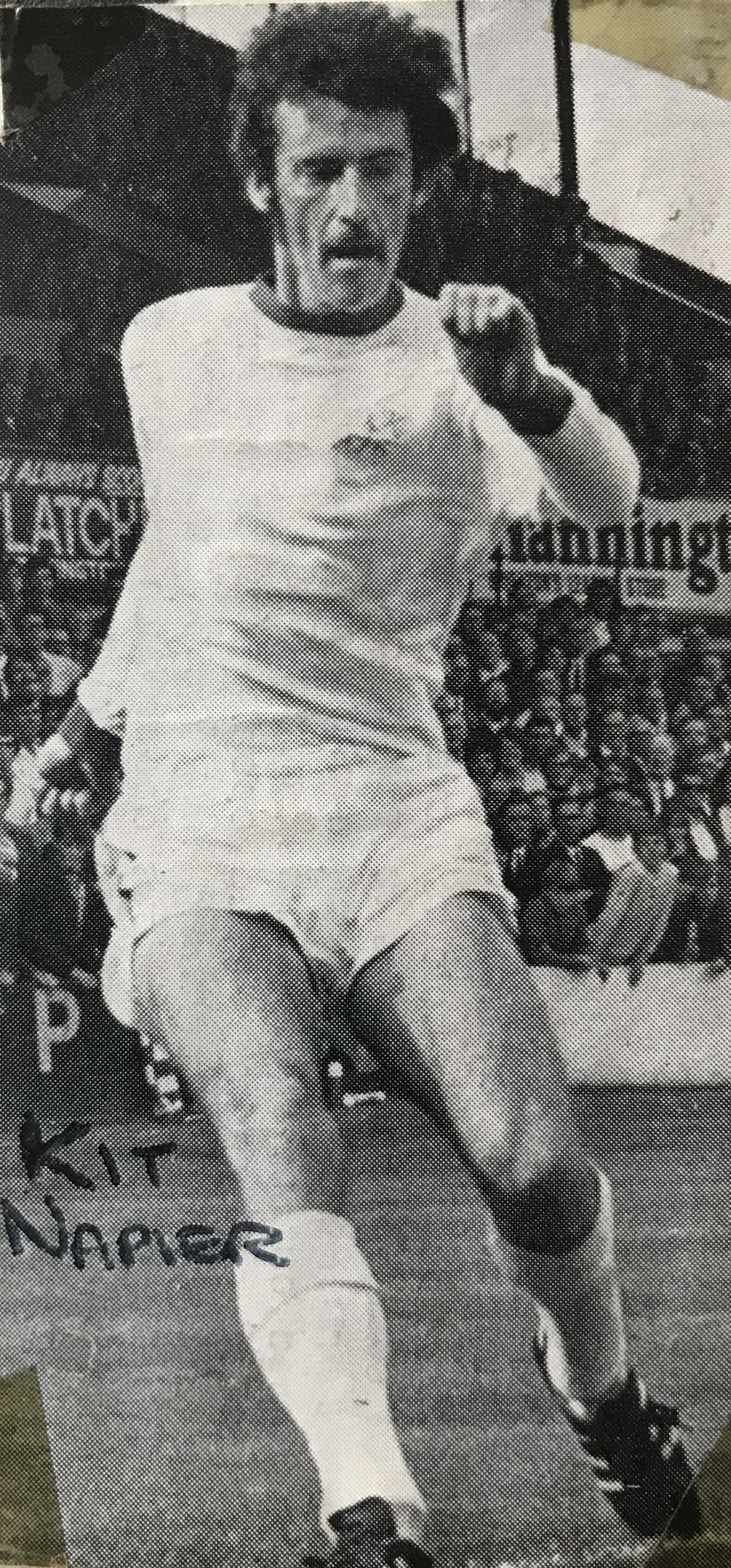
Kit Napier at full stretch to score against Bournemouth in front of a packed Goldstone Ground on Boxing Day 1971

Born in Dunblane on 26 September 1943, Kit’s promise as a schoolboy prompted his headmaster to put his name around as a future footballing talent and he left Scotland to join Blackpool (then playing in the top tier) as a junior before turning professional in 1960. But he only played twice for the Tangerines before moving on to Second Division Preston North End in 1963-64. Things didn’t work out there either, though, and he dropped down a further division to Workington, where it all started to click.

Workington were newly-promoted to the Third Division and Napier was on the scoresheet during what has been described as the club’s proudest night, a 5-1 win in a Football League Cup 3rd round replay against First Division Blackburn Rovers on 22 October 1964.

In a team managed by Ken Furphy, who later enjoyed success as manager of Watford, one of Napier’s teammates was Keith Burkinshaw, who several years later would become manager of Tottenham Hotspur.

The Workington archive also recalls the fifth round tie, on 25 November 1964, when Workington hosted Chelsea at Borough Park.  At the time, Chelsea were riding high in the top flight of English football and were unbeaten on their travels when they arrived in west Cumbria.  Reds were fourth in the old Third Division at the time.

“In front of a record League Cup attendance (17,996), Reds gave Tommy Docherty’s Chelsea the fright of their lives by holding them to a 2-2 draw having been 0-2 down early in the game,” the archive records.  “Dave Carr and Kit Napier scored for the Reds and we had a ‘goal’ disallowed late in the game for an offside offence.

“We eventually lost the replay, 0-2, but the crowd at Stamford Bridge was 10,000 fewer than the gathering at Borough Park.”

Napier scored 25 goals in 58 games for the Cumbrian side which attracted the attention of the Geordie giants at St James’ Park. He was still only 22 when they paid £18,000 for him.

KN NUFCHe made his Newcastle debut on 6 November 1965 in a 2-0 home win over Blackpool. But it probably didn’t help his cause that Newcastle lost six of his seven other games, and drew the other!

His last game was in the Tyne-Wear derby game on 3 January 1966 when Sunderland triumphed 2-0.

Toon1892.com, a veritable mine of Newcastle history, says of Napier: “He was seen as a forward who had great potential. Unfortunately, he struggled to come to terms with the First Division and despite having all the ‘tricks’ he could not put the ball into the net.

An autographed Evening Argus photograph of Kit Napier from the 1970-71 season

“Being given only eight games to prove himself, one wonders whether he was given a real chance or not, but the arrival of (Welsh international) Wyn Davies settled any argument and Kit was off to Brighton.”

That move came early in the 1966-67 season when Brighton – bottom of the league table at the time – paid £9,000 to bring him south. He made an instant impression, scoring twice on his debut in a 5-2 win over Peterborough.

It was the perfect start to what was to be the most successful period of his career.

Over Easter in 1971, Napier scored in all three of Albion’s matches – a 1-0 home win over Aston Villa on Good Friday, a 2-0 home win over Reading the following day, and a 3-2 away win at Bradford City on Easter Monday.

The matchday programme for the following home game declared: “This gift of marksmanship blends very nicely with his ball control and general skill in possession. Not to mention the times when he lets fly at goal from outside the penalty area.

“We’ve seen some thrilling thunderbolts from him, including several during 1967-68 season when he broke Albion’s post-war individual scoring record with 30 goals, 24 of them in the league.”

He was top goalscorer in five of his six seasons with the club and, by the time he left, he’d netted 99 goals in just short of 300 appearances, including 19 in the 1971-72 promotion-winning side. Against Shrewsbury at the Goldstone, on 30 October 1971, he netted his 100th career league goal (see below). At that time, his Albion tally was 75.

IMG_4445

The superb The Goldstone Wrap blog did an extended piece on him in which they said: “Kit Napier is rightly considered an Albion legend. He was a ball-playing attacker, skilful with both feet, and with tremendous talent for goalscoring. At the Goldstone, Napier’s class and quick-witted play endeared him to the crowds.”

Aside from the goals, three things about him stand out in my memory:

• Kit had an amazing talent for scoring direct from corners: quite some skill. The first came in a 2-0 home win over Bury on 27 December 1969.

• In a game against Preston, on 27 February 1971, when Napier was shaping to take a penalty in front of the South Stand, Alan Duffy, promptly stepped forward, pushed his teammate out of the way and took the penalty himself – and missed!

• The following season, in a home game against Wrexham, Napier had been having a bit of an off day and the crowd were getting on his back. Eventually manager Pat Saward subbed him off and, as he trudged towards the tunnel, rather than the polite applause that tends to accompany today’s substitutions there were lots of ironic cheers to greet his withdrawal. Napier responded by waving a two-fingered salute to all corners of the ground! I’m pretty sure nothing came of it although, of course, in this day and age he’d no doubt have been hauled before the powers that be.

irvine napier saward

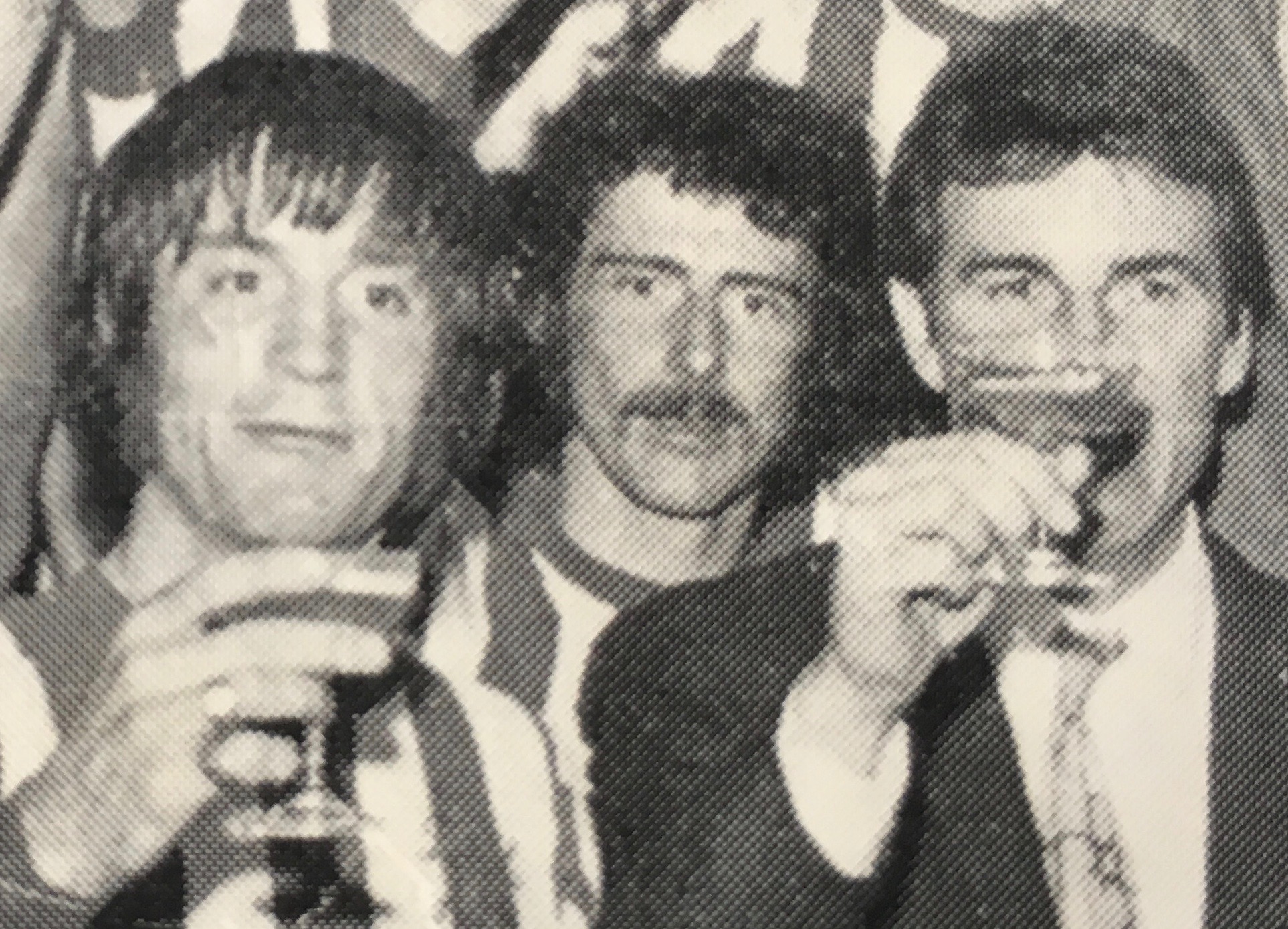
Kit Napier celebrates promotion with Willie Irvine, left, and manager Saward.

With Albion promoted, Saward knew he needed to strengthen the side and he clearly didn’t think Napier was up to playing at the higher level and put him on the transfer list.

Although he made a handful of starts in the 1972-73 Second Division campaign, by the end of August he’d been sold to Blackburn Rovers (who were in the Third Division at the time) for £15,000 as Albion sought to recoup some of the £29,000 record fee they spent bringing former England international Barry Bridges to the club from Millwall.

Napier had two seasons at Ewood Park and brought down the curtain on his English league career with a further 10 goals in 54 appearances. When he returned to the Goldstone with Rovers, he was made captain for the day. “I still get goosebumps and feel emotional at how the whole crowd gave me a standing ovation,” Kit remembered many years later.

He moved to South Africa to play for Durban United and, after packing up playing, had a very successful career as a Ford car salesman in the city (he was national sales manager of the year seven years in a row) alongside his former Albion teammate Brian Tawse. An Albion matchday programme reported how they both also turned out for a local Sunday league side in Durban.

Napier’s later years were blighted by emphysema and he died in Durban on 31 March 2019 at the age of 75.

6F15B25C-FBBC-4A75-8119-94BA0BDC7DBC_1_201_a