
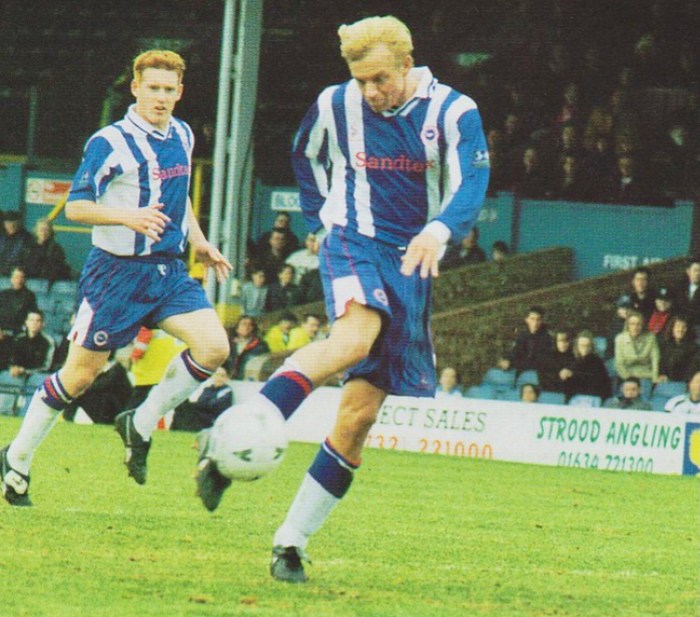
A PLAYER seen by only a few hundred loyal Albion supporters played under Brian Horton for Manchester City and Brighton.
Scott Thomas was spotted by City as an 11-year-old, joined them straight from school and was on the club’s staff for six years.
But he only ever featured for the first team on two occasions, in successive matches during Horton’s Maine Road reign.

A serious injury while playing on loan in America dealt a devastating blow to his hopes of a top flight career, and when City overlooked Thomas during the club’s slide towards the third tier, Horton threw him a brief lifeline.
Albion’s former captain, back at the club as manager when they played home games in exile at Gillingham, inherited a side in turmoil when he took over from Steve Gritt in February 1998.
Albion were second from bottom of the basement division and had endured a 12-game winless home run under Gritt. A Valentine’s Day nightmare 0-0 draw at home to bottom club Doncaster Rovers followed by successive away defeats against Rochdale and Exeter saw chairman Dick Knight wield the axe on a man who had delivered the miracle escape from relegation less than a year earlier.
Horton wheeled and dealed as best he could with limited resources and, after one of many loanees, Steve Barnes, returned to parent club Birmingham City, he remembered the youngster who he’d given a couple of outings to at the end of the 1994-95 season.

It seems extraordinary to say it now, but Manchester City were in a pretty desperate plight themselves between 1996 and 1998. Five different managers took charge over the course of the 1996-97 season. Alan Ball was in charge at the beginning, he was followed by Asa Hartford. Then Steve Coppell took the reins, before deciding after six matches that it wasn’t for him. Former Liverpool full-back Phil Neal succeeded his former England teammate. Eventually, former Nottingham Forest player and boss Frank Clark took over.
Clark was still in charge at the start of the following season, but a run of poor results saw him off, replaced by former Everton and City centre-forward Joe Royle. He couldn’t stop the rot and City were relegated to the third tier for the first time in their history.
Although a total of 38 players saw action in that desperate but ultimately fruitless attempt to avoid relegation, Thomas wasn’t one of them.
There had been a succession of players not wanted at other clubs who pulled on Albion’s stripes that season and Horton turned to blond-haired winger Thomas on the eve of the March transfer deadline day as he shuffled his pack trying to steer the side away from the bottom of the fourth tier.
“He can play on either wing or down the middle,” said Horton, by way of introduction in his Albion matchday programme notes.

After making his debut in a 0-0 draw at Cardiff City on 28 March 1998, skipper Gary Hobson declared: “Scott Thomas did well on the right of midfield.” And Horton said: “I was pleased with the first game for Scott Thomas, he looked lively and he came off with a bit of cramp late on.”
It was the first of seven games Thomas played for the Seagulls as the season drew to a close, and in his second game Albion earned their first win in six matches, beating Scunthorpe United 2-1 in front of a Priestfield crowd of 2,141.

He switched wings and played on the left in that match and Horton made a point of mentioning in his programme notes how the youngster had been unlucky to have been denied by a fantastic save by Iron ‘keeper Tim Clarke.
Unfortunately, that was the only game in which he was on the winning side: Albion drew three and lost two in the remaining matches. And Thomas was sent back to City at the season’s end.
It has since emerged that a serious injury the winger sustained two years earlier ultimately put paid to him continuing to play professionally.
He had been sent on loan to the United States to play for Richmond Kickers in Virginia. He told the Bolton News: “It was a brilliant opportunity being in the States but I shattered my left leg in four places and had to come back. I was gutted.”
As part of his recovery, he was sent to his local gym, Phoenix Health and Fitness in Bolton, and, four years after the injury forced him to retire, he bought it.

“Football will always be my main love,” he told the newspaper. “Keeping fit has played such a big part of my life — I’ve done various marathons and two Ironman triathlons too — so owning a gym was a natural choice.”
Born in Fairfield, Bury, on 30 October 1974, Thomas told the newspaper his father reckoned he started kicking a football against a wall or fence as soon as he could walk.
He was playing for Radcliffe Juniors when he was seven and, at 11, was scouted by City while he was playing in the Bury League.
“I thought it was brilliant at the time – it was a really big deal,” he said. “I did trials in the school holidays and then trained after school, so I’d get a bus from Bolton, through Bury and into Manchester to meet my dad before going to the grounds.”
Thomas’ son, Luca, has followed in his father’s footsteps. He worked his way through City’s academy sides but when he turned 16 switched to Leeds United’s scholarship scheme.


In the 2021-22 season, he scored 15 goals in 17 matches in the Under-18s Premier League North, and in August 2022 signed a two-year professional contract with Leeds.
“It has changed from when I was younger,” Thomas Snr told the Bolton News. “They have to grow up a lot quicker these days. It’s such a cut-throat industry: you can be flavour of the month one minute, winning Young Player of the Year like me, then out with an injury the next.”
Both of Scott’s City first team appearances were as a substitute. The first was on 6 May 1995 when he went on for Maurizio Gaudino on the hour mark at the City Ground, Nottingham. Forest won by a single goal, scored by Stan Collymore in the first half.

Eight days later, Thomas only got on in the 83rd minute when he replaced Paul Walsh as City went down 3-2 at Maine Road to QPR, for whom Les Ferdinand scored twice.
The winger also played in America for Richmond Kickers founder Bobby Lennon’s other club, Palm Beach Pumas, and he is quoted on the US Soccer Academy website as saying: “The level of football was excellent. Even though my career was cut short due to an injury, I will always have great soccer memories of my time in Florida.”




 At the season’s end, Dickov took up an option on his contract which allowed him to leave for a top-flight club and Graeme Souness signed him for Blackburn Rovers. It was not long before Mark Hughes took over and Dickov scored 10 goals in 35 games. Craig Bellamy was Rovers’ main man up front the following season and Dickov’s Premier League appearances were confined to 17 games plus four as a sub.
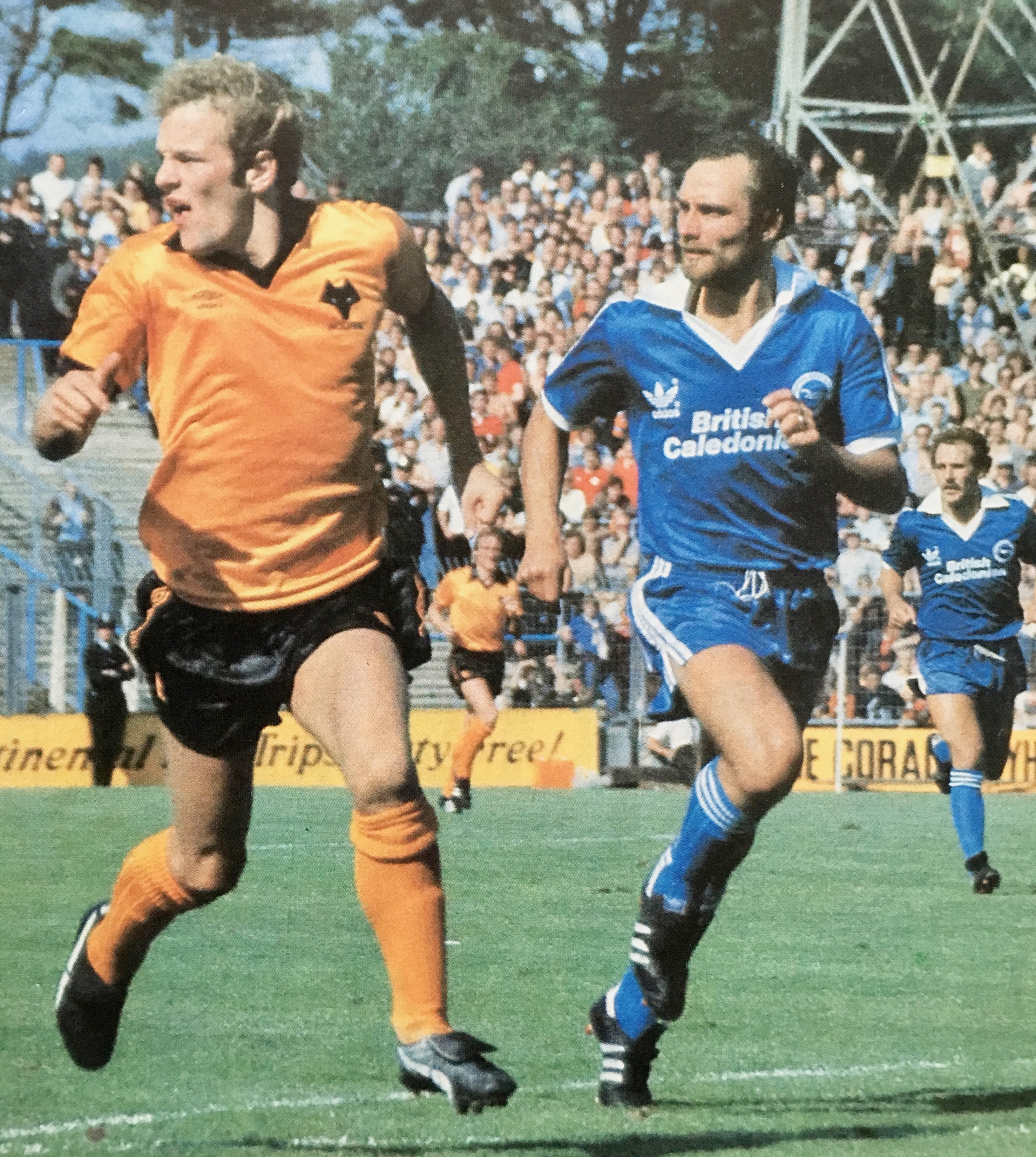 ARGUABLY the finest captain in Brighton & Hove Albion’s history went on to have a far less successful spell as the club’s manager having also been a boss at the highest level, at Maine Road, Manchester.


 In parallel lines