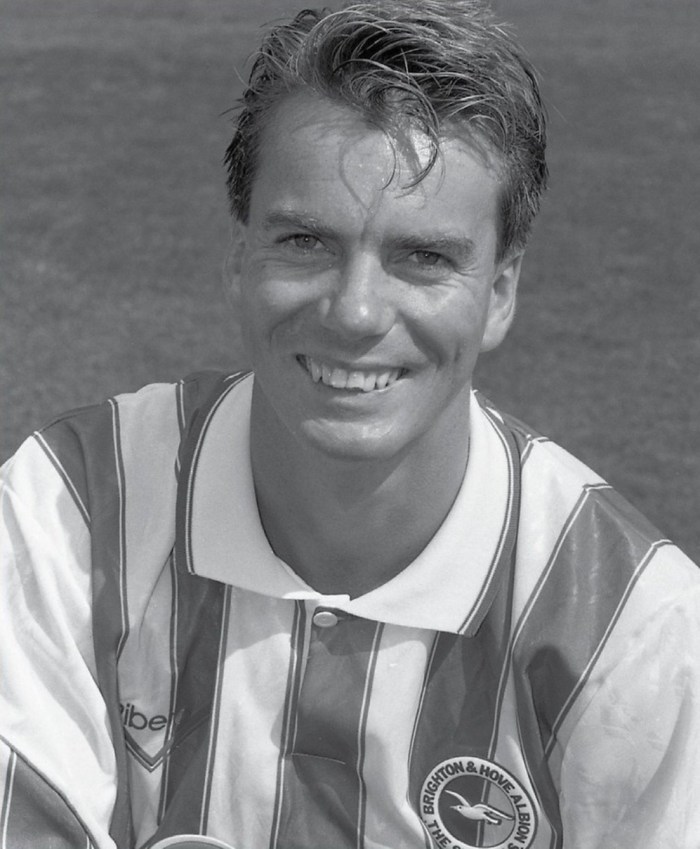
It was chirpy Chiv of the Cherries after six years with the Seagulls

THESE DAYS Gary Chivers is a familiar face around the hospitality lounges at Brighton’s Amex Stadium and Chelsea’s Stamford Bridge, the two clubs where he spent most of his playing days.

His association with Chelsea goes back to the tender age of 10, when he joined their academy, and he went on to play in their first team for five years. After six years with Brighton, he played out the final two years of his 16-year career at AFC Bournemouth under fledgling boss Tony Pulis. Among his teammates were Mark Morris, Warren Aspinall, Paul Wood and Steve Cotterill, all of whom also played for the Seagulls.

Born in Stockwell, London, on 15 May 1960, Chivers started supporting Chelsea at the age of eight, and, like many future professionals, got a foothold in the game at Stepney-based development club Senrab.

He told journalist Nick Szczepanik in a 2018 Backpass magazine article (below): “My brother had been training with Chelsea and my dad took me along when I was ten, and I went into their academy about two years before I should have.”
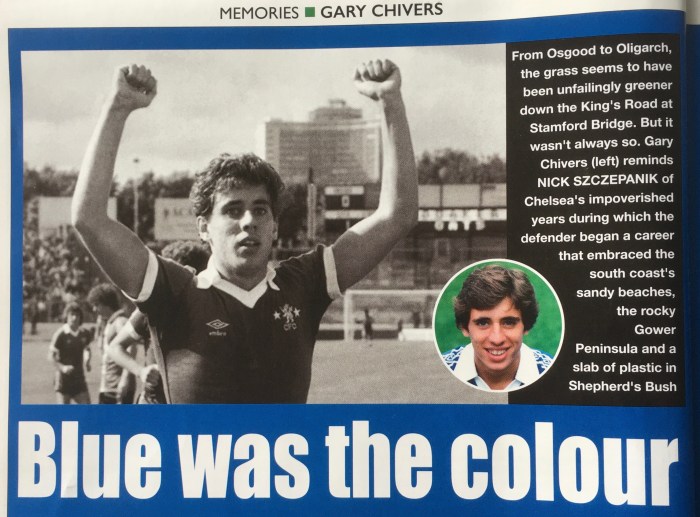
Chiv in BackpassAlthough initially a midfielder, coach Ken Shellito turned him into a defender and Chivers’ versatility in defence meant he could play centrally or in either full-back berth. Among his early contemporaries were John Bumstead, Colin Pates and Micky Fillery: Pates would later join him at Brighton.

With Chelsea already relegated, Chivers made his first team debut on 21 April 1979, aged 18, as he recounted in a December 2017 interview on the Chelsea website. Irish legend Danny Blanchflower was the manager who handed him his debut, at Stamford Bridge against Middlesbrough, which finished in a 2-1 win in front of just 12,007.

Chivers did enough to keep his place for the last four games of the season, and he told Szczepanik how in one he had to mark Arsenal’s Malcolm Macdonald and another Manchester United’s Joe Jordan.

In the second tier the following season, an injury to first choice right-back Gary Locke gave Chivers a chance to establish himself under new manager Geoff Hurst, and he retained the shirt for much of the season.

In total he made 148 appearances for Chelsea, scoring four goals, one of which was voted runner-up in Match of the Day’s Goal of the Season competition in 1980-81.

He got on the end of a Clive Walker cross following a delightful flowing move as top-of-the-table Newcastle were beaten 6-0 by second-placed Chelsea.

Chivers deputised at left-back for the injured Chris Hutchings towards the end of the 1982-83 season, by which time John Neal had taken over as manager. Chelsea were at a low ebb and only a point from a goalless draw against Middlesbrough on 14 May 1983 saved from them from relegation to the old Third Division. Neal overhauled the playing staff, and Chivers was amongst the casualities.

Explaining how he didn’t see eye to eye with Neal, he added: “I didn’t want to go, but you have to play games.”

He briefly switched to relegated Swansea City, under John Toshack, but only stayed six months as managers came and went in rapid succession. Seeking a move back to London, he joined QPR under Terry Venables – “the best manager I ever played for” – where he played alongside John Byrne, another player he’d be reunited with at the Albion.

At the end of his contract, he moved on to Watford during the uncomfortable spell when former Wimbledon boss Dave Bassett was in charge, but he got the feeling he didn’t fit in. Brighton boss Barry Lloyd, himself a former Chelsea player, agreed a £40,000 fee with the Hornets as Chivers dropped down a division to third-tier Albion, where he linked up with some familiar ex-Chelsea faces in Doug Rougvie, Robert Isaac and Keith Dublin.

He explained to Szczepanik: “I decided to go to Brighton because I had a look at their fixtures and I even asked for a promotion bonus because I was so confident they would go up.”

The confidence was well-placed because promotion was duly gained, and Chivers went on to become part of the furniture for the next six years, including playing in the play-off final at Wembley in 1990-91.

An incident that led to a Notts County goal still rankles with Chivers. “At 0-0, I played the ball off Tommy Johnson for a goal kick and David Elleray, the referee, gave a corner that they scored from. I saw him a few years ago and went over to set the facts straight. He said: ‘You’re not still going on about that from 20 years ago?’ and I said: ‘Too right I am!’ I walked away from him because it was winding me up, but it was because of how much it would have meant to the club.

“We would have gone on from there if we had got into the First Division but instead we ended up having to sell Mike Small and Budgie (John Byrne) and we went down at the end of the next season.”

Albion played a  benefit match for Chivers against Crystal Palace just before the start of the 1992-93 season and Chivers left the club in 1993, not because he wanted to, but because players on “decent money” had to go.

His enthusiasm for the club continues to this day, bantering with supporters in corporate hospitality and the Albion club website carried an article about the former defender’s divided loyalties when the Albion entertained Chelsea on New Year’s Day.


  • Pictures mainly from the club programme.

Winger Mark Barham was no stranger to Wembley

1 Barham progBRIGHTON’S wingers in the 1991 Division Two play-off final had previously been on opposing sides in a Wembley final.
Mark Barham was a winner with Norwich City as they beat Sunderland 1-0 in the 1985 League Cup Final and Clive Walker missed a penalty for the Wearsiders.

Six years on, Barham had levelled for Albion in the first leg of the semi-final at home to Millwall (more of which later) and Walker got the third when the Seagulls upturned the form book and beat Bruce Rioch’s side 4-1.

The 6-2 aggregate victory pitched the Albion against Neil Warnock’s Notts County under the shadow of the famous Twin Towers of Wembley.

Walker saw a Wembley post prevent him from scoring as Brighton’s dream of promotion was ended in a 3-1 defeat.

Folkestone-born Barham joined the Seagulls on a two-year contract after an initial trial and made his debut as a substitute for Kevin Bremner in a 1-0 home defeat to Oxford United on 30 December 1989.

He got his first start two days later in a 3-0 defeat at West Brom, who he’d played for briefly under ex-Ipswich and Arsenal midfielder Brian Talbot earlier that season.

On the second Saturday of the new decade he scored his first Albion goal in a 1-1 draw at home to Barnsley and had played 18 games by the end of the season.

Young John Robinson was beginning to get first team opportunities but Barham managed 42 appearances in 1990-91, culminating in that Wembley appearance against Notts County, although he was subbed off on 10 occasions.

That play-off first leg game against Millwall was Lloyd’s selection in Paul Camillin’s 2009 Match of My Life book (www.knowthescorebooks.com). He said: “Perry Digweed put in one of his incredibly long punts and the ball was about to bounce on the edge of the Millwall box when the centre half (David) Thompson ducked under it, I think intending to allow it to bounce through to Brian Horne in the visitors’ goal.

“But as he took his eye off the ball he also turned his back and the ball actually landed on the back of his head and squirted off right into Mark’s path. The little winger raced in and cracked the ball into the bottom corner. It really was a vital goal so close to the interval and the fans knew it.”

The goal also gave Barham much personal pleasure because he’d not seen eye-to-eye with Millwall boss Rioch when he’d been his manager at Middlesbrough.

With Robinson winning the shirt more frequently in the disastrous relegation season of 1991-92, Barham managed 25 appearances plus two as a sub but he was released at the end of the season and moved on to Shrewsbury Town.

Born on 12 July 1962, Barham’s football career began when he joined Norwich as an apprentice in 1978.

He was part of the City youth team that won the South East Counties League in 1979-80 and in the same season, at the tender age of just 17, manager John Bond gave him his first team debut. No fairytale start, though, as City lost 5-0 to Manchester United at Old Trafford.

However, he went on to make himself a regular in the City first team, making 213 appearances and scoring 25 goals for the Canaries.

Screenshot
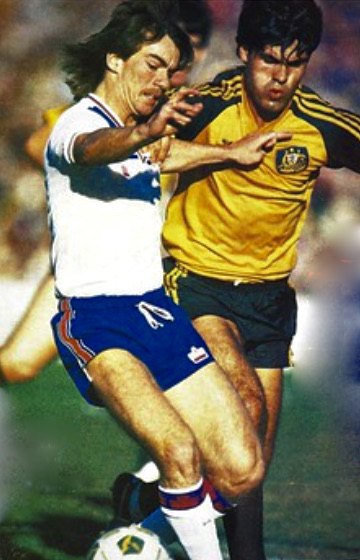
Barham in action for England v Australia

He also won two full England caps on the 1983 tour of Australia in a side captained by Peter Shilton and also featuring Trevor Francis and Terry Butcher. Barham spoke warmly of Bond when he died in 2012 telling the local pinkun:

“When I first came up from Folkestone I had what you might call long hair. The first time he played me in a five-a-side in training he told me ‘I’m letting you play this one but if you don’t go out and get your hair cut you won’t be playing another one’.”

Barham continued: “He was my first manager, he gave me my debut at 17 and I went on to play for England so he must have done something right.

“He loved wingers but you had to adhere to certain rules. You had to play wide with your foot on the line, it was your responsibility to score goals, get crosses in and defend at the same time.”

A knee injury suffered in a match against Spurs was a major blow to Barham’s career. He ruptured cruciate ligaments in his left knee and he ended up in plaster for 14 months.

Although he remained at Carrow Road for four more seasons, Dale Gordon and Ruel Fox emerged as challengers for his place and eventually, in July 1987, Barham moved on to Huddersfield Town.

It was there that he teamed up with former Albion full back Chris Hutchings who spoke favourably about his time on the south coast with the Seagulls. Barham only played 27 games for the Terriers and, with former England striker Malcolm MacDonald replacing Steve Smith as manager, found himself released on a free transfer in 1988.

He joined Middlesbrough on an 18-month contract but as Rioch’s Middlesbrough were relegated he only played four games in eight months and was on the move again, ending up at non-league Hythe Town.

Determined he still had what it took to hold down a league career, Barham wrote to all 92 clubs. He joined Division Two West Brom and played four times for them but they didn’t keep him on.

Barham tight crop“I knew I hadn’t suddenly become a bad player and that I could succeed again,” Barham told the Albion matchday programme in March 1990. “So I wrote to all the clubs again and that’s when Barry (Lloyd) contacted me. His was only one of six replies.
“Since being here I’ve found that all Hutch said about the club and the area was right and now I want to prove myself, show that managers were wrong to ignore me and enjoy my time in Brighton in the hope that my two-year contract will be extended.”

After the disappointments elsewhere, Barham certainly got his career going again at Brighton.

He scored once in eight matches for the Shrews but his career was on the wane in 1992-93 and he had short spells in Hong Kong and played non-league with the likes of Sittingbourne, Southwick and Fakenham Town, who he managed for 20 months from April 1996.

According to Mike Davage’s excellent article Canaries Flown From The Nest in the 1998-99 club handbook, Barham joined Mulbarton in February 1998.

At a Norwich centenary dinner in 2002, Barham told Davage he’d had more than 20 operations on his knee. By the time he was interviewed by Spencer Vignes for Albion’s matchday programme in 2015, he’d had 38 operations on it!

After retiring from the game he ran a toolhire business in Norwich and according to his LinkedIn profile he’s now a business development manager with facilities management company, Mitie.

2 Barham stripesBarham 1

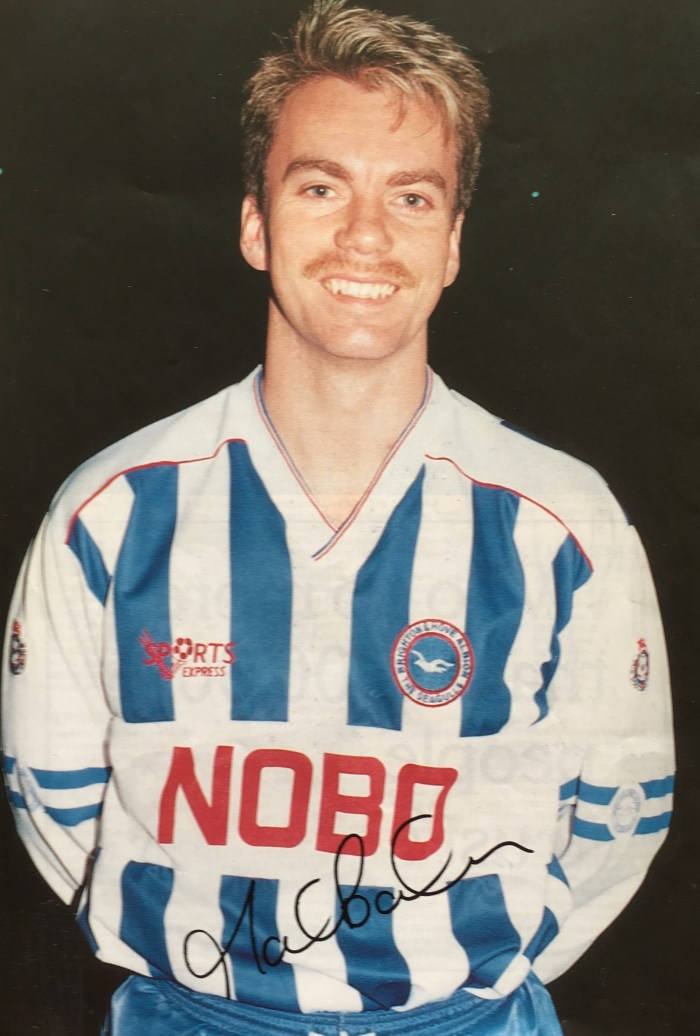
  • Pictures show Barham in Albion’s NOBO kit, from the Wembley play-offs programme, a portrait from a matchday programme and in a team line-up wearing the dreadful pyjama kit.

Welsh wizard Peter O’Sullivan an all-time Albion great

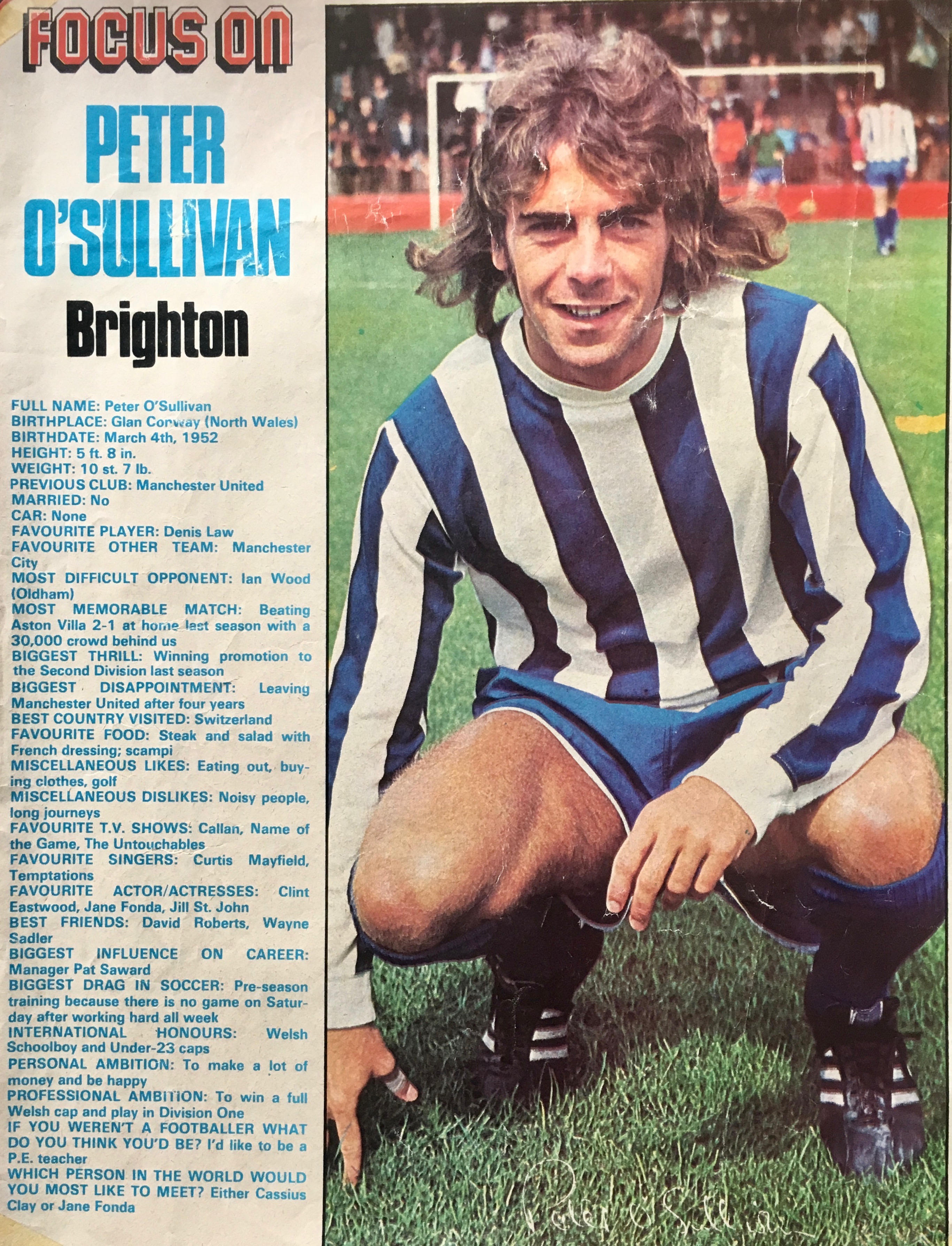
IMG_5086

WHILE Peter Ward rightly attracted much of the attention during Albion’s rise to the top in the late ‘70s, few would deny that midfield maestro PETER O’SULLIVAN also deserves a place amongst the club’s all-time greats.

Sully had a long career with the Seagulls before a short stint with Fulham towards the end of his playing days.

The statisticians of the modern football era would have needed their calculators to record the ‘assists’ racked up by Sully, who, from the left wing or left midfield, found goalscoring teammates with unerring accuracy throughout a remarkable 11 years with the Albion.

Managers came and went, a huge swathe of teammates were discarded, but Sully stayed put, showed his worth to whoever sat in the manager’s chair, and entertained the watching faithful.

He played in the same position as the Brazilian genius Rivelino and even sported the same style of moustache in homage to him.

As Brighton rose through the footballing pyramid, Sully was a constant, displaying the talent to make an impact in the third, second and top tiers. One of his former teammates, Andy Rollings, maintained: “He should have played at the top level all the time, he was that good a player.

“He had natural ability and great fitness,” Rollings told freelance journalist Spencer Vignes. “What he did at this club was incredible, and as an individual player he was one of the best I ever played with. He’s a lovely, smashing guy.”

In the excellent Vignes’ book A Few Good Men (Breedon Books Publishing),  Sully admitted there had been occasions when he couldn’t wait to get away from Brighton, and he had some serious arguments with all of the managers he played under.

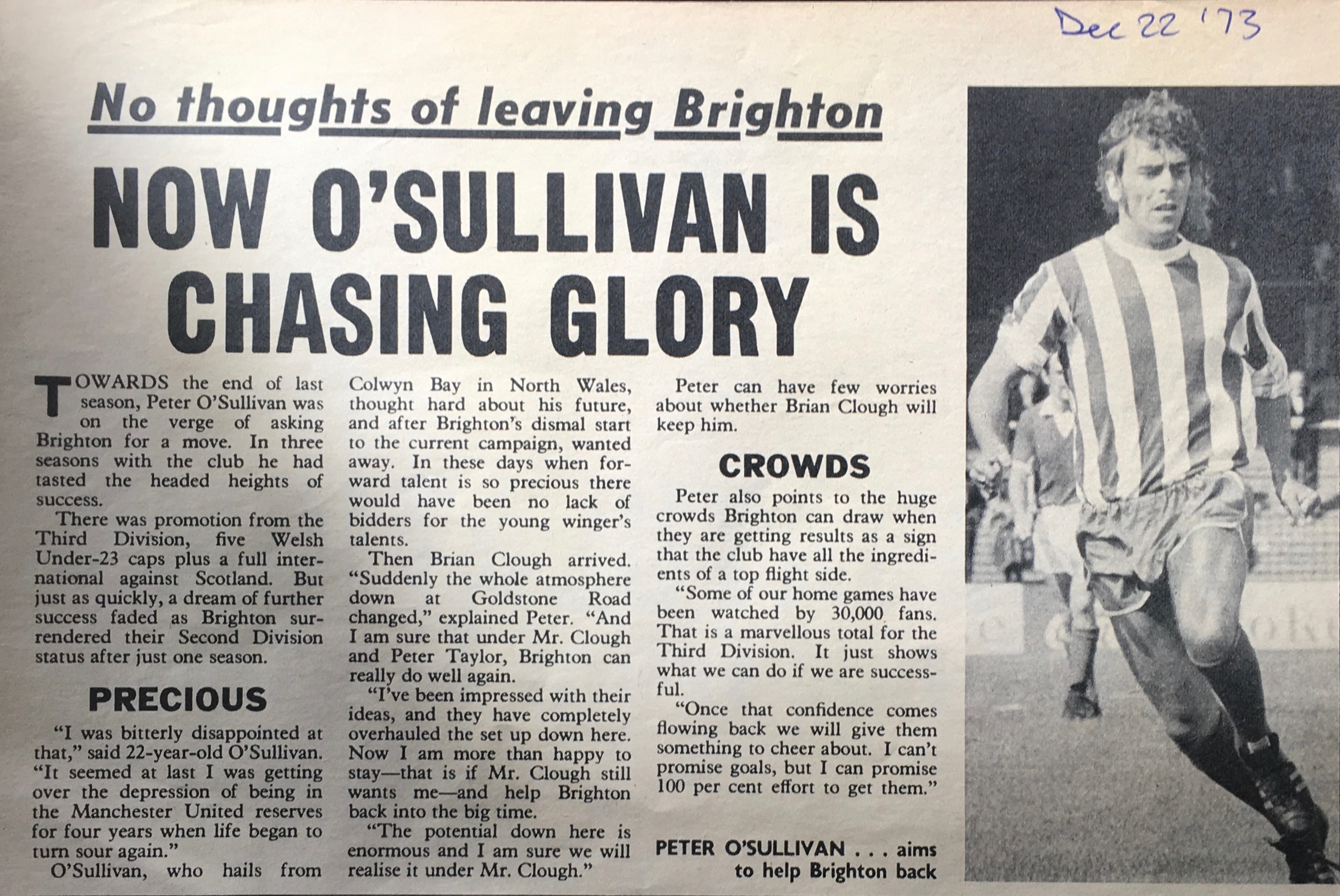
Sully shared his thoughts in a Goal magazine article of 22 December 1973, a couple of months after the arrival of Brian Clough and Peter Taylor. Having won promotion from the Third Division, won five Wales under 23 caps and made his full international debut against Scotland, he was disillusioned after relegation from Division 2.

“I was bitterly disappointed at that,” he said. “It seemed at last I was getting over the depression of being in the Manchester United reserves for four years when life began to turn sour again.”

However, with the arrival of Clough and Taylor, O’Sullivan changed his outlook and told the magazine: “I’ve been impressed with their ideas and they have completely overhauled the set up down here. Now I am more than happy to stay – that is if Mr Clough still wants me – and help Brighton back into the big time.

“The potential down here is enormous and I am sure we will realise it under Mr Clough.”

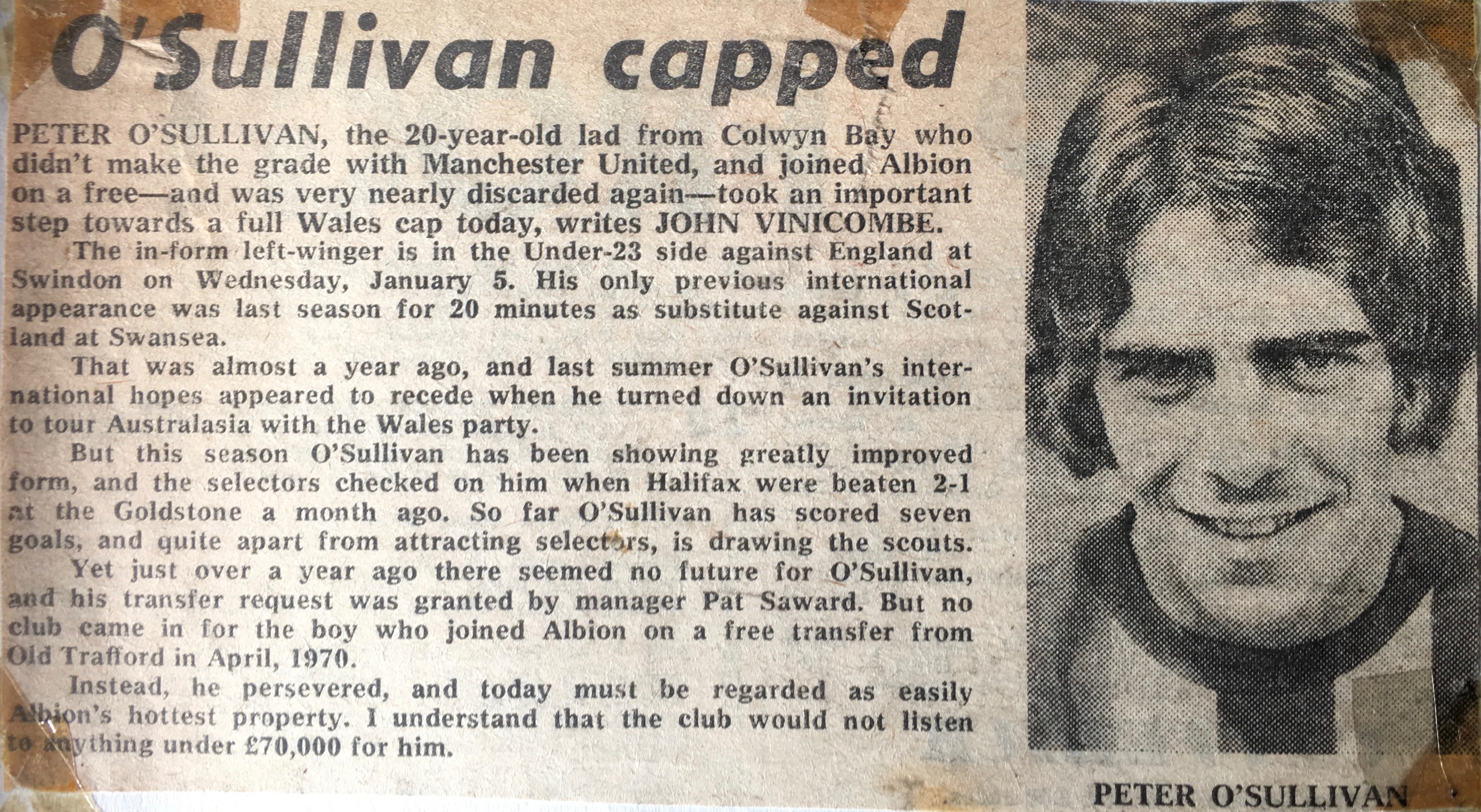
Vignes’ 2007 interview with Sully explained exactly how he ended up at Brighton having been given a free transfer from Manchester United. None other than the great Bobby Charlton was responsible.

sully man u

Young Peter crouches alongside George Best in a Manchester United team photo

Born in Colwyn Bay, north Wales, on 4 March 1951, Sully had trained alongside the United legend while at Old Trafford as a youngster and, on being released on a free transfer in 1970, was considering offers from several different clubs.

He’d gone to Bristol to have a trial with Bristol City when, on a neighbouring pitch, Charlton was taking part in an England training session prior to the 1970 Mexico World Cup.

The kindly maestro exchanged the time of day with his recently departed colleague and asked which clubs were in for him. On hearing that one of them was Brighton, managed by his former Busby Babe teammate, Freddie Goodwin, Charlton advised him to link up with his old pal……and the rest, as they say, is history.

What Charlton and Sully didn’t know, however, was that no sooner had he arrived on the south coast than Goodwin was heading for the exit, en route to Birmingham City. Sully hadn’t even kicked a ball in anger for him.

“I was a little apprehensive about joining Brighton and it was unsettling when Freddie Goodwin left the club before I had even played for Albion,” he said. “I wondered what was going on and how it would affect me.

“But then Pat Saward arrived and I was overjoyed when he put me in the team. My hopes were quickly dashed again, though, when he dropped me after about six games.”

A homesick Sully struggled to settle at first but he stuck at it and went on to cement his place in the side. He ultimately featured under four different managers, Saward, Clough, Taylor and Alan Mullery.

IMG_5087

He was part of the promotion-winning teams in 1972, 1976 and 1979, and was player of the season in 1978. He won promotion with Fulham too, going up to the old Division 2 in 1982 when the former Newcastle, Arsenal and England centre forward Malcolm MacDonald was in charge.

Sully had one amazing period with the Albion in which he made 194 consecutive appearances, an Albion record for an outfield player.

IMG_5091The performances of the lad from Colwyn Bay also saw him earn three international caps for Wales, two against Scotland and one in a rout against Malta when he also got on the scoresheet. Unfortunately for him, during the same period, a superb left-sided player called Leighton James was the first choice for the national side.
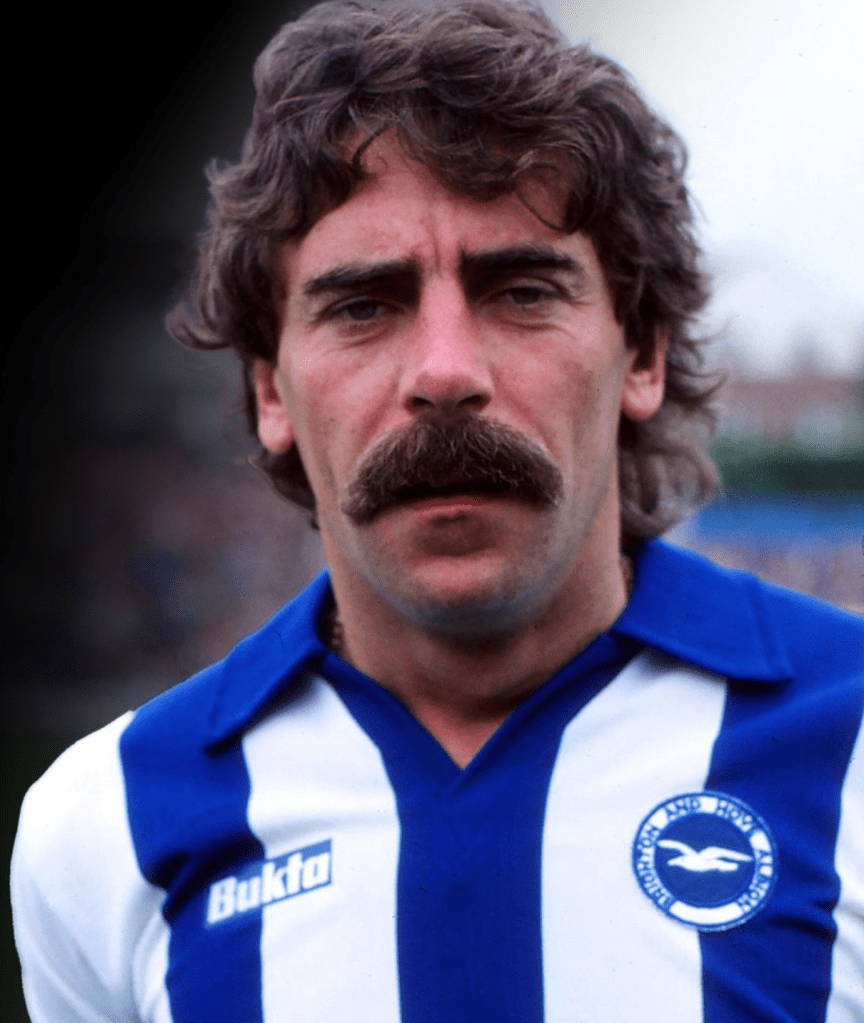
“When I joined Manchester United from school it was always one of my ambitions to play for Wales,” he told the Albion matchday programme. “But I thought those hopes had been dashed when Manchester United released me.”PO Wales

Sully’s 491 appearances for Brighton made him the club’s longest-serving post-war player. He actually left the club in 1980 to play in America for San Diego Sockers but a £50,000 transfer fee saw him return just five months later.

Eventually Sully moved on to Fulham in 1981 and notched up 46 appearances. There were short loan spells with Reading and Charlton in 1982-83 and his Football League career came to an end when he made 14 appearances for Aldershot in the following season.

Willie Irvine restored Irish international career at Brighton

willie + chris

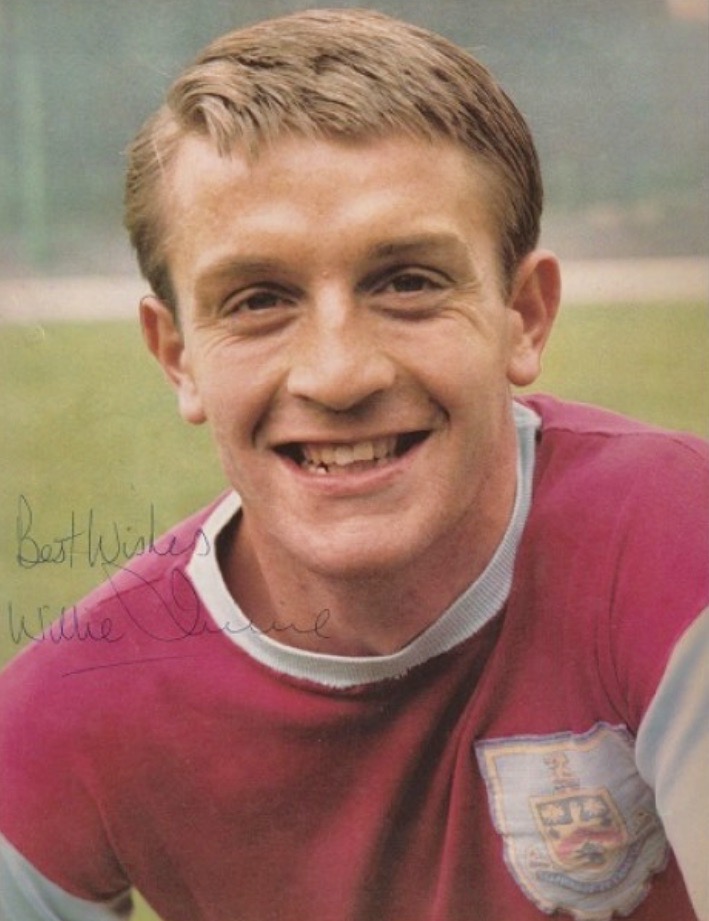
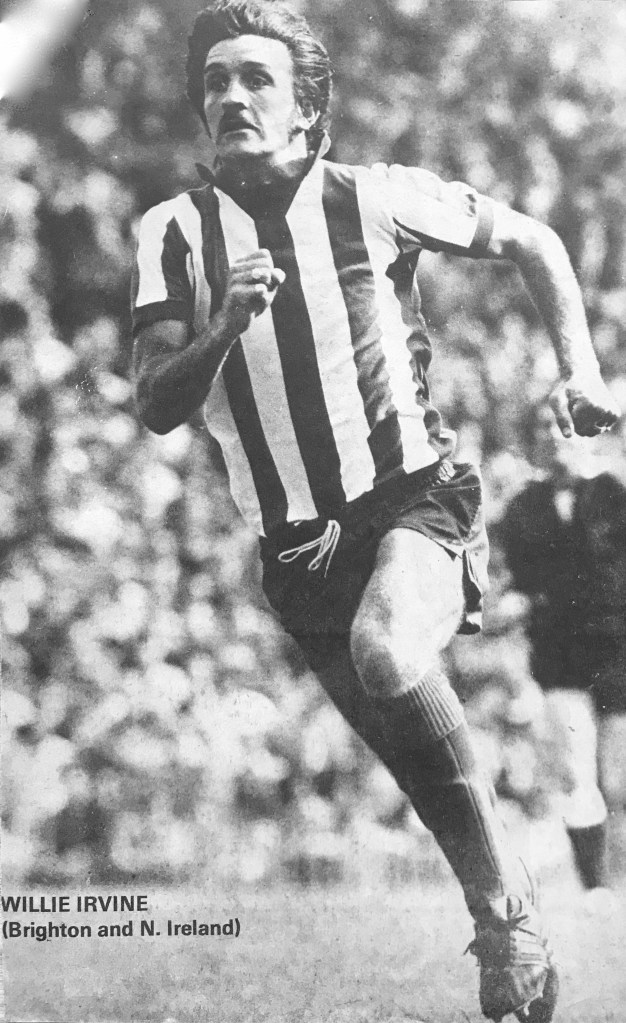
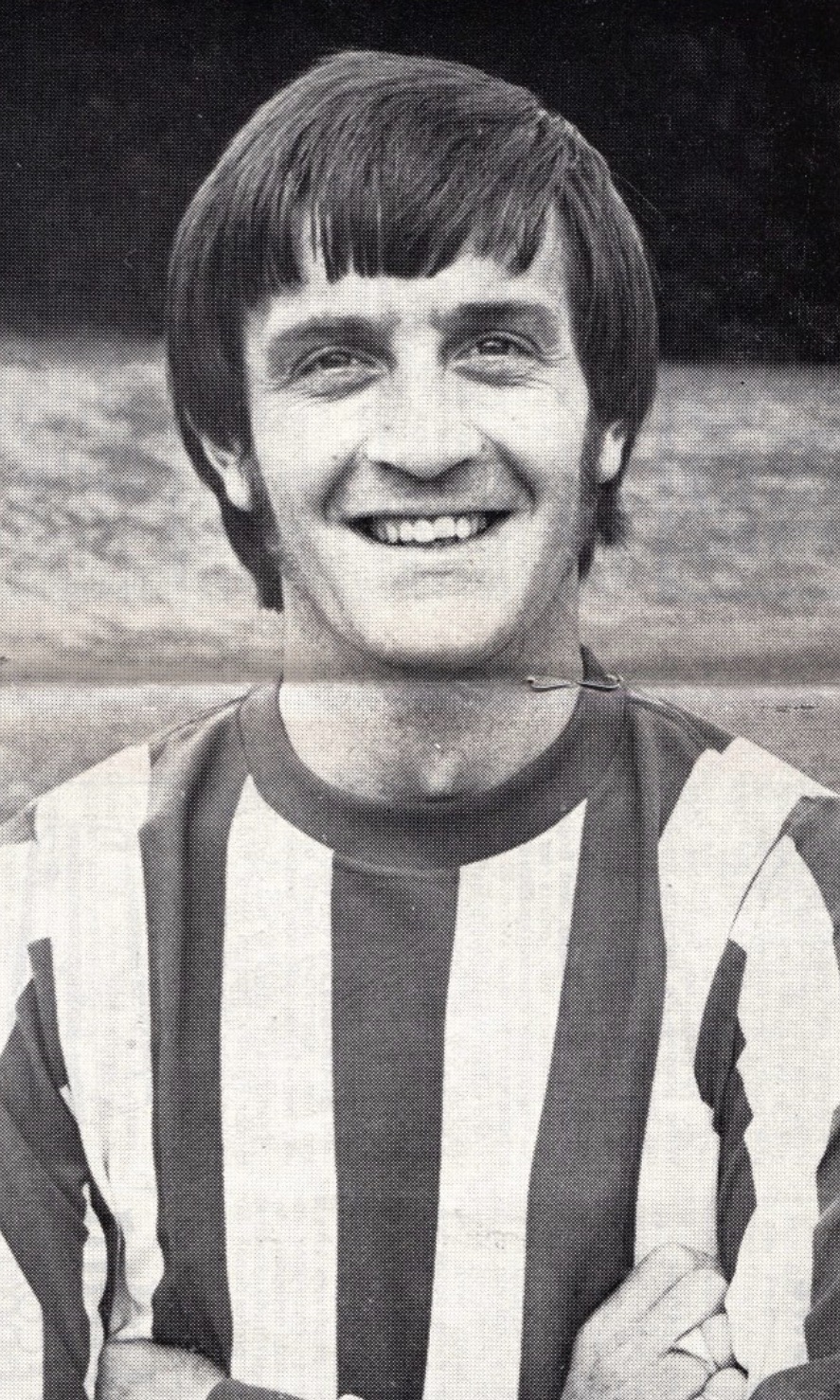
NORTHERN Ireland international Willie Irvine has encountered the highs and lows in life and I would urge anyone who hasn’t yet read his autobiography, Together Again (written by Dave Thomas) to add it to their book collection.

The Albion provided a platform for a brief resurgence in Willie’s career in the early 1970s but in the mid Sixties he was a big star scoring goals for fun as Burnley strutted their stuff amongst English football’s elite.

He scored 97 goals in 144 games (plus four as a sub) for the Lancashire side between 1962 and 1968 and in the 1965-66 season notched 29 league goals (37 including cup games) in what was the equivalent of today’s Premiership.

On the excellent Clarets Mad website, Tony Scholes wrote: “In my time watching the Clarets, none have been quite able to match the goalscoring exploits of Willie Irvine who, for two and a half years, was as good as anyone in English football when it came to putting the ball in the net.”

Sadly his highly-promising career at Burnley was never the same after he suffered a broken leg in a tackle with Johnny Morrissey in a FA Cup third round match at Everton in 1967.

A year later, the Turf Moor club turfed him out, transferring him to nearby Preston North End. By 1971, he was surplus to requirements there, and Pat Saward brought him to Third Division Albion on loan.

His first game, on the evening of 10 March 1971 at home to Fulham, couldn’t have gone much better because he marked his debut by scoring two in a 3-2 win.

He also scored in 1-0 wins over Shrewsbury and Bury, in a 3-0 win at Reading and in the last game of the season, a 1-1 draw with Plymouth Argyle. Not surprisingly, those goals led to him signing on a permanent basis that summer and the following season saw him play a key role as Brighton secured promotion to the second tier as runners-up to champions Aston Villa.

Irvine described warmly how Saward attracted him to up sticks from the North West and move to Sussex. “Pat sold me the place with his charm and persuasive ways,” he said, describing the former male model as “extrovert, infectious and bubbly”.

He added: “Pat Saward was a gem of a manager and a pleasure to play for. He said what he thought, but never offensively; in a matter-of-fact, plain-speaking kind of way, rather than aggressively.”

Irvine continued: “Saward had the knack of making people feel important. He instilled pride and a sense of identity…..Pat loved attacking, entertaining football and worked tirelessly for the club. I would have run through that proverbial brick wall for him.”

As Brighton neared promotion, Irvine said: “Saward, with a joke or a smile, an arm around the shoulder or a bit of geeing up, knew just how to keep a dressing room happy or dispel any tension or nerves.”

Fans of a certain vintage will recall a memorable goalscoring season for Irvine was capped off (literally!) by a most magical strike against Aston Villa in front of the Match of the Day cameras.

Willie’s goal was judged by the legendary manager Jock Stein as the third best goal of the season shown on Match of the Day and Brighton went on to win promotion. It was undoubtedly the best of the 17 he scored in 40 matches that season.

It was the first time I had experienced the excitement of going up, but there was one further thrill in store for me before the season came to a complete close.

In those days, there was an end-of-season tournament played between the “home” nations (England, Scotland, Wales and Northern Ireland). I had already been to a couple of England internationals at Wembley but the England international on May 23 1972 was extra special because lining up for Northern Ireland was Albion’s very own Irvine.

Now, I had not been a football supporter for very long, but even I knew that it was virtually unheard of for Third Division teams to have current international players playing for them.

Born at Eden in County Antrim on 18 June 1943, Irvine was the youngest of 18 children, and was brought up with seven siblings in the seaside town of Carrickfergus by his mother, Agnes, after his father Alec died during a wartime blitz in Belfast.

He had played five times for Northern Ireland’s under 23 side before stepping up to the full international team and winning 21 caps at the height of his career. But I never dreamt – and, on reading the autobiography many years later, neither had he – that he would re-appear for his country after dropping down to the third tier of English football.

My allegiances were split that day and I have to say it didn’t really upset me that Northern Ireland ended up 1-0 winners thanks to player-manager Terry Neill’s solitary goal – laid on by Irvine!

Here is how The Official FA Year Book (1972-73) described the goal: “From Hegan’s corner, Irvine beat Shilton to the ball and headed it down to Neill, the Irish player-manager, playing in his 50th international, to shoot into an empty net from two yards range.”

The game saw England give international debuts to Colin Todd and Tony Currie, and Colin Bell was England captain in the absence of Bobby Moore. Two players who would later join the Albion – Martin Chivers, as a substitute for Malcolm Macdonald, and Sammy Nelson, the Arsenal left-back – were also on show.

“I was delighted to have won my place back in my national team and I thought I did reasonably well,” Irvine told the Albion matchday programme. “When I reported back for international duty Derek Dougan welcomed me like a long lost uncle. He is a little older than I am. But I feel that at 29 I still have something to offer to the Irish side.

“It’s a wonderful experience playing for one’s country. I always get a great thrill when I hear I have been selected. My last three appearances, I believe, were solely due to that much publicised and televised goal against Aston Villa.”

Irvine also said he hoped to earn more caps, especially as he opened the new season with four goals in three games. But he wasn’t selected again, and his days as an Albion player came to an end before Christmas that year.

It’s no surprise that Irvine played alongside George Best in some matches for their country and in a 2010 interview with Suzanne Geldard in the Lancashire Telegraph, he recalled how they became roommates in 1964.

“I was 18, George was only 16, so because we were the babies in the team they put us together,” said Irvine. “He was the kindest, nicest lad you could ever meet in your life.

“People adored him. I’ve even seen people cutting pieces of his hair off for keepsakes, but he would just shrug his shoulders.

“George Best was without doubt an amazing footballer. You had to get on his wavelength, but that was difficult because he was way above everyone else. He picked me out two or three times and helped me score.”

Life has been rather unkind to Irvine since his glory days but, as the title of the book implies, he has got it back together after reaching a very low ebb.

Together Again reveals how it all turned sour for him at the Albion when his relationship with Saward deteriorated badly. Despite scoring five in 13 league and cup appearances in the opening months of the new season, in December 1973, against his wishes, he was transferred to Halifax Town in part exchange for Lammie Robertson.

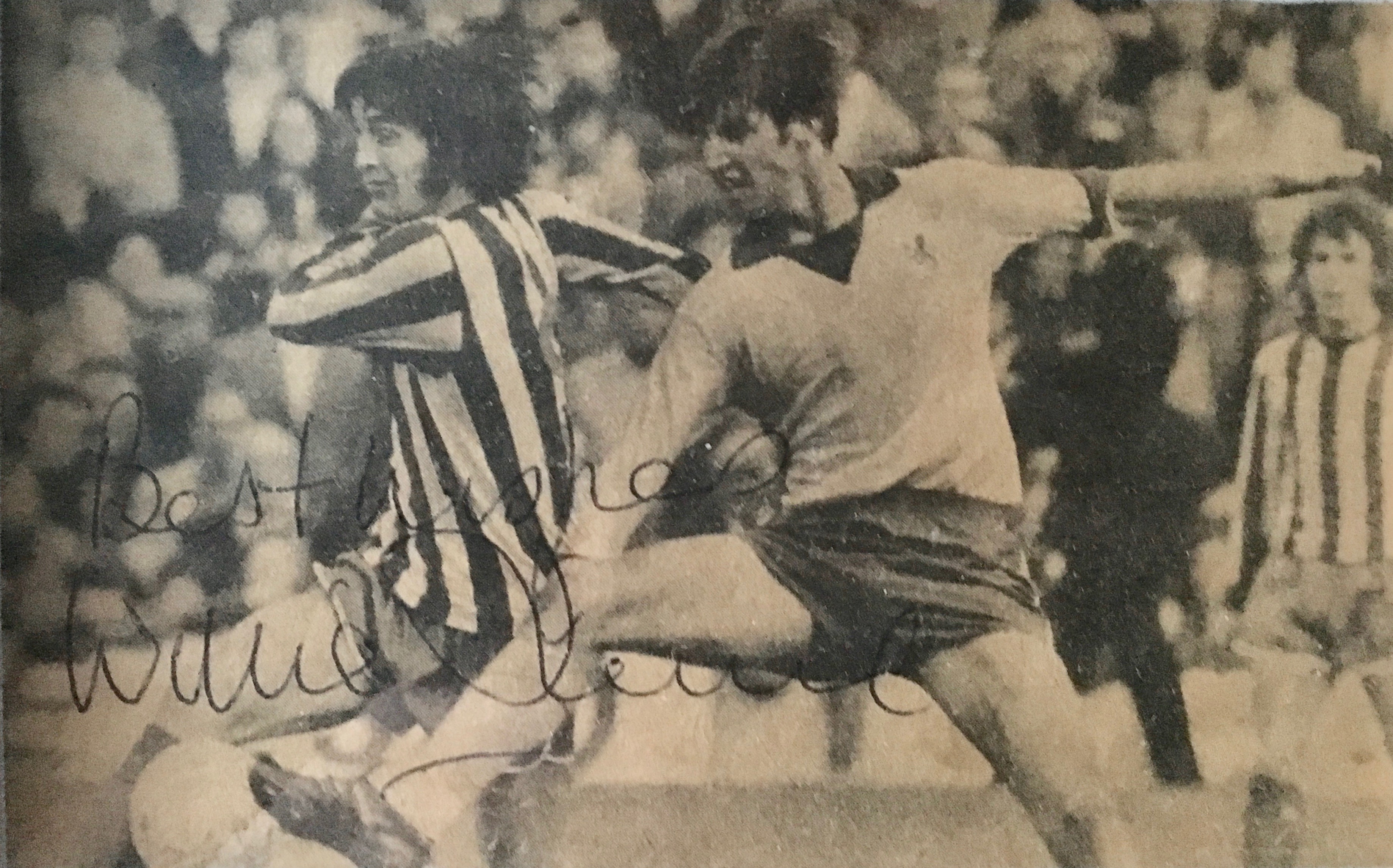
On reading that he had no memorabilia of his time at the Goldstone, 35 years after he left the Albion, I sent him my copy of the Albion programme for that famous win over Villa and he kindly returned an autographed photo showing him in action with Chris Nicholl, which I had sent with the programme.

Irvine died aged 82 in July 2025.