

FORMER DUTCH MARINE Michel Kuipers earned back-to-back promotions with Brighton and Hove Albion and Crawley Town.
He was between the sticks for the Albion when they won promotion from the basement division in 2000-01 and the third tier in 2001-02.
And after 10 years with the Seagulls, during which he made a total of 287 appearances, he spent two years with Crawley where, over 49 matches, he won promotion from the Conference in 2011 and League Two in 2012.
Undeniably, it was Kuipers’ years with the Seagulls that defined his career after an inauspicious start when Micky Adams subbed him off at half-time on his debut away to Southend United. Replaced by Mark Cartwright in that match, he was left out of the next 11 matches before an injury to Cartwright enabled him to win back the shirt. He didn’t look back after that, though, and only missed three more matches as the Seagulls were crowned champions.
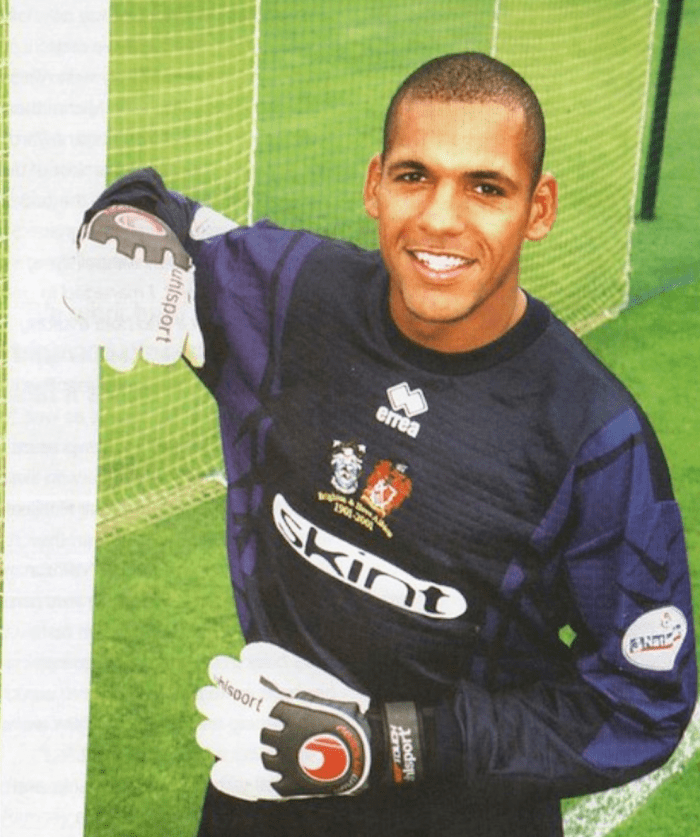
Although there were to be plenty of ups and downs over the following years, when he wasn’t always first choice, Kuipers remained a crowd favourite for his agility as a shot stopper and his fanlike celebrations of goals and wins.
“I was a player but I also turned into a fan of the Albion,” he said in an interview with the matchday programme. “On the pitch I would celebrate each goal we scored like I was on the terraces with our supporters.
“After we had a good result in the game, I would celebrate with the players but always expressed my joy and gratefulness to the supporters.”
A sensational double-save in a televised game away to Wolves in November 2002 was a highlight for many and a one-handed reaction stop at Blackpool earned him a ‘save of the month’ award from sponsor Nationwide.
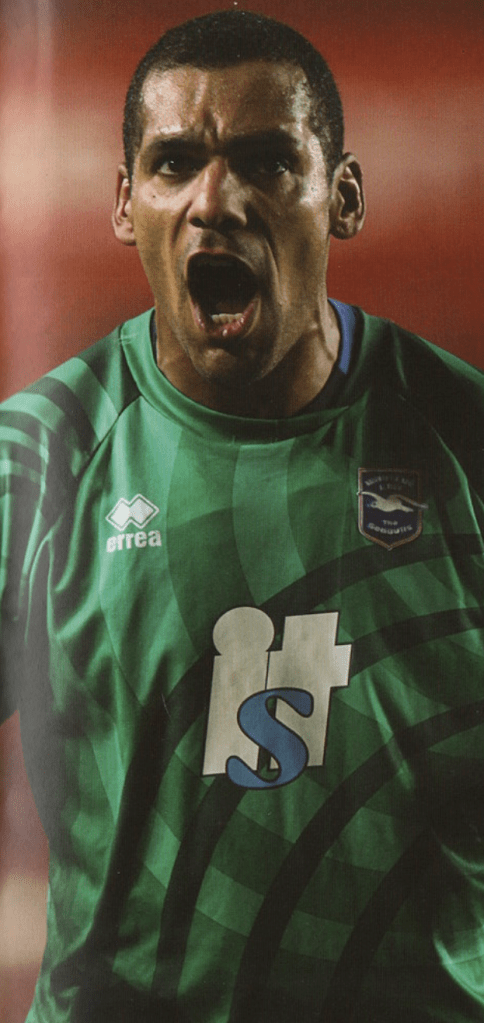
He didn’t always see eye to eye with Mark McGhee, who reckoned his kicking let him down, and the Scot said: “His desire to do well is unquestioned, but I had to make a decision and it was not always one he agreed with.”
McGhee was nonetheless full of admiration for the Dutchman and in a programme for Kuipers’ testimonial match v Reading in 2012, he recounted a specific role he played when Albion’s back-up goalie at the 2004 Second Division play-off final against Bristol City.
“I asked Michel to warm up, but in truth to get the supporters going. I remember him going down to the corner and waving with those huge arms – he absolutely galvanised the support.
“What was brilliant for me was that he did it despite his huge disappointment not to be playing himself – he did it for the team. The rest is history as the fans got behind the team. We got the penalty and went on to win the game.”
Later that evening, the trophy Albion won got bent when someone fell on it: with his bare hands, Kuipers straightened it!
Five years (from 19 to 24) in the Dutch Marines during which he’d parachuted from aeroplanes and learned to survive in harsh conditions, definitely left their mark. His training had taken him into jungles, deserts and the Arctic, but he said: “My love and passion for football was always there. In my spare hours I played for the Marines team.”
Born in Amsterdam on 26 June 1974, as a child Kuipers played football with his mates in front of some garages near the flats where he lived. He recalled they would be told off for hitting the ball against the garage doors, so he went in goal to try to save the ball from making loud bangs every time one of his friends scored.
“I was doing OK, so from that day onwards I played as a goalkeeper,” he said. He played for the local Blauw-wit under six team and went all the way through the age groups to the first team at 18.
A keen Ajax fan as a youngster, his idol was their goalkeeper Stanley Menzo – “one of the best goalkeepers of his generation” – and he also admired Menzo’s successor, Edwin Van Der Sar, who later played in England for Fulham and Manchester United.
Although Kuipers went straight from full-time education into the Marines, he also played part time for AFC Door Wilskracht Sterk (it means Strong Through Willpower) and Kuipers explained: “We won the Amsterdam regional league for the first time in 25 years and this brought me to the attention of Ian Holloway at Bristol Rovers.
“When I was offered a contract by him, I wasn’t sure I could leave the Army, but the officers knew I’d put 110 per cent into my job, so they were happy to release me.”
But in 18 months with Rovers, Kuipers only managed one first team appearance (against Bournemouth in March 1999). Indeed, it was while playing for Rovers Reserves against Brighton at Worthing that he caught the eye of Brighton boss Adams. He jumped at the chance when Albion offered him a trial and he played well enough in a Sussex Senior Cup semi-final against Langney Sports for Adams to persuade him to make a permanent move to the Seagulls with the intention of being back-up to Mark Walton.
When Walton suddenly upped sticks and joined Cardiff before the 2000-01 season had started, Kuipers found himself in the starting line-up for the opening game away to Southend.
Understandably, Kuipers was distraught at being taken off at half time but he knuckled down to try to win back the shirt and said: “If you’re mentally strong and you’ve got good self-confidence and belief then you just fight back and that’s the way I approached it in the following months.”
He credited the work he put in with goalkeeping coaches John Keeley and Mike Kelly, admitting: “They improved my technique and made me more professional.”
Even when Adams left for Leicester, Kuipers remained no.1 under Peter Taylor as the Seagulls soared to a second successive promotion.
Injury meant Kuipers missed the second half of the season when Steve Coppell’s side only just missed out on avoiding an immediate drop back to the third tier.
When Ben Roberts was preferred as first choice goalkeeper, Taylor, by then manager of Hull City, took Kuipers on loan in September 2003.
Albion rebuffed Hull’s attempt to sign him on a free transfer but shortly after his return to Sussex he was involved in a horror car smash on his way to training.
Remarkably, considering he was airlifted to hospital, he escaped serious injury although club physio Malcom Stuart reported: “Michel knows he was very lucky. There’s a degree of shock and he will need time for that to clear his system. Structurally there are no serious injuries, but he’s had several stitches and is very sore and uncomfortable muscularly.”
Manager McGhee added: “My God, we feared the worst. But in a sense it’s an absolute bonus, a miracle – they sent him home with a few cuts and bruises, a swollen face, a sore back and a sore neck, which in a week or two will be fine.”
Nevertheless, it was Roberts who kept his place as Albion won promotion via the aforementioned play-off final win in Cardiff. But in the first half of the 2004-05 Championship season, Kuipers was back in the saddle courtesy of injury to Roberts.
All was fine until a home game v Nottingham Forest on 22 January 2005 when Kuipers came off worse in a challenge with Kris Commons and the shoulder injury he sustained kept him out for the rest of the season. Former Arsenal ‘keeper Rami Shabaan and Southampton loanee Alan Blayney took over the gloves.
New competition arrived in the shape of Aston Villa loanee Wayne Henderson, who took over in goal at the start of the 2005-06 season and with the brief return of Blayney as well as Frenchman Florent Chaigneau as back-up, it seemed Kuipers’ Albion days might be over.
He was sent out on two loan spells at League Two Boston United – initially playing four times in December 2005, then 11 matches between February and April 2006.
With Brighton back in the third tier for the 2006-07 season, and another change of manager when McGhee gave way to Dean Wilkins, Kuipers found himself vying for the jersey with Henderson, who had been signed permanently. Local lad John Sullivan was beginning to emerge too. But there was no keeping a good man down and Kuipers was the ever-present first choice goalkeeper throughout the 2007-08 season.
At that time, he admitted he was still learning ways to improve thanks to goalkeeping coach Paul Crichton and told the matchday programme: “I am very pleased with the progress I have been making under Paul.
“My game has definitely improved and it is great to see the results of hard work on the training ground coming out in games.”
When Adams returned ahead of the 2008-09 season, Kuipers was still in pole position and he famously saved Michael Ball’s penalty when League One Albion beat Manchester City 5-3 on penalties in a second round League Cup tie at Withdean.
Although Sullivan had a run in the side, and Adams’ successor Russell Slade briefly turned to loanee Mikkel Andersen, Kuipers was once again in the box seat come the end of the season.
It wasn’t long after the arrival of Gus Poyet that Kuipers’ time at Brighton finally came to an end. A 2-1 home defeat to Norwich City in February 2010 was his last Albion start as Poyet turned instead to his ‘keeper of choice, Peter Brezovan.
The Dutchman continued his association with the Seagulls through involvement in the Albion in the Community programme and his long service was rewarded with a testimonial game at the Amex (a 1-1 draw v Reading when he played 15 minutes). He told BBC Radio Sussex: “Bar my family, this football club is the closest thing to my heart.

“I’ve been bleeding blue and white for the last 12 years so this is a very proud moment for me and my family.”
He added: “I love the Brighton supporters. They’ve been absolutely fantastic to me and a lot of the times when we had our backs against the wall, they were the 12th man.
“Especially as a goalkeeper, I really appreciate them backing the team. I think people appreciated me because I threw my body on the line for the club.”
Kuipers early days at Crawley saw him making headlines for all the wrong reasons – he was sent off twice in the first month, v Grimsby Town and v Forest Green Rovers – but he was in the Blue Square Bet Premier league side that had a terrific run in the FA Cup, only narrowly losing in the fifth round, 1-0 to Man Utd at Old Trafford in February 2011.

On leaving Crawley in early 2013, he said: “When I joined, the club had finished mid-table in the Conference and I leave challenging for the play-offs in League One.
“The supporters have always backed me and I am really proud of the part I have played in raising the profile of Crawley Town with two successive promotions.
“It’s been a fantastic part of my career and I will always remember my time at the club.”
The final four months of his playing days were spent on the subs bench at Barnet, as back-up to first choice Graham Stack.
In 2020, Kuipers was behind the setting up of the PHX gym at Hollingbury.




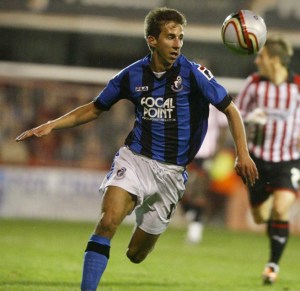
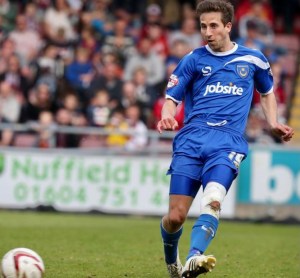
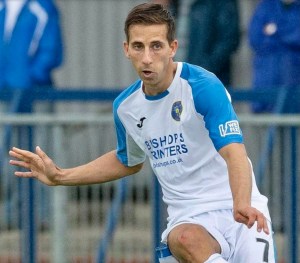


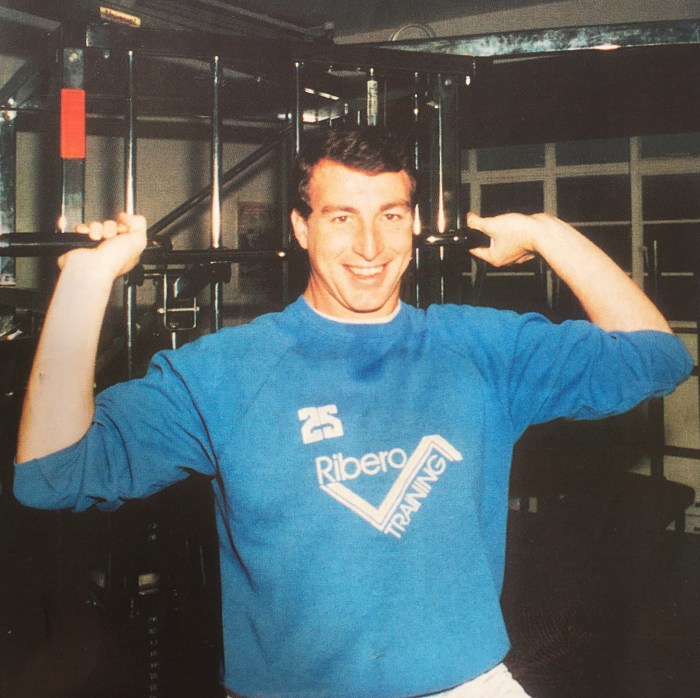

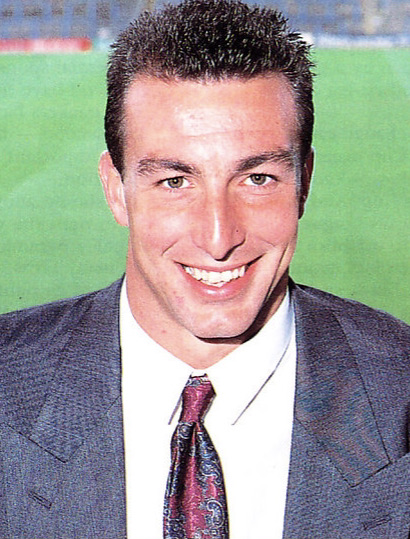


 He made his debut away to Manchester City in February 1985 and, in two spells, stayed a total of six months with the Seagulls, making 23 appearances. It wasn’t long before he earned the divisional young player of the month award and Cattlin said: “Martin has done very well and done himself great credit in coming into the heat and tension of a promotion battle and coping well.”
 “So, the young man from Oxford must have something special going for him. On the field he is a sharp, decisive player, but away from the game he is quietly spoken and unassuming.”
 Unfortunately for Brighton, Keown returned to Highbury and it wasn’t long before Howe, the former coach who’d become Arsenal manager, gave him his first team debut on 23 November 1985 in a 0-0 draw away to West Brom.
 Three years later, he became what Colin Harvey described as his best signing during his time as boss of Everton. A fee of £750,000 took him to Goodison.


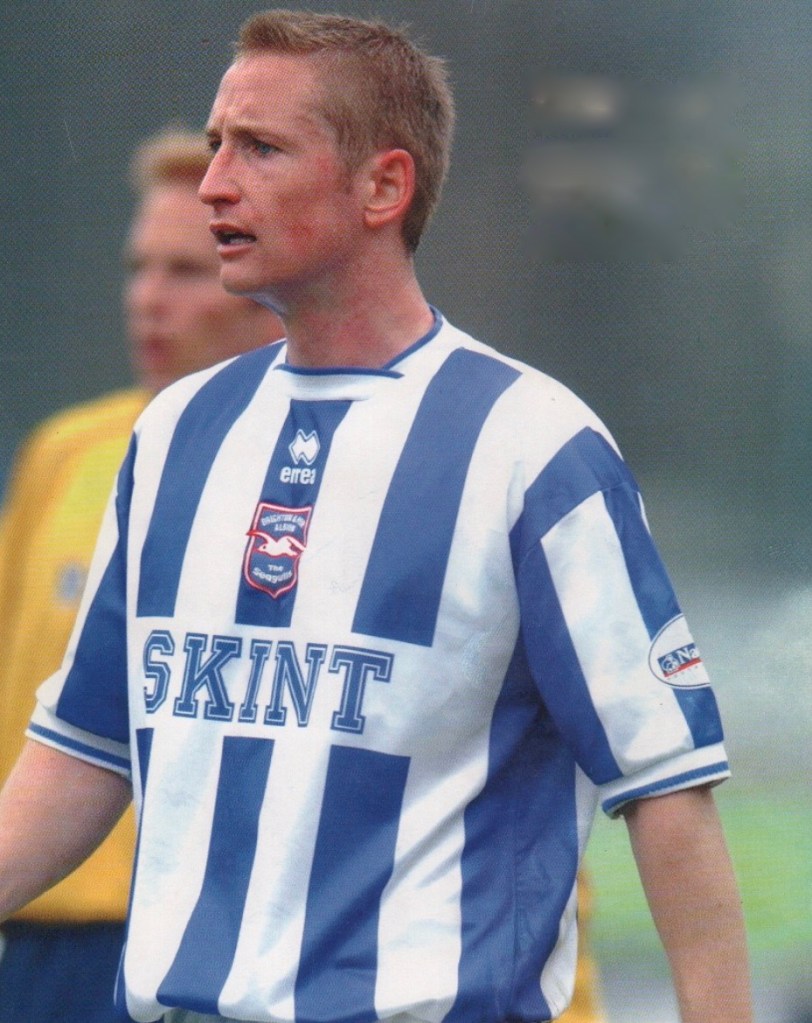


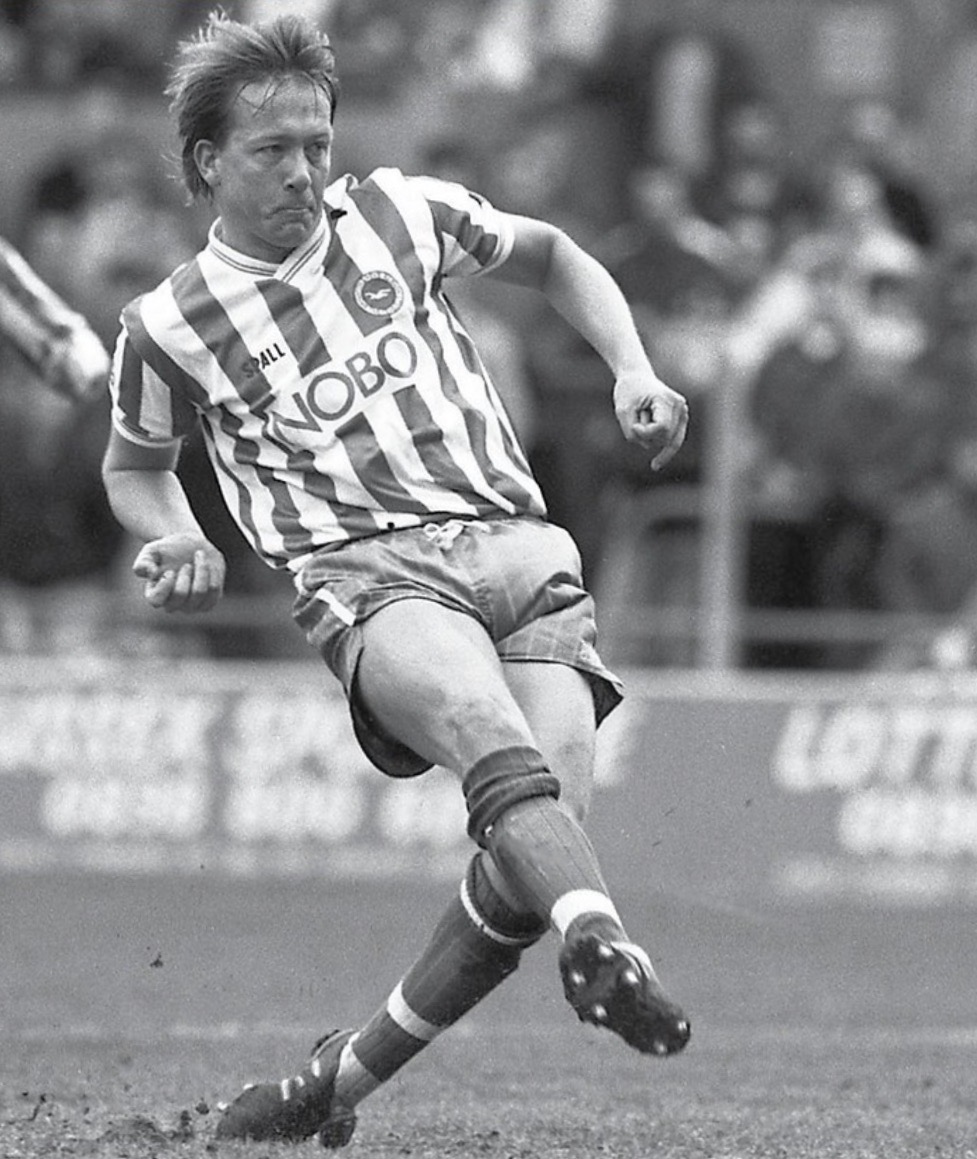 The Albion matchday programme featured Curbishley when the Seagulls hosted the Hammers for a Barclays League Division 2 game on 16 September 1989. Describing his time with the East London club, he said: “It was a brilliant set up although I was definitely a bit headstrong in my early days.


 In parallel lines