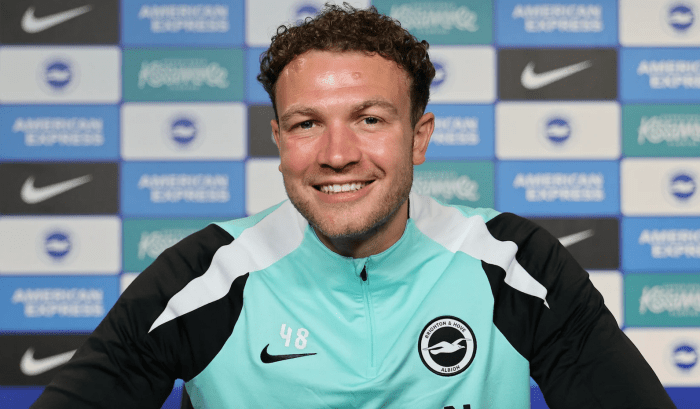
Albion banking on Barclay to share experience with youngsters

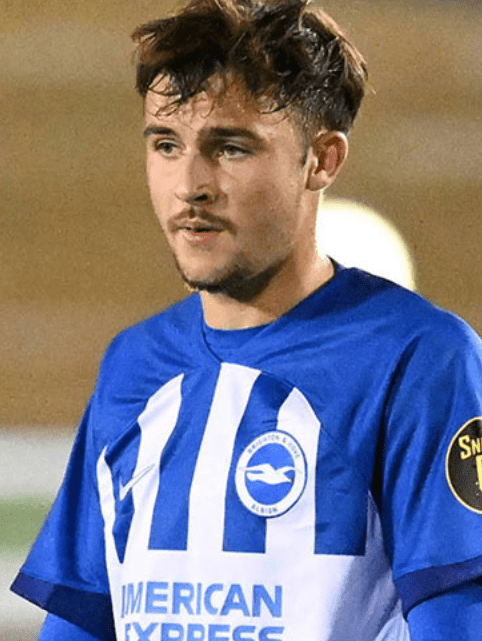
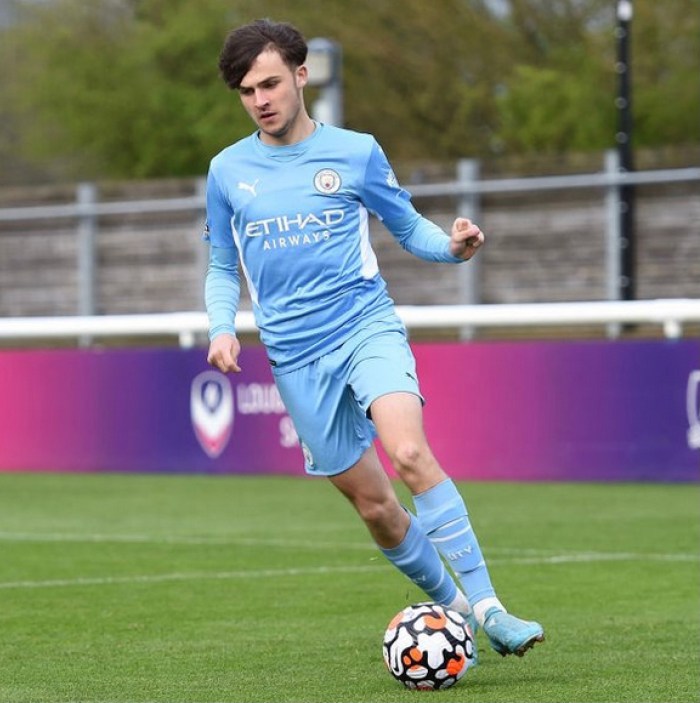
BEN BARCLAY spent nine years in Manchester City’s youth set-up before joining Brighton in 2013.

He only made one first team appearance for the Seagulls but he played alongside several in the under 21 squad who went on to greater things, such as Ben White, Viktor Gyokeres and Robert Sanchez.

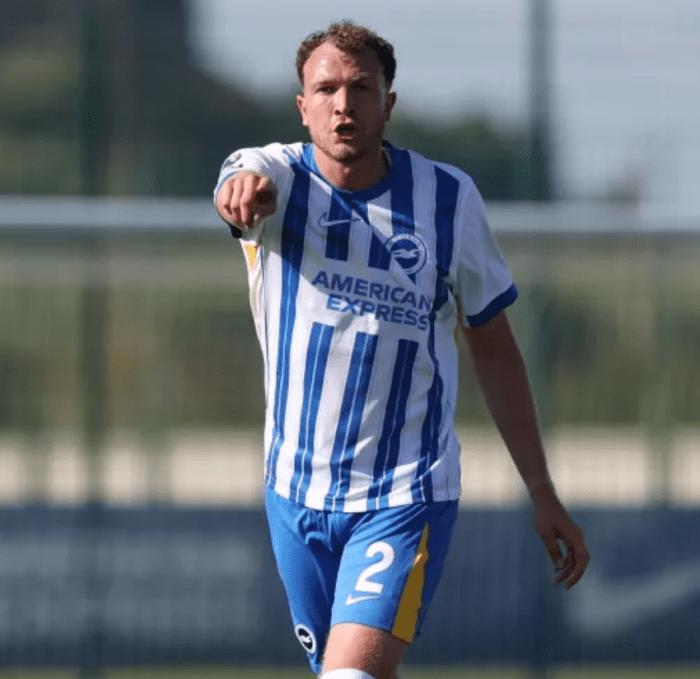
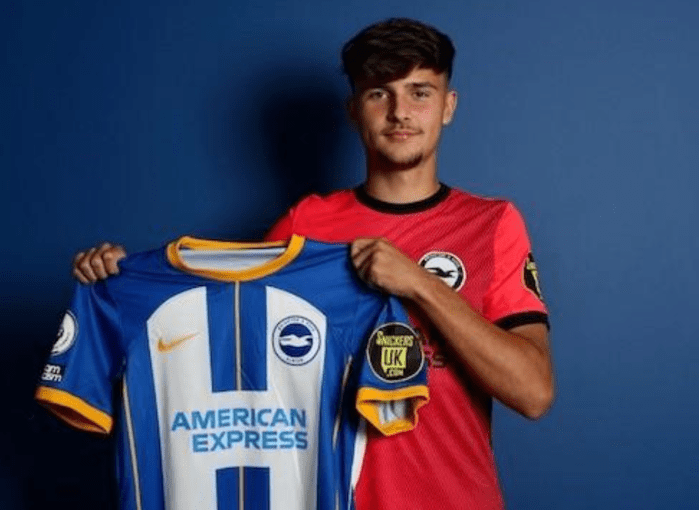
Now he’s back with the young Seagulls as an overage player helping to share his past experiences with those youngsters hoping to step up to the senior side.

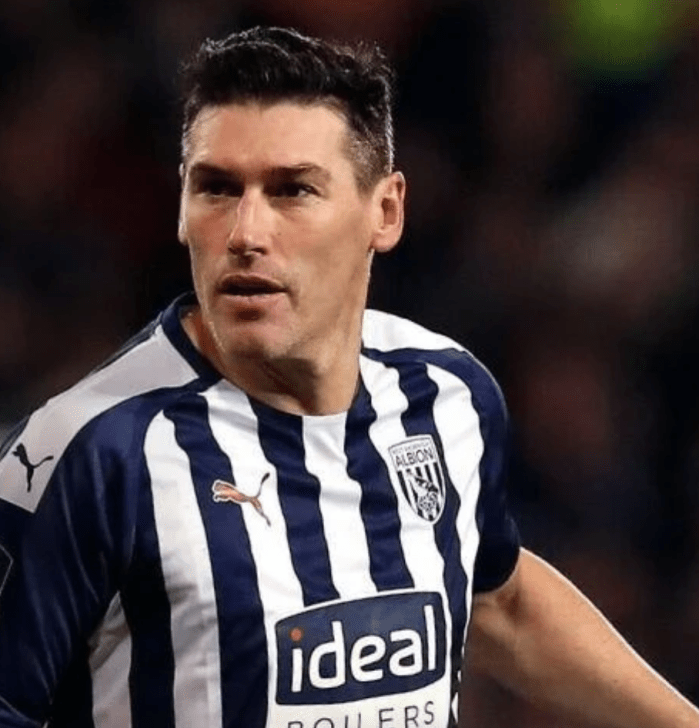
Not for the first time, Barclay has followed in the footsteps of the likes of Andrew Crofts and Gary Dicker in returning to the club to work with the young professionals.

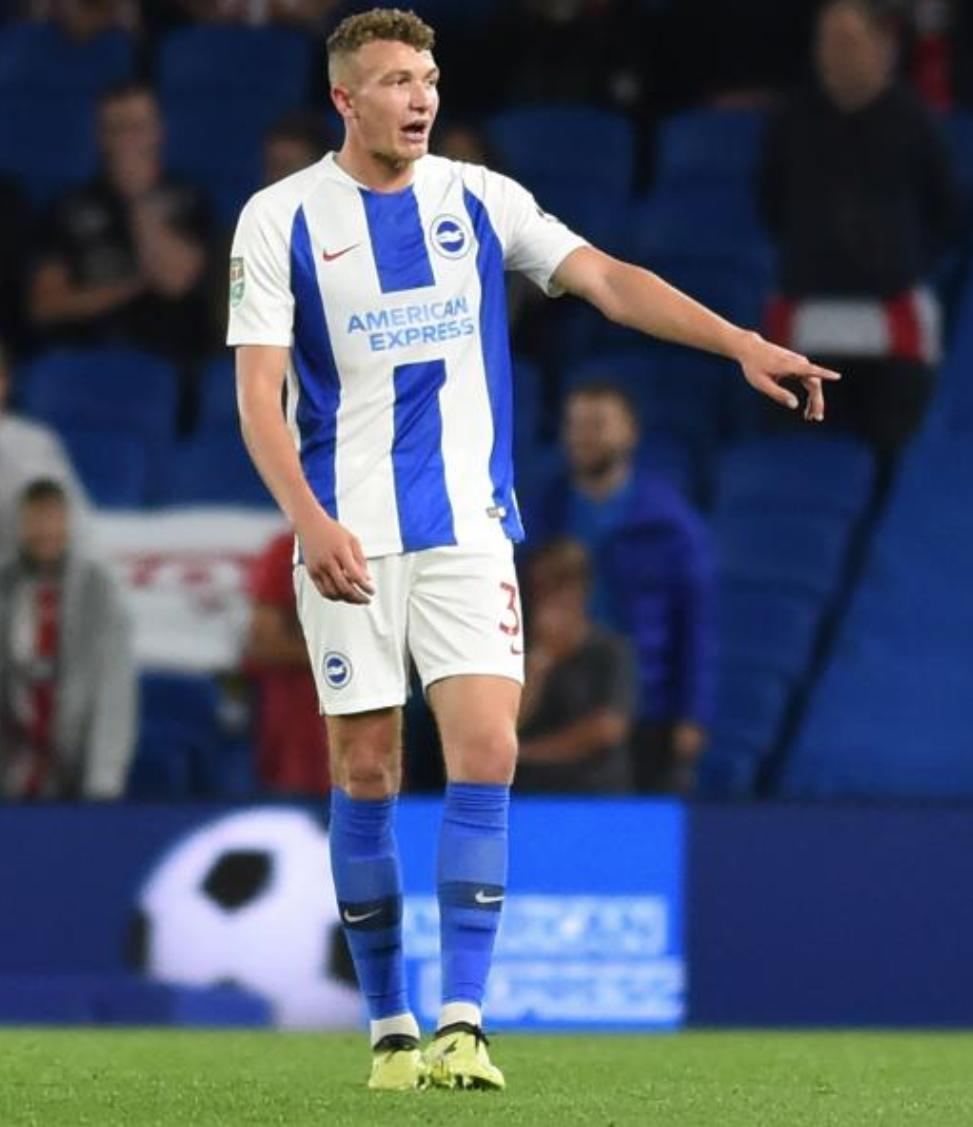
After leaving Brighton without building on his Carabao Cup first team debut in 2018, Barclay played lower league football in the north west for Accrington Stanley, Stockport County and Carlisle, as well as loan spells at Notts County and Yeovil Town.

“He knows exactly what it takes to progress from academy football into the senior game and will be a great role model for our young pros,” said Albion under-21s head coach Shannon Ruth of his appointment in July 2025.

“He has excellent EFL experience that he can share with the group. We believe he is a valuable addition to our development programme and we are excited to work with him.

“We will benefit from that not just in matches, but in training throughout the week, where having that experience out on the grass, alongside the players, is invaluable.”

Born in Altrincham on 7 October 1996, Barclay was at City from seven through to 16.

“In my squad there was Tosin Adarabioyo, who has gone on loan to West Brom (now at Chelsea), David Brooks who has signed for Bournemouth,” Barclay said in an interview with The Argus.

“I am good pals with him, he is doing really well. Everyone has left now and gone on loan and playing in the Championship.

“At the time, I saw it coming. The club moved on from me then.”

Barclay left City after he’d finished school at 16 and joined Brighton after a call from a scout.

“I didn’t know much about the city or the club, but the chance came along for me to go for a trial for a week,” he told carlisleunited.co.uk. “You could see that the club was going in a good direction and I enjoyed it.”

Barclay worked his way through the age groups at Albion to become a regular for the under-23s and he said: “By the end of my time there I’d made my debut, that was in the cup, and I’d been involved with the squad and training with the first team.”

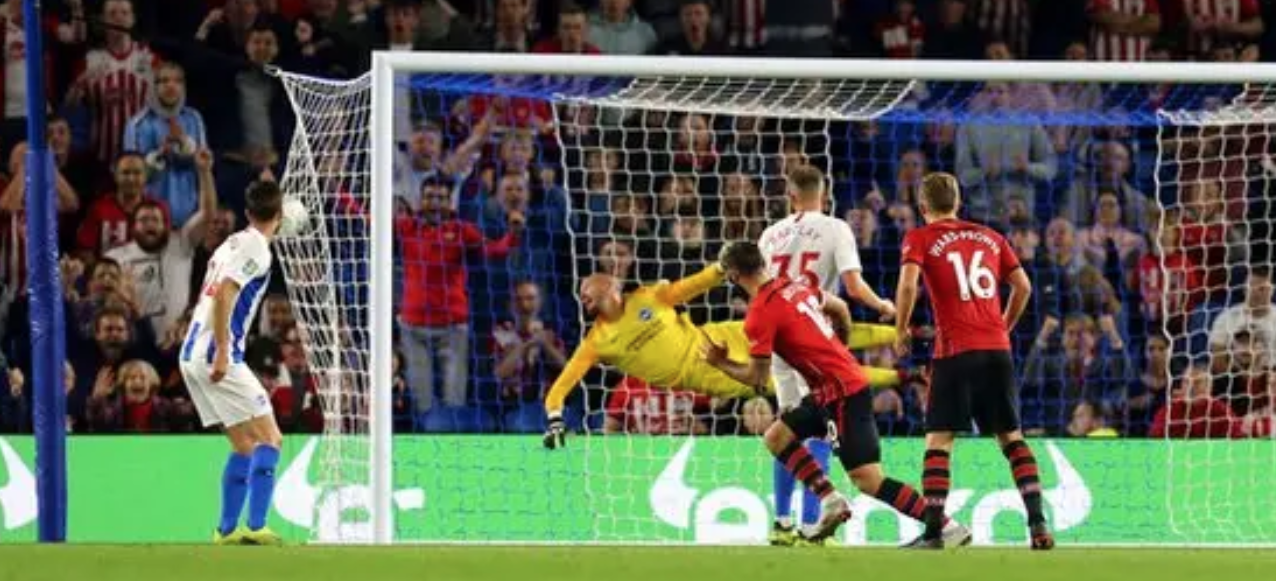
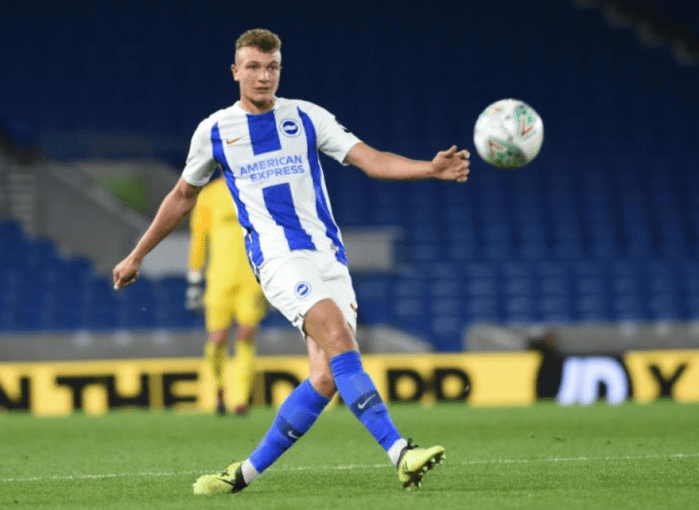
That solitary first team opportunity against Southampton in the Carabao Cup (above) was courtesy of injury absences for those above him in the pecking order.

His regular under-23s defensive partner White, who’d impressed on loan at Newport County the previous season, was ruled out by an injury, picked up against future employer Arsenal.

“I was playing with Ben last Monday at the Emirates when he came off,” Barclay told The Argus. Although the knee injury wasn’t as bad as first thought, it gave Barclay an opportunity, particularly with Lewis Dunk (ankle) and Bruno (hamstring) also on the treatment table.

Manager Chris Hughton didn’t want to risk first choice pairing Shane Duffy and Leon Balogun with a league match only a few days away so Barclay was thrown in alongside versatile Brazilian Bernardo. Fellow under-23s Will Collar and Gyokeres also made their debuts.

“The team was confirmed on Monday in training. I travelled up to Anfield at the weekend and just missed out on the bench, so I knew I was in and around it and there were going to be some changes, so I knew I might get on the bench or a few minutes,” he said.

Those few minutes turned into 90 from the start up against Southampton’s experienced Italian striker Manolo Gabbiadini, and Barclay said: “I remember watching him at Wembley against United in the (2017) League Cup final when he first signed and I thought he as a good player, would be tricky.

“When you play against him you realise his movement is even better than when you see him on TV.

“It was massive for me. I’ll take so much from the game, just staying with his runs in the box. They are much cleverer.”

Although he and Bernardo prevented Gabbiadini from scoring, Saints substitute Charlie Austin settled it for the visitors, nodding in Nathan Redmond’s cross with two minutes left, to give Barclay’s debut a disappointing ending.

“If it’s your debut, whether you have a good game or not, if you concede at the death it’s going to be frustrating.”

After the game, Barclay recognised the next stage in his development was quite likely to be a loan and that duly came in January 2019 when he made his league debut two days after joining relegation-bound League Two strugglers Notts County in a 3-3 draw away to Colchester United. With the relegation trapdoor yawning, his first senior goal at home to MK Dons in April was scant consolation in County’s 2-1 defeat.

He made 12 starts plus one appearance off the bench for Neal Ardley’s side which also included Albion’s former goalscorer Craig Mackail-Smith. In the third-to-last game of the season, Mackail-Smith opened the scoring for bottom-of-the-league County at Crawley in a must-win game – but the home side equalised before half-time.

According to the Press Association report: “The Magpies began the second half in purposeful fashion and defender Barclay headed over a Michael Doyle free kick after 50 minutes.”

Four minutes later the young defender was shown a straight red card for a two-footed foul on Crawley skipper Dannie Bulman.

He was suspended for the last two games (a 2-1 win over Grimsby Town and a 3-1 defeat at Swindon Town) and County finished a point ahead of last-placed Yeovil Town but lost their league status for the first time since being founder members of the league in 1888.

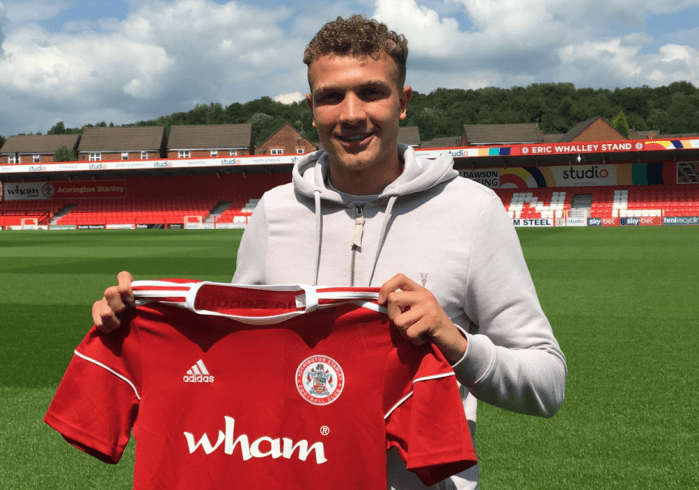
Released by Brighton at the end of that season, Barclay spent the next two seasons at Accrington Stanley, where, on signing him, manager John Coleman said: “He is a promising defender from Brighton, he came through at Manchester City so he is technically a very good footballer.

“He had an opportunity last season in League Two with Notts County and it’s a chance for him to kick on in League One and get more league experience under his belt.”

Although offered a new deal after making 43 appearances for the club, he chose to move on to National League side Stockport County, who gave him a three-year contract. However, having made only a handful of appearances for the Hatters, he had two loans away, at National League Yeovil and League Two Carlisle United (a season-long loan).

Somewhat ironically, in May 2023, he scored the winning goal for the Cumbrians in a 3-2 play-off semi-final win over Bradford City to set up a Wembley final against his parent club – but he couldn’t play because of the terms of the loan arrangement.

United boss Paul Simpson said: “Ben got the goal but unfortunately can’t play. It is one of those nightmare scenarios.

“When he has been fit this year, Ben has been brilliant for us. I am sure he will be coming along for the trip.

“Even though he can’t be involved in the game he will be a big part of our training programme.”

As it turned out, Carlisle earned promotion to League One courtesy of a 5-4 penalty shoot-out win after the game was drawn 1-1 and, a month later, Barclay severed ties with Stockport and signed a two-year contract with Carlisle.

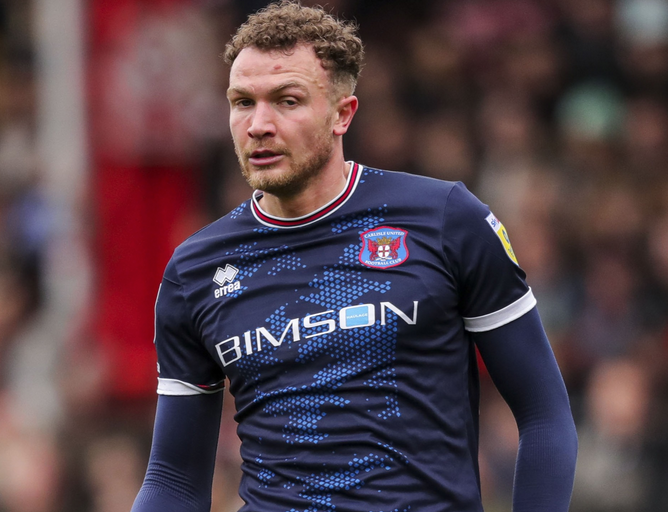
He made 27 appearances for the Cumbrian side in League One and a further 26 on their demotion back to League Two in 2025. His return to the Seagulls followed the end of that campaign, and he penned a one-year deal.

Back with Brighton in the summer of 2025

‘Spider’ Mellor’s first Albion goal was painful for his old boss

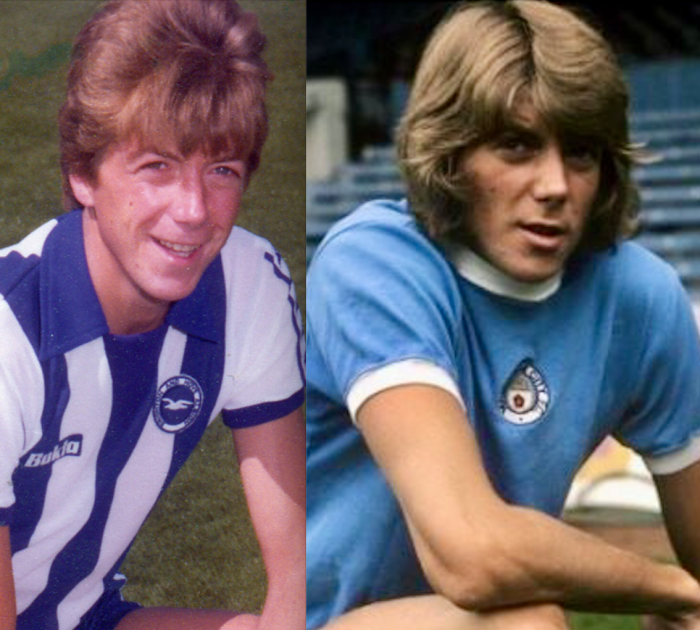
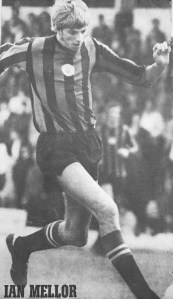
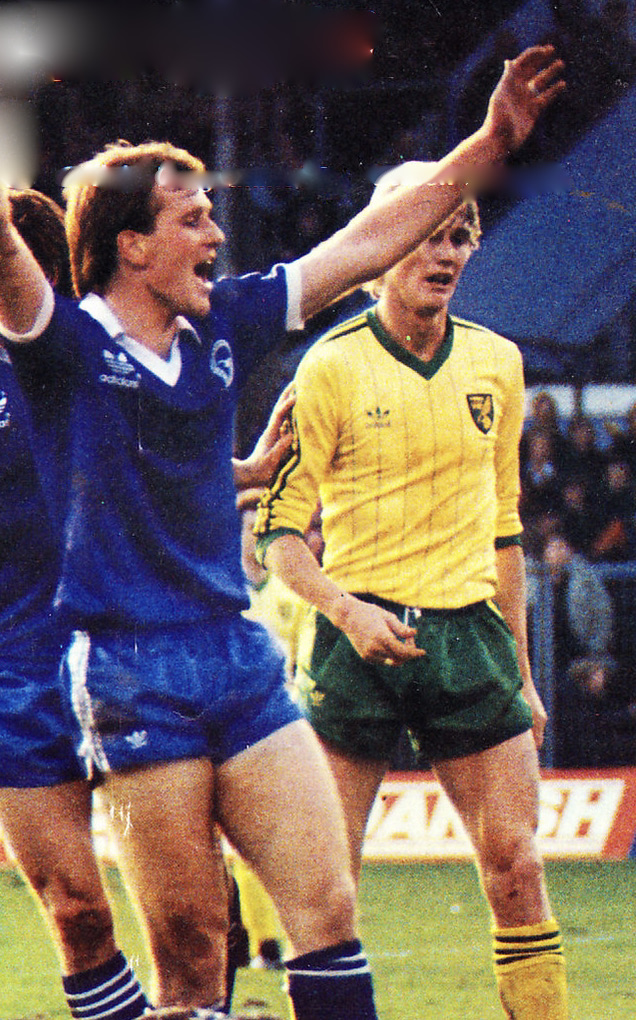
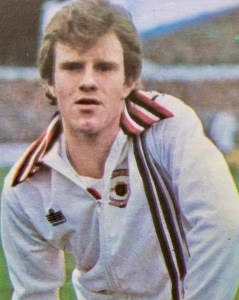
IAN MELLOR became a hero strike partner to the mercurial Peter Ward at Brighton after beginning his professional career at Manchester City.

Mellor, who I first featured in this blog in 2016, died in 2024 aged 74 from amyloidosis, a rare disease which also afflicted City legend Colin Bell.

Affectionately known as Spider because of his thin, long legs, it was a nickname given to him by City goalkeeper Ken Mulhearn who playfully likened him to the Spiderman character players would watch on TV if away in a hotel on a Saturday morning before a game.

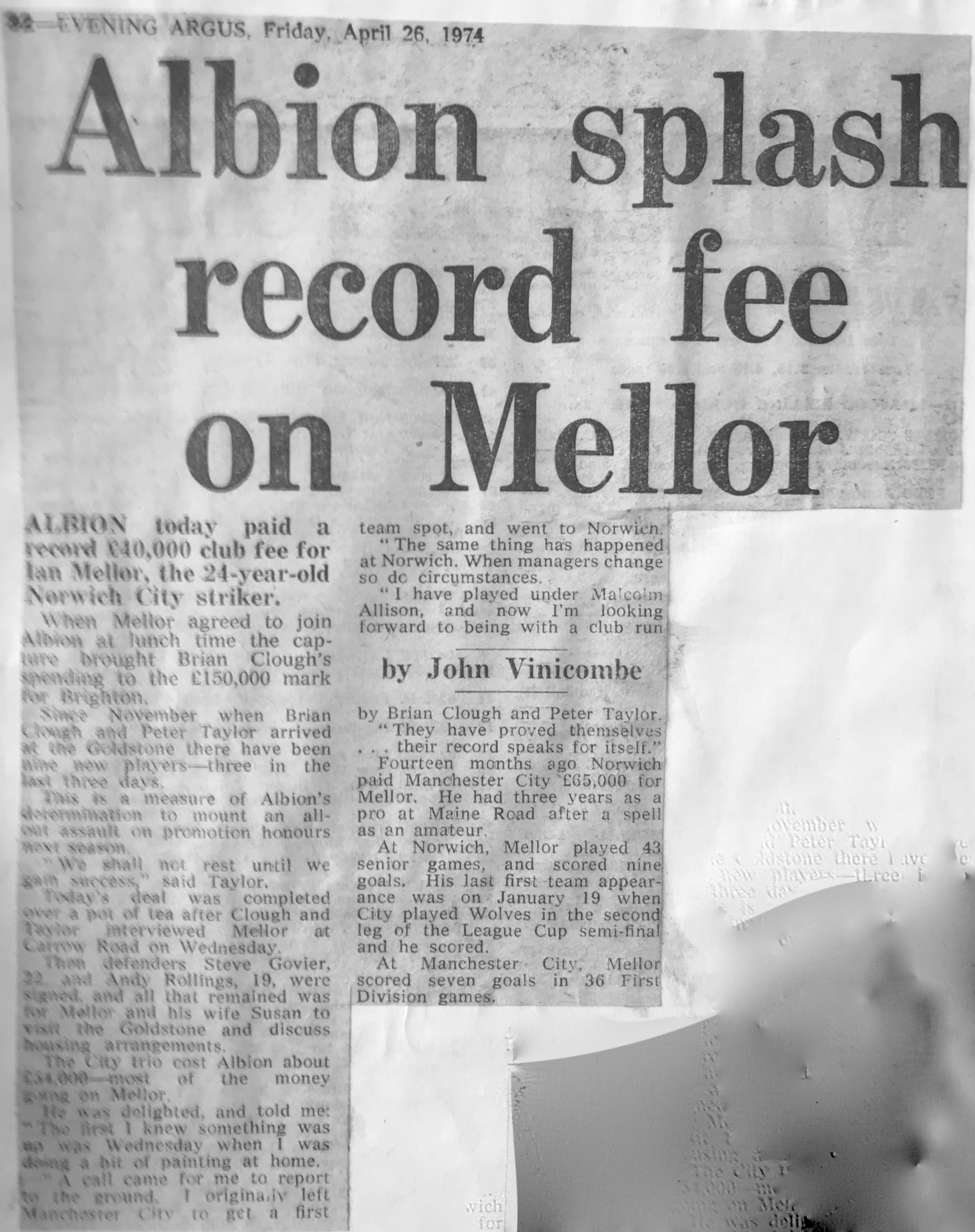
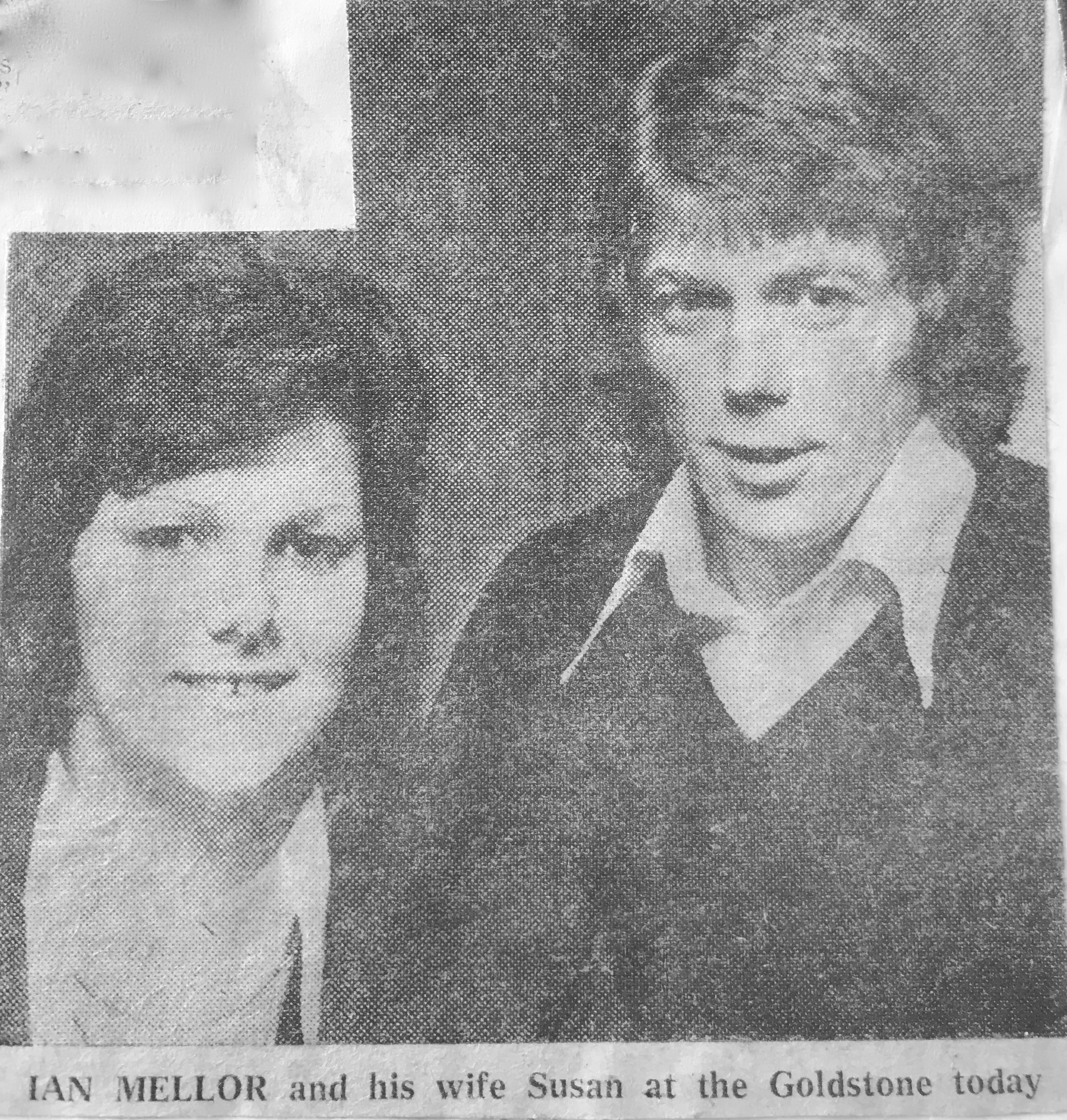
Signed for Brighton by Brian Clough for what at the time was a record £40,000 fee for the club (fellow Norwich youngsters Andy Rollings and Steve Govier joined at the same time), the opinionated manager had quit for Leeds before Mellor had kicked a ball in anger for the Albion.

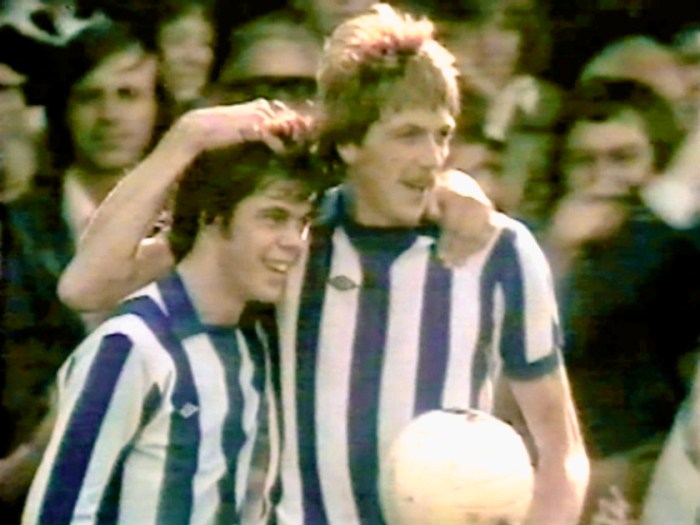
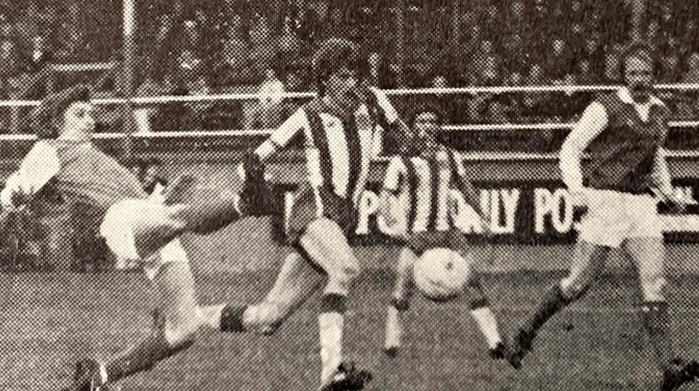
Clough’s sidekick Peter Taylor stuck around for two seasons and Mellor made a goalscoring start for him, netting against his old boss Malcolm Allison’s newly-relegated Crystal Palace side in the season’s opening game.

Mellor’s left-foot volley (above) in the 69th minute proved to be the only goal of the game in front of a 26,123 Goldstone Ground crowd. It was the first time in ten seasons that Albion had started with a win.

Mellor later admitted: “Palace were running all over us. It was remarkable that they weren’t about three goals up. Then in the second-half I got the ball some 35 yards out, went on a run, beat a couple of players and scored probably the most memorable goal of my life.”

A frustrated Allison said: “I remember Spider when I was at Manchester City.

“I didn’t want to see him leave for Norwich. Directors force you to do that sort of thing, then they sack you. Spider was a late developer, but his timing is so good now.”

Allison had played a big part in Mellor’s early development and when City chairman Peter Swales’ sold the youngster for £65,000 to Norwich City to bring in some money, he did it behind the manager’s back (he was ill in hospital at the time) and Allison quit Maine Road in protest.

Interviewed in Goal! magazine in June 1973, Mellor said: “It was a wrench leaving the Manchester area. After all, I’d lived all my life within a few miles of City’s ground, and I would never have left Maine Road if things had been left to me, even though I hadn’t nailed down a regular first team place.

“But when I was asked if I would have a chat with Ron Saunders about moving to Norwich, I was ready to go anywhere. After all, if someone tells you that they are prepared to let you go, you know that you are expendable.”

Thirty years later, in an interview with football writer Gary James, Mellor admitted: “I should never have gone to Norwich.  I went from a top five side to a bottom five side overnight and it was such an alien environment. 

In action for Norwich City

“Norwich is a nice place, and a good club, but at that time the move was totally the wrong move to make.  Because they were struggling there was no confidence.  The contrast with City was unbelievable.”

And he said of Allison: “He was the best as a coach and motivator and I learnt so much from him. He could be tough, but you listened because he had already delivered so much by the time I got into the first team.”

Before Allison, Mellor had come under the wing of a trio of notable coaches in City’s backroom: Johnny Hart, Ken Barnes and Dave Ewing. “They were very knowledgeable and men of real quality,” he told James. “They knew what they were talking about and they also cared passionately about the game and the club.  They’d all had great careers and as a young player you listened and learned.”

Mellor was certainly dedicated to the cause having been given a second chance by City after being shown the door following a trial when he was 15. City’s chief scout Harry Godwin told Goal! magazine: “You could see something there, a useful left peg for instance, and other things, but there wasn’t much of him and, frankly we felt it best to leave it a while.

“We suggested he went away, found himself a local club but kept in touch with us. He did, with a letter asking for another trial. We open all letters we receive, of course, but you could say this is one we are particularly glad about looking into.”

Mellor explained to the magazine: “After that first City trial I had about four games with the Blackpool B side and about a season with Bury as an amateur. Nothing came of it, though I was playing in a local Manchester Sunday league.

“Then I had a particularly good game and got a few good write-ups in a local paper near Manchester. So, I cut them out and sent them to City asking ‘What about another trial?’ They gave me one.”

He first signed as an amateur (in July 1968) and shortly before signing on as a professional at the relatively late age of 19 in December 1969, City loaned him (and goalkeeper Ron Healey) to Altrincham and he played in a 2-1 win at Buxton in the North West Floodlit League on 15 October 1969.

Back at City, he made his reserve team debut in October 1970 away at Aston Villa and six months later stepped up to the first team. It was 20 March 1971 when a nervous Mellor made his City first team debut in a 1-1 draw at home to Coventry City. Ironically, Wilf Smith, the full-back he was up against in the first half of that match, was temporarily a teammate during his first season at Brighton – he had five games on loan to the Albion.

Three years earlier, though, Mellor admitted: “I became a nervous wreck, and in the first half I think that was obvious.  I just wasn’t right.  Malcolm Allison had a real go at me at half time and warned: ‘If you don’t pull your finger out, you’ll be off!’  So that got me playing!  The second half I really worked hard and played my normal game.”

Incidentally, that Coventry side also had Mellor’s future Albion teammate Ernie Machin in midfield alongside Dennis Mortimer, who spent the 1985-86 season with the Seagulls.

Four days after Mellor’s debut, he scored in a European Cup Winners’ Cup quarter-final against Gornik Zabrze, as City won 2-0 (Mike Doyle the other scorer). He was also on target in an end-of-season Manchester derby match when City lost 4-3 to United. “As a City fan, the derby meant an awful lot and scoring your first league goal in a derby is something special, especially for a local lad,” Mellor told Gary James.

It was in the 1971-72 season that Mellor got more of a look-in at first team level, the majority of his 23 starts (plus one as a sub) coming in the first part of the season, before Tony Towers got the nod ahead of him.

In a departure from the pre-season Charity Shield (now Community Shield) norm of League champions playing FA Cup winners at Wembley – Derby and Leeds chose not to be involved – fourth-placed City played Third Division champions Aston Villa 1-0 at Villa Park in August 1972. Mellor might have missed out on a chance to play at Wembley but he was part of history as two subs were allowed for the first time and he went on for Wyn Davies (other sub Derek Jeffries replaced Willie Donachie).

In the season that followed, cut short by his March 1973 sale to the Canaries, he started 13 games and went on as a sub six times. In both seasons he scored four goals.

In all competitions, Mellor made 42 starts for City, plus eight appearances as a sub and scored a total of 10 goals.

In spite of his goalscoring start at Brighton, Mellor was one of several players who didn’t hit it off with Taylor and he was suspended for a fortnight after missing training and returning to Manchester without the manager’s permission.

Photo call ahead of his debut for the Albion

Perhaps the almost wholesale change in the make-up of the squad was the cause of an indifferent season which saw the side finish uncomfortably close to the relegation places.

Mellor scored six more goals but between the second week of January and the end of the season he only made one start and two sub appearances.

In his end of season summary, John Vinicombe, the Albion reporter for the Evening Argus, said: “Most puzzling aspect of the season was Ian Mellor’s decline.”

The scribe maintained: “There is no satisfactory explanation for what went wrong with Mellor, and his role passed to Gerry Fell, who turned out quite a find considering that he cost only £250 from Long Eaton and had not kicked a ball in the League until the age of 23.”

It wasn’t until the end of November of the 1975-76 season that Mellor resumed a regular starting spot in the side but from then on he was almost ever present and notched nine goals in 33 games playing wide on the left as Albion just missed out on promotion.

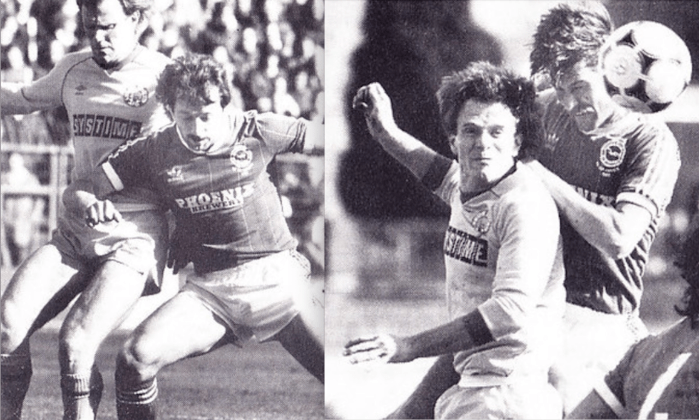
The story of what happened next has been told many times: Alan Mullery saw Mellor as a central striker to play in tandem with the nippy newcomer, Peter Ward, and they swiftly developed a partnership which saw Albion win promotion from the Third Division as runners up behind Mansfield Town.

Prolific goalscoing partnership with Peter Ward

The aforementioned Vinicombe gave Mellor man-of-the-match as Albion beat Mellor’s future employer Sheffield Wednesday 3-2 to clinch promotion on 3 May 1977 in front of 30,756 fans at the Goldstone.

“The Goldstone fans were so good to us,’ Mellor remembered, “and that year was the happiest in my playing career.”

In a similar vein to his retrospective view of regretting leaving City, Mellor also said in hindsight he should have stayed longer with the Seagulls, where he had lost his place to big money signing Teddy Maybank.

“I knew I was better than him, but they had to justify his price and that’s why I got dropped,” Mellor told Spencer Vignes in an Albion matchday programme. “In hindsight, of course, I should have stayed. I was still good enough. I was 29, with two good seasons left in me.”

He moved back to his native north west in February 1978 to play for Chester for two years. Their player-manager was former City legend Alan Oakes and his teammates included the aforementioned fellow Charity Shield sub Derek Jeffries and former Albion teammate Jim Walker. Chester FC Memories said of him on Facebook: “His time at the club included scoring in the memorable derby win at Wrexham (2-1) and in the League Cup victory over First Division side Coventry (2-1) early the following season.”

Leading the line for Chester

His last Chester goal came in a 2-2 home draw with Sheffield Wednesday who he went on to join under Jack Charlton the following season. Mellor spent three years and scored 11 goals in 79 matches for Wednesday. One of the most memorable was recalled by The Yorkshire Post who reported in 2021: “Mellor made himself a lifelong hero with Wednesdayites midway through his debut season at Hillsborough, when he opened the scoring in the 1979 ‘Boxing Day massacre’ 4-0 home win over neighbours United with a goal from 25 yards. He also hit the woodwork in that game.

Boxing Day glory in Sheffield

“Despite being played in Division Three, the match was watched by over 49,000 fans – a record for third-tier football. The goal is still occasionally sung about to this day.”

Mellor himself told The Sheffield Star: “It’s stange to me, considering it’s 40-plus years ago but it remains such a strong feeling among Wednesday supporters. It’s flattering but crazy!

“You’re only remembered so many years on if you’re a good player and luckily for me I scored a good goal in such an important game.”

Mellor’s final two seasons in league football were spent at Bradford City, managed by former Leeds and England defender Trevor Cherry, and he ended his playing days with Hong Kong club Tsun Wan, Worksop Town, Matlock Town and Gainsborough.

After he had stopped playing, he worked for Puma and Gola, encouraging players to wear their brands of football boots, and he was also a commercial executive for the Professional Footballers Association.

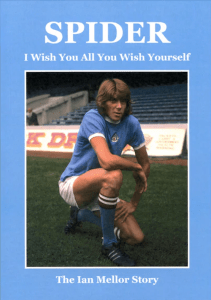
Following his death at St Anne’s Hospice in May 2024, it was announced that his family were to donate proceeds from his autobiography Spider to get a bedroom named in his honour at the charity’s new hospice in Heald Green, Stockport.

His widow Sue said: “It was Ian’s wish that we raise funds for St Ann’s Hospice as a thank you for the wonderful care he received. Ian was proud of his football career and all proceeds from his book will go to charity.”

Well-loved Grealish went down with the Albions and City

TENACIOUS Tony Grealish earned plenty of plaudits in a 20-year professional career spanning almost 600 matches and etched his name in the record books along the way.

Thought to be the only person to play in two different sports at Wembley Stadium, Grealish was also the first Brighton & Hove Albion player to captain his country.

On the ball for Brighton

One statistic less favourably remembered is that he was relegated from the top level of English football with three different clubs: Brighton, West Bromwich Albion and Manchester City.

The London-born Republic of Ireland international was first relegated in the same year that he led the Seagulls out at Wembley for the 1983 FA Cup Final.

He was also part of the Throstles squad who went down in last place in 1986. And it was two relegations in a row after switching to an ailing Sky Blues side that went on to relinquish their top flight status in 1987.

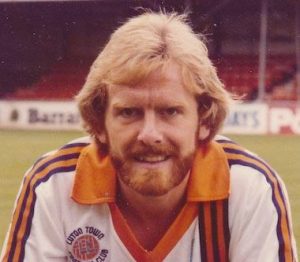
When Grealish signed for Brighton from Luton Town for £100,000 in July 1981, it was a time of significant change. After only just avoiding relegation the season before, manager Alan Mullery had quit over a disagreement with chairman Mike Bamber and four key players left the club: John Gregory, Mark Lawrenson, Peter O’Sullivan and captain Brian Horton.

Grealish had quite a tall order taking over in midfield from ex-skipper Horton, who replaced him at Kenilworth Road, but Gordon Smith, another Albion teammate who later played for City, said:

“He did it with style – he was excellent. He was a very hard working player, he could tackle, but he was also classy with it – he could always pick out a pass.”

Part of the deal that saw Liverpool acquire Lawrenson saw the experienced Jimmy Case move to Brighton and he also appreciated what Grealish brought to the side. “Tony was so, so reliable. Playing with him in midfield, you knew that if the going got tough, he would be shoulder to shoulder alongside you.

“He would go in where it hurt, a tough lad, but he was not just a worker, he could play a bit as well and his enthusiasm for the game rubbed off on everyone in that changing room.”

Grealish and Case together with Mullery signing Neil McNab proved to be quite a formidable midfield trio and together they helped Mike Bailey’s side to jostle for top half of the table positions during the 1981-82 season before falling away to finish in 13th place – a record that remained in place until 2022!

Wembley gesture

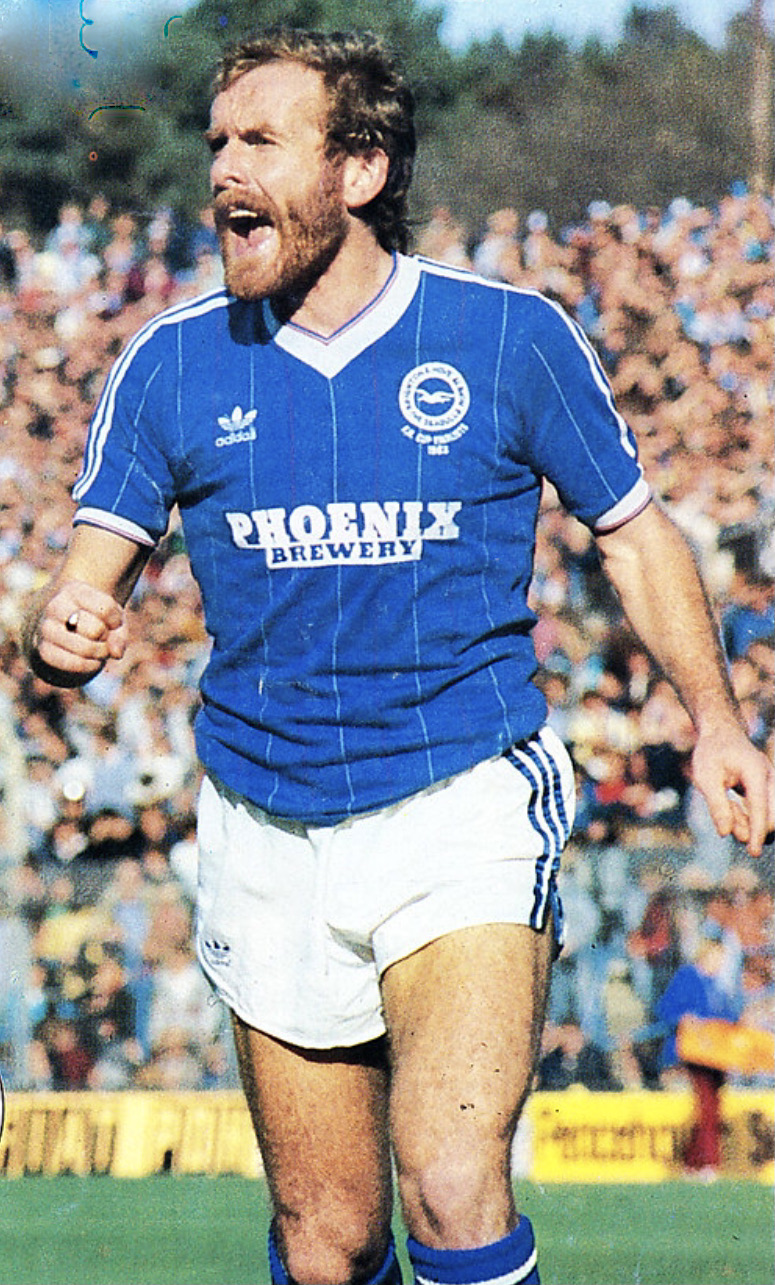
Reaching the FA Cup final in 1983 under Jimmy Melia and George Aitken provided a personal highlight for Grealish when he captained the Seagulls in the absence of suspended regular skipper Steve Foster, memorably wearing the defender’s trademark white headband as a mini-protest at his exclusion.

Grealish’s departure to West Brom in March 1984 was part of the ongoing break-up of the former top level squad, Melia’s successor Chris Cattlin being tasked with trimming the wage bill to bring it into line with second tier football.

Three and a half years later, Grealish had just turned 30 when Jimmy Frizzell signed him for City in October 1986 for a modest £20,000 fee, re-uniting him with McNab.

It was only a short-term deal, though, and he continued to live in Sutton Coldfield, a commute of 90 miles each way! “We haven’t bought a place because I only signed until the end of the season,” he explained. “We’ll see what happens first.”

Frizzell had previously been assistant manager to Billy McNeill but took over the reins when the former Celtic captain, frustrated by City’s parlous financial circumstances, left for Aston Villa in September 1986.

City of the mid-1980s were a very different proposition to the modern day version: they were more than £4m in the red and struggling with crippling debt repayments after an ill-advised spending spree in the late 70s and early 80s.

“The first thing I was told when I joined and went to discuss money was that they were so skint they would sell their goalposts if they could,” a Grealish contemporary, centre-back Mick McCarthy, told Chris Bevan for BBC Sport in a 2013 article looking back at that period.

Frizzell felt the relatively youthful City needed some experienced old heads to steady the ship and Grealish joined from West Brom in the same week John Gidman joined on a free transfer from city rivals Manchester United. Both made their Maine Road debuts for bottom-of-the-league City against United in a 1-1 draw on 26 October 1986.

It was the 118th meeting between the two sides, but the first to be broadcast live on TV.

Injury-hit United took the lead through a Frank Stapleton header that crept past the diving Perry Suckling and inside the post, but McCarthy equalised with a header from a cross by McNab.

Under fire United boss Ron Atkinson only had one more game in charge of the Reds; after a 4-1 League Cup defeat by Southampton, he was sacked.

United’s plight was nothing compared to City, though. They didn’t win away throughout the whole season and, in spite of the additions of forwards Paul Stewart and Imre Varadi, scored a meagre 36 goals in 42 games.

Youngster Paul Moulden, having been a prolific goalscorer in City’s FA Youth Cup-winning side of 1986, briefly offered hope when scoring four goals in four games in November but then picked up an injury.

Frizzell blooded several other members of that youth side including Paul Lake, David White and Ian Brightwell but City were relegated. Grealish’s last game for them was in a 0-0 home draw against Newcastle in March, City’s first point in a month. They only won twice in the remaining 10 games and were relegated…along with McNeill’s Villa!

Grealish only made 15 appearances in that 1986-87 season and was an unused sub on two other occasions. He made 11 league starts, one in the FA Cup (a 1-0 defeat v Man U) and three in the Full Members Cup. He also played in City’s reserve side on 14 occasions (stats courtesy of the Gary James archive).

Born in Paddington, west London on 21 September 1956, Grealish played underage for St Agnes Gaelic football club in Cricklewood – alongside brother Brian – and represented London at various underage levels.

That special 1983 Wembley moment meant Grealish achieved the unusual claim to fame as reportedly the only person to play soccer and Gaelic football at the iconic stadium. He’d previously played there in the early ’70s for London’s Minors against New York in what at the time was an annual Whit weekend tournament.

“For a group of London lads, playing at Wembley Stadium was magnificent,” said Éamonn Whelan, a teammate of Grealish’s for St Agnes and London.

Ireland was certainly in his blood even if he wasn’t born there: his father, Packie, was from Athenry in Galway, and although his mother, Nora, was born in London, both her parents came from Limerick.

No surprise then, that Grealish represented Eire with some distinction, winning 45 caps between 1976 and 1985, and It was during Alan Kelly’s brief reign in charge, in 1980, that Grealish was first made Eire skipper – in a 2-0 win over Switzerland at Lansdowne Road, Dublin.

Brighton’s Lawrenson and Gerry Ryan were teammates that day, as was Chris Hughton.

One of the goalscorers that day, Don Givens, said of Grealish: “He gave so much effort that he wasn’t going to accept anything less from his teammates.

“Tony was a 100 per cent tough little midfield player, and a great character off the pitch.”

Former Ireland manager Eoin Hand chose Grealish as Eire captain for the 1984 European qualifying campaign, when Ireland ended in third place behind Spain and Holland.

In his book, First Hand My Life and Irish Football, Hand said Grealish was “more Irish than the Irish themselves”.

“With his dynamic, combative style in the midfield engine room, Tony, with his tousled hair and Viking beard, was the kind of guy you were happy to go into battle alongside,” he said.

Grealish on the international stage with the Republic of Ireland

“He was a natural leader, and although known for his ceaseless industry, he was no mere artisan. Grealish could play as well and conjure up the odd goal from deep positions.”

Previous manager Johnny Giles had given Grealish his Ireland debut at the age of 19, in a friendly against Norway at Dalymount Park, Dublin on 24 March 1976.

Grealish, unusually, started at full back as Ireland won 3-0 thanks to goals from Liam Brady, Jimmy Holmes and a penalty from Mickey Walsh.

“Tony was very good for me when we played together in midfield because he was a ball winning all action player, and we had a good understanding,” said Brady, who later became Brighton’s manager.

“Around the Ireland dressing room, he was very enthusiastic, determined and very motivating – he liked to motivate everyone around him,” he told the Irish World in 2013.  “He’d be up for every match.”

Brady added: “We had a strong friendship, and I haven’t met anyone who played with him who wasn’t a friend of Tony Grealish’s.

“He was a super man, and a super bloke. He made the atmosphere better wherever he was.”

Grealish took his first steps to becoming a professional footballer aged 15 in 1972 when he joined Leyton Orient as an apprentice. Manager George Petchey took him on as a professional in 1974 and he was the club’s player of the year at the end of the 1975-76 season.

In 1977-78, Orient reached an FA Cup semi-final at Stamford Bridge, where they lost 3-0 to  Arsenal, although the aforementioned Liam Brady mentioned: “He man-to-man marked me that day and put me out of the game. Luckily some of our other players performed despite the fact that I didn’t.”

One of the last of his 171 appearances for Orient was in the April 1979 3-3 draw with promotion-chasing Brighton in front of The Big Match cameras (John Jackson was in goal for the Os and Martin Chivers scored his only goal for Brighton).

Grealish transferred to David Pleat’s Luton Town in the summer of 1979 for a fee of £150,000, racking up 78 Division Two appearances over two seasons before joining Brighton.

In total, Grealish played 116 games plus five as a sub for Brighton, and his last game for the Seagulls ironically saw him score in a 1-1 home draw with Manchester City.

Having known what he could bring to a side, it was Giles, when manager of West Bromwich Albion, who took Grealish to the Hawthorns in March 1984 for £75,000.

Reunited with Johnny Giles at West Brom

In one and a half seasons with the Baggies, Grealish made 65 appearances before that move to City.

He spent a brief period with Salgueiros in Portugal before former Leeds hard man Norman Hunter signed him for Rotherham United in August 1987. He made 110 appearances over three seasons, going down with them in 1987-88 and helping them to bounce straight back by winning the Fourth Division title the next year under another former Albion midfield player, Billy McEwan.

His last league club was Walsall during Kenny Hibbitt’s managerial reign before he continued playing at various non-league clubs in the Midlands: Bromsgove Rovers, Moor Green, Halesowen Harriers, Sutton Coldfield and Evesham United.

He returned to Bromsgrove Rovers as player-manager before calling it a day, and then worked in the scrap metal business. He died of cancer aged 56 in April 2013.

An obituary in Albion’s matchday programme saw tributes paid by several former teammates. Gary Stevens, who memorably scored Albion’s equaliser in the 2-2 Cup Final draw against Man Utd, said: “Off the field, Tony was the life and soul of the party.

“When he was with us, he was always laughing, joking and just enjoying life. Yet on the pitch he always gave 100 per cent, was tenacious in the tackle and he had a tremendous will to win.”

Ex-skipper Foster added: “Tony was a lovely man off the pitch and a passionate footballer on it. He was a fantastic midfielder.”

Versatile Luca earning his stripes and plaudits along the way

LUCA BARRINGTON lifted a trophy as a winning Albion captain in May 2024 before beginning to make his mark in senior football.

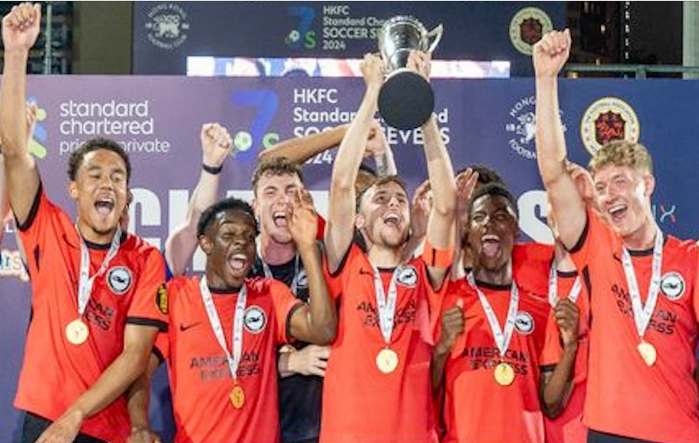
Brighton’s £500,000 signing from Manchester City skippered the Seagulls to a 2-0 win over Aston Villa in the Hong Kong Soccer Sevens and was voted player of the tournament too.

Just a few months later, having temporarily swapped Albion’s blue and white stripes with Grimsby Town’s black and white, Barrington started earning plaudits for his contribution to the League Two outfit.

In October he scored twice to give the Mariners their fourth win in five games with a 2-1 win at Salford.

Barrington, who was just 17 when Albion bought him from City in 2022, can play on either wing or in a central attacking midfield role. And at the beginning of his season-long loan with the Mariners, that versatility was being appreciated.

His new temporary boss, head coach David Artell, said of the Brighton youngster: “Luca is going to have a good career. Is he still finding his feet in men’s football? Of course he is, but he has got the ability.”

Barrington was twice a non-playing substitute for Albion’s first team during December 2023 after impressing playing for the under 21 side. Now on the loan path that has served other Albion youngsters well, Town were delighted to capture his signature for the 2024-25 season.

“He’s an excellent, technical player who’s going to provide us with something a bit different,” purred Artell.

“He’s a versatile forward who can play off both flanks and likes to get in behind the opposition. We wanted to strength ourselves in that area of the pitch and, technically, he is very good.”
The coach told Grimsby football writer Sam Allen: “He’s a young boy, but he has got an unbelievable amount of belief.

“You don’t get bought for half a million pounds at 17 if you haven’t got something about you.”
The youngster has also caught the eye of Football League World writer Chris Kelly, who noted his growing involvement after going on as a substitute in Grimsby’s opening day defeat at Fleetwood Town.

An injury to winger Charles Vernam opened the door for Barrington to get more game time and he seized the opportunity after going on for the injured player in a 1-0 win over Bromley.

Given a start in the next match, when he also scored in a 3-2 win over Carlisle, Kelly observed:

“The youngster’s composure on the ball helped his side gain second-half control.”
In an early October 2024 article, Kelly wrote:Barrington is proving his quality and versatility, while having the potential to improve further.

“While Barrington is at the beginning of his professional career, and has a great deal to learn and develop within his game, both with and without the ball, there are signs that his natural talent could see him play at a high level.

“Good with both feet and comfortable carrying the ball and beating his opponent, the youngster is tough to deal with for opponents who find him difficult to anticipate and predict.”

The writer added: “Able to operate in multiple roles, Barrington is equally capable of using his pace to get to the byline and deliver crosses into the box, or cut inside and link-up with the strikers around the edge of the penalty area.

“Also showing signs of defensive awareness and real footballing intelligence, parent club Brighton will be delighted by the quick progress their young attacker is making in his time with Grimsby.”

In a quite different environment, Barrington captained an Albion side in Hong Kong in May 2024 for what was the 25th running of the Hong Kong Sevens tournament.

In the final, a goal in each half from Louis Flower and Benicio Baker-Boaitey earned Albion the win and, in doing so, stopped Aston Villa from winning a record-extending eighth title in the competition.

Barrington had scored a golden goal to edge Albion past Japan’s Yokohama F Marinos in the group phase before the Seagulls saw off Leicester City in the quarter-finals and Fulham in the semis. By way of a footnote, in the Masters Tournament former Albion loanee Leroy Lita scored both goals when the PFA All Stars beat the Singapore FC Masters 2-1.

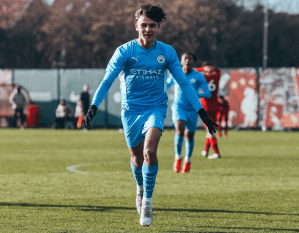
Born in Manchester on 12 December 2004, Barrington was snapped up by City when he was just six years old.

By 2021, he was named by The Guardian as one of the top 20 first year scholars of Premier League clubs, and writer Jamie Jackson said:Barrington loves to drift in from either flank to score, as he did for a close range finish in the under-18s’ season-opening 3-0 win over Manchester United, his debut for Ben Wilkinson’s side.” Jackson observed the youngster to be “two-footed, rangy and with a penchant for dribbling”.

As a matter of interest, that same 2021 selection featured Albion’s Jack Hinshelwood and also Kamari Doyle, who Albion signed from Southampton in January 2024 and who is now on loan at Exeter City.

Having scored ten goals in 22 appearances for City to help them win the Under-18 Premier League in 2022, Barrington was offered a professional contract but then chose to switch to Brighton.

At the time Albion secured his signature, then under 21s coach Andrew Crofts declared: “Luca had an outstanding campaign at under-18 level with City last season and we’re delighted to welcome him to Brighton. He’s got a lot of ability, a great attitude and we’re really excited to start working with him.”

200th Andy Ritchie goal at crumbling Goldstone Ground

WHEN ANDY RITCHIE scored at the Goldstone Ground on 7 September 1996, it was a very different place to the stadium he’d graced as Player of the Year 14 years previously.

Ritchie was in his 20th season as a professional when he scored his 200th career goal for Scarborough against his former Albion teammate Jimmy Case’s Seagulls in a Nationwide Division 3 match.

Just 4,008 hardy souls dotted around the crumbling old stadium supported the Albion that afternoon compared to the sell-out 28,800 crowd who packed in to see Ritchie’s last home match in Albion’s attack when they beat Norwich City 1-0, courtesy of a Case goal, in a quarter-final of the 1983 FA Cup.

Ritchie’s last endeavours in Albion’s colours came a week later and, ironically, were in front of 36,700 at Old Trafford on 19 March 1983 when he had a goal disallowed against the club who sold him to the Seagulls for what at the time was a record £500,000.

The curiosity of that deal was covered in my 2017 blog post about Ritchie and I’ve since discovered how a number of observers were dumbfounded by Dave Sexton’s decision to let him leave United.

That Sexton more often preferred the strike pairing of Joe Jordan and Jimmy Greenhoff baffled football writer Mike Anderson who, after Ritchie’s switch to the Albion, detailed how the departed forward’s numbers were more favourable.

“Since making his debut for United against Everton three seasons ago he has proved himself to be a more consistent marksman than the Scottish international,” wrote Anderson.

“By the end of the 1978-9 season Ritchie had scored 10 goals in only 20 full League appearances, compared with Jordan’s nine goals in 44 games. And when last season finished he had hit 13 goals in 23 full games (plus six substitute appearances), whereas Jordan had taken his tally to only 22 goals in 76 games.”

Anderson’s opinion was shared by Tony Kinsella, writing in When Saturday Comes in November 1997, he described Ritchie as “a muscular whippet of a striker with two scorching feet, a delicious first touch, and a bonce of solid granite”.

Kinsella wrote: “In four frustrating campaigns, Ritchie notched an admirable average of a goal every two games, a somewhat superior rate to his cohorts. In retrospect, I guess Ritchie was in the right place at the wrong time. He possessed more skill than Jordan and cut a more daunting physical presence than Greenhoff, but fell short of both when it came to vice versa.

“Sexton, notorious for fielding sides greyer than a Mancunian sky, had the courage to blood a teenage goalkeeper, Gary Bailey, but got cold feet when dealing with the loose cannon that was Andy Ritchie.”

A young Ritchie at Manchester United

In a lengthy chat for the Fore Four 2 podcast, Ritchie revealed how it was Steve Coppell who took him under his wing as a newcomer to the United first team and ensured he got fixed up with a pension; something Ritchie hadn’t even considered.

And his roommate at United was wandering winger Mickey Thomas, who ended up following him to Brighton and also to Leeds!

While Sexton may have had reservations about Ritchie, plenty of other managers were keen to take him from United. Tommy Docherty, who had first signed Ritchie for the Red Devils, had wanted to take him to Queen’s Park Rangers but he was sacked as Rangers’ manager before a bid was in the offing. Chelsea and Newcastle made inquiries too.

Aston Villa offered United £350,000 for him but, after attending with his dad a face-to-face meeting with the glum-faced manager Ron Saunders, they turned down the move feeling he hadn’t conveyed that he really wanted him.

Ritchie also declared: “United were my home town team and I loved it at Old Trafford.

“It had been my aim since joining the United staff to be a success in their first team. I would have got a large amount of money had I gone to Villa, but I put self-satisfaction before money. I had received a lot of encouragement from the training staff at Old Trafford and I wanted to justify their faith in me by doing well at United.

“I knew that a transfer would mean adjusting to a side playing a different style of football. I felt that I might just as well spend that time proving I was worthy of a place at United where I was part of possibly the best club in the country. Unfortunately, I found myself playing reserve team football again until Brighton came in for me.”

In a 2019 interview with the Albion website, Ritchie remembered: “We always had a good team spirit and we all used to go out together. Everyone played golf and we’d be out in the nightclubs, Bonsoir and others where you had to wipe your feet on the way out.

“Great times, absolutely fantastic. And the spirit transferred itself onto the pitch. I used to joke at Q&As that we had so many great individuals but put us together and we were crap because the social life got in the way of our football. But no, it was a fantastic club to be involved in.”

Ritchie attended a rugby-playing grammar school and played cricket and hockey for Cheshire, only turning to football at 13 or 14. He played for Manchester and Stockport Boys and scored six goals in nine games for England schoolboys under skipper Brendan Ormsby, who went on to play for Aston Villa.

In the 1983 Shoot! album, Ritchie explained: “It was while I was playing for Stockport Boys that I first realised I had a chance of a career as a professional footballer.

“I was selected for the England Under-15 side and played at Wembley Stadium. The first was against Wales. We won 4-2 and I scored a couple of goals. I then scored another when England beat France 6-1. They were great moments for me and my family.

“Appearing for England was definitely the highlight of my young career but I also enjoyed playing for Stockport and in local Sunday football.

“I played for a team called Whitehill, who were sponsored by Manchester City. It was then that I realised I could play for the Maine Road club.

“I had trials with Leeds United, Burnley and Aston Villa, but I only wanted to play for City.”

It was while playing for Stockport Boys v Manchester Boys that former United captain Johnny Carey, scouting for his old club, spotted Ritchie and made an approach.

“I went down to The Cliff (United’s training ground) and never looked back,” he said. “It didn’t take me very long to soak in the atmosphere and appreciate the tradition and name of Manchester United and, in the end, I was quite happy to sign for the Old Trafford club.”

Ritchie was 15 when he put pen to paper, and he turned professional on 5th December 1977.

Handed his first start in United’s first team shortly after his 17th birthday, he played four matches without scoring but had caught the eye of the England Youth selectors. He made four appearances under joint managers Brian Clough and Ken Burton, making his debut in a 3-1 win over France on 8 February 1978. England drew the return leg of that UEFA Youth tournament preliminary match 0-0.

He went with the England squad to Poland for the 31st UEFA Youth tournament in May 1978, played in a 1-1 draw v Turkey and a 1-0 defeat v Spain but a trapped nerve in his hip meant he sat out the 2-0 defeat to Poland that meant England didn’t qualify from their group. That squad included Terry Fenwick and Vince Hilaire, Tony Gale and Ray Ranson.

“The following year I was selected for England Youth again for the Mini World Cup in Austria. Unfortunately, I went over on my ankle in training and could not make the trip,” Ritchie recalled.

Ritchie hoped his move to Brighton might boost his chances of gaining a full England cap, but he ended up winning a solitary England under-21 cap when he was called up by the same Dave Sexton who’d sold him from United! “That really was a bit bizarre,” Ritchie later recalled.

He featured in a 2-2 draw with Poland at West Ham’s Boleyn Ground on 7 April 1982. Fellow striker Mark Hateley scored both England’s goals.

Ritchie in action for Leeds against Brighton

Ritchie’s time with Leeds was something of a mixed bag. The record books show he scored 44 times in 159 matches after he was signed by player-manager Eddie Gray. Playing in the second tier at the time, Leeds still had Gray, Peter Lorimer and David Harvey from the Revie era but Ritchie joined a mainly young side where the likes of John Sheridan, Tommy Wright and Scott Sellars were developing.

As Tony Hill observed on motforum.com: “Much of his time at Leeds was spent in dispute over his contract and for over a year he was on a weekly contract before moving to Oldham Athletic for £50,000 in August 1987.”

It was at Oldham where Ritchie really made his mark, scoring 82 goals in 217 league games (including 30 as a substitute) and helping them reach the League Cup Final and the FA Cup semi-final in 1990 and to win the old Second Division in 1991.

In 2020 the club’s official website declared: “Andy Ritchie is regarded as a club legend at Oldham Athletic and one of the greatest players to play for the club, having served Latics as a player as well as having a spell as manager.”

That goalscoring return to the Goldstone with Scarborough in early September 1996 came a year after he had joined the Seadogs as player coach on a free transfer. It was one of 17 he netted in the league from 59 starts and nine appearances from the bench.

By then a couple of months short of his 36th birthday, thankfully the Seagulls prevailed 3-2 courtesy of goals from Stuart Storer and two from Craig Maskell (the 99th and 100th of his career).

It certainly wasn’t the first time Ritchie had netted against the Seagulls. Twenty months after departing the Goldstone he scored the only goal of the game, tapping in from eight yards out, when Leeds beat the Seagulls at Elland Road.

He also scored for Oldham to knock Albion out of the FA Cup when the Latics won 2-1 in the fourth round on 27 January 1990. In a 1-1 draw at the Goldstone two months later, Ritchie missed a penalty but he made amends the following season scoring home and away against the Albion, netting twice in their 1 December 1990 6-1 thumping of the Seagulls on Oldham’s plastic pitch and scoring both when the Latics left the Goldstone 2-1 winners on 2 March.

He returned to Oldham on 21 February 1997 after Neil Warnock took him to Boundary Park as his player-assistant manager. He scored three times in 32 appearances, many of which were as a sub.

But when Warnock left to join Bury at the end of the following season, Ritchie was appointed as his successor. He managed 179 games, winning 59, drawing 45 and losing 75 with a win percentage of 32.96%.

After being sacked in 2001, he was out of work for three months before being appointed academy director at Leeds at a time when fellow ex-Man Utd player and coach Brian Kidd was head coach under Terry Venables and David O’Leary.

He found himself out of work again in 2003 when Peter Reid took charge but six months later he joined Barnsley, initially as academy manager before becoming first team coach under Paul Hart.

When Hart left Barnsley in March 2005, Ritchie was appointed caretaker manager and then landed the position permanently in two months later.

At the end of the following season, he led the club to a penalty shoot-out win over Swansea City in the League One play-off final at the Millennium Stadium, Cardiff.

But the Championship season was only four months old when Ritchie was relieved of his duties with the Tykes struggling in the relegation zone.

Four months later, he was appointed manager of League One Huddersfield Town and told the club’s website: “There’s such massive potential here.

“There is no doubt that the club is geared up for promotion to the Championship and that has to be the aim now. It’s now a case of getting the players re-motivated and once we get into the Championship, we can reassess the situation.

“I tasted promotion last season and it was a great feeling – now I want to do it again as soon as possible.”

Unfortunately, he wasn’t able to steer the Terriers to that goal and, after a 4-1 defeat against his former employers Oldham, he parted company in April 2008.

They won only 22 of his 51 games in charge although they did enjoy their best FA Cup run for 10 years which only came to an end in the fifth round when they were beaten 3-1 by a Chelsea side under Avram Grant that included Wayne Bridge and Steve Sidwell.

After all that, Ritchie returned in a watching brief to where it all began: at Old Trafford.

On matchdays, he worked as an ambassador in a hospitality lounge, and contributed to MUTV and Radio Manchester.

Milner: ‘a player Toon should have built the club around’

FROM being given his Premier League debut at 16 by one former England manager to being signed by another when only 18, James Milner’s career was on an upwards trajectory from an early age.

Terry Venables, when manager of Leeds, was happy to make Milner the youngest player to feature in the league (shortly after Wayne Rooney had become that at Everton and until the Toffees also gave that honour to James Vaughan).

Then, when Leeds were relegated from the top flight, Sir Bobby Robson took the teenager from his boyhood club to join Newcastle United for a fee of £3.6m. Leeds needed the money even though Milner was reluctant to leave.

The young winger made an instant impression on Robson in pre-season friendlies on the club’s tour of the Far East, expressing his delight with his workrate and desire to run at defenders and support the attack.

Even when Milner missed a crucial penalty against Thailand in a penalty shoot-out, he was confident enough to take another and score in the next game.

“We’re very pleased with him in the two games we’ve seen him in so far,” said Robson. “He’s shown a willingness to go forward and attack his full back, which I like very much. 

“He’s got confidence and on this display he is a young talent who is going to be very good for us. I was desperate to get him and we have done. He has a big future, I’m certain of that. He’s comfortable with both feet and he’s versatile because of that.”

Having mainly played on the left for Leeds, Newcastle initially put him on the right wing, but Milner was unfazed. “I really enjoyed myself,” he said. “I can play on the left as well but I would play anywhere as long as I am in the team. It doesn’t bother me.

“At my age, getting experience in The Premiership is all that matters. I have to use that experience to try and become a better player.”

The early positivity didn’t last long, though, when Robson was sacked at the end of August 2004 after five years in charge. His successor, Graeme Souness, didn’t share the previous manager’s view of young Milner and although he made 16 starts for Toon he was a sub on no fewer than  23 occasions.

“It’s very frustrating not playing every week but that’s the same if you are 39 or 19,” said Milner when interviewed ahead of an important England under 21 match against Azerbaijan at Middlesbrough’s Riverside Stadium. “I am hopeful that between now and the end of the season I can show my best form and hold down a regular spot in the side.

“It is an important match for the Under-21s as it is a qualifying game but it is also important for me on a personal basis as it will keep me match fit and ready for Newcastle.

“I hope the manager will be watching and I am determined to show him what I can do in a competitive situation.

“I have got to be patient because there are a lot of high-class players at Newcastle and I have got to wait to get my chance.

“I have got to prove myself to the manager and show that I should be involved in every game.”

Former Brighton manager Peter Taylor, who managed Milner for many of his record 46 appearances for England under 21s, said of him: “You couldn’t meet a nicer, more professional boy. He works his socks off for the team.

“If he is playing wide right and you are the right-back, then you are over the moon because he will put his shift in defensively and always be available when you have got the ball. He has an incredible work ethic.

“He is great to have in your team and he just keeps working and working to improve.

“The beautiful thing about him is when I first got involved with him at under 21 level, I wasn’t sure if he was right footed or left footed!

“He can use both feet and I think he can play in midfield as well as out wide and up front.”

When Newcastle were in somewhat of a slump under Souness, the Scot preferred experience over youth and was happy to let Milner go to Aston Villa on a season-long loan.

Many years later, in a column for the Daily Mail, Souness said: “At Newcastle, I knew him as a young boy. He has matured into a professional you can bet is a ten out of ten around the dressing room. He was upset with me many years ago at Newcastle when I said ‘You won’t win the league with James Milners’ and he took that as me saying he wasn’t good enough.

“I was trying to say that you needed men. He was only 19 at the time. I apologised to him for that and I hope he’s forgiven me. You can never have enough James Milners in the dressing room. He makes other players turn up.”

Milner certainly didn’t bear a grudge, as he described in an interview with FourFourTwo in 2018. “Newcastle was tough – the manager who’d signed me, Bobby Robson, got sacked three games into the season, so a new manager arrived and I ended up going on loan again, to Aston Villa,” he said.

“The first time I finished a season with the same manager who started it was Martin O’Neill at Villa, probably five seasons into my career. When someone has an opinion, even if it ends up misquoted, people jump on it.

“But as a player you love the chance to shut people up. Any time that you’re criticised, it drives you on and you try to prove people wrong. That’s what I did in that part of my career.

“But I get on with Graeme – there’s no beef. When I won the Premier League title at Manchester City, he was covering the game and he came over to congratulate me.”

As covered in my previous blog post, Newcastle had a change of heart about making the player’s move to Villa permanent in the summer of 2005 and he returned to St James’ Park to become a regular under Glenn Roeder, supplying crosses to the likes of Obafemi Martins, Michael Owen and Mark Viduka.

He made 46 league and cup appearances plus seven as a sub and, in half of the 2007-08 season under Sam Allardyce and the other half under Kevin Keegan, he played 28 games plus four as a sub.

It was during the brief England managership of Allardyce in 2016 that Milner decided to step away from his international career after winning 61 caps. Allardyce told the media:“James has had the chance to reflect on his international career in recent months and consider his next steps, particularly with a young family at home and having allowed himself little free time away from the professional game in the past 15 years. James can be proud of his seven-year career as a senior England player.”

How Milner left Newcastle was a lot less convivial. He said their transfer valuation of him wasn’t reflected in what he was paid at the club, and he was further angered by what he thought was a private negotiation being made public by the powers that be at St James’.

It forced the PFA (Professional Footballers’ Association), who were representing Milner, to speak out in his defence. Expressing disappointment that the club had not respected the privacy the player expected, PFA chief executive Mick McGuire said: “All James wanted was a deal that reflected his development and that was in line with Newcastle’s transfer valuation of him.

“Whilst James does have three years left on his current agreement, it is common practice that when a young player signs a long-term contract, this is reviewed and improved on a regular basis with a player’s development, but equally it protects the club’s position in regard to their transfer value.”

As it turned out, Milner got a permanent transfer to Villa that August (2008) and Keegan toldthe media: “He’s a player, in an ideal world, you would not want to lose, but I just want to make it absolutely clear that at the end of the day, it was my decision to sell him.

“We got an offer that I feel was his value. We are all aware James has had a difficult time – he almost signed for them once before and was dragged back.

“But he has always behaved impeccably. He’s a fantastic professional, and there’s no doubt about it, they’ve got an outstanding player and we have got to move on.”

However, in a 2016 Interview with the Birmingham Mail, Keegan’s former deputy Terry McDermott said they only agreed to the sale because the Newcastle hierarchy promised they’d sign Bastien Schweinsteiger – at the time one of the world’s most in-demand players – as a replacement.

But after the Milner sale had been agreed, Bayern Munich wanted £50m for the German midfielder and there was no chance United would spend that kind of money.

“So, we had no one to replace him,” said McDermott. “But he was irreplaceable anyway because he could play anywhere.”

The saga was symptomatic of the strained relationship Keegan discovered working under new owner Mike Ashley and the football operations triumvirate of Dennis Wise, Tony Jimenez and Derek Llambias. Within a few days he walked out of the club.

Injury has restricted Milner’s outings for the Albion

Meanwhile, on completing his move, Milner spoke out about the way Newcastle had handled things insisting their asking price was not reflected in his salary at St James’ Park, saying there was “never” any indication the club were willing to discuss a new contract.

“I enjoyed every minute at Newcastle and working with the manager,” said Milner. “But the way things were going, I knew offers had come in over the summer and the club had turned them down.

“Their valuation of me wasn’t reflected in the deal I was on. Speaking to Newcastle I thought it was the right thing to do to put in a transfer request to show how I felt, seeing they weren’t on the same wavelength as me. They then made the decision to sell me.”

Newcastle fans were certainly disappointed to see Milner leave the club, for example independent online newsletter The Mag said: “His dedication, workrate and energy could never be questioned and the Toon Army loved his wholehearted commitment to the cause.

“His crossing and goal threat needed work but everyone was in agreement that this was a player that the club should be building its future around.”

Reflecting on the numerous trophies the player won with City and Liverpool, the title concluded: “Undoubtedly one of the most successful players that we allowed to slip through our grasp.”

Milner in the centre hailed ‘sensational’ by manager O’Neill

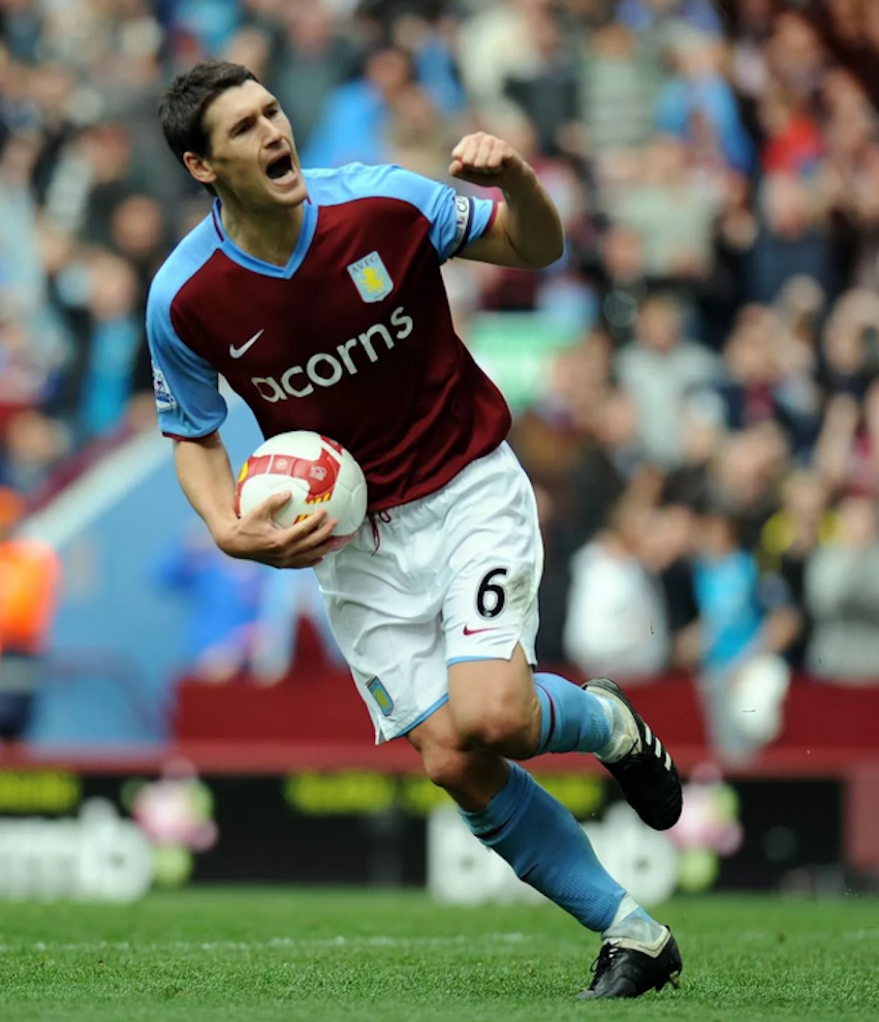
THE RECORD books show James Milner’s most prolific season with Aston Villa came in 2009-10 although the club’s nearly-but-not-quite campaign proved to be a signal for him to move on.

Milner at 23 won the PFA Young Player of the Year Award after scoring 12 goals and assisting 16 more in 49 appearances for the club.

Villa repeated the previous season’s sixth place finish in the Premier League (and qualified for Europe again), reached the semi-finals of the FA Cup and were runners-up to Man Utd in the League Cup final (Milner scored a fifth minute penalty but United prevailed 2-1).

Milner also collected the fans’ player of the year accolade that season, after he had successfully moved into a central midfield role, playing alongside Stylian (Stan) Petrov.

“I’ve enjoyed it,” he said. “I used to play there a bit when I was younger and obviously played a lot of football out wide since then.

“But I’ve enjoyed it immensely moving into the middle and, having Stan in there, you just seem to get a bit more of the ball and get involved a bit more. I’m still learning the role but enjoying it.”

In March that year, with Villa in contention for a top four finish, manager Martin O’Neill positively drooled about the player after an outstanding second-half performance at Wigan when he fired in a winner on the hour.

“It was an extraordinary performance by a really good player,” said O’Neill. “Since he has stepped into central midfield his game has improved tenfold and he continues to go from strength to strength.

“When you play wide you depend on other people giving you the ball to get into the game but when you have got that determination and energy, you might as well use it in the centre of the field.

“It is something we have been crying out for, a midfielder scoring double figures, and he has been sensational.”

Milner in action for Villa against League One Albion’s Alan Navarro in the FA Cup in 2010

O’Neill walked out on Villa five days before the start of the 2010-11 season and it turned out Milner’s imminent move to Manchester City was the cause. O’Neill later explained that he over-reacted to an about-turn by Villa owner Randy Lerner.

He told the Claret & Blue podcast Lerner had promised to keep Milner and bring in Scott Parker to play alongside him, but within 24 hours the plan was ditched and Milner was sold to City for £26m, with Stephen Ireland going in the opposite direction as a makeweight.

“I have to say I took these things too personally,” said O’Neill. “I brought James into the football club, he’d been out on loan at Villa and done fine but I changed him from wide right to central midfield and he was fantastic for us.”

However, Milner’s rationale for wanting the move was explained in an interview with The Guardian. “Villa came very close to winning a trophy, they had a lot of good players but were just that tiny bit short of getting to the next level,” he said.

“They needed to bring players in but it became clear from Randy Lerner that Villa might have to sell to buy. It made me think City had a better chance of progressing and challenging for trophies. I had a great time at Villa and improved as a player, but City is a club going places very quickly.”

Ever the professional, Milner played for Villa in the opening Premier League match of the season while the finer details of his move were completed and he was even applauded off at the end having been booed at the start of it.

In another edition of the Claret & Blue podcast, Villa’s former chief executive Paul Faulkner said: “I remember that game and 10 or 15 minutes in there was a 50-50 ball and he went in and it felt like all of Villa Park held its breath but he won the ball, got up and ended up scoring as well and went off a few minutes later to a standing ovation.

“There was that sense of ‘What an individual he is’. He did it for Villa and the fans, because he is a decent person.”

Faulkner added: “His attitude, approach and what he brings on the football pitch – and still does – he’s an amazing guy. He’s a straightforward, stand-up guy and absolutely decent.

“What a player, he would do anything for the team.”

Milner’s first spell in Villa’s colours had come in the 2005-06 season after Newcastle manager Graeme Souness had made it plain Milner wasn’t his kind of player.

Former Toon midfielder Nolberto Solano wanted to return to his old club from Villa so Milner’s old Leeds boss David O’Leary, by then in charge at Villa Park, insisted any deal should include Milner on loan in return.

“Nobody at the club wanted Nobby to leave. So, we initially rejected Newcastle’s offer,” O’Leary told the club website. “But Nobby made it very clear that he wanted to leave. There is clearly no point in trying to hold on to a player under those circumstances.

“We were determined to ensure his departure benefited Aston Villa. We held out for a fee that reflects what we paid to Newcastle and also insisted that James Milner was included in the package.

“When you consider what we’ve got in return for a player who wanted to be elsewhere, we’ve definitely got the best of the deal.”

Milner didn’t take long to get on the scoresheet, scoring in a 1-1 draw at home to Spurs. Three days later he scored twice in an 8-3 mauling of Wycombe Wanderers in the League Cup.

But any hopes of Villa finishing in the top half of the Premier League were dashed by them only registering 10 league wins all season. They finished third from bottom of the table and O’Leary was sacked. Shortly after, the chairman, ‘Deadly’ Doug Ellis, ended a 38-year association with Villa by selling the club to Lerner and O’Neill was appointed manager.

It seemed like Newcastle had finally agreed to let Milner join Villa on a permanent basis for £4m but they then pulled out of it at the last minute.

“They accepted a bid for me to go to Aston Villa on deadline day after I’d be on loan there. I went down to Villa, offer had been accepted and then Martin O’Neill said the plug’s been pulled on it,” Milner recalled.

“I started laughing thinking he was joking, he said ‘No, they’ve changed their minds’. So, I went back up to Newcastle, they’d changed their mind.”

O’Neill told the club’s website: “We are disappointed because of the lateness of the decision,”

“Newcastle are entitled to do what they did, but we are disappointed because it came so late in the day.”

Milner duly returned to Newcastle and became a regular but a permanent switch to Villa eventually happened in August 2008, by then the fee was £12m.  He signed a month after Steve Sidwell arrived at Villa Park from Chelsea and was Villa’s eighth summer signing.

O’Neill said: “I am not a kid in a sweet shop but this is an opportunity for us. James has got a great spirit about him and I definitely think his best years are in front of him. It was disappointing two years ago not to sign him when we thought the deal was done and dusted but it is nice to have got it all sorted this time.”

Milner expressed his relief that the deal had finally gone through and believed the club was capable of breaking into the top four. “The top four is tough to get into. But a club will get in there at some point and Villa are in as good as position as any,” he said.

O’Neill’s side had a terrific season up to the beginning of February and, after 25 games, were in third place in the Premier League, on course to qualify for the Champions League. But a dreadful run of form in the final third of the season, with only two wins in 13 matches, saw them drop down to sixth by the end.

As mentioned at the top of this piece, fortunes would change in 2009-10 and Milner in particular was earning plaudits for his performances in central midfield.

At the beginning of the season, he had made his full England debut (going on as a sub for Ashley Young in a 2-2 draw with the Netherlands under Fabio Capello) having played for his country at all age group levels from under 16s up, including a record 46 appearances for the under 21s. Over the next seven years, Milner won 61 caps.

Following a man-of-the-match showing in Villa’s 6-4 Carling Cup semi-final, second-leg victory over Blackburn Rovers, Milner declared: “The next step for this side is to win a trophy. The owner and the manager have done a great job and the club has changed massively since the last time I was here on loan.

“Hopefully we are improving year by year and we can show that in the league but also to get a piece of silverware would be great.”

Milner was hoping he’d have a better League Cup final experience than in 1996 when, as a Leeds United fan, United lost 3-0 and their supporters jeered manager Howard Wilkinson at the end. “I was supporting Leeds. I was only 10 and remember being disappointed,” he said.

‘Polite, enthusiastic, dedicated – the model professional’

JAMES MILNER obviously has a thing about passionate Italian coaches called Roberto: It was Roberto Mancini who took him to City from Aston Villa for £26m in 2010 (with Stephen Ireland moving in the other direction as part of the deal).

He went on to win the Premier League title twice, the FA Cup and the League Cup in his five years at the club. In 203 appearances for City, he scored 19 goals and provided 45 assists.

Sadly, a sizeable number of City fans have quickly forgotten the success he was associated with and find it necessary to boo him if he returns to the Etihad in the colours of an opponent. They particularly resented him joining rivals Liverpool and thought it bad form that in 2016 he celebrated rather too exuberantly scoring for the Reds against them, especially because he’d previously not celebrated when he scored for City against his old club Villa.

They also claim not to like his desire to play in his preferred central position, and on more occasions, because they say he didn’t achieve either of those at Liverpool.

When he lined up as an emergency right-back for Albion’s visit in October 2023, sections of the City faithful revelled in his discomfort up against Jeremy Doku and Phil Foden (he was subbed off at half time).

Go back to the beginning of his time with their club and this is the same player who put in a man-of-the-match performance on his City debut – a 3-0 win over Liverpool!

On signing the player at the age of 25, Mancini said simply: “He is a good young player, who can play in every position in the middle and out wide.”

It’s worth checking in on a piece Paul Wilson wrote for The Observer in 2011 when Milner did a question-and-answer session with City supporters at the Mayfield Sports Club home of an amateur rugby league team in Rochdale.

“Milner seems polite, enthusiastic and dedicated, every inch the model professional,” writes Wilson. “Milner is unquestionably the real deal. Even on a night off such as this he does not drink, not even creamy pints of hand-pulled John Willie Lees.”

Milner explained: “I made that decision quite early on. I’ve always dreamt of being a footballer, you only get one shot at a career like this and I want to be the best professional I can.

“Anything I can do that means I can get the best out of my ability is what I’ll try and do. It’s not much of a sacrifice really, we are fortunate to be well paid for doing something that we love and enjoy doing and I want to play for as long as I can.

“As a professional you want to get as much as you can out of your career, play at the top level and win trophies. Playing with top players at Manchester City I’ve got a great chance of doing that, and I just want to keep improving.

“You just want to be able to look back on your career when it’s over, see what you’ve won and feel that you couldn’t have done any more, and that you’ve been the best player you possibly could have been.”

Wilson noted how Milner had showed strength of character to force his way back into the team when left out of the side in his first season with City. “I realised when I joined that competition for places would be intense at City, and I also knew the manager must rate me, because he brought me to the club,” said Milner.

“But if you are not playing you are not happy and you want to know why. So, I asked him what he thought, what I could do to improve to get into his team, then I went away and worked hard on it.”

Understandably, Milner enjoyed being part of the City side that won 6-1 at Old Trafford and acknowledged: “The fans will remember that for a long time, because they have been the underdogs in the city for so long, and it was great to be a part of that.

“But we now have to make sure we don’t get carried away. The fans can get as carried away as they want, good luck to them. It’s our job to carry on winning football matches and try not to get ahead of ourselves.”

Wise words but even then, in his mid-20s, he’d got 10 years’ experience behind him. “It’s all been a bit of a rush, but I think that happens when you make your debut so soon after leaving school,” he said. “You’ve had this dream and suddenly you’re doing it and everything happens very fast and hardly slows down.

“I remember Nigel Martyn joking with me at Leeds, saying he was old enough to be my father, which he certainly was. He said: ‘Make sure you enjoy your career because it will go past in a flash.’ And I was like: ‘Yeah, leave it out, Nige, I’m only 16. I’ve got all the time in the world.’

“Well, here we are 10 years later, and it’s flown. I can’t believe it. Nige is obviously wiser than he looks.”

In five years at City, Milner was in two Premier League title-winning sides (2012 and 2014), collected a FA Cup winners medal in 2011 and a League Cup winners medal in 2014 and was viewed as an integral part of their squad.

Mancini left City in the wake of losing the 2013 FA Cup final to Wigan Athletic and his successor, Chilean Manuel Pellegrini, was also a big fan of Milner and tried to convince him to stay as his contract came to an end in 2015.

Pellegrini told the Guardian: “Milner’s a phenomenon, a guy with big balls and a heart this big.

“Intelligent, great mentality, one of those players that when you leave him out you’re left with this feeling of injustice; it hurts because he should always play but sometimes you need a technical player with other characteristics.

“I hope he stays. If he doesn’t it will be because there’s an important offer.

“The club wants Milner to continue and he wants to stay but maybe he wants more games.

“I understand. I’m Milner’s No1 fan. Find me a more complete English player. There are players who’re better technically, yes. Quicker players, yes. Players who head better, yes. But show me one who does all the things Milner does well. There isn’t one.”

When he decided to move on a free transfer to Liverpool in 2015, teammate Vincent Kompany declared: “You’ll be missed at City brother, as a teammate and a friend! Your drive and passion were inspirational.”

Milner himself hasn’t taken the fan flak to heart and on tribuna.com spoke of his memories of his former side.

“I had a great time at Man City, and I was lucky enough to win every domestic trophy there, play with some great players and I became a better player there,” he said.

“I have nothing bad to say about the club. Obviously, now I think of them a bit differently because they’re big rivals but that good feeling is still there. They’re a big part of my career and a big part of my life as well.”

Football writer Alex Brotherton leapt to Milner’s defence in a piece for the Manchester Evening News in September 2021, declaring at the outset: “There are no two ways about it – Milner was an excellent servant to City during what was an extremely successful period for the club.”

Brotherton reckoned even though Milner didn’t set the world alight in sky blue, “that wasn’t what was expected of him” given he was playing alongside the likes of David Silva, Yaya Toure, Carlos Tevez and Sergio Aguero.

“It was during the unsuccessful title defences of 2012-13 and 2014-15, when City’s attack faltered and their backline creaked, that Milner really stood out,” wrote Brotherton. “He rarely put in less than a 7/10 performance and 100% effort was guaranteed, chasing down lost causes like his life depended on it.”

The journalist also cited “a brilliant battling performance” away at Bayern Munich in the Champions League in 2013-14, capped off by a stunning goal that sealed a come-from-behind 3-2 win. And he remembered Milner’s “tireless work on the left flank” when 10-man City earned a 1-1 draw at Chelsea.

“It was because of performances like this that Milner was a hugely popular figure among City fans, and rightfully so,” said Brotherton.

Describing the booing of Milner as petty, Brotherton added: “Of all the players that City fans could hate, the affable Yorkshireman shouldn’t really be one of them.”

The Mirror’s David McDonnell had presented a similar defence four years earlier, describing Milner as one of City’s “most efficient and reliable players” and “a grafter and one of the most inoffensive players in the money-saturated modern game”.

“There was never a whiff of controversy surrounding Milner during his time at City, as one of the most conscientious players around simply got on with the job of delivering for his team, a recurring theme throughout his career.”

The Withdean visitors’ teenage winger went on to great things

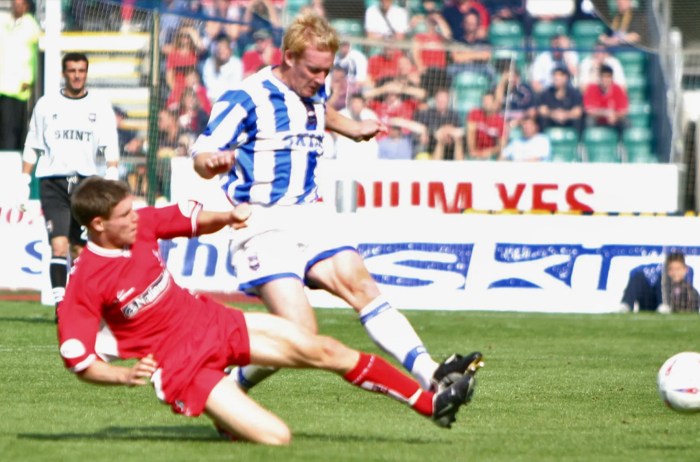
MY FIRST memory of watching James Milner play was at Withdean Stadium when he was on loan to Swindon Town from Leeds United.

Even then, as a seventeen-year-old, he had something about him – but I certainly didn’t imagine I would be watching him playing in the Premier League and Europe for Brighton 20 years later!

Young Milner tackles Brighton’s Kerry Mayo

That League One game on 6 September 2003 finished 2-2. Sam Parkin scored twice for Town and Albion’s goals came from Gary Hart and a penalty from on-loan Darius Henderson.

The Albion matchday programme subsequently recorded: “Kerry Mayo had a fine match, mainly subduing the impressive teenager James Milner.” (although, as the picture suggests, he wasn’t afraid to launch himself into a tackle).

Swindon’s manager Andy King had persuaded his old Everton teammate, Peter Reid (in charge of Leeds at the time) to loan Milner to the Robins for a month. In just six matches, the young winger scored twice.

“The boy is a terrific talent and everyone has been able to see the skills he has and I have no doubt he will go on to perform in the Premiership,” King told Sky Sports.

Milner already had two goals to his name for his parent club having scored twice in the Premier League in 2002-03 while still only 16.

On Boxing Day 2002, ten days short of his 17th birthday, he became the youngest player to score in the elite division, with a goal in a 2–1 win at Sunderland (the record had been set a couple of months earlier by Wayne Rooney for Everton and was subsequently taken by James Vaughan, also for the Toffees).

Milner had gone on as a 36th-minute sub for Alan Smith, a player he had admired when a boy growing up in Leeds. Terry Venables, Leeds manager at the time, said: “It’s not just a case of him simply coming through and helping out because every day he is getting better and better.”

Milner scored again three days later after going on as a 31st minute sub for Harry Kewell as Leeds beat Chelsea 2-0 at Elland Road.

“Picking up Mark Viduka’s pass in first-half injury time, Milner beat his man before thumping a right-foot shot low into the net with Blues keeper Ed de Goey powerless to stop him,” said the BBC report of the match.

“I am very pleased with him,” said Venables. “He is growing in this group and he has taken advantage of every day’s training to show what he can do.

“He has two good feet, he is courageous and everyone likes him a lot. He also is not only a nice, solid, good, well-mannered boy, he is a very talented player.

“It’s early days for the boy. At the moment he has not achieved anything and he is the first to admit that.

“But I think a lot of people are confident about his development. We have just got to take it easy.”

Wind on the clock more than two decades and Albion are now enjoying the benefit of Milner’s vast experience gained winning trophies galore for two of the country’s top clubs and playing for his country.

Born in Wortley, Leeds, on 4 January 1986, Milner broke through with Leeds United before joining Newcastle United at 18 and having loan and permanent spells at Aston Villa.

Milner went on to make more than 200 league and cup appearances for Manchester City and more than 300 for Liverpool as well as earning 61 full England caps and a record 46 at under 21 level.

Against Wolves on 22 January 2024, 38-year-old Milner overtook Ryan Giggs to go second outright on the Premier League’s all-time appearance list when he played in his 633rd top-flight match, 20 short of record holder Gareth Barry.

“I’ve had some luck,” Milner told TNT Sports. “I’ve worked hard and you have to enjoy it to put the work in every day. I’ve hopefully got a few more games in me.”

Milner’s free transfer move to Liverpool from Manchester City in the summer of 2015 proved an inspiration that brought him even more medals than he had won with the Sky Blues.

Over eight seasons, he made 332 appearances, scored 26 goals and lifted seven trophies along the way.  

“He’s a role model,” said manager Jürgen Klopp. “Nothing we have achieved in the last few years would have happened without James Milner, it’s as easy as that.

“Whether he was on the pitch or not, he’s set standards in a way not a lot of people can set standards, and it educated all of us.”

In a heartfelt tribute to the player, Klopp added: “From the first moment for me, he was a super-important player reference point.

“When you have a meeting and you look at Millie’s eyes and he’s not shaking his head, you know you’re on the right way. Nothing would have happened here without Millie because he kept it always going.

“From the player who was super-angry when he didn’t play, to the player when he did play, the way he pushed the whole dressing room before a game is absolutely second to none.”

For his part, Milner enjoyed a good relationship with Klopp, apart from once during a half-time flashpoint when the manager lost it, as Milner revealed to The High Performance Podcast.

“We had one moment where he was sharing his thoughts and I was sharing mine and I remember him smashing his hands on down the table and shouting, ‘Will you shut the f**k up!’ But Jurgen was brilliant, we had a great relationship and we were great off the pitch.”

It was Klopp’s predecessor, Brendan Rodgers, who persuaded Milner to make the journey along the M62, and he said at the time he signed him: “He had won the Premier League, he had won cups. His whole ambition was to win the Champions League and he felt that he would have a better opportunity to win it at Liverpool.”

Rodgers revealed that when Liverpool were trying to persuade him to sign, his wife Charlotte spent time chatting to Mrs Milner while he spent time with her husband!

“His actual football talent has probably gone under the radar because he’s played around some outstanding talents, but this is a guy who works tirelessly at his game,” said Rodgers.

“He’s in here at 7.45am making sure he’s prepared for his training, getting all of his food supplements and getting everything correct before training – he’s in two-and-a-half hours before he trains and then does his work, gives his maximum.

“He prepares himself like an elite player should. He’s also got big character and a big mentality.”

Rodgers was effusive in his praise of the new signing even before a ball had been kicked in anger after he scored the winner in a 2-1 pre-season victory over Brisbane Roar. Playing in the central role he preferred, he also provided a pass for Adam Lallana’s 27th-minute equaliser.

Former Liverpool teammates Adam Lallana and James Milner reunited at Brighton

“James Milner is a class act,” he told reporters. “We had to work very hard to get him in but I think we’ll see over the course of the season how important he is for us.

“He’s a wonderful personality and a top class footballer. When you see him play in his favourite position, you see all these qualities come out.”

Milner in action for Liverpool against Brighton during a lockdown match

Rodgers departed Anfield not long after Milner’s arrival but the player grew in stature under Klopp and, although it wasn’t his favourite position, he spent much of 2016-17, filling in at left-back.

That season he made 40 appearances – 36 in the Premier League – as Liverpool qualified for the Champions League. They made it all the way to the final, only to lose to Real Madrid in Kyiv. But they made amends the following season and returned from Madrid with Liverpool’s sixth European Cup.

Milner went on as a second-half substitute in the Estadio Metropolitano in the 2-0 win over Tottenham Hotspur. “It will be nice going to Melwood seeing No.6 there,” he said. “Liverpool has a great history and when I signed for the club, I was desperate to add trophies as this club expects to win trophies and it has an amazing history – but we want to create our own history.”

Not only did they add the UEFA Super Cup and FIFA Club World Cup, Milner made 22 appearances as Liverpool clinched the Premier League title in 2019-20 with 99 points.

In 2021-22, Milner scored the first in Liverpool’s 11-10 penalty shoot-out win in Liverpool’s Carabao Cup defeat of Chelsea at Wembley, having gone on as an 80th minute sub, and he repeated the feat (as a 74th-minute sub) when the teams were also goalless at the end of the Emirates FA Cup final three months later. Liverpool won that 6-5 on penalties.

In his final season at Anfield, Milner featured 43 times and moved up to third spot on the Premier League’s all-time appearances list.

“I’m Leeds through and through and always have been and always will be – but I never probably thought that another club would get into me as much as Liverpool has,” said Milner.

The player he followed from Anfield to the Amex, Lallana, told the BBC exactly what Milner brings to a squad, especially in setting an example to younger players.

“He helps the management team in so many ways with the experience he’s built up,” said Lallana. “He knows what it takes to win. He knows what sacrifices need to be made.

“I’m not sure how he got the boring James Milner label, but he couldn’t be further away from that. He’s one of the loudest in the dressing room for sure. Full of life. Full of banter. But he’s definitely old school.”

Lallana added: “Those basics are always there and they’ll never change. I think that’s what’s made him who he is and given him his success. Those values that he’ll always live by. He taught me how to be a better professional and a better role model.”

It all began at Westbrook Lane Primary School in Horsforth and the secondary Horsforth School. He played local amateur football with Rawdon whose coach Graeme Coulson had first noticed Milner as a nine-year-old.

“I first came across him when I was refereeing a junior match involving Westbrook under nines at Horsforth,” Coulson told the Craven Herald and Pioneer. “He was so outstanding then that I asked some of the Horsforth parents who he was.

“I noted his name and it was one not to be forgotten. He was an outstanding talent scoring lots of goals but he was also very strong.”

Horsforth School spokeswoman Fran Morris said: “He was a first class student and he did really well at his GCSEs (he got eleven).

“He was very sporty at school and he won the PE prize which was handed out just before we broke up.

“He was the most wonderful young man and he was very popular, so we wish him all the best in his career. I am very sure he will do well and we are all proud of him at the school.”

Let alone his football ability, the young Milner also played cricket for Yorkshire Schools and excelled as an athlete: he was Leeds Schools’ cross-country champion for three successive years and district 100 metres champion for successive years.

Milner was a season ticket holder at Elland Road along with his parents Peter and Lesley before becoming a ball boy. He joined the Leeds United Academy after being spotted playing for Westbrook in Horsforth.

The sporty youngster was forced to decide between cricket and football, explaining in one interview: “I played for Yorkshire at the ages of 10 and 11 as a wicketkeeper-batsman. It was something I enjoyed but you get to a stage where you have to make a choice.

“I stopped playing cricket at 16 when I moved full time to the Leeds United Academy. They couldn’t take the risk of me getting injured, having my foot broken by a yorker or something like that.

“A couple of months later I made my Leeds debut. I still can’t take the risk for the same reason, but as soon as I retire from football, I’ll look forward to taking up cricket again.”

He completed his formal education at sports college Boston Spa School, which works in partnership with Leeds United, and, as soon as he left school, he was taken on as a trainee.

As he worked his way through United’s youth ranks, he also played for England at under-15 and under-17 levels.

Milner in action for the Albion against Everton at Goodison Park

City grounding signalled high hopes for talented Taylor

EXPECTATIONS of a bright future in Albion’s colours fizzled out for Taylor Richards after the most audacious of starts.

Richards cheekily scored with a Panenka chipped penalty in a pre-season friendly against Crawley Town which instantly made the watching supporters take notice of the new signing from Manchester City.

It was reported Albion paid £2.5 million for the 18-year-old when he decided to move on after four years moving through the youth ranks at City.

“I did not have to leave because I still had years on my contract,” he told the Argus. “I just felt that I needed a new challenge.

“When I found out that Brighton were interested in me I was also made aware that I had a chance of breaking into the first-team further down the line.

“That is all I wanted to hear, that if you do well and train well, you’ll be given opportunities.

“But I would not change my time at City for anything. The only thing I would change is probably not taking my opportunity as well as I should have done.

“When you’re in that comfortable environment, you do not always realise what you have and maybe take your foot off the gas a little, but it’s all a learning experience and one I really enjoyed.”

Richards did get his wish of making it through to Albion’s first team, but his involvement was very sporadic and after a season on loan at Championship side Queens Park Rangers, he eventually moved there permanently in the summer of 2023.

For Richards, it was a case of moving home. Having been born in Hammersmith on 4 December 2000, he grew up in Shepherd’s Bush – although his football journey began in the academy at Fulham.

City took him north at the age of just 14 and he earned a scholarship aged 16. Eventually, he became a regular for City’s under-18s.

In February 2017, he played for England under-17s in a tournament on the Algarve, starting in a 1-0 defeat to Portugal and going on for City teammate Phil Foden in a 3-2 win away to Germany. Two days later, he started in England’s 1-0 win over the Netherlands. That side featured Jadon Sancho, who went through the age groups at City at the same time as Richards.

“I hung around with Sancho quite a lot because we went into the academy at the same time and we had a good connection,” he said. “What’s happened with his career proves you never know what might happen. It’s all about working hard and taking your opportunity when it comes.”

Taylor made seven appearances for City’s under 23s – three in 2017-18 and four in 2018-19 – although he didn’t feature in the first team. He was on the scoresheet in a Checkatrade Trophy quarter final match in January 2019 when City fought back from 2-0 down to beat Rochdale 4-2 (former Albion player Jim McNulty was on the scoresheet for Rochdale).

“Once you’re in that environment, winning is the only thing on the table and losing is no option,” he said. “Everyone’s at it and it’s a good place to be for a young player to get you ready for the men’s game. Every age group tried to do what the first team did. It was the same philosophy that went right through the academy, so when you stepped up to the next level, it made it easier.”

Richards made an instant name for himself shortly after signing for the Albion with that penalty against Crawley. He told the matchday programme: “I knew I was going to chip it, but I took a long run-up to make the goalkeeper think I was going to smash it.

“I’ve never had the fans sing my name before, so it’s a great moment for me and one I’ll cherish for life. Hopefully that left a nice impression, but it was only my first game.”

Head coach Graham Potter told the club website: “He showed his confidence with the penalty. He’s not been here long but is ambitious and wants a taste of first-team football. That’s always the challenge for young players, to get the right next step from youth football.

“He has quality and ability, so we’ll make an assessment of him and the right pathway for him to gain that first-team experience.”

The 2019-20 season was only two months old when Richards made his Albion competitive first team debut. A team comprising several youngsters lost 3-1 to an experienced Aston Villa side in the Carabao Cup at the Amex. “I remember chasing Douglas Luiz around the whole evening,” he said. “It was a long night, but a good night, apart from the result. It helped me a lot in understanding the level and what I needed to do to play against that level of opposition.”

With further first team chances unlikely because of the competition for places, Richards was sent on a year’s loan to Doncaster Rovers in 2020-21.

The attacking midfielder scored 11 goals in 48 appearances and learned a lot from the experience. “The manager, Darren Moore, wanted us to play football, which was a similar style to Brighton, but sometimes the other teams didn’t want to play,” he recalled. “They were a bit more long-ball, more physical, and I definitely came back a better player for it.”

He signed a new three-year contract at Brighton and was a non-playing substitute in the opening Premier League matchday squad, with head coach Potter saying: “Taylor has impressed during pre-season, and he was deservedly part of the first-team squad at Burnley last weekend.

“He had a very productive loan spell at Doncaster last season, and this new contract is a reward for his hard work and progress he’s made since he arrived.”

Richards made starts in two Carabao Cup matches (against Cardiff and Swansea) and went on as a sub in two league matches, replacing Jakub Moder in a 2-0 home defeat to Everton and taking over from Enock Mwepu in a 1-0 home defeat to Wolves.

Having made his league debut against Everton, with mum Shani watching on, he said: “I thought I did well. I was nervous, like most people would be, but I tried to keep the ball as much as I could, tried to give more going forward but this is my first game and I will learn from these moments and go again.

“Despite the result, because that comes first, I am happy I got on the pitch. My mum has been with me through this whole journey and she got to see me make my Premier League debut so it is a proud moment for me.”

But, in the second half of the season, he once again went out on loan, this time to Championship side Birmingham City, Albion boss Potter explaining: “Taylor has been with the first-team squad for the first part of the season, he has benefited from that time and he has made great progress during that time.

“He has played in the Carabao Cup ties and also made his Premier League debut. But we feel it is now important for him to play regular football during the second half of the season and he will get that opportunity with Birmingham, a club I know well.”

In a bizarre turn of events, it was two months before he was fit to start for the Blues because he injured an ankle doing the medical associated with the move.

Bemused Brum boss Lee Bowyer said: “I’ve never heard anything like this. It’s crazy. I have never heard of a player getting injured in the medical.”

After he had finally made his debut, Birmingham Mail reporter Brian Dick had a favourable impression. “He looked very, very neat on the ball, not afraid to take possession and retain it in tight spots and also good at finding little angles around and in the box.

“He is a languid mover with good pace and plays with his head up, looking to bring others into the game,” the reporter observed. “Of all the January recruits there was more buzz at the club about Taylor than anyone else – and the very early signs are promising.”

Bowyer pointed out: “He can score, he can assist, he can make that pass.”

However, he only made two starts for Blues, plus three from the bench, and in the summer the player switched to QPR on a season-long loan with the plan to make the move permanent.

“I haven’t got the words, it feels great to be at QPR,” said Richards, who had been taken to Loftus Road by his mum as a seven-year-old to watch his first ever game.

“I am from Shepherd’s Bush and all my family and friends support QPR,” he said. “Everyone is excited and I just can’t wait to get on the pitch, that’s where it matters.”

Mick Beale, the manager who signed him, declared: “Taylor is a very, very talented boy who I have watched extensively in the past. 

“Given his age and the fact that he’s a Hammersmith boy, I think he’s perfect for us in terms of the identity we have as a team and as a club.

“He can travel with the ball and is powerful in his play, so we’re delighted to have him.”

Excited by the player’s versatility, Beale added: “He can play as a number 10, wide left, wide right – but predominately he is an attacking midfielder, a number eight. He gives more competition and our midfield is looking stronger for it.

“He is a midfielder who can dribble at speed, from one line to another – he can score and he can play.”

But Richards made only one start throughout the whole season, joining the action from the bench on 15 occasions. Nevertheless, when Gareth Ainsworth took over from Neil Critchley in February 2023 he was quick to acknowledge the player’s attributes.

“I like Taylor. I think he is a fantastically talented boy, I really do,” said Ainsworth. “He is very similar to some of the players I have come across in my management career before.

“But I think with young players today there is so much more to them than what you see on a Saturday, and it is our job as managers to work with them day in day out and work with them and give them clarity.

“Taylor is a fantastic player. I don’t want to put too much pressure on the boy, but he has been at some top places and is highly thought of and highly thought of by this manager as well.”

Richards joined the Rs on a three-year deal ahead of the 2023-24 season.

A non-playing sub for their opening day 4-0 defeat to Watford, Richards was in the starting line-up for a first round Carabao Cup match at home to Norwich City, facing former Albion players Shane Duffy and (sub) Ashley Barnes, and the visitors edged it 1-0.

Having played only four league matches for QPR in 2023-24, in July 2024 Richards switched to League One Cambridge United on a season-long loan.

United manager Garry Monk said, “Taylor is an exciting talent who has huge potential to be an outstanding player in this league. He will bring another dimension to our team and we are very excited to work with him this season.”

Richards told the club website “It’s a big opportunity for me to come here and play some football – I just want to get out there and show what I can do. 

“I want to get back to enjoying my football and if I am enjoying it, then everything else will come along with that.”