REACHING the FA Cup quarter-finals for the fourth time in seven years is music to the ears of Brighton fans of a certain vintage.
Time was when an exit far earlier in the competition was the more likely expectation and falling victim to non-league giant killers (remember Walton & Hersham, Leatherhead, Kingstonian, Canvey Island, Sudbury Town) was nothing short of humiliating.
But as each season in the exalted company of the Premier League has gone by, the last eight stage of the FA Cup has been well within reach.
As one who goes back a good many years, it was a delightful surprise to reach the quarters twice in the mid-1980s (going all the way to the final in 1983, of course, if you hadn’t heard!).
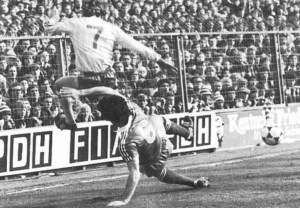
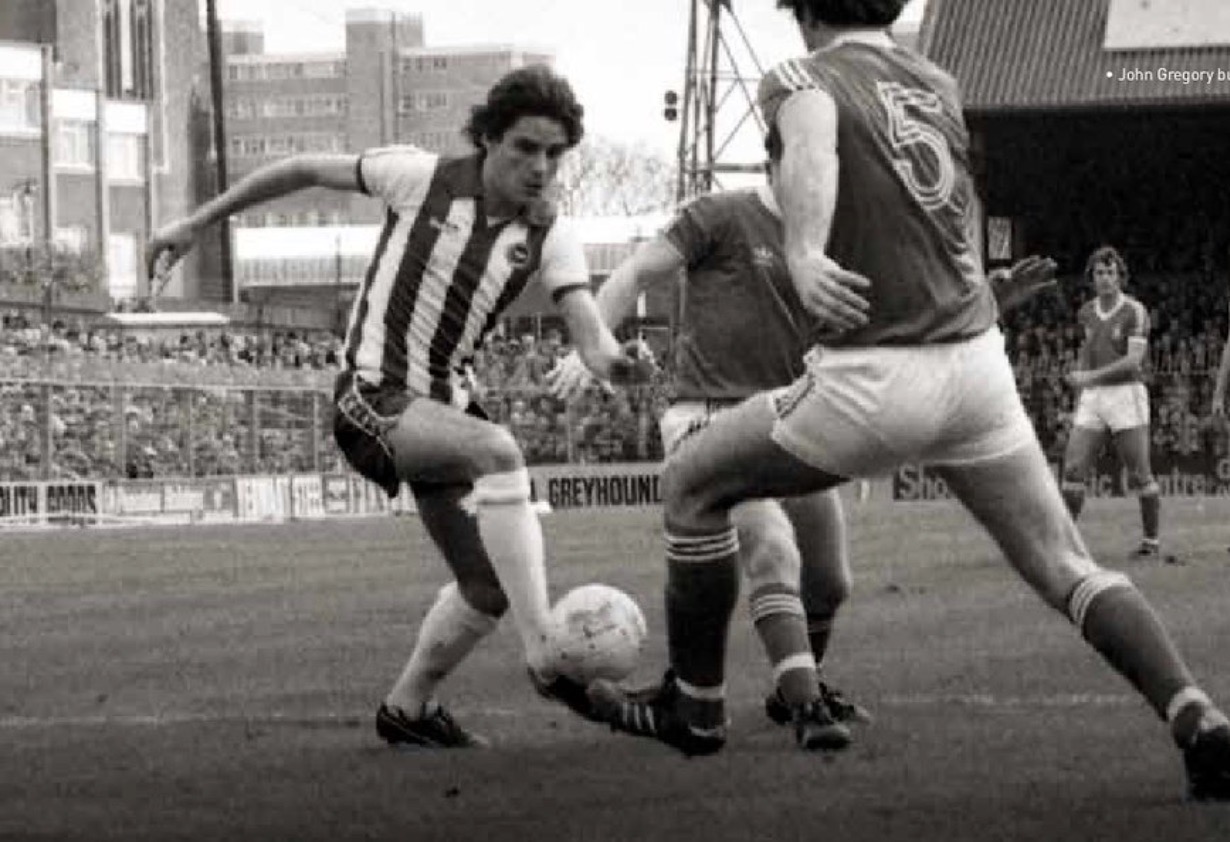
Gary Stevens tackles Mark Barham
It still pains me to say that I was one of the many locked out of the 28,800 Goldstone Crowd on 12 March 1983 when Albion played in their first ever FA Cup quarter-final.
Norwich City, under former West Ham FA Cup winner Ken Brown, were the opposition with future England goalkeeper Chris Woods in goal and Mark Barham, who joined Albion towards the end of his career, on the wing.
Jimmy Melia’s Seagulls had already beaten the Canaries 3-0 a few months earlier but the cup match proved a much tighter affair described as “bruising” by several football reporters who noted the physios were called on seven times to treat injuries – Albion’s Norwich-born Mike Yaxley twice attending to Steve Foster.
Andy Ritchie in what turned out to be his last home game for the Albion
Nonetheless, it was “marvellous entertainment for all its imperfections” reckoned the Sunday Telegraph’s Lionel Masters, who said: “Brighton full-back Chris Ramsey did more than most to inject a steely resolve. He conducted a feud with (Dave) Bennett, whom he flattened more times than a target a fairground rifle range.”
Alan Hoby of the Sunday Express wrote: “It was a tough, turbulent, physical affair with an orgy of high balls,” while the only goal of the game, from Albion’s Jimmy Case was “one of the few moments of quality in a frantic game,” according to Brian Scovell of the Daily Mail.
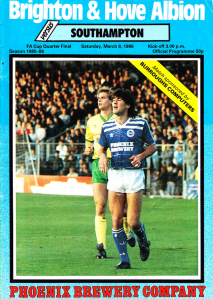
The less well-known quarter-final appearance of that decade came on 8 March 1986 when a Goldstone Ground crowd of 25,069 (at a time when the average often dipped below 10,000) saw Chris Cattlin’s Second Division Albion entertain First Division south coast rivals Southampton.
Albion were pleased finally to have got a home game in the competition having had to overcome away ties at Newcastle, Hull and Peterborough (who were eventually beaten 1-0 in a home replay five days before the Saints match).
Saints were managed by Chris Nicholl, Cattlin’s fellow former Burnley youth team colleague, and in the opposition line-up was Case, the talisman of Albion’s run to the final three years previously when he rifled in the winner at Anfield in the fifth round, scored that only goal v Norwich and buried a long-range rocket in the semi against Sheffield Wednesday at Highbury.
England’s Peter Shilton was in goal for Southampton and, most curiously, after a five-week absence from first team action, misfiring Mick Ferguson was selected by Cattlin to lead Albion’s attack. Not one of the 1983 Albion side started for the Seagulls.
Sadly, Brighton, in the upper reaches of the second tier at the time, didn’t do themselves justice. Saints won it 2-0 with first half goals from Steve Moran and Glenn Cockerill – and it turned out to be Ferguson’s last game for the Seagulls. Three weeks later he moved to Colchester United.
Fast forward to 2018 and another strange striker selection by a Brighton manager – this time Chris Hughton leaving top scorer Glenn Murray on the subs bench – proved costly in a quarter-final against Manchester United at Old Trafford.
New £14m signing Jurgen Locadia missed four good chances among 12 second-half Brighton efforts on goal to United’s one and Pascal Gross went close on three occasions. But BBC Sport’s Mike Whalley suggested: “He (Hughton) might have been left wondering if resting Murray caused Brighton to miss their chance of a first FA Cup semi-final since 1983.”
United topped and tailed the tie with Romelu Lukaku opening the scoring early on and Nemanja Matic sealing victory late on when he nodded in Ashley Young’s free-kick.
A year later, it looked like Albion wouldn’t be going beyond the last eight once again when Championship side Millwall led the Seagulls 2-0 at The New Den with only two minutes to go. Cue Locadia, on as a sub, to make amends for the previous season’s misses by making space for himself in the box and firing home an unstoppable shot to pull a goal back for the visitors.
Then, with 95 minutes on the clock, Solly March from way outside the box floated in a free-kick that Lions’ ‘keeper David Martin inexplicably let slip through his grasp to bring the Albion level.
Goalkeeper Mat Ryan a penalty shoot-out hero at Millwallin 2019
The momentum was in Brighton’s favour in extra time but it took a penalty shoot-out to decide the tie and when Murray missed Millwall might have thought it had turned back their way. But after three successes each, Mat Ryan kept out Mahlon Romeo’s effort, and Lions centre back Jake Cooper needed to bury his spot kick to keep the tie alive for the home side. He blazed his shot over the bar and Albion were through.
There was to be no such drama in 2023 when 18-year-old Evan Ferguson did a whole lot better than his 1986 namesake and stole the headlines by scoring twice against League Two Grimsby, who were playing in their first FA Cup quarter-final for 84 years.
The Mariners had knocked out five teams from divisions above them to reach that stage but they were well and truly put to the sword by Roberto De Zerbi’s impressive Seagulls who ran out 5-0 winners at the Amex.
As well as Ferguson’s brace, Deniz Undav, March and Karou Mitoma were also on the scoresheet and it could have been more; Mitoma missing a sitter and Adam Webster’s effort hitting the bar.
Perhaps by way of highlighting how quickly fortunes can change for young players, it’s interesting to recall that of Ferguson BBC pundit Danny Murphy said at the time: “This kid is a superstar. Honestly.
“He’s got great feet, technical ability. He’s calm, powerful and plays the role really well. You don’t see him out wide, he stays central and is always a target.
“I can’t see a weakness in his game at the moment. For 18 years old, the maturity he shows in his game is phenomenal.”
Murray, having moved into the punditry game himself by then, added: “It was the manner in which he scored those goals, he was so composed. As a young lad just coming into the first team, you can snatch at those chances but he just relaxes in that moment – and that is something that you can’t teach.
“He’s got a good stature and I think there’s big things in the future for him.”
ENGLAND World Cup winning hat-trick hero Geoff Hurst gave Colin Pates his Chelsea debut as an 18-year-old – and what an extraordinary footballing baptism it was.
Replacing the injured Micky Droy for a visit across London in a second tier match against Orient, young Pates was involved in a madcap 10-goal match that saw Chelsea win 7-3.
“It was an amazing feeling to go out there but it was chaos, “ he told chelseafancast.com in a 2021 podcast.
And in another interview, he recalled: “It certainly wasn’t a good advertisement for defenders but as long as you come away with the win the fans are happy. It’s one of those days where you’re so fired up it just goes so quickly.
“You come off the pitch at the end and have no recollection of what happened really. I was up against some good, experienced pros and it was quite daunting, but I really enjoyed it.”
That game at Brisbane Road marked the start of a Chelsea first team career that spanned 346 matches, 137 of them as captain, in a turbulent period for the club.
Pates’ future Brighton teammates Gary Chivers and Clive Walker were also in that side at Orient and Walker scored two of Chelsea’s hatful (Lee Frost (3), Micky Fillery and Ian Britton the others).
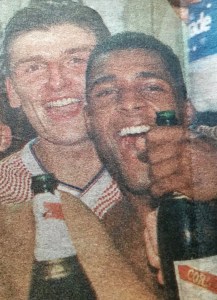
Pates and Robert Codner celebrate reaching the Wembley final
Fast forward 12 years and Pates was reunited with Chivers and Walker when he joined Brighton on loan from Arsenal in February 1991 to help out after young Irish centre-back Paul McCarthy was sidelined by injury.
Manager Barry Lloyd pulled off something of a coup to persuade his old Chelsea teammate, George Graham, then manager of Arsenal, to loan Pates to the Seagulls for three months.
The Argus Albion reporter John Vinicombe described it as a “masterstroke” and doubted that Albion would have made it to the divisional play-off final at Wembley without him.
Match magazine pic of Pates at Wembley
Lloyd’s faithful no. 2, Martin Hinshelwood, said Pates got better and better over the three months, pointing out: “He has steadied us a little bit. He talks to players, he is a great trainer and he has brought a lot to our back four.”
The player himself told Luke Nicoli of the Albion website in a 2021 interview: “Although I was dropping down a division, it didn’t matter to me – I was just happy to be playing football.
“I immediately struck up a partnership at the back with Gary, and it was like the good old days at Chelsea again.
“I spent three months at the club and I loved every minute; I loved the area, the Goldstone, the club, the fans and, of course, we went all the way to Wembley that season in the play-offs – where the turnout from our fans in the final was incredible.
“We lost (3-1) to Notts County, which was one of those games where it just wasn’t meant to be.”
It has since emerged that Lloyd’s insistence on changing a successful formula by playing Romanian international Stefan Iovan as a sweeper in that match upset the players.
But Pates said: “I know we changed formation that day, and maybe that contributed to our defeat, but I didn’t look at it like that – it was just one of those games where it wasn’t meant to be.”
“We came with a fantastic late run in the league, but it proved to be a game too far for us,” he recalled in a matchday programme article. “We made a slow start to the game and that defeat still hurts, knowing what it meant to everyone connected with the club.”
In another interview, Pates said: “The result in the play-off final didn’t go our way but it was a fantastic experience for the team to play at Wembley, the side was so close to the Premiership, or First Division as it was called then.
“I’d been lucky to have played there before but to others it was the pinnacle of their careers.”
Indeed, the last time Pates had played there was five years previously when he made history by becoming the first-ever Chelsea player to lift a trophy – the Full Members Cup – at the iconic stadium (when Ron Harris lifted the FA Cup in 1970 it was at Old Trafford, where the replay had taken place after a 2-2 draw at Wembley). That was arguably the pinnacle of his career.
The Full Members Cup was a short-lived competition between North and South clubs from the top two divisions of the league, with the regional winners meeting in a national final. It was introduced after English clubs were banned from competing in Europe following the Heysel disaster. In truth, it struggled to be taken seriously and it was a surprise it lasted as long as seven seasons.
The most remarkable element of Chelsea’s win was that the game took place the day after they’d played a league game at Southampton – when Pates scored the only goal of the game with a deflected free kick past Peter Shilton in Southampton’s goal.
Chelsea beat Manchester City 5-4 but extraordinarily were cruising at 5-1 before City scored three in the last six minutes (one an 89th minute own goal by Doug Rougvie!).
“When the referee blew his whistle, was I relieved!” said Pates. “It’s great to play at Wembley with thousands of fans screaming their heads off, and once you’re on the pitch you don’t care what cup it is, you just want to win it.”
Born on 10 August 1961 in Wimbledon, Pates went to school only five miles from Stamford Bridge and was a Chelsea fan as a boy. He signed for the club aged 10, starting training with them in 1971, the year they won the European Cup Winners’ Cup having won the FA Cup the previous year. Pates worked his way through the different age levels and as an apprentice cleaned the boots of hardman defender Ron Harris.
He made that first team debut on 10 November 1979, by which time he had already played five times for England Youth that autumn. A further six appearances followed in 1980, alongside the likes of Micky Adams, Gary Mabbutt, Paul Walsh and Terry Gibson. Mark Barham, Steve Mackenzie and Terry Connor featured in the early 1980 games.
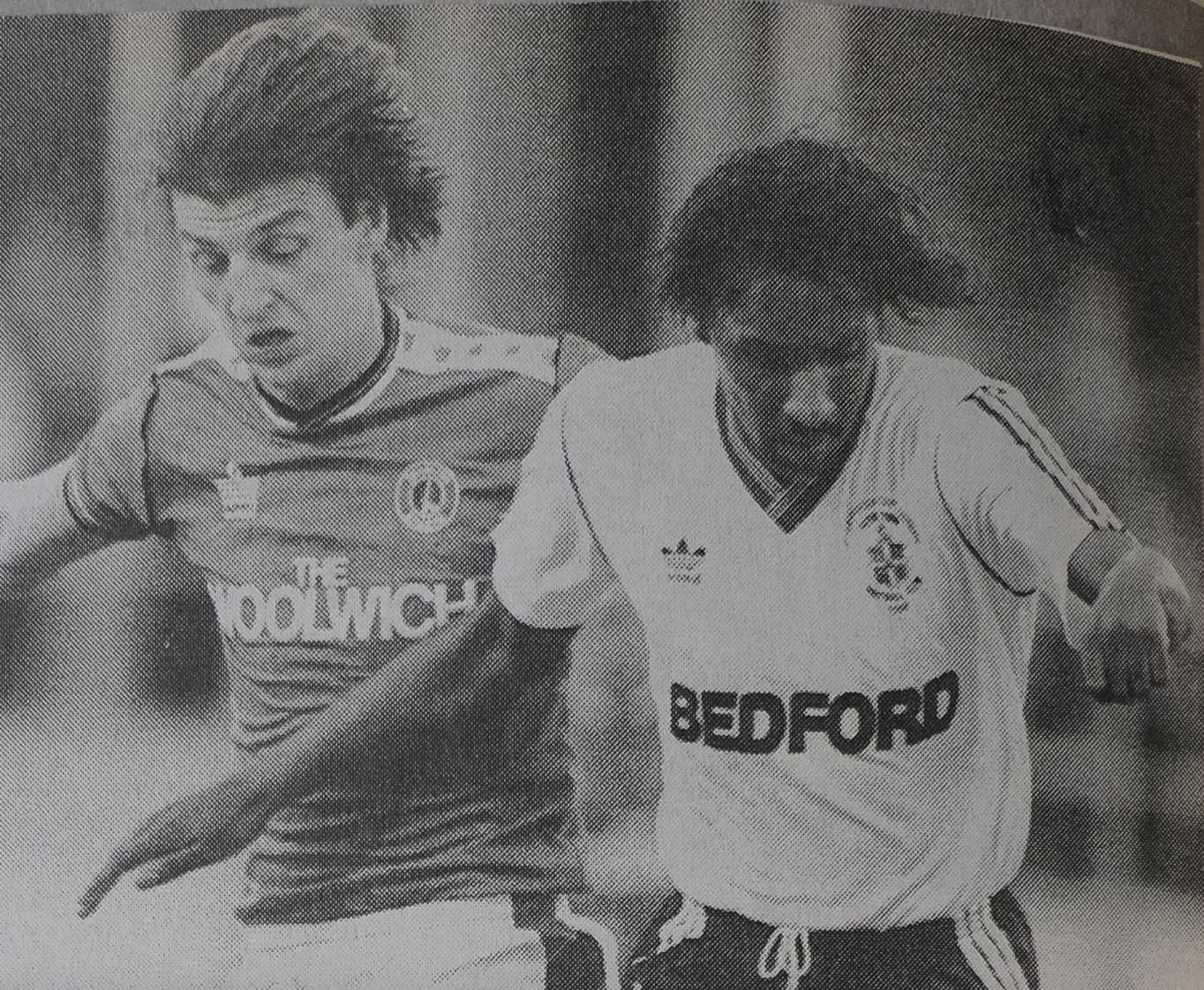
Pates in action for Chelsea against Albion’s Terry Connor, a former England Youth teammate
Simultaneously, Droy’s lack of fitness meant young Pates got an extended run in the side. However, because he was comfortable on the ball and could play in a number of positions, manager Hurst often used him as something of a utility player.
For example, in 1980-81, his 15 appearances were spread across all back four positions. But when John Neal took over for the 1981-82 season, Pates was ever present in the centre alongside Droy.
While the side’s league fortunes didn’t improve under the new man (they finished 12th), they had the consolation of reaching the quarter finals of the FA Cup after beating reigning European champions Liverpool 2-0 in the fifth round (Pates had the job of man-marking Graeme Souness).
Remarkably, Chelsea only narrowly avoided relegation to the old Third Division in 1983, and, as a result, manager Neal had a clear-out of the ‘old guard’ and Pates’ performances and attitude earned him the captain’s armband just before his 22nd birthday.
“I think he wanted someone who had come through the ranks and knew the club,” Pates said. “I was fortunate enough to be one of the few players – along with the likes of John Bumstead – who he kept on from before.”
Pates has nothing but praise for Neal and his assistant Ian McNeill (who played more than 100 games for Brighton between 1959 and 1962) and their eye for good players, like Pat Nevin, Joe McLaughlin, Nigel Spackman, David Speedie and Kerry Dixon, who were brought in to rebuild the club.
“I loved John Neal, he was a man of few words but when he said something you listened because it was going to be something poignant or important,” said Pates. “He was a good man-manager and would always take care of you if you had problems and be there for a chat. You wanted to play for him.”
Combined with the new arrivals, Pates and his pal Bumstead were part of a core of local lads Neal relied on (it included Dale Jasper, Chivers and Fillery): they all came from the same estate in Mitcham.
In his first season wearing the armband, “Pates stepped into the role with ease and led the team to the Second Division title” wrote Kelvin Barker.
“Colin’s classy displays in the top division catapulted him into the limelight, his impressive captaincy of a club on the up particularly catching the eye.
“A string of niggly injuries after Christmas led to him missing a handful of matches and his importance to the defence was highlighted when, in his absence, Chelsea slipped to consecutive defeats at Coventry and Ipswich.
“Pates made a total of 48 appearances during the 1984-85 campaign and scored once, the goal coming in a stunning 4-3 win at Goodison Park against the season’s champions, Everton.”
It had been a proud moment when Pates led Chelsea out at Highbury for the 1984-85 season-opener against Arsenal. The game finished 1-1, Paul Mariner opening the scoring for the Gunners on 35 minutes, Dixon equalising for the visitors four minutes later.
Chelsea made a decent fist of their return to the big time, finishing sixth. They also reached the semi-finals of the League Cup only to be knocked out over two legs by a Clive Walker-inspired Sunderland.
Chelsea did make it to Wembley the following year but it would be fair to say winning
that Full Members Cup final ultimately damaged their progress in the league. Chelsea were riding high in the top flight at the time and being spoken of as title contenders but immediately after that trophy win they were beaten 4-0 at home by West Ham on Easter Saturday and 6-0 by QPR at Loftus Road on Easter Monday.
Pates’ future Brighton teammate John Byrne scored twice for the Rs playing alongside Michael Robinson and Gary Bannister, who got a hat-trick. Substitute Leroy Rosenior (father of Liam) scored the other.
Byrne later remembered: “There were some big name players in the Chelsea line-up, including centre-back Doug Rougvie who seemed like he wanted to kill somebody when the score was 5-0! He was certainly looking for blood!
“We had the Milk Cup Final coming up and I remember saying to Banna with about 15 minutes to go ‘I ain’t going anywhere near Rougvie’. And Gary replied: ‘Neither am I!’ So we both ended up playing on the wings with no one in the middle!”
Pates and Doug Rougvie both played for Chelsea and Brighton
There was talk that Pates might force his way into the England squad for the Mexico World Cup that summer but Terry Butcher, Alvin Martin and Terry Fenwick were ahead of him.
Competition at club level emerged at the start of the following season when centre-half Steve Wicks was recruited and Pates was moved to left-back. However, injuries to Wicks meant Pates was soon back in the middle.
In his sporting-heroes.net piece, Barker continued: “As Chelsea’s farcical season went from bad to worse, he found himself being played in midfield again. With the Blues looking down the barrel of a drop into Division Two, Colin was returned to the centre of defence and relegation was averted.”
An injury-disrupted 1987-88 season also saw Pates have the captaincy taken off him and given to fellow defender Joe McLaughlin. Pates actually missed the start of the season having had a cartilage operation and when he returned in October the team were on something of a downward spiral. Injured again at the end of March, by the time he was fit to return, Chelsea were heading close to the relegation trapdoor.
At the time, as part of a restructuring plan to reduce the top division’s number of teams from 22 to 20, the team finishing fourth bottom of Division One had to play-off against the third, fourth and fifth-placed teams in Division Two. The top two in Division Two were promoted automatically and the bottom three in Division One went down.
Chelsea ended up fourth from bottom and had to play Middlesbrough (who’d finished third in Division Two) over two legs.
Boro won the first leg at Ayresome Park 2-0 but Chelsea only won their home leg 1-0, so they were relegated. However, history has since remembered the match more for the riotous behaviour of Chelsea supporters.
gazettelive.co.uk recalled: “There was trouble before, during and after the high-stakes game. Chelsea fans invaded the pitch on the whistle and stormed the away end sparking hand to hand fighting with barely a steward in sight.
“And it was only the intervention of mounted police that eventually cleared the pitch. The trouble didn’t stop there with more attacks outside the ground as Boro fans returned to their cars, coaches and the tube.”
Boro striker Bernie Slaven remembered: “We were locked in the dressing room celebrating promotion for maybe an hour while the police dealt with the trouble and cleared the pitch then we went out and celebrated again with the Boro fans who had been kept back in the stadium.
“The trouble and the ugly atmosphere was a real shame because it took all the headlines away from what we had achieved.”
John Hollins resigned as manager and was replaced by Bobby Campbell. One of his first moves was to sign the powerful central defender Graham Roberts who he made captain.
Pates was given a testimonial as part of the pre-season friendly fixtures (a 0-0 draw with Spurs) but the season was only three months old when he suddenly found himself unwanted at the Bridge.
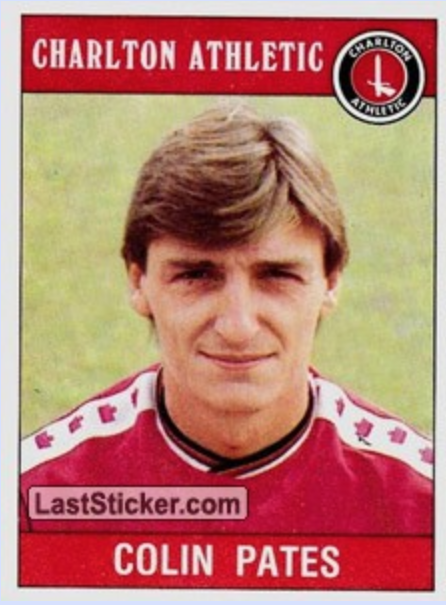
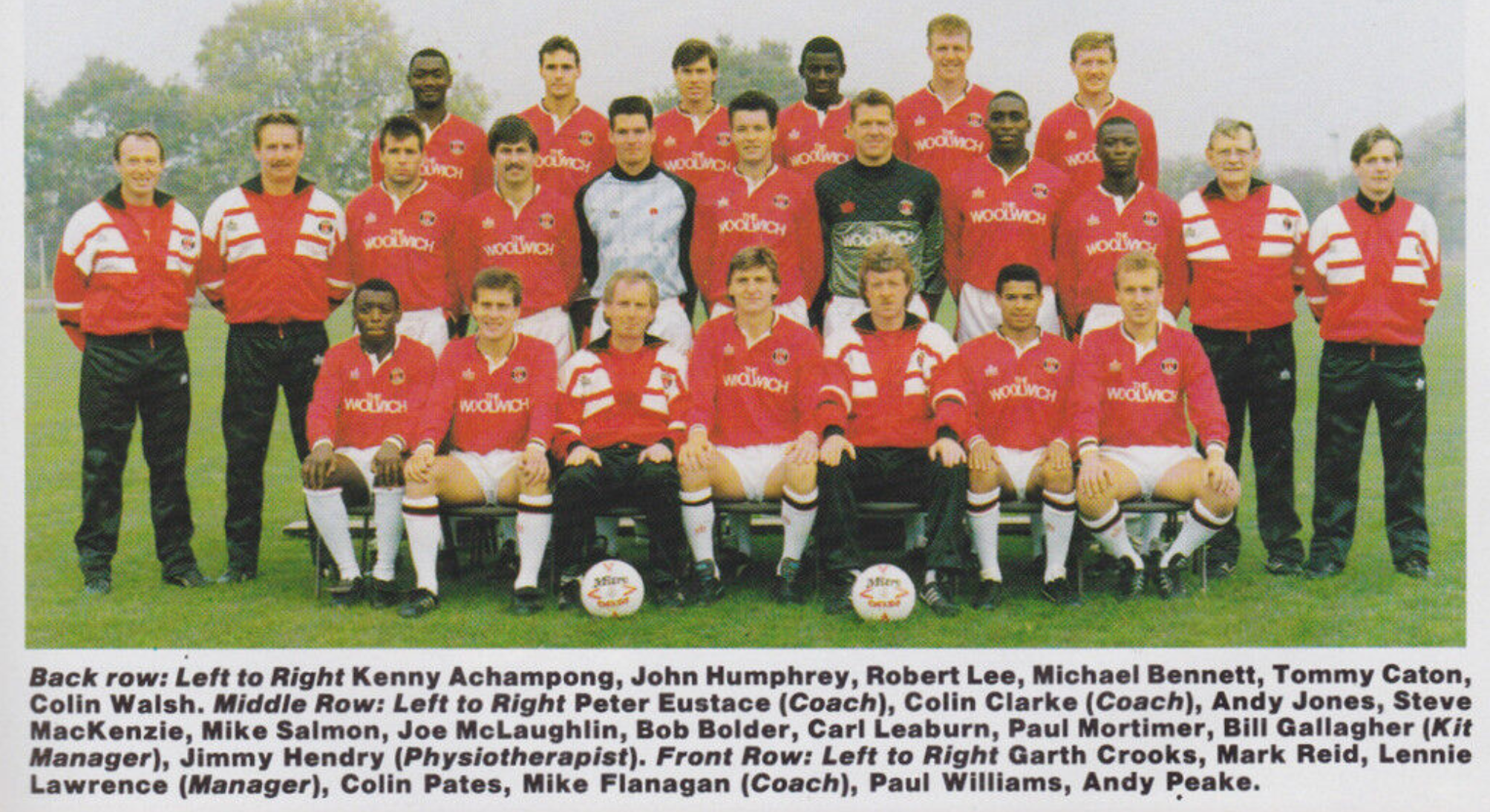
As Pates returned to the dressing room at the end of a 2-2 Littlewoods Cup home draw with Scunthorpe United, Campbell informed him Charlton Athletic manager Lennie Lawrence was upstairs waiting to sign him, the club having already agreed terms over the transfer (a £400,000 fee).
“It came right out of the blue,” said Pates. “At first, I was taken aback. I have been at Stamford Bridge since I was a schoolkid. Chelsea has become a way of life.”
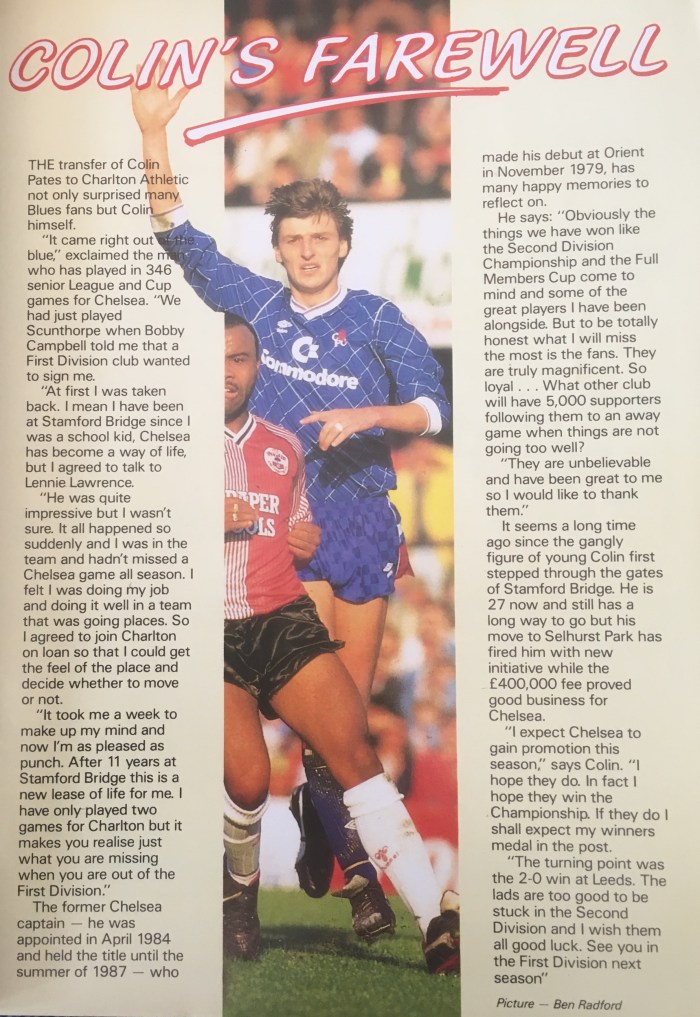
When the Albion visited Chelsea for a Division 2 league game on 29 October 1988, the matchday programme carried an article headlined ‘Colin’s farewell’, detailing the circumstances.
“The transfer of Colin Pates to Charlton Athletic not only surprised many Blues fans but Colin himself,” it began.
And reflecting on what happened many years later, Pates told Luke Nicoli: “I was allowed to leave and did so with a heavy heart as I wanted to stay.”
Nevertheless, the move at least presented the defender with the chance to return to playing in the top division, and he admitted: “After 11 years at Stamford Bridge, this is a new lease of life for me.”
Charlton, who had to play home matches at Crystal Palace’s Selhurst Park at the time, finished 14th by the end of that 1988-89 season, but Pates had left for Arsenal by the time the Addicks were relegated in 19th place at the end of the following season.
Despite those moves across London, and to the south coast, Chelsea hadn’t seen the last of Pates, though. He subsequently became head of football at the independent Whitgift School in South Croydon, where he coached most sports and was the first football coach in what had previously been a rugby-dominated school and pupils Victor Moses and Callum Hudson-Odoi both went on to play for the Blues.
Pates was also seen back at the Bridge on matchdays working in the hospitality lounges.
ANY Brighton player who scores twice in a win over Crystal Palace is generally revered forever. The sheen John Gregory acquired for that feat was somewhat tarnished when he was manager of Aston Villa.
Gregory’s brace in a vital 3-0 win over Palace on Easter Saturday 1981 helped ensure the Seagulls survived in the top-flight (while the Eagles were already heading for relegation).
In 1998, though, he was caught up in a wrangle over Brighton’s efforts to secure a sizeable fee for their input to the early career of Gareth Barry, who’d joined Villa while still a teenage prodigy.
Albion’s chairman Dick Knight pursued the matter through the correct football channels and eventually secured a potential seven-figure sum of compensation for the St Leonards-born player, who spent six years in Brighton’s youth ranks but refused to sign a YTS deal after Villa’s approach.
The Football League appeals tribunal met in London and ruled the Premiership side should pay Brighton £150,000 immediately, rising to a maximum £1,025,000 if he made 60 first-team appearances and was capped by England. Brighton were also to receive 15 per cent of any sell-on fee.
“It was what I had hoped for, although I hadn’t necessarily expected the tribunal to deliver it,” Knight said in his autobiography, Mad Man – From the Gutter to the Stars. “Villa certainly hadn’t; Gregory was furious and stormed out of the building.”
Gregory mockingly asserted that Knight wouldn’t have recognised the player if he’d stood on Brighton beach wearing an Albion shirt, a football under his arm and a seagull on his head.
“For a former Albion player, Gregory surprisingly seemed to take it as a personal affront,” said Knight. “His position was patronising and the behaviour of Aston Villa scandalous.”
Although Villa paid the initial instalment, they didn’t lie down and go with the ruling and ultimately Knight ended up doing a deal with Villa chairman, ‘Deadly’ Doug Ellis, for £850,000 that gave Brighton a huge cash injection in an hour of need.
Barry, of course, ended up having a stellar career, earning 53 England caps, making 653 Premier League appearances and captaining Villa during 11 years at the club.
Knight’s settlement with Ellis meant Brighton missed out on £1.8 million which they would have been entitled to when Barry was sold on to Manchester City in 2009.
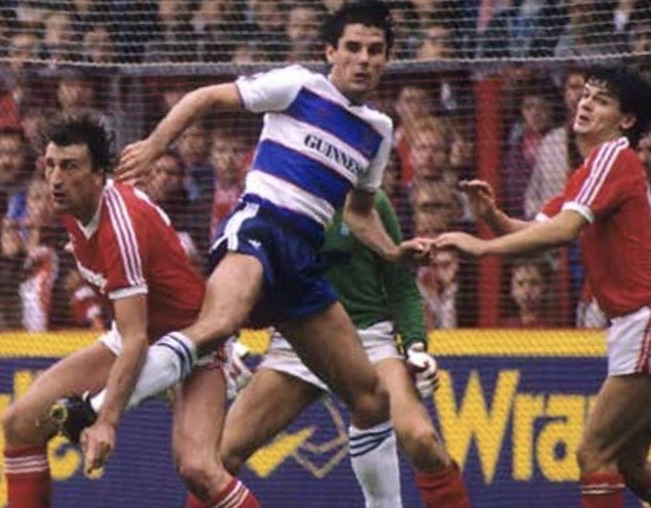
But back to Gregory. He had a habit of returning to manage clubs he had previously played for. Villa was one (between February 1998 and January 2002). He also bossed QPR, who he played for after two years with the Albion, and Derby County, who he’d played for in the Third, Second and First Divisions.
His first foray into management had been at Portsmouth. He then worked as a coach under his former Villa teammate Brian Little at Leicester City (1991-1994) and Villa (1994-1996) before becoming a manager in his own right again during two years at Wycombe Wanderers.
The lure of Villa drew him back to take charge as manager at Villa Park in February 1998 when he was in charge of players such as Gareth Southgate, Paul Merson and David Ginola.
During his near four-year reign, Villa reached the 2000 FA Cup Final – they were beaten 2-0 by Chelsea – but won the UEFA Intertoto Cup in November 2001, beating Switzerland’s Basel 4-1.
Although his win percentage (43 per cent) was better at Villa than at any other club he managed, fan pressure had been building when league form slumped as the 2001-02 season went past the halfway mark and a ‘Gregory out’ banner was displayed in the crowd.
Gregory eventually bowed to the pressure and tendered his resignation, although chairman Ellis said: “John’s resignation is sad. It was most unexpected but has been amicable.”
He stepped out of the frying pan into the fire when he took charge of an ailing Derby County, who were bottom of the Premier League, and, after a winning start, he wasn’t able to keep them up.
County sacked him in March 2003 for alleged misconduct but in a protracted legal wrangle he eventually won £1m for unfair dismissal. However, the ongoing dispute meant he couldn’t take up another job and he spent much of the time as a TV pundit instead.
It was in September 2006 that he finally stepped back into a managerial role, taking over from Gary Waddock as QPR manager, and while he managed to save them from relegation from the Championship, ongoing poor form the following season led to him being sacked in October 2007.
It only emerged in 2013 that five years earlier Gregory had discovered he was suffering from prostate cancer. Nevertheless, he continued working, managing two clubs in Israel and one in Kazakhstan.
He had one other English managerial job, taking charge of Crawley Town in December 2013, although ill health brought his reign to an end after a year and former Albion striker Dean Saunders replaced him.
Two and a half years after leaving Crawley, Gregory emerged as head coach of Chennaiyin in the Indian Super League. With former Albion favourite Inigo Calderon part of his side, he led them in 2018 to a second league title win, and he was named the league’s coach of the year.
Born in Scunthorpe on 11 May 1954, Gregory was one of five sons and two daughters of a professional footballer also called John who had started his career at West Ham.
The Gregory family moved to Aldershot when young John was only two (his dad had been transferred to the Shots) but then moved to St Neots, near Huntingdon, when his father took up a job as a security guard after retiring from the game.
Young Gregory went to St Neots Junior School and his first football memories date from the age of nine, and he was selected as a striker for the Huntingdonshire County under 12 side.
He moved on to Longsands Comprehensive School and played at all age levels for Huntingdon before being selected for the Eastern Counties under 15 side in the English Schools Trophy.
Northampton Town signed him on apprentice terms at the age of 15 and he progressed to the first team having been converted to a defender and remained with the Cobblers for seven years.
It was in 1977 that Ron Saunders signed him for Villa for £65,000, which was considered quite a sum for a Fourth Division player.
Gregory famously played in every outfield position during his two years at Villa Park and he welcomed the move to newly promoted Albion because it finally gave him the chance to pin down a specific position.
Chris Cattlin had been right-back as Albion won promotion from the second tier for the first time in their history but he was coming to the end of his career and, in July 1979, the Albion paid what was at the time a record fee of £250,000 to sign Gregory to take over that position. Steve Foster joined at the same time, from Portsmouth.
“I wore every shirt at Villa,” Gregory told Shoot! magazine. “I never had an established position. I was always in the side, but there was a lot of switching around. When Alan Mullery came in for me, he made it clear he wanted me to play at right-back.”
The defender added: “I respect Alan Mullery as a manager and I like the way he thinks about the game.
“Brighton are a very attacking side. There’s nothing the boss loves more than skill. That comes first in his mind. He wants all ten outfield players to attack when they can. That attitude, more than anything else, played a big part in me coming here.”
Gregory started the first 12 games of the season but was then sidelined when he had to undergo an appendix operation.
He returned as first choice right-back in the second half of the season and had a good start to the 1980-81 campaign when he scored in the opening 2-0 home win over Wolves.
His second of the season came against his old club, a header from a pinpoint Gordon Smith cross giving Albion the lead at Villa Park against the run of play. But it was to be an unhappy return for Gregory because the home side fought back to win 4-1.
In November 1980, it looked like Gregory might leave the Goldstone in a proposed cash-plus-player swap for QPR’s Northern Ireland international David McCreery, but the player, settled with his family in Ovingdean, said he wanted to stay at the Goldstone.
“The offer Gregory received was fantastic, but he prefers to stay with us,” chairman Mike Bamber told the Evening Argus. “I regard this as a great compliment.”
The following month, he got the only goal of the game in a 1-0 Boxing Day win at Leicester but in March, with Albion desperate to collect points to avoid the drop, Mullery put Gregory into midfield. He responded with four goals in seven matches, netting in a 1-1 draw away to Man City, grabbing the aforementioned pair at Selhurst Park on Easter Saturday and the opener two days later when Leicester were beaten 2-1 at the Goldstone.
Little did he know it would be his last as a Brighton player because within weeks Mullery quit as manager and Bamber finally couldn’t resist QPR’s overtures.
“I know Alan Mullery turned down a bid but a couple of days after he resigned chairman Mike Bamber accepted QPR’s offer,” Gregory recalled in an interview with Match Weekly. “I hadn’t asked for a move so the news that I was to be allowed to go was quite a surprise.”
He added: “It was a wrench. I found it difficult to turn my back on the lads at Brighton.
“I enjoyed two years at the Goldstone Ground and made many friends, but the prospect of a new challenge at Rangers appealed to me.”
Gregory admitted he used to watch Spurs as a youngster and ironically his two favourite players were Venables and Mullery – and he ended up playing for them both.
Although he dropped down a division to play for QPR, he said: “Rangers are a First Division set up and I’m sure we’ll be back soon.”
Not only did he win promotion with Rangers in the 1983-84 season but, at the age of 29, he earned a call up to the England set-up under Bobby Robson.
He won six caps, the first three of which (right) came against Australia when they played three games (two draws and an England win) in a week in June 1983, in a side also featuring Russell Osman and Mark Barham.
Gregory retained his midfield place for the European Championship preliminary match in September when England lost 1-0 to Denmark at Wembley but he was switched to right-back for the 3-0 away win over Hungary the following month.
His sixth and final cap came in the Home International Championship match in Wrexham in May 1984 when he was back in midfield as England succumbed to a 1-0 defeat to Wales, a game in which his QPR teammate Terry Fenwick went on as a substitute to earn the first of 20 caps for England.
Gregory continues to demonstrate his love for the game, and particularly Villa, via his Twitter account and earlier in the 2021-22 season, his 32,000 followers saw a heartfelt reaction to the sacking of Dean Smith.
“Dean Smith gave Aston Villa Football Club the kiss of life when the club was an embarrassment to Villa fans and he rekindled the love and passion and success on the field where so many others had failed hopelessly,” said Gregory.
• Pictures from the Albion matchday programme, Shoot! magazine and various online sources.
HE took a circuitous route back to his hometown club but full-back Graham Pearce eventually made it to Brentford’s first team after Brighton had resurrected his career and given him a chance to play at the top level of the English game.
Pearce was first on Brentford’s books as a teenager between 1971 and 1976, but he didn’t make it as a pro with the Bees and, after also being turned down by QPR, he went non-league, initially with Hillingdon Borough for three years and then Barnet.
When Pearce lined up for Barnet in a FA Cup third round tie on 2 January 1982, it must have been beyond his wildest dreams to imagine just over a year later he’d be playing in that competition’s final at Wembley.
But the steady, assured performances 21-year-old Pearce put in as Alliance Premier League Barnet held Brighton 0-0 before losing 3-1 in a replay at the Goldstone impressed the watching Albion boss Mike Bailey sufficiently to sign him up for the Seagulls.
Although he was itching to join, he had to serve a week’s notice with the Putney printer where he had a full-time job because they weren’t in a position to release him sooner.
Just over a year later, when injuries depleted Jimmy Melia’s cup hopefuls the closer they got to a dream Wembley date, Pearce seized his chance to put his own name in print. Circumstances fell just right for him, but it might not have happened if the experienced left-back Sammy Nelson hadn’t been sidelined.
A packed East Terrace at the Goldstone the backdrop as Pearce faces Newcastle in the FA Cup
Pearce played in the third round 1-1 Goldstone draw with Newcastle – one of six games he played in January 1983 – but he missed the 4-0 demolition of Manchester City in the fourth round and didn’t feature again until 22 March when he was sub for the 2-2 home draw with Liverpool.
Because versatile Gary Stevens was more than capable of playing alongside Steve Foster, normal centre back partner Steve Gatting was preferred at left-back for 14 matches from the end of January.
But when right-back Chris Ramsey was suspended for the semi-final against Sheffield Wednesday, Stevens took his spot, Gatting returned to the middle and Pearce slotted in at left-back.
Because Foster was suspended for the final against Man Utd, Stevens paired up with Gatting in the middle and Pearce retained his place.
Even when Foster returned for the replay, Pearce kept his place because Ramsey had been crocked in the first match and wasn’t fit to play (Melia making the mistake of putting left-footed Gatting at right-back instead of Stevens).
In a pre-match interview with the Daily Mail, Pearce said: “There’s money to be made from appearing at Wembley but the thrill for me is just being there – a player from non-League who thought his chance of playing league football had gone.”
Pearce retained the no.3 shirt at the start of the 1983-84 season back in the second tier but, when Chris Cattlin took over from Melia, he made it clear he wanted someone with more experience in that position.
In his matchday programme notes he wrote: “With Kieran (O’Regan), Eric Young and Graham Pearce all playing together, we have three players who haven’t been long out of non-League football.
“Normally these players would have been blooded slowly into the side, instead of being plunged in the deep end. They have done well and shown the right attitude, but when we play against aggressive sides away from home, some of their inexperience has been exposed.”
Until a suitable replacement could be found, Pearce remained in the side and even poked home his first Albion goal in a 4-3 win away to Cambridge United on 29 October 1983.
But four weeks later, after a 2-2 draw at home to Shrewsbury Town, Cattlin was typically forthright in his next programme notes, declaring: “I was unhappy with our defence and our failings in this department cost us the game.”
Pearce and fellow full-back Ramsey were promptly dropped; the left-back berth going to new signing Chris Hutchings from Chelsea.
Cattlin had high praise for his new recruit as he said: “Chris Hutchings is an enthusiastic, strong and determined defender and has a lot to offer, he’s also a fine footballer.”
After 18 consecutive games, Pearce found himself out of the side for the rest of the season.
It’s interesting to note that the reserve side for the 1 May 1984 fixture at home to Southampton featured five players (Pearce, Ramsey, Gary Howlett, Gerry Ryan and Neil Smillie) who’d been in the FA Cup Final squad a year earlier.
The new season was almost three months’ old before Pearce was seen in the first team again, and, ironically, the opponent was once again Shrewsbury.
The game at the Goldstone finished a goalless draw and, with Hutchings having been switched to right-back, Pearce got a run in the side extending to 19 matches.
Unluckily for him, he was then left out of the side in favour of Martin Keown, who Cattlin managed to bring in on loan from Arsenal, and the future England international quickly proved his calibre.
Pearce made one further appearance, in a 2-1 defeat at Middlesbrough, before the end of the season but in the 1985-86 season he finally cemented his place in the side and played a total of 41 matches.
Three days after Christmas 1985, he scored a rare goal as the Seagulls beat Leeds 3-2 at Elland Road. Ian Baird – later to play for the Albion in the old Fourth Division – missed a penalty but scored one of Leeds’ goals and Pearce clinched the winner on a pitch rutted by a rugby league game played on it only two days earlier.
The matchday programme described the goal thus: “Pearce played a one-two with (Steve) Jacobs and found himself with only Mervyn Day to beat and Leeds screaming for offside. The trusty left foot of the Londoner lobbed goalwards, Day was stranded, and Pearce had scored his first goal in 26 months to give Albion another three valuable points.”
Not such a memorable game came in a 3-0 defeat away to Norwich City on 5 April 1986. The full-back went into the referee’s notebook for a foul on future Albion winger Mark Barham, who was substituted shortly afterwards. Albion had a great chance to pull a goal back when Pearce was through one-on-one with Chris Woods, but the England ‘keeper saved his effort comfortably. Then, eight minutes from time, Pearce fouled Wayne Biggins in the penalty area and Welsh international David Williams buried City’s third from the penalty spot.
Pearce played in Albion’s final game of the season, a 2-0 defeat at Hull City under George Petchey, following Cattlin’s sacking, and it turned out to be his last match in a Brighton shirt.
The returning Alan Mullery explained in his programme notes for the opening game of the new season that he released Jacobs and Pearce because “I felt we had too many defenders”.
Pearce switched to Third Division Gillingham under Keith Peacock and played a total of 48 matches as the Gills narrowly missed out on promotion when losing a play-off final replay against Lou Macari’s Swindon Town in 1987.
Following a disappointing second season with the Gills, when they finished mid-table, Pearce returned to hometown club Brentford where he played 14 times (+ 8 as sub) in Steve Perryman’s 1988-89 side. One of his teammates was fellow former Albion cup star Smillie.
Pearce joined up with Peacock again for Maidstone United’s debut season (1989-90) in the Fourth Division, which culminated in a play-off semi-final defeat at the hands of a Cambridge United side featuring Dion Dublin up front.
The following season, under Phil Holder, Pearce was back at Brentford as first team and reserve coach. He subsequently had spells as player-manager with Isthmian League clubs Enfield and Molesey. He later became a PE teacher at Homefield Preparatory School in Sutton.
Born in Hammersmith on 8 July 1959, Pearce was one of seven children (five boys, two girls) and attended Grove Park Primary School, where he was captain of their under-9 football side. He went on to play for the Middlesex County side and Middlesex Wanderers before his stop-start professional career began.
• Pictures from my scrapbook and matchday programmes.
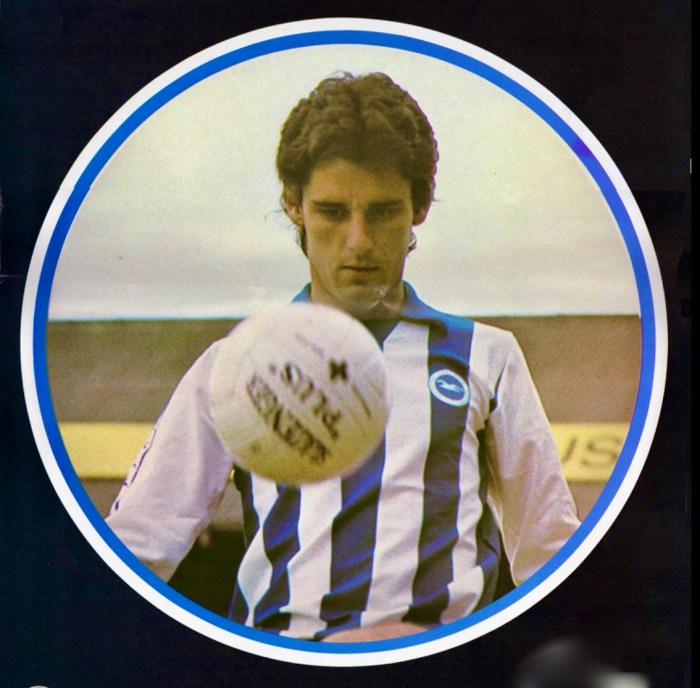
IN MY OPINION, one of the best wingers ever to pull on the famous blue and white stripes was Clive Walker, an evergreen player who remarkably played more than 1,000 games for eight clubs.
Although well into his 30s when he arrived at the Goldstone Ground, the balding former Chelsea and Fulham wideman was an effervescent talent with the ball at his feet.
Asked by the Argus to preview the squad ahead of the 1991 Division Two play-off final at Wembley, Brighton coach Martin Hinshelwood said of him: “Alias Phil Collins. A great character. The dressing room buzzes when he is around. He is good on the ball, a great crosser and has scored some great goals this season.”
Both Albion’s wingers for that game had Wembley experience behind them having been on opposing sides in in the 1985 League Cup Final.
Walker had missed a penalty for Sunderland as Mark Barham’s Norwich City won 1-0 and six years later, against Neil Warnock’s Notts County, Walker’s bad luck continued when a Wembley post denied him as Brighton’s dream of promotion ended in a 3-1 defeat.
Both had played big parts in Albion reaching Wembley, though: Barham levelled for the Seagulls in the first leg of the semi-final at home to Millwall and Walker got the third when the Seagulls upturned the form book and beat Bruce Rioch’s side 4-1.
Born on 26 May 1957 in Oxford, Walker joined Chelsea in 1973, made his league debut in a 1-0 defeat away to Burnley on 23 April 1977 and was a first team squad regular between December 1977 and the summer of 1984, although, in 1979, Chelsea loaned Walker to Fort Lauderdale Strikers (as pictured below) where he scored nine goals in 22 appearances.
“Those were exciting, lively times and we loved our football. We were a bunch of young lads growing up together and, in my last couple of years there, I played with the likes of Kerry Dixon for the side who brought good times back on the pitch,” Walker told Mike Walters of the Mirror. “We were a close-knit bunch with a great sense of camaraderie, and a lot of teams these days would probably envy us in that regard.”
A fast winger with the knack of scoring stunning goals, Walker netted 17 in 1981-1982 and the next season, with Chelsea looking set to be relegated to Division Three, fans still remember how he scored the winner at Bolton Wanderers to maintain their status.
And a Chelsea fans’ blog, GameofthePeople emphasised the impact he had at Stamford Bridge, pointing out: “He was left-footed, as quick as a sprinter and awkward to knock off the ball. And he could shoot! Those that liked wingers were excited by his willingness to run between players and take a pot shot at goal. Put simply, he was exciting to watch.”
In what is an otherwise interesting and informative piece about Walker in 2014, they unfortunately failed to mention his successful stint with the Seagulls.
Although he began the 1983-84 season well, he sustained a broken jaw which put him out for several weeks and, during his absence, another nippy winger – Pat Nevin – seized the opportunity to claim a first-team spot and Walker’s Stamford Bridge days were numbered.
Come the end of the season, he was allowed to join Sunderland (above in action v Newcastle) for a fee of £70,000. “He returned to torment Chelsea in the Football League Cup semi-final second leg, scoring twice in what was a dreadful night for the club,” GameofthePeople observed. “Walker was abused from the stands, too, which was especially heartbreaking for those that appreciated his efforts at the Bridge.”
After two years in the north-east, Walker returned to London in September 1985, initially via a £75,000 move to Jim Smith’s First Division (Premier League equivalent) QPR, where he played 28 games in the 1986-87 season, alongside the likes of David Seaman, Michael Robinson and John Byrne. Just 20 months later, he left on a free transfer to Third Division Fulham for whom he made 127 appearances in three years, scoring 32 goals.
His debut was certainly memorable as he scored twice in a 3-1 home win over York City. Writer Ian McCulloch remembered the occasion in an article on fulhamfc.com.
“Fulham were in the doldrums, on the brink of extinction, owned by property developers, and going nowhere fast. And then, in the midst of all the doom and gloom, appeared one of football’s all-time, genuine crowd-pleasing entertainers. Walker ran the show that night, scored twice, and generally lifted both the fans and the team.”
Walker recalled: “That game really does stand out. And in the pouring rain as well! To score two goals on your debut is very special, and I just look back at it as a fabulous memory. Very, very enjoyable.”
Walker explained that it was Ray Lewington who took him to Craven Cottage, adding: “I had a great rapport with him – of course we were both apprentices at Chelsea – and we’re still good friends today. But then other managers came in, and you couldn’t escape the feeling that the club was going backwards and that was very, very sad because I had a lovely time at Fulham and I’ve got some very fond memories of those years. I loved playing at the Cottage and on the Cottage pitch.”
Walker picked up Fulham’s 1989-90 Player of the Year award before former Fulham captain Barry Lloyd went back to his old club to secure Walker’s services for the Seagulls in the summer of 1990. Even though he was the wrong side of 30, he pulled on the no.11 shirt on his debut away to Barnsley (in a side containing his old Chelsea teammate Gary Chivers in defence) and missed only one game all season as Albion nearly made it back to the elite level.
After that Wembley disappointment and only three games into the new season, Walker suffered another blow when he sustained a serious knee ligament injury away to Barnsley which sidelined him for several weeks.
With the previous season’s goalscoring duo Mike Small and John Byrne having been sold for big money, the side struggled, and eventually ended up being relegated.
Emerging young winger John Robinson had slotted into Walker’s place in the side during his absence although it was Barham who was the odd man out when Walker was fit to return to the line-up.
Back in the third tier the following season, although the return of Steve Foster in defence was a plus point, off the field the rumblings of financial meltdown grew louder and louder. Young Robinson was sold to Charlton Athletic and only the proceeds of the sale of goalkeeper Mark Beeney to Leeds United kept the taxman at bay when there was a winding-up order threat hanging over the club.
Three cup games against Manchester United were rare highlights in that precarious season and one of my favourite Walker moments came at Old Trafford in a League Cup replay on 7 October 1992.
Having managed a 1-1 draw against United in the first game, Albion gave United quite a scare in the replay, largely through Walker giving England full-back Paul Parker a torrid time. I watched the game sat amongst United supporters and they were full of praise for the veteran winger, albeit that United edged it 1-0.
Walker’s final appearance in an Albion shirt came on 24 April 1993 when he came on as a substitute for Matthew Edwards in a 2-1 home defeat to Rotherham United. Alas, as he recounted in an interview with Spencer Vignes for the matchday programme, his time with the Albion came to a sour end.
Together with Chivers and Perry Digweed he was let go by Lloyd apparently because he said as the highest earners the club could no longer afford them. He was unceremoniously ushered out of the door with his boots in a bin bag. “That was the thank-you we got from Brighton,” he said.
When most players would be considering hanging up their boots, at the age of 36, Walker left Brighton and moved into non-league with Woking where he scored 91 goals in 210 games.
A poster called NewAdventuresinWiFi, on Sunderland’s readytogo.net fans website, recalled watching Walker play for Woking, and said: “Walker was an absolute class act when he fancied it. He was instrumental in the cup run of 96-97 when Millwall and Cambridge were dispatched and Premiership Coventry given an almighty fright.
“Also remember a Conference game against Altrincham when we put seven past them and Walker was unplayable that day…to the point the opposition full back ended up getting a straight red for a frustrated desperate two footed ‘challenge’ he attempted on Clive after yet another glorious attacking run.”
Another poster, JumpingAnaconda, remembered: “I saw him playing for Woking in a minor cup final at Vicarage Road, in the season where he won a few big games for them in their FA Cup run. He was 40 years old and he was absolutely quality, up and down the line all night. That season there was some talk of Premiership sides looking at him to come in to do a job for them. His level of fitness was incredible. He ran around like a 20-year-old. He was probably the closest we would get to another Stanley Matthews in the Premiership era in terms of a winger that kept his pace, creativity, ability to beat a man and make crosses into his 40s.”
From Woking, he had a spell as the assistant manager at Brentford under Eddie May but then went back to playing, at Cheltenham Town. Finally, after winning the FA Trophy and the League, he retired at the grand old age of 43, although he continued to turn out for Chelsea Veterans teams.
He had a brief excursion into management with Molesey but a career in the media took off and he became a regular and well-known voice with BBC London, and for Sky TV’s coverage of Conference football.
Walker has also worked for Talksport and appears regularly with former Chelsea and Spurs player Jason Cundy on Chelsea TV and radio (as above).
Pictures from a variety of sources but mainly the Albion matchday programme.
THE quote at the top of an Albion matchday programme feature about Paul Wood sums up his Brighton career perfectly.
“I’ve played so many positions at the Albion. I’m not sure that I consider myself a centre-forward any more.
“Actually, playing on the right as I am now takes my career virtually full circle – I always used to be a winger before I joined Portsmouth.”
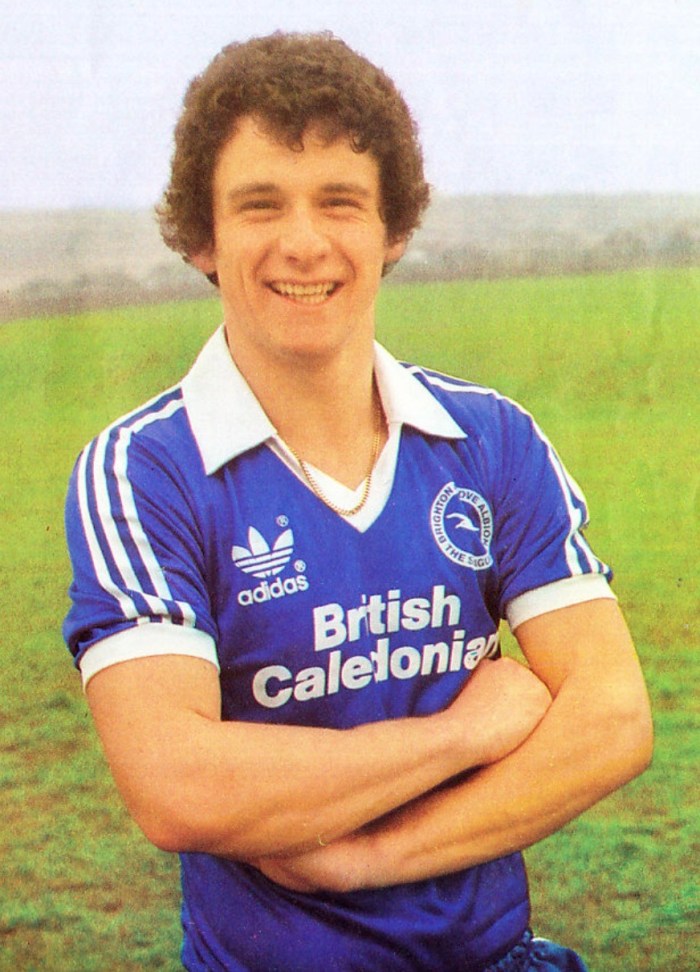
Manager Barry Lloyd bought Wood from Portsmouth for £40,000 in the summer of 1987 to play up front alongside Kevin Bremner, with Garry Nelson wide on the left.
Nelson, of course, thought otherwise – and 32 goals in a promotion season playing down the middle rather proved him right.
Thus Wood found himself deployed in that rather dubious-sounding role of ‘utility player’.
“A couple of goals would have done me great guns when I got a chance up front,” Wood admitted. “I don’t think I let anybody down when Nelson and Bremner were injured but I wasn’t putting them away.
“It didn’t really bother me too much. I was most happy just to be getting first team football, especially as I had spent the previous year at Portsmouth, while they got promoted to Division One, watching from the stands.”
A pelvis ligament problem had sidelined Wood at Fratton Park so the new lease of life as part of a promotion-winning squad was a welcome break.
After making his Albion debut in a 2-0 home win over Fulham on 29 August 1987, Wood admitted: “I found it very tiring after playing only one hour of reserve football in the last nine months. But I enjoyed the experience and I’m looking forward to creating and taking more chances.”
Born in Saltburn-by-the-Sea in the north east on 1 November 1964, at one point it was thought Wood’s football career was over almost before it had begun.
As a talented schoolboy footballer, he was spotted playing for Middlesbrough Boys as the side won the English Schools’ Trophy. His school headteacher had connections at Elland Road so he went for a trial but only 15 minutes into the game broke a leg.
It seems he had broken a knuckle at the back of his knee and the Leeds physio, Bob English, took a look at the injury and said: “Sorry son, you’ve broken your leg, ripped all the ligaments, and I think you’re finished.”
Thankfully for the budding young footballer, the dire diagnosis was wrong, but it put him off trying to make it at Leeds and instead he got picked up by Portsmouth whose scout in the north had seen him playing for Guisborough under-16s.
It was a long way from home, but he appreciated the club’s more caring nature and when a homesick Wood mentioned how he was feeling, manager Frank Burrows took £30 from his own pocket to send the youngster home for a break.
Wood’s Pompey debut eventually came, ironically at Middlesbrough, after Bobby Campbell had taken over in the manager’s chair.
Originally, he had only travelled with the squad so that he could visit friends and relatives but a couple of players fell ill and Wood got his big chance.
“Before I knew it, I was in the team,” he said. “I think that’s the best game I’ve ever played, although it flew past so fast.”
Another favourite moment came when he scored two in a 4-0 win over Shrewsbury. England World Cup winner Alan Ball had succeeded Campbell as manager and said after the 21-year-old’s performance ‘a star is born’. Wood told portsmouth.co.uk: “That will stay with me for the rest of my life. For somebody who has achieved what he has in football and the respect he commands to come out and give me that compliment was a great feeling.
“It was a game where everything seemed to go right. I scored a couple and was in confident form.”
A run in the team followed for Wood, who made 25 league appearances as Pompey fell just short of promotion.
The following season, he only played seven games at the start of the season before sustaining the pelvic injury he put down to playing three times on plastic pitches in the space of three weeks.
By the time Wood had made his recovery, Pompey were playing in the top flight and he had fallen down the pecking order. The move to Brighton came about after Wood scored a hat-trick for Portsmouth’s reserves.
He told portsmouth.co.uk: “I was disappointed to go because I never really wanted to leave but I had a mortgage to pay and no bonuses on appearance money was forthcoming.”
Ironically it was the long-term injury problems to crowd favourite Steve Penney that presented Wood with a lot of his games at Brighton and when Penney got back into the side in 1989, Wood put in a transfer request because he felt he was doing well enough to merit a place.
Penney was to move on before Wood but eventually, after two and a half seasons with the Seagulls in which he played 88 games + 17 as sub, and scored just eight goals, he was sold.
That canny transfer market operator Lloyd had acquired the services of one-time England international wideman Mark Barham, who had been written off elsewhere because of injury issues, so he dispensed with Wood’s services by selling him to promotion-chasing Sheffield United.
On 5 May 1990, Wood was on the scoresheet as Dave Bassett’s United beat Leicester City 5-2 to earn promotion to the top division. Playing alongside him were future Blades manager Chris Wilder, former Albion assistant manager Bob Booker and Mark Morris, who went on to play for Bournemouth and Brighton.
In 1991, Wood played 21 games for Bournemouth on loan from United, before making the move permanent, and in three years with the Cherries he scored 18 times in 78 appearances.
Then, in a deal that saw the Cherries acquire out-of-favour Portsmouth striker Warren Aspinall (known to BBC Radio Sussex listeners as a matchday summariser) Wood returned to Fratton Park.
He said: “It was fantastic for me to get the opportunity to return to the club.”
Pompey used him as more of a utility player than ever before, Jim Smith playing him in midfield and his successor Terry Fenwick even trying him at wing-back. Sadly, though, he suffered a bad knee injury that curtailed his professional career, causing him to retire in 1996.
He managed to play 20 games and score 15 goals for a Hong Kong side, Happy Valley, in 1997-98 and back in the UK linked up with National League South side Havant & Waterlooville.
He spent five years there, retiring at the end of the 2002-03 season after playing 137 games and scoring 48 goals.
Wood now runs his own Bournemouth-based decorating business.
HISTORY may have judged Barry Lloyd’s reign as Brighton manager unfairly: while bleak times cloud the memory, the former Fulham captain did chalk up some successes.
For instance, it’s worth remembering he put together two of the most entertaining strike partnerships in Albion’s history.
However, when managers start getting involved in the boardroom, it’s probably not going to end well and that certainly proved to be the case after Lloyd was handed the role of managing director.
Frankly, there is probably not enough space in one blog post to cover the various off-the-field shenanigans that were an ugly backdrop to the Lloyd era.
From an outsider’s perspective, it appeared he was the unfortunate public figure put up to deal with a huge amount of flak generated by others wielding power in the background.
Inheriting the hotseat at a time of financial turmoil, from a distance it could be said he did well to win promotion as well as coming mighty close to restoring the elite status lost in 1983.
But fans who had seen huge success under high profile bosses were not best pleased to see their club’s fortunes put in the hands of someone who had previously only managed outside of the league.
Let’s look first at Lloyd’s playing career because, from early on, he was obviously a shrewd observer who made contacts he would be able to call on in later years.
Born in Hillingdon on 19 February 1949, Barry’s early footballing ability was rewarded with selection for the Middlesex and South of England schoolboy sides. He was signed up by Chelsea and was in their 1964-65 youth team alongside former Albion right-back Stewart Henderson in defence and future England international and Chelsea legend Peter Osgood up front.
In an extended interview with Fulham’s club historian, Dennis Turner, Lloyd recalled: “I chose Chelsea because under Tommy Docherty’s management they were an exciting team, with the likes of Osgood, Charlie Cooke and Bobby Tambling.”
Former Albion player Dave Sexton was the reserve-team manager – “a really nice man and terrific coach” – and Lloyd says in his four years at Stamford Bridge he learned a lot.
He made his debut in the top flight in April 1967 aged just 18, but competition for places was tough and, after only 10 first team appearances, in January 1969 he moved to neighbours Fulham with their centre half John Dempsey moving in the opposite direction.
Fulham were struggling for survival in the old Second Division having been relegated from the top flight and the man who signed him, Bill Dodgin, was their fourth manager in a year.
They dropped down into the old Third Division but as part of his rebuilding, Dodgin made Lloyd captain in succession to the legendary Johnny Haynes, who was coming to the end of his career.
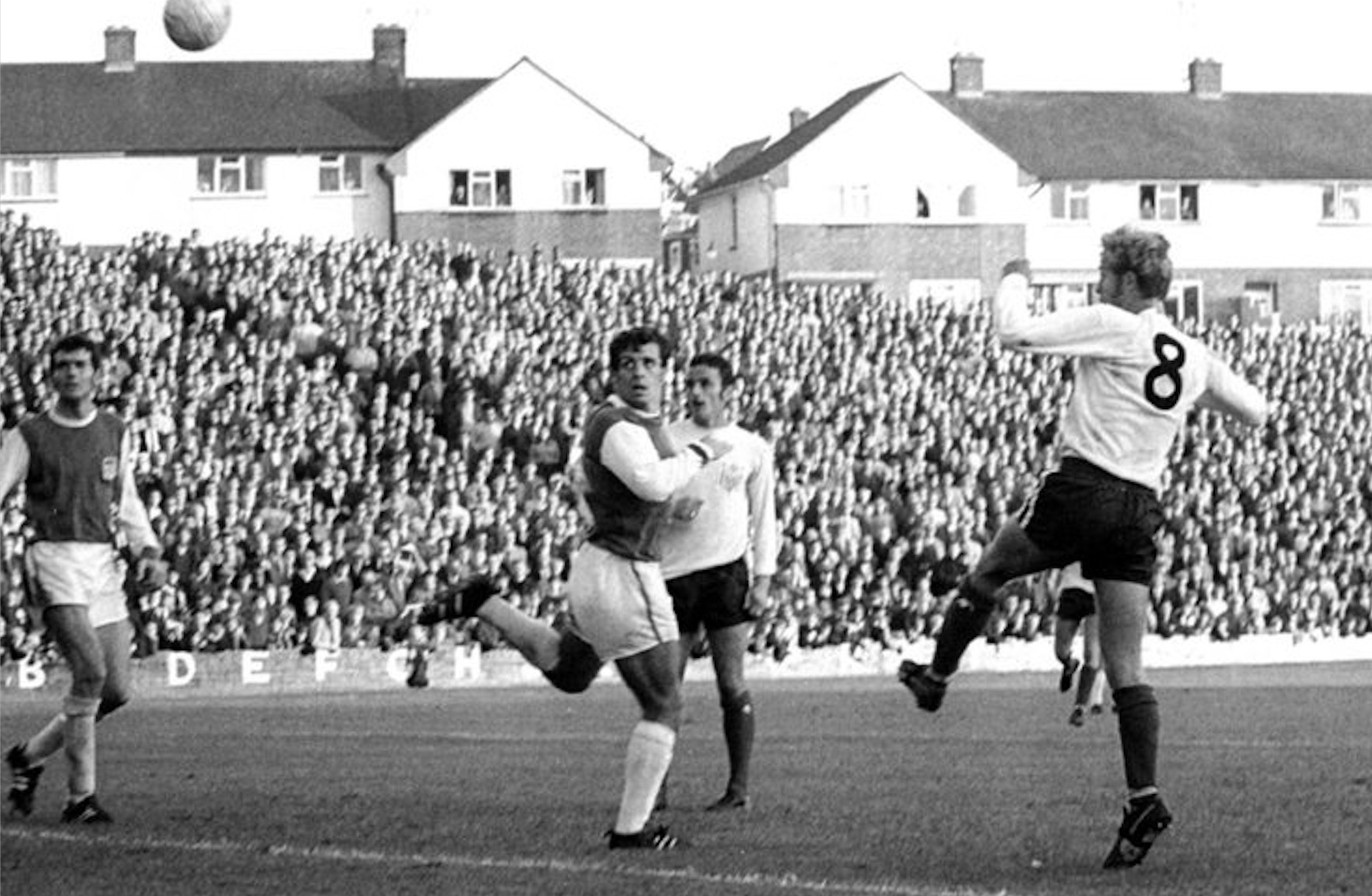
Lloyd is pictured below getting in a header against the Albion at the Goldstone, watched by John Napier (left) and Stewart Henderson. The packed East Terrace never looked like that by the time Lloyd was sitting in the Albion manager’s chair.
Fulham regained their tier two status in 1971 when they went up from Division III as champions. Manager Dodgin was sent packing in the summer of 1972, though, and Alec Stock took over, famously bringing in a number of top name players nearing the end of their careers – notably one Alan Mullery, along with Bobby Moore.
Lloyd remained part of the set-up but when Fulham surprised everyone by reaching the FA Cup Final against West Ham in 1975, he had to be content with what in those days was the single substitute’s berth on the bench, and didn’t get on.
Nonetheless, he chalked up 290 games for Fulham, before having brief spells at Hereford and Brentford (where Dodgin was the manager) and ending his playing days with Houston Hurricanes in the United States.
“I lived in Texas for a year. The league was never going to last but I learnt a lot about how the game can be promoted. They were very good at that over there,” he said in a matchday programme article. “Everyone was made to feel part of the club. It was an interesting experience; I’ve never regretted going.”
During his brief time at Hereford, Lloyd had an eye to the future and took his full coaching badge at Lilleshall, which wasn’t far away.
After his time in America came to an end, he got his first managerial experience with Yeovil Town (then a non-league club) and then headed to Sussex where he took Worthing from the Second Division of the old Isthmian League to runners-up in the Premier Division.
It was in 1986 when he got the call from Mullery to become reserve and youth team manager at the Albion. Dodgin was also on the staff.
In January 1987, Mullery was unceremoniously dumped and Lloyd came out of the shadows to take charge. Perhaps what fans didn’t know at the time was that the day after Mullery left, Lloyd was summoned to a meeting with chairman Bryan Bedson and told to “get rid of everyone” because the club was going bust.
Against that backdrop, it was 15 games before the side managed to register a win under Lloyd and, unsurprisingly, Albion were relegated. Some of the mainstays of the side, like Danny Wilson, Eric Young and Terry Connor were sold. Fortunately, Lloyd was able to re-invest part of the proceeds from those sales in some buys who gelled together to form a promotion-winning team.
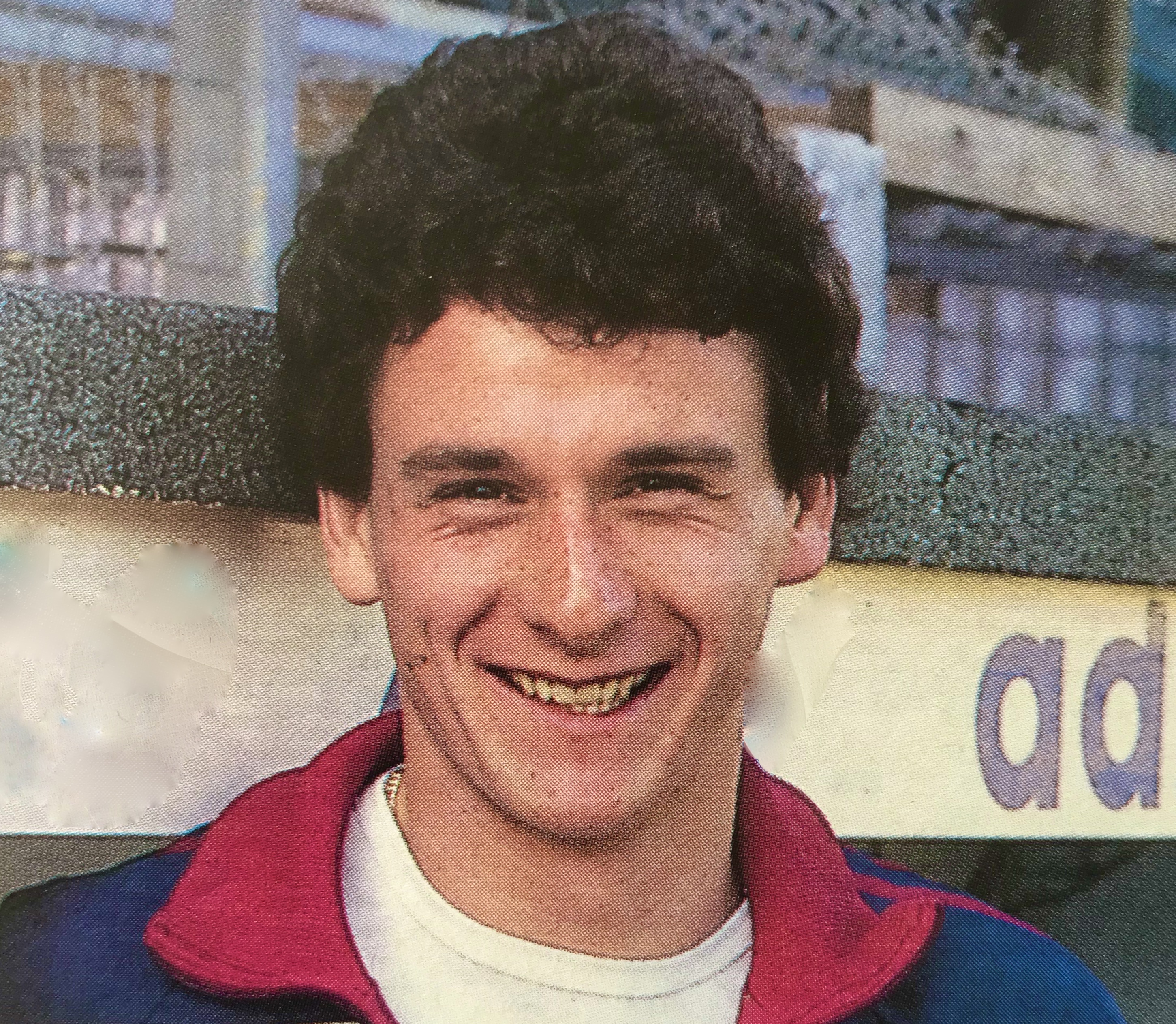
He returned to former club Chelsea to secure the signing of centre back Doug Rougvie who was made captain and he paired left winger Garry Nelson, a £72,500 signing from Plymouth, with tenacious Scot Kevin Bremner, from Reading, to lead the line. Nelson in particular was a revelation, scoring 32 goals and voted player of the season.
Lloyd reckoned the backbone of the side were two other shrewd signings: Alan Curbishley and Gary Chivers. “Alan was a very level-headed guy, an excellent passer and really disciplined,” he told Spencer Vignes in a matchday programme article. “Chivers was exactly the same, and a real joker at the same time. But there were a lot of great individuals in that side.”
The following two seasons saw Albion maintain their status with lower half finishes but, with the Goldstone Ground crumbling and debts mounting, there was little investment in the team and Lloyd had to use all his contacts to try to find some gems.
One was former England international winger Mark Barham, another was a former Soviet international, Sergei Gotsmanov, a real crowd-pleaser obviously capable of playing at a higher level (as was proved when he opted to join Southampton the following season).
Then, in 1990-91, he rescued two forwards languishing with also-ran clubs in Europe and together John Byrne and Mike Small were superb in attack as Brighton made it to the play-off final at Wembley only to lose 3-1 to Neil Warnock’s Notts County.
No-one had been expecting Brighton to get a tilt at promotion, particularly as the season had once again begun with big money departures of players like Keith Dublin and John Keeley.
But with Byrne and Small on fire and former Fulham and Chelsea winger Clive Walker added to the squad they clawed their way into contention and famously clinched the play-off spot on the last game of the season, courtesy of Dean Wilkins’ curling free kick past Ipswich Town’s Phil Parkes.
Another crucial signing that season was thanks to one of Lloyd’s old Chelsea teammates, George Graham. The Arsenal boss loaned cultured central defender Colin Pates to the Seagulls and he proved a mainstay in the final third of the season. Pates would later sign permanently.
Even though they were clearly beaten by the better side on the day, looking back now, I don’t think anyone could have realised what bad news it was for Albion not to win the final against County.
Starved of the funds promotion would have delivered, Lloyd was forced to sell star performers Small and Byrne and, 11 months after appearing at Wembley, Albion were relegated back to the third tier.
Lloyd had tried to repeat his previous successful European scouting mission with two former league players, but the hapless Mark Farrington turned out to be one of the worst buys ever, managing to score one solitary goal while former Arsenal youngster Raphael Meade fared slightly better but only just got into double figures.
Mark Gall, a £45,000 signing from Maidstone, arrived towards the end of October and ended up top goalscorer and was player of the season, but his 14 goals were still not enough to spare the team from the drop.
In the following season, the very survival of the club was under serious threat with the taxman chasing an unpaid bill. Lloyd rescued the club at the 11th hour by managing to secure a £350,000 fee for goalkeeper Mark Beeney (bought two years earlier from Maidstone for £25,000), former Albion winger Howard Wilkinson buying him for League Champions Leeds United.
With the financial issues continuing in the background, a run of only two wins in 18 league games in the first half of the 1993-94 season eventually brought the Lloyd era to an end – the axe wielded by chief executive David Bellotti, who had arrived only a month earlier.
Fans who were euphoric to see Lloyd go might well have felt differently if they’d known what would eventually transpire, but that’s a story for another day.
The record books show Lloyd made a total profit of £1.2m in his seven years at the helm and he certainly knew his way around the transfer market, particularly in Europe, when it was a lot less fashionable than it is today.
Another of his discoveries was Dean Wilkins, playing for FC Zwolle in Holland, and in 2007 – 14 years after he had left the Albion – Lloyd returned as chief scout during Wilkins’ reign as first team manager.
Also part of the set-up then was director of football Martin Hinshelwood, who had been Lloyd’s assistant during his time in the dugout. Lloyd later returned to the club to assist in the recruitment department but retired in 2021.
He died aged 75 on 28 September 2024 and players in the Chelsea v Brighton game that afternoon wore black armbands in tribute to him.


















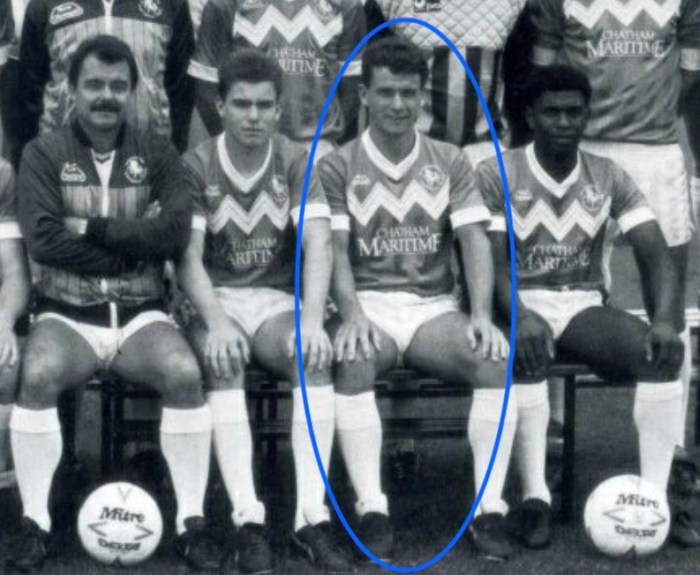
 IN MY OPINION, one of the best wingers ever to pull on the famous blue and white stripes was Clive Walker, an evergreen player who remarkably played more than 1,000 games for eight clubs.


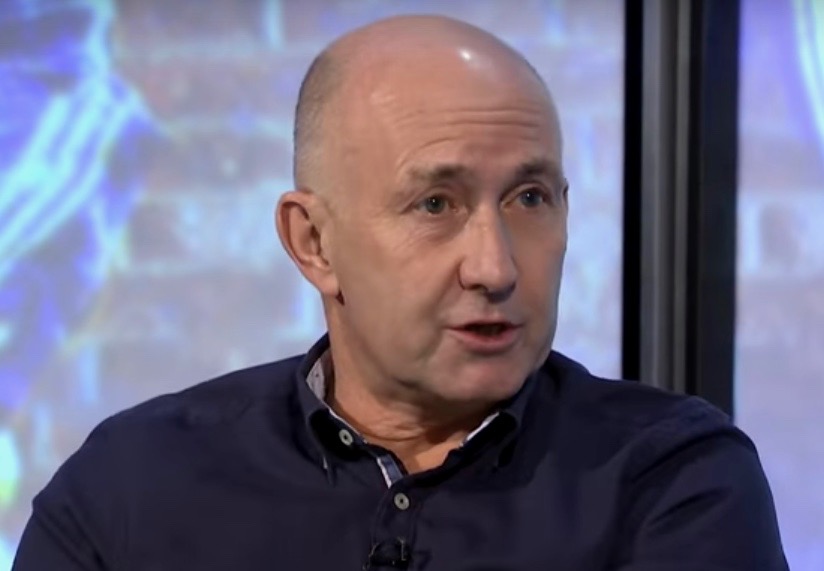 Walker has also worked for Talksport and appears regularly with former Chelsea and Spurs player Jason Cundy on Chelsea TV and radio (as above).
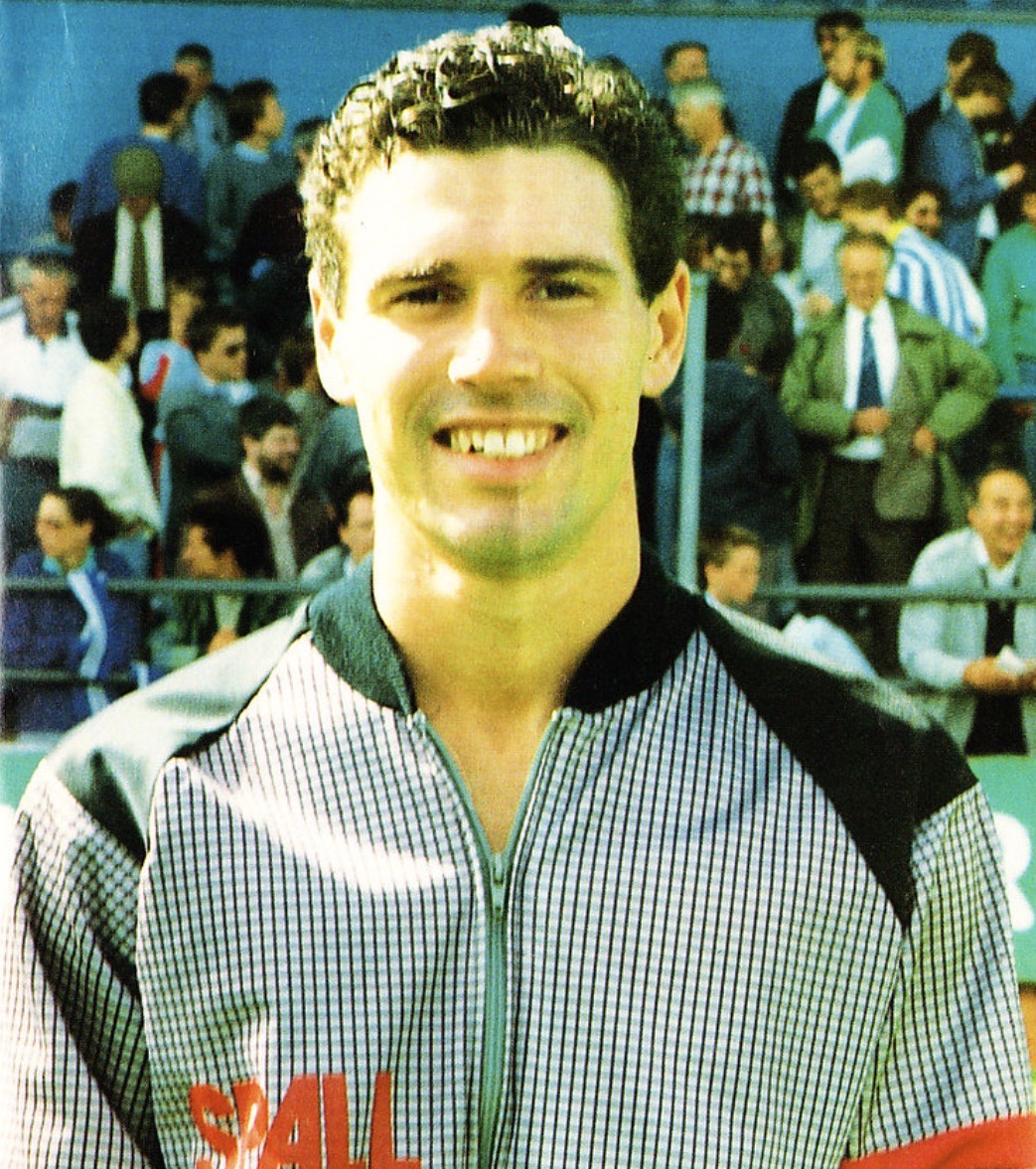 Born in Saltburn-by-the-Sea in the north east on 1 November 1964, at one point it was thought Wood’s football career was over almost before it had begun.



 He returned to former club Chelsea to secure the signing of centre back

 In parallel lines