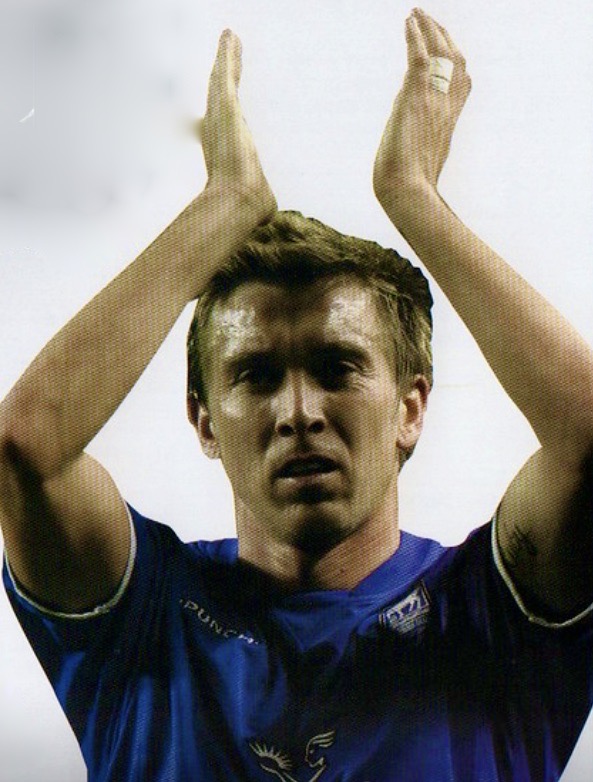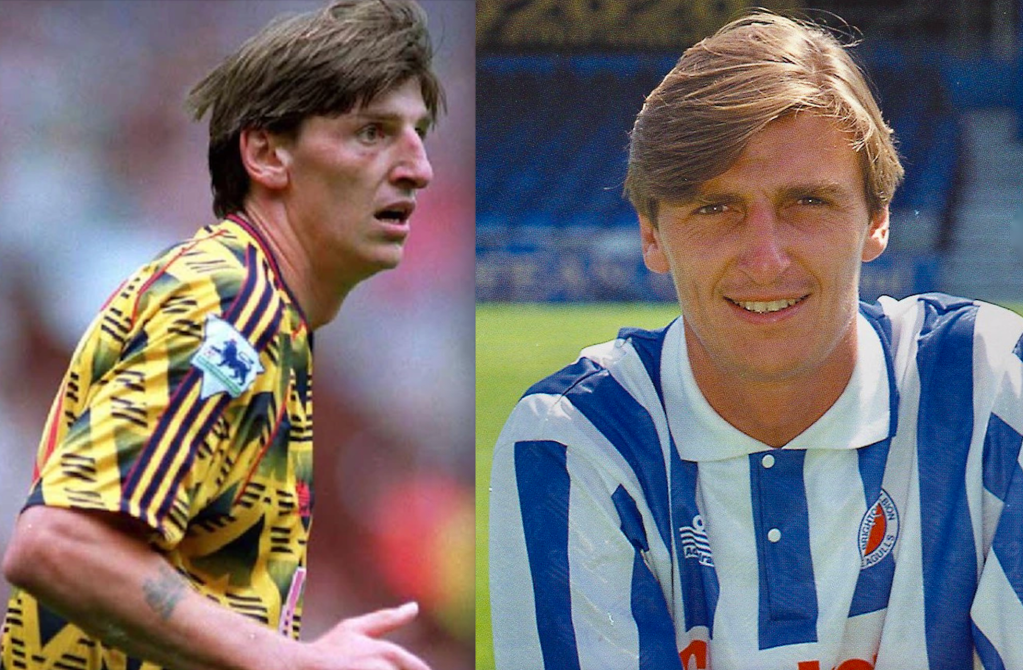
Why Colin Pates is forever grateful to Liam Brady

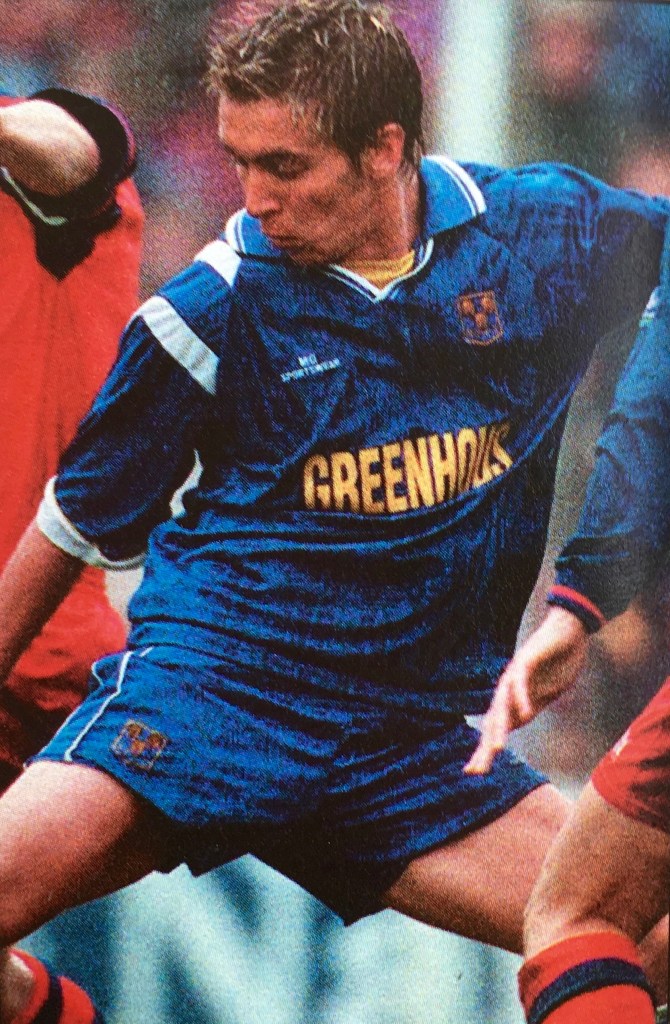
ONE-TIME Arsenal back-up defender Colin Pates had a Gunners legend to thank for persuading him to quit the game before he did any life-altering damage.

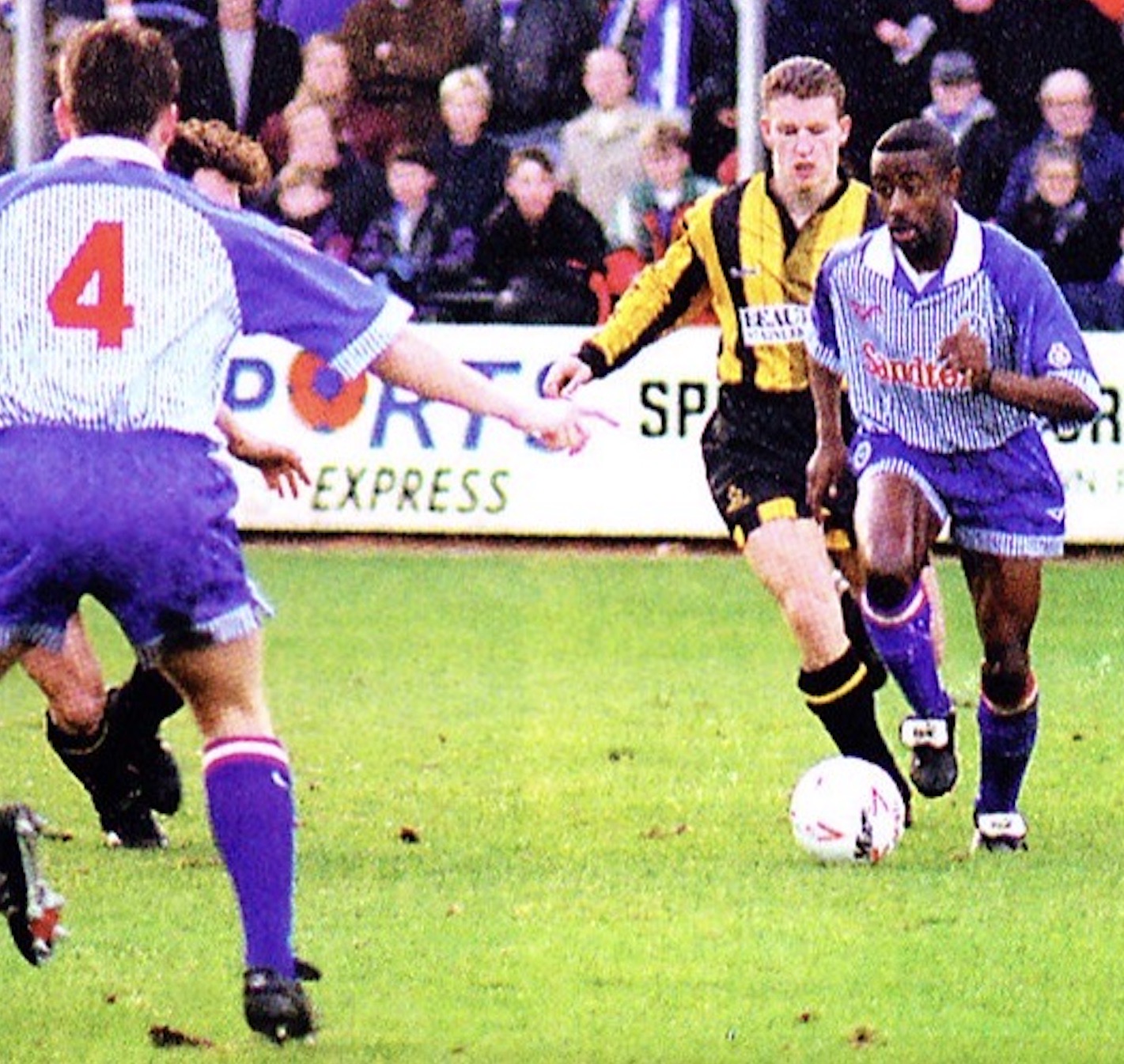
Thankfully, Pates took Liam Brady’s advice to bring his professional playing days to an end at Brighton in January 1995 and he went on to have a long and successful career coaching at an independent school in Croydon where he introduced football to what was previously a rugby-only establishment.

“Liam told me that I should think of my health before my playing career and that I would be a fool to myself if I carried on playing,” Pates told the Argus in a 2001 interview.

“My knee had fallen apart and it was the right advice. If I’d ignored it, I could well have ended up not being able to walk.

“Footballers need to be told when it is the end. I’ll always be grateful to Liam for that.”

Pates had played the last of 61 games in the stripes (a 0-0 home draw against Bournemouth) only six weeks after he was presented with a silver salver by former England manager Ron Greenwood to mark his 400th league appearance (on 24 September 1994, a 2-0 home win over Cambridge United).

In the matchday programme of 17 December, Brady confirmed that Pates and fellow defender Nicky Bissett, (who’d twice broken a leg and then sustained a knee injury) would be ruled out for the rest of the season. Neither played another game for the Seagulls.

It brought to an end Pates’ second spell with the Seagulls, having originally spent a most productive three months on loan in 1991 helping to propel the club to a Wembley play-off final. If Albion had beaten Notts County that May, Pates may well have made a permanent move to the south coast. As it was, he said: “Unfortunately, the club couldn’t meet Arsenal’s asking price for me that summer so I returned to Highbury.

“But when my contract expired in 1993, there was only one club I wanted to be at… Brighton.”
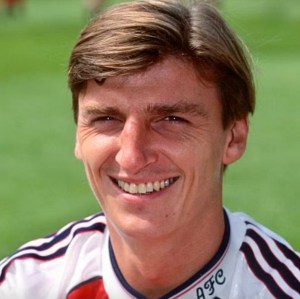
Pates had plenty of competition for the centre back berth at Arsenal

As if Tony Adams, Andy Linighan, David O’Leary and Steve Bould weren’t enough centre back competition at Arsenal, manager George Graham had also taken Martin Keown back to the club from Everton for £2m – six and a half years after selling him to Aston Villa for a tenth of that amount.

So, it was no surprise that Pates found himself surplus to requirements at Highbury and given a free transfer. Graham’s old Chelsea teammate, Barry Lloyd, eagerly snapped up the defender for a second time, this time on a permanent basis.

Goalkeeper Nicky Rust, still a month short of his 19th birthday, who’d also been given a free transfer by Arsenal, made his Albion league debut in the season-opener at Bradford City behind the returning Pates, who had just celebrated his 32nd birthday four days before the game.

After starting the first 10 matches alongside the aforementioned Bissett, Pates suffered an abductor muscle injury early on in a 5-0 drubbing away to Middlesbrough in the League Cup which necessitated a spell on the sidelines. He missed nine matches – only one of which was won.

These were the dying days of the seven-year Lloyd era and, even with Pates back in the side, one win, two draws and four defeats brought the sack for the manager.

Any doubts new manager Brady had about Steve Foster and Pates were swiftly dispelled, as he wrote about in his autobiography (Liam Brady: Born To Be A Footballer).

“Fossie was 36. I feared he might be going through the motions at this stage in his career and it would have been hard to blame him,” said Brady. “Colin Pates was a few years younger, but he’d been at Chelsea and Arsenal and could have been winding down.

“I appealed to them to give me a dig out, to lead this rescue mission. And they responded just as I hoped.”

Together with the even older Jimmy Case, who was brought back to the club from non-league Sittingbourne, they “brought on” the younger players in the new man’s first few weeks and months.

Under Brady, young Irish centre-back Paul McCarthy played alongside Foster in the middle, with Pates at left-back. And Pates saw the arrival of some familiar faces in the shape of young Arsenal loanees, first Mark Flatts and then Paul Dickov, whose successful spells helped Brady to steer the Seagulls to safety by the end of the season.

“I really enjoyed it, playing mainly at left-back,” said Pates. “It was a great family club and I made a lot of friends there along the way.”

At the time Pates had to call it a day, Albion were a third-tier side but the bulk of his career had been played at the top of the English game for two of its leading lights in Chelsea and Arsenal, and briefly Charlton Athletic.

Albion’s ex-Arsenal trio Liam Brady, Raphael Meade and Colin Pates

The player’s move to Arsenal from Charlton for £500,000 in January 1990 raised more than a few eyebrows because he was 28 at the time and none of Arsenal’s back four – Lee Dixon, Bould, Adams and Nigel Winterburn – looked like giving way.

“People asked me why I went there,” said Pates. “But when a club is paying that money and that club is Arsenal who wouldn’t go and take the chance?

“I knew this was going to be the last opportunity to have a move like this in my career and although I knew I was only being signed as cover, I couldn’t turn it down.”

He continued: “I’d joined a team that had just won the league, that would do so again in 1990-91 and they had the fabled back four – the best defensive unit in world football at the time.”

The website upthearsenal.com acknowledged: “Pates had built a solid reputation at Chelsea as a dependable defender who was strong in the air and no slouch on the deck.”

Pates added: “When I first met George (Graham) in his office at Highbury, he was honest and straight talking. He told me I’d have to work hard to get into the side.”

However, within a month he made his Gunners debut at left back in place of the injured Nigel Winterburn in a 1-0 defeat to Sheffield Wednesday. It turned out to be his only first team appearance that season.

Although he found it difficult to motivate himself for reserve team football, he pointed out: “I still enjoyed the training sessions with the first team and I did learn a lot about defending from George, even at that late stage in my career.”

However, after his return from the loan spell at Brighton, he saw action as a sub in three pre-season friendlies ahead of the 1991-92 season and that autumn had his best run of games in the first team.

He featured in eight games on the trot between October and November 1991 and memorably scored his one and only goal for Arsenal in a European Cup match at Highbury against a Benfica side managed by Sven-Göran Eriksson. He also played in the February 1992 1-1 North London derby against Spurs and made two appearances off the bench that season.

It was a similar story in the 1992-93 campaign when he went off the bench on five occasions although he had two starts: in a 2-0 win at Anfield (Anders Limpar and Ian Wright the scorers) and a 3-2 defeat away to Wimbledon.

“I was a bit-part player but it was a good time to be at the club with the cup finals and being part of the squads,” said Pates.

On his release from Brighton, Pates had a spell as player-manager of Crawley, played a handful of games for non-league Romford, and coached youngsters in various places including Mumbai in India and the Arsenal School of Excellence.

Pates told The Guardian in a 2002 interview how a sense of history and continuity was the first thing he had noticed when he signed for Arsenal.

Brady, Paul Davis, Bould and other former Arsenal players were all invited to the Arsenal academy, and Pates told the newspaper. “Young players need people like Stevie Bould to tell them how proud they should be to pull the shirt on and to show them what’s expected of them. “When I joined Arsenal, everyone was kind and considerate. You were left in no doubt about how you were supposed to conduct yourself. For the way it’s run, it’s the best club in the country.”

By then though, Pates had begun a new career as a coach getting football off the ground at the independent Whitgift School in Croydon. He was to stay 24 years at the school having been invited to introduce football by its headmaster, Dr Christopher Barnett.

The story has been told in depth in several places, notably in London blog greatwen.com by Peter Watts, among others. Watts wrote: “A posh school in the suburbs is not where you’d expect to find a hard-bitten former pro, and Pates admits: ‘Whitgift is quite alien to some of us, because we had state school educations. It was intimidating, and not just for the boys.’ But he jumped at the opportunity.

At first, he took a sixth-form team on Wednesday afternoons, but there were no goalposts, pitches, teams or even footballs! “We didn’t have anything. So, we had to start from scratch, pretty much teach them the rules,” he said.

“They were rugby boys playing football, so these were quite aggressive games. But after three years we introduced fixtures and we’ve never looked back,” said Pates.

In an interview with the Argus in October 2001, Pates added: “We went over the local common for our first training session with some under-18s after finding a ball that looked like the dog had chewed it up.

“I had to go right back to basics. All they had known was rugby, so it was a case of going through the rules of football to start with, like the ball we use is round!

“I was told that in 300 years football had never been considered. But a lot of the boys and their parents expressed an interest.

“It might be an independent school but you can forget the black and white filmed images of public school kids. Most are from working class backgrounds and they love their football.

“It grew a lot quicker than the head thought and he told me I should take over as master in charge of football.”

As the sport grew, he recruited his former Charlton teammate (and ex-Brighton, Wolves and Palace full-back) John Humphrey and Steve Kember, the former Chelsea and Palace midfielder to help with the coaching.

Asked about it on the chelseafancast.com podcast Pates delighted in recounting how from time to time he would show Humphrey a video clip of a rare goal he scored for Chelsea against Wolves when he flicked the ball over Humphrey’s head in the build-up to it – however Chelsea lost that 1983 match 2-1!

More seriously, Pates spoke at length to Watts about the benefits of a good education in case things didn’t pan out.

“You have to be an exceptional footballer to make it these days. So, we want to give them the best opportunity to be a footballer, but also give them a magnificent education so if they don’t sign scholarship forms they have something to fall back on. It works for us, it works for the academies and it works for the families.”
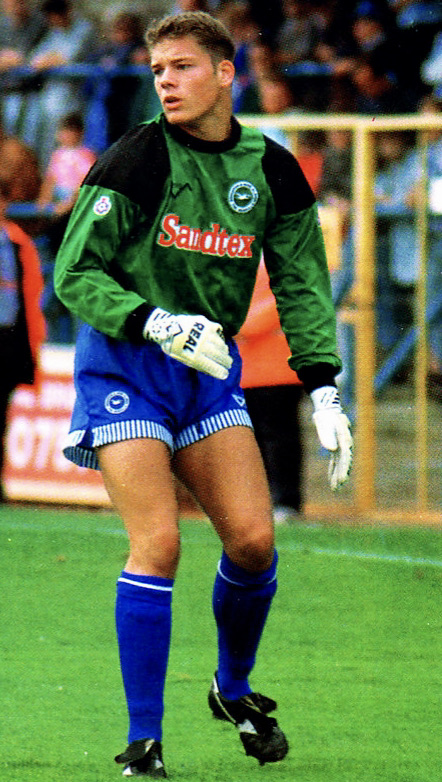
Nicky Rust played more than 200 games then quit at 24

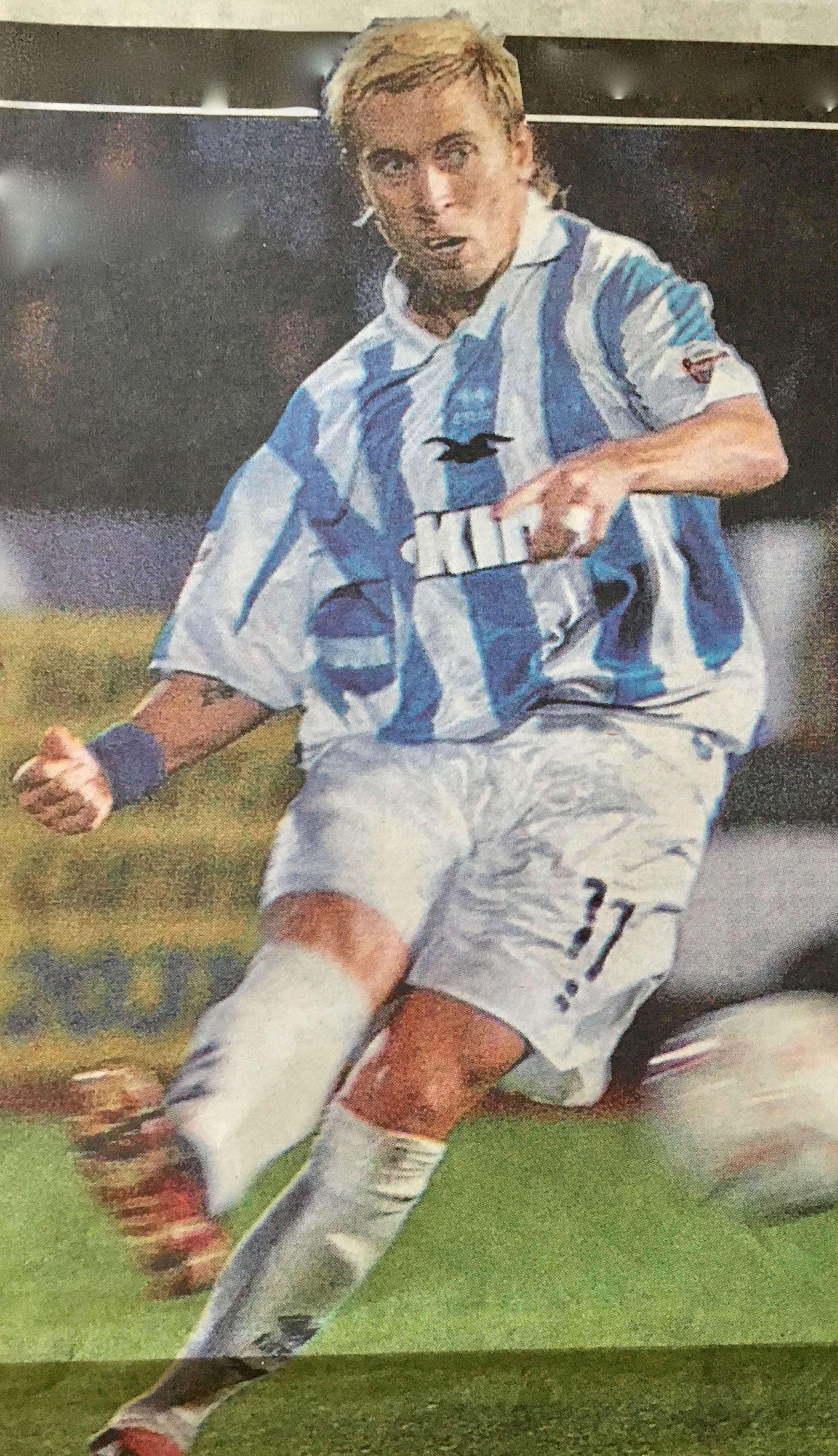
IT SEEMS extraordinary that a young goalkeeper who played more than 200 first-team games for Brighton quit the professional game at 24.

Nicky Rust had been one of the country’s elite young players when he graduated from the FA School of Excellence at Lilleshall. Then, at Arsenal, he was coached by the club’s legendary former ‘keeper Bob Wilson and trained alongside England international David Seaman.

But with little likelihood of 18-year-old Rust dislodging the established Seaman any time soon (and Alan Miller as back-up), Arsenal let him go in the spring of 1993. He ended up playing for five different managers in five years with the Albion.

Young Rust found himself picking the ball out of his net after only four minutes of his debut in Albion’s colours. That was on trial on 23 April 1993 away to Norwich City when Albion’s reserves, under Larry May, were looking for their first win in TWENTY attempts!

The Canaries included big money signing Efan Ekoku in their side and he opened the scoring before Rust had even had chance to break into a sweat.

However, a fairly strong Brighton side, including striker Andy Kennedy, returning to action after a back injury, Ian Chapman and Dean Wilkins, equalised with a Wilkins special: a 25-yard free kick that flew into the top corner past Mark Walton, a goalkeeper who would join Brighton five years later. Kennedy won it for the Albion with a cool finish past Walton in the last minute of the game.

Rust’s arrival was as a direct replacement for Mark Beeney, whose £350,000 move to Leeds three days previously had quite literally saved the club from going under (all the money went to pay an overdue tax bill with the Inland Revenue threatening to wind up the Albion).

By the time the summer came round, cash-strapped Albion also let go long-serving ‘keeper Perry Digweed, who’d been with the club for 12 years. So Rust, still only 18, suddenly found himself first choice at the start of the new season.

“I was thrown in the deep end and didn’t have time to think about nerves,” Rust told the Argus in a 2002 interview. “Barry Lloyd brought me in. Obviously, like any youngster, I had aspirations of making it in the Premiership.”

Arsenal boss George Graham was a former teammate of Lloyd’s going back to their days together at Chelsea and that friendship had already helped Albion obtain the services of defender Colin Pates on loan two years earlier (Pates also made a permanent move to the Albion that summer).

“Arsenal were and are a big club,” said Rust. “I had Bob Wilson as a goalkeeping coach and David Seaman was there offering me a lot of good, sound advice. He was a bit like myself in temperament, laid back, and we got on very well. But unfortunately for me it didn’t work out, and I was released. I was pleased Albion wanted me.”

Albion lost their opening two games, 2-0 at Bradford City in the league and 1-0 at Gillingham in the League Cup but two wins and a draw followed. While the side’s subsequent poor form ultimately led to the end of Lloyd’s reign, Rust kept his place when Liam Brady took over and was Albion’s regular no.1 for the next four years, much of which was played out against huge turbulence off the pitch.

“There was a lot of turmoil when I was there and saving our league status was a huge relief and was, in a strange way, one of my highlights,” he said. “The club’s problems were constantly there in the background and we were getting headlines for all the wrong reasons.”

On the pitch, Rust only missed two games in his first three years at the Albion. He equalled a club record for clean sheets with five on the bounce across February and March 1995.

The young goalkeeper had his own place in Portslade and also proved to be something of a landlord for other young players. He welcomed to his home temporarily during their loan spells former Arsenal teammates Mark Flatts and Paul Dickov and, longer term, striker Junior McDougald who had been at Lilleshall at the same time.

“Even though he was ex-Spurs and I was an ex-Gunner we got on really well,” he said. “We came from similar areas. I was from Cambridgeshire and he was from Huntingdonshire.”

Rust played his 100th league game for the Albion away to Bournemouth the day before he celebrated his 21st birthday on 25 September 1995. Teammate Steve Foster celebrated his 38th birthday on the day of the game, which Brighton lost 3-1. “Fozzie was a big influence in the dressing room,” Rust remembered. “He was highly respected and one of the loud characters. I certainly got my ear bent.”

Rust’s 210 games for Albion place him eighth in the list of longest-serving goalkeepers in the club’s entire history. But an injury and loss of form in the 1996-97 season led to him losing his place to local lad Mark Ormerod, who had started the season and was in goal for the final six matches when Albion only just survived dropping out of the league.

Rust had to play a waiting game as Ormerod continued as first choice at the start of the 1997-98 season. Unluckily for him, his chance of returning to the starting XI coincided with his partner having their first child. In November 1997, after only two wins in 15 matches, manager Steve Gritt was planning to rest Ormerod and reinstate Rust for an away game at Hull City.

But Rust’s pregnant partner went into labour and he dashed to be with her for the birth. Typically, Ormerod kept the first away clean sheet Albion had managed for TWENTY months and when he repeated the feat the following Saturday at Hartlepool, they were the first successive clean sheets since Rust’s run of five in March 1995!

Rust had to wait another fortnight, after Ormerod had been beaten twice in a defeat at home to Rotherham, before finally getting his chance to return to first-team duties.

Before long he demonstrated what he was capable of in a game close to home territory, at Peterborough United on 28 December 1997.

Albion were under severe pressure but held on for a 2-1 win and Gritt said: “We showed a great deal of fighting spirit and commitment to overcome their attacks and, on the day, had Nicky Rust in superb form to keep them out when they got through our last line of defence.”

The game was marred by young Darragh Ryan breaking a leg but Jeff Minton celebrated his 24th birthday by scoring Albion’s first goal and substitute Robbie Reinelt added Albion’s second – the first goal he’d scored since that all-important equaliser in the last game of the previous season at Hereford.

It came halfway through a run of 17 league games Rust played that season, the last of which (a 2-0 defeat at Exeter City) coincided with Gritt’s last game in charge.

New boss Brian Horton went with Ormerod and Rust had to watch on from the sidelines, although he did prove quite adept at offering his opinion on matches when drafted in as a summariser for South Coast Radio coverage of games.

The matchday programme noted he had been “doing an excellent job with his inside knowledge whilst, at the same time, earning the respect of his fellow players whose loved ones have been listening at home”.

While admitting he’d rather have been playing, Rust said he enjoyed the commentary banter. “His perception of the game and sense of humour have certainly come through on the air; they have received many favourable comments from listeners,” the programme noted.

However, disillusioned with life as an understudy, Rust chose to leave the Seagulls at the end of that season.

“I had got used to being No.1, but I wasn’t complacent and worked hard to get back in,” he told the Argus. “But it wasn’t the best of times for me.

“Brian Horton called me in one day and said: ‘You’re not in the team, how are you feeling?’ I said I thought I needed a new challenge. He told me not to rush into anything and I waited until the end of the season when I still felt the same way. It was very amicable.”

However, the grass definitely wasn’t greener on the other side. He spent pre-season with Orient but didn’t get taken on and moved to Barnet instead.

On his debut for Barnet, he picked the ball out the back of his net NINE times as the ‘keeper’s new club went down 9-1 at home to Peterborough, the cause not being helped by two Barnet players being sent off, one as early as the ninth minute.

After only two games for Barnet, Rust switched to Conference side Farnborough Town (where former Albion defender Wayne Stemp was playing at the time).

“The trouble was that the only contract Barnet could afford, because of limited finances, was just not enough,” Rust told the Argus. “It just wasn’t viable for me to sign it. I had a young family, my partner Clare, a childhood sweetheart by the way, and baby daughter Eloise to consider. Quite simply, the family came first. I wasn’t prepared to put them at risk by being selfish.” They later had a son, Harrison.

Rust chose to quit the full-time game and went on to run his own building business.

“A lot of goalkeepers go on forever but, in my case, I thought, at 24, that I ought to go out and get a proper job,” he said. “I don’t regret it for a moment.”

He went on to play non-league closer to home with Cambridge City and later helped out with once-a-week goalkeeper coaching.

Born in Ely, Cambridgeshire, on 25 September 1974, his father Alistair was a policeman in Great Shelford, just south of Cambridge, and his mother Corinne ran her own curtain making business. Rust was one of five children: there were three brothers (James, Philip and Thomas) and a sister (Francesca).

From Swavesey Primary School he moved on to Sawston Village College and the promising youngster was chosen for the Cambridgeshire and East Anglia representative sides.

He then gained a place at the FA School of Excellence at Lilleshall. Apart from McDougald, other contemporaries were Kevin Sharp and Jamie Forrester from Leeds United and Tottenham’s Sol Campbell, Danny Hill and Andy Turner.

Rust had trials at Tottenham and Luton Town, and Manchester United showed some interest, but he chose Arsenal as an associated schoolboy. It was the summer of 1991 when he joined them on a full-time basis as a YTS trainee.

The young ‘keeper played for England at under 15, under 16 and under 18 level and after joining the Albion was at one point put on standby for England under 21s.

Irish midfield maestro’s arrival created buzz of excitement

AN AIR of excitement swept around the crumbling terraces of the Goldstone Ground when one of the finest midfield players of his generation became Brighton’s manager.

Liam Brady had been the darling of Highbury in the 1970s, won titles in Italy with Juventus and then brought the curtain down on a glorious playing career in three years with West Ham United.

After six years watching Brighton’s fortunes fluctuate under the low profile guidance of Barry Lloyd, fans who craved a return to the glory days of Alan Mullery’s first reign had great expectations when such a well-known footballing figure as Brady arrived at the Goldstone in December 1993.

But how did it come about? Brady’s first foray into management – at Glasgow giants Celtic – had not gone well and he was unemployed having resigned in early October.

With only four wins in 26 games, Lloyd’s near-seven-year reign at the Goldstone was in its final throes as autumn turned to winter, and in early December he was said to have left “by mutual consent”.

The managerial vacancy caught the eye of former Albion favourite – and Brady’s former Irish international teammate – Gerry Ryan, who’d been forced to retire from playing and was running a pub in Haywards Heath, and he got in touch.

“He asked if I’d be interested. I saw it as another part of my learning curve as a manager and was happy to take it,” said Brady.

Ryan was promptly installed as Brady’s assistant and before long he’d persuaded Jimmy Case to return to the Seagulls at the age of 39 (he’d been playing non-league for Sittingbourne) to bring experience to the battle against relegation and lend a hand on the coaching side.

Brady takes charge at the Albion

By a strange quirk of fate, the opponents for Brady’s first game in charge, Bradford City, were managed by his former Arsenal and Eire teammate, Frank Stapleton, who the following season he recruited for a couple of games.

Unlike the effect of Brian Clough’s arrival at the Goldstone 20 years previously, the gate for the Bradford match the Saturday before Christmas was only 6,535. Albion lost 1-0 but in the next four games, played over the course of 13 days, there were two wins and two draws. Steady improvement on the pitch was helped by the introduction on loan of two exciting youngsters from Brady’s old club Arsenal – firstly Mark Flatts and then Paul Dickov.

The threat of relegation lifted and, looking back, Brady said his favourite match in charge came on 6 April 1994.

“We beat Swansea 4-1 in an evening game towards the end of my first season, when we had (Paul) Dickov on loan in a very good partnership with Kurt Nogan,” he said.

“There was a real buzz that we were going to avoid relegation. The players believed the club was going places again, as we all did.”

At the start of the following season, Brady picked up two youngsters from Arsenal’s north London neighbours, Spurs, in lively forward Junior McDougald and midfielder Jeff Minton.

Right-back Peter Smith, who assistant manager Ryan had spotted playing in a non-league charity match, was brought on board and crowned his first season by being named player of the season.

Brady also brought in the former England international Mark Chamberlain, but the balance of the side remained youthful and, with money remaining tight, a mid-table finish was not entirely unexpected.

In a matchday programme article in 2015, Brady reflected on how relegation had been avoided against the ugly backdrop of what the directors were doing to the club (selling the ground with no new home to go to) and realised subsequently that he should have left at the end of that second season.

“I became aware that Bill Archer had no intention of taking the club forward, despite his public announcements to the contrary. I could tell that the club was going nowhere.

“Archer and Bellotti were winding the club down and it wasn’t right. But it wasn’t a case of me walking away. I was living in Hove, I had grown attached to the club, the fans, and feelings were running high.”

After 100 games in charge of the Seagulls, he quit in November 1995, handing the reins to Case, who was reluctant to take on the job.

Brady’s fondness for the club remained undiminished, though, and he was subsequently involved in Dick Knight’s consortium trying to wrestle control of the club out of Archer’s hands.

It had been planned that he would return as manager but as the negotiations dragged on he was offered the opportunity to return to Arsenal as head of youth development and couldn’t turn it down.

“I had a family to think about and it was a dream job for me. Dick understood, particularly as there were no guarantees with what was happening at the time at Brighton.”

The fact he had the Arsenal job for the following 25 years meant he probably made the right decision! Even after leaving that role, Brady retained his links with Arsenal by becoming an ambassador for the Arsenal Foundation.

Brady was born into a footballing family in Dublin on 13 February 1956 – a great uncle (Frank) and older brother, Ray, were internationals, older brother Frank played for Shamrock Rovers and another brother, Pat, played for Millwall and QPR.

Brady went to St Aidan’s Catholic Boys School but left at 15 in 1971 to join Arsenal after their chief scout, Gordon Clark, had spotted him and Stapleton playing for Eire Schoolboys.

A Goal magazine article of 7 October 1972 featured boss Bertie Mee talking about the pair as future first team players – even though they were only aged just 15 and 16.

Mee said: “Brady is almost established as a regular in the reserve side. He needs building up but has the potential to become a first-team player. Stapleton has made quite an impact in his first season and, providing he maintains a steady improvement, he could also follow the path of Brady.”

It was only Brady’s second season and Clark said at first he thought he would be better suited to becoming a jockey because he was so small and frail!

He quickly changed his mind when he saw his ability with a football. “He was like a little midget, but he had so much confidence. He’s really shot up now and although he’s still not very tall, he’s strong enough to hold his own,” said Clark. “Liam’s got a very mature head on his shoulders. His maturity shows in his play.”

Brady became a professional at 17 in 1973 and made his debut in October that year as a substitute in a league game against Birmingham City. Mee used him sparingly that season and he picked up the nickname Chippy – not for any footballing prowess but for his liking of fish and chips!

Initially dovetailing with former World Cup winner Alan Ball in Arsenal’s midfield, he eventually took over as the key man in the centre of the park. He became a first team regular in 1974-75 and began to thrive when Terry Neill took over as manager with Don Howe returning to Arsenal as coach. In the second part of the decade, Brady was named the club’s player of the year three times and, in 1979, he won the prestigious Players’ Player of the Year title from the PFA.

Brady played in three successive FA Cup finals for Arsenal – in 1978,1979 and 1980 – winning the competition in the 1979 classic against Manchester United, courtesy of his driving run and pass to Graham Rix whose sublime cross from the left wing into the six-yard area allowed Alan Sunderland a simple tap-in for the winner.

Having lost to Ipswich Town the year before, it was Brady’s first trophy with the Gunners and he said: “It was just wonderful to experience being a Wembley winner. It’s something I’ll never forget.”

The opening game of the following season saw Brady line up for Arsenal at the Goldstone in Albion’s very first top level match.

There was nothing more likely to rile Arsenal than a former Spurs captain claiming beforehand what his team were going to do to the Gunners.

Arsenal promptly romped to a 4-0 win and Brady recalled: “Alan Mullery was shooting his mouth off. Brighton had arrived in the big time and were going to turn Arsenal over.

“Mullers was good at motivating players but he motivated us that day.

“We all thought it was going to be a hard game, but once we got the first goal we settled down and Brighton were in awe of us. I scored a penalty and we ran out comfortable winners.”

However, it was the start of Brady’s last season as an Arsenal player. The following May, Arsenal lost to Trevor Brooking’s headed goal for West Ham in the FA Cup Final and Arsenal also lost to Valencia in the Cup Winners’ Cup Final in a penalty shoot-out – Brady and Rix missing their spot kicks in Brussels.

Nevertheless, having played 307 games (295 starts + 12 as sub), arsenal.com recalls one of their favourite sons warmly: “Chippy had everything a midfielder could want – skill, vision, balance, strength, a powerful shot and the ability to glide past opponents at will.

“Like all great players he always had time on the ball and almost always chose the right option. On a football pitch, Brady’s brain and feet worked in perfect harmony.”

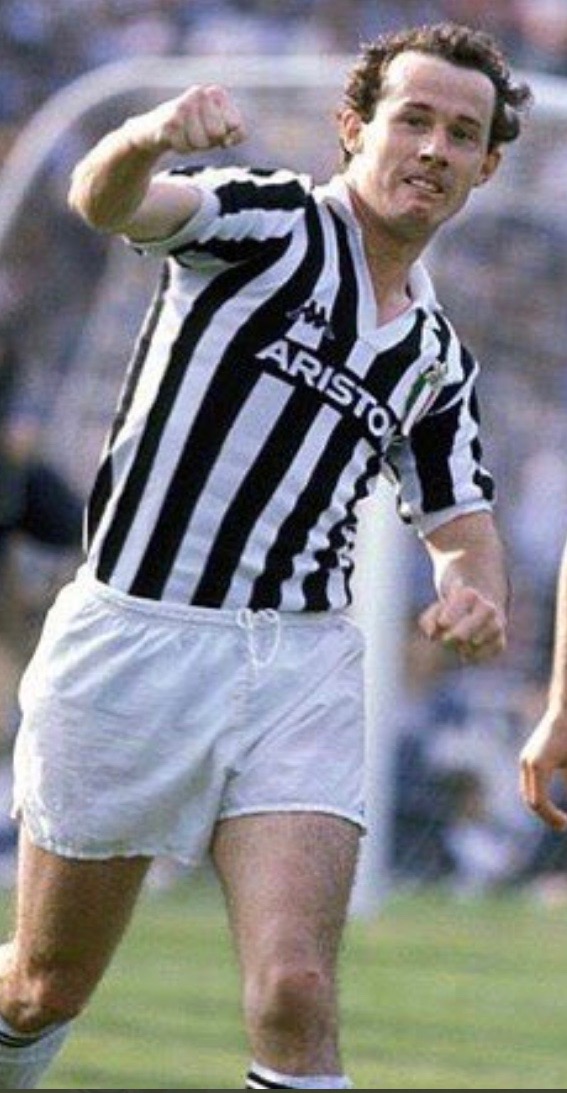
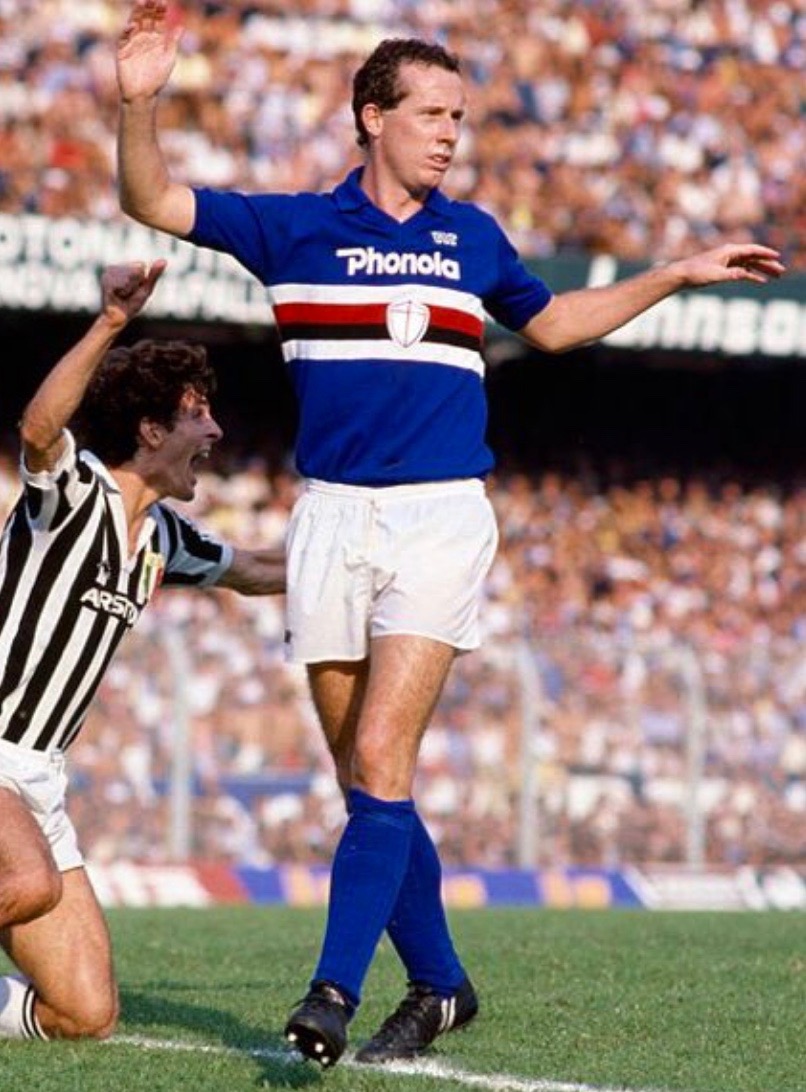
Brady moved on to Italy where he spent seven years, initially with Juventus, winning two Italian league titles and then with Sampdoria, Inter Milan and Ascoli. In his second season at Brighton, Brady had the Seagulls wearing the colours of Inter as their change kit – I still consider it to be the best the club has had.

As well as a highly successful club career, Brady won a total of 72 caps for his country. He made his Republic of Ireland debut on 30 October 1974 in a 3-0 home win over the Soviet Union and went on to win 72 caps for his country.

He retired from internationals ahead of qualification for the 1990 World Cup and, although he later made himself available for selection, manager Jack Charlton decided to choose only those who had helped Eire qualify for the finals.

Brady had returned to the UK in March 1987 to enjoy three years at West Ham in which he scored 10 goals in 119 appearances. His first somewhat ironically came against Arsenal while he reckoned his best was a 20-yarder past Peter Shilton that proved to be the winner in a league game against Derby County.

Brady explained the circumstances of his move to the Hammers in an interview with whufc.com. He nearly ended up joining Celtic instead, but he’d given his word to West Ham boss John Lyall and, because he’d retained an apartment in London, it made sense to return there.

Brady in action for West Ham at the Goldstone, faced by ex-Hammer, Alan Curbishley

In only his fourth West Ham game, he found himself up against Arsenal and was mobbed after netting the final goal in a 3-1 win at the Boleyn Ground.

“With ten minutes remaining, I won the ball on half-way before running to the edge of the 18-yard box, where I hit a low curler around David O’Leary and beyond Rhys Wilmott’s dive, into the bottom right-hand corner,” he said. “The place went wild! I certainly wasn’t going to just walk back to the centre-circle without celebrating my first goal for my new team.”

While the Hammers finished 15th that campaign, they were relegated in 1989 which brought about the departure of Lyall. Brady clearly didn’t see eye to eye with his successor, Lou Macari, but was pleased when he was replaced by Hammers legend Billy Bonds.

Brady eventually called time on his playing days in May 1990, Wolves and West Ham players lining up to give him a guard of honour as he took to the pitch for the final game of the season.

He was substitute that day but went on for Kevin Keen and rounded off his remarkable career by scoring in a 4-0 win.

“Having scored at the Boleyn Ground with my last-ever kick in professional football, I couldn’t have written a better script,” he told whufc.com.

After not making the move to Celtic as a player, his first step into management came at Celtic Park as successor to former club legend Billy McNeill in June 1991. He was the first manager not to have played for the Hoops.

It was a big step to take for a novice manager, and hindsight suggested the players he signed didn’t do him any justice. He later admitted: “I didn’t do particularly well as Celtic boss. Second place behind Rangers was seen as a failure and, even if you’ve had a good reputation as a player, it counts for little as a manager.”

Brighton (well, Hove actually) would prove to be as far from the cauldron of Glasgow as he could possibly get, but the club management game clearly didn’t suit Brady, and he didn’t take on any other senior managerial hotseats after the Seagulls.

Alongside his youth team responsibilities at Arsenal, he did assist his country’s national team between 2008 and 2010. He was assistant to Giovanni Trapattoni during his time in charge, also working alongside Brady’s former Juventus teammate Marco Tardelli.

Brady still lives in Sussex and he told whufc.com how he occasionally meets up with Billy Bonds at Plumpton Races and enjoys a round of golf with Trevor Brooking.

How the career of high rise Flatts came tumbling down

MARK FLATTS was destined for a glittering career after breaking into Arsenal’s first team when only eighteen.

It was the season when George Graham’s side finished in a disappointing 10th place in the league but won the League Cup and the FA Cup, beating Sheffield Wednesday in both competitions.

Flatts got seven starts plus four appearances off the bench and the following season, after he’d been troubled with a few injuries, Graham sent him out on loan to get some games under his belt.

His first loan was at Cambridge United, then in January 1994 Flatts joined forces with former Gunners legend Liam Brady at Brighton.

The former midfield maestro who’d graced the game at the highest level as a player had not long arrived at the Goldstone Ground, creating a buzz of anticipation amongst the largely disillusioned Albion faithful.

Brighton were bumping along around the foot of the third tier table when he arrived and it augured well that Brady could use his connections with his former club to secure the services of a prodigious young talent who’d already played a handful of matches in the Premier League.

He made his debut in a cracking 4-1 New Year’s Day home win over Cambridge United when Kurt Nogan scored a hat-trick and he was only on the losing side twice during his two months at the club, helping the Albion move away from the relegation zone.

Brady wrote about it in his autobiography Born To Be A Footballer, describing how “livewire” Flatts had heated up “a freezing Goldstone” on that debut day. “He’s a lovely young kid off the field but on the park there’s a strut about him. That’s exactly what we need. He’s full of tricks.”

Flatts started nine matches, came on as a sub once, and scored one of Albion’s goals in a 3-2 home win over Blackpool, but it was his skill on the ball and pace that fans enjoyed most.

After he had returned to Highbury, Brady thanked him for his contribution and said in his programme notes: “He gave the place a tremendous lift. He’s a very confident lad and he did us a real favour and hopefully he’s got something out of it as well. I think he has and I think he enjoyed his time with us.”

Flatts confirmed as much recently. Although he has kept a low profile for many years, in 2020, online from his home in Norfolk, he appeared in two podcasts talking about his career.

On the Shoot the Defence podcast in April 2020, Flatts talked admiringly of his time under Brady at Brighton – “He still had it in training” – as well as the experience of playing alongside senior pros Jimmy Case and Steve Foster at the Goldstone Ground.

“Loyal fans as well. It was a good time,” he said. “I got on well with the fans and a few of them still text me, so that’s nice. Liam Brady and Jimmy Case had seen me in a few games, said they wanted me on loan, and I went there and enjoyed it.”

Born in Islington on 14 October 1972 and brought up in Wood Green, Flatts played for Haringey Borough and Middlesex County school teams and he was playing for Enfield Rangers when he caught the eye of professional clubs.

He spent time training with Watford and West Ham, but his mum and older brother were Arsenal fans so, when they invited him to join them, it was no contest. The scout responsible for picking him up for the Gunners was the former Brighton wing-half, Steve Burtenshaw.

Flatts was one of the country’s top talented 14-year-olds who went through the FA National School of Excellence at Lilleshall before becoming a trainee at Highbury after graduating.

In the first edition of a new fans’ podcast Over and Over and Over Again on 20 August 2020, Flatts talked about how he, Andy Cole and Paul Dickov up front, Ray Parlour and Ian Selley in midfield, Scott Marshall at the back and Alan Miller in goal were all going through from youth team to reserves at the same time. “It was a good strong youth team,” he said. “Pat Rice was the youth team manager who brought us through. He was a good coach.”

Flatts signed professional in December 1990 and he progressed to the reserve side who were managed by another Arsenal legend, George Armstrong.

One particular reserve match stands out as memorable – but not because Flatts scored a goal in a 2-2 draw. Ordinarily, Flatts was accustomed to playing in front of a few hundred supporters for the second string, but on 16 February 1991 it’s reckoned more than 10,000 turned up.

The Ovenden Papers Football Combination game against Reading was originally scheduled to be an away fixture but freezing conditions meant the game was swapped to Highbury because it had undersoil heating.

The reason for the surge of interest was the match saw the return to playing of Tony Adams after his release from prison, having served half of his four-month sentence for drink driving. The amazing response of the Arsenal faithful was remembered in this football.london article in February 2018.  

Often niggled by injuries, Flatts was sidelined by one he hadn’t even been aware of, other than what felt like a small discomfort. “I got a stress fracture on my ankle and was playing on it for a month without realising,” he said.

Physio Gary Lewin arranged for him to see a Harley Street specialist and it was only after he was put through tests on a running machine that the problem was diagnosed. The injury required surgery that put him out of action for over a year.

Flatts got his first real involvement with the first team on a pre-season tour of Norway ahead of the 1992-93 season, getting on as a substitute against Stabaek and Brann Bergen. He was a non-playing sub in two subsequent pre-season friendlies away to Wolves and Peterborough.

It was back to reserve team football at the start of the season but Graham selected him to travel with the squad for an away game at Sheffield United on 19 September and he made his competitive debut as a 71st minute substitute for Anders Limpar, shortly before Ian Wright netted an equaliser for the Gunners.

His next involvement came in a third round League Cup encounter with Derby County. He was a non-playing sub in the away tie but started in Limpar’s place for the replay on 1 December 1992, when Arsenal edged it 2-1.

Flatts (right) celebrates Arsenal’s League Cup win with some familiar faces

He kept his place for the league game which followed four days later but was subbed off as Arsenal lost 1-0 at Southampton.

At one point, the Islington Gazette declared Flatts, Neil Heaney, Parlour and Dickov as the “next crop of Arsenal starlets who will take the club forward”.

As the year drew to a close, on 19 December, Flatts earned rave reviews for his showing in a 1-1 home draw against Lennie Lawrence’s Middlesbrough.

“It’s very unusual to have a quick player with a brain,” said manager Graham. “Mark has skill but he also has the application to go with it.”

Writing about how brightly Flatts shone in the game, Trevor Haylett, of the Independent, said: “He possesses an easy and deceptive running style which frequently carried him away from markers, and has a confidence that few of his colleagues shared in a desultory first 45 minutes.”

Haylett observed: “The problem for Graham is that his most productive line-up, with Merson in the ‘hole’ to distribute and ghost into scoring areas, leaves no room for Flatts, who amply justified his manager’s contention that he has a ‘very big future in the game’.”

Flatts kept his place for the following match, a goalless Boxing Day home draw against Ipswich Town, and was back on the bench away to Aston Villa three days later but came on for the second half in a game Arsenal lost 1-0.

The game he remembers most fondly came just over a fortnight later away to Manchester City at Maine Road. He sped past two players and crossed it for Paul Merson to score with a near post header that gave Arsenal a 1-0 win.

But competition for places was intense and he didn’t next get a start until 1 March against Chelsea at Stamford Bridge, another game that finished goalless.

He had to wait until May for his next involvement, as a sub in a 1-0 defeat away to Sheffield Wednesday, who his teammates would play twice in the space of five days later that month to win the FA Cup on penalties, both games having ended in draws.

With the first of those matches only four days away, Graham put out a young side to face Spurs in the last league game of the season, and Flatts was part of a side who lost the north London derby 3-1, Dickov getting the Arsenal goal.

After his loan spell at Brighton, Flatts got back into the first team picture at Arsenal towards the end of the 1993-94 season, featuring in three successive league games: as a sub in a 1-1 draw with Wimbledon and starting in a 2-1 win at Villa and a 1-1 home draw against QPR.

While he travelled to Copenhagen with the squad for the European Cup Winners’ Cup Final on 4 May 1994, he didn’t play in the Gunners’ 1-0 win.

Flatts wasn’t back in the Arsenal first team set-up until December 1994, when he had a four-game spell, starting in a 2-2 draw away to Nottingham Forest, being a non-playing sub away to Manchester City and then coming on as a sub in a 3-1 defeat at home to Leeds on 17 December and in the goalless Boxing Day home match with Aston Villa.

He came off the bench in a third round FA Cup replay defeat to Millwall on 18 January 1995 but the following month the manager who had supported his development was sacked, and the young wideman went out on loan to Bristol City.

Flatts didn’t reckon much of the man management skills of Graham’s temporary successor, Stewart Houston, but it was the manager who eventually succeeded him who showed the youngster the door.

“Bruce Rioch took over, and said: ‘No, you’re not good enough’ and that was it,” Flatts recalled. He had another short loan spell, this time at Grimsby Town, in the 1995-96 season, but when his contract was up in 1996, he was given a free transfer.

When Flatts left the famous marble halls of Highbury, all that early promise rapidly evaporated and despite a handful of trials at several clubs, his career fizzled out, the player admitting he fell out of love with the game.

Initially, he headed off to Italy to try his luck with Torino in Serie B. He said while he enjoyed his few months there, a limit on the number of foreign players who could play at any one time edged him out of the picture.

According to arseweb.com, back in the UK he had trial periods with Manchester City (September 1996) and Watford (October 1986), although the scathing Hornets fans website, Blind, Stupid and Desperate has a less than flattering summary of his efforts to impress at Vicarage Road. He was briefly at Kettering Town in December 1996, then Barnet (1997-98 pre-season) and Colchester United (1999-00 pre-season) but none of them took him on.

Former Arsenal striker Martin Hayes, manager at Ryman League Division One side Bishop’s Stortford, signed him during the 1999-00 season.

And his last appearance on a team-sheet was as an unused substitute for Queens Park Rangers in a 2000-01 pre-season 4-2 away defeat at Dr Martens League Premier Division side Crawley Town.

Flatts told host Richie Wakelin on Over and Over and Over Again that he kept on picking up niggling injuries too regularly. “With fitness concerns, I just lost interest,” he said. “I ain’t got no regrets. I loved it at Arsenal. I loved playing football. George Graham had faith in me and he gave me a go.”

He said his teenage son and daughter both play football and he has done some coaching at a local level and has considered setting up his own coaching school. He has also done some scouting work for Cambridge United and Norwich City.

Flatts looks back at his football career during a 2020 podcast

Pictures from Albion’s matchday programmes and various online sources.

Set-piece expert Darren Currie earned Uncle Tony’s approval

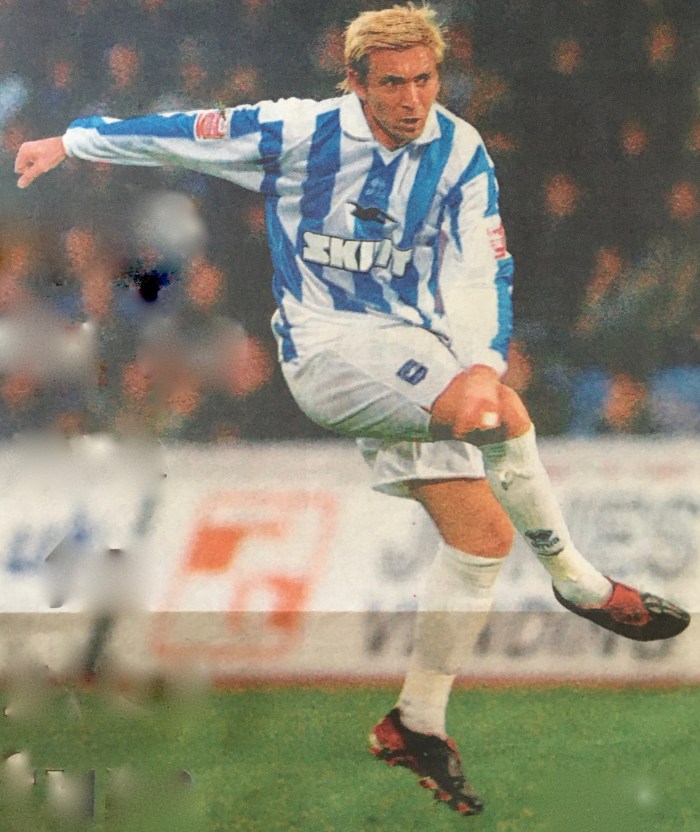
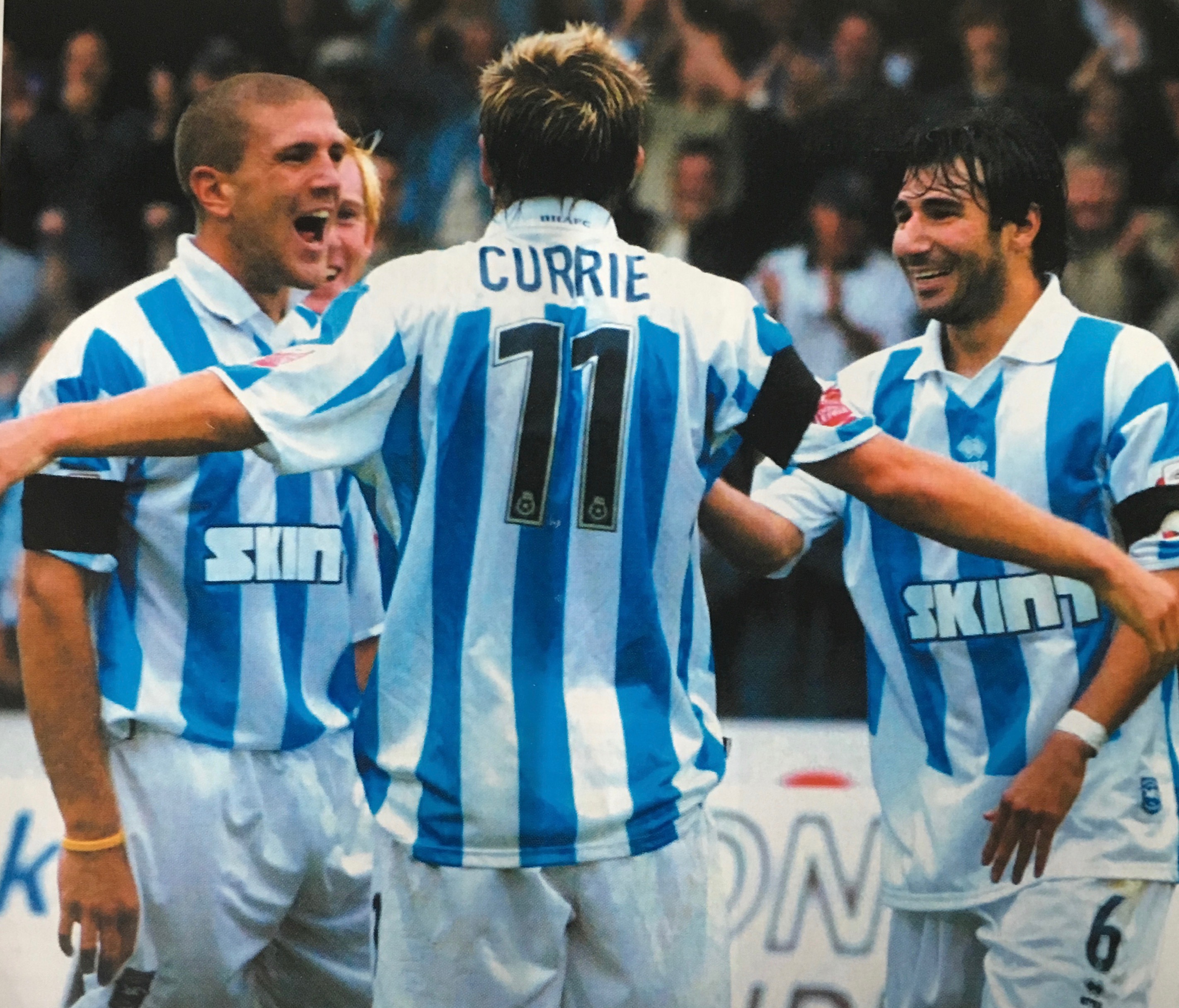
THE PINPOINT accuracy of Darren Currie’s passing and shooting was a joy to watch, even though a lack of pace stopped him being as good a player as his famous uncle.

Currie was a decent player in his own right, making nearly 700 appearances for 15 different clubs, but wherever he went he was always known as the nephew of the former Sheffield United, Leeds, QPR and England creative midfielder Tony Currie.

Perhaps with a hint of family bias, Uncle Tony said in an interview for ITV Digital: “Darren is, without doubt, the best crosser of the ball, after Beckham, in the country. He’ll produce nine times out of ten, right foot or left foot.”

The young Currie attributed his crowd-pleasing skills to the start he was given in the game by West Ham. After 10 years stuck in the lower leagues, Currie was given a platform to perform in the Championship by Brighton, and he very nearly made it to the top when transferred for £250,000 to high-flying Ipswich Town.

As if by a cruel twist of fate, Ipswich lost to the Hammers in the 2004-05 Championship play-off semi-finals having just missed out on automatic promotion.

“Playing for West Ham at youth and reserve levels was a terrific way to start a career,” Currie told the Ipswich Star. “They gave me everything but my debut.”

He certainly came close though, featuring alongside recognised first-teamers like Lee Chapman and Frank Lampard in friendlies and testimonials, but he had to move elsewhere to gain competitive first-team action.

Initially he had loan spells with Shrewsbury Town and Leyton Orient, and when the Shrews bid £70,000 for him in 1996, he chose to drop down a couple of divisions to get regular football.

“The difference in money was only about £50. The then West Ham manager Harry Redknapp called me in and said that I was an adult and had to think about continuing to play regular first team football,” Currie explained. “I was given the opportunity to have a new contract at West Ham or moving permanently to Shrewsbury.

“I was a young pro at West Ham and I had been out on loan a couple of times and I got the buzz for playing at three o’clock on a Saturday afternoon. There was no other feeling like it.

“I thought to myself I’ll go to Shrewsbury and I’ll play really well for a year and I’ll get a move back up to the top.

“My naivety kicked in then because it didn’t quite happen. I thought I’d done OK and I was linked with a couple of moves but the route back to the top wasn’t as simple as I thought it would be in my head.”

Indeed, it was a decade in which, after three seasons with the Shrews, he moved on briefly to Plymouth Argyle, then to Barnet (three seasons) and Wycombe Wanderers (three seasons).

Currie said it got to a point where Wycombe couldn’t afford to keep him, and boss Tony Adams made it clear he was free to look elsewhere.

Mark McGhee invited him to Brighton for a trial and was impressed with the way he knuckled down in training to get himself fit following a programme devised by McGhee’s deputy, Bob Booker.

Currie was offered a 12-month contract but it was more about the opportunity to play at a higher level that prompted him to sign.

“It wasn’t a fantastic offer – put it this way, Peterborough offered me three years – but it wasn’t about the money,” Currie told Spencer Vignes in an Albion matchday programme article.

“It was about the football and playing in the Championship. I was determined to do well and to prove myself, which I did. That’s when people began to sit up and take notice.”

Currie’s ability on the ball carved him out to be a crowd-pleaser and the first of two goals for the Albion typically came from a free kick in a 3-2 home defeat to QPR that left Argus reporter Andy Naylor purring over its execution.

“Currie, having shaved a post and hit the bar with two earlier free-kicks, made it third time lucky from 20 yards just before the break. It was a sumptuous effort from the set-piece expert which rendered Rangers’ keeper Chris Day motionless.”

His other goal came in a 1-1 draw at home to Sheffield United, more noted for Albion wearing the limited-edition Palookaville strip to help publicise backer Fatboy Slim’s latest album.

Injury-hit Albion considered it a point gained rather than two dropped and Naylor complimented Leon Knight for “superbly crafting” Currie’s goal by evading his marker and threading a square pass through the legs of Leigh Bromby.

“Currie, with time as well as room, picked his spot to score, which meant even more to him because of the opposition,” wrote Naylor, informing readers that the Yorkshire side had rejected him as a 16-year-old following a fortnight’s trial.

Unfortunately for Currie, he was only on the bench when the Albion travelled to Upton Park on 13 November 2004. After three successive defeats, McGhee confessed he set the side up not to lose rather than go for a win.

Somewhat ironically, the Seagulls blagged a 1-0 win courtesy of a Guy Butters goal, in a real backs-to-the-wall match, with veteran striker Steve Claridge ploughing a lone furrow up front.

It was only in the 90th minute of the match that McGhee introduced Currie in place of Claridge to play out the final few minutes of the game.

Currie only played 22 games for Brighton over four months but the fee they received for him from Ipswich gave a vital boost to club funds when they were struggling to compete in the division because of the restricted crowd numbers at Withdean. Having signed him on a free transfer, the deal was a no-brainer for the Albion hierarchy, even if it weakened a squad who subsequently only avoided relegation back to the third tier by a single point.

McGhee wasn’t that surprised to see Currie go, telling the Argus: “He was obviously happy here, but I thought he was doing so well that he would keep his options open.

“I cannot see Darren being a regular for Ipswich in the Premiership if they are promoted, but his skills and touch are good enough to justify him making a contribution to a squad in the Premiership.”

It didn’t pan out like that, but Currie was nonetheless grateful to the Albion, and told Vignes: “I am so pleased I had the chance to be a part of it all down there, to see what the support is like and to play with a group of lads who stick together through thick and thin.

“I played at the Goldstone when I was a kid, playing youth team football with West Ham, so I know how important the stadium issue is for everyone. I always will be extremely grateful to the Brighton fans and Mark McGhee because without a doubt without their help this opportunity wouldn’t have come along.”

Currie explained in a matchday programme article how McGhee had helped to develop his game and to add other dimensions which improved him. “I owe a helluva lot to Mark and Bob Booker,” he said.

Currie became an instant hit with the Tractor Boys fans earning the man of the match accolade in two of his first four games.

“I tend to build up a rapport with supporters wherever I go,” he told the Ipswich Star. “I am my own biggest critic and I know when I have done well, and I am very satisfied with my contribution so far.”

After his brief cameo for the Seagulls at West Ham, he got the chance to play against his boyhood club three times that season with Ipswich.

He was in the Town side that lost 2-0 at home to the Hammers on New Year’s Day 2005. Then, in the first leg of the play-off semi-final, Currie and Matt Richards (later a loanee with the Albion) were half-time substitutes who helped Ipswich to recover a deficit to draw 2-2.

Currie started the second leg and had Ipswich’s best opportunities with a shot straight at James Walker, then a long-range drive 10 minutes before the interval which the goalkeeper hopelessly misjudged but fumbled to safety. But they failed to make the final when Bobby Zamora scored two second half goals for West Ham to earn them a 2-0 second leg win. West Ham beat Preston in the play-off final.

Born in Hampstead on 29 November 1974, Currie’s early footballing talent drew interest from Watford and Chelsea, but he decided to join West Ham’s academy.

“The facilities were great, the training for us there as kids was first class and I really enjoyed my time there,” Currie said.

“A lot of the player I became was what I was taught as a kid at West Ham,” he told twtd.co.uk. “It was all about the ball and all about the technical skill and how to manipulate the ball. It was a way I enjoyed playing anyway so it was a really good fit for me.”

After signing professional in 1993, he was a regular in the West Ham reserve side and a trawl through the excellent archive website whu-programmes.co.uk records show he played in a Football Combination game away to Brighton on 1 April 1994, and later the same month was up against Guy Butters in Portsmouth’s reserve side at the Boleyn Ground. Mark Flatts and Paul Dickov were in opposition when the Hammers stiffs entertained their Arsenal counterparts at home on 11 May.

In an Avon Insurance Combination match at the Goldstone Ground on 30 November 1994, Currie scored the only goal of the game from the penalty spot in a West Ham side also featuring Lee Chapman and Frank Lampard.

The following summer, Currie played in four matches when he was part of West Ham’s squad on a centenary tour of Australia.

Shrewsbury boss Fred Davies, a former playing colleague of Redknapp’s at Bournemouth, took Currie on full time after his two loan spells at Gay Meadow.

He moved on to Plymouth Argyle in 1998 but only played five matches in three months, then switched to Barnet where he made 136 appearances, plus seven as a sub, in three years.

Wycombe Wanderers paid £200,000 to sign him in the summer of 2001 and manager Lawrie Sanchez told BBC Three Counties Radio: “He’s obviously a quality player. He gets crosses in and that’s an area where we weren’t very good last year. He’s come to add that to our game and his free kicks will trouble the ‘keeper as well.

“It was quite a lot of money for our club to spend but I’ve got to back my judgement. I’d looked at him for a while and quite liked him. He gives us something we haven’t got, he’s a great technician. He hasn’t got particularly great pace but what he does with the ball is tremendous. We’re hoping he does all the things he was doing at Barnet and a little bit more for us.”

Sanchez added: “A lot of people looked at him for a long time. He’s always been considered one of the best players in the Third Division and hopefully we’ll give him the stage where he can prove he’s one of the best players in the Second Division.”

After Currie’s flirtation with promotion to the Premier League ended in disappointment, Joe Royle left Portman Road and his replacement Jim Magilton axed Currie from the side in the 2006-07 season. He was sent on loan to fellow Championship sides Coventry City and Derby County, for whom he made a play-offs appearance as a substitute, although he wasn’t involved in the final when County beat West Brom 1-0.

That summer, on the expiry of his Ipswich contract, Currie moved on a free transfer to League One Luton Town. He made 38 appearances for the Hatters but when they went into administration, were deducted 10 points and relegated, he was among several players given a free transfer.

Micky Adams, back in the hotseat at the Albion, was hopeful of getting Currie back to Brighton for a second spell, telling BBC Southern Counties Radio on 11 July: “He’s a player I’ve admired for a long, long time. We want him, and he wants to come back. He’d offer competition for places and fantastic delivery from set pieces.”

But at the end of the month the player rejected the terms on offer and took up a three-year contract at Chesterfield instead.

While the first year at Saltergate went OK, in the second season, the manager who signed him, Lee Richardson, had been replaced by John Sheridan, and Currie was out of the picture. He went on loan to fellow League Two side Dagenham & Redbridge and the deal was made permanent in January 2010. Currie played in 16 matches as the Daggers won promotion to League One.

They went straight back down the following season, and Currie departed for Conference South outfit Borehamwood as player assistant manager. He was there less than three months before moving to Isthmian League Hendon for a year as a player.

In October 2012, Currie returned to Dagenham & Redbridge, initially as a development coach and later as assistant manager under John Still.

In June 2018, Currie was appointed assistant manager at National League side Barnet, working under Still. He succeeded Still in December 2018, initially as caretaker, before landing the role permanently in January 2019.

Currie, assisted by former Albion loanee midfielder Junior Lewis, came close to getting Barnet promoted to League Two but, having missed out, and the club struggling financially because of the Covid-related lack of fan revenue, both left the club in August 2020.