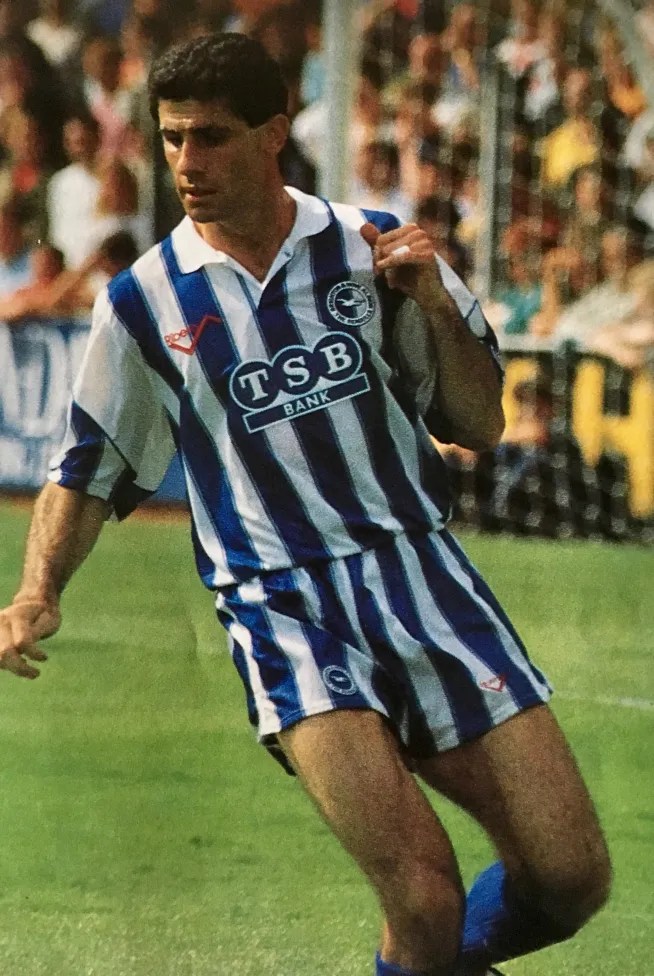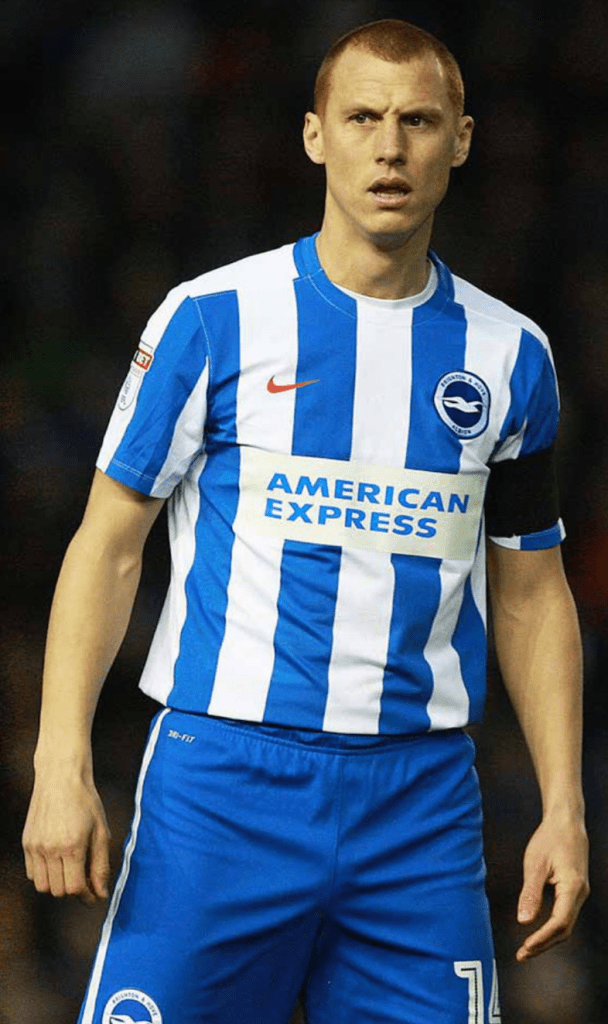
Not many of them, but Sidwell’s goals were memorable

STEVE SIDWELL was not a recognised goalscorer but when he did find the back of the net it was often memorable and headline-making.

Such was his most talked about goal for Brighton – hit from the centre circle away to Bristol City in a Championship match on Bonfire Night in 2016. 

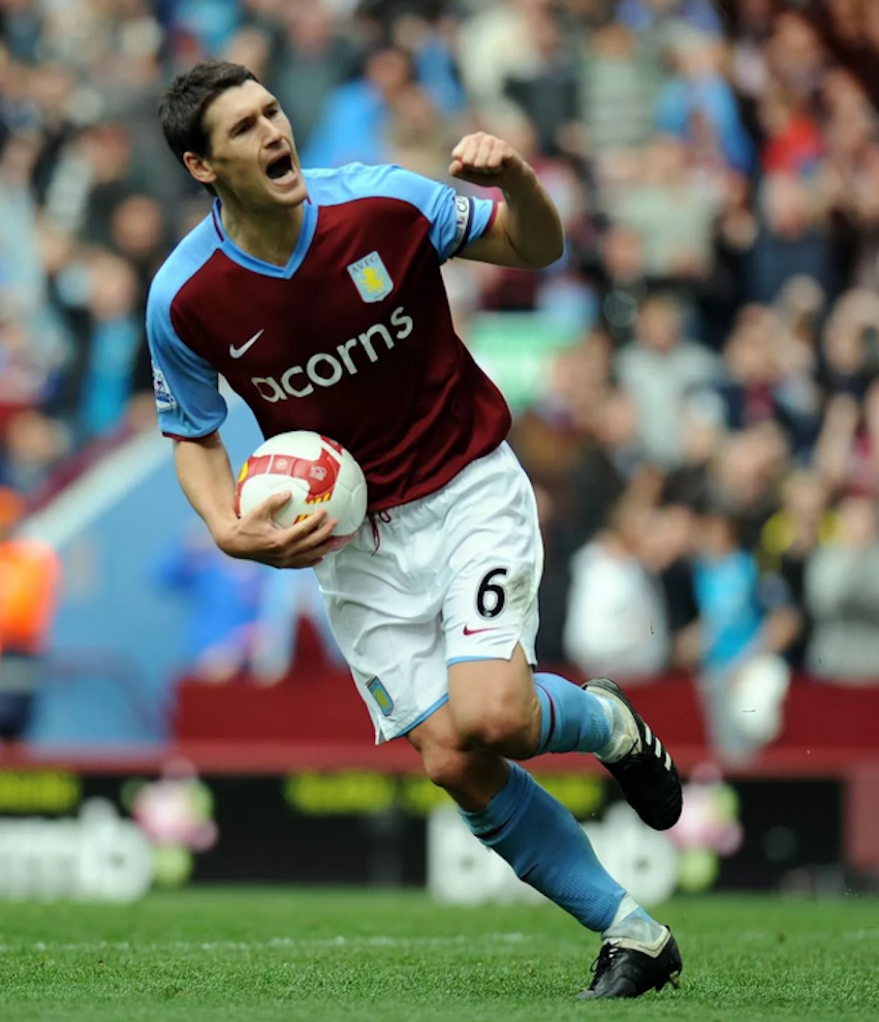
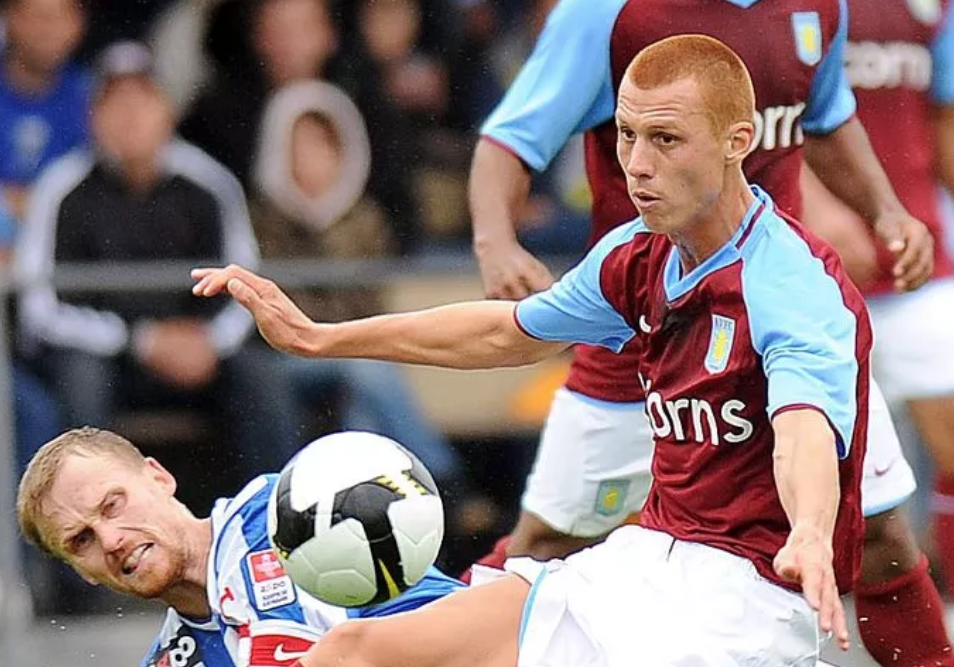
Eight years earlier, he stunned Goodison Park by rifling home from 25 yards after only 31 seconds of Aston Villa’s 7 December Premier League visit to Everton.

I was at Ashton Gate to see Sidwell’s amazing 50-yard lob over stranded Robins’ ‘keeper Richard O’Donnell (Jamie Murphy added a second in promotion-chasing Albion’s 2-0 win).

Manager Chris Hughton said: “It was a wonderful strike by Sidwell on his left foot when I would have expected it more from his right. It caught everyone by surprise, including their goalkeeper.”

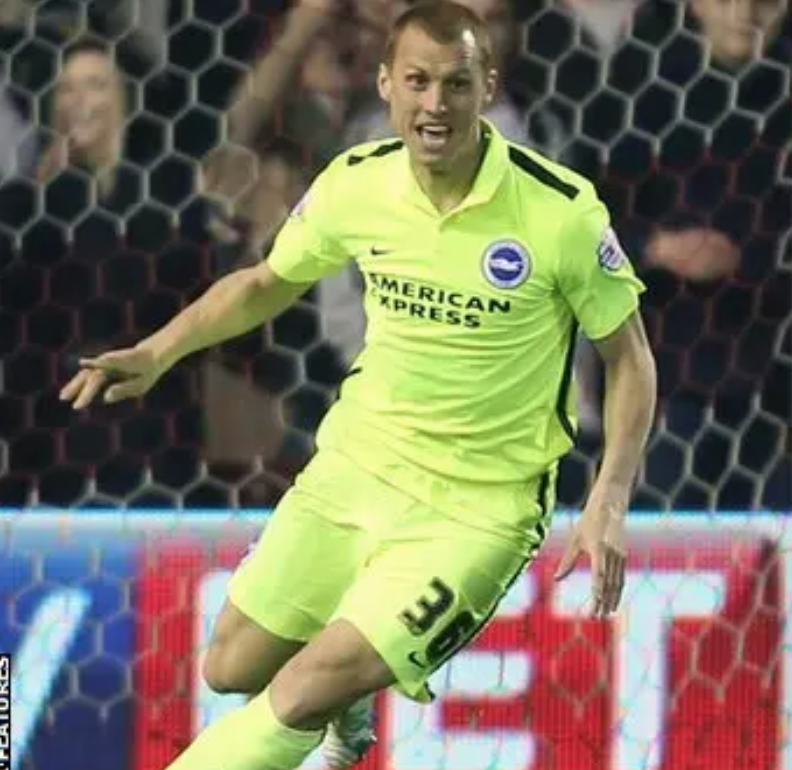
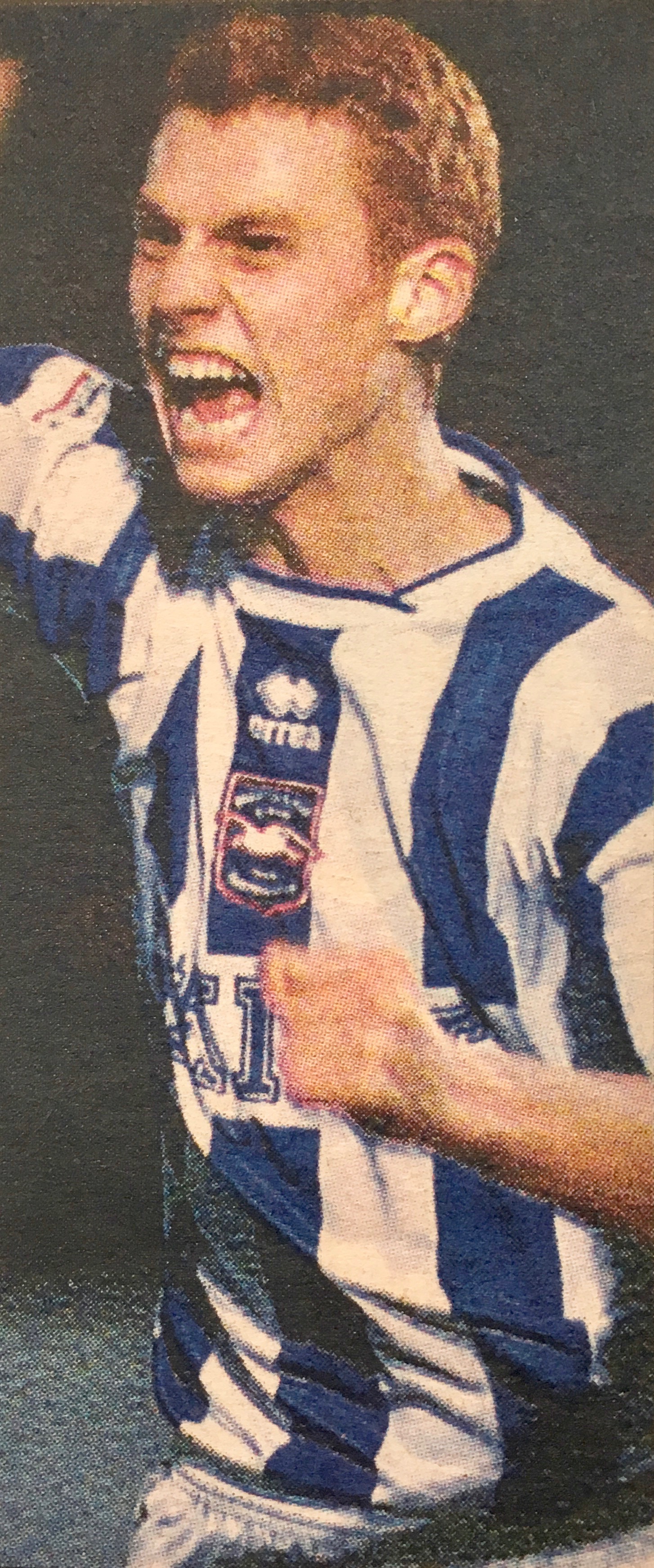
I was also at the City Ground, Nottingham, seven months earlier when Sidwell went on as an 85th-minute sub and scored the winner (below) in the 91st minute to earn a 2-1 victory over Forest.

With his right foot this time, he drilled the ball in from 12 yards giving Albion a fourth win in five games which extended their unbeaten run to nine games.

“We felt that the game was becoming open and we felt we could bring players off the bench who could influence the game,” said Hughton. “One thing about Steve Sidwell is that he can break forward from midfield. I did not bring him on for that, but I am very glad he did it.”

Back to that game for Villa in 2008; moments after kick-off, Everton’s Mikel Arteta lost possession to Ashley Young. He fed James Milner who in turn found Sidwell. Finding himself with a sight at goal from 25 yards, he buried a stunning shot past Tim Howard. In an extraordinary end to the game, Young, who had scored Villa’s second, got a 94th-minute winner for the visitors after Joleon Lescott thought he’d salvaged a point in the 93rd minute, netting his second of the game. 

That opener at Goodison was a rare highlight for Sidwell in what overall was an unhappy two and a half years at Villa.

Sidwell had first caught Villa boss Martin O’Neill’s eye when he scored twice for Reading in a 2-0 home victory over Villa in February 2007.

O’Neill tried to land him before he opted to join Chelsea (the team he’d supported as a boy) and, by all accounts, predecessor David O’Leary had also tried to sign him.

So, it appeared to be a case of third time lucky when in July 2008 O’Neill took him for a reported £5million fee from being a Chelsea benchwarmer and gave him a three-year contract.

Sidwell during his first Albion spell

After success at Reading, where he had been reunited with Steve Coppell (who’d had him on loan at Brentford and Brighton as a young Arsenal player, as covered in my 2017 blog post), Sidwell had a disappointing season at Stamford Bridge, where he made just seven Premier League starts. 

Managerial change didn’t help his cause: he’d been signed by Jose Mourinho who left early in the season to be replaced by Avram Grant.

Sidwell later admitted: “I left for Aston Villa in search of regular football. In hindsight, I wished I’d stayed another six months because Luiz Felipe Scolari came in and you never know what might have happened then.”

At the time, Sidwell told Villa’s official website: “For me personally, it’s about getting back and playing. I have had a year of not playing as much as I would have liked so to get out on the pitch is the first aim.” 

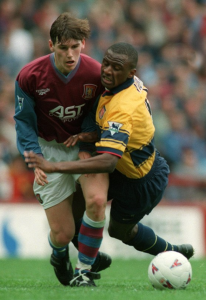
Although he played in both legs of the InterToto Cup tie against Odense in July, knee and calf problems delayed his league debut until the end of October which he marked with a goal after going on as a late substitute in a 4-0 win at Wigan Athletic. That and the strike at Everton were two of four league and cup goals he scored for Villa that season when his 25 appearances (20 starts + five as sub) would ultimately amount to nearly half the total he made for the club: 37 starts + 27 as sub.

He didn’t add any more goals in the claret and blue and in the remainder of his time at Villa Park he was never really a regular, eg in 2009-10 only 14 of 33 appearances were as a starter and in 2010-11, three of six under Gérard Houllier.

Although he and O’Neill clashed on occasion, the Northern Irishman did say: “I’ve been very happy with him. It’s just that other players playing in positions all over the place have been playing brilliantly. Some people are playing out of their skin at this minute in our team. But I’ve been very pleased since he’s arrived at the football club.”

Sidwell’s former Reading teammate Nicky Shorey, who’d joined him at Villa Park, had high expectations of him ahead of his second season, telling the Birmingham Mail: “I don’t think Villa have seen the best of him yet. It’s been a strange season for Siddy. He’s been out injured for long periods and he’s picked up niggles here and there. I don’t think he’s ever had that before.

“For as long as I’ve known him, he’s never really been injured, so I think that’s something new for Siddy to try and learn from.”

Shorey said Sidwell had remained positive and upbeat around Bodymoor Heath and Villa Park and reckoned: “When he comes back for pre-season and hopefully has a good pre-season you’ll see the best of him and I think everyone will be impressed with how well he can do.

“When you know Siddy, that’s all he ever does – trains and plays with a smile. You haven’t got any worries with him on that count. He just keeps going and he’ll be fine. He’s just an all-round good midfielder and I’m sure he’ll show that before too long.”

Sidwell found himself competing for a midfield place with the likes of Milner (before his move to Manchester City), Gareth Barry, Stiliyan Petrov, Nigel Reo-Coker and Craig Gardner. He revealed later that he’d fallen out with O’Neill and at one point he went on the transfer list.

After O’Neill quit in protest at the sale of Milner to City, and ahead of Houllier’s appointment, Sidwell hoped to be given a new lease of life in claret and blue.

He overcame an Achilles’ problem and declared himself raring to go after playing 90 minutes in a 4-0 reserve team win over Blackpool at Bodymoor Heath.

“I feel I’ve shown glimpses,” he told the Birmingham Mail. “In the previous years, there have been good games and some poor games.

“If I get a run of games, I am sure I can perform to the best of my ability. Hopefully, now, whoever takes charge I will just get an opportunity and I will take it.

“It is going to be tough but it is down to individuals to perform in training, perform in reserve games and show the manager you are worthy of a start.

“Once you get that, you have to take it with both hands. Fitness wise, I’ve been training really well and looking sharp. It is just games that I need. I wasn’t unfit before the injury took place.”

When the Mail spoke to him ahead of a second city derby at the end of October 2010, Sidwell sought to exploit a two-month injury absence for Petrov saying: “It is all about opinions.

You don’t play under certain managers. Under certain managers you do get a chance.

“Once you get a chance it is about taking it and staying in the team.”

Sidwell started the game but was replaced by young Barry Bannan in the 58th minute of the dour goalless draw – and it turned out to be his last game for Villa (he was an unused sub away to Fulham the following week).

It was in a 2018 interview with Donald McRae of The Guardian that Sidwell revealed the extent of his disillusionment at Villa, telling the journalist: “When I was at Aston Villa I was on the most money in my career. But that was when I was at my unhappiest. I was living in Birmingham away from my wife and family.

“My middle son caught meningitis and was in hospital. The football never really took off and me and Martin O’Neill clashed. So, it was a combination of things.”

Released on a free transfer in January 2011, after being deemed surplus to requirements by Houllier, Sidwell joined Fulham – which is a story for another blog post.

After three years with the Cottagers, he followed ex-Fulham boss Mark Hughes to Stoke City and it was from there that he made his initial return to Brighton, on a half-season loan. 

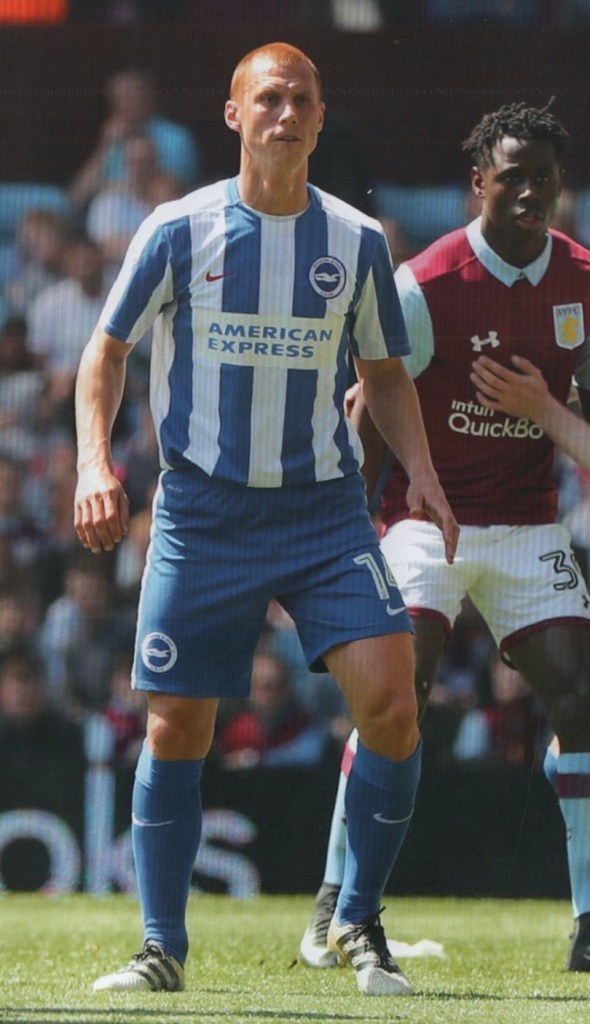
Sidwell in action for Albion against Villa

In clinching his signing in January 2016, Hughton told the Albion website: “Steve is an experienced player who has played virtually his entire career in the Premier League. He knows this club, as well as a few of the squad and will supplement our existing midfield options.

“Beram Kayal, Dale Stephens, Andrew Crofts and others have been excellent in midfield for us this season, but we also need to make sure we have good options in every position of the team, and options which will be enough for us through until the end of the season.

“Steve brings that, and in addition, he is another experienced head; he is a player who’s proven at the very top level of English football. Brighton fans will know Steve is also a great athlete and top professional.”

Although he only made six starts, Sidwell went on as a sub 13 times in that half-season. When Albion had to endure the end-of-season play-offs after missing out on automatic promotion by only drawing (1-1) the last game of the season at Middlesbrough, it was Sidwell who stepped in to fill the boots of Stephens, who was suspended after his controversial sending off by Mike Dean at the Riverside Stadium.

Unfortunately, Sidwell was one of four Albion players who had to go off injured in the 2-0 play-off first leg defeat at Sheffield Wednesday. He suffered ligament damage but was taped up and given medication to enable him to play in the home tie, although he later admitted: “I should never have played really.”

He reckoned the Amex atmosphere for that game was the best he’d ever been involved in. In spite of a valiant effort, it ended in a disappointing 1-1 draw although Sidwell said: “I ended up playing one of my better games in a Brighton shirt, which maybe cemented a contract for the following season.”

Released on a free transfer by Stoke, Sidwell signed on a permanent basis for the Seagulls and was a key component in the side that won promotion from the Championship in May 2017. He made 29 starts plus eight substitute appearances that campaign.

“The whole reason behind my return was to help the club into the Premier League,” he said.

Sidwell was on the bench as Albion began life amongst the elite but after that “a slipped disc, surgery, and then before you know it your career’s gone.”

Sidwell later admitted: “It was really hard. I came here to do a job, to get the football club into the Premier League, and then it was time to go and enjoy it. I thought I had two or three years left, but that was cut very short.”

Recognising he was blessed to have enjoyed a 20-year career, he nonetheless said: “To not really say goodbye to football, something I’d done since I left school, and also to Brighton, was really disappointing.”

He stayed on at Albion as under-16s coach (right) for a while but increasingly his work as a pitchside pundit for live TV coverage of matches took up more of his time. He is also now a regular co-host of the popular That Peter Crouch Podcast.

Sidwell is also business development director of Box3 Projects, a company that constructs and designs office spaces to be rented out or sold.

Zamora found the F in Fulham for barracking boo boys

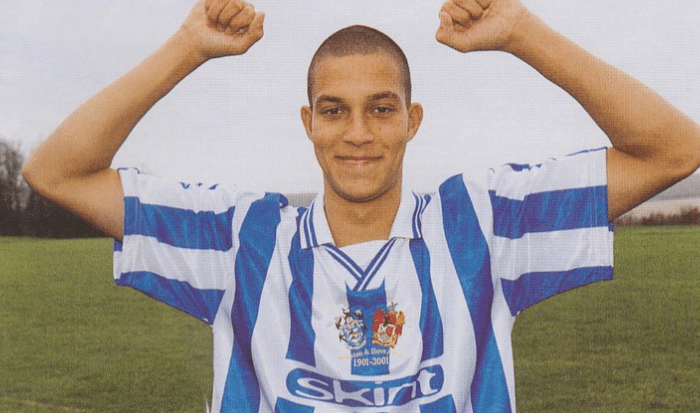
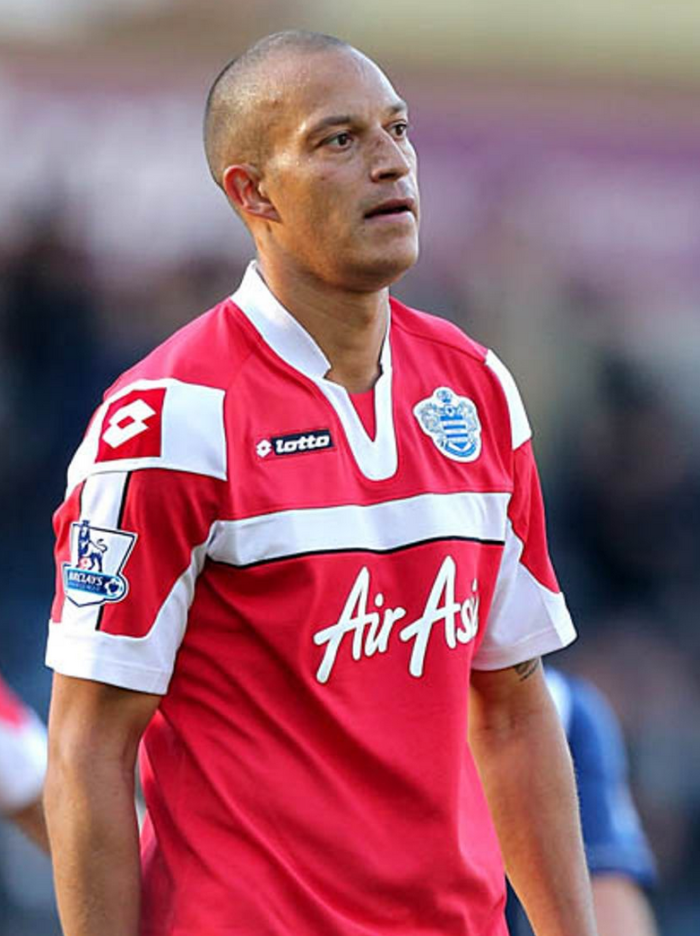
Albion favourite Bobby Zamora

BOBBY ZAMORA was arguably at the top of his game when he played for Fulham, even though some supporters begged to differ.

Although he had played Premier League football for Spurs and West Ham, the form he showed in Roy Hodgson’s side finally propelled him into the England reckoning.

And he might even have gone on to greater heights after the rich goalscoring vein he hit in the 2009-10 season: Hodgson wanted to sign him for Liverpool, but he preferred to stay in the south.

Zamora had been surprised to discover West Ham had sold him to Fulham without any consultation at the start of the 2008-09 season, but he knuckled down to play a supporting role as Fulham finished seventh in the Premier League.

Certain sections of the Fulham faithful were expecting more than the four goals he scored, even though the player was fulfilling the manager’s brief, and let their feelings be known.

The player eventually had enough of the barracking and, after he had scored the only goal of the game to beat Sunderland in December 2009, he confronted them and invited them to “shut your fucking mouths”.

Hodgson defended him saying: “He has been a key player for us. Just a very good player.”

Finding the net for Fulham

In no mood to apologise for his outburst, Zamora told Amy Lawrence of The Guardian he found some of the stick unacceptable.

“I just can’t get my head round some people,” he said. “If you are a supporter, support your team. You expect it at away grounds, fair enough, but from your own supporters it is a bit strange.

“It wouldn’t make me want to leave but it’s not nice. I wish at times football could be a happier environment.

Young Zamora scored goals for fun at Brighton

While Brighton fans had witnessed Zamora leading from the front and scoring goals for fun, at Fulham he was asked to play a different role, and it disappointed him that people were only judging him on goals alone.

“If you ask Joe Bloggs down the street how many assists I have had this season they wouldn’t be able to tell you. Or how many team-mates I have set up for a shot at goal. Or pass completion. They just know goals, full stop,” he said.

“I was asked to play more as a defensive centre forward,” he said in an interview with the Fulham website. “It’s a job I did and I enjoyed putting AJ (Andrew Johnson) through.

“The team appreciated it; the fans possibly not. We didn’t finish seventh because I didn’t do a job. Ultimately it helped the team. Roy had faith in me and I’d like to think I repaid him.”

Zamora added: “The gaffer has been behind me from day one. There was a lot of pressure on me to score goals. Because I wasn’t, the press and the fans didn’t think I should be playing. But the gaffer and the players appreciated what I was doing for the team. That’s all that matters.”

‘Gentleman Jim’ on friendsoffulham.com recalled: “He had it in for some fans who kept booing him or saying he was not the best player and not supporting him.

“He was quite harshly criticised at the time by the fan base because he wasn’t scoring, but his general play and hold up play was very good for most of his time here.

“Whilst he could’ve managed the situation differently to endear himself more to the fans, he was combative and ended up doing very well for us.”

On the same forum, Graham Leggat said: “His best was as good as Mitro (Aleksandar Mitrovic) at his best for us and Saha (before we sold him to Man Utd). I would say even higher. He was absolutely unplayable, even if he didn’t bang in as many as the other two. A true Fulham great.”

Zamora might have escaped the Fulham boo boys if he’d accepted an approach from Hull City but he chose to stay, much to Hodgson’s delight, and went on to produce his best form.

He scored 19 goals in the season when Fulham finished 12th in the Premier League and made it through to the final of the Europa League (the first season of the revamped competition previously known as the UEFA Cup).

Zamora had been a fitness doubt before the game against Athletico Madrid in the People’s Park Stadium in Hamburg and he had to give way to Clint Dempsey 10 minutes into the second half.

The game went into extra time with the score 1-1 after 90 minutes and agonisingly Fulham succumbed to an extra time winner scored by ex-Man Utd striker Diego Forlan. Sergio Aguero, later of Man City fame, beat defender Aaron Hughes and crossed for Forlan to flick the ball home four minutes from the end.

The achilles injury Zamora had picked up prevented him from joining Fabio Capello’s England squad for the 2010 World Cup and he underwent surgery instead of heading out to South Africa.

As described in a previous blog post, Capello nevertheless kept Zamora in mind and the striker did eventually get his chance with the national side.

It was that same summer that Hodgson left Fulham to take over at Anfield and as the August transfer deadline loomed the manager hoped to persuade Zamora to join him at Liverpool.

But the player’s wife had just had twin daughters and he didn’t want to uproot the family. He was also getting on well with Hodgson’s successor Mark Hughes.

“I enjoyed my time with Mark, he came at the start of the season, I had a good pre-season with him,” he told the Say It and Spray It podcast. “Roy came in for me at Liverpool and Harry Redknapp came in for me at Spurs, but Mark said he wanted me to stay, and I’d just had my twins in August.

In the event, Zamora signed a new four-year contract – and the very next day suffered a broken leg in a tackle by Wolves’ Karl Henry.

He was sidelined for five months but managed to return before the end of the season, scored seven goals in 16 appearances and finally got to play for England that summer.

When Hughes decided to leave Fulham after just one season in charge, Zamora expressed his shock in newspaper interviews. “There was no hint of it,” he told the Mirror. “It was going well. Everyone had bought into his ideas and were just starting to play the way he wanted.

“He has decided not to stay and we go on and try and find another manager and hope we do well.

“But Mark has got his reasons. I don’t blame him at all. It’s one of those things. Managers and players come and go.”

Seven months later, Zamora left Fulham himself to rejoin Hughes, who had taken over at QPR.

Zamora didn’t see eye to eye with Hughes’ successor at Craven Cottage, Martin Jol, who he said had not got the best out of him, although he had scored seven goals in 29 appearances at the time of his departure.

Jol tried to deny there had been a rift with the player saying any talk of a disagreement between them had been inflated by the press.

“If you look at the media, they started this Bobby thing in August,” said Jol. “They said we had a bust up at the start of the season, but you always have a little bit of a disagreement.

“I don’t think there is any problem,” said Jol. “I said to him a few weeks ago ‘Do you love this club?’ and he said ‘Yes, I love this club, I love this team’.”

Nevertheless, Zamora joined QPR on deadline day in January 2012 for £4.5m and was given a two-and-a-half-year contract.

“We needed a player of his ilk at the football club and I couldn’t be more delighted, he’s a great foil for any team,” said Hughes, who’d only replaced Neil Warnock a few weeks earlier. “Bobby is a guy that makes things happen on the pitch, be it scoring goals or creating chances for others.

“He’s got great power and pace and his technical ability is top class. He’s got an excellent left foot.”

For his part, Zamora, by then 31, said: “I got on really well with the manager at Fulham. We all grew to like Mark. I think that will be the case here. He’s looking to take the club forward.

“This was the right time for me to have a fresh challenge. I had some great experiences at Fulham. Going to a European final is special. But this is a new challenge and I’m thoroughly looking forward to it.”

If Zamora hadn’t always seen eye to eye with Fulham’s followers, it didn’t get much better at Loftus Road – although he ended up the hero when he once again scored the winner in a Championship Play-Off Final.

A Wembley winner with QPR

Replicating the feat he achieved at West Ham, in May 2014 he went on as a substitute in the Championship play-off showdown at Wembley and his 91st-minute goal was enough to beat Derby County (who’d beaten Oscar Garcia’s Brighton in the semi-finals) to restore the Rs to the Premiership.

They’d only narrowly avoided relegation, by a point, at the end of the 2011-12 season and after Hughes had been sacked in November 2012, new boss Harry Redknapp couldn’t save them from the drop in 2013. Rangers went down in last place and Zamora made only 17 starts plus seven off the bench, scoring five goals.

Nevertheless, he was hailed as an example to others for putting himself through the pain barrier for the Hoops’ cause.

A troublesome hip injury hindered his involvement and some questioned why the former manager had paid big money for ‘veterans and cast-offs’. Paul Doyle in The Guardian reported that fans didn’t like an interview Zamora gave in which he said that he did not regularly watch football on television, which some took to mean he did not care about sport and was only interested in the money.

“Fans wondered aloud whether he was even bothered about getting fit enough to play again,” wrote Doyle. But he went on: “All that has changed. Now he is considered the embodiment of the warrior spirit that QPR need if they are to pull off the great escape from relegation. Zamora did not score against Sunderland but he led the line strongly, combined well with his new strike partner Loïc Rémy and, most of all, lifted his team-mates by battling manfully through pain.”

Redknapp reckoned that Zamora was only 60 per cent fit, and the persistent hip trouble was further aggravated by ankle ligament damage.

“That’s the sort of character we need,” said Redknapp. “He’s waiting for a hip operation and he has torn ankle ligaments but he’s played through that.

“At half-time we have to keep him on the move because if he sits down he’ll seize up. So, he puts a water bottle on his hip and stands at the wall doing stretches. He can’t get in his car after the game. But he’s a proper bloke. He’s not an idiot, he’s a sensible guy. He’s good for the team. He talks to people and is a big influence in the dressing room.”

QPR chairman, Tony Fernandes, also chipped in to acclaim Zamora, tweeting: “There are many young professionals who could learn a thing from Bobby Zamora. He’s an ultimate club man.”

Sadly, Rangers couldn’t avoid the drop but they bounced straight back via the aforementioned play-offs after finishing fourth in the Championship, 13 points behind second-placed Burnley, and 17 points adrift of champions Leicester City.

QPR had five fewer points than third-placed Derby and in the final at Wembley Redknapp admitted they were hanging on for their lives against the Rams having had Gary O’Neil sent off on the hour mark.

The lottery of extra time and penalties was looming when substitute Zamora struck in the dying embers of the match. “It was a fantastic goal to win the game and I couldn’t be more pleased,” Redknapp told The Standard.

“I would be a liar if I said I thought I would see us scoring. They had 11 men, were probing us and we were hanging on.

“That was a one off where you stand on the touchline, hanging on for grim death and get a goal like that.”

Once again Rangers found the Premier League too hot to handle and Zamora’s ongoing hip problem limited his involvement to 19 starts and 14 appearances off the bench. He scored just three goals as QPR went down in last place.

Redknapp, who was replaced by former Albion full-back Chris Ramsey in February 2015, described how managing Zamora’s game time had been similar to the way he had to manage Ledley King at Tottenham.

“Ledley didn’t train at all to be fair,” said Redknapp. “To think he didn’t train one day and then play 90 minutes was unbelievable.

“It does take Bobby a few days to recover after a game, so it’s always on how he feels. He’s as good as anybody at doing what he does, holding the ball up and bringing people into play.”

Redknapp continued: “Bobby has been very important for us. After about 60 to 65 minutes he has to come off, but when he’s on the pitch he has been outstanding.

“We were bringing him off the bench to start with, but we’ve reversed it and started him recently. He’s been captain and great in the dressing room, I couldn’t be more pleased with Bobby.

“He’s got his hip but he manages it and when he plays he’s been great and his attitude has been first class.”

The return of Zamora to the Seagulls

Released in the summer of 2015, Zamora’s long-held desire to end his career back at Brighton was fulfilled when Chris Hughton invited him to join the bid for promotion from the Championship.

Back amongst the goals

Hughton had previously worked with Zamora at Spurs and said: “He is a great professional. I know he will bring plenty of experience to the team, having played Premier League, European and international football.

“He will also bring a lot in terms of character to the club and to the dressing room – but most importantly, having played more than 30 times for QPR last season, he brings top quality to our offensive options.”

There was frustration all round that in spite of a handful of vital goals he registered in that 2015-16 season, the injury issues prevented him from being able to help the Albion to promotion from the Championship.

In retirement, Zamora has tried his hand at various ventures and indulges one of his great loves away from football, carp fishing, in the Grand Fishing Adventure series with Ali Hamidi on ITV 4.

Catching carp with Ali Hamidi

Unsurprisingly, he’s also often seen as a pundit commenting on televised games involving his former clubs and is a popular guest on all sorts of podcasts, looking back at his playing days.

For example, he told the Albion podcast in November 2023: “When I came to retirement it was painful, I couldn’t carry on playing with the aches and the pains day-to-day. It was a nice relief, not having to take painkillers, anti-inflammatories that aren’t good for your stomach and liver.

“Christmas and New Year, being able to go skiing for the first time, it’s really nice. I am seven years into retirement now, but after three or four years you start to miss it; the boys and the banter in the dressing room.”

Zamora has also been involved in property development and is one of a multitude of top former players who are ambassadors with Football Escapes, football-based holiday experiences at exclusive hotels and resorts around the world.

Zamora also works in an ambassadorial role for the Albion, such as being an interviewee at the 2023 event when the club showcased the value its success has brought to the city of Brighton and Hove.

Wilf’s son Paul helped develop a string of top players

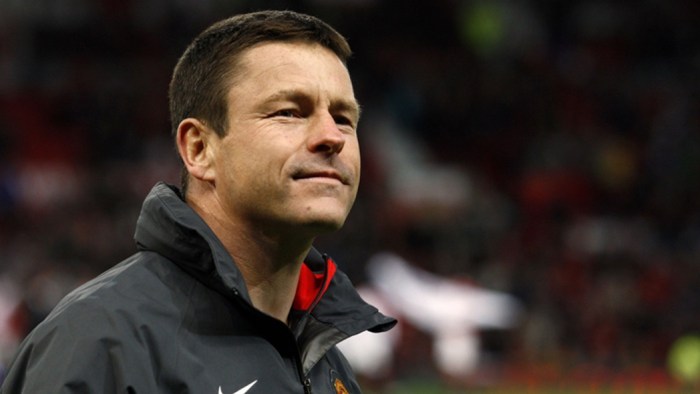
A HIGHLY RESPECTED coach who guided a succession of young hopefuls from Manchester United’s youth ranks through to their first team once aimed to re-ignite his playing career at Brighton.

Paul McGuinness, son of former United player and manager Wilf, was in charge of the United side (that included Paul Pogba, Jesse Lingard and Michael Keane) who won the FA Youth Cup in 2011, and Danny Welbeck and Tom Cleverley also emerged under his guidance.

Wind the clock back to the autumn of 1990, though, and McGuinness, the 24-year-old captain of United’s reserve side in 1989-90, arrived on loan on the south coast.

Albion boss Barry Lloyd would go on to take Albion to Wembley for a play-off final against Neil Warnock’s Notts County the following May.

But in October and November Lloyd was still casting around to see who might supplement Albion’s efforts to get among the division’s pacesetters, and McGuinness had lost his starting berth in United’s Central League side.

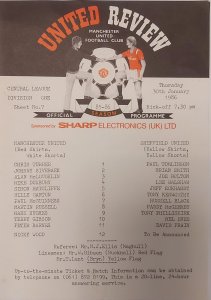
McGuinness made his debut for the reserves in a 3-0 defeat away to Crystal Palace. He also played right-back in a 2-1 defeat against QPR Reserves at the Goldstone, in a side in which Soviet international Igor Gurinovich (playing up front with new arrival Bryan Wade) scored Albion’s goal.

In those days of two subs, McGuinness was selected on the bench for five first team games in succession. But he was never put on and, after a 2-1 defeat away to West Ham, he went back to United.

Born in Manchester on 2 March 1966, McGuinness aspired to follow in his dad’s footsteps, but he found him a hard taskmaster and an ultimate competitor, something he reckoned dated back to an upbringing by Sir Matt Busby’s right-hand man Jimmy Murphy.

“The standards were relentless,” McGuinness told manutd.com. “In a primary school match, I scored 10 goals and my main memory of the day is getting an absolute b******ing for leaving mud in the bath afterwards and not sticking to the right standards. To this day, I rinse the bath and shower down afterwards, every single time!

He continued: “I scored a hat-trick in a cup final and when I came off, he told me off for remonstrating with the referee during the game.”

McGuinness declared: “I didn’t want to be a manager because, over time, dad’s experiences really put me off it, but every school holidays I’d be with him at whatever club he was with at the time.

“At York, Hull and Bury, I’d go and join in with the apprentices while he worked. I’d be 12 playing with 16-year-olds, 14 playing with the reserves, 16 training with the first team.

“Just having him as my dad gave me a massive head start when it came to coaching. He’d take me to games and tell me to pick out the best players and explain why, and he’d always study what was happening in the game, and tell me what was going to happen next, and he was always right.

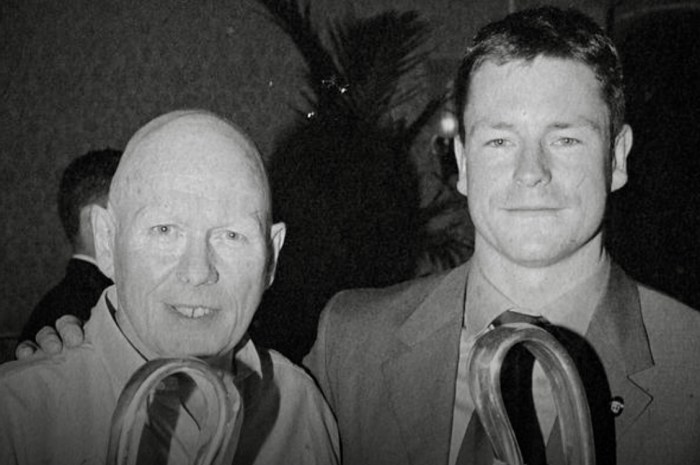
Wilf McGuinness and son Paul

“He’d tell me who was going to get booked, or if a team was over-committing and leaving themselves prone to conceding, and he was always right. That really helped me learn the game at a young age.”

Not to mention the unbelievable experience of getting to play alongside some of United’s biggest household names from their golden era.

“When I was a teenager, there used to be charity games with United, City, Piccadilly Radio and all sorts,” McGuinness recalled. “The ex-players were all in their 40s, and dad would tell me to come along and bring my boots.

“I’d almost always get some playing time, and I ended up playing with Bobby Charlton, George Best, Nobby Stiles, Paddy Crerand, David Sadler, Alex Stepney, but also the City legends too, like Colin Bell, Mike Summerbee, Franny Lee, Tony Book, Glyn Pardoe. It was just incredible.

“This was sometimes just on school fields or non-league grounds, and Bobby was just awesome in every single game. He scored three or four every time.”

Eventually the young McGuinness got the chance to fulfil his dream when he got taken on by United. He was a youth team player between 1982 and 1984 and then spent two years as a professional at Old Trafford, playing alongside Paul McGrath, Kevin Moran, Mark Hughes, Clayton Blackmore, Frank Stapleton and Alan Brazil.

On the teamsheet with some big names

He recounted the circumstances when paying tribute to Eric Harrison, the acclaimed founder of United’s ‘Class of ‘92’, who died in February 2019. “Eric was fundamental in my career as both a player and then for many years as a coach,” McGuinness told traininggroundguru. “I can still vividly remember the moment I convinced him I should get a first pro contract with Manchester United.

“We were playing 6 v 6 on a full-length pitch at The Cliff with no goalkeepers. You could only score if you were inside the six-yard box, which made it a real test of character.

“A player on the opposition team broke free from deep and I chased him all the way back and slide tackled him before he was about to shoot.

“Eric stopped the game. ‘Now that is what we want.’ That got me a two-year contract at the age of 17.”

Perhaps somewhat unusually at that time, McGuinness was also determined to get an education as well as pursue his professional football dream, and he took a degree in PE and Sports Science at Loughborough University.

Having studied under the tutelage of Mike ‘Doc’ Holliday, McGuinness showed his gratitude in subsequent years by taking United academy teams to play matches against the university’s football side.

When that first United contract came to an end in 1986, McGuinness tried his luck with Crewe Alexandra and he played in 13 matches for Dario Gradi’s side in the 1986-87 season.

His studies completed, McGuinness admitted his return to United happened almost by chance.

“This was the time of the ‘Fergie Fledglings’ and I popped into the training ground one day to say hello,” he told traininggroundguru. “ ‘You could have played for the reserves last night,’ Eric said, and I ended up playing the next few games for them. It went from there and Sir Alex Ferguson gave me another contract for a couple of years.”

It was during the second year of that deal that he joined the Albion on loan and the following year he switched to Bury, although he didn’t play any league games for them. Eventually he moved on to Chester City and played in seven matches for Harry McNally’s side.

“Eric got me back in at United after that, first as the club’s welfare officer and then as Centre of Excellence Director,” McGuiness recounted. “He was a constant mentor and you couldn’t help but learn from him.”

He also worked with Nobby Stiles and took over as head of the centre of excellence from the World Cup winner in 1994.

McGuinness has clearly spent a long time absorbing advice and in that manutd.com interview recounted another anecdote about his father.

“When I was a kid, dad would have me shoot from the halfway line, time after time. Eventually, in a university game, I scored from the kick-off with one of those shots and he was there. I was so made up with that.

“He was forever trying to get you to try something different and that stuck with me in my coaching. I had Ollie Norwood trying that from the kick-off, or I’d tell Fraizer Campbell or Marcus Rashford to dribble towards goal straight from the kick-off. Just try something different.

“For me, it was about the spirit of football, something which I talk about a lot to this day, and that’s something that my dad has always embodied.”
It was obviously quite an emotional moment when United finally parted company with McGuinness in February 2016. He told the Manchester Evening News: “It has been an honour and a privilege to follow in my father Wilf’s footsteps and to serve Manchester United in a variety of roles for a total of 28 years.

“To have seen 86 Academy players develop to make their debut for the first team and 23 to become full internationals has been thoroughly rewarding.

“I have especially enjoyed working behind the scenes with devoted colleagues, nurturing and coaching young players to reach their potential.

“I will be forever grateful to Sir Alex Ferguson for making my dreams come true and inviting me to represent Manchester United as a player and for the last 23 years as a proud member of staff.”

McGuinness has frequently shared his knowledge and coaching experience at seminars and online in interviews and podcasts. For example, he told fourfourtwo.com: “One of the first things we look at in young players is how they move with and without the ball.

“You can never be certain, but it gives us a good idea whether they will go on to become athletic. I have seen many talented youngsters who are technically very good but are finished by 12 or 13 because athletically they are not quite good enough.”

Not the case with Rashford, though. “Marcus was a great mover, he was very quick and had a great flow about him,” said the coach.

United built several cage pitches to recreate school playground learning, where older and younger players would compete in small spaces. “They would play 8v8 or 7v7 to increase their speed of thought and improve their skills,” said McGuinness. “At 12, Rashford was playing cage football with Paul Pogba, Jesse Lingard and Ravel Morrison, who were 16.

“He learned from them, but he could also express himself more. With his own age group he might only play a single one one-two, but with Pogba, he could play two or three.”

Scott McTominay is among the current crop of United players to have acknowledged McGuinness’ influence on his career. “We were always brought up to have an elite mentality,” he told manutd.com. “That’s one of the most important things for Paul McGuinness and Warren Joyce – how strong you are in games when it might not be going so well. You have to keep all the right habits off the pitch as well, which I’ve completely bought into from Paul and Warren.

“That was probably one of the best things I’ve done: listening and learning from everything they’ve said and trying to put it into the first team.”

In October 2017, McGuinness was appointed national coach developer by the FA and in December 2021 he became head of academy player development at Leicester City.

He had overall responsibility for players from the under nines through to the under 18s, with a brief to ensure players were ready for the transition to the under 23s and the first-team squad. But in September 2022, it was reported he had stepped down from the role to help care for his father who, like several players of that generation, had dementia.

More than 19,000 followers on Twitter can see on McGuinness’ timeline an appreciation of the finer arts of football and memories of his dad Wilf’s playing and coaching career.

Isaac’s long, long wait for an Albion win

IT seems extraordinary to think Robert Isaac had to wait FOURTEEN MONTHS to experience a win as a Brighton player after joining the club from Chelsea.

The young defender who had realised every schoolboy’s dream by playing for the team he’d always supported left a disgruntled dressing room at Stamford Bridge only to join a side sliding inexorably toward the relegation trapdoor of what is now the Championship.

“I must admit it was a bit depressing at first because we just couldn’t do anything right,” Isaac told Dave Beckett in an Albion matchday programme article. “We just had no luck at all; if we had I think we might well have survived in Division Two.”

Isaac also appears to have gone out of the frying pan into the fire. Telling thegoldstonewrap.com how he’d left Chelsea because the management was losing support of the players and he wanted regular first team football, he added: “When I joined Brighton in February 1987 they were in freefall. The dressing room was even more at odds with the manager than at Chelsea.

Barry Lloyd dropped Dean Saunders, our only hope of surviving the drop. I found Barry rather rude. He’d blank me in the corridor and make me train on my own.”

The young defender made his Seagulls debut on 21 February 1987 in a 2-1 defeat at home to Oldham Athletic and featured in four draws and five defeats by the season’s dismal end.

Back at what was for so long Albion’s normal level of third tier football, Lloyd’s side did begin to pick up points – but Isaac wasn’t involved because of a groin strain and a troublesome hernia injury that sidelined him for months.

“I had stomach trouble quite a lot but no-one could put their finger on the problem until I saw a specialist in Harley Street,” he explained.

“After the operation, I was out of action for the best part of six months and at times I didn’t think I would get back to full fitness. I had around 40 internal stitches and even when I began playing again they would stretch and pull and I felt sick after games.”

It wasn’t until March 1988, with Albion in sixth spot, that Lloyd shook things up, initially drafting Isaac in at right-back in place of Kevan Brown, and then selecting him to replace suspended captain – and Isaac’s former Chelsea teammate – Doug Rougvie at centre back alongside Steve Gatting.

Isaac also stepped in when Rougvie missed a couple of games with a ‘flu virus and, although a win in Seagulls’ colours continued to elude him in his first three games back in the side (a defeat and two draws), he kept the no.5 shirt ahead of the rugged Scot. That elusive win finally came in a 2-1 away win at Notts County on 4 April.

Five wins and a draw followed and the successful run-in saw promotion gained as divisional runners-up behind Sunderland. Isaac was one of three former Chelsea players in that back four, with Gary Chivers (who’d arrived from Watford) at right-back and Keith Dublin at left-back.

Dublin had played for England under 19s with Isaac three years earlier. They both played four games in Dave Sexton’s side at the Toulon Tournament in the south of France in 1985 (England beat Cameroon 1-0 and Mexico 2-0, lost 2-0 to the USSR and succumbed 3-1 to France in the final at the Stade Mayol in Toulon).

Sadly, the subsequent fortunes of the two players went in opposite directions: Dublin went on to become such a success with the Seagulls that he was the 1989-90 Player of the Year and was sold to Watford for £275,000; the injury-beset Isaac had to quit the game after only 33 matches in a Brighton shirt.

After Albion bounced back to the second tier, the defender played in the first 11 matches of the 1988-89 season – eight of which were defeats – but his appearance in a 1-0 defeat away to Leicester turned out to be his last as an Albion player.

“I got injured at Leicester,” he recalled. “I didn’t feel it until the next day and then it really hit me. My knee just blew up. Come Monday morning I couldn’t even walk.”

He required an operation to repair the patella tendon in his left knee and, as he sought to regain fitness, spent a fortnight at the National Rehabilitation Centre at Lilleshall.

Meanwhile, Lloyd signed experienced central defender Larry May (whose own playing career would be ended by injury later that season) and, subsequently, Nicky Bissett.

A programme item in the 1989-90 season reminded supporters that Isaac was still around, although he hadn’t played at all throughout 1989.

Looking ahead to 1990, Isaac said: “I just hope I have a better year. I’d like to think that I deserve it after all the frustrations of the last few years with two major operations.”

Sadly, it didn’t happen and in August 1990, he was forced to quit football. After retiring, he worked as a chauffeur for the Maktoums, the ruling family in Dubai, before running his own vehicle business.

Born in Hackney on 30 November 1965, Isaac was Chelsea through and through from an early age.

“We lived in Chelsea and my great grandfather went to the first ever match at Stamford Bridge,” he told thegoldstonewrap.com. “My family have been going to matches home and away since. I went to see Chelsea play Stoke in the (1972) League Cup Final aged six.”

Isaac went on to join the club as a junior, made his reserve team debut at the tender age of 15 and was named Chelsea’s young player of the year in 1984.

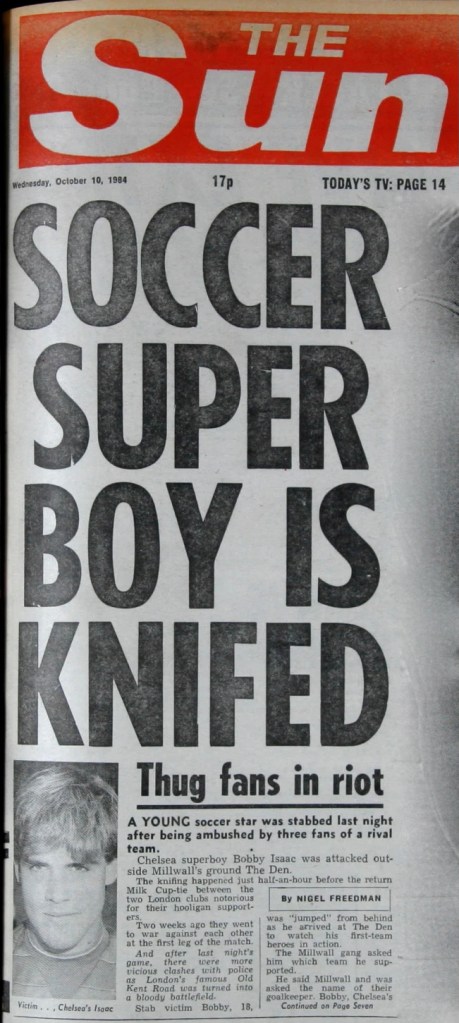
It was on 9 October 1984 that his promising career could have been snuffed out before it had even begun: it’s a horrifying tale, told the following day on the front page of The Sun, and covered in detail by that1980sportsblog.

Three knife-wielding Millwall thugs slashed his back from his shoulder to the base of his spine in a dark alley near the south London club’s notorious old stadium, The Den.

Isaac needed 55 stitches to repair the damage and only the thickness of a leather coat he was wearing prevented the wound being potentially life-threatening.

Remarkably, later the same season, in March, he had recovered well enough to make his Chelsea first team debut in a 3-1 win at Watford, although Eddie Niedzwiecki, a Chelsea coach who later worked with Mark Hughes for Wales and at several clubs, told Kelvin Barker’s Celery! Representing Chelsea in the 1980s: “He was a young, up-and-coming apprentice at the time and luckily he managed to pull through, although he never really recovered from it.”

In the 1985-86 season, Isaac played two league cup games for Chelsea and three times in the league. The following season saw him get a mini-run in the side, playing four consecutive league games in November, but his fifth match – a 4-0 home defeat by Wimbledon in which Rougvie was sent off in the first 10 minutes for headbutting John Fashanu – proved to be his last.

The website sporting-heroes.net said of him: “A steady, reliable centre-half and occasional full-back, Robert did little wrong during his time in the Chelsea first-team, but was unfortunate to play for the club at a time when Colin Pates, Joe McLaughlin and, a little later, Steve Wicks, were all demonstrating their considerable talents at the heart of the defence.”

Isaac asked for a transfer after a disagreement with manager John Hollins and his assistant Ernie Walley, and that led to his transfer to Brighton for a £50,000 fee.

Albion rookie Richard Martin became Sven goalie at City

RICHARD MARTIN could justifiably be dubbed ‘The Nearly Man’ of goalkeeping.

Once thought to have the potential to play 200 games for the Albion, he left the Seagulls having only ever warmed the first team bench.

In an unlikely turn of events, he went from back-up League One Seagulls ‘keeper to no.3 behind Kasper Schmeichel and Joe Hart at Premier League Manchester City, thanks to former England boss Sven-Goran Eriksson.

After two years at City, he went on loan to Burton Albion, then worked under Ben Roberts and Nathan Jones as back-up ‘keeper at Yeovil Town before enjoying fleeting fame on the Caribbean island of Puerto Rico.

Doubtless it wasn’t the career he expected when his teenage promise between the sticks led to him earning trials with Liverpool and Everton.

Born in Chelmsford on 1 September 1987, Martin spent part of his childhood in Liverpool but the family were living in Burgess Hill when the young goalkeeper was picked up by the Albion.

Martin was only 16 when Liverpool took him on a week-long trial and Albion manager Mark McGhee went public in the Argus on 4 February 2004, explaining why he thought the youngster should stick with the Seagulls.

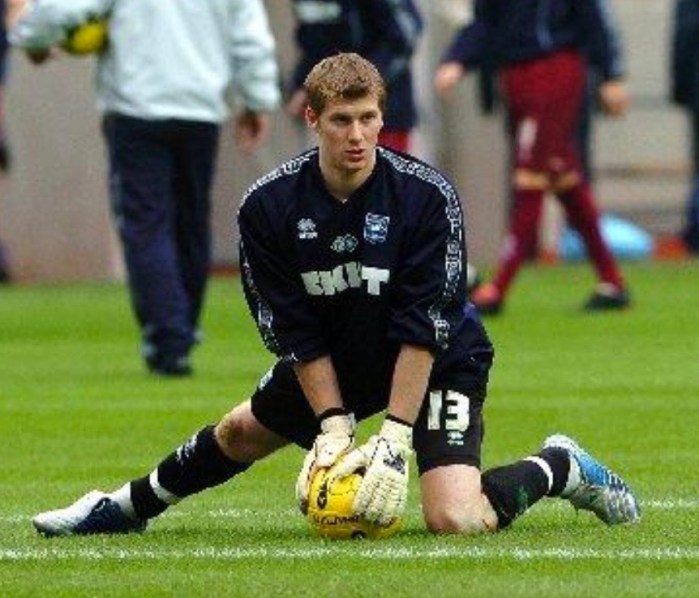
Warming up for the Albion (pictured by the Argus)

“We have put forward a reasonable argument to the boy and to his parents as to why we think he should stay here,” said McGhee. “The thing we can promise him at a club like ours, like any other young player in any other position, is that if he is good enough he will be fast-tracked into the first team or certainly onto the bench.

“If he goes to Liverpool there is no chance of that happening. At the very best he is going to spend two or three years at youth level, then at reserve level and in five years’ time he might start to make an impression in the first team squad.

“By that time, he would have played 200 games for us and be worth a lot of money and move to Liverpool under different circumstances.”

The Argus reckoned Albion could have got compensation of at least £200,000 if Martin, a Liverpool supporter, had ended up at Anfield. But Liverpool didn’t take him on, he remained an Albion scholar, progressed through the youth ranks and was awarded a two-year professional contract in the summer of 2005, before his scholarship was due to expire.

With Michel Kuipers sidelined by injury, Martin and fellow young ‘keeper John Sullivan shared opportunities to play for the first team in pre-season friendlies ahead of the 2005-06 season. Martin appeared against Le Havre, Oxford United and Bournemouth, as well as coming on as a sub in two other matches.

A sizeable Albion following went over to France to watch Albion’s 2-0 defeat to Le Havre when Martin began in goal in the absence of Michel Kuipers. The Argus reported: “Martin flew high to his right to brilliantly tip away a 12th-minute thunderbolt from Jean-Michel Lesage which was dipping and swerving towards the top corner from 25 yards.”

Goalkeeping coach John Keeley went further and told the matchday programme: “That was an absolute world-class save. I’m sure if Michel had made it people would still have been talking about it – it was that good..

“He can take big positives out of that and the other bits he had to do in the first half.”

When the season proper got under way, Martin found himself on the bench for 14 matches as Irish international Wayne Henderson, on loan from Aston Villa, was the established first choice. But then Frenchman Florent Chaigneau arrived on a year-long loan from Rennes.

In December 2005, Everton took Martin on trial and for a while there was speculation that a nice fat transfer fee from selling the youngster could be reinvested in signing a much-needed striker for the first team. But the move didn’t materialise because Everton boss David Moyes didn’t think Martin was big enough.

The Argus reported: “Martin impressed during a recent trial with the Merseyside giants but Goodison boss Moyes has decided not to sign the slimly-built 18-year-old from Burgess Hill due to his size.”

Instead of heading to Goodison, Martin went on loan to non-league Kingstonian, competition for the no.1 spot at Albion having increased with the permanent signing of Henderson from Villa.

Martin was part of the successful Albion youth side of 2006 from which six players went on to play first team football. But even at youth level he was competing with Sullivan, who eventually edged ahead of him and did manage to break through into the first team.

Competitive football game-time was considered the best option for Martin and the following season he went on a season-long loan deal to Conference South Dorchester Town. But his stay was cut short by injury. Once recovered, in the second half of the season, he joined Folkestone Invicta where he played 12 matches.

However, on his return to the Albion his contract wasn’t renewed, and he was without a club until the surprise opportunity arose at Manchester City, where the goalkeeping coach at the time was ex-Albion No. 1 Eric Steele.

Martin told the Argus: “This is completely unexpected. I’d like to think Brighton were wrong to let me go but these things happen.

“I went up to City initially just for a week to do a bit of training, because my agent knows Eric.

“(First choice Andreas) Isaksson and Joe Hart picked up injuries, they had a reserve game which I played in and then I carried on training.

“I don’t think I am in contention for the first team, I will just be in the reserves and go from there. Hopefully the month will be extended if I can keep on doing well.”

Sure enough, it was and boss Eriksson was happy to give Martin a season-long contract.

His only first-team action came on 22 May 2008 when replacing Schmeichel for the second half in an end-of-season charity match in Hong Kong against a South China Invitational XI.

Even after Steele switched allegiance to Manchester United and Eriksson had moved on, Martin had done enough to establish himself as third in line behind Hart and Schmeichel.

Mark Hughes took over as manager and Martin remained at the club working with ex-Chelsea ‘keeper Kevin Hitchcock, who Hughes had taken with him from Blackburn.

Martin was given the no.13 squad number for the 2008-09 Premier League and UEFA Cup campaign and it was an irresistible opportunity for the Argus to catch up with him ahead of Brighton’s home Carling Cup tie against City at Withdean in September 2008 when Albion sprung a big shock by winning the penalty shoot-out.

Reporter Andy Naylor discovered Martin had been philosophical, rather than disappointed, about the way things turned out with Albion. “When I look back at the situation at that time it was all about getting results and Michel (Kuipers) and Wayne (Henderson) were the two generally ahead of me,” he said. “I got a lot of good experience at Brighton and that set me in good stead for coming up to Manchester.”

Unfortunately, a knee injury Martin sustained shortly after sidelined him until the following March. Then in April, City allowed him to move temporarily to Burton Albion as cover because their first choice ‘keeper Kevin Poole was injured.

When released by City in the summer of 2009, more Albion connections provided him with his next opportunity, and finally the opportunity to play league football, at Yeovil Town.

Martin at Yeovil (picture by YTFC Digital)

In the Seagulls’ 2004 play-off winning season, Martin was a youth-teamer when Glovers assistant boss Jones was Albion’s left-back and goalkeeping coach Roberts was between the sticks.

Ahead of Brighton’s 2-2 draw at Huish Park on 10 October 2009, Martin told Brian Owen of the Argus: “I was fortunate I got the call from Yeovil in the summer and went down there for a trial. They liked what they saw. Of course, I know Nathan and Ben well and the fact they knew about me must have helped them make a decision.”

Martin was on the bench for the Albion fixture but had made his league debut shortly before as a substitute when first-choice Alex McCarthy (at the time on loan from Reading) was sent-off 20 minutes into a 2-2 draw with Stockport County. With McCarthy banned, Martin got his first start in a defeat at Southampton.

However, in total he made just three league and two cup appearances in that first half of the season and in January 2010 was loaned to Conference National bottom-placed side Grays Athletic – and within the space of a fortnight had conceded 11 goals in three matches!

Although he returned to Yeovil after a month, McCarthy’s fine form denied him any further first team action at Huish Park and he was released in July 2010. After brief spells with Havant & Waterlooville and Crawley Town, Yeovil re-signed him on 31 December 2010.

Plenty to say in goal for Puerto Rico Islanders

However, in March 2011 he had the opportunity to head to the Caribbean and play for Puerto Rico Islanders, who at the time were in the second tier of the North American Soccer League. He made his debut in May 2011 having initially been back-up ‘keeper and then signed for a second season, during which he established himself as first choice and played a total of 33 matches.

Talking on camera after the NASL player of the month award

In August 2012 he was named NASL player of the month, and he was interviewed about the experience of playing for the Islanders. There is an excellent montage feature in which the commentator purrs in this YouTube footage: “Richard Martin has the reflexes of a jungle cat.”  

Back in the UK in 2013, Martin played briefly for Whitehawk and Burgess Hill before retiring.

Eagles’ Cup Final scorer Gary O’Reilly had two Seagulls spells

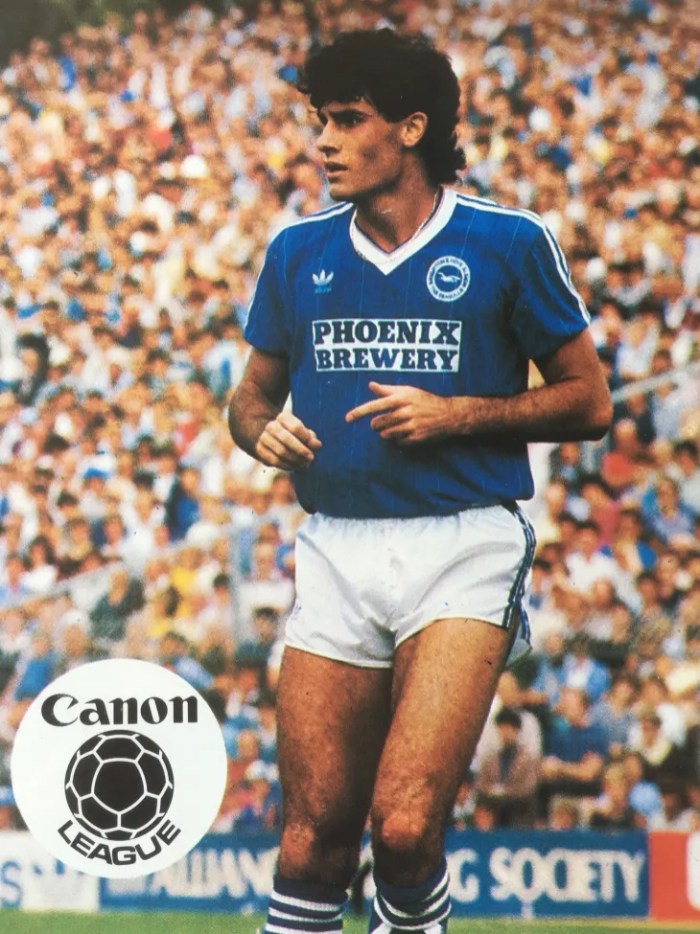
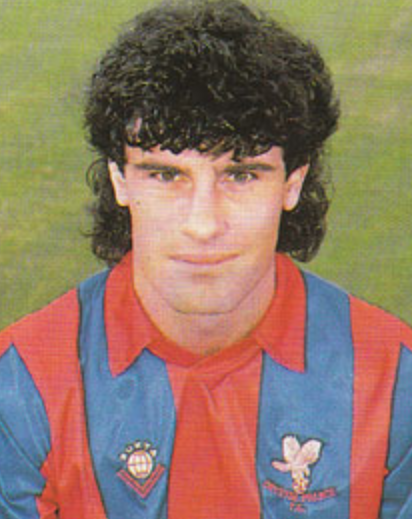
GARY O’REILLY was one of those rare players who had two different spells with Brighton – and played for rivals Crystal Palace in between.

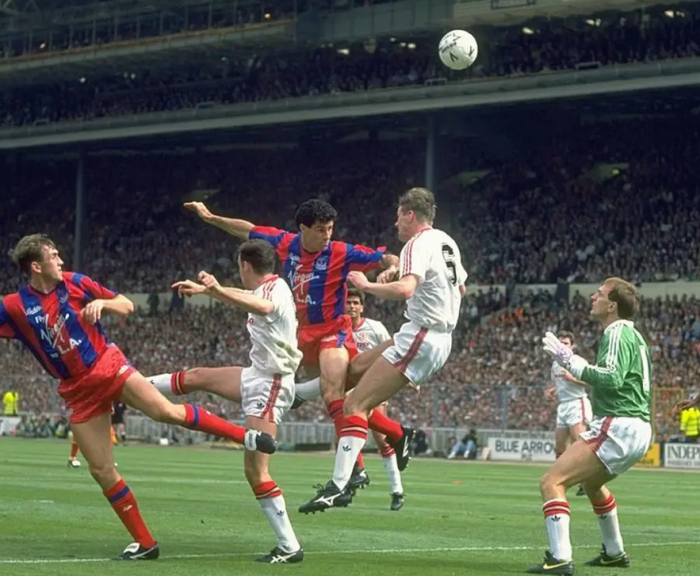
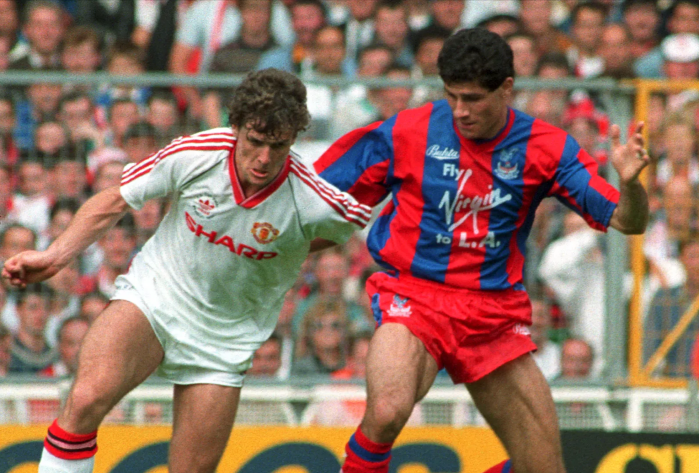
Indeed, his career highlight came when he played – and scored – in the 1990 FA Cup Final for Crystal Palace against Manchester United.

It was from Phil Barber’s free-kick on the right that O’Reilly put Palace ahead after 18 minutes, his header looping over goalkeeper Jim Leighton.

United recovered to lead 2-1 before Ian Wright, only six weeks after breaking his leg, came on to score twice, in the 72nd minute and again at the start of extra-time. But Mark Hughes got an equaliser for United seven minutes from the end of extra-time, and, just as they had against Brighton in 1983, United went on to win the replay.

Born in Isleworth on 21 March 1961, O’Reilly started to make a name for himself with the Essex Boys team and, as a schoolboy, played for both England and the Republic of Ireland because his father was from Dublin and his mother English.

Arsenal wanted him on associate schoolboy forms, but it was Spurs who snapped him up at the age of 13. His youth team-mates at White Hart Lane included Kerry Dixon and Mick Hazard.

O’Reilly also had the offer of a sports scholarship at Columbia University before signing for Spurs as a professional. Among a total of 45 first-team appearances in five seasons at Tottenham were games in the Charity Shield at Wembley against Liverpool and a quarter-final victory in the UEFA Cup over German giants Bayern Munich.

Ironically it was the arrival of Gary Stevens from Albion shortly after the 1983 FA Cup Final that began to signal the end of his time at White Hart Lane, together with the emergence of Danny Thomas.

Even though he still had two years of his contract remaining, O’Reilly requested a transfer and, in August 1984, he became part of Chris Cattlin’s Albion squad after signing for a fee of £45,000.

Cattlin recalled: “I watched him eight times before signing him, and six times with Tottenham Reserves he had stinkers. But I thought then he had great potential.”

O’Reilly made his debut at right-back in a notorious home game against Notts County which saw centre-backs Jeff Clarke and Eric Young both hospitalised after clashes with County’s Justin Fashanu, meaning the new arrival hastily shifting into his more familiar position in the centre.

In what was an eventful first few weeks, he also joined that illustrious list of players to score a winning goal AGAINST Palace. That came on 15 September 1984 when 15,044 at the Goldstone Ground saw O’Reilly score the only goal of the game.

His centre-back partner that day – and for most of his time at the Goldstone – was Young, who also later joined the Eagles, having left Brighton for Wimbledon.

O’Reilly made 79 appearances in three seasons with Albion, scoring three goals, and was virtually an ever-present for the first two seasons.

GO'R by the pierOff the field, he became a popular figure with a social conscience, leading a campaign to help youngsters fight drug addiction and becoming president of the Junior Seagulls.

Unfortunately, injuries, including a worrying hamstring condition, restricted him to just eight games in the ill-fated 1986-87 season.

Then, on 3 January 1987, manager Alan Mullery reluctantly sold him to Palace for £40,000. Mullery later recounted: “I remember Gary O”Reilly coming in the day before we were going up to Grimsby. I asked him: ‘Do you want your wages next month?’ He thought it was some kind of quiz question, but I said ‘If you do, you are going to have to leave the club’. That’s how bad it was. We couldn’t afford the wages.” Albion won 2-1 at Grimsby but two days later, Mullery was gone himself – his second spell as manager ending in a sacking.

O’Reilly played 70 times in his first four seasons at Selhurst Park but he did not figure in Steve Coppell’s plans in the 1990-91 season and had just one game on loan with Birmingham City.

At the age of 30, the versatile defender returned to the Seagulls and was given a two-year contract by Barry Lloyd.

“There’s no substitute for first-team football,” he said. “There is nothing like playing regularly to give a player the right degree of confidence.”

Although he made 31 appearances in the 1991-92 season, he was unable to prevent Albion’s relegation back to the third tier and, after a series of unsuccessful knee operations, he was forced to retire from the game in April 1993.

After hanging up his boots, he embarked on a successful broadcasting career for Sky Sports, BBC, ART Prime in Dubai and Trans World International’s Premier League international feed.

On Twitter, with the handle @mythreeleftfeet, he describes himself as “global TV presenter, co commentator, ex professional football player all round sports broadcaster, writer, amateur photographer & someone you might just like…”

worldsoccertalk.com caught up with him in May 2017 to discuss a new venture in which O’Reilly is joint host (alongside stand-up comedian Chuck Nice) of a weekly podcast in America Playing With Science, which explores fascinating topics linking sport and science.

Phoenix O'R w Pompey's Biley

Pictures mainly from the matchday programme.

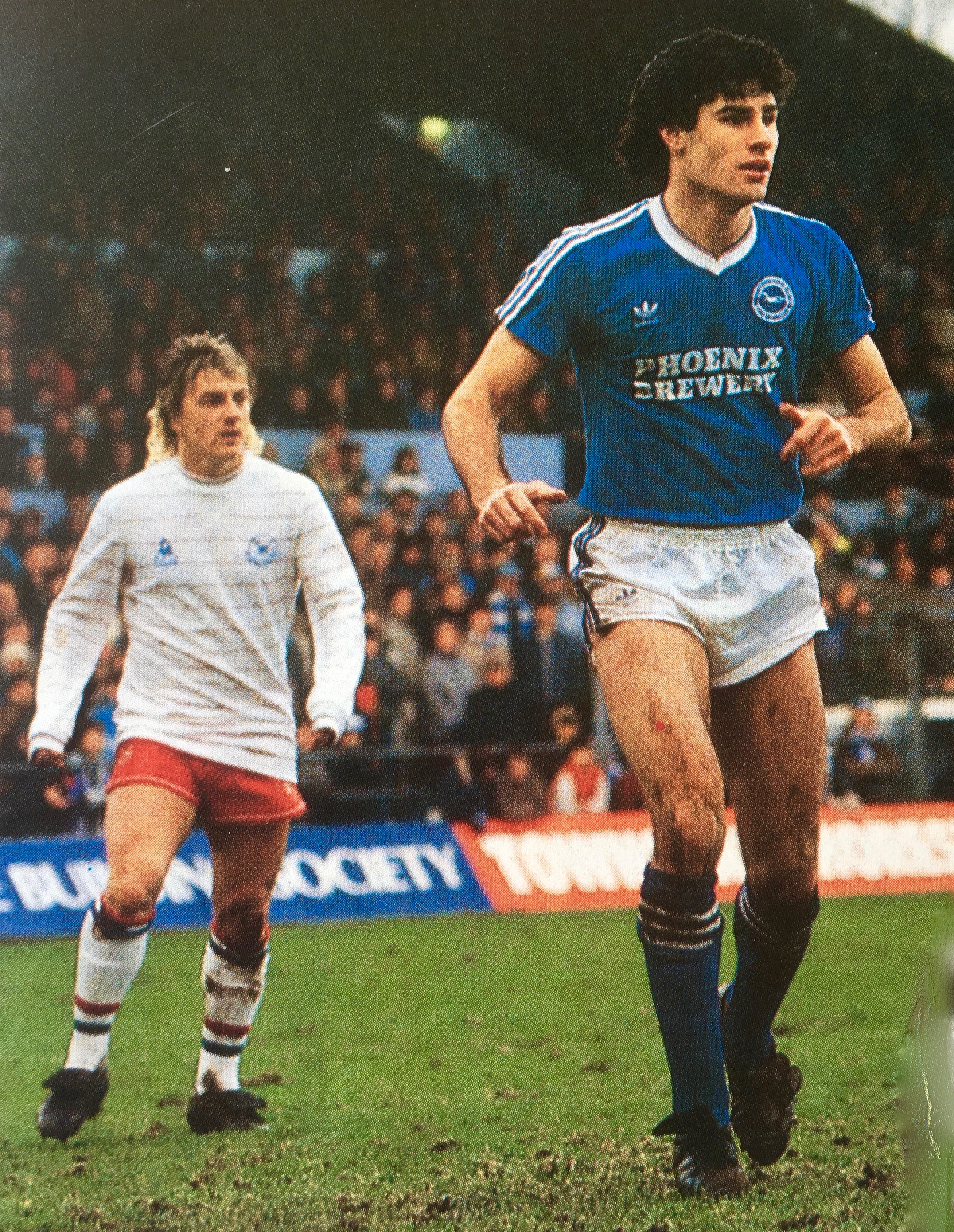
Above, defending against Portsmouth’s Alan Biley, who later played alongside him.

Goal machine Frank Stapleton ended his playing days in a Brighton shirt

stapleton stretch

FRANK STAPLETON hit the heights as a goalscorer for Arsenal and Manchester United but his prize-winning playing days came to an end in a Brighton & Hove Albion shirt.

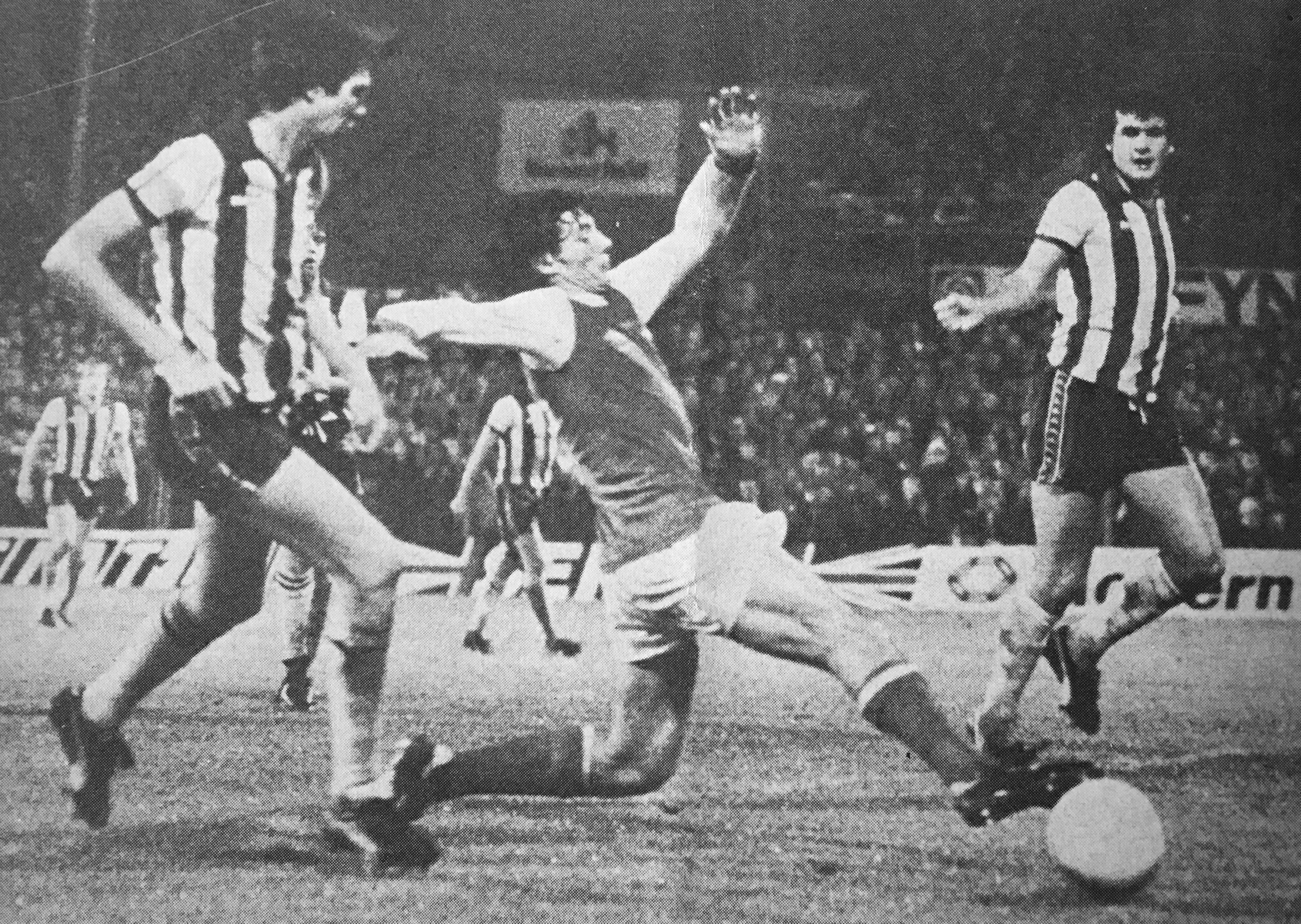
Stapleton was the scorer of the first top flight goal at the Goldstone Ground – unfortunately, it was the opener in Arsenal’s 4-0 win in 1979! He was also one of the Manchester United scorers in the 1983 FA Cup Final against Brighton, having moved to Old Trafford two years earlier (above, however, he just fails to connect for Arsenal against Brighton with Steve Foster and Gary Williams looking on).

His two appearances for Brighton came in 1995 when his old pal Liam Brady brought him in to try to improve the front line of an ailing side.

Born in Dublin on 10 July 1956, the promising young Stapleton was rejected by United as a teenager but the Gunners reaped the benefit of that decision by snapping him up at the tender age of 15 on chief scout Gordon Clark’s recommendation.

Arsenal’s confidence in the prospects for the promising young Irish duo were reflected in a Goal magazine article of 7 October 1972 in which boss Bertie Mee talked about them as future first team players. At the time, they were still part of the club’s junior ranks, aged just 15 and 16.

goal cutting

Mee said: “Brady is almost established as a regular in the reserve side. He needs building up but has the potential to become a first-team player. Stapleton has made quite an impact in his first season and, providing he maintains a steady improvement, he could also follow the path of Brady.”

It was only Brady’s second season and Clark, the Arsenal chief scout who unearthed him, said, at first, he thought he would be better suited to becoming a jockey because he was so small and frail!

He quickly changed his mind when he saw his ability with a football. “He was like a little midget but he had so much confidence. He’s really shot up now and although he’s still not very tall, he’s strong enough to hold his own,” said Clark.

Stapleton, at 15, joined Arsenal in the summer of 1972 and quickly developed a reputation as a goalscorer, netting 11 goals in seven games.

“Frank is tall and very good in the air,” said Clark. “He seems to get up and hang for the ball. He is also very good on the floor and reads the game intelligently for a youngster.”

As expected, Stapleton progressed to the first team and made his debut in 1975 against Stoke City. He initially formed an impressive partnership with England striker Malcolm Macdonald and in three successive seasons was Arsenal’s leading goalscorer.

Such prowess brought him to the attention of the Republic of Ireland international selectors and player-manager Johnny Giles gave him his full debut aged just 20 in 1976 against Turkey in Ankara.

It was the first of a total of 71 caps for his country, during which time he became their captain and scorer of 20 goals. He led Eire when they famously beat England 1-0 at the Euro 1988 finals in Germany. Although he was part of the 1990 World Cup squad – alongside former Albion boss, Chris Hughton –  he was by then behind Niall Quinn, John Aldridge and Tony Cascarino in the pecking order.

Stapleton was part of Arsenal’s three successive FA Cup final teams (1978, 1979, 1980), scoring against United in Arsenal’s 3-2 win in 1979.

When the Gunners sold Brady to Juventus in 1980, Stapleton started to question the club’s ambition and, the following year, on expiry of his contract, decided he would move on himself.

He had scored 108 goals in 300 appearances for Arsenal – some strike rate! – and it wasn’t a popular move to join a major rival in the same division, but he wasn’t the first or last player to have done so.

In the Sixties, United had taken David Herd from the marble halls of Highbury to lead their line and, of course, in more recent times, United signed Alexis Sanchez.

stapleton utd

When Robin van Persie made the same transfer switch from Arsenal to Manchester United in 2012, the Daily Mail took Stapleton back 30 years to talk about the circumstances of his own move.

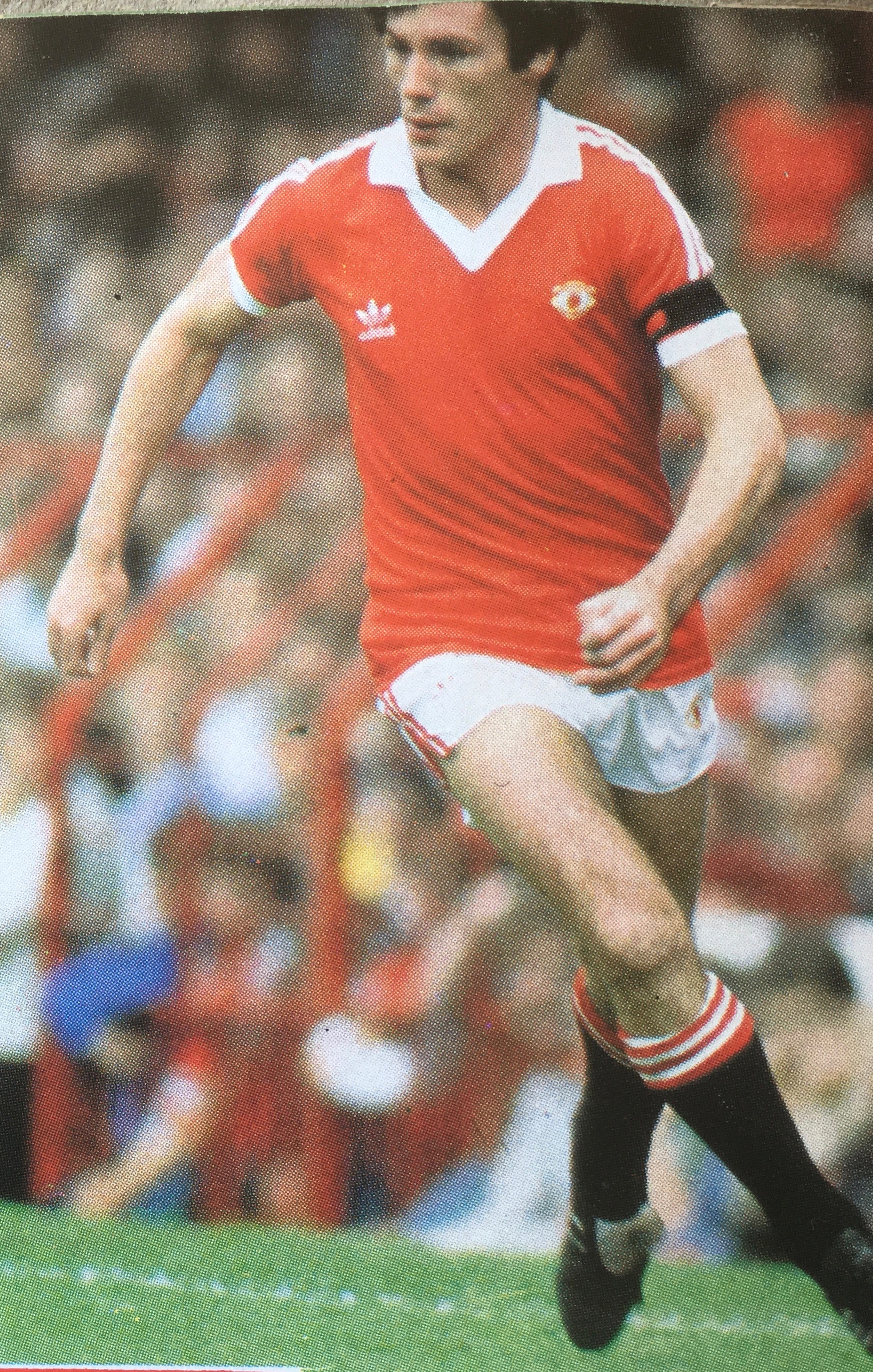
Stapleton was Ron Atkinson’s first major signing for United and in his first season was partnered up front with Garry Birtles. Stapleton was the leading scorer for United in that first season, with 13 goals in 41 league games.

Subsequently, his main strike partner was the Northern Ireland international, Norman Whiteside.

img_4637

Stapleton scored United’s first goal, a 55th minute equaliser, in the 2-2 Cup Final draw against Brighton: one of 19 he notched during the 1982-83 season in which he played in 59 of United’s 60 games.

By the end of the following season, Stapleton’s regular strike partner was Mark Hughes and he scored in the 1985 FA Cup semi-final against Liverpool to set up yet another Wembley appearance, this time collecting his third winners’ medal when Whiteside’s winner beat Everton.

Despite a good start to the following season, with Stapleton once again amongst the goals, poor league form eventually cost Atkinson his job and his successor, Alex Ferguson, began rebuilding the side.

After six years at United, Stapleton, by then 30, was amongst those to be let go, and he was sold to Ajax of Amsterdam, lured by the fact they were managed by Johan Cruyff. But the move failed to live up to expectations, as detailed by the42.ie, and he ended up having a spell on loan at Anderlecht.

It was the first of a series of moves which didn’t really work out for him, although in the 1988-89 season he found himself playing in France alongside fellow Irish international – and future Brighton striker – John Byrne for Le Havre.

stapleton 4 derby

Derby County offered him a platform back in the UK game and he featured 10 times for them in 1987-88 and, after his stint in France came to an end, he spent two seasons with Blackburn Rovers.

He played once for lowly Aldershot and five times for Huddersfield Town before landing a player-manager’s post with Bradford City. In three years at Valley Parade, he made 68 appearances before the axe fell, and he answered Brady’s call for help at the Goldstone Ground.

The brilliant The Goldstone Wrap detailed his brief involvement in a March 2015 post, explaining how he featured as a substitute in a 0-0 draw at home to Bournemouth and started in a 3-0 defeat away to Cardiff City.

It was a final swansong for his playing career, as he looked to get back into coaching or management. He had two stints working under his former United teammate Ray Wilkins: at QPR and, in 2014, with the Jordan national side.

Stapleton spent eight months in 1996 as the first head coach of American Major Soccer League side New England Revolution, of Massachusetts.

His last appointment in the English game was briefly as a specialist striker coach at Bolton Wanderers, appointed during Sam Allardyce’s reign, in 2003-04.

Nowadays, Stapleton is more likely to be found talking about his illustrious career, his availability for bookings listed by football-speakers.com.

Key building blocks for Steve Sidwell’s Premiership future

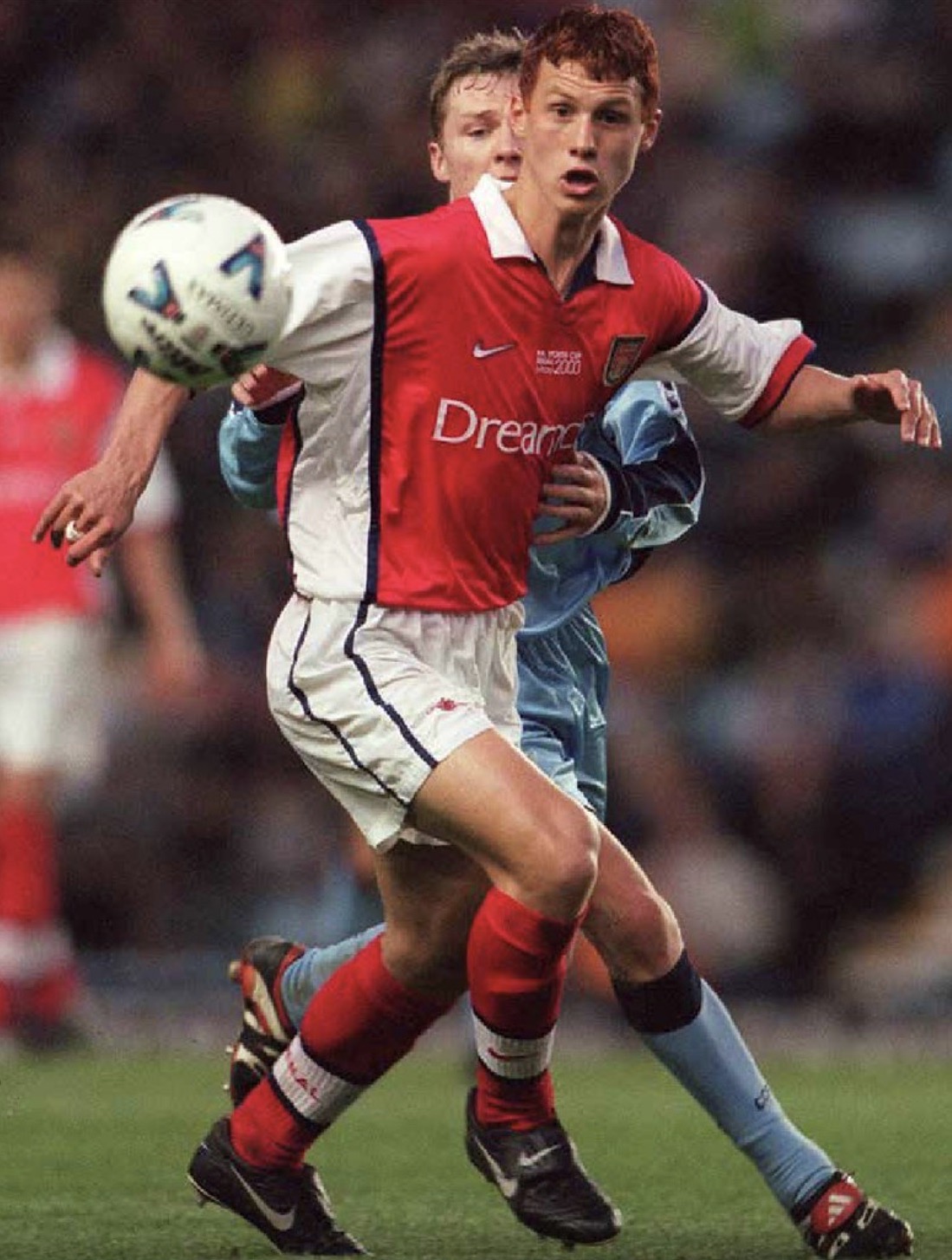
seagull-sidWHEN a flame-haired midfield player called Steve Sidwell joined the Albion on loan from Arsenal in 2002, it wasn’t the first – or last – time he would link up with manager Steve Coppell.

Coppell had organised a similar arrangement the season before when he was in charge at Second Division Brentford, and Sidwell played 30 times for the Bees.

When Coppell acquired his services for the bottom-of-the-second-tier Seagulls, it was instantly apparent that here was a talent destined to perform on a much bigger stage. In a 12-game spell, he scored five goals. They were the building blocks of a career that saw him go on to play in the Premiership for 11 seasons, and against Huddersfield in early 2017 made his 500th career appearance.

So many things are easy in hindsight but presumably if Albion had already been playing at a new stadium at Falmer, Sidwell may have stuck with the Albion rather than moving on to Reading where the Madejski Stadium was already a reality.

In the Royals matchday programme for the Reading v Albion Championship clash in 2005-06, cover boy Siddy was interviewed at great length and recalled his time with Brighton with fondness.

“It was the first time I had played at this level – before then I had been in Arsenal’s youth team and on loan at Brentford in the Second Division – so I was grateful for that opportunity,” he said. “The best description of my time there would be ‘short but sweet’.

“The fans at Brighton were fantastic, especially away from home,” he continued. “”At the time we were bottom of the league and battling against relegation, but they still turned up every week and always backed us.”

Sidwell recounted how it was during that time that he forged his long term friendship with Bobby Zamora and he also spoke of how he played in the same Colliers Wood Sunday football team as fellow midfielder Alexis Nicolas.

Eleven months after Sidwell went to Reading, Coppell made the same choice and enjoyed the best of Sidwell as his scintillating partnership with James Harper in the centre of midfield helped to take Reading out of the Championship and into the Premiership.

Let’s just go back to the 2002-03 season, though, and recall the impact Sidwell made in Brighton’s valiant effort to defy the relegation odds.

A disastrous run of 12 defeats in the first part of the season had dumped Albion at the foot of the table and manager Martin Hinshelwood had been replaced by Coppell, who rung the changes and started turning round the fortunes on the pitch.

Sidwell came in from Arsenal and scored the first of his five goals in a 2-2 draw away to Preston. He scored the only goal of the game in a Boxing Day win at Norwich and two days later scored both the goals in a 2-2 home draw with Burnley (celebrating in this Argus picture below).

Siddy youthfulOne of my favourite memories came at Highfield Road, Coventry, on January 11 2003 when Albion probably deserved to win but had to settle for a point in a 0-0 draw. Before the kick off, Albion fans were chanting his name during the warm-up, urging him to stay, because there had been speculation linking him with moves to other clubs.

Sidwell’s performance that day was acknowledged by no less an authority than the Scotland midfield maestro Gary McAllister, who was player-manager of Coventry at the time.

McAllister told the press after the game: “I was very impressed with Brighton. They passed it well. The front two were always a threat to us, joined by Steve Sidwell creating in the middle of the park and the two guys wide.

“Brighton were as good a side as we have seen at Highfield Road this season.”

Two days later, the Argus was reporting on the clubs interested in signing the promising youngster, including Stoke and Reading. Coppell told them: “What will be will be. I personally think the level of his performance will almost demand Arsenal not letting him go because he has done so well.

“Alternatively, they are going to move him on and take what money they can now. There will, I’m sure, be a lot of people in for him.

“He just wants to play football. I think the more we take these kind of decisions off his shoulders and just let him turn up and play then we are going to get the best out of him.”

siddy arseSidwell, who was out of contract at Arsenal at the end of the season, said: “Stoke put a bid into Arsenal. I went up there and it’s a great set-up and a fantastic club but we will see what happens.”

Interesting then, that the Potters did eventually get their man several years later.

However, in 2003 Reading was his destination and he spent four and a half years with them, helping them to win  promotion from the Championship and playing in their debut Premier League season.

In July 2007, at the end of his contract, Sidwell moved on a free transfer to Chelsea, the team he’d supported as a boy. “People think that because I was with Arsenal from the age of nine to 20 that I support them, but I’ve always been Chelsea. I was born in Tooting, my mum and dad are from Tooting Bec and Balham, so I was born into a Chelsea-supporting family,” he said in an Albion matchday programme article.

So, he said it was a “no-brainer” to go there. “I was joining a club that had won back-to-back titles under a manager who was a breath of fresh air in the game and I’d be playing and training with some of the best players in the world.”
Screen Shot 2021-04-23 at 07.31.27

The wealth of talent meant competition for places at Stamford Bridge restricted Sidwell’s game time, although he did clock up 25 games for the Blues. With the benefit of hindsight, he said: “It was the right move, it just came at the wrong time. I was only 24 so it came too soon. I’d only had one season of Premier LEague football under my belt and wasn’t quite ready for such a big jump from Reading.

“Maybe if I’d gone to Newcastle or West Ham (they’d both been interested) for a couple of years and played really well there, then I would have been better equipped but, like I said, when Chelsea comes knocking you don’t turn the opportunity down.”

He added that off-field issues, such as Mourinho leaving in the September to be replaced by Avram Grant, caused unrest amongst the players. But he added: “In hindsight, I wished I’d stayed another six months because Luiz Felipe Scolari came in and you never know what might have happened then.”
However, in the summer of 2008, in search of more regular playing time, he moved on to Aston Villa on a three-year deal. His time at Villa Park was often interrupted by injury and he made 64 appearances in two and a half years before Mark Hughes ended up signing him twice – for Fulham and Stoke City.

In 2011, Sidwell returned to London and scored 17 goals in 115 appearances over three and a half years, before leaving Craven Cottage when Fulham were relegated from the Premiership in 2014. “I went there on the back of their Europa League run and they were still riding the crest of a wave,” he said in an Albion matchday programme article.  He reckoned he played the best football of his career there and said: “In my first year we finished eighth in the Premier League.

“When I first went there, our home record was phenomenal. It didn’t matter who came to the Cottage, we always thought we would get the win. In the season we got relegated, it was surprising how quickly that mentality had changed.”

siddystokeHughes took him on a free transfer to Stoke but he managed only 13 appearances so jumped at the chance once again to link up with his old pal Zamora to join Albion on loan in early 2016 to supplement their efforts to get promoted from the Championship.

Although the form of Beram Kayal and Dale Stephens meant he struggled to nail down a regular spot, he was a great option to bring off the bench and memorably got the last-gasp winner in a televised away match at Nottingham Forest. “When I was getting taped up, I said to the bench I was going to score, it was just fate,” he said. “I managed to pop up with the goal, and it was a great feeling to see the ball hit the back of the net and you could see from the celebrations what it meant to us all.”Screen Shot 2021-04-04 at 17.19.48

I was in the away end that evening and despite a persistent Nottingham drizzle making the post-match walk back to my hotel pretty unpleasant, I dried off in the company of some other Albion followers in the hotel bar and reflected on a great skin-of-the-teeth win.

As we know, Siddy signed permanently in the summer of 2016, and has had a lot more game time this season. I was also fortunate to be at Ashton Gate on Bonfire Night that year when he scored that magnificent long range effort from inside the centre circle.

Footnote: I didn’t have to join in the last line of the Stevie Sidwell song….because I’m already in possession of similarly-coloured locks. We gingers have to stick together!

sidwell-reading

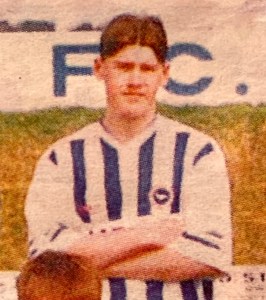
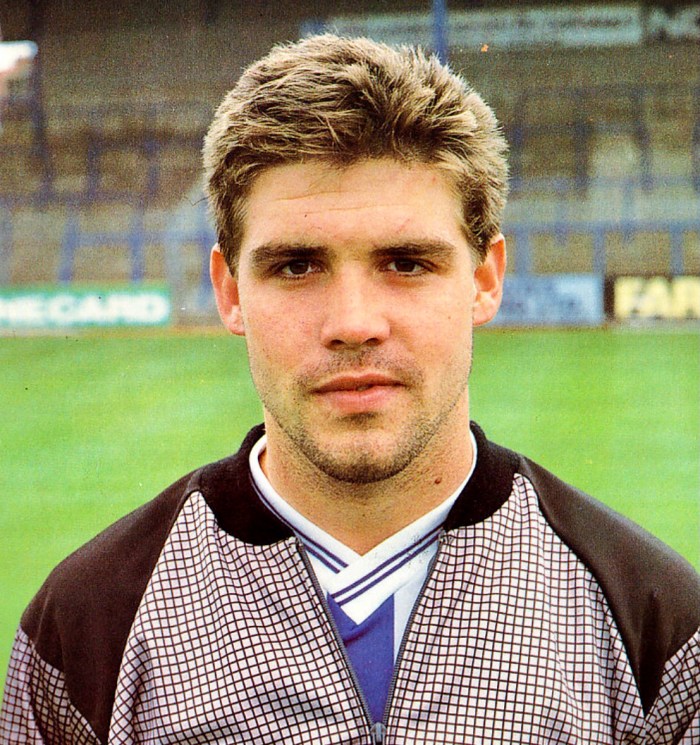
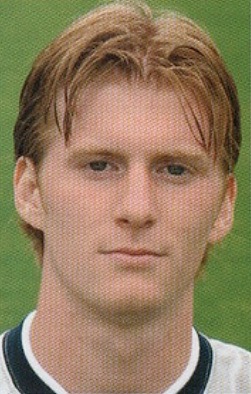
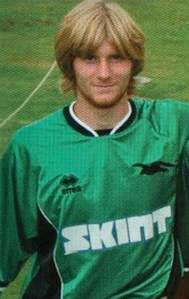
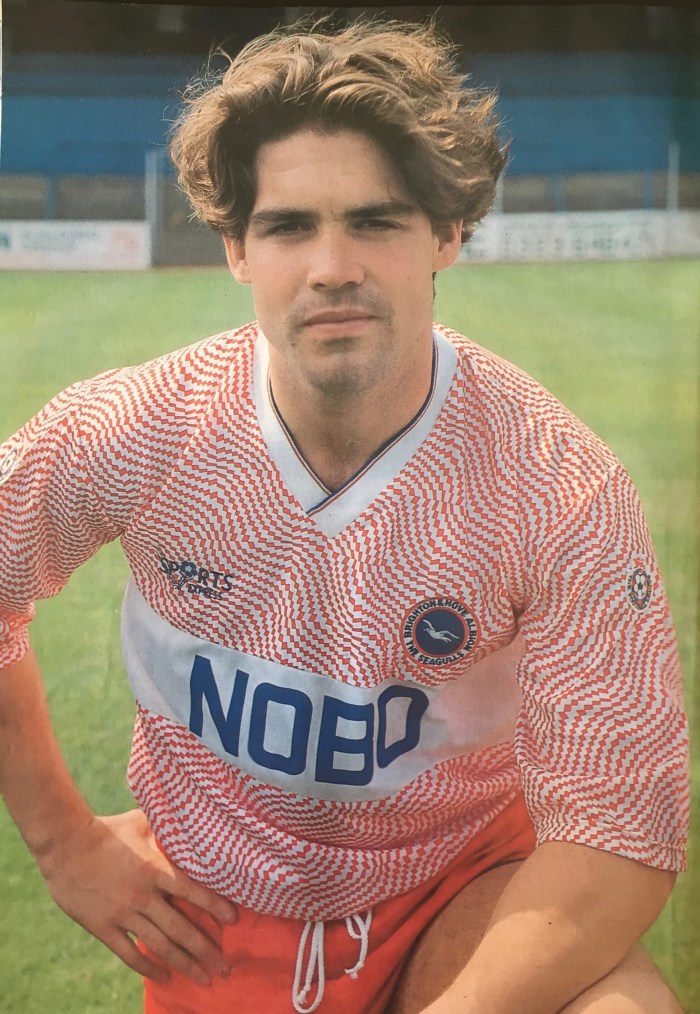
Pictures show the young Sidwell in Brighton’s away kit in 2002-03, as he appeared in the Coventry programme, and a portrait from Reading’s programme for the 10 December 2005 game v Brighton.