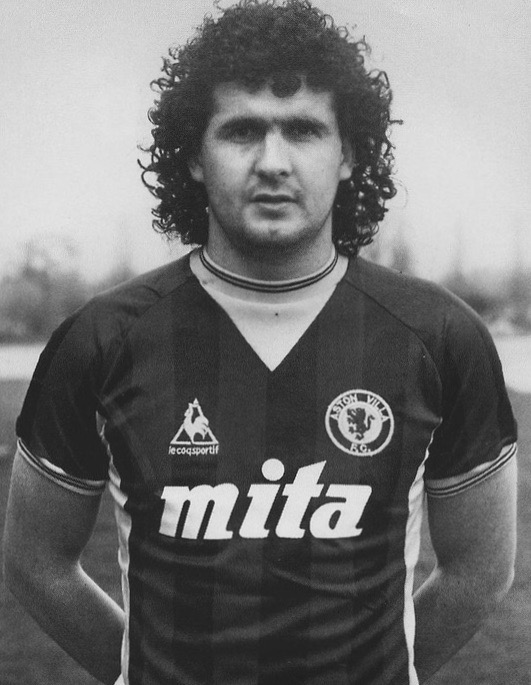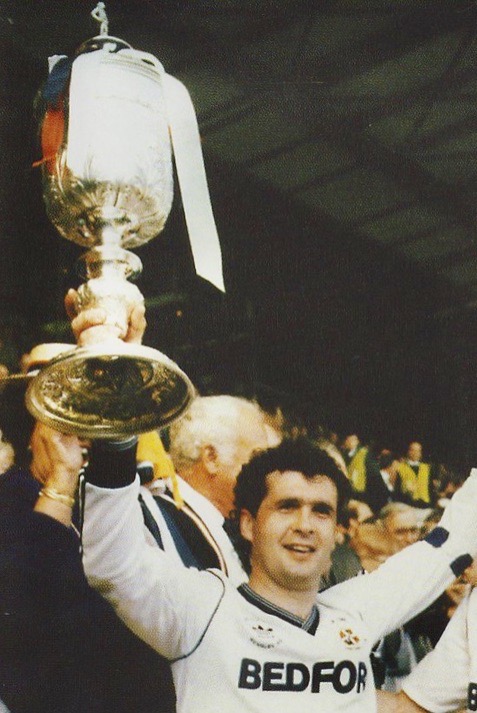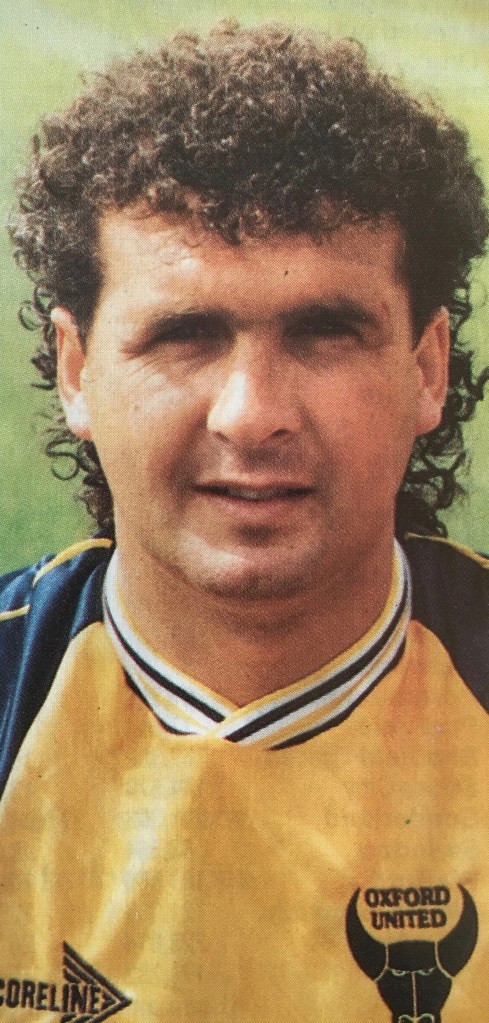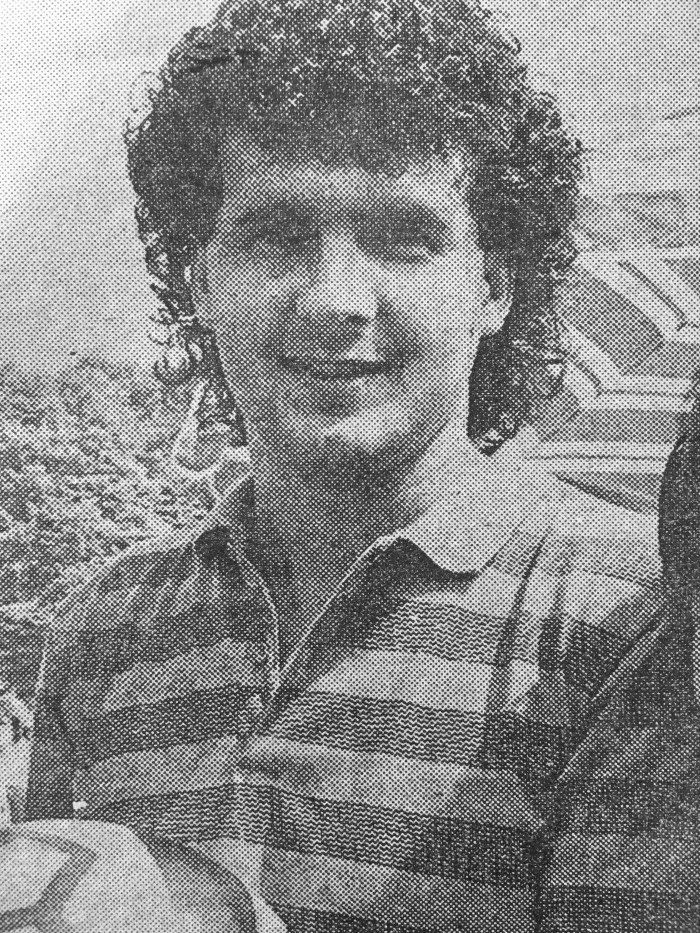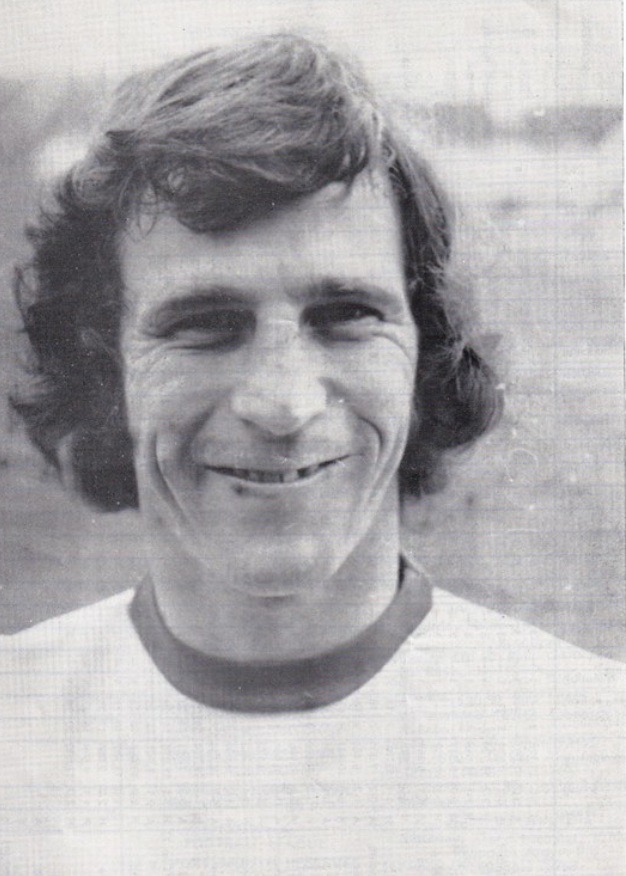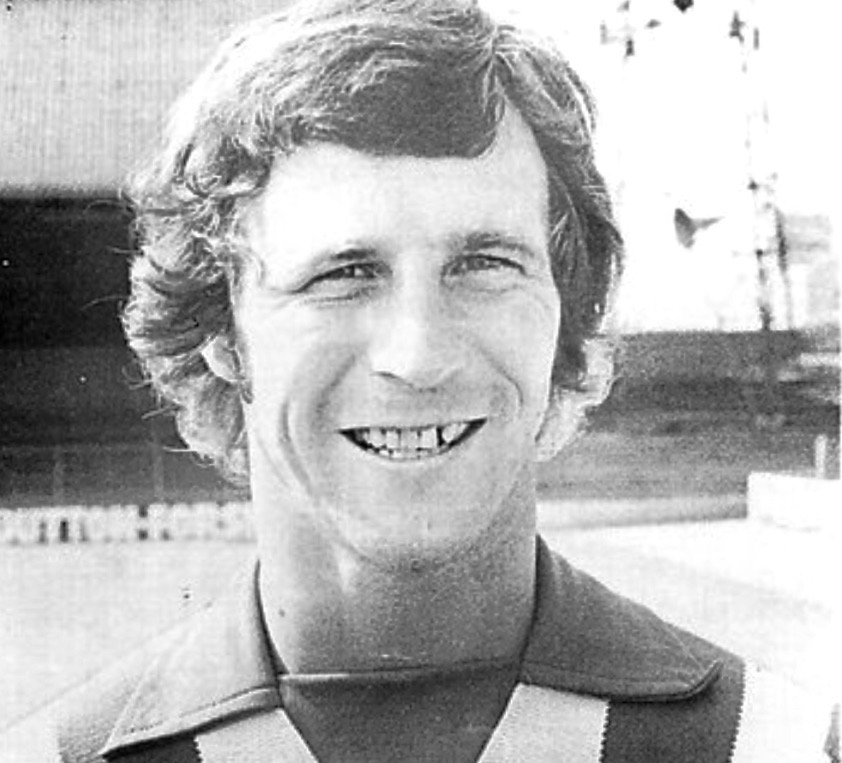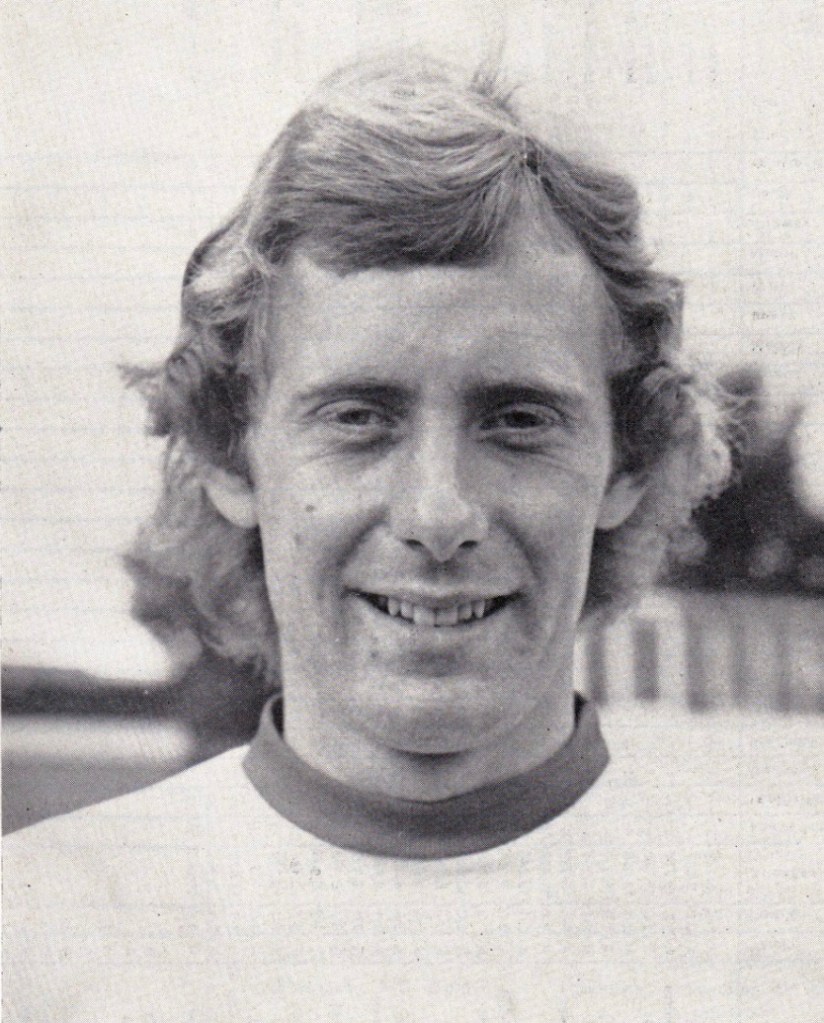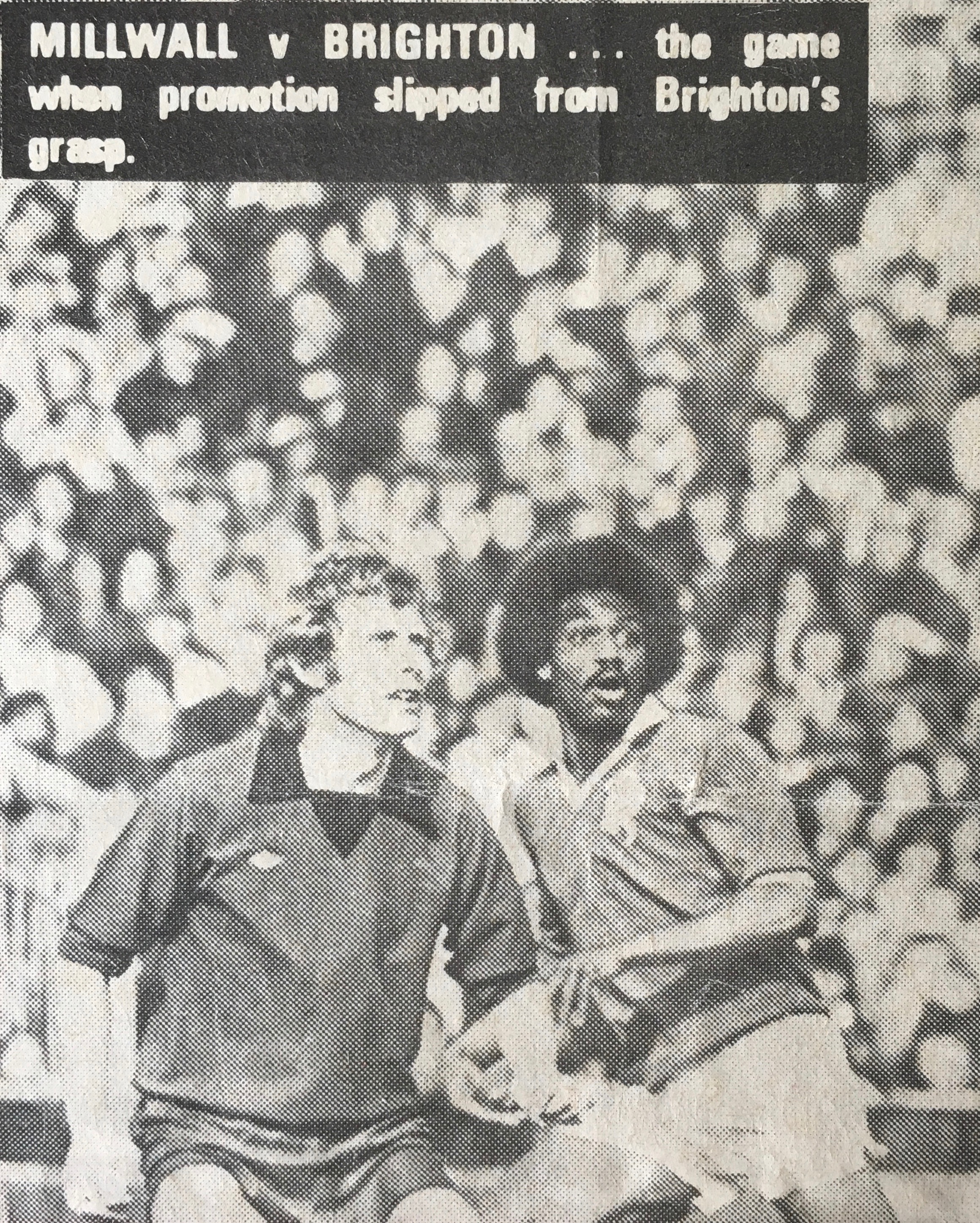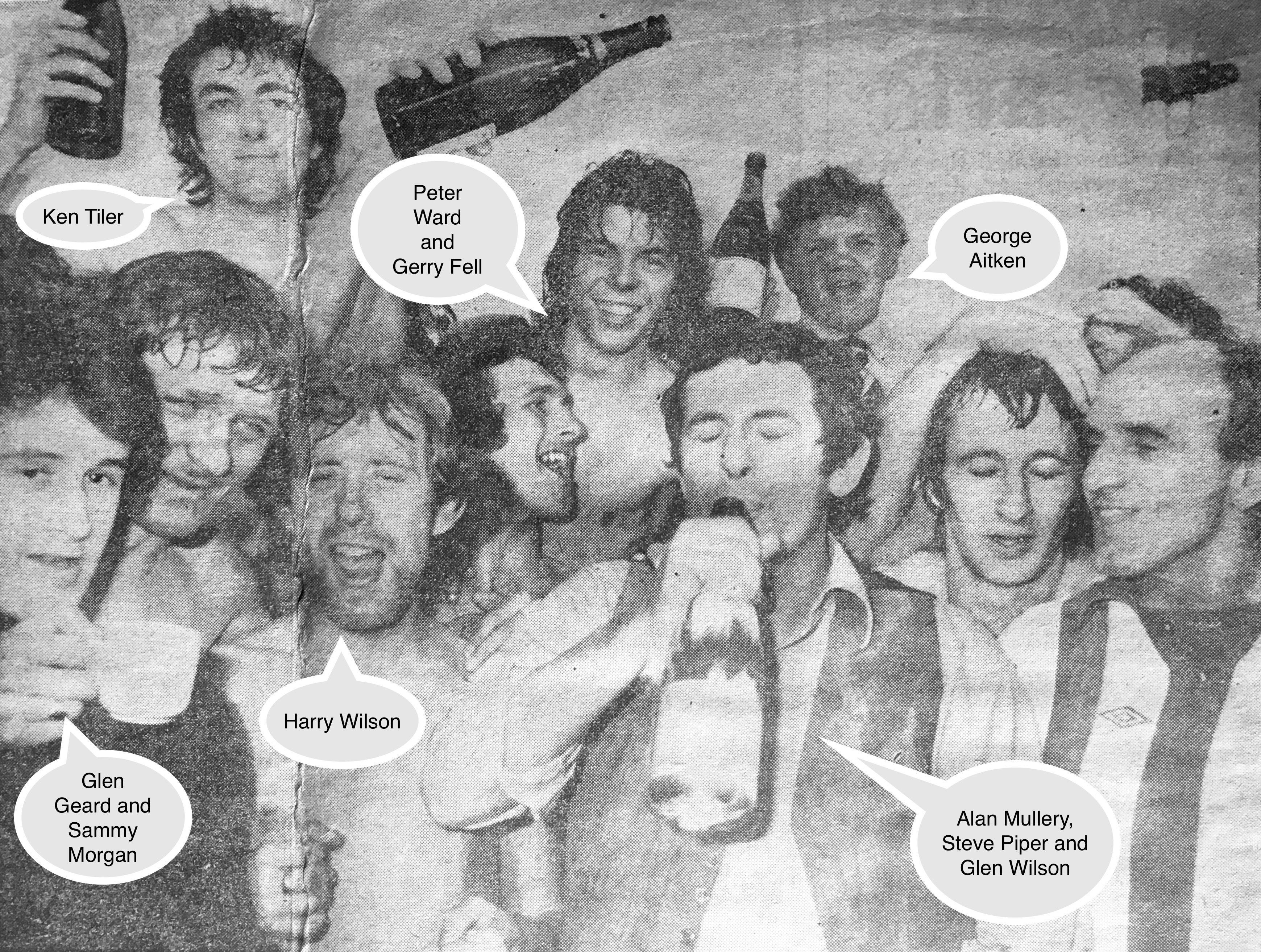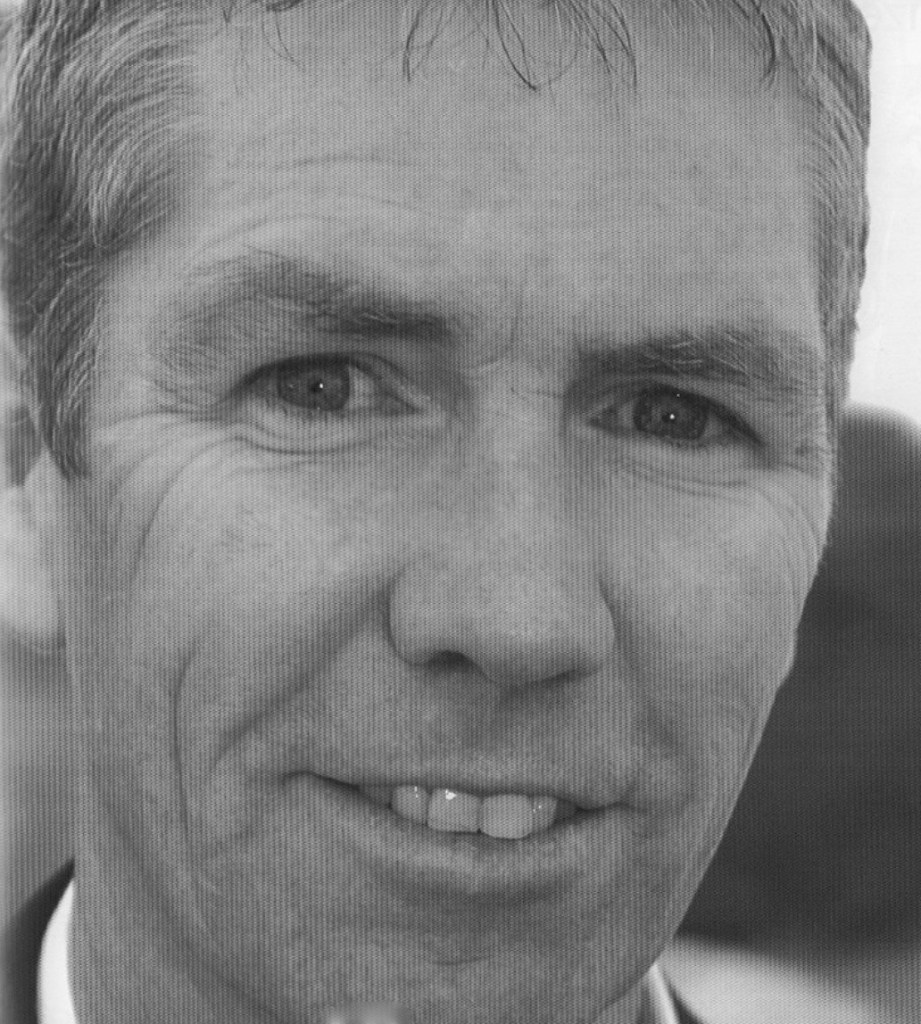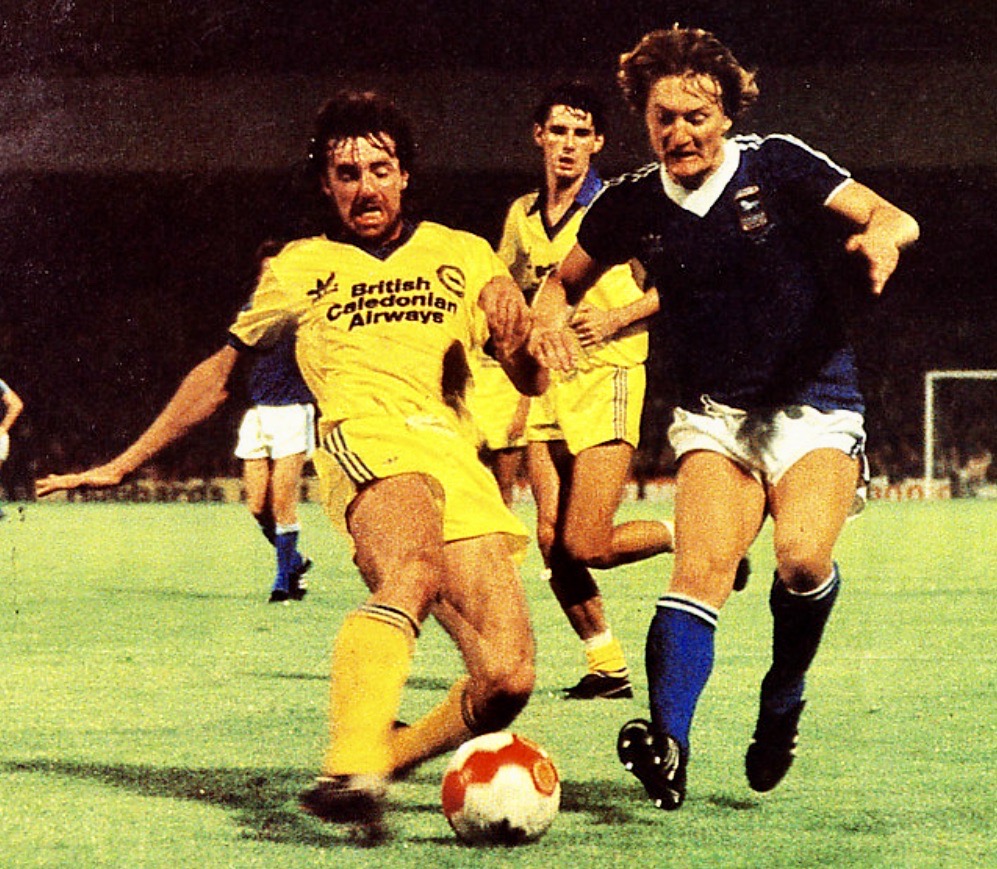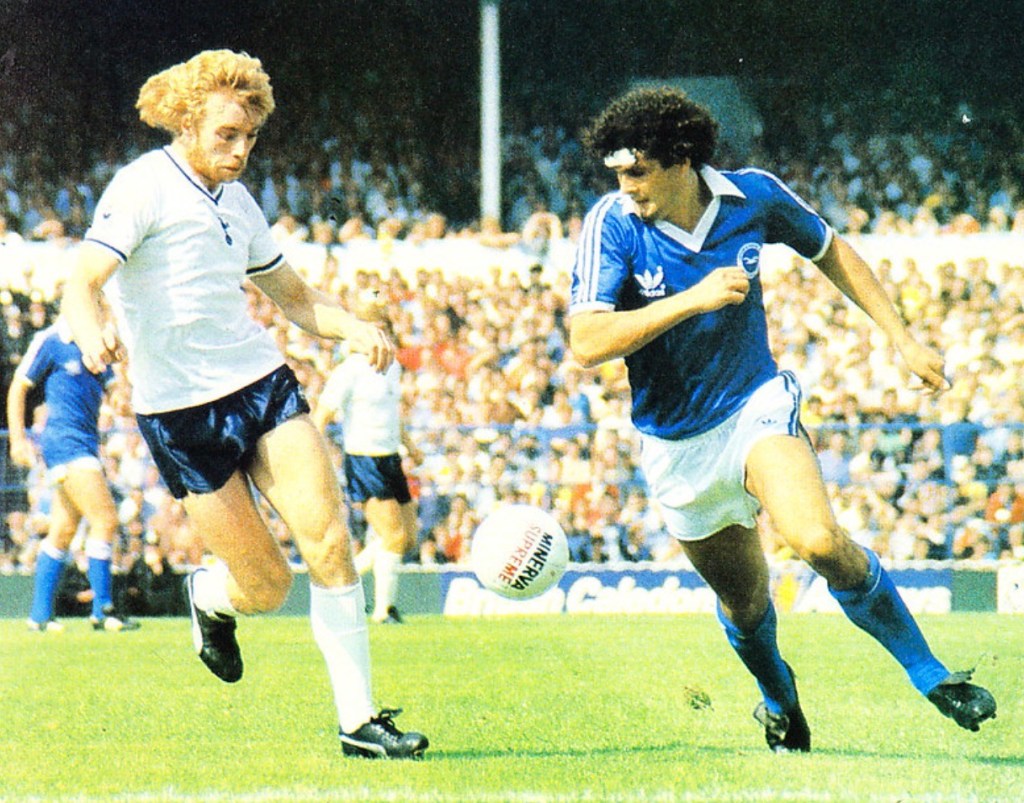
Gerry Ryan – ‘a special player and one of football’s nice people’

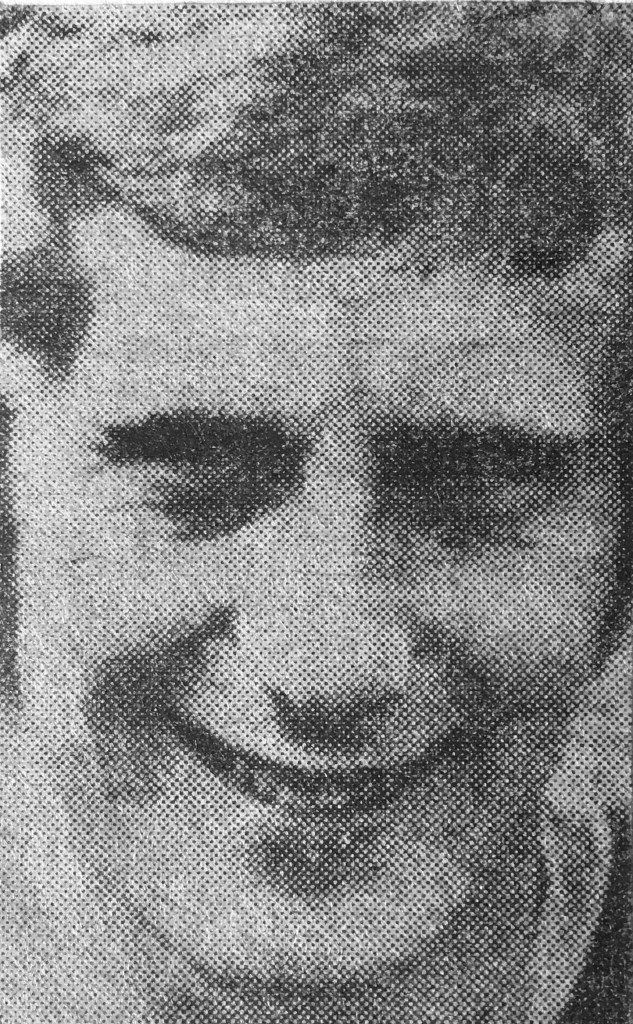
THERE WAS no shortage of tributes paid to Gerry Ryan when the former Albion winger died at the age of 68 on 15 October 2023.

Fellow Irish international Liam Brady, who appointed Ryan as his assistant when he took charge of the Seagulls in 1996, said: “Gerry was a wonderful team-mate. He was a very quick winger, very brave, and he took people on.

“We had some great games together and then we ended up on opposite sides, for Brighton and Arsenal, in the old First Division.”

Although Ryan and Brady’s time in charge happened during a turbulent time off the pitch, Brady pointed out: “We did a pretty good job in what were, of course, difficult circumstances, and I could see then just what Brighton meant to him – he was in love with the club so much.

“Off the pitch, Gerry was just a really nice guy. He was affable, unassuming and got on with everyone he came in contact with.”

That sentiment was echoed by teammate Gordon Smith who told the Albion website: “Gerry was always fired up to play.

“He was not always first choice, but he was still a very good player. He had this ability to be able to turn games around because he was quick and he could score goals.

“He was so reliable – he could fit into any position with his levels of fitness, ability and positional play.

“We were a very close group; we socialised a lot, we played golf, went to the races and Gerry was a key part of that – he was a really good laugh.”

Turlough O’Connor, another former team-mate, from his early days playing for Bohemians in Dublin, told the Irish Independent: “He was the most easygoing guy you’d ever meet, very laidback and always in a happy mood, and a very good footballer as well.

“He was comfortable both left and right, very good on the ball, and very quick, which helped. A very good crosser, he went by people, and was always a threat. He helped so many times laying on goals for me.”

Ryan was one of the most likeable Albion players for a huge number of fans, and I was one of them.

A versatile trier who was good enough to represent the Republic of Ireland on 18 occasions, the wholehearted Ryan might not make it into the all-time best Brighton XI but, if it was judged on affability, his name would be first on the team sheet.

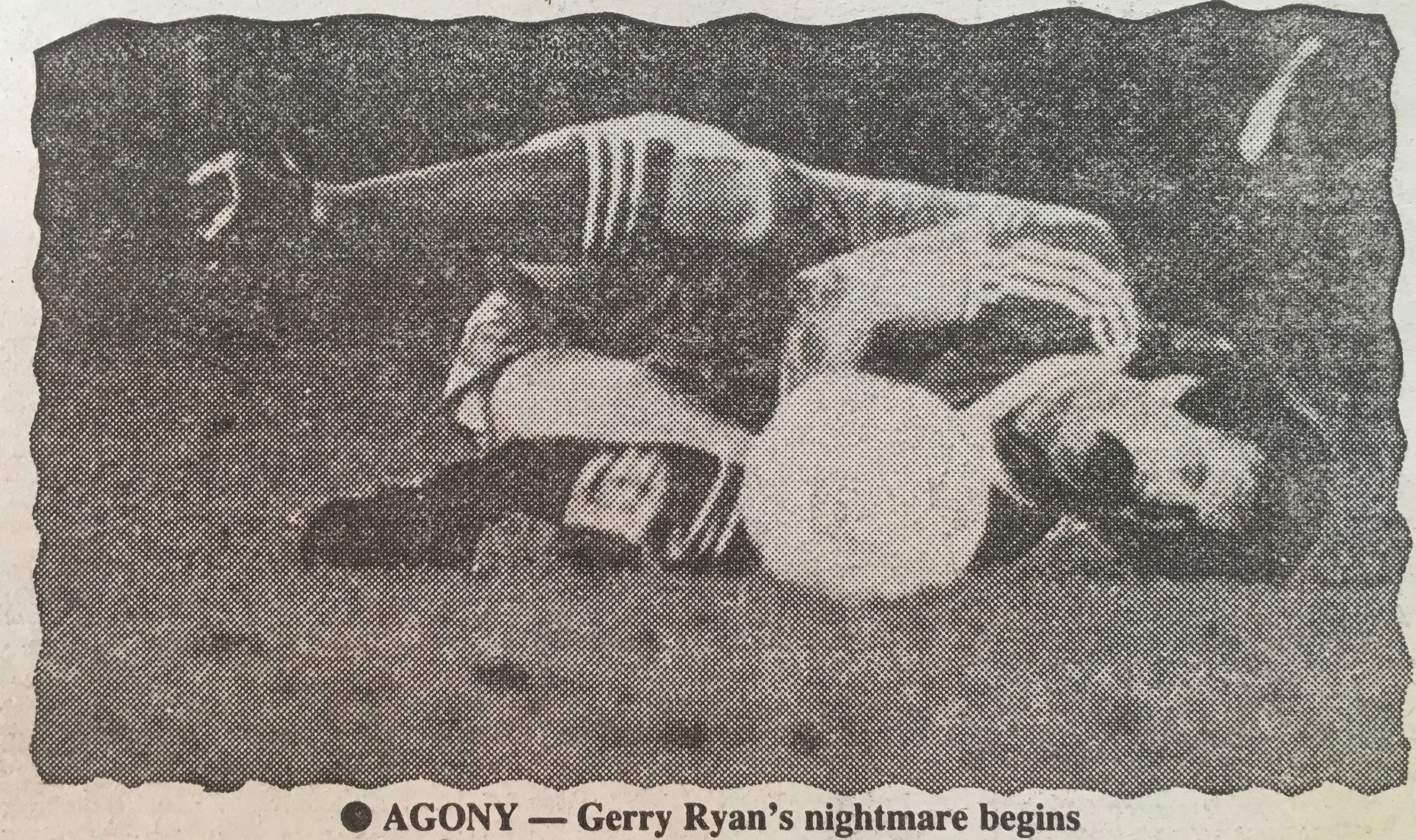
A cruel twist of fate saw his career ended in a tackle made by his Irish teammate (and former Albion boss) Chris Hughton’s brother, Henry. Typically, Ryan bore no grudges, as stressed by former Argus Albion reporter John Vinicombe in an article published in May 1986 when the genial Irishman finally accepted that his career was over.

Describing “the immense dignity and true manliness that Ryan displayed in refusing to condemn or indeed utter any harsh word against the player responsible,” he added: “Where others have sued and raged, slandered, cursed and threatened, Ryan said nothing.”

GR leg break

It was 2 April 1985 when his career was ended by that Hughton tackle in a 1-1 draw with Crystal Palace at Selhurst Park.

“Never in his life has he shirked a tackle and the one that ended his career so unfortunately at Crystal Palace was typical of many he faced in his career,” said Alan Mullery, the manager who signed him for the Seagulls.

“As a person, he is a lovely and typical Irish personality,” Mullery said in the programme for the player’s testimonial game against Spurs at the Goldstone on 8 August 1986. “I can honestly say that I have never met a player who dislikes him or has a bad word to say about him. I will remember Gerry Ryan as being a special player and one of football’s nice people.”

Mullery also referred to a Sunday lunch he and his family had with Ryan and his wife at the time he signed. “When Gerry ordered roast beef and chips I must have known then that I had a very special sort of player. At the time, I was a little dubious but afterwards I had no regrets.”

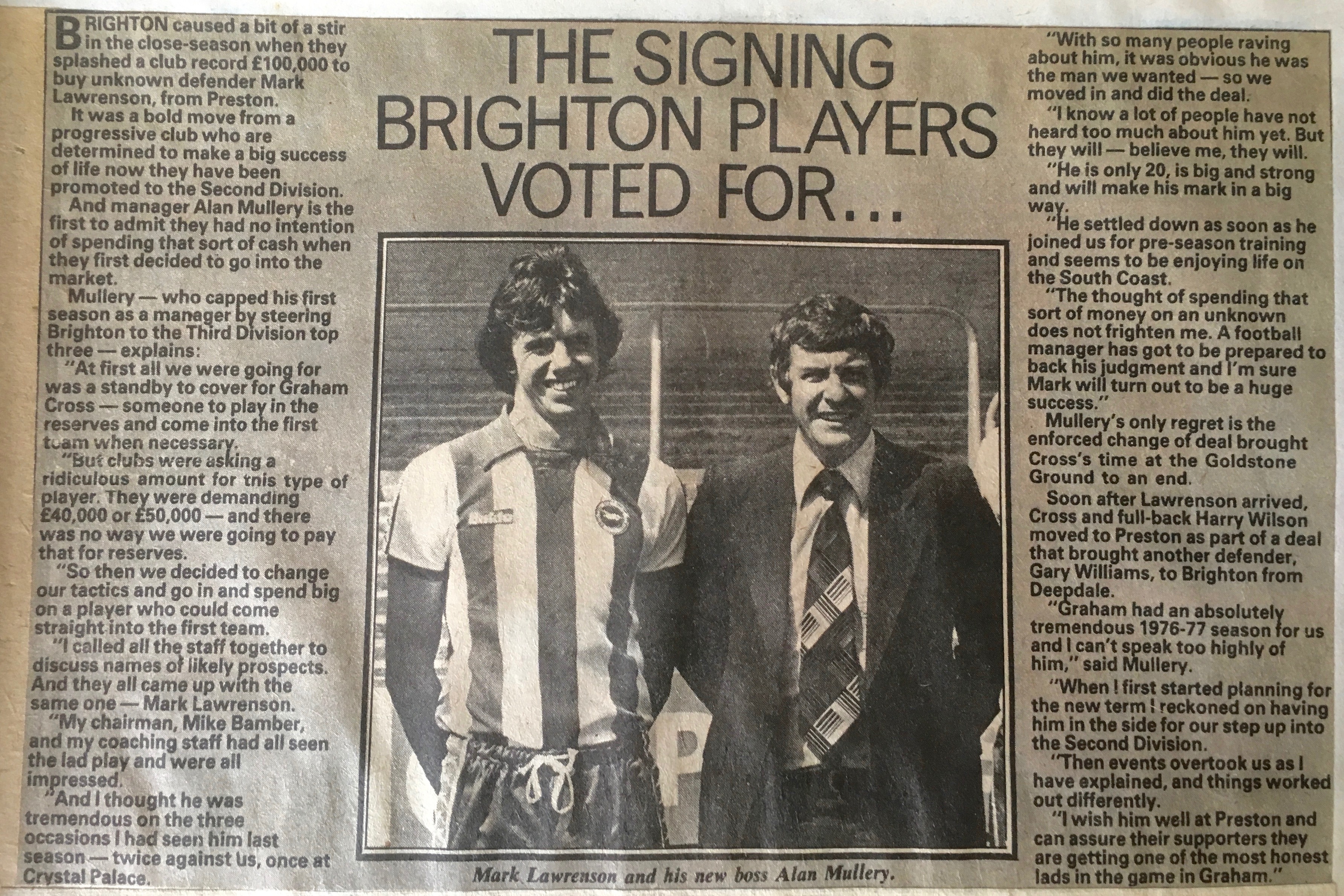
Mullery had been over in Dublin watching Albion’s Mark Lawrenson playing for the Republic of Ireland and Derby’s Ryan was playing in the same side. He had been having talks about moving to Stoke City but Mullers persuaded him to join Brighton instead, and, in a strange quirk of fate, he made his debut in a 2-2 draw away to Stoke.

After they’d become teammates, Lawrenson was among those players appreciative of Ryan’s “mercurial” qualities. He said in a matchday programme: “He wasn’t the most confident of players but he had loads of ability. For a wide player, he would come in and get goals for you.”

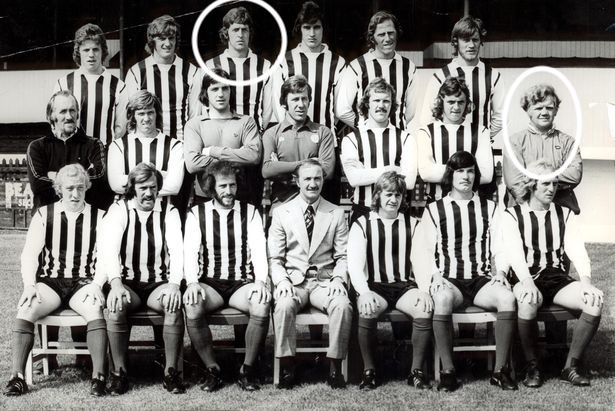
GR capsA week after joining the Seagulls, Ryan became an instant hit with Albion fans when he scored on his home debut in a 5-1 win over Preston. He notched a total of nine goals in 34 appearances in that first season and went on to score 39 in a total of 199 games.

Born in Dublin on 4 October 1955, Ryan was one of eight children. His early education was at the local convent in Walkinstown, a suburb to the south of Dublin where the family lived. At the age of eight he moved on to Drimnagh Castle School (it covered primary and secondary age groups).

At that stage, he was playing Gaelic football and hurling, at which he was capped at under-15 level by Dublin Schools. He didn’t play competitive football until he was 16 when he was introduced to a Dublin football club called Rangers AFC. He played alongside Kevin Moran, who later played for Manchester United, and Pat Byrne, who later played for Leicester City. Byrne and Ryan also played together for Bohemians, the oldest football club in Dublin.

Ryan joined the Dublin Corporation as a clerical officer on leaving school and played for Bohs as an amateur initially before becoming a part-timer on professional terms. By 18, Ryan was a first-team regular and, after collecting a League of Ireland Championship medal, was watched by Manchester United boss Tommy Docherty.

Docherty didn’t pounce then but, after Ryan had stayed four years with Bohemians, the ebullient Scot eventually returned to take him to England as his first signing for Derby County for a fee of £55,000.

The newly-appointed Docherty was determined to shake-up the club and while long-serving goalkeeper Colin Boulton was discarded along with striker Kevin Hector, Ryan, Scottish internationals Bruce Rioch and Don Masson, and Terry Curran and Steve Buckley were all introduced.

Ram Ryan

Ryan spoke about the way Docherty’s attitude towards him changed in an interview with Brian Owen of The Argus in 2016.

“One minute you were the blue-eyed boy, the next he wouldn’t even talk to you,” he said. Ryan made a hamstring injury worse by playing when Docherty insisted he was fit enough, and ended up sidelined for three months. “He didn’t like me then! That’s the way he was, he would turn on you, and he turned on me.”

Within a year, Docherty accepted Brighton’s £80,000 offer for Ryan and, as he was weighing up whether to choose the Seagulls or Stoke City, Ryan consulted the legendary Republic of Ireland and ex-Leeds midfielder Johnny Giles to ask his opinion.

“Gilesy said ‘Stoke have been in and out of the First Division forever but there is something going on down at Brighton. They get great crowds and it’s a beautiful place.’ I went to Brighton that weekend and absolutely loved it,” Ryan told Owen.

It was on 25 September 1978 winger Ryan arrived, prompting the departure of popular local lad Tony Towner after eight years at the Albion.

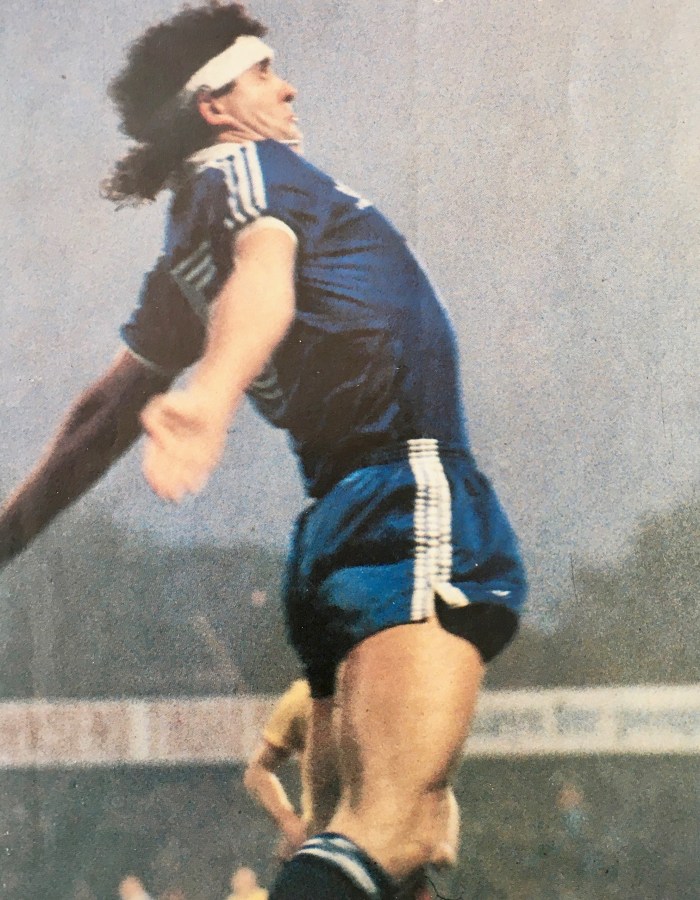
Five months before Ryan arrived at the Goldstone, he made his international debut, featuring for the first time in April 1978 in a 4-2 win over Turkey at Lansdowne Road. He only scored once for the Republic, but it was a cracking overhead kick in a 3-1 defeat against West Germany.

Ryan Eire

He was one of four regular Eire internationals playing for Albion at the time: Lawrenson, Tony Grealish and Michael Robinson the others.

His final appearance for his country came in a 0-0 draw against Mexico at Dalymount Park in 1984.

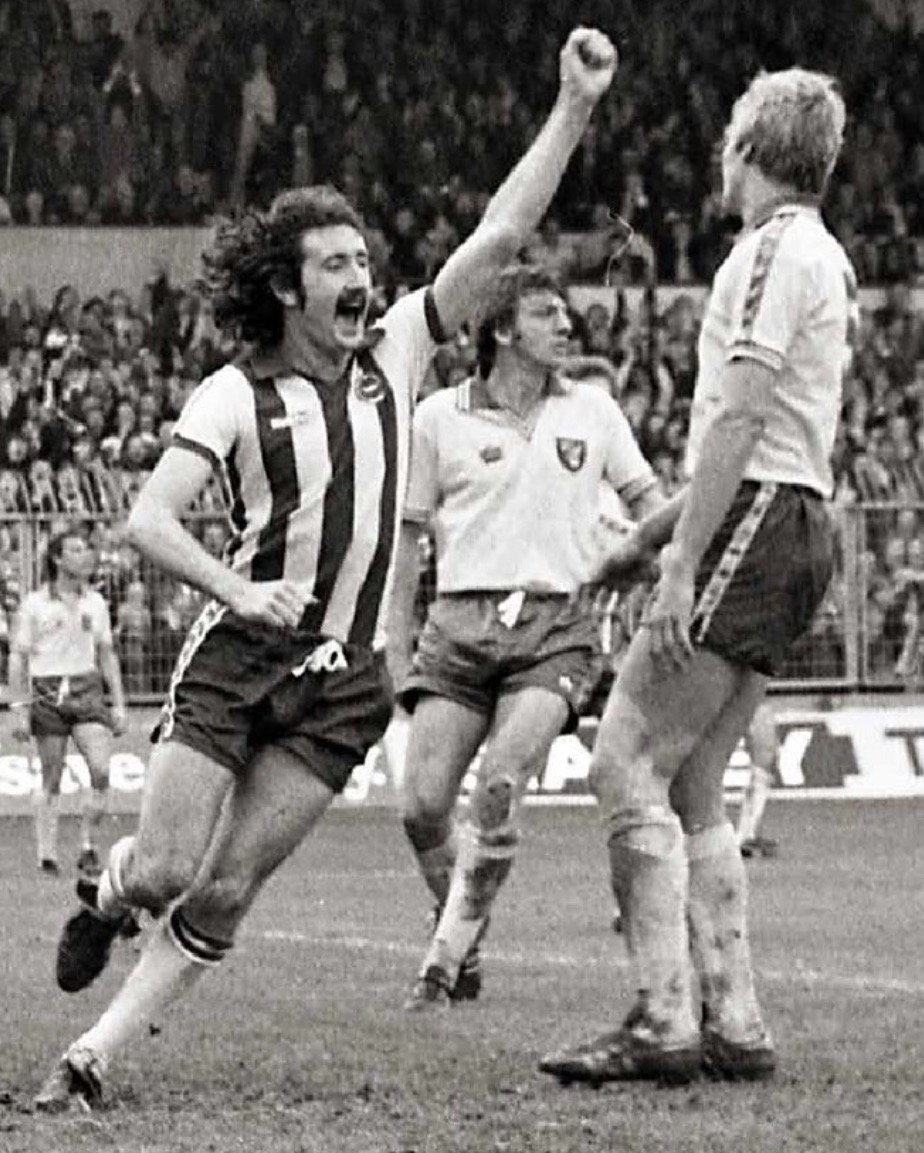
Ryan was part of some all-time history-making moments during his time with the Albion – scoring at St James’s Park in the 3-1 win over Newcastle on 5 May 1979 to clinch promotion to the top division for the first time, and burying the only goal of the game as unfancied Albion beat Brian Clough’s European champions Nottingham Forest, who’d previously not lost at home for two and a half years.

Ryan scoresMy personal favourite came on 29 December 1979 at the Goldstone when he ran virtually the entire length of a boggy, bobbly pitch to score past Joe Corrigan in the goal at the South Stand end to top off a 4-1 win over Manchester City. Ryan himself reckoned it was “the best goal I ever scored” as he recounted in a May 2020 BBC Sussex Sport interview with Johnny Cantor.

It was one of the most superb individual goals I saw scored and, when he was trying to recuperate from the horrific leg break which ultimately ended his career, I wrote to him in hospital to say what a special memory it held for me.

I was delighted to receive a grateful reply from him, and he has held a special place in my Albion memory bank ever since.

There were other stand-out occasions, two of which came against Liverpool:

in February 1983 at Anfield when he opened the scoring in Albion’s memorable 2-1 FA Cup triumph en route to the final, and, in the following season, at the Goldstone when he and Terry Connor were on target in Second Division Albion’s 2-0 win over the Reds in the same competition, the first-ever live FA Cup match (other than finals) to be shown (previously any television coverage of FA Cup ties was only ever recorded highlights).

If the modern-day reader can’t quite put the feat in perspective, it is worth pointing out that Liverpool, managed by Joe Fagan, went on to win the League Cup, the League title and the European Cup that season.

Danny Wilson hadn’t long since joined the Albion and, in an interview with the Seagull matchday programme in 2003, he recalled: “That has to be my favourite memory from all my time at the Goldstone. Back then, Liverpool were just awesome, and to beat them like we did was virtually unheard of.”

Ryan’s involvement in the 1983 Cup run was hampered by a hamstring injury which meant he missed out on the semi-final. But, in the days of only one substitute, he was on the bench for the final and, when the injured Chris Ramsey couldn’t continue, Ryan went on at Wembley and did a typically thorough job at right-back.

GR prog snow

Following Albion’s relegation, as the big-name players departed the Goldstone, Ryan’s versatility and play-anywhere attitude came to the fore and, in his last two seasons with the club he was often selected as a centre-forward, although he was not a prolific goalscorer from that position.

After he was forced to quit playing, Ryan took what was then quite a familiar route for ex-players and became a pub licensee, running the Witch Inn at Lindfield, near Haywards Heath. Ryan and goalkeeper Graham Moseley, who he’d known from his days at Derby, were neighbours in Haywards Heath.

GR pots

However, when another of his former Republic of Ireland teammates, Liam Brady, was appointed Albion manager in 1994, it was an inspired choice for him to appoint Ryan as his assistant.

When that all-too-brief managerial spell came to a messy close, Ryan returned to his pub, and then moved back to the family home in Walkinstown. Ryan’s son Darragh played 11 games for the Albion in the late 1990s.

Sadly, in August 2007, Ryan suffered a stroke, and three years later he was diagnosed with kidney cancer. On his death, his family paid tribute to the care he was given by the staff of Our Lady’s Hospice, Harold’s Cross and to the staff of Lisheen Nursing Home, Dr Brenda Griffin, the Beacon Renal Unit, Tallaght, and Tallaght Hospital Renal Unit “for the excellent care given to Gerry over the past number of years”.

Pictures from a variety of sources but mainly from my scrapbook, the matchday programme and The Argus.

Shankly ‘disciple’ George Aitken coached Mariners and Seagulls

MEDIA-friendly Jimmy Melia stole all the limelight as Brighton stormed to the final of the 1983 FA Cup but a quiet, wavy-haired Scot alongside him played a big part in the achievement.

George Aitken was joint caretaker manager with Melia for three months after Mike Bailey’s dismissal in December 1982, and he’d previously been in the dugout alongside Alan Mullery and Ken Craggs during Albion’s rise through the divisions having originally been brought to the club by Peter Taylor.

.When he died aged 78 in August 2006, Jimmy Case told the Cumbrian Times & Star: “George was a great character, a great friend and coach right the way through my time at the club. “Jimmy Melia was in the front line with his white shoes but George was right there in terms of the workings of the club and picking the team. He was well respected for his knowledge of the game.”

Mark Lawrenson also paid tribute in an interview with Argus reporter Paul Holden, telling him: “George never got carried away. He had seen it all before. He was a very wily old fox. He was from the old school, a good, honest, true, loyal man.

“He knew his football, knew his players and liked a laugh. He had one of those infectious laughs.”

Micky Adams said: “He was a great football man, George. When I first joined Brighton as manager, he was one of my biggest allies. He always popped into the office to chew the cud and talk football. He loved Brighton and was a well-respected man who loved the game.”

Holden also reported that at Aitken’s testimonial dinner in 1988, former Albion secretary, Stephen Rooke, said: “He may never have reached the dizzy heights attained by many of his friends and acquaintances over the years but he represents a rare breed, in fact the very lifeblood of our national game.

Aitken tiler sully 78

Aitken puts Ken Tiler and Peter O’Sullivan through their paces in pre-season training in 1978

“Deep down George is a very private person but his reliability and honest, down-to-earth approach has, quite rightly, earned him enormous respect throughout the football world.”

Aitken had been a manager in his own right at Workington, and he and Melia had both been players under one of the game’s legends – Bill Shankly.

Shankly managed Workington between 6 January 1954 and 15 November 1955, when Aitken was a strong and commanding centre back for the Cumbrian side, and five of Melia’s 10 years playing for Liverpool were under Shankly’s managership.

Born in Dalkeith, Scotland, on 13 August 1928, Aitken was educated at Dalkeith High School and played football for Midlothian Schools.

His step up to senior football came at Edinburgh Thistle, which was essentially a feeder side for Hibernian.

David Jack, remembered as the first player ever to score at Wembley, had become manager of Middlesbrough in 1944, and took Aitken to Ayresome Park after the war.

“I was 20 at the time and it took me two seasons to reach the first team,” Aitken recalled in an Albion matchday programme article.

“Middlesbrough had a great team at the time and I played alongside the likes of (England internationals) Wilf Mannion and George Hardwick.”

Aitken made his debut against Fulham in 1951-52, but only made 18 top division appearances and, in July 1953, was sold to nearby Workington for £5,000.

It was the beginning of a long-standing relationship with a club who in those days played in the basement division of the Football League and is now in the Northern Premier League – the seventh tier of English football.

Aitken amassed 262 league appearances for Workington and, in the 1957-58 season, played against the famous Busby Babes at home in the 3rd round of the FA Cup in front of a record 21,000 crowd – just a month before the Munich air crash. Dennis Viollet scored a hat-trick for United in a 3-1 win.

“The game was an experience that I’ll never forget,” said Aitken, who kept on the wall of his house a picture of him with United’s skipper that day, Roger Byrne, who not long after that match perished in the Munich air crash.

Aitken retired as a player in 1960 but he stayed on at Borough Park as a coach, initially under Joe Harvey, who later enjoyed success at Newcastle United, and then Ken Furphy, who went on to manage Watford, Blackburn and Sheffield United before moving to the USA and taking charge of four different clubs.

Aitken had a brief spell as Workington manager between March and June 1965 (stepping in after Keith Burkinshaw – later famously boss of Spurs – had left) but then followed Furphy to Watford in 1965 as his coach. During that time, Watford, then in Division Two, famously beat Shankly’s Liverpool 1-0 in the quarter-finals of the FA Cup before losing to eventual winners Chelsea in the semi-finals.

The lure of Workington was to draw him back to the north west, though. When the manager’s job became vacant in 1971, Aitken took over and stayed for three seasons, eventually leaving in October 1974.

grimsby 75

In the 1975-76 season, he was trainer-coach during Tommy Casey’s spell managing Grimsby Town (where, as in picture, one of the players was former Albion defender Steve Govier), but left the Lincolnshire outfit to join Peter Taylor’s coaching set-up at Brighton in 1976. The Scot ended up staying for 10 years.

Aitken and wife Celia had three children and I well remember one of them, Bruce, appearing for Worthing FC.Aitken 2

George was clearly football daft, and in a matchday programme feature of September 1985, Celia told Tony Norman: “Football has always been his hobby, as well as his way of earning a living. He really loves the game. It’s not unusual for us to be driving somewhere and to stop because George has seen a game going on in a park by the road. He can’t resist watching for a while.”

During Chris Cattlin’s reign as manager, Aitken was the reserve team manager and chief scout, and in the programme article he said: “I can look back on some very happy memories. I was assistant manager when we took the club to Wembley and that experience is something I’ll never forget. But that is all in the past and what really matters to me is the future for Brighton Football Club. So, I enjoy going out to look for youngsters who could do a good job for us in years to come.”

After being sacked by Brighton, Aitken did scouting work for Graham Taylor during his spells at Watford and Aston Villa and then had three years working for the FA during Taylor’s reign as England manager. His last football role  was at Bolton Wanderers when Colin Todd was the manager.

end shot aitken armchair

Pictures from a variety of sources including the matchday programme, online sites and the Argus.

Teenage Teddy Maybank’s Chelsea promise dashed by injury at Brighton

TEDDY MAYBANK signed for the Seagulls for what at the time was a club record transfer in November 1977 and went on to score Brighton’s first ever top division goal.

But the new signing came in for some flak from the terraces and, over two years, never really delivered a significant return on the investment.

Maybank himself reckons the club forced him to play on with an injured knee when he shouldn’t have, which led to irreparable damage and ultimately a premature end to his career.

The former Chelsea centre-forward was signed to replace Ian Mellor, Peter Ward’s prolific strike partner in the 3rd Division, after Brighton had won promotion to the second tier.

“We let Ian Mellor go because we felt that he had reached a certain age and had probably peaked,” Alan Mullery told Matthew Horner, in his Peter Ward biography, He Shot, He Scored. “When Teddy Maybank became available, we thought that he was probably a better option.”

Born in Lambeth on 11 October 1956, Maybank lived the first 15 years of his life in Brixton and went to Christchurch Primary School, close to his home, where one of his playground footballing mates was Ray Lewington — now loyal deputy to Roy Hodgson — who, together with Maybank, went on to play for Chelsea and Fulham.

At the age of 11, Maybank moved to Stockwell Manor Secondary School and played various age group levels for South London Boys. One of the representative matches he played in took place at the Goldstone Ground on 25 September 1971, against Brighton Boys.

The Maybank family moved to Mitcham, close to the Chelsea training ground, and, when Teddy was 15, he joined them straight from school.

Maybank and Lewington progressed through Chelsea’s youth ranks at a time when the club’s focus was on bringing through home-grown talent. “It was a good time at Chelsea,” he said. “We had such a good youth side and I loved playing under Ken Shellito.”

That team, which won the South-East Counties Championship four years in a row, included Ray and Graham Wilkins, Lewington and John Sparrow.

Maybank’s first-team debut came in a 2-0 defeat at Tottenham Hotspur in April 1975 aged just 18, and he scored in only his second game, a 1-1 home draw against Sheffield United, but Chelsea were relegated from the top division that year.

The following campaign saw Maybank, still a teenager, become a first-team regular under Eddie McCreadie, grabbing five goals in 26 appearances between August and February.

After falling out of favour, he went out on loan to Fulham just before Christmas 1976 and then signed permanently for a £65,000 fee later that season.

Back in the ‘70s, Chelsea were a long way from the force they are now and Maybank admitted: “I wouldn’t say I ever played that well at Chelsea. I didn’t find it easy to score goals there.”

It was a different story at Craven Cottage. After scoring more than a goal every other game – 17 times in 31 games – Maybank was sold to Brighton for £238,000, which gave Fulham a swift and substantial profit that they used to pay off money owed on their recently-built Eric Miller Stand (now, the Riverside Stand).

                     Blond locks flying, Maybank comes up against QPR’s Dave Clement in a 1978  pre-season friendly. (Above right) This overhead kick against Sunderland at The Goldstone scraped the bar … otherwise would have been a Goal of the Season candidate!

Maybank made a good enough start for the Seagulls, scoring after just six minutes on his debut in a 2-2 home draw with Blackburn Rovers, played on a bitterly cold day in front of a crowd of 26,467. Tony Towner scored the Albion’s other goal and another debutant in that game was tough-tackling midfield player, Paul Clark.

Maybank was on the scoresheet again in the very next game as Albion recorded their first ever win, 1-0, at Blackpool.

It was in a game against Orient a week before Christmas that Maybank got a kick on his knee from defender Dennis Rofe (who later played for Leicester and Southampton) which caused an injury which he maintains wasn’t properly managed by the club.

He told fulhamfc.com in 2013: “They kept giving me injections, taking all the fluid out every Sunday after the game.

“I was barely training. I could run in a straight line but any time I put weight on my leg I would fall over. I wouldn’t feel any pain because of the injections, but I just fell over.”

The Brighton fans thought they had bought Bambi and were soon on his back, leading to a “pretty terrible time” that Maybank never really recovered from.

“The club should never ever have allowed me to play in that situation,” he said. “A surgeon saw me outside of the club, opened me up and said: ‘if you ever play football again, you’ll be the luckiest bloke in the world’.

“Brighton had told me, basically, that I couldn’t do any more damage. They wouldn’t do it now, but because I was the highest transfer fee they ever paid, they didn’t really take my welfare into consideration at all. In the end, it ruined my career.”

                      Shoot! article and (above right) Maybank goes full length to head the second of  his three goals against Cardiff on Boxing Day 1978.

In an article in Shoot! magazine at the time, Maybank talked about how he hadn’t had the best of starts with his new club. He said: “I wasn’t playing well. I knew that. My early form was a disappointment to the fans. They expected me to come in and start scoring regularly and doing incredible things.

“It’s always hard when you change clubs and you need a while to settle in. I have to adjust to my new team-mates but they’ve also had to change and adapt to playing with me.”

Mansfield were trounced 5-1 at the Goldstone on 21 January 1978 when Peter Ward shone with a hat-trick. Maybank also got one, but it was his last of the season. He made only six more appearances between January and the end of the season and new signing Malcolm Poskett seized his chance alongside Ward.

Albion narrowly missed out on promotion (by goal difference) and during the close season Maybank went under the knife for a cartilage operation.

Fit for the new season, Maybank was among the goals as Albion beat Millwall 4-1 at The Den on 2 September. He got a brace that day but in the same month was in trouble with the manager who’d had an anonymous tip-off that the star striker and Welsh international winger Peter Sayer had been seen in a nightclub on the eve of what turned out to be a 4-1 defeat by Leicester City.

Mullery made an example of the pair and they were both ‘persuaded’ to donate a fortnight’s wages to the local Guide Dogs for the Blind Association.

On the pitch, the goals dried up for Maybank until Boxing Day when he netted a hat-trick in a 5-0 win over Cardiff City. In an Albion matchday programme in 2015-16, Maybank admitted to Spencer Vignes: “The crowd started getting on my back, and I got in a pretty dark place.

“When I got that hat-trick, I went from villain to hero and yet it had got so bad that the day before Alan Mullery picked the squad I’d told him I never wanted to play for the club again.

“From the changing room before a game, I used to hear the crowd boo my name when the team was read out over the tannoy.”

In total, Maybank scored 10 times as Albion won promotion, and he was leading the line in the famous promotion-clinching 3-1 win at Newcastle on 5 May 1979.

In that season’s Rediffusion Player of the Year competition, Maybank finished third behind winner Mark Lawrenson and runner-up Brian Horton.

In much the same way Pascal Gross was feted for scoring Brighton’s first-ever goal in the Premiership, so Maybank scored the Albion’s very first goal in the top division.

After being hammered 4-0 by Arsenal in the opening fixture at the Goldstone, the Seagulls were away to Aston Villa in the second game.

                      Arms aloft, Maybank celebrates Albion’s first ever top division goal with skipper Brian Horton and Peter O’Sullivan. (Above right) Maybank battles with Arsenal’s David O’Leary watched by John Hollins and O’Sullivan.

Latching on to a John Gregory through pass and, with the very last kick of the first half, Maybank buried a shot past ‘keeper Jimmy Rimmer.

Albion lost the game 2-1 but the national newspapers were full of praise for the newcomers to the division.

Frank Clough in The Sun wrote: “Teddy Maybank and Peter Ward tore great holes in Villa’s jittery defence and were only stopped by inadequate finishing and fine goalkeeping by Rimmer.”

It was the first of three Maybank goals at the top level, but, according to Ward, the striker had a big falling out with Mullery. The manager brought in Ray Clarke as his first choice centre-forward and, in December 1979, Maybank was sold back to Fulham for £150,000.

He had scored a total of 16 goals in 64 appearances for the Seagulls, less than half the ratio he’d been scoring when bought.

After just 19 games for Fulham, Maybank joined Dutch side PSV Eindhoven for £230,000 in August 1980 (Fulham making another tidy profit on the player).

His debut for the Dutch giants came in front of a packed house at the Nou Camp, where Barcelona were staging a four-team tournament with Vasco da Gama and River Plate.

However, only a few games later his knee flared up again.

“They opened me up and saw what a state my knee was in,” Maybank explained in that 2013 interview with fulhamfc.co.uk. “I was told in no uncertain terms that if I didn’t retire I would be playing with the youth team or reserves. I think they thought they’d been taken for a ride.”

Maybank was left with no choice. At the age of 24, he retired from the game.

Pictures from my scrapbook sourced from Shoot! magazine and the matchday programme.

Left back Harry Wilson “something of a fire-eater”

BRIGHTON boss Brian Clough turned up at Burnley to capture the signings of two of their fringe first team players – and ended up having pie and chips with the groundsman!

When Clough arrived at Turf Moor, he found manager Jimmy Adamson, chairman Bob Lord and secretary Albert Maddox were nowhere in sight, it being lunchtime.

In their absence, as recounted to respected writer Dave Thomas, groundsman Roy Oldfield made the famous visitor a cup of tea, popped to a nearby chippy to get them both pie and chips and chatted all things football until the office re-opened after lunch.

Although Clough hadn’t got quite what he expected on arrival, his journey did bear fruit. In exchange for £70,000, he secured the services of left-back Harry Wilson, a 20-year-old who had made 12 appearances for the Clarets, and midfielder Ronnie Welch, 21, who had played one game.

At the time, Clough was desperately trying to bring in new recruits to a beleaguered Brighton side that he and sidekick Peter Taylor had taken on in October 1973, a period covered in detail in a recent book, Bloody Southerners, by author and journalist Spencer Vignes.

The man who only the season before had led unfashionable Derby County to the First Division Championship, couldn’t quite believe what he had inherited at Third Division Albion.

The players seemed bewildered by what the new celebrity boss expected of them.

Heavy defeats – 4-0 to non-league Walton and Hersham in the FA Cup; 8-2 at home to Bristol Rovers and 4-1 away to Tranmere Rovers in the league – reflected the disarray.

Clough and Taylor weren’t slow in pointing the finger. Their only solution was to find replacements – and quickly.

Former Manchester United reserve Ken Goodeve was first to arrive, from Luton Town, although he failed to impress and made only a handful of appearances before joining Watford at the end of the season.

Goalkeeper Brian Powney was axed in favour of former England under 23 international, Peter Grummitt, initially on loan from Sheffield Wednesday.

Experienced left-back George Ley never played for the Albion again after the defeat at Tranmere, while utility man and former captain, Eddie Spearritt, also lost his place (although he eventually forced his way back into the side briefly).

Lammie Robertson, who knew the pair from his early days at Burnley, was asked to introduce them to their new teammates in the dressing room before an away game at Watford (they’d not been signed in time to play).

Robertson told Spencer Vignes in a matchday programme interview how Wilson was sporting a rather loud checked suit at the time and, in his own inimitable style, Clough boomed out: “Flipping hell, I never want to see that suit again.”

Needless to say the players laughed out loud, only for Clough to say: “What the hell are you all laughing at? They’ll be in the team next week.” And sure enough, they were.

Wilson and Welch made their debuts against Aldershot in a home game on Boxing Day when a crowd of 14,769 saw Albion slump to their fifth successive defeat, although at least the deficit this time was only 1-0.

A win finally came in the next game, a 1-0 success at home to Plymouth Argyle – Ken Beamish scoring the solitary goal.

In a 2010 matchday programme article, Wilson said: “I really didn’t want to go to Brighton. No disrespect but I loved it up at Burnley.

“The people there had been so friendly and helpful when I arrived from the North East so it broke my heart to leave. That said, I thoroughly enjoyed my time at Brighton and met some fantastic people, so, looking back now, I’m glad that Jimmy Adamson let me go.”

In the Evening Argus, reporter John Vinicombe purred about the impact of the new recruits from Burnley, saying Wilson “is looking something of a fire-eater. He has a rare zest for the game and relishes the close, physical contact that is synonymous with his position.

“He knows how to destroy and create, and does both in a manner befitting a five-year background at the academy of fine footballing arts (editor’s note: at the time, Burnley had a reputation for producing highly-talented young players).

“His colleague from Turf Moor, Ronnie Welch, is not so completely extrovert, but is no less involved in midfield, and has a fine turn of speed. He made one mistake through trying to play the ball instead of hoofing it away, but this can only be described as a ‘good’ fault.”

Further signings followed and the ship was steadied. Wilson kept the no.3 shirt through to the end of the season. But Welch made only 36 appearances for Albion before Taylor, by then under his own steam, traded in him and fellow midfielder Billy McEwan as a makeweight in the transfer that brought full-back Ken Tiler to the Goldstone from Chesterfield.

Wilson, meanwhile, became a mainstay in Albion’s left-back spot for three years, including being ever-present in the 1975-76 season.

5 HW action v MillwallEver-present Wilson in action against Millwall at The Den

Suited for England!

Born in Hetton-le-Hole, near Durham, on 29 November 1953, Wilson played for Durham County Schools and made four appearances for England schoolboys (under 15s) in the 1968-69 season. He was taken on as an apprentice at Burnley before signing professional forms in December 1970.

In 1971, he earned an England Youth cap going on as a sub for Coventry’s Alan Dugdale in a 3-2 defeat against Spain in Pamplona. Don Shanks also played in that game.

He made his first-team debut at home to Chelsea on 26 April 1971 and the last of his 12 appearances for the Clarets was on 3 April 1972: away to Sunderland.

Young apprentice Wilson with experienced pros John Angus and Colin Waldron

He was part of Alan Mullery’s Third Division promotion-winning squad in 1976-77, although he was restricted to 22 appearances. The arrival of the experienced Chris Cattlin meant he was no longer first choice left-back, although in several games they both played – the versatile Cattlin being equally at home as right-back.

6 HW promotionA bare-chested Wilson was pictured (above) in the Albion dressing room alongside Mullery enjoying the celebratory champagne after promotion was clinched courtesy of a 3-2 win over Sheffield Wednesday on 3 May 1977. But that game was his Goldstone swansong.

He’d made a total of 146 appearances for the Albion – as well as chipping in with four goals – but when Mullery signed Mark Lawrenson and Gary Williams from Preston that summer, Wilson went in the opposite direction along with Graham Cross.

Only six months after arriving at Preston, Wilson was badly injured in a road accident after his car skidded on black ice and collided with a transit van. He suffered a punctured lung and damage to his knees. Doctors told him he wouldn’t play again, but he proved them wrong and ended up spending three years at Preston, playing 42 games.

“I suppose I was lucky to be alive,” he said in an Albion matchday programme article. “I lost a couple of yards of pace, but then again I ws never exactly the quickest of players.”

With his best days behind him, he moved back to his native north-east in 1980 to play for Darlington, making 85 appearances in three years.

He stayed in the north east in 1983, switching to Hartlepool for a season, but only played 16 times for them before dropping out of the league to play for Crook Town.

According to The Football League Paper, Wilson stayed in the game as manager of Seaham Red Star and, in 1988-89, Whitby Town.

He then worked as a community officer for Sunderland before joining the coaching staff at Burnley in the 1990s.

When Chris Waddle took over as manager, Wilson was sacked but he took the club to an industrial tribunal, which found in his favour.

He later worked for his long-term friend, Stan Ternent, at Bury, and as a monitor for the Football League, a job that saw him checking that the right procedures were being followed by the youth development set-ups of clubs in the north-west.

Wilson was in the news in 2007 when Ternent appeared at Lancaster Crown Court accused of assaulting Wilson’s son, Greg, on the steps of Burnley Cricket Club (a venue familiar to visiting supporters as a popular watering hole before games at the neighbouring football ground).

Greg Wilson required hospital treatment for a deep cut above his left eyebrow and needed nine stitches in his forehead.

Ternent said he had accidentally clashed heads, denied causing actually bodily harm, and was cleared by a jury.

4 HW colour laugh w WardWilson in an Albion line-up alongside Peter Ward
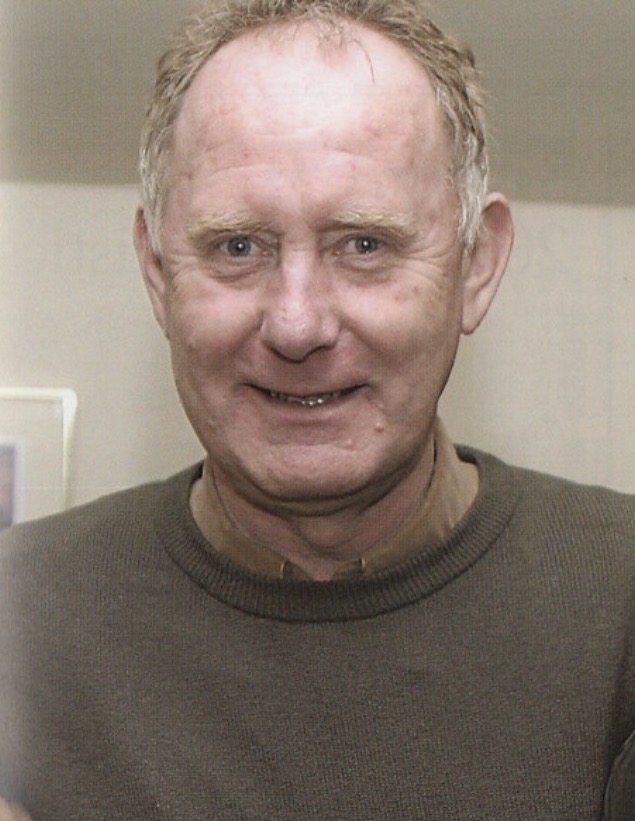
Wilson pictured in 2010

Gary Williams knew where the goal was – even from left back

A CARTILAGE operation when he was just 17 changed Gary Williams’ career, but, after success at Brighton, it eventually brought his playing days to a premature end at Crystal Palace.

Originally a winger, the operation, when he was an emerging player at Preston North End, took the edge of his pace and led to him converting into an overlapping left back.

Thankfully, as Brighton fans would witness, his ability to score important goals never left him.

Born in Litherland, Liverpool, on 8 March 1954, Gary Peter Williams had unsuccesful trials with Liverpool and Coventry City before starting his career with non-league Marine. He caught the eye of a scout who’d gone to watch a different player and ended up signing for Preston in April 1972.

Williams made his Preston debut in the final game of the 1971-72 season as Preston drew 2-2 at home to Swindon.

He then played in the opening match of the following season, against Aston Villa, but had to wait until the end of March at Brighton for his next appearance.

After his cartilage op, and just when he thought he was set to be released aged 18, Preston’s reserve team left-back got injured, Williams filled in, did a good job, and it was the platform he needed to launch his career.

“Because I used to be a winger, I knew which way to shepherd them to make it difficult to cut inside,” he told the journalist and author Spencer Vignes in his 2005 book, A Few Good Men.

It was the legendary Bobby Charlton, briefly trying out management at North End, who gave Williams his big break into first team football, selecting him at left back for the final eight games of the 1974-75 season.

Young Gary Williams with former England World Cup winner, Nobby Stiles, at Preston, and scoring the winner at Sunderland.

Former Everton boss Harry Catterick took over from Charlton and made Williams the first choice left back in 1975-76. The following season his outstanding performances earned him the Player of the Season award and on 22 March 1977, he made his 100th league appearance in a 1-0 defeat at Selhurst Park.

By then, Williams was catching the eye of clubs higher up the league and his final game for Preston was the season-ending fixture at Shrewsbury on 14 May, which North End won 2-1.

In July 1977, Preston accepted a £45,000 fee from Brighton to sign Williams shortly after his teammate Mark Lawrenson joined for £100,000. Albion’s Graham Cross and Harry Wilson moved in the opposite direction to fill the positions they’d vacated.

Williams told Vignes how he’d always enjoyed playing against Brighton because of the size of the crowds they got.

“To run out in Division 3 at the Goldstone in front of a full house was amazing. You knew you were in for a hard time but the atmosphere was just infectious,” he said.

Manager Alan Mullery had called him and asked him to get himself down to Brighton and the club booked a room in the Metropole Hotel, the sea view helping to make up his mind about the move.

“I wanted to better myself and get into the First Division but football is such an up and down game that it’s not too wise to look too far ahead,” Williams told Football Weekly News magazine in 1980.

The start to his Albion career was somewhat inauspicious. Although he came on as a substitute in the opening game, a league cup tie away to Cambridge United which finished 0-0, injury then prevented him making his league debut for two months.

It finally came in a 2-0 win away to Sunderland on 1 October 1977 and he then missed only one game through to the end of the season, appearing a total of 34 times as the Seagulls finished fourth, missing promotion on goal difference to Tottenham.

The following season saw Williams play every game, scoring twice, as Brighton were runners-up to Palace gaining promotion to Division One for the first time.

In Albion’s first season amongst the elite, Williams was again ever present – indeed, he remarkably played 146 consecutive games during his time at the club.

The Everton-supporting full-back got the chance to play against his boyhood side in December 1979 and three months later he scored the first of two cracking, memorable Brighton goals in the top division as the Seagulls finished in 16th position.

On 29 March 1980, at the Goldstone, he lashed a shot from 30 yards that flew past England goalkeeper Peter Shilton to earn Albion the double over European Cup holders Nottingham Forest.

Williams beats Nottingham Forest full back Viv Anderson at the Goldstone and, together with Gary Stevens, tries to thwart Liverpool’s Kenny Dalglish.

Williams admits he was about to pass it until skipper Brian Horton urged him to ‘hit the ****ing thing!’

“When you hit the ball that sweetly, you don’t even really feel a thing,” he recounted to Vignes, in that 2005 interview. “By the time I looked up, it was heading for the top corner.”

Although Forest boss Brian Clough declared it a fluke in a post-match interview, because the game took place in front of the TV cameras, it was selected as one of the goals of the season.

Thirteen months after that goal, Williams struck another beauty, this time to silence the Sunderland faithful at Roker Park.

It clinched Albion a 2-1 win and was part of a late flurry of good results which saw the Seagulls escape the clutches of relegation.

Describing it to Vignes, he said: “It was our last attack of the game. Gordon Smith knocks a good ball into the penalty area and I’ve just taken a gamble and gone up from the halfway line. I say so myself but it was a really good volley.

“It fell to me around 10 yards out and you hear the net ripple because the crowd went silent.”

While it contributed to Albion staying up, that summer saw the departure of Mullery, Lawrenson and Horton and the arrival of Mike Bailey into the manager’s chair. It was to signal the end of Williams’ Brighton career.

Bailey favoured a far more defensive approach to his predecessor and brought in the experienced Northern Ireland international Sammy Nelson, who had been displaced at Arsenal by the arrival of Kenny Sansom.

Williams only learned about the signing through The Argus and, when he confronted the manager about it, was told Nelson was only going to be a squad player.

“I’m thinking ‘bollocks’ but he didn’t play him straightaway,” Williams recounted. “He couldn’t drop me because I wasn’t doing anything wrong.”

Ironically, however, he lost his place after bombing forward and scoring in a 4-1 win over Manchester City. Astonishingly, Bailey was annoyed that he had been too adventurous!

With Nelson keen to carry on playing and earn a place in Northern Ireland’s 1982 World Cup squad, it meant Williams was left to languish in the reserves.

By the end of the season, though, Mullery, by now manager of Crystal Palace, came to Willams’ rescue and gave him a chance to resume first team football.

In a swap deal that saw winger Neil Smillie arrive at the Goldstone, Williams moved to Selhurst.

But after only 10 games he was forced to have an operation on his troublesome knee. Expert advice steered him towards a painful decision but he took it and retired from the game aged just 29.

Williams told the Argus: “The trouble with my knee is really wear and tear. I had a cartilage out at 17, and I was told after the operation last October a lot of harm might be caused if I went on playing.”

In A Few Good Men, Vignes gained a great insight into a northern lad who fell in love with the Albion and remains a fan to this day.

“I was very lucky in that I played right at the beginning of the era of overlapping full-backs,” Williams told him. “It was beginning to creep in when I first came onto the scene, and I had an advantage as I’d started my career as a left-winger. I knew all about coming forward.”

gwms quit cutting

Imperious Mark Lawrenson starred at Brighton before hitting Liverpool heights

MARK LAWRENSON was without doubt in my mind the best player ever to play for Brighton and Hove Albion. Peter Ward was exceptional but Lawrenson did it for Brighton and went on to have a glittering career with Liverpool, the top club in the country at the time.

And, whatever your thoughts about his contribution as a pundit – and many are very disparaging – you can’t take away his longevity on our TV screens and across our media.

Although now slightly less prominent as a TV pundit, for a good many years, Lawrenson reprised his successful Liverpool central defensive partnership with Alan Hansen in the BBC Match of the Day studios.

But where did it all begin? Born on 2 June 1957 in Penwortham, Lancashire, Lawrenson joined nearby Preston at 17 in 1974, who at the time were managed by the legendary Bobby Charlton.

Lawrenson made his full debut for the Lilywhites the following year, two months before his 18th birthday. However, it was Charlton’s fellow World Cup winner, Nobby Stiles, to whom Lawrenson was most grateful.

“I was a winger when I joined Preston, while he was coach, and he was the one who converted me to my present position – in the middle of the back four,” Lawrenson told Keir Radnedge in Football Weekly News.

“Nobby was very good with the youngsters. He was almost like a father-figure. He commanded respect not only because of what he’d achieved himself but because of the way he’d help iron out your faults.”

At the age of 19, and thinking he’d never be good enough to play for England, Lawrenson opted to play for the Republic of Ireland when player-manager Johnny Giles (perhaps not coincidentally, Nobby’s brother-in-law) found out that he qualified to play for them through his grandfather.

That debut for Ireland in April 1977, in a 0-0 draw with Poland, came at the end of a season in which he was voted Preston’s Player of the Year.

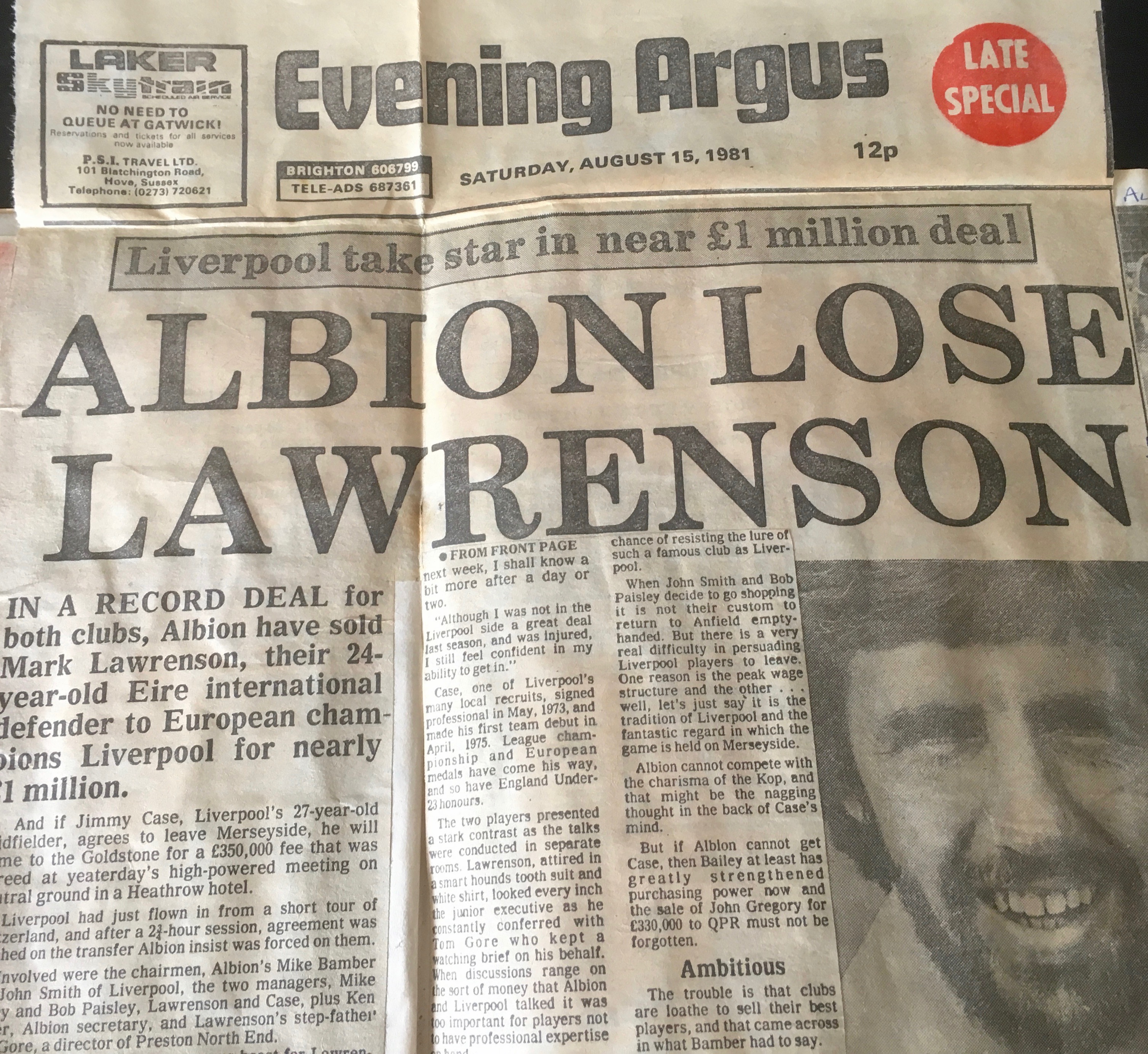
Within weeks, he joined the Albion for £112,000 (£100,000 + VAT @ 12 per cent) after Brighton manager Alan Mullery persuaded Albion to outbid Liverpool to get their man.

Shoot article

Mullery recalled in his 2006 autobiography how he had taken the board of directors to see Lawrenson perform superbly in an end-of-season game at Crystal Palace, where he marked their new star striker Mike Flanagan out of the game.

Lawrenson recollects how he was on an end-of-season ‘jolly’ in Spain with his Preston team-mates when Brighton chairman Mike Bamber and director Dudley Sizen turned up and ‘sold’ the club to him in a Benidorm beachside bar.

There was nearly a hitch in the deal when his medical showed high sugar levels in his blood – but it turned out he had been drinking blackcurrant-flavoured Guinness while on the Spanish holiday.

Mullery was building on the success of guiding the Seagulls to promotion from Division Three in his first season in charge, and the young defender replaced the experienced Graham Cross, who went to Preston in part-exchange.

Shortly after signing Lawrenson, Mullery told Shoot magazine: “I know a lot of people have not heard too much about him yet. But they will – believe me, they will. He is only 20, is big and strong and will make his mark in a big way.”

And, in his autobiography, Mullery said: “Any manager would love to have a player of Mark’s ability in their side. He had a calm, strong temperament, he never caused any problems and he always performed brilliantly on the field. His presence helped to lift the team to a whole new level of performance in the 1977-78 season.”

Lawrenson made his Brighton debut on the 20 August 1977 in a 1-1 draw against Southampton at The Dell and went on to make 40 league appearances by the end of his first season at the club.

The following season, when Albion went one better and earned promotion to the top division for the first time, Lawrenson was a stand-out performer. In his book, A Few Good Men, author Spencer Vignes said: “His timing in the tackle and ability to read the game belied his relative youth, but what really caught the eye was his skill on the ball, which, for a centre-back still earning his wages in English football’s second tier, was little short of remarkable.”

Skipper Brian Horton told Vignes: “The way he used to bring the ball out from the back had to be seen to be believed.”

In a special Argus supplement of April 1997, to mark Albion’s departure from the Goldstone, Lawrenson was interviewed by Mike Donovan, and told him: “The Goldstone was a great place to play and I was extremely happy there.

“It was an excellent team that played good football the way it should be played – by passing it around. Also, we had a great team spirit, mainly because a lot of the team were outsiders coming in and stuck together. We all played and socialised together.”

Unfortunately, Albion’s first season amongst the elite was only five games in when Lawrenson received a serious injury in a clash with Glenn Hoddle at White Hart Lane.

Badly torn ankle ligaments and a chipped bone was the diagnosis and it sidelined Lawrenson for 12 matches, although his absence created an opportunity for young Gary Stevens.

lawro yellowWhen Lawrenson was fit to return, Mullery sprung a surprise by utilising him in midfield, but it was an inspired decision and he stayed there for the rest of the season, helping Albion to finish a respectable 16th of 22.
He went on to make 152 league appearances by the end of 1980-81.

It was his sale to Liverpool in the summer of 1981 that was part of the reason Mullery’s reign at the club came to an end. Mullery had negotiated with Ron Atkinson to sell him to Manchester United with two United players coming to Brighton as part of the deal.

But, behind his back, chairman Bamber had been talking to Liverpool and, in exchange for what was then a Liverpool club transfer record of £900,000, he was destined to be heading back to the North West with midfielder Jimmy Case coming South as part of the deal.

Interestingly, though, Lawrenson revealed in his autobiography how new manager Mike Bailey had actually made him Albion captain, but then asked him how he saw his future, which sowed a seed of doubt about the club’s intentions.

“I don’t know if there was a financial crisis and they were looking for a big transfer fee from my sale to sort themselves out, but the uncertainty did unsettle me,” he wrote. Lawrenson was sent off in an ill-tempered pre-season friendly (against FC Utrecht in the Dordrecht Tournament) and put it down to his personal frustration.

“On our return flight, there was a message that Terry Neill of Arsenal was waiting to meet the chairman at Gatwick,” Lawrenson recalled. “Somehow they missed each other and the next day there was talk of me going to Manchester United.

“But then Mike Bailey asked me if I would meet Liverpool, and I travelled to the Aerial Hotel at Heathrow to meet Bob Paisley, Peter Robinson and Liverpool chairman John Smith.

“Terry Neill was, at the time, waiting in the next hotel in case discussions broke down. He missed out because it only took me 15 minutes to agree to move to Liverpool.

“I travelled North and had a medical at 11.30 at night. I even took the registration forms to the League offices myself, because they are only a few doors away from my mother’s home at St Annes.”

Argus front page

Lawrenson went on to form a formidable central defensive partnership with Hansen after England centre back Phil Thompson suffered an injury, but, as he had showed at Brighton, he was versatile enough also to play at full back or in midfield.

Indeed, Lawrenson made his first start for Liverpool at left-back in a 1-0 league defeat to Wolves. In his first season, Liverpool won the League championship and the League Cup. They won it again in 1982 and retained both for another two seasons, becoming only the third club in history to win three titles in a row. They also added the club’s fourth European Cup in 1984.

Many believed Lawrenson and Hansen were the best central defensive partnership in English football by the time Liverpool clinched the League and FA Cup “double” in 1986.

But Lawrenson was being put under pressure by young centre back Gary Gillespie and an Achilles tendon injury in 1988 prematurely ended his career after 332 appearances and 18 goals, although he earned a fifth and final title medal when that season ended.

Lawrenson tried his hand at management at Oxford United in 1988 but, in almost a mirror image of the situation over his own transfer from Brighton, he resigned after their star striker Dean Saunders, the former Albion player, was sold by the board of directors without Lawrenson’s blessing.

Lawrenson later managed Peterborough United for 14 months between September 1989 and November 1990, but it was a largely unsuccessful tenure.

Apart from one brief foray back into football as a defensive coach at Newcastle during Kevin Keegan’s first reign in the North East, Lawrenson’s involvement since has been one step removed as a pundit and newspaper columnist.

At the 2018 World Cup, Lawrenson particularly hit the headlines when many observed his cantankerous and sarcastic observations were just too much.

Never shy of voicing his opinions, they once led to him losing what at the time was a trademark moustache!

He was so convinced that Bolton would be relegated that he said live on Football Focus that he would shave it off if they proved him wrong, which they did!

In 2003, my friend Andrew Setten somehow blagged tickets which gave us the opportunity to go into the exclusive Football Association area at the FA Cup Final between Arsenal and Southampton at the Millennium Stadium and, all those years later, I finally got the chance to meet Lawro and to get his autograph.

• Pictures from Shoot magazine, cuttings from the Evening Argus and the matchday programme.

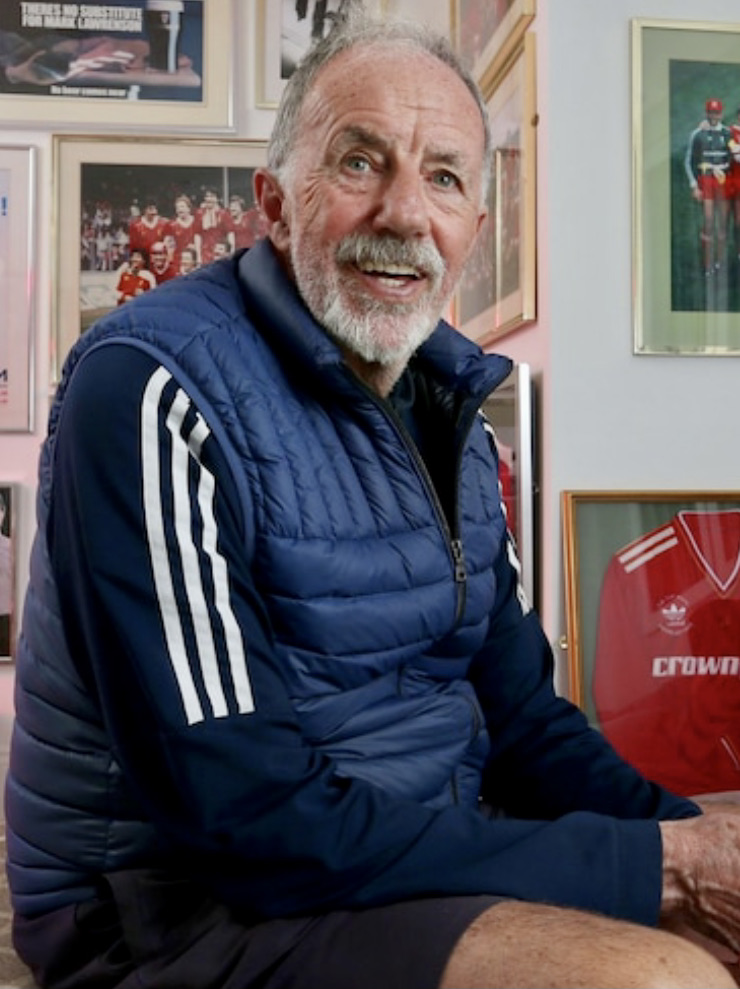
Lawrenson pictured in 2024

Spanish TV star Michael Robinson followed in dad’s footsteps to play for Brighton

Robinson v WBA

WHEN Michael Robinson died of cancer aged 61 on 28 April 2020, warm tributes were paid in many quarters to the former Brighton, Liverpool and Republic of Ireland international who became a big TV celebrity in Spain.

“We have lost a very special guy, a lovely person and someone I’m proud to have known both on and off the pitch,” his former teammate Gordon Smith told Spencer Vignes. “He was one of the boys, one of the good guys.”

It seemed like half a world away since Robinson had charged towards Gary Bailey’s goal in the dying moments of the 1983 FA Cup Final only inexplicably to pass up the opportunity of scoring a Wembley winner to lay the ball off to Smith.

“With Michael bursting forward and having turned the United defence inside out, I was genuinely expecting him to shoot and had put myself in a position to pick up any possible rebound,” Smith recounted. “Instead he squared it to me and we all know what happened next.”

Robinson’s next two competitive matches also took place at Wembley:

  • He once again led the line for Brighton when the Seagulls were crushed 4-0 by Manchester United in the cup final replay on 26 May. It turned out to be his last game for the Albion.
  • Three months later he was in the Liverpool side who lost 2-0 to United in the FA Charity Shield season-opening fixture between league champions and FA Cup winners, following his £200,000 move from relegated Brighton.

It was hardly surprising Robinson didn’t hang around at the Goldstone: the Seagulls had given him a platform to resurrect a career that had stalled at Manchester City, but the striker had several disputes with the club and the newspapers were always full of stories linking him with moves to other clubs.

robbo livPerhaps it was surprising, though, that champions Liverpool were the ones to snap him up, particularly as Ian Rush and Kenny Dalglish were in tandem as first choice strikers.

But at the start of the 1983-84 season, Joe Fagan’s Liverpool had several trophies in their sights and Robinson scored 12 times in 42 appearances as the Merseyside club claimed a treble of the First Division title, the League Cup, and the European Cup.

It took him a while to settle at the Reds because by his own admission he was in awe of the players around him but advice from Fagan to play without the metal supports he’d worn in his boots for six years previously (to protect swollen arches) paid off.

“It made a hell of a difference,” he said. “I felt a lot sharper and so much lighter on my feet.” In the first game without them, Robinson scored twice in a European game at Anfield, then he got one in a Milk Cup tie versus Brentford and scored a hat-trick in a 3-0 league win at West Ham.

robbo semi hatNevertheless, asked many years later to describe his proudest moment in football, he maintained: “Scoring the winning goal in the FA Cup semi-final that meant that a bunch of mates at Brighton were going to Wembley in 1983.”

One of two sons born to Leicester publican Arthur Robinson on 12 July 1958, Michael followed in his father’s footsteps in playing for Brighton. Arthur played for the club during the Second World War when in the army, and also played for Leyton Orient.

When he was four, Robinson moved to Blackpool where his parents took over the running of a hotel in the popular seaside resort. The young Robinson first played football on Blackpool beach with his brother.

After leaving Thames Primary School, it was at Palatine High School that he first got involved in organised football, and, before long, he caught the eye of the local selectors and represented Blackpool Schools at under 15 level, even though he was only 13.

Amongst his teammates at that level was George Berry, who ironically was Robinson’s opponent at centre half in his first Albion match, against Wolverhampton Wanderers.

The young Robinson also played for Sunday side Waterloo Wanderers in Blackpool and when still only 13 he was invited for trials at Chelsea, by assistant manager Ron Suart, who had played for and managed Blackpool.

Although he was asked to sign schoolboy forms, Robinson’s dad thought it was too far from home. Coventry, Blackpool, Preston and Blackburn were also keen and the North West clubs had the edge because he wouldn’t have to leave home.

Eventually he chose Preston and on his 16th birthday signed as an apprentice. At the time, Mark Lawrenson was also there, training with the youngsters, and Gary Williams was already on the books.

After two years as an apprentice, he signed professional and began to push for a first team place with the Lillywhites. With former World Cup winner Nobby Stiles in charge, in 1978-79, Robinson scored 13 goals in 36 matches, was chosen Preston fans’ Player of the Year and his form attracted several bigger clubs.

In a deal which shocked the football world at the time, the flamboyant Malcolm Allison paid an astonishing £756,000 to take him to Manchester City. It was a remarkable sum for a relatively unproven striker.

The move didn’t work out and after scoring only eight times in 30 appearances for City, Robinson later admitted: “I’d never kicked a ball in the First Division and the fee was terrifying. If I had cost around £200,000 – a price that at that time was realistic for me – I would have been hailed as a young striker with bags of promise.”

It was Brighton manager Alan Mullery, desperate to bolster his squad as Albion approached their second season amongst the elite, who capitalised on the situation.

“I received the go ahead to make some major signings in the summer of 1980,” Mullery said in his autobiography. Mullery, had the support of vice-chairman Harry Bloom – current chairman Tony Bloom’s grandfather – even though chairman Mike Bamber was keener to invest in the ground.

“I could see he’d lost confidence at City and I made a point of praising him every chance I got,” said Mullery. “I asked him to lead the line like an old-fashioned centre forward and he did the job very well.”

Robinson told the matchday programme: “When Brighton came in for me, I needed to think about the move…12 months earlier I had made the biggest decision of my life and I didn’t want to be wrong again.”

In Matthew Horner’s authorised biography of Peter Ward, He shot, he scored, Mullery told him: “When I signed Michael Robinson it was because I thought Ward was struggling in the First Division and that Robinson could help take the pressure off him. Robinson was big, strong, and powerful and he ended up scoring 22 goals for us in his first season.”

The first of those goals came in his fourth game, a 3-1 league cup win over Tranmere Rovers, and after that, as a permanent fixture in the no.9 shirt, the goals flowed.

With five goals already to his name, Robinson earned a call up to the Republic of Ireland squad. Although born in Leicester, his mother was third generation Irish and took out Irish citizenship so that her son could qualify for an Irish passport. It was also established that his grandparents hailed from Cork.

He made his international debut on 28 October 1980 against France. It was a 1982 World Cup qualifier and the Irish lost 2-0 in front of 44,800 in the famous Parc des Princes stadium.

Nevertheless, the following month he scored for his country in a 6-0 thrashing of Cyprus at Lansdowne Road, Dublin, when the other scorers were Gerry Daly (2), Albion teammate Tony Grealish, Frank Stapleton – and Chris Hughton!

In April 1982, Robinson, Grealish and Gerry Ryan were all involved in Eire’s 2-0 defeat to Algeria, played in front of 100,000 partisan fans, and for a few moments on the return flight weren’t sure they were going to make it home. The Air Algeria jet developed undercarriage problems and had to abort take-off. Robinson told the Argus: “I thought we were all going to end up as pieces of toast. But the pilot did his stuff and we later changed to another aircraft.”

Although not a prolific goalscorer for Ireland, he went on to collect 24 caps, mostly won when Eoin Hand was manager. He only appeared twice after Jack Charlton took charge.

But back to the closing months of the 1980-81 season…while only a late surge of decent results kept Albion in the division, Robinson’s eye for goal and his never-say-die, wholehearted approach earned him the Player of the Season award.

As goal no.20 went in to secure a 1-1 draw at home to Stoke City on 21 March, Sydney Spicer in the Sunday Express began his report: “Big Mike Robinson must be worth his weight in gold to Brighton.”

However, the close season brought the shock departure of Mullery after his falling out with the board over the sale of Mark Lawrenson and the arrival of the defensively-minded Mike Bailey.

Bailey had barely got his feet under the table before Robinson was submitting a written transfer request, only to withdraw it almost immediately.

He said he wanted a move because he was homesick, but after talks with chairman Bamber, he was offered an incredible 10-year contract to stay, and said the club had “fallen over themselves to help me”.

Bamber told the Argus: “I have had a very satisfactory talk with Robinson and now everybody’s contracts have been sorted out. It has not been easy to persuade him to stay.”

Even though Bailey led the Seagulls to their highest-ever finish of 13th, it was at the expense of entertainment and perhaps it was no surprise that Robinson’s goal return for the season was just 11 from 39 games (plus one as sub).

The 1982-83 season had barely got underway when unrest in the club came to the surface. Steve Foster thought he deserved more money having been to the World Cup with England and Robinson questioned the club’s ambition after chairman Bamber refused to sanction the acquisition of Charlie George, the former Arsenal, Derby and Southampton maverick, who had been on trial pre-season.

Indeed, Robinson went so far as to accuse the club of “settling for mediocrity” and couldn’t believe manager Bailey was working without a contract. Bamber voiced his disgust at Robinson, claiming it was really all about money.

The club tried to do a deal whereby Robinson would be sold to Sunderland, with Stan Cummins coming in the opposite direction, but it fell through.

Foster and Robinson were temporarily left out of the side until they settled their differences, returning after a three-game exile. But within four months it was the manager who paid the price when he was replaced in December 1982 by Jimmy Melia and George Aitken.

Exactly how much influence the managerial pair had on the team is a matter of conjecture because it became a fairly open secret that the real power was being wielded by Foster and Robinson.

On the pitch, the return of the prodigal son in the shape of Peter Ward on loan from Nottingham Forest had boosted crowd morale but didn’t really make a difference to the inexorable slide towards the bottom of the league table.

Ward scored a famous winner as Manchester United were beaten 1-0 at the Goldstone a month before Bailey’s departure, but he only managed two more in a total of 20 games and Brian Clough wouldn’t let him stay on loan until the end of the season.

Albion variously tried Gerry Ryan, Andy Ritchie and, after his replacement from Leeds, Terry Connor, to partner Robinson in attack. But Connor was cup-tied and Ryan bedevilled by injuries, so invariably Smith was moved up from midfield.

Robinson would finish the season with just 10 goals to his name from 45 games (plus one as sub) – not a great ratio considering his past prowess.

The fearless striker also found himself lucky to be available for the famous FA Cup fifth round tie at Liverpool after an FA Commission found him guilty of headbutting Watford goalkeeper Steve Sherwood in a New Year’s Day game at the Goldstone.

The referee hadn’t seen it at the time but video evidence of the incident was used and the blazer brigade punished him with a one-match ban and a £250 fine. Robinson claimed it had been an accident…but it was one that left Sherwood needing five stitches. The ban only came into effect the day after the Liverpool tie, and he missed a home league game against Stoke City instead.

In the run-up to the FA Cup semi-final with Sheffield Wednesday, Robinson was reported to be suffering with a migraine although he told Brian Scovell it was more to do with tension, worrying about the possibility of losing the upcoming tie.

Nevertheless, he told the Daily Mail reporter: “When I was with Preston, I suffered a depressed fracture of the skull and have had headaches ever since. This week it’s been worse with the extra worry about the semi-final.”

Manager Melia, meanwhile was relieved to know Robinson would be OK and almost as a precursor to what happened told John Vinicombe of the Evening Argus: “Robbo is a very important member of our team and he’s the man who can win it for us.

“It is Robbo who helps finish off our style of attacking football and I know he’ll do the business for us on the day.”

Reports of the semi-final were splashed across all of the Sunday papers, but I’ll quote the Sunday Express. Under the headline MELIA’S MARVELS, reporter Alan Hoby described the key moment of the game.

“In a stunning 77th minute breakaway, Case slipped a beauty forward to the long-striding Gordon Smith whose shot was blocked by Bob Bolder.

“Out flashed the ball to Smith again and this time the cultured Scot crossed for Mike Robinson to rap it in off a Wednesday defender.”

Other accounts noted that defender Mel Sterland had made a vain attempt to stop the ball with his hand, but the shot had too much power.

When mayhem exploded at the final whistle, a beaming Robinson appeared on the pitch wearing a crumpled brown hat thrown from the crowd to acknowledge the ecstatic Albion supporters.

In one of many previews of the Final, Robinson was interviewed by Shoot! magazine and sought to psyche out United by saying all the pressure was on them.

“That leaves us to stride out from that tunnel with a smile and a determination to make everyone proud of us,” he said.

“Nobody seems to give us a prayer. They all seem glad that ‘little’ Brighton has reached the Final, but only, I suspect, because they expect to see us taken apart by United.”

Everyone knows what happened next and quite why the normally-confident Robinson didn’t take on his golden opportunity to win the game for Brighton in extra time remains a mystery.

However, as mentioned earlier, within months ‘little’ Brighton was a former club and Robinson had taken to a much bigger stage. This is Anfield reflected on his short time at Anfield as “a golden opportunity for him” and recalls that it turned out to be “the best and most successful season of his career”.

RobFozBWHe had yet more Wembley heartache during a two-year spell with Queen’s Park Rangers, being part of their losing line-up in the 3-0 league cup defeat to Oxford United in 1986.

The move which would lay the foundations for what has become a glorious career on TV arose in January 1987 when Robinson moved to Spain to play for Osasuna, scoring 12 times in 59 appearances before retiring through injury aged 31.

Robinson completely embraced the Spanish way of life, learned the language sufficiently to be an analyst for a Spanish TV station’s coverage of the 1990 World Cup, and took Spanish citizenship.

His on-screen work grew and the stardom Robinson achieved on Spanish TV attracted some of the heavyweight English newspapers to head out to Spain to find out how he had managed it.

For instance, Elizabeth Nash interviewed him for The Independent in 1997 and discovered how he had sold his house in Windsor and settled in Madrid.

Meanwhile, in a truly remarkable interview Spanish-based journalist Sid Lowe did with Robinson for The Guardian in 2004, we learned how that FA Cup semi-final goal was his proudest moment in football and that Steve Foster was his best friend in football.

In June 2017, his TV programme marked the 25th anniversary of Barcelona’s first European Cup win at Wembley, with some very studious analysis. On Informe Robinson (‘Robinson Report), he said: “Wembley was a turning point in the history of football. Cruyff gave the ball back to football.”

Steve Gatting’s three Brighton Wembley dates after missing out with Arsenal

1 MAIN gat sees GS goal.jpgSTEVE Gatting played at Wembley three times for Brighton having twice been denied the opportunity by Arsenal.

After being left out of Arsenal’s FA Cup Final sides in both 1979 and 1980 he finally got to step out onto the hallowed turf twice in the space of five days in 1983.

And his appearance in Brighton’s 3-1 defeat to Notts County in the 1991 play-off final at the famous old stadium was also his last in an Albion shirt after 10 years at the club.

In Match Weekly’s 1983 Cup Final preview edition, Gatting revealed his heartache at missing out with Arsenal in 1979. “I expected to be at least substitute after playing in five of the games leading up to Wembley, including the semi-final,” he said. “I was desperately sick when I didn’t get a chance. Although I really wanted the lads to do well, I couldn’t help feeling pangs of regret as the cup was paraded around the ground.”

Born on 29 May 1959 in Park Royal, London, two years after his famous brother Mike, the former Middlesex and England cricket captain, Steve was no mean batsman himself.

Instead of joining the ground staff at Middlesex County Cricket Club, though, Gatting shone at football with Middlesex and London Schoolboys teams and became an associate schoolboy with Arsenal before joining as an apprentice in July 1975. Terry Neill signed him as a professional at the age of 17 and a year later he made his First Division debut against Southampton at Highbury.

Gatting made 76 appearances for Arsenal over three seasons, his most memorable being the 1979 FA Cup semi-final against Wolves at Villa Park. He said his biggest disappointment was missing out on the May 1980 European Cup Winners Cup Final against Valencia in Brussels.

In his youth career, Gatting played in the centre of the back four but Arsenal generally played him in midfield, where competition for places was fierce with the likes of Liam Brady and Graham Rix. He admitted after joining Brighton: “When they bought Brian Talbot from Ipswich, I sensed I was on my way out.”

It was rumoured Albion would take Gatting as part of a swap deal that would see Mark Lawrenson join Arsenal but, of course, Lawrenson went to Liverpool instead. Albion were still interested in Gatting, though, and in September 1981 new manager Mike Bailey met him and his displaced colleague Sammy Nelson at Gatwick Airport and agreed terms to buy the pair of them; £200,000 the fee for the young Gatting.

Albion offered Gatting the chance of regular first team football and, although the expectation was for him to occupy a midfield spot, he quickly stepped in alongside Steve Foster in the back four and completed 45 appearances that season.

Aside from a rare couple of spells back in midfield, he remained a defender for the rest of his career, often slotting in at left back – apart from when he played right-back in the Cup Final replay.

Gatting had a terrific game alongside Gary Stevens in the 2-2 drawn first game against Man United, but Jimmy Melia unwisely chose to play the left-footed Gatting in place of injured Chris Ramsey (he should have put Stevens there) and the back line was noticeably unbalanced as they went down 4-0.

The Paul Camillin / Stewart Weir book Albion The first 100 years said: “Played out of position at right-back in the replay, he endured an uncomfortable evening in an unfamiliar role.”

Even so, interviewed three years later in the Albion matchday programme, Gatting spoke fondly about his memories of the whole occasion.

“The helicopter flight to Wembley was a new experience. We flew over the stadium and saw all our fans below,” he said. “That was a great moment. We landed and drove to the ground and went straight out onto the pitch to get a taste of the atmosphere. I met my brother Mike out there and to be honest he was more nervous than me!

“The greatest part of the whole day was walking out of the tunnel and seeing all the fans and being deafened by the cheering. That is an ambition every footballer has, to play in the Cup Final at Wembley. It was a dream come true for us and I think it lifted our game.”

Gatting had made only eight first team appearances in the 1984-85 season before, in November 1984, he sustained a serious pelvic injury which threatened his career. After five months, it was decided the only solution was a bone graft to the pelvis.

He had to remain motionless in hospital for a month and then rest on his couch when he was allowed home.

His wife Joy told Tony Norman in March 1986: “I felt sorry for Steve. He’s usually such an active person but suddenly he just had to sit there. It must have been very difficult. But Steve never got into self-pity. He stayed very positive and I respected him for that.”

Norman reported: “It was a long hard road for Steve. He started taking long walks in July, to build up strength and that progressed into jogging, light training and finally full training. He made his comeback game in the Reserves on 26 October.

Gatting told the interviewer: “When you are playing regularly, you tend to take things for granted. But when something like a serious injury comes along, it makes you realise how lucky you are to be fit and playing the game you enjoy so much. When you’re sitting on the sidelines week in week out it brings it home to you.”

The injury restricted him to only 17 appearances in the 1985-86 season but he was restored fully to the side in 1986-87 when financial issues clouded Alan Mullery’s return to the manager’s chair and successor Barry Lloyd couldn’t stop the inexorable slide to relegation from the second tier.

In a League Cup game replay away against First Division leaders Nottingham Forest, Gatting had to take over in goal when Perry Digweed  was forced off with a broken cheekbone. Gatting completed 45 appearances that season and said: “Dropping into the Third Division was far worse than going out of the First.

'keeper Gatt - webb on ground

Makeshift ‘keeper Gatting claims the ball with Nottingham Forest’s Neil Webb grounded

“All the players at the time felt they were good enough to stay up, but it didn’t happen and we gave a lot of silly goals away.

“The whole club was unsettled, too, but things became better again. Getting back into the Second Division was a boost for everybody.”

Gatting was ever-present in the 1987-88 promotion-winning campaign, even though in July 1987 Lloyd had given him a free transfer! The defender had other ideas and managed to play his way back into contention to such an extent that he ended up the season as captain, taking over from Doug Rougvie.

“It was nice to know I was wanted, particularly after relegation the year before,” he said.

Having made his 200th league appearance for the Albion against Chester on 12 December 1987, it was no surprise he viewed with some relish a FA Cup tie against his old club.

“Quite honestly, as a Third Division club, we don’t expect to go all the way, but I think we have the ability to scrape a result against Arsenal,” he said. “It gives me the opportunity to renew old friendships with Kenny Sansom, David O’Leary, Graham Rix and Paul Davis who were all members of the Arsenal staff when I was there.”

Albion pushed the Gunners all the way in front of a packed house and Garry Nelson rifled a memorable goal, but Arsenal prevailed 2-1.

Evening Argus Albion reporter John Vinicombe profiled Gatting warmly in a piece produced for a pre-season supplement ahead of the 1989-90 season, headlined “ice-cool Gatt”.

He described Gatting as “surely one of the most laid-back of individuals, whose natural personality is quiet and reserved”.

The report continued: “He shuns being the centre of attention, but the fact that he stays cool, even in nerve-wracking situations, is an important consideration when assessing leadership qualities.

“Leadership runs in the family, and many would say that older brother Mike was unlucky to lose the captaincy of England’s cricket team.”

On another occasion, Gatting said of his brother: “I’m proud of what Mike has achieved and I keep up to date with the latest news and enjoy watching the highlights on TV.

“We are close, we always have been, but the funny thing is I hardly ever go to see Mike play. When I do go, he never seems to make runs. So I think it’s best to stay at home and watch the Tests on TV.”

As mentioned previously, Steve was a good batsman in his own right and played for Middlesex Second XI. In Sussex, he enjoyed a summer tour with Brighton Brunswick as well as making runs for Preston Nomads.

Vincombe wrote: “Gatting occupies a special niche in the affections of Albion regulars. They see in him a thoroughly decent and well-behaved person whose standards on and off the field are high. Albion have been good to him and Gatting, after not a few periods of uncertainty, has been good for Albion.”

Gatting for his part said: “I’ve seen a lot of changes since arriving here, and I’ve played under five managers who have all had different ideas.”

testimonialA cut glass decanter and glasses from chairman Dudley Sizen at Gatting’s testimonial

He was granted a testimonial for his long service and a curtain-raiser to his 10th season with the club saw Albion draw 2-2 with Arsenal in front of a crowd of 5,517. The Gunners included their recent big money signings David Seaman, Andy Linighan and Anders Limpar.

Injury niggles continued to plague him towards the end of his 10 years at the club but he worked his way back into the side in 1990-91, slotting in at left-back and culminating in that 1991 play-off final against Notts County at Wembley.

Long after all the other members of the Brighton 1983 Cup Final side had departed, Gatting was still pulling on the stripes, and, but for those injuries, he would surely have made many more appearances than the 366 + three as sub (21 goals) that stand as his record.

Given another free transfer in 1991, he departed for Second Division Charlton Athletic along with Garry Nelson, linking up with former Albion teammate Alan Curbishley who at the time was joint manager with Steve Gritt.

Charlton only narrowly missed out on a play-off place while Albion were relegated!

By the end of the following season, when Gatting retired, he had played a total of 64 games for the Addicks.

He then turned his attention to coaching and spent seven years at independent school Christ’s Hospital, Horsham, before returning to Arsenal in 2007 to work as an academy coach. Gatting was working as Arsenal’s under-23s coach until May 2018 when he and his assistant Carl Laraman were suspended after accusations of bullying were made against them, and neither returned to their roles.

Gatting subsequently joined League Two Stevenage as assistant coach under Dino Maamria just before Christmas 2018 but he left the Hertfordshire club shortly before the end of the 2018-19 season.

• There have not been many father-son combos during my time watching Albion (Gerry and Darragh Ryan were the first that spring to mind) but it must have given Steve great pride to see his son Joe make it through the youth ranks at Brighton and go on to play for the first team. He made 44 appearances and I recall an away game at Carrow Road when Steve and Uncle Mike were both watching the youngster in Albion’s forward line. Eventually, after he left the Seagulls in 2008, he turned to cricket and was good enough to play at county level for Sussex and Hampshire.

Liverpool legend Jimmy Case became a Seagulls favourite too

Case 4 imagesJIMMY Case remains one of my all-time favourite Albion players.

Several of the best moments I can recall as an Albion supporter involve Case: the 1983 FA Cup semi-final belter against Sheffield Wednesday at sunny Highbury perhaps the most memorable.

The biggest disappointment was that Albion let him go so easily.

Younger readers may only remember his unhappy stint as manager when the misdirected club was in turmoil, and he ended up holding the reins when Liam Brady just couldn’t take any more.

But rather than remember him as the man who took Brighton down to Division 3 in 1996, I remember the class act who arrived at the Goldstone in 1981 with a trophy cabinet the envy of many a footballer.

Although Brighton lost the sublime Mark Lawrenson to Liverpool as part of the deal that saw Case move to Brighton, they gained a player who had already got three European Cup winners’ medals, four Division 1 (Premiership equivalent) winners’ medals plus one each for winning the UEFA Cup, European Super Cup and the League Cup.

Case, born in Liverpool on 18 May 1954, was one of four children David and Dorothy Case raised in a council house in the city’s Allerton district.

He learned how to handle himself on a football field playing in a tough dockers’ team but Liverpool picked him up from the local non-league club, South Liverpool. By then, Case had left school and was training to be an electrician.

He carried on those studies but after two years on Liverpool’s staff he made his first team debut in April 1975 in a 3-1 win over QPR.

He scored his first goal in a 3-2 home win over Spurs at the beginning of the following season and, in what must have seemed a dream start, completed his first full season as part of a championship winning team, as well as scoring in the two-legged UEFA Cup Final win over FC Bruges.

Case EuropeThe triumphs and trophies kept coming with Case enjoying the ride but by 1980-81 he was beginning to be edged out by Sammy Lee, and manager Bob Paisley didn’t look kindly on some of the off-field escapades Case was involved in with fellow midfielder Ray Kennedy.

Paisley said: “He had lost his appetite for the game in his last year at Anfield. It’s a hard stint working the right flank in our team and Jimmy had stopped getting forward and was looking to play early passes from deep positions. I think his legs had become tired.”

The move to Brighton might never have happened if Alan Mullery had got his way because he had already done a deal with Ron Atkinson to sell Lawrenson to Manchester United in exchange for two of their players.

But when chairman Mike Bamber pulled rank and forced through the Liverpool deal he had negotiated, Mullery quit and Case arrived on a five-year contract to find a new manager in charge in Mike Bailey.

It felt to me that Brighton were stepping up to a whole new level bringing in someone of Case’s stature, and so it proved.

In his first season at the Goldstone, Albion recorded their highest-ever finish among the elite – 13th.

I recollect heading to Upton Park for the opening game of the season to see Case make his debut against West Ham and Albion earned a 1-1 draw despite having Gerry Ryan sent off.

Case found himself in trouble with referees on way too many occasions that season. Although he came to the club with a hard man image, amazingly he had never previously been suspended for accumulating bookings.

But by December he had to sit out a two game ban, and when his bookings total reached eight by March, he missed another three games.

Case told John Vinicombe of the Evening Argus: “I am a face, and there is nothing I can do about that. I am known, and that might explain some of the things that have happened to me on the pitch.

“The last thing I wanted on coming to Brighton was to get suspended. Brighton didn’t give me a contract to miss games.”

For anyone who has not yet read it, Case’s autobiography, Hard Case (John Blake Publishing) is well worth a read, detailing through writer Andrew Smart a fascinating career.

Disappointingly, it has a few factual errors that doubtless the distance of time brought about. Nevertheless, Case says: “I enjoyed every minute of my time with Brighton.”

Particularly pleasing for him was to score with a thumping header past Bruce Grobelaar in a 3-3 draw with Liverpool at the Goldstone, and to be on the right end of Albion’s 1-0 win at Anfield that season.

Case enjoyed life off the field as well and admits in his book: “The inhabitants of Brighton and Hove were just a little more sophisticated than the Allerton of the 1970s and I was introduced to the many and varied attractions of decent food and fine wine. It was an education I really appreciated.”

His second season was to end in relegation, but, more famously, with Brighton’s one and only appearance in an FA Cup final. Case scored goals in the fourth, fifth and sixth rounds, as well as the semi-final.

The newspapers had a field day when Case’s winner for Brighton in the fifth round of the Cup at Anfield denied his old boss Bob Paisley the chance to wipe the board with trophies that season.

It seemed every national and local newspaper headline revolved around the likeable Scouser: ‘It’s Case for Champagne’, ‘Jimmy sets out his case’, ‘Old boy Case kills off Liverpool hopes’, ‘Amazing Case’, ‘Killer Case’, ‘Case packs a super Cup punch’, ‘Case for Cup win’.

The Daily Mirror made him their footballer of the month for February on the back of that goal with reporter Harry Miller declaring: “No single act did more to capture the imagination of the public than midfielder Case’s dramatic 71st minute winner on Sunday, February 20.”

Case himself had mixed emotions about it all, saying: “I had ten fantastic years at a remarkable club. That’s something that goes deep down.”

He also revealed how a good friend of his had been out of the country at the time of the game and sent him a postcard with only two words as its message: ‘You bastard’.

When he scored the only goal of the game in the quarter final win over Norwich, the headlines continued: ‘Case of bubbly’, ‘The odd Case of hero and villain’, ‘Seagulls have landed with champagne Jim’.

That belting free kick in the Highbury sunshine set Albion on their way to the 2-1 win over Sheffield Wednesday, earning a first ever  – and only – place in the FA Cup final.

He was no stranger to Wembley, of course, having previously scored Liverpool’s goal in the 1978 2-1 defeat to Manchester United, but unfortunately he didn’t repeat his earlier goalscoring feats in the 1983 final.

He played a key part in Albion’s brave effort to earn a draw against Man U and then had the agony of returning home that Saturday evening to discover his mother, who had been a visitor, had died in her sleep at the age of just 63.

It was to Case’s immense credit that he took his place in the side for the replay just five days later.

While relegation brought the inevitable break-up of the team, with Gary Stevens and Michael Robinson departing before the new season began, Case publicly declared his intention to stay and try to get the team back up to the elite.

However, once fellow Scouser Jimmy Melia had been replaced by Chris Cattlin, there was probably only going to be one outcome and eventually Case was sold to Southampton for £30,000 in March 1985.

For him, it was a great move because he was returning to the top division again. It turned out that he was Lawrie McMenemy’s last signing for Saints, but, on this occasion, the change of manager was to cement his place in the side. Chris Nicholl made him the club captain the following season.

In 1985-86, Saints reached the semi-final of the FA Cup (beating Brighton 2-0 in the quarter-final!) losing 2-0 to Liverpool after extra time. If Saints had won, Case would have been the first player to appear in three FA Cup finals with different clubs.

Over his six years at The Dell, Case played alongside Glenn Cockerill and Barry Horne and helped to bring on the careers of youngsters such as Matt Le Tissier, Alan Shearer and Jason Dodd.

But when Ian Branfoot took over as manager in June 1991, he dispensed with Case’s services within a matter of days and transferred him to Bournemouth, who were managed by Harry Redknapp.

After 40 league games for Bournemouth in 1991-92, he moved to Halifax Town managed by former Saint and, one-time Albion loanee, John McGrath, who was being assisted by another ex-Albion man, Frank Worthington.

But Case only played there for six months, moving on to Wrexham, where he helped them gain promotion from the 3rd Division at the end of the 1992-93 season.

He then turned out for non-league side Sittingbourne until, at the ripe old age of 39, Liam Brady brought him back to Brighton in December 1993, as a player/coach. It was during that spell that he played in his 600th league game, the club chief executive David Bellotti presenting him with a silver salver on reaching that milestone

As a mark of the esteem in which Case was held, a testimonial game for him at the Goldstone Ground on 17 October 1994 had to be delayed 10 minutes because so many people wanted to get in to pay tribute. The capacity of the grand old ground was much reduced by then but still 15,645 packed in to see Case’s old club Liverpool do him the honour of providing the opposition.

Albion featured Matt Le Tissier in their line-up and even Ryan and Brady made substitute appearances as Liverpool emerged 2-1. The result, of course, was immaterial, and an emotional Case said afterwards: “I can’t thank the supporters enough. This was the only game I’ve ever been nervous about. I’ve never really asked for anything from the game, I just wanted everyone to enjoy it.

“It’s all been quite embarrassing really. I like to go to parties, I just don’t like them being my own.”

After his unhappy time as Albion manager, Case later managed non-league Bashley but is more often seen and heard these days on the after dinner speaking circuit or on regional football programmes. He also contributes to Southampton’s in-house radio station “The Saint”.

In July 2007, he once again donned a Brighton shirt, playing a cameo role alongside other past heroes in a brief curtain-raiser to Kerry Mayo’s testimonial game against Reading.

Sammy Nelson’s glittering career came to an end at Brighton

2 Sam NelsonEXPERIENCED Northern Irish international full-back Sammy Nelson was an Arsenal legend who joined Brighton towards the end of his career.

The last four of his 51 international caps came while with the Seagulls. One was a 4-0 defeat to England at Wembley when Albion teammate Steve Foster made his England debut, another was a substitute appearance at the 1982 World Cup against Spain. His last appearance for his country came in a 2-2 draw with Austria at that tournament.

nels NI colLeading up to that competition, Nelson had played a significant part in helping Albion to what remained their highest ever finish in the football pyramid – thirteenth place – until the 2022-23 season.

A lot of fans didn’t like manager Mike Bailey’s style of play, but, with some degree of resonance to Chris Hughton’s philosophy, he built his side on a solid defence and preferred experience over youth.

Nelson was a key player in that defence after ousting long-serving Gary Williams a third of the way into the 1981-82 season.

He played alongside his former Arsenal teammate Steve Gatting, who Bailey had signed for £200,000 as a replacement for Mark Lawrenson (the famous departure to Liverpool having been the trigger for Alan Mullery to quit as manager).

Nelson had made only one substitute appearance for Arsenal in the previous season but he enjoyed a bumper testimonial game when a crowd of 20,000 turned up at Highbury for a game against Celtic.

Bailey declared on paying £35,000 for a 32-year-old player who had made 339 league and cup games for the Gunners: “The signing of Sammy Nelson has now given me the sort of squad I feel we need to compete with the best in the division.

“Sammy is a fine player and a very good professional but, like everyone else, he will have to compete for a team place.”

He did indeed have to wait for his chance, largely because he had a foot strain at the time of signing. But the chance came in a league cup second leg game at home to Huddersfield at The Goldstone.

Williams was restored for the following two league games but Nelson got the nod for a third round league cup game away game at Barnsley (which ended in a 4-1 defeat) and kept the shirt for all but two games through to the end of the season, making 32 appearances in total.

After only seven games, he gave an interestingly candid interview to the Argus. He admitted he was struggling with the daily commute from his home in Brookmans Park in Hertfordshire, being that it necessitated a 6am wake up.

“Towards the end of a week, it is only natural to start feeling tired at that sort of routine when, instead, I should be fresh for the coming game,” he said.

In the same interview, Nelson went on to take a bit of a swipe at a small section of the Albion following. “They expect the championship to come overnight. Some of them, instead of getting behind the team, have begun to get abusive, even vindictive,” he maintained. “I would have expected a little more loyalty from the crowd, but I must stress that I am only talking about a small section.”

It must have given Nelson some pleasure in April 1982 to be on the winning side as Albion beat Arsenal 2-1 in the top flight for the first time in nine attempts since gaining promotion in 1979.

Especially as former boss Terry Neill was up in arms about a challenge Nelson had made that went unpunished. The News of the World declared: “Arsenal boss Terry Neill last night blames former Highbury hero Sammy Nelson for his team’s defeat.

“Neill claimed the Brighton fullback should have been booked for bringing down Raphael Meade as the striker closed in for a goal which would have sewn up the match for the Gunners.”

Nelson was born in Belfast on April Fools Day 1949 and joined Arsenal on his 17th birthday in 1966, just as all eyes in England were focused on the World Cup.

His first silverware came as a member of Arsenal’s FA Youth Cup winning side that year, when they beat Sunderland 5-3 over two legs.

At that time he was a left winger but coach Don Howe converted him to a full back. The established first choice left back was Bob McNab and in the famous 1970-71 Double winning side, Nelson only got to play four games.

In fact he understudied McNab for the best part of five years, until the former Huddersfield man left the Gunners in 1975. Then Nelson made the position his own, with fellow Irish international Pat Rice on the opposite flank.

Nelson was almost ever present for five seasons and was part of the Arsenal team which reached three successive FA Cup Finals: 1978, 1979 and 1980, picking up a winners’ medal in the 1979 win over Manchester United. The Arsenal 1-2-3 that day were all Ulstermen: Pat Jennings, Rice and Nelson.

I particularly like this story from Arsenal fan Paul Reynolds, published on untold-arsenal.com: “In 1980 I took on a paper round and one of the houses I delivered newspapers to was where the Arsenal left-back Sammy Nelson lived. I didn’t see him often because I delivered the papers very early, but I’ll never forget the morning of the Arsenal v West Ham final.

“At about 10am I got a phone call from the paper shop owner to tell me that Sammy had popped in the night before and dropped off two tickets to give to the lad who delivered his papers. I was thrilled to bits and my girlfriend and I rushed off to Wembley and just about made it in time for kick-off – we didn’t care that we had to stand right at the back.

“Although, sadly, we lost the game 1-0 I’ll never forget that generous and thoughtful gesture by my former Arsenal hero and will always be grateful to have been supporting the club during an era when the players genuinely had a connection with the supporters and cared enough to go out of their way ahead of a massively important game to help a fan like me. Arsenal ‘til I die.”

arsenal.com remembers Nelson as one of their top 50 players, describing him as “a funny and endearing individual, the Ulsterman was held in genuine affection by team-mates and supporters alike”.

It also recalls the time he dropped his shorts and bared his backside to the North Bank – which earned him a fortnight’s ban by the FA. It was his response to scoring an equaliser after he’d earlier been barracked for scoring an own goal in a league game against Coventry.

The website adds: “A fine strike in a League Cup trouncing of Leeds United in 1979 was the pinnacle of his goalscoring feats, but Nelson was always willing to venture into enemy territory. At the back his obdurate tackling and bravery was complemented by a sure touch on the ball.”

Arsenal’s signing of Kenny Sansom spelled the beginning of the end of Nelson’s time at Highbury and he moved to Albion in September 1981.

Although he started the 1982-83 season in the Albion first team, he picked up an injury and retired at the end of the season having played a total of 45 games for the Seagulls.

On retirement he initially became Albion’s reserve team manager and then first team coach when Chris Cattlin took over as manager from Jimmy Melia. But he left after only one season and took up a City consultant job in life assurance and pensions.

Funnily enough, as a regular commuter to London myself at that time, I’d frequently see Sammy joining the train at Hove in the mornings and then relaxing in the buffet car on the return journey in the evenings.

He told the Independent in a ‘where are they now?’ feature in March 1994: “It’s funny, I never saw myself being part of the rat race but now I find myself standing on the platform in the right place for ‘my’ seat, just like everyone else.”

Pictures from my scrapbook and matchday programmes

A Goal magazine action shot of Nelson in Arsenal’s colours and the full-back in action for the Albion at the Goldstone, pictured in the matchday programme.

Also pictured: Nelson in full flight against Southampton; with young Gary Stevens captured by the Argus singing In Brighton at Busby’s disco in Kings Road; making the headlines in the News of the World; in action against Wolves.