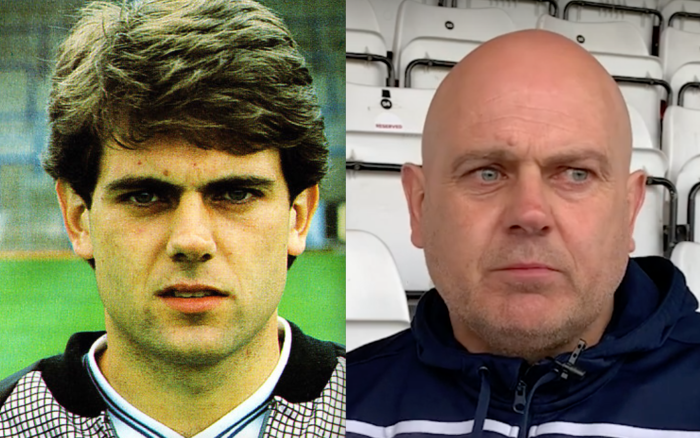
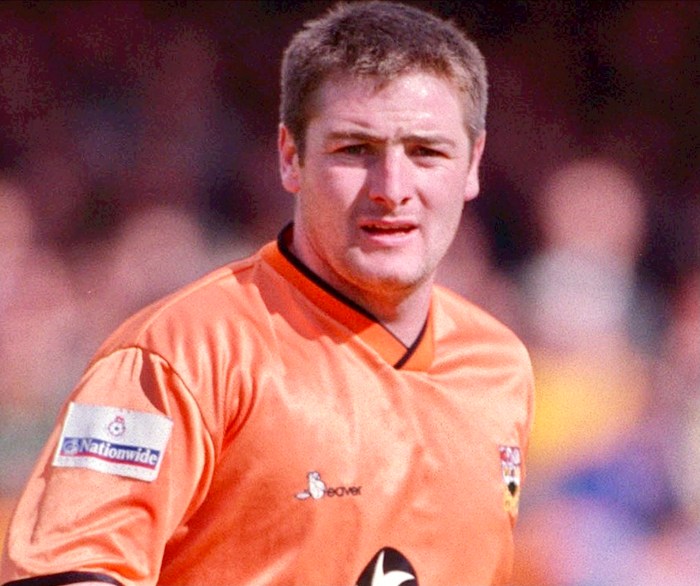
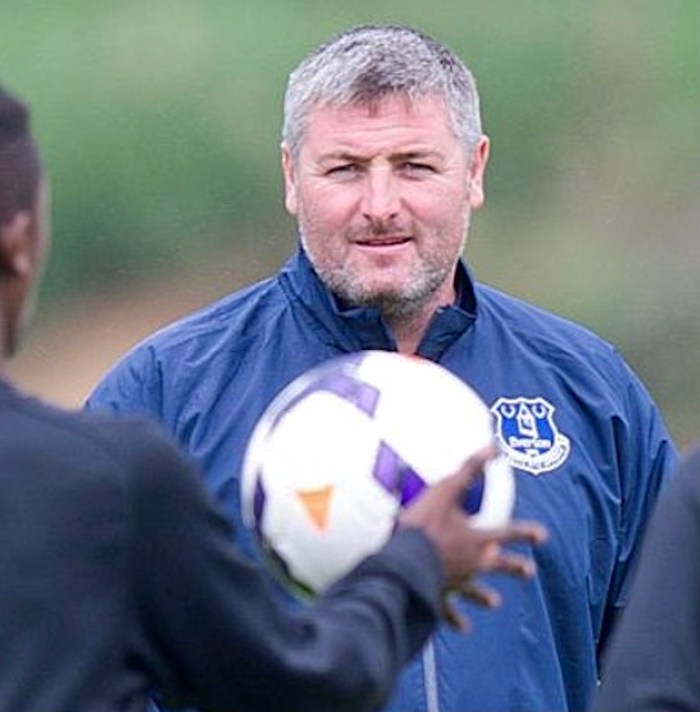
Toon scourge Ian Baird no stranger to red cards

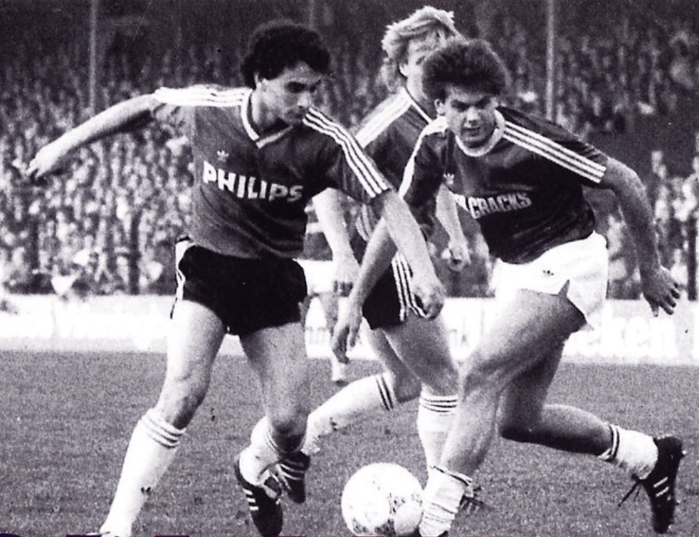
A GOALSCORING scourge of Newcastle United once pulled on the famous black and white stripes – and was booked in three of the five games he played for them!

Baird, who notoriously got himself sent off in the crucial last ever game Brighton played at the Goldstone Ground, led the line in an infamously fiery New Year’s Day derby between Newcastle and Sunderland when the Toon won 3-1 courtesy of a hat-trick by Peter Beardsley.

Jeff Clarke, who’d previously spent seven years at Sunderland and had five games on loan at Brighton at the start of that season, was at the back for Newcastle and future Albion veteran Clive Walker was in attack for the visitors.

A crowd of 36,529 watched the First Division fixture on 1 January 1985 when Sunderland were reduced to nine men through the sendings off of Howard Gayle and Gary Bennett. Baird was one of five bookings made by ref David Scott.

It was Baird’s fourth match for Newcastle after England World Cup winner Jack Charlton signed him on loan from Southampton. He made his debut three days before Christmas 1984 in a 4-0 defeat away to Aston Villa when his former England Schoolboys strike partner Paul Rideout scored a hat-trick. Baird’s only goal for United came in a Boxing Day 2-1 defeat at West Brom.

Three days later, as United lost 3-1 at home to Arsenal, Baird’s involvement was from the bench as a sub for David McCreery. His last game, on 12 January, was another tonking, 4-0 away to champions-in-waiting Everton.

Five years after his Toon cameo, Baird twice stymied Newcastle’s hopes of promotion from the second tier, scoring against them for Leeds in a 1-0 win in December 1989 (it turned out to be his last goal for them) and, after he’d fallen out with manager Howard Wilkinson and been transferred to Middlesbrough in January 1990, netted twice for Boro as they beat Newcastle 4-1 in the last game of the season.
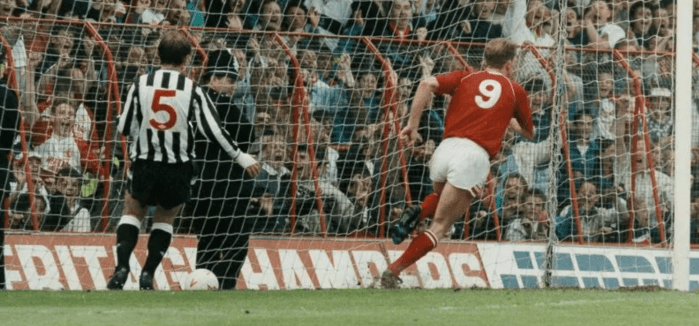
Baird nets for Boro against the Toon

Leeds finished that campaign as second tier champions (Newcastle, who by then had Mark McGhee up front, were five points behind in third place) and Baird’s goals in Boro’s win put paid to the Magpies’ hopes of automatic promotion. To add salt to the wound, Newcastle lost to Sunderland in the semi-final of the play-offs.

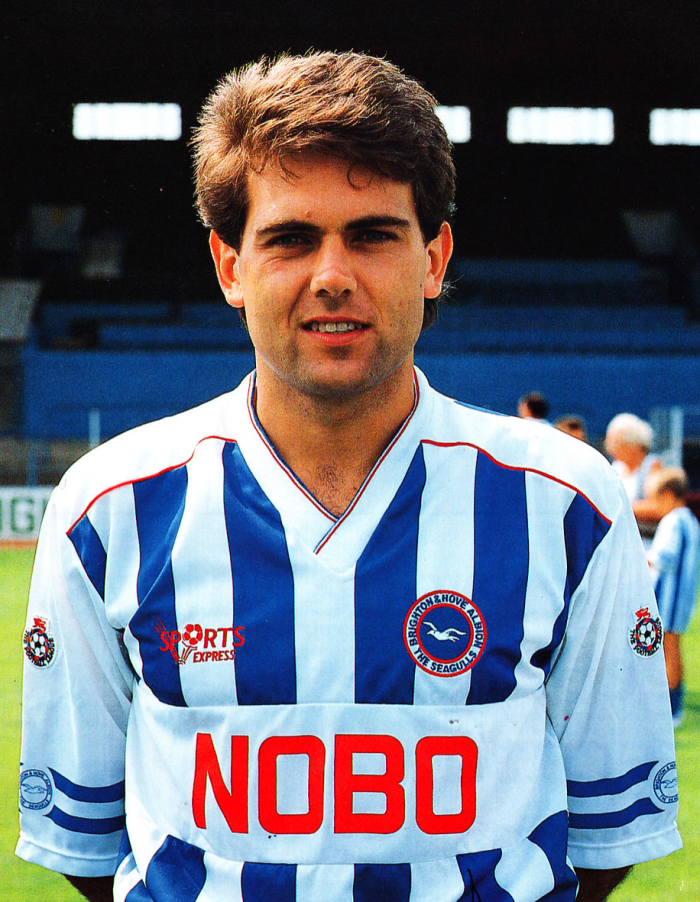
Six years later Baird was Brighton’s captain in the penultimate must-win game of the season, when Doncaster Rovers were the visitors.

Albion needed all three points to give themselves a chance of avoiding relegation out of the league when they travelled to Hereford the following week for the final fixture of that tumultuous season.

What they really didn’t need was for the captain to get himself sent off after just 18 minutes of the match!

Talking to The Athletic about it in a 2022 interview, Baird recalled: “I was fired up for it. Darren (Moore) had come right through me, literally in the first minute. The referee didn’t give anything.

“Then he came through me again, and the referee gave a foul. The third time, I lost it. I just turned around and tried to wallop him. There was a big melee. Everyone knew what was at stake.”

Both players were dismissed (it was one of 11 sendings off in Baird’s career) and thankfully Stuart Storer’s memorably-scrambled goal in the 67th minute settled the game in Albion’s favour, although Baird admitted: “It was nerve-racking. I felt guilty that I’d let my team-mates down, let everybody down by getting sent off. It was a massive relief when we won.”

Thankfully, disciplinary rules were different back then (bans were only applied 14 days after the offence) and Baird was able to play his part in the match at Hereford when a 1-1 draw ensured Albion stayed up and The Bulls went down.
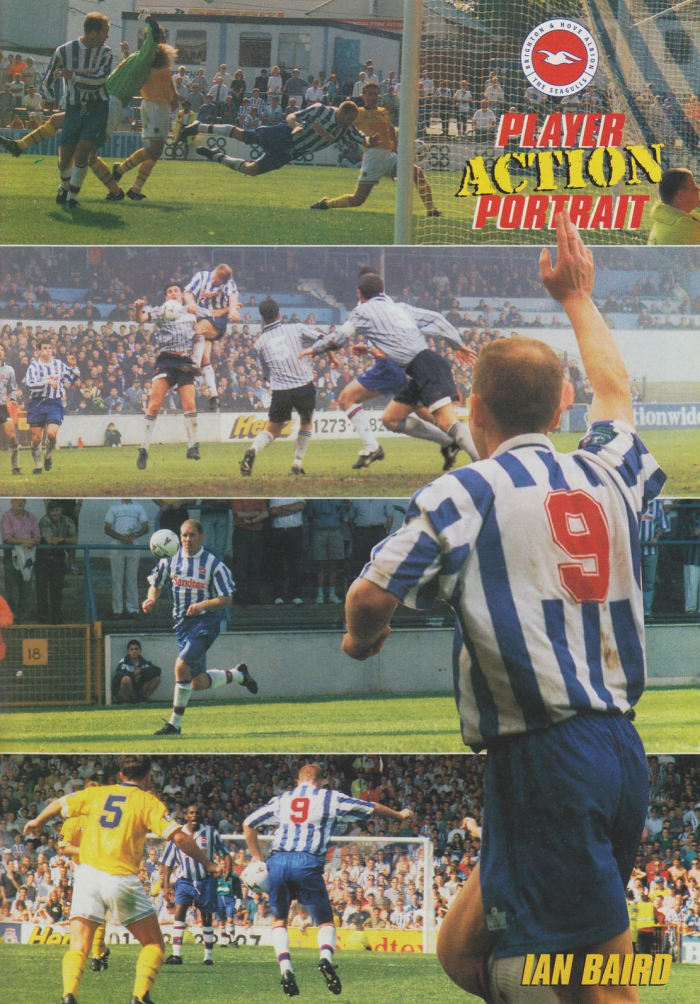
Baird’s exploits for the Albion highlighted in the matchday programme

Brighton were the tenth and last league club Baird had played for and he had only ended up with the Seagulls because of a pre-season falling out with Plymouth Argyle manager Neil Warnock.

Living near Southampton, only a 15-minute drive from Brighton manager Jimmy Case, a move east along the coast made good geographical sense, and a £35,000 fee took him to the Goldstone at the start of the 1996-97 season.

“Whenever I’d played against Brighton, I seemed to score,” Baird told The Athletic. “I loved the Goldstone Ground and there was the lure of playing for Jimmy.”

Although born in Rotherham on 1 April 1964, Baird had moved to Southampton with his family, via Glasgow, when he was a young lad, his father having sailed from the port when he worked on the Queen Mary.

After surviving meningitis as a six-year-old, Baird’s footballing ability saw him turn out for Bitterne Saints, St. Mary’s College, Southampton, Southampton and Hampshire Schools. He joined Southampton on schoolboy terms after he’d been spotted in the same boys’ team, Sarisbury Sparks, as Lawrie McMenemy’s son, Sean.

Baird won two England schoolboy caps: he was in England’s Victory Shield team that beat Wales 2-1 at Wrexham’s Racecourse Ground on 27 April 1979, playing alongside Rideout and winger Mark Walters, who went on to star for Aston Villa, Rangers and Liverpool.

In the same competition, he also played at St James’ Park – two days after Brighton had won 3-1 on the same pitch to win promotion to the top division for the first time in the club’s history.

On 7 May 1979, young England drew 1-1 with Scotland and 14-year-old Rideout’s goal was enough to enable England to retain the Victory Shield. The following month, Baird was an unused sub when England drew 2-2 with West Germany at Wembley.
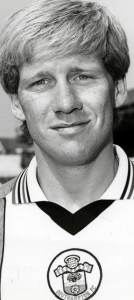
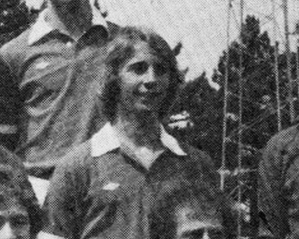
A Saint with hair!

Baird was offered pro terms by Swindon, but he chose instead to sign for his adopted home town club. However, with McMenemy preferring the more experienced Frank Worthington and Joe Jordan, Baird was restricted to 21 starts and three sub appearances for Saints, and, after that loan spell at Newcastle, he moved to Leeds.

His two spells at Leeds (sandwiched either side of an unhappy time at Portsmouth) produced 50 goals in more than 160 appearances and he was in the Leeds side alongside Mervyn Day and Micky Adams that lost the 1986-87 Division Two play-off final to a Charlton Athletic team that included his future Brighton boss Steve Gritt and teammate John Humphrey.

Baird scored 19 goals that season for Billy Bremner’s side, four of them in the FA Cup as United reached the semi-final where they were beaten 3-2 by eventual cup winners Coventry City.

He had taken Saints’ teammate Jordan’s advice to move to Leeds and his next move was to Scotland where Jordan was in charge of Hearts. He later played under the Scottish international striker at Bristol City too.

The Pilgrim who fell out with Neil Warnock

Baird scored six in 29 appearances for Plymouth before that move to Brighton. Discipline might have been a problem but Baird scored eight goals in 10 games from January 1997 as nine wins and a draw at the Goldstone went a huge way to enabling Albion to escape the drop.

As Albion began the 1997-98 season in exile at Gillingham, Baird began the campaign with a three-match ban for that red card against Doncaster — and it wasn’t long before he was seeing red again!

It came in the 13th game of the season and it was certainly unlucky for Baird, well, unlucky in that a linesman spotted his off-the-ball headbutt on a Chester defender. Gritt publicly condemned Baird’s “out of order” behaviour and stripped him of the captaincy.

The following month, with another knee operation required, a surgeon advised him to pack in the game and he left Brighton in December that year having scored 14 goals in 41 appearances in 16 months.

“At least we kept Brighton up,” he told The Athletic. “There were a multitude of problems, it was a weird period, but it was a big thing.”

Post-Brighton, Baird ended up coaching in Hong Kong and was put in charge of the national side for three Asian Cup qualifiers, playing in Jakarta in front of 75,000 people, and then in Cambodia in front of 1,200 people. “It was certainly an experience, that is for sure,” he said.

Baird eventually returned to Hampshire, developed business interests in the vehicle sales and leasing and sports gear industries, while keeping his football links going in non-league circles: at Eastleigh, Sutton United and Havant & Waterlooville.
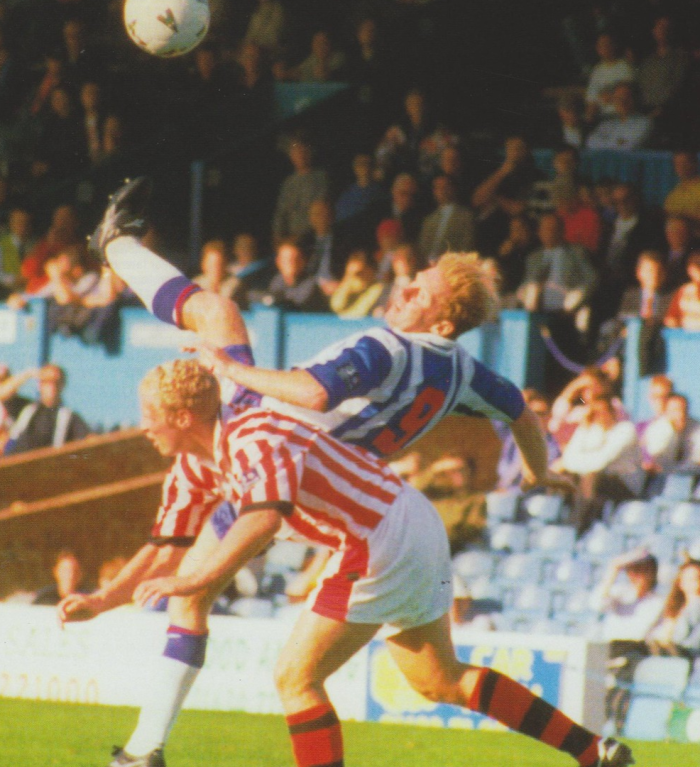
Baird certainly never ducked a challenge

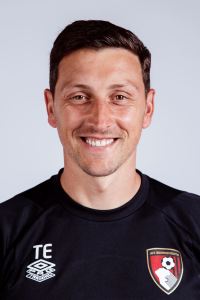
Tommy Elphick’s cherry picking ride to coaching

MEADOW LANE, Nottingham, is probably not one of Tommy Elphick’s favourite grounds. When he left the pitch on a stretcher in the 53rd minute on 7 May 2011, it was a great opportunity for the youngster who replaced him – Lewis Dunk – but for Elphick it was a turning point in a fledgling, promising career with his hometown club.

League One champions Brighton drew 1-1 with Notts County that day but, as they looked forward to playing Championship football in the shiny new American Express Community Stadium at Falmer, Elphick was sidelined for the whole of the following season with a ruptured Achilles tendon injury.

Unsurprisingly, others made the most of his absence. Although he briefly returned to first team action in a pre-season friendly v Lewes in August 2012, the level of competition by then made him realise he would need to move elsewhere to get back in the groove.

That’s when he began an association with AFC Bournemouth that continues now as first team coach, retained by the club in spite of the man who appointed him (Gary O’Neil) being replaced as manager.

As a player, Elphick took a step back to make a stride forward, dropping down a division to join the Cherries and ended up reaching the ‘promised land’ of the Premier League before the Albion.

“To say it worked out well for me was an understatement,” Elphick told Nick Szczepanik in an Albion website interview in 2020. Little wonder he is hailed as “the most successful captain in the history of AFC Bournemouth” having led them to promotions from League One in 2013 and the Championship in 2015, when he was ever-present and named Cherries supporters’ player of the season.

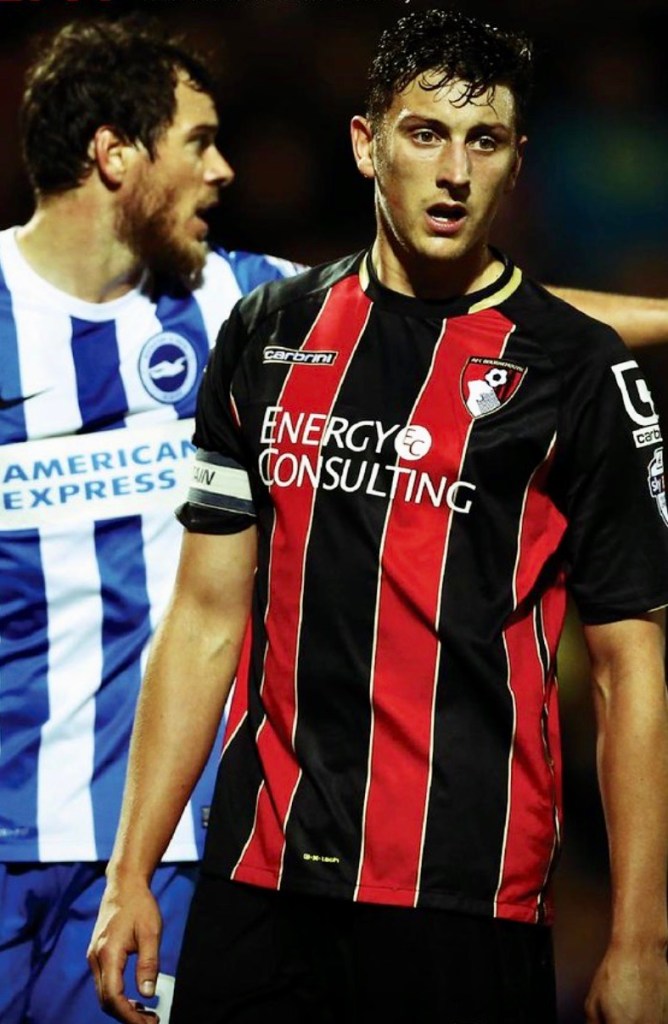
En route to that achievement, he finally got to play at the Amex – on 1 January 2014 – but it was in the red and black stripes of the Cherries in a 1-1 Championship draw.

At the Amex in Bournemouth’s red and black stripes

Interviewed in that game’s matchday programme, he admitted: “I’m buzzing for it. I was the first Brighton player contracted to play at the Amex but obviously my Achilles injury conspired against me and I never got the opportunity.

“Having been with the club since a kid, as we went through all the struggles the dream was always to run out at the new stadium at Falmer. It was disappointing that it never happened for me.”

Born in Brighton on 7 September 1987, Elphick played locally for Woodingdean FC before linking up with the Albion academy at the age of 11 after impressing head of youth Martin Hinshelwood.

In his early days with Brighton, he came under the influence of Vic Bragg who he described as “a very astute tactician” whose “coaching drills were excellent and kept us on our toes”.

In a matchday programme article, he said of Bragg: “While he has a heart of gold and is genuinely a nice guy, you didn’t want to cross him on a bad day – but if he did have a word in your ear, it was always constructive.”

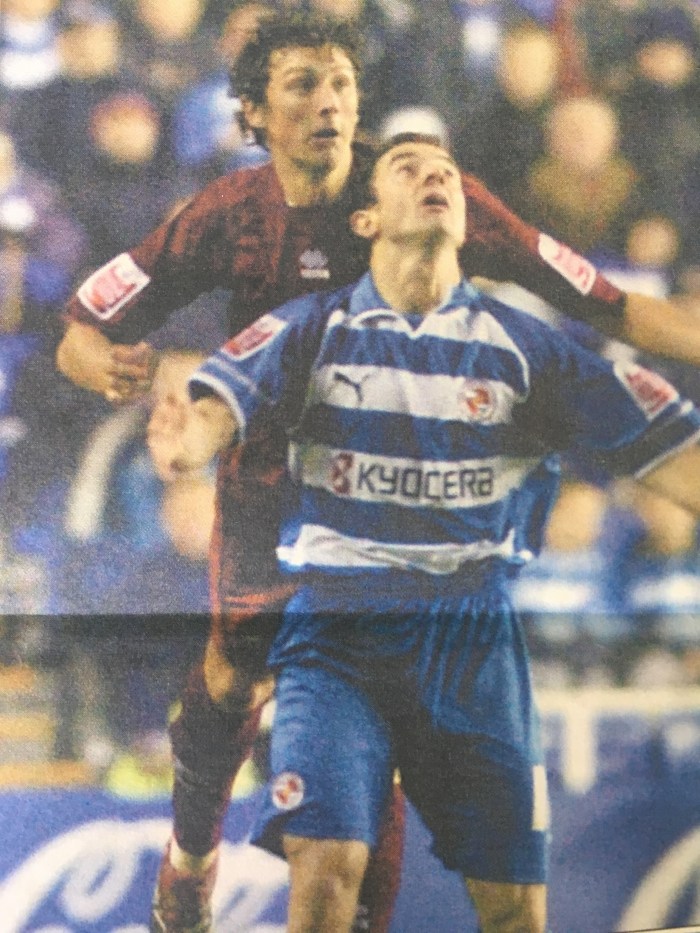
It was under Mark McGhee that Elphick made his first team debut (above) in December 2005, going on as a 73rd minute sub away to Reading in a 5-1 mauling after his older brother Gary had earlier been sent off on his full debut.

“I’m Brighton born and bred, I was a fan at Withdean before I played, and even remember doing a bucket collection on the touchline at Priestfield (when Albion were in exiled at Gillingham) in a bid to raise money for some new jumpers for us youth-team players.

“To then go on and make my debut, having come through the system under Dean Wilkins, well it doesn’t get any better than that.

“That was the highlight for me; being one of seven players from the youth-team set-up to make it to the first team.”

Gary didn’t play for the Seagulls again and Tommy had to wait until April 2007 to make his first start, by which time his old youth team coach Wilkins was in charge of the first team. That game also ended in a defeat, 2-0 to Doncaster, and it was only the following season that he established himself as a starter, initially playing alongside Guy Butters and Joel Lynch and later Adam El Abd and Gordon Greer.

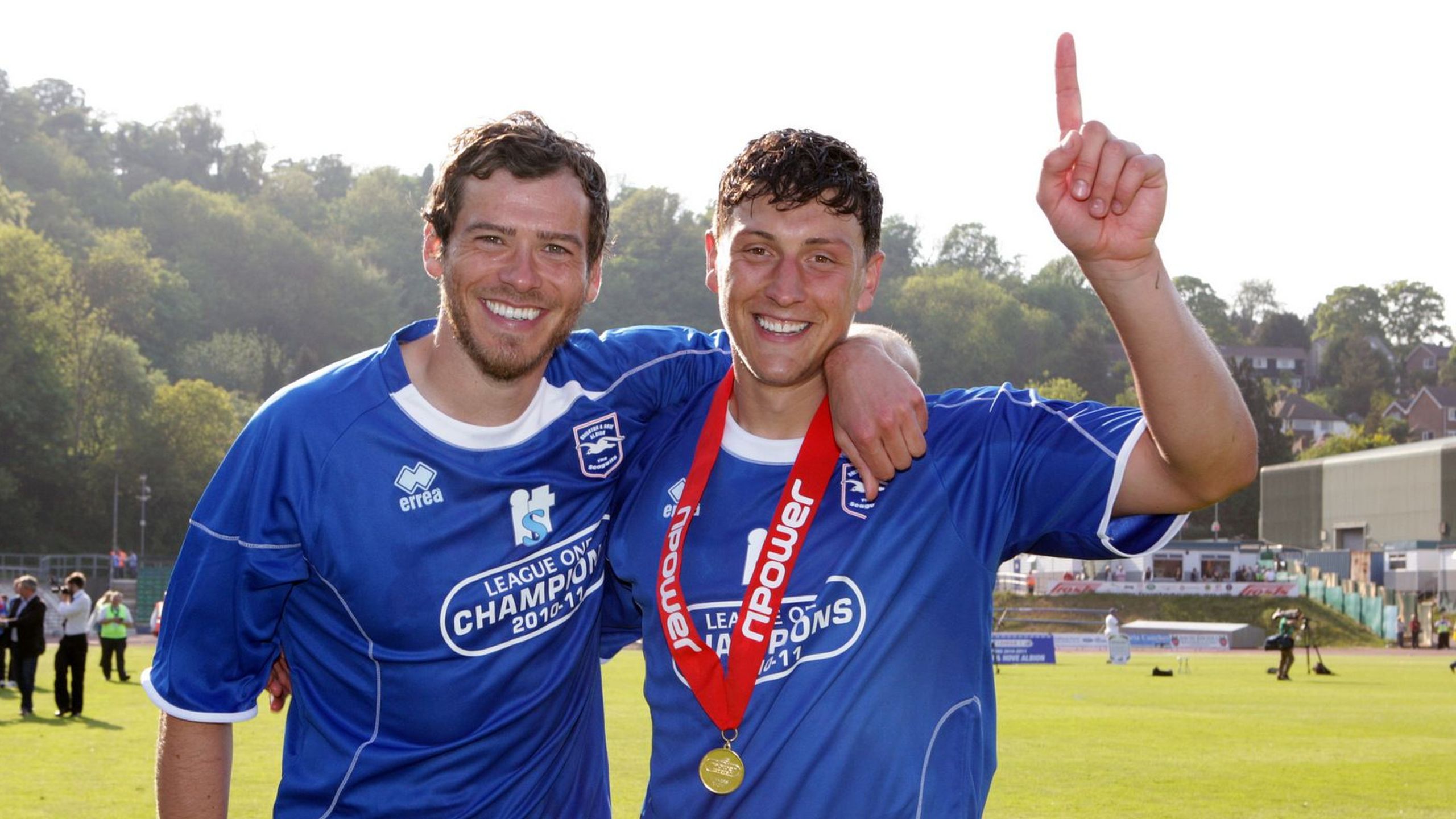
A personal highlight was winning the Player of the Season accolade at the end of his first full season (2007-08), and he went on to captain the side on many occasions, as well as being part of the team that won the League One title.

“Brighton are the club who gave me my chance in the game, who shaped me as a footballer and a person,” he said.

As well as McGhee and Wilkins, Elphick’s 182 Seagulls appearances also spread across the reigns of Micky Adams, Russell Slade and Gus Poyet.

The changes introduced by Poyet really struck home with Elphick, who told Spencer Vignes: “From day one there was absolute clarity in terms of what he expected from us, with a few simple rules to start with, which he built on week by week.

“We were in the lower reaches of the table and flirting with relegation, so for him to come in and demand that we play the way he saw the game was unbelievable really.

“A lot of managers would’ve tried to tighten the ship and play a more basic brand of football, but his football was based around possession.

“The style he produced, the football we played and what we went on to do for the next two or three years was phenomenal.”

But Elphick appreciated others too, saying: “I had such a good grounding as a kid and I’m so lucky to have played under some great managers and coaches.”

As a pointer to how things have panned out, he said: “I definitely want to stay in the game, coach, and hopefully manage one day.”

Reflecting on the League One title-winning campaign, Elphick told Szczepanik: “I relished the way we played in that season. I was brought up to play that way in the youth teams under Vic Bragg, Martin Hinshelwood and Dean Wilkins, who all wanted the game played in the right way.

“We lost our way a little after Dean left and we didn’t really have any style until Gus Poyet came to the club and revolutionised it. It was something I was enjoying until I got that injury. But if I hadn’t been injured, would I have ended up at Bournemouth?”

Elphick had signed a new contract with Albion when the move to Bournemouth in League One came up. “In theory it was a step down, but for me it was important to get back playing again,” he said.

The 2011-12 season had been a wipe-out as far as he was concerned because an infection and a repeat of the initial injury ruled out any chance of a swift comeback. He was operated on in Finland by the same surgeon (Professor Sakari Orava) who had performed similar surgery on David Beckham.

It was fully 16 months between the initial injury and playing 45 minutes of a pre-season friendly at Lewes in July 2012. “The idea had been to go out on loan and there were four or five different options, but Bournemouth were looking to have a right go at getting promoted and when I went down to meet the manager, Paul Groves, and the chairman, I was taken by the plans they had for the club,” said Elphick.

“Paul’s assistant, Shaun Brooks, was quite close to Dean Wilkins, and used to come and watch the Brighton youth team, so there was a connection there. Unfortunately, it didn’t quite work out for Paul and Shaun but that led to Eddie Howe coming back to the club.”

After making 145 appearances for Bournemouth, in 2016 Elphick moved on to Aston Villa, who he had scored against for Brighton at Villa Park in a 3-2 FA Cup defeat three years earlier (below left).

In the summer of 2016, Villa, under Roberto di Matteo, had just been relegated to the Championship and wanted Elphick as their captain as they aimed to bounce straight back to the Premier League.

He was di Matteo’s first signing as Villa manager – and he can thank a very understanding wife that the move went through smoothly.

Elphick cut short his honeymoon to get cracking with his new club, telling the Birmingham Mail: “As soon as I heard about Villa’s interest it’s something that turned my head straight away.

“To be able to come here and represent such a great club with such great history is going to be a real honour for me.”

However, it wasn’t long before Steve Bruce took over from di Matteo and he preferred a different centre-back pairing, meaning Elphick spent most of the second half of the season on the subs bench. I recollect him going on for Villa in the last game of the season when Albion hoped to clinch the Championship title only to concede a late equaliser when a shot from Jack Grealish squirmed through David Stockdale’s grasp.

On loan at Hull City

In January of the following year, Elphick went out on loan to Reading for half a season (but only played four games) and he began the first half of the 2018-19 season on loan at Hull City, playing 18 games under Nigel Adkins.

Because of injuries to others, he was recalled to Villa at the start of 2019 by Bruce’s replacement Dean Smith. He played 14 matches but was not involved in the end-of-season play-off final when they finally earned promotion back to the Premier League (beating Derby County 2-1).

Interviewed by the Birmingham Mail about his three years at Villa, Elphick replied: “Tough, unbelievable, disappointing, anger – I had every emotion but I wouldn’t change it for the world because it’s created who I am now.

“What I saw and experienced at Villa was mental, good and bad. A big club brings different pressures and different pitfalls and you have to experience that to know what you could be dealt with further down the line.

“It was really troubled and there was poison in the brickworks to start with. Steve Bruce did the most unbelievable job at weeding that out and bringing it all together.

A challenging time at Villa

“He wasn’t a manager I particularly took a shine to in the way he coached or managed but he taught me a lot about how to bring people together and how to create a group.

“I experienced working under Roberto di Matteo, a Champions League-winning manager, and Steve Bruce, one of the most successful managers in the Championship. Dean Smith was a bit of a trailblazer and did some powerful stuff.”

After two injury-ravaged seasons at Huddersfield Town, when he managed just 14 games for the Terriers, Elphick quit playing to embark on a coaching career that always seemed to be his destination.

He reckoned it was that long spell out injured while at Brighton that helped his move into coaching because he had time to watch and understand football in a way that wouldn’t have happened if he’d been playing every weekend.

He returned to Bournemouth as coach of their development squad, explaining to premierleague.com: “I was delighted to work alongside Shaun Cooper with the 21s. I was very, very lucky to work with such an outstanding coach, and I learned so much. That period also opened my eyes to the time and effort required to do this job properly.  

“In truth, academy football probably had a lifespan for me, but it was an invaluable year.” 

When Parker lost his job in the wake of a 9-0 humbling by Liverpool, Cooper and Elphick were promoted to work alongside new boss Gary O’Neil.

“There are benefits and negatives to being thrust into that situation,” admitted Elphick. “I would love to have spent more time coaching, experimenting, and finding out who I really am on the grass before going into such a high-pressure situation, but it was an opportunity which had to be grabbed with both hands.”

Elphick told Adrian Clarke: “At the outset, none of us had coached at Premier League level before, but we went in, took the handbrake off and went for it. Thankfully, the three us had a nice blend.”  

Elphick absorbed plenty from O’Neil’s way of working and observed: “Premier League football is such a high-level now that as a coach, if you’re put on the spot you need to be able to answer questions or offer advice on all aspects of the game. My intention is to become as well-rounded as possible.” 

After helping Andoni Iraola settle in as new head coach, Elphick has relished his supporting role although he confessed: “I’ve always wanted to manage, and down the line I’d like to put my principles and ideas into practice. It’s an itch I will need to scratch, but there is no rush.  

“Right now, I just feel so lucky to have experienced contrasting styles in O’Neil and Iraola, and I have learned an incredible amount from both men. I really resonate with Andoni, and the way he wants his team to play with emotion, and he places a lot of emphasis on spirit. 

“What I have learned so far is that to be a successful coach you firstly need strong beliefs. Then, you must deliver your messages with consistency and confidence, and of course be authentic, true to yourself.”

The Foxes hero who led Albion’s line in an hour of need

STEVE CLARIDGE became a Leicester City hero long before briefly coming to Brighton’s rescue.

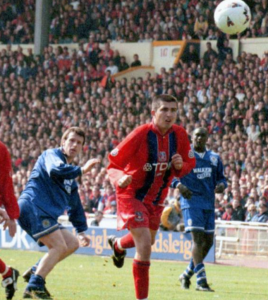
He scored the winner in a play-off final at Wembley to take the Foxes up to the Premier League at the expense of Crystal Palace, who’d discarded him at an early age.

Both sides had been relegated from the top flight the year before and Claridge’s right-foot strike past Nigel Martyn in the 120th minute meant it was an immediate return for Martin O’Neill’s side.

“The high is not equal to anything,” Claridge told Leicestershire Live.

Scoring play-off winner v Palace

It came in 1996 and a year later he scored the only goal of the game (past Ben Roberts) in the 100th minute of a replay against Middlesbrough to win Leicester the League Cup, leading to him being named FourFourTwo’s ‘Cult Hero of 1997’.

Claridge had only completed a £1.2m move from Birmingham City two months before that play-off and he labelled it the most important goal of his life coming after a worrying period in which he wasn’t sure he’d ever be able to play again.

A mystery illness had ravaged his form and in only his fifth Leicester game he was taken off after 15 minutes. “Pins and needles from my knees down were so extreme, I could not even feel the ball,” he recalled.

It turned out a drug prescribed for a thyroid problem he’d had since the age of 12 was destroying his thyroid gland. “The main energy provider of my body was no longer functioning,” said Claridge.

However, once on the right medication, he made an almost unbelievable recovery, was restored to the side and helped to secure a play-off place.

After beating Stoke City in the semi-finals, they went a goal down to Palace in the final but pulled it back through a Garry Parker penalty before Claridge seized his chance in the dying moments of extra time.

Wembley winners for Leicester: Garry Parker and Steve Claridge

He collected a quick free kick from Parker and took aim, his shot from distance kissing the stanchion with goalkeeper Martyn motionless.

“The crowd is just really stunned in disbelief, I don’t know if that was because I’d hit it,” laughed Claridge. “It was so far out, and everybody was used to me scoring goals inside the six-yard box.”

He reflected: “To finish off after the lows I went through, the absolute lows where you’re thinking, ‘my career is over I can’t see a way out of this,’ to doing that and taking you to the ultimate high – winning that game of football. It’s unparalleled.”

Albion cover ‘boy’

Such experience was exactly what Championship strugglers Albion required when, on the back of three defeats, they faced the daunting prospect of promotion-seeking West Ham away on 13 November 2004.

Manager Mark McGhee, who’d previously signed Claridge when he was at Wolves and Millwall, was desperate to stem a tide which had seen eight goals conceded and no points on the board.

“He is one of the fittest players I’ve worked with and I had no doubt that after 18 months away from this level he would be able to perform,” said McGhee.

Claridge’s professional career looked to have run its course after he left Millwall in 2003 and became player-manager of Southern League side Weymouth.

But the disappointment of missing out on promotion had seen him and chairman Ian Ridley leave the club and Claridge, at the age of 38, was keen to give league football another go.

In what turned out to be a real backs-to-the-wall smash and grab raid, Albion earned the unlikeliest of 1-0 wins courtesy of a Guy Butters header from Richard Carpenter’s free kick.

Albion held firm despite a relentless wave of attacks by the home side and afterwards McGhee said: “We approached the game differently. Whereas before we thought we could win, today we did not, and played to make sure we didn’t get beaten.

“We kept the ball up front more which is important. Steve Claridge was key to that.”

Unfortunately, Brighton were not able to build on the win at the Boleyn Ground and there was only one more win (1-0 at home to Rotherham) during Claridge’s month with the club.

His fifth and final game for the Seagulls came away to his old club Millwall on 11 December 2004, when Albion lost 2-0.

In a programme feature about him that day, Claridge likened the circumstances of both clubs. “The club has no money and it is tough just to survive, but everyone is in it together,” he said. “At Millwall we had a great team spirit and togetherness, and that is very much the case here.”

McGhee’s tight budget prevented Claridge’s stay at Albion being extended and, after his deal was over, rather than it being one last hurrah, he went on to continue his league playing days at Brentford, Wycombe Wanderers, Gillingham, Bradford City and Walsall.

And, at the age of 40, and with him needing just one more game to fulfil the landmark of 1,000 professional games, his old club Bournemouth – where he’d started out as a professional in 1984 – gave him a match against Port Vale on 9 December 2006. No fairy tale, though, as they lost 4-0.

Born in Portsmouth on 10 April 1966, Claridge was brought up in Titchfield and began his football career at nearby Fareham Town in 1983. His initial foray into the pro game at Bournemouth only amounted to seven games before he moved to Weymouth for three years.

Crystal Palace offered him a route back to the full professional game in 1988 but he didn’t make their league side and after three months moved on to fourth tier Aldershot Town.

Two spells with Cambridge United followed between 1990 and 1994 for whom he scored 46 goals in 132 games. A falling out with manager John Beck saw him sold to Luton Town in 1992, but he was then bought back after Beck’s departure.

Birmingham City paid £350,000 to take Claridge to St Andrews and he became one of the club’s most prolific goalscorers, netting 35 in 88 games, and was top scorer with 25 goals when part of Barry Fry’s Blues side that won the Second Division title and the Auto Windscreens Shield (Football League Trophy) in the 1994-95 season.

After spending two years at Leicester, he went on a two-month loan to his hometown club, Portsmouth, but, in March 1998, McGhee signed him for the first time – and it didn’t go well.

The Scot, who had controversially left Leicester to take over at Wolves, took Claridge to Molineux for a £350,000 fee. But Wolves fans were not impressed, as Levelle revealed in this 2012 piece, and after just six games and no goals in the famous old gold shirt, he was sold to Portsmouth for £250,000 at the end of the season.

Even more galling for Wolves followers was that no sooner had Claridge made the switch to Portsmouth, he scored all three in a 3-1 win at Fratton Park!

David Miller in The Telegraph wrote: “The 34-year-old Steve Claridge, who had failed to score in five months when previously with Wolves, now gave sun-blessed Portsmouth a bank holiday funfair with a first- half hat-trick that was as easy as licking an ice-lolly.”

On the ball for Pompey

The goals and games came thick and fast for Claridge back on home turf – 34 in 104 – but his reign as player-manager at Fratton Park in 2000 was curtailed after just 25 games by the quirky chairman Milan Mandarić.

Remembering the player he’d seen only briefly a couple of years earlier, McGhee, by now in charge at Millwall, offered the striker a lifeline with the Lions, initially on loan and then as a permanent signing.

Going through the pain barrier at Millwall

Over two seasons in south east London, he became something of a fans’ favourite, scoring 26 in 85 matches, his efforts summed up by writer Mark Litchfield. “His style was unconventional, to say the least: shirt untucked, one sock down and no shin pads, any naïve defender probably thought they could eat him for breakfast. But hard work was a pre-requisite for Claridge – he wouldn’t give any opposition player a moment’s rest and would more often than not always get the better of them, too.”

Claridge had a less happy association with Millwall too when in July 2005 he was sacked after just 36 days as manager when the chairman who appointed him, Jeff Burnidge, was replaced by  Theo Paphitis, who wanted Colin Lee instead.

Even after achieving the 1,000-game landmark courtesy of Bournemouth, Claridge couldn’t resist the lure of another game, turning out for Worthing, Harrow Borough, Weymouth and Gosport Borough.

He was one of a group of five that formed Salisbury FC at the end of 2014, and as team manager was involved in gaining two promotions in the Southern League before leaving in October 2022.

Although he had officially hung up his boots in 2012 after helping Gosport to promotion to the Southern League Premier Division, in 2017 he played in a friendly defeat to Portsmouth in July and then put himself on against Paulton Rovers in the league a few weeks later.

His final ever game as a player came in a 3-2 victory over Fareham Town, when he was a remarkable 51, but he had to go off in the 71st-minute after picking up an injury. 

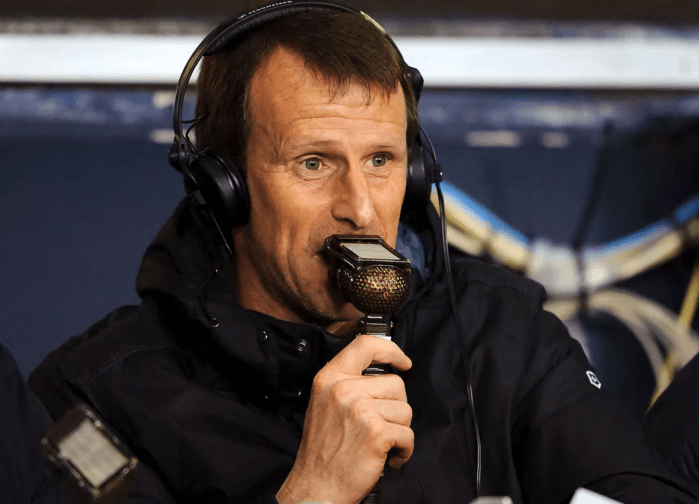
Pundit Claridge contributed his thoughts on radio and TV

Claridge also became a familiar face and voice working as a pundit for the BBC on TV at Football Focus and Final Score and on BBC Radio 5 Live. He also wrote scouting reports on promising players for The Guardian, numbering future Brighton signing Matt Sparrow among them.

“He is easy on the eye, links well with his forwards but also protects and helps his defenders by tackling from the wrong side and makes sure he tracks his runner whenever he threatens to get goal-side,” wrote Claridge of the then Scunthorpe United player in 2007.

Claridge later set up his own coaching scheme for youngsters in Salisbury and Warsash.

In 2023, he took over as manager of Gosport-based Wessex League Division One side Fleetlands FC for the 2023-24 season. In August 2024 they announced he was stepping down from the role “due to personal reasons”.  
On its website, a statement added: “The club would like to place on record our huge thanks to Steve for taking up the role in our hour of need and taking us to a fantastic 5th place finish last season.”

Coach Dean Wilkins fumed after falling out with Knight 

DEAN WILKINS might have lived in the shadow of his more famous elder England international brother Ray but he certainly carved out his own footballing history, much of it with Brighton.

Albion fans of a certain vintage will never forget the sumptuous left-footed free-kick bouffant-haired captain Wilkins scored past Phil Parkes at the Goldstone Ground which edged the Seagulls into the second-tier play-offs in 1991.

Supporters from the mid-noughties era would only recall the balding boss of a mid-table League One outfit at Withdean comprising mainly home-grown players who Wilkins had brought through from his days coaching the youth team.

After Dick Knight somewhat unceremoniously brought back Micky Adams over Wilkins’ head in 2008, he quit the club rather than stay on playing second fiddle and subsequently went west to Southampton where he worked under Alan Pardew and his successor Nigel Adkins as well as taking caretaker charge of the Saints in between the two reigns.

Wilkins’ initial association with the Seagulls went back to 1983, when Jimmy Melia brought him to the south coast from Queens Park Rangers shortly after Albion’s FA Cup final appearances at Wembley.

Melia’s successor Chris Cattlin only gave him two starts back then and although he pondered a move to Leyton Orient, where he’d had 10 matches on loan, he opted to accept to try his luck in Holland when his Dutch Albion teammate Hans Kraay set him up with a move to PEC Zwolle. Playing against the likes of Johann Cruyff, Marco Van Basten and Ruud Gullit proved to be quite the footballing education for Wilkins.
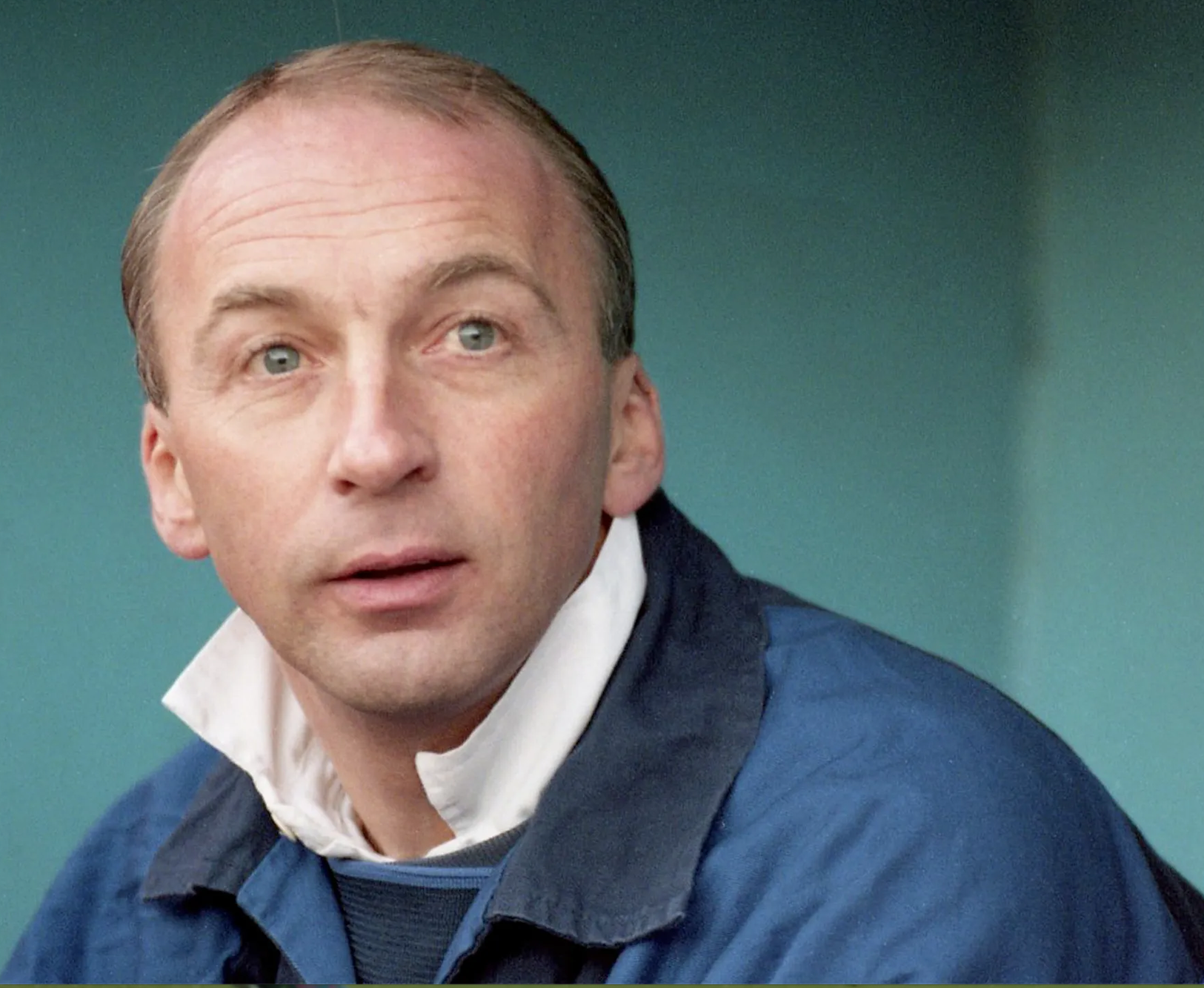
Wilkins in the thick of it in Dutch football for PEC Zwolle

After two years in the Netherlands, 25-year-old Wilkins rejoined the relegated Seagulls in the summer of 1987 as the club prepared for life back in the old Third Division under Barry Lloyd.

Relegation had led to the sale for more than £400,000 of star assets Danny Wilson, Terry Connor and Eric Young but more modest funds were allocated to manager Lloyd for replacements: £10,000 for Wilkins, £50,000 for Doug Rougvie, who signed from Chelsea and was appointed captain, Garry Nelson, a £72,500 buy from Plymouth and Kevin Bremner, who cost £65,000 from Reading. Midfield enforcer Mike Trusson was a free transfer.

The refreshed squad ended up earning a swift return to the second tier courtesy of a memorable last day 2-1 win over Bristol Rovers at the Goldstone.

At the higher level, Wilkins had the third highest appearances (40 + two as sub) as Albion finished just below halfway in the table. The following season Wilkins was appointed captain and was ever-present as Albion made it to the divisional play-off final against Notts County at Wembley, having made it to the semi-final v Millwall courtesy of the aforementioned spectacular free kick v Ipswich.
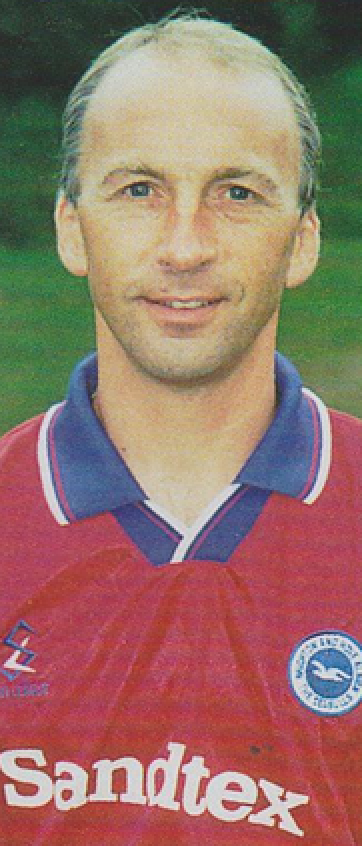
Wilkins scored again at Wembley but it turned out only to be a consolation as the Seagulls succumbed 3-1 to Neil Warnock’s side.

As the 1992-93 season got underway, Wilkins, having just turned 30, was the first matchday programme profile candidate for the opening home game against Bolton Wanderers (a 2-1 win) when he revealed the play-off final defeat had been “the biggest disappointment of my career”.

The 1993-94 season was a write-off from October onwards when he damaged the medial ligaments in both his knees after catching both sets of studs in the soft ground at home against Exeter City.

Although injury plagued much of the time during Liam Brady’s reign as manager, the Irishman acknowledged his ability saying: “He is a very fine footballer and a tremendous passer of the ball and he possesses a great shot.”

Ahead of the start of the 1995-96 season, Wilkins was granted a testimonial game against his former club QPR, managed at the time by big brother Ray. But at the end of the season, when the Seagulls were relegated to the basement division, he was one of six players given a free transfer.

Born in Hillingdon on 12 July 1962, Wilkins couldn’t have wished for a more football-oriented family. Dad George had played for Brentford, Leeds, Nottingham Forest and Hearts and appeared at Wembley in the first wartime FA Cup final. While Ray was the brother who stole the limelight, Graham and Steve also started out at Chelsea.

In spite of those older brothers who also made it as professionals, Wilkins attributed his development at QPR, who he joined straight from school as an apprentice in 1978, to youth coach John Collins (who older fans will remember was Brighton’s first team coach under Mike Bailey).

He made seven first team appearances for Rangers, his debut being as a substitute for Glenn Roeder in a 0-0 draw with Grimsby Town on 1 November 1980. After joining the Albion in August 1983, he had to wait until 10 December that year to make his debut, in a 0-0 draw at Middlesbrough, in place of the absent Tony Grealish. He started at home to Newcastle a week later (a 1-0 defeat), this time taking the midfield spot of injured Jimmy Case.

Perhaps the writing was on the wall when Cattlin secured the services of Wilson from Nottingham Forest, initially on loan, and although Wilkins had a third first team outing in a 2-0 FA Cup third round win at home to Swansea City, boss Cattlin didn’t pick him again. Instead, he joined Orient on loan in March 1984.

A long career in coaching began when Wilkins was brought back to the Albion in 1998 by another ex-skipper, Brian Horton, who had taken over as manager. With Martin Hinshelwood as director of a new youth set-up, Wilkins was appointed the youth coach – a position he held for the following eight years.

Return to the Albion as youth coach

His charges won 4-1 against Cambridge United in his first match, with goals from Duncan McArthur, Danny Marney and Scott Ramsay (two).

That backroom role continued as managers came and went over the following years during which a growing number of youth team products made it through to the first team: people like Dan Harding and Adam Virgo and later Adam Hinshelwood, Joel Lynch, Dean Hammond and Adam El-Abd.

At the start of the 2006-07 season, with Albion back in the third tier after punching above their weight in the Championship for two seasons, Wilkins was rewarded for his achievements with the youth team with promotion to first team coach under Mark McGhee.

By then, more of the youngsters he’d helped to develop were in or getting close to the first team, for example Dean Cox, Jake Robinson, Joe Gatting and Chris McPhee.

After an indifferent start to the season – three wins, three defeats and a draw – Knight decided to axe McGhee and loyal lieutenant Bob Booker and to hand the reins to Wilkins with Dean White as his deputy. Wilkins later brought in his old teammate Ian Chapman as first team coach.

Into the manager’s chair

Tommy Elphick, Tommy Fraser and Sam Rents were other former youth team players who stepped up to the first team. But, over time, it became apparent Knight and Wilkins were not on the same page: the young manager didn’t agree with the chairman that more experienced players were needed rather than relying too much on the youth graduates.

Indeed, in his autobiography Mad Man: From the Gutter to the Stars (Vision Sports Publishing, 2013), Knight said Wilkins hadn’t bothered to travel with him to watch Glenn Murray or Steve Thomson, who were added to the squad, and he was taking the side of certain players in contract negotiations with the chairman.

“In my opinion, his man-management skills were lacking, which was why I made the decision to remove him from the manager’s job,” he said. It didn’t help Wilkins’ cause when midfielder Paul Reid went public to criticise his man-management too.

Knight felt although Wilkins hadn’t sufficiently nailed the no.1 job, he could still be effective as a coach, working under Micky Adams. The pair had previously got on well, with Adams saying in his autobiography, My Life in Football (Biteback Publishing, 2017) how Wilkins had been “one of my best mates”.

But Adams said: “He thought I had stitched him up. I told him that I wanted him to stay. We talked it through and, at the end of the meeting, we seemed to have agreed on the way forward.

“I thought I’d reassured him enough for him to believe he should stay on. But he declined the invitation. He obviously wasn’t happy and attacked me verbally.

“I did have to remind him about the hypocrisy of a member of the Wilkins family having a dig at me, particularly when his older brother had taken my first job at Fulham.

“We don’t speak now which is a regret because he was a good mate and one of the few people I felt I could talk to and confide in.”

Youth coach

Knight knew his decision to sack the manager would not be popular with fans who only remembered the good times, but he pointed out they weren’t aware of the poor relationship he had with some first team players.

Knight described in his book how a torrent of “colourful language” poured out from Wilkins when he was called in and informed of the decision in a meeting with the chairman and director Martin Perry.

“He didn’t take it at all well, although I suppose he felt he was fully justified,” wrote Knight. “He was fuming after what was obviously a big blow to his pride.”

Reporter Andy Naylor perhaps summed up the situation best in The Argus. “The sadness of Wilkins’ departure was that Albion lost not a manager, but a gifted coach,” he said. “Wilkins was not cut out for management.”

Saints coach

One year on, shortly after Alan Pardew took over as manager at League One Southampton, he appointed Wilkins as his assistant. They were joined by Wally Downes (Steve Coppell’s former assistant at Reading) as first team coach and Stuart Murdoch as goalkeeping coach.

Saints were rebuilding having been relegated from the Championship the previous season and began the campaign with a 10-point penalty, having gone into administration. The club had been on the brink of going out of business until Swiss businessman Markus Liebherr took them over.

A seventh place finish (seven points off the play-offs because of the deduction) meant another season in League One and the following campaign had only just got under way when Pardew, Downes and Murdoch were sacked. Wilkins was put in caretaker charge for two matches and then retained when Nigel Adkins, assisted by ex-Seagull Andy Crosby, was appointed manager.

It was the beginning of an association that also saw the trio work together at Reading (2013-14) and Sheffield United (2015-16).

Adkins, Crosby and Wilkins were in tandem as the Saints gained back-to-back promotions, going from League One runners up to Gus Poyet’s Brighton in 2011, straight through the Championship to the Premier League. But they only had half a season at the elite level before the axe fell and Mauricio Pochettino took over.

When the trio were reunited at Reading, Wilkins, by then 50, gave an exclusive interview to the local Reading Chronicle, in which he said: “This pre-season has given me time to learn about the characters of the players we’ve got at Reading and find out what makes them tick.

At Reading with Crosby and Adkins

“It’s my job then to make sure every player maximises his potential. That’s what I see my role as, to bring out the very best of them from now on and make them strive to attain new levels of performance.

“I will always keep working toward that goal. If we can do that with every individual and get maximum performances out of them, I believe we will be in for a great season.

“We’re back together now and it’s going fantastically well. I have loved every minute of it. I’m used to working with Nigel and Andy and we are carrying out similar work to what we’ve done in the past.”

The Royals finished seventh, a point behind Brighton, who qualified for the play-offs, and the trio were dismissed five months into the following season immediately following a 6-1 thrashing away to Birmingham City.

Six months later the trio were back in work, this time at League One Sheffield United, but come the end of the 2015-16 season, after the Blades had finished in their lowest league position since 1983, they were shown the door.

Between January 2018 and July 2019, Wilkins worked for the Premier League assessing and reporting on the accuracy, consistency, management and decision-making of match officials.

In the summer 0f 2019, he was appointed Head of Coaching at Crystal Palace’s academy, a job he held for 15 months.

A return to involvement with first team football was presented by his former Albion player Alex Revell, who’d been appointed manager of League Two Stevenage Borough. Glad to support and mentor Revell in his first managerial post, Wilkins spent a year as assistant manager at the Lamex Stadium.

When Steve Gritt took on the ‘worst job in football’

BOURNEMOUTH-BORN Steve Gritt is synonymous with Brighton & Hove Albion’s darkest hour because he was in the almost scalding managerial hotseat at the time the club nearly went out of the league.

The mastermind behind Albion’s ‘Great Escape’ in 1997 grew up in the Dorset coastal resort and began his footballing career with his local club in the 1970s. He later worked as the Cherries chief scout, although, apart from etching his part in Brighton’s footballing folklore, most of his more memorable days in the game came at Charlton Athletic.

Somehow, against all the odds, he managed to keep the Seagulls up when most doomsters could only see the club losing its status – and possibly going out of business as a result.

Gritt, who had been out of work for 18 months having been cast adrift by a new chairman at Charlton, took over from the beleaguered Jimmy Case in December 1996 with Albion 12 points adrift at the bottom of the fourth tier.

“I was delighted when Brighton offered me the chance to return,” he wrote in his matchday programme notes. “I know a lot of people were calling it the ‘worst job in football’ but when you love football as I do then you don’t always see things that way.”

Gritt was certainly an old hand when it came to football’s vicissitudes: rejected by AFC Bournemouth as a teenager, he went on to enjoy the elation of promotion as well as enduring the despair of relegation during his time with the Addicks.

Quite what would have become of Albion if they’d lost their place in the league is now only speculation – thankfully it wasn’t a bridge Gritt had to cross.

“I’d spent 18 years at Charlton as player and joint-manager, with just six months away from it, at Walsall. Then a new chairman, Richard Murray, came in and he didn’t like the joint-manager situation, so he put Alan Curbishley in sole charge, and I left,” Gritt explained.

Without a full-time job in the game, he stayed in touch by doing some scouting work for Tony Pulis at Gillingham, Brian Flynn at Wrexham and a couple of stints for West Brom. He even pulled his boots back on to play for Welling and Tooting & Mitcham.

Eager not to continue to have to queue at the benefit office for dole money, he applied for the vacant Albion manager’s job and got it after an interview in Crewe with the despised chairman Bill Archer and his ‘henchman’ chief executive David Bellotti.

“I knew very little about what was going on at the club,” Gritt told Roy Chuter in a retrospective programme piece. “I’d read bits in the papers, but my only interest was in the football. I wasn’t going to get involved.

“The place was very low. Some of the senior players filled me in on what was happening. In my first few days, there was graffiti on the walls saying I was a stooge, a whistle protest, a fan chained himself to the goal at half-time at my first match – that bothered me as we were winning at the time and went on to beat Hull 3-0.

“Then the next week I had to go onto the pitch with a megaphone at Leyton Orient to get the supporters to leave after the match – and they already hated me! I thought ‘What is going on?’ but my job was to get some sunshine back into the fans’ Saturday afternoons.”

After familiarising himself with the issues at a fans’ forum – “It helped me understand that the fans had to do what they had to do” – he devoted himself to improving the football and although the budget was tight, brought in the experienced defender John Humphrey and Robbie Reinelt, who would go on to score one of the most crucial goals in Albion’s history.

Puzzled by the plight of a side that contained good players in the likes of Craig Maskell, Ian Baird and Paul McDonald, Gritt maintained: “I never thought we’d go down.”

He recalled: “There was such a lot of experience. If I could organise them, we’d have a chance.”

Looking back years later

Ultimately, the club’s fate was decided in the final two games of the season – at home to Doncaster Rovers and away to Hereford United.

“We knew we could beat Doncaster,” he said. “There was a big crowd and a tremendous atmosphere – very tense. Maybe that got to the players – we didn’t play as well as we had done, but once we were 1-0 up, we weren’t going to get beat. We had a great defence.”

Gritt recalled: “I was beginning to think that there wasn’t going to be any goals in the game as there hadn’t been too many chances during the game that I can remember.

“Suddenly we had a corner from which Mark Morris eventually hit the bar, confirming my thoughts. But suddenly the ball fell to Stuart (Storer) who struck it into the net to spark off unbelievable celebrations on the pitch, off the pitch and in the dugout.

“Could we now keep our composure and see the game out to a memorable 1 nil win? We did! What a day and what a memory.”

And so to Hereford, who needed to win to avoid dropping out of the league. Albion only needed a draw to stay up. Everyone knows the story. A goal down at half-time when Kerry Mayo put through his own net, Gritt reminded the players at half-time that their jobs were on the line.

Relief at Hereford

He sent on Reinelt as a sub and in the 62nd minute he slotted a second half equaliser to send the Albion faithful into ecstasy and condemn the Bulls to their fate.

“I think if it had been Brighton, we could have faded into obscurity,” he said. “Most of the players would have left, and I don’t think we could have coped.”

As things subsequently transpired, it was Gritt who would soon be on his way.

It’s perhaps a bit of a cliché to say there is no sentiment in football but when Gritt’s side had managed only four league wins up to February in the 1997-98 season, and were second bottom of the table, chairman Dick Knight wielded the axe.

“No one who cares about the Albion will forget Steve’s tremendous contribution to our survival last season,” said Knight. “This season, given our difficult circumstances, feasibly we were only seeking to preserve our league status by a safe margin, but to date that comfort zone has eluded us.”

Thankfully you can’t keep a good man down for long, though, and within two weeks of getting the Brighton bullet, Gritt was back in the saddle as assistant manager to Billy Bonds at Millwall.

Although Bonds was sacked by the Lions only six weeks after Gritt’s arrival, successors Keith Stevens and Alan McLeary kept him on, working with the reserve team. Then Mark McGhee took charge and got Gritt back involved with the first team to take on organisational work such as set plays.

After McGhee took charge at Brighton, Gritt switched across south London back to Charlton, where he ran their academy for the next six years.

He returned to his hometown club in 2011 to become chief scout, initially under Lee Bradbury and then his successor, Paul Groves.

But he was disappointed to be let go in September 2012, telling theEcho: “They have changed the way they are doing their recruitment so there wasn’t really any need for me to be there.”

Bournemouth chairman Eddie Mitchell explained: “We have got analysts on board now and all games are available on DVD. We are trying to build a database from these clips.

“We felt it was impractical to send somebody all over the country to watch games every day when we can get DVDs of games and players.

“It was a role which diminished for us. Whether it is the right way to go remains to be seen but we have got to look at effectiveness and costs.”

Gritt said: “It was a big thing last year for me to come back to the club where I grew up. I am disappointed it has come to an end like this, but life goes on.

“I have lost jobs in the past and, hopefully, I will bounce back. I am looking forward to the next chapter in my career and will just have to wait and see what comes up.”

Born in Bournemouth on 31 October 1957, Gritt’s early footballing ability was first seen in the Kings Park First School football team of 1969, as the Echo discovered when readers were asked to send in their old sports photos.

A rare sight: young Gritt with hair!

Gritt, a forward, was taken on as an apprentice by the Cherries and played a handful of games for the first team under John Benson before being released at the age of 18.

Colin Masters remembered on the Where Are They Now? website (in an October 2020 post) how Gritt linked up with non-league Dorchester who paired him up front with Ron Davies, the former Welsh international centre-forward who’d played for Southampton, Man Utd and Portsmouth.

“They were an exciting pair to watch at that level,” said Masters. “After three matches I was so impressed with Steve that I went and found the Dorchester club secretary and asked if he had signed Steve Gritt on a contract.

“The reply was ‘No’. Within two weeks, Charlton Athletic came in and took him (presumably for nothing) and he went on to have a very successful career for many years. Dorchester’s loss was Charlton’s gain!”

Between 1977 and 1993, Gritt played a total of 435 matches for the Addicks, including a relegation to the old Third Division in 1980 and two promotions – to the Second Division in 1981 under Mike Bailey and the First Division under Lennie Lawrence in 1986. He had a six-month spell with Walsall in 1989 before returning and experiencing another relegation in 1990.

Gritt became joint player-manager with Curbishley in 1991 and, under their stewardship for the next four years, the likes of Lee Bowyer, John Robinson, Richard Rufus and Shaun Newton established themselves as mainstays of the side.

When Charlton decided in 2021 to re-name their East Stand in Curbishley’s honour, a generous Gritt told londonnewsonline.co.uk it was a fitting tribute to his former colleague.

“We had our trials and tribulations but I’ve always judged that we did what was required to keep the club going. We had to steady the ship.

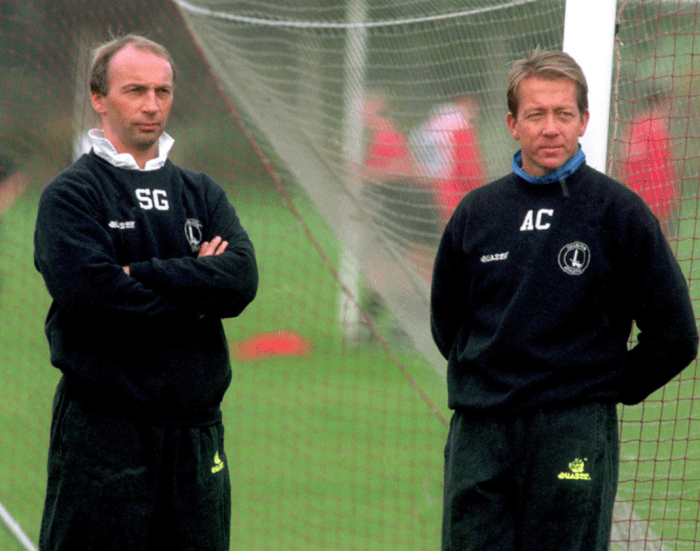
Joint Charlton manager with Alan Curbishley

“We would have loved to have kept Rob Lee, for example, but we had to do things for the well-being of the club so we could keep it going and give the fans something to shout about.

“It was a great time when we got back to The Valley (they’d spent several years sharing Selhurst Park with Crystal Palace).

“Then the club made a decision which I was never going to agree with. But when I look back to see what Alan did – he went on to do a significant job – I cannot complain. Ultimately what he achieved he thoroughly deserved.”

Gritt said: “When I was there we had to make sure we weren’t seen to be having disagreements although I cannot recall us having too many anyway.

“When we were on the training ground, we each knew what the other one would be doing during the sessions. We both had jobs to do on the day.

“I was more of a player than he was at that time – so the management side was more in his hands. It was fairly straightforward, until the club decided that they wanted one man in charge. That was obviously disappointing for me at the time but I have thoroughly enjoyed my career.

“Alan gave the club a massive block to build on – but no one could have envisaged how the club went after he left. It was a massive disappointment.”

After he left Bournemouth in 2012, Gritt dropped out of league football and spent five years as assistant manager at Ebbsfleet United, working with his former Charlton teammate (and ex-Albion youth team manager) Steve Brown and then Daryl McMahon, who he subsequently followed to League Two Macclesfield Town, Conference side Dagenham & Redbridge and Isthmian League Hornchurch.

Hailed as a hero at the Amex

‘Rooster’ became pivotal to developing young players

FORMER BRIGHTON apprentice Kevin Russell enjoyed a 20-year playing career in which he scored 105 goals in 552 games but he had forgettable spells at three South Coast clubs.

As we learned in my previous blog post, England Youth international Russell scored goals for Albion’s youth team and reserves but moved on before making the first team after a falling out with manager Chris Cattlin.

He got on better with Alan Ball at Portsmouth but only played eight games in three years at Pompey.

In March 1994, he was back in the south after a £125,000 move from Burnley to AFC Bournemouth. Unfortunately, his time at Dean Court coincided with dismal form on the pitch and financial pressures off it.

Russell was signed by Tony Pulis, who, it turned out, was in the final throes of his first spell as a manager, having succeeded Harry Redknapp at Dean Court.

The side had a dreadful run of form the month after Russell joined, suffering five defeats and three draws in eight matches. It was in the last of these that Russell finally got on the scoresheet for the Cherries as they picked up a point in a 1-1 draw at Hull City (his only goal in 17 matches).

While Mark McGhee won the Division Two title with Reading and Russell’s former club Burnley won promotion via a play-off final win over Stockport County, the Cherries finished a disappointing 17th in the table.

Portsmouth-born Russell had joined a squad (above) that included a number of players with past or future Brighton connections: Gary Chivers, Mark Morris, Paul Wood, Steve Cotterill and Warren Aspinall.

Cotterill recalled in a 2023 interview with gloucestershirelive.co.uk: “I know Rooster very well. I played with him at Bournemouth and he’s a great guy and a good coach.

“I liked him when I played with him because he used to stick crosses on a sixpence for me. I remember scoring a few goals from his crosses.”

Back in 1994, Pulis was sacked early on in the new season and former player Mel Machin took over, but the Cherries had managed only one win and a draw in their first 14 matches by the time they met the Albion at the Goldstone on 2 November 1994.

The game ended in a 0-0 draw and, although they won their next game, by Christmas they’d only got nine points from 21 games. Staring down the barrel of relegation, a last ditch revival in fortunes saw the season go down in memory as ‘The Great Escape’ because Bournemouth managed to avoided the drop by two points.

Russell, who had scored twice in 18 matches, had moved on by then and according to Aspinall, in a September 2011 interview with the Bournemouth Daily Echo: “Mel wanted rid of myself and Kevin Russell.”

Russell, who later had a habit of scoring against the Cherries – he hit four in 10 games against them – said after a 2001 encounter between Wrexham and Bournemouth: “The club was in a bad state when I was there, but Mel Machin and Sean O’Driscoll have turned things round and you know you’re always going to have a hard game against them.

“I don’t try any harder than normal when I play against them, but because I am playing up front and not in midfield or out wide, I get more chances to score.”

Aspinall had a couple of trial matches for the Albion before being packed off to Carlisle, while in February 1995 Russell joined First Division strugglers Notts County where he was reunited with former Leicester teammates Gary Mills and Phil Turner.

Howard Kendall was in charge at the time but County, who got through four managers that season (including Russell Slade for four months), finished bottom of the table having won only nine matches all season.

Russell then returned to his spiritual home in north Wales and, over the next seven years, played a further 240 matches for Wrexham, scoring 23 goals along the way.

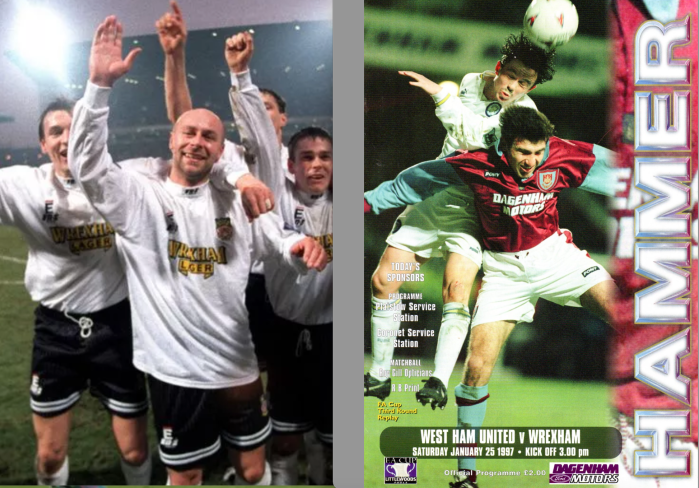
One of the most memorable was a last-minute winner at the Boleyn Ground in January 1997 as Wrexham pulled off a FA Cup giant-killing against West Ham. Having held the Hammers to a 1-1 draw at the Racecourse Ground, Russell went on as a 75th minute sub in the replay and scored a screamer in the dying seconds against a side that included Rio Ferdinand and Frank Lampard.

While the Dragons fans were elated, protesting home supporters spilled onto the pitch in anger at Harry Redknapp’s side’s performance and lowly Premier League position.

Slaven Bilic, later West Ham’s manager, was playing alongside Ferdinand and remembered the game thus: “We were struggling. We weren’t conceding a lot of goals but we couldn’t score and then Wrexham came and they scored at the end of the game, a great goal from 25 yards. After that we signed Johnny Hartson and Paul Kitson and we stayed up.”

When Russell’s playing days were over, he stayed on as a coach and worked as assistant manager under Denis Smith, taking Wrexham to promotion from the Third Division in 2002-03 and winning the LDV (English Football League) trophy in 2005.

That same year his loyalty and service to the club were rewarded with a pre-season testimonial against Manchester United – managed by his former teammate and captain Darren Ferguson’s dad!

Russell played the first 14 minutes of the match against a largely youthful United before being replaced by Ferguson. United won the game 3-1 with goals from Giuseppe Rossi, Liam Miller and Frazier Campbell and one of their subs that day was Paul McShane.

“I can’t speak highly enough of Alex for bringing his side here for me,” said Russell. “I’ve been treated to a special team with a lot of quality. I know there were a lot of young players out there, but you could see the potential they’ve got is immense.”

A crowd of nearly 6,000 watched the match and Wrexham secretary Geraint Parry said: “It just shows how well respected Kevin Russell is after his many years in the game.”

Smith and Russell were sacked in January 2007 but he went straight to Peterborough with Ferguson, who had been appointed Posh player-manager.

“We had an unbelievable time at Peterborough,” Russell told John Hutchinson. “We took them from the bottom league to the Championship in successive seasons in 2008 and 2009.”

There was a brief and unsuccessful spell for the managerial duo at Preston North End in 2010 – they were sacked four days after Christmas with Preston bottom of the Championship – but they weren’t out of work for long because they were re-appointed at Peterborough the following month.

They lost their first game back in charge though – to Brighton. Albion, on course to be league one champions under Gus Poyet that season, beat Posh 3-1: Chris Wood two and Elliott Bennett the scorers while Craig Noone made his home debut for the Seagulls.

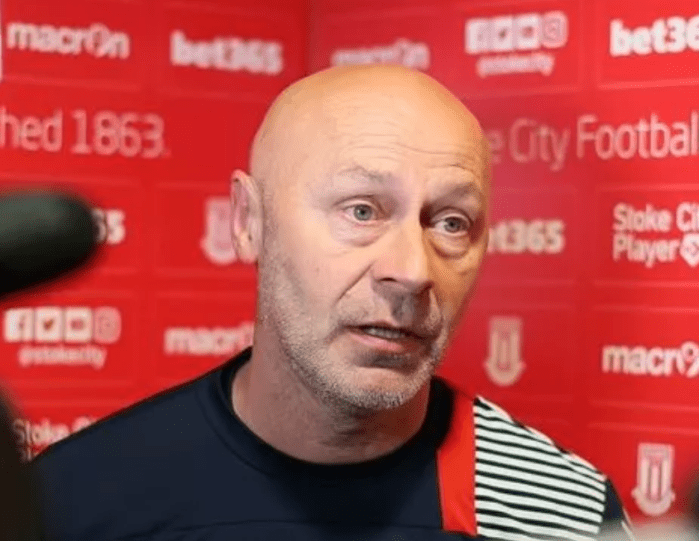
After three years at Peterborough, Russell moved back to the Potteries to join the coaching staff at Stoke (below) and stayed for nine years! He mainly worked with the under 18s and under 21s but also helped with the first team in between managerial changes in 2018 and 2019.

In May 2023, Russell joined Cheltenham Town as assistant manager to Wade Elliott. He was in caretaker charge for two matches when Elliott was sacked four months later but didn’t want the job on a permanent basis and left the club in October 2023 when Darrell Clarke was appointed.

Robins chairman David Bloxham said: “I am extremely grateful to Kevin for all his hard work and dedication and for his willingness to step in to manage the side in an extremely difficult period between Wade leaving and Darrell’s appointment.”

Once again, Russell wasn’t out of work for long. In January 2024, he was reunited with former Stoke technical director Mark Cartwright, a former goalkeeper who played 15 matches in Brighton’s 2000-01 promotion winning side, at Huddersfield Town.

Back in the game at Huddersfield Town

He was appointed as B team manager with a glowing endorsement from Cartwright, now Town’s sporting director, who said: “Not only is Kevin a great coach, but he also has a brilliant ability to develop relationships with young players.

“He’s a lively character and he knows how to relate to individuals to get the best out of them. Whilst at Stoke City, he played the pivotal role in developing players such as Nathan Collins, Harry Souttar, Tyrese Campbell, and Josh Tymon, alongside many others.

“He’s been so successful in doing that because he has a great understanding of the qualities that senior coaching staff want to see in young players.”

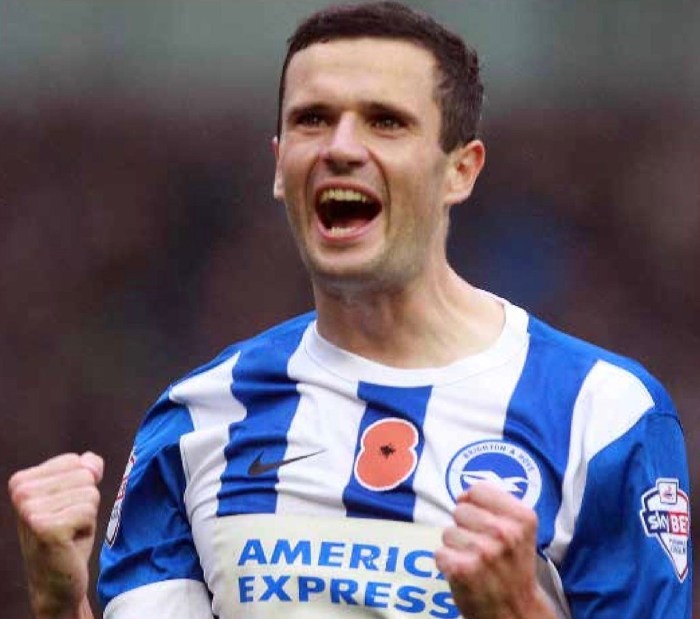
Three-time Clough signing Jamie Murphy was an Albion promotion winner

BRIGHTON provided a step up in class for Jamie Murphy when they bought the Scottish winger from League One Sheffield United in August 2015.

“I feel like I’ve been able to play in the Championship but I’ve never been given the opportunity,” he said. “It’s thanks to the club for giving me that opportunity.”

Murphy was 25 when he joined the Albion on a four-year deal. The fee was undisclosed but was reported to be £1.8m.

He was Albion’s ninth summer signing and his arrival was somewhat overshadowed by the return of Bobby Zamora to the Albion. But boss Chris Hughton said at the time: “He is somebody we monitored very closely last season and he was one of Sheffield United’s most influential and creative players.

“He’s a winger who can play on either flank and he will give us extra options in both wide positions. He’s a very good age, an age where he can continue to develop as a player and build on his experience.”

Murphy quickly settled at the club, finding a few familiar voices in the likes of captain Gordon Greer (he discovered their respective parents lived round the corner from each other in Glasgow and even drank in the same pub!), sports therapist Antony Stuart who Murphy knew at his first club, Motherwell, and assistant manager Colin Calderwood, whose Hibernian side he had played against.

He scored his first goal for the club in a 2-2 draw at Bolton on 26 September 2015 – but was later sent off in the same match. Zamora, making his first Albion start since returning to the club, set up Dale Stephens to put Albion ahead and Murphy increased the lead after a surging run into the penalty area by Liam Rosenior.

Neil Danns pulled one back before half time and Murphy saw red for a heavy tackle on Danns in the 75th minute. Albion had to settle for a point when Gary Madine headed an injury-time equaliser.

Impressive displays and another goal, against MK Dons, helped to earn him the November player of the month award – and, courtesy of the sponsor, the opportunity to drive a Porsche for 48 hours.

Murphy scored four more goals in a season’s total of 31 starts plus six appearances off the bench and he revealed in a matchday programme article how his eye for a goal stemmed from playing as a striker earlier in his career.

“When I was a kid, I was always the quickest so I always scored a lot of goals but as I got older and then turned professional with Motherwell it got harder and harder. I’m not the biggest player in the world, so I got moved out to the wing, but I still think like a striker when I’m in front of goal.”

Unfortunately, the campaign ended in disappointment when Albion missed out on promotion from the Championship. Hughton’s side finished third and Murphy’s form for Brighton earned him a call-up to the Scotland squad for two friendlies in March 2016, although he remained an unused sub.

When Albion lost in the two-legged Championship play-off semi-final to Sheffield Wednesday, Murphy was an unused sub (Anthony Knockaert and Jiri Skalak got the nod) but it was a familiar feeling for Murphy who had experienced semi-final heartache in two League One play-offs (2013 and 2015) for Wednesday’s fierce city rivals.

Hughton had plenty of competition for the wide spots in Albion’s 2016-17 promotion challenge, reducing Murphy’s starts to 20 plus 15 appearances off the bench.

He tried hard to seize his chance when it was presented. He scored twice in a 4-0 League Cup win over Colchester United at the start of the season and was the ‘other’ scorer in the Bonfire Night 2-0 win at Bristol City when Steve Sidwell scored a worldy from the halfway line.

A 3-0 home win over Reading at the end of February saw Murphy put in a man-of-the-match performance and he scored his first goal in 16 matches (Sam Baldock and Knockaert the other scorers).

He was praised for his pace on the break and excellent decision-making and later told the matchday programme: “It was one of my best performances. I always feel as if I’ve given 100 per cent – but sometimes things go for you, sometimes they don’t.

“I was delighted to get the goal; it’s been coming these past couple of weeks. But all across the team we’ve played well, done our jobs and obviously come away with a great win. It was a big game and we put in a very professional performance.”

Expanding on the whole-squad approach, Murphy said: “Anyone can come in and do a job. When I was on the bench I always felt there was a chance for me coming and I’m sure the boys on the bench feel that as well.

“We’re in this as a squad, it’s not just about the starting 11.” And he also spoke about the part the Amex crowd played. “It’s great as a player when you know you’ve got that backing of the fans behind you.

“When this place is rocking it really makes a big difference to us as a team. The fans get right behind us home and away.”

Murphy was certainly at the heart of the celebrations (above) when the Seagulls finally made it over the promotion finishing line, via a 2-1 win over Wigan Athletic, and he fondly recalled crowdsurfing (together with teammates Ollie Norwood and Skalak) on a happy, packed train from Falmer to the centre of Brighton as players joined with fans to celebrate the achievement.

The players were headed to a party in central Brighton laid on by chairman Tony Bloom and Murphy told The Athletic’s Andy Naylor in 2021: “There was no other way to get from the stadium to the party. The train station is 100 yards away, so we thought, ‘Why not just jump on a train?’.

“I don’t know what we were thinking, or if we thought it was going to be empty. Obviously, it wasn’t!

“It’s one of the best memories I have of that day. I’ve still got the video on my phone of us crowdsurfing and then coming off the train and getting carried down on someone’s shoulders, all the way down to the party.”

Once the Albion were in the Premier League, Murphy’s playing time was virtually non-existent (one start and three sub appearances in the league; one League Cup outing), and although speculation arose about a possible move, Hughton tried to play it down.

In December 2017, he told the Argus: “At this moment, if I am looking at the options I have in the wide areas, it’s been unfortunate for Jamie because of what we’ve had and no injuries in that area.

“He is still very much part of our plans. It only takes a lack of form, an injury or a couple of injuries and then he is very much back in the squad.”

Murphy in action for Glasgow Rangers

Within weeks, though, the winger joined Glasgow Rangers (the team he supported as a boy), initially on loan until the end of the season, before making the move permanent in the summer of 2018.

Hughton told the club website: “Jamie is a great lad, a fantastic professional and has a desire to play – and while we were in no hurry to see him leave, we do understand his desire to play for his boyhood team and one of the biggest clubs in Scotland.

“He’s been excellent for the club, ever since we signed him from Sheffield United, and wrote himself into club folklore as a crucial part of our promotion-winning side last season.”

Murphy played 18 league and cup matches (plus one as a sub) as Graeme Murty’s reign came to an end and during that initial time back in Scotland earned two full caps to go with his previous under 21 honours. They came in friendlies against Costa Rica and Peru: going on as an 87th minute sub for Matt Ritchie in a 1-0 win over Costa Rica and starting in a May 2018 2-0 defeat in Peru ((he was replaced by Oli McBurnie in the 67th minute).

Murphy signed a three-year contract with Rangers and was the club’s first goalscorer under new manager Steven Gerrard, netting the opener in front of a crowd of 49,309 at Ibrox in a Europa League qualifying match against North Macedonian side Shkupi.

He had played in just five Europa League games and two Scottish Premiership games before suffering a career-changing injury in a League Cup tie at Kilmarnock in late August.

The anterior cruciate ligament tear in his left knee, sustained on the astroturf pitch at Rugby Park in an innocuous coming-together with an opponent, put him out of action for 14 months.

Gerrard told the Glasgow Times: “Jamie’s coming to terms with it. He’s found it tough. He was upset at the beginning and understandably so.

“It is a tough one to take as a footballer. But we will give him every bit of help and support off the pitch that he needs. We will make sure that he sees the right specialists and gets the job done properly.

“Then as a team we will rally around him and make sure he is in good spirits. He is here for the long term. He is a big player for us.

“What Jamie has to do now and what we have to help him do is make sure he does everything in his powers to come back strong and doesn’t have any setbacks.

“He has got an opportunity to work on his whole body and make sure he comes back really strong.”

“It is a big blow. He found consistency straight away. He was on a big buzz from signing long-term for the club.

“He knows the league, he knows the club, he is very well-liked in the dressing room. We have had a big cog, a big piece of the jigsaw, taken away from us.

“We are still coming to terms with it. I know Jamie is as well. I’m not going to try and play it down. It’s a big blow.”

As it turned out, Murphy played only two more matches for Rangers after returning to fitness in October 2019 and in January 2020 linked up once again with his former Sheffield United boss Nigel Clough on a six-month loan at League One Burton Albion.

“I have worked with Nigel Clough before and had some of my greatest moments as a footballer under him, so it was an easy one to pick,” he said. “I want to be back enjoying football again. It has been a nightmare time with my knee but I’m now just looking forward to playing again.

Clough said: “To get a player from Rangers of Jamie’s quality is brilliant. The fact that we have worked with him before and that we get on well with his agent has helped.

“He wants to get out and play some football. He was out for a while with a knee injury, which is one of the reasons he’s coming out, but he’s fully fit now. What he did for us at Sheffield United and how he played there means we are very excited to have him on board.

“He plays wide mainly but can play up the middle as well. He carries the ball very well, makes goals and scores goals. He will be a great asset as we try and push for a place in the top six.”

He scored seven goals in 10 matches but then returned to Scotland and joined Hibernian, initially on loan and then permanently.

After making a total of 50 league and cup appearances for Hibs, he linked up with Clough for a third time in February 2022, signing on loan at League Two Mansfield Town. He scored once in 16 appearances for the Stags.

Murphy joined Ayr United in 2023

When he left Hibs at the end of his contract in June 2022, he switched to Perth for a year to play for St Johnstone where he scored five times in 29 appearances and in June 2023 was on the move again, this time to Scottish Championship side Ayr United.

Born in Glasgow on 28 August 1989, Murphy was inspired by Rangers strikers Ally McCoist and Mark Hateley as a boy and played junior football at Westwood Rovers and Drumchapel Thistle before linking up with Clyde. He joined Motherwell aged 11 and broke through to the first team at 17 in 2006 under former Albion boss Mark McGhee.

He said of McGhee: “He was the first man to give me a real chance in the first team. I played a good run of games, played in Europe and played well so he was big for me at the time.”

In 11 years at Fir Park, Murphy helped the club reach a Scottish Cup Final and regularly qualify for European football.

Having scored 50 goals in 215 games for Motherwell, he was then bought in January 2013 by former Albion captain Danny Wilson, who had switched allegiance in Sheffield to manage United.

It was Stuart McCall who sold Murphy to a club he had served as a player and a manager, and he believed at a reported fee of £106,000 they were getting a bargain for the 23-year-old.

McCall told the Daily Record: “We are not getting anywhere near what he is worth but he has given this club great service over the years. He is a great kid and goes with our blessing.

“It is probably the right time for Jamie to move on and flourish elsewhere.

“I would love to have kept him until the summer and it is disappointing for us. But Jamie is a talented boy and can force himself into the Sheffield United team.

“Sheffield United may be a League One side now but they are a great club for him to go to.

“I am hopeful they will be in the Championship next season and they are a Premiership club in the making as they have that status.”

McCall added: “I told Jamie they have a great fanbase, fantastic set-up and good manager in Danny Wilson.” However, Wilson’s two-year tenure at Bramall Lane came to an end in May that year. He was replaced by David Weir (now Albion’s technical director) and Murphy’s third United boss was Clough, who, on awarding Murphy a two-year contract extension in January 2015 said: “Jamie has caused Premier League defenders countless problems in our cup runs.”

With his playing days now winding down, Murphy has an eye on the future and on X (formerly Twitter) in October 2023 he posted that he had successfully passed the UEFA A coaching licence.

In an extended interview with the Hibernian club website in January 2021, he spoke about his desire to become a manager. “That’s something I definitely want to try,” he said. “I like the problem-solving aspect of it, being able to watch a game and pick apart a team’s strengths and weaknesses.

“I probably watch games in a different way now and it started when I was injured. I wasn’t able to train for the best part of a year, so I found myself taking down notes in a journal whenever I’d watch a game – about how teams would play, how they won or lost the game.”

‘Super’ Mark – ‘The Fridge’– didn’t always stay cool

MUCH-MALIGNED Mark McCammon was not afraid to stand his ground, answer his critics directly and to challenge injustice when he felt aggrieved.

Fans of Brentford, Brighton and Millwall voiced some strident – nay, downright offensive – opinions of his ability as a footballer.

Remarkably, the Barnet-born striker played in a FA Cup final and Europe for the Lions before Mark McGhee signed him a second time – for Brighton – having previously taken him to Millwall from the Bees on transfer deadline day in 2003.

McCammon and Neil Harris at the 2004 FA Cup Final in Cardiff

When his suitability to contribute to the Seagulls’ flagging cause in the Championship was called into question in a post-match radio phone-in, McCammon took umbrage and called the show himself to argue the toss with presenter Ian Hart.

Also, in what was something of a landmark case, McCammon took a subsequent employer, Gillingham FC, to courtand won a claim that he had been racially victimised.

It certainly wasn’t uncommon for McCammon to be at odds with the people running whichever club he was playing for.

He first joined the Seagulls on loan when he was out of favour and on the transfer list at Millwall.

He made his debut in a 1-0 home defeat to Stoke City in December 2004 and said: “I just want to get back playing and enjoying my football again.

“I have been in and out at Millwall and my fitness has dipped a little bit because I haven’t played. I’m happy to be playing under Mark again and I want to show what I can do.”

Although he didn’t get on the scoresheet in five matches, when McGhee made it a permanent move in February 2005 he told BBC Southern Counties Radio: “Not everyone understands the contribution Mark makes. We have become a much more effective team with him in the squad.”

McGhee was a great believer in the ‘one big one, one little one’ striking line-up, and was sure McCammon’s presence would help pint-sized Leon Knight to score goals.

Because of what followed, it is easy to forget McCammon scored three goals in his first two home games after signing on a permanent basis.

He scored a brace and won the man of the match award in a 3-2 defeat to Derby County and he got 10-man Albion’s second in a surprise 2-1 win over promotion-chasing Sunderland (Richard Carpenter scored the other, and Rami Shabaan made his debut in goal).

The Argus enjoyed building up the visit of McCammon’s old side Millwall to the Withdean, interviewing the player and the manager, who we learned called his new signing ‘The Fridge’.

McGhee urged McCammon to stay cool if he managed to score against his old club, but it was fellow striker Gary Hart who got the only goal of the game, in the 89th minute.

Ahead of the game, McCammon told the newspaper: “It would mean a lot to me to score the winning goal against them. I wasn’t given a chance there, but I’ve got a fresh start here. I’ve got a lot to prove.”

In the following game, he was subbed off at half-time in a 2-0 defeat at Stoke when he gave away a penalty. He underwent blood tests and McGhee said: “Mark is seeing a specialist to find out why he was feeling lethargic. It wasn’t the back injury he suffered against Millwall, he was just feeling ill and weak.”

That game was the first of a run of six defeats and Albion only won once in 11 matches – form which saw them avoid relegation by a single point.

One of several infamous McCammon incidents occurred following the Seagulls’ 1-1 draw at Turf Moor on 16 April.

After a lucklustre first half display when Albion went in 1-0 down, McGhee ripped into the team at half-time and McCammon and fellow striker Chris McPhee were told they weren’t holding the ball up well enough.

According to an account in the Daily Telegraph, McCammon argued back in a fiery exchange with the boss, claiming a lack of service from midfield was the issue. He didn’t reappear for the second half, being replaced by fired-up teenager Jake Robinson and Albion managed to salvage a point courtesy of an equaliser from Dean Hammond.

A delighted McGhee said of Robinson: “We say when people get their chance they have to take it and I thought he took it absolutely brilliantly. He was different class.”

But McGhee’s ire with McCammon hadn’t cooled at the final whistle – he ordered him off the team bus and told him to return south in the kit-carrying vehicle instead.

Not fancying a tight squeeze alongside sweaty shirts, shorts and socks, McCammon chose to return by train.

“After the match I told him I didn’t want him travelling back on the team bus with the rest of us and that he was to return home with two other members of staff in another club vehicle,” McGhee told Sky Sports News.

McCammon apologised to McGhee afterwards but any subsequent first team opportunities were few and far between after that.

At the start of the 2005-06 season, he managed a recall for a Carling Cup match away to Shrewsbury Town and pleased his manager by scoring a goal and laying one on for Robinson, even though the Albion went down 3-2.

“I thought Mark was much better. That type of performance is what we expect of him and it’s what he can do,” said McGhee. “Now he’s got to reproduce that in the Championship.

“He set his standard tonight in terms of his effort and the simple way he played the game. He didn’t complicate things; he laid it off, held it up, laid it off, then got in the box; he won a lot of headers; took a lot of stick and kept going. He got a goal, made a goal and I thought he was terrific.”

But McGhee, with other forward options in the shape of Colin Kazim-Richards, Robinson, Knight and Gary Hart only called on McCammon for three starts and five sub appearances.

“He (McGhee) asked me to go out on loan to a lower league team and I think I’m better than that,” said McCammon when, incensed by criticism of him on the BBC Southern Counties Radio post-match phone-in after a game in February, called in and took issue with show host Hart.

“I went on trial at Watford and I got called back to train for no apparent reason. I think I was hard done by there, a bit unlucky. I’m back but I’m not in the squad but I don’t think I’ve been given a long enough chance.”

Once again suggesting the team’s issue was service through to the front players, he responded to Hart’s personal criticism of him saying: “When you kick a ball in professional football you can tell me whether I’m good enough for this standard.

“You don’t know anything about me. What you said is very disrespectful.

“I’ve been out since the beginning of the season with ankle and knee injuries. I had surgery on both. I came back and made three first-team starts but it takes about seven or eight games to get your rhythm back. I think it’s a bad comment you have made.”

The striker also took aim at the Withdean faithful, claiming: “All we hear is supporters whingeing.

“If they get behind the team it will give the players an extra boost. All the first team players at Brighton listen to the radio and they hear the supporters being 100 per cent negative.

“It’s a team game, it’s not about individuals. The supporters need to get behind the team a bit more.”

If the player didn’t think much of the fans, it would be an understatement to say they were none too impressed by the player.

Amongst a veritable litany of abuse from Albion supporters, this from ‘The Full Harris’ on North Stand Chat encapsulated the opinions of many.

“Mark McCammon is the worst player to have played for us in this division … he just simply doesn’t have a clue. He is unfit, he doesn’t know where he is meant to be running, he can’t shoot. For a man of his size, he is pathetic in the air.

“He is clumsy, he has the touch and control of a Sunday league centre half, he is about as prolific as an impotent monk, he is an embarrassment, he is a disgrace, he is lazy and, personally, I object in the extreme to my paying his wages when I believe many of the crowd around me could do a better job and they would do it for free.”

Long before Dominic Cummings referred to his erstwhile boss, Boris Johnson as “a shopping trolley smashing from one side of the aisle to the other”, supporters voiced something similar of McCammon. The song went like this:

Super, super Mark
Super, super Mark
Super, super Mark
Supermarket Trolley.

Perhaps it was no surprise that McCammon was allowed to leave Albion on loan, linking up with League One Bristol City, where he scored four goals in 11 appearances.

He didn’t play another game for the Albion and, in the summer of 2006, joined Doncaster Rovers after impressing boss Dave Penney on trial.

Although born in Barnet on 7 August 1978, McCammon qualified to play for Barbados through his mother and he won five caps for the Caribbean country. He scored on his debut against Antigua and Barbuda in a 3-1 win in September 2006 and two days later hit a hat-trick when Barbados beat Anguilla 7-1.

Two years later he returned to international action for two World Cup qualifiers against the United States. Barbados lost 8-0 in California and 1-0 in Bridgetown.

McCammon was with QPR as a teenager but it was Cambridge United who took him on as a YTS and he joined Cambridge City on loan at 19 to gain experience.

He played just six games for United between 1997 and March 1999 but was signed by Premier League Charlton, managed by Alan Curbishley.

After relegation to the old First Division, McCammon played five times for the Addicks as they won the title with a squad that included John Robinson, Steve Brown and Paul Kitson on loan from West Ham. McCammon also spent time on loan at Swindon Town in January 2000.

That summer, McCammon left The Valley to sign for Second Division Brentford for a fee said to be £100,000. He scored six times in 33 appearances in his first season at Griffin Park. He scored 10 in a total of 75 appearances for the Bees but it seems their supporters were also unconvinced about his merits.

Stan Webb, on the excellent BFCTalk website, said: “Mark McCammon was yet another misfit who cost a significant fee. Despite looking every inch a footballer, he signally failed to deliver.

“He is best remembered for his cataclysmic miss from a free header at Loftus Road which might have changed our recent history had he scored, as he surely should have done.

“And yet for all the criticism he faced, he eventually became a sort of anti-hero as fans recognised that he was always giving everything he had and appreciated his efforts even though he was just not up to scratch.”

By contrast, McCammon’s time in south Yorkshire was relatively successful, although if he felt he was dogged by bad luck, in November 2006 he had a headed goal away to Brentford chalked off after the ref didn’t notice the ball went through a hole in the back of the net. Thankfully Donny still won 1‑0.

Across two seasons, he scored 13 goals in 70 matches for the south Yorkshire side and went on as a 71st minute sub for Richie Wellens in the 2008 League One play-off final at Wembley when Donny beat Leeds United 1-0. Leeds had Casper Ankergren in goal and Bradley Johnson in their line-up.

However, McCammon chose to head south that summer and signed a three-year contract with recently relegated League Two Gillingham.

He scored five goals in 35 matches in his first season at Priestfield but 2009-10, when the Gills were back in League One, was a different story.

By February 2010, a lack of starts saw him seek a loan to get some match fitness. Gills boss Mark Stimson told BBC Radio Kent: “Going out on loan will be good for him and the club. He needs games and if he comes back fit in four weeks that would be great.”

He added: “We want him sharp and scoring goals then he could come back because we might need someone like him. Last season he stepped in and put in a good shift.

“At the moment he’s frustrated, like all the other boys who are not playing. He didn’t want to drop down to League Two. Now he’s seriously thinking about it because it might get his career back on track.”

McCammon joined Bradford City for a month, playing four games, before returning to the Gills. But the following season, when Andy Hessenthaler had returned as manager, saw the final dismantling of McCammon’s league playing career.

The club dismissed him in 2011 for alleged misconduct but he didn’t go quietly and took them to an employment tribunal claiming he had been unfairly sacked and ‘racially victimised’. He won £68,000 in compensation and Gillingham and chairman Paul Scally were subsequently each fined £75,000 by the FA “for failing to act in the best interests of the game and bringing the game into disrepute”.

Furious Scally appealed the fines, which were set by an independent regulatory commission, saying they were “manifestly excessive, totally disproportionate and completely unjust” and, although the board reduced the club’s fine to £50,000, the sanction against Scally was upheld.

McCammon told the original hearing in Ashford, Kent, that he and other black players at the club were treated differently from white players. For example, he said, he was ordered to attend the ground amid ‘treacherous’ snowy driving conditions or be fined, while some white players were told they were not required.

The club tried to “frustrate him out” by refusing to pay private medical bills for injury treatment, while a white teammate had been flown to Dubai for treatment at the club’s expense, he claimed.

McCammon, who, on £2,500 a week, was the club’s highest-paid player, was also told not to blog while others were permitted to, he said. During an injury spell, he had to stay behind at the club for four hours longer than other injured and non-injured players, he claimed.

The tribunal heard he was dismissed after a disciplinary hearing following a confrontation in which he accused club officials of being “racially intolerant” regarding the decision to order him in during the heavy snow.

The tribunal found in McCammon’s favour and his solicitor, Sim Owalabi, said it was believed to be the first time a footballer had successfully brought before an employment tribunal a case of race victimisation against a professional football club.

After all the legal to-ing and fro-ing, the player himself, by then aged 35, said: “It was traumatising and it sort of sabotaged my career in the football world, my progress.

“I had football clubs after me and that just deteriorated. It’s very, very unfortunate.”

He dropped down to Conference level with Braintree Town in October 2011 and later played for Lincoln City, on loan and then on a permanent basis, when they were in the same division.

Tony Rougier couldn’t have wished for a better Albion start

A GOAL by Tony Rougier three minutes into his debut as a substitute gave Brighton a glimmer of hope in their battle to avoid relegation.

His strike against Mark McGhee’s mid-table Millwall side at Withdean Stadium on 22 February 2003 was the only goal of the game and lifted Albion out of the bottom three of the Championship.

When Bobby Zamora dummied Kerry Mayo’s pass to allow Arsenal loanee Graham Barrett to turn and move the ball goalwards, Rougier nipped in to complete a neat finish past Tony Warner in the Millwall goal.

Manager Steve Coppell had sent on the Reading loanee as a 61st minute substitute for winger Paul Brooker although he admitted to Stuart Barnes of The Guardian: “I honestly didn’t know if Tony would make a difference, but I felt he would pep up everybody else because we were starting to lose our grip.

“Getting out of the bottom three will give the players a lot of self-esteem. For a long time this season they have questioned whether they belonged at this level.”

Trinidad and Tobago international Rougier joined the Seagulls having been sidelined by Alan Pardew at Reading who paid £325,000 when signing him from Brian Horton’s Port Vale.

Horton gave the Argus an insight of what Albion fans might expect when he said in an interview: “Tony has a great build and he is a threat with his pace and strength.

“We had to sell him because we needed the money and he was one of our major earners.”

He had been Vale’s leading goalscorer with eight goals in 38 games when they were relegated from the First Division in 2000 before moving to Reading that August.

Rougier made a total of 84 appearances for Reading, scoring six goals, and in his first season helped them to the Division Two play-off final where they lost 3-2 to Walsall (and Rougier scored an own goal after going on as a substitute). But a year later, he made 20 starts and 13 appearances off the bench as Reading were promoted in second place – behind the Albion!

He had scored twice in 12 outings for Pardew’s high-flying Royals in 2002-03, including in a 1-0 win against Albion at Withdean. But competition for places was fierce, with the likes of Nicky Forster, Darius Henderson, John Salako and Nathan Tyson.

Coppell told the Argus: “I speak with Alan fairly regularly but this came totally out of the blue when I phoned him up.

“Tony is a big, strong lad and he gives us options. He can play as a wide man or down the middle and the move suits Reading, the player and me.”

Getting to grips with Jason Brown of Gillingham

Coppell needed forward cover because Gary Hart was about to start a four-match suspension, Zamora was banned for the next away game at Gillingham, Paul Kitson was still injured and Barrett was struggling for form and goals.

The following matchday programme observed Rougier had not been signed for his goalscoring prowess, but rather for his “power, direct running, and causing havoc that others can exploit”.

But the goal was very welcome in a season that might well not have ended in relegation if Coppell had started the season in charge rather than joining after so many games had already been lost under Martin Hinshelwood.

Rougier made his first start in a 3-0 defeat away to Gillingham playing up front with Barrett when Zamora and Hart were suspended.

He featured in home wins over Rotherham United (2-0) and Nottingham Forest (1-0) as well as an away defeat at Stoke City (0-1), but he missed the 2-1 defeat at Sheffield United after twisting his right ankle against Forest.

He bowed out in style in his final appearance, making one goal and scoring a second in a memorable 2-2 draw away to Ipswich Town.

I took my then 14-year-old son Rhys to the clash at Portman Road and the lively midfielder-cum-striker in the no.34 shirt, who had been taken to the hearts of the Albion faithful, was suitably serenaded with the chant ‘Ra-ra-ra Rougier’ to the tune of the popular vaudeville and music hall song Tarara Boom-de-ay.

His first significant involvement saw him go up for a header from Hart’s cross and Town goalkeeper Andy Marshall diverted the ball into his own net to gift Albion an equaliser.

Future Albion loanee striker Darren Bent missed a penalty that would have put Ipswich back in front, and then, with 10 minutes to go, Albion fans were buoyant with expectation when Rougier slammed the ball into the roof of the net after Ipswich had failed to clear their lines.

Unfortunately for Brighton, a 30-yard thunderbolt from Martin Reuser flew past Dave Beasant to put the home side level and Albion had to be content with a point, which ultimately wasn’t enough to avoid making an immediate return to the division they’d left the previous season.

While the player was keen to extend his stay, Pardew wanted him back to help with Reading’s promotion run-in, although thankfully he wasn’t involved in Brighton’s shock 2-1 win at the Madejski Stadium on 4 April (and Steve Sidwell, who had been on loan at the Albion earlier that season was an unused sub). Goals from Brooker and sub Kitson took the spoils for the Albion, Cureton netting for the home side.

The Royals finished fourth in the league before losing 3-1 on aggregate to Wolves in the play-off semi-finals, and Rougier was released on a free transfer having scored three times in 13 starts and nine appearances off the bench.

Rougier told the Argus he would be interested in returning to the Albion, but nothing came of it and he joined Brentford instead. Manager Wally Downes believed the player had “real quality” although Brentford fans seemed to have divided opinions on what he brought to the side.

‘Snappy’ on The Griffin Park Grapevine reckoned: “The guy is a huge asset, especially in the last 10 minutes of a game when he can hold the ball up and dance his way around players like they were statues and relieve the pressure on the defence.”

‘West Ealing Bee’ agreed: “He is an asset to the club and a very important part of the team.” But ‘Boston Bee’ had a totally different take on the player:Even when he actually tried (15min/match) he looked like he wasn’t trying. His lack of interest in the game going on around him drove me crazy.”

Rougier made 34 appearances for the Bees, scoring five goals but when Martin Allen took over as manager in March 2004, Rougier was one of five players he allowed to leave Griffin Park as part of a squad overhaul that ultimately helped them to a last-day escape from relegation.

Meanwhile, Rougier linked up with another ex-Albion captain, Danny Wilson, at Bristol City on a free transfer. Indeed, Rougier appeared for the Robins when they lost 1-0 to McGhee’s Albion in the divisional play-off final in Cardiff on 30 May.

But when Wilson lost his job that summer, Rougier followed him out of the exit and he returned to Trinidad, where he won the last of 67 international caps for Trinidad and Tobago.

Rougier stepped into coaching

He has since turned to coaching, becoming a UEFA A licensed coach, and attained a degree in sports development. On his LinkedIn profile, he describes himself as the founder, president and technical director of FC South End, and, in 2014, among his past coaching experiences was a spell working with his nation’s under 20 squad.

Four years later, he had moved to the United States to coach the New England Revolution academy team.

Born on 17 July 1971 in Sobo, a village in south west Trinidad, his footballing career was initially confined to his home country.

Tom Lunn, writing for Reading fan website thetilehurstend.sbnation.com in 2019, profiled Rougier describing how the player began his senior footballing career in his home country with La Brea Angels. His Wikipedia page says he also played for Trintoc, United Petrotrin, and Trinity Pros.

An Albion matchday programme article said Rougier then moved to New York where he spent a year working in the baggage department at John F Kennedy airport before heading to the UK.

After overcoming work permit issues, he was taken on by Raith Rovers where, over the course of two years, he became something of a cult hero. In 2018, he returned to Fife to be inducted into the club’s Hall of Fame.

“This is where it all started,” he said in an interview with the club’s TV channel. “It never felt the same whichever club I went to afterwards. The Fife people gave me respect and it’s something I’ll never forget.”

Rougier welcomed back in Fife

During the interview, Rougier remembered fondly an occasion when he man-marked Paul Gascoigne, playing central midfield against Rangers.

His stand-out moment was a UEFA Cup second round tie in Munich’s Olympic Stadium on 30 October 1985 when Raith only narrowly lost 2-1 to Bayern Munich who boasted the likes of Oliver Kahn in goal and Jurgen Klinsmann up front.

His performances for Raith earned him a £250,000 move to Hibernian. He scored four times in 45 matches for Alex McLeish’s Edinburgh outfit but in January 1999 joined Port Vale, signed by Horton’s predecessor John Rudge for £175,000.

By then, he had established himself in the Trinidad and Tobago national side, a teammate of Dwight Yorke, and often being chosen as captain.

In his own words, he describes himself as: “A highly experienced football coach and former professional player with a career in the game spanning more than 25 years, I has successfully made the transition into coaching, management and club operations through a consistent focus on long term player and team development.

“A former national team captain with Trinidad & Tobago and a promotion winner in both England and Scotland, I have been able to effectively apply my on-field experience to guide team success and coaching strategy at professional, grassroots and school level.

“I am a positive, dynamic and passionate professional who is committed to my continued progression as a coach. I am always open to opportunities in which I can develop while positively impacting a football club or organisation, and would relish the opportunity to work with elite players within an ambitious environment.”

Talent spotter John Doolan now eyeing forwards for Brighton

THE SCOUSER searching for Brighton’s next Evan Ferguson had Everton blue coursing through his veins from an early age.

But John Doolan’s long association with the Merseyside club came to an end in February 2023 when he swapped places with another backroom man, Lee Sargeson, who joined Everton as their head of scouting operations. Sargeson spent more than five years working in Albion’s much-admired scouting set up.

Now Doolan, a former Everton academy player, has been tasked by another well-known Evertonian, Albion technical director David Weir, and head of recruitment, Sam Jewell, with scouting forwards for the Seagulls.

Although not making it into Everton’s first team himself, Doolan helped to develop the likes of Shane Duffy, Tom Davies and Ross Barkley at Finch Farm.

During more than a decade working behind the scenes, he coached youth teams, worked on player and team development and rose through the scouting and recruitment departments.

After being released by the Toffees on a free transfer, Doolan’s own playing career spanned 550 matches for six clubs in the lower leagues, starting at Mansfield Town. His former Everton coach, Colin Harvey, took him to Field Mill where he’d become assistant manager to another ex-Evertonian, Andy King.

Simon Ireland (Albion’s under 21s coach for 21 months between June 2013 and February 2015) was a teammate at Mansfield. In a matchday programme pen picture of Doolan, when the Third Division Stags visited the Goldstone, it said: ‘Big things are expected of this stylish midfield player.’

He played 151 games for Town in a four-year spell before moving on to Barnet for a £60,000 fee in 1998. In five years with John Still’s Barnet, Doolan made one short of 200 appearances and was a teammate of skilful wideman Darren Currie, who later proved a popular signing for Mark McGhee’s Albion side in the Championship.

He was also at the club when they lost their Football League status in 2001 and became regarded as one of the best midfielders in the Football Conference.

Doolan switched to fellow Conference side Doncaster Rovers for a small fee in March 2003 and helped them gain promotion back to the League via the play-offs.

Described on Donny’s website as “a combative but skilled midfielder” he was a key member of the side that won the Third Division championship in 2003-04 and, in total, made 92 senior appearances for Rovers, scoring three goals.

In a Bred a Blue podcast interview reflecting on his career, he said: “Donny was the best. We won the league twice. The lads were great. It was like Kelly’s Heroes; a bunch of misfits put together and we went on a double promotion. There were some very good players in there.”

The only period of his playing career he regretted was when he was drawn to League One Blackpool by money. By then he was 31, and the move only lasted six months. “I had to play 25 games to get a new deal and I played 24,” he said.

He went on loan to League Two Rochdale in January 2006 and made the move permanent within 10 days. Doolan had already begun to think ahead and had taken some coaching badges while still playing. In just short of two and a half years with Rochdale he clocked up 90 appearances before, aged 34, taking his next steps in the game.

When he left Dale in May 2008 to take up a player-coach role at Blue Square North side Southport,  

Dale boss Keith Hill said: “John is a fantastic character and will be missed. He always gave 100 per cent and provided a fantastic example to the young players in the dressing room.”

He added: “I cannot speak highly enough of him and I am sure he will make a real success of coaching because he is a natural.”

Neil Dewsnip, who worked at Everton’s academy for 17 years, had already taken Doolan back to Everton as a part-time youth coach after they’d met on a coaching course. It was at the time Everton’s youth development centre was moving from Netherton to Finch Farm, and Doolan started coaching a couple of days a week while also fulfilling his duties at Southport before returning full time.

In the years that followed, he worked with all the different age groups and, under Kevin Reeves (the chief scout during the reign of Roberto Martinez) he moved into talent identification, watching promising young players across the region.

Born in Liverpool on 7 May 1974, Doolan joined Everton as a 14-year-old schoolboy, having been picked up after playing for Liverpool Schoolboys.

He started training two days a week – David Unsworth and Billy Kenny were contemporaries – before signing as a youth trainee. “My YTS days were the best days of my footballing career,” he told the podcast. “I loved every single minute of it.”

Doolan described to Bred a Blue the enjoyment he got when getting involved with the first team in training but, as a right-back, he had stiff competition and when Everton signed Paul Holmes he saw the writing was on the wall.

“I realised I wasn’t good enough,” he said. “They brought in Paul Holmes and that was like a kick in the teeth. They paid a fee for him (£100,000 from Birmingham City) and they were always going to prefer him.”

There was a momentary glimmer of a chance under Howard Kendall, but he broke an ankle in a youth cup game and the opportunity was gone.

He was sent to Bournemouth for a brief loan spell under Tony Pulis and on his return to Merseyside was told he wasn’t going to feature. “I still had a year on my contract but I decided to leave,” he said. “When I left Everton and went to Mansfield I changed position and went into midfield. I never played at the back again.”

Bred a Blue says of Doolan: “His is a story of how the adversity of being released can be overcome by resolve, hard work and confidence in your own ability.”

Doolan was one of a trio of senior scouts (Pete Bulmer and Charlie Hutton were the others) who were made redundant by the Albion in November 2024 as part of a shake-up of the recruitment department.