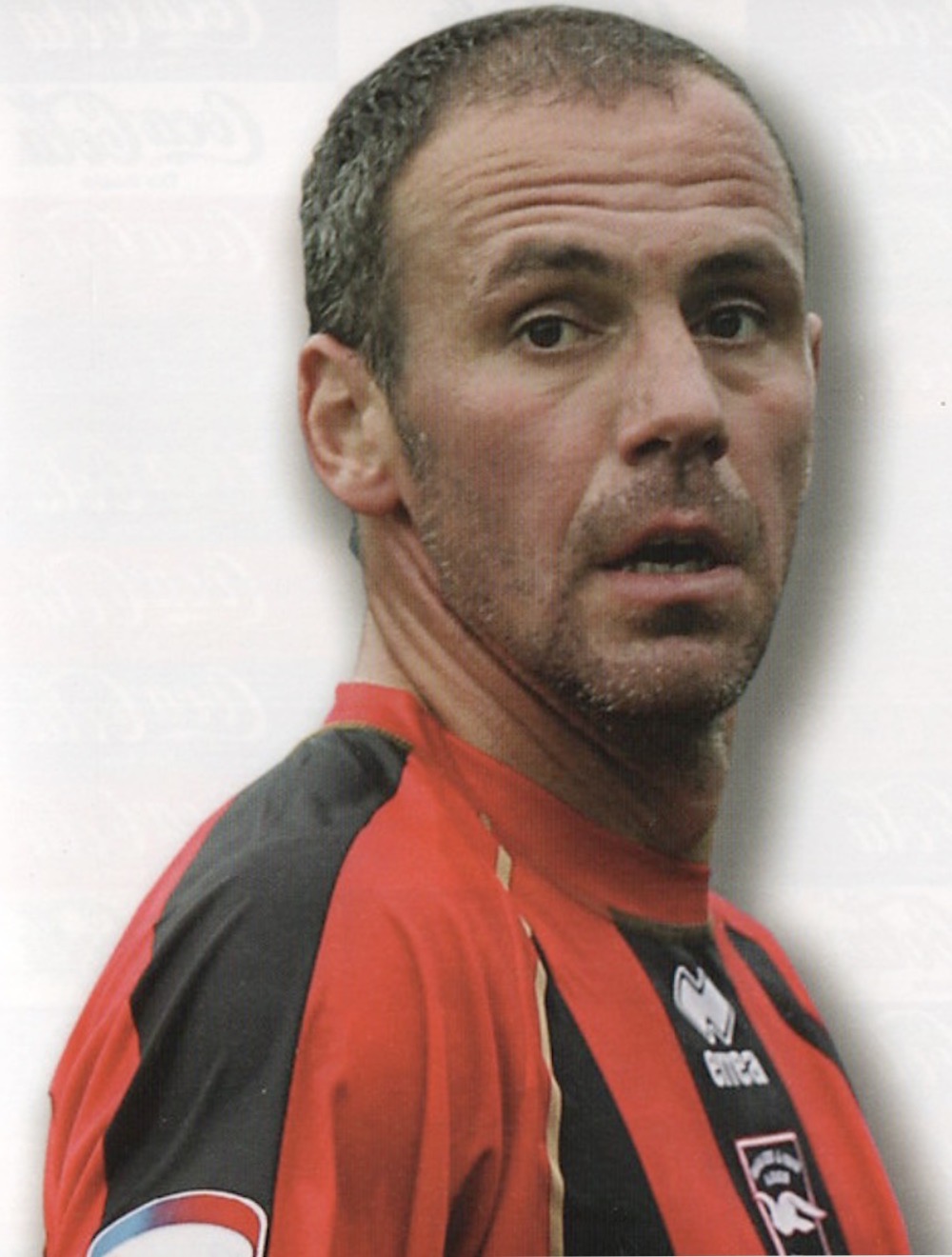
Tony Rougier couldn’t have wished for a better Albion start

A GOAL by Tony Rougier three minutes into his debut as a substitute gave Brighton a glimmer of hope in their battle to avoid relegation.

His strike against Mark McGhee’s mid-table Millwall side at Withdean Stadium on 22 February 2003 was the only goal of the game and lifted Albion out of the bottom three of the Championship.

When Bobby Zamora dummied Kerry Mayo’s pass to allow Arsenal loanee Graham Barrett to turn and move the ball goalwards, Rougier nipped in to complete a neat finish past Tony Warner in the Millwall goal.

Manager Steve Coppell had sent on the Reading loanee as a 61st minute substitute for winger Paul Brooker although he admitted to Stuart Barnes of The Guardian: “I honestly didn’t know if Tony would make a difference, but I felt he would pep up everybody else because we were starting to lose our grip.

“Getting out of the bottom three will give the players a lot of self-esteem. For a long time this season they have questioned whether they belonged at this level.”

Trinidad and Tobago international Rougier joined the Seagulls having been sidelined by Alan Pardew at Reading who paid £325,000 when signing him from Brian Horton’s Port Vale.

Horton gave the Argus an insight of what Albion fans might expect when he said in an interview: “Tony has a great build and he is a threat with his pace and strength.

“We had to sell him because we needed the money and he was one of our major earners.”

He had been Vale’s leading goalscorer with eight goals in 38 games when they were relegated from the First Division in 2000 before moving to Reading that August.

Rougier made a total of 84 appearances for Reading, scoring six goals, and in his first season helped them to the Division Two play-off final where they lost 3-2 to Walsall (and Rougier scored an own goal after going on as a substitute). But a year later, he made 20 starts and 13 appearances off the bench as Reading were promoted in second place – behind the Albion!

He had scored twice in 12 outings for Pardew’s high-flying Royals in 2002-03, including in a 1-0 win against Albion at Withdean. But competition for places was fierce, with the likes of Nicky Forster, Darius Henderson, John Salako and Nathan Tyson.

Coppell told the Argus: “I speak with Alan fairly regularly but this came totally out of the blue when I phoned him up.

“Tony is a big, strong lad and he gives us options. He can play as a wide man or down the middle and the move suits Reading, the player and me.”
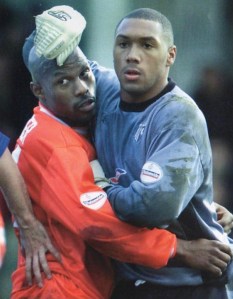
Getting to grips with Jason Brown of Gillingham

Coppell needed forward cover because Gary Hart was about to start a four-match suspension, Zamora was banned for the next away game at Gillingham, Paul Kitson was still injured and Barrett was struggling for form and goals.

The following matchday programme observed Rougier had not been signed for his goalscoring prowess, but rather for his “power, direct running, and causing havoc that others can exploit”.

But the goal was very welcome in a season that might well not have ended in relegation if Coppell had started the season in charge rather than joining after so many games had already been lost under Martin Hinshelwood.

Rougier made his first start in a 3-0 defeat away to Gillingham playing up front with Barrett when Zamora and Hart were suspended.

He featured in home wins over Rotherham United (2-0) and Nottingham Forest (1-0) as well as an away defeat at Stoke City (0-1), but he missed the 2-1 defeat at Sheffield United after twisting his right ankle against Forest.

He bowed out in style in his final appearance, making one goal and scoring a second in a memorable 2-2 draw away to Ipswich Town.

I took my then 14-year-old son Rhys to the clash at Portman Road and the lively midfielder-cum-striker in the no.34 shirt, who had been taken to the hearts of the Albion faithful, was suitably serenaded with the chant ‘Ra-ra-ra Rougier’ to the tune of the popular vaudeville and music hall song Tarara Boom-de-ay.

His first significant involvement saw him go up for a header from Hart’s cross and Town goalkeeper Andy Marshall diverted the ball into his own net to gift Albion an equaliser.

Future Albion loanee striker Darren Bent missed a penalty that would have put Ipswich back in front, and then, with 10 minutes to go, Albion fans were buoyant with expectation when Rougier slammed the ball into the roof of the net after Ipswich had failed to clear their lines.

Unfortunately for Brighton, a 30-yard thunderbolt from Martin Reuser flew past Dave Beasant to put the home side level and Albion had to be content with a point, which ultimately wasn’t enough to avoid making an immediate return to the division they’d left the previous season.

While the player was keen to extend his stay, Pardew wanted him back to help with Reading’s promotion run-in, although thankfully he wasn’t involved in Brighton’s shock 2-1 win at the Madejski Stadium on 4 April (and Steve Sidwell, who had been on loan at the Albion earlier that season was an unused sub). Goals from Brooker and sub Kitson took the spoils for the Albion, Cureton netting for the home side.

The Royals finished fourth in the league before losing 3-1 on aggregate to Wolves in the play-off semi-finals, and Rougier was released on a free transfer having scored three times in 13 starts and nine appearances off the bench.

Rougier told the Argus he would be interested in returning to the Albion, but nothing came of it and he joined Brentford instead. Manager Wally Downes believed the player had “real quality” although Brentford fans seemed to have divided opinions on what he brought to the side.

‘Snappy’ on The Griffin Park Grapevine reckoned: “The guy is a huge asset, especially in the last 10 minutes of a game when he can hold the ball up and dance his way around players like they were statues and relieve the pressure on the defence.”

‘West Ealing Bee’ agreed: “He is an asset to the club and a very important part of the team.” But ‘Boston Bee’ had a totally different take on the player:Even when he actually tried (15min/match) he looked like he wasn’t trying. His lack of interest in the game going on around him drove me crazy.”

Rougier made 34 appearances for the Bees, scoring five goals but when Martin Allen took over as manager in March 2004, Rougier was one of five players he allowed to leave Griffin Park as part of a squad overhaul that ultimately helped them to a last-day escape from relegation.

Meanwhile, Rougier linked up with another ex-Albion captain, Danny Wilson, at Bristol City on a free transfer. Indeed, Rougier appeared for the Robins when they lost 1-0 to McGhee’s Albion in the divisional play-off final in Cardiff on 30 May.

But when Wilson lost his job that summer, Rougier followed him out of the exit and he returned to Trinidad, where he won the last of 67 international caps for Trinidad and Tobago.

Rougier stepped into coaching

He has since turned to coaching, becoming a UEFA A licensed coach, and attained a degree in sports development. On his LinkedIn profile, he describes himself as the founder, president and technical director of FC South End, and, in 2014, among his past coaching experiences was a spell working with his nation’s under 20 squad.

Four years later, he had moved to the United States to coach the New England Revolution academy team.

Born on 17 July 1971 in Sobo, a village in south west Trinidad, his footballing career was initially confined to his home country.

Tom Lunn, writing for Reading fan website thetilehurstend.sbnation.com in 2019, profiled Rougier describing how the player began his senior footballing career in his home country with La Brea Angels. His Wikipedia page says he also played for Trintoc, United Petrotrin, and Trinity Pros.

An Albion matchday programme article said Rougier then moved to New York where he spent a year working in the baggage department at John F Kennedy airport before heading to the UK.

After overcoming work permit issues, he was taken on by Raith Rovers where, over the course of two years, he became something of a cult hero. In 2018, he returned to Fife to be inducted into the club’s Hall of Fame.

“This is where it all started,” he said in an interview with the club’s TV channel. “It never felt the same whichever club I went to afterwards. The Fife people gave me respect and it’s something I’ll never forget.”
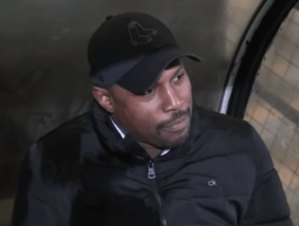
Rougier welcomed back in Fife

During the interview, Rougier remembered fondly an occasion when he man-marked Paul Gascoigne, playing central midfield against Rangers.

His stand-out moment was a UEFA Cup second round tie in Munich’s Olympic Stadium on 30 October 1985 when Raith only narrowly lost 2-1 to Bayern Munich who boasted the likes of Oliver Kahn in goal and Jurgen Klinsmann up front.

His performances for Raith earned him a £250,000 move to Hibernian. He scored four times in 45 matches for Alex McLeish’s Edinburgh outfit but in January 1999 joined Port Vale, signed by Horton’s predecessor John Rudge for £175,000.

By then, he had established himself in the Trinidad and Tobago national side, a teammate of Dwight Yorke, and often being chosen as captain.

In his own words, he describes himself as: “A highly experienced football coach and former professional player with a career in the game spanning more than 25 years, I has successfully made the transition into coaching, management and club operations through a consistent focus on long term player and team development.

“A former national team captain with Trinidad & Tobago and a promotion winner in both England and Scotland, I have been able to effectively apply my on-field experience to guide team success and coaching strategy at professional, grassroots and school level.

“I am a positive, dynamic and passionate professional who is committed to my continued progression as a coach. I am always open to opportunities in which I can develop while positively impacting a football club or organisation, and would relish the opportunity to work with elite players within an ambitious environment.”
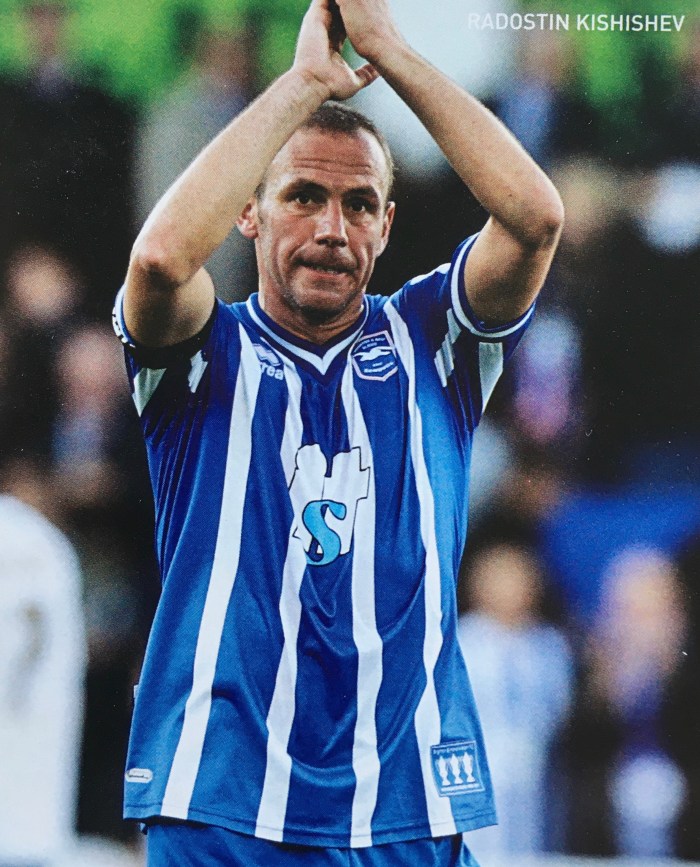
Kish and caps invaluable experience in promotion season

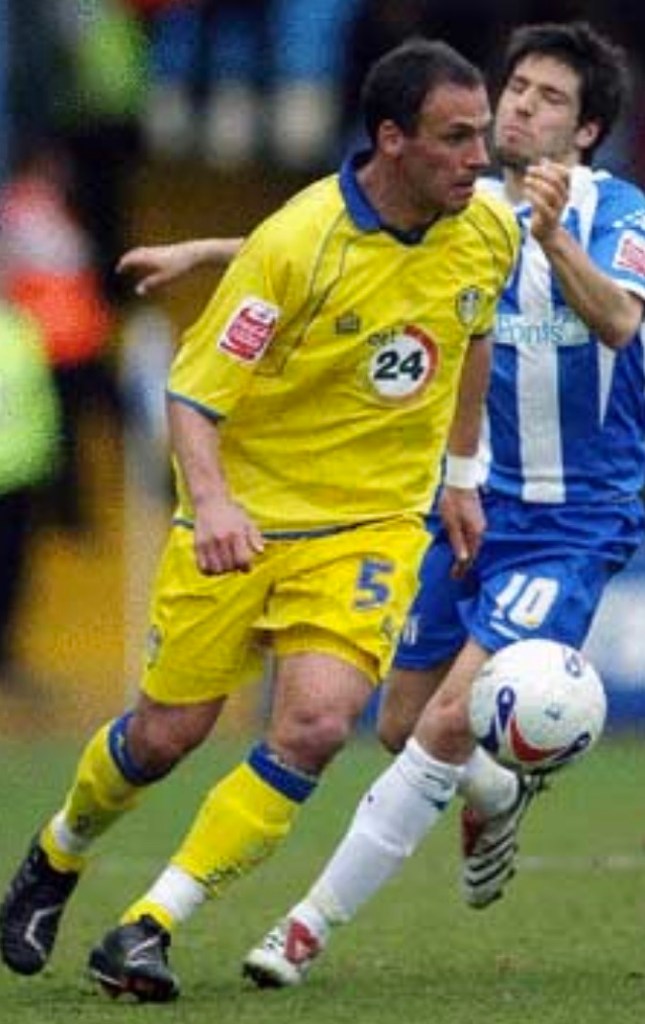
WHEN RADOSTIN Kishishev signed for the Albion in the summer of 2010, they acquired the services of an experienced international footballer to help in their push for promotion from the third tier.

That ‘Kish’ was 35 at the time might have been a concern but the nous he brought to the side more than compensated for the inevitability that his best years were behind him.

As manager Gus Poyet told the Argus: “He is an excellent professional and has kept himself in superb shape throughout his career.

“His quality is obvious, there is no doubt about that, but we had to be sure about his fitness. But he has proved that age is no barrier.

“That experience and quality will bring a lot to the team and will also help our younger players in their development.”

With 88 caps for Bulgaria to his credit (he was in his country’s Euro ’96 squad for the tournament in England, then played in the 1998 World Cup in France and was involved up to 2009), Kishishev had seen Premier League action with Charlton Athletic, mainly as a right-back, as well as playing for Leicester City and Leeds United, when Poyet was assistant manager to Dennis Wise.

Kishishev expressed his gratitude to Poyet for rescuing his English football career at Brighton. “I thought I was going to retire after moving back to Bulgaria,” he said. “I thought I would stay there and finish my career.

“I am very pleased with the way things have worked out and I really appreciate the chance I have been given to play for Brighton.”

In a matchday programme article, he said: “My desire for football is still so strong. As a footballer you should keep plying for as long as you can because you are a long time retired.”

However, in the autumn of 2010, Kishishev was indicating his stay on the south coast would only be for the one season because of the wear and tear he was feeling.

After being part of the side in season-defining away wins 3-0 at Peterborough and 4-0 at his old club Charlton, he told the Argus: “It is becoming harder and harder every year. My legs are getting tired and painful so it’s difficult to continue playing.”

Nonetheless, Kishishev was heavily involved throughout the season, starting a total of 25 games and coming on as a substitute in 11 others.

He missed a couple of months of action when allowed compassionate leave to return to Bulgaria, but Poyet was glad to welcome him back in March 2011 to bring a steadying influence to the final run-in.

For instance, after coming on as a sub when Albion eventually overcame Carlisle 4-3, Poyet said: “Kish came on and understood the game better than anyone else on the pitch.

“He knew where the danger was, how to pass it, when to make a foul. That is down to experience and quality, so I’m pleased to have him back.”

Kishishev was released in May 2011 and he returned to Bulgaria to play one last season with the club where it all began for him 20 years earlier: Chernomorets Burgas.

He started 16 League games for them, came on as a substitute in three more, and played his final game on 19 May 2012 in a 1-1 home draw with Locomotiv Sofia.

The background to his compassionate leave became public a few months later when in October 2012 his wife died of cervical cancer aged just 38. She had first been diagnosed with the illness while Kishishev was in the UK playing for the Albion.

Born in the Black Sea coastal city of Burgas on 30 July 1974, Kishishev also made 75 appearances for the city’s Neftochimik side and although he subsequently moved to Turkey to play for Bursapor, after only 20 games in six months there he returned to Bulgaria in January 1998 to join Litex Lovech, who he helped to win two league titles (1998 and 1999).

The bulk of his English career was spent in the top flight with Charlton under Alan Curbishley, and on a return visit to The Valley in 2017, Kishishev told the Charlton website: “It was always good when we beat the best teams. Arsenal; we beat them 1-0 on New Year’s Day and I think Graham Stuart scored. Chelsea; we beat them in their first year of Roman Abramovich on Boxing Day. 

“I have great memories of games first of all, and then the crowd. The warmness they gave me all the time is one of the first things I remember. 

“When I look back, I was one of Curbs’ favourite players. He always picked me and believed in my skills and ability, and I was so glad to have been part of that great team.”

Towards the end of his Charlton days, he joined Leeds United on loan and Leeds fan site ozwhitelufc.net details Kishishev’s career and explains his popularity at Elland Road, where he made 10 appearances as they unsuccessfully battled against relegation from the Championship.

When released by the Addicks in June 2007, he chose to join Leicester City on a two-year contract, with boss Martin Allen telling the BBC: “I watched him play against Belarus recently. I wanted to check he still had energy and enthusiasm – and he played well.

“I’m delighted that he has agreed to come here. He gives us some steel in the centre of midfield.”

Unfortunately, the move came during the reign of Milan Mandaric as chairman and managers came and went with alarming regularity. Allen was replaced by Gary Megson, but he only lasted nine games, and then Ian Holloway took over.

Just four months after signing for the Foxes, and having made only six starts plus five appearances as a sub, Kishishev headed back on loan to Leeds.  He told the Leeds website: “I signed a two-year at Leicester and the start wasn’t very good, for the team and myself as well.

“Life changes all the time and I’ve got another spell here and I hope it will be for longer. Once I knew that Gus and Dennis wanted me to come, I agreed 100 per cent.

“I’m happy and I hope I can play some part for Leeds and keep the same standards.”

Just six days after he signed, Poyet quit Leeds to become first team coach at Tottenham and five days after his three-month loan came to an end, Wise moved on to become a director at Newcastle.

Kishishev made only seven appearances in that second spell and it seemed his time in England was over when he chose to move back to Bulgaria and rejoin Litex Lovech.

That was until he was reunited with Poyet once more at Brighton. He was already studying for his UEFA A coaching licence at that time and he has since managed and coached in Bulgaria.

Promotion-winner Sam Baldock part of Albion’s history

BRIGHTON’S football history will record Sam Baldock as part of the squad who earned the club promotion back to the top division after a 34-year absence.

Baldock and Oliver Norwood famously crowd surfed on a train from Falmer to Brighton, held aloft by jubilant supporters celebrating after the April 2017 win at home to Wigan Athletic.

It was one of the many joyous scenes that will live long in the memory banks of Brighton fans following that momentous occasion.

In the cold light of day, though, it’s probably fair to say Baldock divided opinion about his contribution to the cause. Manager Chris Hughton described him as “a great professional and a good character in the dressing room” but, whether because of injuries or lack of opportunity, the diminutive striker never quite made it at the top level his brother George would go on to reach with Sheffield United.

Baldock was certainly a hard-working player but perhaps he didn’t deliver goals consistently enough to warrant the ‘super’ status attributed to him by some of Albion’s more vocal supporters. Injuries seemed to take their toll on a player whose most successful spells have generally been at third tier level.

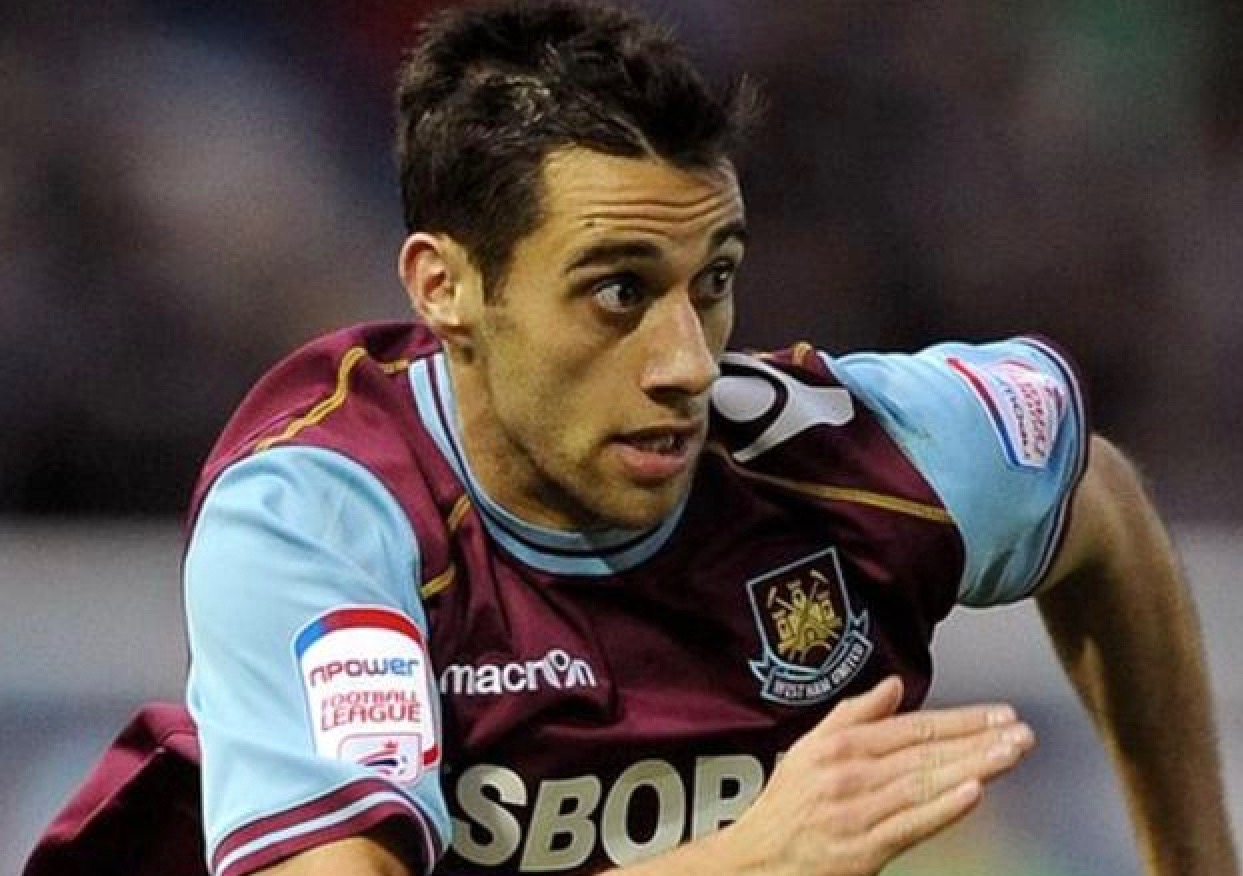
SB WHUWest Ham United, under Sam Allardyce, gave Baldock a platform to take his lower-league goalscoring prowess to a higher level when they began the 2011-12 season in the Championship. But, after a bright start, he disappointed and eventually only stayed for one year of a four-year deal.
Although he was popular with fans, he clearly didn’t float Allardyce’s boat. West Ham fans are astute observers of the game and one of the best summaries I’ve read about Baldock’s contribution was in a piece on westhamworld.co.uk.

“Baldock is a short, pacey, centre forward. He has an eye for goal, which is great but, he doesn’t have the strength or power like other players we have like (Carlton) Cole or (Ricardo) Vaz Te,” the author of the article wrote.

“In a world where it appears the 4-4-2 system is dying very quickly, especially at the top level, it causes problems for Baldock, who seems to be a player who likes to feed off the other striker who can hold the ball up and thread a pass through for him to run onto.

“He is your ideal little man in the big man and little man 4-4-2 but, with the formation not being used very often and, especially under Allardyce, we don’t see it much at all.”

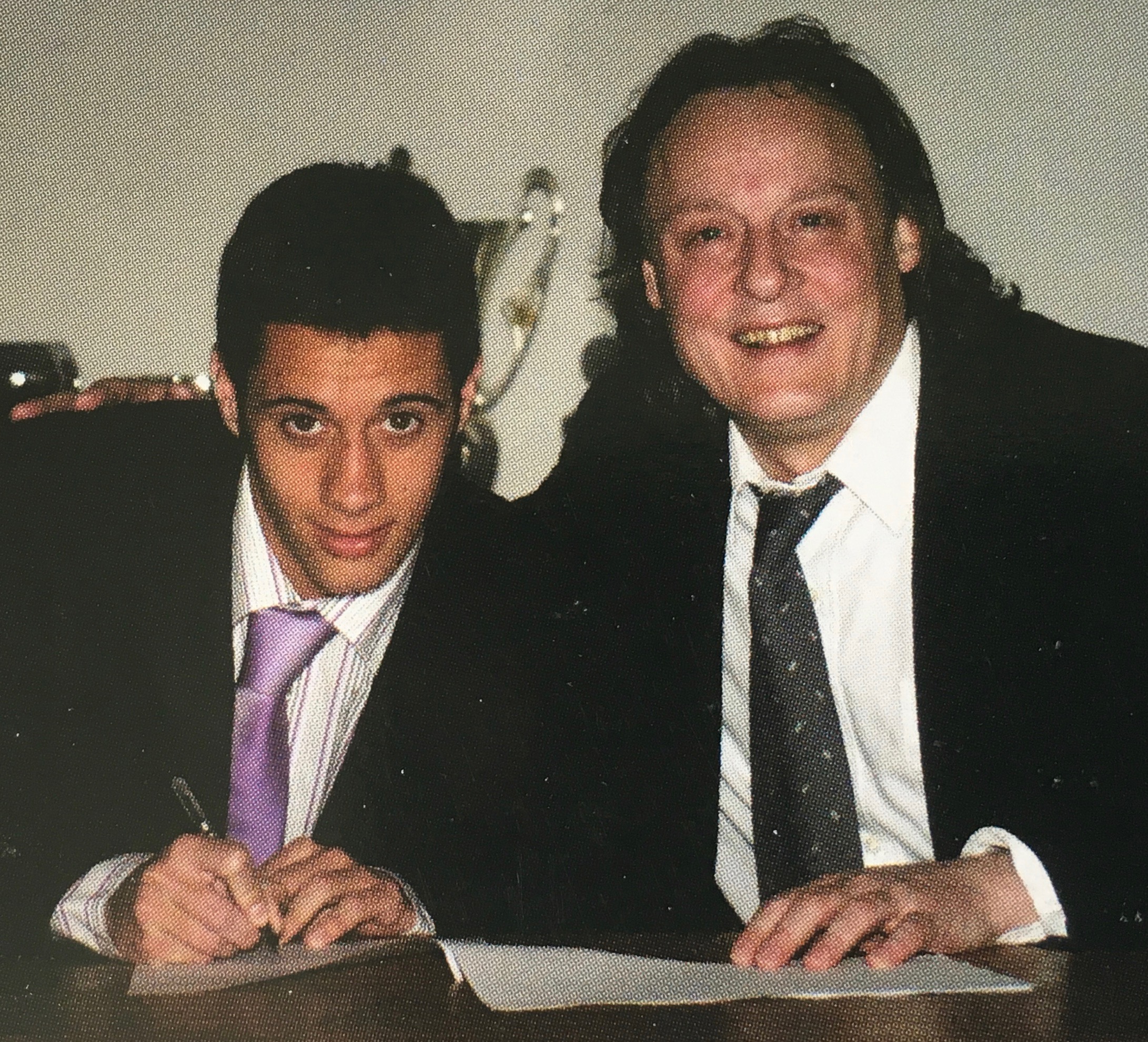
Born in Buckingham on 15 March 1989, Baldock went to the town’s The Royal Latin School (where his mum was the deputy head) and, at 16, joined Wimbledon’s youth system at the time they relocated to Milton Keynes. He signed on as a trainee in 2004 (pictured below signing a contract with MK Dons owner Pete Winkelman)  and after impressing in FA Youth Cup games earned call-ups to the first team squad.

IMG_5904Former Albion captain, Danny Wilson, gave Baldock his first-team debut at 16 as a late substitute against Colchester United in a 2-1 Football League Trophy defeat on 20 December 2005.

He didn’t feature again until the 2006-07 season, by which time Martin Allen had taken over as manager. One of only two Football League Trophy games he was involved in included a 4-1 defeat against Brighton.

It was when Paul Ince became manager that Baldock got a few more chances at first-team level and he got to appear at Wembley as a substitute in March 2008 when MK Dons beat Grimsby Town to win the Football League Trophy (otherwise known as the Johnstone’s Paint ‘Pot’).

However, it was when Roberto di Matteo took over from Ince in the 2008-09 season that Baldock finally became a Dons regular, netting 13 goals in 44 appearances and catching the eye of the international selectors.

In September 2009, he was selected for the England under 20 squad which took part in the World Youth Championship in Egypt – a squad which interestingly also included goalkeeper Jason Steele, later a back-up ‘keeper at Brighton, and future full England internationals Danny Rose and Kieran Trippier.

Baldock played in the opening 1-0 defeat against Uruguay, went on as a substitute in the following game, a 4-0 defeat to Ghana, and again in the final game, a 1-1 draw with Uzbekistan. England finished bottom of their group and were eliminated.

Baldock didn’t get selected again but, having scored a total of 43 goals in 124 appearances for MK Dons, he became Allardyce’s seventh summer signing for West Ham in August 2011.

SB WHU coloursHe couldn’t have asked for a better start when he scored five times in his first six games for the Hammers. Unfortunately, as has been the case throughout his career, he picked up an injury that sidelined him, and, in his absence, Nicky Maynard and the aforementioned Vaz Te became first choices in the forward line.

The Hammers decided to cut their losses after just one year of his deal and he was sold to Bristol City for £1.1m. His 10 goals in 34 games were insufficient to keep the Robins in the Championship but back at League One level, the goals flowed once more.

Baldock was the Robins captain under Steve Cotterill and scored 26 in 54 games in the 2013-14 season (neatly compiled on YouTube), earning him the League One Golden Boot. That prompted Brighton to snap him up on 27 August 2014, signing for an undisclosed fee (thought to be £2m) on a four-year deal until June 2018.

Signed as part of the regime under head of football David Burke, Baldock, 25, joined the squad assembled under new manager Sami Hyypia, who told the club website: “Sam was one of our key summer attacking targets and I’m delighted we have now completed the transfer.

“He’s a predator, instinctive in front of goal and his career goal record is excellent. He’s played and scored goals at this level, and we are confident he can be a major threat for us going forward.”

As it turned out, Baldock scored only four goals in each of his first two seasons but contributed 12 in the Seagulls’ promotion-winning campaign of 2016-17.

It was enough to earn him a new deal, and he told the club website: “As soon as the club made noises that they wanted to extend my contract it was always in my head that this is where I want to be.

“Last season was probably the pinnacle of my career, and I hope now we can establish ourselves in the Premier League and continue to improve together.”

Hyypia’s successor, Hughton, added: “We are delighted that Sam has agreed a new deal with us. He has been a key member of the squad since he arrived at the club and this new contract is recognition of his contribution over the last couple of seasons.”

However, Hughton ultimately gave him very few chances in the Premier League and, after playing only five games in the 2017-18 season, he was sold to Championship side Reading.

Baldock-ReadingRoyals boss Paul Clement told the Reading website: “I’m very happy that Sam has joined us here at Reading, having pursued his signature throughout the summer.

“I always felt he was the right striker for us to bring to this club in terms of his age, his experience and his quality.”

Although he penned a three-year deal with the Royals, his initial season at the Madejski was blighted by injury and, having scored just five in 23 games, and seemingly not in new manager Jose Gomes’ plans, there were reports during the recent close season that he would be invited to look for a move elsewhere.

On 17 August 2021, Baldock signed a short-term deal with Derby County to cover the injury absence of former Brighton striker Colin Kazim-Richards. When that contract came to an end in February 2022, Baldock joined League One Oxford United until the end of the season, and in May 2022 was given a two-year contract by manager Karl Robinson, another of his former managers at MK Dons.

“I walked through the door back in February and it felt like the right place straight away,” the boyhood U’s fan told oufc.co.uk. “The badge has always had a special place in mine and my family’s hearts ever since it was the first club we watched live at the Manor.

“Having previously worked under the gaffer I knew I wanted to play for him again – he got the best out of me earlier in my career and I hope that can happen again.”

  • Pictures from various online sources.

Pacy Paul Brooker an in-and-out talent on the wing

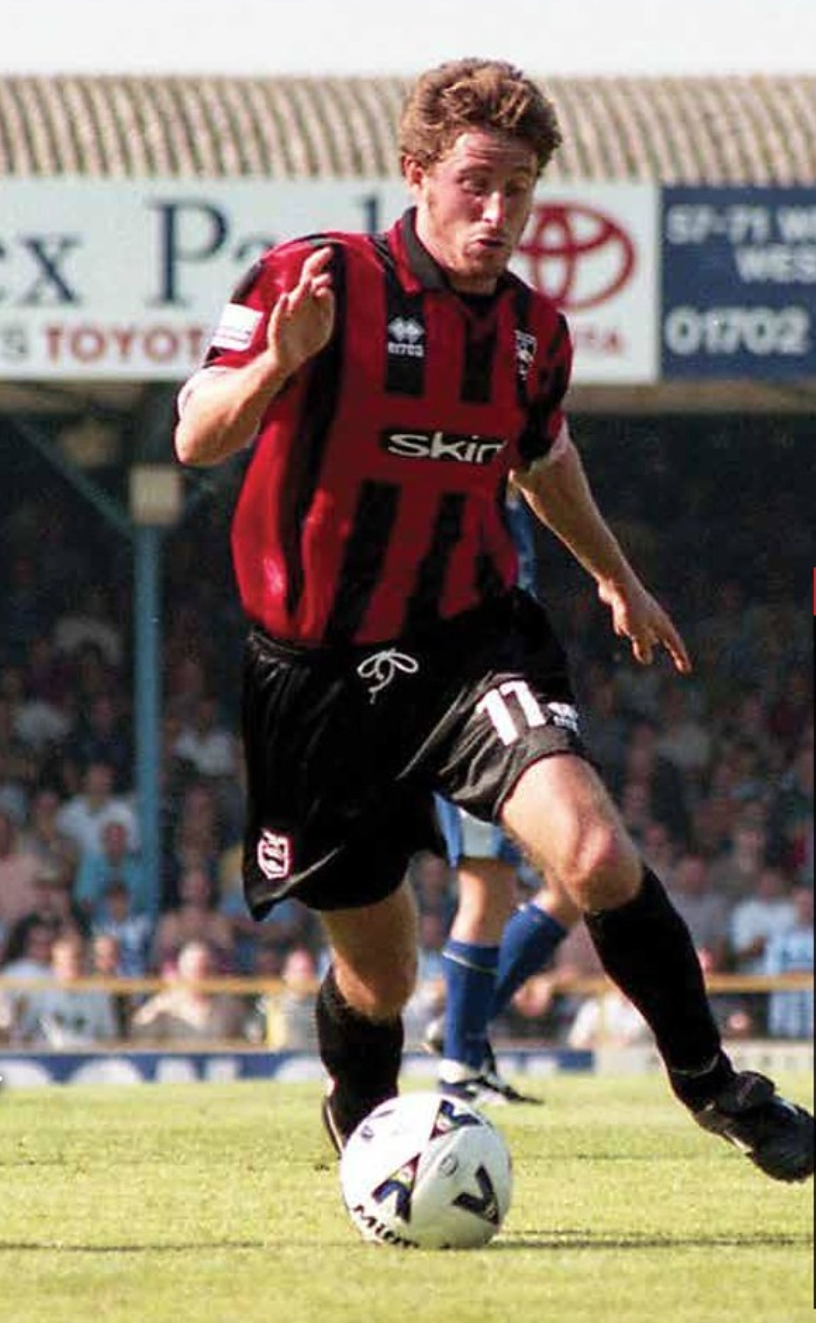
PAUL BROOKER, a winger at one time mentioned in the same breath as Ryan Giggs, played more games for Brighton – 147 – than any of his other clubs but only managed a Premier League cameo with Leicester City.

Brooker certainly had the capacity to excite fans but there could be frustration in equal measure and, although he won back-to-back promotions with the Albion, his career didn’t come close to the achievements of the great Manchester United winger.

The national football fanzine, When Saturday Comes, ran a superb piece about Brooker in April 2002, in which Adam Powley talked about his “conspicuous talent” and maintained: “Brook­er was in­deed very good, blessed with real pace and an ability to keep con­trol while run­ning at full pelt.”

Born in Hammersmith on 25 November 1976, Brooker was with Chelsea as a schoolboy but it was Fulham who picked him up and gave him his professional opening.

Ian Branfoot handed him his first team debut –  in a 0-0 draw away to Bury on 14 October 1995 – and he was part of Micky Adams’ promotion-winning Fulham side of 1997.

Amazingly, he made just 18 starts for Fulham, but came off the bench 54 times. Across those 72 appearances, he scored six goals. He was eventually frozen out in the Kevin Keegan era, playing his last first team game in September 1998, and then spent time on loan at Stevenage, where he played eight games.

In February 2000, he joined his former Fulham boss, Adams, on loan at Brighton and, after a 15-game spell, he joined Albion permanently for a £25,000 fee.

Screen Shot 2021-05-20 at 20.29.32Brooker scored after only three minutes in a 2-0 win away to Plymouth Argyle on 14 April 2001 (celebrating above) which secured promotion for the Seagulls, and he was a regular on the wing that season, making a total of 41 appearances. He remained a key member of Albion’s third tier promotion-winning squad in 2001-02, Argus reporter Andy Naylor summing up his contribution thus: “Most wingers have an inconsistent streak and ‘Bozzy’ is no exception, but he is a matchwinner on his day.

“Quick and an elusive runner with the ball, he hit scoring form as well towards the end of the campaign with three goals in eight games. The First Division should suit his style.”

Brooker also featured in Steve Coppell’s 2002-03 side – I remember seeing him score in a 2-1 away win at the Madjeski Stadium – but as Brighton exited the second tier at the wrong end in 2003, so Brooker ended his association with the club.

Coppell had hoped he would stay, telling The Argus: “We obviously want to keep him at the club. I think he is a terrific asset. He has still got a lot to add to his game and improve but he makes us that little bit different.

“He is hard to tie down. Teams cannot afford to leave him and yet they don’t really want to assign somebody to him.”

For his part, Brooker told Howard Griggs of The Argus in an April 2011 interview: “I absolutely loved my time at Brighton; it was the best three years of my career.

“By nature I am a Chelsea fan but I always look out for Brighton and so do a lot of my family and friends.”

A free transfer move to Leicester City, once again working under Adams, finally gave Brooker a Premier League platform to display his talent but his chances were limited and he ended up starting just two League Cup games as well as getting on as a substitute in three League games and a FA Cup match.

With his top tier opportunities limited, he elected to play under Coppell again and joined Championship side Reading on loan. He made 11 appearances in 2004 before joining the Royals permanently in July 2004.

After just one season at Reading, when he played 34 games, Martin Allen signed him on a free transfer for Brentford.

He had two seasons with the Bees but his time at Griffin Park came to an end shortly after the start of the 2007-08 season.

“When Terry Butcher came in, I think he’d made his mind up about me before he’d even seen me play,” Brooker told fulhamfc.com. “We just didn’t see eye to eye about things, and that was the end of it for me there.”

A Brentford blog, the entertaining BFC Talk, spoke about Brooker in a July 2015 piece. “Paul Brooker was another who flattered to deceive and throughout his career never did justice to his vast ability,” it said.

“He scored a goal of sheer brilliance after running the length of the pitch at Swindon, but on other days he appeared to be lethargic, disinterested and peripheral to the action.

“He did not take criticism well, either from fans, or indeed, his manager, Terry Butcher, and reacted badly before having his contract cancelled.” Although Brooker started taking his coaching badges, he admitted to the Fulham website: “I’ve not really kicked a football since I left Brentford; I lost a lot of my passion and love for the game.

“I’ve set up a carpet cleaning business with a friend just for something to do and that’s going quite well. I’m enjoying doing something different from football.”

Brooker played non-league for Chertsey Town in 2008-09 although he did have a short spell back training at the Albion, during Adams’ brief return as manager.

He also turned out for Havant & Waterlooville and Dorking Wanderers. After his playing days ended, he took up after school sports coaching in the Kingston, Twickenham and Hounslow areas.red Brooker

Pictures from the matchday programme; Simon Dack in the Argus, and the Reading website.