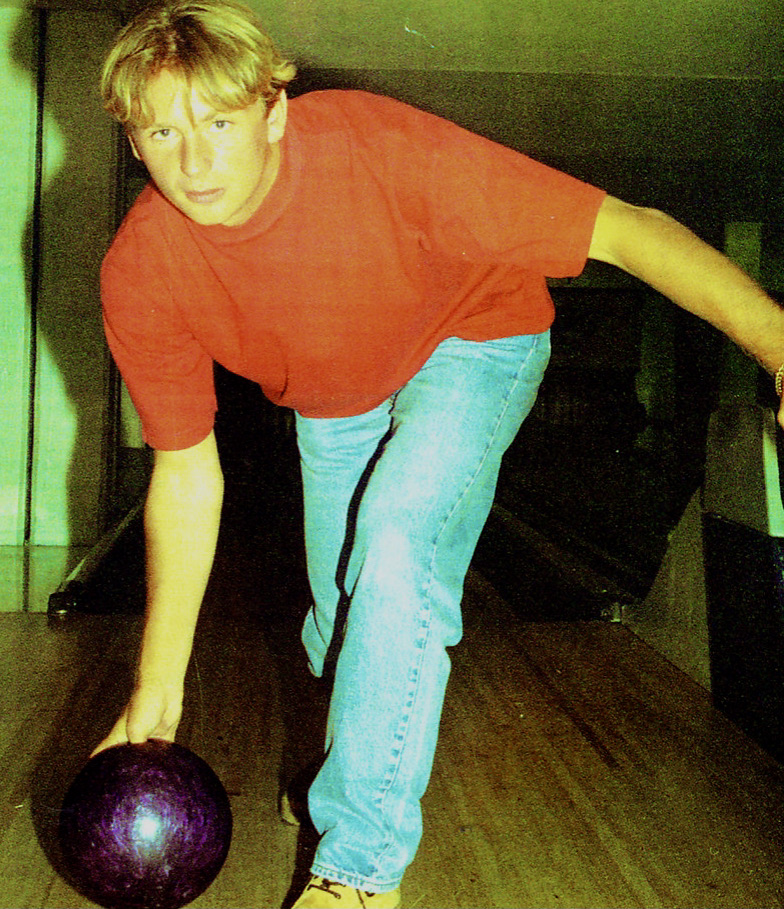
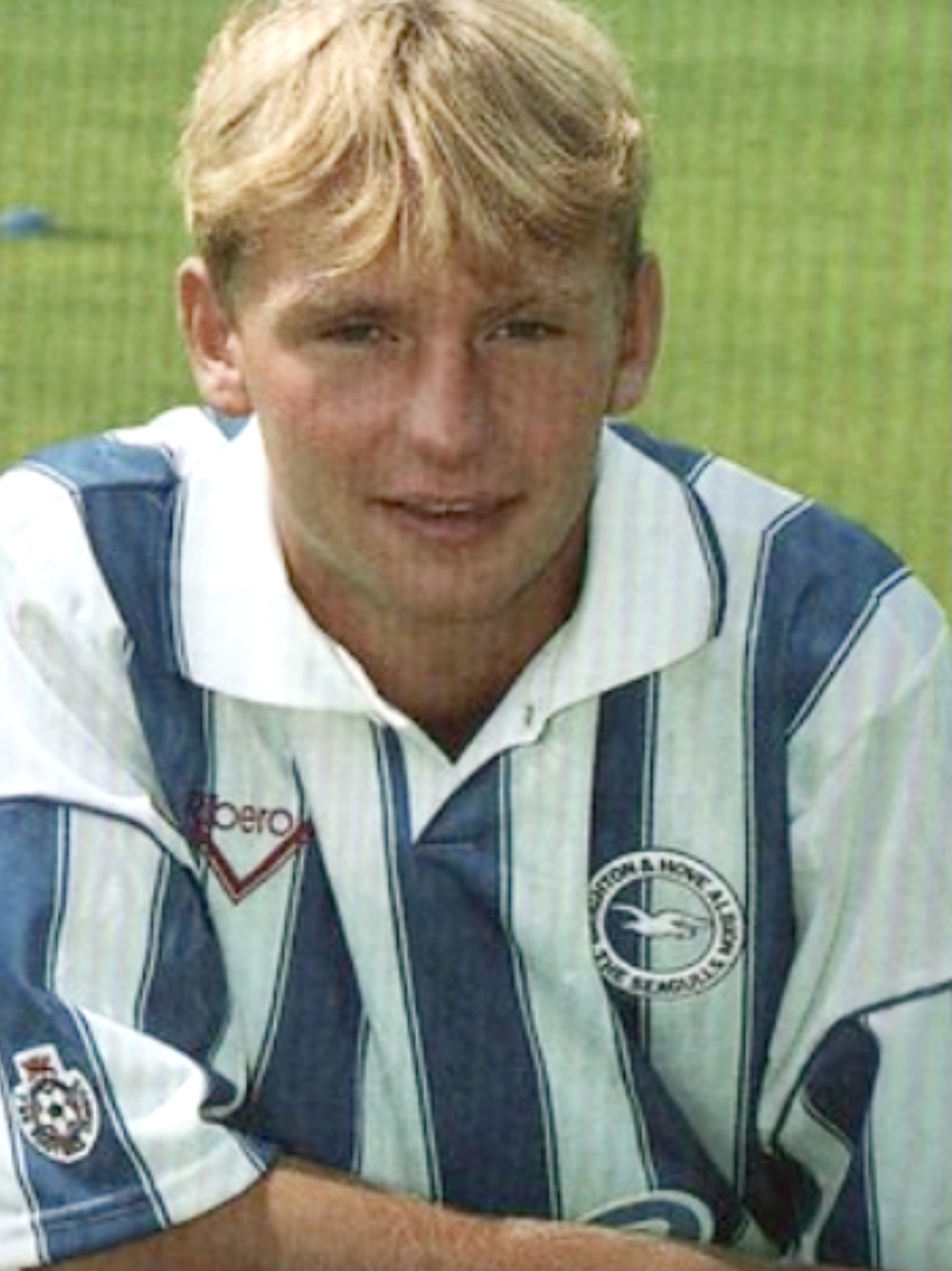
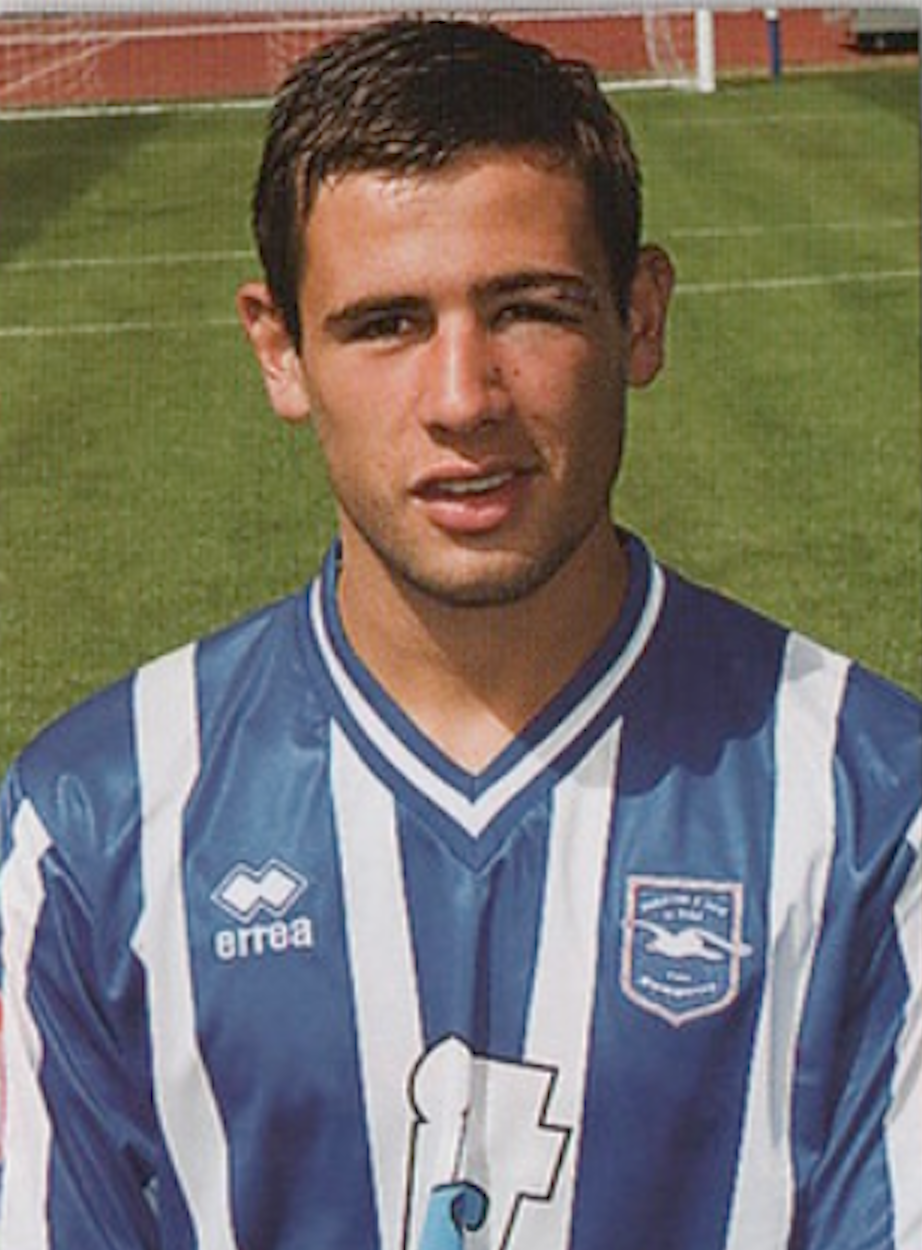
Melton took Micky at his word – and saw red 

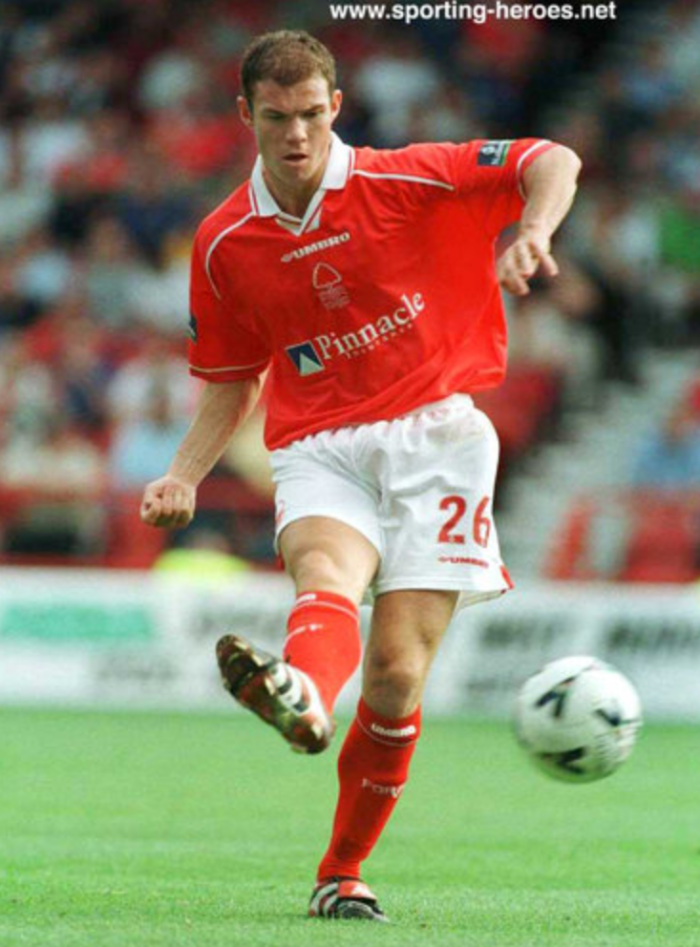
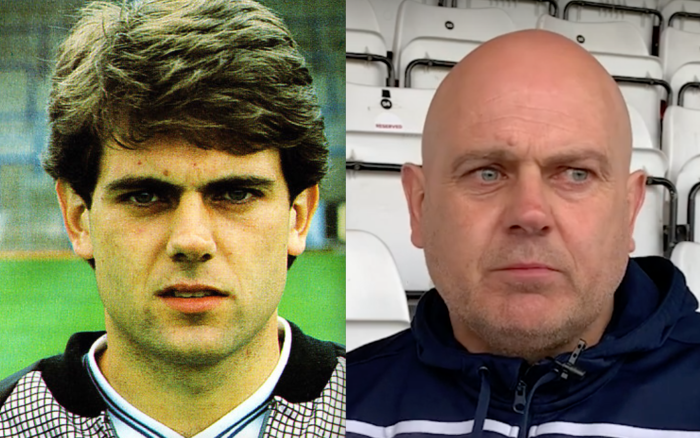
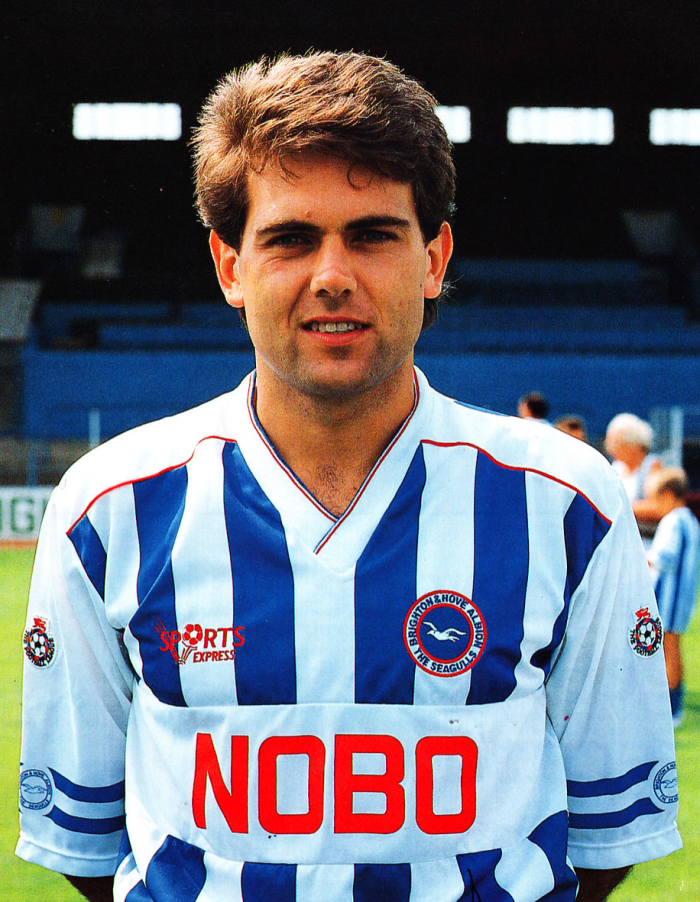
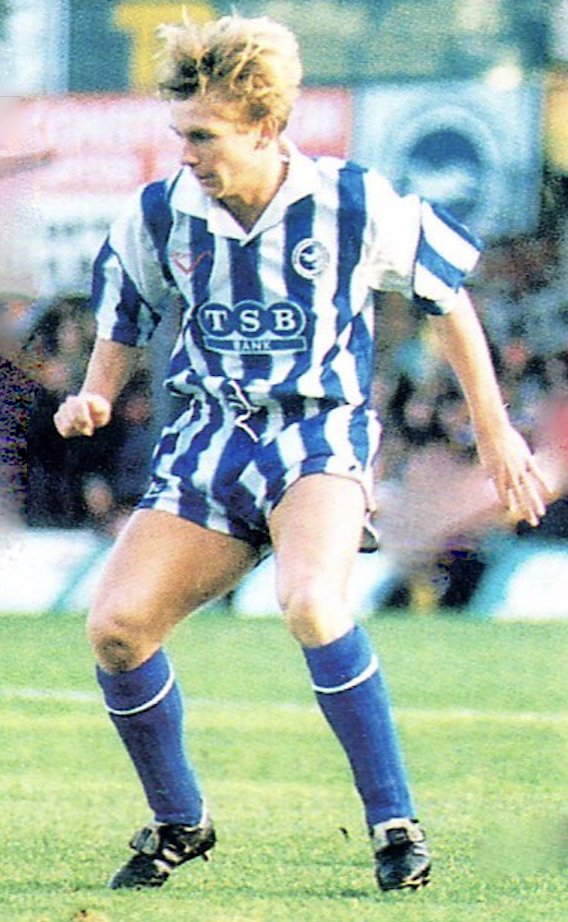
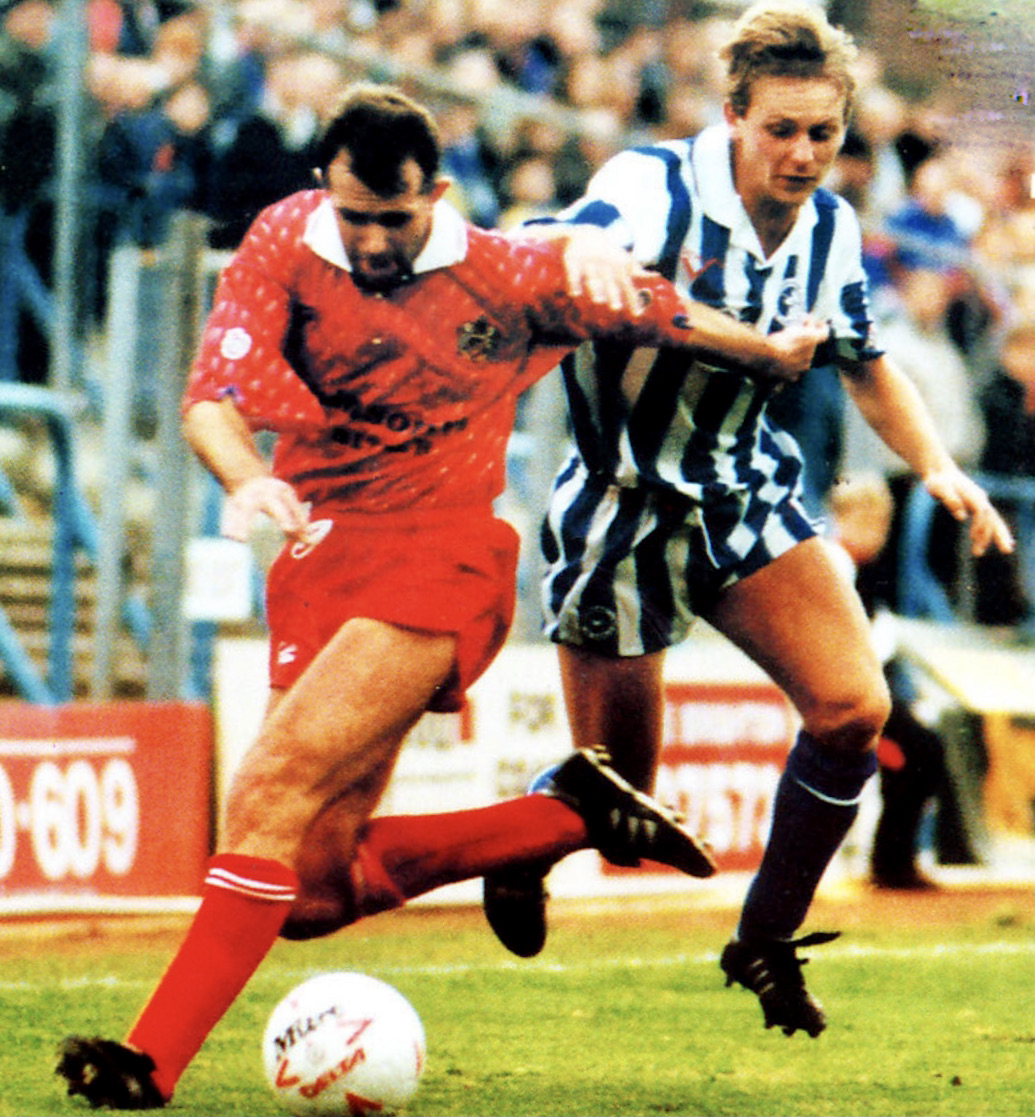
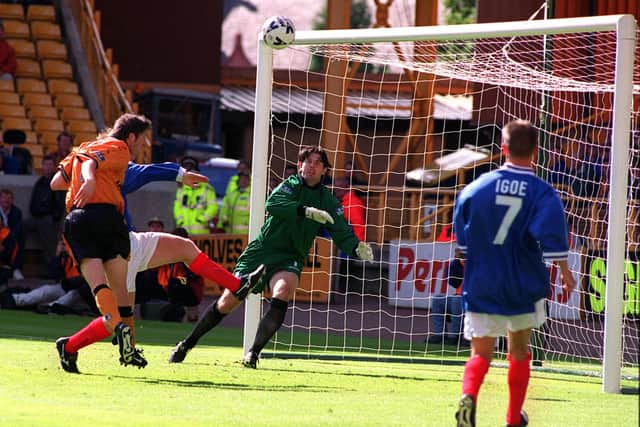
MIDFIELDER Steve Melton took manager Micky Adams at his word in a notorious pre-season friendly – and ended up being sent off after putting in a waist-high tackle on an opponent.

Adams subbed off a riled Richard Carpenter against Longford Town in July 2001 with instructions to former Nottingham Forest trainee Melton “to give the lad who was booting our players up in the air a taste of his own medicine. Make sure he knows you are around.”

Melton duly put in a flying lunge on Longford midfielder Alan Reynolds that saw him receive an automatic red card and the fall-out from the challenge sparked an almighty punch-up which ended up with Albion’s Charlie Oatway and opponent Alan Murphy also being sent off after an altercation.

That particular battle then led to an even bigger scrap involving coaches and even the Longford chairman who took a punch in the face from one of his own players!

The so-called pre-season “friendly” – later dubbed the Battle of Longford – was abandoned with only 44 minutes on the clock by inexperienced ref Dermot Tone, who had only stepped in to officiate because senior Irish referees were at a seminar.

For Melton, it was all a far cry from making your Premier League debut two years earlier in front of 25,353 fans at the City Ground, Nottingham, in Ron Atkinson’s last-ever game as a manager. Melton was pitched in for already-relegated Forest for an East Midlands derby against Leicester and they went down in style (Blackburn and Charlton also went down), scraping a 1-0 win against the Foxes.

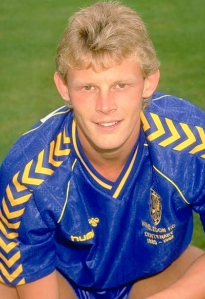
Born in Lincoln on 3 October 1978, Melton first linked up with Forest when he was just 11, playing at the centre of excellence. He signed full time at 16, a matter of days after finishing his GCSEs. He progressed through the youth team and reserves and it was during that time that he first worked with Adams, who’d been assistant manager to Dave Bassett before Atkinson’s arrival. 

Before he got close to the Forest first team, 18-year-old Melton and another trainee had experienced competitive football in Finland where Bassett had sent them to play for Sami Hyypiä’s old club MyPa on a three-month loan.

“He sent us out there to toughen us up. It also got us used to playing in a proper men’s league so that we learnt to value the prize of the three points and the standing within the first team,” he explained in a matchday programme interview.

That experience followed by his Forest first team debut didn’t have the outcome he wanted and after only three games under Atkinson’s successor, David Platt, he picked up an injury and couldn’t force his way back into the first team picture.

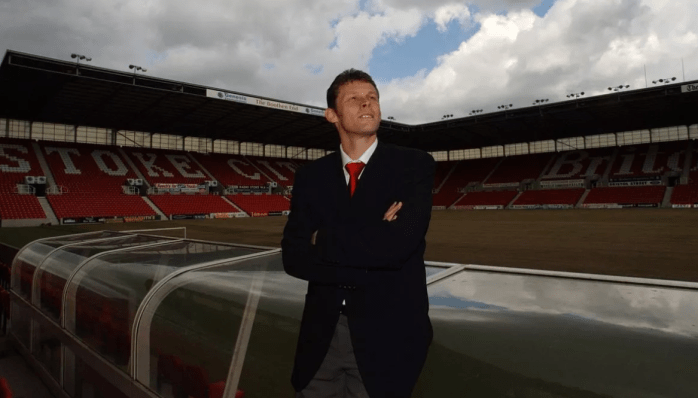
In February 2000, he switched 50 miles west to third tier Stoke City and admitted: “It seemed a good move as I didn’t have to travel too far. 

“It was a chance for me to play for a decent-sized club that were going strong in the cup and in the league. It was either that or play reserve team games for the rest of the year at Forest and wait for a break that I didn’t think was going to come.”

As it turned out, it was mainly a watching role, making only seven appearances as a substitute. He was a non-playing bench warmer alongside Chris Iwelumo (who did get on) when City won the Football League (Auto Windscreens Shield) Trophy at Wembley, beating Bristol City 2-1.

Stoke’s new Icelandic consortium hinted that they wanted to keep him on but in the absence of a contract offer, rather than risk uncertainty, he took up Adams’ offer to join fourth-tier Albion. 

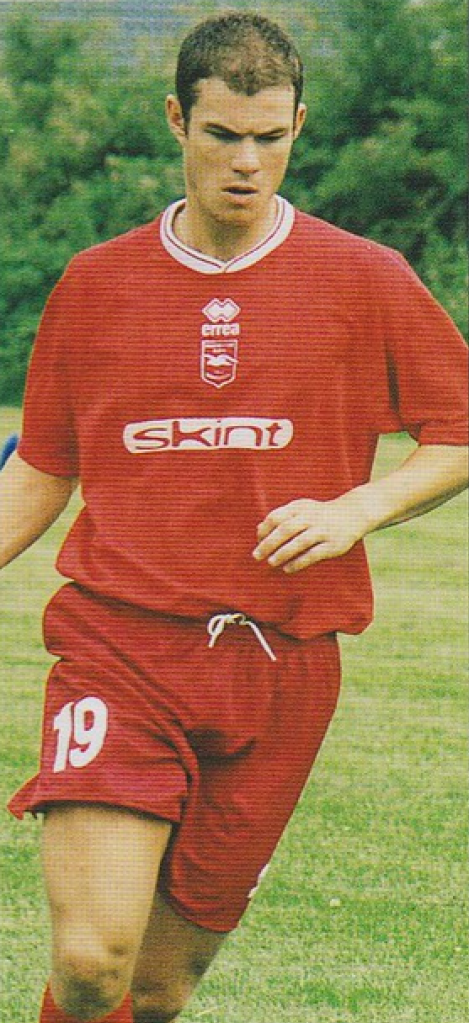
A complimentary caption in the club match day programme

On a trial in the Emerald Isle the year before the Longford incident, Melton did enough across the week of the tour to earn a one-year contract. He had a long wait before getting a start but after 11 introductions as a substitute he finally made his full debut in February 2001, stepping in for Carpenter at Torquay after the regular midfield starter pulled out with an injured ankle. 

After playing his part in Albion’s first win (1-0 courtesy of Bobby Zamora) at Torquay for 36 years, Melton told The Argus: “I’m enjoying it here. I’ve settled in with the lads and I share a house with some of them.” 

On playing for Adams, he said: “I think Micky is going to be a really good manager. I enjoy working with him. A lot of the lads do. 

“Hopefully he will take Brighton up. He’s had a taste of managing at a higher level at Forest and I think he has the potential to do it again.” 

Melton’s outlook brightened the following month and he got starts in nine of the season’s remaining 15 matches as Adams led the Seagulls to promotion as champions. 

At home to his future employer Hull City, Melton made his home debut and scored his first goal for the club in a 3-0 win (Paul Watson and substitute Phil Stant also scored).

Reflecting on his involvement, he said: “It’s difficult to break in when the team keep winning every week, and they go unbeaten for 12 or 13 games, maybe drop a point but then go off on another run.

“It’s frustrating because you’re not playing, but you can’t really have too much of a case when the team is sat at the top of the league.”

Come the end of the season, he had done enough to be offered a two-year extension to his contract. As it turned out, the 2001-02 season followed much the same pattern as his first in terms of more appearances off the bench than starts.

He was on the scoresheet twice in the LDV Vans Trophy, scoring an extra time golden goal in a 2-1 home win over Wycombe Wanderers but was then inadvertently the fall guy in a 2-1 quarter-final defeat at Cambridge United.

Having given Albion a 36th-minute lead, latching on to Dirk Lehmann’s lay-off to fire a low right-footer past Lionel Perez from just outside the penalty area, he lost possession to Dave Kitson, who ran away to equalise, and then, four minutes into extra time, a shot by Armand One that was going wide took a wicked deflection off Melton’s shoulder to send United through to the next round.

A happier outing came when he made a rare start and scored as promotion-chasing Albion beat table-toppers Reading at the Withdean in February 2002. Peter Taylor’s Seagulls triumphed 3-1 on a rain-lashed night under the lights (Zamora and Junior Lewis also scored).

Goalscorers Melton and Zamora after a memorable win over Reading

“It was pleasing to start,” Melton told The Argus. “You have got to be patient and I have waited a good few months. 

“I have been on the outside for the last few weeks. Hopefully I can stay on the inside now. 

“Playing against the League leaders is a different matter completely from the LDV appearances that I made earlier in the season. 

“You can only do as well as you can when you are chosen to play and hopefully I did that. Once you have been given the shirt you have to try and keep it.” 

Melton’s goal was only the second league goal of his career and his first for 11 months. 

Taylor reckoned it was the best home performance since he took over from Adams the previous autumn and Albion won eight (and drew five) of the following 14 games to go on and clinch the third-tier title with the also-promoted Royals six points behind.

Melton scored Albion’s first goal of the 2002-03 season when he started in the 3-1 win at Burnley under his third Brighton manager, Martin Hinshelwood (Zamora and Paul Brooker also scored; Hinshelwood’s 18-year-old nephew Adam made his debut). 

Unfortunately, Melton tweaked a hamstring in the process and had to be subbed off. He only made nine more appearances (six starts plus three off the bench) as Hinshelwood’s short reign in charge ended with 10 league defeats in a row.

Incoming boss Steve Coppell brought in the likes of free agent Simon Rodger and Arsenal loanee Steve Sidwell and Melton found himself surplus to requirements.

It was in October 2002 that he moved to Hull on loan shortly after Peter Taylor had replaced Jan Molby as manager with the club about to move out of Boothferry Park and into the Kingston Communications Stadium.

Tiger Melton

Melton made 19 starts plus six appearances off the bench as the Tigers finished 13th in the old Third Division.

According to the website oncloudseven.com: “Despite his promise and Taylor’s persistence, Melton’s career at City was not a success and he showed only brief flashes of good form. Melton is, however, forever enshrined in the City record books because in December 2002 he scored the first ever goal at the KC Stadium against Sunderland, for the honour of lifting the Raich Carter Trophy.”

He found himself only on the fringes the following season and he had moved on to Boston United under Steve Evans by the time Taylor steered Hull to promotion as divisional runners up.

A recurring back injury restricted his playing time at Boston and during 2005-06 he was sent out on loan to Conference National side Tamworth. On his release from Boston in the summer of 2006, he switched to Southern League Premier King’s Lynn FC for two seasons.

Melton at Boston

In September 2008, he rejoined Boston with manager Tommy Taylor telling the club’s website: “Steve has great quality on the ball and that’s what we have been missing in the midfield area. 

Hopefully he will add another dimension to our team.”

But he was released at the end of the season and joined Lincoln United of the Northern Premier League Division One East, alongside his former Boston and King’s Lynn teammate Matt O’Halloran. After spells with Lincoln Moorlands Railway, Grantham Town and Worksop Town, he wound up his playing days back at Lincoln United.

In the meantime, his first job outside of football was in sales for mobile comms company Vodacom. He spent nearly seven years with the now defunct energy advice and installation company the Mark Group and since 2019 has worked for building services certification business The National Association of Professional Inspectors and Testers, where he is now commercial and compliance director.

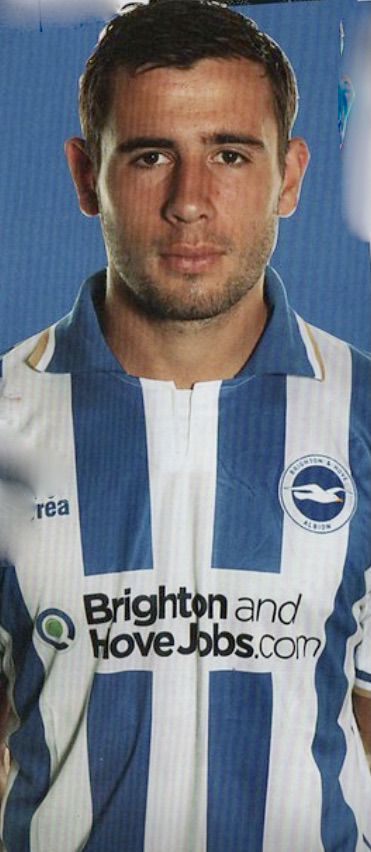
Tommy Elphick’s cherry picking ride to coaching

MEADOW LANE, Nottingham, is probably not one of Tommy Elphick’s favourite grounds. When he left the pitch on a stretcher in the 53rd minute on 7 May 2011, it was a great opportunity for the youngster who replaced him – Lewis Dunk – but for Elphick it was a turning point in a fledgling, promising career with his hometown club.

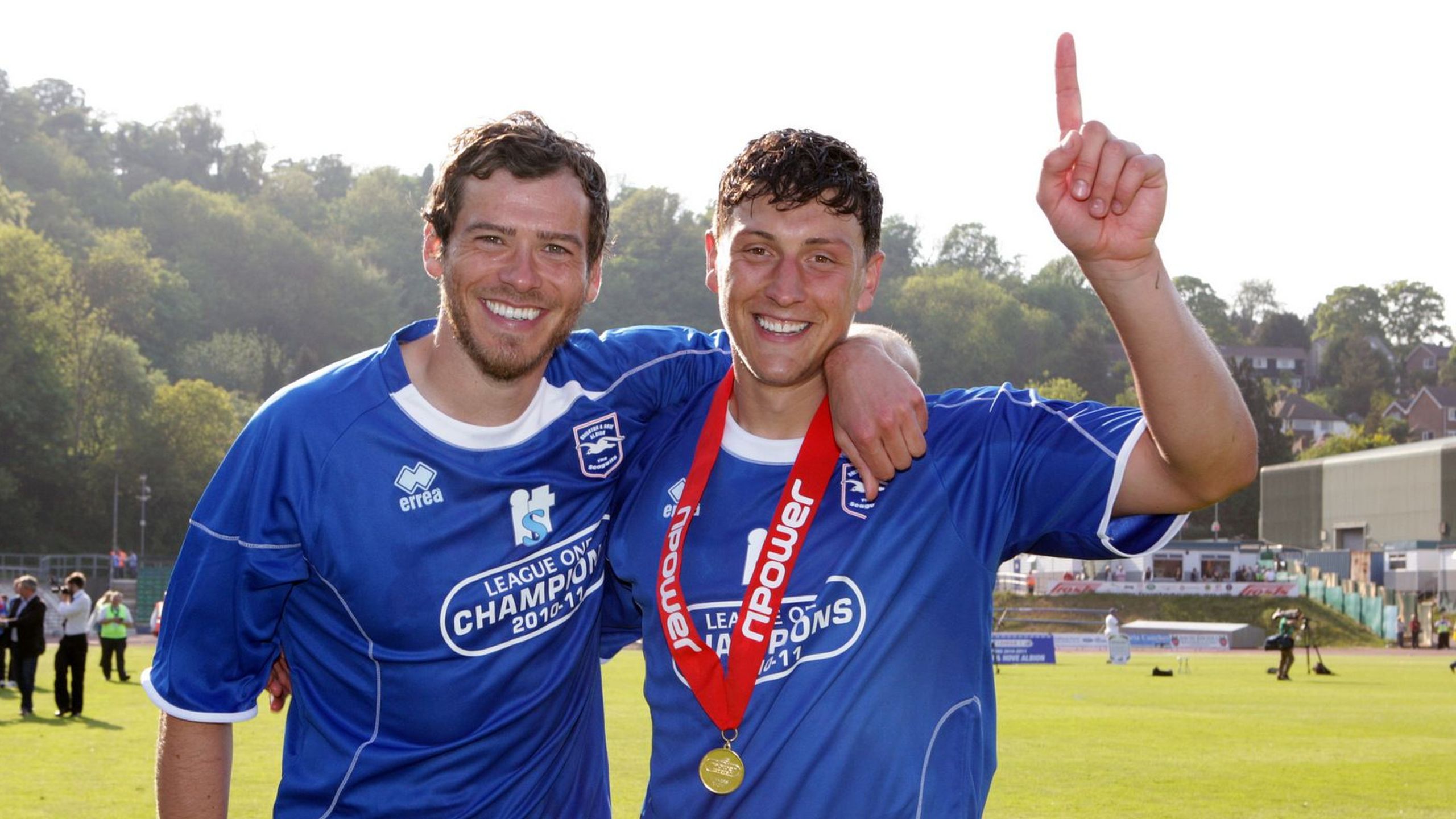
League One champions Brighton drew 1-1 with Notts County that day but, as they looked forward to playing Championship football in the shiny new American Express Community Stadium at Falmer, Elphick was sidelined for the whole of the following season with a ruptured Achilles tendon injury.

Unsurprisingly, others made the most of his absence. Although he briefly returned to first team action in a pre-season friendly v Lewes in August 2012, the level of competition by then made him realise he would need to move elsewhere to get back in the groove.

That’s when he began an association with AFC Bournemouth that continues now as first team coach, retained by the club in spite of the man who appointed him (Gary O’Neil) being replaced as manager.

As a player, Elphick took a step back to make a stride forward, dropping down a division to join the Cherries and ended up reaching the ‘promised land’ of the Premier League before the Albion.

“To say it worked out well for me was an understatement,” Elphick told Nick Szczepanik in an Albion website interview in 2020. Little wonder he is hailed as “the most successful captain in the history of AFC Bournemouth” having led them to promotions from League One in 2013 and the Championship in 2015, when he was ever-present and named Cherries supporters’ player of the season.

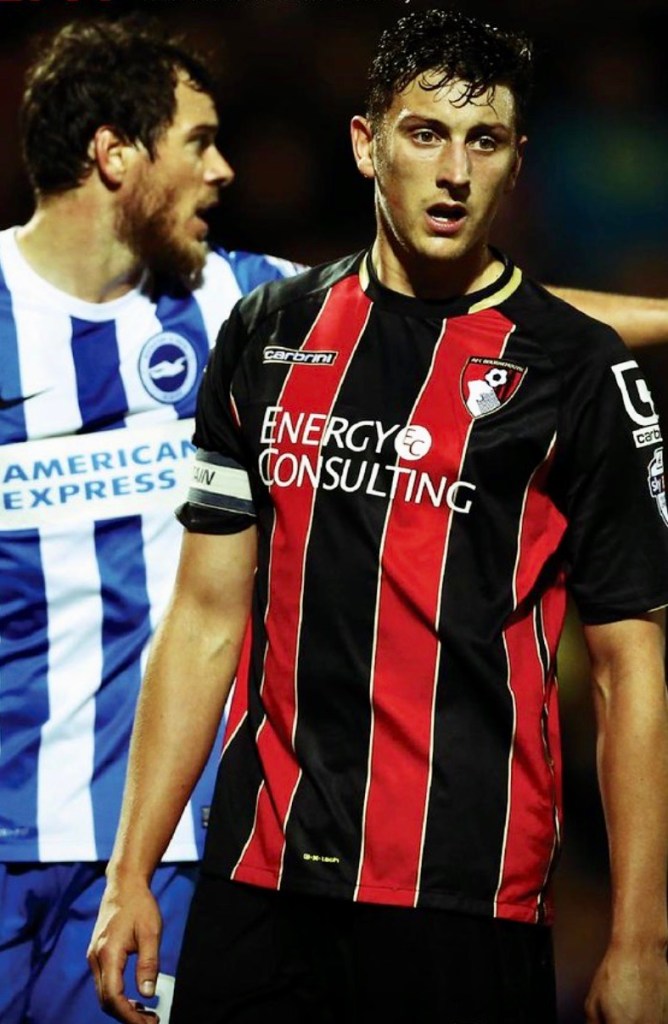
En route to that achievement, he finally got to play at the Amex – on 1 January 2014 – but it was in the red and black stripes of the Cherries in a 1-1 Championship draw.

At the Amex in Bournemouth’s red and black stripes

Interviewed in that game’s matchday programme, he admitted: “I’m buzzing for it. I was the first Brighton player contracted to play at the Amex but obviously my Achilles injury conspired against me and I never got the opportunity.

“Having been with the club since a kid, as we went through all the struggles the dream was always to run out at the new stadium at Falmer. It was disappointing that it never happened for me.”

Born in Brighton on 7 September 1987, Elphick played locally for Woodingdean FC before linking up with the Albion academy at the age of 11 after impressing head of youth Martin Hinshelwood.

In his early days with Brighton, he came under the influence of Vic Bragg who he described as “a very astute tactician” whose “coaching drills were excellent and kept us on our toes”.

In a matchday programme article, he said of Bragg: “While he has a heart of gold and is genuinely a nice guy, you didn’t want to cross him on a bad day – but if he did have a word in your ear, it was always constructive.”

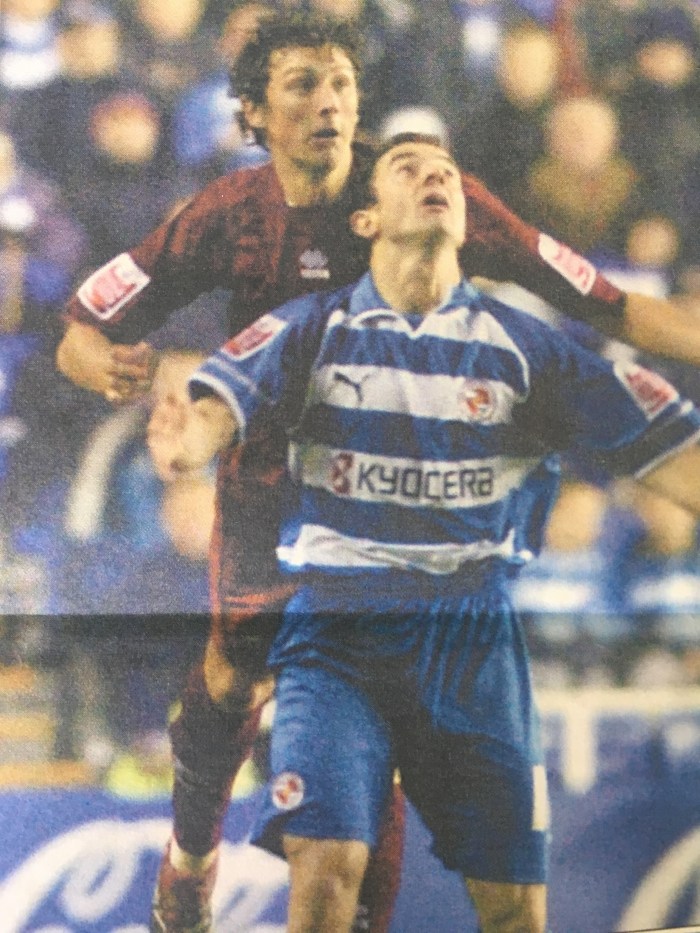
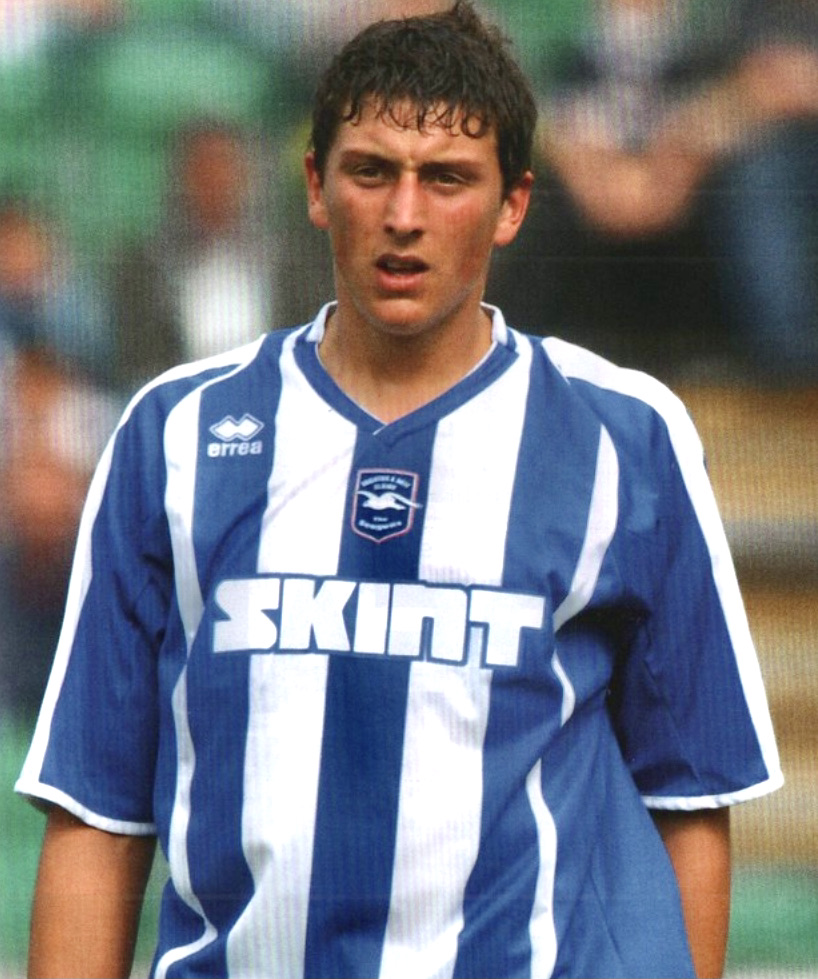
It was under Mark McGhee that Elphick made his first team debut (above) in December 2005, going on as a 73rd minute sub away to Reading in a 5-1 mauling after his older brother Gary had earlier been sent off on his full debut.

“I’m Brighton born and bred, I was a fan at Withdean before I played, and even remember doing a bucket collection on the touchline at Priestfield (when Albion were in exiled at Gillingham) in a bid to raise money for some new jumpers for us youth-team players.

“To then go on and make my debut, having come through the system under Dean Wilkins, well it doesn’t get any better than that.

“That was the highlight for me; being one of seven players from the youth-team set-up to make it to the first team.”

Gary didn’t play for the Seagulls again and Tommy had to wait until April 2007 to make his first start, by which time his old youth team coach Wilkins was in charge of the first team. That game also ended in a defeat, 2-0 to Doncaster, and it was only the following season that he established himself as a starter, initially playing alongside Guy Butters and Joel Lynch and later Adam El Abd and Gordon Greer.

A personal highlight was winning the Player of the Season accolade at the end of his first full season (2007-08), and he went on to captain the side on many occasions, as well as being part of the team that won the League One title.

“Brighton are the club who gave me my chance in the game, who shaped me as a footballer and a person,” he said.

As well as McGhee and Wilkins, Elphick’s 182 Seagulls appearances also spread across the reigns of Micky Adams, Russell Slade and Gus Poyet.

The changes introduced by Poyet really struck home with Elphick, who told Spencer Vignes: “From day one there was absolute clarity in terms of what he expected from us, with a few simple rules to start with, which he built on week by week.

“We were in the lower reaches of the table and flirting with relegation, so for him to come in and demand that we play the way he saw the game was unbelievable really.

“A lot of managers would’ve tried to tighten the ship and play a more basic brand of football, but his football was based around possession.

“The style he produced, the football we played and what we went on to do for the next two or three years was phenomenal.”

But Elphick appreciated others too, saying: “I had such a good grounding as a kid and I’m so lucky to have played under some great managers and coaches.”

As a pointer to how things have panned out, he said: “I definitely want to stay in the game, coach, and hopefully manage one day.”

Reflecting on the League One title-winning campaign, Elphick told Szczepanik: “I relished the way we played in that season. I was brought up to play that way in the youth teams under Vic Bragg, Martin Hinshelwood and Dean Wilkins, who all wanted the game played in the right way.

“We lost our way a little after Dean left and we didn’t really have any style until Gus Poyet came to the club and revolutionised it. It was something I was enjoying until I got that injury. But if I hadn’t been injured, would I have ended up at Bournemouth?”

Elphick had signed a new contract with Albion when the move to Bournemouth in League One came up. “In theory it was a step down, but for me it was important to get back playing again,” he said.

The 2011-12 season had been a wipe-out as far as he was concerned because an infection and a repeat of the initial injury ruled out any chance of a swift comeback. He was operated on in Finland by the same surgeon (Professor Sakari Orava) who had performed similar surgery on David Beckham.

It was fully 16 months between the initial injury and playing 45 minutes of a pre-season friendly at Lewes in July 2012. “The idea had been to go out on loan and there were four or five different options, but Bournemouth were looking to have a right go at getting promoted and when I went down to meet the manager, Paul Groves, and the chairman, I was taken by the plans they had for the club,” said Elphick.

“Paul’s assistant, Shaun Brooks, was quite close to Dean Wilkins, and used to come and watch the Brighton youth team, so there was a connection there. Unfortunately, it didn’t quite work out for Paul and Shaun but that led to Eddie Howe coming back to the club.”

After making 145 appearances for Bournemouth, in 2016 Elphick moved on to Aston Villa, who he had scored against for Brighton at Villa Park in a 3-2 FA Cup defeat three years earlier (below left).

In the summer of 2016, Villa, under Roberto di Matteo, had just been relegated to the Championship and wanted Elphick as their captain as they aimed to bounce straight back to the Premier League.

He was di Matteo’s first signing as Villa manager – and he can thank a very understanding wife that the move went through smoothly.

Elphick cut short his honeymoon to get cracking with his new club, telling the Birmingham Mail: “As soon as I heard about Villa’s interest it’s something that turned my head straight away.

“To be able to come here and represent such a great club with such great history is going to be a real honour for me.”

However, it wasn’t long before Steve Bruce took over from di Matteo and he preferred a different centre-back pairing, meaning Elphick spent most of the second half of the season on the subs bench. I recollect him going on for Villa in the last game of the season when Albion hoped to clinch the Championship title only to concede a late equaliser when a shot from Jack Grealish squirmed through David Stockdale’s grasp.

On loan at Hull City

In January of the following year, Elphick went out on loan to Reading for half a season (but only played four games) and he began the first half of the 2018-19 season on loan at Hull City, playing 18 games under Nigel Adkins.

Because of injuries to others, he was recalled to Villa at the start of 2019 by Bruce’s replacement Dean Smith. He played 14 matches but was not involved in the end-of-season play-off final when they finally earned promotion back to the Premier League (beating Derby County 2-1).

Interviewed by the Birmingham Mail about his three years at Villa, Elphick replied: “Tough, unbelievable, disappointing, anger – I had every emotion but I wouldn’t change it for the world because it’s created who I am now.

“What I saw and experienced at Villa was mental, good and bad. A big club brings different pressures and different pitfalls and you have to experience that to know what you could be dealt with further down the line.

“It was really troubled and there was poison in the brickworks to start with. Steve Bruce did the most unbelievable job at weeding that out and bringing it all together.

A challenging time at Villa

“He wasn’t a manager I particularly took a shine to in the way he coached or managed but he taught me a lot about how to bring people together and how to create a group.

“I experienced working under Roberto di Matteo, a Champions League-winning manager, and Steve Bruce, one of the most successful managers in the Championship. Dean Smith was a bit of a trailblazer and did some powerful stuff.”

After two injury-ravaged seasons at Huddersfield Town, when he managed just 14 games for the Terriers, Elphick quit playing to embark on a coaching career that always seemed to be his destination.

He reckoned it was that long spell out injured while at Brighton that helped his move into coaching because he had time to watch and understand football in a way that wouldn’t have happened if he’d been playing every weekend.

He returned to Bournemouth as coach of their development squad, explaining to premierleague.com: “I was delighted to work alongside Shaun Cooper with the 21s. I was very, very lucky to work with such an outstanding coach, and I learned so much. That period also opened my eyes to the time and effort required to do this job properly.  

“In truth, academy football probably had a lifespan for me, but it was an invaluable year.” 

When Parker lost his job in the wake of a 9-0 humbling by Liverpool, Cooper and Elphick were promoted to work alongside new boss Gary O’Neil.

“There are benefits and negatives to being thrust into that situation,” admitted Elphick. “I would love to have spent more time coaching, experimenting, and finding out who I really am on the grass before going into such a high-pressure situation, but it was an opportunity which had to be grabbed with both hands.”

Elphick told Adrian Clarke: “At the outset, none of us had coached at Premier League level before, but we went in, took the handbrake off and went for it. Thankfully, the three us had a nice blend.”  

Elphick absorbed plenty from O’Neil’s way of working and observed: “Premier League football is such a high-level now that as a coach, if you’re put on the spot you need to be able to answer questions or offer advice on all aspects of the game. My intention is to become as well-rounded as possible.” 

After helping Andoni Iraola settle in as new head coach, Elphick has relished his supporting role although he confessed: “I’ve always wanted to manage, and down the line I’d like to put my principles and ideas into practice. It’s an itch I will need to scratch, but there is no rush.  

“Right now, I just feel so lucky to have experienced contrasting styles in O’Neil and Iraola, and I have learned an incredible amount from both men. I really resonate with Andoni, and the way he wants his team to play with emotion, and he places a lot of emphasis on spirit. 

“What I have learned so far is that to be a successful coach you firstly need strong beliefs. Then, you must deliver your messages with consistency and confidence, and of course be authentic, true to yourself.”

Coach Dean Wilkins fumed after falling out with Knight 

DEAN WILKINS might have lived in the shadow of his more famous elder England international brother Ray but he certainly carved out his own footballing history, much of it with Brighton.

Albion fans of a certain vintage will never forget the sumptuous left-footed free-kick bouffant-haired captain Wilkins scored past Phil Parkes at the Goldstone Ground which edged the Seagulls into the second-tier play-offs in 1991.

Supporters from the mid-noughties era would only recall the balding boss of a mid-table League One outfit at Withdean comprising mainly home-grown players who Wilkins had brought through from his days coaching the youth team.

After Dick Knight somewhat unceremoniously brought back Micky Adams over Wilkins’ head in 2008, he quit the club rather than stay on playing second fiddle and subsequently went west to Southampton where he worked under Alan Pardew and his successor Nigel Adkins as well as taking caretaker charge of the Saints in between the two reigns.

Wilkins’ initial association with the Seagulls went back to 1983, when Jimmy Melia brought him to the south coast from Queens Park Rangers shortly after Albion’s FA Cup final appearances at Wembley.

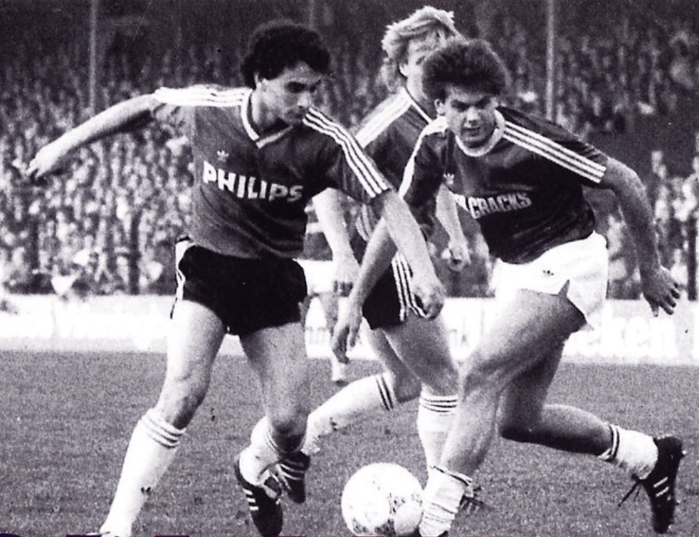
Melia’s successor Chris Cattlin only gave him two starts back then and although he pondered a move to Leyton Orient, where he’d had 10 matches on loan, he opted to accept to try his luck in Holland when his Dutch Albion teammate Hans Kraay set him up with a move to PEC Zwolle. Playing against the likes of Johann Cruyff, Marco Van Basten and Ruud Gullit proved to be quite the footballing education for Wilkins.

Wilkins in the thick of it in Dutch football for PEC Zwolle

After two years in the Netherlands, 25-year-old Wilkins rejoined the relegated Seagulls in the summer of 1987 as the club prepared for life back in the old Third Division under Barry Lloyd.

Relegation had led to the sale for more than £400,000 of star assets Danny Wilson, Terry Connor and Eric Young but more modest funds were allocated to manager Lloyd for replacements: £10,000 for Wilkins, £50,000 for Doug Rougvie, who signed from Chelsea and was appointed captain, Garry Nelson, a £72,500 buy from Plymouth and Kevin Bremner, who cost £65,000 from Reading. Midfield enforcer Mike Trusson was a free transfer.

The refreshed squad ended up earning a swift return to the second tier courtesy of a memorable last day 2-1 win over Bristol Rovers at the Goldstone.

At the higher level, Wilkins had the third highest appearances (40 + two as sub) as Albion finished just below halfway in the table. The following season Wilkins was appointed captain and was ever-present as Albion made it to the divisional play-off final against Notts County at Wembley, having made it to the semi-final v Millwall courtesy of the aforementioned spectacular free kick v Ipswich.

Wilkins scored again at Wembley but it turned out only to be a consolation as the Seagulls succumbed 3-1 to Neil Warnock’s side.

As the 1992-93 season got underway, Wilkins, having just turned 30, was the first matchday programme profile candidate for the opening home game against Bolton Wanderers (a 2-1 win) when he revealed the play-off final defeat had been “the biggest disappointment of my career”.

The 1993-94 season was a write-off from October onwards when he damaged the medial ligaments in both his knees after catching both sets of studs in the soft ground at home against Exeter City.

Although injury plagued much of the time during Liam Brady’s reign as manager, the Irishman acknowledged his ability saying: “He is a very fine footballer and a tremendous passer of the ball and he possesses a great shot.”

Ahead of the start of the 1995-96 season, Wilkins was granted a testimonial game against his former club QPR, managed at the time by big brother Ray. But at the end of the season, when the Seagulls were relegated to the basement division, he was one of six players given a free transfer.

Born in Hillingdon on 12 July 1962, Wilkins couldn’t have wished for a more football-oriented family. Dad George had played for Brentford, Leeds, Nottingham Forest and Hearts and appeared at Wembley in the first wartime FA Cup final. While Ray was the brother who stole the limelight, Graham and Steve also started out at Chelsea.

In spite of those older brothers who also made it as professionals, Wilkins attributed his development at QPR, who he joined straight from school as an apprentice in 1978, to youth coach John Collins (who older fans will remember was Brighton’s first team coach under Mike Bailey).

He made seven first team appearances for Rangers, his debut being as a substitute for Glenn Roeder in a 0-0 draw with Grimsby Town on 1 November 1980. After joining the Albion in August 1983, he had to wait until 10 December that year to make his debut, in a 0-0 draw at Middlesbrough, in place of the absent Tony Grealish. He started at home to Newcastle a week later (a 1-0 defeat), this time taking the midfield spot of injured Jimmy Case.

Perhaps the writing was on the wall when Cattlin secured the services of Wilson from Nottingham Forest, initially on loan, and although Wilkins had a third first team outing in a 2-0 FA Cup third round win at home to Swansea City, boss Cattlin didn’t pick him again. Instead, he joined Orient on loan in March 1984.

A long career in coaching began when Wilkins was brought back to the Albion in 1998 by another ex-skipper, Brian Horton, who had taken over as manager. With Martin Hinshelwood as director of a new youth set-up, Wilkins was appointed the youth coach – a position he held for the following eight years.

Return to the Albion as youth coach

His charges won 4-1 against Cambridge United in his first match, with goals from Duncan McArthur, Danny Marney and Scott Ramsay (two).

That backroom role continued as managers came and went over the following years during which a growing number of youth team products made it through to the first team: people like Dan Harding and Adam Virgo and later Adam Hinshelwood, Joel Lynch, Dean Hammond and Adam El-Abd.

At the start of the 2006-07 season, with Albion back in the third tier after punching above their weight in the Championship for two seasons, Wilkins was rewarded for his achievements with the youth team with promotion to first team coach under Mark McGhee.

By then, more of the youngsters he’d helped to develop were in or getting close to the first team, for example Dean Cox, Jake Robinson, Joe Gatting and Chris McPhee.

After an indifferent start to the season – three wins, three defeats and a draw – Knight decided to axe McGhee and loyal lieutenant Bob Booker and to hand the reins to Wilkins with Dean White as his deputy. Wilkins later brought in his old teammate Ian Chapman as first team coach.

Into the manager’s chair

Tommy Elphick, Tommy Fraser and Sam Rents were other former youth team players who stepped up to the first team. But, over time, it became apparent Knight and Wilkins were not on the same page: the young manager didn’t agree with the chairman that more experienced players were needed rather than relying too much on the youth graduates.

Indeed, in his autobiography Mad Man: From the Gutter to the Stars (Vision Sports Publishing, 2013), Knight said Wilkins hadn’t bothered to travel with him to watch Glenn Murray or Steve Thomson, who were added to the squad, and he was taking the side of certain players in contract negotiations with the chairman.

“In my opinion, his man-management skills were lacking, which was why I made the decision to remove him from the manager’s job,” he said. It didn’t help Wilkins’ cause when midfielder Paul Reid went public to criticise his man-management too.

Knight felt although Wilkins hadn’t sufficiently nailed the no.1 job, he could still be effective as a coach, working under Micky Adams. The pair had previously got on well, with Adams saying in his autobiography, My Life in Football (Biteback Publishing, 2017) how Wilkins had been “one of my best mates”.

But Adams said: “He thought I had stitched him up. I told him that I wanted him to stay. We talked it through and, at the end of the meeting, we seemed to have agreed on the way forward.

“I thought I’d reassured him enough for him to believe he should stay on. But he declined the invitation. He obviously wasn’t happy and attacked me verbally.

“I did have to remind him about the hypocrisy of a member of the Wilkins family having a dig at me, particularly when his older brother had taken my first job at Fulham.

“We don’t speak now which is a regret because he was a good mate and one of the few people I felt I could talk to and confide in.”

Youth coach

Knight knew his decision to sack the manager would not be popular with fans who only remembered the good times, but he pointed out they weren’t aware of the poor relationship he had with some first team players.

Knight described in his book how a torrent of “colourful language” poured out from Wilkins when he was called in and informed of the decision in a meeting with the chairman and director Martin Perry.

“He didn’t take it at all well, although I suppose he felt he was fully justified,” wrote Knight. “He was fuming after what was obviously a big blow to his pride.”

Reporter Andy Naylor perhaps summed up the situation best in The Argus. “The sadness of Wilkins’ departure was that Albion lost not a manager, but a gifted coach,” he said. “Wilkins was not cut out for management.”

Saints coach

One year on, shortly after Alan Pardew took over as manager at League One Southampton, he appointed Wilkins as his assistant. They were joined by Wally Downes (Steve Coppell’s former assistant at Reading) as first team coach and Stuart Murdoch as goalkeeping coach.

Saints were rebuilding having been relegated from the Championship the previous season and began the campaign with a 10-point penalty, having gone into administration. The club had been on the brink of going out of business until Swiss businessman Markus Liebherr took them over.

A seventh place finish (seven points off the play-offs because of the deduction) meant another season in League One and the following campaign had only just got under way when Pardew, Downes and Murdoch were sacked. Wilkins was put in caretaker charge for two matches and then retained when Nigel Adkins, assisted by ex-Seagull Andy Crosby, was appointed manager.

It was the beginning of an association that also saw the trio work together at Reading (2013-14) and Sheffield United (2015-16).

Adkins, Crosby and Wilkins were in tandem as the Saints gained back-to-back promotions, going from League One runners up to Gus Poyet’s Brighton in 2011, straight through the Championship to the Premier League. But they only had half a season at the elite level before the axe fell and Mauricio Pochettino took over.

When the trio were reunited at Reading, Wilkins, by then 50, gave an exclusive interview to the local Reading Chronicle, in which he said: “This pre-season has given me time to learn about the characters of the players we’ve got at Reading and find out what makes them tick.

At Reading with Crosby and Adkins

“It’s my job then to make sure every player maximises his potential. That’s what I see my role as, to bring out the very best of them from now on and make them strive to attain new levels of performance.

“I will always keep working toward that goal. If we can do that with every individual and get maximum performances out of them, I believe we will be in for a great season.

“We’re back together now and it’s going fantastically well. I have loved every minute of it. I’m used to working with Nigel and Andy and we are carrying out similar work to what we’ve done in the past.”

The Royals finished seventh, a point behind Brighton, who qualified for the play-offs, and the trio were dismissed five months into the following season immediately following a 6-1 thrashing away to Birmingham City.

Six months later the trio were back in work, this time at League One Sheffield United, but come the end of the 2015-16 season, after the Blades had finished in their lowest league position since 1983, they were shown the door.

Between January 2018 and July 2019, Wilkins worked for the Premier League assessing and reporting on the accuracy, consistency, management and decision-making of match officials.

In the summer 0f 2019, he was appointed Head of Coaching at Crystal Palace’s academy, a job he held for 15 months.

A return to involvement with first team football was presented by his former Albion player Alex Revell, who’d been appointed manager of League Two Stevenage Borough. Glad to support and mentor Revell in his first managerial post, Wilkins spent a year as assistant manager at the Lamex Stadium.

Ball-playing defender Colin Pates a captain at just 22

ENGLAND World Cup winning hat-trick hero Geoff Hurst gave Colin Pates his Chelsea debut as an 18-year-old – and what an extraordinary footballing baptism it was.

Replacing the injured Micky Droy for a visit across London in a second tier match against Orient, young Pates was involved in a madcap 10-goal match that saw Chelsea win 7-3.

“It was an amazing feeling to go out there but it was chaos, “ he told chelseafancast.com in a 2021 podcast.

And in another interview, he recalled: “It certainly wasn’t a good advertisement for defenders but as long as you come away with the win the fans are happy. It’s one of those days where you’re so fired up it just goes so quickly.

“You come off the pitch at the end and have no recollection of what happened really. I was up against some good, experienced pros and it was quite daunting, but I really enjoyed it.”

That game at Brisbane Road marked the start of a Chelsea first team career that spanned 346 matches, 137 of them as captain, in a turbulent period for the club.

Pates’ future Brighton teammates Gary Chivers and Clive Walker were also in that side at Orient and Walker scored two of Chelsea’s hatful (Lee Frost (3), Micky Fillery and Ian Britton the others).

Pates and Robert Codner celebrate reaching the Wembley final

Fast forward 12 years and Pates was reunited with Chivers and Walker when he joined Brighton on loan from Arsenal in February 1991 to help out after young Irish centre-back Paul McCarthy was sidelined by injury.

Manager Barry Lloyd pulled off something of a coup to persuade his old Chelsea teammate, George Graham, then manager of Arsenal, to loan Pates to the Seagulls for three months.

The Argus Albion reporter John Vinicombe described it as a “masterstroke” and doubted that Albion would have made it to the divisional play-off final at Wembley without him.

Match magazine pic of Pates at Wembley

Lloyd’s faithful no. 2, Martin Hinshelwood, said Pates got better and better over the three months, pointing out: “He has steadied us a little bit. He talks to players, he is a great trainer and he has brought a lot to our back four.”

The player himself told Luke Nicoli of the Albion website in a 2021 interview: “Although I was dropping down a division, it didn’t matter to me – I was just happy to be playing football.

“I immediately struck up a partnership at the back with Gary, and it was like the good old days at Chelsea again.

“I spent three months at the club and I loved every minute; I loved the area, the Goldstone, the club, the fans and, of course, we went all the way to Wembley that season in the play-offs – where the turnout from our fans in the final was incredible.

“We lost (3-1) to Notts County, which was one of those games where it just wasn’t meant to be.”

It has since emerged that Lloyd’s insistence on changing a successful formula by playing Romanian international Stefan Iovan as a sweeper in that match upset the players.

But Pates said: “I know we changed formation that day, and maybe that contributed to our defeat, but I didn’t look at it like that – it was just one of those games where it wasn’t meant to be.”

“We came with a fantastic late run in the league, but it proved to be a game too far for us,” he recalled in a matchday programme article. “We made a slow start to the game and that defeat still hurts, knowing what it meant to everyone connected with the club.”

In another interview, Pates said: “The result in the play-off final didn’t go our way but it was a fantastic experience for the team to play at Wembley, the side was so close to the Premiership, or First Division as it was called then.

“I’d been lucky to have played there before but to others it was the pinnacle of their careers.”

Indeed, the last time Pates had played there was five years previously when he made history by becoming the first-ever Chelsea player to lift a trophy – the Full Members Cup – at the iconic stadium (when Ron Harris lifted the FA Cup in 1970 it was at Old Trafford, where the replay had taken place after a 2-2 draw at Wembley). That was arguably the pinnacle of his career.

The Full Members Cup was a short-lived competition between North and South clubs from the top two divisions of the league, with the regional winners meeting in a national final. It was introduced after English clubs were banned from competing in Europe following the Heysel disaster. In truth, it struggled to be taken seriously and it was a surprise it lasted as long as seven seasons.

The most remarkable element of Chelsea’s win was that the game took place the day after they’d played a league game at Southampton – when Pates scored the only goal of the game with a deflected free kick past Peter Shilton in Southampton’s goal.

Chelsea beat Manchester City 5-4 but extraordinarily were cruising at 5-1 before City scored three in the last six minutes (one an 89th minute own goal by Doug Rougvie!).

“When the referee blew his whistle, was I relieved!” said Pates. “It’s great to play at Wembley with thousands of fans screaming their heads off, and once you’re on the pitch you don’t care what cup it is, you just want to win it.”

Born on 10 August 1961 in Wimbledon, Pates went to school only five miles from Stamford Bridge and was a Chelsea fan as a boy. He signed for the club aged 10, starting training with them in 1971, the year they won the European Cup Winners’ Cup having won the FA Cup the previous year. Pates worked his way through the different age levels and as an apprentice cleaned the boots of hardman defender Ron Harris.

He made that first team debut on 10 November 1979, by which time he had already played five times for England Youth that autumn. A further six appearances followed in 1980, alongside the likes of Micky Adams, Gary Mabbutt, Paul Walsh and Terry Gibson. Mark Barham, Steve Mackenzie and Terry Connor featured in the early 1980 games.   

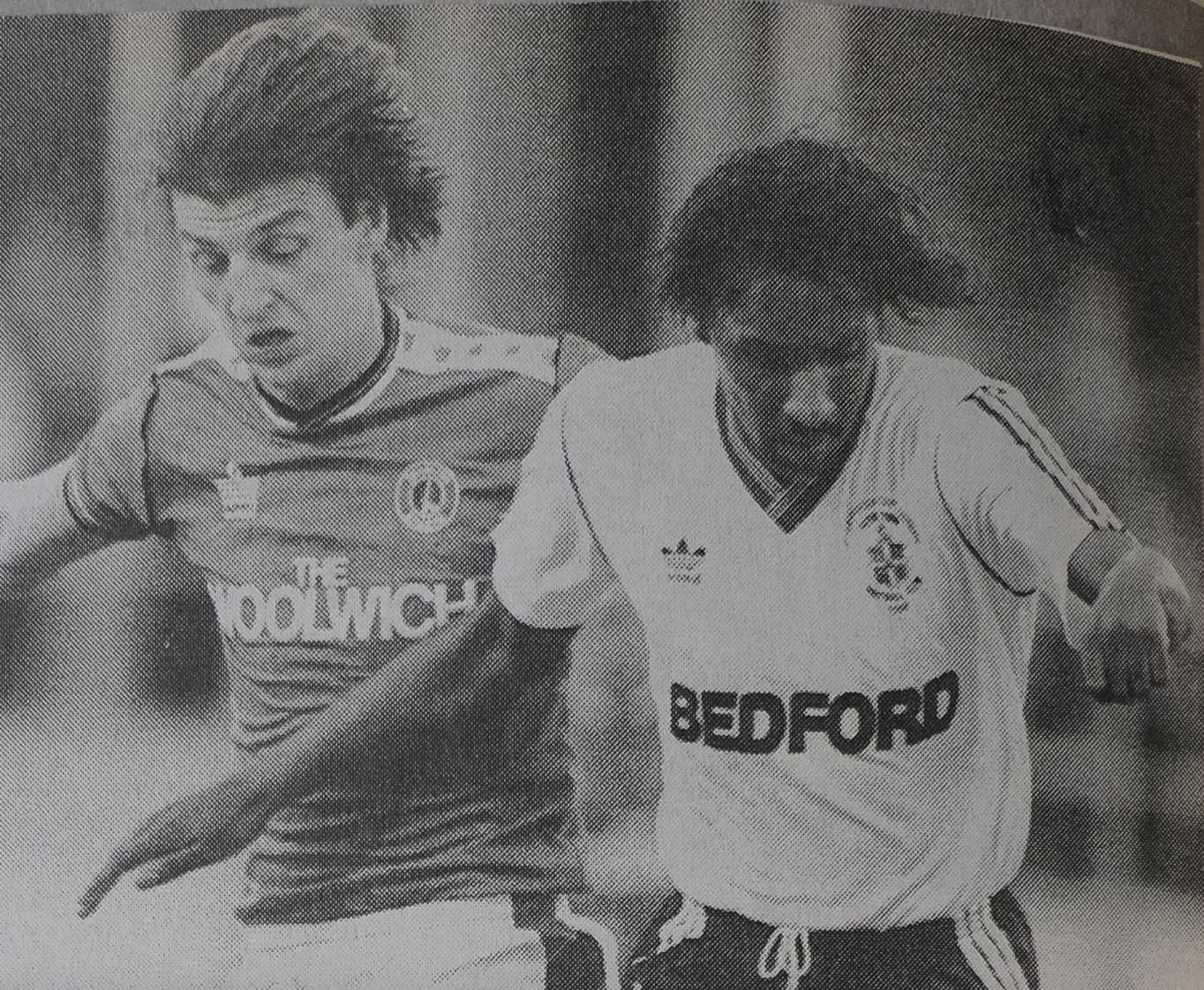
Pates in action for Chelsea against Albion’s Terry Connor, a former England Youth teammate

Simultaneously, Droy’s lack of fitness meant young Pates got an extended run in the side. However, because he was comfortable on the ball and could play in a number of positions, manager Hurst often used him as something of a utility player.

For example, in 1980-81, his 15 appearances were spread across all back four positions. But when John Neal took over for the 1981-82 season, Pates was ever present in the centre alongside Droy.

While the side’s league fortunes didn’t improve under the new man (they finished 12th), they had the consolation of reaching the quarter finals of the FA Cup after beating reigning European champions Liverpool 2-0 in the fifth round (Pates had the job of man-marking Graeme Souness).

Remarkably, Chelsea only narrowly avoided relegation to the old Third Division in 1983, and, as a result, manager Neal had a clear-out of the ‘old guard’ and Pates’ performances and attitude earned him the captain’s armband just before his 22nd birthday.

“I think he wanted someone who had come through the ranks and knew the club,” Pates said. “I was fortunate enough to be one of the few players – along with the likes of John Bumstead – who he kept on from before.”

Pates has nothing but praise for Neal and his assistant Ian McNeill (who played more than 100 games for Brighton between 1959 and 1962) and their eye for good players, like Pat Nevin, Joe McLaughlin, Nigel Spackman, David Speedie and Kerry Dixon, who were brought in to rebuild the club.

“I loved John Neal, he was a man of few words but when he said something you listened because it was going to be something poignant or important,” said Pates. “He was a good man-manager and would always take care of you if you had problems and be there for a chat. You wanted to play for him.”

Combined with the new arrivals, Pates and his pal Bumstead were part of a core of local lads Neal relied on (it included Dale Jasper, Chivers and Fillery): they all came from the same estate in Mitcham.

In his first season wearing the armband, “Pates stepped into the role with ease and led the team to the Second Division title” wrote Kelvin Barker.

“Colin’s classy displays in the top division catapulted him into the limelight, his impressive captaincy of a club on the up particularly catching the eye.

“A string of niggly injuries after Christmas led to him missing a handful of matches and his importance to the defence was highlighted when, in his absence, Chelsea slipped to consecutive defeats at Coventry and Ipswich.

“Pates made a total of 48 appearances during the 1984-85 campaign and scored once, the goal coming in a stunning 4-3 win at Goodison Park against the season’s champions, Everton.”

It had been a proud moment when Pates led Chelsea out at Highbury for the 1984-85 season-opener against Arsenal. The game finished 1-1, Paul Mariner opening the scoring for the Gunners on 35 minutes, Dixon equalising for the visitors four minutes later.

Chelsea made a decent fist of their return to the big time, finishing sixth. They also reached the semi-finals of the League Cup only to be knocked out over two legs by a Clive Walker-inspired Sunderland.

Chelsea did make it to Wembley the following year but it would be fair to say winning

that Full Members Cup final ultimately damaged their progress in the league. Chelsea were riding high in the top flight at the time and being spoken of as title contenders but immediately after that trophy win they were beaten 4-0 at home by West Ham on Easter Saturday and 6-0 by QPR at Loftus Road on Easter Monday.

Pates’ future Brighton teammate John Byrne scored twice for the Rs playing alongside Michael Robinson and Gary Bannister, who got a hat-trick. Substitute Leroy Rosenior (father of Liam) scored the other.

Byrne later remembered: “There were some big name players in the Chelsea line-up, including centre-back Doug Rougvie who seemed like he wanted to kill somebody when the score was 5-0! He was certainly looking for blood!

“We had the Milk Cup Final coming up and I remember saying to Banna with about 15 minutes to go ‘I ain’t going anywhere near Rougvie’. And Gary replied: ‘Neither am I!’ So we both ended up playing on the wings with no one in the middle!”

Pates and Doug Rougvie both played for Chelsea and Brighton

There was talk that Pates might force his way into the England squad for the Mexico World Cup that summer but Terry Butcher, Alvin Martin and Terry Fenwick were ahead of him.

Competition at club level emerged at the start of the following season when centre-half Steve Wicks was recruited and Pates was moved to left-back. However, injuries to Wicks meant Pates was soon back in the middle.

In his sporting-heroes.net piece, Barker continued: “As Chelsea’s farcical season went from bad to worse, he found himself being played in midfield again. With the Blues looking down the barrel of a drop into Division Two, Colin was returned to the centre of defence and relegation was averted.”

An injury-disrupted 1987-88 season also saw Pates have the captaincy taken off him and given to fellow defender Joe McLaughlin. Pates actually missed the start of the season having had a cartilage operation and when he returned in October the team were on something of a downward spiral. Injured again at the end of March, by the time he was fit to return, Chelsea were heading close to the relegation trapdoor.

At the time, as part of a restructuring plan to reduce the top division’s number of teams from 22 to 20, the team finishing fourth bottom of Division One had to play-off against the third, fourth and fifth-placed teams in Division Two. The top two in Division Two were promoted automatically and the bottom three in Division One went down.

Chelsea ended up fourth from bottom and had to play Middlesbrough (who’d finished third in Division Two) over two legs.

Boro won the first leg at Ayresome Park 2-0 but Chelsea only won their home leg 1-0, so they were relegated. However, history has since remembered the match more for the riotous behaviour of Chelsea supporters.

gazettelive.co.uk recalled: “There was trouble before, during and after the high-stakes game. Chelsea fans invaded the pitch on the whistle and stormed the away end sparking hand to hand fighting with barely a steward in sight.

“And it was only the intervention of mounted police that eventually cleared the pitch. The trouble didn’t stop there with more attacks outside the ground as Boro fans returned to their cars, coaches and the tube.”

Boro striker Bernie Slaven remembered: “We were locked in the dressing room celebrating promotion for maybe an hour while the police dealt with the trouble and cleared the pitch then we went out and celebrated again with the Boro fans who had been kept back in the stadium.

“The trouble and the ugly atmosphere was a real shame because it took all the headlines away from what we had achieved.”

John Hollins resigned as manager and was replaced by Bobby Campbell. One of his first moves was to sign the powerful central defender Graham Roberts who he made captain.

Pates was given a testimonial as part of the pre-season friendly fixtures (a 0-0 draw with Spurs) but the season was only three months old when he suddenly found himself unwanted at the Bridge.

As Pates returned to the dressing room at the end of a 2-2 Littlewoods Cup home draw with Scunthorpe United, Campbell informed him Charlton Athletic manager Lennie Lawrence was upstairs waiting to sign him, the club having already agreed terms over the transfer (a £400,000 fee).

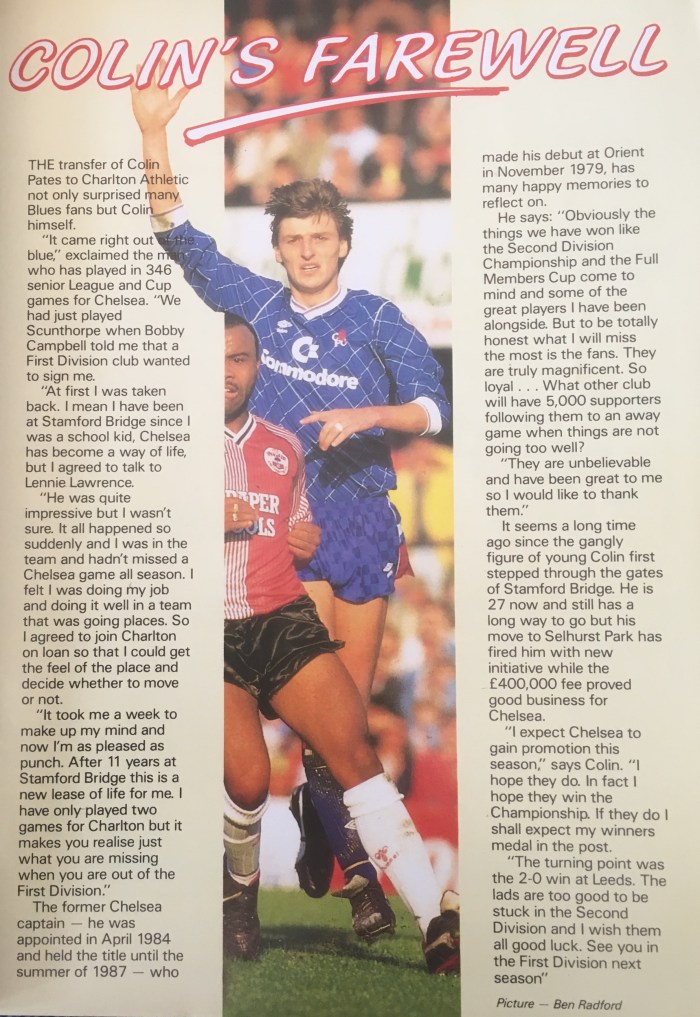
“It came right out of the blue,” said Pates. “At first, I was taken aback. I have been at Stamford Bridge since I was a schoolkid. Chelsea has become a way of life.”

When the Albion visited Chelsea for a Division 2 league game on 29 October 1988, the matchday programme carried an article headlined ‘Colin’s farewell’, detailing the circumstances.

“The transfer of Colin Pates to Charlton Athletic not only surprised many Blues fans but Colin himself,” it began.

And reflecting on what happened many years later, Pates told Luke Nicoli: “I was allowed to leave and did so with a heavy heart as I wanted to stay.”

Nevertheless, the move at least presented the defender with the chance to return to playing in the top division, and he admitted: “After 11 years at Stamford Bridge, this is a new lease of life for me.”

Charlton, who had to play home matches at Crystal Palace’s Selhurst Park at the time, finished 14th by the end of that 1988-89 season, but Pates had left for Arsenal by the time the Addicks were relegated in 19th place at the end of the following season.

Despite those moves across London, and to the south coast, Chelsea hadn’t seen the last of Pates, though. He subsequently became head of football at the independent Whitgift School in South Croydon, where he coached most sports and was the first football coach in what had previously been a rugby-dominated school and pupils Victor Moses and Callum Hudson-Odoi both went on to play for the Blues.

Pates was also seen back at the Bridge on matchdays working in the hospitality lounges.

Edwards stole the limelight when Beckham made his debut

THE STORY of Matthew Edwards scoring for Brighton against Manchester United in the same cup match in which David Beckham made his debut has been told many times, and who wouldn’t be proud of that memory.

The history books can’t take it away from him, nor should they. “Scoring that goal against Manchester United was certainly the highspot of my career. Everyone wanted to talk about it and I was mentioned in all the papers and (I was) interviewed on television,” he said.

While that second round League Cup game on 23 September 1992 stands out, Edwards actually played 78 matches for the Albion after being released by Tottenham Hotspur, where his only first team outings were in testimonials or friendlies.

Albion were a very different proposition in September 1992, just beginning to reacquaint themselves to life back in the third tier of English football barely 16 months after having come close to returning to the top flight.

Big name players had been sold to try to balance the books and manager Barry Lloyd had to turn to free transfers, loanees and young hopefuls to put out a side.

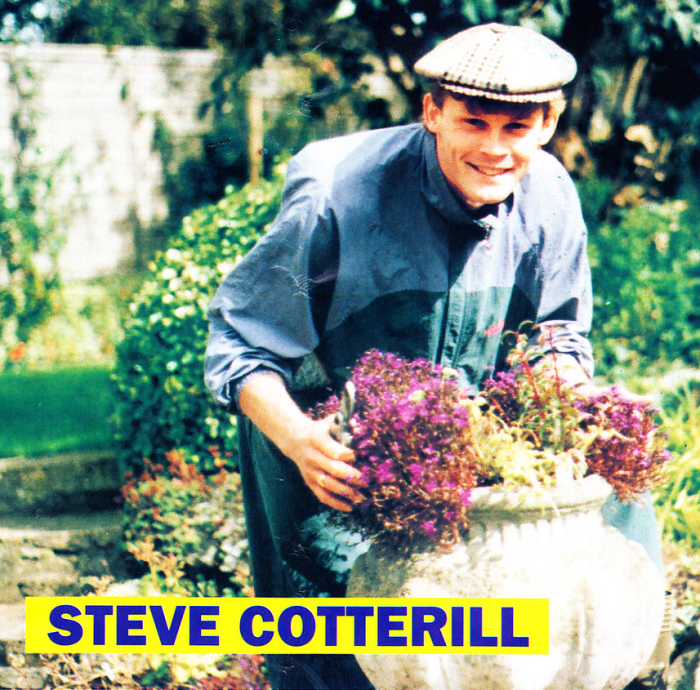
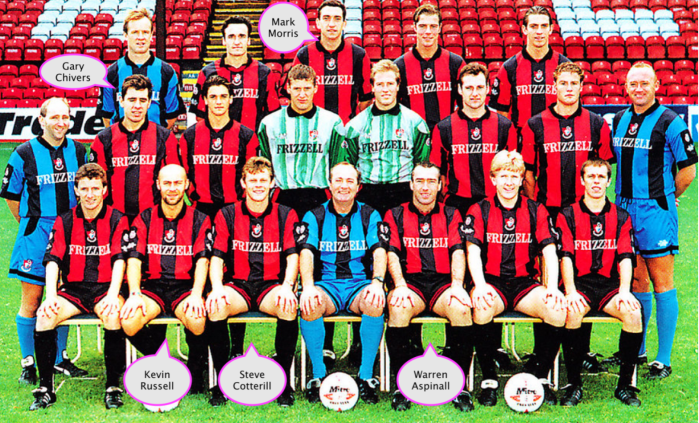
Edwards was in that category and he probably only played in that United match because the respective parent clubs didn’t want loan forwards Steve Cotterill and Paul Moulden to be cup tied. He played alongside Scot Andy Kennedy, a recent arrival from Watford.

The youngster seized his chance and made a name for himself by heading home an Ian Chapman cross to cancel out Danny Wallace’s 35th-minute opener for the illustrious visitors.

Beckham had been sent on for his United bow in place of Andrei Kanchelskis (serenaded by a familiar North Stand chant of ‘Who the f****** h*** are you?’) but the game finished 1-1 at the Goldstone Ground, setting things up nicely for the second leg at Old Trafford (which United won 1-0).

Edwards once again earned a place in the headlines four months later when he scored the only goal of the game in a FA Cup third round win over south coast rivals Portsmouth, a side playing in the division above the Seagulls, and who had reached the previous season’s semi-finals.

Born in Hammersmith on 15 June 1971, the family lived in Brighton for a time and the young Edwards, who first started kicking a football around the age of six, played for local side Saltdean Tigers. At 13, he was on the Albion’s books under the guidance of Colin Woffinden, a former player who became youth coach.

But the family relocated to Surrey and it was while playing schoolboy football for Elmbridge Borough that he was spotted by Tottenham. In an extended interview with Lennon Branagan, Edwards explained how he got his big break courtesy of Fred Callaghan, Fulham’s left-back for 10 years who managed Brentford in the 1980s.

His son was playing in the same side as Edwards and Callaghan recommended Edwards to his friend Ted Buxton, a renowned coach and scout, who was working for Spurs at the time.

“I didn’t know that Ted had come along to watch me and then after one of the games they said: ‘Do you want to come to Spurs?’” Edwards recounted.

Young Spur Matthew Edwards

He signed associate schoolboy forms and while at Hinchley Wood Secondary School, Esher, travelled up to White Hart Lane on a Tuesday and Thursday night for training on an indoor pitch next to the main reception area.

On leaving school, he was taken on as an apprentice at Spurs and worked through his YTS under the auspices of youth team manager Keith Blunt and coach (and Blunt’s successor) Keith Waldon.

At 17, he signed on as a professional and he was on the books for three and a half years.

“We were quite successful in the reserves and I think that we used to win the league pretty much every season,” Edwards recalled.

It was tours abroad that he remembered most fondly from his time at Spurs, playing in Hawaii and Japan, and he also joined up with the first team squad for tours to Norway, Ireland and Italy.

A rare first team opportunity came in Billy Bonds’ testimonial at West Ham on 12 November 1990.

“I was young and had long blond hair and I can remember getting absolutely slaughtered by the West Ham fans that day,” he said.

In his final year, he went on loan to Reading, where he played eight games before returning to Spurs, and later the same season went to Peterborough on a similar arrangement, although he only played in one cup match for Posh.

He sensed his days at Spurs were drawing to a close, telling an Albion matchday programme: “I knew it was time for me to go when (manager) Peter Shreeves forgot my name!”

He said: “I had three months on loan at Peterborough but didn’t get a league game. Martin Hinshelwood rang me up in May and asked if I would be interested in coming to Brighton.”

Edwards marked by ex-teammate Justin Edinburgh

One of the first matches he played for the Seagulls was in a pre-season friendly against his former club, a 1-1 draw at the Goldstone on 29 July 1992. In a shocking excuse for a programme for the visit of Croatian side FC Inker Zapresic, a barely recognisable picture of the new signing was included. Thankfully a more professional programme appeared for the opening home league game, against Bolton Wanderers, and Edwards was pictured (left) in action up against his former teammate Justin Edinburgh

After Cotterill and Moulden had returned to their parent clubs because Albion couldn’t afford to make their moves permanent, Edwards started to forge a fledgling forward partnership with Kennedy. But Kurt Nogan took over and his prolific goalscoring saw Edwards have more of a peripheral role, although he ended the season taking over from soon-to-depart Clive Walker on the left wing.

Edwards was in the starting line-up for the first half of the 1993-94 season, won a man-of-the-match award for his performance against Gillingham in the League Cup and scored in a 2-2 draw at home to Huddersfield.

He was the programme cover boy for the Exeter City home game on 2 October (0-0) but, with Albion dangerously close to the drop zone, Liam Brady took over from Lloyd and it soon became quite a different picture for the former Spurs youngster.

He played in the first seven games under the new boss, and scored in a 3-3 FA Cup tie v Bournemouth, but Brady had his own ideas and started looking elsewhere for solutions.

“Me and him didn’t really see eye to eye, or he didn’t particularly fancy me as a player,” Edwards told Branagan.

Although Edwards was a sub three times in March, his appearance off the bench in a home 1-1 draw with Burnley was his last involvement with the first team.

A regular in the reserves in the latter part of the season, at the end of it he was released and joined Conference side Kettering where he had barely got his shorts dirty before suffering a cruciate ligament injury.

“That that was the start of the end of my career as such,” he confessed. “I had a year out of the game.”

On his return to fitness, he had two good seasons for Walton & Hersham, and then Enfield. “My knees just kept on going for me,” he recounted. Over the course of another couple of years, he appeared for Carshalton Athletic, Sutton United, Molesey, Yeading, Bognor and Egham.

But he said: “My knees just weren’t up to playing football, so I had to call it a day and that was the end of the career.”

Interviewed for an Albion matchday programme article in 2019, he told journalist Spencer Vignes he had developed a career in computer software sales and had been a visitor to the Amex on behalf of a ticketing company that worked with the club.

He had subsequently moved on to providing similar expertise for visitor attractions such as zoos, museums, aquaria and cathedrals.

Reflecting on his all too brief career, he said: “I suppose I’m lucky in that I was in the right place at the right time to play for the Albion at the Goldstone, rather than Withdean. Saltdean Tigers to Spurs to Brighton; there can’t have been many people who have done that!”

That’s the way Cookie crumbled for Hastings-born defender

WHEN IT comes to home-grown talent, Brighton have had particular success with central defenders.

Lewis Dunk is the prime example, staying with the club from humble beginnings through to Europe. Others had to move on to make the most of their careers.

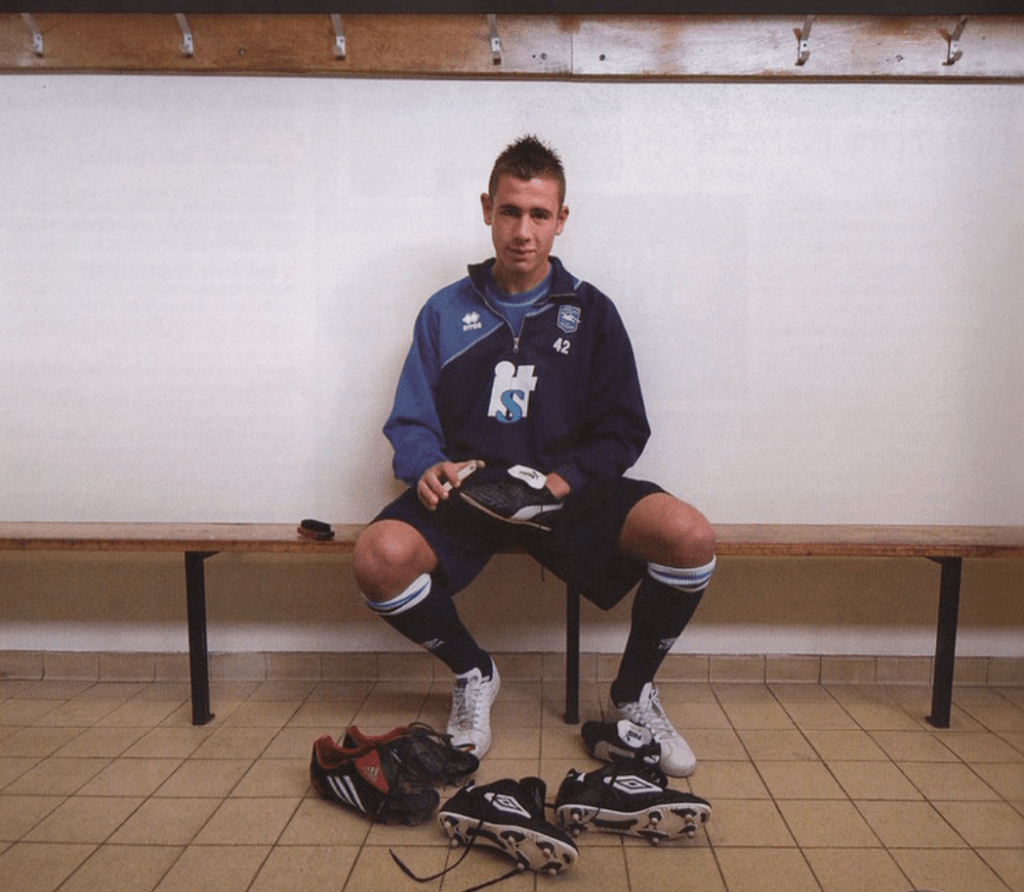
For example, Steve Cook joined the club aged nine and made it through the different age levels into Albion’s first team. But to get regular football, he moved along the coast to Bournemouth.

If moving from Championship Brighton to League One Bournemouth seemed like a backward step in 2012, two promotions later saw him laughing on the other side of his face when the Cherries made it to the Premier League (in 2015) a season before the Seagulls.

Cook spent 10 years with the Cherries, making more than 350 appearances (168 of them in the Premier League), and after the departure of fellow ex-Albion defender Tommy Elphick, he took over as their captain.

Cook first got a taste of the big time in 2008, when he was a second year scholar on £60 a week, aged just 17. He was sent on by Micky Adams as an 85th-minute substitute in the famous League Cup game against Manchester City that League One Albion won on penalties.

Two months later, he once again replaced right-back Andrew Whing, this time in a FA Cup first round replay defeat to Hartlepool United, and picked up a booking into the bargain.

Boot cleaning duties for young Steve Cook

To gain more experience, in December that year, Cook went west to spend six weeks with Conference South Havant & Waterlooville. On his return, he once again had a first team look-in, going on as a 77th-minute sub for Calvin Andrew in the Johnstone’s Paint Trophy southern final defeat at Luton Town that marked the end of the second coming of Adams.

Before the appointment of Russell Slade, Cook went on for the second half as a sub for injury-plagued sub Adam Hinshelwood (who’d been an 18th-minute sub for Elphick) in a 4-0 home defeat against Crewe Alexandra.

Slade marked his arrival by bringing in plenty of old hands in what eventually proved to be a successful skin-of-the-teeth survival battle against relegation. Cook didn’t get another chance in the first team until some time after Gus Poyet had taken charge.

His development continued on loan with the likes of Eastleigh and Eastbourne Borough and in November 2010 he moved away from home to join former league club Mansfield Town on a three-month loan.

“Mansfield play very different to Eastbourne but it’s more like playing for Brighton where they like to keep the ball and play out from the back, which you don’t get in the Conference very often,” he told the matchday programme. “I see it as a great opportunity to prove myself and try to earn another contract at Brighton.”

He added: “Playing Conference football helped me grow up, physically and mentally, so by the time I returned I felt I was ready to challenge for a first team place.”

Cook up against Suarez

After a handful of non-playing appearances on the first team subs bench, when he did get his first ever start, it could not have been a bigger match: Liverpool at home in the third round of the Carling Cup with Luis Suarez, Dirk Kuyt and Craig Bellamy in the opposition forward line.

“It was a real confidence boost knowing the manager had faith putting me into the side for such a big game, but I really enjoyed the experience and got a great deal out of it,” he said.

“While I had a good pre-season, I’ve not played a lot of games since then. It was one in two months before the Liverpool game, but I’d been working hard in training and got my reward.”

Cook only found out 90 minutes before kick-off that he would be taking the place of fellow academy graduate Dunk, with both Elphick and Adam El-Abd out injured.

“It was a real baptism of fire though because for the first 20 minutes Liverpool were brilliant. Suarez, Bellamy, they were all excellent going forward, the pace of them as a team was unbelievable and in that opening spell I think we were in awe of them.”

Cook thought his involvement that night would lead to more chances, but he said: “Later that month we had Ipswich away, Dunky was suspended but instead of playing me, Gus put Romain Vincelot – a midfielder – in alongside Gordon Greer. From that point on, my mind was made up; I knew I had to look elsewhere if I wanted to kick on in my career.”

That autumn, Cook initially joined Bournemouth on loan, featuring in eight games, but he was recalled by the Seagulls when a shortage of defenders meant he was needed for a crucial New Year game at home to table-topping Southampton.

Having lost four games on the bounce, the odds were stacked against a positive result, but Albion remarkably won the game 3-0 (two cracking goals from Matt Sparrow and another from Jake Forster-Caskey).

Nevertheless, within 24 hours of the game ending, Cook finally took the tough decision to leave the Albion permanently. The fee was a reported £150,000.

He told the matchday programme: “I have loved my time at Brighton but this is a chance to play regular football and I can’t turn that down. It was nice to go out on such a high – not many players get that chance.”

Cook reckoned he might have got the odd game or two if he’d stayed at Brighton but he didn’t rate his chances of becoming a regular when everyone was fit. “I could play close to 30 games for Bournemouth and that is massive for a young footballer,” he said.

In a later interview, he said: “It was always going to be a tough decision to leave the Albion as I had been at the club since the age of nine.

“I had a decision to make: do I stay and fight for my place, despite being a fair way down the pecking order, or do I leave and try to continue my career elsewhere?

“It wasn’t easy because I was leaving a club on the rise; the Amex is one of the best stadiums in the country, the team was establishing itself in the Championship and there was a new training ground on the way.

“But having been at Bournemouth on loan, I could also see a hugely ambitious club and a talented squad which I believed was going places.

“So, I decided to leave and it’s been the best decision I could ever have made. I’ve moved away from my parents, so have grown up off the pitch, while on it I’ve been playing regularly and have really enjoyed my football.”

Much of that time he partnered Elphick in the middle of the Cherries defence and it wasn’t long before the pair were emulating the Albion’s achievement of promotion from League One.

“Tommy arrived a year after me but of course I told him about the club, the town and knew it would be a good move for him as it was for me,” he said. “We’d obviously played alongside each other before, had known each other a long time, and so we soon built up a good partnership.

“He had those leadership qualities he displayed at Brighton and was soon made captain. We had a terrific three years together and remain good friends off the pitch.”

In a subsequent Albion matchday programme, when he was once again visiting with the Cherries, he said: “Lovely stadiums and training facilities are great, but only if you’re playing in them and I can now look back on nearly 300 appearances for Bournemouth, where I’ve had some fantastic moments, played regularly in the Premier League and really developed my game. It’s a move that couldn’t have gone better.”

Although Cook held his own in the Premier League, he admitted the transition from the Championship was hard. “The gulf with the Championship is huge,” he said. “The intensity and pressure, in particular, are massive and the first six months were a real learning curve.

“Once I’d adapted and dealt with the expectations placed on me, I could relax and start to enjoy myself.”

Born in Hastings on 19 April 1991, Cook joined the Albion as a schoolboy following a six-week trial under the auspices of Martin Hinshelwood, the head of the youth set-up at the time.

“Initially, I was only training Tuesday evenings in the Eastbourne centre of excellence but, when I reached 13, we were training twice a week with a game on the Sunday,” he recalled.

“I remember I had a choice to make: Hastings Town, my local team, or Brighton and obviously I was swayed by the facilities, the coaching and being associated with a professional club.”

After Bournemouth lost their top tier status in 2020, Cook captained the side through to the Championship play-off semi-finals in 2021 where they were beaten by eventual winners Brentford.

There was plenty of emotion when Cook finally left the club in January 2022 with manager Scott Parker saying: “I know too well what someone like Steve Cook has done for this football club and the journey he has been on with the club. He has been paramount and done everything, really. I wish him all the best.”

And in an open letter to the club’s fans, Cook wrote: “I’ve been lucky enough to captain the team in League One, the Championship and Premier League and writing this just fills me with immense pride.

“The time has come for me take the next step in my career but I will never forget the staff that helped me improve as a player and person.

“The players that I shared a dressing room with and, and most importantly, the fans that supported and cheered for all those games.

“The journey that we have had is one that will never be beaten, and the relationship we had was undeniably strong. Thanks for everything.”

Upon signing for Nottingham Forest, Cook declared: “You can see the progress the club is making and I’m excited for the new challenge. 

“I thought it was the perfect time in my career to make this move to hopefully come and contribute and help get this club back to where it wants to be.

“The history of the club speaks for itself and I know how passionate the fans are. I’ve played at the City Ground in the past and it’s always been electric.”

Manager Steve Cooper said: “Steve is a fantastic player and brings a good level of experience, both in the Championship and the level above.

“He’s played in a team that has won a lot of games and I think that that’s important. We want our group to be young and hungry along with players of experience that can drive the team forward and that’s what we’re building.”
Having been part of the Forest side promoted to the Premier League in May 2022, his involvement back in the elite division was restricted to 12 games and he was omitted from Forest’s 25-man Premier League squad for the second half of the 2022-23 season.

In the summer of 2023, he switched to Queens Park Rangers in the Championship, telling the club’s website: “Playing football is the most important thing for me but I also pride myself on being a good character around the group.”

He went on: “My time in the Championship has been quite successful, and that success is something I want to bring here. 

“I don’t want my career to peter out, I still really want to be successful and to contest. I still have aims and targets I want to achieve and I’m hoping that the success I’ve had in my career so far continues so that I can help push QPR forward.” 

Brighton’s Brown a guiding light for future footballing talent

BRIGHTON-BORN Steve Brown walked out on the Albion as a schoolboy but later returned as an influential coach of the club’s emerging talent, including a young Lewis Dunk.

Previously, as reserve team coach at West Ham, Brown brought through the likes of Jack Collison, James Tomkins and Junior Stanislas.

Indeed, the former Charlton Athletic defender applied his aptitude for teaching budding young footballers to various settings, including Charlton and at Sussex independent schools Ardingly College and Lancing College (2017-19).

In his two-year spell as Albion youth team coach, between 2008 and 2010, 11 youth players signed professional contracts, and five made first-team appearances, including Dunk, Grant Hall and Jake Forster-Caskey.

In an end of season summary, Brown reported: “We have out-passed and out-played teams but not finished them off, and that is something the players need to learn to do, but the foundations are there.

“We have taken things on board from Gus (Poyet) and the first team, and we’ve tried to adapt that to the players in the youth team.”

He added: “The way the first team manager plays here, everyone has got to know what they are doing and be a very good forward-thinking football player – but at youth level you are going to get inconsistency because they are not at that level yet.”

Brown took on the Albion youth team job when Russell Slade was in charge, shortly after obtaining his UEFA A coaching licence, which he had been working towards at Charlton and West Ham, through the different stages of the badge process.

In an interview with the matchday programme, he admitted: “In some respects I’ve come home. In my playing career I had a couple of opportunities to come here and came very close when Steve Coppell was manager.

“I also had talks when Martin (Hinshelwood) was in charge and the two of us have stayed in contact ever since. So, when he phoned up to offer me the job, I grabbed it with both hands.”

Although at the time he dropped down a couple of levels, he said: “Your coaching philosophies don’t change whether you’re with a West Ham international or a Brighton youth team player. The message that you are trying to get across is the same – you want them to improve.

“It’s also my job here to make the players understand it’s not a cakewalk. They see the professionals and think it’s going to be a natural progression for them but it’s not.”

Born in Brighton on 13 May 1972, Brown went to Coldean Primary School and Patcham Fawcett High School.

His dad, Gary, had been a professional footballer in South Africa before returning to play non-league in Sussex, so it was little surprise his son developed a love for the game.

“You can definitely say that football was in the family genes,” Brown told doverathletic.com.

His performances for the Patcham Fawcett school team led him to be selected for East Sussex and Brighton Schoolboys, and the Albion signed him up on schoolboy forms for two years.

However, when 14, he admitted: “I just fell out of love with football for a time. When you’ve got a squad of 25 boys and only 11 can play, you spend a lot of time just training. I missed the competitive edge of matches and as a result I began to enjoy my football less and less.”

So, he walked away from the Albion and returned to playing for East Sussex and Brighton Schoolboys, as well as Whitehawk, where his dad was first team coach.

Fresh-faced Brown became an apprentice at Charlton Athletic

When he was 16, he was spotted by a Charlton scout, and was taken on as an apprentice. Reflecting on how hard he had to work to get a regular spot in the reserve side, before eventually signing as a professional, he said: “It’s really about how resilient you are.

“Lots of players get rejected once, twice, even three times before someone takes a chance on them. You just have to refuse to give up and learn not to take one person’s rejection as final.”

However, Brown’s career nearly ended before it had begun when he suffered a serious knee injury at 18, forcing him to completely reshape his game and the way he played.

“From that point, decision-making had to become his strength because his body would be permanently affected,” wrote Benjy Nurick in a blog about the defender. “I had a cruciate, the operation went wrong,” he said. “I’ve got nothing left in the right knee now.”

He told Benjy: “I don’t think people appreciated how bad the injury was. I’d say from about 26-27 years of age…from that point onwards, I was icing front and back after training and after games. I wasn’t a pill taker on a regular basis, but I did get put on some quite strong anti-inflammatories.

“I’d finish a match and for anybody that ever sort of said ‘where’s Browny?’ I had an ice pack on the front of my knee and I had an ice pack on the back of my knee and I was laying on the floor of the dressing room!”

Having made his first team debut alongside the likes of Garth Crooks and Tommy Caton, Brown established himself in the Addicks defence and played a crucial role in the club’s 1998 promotion via a memorable play-off against Sunderland at Wembley.

Brown put in a crucial tackle in extra time to ensure the score stayed 4-4 and then scored in the decisive penalty shoot-out, although he admitted: “It was an absolutely horrific experience.

“The pressure was unbelievable and once the ball went in, I didn’t care if anyone else in our side missed. I know that sounds selfish, but I was just so overwhelmed with relief at scoring.”

Brown earned a bit of a reputation as a stand-in goalkeeper too, as witnessed in May 1999, in a game against Aston Villa. After Addicks goalkeeper Andy Petterson had been sent off, Brown donned the gloves and made a number of crucial saves as his side ran out 4-3 winners.

Brown told Laura Burkin for whufc.com: “It was not the first time for me in goal, actually. I had gone in a couple of other matches over the years, against Manchester City and Southampton if I remember rightly.

“But the one with Aston Villa was the one that stands out. As soon as Andy had been sent off, the gaffer asked me and I said yes, no problem. I was quite pleased with myself, there was a dangerous cross and I got my hands to that well and a few corners as well, and I enjoyed it!”

Unfortunately, those heroics were unable to prevent Athletic returning to the second tier. But Brown was skipper when they won promotion as champions in 2000. “We broke a host of records on our way to the title. It was my best year in football,” he declared.

It’s widely felt by Addicks fans that Brown played some of the best football of his career alongside Richard Rufus at the heart of the defence under Alan Curbishley’s managership.

But what did Brown make of the former Albion midfielder as a boss? “He didn’t give out a lot of praise, you had to earn it, but he left no stone unturned in terms of our preparation for games.

“He could throw the odd teacup but was generally a level-headed guy who would work out ways for you to improve if he felt you needed it.”

Brown’s 12-year playing career at Charlton came to an end in 2002 and he joined former teammate Alan Pardew at Reading, making 40 appearances before retiring in 2005.

He told the Reading Chronicle: “I went from one very family-orientated, stable club which had seen some very good times straight into another one that was very much in a similar state.

Reading had come out of League One, was in the ascendancy, had a new stadium, the owner made the club financially responsible, they had Alan Pardew as manager who was doing well. You can leave one football club and walk into a bit of a nightmare…and I didn’t. It was a brilliant move for me.

“We got to the play-offs my first year at Reading. When I turned up, they’d just gotten rid of Matthew Upson who had been outstanding for them, so I had extremely big shoes to fill. And I slotted into his shoes and filled them quite nicely and we got to the play-offs.”

Unfortunately, although Reading had James Harper and Steve Sidwell pulling the strings in midfield, they lost Nicky Forster to injury in their semi-final first leg against Wolves, and went down 3-1 on aggregate.

“If it hadn’t been for the injury to Nicky, I think momentum would have carried us through,” said Brown. “But losing Nicky…he was our number one striker by some distance and losing him left us very short up top.”

A recurrence of that anterior cruciate ligament injury eventually forced Brown to stop playing and after a spell coaching in Charlton’s academy, he linked up with Pardew again after he’d taken over as West Ham manager before the management team changed in July 2007.

As well as working as head of football at Ardingly College, Brown also scouted for Charlton Athletic and covered first team matches as a radio co-commentator for BBC London. That radio work gradually expanded into coverage of Premier League and EFL matches.

On leaving Brighton in 2011, Brown joined his former teammate Forster at Conference South Dover Athletic, becoming his assistant manager. In the summer of 2013, he moved on to become manager of Ebbsfleet United, a role he held for 18 months.

Next stop was a brief stint in charge of Lewes before he moved on to become joint manager and director of football at Margate.

While working at Lancing College, Brown was also a regional scout for Stoke City, searching out potential players for the club’s development squad.

Petterson the fall guy during disastrous winless run

ANDY PETTERSON conceded two goals in the first seven minutes of his Albion debut but still picked up the man of the match award when managing to deny visitors Walsall any further goals in a 2-0 defeat.

He pulled off a brilliant point-blank save on the stroke of half-time to deny goalscorer Jorge Leitao a second goal and later blocked the same player’s angled drive. Steve Corica had opened the scoring for the Saddlers.

The game on August Bank Holiday Monday in 2002 was part of a disastrous run under new manager Martin Hinshelwood. In only eight games as a stand-in for injured Michel Kuipers, Petterson conceded eighteen goals, including four against his old club, Portsmouth, in only his second game.

He shipped another four in a game at home to Gillingham, one of which the matchday programme described as “the most embarrassing moment of Petterson’s long career”.

With the score 3-2, and Albion committing everyone forward, including the goalkeeper, in search of an equaliser, when 10-man Gillingham broke on a counter attack, backpedalling Petterson fell over giving Gills striker Kevin James an open goal to notch a fourth for the visitors.

Petterson only appeared once under Hinshelwood’s successor, Steve Coppell, when Kuipers had been sent off in the 89th minute of a home game against Bradford City. Paul Brooker was withdrawn and the sub goalie went between the sticks, although his first involvement was to pick the ball out of the net, Andy Gray having scored from the penalty kick awarded for the infringement that saw Kuipers dismissed.

In pouring rain, Albion – and Petterson – clung on throughout five added minutes for a 3-2 win, bringing to an end a 14-game winless league run. Bobby Zamora scored two penalties for the Seagulls and new arrival Simon Rodger, a loyal Coppell lieutenant, curled in a beauty from outside the area.

Although he was a non-playing sub on two further occasions, Petterson was let go. In a recent interview, he said he had been nursing a recurring calf injury during his time with the Albion.

Albion were the 12th of a remarkable 21 clubs the Aussie ‘keeper joined on loan or permanently.

Wolverhampton Wanderers were another stopping off point for the perennial back-up ‘keeper from Fremantle and it was one of his regrets that he only had a four-month loan spell at Molineux, having previously spurned a two-year deal with the Black Country side to make what turned out to be a career-damaging move to Pompey.

Instead of building on a career that had shown signs of promise at Charlton Athletic, Petterson flitted from club to club without ever putting down roots.

Born in Fremantle, Western Australia, on 26 September 1969, he was still only a teenager when he arrived in the UK and signed for Luton Town, where he spent four seasons.

The Hatters Heritage website recalls: “Andy was so desperate to make a name for himself in the English professional game that he paid his own passage to take up a trial at Luton. Fortunately, his gamble paid off as he was offered a contract at Kenilworth Road in 1988 although he had to wait until the start of the 1992-93 season before making his League debut.

“Impressing in pre-season with his shot stopping ability and quick reflexes, Andy was ever present for the first 14 games but a calamitous performance during a 3-3 draw at Cambridge effectively put paid to his Luton career.”

Petterson joined Alan Curbishley’s Addicks for £85,000 in July 1994, was their player of the season in 1996-97 in the First Division and played for them in the Premier League.

But he was generally no. 2 to Sasa Ilic, and subsequently dropped down to third choice behind Simon Royce, another goalkeeper who spent time with the Seagulls. The situation prompted Petterson to join struggling Portsmouth on loan in November 1998.

“Portsmouth were in financial trouble and down at the bottom of the table,” he recalled in an interview with the Argus. “I went there for three months and everything went very well. Then in the summer I was out of contract at Charlton.

“Portsmouth were one of three clubs in for me and they offered me quite a good deal, so I decided to sign for them. Everything went well under Alan Ball for the first six months, but he got the sack and it was downhill for me from there.

“We had another four managers (Tony Pulis, Steve Claridge, Graham Rix and Harry Redknapp) in the three years I was there and my face never fitted really. It was just unfortunate I went there. I was happy with the way it started, and it was a good club to be at, but it just wasn’t meant to be for me.”

In an extended interview with Neil Allen of The News, Portsmouth, in June 2020, Petterson reflected on his missed opportunity to join Wolves instead of Pompey, when he had been released by Charlton.

“Wolves’ boss Colin Lee was interested,” he said. “I was in Australia and flew back to England ahead of signing at Molineux on a two-year deal on the Monday afternoon.

“Then, late Sunday, my agent called. Milan Mandaric had taken over Pompey and they wanted to talk on Monday morning.

“That was the club I wanted to join, I had familiarity there. I signed a three-year deal. If the club had been taken over 24 hours later, the move would never have happened and I would have ended up at Wolves.”

Petterson told The News: “It was the beginning of the end when I went back to Pompey. My career never really recovered. I was kind of a journeyman before that, but at least was signed to a parent club and sent on loan to places.

“After moving to Pompey permanently it was six months here, three months there. It was the beginning of the end for my career. I guess everything happens for a reason – and for some reason it happened to me.”

Ipswich (three times), Swindon, Bradford, Plymouth, Colchester, Wolves, Torquay and West Brom were all temporary moves for the Australian stopper. After his short stint in Sussex, he also went to Bournemouth, Rushden and Diamonds, Southend, Walsall and Notts County.

“I always had belief in my ability and always wanted to play,” he said. “I think I was a good goalkeeper, although maybe mentally didn’t have the belief in myself enough.

“I’m a bit of a laid-back, casual sort of guy. Sometimes you have to be that pushy arrogant sort of person for the coach to take notice of you a bit more. I tried to do it, as a footballer you have to be a bit of an actor, but it just wasn’t in my nature.”

Referring to the fact he had 16 years as a professional footballer in the UK, he added: “That’s what gives me the belief that I was a decent goalkeeper. But something wasn’t quite there for me to go to the next level, I guess.”

He eventually only got a run of regular games when he returned to Australia and played for Newcastle Jets and then ECU Joondalup.

After his playing days were over, he became a goalkeeper coach for several clubs, including Bali United in Indonesia for a while. In August 2022, he was appointed goalkeeper coach at East Bengal FC.

“I have experienced the highs, the lows, all that kind of stuff, so can relate to goalkeepers,” he told Allen. “I’ve been through plenty.”

Tony Rougier couldn’t have wished for a better Albion start

A GOAL by Tony Rougier three minutes into his debut as a substitute gave Brighton a glimmer of hope in their battle to avoid relegation.

His strike against Mark McGhee’s mid-table Millwall side at Withdean Stadium on 22 February 2003 was the only goal of the game and lifted Albion out of the bottom three of the Championship.

When Bobby Zamora dummied Kerry Mayo’s pass to allow Arsenal loanee Graham Barrett to turn and move the ball goalwards, Rougier nipped in to complete a neat finish past Tony Warner in the Millwall goal.

Manager Steve Coppell had sent on the Reading loanee as a 61st minute substitute for winger Paul Brooker although he admitted to Stuart Barnes of The Guardian: “I honestly didn’t know if Tony would make a difference, but I felt he would pep up everybody else because we were starting to lose our grip.

“Getting out of the bottom three will give the players a lot of self-esteem. For a long time this season they have questioned whether they belonged at this level.”

Trinidad and Tobago international Rougier joined the Seagulls having been sidelined by Alan Pardew at Reading who paid £325,000 when signing him from Brian Horton’s Port Vale.

Horton gave the Argus an insight of what Albion fans might expect when he said in an interview: “Tony has a great build and he is a threat with his pace and strength.

“We had to sell him because we needed the money and he was one of our major earners.”

He had been Vale’s leading goalscorer with eight goals in 38 games when they were relegated from the First Division in 2000 before moving to Reading that August.

Rougier made a total of 84 appearances for Reading, scoring six goals, and in his first season helped them to the Division Two play-off final where they lost 3-2 to Walsall (and Rougier scored an own goal after going on as a substitute). But a year later, he made 20 starts and 13 appearances off the bench as Reading were promoted in second place – behind the Albion!

He had scored twice in 12 outings for Pardew’s high-flying Royals in 2002-03, including in a 1-0 win against Albion at Withdean. But competition for places was fierce, with the likes of Nicky Forster, Darius Henderson, John Salako and Nathan Tyson.

Coppell told the Argus: “I speak with Alan fairly regularly but this came totally out of the blue when I phoned him up.

“Tony is a big, strong lad and he gives us options. He can play as a wide man or down the middle and the move suits Reading, the player and me.”

Getting to grips with Jason Brown of Gillingham

Coppell needed forward cover because Gary Hart was about to start a four-match suspension, Zamora was banned for the next away game at Gillingham, Paul Kitson was still injured and Barrett was struggling for form and goals.

The following matchday programme observed Rougier had not been signed for his goalscoring prowess, but rather for his “power, direct running, and causing havoc that others can exploit”.

But the goal was very welcome in a season that might well not have ended in relegation if Coppell had started the season in charge rather than joining after so many games had already been lost under Martin Hinshelwood.

Rougier made his first start in a 3-0 defeat away to Gillingham playing up front with Barrett when Zamora and Hart were suspended.

He featured in home wins over Rotherham United (2-0) and Nottingham Forest (1-0) as well as an away defeat at Stoke City (0-1), but he missed the 2-1 defeat at Sheffield United after twisting his right ankle against Forest.

He bowed out in style in his final appearance, making one goal and scoring a second in a memorable 2-2 draw away to Ipswich Town.

I took my then 14-year-old son Rhys to the clash at Portman Road and the lively midfielder-cum-striker in the no.34 shirt, who had been taken to the hearts of the Albion faithful, was suitably serenaded with the chant ‘Ra-ra-ra Rougier’ to the tune of the popular vaudeville and music hall song Tarara Boom-de-ay.

His first significant involvement saw him go up for a header from Hart’s cross and Town goalkeeper Andy Marshall diverted the ball into his own net to gift Albion an equaliser.

Future Albion loanee striker Darren Bent missed a penalty that would have put Ipswich back in front, and then, with 10 minutes to go, Albion fans were buoyant with expectation when Rougier slammed the ball into the roof of the net after Ipswich had failed to clear their lines.

Unfortunately for Brighton, a 30-yard thunderbolt from Martin Reuser flew past Dave Beasant to put the home side level and Albion had to be content with a point, which ultimately wasn’t enough to avoid making an immediate return to the division they’d left the previous season.

While the player was keen to extend his stay, Pardew wanted him back to help with Reading’s promotion run-in, although thankfully he wasn’t involved in Brighton’s shock 2-1 win at the Madejski Stadium on 4 April (and Steve Sidwell, who had been on loan at the Albion earlier that season was an unused sub). Goals from Brooker and sub Kitson took the spoils for the Albion, Cureton netting for the home side.

The Royals finished fourth in the league before losing 3-1 on aggregate to Wolves in the play-off semi-finals, and Rougier was released on a free transfer having scored three times in 13 starts and nine appearances off the bench.

Rougier told the Argus he would be interested in returning to the Albion, but nothing came of it and he joined Brentford instead. Manager Wally Downes believed the player had “real quality” although Brentford fans seemed to have divided opinions on what he brought to the side.

‘Snappy’ on The Griffin Park Grapevine reckoned: “The guy is a huge asset, especially in the last 10 minutes of a game when he can hold the ball up and dance his way around players like they were statues and relieve the pressure on the defence.”

‘West Ealing Bee’ agreed: “He is an asset to the club and a very important part of the team.” But ‘Boston Bee’ had a totally different take on the player:Even when he actually tried (15min/match) he looked like he wasn’t trying. His lack of interest in the game going on around him drove me crazy.”

Rougier made 34 appearances for the Bees, scoring five goals but when Martin Allen took over as manager in March 2004, Rougier was one of five players he allowed to leave Griffin Park as part of a squad overhaul that ultimately helped them to a last-day escape from relegation.

Meanwhile, Rougier linked up with another ex-Albion captain, Danny Wilson, at Bristol City on a free transfer. Indeed, Rougier appeared for the Robins when they lost 1-0 to McGhee’s Albion in the divisional play-off final in Cardiff on 30 May.

But when Wilson lost his job that summer, Rougier followed him out of the exit and he returned to Trinidad, where he won the last of 67 international caps for Trinidad and Tobago.

Rougier stepped into coaching

He has since turned to coaching, becoming a UEFA A licensed coach, and attained a degree in sports development. On his LinkedIn profile, he describes himself as the founder, president and technical director of FC South End, and, in 2014, among his past coaching experiences was a spell working with his nation’s under 20 squad.

Four years later, he had moved to the United States to coach the New England Revolution academy team.

Born on 17 July 1971 in Sobo, a village in south west Trinidad, his footballing career was initially confined to his home country.

Tom Lunn, writing for Reading fan website thetilehurstend.sbnation.com in 2019, profiled Rougier describing how the player began his senior footballing career in his home country with La Brea Angels. His Wikipedia page says he also played for Trintoc, United Petrotrin, and Trinity Pros.

An Albion matchday programme article said Rougier then moved to New York where he spent a year working in the baggage department at John F Kennedy airport before heading to the UK.

After overcoming work permit issues, he was taken on by Raith Rovers where, over the course of two years, he became something of a cult hero. In 2018, he returned to Fife to be inducted into the club’s Hall of Fame.

“This is where it all started,” he said in an interview with the club’s TV channel. “It never felt the same whichever club I went to afterwards. The Fife people gave me respect and it’s something I’ll never forget.”

Rougier welcomed back in Fife

During the interview, Rougier remembered fondly an occasion when he man-marked Paul Gascoigne, playing central midfield against Rangers.

His stand-out moment was a UEFA Cup second round tie in Munich’s Olympic Stadium on 30 October 1985 when Raith only narrowly lost 2-1 to Bayern Munich who boasted the likes of Oliver Kahn in goal and Jurgen Klinsmann up front.

His performances for Raith earned him a £250,000 move to Hibernian. He scored four times in 45 matches for Alex McLeish’s Edinburgh outfit but in January 1999 joined Port Vale, signed by Horton’s predecessor John Rudge for £175,000.

By then, he had established himself in the Trinidad and Tobago national side, a teammate of Dwight Yorke, and often being chosen as captain.

In his own words, he describes himself as: “A highly experienced football coach and former professional player with a career in the game spanning more than 25 years, I has successfully made the transition into coaching, management and club operations through a consistent focus on long term player and team development.

“A former national team captain with Trinidad & Tobago and a promotion winner in both England and Scotland, I have been able to effectively apply my on-field experience to guide team success and coaching strategy at professional, grassroots and school level.

“I am a positive, dynamic and passionate professional who is committed to my continued progression as a coach. I am always open to opportunities in which I can develop while positively impacting a football club or organisation, and would relish the opportunity to work with elite players within an ambitious environment.”

Nathan Elder needed to knock on boss Wilkins’ door

WHEN I watched Nathan Elder go on as substitute at Boundary Park, Oldham, on 12 January 2008 and score an injury-time equaliser, I remember wondering whether his Brighton career might finally be getting off the ground.

Previous cameo appearances off the bench had indicated Albion might have unearthed a useful rough diamond after picking him up from non-league Billericay, and he’d scored his first goal in the final game of the 2006-07 season: a 1-1 draw at Cheltenham.

But manager Dean Wilkins was somewhat spoilt for choice, especially when experienced Nicky Forster arrived that summer. Alex Revell and Bas Savage tended to be ahead of Elder in the pecking order too.

By the end of January, Albion splashed £300,000 on Glenn Murray and, Elder, still only 20, was deemed surplus to requirements. After only 13 months at Brighton, he was sold to Brentford for £35,000 (Revell left as well, when Southend parted with £150,000).

The Elder deal represented good business for the Seagulls – a £25,000 profit on a player who only made three first team starts during his time with the club. Disappointed with his brief spell at Brighton, Elder reflected some while later that he should have done more to persuade Wilkins to give him more playing time.

“It was my fault,” he told brentfordfc.com. “I trained really well and in the reserve games I was scoring every time, but I never knocked on the manager’s door and asked him why I wasn’t starting. I always thought to myself that I was lucky to be in this position and coming from where I’d come from, I didn’t want to ruffle any feathers.

“As time has gone on, I’ve realised that if you don’t show some hunger and give the manager a reason to start you, he won’t.”

That instinct was almost certainly right, bearing in mind comments Wilkins made in an Argus interview after that Oldham game.

“I know it has not been easy for Nathan,” he said. “He hasn’t had many opportunities but he has gone on and done exactly what we hoped he would do.

“He will probably be banging on my door now for a starting place and of course he has given me a dilemma.”

Elder, though, sat back and waited patiently. “I was sitting there too comfortably and thinking that if I got the call, I’d come in and do my best,” he said. “We went on a losing streak at Brighton of about four or five games where neither of the strikers scored.

“At that point, Dean Wilkins was watching me in training, but I never actually said to him, ‘Gaffer, put me in, give me a chance’.”

As he departed, Elder told the Argus: “I don’t really feel as though I was given enough of a chance to show what I can do, it was more in fits and spurts coming off the bench.

“I just don’t think he (Wilkins) was confident enough in me to start me on a regular basis.

“Even when some other players weren’t performing I don’t think he had that confidence to throw me in. That’s football, it’s not a walk in the park.”

Of the striker’s departure, Wilkins said: “Nathan has found his opportunities limited, he wants to start games but we couldn’t guarantee that and felt it was right to let him move.”

It was an unfortunate ending to his brief time with the Albion, especially after it had begun so well. He scored just 11 minutes into his debut for the reserves, director of football Martin Hinshelwood observing: “Nathan scored with a good finish.”

The striker told the matchday programme: “Going from the level I was at to this level, without playing any games, is a huge jump, but training has been wicked for me. It has really helped me improve: my movement, my touch, my movement without the ball.

“I felt I showed that in the game and that’s how I got my goal, with my movement. I could have had another two or three as well, but I know that I’ll become sharper as I get fitter.”

Born in Hornchurch, Essex, on 5 April 1985, Elder’s first involvement in football was at the town’s Langtons Infant School. He later played for a local Sunday league team, Barns Sports, before stepping up to play for Hornchurch in the lower reaches of the Isthmian League.

He progressed up that league via moves to Barking & East Ham United, Aveley and then Billericay Town. He came to Brighton’s attention when he was playing for Billericay against Worthing.

If nothing else, Elder’s disappointment at Brighton prepared him to seize the chance to shine with the Bees. It was thought he had scored an own goal on his debut for Brentford against Mansfield Town after just 15 minutes (it was later credited to Stags forward Michael Boulding), but he made amends by scoring the winner five minutes from time as Brentford eventually won 3–2, and he went on to be part of their 2009-10 promotion squad under Andy Scott.

Nathan Elder scores on his Brentford debut

Sadly, a shocking facial injury which threatened the sight in one eye put paid to his involvement in the promotion run-in.

It came when he was involved in an aerial collision with Rotherham’s Pablo Mills; the United player’s elbow inflicting a double cheekbone fracture, a fractured eye socket, severe trauma to the eyeball and extensive bleeding in and around the eye.

He described the incident in detail in an interview with Dan Long in 2019. “When the physio came over, I couldn’t see out of my eye, I thought my eyebrow and cheekbone had swollen up. I knew it was serious. The physio held up two fingers with a hand over one eye and asked how many fingers he was holding up. He switched eyes and I couldn’t tell him because it was just black. He could see that my eye was open and he didn’t panic, but his reaction showed that I needed to go to hospital immediately.

“I questioned it but stood up and went into the dressing room. As we got there, I looked in the mirror. Everyone was telling me to sit down but I told them to get off me for five minutes so that I could find out what was going on.

“I could see that both of my eyes were open, but I could only see out of one of them. That was scary and that’s when I started to panic because I immediately thought I’d lost sight in that eye and it was done for.”

Up to that point, Elder had enjoyed a successful partnership with Charlie MacDonald, who he said he learned a lot from. “He was just such a potent goalscorer,” he said. “As a young lad it was brilliant to watch what he was doing and try and emulate it.”

Sadly MacDonald also missed the triumphant end of the season after dislocating a shoulder and the pair didn’t get to feature for the Bees again.

Meanwhile, the incapacitated Elder said: “When they brought in Jordan Rhodes, it was really good to see the success he was bringing, but when you are sitting indoors and you can do literally nothing, that was pretty horrible.”

After Elder’s recovery from the injury, life was never the same at Griffin Park and on 3 August 2009 he signed a three-year contract for League Two Shrewsbury Town.

But only three months later he was transfer listed by manager Paul Simpson who was unhappy with a performance in a 1-0 FA Cup loss at home to non-league Staines Town.

Two months on, he joined Blue Square Premier club AFC Wimbledon on loan until the end of the 2009-10 season. Elder scored on his debut in a 2-0 home win over Mansfield Town and picked up the man of the match award.

He went on to make 18 appearances, and scored three goals, before injury struck again. He suffered a tear of his anterior cruciate ligament in a game against Tamworth. Eventually, on 24 June 2011, he was released by the Shrews.

Next stop was Conference Premier side Hayes and Yeading but he was only there a month before joining League Two Hereford United, initially on loan and then permanently. But he left at the end of the season and joined National League outfit Ebbsfleet United where he scored 16 times in 44 matches.

He spent the 2013-14 season at Conference South Dover Athletic and on 10 May 2014 scored the only goal of the game to win the play-off final against Ebbsfleet securing Dover’s return to the Conference Premier League.

His most prolific scoring came at Isthmian League Premier Division side Tonbridge Angels, who he initially played for on loan before spending three years (2015-18) on a permanent basis. He netted 58 goals in 148 matches for Tonbridge.

Elder moved on to Sittingbourne for the 2018-19 season where he balanced a player-coach role at the Isthmian South East Division side with a career in recruitment in London’s Leadenhall Market. He later became assistant manager at Hythe Town for two years.