IT’S THE SEASON of giving and with the days coming in twelves this In Parallel Lines ‘special’ gives you a dozen players who’ve played for the Albion and post-Christmas opponents Arsenal.
A bit like an advent calendar, and with the slightest hint of Dickens’ A Christmas Carol, you’ll need to click on the link to see if the player has featured in a blog post of the past or is a blog post still to come!
Across several decades, there have been numerous connections between the clubs but with my own Brighton-watching journey beginning in 1969, I’m not looking at the likes of Irish international defender Jimmy Magill or manager Archie Macaulay because they were before my time.
Let’s start with goalkeepers. Over the years, there have been several who’ve worn the gloves at both clubs – Tony Burns, Nicky Rust or Mat Ryan for example. Younger readers will be more familiar with Ryan and, as an Australian international, he gets the nod as no.1.
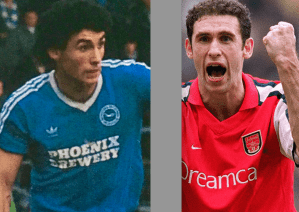
If international status gives a player the edge, it would be tempting to suggest Ben White at right-back but ahead of him I’d have to pick Martin Keown. More familiar to today’s football watchers as a TV pundit, those of us with a few more miles on the clock will remember him as a youngster spending two spells on loan with the Seagulls before he got his break with the Gunners, Aston Villa and Everton and won 43 caps for England.
Another TV and radio pundit who wore Albion’s stripes with aplomb having once been a £2m signing by Arsenal is Matthew Upson. He was Brighton’s player of the season in 2013-14.
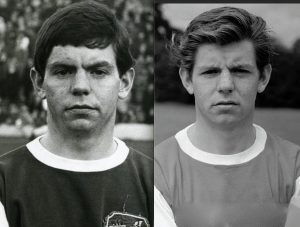
The late Willie Young, one of that rare breed who played for Arsenal and north London rivals Spurs, comes into contention alongside him but he didn’t cover himself in glory at Brighton so I am plumping for Colin Pates. Pates first made a name for himself as Chelsea’s youngest-ever captain before becoming a reliable back-up defender during George Graham’s reign at Arsenal.
Brighton manager Barry Lloyd had been a teammate of Graham’s at Chelsea in the mid-1960s and the connection served Albion well when he agreed for Pates to join the Seagulls on loan to become part of the side that reached the 1991 play-off final at Wembley. He later rejoined the club on a permanent basis before injury forced him to retire.
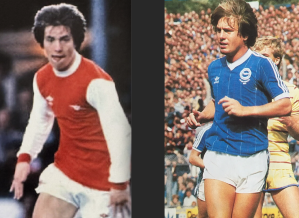
Mike Everitt might have merited inclusion at left-back but there’s really only one candidate for that position and that’s the seasoned Northern Irish international Sammy Nelson. He took over that spot at Arsenal from Bob McNab and made 339 league and cup appearances for the Gunners before losing his place to Kenny Sansom. He stayed in the top-flight, though, by joining Brighton under Mike Bailey. He had a spell as coach under Chris Cattlin before pursuing a career in the City.
Although he played most of his career in defence, for the purposes of this piece I’m selecting Steve Gatting in midfield – a position he was equally adept at filling. Another Bailey signing from Arsenal, Gatting remained at Brighton for 10 years and after his playing days were over returned to his first club as an academy and under-23s coach.
It is tempting to bend my own rules and select Liam Brady alongside him but, of course, while the mercurial Irishman was such a fine player for Arsenal, it was only from the dugout that Brighton enjoyed his influence.
Instead, I’ll plump for Steve Sidwell who, although never making a senior appearance for Arsenal, grew up in their academy and bookended his career playing for Brighton.
Barrett? Not even close!
It’s out wide and in the middle of attack that the choices overwhelm although, to be honest, it is difficult to make a case for the lesser talents of Chuba Akpom, Graham Barrett or Raphael Meade over two of Mikel Arteta’s current picks – Viktor Gyökeres and Leandro Trossard (although Paul Dickov was in my thoughts).
Centre forward could have been Frank Stapleton who did his old Arsenal teammate Brady a favour by turning out twice for the Seagulls in 1994, but I’d have to settle for Danny Welbeck to lead the line. Let’s give Stapleton the no.12 shirt.
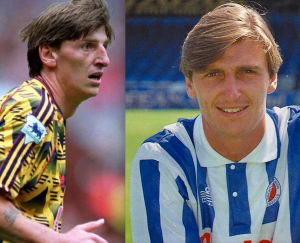
One old school indulgence would be out wide where, although Mark Flatts briefly impressed, and one day we might come to admire the talents of Amario Cozier-Duberry, perhaps there’s room for nippy winger Brian Tawse, who’d have had a field day supplying players of the quality of Gyökeres and Welbeck.
So, there you have it, the In Parallel Lines Arsenal-Brighton line-up is
Mat Ryan
Martin Keown Colin Pates Matt Upson Sammy Nelson
Steve Sidwell Steve Gatting
Brian Tawse Leandro Trossard Viktor Gyökeres
Danny Welbeck
Sub: Frank Stapleton
Thanks for reading. Enjoy the festive season and all the best for the new year. UTA!
REACHING the FA Cup quarter-finals for the fourth time in seven years is music to the ears of Brighton fans of a certain vintage.
Time was when an exit far earlier in the competition was the more likely expectation and falling victim to non-league giant killers (remember Walton & Hersham, Leatherhead, Kingstonian, Canvey Island, Sudbury Town) was nothing short of humiliating.
But as each season in the exalted company of the Premier League has gone by, the last eight stage of the FA Cup has been well within reach.
As one who goes back a good many years, it was a delightful surprise to reach the quarters twice in the mid-1980s (going all the way to the final in 1983, of course, if you hadn’t heard!).
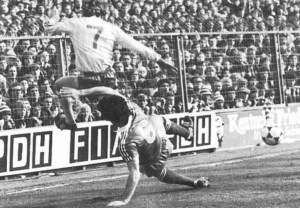
Gary Stevens tackles Mark Barham
It still pains me to say that I was one of the many locked out of the 28,800 Goldstone Crowd on 12 March 1983 when Albion played in their first ever FA Cup quarter-final.
Norwich City, under former West Ham FA Cup winner Ken Brown, were the opposition with future England goalkeeper Chris Woods in goal and Mark Barham, who joined Albion towards the end of his career, on the wing.
Jimmy Melia’s Seagulls had already beaten the Canaries 3-0 a few months earlier but the cup match proved a much tighter affair described as “bruising” by several football reporters who noted the physios were called on seven times to treat injuries – Albion’s Norwich-born Mike Yaxley twice attending to Steve Foster.
Andy Ritchie in what turned out to be his last home game for the Albion
Nonetheless, it was “marvellous entertainment for all its imperfections” reckoned the Sunday Telegraph’s Lionel Masters, who said: “Brighton full-back Chris Ramsey did more than most to inject a steely resolve. He conducted a feud with (Dave) Bennett, whom he flattened more times than a target a fairground rifle range.”
Alan Hoby of the Sunday Express wrote: “It was a tough, turbulent, physical affair with an orgy of high balls,” while the only goal of the game, from Albion’s Jimmy Case was “one of the few moments of quality in a frantic game,” according to Brian Scovell of the Daily Mail.
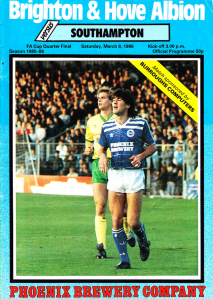
The less well-known quarter-final appearance of that decade came on 8 March 1986 when a Goldstone Ground crowd of 25,069 (at a time when the average often dipped below 10,000) saw Chris Cattlin’s Second Division Albion entertain First Division south coast rivals Southampton.
Albion were pleased finally to have got a home game in the competition having had to overcome away ties at Newcastle, Hull and Peterborough (who were eventually beaten 1-0 in a home replay five days before the Saints match).
Saints were managed by Chris Nicholl, Cattlin’s fellow former Burnley youth team colleague, and in the opposition line-up was Case, the talisman of Albion’s run to the final three years previously when he rifled in the winner at Anfield in the fifth round, scored that only goal v Norwich and buried a long-range rocket in the semi against Sheffield Wednesday at Highbury.
England’s Peter Shilton was in goal for Southampton and, most curiously, after a five-week absence from first team action, misfiring Mick Ferguson was selected by Cattlin to lead Albion’s attack. Not one of the 1983 Albion side started for the Seagulls.
Sadly, Brighton, in the upper reaches of the second tier at the time, didn’t do themselves justice. Saints won it 2-0 with first half goals from Steve Moran and Glenn Cockerill – and it turned out to be Ferguson’s last game for the Seagulls. Three weeks later he moved to Colchester United.
Fast forward to 2018 and another strange striker selection by a Brighton manager – this time Chris Hughton leaving top scorer Glenn Murray on the subs bench – proved costly in a quarter-final against Manchester United at Old Trafford.
New £14m signing Jurgen Locadia missed four good chances among 12 second-half Brighton efforts on goal to United’s one and Pascal Gross went close on three occasions. But BBC Sport’s Mike Whalley suggested: “He (Hughton) might have been left wondering if resting Murray caused Brighton to miss their chance of a first FA Cup semi-final since 1983.”
United topped and tailed the tie with Romelu Lukaku opening the scoring early on and Nemanja Matic sealing victory late on when he nodded in Ashley Young’s free-kick.
A year later, it looked like Albion wouldn’t be going beyond the last eight once again when Championship side Millwall led the Seagulls 2-0 at The New Den with only two minutes to go. Cue Locadia, on as a sub, to make amends for the previous season’s misses by making space for himself in the box and firing home an unstoppable shot to pull a goal back for the visitors.
Then, with 95 minutes on the clock, Solly March from way outside the box floated in a free-kick that Lions’ ‘keeper David Martin inexplicably let slip through his grasp to bring the Albion level.
Goalkeeper Mat Ryan a penalty shoot-out hero at Millwallin 2019
The momentum was in Brighton’s favour in extra time but it took a penalty shoot-out to decide the tie and when Murray missed Millwall might have thought it had turned back their way. But after three successes each, Mat Ryan kept out Mahlon Romeo’s effort, and Lions centre back Jake Cooper needed to bury his spot kick to keep the tie alive for the home side. He blazed his shot over the bar and Albion were through.
There was to be no such drama in 2023 when 18-year-old Evan Ferguson did a whole lot better than his 1986 namesake and stole the headlines by scoring twice against League Two Grimsby, who were playing in their first FA Cup quarter-final for 84 years.
The Mariners had knocked out five teams from divisions above them to reach that stage but they were well and truly put to the sword by Roberto De Zerbi’s impressive Seagulls who ran out 5-0 winners at the Amex.
As well as Ferguson’s brace, Deniz Undav, March and Karou Mitoma were also on the scoresheet and it could have been more; Mitoma missing a sitter and Adam Webster’s effort hitting the bar.
Perhaps by way of highlighting how quickly fortunes can change for young players, it’s interesting to recall that of Ferguson BBC pundit Danny Murphy said at the time: “This kid is a superstar. Honestly.
“He’s got great feet, technical ability. He’s calm, powerful and plays the role really well. You don’t see him out wide, he stays central and is always a target.
“I can’t see a weakness in his game at the moment. For 18 years old, the maturity he shows in his game is phenomenal.”
Murray, having moved into the punditry game himself by then, added: “It was the manner in which he scored those goals, he was so composed. As a young lad just coming into the first team, you can snatch at those chances but he just relaxes in that moment – and that is something that you can’t teach.
“He’s got a good stature and I think there’s big things in the future for him.”
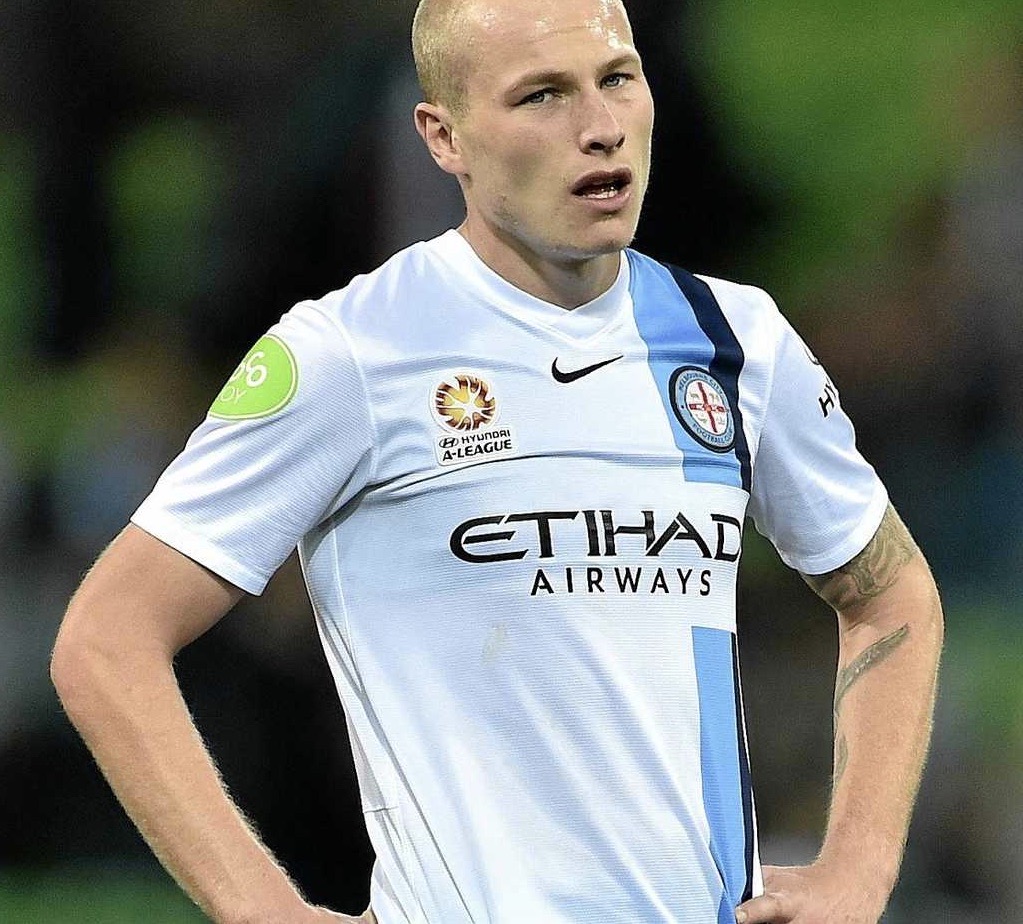
AARON MOOY spent a year as a Manchester City player without playing a game for the club and left Brighton only seven months into a three-and-a-half-year contract.
Such is the at-times puzzling nature of moves in the modern game where multiple club ownership is a factor and players have release clauses inserted into contracts before they’ve set foot onto the field for their new club.
Having starred for City’s sister club Melbourne City in his native Australia, Mooy switched to the rather better-known City Football Group operation – Manchester City FC – in June 2016, signing a three-year deal with the English Premier League side.
His arrival coincided with Pep Guardiola taking over the reins at the Etihad and was one of the first moves between the various clubs bought by the Abu Dhabi-owned City Football Group.
Brian Marwood, managing director of City Football Services, said at the time: “Aaron is an extremely talented player who possesses the attributes we hope to foster and encourage within the City Football Group.
“With the unique model CFG provides, Aaron’s move to Manchester allows us to further expose him to a high standard of opportunities to ensure his professional growth.”
However, just six days later, Mooy was sent on loan to Championship side Huddersfield Town, where he ended up spending three seasons.
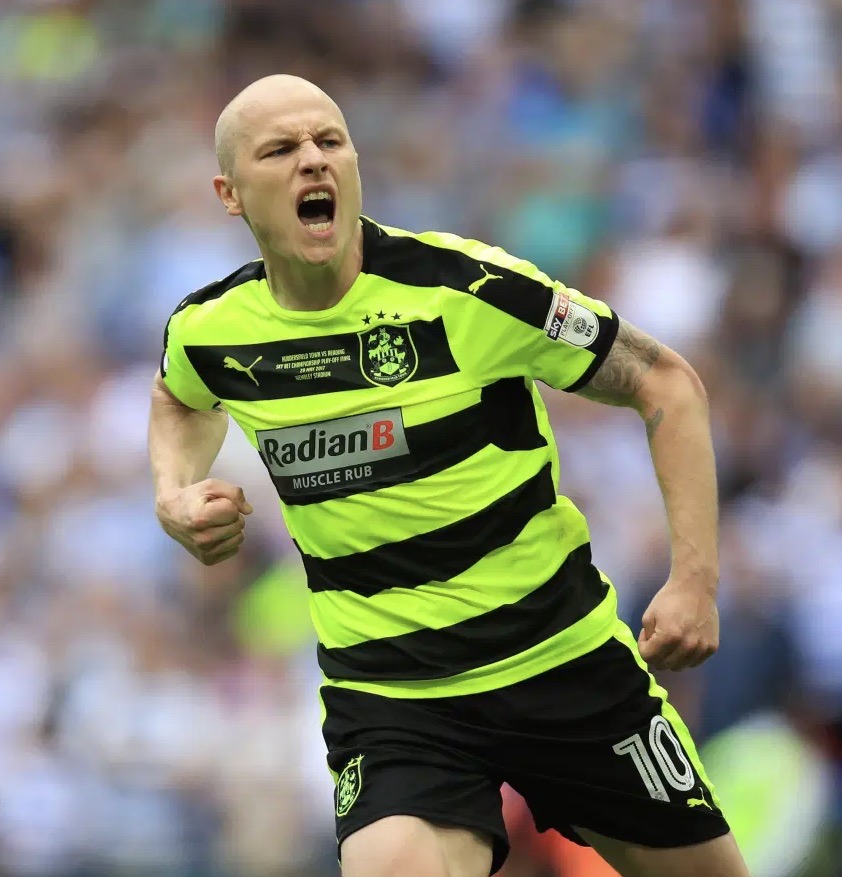
He was their player of the year as he helped them to win promotion from the Championship via the play-offs in 2017, he signed permanently for Town and then featured in their two seasons back in the Premier League.
But when they were relegated from the elite in 2019, he didn’t fancy dropping back down and seized the opportunity provided by Brighton to remain in the top division. Town neatly got him to pen a new three-year deal before allowing him to join the Seagulls on loan.
Huddersfield head coach Jan Siewert said: “Aaron was adamant that he wanted to test himself again in the Premier League when Brighton’s interest came in, and we didn’t want an issue where we had a disillusioned player on the pitch in the final year of his contract.”
However, after he’d made 15 appearances (plus three off the bench) in the first half of Graham Potter’s first season in charge, the 29-year-old was signed on a permanent basis on 24 January 2020 on “undisclosed terms”.
“He’s been an important player for us and will have a key part to play going forward,” said Potter. “We knew what Aaron would bring, and he’s proved to be an excellent addition to our squad and a great professional both on and off the pitch.”
Mooy’s deal with Brighton was not due to expire until June 2023 but, sensing one day he might have the opportunity to make big money in China, his contract at both Huddersfield and Brighton contained a clause allowing him to be released if a Chinese club offered to pay £4m – which, in the summer of 2020, Shanghai Port FC were willing to do.
Maybe the player also sensed the arrival at Brighton of Adam Lallana, together with the emergence of Alexis Mac Allister, might mean reduced playing time in the Premiership. However, perhaps the lure of being paid £60,000 a week to play the game he’s loved since a boy back home watching David Beckham on the TV might just have swayed it.
The shaven-headed Mooy had often stood out when playing for Huddersfield against Brighton and their fans were full of admiration for him. David Wood on Twitter said: “It was an absolute privilege to watch Aaron Mooy wear the blue and white of Huddersfield Town. A true class act.” Graeme Rayner added: “Without doubt the best player I’ve seen in a Town shirt. He was immense for us. He gave us some great memories, and was a model pro.”
Seagulls supporters took to him quickly too. ‘Farehamseagull’ on North Stand Chat declared: “Mooy is a wonderful player for us. We’ve been crying out for a player like him for years. His ability on the ball and appreciation of space is second to none. You can just always rely on him to make the right decision with the ball; that is a talent only truly gifted players who can see the game two, three moves ahead have.”
Mooy certainly shone in games against Spurs and Arsenal but possibly his best performance in a Brighton shirt came in the 28 December 2019 home game against Bournemouth when his 79th minute goal completed a 2-0 win for the Seagulls.
Mooy produced a headline–grabbing performance against Bournemouth
Newspaper headlines hailed the Australian’s contribution to the win and Sky Sports commentator Alan Smith capped the lot in analysing Mooy’s goal. “What a way to settle it,” he said. “Shades of Dennis Bergkamp here, the way he took it on his chest and chipped it in.
“A quite brilliant goal from a really talented player. Great awareness and look at that finish. Bergkamp would’ve been proud.”
Mooy was born in Sydney on 15 September 1990. His German father walked out when he was a toddler and his Dutch mother, Sam, brought him up using her maiden surname. Mooy has said his earliest football memories were of playing for Carlingford Redbacks who were coached by his stepdad, Alan Todd.
His early life, as chronicled by Hale Hendrix on lifeblogger.com, was pretty much football obsessed and he went to the same high school, Westfield Sports High, as Albion goalkeeper Mat Ryan (who was in the year below). Former Leeds and Liverpool player Harry Kewell also went to Westfield.
Mooy played for Sydney-based Hajduk Wanderers and the former National Soccer League team Northern Spirit FC, as well as enhancing his potential at the New South Wales Institute of Sport, based at Sydney Olympic Park, an organisation which nurtures the country’s high performing sports people.
But he was spotted playing for his school as a 14-year-old by Bolton Wanderers’ former head of youth Chris Sulley and he was invited to the UK with his family for an assessment.
“It was a big decision to move to England but I knew it was a great opportunity,” Mooy told the Bolton News.
A serious knee injury threatened to halt his progress but Wanderers’ youth team coaches were convinced they had an outstanding prospect who was eager to earn a professional contract.
In his third season as a scholar, he managed to get some minutes in Alan Cork’s reserve team, and he said: “It’s a big year for me and I have got to show the coaches what I have got, so when I got injured, I knew I had to get back as quickly as possible.
“My rehabilitation involved lots of weight sessions and time on the bike, but I am feeling much sharper now.”
Unfortunately for Mooy, the club’s then-manager, Gary Megson, thought it unlikely he would develop into first-team material – a decision which baffled former Wanderers youth team coach, Peter Farrell.
“I couldn’t believe they released him,” Farrell told Bolton News reporter Marc Iles. “I always thought he was going to make it as a footballer but, as with anything, it’s all about opportunity.
“If Big Sam would have been in charge, or Phil Brown would have taken over I think he would still be there now. They valued that type of player and built their team around him.
“For me, Aaron had it all – he could go with his left foot, his right foot, he was physically strong on the ball and I don’t think he has changed at all from what I saw of him playing for Huddersfield.”
He added: “People thought he was maybe a bit lazy. You’ll never see him tackle. You need players around him to do that. But he reminds me a bit of Zidane – he’s even got the bald head.
“He isn’t as good a player, of course, but he has that grace about the way he plays. He’s a lovely balanced player but he wasn’t Gary Megson’s type of player, and that was the end of it.”
Six months after he left Bolton, Mooy surprisingly turned up in the unlikely surroundings of Paisley, Scotland, for a two-year stint at Scottish Premier League St Mirren (where former Albion midfielder Steven Thomson was at the other end of his career).
“It was a big decision to leave Bolton,” he told The Daily Record at the time. “But I wanted to try to get some first-team action and I’m doing that so I’m happy.
“Some people were a little surprised, but it didn’t bother me. I just thought I wasn’t really going to get much of a chance at Bolton. At St Mirren, I knew I was going to get some decent game time.”
Mooy later told The Scottish Sun: “St Mirren was the start for me. It was the first time I had really experienced proper football. I always remember how much I learned there. I was in the reserves at Bolton, but St Mirren was the first club I was at where winning and collecting points mattered hugely and I had to buy into that mentality.”
Mooy featured in 18 matches for Danny Lennon’s side in the 2010-11 season but he suffered a stress fracture in his back during pre-season and he managed only 12 appearances in 2011-12 and was released on a free transfer at the end of it.
At that point he decided to return to Australia and he joined Western Sydney Wanderers on a two-year deal. Mooy’s story was told excellently by Paul Doyle in The Guardian in a November 2017 article. He wrote:“Although he did well at Western Sydney, even there he was not a guaranteed starter, having to compete with two other players for a deep midfield spot as the team’s playmaking rights were entrusted to Shinji Ono, the former Japan international and 2002 Asian player of the year who would end his career in Australia.”
At the end of his contract, Mooy moved on to Melbourne City where he had an impressive 2015-16 campaign in which he was named Australian Players’ Player of the Year after scoring 17 goals from midfield and setting an A-League assist record.
Although Man City sent him to Huddersfield on loan, news of his strong performances hadn’t escaped Guardiola’s attention, as he noted in media interviews before Town took on City in the FA Cup in January 2017. “Aaron Mooy is playing amazing this season and we are glad at that,” Guardiola said. “It is not easy coming from Australia and going to the Championship and play as good as he is.
“We are going to consider what will happen at the end of the season but it’s good.”
Mooy responded to Guardiola’s praise, telling Huddersfield’s official website: “It’s obviously excellent and I’m very humbled and all that sort of stuff.
“It’s great to know he’s watching me and has his eye on how I’m doing, that’s great.
“They come to watch the games and stay in contact and hopefully they like what they see,” he said.
The Manchester Evening News even ran a story about Mooy headlined ‘The midfielder who could save Pep Guardiola and Man City a fortune this summer’.
However, at the end of June 2017, with Huddersfield preparing for their return to the Premier League, Mooy made the switch from City permanent for a club record fee of £8m.
Boss David Wagner told BBC Radio Leeds: “He was one of our key targets because he was the heart of our team last season.
“When we had the chance to get him permanently, we all agreed that we needed to get it done as quickly as we could.”
Chairman Dean Hoyle added: “Aaron made it very clear to us last season that he wanted to play in the Premier League this season and, if we were there, he would want to do that with us.
“I think we had a duty to try to make that happen for him because he made a huge contribution last season. He was a true terrier for us.”
Mooy drew praise for his role in Wagner’s gegenpressing style of play – bringing an energy and creative use of the ball in a slightly deep-lying midfield role – and Doyle observed in his Guardian article: “Strong on the ball, genuinely two-footed and blessed with vision and precision, he is the conduit of most Terriers attacks and never shirks defensive duties in a team that made more tackles than any other Premier League side during the first 12 matches of the season.”
Through his parents, Mooy could have played internationally for Germany or the Netherlands but he opted to play for the country where he was born and has played at several age group levels for the Australian national side. He made his full debut in 2012, scoring in a 9-0 win over Guam, and has since won more than 40 caps.
After Mooy played well for Australia at the 2018 World Cup, there was speculation City might activate a £20m buy-back clause but this was an unfounded rumour and reporter Stuart Brennan said in the Manchester Evening News: “Mooy has been playing well but has not done enough to suggest he could handle the rarefied atmosphere of Pep Guardiola’s midfield.”
City’s loss was Huddersfield and Brighton’s gain, but amongst the reasons suggested for his sudden departure after only a season with the Seagulls was Shanghai taking advantage of an overseas players loophole which allows Australian players to be counted as Asian.
Mooy certainly hit the ground running in China, scoring within 25 minutes of making his debut on his 30th birthday. He came off the bench in Shanghai’s 2-1 win against Wuhan Zall, scoring the winner after fellow Premier League export Marko Arnautovic had scored Shanghai’s first.
Mooy scored with a delightful one-two down the flank and easy chip over the onrushing keeper.
“I have only just arrived so my physical condition is not what it could be,” Mooy told Chinese television after the game.
“The coach asked me before kick-off if I could play some part in the game and of course I was happy to do so.”
Mooy’s career has certainly been of interest to a number of football observers around the world and Marco Jackson chipped in on onsideview.com, discussing the rationale behind his move to China.
Mooy’s recent playing time has been non-existent because the Chinese Super League is having a three-and-a-half month break to enable the national side to prepare for World Cup qualifiers. The West Australian reported on 4 October 2021 how Mooy had returned to Scotland to be with his family while keeping fit working on a programme devised by Socceroos strength and conditioning coach Andrew Clark.
AN international goalkeeper whose prowess at saving penalties took his country through to the World Cup semi-finals barely got a look-in between the sticks for Brighton.
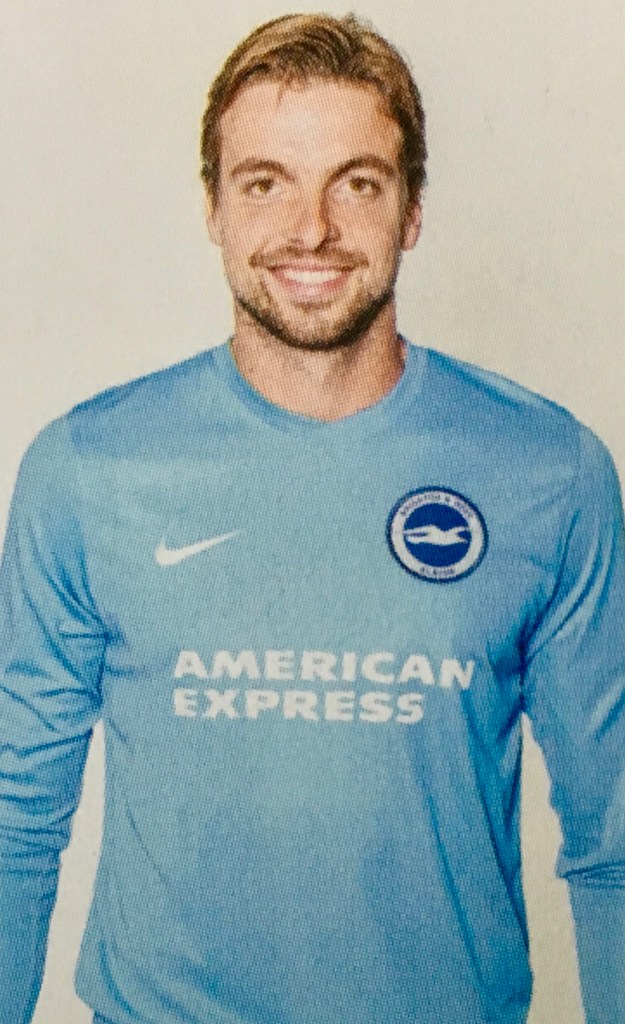
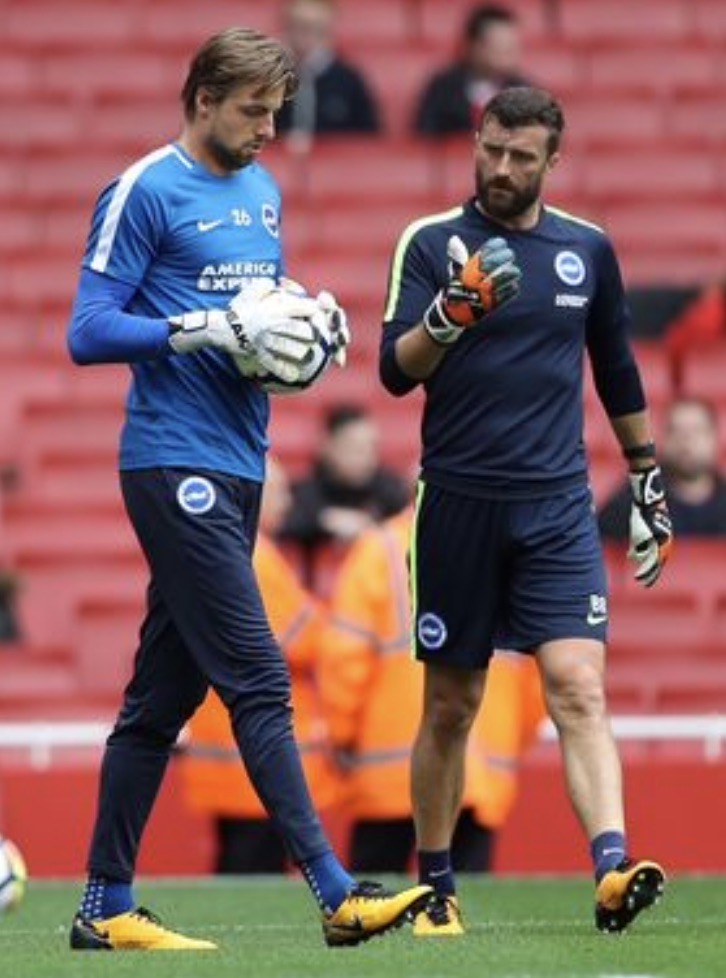
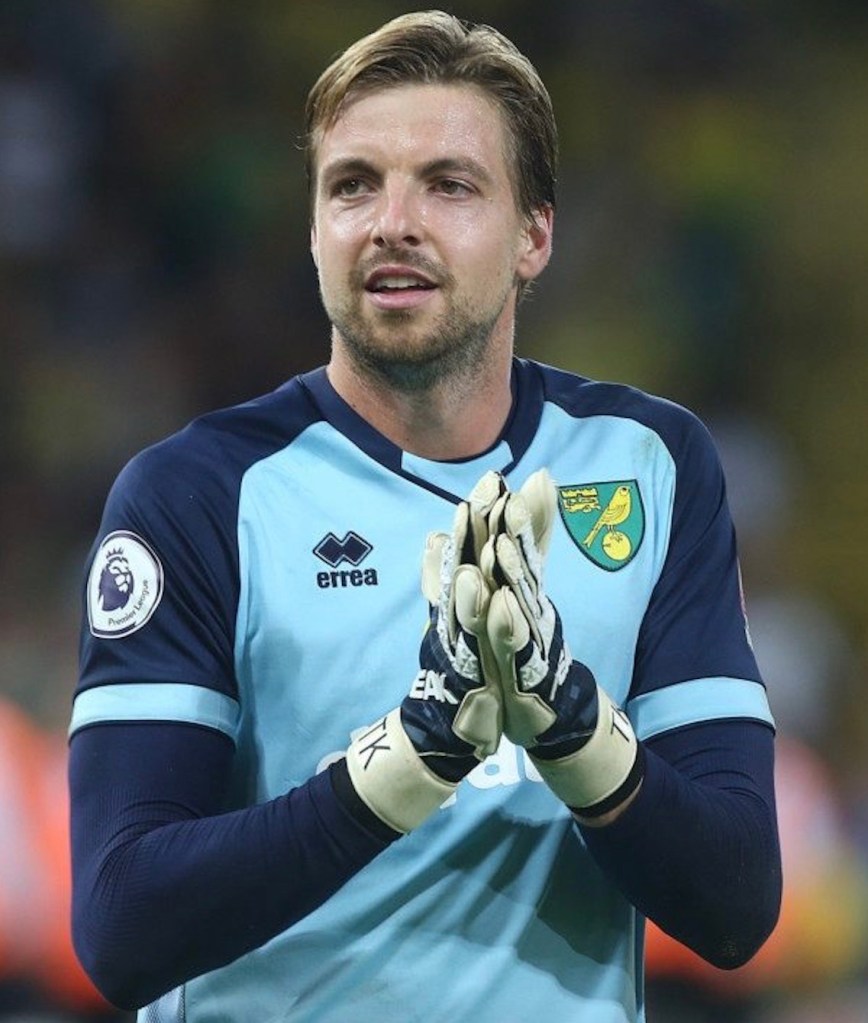
Experienced Dutchman Tim Krul, who played 184 games for Newcastle United over 12 years, kept goal for the Seagulls on only five occasions during the 2017-18 season.
The form of Mat Ryan, himself an Australian international, meant Krul’s involvement was restricted to cup matches and a watching brief from the substitute’s bench.
Krul initially signed on a season-long loan deal on deadline day in August 2017 but the move was made permanent the day after he made his Albion first team debut in a 1-0 League Cup defeat at Bournemouth.
Manager Chris Hughton said: “I know Tim from my time at Newcastle and he is an excellent professional that has a vast amount of experience at both club and international level.
“He’s played an extensive amount of games in the Premier League, as well as playing in the Europa League and his experience will also help benefit the other keepers in the squad.”
Having experienced some in and out spells during his time on Tyneside, Krul understood the situation when interviewed by The Argus in November 2017.
“I’m working hard every day to push Mat Ryan. He’s done great so far and we’re picking up points, that’s what it’s all about.
“If the gaffer needs us or Mat got injured, I need to be ready and literally it can happen any second.”
Krul admitted: “It’s a different position for myself, because I’m used to playing week in, week out.”
The move to Albion had been the chance to reignite his career after a long spell on the sidelines having suffered a cruciate knee ligament injury on international duty in 2015.
Krul is powerless to stop Romelu Lukaku’s winning goal for Manchester United in Brighton’s FA Cup fifth round tie at Old Trafford
Before he made the move, he consulted Steve Harper, who’d been on loan at Brighton during the Gus Poyet era. Harper told the matchday programme: “I told him it woud be a great move for him and it will also be a great signing for the club. He was outstanding in the season Newcastle finished fifth in the Premier League and he’s an international ‘keeper for the Netherlands who has played at the World Cup.”
After he’d played in Albion’s FA Cup fifth round defeat to Manchester United at Old Trafford, Krul told The Argus: “Obviously when I came, I was hoping to get a bit more (game time) maybe, but at the time I walked through the door Maty’s performances went up a level, so that is testament to him.
“The level we are training at with Ben Roberts every day is really high. He has been showing that in the games. I’ve been around long enough to see when a goalkeeper is playing well you take that. I’m 29, I’m back fit, I’m feeling better than I’ve ever done so I’m ready to play. I just have to be patient again.
“I had to be patient at the start of my career and you have to do that again now. But my chance will come. There’s a lot of years left.”
Krul finally got regular playing time again when he moved to Norwich City
Unfortunately, that didn’t happen with the Albion but Krul certainly resurrected his career with Norwich City and, after signing an initial two-and-a-half-year deal in the summer of 2018, earned a further three-and-a-half-year contract in December 2020.
He then contracted Covid-19, announcing it on Twitter, where he has a huge following of more than 349,000. “I feel under the weather and fatigued,” he wrote. “It’s an important reminder to stay safe, this virus is not a hoax.”
Thankfully, by the end of January, he had recovered and returned to the side to clock up 100 appearances for the Canaries.
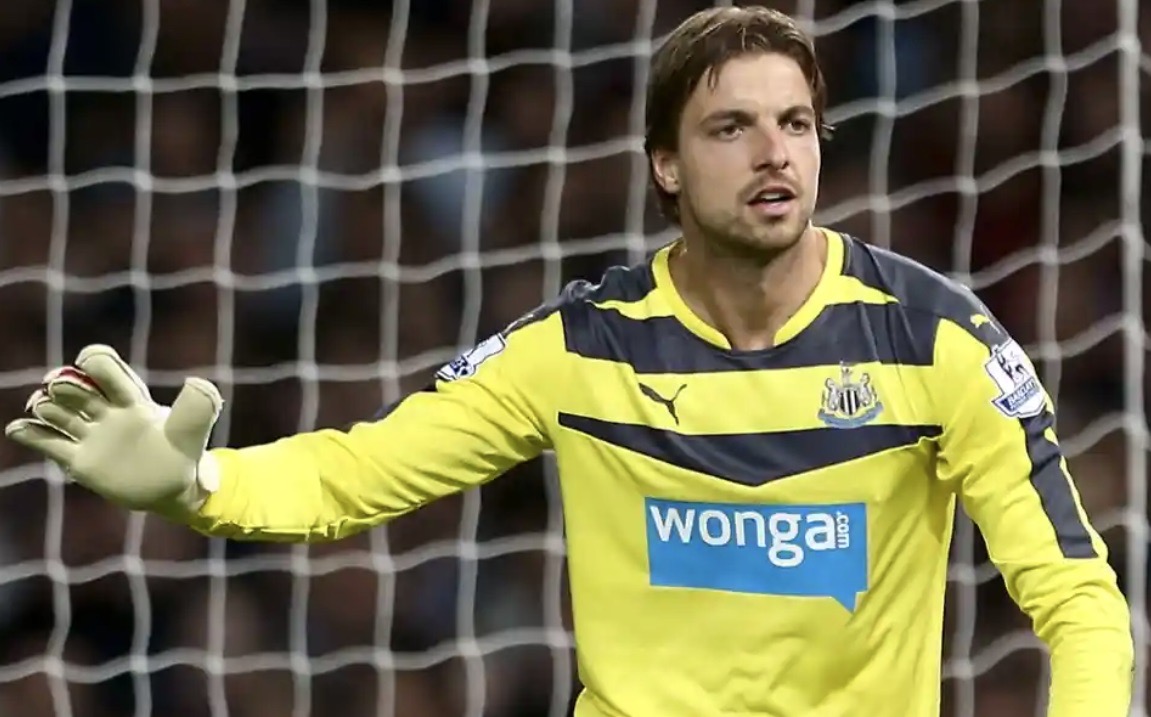
Born in The Hague, Holland, on 3 April 1988, from a young age Krul played for his hometown club RAS and was with ADO Den Haag between the ages of 12 and 17. Graeme Souness was still boss when Krul joined Newcastle in the summer of 2005. Shay Given and Steve Harper were the established ‘keepers in those days.
Shortly after making his debut in a UEFA Cup match in November 2006, he suffered injuries which ruled him out of action for six months. After returning to playing in the spring of 2007, he earned a new four-year deal with Newcastle.
An eventful loan spell in Scotland followed as Krul sought to gain league experience at Falkirk. He conceded 11 goals in two games early on (four to Celtic, seven to Rangers), he was sent off in a game on 2 January 2008, and then dislocated a shoulder in a cup match against Aberdeen, bringing the loan to a premature end.
When Given left St James’ Park for Manchester City, Krul was no.2 behind Harper in Newcastle’s 2009-10 season in the Championship. He deputised if Harper was injured and was given starts in cup matches. By the season’s end, when the Toon had won promotion back to the Premier League, Krul was awarded a new four-year deal and made his debut at that level when replacing the injured Harper in a 1-0 win away at Everton in September 2010.
He ended that campaign having played 25 first team matches, and the following season, established himself as the no.1, with Rob Elliot as his deputy. Out-in-the-cold Harper was allowed to spend a month on loan with the Albion.
Under Alan Pardew, Krul was the preferred first choice ‘keeper, and he signed a five-year contract with the Magpies in 2012. Several different injuries in 2012-13 restricted him to 30 appearances.
Another six-week injury lay-off over Christmas 2014 interrupted a period when there was yet another managerial change on Tyneside and the 2015-16 season under Steve McLaren was only a couple of months old before Krul was ruled out for the remainder of the season when he ruptured an anterior cruciate ligament in his right knee playing in the Netherlands’ 2-1 European Qualifiers win in Kazakhstan.
McLaren was sacked in March 2016 and his replacement Rafa Benitez couldn’t prevent them from being relegated. Krul signed a one-year contract extension in the summer of 2016 but, with Elliot and Karl Darlow ahead of him, he was sent on loan to Ajax as Newcastle successfully bounced back to the elite, pipping Albion to the Championship title.
Meanwhile, things didn’t work out as planned for Krul. He only got a handful of games for the Ajax reserve side and he spent the second half of the season at AZ Alkmaar instead.
Krul has played for his country at every age level and made his full international debut in a friendly against Brazil in 2011. Maarten Stekelenburg and Jasper Cillessen have normally been ahead of him but he has won 11 caps, including three in 2020 after a five-year absence from the side. However, it was what happened at the 2014 World Cup in Brazil that most fans will remember.
Head coach Louis van Gaal took off Cillessen in the final seconds of extra time with the Dutch still drawing 0-0 with Costa Rica and sent Krul on because of his reputation for saving penalties. Sure enough, he made two saves in the subsequent shoot-out and Holland went through to the semi-finals (where they went out 4-2 on penalties to Argentina).
The story behind the decision emerged in an article by Michael Bailey for The Athletic on 5 March 2020. The Dutch goalkeeping coach at the tournament, Frans Hoek, explained how Krul had responded best of the three ‘keepers to special training he put them through.
“When we came together with the national team, the three goalkeepers were more or less at the same level in stopping penalties. And that level was low,” Hoek told The Athletic. “We decided to do things in a different way and when you do that you have to believe in it, practice it and then show it. Basically, Tim responded best to that.
“He had some advantages. He’s very big, he has an enormous reach. He is impressive when you’re standing the other side of him and maybe because he’s from Den Haag area, he can be a little bit provocative. Michel Vorm is too nice a guy, so is Cillessen. But Tim can get away with it. It’s just something he has.”
A look back through the archives reveals Krul was displaying his prowess saving penalties as far back as his youth playing days. In an FA Youth Cup match for Newcastle against Brighton, he made saves from Tommy Fraser and Scott Chamberlain as Toon edged it 3-2 on penalties.
Albion goalkeeper coach Roberts was full of praise when asked about the big Dutch ‘keeper. “He has an aura about him and the self-belief to think he will save everything,” said Roberts. “I’m delighted for him as lots wrote him off when he had his bad knee injury. He’s since shown how much his hard work and dedication has paid off.”
After putting pen to paper on his new Norwich contract, Krul told the club website: “Proud is the big word. I’m excited to commit my future to Norwich and have had an amazing two and a half years already at this club, so I’m excited to add another three and a half years to that.
“The plan the club has got for the next few years is exciting and there’s some young, exciting talent coming through the ranks as well. From top to bottom, it’s a club I want to be at; one that’s run really well from Michael and Delia to the kitman. It’s an exciting time for the club, for sure.
“As a player, you want to be loved and I’ve got a great relationship with the fans. The club giving me this three-and-a-half-year contract shows the belief they’ve still got in me.”
Manager Daniel Farke added: “It’s fantastic news for us to have a player of Tim’s quality and personality. He’s by far the best goalkeeper in this league and was impressive in the Premier League.
“He’s still in a really good age for a goalkeeper and can play many more years. It’s good news he was willing to sign a long-term contract because there is lots of interest in a player of his quality and experience.”
Krul was a key part of Norwich’s Championship-winning sides of 2018-19 (when he was ever-present) and 2020-21. But in August 2023 he returned to the Premier League when he was signed by newly-promoted Luton Town.
Town boss Rob Edwards said: “Tim’s a leader and a top goalkeeper who is still very and ambitious and very hungry. He wants to play.
“It’s great to have someone of his level in the group with that ambition and to be that driven, and it’s going to add great competition to the goalkeeper department, which is what we’ve wanted.”
Pictures from online sources and matchday programmes.
BRIGHTON and Newcastle United clearly have a similar eye for goalkeepers with a string of custodians having played for both clubs.
A few years before I started watching, Dave Hollins, older brother of ex-Chelsea midfielder John, moved to Tyneside in 1960 after three years with the Albion, and played twice as many games for Newcastle in the early part of that decade than he had for Brighton.
Back in the first Alan Mullery era, Eric Steele, who went through the Newcastle ranks without making the first team, arrived at Brighton to replace the injured Peter Grummitt in 1977 and was in the side that won promotion to the elite via a 3-1 win at St James’ Park in 1979.
Dave Beasant, who Newcastle bought from Wimbledon for £850,000 in 1988 – although he only played 20 games for the Magpies – was between the sticks for the Albion for 16 games in 2003.
More recently, Dutchman Tim Krul – who’d been at Newcastle a decade – spent a couple of seasons as back-up to Mat Ryan and would probably be disappointed he didn’t get more game time.
My post on this occasion, though, is about Steve Harper, United’s longest-ever serving player having been there 20 years. He later went back as one of the coaches working with Steve Bruce, as well as being goalkeeping coach to the Northern Ireland international side.
Harper is a qualified UEFA A coach and UEFA A goalkeeping coach, and holds a Masters degree in Sport Directorship.
Back in 2011, Harper was happy to lend his experience to the second tier Seagulls during Gus Poyet’s tenure as manager, a decision applauded by Alan Pardew, Toon boss at the time.
“He just wanted to play,” Pardew told the Chronicle. “Not all the top players in the country would have gone on loan – you’re vulnerable.
“You’re going down a division, but he was prepared to do that, and fair play to him.”
For his part, Harper told BBC Sport: “Everybody knows I haven’t played enough football until the last two-and-a-half years.
“I hadn’t played a competitive game for about six months so it was nice to blow the cobwebs out.”
In his first Seagulls match, unfortunately Albion lost against West Ham to a single goal from Harper’s former teammate Kevin Nolan, and he said: “It was disappointing to lose against West Ham with the possession we had.
“Now I’m here, it’s time to get stuck in. We want Brighton to consolidate and finish as high as we can. People tell me it’s a lovely city. I’m looking forward to seeing more of it.”
He featured in five games for the Seagulls, keeping two clean sheets. While he conceded five goals, three came away to Southampton when the Seagulls were unjustly punished by referee Peter Walton.
Harper told journalist Nick Szczepanik: “I would have stayed longer given the opportunity. They made me feel very welcome.”
He even managed to give two of his new teammates a surprise when he started speaking to them in Spanish. Playing behind Spanish speakers Inigo Calderon and Gonzalo Jara Reyes, he explained to Andy Naylor, then of The Argus: “After five years of Bobby Robson and his multi-lingual team talks my Spanish is okay.
“Calde got quite a shock with how much Spanish I know, but I had Colocinni and Enrique in the team with me at Newcastle.”
After his brief spell with the Albion, Harper returned to Newcastle and played nine more games for them the following season before moving on to Hull City (at the time managed by current Toon boss Bruce), where he played alongside Liam Rosenior.
Born in Seaham on 14 March 1975, Harper grew up in the County Durham mining village of Easington and went to its local comprehensive school. Originally a striker at local Sunday league level, he only started playing in goal from the age of 17 and he turned out for Newcastle’s youth team while he was still at college doing A levels.
In fact he was offered a place at John Moores University in Liverpool to study for a Sports Science degree but he deferred it when Newcastle offered him a one-year contract. He signed in 1993 as a back-up for first choice Pavel Srnicek, later Shaka Hislop and subsequently Shay Given.
Much of his time at Newcastle was as a more than capable deputy to whoever was first choice although in United’s 2009-10 season in the Championship, under Chris Hughton, he was the main man and played 45 matches.
Harper had nothing but praise for Hughton, telling chroniclelive.co.uk: “He came in at an incredibly difficult, turbulent time after relegation.
“Chris was the man at the centre of a perfect storm who steered us through some very choppy waters.
“He did a wonderful job and I don’t think he got enough credit. It was no surprise to me to see him go on to do an excellent job at Birmingham City and then at Brighton.”
In total, Harper played 199 games for Newcastle, featuring under nine different managers – Kevin Keegan and Bobby Robson being his favourites.
Periodically over the years, he went out on loan to gain first-team action, appearing between the sticks for Bradford City, Gateshead, Stockport County, Hartlepool and Huddersfield. The Brighton move was his sixth spell out on loan.
Harper’s long service for Newcastle was rewarded with a testimonial against AC Milan in 2013 before he left the club to join Hull, where he spent two seasons.
Six months after his departure from Hull, he was taken on by then Premier League Sunderland as cover for Jordan Pickford and Vito Mannone, but he didn’t make a first-team appearance and was released at the end of the season.
“Apart from enjoying living in the city, I remained relatively injury-free and played the most games of my career. So for a full season’s work to come down to one day in the Millennium Stadium with a full house in attendance was a very special memory.”
No-one knew at the time, of course, but it was also Roberts’ last game in goal for the Albion because a back injury forced him to retire from the game prematurely in 2005, aged just 29.
In an extended interview with Dominic Shaw for gazettelive.co.uk in December 2017, Roberts looked back on his time at ‘Boro and a playing career that was beset with injury.
Born in Bishop Auckland on 22 June 1975, the young Roberts was spotted playing for South Durham Boys by Dennis Cooper, father of ‘Boro legend Colin Cooper, and the club took up his recommendation. Roberts would set off by bus from his home in Crook at 6am each day to get to training on time in Middlesbrough, nearly 30 miles away.
At one point, it looked like he wouldn’t get the chance to continue his career because he was deemed too short, but he fed his face throughout the summer, shot up the required inches, and was rewarded with a two-year scholarship.
In fact, he was still a YTS scholar when he got his first involvement with the first team, being named on the bench for two of Boro’s first three games in the inaugural season of the Premier League (1992-93).
However, it was another two seasons before he actually got into first-team action, making his debut in an Anglo-Italian Cup game against Ancona, with Bryan Robson by then in the managerial hotseat.
In the 1994-95 season, Roberts got league experience under his belt during loan spells with Hartlepool and Wycombe Wanderers and the following season he went on loan to Bradford City before returning to Middlesbrough to help out a goalkeeping crisis.
Injury to Gary Walsh presented Roberts with his chance, and, aged 21, he made his ‘Boro league debut on 18 January 1997 in a 4-2 win at home to Sheffield Wednesday.
Although Mark Schwarzer arrived at the club, he was also hit by injury – and was cup-tied in the FA Cup – leaving Roberts, 21 at the time, as the stand-in No.1.
On 1 April that year, he also earned his one and only international cap, coming on as a sub for Chris Day as England under 21s drew 0-0 with Switzerland at Swindon’s County Ground. Also in the team for that friendly were Rio Ferdinand, Jamie Carragher, Darren Huckerby and Lee Bowyer.
Two of Roberts’ 17 appearances for ‘Boro that season were in cup finals: in the replay of the League Cup Final against Leicester City, and then the FA Cup Final against Chelsea at Wembley.
Roberts started the following season as first choice because Schwarzer was still out injured, but his final appearance of the season – at home to Birmingham in the September – was his final appearance for the club.
Several treatments for a back injury were unsuccessful and at one stage, still only 24, he feared he’d be forced to retire, until he underwent surgery in London. As well as operating on problematic discs, the surgeon found a blood clot in his back.
In between back operations, Roberts went out on loan again and in 1999 played 14 games for Division Two side Millwall, including another Wembley appearance, this time against Wigan in the Auto Windscreens Shields Trophy. The Latics won 1-0 with the winning goal scored by future Albion captain, Paul Rogers.
The following season, Roberts had another loan spell, this time at Lennie Lawrence’s Luton Town and in the summer of 2000 he finally left ‘Boro and joined Charlton Athletic. However, he played only once for the Addicks, coming on as a sub in the final game of the 2002-03 season after regular no.1 Dean Kiely had been sent off.
Prior to that, Roberts had been out on loan again, initially at Reading and then returning to Luton. His first association with Brighton also came in that season, as Steve Coppell’s Seagulls were battling hard to avoid relegation from the second tier.
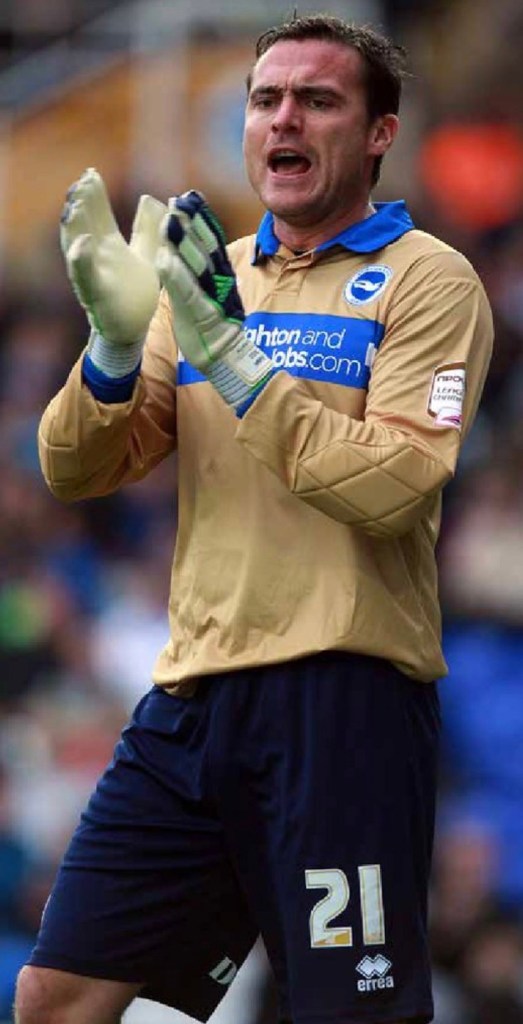
He played three times and I remember one of those games was one I went to away at Bradford City (a 1-0 win) on 15 February 2003, when he pulled off some terrific stops on a rock-hard pitch. The most memorable came early in the game and Roberts rated it as his best as a Brighton player.
“It was only after five minutes and Ashley Ward had a clear header inside the six yard box, but I got to it. I shouldn’t have, but I did,” he recalled in a matchday programme interview. “It (the game) shouldn’t have been played because the goalmouth was like a skating rink and that kind of set the tone.”
Unluckily for Roberts, he then picked up a dose of ‘flu and veteran Dave Beasant took over and kept the shirt until the end of the season.
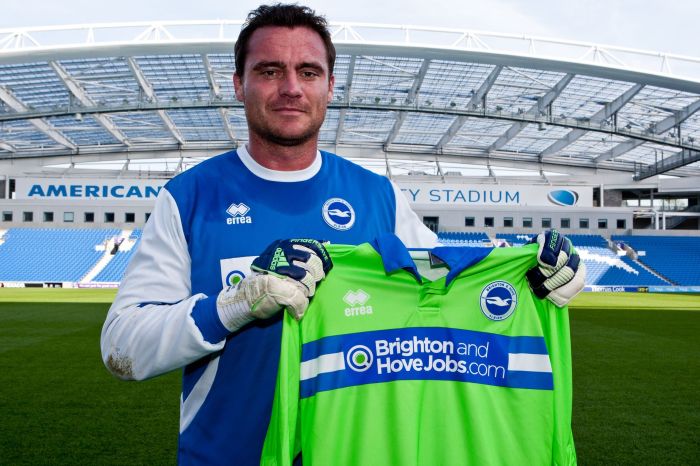
However, Coppell saw enough to persuade him to sign Roberts permanently and, as referred to earlier, the 2003-04 season was to be the one time when he finally made his mark, culminating in the 1-0 win over Bristol City at the Millennium Stadium in Cardiff.
When his back injury problems returned and ruled him out of the whole of the 2004-05 season, he quit the game and went travelling to South America, Asia and India before returning to the UK and going to Roehampton University to take a sports science and coaching degree.
Not only did he achieve first class honours, his dissertation on biomechanics (which applies the laws of mechanics and physics to human performance) earned him a ‘Pursuit of Excellence’ award from Adidas.
Although he intended to stay in the world of academia, his old Brighton teammate, Nathan Jones, persuaded him to join the coaching staff at Yeovil Town.
“I was at a stage where I missed the banter, the day-to-day interaction and being outside,” he said. “I went down and loved it and that turned into my career. ”
While at Yeovil, he worked with Alex McCarthy, who later played for Southampton in the Premier League, and the much-travelled Stephen Henderson, who has played for Charlton, Nottingham Forest and Crystal Palace.
Roberts himself had the briefest of returns to league action when in October 2010 he appeared as a substitute in a 3-3 draw against Swindon, replacing the injured Henderson at half-time and conceding two late goals.
At the end of that year, he followed Jones to Charlton Athletic and in four and a half years at The Valley worked with Rob Elliot (later with Newcastle), Ben Hamer (Leicester), David Button (who became Mat Ryan’s deputy at Brighton) and Nick Pope (Burnley).
When, in the summer of 2015, the goalkeeping coach role at Brighton was vacated by Antti Niemi, who returned to Finland for family reasons, Roberts jumped at the chance to link up once more with coach Jones, then part of Chris Hughton’s management team.
Skysports.com quoted Roberts at the time, saying: “I’m ecstatic to be back at Brighton. I’ve made no secret that my happiest years as a professional footballer were spent down here, as I had a special affinity with the fans at Withdean.”
While that role continues it would be remiss not to mention THAT ‘Boro v Brighton Championship clash at the Riverside in May 2016. He told gazettelive.co.uk: “Obviously you want to win and it was so, so tight. My best mate and best man, Adam Reed, is a physio at ‘Boro and seeing him in the tunnel afterwards so happy with his kids, that levelled out the disappointment a little bit for me.
“It was still so hard to take, though. Adam said he felt a bit awkward as well and didn’t want to celebrate too much, but we were on holiday together a couple of weeks later and I was philosophical about it.”
Roberts continued as Albion’s senior goalkeeping coach after Hughton was succeeded by Graham Potter and, somewhat controversially, followed Potter to Chelsea when the manager took almost all of his backroom team to Stamford Bridge in September 2022. He retained the goalkeeper coach role at Chelsea after Potter was sacked.
Brighton pictures from Bennett Dean / Pitch Publishing’s We Are Brighton / Play Off Special; fromonline, celebrating ‘Boro promotion with Bryan Robson and Nigel Pearson; flying the flag for Reading, and the Albion matchday programme.




















 BEN ROBERTS might only have played a handful of games for Middlesbrough in seven years on their books but one of them will never be forgotten.
 Prior to that, Roberts had been out on loan again, initially at Reading and then returning to Luton. His first association with Brighton also came in that season, as


 In parallel lines