Seething Knight dumped O’Callaghan for telling him how to run the Albion

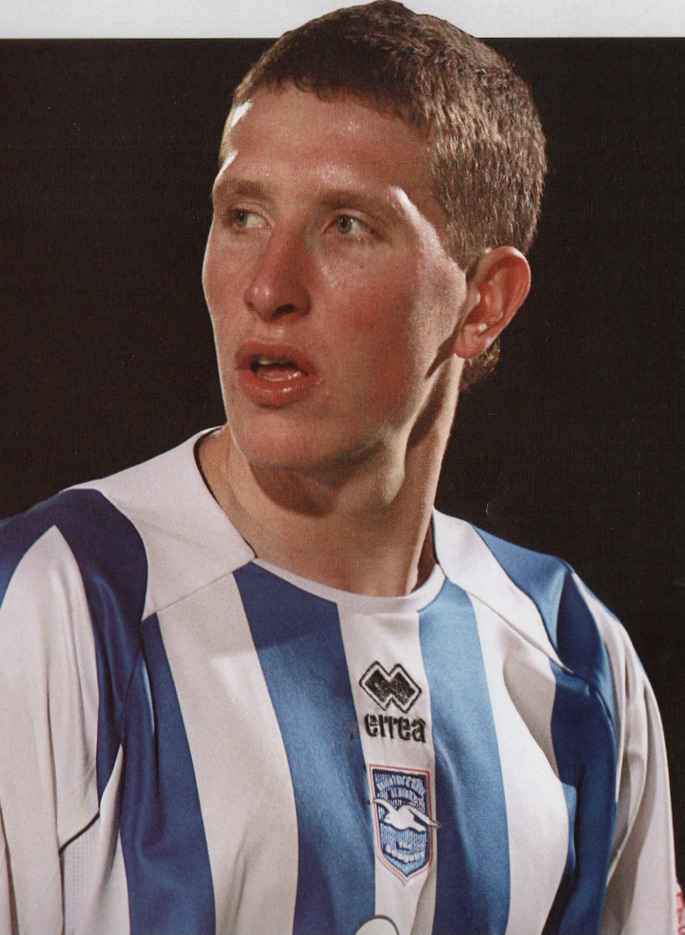
CORK-BORN George O’Callaghan had something of a yo-yo footballing career after bursting onto the professional scene as a talented teenager.

Eyed by Arsenal and Spurs when he was in his formative years at Port Vale (then in the Championship), he turned to drink when ex-Albion captain and manager Brian Horton dropped him from the Vale first team.

Although the tall midfielder worked his way back into contention, he returned home to Ireland to rebuild his career before making several other attempts to succeed in the English game.

Over the course of five years, he was an influential cog in Cork’s League of Ireland side, the highlight coming with a championship win in 2005 when he scored eleven goals from midfield and was voted League Player of the Season.

He survived meningitis in 2006 just a handful of months before another Championship side, Ipswich Town, gave him another opportunity to make it in England but he struggled to hold down a place at Portman Road.

After only 13 appearances, the Tractor Boys were prepared to offload him to third tier Brighton. A deal was agreed in August 2007 but he made the move on loan rather than permanently because he still thought he could make it in Suffolk.

By then 28, the player brought experience and creativity to Dean Wilkins’ largely young side, slotting in effectively in the centre of Albion’s midfield alongside Dean Hammond, making 16 starts and one appearance off the bench.

But his Irish gift of the gab brought it all to a messy end. He publicly criticised chairman Dick Knight’s handling of contract negotiations in an explosive article in The Argus and didn’t play for the Seagulls again.

The Irishman told reporter Andy Naylor he thought the team was in danger of falling apart because chairman Knight had been too slow to sort out contracts and loans.

Knight countered: “We have given him the chance to shine and show his talents. It’s not George O’Callaghan’s business to tell the club what we should be doing.”

The midfielder spoke out after Albion capitulated 3-0 at Millwall on Boxing Day. He told Naylor: “There are a lot of lads who are very important to this team that don’t know if they are coming or going and I think it’s about time the club got a grip on it and sorted it out, because it has dragged on for too long and I feel it is starting to affect the players.

“I just don’t think it is right and it’s something the club needs to look at. It used to happen at Cork City when I was there and we lost a lot of good players. We lost Kevin Doyle and Shane Long for peanuts over contracts not being sorted out early and quickly.

“It makes you angry as a player. I can cope with it, because I am a lot older than the other lads, but the young lads are really upset and it’s not right.”

O’Callaghan’s version of events the club would have wanted to keep to themselves plainly differed from Knight’s while Wilkins was stuck in the middle.

“I know the manager tries his best behind the scenes,” said O’Callaghan. “He is fantastic. I think he works with a very small budget. It must be more frustrating for him, because he has built a team and it could easily fall apart now.

No holding back where O’Callaghan was concerned

“Things should have been sorted out a lot quicker. It has been a big thing in the squad in the last few weeks. I’ve mentioned it and the club need to sort it out now.”

The Irishman said he had encountered something similar at Ipswich the previous season, pointing out players just needed to know where they stood.

“I don’t want to stay and then see our best lads go, like Hammo,” he reasoned. “If we want to make that push for the play-offs and get back into the Championship it needs to be sorted.”

Knight was in no mood to take that sort of broadside from a loan player and told the reporter: “The team’s performance was absolutely woeful. I think certain players should be looking at themselves before trying to deflect criticism elsewhere. I thought it was a disgrace.

“George O’Callaghan is totally out of order. I would suggest he is trying to deflect attention away from his own performance, which was frankly poor, and he wasn’t the only one.

“Young players within the club are dealt with contract wise as and when the time is right.”

Knight maintained that he’d already agreed with Ipswich that both O’Callaghan and fellow Town loanee Matt Richards could extend their loans until the end of the season but neither player wanted to commit to it until they’d explored other options.

Unsurprisingly, O’Callaghan’s stay with the Seagulls came to an abrupt end and he returned to Portman Road.

Sidestepping the spat with Knight, O’Callaghan reckoned his return to Ipswich was his decision, telling The Argus: “I enjoyed playing regularly at Brighton but I spoke with the gaffer and decided it is right to try again at Ipswich and try to get first team action.

“They are a good bunch of lads at Brighton and I enjoyed playing with them so I hope things work out for them.”

When a month later there was no look-in happening with the Tractor Boys, he returned to Ireland once again to play for his old club, Cork City. It was part of a familiar pattern.
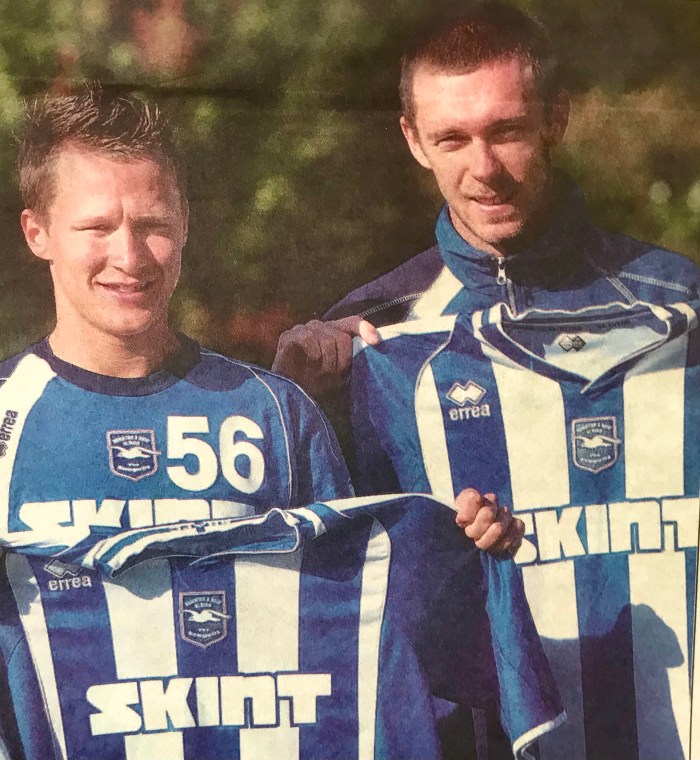
Deadline day signings David Martot and George O’Callaghan

O’Callaghan had joined the Albion on loan (the same day David Martot signed a similar arrangement from Le Havre) on August transfer deadline day having rejected a permanent move earlier that month (the clubs had agreed a £60,000 deal plus £15,000 based on appearances).

The player said at the time: “It would be a shame to leave Ipswich because the supporters have been brilliant to me, even though they never saw enough of me, and all the lads are fantastic, but I need to be playing regular football.”

Town manager Jim Magilton praised O’Callaghan’s ability and attitude and empathised with his frustration at not getting a run in the side. He said: “I don’t want to lose George but I wouldn’t stand in his way. He has been great since he has been here. He is very popular in the dressing room and he has done very well.

Tractor Boy O’Callaghan

“But he is 28 years of age and needs to be playing games. I have been there, so totally understand how frustrating it can be. We will do anything we can to help him.

“I have absolutely no problems with George. He has been top class since he came here. His attitude is first-class in training and in games.”

O’Callaghan had impressed Knight in a reserves match when Ipswich beat the Seagulls’ second string.

When O’Callaghan finally agreed the temporary move, Albion also wanted his Town teammate Richards on loan, but he too prevaricated, only to change his mind the following month. It was the first of three loan spells with the Albion. Brighton also wanted a third Ipswich player, injury-prone Dean Bowditch, who had briefly been on loan the previous season, and he eventually returned for a month in 2008.

Born in Cork on 5 September 1979, O’Callaghan left Ireland as a teenager to pursue his football dream and in a March 2020 podcast with the Irish Examiner, he talked about his early days at Port Vale when he was regarded as one of the hottest properties in football.

“Arsenal came in for me when I was 18,” he said. “I was waiting outside the manager John Rudge’s office and Pat Rice, who was Arsene Wenge’s assistant at the time, came out and said: ‘George, we can’t get you this time, we’ll get you next time,’.”

When the youngster protested to Rudge, he was told Arsenal had only offered £1m for him and Vale wanted £2m. O’Callaghan continued to progress in Vale’s Championship team but when Rudge was replaced by Horton, he was demoted back to the youth team.

In another podcast, A Footballer’s Life, O’Callaghan admitted to Graham Cummins that he turned to drink as his promising career stalled. “You’re responsible for your own actions so it’s ultimately your own fault. But nobody looked out for me or had my back at the club. Nobody caught me and said, ‘George, what’s going on, you’re not yourself’.

“Those days, the clubs didn’t care, it was old school, you were put out to do the job and if you didn’t you were replaced.

“You never asked anyone for help in those days. I kind of went into meltdown. Everything unravelled, I didn’t know what I was doing.”

When he eventually got back in the first team picture, he said Arsenal’s north London rivals Spurs then showed an interest in him. “David Pleat tried to sign me for Tottenham. But Brian Horton said: ‘You’re doing really well,’ and offered me a two-year deal and doubled my money.”

He asked Rudge’s opinion about the situation and when told he should stay at Vale because he’d struggle to get games for Spurs, he stayed put. “I took his advice and signed the contract. Within about 14 months I was finished, sent home.

“It was a massive mistake, a big, big mistake. I was too comfortable in the situation I was in. I probably didn’t have the guts to go ahead with it. I loved playing for Port Vale but I should have pushed for Arsenal and Tottenham. And then you can always go out on loan if it doesn’t work out.”

One of O’Callaghan’s early matches for Albion was against his old club and unsurprisingly he was a natural interviewee before the game. “It is a very special club to me because I started off my career there when I was only 15,” he told The Argus.

The Irishman scored four goals in 22 league starts plus 12 sub appearances for Vale and felt he probably had a point to prove coming up against them (Albion won 1-0 with a goal from Alex Revell).

“I never showed Port Vale fans what I can do,” he said. “I took a few wrong roads when I was a kid and it has taken me a while to get back to where I am now.

“It will be nice to put on a good performance and show them what they have missed; the player I have turned into. I never fulfilled my potential there.

“I started off doing well there as a kid but I didn’t really have the right guidance and it all went pear-shaped. As soon as John Rudge left as manager and Brian Horton came in, my chances were limited. I think that is where it all went wrong.

“Obviously, I wasn’t his type of footballer. People said he was a good footballer, but he wanted physical lads.

“Maybe at the time I wasn’t physical enough and he didn’t fancy me. I don’t blame him in any way because at the end of the day it is all down to yourself and how you look after yourself.”

He added: “I had so many knocks there that it took the fire out of me. I had to go back to Cork to get that fire back into me and build my career again.

“It was a big learning curve in my life. I lost my career in English football for a while and had to battle hard to get back.”

The player’s topsy-turvy career continued back at Cork City before he had another go in England, spending eight months at Tranmere Rovers. Once again he returned to Ireland, this time to play for Dundalk, but the lure of the English game beckoned again.

O’Callaghan linked up with Yeovil Town in the summer of 2009 and played in three pre-season friendlies. In the opening months of the season, he made 15 appearances (including six from the bench) but found it difficult to break into the team past the partnership of Jean-Paul Kalala and Shaun MacDonald.

Next stop, in December that year, was Waterford but before long he was back at Cork City once again. Brentford took him on a two-week trial but nothing came of it and instead he went to then Conference side Cambridge United but didn’t feature.

The wandering Irishman at one point tied his luck with Brunei side Duli Pengiran Muda Mahkota but he got into trouble for failing to bow to the Crown Prince.

His old Brighton and Ipswich teammate Nicky Forster took him on at Dover Athletic but he only played once for the Conference South team, and he announced his retirement on Christmas Eve 2012.

He briefly managed Sabah in the Malaysia Premier League in 2014 but he struggled to deal with El Hadji Diouf and was sacked in January 2015 when he started missing training sessions.

Four years after playing what he thought was his last game, he turned out for junior Cork club Rockmount.

After packing up playing, O’Callaghan became an agent and spent a year as a business development manager for William Hill. He was a general manager for gym chain Anytime Fitness for two years and later co-founded agency TEN Sports Management.
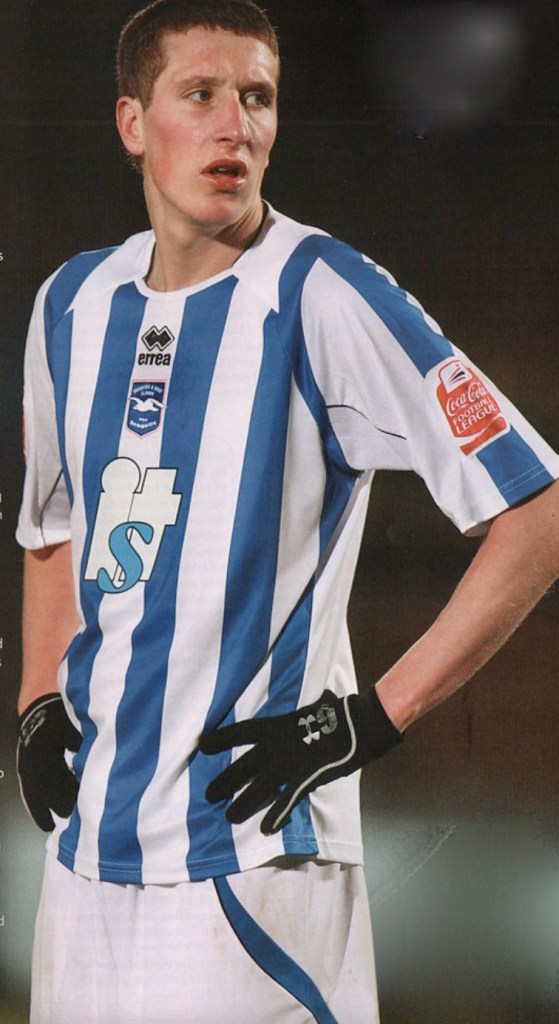
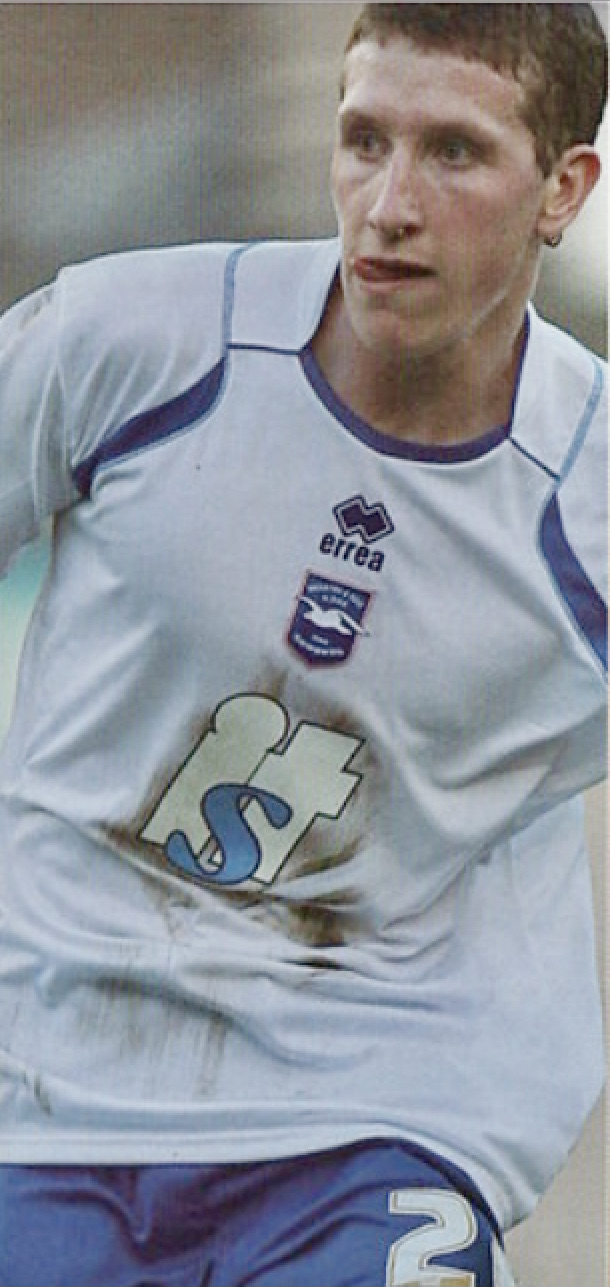
‘Glove-wearing gazelle’ played only 16 Albion games

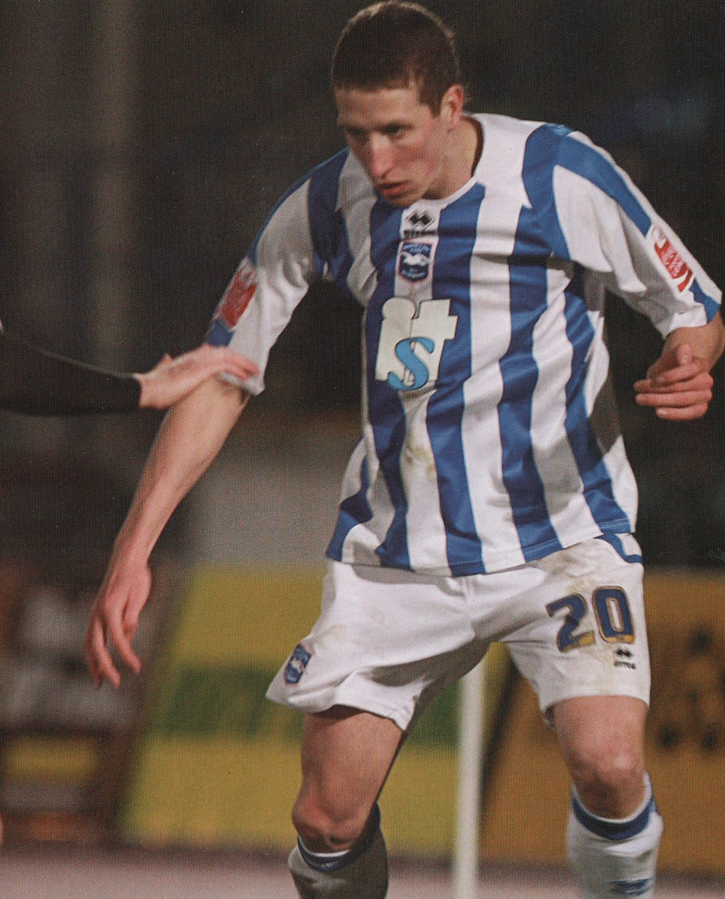
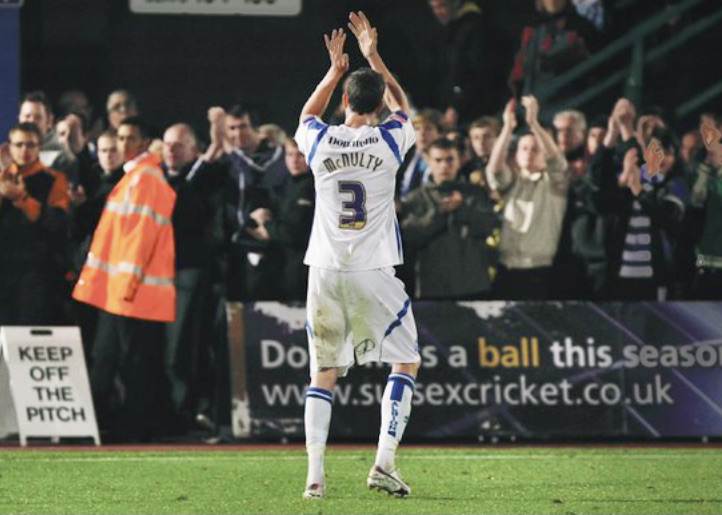
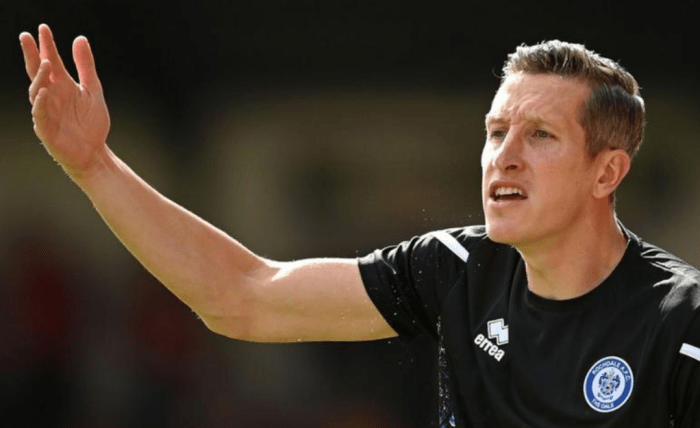
SCOUSE defender Jim McNulty, who played alongside Wayne Rooney at Everton as a schoolboy, will probably always be remembered by Brighton fans for a horror injury he suffered in a match at Withdean.

After an on-off transfer saga in which McNulty initially rejected Albion’s desire to sign him, the £150,000 signing from Stockport County scored on his debut and less than three weeks later was involved in an accidental collision that threatened to end his career at 23.

In only his fifth game after under-pressure boss Micky Adams finally landed the left back, a seemingly innocuous challenge as a Crewe defender caught him with his knee in his side quickly became much more serious when he started passing blood.

“Having walked back to the changing room I remember having the sensation of needing to go to the toilet and it was then that blood started spurting out,” he recounted. “I was also throwing up and the real scary part was the look of concern on the medical team’s faces.

“I was rushed to the Royal Sussex County Hospital for an MRI scan and had a catheter inserted as my belly was swelling up. It was then that I discovered one of my kidneys had capitulated.

“I was on the bed in the hospital after the scan when the surgeon said 90 per cent of the kidney is mush and I don’t believe you can play again,” McNulty told the club’s official website.

Nine years later, ahead of facing Harry Kane for Rochdale against Spurs in the FA Cup, McNulty told Ivan Speck of the Express: “It was instant tears. I was there with my father and fiancée, at the time. I remember crying into my dad’s chest.

“It was probably a bit of everyday information for him but, for me, football was my life and he should have stayed quiet until he was better informed. It still winds me up now.

“The FA actually got wind of the news and their doctor spoke with our club doctor. They had spoken to some rugby guys in the southern hemisphere because it’s a more common injury in rugby than it is in football.

“It was nonsense to suggest it would end my career.”

Initially, because he was a professional sportsman, the medics tried two operations to save the kidney but, when he was still passing blood three weeks later, the decision was taken to remove it.

McNulty described incredible pain he had to endure but realised once he had gone through with the operation that he would be able to play football again.

Amazingly, he was able to return to training within three months although he had a lot of work to do to rebuild his fitness. Within four weeks he was even able to play in a couple of pre-season friendlies.

However, McNulty went on to suffer a number of knock-on injuries because his posture was affected by having an empty space on the right side of his body.

“I had multiple ankle injuries because my pelvic alignment was a nightmare from that point on,” he said.

The first came just when it looked like he would make a return to league action in September 2009. He damaged his ankle ligaments on a local park pitch while training ahead of the 7-1 defeat at Huddersfield and was ruled out for a further four weeks.

His long-awaited return to first team action came in a Johnstone’s Paint Trophy tie away to Leyton Orient on 6 October, which Albion lost 1-0.

“Just to get out on the pitch and on the ball was fantastic,” he said. “I cramped up after about 70 minutes but the reaction from our fans was tremendous.”

McNulty told the matchday programme: “I have no intention of just sitting around, hoping to break into the side. I want to be playing every week now. I’m fit, raring to go and I want to help us get up the table.”

The unlucky McNulty then missed the following Saturday’s match at MK Dons, enduring yet more pain when he had to have two wisdom teeth extracted.

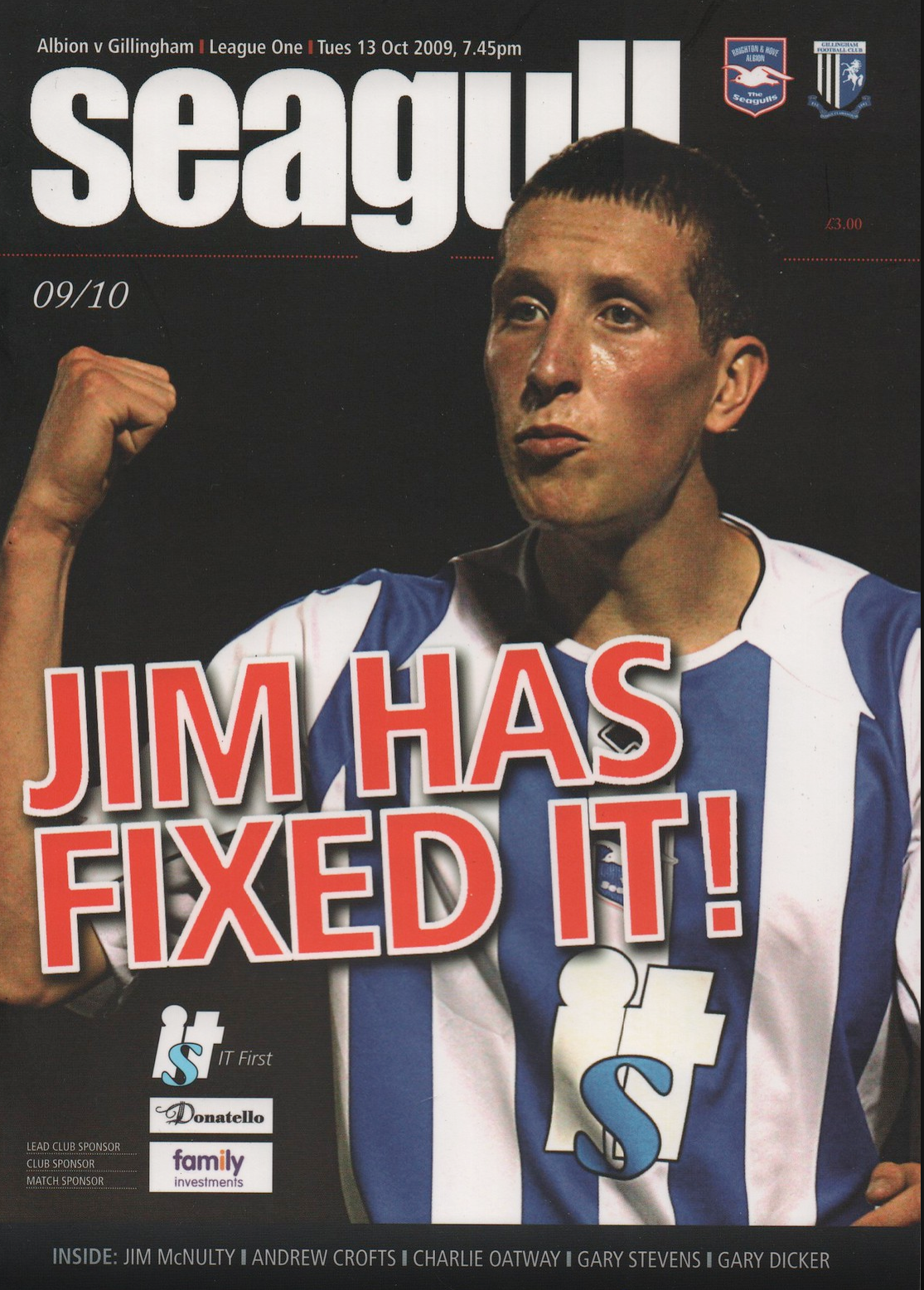
Nevertheless, McNulty’s eventual return to league action followed on 13 October in a 2-0 Withdean win over a Gillingham side which featured former Albion loanee Simon Royce in goal.

Astonishingly, the following Saturday, he lasted only 27 minutes before injury struck again in a 2-1 defeat away to Tranmere. He limped off with an ankle injury and Jake Wright was sent on to replace him. Glenn Murray scored a penalty consolation for the Albion and was then sent off for a second yellow card.

By the time McNulty was fit enough to return, the second manager of his brief time at the Albion, Russell Slade, had been replaced by Gus Poyet. His first involvement under the new boss saw him go on as a sub against: Charlton at home on 1 December.

He then went on as an 87th minute substitute for his good friend Gary Dicker at Exeter and provided the all-important cross from which Andrew Crofts headed the only goal of the game in the 92nd minute.

He had what one observer described as a man of the match involvement as a sub in the next match, a 2-1 home defeat v Colchester United. Saying the left back was “the epitome of Poyet’s ‘bravery on the ball’ mantra”, Richie Morris wrote: “Jimmy McNulty, like a rampaging glove-wearing gazelle, mercilessly attacked the left flank. Time and again he delivered teasing crosses, and time and again the ball simply would not nestle in the net.”

McNulty celebrates with goalscorer Tommy Elphick

That performance was rewarded with four starts on the trot – but then Poyet brought in the cultured Marcos Painter as his preferred left-back. McNulty was in the Albion side that put on a decent show in a 3-2 fourth round FA Cup defeat at Aston Villa, because Painter was ineligible, but he didn’t make another start that season. And, as it turned out, he didn’t play for the club again. He’d actually only played 16 times for the Albion.

Before the end of the season, to get some games, McNulty actually stepped up a level, going on loan to Scunthorpe United in the Championship, where he made two starts and a sub appearance under Nigel Adkins.

He rejoined The Iron in July 2010 on a six-month loan arrangement and played six games. But he suffered a recurrence of his ankle issues, so returned to Brighton in December.

When Albion kicked off a new era playing Championship football at the Amex, McNulty had stayed at the same level but with Barnsley, where he was voted players’ player of the year in his first season, and was made captain in his second season at Oakwell.

McNulty certainly wasn’t bitter about the way things turned out for him in Sussex. He said: “I couldn’t speak more highly of my time with Brighton. It is an unbelievable club, an unbelievable fan base, and it was an incredible place to live.

“My daughter was born there and we had a brilliant time, despite the fact that I was horrendously injured for pretty much all of that time.

“I’ve always been a 40-game-a-season man wherever I’ve been, but at Brighton I hardly played at all. Saying that, it was the club I had the best time at.”

Born in Runcorn on 13 February 1985, Liverpool and Everton were both interested in him when he was young, but it was Everton who put a contract offer in front of him.

“At the time I actually played for Everton against Liverpool in a game at Melwood,” he explained. “This would have been in the under-9s and we absolutely destroyed them.

“Ourselves and Arsenal dominated in that particular age group, right up to the under-16s – every week, every game, every season. Everton were a very dominant team and it gave me a great grounding, so I chose the right team.”

Initially a central midfield player, McNulty was switched to left-back during his time at Everton. Although Rooney was in the year below him, from under-10s, he was put up an age level. “I played with him for about four years until he jumped up again,” said McNulty. “He was playing two or three years up during the teenage years. I was just always playing at my own age.

“He was incredible, incredible. It was like watching a man play with boys in terms of his strength and aggression. He was pinging balls 70 yards as a 10- or 11-year-old boy.

“We couldn’t really lift it off the floor yet. His technique and the power that he had as a young boy, he was devastating at that age. He’d score eight goals every week. He’s one of the reasons we were so rampant as a team. Probably the main reason.”

McNulty moved on to Wrexham to make his breakthrough at senior level, ironically going on as a sub against Stockport in a Northern Section Football League Trophy game which the Welsh side lost 5-4 after extra time.

Because he had a Scottish mother, Englishman McNulty was selected for Scotland at under-17 and under-19 level, although one of his worst footballing memories came while playing for Scotland against France when they were beaten 5-0 in the European Under-19s Championship.

“I always remember being particularly mentally scarred by one player,” he said. “He was a winger and I was at left-back – and he scored four, so obviously that was mentally scarring. His name was Jimmy Briand.”

Briand went on to have a 20-year playing career in France and Germany and played five times for the senior French national team, but McNulty didn’t make it to the Scots full international side.

“There was a time when I had some genuine belief that it might happen,” he told The Sunday Post. “I had a good season in my first year at Barnsley in the Championship, in 2011, and ended up being named player of the year and made captain of the club.

“At the time, Scotland were having a bit of a defender crisis, and there was an opportunity there. I actually thought, ‘My name might come out of the hat here.’ But they ended up choosing a couple of guys who were playing in League One at the time ahead of me. That was a bit of a disappointment.”

But back to those early days, and when he didn’t make further progress at Wrexham he dropped down to League of Wales level to play for Bangor City and Caernarfon Town, but in June 2006, former Albion skipper and manager Brian Horton signed him for Macclesfield Town.

“I appreciate what Brian did for me, bringing me back into league football,” he said. “I was playing non-league football in Wales and he gave me a chance to come back and prove myself.”

He spent 18 months at Macclesfield, where he also played under Paul Ince, before moving to Stockport on a free transfer in January 2007. He became part of the County side that won promotion via the League Two play-off final at Wembley, when they beat another of his future employers, Rochdale, 3-2 in front of a crowd of 35,000.

McNulty was reluctant to give up a League One promotion tilt at County to join struggling Albion but chairman Dick Knight and manager Adams spoke of the club’s ambition and he was finally persuaded.

Albion needed a left back after loan signing Matt Richards had returned to Ipswich and

Adams said: “He fits the profile of what we are looking for. He likes getting forward and, without being disrespectful to anyone who has played there before, he is a natural defender, and he is six-foot two. At one stage it looked like we had lost out, so I am delighted to get him.”

Knight and Adams finally persuade their man to sign for the Albion

McNulty was not alone as Knight sanctioned quite a spending spree on new signings – Craig Davies, Calvin Andrew, Seb Carole, Jason Jarrett and Chris Birchall also arrived in that window, all financed by Tony Bloom, a low-profile investor at that time.

“I am very satisfied,” said Adams. “Finding a left back was a major priority. We haven’t been scoring the amount of goals we should, so we needed to look at avenues to open up teams. We have got Carole and Birchall for that.

“We also needed two strikers (Davies and Andrew) to increase the striking options and we needed a bit more physical strength in midfield, which is why Jason (Jarrett) is there, so I can’t complain.

“I had to be patient to make sure the right type of player was available and at the right price. Two of them were money buys and I am delighted that the board have backed me.”

Both Davies and McNulty were on the scoresheet when Peterborough visited the Withdean on 10 February but Barry Fry’s side took away the three points courtesy of a 4-2 win; Craig Mackail-Smith scoring for Posh along with strike partner Aaron McLean (two) and Dean Keates.

With only one League One win in six and a hoped-for tilt at silverware – the Johnstone’s Paint Trophy – gone in a penalty shoot-out defeat to Luton Town, the second coming of Adams was over. That horrendous injury to McNulty came while Dean White was caretaker manager and, when new boss Russell Slade arrived, one of his first tasks was to bring in Gary Borrowdale on loan from QPR to cover McNulty’s absence.

A change in manager often spells bad news for certain players and, after those successful first two seasons at Barnsley, McNulty found his face didn’t fit when David Flitcroft succeeded Keith Hill as manager. He’d only had one first team outing in a Capital One Cup tie against Southampton.

He grabbed the chance to join Tranmere Rovers on loan in November 2013, although he told the Liverpool Echo: “I have not even had a chance there.  I think I should still be playing for Barnsley.

“They are struggling defensively this season and had been conceding a lot of goals. But now I’m thinking about helping Tranmere.”

Rovers boss Ronnie Moore said: “Jim is a knowledgeable player and a good talker. He settled in quickly here. He is a footballing centre-back, rather than the Terry Butcher type. I don’t think you will see too many cuts and bandages around Jim’s head. He is clever. He drops off and picks the ball up.”

In January 2014, McNulty reached a mutual agreement with Barnsley to terminate his contract and he switched to Bury under old boss Flitcroft. He played 51 times for the League Two Shakers before beginning a long association with Rochdale in 2015.

McNulty in control with the Shakers

Over eight seasons, McNulty played a total of 237 matches for Dale, eventually combining coaching with playing. In August 2022, he found himself in interim charge for three matches after the club sacked Robbie Stockdale.

Former Morecambe boss Jim Bentley was appointed manager but when his services were dispensed with in March 2023, with Rochdale at the foot of League Two, 2023, McNulty once again stepped in as boss.

He was unable to prevent the club’s 102-year reign as a league club coming to an end but, in May 2023, he was appointed manager on a two-year deal.

“The opportunity to lead our team and represent our club, which the fans cherish, has always been a dream of mine,” he said.

“To be given the opportunity at a club so close to mine and my family’s hearts, is really special to me.

“As a boy, first and foremost, I dreamt of becoming a footballer, then when I did, I very quickly knew I wanted to become a manager thereafter.

“Within a couple of years of being a Dale player, I knew that this would be the club where I hoped to fulfil that ambition.”

Set-piece expert Darren Currie earned Uncle Tony’s approval

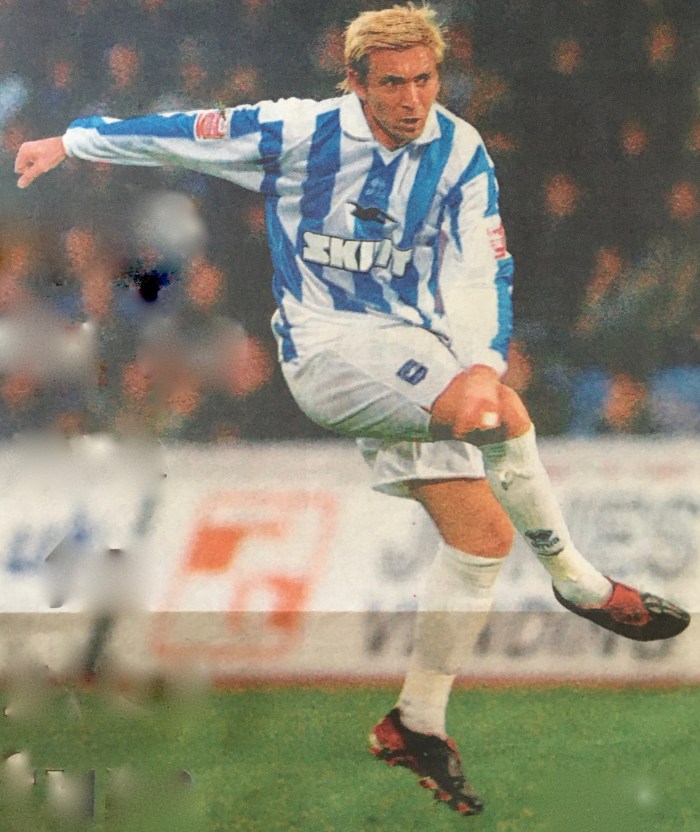
THE PINPOINT accuracy of Darren Currie’s passing and shooting was a joy to watch, even though a lack of pace stopped him being as good a player as his famous uncle.

Currie was a decent player in his own right, making nearly 700 appearances for 15 different clubs, but wherever he went he was always known as the nephew of the former Sheffield United, Leeds, QPR and England creative midfielder Tony Currie.

Perhaps with a hint of family bias, Uncle Tony said in an interview for ITV Digital: “Darren is, without doubt, the best crosser of the ball, after Beckham, in the country. He’ll produce nine times out of ten, right foot or left foot.”

The young Currie attributed his crowd-pleasing skills to the start he was given in the game by West Ham. After 10 years stuck in the lower leagues, Currie was given a platform to perform in the Championship by Brighton, and he very nearly made it to the top when transferred for £250,000 to high-flying Ipswich Town.

As if by a cruel twist of fate, Ipswich lost to the Hammers in the 2004-05 Championship play-off semi-finals having just missed out on automatic promotion.

“Playing for West Ham at youth and reserve levels was a terrific way to start a career,” Currie told the Ipswich Star. “They gave me everything but my debut.”

He certainly came close though, featuring alongside recognised first-teamers like Lee Chapman and Frank Lampard in friendlies and testimonials, but he had to move elsewhere to gain competitive first-team action.

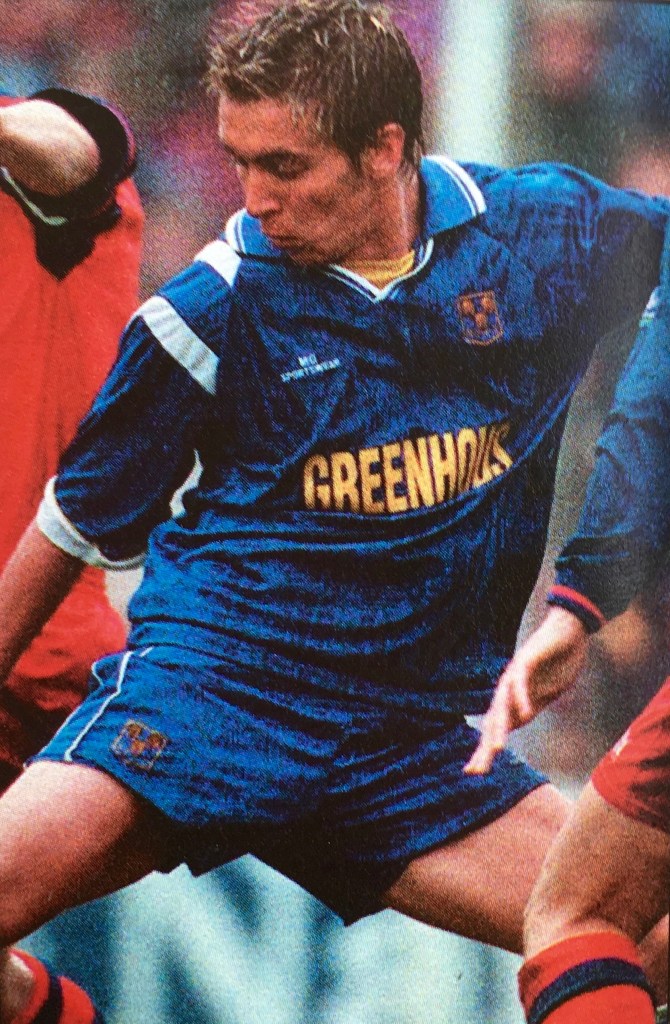
Initially he had loan spells with Shrewsbury Town and Leyton Orient, and when the Shrews bid £70,000 for him in 1996, he chose to drop down a couple of divisions to get regular football.

“The difference in money was only about £50. The then West Ham manager Harry Redknapp called me in and said that I was an adult and had to think about continuing to play regular first team football,” Currie explained. “I was given the opportunity to have a new contract at West Ham or moving permanently to Shrewsbury.

“I was a young pro at West Ham and I had been out on loan a couple of times and I got the buzz for playing at three o’clock on a Saturday afternoon. There was no other feeling like it.

“I thought to myself I’ll go to Shrewsbury and I’ll play really well for a year and I’ll get a move back up to the top.

“My naivety kicked in then because it didn’t quite happen. I thought I’d done OK and I was linked with a couple of moves but the route back to the top wasn’t as simple as I thought it would be in my head.”

Indeed, it was a decade in which, after three seasons with the Shrews, he moved on briefly to Plymouth Argyle, then to Barnet (three seasons) and Wycombe Wanderers (three seasons).

Currie said it got to a point where Wycombe couldn’t afford to keep him, and boss Tony Adams made it clear he was free to look elsewhere.

Mark McGhee invited him to Brighton for a trial and was impressed with the way he knuckled down in training to get himself fit following a programme devised by McGhee’s deputy, Bob Booker.

Currie was offered a 12-month contract but it was more about the opportunity to play at a higher level that prompted him to sign.

“It wasn’t a fantastic offer – put it this way, Peterborough offered me three years – but it wasn’t about the money,” Currie told Spencer Vignes in an Albion matchday programme article.

“It was about the football and playing in the Championship. I was determined to do well and to prove myself, which I did. That’s when people began to sit up and take notice.”

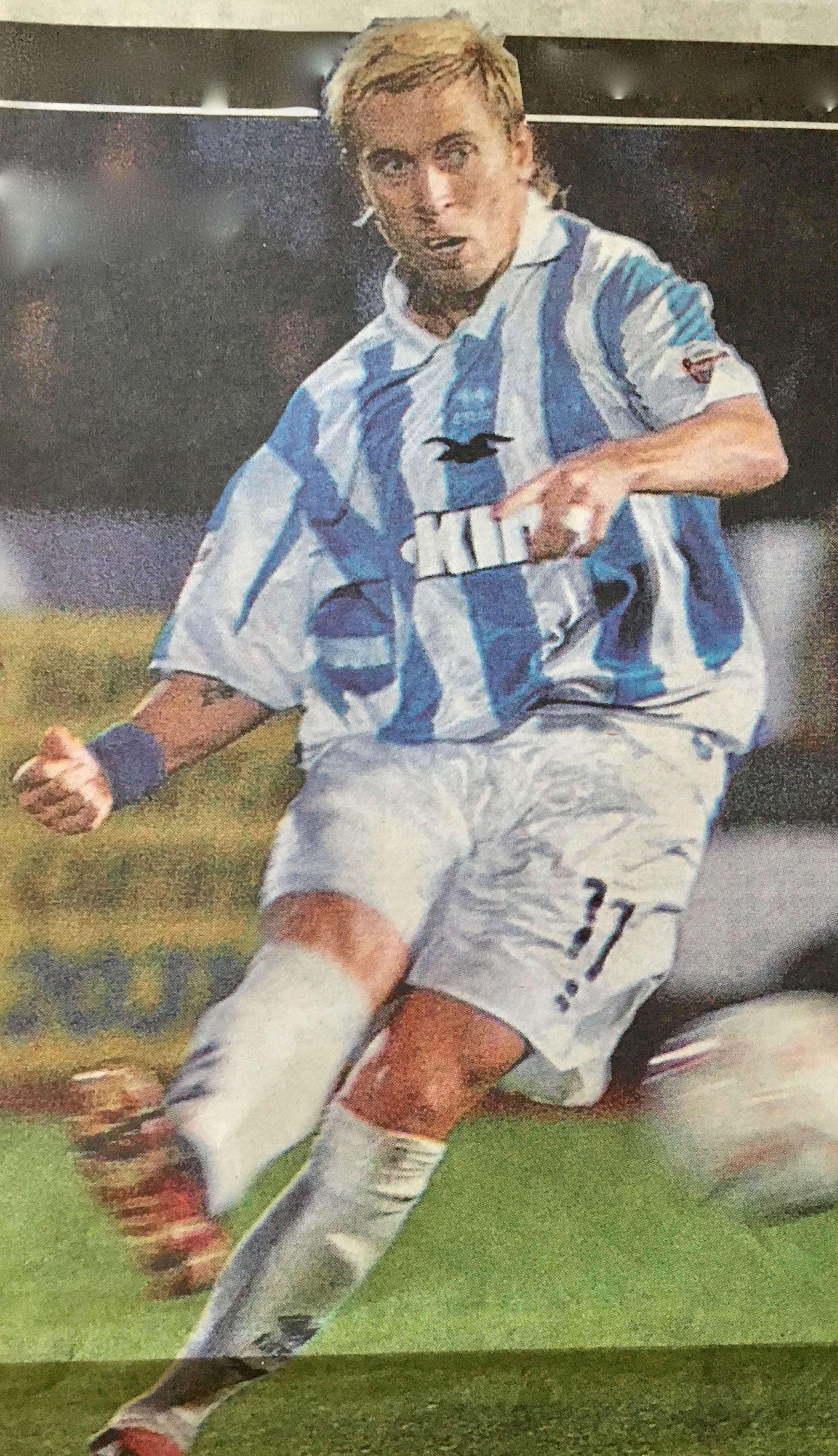
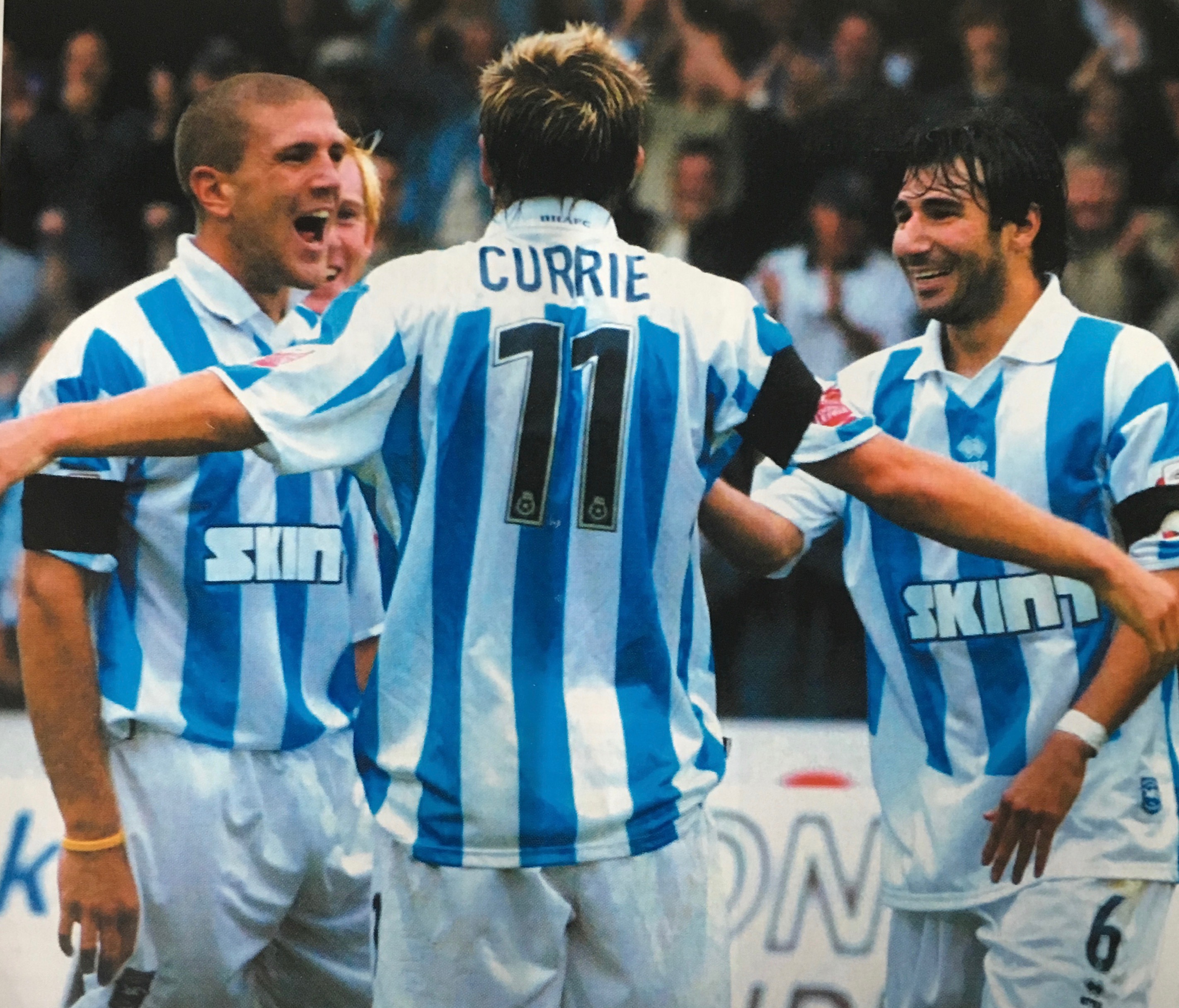
Currie’s ability on the ball carved him out to be a crowd-pleaser and the first of two goals for the Albion typically came from a free kick in a 3-2 home defeat to QPR that left Argus reporter Andy Naylor purring over its execution.

“Currie, having shaved a post and hit the bar with two earlier free-kicks, made it third time lucky from 20 yards just before the break. It was a sumptuous effort from the set-piece expert which rendered Rangers’ keeper Chris Day motionless.”

His other goal came in a 1-1 draw at home to Sheffield United, more noted for Albion wearing the limited-edition Palookaville strip to help publicise backer Fatboy Slim’s latest album.

Injury-hit Albion considered it a point gained rather than two dropped and Naylor complimented Leon Knight for “superbly crafting” Currie’s goal by evading his marker and threading a square pass through the legs of Leigh Bromby.

“Currie, with time as well as room, picked his spot to score, which meant even more to him because of the opposition,” wrote Naylor, informing readers that the Yorkshire side had rejected him as a 16-year-old following a fortnight’s trial.

Unfortunately for Currie, he was only on the bench when the Albion travelled to Upton Park on 13 November 2004. After three successive defeats, McGhee confessed he set the side up not to lose rather than go for a win.

Somewhat ironically, the Seagulls blagged a 1-0 win courtesy of a Guy Butters goal, in a real backs-to-the-wall match, with veteran striker Steve Claridge ploughing a lone furrow up front.

It was only in the 90th minute of the match that McGhee introduced Currie in place of Claridge to play out the final few minutes of the game.

Currie only played 22 games for Brighton over four months but the fee they received for him from Ipswich gave a vital boost to club funds when they were struggling to compete in the division because of the restricted crowd numbers at Withdean. Having signed him on a free transfer, the deal was a no-brainer for the Albion hierarchy, even if it weakened a squad who subsequently only avoided relegation back to the third tier by a single point.

McGhee wasn’t that surprised to see Currie go, telling the Argus: “He was obviously happy here, but I thought he was doing so well that he would keep his options open.

“I cannot see Darren being a regular for Ipswich in the Premiership if they are promoted, but his skills and touch are good enough to justify him making a contribution to a squad in the Premiership.”

It didn’t pan out like that, but Currie was nonetheless grateful to the Albion, and told Vignes: “I am so pleased I had the chance to be a part of it all down there, to see what the support is like and to play with a group of lads who stick together through thick and thin.

“I played at the Goldstone when I was a kid, playing youth team football with West Ham, so I know how important the stadium issue is for everyone. I always will be extremely grateful to the Brighton fans and Mark McGhee because without a doubt without their help this opportunity wouldn’t have come along.”

Currie explained in a matchday programme article how McGhee had helped to develop his game and to add other dimensions which improved him. “I owe a helluva lot to Mark and Bob Booker,” he said.

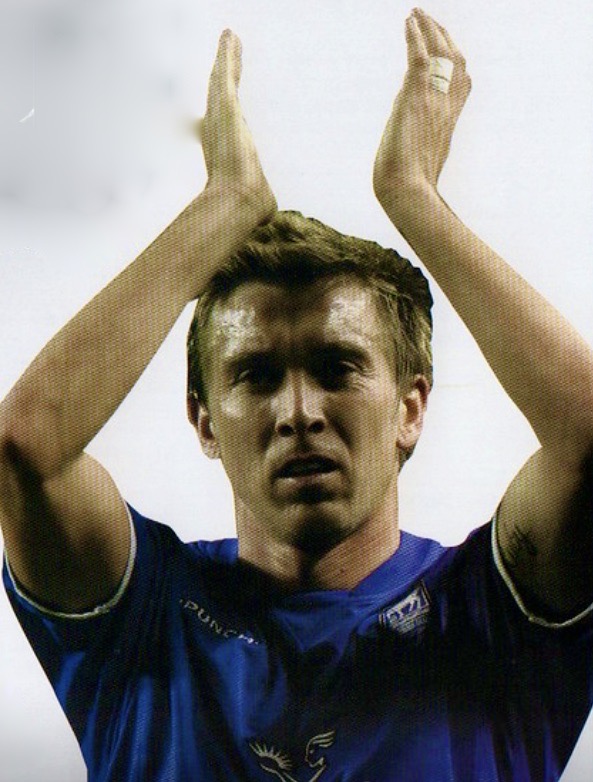
Currie became an instant hit with the Tractor Boys fans earning the man of the match accolade in two of his first four games.

“I tend to build up a rapport with supporters wherever I go,” he told the Ipswich Star. “I am my own biggest critic and I know when I have done well, and I am very satisfied with my contribution so far.”

After his brief cameo for the Seagulls at West Ham, he got the chance to play against his boyhood club three times that season with Ipswich.

He was in the Town side that lost 2-0 at home to the Hammers on New Year’s Day 2005. Then, in the first leg of the play-off semi-final, Currie and Matt Richards (later a loanee with the Albion) were half-time substitutes who helped Ipswich to recover a deficit to draw 2-2.

Currie started the second leg and had Ipswich’s best opportunities with a shot straight at James Walker, then a long-range drive 10 minutes before the interval which the goalkeeper hopelessly misjudged but fumbled to safety. But they failed to make the final when Bobby Zamora scored two second half goals for West Ham to earn them a 2-0 second leg win. West Ham beat Preston in the play-off final.

Born in Hampstead on 29 November 1974, Currie’s early footballing talent drew interest from Watford and Chelsea, but he decided to join West Ham’s academy.

“The facilities were great, the training for us there as kids was first class and I really enjoyed my time there,” Currie said.

“A lot of the player I became was what I was taught as a kid at West Ham,” he told twtd.co.uk. “It was all about the ball and all about the technical skill and how to manipulate the ball. It was a way I enjoyed playing anyway so it was a really good fit for me.”

After signing professional in 1993, he was a regular in the West Ham reserve side and a trawl through the excellent archive website whu-programmes.co.uk records show he played in a Football Combination game away to Brighton on 1 April 1994, and later the same month was up against Guy Butters in Portsmouth’s reserve side at the Boleyn Ground. Mark Flatts and Paul Dickov were in opposition when the Hammers stiffs entertained their Arsenal counterparts at home on 11 May.

In an Avon Insurance Combination match at the Goldstone Ground on 30 November 1994, Currie scored the only goal of the game from the penalty spot in a West Ham side also featuring Lee Chapman and Frank Lampard.

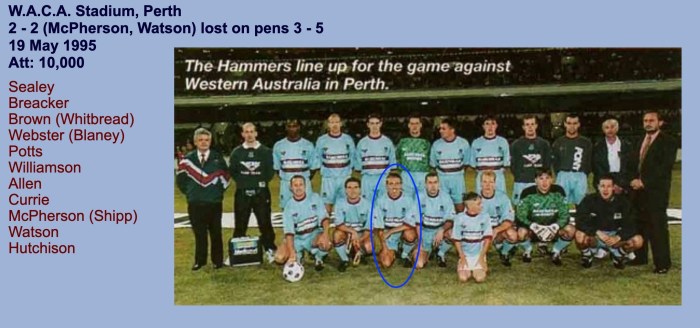
The following summer, Currie played in four matches when he was part of West Ham’s squad on a centenary tour of Australia.

Shrewsbury boss Fred Davies, a former playing colleague of Redknapp’s at Bournemouth, took Currie on full time after his two loan spells at Gay Meadow.

He moved on to Plymouth Argyle in 1998 but only played five matches in three months, then switched to Barnet where he made 136 appearances, plus seven as a sub, in three years.

Wycombe Wanderers paid £200,000 to sign him in the summer of 2001 and manager Lawrie Sanchez told BBC Three Counties Radio: “He’s obviously a quality player. He gets crosses in and that’s an area where we weren’t very good last year. He’s come to add that to our game and his free kicks will trouble the ‘keeper as well.

“It was quite a lot of money for our club to spend but I’ve got to back my judgement. I’d looked at him for a while and quite liked him. He gives us something we haven’t got, he’s a great technician. He hasn’t got particularly great pace but what he does with the ball is tremendous. We’re hoping he does all the things he was doing at Barnet and a little bit more for us.”

Sanchez added: “A lot of people looked at him for a long time. He’s always been considered one of the best players in the Third Division and hopefully we’ll give him the stage where he can prove he’s one of the best players in the Second Division.”

After Currie’s flirtation with promotion to the Premier League ended in disappointment, Joe Royle left Portman Road and his replacement Jim Magilton axed Currie from the side in the 2006-07 season. He was sent on loan to fellow Championship sides Coventry City and Derby County, for whom he made a play-offs appearance as a substitute, although he wasn’t involved in the final when County beat West Brom 1-0.

That summer, on the expiry of his Ipswich contract, Currie moved on a free transfer to League One Luton Town. He made 38 appearances for the Hatters but when they went into administration, were deducted 10 points and relegated, he was among several players given a free transfer.

Micky Adams, back in the hotseat at the Albion, was hopeful of getting Currie back to Brighton for a second spell, telling BBC Southern Counties Radio on 11 July: “He’s a player I’ve admired for a long, long time. We want him, and he wants to come back. He’d offer competition for places and fantastic delivery from set pieces.”

But at the end of the month the player rejected the terms on offer and took up a three-year contract at Chesterfield instead.

While the first year at Saltergate went OK, in the second season, the manager who signed him, Lee Richardson, had been replaced by John Sheridan, and Currie was out of the picture. He went on loan to fellow League Two side Dagenham & Redbridge and the deal was made permanent in January 2010. Currie played in 16 matches as the Daggers won promotion to League One.

They went straight back down the following season, and Currie departed for Conference South outfit Borehamwood as player assistant manager. He was there less than three months before moving to Isthmian League Hendon for a year as a player.

In October 2012, Currie returned to Dagenham & Redbridge, initially as a development coach and later as assistant manager under John Still.

In June 2018, Currie was appointed assistant manager at National League side Barnet, working under Still. He succeeded Still in December 2018, initially as caretaker, before landing the role permanently in January 2019.

Currie, assisted by former Albion loanee midfielder Junior Lewis, came close to getting Barnet promoted to League Two but, having missed out, and the club struggling financially because of the Covid-related lack of fan revenue, both left the club in August 2020.