
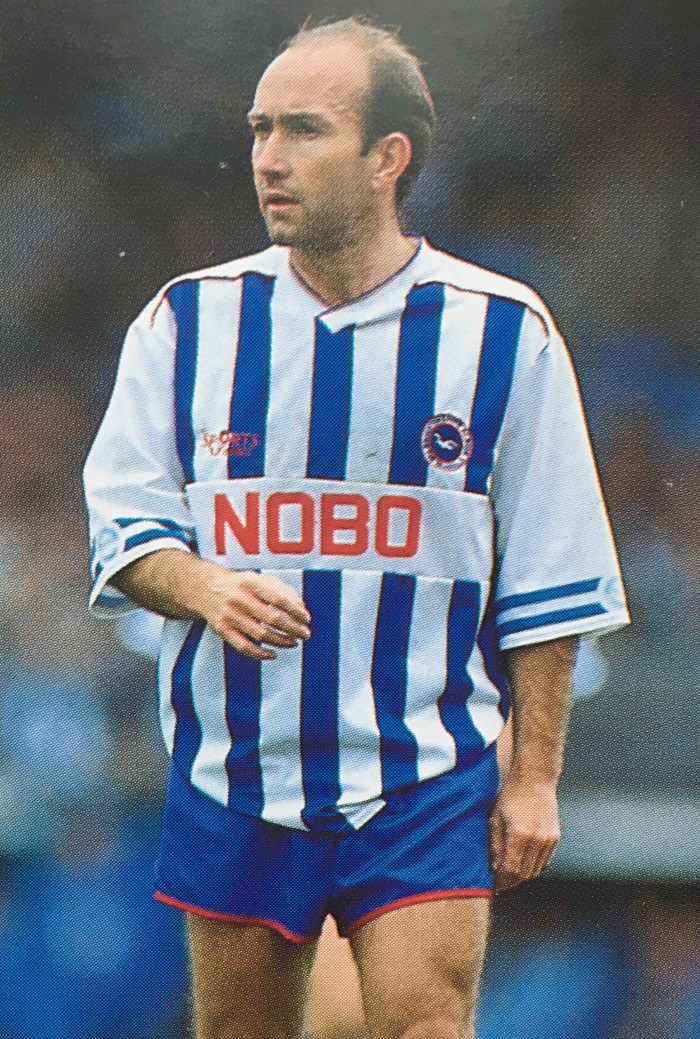
 IN MY OPINION, one of the best wingers ever to pull on the famous blue and white stripes was Clive Walker, an evergreen player who remarkably played more than 1,000 games for eight clubs.
Although well into his 30s when he arrived at the Goldstone Ground, the balding former Chelsea and Fulham wideman was an effervescent talent with the ball at his feet.
Asked by the Argus to preview the squad ahead of the 1991 Division Two play-off final at Wembley, Brighton coach Martin Hinshelwood said of him: “Alias Phil Collins. A great character. The dressing room buzzes when he is around. He is good on the ball, a great crosser and has scored some great goals this season.”
Both Albion’s wingers for that game had Wembley experience behind them having been on opposing sides in in the 1985 League Cup Final.
Walker had missed a penalty for Sunderland as Mark Barham’s Norwich City won 1-0 and six years later, against Neil Warnock’s Notts County, Walker’s bad luck continued when a Wembley post denied him as Brighton’s dream of promotion ended in a 3-1 defeat.


Both had played big parts in Albion reaching Wembley, though: Barham levelled for the Seagulls in the first leg of the semi-final at home to Millwall and Walker got the third when the Seagulls upturned the form book and beat Bruce Rioch’s side 4-1.
Born on 26 May 1957 in Oxford, Walker joined Chelsea in 1973, made his league debut in a 1-0 defeat away to Burnley on 23 April 1977 and was a first team squad regular between December 1977 and the summer of 1984, although, in 1979, Chelsea loaned Walker to Fort Lauderdale Strikers (as pictured below) where he scored nine goals in 22 appearances.


“Those were exciting, lively times and we loved our football. We were a bunch of young lads growing up together and, in my last couple of years there, I played with the likes of Kerry Dixon for the side who brought good times back on the pitch,” Walker told Mike Walters of the Mirror. “We were a close-knit bunch with a great sense of camaraderie, and a lot of teams these days would probably envy us in that regard.”
A fast winger with the knack of scoring stunning goals, Walker netted 17 in 1981-1982 and the next season, with Chelsea looking set to be relegated to Division Three, fans still remember how he scored the winner at Bolton Wanderers to maintain their status.
Details of many of his memorable moments at Chelsea are highlighted by the Sporting Heroes website.
And a Chelsea fans’ blog, Game of the People emphasised the impact he had at Stamford Bridge, pointing out: “He was left-footed, as quick as a sprinter and awkward to knock off the ball. And he could shoot! Those that liked wingers were excited by his willingness to run between players and take a pot shot at goal. Put simply, he was exciting to watch.”
In what is an otherwise interesting and informative piece about Walker in 2014, they unfortunately failed to mention his successful stint with the Seagulls.
Although he began the 1983-84 season well, he sustained a broken jaw which put him out for several weeks and, during his absence, another nippy winger – Pat Nevin – seized the opportunity to claim a first-team spot and Walker’s Stamford Bridge days were numbered.
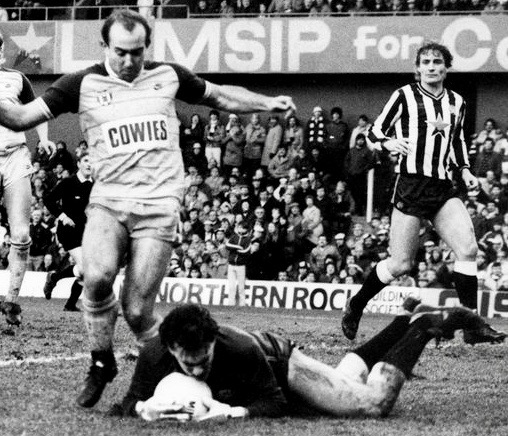
Come the end of the season, he was allowed to join Sunderland (above in action v Newcastle) for a fee of £70,000. “He returned to torment Chelsea in the Football League Cup semi-final second leg, scoring twice in what was a dreadful night for the club,” Game of the People observed. “Walker was abused from the stands, too, which was especially heartbreaking for those that appreciated his efforts at the Bridge.”
After two years in the north-east, Walker returned to London in September 1985, initially via a £75,000 move to Jim Smith’s First Division (Premier League equivalent) QPR, where he played 28 games in the 1986-87 season, alongside the likes of David Seaman, Michael Robinson and John Byrne. Just 20 months later, he left on a free transfer to Third Division Fulham for whom he made 127 appearances in three years, scoring 32 goals.
His debut was certainly memorable as he scored twice in a 3-1 home win over York City. Writer Ian McCulloch remembered the occasion in an article on fulhamfc.com.
“Fulham were in the doldrums, on the brink of extinction, owned by property developers, and going nowhere fast. And then, in the midst of all the doom and gloom, appeared one of football’s all-time, genuine crowd-pleasing entertainers. Walker ran the show that night, scored twice, and generally lifted both the fans and the team.”
Walker recalled: “That game really does stand out. And in the pouring rain as well! To score two goals on your debut is very special, and I just look back at it as a fabulous memory. Very, very enjoyable.”
Walker explained that it was Ray Lewington who took him to Craven Cottage, adding: “I had a great rapport with him – of course we were both apprentices at Chelsea – and we’re still good friends today. But then other managers came in, and you couldn’t escape the feeling that the club was going backwards and that was very, very sad because I had a lovely time at Fulham and I’ve got some very fond memories of those years. I loved playing at the Cottage and on the Cottage pitch.”
Walker picked up Fulham’s 1989-90 Player of the Year award before former Fulham captain Barry Lloyd went back to his old club to secure Walker’s services for the Seagulls in the summer of 1990. Even though he was the wrong side of 30, he pulled on the no.11 shirt on his debut away to Barnsley (in a side containing his old Chelsea teammate Gary Chivers in defence) and missed only one game all season as Albion nearly made it back to the elite level.


After that Wembley disappointment and only three games into the new season, Walker suffered another blow when he sustained a serious knee ligament injury away to Barnsley which sidelined him for several weeks.
With the previous season’s goalscoring duo Mike Small and John Byrne having been sold for big money, the side struggled, and eventually ended up being relegated.
Emerging young winger John Robinson had slotted into Walker’s place in the side during his absence although it was Barham who was the odd man out when Walker was fit to return to the line-up.
Back in the third tier the following season, although the return of Steve Foster in defence was a plus point, off the field the rumblings of financial meltdown grew louder and louder. Young Robinson was sold to Charlton Athletic and only the proceeds of the sale of goalkeeper Mark Beeney to Leeds United kept the taxman at bay when there was a winding-up order threat hanging over the club.


Three cup games against Manchester United were rare highlights in that precarious season and one of my favourite Walker moments came at Old Trafford in a League Cup replay on 7 October 1992.
Having managed a 1-1 draw against United in the first game, Albion gave United quite a scare in the replay, largely through Walker giving England full-back Paul Parker a torrid time. I watched the game sat amongst United supporters and they were full of praise for the veteran winger, albeit that United edged it 1-0.
Walker’s final appearance in an Albion shirt came on 24 April 1993 when he came on as a substitute for Matthew Edwards in a 2-1 home defeat to Rotherham United. Alas, as he recounted in an interview with Spencer Vignes for the matchday programme, his time with the Albion came to a sour end.
Together with Chivers and Perry Digweed he was let go by Lloyd apparently because he said as the highest earners the club could no longer afford them. He was unceremoniously ushered out of the door with his boots in a bin bag. “That was the thank-you we got from Brighton,” he said.
When most players would be considering hanging up their boots, at the age of 36, Walker left Brighton and moved into non-league with Woking where he scored 91 goals in 210 games.
A poster called NewAdventuresinWiFi, on Sunderland’s readytogo.net fans website, recalled watching Walker play for Woking, and said: “Walker was an absolute class act when he fancied it. He was instrumental in the cup run of 96-97 when Millwall and Cambridge were dispatched and Premiership Coventry given an almighty fright.
“Also remember a Conference game against Altrincham when we put seven past them and Walker was unplayable that day…to the point the opposition full back ended up getting a straight red for a frustrated desperate two footed ‘challenge’ he attempted on Clive after yet another glorious attacking run.”
Another poster, JumpingAnaconda, remembered: “I saw him playing for Woking in a minor cup final at Vicarage Road, in the season where he won a few big games for them in their FA Cup run. He was 40 years old and he was absolutely quality, up and down the line all night. That season there was some talk of Premiership sides looking at him to come in to do a job for them. His level of fitness was incredible. He ran around like a 20-year-old. He was probably the closest we would get to another Stanley Matthews in the Premiership era in terms of a winger that kept his pace, creativity, ability to beat a man and make crosses into his 40s.”


From Woking, he had a spell as the assistant manager at Brentford under Eddie May but then went back to playing, at Cheltenham Town. Finally, after winning the FA Trophy and the League, he retired at the grand old age of 43, although he continued to turn out for Chelsea Veterans teams.
He had a brief excursion into management with Molesey but a career in the media took off and he became a regular and well-known voice with BBC London, and for Sky TV’s coverage of Conference football.
 Walker has also worked for Talksport and appears regularly with former Chelsea and Spurs player Jason Cundy on Chelsea TV and radio (as above).
Pictures from a variety of sources but mainly the Albion matchday programme.
 KURT NOGAN is right up there as one of my favourite all time Brighton & Hove Albion players. The ‘No, no; No, no, no, no; No, no, no Nogan’ fans’ chant still rings around my head when I think about his goalscoring exploits in the stripes.
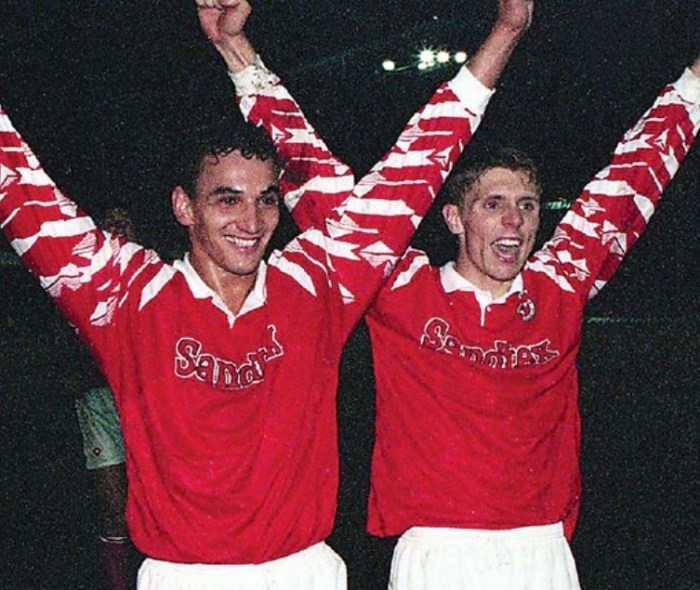 With one of the best away displays I have seen, Brighton took the game to their supposedly more illustrious opponents and caused a major shock when a stunning long range strike from young defender Stuart Munday (celebrating above with Nogan) sailed past Kevin Poole in Leicester’s goal.


 After a slow start Nogan scored his first goal in one of those lower league meaningless cup matches and then started finding the net regularly in the league, ending the season with 22 goals in all competitions.
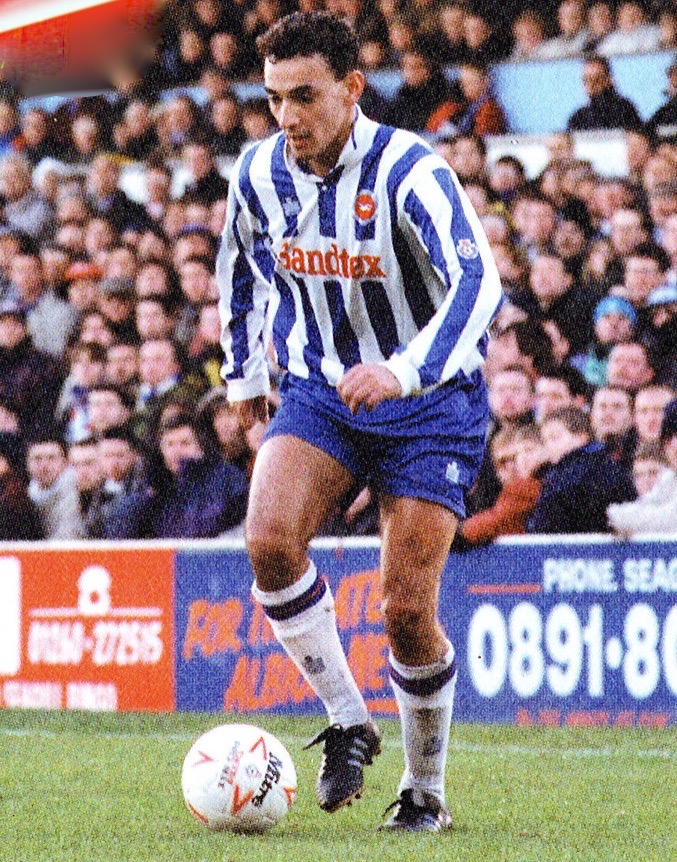 In fact, one of Stapleton’s two games in a Brighton shirt was away to Cardiff on 5 November 1994. In the Bluebirds line-up that day were future Seagulls

 In parallel lines