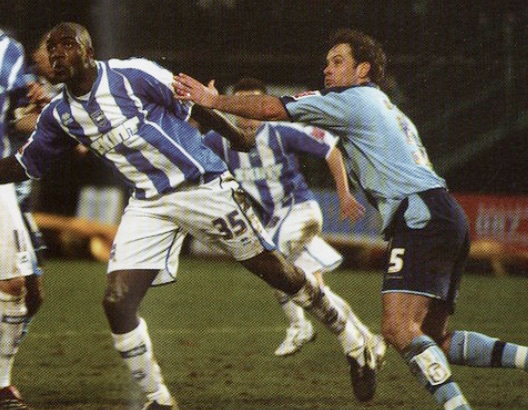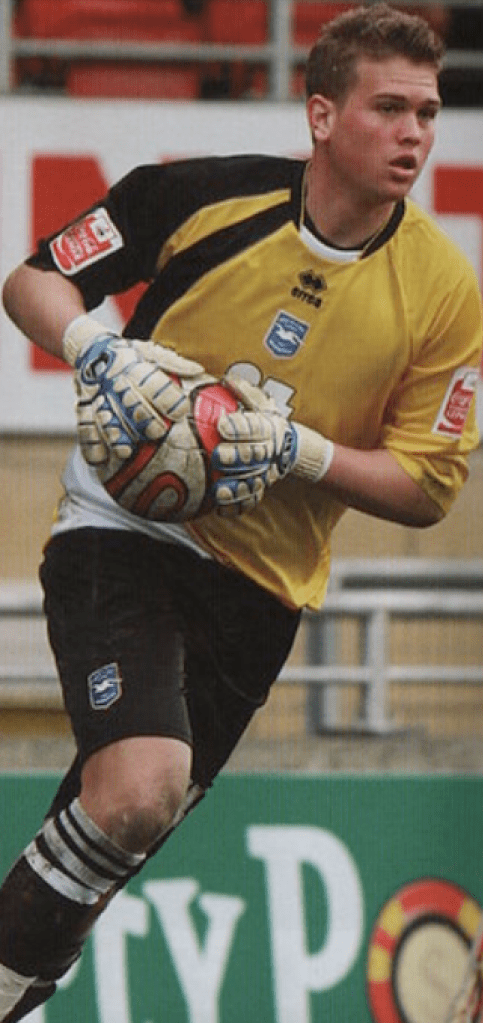
Birds and Bees took Mikkel to help out in an emergency

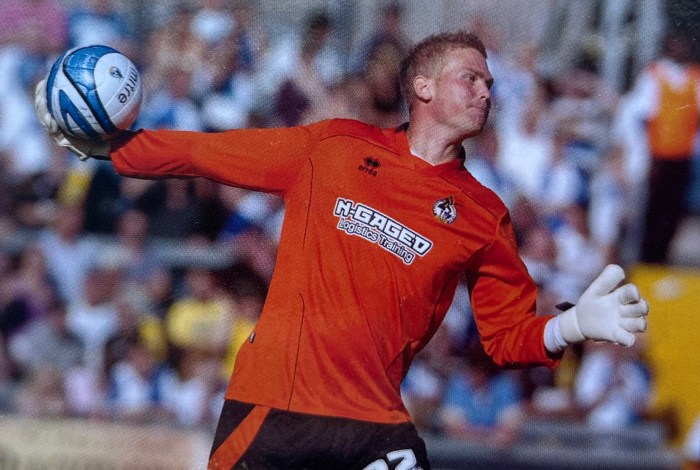
GOALKEEPER Mikkel Andersen was one of five loan signings in Albion’s line-up for newly-appointed manager Russell Slade’s first match.

Alas the young Dane was unable to help the Seagulls to a much-needed win as they succumbed 2-1 at Leyton Orient on 7 March 2009.

The Danish giant, who came from Reading with a glowing endorsement from ex-Albion boss Steve Coppell, played five matches during Michel Kuipers’ absence through injury – and conceded 10 goals in four defeats.

The one victory he was part of was a convincing one: he was between the sticks when Albion trounced Slade’s previous employer Yeovil Town 5-0 at Withdean (two each for Dean Cox and Nicky Forster, the other a Glenn Murray penalty).

Andersen was still only 20 when he joined the Seagulls and at 6’5” he towered over most of his teammates.

The youngster had spent two years at Reading by then but had already been out on loan three times: to Torquay United and Rushden & Diamonds, where he played three times for each. Ironically, his debut for Rushden came against the club he’d just left, Torquay.

At Brentford, his one appearance for the then League Two Bees was to cover for the suspended Ben Hamer, who was also on loan from Reading.

It might have been brief but Andersen’s performance in Brentford’s 2-1 home win over Bradford City in December 2008 earned him the Man of the Match honour.

In a late flurry of goals, Marcus Bean put Brentford 1-0 up in the 88th minute only for Michael Boulding to equalise in the 89th minute. Bees won the match courtesy of a 90th minute winner from former Albion striker Nathan Elder.

At Brighton, Andersen was reunited with Tony Godden, who had only just succeeded Paul Crichton as Albion’s goalkeeper coach. Godden had previously worked with the Dane at Rushden & Diamonds.

Andersen told the matchday programme: “I was on an emergency loan and he was the coach. I really enjoyed it there and it was Tony who told Brighton about me.

“I’ve been at Reading for two years now and I’ve just signed another new deal for them so hopefully I’ll be there for another two years.
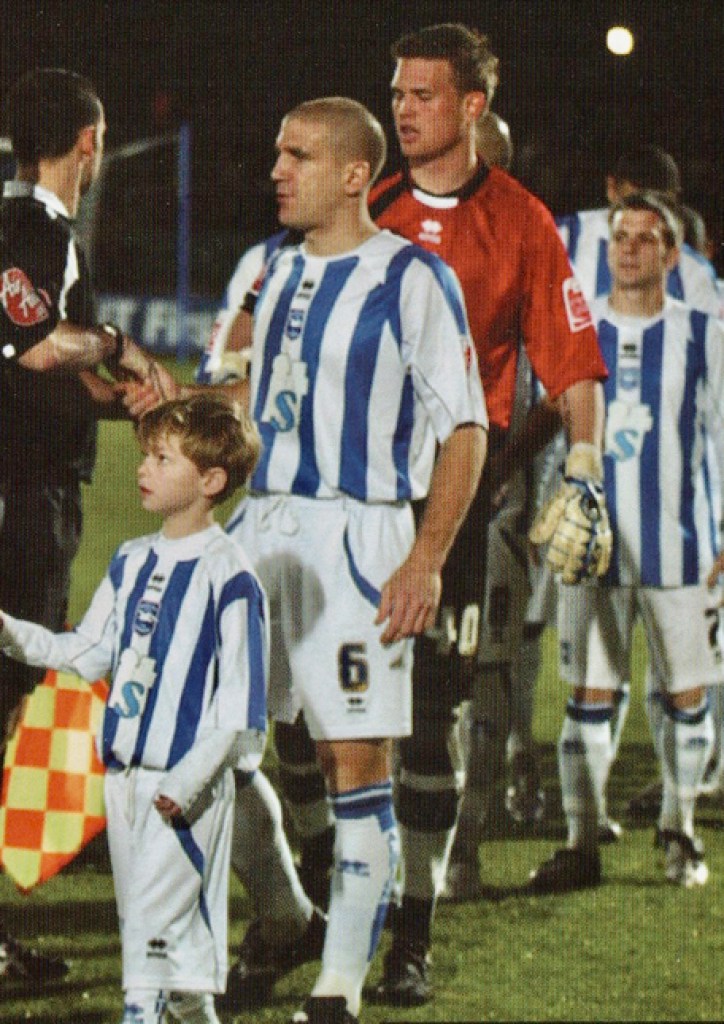
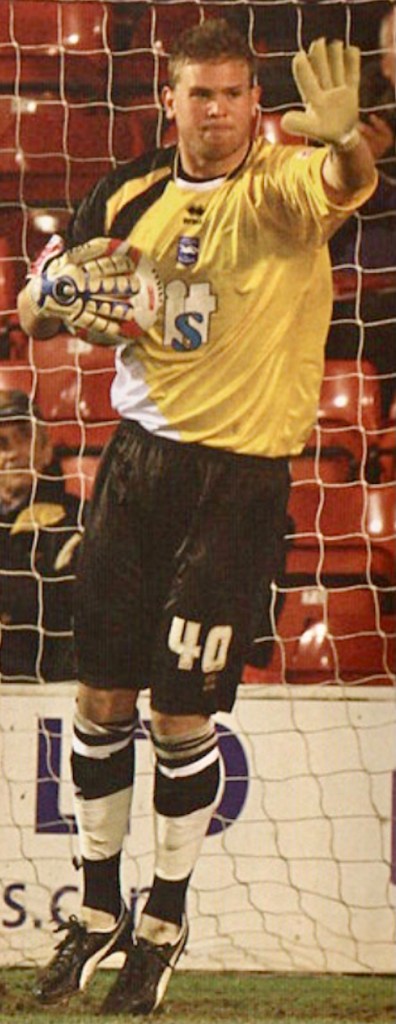
“But you need to play some league games to build up your experience and that is why I am here. I want to develop both as a player and a person – that is why I came to England in the first place, something I always wanted to do when I was growing up in Denmark.”

The month before he joined Brighton, Andersen had made his debut for Denmark’s under 21 international side having already been capped at under 19 and under 20 levels. The Danes beat Malta 1-0.

Albion made their move on Godden’s recommendation shortly before Slade took over from the departed Micky Adams. Caretaker boss Dean White, who completed the deal with chairman Dick Knight, told the Argus: “Mikkel is an up and coming young goalkeeper. He is a big presence and comes highly recommended by Steve Coppell.
“With the current situation as it is we need cover in this position. It’s an important position, Mikkel has played against us in the reserves this season and we know what he’s about.”

Born in the Copenhagen suburb of Herlev on 17 December 1988, Andersen started out with AB Copenhagen and became Denmark’s youngest ever goalkeeper to play senior football when he turned out for them at the age of 17.

It was while on a pre-season tour with AB Copenhagen, playing against a Reading XI at Palmer Park, a municipal multi-sports venue in Reading, he earned his break in the English game.

“AB is ten minutes from home,” he said. “I wanted to come to England to develop as a player and a person.

“I was on a training camp with AB and we played against Reading and after that they gave me a couple of trials. They signed me when I turned 18.”

Although Andersen had been on a pre-season tour with the Royals and been selected as goalkeeper back-up on the bench, there were several other loan spells away from Berkshire before he finally made his first team debut.

For much of his time at the club, he was behind Marcus Hahnemann and Adam Federici in the goalkeeping pecking order.
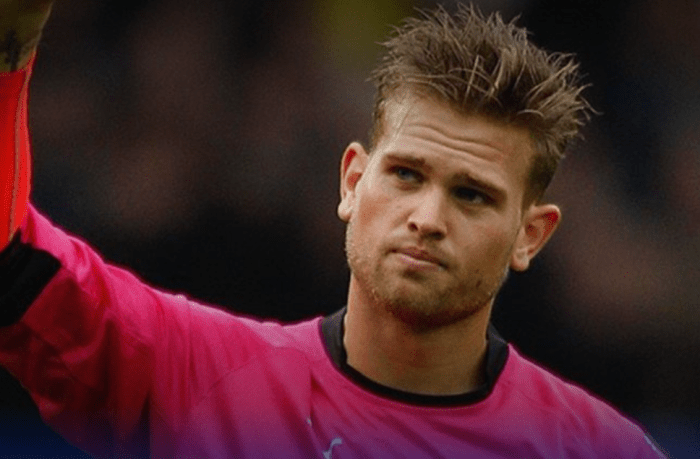
He spent almost the whole of the 2009-10 season at Bristol Rovers (playing 39 matches) and returned the following season when he featured a further 19 times, before returning to Reading.  He was awarded the League One side’s Young Player of the Year trophy and was named in the BBC Team of The Year.

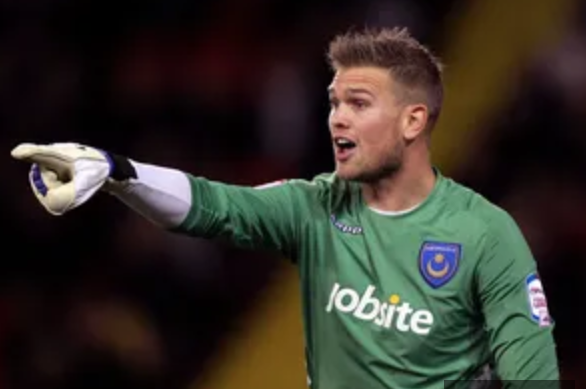
In August 2012, he began a three-month loan spell at League One Portsmouth and he returned to Denmark for the whole of the 2013-14 season, playing for Danish Superliga team Randers Freja.
When he finally rejoined parent club Reading, by now under Nigel Adkins, for the 2014-15 season, his long-awaited first team debut came in September away to Sheffield Wednesday. 
Andersen made another four appearances for the Royals before the season’s close, after Steve Clarke succeeded Adkins.

Although he played in a memorable 1-0 FA Cup third round win at Huddersfield Town in January 2015, he was on the bench (Federici was no.1) as the Royals went right through to the semi-finals where they lost to Arsenal.

In June 2015, Andersen signed a two-year contract with Danish Superliga side FC Midtjylland.

He played 11 UEFA games with the Danish side, when he was up against the likes of Rubin Kazan, Napoli, Club Brugge and Manchester United.

Following 42 appearances in two years with FC Midtjylland, Andersen made the switch to Lyngby, of Copenhagen. 

After a season there, he rejoined Midtjylland and in the 2020-21 campaign he was limited to just four games, although two were in the Champions League against Liverpool and Ajax.

In 2021 he stayed in Jutland and joined newly-promoted Viborg FC where he made only six appearances in two years. He then switched to Copenhagen-based Danish Second Division side Fremad Amager where he made 52 appearances over two seasons as goalkeeper and coach.
Nathan Elder needed to knock on boss Wilkins’ door

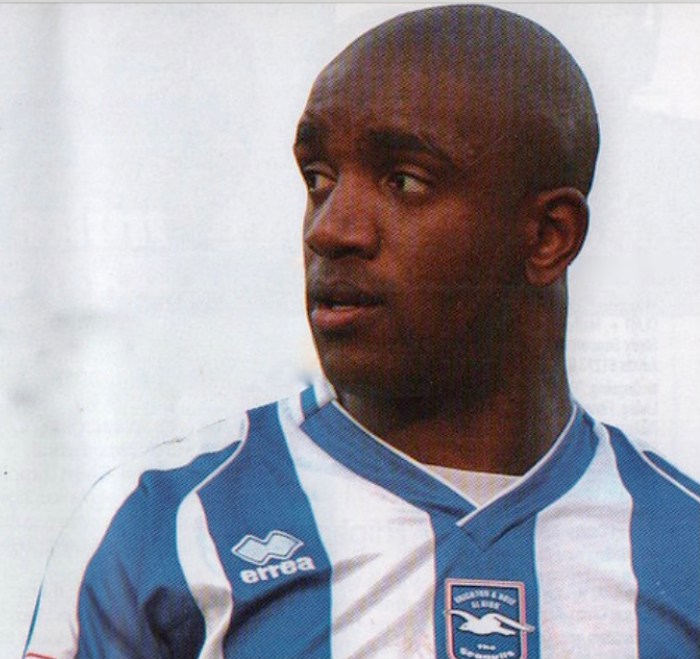
WHEN I watched Nathan Elder go on as substitute at Boundary Park, Oldham, on 12 January 2008 and score an injury-time equaliser, I remember wondering whether his Brighton career might finally be getting off the ground.

Previous cameo appearances off the bench had indicated Albion might have unearthed a useful rough diamond after picking him up from non-league Billericay, and he’d scored his first goal in the final game of the 2006-07 season: a 1-1 draw at Cheltenham.

But manager Dean Wilkins was somewhat spoilt for choice, especially when experienced Nicky Forster arrived that summer. Alex Revell and Bas Savage tended to be ahead of Elder in the pecking order too.

By the end of January, Albion splashed £300,000 on Glenn Murray and, Elder, still only 20, was deemed surplus to requirements. After only 13 months at Brighton, he was sold to Brentford for £35,000 (Revell left as well, when Southend parted with £150,000).

The Elder deal represented good business for the Seagulls – a £25,000 profit on a player who only made three first team starts during his time with the club. Disappointed with his brief spell at Brighton, Elder reflected some while later that he should have done more to persuade Wilkins to give him more playing time.

“It was my fault,” he told brentfordfc.com. “I trained really well and in the reserve games I was scoring every time, but I never knocked on the manager’s door and asked him why I wasn’t starting. I always thought to myself that I was lucky to be in this position and coming from where I’d come from, I didn’t want to ruffle any feathers.

“As time has gone on, I’ve realised that if you don’t show some hunger and give the manager a reason to start you, he won’t.”

That instinct was almost certainly right, bearing in mind comments Wilkins made in an Argus interview after that Oldham game.

“I know it has not been easy for Nathan,” he said. “He hasn’t had many opportunities but he has gone on and done exactly what we hoped he would do.

“He will probably be banging on my door now for a starting place and of course he has given me a dilemma.”

Elder, though, sat back and waited patiently. “I was sitting there too comfortably and thinking that if I got the call, I’d come in and do my best,” he said. “We went on a losing streak at Brighton of about four or five games where neither of the strikers scored.

“At that point, Dean Wilkins was watching me in training, but I never actually said to him, ‘Gaffer, put me in, give me a chance’.”

As he departed, Elder told the Argus: “I don’t really feel as though I was given enough of a chance to show what I can do, it was more in fits and spurts coming off the bench.

“I just don’t think he (Wilkins) was confident enough in me to start me on a regular basis.

“Even when some other players weren’t performing I don’t think he had that confidence to throw me in. That’s football, it’s not a walk in the park.”

Of the striker’s departure, Wilkins said: “Nathan has found his opportunities limited, he wants to start games but we couldn’t guarantee that and felt it was right to let him move.”

It was an unfortunate ending to his brief time with the Albion, especially after it had begun so well. He scored just 11 minutes into his debut for the reserves, director of football Martin Hinshelwood observing: “Nathan scored with a good finish.”

The striker told the matchday programme: “Going from the level I was at to this level, without playing any games, is a huge jump, but training has been wicked for me. It has really helped me improve: my movement, my touch, my movement without the ball.

“I felt I showed that in the game and that’s how I got my goal, with my movement. I could have had another two or three as well, but I know that I’ll become sharper as I get fitter.”

Born in Hornchurch, Essex, on 5 April 1985, Elder’s first involvement in football was at the town’s Langtons Infant School. He later played for a local Sunday league team, Barns Sports, before stepping up to play for Hornchurch in the lower reaches of the Isthmian League.

He progressed up that league via moves to Barking & East Ham United, Aveley and then Billericay Town. He came to Brighton’s attention when he was playing for Billericay against Worthing.

If nothing else, Elder’s disappointment at Brighton prepared him to seize the chance to shine with the Bees. It was thought he had scored an own goal on his debut for Brentford against Mansfield Town after just 15 minutes (it was later credited to Stags forward Michael Boulding), but he made amends by scoring the winner five minutes from time as Brentford eventually won 3–2, and he went on to be part of their 2009-10 promotion squad under Andy Scott.

Nathan Elder scores on his Brentford debut

Sadly, a shocking facial injury which threatened the sight in one eye put paid to his involvement in the promotion run-in.

It came when he was involved in an aerial collision with Rotherham’s Pablo Mills; the United player’s elbow inflicting a double cheekbone fracture, a fractured eye socket, severe trauma to the eyeball and extensive bleeding in and around the eye.

He described the incident in detail in an interview with Dan Long in 2019. “When the physio came over, I couldn’t see out of my eye, I thought my eyebrow and cheekbone had swollen up. I knew it was serious. The physio held up two fingers with a hand over one eye and asked how many fingers he was holding up. He switched eyes and I couldn’t tell him because it was just black. He could see that my eye was open and he didn’t panic, but his reaction showed that I needed to go to hospital immediately.

“I questioned it but stood up and went into the dressing room. As we got there, I looked in the mirror. Everyone was telling me to sit down but I told them to get off me for five minutes so that I could find out what was going on.

“I could see that both of my eyes were open, but I could only see out of one of them. That was scary and that’s when I started to panic because I immediately thought I’d lost sight in that eye and it was done for.”

Up to that point, Elder had enjoyed a successful partnership with Charlie MacDonald, who he said he learned a lot from. “He was just such a potent goalscorer,” he said. “As a young lad it was brilliant to watch what he was doing and try and emulate it.”

Sadly MacDonald also missed the triumphant end of the season after dislocating a shoulder and the pair didn’t get to feature for the Bees again.

Meanwhile, the incapacitated Elder said: “When they brought in Jordan Rhodes, it was really good to see the success he was bringing, but when you are sitting indoors and you can do literally nothing, that was pretty horrible.”

After Elder’s recovery from the injury, life was never the same at Griffin Park and on 3 August 2009 he signed a three-year contract for League Two Shrewsbury Town.

But only three months later he was transfer listed by manager Paul Simpson who was unhappy with a performance in a 1-0 FA Cup loss at home to non-league Staines Town.

Two months on, he joined Blue Square Premier club AFC Wimbledon on loan until the end of the 2009-10 season. Elder scored on his debut in a 2-0 home win over Mansfield Town and picked up the man of the match award.

He went on to make 18 appearances, and scored three goals, before injury struck again. He suffered a tear of his anterior cruciate ligament in a game against Tamworth. Eventually, on 24 June 2011, he was released by the Shrews.

Next stop was Conference Premier side Hayes and Yeading but he was only there a month before joining League Two Hereford United, initially on loan and then permanently. But he left at the end of the season and joined National League outfit Ebbsfleet United where he scored 16 times in 44 matches.

He spent the 2013-14 season at Conference South Dover Athletic and on 10 May 2014 scored the only goal of the game to win the play-off final against Ebbsfleet securing Dover’s return to the Conference Premier League.

His most prolific scoring came at Isthmian League Premier Division side Tonbridge Angels, who he initially played for on loan before spending three years (2015-18) on a permanent basis. He netted 58 goals in 148 matches for Tonbridge.

Elder moved on to Sittingbourne for the 2018-19 season where he balanced a player-coach role at the Isthmian South East Division side with a career in recruitment in London’s Leadenhall Market. He later became assistant manager at Hythe Town for two years.