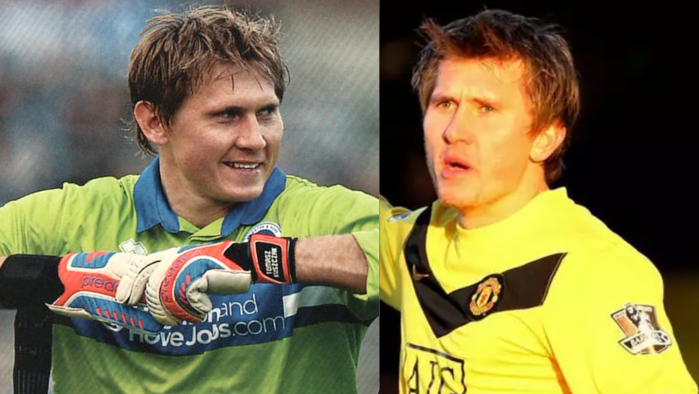
Pole in goal Tom experienced Cup highs and lows

THERE’S plenty of FA Cup history between Brighton and Manchester United and a goalkeeper who played for both has his own memories of the competition – not all of them good!

Although Tomasz Kuszczak played 32 league games for United, as a back-up at Old Trafford rather than first choice, he often found himself called upon in cup matches (eight FA Cup, 10 League Cup – including collecting a winners’ medal in 2010 – and 11 European games).
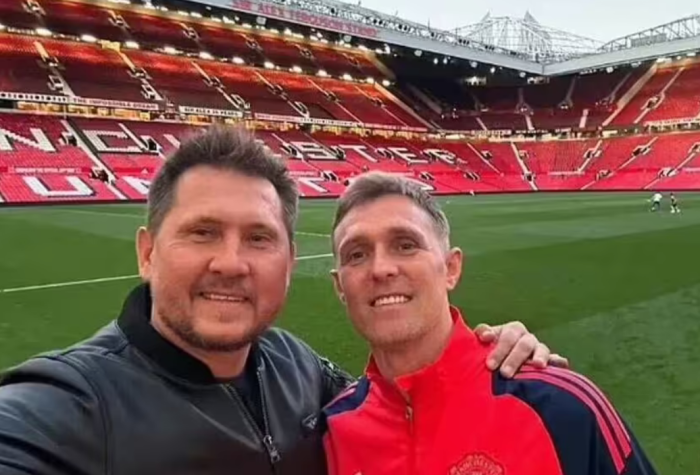
In April 2025, Kuszczak paid a return visit to Old Trafford to watch United’s 0-0 draw with Man City and snapped some selfies watching from the stands and (above) on the pitch with former teammate Darren Fletcher, now in temporary charge at United following the dismissal of Ruben Amorim.

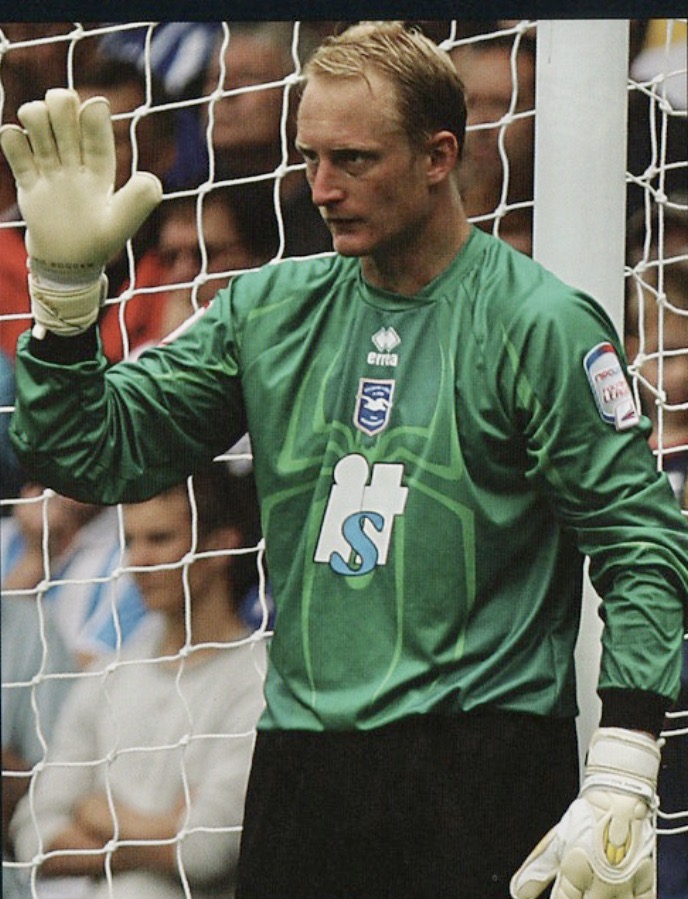
At Brighton, where Kuszczak was the first choice for two seasons, he found the goalkeeping duties reversed for FA Cup ties and he gave way to either Casper Ankergren or Peter Brezovan.

Signing the Polish international for Gus Poyet’s Championship Brighton side was something of a coup and the boss told the club website: “There were clubs in England and abroad interested in Tomasz, but it says a lot for the ambition of this club that he wanted to sign for Brighton.”

Poyet later told The Argus: “When we had the chance, we got him. You don’t have too many chances sometimes to sign this sort of player, so it was very important.”

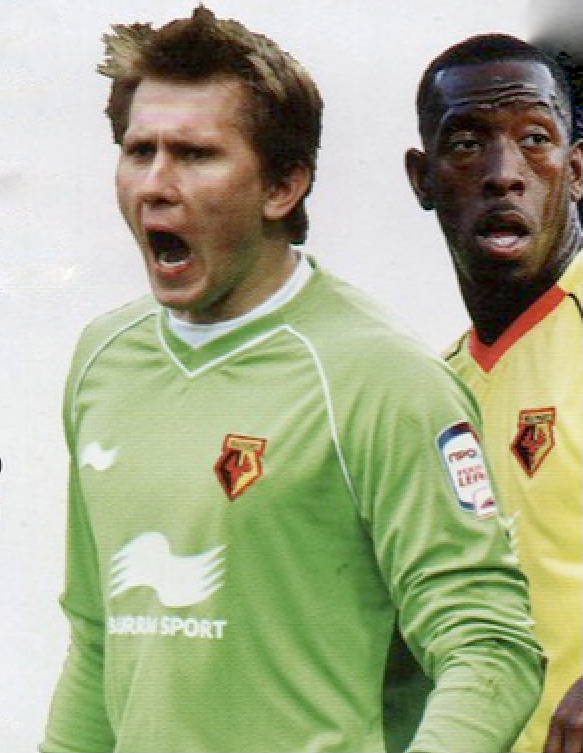
Kuszczak said one of the reasons he chose to join the Seagulls was because of what he’d seen when playing against them the previous season, while on loan at Watford.
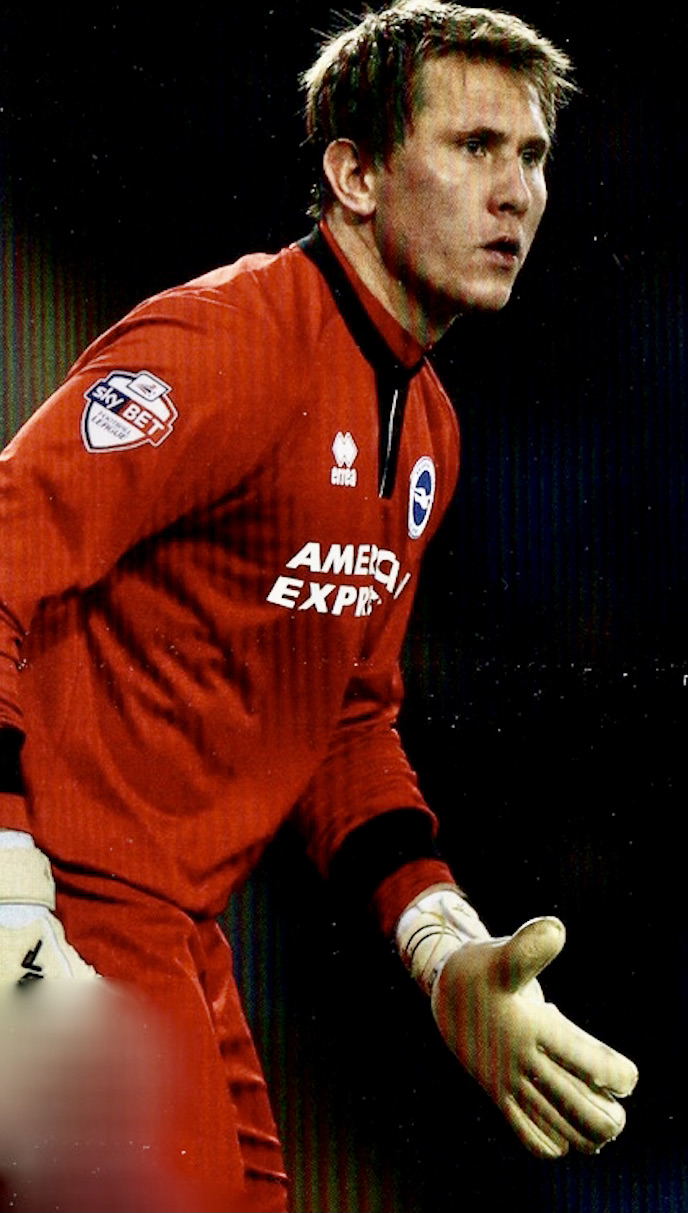
“I was very impressed with the way the team played – it was totally different to the rest of the Championship and more like what I was used to at Manchester United.

“This team likes to pass the ball, they like to create, they are attractive to watch. The way Brighton play is the future of football.

“I had other clubs who wanted to sign me but my heart told me that this was the right choice.”

Kuszczak continued: “I have played Premier League football for eight years, with West Bromwich Albion and Manchester United, and I believe the structure is in place here to join them.

“The manager and coaching staff, the team, stadium, crowds, through to the plans for the new training ground, everything is geared up for playing at the highest level and I could sense that ambition to be a top club straight away.
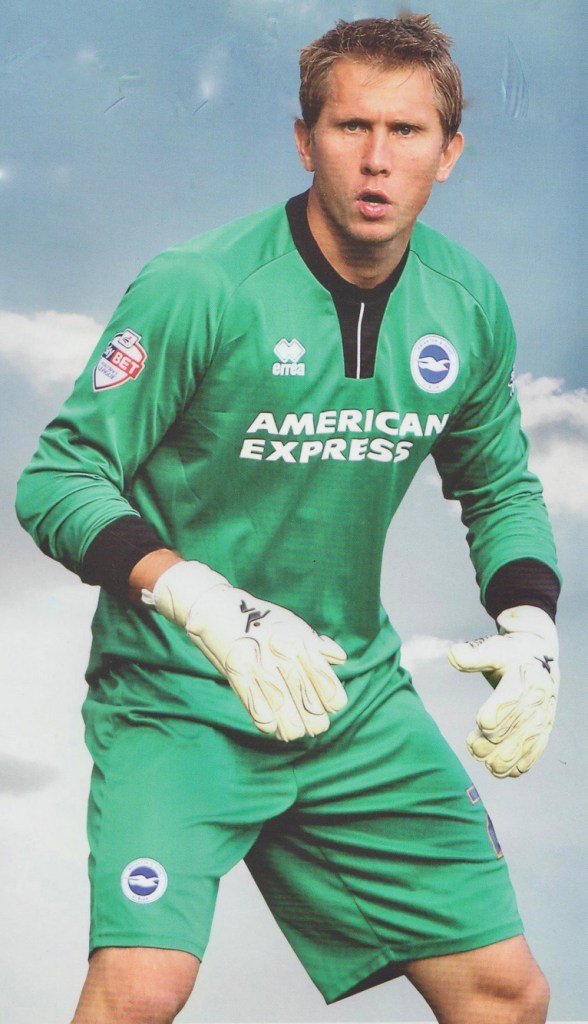
“The Premier League is where I want to be again and I believe I can get there with Brighton. This club is heading in only one direction, and I want to play my part in helping us get there.”

During his time at Manchester United, five of Kuszczak’s eight FA Cup appearances were in the 2007 competition when United reached the final – although first choice Edwin van der Sar took over between the sticks for that game, when Chelsea won it 1-0.

The 2008 competition certainly wasn’t one Kuszczak remembered fondly. In a quarter-final against Portsmouth at Old Trafford on 8 March 2008, he went on as a sub for the injured van der Sar at half-time, but 30 minutes later was handed a straight red card for fouling Milan Baros.

Rio Ferdinand took over in goal but failed to save Sulley Muntari’s penalty, the only goal of the game.

In 2010, Kuszczak was in goal when League One Leeds United, with Ankergren in goal, pulled off a shock third round win at Old Trafford – United’s first exit at that stage of the competition since 1984 (the year they went into it as holders after beating Brighton in a replay in 1983).
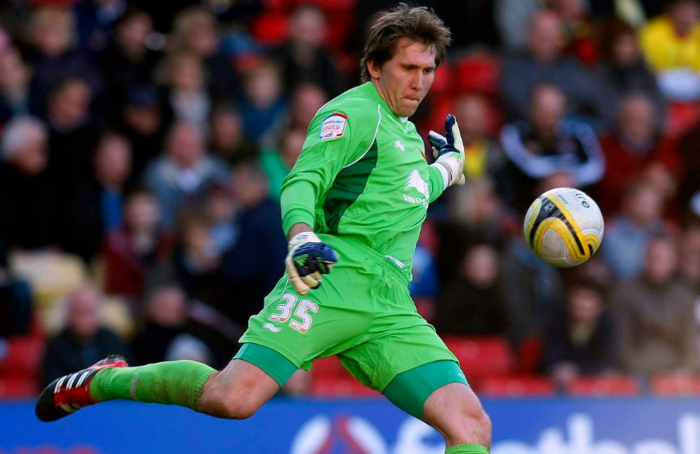
Jermaine Beckford’s 19th minute goal clinched it for the Yorkshire side against a United who had Danny Welbeck playing up front alongside Dimitar Berbatov and Wayne Rooney.

There was some consolation the following month when United won the League Cup at Wembley, beating Aston Villa 2-1. James Milner opened the scoring from the penalty spot for Villa, sending Kuszczak the wrong way. But goals from Michael Owen and substitute Rooney clinched it for United.

The following year, Kuszczak was again in goal for United’s FA Cup third round tie at home to arch rivals Liverpool which United edged with an early goal by Ryan Giggs. Liverpool captain Steve Gerrard was sent off just past the half-hour mark for a two-footed tackle on Michael Carrick.

But Anders Lindegaard was chosen ahead of Kuszczak as United marched to the semi-finals, where they were beaten 1-0 by Manchester City. In the fifth round, United only narrowly overcame Crawley Town, who had former Albion ‘keeper Michel Kuipers in goal.

By the time the 2011-12 season came round, Kuszczak had slipped down the list of United custodians, with David de Gea first choice, and Lindegaard and Ben Amos also ahead of him.

In February 2012, Kuszczak was loaned to Championship side Watford, where he made 13 appearances, including that third-to-last game of the season at the Amex, which finished 2-2. Former Seagulls promotion-winner Chris Iwelumo was in Sean Dyche’s Hornets side that day when goals from Troy Deeney and Sean Murray (penalty) put the visitors ahead at half-time and second half replies from Inigo Calderon and Will Buckley, against his former club, ensured a share of the points.

It was on Kuszczak’s release from United in June 2012 that he moved to Brighton.

Born in Krosno Odrzańskie in western Poland on 20 March 1982, the son of a Polish army colonel, Kuszczak grew up in Wroclaw, the city on the River Odra whose Tarczyński Arena was a host stadium for the 2012 Euros.

When he was 11, Kuszczak fancied himself as a striker but soon realised he wasn’t quick enough.

“I was always taller than everyone else, a bit like my father and brother, and I loved climbing, jumping from trees, taking a risk, so the position of goalkeeper seemed idea to me,” he said in a matchday programme interview.

“My father and brother would take shots at me, hard shots as well, and I enjoyed trying to stop them.”

He began his career with one of his country’s top teams, Śląsk Wrocław, and a year after earning his first pay packet at the age of 16 crossed over the border to Germany to play for KFC Uerdingen 05 and Hertha Berlin.

Although he made 87 appearances for the Berlin side’s reserves, he was unable to dislodge ex-Palace ‘keeper Gabor Kiraly and Christian Fiedler to claim a first team spot.

He was capped at under 16, under 18 and under 21 level (14 caps) by Poland and, while never first choice ‘keeper for the senior international side, he made his debut in 2003, in a 4-0 win over Malta, and played 11 times for his country, the last time in 2012. He initially took over from Liverpool keeper Jerzy Dudek but, invariably, Artur Boruc and Wojciech Szczesny were picked ahead of him.

He moved to the UK in 2004 when Gary Megson signed him for West Brom. He was reserve ‘keeper behind Russell Hoult in his first season at The Hawthorns but managed 28 league appearances when competing for the gloves with the often-injured Chris Kirkland in his second season.

In one of those appearances, against Wigan Athletic in January 2005, he pulled off a spectacular save to deny Jason Roberts which was subsequently voted Save of the Season by Match of the Day viewers.

Four months later he went on for an injured Hoult at Old Trafford after only 19 minutes and he recalled: “I had a fantastic game, saving everything that came my way and we ended up drawing 1-1. It was a game which ultimately got me my move to United.”
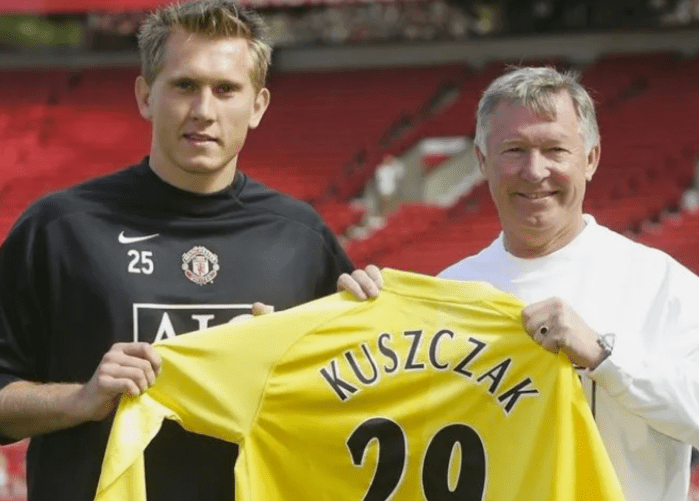
Sir Alex Ferguson captured Kuszczak from West Brom

In a somewhat complicated transfer deal, Man U signed Kuszczak in the summer of 2006 in exchange for United’s former Albion loanee, Paul McShane, and young goalkeeper Luke Steele, but the first year of the arrangement was on a loan basis. In five seasons at United, he played a total of 61 games.

After he retired from playing Kuszczak completed a degree in sports journalism and he had already shown his writing ability during his time with the Seagulls, compiling a piece for The Footballers’ Football Column in December 2013 which appeared in the Daily Mail.

Perhaps he also showed his true colours regarding dropping down into the Championship when he wrote: “I miss the Premier League a lot. The idea around moving to Brighton was to get more games and put myself on the market.”
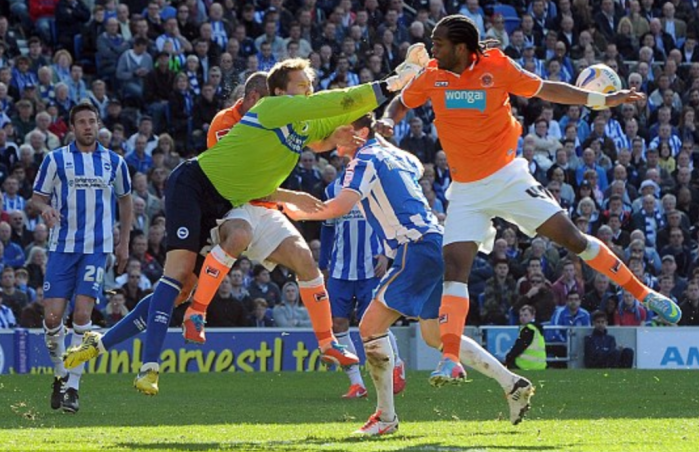
Kuszczak in the thick of it for Brighton against Blackpool

Although he added: “This move was all about giving me the opportunity of playing in the Premier League in the future. I would love to go with Brighton – that’s the aim. We’re ambitious and want promotion.

“It may sound arrogant but my place is in the Premier League. I came to England with West Bromwich Albion and enjoyed my time there, as I did at United. I want to be back in business in front of great crowds.

“I want my friends to be watching me on TV every week and have a chance of challenging the best in the world.”

Kuszczak certainly addressed the issue of more playing time during his two seasons with the Albion, completing 89 appearances across the two successive play-off promotion campaigns, initially under Poyet and then Oscar Garcia.

But within days of Garcia’s resignation after the play-off semi-final defeat to Derby, it was announced Kuszczak was being released.

There were a number of unsubstantiated and colourful reasons as to why he wasn’t retained by Brighton, but Andy Naylor in The Argus said neither Garcia nor his replacement, Sami Hyypia rated his ability with his feet or his distribution skills.

For around six months, Kuszczak was unable to find a new club but then Kenny Jackett took him to Wolverhampton Wanderers where he played 13 games deputising for the injured Carl Ikeme.

Midlands rivals Birmingham City swooped to sign him in the summer of 2015. Even though Harry Redknapp signed Brighton’s David Stockdale as first choice ‘keeper at St Andrew’s in 2017, Kuszczak found himself back in the first team after Steve Cotterill arrived as manager.

He spent four years at St Andrews, finally leaving in 2019 having made 89 appearances for the Blues.

After hanging up his gloves, he returned to Poland and started up his own construction company building houses and apartments.

He also completed his journalism studies and obtained his UEFA A coaching licence. He coached the Polish national team goalkeepers for six months between September 2023 and March 2024.
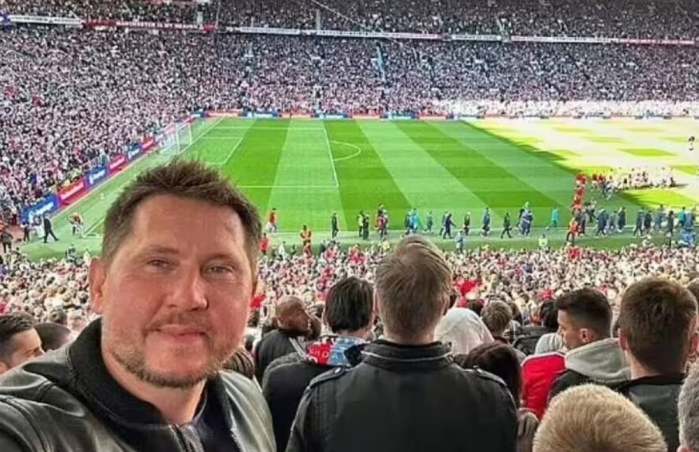

Kuszczak took a selfie as he watched from the Old Trafford stands in April 2025

Milner: ‘a player Toon should have built the club around’

FROM being given his Premier League debut at 16 by one former England manager to being signed by another when only 18, James Milner’s career was on an upwards trajectory from an early age.

Terry Venables, when manager of Leeds, was happy to make Milner the youngest player to feature in the league (shortly after Wayne Rooney had become that at Everton and until the Toffees also gave that honour to James Vaughan).

Then, when Leeds were relegated from the top flight, Sir Bobby Robson took the teenager from his boyhood club to join Newcastle United for a fee of £3.6m. Leeds needed the money even though Milner was reluctant to leave.

The young winger made an instant impression on Robson in pre-season friendlies on the club’s tour of the Far East, expressing his delight with his workrate and desire to run at defenders and support the attack.

Even when Milner missed a crucial penalty against Thailand in a penalty shoot-out, he was confident enough to take another and score in the next game.

“We’re very pleased with him in the two games we’ve seen him in so far,” said Robson. “He’s shown a willingness to go forward and attack his full back, which I like very much. 

“He’s got confidence and on this display he is a young talent who is going to be very good for us. I was desperate to get him and we have done. He has a big future, I’m certain of that. He’s comfortable with both feet and he’s versatile because of that.”

Having mainly played on the left for Leeds, Newcastle initially put him on the right wing, but Milner was unfazed. “I really enjoyed myself,” he said. “I can play on the left as well but I would play anywhere as long as I am in the team. It doesn’t bother me.

“At my age, getting experience in The Premiership is all that matters. I have to use that experience to try and become a better player.”

The early positivity didn’t last long, though, when Robson was sacked at the end of August 2004 after five years in charge. His successor, Graeme Souness, didn’t share the previous manager’s view of young Milner and although he made 16 starts for Toon he was a sub on no fewer than  23 occasions.

“It’s very frustrating not playing every week but that’s the same if you are 39 or 19,” said Milner when interviewed ahead of an important England under 21 match against Azerbaijan at Middlesbrough’s Riverside Stadium. “I am hopeful that between now and the end of the season I can show my best form and hold down a regular spot in the side.

“It is an important match for the Under-21s as it is a qualifying game but it is also important for me on a personal basis as it will keep me match fit and ready for Newcastle.

“I hope the manager will be watching and I am determined to show him what I can do in a competitive situation.

“I have got to be patient because there are a lot of high-class players at Newcastle and I have got to wait to get my chance.

“I have got to prove myself to the manager and show that I should be involved in every game.”

Former Brighton manager Peter Taylor, who managed Milner for many of his record 46 appearances for England under 21s, said of him: “You couldn’t meet a nicer, more professional boy. He works his socks off for the team.

“If he is playing wide right and you are the right-back, then you are over the moon because he will put his shift in defensively and always be available when you have got the ball. He has an incredible work ethic.

“He is great to have in your team and he just keeps working and working to improve.

“The beautiful thing about him is when I first got involved with him at under 21 level, I wasn’t sure if he was right footed or left footed!

“He can use both feet and I think he can play in midfield as well as out wide and up front.”

When Newcastle were in somewhat of a slump under Souness, the Scot preferred experience over youth and was happy to let Milner go to Aston Villa on a season-long loan.

Many years later, in a column for the Daily Mail, Souness said: “At Newcastle, I knew him as a young boy. He has matured into a professional you can bet is a ten out of ten around the dressing room. He was upset with me many years ago at Newcastle when I said ‘You won’t win the league with James Milners’ and he took that as me saying he wasn’t good enough.

“I was trying to say that you needed men. He was only 19 at the time. I apologised to him for that and I hope he’s forgiven me. You can never have enough James Milners in the dressing room. He makes other players turn up.”

Milner certainly didn’t bear a grudge, as he described in an interview with FourFourTwo in 2018. “Newcastle was tough – the manager who’d signed me, Bobby Robson, got sacked three games into the season, so a new manager arrived and I ended up going on loan again, to Aston Villa,” he said.

“The first time I finished a season with the same manager who started it was Martin O’Neill at Villa, probably five seasons into my career. When someone has an opinion, even if it ends up misquoted, people jump on it.

“But as a player you love the chance to shut people up. Any time that you’re criticised, it drives you on and you try to prove people wrong. That’s what I did in that part of my career.

“But I get on with Graeme – there’s no beef. When I won the Premier League title at Manchester City, he was covering the game and he came over to congratulate me.”

As covered in my previous blog post, Newcastle had a change of heart about making the player’s move to Villa permanent in the summer of 2005 and he returned to St James’ Park to become a regular under Glenn Roeder, supplying crosses to the likes of Obafemi Martins, Michael Owen and Mark Viduka.

He made 46 league and cup appearances plus seven as a sub and, in half of the 2007-08 season under Sam Allardyce and the other half under Kevin Keegan, he played 28 games plus four as a sub.

It was during the brief England managership of Allardyce in 2016 that Milner decided to step away from his international career after winning 61 caps. Allardyce told the media:“James has had the chance to reflect on his international career in recent months and consider his next steps, particularly with a young family at home and having allowed himself little free time away from the professional game in the past 15 years. James can be proud of his seven-year career as a senior England player.”

How Milner left Newcastle was a lot less convivial. He said their transfer valuation of him wasn’t reflected in what he was paid at the club, and he was further angered by what he thought was a private negotiation being made public by the powers that be at St James’.

It forced the PFA (Professional Footballers’ Association), who were representing Milner, to speak out in his defence. Expressing disappointment that the club had not respected the privacy the player expected, PFA chief executive Mick McGuire said: “All James wanted was a deal that reflected his development and that was in line with Newcastle’s transfer valuation of him.

“Whilst James does have three years left on his current agreement, it is common practice that when a young player signs a long-term contract, this is reviewed and improved on a regular basis with a player’s development, but equally it protects the club’s position in regard to their transfer value.”

As it turned out, Milner got a permanent transfer to Villa that August (2008) and Keegan toldthe media: “He’s a player, in an ideal world, you would not want to lose, but I just want to make it absolutely clear that at the end of the day, it was my decision to sell him.

“We got an offer that I feel was his value. We are all aware James has had a difficult time – he almost signed for them once before and was dragged back.

“But he has always behaved impeccably. He’s a fantastic professional, and there’s no doubt about it, they’ve got an outstanding player and we have got to move on.”

However, in a 2016 Interview with the Birmingham Mail, Keegan’s former deputy Terry McDermott said they only agreed to the sale because the Newcastle hierarchy promised they’d sign Bastien Schweinsteiger – at the time one of the world’s most in-demand players – as a replacement.

But after the Milner sale had been agreed, Bayern Munich wanted £50m for the German midfielder and there was no chance United would spend that kind of money.

“So, we had no one to replace him,” said McDermott. “But he was irreplaceable anyway because he could play anywhere.”

The saga was symptomatic of the strained relationship Keegan discovered working under new owner Mike Ashley and the football operations triumvirate of Dennis Wise, Tony Jimenez and Derek Llambias. Within a few days he walked out of the club.

Injury has restricted Milner’s outings for the Albion

Meanwhile, on completing his move, Milner spoke out about the way Newcastle had handled things insisting their asking price was not reflected in his salary at St James’ Park, saying there was “never” any indication the club were willing to discuss a new contract.

“I enjoyed every minute at Newcastle and working with the manager,” said Milner. “But the way things were going, I knew offers had come in over the summer and the club had turned them down.

“Their valuation of me wasn’t reflected in the deal I was on. Speaking to Newcastle I thought it was the right thing to do to put in a transfer request to show how I felt, seeing they weren’t on the same wavelength as me. They then made the decision to sell me.”

Newcastle fans were certainly disappointed to see Milner leave the club, for example independent online newsletter The Mag said: “His dedication, workrate and energy could never be questioned and the Toon Army loved his wholehearted commitment to the cause.

“His crossing and goal threat needed work but everyone was in agreement that this was a player that the club should be building its future around.”

Reflecting on the numerous trophies the player won with City and Liverpool, the title concluded: “Undoubtedly one of the most successful players that we allowed to slip through our grasp.”

Brighton trial turned sour for Gerrard’s pal Tom Culshaw

A LOYAL MEMBER of Steven Gerrard’s backroom staff once tried to revive his playing career with Brighton after he’d been let go by Liverpool.

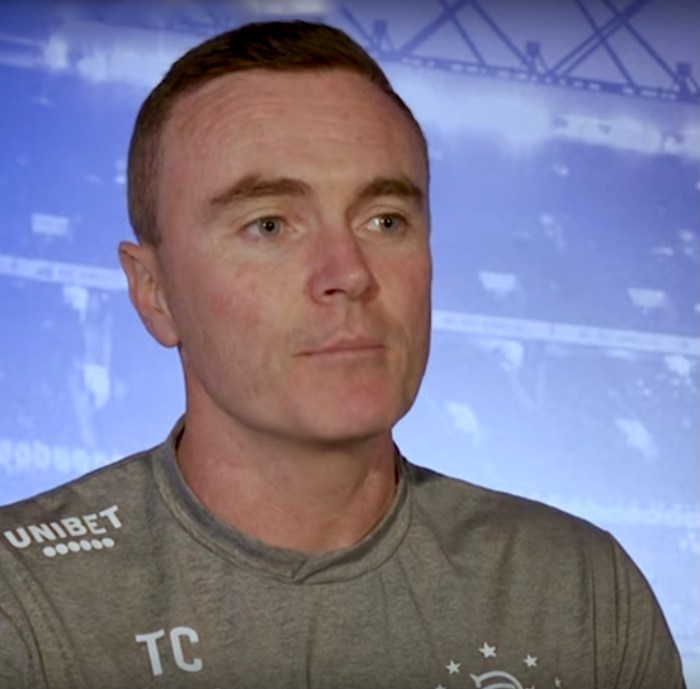
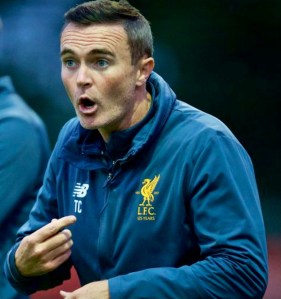
Tom Culshaw goes way back to schoolboy days with Gerrard and was a former youth team player alongside him at Liverpool.

He is now technical coach at Aston Villa, a role he held previously at Rangers after the pair also worked together with the Reds under 18s.

Back in September 1999, the central defender linked up with the fourth-tier Seagulls a few months into Micky Adams’ first reign as manager. Culshaw played for Ian Culverhouse’s reserve side on a trial basis on a drizzly night at Woodside Road, Worthing, and didn’t make the most of the opportunity.

Albion went down 3-2 to visitors Cambridge and a subsequent matchday programme didn’t hold back in apportioning blame.

With the score level at 1-1 it reported: “Albion fell further behind two minutes before the break when Culshaw made a mess of an attempted header back to (Mark) Ormerod, and (Nathan) Lamey picked up the loose ball and took his opportunity well, lobbing the Albion ‘keeper.”

Although Albion restored parity through Scott Ramsay, Daniel Chillingworth added a third for the visitors. Culshaw was subbed off in favour of Chris Beech, and wasn’t seen in an Albion shirt again.

The Brighton trial came as Culshaw desperately tried to get a foothold in the game after the disappointment of being let go after four years as a professional with Liverpool.

A few months earlier, he played for Norwich’s under 21 side against Bristol City in a friendly; he later linked up with Conference side Nuneaton Borough and went on to Northern League teams Leigh RMI and Witton Albion.

“When I left, I found it tough going on trials for lower league clubs,” Culshaw told liverpoolfc.com. “I got offered a couple of contracts at League Two clubs and I decided to knock them back thinking I could do a bit better.

“But when I started to go for trials it was taking longer and longer, and then eventually I just fell out of love with the game.”

He walked away from football for a while, joining up with a friend who had a tarmacking firm. He admitted: “It was hard, it was a tough few years for me. Especially when I saw my mates, the likes of Steven, Carra (Jamie Carragher), Michael Owen – lads who I’d come through the youth team with – progressing.

“I probably had my first bump in the road at 21 and I just really didn’t know how to handle it.”

Until that point, it had all been going so well. Born in Liverpool on 10 October 1978, Culshaw played street football with Gerrard in Ironside Road, on Huyton’s Bluebell Estate, where Culshaw’s grandparents lived. A friendship that included a mutual love of football began when they were pupils at Cardinal Heenan High School.

Culshaw became technical coach under Steve Gerrard at Rangers

“Steven is a year younger than Tom but they both played for me in the under 14 Liverpool Schoolboys FA team in 1992-93,” their former coach Dave Singleton told the Daily Record.

“Stevie was very small and didn’t start growing until he was 16 so I used to put him on the wing because schoolboys football was based on size and a lot of teams just picked the biggest lads who could plough their way through anything.

“So I put Stevie on the wing where he wouldn’t get hurt and could use his skill. Tom was a centre half and the captain of the team.

“He was a commanding centre half but exceptionally skilful too. He could play the ball out from the back.

“We had one game where he picked the ball up on the edge of our penalty area, dribbled the full length of the pitch and scored from the opposite penalty area.”

Singleton added: “He had a physical presence and was good in the air so he was great for set-pieces and comfortable with either foot but stronger on his right.

“They were exceptionally nice lads, a credit to their school, parents and city. It’s so great to see people like that go on and do well.”

An England Schoolboys international, Culshaw spent two years at the FA School of Excellence at Lilleshall at the same time as Owen and Carragher. Culshaw joined Everton at the time Gerrard signed for Liverpool but he was let go and moved to Tranmere Rovers, where his talents flourished.

He was named as captain of the Liverpool City Schoolboys team and Liverpool snapped him up. He joined Gerrard at the club’s Vernon Sangster Centre of Excellence, near Anfield, and he progressed through the under 18s under the guidance of Steve Heighway, Dave Shannon and Hughie McAuley, signing professional aged 17.

On stepping up to the reserves, who were managed by Sammy Lee, he was handed the captain’s armband. “I was around Ronnie Moran, Roy Evans, and all the old-school Boot Room staff,” he said. “I’d progressed and everything went well for me. The national school, playing for England, joining Liverpool, signing professional at 17, progressing to the reserves, captaining the reserves.

“I was a pro for four years. It was a great time at Melwood because everyone was on the same site. I was training with Jamie Redknapp, Robbie Fowler, and Steve McManaman and learned an awful lot from them.”

However, after those four years, and having seen his contemporaries make the step up to the first team that eluded him, Culshaw was forced to look elsewhere after manager Gerard Houillier overlooked him.

Disillusioned by his prospects in the UK, Culshaw moved abroad and started coaching youngsters in Spain. Having decided to pursue that career path, he returned to the UK in 2011 in a part-time role at Liverpool’s academy while studying for his badges.

In 2017, it was his boyhood pal Gerrard who turned his job into a full-time position by promoting him to become his under 18s assistant.

Gerrard said at the time: “When I started out full-time as an apprentice, Tommy was a year above me so I know everything about him and he knows everything about me. I thought he was the perfect partner to go into it.”

Receiving a coaching certificate from former England manager Steve McLaren

Culshaw has remained a key part of the close-knit group around Gerrard ever since, following him to Glasgow Rangers and then to Aston Villa. His particular focus is on set pieces as former Albion centre back Connor Goldson once explained in an interview for Rangers TV.

“Tom Culshaw the coach works on us before every game, different set pieces, defending and attacking, and how we’re going to set up,” he said. “We always know what we’re doing. We always know the routines or what’s happening.”

Captain James Tavernier added: “We work extremely hard on set-pieces in training. TC has us working hard with them all week and it shows in the games as they can effectively give you three points.”

In that interview with the Record, Singleton added: “Whenever I watch games on TV now and see them in the dugout together I feel immense pride.

“Steven’s career achievements speak for themselves and it’s great when the person who isn’t the figurehead gets some credit and there is nobody more deserving than Tom.

“When they were younger you’d have thought both of them would have gone on to make it but there’s a lot of luck in football, being in the right place at the right time.”

Knock-out stories of Mark ‘The Fizz’ Leather

MARK LEATHER spent six years as the first team physiotherapist at Anfield having previously been Brighton’s physio in the early days of Barry Lloyd’s reign as manager.

Leather tended the injured when Albion were promoted from the old Third Division in 1987-88 and half of the 1988-89 tier two campaign before moving back to his native north west.

Roy Evans added Leather’s specialist knowledge to the backroom team at Anfield in 1994 but the physio was controversially sacked by his successor Gerard Houllier following a row over the then teenage striker Michael Owen’s fitness.

A sign of the way Leather expected to work with managers came in an interview for Albion’s matchday programme. “Barry Lloyd will respect the decision if I say a player needs more time to get back to fitness,” he told interviewer Dave Beckett. “From that point of view, he is sadly in the minority.

“If it was different, I wouldn’t hang around, but it still amazes me that some clubs don’t realise that if we all stick to what we know things will run more smoothly.”

Leather, who’d spent three years studying for a diploma, and gained experience in the National Health Service, added: “We’re getting away from the old ‘bucket-and-sponge’ image.”

Ahead of his arrival at the Goldstone, Leather had combined his studies with helping out Exeter City, Leek Town, Port Vale and Sheffield Wednesday. And during the Commonwealth Games in Edinburgh in 1986, Leather provided specialist medical support for the weightlifters and wrestlers.

He revealed a funny story against himself in a matchday programme article. Asked to reveal his ‘most embarrassing moment’ he said: “During the Port Vale and Scunthorpe match in 1985, when Port Vale scored, I jumped up out of the bench hitting my head on the dugout roof and needed smelling salts and a cold sponge.”

Perhaps predictably nicknamed ‘The Fizz’, Leather sought to give an insight to his role in his matchday programme interview. “I try to be friends with all of the lads and the management too, but sometimes you really do have to sit on the fence,” he said.

“There’s pressure sometimes from both sides to say a player’s ready to return, but you have to stand back from the situation and give a professional opinion.”

The Albion gave him a regular slot in the matchday programme which he used to give readers updates on the progress of injured players, and in recent times he has become a regular source for the media seeking expert comments on football injuries.

Leather now has his own physiotherapy business and back in the day at Brighton he and his physiotherapist wife Lucy ran a sports injury clinic for the general public two evenings a week.

Born in Bolton on 24 June 1961, Leather left the Seagulls halfway through the 1988-89 season to return to more a familiar part of the country and took a job in the NHS in Chorley, Lancashire.

Leather had been an ardent Bolton Wanderers fan from an early age and his all-time favourite player was Frank Worthington, who had played for the Seagulls during the 1984-85 season.

When Evans stepped up to take charge of Liverpool, Leather was one of his first appointments (along with goalkeeping coach Joe Corrigan, whose playing career had ended with the Seagulls).

Leather and Corrigan together in Liverpool backroom team

An insight into Evans’ decision-making was given in the book Men In White Suits, by Simon Hughes. “With Mark Leather’s arrival, there was an end to the running repair jobs carried out by a succession of unqualified coaches mid game,” he wrote.

“Regularly injured players had long been treated with suspicion at Liverpool. (Bill) Shankly maintained his side were the fittest in the league, with pre-season geared towards building stamina and therefore preventing muscle tears.

“It was a difficult theory to argue against. Liverpool won the 1965-66 title using just 14 players all season. Anyone who suffered an injury was almost bullied into feeling better. ‘Otherwise you really were persona non grata,’ Alan Hansen said.

“Leather’s recruitment meant that (Ronnie) Moran could focus on drilling the first team in the Liverpool way rather than writing what Evans describes as ‘little scribbles’ on an old ledger, charting training patterns.”

Endorsements to Leather’s attributes appear on his website from the likes of Robbie Fowler and Jamie Redknapp, who is quoted as saying: “Mark Leather has been brilliant with me. He has kept me going and it’s because of him really that I’m back to full fitness as soon as I am.”

In 1999 media reports said Houllier was facing “a furious players’ backlash after his escalating row with Liverpool physio Mark Leather took a dramatic twist”.

Leather was left in the UK when Liverpool went to Oslo for pre-season games, a move which was said to be causing disquiet in the dressing room.

Leather clashed with Houllier over the condition of injured Michael Owen

“Leather is one of the game’s top physios and he was publicly praised by Robbie Fowler after helping the striker make a miraculous recovery from a cruciate knee ligament injury last season,” said one report in the Scottish Daily Record. “Other stars, including Michael Owen and skipper Jamie Redknapp, are known to have a close bond with the medic.”

Houllier was angry at the length of time it was taking for Owen to return to full training after a hamstring injury and sent him to a specialist in Germany for a course of treatment.

In 2013, when Owen’s many injuries finally forced him to his retire from the game, he recalled bad decisions in the past that ultimately affected his career.

“I was compromised because I played too much too soon as a youngster at Liverpool. In my opinion, had I been managed differently I would have been at my best for longer as opposed to being a better player,” he said in The Mirror.

“I basically run on two hamstrings on my right leg and three on the other. I lost a third of the power.

“If I hadn’t, 90 per cent of the other injuries wouldn’t have happened and I would have been the all-time leading scorer for England.”

The Mirror article continued: “If there was a defining moment in his career, then it was a snapped hamstring when his then-manager Houllier ignored the advice of his physio and insisted Owen be brought back from injury quickly because he needed his goal threat so desperately.

“The French coach fell out so badly with the physio, Mark Leather, he forced him out, but Houllier later admitted to the mistake, which Owen believes led to the moment that changed his career – on a cold March evening at Elland Road, Leeds, in 1999. ‘My hamstring snapped in two and it was at that point that my ability to perform unimpeded was finished,’ said Owen.

Leather wasn’t finished with football, however, and he moved to his beloved Bolton Wanderers as Sam Allardyce’s physio for a year, before joining former Trotter Peter Reid at the Stadium of Light.

“From a personal point of view, I’ve had the privilege of working with two guys I used to support from the terraces at Burnden,” Leather told the Bolton News ahead of a match between Bolton and the Black Cats in September 2001. “There’s only one team I’ve ever supported and leaving them last year was purely a professional decision,” he said. “Financially and from a facility point of view, it was the right move for me, but I’ll never stop supporting the Wanderers.”

Leather spent four years (2000-2004) as the head physio at Sunderland straddling the managerial reigns of Reid, Howard Wilkinson and Mick McCarthy.

It certainly wasn’t all plain sailing for Leather on Wearside, as the Republic of Ireland winger Kevin Kilbane, now a TV pundit on the BBC, mentioned in his autobiography (Killa: The Autobiography of Kevin Kilbane; Aurum Press Ltd, 2014).

The player was determined to play for his country but the physio obviously didn’t feel he should because he was still trying to recover from an ankle injury.

Leather had already put him through some tough routines to test the strength of his ankle and when they were then on opposing sides in a two-a-side hockey match, Leather caught Kilbane on the tender joint with his hockey stick.

“After a few times and much pain, I finally snapped, and I gave him a left hook and decked him, leaving him with a fat lip and a very surprised look on his face,” Kilbane admitted.

Although he told the assistant manager Bobby Saxton what had happened, nothing more was done about it. Kilbane said: “I later apologised to Mark Leather but was disappointed he didn’t reciprocate. Things were never right between us after that, although we didn’t let it interfere with our professional relationship.”

After Sunderland, Leather switched sports and took on a similar position with Wigan Warriors rugby league side before moving into the world of academia. He spent seven years at Edge Hill University as a senior lecturer in sports therapy and programme leader for the Football Rehabilitation MSc course.

In October 2006,Leather joined Chester City as club physio, with City chairman Stephen Vaughan declaring: “He is a fully qualified physio and has a wealth of experience at Premier League level, so it’s something of a coup to bring him to the Deva Stadium.”

In 2013, he returned to Bolton, spending three years as Head of Sports Performance.

He had also set up his own physiotherapy business in 2008 and, since 2016, has been a senior lecturer and course leader for the Football Science and Rehabilitation MSc course at the University of Central Lancashire.

• Pictures from the Albion matchday programme and various online sources.

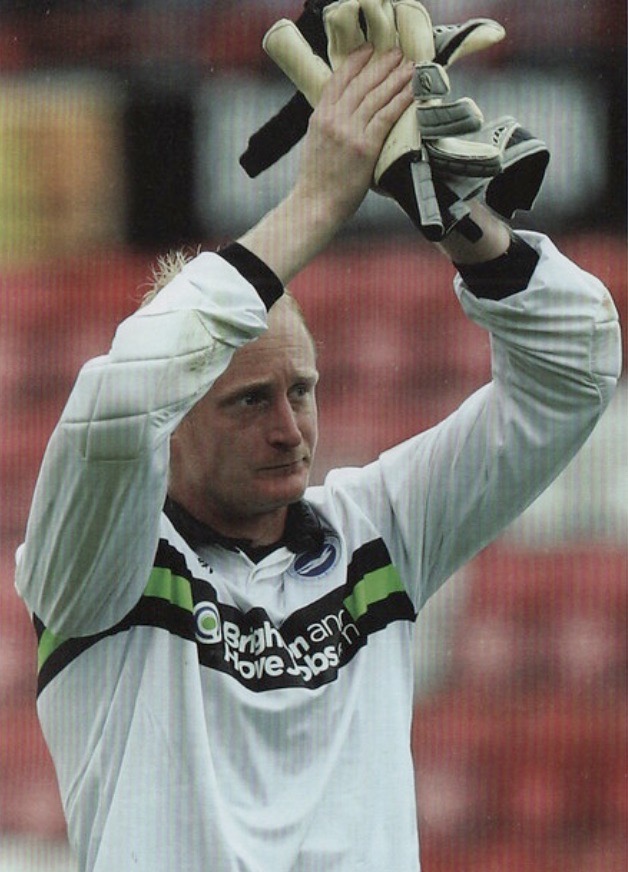
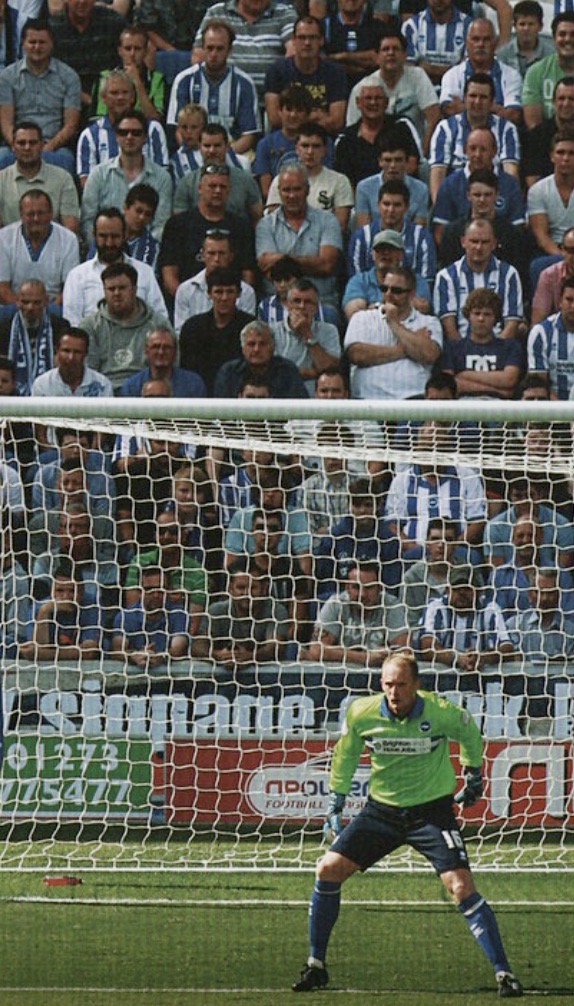
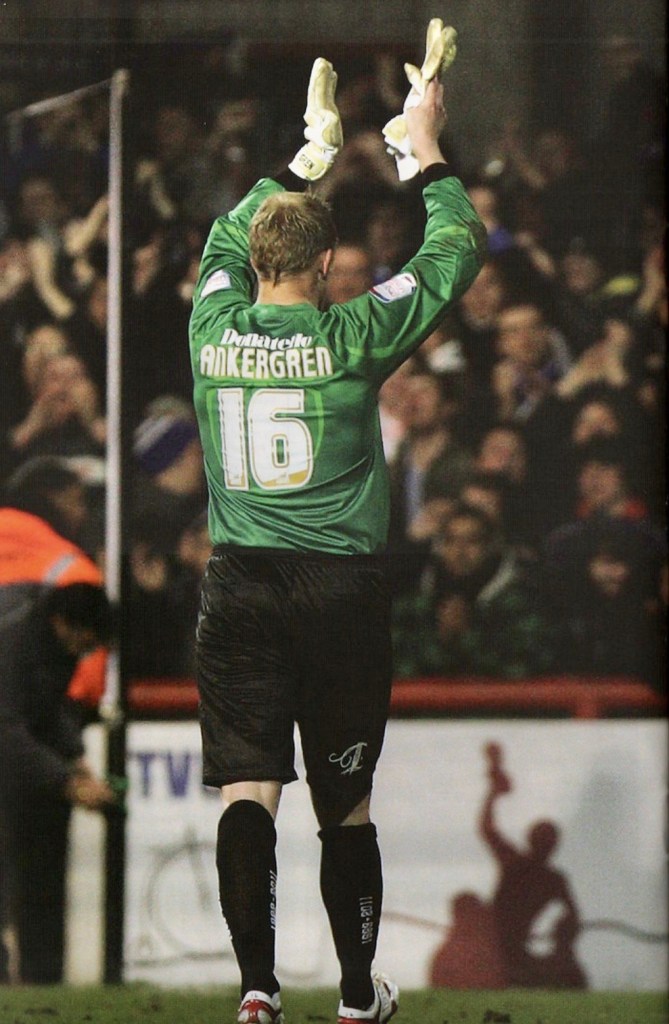
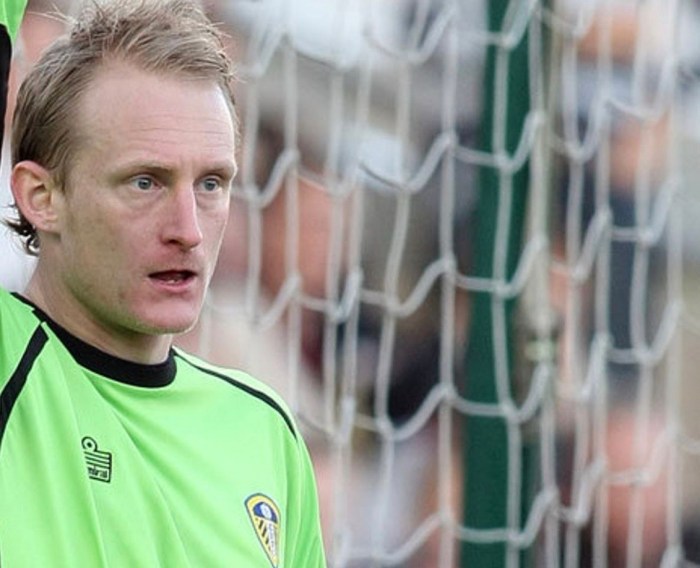
Casper Ankergren – the ‘Great Dane’ between the sticks

DANISH goalkeeper Casper Ankergren earned the League One player of the month award four times – twice with Leeds United and twice with Brighton.

When the Yorkshire club dumped him after he’d played 143 games for them, Gus Poyet, his former assistant manager at Elland Road, gave him the chance to revive his English football career. He spent seven years as a player at Brighton and between 2017 and 2021 assisted Ben Roberts with coaching Albion’s goalkeepers.

The Dane was only truly Albion no.1 for a season and a half, and fans were often divided about his capabilities. But his ability with the ball at his feet suited the way Poyet wanted the Albion to play, and as a coach chimes perfectly with the expectations placed on today’s Albion goalkeepers.

“He really is key to the way we pass it out from the back,” observed ‘Murraymint’ on North Stand Chat, noting his ball playing and vision for a pass as “excellent”.

Ankergren himself explained in a podcast on the club website in 2020: “I was always quite comfortable with the ball at my feet, probably because I played outfield as a kid.

“At Leeds I wasn’t supposed to play it to the centre backs but under Gus you had to play it short; he would go mental if you didn’t. That was his philosophy. I’ve always been a big fan of possession-based football.”

On the eve of the 2010-11 season, Poyet’s goalkeeping options were narrowed when first-choice Peter Brezovan was nursing a wrist injury and he wasn’t happy to start the campaign with either of the inexperienced understudies, Michael Poke or Mitch Walker.

Poyet told the club’s official website: “Goalkeeper is a key position in the team, and with Brezovan injured, we wanted to bring some experience to that position.

“Casper brings that experience and has played at this level and higher. I have worked with him at Leeds United, and know exactly what he is capable of, he also knows what it takes to get promoted from League One.”

Ankergren hadn’t even had time to get to know his new teammates when he made his Albion debut in a 2-1 win in the season-opener away to Swindon Town the day after signing.

Unfortunately, he didn’t cover himself in glory on his home debut when a mistimed punch helped Rochdale to get a last-gasp equaliser in a 2-2 draw at Withdean.

The ’keeper admitted he later hid himself away in his Jury’s Inn hotel feeling dreadful about the mistake. “I was devastated, but that’s football. As a keeper you can do well for 90 minutes but if you cock up in the 91st minute that’s all people remember you for,” he said in a matchday programme article. “It’s part of the game as a goalkeeper and you have to accept it.”

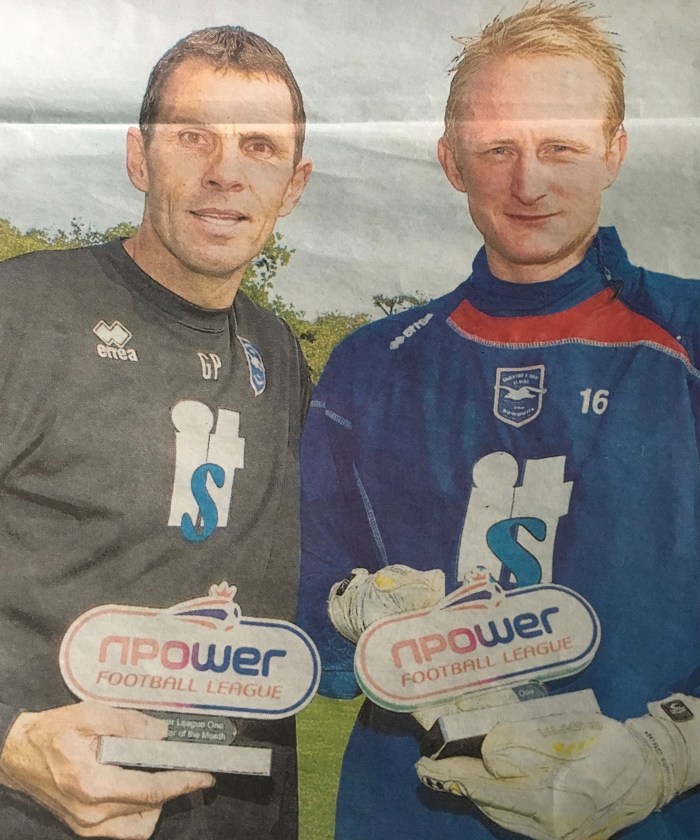
He certainly made up for it to the extent that he won the first of two nPower League One Player of the Month awards that season for his displays the following month, when he only conceded once in five matches as Albion secured 13 out of 15 points.

Ankergren won the award again in March 2011 when the Seagulls won eight matches out of eight – with six clean sheets for Ankergren – to consolidate their gallop towards the League One title.

In April 2011, Ankergren, speaking at the PFA awards in London, said: “He [Gus] was asking us to be perfect and although there’s no such thing in football, we were close, the way we did it, the way we played – he’s very, very pleased. He couldn’t ask for much more, I think.

“At the beginning of the season I had a chat with him and he said he thought a top six finish would be possible. But no, we finished first – an amazing season.”

The promotion with Brighton was more personally satisfying for Ankergren because he was involved from the beginning to the end of the season.

“I played a lot of games for Leeds last season when we went up but I didn’t play the last eight or nine games and that was a big blow for me,” he said. “I’ve played every game in the league this season and obviously it’s great, that’s what you want to do as a footballer; you want to play every game and win and achieve something.”

He was in goal for the memorable first Amex league fixture against Doncaster and kept the shirt for the first 15 games of the 2011-12 Championship season. But after a seven-game winless run, Steve Harper came in on loan from Newcastle United.

When Harper returned to the North East, he got back in the side for seven more matches, but after four successive defeats in December, Poyet rang the changes for the New Year’s Day match at home to Southampton. Brezovan started in Albion’s surprise 3-0 win and stayed in goal through to the end of the season.

Fan Bradley Stratton later observed: “Brighton’s return to the Championship at the Amex highlighted the need for another change in goal. Ankergren and Brezovan, whilst competent in League One, were regularly found out at the higher level.

“They inspired little confidence in fans, and there was no doubt Poyet would use the summer window in 2012 to bring in a new man who could galvanise the Albion back line and restore confidence to a defence that had conceded six goals at both West Ham and Liverpool that year.”

After Tomasz Kuszczak arrived to become the senior goalkeeper, Ankergren’s first team action in 2012-13 was limited to four starts plus one as a sub.

Two of those were in the FA Cup against Premier League opposition. The third round FA Cup win over Newcastle United was his first appearance in the first team for 13 months and he said: “Although I have not been playing for the first team, I’ve always trained as hard as ever because you never know what’s round the corner and you want to push the other keepers hard, so I was ready. It’s still hard to be thrown straight back into action because you need to play regularly to get into the rhythm of things, but I was pretty happy with my performance against Newcastle.”

And there was nothing he could do to prevent Theo Walcott’s late deflected winner as Arsenal won the fourth round tie 3-2 at the Amex, when Leo Ulloa scored on his debut.

As if to emphasise his point about memorable howlers, one of his two league games that season was at Nottingham Forest, when he fumbled a last-minute equaliser at the City Ground, allowing Henri Lansbury’s long-range effort to earn the home side a point in a 2-2 draw.

Poyet was quick to sympathise with the goalkeeper and said: “To begin with I thought the shot must have taken a deflection but when I’ve seen it again I nearly killed myself!

“When you are a keeper you pay the price and Casper has done that today. He was having a very, very good game, making two or three good saves, coming for crosses and kicking very well. And in training he will save 1,000 shots like that, but we wanted him to save it today.

“Goalkeeper is a terrible position to play but we lose together and we win together – at least we got a point.”

In Oscar Garcia’s only season in charge, Ankergren played only two first team matches but he was kept on under Sami Hyypia and, with the arrival of David Stockdale and the emergence of youngster Christian Walton limiting his likely involvement even further, he made just the one appearance in the 2014-15 season, in Albion’s 4-2 League Cup win away to Swindon Town.

He confessed on the podcast that he struggled to get his head round the situation and contemplated quitting the game but was talked out of it by goalkeeping coach Andy Beasley.

With the arrival of Niki Maenpaa as back-up to Stockdale, Ankergren could have been forgiven for thinking his chances of ever playing first team football again had gone, but in a bizarre set of circumstances during a FA Cup tie at Lincoln City on 28 January 2017, Ankergren had to come off the bench in the 56th minute when Maenpaa went off injured.

The Finn had injured his shoulder in the melee that resulted after Glenn Murray had committed a foul in the penalty area and the first thing Ankergren had to do was to face the resultant penalty, which was scored.

Five minutes later he was picking the ball out of the back of the net again after inexperienced Chelsea loanee Fikayo Tomori had skewed a shot past the beleaguered ‘keeper. To rub salt in the wound, Albion lost 3-1, enabling City to reach the last 16 of the competition for the first time in their 115-year history. The consolation for Albion, of course, was that they were able to concentrate on the league, and they went on finally to win promotion to the elite level they’d left in 1983.

That promotion signalled the end of Ankergren’s playing days but the start of a career as a goalkeeping coach which he admitted in the podcast he’s enjoying immensely.

Born in the Danish coastal seaport of Køge on 9 November 1979, Ankergren played football with his mates from an early age on a pitch close to his home. He also played handball in the winter – it’s a big sport in Denmark – and it got to the point where he had to decide which one to pursue seriously because his parents said he couldn’t do both. He chose football because he enjoyed it a bit more, although he reckoned the hand-eye coordination involved in handball was an asset as he pursued his career as a goalkeeper.

When he started out playing organised football with Solrød FC, he switched from centre half to midfielder to striker and only went in goal when their keeper got injured.

He was only 12 when he was signed by his hometown’s local professional club, HB Køge. Before he became a full professional, he worked for a pizzeria delivering pizzas and at an after-school club. After leaving school, he continued his education at college for a further two years because he wanted to be a policeman if football didn’t work out.

But having broken into the Køge first team, he caught the attention of Brondby, who were probably the biggest club in Denmark at the time.

He joined them in May 2000 and started full-time the following January. “It was a big, big step for me,” he told the podcast. “I didn’t really enjoy it at first. It was a bigger step than I expected it to be.”

Their first-choice keeper, Morgens Krogh, had won Euro ‘92 with the national team so it was tough to compete with him. But the youngster made his debut when Krogh was injured and eventually took the no.1 spot. As well as winning one championship, he topped it by winning the league and cup double in 2005-06.

Ankergren also gained experience playing in the Europa League against teams like Locomotiv Moscow, Espanol and Palermo.

Shortly after he signed a new three-year contract with Brondby, unbeknown to him they signed Stephan Andersen from Charlton Athletic, and Ankergren wasn’t assured he’d still be first choice. “I’d had enough and wanted to try something different so while I was away with the national team (the B side) in Asia, I got a call from my agent saying Leeds were interested.”

Ankergren just missed out on a full international cap, although he was on the bench for games against Luxembourg and the Czech Repubic. He did win a handful of under 21 caps, and he said: “I’ve represented my country at various junior levels and remember making my under 16 debut against England. On the other side that days was Wes Brown and Michael Owen – you could tell both would have successful careers. Owen looked something special and he scored against me in a 4-1 defeat. I didn’t have my best game.”

Ankergren joined Leeds on loan initially, making his debut aged 27 in a 2-1 home win over Crystal Palace on 19 February 2007. Although it panned out to be one of the most turbulent times in the club’s history, Ankergren found life at Leeds more relaxed under Dennis Wise and Poyet than he had in Denmark.

His 14 games at the bottom of the Championship couldn’t halt the slide towards relegation which was confirmed emphatically with a points deduction when the club went into administration.

“I saved a couple of penalties early on, which won over the fans, including an important one against fellow strugglers Luton,” he said. He denied Dean Morgan from 12 yards with only four minutes left of a tense afternoon, and he told a supporter’s blog: “There were a few minutes, plus stoppage time to go against Luton so I had to stay focused as they were down there with us, so the win was vital.

“I had also saved a penalty away at Cardiff City but unfortunately we still lost the game.”

After signing on permanently, Ankergren was first choice as Leeds acclimatised to third tier football in 2007-08. He made 54 appearances in all competitions and, having conceded only one goal in five league games in September 2007, won his first League One Player of the Month award.

It wasn’t always plain sailing at Elland Road, though, and he was sad to see Poyet depart to become assistant manager to Juande Ramos at Spurs in November 2007, followed early in the new year by Wise, who became director of football at Newcastle.

“Gus was really, really respected up in Leeds. It was a big loss when he went to Tottenham – we really missed him, but I kept in touch after he left,” said Ankergren.

“I liked his style. If you do well, he’ll let you know – but if you don’t do well, he’ll also let you know. There’s none of this going behind your back; he’ll say it to your face, which is what I like.”

He also felt a sense of loss with Wise’s departure. “It was a massive disappointment for me personally,” he said. “Wisey is a good man, he had given me the chance to play in England and I will always be grateful to him.”

In March 2008, the goalkeeper faced an “improper conduct” charge brought by the FA for allegedly throwing a missile into the crowd at the County Ground, Swindon. He was fined £750 but not banned.

Gary McAllister was installed as manager and steered the club to the end of season play-offs against Doncaster Rovers and, despite some important saves by Ankergren, they lost. “I don’t know why but we never turned up at Wembley,” said Ankergren. “It was a strange feeling which let me flat, and it took a long time to get over that. We came so near, yet so far.”

Ankergren admitted to sheridan-dictates.com that he did not particularly enjoy the 2008-09 season. “It appeared that McAllister didn’t know his best team. I was in the side one week then the next he would pick Dave Lucas. Goalkeepers need games to stay sharp and focused and the thought of being dropped played on me and I did not perform to the standards I expected from myself.

“McAllister had been an outstanding midfielder but he was a League One manager with a League One squad. I think he expected too much from a group who didn’t have the ability that he had been blessed with as a player.

“The atmosphere was not great around the club and I thought that McAllister made some very strange decisions.

“Although I did not have any real issues with the manager, I have to be honest and say that I was not too disappointed when he was sacked and Simon Grayson was brought in.”

Grayson’s reign started on Boxing Day 2008 and he put Ankergren back into his team to play Leicester City. Leeds had fallen into mid-table but turned things around to earn a place in the play offs against Millwall who won the two-legged semi-final.

“Looking back, could we handle the favourites tag?” Ankergren asked. “It was another horrible feeling, but we were all determined to come back for pre-season training and go one better.”

However, although Lucas had left the club, Ankergren faced new competition in Shane Higgs and Grayson went with him at the start of the 2009-10 season.

But when Higgs was injured at MK Dons on 26 September 2009, Ankergren appeared as a substitute and eventually won his place back, even though United brought in Frank Fielding and David Martin as loan goalkeepers, and he had the feeling Grayson didn’t really rate him.

Ankergren re-established himself with a string of impressive performances and clean sheets and was the last line of defence in a memorable 1-0 FA Cup third round win for Leeds at Old Trafford in January 2010, including pulling off a terrific save to deny Danny Welbeck.

He was also in goal against Spurs in the next round when it took a replay at Elland Road before the north London club finally won through.

However, the beginning of the end of his time at Elland Road came when he made a mistake in a 2-0 home defeat against Millwall on 22 March 2010, and he didn’t return to the side for the remaining nine games as they went on to win promotion to the Championship as runners up behind Norwich City.

“I remember sitting with Paul Dickov in the dressing room having a beer and reflecting on what we had achieved,” Ankergren told sheridan-dictates.com. “We went over to the Centenary Pavilion for the end of season dinner and on to a nightclub, It was a great night but deep down I knew that I had played my last game for the club as my contract was up.”

Ironically, his replacement at Leeds was fellow Dane, Kasper Schmeichel, son of Ankergren’s goalkeeping idol, Peter, who also played for Brondby before going on to achieve fame at Manchester United.

Ankergren’s 11-year association with the Seagulls came to an end in September 2021 when he returned to his home country as head goalkeeping coach at Brondby.

Pictures from various online sources, matchday programmes and the Argus