GRAHAM Barrett did his level best to impress when new boss Steve Coppell took charge for the first time at Withdean.
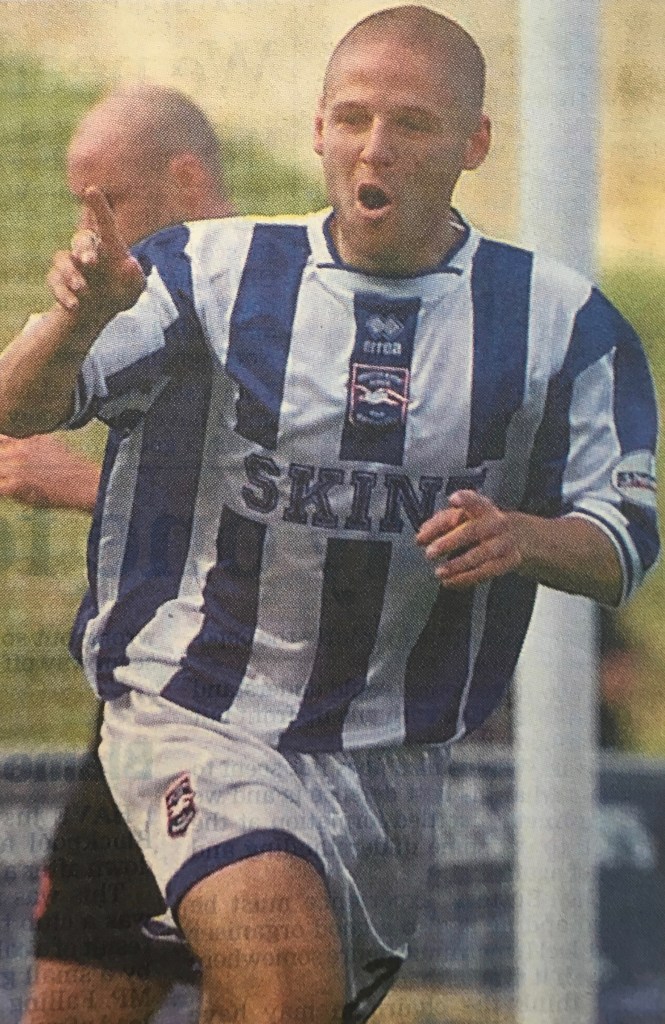
The on-loan Arsenal forward put in an inviting cross from the right wing for Gary Hart to score midway through the first half of the 19 October 2002 game against Sheffield United.
Barrett himself then got on the end of a precision pass from Bobby Zamora out wide on the left to put Albion 2-0 up in the 34th minute.
Unfortunately, the young forward’s contribution was overshadowed by events at the other end of the pitch in the second half. Firstly, the Blades hit back through Michael Brown and then substitute Carl Asaba equalised.
Referee Phil Prosser became the villain of the peace by awarding United two penalties in the final four minutes of the game, both converted by Asaba.
The first was given when Prosser reckoned goalkeeper Michel Kuipers had brought down Asaba in the box; the second when Adam Virgo pushed over Wayne Allison in the penalty area.
“Albion fans were so incensed by Prosser’s first penalty decision that several hundred left their seats in the south stand to protest from the running track,” The Argus reported. “Police and stewards gathered in front of them to prevent the threat of a pitch invasion.”
Even Albion-supporting MP Ivor Caplin got in on the act, subsequently calling for an FA inquiry into Prosser’s “totally inept” display. Needless to say, that went nowhere.
Barrett, meanwhile, was far less impressive the following Saturday when he and his temporary teammates were thrashed 5-0 by Crystal Palace at Selhurst Park.
He started 20 games for the Albion in that season, as well as making 10 substitute appearances – but that single strike against Sheffield United was his only goal.
Born in Dublin on 6 October 1981, Barrett was one of several Irish youngsters who began their football careers with Arsenal having been spotted by ex-Albion boss, and fellow Irishman, Liam Brady, playing in an Ireland U15s game against England at Blackburn.
Brady had become Arsenal’s head of youth development and academy director after his spell at Brighton. Barrett agreed professional terms with Arsenal in 1998 and went on to captain their FA Youth Cup winning team of 2000.
He earned a call-up to the Republic of Ireland’s under 21 team and went on to play 24 times at that level, scoring five goals. Between 2002 and 2004, he stepped up to the full Eire side and scored twice in six matches.
Try as he did, Barrett couldn’t add to his single goal against Sheffield United
Barrett managed to break through to the first team squad at Arsenal in December 1999 and made his debut as a substitute for Thierry Henry in a 3-0 win over Leicester City. The following month, again as a substitute, he appeared in a 4-1 win over Sunderland, and he also played in a league cup match.
“I was around the first team for a good four or five months, travelled a lot with them and got to train every day with them, played a little bit,” Barrett told the42.ie, in an April 2018 interview.
Facing stiff competition for a first team place, Barrett was sent out on loan to gain playing time at a lower level. He went to Bristol Rovers but only managed one game before being struck down with glandular fever, causing him to be out of the game for six months.
When he’d recovered, he went on loan to Crewe Alexandra and Colchester United who had wanted him back for the 2002-03 season, but he opted to join Brighton instead.
With little chance of dislodging the likes of Bergkamp, Henry, Wiltord and Suker at Arsenal, Barrett was given a free transfer by Arsenal in May 2003 and opted to join Coventry City on a three-year contract.
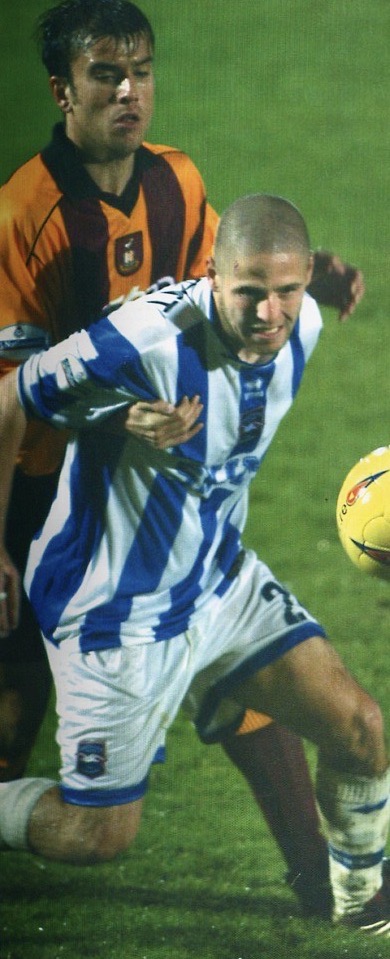
Although he made 32 league starts plus 23 as a sub, ex-Albion boss Micky Adams made it plain he didn’t fit into his plans. He went to spend the last year of his contract on loan at Livingston in Scotland but after only six games suffered a season-ending knee injury.
He subsequently stayed in Scotland and played for Falkirk and St Johnstone before returning to Ireland to play for Shamrock Rovers, who his dad, Gary, had played for in the Eighties under Johnny Giles.
AN UNDERSTUDY to eccentric Crystal Palace goalkeeper Gabor Kiraly played a dozen games in goal for Brighton in the spring of 2007.
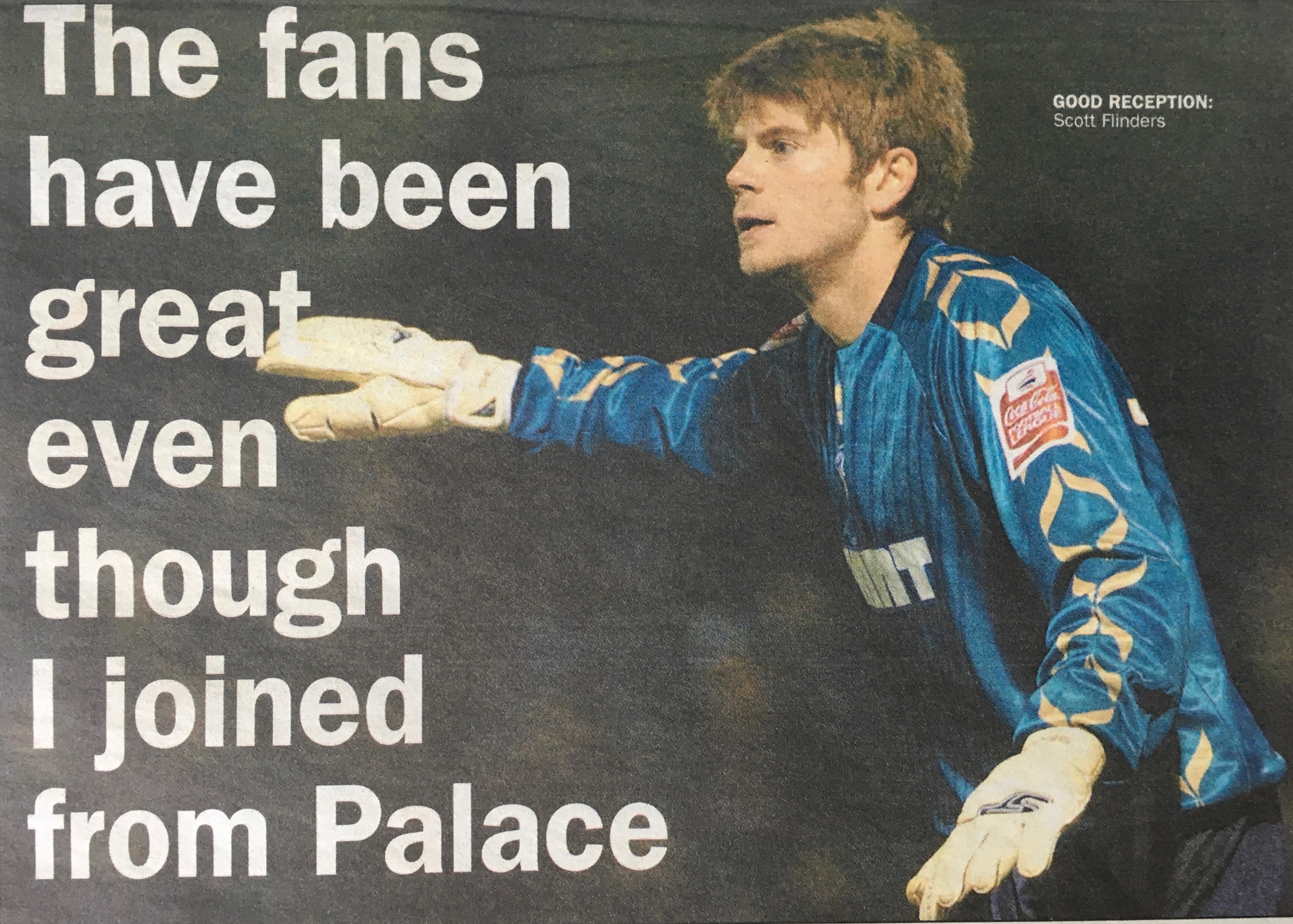
Scott Flinders was just 20, and suffering from the effects of a bout of ‘flu, when he answered a call from fledgling manager Dean Wilkins to help solve a goalkeeper crisis.
With first choice Michel Kuipers injured, Wilkins considered it too early to risk rookie ‘keepers Richard Martin and John Sullivan, so he turned to Albion’s arch rivals to borrow 6’ 4” Flinders.
“I always thought Millwall were Palace’s biggest rivals but then I got told, I think it was by Dougie Freedman or Clinton Morrison, that it is Brighton,” Flinders told The Argus. “It didn’t put me off signing. It is just about playing games.”
Flinders made a slightly shaky start in a win away to Gillingham, and in a defeat to Bristol City on his first appearance at Withdean, but he made some important stops to help earn points in consecutive away draws at Crewe and Blackpool.
Manager Wilkins told The Argus: “We knew we were bringing in somebody who was not 100 per cent for the first couple of matches. Scott has recovered from that and he has done very well for us.
“We are still in a position where we need another ‘keeper with a bit more experience than the young lads we’ve got.”
Flinders seemed happy to extend his loan from one month to two and said: “The fans have been absolutely excellent towards me, even though I am coming from a rival club.
“John Keeley, the goalkeeping coach, has been different class and I am delighted to be here.”
Unfortunately, Albion lost all five of their matches in April and finished 18th, six points clear of relegation.
Born in Rotherham on 12 June 1986, Flinders joined nearby Barnsley as a youth trainee in 2003 and made it through to the first team in 2005 when former Albion striker Andy Ritchie was the manager.
He took over from Ross Turnbull and featured in 11 games over three months before losing his place and subsequently having to settle for being understudy to Republic of Ireland international Nick Colgan.
However, Flinders earned his own international recognition in the shape of five caps for the England under 20 side, three of them in the 2005 Toulon tournament. He made his debut in a 3-0 win against the Korean Republic in a side which also featured Liam Ridgewell, Liam Rosenior and Greg Halford.
He kept his place three days later in a 0-0 draw with France, then came on as a sub three days later in a 1-1 draw with Mexico.
In August the same year, he started against Russia but was substituted as the side went down 4-0. A teammate in that one was Will Hoskins. His final match was at Turf Moor when England drew 2-2 with Holland, although he was subbed off again. In that England team was future England centre-back Gary Cahill while the left-back was Gary Borrowdale, who played on loan at Brighton under Russell Slade in 2009.
Frustrated playing second fiddle at Barnsley, Flinders had trials at Chelsea and Wigan Athletic but he ended up at Crystal Palace in 2006 as part of an exchange deal involving midfield player Sam Togwell.
It’s believed Palace paid an initial fee of £250,000 with additional instalments to be paid according to appearances.
However, Flinders only made one league cup appearance before being sent on loan to Gillingham. It was the first of five loans away from Selhurst Park, the lengthiest being his time at Brighton.
Other loan spells saw him spend time with Yeovil Town, Blackpool and Falkirk and he was released by Palace in May 2009 after playing just 13 games for them in three years.
His years of understudying finally came to an end when he headed to the north east in the summer of 2009 and joined Hartlepool United, where he established himself as first-choice ‘keeper.
Flinders even got on the scoresheet while at Hartlepool, scoring with a 94th minute header against Bournemouth on 30 April 2011 to earn his side a point in the last home game of the season.
The 2012-13 season was a particular triumph for him when he earned the accolades of Player’s Player, Supporter’s Player, Away Player of the Year and Hartlepool Mail SportsMail Player of the Year.
In six years at Hartlepool, he made more appearances – 276 – than any other ‘keeper in the club’s history, eventually moving on in June 2015 to League Two York City.
It was alleged Dons striker Lyle Taylor grabbed Flinders by the testicles and, as he retaliated, the goalkeeper was alleged to have used racist abuse.
Flinders denied the charge but was found guilty by the FA following an independent regulatory commission. Fined £1,250, Flinders was also warned about his future conduct and ordered to complete an education course.
York initially suspended Flinders but then loaned him out to National League rivals Macclesfield Town, who he subsequently joined on a contract from January to June 2017.
On deadline day in August 2017, he joined League Two Cheltenham Town, with boss Gary Johnson telling the club’s website: “Scott has played over 400 league and cup games in his career and there is no substitute for experience.”
In January 2020, Flinders suffered a broken leg in a game against Oldham which put him out of the game for nine months.
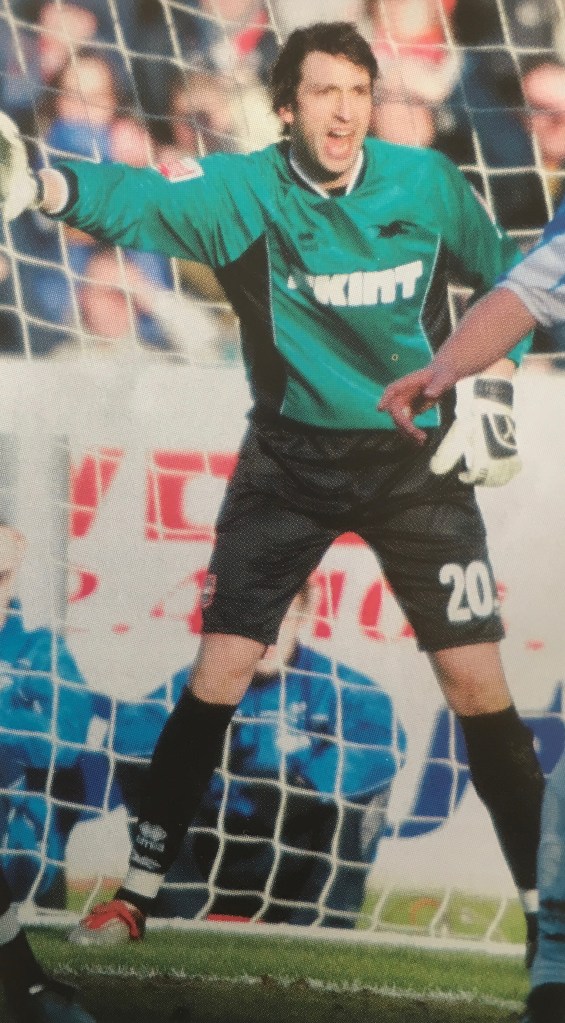
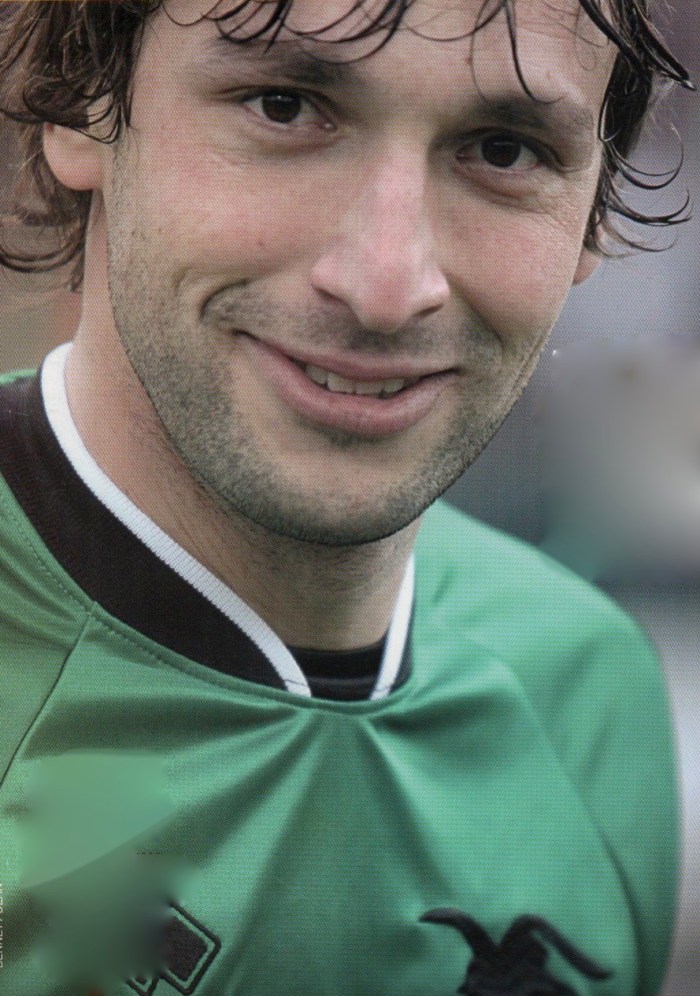
IN ALBION’S 2004-05 Championship season, both regular goalkeepers, Michel Kuipers and Ben Roberts, were injured.
A rookie American ‘keeper, David Yeldell, was signed on loan from Blackburn Rovers but didn’t inspire confidence and was discarded after just three games.
Instead, Albion manager Mark McGhee turned to Rami Shaaban, a Swedish-born goalkeeper with a Finnish mother and Egyptian father who hadn’t played a competitive match for two years!
However, that game had been for Arsenal in the Champions League in the 70,000-capacity Olympic Stadium in Rome!
Now, here he was on 19 February 2005 lining up for Albion in front of 6,647 at Withdean – The Theatre of Trees – against eventual champions Sunderland.
It proved to be an eventful debut, which I watched with my 10-year-old daughter, Holly (during her brief flirtation with wondering why her Dad was obsessed with this football lark). Albion played more than an hour of the game with only 10 men, Adam Virgo being sent off by referee Dermot Gallagher for two yellow cards.
Shaaban, Albion’s fourth different goalkeeper in the space of five games, did not have that much to do but he made an instinctive stop to keep out a cross from Dean Whitehead, fisted away a Sean Thornton effort and did well to hold Julio Arca’s shot from 15 yards.
He told The Argus afterwards: “It’s a great start. I’ve always been lucky with my first games at new clubs.
“At Arsenal, I had a clean sheet. That was in the Champions League, so it was a bit different, but you have to start somewhere and I’m very pleased to get 90 minutes of competitive football.
“I was more nervous playing here than for Arsenal, because before I went to Arsenal I was match fit. Here I had not played competitive football for two years, so this was a big milestone for me.”
Against all the odds, Albion won the game 2-1 with Albion’s goals coming from a deflected Richard Carpenter shot and a rare Mark McCammon header from a corner.
Born on 30 June 1975 in Solna, Stockholm, Shaaban’s professional football career began with the local Saltsjöbadens IF who he played for 39 times in 1994-95. Then, while studying at university in Cairo, he played for Zamalek and Ittihad Osman.
After university, he spent four years in Chile, between 1997 and 2001, playing initially for Coquimbo Unido and then Deportes Temuco.
Good performances there alerted his hometown club Djurgårdens, of Sweden’s first division, and it was while he was playing there that Arsenal snapped him up.
But his good fortune was to run out quite quickly. Originally drafted in by Arsenal as a possible successor to David Seaman, he suffered a freak training ground accident on Christmas Eve 2002 that left him with a broken leg.
It took him a year to recover and during that time the Gunners signed Jens Lehmann who went on to establish himself as Arsenal’s no.1.
Shaaban did play five games for Arsenal – three Premier League games and two in the Champions League – but he never did make it back to play for Arsenal competitively again after his injury.
However, he did warm the bench in the latter part of the famous Arsenal ‘Invincibles’ season (2003-04), because regular back-up ‘keeper Stuart Taylor had picked up an injury.
In January 2004, Shabaan was loaned to West Ham for a month, but didn’t play for the first team, and then at the season’s end he was released.
Immediately before joining Brighton, he had been training back in Sweden with Djurgårdens, but he was recommended to McGhee by former Wolves goalkeeper coach Hans Segers who had moved to Spurs where Shaaban had recently had a trial.
After spending two weeks training with the Albion, the ‘keeper impressed McGhee, who told the matchday programme: “He’s done well. There’s no doubt about it, he’s a good goalkeeper. We have to now consider what we do with him. We’re going to need two goalkeepers that can play in the team between now and the end of the season.”
Shaaban kept goal for the Albion for six games one of which, on 12 March 2005, saw him harshly penalised in a 5-1 defeat away to Plymouth Argyle, which I attended with my son, Rhys.
Of course, as fans, we would say it, wouldn’t we, but it was never a 5-1 game, and that was largely down to an unbelievable performance by referee Phil Crossley.
Albion, wearing yellow, started brightly enough and soon had the ball in the net. Admittedly the action was at the far end from us, but we couldn’t see anything wrong with the goal (I think the ref ruled out Guy Butters’ header because he claimed the ball from Carpenter’s free kick curled out over the line before the cross came into him).
It was the first of several injustices meted out to the Albion that afternoon by Crossley. Plymouth took a lead as early as the ninth minute when Nick Chadwick finished off a neat one-two with Dexter Blackstock, who, ironically, manager McGhee had tried to sign on loan from Southampton earlier that season.
Our hopes were raised, though, when Charlie Oatway, on his 200th League appearance for the Seagulls, scored with a deflected header from another Carpenter free-kick.
Unfortunately, it wasn’t long before Plymouth were back in front when Crossley failed to spot Adam Hinshelwood being pushed as he went to head the ball. Instead he saw the ball hit the young centre half’s hand and awarded a penalty which Paul Wotton converted.
Then, though, came an almost unbelievable bit of nitpicking by a linesman which led to Plymouth scoring again!
Goalkeepers often go right to the edge of their penalty area before drop-kicking a clearance up field and, just as Shaaban did so, the lino flagged to claim he had taken it out of the area.
Crossley was obliged to award a free kick right on the edge of the penalty area and Wotton duly dispatched a thunderbolt into the net. It was as good as a penalty.
Although 3-1 down, it still looked like Albion were in with a chance, but Plymouth got a fourth on 36 minutes when David Norris evaded several despairing tackles before slotting past Shaaban.
To make matters worse, shortly into the restart Carpenter was consumed by red mist when Chadwick stopped him taking a quick free kick and, having pushed the guy in the chest, was sent off for the first time in his career.
So, 4-1 down and with only ten men, a difficult task just got harder: Plymouth continued to plug away and with just seconds remaining, substitute Scott Taylor rounded the hapless Shaaban to notch a fifth.
In the post-match interviews, McGhee described Chippy’s dismissal as “an absolute joke” and the refereeing as “shambolic”. And of the decision which led to Plymouth’s third, he said: “We see goalkeepers kicking at the edge of the box week in and week out and never in my career have I seen a linesman so sharp to put his flag up.”
Unfortunately for Shaaban, in his short time with the Albion he had conceded 13 goals, so McGhee turned to another loanee ‘keeper, Alan Blayney, from Southampton, who took over between the sticks for the remaining seven games of the season, when four draws and a win saw Albion do just enough to avoid the drop.
Shaaban remained on the bench and, at the end of the season, Albion decided not to take him on long-term. A year later he was called up to the Sweden squad for the 2006 World Cup!!
After his release from Brighton he had a trial with Dundee United but played only once, and also went on trial at Bristol City, but wasn’t taken on. Instead he went to Frederikstad in Norway, where he spent two years, and then joined Stockholm-based Hammarby, where he managed 26 appearances.
Those games led to him being selected for Sweden’s 2006 World Cup squad, although he had never previously been involved with the national side. In fact, in 2006 (and 2007) he was named Swedish goalkeeper of the year.
He made his debut as a half-time substitute in a warm up game with Finland and he played in his country’s 2006 World Cup opener, a 0-0 draw against Trinidad and Tobago, in place of injured first choice Andreas Isaksson.
He also played four Euro 2008 qualifying games for the Swedes, in which he kept a vital clean sheet in a 2-0 win over a Spain side which included the likes of Fernando Torres, Cesc Fabregas and David Villa and was also a member of their final stage squad.
Earlier in his career Shaaban could have chosen to play for Finland but decided to represent Sweden because, at that time Finland had two strong national team goalkeepers in Antii Niemi (later Albion’s goalkeeping coach) and Jussi Jääskeläinen, a Premier League ‘keeper for Bolton for many years.
After retiring from the game, Shabaan set up his own Swedish-based company, Rami Fresh, supplying Egypt-grown fruit and vegetables. The Sun did an article about him on 5 July 2023.
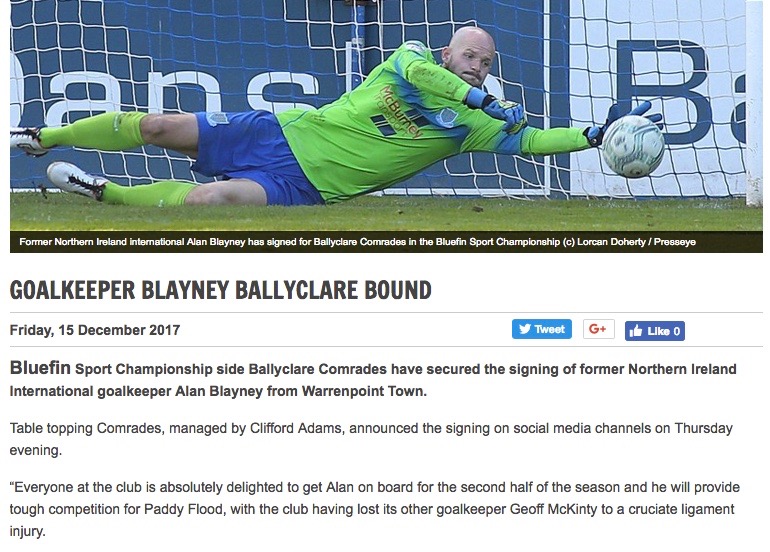
GOALKEEPER Alan Blayney only played 15 games on loan to Brighton from Southampton but if finances had been better at the time he could have signed permanently and his career may have taken a different turn.
Blayney is still playing, nifootballleague.com reporting only in December 2017 a move to Ballyclare Comrades from Warrenpoint Town. He also runs a florist business with his wife Laura in Newtownabbey.
Only a month earlier he opened his heart to the belfasttelegraph.co.uk and talked about the demons he’s had to face during a career that rarely hit the heights in England but has seen him represent his country and enjoy success in his native Northern Ireland.
Born in Belfast on 9 October 1981, Blayney was picked up by the city’s Irish league side Glentoran at 16 before moving to the UK aged 19 to join Premier League Southampton.
Blayney was initially loaned out to Stockport County, but his time there was cut short by a broken finger.
He also had a couple of games along the coast at Bournemouth when he suffered one of his most embarrassing goalkeeping moments. In a Q and A for the Albion programme, Blayney told interviewer Dan Tester: “I’d rolled the ball outside the 18-yard box in readiness to kick it up field. The Rochdale striker, my former Northern Ireland under 21 teammate Lee McEvilly, was running away and it hit him on the head and flew over mine into the back of the net.”
Back at Southampton, the young ‘keeper finally got a first team chance in May 2004, a couple of months after Paul Sturrock had replaced Gordon Strachan as manager.
It was some debut because the game against Newcastle United finished 3-3 and a save Blayney made from an Alan Shearer header won him the accolade of Sky Sports save of the season.
The young Irishman kept his place for the following game, a 2-1 defeat at Charlton and he played twice more the following season, in a 2-2 league draw against West Bromwich Albion and a 5-2 League Cup defeat to Watford.
With future Albion goalkeeping coach Antti Niemi and Paul Smith ahead of him in the pecking order, Blayney went on loan to Rushden & Diamonds, where he played four games, before securing the first loan to Brighton in early 2005.
Albion’s regular ‘keeper Michel Kuipers had sustained a horrific shoulder injury in a home game against Nottingham Forest and the no.2 at the time, Chris May, had no experience so manager Mark McGhee needed emergency reinforcements.
Initially he obtained David Yeldell from Blackburn Rovers and also brought in Rami Shabaan from Arsenal, but Blayney, no doubt recommended by McGhee’s old pal Strachan, became the preferred option and played seven games at the end of the season.
Amongst several impressive displays was a game I went to with my son, Rhys, at Burnley, on 16 April 2005.
Against the odds, it finished 1-1 but the media was keener to focus on the post-match news that striker Mark McCammon had been ordered off the team bus by McGhee for his reaction to being substituted at half time.
Reporter Peter Gardner, on telegraph.co.uk, said: “The incident overshadowed a rousing second-half comeback to a game Brighton might ultimately have won, not least through the contribution of Jake Robinson, McCammon’s half-time replacement.
“However, McGhee’s men were equally fortunate not to have been overwhelmed by the home side in the opening 45 minutes when only splendid saves by Alan Blayney from Graham Branch (twice) and Mo Camara, plus Burnley’s own profligacy, prevented an avalanche of goals.”
Blayney was also between the sticks for the nail-biting final game of the season when a 1-1 draw with Ipswich Town kept the Seagulls in the Championship by the skin of their teeth.
Such had been Blayney’s contribution that McGhee was keen to sign him permanently, the manager telling skysports.com: “Alan did absolutely brilliantly here for us. We have to see how realistic an option that is, and whether they’re even prepared to consider letting him go, and what the conditions would be.”
The answer was that Brighton couldn’t afford the fee Southampton wanted so at the start of the following season Wayne Henderson was brought in instead on a three-month loan from Aston Villa.
When Henderson returned to Villa, McGhee was keen to buy him outright but in the meantime brought Blayney back for an eight-game stint.
Blayney told BBC Southern Counties Radio: “If I don’t perform they’ll end up going for Wayne instead of me. I have to come in and show I’m as good as Wayne, if not better. This first game at Stoke is really important.”
Unfortunately, the game at Stoke ended in a 3-0 defeat and a 3-2 reverse at home to Crystal Palace followed.
After a point was gained away at Cardiff City, Blayney saved a penalty from Inigo Idiakez in a 0-0 draw with Derby at Withdean on 26 November 2005, and the following week he helped earn another point, repeating the feat against Watford’s Marlon King.
The Watford Observer reported: “King passed up a glorious chance to fire Watford ahead on 58 minutes when he saw his penalty saved. King’s tame penalty was parried by Blayney, who dived low to his left, and the keeper then gathered the rebound.”
After a 5-1 hammering away to Reading, Blayney returned to Southampton in mid-December and within a matter of weeks Southampton’s technical support director, Sir Clive Woodward, informed him he had been sold to Doncaster Rovers for £50,000.
Blayney told the Belfast Telegraph in November 2017: “My response was, ‘Do I not have any say in this?’ He said the deal was done but I didn’t want to live in Doncaster. I loved it in Southampton. I didn’t settle in Doncaster, they gave me an apartment, but it was a tip. If I was getting those wages now I would bite your arm off but then it felt I wasn’t getting much and it was a terrible time.”
Although he started out as no.1, and made 24 appearances for Rovers, following an ankle injury he slipped to third choice behind Ben Smith and Jan Budtz, and came to an agreement to terminate his two and a half year contract early.
Blayney admitted in his Belfast Telegraph interview: “I do regret going out and drinking in my later career in England when I was at Doncaster. I was getting injuries and was a bit disillusioned with the game. I regret it because people had opinions of me at that club which is not the real me. They only saw me behave like that for a few months.”
He wasn’t quite done with England, though, and in February 2007 joined League One Oldham Athletic until the end of the season, after impressing in a reserve team match. However, he only played one first team game, in a 1-2 home defeat against Bournemouth.
There had been the possibility of a return to Brighton to replace Henderson, who had been sold to Preston, but the Argus reported on 2 February 2007: “Albion are not re-signing goalkeeper Alan Blayney after all. They have not been able to agree a length of contract with the former loan signing.”
On his return to Northern Ireland, he initially managed just three games as an understudy at Bohemians, but then he played 32 times for Ballymena United in 2008-09 as a prelude to what would turn out to be the most successful period of his career.
In five seasons with NIFL premiership side Linfield, he played 164 games and, in 2010-11, when Linfield won the league and cup double, he was named Ulster Footballer of the Year.
His form for Linfield also earned him a recall to the Northern Ireland squad. He had initially made his debut in 2006 under Lawrie Sanchez on a summer tour of the United States.
An appearance from the bench in a drawn friendly against Morocco in November 2010 saw Blayney concede an embarrassing goal as his clearance rebounded off Marouane Chamakh, then of Arsenal, to give the Africans the lead.
Manager Nigel Worthington put the incident into context after the game, telling the media Blayney had travelled to the ground just hours after his partner had given birth to a son.
“I was disappointed for Alan but it has been a terrific day for him and we have come out of the game unbeaten,” said Worthington. “He’s fine and I have given him every encouragement. It is one of those you learn from. You cannot take a split second to delay.”
Blayney said it was the worst moment of his career. He told the Belfast Telegraph: “I came on at half-time for Jonny Tuffey but took a terrible touch and Chamakh came in to challenge me. I kicked the ball off him and it went into the net.
“Everybody had welcomed me onto the pitch and you don’t forget moments like that. You aren’t used to playing against players who are as quick as that. I looked up and he was there. I wanted the ground to swallow me up but earlier that same day Phoenix was born. It was a bittersweet day.”
In May 2011 Blayney shared goalkeeping duties with Tuffey as an inexperienced Northern Ireland team endured an embarrassing Carling Nations Cup defeat to the Republic of Ireland. Although left exposed by a threadbare defence, Blayney was culpable in at least two of the goals in a 5-0 hammering, one of which was scored by debut-making Stephen Ward, a future left back loanee for the Seagulls. bbc.co.uk reported: “Blayney was badly at fault six minutes later as he spilled a tame Treacy cross which allowed Ward to poke home from close range.”
With Linfield, Blayney continued to rack up honours until they signed Tuffey in 2013, and he was no longer first choice. In January 2014, he joined Ards on loan but couldn’t help them avoid relegation.
After spending 2014-15 with Glenavon, he returned to Ballymena where he had two successful seasons, before losing his place. In January 2017, he dropped down to the Premier Intermediate League with Dundela. At the start of this season, he returned to the higher division with Warrenpoint Town but, in December, moved to be closer to home, with semi-professional Ballyclare.
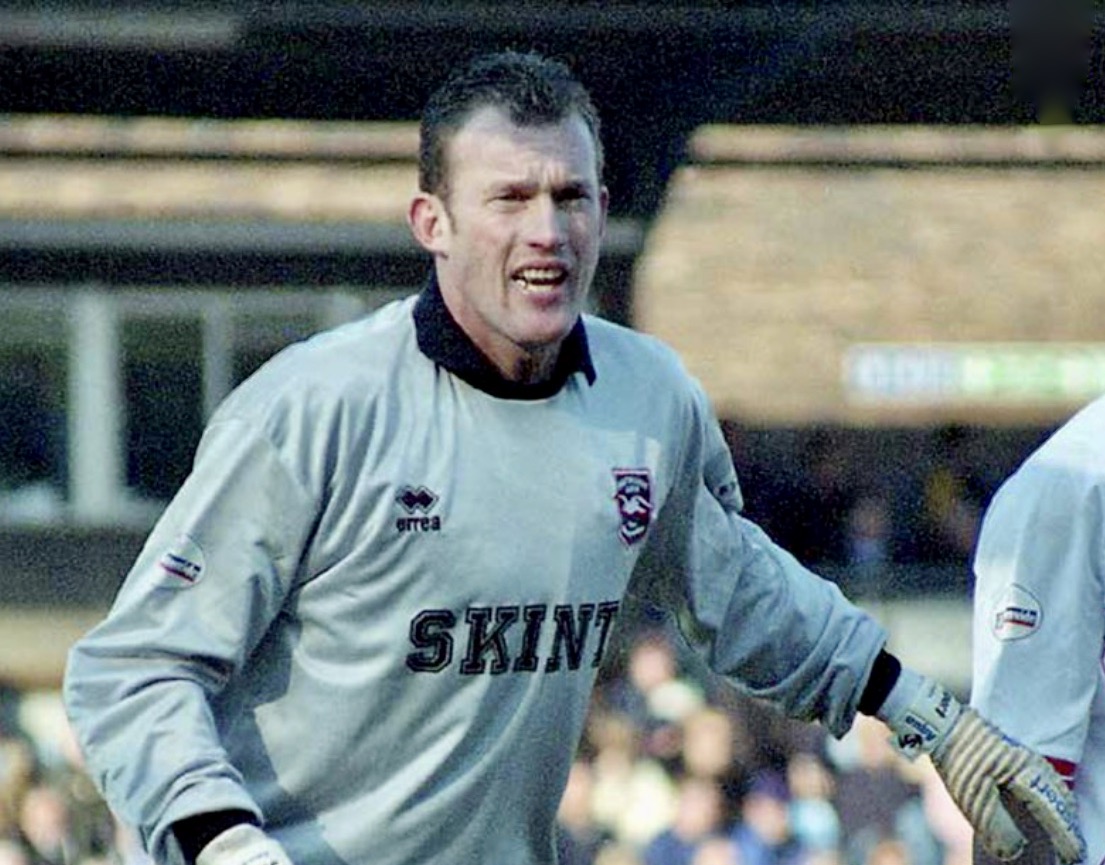
THE FIRST goalkeeper to save a penalty in an FA Cup Final – and the first to captain his team in the historic end of season finale – played between the sticks for Brighton at the ripe old age of 44.
Admittedly Dave Beasant is better known for his years playing for Wimbledon, during which time he laid down those FA Cup milestones in the 1988 final against Liverpool.
Nicknamed Lurch after the butler in The Addams family, Beasant’s heroics to keep out John Aldridge’s spot kick and preserve the 1-0 lead given to the humble south west London club by Lawrie Sanchez, led to the giant goalkeeper lifting the cup.
It also turned out to be the last ever game he played for Wimbledon. A month after that Wembley triumph, Newcastle paid £750,000 for his services – a transfer fee record for a goalkeeper at that time.
Not a bad return on Wimbledon’s £1,000 investment ten years earlier after he had impressed Dario Gradi playing for Edgware Town against the Dons in a pre-season friendly.
Beasant made his league debut against Blackpool in January 1979, and, remarkably, between August 1981 and the end of that 1987-88 season, made 304 consecutive league appearances for the Dons as they rose through the leagues.
When Newcastle sold Paul Gascoigne to Spurs for £2.2 million, they decided to splash £750,000 of it on the big Wimbledon goalkeeper.
Sadly, it was not money well spent. Beasant’s spell on Tyneside lasted just five months and certainly didn’t match the fairytale ending at Wimbledon.
Newcastle struggled at the foot of the table in 1988-89, and were relegated, but before the trapdoor opened Beasant had already departed after just 20 appearances.
He moved back to London in January 1989 to join Chelsea, where he played 193 times, initially under Ian Porterfield, until falling out of favour in 1992.
It was towards the end of 1989 that Beasant won two England caps, playing against Italy and Yugoslavia, and an injury to David Seaman saw Beasant selected for Bobby Robson’s 1990 England World Cup squad, although he didn’t play.
When Glenn Hoddle took over at Stamford Bridge, Beasant was relegated to number three ‘keeper behind Dmitri Kharine and Kevin Hitchcock, so he went out on loan for brief spells at Grimsby Town (six games) and Wolves (four games) before securing a £300,000 move to Southampton in 1993 to succeed Tim Flowers as their no.1.
He played 105 times for Saints but several managerial changes saw his fortunes fluctuate and, in 1997, he once again found himself third choice – this time behind Maik Taylor and Paul Jones – and he was on the move again.
By this time he was 38, but retirement was still not on his agenda. After joining on loan initially, Beasant moved permanently to Nottingham Forest in November 1997 and played 139 games in four years.
It was back to the south coast again in 2001, when Portsmouth needed a goalie following the death in a road accident of their regular ‘keeper, Aaron Flahavan. Beasant played 27 times for Pompey.
Emergency loan spells then followed successively at Tottenham, Bradford City and Wigan Athletic, although he didn’t play any first team games for any of them.
It was from Wigan, just a few weeks before his 44th birthday in 2003, that he once again headed south, this time to join Brighton’s brave but ultimately unsuccessful attempt under Steve Coppell to stave off relegation from Division One.
With Michel Kuipers out of the side with a thigh injury and loan replacement, Ben Roberts, suffering from ‘flu, Beasant was drafted in.
In the Bradford City v Brighton programme in February 2003, Colin Benson wrote almost poetically about the legendary goalkeeper.
“The unmistakeable figure of Dave Beasant stood tall under the Brighton crossbar at the Bescot Stadium a fortnight ago marking his debut for his 11th club at 43 years of age by brilliantly saving from Leitao’s shot on the rebound after beating out an effort from Corica,” he wrote. “Unfortunately he could not crown the day with a match winning clean sheet for Walsall pinched a 1-0 victory but it amply demonstrated that after 20 years between the posts he has lost none of his technique or resilience.”
In a 2018 interview with Spencer Vignes, Beasant said: “Stevie Coppell gave me a bell. I think you’d lost 12 straight games. I remember looking at the table thinking ‘They’re going down’. But there was also something about it that I quite liked. It was a challenge.”
Beasant said that morale was good despite the league position, and he added: “Wherever I go, I can add something on the field and off it. And that’s what happened. We clicked really well together.”
He played 16 games through to the end of the season and although ultimately the bid to stay up was not successful, no blame could be laid at Beasant’s door for lack of effort.
Never was it more evident than in the final game of the season away to Grimsby. With the score 2-2 and all hope virtually extinct, Beasant was still giving his all when other players’ heads had dropped.
I chatted briefly to Beasant at the club’s end of season dinner and remarked how I had been impressed by his never-say-die attitude right to the very end of that game, even though it was a lost cause.
Obviously the consummate professional, he said to me that however unlikely a win would be, you had to continue to play in the hope things might change round.
What a pro and exactly the sort of attitude that meant Beasant endeared himself to the Albion faithful. In a prophetic assessment after the Grimsby game, he told the Argus:
“You feel for those fans because they have been superb. They are gearing themselves for next season already and hopefully the players can set the same target as the fans and, obviously, that is to bounce straight back.”
Beasant cemented his place in the record books as Albion’s oldest-ever player while Albion, of course, went on and did just as he thought they might on that glorious day at the Millennium Stadium in Cardiff.
Although Coppell offered Beasant the chance to stay on with the Seagulls, he didn’t want to drop down to the third tier and instead took up Chris Coleman’s offer to become a player-coach at Fulham. He was proud to say that on his 45th birthday he was on the bench when Fulham played Chelsea.
Beasant remained on the Fulham coaching staff after Coleman’s departure under his old Wimbledon teammate Lawrie Sanchez (he had already worked with Sanchez in his previous role as Northern Ireland manager). But when Sanchez was fired, Beasant went too.
He subsequently worked for his son, Sam, at Stevenage, and at the age of 55 was famously registered as part of the squad for the 2015 play-off final, even though he didn’t play.
Between 2015 and 2018, Beasant was goalkeeping coach at Reading.

 Born in Dublin on 6 October 1981, Barrett was one of several Irish youngsters who began their football careers with Arsenal having been spotted by ex-Albion boss, and fellow Irishman, Liam Brady, playing in an Ireland U15s game against England at Blackburn.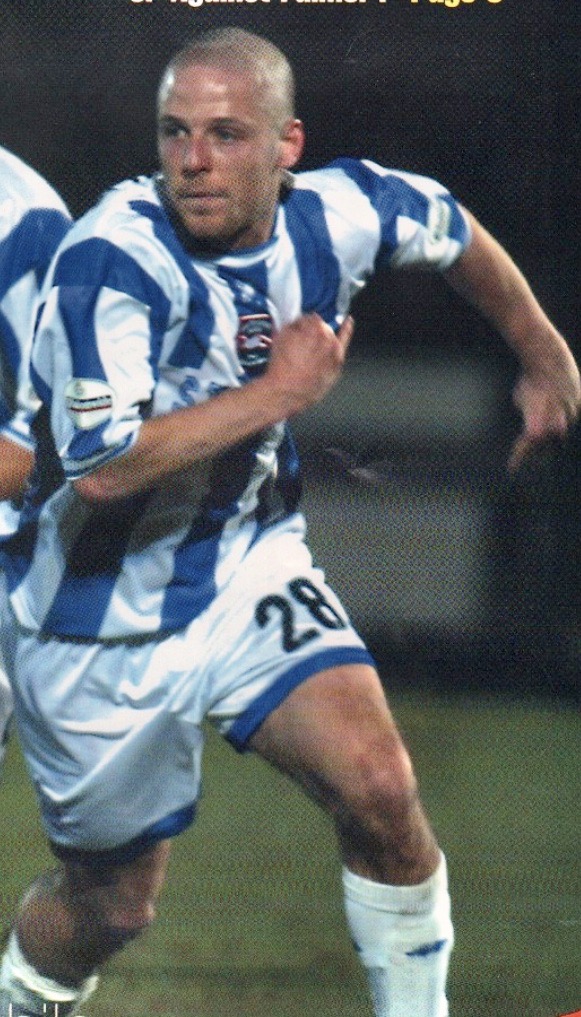

 Although he made 32 league starts plus 23 as a sub, ex-Albion boss Micky Adams made it plain he didn’t fit into his plans. He went to spend the last year of his contract on loan at Livingston in Scotland but after only six games suffered a season-ending knee injury.
 Flinders made a slightly shaky start in a win away to Gillingham, and in a defeat to Bristol City on his first appearance at Withdean, but he made some important stops to help earn points in consecutive away draws at Crewe and Blackpool.


 Of course, as fans, we would say it, wouldn’t we, but it was never a 5-1 game, and that was largely down to an unbelievable performance by referee Phil Crossley.

 GOALKEEPER Alan Blayney only played 15 games on loan to Brighton from Southampton but if finances had been better at the time he could have signed permanently and his career may have taken a different turn.


 “The unmistakeable figure of Dave Beasant stood tall under the Brighton crossbar at the Bescot Stadium a fortnight ago marking his debut for his 11th club at 43 years of age by brilliantly saving from Leitao’s shot on the rebound after beating out an effort from Corica,” he wrote. “Unfortunately he could not crown the day with a match winning clean sheet for Walsall pinched a 1-0 victory but it amply demonstrated that after 20 years between the posts he has lost none of his technique or resilience.”

 In parallel lines