THE NEW season opening game 26 years ago saw Darren Freeman score a hat-trick as the back-in-Brighton Seagulls hammered Mansfield Town 6-0.
For Freeman, who’d previously played under Micky Adams at Fulham and Brentford, it really couldn’t have been a better debut for his hometown club as the 1999-2000 season got under way at the Withdean Stadium.
Freeman hit the headlines again when he scored the first league goal of the millennium, crashing home a volley after only two minutes in a noon kick-off 4-2 Withdean win over Exeter City on 3 January 2000. It also earned him a magnum of champagne from league sponsor Nationwide.
Headline-maker
“It was a dream come true to play for my hometown club,” Freeman later admitted. After he’d scored that hat-trick at Withdean, he managed to pick out his dad’s face in the 5,582 crowd and fondly recalled his ‘That’s my boy!’ look of pride.
If the start of the season was spectacular, trouble was lurking round the corner with Freeman ending up suspended for seven matches – all in the first half of the season. He incurred a three-game ban after being dismissed for a stamping incident at Cheltenham and worse was to follow after he spat in Plymouth defender Jon Beswetherick’s face.
Beswetherick said: “He caught me in the face with his fist just inside the 18-yard box. I ran after him to have a word in his ear and on the way back up the pitch he just spat in my face.
“He had to go. Footballers all say that is the lowest thing you can do. It was probably in the heat of the moment, but I am sure he regrets it now.”
Not only did he receive a four-game suspension, manager Adams fined him a week’s wages and said: “He let himself down, the club down, his family down and everybody connected with Brighton. He knows that and he is full of remorse. He has been left in no doubt at all that it’s not good enough.”
Freeman was top scorer with 13 goals by the end of the season but a new goalscoring hero had begun to emerge in the shape of raw teenager Bobby Zamora!
That’s not to say Freeman’s days in the stripes were over, but his second season was dogged by injuries. Two hernia operations ruled him out from the start of September to the middle of December, then, after he had worked his way back into the starting line-up, in February 2001 he put in a transfer request after being left out of the side for a home game against Blackpool, sparking an angry reaction from Adams.
“I picked a side against Blackpool which I thought would win us the game and he wasn’t in it,” he said. “He is entitled not to agree, but there is a wrong way and a right way of knocking on my door and he chose the wrong way.
“I’ve never had one player ask to leave a club where I have been a manager. This is somebody as well who I had the utmost time and respect for, having taken him to two of my previous clubs.”
Freeman had a change of heart the following month after Adams restored him to the bench.
“I want to be a part of things,” he explained. “Obviously I’ve had a bad season with injuries and a lot of it was frustration.
“When me and Micky had a chat and I asked for a transfer we both said a few things. We didn’t have a massive fall-out. We are both adults and we have got to get on with it.”
The Argus revealed Freeman’s mentor, and former Albion forward and Northern Ireland international Gerry Armstrong played a part in the decision.
“I speak to Gerry a couple of times a week,” Freeman said. “A man of his experience can only give you good advice. I’ve had a number of conversations with him. It was my own choice to come off the transfer list, but Gerry has talked some great sense into me.”
Albion finished the season as division champions but by then Freeman was having a third hernia operation having made just six starts plus 12 appearances off the bench.
“I admit that as much as I was pleased for the lads, I felt gutted I wasn’t really part of it,” Freeman admitted. He went to Lilleshall and worked through the summer in an effort to regain fitness and earn a new contract.
But it was an uphill battle and although he struggled through pre-season and played in Albion’s opening friendly at his old club Worthing, he told the Argus: “I could hardly walk after the game. I was up all night in absolute agony.”
He was sent to see Harley Street specialist Jerry Gilmore who delivered devastating news: “There is no way you can carry on playing professional football. You are in a right mess, but hopefully we can do something to give you a better quality of life.”
A fourth hernia operation followed but not being able to resume his career hit him hard.
“The club have played an absolutely massive part in helping me through and all of my family and friends, because it has really been a rough time,” he told the Argus.
“It has been great working with him (Adams). He gave me the opportunity to experience promotions, the freedom to express my way of playing and the opportunity to fulfil my ambition.”
In a matchday programme interview several years later, Freeman told Spencer Vignes: “On reflection, I was lucky. Some people play their entire career and don’t win anything, and yet every club I played for got promoted.”
Born in Brighton on 22 August 1973, Freeman went to Varndean School, started playing football with Hollingbury Hawks and then joined Whitehawk as a teenager before playing at Isthmian League level for Worthing and Horsham.
“I came through the non-league system and was given the opportunity to fulfil my dreams,” he told Vignes. “I wasn’t the greatest player but what I can say is I gave everything for every club I played for.”
Freeman turned professional with Gillingham under Tony Pulis in August 1994, where he played alongside future Fulham and Albion teammates Richard Carpenter and Paul Watson. He recalled how it was while he was playing for the Gills against Fulham that Adams’ no.2 Alan Cork got in his ear and told him not to sign a new contract at Priestfield because Fulham wanted to sign him.
Sure enough, as Freeman admitted to Vignes: “Once I knew Fulham were interested, then I was interested. They were, and are, a massive club and it was nice that a team like that wanted me.”
Impressed by Adams’ man-management skills, he said: “He made me feel wanted and that I was a big part of his plans for the 1996-97 season. He sold Fulham to me, saying we were going to do well. And we did, because we won promotion.”
In full flow for Fulham
Fulham fans website HammyEnd.com recalled: “The £15,000 Micky Adams paid to Gillingham for the services of shaggy-haired Darren Freeman proved to be a bargain.
“The popular forward quickly became a firm favourite with the Fulham faithful on account of his ability to terrorise defenders, either out wide or through the middle as a conventional centre forward.
“Injuries robbed Freeman of the chance to make good on his undoubted talented, but he still scored nine goals as the Whites went up from Division Three in 1997.”
In an interview with fulhamfc.com, Freeman said: “Micky brought in a great bunch of lads and the togetherness was fantastic. The team morale was really, really good.
“He was quite a young manager, I think he’d actually played that season, but he’d got a great bunch of lads together and we really kicked on.
“When you consider that it was Micky’s first full season as a manager, it’s incredible what he achieved. He went about his business and did his job fantastically.”
He added: “Micky had a lot of faith in me and I feel very privileged to have achieved my goals and my ambitions from when I was a kid, and to be a part of Fulham was the icing on the cake.
“We were paid to do a job but, when I look back at it, it was a dream come true and I don’t think you realise until later on in life how important it was. Fulham, to me, the fans and the whole club, it was just a special time for me.”
As with many others at Craven Cottage, Freeman’s fortunes changed when Kevin Keegan and Ray Wilkins were installed as managers by Mohamed Al Fayed and he joined something of an exodus across London to Brentford.
Coincidentally, Freeman scored on his league debut for Brentford in a 3-0 win over Mansfield (the Stags must have loved him!) and his teammates in that 1998-99 season included Watson, Lloyd Uwusu, Warren Aspinall and Charlie Oatway. Owusu ended the season as top scorer with 25 goals (Freeman scored nine) as the Bees won the Third Division championship.
After his playing days were brought to a premature end, Freeman spent five years as manager of his first club, Whitehawk, leading them to three promotions (from the Sussex County League to the Conference South) and in 2012 to winning the Sussex Senior Cup.
He briefly managed Peacehaven and Telscombe before occupying the manager’s chair at Lewes for nearly three years.
He subsequently became a football agent, initially spending 18 months with Sports Total, one of Europe’s leading football agencies, before joining forces with his former Brentford team at Dirk Hebel Sports Consulting (Hebel named one of his sons Darren after his teammate!).
Freeman told Vignes he relishes the opportunity to pass on his knowledge of the game to current players. “They say nothing compares to playing, but I find it very rewarding. It’s the next best thing to being out there, definitely.”
ONE-TIME Norwich City hero Ian Culverhouse flew high in the Premier League and Europe with the Canaries and ended his playing days at basement Brighton where he began a lengthy coaching and managing career.
It was only at the end of November 2024 that Culverhouse began a new managerial post, taking charge of sixth tier (National League South) side St Albans City.
A few weeks previously he had parted company from Boston United because they were struggling to come to terms with life in the tier above.
Culverhouse was brought to Brighton by Brian Horton in 1998, shortly after he’d been picked up by non-league Kingstonian having been given a free transfer earlier in the year by Swindon Town. He’d spent three and a half years at the County Ground, including being a key player in their Second Division Championship-winning squad of 1995-96, but left the Robins after falling-out with manager Steve McMahon.
He’d only played twice for Kingstonian before he joined Brighton, who were playing in exile at Gillingham at the time.
Signed on a monthly contract initially, his presence as a sweeper helped plug holes at the back and saw Torquay United, Scarborough and Swansea City all beaten. But after two months, Horton decided to dispense with a sweeper and play a flat back four, so Culverhouse was let go.
But when Albion promptly lost 3-1 to Mansfield Town without him, Horton had a change of heart. He re-signed Culverhouse before a week was up, gave him a contract until the end of the season and even made him captain (in the absence of injured Gary Hobson). Quite some turnaround.
“He was one of the best readers of the game the Albion have had,” reckoned wearebrighton.com. “Culverhouse would always be in the right place at the right time, on the scene to stop danger before anybody realised that there was danger coming.”
The musically-minded wags amongst the Albion die-hards also found the perfect terrace song for him – sung to the tune of Our House by Madness, ‘Culverhouse, in the middle of defence’ became a popular ditty.
He completed 38 appearances for the Seagulls that season and took his first steps towards a coaching and managing career under Horton’s successor, Jeff Wood, when he began coaching the reserve side. Wood said: “Ian has shown on the field that he is a player of immense ability. In his new coaching role, he will now have the opportunity to pass his knowledge on to the younger players at the club.”
A grateful Culverhouse added: “This is a good opportunity for me and I am looking forward to it.
“It’s the first chance I’ve had to coach and it’s something I wanted to do anyway when my career finished. It has just come at a nice time.”
Albion’s then chairman, Dick Knight, told the Argus: “Ian has impressed me greatly with not only his experience but his attitude.
“He has been a real leader in the dressing room as well as on the field and we are giving him a chance to bring that know-how to bear on the coaching side.”
Culverhouse was retained as reserve team coach after Micky Adams took over from Wood towards the end of the season, and the new boss told the Argus: “Ian reminds me a bit of myself. You have got to get on the ladder somewhere. He is enthusiastic, has had a good career and sets himself high standards.
“He has a lot to learn in terms of coaching, but I hope he will become fully qualified along with the rest of my staff.
“He will still be registered as a player as well in case we need him in emergencies, but I don’t envisage him playing too many games.”
In fact, there was just the one final first team appearance for him, when Adams tried to bring a halt to a six-game winless run at the start of 2000. But it didn’t go well and he was subbed off in a 2-0 defeat at Hull.
“It is fair to say we have possibly seen the last of Culvs in a first team shirt,” Adams admitted later. “He is still registered as a player, but his career is probably over. It was me that persuaded him to play at Hull. He wasn’t sure he would be up to it in terms of fitness.”
Born in Bishops Stortford, Hertfordshire, on 22 September 1964, Culverhouse was in the England Youth squad for an international junior tournament in Norway in the summer of 1982, starting in a 4-1 defeat to the home nation and gaining a second cap as a sub in a 3-2 win over Poland.
In the same year, he began as an apprentice at Tottenham. He impressed in Spurs’ youth and reserve sides and spent three years at the Lane. “I was playing alongside players like Ricky Villa, Ossie Ardiles and Glenn Hoddle, which was tremendous experience,” he said.
He even collected a UEFA Cup winners’ medal in 1984 as an unused substitute in the first leg of Spurs’ win (on penalties) over Anderlecht; future Albion boss Chris Hughton was left-back and recent signing from Albion, Gary Stevens, was in midfield, and scored one of the decisive penalties.
But Culverhouse only made one full appearance for the first team, plus one as a substitute, and in October 1985 moved to Norwich under Ken Brown for a £50,000 fee. He was part of the Norfolk club’s Second Division title-winning side of 1985-86 in his first season and became an established defender, usually as a right-back but also as a sweeper.
Culverhouse for the Canaries
He was part of the successful Canaries side that finished third in the inaugural Premier League season of 1992-93 after enjoying three top five finishes in the old First Division, reaching two FA Cup semi-finals (1989 and 1992) and playing in Europe (1993-94). He won the club’s player-of the-year award in 1990-91.
The excellent Norwich fans website Flown From The Nest blamed the Robert Chase regime for Culverhouse’s eventual departure from Carrow Road after nine years.
“From being an integral part of the City team that finished third in the Premiership and enjoyed UEFA Cup success, Ian Culverhouse found himself at the start of the 1994-95 season out of contract and out of favour with Robert Chase and manager John Deehan,” it said. “Similar problems had occurred the previous season with Dave Phillips.”
Culverhouse with the Robins
Together with the contract issues, Culverhouse went public to criticise Deehan’s decision to drop him, which ended any chance he had of regaining his place. Eventually, he was transferred to Swindon for the bargain sum of £150,000 in December 1994, the fee being fixed by a tribunal.
After he left Brighton in 2000, Culverhouse became youth coach at Barnet and two years later joined Leyton Orient in a similar role before being elevated to assistant manager. He left the Os in August 2005 – replaced by future Villa boss Dean Smith – but was then appointed coach at Wycombe Wanderers by former Swindon boss John Gorman.
When Paul Lambert succeeded Gorman, he and Culverhouse developed a strong bond. He followed Lambert to Colchester United to become assistant manager, then returned to Norwich in the same role, where he didn’t forget Wood’s role in setting him on the coaching ladder, being instrumental in the former Albion manager’s appointment as Norwich’s goalkeeping coach.
At the end of their first season, Lambert and Culverhouse steered Norwich to the League One title. The following season, they won promotion to the Premier League and finished 12th in their inaugural season back at the elite level. When Lambert quit Norwich to take charge at Aston Villa in July 2012, Culverhouse and fellow ‘lieutenant’ Gary Karsa followed him.
Coach at Villa under Paul Lambert
In June 2013, Lambert told the Birmingham Mail how much trust he placed in his right-hand man. “My assistant boss Ian Culverhouse has a real eye for a player,” he said. “If he reckons we should go for someone I will back his judgement 100 per cent.”
But in April 2014 Culverhouse and Karsa were suspended by the club after being accused of bullying and aggressiveness by players and other staff members, and they were sacked the following month.
Between January 2016 and February 2017, Culverhouse was assistant manager to veteran boss John Still at Dagenham & Redbridge. He left the Daggers to become manager of Southern League Premier Division side King’s Lynn Town. In May 2018, he moved on to Grantham Town but left after only five months and returned to King’s Lynn.
He led them to a second place finish in the Southern League, and. in the subsequent play-offs against Northern Premier League Warrington, saw the Linnets win 3-2 in extra time to earn a place in the National League (North) for 2019-20.
This was the Covid-affected season in which the fixtures weren’t completed. Lynn finished the games played two points behind York City with two games in hand. The National League board ultimately decided, using an “unweighted points per game” formula that Lynn would have won the title and they therefore gained promotion to the National League.
However, on 29 November 2021 he was sacked by Lynn on the back of a run of eight league defeats in a row which left the club second from bottom of the National League and struggling for survival.
Two months later, he was back in management at National League North Kettering Town, together with assistant Paul Bastock, although that tenure only lasted four months.
Next stop was Boston United in September of the same year, a club all too familiar to Bastock, who played 679 games for the Pilgrims (and broke Peter Shilton’s record in competitive club football when he made his 1,250th appearance in the game in 2017).
The pair helped to preserve Boston’s league status in their first season and then guided them to promotion via the play-offs in May 2024. United’s struggle in higher company – only two wins in 16 matches – led to Culverhouse and Bastock leaving the Jakemans Community Stadium in October 2024.
REGARDLESS of the often overblown ‘bitter rivalry’ between Brighton and Crystal Palace, many people have served both clubs with equal distinction, none more so than Martin Hinshelwood.
A player at Palace until injury curtailed his career when only 27, he went on to have a long career in the game, much of it with Brighton; more often in youth development as a coach and briefly as the no.1.
In the summer of 2002, his appointment as Albion boss 11 weeks after his former Palace teammate Peter Taylor had quit came as something of a surprise considering chairman Dick Knight declared he had interviewed seven candidates for the post.
In more recent times, Albion have had a Uruguayan, a Spaniard, a Finn and an Italian as head coach, back in 2002 it looked a strong possibility Knight might appoint wild-haired German coach Winfried Schafer, who had just managed Cameroon at the World Cup, but the chairman suspected his lack of command of English might be too big a hurdle to get over.
A terrific start
A clear favourite had been Steve Coppell but when the ex-Palace manager fell asleep during his conversation with Knight, apparently fatigued after a long-haul flight, the chairman was suitably unimpressed and, with time running out before the 2002-03 season got under way, Hinshelwood was appointed instead.
A 3-1 win away to Burnley looked like a terrific start but after a 0-0 home draw with Coventry, the side went on a disastrous 10-game losing spell (a 2-1 League Cup win over Exeter City the only bright spot amid the gloom).
Knight had already publicly signalled he would take decisive action after the sixth defeat in a row – a 4-2 home reverse to nine-man Gillingham!
He told the Argus: “If the team went ten matches losing every one, then you have got to do something about it.
“It’s very easy to criticise him (Hinshelwood). Obviously, he is a manager under pressure because we have just lost six games.
Getting his message across
“To suggest we should instantly sack him puts out the wrong message. Most people right now will think it was the wrong decision to appoint him, but I am not going to panic. I am going to monitor the situation.”
Of course, that monitoring didn’t take long to reach an inevitable conclusion – four more defeats and Hinshelwood was relieved of first team duties. He was made ‘director of football’ and Knight went back to Coppell to try to keep the Albion in the division. He very nearly managed it, too, but such a bad run of defeats had taken their toll on the points total.
As it happened, it wasn’t the first time Hinshelwood had found himself in the Albion hotseat: he was caretaker manager on three occasions: in 1993 (before Liam Brady’s appointment), in 2001 (after Micky Adams left for Leicester) and again in 2009, when he was in charge for a 4-4 FA Cup first round tie at Wycombe Wanderers after Russell Slade had been sacked and before Gus Poyet’s arrival.
When researching backgrounds of any number of players for this blog, Hinshelwood’s name is often cited as the one who either made the approach to bring them to Brighton or who was a major influence in their development.
For example, when Hinshelwood first joined the Albion in 1987, from Chelsea, he was instrumental in bringing from Stamford Bridge to the Goldstone Doug Rougvie and Keith Dublin, who both played their part in getting Albion promoted straight back to the second tier in 1988.
Hinshelwood had been reserve team manager at Chelsea for two years during the managerial reign of John Hollins, after first team coach Ernie Walley, his former Palace youth team coach, put in a good word for him.
His long association with Brighton began with a ‘phone call to Barry Lloyd to congratulate him on landing the Albion manager’s job. The former Fulham captain asked Hinshelwood to join him at the Goldstone – and he stayed for the next six and a half years.
He returned to the club in the summer of 1998, when Brian Horton had taken over, and was appointed Director of Youth, with Dean Wilkins as youth team coach.
Pensive Hinsh
An interview with the matchday programme pointed out that across the following 14 years, he oversaw a youth system that produced 31 players who made it through to the first team, although he said such success had very much been a team effort, name-checking Wilkins, centre of excellence managers Vic Bragg and John Lambert, scouting chief Mark Hendon and physio Kim Eaton.
Dean Hammond, Adam Hinshelwood, Adam Virgo, Adam El-Abd, Dean Cox, Jake Robinson, Dan Harding and later Lewis Dunk, Jake Forster-Caskey and Solly March all graduated from that period. “To have been a part of their journeys makes me immensely proud,” he said.
Hinshelwood left the Albion for a second time in 2012 and worked variously for Crawley, Portsmouth, Stoke City and Lewes. He returned to the Seagulls once again when the former head of academy recruitment at Stoke, Dave Wright, who had joined Brighton in 2019, invited him to take on a role of scouting 13 to 16-year-olds.
When Hinshelwood himself was that age, he had visions of following in his dad Wally’s footsteps. He had been a professional for Fulham, Chelsea, Reading, Bristol City and Newport County, and, although born in Reading (on 16 June 1953), young Martin had become accustomed to an unsettled childhood, moving around the country to wherever dad’s next club took him.
The family finally settled in New Addington, near Croydon, with Wally playing non-league football in Kent and Martin played representative football for Dover Under 15s, Croydon Boys and Surrey Under 16s.
He was on schoolboy terms at Fulham when Bobby Robson was manager but they didn’t think he would make it. It was while he was playing for Surrey Schools that former Spurs and Palace manager Arthur Rowe scouted him for Palace and he was taken on as an apprentice in 1969.
Hinshelwood playing for Palace, up against Stoke’s George Eastham
Hinshelwood was given his first team debut by Bert Head in 1972. He played in midfield in the old First Division for a dozen matches but the side were relegated in his first season. The flamboyant fedora-wearing Malcolm Allison took over as manager and he was later replaced by Terry Venables.
Martin’s younger brother Paul (Jack Hinshelwood’s granddad) played in the same side at full-back and the brothers were alongside the likes of Kenny Samson and Peter Taylor. In 1975-76, when still a Third Division side, they shook the football world by making it to the semi-finals of the FA Cup, where they lost to eventual winners Southampton, although Martin missed the game through a right knee injury. It eventually forced him to quit playing in 1978, after he’d made 85 appearances for Palace in five years.
Venables appointed him as youth team coach at Selhurst Park and although he spent 18 months as player-manager of non-league Leatherhead, he then resumed his Palace role under Steve Kember.
Alan Mullery dispensed with Hinshelwood’s services during his brief managerial reign at Palace but he kept his hand in at coaching with non-league clubs Kingstonian, Barking and Dorking.
Selsey-based Hinshelwood then had a spell as manager of Littlehampton before the Chelsea job came up.
DEAN WILKINS might have lived in the shadow of his more famous elder England international brother Ray but he certainly carved out his own footballing history, much of it with Brighton.
Albion fans of a certain vintage will never forget the sumptuous left-footed free-kick bouffant-haired captain Wilkins scored past Phil Parkes at the Goldstone Ground which edged the Seagulls into the second-tier play-offs in 1991.
Supporters from the mid-noughties era would only recall the balding boss of a mid-table League One outfit at Withdean comprising mainly home-grown players who Wilkins had brought through from his days coaching the youth team.
After Dick Knight somewhat unceremoniously brought back Micky Adams over Wilkins’ head in 2008, he quit the club rather than stay on playing second fiddle and subsequently went west to Southampton where he worked under Alan Pardew and his successor Nigel Adkins as well as taking caretaker charge of the Saints in between the two reigns.
Wilkins’ initial association with the Seagulls went back to 1983, when Jimmy Melia brought him to the south coast from Queens Park Rangers shortly after Albion’s FA Cup final appearances at Wembley.
Melia’s successor Chris Cattlin only gave him two starts back then and although he pondered a move to Leyton Orient, where he’d had 10 matches on loan, he opted to accept to try his luck in Holland when his Dutch Albion teammate Hans Kraay set him up with a move to PEC Zwolle. Playing against the likes of Johann Cruyff, Marco Van Basten and Ruud Gullit proved to be quite the footballing education for Wilkins.
Wilkins in the thick of it in Dutch football for PEC Zwolle
After two years in the Netherlands, 25-year-old Wilkins rejoined the relegated Seagulls in the summer of 1987 as the club prepared for life back in the old Third Division under Barry Lloyd.
Relegation had led to the sale for more than £400,000 of star assets Danny Wilson, Terry Connor and Eric Young but more modest funds were allocated to manager Lloyd for replacements: £10,000 for Wilkins, £50,000 for Doug Rougvie, who signed from Chelsea and was appointed captain, Garry Nelson, a £72,500 buy from Plymouth and Kevin Bremner, who cost £65,000 from Reading. Midfield enforcer Mike Trusson was a free transfer.
The refreshed squad ended up earning a swift return to the second tier courtesy of a memorable last day 2-1 win over Bristol Rovers at the Goldstone.
At the higher level, Wilkins had the third highest appearances (40 + two as sub) as Albion finished just below halfway in the table. The following season Wilkins was appointed captain and was ever-present as Albion made it to the divisional play-off final against Notts County at Wembley, having made it to the semi-final v Millwall courtesy of the aforementioned spectacular free kick v Ipswich.
Wilkins scored again at Wembley but it turned out only to be a consolation as the Seagulls succumbed 3-1 to Neil Warnock’s side.
As the 1992-93 season got underway, Wilkins, having just turned 30, was the first matchday programme profile candidate for the opening home game against Bolton Wanderers (a 2-1 win) when he revealed the play-off final defeat had been “the biggest disappointment of my career”.
The 1993-94 season was a write-off from October onwards when he damaged the medial ligaments in both his knees after catching both sets of studs in the soft ground at home against Exeter City.
Although injury plagued much of the time during Liam Brady’s reign as manager, the Irishman acknowledged his ability saying: “He is a very fine footballer and a tremendous passer of the ball and he possesses a great shot.”
Ahead of the start of the 1995-96 season, Wilkins was granted a testimonial game against his former club QPR, managed at the time by big brother Ray. But at the end of the season, when the Seagulls were relegated to the basement division, he was one of six players given a free transfer.
Born in Hillingdon on 12 July 1962, Wilkins couldn’t have wished for a more football-oriented family. Dad George had played for Brentford, Leeds, Nottingham Forest and Hearts and appeared at Wembley in the first wartime FA Cup final. While Ray was the brother who stole the limelight, Graham and Steve also started out at Chelsea.
In spite of those older brothers who also made it as professionals, Wilkins attributed his development at QPR, who he joined straight from school as an apprentice in 1978, to youth coach John Collins (who older fans will remember was Brighton’s first team coach under Mike Bailey).
He made seven first team appearances for Rangers, his debut being as a substitute for Glenn Roeder in a 0-0 draw with Grimsby Town on 1 November 1980. After joining the Albion in August 1983, he had to wait until 10 December that year to make his debut, in a 0-0 draw at Middlesbrough, in place of the absent Tony Grealish. He started at home to Newcastle a week later (a 1-0 defeat), this time taking the midfield spot of injured Jimmy Case.
Perhaps the writing was on the wall when Cattlin secured the services of Wilson from Nottingham Forest, initially on loan, and although Wilkins had a third first team outing in a 2-0 FA Cup third round win at home to Swansea City, boss Cattlin didn’t pick him again. Instead, he joined Orient on loan in March 1984.
A long career in coaching began when Wilkins was brought back to the Albion in 1998 by another ex-skipper, Brian Horton, who had taken over as manager. With Martin Hinshelwood as director of a new youth set-up, Wilkins was appointed the youth coach – a position he held for the following eight years.
Return to the Albion as youth coach
His charges won 4-1 against Cambridge United in his first match, with goals from Duncan McArthur, Danny Marney and Scott Ramsay (two).
That backroom role continued as managers came and went over the following years during which a growing number of youth team products made it through to the first team: people like Dan Harding and Adam Virgo and later Adam Hinshelwood, Joel Lynch, Dean Hammond and Adam El-Abd.
At the start of the 2006-07 season, with Albion back in the third tier after punching above their weight in the Championship for two seasons, Wilkins was rewarded for his achievements with the youth team with promotion to first team coach under Mark McGhee.
By then, more of the youngsters he’d helped to develop were in or getting close to the first team, for example Dean Cox, Jake Robinson, Joe Gatting and Chris McPhee.
After an indifferent start to the season – three wins, three defeats and a draw – Knight decided to axe McGhee and loyal lieutenant Bob Booker and to hand the reins to Wilkins with Dean White as his deputy. Wilkins later brought in his old teammate Ian Chapman as first team coach.
Into the manager’s chair
Tommy Elphick, Tommy Fraser and Sam Rents were other former youth team players who stepped up to the first team. But, over time, it became apparent Knight and Wilkins were not on the same page: the young manager didn’t agree with the chairman that more experienced players were needed rather than relying too much on the youth graduates.
Indeed, in his autobiography Mad Man: From the Gutter to the Stars (Vision Sports Publishing, 2013), Knight said Wilkins hadn’t bothered to travel with him to watch Glenn Murray or Steve Thomson, who were added to the squad, and he was taking the side of certain players in contract negotiations with the chairman.
“In my opinion, his man-management skills were lacking, which was why I made the decision to remove him from the manager’s job,” he said. It didn’t help Wilkins’ cause when midfielder Paul Reid went public to criticise his man-management too.
Knight felt although Wilkins hadn’t sufficiently nailed the no.1 job, he could still be effective as a coach, working under Micky Adams. The pair had previously got on well, with Adams saying in his autobiography, My Life in Football (Biteback Publishing, 2017) how Wilkins had been “one of my best mates”.
But Adams said: “He thought I had stitched him up. I told him that I wanted him to stay. We talked it through and, at the end of the meeting, we seemed to have agreed on the way forward.
“I thought I’d reassured him enough for him to believe he should stay on. But he declined the invitation. He obviously wasn’t happy and attacked me verbally.
“I did have to remind him about the hypocrisy of a member of the Wilkins family having a dig at me, particularly when his older brother had taken my first job at Fulham.
“We don’t speak now which is a regret because he was a good mate and one of the few people I felt I could talk to and confide in.”
Youth coach
Knight knew his decision to sack the manager would not be popular with fans who only remembered the good times, but he pointed out they weren’t aware of the poor relationship he had with some first team players.
Knight described in his book how a torrent of “colourful language” poured out from Wilkins when he was called in and informed of the decision in a meeting with the chairman and director Martin Perry.
“He didn’t take it at all well, although I suppose he felt he was fully justified,” wrote Knight. “He was fuming after what was obviously a big blow to his pride.”
Reporter Andy Naylor perhaps summed up the situation best in The Argus. “The sadness of Wilkins’ departure was that Albion lost not a manager, but a gifted coach,” he said. “Wilkins was not cut out for management.”
Saints coach
One year on, shortly after Alan Pardew took over as manager at League One Southampton, he appointed Wilkins as his assistant. They were joined by Wally Downes (Steve Coppell’s former assistant at Reading) as first team coach and Stuart Murdoch as goalkeeping coach.
Saints were rebuilding having been relegated from the Championship the previous season and began the campaign with a 10-point penalty, having gone into administration. The club had been on the brink of going out of business until Swiss businessman Markus Liebherr took them over.
A seventh place finish (seven points off the play-offs because of the deduction) meant another season in League One and the following campaign had only just got under way when Pardew, Downes and Murdoch were sacked. Wilkins was put in caretaker charge for two matches and then retained when Nigel Adkins, assisted by ex-Seagull Andy Crosby, was appointed manager.
It was the beginning of an association that also saw the trio work together at Reading (2013-14) and Sheffield United (2015-16).
Adkins, Crosby and Wilkins were in tandem as the Saints gained back-to-back promotions, going from League One runners up to Gus Poyet’s Brighton in 2011, straight through the Championship to the Premier League. But they only had half a season at the elite level before the axe fell and Mauricio Pochettino took over.
When the trio were reunited at Reading, Wilkins, by then 50, gave an exclusive interview to the local Reading Chronicle, in which he said: “This pre-season has given me time to learn about the characters of the players we’ve got at Reading and find out what makes them tick.
At Reading with Crosby and Adkins
“It’s my job then to make sure every player maximises his potential. That’s what I see my role as, to bring out the very best of them from now on and make them strive to attain new levels of performance.
“I will always keep working toward that goal. If we can do that with every individual and get maximum performances out of them, I believe we will be in for a great season.
“We’re back together now and it’s going fantastically well. I have loved every minute of it. I’m used to working with Nigel and Andy and we are carrying out similar work to what we’ve done in the past.”
The Royals finished seventh, a point behind Brighton, who qualified for the play-offs, and the trio were dismissed five months into the following season immediately following a 6-1 thrashing away to Birmingham City.
Six months later the trio were back in work, this time at League One Sheffield United, but come the end of the 2015-16 season, after the Blades had finished in their lowest league position since 1983, they were shown the door.
Between January 2018 and July 2019, Wilkins worked for the Premier League assessing and reporting on the accuracy, consistency, management and decision-making of match officials.
In the summer 0f 2019, he was appointed Head of Coaching at Crystal Palace’s academy, a job he held for 15 months.
A return to involvement with first team football was presented by his former Albion player Alex Revell, who’d been appointed manager of League Two Stevenage Borough. Glad to support and mentor Revell in his first managerial post, Wilkins spent a year as assistant manager at the Lamex Stadium.
FORMER DUTCH MARINE Michel Kuipers earned back-to-back promotions with Brighton and Hove Albion and Crawley Town.
He was between the sticks for the Albion when they won promotion from the basement division in 2000-01 and the third tier in 2001-02.
And after 10 years with the Seagulls, during which he made a total of 287 appearances, he spent two years with Crawley where, over 49 matches, he won promotion from the Conference in 2011 and League Two in 2012.
Undeniably, it was Kuipers’ years with the Seagulls that defined his career after an inauspicious start when Micky Adams subbed him off at half-time on his debut away to Southend United. Replaced by Mark Cartwright in that match, he was left out of the next 11 matches before an injury to Cartwright enabled him to win back the shirt. He didn’t look back after that, though, and only missed three more matches as the Seagulls were crowned champions.
Early days between the sticks
Although there were to be plenty of ups and downs over the following years, when he wasn’t always first choice, Kuipers remained a crowd favourite for his agility as a shot stopper and his fanlike celebrations of goals and wins.
“I was a player but I also turned into a fan of the Albion,” he said in an interview with the matchday programme. “On the pitch I would celebrate each goal we scored like I was on the terraces with our supporters.
“After we had a good result in the game, I would celebrate with the players but always expressed my joy and gratefulness to the supporters.”
A sensational double-save in a televised game away to Wolves in November 2002 was a highlight for many and a one-handed reaction stop at Blackpool earned him a ‘save of the month’ award from sponsor Nationwide.
He didn’t always see eye to eye with Mark McGhee, who reckoned his kicking let him down, and the Scot said: “His desire to do well is unquestioned, but I had to make a decision and it was not always one he agreed with.”
McGhee was nonetheless full of admiration for the Dutchman and in a programme for Kuipers’ testimonial match v Reading in 2012, he recounted a specific role he played when Albion’s back-up goalie at the 2004 Second Division play-off final against Bristol City.
“I asked Michel to warm up, but in truth to get the supporters going. I remember him going down to the corner and waving with those huge arms – he absolutely galvanised the support.
“What was brilliant for me was that he did it despite his huge disappointment not to be playing himself – he did it for the team. The rest is history as the fans got behind the team. We got the penalty and went on to win the game.”
Later that evening, the trophy Albion won got bent when someone fell on it: with his bare hands, Kuipers straightened it!
Five years (from 19 to 24) in the Dutch Marines during which he’d parachuted from aeroplanes and learned to survive in harsh conditions, definitely left their mark. His training had taken him into jungles, deserts and the Arctic, but he said: “My love and passion for football was always there. In my spare hours I played for the Marines team.”
Born in Amsterdam on 26 June 1974, as a childKuipers played football with his mates in front of some garages near the flats where he lived. He recalled they would be told off for hitting the ball against the garage doors, so he went in goal to try to save the ball from making loud bangs every time one of his friends scored.
“I was doing OK, so from that day onwards I played as a goalkeeper,” he said. He played for the local Blauw-wit under six team and went all the way through the age groups to the first team at 18.
A keen Ajax fan as a youngster, his idol was their goalkeeper Stanley Menzo – “one of the best goalkeepers of his generation” – and he also admired Menzo’s successor, Edwin Van Der Sar, who later played in England for Fulham and Manchester United.
Although Kuipers went straight from full-time education into the Marines, he also played part time for AFC Door Wilskracht Sterk (it means Strong Through Willpower) and Kuipers explained: “We won the Amsterdam regional league for the first time in 25 years and this brought me to the attention of Ian Holloway at Bristol Rovers.
“When I was offered a contract by him, I wasn’t sure I could leave the Army, but the officers knew I’d put 110 per cent into my job, so they were happy to release me.”
But in 18 months with Rovers, Kuipers only managed one first team appearance (against Bournemouth in March 1999). Indeed, it was while playing for Rovers Reserves against Brighton at Worthing that he caught the eye of Brighton boss Adams. He jumped at the chance when Albion offered him a trial and he played well enough in a Sussex Senior Cup semi-final against Langney Sports for Adams to persuade him to make a permanent move to the Seagulls with the intention of being back-up to Mark Walton.
When Walton suddenly upped sticks and joined Cardiff before the 2000-01 season had started, Kuipers found himself in the starting line-up for the opening game away to Southend.
Understandably, Kuipers was distraught at being taken off at half time but he knuckled down to try to win back the shirt and said: “If you’re mentally strong and you’ve got good self-confidence and belief then you just fight back and that’s the way I approached it in the following months.”
He credited the work he put in with goalkeeping coaches John Keeley and Mike Kelly, admitting: “They improved my technique and made me more professional.”
Even when Adams left for Leicester, Kuipers remained no.1 under Peter Taylor as the Seagulls soared to a second successive promotion.
Injury meant Kuipers missed the second half of the season when Steve Coppell’s side only just missed out on avoiding an immediate drop back to the third tier.
When Ben Roberts was preferred as first choice goalkeeper, Taylor, by then manager of Hull City, took Kuipers on loan in September 2003.
Albion rebuffed Hull’s attempt to sign him on a free transfer but shortly after his return to Sussex he was involved in a horror car smash on his way to training.
Remarkably, considering he was airlifted to hospital, he escaped serious injury although club physio Malcom Stuart reported: “Michel knows he was very lucky. There’s a degree of shock and he will need time for that to clear his system. Structurally there are no serious injuries, but he’s had several stitches and is very sore and uncomfortable muscularly.”
Manager McGhee added: “My God, we feared the worst. But in a sense it’s an absolute bonus, a miracle – they sent him home with a few cuts and bruises, a swollen face, a sore back and a sore neck, which in a week or two will be fine.”
Nevertheless, it was Roberts who kept his place as Albion won promotion via the aforementioned play-off final win in Cardiff. But in the first half of the 2004-05 Championship season, Kuipers was back in the saddle courtesy of injury to Roberts.
All was fine until a home game v Nottingham Forest on 22 January 2005 when Kuipers came off worse in a challenge with Kris Commons and the shoulder injury he sustained kept him out for the rest of the season. Former Arsenal ‘keeper Rami Shabaan and Southampton loanee Alan Blayney took over the gloves.
New competition arrived in the shape of Aston Villa loanee Wayne Henderson, who took over in goal at the start of the 2005-06 season and with the brief return of Blayney as well as Frenchman Florent Chaigneau as back-up, it seemed Kuipers’ Albion days might be over.
He was sent out on two loan spells at League Two Boston United – initially playing four times in December 2005, then 11 matches between February and April 2006.
With Brighton back in the third tier for the 2006-07 season, and another change of manager when McGhee gave way to Dean Wilkins, Kuipers found himself vying for the jersey with Henderson, who had been signed permanently. Local lad John Sullivan was beginning to emerge too. But there was no keeping a good man down and Kuipers was the ever-present first choice goalkeeper throughout the 2007-08 season.
At that time, he admitted he was still learning ways to improve thanks to goalkeeping coach Paul Crichton and told the matchday programme: “I am very pleased with the progress I have been making under Paul.
“My game has definitely improved and it is great to see the results of hard work on the training ground coming out in games.”
When Adams returned ahead of the 2008-09 season, Kuipers was still in pole position and he famously saved Michael Ball’s penalty when League One Albion beat Manchester City 5-3 on penalties in a second round League Cup tie at Withdean.
Although Sullivan had a run in the side, and Adams’ successor Russell Slade briefly turned to loanee Mikkel Andersen, Kuipers was once again in the box seat come the end of the season.
It wasn’t long after the arrival of Gus Poyet that Kuipers’ time at Brighton finally came to an end. A 2-1 home defeat to Norwich City in February 2010 was his last Albion start as Poyet turned instead to his ‘keeper of choice, Peter Brezovan.
The Dutchman continued his association with the Seagulls through involvement in the Albion in the Community programme and his long service was rewarded with a testimonial game at the Amex (a 1-1 draw v Reading when he played 15 minutes). He told BBC Radio Sussex: “Bar my family, this football club is the closest thing to my heart.
“I’ve been bleeding blue and white for the last 12 years so this is a very proud moment for me and my family.”
He added: “I love the Brighton supporters. They’ve been absolutely fantastic to me and a lot of the times when we had our backs against the wall, they were the 12th man.
“Especially as a goalkeeper, I really appreciate them backing the team. I think people appreciated me because I threw my body on the line for the club.”
Kuipers early days at Crawley saw him making headlines for all the wrong reasons – he was sent off twice in the first month, v Grimsby Town and v Forest Green Rovers – but he was in the Blue Square Bet Premier league side that had a terrific run in the FA Cup, only narrowly losing in the fifth round, 1-0 to Man Utd at Old Trafford in February 2011.
Kuipers’ loyalty was rewarded with a testimonial in 2012
On leaving Crawley in early 2013, he said: “When I joined, the club had finished mid-table in the Conference and I leave challenging for the play-offs in League One.
“The supporters have always backed me and I am really proud of the part I have played in raising the profile of Crawley Town with two successive promotions.
“It’s been a fantastic part of my career and I will always remember my time at the club.”
The final four months of his playing days were spent on the subs bench at Barnet, as back-up to first choice Graham Stack.
In 2020, Kuipers was behind the setting up of the PHX gym at Hollingbury.
ENGLAND World Cup winning hat-trick hero Geoff Hurst gave Colin Pates his Chelsea debut as an 18-year-old – and what an extraordinary footballing baptism it was.
Replacing the injured Micky Droy for a visit across London in a second tier match against Orient, young Pates was involved in a madcap 10-goal match that saw Chelsea win 7-3.
“It was an amazing feeling to go out there but it was chaos, “ he told chelseafancast.com in a 2021 podcast.
And in another interview, he recalled: “It certainly wasn’t a good advertisement for defenders but as long as you come away with the win the fans are happy. It’s one of those days where you’re so fired up it just goes so quickly.
“You come off the pitch at the end and have no recollection of what happened really. I was up against some good, experienced pros and it was quite daunting, but I really enjoyed it.”
That game at Brisbane Road marked the start of a Chelsea first team career that spanned 346 matches, 137 of them as captain, in a turbulent period for the club.
Pates’ future Brighton teammates Gary Chivers and Clive Walker were also in that side at Orient and Walker scored two of Chelsea’s hatful (Lee Frost (3), Micky Fillery and Ian Britton the others).
Pates and Robert Codner celebrate reaching the Wembley final
Fast forward 12 years and Pates was reunited with Chivers and Walker when he joined Brighton on loan from Arsenal in February 1991 to help out after young Irish centre-back Paul McCarthy was sidelined by injury.
Manager Barry Lloyd pulled off something of a coup to persuade his old Chelsea teammate, George Graham, then manager of Arsenal, to loan Pates to the Seagulls for three months.
The Argus Albion reporter John Vinicombe described it as a “masterstroke” and doubted that Albion would have made it to the divisional play-off final at Wembley without him.
Match magazine pic of Pates at Wembley
Lloyd’s faithful no. 2, Martin Hinshelwood, said Pates got better and better over the three months, pointing out: “He has steadied us a little bit. He talks to players, he is a great trainer and he has brought a lot to our back four.”
The player himself told Luke Nicoli of the Albion website in a 2021 interview: “Although I was dropping down a division, it didn’t matter to me – I was just happy to be playing football.
“I immediately struck up a partnership at the back with Gary, and it was like the good old days at Chelsea again.
“I spent three months at the club and I loved every minute; I loved the area, the Goldstone, the club, the fans and, of course, we went all the way to Wembley that season in the play-offs – where the turnout from our fans in the final was incredible.
“We lost (3-1) to Notts County, which was one of those games where it just wasn’t meant to be.”
It has since emerged that Lloyd’s insistence on changing a successful formula by playing Romanian international Stefan Iovan as a sweeper in that match upset the players.
But Pates said: “I know we changed formation that day, and maybe that contributed to our defeat, but I didn’t look at it like that – it was just one of those games where it wasn’t meant to be.”
“We came with a fantastic late run in the league, but it proved to be a game too far for us,” he recalled in a matchday programme article. “We made a slow start to the game and that defeat still hurts, knowing what it meant to everyone connected with the club.”
In another interview, Pates said: “The result in the play-off final didn’t go our way but it was a fantastic experience for the team to play at Wembley, the side was so close to the Premiership, or First Division as it was called then.
“I’d been lucky to have played there before but to others it was the pinnacle of their careers.”
Indeed, the last time Pates had played there was five years previously when he made history by becoming the first-ever Chelsea player to lift a trophy – the Full Members Cup – at the iconic stadium (when Ron Harris lifted the FA Cup in 1970 it was at Old Trafford, where the replay had taken place after a 2-2 draw at Wembley). That was arguably the pinnacle of his career.
The Full Members Cup was a short-lived competition between North and South clubs from the top two divisions of the league, with the regional winners meeting in a national final. It was introduced after English clubs were banned from competing in Europe following the Heysel disaster. In truth, it struggled to be taken seriously and it was a surprise it lasted as long as seven seasons.
The most remarkable element of Chelsea’s win was that the game took place the day after they’d played a league game at Southampton – when Pates scored the only goal of the game with a deflected free kick past Peter Shilton in Southampton’s goal.
Chelsea beat Manchester City 5-4 but extraordinarily were cruising at 5-1 before City scored three in the last six minutes (one an 89th minute own goal by Doug Rougvie!).
“When the referee blew his whistle, was I relieved!” said Pates. “It’s great to play at Wembley with thousands of fans screaming their heads off, and once you’re on the pitch you don’t care what cup it is, you just want to win it.”
Born on 10 August 1961 in Wimbledon, Pates went to school only five miles from Stamford Bridge and was a Chelsea fan as a boy. He signed for the club aged 10, starting training with them in 1971, the year they won the European Cup Winners’ Cup having won the FA Cup the previous year. Pates worked his way through the different age levels and as an apprentice cleaned the boots of hardman defender Ron Harris.
He made that first team debut on 10 November 1979, by which time he had already played five times for England Youth that autumn. A further six appearances followed in 1980, alongside the likes of Micky Adams, Gary Mabbutt, Paul Walsh and Terry Gibson. Mark Barham, Steve Mackenzie and Terry Connor featured in the early 1980 games.
Pates in action for Chelsea against Albion’s Terry Connor, a former England Youth teammate
Simultaneously, Droy’s lack of fitness meant young Pates got an extended run in the side. However, because he was comfortable on the ball and could play in a number of positions, manager Hurst often used him as something of a utility player.
For example, in 1980-81, his 15 appearances were spread across all back four positions. But when John Neal took over for the 1981-82 season, Pates was ever present in the centre alongside Droy.
While the side’s league fortunes didn’t improve under the new man (they finished 12th), they had the consolation of reaching the quarter finals of the FA Cup after beating reigning European champions Liverpool 2-0 in the fifth round (Pates had the job of man-marking Graeme Souness).
Remarkably, Chelsea only narrowly avoided relegation to the old Third Division in 1983, and, as a result, manager Neal had a clear-out of the ‘old guard’ and Pates’ performances and attitude earned him the captain’s armband just before his 22nd birthday.
“I think he wanted someone who had come through the ranks and knew the club,” Pates said. “I was fortunate enough to be one of the few players – along with the likes of John Bumstead – who he kept on from before.”
Pates has nothing but praise for Neal and his assistant Ian McNeill (who played more than 100 games for Brighton between 1959 and 1962) and their eye for good players, like Pat Nevin, Joe McLaughlin, Nigel Spackman, David Speedie and Kerry Dixon, who were brought in to rebuild the club.
“I loved John Neal, he was a man of few words but when he said something you listened because it was going to be something poignant or important,” said Pates. “He was a good man-manager and would always take care of you if you had problems and be there for a chat. You wanted to play for him.”
Combined with the new arrivals, Pates and his pal Bumstead were part of a core of local lads Neal relied on (it included Dale Jasper, Chivers and Fillery): they all came from the same estate in Mitcham.
In his first season wearing the armband, “Pates stepped into the role with ease and led the team to the Second Division title” wrote Kelvin Barker.
“Colin’s classy displays in the top division catapulted him into the limelight, his impressive captaincy of a club on the up particularly catching the eye.
“A string of niggly injuries after Christmas led to him missing a handful of matches and his importance to the defence was highlighted when, in his absence, Chelsea slipped to consecutive defeats at Coventry and Ipswich.
“Pates made a total of 48 appearances during the 1984-85 campaign and scored once, the goal coming in a stunning 4-3 win at Goodison Park against the season’s champions, Everton.”
It had been a proud moment when Pates led Chelsea out at Highbury for the 1984-85 season-opener against Arsenal. The game finished 1-1, Paul Mariner opening the scoring for the Gunners on 35 minutes, Dixon equalising for the visitors four minutes later.
Chelsea made a decent fist of their return to the big time, finishing sixth. They also reached the semi-finals of the League Cup only to be knocked out over two legs by a Clive Walker-inspired Sunderland.
Chelsea did make it to Wembley the following year but it would be fair to say winning
that Full Members Cup final ultimately damaged their progress in the league. Chelsea were riding high in the top flight at the time and being spoken of as title contenders but immediately after that trophy win they were beaten 4-0 at home by West Ham on Easter Saturday and 6-0 by QPR at Loftus Road on Easter Monday.
Pates’ future Brighton teammate John Byrne scored twice for the Rs playing alongside Michael Robinson and Gary Bannister, who got a hat-trick. Substitute Leroy Rosenior (father of Liam) scored the other.
Byrne later remembered: “There were some big name players in the Chelsea line-up, including centre-back Doug Rougvie who seemed like he wanted to kill somebody when the score was 5-0! He was certainly looking for blood!
“We had the Milk Cup Final coming up and I remember saying to Banna with about 15 minutes to go ‘I ain’t going anywhere near Rougvie’. And Gary replied: ‘Neither am I!’ So we both ended up playing on the wings with no one in the middle!”
Pates and Doug Rougvie both played for Chelsea and Brighton
There was talk that Pates might force his way into the England squad for the Mexico World Cup that summer but Terry Butcher, Alvin Martin and Terry Fenwick were ahead of him.
Competition at club level emerged at the start of the following season when centre-half Steve Wicks was recruited and Pates was moved to left-back. However, injuries to Wicks meant Pates was soon back in the middle.
In his sporting-heroes.net piece, Barker continued: “As Chelsea’s farcical season went from bad to worse, he found himself being played in midfield again. With the Blues looking down the barrel of a drop into Division Two, Colin was returned to the centre of defence and relegation was averted.”
An injury-disrupted 1987-88 season also saw Pates have the captaincy taken off him and given to fellow defender Joe McLaughlin. Pates actually missed the start of the season having had a cartilage operation and when he returned in October the team were on something of a downward spiral. Injured again at the end of March, by the time he was fit to return, Chelsea were heading close to the relegation trapdoor.
At the time, as part of a restructuring plan to reduce the top division’s number of teams from 22 to 20, the team finishing fourth bottom of Division One had to play-off against the third, fourth and fifth-placed teams in Division Two. The top two in Division Two were promoted automatically and the bottom three in Division One went down.
Chelsea ended up fourth from bottom and had to play Middlesbrough (who’d finished third in Division Two) over two legs.
Boro won the first leg at Ayresome Park 2-0 but Chelsea only won their home leg 1-0, so they were relegated. However, history has since remembered the match more for the riotous behaviour of Chelsea supporters.
gazettelive.co.uk recalled: “There was trouble before, during and after the high-stakes game. Chelsea fans invaded the pitch on the whistle and stormed the away end sparking hand to hand fighting with barely a steward in sight.
“And it was only the intervention of mounted police that eventually cleared the pitch. The trouble didn’t stop there with more attacks outside the ground as Boro fans returned to their cars, coaches and the tube.”
Boro striker Bernie Slaven remembered: “We were locked in the dressing room celebrating promotion for maybe an hour while the police dealt with the trouble and cleared the pitch then we went out and celebrated again with the Boro fans who had been kept back in the stadium.
“The trouble and the ugly atmosphere was a real shame because it took all the headlines away from what we had achieved.”
John Hollins resigned as manager and was replaced by Bobby Campbell. One of his first moves was to sign the powerful central defender Graham Roberts who he made captain.
Pates was given a testimonial as part of the pre-season friendly fixtures (a 0-0 draw with Spurs) but the season was only three months old when he suddenly found himself unwanted at the Bridge.
As Pates returned to the dressing room at the end of a 2-2 Littlewoods Cup home draw with Scunthorpe United, Campbell informed him Charlton Athletic manager Lennie Lawrence was upstairs waiting to sign him, the club having already agreed terms over the transfer (a £400,000 fee).
“It came right out of the blue,” said Pates. “At first, I was taken aback. I have been at Stamford Bridge since I was a schoolkid. Chelsea has become a way of life.”
When the Albion visited Chelsea for a Division 2 league game on 29 October 1988, the matchday programme carried an article headlined ‘Colin’s farewell’, detailing the circumstances.
“The transfer of Colin Pates to Charlton Athletic not only surprised many Blues fans but Colin himself,” it began.
And reflecting on what happened many years later, Pates told Luke Nicoli: “I was allowed to leave and did so with a heavy heart as I wanted to stay.”
Nevertheless, the move at least presented the defender with the chance to return to playing in the top division, and he admitted: “After 11 years at Stamford Bridge, this is a new lease of life for me.”
Charlton, who had to play home matches at Crystal Palace’s Selhurst Park at the time, finished 14th by the end of that 1988-89 season, but Pates had left for Arsenal by the time the Addicks were relegated in 19th place at the end of the following season.
Despite those moves across London, and to the south coast, Chelsea hadn’t seen the last of Pates, though. He subsequently became head of football at the independent Whitgift School in South Croydon, where he coached most sports and was the first football coach in what had previously been a rugby-dominated school and pupils Victor Moses and Callum Hudson-Odoi both went on to play for the Blues.
Pates was also seen back at the Bridge on matchdays working in the hospitality lounges.
JAMIE CAMPBELL played in the top flight for Luton Town and later filled the left-back berth in the opening months of the season when Albion returned to Brighton after two years in exile at Gillingham.
However, by the time Albion won promotion from the fourth tier in May 2000, Campbell was on the outside looking in, Kerry Mayo having taken his place, and he was given a free transfer halfway through his two-year contract.
Campbell had been one of numerous new arrivals brought in by Micky Adams ahead of the 1999-2000 season having been given a free transfer by newly promoted Cambridge United where he had only missed one match in two years.
Although Albion famously beat Mansfield Town 6-0 in the season opener at the Withdean Stadium, subsequent form had some pondering whether it had been a flash in the pan.
Campbell, the only ever-present defender after eight games (three wins, two draws, three defeats), reassured supporters when he told the Argus: “At Cambridge we had some terrible hiccups at the start of the season. It was a new team, the same as Micky has put together here, and it does take time to gel.
“It’s early days yet. There are a lot of points to be played for and it’s a long old season. It’s far too early to start panicking. Let’s give it until Christmas, see where we are, and take it from there.”
In truth, there were few highlights for Campbell to enjoy in his time with the Seagulls. He put through his own net in only his fourth league outing, heading past the recalled Mark Walton at Darlington when filling in at centre back, although Gary Hart subsequently levelled it up.
He did score (left) in the right end to bag the only goal of the game in a Withdean win over Hartlepool on 6 November 1999, but the following month, when Albion were up against it with several players injured, ill or suspended, Campbell got himself sent off after only 25 minutes in a 2-0 defeat at Swansea City prompting Adams to drop him and relegate him to the reserves.
Campbell was shown the red card by Premiership referee Dermot Gallagher after twice sliding in recklessly on Jason Price in the space of just over a minute. He was Albion’s sixth player to be suspended that season.
“Campbell’s stupidity couldn’t have come at a worse time as a flu-ravaged squad had a hard enough task against the eventual Division Three champions without having to play for over an hour with 10 men,” recalled wearebrighton.com.
Campbell clears from Orient’s Martin Ling
Boss Adams, who had already fined Darren Freeman for a red card at Plymouth, told the Argus: “The boy will be disciplined. They’ve got to learn. In wet conditions like that, good defenders stay on their feet, it’s as simple as that.
“Obviously it’s a worry because with small squads in the third division you can’t afford too many sendings-off.”
Having lost his place, things then got worse for Campbell in February of the new century when he had to undergo a hernia operation, dashing any hopes he might have had of winning back a starting place. With Mayo and new arrival Nathan Jones vying for the left back spot, Campbell became surplus to requirements.
He moved on to Exeter City where he was almost ever-present in the 2000-01 season under Noel Blake and was named the Grecians’ player of the year.
Not long into his first season at St James’s Park, he was interviewed by the local paper and compared the situation at City to his experience with Brighton, because Blake, like his former Leeds teammate Adams, had assembled a new squad of players.
“You’ve got to quickly get to know everyone’s strengths and weaknesses so you can gel as a team,” he said. “He (Blake) has got standards and he wants people to believe in them.
“The boss runs things very professionally, he thrives on running the club like a First Division or even a Premiership club.
“And the good thing with the boss is that he admits he is still learning and his door is always free for us to knock on.”
On his return to the Withdean in the red and white stripes of Exeter three days before Christmas 2000 (above), Campbell’s penchant for own goals once again came to the fore when he deflected a Gary Hart effort that was going wide past the City ‘keeper to contribute to a 2-0 win for the Seagulls.
Not long into the 2001-02 season, Blake was replaced by former City player John Cornforth and, although Campbell played 20 games for the Grecians that season, he switched to Conference side Stevenage Borough in March 2002, where he linked up with former Albion players Simon Wormull and Andy Arnott.
The website boroguide.co.uk seems to be singularly underwhelmed by the Wayne Turner signing declaring: “It was perhaps indicative of the poor form that we found ourselves in that Campbell was often a beacon of mediocrity.
“In defence or midfield, the utility player often had little impact; frustration becoming a buzz word when describing JC’s performances.
“So, it was only natural therefore, that he ended up at Woking. Like many other former Boro’ players who didn’t live up to expectations, all roads lead to Kingfield.”
That move took place in February 2003, and he moved on again a year later, to Havant & Waterlooville where he stayed until July 2005, when he retired from playing.
Born in Birmingham on 21 October 1972, he was a trainee at Luton before signing professional in July 1991. He broke through under David Pleat in the 1991-92 season when Town were relegated from the top flight after 10 seasons at that level.
Young Hatter Campbell
Campbell made four starts plus nine appearances off the bench as the Hatters lost their place amongst the elite. Pleat’s squad also included a young Kurt Nogan and combative midfielder Chris Kamara.
On other occasions Campbell was part of Town line-ups that included one-game Albion loanee goalkeeper Juergen Sommer and Arsenal loanee striker Paul Dickov. The excellent Hatters Heritage website said of him: “Jamie was regarded as a utility man at Kenilworth Road with his versatility meaning that he was used mainly as a substitute, which sadly ensured that he could never claim a permanent position in the Hatters side.” Somewhat ignominiously, the fans podcast We Are Luton Town named the defender in their worst-ever Hatters XI.
When he found first team opportunities were limited at Kenilworth Road, Campbell went on loan to Mansfield Town and Cambridge United and left Luton in July 1995 to sign for Barnet.
During two seasons at Underhill, Campbell featured in 67 league matches (and scored five goals) before moving back to Cambridge on a permanent basis in August 1997.
While playing for the Us, Campbell put the ball in the wrong net but ended up on the winning side in a memorable second round second leg League Cup match in 1998.
Roy McFarland’s basement league United side knocked out Premier League Sheffield Wednesday 2-1 on aggregate, having nicked a 1-0 win at Hillsborough in the first leg.
Campbell for Cambridge tries to block a cross by Albion’s Paul Armstrong
Fan Matt Ramsay recalled: “Jamie Campbell’s freak headed 20-yard own goal summarised the cruel nature the sport can possess as it handed the big guns the initiative.
“Yet just as supporters began to embrace the familiar underdog emotion of consoling each other with the knowledge that at least it was a valiant effort, the magic moment arrived.
“Just as football is cruel when it goes against you, the success brings delirium. As Trevor Benjamin thumped home a right wing freekick to put United back into the lead, and as the final whistle fifteen minutes later heralded a major cup upset, there was proof that there is reward for the eternal hope that all fans of all clubs require.”
EVERY NOW AND AGAIN as a football supporter a truly special player stands out well above the rest you’ve watched. Bobby Zamora was most definitely in that category.
As the new year dawns on what will be my 55th year supporting Brighton & Hove Albion, it is perhaps fitting to spend a little time remembering just how good Zamora was for the Seagulls before his outstanding ability to score goals was taken to higher levels: Tottenham Hotspur, West Ham, Fulham and ultimately, and, quite deservedly, England.
That he came back to the Albion from QPR as his career began to ebb was nothing short of a bonus – and, while I’m not a big gambler, I was delighted to get a modest return from the bookies when my punt on him being the last goalscorer came good after he had gone on as a sub at Elland Road on 15 October 2015 and chipped the winner (below) to register his first goal since rejoining!
“That goal was definitely the highlight of my season,” Zamora told interviewer Adam Virgo in a Seagulls World interview. “It was my first goal since coming back and to score the winner so late in the game was unbelievable. It was a special moment for me, and it settled the nerves knowing that we’d got the three points.”
Just four days later, Zamora repeated the feat going on as a 76th-minute substitute for Tomer Hemed at home to Bristol City and beating goalkeeper Frank Fielding with a low shot from 15 yards out. Albion won 2-1; Sam Baldock having levelled things up against his former club after Derrick Williams opened the scoring for City.
Unfortunately, Zamora managed just five more in that second spell. He made 10 starts plus 16 as a sub in Chris Hughton’s side but he was struggling with a hip injury.
It eventually caught up with him and prevented him from contributing further to Albion’s aim of promotion back to the elite; his last game being as a sub in a 0-0 draw at home to Sheffield Wednesday on 8 March 2016. “If I was fit, I would have scored some goals and we’d have been promoted automatically,” he told the UndrThe Cosh podcast (pictured above).
Thankfully another returning striker in the shape of Glenn Murray completed that task the following season and went on to cement his own place in Albion’s history: his 111 goals in 287 appearances putting him second in the list of Brighton’s all-time top goalscorers.
Golden goalscorers: Zamora + Murray
Each of the different eras I’ve watched the Albion has thrown up truly memorable players who have generated their own air of excitement and anticipation because of the goals they scored.
The first one for me was Alex Dawson, who netted seven in the first five games I watched in 1969. Then along came Willie Irvine whose goalscoring in third tier Albion’s promotion-winning season of 1972 earned him an unexpected recall to the Northern Ireland side – and an appearance (that I went to watch) in a 1-0 win against England at Wembley.
Next, of course, was the truly outstanding Peter Ward, who jinked his way past defenders with apparent ease and scored goals for fun, his 36 goals in 1976-77 smashing a decades-old record. Like Zamora, he came back to the scene of past glories (albeit only on loan) and scored a magnificent winner against the team he supported as a boy, Manchester United.
Garry Nelson, with 32 goals, and Kevin Bremner were a superb front pair in another third tier promotion-winning line-up in 1988 while, in 1990-91, Mike Small and John Byrne combined brilliantly to take the Seagulls within a hair’s breadth of a return to the big time.
The arrival of a beanpole of a kid with an eye for goal in Zamora completely transformed Albion’s fortunes under Micky Adams and he was the talisman in back-to-back promotions following years in the doldrums.
Zamora’s Albion story is pretty well known but let’s remind ourselves of how it all began.
Depending on whose account you believe more, it was either Dick Knight or Adams who had the foresight to bring Zamora to the Withdean.
Adams said: “The first time I saw him he came onto the training ground; he looked like a kid. But he was tall and gangly with a useful left foot; there was potential there.”
In fact, Zamora might never have arrived in Sussex if Albion had been successful in securing a permanent deal for on-loan Lorenzo Pinamonte. When Brentford outbid Brighton for the services of the Bristol City loanee, Albion turned their attention to Zamora (left), a Bristol Rovers player who was only getting sub appearances under Ian Holloway but had scored eight goals in six games on loan at nearby non-league Bath City.
“He was six foot one and we knew he had a very good first touch and could hold the ball up well, the type of player we wanted,” Knight recounted in his autobiography Mad Man: From The Gutter to the Stars (Vision Sports Publishing, 2013).
Zamora duly arrived on loan and scored six in six matches (including a hat-trick in a 7-1 away win at Chester). He scored an equaliser and was named Man of the Match on his debut v Plymouth and by the end of February was Player of the Month.
Hat-trick ball at Chester
While Knight and Adams wanted him to stay, he insisted on returning to Rovers where he thought he might force his way into Holloway’s starting line-up. But it was back only to the bench as Nathan Ellington, Jason Roberts and Jamie Cureton were ahead of him in the pecking order.
As preparations began for the new season, Albion offered £60,000 for Zamora but Rovers chairman Geoff Dunford wanted £250,000. An incredulous Knight said he wouldn’t go higher than £100,000 and couldn’t believe they could demand such a figure for someone who hadn’t actually started a first team game.
Zamora had Rovers’ youth team coach Phil Bater to thank for forcing through the move. He accompanied the shy youngster into a meeting with Holloway, who tried to say he’d get some games if he stayed. Bater reckoned the youngster was being strung along and argued Zamora’s cause saying he stood more chance of playing if Rovers let him join the Albion.
After some brinkmanship from each club’s respective chairmen, with Knight threatening to walk away from the deal, it finally went through two days before the start of the season, although Albion’s chairman reluctantly agreed to a 30 per cent sell-on clause for the player.
Zamora instantly became one of the top earners on £2,000 a week with a goal bonus built in.
“It was an absolute coup that we had finally secured this player,” said Knight. “I could only see good things in him, could only see that he would be a huge asset to us.
“Football is all a matter of opinions. There is little science to it. For me, Zamora was the best signing I ever made.”
Zamora has eyes on the ball closely watched by a young Wayne Bridge for Southampton
Not only did Zamora manage to score 31 goals as Albion won promotion from the basement division, he went one better when they went straight to the top of the third tier the following season, netting 32 times in 46 matches.
A significant number of those goals came courtesy of Zamora’s excellent understanding with left-footed right-back Paul Watson, of whom he said: “He created a lot of goals for me with those quick free kicks. He didn’t put a foot wrong too often and was very underrated. He never got the credit his hard work deserved.”
Expanding on it in another interview, he said: “Whenever Watto got the ball I knew precisely where I needed to run to and he knew where to deliver it. It was such a great connection: Watto has an absolutely wonderful left foot and it made my job as a striker so much easier when you get deliveries like that.”
Declaring that even in the Premiership he hadn’t come across anybody with a better left foot, he added: “I was very lucky to have played in the same team as him; he created numerous goals for me; not only with his deliveries but with his intelligent play as well.”
Watson had arrived at the club with Charlie Oatway and was part of a cluster of players who had served under Adams at Brentford and Fulham. When Adams and assistant Bob Booker steered Albion to promotion as fourth tier champions, Zamora was player of the season and he and Danny Cullip were named in the PFA divisional XI.
Not long into the following season, the lure of taking over as manager at a Premier League club saw Adams quit Brighton, initially to become Dave Bassett’s no.2 at Leicester City, but with the promise of succeeding him.
“While I thought I had a shot at another promotion, it wasn’t a certainty,” Adams explained. “I knew I had put together a team of winners, and I knew I had a goalscorer in Bobby Zamora, but football’s fickle finger of fate could have disrupted that at any time.”
His successor, Peter Taylor, knew how fortunate he was to inherit an experienced squad, and said: “Of course the greatest asset we had was Bobby Zamora. Having him meant that we could play a front two at home and away from home we could play him on his own and he would still get us a goal out of nothing. He was an incredible player and miles too good for that level.”
And Zamora wasn’t only a star on the pitch, as Knight spoke about in his autobiography. “When he was at his zenith at Brighton, the requests we got for him to visit schools, hospitals and go to prize-givings far outweighed all the other players together, but he was always amenable. He was never starry, never refused. I couldn’t speak more highly of Bobby Zamora as a person.”
Knight recounted in his book how, after a 1-0 win at Peterborough, when Zamora missed a penalty but also scored the only goal of the game, Albion’s promotion to the second tier was confirmed and in his own inimitable way Posh boss Barry Fry said to Brighton’s star striker: “You’re a fucking great player and you’ll play for England one day, I’m fucking sure of it.”
Zamora was still only 21 when Tottenham signed him from relegated Brighton in July 2003. He left the south coast having scored a total of 83 goals in 136 appearances but in his last season in the stripes he netted just 14 as the Seagulls battled unsuccessfully to retain their tier two status.
Unfortunately, he missed eleven matches with a dislocated shoulder and, had former Premier League striker Paul Kitson been fit to play alongside him (he managed only seven starts plus three off the bench), the season may well have had a different outcome.
Everton’s Bill Kenwright had offered £3m for Zamora during the season but their manager Walter Smith seemed less convinced and, with Kevin Campbell and Wayne Rooney likely to be ahead of him, Zamora stayed in Sussex.
But chairman Dick Knight promised not to stand in his way if an opportunity was presented at the end of the season and that came from Tottenham. Manager Glenn Hoddle and assistant Chris Hughton had been to see Zamora in action at the Withdean on a number of occasions.
Spurs chairman Daniel Levy played hardball over the deal. Eventually, Knight settled on a £1.5m fee but, because of the original sell-on clause, £450,000 was due to Bristol Rovers.
Hoddle told The Guardian: “He has got good pace and great movement on and off the ball. No disrespect to Brighton, they have got a good team down there, but we have got players here who can make the most of his movement.”
The player’s agent Phil Smith told the newspaper: “The fee for Bobby is £1.5m which is a decent price in today’s market for a Second Division striker.
“It has been a long time coming for Bobby but he is delighted to be going into the Premiership. It has always been an ambition.”
Disappointed Albion manager Steve Coppell observed: “It is a big move for Bobby and nobody really expected we could hang onto him for much longer. But it has blown a big hole in any plans I had. I don’t have a better option than playing with Bobby Zamora up front.”
When he arrived at Spurs, one of the senior pros who took him under his wing was none other than Gus Poyet.
“As a young guy coming into the team, he was one of the senior pros who would always talk to me and encourage me,” Zamora told the matchday programme. “He didn’t have to do that, but he went out of his way to do so and you could see he had coaching qualities. He would often point things out on the pitch that you’d pick up on, and when he spoke, you’d listen.
“He wasn’t starting every game either, so in training I did more things with him than maybe the rest. I really got on well with him.”
As it turned out, Zamora made only 18 appearances for Spurs (11 as a substitute) and only scored once – ironically a single goal that knocked West Ham out of the Carling Cup in October 2003.
In January 2004, Spurs chose to use him as a makeweight in taking Jermain Defoe from the Boleyn Ground to White Hart Lane.
Phlegmatic Zamora didn’t look on it as a failure but embraced the “learning curve” of training alongside the likes of Poyet, Robbie Keane, Darren Anderton and Jamie Redknapp.
“I came away a better player and with more experience,” he said. “Glenn Hoddle had signed me and then he got sacked not long afterwards. David Pleat took charge and we didn’t really see eye-to-eye, but the lads and the club were brilliant and I learned so much from my time there.
“I took a chance by stepping back down to the Championship with West Ham – but it was the opportunity of playing regular football again that was the pull for me.”
PETER TAYLOR steered Albion to promotion from the third tier in 2002 – a feat his namesake as Brighton boss fell short of achieving back in 1976.
The younger Taylor, who played for and managed arch rivals Crystal Palace, had quite an extraordinary managerial career – from taking charge of the England international side, when he appointed David Beckham as captain, to taking the reins at Isthmian League side Maldon & Tiptree at the age of 69.
He took the helm at third-placed third-tier Brighton in October 2001 after being sacked by Premier League Leicester City – who had created the Albion vacancy by recruiting manager Micky Adams to work as no.2 to newly-appointed Dave Bassett.
Starting at the Albion
Taylor revealed that it was on Adams’ advice that he accepted Albion’s offer. “Micky said they were a close bunch, a confident group and happy with each other,” Taylor told The Guardian. “My job now is to carry on the good work he has started.”
In dropping down two divisions Taylor returned to the level of a previous success, when he guided Gillingham to the First Division via (via a play-off final win over Wigan Athletic). In less than two years he went from the Second Division to the Premiership – managed England for one game along the way – and back again.
“I’ve not lost any self-belief after what happened at Leicester,” said Taylor. “I don’t feel I have anything to prove. Leicester is in the past now as far as I am concerned. I am not worried about the level I am managing at. Brighton has fantastic potential, particularly in size of support, and it is my job now to fulfil it.”
Albion press officer Paul Camillin wrote in the matchday programme: “Micky’s replacement is a man whose coaching ability is unquestionable. Here is a man who not so long ago was taking England training sessions under the gaze of Sven Goran Eriksson,”
Taylor’s knowledge of the game spanned all four divisions and beyond and Camillin pointed out: “He was the overwhelming choice of the board of directors.”
Indeed, chairman Dick Knight said: “Peter Taylor’s management experience at both Nationwide and higher levels of football make him ideal for the Albion.
“He quickly identified with the ambition and potential here and I’m very pleased he has chosen to join us.”
Top scorer Bobby Zamora was also delighted, telling The Guardian: “When I heard the list of who was being put forward, Peter Taylor was the name that stood out. He has proven his ability and has got an obvious wealth of experience.”
In young Zamora, Taylor inherited a magnificent key to unlock defences. One player he did bring in who also made a difference was a lanky goalscoring midfielder called Junior Lewis (remarkably Taylor also signed him for four of his other clubs – Dover, Hull, Gillingham and Leicester) and his contribution certainly helped to cement the title.
Working alongside Bob Booker
“Junior did exactly what he had done for me at Gillingham, which is make the team play more football,” Taylor told Nick Szczepanik. “He wasn’t easy on the eye, but he was always available to get the ball from defenders and got it to the strikers and was very useful.”
While Taylor’s eight months as manager of Brighton culminated in promotion, he was never really credited with the success because many said he achieved it with Adams’ team.
“Micky had done the hard work because he signed all the squad before I got there, and they had done well so the last thing I was going to do was to change too much,” Taylor told Szczepanik, in an interview for the club website. “He had built a team with a great spirit.
“You could see why we went on to win the division because the squad was full of incredible characters – not just experienced professionals but good professionals who were desperate to do well for the club.”
Citing the experience and ability of Danny Cullip, he made special reference to “the greatest asset” Zamora, saying: “He was an incredible player and miles too good for that level.
“Simon Morgan was another one. What a great defender – and yet he could hardly train because he had two bad knees. Whenever he played, he was such a good organiser at the back that we were always solid.”
Unfortunately, Taylor didn’t help to endear himself to Albion’s public when he quit within days of the victory parade along the seafront, but deep down not too many people could blame him considering the limitations prevailing at the time.
“People will think I was stupid to leave the club after we won the league but I think everyone understands the reasons, which were because of the budget I thought I’d need to keep them up and the new stadium not being as close as Dick promised in my interview,” Taylor explained.
“Some people assumed I must have a new job lined up, maybe at Palace, but no, I didn’t. My plans had been to win promotion at Brighton, move into the new stadium with a big budget and then try eventually to get them to the Premier League.”
Nevertheless, Knight said: “It’s a great shame that Peter has chosen to resign. He has done a terrific job for the club in leading the Albion to the Second Division title, and it’s sad that he doesn’t wish to continue.”
The captain at the time, Paul Rogers told The Argus: “It’s a big shock to me and I’m sure it will be a big shock to the other lads as well. He’s done really well here. Since he came in the lads took to him straight away.
“He is a good coach. His sessions were a lot more technical than we were used to and he’s improved some of the players during his time at the club.”
Six months after he left Brighton, Taylor took over at Hull City, who were about to move into the 25,000 all-seater KC Stadium and in four years he guided them from the bottom tier of football through to the Championship.
I recall a visit to the KC when Albion’s travelling supporters taunted him with a ‘Should have stayed with a big club’ chant, to which he responded by opening wide his arms to point out the plush new surroundings he was working in.
Born in Rochford, Essex, on 3 January 1953, Taylor was a Spurs supporter from an early age and had an unsuccessful trial with them – including playing in a South East Counties league match.
Looking back in an interview with superhotspur.com, he recalled that he didn’t perform well in his trial match at Cheshunt because he was up against Steve Perryman (who later became a close friend) and Graeme Souness in the Tottenham midfield.
Taylor also had an unsuccessful trial with Crystal Palace, so it was somewhat ironic that both clubs who rejected him as a youngster ended up paying handsome fees to sign him.
Taylor had first drawn attention while playing for South-East Essex Schools and Canvey Island but it was nearby Southend United who took him on as an apprentice in 1969.
The winger turned professional with the Shrimpers in January 1971 and scored 12 goals in 75 league matches for the Essex side.
It was the flamboyant Malcolm Allison who signed him for Palace in October 1973, paying a £110,000 fee. Allison told the player he had been trying to sign him for some time, including when he was in charge at Manchester City.
“He made me feel like a million dollars and I couldn’t thank anyone more than I would thank Malcolm for the career that I have had,” said Taylor. “He knew his stuff and he was an exciting coach, far ahead of his time, but the most important thing for me was that he made me feel that I was the best player in the world.”
Taylor went on to be Palace’s player of the season, although they were relegated to the third tier.
His time at Selhurst Park was his most successful as a player, he reckoned, and he scored 33 goals in 122 league games for the Eagles. But his notable performances when Palace made it through to the semi-finals of the FA Cup in 1976 led to Keith Burkinshaw signing him for Spurs for £400,000.
“I was desperate to play for Tottenham, because they were the team that I supported, so it was a wonderful move for me,” said Taylor.
Earlier that year, he had made his debut for England while playing in the third tier of English football, going on as a substitute in the second half of a Welsh FA centenary celebration match at the Racecourse Ground, Wrexham, and scoring the winner in a 2-1 victory.
He was the first Third Division player to be capped since Johnny Byrne in 1961, and also the first player to score while making his debut as a substitute. He went on to win four caps.
Two months later, against the same opponent, but at Ninian Park, Cardiff, in the Home International Championship, he scored again – this time the only goal of the game as Don Revie’s England won 1-0.
Taylor’s third cap came in the 2-1 defeat to Scotland at Hampden Park on 15 May 1976. And he went on as an 83rd minute sub for Kevin Keegan as England beat Team America 3-1 in America’s Bicentennial Tournament. Bobby Moore was Team America’s captain and the great Pelé was playing up front.
Although he scored 31 times in 123 league matches for Spurs, he was hampered by a pelvic injury during his time at White Hart Lane but superhotspur.com writer Lennon Branagan said: “A player with a real eye for goal, Peter Taylor was a really fine all-round winger, who also had good defensive qualities to his game.
“He was a very important player during his second season at Spurs, as he helped them to win promotion from the old Second Division, following their relegation to that division during the previous season.”
Taylor moved on from Spurs after four years when Burkinshaw couldn’t guarantee him a starting spot, leaving for £150,000 to join second tier Leyton Orient, where Jimmy Bloomfield was manager.
He scored 11 goals in 56 league games for the Os and had four games on loan for Joe Royle’s Oldham Athletic in January 1983. He then went non-league with Maidstone, apart from a brief spell back in the league, that he didn’t enjoy, playing under Gerry Francis at Exeter City.
Having returned to Maidstone to carry on playing, he eventually got his first managerial job at Dartford in 1986 as a player-manager.
He moved on to Enfield in a similar role, telling superhotspur.com: “I thoroughly enjoyed it, and I was learning all the time about coaching players, and then Steve Perryman asked me to be his assistant at Watford in 1991, and I had two fantastic years there of coaching and learning. So that was the start of my managerial career.”
His first league manager’s job then followed at his old club Southend, between 1993 and 1995, but he quit having not been able to raise them above mid-table in League One. Curiously, his next outpost was non-league Dover Athletic but he left when his former Spurs teammate Glenn Hoddle invited him to coach the England under 21 team.
A successful spell in which he presided over 11 wins, three draws and only one defeat came to an abrupt end when Taylor was controversially relieved of his duties by the FA and replaced by former Albion winger Howard Wilkinson.
Gillingham offered him a return to club management and, with Guy Butters at the back and the aforementioned Junior Lewis in midfield, he steered the Kent club to that play-off win, taking them into the top half of English league football for the first time in their history.
That achievement prompted Leicester to poach him and he got off to a great start with the Foxes, even earning a Premier League manager of the month award in September 2000.
It was during his time at Leicester that he rode to England’s rescue two months later by taking caretaker charge of the England national side for a friendly against Italy in Turin. England lost 1-0 but the game is remembered for Taylor handing the captain’s armband to Beckham for the first time. He also included six players still young enough for the under 21s: Gareth Barry, Jamie Carragher, Kieron Dyer, Rio Ferdinand, Emile Heskey and Derby’s Seth Johnson (it was his only full cap).
Describing it as the proudest moment of his long career, Taylor told Branagan: “I never dreamt that opportunity would happen to me. I knew that it was only going to be for one game, but it’s on my memory bank, and no one will ever change that.”
Back at Leicester, it all went pear-shaped towards the end of the season and when City were beaten 5-0 at home by newly promoted Bolton Wanderers in the new season opener, and then recorded a further four defeats, two draws with a solitary victory, Taylor was sacked.
He combined his job at Hull with once again coaching the England under 21 side between 2004 and 2006, and early into his reign called up Albion’s Dan Harding and Adam Hinshelwood (Jack Hinshelwood’s dad) for a home game v Wales and an away fixture in Azerbaijan. Harding started both matches and Hinshelwood was an unused sub.
Taylor oversaw nine wins, two draws and five defeats, selecting players such as James Milner, Darren Bent and Liam Ridgewell.
After promotion success with Albion and Hull, where he spent three and a half years, in the summer of 2006 Palace, in the Championship, stumped up £300,000 in compensation to take the Tigers boss back to Selhurst Park to succeed Iain Dowie.
Telling the BBC it had to be “something special” for him to leave Hull, Taylor added: “When I got the call from Simon (Jordan) there was no doubt in my mind that I wanted to be at Selhurst Park.”
Talking to cpfc.co.uk some years later, he said: “I was very confident as a manager. Very confident. I felt as though I would succeed.
“I didn’t look at my reputation too much. I looked at: ‘How can I get these into the top division?’ Even if I was worried about the reputation I had, I still would have taken the job.”
On the Palace bench with Kit Symons
After a promising start, results went awry and Palace finished the season in mid-table. When the Eagles managed only two wins in their first 10 games of the 2007-08 season, Taylor was sacked and replaced with Neil Warnock.
Undeterred, he stepped outside of the league for his next position, taking charge of then Conference team Stevenage Borough – recruiting Junior Lewis as his first signing!
Lewis followed him into his next job as well, this time as first team coach at Wycombe Wanderers, where Taylor succeeded Paul Lambert in May 2008. Taylor’s promotion-winning knack once more came to the fore when the Chairboys won promotion from League Two.
However, a poor start to life in League One cost him his job and Wycombe owner Steve Hayes told BBC Three Counties Radio: “We started the season reasonably well, but truthfully, six points from 33 is very worrying.
“We need a change. [Peter’s] body language in the last few weeks has not been great and he doesn’t seem to be as happy as he was last year.”
Taylor was approaching his fifth month out of the game when, in mid-February 2010, League Two Bradford City gave him a short-term deal to replace Stuart McCall. Once again, loyal Lewis joined him.
Hoping his stay at Valley Parade would ultimately be longer, he told the Yorkshire Post: “I remember what happened at Hull when I went in there (in 2002) with the club sitting 18th in the bottom division.
“We went on to enjoy a lot of success and I see similar potential here at Bradford. Certainly if we can go on a run then there is a potential of putting bums on seats.
“I still believe we can do something this year. But if that does not prove to be the case, then definitely next year.”
Taylor signed a contract extension and stuck at it even when he was offered the chance to become no.2 to Alan Pardew at Premier League Newcastle United at the beginning of January 2011.
“It’s flattering to be offered the position to work alongside Alan Pardew,” Taylor told BBC Radio Leeds. “I wasn’t comfortable leaving Bradford earlier than I need to, I know what the game is about, I can easily get the sack in a month’s time, I understand that, but I don’t really feel I want to leave at this particular time.”
Saying Bradford had “really switched me on”, he added: “I’ve always had a special feeling about the club, and I’ve still got that feeling.” Six weeks later he left City by mutual consent.
In the summer that year, Taylor headed to the Middle East and spent 15 months in charge of the Bahrain national side, leading them to success in the 2011 Arab Games in Doha when they beat Jordan 1-0. He was sacked in October 2012 after Bahrain lost 6-2 to the United Arab Emirates in a friendly.
The following summer, he was given a short-term contract to take charge of England’s under 20s at the Under 20 World Cup in Turkey. Hopes may have been high after a 3-0 win over Uruguay in a warm-up match but England were eliminated at the group stage after only managing to draw against Iraq and Chile and then losing to Egypt. The England side included the likes of Sam Johnstone, Jamal Lascelles, John Stones, Eric Dier, Conor Coady, James Ward-Prowse, Ross Barkley and Harry Kane.
Taylor found himself back in club football that autumn when Gillingham welcomed him back on an interim basis after they’d sacked Martin Allen. Handed a longer term deal a month later, he stayed with the League One Gills until halfway through the next season when, after only six wins in 23 matches, he was sacked on New Year’s Eve.
Another posting abroad was to follow in May 2015 when he was appointed head coach of Indian Super League side Kerala Blasters, taking over from former England goalkeeper David James.
But his time in India was brief. Despite winning five of six pre-season friendlies and the opening league fixture, the Blasters lost four and drew two of the next six matches and Taylor became the league’s first managerial sacking in October that year.
The New Zealand national side recruited Taylor to work with the country’s UK-based players in 2016-17 and a third spell at Gillingham followed in May 2017. He was named director of football at Priestfield where Adrian Pennock was head coach and he was briefly interim head coach when Pennock lost his job in September 2017.
That turned out to be his last job in league football. He joined National League Dagenham & Redbridge in June 2018 and spent 18 months in charge, leaving the club after a spell of nine defeats in 11 games.
Welling United, in the sixth tier of English football, appointed Taylor manager in September 2021 but with only six wins in 25 matches he left in March the following year. His final job was at Isthmian League Maldon & Tiptree, from December 2022 to August 2023.
RUSSELL SLADE had an eye for picking up footballing gems for nothing and he worked an unlikely miracle to spare relegation-bound Albion from the drop.
The one-time PE teacher who never played professional football himself was only Brighton manager for eight months but keeping them in League One in an end-of-season nailbiter was a much-lauded achievement.
He did it with some astute forays into the loan market and snapping up free agent Lloyd Owusu who made a crucial contribution to Albion’s injury-hit misfiring forward line.
Some years earlier, when youth team manager at Sheffield United, Slade famously picked up three young players – Phil Jagielka, Nick Montgomery and Michael Tonge – discarded by other clubs who went on to become Blades stalwarts.
At Brighton, his summer re-shaping of the squad he inherited put down the foundations on which his successor Gus Poyet was able to build a successful side capable of promotion.
In particular, Slade took great pride in bringing Andrew Crofts to the Albion on a free transfer from Gillingham, the club later selling him on to Norwich City for what was believed to be £300,000.
Slade signing Elliott Bennett, bought from Wolverhampton Wanderers for £200,000, was later sold to the Canaries for a fee believed to be £1.5million.
“The majority of my player signings went on to play crucial roles in this promotion season,” Slade asserts on his LinkedIn profile. “During my closed season I began what proved to be an extremely successful transitional period.”
If Slade had failed to keep Albion up at the end of that 2008-09 season, it is doubtful Poyet would have been drawn to the task of lifting the side through the leagues and possibly there would have been a longer wait to see Championship football at the Amex.
Slade’s tenure at the Albion may well have been longer if Tony Bloom hadn’t taken over control of the club from Dick Knight, who was chairman at the time Slade was brought in to replace Micky Adams.
Adams reckoned he was a victim of the power struggle between the two and it seems clear that Bloom wanted to install his own man once he was fully in the driving seat of the club.
Although Slade’s achievement in keeping Albion up was rewarded with a permanent two-year deal in the summer of 2009, the new season got off to a terrible start with no wins in the first six games, one of which saw Albion on the wrong end of a 7-1 thumping at Huddersfield.
Time was up for Slade after rocky start to the season
With only three wins and three draws in the next 10 games, after a 3-3 home draw against Hartlepool at the end of October, Slade was sacked with the side only out of the relegation zone on goal difference.
Bloom said: “It is not a decision we have taken lightly and one taken with a heavy heart. Russell is a good man – which made it an even harder decision to take – but it is one which has been made in the club’s best interests.
“Like all Albion fans, I am extremely grateful for Russell’s achievements at the end of last season, as he kept us in League One against the odds.”
When he reflected on his tenure in the Albion book Match of My Life, Slade explained: “Despite the club’s perilous position, I felt it was a great opportunity. I signed on a short-term deal, with the incentive to keep the club in the division.
“I inherited a huge squad but it was decimated by injuries and many of the players were loan signings or youngsters, but, in spite of that, I still thought there was enough within the squad to keep Brighton up.”
With 14 games to save the club from the drop, the first two ended in defeats but when Slade’s previous employer Yeovil Town were thumped 5-0 at the Withdean, there was cause for optimism.
A 3-2 Withdean win for Swindon, for whom Gordon Greer and Billy Paynter scored, threatened Brighton’s survival but it turned out to be the only defeat in the last seven games.
Albion memorably lifted themselves out of the relegation zone three games from the end of the season when they won 2-1 at Bristol Rovers, long-serving Gary Hart teeing up goals for Owusu and Palace loanee Calvin Andrew. Both players were also on target to earn a point in a 2-2 draw at Huddersfield.
After safety was secured in the last game of the season courtesy of barely-fit substitute Nicky Forster’s goal against Stockport, fans invaded the pitch and Slade was carried shoulder high by the Albion faithful.
“My hat got nicked and my head scratched, but it didn’t really matter,” he said. “When I finally got back to the office, I sat there with Bob Booker and Dean White and was absolutely exhausted – both emotionally and physically.”
Born in Wokingham on 10 October 1960, Slade’s route into professional football didn’t follow the traditional path.
“At 18 I had a chance to go to Notts County but I got into university so I went away to get a degree in sport instead,” he said. After completing his degree over four years at Edge Hill University in Ormskirk, Lancashire, he became a PE teacher at Frank Wheldon Comprehensive School in Nottingham (it later became Carlton Academy).
“My experiences helped me be more prepared and organised,” he explained. “I took numerous coaching courses and it allows you to be really open minded and dealing with different situations.
“I had qualifications to be a coach in swimming, athletics, badminton, basketball, cricket and tennis. It not only broadens your horizons but allows you to look at things in different ways.”
While he was qualifying as a teacher, he joined Notts County as a non-contract amateur player, appearing in their reserves and manager Neil Warnock appointed him an assistant youth coach under youth team head coach Mick Walker.
When Warnock was sacked in January 1993, County were bottom of football’s second tier (having been relegated from the top flight in the final season before the Premier League started), and Walker and Slade took charge of the first team, keeping them up with three points to spare.
The pair almost took County to the play-offs the following season, only missing out by three points, and also reached the final of the Anglo-Italian Cup, where they lost 1-0 to Brescia at Wembley.
After only one win at the start of the 1994-95 season, Walker was sacked in September and Slade took over as caretaker manager.
After managing only six wins and five draws in 23 matches, Slade reverted to assistant when ex-Everton boss Howard Kendall was appointed manager.
Kendall only lasted three months at Meadow Lane and Slade left the club at the same time but he later acknowledged how much he had learned from Kendall, Warnock and Jimmy Sirrel (an ex-Albion player who was a Notts County legend as manager and general manager).
“I’ve had a good upbringing,” he said. “The one for player management and for talking to players was Howard Kendall, without a doubt.
“He was terrific – had something about him. He had that X factor and you would listen to Howard – and when he coached you took it on board as well.”
Slade told walesonline.co.uk: “Working with Howard was massive because of his man management and his ability to give a football club direction.
“Neil was the big motivator out of all the coaches and managers I have worked with over the years.
“He took County into the top flight and his best work came at 10 minutes to three. He was exceptional, able to get every last drop of effort and energy from his team.”
Slade dropped into non-league football as manager of Southern League Midland Division Armitage but when they finished bottom of the division and then went into liquidation, Slade followed the chairman Sid Osborn to his new club, Leicester United.
That side finished 16th in the Southern League Midland Division, but they too went out of business in August 1996.
Kendall, in charge of Sheffield United, recruited Slade as youth team coach at Bramall Lane and even tried to take him with him when he returned to Everton in June 1997, but Blades demanded a compensation payment the Toffees weren’t prepared to pay.
Kendall said some while later: “I wanted Russell, who I knew from Notts County, to come and coach my kids. He was at Sheffield United at the time, and they didn’t want to lose him. He’s a talented coach who would have been a popular figure at Goodison.”
Slade remained in Sheffield and, in an interview with The Guardian in October 2013, recalled: “My best three spots were when I was at Sheffield United [in 1998].
“At the time I was doing a lot of work on released players because we needed to strengthen our youth squad and in one evening I took Phil Jagielka, Nick Montgomery and Michael Tonge – all for nothing.”
Montgomery made just short of 400 appearances for United and Tonge and Jagielka both played more than 300 games for the club. Jagielka became one of the best defenders in the top flight (at Everton) and won 40 England international caps.
“That was my best night’s work ever,” said Slade. “You don’t half get a buzz when you see those. When we played Everton in the [Capital One] Cup last season Phil gave me a signed shirt with ‘Thanks very much, Russ’ written on it.”
It was in March 1998 that Slade found himself in caretaker charge of the United first team after the departure of Nigel Spackman, overseeing a draw and a defeat, and he also stepped in for two games in November 1999 when Adrian Heath left the club, again overseeing a draw and a defeat before Warnock arrived at Bramall Lane.
It was at Scarborough where Slade landed his first full-time job as a league manager in his own right. During a three-year spell, he helped rescue the club from relegation, resigned when they went into administration but withdrew it when a fans petition urged him to stay.
A highlight was guiding the side on an excellent FA Cup run, when they memorably played Premier League Chelsea in a televised home tie. The Seadogs were only defeated 1-0 by a Chelsea side that included a young Alexis Nicolas in their line-up.
Next up for Slade was the first of two spells as manager of Grimsby Town. Supporters were calling for his head when they only managed a mid-table finish in the 2004-05 season, but an upturn the following season saw them flirt with automatic promotion and have a good run in the League Cup, beating Derby County and Tottenham.
Slade’s Mariners beat a Spurs side that included Jermaine Jenas, Michael Carrick, Robbie Keane and Jermaine Defoe 1-0. In the next round they went down 1-0 at home to a Newcastle United side managed by Graeme Souness, a goal from Alan Shearer sealing it for the visitors.
Grimsby slipped into the play-offs on the last day of the season and beat local rivals Lincoln City in the semi-finals to reach the play-off final at the Millennium Stadium.
But they missed out on promotion when Cheltenham Town edged the tie 1-0, and Slade was on his way.
He might not have reached League One with Grimsby but he was taken on by Yeovil Town on a three-year contract, declaring when appointed: “It is a fantastic opportunity for me as I think Yeovil are a very progressive club. They are going through a period of transition and I am really looking forward to the challenges that are ahead.”
Slade once again found himself a play-off final loser when the Glovers, captained by Nathan Jones, lost 2-0 to Blackpool in the 2007 League One end-of-season decider at Wembley.
It was a heartbreaking finish especially after Yeovil pulled off one of the most remarkable comebacks in the history of play-off football by coming from 2-0 down to beat Nottingham Forest 5-4 on aggregate in the semi-finals.
“Russell Slade’s side gained many plaudits for an impressive campaign in which they almost went up despite being one of the pre-season favourites for relegation,” said somersetlive.co.uk.
Small consolation for Slade was to receive the League One Manager of the Year award, but disappointment followed in 2007-08 when they won only four games in the second half of the season to leave them only four points clear of relegation.
When things didn’t improve in 2008-09, a frustrated Slade reportedly fell out with Yeovil chairman John Fry over a lack of transfer funds and he left Huish Park by mutual consent in February 2009.
The vacancy at the Albion was almost tailor-made for Slade, and chairman Dick Knight admitted he had spoken with the aforementioned former Seagull, Nathan Jones, about the managerial candidate.
“I had a long chat with Nathan and he told me some good stuff,” Knight told the Argus. “It was a very honest appraisal and I took that into account.
“When I met with Russell initially he impressed me greatly. His CV speaks for itself and his confidence and tactical shrewdness were obvious when I interviewed him.
“He has delivered at this level. He has an extremely competent track record at clubs who have punched above their weight, like Grimsby and Yeovil.
“His players like him. He will convey confidence to our squad and give them a lift.”
Stockport chief Jim Gannon had turned down the job and former England international Paul Ince didn’t even want to hold talks.
“The quality of applications was tremendous, even up to the last minute, from the top of the top league in Romania to one from Portugal which was very interesting but not appropriate at this time,” said Knight.
“By handing the mantle to Russell at this stage, the club is in good hands to address the task right now of staying in League One. We have got a very good and capable man.”
The rest, as they say, is history and, to borrow another familiar phrase, it was a case of not keeping a good man down after his departure from the Seagulls.
It wasn’t long before Barry Hearn, the sports promoter owner of Leyton Orient, was hiring Slade to try to improve the fortunes of the East London minnows.
It turned out to be a great move because Orient was where Slade had his longest ever spell as a manager, presiding over 241 matches with a 42 per cent win ratio.
Amongst the players he recruited were two who had played under him at Brighton: Andrew Whing and Dean Cox. Ex-Seagull from another era, Alex Revell, also joined and a certain Harry Kane took his first steps into competitive football on loan from Spurs on Slade’s watch.
The manager’s trademark baseball cap that he could be seen wearing at each of the clubs he served even had its own sponsor at Orient. City of London tax advisory firm Westleton Drake put their logo on the headwear.
Slade repeated the magic touch he’d shown at Brighton to keep Orient in League One and in his first full season in charge took them to seventh place, only missing out on the play-offs by one place.
Along the way was a memorable fifth round FA Cup tie with Arsenal, forcing a 1-1 draw at home before succumbing 5-0 at the Emirates.
There was certainly no questioning Slade’s commitment to the Os’ cause, as Simon Johnson, writing for the Evening Standard on 23 September 2010, observed: “His wife Lisa and four children are living more than 200 miles away in Scarborough, meaning he is all alone most evenings to worry about the side’s plight.”
Slade lived in one of the flats next to the stadium and told Johnson: “Most people get the chance to get away from the office if they have a bad day, but I wouldn’t want it any other way.
“I come back from training and work in the office for a few hours and then go to my flat. I love my job and enjoy the fact my finger is on the pulse and I’m right on top of things.”
When Sheffield United sacked manager David Weir (later to become Albion’s director of football) in October 2013, there was speculation Slade might be in the running for the job, but the out of work Nigel Clough was appointed.
The following Spring, Slade once again found himself in charge of a team in the final of the League One play-offs. Although Orient drew 2-2 with Rotherham United, they missed their last two penalties in the shoot-out to decide the winner and once again he left Wembley disappointed. His only consolation was once again being named League One Manager of the Year.
Even though the club narrowly missed out on the step up to the Championship, Slade himself made it shortly into the new season. After a change of ownership at Orient, Slade resigned and was appointed manager at Cardiff City in October 2014, succeeding Ole Gunnar Solskjaer.
History records Slade’s reign being heavily hampered by a lack of finance and being forced to cut the wage bill significantly and cancelling the contracts of several highly paid players. There was even an embargo on new signings during his second season.
The Bluebirds finished mid-table in his first season and then missed out on the play-offs the following season, losing 3-0 at Sheffield Wednesday in the penultimate game of the season to dash hopes of a top six finish.
Slade was removed from his post to be replaced by his head coach Paul Trollope (later Albion assistant manager to Chris Hughton) but was retained as Head of Football.
Slade decided it wasn’t for him and switched to a more familiar dugout job at Charlton Athletic.
Given a three-year contract by unpopular owner Roland Duchatelet, Slade lasted just 16 matches before he was sacked, although a club statement said: “The club would like to thank Russell for his tireless work during his time at The Valley, particularly the processes and disciplines he has instilled at the training ground.”
He wasn’t out of work for long, though, because Coventry City, sitting 21st in League One and enduring their worst run of results for 43 years, appointed him.
On the wrong end of a 4-1 defeat at Bristol Rovers in his opening match, on Boxing Day, he oversaw just three wins in 16 games and was sacked on 5 March.
In circumstances similar to the atmosphere at The Valley, Sky Blues fans were in dispute with the club’s owners, and the Ricoh Stadium was empty week after week.
Surprisingly, he guided the club to a Checkatrade Trophy final – Coventry later won the competition in front of more than 40,000 of their supporters at Wembley – but by then Slade had been sacked, having equalled the record for the most games (nine) without a win for a City manager before winning at the tenth attempt.
Andy Turner, writing for the Coventry Evening Telegraph, pulled no punches when he said: “Russell Slade will go down in Coventry City history as arguably the worst manager to have taken charge of the club.”
Slade’s take on it was: “It was not a good decision for me to go there, I didn’t do my homework enough before going there.”
Once again, though, Slade was back in work just over a month later when he returned to one of his former clubs, Grimsby Town.
Succeeding Marcus Bignot, Slade took charge with Grimsby 14th in League Two and they won two and drew another of their remaining five matches to stay in that position by the season’s end.
After making an encouraging enough start to the 2017-18 season, the side’s form dipped badly over the festive period, and with no wins on the board the club sank like a stone towards a relegation battle. Slade was sacked after a run of 12 games without a win, including eight defeats.
There was no swift return to management after his Grimsby departure, though, and it was another 18 months before he next took charge of a side, National League North side Hereford United, with former Albion full-back Andrew Whing as his assistant.
Not long afterwards, though, Slade started up his own business, Global Sports Data and Technology, and his tenure with the Bulls lasted only five months, club chairman Andrew Graham saying: “Unfortunately the existing business commitments of Russell Slade do not meet with the current demands of this football club.” Hereford had recorded only one win in 18 games at the time.
The ever-resilient Slade was back in the game the following month when his former player, Alex Revell, appointed manager at Stevenage, invited him to join his staff as a managerial consultant.
Revell, who played under Slade at Orient and Cardiff, said: “I have always respected Russ and it will be a great boost to be able to use his experience around the training ground and on matchdays.”
Plenty of disgruntled fans from clubs where Slade had been less than successful took to social media to mock the appointment.
Nevertheless, Revell was certainly right about experience because Slade could reflect on a managerial career that saw him serve 11 different clubs, taking charge of 865 matches, winning 314, drawing 240 and losing 311.
In his new venture, Slade champions the cause of the way performance data information is handled, as described in a BBC news item in October 2021.
It focuses on companies who take data and process it without consent. “It’s making football – and all sports – aware of the implications and what needs to change,” he said.


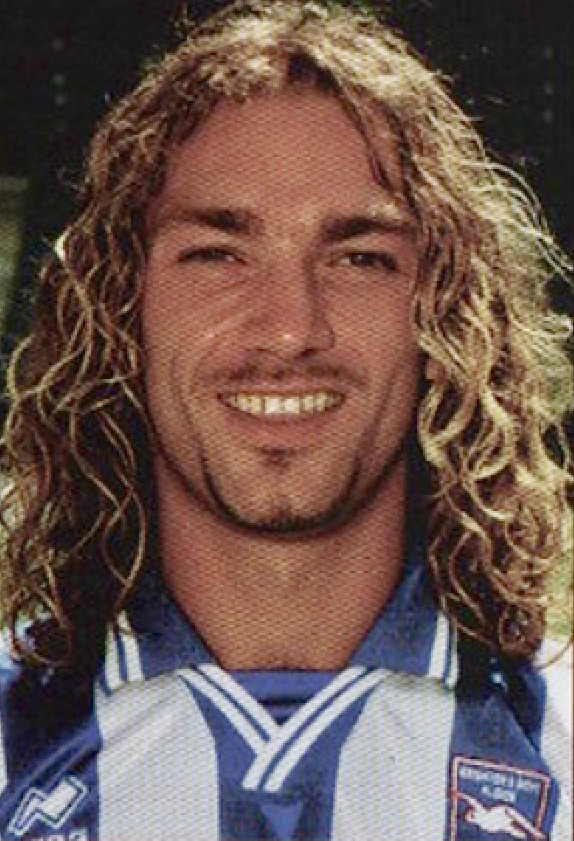

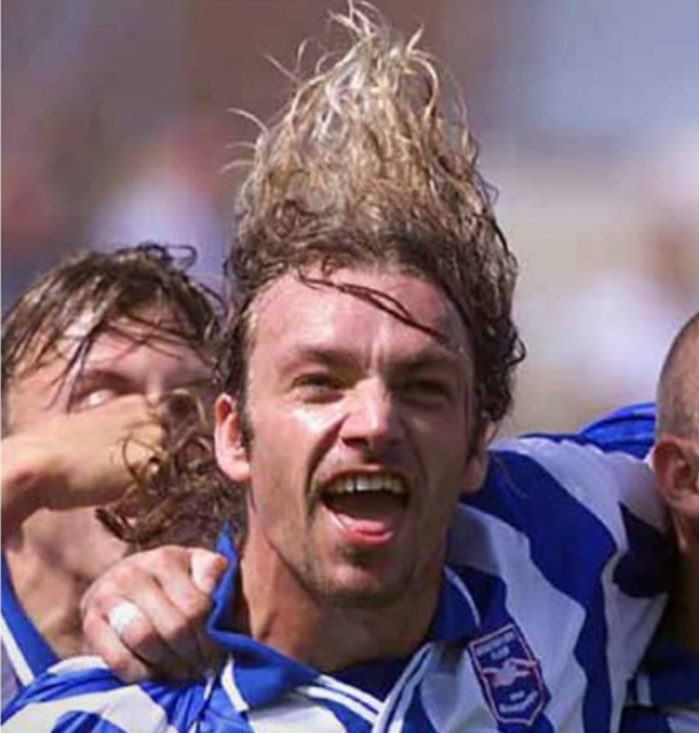
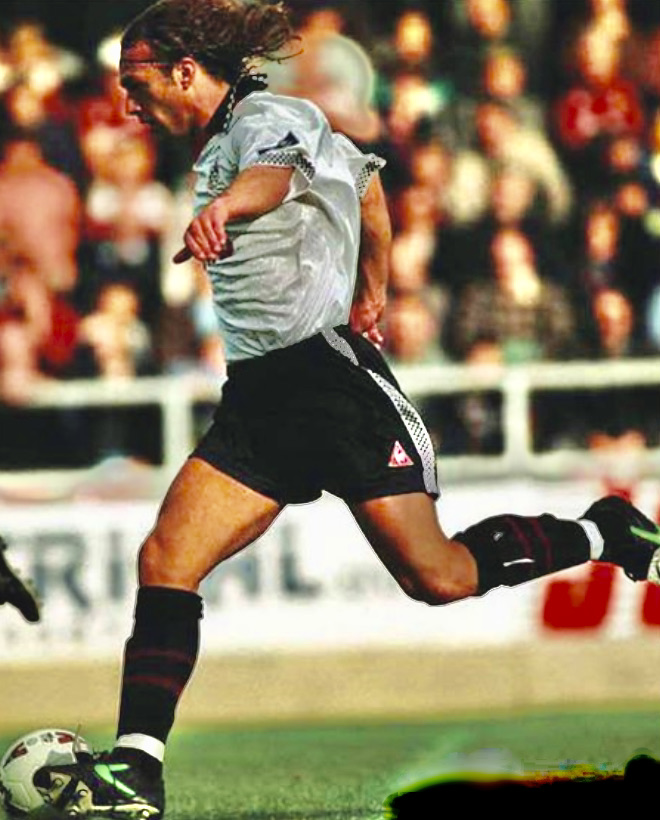


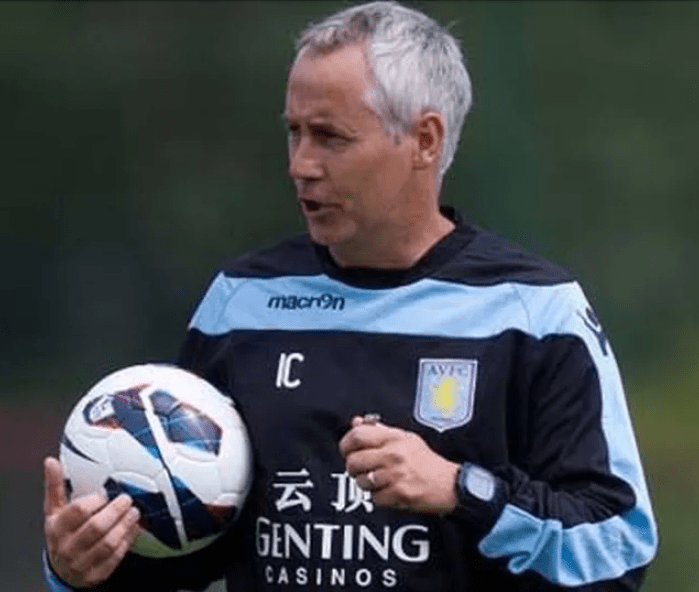


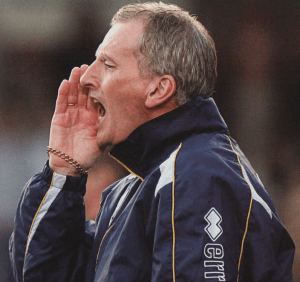

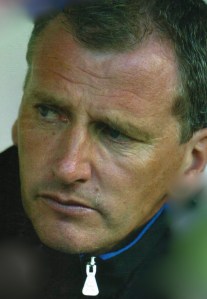


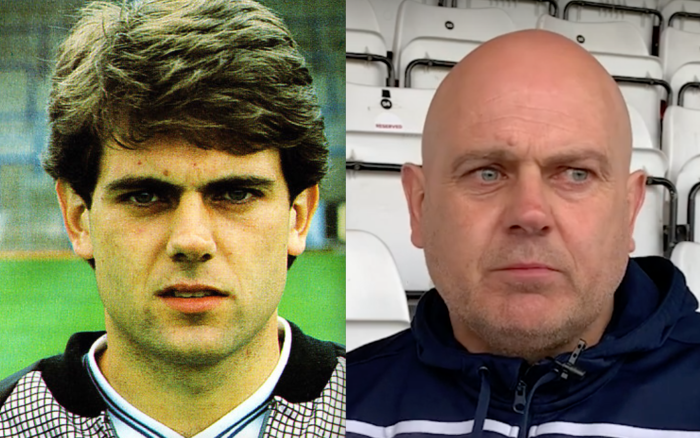
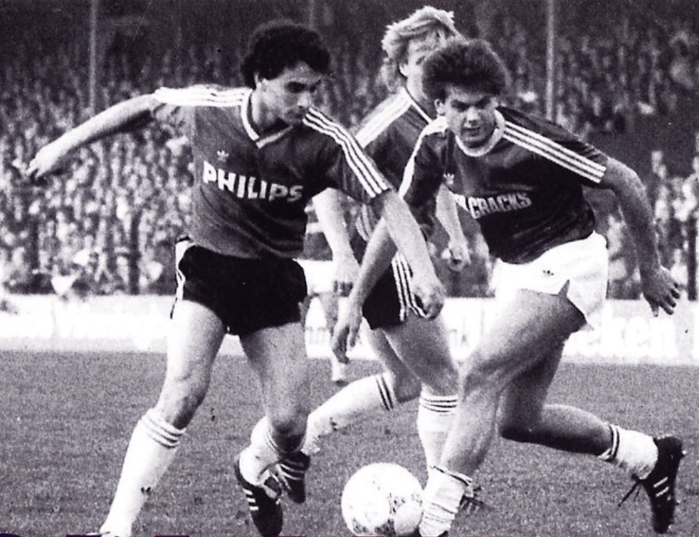
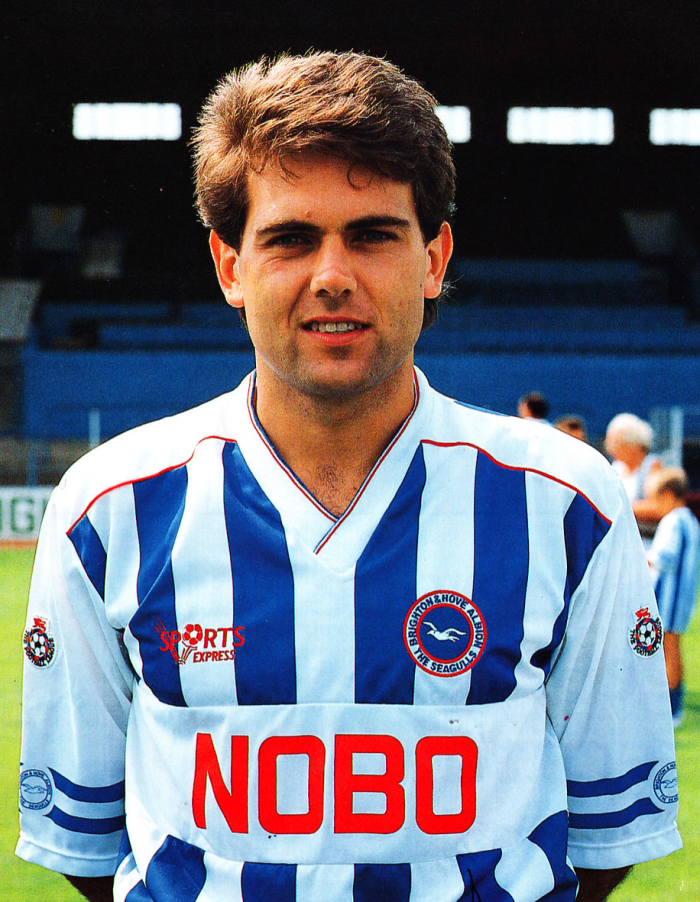


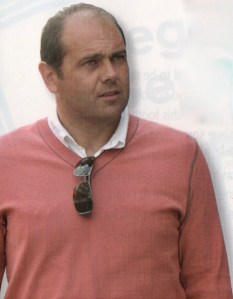


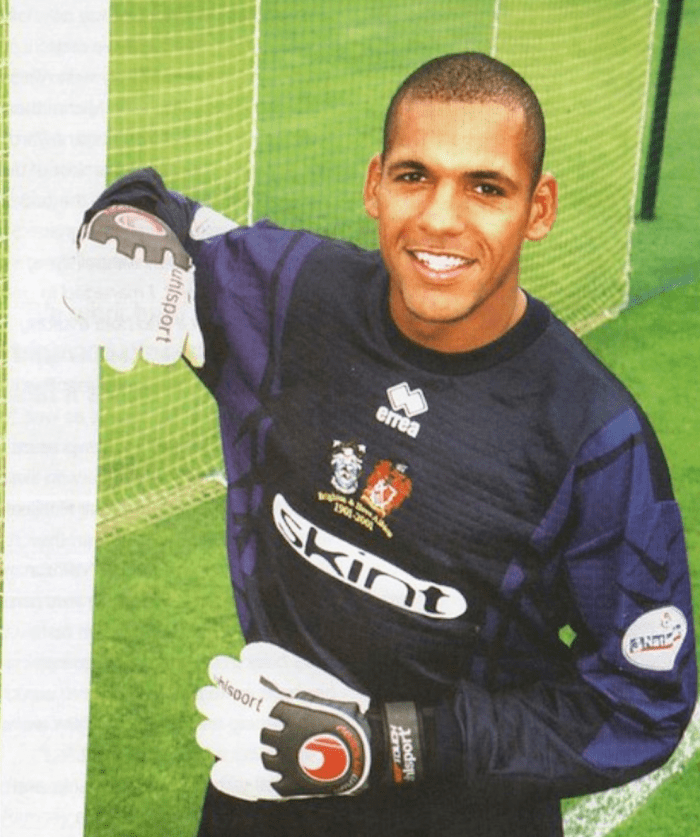
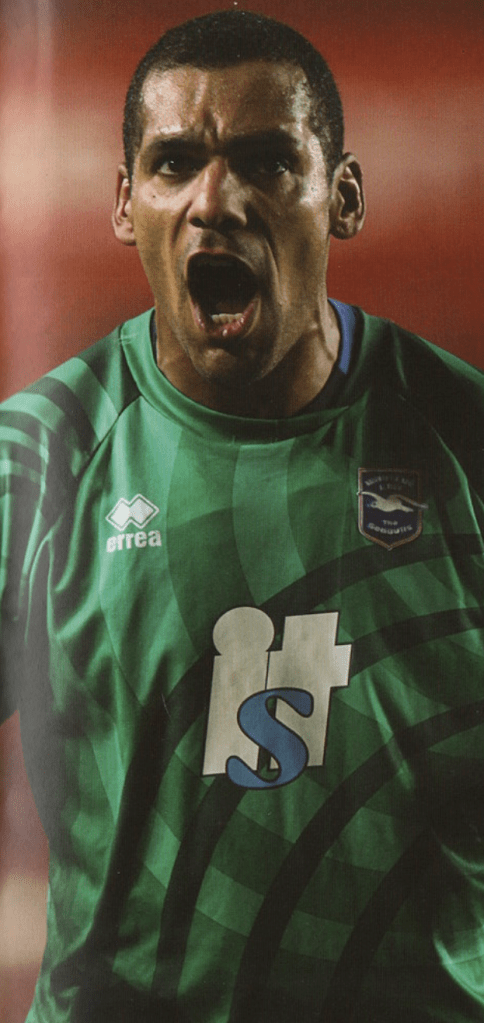




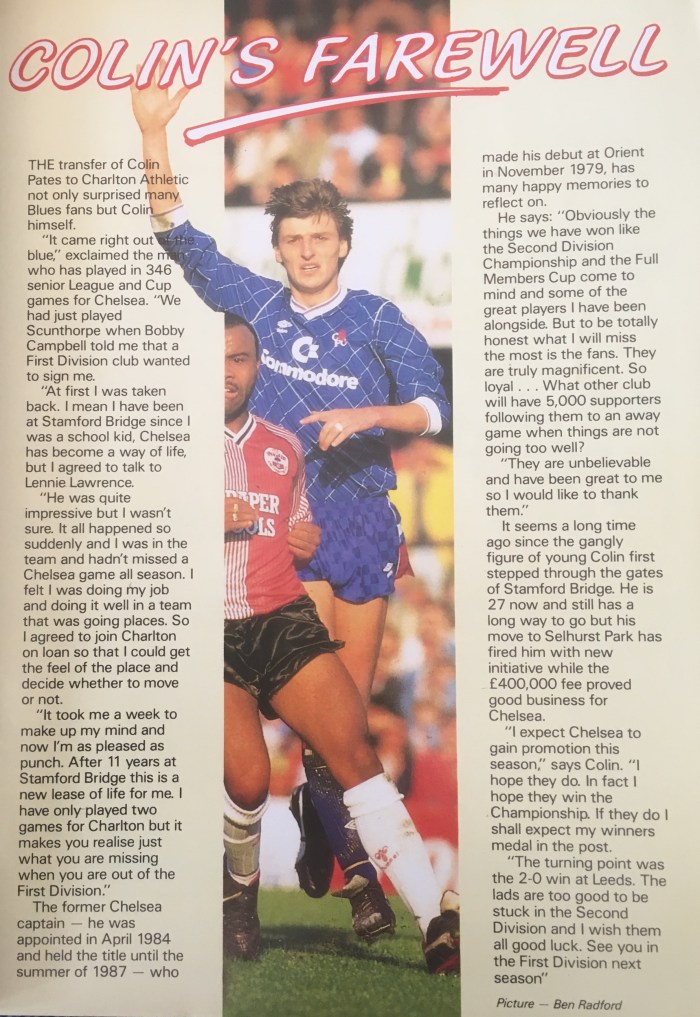
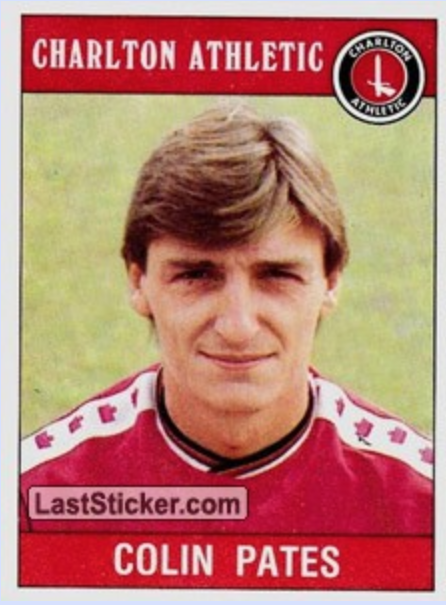
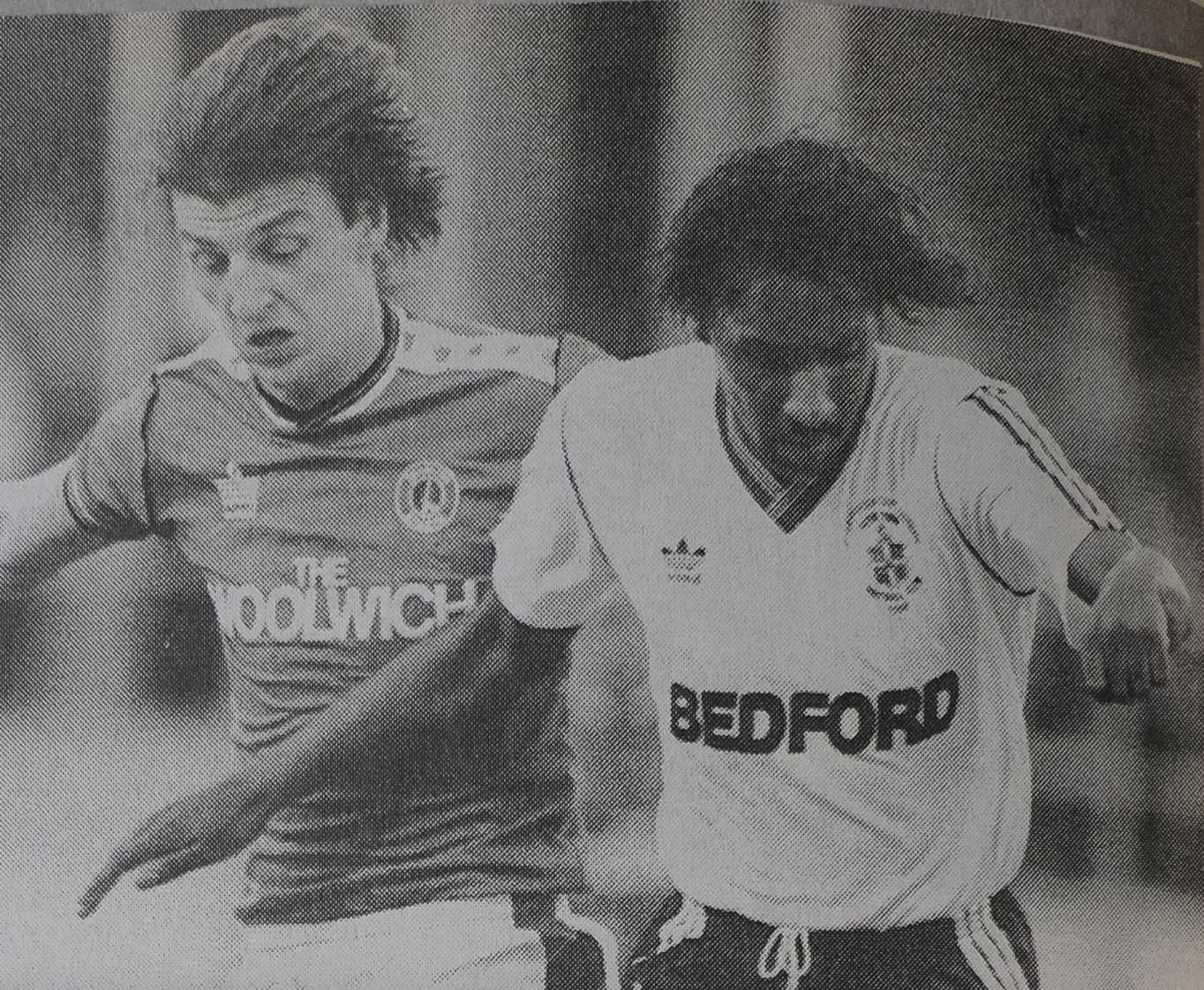
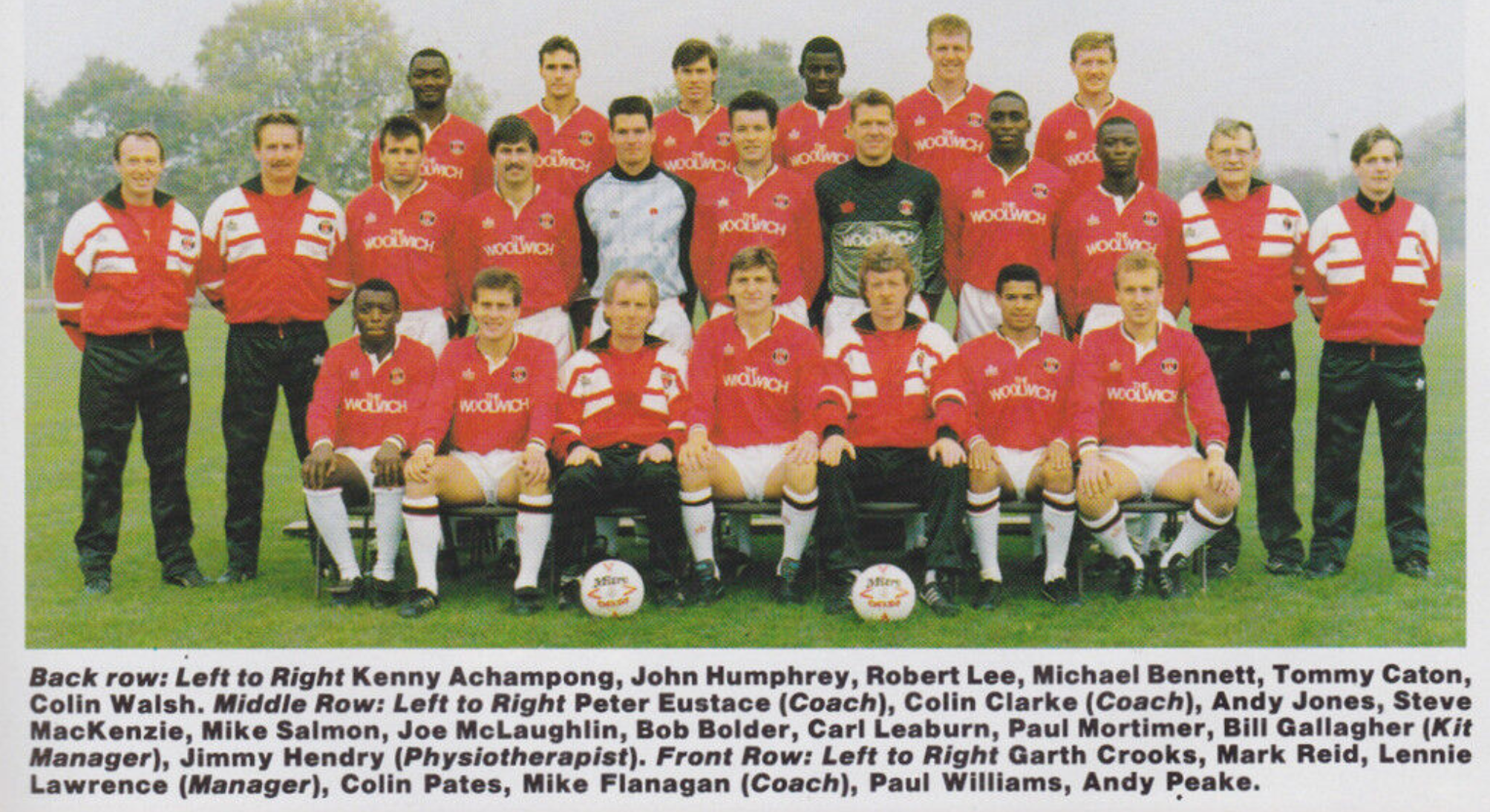
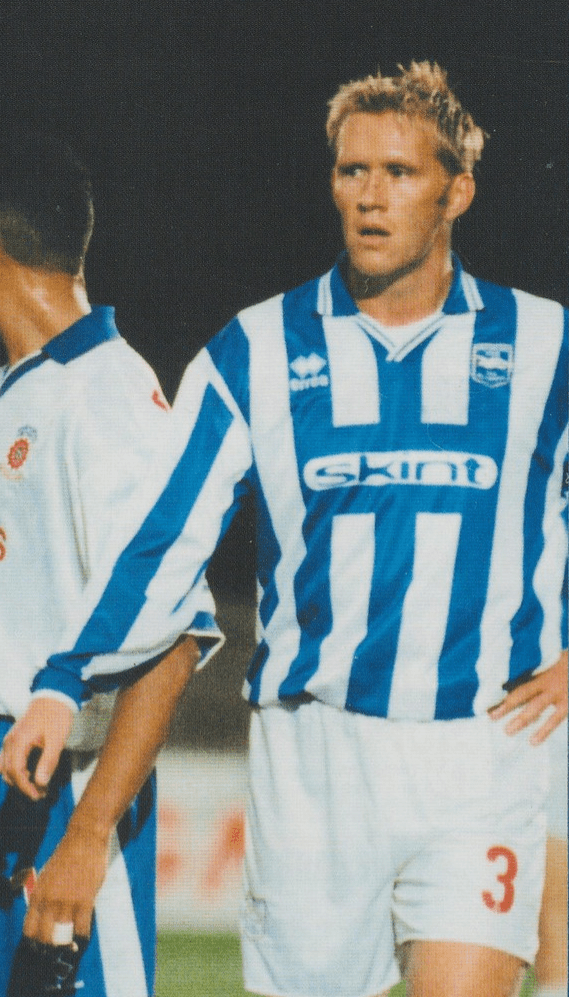




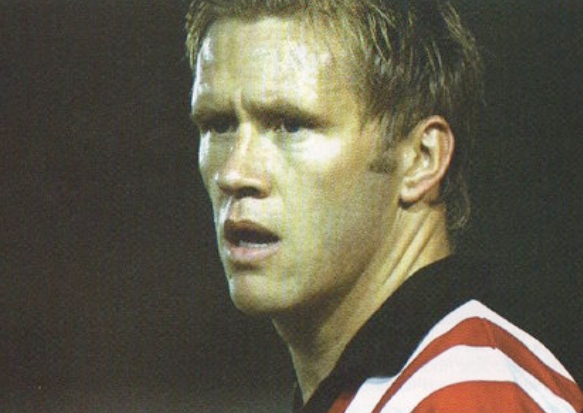


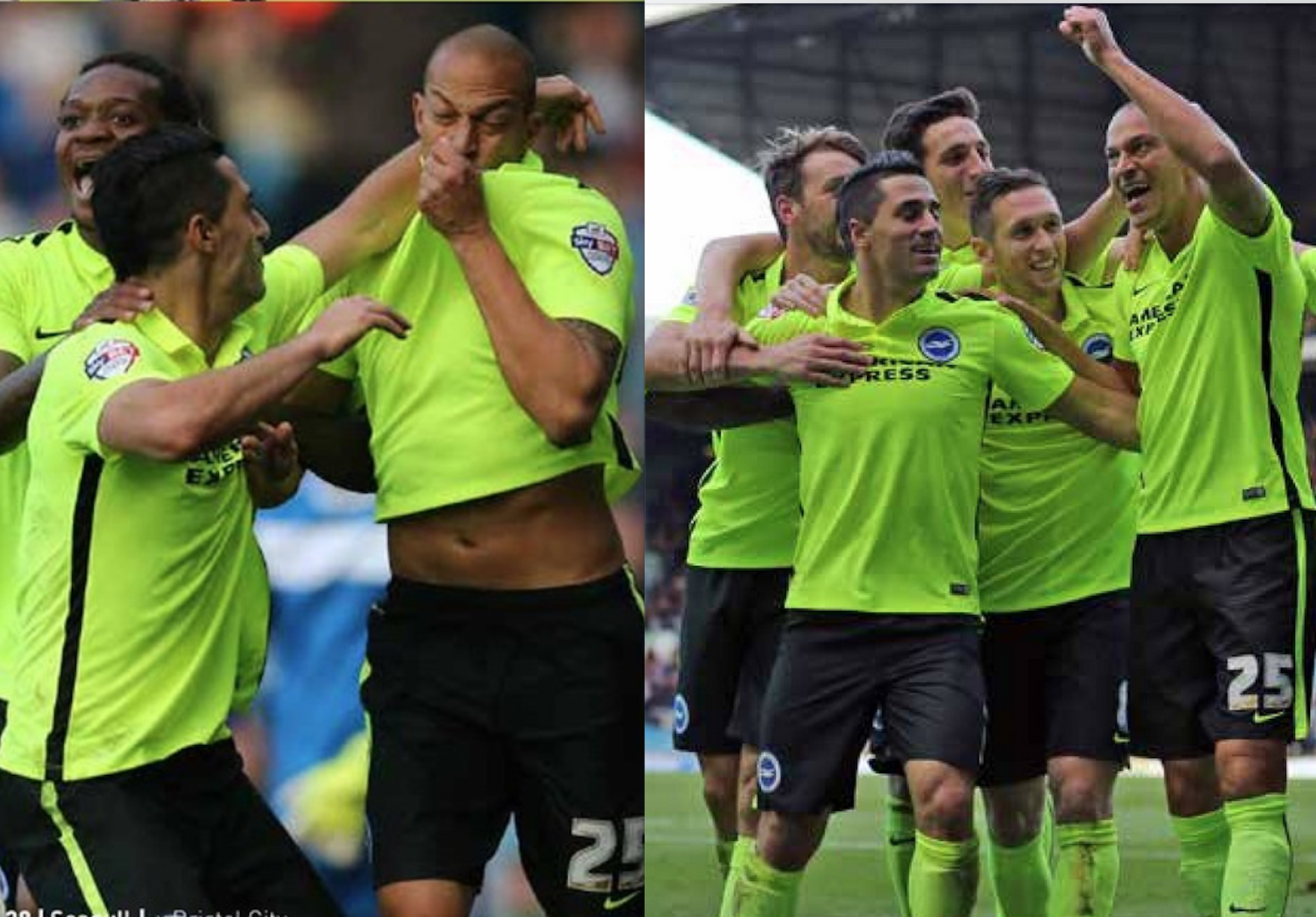




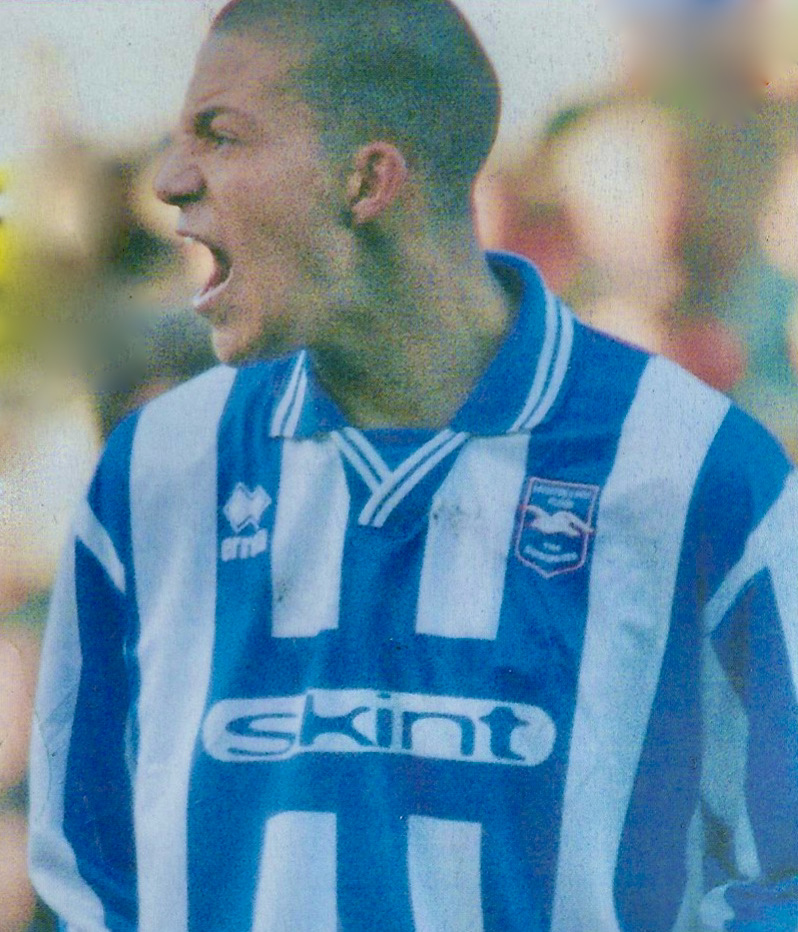

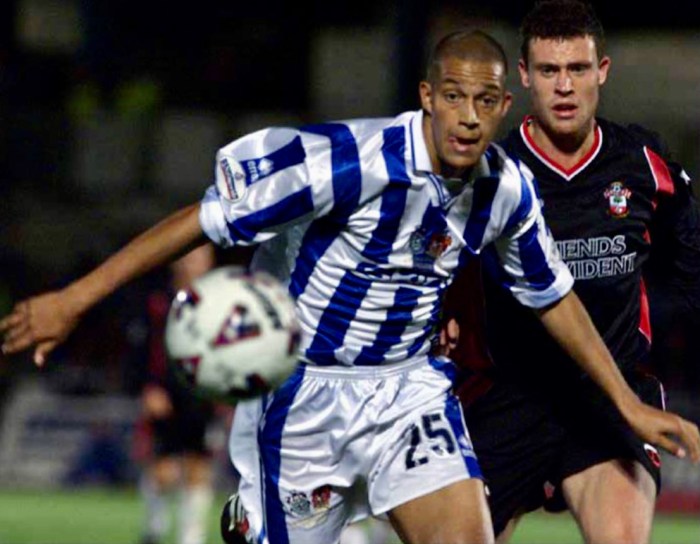




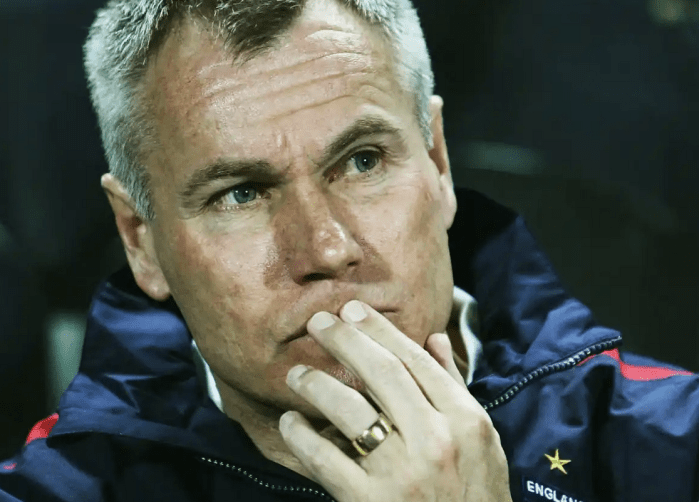


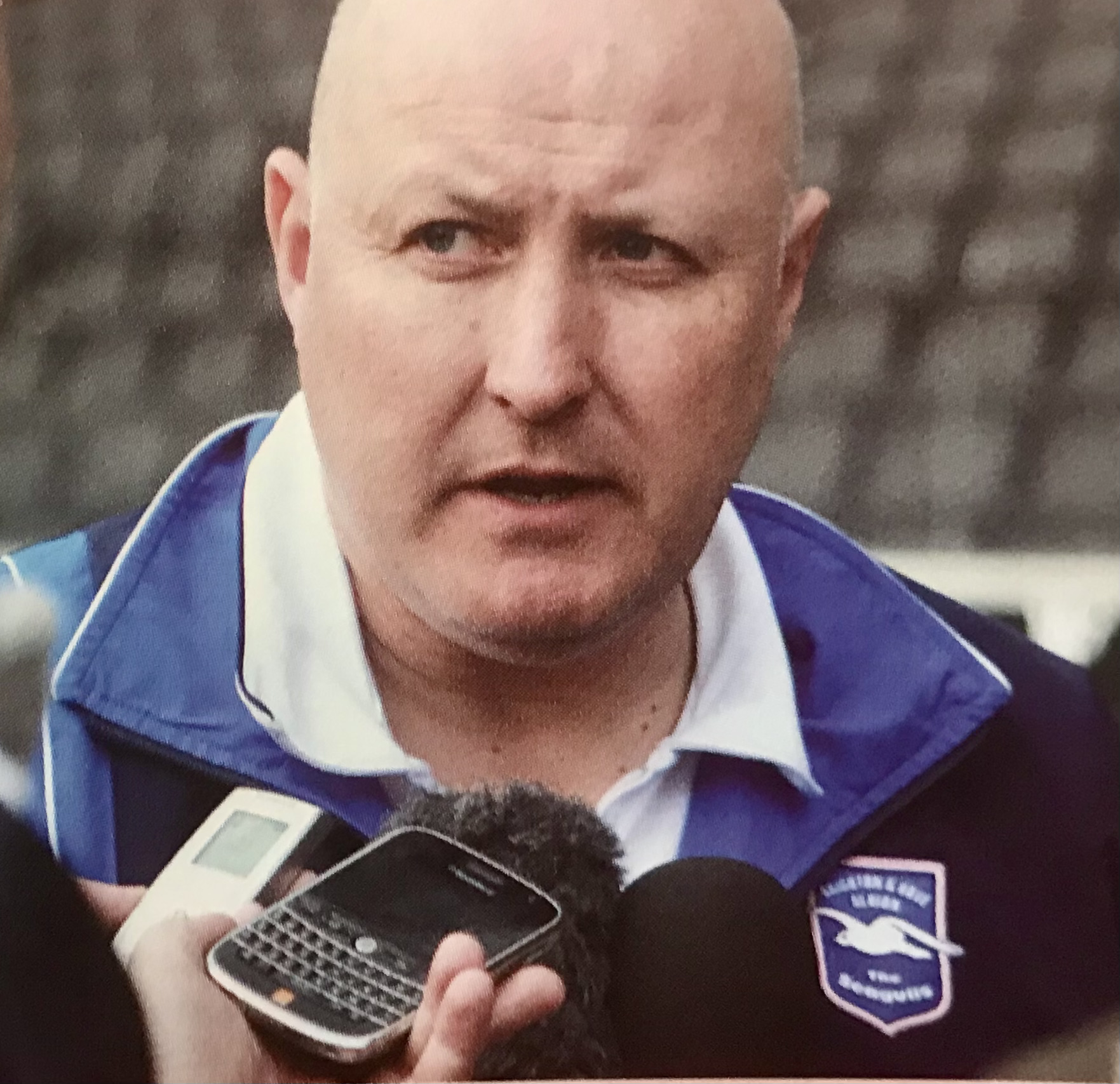


 In parallel lines