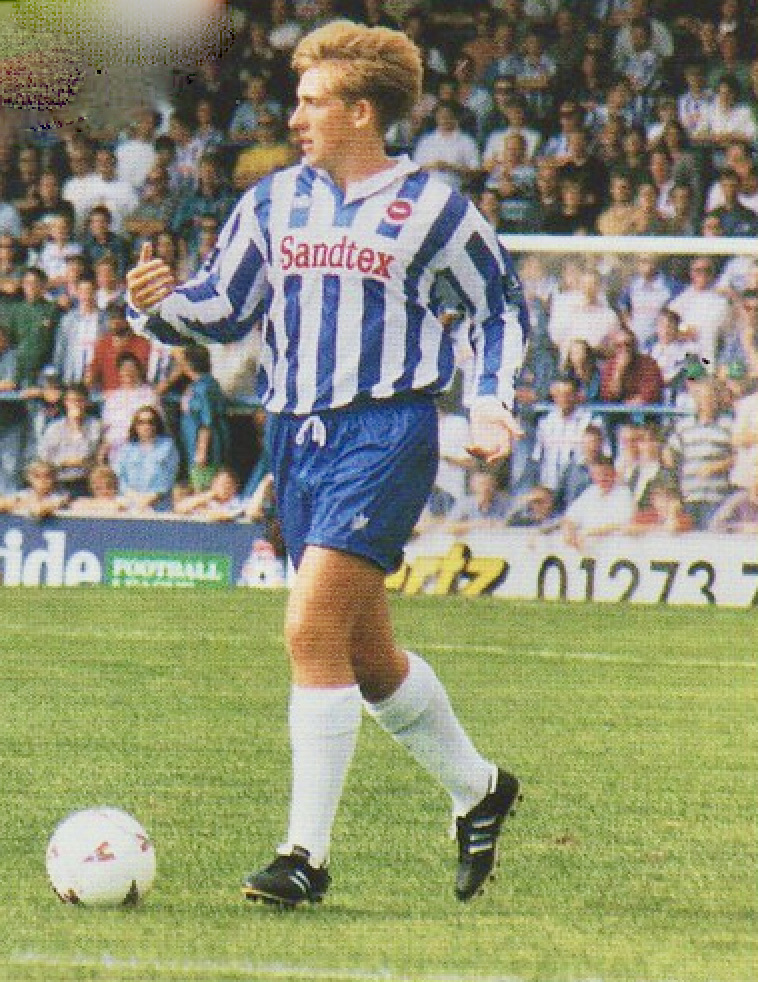
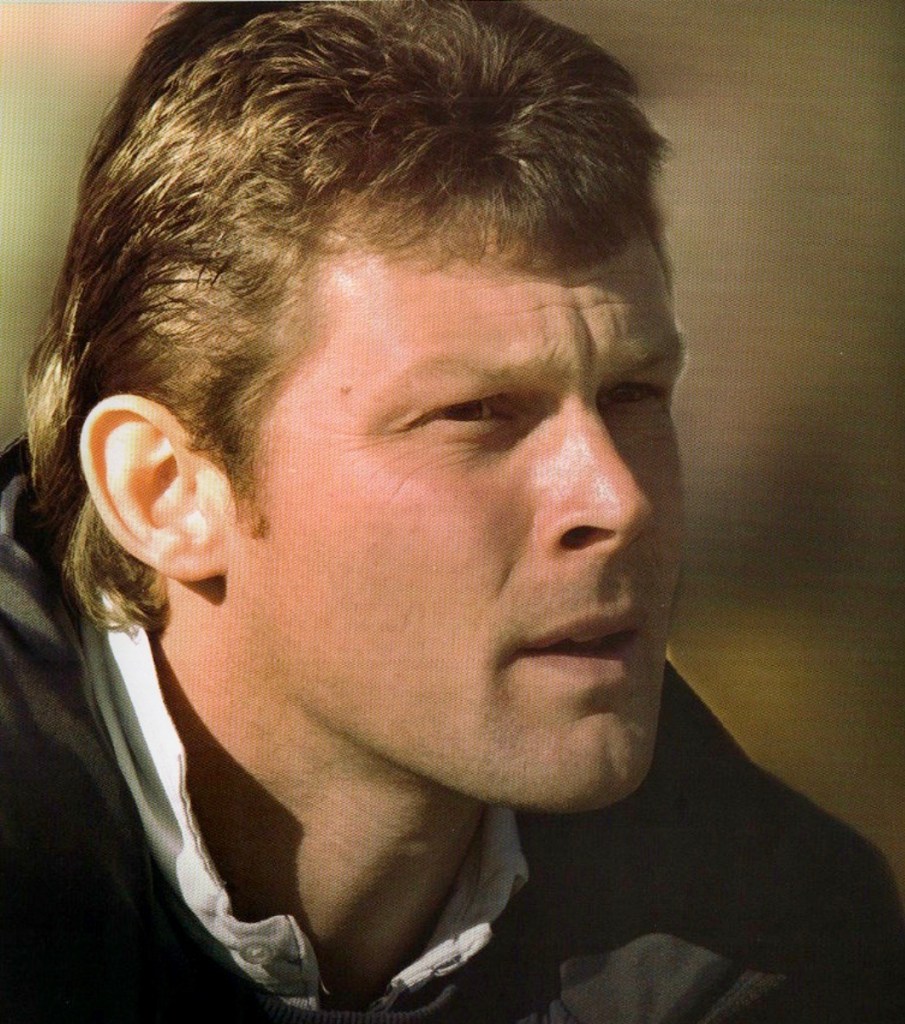
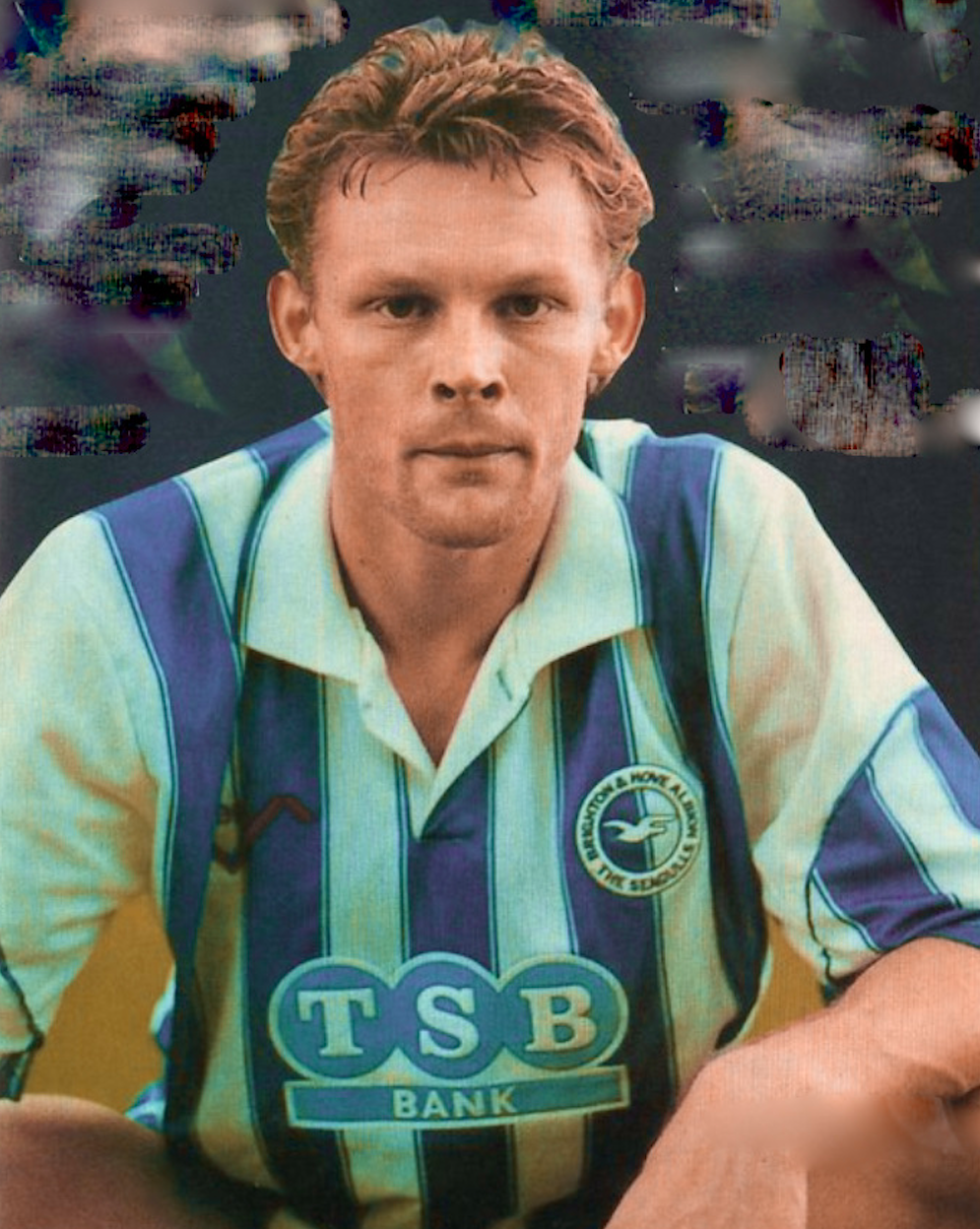
Byrne made Hoops happy before taking flight with the Seagulls

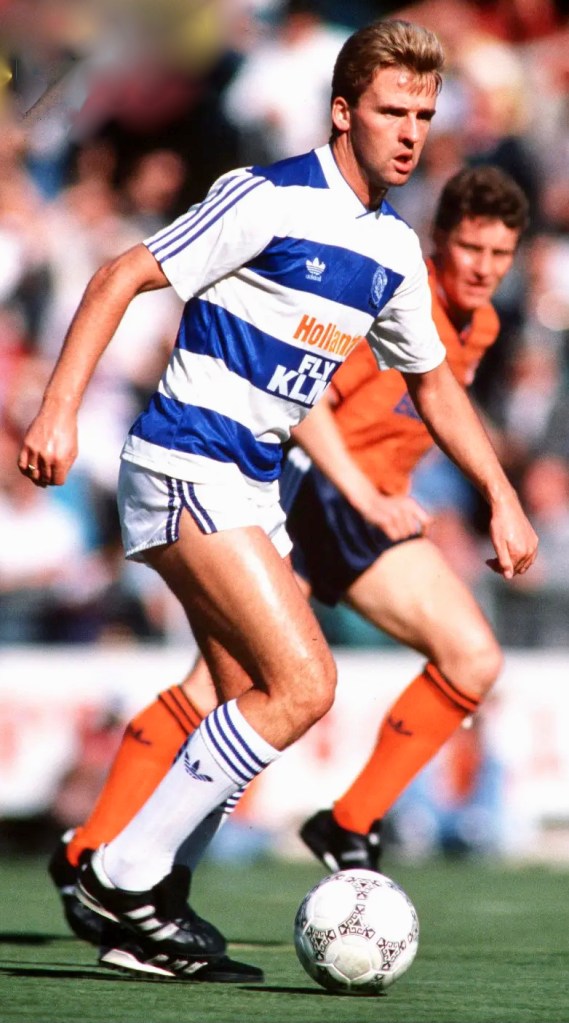
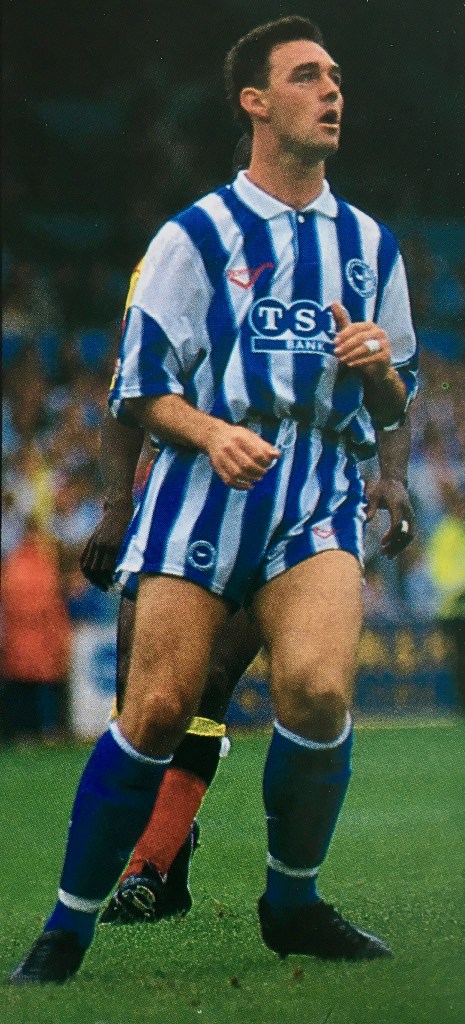
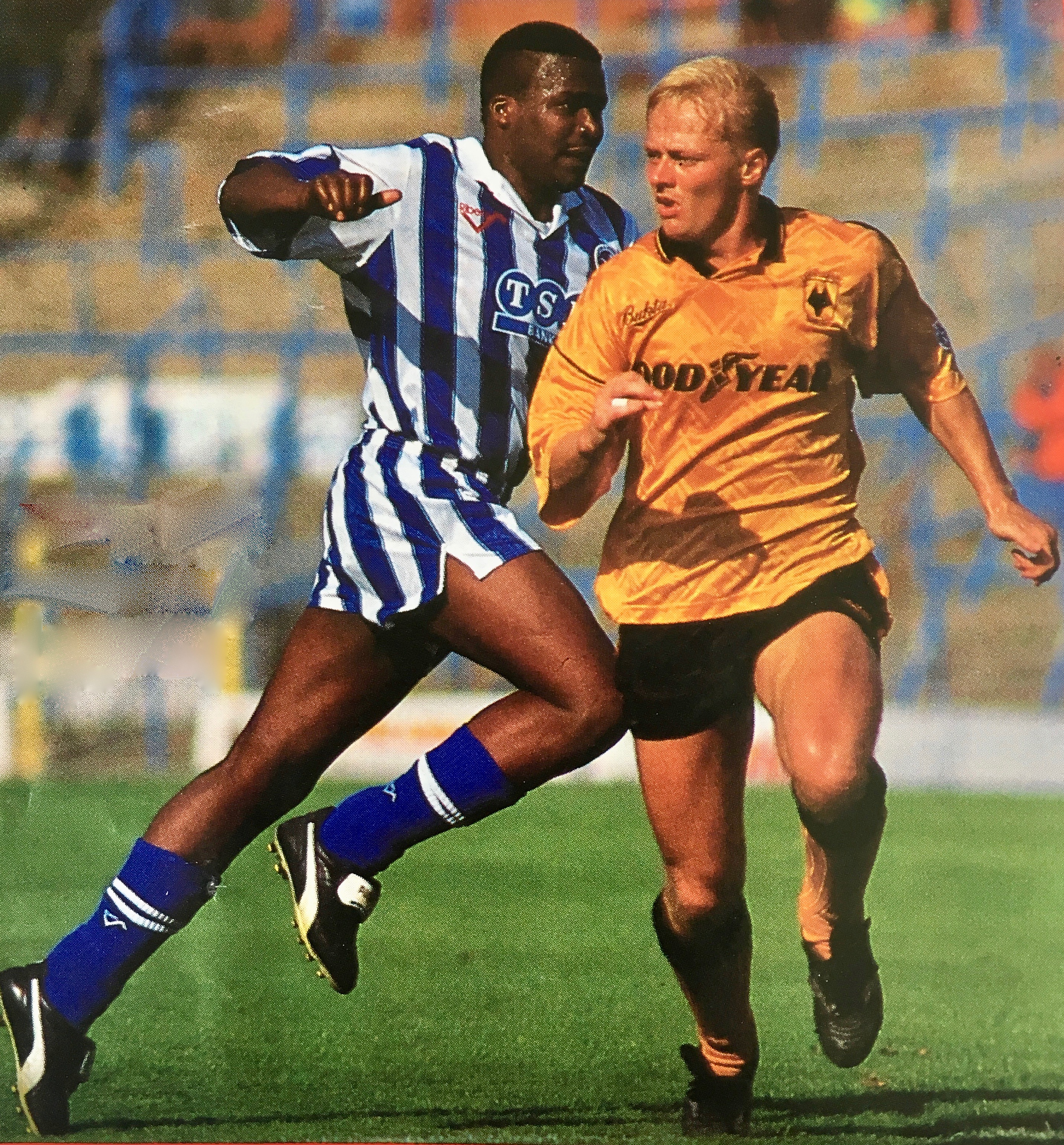
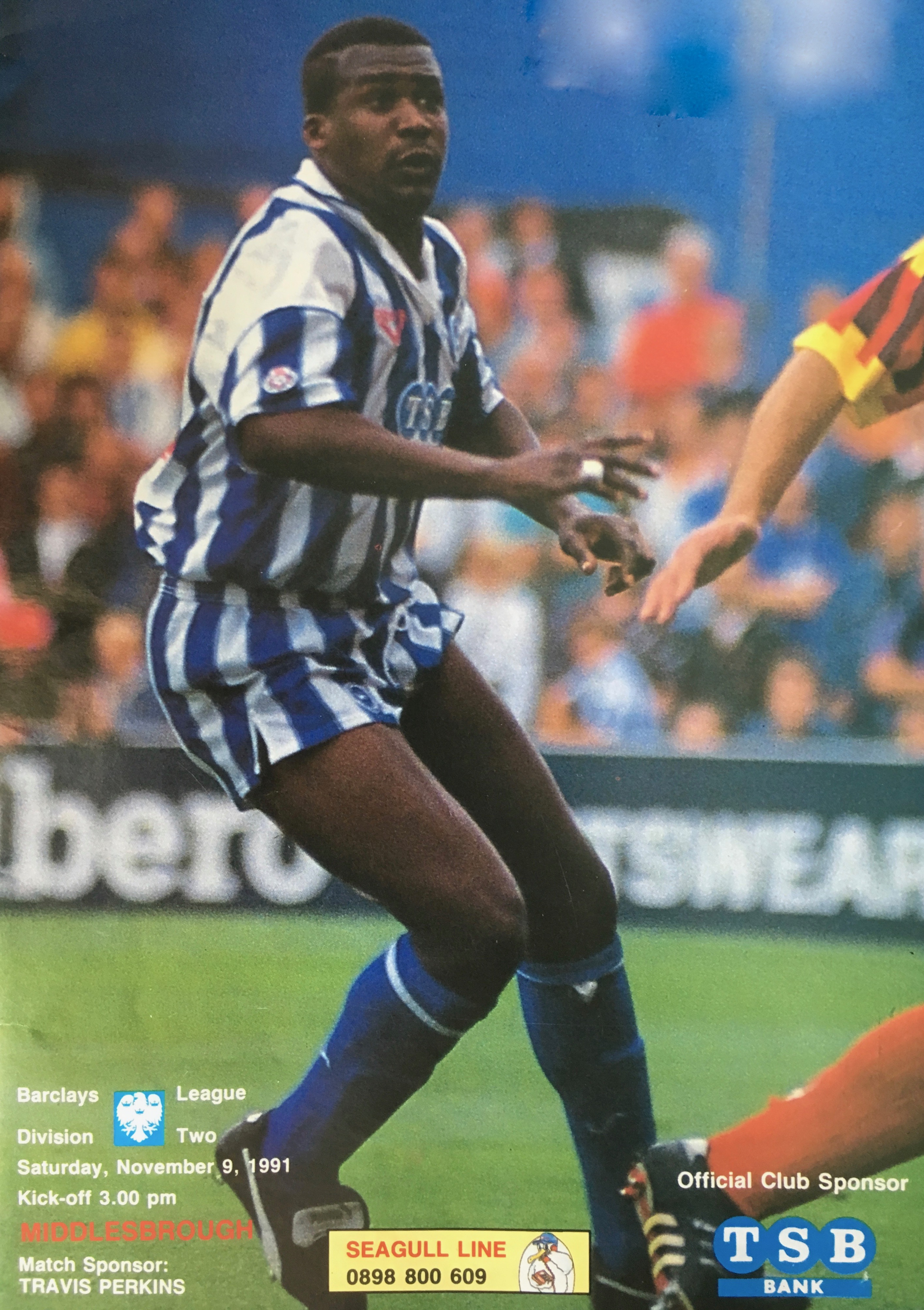
JOHN BYRNE, who had three different spells as a Brighton player, is viewed as an all-time-great by QPR fans where he scored 36 goals in 149 appearances.

Through his Irish father Jim, Wythenshawe-born Byrne qualified to play for the Republic of Ireland and he won 13 of his 23 Republic of Ireland caps while a QPR player playing in the old First Division.

His place in the annals of QPR’s history was etched courtesy of following two other greats (Rodney Marsh and Stan Bowles) into the no. 10 shirt.

“I was always conscious of the traditions at Rangers and so I was dead proud to wear the Number 10,” he told qprreport in 2008. “I think I did the shirt justice most of the time.”

In the same way Brighton fans remember his highly effective striking partnership with Mike Small in the 1990-91 season, so QPR supporters recall his combination up front with Gary Bannister.

Bannister and Byrne

“I enjoyed playing up front with ‘Banna’,” he said. “He was a great centre-forward, right out of the top drawer. I don’t know how our partnership worked but we just seemed to have a good understanding.

“He was more of a prolific goalscorer than I was. He also had superb quality and awareness for bringing people into the game.”

Byrne, who later became a familiar voice as an expert summariser for BBC Radio Sussex coverage of Albion matches, has always been happy to indulge requests from Rs writers to look back on his four years at Loftus Road.

As would become something of a pattern in his career, it was an impressive performance playing against QPR that led them to sign him. He featured in a two-legged League Cup game for York City against Rangers, and he recalled the game at Loftus Road when talking to qprnet.com in 2013:

“It was so brilliant to play in that stadium under the floodlights and coming from York to run out at QPR was something to remember.

“Afterwards I said to our assistant manager Viv Busby that I would love to play here every week. Lo and behold a couple of weeks later I was!”

The man who took him to west London was none other than Alan Mullery, the former Brighton manager, during his unhappy six months as QPR manager.

It’s now generally recognised that some of the senior pros at the club were none too pleased with Mullery taking over from Terry Venables, who had moved to Spain to manage Barcelona. Byrne admitted: “It was difficult for me to fully understand having been signed by Mullery but you could feel it with some of the senior pros.

“The likes of Terry Fenwick, John Gregory and Steve Wicks were big Venables men and, understandably, as he was obviously a great coach. You got a feeling that a few of them weren’t overly impressed with Mullers at the time.”

As it turned out, Mullery’s time in charge came to an abrupt end and Byrne remembered playing under caretaker manager Frank Sibley before Jim Smith got the job permanently.

Frank was lovely; he was a really nice man and probably too nice for football management,” said Byrne. “He really helped me a lot, he would always welcome a chat with you and put his arm round you to talk about your game. I had a lot of time for Frank.”

And of the former Birmingham and Oxford boss Smith, who went on to manage Newcastle and Portsmouth, among others, he said: “Smithy was brilliant. I loved playing for Jim. He loved you, he hated you but he would never ignore you or freeze you out.”

It was in 1986 when Byrne suffered the first of three losing experiences in Wembley finals. QPR went down 3-0 to Smith’s former club Oxford United

“Unfortunately we never turned up for the final,” Byrne told QPRnet. “I just remember that after we were introduced to the dignitaries I went off for the warm up and I had nothing in the tank. I had heavy legs before the game and I think a lot of the players felt like that.

“At the end of the day we didn’t perform and Oxford were better than us but there should be no excuses we were a better side on paper and we should have won.”

A far happier memory from that spring of 1986 happened three weeks previously when the Rs thrashed Chelsea 6-0 and Byrne scored twice (Bannister netted a hat-trick and Michael Robinson the other).

“I’ll never forget that day,” said Byrne. “It was just one of those occasions when everything went right for us.

“I remember one of my goals where I picked up possession on the halfway line. It was funny on that plastic pitch, because bodies would fall all around you if you got into your stride. So eventually I wriggled free and slotted a shot into the bottom corner.”

Another of his favourite QPR memories was scoring in two home games against Manchester United, the team he had supported as a boy. Recalling a 1-0 win in March 1986, he said: “I remember lobbing the ball over two defenders’ heads in the box. Then I flicked it back before shooting past Chris Turner in goal at the Loft End. It was great for me – especially being a Manchester lad as well.”

In much the same way as his move to QPR came about, it was in a couple of friendly matches against Le Havre that the French side liked what they saw of him and QPR were happy to accept their bid for the player.

“It was disappointing to leave QPR but I think it was probably the right time to go,” he recalled. Unfortunately, he broke a leg only three weeks into his stay with Le Havre. But when he was fit again, a few English clubs started watching his recovery with interest.

And it was following a friendly Brighton played against Le Havre that prompted Albion boss Barry Lloyd to bring Byrne back to England to play in early September 1990. He made his Seagulls debut for the reserves in a 1-1 draw with Charlton Athletic and then went on as a sub for the first team in Albion’s 3-2 home win over the same opponent 10 days later.

He scored on his first start, in a 2-1 win away to Blackburn Rovers, and on his first start at home he netted in a 3-3 draw with Swindon Town, who were managed by Ossie Ardiles.

Crocked in the last game of the league season against Ipswich

How the rest of that season panned out was covered in my previous post about Byrne, as were his subsequent moves, the most successful of which saw him play for Sunderland in the 1992 FA Cup final when Liverpool beat the Wearsiders 2-0.

“I scored in every round except the final then missed a sitter on roughly thirteen minutes twenty seconds; I see that one every day!” he told QPRnet.

Byrne’s future work as a podiatrist came about largely through the network provided by the Professional Footballers’ Association.

“When I finished playing football in the late 1990s, I was hoping to become a physio but couldn’t get a place at university to study it,” he explained. “Then the ex-Manchester United star Norman Whiteside advised me to look at the PFA’s course for podiatry, because he was a podiatrist himself. The PFA said they would help me with finance and backing.”

He went on to graduate from university in 2001 – gaining his BSC Honours degree was the hardest thing he’d done in his life, he said.

“My brain had been dormant for twenty years playing football, but I’ve been qualified now for nearly 10 years,” he said in a 2010 interview with Sussex Life. “I love my NHS career and also the private work I do and I get a lot of job satisfaction improving patients’ foot problems.”

And in his interview with QPRnet, he added: I was lucky, I look back now and I had a good career, I played for some great clubs and whilst I might have had disappointments with finals I have got plenty of great memories.”  

When the ball hits the goal it’s not Shearer or Cole it’s Zamora!

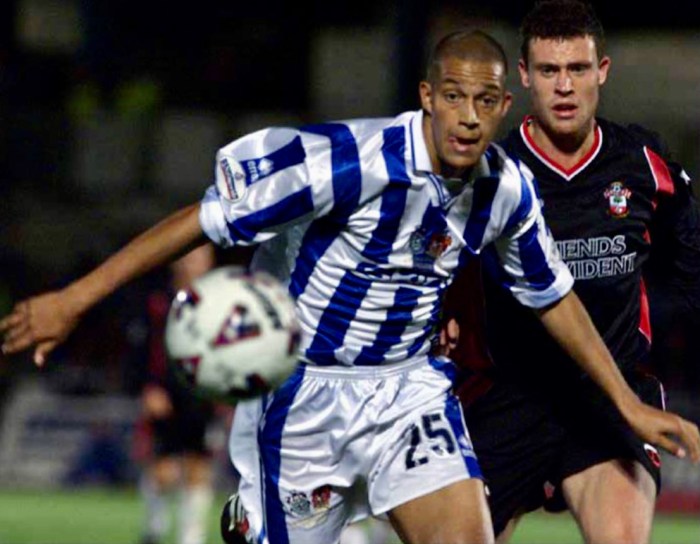
EVERY NOW AND AGAIN as a football supporter a truly special player stands out well above the rest you’ve watched. Bobby Zamora was most definitely in that category.

As the new year dawns on what will be my 55th year supporting Brighton & Hove Albion, it is perhaps fitting to spend a little time remembering just how good Zamora was for the Seagulls before his outstanding ability to score goals was taken to higher levels: Tottenham Hotspur, West Ham, Fulham and ultimately, and, quite deservedly, England.

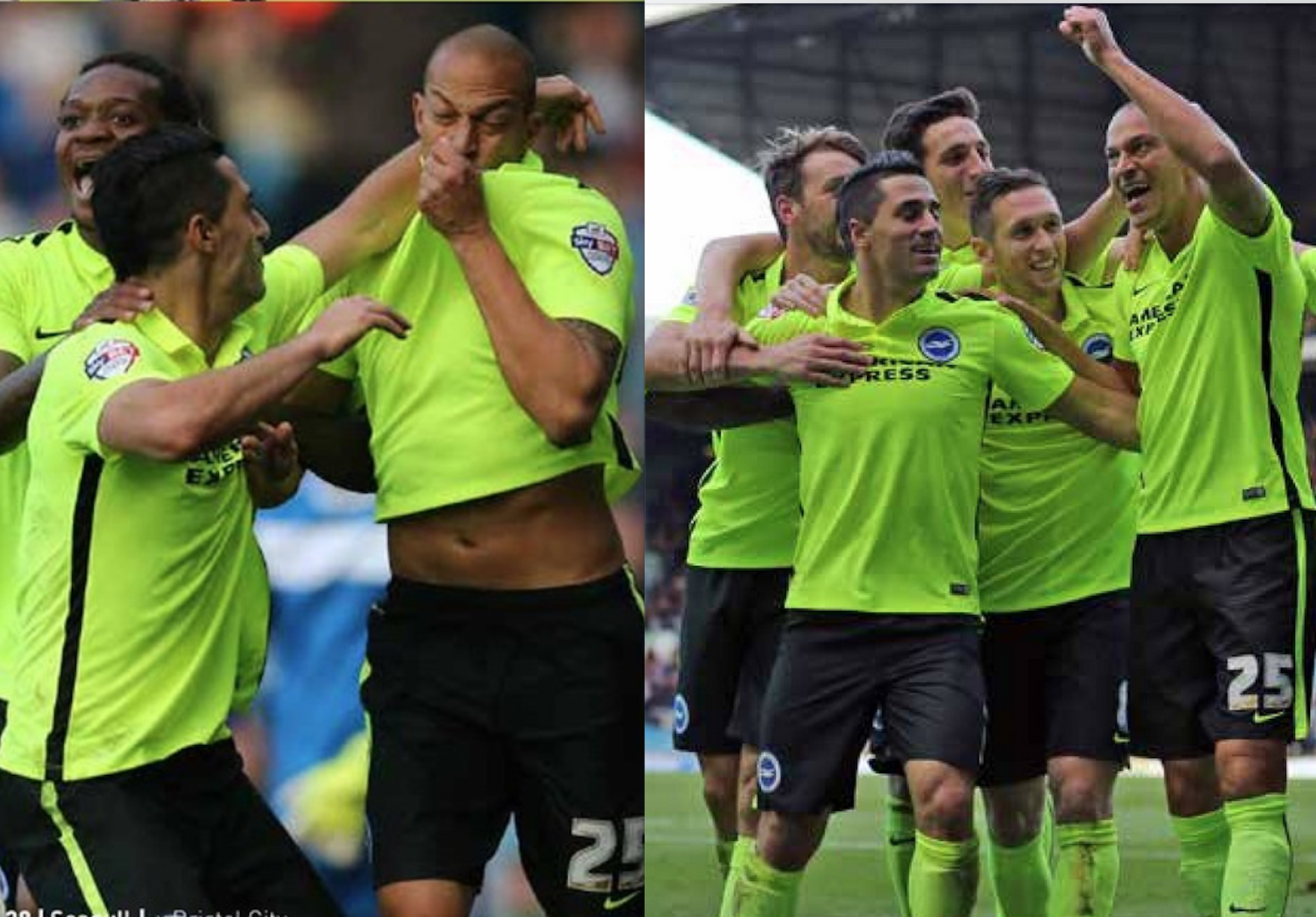
That he came back to the Albion from QPR as his career began to ebb was nothing short of a bonus­ – and, while I’m not a big gambler, I was delighted to get a modest return from the bookies when my punt on him being the last goalscorer came good after he had gone on as a sub at Elland Road on 15 October 2015 and chipped the winner (below) to register his first goal since rejoining!

“That goal was definitely the highlight of my season,” Zamora told interviewer Adam Virgo in a Seagulls World interview. “It was my first goal since coming back and to score the winner so late in the game was unbelievable. It was a special moment for me, and it settled the nerves knowing that we’d got the three points.”

Just four days later, Zamora repeated the feat going on as a 76th-minute substitute for Tomer Hemed at home to Bristol City and beating goalkeeper Frank Fielding with a low shot from 15 yards out. Albion won 2-1; Sam Baldock having levelled things up against his former club after Derrick Williams opened the scoring for City.

Unfortunately, Zamora managed just five more in that second spell. He made 10 starts plus 16 as a sub in Chris Hughton’s side but he was struggling with a hip injury.

It eventually caught up with him and prevented him from contributing further to Albion’s aim of promotion back to the elite; his last game being as a sub in a 0-0 draw at home to Sheffield Wednesday on 8 March 2016. “If I was fit, I would have scored some goals and we’d have been promoted automatically,” he told the UndrThe Cosh podcast (pictured above).

Thankfully another returning striker in the shape of Glenn Murray completed that task the following season and went on to cement his own place in Albion’s history: his 111 goals in 287 appearances putting him second in the list of Brighton’s all-time top goalscorers.

Golden goalscorers: Zamora + Murray

Each of the different eras I’ve watched the Albion has thrown up truly memorable players who have generated their own air of excitement and anticipation because of the goals they scored.

The first one for me was Alex Dawson, who netted seven in the first five games I watched in 1969. Then along came Willie Irvine whose goalscoring in third tier Albion’s promotion-winning season of 1972 earned him an unexpected recall to the Northern Ireland side – and an appearance (that I went to watch) in a 1-0 win against England at Wembley.

Next, of course, was the truly outstanding Peter Ward, who jinked his way past defenders with apparent ease and scored goals for fun, his 36 goals in 1976-77 smashing a decades-old record. Like Zamora, he came back to the scene of past glories (albeit only on loan) and scored a magnificent winner against the team he supported as a boy, Manchester United.

Garry Nelson, with 32 goals, and Kevin Bremner were a superb front pair in another third tier promotion-winning line-up in 1988 while, in 1990-91, Mike Small and John Byrne combined brilliantly to take the Seagulls within a hair’s breadth of a return to the big time.

The arrival of a beanpole of a kid with an eye for goal in Zamora completely transformed Albion’s fortunes under Micky Adams and he was the talisman in back-to-back promotions following years in the doldrums.

Zamora’s Albion story is pretty well known but let’s remind ourselves of how it all began.

Depending on whose account you believe more, it was either Dick Knight or Adams who had the foresight to bring Zamora to the Withdean.

Adams said: “The first time I saw him he came onto the training ground; he looked like a kid. But he was tall and gangly with a useful left foot; there was potential there.”

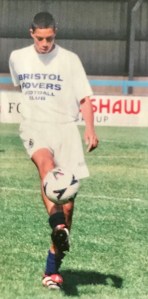
In fact, Zamora might never have arrived in Sussex if Albion had been successful in securing a permanent deal for on-loan Lorenzo Pinamonte. When Brentford outbid Brighton for the services of the Bristol City loanee, Albion turned their attention to Zamora (left), a Bristol Rovers player who was only getting sub appearances under Ian Holloway but had scored eight goals in six games on loan at nearby non-league Bath City.

“He was six foot one and we knew he had a very good first touch and could hold the ball up well, the type of player we wanted,” Knight recounted in his autobiography Mad Man: From The Gutter to the Stars (Vision Sports Publishing, 2013).

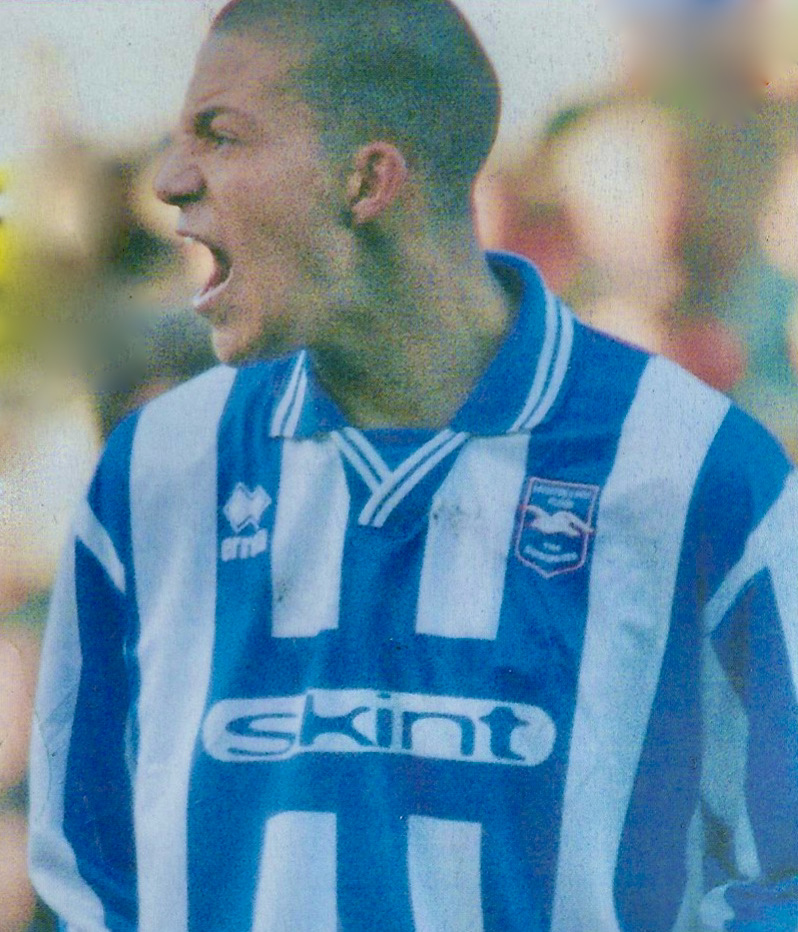
Zamora duly arrived on loan and scored six in six matches (including a hat-trick in a 7-1 away win at Chester). He scored an equaliser and was named Man of the Match on his debut v Plymouth and by the end of February was Player of the Month.

Hat-trick ball at Chester

While Knight and Adams wanted him to stay, he insisted on returning to Rovers where he thought he might force his way into Holloway’s starting line-up. But it was back only to the bench as Nathan Ellington, Jason Roberts and Jamie Cureton were ahead of him in the pecking order.

As preparations began for the new season, Albion offered £60,000 for Zamora but Rovers chairman Geoff Dunford wanted £250,000. An incredulous Knight said he wouldn’t go higher than £100,000 and couldn’t believe they could demand such a figure for someone who hadn’t actually started a first team game.

Zamora had Rovers’ youth team coach Phil Bater to thank for forcing through the move. He accompanied the shy youngster into a meeting with Holloway, who tried to say he’d get some games if he stayed. Bater reckoned the youngster was being strung along and argued Zamora’s cause saying he stood more chance of playing if Rovers let him join the Albion.

After some brinkmanship from each club’s respective chairmen, with Knight threatening to walk away from the deal, it finally went through two days before the start of the season, although Albion’s chairman reluctantly agreed to a 30 per cent sell-on clause for the player.

Zamora instantly became one of the top earners on £2,000 a week with a goal bonus built in.

“It was an absolute coup that we had finally secured this player,” said Knight. “I could only see good things in him, could only see that he would be a huge asset to us.

“Football is all a matter of opinions. There is little science to it. For me, Zamora was the best signing I ever made.”

Zamora has eyes on the ball closely watched by a young Wayne Bridge for Southampton

Not only did Zamora manage to score 31 goals as Albion won promotion from the basement division, he went one better when they went straight to the top of the third tier the following season, netting 32 times in 46 matches.

A significant number of those goals came courtesy of Zamora’s excellent understanding with left-footed right-back Paul Watson, of whom he said: “He created a lot of goals for me with those quick free kicks. He didn’t put a foot wrong too often and was very underrated. He never got the credit his hard work deserved.”

Expanding on it in another interview, he said: “Whenever Watto got the ball I knew precisely where I needed to run to and he knew where to deliver it. It was such a great connection: Watto has an absolutely wonderful left foot and it made my job as a striker so much easier when you get deliveries like that.”

Declaring that even in the Premiership he hadn’t come across anybody with a better left foot, he added: “I was very lucky to have played in the same team as him; he created numerous goals for me; not only with his deliveries but with his intelligent play as well.”

Watson had arrived at the club with Charlie Oatway and was part of a cluster of players who had served under Adams at Brentford and Fulham. When Adams and assistant Bob Booker steered Albion to promotion as fourth tier champions, Zamora was player of the season and he and Danny Cullip were named in the PFA divisional XI.

Not long into the following season, the lure of taking over as manager at a Premier League club saw Adams quit Brighton, initially to become Dave Bassett’s no.2 at Leicester City, but with the promise of succeeding him.

“While I thought I had a shot at another promotion, it wasn’t a certainty,” Adams explained. “I knew I had put together a team of winners, and I knew I had a goalscorer in Bobby Zamora, but football’s fickle finger of fate could have disrupted that at any time.”

His successor, Peter Taylor, knew how fortunate he was to inherit an experienced squad, and said: “Of course the greatest asset we had was Bobby Zamora. Having him meant that we could play a front two at home and away from home we could play him on his own and he would still get us a goal out of nothing. He was an incredible player and miles too good for that level.”

And Zamora wasn’t only a star on the pitch, as Knight spoke about in his autobiography. “When he was at his zenith at Brighton, the requests we got for him to visit schools, hospitals and go to prize-givings far outweighed all the other players together, but he was always amenable. He was never starry, never refused. I couldn’t speak more highly of Bobby Zamora as a person.”

Knight recounted in his book how, after a 1-0 win at Peterborough, when Zamora missed a penalty but also scored the only goal of the game, Albion’s promotion to the second tier was confirmed and in his own inimitable way Posh boss Barry Fry said to Brighton’s star striker: “You’re a fucking great player and you’ll play for England one day, I’m fucking sure of it.”

Zamora was still only 21 when Tottenham signed him from relegated Brighton in July 2003. He left the south coast having scored a total of 83 goals in 136 appearances but in his last season in the stripes he netted just 14 as the Seagulls battled unsuccessfully to retain their tier two status.

Unfortunately, he missed eleven matches with a dislocated shoulder and, had former Premier League striker Paul Kitson been fit to play alongside him (he managed only seven starts plus three off the bench), the season may well have had a different outcome.

Everton’s Bill Kenwright had offered £3m for Zamora during the season but their manager Walter Smith seemed less convinced and, with Kevin Campbell and Wayne Rooney likely to be ahead of him, Zamora stayed in Sussex.

But chairman Dick Knight promised not to stand in his way if an opportunity was presented at the end of the season and that came from Tottenham. Manager Glenn Hoddle and assistant Chris Hughton had been to see Zamora in action at the Withdean on a number of occasions.

Spurs chairman Daniel Levy played hardball over the deal. Eventually, Knight settled on a £1.5m fee but, because of the original sell-on clause, £450,000 was due to Bristol Rovers.

Hoddle told The Guardian: “He has got good pace and great movement on and off the ball. No disrespect to Brighton, they have got a good team down there, but we have got players here who can make the most of his movement.”

The player’s agent Phil Smith told the newspaper: “The fee for Bobby is £1.5m which is a decent price in today’s market for a Second Division striker.

“It has been a long time coming for Bobby but he is delighted to be going into the Premiership. It has always been an ambition.”

Disappointed Albion manager Steve Coppell observed: “It is a big move for Bobby and nobody really expected we could hang onto him for much longer. But it has blown a big hole in any plans I had. I don’t have a better option than playing with Bobby Zamora up front.”

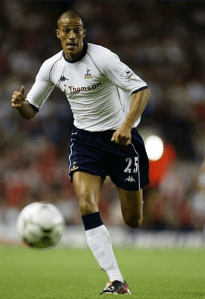
When he arrived at Spurs, one of the senior pros who took him under his wing was none other than Gus Poyet.

“As a young guy coming into the team, he was one of the senior pros who would always talk to me and encourage me,” Zamora told the matchday programme. “He didn’t have to do that, but he went out of his way to do so and you could see he had coaching qualities. He would often point things out on the pitch that you’d pick up on, and when he spoke, you’d listen.

“He wasn’t starting every game either, so in training I did more things with him than maybe the rest. I really got on well with him.”

As it turned out, Zamora made only 18 appearances for Spurs (11 as a substitute) and only scored once – ironically a single goal that knocked West Ham out of the Carling Cup in October 2003.

In January 2004, Spurs chose to use him as a makeweight in taking Jermain Defoe from the Boleyn Ground to White Hart Lane.

Phlegmatic Zamora didn’t look on it as a failure but embraced the “learning curve” of training alongside the likes of Poyet, Robbie Keane, Darren Anderton and Jamie Redknapp.

“I came away a better player and with more experience,” he said. “Glenn Hoddle had signed me and then he got sacked not long afterwards. David Pleat took charge and we didn’t really see eye-to-eye, but the lads and the club were brilliant and I learned so much from my time there.

“I took a chance by stepping back down to the Championship with West Ham – but it was the opportunity of playing regular football again that was the pull for me.”

Big money signing Peake hit a trough at the Albion

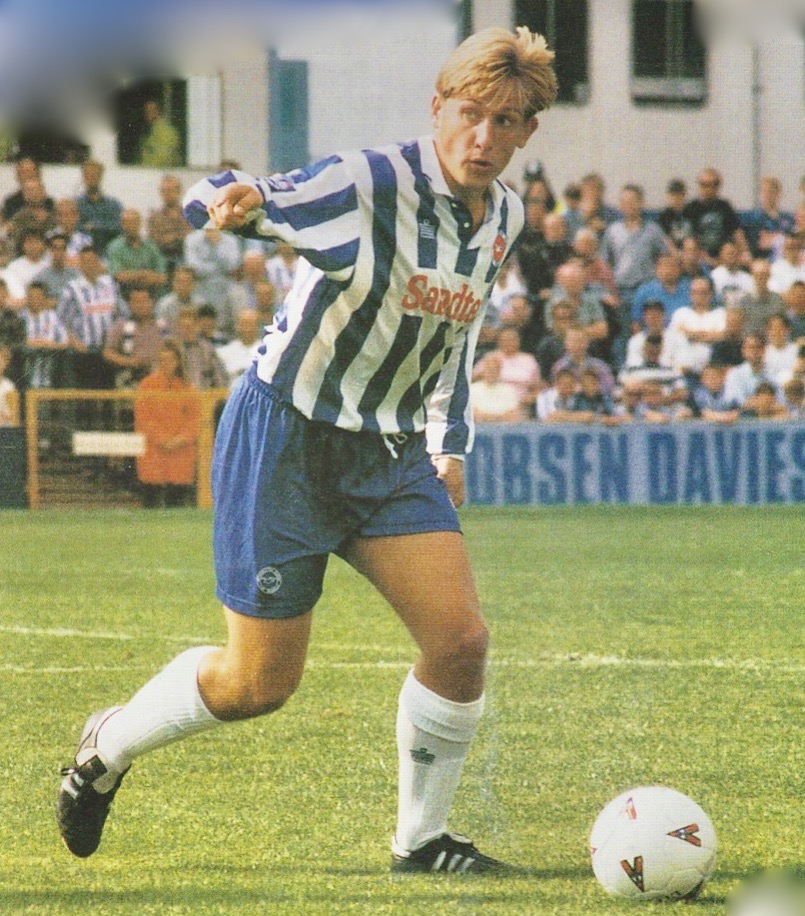
EXPENSIVE FLOP Jason Peake was a victim of the problems clouding Brighton’s very existence in the mid-1990s.

The blond-haired midfielder heralded elsewhere for his “excellent left foot” and “one of the best passers of the ball in the lower leagues” failed to live up to expectations at the Goldstone and was dubbed Jimmy Case’s “biggest blunder”.

Leicester-born Peake had played alongside Case for Halifax Town, where he’d moved after making only a handful of appearances with his hometown club.

Former Albion loanee centre half John McGrath, assisted by Frank Worthington, failed to halt the Shaymen dropping out of the league in 1993, and Peake spent a season in the Conference before reviving his league career with Rochdale. Nine goals in 103 appearances attracted suitors and it was Albion who bought him for a fee set by tribunal of £80,000 – a huge sum for a cash-strapped club.

A further £15,000 was to be paid after 20 games and another £25,000 if he got to 40 appearances. He made 35 appearances before being frozen out by Case’s successor, Steve Gritt. It was to be a familiar pattern: changes of manager often led to him moving on.

Apart from the bigger picture shenanigans going on at the Albion under the hated Archer-Bellotti regime, Peake’s personal issues centred around relocation expenses he said he was entitled to – but Bellotti refused to pay up.

According to fansnetwork.co.uk: “Peake was being forced to commute from Leicester following several broken promises by the Brighton board. Peake’s dream move turned into nothing short of a nightmare for him.”

The midfielder had trials at Northampton and Cambridge before he finally managed to get away, in October 1997, signing for First Division Bury. He rather diplomatically said: “The situation at Brighton has been well documented over the past year and just let’s say when I got there the situation was not as I’d been led to believe it would be.

“I have not been happy there for some time and the new consortium have been great in letting me get away.”

The official version in the matchday programme said: “Jason had problems in settling in the South after his move from Rochdale and the move has suited him and his family. Should Bury sell him for a fee at any time, Albion are assured of a share in any such deal.”

As ever, the season had begun with great expectations and in his matchday programme notes welcoming new signings Peake and Ian Baird, Case said: “They are both quality players and I am sure that they will be great acquisitions for the club this coming season.

“I firmly believe we now have a skilful blend of experienced and young players that can mount a serious challenge for promotion at the first attempt and I believe we will surprise many teams this season.”

Peake went straight into the side in the no.8 shirt but after he’d played 19 games on the trot Albion were anchored at the foot of the table.

After Case was sacked, Peake found himself on the bench more than in the starting line-up; local lad Kerry Mayo taking over from him.

Supporters were certainly not impressed by Peake, perhaps summed up by ‘Lenny Rider’ on North Stand Chat who said: “Huge outlay for where the club was at the time. His kinder critics would say he was disappointing, the more cynical amongst us would argue he was actually nicking a living at the Goldstone.”

New Albion chairman Dick Knight cut Albion’s losses by giving Peake a free transfer to Bury in exchange for the relocation cash dispute being dropped.

Bury boss Stan Ternent was lauded for pulling off something of a coup, and Peake told the Lancashire Telegraph: “It is a fantastic chance for me to prove myself. It has taken me a long time to get into the First Division and I don’t want to blow the opportunity.”

Sadly, those words came back to haunt him because he ended up playing just six times for the Shakers, three as a left-back and three as a sub.

To quote fansnetwork.co.uk again: “Peake’s silky skills didn’t really fit in with the kick and rush tactics of Ternent’s Bury team, and Peake found himself stranded back in the reserves.”

The following summer, a return to Rochdale, where he had first made a name for himself, looked like an ideal solution but things didn’t go well under the management team of Graham Barrow and Joe Hinnigan, who left the club at the end of the 1998-99 season.

In something of a twist of Peake’s usual fortunes when there had been a managerial change, his career began to blossom again under new boss Steve Parkin.

“The free flowing style of football on offer was much more suited to Peake’s natural style,” according to fansnetwork.co.uk. “Peake was awesome in the opening months of the 1999-2000 season and was at the heart of a side which led the table early on.”

He got amongst the goals including “a superb overhead kick from the edge of the area against old team Halifax Town, which saw him win the club’s goal of the season competition and awarded ‘Better than Pele’ status on Sky’s Soccer AM”.

Nevertheless, the season ended on a sour note, as the clarkechroniclersfootballers blog explained: “We lost two re-arranged home games against Peterborough and Northampton in April which would have secured us a play-off place. Jason featured in both games and Steve Parkin singled him out as the scapegoat accusing him of ‘going missing’. It’s always easier for a manager to castigate a player he didn’t sign but we knew there was some truth in it.”

With his contract up at the end of the season, Peake chose to move on, this time to Plymouth Argyle, at the time managed by Argyle legend Kevin Hodges.

Argyle move didn’t work out

It began well enough for him personally and, of Argyle’s 2-0 home win over Carlisle on 16 September, BBC Sport said: “Plymouth doubled their lead in the 17th minute when man of the match Jason Peake scored a superb opportunist goal.

“Peake’s initial attempt came back off visiting central defender Julian Darby and the Plymouth midfielder reacted with a brilliant dipping volley which gave keeper Luke Weaver no chance.

“Weaver denied Peake a second goal in the 80th minute, making a tremendous backward save to keep out the home player’s far post header.”

It followed him scoring four days earlier in a 4-1 defeat at Shrewsbury and was only the second win out of eight. When the next three games were lost, Hodges was replaced by Paul Sturrock, who didn’t take long to decide Peake’s future.

Before Christmas, the midfielder was dispatched to Nuneaton Borough on loan and the move was made permanent in February 2001. Although his league career was over, Peake played 54 games for Borough but was sidelined for periods with a troublesome Achilles tendon injury and he eventually retired in 2003 and became a full-time chiropodist in Leicester.

Born in Leicester on 29 September 1971, Peake played for England schoolboys and was taken on as a trainee by the Foxes.

Manager David Pleat gave him his first team debut in a 2-1 defeat at Charlton Athletic in a Full Members Cup game on 14 November 1989.

It was another year before he made his league debut in the old Division Two, as a sub in a 2-2 draw away to Oxford United.

The same month he also went on as a sub in a 1-0 home defeat to Wolves in the Full Members Cup, played in front of a paltry 4,705 crowd. Four days later he started but was subbed off against Newcastle in a game that remarkably finished 5-4 to the Foxes.

His involvement straddled the end of the Pleat regime and the caretaker manager spell of former Everton boss Gordon Lee, who, in the season Albion reached the play-off final v Notts County, managed to keep Leicester up by only two points while West Brom were relegated along with bottom club Hull City. (Lee died aged 87 in March 2022).

Across three months, Peake had three more starts (and was subbed off in two of them) plus three more games off the bench. Three days after City lost 3-0 at Brighton (goals from Mike Small, Dean Wilkins and Bryan Wade), Peake made a rare start and scored his only goal for the club in a 2-1 home win over Barnsley on 23 February 1991.

Earlier that month (on 6 February 1991), he earned an England under-19 cap when he was sent on as a sub for Aidan Newhouse as England lost 5-1 to Denmark at the Manor Ground, Oxford.

Peake’s last game for Leicester was against Newcastle United on 2 March 1991. He didn’t get a look-in under Pleat’s successor Brian Little and, in February 1992, he joined Hartlepool on loan, playing six matches and scoring once.

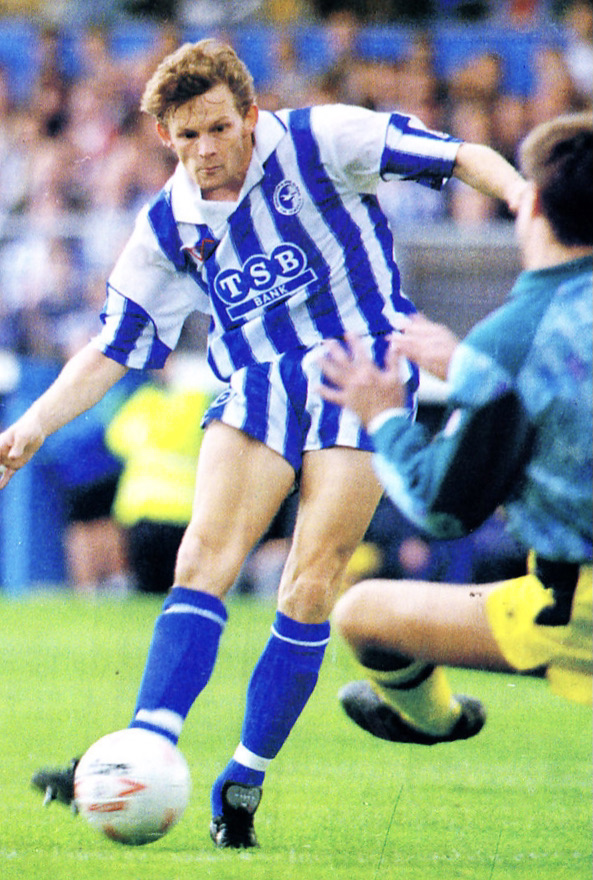
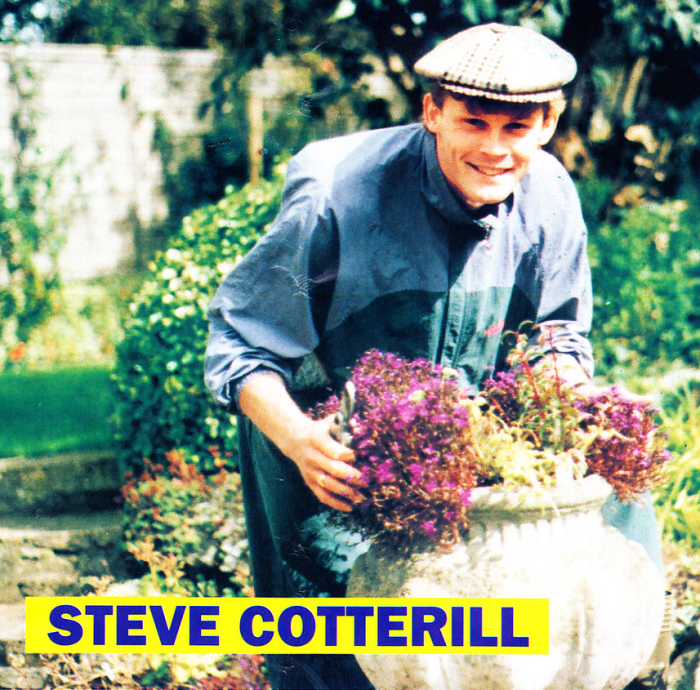
Ex-Clarets boss Steve Cotterill not always ‘Mr Popular’

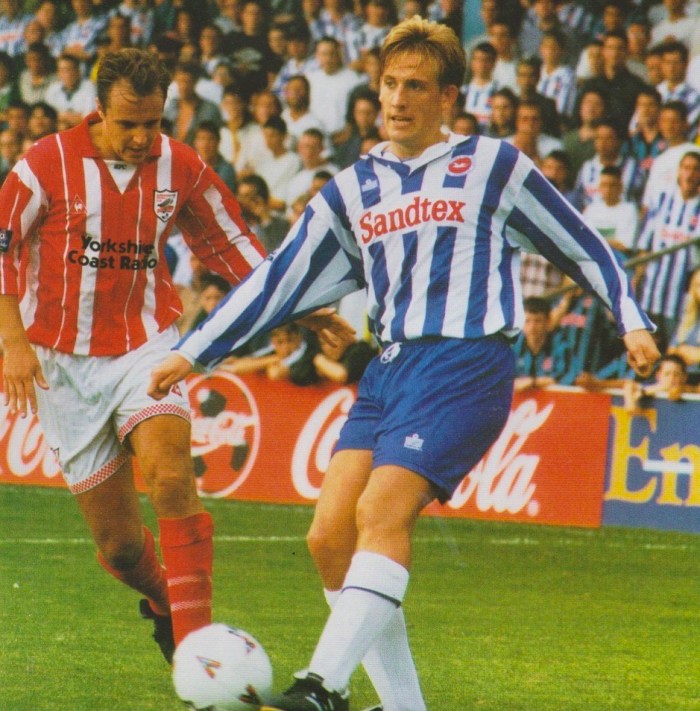
FORMER Burnley manager Steve Cotterill hasn’t always been popular during a nomadic football career that’s taken him the length and breadth of the country.

But he made a lasting connection with Brighton fans after impressing during an all-too-brief playing spell in 1992.

“I thoroughly enjoyed my time at Brighton and, whenever we’ve gone there, I’ve always had a great reception from their supporters. They’ve been terrific,” he wrote in his programme notes prior to a Cheltenham v Brighton fixture.

Injury curtailed Cotterill’s playing career – he endured 18 knee operations – but he made up for it by taking charge of nine different clubs over a period spanning more than 20 years.

His three years and seven months keeping Burnley in the second tier while seeing key players sold or injured was largely recognised as a decent achievement in the circumstances. Many of his other appointments were a lot shorter, and at times acrimonious.

Starting out as a player on the non-league circuit, it was Cotterill’s prolific scoring for Burton Albion (44 goals in 74 games) that prompted Wimbledon to snap him up in 1989.

Unfortunately, he sustained a serious cruciate ligament knee injury that halted his progress with the Dons and Albion boss Barry Lloyd gave him a lifeline to try to resurrect his career with the Seagulls.

Against a backdrop of financial instability, Lloyd had struggled to find adequate replacements for the prolific Mike Small and John Byrne in the 1991-92 season. Mark Gall, signed from Maidstone, offered a glimmer of hope, but Raphael Meade and Mark Farrington were disappointing to say the least, and Albion had been relegated back to the third tier a year after being one game from winning their place back amongst the elite in a play-off final against Notts County.

As the 1992-93 season got under way, Gall was unavailable due to a knee injury that eventually forced him to retire, Meade had departed and questions continued over Farrington, so Lloyd turned to loan signings Cotterill and Paul Moulden from Oldham Athletic.

It looked like he’d cracked it as the pair combined well and started scoring goals. Indeed, Cotterill scored four in 11 games, which was a promising start. Unfortunately, parent club Wimbledon wanted the sort of fee for him that cash-strapped Albion couldn’t afford, so he returned to south west London and eventually moved on to Bournemouth the following summer for £80,000.

In an interview with the Argus in October 2016, Moulden told Brian Owen: “One of the reasons I loved playing for Brighton was Mr Banter himself, Steve Cotterill. We met up like we had never been apart. I’d start the banter and he’d finish it or vice versa.
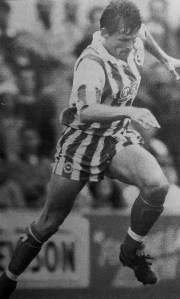
“We destroyed many a centre-half partnership during that three months. I was gutted to leave. I mean that very sincerely – absolutely gutted. I couldn’t believe nobody would have bought me and Steve as a pairing.

“We were both out of favour with our clubs and we hit it off so well. But it wasn’t to be – at Brighton or at any club.”

Born in Cheltenham on 20 July 1964, Cotterill’s injury-ravaged playing career came to a close at Dean Court. He’d won the player of the year title three times and scored 18 goals in 55 starts for the Cherries, but another knee injury finally put paid to his playing career, and he turned his attention to managing.

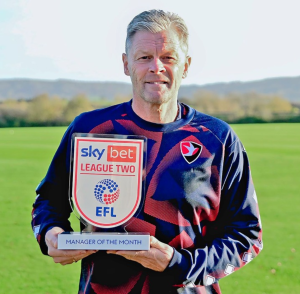
His first assignment was in Ireland where he succeeded his former Wimbledon teammate Lawrie Sanchez at League of Ireland’s Sligo Rovers. But his hometown club Cheltenham Town offered him a management opening back in England in 1997, and he steered them from Southern League football into the Conference and then into the bottom tier of the Football League. He twice won the Manager of the Year title and earned another promotion, to the third tier, via a play-off final victory over Rushden & Diamonds.

After leaving Cheltenham, Cotterill had a controversial five-month, 13 game stay as Stoke City boss at the start of the 2002-03 season before quitting to join Sunderland as Howard Wilkinson’s no.2. In May 2020, Cotterill endeavoured to explain to the Stoke Sentinel the circumstances surrounding his tenure, and the board interference regarding players.

The stay on Wearside was also short lived, with the pair being dismissed after only 27 games in March 2003.

The collapse of ITV Digital coincided with Cotterill taking over from Stan Ternent as Burnley manager in the summer of 2004. When he joined, they had only eight players on the books and, despite reassurances to the contrary, within six months Robbie Blake and Richard Chaplow, who he’d hoped to build a team around, had been sold.

When Blake’s replacement Ade Akinbiyi started scoring on a regular basis, he too was sold, and when he returned to the club later, he wasn’t the same player in front of goal.

Even after Cotterill had left, Burnley directors acknowledged the platform he’d provided for their eventual elevation to the Premier League under Owen Coyle.

The excellent uptheclarets.com, summed up his time at Turf Moor, thus: “He kept us in the second tier of English football for three years and that, looking back, was some achievement in, at times, difficult financial circumstances.”

It probably said something about the Championship that when Cotterill finally departed Turf Moor in the autumn of 2007, he’d been its longest serving manager at three years and seven months.

The following year, Cotterill was offered the opportunity to try his hand in America with Minnesota Thunder but work permit issues meant it never materialised. He didn’t resurface in the English game until 2010, when he enjoyed a short but successful reign – five months in charge of Notts County. He took charge on 23 February 2010 and they were crowned League Two champions on 27 April. A month later Cotterill was on his way, appointed in June 2010 as the manager of Portsmouth.

He helped to stabilise the then Championship club against a background of financial troubles and other clubs began to cast eyes on his achievements. The persistence of Nottingham Forest finally paid off and he moved there in October 2011, but a change of ownership of the club spelled the end of his time by the Trent.

In July 2012, he was only nine months into a three-and-a-half-year contract at Nottingham Forest when the owning Al-Hasawi family decided to relieve him of his duties and go in a different direction.

He was out of the game for six months but in January 2013 accepted Harry Redknapp’s offer to join the coaching team at Queens Park Rangers until the end of the season.

He turned down the chance to stay in post the following season and in December 2013 took charge of League One Bristol City, signing another three-and-a-half-year contract.

In his second season at Ashton Gate, he steered City to promotion from League One as champions and they won the Football League Trophy. It earned Cotterill the League One Manager of the Year award.

As with other times in his career, Cotterill found his club’s better players were sold, ultimately weakening the squads he was in charge of. For example, when Sam Baldock moved from Bristol City to Brighton. Cotterill told bcfc.com: “He was a very good captain and very good goalscorer; we were sorry to see him go…that happens in football.”

Ultimately, as City struggled to attain the same level of success in the Championship as they’d experienced in the division below, Cotterill was sacked in January 2016.

Perhaps to prove the point about Cotterill not always being everybody’s cup of tea, former Albion defender Adam El-Abd vented his feelings in September 2020, explaining why he fell out of love with football following a bust-up with the manager only a short time after he moved to Bristol City.

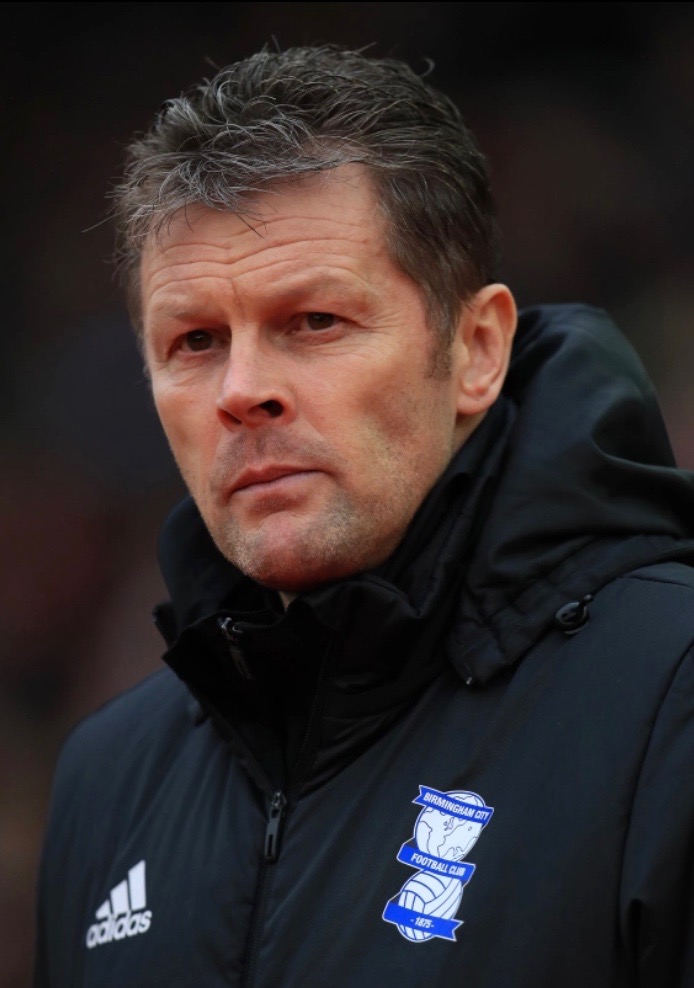
With only three matches of the 2016-17 season left to play, Cotterill once again was grateful to Redknapp, by now manager at Birmingham City, and he joined him there as first team coach.

He subsequently left in the close season in the hope of landing a manager’s role in his own right. Ironically, that opportunity arose back at St Andrews when Redknapp was sacked in October 2017.

Cotterill told The Sun’s Graham Hill how he felt he had mellowed after 20 years in the hotseat at various clubs, although, at the time, he probably didn’t expect to be out of work again five months later.

After leaving Birmingham in March 2018, Cotterill ruptured a disc in his neck while trying to keep fit but in an interview with gloucestershirelive.co.uk declared himself fit and ready for the next challenge.

That challenge emerged in November 2020 when Cotterill took charge of League One Shrewsbury Town but he faced a bigger fight – to his health – after contracting Covid-19 and he was twice admitted to Bristol Royal Infirmary, spending some time in intensive care, suffering badly from the virus and pneumonia. He was released from hospital in March 2021 to recover at home.

He left the Shrews job in June 2023 and was out of work until January 2024, when he took charge of Forest Green Rovers.

He was unable to stave off relegation from the Football League, but he rebuilt the side during the summer of 2024 to push for promotion back to League Two. When Southend United visited The New Lawn on 15 March 2025, the 2-2 draw was Cotterill’s 1,000th game as a manager. At the time, Rovers were joint-second in the National League.

Everton reject Mark Farrington earned rebuke at the Albion

BARRY LLOYD made a number of astute signings during some turbulent years in charge of the Seagulls; Mark Farrington wasn’t one of them!

Although Lloyd struck gold when he picked up Mike Small after seven years playing in Europe, his luck evaporated when he brought former Everton youth player Farrington back to the UK after a five-clubs-in-five-years spell in Holland, Belgium and Germany.

Lloyd agreed a £100,000 fee to sign him from respected Dutch outfit Feyenoord in 1991 – as a replacement for Small, who’d been sold to West Ham for £400,000. But in three years on the Albion’s books, Farrington mustered just four goals in 28 appearances. Subsequently, apart from a single league appearance for Hereford, he ended up at non-league Runcorn.

It’s no secret he’s gone down in Albion folklore as one of the club’s biggest flops, as evidenced by comments on the popular fans forum, North Stand Chat.

In 2004, in one of those discussions about all-time-worst player, ‘Metal Micky’ gave his vote to Farrington, adding: “The only one who came close to his utter shiteness was Ashley Neal.”

On another occasion, noting that Farrington managed to get on the scoresheet in a 3-1 win away to Burnley, ‘Pinkie Brown’ declared: “Mark Farrington scoring a goal rates alongside stepping in rocking horse crap, spotting Lord Lucan and going for a ride on Shergar. The last three are more realistic.”
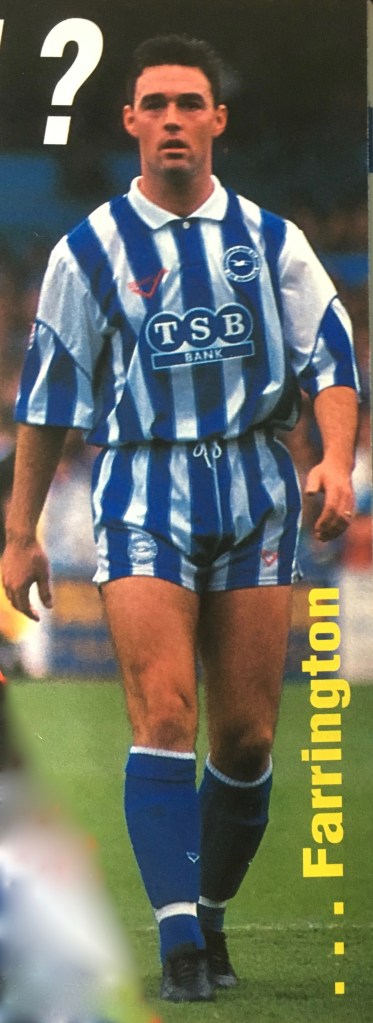
On the same forum, ‘Withdean and I’ described him as: “The most expensive player ever to make so little impact at the Albion.”

It seems only right and fair, though, to try to balance the picture and I’m grateful to a November 2018 look-back article in the Sussex Express which recalled an occasion on 26 February 1994 when Farrington scored a goal in a 3-1 win at Huddersfield, and earned a plaudit from Lloyd’s replacement as manager, Liam Brady.

The newspaper reported: “For Farrington in particular, it had been a difficult season. He had made only sporadic appearances under Lloyd, but Brady was committed to give everyone a chance. ‘I brought Mark Farrington back into the side,’ said Brady. ‘As far as I am concerned, the slate is clean with everyone at the club and I am prepared to look at each and every player and Mark has done particularly well (in the reserves) and shown a good attitude’.”

It was good of Brady to give him the opportunity but at the start of the following season he brought in Junior McDougald to play alongside Kurt Nogan, and, in October 1994 Farrington left the club.

Born in the Allerton district of Liverpool on 15 June 1965, Farrington’s dad was a long distance lorry driver and his mum a shoe shop manageress. He attended Springwood Primary School and moved on to Hillfoot High School, where his footballing ability began to be recognised.

He also played for the local Allerton side and an Everton scout, Ray Marshall, spotted him. He was taken on as an associate schoolboy and then progressed to an apprenticeship. Unfortunately, his hopes of making it at Everton were dashed within weeks of him ending up on the losing side in the 1983 FA Youth Cup Final.

Farrington scoring features on the front cover of the Everton programme

Ironically, Farrington scored four times against Norwich City (see picture of one of them on front of programme) over two legs but City won a play-off and collected the trophy 6-5 on aggregate.

Everton decided not to offer Farrington a professional contract, but the opposition’s manager, Ken Brown, liked what he saw and took him on at Carrow Road.

A year later, he was blooded in an end-of-season top tier game away to Coventry City which the Canaries lost 2-1.

City history site Flown From The Nest notes he made a total of 18 appearances and scored twice before he was loaned to Cambridge United, where he scored once in 10 matches, and was then transferred to Cardiff City in July 1985.

City were newly relegated from the second tier. Farrington scored in the first game of the new season, a 4-1 win at Notts County, but Cardiff had a disastrous season and finished up relegated to the bottom tier. According to mauveandyellowarmy.net, Farrington scored only three more times in a total of 36 appearances for the Bluebirds before being sacked for a breach of club discipline by manager Alan Durban, who was sacked himself following relegation.

After an unsuccessful trial with Portsmouth, Farrington tried his luck on the continent.

At Dutch side Willem II Tillburg, he got into his goalscoring stride and bagged 26 in 61 appearances – by far his best scoring ratio for any club.

At RC Genk he scored five in 17 matches, and 10 in 30 games for Fortuna Sittard, including a hat-trick against PSV Eindhoven and four against Volendam. Next up on his European travels was Hertha Berlin for eight months, but he struggled to settle in Berlin and didn’t register a goal in nine games.

Dutch giants Feyenoord came to his rescue and, after he’d scored twice in a friendly, they bought out the rest of his Hertha Berlin contract. He scored once in five matches but when Gunther Bensson, the coach who’d bought him left, he failed to see eye to eye with his successor and began to seek a move. Lloyd took him on trial at Brighton and he scored in a reserves match against Ipswich.

“In May 1991 I had the chance to go to Spain to play for Seville but that fell flat and in August Barry called me again and I came to the Goldstone,” he told the matchday programme. “I had missed the pre-season training and all the other players had a head start and I suffered. I injured an ankle early on and one thing led to another. It soon became a nightmare, one injury followed another,” he said.

Farrington saw various specialists to try to get to the bottom of several niggles that were keeping him sidelined and months went by before he finally got the all-clear.

It was chirpy Chiv of the Cherries after six years with the Seagulls

THESE DAYS Gary Chivers is a familiar face around the hospitality lounges at Brighton’s Amex Stadium and Chelsea’s Stamford Bridge, the two clubs where he spent most of his playing days.

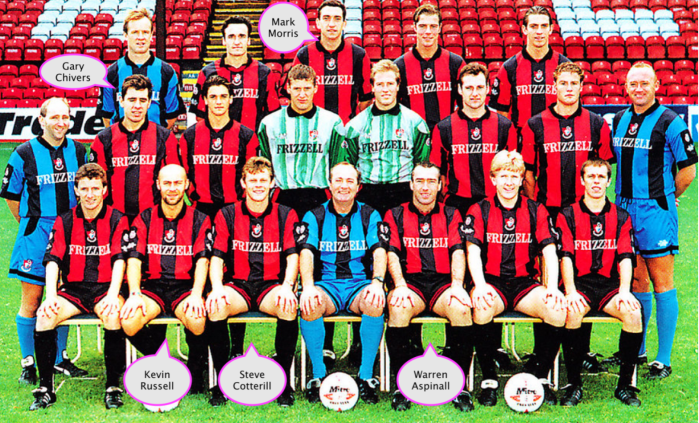
His association with Chelsea goes back to the tender age of 10, when he joined their academy, and he went on to play in their first team for five years. After six years with Brighton, he played out the final two years of his 16-year career at AFC Bournemouth under fledgling boss Tony Pulis. Among his teammates were Mark Morris, Warren Aspinall, Paul Wood and Steve Cotterill, all of whom also played for the Seagulls.

Born in Stockwell, London, on 15 May 1960, Chivers started supporting Chelsea at the age of eight, and, like many future professionals, got a foothold in the game at Stepney-based development club Senrab.

He told journalist Nick Szczepanik in a 2018 Backpass magazine article (below): “My brother had been training with Chelsea and my dad took me along when I was ten, and I went into their academy about two years before I should have.”

Chiv in BackpassAlthough initially a midfielder, coach Ken Shellito turned him into a defender and Chivers’ versatility in defence meant he could play centrally or in either full-back berth. Among his early contemporaries were John Bumstead, Colin Pates and Micky Fillery: Pates would later join him at Brighton.

With Chelsea already relegated, Chivers made his first team debut on 21 April 1979, aged 18, as he recounted in a December 2017 interview on the Chelsea website. Irish legend Danny Blanchflower was the manager who handed him his debut, at Stamford Bridge against Middlesbrough, which finished in a 2-1 win in front of just 12,007.

Chivers did enough to keep his place for the last four games of the season, and he told Szczepanik how in one he had to mark Arsenal’s Malcolm Macdonald and another Manchester United’s Joe Jordan.

In the second tier the following season, an injury to first choice right-back Gary Locke gave Chivers a chance to establish himself under new manager Geoff Hurst, and he retained the shirt for much of the season.

In total he made 148 appearances for Chelsea, scoring four goals, one of which was voted runner-up in Match of the Day’s Goal of the Season competition in 1980-81.

He got on the end of a Clive Walker cross following a delightful flowing move as top-of-the-table Newcastle were beaten 6-0 by second-placed Chelsea.

Chivers deputised at left-back for the injured Chris Hutchings towards the end of the 1982-83 season, by which time John Neal had taken over as manager. Chelsea were at a low ebb and only a point from a goalless draw against Middlesbrough on 14 May 1983 saved from them from relegation to the old Third Division. Neal overhauled the playing staff, and Chivers was amongst the casualities.

Explaining how he didn’t see eye to eye with Neal, he added: “I didn’t want to go, but you have to play games.”

He briefly switched to relegated Swansea City, under John Toshack, but only stayed six months as managers came and went in rapid succession. Seeking a move back to London, he joined QPR under Terry Venables – “the best manager I ever played for” – where he played alongside John Byrne, another player he’d be reunited with at the Albion.

At the end of his contract, he moved on to Watford during the uncomfortable spell when former Wimbledon boss Dave Bassett was in charge, but he got the feeling he didn’t fit in. Brighton boss Barry Lloyd, himself a former Chelsea player, agreed a £40,000 fee with the Hornets as Chivers dropped down a division to third-tier Albion, where he linked up with some familiar ex-Chelsea faces in Doug Rougvie, Robert Isaac and Keith Dublin.

He explained to Szczepanik: “I decided to go to Brighton because I had a look at their fixtures and I even asked for a promotion bonus because I was so confident they would go up.”

The confidence was well-placed because promotion was duly gained, and Chivers went on to become part of the furniture for the next six years, including playing in the play-off final at Wembley in 1990-91.

An incident that led to a Notts County goal still rankles with Chivers. “At 0-0, I played the ball off Tommy Johnson for a goal kick and David Elleray, the referee, gave a corner that they scored from. I saw him a few years ago and went over to set the facts straight. He said: ‘You’re not still going on about that from 20 years ago?’ and I said: ‘Too right I am!’ I walked away from him because it was winding me up, but it was because of how much it would have meant to the club.

“We would have gone on from there if we had got into the First Division but instead we ended up having to sell Mike Small and Budgie (John Byrne) and we went down at the end of the next season.”

Albion played a  benefit match for Chivers against Crystal Palace just before the start of the 1992-93 season and Chivers left the club in 1993, not because he wanted to, but because players on “decent money” had to go.

His enthusiasm for the club continues to this day, bantering with supporters in corporate hospitality and the Albion club website carried an article about the former defender’s divided loyalties when the Albion entertained Chelsea on New Year’s Day.


  • Pictures mainly from the club programme.

‘Mad Dog’ Kennedy’s eyes weren’t always on the ball!

A Ken shot

IN A ‘10 worst Albion strikers you’ve seen’ list, Andy Kennedy would be a leading contender.

On the rare occasions he scored, he would celebrate with an exaggerated swagger befitting scoring the winning goal in a cup final – all rather out of place in a humdrum third tier league match!

The disdain in which the supporters of Watford hold him is hilariously summed up by Darren Rowe in an article on Blind, Stupid and Desperate.

“If an opposing team wanted to keep him under control, they did not need to mark him, merely make sure that he was offside, which, for long spells of the game, he would be,” opined Rowe. “Andy always seemed to have forgotten to put any studs in his boots. If ever he felt he could get away with it, his legs would give way at the edge of the box.”

In the same online title, author Chris Stride is a little more appreciative, before putting the knife in!

“He had good control, strength, ball skills and packed a powerful shot. In his early days at Blackburn, I saw him score a magnificent 25-yard curler and have an all-round blinding game against Aston Villa in the FA Cup.

andy kennedy - wat“When he signed for Watford I was hoping for more of the same. All we ever got was one long range effort away to Southend in the First Round of the Coca-Cola, and a couple of seasons of strolling around the pitch preserving his hairstyle and energy for (page three model girlfriend) Maria Whitaker.”
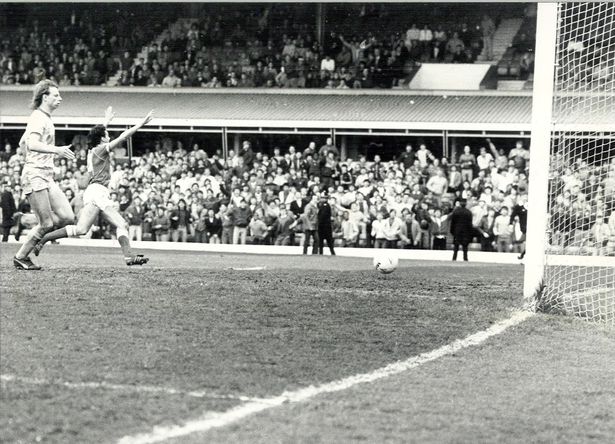
A Blackburn Rovers fan, posting in February 2018 under the name Drog on roversfans.com, also shared an amusing recollection of Kennedy’s time at his club.

“My main memories of Walsall though are from an occasion at homely former ground Fellows Park where Andy Kennedy netted a brace in a 2-1 win.

“My travelling companions and I managed to gain admission to the less than Babylonian splendour of something exotically named the Terry Ramsden Suite, after a colourful but ill-fated owner, where I was hoping to perhaps pass my congratulations on to Andy and his then-paramour, a lass named Maria Whittaker whom I greatly admired but sadly she had not made the trip to the Midlands.

“I can’t remember exactly what she looked like but the captions which accompanied her frequent newspaper appearances always made me think she’d make a sparkling conversationalist.”

It seems the shapely Ms Whitaker must have occupied Kennedy’s mind quite a lot. Non-League Paper contributor Liam Watson, once a player with Witton Albion, recalled in a 2013 article: “We also signed the striker Andy Kennedy – long dark hair, good looking fella – and he was knocking off the page three girl, Maria Whittaker, at the time. That was all he talked about.”

Born in Stirling on 8 October 1964 the son of an engineer father and beautician mother, Kennedy went to Wallace High School in the town and first gained football representative honours at under 13 level. It was his performances for Stirling Boys Club that caught the eye of Glasgow Rangers scout Davie Provan.

In those days he was a winger but after going through the ranks at Ibrox and signing professional at 17, he was converted into a central striker. He eventually broke through into the first team in 1982.

He mustered 20 games for the Scottish giants, scoring three times, but also spent some time on loan at Seiko in Hong Kong. Clearly it was time to move on from Glasgow!

In March 1985, Birmingham City were faltering as promotion candidates in the chasing pack at the top of the old Second Division when manager Ron Saunders took on the 20-year-old Kennedy at St Andrews.

Andy-Kennedy           Kennedy displays a more conventional goalscoring celebration for Birmingham

On 8 April, with regular striker David Geddis suspended and Blues trying to end a run that had seen just one win in the previous six games, Kennedy was called up for his debut at home to Sheffield United.

And what a start he made! Not only did he score with a header past former Villa ‘keeper John Burridge, he also set up Wayne Clarke to make it 3-0 and Blues went on to win 4-1.

Kennedy’s good form continued as he scored four in seven appearances and the stuttering Blues went from fourth to second and won automatic promotion back to the elite.

Kennedy was leading goalscorer the following season….but with just nine goals that didn’t say much, as the Blues went straight back down!

Throughout the course of his three-year contract with Birmingham he made 76 league appearances but scored just 18 goals and, in March 1987, was loaned to Sheffield United, where he scored once in nine games.

In the summer of 1988, he was on the move again, this time to Blackburn Rovers for a £50,000 fee. To be fair, the Ewood Park faithful probably saw the best of him as he netted 25 goals in 59 appearances during his two years at the club.

Watford were his next club and he joined for a fee of £60,000 in August 1990. But he failed to make an impact and was loaned out to Third Division Bolton Wanderers. Unfortunately, a back injury curtailed his time with the Trotters and he only managed one game before returning to Vicarage Road.

In his unhappy time with the Hornets, he made just 25 league appearances and scored only four goals.

A KenIt was a ‘phone call from Barry Lloyd‘s no.2 Martin Hinshelwood that heralded his arrival at the Goldstone. He joined Brighton for a nominal fee in September 1992, making his debut as a substitute for Steve Cotterill in a 1-0 home defeat to Reading on 26 September 1992.

“I am delighted to be here with a great bunch of lads and now I am determined to play my part in scoring goals and getting the club promotion,” he told the matchday programme.

A skip through recollections of Kennedy on North Stand Chat hardly stand as a ringing endorsement to his contribution in the stripes, the most complimentary coming from Austrian Gull, who maintained: “He wasn’t always that bad – we’d been spoilt by the beast that was Mike Small and Kennedy could never come close to reaching that level. Wasn’t the most hardworking but him and (Kurt) Nogan were okay. We certainly had a lot worse than Kennedy to come.”

Meanwhile backson reckoned: “Frustrating player. When we played United in the cup at Old Trafford, I seem to remember he was genuinely fouled in the box but went down so damn theatrically, like he’d been shot, it wasn’t given.”

Others recall him through that nickname ‘Mad Dog’ (first coined in a News of the World article about his affair with Ms Whittaker). Gwylan said: “Mad Dog wasn’t that bad – he was just lazy and looked unfit. If he had the attitude of Gary Hart, say, he’d have been an excellent player for us as he had a fair degree of ability.”

Pinkie Brown also observed: “Certainly had ability when he felt inclined. Sadly, as he had a bad attitude and was lazy, supporters saw little of that ability. One of those players who could have gone further had he been more focused.”

Several fans remember how he didn’t react well to observations from the terraces pointing out his shortcomings. Bladders was amused to recall: “One time, when he lazily chased a ball that went out of play, my old man told him to ‘put some bloody effort in Kennedy’. Kennedy then threatened to jump into the South Stand and smash his face in if he gave him any more lip.”

I must say on checking with the record books, I am staggered to discover he scored 10 times in 42 games for Brighton – although I do remember those over the top celebrations.

It’s said he left the club in 1994 after Liam Brady told him he wasn’t good enough to play for the reserves in the Sussex Senior Cup Final.

He ended his English league career with a cameo at Gillingham and at the age of 30 tried his luck in Hong Kong again, this time with Tsing Tao, before returning to the British Isles to play in Northern Ireland with Portadown and Shelbourne in Dublin.

As he was not the sort of player likely to be invited back to the club to reminisce over old times, he appears to have slipped below the radar in recent times.

However, Kennedy has linked up as a coach with the Rangers Soccer Schools programme at home and in North America. In 2005, Kennedy was part of a team of Rangers coaches who ran soccer schools in Canada. According to a Birmingham Mail report in 2015, Kennedy stayed in Canada at Ajax FC.

Former Gunner Raphael Meade a damp squib for the Seagulls

Meade best

ISLINGTON-born Raphael Meade joined Arsenal as a schoolboy and made it through the ranks to play more than 50 times for the Gunners.

A rather eclectic career saw him play in Portugal, Spain, Scotland, Denmark, Hong Kong and back in England.

Brighton boss Barry Lloyd had something of a penchant for picking up players from these shores who’d rather lost their way playing abroad and, while forwards Mike Small and John Byrne would count as great successes of that genre, Meade was largely a disappointment.

He played 40 times and scored 12 goals in the 1991-92 season, but the Albion were relegated to the third tier, so it was memorable for all the wrong reasons.

Born on 22 November 1962, Meade was on the Gunners’ books from June 1977 to the summer of 1985.

The superb thegoldstonewrap.com unearthed the Arsenal annual for 1981 in its research; it said of the young Meade: “He’s got a hell of a lot of pace and is fantastically brave in the box. He’s got all the makings of a top player. However, he’s another one who has got to work on his control like Brian McDermott with tighter controls and lay-offs. But with his type of pace he will always be a threat.”

The reality was that with the likes of initially Alan Sunderland and John Hawley ahead of him in the pecking order, then Tony Woodcock and Lee Chapman, followed by the arrival of Charlie Nicholas and former Ipswich striker Paul Mariner, his first team chances at Highbury were restricted.

While he was prolific in the Reserves (24 goals in 27 league games in 1983-84), his first team appearances over four years were somewhat sporadic.

Manager Terry Neill handed him his debut in a 3-0 UEFA Cup away win against Panathinaikos on 16 September 1981 and he scored a spectacular goal with his very first kick! His league debut came a month later – and he scored again, netting the only goal in a 1-0 win at home to Manchester City. The 1981-82 season saw the majority of his first team involvement: he played a total of 22 games, scoring five times.

A cartilage injury sidelined him for a large part of the 1982-83 season but when he did return in February 1983 he scored twice against Brighton in a 3-1 win.

CN + RM braces v SpursThe following season, Meade scored a hat-trick in the 3-1 win over Watford, which began Don Howe’s tenure as Arsenal manager, and he also earned a special place in Gunners’ fans hearts when scoring twice (pictured celebrating above with Charlie Nicholas, who also got two) in Arsenal’s 4-2 victory over arch-rivals Spurs on Boxing Day 1983.

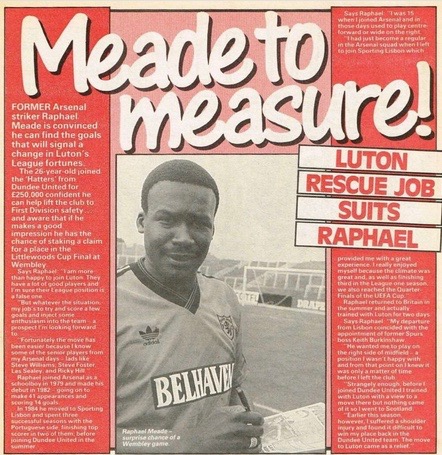
Unfortunately, they were sporadic highlights and, in the summer of 1985, he was sold to Sporting Lisbon.

“Sporting Lisbon provided me with a great experience. I really enjoyed myself because the climate was great and, as well as finishing third in the league one season, we also reached the quarter finals of the UEFA Cup,” Meade said in a Shoot/Goal article.

He said it was the arrival of former Spurs boss Keith Burkinshaw that precipitated the end of his time in Portugal because he wanted him to play in an unfamiliar right midfield role.

Thus he was loaned to Spanish side Real Betis towards the end of his three-year contract, and, on his return, was transferred to Dundee United where he made 16 starts, plus six substitute appearances, scoring seven goals.

However, United boss Jim McLean made public his dissatisfaction with the striker and questioned his fitness. Meade hit back saying he was fit but being played out of position on the wing.

Subsequently a shoulder injury saw him sidelined and unable to regain his place and he joined a struggling Luton Town side for a £250,000 fee.

luton moveBut after only four games for the Hatters he was on his way again, this time to Odense BK in Denmark.
During two years on their books, he had loan spells back in the UK, playing once for Ipswich Town and five times for Plymouth Argyle.

As the 1991-92 season got under way, cash-strapped Brighton were forced to sell the previous season’s successful strike duo of Small (to West Ham) and Byrne (to Sunderland).

Byrne’s departure didn’t happen until October, and it was while playing alongside the popular Republic of Ireland international that Meade scored his first goal for the Seagulls, in a 3-1 home win over Port Vale.

He had found himself in the right place at the right time in only the fourth game of the season when an injury sidelined Bryan Wade, who had started the first three games alongside Byrne. smart Meade

Lloyd had watched the former Arsenal striker score in a 2-0 win for the reserves against Fulham and pitched him in against Wolves – a 3-3 thriller in which Mark Barham, Gary O’Reilly and John Robinson netted for the Albion.

“Ideally, I needed one or two games to get match fit but it was great to get the chance in the first team and I wasn’t going to waste it,” said Meade.

Meade in action with another former Gunner, and ex-Albion defender, Steve Gatting (in Charlton’s colours), and a man of the match award for a brace against Grimsby Town.

After Byrne’s departure to the north east, there was seldom a regular strike partner for Meade. The busy and bustling Mark Gall, signed from non-league Maidstone United for £45,000, managed 14 goals but was some way short of Byrne or Small’s quality. And another of Lloyd’s overseas ‘finds’- Mark Farrington from Feyenoord – was an almighty flop.

Meade cover boy

Meade popped up with the occasional goal and one of those rare glimmers of light in an otherwise dark season came in a game I went to see at Vicarage Road on 31 March 1992.

Although Albion were ultimately headed back to Division 3, a brief respite from that tumble came against the Hornets courtesy of a howler by David ‘Calamity’ James in their goal. James came to the edge of his area to collect a routine-looking through ball, spilled it rather than gathering it cleanly and Meade was on hand to pick up the loose ball, round the stranded ‘keeper and slot what turned out to be the only goal of the game.

Meade scored twice more before the season’s end but Albion lost four of the final six games and were relegated along with Port Vale and Plymouth. Meade elected to leave the club and head for Hong Kong.

After a season with Sea Bee, he returned to England and rejoined Brighton but only featured in three games. He moved on to Crawley Town in 1995-96, where he ended his playing days.

Pictures from various sources including the matchday programme, Shoot/Goal, and online.

Winger Walker a genuine crowd-pleasing entertainer

CW Nobo 91 progIN MY OPINION, one of the best wingers ever to pull on the famous blue and white stripes was Clive Walker, an evergreen player who remarkably played more than 1,000 games for eight clubs.

Although well into his 30s when he arrived at the Goldstone Ground, the balding former Chelsea and Fulham wideman was an effervescent talent with the ball at his feet.

Asked by the Argus to preview the squad ahead of the 1991 Division Two play-off final at Wembley, Brighton coach Martin Hinshelwood said of him: “Alias Phil Collins. A great character. The dressing room buzzes when he is around. He is good on the ball, a great crosser and has scored some great goals this season.”

Both Albion’s wingers for that game had Wembley experience behind them having been on opposing sides in in the 1985 League Cup Final.

Walker had missed a penalty for Sunderland as Mark Barham’s Norwich City won 1-0 and six years later, against Neil Warnock’s Notts County, Walker’s bad luck continued when a Wembley post denied him as Brighton’s dream of promotion ended in a 3-1 defeat.

Both had played big parts in Albion reaching Wembley, though: Barham levelled for the Seagulls in the first leg of the semi-final at home to Millwall and Walker got the third when the Seagulls upturned the form book and beat Bruce Rioch’s side 4-1.

Born on 26 May 1957 in Oxford, Walker joined Chelsea in 1973, made his league debut in a 1-0 defeat away to Burnley on 23 April 1977 and was a first team squad regular between December 1977 and the summer of 1984, although, in 1979, Chelsea loaned Walker to Fort Lauderdale Strikers (as pictured below) where he scored nine goals in 22 appearances.

CW Fort Laud

“Those were exciting, lively times and we loved our football. We were a bunch of young lads growing up together and, in my last couple of years there, I played with the likes of Kerry Dixon for the side who brought good times back on the pitch,” Walker told Mike Walters of the Mirror. “We were a close-knit bunch with a great sense of camaraderie, and a lot of teams these days would probably envy us in that regard.”

A fast winger with the knack of scoring stunning goals, Walker netted 17 in 1981-1982 and the next season, with Chelsea looking set to be relegated to Division Three, fans still remember how he scored the winner at Bolton Wanderers to maintain their status.

Details of many of his memorable moments at Chelsea are highlighted by the Sporting Heroes website.

And a Chelsea fans’ blog, Game of the People emphasised the impact he had at Stamford Bridge, pointing out: “He was left-footed, as quick as a sprinter and awkward to knock off the ball. And he could shoot! Those that liked wingers were excited by his willingness to run between players and take a pot shot at goal. Put simply, he was exciting to watch.”

In what is an otherwise interesting and informative piece about Walker in 2014, they unfortunately failed to mention his successful stint with the Seagulls.

Although he began the 1983-84 season well, he sustained a broken jaw which put him out for several weeks and, during his absence, another nippy winger – Pat Nevin – seized the opportunity to claim a first-team spot and Walker’s Stamford Bridge days were numbered.

3-2 N v Sun CWalker

Come the end of the season, he was allowed to join Sunderland (above in action v Newcastle) for a fee of £70,000. “He returned to torment Chelsea in the Football League Cup semi-final second leg, scoring twice in what was a dreadful night for the club,” Game of the People observed. “Walker was abused from the stands, too, which was especially heartbreaking for those that appreciated his efforts at the Bridge.”

After two years in the north-east, Walker returned to London in September 1985, initially via a £75,000 move to Jim Smith’s First Division (Premier League equivalent) QPR, where he played 28 games in the 1986-87 season, alongside the likes of David Seaman, Michael Robinson and John Byrne. Just 20 months later, he left on a free transfer to Third Division Fulham for whom he made 127 appearances in three years, scoring 32 goals.

His debut was certainly memorable as he scored twice in a 3-1 home win over York City. Writer Ian McCulloch remembered the occasion in an article on fulhamfc.com.

“Fulham were in the doldrums, on the brink of extinction, owned by property developers, and going nowhere fast. And then, in the midst of all the doom and gloom, appeared one of football’s all-time, genuine crowd-pleasing entertainers. Walker ran the show that night, scored twice, and generally lifted both the fans and the team.”

Walker recalled: “That game really does stand out. And in the pouring rain as well! To score two goals on your debut is very special, and I just look back at it as a fabulous memory. Very, very enjoyable.”

Walker explained that it was Ray Lewington who took him to Craven Cottage, adding: “I had a great rapport with him – of course we were both apprentices at Chelsea – and we’re still good friends today. But then other managers came in, and you couldn’t escape the feeling that the club was going backwards and that was very, very sad because I had a lovely time at Fulham and I’ve got some very fond memories of those years. I loved playing at the Cottage and on the Cottage pitch.”

Walker picked up Fulham’s 1989-90 Player of the Year award before former Fulham captain Barry Lloyd went back to his old club to secure Walker’s services for the Seagulls in the summer of 1990. Even though he was the wrong side of 30, he pulled on the no.11 shirt on his debut away to Barnsley (in a side containing his old Chelsea teammate Gary Chivers in defence) and missed only one game all season as Albion nearly made it back to the elite level.

After that Wembley disappointment and only three games into the new season, Walker suffered another blow when he sustained a serious knee ligament injury away to Barnsley which sidelined him for several weeks.

With the previous season’s goalscoring duo Mike Small and John Byrne having been sold for big money, the side struggled, and eventually ended up being relegated.

Emerging young winger John Robinson had slotted into Walker’s place in the side during his absence although it was Barham who was the odd man out when Walker was fit to return to the line-up.

Back in the third tier the following season, although the return of Steve Foster in defence was a plus point, off the field the rumblings of financial meltdown grew louder and louder. Young Robinson was sold to Charlton Athletic and only the proceeds of the sale of goalkeeper Mark Beeney to Leeds United kept the taxman at bay when there was a winding-up order threat hanging over the club.

Three cup games against Manchester United were rare highlights in that precarious season and one of my favourite Walker moments came at Old Trafford in a League Cup replay on 7 October 1992.

Having managed a 1-1 draw against United in the first game, Albion gave United quite a scare in the replay, largely through Walker giving England full-back Paul Parker a torrid time. I watched the game sat amongst United supporters and they were full of praise for the veteran winger, albeit that United edged it 1-0.

Walker’s final appearance in an Albion shirt came on 24 April 1993 when he came on as a substitute for Matthew Edwards in a 2-1 home defeat to Rotherham United. Alas, as he recounted in an interview with Spencer Vignes for the matchday programme, his time with the Albion came to a sour end.

Together with Chivers and Perry Digweed he was let go by Lloyd apparently because he said as the highest earners the club could no longer afford them. He was unceremoniously ushered out of the door with his boots in a bin bag. “That was the thank-you we got from Brighton,” he said.

When most players would be considering hanging up their boots, at the age of 36, Walker left Brighton and moved into non-league with Woking where he scored 91 goals in 210 games.

A poster called NewAdventuresinWiFi, on Sunderland’s readytogo.net fans website, recalled watching Walker play for Woking, and said: “Walker was an absolute class act when he fancied it. He was instrumental in the cup run of 96-97 when Millwall and Cambridge were dispatched and Premiership Coventry given an almighty fright.

“Also remember a Conference game against Altrincham when we put seven past them and Walker was unplayable that day…to the point the opposition full back ended up getting a straight red for a frustrated desperate two footed ‘challenge’ he attempted on Clive after yet another glorious attacking run.”

Another poster, JumpingAnaconda, remembered: “I saw him playing for Woking in a minor cup final at Vicarage Road, in the season where he won a few big games for them in their FA Cup run. He was 40 years old and he was absolutely quality, up and down the line all night. That season there was some talk of Premiership sides looking at him to come in to do a job for them. His level of fitness was incredible. He ran around like a 20-year-old. He was probably the closest we would get to another Stanley Matthews in the Premiership era in terms of a winger that kept his pace, creativity, ability to beat a man and make crosses into his 40s.”

From Woking, he had a spell as the assistant manager at Brentford under Eddie May but then went back to playing, at Cheltenham Town. Finally, after winning the FA Trophy and the League, he retired at the grand old age of 43, although he continued to turn out for Chelsea Veterans teams.
He had a brief excursion into management with Molesey but a career in the media took off and he became a regular and well-known voice with BBC London, and for Sky TV’s coverage of Conference football.

CW on Chels TVWalker has also worked for Talksport and appears regularly with former Chelsea and Spurs player Jason Cundy on Chelsea TV and radio (as above).

Pictures from a variety of sources but mainly the Albion matchday programme.

Cattle auctioneer Kevin Bremner gave clubs a promotion prod

bremner-portraitAS GOALSCORING partnerships go, the pairing of Kevin Bremner and Garry Nelson was something of a masterstroke by Albion manager Barry Lloyd.

Having to readjust to life back in Division 3 after relegation in 1987 meant cashing in on some of the better players – the sale of Terry Connor, Danny Wilson and Eric Young raised over £400,000 – and replacing them with bargain buys.

At £65,000 for Bremner and £72,500 for Nelson, Lloyd showed how shrewd an operator he could be in the transfer market. When Nelson was injured and sidelined for a while, £80,000 was paid to bring in Paul Wood to play alongside Bremner.

Bremner was born on 7 October 1957 in Banff in the Scottish Highlands and worked as an auctioneer in the cattle market in his home town as well as playing Highland League football.

He didn’t make his start in the English league until the relatively late age of 23. That was with Colchester United and he made his debut in a 2-2 home draw with Barnsley in Division 3 on 11 October 1980.

He went on to make 93 consecutive appearances for Colchester in the third and fourth divisions and scored 35 goals while Bobby Roberts was in charge. All was going well until Bremner got in a dispute with the club and found himself out of the side.

Division 1 Birmingham took him on a month’s loan and, after he’d scored a goal in his four games there, Roberts’ repplacement at Colchester, former Ipswich and Northern Ireland centre half Allan Hunter, recalled him to Layer Road. However, former boss Roberts had moved on to Division 3 Wrexham, and he took Bremner on loan at the Racecourse, where he also got on the scoresheet.

“He wanted to take me on permanently but they couldn’t afford it so my next stop was Home Park, and a spell at Plymouth Argyle,” he told the Albion matchday programme. “It was touch and go whether or not I’d stay there in the long term, but once Lincoln and Millwall showed an interest I knew that I’d soon be on my way.”

He chose Millwall – “it was closer” – and joined the Lions in December 1982 for a £25,000 fee. He was one of eight new signings made by manager George Graham as Millwall were floundering at the bottom of Division 3 at the time. In a remarkable turn-round, they picked up 27 points in 12 games to escape relegation.

He was then part of the Millwall side who won promotion from Division 3 in 1984-85. In total, Bremner scored 33 goals in 87 games for the Lions. “It was a fabulous couple of years even though the side was struggling when I joined,” he said. “Playing at The Den is great – it’s wicked for away teams because the atmosphere is so strong.”

Next stop was Reading for a £35,000 fee. He spent two seasons with the Royals and enjoyed a successful partnership with lofty Trevor Senior which helped the Royals to promotion as champions from Division 3 in 1986.

I can remember going to watch Albion play Reading in November 1986 and Bremner scored twice in a 2-1 win for the Royals at Elm Park. He finished the season with 15. Albion signed him from Reading for £65,000 in July 1987.

Brem flowAfter a flying start with Brighton, in which he scored 11 goals, the league goals dried up for Bremner but strike partner Nelson couldn’t stop scoring as Albion powered their way to automatic promotion.

Second spot behind Sunderland was clinched via a 2-1 Goldstone win over Bristol Rovers on 7 May, Bremner finally ending his goal drought with a diving header, and Nelson, inevitably, getting the winner – his 32nd goal of the season.

What was all the more remarkable about the pairing was that it was the first season Nelson had played as an out-and-out striker.

Back in the second tier in 1988-89, Albion struggled to make an impression against better quality opponents although Bremner did score 15 goals, including a hattrick in a New Year’s Eve 4-0 mauling of Birmingham City. In September 1988, he took over the goalkeeper gloves (below) at home against West Brom when Perry Digweed was forced off with a serious groin injury.

In a matchday programme interview, Bremner said: ”I’m probably enjoying the game more than at any time before. I regret not coming into the professional game earlier but I’m delighted at the way things have turned out.

“We always thought we could do well at the Goldstone and after two years of hard work I’d like to think that we can put the club back on the map and, besides, I’d like another try in the First Division.”

The programme notes declared: “It’s his consistent scoring record that has opposing defenders on tenterhooks. His total commitment invariably creates an opportunist goal and he is a popular player with the fans.”

Brem runBremner scored 12 in the 1989-90 season, five of them coming in the space of a week at the start of the season! He was virtually ever-present but Albion struggled in the lower half of the table for most of the season. His goal in a 1-1 draw away to Blackburn in the final game of that campaign was his last for the club. In 134 games (plus three as sub), he’d scored 36 goals.

He moved on to Peterborough United in the close season as manager Lloyd had a new strike partnership up his sleeve in the shape of John Byrne and Mike Small.

After a year at Peterborough, Bremner moved back to Scotland to play for Dundee but in the spring of 1992 had a month’s loan spell at Shrewsbury Town.

Back in the far north of Scotland he had spells as player-manager with Brora Rangers and his old club Deveronvale then in 1995 he became youth team manager at Gillingham and stayed for eight years, and was then academy coach at Millwall for three years. He subsequently coached youngsters in Kent, at an academy and at an independent school.

  • Pictures show the front page of the Evening Argus following Albion’s promotion from Division 3 in 1988 with Bremner diving to score; a shot of Bremner in action against West Ham that appeared on the front of a matchday programme, a portrait from a matchday programme at the beginning of the 1989-90 season, and other action pictures from matchday programmes.