
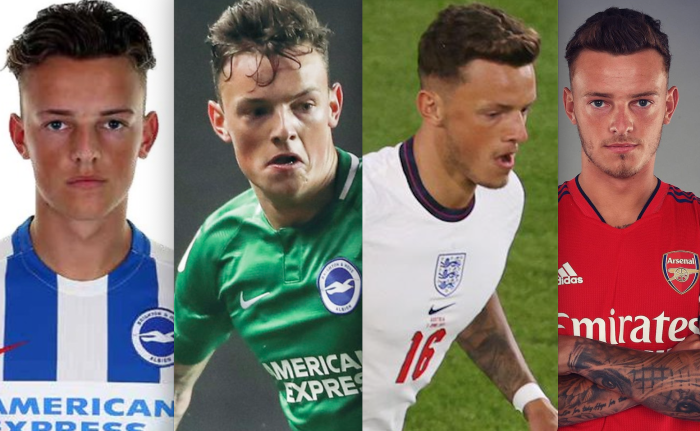
BEN WHITE must be one of the best and most successful examples of the way present-day Brighton have evolved.
Picked up for nothing as a teenager after being discarded by Southampton, White’s development was carefully managed in house and on loan at different levels before he broke into the first team, became one of an elite few Albion players to play for England, and was then sold to Arsenal for £50million.
Critics will, of course, say if such talent had been retained the club might now have been punching even higher in the football pyramid.
But, as that veteran Albion watcher Andy Naylor reminded us recently, “hopes and dreams are different from expectations”.
Denied the level of financial clout of, say, nine or 10 clubs in the same division, Albion, as Naylor says “will always be fighting to defy the odds.”
The sale of White was great business for the club – and it didn’t harm their progress. As one who loves a parallel, the season after Mark Lawrenson was sold to Liverpool in 1981, Brighton went on to achieve their highest ever finish (13th) in the top division.
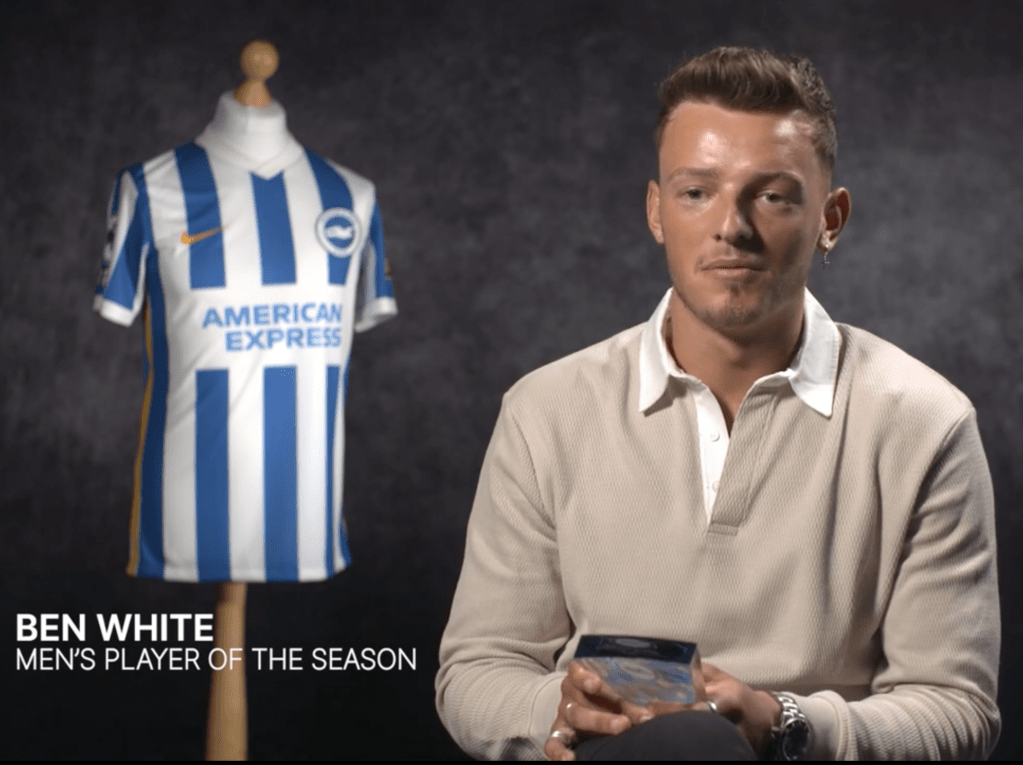
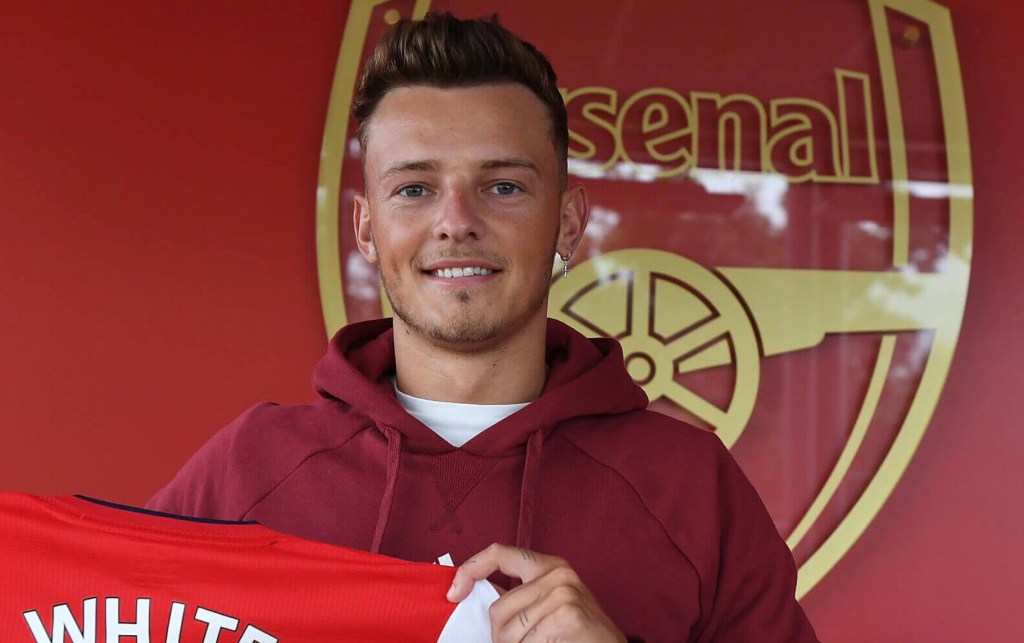
Forty years later, the same – in fact, even better – outcome followed White’s transfer to the Gunners; Albion finished in a highest ever place of ninth under Graham Potter.
And, as if to rub it in, White was in the Arsenal side that lost 2-1 at home to the Seagulls on 9 April 2022 (Enock Mwepu and future Gunner Leandro Trossard the Brighton goalscorers). It was Brighton’s first win in eight games and the win helped to dent Arsenal’s hopes of a top-four finish.
Born in Poole, Dorset, on 8 October 1997, White was in and out of hospital during early childhood owing to an immune disorder that left him with regular bouts of appendicitis, according to an April 2024 Daily Mail article by Sami Mokbel.
He eventually had his appendix removed aged seven but it didn’t stand in the way of his love of playing football from a young age.
“My parents (Barry and Carole) aren’t football fans at all, so they didn’t push me into it,” he told arsenal.com. “But they saw how much I loved it, and they did everything they could to help me.
“I don’t know how I got into it really in the first place, probably just through being with mates, playing in the park or the garden. I can’t remember why, I don’t think there was a particular moment that set me off in football, but I remember loving it from the first time I ever kicked a ball.”

He enjoyed other sports too – tennis, hockey and cricket – but it was his football ability that saw him picked up by Southampton’s academy at the age of eight. He played in age group teams through to the age of 16 as a midfielder, but Saints didn’t offer him a scholarship because of concerns over his lack of strength.
Others obviously saw something, though, because he had trials at Leicester and Bristol City before opting to join Brighton.
“It’s not nice hearing that someone doesn’t want you, but you’ve got to believe in yourself and remember it’s only someone’s opinion that may be right, or may be wrong,” he said.
Albion’s then head of academy player recruitment Mark Anderson spotted White during a trial at the David Beckham Soccer Dome in Greenwich. He played a game on trial against Brentford, and was then taken on, playing as a central defender, on youth terms working under academy boss John Morling and under-23s coach Simon Rusk.
Interviewed by The Athletic in November 2020, Morling explained how White’s pathway to Brighton’s first team was carefully planned and nurtured from the moment the club decided to give him a chance.
“He was technically good, passed the ball well,” said Morling. “He was a good, athletic shape. You knew he had a lot more development from a physical perspective.
“He had growing issues at one point. He was out for a long time. When people grow, they can have problems in their heels, knees or back. He had some back issues.”
White featured regularly for Brighton’s under-18s and under-23s under Rusk, and Morling pointed out: “He was a good learner, a nice personality, a way about him. He worked hard, did lots of extras in his under-18 year, under-23 year. He’d be very modest, but he’d be honest in his opinion of how he played if he didn’t play well. That’s how he is.”
Morling added: “His make-up, personality and modesty comes from his parents and his upbringing. That’s how he is and that is a big positive for young players to learn from.
“You’ve not made it until you’ve made it and the really top players always strive for more on the pitch. They always want to be better and, in their eyes, they’ve never made it. Ben shows that.”
At Brighton, he certainly had a shining example to look up to and he admitted how Lewis Dunk took him under his wing. “When I started at Brighton my goal was to play alongside him,” he said. “He was there from a young age as well, he was just a normal guy, English as well, down to earth, same position and we got on well.
“From him it was more a case of watching what he did every day. He was an example for me to follow. He was someone you look up to and see him training every day. I knew I needed to be at that level.”
White was still only 18 when Chris Hughton gave him his first team debut in the League Cup in August 2016, a 4-0 home win over Colchester United, and he played in the next round, a 4-2 win over Oxford United. He was also an unused sub for league games.
“He is the type of boy you can’t dislike,” Hughton told Mail Sport. “The type of boy you want to see do well. A quiet lad. Very unassuming.”
Hughton said there was never a question mark about his ability, only what would be his best position – centre-back, right-back or defensive midfield. “Because he was a ball player we knew he would be capable of playing in other positions. At the time we didn’t feel he was a domineering centre-back.”
When he looked back on his first team bow, White said in a matchday programme interview: “There weren’t many people who could play because of the injuries at centre-half but I was still surprised (to be chosen) and hopefully I took my chance to impress.
“I learned a lot about concentration; you can’t afford to switch off in the first team because you’ll get punished otherwise.
“I’ve tried to take that back into the under-23s and hopefully I can implement that with them now. Learning off players like Dunky was great, they’re really good people to learn from.”
White had begun to be involved in the first team that pre-season, joining the squad for training in Tenerife and featuring in friendlies against Crawley Town, Fulham and Lazio.
Ahead of him in his position at the time were Dunk, Shane Duffy, Connor Goldson and Uwe Hunemeier, so it was always going to be a gradual transition to the senior group.
“Obviously I’d love to get involved with the first team again, as that gave me a taste of what I want to do on a regular basis,” he said.
But there were three loans – in League Two, League One and the Championship – before he became a first team regular.
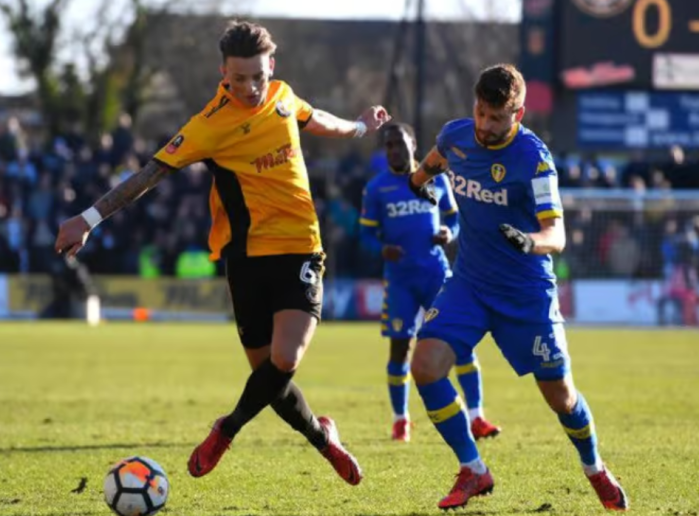
First stop was South Wales, and Morling recalled how Albion gave Newport County specific instructions as to how they could improve him: he needed to work on his aerial ability and show more personality in and around training.
Brighton-born managerial veteran Lennie Lawrence was supporting team manager Mike Flynn and Morling observed: “He did really well. They really liked him and they played a big part in his development, no question.”
White played 51 games across four competitions, which included memorable tests in the FA Cup when the League Two side beat Leeds 2-1 at home in round three (it avenged a 5-1 defeat in the League Cup earlier in the season when White’s ability to carry the ball out from defence caught the eye of Leeds’ then sporting director, Victor Orta).
Leeds tried to persuade White to move to Elland Road that January but he decided to stay put and once again impressed when the Welsh side held Spurs to a 1-1 draw (Harry Kane equalised with eight minutes to go) in the fourth round before losing the replay 2-0 at Wembley (Spurs’ temporary home ground at the time).
Flynn later reflected: “I knew he was going to be a bright star just by watching him day-in, day-out. When he goes and puts in the performances he did against the likes of Leeds and Tottenham, then you start realising how good he can be.
“He was outstanding. I described him as a Rolls Royce. He moved as eloquently as a footballer can. He was quicker than he looks, he read the game exceptionally well for somebody of that age, and he was a great lad all-round. His attitude was first class.
“For me, my biggest concern was whether he could handle the physicality of League Two. But he played against the ex-Brighton captain Adam El-Abd [when Newport faced Wycombe Wanderers] and there was a 50:50 in the corner. Ben’s gone straight through him, come out with the ball and hit a 60-yard diag.”
Somewhat presciently, Flynn added: “I think he’ll play at the top level and I think he’ll represent England.”
The player’s agent, Alex Levack told The Athletic: “Going out on loan to Newport, that was the time when he pretty much turned from boy, or young man, to a proper man; players fighting for win bonuses, it was the real world, but he seems to transition easily, doesn’t get ruffled, kind of like he is on the pitch. He takes everything on board, sometimes doesn’t say much, but he understands it. He’s smarter than he might make out.”
White’s impressive season for County earned him the South Wales Argus Player of the Year Award and, on his return to Brighton, he signed a contract extension. With Goldson and Hunemeier having moved on, White had some involvement with Albion’s first team squad in the first half of the 2018-19 season although Leon Balogun was back-up to Dunk and Duffy and the youngster had only one unused sub appearance (away to Burnley).
Morling had worked in Peterborough United’s academy before joining Brighton, and Rusk had played for Posh, so perhaps it wasn’t too surprising that White’s next step was to Cambridgeshire in January 2019, where the ebullient former manager Barry Fry was director of football.
White made 15 appearances in League One for Peterborough, initially under Steve Evans and then Darren Ferguson, as they just missed out on the play-offs by a single point and one place, but Fry said: “He was magnificent, different class.
“He was far better than our standard when he played for us. Very cool, a lovely lad off the pitch, a diamond, very dedicated, great in the community but, most of all, a proper player.”
Those experiences certainly had an impact on White, who said: “Playing for points in the lower leagues and winning games is an amazing feeling, simply because the boys don’t get paid as much, so the three points and a bonus is really important to them. The players really put a shift in as a result.
“It was a good learning experience because I came up against all different kinds of strikers, with different qualities, and I had to battle and fight, which I wouldn’t say is my strongest attribute.
“I enjoyed the experience; it was very different to anything I’d been used to, but I found that as I went up the divisions it suited my game more. Saying that, the further up you go you’re going to get punished if you make a mistake.”
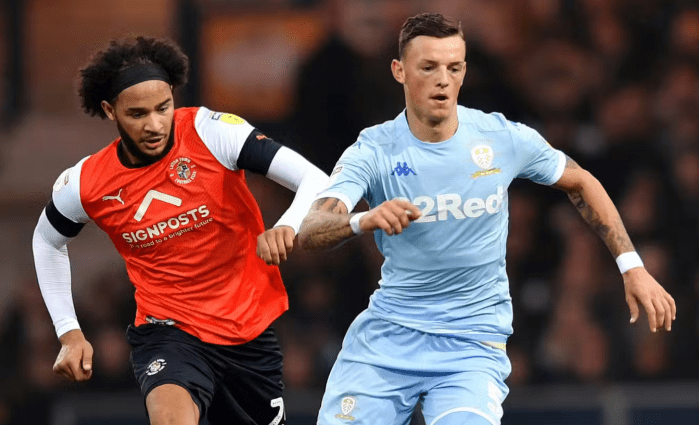
Leeds’ Orta was determined to take White to Elland Road and, with Pontus Jansson having moved on to Brentford, quirky team boss Marcelo Bielsa gave his blessing to the youngster joining on a season-long loan in July 2019.
White played all 46 games as Leeds won the Championship title and he said later of Bielsa: “I learned so much from him; his coaching was all about details, the minor things like how the ball spins when you pass it, how you’re passing it, why you’re passing it. I learnt a great deal from him.”
Leeds teammate Luke Ayling was suitably impressed by the loanee, saying: “Top, top quality. He showed mental strength to come in here as a lad that nobody knew about and step into Pontus’ shoes and hit the ground running. A real, real quality player with a strong mentality. The sky’s the limit for him.”
The Yorkshire Evening Post was similarly impressed, naming him their Player of the Season and reporter Lee Sobot declaring: “White has the world at his feet and the centre-back has shown skills not befitting a typical centre-back during his forays forward and the occasional stint in the holding midfield role.”
Fellow Leeds writer Graham Smyth said: “He handled the division’s physicality, its relentless fixture schedule and the weighty expectation that is sewn into the fabric of a Leeds United shirt. He wore it brilliantly.”
Leeds were determined to land White permanently and put in three significant bids, one believed to be of £25million, all of which Brighton rejected. His agent told The Athletic: “They (Brighton) said he was coming back here to play. A lot of clubs would say that and maybe not follow through with it. But the manager said it, Dan Ashworth (technical director) said it, the chairman (Tony Bloom) said it, and it’s been proven correct.”
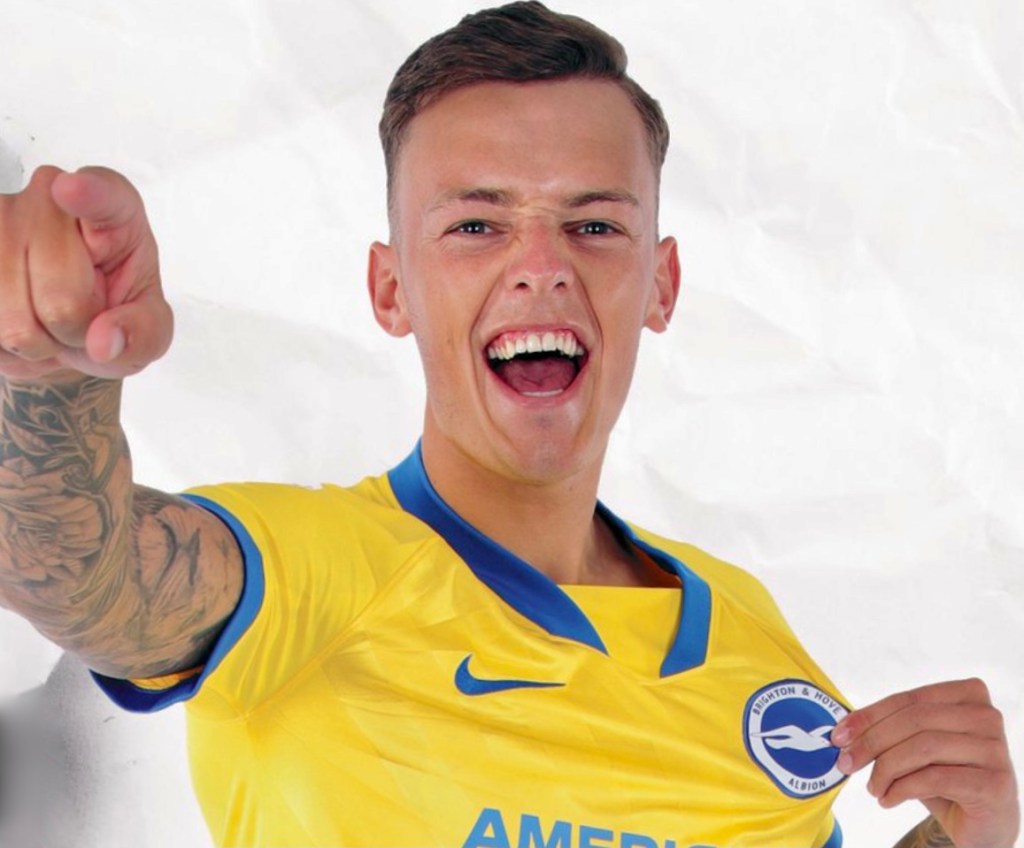
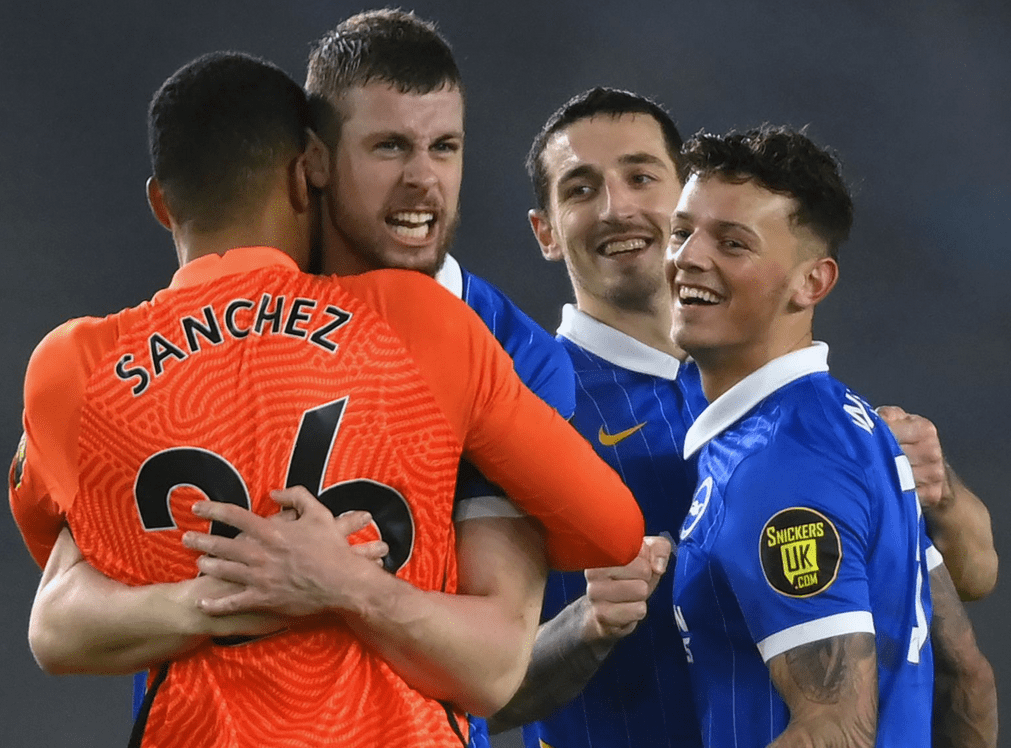
With his feet firmly ensconced as part of Albion’s first team set-up, White said: “The way the boys train and how they’re living, everything about them is at the next level. The training has been great. I’m continuing to learn under the gaffer (Potter) here and it’s great to have Dunky as my captain as well.
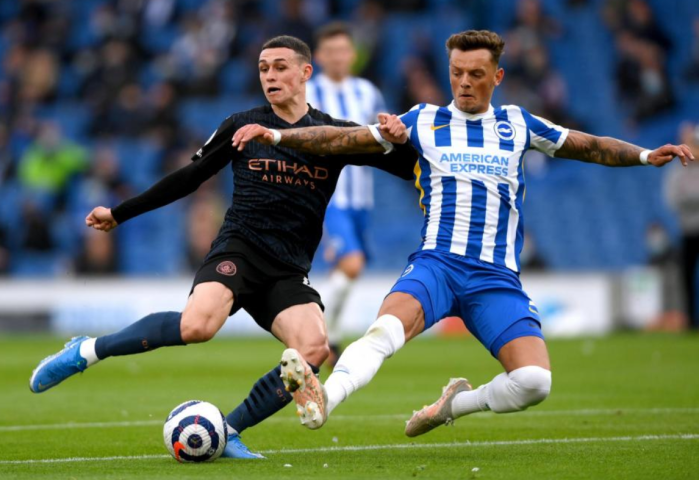
“He’s phenomenal, isn’t he? He’s done it at every level and has continued to progress and be the star man every season. He’s pure quality to train alongside. He rarely has a poor session and you can see the difference in him compared to when I was last here. He’s grown up a lot, taken charge of everyone and looks like a real captain.”
From a fans’ perspective, it was just a pity that the majority of White’s Albion matches were played behind closed doors because of the Covid pandemic.
In a March 2021 interview with Sky Sports, Potter said: “He’s got a lot of attributes that I think are really exciting for us. As a modern centre-back, he’s got a lot of things that are really interesting.”
Such was his form across 39 league and cup games that he was named Seagulls’ Player of the Season, and on 2 June 2021, White made his England debut, going on as a 71st minute sub for Jack Grealish in England’s 1-0 pre-European Championship Finals warm-up friendly win against Austria at The Riverside Stadium, Middlesbrough. He became only the fifth Brighton player to play for England.
Four days later, he added his second cap when he started for England at the same stadium in a 1-0 win over Romania. On two other occasions that month, he was twice an unused sub (v Croatia and the Czech Republic at Wembley).
That recognition inevitably had big clubs circling: Chelsea, Tottenham and Liverpool enquired about his availability, but it was Arsenal who were prepared to meet Albion’s £50million asking price.
Arsenal manager Mikel Arteta said: “Ben was a top target for us and it’s great that we’ve completed his signing. Ben has been educated with two very good clubs, Brighton and Leeds, in recent seasons.
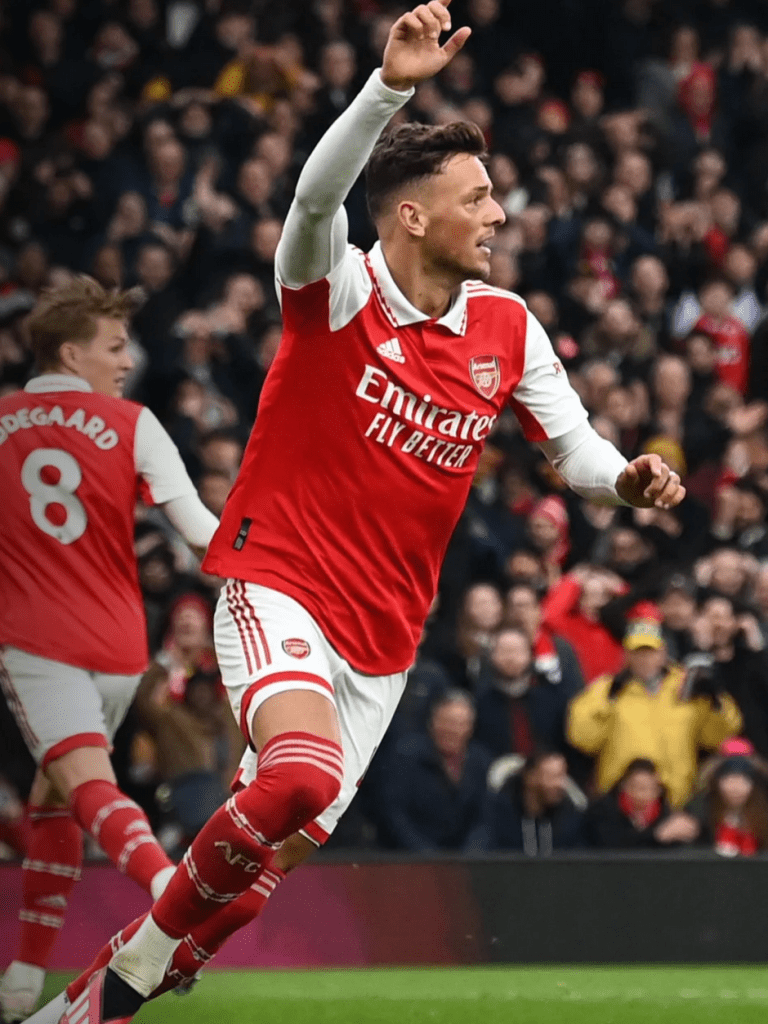
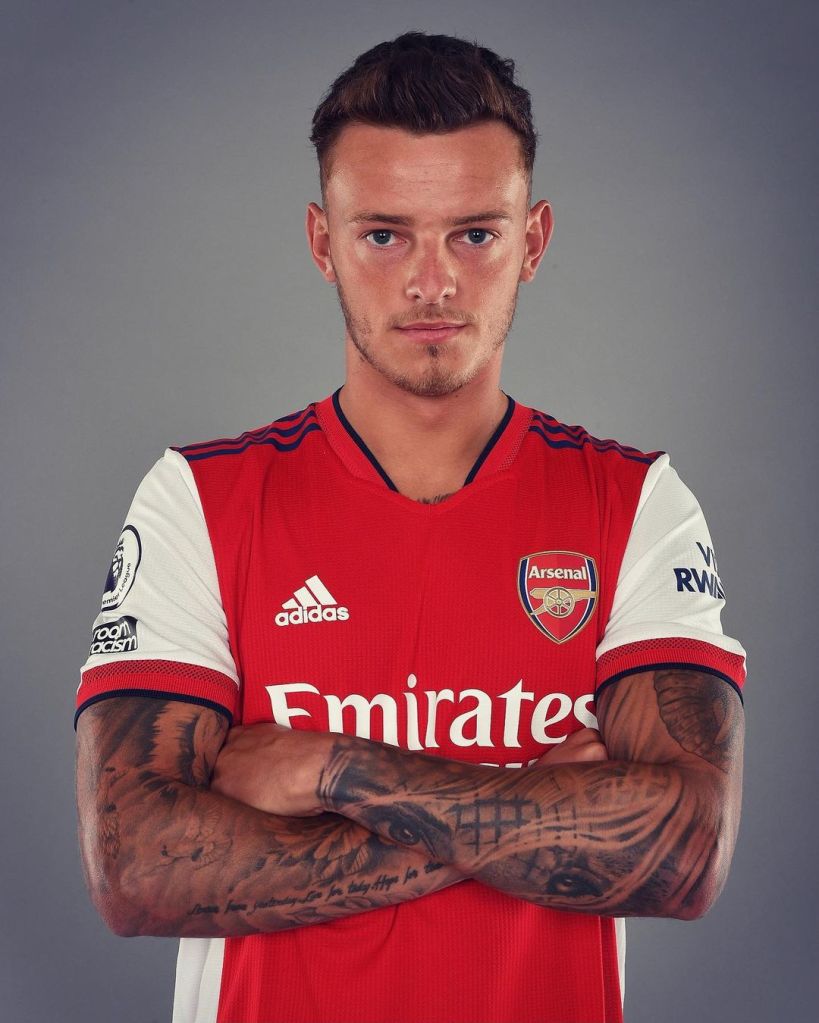
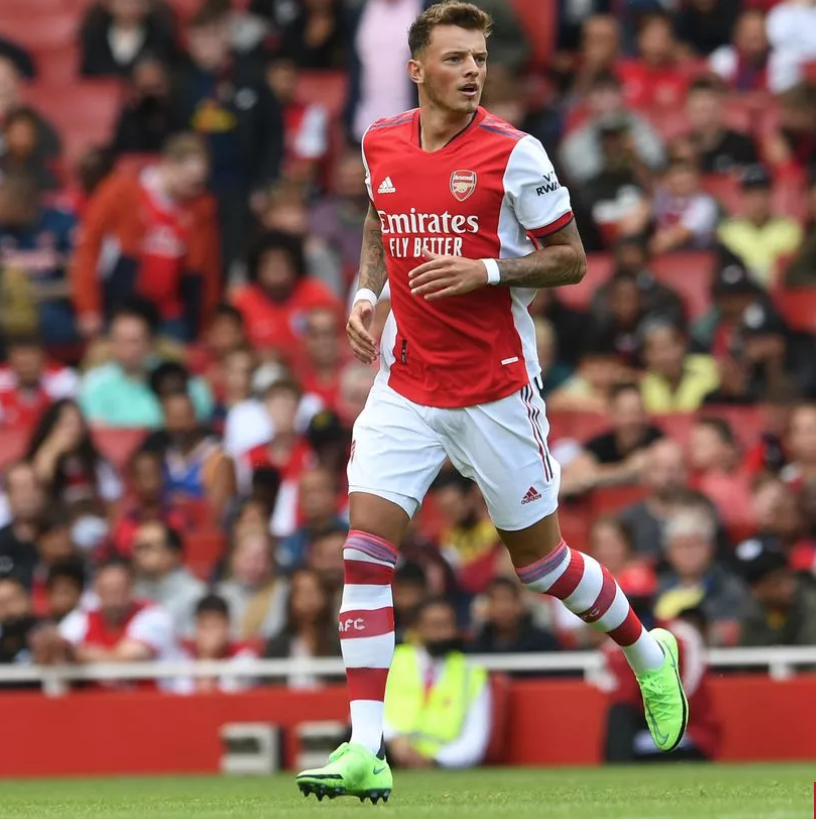
“He has benefitted well from two very good coaching set-ups and has shown with both Brighton and on loan with Leeds what a strong talent he is.
“Ben is an intelligent defender who is very comfortable with the ball at his feet and his style fits perfectly with us. And of course, he is still young, so his age and profile fits with what we are building here. We are all looking forward to Ben being central to our future long-term plans.”
A sanguine Potter told Sky Sports: “It’s part of the process for us growing as a club and a team.
“Obviously Ben played a lot of minutes for us last year and was a key player but the finances involved meant it was a really good option for us as a club to improve, to keep growing, and we need to then use the money wisely to develop the team further.
“I’m happy for Ben, of course, happy for the club. I’m proud of everybody in the academy and everybody that has helped his journey outside of Brighton, because he’s had some loan opportunities as well which have developed him. It’s a great story for us.”
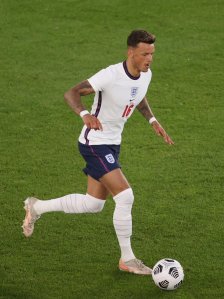
White won two more England caps in March 2022, playing in a 2-1 win over Switzerland at Wembley and featuring in the first half of a 3-0 win over Cote d’Ivoire.
What happened subsequently to his international career has been written and spoken about on multiple occasions, much of it from unattributed sources, while the player himself has always maintained a dignified silence.
Suffice to say here, he was an unused sub for two games at the 2022 World Cup in Qatar and left the squad early for personal reasons which certain sources say related to a falling-out with Gareth Southgate’s no.2, Steve Holland (although Southgate denied it).
It’s apparent reading various articles about White that he’s one of those players (Bobby Zamora was another) who switch right off from football after they’ve stopped training or playing.
In an Arsenal matchday programme, White said: “My profession just happens to also be a lot of people’s hobby. They look forward to every Saturday to watch the game and that’s great. But for me it’s about being on the pitches every day, trying to constantly be the best you can be. That’s the bit I really love.
“I never used to watch football much anyway. If it was on when I was a kid, after five minutes I’d get bored of it and go outside to play football. I didn’t really watch it, I’d much rather do it. Even now, I don’t watch football really.
“I watch my own clips and my own footage to help me improve but I wouldn’t watch a game for fun.”
White explained: “When I come into the training ground, it’s all about football – 100 per cent focus. Then when I leave, I switch off from it. I know some players are just about football 24/7 but for me, I wouldn’t be able to do that. I wouldn’t be able to give everything if I did that.
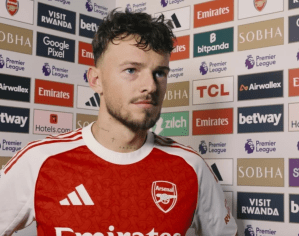
“I think it’s a good balance for me to switch off and leave it at the training ground.”
Now in his fifth season with the Gunners, he made 134 league and cup appearances in his first three seasons, but a knee injury limited his involvement to 26 matches in 2024-25 and he’s made only a handful of starts in 2025-26 with Riccardo Calafiori or Jurrien Timber often ahead of him in the right-back berth.
Nonetheless, when Arteta was questioned about White at the turn of the year, he said: “I’ve said it many times about how I feel about Ben and not [just] what he’s done in the last few weeks, but what he’s done for us in the last few years.
“He’s shown that in various contexts that he’s a player that’s going to give absolutely everything for the team, that he’s always there, he’s someone you can count on in any circumstances.”
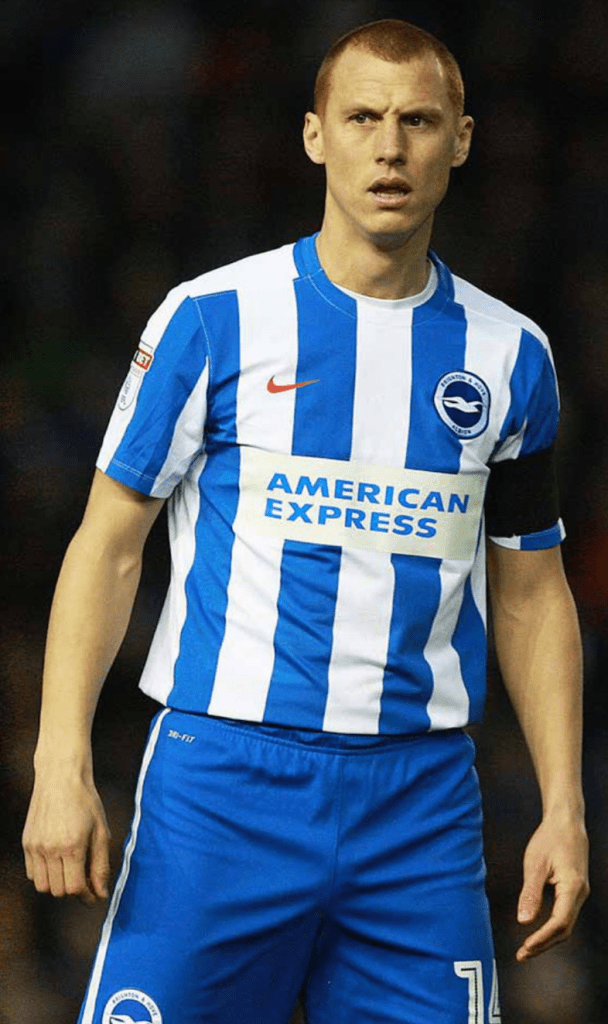

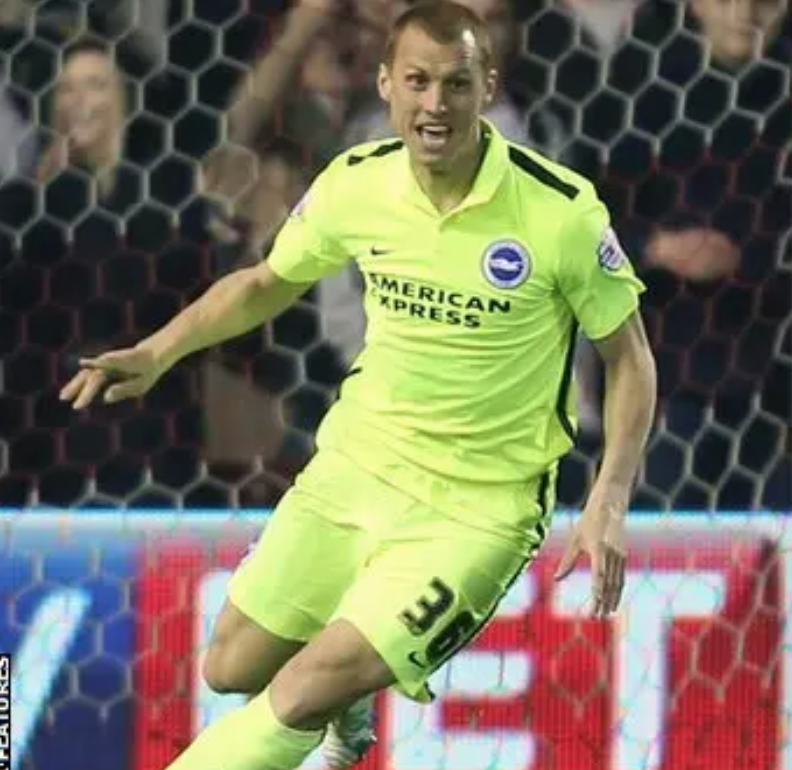







 In parallel lines