Outspoken Scot whose words and tactics divided opinion

MENTION Mark McGhee to supporters of Wolverhampton Wanderers and most are less than complimentary about the Scot who won third tier promotion with Brighton in 2004.

Steering the Seagulls to that 1-0 play-off final win over Bristol City at the Millennium Stadium, Cardiff, (as I covered in my previous blog post about McGhee) emulated his feat of taking Millwall out of the same division three years previously, and certainly helped to repair a reputation sullied by his experience at Wolves.

A play-off winners’ medal at last for Mark McGhee

It also delivered much relief for a manager who’d previously only experienced play-off heartache, seeing Wolves’ hopes of returning to the Premier League dashed by a play-off semi-final defeat to Crystal Palace in 1997 and losing to Birmingham with the Lions at the same stage in 2002.

After cutting his managerial teeth at Reading and Leicester, McGhee succeeded former England boss Graham Taylor at Wolves, appointed by chairman Jonathan Hayward, the son of owner Sir Jack Hayward (the pair subsequently had a big falling out and McGhee was caught in the crossfire).

McGhee’s three years at Molineux weren’t all bad – many supporters said he certainly rated higher than the hated Glenn Hoddle – and he couldn’t be faulted for spotting genuine talent having given Irish striker Robbie Keane his Wolves debut as a 17-year-old away to Norwich. “I always believed he could be special,” he said. “Even at that age he was sensational.”
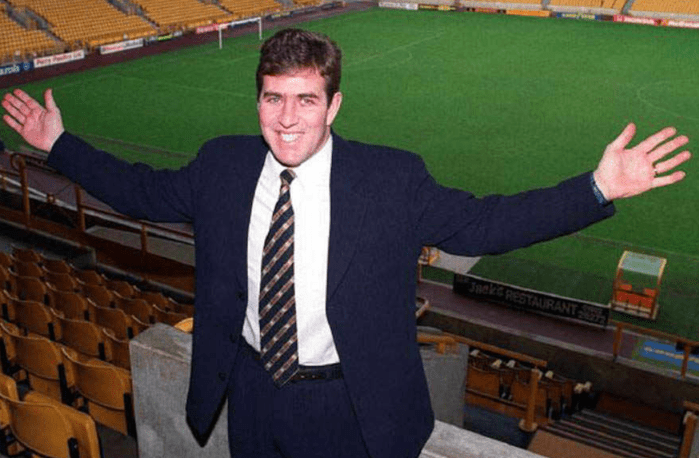
Young Mark McGhee on his arrival at Molineux

But fans of the boys in old gold disliked his managerial style of winding up forthcoming opponents with disparaging remarks. They also felt some of his signings weren’t up to it – a feeling echoed in the spat that emerged between Sir Jack and Jonathan.

“Nice man, Mark, and he had done well enough at Reading and Leicester. But he didn’t buy very well, did he? You have to ask questions about the quality of the players he brought to this club,” Sir Jack told reporter Paul Weaver in January 1999.

“We should never have let Graham Taylor go. Graham is an outstanding football manager. I’m afraid we bowed to pressure from the fans. We didn’t give him enough time. Then we gave McGhee plenty.”

For many, the final straw in the McGhee reign was when he left club legend Steve Bull on the subs bench in favour of much-derided Steve Claridge when Wolves lost the 1998 FA Cup semi-final to Arsenal.

“No turning back after that really, he’d lost it,” said ‘Bend It Like Dennison’ on molineuxmix.co.uk. “A very negative manager, prone to making stupid comments which wound opposition teams up and made us one of the most hated teams in the division,” opined ‘Nashie’ on the same platform.

“I had high hopes for McGhee and sometimes I quite liked the way he wound up the opposition with his arrogance, however, while he could talk the talk, he couldn’t quite walk the walk!” said ‘Bill McCai’.

The Scot was never afraid to speak his mind and even his former Newcastle boss, Bill McGarry (a figure well known to Wolves fans from his days as manager between 1968 and 1976) told him:  ‘Mark, you talk too much. Tone it down a bit.’

“I tried to take his advice, give nothing away in media briefings. Then, somebody would say something interesting and I wasn’t able to stop myself,” McGhee admitted in an interview with theleaguepaper.com.

On molineuxmix.co.uk, ‘stuj4z’ reckoned: “McGhee started to believe his own hype and became a parody of himself. Stupid signings were his downfall because overall I thought his tactics were ok. McGhee wasn’t the devil incarnate and did do some good things for the club.”

‘Florida Wolfey’ maintained: “McGhee was a decent manager and he certainly cared about this football club. He was unfortunate not to get us up in his first season and we never really recovered from that failure. Like all managers he made some good decisions and some decisions he’d rather have made again.”

When the axe fell, McGhee admitted to Nick Townsend of The Independent: “For that first month after I was sacked by Wolves, until I got over the initial shock, I never really opened the door. I became a recluse. I was feeling angry and frustrated.”

Townsend observed that having previously walked out on Reading and Leicester to take the Wolves’ job, “many supporters among his former clubs relished the spectacle of the assured and articulate McGhee being thrown from the steed of his own galloping ambition, his features ground in the dirt”.

“I was 100 per cent justified in leaving Reading after John Madejski gave me permission to talk to Leicester” McGhee told Townsend. “Leaving Filbert Street, a year later, was different. I knew when I walked out of there that it was, in a sense, wrong.

“I knew I’d let their chairman, Martin George, down badly, and the players I’d brought in. People thought, when Wolves dangled the bait, that was me, off and out, no hesitation, no qualms, and that’s where I got my reputation. But it wasn’t like that. It was torture.

“Two minutes before I made the decision to go, I was staying. There was pressure from all kinds of people I respected to go. Against my own conscience, I took the job.”

He added: “I read the papers and I don’t recognise myself. But, obviously, people are thinking that a guy who can up and leave Leicester after a year like that must be one kind of arrogant, callous bastard. All I can do to fix that impression is to go on from here and prove to people that’s not the way I am.”

As it turned out, he feared the football community had turned its back on him when no further managerial opportunity surfaced for nearly two years. It was only a regular punditry slot on Sky Sports that reminded people he was still around.

When he eventually got back in the game as manager of Millwall in September 2000, McGhee garnered a sympathetic ear from The Guardian football writer Roy Collins.

“I don’t think I got a bad deal,” McGhee told Collins. “I think I got exactly what I deserved. The biggest mistake I made was in underestimating the reaction of people when I walked out on Leicester. That is not to say that I regret leaving Leicester but it tarnished my reputation in such a way that Wolves’ fans never really accepted me.

“I was only fulfilling my ambition but I’ve learned that sometimes you have to think twice and maybe it would have been right for me to have said, no matter how much I want to take what I see as a bigger job, I can’t have it.”

McGhee admitted to the reporter he’d had sleepless nights and restless days wondering whether any club would forgive him, so he was grateful for the chance Millwall gave him, admitting: “This is a second chance for me and if I mess it up, I won’t get a third.”

A relieved McGhee told the Evening Standard: “To say I am very pleased to get back into the game is an understatement. I am absolutely ecstatic, but I would not have come back for any job.

“I haven’t been applying for everything that has been going because I felt the opportunity had to be one I was motivated by.

“It did not have to be the biggest club, or in the top league, but I had to really want to do it. I got a gut feeling about some jobs and I had that for Millwall.

“You get a feel for the place and I had an idea what they were about because I am a good pal of their old manager Mick McCarthy.

“In my playing career I was at Newcastle and Celtic. They have demanding, but passionate fans and I know that is the same at Millwall. It is very exciting.”

Millwall chairman Theo Paphitis admitted: “Mark was not always the front runner for the job, but got himself into the position at the interview.

“He said the right things. I believe he was sincere and I am very pleased we have him on board. He is the right person for the job.”

When there was a mutual parting of the ways in October 2003, Paphitis said: “He took over in September 2000 with the brief to get the club into the First Division that season which he duly achieved.

“We then enjoyed a very successful first season at this level, reaching the play-offs the following year. Last season was a frustrating one for the club and whilst expectations were high at the start of the current campaign, we have struggled to live up to them.”

Interestingly, when he was shown the door at Brighton, likewise there was appreciation rather than dismay at what he had brought to the club.

Powering up

“No matter where you stand on the club’s decision to part company with the former Scottish international, you can’t say he didn’t leave us without one or two golden memories, especially during his first season in charge,” the matchday programme reminded readers.

“There are more than a few supporters out there who rate what happened inside the Millennium Stadium that May day in 2004 as their top Albion moment, above Wembley 1991 and – whisper it – even 1983. Why? Well, for once, we actually won on a big stage. But there was more to it than that: thirty thousand fans invading Wales and laying siege to what is generally regarded as one of the finest stadiums in the world.”

The piece reminded supporters that in the higher division, against clubs with hugely superior resources, Albion beat the likes of Leeds United and Sunderland at humble Withdean as well as nicking unlikely wins at Leicester City, West Ham and Sheffield United.

Even in the season (2005-06) when they weren’t able to retain that hard-earned status, they managed a first win in 22 years at Selhurst Park, toppling the old rivals on their own patch with the only goal of the game scored by loanee Paul McShane.

After a fascinating 3-3 draw at Elland Road, home boss Kevin Blackwell observed that McGhee had “the hardest job in football”.

The programme pondered: “One can’t help but wonder what McGhee’s record would have been had the club been playing inside a stadium worthy of the upper echelons of the English game, with some finance to burn and facilities good enough to tempt Championship and Premier League calibre players to Sussex.” Indeed.

Ups and downs of medal-laden Mark McGhee’s career

MARK McGHEE saw highs and lows as Brighton & Hove Albion manager after a medal-laden playing career that took him from his native Scotland to England and also to Germany.

McGhee was in charge when the Seagulls memorably won the 2004 play-off final to gain promotion from the third tier, beating Bristol City at the Millennium Stadium, Cardiff.

Play off final boss

Keeping the Seagulls up the following season was arguably an even greater achievement considering at the time playing home games at the crowd-restricted Withdean Stadium meant the club was at a huge disadvantage compared to most clubs in the division.

With the Amex still a distant dream, relegation came at the end of the 2005-06 season, and it wasn’t long into the following season that Dick Knight wielded the axe on the Glaswegian’s time in charge.

“It was hard to sack Mark, but we had to have a change,” Knight wrote in his autobiography, Mad Man: From the Gutter to the Stars. “Everyone recognised what he had done in taking up and keeping up a team that was not that great, to be honest. Hats off to him, he had done a terrific job. And he is a very intelligent, personable guy.”

Knight took decisive action when part of the crowd became vociferous in wanting McGhee out, and the chairman also felt some of the young players drafted into the team weren’t responding to him.

He was finally toppled over lunch at Topolino’s, and Knight admitted: “It was a difficult decision. There was strong vocal opposition to McGhee, but also a large, less noisy element who were behind him.”

McGhee liked Brighton so much he made it his home despite subsequently taking on a series of other roles the length and breadth of the country.

It’s probably fair to say the Scot has never been afraid to speak his mind, which his former Newcastle boss Bill McGarry mentioned to him. McGhee recounted in an interview with theleaguepaper.com: “I was managing Wolves at the time. He said ‘Mark, you talk too much. Tone it down a bit’. I tried to take his advice, give nothing away in media briefings. Then, somebody would say something interesting and I wasn’t able to stop myself.”

It’s probably what helped him gain a place on the Sky Sports Soccer Saturday panel when he was in between management jobs.

McGhee would most likely look back on some jobs he’d perhaps have been wiser to stay away from, for example taking temporary charge of Eastbourne Borough in 2018, although his enthusiasm was undimmed as he revealed in an interview with thenonleaguefootballpaper.com.

Born in Glasgow on 20 May 1957, his father was an electrical engineer and his mother a fertility consultant at Glasgow Royal Infirmary. McGhee was on the books of Bristol City at the start of his long career but he returned to Scotland and became a part-timer with Greenock Morton while also training to be an architect.

Aforementioned manager McGarry signed him for Newcastle for a £150,000 fee on 30 December 1977 and he made his debut on 2 January 1978.

His face didn’t fit after Arthur Cox took over as boss, but Alex Ferguson took a punt on him in March 1979 and signed him for Aberdeen, and it proved to be one of many shrewd decisions the esteemed Scot would make in his career.

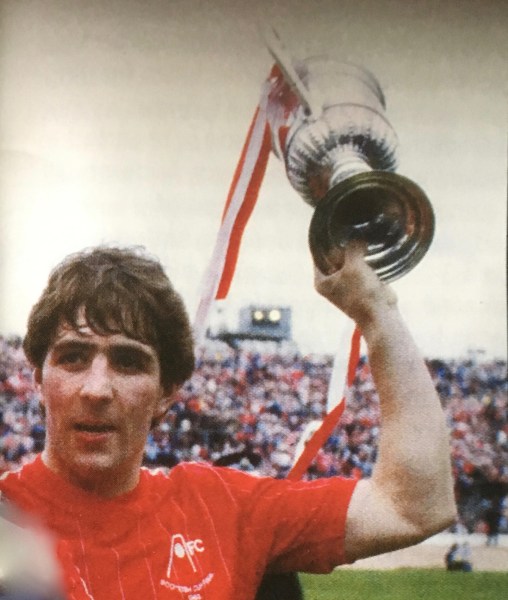
McGhee was named Scottish PFA Players’ Player of the Year in 1982, and the following year was part of the Aberdeen side who beat Real Madrid 2–1 to lift the 1983 European Cup Winners’ Cup in Gothenburg.

mcg cup

He also scored the second goal as Aberdeen defeated Hamburg 2-0 to win the UEFA Super Cup in the same year.

Asked about the best goal he scored, he said: “Probably the winning goal in my last game for Aberdeen.”

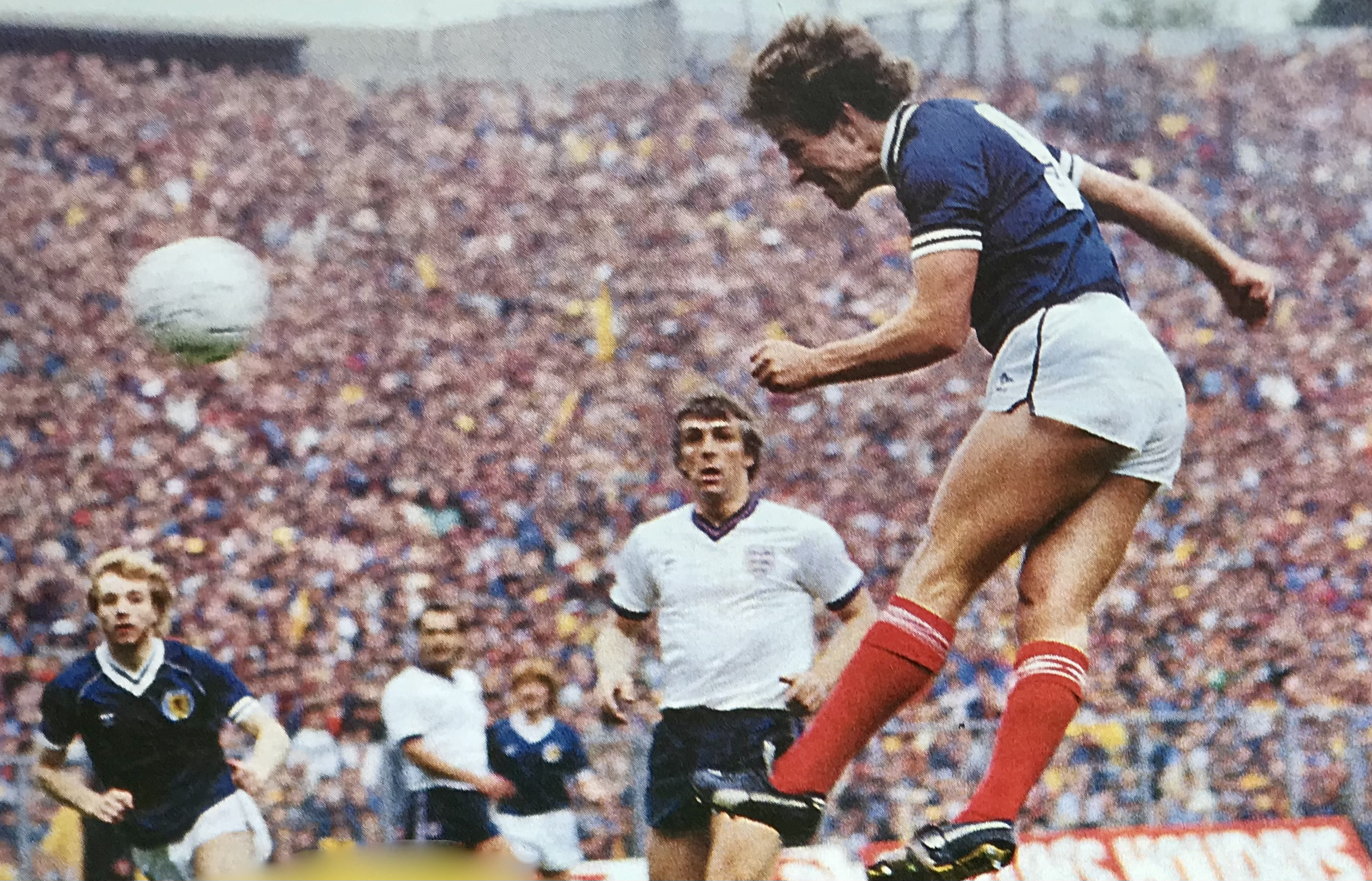
McGhee reckoned his best moment in football came on 26 May 1984 when he scored against England at Hampden Park. He headed in a cross (as pictured) from his great pal Gordon Strachan past Peter Shilton.

McG v Eng

“It put us 1-0 up but Tony Woodcock equalised to make the final score 1-1.”

It was one of four caps he won for his country. Nearly two decades later, in January 2013, Strachan appointed him as his no.2 with the Scottish national side.

M McGhee Old Football PhotosBut back to those playing days, and with two Scottish league titles and three Cup wins behind him, McGhee tried his hand at European football and spent 16 months at Hamburg. The spell was probably more of an education than a success, with injuries limiting his game time.

A £170,000 fee took him back to Scotland, to Celtic, where he had mixed fortunes during four years with the Glasgow giants. He was, though, part of the squad that won a League and Cup double in their centenary season.

After winning another Scottish Cup winners’ medal in 1989, he was on the move again, back to Newcastle.

Now with Jim Smith in charge, Newcastle paid £200,000 to take McGhee back to St James’ Park, where he formed an impressive strike partnership with the legendary Micky Quinn as Toon finished third in the old Division Two.

“We were good friends, but we didn’t blend on the pitch like Toshack and Keegan, Quinn told theleaguepaper.com. “Mark was a free spirit. He’d get the ball and drift left or right and drop deep.

“He’d turn defenders and drag them out of position. He would hold the ball up well for me to get into the box and score goals. He went where he wanted, but it worked.”

football back then McGhee

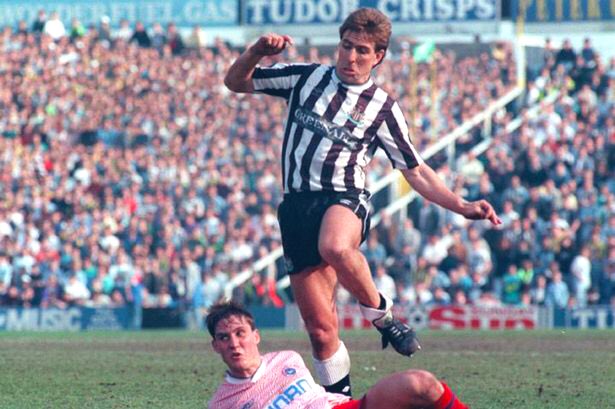
This Football Back Then picture shows McGhee in action for Newcastle against Albion’s Nicky Bissett.

His farewell performance came on 6 April 1991, not long after Ossie Ardiles had taken over as manager, and McGhee departed having scored a total of 36 goals in 115 appearances for the Magpies.

Next stop was Sweden, where he played briefly for IK Brage, but he seized the opportunity to try his hand at management by taking up the role of player-manager at Reading in the summer of 1991.

He’d been recommended for the role by his old boss Ferguson, and, after quitting playing through injury in 1993, he led the Royals to promotion from the third tier the following year.

A struggling Leicester City gave him a chance to manage in the Premier League but he was unable to keep them up and, less than a year after joining, decided to switch to Wolverhampton Wanderers, to succeed Graham Taylor.

Wolves just failed to gain promotion in 1996-97 (they lost in the play-off semi-finals) and were ninth the following campaign. Four months into the 1998-99 season, following a string of poor results, McGhee was fired.

It would be 20 months before he gained his next opportunity, this time at Millwall where he enjoyed initial success, leading them to promotion from the third tier, and then narrowly missing out on another promotion when they lost in the play-off semi-finals to Birmingham City.

McGhee apptWhen he parted company from Millwall in October 2003, he wasn’t out of work long because Brighton needed a replacement for Steve Coppell, who’d been wooed to take over at Reading (pictured above, with chairman Dick Knight, at his unveiling as Albion manager).

Those Albion fans who stuck by the team in the humble surroundings of the Withdean Stadium enjoyed some good moments during McGhee’s time as manager, in particular promotion via the play-off final in 2004.

He certainly found a formula to get the best out of certain players, as Adam Virgo, converted from defender to goalscorer, observed in that theleaguepaper.com article. “Mark is a very good communicator and very experienced,” he said. “He can make you feel ten feet tall. He’s very good at being honest, at analysing your game and telling you what you’re good at.”

After his departure from the Albion, McGhee was out of the game for nine months but got back in at Motherwell, turning them from near relegation candidates to qualifiers for European competition.

The lure of his old club, Aberdeen, proved too strong in the summer of 2009, but his tenure proved to be disastrous – and brief.

He spent the majority of 2012 as manager of Bristol Rovers, where one of the squad he inherited was former Brighton defender-turned-striker, Virgo. The following year, his old pal, Strachan, appointed him as assistant coach to the Scottish national side.

He later combined the role part-time when he returned to Motherwell but there were mixed fortunes second time round, and he left them again in early 2017. Towards the end of that year, he popped up at League Two Barnet, but the arrangement lasted only two months before he was moved to a ‘head of technical’ role, and then dismissed in March 2018.

McGhee was ‘slaughtered’ on Twitter when he took over as interim manager of National South side Eastbourne Borough in the spring of 2019, after being beaten 3-0 by Wealdstone in his first match in charge, his new side reduced to nine men after two players were sent off. Borough won just once in 11 matches.

When Albion under 23s coach Simon Rusk was appointed manager of Vanarama National League side Stockport County in January 2021, McGhee was appointed as one of his assistants.

His final managerial post was at Dundee in February 2022 when he took temporary charge of the Scottish Premiership side until the end of the season (with Rusk as his assistant), but they couldn’t avoid them being relegated, overseeing just one win in 13 matches.

McGhee finally announced his retirement from the game in September 2022 at the age of 65, telling the Sunday Post: “I won’t be pursuing any other managerial vacancies, and nor would I want to be a director of football or a head of recruitment. That’s not what I am – I’m a manager.

“I feel that players now deserve a young manager who can give them the energy I was able to when I started out. They don’t need a 65-year-old with a dodgy ankle.”

Illness put paid to John Piercy’s promising career

A FIVE-YEAR professional football career bookended by 3-1 results against Crewe Alexandra almost certainly wouldn’t have been the path John Piercy would have chosen for himself.

One saw him make a promising debut for Tottenham Hotspur on 13 October 1999, subbed off to a terrific ovation from a 25,000 crowd at White Hart Lane on 74 minutes as they progressed in a League Cup game against the lower league opposition.

The other was a League One defeat for Brighton & Hove Albion at humble Withdean Stadium on 6 November 2004, subbed off ignominiously only 12 minutes into the second half with many in the crowd of 6,163 unaware that the hereditary bowel disease afflicting him was putting paid to his hopes of a football career.

Born in Forest Gate, east London, on 18 September 1979, Spurs first spotted Piercy as a stand-out 12-year-old, talented enough to represent England Schoolboys.

He became a trainee with Spurs at the age of 16 and signed as a professional in July 1998.

It was George Graham who gave him his first team debut for Spurs in that game against Crewe, starting him up front alongside Chris Armstrong in a side that featured future Brighton player and assistant manager Mauricio Taricco in defence.

The Spurs goals were scored by Oyvind Leonhardsen, David Ginola and Tim Sherwood, but spursodyssey.com was full of praise for the young Piercy.

“One young man who will remember this night more than most is 20-year-old debutant John Piercy, who won the home fans’ hearts with two terrific efforts on goal, and an eye-catching performance all round,” it said. They even went as far as to suggest he might be ‘the new Ginola’.

The performance was good enough to earn him a place on the bench for the following Saturday’s Premier League game away to Derby County and he was called into action in the second half to replace Armstrong as Spurs won 1-0.

He made two more league appearances that season and an excellent Spurs archive website said of him: “The solidly built East Londoner had the ability to lead the line and to make chances for his team-mates, by going wide and taking people on.

“Some work was needed on his first touch and his pace, but he was strong, direct and knew where the goal was.  Preferred to play wide on the left of midfield, but was deployed at full back in the reserves to good effect.”

Chris Hughton was the Spurs reserve team manager at the time and said of Piercy: “John is able to adapt well to different roles which is why we’ve played him at full-back in pre-season when we’ve been stretched in those areas.  But I’d say his best position is definitely right or left of midfield.”

On 4 April 1999, he started for England under 20s against the USA in the World Youth Championships in Nigeria, but was subbed off in a game England lost 1-0. His teammates that day included future full international Ashley Cole, and the side was managed by former Albion full-back Chris Ramsey.

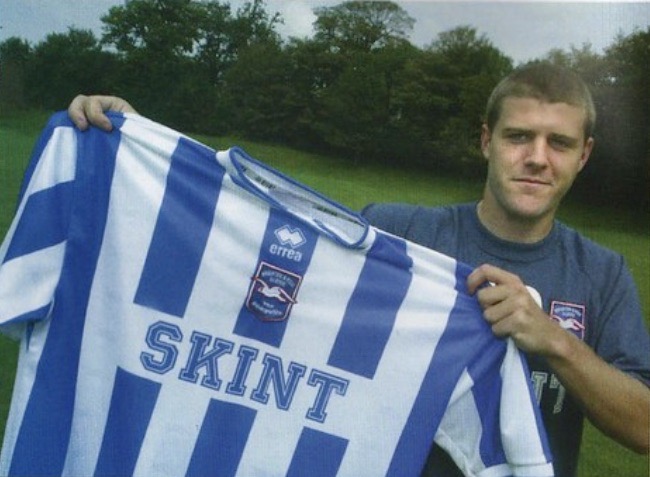
john piercyFrustrated by the lack of first team opportunities at Spurs, Piercy, by then based in Eastbourne, opted to join Brighton in September 2002 during Martin Hinshelwood’s brief reign as manager.

Hinshelwood told the BBC: “He’s a player who can play in a variety of positions. That will give us plenty of options.”

A first team breakthrough at Brighton was slow to happen, however, with Hinshelwood’s successor, Steve Coppell, opting for experience in the ultimately unsuccessful battle to avoid relegation from the second tier. Piercy top-scored for the reserves that season, netting 13 goals from midfield.

However, shortly after Mark McGhee’s appointment, he did get some game time and in December 2003 also registered his first league goal in a 1-0 win at home to Wrexham.

Later the same month, he went one better playing up front in place of the suspended Leon Knight and scored twice in a resounding 4-0 home win over Wycombe Wanderers.

More often than not, though, he was brought on as a substitute rather than starting games. He made just eight league starts and in six of them was subbed off.

His other appearances (16) were all from the bench and that was the role he found himself in at the 2004 play-off final at the Millennium Stadium in Cardiff, although his contribution was certainly effective.

Piercy replaced Nathan Jones in the 77th minute. “He (McGhee) made a change with just over 10 minutes left and we went on to win the game, so no one is going to complain, are they?” Jones told walesonline.co.uk.

Reports also recorded how Brighton threatened Steve Phillips’ goal moments after Piercy replaced Jones, Iwelumo glancing the substitute’s cross wide of the far post.

Sadly for Piercy, while he showed promise on the football pitch, he began to suffer the horribly debilitating effects of colitis, as he described in an interview with the Argus.

He praised the support he got from McGhee and reserve team boss Dean White but it reached a point where it was evident the illness was simply sapping too much energy from him to continue a full-time professional football career.

That defeat at home to Crewe proved to be his last game for the Albion and he announced his retirement aged 25 shortly afterwards.

“He knows his capabilties and I know his capabilities,” said McGhee in a matchday programme article. “He’s a player that could easily cope with the standard of the Championship but this illness has just affected him in a way that he just can’t get fit enough to do himself justice.”

Chairman Dick Knight added: “It is a great shame that such a skilful player, with such tremendous natural ability, has seen his career curtailed in such a cruel way. All at the club are devastated for him to be hanging up his boots at the relatively young age of 25.”

Piercy subsequently regained sufficient fitness to play a season with non-league Eastbourne Borough and then took up a coaching role with the club.

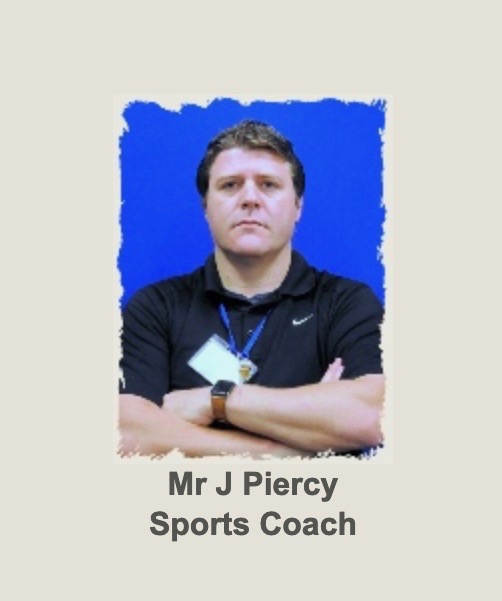
Nowadays he is a sports coach at Ocklynge Junior School in Eastbourne where he teaches youngsters football and PE, and is also a coach at CACL Sports in the town.

Piercy Ocklynge Sch

Oatway took off with Bluebirds and soared with Seagulls

CHARLIE Oatway had not long earned his break in professional football with Cardiff City before he found himself behind bars in Pentonville Prison.

Up on a charge of GBH for his part in a fight, when an Afro-Caribbean friend was racially abused, Oatway didn’t expect to get incarcerated but ended up serving two months of a four-month sentence.

Before he headed off to court in London on a Monday morning, he had told Cardiff’s general manager, the former Leeds and Wales international Terry Yorath (broadcaster Gabby Logan’s dad), to expect him for training on the Tuesday morning!

The story is explained in detail in Tackling Life, the book Oatway published about how he turned his life round to become captain of Brighton and part of three promotion-winning sides.

The tale reveals how imprisonment was just one of the hurdles Oatway had to overcome in a life that’s taken many colourful twists and turns.

It was sadly ironic that his career as a player with Brighton was cut short in a Boxing Day clash against Queens Park Rangers, the team he followed home and away from an early age.

The family lived a stone’s throw from Loftus Road and Charlie – a nickname given to him by an aunt – was named by his Rs-daft dad after the whole of the promotion-winning 1973 QPR team: Anthony, Phillip, David, Terry, Frank, Donald, Stanley, Gerry, Gordon, Steven, James.

He was even starstruck at an Albion Legends event when he saw John Byrne who had been a hero of his during his days playing up front for the Rs alongside Gary Bannister.

Albion reaching the Division 2 play-off final in Cardiff in 2004 was the highlight of Oatway’s career – but a feature in the match programme was angled on the disappointment he had suffered the year before, when he had gone as a spectator with all his family to see QPR lose to Cardiff.

“Everything about the day was perfect apart from the result,” Oatway told reporter Alex Crook. “Being a QPR fan at heart, I felt the pain of the defeat just as much as the other 35,000 fans. But this time I am going up there as a player and not as a fan and I am determined our supporters will not go through what I did last season.”

The youngest of five kids, Oatway grew up in Shepherd’s Bush and even though he started to struggle in school from an early age, he displayed quite a talent for football.

“I knew by the time I was eight that I was as good as any of the eleven-year-olds I was playing with,” he recalls in Tackling Life. He had trials for the West London District schools team and played for Harrow Boys Club and Bedfont Eagles.

Oatway reveals how it was Wally Downes, the former Wimbledon player and later loyal assistant manager to Steve Coppell, who helped to get him noticed, along with his cousin, Terry Oatway.

The young Oatway joined up with Wimbledon in the year they won the FA Cup – 1988 – and played for the youth team, but he was let go at the end of the 1989-90 season because they thought he was too small. He went to Sheffield United on trial but was homesick so he returned to London and joined non-league Yeading on semi-professional terms. Off the field, life was by no means straightforward. “By the age of 19, I had two children with two different mothers,” he said.

After helping to get Yeading promoted in 1993-94, Oatway found a pathway back into the professional game when a community worker (Ritchie Jacobs) on the estate where he lived organised a trial at Cardiff City for him and two pals.

He was the only one of the three invited back and he said: “When Cardiff asked me back for another month, I knew it was the chance I’d been waiting for, and I was going to grab it with both hands.”

Not surprisingly, the two months he spent in Pentonville didn’t greatly help his cause but remarkably he was welcomed back to the club and accepted by the fans. However, in his absence there was a change in team management and ownership and, before long, new team manager Kenny Hibbitt was instructed to send Oatway out on loan to Coleraine in Northern Ireland.

On his return to Cardiff the following season, they had by then been relegated to the Fourth Division. Still he was unable to get back in the first team and he happened to play a reserve team game against Torquay United, who were managed by his old Cardiff boss, Eddie May. May asked if he fancied a move for first team football and, although he only joined just before Christmas in 1995, by the end of the season he had been voted Player of the Year.

When May moved on to become manager of Brentford, he put in a bid for the combative midfielder and took him back to west London to play in the Bees’ third tier side.

In 1998, Oatway had a brief loan spell with Lincoln City but on his return to Griffin Park he came under the managership of Micky Adams for the first time.

Adams had taken over the manager’s chair at Griffin Park but he was sacked when owner Ron Noades thought he could make a better job of running the team. Oatway was sent on a month’s loan to Lincoln, somewhat against his wishes, but on his return to the Bees he forced his way into the side and worked well with coach Ray Lewington.

Adams then took the reins at Brighton and, as the Albion began life back in Brighton & Hove after the two-year exile in Gillingham, Oatway and Bees teammate Paul Watson joined the Seagulls for a combined fee of £30,000.

Adams wanted the pair to join a nucleus of players who’d all played under him previously at Brentford and Fulham.

In an Albion matchday programme profile of Oatway to coincide with the visit of his former club, Torquay, on 2 September 2000, it noted: “Despite getting sent off rather stupidly in one of his earliest games for the Seagulls – he bit a Darlington player’s face – he soon became a great favourite with the Brighton crowd, who hadn’t seen a midfield scrapper like him since Jimmy Case retired.”

oatway prog cover

He went on to be a vital midfield cog in the back-to-back league title winning sides of 2001 and 2002. Although he was in the team that was relegated from the second tier in 2003, he was full of praise for the effort made to avoid the drop. “Steve Coppell was one of the best managers I’ve ever played under because of his attention to detail,” he said. “Steve’s team talks on the day before a game were brilliant.”

When the departed Coppell was replaced by Mark McGhee, Oatway remained a cornerstone of the Albion line-up and described that 2004 play-off final at the Millennium Stadium as “the best day of my career”.

But at one point it was touch and go whether he was going to be able to carry on. In October 2003, he underwent major back surgery to repair a slipped disc and trapped nerve.

He was out for nearly three months and he admitted in an Argus interview: “There was a good chance I wouldn’t play again.”

When the Albion cashed in on captain Danny Cullip in December 2004, selling him to Sheffield United, Oatway took over the skipper’s armband full-time, a role he had previously embraced as a stand-in.

The following season’s Boxing Day clash with QPR at Withdean was only two minutes old when Marcus Bean tackled Oatway from behind and escaped without even a booking.

Oatway was stretchered off and McGhee later told the mirror.co.uk: “Charlie has been a tremendous leader and captain and this is a huge blow. I’m very upset about it.”

Oatway had four different operations to try to fix the ankle injury, but he never recovered sufficiently to return to the required level to play league football.

“I tried to get back to playing again but by the pre-season of 2007 I had to call it a day,” he said.

However, even when he was out injured, Oatway was always a strong influence on the dressing room.

Stand-in skipper Dean Hammond said in an Argus interview in November 2006: “Charlie has been out injured but he has been fantastic for everyone. He comes in, he gets everyone up for it, he’s always laughing and joking. He’s got the enthusiasm and he is still determined, even though he is not playing.

“His personality is fantastic for everyone and I think he deserves a massive pat on the back.”

He also used the time productively, studying how the coaches worked with the youth team players and starting to take his coaching badges. When it was clear he wouldn’t be able to return to play full-time professional football again, he got involved with the Albion in the Community scheme as a community liaison manager.

Rather than give up the game completely, Oatway took the opportunity to become player-coach at Havant and Waterlooville and, in January 2008, he found himself in the national media spotlight when the Blue Square South minnows played away to Liverpool in the fifth round of the FA Cup.

Oatway wasn’t fit to start the game but he got on as a substitute in the 74th minute and later recounted how his former teammate Bobby Zamora fixed it for him to swap shirts with Liverpool’s Yossi Benayoun, who scored a hat-trick in the Reds’ 5-2 win that day.

Then, in 2009-10, Oatway began helping Brighton manager Russell Slade to coach the first team and, after Slade’s departure, continued in the role under Gus Poyet.

When Poyet left the Seagulls to join Sunderland, Oatway went with him and he was also in the dug-out alongside Poyet and his assistant Mauricio Taricco at Chinese Super League team Shanghai Greenland Shenhua, AEK Athens and Seville-based Real Betis.

Pictures: matchday programme; The Argus; Tackling Life (Quick Reads, 2011).