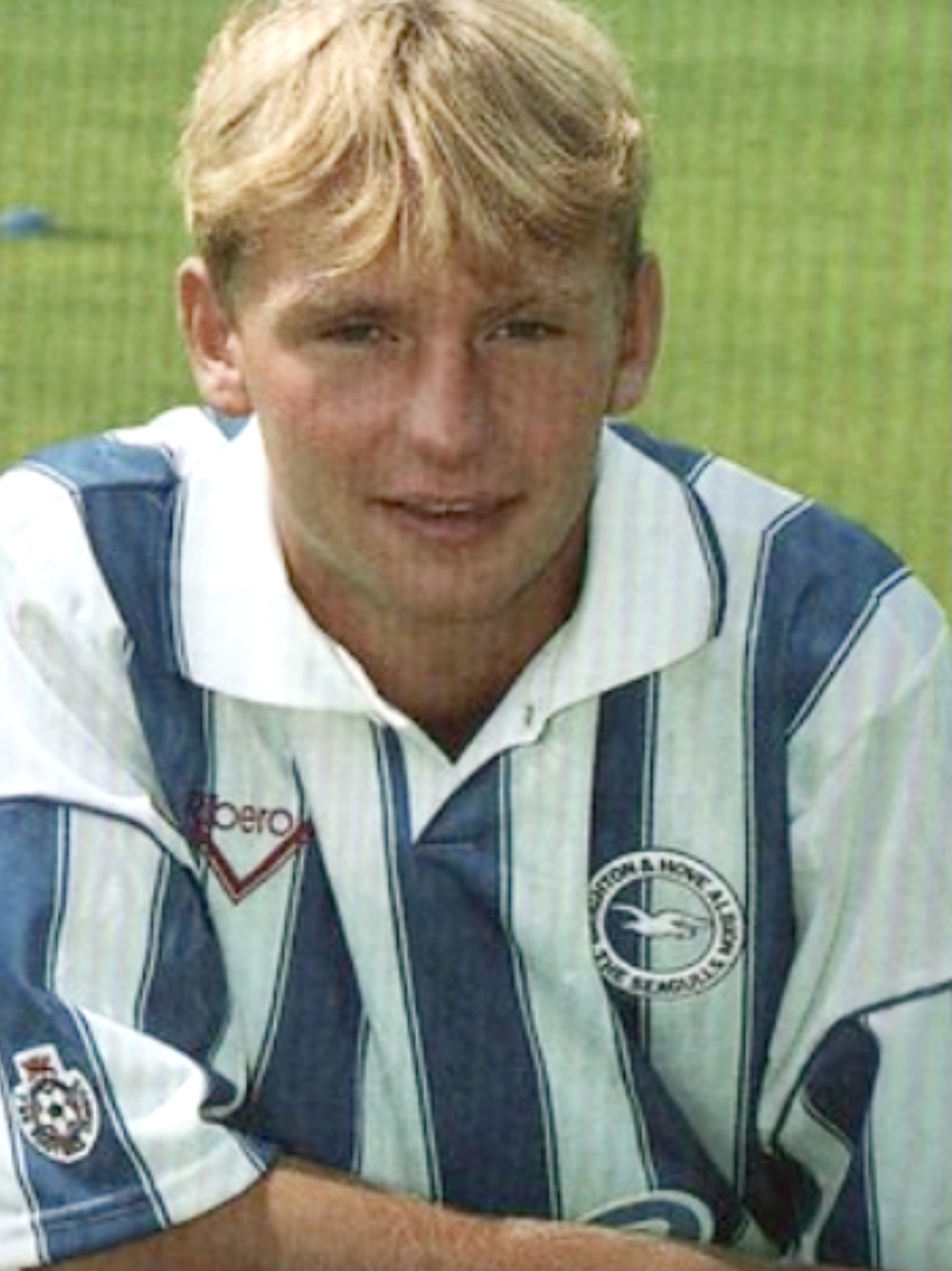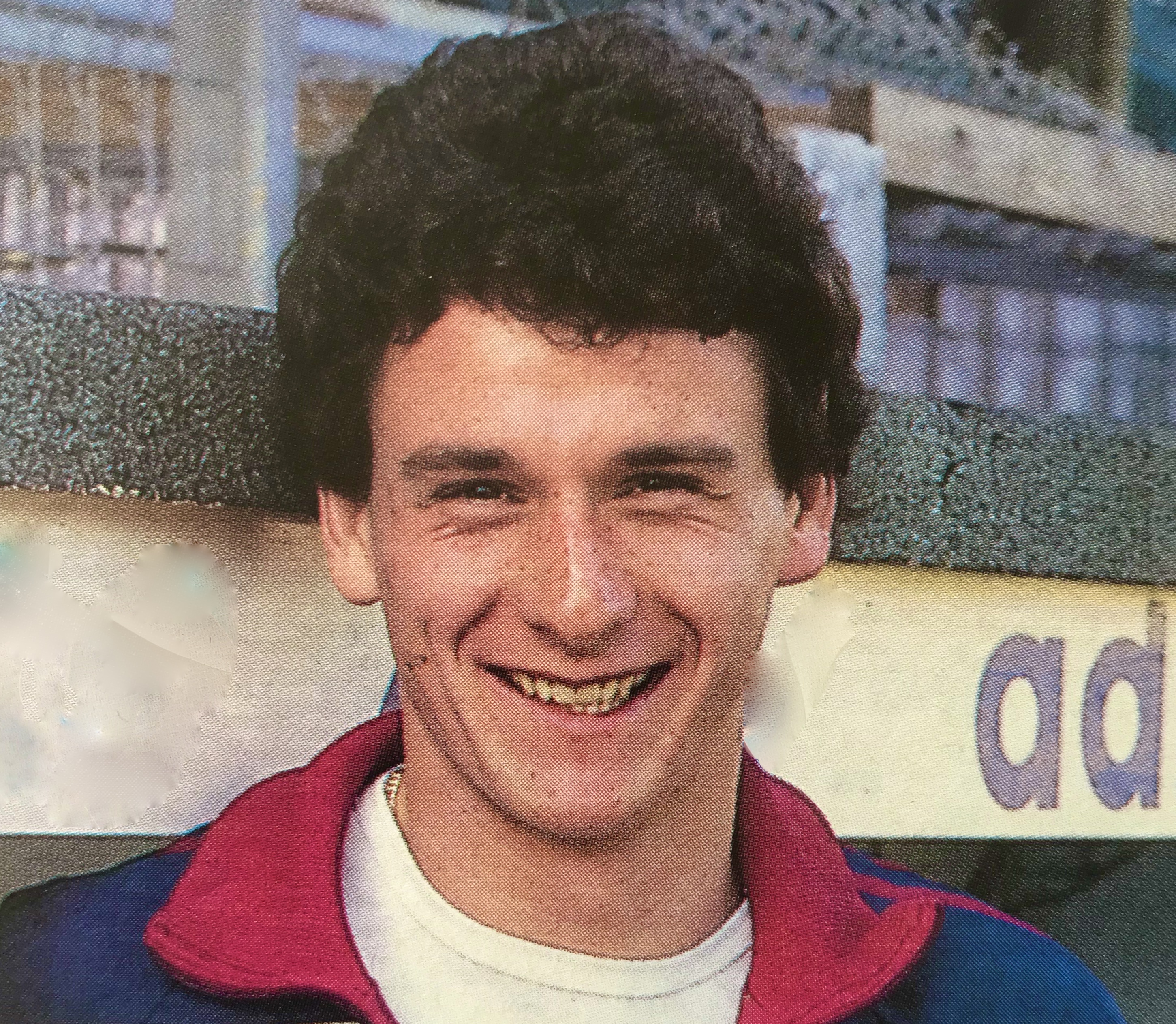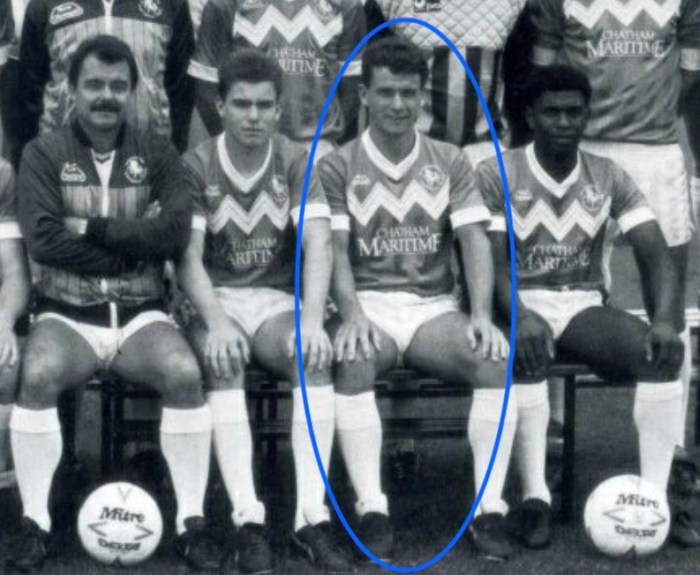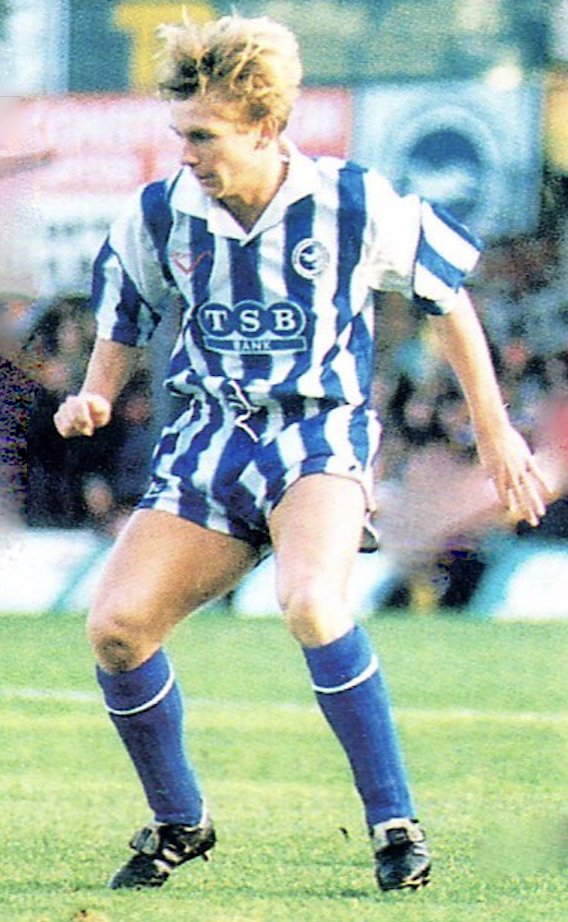
Edwards stole the limelight when Beckham made his debut

THE STORY of Matthew Edwards scoring for Brighton against Manchester United in the same cup match in which David Beckham made his debut has been told many times, and who wouldn’t be proud of that memory.

The history books can’t take it away from him, nor should they. “Scoring that goal against Manchester United was certainly the highspot of my career. Everyone wanted to talk about it and I was mentioned in all the papers and (I was) interviewed on television,” he said.

While that second round League Cup game on 23 September 1992 stands out, Edwards actually played 78 matches for the Albion after being released by Tottenham Hotspur, where his only first team outings were in testimonials or friendlies.

Albion were a very different proposition in September 1992, just beginning to reacquaint themselves to life back in the third tier of English football barely 16 months after having come close to returning to the top flight.

Big name players had been sold to try to balance the books and manager Barry Lloyd had to turn to free transfers, loanees and young hopefuls to put out a side.

Edwards was in that category and he probably only played in that United match because the respective parent clubs didn’t want loan forwards Steve Cotterill and Paul Moulden to be cup tied. He played alongside Scot Andy Kennedy, a recent arrival from Watford.

The youngster seized his chance and made a name for himself by heading home an Ian Chapman cross to cancel out Danny Wallace’s 35th-minute opener for the illustrious visitors.

Beckham had been sent on for his United bow in place of Andrei Kanchelskis (serenaded by a familiar North Stand chant of ‘Who the f****** h*** are you?’) but the game finished 1-1 at the Goldstone Ground, setting things up nicely for the second leg at Old Trafford (which United won 1-0).

Edwards once again earned a place in the headlines four months later when he scored the only goal of the game in a FA Cup third round win over south coast rivals Portsmouth, a side playing in the division above the Seagulls, and who had reached the previous season’s semi-finals.

Born in Hammersmith on 15 June 1971, the family lived in Brighton for a time and the young Edwards, who first started kicking a football around the age of six, played for local side Saltdean Tigers. At 13, he was on the Albion’s books under the guidance of Colin Woffinden, a former player who became youth coach.

But the family relocated to Surrey and it was while playing schoolboy football for Elmbridge Borough that he was spotted by Tottenham. In an extended interview with Lennon Branagan, Edwards explained how he got his big break courtesy of Fred Callaghan, Fulham’s left-back for 10 years who managed Brentford in the 1980s.

His son was playing in the same side as Edwards and Callaghan recommended Edwards to his friend Ted Buxton, a renowned coach and scout, who was working for Spurs at the time.

“I didn’t know that Ted had come along to watch me and then after one of the games they said: ‘Do you want to come to Spurs?’” Edwards recounted.

Young Spur Matthew Edwards

He signed associate schoolboy forms and while at Hinchley Wood Secondary School, Esher, travelled up to White Hart Lane on a Tuesday and Thursday night for training on an indoor pitch next to the main reception area.

On leaving school, he was taken on as an apprentice at Spurs and worked through his YTS under the auspices of youth team manager Keith Blunt and coach (and Blunt’s successor) Keith Waldon.

At 17, he signed on as a professional and he was on the books for three and a half years.

“We were quite successful in the reserves and I think that we used to win the league pretty much every season,” Edwards recalled.

It was tours abroad that he remembered most fondly from his time at Spurs, playing in Hawaii and Japan, and he also joined up with the first team squad for tours to Norway, Ireland and Italy.

A rare first team opportunity came in Billy Bonds’ testimonial at West Ham on 12 November 1990.

“I was young and had long blond hair and I can remember getting absolutely slaughtered by the West Ham fans that day,” he said.

In his final year, he went on loan to Reading, where he played eight games before returning to Spurs, and later the same season went to Peterborough on a similar arrangement, although he only played in one cup match for Posh.

He sensed his days at Spurs were drawing to a close, telling an Albion matchday programme: “I knew it was time for me to go when (manager) Peter Shreeves forgot my name!”

He said: “I had three months on loan at Peterborough but didn’t get a league game. Martin Hinshelwood rang me up in May and asked if I would be interested in coming to Brighton.”

Edwards marked by ex-teammate Justin Edinburgh

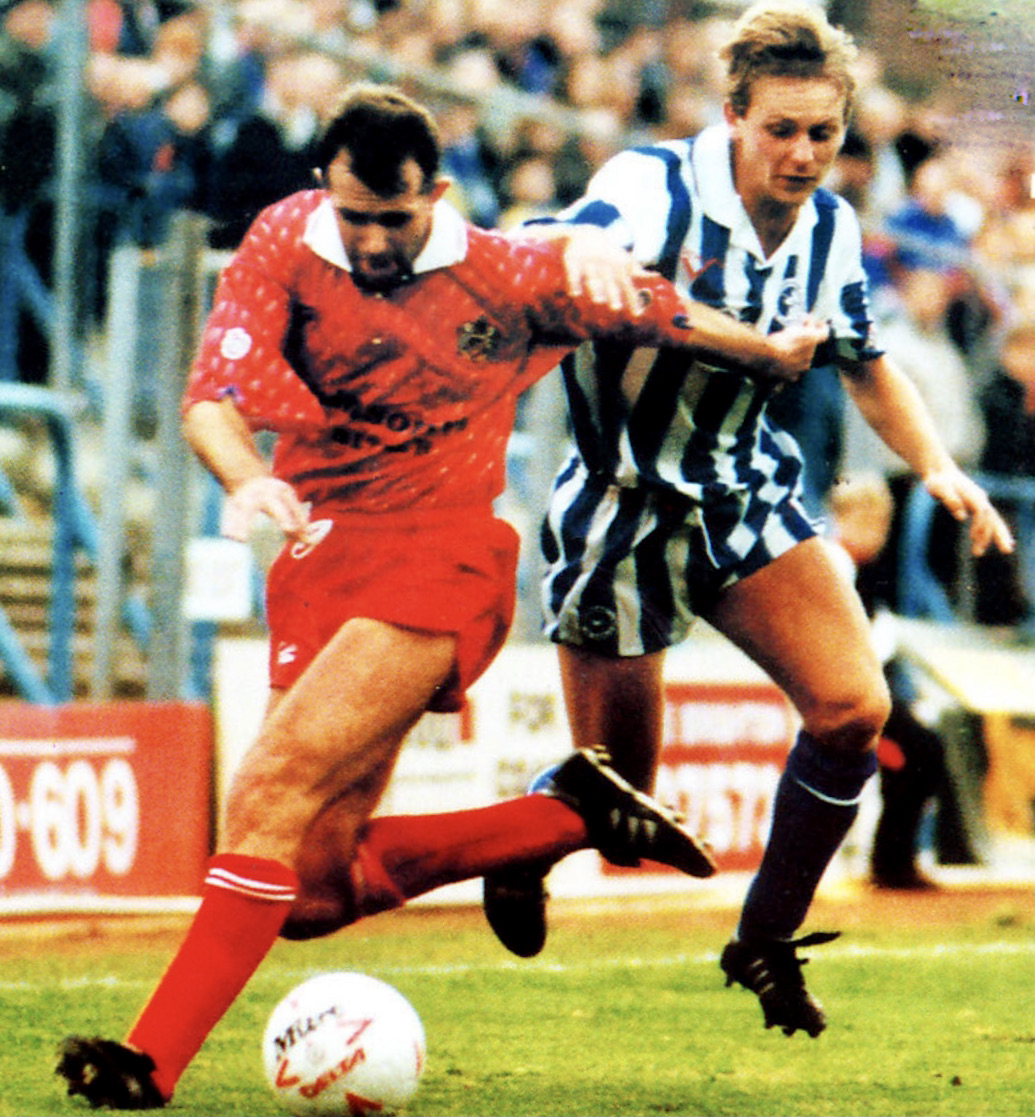
One of the first matches he played for the Seagulls was in a pre-season friendly against his former club, a 1-1 draw at the Goldstone on 29 July 1992. In a shocking excuse for a programme for the visit of Croatian side FC Inker Zapresic, a barely recognisable picture of the new signing was included. Thankfully a more professional programme appeared for the opening home league game, against Bolton Wanderers, and Edwards was pictured (left) in action up against his former teammate Justin Edinburgh

After Cotterill and Moulden had returned to their parent clubs because Albion couldn’t afford to make their moves permanent, Edwards started to forge a fledgling forward partnership with Kennedy. But Kurt Nogan took over and his prolific goalscoring saw Edwards have more of a peripheral role, although he ended the season taking over from soon-to-depart Clive Walker on the left wing.

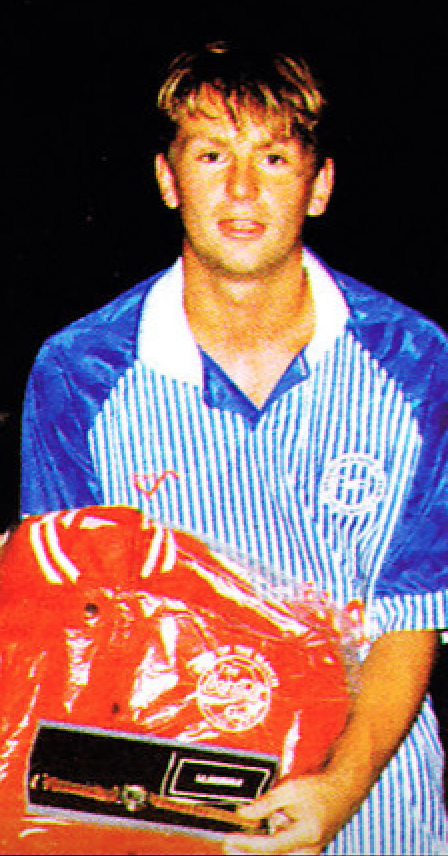
Edwards was in the starting line-up for the first half of the 1993-94 season, won a man-of-the-match award for his performance against Gillingham in the League Cup and scored in a 2-2 draw at home to Huddersfield.

He was the programme cover boy for the Exeter City home game on 2 October (0-0) but, with Albion dangerously close to the drop zone, Liam Brady took over from Lloyd and it soon became quite a different picture for the former Spurs youngster.
He played in the first seven games under the new boss, and scored in a 3-3 FA Cup tie v Bournemouth, but Brady had his own ideas and started looking elsewhere for solutions.

“Me and him didn’t really see eye to eye, or he didn’t particularly fancy me as a player,” Edwards told Branagan.

Although Edwards was a sub three times in March, his appearance off the bench in a home 1-1 draw with Burnley was his last involvement with the first team.

A regular in the reserves in the latter part of the season, at the end of it he was released and joined Conference side Kettering where he had barely got his shorts dirty before suffering a cruciate ligament injury.

“That that was the start of the end of my career as such,” he confessed. “I had a year out of the game.”

On his return to fitness, he had two good seasons for Walton & Hersham, and then Enfield. “My knees just kept on going for me,” he recounted. Over the course of another couple of years, he appeared for Carshalton Athletic, Sutton United, Molesey, Yeading, Bognor and Egham.

But he said: “My knees just weren’t up to playing football, so I had to call it a day and that was the end of the career.”

Interviewed for an Albion matchday programme article in 2019, he told journalist Spencer Vignes he had developed a career in computer software sales and had been a visitor to the Amex on behalf of a ticketing company that worked with the club.

He had subsequently moved on to providing similar expertise for visitor attractions such as zoos, museums, aquaria and cathedrals.

Reflecting on his all too brief career, he said: “I suppose I’m lucky in that I was in the right place at the right time to play for the Albion at the Goldstone, rather than Withdean. Saltdean Tigers to Spurs to Brighton; there can’t have been many people who have done that!”
Putney printer Pearce went to Wembley with the Albion

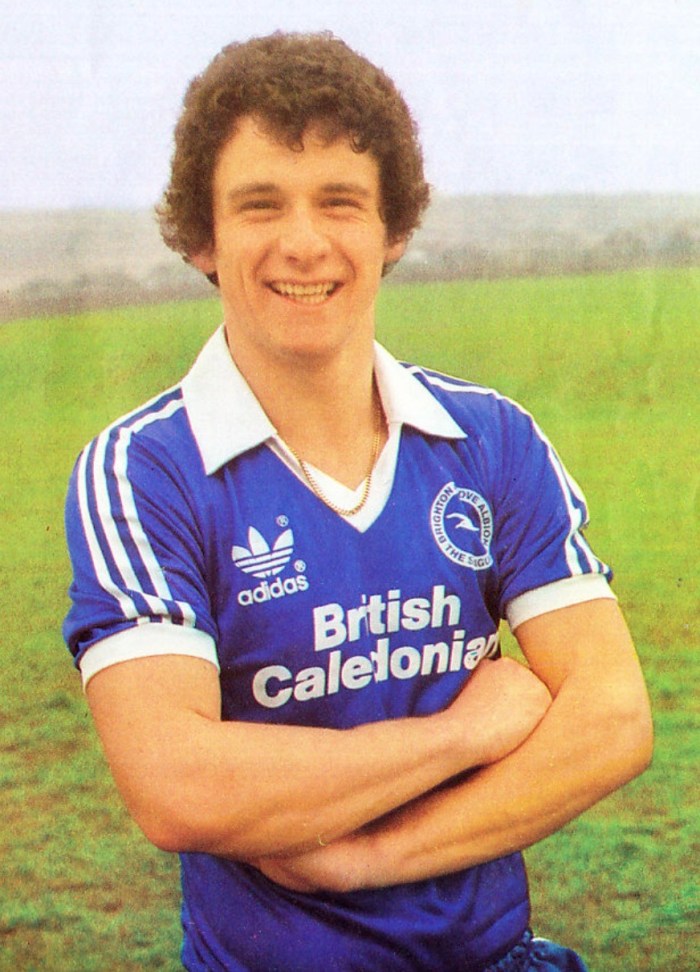
HE took a circuitous route back to his hometown club but full-back Graham Pearce eventually made it to Brentford’s first team after Brighton had resurrected his career and given him a chance to play at the top level of the English game.

Pearce was first on Brentford’s books as a teenager between 1971 and 1976, but he didn’t make it as a pro with the Bees and, after also being turned down by QPR, he went non-league, initially with Hillingdon Borough for three years and then Barnet.

When Pearce lined up for Barnet in a FA Cup third round tie on 2 January 1982, it must have been beyond his wildest dreams to imagine just over a year later he’d be playing in that competition’s final at Wembley.

But the steady, assured performances 21-year-old Pearce put in as Alliance Premier League Barnet held Brighton 0-0 before losing 3-1 in a replay at the Goldstone impressed the watching Albion boss Mike Bailey sufficiently to sign him up for the Seagulls.

Although he was itching to join, he had to serve a week’s notice with the Putney printer where he had a full-time job because they weren’t in a position to release him sooner.

Just over a year later, when injuries depleted Jimmy Melia’s cup hopefuls the closer they got to a dream Wembley date, Pearce seized his chance to put his own name in print. Circumstances fell just right for him, but it might not have happened if the experienced left-back Sammy Nelson hadn’t been sidelined.

A packed East Terrace at the Goldstone the backdrop as Pearce faces Newcastle in the FA Cup

Pearce played in the third round 1-1 Goldstone draw with Newcastle – one of six games he played in January 1983 – but he missed the 4-0 demolition of Manchester City in the fourth round and didn’t feature again until 22 March when he was sub for the 2-2 home draw with Liverpool.

Because versatile Gary Stevens was more than capable of playing alongside Steve Foster, normal centre back partner Steve Gatting was preferred at left-back for 14 matches from the end of January.

But when right-back Chris Ramsey was suspended for the semi-final against Sheffield Wednesday, Stevens took his spot, Gatting returned to the middle and Pearce slotted in at left-back.

Because Foster was suspended for the final against Man Utd, Stevens paired up with Gatting in the middle and Pearce retained his place.

Even when Foster returned for the replay, Pearce kept his place because Ramsey had been crocked in the first match and wasn’t fit to play (Melia making the mistake of putting left-footed Gatting at right-back instead of Stevens).

In a pre-match interview with the Daily Mail, Pearce said: “There’s money to be made from appearing at Wembley but the thrill for me is just being there – a player from non-League who thought his chance of playing league football had gone.”

Pearce retained the no.3 shirt at the start of the 1983-84 season back in the second tier but, when Chris Cattlin took over from Melia, he made it clear he wanted someone with more experience in that position.

In his matchday programme notes he wrote: “With Kieran (O’Regan), Eric Young and Graham Pearce all playing together, we have three players who haven’t been long out of non-League football.

“Normally these players would have been blooded slowly into the side, instead of being plunged in the deep end. They have done well and shown the right attitude, but when we play against aggressive sides away from home, some of their inexperience has been exposed.”

Until a suitable replacement could be found, Pearce remained in the side and even poked home his first Albion goal in a 4-3 win away to Cambridge United on 29 October 1983.

But four weeks later, after a 2-2 draw at home to Shrewsbury Town, Cattlin was typically forthright in his next programme notes, declaring: “I was unhappy with our defence and our failings in this department cost us the game.”

Pearce and fellow full-back Ramsey were promptly dropped; the left-back berth going to new signing Chris Hutchings from Chelsea.

Cattlin had high praise for his new recruit as he said: “Chris Hutchings is an enthusiastic, strong and determined defender and has a lot to offer, he’s also a fine footballer.”

After 18 consecutive games, Pearce found himself out of the side for the rest of the season.

It’s interesting to note that the reserve side for the 1 May 1984 fixture at home to Southampton featured five players (Pearce, Ramsey, Gary Howlett, Gerry Ryan and Neil Smillie) who’d been in the FA Cup Final squad a year earlier.

The new season was almost three months’ old before Pearce was seen in the first team again, and, ironically, the opponent was once again Shrewsbury.

The game at the Goldstone finished a goalless draw and, with Hutchings having been switched to right-back, Pearce got a run in the side extending to 19 matches.

Unluckily for him, he was then left out of the side in favour of Martin Keown, who Cattlin managed to bring in on loan from Arsenal, and the future England international quickly proved his calibre.

Pearce made one further appearance, in a 2-1 defeat at Middlesbrough, before the end of the season but in the 1985-86 season he finally cemented his place in the side and played a total of 41 matches.

Three days after Christmas 1985, he scored a rare goal as the Seagulls beat Leeds 3-2 at Elland Road. Ian Baird – later to play for the Albion in the old Fourth Division – missed a penalty but scored one of Leeds’ goals and Pearce clinched the winner on a pitch rutted by a rugby league game played on it only two days earlier.

The matchday programme described the goal thus: “Pearce played a one-two with (Steve) Jacobs and found himself with only Mervyn Day to beat and Leeds screaming for offside. The trusty left foot of the Londoner lobbed goalwards, Day was stranded, and Pearce had scored his first goal in 26 months to give Albion another three valuable points.”

Not such a memorable game came in a 3-0 defeat away to Norwich City on 5 April 1986. The full-back went into the referee’s notebook for a foul on future Albion winger Mark Barham, who was substituted shortly afterwards. Albion had a great chance to pull a goal back when Pearce was through one-on-one with Chris Woods, but the England ‘keeper saved his effort comfortably. Then, eight minutes from time, Pearce fouled Wayne Biggins in the penalty area and Welsh international David Williams buried City’s third from the penalty spot.

Pearce played in Albion’s final game of the season, a 2-0 defeat at Hull City under George Petchey, following Cattlin’s sacking, and it turned out to be his last match in a Brighton shirt.

The returning Alan Mullery explained in his programme notes for the opening game of the new season that he released Jacobs and Pearce because “I felt we had too many defenders”.

Pearce switched to Third Division Gillingham under Keith Peacock and played a total of 48 matches as the Gills narrowly missed out on promotion when losing a play-off final replay against Lou Macari’s Swindon Town in 1987.

Following a disappointing second season with the Gills, when they finished mid-table, Pearce returned to hometown club Brentford where he played 14 times (+ 8 as sub) in Steve Perryman’s 1988-89 side. One of his teammates was fellow former Albion cup star Smillie.

Pearce joined up with Peacock again for Maidstone United’s debut season (1989-90) in the Fourth Division, which culminated in a play-off semi-final defeat at the hands of a Cambridge United side featuring Dion Dublin up front.

The following season, under Phil Holder, Pearce was back at Brentford as first team and reserve coach. He subsequently had spells as player-manager with Isthmian League clubs Enfield and Molesey. He later became a PE teacher at Homefield Preparatory School in Sutton.

Born in Hammersmith on 8 July 1959, Pearce was one of seven children (five boys, two girls) and attended Grove Park Primary School, where he was captain of their under-9 football side. He went on to play for the Middlesex County side and Middlesex Wanderers before his stop-start professional career began.

• Pictures from my scrapbook and matchday programmes.