Brighton briefly on the trail of the ‘loansome’ Sam Vokes

‘LOANSOME’ Sam Vokes joined Brighton temporarily on the eve of transfer deadline day in January 2012.

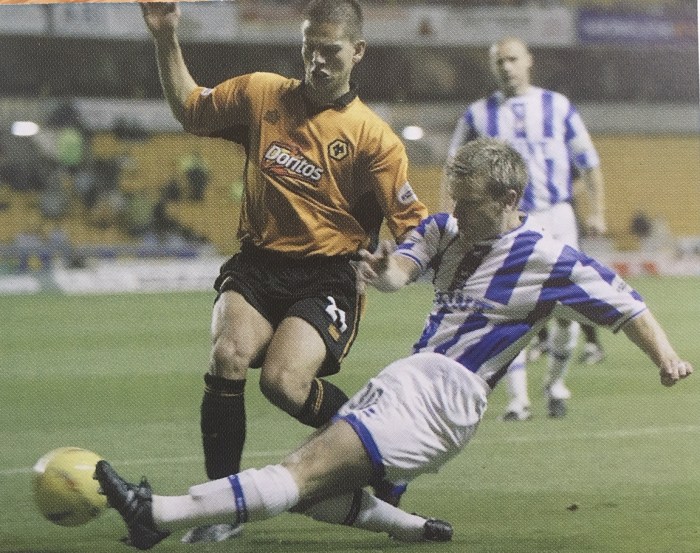
He was 22 at the time and had already had five loan spells away from Molineux since joining Wolverhampton Wanderers in the summer of 2008. Vokes told BBC Sussex: “I need to settle down in my career and it’s a fantastic chance for me to come here and play some football.

“It’s a matter of playing games and, as a striker, scoring goals.”

Vokes had been troubled by injury and had found it difficult to establish himself in the Wolves side. The season before, he had been out on loan at Bristol City, Sheffield United and Norwich, and earlier in the 2011-12 season had scored two goals in nine appearances on loan at Burnley.

Eddie Howe, who’d managed Vokes during his first spell at Bournemouth, had taken him to Turf Moor to partner Jay Rodriguez. But when his deal with Burnley expired in mid-January, Albion boss Gus Poyet stepped in and persuaded him to join the Seagulls.

Vokes was invited to the Amex to watch the side’s FA Cup fourth round tie against Newcastle and, two days after the 1-0 win, put pen to the loan deal.

7188430“I don’t want to sit around – I love playing,” said Vokes. “Brighton have a great way of playing football that is different to a lot of teams in the Championship.”

The young striker told the Albion matchday programme: “I’m a southern boy. I know the area well, and I know what football means to people down here.

“It’s been difficult for me to settle anywhere, moving from place to place on loan, but now I just want to play football. I love the game. I need to play, it’s all I want to do.

“I would like to stay and if all goes well we will see what happens in the summer, but my main aim at the moment is to start playing football again and scoring goals.”

Poyet told the media: “Sam was one of the players we’ve been following for a long time but it’s been difficult to get him.

“The idea was to bring someone who will give us that presence and strength in the air that we don’t have.

“We’ve got the time to explain how we play, and what he needs to do for us. The quicker he adapts, the easier for us. I’m delighted to have him and I hope it works for him.

“He’s been trying to find that place that he can stay for a few years.”

As it turned out, Vokes struggled to dislodge incumbent strikers Ashley Barnes and Craig Mackail-Smith, and he made just seven starts plus five substitute appearances.

SV- BHA stripes

Although he scored on his full home debut in a 2-2 draw v Millwall, he only got two more goals, a last-minute equaliser in another 2-2 draw, at home to Cardiff City, and Albion’s lone strike in a 1-1 draw away to Nottingham Forest.

In July 2012, it was reported Wolves were demanding £500,000 for the player’s signature on a permanent basis, and that Brighton and Burnley were both keen to sign him.

Vokes burnley

Howe had always been keen to get the player back to Burnley and, although officially undisclosed, it’s believed a £350,000 fee took him to Turf Moor where he finally settled down and, over the next seven years, scored 62 goals in 258 appearances.

Born in Southampton on 21 October 1989, Vokes was brought up in Lymington and was a Southampton fan at an early age. He even had a trial with them when he was just 10 but wasn’t taken on.

It was when he was playing football for local sides in the New Forest that he was spotted by Bournemouth and joined them in 2005. He was only 17 when he made his first team debut in December 2006 (in a 2-0 win over Nottingham Forest) and although he scored 12 goals in the 2007-08 season, the Cherries were relegated from League One.

Vokes WolvesWolves stepped in to sign him that May and he came off the bench in the opening game of the following season to score an equaliser in a 2-2 draw at Plymouth Argyle. However, Chris Iwelumo and Sylvan Ebanks-Blake were the main men scoring goals as Wolves won the Championship that year, and Vokes’ involvement was mainly off the bench.

With his parent club in the Premier League, Vokes was loaned out to League One Leeds United on a three-month deal, although he only scored once in eight games. One of those matches was against the Albion at Withdean and Vokes recalled picking up his first footballing scar when an Adam El-Abd elbow caught him in the face.

Once Vokes finally settled down at Burnley after his various loan moves, it can’t have helped his cause when the man who signed him quit Turf Moor to return to Bournemouth.

Indeed, when Sean Dyche replaced Howe, his go-to centre forward at first was Charlie Austin, but when Austin was sold Vokes got more of a chance to show his worth alongside Danny Ings.

The partnership that began to evolve surprised Burnley fans who’d wondered whether Vokes was only ever destined to be a bit-part player.

“Everyone was concerned to be honest,” said Tony Scholes on uptheclarets.com. “We’d seen some potential in Ings but there wasn’t much confidence that Vokes could become a regular, goalscoring striker at Championship level.
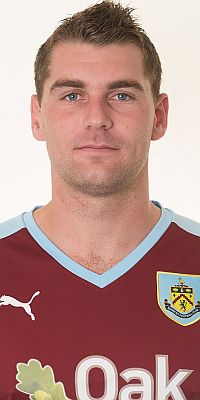
Burnley Football Club_1st Team head Shots_30/7/15He went on: “Our shortage of strikers was highlighted by the fact that he played the full 90 minutes in all of the first 26 league games that season, but he wasn’t just filling in. He was turning in some outstanding performances, linking up really well with Ings and both were scoring goals aplenty.”

Unfortunately, a cruciate knee injury sidelined him for a lengthy spell and Burnley bought Ashley Barnes from Brighton as they sought to bolster their forward options.

A fit Vokes eventually reclaimed his place and formed a useful partnership with big money signing Andre Gray when Barnes himself was also hit by a cruciate injury.

In the early part of last season, Vokes often found himself on the bench, with Barnes and Chris Wood starting ahead of him, and, in January, he decided to drop back down to the Championship, joining Nathan Jones’ new regime at Stoke City, with former England international Peter Crouch going in the opposite direction.

As is often the way these days, the fee was ‘undisclosed’ but was rumoured to be in the order of £7m, and Stoke offered Vokes a three-and-a-half-year contract.

His popularity at Burnley was reflected in a thoughtful parting message thanking the club and the Clarets fans, in which he said: “You made the club a ‘home’ for myself and all my family and for that I’m eternally grateful.”

He added: “It’s been an incredible journey that we’ve been on over the past seven years, with promotions, relegation, survival and even European football through the Europa League.

“There have been so many highlights and every step along the way has been a joy, but now I am looking forward to a new challenge.”

Dyche, meanwhile, told the Stoke Sentinel: “Sam has been an absolutely fantastic servant, not just as a player but as a person.

“There was a bit of frustration that he hasn’t played as much as he’d like and this presents a fresh challenge, so, with all that factored in, it became a win-win deal.

“We feel we’ve got a good deal financially for the business and Sam has got a fresh chance somewhere different.”

Since July 2021, Vokes has been leading the line for League One Wycombe Wanderers.

Vokes Wales

Vokes may have been born and brought up in England but, thanks to having a grandfather born in Colwyn Bay, he became eligible to play for Wales and has earned more than 60 caps since making his debut in 2008, including their most recent game against Belarus.

A stand-out moment for his adopted country came during the Euro 2016 tournament when he came on as a substitute and (pictured above) sealed Wales’ 3-1 win over Belgium with an 85th-minute goal to reach the semi-finals.

  • Pictures from various online sources.

Ice man Ivar slotted in well to Coppell’s relegation battlers

VERSATILE ICELAND international Ivar Ingimarsson was one of the first players Steve Coppell turned to when manager at three different clubs.

The combative defender or midfield player originally played for Coppell at Brentford and, after the former Palace boss took charge of the Seagulls, Ingimarsson was brought in on loan from Wolverhampton Wanderers.

Later, when he managed Reading, Ingimarsson joined Coppell’s new regime at the Madejeski Stadium, and went on to become a legendary part of their rise to the elite.

Ingimarsson arrived at the Withdean Stadium in February 2003 making his Albion debut in a 1-0 away win at Bradford City on 15 February. He took over from Robbie Pethick and kept the no.20 shirt through to the end of the season.

Ivar action

In an interview with Brian Owen of The Argus in 2016, he said it was one of his best times in English football, and described how Coppell set up teams in a way players could understand.

“That is what Steve Coppell did there – and with Reading,” he said. “Brighton was up there as one of the best times. I loved the city and the atmosphere and the buildings and culture.

“I think if we had played like that for the whole season, we would have been well up the table. That had a lot to do with Steve Coppell.”

Born in the Icelandic capital Reykjavik on 20 August 1977, Ingimarsson was raised in the tiny village of Stöðvarfjörður in the east of the country and after taking up football locally he went on to play for Valur between 1995 and 1997, then moved on to IBV, a side which won the double of Icelandic Premier League and Icelandic Cup in 1998.

He played for Iceland’s under 17 international side 16 times in the 1993-94 season, represented the under 19s 11 times in 1995-96, move up to the under 21s and played 14 times between 1996 and 1999 and then over nine years played for the full international side 30 times.

Eyeing a move to England in 1999, Ingimarsson initially went on loan to Torquay United in October that year but after only four appearances his parent club did a permanent deal with Brentford which saw him sign for £150,000.

Ingimarsson spent nearly three years with the Bees, making 113 appearances, and was player of the year in the 2001-02 season which culminated in the side losing the Second Division play-off final to Stoke City.

It seems financial pressure forced Brentford to release the player on a free transfer and Wolves boss Dave Jones snapped him up and took him to Molineux.

S Rodger v Ivor Ingimarsson“I’m really looking forward to playing for Wolves,” Ingimarsson (pictured above being tackled by Albion’s Simon Rodger) told the club’s official website. “I was impressed with what Dave Jones had to say to me and although I knew other clubs were interested in me I knew this was the place to be.

“It’s a big club with big ambitions and I want to be a part of it. People say that Wolves should be in the Premier League and everyone seems determined to put that right this year.”

However, his opportunities at Wolves were limited and he made just 13 appearances for them, one of which included a 1-1 draw at home to Brighton which was Coppell’s fourth game in charge. Three months later, Coppell took the opportunity to take Ingimarsson to Brighton to try to bolster the club’s efforts to stay in the second tier after a disastrous start under Martin Hinshelwood.

Ingimarsson initially joined for a month but ended up staying to the end of the season, making 15 appearances as Coppell’s side fought a valiant but ultimately unsuccessful fight to stay in the division.

ivar ingimarssonOn signing him, Coppell told bbc.co.uk: “He’s a terrific athlete. He will fit in with the players we have and that’s an important ingredient in anyone coming to this club.
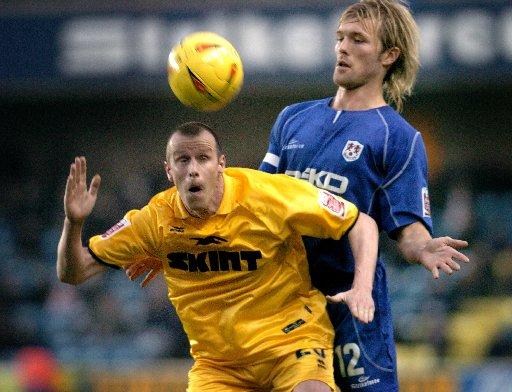
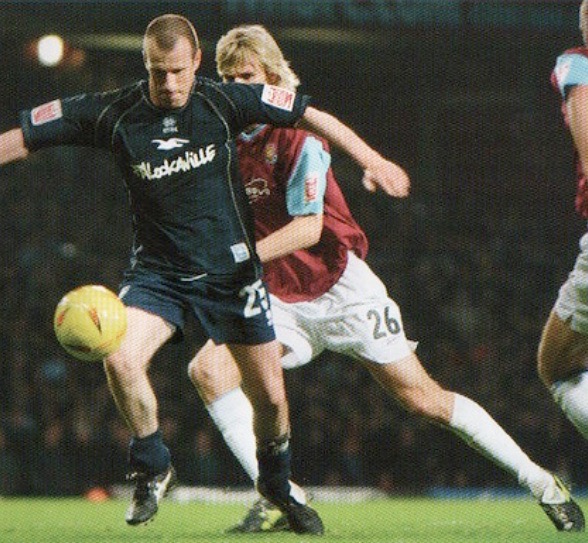
“It’s an extra body. We’ve got seven games coming in March and I wouldn’t be doing my job properly if we lost matches because of lack of numbers and personnel.”

Once Coppell had been poached by Reading to succeed Alan Pardew as manager of Reading, Ingimarsson was one of the first signings he made, for a £175,000 fee. There he linked up once again with Steve Sidwell, who Coppell had also managed at Brentford and Brighton.

It was at the Madejeski that Ingimarsson enjoyed the most successful period of his career, forming a defensive partnership with Ibrahima Sonko, which he talked about in an interview with Stuart Fagg.

Over eight years at the club, the popular Icelander amassed a total of 282 appearances for the Royals. He was part of the side that won promotion to the Premier League in 2006, he was voted player of the year in 2006-07 and, in 2009, took over as club captain.

After his time at Reading came to an end in 2011, he was offered a one-year deal by Paul Jewell at Ipswich Town but, with his appearances restricted to six starts and two off the bench, he mutually agreed to leave Portman Road in January 2012.

On retirement from the game aged 34, he returned to his home in the east of Iceland where he runs two guest houses and a farm, which he spoke about in that extended interview with Brian Owen of The Argus.

‘Have boots, will travel’ striker Steve Claridge mixed it with Lions, Wolves, Foxes – and Seagulls

VETERAN striker Steve Claridge, who saw service with 22 professional and semi-professional clubs, helped Brighton to one of the most amazing smash-and-grab raid wins I’ve ever seen as an Albion fan.

The former Millwall forward answered a plea from his old Lions boss Mark McGhee in November 2004 which paid off big time when the Seagulls snatched a 1-0 win away to West Ham United.

It was the first of only five games Claridge played for second-tier Brighton after McGhee turned to a player who had delivered for him during his spell in charge of Millwall.

Albion went into the game at the Boleyn Ground on 13 November 2004 on the back of three defeats and McGhee was desperate to stem a tide which had seen eight goals conceded and no points on the board.

A trip to West Ham (who ended up being promoted via the play-offs that season) was a daunting prospect if the bad run was to be halted.

However, as McGhee pointed out: “We approached the game differently. Whereas before we thought we could win, today we did not, and played to make sure we didn’t get beaten.

“We kept the ball up front more which is important. Steve Claridge was key to that.

“He is one of the fittest players I’ve worked with and I had no doubt that after 18 months away from this level he would be able to perform.”

Claridge in action at Upton Park

Centre back Guy Butters headed the only goal of the game on 68 minutes from Richard Carpenter’s pinpoint pass and the Seagulls held out for an unlikely three points. Hammers boss Alan Pardew had to admit: “Technically they were perfect and obviously came here to play deep and try and nick it on a set piece, which is what they did.”

Claridge’s professional career looked to have run its course after he left Millwall in 2003 and became player-manager of Southern League side Weymouth.

But the disappointment of missing out on promotion had seen him and chairman Ian Ridley leave the club and Claridge, at the age of 38, was keen to give league football another go.

McGhee knew the qualities Claridge could bring to his ailing side having been a popular figure as Millwall came close to promotion from the second tier.

The West Ham success didn’t spark a great revival in Albion’s fortunes, however, and there was only one more win (1-0 at home to Rotherham) during Claridge’s month with the club.

In one of those strange footballing quirks of fate, his fifth and final game for the Seagulls came away to Millwall (see Argus picture at top of article) on 11 December 2004, when Albion lost 2-0.

Claridge said all the right things in a programme feature about him that day, included likening the circumstances of both clubs. “The club has no money and it is tough just to survive, but everyone is in it together,” he said. “At Millwall we had a great team spirit and togetherness, and that is very much the case here.”

Unfortunately, it seemed money was the obstacle that precluded Claridge’s stay at Albion being extended and, after his deal was over, rather than it being one last hurrah, he went on to continue his league playing days at Brentford, Wycombe Wanderers, Gillingham, Bradford City and Walsall.

Then, at the age of 40, and with him needing just one more game to fulfil the landmark of 1,000 professional games, his old club Bournemouth gave him a match against Port Vale on 9 December 2006. No fairy tale, though, as they lost 4-0.

Born in Portsmouth on 10 April 1966, there aren’t many clubs in Hampshire and Dorset that Claridge has not had some kind of association with! Having been brought up in Titchfield, he started out with nearby Fareham Town in 1983. AFC Bournemouth took him on and gave him his debut in 1984 but he only played seven games before moving to Weymouth for three years.

Crystal Palace offered him a route back to the full professional game in 1988 but he didn’t make their league side, instead moving on to fourth tier Aldershot Town.

In two spells with Cambridge United, he scored 46 goals in 132 games. A falling out with manager John Beck saw him sold to Luton Town, and then bought back after Beck’s departure!

Nearly two years later, Birmingham City paid £350,000 to take Claridge to St Andrews and he became one of the club’s most prolific goalscorers, netting 35 in 88 games.

Such form eventually saw him switch to Leicester City and Claridge wrote himself into Foxes’ folklore, scoring winning goals in a play-off final to earn promotion to the elite level, and in the 1997 League Cup Final over Middlesbrough, the last time the competition staged a final replay. That, though, came after an ignominious beginning with Leicester.

McGhee’s successor as manager, Martin O’Neill, signed him for £1.2m in March 1996 and his early form was dreadful. Astonishingly, it seemed his poor start might well have been related to the wrong medication he had been taking for a heart defect for EIGHTEEN years, according to this official Leicester City website report.

In 1998, Leicester sent Claridge on loan to his hometown club, Portsmouth, but, in March 1998, McGhee, then boss at Wolves and seemingly at odds with more established strikers at the club, took Claridge to Molineux for a £350,000 fee. Only five months later he was sold to Portsmouth for £250,000.

Writer Dan Levelle said on an amusing Wolves’ fan website: “He was that amazing food blender you saw at your mate’s house, but you can’t get it to work at all for love nor money.”

claridge Wolves1

Claridge’s time at Molineux was clearly not appreciated by the Molineux faithful, as Levelle revealed in this 2012 piece.

Even more galling for Wolves followers was that no sooner had Claridge made the switch to Portsmouth, he was scoring a hat-trick against them in a 3-1 win at Fratton Park!

The goals and games came thick and fast for Claridge back on home turf – 34 in 104 – but his reign as player-manager at Fratton Park in 2000 was curtailed after just 25 games.

Remembering the player he’d seen only briefly a couple of years earlier, McGhee, by now in charge at Millwall, offered the striker a lifeline with the Lions, initially on loan and then as a permanent signing.

He joined on a temporary basis to cover a period when current boss Neil Harris was banned following a sending off, but, after he hit the ground running, was then tied to a permanent deal, as this Millwall blog post described in 2016.

Writer Mark Litchfield summed him up brilliantly when he said: “His style was unconventional, to say the least: shirt untucked, one sock down and no shin pads, any naïve defender probably thought they could eat him for breakfast. But hard work was a pre-requisite for Claridge – he wouldn’t give any opposition player a moment’s rest and would more often than not always get the better of them, too.”

Few could doubt Claridge’s enthusiasm for the game, as he told the Bradford Telegraph & Argus during his time in Yorkshire.

Even after achieving the 1,000-game landmark courtesy of Bournemouth, Claridge couldn’t resist the lure of another game, turning out for Worthing, Harrow Borough, Weymouth, Gosport Borough and Salisbury.

Many younger readers will know Claridge as a pundit who worked extensively for the BBC on TV and radio and he now coaches youngsters in Salisbury and Warsash through his own scheme, the Steve Claridge Football Foundation.

Claridge

Terry Connor had an eye for goal for Leeds and Brighton

Connor action 1TERRY CONNOR is a familiar face to today’s football fans as a loyal assistant manager to Mick McCarthy.
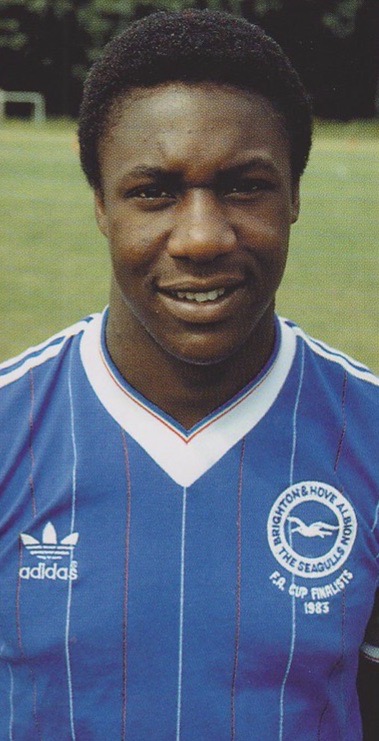
But Leeds United and Brighton fans of a certain vintage remember him as a pacy striker with an eye for goal.

His time with the Albion saw him at his most prolific with a record of almost a goal every three games (51 in 156 appearances) – form which earned him a solitary England under 21 cap as an over-age player.

Relegation-bound Brighton took the Leeds-born forward south in exchange for Andy Ritchie shortly after they had made it through to the semi-final of the 1983 FA Cup, but the new signing could take no part because he’d already played in the competition for Leeds.

If Brian Clough had allowed Peter Ward to have remained on loan to the Seagulls that spring, who knows whether Connor would have joined, but, when the former golden boy sought an extension of his loan from Nottingham Forest, which would have enabled him to continue to be part of the progress to Wembley, according to Ward in He Shot, He Scored, the eccentric Forest boss told him: ‘Son, I’ve never been to a Cup Final and neither will you’.

So the Connor-Ritchie swap went ahead and, with the rest of the team’s focus on the glory of the cup, the new arrival scored just the once in five appearances, plus two as sub, as the Seagulls forfeited the elite status they’d held for four seasons.

lpool goalConnor would have his moment of cup glory (celebration above) in the following season, though, as the TV watching nation saw him and Gerry Ryan score in a 2-0 win over Liverpool at the Goldstone; the second successive season Albion had dumped the mighty Reds out of the FA Cup.

Connor was best man when teammate Hans Kraay got married. Frank Worthington (right) was there too.

Born in Leeds on 9 November 1962, Connor went to Foxwood School on the Seacroft estate in Leeds. He burst onto the football scene at just 17, scoring the only goal of the game after going on as a sub for Paul Madeley to make his hometown club debut in November 1979 against West Brom.

connor leeds

“I got such an early break at Leeds because the club were rebuilding their side after those days when they were riding high,” Connor told Shoot! magazine. “Eddie Gray was still in the team when I came in. He was the model professional. It was terrific to have someone with his experience alongside you.”

Connor went on to make a total of 108 appearances for Leeds over four seasons, scoring 22 goals, before the by-then manager Gray did the swap deal with Ritchie.

In February 2016, voice-online.co.uk carried an interview in which Connor recalled racial abuse he received as a player.

“It was difficult for black players to thrive. I can remember going to many away games and there were bananas thrown on the pitch and `monkey’ chants from the stands,” he said.

“I remember receiving mail from Leeds fans telling me not to wear the white shirt, even though I was born and bred in Leeds. I had bullets sent to me and the police were called on a couple of occasions.”

Even so, the move to Brighton still came as a bit of a shock to him.

“‘I’d never imagined myself playing for anyone else but Leeds,” he told Shoot! at the time. “I was born and bred in the city. My parents and friends live there, and really Elland Road was a second home to me.”

Unfortunately for Connor, manager Jimmy Melia gave him the impression he was going to be forming a double spearhead with Michael Robinson. But after relegation, Robinson and several others from the halcyon days were sold, in Robinson’s case to Liverpool.

TC phoenixThe man who bought him didn’t last long either; Melia making way for Chris Cattlin in the autumn of 1983. It didn’t stop Connor making his mark in the second tier and despite having several different striking partners of varying quality, his goalscoring record was good at a time when the side itself was struggling to return to the top with the Cup Final squad being dismantled and under investment in replacements.

In his first full season, he missed only two first team games all season and was top scorer with 17 goals as Albion finished ninth in the league. His main strike partner Alan Young scored 12.

Connor got only one fewer in the 1984-85 season when the side finished sixth; the veteran Frank Worthington chipping in with eight goals in his only season with the Seagulls.

TC v Sunderland

In 1985-86 Connor had two different strike partners in Justin Fashanu and the misfiring Mick Ferguson but still managed another 16 goals, including four braces.

The disastrous relegation season of 1986-87 contained a personal high for Connor when, in November 1986, he was selected as an over-age player (at 24) for England under 21s and scored in a 1-1 draw with Yugoslavia.

He had formed a useful partnership with Dean Saunders but, as money issues loomed, Saunders was sold to Oxford and soon, after being voted player of the season, Connor also left as the Albion were relegated; Barry Lloyd being unable to halt the slide back to the third tier.

Reflecting on his time at Brighton in a matchday programme interview, Connor said: “I really enjoyed my football, playing on the south coast. We also loved the lifestyle and my eldest daughter was born there, I loved playing in the atmosphere created at the Goldstone. There was a bond with the players and their partners, with Jimmy Melia and Mike Bamber, and it was like one big happy family.”

As Lloyd was forced to sell players, Connor returned to the top flight via a £200,000 move along the coast to newly-promoted Portsmouth. A terrible run of injuries plagued his Pompey career meaning he only managed 58 appearances and scored 14 goals over the course of three seasons.

A £150,000 transfer fee saw him join then Third Division Swansea City for the 1990-91 season and although he managed 39 appearances, he scored only six times.

Next stop was Bristol City in September 1991 for £190,000 but he scored only once in 16 games for the Robins. By the summer of 1993 he dropped out of the league to play for Conference side Yeovil Town and when he retired from playing he became a coach at Swindon Town.

John Ward took Connor as a coach to three clubs he managed, Bristol Rovers and City and then Wolverhampton Wanderers, where, across the reigns of several managers, he remained for the next 13 years. He worked at youth, reserve and first team level before becoming McCarthy’s assistant in 2008. He briefly took the reigns himself after McCarthy was sacked in early 2012 but, unable to halt the team’s relegation from the Premiership, reverted to assistant under the newly-appointed Ståle Solbakken for just four games of the new season before leaving Molineux.

Within three months, he resumed his role as McCarthy’s assistant when the pair were appointed at Portman Road. When McCarthy took over as the Republic of Ireland boss in November 2018, Connor once again was his assistant and in 2020 the pair found themselves at the top Cypriot side APOEL. In early 2021, McCarthy and Connor were back in tandem at Championship side Cardiff City.

In the 2018-19 season, Connor had the chance to work with the England under 21s when the FA decided to provide placements for BAME coaches