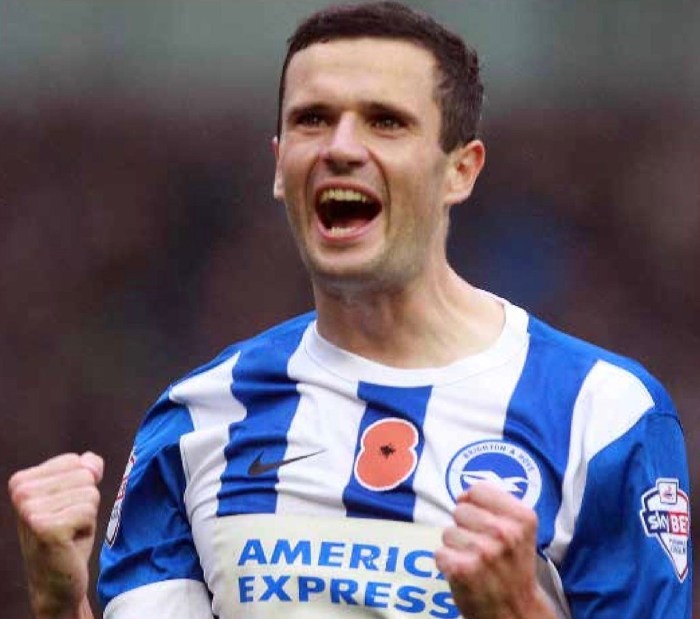
Three-time Clough signing Jamie Murphy was an Albion promotion winner

BRIGHTON provided a step up in class for Jamie Murphy when they bought the Scottish winger from League One Sheffield United in August 2015.

“I feel like I’ve been able to play in the Championship but I’ve never been given the opportunity,” he said. “It’s thanks to the club for giving me that opportunity.”

Murphy was 25 when he joined the Albion on a four-year deal. The fee was undisclosed but was reported to be £1.8m.

He was Albion’s ninth summer signing and his arrival was somewhat overshadowed by the return of Bobby Zamora to the Albion. But boss Chris Hughton said at the time: “He is somebody we monitored very closely last season and he was one of Sheffield United’s most influential and creative players.

“He’s a winger who can play on either flank and he will give us extra options in both wide positions. He’s a very good age, an age where he can continue to develop as a player and build on his experience.”

Murphy quickly settled at the club, finding a few familiar voices in the likes of captain Gordon Greer (he discovered their respective parents lived round the corner from each other in Glasgow and even drank in the same pub!), sports therapist Antony Stuart who Murphy knew at his first club, Motherwell, and assistant manager Colin Calderwood, whose Hibernian side he had played against.

He scored his first goal for the club in a 2-2 draw at Bolton on 26 September 2015 – but was later sent off in the same match. Zamora, making his first Albion start since returning to the club, set up Dale Stephens to put Albion ahead and Murphy increased the lead after a surging run into the penalty area by Liam Rosenior.

Neil Danns pulled one back before half time and Murphy saw red for a heavy tackle on Danns in the 75th minute. Albion had to settle for a point when Gary Madine headed an injury-time equaliser.

Impressive displays and another goal, against MK Dons, helped to earn him the November player of the month award – and, courtesy of the sponsor, the opportunity to drive a Porsche for 48 hours.

Murphy scored four more goals in a season’s total of 31 starts plus six appearances off the bench and he revealed in a matchday programme article how his eye for a goal stemmed from playing as a striker earlier in his career.

“When I was a kid, I was always the quickest so I always scored a lot of goals but as I got older and then turned professional with Motherwell it got harder and harder. I’m not the biggest player in the world, so I got moved out to the wing, but I still think like a striker when I’m in front of goal.”

Unfortunately, the campaign ended in disappointment when Albion missed out on promotion from the Championship. Hughton’s side finished third and Murphy’s form for Brighton earned him a call-up to the Scotland squad for two friendlies in March 2016, although he remained an unused sub.

When Albion lost in the two-legged Championship play-off semi-final to Sheffield Wednesday, Murphy was an unused sub (Anthony Knockaert and Jiri Skalak got the nod) but it was a familiar feeling for Murphy who had experienced semi-final heartache in two League One play-offs (2013 and 2015) for Wednesday’s fierce city rivals.

Hughton had plenty of competition for the wide spots in Albion’s 2016-17 promotion challenge, reducing Murphy’s starts to 20 plus 15 appearances off the bench.

He tried hard to seize his chance when it was presented. He scored twice in a 4-0 League Cup win over Colchester United at the start of the season and was the ‘other’ scorer in the Bonfire Night 2-0 win at Bristol City when Steve Sidwell scored a worldy from the halfway line.

A 3-0 home win over Reading at the end of February saw Murphy put in a man-of-the-match performance and he scored his first goal in 16 matches (Sam Baldock and Knockaert the other scorers).

He was praised for his pace on the break and excellent decision-making and later told the matchday programme: “It was one of my best performances. I always feel as if I’ve given 100 per cent – but sometimes things go for you, sometimes they don’t.

“I was delighted to get the goal; it’s been coming these past couple of weeks. But all across the team we’ve played well, done our jobs and obviously come away with a great win. It was a big game and we put in a very professional performance.”

Expanding on the whole-squad approach, Murphy said: “Anyone can come in and do a job. When I was on the bench I always felt there was a chance for me coming and I’m sure the boys on the bench feel that as well.

“We’re in this as a squad, it’s not just about the starting 11.” And he also spoke about the part the Amex crowd played. “It’s great as a player when you know you’ve got that backing of the fans behind you.

“When this place is rocking it really makes a big difference to us as a team. The fans get right behind us home and away.”

Murphy was certainly at the heart of the celebrations (above) when the Seagulls finally made it over the promotion finishing line, via a 2-1 win over Wigan Athletic, and he fondly recalled crowdsurfing (together with teammates Ollie Norwood and Skalak) on a happy, packed train from Falmer to the centre of Brighton as players joined with fans to celebrate the achievement.

The players were headed to a party in central Brighton laid on by chairman Tony Bloom and Murphy told The Athletic’s Andy Naylor in 2021: “There was no other way to get from the stadium to the party. The train station is 100 yards away, so we thought, ‘Why not just jump on a train?’.

“I don’t know what we were thinking, or if we thought it was going to be empty. Obviously, it wasn’t!

“It’s one of the best memories I have of that day. I’ve still got the video on my phone of us crowdsurfing and then coming off the train and getting carried down on someone’s shoulders, all the way down to the party.”

Once the Albion were in the Premier League, Murphy’s playing time was virtually non-existent (one start and three sub appearances in the league; one League Cup outing), and although speculation arose about a possible move, Hughton tried to play it down.

In December 2017, he told the Argus: “At this moment, if I am looking at the options I have in the wide areas, it’s been unfortunate for Jamie because of what we’ve had and no injuries in that area.

“He is still very much part of our plans. It only takes a lack of form, an injury or a couple of injuries and then he is very much back in the squad.”

Murphy in action for Glasgow Rangers

Within weeks, though, the winger joined Glasgow Rangers (the team he supported as a boy), initially on loan until the end of the season, before making the move permanent in the summer of 2018.

Hughton told the club website: “Jamie is a great lad, a fantastic professional and has a desire to play – and while we were in no hurry to see him leave, we do understand his desire to play for his boyhood team and one of the biggest clubs in Scotland.

“He’s been excellent for the club, ever since we signed him from Sheffield United, and wrote himself into club folklore as a crucial part of our promotion-winning side last season.”

Murphy played 18 league and cup matches (plus one as a sub) as Graeme Murty’s reign came to an end and during that initial time back in Scotland earned two full caps to go with his previous under 21 honours. They came in friendlies against Costa Rica and Peru: going on as an 87th minute sub for Matt Ritchie in a 1-0 win over Costa Rica and starting in a May 2018 2-0 defeat in Peru ((he was replaced by Oli McBurnie in the 67th minute).

Murphy signed a three-year contract with Rangers and was the club’s first goalscorer under new manager Steven Gerrard, netting the opener in front of a crowd of 49,309 at Ibrox in a Europa League qualifying match against North Macedonian side Shkupi.

He had played in just five Europa League games and two Scottish Premiership games before suffering a career-changing injury in a League Cup tie at Kilmarnock in late August.

The anterior cruciate ligament tear in his left knee, sustained on the astroturf pitch at Rugby Park in an innocuous coming-together with an opponent, put him out of action for 14 months.

Gerrard told the Glasgow Times: “Jamie’s coming to terms with it. He’s found it tough. He was upset at the beginning and understandably so.

“It is a tough one to take as a footballer. But we will give him every bit of help and support off the pitch that he needs. We will make sure that he sees the right specialists and gets the job done properly.

“Then as a team we will rally around him and make sure he is in good spirits. He is here for the long term. He is a big player for us.

“What Jamie has to do now and what we have to help him do is make sure he does everything in his powers to come back strong and doesn’t have any setbacks.

“He has got an opportunity to work on his whole body and make sure he comes back really strong.”

“It is a big blow. He found consistency straight away. He was on a big buzz from signing long-term for the club.

“He knows the league, he knows the club, he is very well-liked in the dressing room. We have had a big cog, a big piece of the jigsaw, taken away from us.

“We are still coming to terms with it. I know Jamie is as well. I’m not going to try and play it down. It’s a big blow.”

As it turned out, Murphy played only two more matches for Rangers after returning to fitness in October 2019 and in January 2020 linked up once again with his former Sheffield United boss Nigel Clough on a six-month loan at League One Burton Albion.

“I have worked with Nigel Clough before and had some of my greatest moments as a footballer under him, so it was an easy one to pick,” he said. “I want to be back enjoying football again. It has been a nightmare time with my knee but I’m now just looking forward to playing again.

Clough said: “To get a player from Rangers of Jamie’s quality is brilliant. The fact that we have worked with him before and that we get on well with his agent has helped.

“He wants to get out and play some football. He was out for a while with a knee injury, which is one of the reasons he’s coming out, but he’s fully fit now. What he did for us at Sheffield United and how he played there means we are very excited to have him on board.

“He plays wide mainly but can play up the middle as well. He carries the ball very well, makes goals and scores goals. He will be a great asset as we try and push for a place in the top six.”

He scored seven goals in 10 matches but then returned to Scotland and joined Hibernian, initially on loan and then permanently.

After making a total of 50 league and cup appearances for Hibs, he linked up with Clough for a third time in February 2022, signing on loan at League Two Mansfield Town. He scored once in 16 appearances for the Stags.
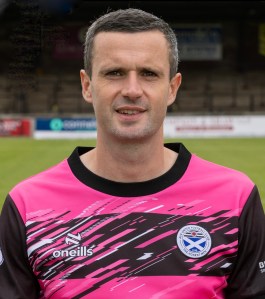
Murphy joined Ayr United in 2023

When he left Hibs at the end of his contract in June 2022, he switched to Perth for a year to play for St Johnstone where he scored five times in 29 appearances and in June 2023 was on the move again, this time to Scottish Championship side Ayr United.

Born in Glasgow on 28 August 1989, Murphy was inspired by Rangers strikers Ally McCoist and Mark Hateley as a boy and played junior football at Westwood Rovers and Drumchapel Thistle before linking up with Clyde. He joined Motherwell aged 11 and broke through to the first team at 17 in 2006 under former Albion boss Mark McGhee.

He said of McGhee: “He was the first man to give me a real chance in the first team. I played a good run of games, played in Europe and played well so he was big for me at the time.”
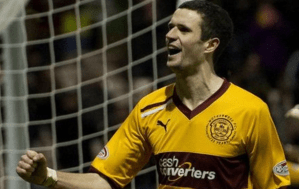
In 11 years at Fir Park, Murphy helped the club reach a Scottish Cup Final and regularly qualify for European football.

Having scored 50 goals in 215 games for Motherwell, he was then bought in January 2013 by former Albion captain Danny Wilson, who had switched allegiance in Sheffield to manage United.

It was Stuart McCall who sold Murphy to a club he had served as a player and a manager, and he believed at a reported fee of £106,000 they were getting a bargain for the 23-year-old.

McCall told the Daily Record: “We are not getting anywhere near what he is worth but he has given this club great service over the years. He is a great kid and goes with our blessing.

“It is probably the right time for Jamie to move on and flourish elsewhere.

“I would love to have kept him until the summer and it is disappointing for us. But Jamie is a talented boy and can force himself into the Sheffield United team.

“Sheffield United may be a League One side now but they are a great club for him to go to.

“I am hopeful they will be in the Championship next season and they are a Premiership club in the making as they have that status.”

McCall added: “I told Jamie they have a great fanbase, fantastic set-up and good manager in Danny Wilson.” However, Wilson’s two-year tenure at Bramall Lane came to an end in May that year. He was replaced by David Weir (now Albion’s technical director) and Murphy’s third United boss was Clough, who, on awarding Murphy a two-year contract extension in January 2015 said: “Jamie has caused Premier League defenders countless problems in our cup runs.”

With his playing days now winding down, Murphy has an eye on the future and on X (formerly Twitter) in October 2023 he posted that he had successfully passed the UEFA A coaching licence.
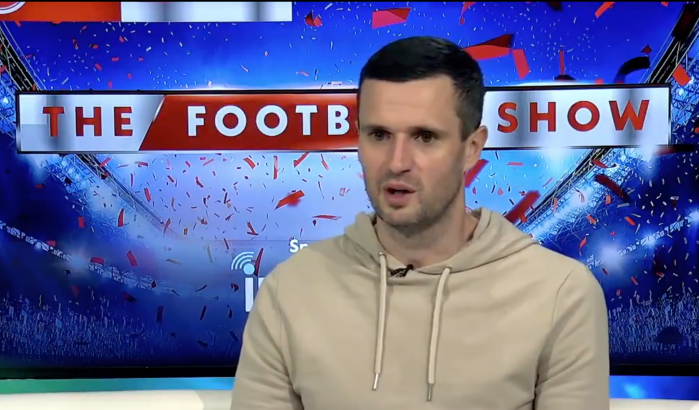
In an extended interview with the Hibernian club website in January 2021, he spoke about his desire to become a manager. “That’s something I definitely want to try,” he said. “I like the problem-solving aspect of it, being able to watch a game and pick apart a team’s strengths and weaknesses.

“I probably watch games in a different way now and it started when I was injured. I wasn’t able to train for the best part of a year, so I found myself taking down notes in a journal whenever I’d watch a game – about how teams would play, how they won or lost the game.”

Top Hatter Moore a temporary plug in Albion’s leaky defence

LUTON TOWN legend John Moore had a 32-year association with the Hatters as a player, coach and manager. He had a less remarkable one month’s loan in the stripes of Brighton.

As manager Pat Saward rather too rapidly dismantled Albion’s 1972 promotion-winning side, the experienced Moore was one of several old hands brought in to try to help Albion adapt to the old Second Division.

Saward was light on numbers in a defence which had conceded 23 goals in 12 games, and he had just parted company with former skipper John Napier, while injury-prone Ian Goodwin was in hospital having a knee cartilage operation. The side had only won once in the league in 12 starts.

But the arrival of Moore, together with Lewes-based Stan Brown from Fulham, gave the side an unexpected fillip and the Albion earned a surprise 2-0 victory away to Huddersfield Town (Eddie Spearritt and Barry Bridges the scorers) on 14 October 1972.

Saward was certainly impressed by the impact of his two new acquisitions. “The new men played a major part in our success,” he said. “It was quite remarkable really the way they slotted into the side as if they had been playing for Albion all season. John did exceptionally well in his role as sweeper.

“They are, of course, experienced professionals who have been around the game a long time. But even the best professionals sometimes take time to settle into new environments and this is why the performances of these two was so outstanding.”

Unfortunately, it was the only win of Moore’s brief stay. Albion drew the next three games and his final outing came in a 3-0 defeat at Millwall. That loss at The Den was the first of 12 consecutive league defeats.

Ironically, Albion only returned to winning ways when Moore was in opposition, lining up in the Luton side that lost 2-1 at the Goldstone on 10 February 1973. Ken Beamish scored both Albion goals, while future Albion signings Don Shanks and Barry Butlin were playing for the opponents that day.

Moore subsequently moved on to Northampton Town, where future Albion player John Gregory was beginning to make his way in the game, but the Scot ended his playing days after only 14 appearances.

Born on 21 December 1943 in the village of Harthill (halfway between Glasgow and Edinburgh), Moore played initially for local side North Motherwell Athletic. In 1962, he joined Scottish League side Motherwell on a part-time basis, while also working in a factory.

He was a centre-forward when he initially went to Fir Park but in the only three games he played he started twice in midfield and once in defence. Given a free transfer in May 1965, a Luton scout in Scotland pointed him in the direction of then manager George Martin.

In a 2011 interview with Matthew Parsfield, for the Talk of the Town blog, he recalled: “George Martin flew up to Scotland to sign me. I remember sitting down with him in my living room with my family, and, it sounds far-fetched nowadays, but there were no contract negotiations and no haggling at all.

“He said ‘What do you want?’ He was actually talking about a signing-on fee, but I just said ‘I want an opportunity.’ He certainly gave me that.”

One particular long-standing fan, Mick Ogden, remembered Moore’s arrival with affection. Writing on the Hatters Heritage website, he recalled him turning up at a supporters’ club gathering in the company of manager Martin in May 1965.

“Despite the fact that he had travelled down from Glasgow that day, John spent the whole evening with us, firstly playing billiards against our members and then later we sat around listening to John talking about his life and obvious love of football,” wrote Mick.

“He told us he had signed from Motherwell and how he sat for many hours during the week talking football with his father, who was a Rangers fan. Apparently, these chats would often carry on until the early hours of the next day. John clearly had a great love and affection for his father.”

Another fan who remembered the player from his early Luton-watching days, ‘Mad Hatter’, said: “Moore wasn’t like other defenders; slender in physique compared to those he played alongside, he was more than a match for most of the opponents he came up against.

“Whilst on the books of the Hatters, Moore made 274 league appearances and more than played his part in helping Luton Town climb from Division 4 to Division 2.”

John Moore in action for Luton against West Ham’s Geoff Hurst

Indeed as well as under Martin, Moore also featured under Alan Brown, Alec Stock and Harry Haslam.

After his playing days were over, he spent time as manager of non-league Dunstable Town but when David Pleat took over as Luton manager, he took Moore back to the club as a coach.

After Pleat had moved on to take the hot seat at Spurs, Moore stepped up to become manager.

It was the 1986-87 season in the top-flight and Moore led the Hatters to a club-best seventh-place finish. But it appears he didn’t enjoy the limelight of such a position and he stepped down, handing over the reins to Ray Harford, assisted by Steve Foster. Luton went on to win the League Cup (then known as the Littlewoods Cup) beating Arsenal 3-2, with another ex-Albion skipper, Danny Wilson, one of the goalscorers.

When former player Jim Ryan took over as manager, Moore returned to the club as a coach for a third stint and stayed in that role under Pleat again, Terry Westley, Lennie Lawrence, Ricky Hill, Mick Harford, Joe Kinnear and Mike Newell until he reached the age of 60 in 2003 and chose to retire.

In the interview with Parsfield, he gave an insight into his approach. “When I became youth coach I always treated the boys like adults.

“I wasn’t interested in making them successful youth players, the only way to make a living is to become a first team player.

“I told them they had to work harder than the first team, because those older guys down the corridor aren’t going to just give you their first team place and their luxury lifestyle, you’ve got to work for it.”

He added: “Nobody’s career flows in a straight line, careers bob and weave, and players need the attitude of ‘When it gets hard, I don’t give in’. It’s when someone has the talent but not the attitude, that’s what frustrates you the most.”

On leaving Luton, Moore got involved in schools coaching in Bedford. But at Kenilworth Road, there is a permanent reminder of the player courtesy of The John Moore Lounge.

Ups and downs of medal-laden Mark McGhee’s career

MARK McGHEE saw highs and lows as Brighton & Hove Albion manager after a medal-laden playing career that took him from his native Scotland to England and also to Germany.

McGhee was in charge when the Seagulls memorably won the 2004 play-off final to gain promotion from the third tier, beating Bristol City at the Millennium Stadium, Cardiff.

Play off final boss

Keeping the Seagulls up the following season was arguably an even greater achievement considering at the time playing home games at the crowd-restricted Withdean Stadium meant the club was at a huge disadvantage compared to most clubs in the division.

With the Amex still a distant dream, relegation came at the end of the 2005-06 season, and it wasn’t long into the following season that Dick Knight wielded the axe on the Glaswegian’s time in charge.

“It was hard to sack Mark, but we had to have a change,” Knight wrote in his autobiography, Mad Man: From the Gutter to the Stars. “Everyone recognised what he had done in taking up and keeping up a team that was not that great, to be honest. Hats off to him, he had done a terrific job. And he is a very intelligent, personable guy.”

Knight took decisive action when part of the crowd became vociferous in wanting McGhee out, and the chairman also felt some of the young players drafted into the team weren’t responding to him.

He was finally toppled over lunch at Topolino’s, and Knight admitted: “It was a difficult decision. There was strong vocal opposition to McGhee, but also a large, less noisy element who were behind him.”

McGhee liked Brighton so much he made it his home despite subsequently taking on a series of other roles the length and breadth of the country.

It’s probably fair to say the Scot has never been afraid to speak his mind, which his former Newcastle boss Bill McGarry mentioned to him. McGhee recounted in an interview with theleaguepaper.com: “I was managing Wolves at the time. He said ‘Mark, you talk too much. Tone it down a bit’. I tried to take his advice, give nothing away in media briefings. Then, somebody would say something interesting and I wasn’t able to stop myself.”

It’s probably what helped him gain a place on the Sky Sports Soccer Saturday panel when he was in between management jobs.

McGhee would most likely look back on some jobs he’d perhaps have been wiser to stay away from, for example taking temporary charge of Eastbourne Borough in 2018, although his enthusiasm was undimmed as he revealed in an interview with thenonleaguefootballpaper.com.

Born in Glasgow on 20 May 1957, his father was an electrical engineer and his mother a fertility consultant at Glasgow Royal Infirmary. McGhee was on the books of Bristol City at the start of his long career but he returned to Scotland and became a part-timer with Greenock Morton while also training to be an architect.

Aforementioned manager McGarry signed him for Newcastle for a £150,000 fee on 30 December 1977 and he made his debut on 2 January 1978.

His face didn’t fit after Arthur Cox took over as boss, but Alex Ferguson took a punt on him in March 1979 and signed him for Aberdeen, and it proved to be one of many shrewd decisions the esteemed Scot would make in his career.

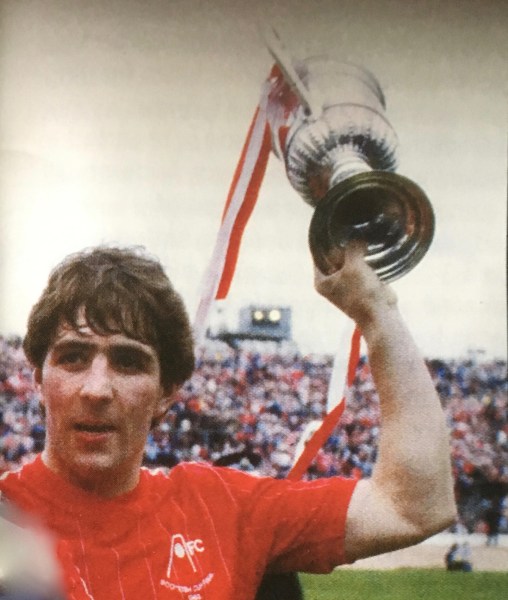
McGhee was named Scottish PFA Players’ Player of the Year in 1982, and the following year was part of the Aberdeen side who beat Real Madrid 2–1 to lift the 1983 European Cup Winners’ Cup in Gothenburg.

mcg cup

He also scored the second goal as Aberdeen defeated Hamburg 2-0 to win the UEFA Super Cup in the same year.

Asked about the best goal he scored, he said: “Probably the winning goal in my last game for Aberdeen.”

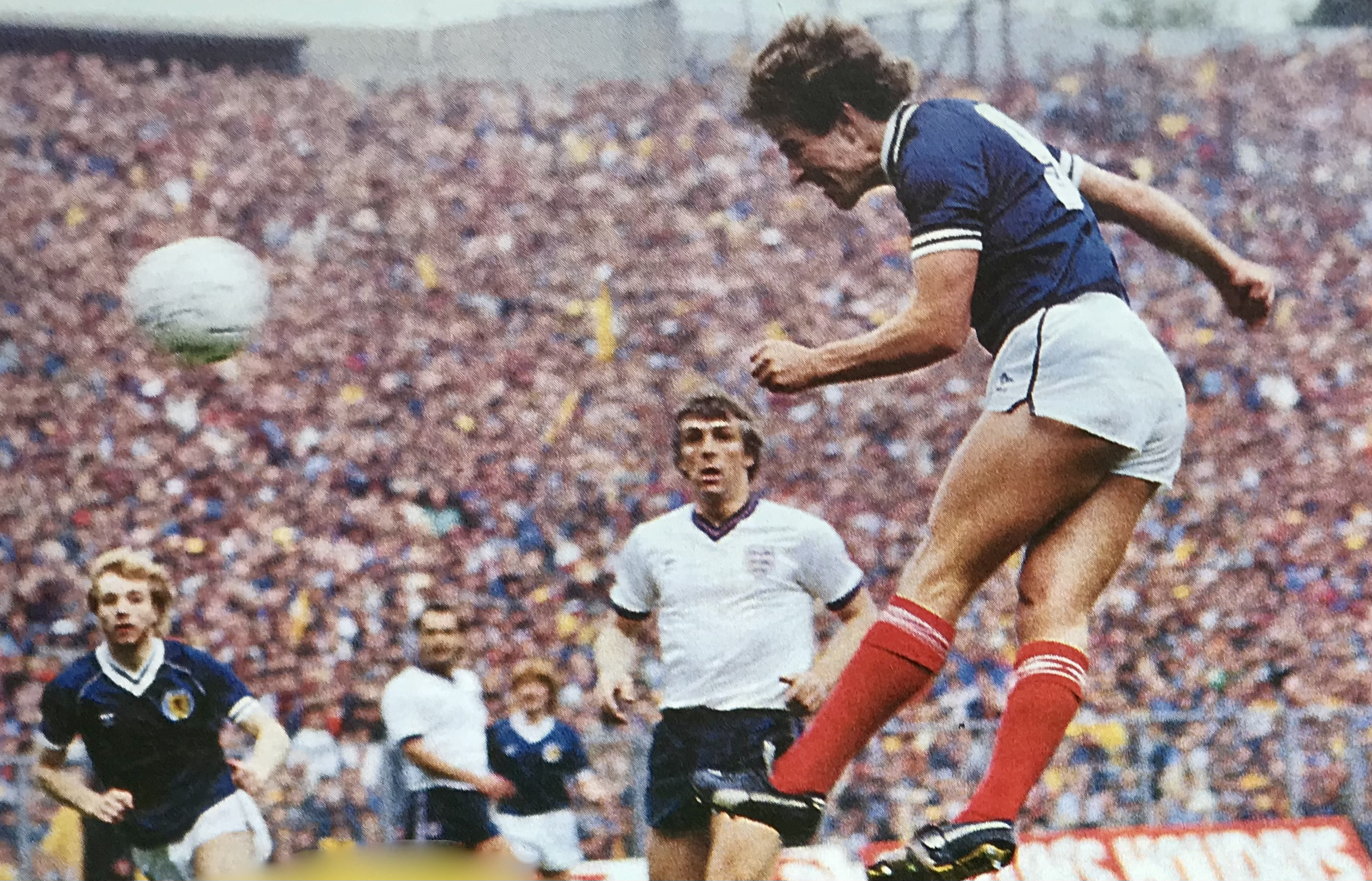
McGhee reckoned his best moment in football came on 26 May 1984 when he scored against England at Hampden Park. He headed in a cross (as pictured) from his great pal Gordon Strachan past Peter Shilton.

McG v Eng

“It put us 1-0 up but Tony Woodcock equalised to make the final score 1-1.”

It was one of four caps he won for his country. Nearly two decades later, in January 2013, Strachan appointed him as his no.2 with the Scottish national side.

M McGhee Old Football PhotosBut back to those playing days, and with two Scottish league titles and three Cup wins behind him, McGhee tried his hand at European football and spent 16 months at Hamburg. The spell was probably more of an education than a success, with injuries limiting his game time.

A £170,000 fee took him back to Scotland, to Celtic, where he had mixed fortunes during four years with the Glasgow giants. He was, though, part of the squad that won a League and Cup double in their centenary season.

After winning another Scottish Cup winners’ medal in 1989, he was on the move again, back to Newcastle.

Now with Jim Smith in charge, Newcastle paid £200,000 to take McGhee back to St James’ Park, where he formed an impressive strike partnership with the legendary Micky Quinn as Toon finished third in the old Division Two.

“We were good friends, but we didn’t blend on the pitch like Toshack and Keegan, Quinn told theleaguepaper.com. “Mark was a free spirit. He’d get the ball and drift left or right and drop deep.

“He’d turn defenders and drag them out of position. He would hold the ball up well for me to get into the box and score goals. He went where he wanted, but it worked.”

football back then McGhee

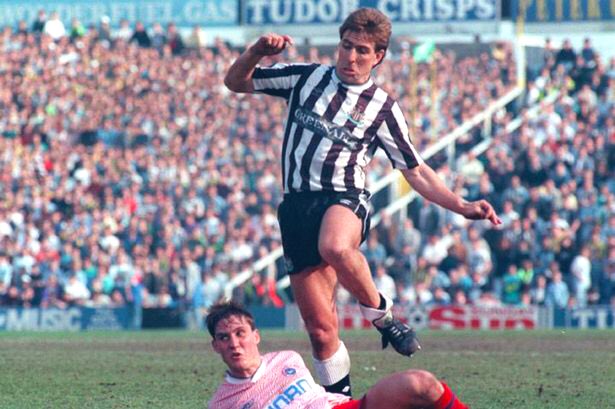
This Football Back Then picture shows McGhee in action for Newcastle against Albion’s Nicky Bissett.

His farewell performance came on 6 April 1991, not long after Ossie Ardiles had taken over as manager, and McGhee departed having scored a total of 36 goals in 115 appearances for the Magpies.

Next stop was Sweden, where he played briefly for IK Brage, but he seized the opportunity to try his hand at management by taking up the role of player-manager at Reading in the summer of 1991.

He’d been recommended for the role by his old boss Ferguson, and, after quitting playing through injury in 1993, he led the Royals to promotion from the third tier the following year.

A struggling Leicester City gave him a chance to manage in the Premier League but he was unable to keep them up and, less than a year after joining, decided to switch to Wolverhampton Wanderers, to succeed Graham Taylor.

Wolves just failed to gain promotion in 1996-97 (they lost in the play-off semi-finals) and were ninth the following campaign. Four months into the 1998-99 season, following a string of poor results, McGhee was fired.

It would be 20 months before he gained his next opportunity, this time at Millwall where he enjoyed initial success, leading them to promotion from the third tier, and then narrowly missing out on another promotion when they lost in the play-off semi-finals to Birmingham City.

McGhee apptWhen he parted company from Millwall in October 2003, he wasn’t out of work long because Brighton needed a replacement for Steve Coppell, who’d been wooed to take over at Reading (pictured above, with chairman Dick Knight, at his unveiling as Albion manager).

Those Albion fans who stuck by the team in the humble surroundings of the Withdean Stadium enjoyed some good moments during McGhee’s time as manager, in particular promotion via the play-off final in 2004.

He certainly found a formula to get the best out of certain players, as Adam Virgo, converted from defender to goalscorer, observed in that theleaguepaper.com article. “Mark is a very good communicator and very experienced,” he said. “He can make you feel ten feet tall. He’s very good at being honest, at analysing your game and telling you what you’re good at.”

After his departure from the Albion, McGhee was out of the game for nine months but got back in at Motherwell, turning them from near relegation candidates to qualifiers for European competition.

The lure of his old club, Aberdeen, proved too strong in the summer of 2009, but his tenure proved to be disastrous – and brief.

He spent the majority of 2012 as manager of Bristol Rovers, where one of the squad he inherited was former Brighton defender-turned-striker, Virgo. The following year, his old pal, Strachan, appointed him as assistant coach to the Scottish national side.

He later combined the role part-time when he returned to Motherwell but there were mixed fortunes second time round, and he left them again in early 2017. Towards the end of that year, he popped up at League Two Barnet, but the arrangement lasted only two months before he was moved to a ‘head of technical’ role, and then dismissed in March 2018.

McGhee was ‘slaughtered’ on Twitter when he took over as interim manager of National South side Eastbourne Borough in the spring of 2019, after being beaten 3-0 by Wealdstone in his first match in charge, his new side reduced to nine men after two players were sent off. Borough won just once in 11 matches.

When Albion under 23s coach Simon Rusk was appointed manager of Vanarama National League side Stockport County in January 2021, McGhee was appointed as one of his assistants.

His final managerial post was at Dundee in February 2022 when he took temporary charge of the Scottish Premiership side until the end of the season (with Rusk as his assistant), but they couldn’t avoid them being relegated, overseeing just one win in 13 matches.

McGhee finally announced his retirement from the game in September 2022 at the age of 65, telling the Sunday Post: “I won’t be pursuing any other managerial vacancies, and nor would I want to be a director of football or a head of recruitment. That’s not what I am – I’m a manager.

“I feel that players now deserve a young manager who can give them the energy I was able to when I started out. They don’t need a 65-year-old with a dodgy ankle.”

Boylers’ service appreciated both sides of the Atlantic

MIDFIELD enforcer John Boyle was born on Christmas Day 1946 and went on to play more than 250 games for Chelsea.

Towards the end of his career, he spent two months on loan at Brighton trying to bolster the Albion’s ailing midfield in the dying days of Pat Saward’s spell as manager.

Indeed, Boyle was in that unenviable position of being at the club when the manager who brought him in was turfed out, and the man who replaced him (in this case none other than Brian Clough) swiftly dispensed with his services and sent him back to Chelsea.

By then, Boyle’s time at Chelsea was at an end and, after his 10-game Goldstone spell was also over, he went the shorter distance across London to play for Orient, before ending his playing days in America with Tampa Bay Rowdies.

Born in Motherwell, Boyle went to the same Our Lady’s High Secondary school that spawned Celtic greats Billy McNeill and Bobby Murdoch and, just around the time he turned 15, his stepbrother, who lived in Battersea, organised through a contact they had with then boss Tommy Docherty for him to go down to London for a trial.

He did enough to impress and 10 days later Chelsea sent him a letter inviting him to join their youth team, together with the train ticket from Motherwell to London.

“When I got off the train, Tommy Doc was waiting for me to take me to my digs,” Boyle told chelseafc.com in a recent interview. “I stayed in the digs that Bobby Tambling and Barry Bridges had stayed in before.”

Boyle – known to all as ‘Boylers’ – made his debut in the 1965 League Cup semi-final against Aston Villa and, at 18, it couldn’t have been much more memorable.

“I played on Monday in a Scottish youth trial and Wednesday I was playing against Aston Villa in the semi-final of the League Cup,” Boyle recounted. “After 20 odd minutes, I tackled this guy and he got injured and carried off. The crowd then booed me, he limped back on and then the crowd booed me more!

“It went to 2-0, to 2-2 and then with about 10 minutes to go I got the ball 30 yards out, rolled it forward and went crack and it went into the top corner of the net. I remember Terry Venables ran up to me and said ‘John, I am so pleased for you,’ and that was my first game. To score the winning goal in your first game was Roy of the Rovers stuff.”

He went on to become Chelsea’s youngest ever cup finalist when he was in the team that won the trophy. In those days, it was played over two legs, and, after beating Leicester City 3-2 in the home game, they drew the away leg 0-0. His teammates in the second leg were Bert Murray and the aforementioned Bridges, who he would go on to play alongside at Brighton in 1973.

The Goldstone Ground was familiar territory to him. On 18 February 1967, he was famously sent off for the visitors in a FA Cup 4th round tie when Albion held their more illustrious opponents to a 1-1 draw in front of a packed house. Chelsea went on to win the replay 4-0 and that year went all the way to the final where Boyle was part of the side who lost 2-1 to Spurs. In another fiery FA Cup tie between Brighton and Chelsea, in January 1972, Boyle was Chelsea’s substitute as they won 2-0 in a game which ended 10 a side, George Ley and Ron Harris being sent off.

john boyle chels blueWhen Docherty moved on from Stamford Bridge, and Dave Sexton took over as manager, Boyle’s involvement in the side was more sporadic, as he told fan Ian Morris on his Rowdies blog.

“Dave appreciated my energy and willingness, but I don’t think he really fancied me as a player. Basically, I became an odd-job man, filling in here and there, and in football it doesn’t help to get that reputation,” he said.

Although he wasn’t in the squad that beat Leeds in the 1970 FA Cup Final, he was back in the side when Chelsea beat Real Madrid over two legs in May 1971 to win the European Cup Winners’ Cup.

After Brighton’s disastrous 1972-73 season in the second tier – the general consensus is that they’d not properly been prepared for promotion and didn’t invest sufficiently in the team to have a fighting chance of staying up – the side continued to be in the doldrums as they adjusted to life back in the old Third Division.

Manager Saward was struggling to come up with the right formula and, having transferred former captain Brian Bromley to Reading, sought to boost his midfield with the experienced Boyle, who was surplus to requirements at Stamford Bridge.

With the paperwork signed on 20 September, Boyle was handed the no.8 shirt and made his debut alongside Ronnie Howell in a 0-0 draw away to Grimsby Town.

He made his home debut the following Saturday, but the Albion went down 1-0. Three days later, this time partnering Eddie Spearritt in the middle, Boyle helped Albion to a 1-0 win at Oldham Athletic.

After a 3-1 defeat away to Blackburn Rovers, at home to Halifax Town Boyle had a new midfield partner in John Templeman. But again they lost by a single goal.

With Howell back alongside him for the home game v Shrewsbury Town, Albion prevailed 2-0 in what turned out to be Saward’s last game in charge. Perhaps by way of another interesting historical note, Boyle was subbed off to be replaced by Dave Busby, who became the first black player to play for the Albion.

Caretaker boss Glen Wilson retained Boyle in midfield for the midweek 4-0 hammering of Southport and he was also in the line-up for Clough’s first game in charge, a 0-0 home draw against York City on 3 November. But the 2-2 draw away to Huddersfield Town on 10 November was his last game for the Albion.

As someone who’d gained something of a reputation as enjoying the social side of things at Chelsea, particularly with the likes of Peter Osgood, Charlie Cooke and Alan Birchenall, it maybe doesn’t come as too big a surprise to learn that Clough advised him “always buy two halves instead of a pint, or people will think you’re a drinker”.

Boyle was still only 28 when he tried his hand in Florida in February 1975, being appointed Tampa Bay Rowdies captain, and leading them to victory in the Super Bowl against Portland Timbers in August that year.

His former Chelsea teammate Derek Smethurst scored 18 goals in that inaugural season, playing up front alongside ex-West Ham striker Clyde Best, while former Crystal Palace ‘keeper Paul Hammond was in goal.

A newspaper article about Boyle’s contribution resides on tampapix.com, a hugely entertaining site featuring loads of players of yesteryear who turned out for the Rowdies.

It somewhat flamboyantly says: “‘Captain Rowdie’ John Boyle was a barrel-chested midfielder with legs as white as snow and hair as thin as a wheat crop during a summer drought.  He became the role model for the club, as much because of his leadership as well as the fact that he knocked opponents ‘grass-over-tea kettle’ when they came his way.”

He retired from playing in November the same year but, two years later, he stepped in as Rowdies coach when Eddie Firmani quit. However, he had also gone into the pub business in the UK and ultimately the need to be behind the bar at Simon the Tanner in Bermondsey, with his wife Madeline, meant he had to turn his back on the sunshine state and return to London.

Unable to resist the lure of the States once more, Boyle played five matches for indoor league side Phoenix Inferno in the 1980-81 season.

In that wide-ranging interview Boyle gave to chelseafc.com earlier this year, he said: “I wouldn’t change a thing in my life, I am just grateful for what I have done. I have been blessed and one of the great things about it is 50 years later you can still talk about it! I was a lucky young man to have played when I did and meet the people I did.”


Why the ‘hook’ at Edgar Street was a great relief to ex-Saint Paul McDonald

Paul McD on ballIF PAUL MCDONALD hadn’t been subbed off in that infamous game away to Hereford United in 1997, Brighton might have gone out of existence.

That’s some statement to make, but it’s a thought that has crossed the diminutive wideman’s mind over the years.

It was McDonald who gave way for substitute Robbie Reinelt to enter the fray and, as the history books thankfully record, it was he who buried the equalising goal to restore Albion’s status as a Football League club and condemn Hereford to relegation instead.

Even as recently as August 2017, in a preview to the Albion’s opening Premier League game against Manchester City, the current day Kilmarnock academy director shared his thoughts with the Daily Record (pictured below).

paul mcdonald Daily Record

“The prospect of top-flight football would have been the furthest thing from anyone’s mind at full time at Hereford but I’m over the moon to see them in the position they are in now,” said McDonald.

“I’m often reminded of that game and I’m actually claiming the assist because Robbie Reinelt replaced me. I’m just glad the chance didn’t fall to me or they might well have ended up as a non-league club!

“Seriously, it was a huge day for Brighton. I’ve never been involved in a game with so much at stake.

“It is a massive club and to be in the position they were in was bad.

“If we had lost to Hereford then in an extreme circumstance they could have folded but businessman Dick Knight had come in as chairman and he may not have let that happen.”

Born in Motherwell on 20 April 1968, McDonald was spotted playing local boys club football in his home town by Hamilton Academical and he was taken on in June 1986.

Over the course of seven years, he made a total of 215 appearances for the Accies before trying his luck south of the border.

Premier League Southampton paid £75,000 for his services but he failed to make a breakthrough and managed just three substitute appearances for Saints.

During the 1995-96 season, he was loaned out to Jimmy Mullen’s third tier Burnley where he made 11 appearances in two months, his only goal coming in a 2-0 Auto Windscreens Shield win away to Peterborough.

However, one of his matches included a 3-0 win over Brighton (in which one of the Clarets’ scorers was Kurt Nogan) and, according to the excellent clarets-mad.co.uk, McDonald so impressed watching Brighton manager Jimmy Case that day that it prompted him to sign the winger the following February.

Case persuaded hard-up Albion to part with £25,000 (or £40,000 according to the matchday programme)  to take McDonald along the coast, where at last he managed to get plenty of game-time.

In two years with the Seagulls, he played more than 60 games and scored five times. The first came in a 2-1 defeat away to Exeter City; he was also on the scoresheet in a 3-0 home win over Hull City, then scored from the spot in a 3-2 home win over Fulham in the Auto Windscreens Shield three days later.

He was twice more successful from the penalty spot, one coming five minutes from the end of the game to secure an unforgettable 4-4 draw with Orient at the Goldstone, the other in a 2-0 home win over Cardiff.

At the start of the following season, with the Albion in exile at Gillingham, McDonald was on the scoresheet in a 1-1 draw with Macclesfield, the toxic atmosphere around the proceedings captured by The Independent.

As financial constraints forced Albion to let go of five senior players in December 1997, McDonald returned to Scotland with Dunfermline. He then moved onto Partick Thistle and Greenock Morton before finishing his playing career back where it started at Hamilton Academical.

McDonald stayed in the game, initially working at Hamilton as youth development manager, before becoming the SFA community coach at Kilmarnock in 2003.

In 2013, he became academy director and in October 2017, McDonald was appointed caretaker manager of Kilmarnock after Lee McCulloch stepped down as boss with the club bottom of the table.