A GOALSCORING scourge of Newcastle United once pulled on the famous black and white stripes – and was booked in three of the five games he played for them!
Baird, who notoriously got himself sent off in the crucial last ever game Brighton played at the Goldstone Ground, led the line in an infamously fiery New Year’s Day derby between Newcastle and Sunderland when the Toon won 3-1 courtesy of a hat-trick by Peter Beardsley.
Jeff Clarke, who’d previously spent seven years at Sunderland and had five games on loan at Brighton at the start of that season, was at the back for Newcastle and future Albion veteran Clive Walker was in attack for the visitors.
A crowd of 36,529 watched the First Division fixture on 1 January 1985 when Sunderland were reduced to nine men through the sendings off of Howard Gayle and Gary Bennett. Baird was one of five bookings made by ref David Scott.
It was Baird’s fourth match for Newcastle after England World Cup winner Jack Charlton signed him on loan from Southampton. He made his debut three days before Christmas 1984 in a 4-0 defeat away to Aston Villa when his former England Schoolboys strike partner Paul Rideout scored a hat-trick. Baird’s only goal for United came in a Boxing Day 2-1 defeat at West Brom.
Three days later, as United lost 3-1 at home to Arsenal, Baird’s involvement was from the bench as a sub for David McCreery. His last game, on 12 January, was another tonking, 4-0 away to champions-in-waiting Everton.
Five years after his Toon cameo, Baird twice stymied Newcastle’s hopes of promotion from the second tier, scoring against them for Leeds in a 1-0 win in December 1989 (it turned out to be his last goal for them) and, after he’d fallen out with manager Howard Wilkinson and been transferred to Middlesbrough in January 1990, netted twice for Boro as they beat Newcastle 4-1 in the last game of the season.
Baird nets for Boro against the Toon
Leeds finished that campaign as second tier champions (Newcastle, who by then had Mark McGhee up front, were five points behind in third place) and Baird’s goals in Boro’s win put paid to the Magpies’ hopes of automatic promotion. To add salt to the wound, Newcastle lost to Sunderland in the semi-final of the play-offs.
Six years later Baird was Brighton’s captain in the penultimate must-win game of the season, when Doncaster Rovers were the visitors.
Albion needed all three points to give themselves a chance of avoiding relegation out of the league when they travelled to Hereford the following week for the final fixture of that tumultuous season.
What they really didn’t need was for the captain to get himself sent off after just 18 minutes of the match!
Talking to The Athletic about it in a 2022 interview, Baird recalled: “I was fired up for it. Darren (Moore) had come right through me, literally in the first minute. The referee didn’t give anything.
“Then he came through me again, and the referee gave a foul. The third time, I lost it. I just turned around and tried to wallop him. There was a big melee. Everyone knew what was at stake.”
Both players were dismissed (it was one of 11 sendings off in Baird’s career) and thankfully Stuart Storer’s memorably-scrambled goal in the 67th minute settled the game in Albion’s favour, although Baird admitted: “It was nerve-racking. I felt guilty that I’d let my team-mates down, let everybody down by getting sent off. It was a massive relief when we won.”
Thankfully, disciplinary rules were different back then (bans were only applied 14 days after the offence) and Baird was able to play his part in the match at Hereford when a 1-1 draw ensured Albion stayed up and The Bulls went down.
Baird’s exploits for the Albion highlighted in the matchday programme
Brighton were the tenth and last league club Baird had played for and he had only ended up with the Seagulls because of a pre-season falling out with Plymouth Argyle manager Neil Warnock.
Living near Southampton, only a 15-minute drive from Brighton manager Jimmy Case, a move east along the coast made good geographical sense, and a £35,000 fee took him to the Goldstone at the start of the 1996-97 season.
“Whenever I’d played against Brighton, I seemed to score,” Baird told The Athletic. “I loved the Goldstone Ground and there was the lure of playing for Jimmy.”
Although born in Rotherham on 1 April 1964, Baird had moved to Southampton with his family, via Glasgow, when he was a young lad, his father having sailed from the port when he worked on the Queen Mary.
After surviving meningitis as a six-year-old, Baird’s footballing ability saw him turn out for Bitterne Saints, St. Mary’s College, Southampton, Southampton and Hampshire Schools. He joined Southampton on schoolboy terms after he’d been spotted in the same boys’ team, Sarisbury Sparks, as Lawrie McMenemy’s son, Sean.
Baird won two England schoolboy caps: he was in England’s Victory Shield team that beat Wales 2-1 at Wrexham’s Racecourse Ground on 27 April 1979, playing alongside Rideout and winger Mark Walters, who went on to star for Aston Villa, Rangers and Liverpool.
In the same competition, he also played at St James’ Park – two days after Brighton had won 3-1 on the same pitch to win promotion to the top division for the first time in the club’s history.
On 7 May 1979, young England drew 1-1 with Scotland and 14-year-old Rideout’s goal was enough to enable England to retain the Victory Shield. The following month, Baird was an unused sub when England drew 2-2 with West Germany at Wembley.
A Saint with hair!
Baird was offered pro terms by Swindon, but he chose instead to sign for his adopted home town club. However, with McMenemy preferring the more experienced Frank Worthington and Joe Jordan, Baird was restricted to 21 starts and three sub appearances for Saints, and, after that loan spell at Newcastle, he moved to Leeds.
His two spells at Leeds (sandwiched either side of an unhappy time at Portsmouth) produced 50 goals in more than 160 appearances and he was in the Leeds side alongside Mervyn Day and Micky Adams that lost the 1986-87 Division Two play-off final to a Charlton Athletic team that included his future Brighton boss Steve Gritt and teammate John Humphrey.
Baird scored 19 goals that season for Billy Bremner’s side, four of them in the FA Cup as United reached the semi-final where they were beaten 3-2 by eventual cup winners Coventry City.
He had taken Saints’ teammate Jordan’s advice to move to Leeds and his next move was to Scotland where Jordan was in charge of Hearts. He later played under the Scottish international striker at Bristol City too.
The Pilgrim who fell out with Neil Warnock
Baird scored six in 29 appearances for Plymouth before that move to Brighton. Discipline might have been a problem but Baird scored eight goals in 10 games from January 1997 as nine wins and a draw at the Goldstone went a huge way to enabling Albion to escape the drop.
As Albion began the 1997-98 season in exile at Gillingham, Baird began the campaign with a three-match ban for that red card against Doncaster — and it wasn’t long before he was seeing red again!
It came in the 13th game of the season and it was certainly unlucky for Baird, well, unlucky in that a linesman spotted his off-the-ball headbutt on a Chester defender. Gritt publicly condemned Baird’s “out of order” behaviour and stripped him of the captaincy.
The following month, with another knee operation required, a surgeon advised him to pack in the game and he left Brighton in December that year having scored 14 goals in 41 appearances in 16 months.
“At least we kept Brighton up,” he told The Athletic. “There were a multitude of problems, it was a weird period, but it was a big thing.”
Post-Brighton, Baird ended up coaching in Hong Kong and was put in charge of the national side for three Asian Cup qualifiers, playing in Jakarta in front of 75,000 people, and then in Cambodia in front of 1,200 people. “It was certainly an experience, that is for sure,” he said.
Baird eventually returned to Hampshire, developed business interests in the vehicle sales and leasing and sports gear industries, while keeping his football links going in non-league circles: at Eastleigh, Sutton United and Havant & Waterlooville.
WHEN ANDY RITCHIE scored at the Goldstone Ground on 7 September 1996, it was a very different place to the stadium he’d graced as Player of the Year 14 years previously.
Ritchie was in his 20th season as a professional when he scored his 200th career goal for Scarborough against his former Albion teammate Jimmy Case’s Seagulls in a Nationwide Division 3 match.
Just 4,008 hardy souls dotted around the crumbling old stadium supported the Albion that afternoon compared to the sell-out 28,800 crowd who packed in to see Ritchie’s last home match in Albion’s attack when they beat Norwich City 1-0, courtesy of a Case goal, in a quarter-final of the 1983 FA Cup.
Ritchie’s last endeavours in Albion’s colours came a week later and, ironically, were in front of 36,700 at Old Trafford on 19 March 1983 when he had a goal disallowed against the club who sold him to the Seagulls for what at the time was a record £500,000.
The curiosity of that deal was covered in my 2017 blog post about Ritchie and I’ve since discovered how a number of observers were dumbfounded by Dave Sexton’s decision to let him leave United.
That Sexton more often preferred the strike pairing of Joe Jordan and Jimmy Greenhoff baffled football writer Mike Anderson who, after Ritchie’s switch to the Albion, detailed how the departed forward’s numbers were more favourable.
“Since making his debut for United against Everton three seasons ago he has proved himself to be a more consistent marksman than the Scottish international,” wrote Anderson.
“By the end of the 1978-9 season Ritchie had scored 10 goals in only 20 full League appearances, compared with Jordan’s nine goals in 44 games. And when last season finished he had hit 13 goals in 23 full games (plus six substitute appearances), whereas Jordan had taken his tally to only 22 goals in 76 games.”
Anderson’s opinion was shared by Tony Kinsella, writing in When Saturday Comes in November 1997, he described Ritchie as “a muscular whippet of a striker with two scorching feet, a delicious first touch, and a bonce of solid granite”.
Kinsella wrote: “In four frustrating campaigns, Ritchie notched an admirable average of a goal every two games, a somewhat superior rate to his cohorts. In retrospect, I guess Ritchie was in the right place at the wrong time. He possessed more skill than Jordan and cut a more daunting physical presence than Greenhoff, but fell short of both when it came to vice versa.
“Sexton, notorious for fielding sides greyer than a Mancunian sky, had the courage to blood a teenage goalkeeper, Gary Bailey, but got cold feet when dealing with the loose cannon that was Andy Ritchie.”
A young Ritchie at Manchester United
In a lengthy chat for the Fore Four 2 podcast, Ritchie revealed how it was Steve Coppell who took him under his wing as a newcomer to the United first team and ensured he got fixed up with a pension; something Ritchie hadn’t even considered.
And his roommate at United was wandering winger Mickey Thomas, who ended up following him to Brighton and also to Leeds!
While Sexton may have had reservations about Ritchie, plenty of other managers were keen to take him from United. Tommy Docherty, who had first signed Ritchie for the Red Devils, had wanted to take him to Queen’s Park Rangers but he was sacked as Rangers’ manager before a bid was in the offing. Chelsea and Newcastle made inquiries too.
Aston Villa offered United £350,000 for him but, after attending with his dad a face-to-face meeting with the glum-faced manager Ron Saunders, they turned down the move feeling he hadn’t conveyed that he really wanted him.
Ritchie also declared: “United were my home town team and I loved it at Old Trafford.
“It had been my aim since joining the United staff to be a success in their first team. I would have got a large amount of money had I gone to Villa, but I put self-satisfaction before money. I had received a lot of encouragement from the training staff at Old Trafford and I wanted to justify their faith in me by doing well at United.
“I knew that a transfer would mean adjusting to a side playing a different style of football. I felt that I might just as well spend that time proving I was worthy of a place at United where I was part of possibly the best club in the country. Unfortunately, I found myself playing reserve team football again until Brighton came in for me.”
In a 2019 interview with the Albion website, Ritchie remembered: “We always had a good team spirit and we all used to go out together. Everyone played golf and we’d be out in the nightclubs, Bonsoir and others where you had to wipe your feet on the way out.
“Great times, absolutely fantastic. And the spirit transferred itself onto the pitch. I used to joke at Q&As that we had so many great individuals but put us together and we were crap because the social life got in the way of our football. But no, it was a fantastic club to be involved in.”
Ritchie attended a rugby-playing grammar school and played cricket and hockey for Cheshire, only turning to football at 13 or 14. He played for Manchester and Stockport Boys and scored six goals in nine games for England schoolboys under skipper Brendan Ormsby, who went on to play for Aston Villa.
In the 1983 Shoot! album, Ritchie explained: “It was while I was playing for Stockport Boys that I first realised I had a chance of a career as a professional footballer.
“I was selected for the England Under-15 side and played at Wembley Stadium. The first was against Wales. We won 4-2 and I scored a couple of goals. I then scored another when England beat France 6-1. They were great moments for me and my family.
“Appearing for England was definitely the highlight of my young career but I also enjoyed playing for Stockport and in local Sunday football.
“I played for a team called Whitehill, who were sponsored by Manchester City. It was then that I realised I could play for the Maine Road club.
“I had trials with Leeds United, Burnley and Aston Villa, but I only wanted to play for City.”
It was while playing for Stockport Boys v Manchester Boys that former United captain Johnny Carey, scouting for his old club, spotted Ritchie and made an approach.
“I went down to The Cliff (United’s training ground) and never looked back,” he said. “It didn’t take me very long to soak in the atmosphere and appreciate the tradition and name of Manchester United and, in the end, I was quite happy to sign for the Old Trafford club.”
Ritchie was 15 when he put pen to paper, and he turned professional on 5th December 1977.
Handed his first start in United’s first team shortly after his 17th birthday, he played four matches without scoring but had caught the eye of the England Youth selectors. He made four appearances under joint managers Brian Clough and Ken Burton, making his debut in a 3-1 win over France on 8 February 1978. England drew the return leg of that UEFA Youth tournament preliminary match 0-0.
He went with the England squad to Poland for the 31st UEFA Youth tournament in May 1978, played in a 1-1 draw v Turkey and a 1-0 defeat v Spain but a trapped nerve in his hip meant he sat out the 2-0 defeat to Poland that meant England didn’t qualify from their group. That squad included Terry Fenwick and Vince Hilaire, Tony Gale and Ray Ranson.
“The following year I was selected for England Youth again for the Mini World Cup in Austria. Unfortunately, I went over on my ankle in training and could not make the trip,” Ritchie recalled.
Ritchie hoped his move to Brighton might boost his chances of gaining a full England cap, but he ended up winning a solitary England under-21 cap when he was called up by the same Dave Sexton who’d sold him from United! “That really was a bit bizarre,” Ritchie later recalled.
He featured in a 2-2 draw with Poland at West Ham’s Boleyn Ground on 7 April 1982. Fellow striker Mark Hateley scored both England’s goals.
Ritchie in action for Leeds against Brighton
Ritchie’s time with Leeds was something of a mixed bag. The record books show he scored 44 times in 159 matches after he was signed by player-manager Eddie Gray. Playing in the second tier at the time, Leeds still had Gray, Peter Lorimer and David Harvey from the Revie era but Ritchie joined a mainly young side where the likes of John Sheridan, Tommy Wright and Scott Sellars were developing.
As Tony Hill observed on motforum.com: “Much of his time at Leeds was spent in dispute over his contract and for over a year he was on a weekly contract before moving to Oldham Athletic for £50,000 in August 1987.”
It was at Oldham where Ritchie really made his mark, scoring 82 goals in 217 league games (including 30 as a substitute) and helping them reach the League Cup Final and the FA Cup semi-final in 1990 and to win the old Second Division in 1991.
In 2020 the club’s official website declared: “Andy Ritchie is regarded as a club legend at Oldham Athletic and one of the greatest players to play for the club, having served Latics as a player as well as having a spell as manager.”
That goalscoring return to the Goldstone with Scarborough in early September 1996 came a year after he had joined the Seadogs as player coach on a free transfer. It was one of 17 he netted in the league from 59 starts and nine appearances from the bench.
By then a couple of months short of his 36th birthday, thankfully the Seagulls prevailed 3-2 courtesy of goals from Stuart Storer and two from Craig Maskell (the 99th and 100th of his career).
It certainly wasn’t the first time Ritchie had netted against the Seagulls. Twenty months after departing the Goldstone he scored the only goal of the game, tapping in from eight yards out, when Leeds beat the Seagulls at Elland Road.
He also scored for Oldham to knock Albion out of the FA Cup when the Latics won 2-1 in the fourth round on 27 January 1990. In a 1-1 draw at the Goldstone two months later, Ritchie missed a penalty but he made amends the following season scoring home and away against the Albion, netting twice in their 1 December 1990 6-1 thumping of the Seagulls on Oldham’s plastic pitch and scoring both when the Latics left the Goldstone 2-1 winners on 2 March.
He returned to Oldham on 21 February 1997 after Neil Warnock took him to Boundary Park as his player-assistant manager. He scored three times in 32 appearances, many of which were as a sub.
But when Warnock left to join Bury at the end of the following season, Ritchie was appointed as his successor. He managed 179 games, winning 59, drawing 45 and losing 75 with a win percentage of 32.96%.
After being sacked in 2001, he was out of work for three months before being appointed academy director at Leeds at a time when fellow ex-Man Utd player and coach Brian Kidd was head coach under Terry Venables and David O’Leary.
He found himself out of work again in 2003 when Peter Reid took charge but six months later he joined Barnsley, initially as academy manager before becoming first team coach under Paul Hart.
When Hart left Barnsley in March 2005, Ritchie was appointed caretaker manager and then landed the position permanently in two months later.
At the end of the following season, he led the club to a penalty shoot-out win over Swansea City in the League One play-off final at the Millennium Stadium, Cardiff.
But the Championship season was only four months old when Ritchie was relieved of his duties with the Tykes struggling in the relegation zone.
Four months later, he was appointed manager of League One Huddersfield Town and told the club’s website: “There’s such massive potential here.
“There is no doubt that the club is geared up for promotion to the Championship and that has to be the aim now. It’s now a case of getting the players re-motivated and once we get into the Championship, we can reassess the situation.
“I tasted promotion last season and it was a great feeling – now I want to do it again as soon as possible.”
Unfortunately, he wasn’t able to steer the Terriers to that goal and, after a 4-1 defeat against his former employers Oldham, he parted company in April 2008.
They won only 22 of his 51 games in charge although they did enjoy their best FA Cup run for 10 years which only came to an end in the fifth round when they were beaten 3-1 by a Chelsea side under Avram Grant that included Wayne Bridge and Steve Sidwell.
After all that, Ritchie returned in a watching brief to where it all began: at Old Trafford.
On matchdays, he worked as an ambassador in a hospitality lounge, and contributed to MUTV and Radio Manchester.
DIMINUTIVE midfielder Jamie Smith spent 11 years at Crystal Palace, going through the youth ranks before signing as a pro, but didn’t play league football until he joined Brighton.
Russell Slade took on the 19-year-old during his brief reign in charge of the Seagulls (and signed the player again when he was in charge at Orient).
Albion picked up the discarded 5’6” Smith in the summer of 2009 and he did enough as a triallist in pre-season friendlies to be awarded a contract by the Seagulls.
Slade said: “Jamie has done exceptionally well throughout pre-season. He’s worked hard to convince us he is worth a contract and he has the potential to be a very good player.”
His first league start was memorable for all the wrong reasons. In only the third league game of the season, he was selected in midfield away to Huddersfield Town.
But when regular no.1 ‘keeper Michel Kuipers was sent off six minutes before half time, the young midfielder was sacrificed to allow substitute goalkeeper Graeme Smith to take over between the sticks. Depleted Albion then went on to succumb to a 7-1 battering.
“I had mixed feelings really,” he told the matchday programme. “It was great to make my debut and I thought we started the game well, but the sending off changed everything and it was all downhill from then on.”
It was Smith’s only start of the whole season. He was on the subs bench on half a dozen occasions but only went on in one of them, away to Wycombe Wanderers at the end of the year.
Gus Poyet had succeeded Slade by then and with Albion coasting at 5-2 – Glenn Murray having scored four of them – Smith replaced Dean Cox in stoppage time.
During the close season, Andrew Crofts was sold to Norwich City and Cox left for Orient, but new arrivals Radostin Kishishev and Matt Sparrow provided new competition for midfield places.
But Poyet reckoned there was something about Smith and enthused about an “outstanding” performance he’d delivered in a pre-season friendly at Burgess Hill. He told the Argus: “We really like him. He could be an interesting player for the future, I’m telling you. He has got some qualities we need to use a bit better.”
After also impressing in a pre-season game against Aberdeen, Smith was in the starting line-up for the opening game of the 2010-11 season, when Albion won 2-1 at Swindon (Sparrow scored twice on his debut).
He played the following two league matches too: a 2-2 draw home to Rochdale (although Smith was sacrificed on 54 minutes after Gordon Greer was sent off for punching Anthony Elding and Adam El-Abd was sent on to play in the centre of defence).
I was sat in the Leppings Lane end at Hillsborough seven days later when Smith retained his place in midfield against Sheffield Wednesday (above left).
The youngster even came closest to netting an equaliser for the Seagulls; his shot from Ashley Barnes’ cutback clipped the bar.
However, Albion then re-signed Kazenga LuaLua and Poyet reckoned Smith didn’t do enough to show he wanted it more than the explosive winger. “Because he is young, maybe he took it too nicely,” Poyet told the Argus. “I need people to react, to show me I have made a mistake or even to put me under pressure. He was just normal, not at his best to give me a headache to have to play him.”
Smith himself admitted: “When LuaLua)was playing I seemed to take it that he would be playing instead of me.
“Sometimes, when we were both on the bench, I used to think he would go on, not me, whereas I should have been doing everything I could to make sure I was involved. If I had the time again, I would have done things differently.
“I wouldn’t be one to go in and moan and stuff because there are always ups and downs in football but you can always go out every day and do your best and work hard.
“The season started really well for me, a lot better than I expected. I didn’t expect to be playing as much as I was but when that happens you just want more and I just want to be playing every week.
“Maybe when the team was doing really well, on a long unbeaten run, I was slacking off in training and things like that.”
The door opened ajar again after LuaLua suffered a broken leg and Smith impressed after going on as a 53rd-minute sub away to Southampton (below, left).
Smith told Andy Naylor: “LuaLua was class. He changed games when he came on and when he started he was really good. Hopefully I can do as well, if not better, than he was doing if I get the chance.
“We are really different players. He is really explosive with pace and loads of ability. I like trying to play clever little passes and making space for myself and my team-mates.”
One such cute pass at St Mary’s let in Glenn Murray to earn the Seagulls a penalty and the longstanding Albion reporter said: “The door is ajar for Smith again after that Southampton cameo and now he has to walk through it. His Albion future depends on it.”
Smith told the matchday programme: “I feel I’ve done well in most of the games I’ve played in and want to use the Southampton game as a platform for the rest of the season.
“The manager told me after that game that he wants me to give him performances like that all the time.”
Enjoying time in the limelight, the player explained: “I love to get the ball, drive forward and create chances.
“I am slight in size and most managers from the Championship downwards want strong, athletic midfielders but our manager wants footballers, players who get the ball down and play.
“As long as I’m on the ball and doing a job for the team, then the manager will be happy.”
Smith added: “I knew that if I didn’t progress this season there’s every chance I would be let go in the summer so I’ve been using that as an incentive.
“With the way the club has been progressing on the pitch and off it, there’s no way I want to leave. I want to stay here for years to come because I’m happy at the club.”
Unfortunately, the new year wasn’t even three weeks old when an accidental collision in training saw Smith sidelined for two months.
He sustained a fractured metatarsal after colliding with teammate Jake Forster-Caskey and, with his contract due to expire at the end of the season, the outlook was bleak.
But Poyet said: “I have already had a good chat with him. I told him not to worry and that we will look after him.
“He will be out until March but it is important he doesn’t feel under pressure to rush back because of his contract situation.
“I want him to make sure his foot is properly healed first, and then I expect we will see him back to fitness before the end of the season.”
Come the end of the season, Poyet was as good as his word and gave Smith a six-month contract to prove his worth.
But he wasn’t able to capitalise on the opportunity, Poyet saying: “Jamie was a revelation at the beginning of last season before we got Kazenga (LuaLua) back.
“Then he was injured for months and we were established at the top of the table, so he didn’t get the chance to play.
“I thought I would give him the chance to prove himself but it hasn’t really happened for him.”
Albion supporter ‘The Phantom’ on an Argus report of Smith’s imminent departure from the club wrote: “Shame it hasn’t worked out for Jamie Smith as showed at times that he had what it takes to be an influential attacking midfielder.
“Way too much competition in the squad now so best that he moves on. Surprised he has not been able to pick up a club so far.”
Eventually, former boss Slade offered him a chance at Orient, but he made just the one substitute appearance for the Os before dropping out of league football with Dover Athletic.
Born in Leytonstone, East London, on 16 September 1989, Smith was on Palace’s books from the age of eight to 19 and although he progressed through the ranks he didn’t get to make a competitive first team appearance.
Nevertheless, Palace under 18 coach Gary Issott said: “Jamie Smith is a diminutive attacking central midfielder in the mould of Eyal Berkovic.
“He is very clever and improved after a frustrating first year. He started this season well and, up until Christmas, his form was electric.”
He was involved in pre-season friendlies ahead of the 2008-09 season and scored the winner from the penalty spot after going on as a substitute in a 4-3 win over Aldershot. (Calvin Andrew, later an Albion loanee, made his debut for Palace in the same match).
But while Smith saw several of his contemporaries make it through to competitive first team action, such an elevation remained elusive for him.
“That was disappointing but we had the likes of Nick Carle and Neil Danns in my position and it was hard to break through,” he said.
A year below him, the likes of Victor Moses and Nathaniel Clyne did progress. Smith said: “I spoke to Neil Warnock but he said there were experienced players ahead of me and couldn’t see me breaking into the team. We agreed it would be best for me to move on.”
Smith had a spell at Doncaster Rovers but returned to Palace to keep his fitness up before joining Brighton for pre-season training, and then being taken on after a successful trial of three or four weeks.
RUSSELL SLADE had an eye for picking up footballing gems for nothing and he worked an unlikely miracle to spare relegation-bound Albion from the drop.
The one-time PE teacher who never played professional football himself was only Brighton manager for eight months but keeping them in League One in an end-of-season nailbiter was a much-lauded achievement.
He did it with some astute forays into the loan market and snapping up free agent Lloyd Owusu who made a crucial contribution to Albion’s injury-hit misfiring forward line.
Some years earlier, when youth team manager at Sheffield United, Slade famously picked up three young players – Phil Jagielka, Nick Montgomery and Michael Tonge – discarded by other clubs who went on to become Blades stalwarts.
At Brighton, his summer re-shaping of the squad he inherited put down the foundations on which his successor Gus Poyet was able to build a successful side capable of promotion.
In particular, Slade took great pride in bringing Andrew Crofts to the Albion on a free transfer from Gillingham, the club later selling him on to Norwich City for what was believed to be £300,000.
Slade signing Elliott Bennett, bought from Wolverhampton Wanderers for £200,000, was later sold to the Canaries for a fee believed to be £1.5million.
“The majority of my player signings went on to play crucial roles in this promotion season,” Slade asserts on his LinkedIn profile. “During my closed season I began what proved to be an extremely successful transitional period.”
If Slade had failed to keep Albion up at the end of that 2008-09 season, it is doubtful Poyet would have been drawn to the task of lifting the side through the leagues and possibly there would have been a longer wait to see Championship football at the Amex.
Slade’s tenure at the Albion may well have been longer if Tony Bloom hadn’t taken over control of the club from Dick Knight, who was chairman at the time Slade was brought in to replace Micky Adams.
Adams reckoned he was a victim of the power struggle between the two and it seems clear that Bloom wanted to install his own man once he was fully in the driving seat of the club.
Although Slade’s achievement in keeping Albion up was rewarded with a permanent two-year deal in the summer of 2009, the new season got off to a terrible start with no wins in the first six games, one of which saw Albion on the wrong end of a 7-1 thumping at Huddersfield.
Time was up for Slade after rocky start to the season
With only three wins and three draws in the next 10 games, after a 3-3 home draw against Hartlepool at the end of October, Slade was sacked with the side only out of the relegation zone on goal difference.
Bloom said: “It is not a decision we have taken lightly and one taken with a heavy heart. Russell is a good man – which made it an even harder decision to take – but it is one which has been made in the club’s best interests.
“Like all Albion fans, I am extremely grateful for Russell’s achievements at the end of last season, as he kept us in League One against the odds.”
When he reflected on his tenure in the Albion book Match of My Life, Slade explained: “Despite the club’s perilous position, I felt it was a great opportunity. I signed on a short-term deal, with the incentive to keep the club in the division.
“I inherited a huge squad but it was decimated by injuries and many of the players were loan signings or youngsters, but, in spite of that, I still thought there was enough within the squad to keep Brighton up.”
With 14 games to save the club from the drop, the first two ended in defeats but when Slade’s previous employer Yeovil Town were thumped 5-0 at the Withdean, there was cause for optimism.
A 3-2 Withdean win for Swindon, for whom Gordon Greer and Billy Paynter scored, threatened Brighton’s survival but it turned out to be the only defeat in the last seven games.
Albion memorably lifted themselves out of the relegation zone three games from the end of the season when they won 2-1 at Bristol Rovers, long-serving Gary Hart teeing up goals for Owusu and Palace loanee Calvin Andrew. Both players were also on target to earn a point in a 2-2 draw at Huddersfield.
After safety was secured in the last game of the season courtesy of barely-fit substitute Nicky Forster’s goal against Stockport, fans invaded the pitch and Slade was carried shoulder high by the Albion faithful.
“My hat got nicked and my head scratched, but it didn’t really matter,” he said. “When I finally got back to the office, I sat there with Bob Booker and Dean White and was absolutely exhausted – both emotionally and physically.”
Born in Wokingham on 10 October 1960, Slade’s route into professional football didn’t follow the traditional path.
“At 18 I had a chance to go to Notts County but I got into university so I went away to get a degree in sport instead,” he said. After completing his degree over four years at Edge Hill University in Ormskirk, Lancashire, he became a PE teacher at Frank Wheldon Comprehensive School in Nottingham (it later became Carlton Academy).
“My experiences helped me be more prepared and organised,” he explained. “I took numerous coaching courses and it allows you to be really open minded and dealing with different situations.
“I had qualifications to be a coach in swimming, athletics, badminton, basketball, cricket and tennis. It not only broadens your horizons but allows you to look at things in different ways.”
While he was qualifying as a teacher, he joined Notts County as a non-contract amateur player, appearing in their reserves and manager Neil Warnock appointed him an assistant youth coach under youth team head coach Mick Walker.
When Warnock was sacked in January 1993, County were bottom of football’s second tier (having been relegated from the top flight in the final season before the Premier League started), and Walker and Slade took charge of the first team, keeping them up with three points to spare.
The pair almost took County to the play-offs the following season, only missing out by three points, and also reached the final of the Anglo-Italian Cup, where they lost 1-0 to Brescia at Wembley.
After only one win at the start of the 1994-95 season, Walker was sacked in September and Slade took over as caretaker manager.
After managing only six wins and five draws in 23 matches, Slade reverted to assistant when ex-Everton boss Howard Kendall was appointed manager.
Kendall only lasted three months at Meadow Lane and Slade left the club at the same time but he later acknowledged how much he had learned from Kendall, Warnock and Jimmy Sirrel (an ex-Albion player who was a Notts County legend as manager and general manager).
“I’ve had a good upbringing,” he said. “The one for player management and for talking to players was Howard Kendall, without a doubt.
“He was terrific – had something about him. He had that X factor and you would listen to Howard – and when he coached you took it on board as well.”
Slade told walesonline.co.uk: “Working with Howard was massive because of his man management and his ability to give a football club direction.
“Neil was the big motivator out of all the coaches and managers I have worked with over the years.
“He took County into the top flight and his best work came at 10 minutes to three. He was exceptional, able to get every last drop of effort and energy from his team.”
Slade dropped into non-league football as manager of Southern League Midland Division Armitage but when they finished bottom of the division and then went into liquidation, Slade followed the chairman Sid Osborn to his new club, Leicester United.
That side finished 16th in the Southern League Midland Division, but they too went out of business in August 1996.
Kendall, in charge of Sheffield United, recruited Slade as youth team coach at Bramall Lane and even tried to take him with him when he returned to Everton in June 1997, but Blades demanded a compensation payment the Toffees weren’t prepared to pay.
Kendall said some while later: “I wanted Russell, who I knew from Notts County, to come and coach my kids. He was at Sheffield United at the time, and they didn’t want to lose him. He’s a talented coach who would have been a popular figure at Goodison.”
Slade remained in Sheffield and, in an interview with The Guardian in October 2013, recalled: “My best three spots were when I was at Sheffield United [in 1998].
“At the time I was doing a lot of work on released players because we needed to strengthen our youth squad and in one evening I took Phil Jagielka, Nick Montgomery and Michael Tonge – all for nothing.”
Montgomery made just short of 400 appearances for United and Tonge and Jagielka both played more than 300 games for the club. Jagielka became one of the best defenders in the top flight (at Everton) and won 40 England international caps.
“That was my best night’s work ever,” said Slade. “You don’t half get a buzz when you see those. When we played Everton in the [Capital One] Cup last season Phil gave me a signed shirt with ‘Thanks very much, Russ’ written on it.”
It was in March 1998 that Slade found himself in caretaker charge of the United first team after the departure of Nigel Spackman, overseeing a draw and a defeat, and he also stepped in for two games in November 1999 when Adrian Heath left the club, again overseeing a draw and a defeat before Warnock arrived at Bramall Lane.
It was at Scarborough where Slade landed his first full-time job as a league manager in his own right. During a three-year spell, he helped rescue the club from relegation, resigned when they went into administration but withdrew it when a fans petition urged him to stay.
A highlight was guiding the side on an excellent FA Cup run, when they memorably played Premier League Chelsea in a televised home tie. The Seadogs were only defeated 1-0 by a Chelsea side that included a young Alexis Nicolas in their line-up.
Next up for Slade was the first of two spells as manager of Grimsby Town. Supporters were calling for his head when they only managed a mid-table finish in the 2004-05 season, but an upturn the following season saw them flirt with automatic promotion and have a good run in the League Cup, beating Derby County and Tottenham.
Slade’s Mariners beat a Spurs side that included Jermaine Jenas, Michael Carrick, Robbie Keane and Jermaine Defoe 1-0. In the next round they went down 1-0 at home to a Newcastle United side managed by Graeme Souness, a goal from Alan Shearer sealing it for the visitors.
Grimsby slipped into the play-offs on the last day of the season and beat local rivals Lincoln City in the semi-finals to reach the play-off final at the Millennium Stadium.
But they missed out on promotion when Cheltenham Town edged the tie 1-0, and Slade was on his way.
He might not have reached League One with Grimsby but he was taken on by Yeovil Town on a three-year contract, declaring when appointed: “It is a fantastic opportunity for me as I think Yeovil are a very progressive club. They are going through a period of transition and I am really looking forward to the challenges that are ahead.”
Slade once again found himself a play-off final loser when the Glovers, captained by Nathan Jones, lost 2-0 to Blackpool in the 2007 League One end-of-season decider at Wembley.
It was a heartbreaking finish especially after Yeovil pulled off one of the most remarkable comebacks in the history of play-off football by coming from 2-0 down to beat Nottingham Forest 5-4 on aggregate in the semi-finals.
“Russell Slade’s side gained many plaudits for an impressive campaign in which they almost went up despite being one of the pre-season favourites for relegation,” said somersetlive.co.uk.
Small consolation for Slade was to receive the League One Manager of the Year award, but disappointment followed in 2007-08 when they won only four games in the second half of the season to leave them only four points clear of relegation.
When things didn’t improve in 2008-09, a frustrated Slade reportedly fell out with Yeovil chairman John Fry over a lack of transfer funds and he left Huish Park by mutual consent in February 2009.
The vacancy at the Albion was almost tailor-made for Slade, and chairman Dick Knight admitted he had spoken with the aforementioned former Seagull, Nathan Jones, about the managerial candidate.
“I had a long chat with Nathan and he told me some good stuff,” Knight told the Argus. “It was a very honest appraisal and I took that into account.
“When I met with Russell initially he impressed me greatly. His CV speaks for itself and his confidence and tactical shrewdness were obvious when I interviewed him.
“He has delivered at this level. He has an extremely competent track record at clubs who have punched above their weight, like Grimsby and Yeovil.
“His players like him. He will convey confidence to our squad and give them a lift.”
Stockport chief Jim Gannon had turned down the job and former England international Paul Ince didn’t even want to hold talks.
“The quality of applications was tremendous, even up to the last minute, from the top of the top league in Romania to one from Portugal which was very interesting but not appropriate at this time,” said Knight.
“By handing the mantle to Russell at this stage, the club is in good hands to address the task right now of staying in League One. We have got a very good and capable man.”
The rest, as they say, is history and, to borrow another familiar phrase, it was a case of not keeping a good man down after his departure from the Seagulls.
It wasn’t long before Barry Hearn, the sports promoter owner of Leyton Orient, was hiring Slade to try to improve the fortunes of the East London minnows.
It turned out to be a great move because Orient was where Slade had his longest ever spell as a manager, presiding over 241 matches with a 42 per cent win ratio.
Amongst the players he recruited were two who had played under him at Brighton: Andrew Whing and Dean Cox. Ex-Seagull from another era, Alex Revell, also joined and a certain Harry Kane took his first steps into competitive football on loan from Spurs on Slade’s watch.
The manager’s trademark baseball cap that he could be seen wearing at each of the clubs he served even had its own sponsor at Orient. City of London tax advisory firm Westleton Drake put their logo on the headwear.
Slade repeated the magic touch he’d shown at Brighton to keep Orient in League One and in his first full season in charge took them to seventh place, only missing out on the play-offs by one place.
Along the way was a memorable fifth round FA Cup tie with Arsenal, forcing a 1-1 draw at home before succumbing 5-0 at the Emirates.
There was certainly no questioning Slade’s commitment to the Os’ cause, as Simon Johnson, writing for the Evening Standard on 23 September 2010, observed: “His wife Lisa and four children are living more than 200 miles away in Scarborough, meaning he is all alone most evenings to worry about the side’s plight.”
Slade lived in one of the flats next to the stadium and told Johnson: “Most people get the chance to get away from the office if they have a bad day, but I wouldn’t want it any other way.
“I come back from training and work in the office for a few hours and then go to my flat. I love my job and enjoy the fact my finger is on the pulse and I’m right on top of things.”
When Sheffield United sacked manager David Weir (later to become Albion’s director of football) in October 2013, there was speculation Slade might be in the running for the job, but the out of work Nigel Clough was appointed.
The following Spring, Slade once again found himself in charge of a team in the final of the League One play-offs. Although Orient drew 2-2 with Rotherham United, they missed their last two penalties in the shoot-out to decide the winner and once again he left Wembley disappointed. His only consolation was once again being named League One Manager of the Year.
Even though the club narrowly missed out on the step up to the Championship, Slade himself made it shortly into the new season. After a change of ownership at Orient, Slade resigned and was appointed manager at Cardiff City in October 2014, succeeding Ole Gunnar Solskjaer.
History records Slade’s reign being heavily hampered by a lack of finance and being forced to cut the wage bill significantly and cancelling the contracts of several highly paid players. There was even an embargo on new signings during his second season.
The Bluebirds finished mid-table in his first season and then missed out on the play-offs the following season, losing 3-0 at Sheffield Wednesday in the penultimate game of the season to dash hopes of a top six finish.
Slade was removed from his post to be replaced by his head coach Paul Trollope (later Albion assistant manager to Chris Hughton) but was retained as Head of Football.
Slade decided it wasn’t for him and switched to a more familiar dugout job at Charlton Athletic.
Given a three-year contract by unpopular owner Roland Duchatelet, Slade lasted just 16 matches before he was sacked, although a club statement said: “The club would like to thank Russell for his tireless work during his time at The Valley, particularly the processes and disciplines he has instilled at the training ground.”
He wasn’t out of work for long, though, because Coventry City, sitting 21st in League One and enduring their worst run of results for 43 years, appointed him.
On the wrong end of a 4-1 defeat at Bristol Rovers in his opening match, on Boxing Day, he oversaw just three wins in 16 games and was sacked on 5 March.
In circumstances similar to the atmosphere at The Valley, Sky Blues fans were in dispute with the club’s owners, and the Ricoh Stadium was empty week after week.
Surprisingly, he guided the club to a Checkatrade Trophy final – Coventry later won the competition in front of more than 40,000 of their supporters at Wembley – but by then Slade had been sacked, having equalled the record for the most games (nine) without a win for a City manager before winning at the tenth attempt.
Andy Turner, writing for the Coventry Evening Telegraph, pulled no punches when he said: “Russell Slade will go down in Coventry City history as arguably the worst manager to have taken charge of the club.”
Slade’s take on it was: “It was not a good decision for me to go there, I didn’t do my homework enough before going there.”
Once again, though, Slade was back in work just over a month later when he returned to one of his former clubs, Grimsby Town.
Succeeding Marcus Bignot, Slade took charge with Grimsby 14th in League Two and they won two and drew another of their remaining five matches to stay in that position by the season’s end.
After making an encouraging enough start to the 2017-18 season, the side’s form dipped badly over the festive period, and with no wins on the board the club sank like a stone towards a relegation battle. Slade was sacked after a run of 12 games without a win, including eight defeats.
There was no swift return to management after his Grimsby departure, though, and it was another 18 months before he next took charge of a side, National League North side Hereford United, with former Albion full-back Andrew Whing as his assistant.
Not long afterwards, though, Slade started up his own business, Global Sports Data and Technology, and his tenure with the Bulls lasted only five months, club chairman Andrew Graham saying: “Unfortunately the existing business commitments of Russell Slade do not meet with the current demands of this football club.” Hereford had recorded only one win in 18 games at the time.
The ever-resilient Slade was back in the game the following month when his former player, Alex Revell, appointed manager at Stevenage, invited him to join his staff as a managerial consultant.
Revell, who played under Slade at Orient and Cardiff, said: “I have always respected Russ and it will be a great boost to be able to use his experience around the training ground and on matchdays.”
Plenty of disgruntled fans from clubs where Slade had been less than successful took to social media to mock the appointment.
Nevertheless, Revell was certainly right about experience because Slade could reflect on a managerial career that saw him serve 11 different clubs, taking charge of 865 matches, winning 314, drawing 240 and losing 311.
In his new venture, Slade champions the cause of the way performance data information is handled, as described in a BBC news item in October 2021.
It focuses on companies who take data and process it without consent. “It’s making football – and all sports – aware of the implications and what needs to change,” he said.
AFTER Chuba Akpom finally made his mark on England’s Championship, he earned a €14m move to Ajax where he initially struggled to make an impact.
But three goals in two wins after new manager John van’t Schip sent him on as a substitute made life look a lot better.
The forward got 28 goals inhelping Middlesbrough to the Championship play-offs in 2022-23 but the move to Ajax began badly and he had few chances as the side struggled under former coach Maurice Steijn.
“It was a terrible first two months here if I am being honest,” Akpom told AFC Ajax. “The new manager has made me feel more at home than I have ever felt since arriving. We are footballers, we are human beings first.
“He spoke to me as a human being, not as a footballer. Ever since the new manager arrived, I feel much lighter, back to myself.”
The early season form sounded a lot like the unhappy spell when he was on loan to Brighton from Arsenal in 2017.
Akpom spent 16 years at Arsenal and one of his major inspirations was Tottenham Hotspur’s Chris Hughton, who took him on loan at Brighton. Hughton had been to the same inner city school, St Bonaventure’s in Newham, as the young striker from Canning Town and in an Andy Naylor exclusive for the Argus, Akpom revealed: “When I was in school there used to be pictures of the gaffer there.
“The kids used him like an inspiration and motivation. I did as well. Seeing someone come from the same area and the same school as me to become such a big and successful person.”
But the alma mater link did little to help the Arsenal loanee – in spite of high hopes when he signed in early 2017, Hughton gave him only one start and the rest of his involvement was as a substitute.
“He is a young talent who gained valuable experience with Hull in the Championship last season, will give us really good pace in the forward areas and complement the other strikers at the club,” said Hughton.
“We fought off competition from other clubs to sign Chuba and we would like to thank Arsenal for the opportunity of working with him for the rest of the season.”
Akpom was in effect a replacement for Dutch flop Elvis Manu, who left the building on loan to Huddersfield after a disappointing five months on the south coast.
It was to his disadvantage, though, that he joined the club at a time when Glenn Murray, Tomer Hemed and Sam Baldock were the preferred forward options, and, from the outset,he was aware of the challenge they posed.
“All three are experienced players; they know the Championship and they’ve shown what they can do with the goals they’ve scored, so it’s going to be good to learn from them,” he told the matchday programme.
“I’m going to be an addition to what we’ve already got here. We’ve all got something different to offer and I like to play at a fast intensity, try to get at defenders and get some shots off – basically be as much of a threat as I can. I’m also a team player, which is important.”
As it turned out, the young loanee’s only start was against Blackburn Rovers, on April Fool’s Day, and he was hooked on 58 minutes, with Hemed going on his place. Murray won it for the Seagulls with the only goal of the game nine minutes later netting past Jason Steele in the Rovers goal.
Akpom made nine appearances off the bench but he didn’t manage to get on the scoresheet. He made his debut as a 63rd minute sub for Hemed in the 3-1 defeat at Huddersfield on 2 February and replaced Jamie Murphy in the next match, when fellow substitute Hemed netted a last-gasp equaliser in a 3-3 draw at Brentford.
“I know the Championship is a tough, tough league to play in,” he told the programme. “It’s really competitive and unpredictable, so you’ve got to get your head down and take each game as it comes.
“The team’s been flying high at the top of the league this season so you can see they’ve got the winning mentality in this league, and they’re playing the right kind of football, so I just want to be a positive addition to the team and help boost the bid for promotion.”
Akpom’s arrival at the Amex promised so much more, because he had already scored four goals at the stadium in previous matches: he scored a hat-trick for Arsenal’s under-21 side there and scored for England under 21 in a win over Switzerland in October 2015.
“I like playing here,” he told the programme. “The stadium’s nice, the pitch is great as well, so you can’t complain.
“It’s always good to score goals, no matter who it’s against, but hopefully I can now score a few goals here for Brighton.”
Even though his involvement in Albion’s promotion was peripheral, the club’s automatic elevation to the Premier League as runners up behind Newcastle meant he’d gone one better than the previous season when he’d been part of Hull City’s promotion via the play-offs.
That had been his fourth loan experience having previously gone on temporary moves to Brentford, Coventry City and Nottingham Forest.
Born in Canning Town on 9 October 1995, Akpom was playing football on local streets from the age of five but soon moved on to the Wanstead Flats, where he played for Rippleway United. An Arsenal scout spotted him at the tender age of six.
“I had a few training sessions for Arsenal and then signed for the club. I’ve been there ever since,” he told the programme. His best friend, who was developing alongside him, was Alex Iwobi, who also made it through to the Arsenal first team before moving on to Everton.
Akpom made his senior debut for the Gunners as a late substitute in a 3-1 win away to Sunderland in September 2013 (the match when Mezut Ozil made his debut).
The young striker went on to make a further nine first team appearances (mostly in the FA Cup and League Cup) but couldn’t claim a regular starting place under Arsene Wenger.
Akpom returned to Arsenal as Albion prepared for life in the Premier League and the following January made another loan move, linking up with Belgian First Division side Sint-Truiden on transfer deadline day in January 2018. He scored six goals in 16 games.
His association with Arsenal finally came to an end that summer when he signed a three-year contract with Greek Super League club PAOK Salonika.
Akpom told the BBC he consulted former Arsenal teammate Lucas Perez before moving to the club, based in Greece’s second largest city of Thessaloniki, and by the season’s end he had helped them win their first league title in 34 years.
“Perez said that I wouldn’t want to leave PAOK if I signed,” he said. “Thessaloniki is a beautiful city by the sea, the people are friendly, the climate is nice and, when I’m not training, I’m sometimes able to go to nearby beaches.
“I’m living in an apartment about 10 minutes from the ground and I drive along the coast to training.”
In May 2019, Akpom was the delighted but emotional scorer of the winning goal for PAOK in the Greek Cup as they beat AEK Athens.
After scoring 18 goals in two years for the Greek side, Akpom returned to the UK to sign for Neil Warnock at Middlesbrough, the effervescent Warnock declaring: “I’m delighted to finally have got him. He’s been my number one choice. I’ve wanted him for a long time.”
The deal gave Arsenal an unexpected £1m windfall because they had inserted a clause into the contract when the striker was sold to PAOK Salonika stipulating they would be entitled to 40 per cent of any fee if he was sold back to an English club.
Although Akpom scored on his Boro debut to secure a 1-1 draw at QPR and followed it up with a goal in his second game, a 2-1 home win over Barnsley, he went on to score just five in 40 appearances and in August 2021 returned to PAOK on loan.
The manager castigated the club’s recruitment team for having signed the player on the strength of watching videos, saying: “We really have to go into everything a bit more when we’re looking to sign players. I don’t think we’ll be signing another player on the recruitment (team’s) say after just watching a video, we need to watch players live.”
Warnock was typically forthright when asked why it didn’t work out for Akpom on Teesside, telling BBC Tees: “I think it’s a mixture of things. I think at the end of the day he didn’t show enough during the games to warrant him getting a place and you have to play games to get yourself fit.
“I never really thought he deserved a run of games because whenever I used him he didn’t perform and it’s one of those things.
“When I spoke to him we all agreed it’s best to go and I think he’s quite happy to go back there.”
Akpom had been expected to leave Boro in the summer of 2022 after returning from his loan in Greece, as Warnock’s successor Chris Wilder looked for other forward options.
But he impressed the boss in pre-season and started in their first game against West Brom, and again when coming off the bench in a defeat at QPR.
“It’s no secret that people would probably have thought I’d be gone by now, and maybe me too,” Akpom told BBC Tees. “It has been a rocky few months for me, which is no secret.
“I don’t know what the future holds. I just have the mentality of staying professional and enjoying it. Who knows what tomorrow brings?”
After Akpom scored both Boro goals in a 2-2 home draw with Sheffield United, Wilder said he was keen for Akpom to remain part of his squad.
“He’ll rightly get the plaudits. For him to come back into the group and show a great attitude… He’s just done an interview and said it’s one day at a time but for me it isn’t that unless he wants it to be, and I don’t think he does,” Wilder said.
“It’s his job to convince me that he wants to stay at this brilliant football club and he’s done enough. He has to keep going of course but we’ve all seen enough that he sees his medium to long-term future here. We’re delighted to have him here.”
In a quite extraordinary turnround in fortune for the player, he scored 28 goals in 38 games for Boro in the 2022-23 season, ending a 33-year wait for a striker who could score more than 20 goals in a season.
gazettelive.co.uk said of him: “He has gone from also-ran to one of the most feared strikers in the league.”
Comparing his goalscoring prowess to the likes of former Boro heroes like Brian Clough, John Hickton and John O’Rourke, the newspaper said: “Akpom has shown what any decent player can achieve if they stay fully focused.
“He already looked a different player before the arrival of Michael Carrick but has since climbed another few rungs up the ladder.”
Reporter Eric Paylor wrote: “The marvellous thing about Akpom’s goal sprint is that we didn’t see it coming. Two years ago he looked a very ordinary striker indeed.
“He managed to sneak into the side this season only as an afterthought, because Chris Wilder was short of strikers. So it’s to his eternal credit that Akpom has grabbed the nettle and shown what a massive threat he is in the box.”
When Carrick succeeded Wilder, he selected Akpom in a no.10 role rather than as an out and out centre forward, and it paid off.
Carrick told gazettelive.co.uk: “You go on your eye, your instincts, how well he takes the ball, how fluid he is moving with the ball in a bit of space. Technically coming through the ranks at Arsenal he’s had that foundation. I just wanted to free him up a little bit and play to his strengths. Thankfully he’s been able to do that. I think it suits him.
“It’s difficult for me to speak about the turnaround because I don’t know how he was playing before that before I came through the door.
“Certainly, from my first training session and the games leading up to me taking over, I saw encouraging signs from him. I said it from the start, we have tried to play to the strengths of our players and put them in positions that benefit them and the team. Chuba is definitely one of them. He’s found his role and he’s suited it; he’s doing great.”
Akpom himself said: “I wish I’d been playing in a deeper role throughout the whole of my career! I’m enjoying it.
“Playing in a nine previously helps me with my movement up top and with my back to goal, but I feel like coming to feet is when you can see the real me – getting on the half turn, playing one-twos, connecting the play and dribbling – this is what my game is all about.”
Over in Holland, Akpom struggled to get a starting place as Ajax found themselves at the wrong end of the Eredivisie.
After the departure of Steijn as Ajax coach, Akpom made a brief appearance as a sub when the Amsterdam side lost 2-0 to Albion in the first leg of their Europa League tie in October 2023 under caretaker boss Hedwiges Maduro.
But in Schip’s first Eredivisie game against Volendam, Akpom was sent on and scored in a 2-0 win.
He went one better against Heerenveen, joining the action off the bench again and this time scoring twice in a 4-1 win for Ajax.
In January 2025, Akpom secured a loan move to French side Lille, who secured a place in the last 16 of the Champions League after thumping Feyenoord 6-1.
DAVID LIVERMORE was one of those signings Brighton fans had a good feeling about, only to be disappointed with the outcome.
Here was a player who had learned his craft over 10 years as a youngster at Arsenal and, at 28, had played most of his career at second tier level.
So, when Micky Adams got him on a free transfer from Hull City for League One Albion in the summer of 2008, the signs were encouraging.
“David is an experienced midfield player who has played most of his football in the Championship,” Adams said. “He’s a versatile player who can play in midfield, left wing and left back, and he’s another quality signing.”
Maybe it was that versatility that counted against him, but by the turn of the year he’d only made 13 starts and had picked up so many bookings that he had to serve a suspension.
Perhaps the writing was already on the wall. “Suspension and the midfielder more often than not went hand in hand – his passion, commitment and tough-tackling nature meant that the former Arsenal trainee picked up a huge 86 yellow cards and 3 reds in his Lions career,” Millwall fan Mark Litchfield wrote in a profile on newsatden.co.uk.
The player’s frustration was revealed in an Argus interview with Andy Naylor, who said: “Livermore is an ‘old school’ player, more comfortable with an era when crunching challenges were greeted matter-of-factly by opponents and with no more than a quiet word from officialdom, rather than the modern malaise of writhing opponents and card-happy refereeing.”
Livermore told the reporter: “It’s the way things are now, suspensions are part and parcel of the game. I am someone that likes a tackle and, unfortunately, I’ve got six bookings now.
“The game has changed a lot. The referee was threatening to send me off at the weekend and I only gave away two fouls in the whole game. I think the tackle is slowly being erased.”
After the suspension, Livermore struggled to regain a place in the squad and he wrecked the opportunity of a rare start in the Johnstone’s Paint Trophy when he was sent off for a bad foul in the semi-final at Luton Town. Albion clung on to a 1-1 draw but losing on penalties meant they were denied a trip to Wembley for the final against Scunthorpe.
That disappointment proved to be the final straw for the Adams reign, although being four places off the bottom of the table didn’t look pretty either.
Livermore went on as a sub in Adams’ successor Russell Slade’s first game in charge, a 2-1 defeat at Leyton Orient, and got a start in a home 5-0 win over the manager’s previous club, Yeovil.
He then started at left-back in a 3-0 defeat away to Walsall three days later, but was subbed off at half-time, and his replacement, loanee Gary Borrowdale, was Slade’s preference in that position for the rest of the season. Livermore was sent on loan, ironically to Luton.
But he had penned a two-year deal when signing the previous summer so he was back at Brighton for the 2009-10 season. He warmed the bench nine times in the first half of 2009-10 but only saw action once, going on as a sub for Andrew Whing in a 1-0 defeat at Orient in the JPT.
The arrival of Gus Poyet as manager didn’t help his cause either and eventually there was a mutual parting of the ways in February 2010. It felt very much like a case of what might have been, and the player himself gave a very honest assessment of his time with the Albion in an interview with the Argus.
“I am disappointed I have not fulfilled the expectations of supporters and probably myself,” he said. “I’ve played the majority of my career in the Championship. I started off at Arsenal and went to Millwall in League One, adapted to that and got promoted and had six or seven seasons in the Championship.
“I’m not saying I thought it would be easy coming to Brighton but I thought I would be able to do as well as at my other clubs.”
He said Albion was“a fantastic club” and he enjoyed the team spirit and friendliness of the squad, admitting: “It hasn’t worked out how I expected but I’ve enjoyed my time there.”
Livermore reckoned it was the money he was on at Brighton that put off other sides from taking him on loan. The ending of his contract gave him free agent status, which meant he was able to organise a short-term deal at Barnet.
It obviously hit the player hard to realise his playing days were coming to an end after Barnet released him at the end of the season.
He told the Cambridge Evening News: “I’d dropped through the leagues, from Championship to bottom of League Two in a couple of seasons.
“I knew I had to make a decision. I even qualified as a personal trainer – I don’t know what I was thinking.
“From a playing point of view, I fell out of love with the game. Part of me said just stop and get a job – deliver the post or something, just get a normal job, provide for your family and enjoy your life.”
He was rescued by the offer to manage non-league Histon, and he told the newspaper. “The Histon job came up and I took it and fell back in love with the game from a coaching point of view. I was very lucky that opportunity came up at the time.”
Born on 20 May 1980, in Edmonton, north London, Livermore grew up as a Spurs supporter and was taken on by them at the tender age of seven! But frustrated at just being asked to train, rather than play games, he switched to Arsenal and was on their books for a decade.
He was on a two-year YTS scheme before turning professional but had to move to Millwall, aged 19, to get a breakthrough in the game.
Livermore had been in the same Arsenal youth side as Ashley Cole, and played five games for the Gunners reserve team in the 1997-98 season, when Matthew Wicks and Matt Upson were regulars, scoring once in a 1-1 draw against Tottenham on 17 March 1998. In a pre-season friendly at Enfield on 18 July 1998, he went on an as substitute for 23 minutes but that was the extent of his first team involvement. He made 11 appearances plus two as a sub for the reserves in the 1998-99 season, before leaving the club.
He joined on loan initially making his Millwall debut on the opening day of the 1999-00 season at Cardiff City in a 1-1 draw that hit the headlines for fan clashes rather than the football. It took joint bosses Keith Stevens and Alan McLeary only four matches to convert the loan into a permanent transfer, and Livermore was signed for £30,000.
Football history books reveal Livermore as the scorer of the final football league goal of the 20th century: an injury-time winner against Brentford on December 28, 1999. It happened to be the first of his goals for Millwall and he made 34 appearances that season.
After the disappointment of losing a play-off semi-final to Wigan Athletic in 2000, Livermore was able to savour promotion from League Two as champions under Mark McGhee in 2001; he played 39 games and was part of an eye-catching partnership with Australian international Tim Cahill.
There was more play-off semi-final heartache the following season when Millwall were edged out of the League One end-of-season final two places by Birmingham City; another season in which Livermore only missed three games – through suspension.
2004 is to Millwall fans what 1983 is to Brighton supporters: it was the year that against all odds they made it to the FA Cup Final. Millwall’s achievement was arguably more remarkable in that they were in the division below opponents Man Utd. The Lions were beaten 3-0 at the Millennium Stadium in Cardiff and Livermore gave away a penalty (bringing down Ryan Giggs) which Ruud van Nistelrooy scored from.
“We didn’t play a Premier League side all the way through until the final so it just shows you what can happen,” Livermore recalled in an interview with the Argus. “I played every minute of every game. That was the highlight of my career.”
The one consolation from the Cup Final defeat was that Millwall got to play in Europe – the UEFA Cup – the following season because United were in the Champions League. It was Livermore’s penultimate season with the Lions and, with a year left on his contract, close season speculation had him linked with a £500,000 move to either Southampton or Sunderland.
Millwall director, Theo Paphitis, said: “Livers asked to go on the transfer list and that hasn’t changed. We’ve had enquiries from two clubs, but neither have matched our valuation. We would dearly love Dave to stay at Millwall, but his contract is up at the end of the season when he would be in a position to leave us for nothing.” It emerged Arsenal were entitled to 30 per cent of any profit the Lions made if the player was sold.
Millwall managed to persuade him to stay and to sign a new contract in January 2006, with director of football Colin Lee declaring: “I have said, from the moment I arrived, David is an absolutely vital player. I’m hopeful others we are in the process of trying to re-sign will see this as evidence we have now turned the corner and are moving forward again.”
While his loyalty was rewarded with the Player of the Year trophy come the end of the 2005-06 season, Millwall were relegated to League One and Livermore, wanting to stay in the Championship, was soon on his way.
In a most curious turn of events, Livermore joined Leeds United for a £400,000 fee, telling the Leeds website: “This is a huge club, this is where you want to be playing – at the right end of the division. I just want to be part of things here. Every player wants to play in the Premier League. That’s the aim.”
But before he could kick a ball in anger for United; in fact, just 10 days’ later, he was sold to Hull City. Leeds boss Kevin Blackwell explained that he had subsequently been able to sign Kevin Nicholls from Luton Town and (future Albion loan signing) Ian Westlake from Ipswich Town, and both would be ahead of Livermore in the pecking order.
Hull began the season under Phil Parkinson, who had signed former Reading teammate Nicky Forster for £250,000, but Phil Brown took over halfway through and they only just managed to avoid relegation. However, the midfielder must have had a wry smile on his face to discover the club propping up the division were none other than Leeds!
The following season saw a big turnround in Hull’s fortunes and they won promotion via the play-offs although Livermore was on the periphery and on transfer deadline day in January 2008 he moved to Boundary Park, Oldham, pairing up with Preston midfielder Jason Jarrett, another loanee who he would subsequently meet again at Brighton.
That introduction to management at Histon, when they were relegated from the Conference in his first season and were 16th in Conference North the following year, proved a steep learning curve for Livermore, as he told the Cambridge Evening News.
“In the first season I was player-manager I didn’t take a wage. My wife and family couldn’t quite understand why I was going through all of that for no money. Fortunately, I had some money set aside anyway, and going to Histon was the best decision I made.”
As well as having the lowest playing budget in the league, Livermore had to deal with off-field issues such as players not being paid and points deductions. “It was a baptism of fire,” he told the newspaper. “I learned a lot about dealing with contracts, managing individuals, trying to make things more professional, and getting players in to help the team.
“All you can do in any job is be honest. I didn’t have all the answers and I told the players that. I think honesty is key, and having that integrity.”
It was while he was at Histon that he began talking about his future coaching career with his friend and former Millwall teammate, Neil Harris, who was also coming to the end of his playing career (at Southend United). When Harris was injured, he went to watch a few Histon games and Livermore told cardiffcityfc.co.uk. “It was always good to have his eyes on the games and bounce ideas off each other.
“I’ve known Neil since I was 19. We played together at Millwall for about six seasons and always stayed in touch after that despite our careers going in different directions.”
In 2012, Livermore had the opportunity to return to Millwall, as youth team coach, and Harris followed him back to take charge of the under 21s. “I’d assist him on his games with the 21s during that time and then when the opportunity came for him to take over as first team manager (in 2015), he asked me to join him, which was an easy decision for me to make,” said Livermore.
The pair took Millwall to the League One play-off final at Wembley in 2016, when they were beaten 3-1 by Barnsley, and the following season they returned after finishing sixth in the table and won their place back in the Championship courtesy of a 1-0 win over Bradford City. They also twice took Millwall to the quarter finals of the FA Cup.
Although Millwall won two of their first three matches of the 2019-20 season, a subsequent seven-game winless run saw the pair leave Millwall in October 2019. Club chairman John Berylson said: “Both Neil and David leave with their heads held high, forever friends of the club, and I wish them both every success in their future careers. They will always be welcome at The Den.”
The following month the pair were installed as successors to the Neil Warnock regime at Championship Cardiff and the Welsh side finished fifth in the league by the end of the first season but lost out to Fulham in the play-off semi-finals.
Unfortunately, the churn of managers in the Welsh capital didn’t spare Harris and Livermore and, in January 2021, after 14 months, their services were dispensed with after a six-game losing streak. Mick McCarthy and Terry Connor took over: they were only there for nine months.
After a year out of the game, Harris and Livermore were back in the managerial saddle in January 2022 at League One Gillingham, but they couldn’t prevent the Gills being relegated at the end of the season.
TALENTED defender Grant Hall has suffered plenty of slings and arrows in a career that might not have got off the ground but for the influence and encouragement of former Albion captain Danny Cullip.
When he got a second chance at Brighton, he seized it, made it to the first team, was signed by Tottenham Hotspur and is still playing tier two football more than 10 years later.
In one of those strange quirks of football, Neil Warnock, the manager who signed Cullip for Sheffield United, made Hall his first signing when he took charge at Middlesbrough.
Warnock infamously dumped Cullip within three months of signing him for the Blades but he was a lot more complimentary about Hall, who had faced his demons at one of Cullip’s old clubs, QPR.
“Grant is a smashing lad and I’m sure the fans will really take to him,” Warnock told Boro fans after signing him in July 2020.
Born in Brighton on 29 October 1991, Hall was with the Albion as a schoolboy but was released when he was 16. That’s when he went to play for non-league Lewes where Albion’s former captain was seeing out the remaining days of his career.
“He (Cullip) was a massive influence on me,” the young defender told Albion’s matchday programme. “Danny talked to me every time I played. He gave me advice on what to do and he never had a go at me, which might not have helped me as a youngster. He was always positive and encouraging me.
“He was a great pro when he was playing so was a great person to be mentored by.”
Together with input from another former pro, Anthony Barness, and manager Kevin Keehan, Hall said: “I felt their belief and that gave me confidence and I became a better player. They helped me so much; I owe a massive thanks to them.”
The changed Hall brought Albion’s director of football Martin Hinshelwood back to his door with an invitation to return to the club two years after he’d left.
Hall was part of a hugely successful development squad under youth team coach Luke Williams, and eventually made it to the first team, joining Gus Poyet’s squad for training over Christmas 2011.
Although a centre back by preference, his debut was at left-back as a second-half substitute for assistant manager Mauricio Taricco in a memorable New Year’s 3-0 win over 10-man Southampton at the Amex. Saints’ Rickie Lambert was shown a red card and Matt Sparrow scored two belting goals for the Albion.
“I’ve waited a long time but it’s a great feeling to have finally made my debut,” said Hall. “Obviously there were a few nerves as I was getting my shirt on but once you step onto the pitch you just block everything out.
“You are just so focused on your game that you can’t even hear the crowd but I really enjoyed the experience.”
Hall did well enough to be given his full debut the following Saturday in the FA Cup against Wrexham, although Poyet couched his words of praise carefully after the youngster put in a composed display, suggesting certain representations on Hall’s behalf were not welcome.
“I would stay calm if I was anyone connected to Grant,” he said. “He played for half-an-hour against Southampton when we were eleven v ten, and then 90 minutes against Wrexham, with all respect to Wrexham, so we’ll see.”
Albion fans liked what they saw though, with correspondent ‘4everaseagull’ saying on the Argus discussion forum: “Hall’s performance was very assured against Wrexham and he looked very comfortable. For me he was MoM. He didn’t miss a header all game, and his positional play and passing were excellent. It really showed how important it is for all the respective teams at the club to play the same way. Feet on the ground for Hall but what a great prospect.”
Hall played alongside versatile Frenchman Romain Vincelot against the Welsh Conference side but there was plenty of competition at centre back with captain Gordon Greer usually featuring alongside Adam El-Abd, and a rookie Lewis Dunk beginning to emerge. Steve Cook, also 20, had returned from a loan spell at Bournemouth to help out during an injury crisis but he soon departed to Dean Court on a permanent basis, joining Tommy Elphick whose own Albion progress had been blighted by a serious injury.
Whatever had narked Poyet in January resurfaced when Hall rejected a three-year deal offered by Albion before his contract expired at the end of June. Hall chose to join Spurs instead, although Poyet was baffled and, in a convoluted but contorted way, went public with his criticism of the youngster’s move.
“The only disappointing side with Grant Hall is that what he told us was the reason for not signing a contract was not true,” Poyet told the Argus. “He didn’t accept our contract for a reason but that reason is not happening.
“There was a clear reason he gave us as to why he did not want to stay here. I know what he said and it’s not happening, so it’s disappointing, no doubt.”
Albion clearly felt Hall had a future, and with the seven substitutes rule coming in it was felt his chances of being involved in the first team squad were pretty good.
Nevertheless, Poyet added: “Sometimes we try to advise players knowing the game, but my point of view is probably not the same as the player’s point of view. I just wish him well. I hope he can make it and can be playing at the highest level.
“I am not against him. He made a decision, nothing else, but I think it’s important to know the reason.”
While Hall went straight into Tottenham’s academy team and made his debut in a 2-1 friendly victory over Kingstonian, Albion began a drawn out wrangle over compensation, which was due because Hall was still under 24.
It wasn’t until the following January that Albion finally reached an undisclosed settlement with Spurs to prevent it going to a tribunal.
Hall featured in Spurs’ under 21 side from the start of the 2012-13 season but in three years on their books, he didn’t make a first team appearance. He had three loan spells away from White Hart Lane – at League One Swindon Town under the aforementioned Luke Williams – and at Birmingham City and Blackpool, both in the Championship.
In 2015 he made a permanent move to Queens Park Rangers, signed by former Albion full-back Chris Ramsey who had coached him at Tottenham.
“He’s an old-fashioned defender who can head the ball, tackle and he doesn’t mind putting his foot in when he needs to,” said Ramsey. “But he can play as well from the back, and that’s what we’ll be looking to do when the opportunities present themselves this season.
“He’s still a young boy and centre-half is a very responsible position, but he’s got experience in the Championship and that’s vitally important for us.”
Hall won the supporters’ Player of the Year award in his first season but suffered a serious knee injury towards the end of the 2016-17 season.
He started drinking heavily because he couldn’t cope with the pain of tendonitis in his knee, and two years later spoke out about the mental health issues he went through.
Hall encouraged others to talk about such problems in the way he did after he broke down in a meeting with QPR director of football Les Ferdinand and then manager Steve McLaren.
Ferdinand put him in touch with the Professional Footballers’ Association and he was able to understand that it was OK to speak about his issues.
“I had a really good conversation with them and they helped me understand that it’s okay to speak about your mental health. No-one is going to judge you for it and opening up about your mental well-being is a strength and not a weakness,” he told qpr.co.uk. “It was exactly what I needed. It felt like a huge release, a weight off of my shoulders and it allowed me to re-focus and start to look after myself again.”
Explaining how things unravelled, Hall said: “I went from a place where life was perfect, I had a great relationship with the QPR supporters and everything was going right on and off the pitch. Then all of a sudden everything seemed to come crashing down. It was a huge reality check for me and I now realise that you can never anticipate what is around the corner in life.”
Hall managed to turn that corner and worked hard to restore his fitness to the extent that he featured in 30 matches during the 2019-20 season. “Deep down it’s just a relief for me to be playing football again,” he said.
But after 128 appearances across five years at Loftus Road, where he had become club captain, he was unable to agree a new contract with QPR in the summer of 2020 and upped sticks at the age of 28 to become Warnock’s first signing at Middlesbrough.
“I’ve known Grant for a few years now,” said Warnock. “Everyone knows I’m looking at the spine of the team, and he’s the right fit for what we need.”
Unfortunately, not for the first time in his career, injury sidelined him for several of those early months on Teesside but on his return he proved a bright spot in a disappointing second half of the season.
“It’s been a massive plus because I didn’t personally think he’d be able to come back like he has, if I’m totally honest,” Warnock told Craig Johns, of gazettelive.co.uk. “I was worried he’d put a bit of weight on and I couldn’t see enough mobility.
“And yet he’s proven me entirely wrong. He’s come back fitness-wise better than I’ve ever seen him and he’s using his experience at the back for us to the point where he’s been a breath of fresh air for us.”
Warnock also told the reporter: “The thing I’ve been most impressed with, more than his heading or his contribution in that respect, has been his reading of the game against quick players. You would probably question how he would get on against a quick player, but he’s just revelled in it really.
“His quickness of thought has put him a long way ahead of some of these quick strikers that he’s been playing against. That’s what I’ve been pleased with more than anything.
“I always know he’ll chip in with an odd goal here and there, but his reading of the game has been outstanding.”
After Warnock’s departure, Hall was on the outside looking in under Chris Wilder although the new manager sought to give him public encouragement by saying he could still have a role to play. “He’s had a couple of little issues but he is back involved now and back part of the group,” he told gazettelive.co.uk. “Grant has an important role to play between now and the end of the season,” he said. “I think they all know they have to be ready when called upon.”
THE YOUNGEST goalkeeper to appear in a FA Cup final spent 20 months picking out future players for Brighton.
It was one of several different post-playing roles Mervyn Day filled for various clubs.
Day, who at 19 won a winners’ medal with West Ham in 1975, was Albion’s head of scouting and recruitment between November 2012 and the end of the 2013-2014 season under head of football operations David Burke.
At the time, his appointment was another indicator of the gear change taking place at the club as it built on the move to the Amex Stadium and sought to gain promotion from the Championship.
Day said in a matchday programme interview: “This club has come such a long way in such a short space of time.
“When you think of the debacle of the Goldstone, the wilderness of Gillingham, then Withdean, you only have to get a player through the front door at this wonderful stadium to have a chance of signing them.
“Hopefully, within the next year or so, the new training ground will be up and running and, when you’ve got that as well, you’ve got the perfect opportunity not only to encourage kids to sign but top quality players as well.
“If we are fortunate enough to get ourselves into the Premier League at some point, we’ll be able to attract top, top players.”
It was a case of ‘the goalkeepers union’ that led to him joining the Albion. Day explained he’d been chatting to Andy Beasley, Albion’s goalkeeping coach at the time, who had been a colleague when Day was chief scout at Elland Road. Beasley wondered if he’d like to help coach Albion’s academy goalkeepers but Burke, who he also knew, stepped in and offered something more substantial: the job of scouting and talent identification manager.
He certainly brought a wealth of experience to the task. He had previously been assistant manager to former Albion midfielder Alan Curbishley at Charlton and West Ham; manager and assistant manager at Carlisle United, a scout for Fulham and the FA (when Steve McClaren was England manager) and chief scout at Leeds until Neil Warnock took charge.
In addition to that background, in the days before full-time goalkeeper coaches, Day had worked at Southampton under David Jones, Chris Kamara at Bradford City and John Aldridge at Tranmere Rovers. Then in 1997 Everton came along and he joined Howard Kendall’s backroom team alongside Adrian Heath and Viv Busby. “I was living in Leeds at that time, so distance wasn’t an issue, but it was an interesting trip across the M62 in the winter months,” Day recalled in an October 2021 interview with efcheritagesociety.com.
Brighton made Day redundant at the end of the 2013-14 season following a reshuffle of the recruitment department amid criticism of the quality of signings brought in.
That assessment might have been rather harsh because during his time at the club there was a change in manager (Oscar Garcia taking over from Gus Poyet) and, although the season ended in play-off disappointment, the likes of former Hammer Matthew Upson (who’d played under Day when he was at West Ham) had signed permanently on a free transfer (having been on loan from Stoke City for half the previous season).
The experienced Keith Andrews and Stephen Ward also joined on season-long loan deals and played prominent roles in Garcia’s play-off reaching side.
It was under Day’s watch that the promising young goalkeeper Christian Walton was signed after a tip-off from Warren Aspinall. Aspinall told the Argus in 2015: “I went to Plymouth to do a match report. I set off early and took in a youth team game off my own back. He was outstanding, commanding his box. I reported straight back to Gus (Poyet). He told Mervyn Day. He went to see him, Mervyn liked him.”
It wasn’t the first time Day had played a role in securing a goalkeeper for the Albion. As far back as 2003 he had an influence on Ben Roberts’ arrival at the Albion. Manager Steve Coppell revealed: “He is one of three goalkeepers at Charlton and at the moment nearly all the Premiership clubs are very protective about their goalkeepers.
“I have seen him play a number of times, although I certainly haven’t seen him play recently. I spoke with Mervyn Day (Charlton coach) and he says Ben is in good form. It’s a little bit of a chance and it will certainly be a testing start for him, but he is looking forward to the challenge.”
Day was also sniffing around another future Albion ‘keeper when he was chief scout for Bristol City (between 2017 and 2019). According to Sky Sports commentator Martin Tyler, Mat Ryan was on their radar in the summer of 2017 when he swapped Belgium for England. In an interview with Socceroos.com, Tyler reveals he was asked by City’s ‘head of recruitment’ (thought to be Day) to glean the opinions of Gary and Phil Neville (manager and coach of Valencia at the time) on Ryan and whether he’d be suitable for the English game.
“I got a text saying, ‘Can you find out from the Nevilles whether they rate Mat Ryan’,” Tyler said. “It wasn’t my opinion they were looking for – quite rightly – it was Gary and Phil’s. I was able to do that and both Gary and Phil gave Mat the thumbs up.”
After leaving Brighton, Day moved straight into a similar role with West Brom, where he worked under technical director Terry Burton and first team manager Alan Irvine, but he was only there a year before linking up with the Robins. He has since been first team domestic scout for Glasgow Rangers, although based in his home town of Chelmsford.
Day was born in Chelmsford on 26 June 1955 and educated at Kings Road Primary School, the same school that England and West Ham World Cup hero Geoff Hurst attended. He moved on to the town’s King Edward VI Grammar School and represented Essex Schools at all levels. He joined the Hammers under Ron Greenwood on a youth contract in 1971.
“On my first day as an associate schoolboy I got taken by goalkeeping coach Ernie Gregory into the little gym behind the Upton Park dressing room and he had Martin Peters, an England World Cup winner, firing shots at me,” Day later recounted. “As a 15-year-old that was incredible.
“The bond got even closer when my father died when I was 17. I was an apprentice but Ron signed me as a full pro within a very short space of time to enable me to earn a little more money to help out at home. A short while later he gave me another increase. He was almost a surrogate father to me.”
In the early part of 1971, Day played in the same England Youth side as Alan Boorn, a Coventry City apprentice Pat Saward took from his old club to the Albion in August 1971.
The goalkeeper was just 18 when he made his West Ham United debut, on 27 August 1973, in a 3-3 home draw with Ipswich Town.
He went on to play 33 matches in his first season and only missed one game in the following three.
Tony Hanna, for West Ham Till I Die, wrote: “In only his eleventh game for the Hammers he received a standing ovation from the Liverpool Kop in a 0-1 defeat that could have been a cricket score but for his fine display and, in his next visit to Anfield, he saved a penalty in a 2-2 draw.”
Day recalled: “As a kid, I had no fear, I took to playing in the first team really, really well. At West Ham, the ‘keeper always had lots to do as we were an entertaining team. We had forward-thinking centre-backs in Bobby Moore and Tommy Taylor, and then after Bobby came Kevin Lock.”
Mervyn Day in action for West Ham against Brighton at the Goldstone Ground, Hove.
In 1974, Day progressed to England’s Under-23 side. He won four caps that year and a fifth in 1975 but it was a golden era for England goalkeepers at the time and he didn’t progress to the full international side, despite being touted for a call-up.
By the time Day won that last cap, he had been voted PFA Young Player of the Year and, at 19, had become the youngest goalkeeper to appear in a FA Cup Final, keeping a clean sheet as West Ham beat Fulham 2-0 at Wembley.
Hanna continued: “At times he was performing heroics in the West Ham goal and he was fast becoming a fans favourite. Tall and agile, he was a brilliant shot stopper and he was playing like a ‘keeper well beyond his years.”
However, by the 1977-78 season Day’s form had tapered off as the Hammers were relegated. “His confidence was so bad he was eventually dropped and he only played 23 games that season,” said Hanna. “There are several theories to what triggered the loss of form, but one thing that did not help the lad was the stick he was getting from the Hammers supporters.
“In hindsight Mervyn said that he was ill prepared for such a tough run of form. The early seasons had gone so well that he had only known the good times and when the bad ones came he struggled to come to terms with the pressure.”
In 1979, West Ham smashed the world record transfer fee for a goalkeeper to bring in Phil Parkes from QPR and Day was sold to Leyton Orient, where he replaced long-standing stopper John Jackson, who later became a goalkeeper coach and youth team coach at Brighton.
Day spent four years at Brisbane Road before moving to Aston Villa as back-up ‘keeper to Nigel Spink. After a falling-out with Villa boss Graham Turner, he switched to Leeds under Eddie Gray and then Billy Bremner. During Bremner’s reign, he had the humiliation of conceding six at Stoke City at the start of the 1985-86 season and, in spite of vowing it wouldn’t happen again, let in seven in the repeat fixture the following season. Amongst his Leeds teammates that day were Andy Ritchie and Ian Baird.
Nevertheless, he ended up playing more games (268) for Leeds than any of his other clubs. He rarely missed a game up to the end of 1989-90, the season when was he was named Player of the Year and collected a Second Division championship medal.
Howard Wilkinson offered him a post as goalkeeping coach for United’s first season back in the elite, having lined up a £1m move for John Lukic from Arsenal. Day had a couple of loans spells – at Luton Town and Sheffield United in 1992 – but was otherwise back-up for Lukic, alongside his coaching duties, until Wilkinson saved Brighton’s future by signing Mark Beeney from the Seagulls.
After eight years at Elland Road, Day moved to the Cumbrian outpost of Carlisle in 1993. When he moved into the manager’s chair at Brunton Park, he not only led them to promotion from the Second Division in 1997, but they also won the (Auto Windscreens Shield) Football League Trophy. United beat Colchester 4-3 on penalties at Wembley after a goalless draw; one of the scorers being the aforementioned Warren Aspinall, later of Brighton and Radio Sussex.
Day worked under Curbishley at Charlton for eight years between 1998 and 2006, helping the club stabilise in the Premier League.
And, in December 2006, he followed Curbishley as his No.2 to West Ham, where the duo spent almost two years.
It was in 2010 that he returned to Leeds as chief scout, working under technical director Gwyn Williams. United manager Simon Grayson said at the time: “We’re restructuring the scouting department under Gwyn and Mervyn will be both producing match reports and watching our opposition and working on the recruitment of players.
“Merv’s knowledge and experience will prove important to the football club as we look to progress and develop what we are doing.”
A HIGHLY RESPECTED coach who guided a succession of young hopefuls from Manchester United’s youth ranks through to their first team once aimed to re-ignite his playing career at Brighton.
Paul McGuinness, son of former United player and manager Wilf, was in charge of the United side (that included Paul Pogba, Jesse Lingard and Michael Keane) who won the FA Youth Cup in 2011, and Danny Welbeck and Tom Cleverley also emerged under his guidance.
Wind the clock back to the autumn of 1990, though, and McGuinness, the 24-year-old captain of United’s reserve side in 1989-90, arrived on loan on the south coast.
Albion boss Barry Lloyd would go on to take Albion to Wembley for a play-off final against Neil Warnock’s Notts County the following May.
But in October and November Lloyd was still casting around to see who might supplement Albion’s efforts to get among the division’s pacesetters, and McGuinness had lost his starting berth in United’s Central League side.
McGuinness made his debut for the reserves in a 3-0 defeat away to Crystal Palace. He also played right-back in a 2-1 defeat against QPR Reserves at the Goldstone, in a side in which Soviet international Igor Gurinovich (playing up front with new arrival Bryan Wade) scored Albion’s goal.
In those days of two subs, McGuinness was selected on the bench for five first team games in succession. But he was never put on and, after a 2-1 defeat away to West Ham, he went back to United.
Born in Manchester on 2 March 1966, McGuinness aspired to follow in his dad’s footsteps, but he found him a hard taskmaster and an ultimate competitor, something he reckoned dated back to an upbringing by Sir Matt Busby’s right-hand man Jimmy Murphy.
“The standards were relentless,” McGuinness told manutd.com. “In a primary school match, I scored 10 goals and my main memory of the day is getting an absolute b******ing for leaving mud in the bath afterwards and not sticking to the right standards. To this day, I rinse the bath and shower down afterwards, every single time!
He continued: “I scored a hat-trick in a cup final and when I came off, he told me off for remonstrating with the referee during the game.”
McGuinness declared: “I didn’t want to be a manager because, over time, dad’s experiences really put me off it, but every school holidays I’d be with him at whatever club he was with at the time.
“At York, Hull and Bury, I’d go and join in with the apprentices while he worked. I’d be 12 playing with 16-year-olds, 14 playing with the reserves, 16 training with the first team.
“Just having him as my dad gave me a massive head start when it came to coaching. He’d take me to games and tell me to pick out the best players and explain why, and he’d always study what was happening in the game, and tell me what was going to happen next, and he was always right.
Wilf McGuinness and son Paul
“He’d tell me who was going to get booked, or if a team was over-committing and leaving themselves prone to conceding, and he was always right. That really helped me learn the game at a young age.”
Not to mention the unbelievable experience of getting to play alongside some of United’s biggest household names from their golden era.
“When I was a teenager, there used to be charity games with United, City, Piccadilly Radio and all sorts,” McGuinness recalled. “The ex-players were all in their 40s, and dad would tell me to come along and bring my boots.
“I’d almost always get some playing time, and I ended up playing with Bobby Charlton, George Best, Nobby Stiles, Paddy Crerand, David Sadler, Alex Stepney, but also the City legends too, like Colin Bell, Mike Summerbee, Franny Lee, Tony Book, Glyn Pardoe. It was just incredible.
“This was sometimes just on school fields or non-league grounds, and Bobby was just awesome in every single game. He scored three or four every time.”
Eventually the young McGuinness got the chance to fulfil his dream when he got taken on by United. He was a youth team player between 1982 and 1984 and then spent two years as a professional at Old Trafford, playing alongside Paul McGrath, Kevin Moran, Mark Hughes, Clayton Blackmore, Frank Stapleton and Alan Brazil.
On the teamsheet with some big names
He recounted the circumstances when paying tribute to Eric Harrison, the acclaimed founder of United’s ‘Class of ‘92’, who died in February 2019. “Eric was fundamental in my career as both a player and then for many years as a coach,” McGuinness told traininggroundguru. “I can still vividly remember the moment I convinced him I should get a first pro contract with Manchester United.
“We were playing 6 v 6 on a full-length pitch at The Cliff with no goalkeepers. You could only score if you were inside the six-yard box, which made it a real test of character.
“A player on the opposition team broke free from deep and I chased him all the way back and slide tackled him before he was about to shoot.
“Eric stopped the game. ‘Now that is what we want.’ That got me a two-year contract at the age of 17.”
Perhaps somewhat unusually at that time, McGuinness was also determined to get an education as well as pursue his professional football dream, and he took a degree in PE and Sports Science at Loughborough University.
Having studied under the tutelage of Mike ‘Doc’ Holliday, McGuinness showed his gratitude in subsequent years by taking United academy teams to play matches against the university’s football side.
When that first United contract came to an end in 1986, McGuinness tried his luck with Crewe Alexandra and he played in 13 matches for Dario Gradi’s side in the 1986-87 season.
His studies completed, McGuinness admitted his return to United happened almost by chance.
“This was the time of the ‘Fergie Fledglings’ and I popped into the training ground one day to say hello,” he told traininggroundguru. “ ‘You could have played for the reserves last night,’ Eric said, and I ended up playing the next few games for them. It went from there and Sir Alex Ferguson gave me another contract for a couple of years.”
It was during the second year of that deal that he joined the Albion on loan and the following year he switched to Bury, although he didn’t play any league games for them. Eventually he moved on to Chester City and played in seven matches for Harry McNally’s side.
“Eric got me back in at United after that, first as the club’s welfare officer and then as Centre of Excellence Director,” McGuiness recounted. “He was a constant mentor and you couldn’t help but learn from him.”
He also worked with Nobby Stiles and took over as head of the centre of excellence from the World Cup winner in 1994.
McGuinness has clearly spent a long time absorbing advice and in that manutd.com interview recounted another anecdote about his father.
“When I was a kid, dad would have me shoot from the halfway line, time after time. Eventually, in a university game, I scored from the kick-off with one of those shots and he was there. I was so made up with that.
“He was forever trying to get you to try something different and that stuck with me in my coaching. I had Ollie Norwood trying that from the kick-off, or I’d tell Fraizer Campbell or Marcus Rashford to dribble towards goal straight from the kick-off. Just try something different.
“For me, it was about the spirit of football, something which I talk about a lot to this day, and that’s something that my dad has always embodied.”
It was obviously quite an emotional moment when United finally parted company with McGuinness in February 2016. He told the Manchester Evening News: “It has been an honour and a privilege to follow in my father Wilf’s footsteps and to serve Manchester United in a variety of roles for a total of 28 years.
“To have seen 86 Academy players develop to make their debut for the first team and 23 to become full internationals has been thoroughly rewarding.
“I have especially enjoyed working behind the scenes with devoted colleagues, nurturing and coaching young players to reach their potential.
“I will be forever grateful to Sir Alex Ferguson for making my dreams come true and inviting me to represent Manchester United as a player and for the last 23 years as a proud member of staff.”
McGuinness has frequently shared his knowledge and coaching experience at seminars and online in interviews and podcasts. For example, he told fourfourtwo.com: “One of the first things we look at in young players is how they move with and without the ball.
“You can never be certain, but it gives us a good idea whether they will go on to become athletic. I have seen many talented youngsters who are technically very good but are finished by 12 or 13 because athletically they are not quite good enough.”
Not the case with Rashford, though. “Marcus was a great mover, he was very quick and had a great flow about him,” said the coach.
United built several cage pitches to recreate school playground learning, where older and younger players would compete in small spaces. “They would play 8v8 or 7v7 to increase their speed of thought and improve their skills,” said McGuinness. “At 12, Rashford was playing cage football with Paul Pogba, Jesse Lingard and Ravel Morrison, who were 16.
“He learned from them, but he could also express himself more. With his own age group he might only play a single one one-two, but with Pogba, he could play two or three.”
Scott McTominay is among the current crop of United players to have acknowledged McGuinness’ influence on his career. “We were always brought up to have an elite mentality,” he told manutd.com. “That’s one of the most important things for Paul McGuinness and Warren Joyce – how strong you are in games when it might not be going so well. You have to keep all the right habits off the pitch as well, which I’ve completely bought into from Paul and Warren.
“That was probably one of the best things I’ve done: listening and learning from everything they’ve said and trying to put it into the first team.”
He had overall responsibility for players from the under nines through to the under 18s, with a brief to ensure players were ready for the transition to the under 23s and the first-team squad. But in September 2022, it was reported he had stepped down from the role to help care for his father who, like several players of that generation, had dementia.
More than 19,000 followers on Twitter can see on McGuinness’ timeline an appreciation of the finer arts of football and memories of his dad Wilf’s playing and coaching career.
FOR A FEW seasons, it seemed Brighton’s left back spot would always be occupied by a player on loan.
In the second half of the 2011-12 season, it was Joe Mattock who slotted in there, having been edged out by a change of management at West Bromwich Albion.
“I am delighted to come and play where I am wanted and for a manager who feels I can do a job for him,” Mattock declared in a matchday programme.
Mattock made his debut as a substitute in Brighton’s 4 February 1-0 home win over his former club, Leicester City, and he subsequently made 14 starts after Gus Poyet borrowed him from the Baggies.
Mattock’s signing was largely to cover a long term hamstring injury to Marcos Painter after Romain Vincelot and Gus Poyet’s assistant, Mauricio Taricco, had been temporary stand-ins.
Mattock made his debut in Albion’s 2-1 win away to Leeds United on 11 February with fellow West Brom loanee Gonzalo Jara Reyes occupying the right-back spot.
Unfortunately, Albion only registered three more wins through to the end of the season, so it wasn’t a particularly successful period.
Mattock was on the scoresheet once, netting Albion’s only goal in a 3-1 defeat away to Blackpool, and the side finished 10th in the Championship.
Mattock was given a free transfer by the Baggies at the end of the season and, while Poyet viewed signing him permanently as an option, the defender went instead to Sheffield Wednesday, putting pen to paper on a three-year deal.
It would be something of an understatement to say he wasn’t missed, bearing in mind the next loanee left back through the door was Wayne Bridge!
Born in Leicester on 15 May 1990, Mattock was a successful graduate of his hometown club’s academy system, initially as a forward, then as a midfield player before settling as a left-back from the age of 16. He was named Leicester’s academy player of the year in 2006-07.
Leicester caretaker boss Nigel Worthington gave him his first team debut as a substitute in his first game in charge, a 2-1 Championship defeat to Norwich City.
He was chosen at left-back for three more matches at the end of that season, a 2-1 defeat at home to Birmingham and 1-0 wins away to Preston and Barnsley.
Current day BBC pundit Dion Dublin was something of a guiding light to him as he was progressing. “He was a good bloke who spoke to all the young players,” Mattock told the matchday programme. “He was playing centre-back at the time, so taught me a few things about how to defend and how to be a professional footballer.”
While the 2007-08 season saw a veritable merry-go-round of managers as the side eventually lost their Championship status, Mattock’s performances attracted attention and it was said West Ham and Aston Villa had bids to buy him rejected.
After gaining England under 17 and under 19 caps, Mattock went on to win five England under 21 caps, making his debut in a 2-0 home win over Bulgaria in November 2007 alongside the likes of Joe Hart, James Milner and Theo Walcott.
He also played in a 1-1 draw away to Portugal, a 3-0 win over Republic of Ireland, he went on as a sub in a 0-0 draw at home to Poland and his last international action saw him start in the 3-2 defeat away to Ecuador in February 2009.
Although he was selected for the squad, Kieran Gibbs and Ryan Bertrand subsequently got the nod ahead of him.
In August 2009, unsettled Mattock finally got to follow former teammate Richard Stearman away from the Foxes when West Brom, newly relegated from the Premiership, paid a £1m fee to take him to The Hawthorns.
The manner of his exit didn’t go down well with Leicester boss Nigel Pearson, who said: “I like to deal with people straight up. I don’t like it when the player rings the chairman when we are playing a pre-season game to ask to leave when he is out of the country on international duty.
“That gives you a taste of the situation and we’ll wait and see what happens.”
Mattock made 29 starts plus five substitute appearances in Roberto di Matteo’s side as the Baggies were promoted back to the Premier League in runners up spot.
But he didn’t feature in West Brom’s elite side and instead was sent out on loan to Sheffield United where he met up with another loanee from the Black Country, Sam Vokes, who was later on loan with him at the Albion.
Di Matteo’s eventual successor, Roy Hodgson, didn’t fancy the defender either and, before he moved to Brighton, he spent time on loan at Portsmouth who were managed by his former West Brom coach, Michael Appleton.
After choosing to join Wednesday, Mattock barely got a look-in during his first season, when Dave Jones was Owls boss, and supporters were convinced he would be shipped out.
But he was selected for around half of the 2013-14 season’s fixtures under Stuart Gray, and played in 25 games, plus three as a sub, the following season.
“I didn’t have a great start at Wednesday,” Mattock told the Rotherham Advertiser. “I didn’t get on with the manager.
“Then Stuart Gray came in and played me all the time. I was told they thought they were going to offer me a new deal, but I got injured six weeks before the end of my third year and it didn’t happen.”
In the summer of 2015, he was one of 11 Owls players released and the left-back made the short South Yorkshire journey to Rotherham United.
Being settled in the area, he was keen not to have to up sticks and he was persuaded to join by then boss Steve Evans.
Evans was soon on his way from the AESSEAL New York Stadium but Mattock remained and has subsequently played under Neil Warnock, Alan Stubbs, Kenny Jackett and Paul Warne.
He is now in his seventh season with the Millers and has played more than 200 games for them in the Championship and League One.
“I was promoted from League One with Leicester when I was 19. The year after, I was promoted to the Premier League with West Brom,” he told the Rotherham Advertiser.
“When you’re young you don’t realise how much it should mean to you. You do when you’re older, so when we went to Wembley last season (2017-18) and won in the play-off final (they beat Shrewsbury Town 2-1), in front of all the family, in front of all the fans, it was a perfect day, one of the big highlights of my entire career.”


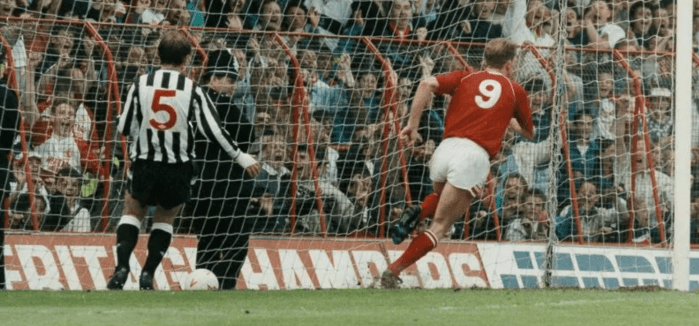
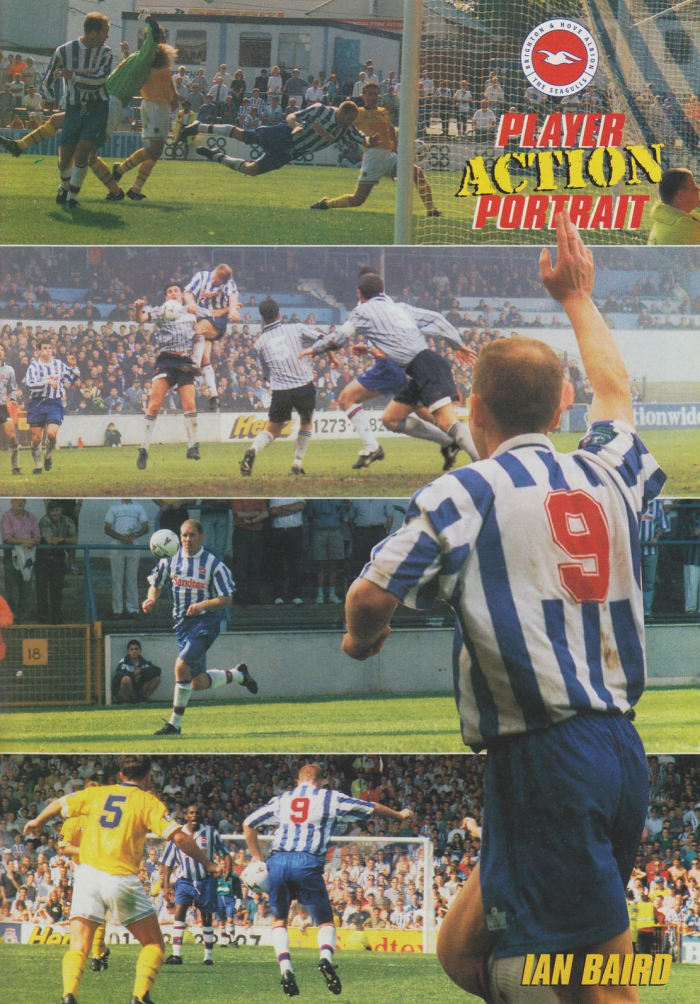
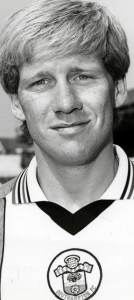

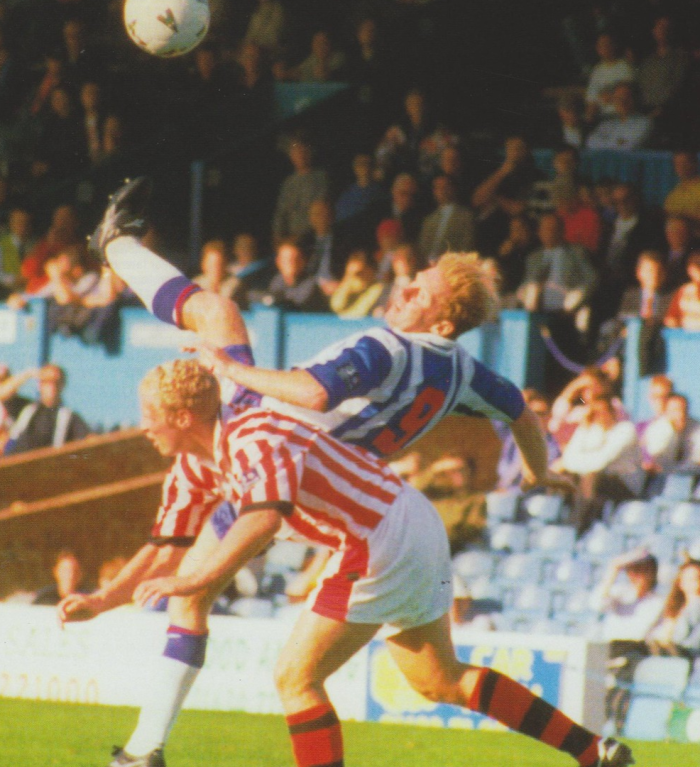

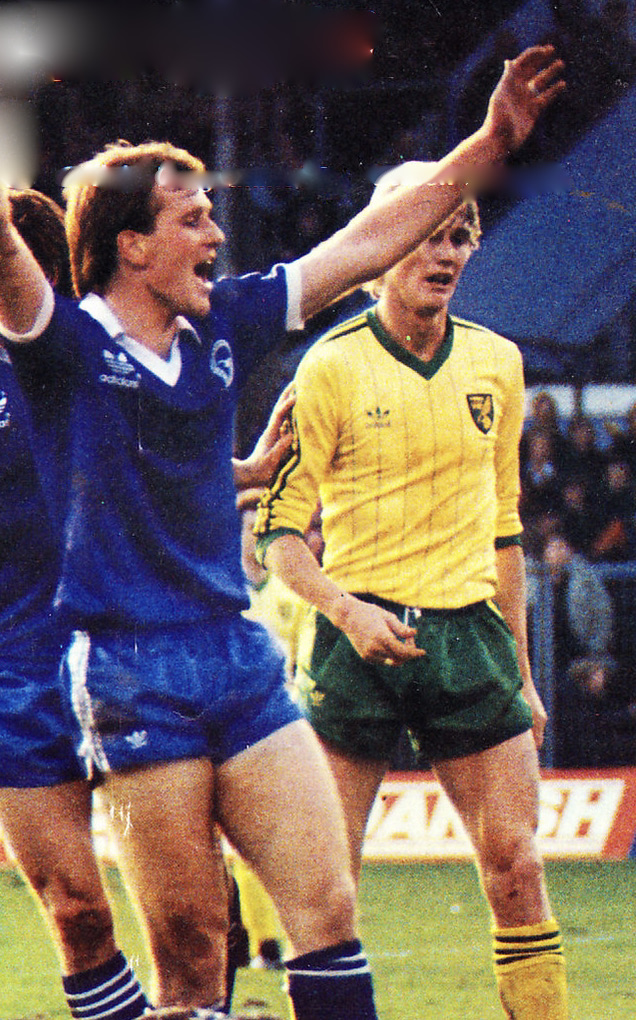

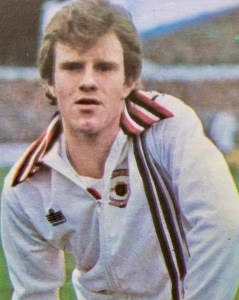
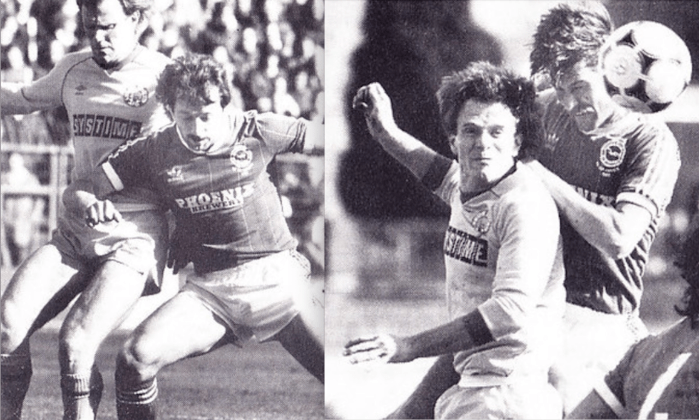
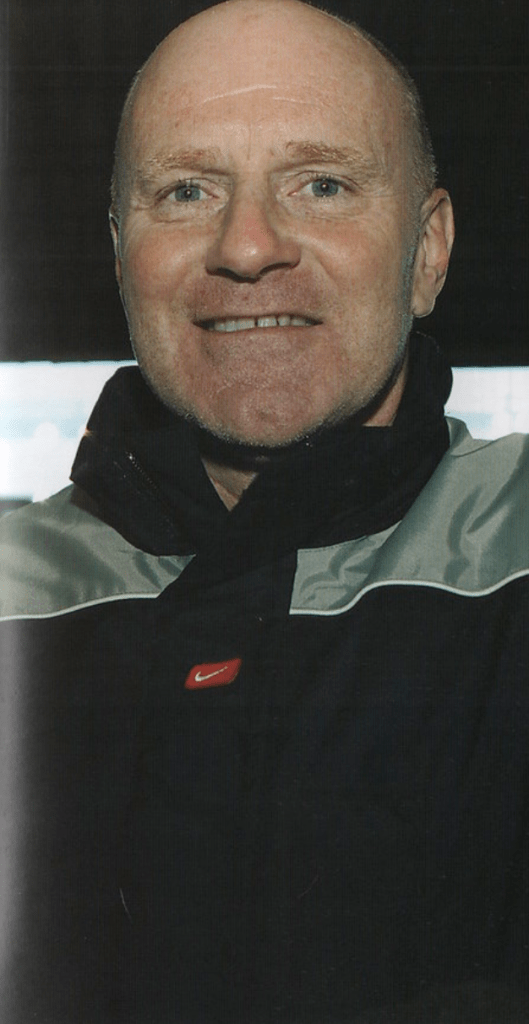

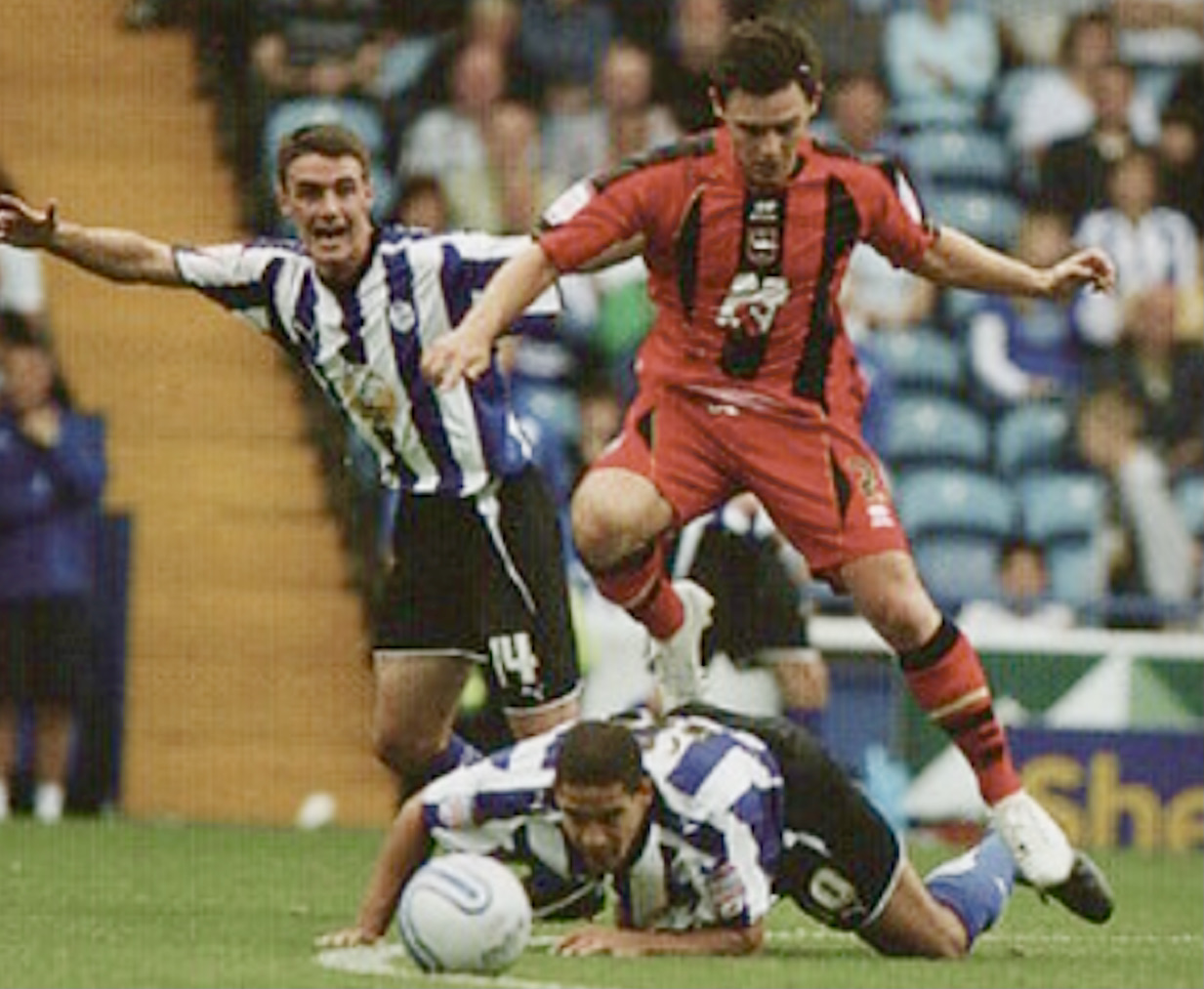




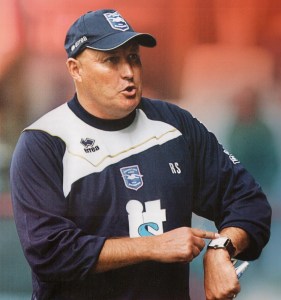

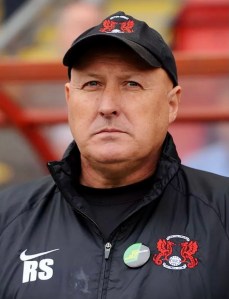

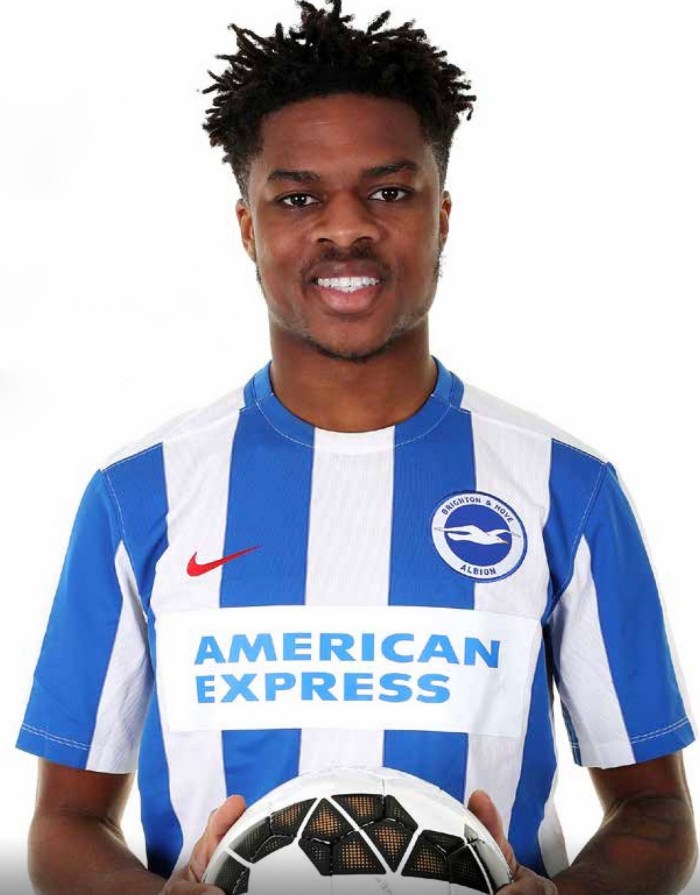


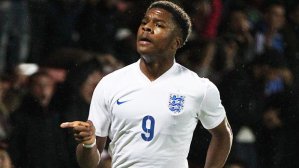

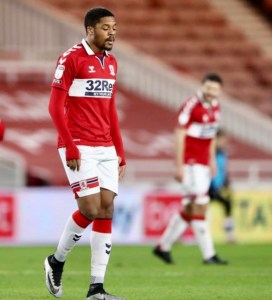
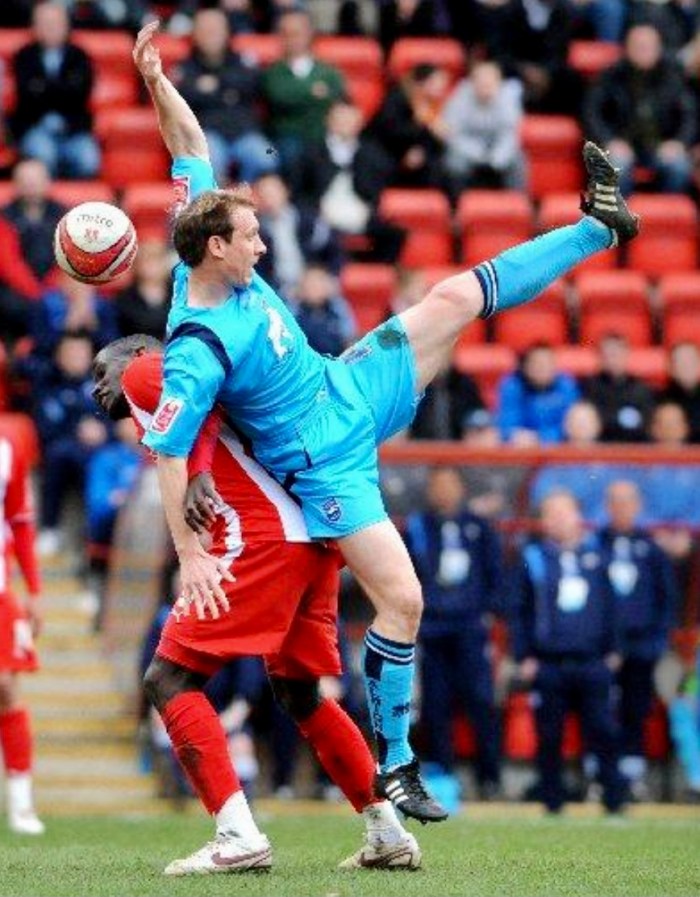
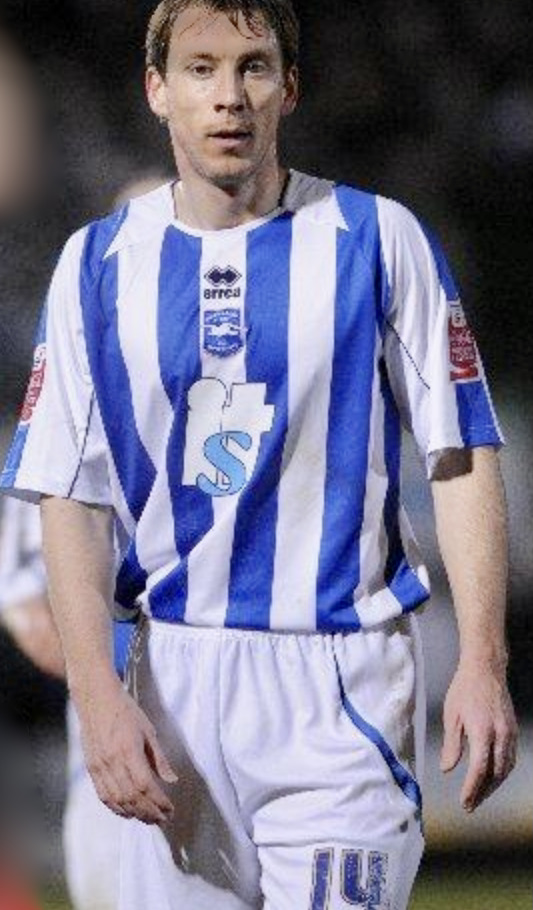

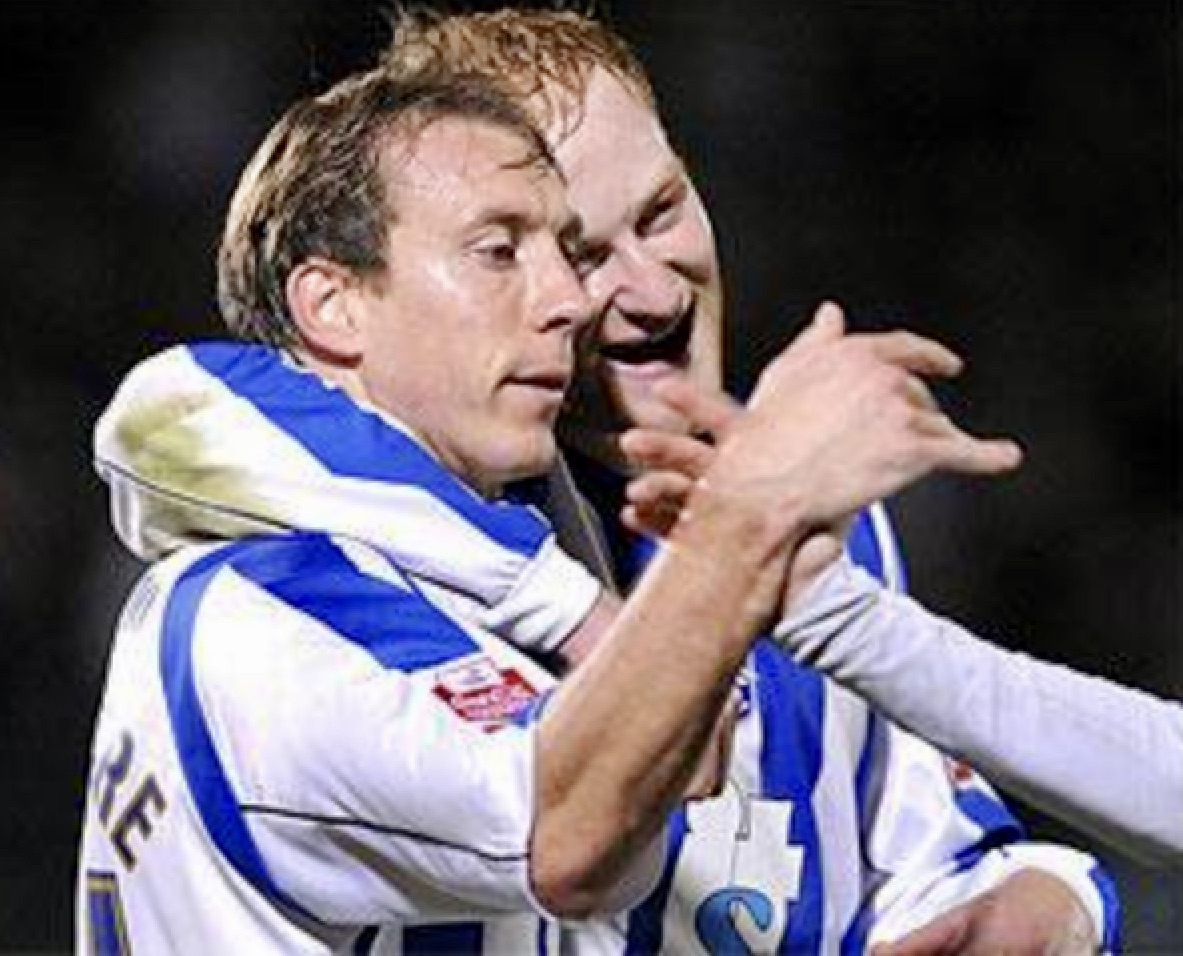
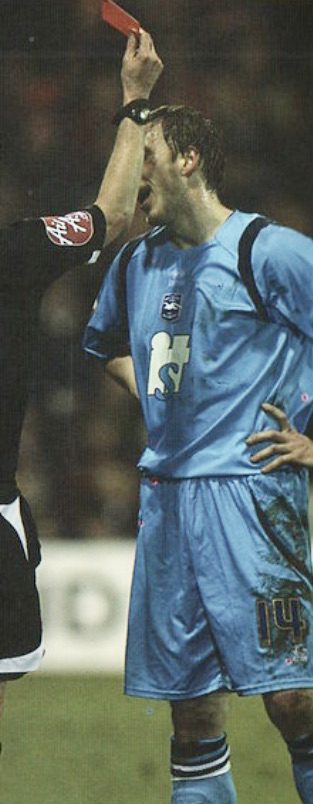


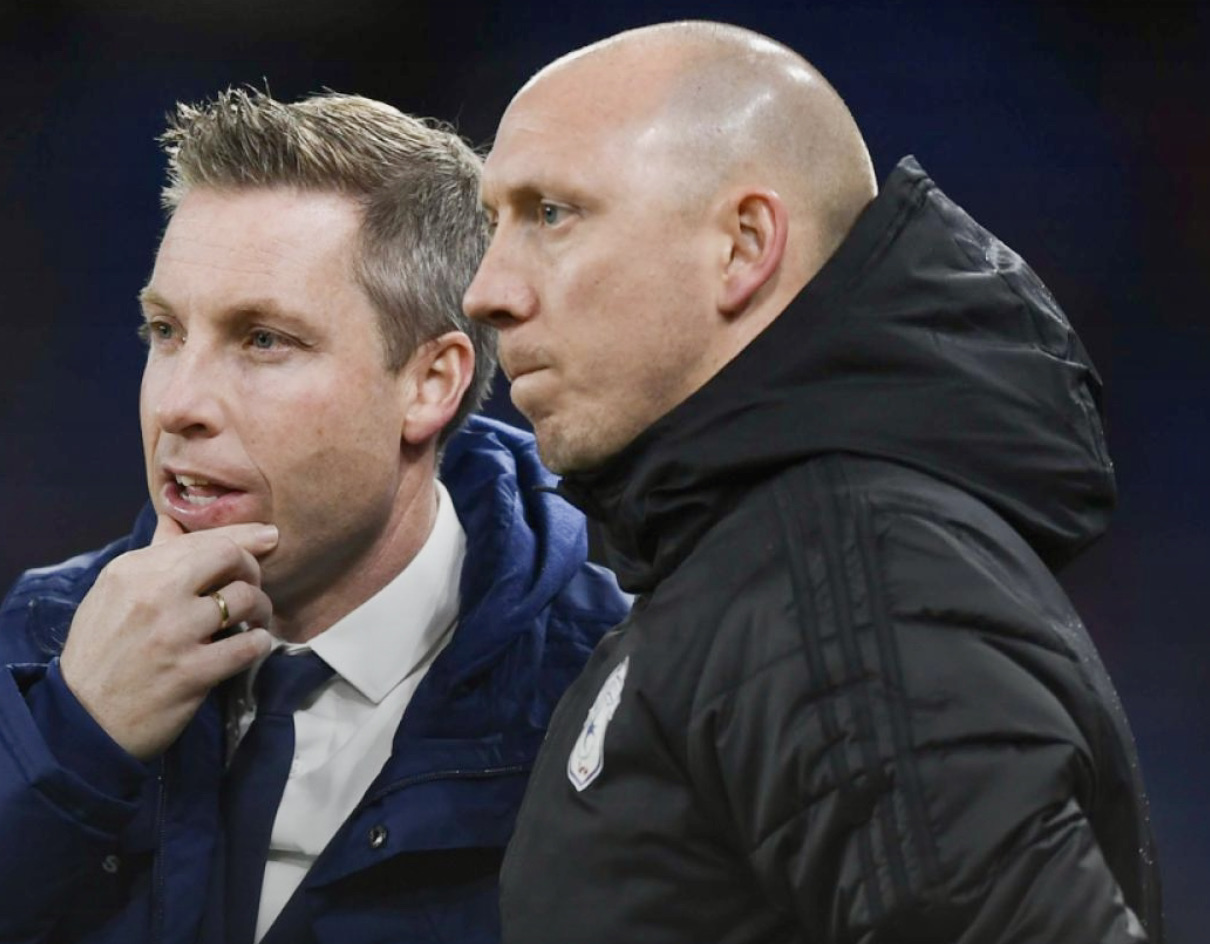


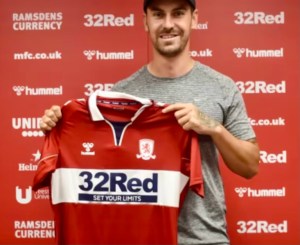

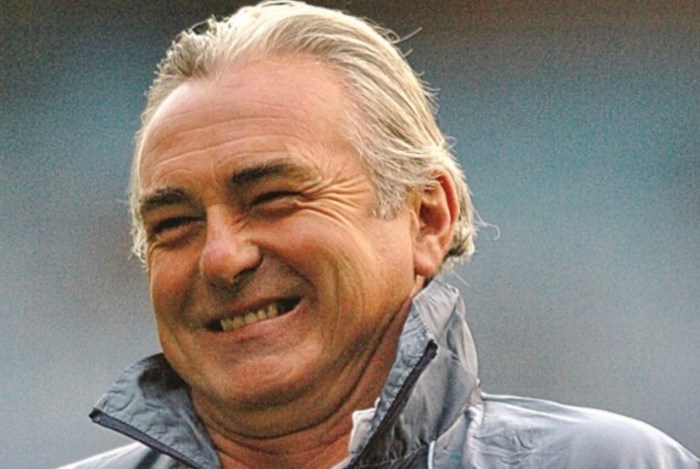



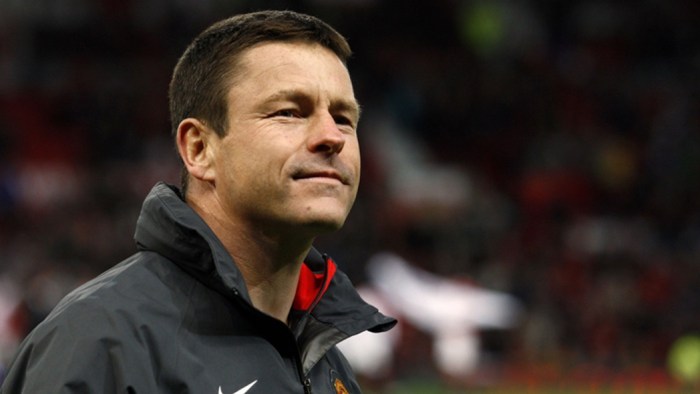
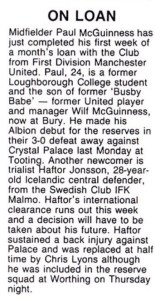
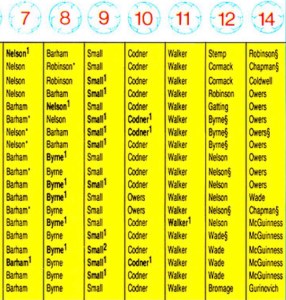
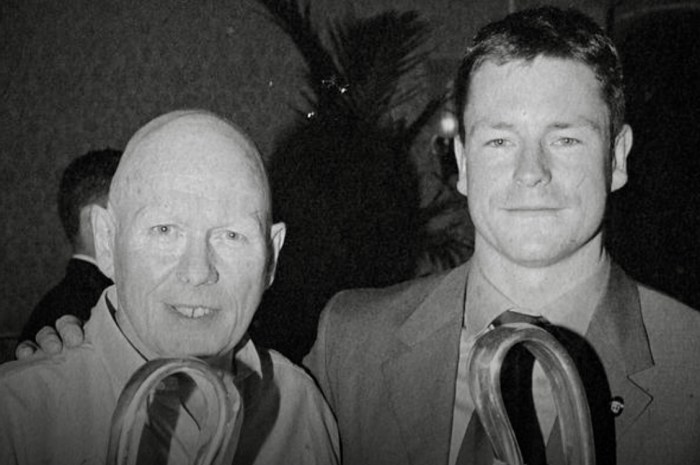
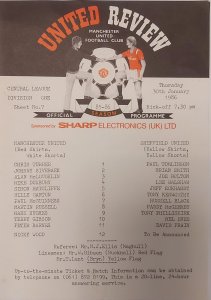
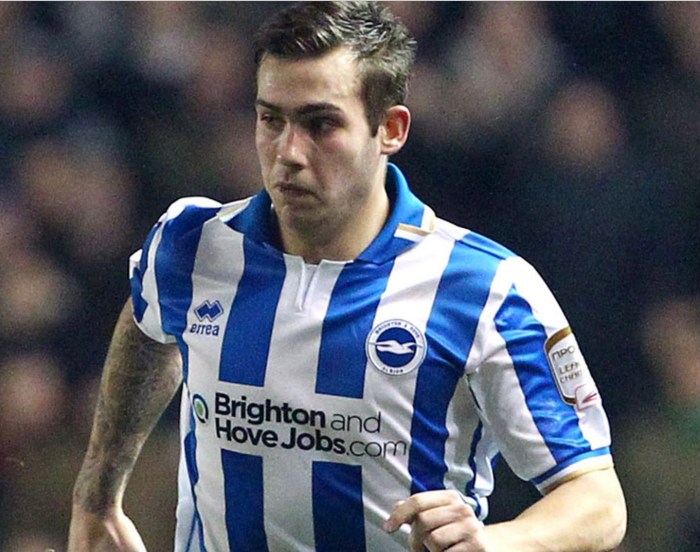



 In parallel lines