Even fearsome John McGrath couldn’t stop the rot

IN ALBION’S bleak midwinter of 1972-73, manager Pat Saward was desperate to try to reverse a worrying run of defeats.

The handful of additions he’d made to the squad promoted from the old Third Division in May 1972 had not made the sort of improvements in quality he had hoped for.

An injury to Norman Gall’s central defensive partner Ian Goodwin didn’t help matters and Saward chopped and changed the line-up from week to week to try to find the right formula.

Previously frozen out former captain John Napier was restored for a handful of games (before being sold to Bradford City for £10,000). The loan ranger’ (as Saward was dubbed for the number of temporary signings he brought in) then tried Luton Town’s John Moore in Goodwin’s absence.

Youngster Steve Piper was given his debut at home to high-flying Burnley, but Albion lost that 1-0. Then Saward tried left-back George Ley in the middle away to Preston, but that didn’t work either. North End ran out comfortable 4-0 winners with Albion’s rookie ‘keeper Alan Dovey between the sticks after regular no.1 Brian Powney went down with ‘flu.
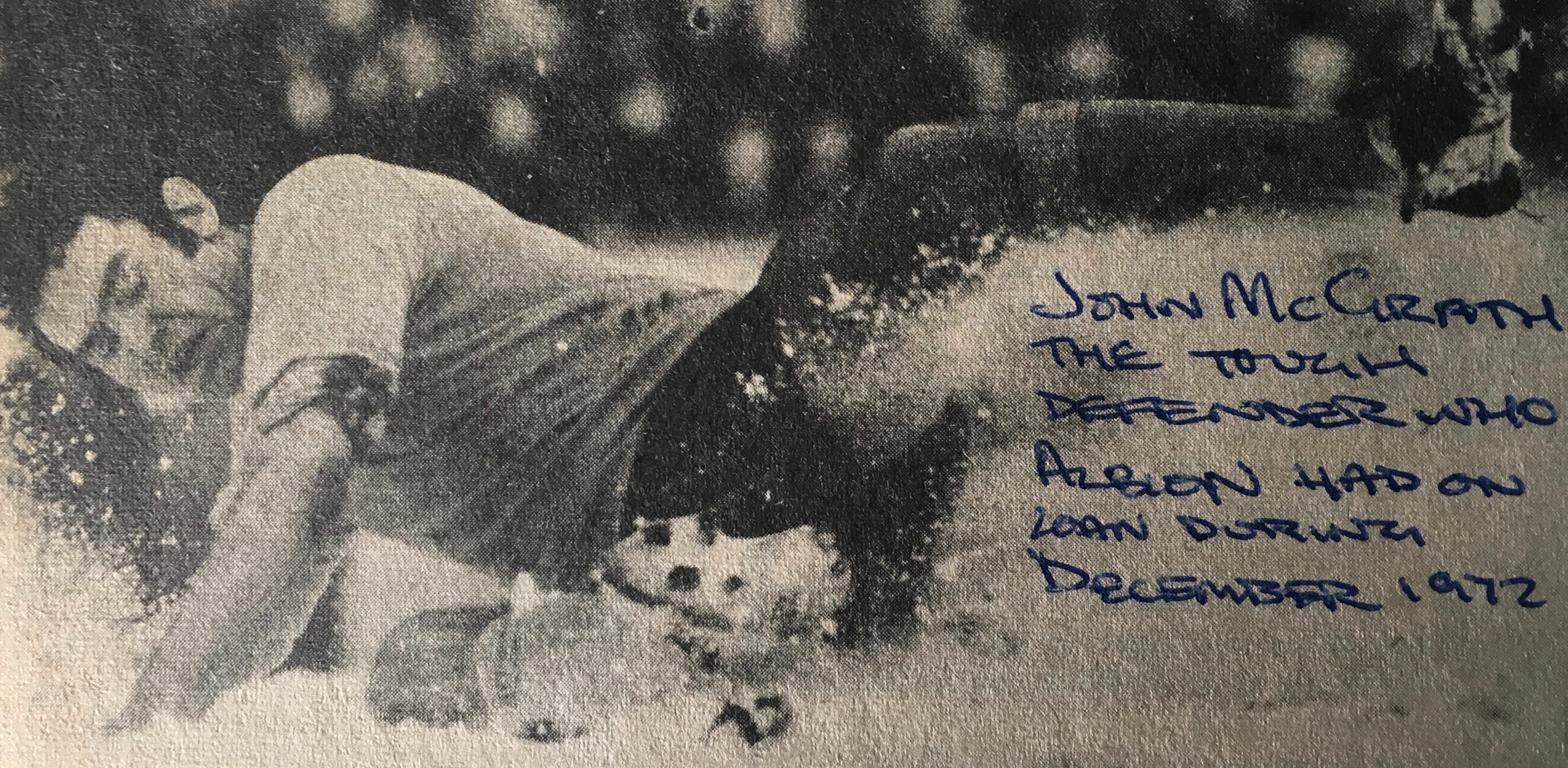
As December loomed, and with Goodwin still a couple of weeks away from full fitness after a cartilage operation, Saward turned to John McGrath, a no-nonsense, rugged centre-half who had played close on 200 games for Southampton over five years.

“With his rolled-up sleeves, shorts hitched high to emphasise implausibly bulging thigh-muscles, an old-fashioned haircut and a body dripping with baby oil, ‘Big Jake’ cut an imposing figure,” to quote the immensely readable saintsplayers.co.uk.

In Ivan Ponting’s obituary in the Independent following McGrath’s death at 60 on Christmas Day 1998, he reckoned his “lurid public persona was something between Desperate Dan and Attila the Hun”.

Although McGrath had begun the 1972-73 season in the Saints side, the emerging Paul Bennett had taken his place, so a temporary switch to the Albion offered a return to first team football.

Albion had conceded eight goals in three straight defeats and hadn’t registered a goal of their own, so, even though the imposing centre-half was approaching the end of a playing career that had begun with Bury in 1955, it was hoped his know-how defending against some of the best strikers in the country might add steel in the heart of the defence, and stem the flow of goals.

In short, it didn’t work. McGrath played in three matches and all three ended in defeats, with another eight goals conceded.

In his first match (above left), Middlesbrough won 2-0 at the Goldstone. At least the deficit was slimmer in his second game: a 1-0 loss away to George Petchey’s Orient in which Lewes-born midfielder Stan Brown played the last of nine games on loan from Fulham.

McGrath’s third match saw Albion succumb to a thrashing at Carlisle United. By then, Brighton had lost five in a row and still hadn’t managed to score a single goal. Stalwart Norman Gall was dropped to substitute to allow the returning Goodwin to line up alongside McGrath, and Bert Murray led the side out resplendent in the second strip of red and black striped shirts and black shorts.

Carlisle hadn’t read the script, though, and promptly went 5-0 up. To compound Albion’s agony, with 20 minutes still to play, goalkeeper Powney was carried off concussed and with a broken nose.

In those days before substitute goalkeepers, Murray (who’d swapped to right-back that day with Graham Howell moving into his midfield berth) took over the gloves. Miraculously, Albion won a penalty and because usual spot kick taker Murray was between the sticks, utility man Eddie Spearritt took responsibility having relinquished the job after a crucial miss in a game in 1970.

Thankfully, he buried it, finally to make a much-awaited addition to that season’s ‘goals for’ column.

No more was seen of McGrath, however. Gall was restored to the no.5 shirt and was variously partnered by Goodwin, Piper and, towards the end of the season, Spearritt.

After another heavy defeat, 4-0 at Sunderland, which had seen another rare appearance by Dovey in goal, he was transfer-listed along with Gall and Bertie Lutton, as Saward pointed the finger. Lutton got a surprise move to West Ham but Gall stayed put and Dovey was released at the end of the season without playing another game.

The run of defeats eventually extended to a total of 13 and was only alleviated after a big shake-up for the home game versus Luton Town on 10 February.

Powney, who’d conceded five at Fulham in the previous game, was replaced by Aston Villa goalkeeper Tommy Hughes on loan; out went experienced striker Barry Bridges in favour of rookie Pat Hilton and exciting teenage winger Tony Towner made his debut. Albion won 2-0 with both goals from Ken Beamish, and the monkey was finally off their backs.

Although the following two games (away to Bristol City and Hull) were lost, results did pick up, but it was all too little too late and Albion exited the division only 12 months after their promotion.

Born in Manchester on 23 August 1938, McGrath sought unsuccessfully to get into the game as an amateur with Bolton Wanderers but at 17 he joined Bury who were in the old Division Two at the time.

Although they were subsequently relegated, McGrath was part of the 1961 side that went on to win the Third Division Championship. By the time they lifted the trophy, though, he had moved on to Newcastle United for a fee of £24,000, with Bob Stokoe (later renowned for steering Second Division Sunderland to a famous FA Cup win over Leeds United in 1973) a makeweight in the transfer.

It was a busy time for the young defender. On 15 March 1961, he made his one and only England Under-23 appearance against West Germany at White Hart Lane, Tottenham, playing alongside future World Cup winners George Cohen at right-back and the imperious Bobby Moore.

Also in the young England side for that 4-1 win was Terry Paine, who would later become a teammate at Southampton.

Newcastle had hoped the defender would prevent their relegation from the top flight, but it didn’t happen as they went down having conceded 109 goals; their worst ever goals against tally.

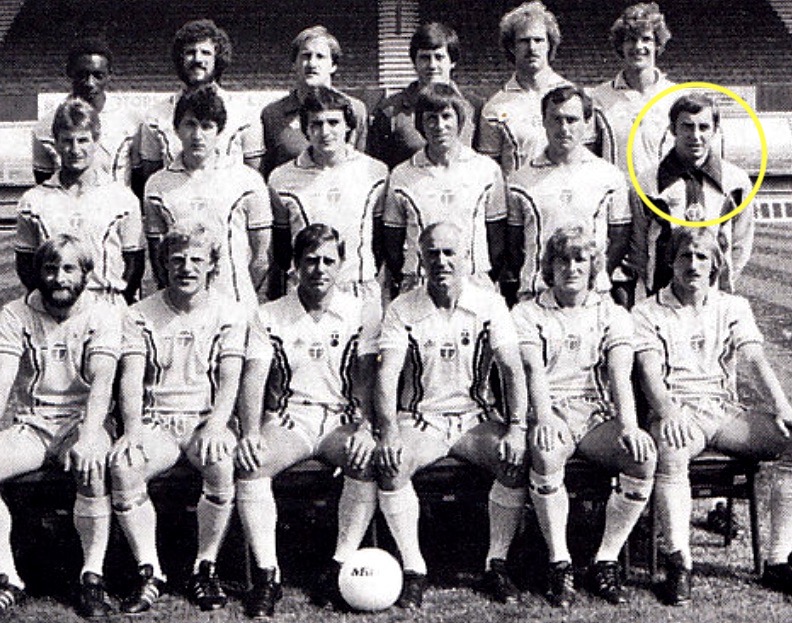
Joe Harvey eventually succeeded Charlie Mitten as manager as Newcastle adapted to life back in the Second Division, and McGrath (below left and, in team picture, back row, far left) played 16 matches in a side in which full-back George Dalton (below, back row, far right) had started to emerge.
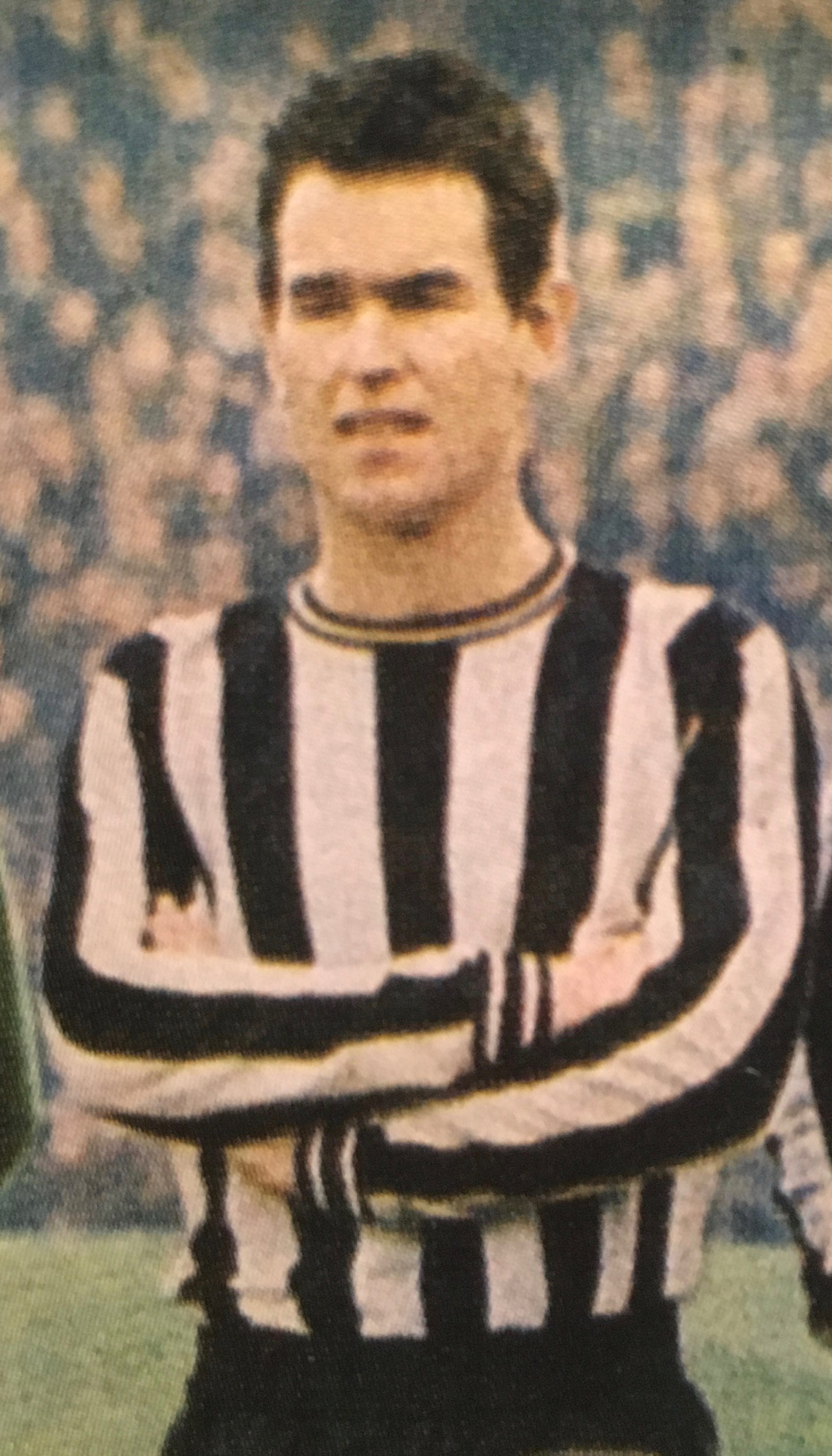
Future Brighton captain Dave Turner was one of the successful FA Youth Cup-winning side Harvey inherited, but his first team outings were rare and he was sold to the Albion in December 1963.

Meanwhile, McGrath really established himself, featuring in 41 games in 1963-64 (Dalton played in 40) as Newcastle finished in a respectable eighth place.

The 1964-65 season saw McGrath ever-present as Toon were promoted back to the First Division, pipping Northampton Town to the Second Division championship title by one point. McGrath – “a monster of a centre-half, who was as tough as he was effective” was “the cornerstone” of the promotion side, according to newcastleunited-mad.co.uk.

McGrath retained his place in Toon’s first season back amongst the elite but the arrival of John McNamee and the emergence of Bobby Moncur started to restrict his involvement.

That pairing became Harvey’s first choice, and young Graham Winstanley was in reserve too, so, after playing only 11 games in the first half of the 1967-68 season, McGrath, by then 29, was sold to Southampton for £30,000. He’d played 181 games for United.

In Ted Bates’ Saints side, McGrath was a rock at the back alongside Jimmy Gabriel, although, as saintsplayers.co.uk records, he wasn’t too popular with opposing managers: Liverpool’s Bill Shankly accusing Southampton of playing “alehouse football”.

He went on to make 194 appearances (plus one as a sub) for Saints, before becoming youth coach at the club, part of the first team coaching staff when Southampton won the FA Cup in 1976, and then reserve team manager.

Not content with a backroom role, McGrath took the plunge into management and made his mark with two clubs in particular: managing Port Vale on 203 occasions and Preston North End in 205 matches.

According to Rob Fielding he became a cult hero at Vale Park with his unorthodox ways, once putting FIFTEEN players on the transfer list…which resulted in a six-match unbeaten run!

Winger Mark Chamberlain, who went on to play for Stoke and England, and later Brighton, was one of the young players McGrath introduced.

Long-serving Vale defender Phil Sproson, who was originally signed by former Albion midfielder Bobby Smith, rose to prominence under McGrath and said: “I’ll always be grateful because he taught me how to play centre-half.”

Fielding reckoned McGrath’s finest hour was steering Vale to promotion from the old Fourth Division in 1982-1983, even though by then he had sold Chamberlain to Stoke.

Against a backdrop of player unrest and what were perceived to be ill-judged moves in the transfer market, McGrath was sacked in December 1983 and replaced by his assistant, John Rudge.

He wasn’t out of work for long, though, and took the reins at basement side Chester City where he was in charge for just under a year. Most notably in that time, he gave future Arsenal and England defender Lee Dixon his first taste of regular football.

While success eluded him at Chester, his arrival at Preston in 1986 proved fruitful, North End striker Gary Brazil recalling: “It needed a catalyst and it needed a change and very fortunately for the club and for the players, John McGrath came walking through the door who was like a Tasmanian devil. He came in and the world changed really, really quickly for the better.”

McGrath led Preston to promotion from the bottom tier in 1987 with a squad built around Sam Allardyce and veteran Frank Worthington.
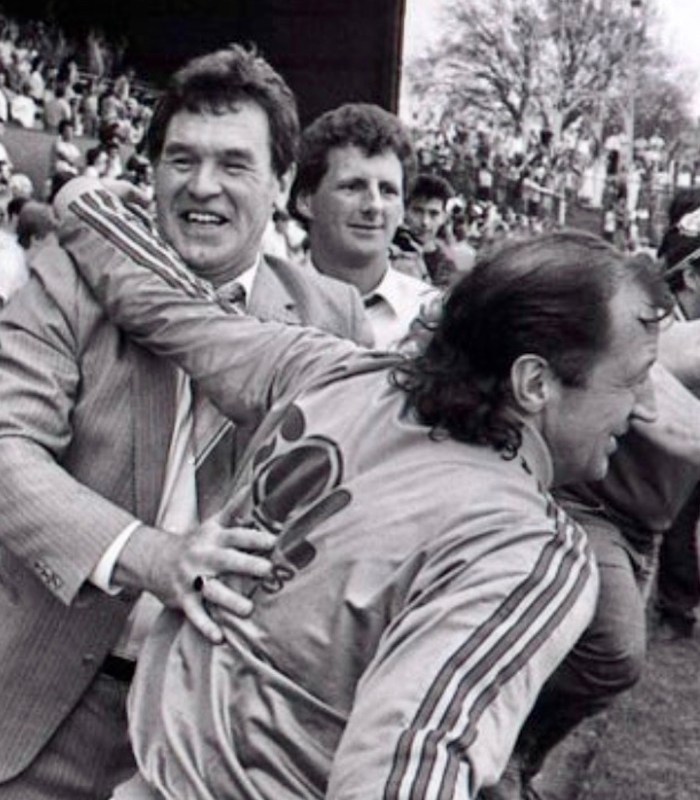
Manager McGrath and Frank Worthington celebrate promotion

“Frank Worthington was a delight to have around and set a real high standard for a lot of us in terms of how we train,” said Brazil. “He just stunned me how he was always first out training.”

The turnround McGrath oversaw, with Deepdale crowds rising from below 3,000 to more than 16,000, rejuvenated the club and the city.

Brazil reminisced: “It was the best year of my football life that year that we got promoted. It wasn’t just an experience playing but an experience of a group of players and how well they could bond and John was integral to that. He was a very, very clever man.”

Indeed McGrath was viewed as having saved North End from the ignominy of losing their league status, the club having had to apply for re-election the season before he arrived at Deepdale.

Edward Skingsley’s book, Back From The Brink, features a black and white photograph of McGrath on its cover and tells the story of North End’s transformation under his direction.

Describing his appointment as “a masterstroke” he reckoned the club owed him a massive debt for masterminding their resurgence and subsequent stability.

“Without him, it is debatable whether Preston North End would even exist today, never mind play in the latest fantastic incarnation of Deepdale,” said Skingsley. “Thank goodness he caught Preston North End before it died.”

McGrath left Preston in February 1990 and had one last stab at management, this time with Halifax Town. He succeeded Saints’ FA Cup winner Jim McCalliog and was in charge at The Shay for 14 months but left in December 1992. Five months later they lost their league status, finishing bottom of pile.

The silver-tongued McGrath was subsequently a popular choice on the after-dinner speaking circuit and a pundit on local radio in Lancashire but died suddenly on Christmas Day 1998.
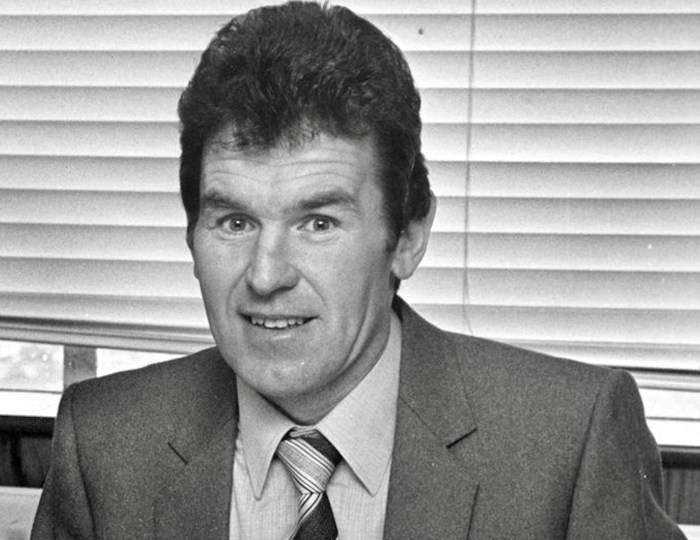
Flipping winger Kazenga LuaLua followed brother to Toon

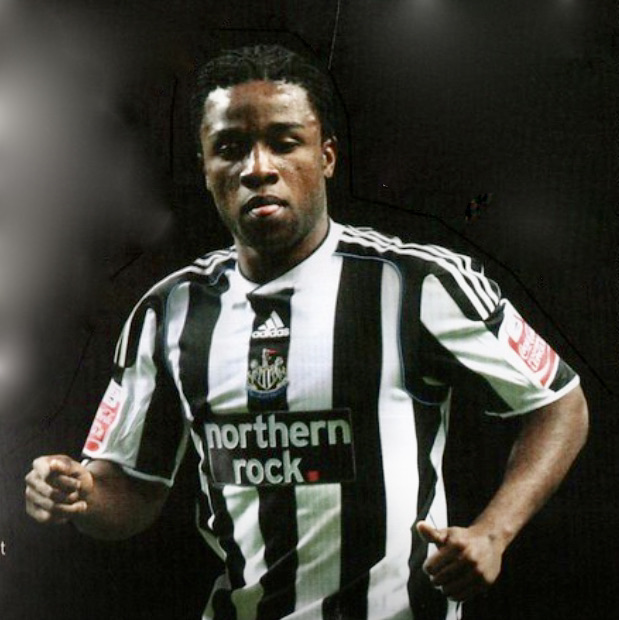
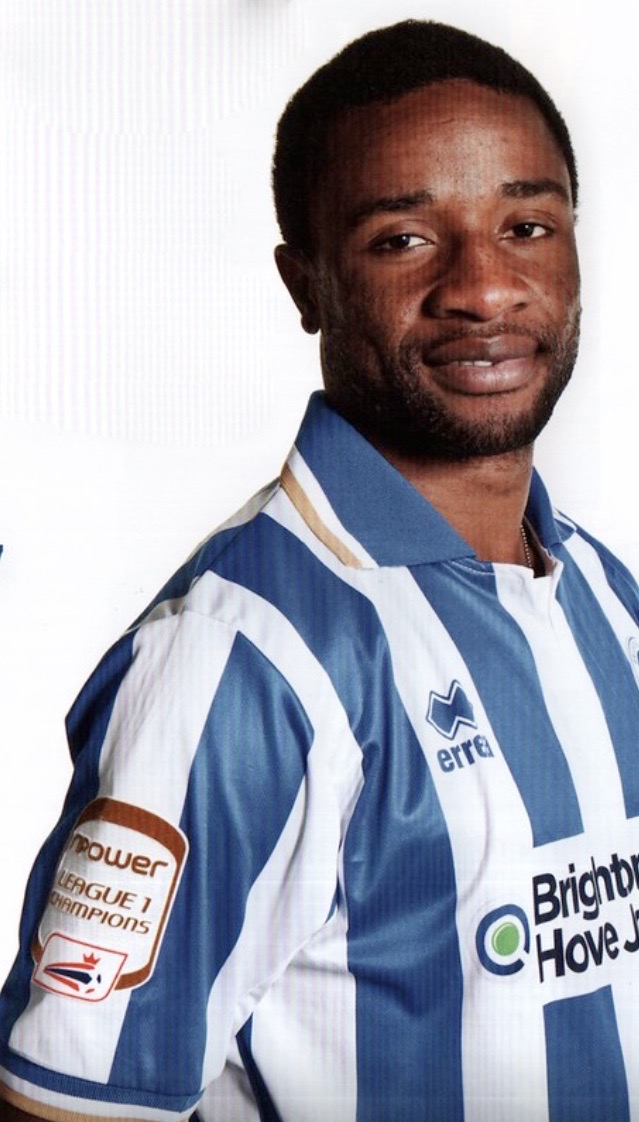
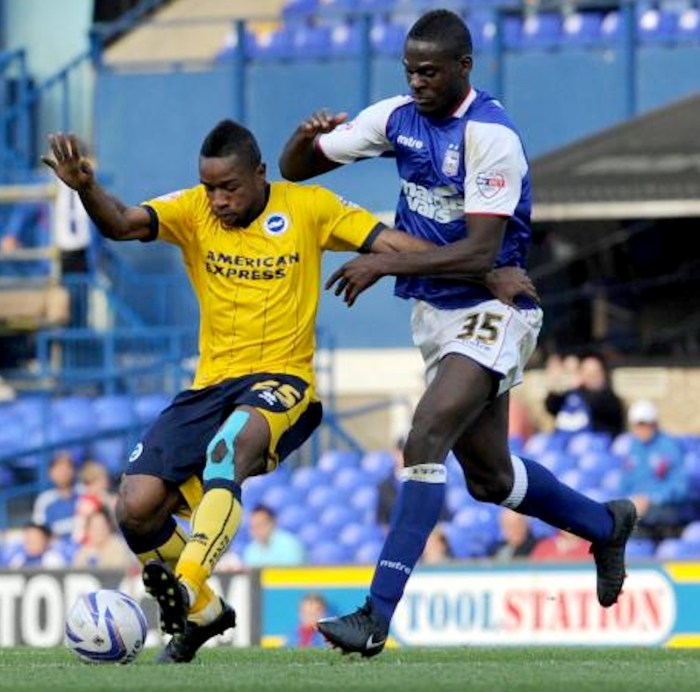
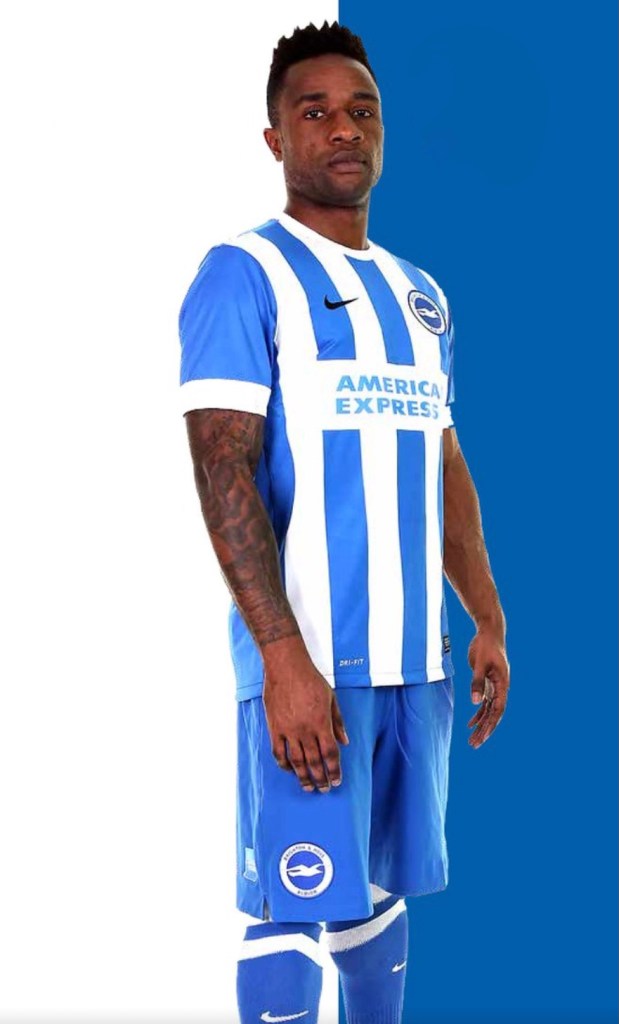
EXPLOSIVE pace, a feint of the shoulder, and a thunderbolt shot were trademarks of Kazenga LuaLua’s contribution to Brighton’s rise from the third tier.

Not to mention a somersault flipping goal celebration that delighted supporters but gave managers kittens as they could only see an injury in the making.

Sadly, that explosive pace came at a price — hamstrings that were all too often easily damaged, resulting in lengthy spells on the treatment table and in recovery. Ankle, knee and groin injuries also sidelined the pacy winger for long periods.

Left-sided LuaLua had three spells on loan to Brighton from Newcastle United before joining permanently, and his six seasons in Brighton colours were rarely dull. He was undoubtedly a crowd-pleaser when he was on top of his game, leaving full backs trailing in his wake to lay on chances or cutting inside and netting some memorable goals.

However, he invariably made most impact when entering the fray from the substitutes’ bench, although the ‘supersub’ moniker frustrated him.

“You don’t just want to come on as a sub,” he told the matchday programme. “Obviously it’s good in one respect as it means the team needs you, but as a footballer you want to be in the starting 11 in every game.

“I don’t view myself as just an impact player and I know that I can play 90 minutes of football.”

Albion fans first saw the Congolese game-changer in February 2010. Manager Gus Poyet had been tipped the wink about LuaLua by his former Swindon and Leeds managerial partner, Dennis Wise, who had been executive director at Newcastle.

Ashley Barnes celebrates with Albion’s speedy loanee winger

LuaLua started nine games (and went on as a sub twice) as Albion consolidated their position in League One. His impact on the side was appreciated by his teammates, as defender Tommy Elphick explained to the Argus in March 2010. After the 19-year-old winger had run Exeter full-back Steve Tully ragged, Elphick said: “He’s unbelievable for us. He really does stretch the game for you.

“It’s that raw pace and power which I personally think we have been missing for the last two years. Benno (Elliott Bennett) gives you something totally different. He is more technical. Kaz reminds me of Bas Savage in the sort of job he used to do for us in stretching the game and getting us up the pitch.

“It gives the defenders a chance to get to the halfway line and defend a bit higher.”

When Poyet secured his services for a second loan spell for the opening half of the 2010-11 season, he was delighted. “Kazenga is unique. He is pure power and speed,” said the manager. “That nowadays in football is very important and we didn’t have that.

“I don’t think there is another player like him in the division. He gives us something totally different.

“We are very pleased to have him. We know what we are getting and that is the key. He will fit in as a player, and in the dressing room.”

Poyet added: “He made a very big impact during his time here last season and I am hoping he can do the same and add a few goals to his game this time around.”

No sooner said than done; LuaLua marked his second debut with a 25-yard rocket of a free-kick to give Albion the lead in a 2-0 home win over MK Dons.

LuaLua departs the action injured

Sadly, after just seven starts plus four appearances off the bench, his involvement in that promotion season came to an end in November 2010 when a bad tackle in a 3-1 away defeat at Hartlepool left him with a broken ankle.

Born in Kinshasa, Zaire (now the Democratic Republic of the Congo), on 10 December 1990, LuaLua came to England as a small child with his father and famous older brother, Lomana.

It was from Lomana that he perfected the thunderbolt shot — and the celebratory somersault.

“I have always had a hard shot on me,” he told the Albion matchday programme. “I think a lot of it comes from when I was a boy back in Newcastle and I would play with my brother.

“He would always strike a ball hard and I would try to copy him.”

It was football all the way from a young age, LuaLua recalled. “When I was growing up in Kinshasa, I remember skipping school to play football with my friends,” he said. “We were football mad and, as my brother had already moved to England, I wanted to follow in his footsteps.

“Lomana got me in at Newcastle. He moved to London with our dad some time earlier, but once he’d broken into football and moved from Colchester United up to Newcastle, then the rest of the family came over from our homeland.

“I had only been in the country a couple of months when Lomana arranged for me to have a trial at Newcastle and I was taken on straight away. It was fantastic for me and also for him; we’d go into training together and he was always there for advice when I needed it. He has been a massive influence on my career.”

The winger continued: “It was tough to begin with; I was in a new country and had to go to a new school, which was hard in itself given where I’d come from, and then I was brought into a professional football club and one of the biggest in the country.

“But Newcastle were very helpful. All the coaching staff were great towards me, and helped me find my feet. I learned such a lot from them and I quickly made new friends. I was close to Nile Ranger, Sami Adjei, Sami Ameobi, many players, and I learnt so much in terms of coaching and how to conduct myself as a professional.”

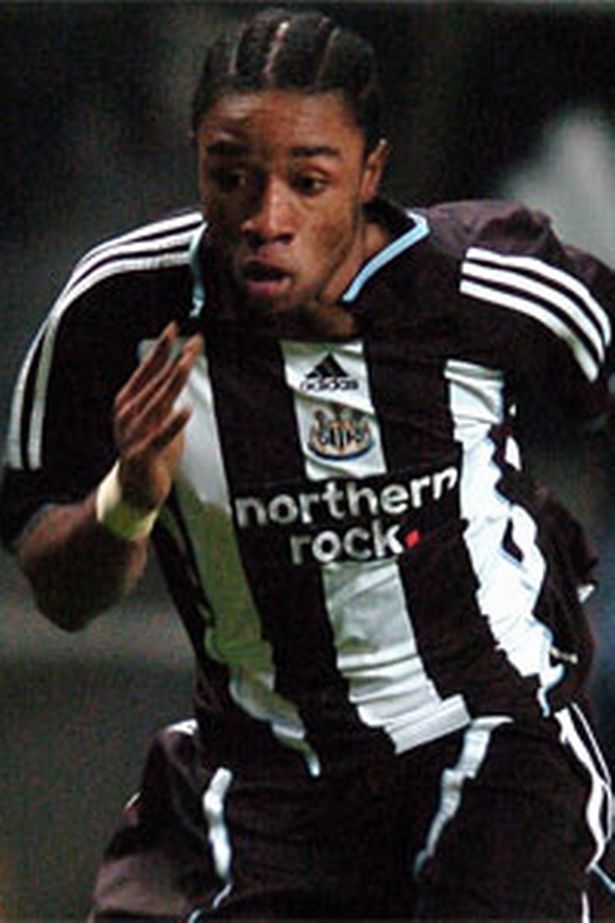
Kazenga progressed through the Toon academy and was part of the Toon youth team that reached the semi-finals of the FA Youth Cup in 2005-06. He even earned a first-team squad call-up while still only 16, although he didn’t get to play.

LuaLua’s Newcastle chances were limited

Eventually, he got his first team chance as a substitute for Damien Duff in a 0-0 FA Cup third round match at Stoke in January 2008, right at the end of Sam Allardyce’s reign on Tyneside. It was Michael Owen’s first FA Cup game for Newcastle.

The game was being shown live on TV so LuaLua’s extended family back home in the DR Congo were able to see the moment. “I was one of the club’s youngest debutants at 17,” he said.

He also went on (for Charles N’Zogbia) in the replay at St James’s Park which Toon, under caretaker boss Nigel Pearson, won comfortably 4-1. “To play in front of 52,000 people took my breath away,” he said.

He made his Premier League debut three days later, going on as an 80th-minute sub for Duff at St James’s Park, in Kevin Keegan’s first match back in charge — a disappointing 0-0 draw with Bolton Wanderers.

Although a non-playing sub on other occasions, he got on in the last game of the season, replacing Jose Enrique in the 79th-minute as United went down 3-1 to Everton at Goodison Park.

Against the backdrop of the tumultuous 2008-09 season, when Toon were relegated from the Premier League after a veritable managerial merry-go-round, LuaLua made just four substitute appearances (three in the league and one in the FA Cup), and in January 2009 he was sent out on loan to Doncaster Rovers, then in the Championship, where he played four matches in six weeks under Sean O’Driscoll.

Once Toon settled on Chris Hughton to get them promoted from the Championship, LuaLua found chances hard to come by.

He started in a Carling Cup second round match at home to Huddersfield Town, when Toon edged it 4-3, but picked up a groin injury playing in the next round, a 2-0 defeat at Peterborough in September 2009 (future Brighton teammate Craig Mackail-Smith was one of the Posh scorers).

Three months later, with his fitness restored, he was itching to be given a first team chance and told the Chronicle: “I want to be part of this team. My aim has always been to play for the first team at Newcastle United.

“I’ve been here a long time, and last season I was involved in the first team before going out on loan.”

“I have been playing for the reserves for a while now, and I’m keen to play football at first team level.

“I would go out on loan if they let me.”

That opportunity finally came a couple of months later when Hughton sanctioned the move to Brighton. LuaLua told Albion matchday programme reporter Luke Nicoli: “They are a big club and are using a lot of experienced players at the moment, so it’s been difficult for me to break into the team.

“I’ve been playing reserve team football a lot and I just want to be playing games that mean something again. I want to be playing for points and I want to be learning all the time. I want to be in a position where I can return to Newcastle a better player.”

Immediately before re-joining the Seagulls for his second loan spell, LuaLua made only his second start for Newcastle in a 3-2 Carling Cup win over Accrington Stanley and was selected by Sky Sports as the Man of the Match.

After that broken ankle at Hartlepool had taken him back to Newcastle to recuperate, he recovered to make a Premier League appearance in the penultimate game of the season, a 2–2 draw away to Chelsea. Hughton’s successor, Alan Pardew, sent him on as a 69th minute substitute for Shane Ferguson and it was LuaLua’s run and cut inside around Branislav Ivanovic that won Toon a corner from which Steven Taylor scored a late equaliser.

Nevertheless, Poyet wasn’t giving up on taking LuaLua back to the Seagulls once more and, in July 2011, he took him on another six-month deal with a view to a permanent move.

Poyet told the club website at the time: “Kazenga was one of our main summer targets and I am delighted we have finally come to an agreement with Newcastle. I am sure the fans will be equally delighted to see him back at the club.”

The permanent move went through a month before the loan was due to expire and LuaLua told the club website: “Since I came to the club it has always been my intention to sign a permanent deal so this is a really happy day for me.

“When you are on loan you are never quite sure what the future will hold, but now I’ve signed this contract I can put my mind at rest and focus completely on my football.

“I have come here because I feel Brighton is the place where I can really kick on with my career. At Newcastle I wasn’t really involved in the first-team squad and at my age I want to start playing regular football.

“From the first day I came to the club on loan, everyone was so friendly and that helped me settle very quickly. Now I want to pay that back with my performances on the pitch.”

Albion famously suffered an ignominious 6-1 drubbing in the fifth round of the FA Cup at Anfield in February 2012, but it was LuaLua who temporarily gave the Seagulls parity after Martin Skrtel’s early opener for Liverpool.

LuaLua unleashed an unstoppable 25-yard shot past ‘keeper Pepe Reina and BBC Sport’s Neil Johnston said: “It was a goal worthy of winning a Wembley FA Cup Final.”

Few doubted LuaLua’s ability but inconsistency was one of his demons which often led to him being introduced as an impact substitute rather than starting games.

Poyet wasn’t afraid to explain his selection policy and in March 2012, when he gave the winger a start against high-flying Derby County, he was rewarded with a 2-0 win at the Amex.

“I thought it was the game for Kazenga,” Poyet told the Argus. “I know he played well in his first spell and my first season here, but I don’t remember a better performance from Kazenga for Brighton.

“It was his best performance against a team that has been in the Premier League and in the top ten in the Championship. That shows what he can do. It was his game and he’s a happy boy.

“He has probably been a little annoyed not to be playing, but that is natural and he is always very respectful and always talking to me.”

A troublesome knee affected LuaLua’s involvement

LuaLua ended up playing under four different Albion managers and Oscar Garcia quickly realised the limitations he faced when in September 2013 he told the Argus: “Kaz has a problem on his knee and he cannot play many minutes in all the games. We knew before if he had played for the whole game then maybe on Tuesday we cannot use him.

“Sometimes he has pain, sometimes not, but, if he plays many minutes, he has pain. He’s had this from the start of the season,” he said. “Sometimes he has to rest, he cannot train. We have to manage this.”

The following February, LuaLua was still troubled by knee tendon soreness but was contributing as a substitute.

For example, he went on to set up Leonardo Ulloa to score the only goal of the game at home to Leeds and Garcia told the Argus: “We thought in this game he could come off the bench and make an immediate impact and he did it.

“He is a player who can change a game. We are very happy with him, because every game when he has to come off the bench he comes on with the right attitude and plays really well.”

Happy days with Beram Kayal and Joe Bennett

Even though Sami Hyypia’s time in charge was short-lived, the winger impressed the new boss until a knee injury sidelined him in November 2014.

“He has the ability to hurt people one v one and maybe one v two as well sometimes,” said Hyypia. “He’s done well this season, he has been very concentrated all the time.”

By the time LuaLua returned to fitness, his old Newcastle coach and manager, Hughton, was at the helm.

LuaLua told the matchday programme: “It was difficult for me when he first came here because I was injured, but he was great with me, always stopping to talk to me about the injury, making sure I was okay, and he told me not to rush things. That’s what I’ve done and hopefully I can now show him what I can do on the pitch now that I’m fully fit.”

Although it was a few months before that happened, arguably LuaLua’s best spell with the club came at the start of the 2015-16 season, which coincided with a change of squad number for the player.

The returning Bobby Zamora resumed the no.25 that he’d worn during his first spell at Brighton, and at other clubs, and LuaLua admitted: “I had to give the number 25 to Bobby. There was no way I was going to refuse. He’s a legend at the club and it’s nice to have him back in the squad.”

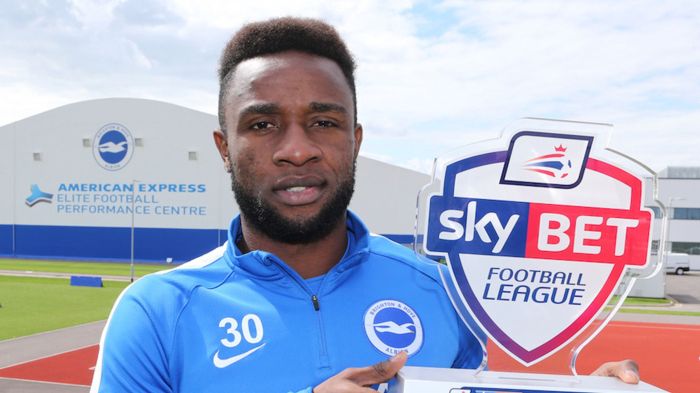
With 30 on his back, LuaLua scored four goals in the opening seven games and won the Championship Player of the Month award (above). Hughton was simultaneously Manager of the Month and said: “Kaz thoroughly deserves his award, he’s had a wonderful start. The area where he has excelled in his game is where he has got on the ball and provided an end product.”

Once again, though, injury brought the purple patch to an end. LuaLua sustained a groin injury in training that eventually needed surgery. Coach Nathan Jones told the Argus in December: “There is no real timescale on it because someone like Kazenga is so important to the squad and what we do. You can’t rush him and he is such a potent athlete, that’s the problem.”

Hughton also lost Solly March to injury that autumn but Rajiv van La Parra was brought in as a temporary solution. He already had Jamie Murphy as a wide option and then Anthony Knockaert and Jiri Skalak were added, so, by the time LuaLua had recovered, competition for places was intense.

The run-in to the end of the season saw him mainly in a watching brief from the bench, although he did play in successive matches in April – 2-1 wins away to Birmingham and Nottingham Forest.

LuaLua’s Albion days were clearly numbered as the 2016-17 season got under way. He started two League Cup games in August – the 4-0 win over Colchester United and the 4-2 victory over Oxford United, when he scored Albion’s second goal. But he only managed three league appearances as a substitute. By January, it was time for a change of scene, and he was sent on a half-season loan to QPR.

At least he got some games in Ian Holloway’s Championship side, appearing 11 times and scoring once. Having missed out on Albion’s promotion to the Premier League at the end of that season, it was no surprise that he returned on loan at Loftus Road at the start of the 2017-18 season.

However, he left west London at the beginning of December 2017, Rangers boss Holloway telling the Argus: “I don’t feel he was doing as well as some of my lads who I’ve brought here.

“Unless he rips it up and shows me – and he’s trying to – I think the loss of confidence and loss of his father has really hit him.”

In January 2018, LuaLua finally cut his ties with the Albion when he joined Chris Coleman’s Sunderland on a free transfer on a deal until the end of the season. By then 27, the winger told the Sunderland website: “I’m excited to be here and get back out on to the pitch because it’s been a long time without playing football.

“I know the North East well and I know Sunderland are one of the big clubs, not just in the North East but England, so I’m really excited to get started.”

An unfortunate turn of phrase because he didn’t start a game as Sunderland fell through the Championship trapdoor. He made just six substitute appearances.

Released at the end of that season, his former Brighton coach Jones revitalised what looked like a flagging career by signing him for promotion-chasing League One side Luton Town.

Jones told the club website: “He’s a fantastic talent. He has something that not many have, totally different from what we have here.

“He’s a quick, powerful, potent attacking player which is something that is in rare supply – and is something we felt we needed.

“The fact that we’ve been able to get him in and persuade him to come here is a good coup for us.”

And the player said: “I know Nathan from Brighton, and he’s a very good coach. He’s good at what he does, so it made it so easy for me to come in and train with the boys here.”

LuaLua spent three years at Kenilworth Road and clearly enjoyed a good relationship with their supporters. After he signed a new deal with the club following their promotion to the Championship, he told the club website: “The supporters have made me feel welcome since the moment I arrived here.

“When they get behind you, like they did since I have arrived, it gives you a massive buzz. It’s a really nice feeling. It was a really special season. I think they liked the way I play, they got behind me and I really appreciated it.”

Once again, though, his involvement was more as a substitute than a starter (37 starts plus 50 appearances off the bench) and when his contract came to an end in the summer of 2021, he decided to continue his career in Turkey, once again following in the footsteps of brother Lomana, who played for a number of Turkish clubs.

Kazenga signed a two-year deal with second tier side Gençlerbirliği in Ankara and, in November 2021, Argus reporter Brian Owen caught up with him.

“It was the right time for me to move on with my football career,” he said. “I always wanted to go abroad before I stopped playing football.

“Before signing, I was worried. I’ve never played abroad before. But it has been good. There’s a lot of boys here who speak English, including the manager, which helps a lot. I’m enjoying it.”

LuaLua then switched from Turkey to Greece and spent 18 months with Levadiakos before returning to the UK in March 2024 when Nathan Jones signed him for Charlton Athletic on a short-term deal, although he made just five substitute appearances for the League One side.

It was back to the north east for a third time in November 2024 when he signed for National League Hartlepool United under Brighton-born Lennie Lawrence, a former Luton and Charlton manager.

Career-ending leg break spawned physio role for George Dalton

A CAREER-ENDING leg break led one-time international hopeful George Dalton into a new career as a football physio.

Geordie-born Dalton was an emerging left-back at Newcastle United being watched as a possible candidate for a call-up to the England Under-23 side.

But he was never the same player after breaking a leg in a tackle with Leeds United’s Johnny Giles.

Then, only seven months after trying to resurrect his career with third tier Brighton, unlucky Dalton sustained a double fracture of the same leg in a freak collision and never played professionally again.

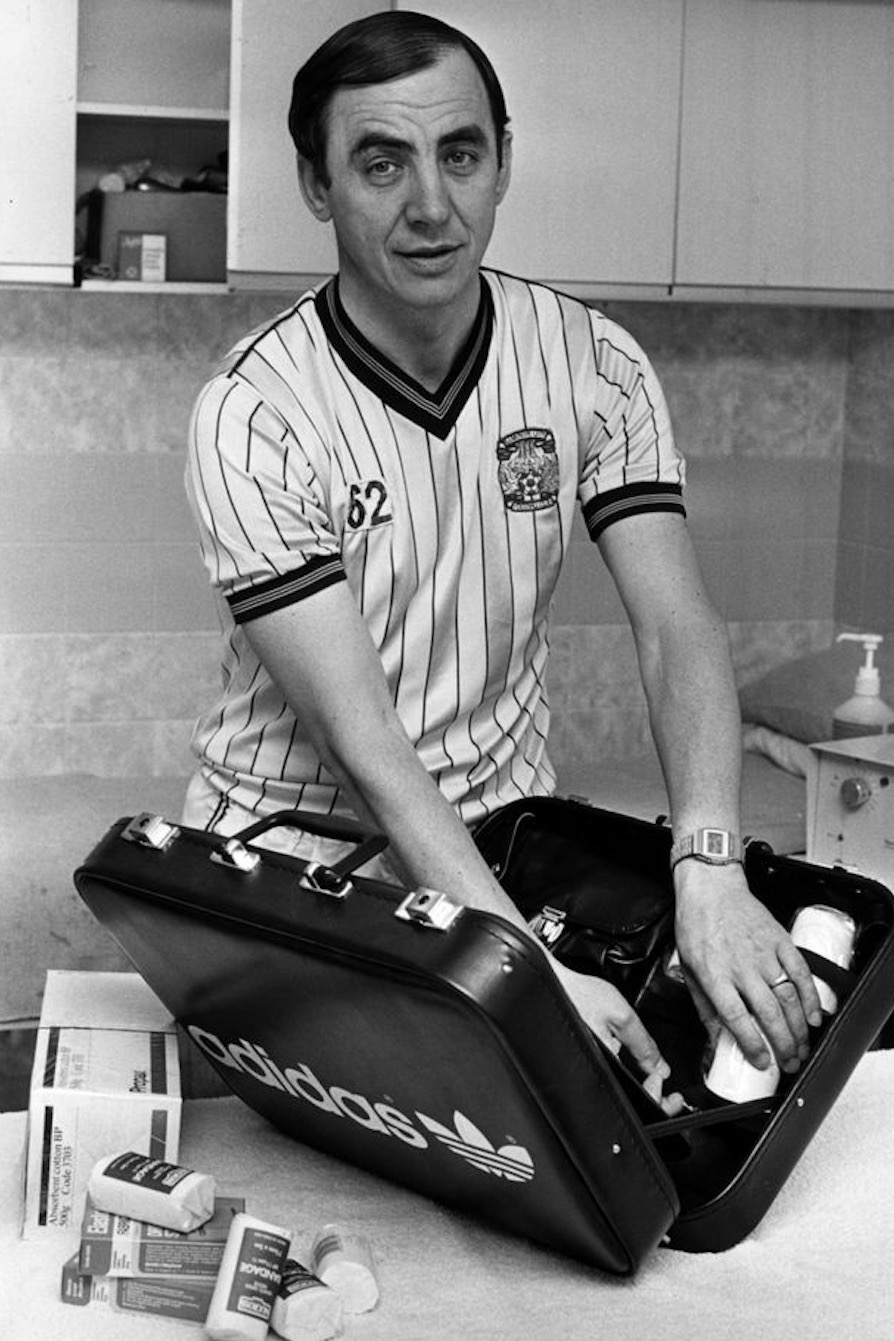
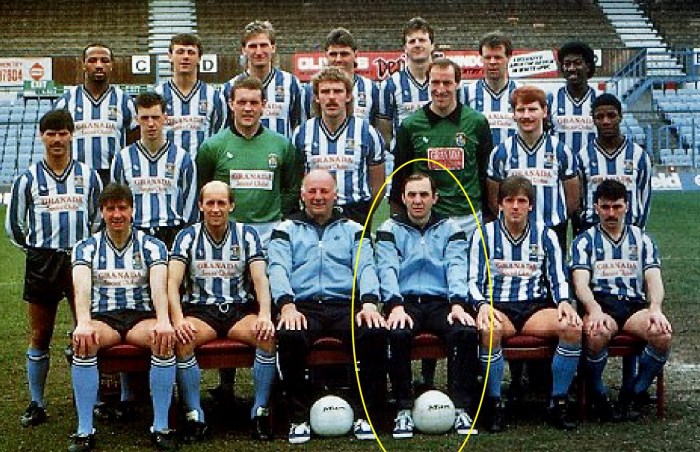
However, he turned his familiarity with the treatment table to good use and he later became Coventry City’s physio for the best part of 20 years.

Born in Dilston, Northumberland, on 4 September 1941, Dalton went through the junior ranks at Newcastle and turned professional at St James’s Park in 1958.

He made his Toon debut on 10 October 1960 in a 4-1 League Cup defeat away to Colchester United, and made his First Division debut the following February, ending up on the losing side in a 5-3 defeat away to Leicester City.
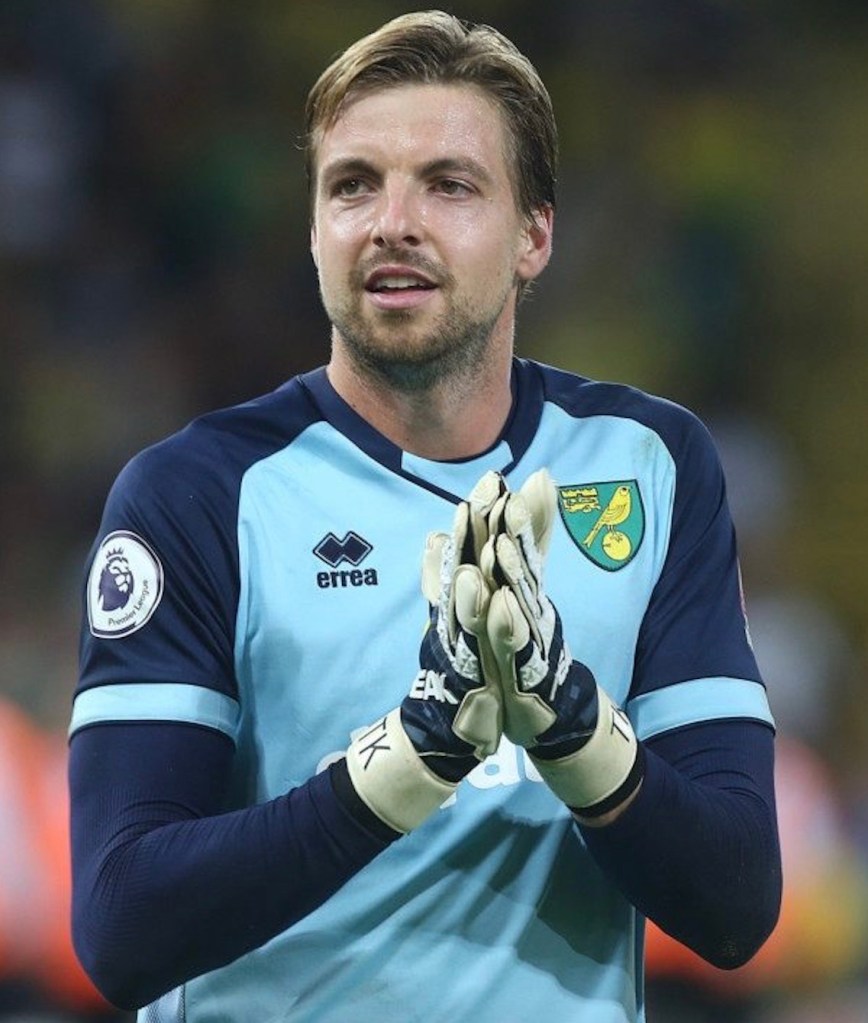
After Newcastle’s relegation to the old Division Two, Dalton made a lot more appearances (including being in the Toon side who thumped Brighton 5-0 at St James’ on 21 October 1961).

He was in and out of the side over the next two years but became a regular from March 1963 and, in January 1964, eagle-eyed Ken McKenzie, reporter for Newcastle’s The Journal, spotted England Under-23 selector Mr E.Smith in the stands at St James’s.

“This visit can only mean imminence of England Under-23s selection to meet Scotland at St James’s Park on Wednesday evening, February 5, and check up, particularly on George Dalton and Alan Suddick, of United,” he wrote. “On this basis, I feel that Mr Smith’s trip to Tyneside holds out very bright prospect of Forest Hall, Newcastle, product, Dalton, gaining his first representative honour on February 5.

“I know that Dalton has been recommended to the England selectors for some time by United directors and manager, and his consistency and clean, strong play has been commented on by influential observers at several away games.”

Unfortunately, the call-up didn’t happen, and revered reporter Ken Jones wrote in the Daily Mirror: “Despite local claims for left back George Dalton and inside forward idol Alan Suddick; neither has been chosen by the England team manager, and clearly they have no place in his ideas at present.”

Interestingly, the left-back berth went to Keith Newton, who later went with England to the 1970 World Cup in Mexico. Mike Bailey and Graham Cross both played in the Under-23s’ 3-2 win over Scotland, while the reserves that day were Peter Grummitt, Alan Mullery and Martin Chivers.

Within a matter of weeks, Dalton’s football fortunes were turned upside down when, in his 40th game of the season, on 30 March 1964, three days after Newcastle had surrendered an eight-game unbeaten run losing 1-0 at home to promotion-chasing Leeds on Good Friday, the full-back suffered a leg break that virtually finished his Newcastle career.

The Journal saw it thus: “This is the tale of a noble resistance by a Newcastle side who had Alan Suddick crippled in the 17th minute and lost George Dalton with a broken right leg (just above the ankle) with 14 minutes to go.”

mightyleeds.co.uk recorded it like this: “Newcastle finished with one man in hospital and another limping, but Leeds just about deserved to win their third hard match in four days. For once, however, there was no malice attached to the game and left-back Dalton confirmed he had broken his right tibia after himself kicking the sole of Giles’ boot.”

Dalton didn’t play his next Newcastle first team game for nearly two and a half years, and then it was just the one game. After that solitary appearance – his 94th for Toon – on 27 August 1966, when they lost a Division One match 2-1 at home to Spurs, he was cast into the shadows and eventually given a free transfer in May 1967.

Albion’s 1967-68 squad with Dalton circled in the back row

Third Division Brighton gave the player the chance to salvage his career and he arrived on the south coast in June 1967 together with a young centre forward, Bob Fuller, who went on to score regularly for Albion’s reserves but subsequently moved to South Africa and in later life became a senior executive at mobile phone companies Orange and 3.

There were a couple of familiar faces amongst Dalton’s new teammates: Dave Turner, had been a fringe player at Newcastle before joining Brighton in December 1963, while forward Kit Napier had moved to the south coast the previous summer.

Stewart Ogden also joined straight from school in the north east in the summer of 1967 and the matchday programme declared: “Instead of Sussex by the Sea, Albion’s rousing signature tune, they may be playing The Blaydon Races this season, with so many Geordies on the staff.”

Dalton took over the no.3 shirt from Bobby Baxter, who had moved on to Torquay United, and went straight into Albion’s starting XI alongside new £25,000 record signing John Napier from Bolton Wanderers.

The matchday programme acknowledged Dalton’s past injury misfortune and said: “We all hope the change of club will see this fine defender recapturing his old form. He is married and recently moved into a pleasant club house at Portslade.”

Dalton made 28 appearances in the first half of that 1967-68 season under Archie Macaulay before tragically suffering a double fracture of his right leg in a 0-0 draw at home to Oxford United.

It was on 27 January 1968 that Dalton was involved in a heavy collision with United’s Graham Atkinson (big Ron’s brother) and Albion goalkeeper Brian Powney.

The cruel blow came almost four years after the injury he’d sustained at Newcastle and the Albion matchday programme commented how he had “completely shaken off the effects and was playing with great confidence” adding: “Albion’s popular left-back has played some fine games this season and his stylish work has been admired by supporters of other clubs, as well as the Albion fans.”

In its Albion Postbag column, a correspondent from Newhaven, calling himself ‘Veteran Player’, wrote: “George Dalton has had two unlucky accidents and we all hope he comes back fit and well and able to continue to delight us with his polished full-back play.

“Brighton have nearly always been lucky with their left-backs, and we have had a string of really fine players in that position. George Dalton can be included in that impressive list.”

Macaulay was optimistic the player would recover and in October 1968 the programme told supporters: “George is doing light training, jogging round the pitch, up the terracing also carrying out weight training exercises.”

In the meantime, Mike Everitt had been brought in to fill the gap and, by the time Macaulay was succeeded as manager by Freddie Goodwin, as 1968 drew to a close, Dalton still wasn’t in contention.

It looked even less likely he’d get back in when Goodwin signed his former Leeds teammate Willie Bell from Leicester City, but his next career step was closely linked to both of them.

In the summer of 1970, Dalton, who’d combined studying physiotherapy with coaching the Albion junior team in the latter part of his contract, joined Goodwin and Bell as part of the new management team at Birmingham City.

Albion took serious umbrage at the exodus and the matter ended up with City having to pay £4,500 compensation for Goodwin (who still had 18 months of his contract remaining) and a £5,000 fine for illegally approaching Bell.

Dalton’s situation was viewed differently because he’d technically been a player out of contract thus free to make a move.

When Goodwin left City in 1976 and returned to manage in America, Dalton moved on to Midlands neighbours Coventry City, taking over as physio from Norman Pilgrim, and he retained the position for two decades.

Several former players had nothing but good things to say about him when interviewed in Steve Phelps’ book 29 Minutes From Wembley. Striker Garry Thompson spoke highly of the care with which Dalton treated him when he suffered a broken leg that put him out of the game for 11 months.

“George Dalton, our physiotherapist, was magnificent with me,” he said. “He kept saying my leg was going to be like a twig and I’d have to rebuild the muscles and learn to walk again.

“My Mum and Dad thought it was career over, but, the way I think about it now, I was so lucky because there weren’t that many options for me and I had to play football.

“George’s own career was ended by injury. He was a very good footballer when he trained with us so, when I broke my leg, he really took care of me and was superb.

“I couldn’t thank him enough and all George had was the sponge and two machines in the treatment room, the electric currents and the ultrasound, that was it.

“He worked miracles down the years with players and, if it wasn’t for him, I would not have played until I was 37. I owe him a lot.”

Garry’s praise for Dalton was echoed by Paul Dyson, who spent prolonged periods in the treatment room with ankle and back injuries during his teenage years. “George was a real character. We all had a lot of time for him and he tended a lot of us through our respective injuries.

“He used to drive us to the hospital in his Morris 1100 and had a great left foot. He’d played left-back for Newcastle United before his own career was ended by injury. There were the two machines in his room and he used to have ice cubes on sticks in his freezer.”

Dalton alongside boss John Sillett in the front row of this Coventry squad picture

Scottish international winger Tommy Hutchison was another admirer. “He was a smashing lad, George, very old-school. He suffered no fools and could always tell if a player was injured or not.

“In our days broken legs did finish careers, along with knee ligament injuries, and George rehabilitated so many players at Coventry. There was no squad rotation as you wanted to stay in the team and play every week because if you didn’t someone else would step in to take your place and you wouldn’t be able to get back in.”

Midfielder Andy Blair added: “George was a great physiotherapist, a terrific calming influence and a great man to have around.”

Experienced full-back Mick Coop was another who appreciated the physio. “George really was a lovely man who worked injured players very hard in the gym to get them back on to the pitch,” he said. “He was very quiet but did his job well and garnered a lot of respect off the playing squad. I can’t speak highly enough of him.”

Dalton keeps in touch with many of his former colleagues through the Coventry City Former Players’ Association, which has reported how he returned to live in Newcastle in retirement.

* Pictures from matchday programmes and various online sources.

Putney printer Pearce went to Wembley with the Albion

HE took a circuitous route back to his hometown club but full-back Graham Pearce eventually made it to Brentford’s first team after Brighton had resurrected his career and given him a chance to play at the top level of the English game.

Pearce was first on Brentford’s books as a teenager between 1971 and 1976, but he didn’t make it as a pro with the Bees and, after also being turned down by QPR, he went non-league, initially with Hillingdon Borough for three years and then Barnet.

When Pearce lined up for Barnet in a FA Cup third round tie on 2 January 1982, it must have been beyond his wildest dreams to imagine just over a year later he’d be playing in that competition’s final at Wembley.

But the steady, assured performances 21-year-old Pearce put in as Alliance Premier League Barnet held Brighton 0-0 before losing 3-1 in a replay at the Goldstone impressed the watching Albion boss Mike Bailey sufficiently to sign him up for the Seagulls.

Although he was itching to join, he had to serve a week’s notice with the Putney printer where he had a full-time job because they weren’t in a position to release him sooner.

Just over a year later, when injuries depleted Jimmy Melia’s cup hopefuls the closer they got to a dream Wembley date, Pearce seized his chance to put his own name in print. Circumstances fell just right for him, but it might not have happened if the experienced left-back Sammy Nelson hadn’t been sidelined.

A packed East Terrace at the Goldstone the backdrop as Pearce faces Newcastle in the FA Cup

Pearce played in the third round 1-1 Goldstone draw with Newcastle – one of six games he played in January 1983 – but he missed the 4-0 demolition of Manchester City in the fourth round and didn’t feature again until 22 March when he was sub for the 2-2 home draw with Liverpool.

Because versatile Gary Stevens was more than capable of playing alongside Steve Foster, normal centre back partner Steve Gatting was preferred at left-back for 14 matches from the end of January.

But when right-back Chris Ramsey was suspended for the semi-final against Sheffield Wednesday, Stevens took his spot, Gatting returned to the middle and Pearce slotted in at left-back.

Because Foster was suspended for the final against Man Utd, Stevens paired up with Gatting in the middle and Pearce retained his place.

Even when Foster returned for the replay, Pearce kept his place because Ramsey had been crocked in the first match and wasn’t fit to play (Melia making the mistake of putting left-footed Gatting at right-back instead of Stevens).

In a pre-match interview with the Daily Mail, Pearce said: “There’s money to be made from appearing at Wembley but the thrill for me is just being there – a player from non-League who thought his chance of playing league football had gone.”

Pearce retained the no.3 shirt at the start of the 1983-84 season back in the second tier but, when Chris Cattlin took over from Melia, he made it clear he wanted someone with more experience in that position.

In his matchday programme notes he wrote: “With Kieran (O’Regan), Eric Young and Graham Pearce all playing together, we have three players who haven’t been long out of non-League football.

“Normally these players would have been blooded slowly into the side, instead of being plunged in the deep end. They have done well and shown the right attitude, but when we play against aggressive sides away from home, some of their inexperience has been exposed.”

Until a suitable replacement could be found, Pearce remained in the side and even poked home his first Albion goal in a 4-3 win away to Cambridge United on 29 October 1983.

But four weeks later, after a 2-2 draw at home to Shrewsbury Town, Cattlin was typically forthright in his next programme notes, declaring: “I was unhappy with our defence and our failings in this department cost us the game.”

Pearce and fellow full-back Ramsey were promptly dropped; the left-back berth going to new signing Chris Hutchings from Chelsea.

Cattlin had high praise for his new recruit as he said: “Chris Hutchings is an enthusiastic, strong and determined defender and has a lot to offer, he’s also a fine footballer.”

After 18 consecutive games, Pearce found himself out of the side for the rest of the season.

It’s interesting to note that the reserve side for the 1 May 1984 fixture at home to Southampton featured five players (Pearce, Ramsey, Gary Howlett, Gerry Ryan and Neil Smillie) who’d been in the FA Cup Final squad a year earlier.

The new season was almost three months’ old before Pearce was seen in the first team again, and, ironically, the opponent was once again Shrewsbury.

The game at the Goldstone finished a goalless draw and, with Hutchings having been switched to right-back, Pearce got a run in the side extending to 19 matches.

Unluckily for him, he was then left out of the side in favour of Martin Keown, who Cattlin managed to bring in on loan from Arsenal, and the future England international quickly proved his calibre.

Pearce made one further appearance, in a 2-1 defeat at Middlesbrough, before the end of the season but in the 1985-86 season he finally cemented his place in the side and played a total of 41 matches.

Three days after Christmas 1985, he scored a rare goal as the Seagulls beat Leeds 3-2 at Elland Road. Ian Baird – later to play for the Albion in the old Fourth Division – missed a penalty but scored one of Leeds’ goals and Pearce clinched the winner on a pitch rutted by a rugby league game played on it only two days earlier.

The matchday programme described the goal thus: “Pearce played a one-two with (Steve) Jacobs and found himself with only Mervyn Day to beat and Leeds screaming for offside. The trusty left foot of the Londoner lobbed goalwards, Day was stranded, and Pearce had scored his first goal in 26 months to give Albion another three valuable points.”

Not such a memorable game came in a 3-0 defeat away to Norwich City on 5 April 1986. The full-back went into the referee’s notebook for a foul on future Albion winger Mark Barham, who was substituted shortly afterwards. Albion had a great chance to pull a goal back when Pearce was through one-on-one with Chris Woods, but the England ‘keeper saved his effort comfortably. Then, eight minutes from time, Pearce fouled Wayne Biggins in the penalty area and Welsh international David Williams buried City’s third from the penalty spot.

Pearce played in Albion’s final game of the season, a 2-0 defeat at Hull City under George Petchey, following Cattlin’s sacking, and it turned out to be his last match in a Brighton shirt.

The returning Alan Mullery explained in his programme notes for the opening game of the new season that he released Jacobs and Pearce because “I felt we had too many defenders”.

Pearce switched to Third Division Gillingham under Keith Peacock and played a total of 48 matches as the Gills narrowly missed out on promotion when losing a play-off final replay against Lou Macari’s Swindon Town in 1987.

Following a disappointing second season with the Gills, when they finished mid-table, Pearce returned to hometown club Brentford where he played 14 times (+ 8 as sub) in Steve Perryman’s 1988-89 side. One of his teammates was fellow former Albion cup star Smillie.

Pearce joined up with Peacock again for Maidstone United’s debut season (1989-90) in the Fourth Division, which culminated in a play-off semi-final defeat at the hands of a Cambridge United side featuring Dion Dublin up front.

The following season, under Phil Holder, Pearce was back at Brentford as first team and reserve coach. He subsequently had spells as player-manager with Isthmian League clubs Enfield and Molesey. He later became a PE teacher at Homefield Preparatory School in Sutton.

Born in Hammersmith on 8 July 1959, Pearce was one of seven children (five boys, two girls) and attended Grove Park Primary School, where he was captain of their under-9 football side. He went on to play for the Middlesex County side and Middlesex Wanderers before his stop-start professional career began.

• Pictures from my scrapbook and matchday programmes.

Krul luck as Ryan kept Dutch penalty ‘master’ at bay

AN international goalkeeper whose prowess at saving penalties took his country through to the World Cup semi-finals barely got a look-in between the sticks for Brighton.

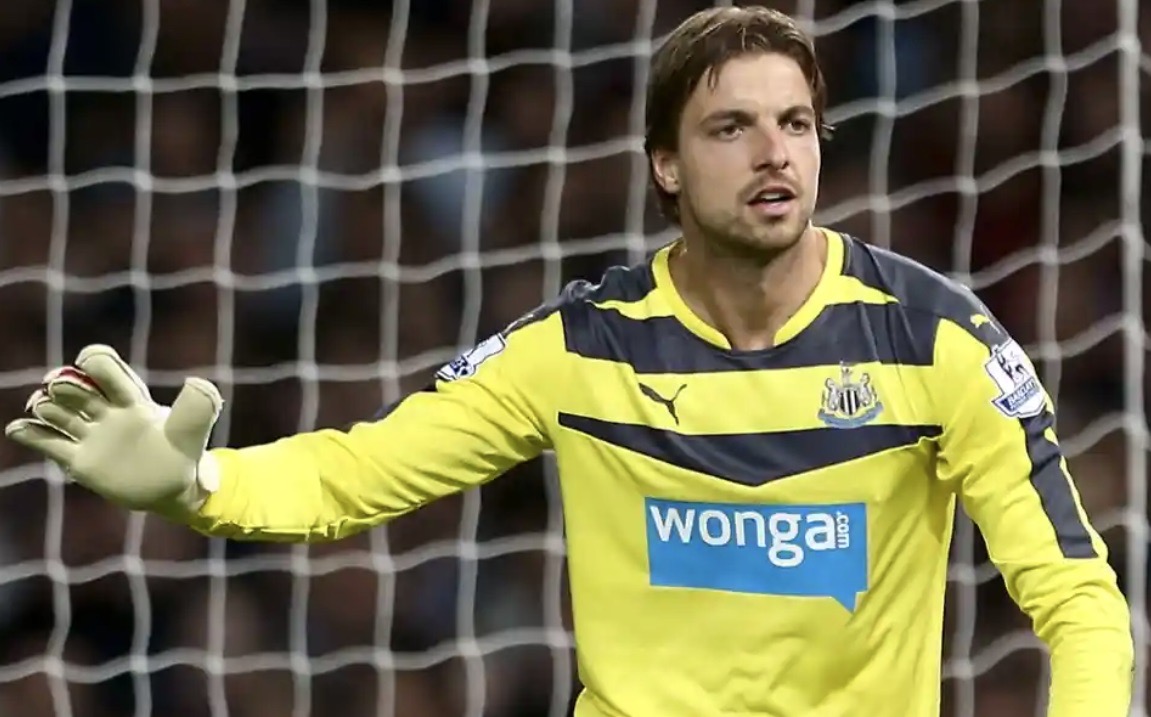
Experienced Dutchman Tim Krul, who played 184 games for Newcastle United over 12 years, kept goal for the Seagulls on only five occasions during the 2017-18 season.

The form of Mat Ryan, himself an Australian international, meant Krul’s involvement was restricted to cup matches and a watching brief from the substitute’s bench.

Krul initially signed on a season-long loan deal on deadline day in August 2017 but the move was made permanent the day after he made his Albion first team debut in a 1-0 League Cup defeat at Bournemouth.

Manager Chris Hughton said: “I know Tim from my time at Newcastle and he is an excellent professional that has a vast amount of experience at both club and international level.

“He’s played an extensive amount of games in the Premier League, as well as playing in the Europa League and his experience will also help benefit the other keepers in the squad.”

Having experienced some in and out spells during his time on Tyneside, Krul understood the situation when interviewed by The Argus in November 2017.

“I’m working hard every day to push Mat Ryan. He’s done great so far and we’re picking up points, that’s what it’s all about.

“If the gaffer needs us or Mat got injured, I need to be ready and literally it can happen any second.”

Krul admitted: “It’s a different position for myself, because I’m used to playing week in, week out.”

The move to Albion had been the chance to reignite his career after a long spell on the sidelines having suffered a cruciate knee ligament injury on international duty in 2015.

Krul is powerless to stop Romelu Lukaku’s winning goal for Manchester United in Brighton’s FA Cup fifth round tie at Old Trafford

Before he made the move, he consulted Steve Harper, who’d been on loan at Brighton during the Gus Poyet era. Harper told the matchday programme: “I told him it woud be a great move for him and it will also be a great signing for the club. He was outstanding in the season Newcastle finished fifth in the Premier League and he’s an international ‘keeper for the Netherlands who has played at the World Cup.”

After he’d played in Albion’s FA Cup fifth round defeat to Manchester United at Old Trafford, Krul told The Argus: “Obviously when I came, I was hoping to get a bit more (game time) maybe, but at the time I walked through the door Maty’s performances went up a level, so that is testament to him.

“The level we are training at with Ben Roberts every day is really high. He has been showing that in the games. I’ve been around long enough to see when a goalkeeper is playing well you take that. I’m 29, I’m back fit, I’m feeling better than I’ve ever done so I’m ready to play. I just have to be patient again.

“I had to be patient at the start of my career and you have to do that again now. But my chance will come. There’s a lot of years left.”

Krul finally got regular playing time again when he moved to Norwich City

Unfortunately, that didn’t happen with the Albion but Krul certainly resurrected his career with Norwich City and, after signing an initial two-and-a-half-year deal in the summer of 2018, earned a further three-and-a-half-year contract in December 2020.

He then contracted Covid-19, announcing it on Twitter, where he has a huge following of more than 349,000. “I feel under the weather and fatigued,” he wrote. “It’s an important reminder to stay safe, this virus is not a hoax.”

Thankfully, by the end of January, he had recovered and returned to the side to clock up 100 appearances for the Canaries.

Born in The Hague, Holland, on 3 April 1988, from a young age Krul played for his hometown club RAS and was with ADO Den Haag between the ages of 12 and 17. Graeme Souness was still boss when Krul joined Newcastle in the summer of 2005. Shay Given and Steve Harper were the established ‘keepers in those days.

Shortly after making his debut in a UEFA Cup match in November 2006, he suffered injuries which ruled him out of action for six months. After returning to playing in the spring of 2007, he earned a new four-year deal with Newcastle.

An eventful loan spell in Scotland followed as Krul sought to gain league experience at Falkirk. He conceded 11 goals in two games early on (four to Celtic, seven to Rangers), he was sent off in a game on 2 January 2008, and then dislocated a shoulder in a cup match against Aberdeen, bringing the loan to a premature end.

When Given left St James’ Park for Manchester City, Krul was no.2 behind Harper in Newcastle’s 2009-10 season in the Championship. He deputised if Harper was injured and was given starts in cup matches. By the season’s end, when the Toon had won promotion back to the Premier League, Krul was awarded a new four-year deal and made his debut at that level when replacing the injured Harper in a 1-0 win away at Everton in September 2010.

He ended that campaign having played 25 first team matches, and the following season, established himself as the no.1, with Rob Elliot as his deputy. Out-in-the-cold Harper was allowed to spend a month on loan with the Albion.

Under Alan Pardew, Krul was the preferred first choice ‘keeper, and he signed a five-year contract with the Magpies in 2012. Several different injuries in 2012-13 restricted him to 30 appearances.

Another six-week injury lay-off over Christmas 2014 interrupted a period when there was yet another managerial change on Tyneside and the 2015-16 season under Steve McLaren was only a couple of months old before Krul was ruled out for the remainder of the season when he ruptured an anterior cruciate ligament in his right knee playing in the Netherlands’ 2-1 European Qualifiers win in Kazakhstan.

McLaren was sacked in March 2016 and his replacement Rafa Benitez couldn’t prevent them from being relegated. Krul signed a one-year contract extension in the summer of 2016 but, with Elliot and Karl Darlow ahead of him, he was sent on loan to Ajax as Newcastle successfully bounced back to the elite, pipping Albion to the Championship title.

Meanwhile, things didn’t work out as planned for Krul. He only got a handful of games for the Ajax reserve side and he spent the second half of the season at AZ Alkmaar instead.

Krul has played for his country at every age level and made his full international debut in a friendly against Brazil in 2011. Maarten Stekelenburg and Jasper Cillessen have normally been ahead of him but he has won 11 caps, including three in 2020 after a five-year absence from the side. However, it was what happened at the 2014 World Cup in Brazil that most fans will remember.

Head coach Louis van Gaal took off Cillessen in the final seconds of extra time with the Dutch still drawing 0-0 with Costa Rica and sent Krul on because of his reputation for saving penalties. Sure enough, he made two saves in the subsequent shoot-out and Holland went through to the semi-finals (where they went out 4-2 on penalties to Argentina).

The story behind the decision emerged in an article by Michael Bailey for The Athletic on 5 March 2020. The Dutch goalkeeping coach at the tournament, Frans Hoek, explained how Krul had responded best of the three ‘keepers to special training he put them through.

“When we came together with the national team, the three goalkeepers were more or less at the same level in stopping penalties. And that level was low,” Hoek told The Athletic. “We decided to do things in a different way and when you do that you have to believe in it, practice it and then show it. Basically, Tim responded best to that.

“He had some advantages. He’s very big, he has an enormous reach. He is impressive when you’re standing the other side of him and maybe because he’s from Den Haag area, he can be a little bit provocative. Michel Vorm is too nice a guy, so is Cillessen. But Tim can get away with it. It’s just something he has.”

A look back through the archives reveals Krul was displaying his prowess saving penalties as far back as his youth playing days. In an FA Youth Cup match for Newcastle against Brighton, he made saves from Tommy Fraser and Scott Chamberlain as Toon edged it 3-2 on penalties.

Albion goalkeeper coach Roberts was full of praise when asked about the big Dutch ‘keeper. “He has an aura about him and the self-belief to think he will save everything,” said Roberts. “I’m delighted for him as lots wrote him off when he had his bad knee injury. He’s since shown how much his hard work and dedication has paid off.”

After putting pen to paper on his new Norwich contract, Krul told the club website: “Proud is the big word. I’m excited to commit my future to Norwich and have had an amazing two and a half years already at this club, so I’m excited to add another three and a half years to that.

“The plan the club has got for the next few years is exciting and there’s some young, exciting talent coming through the ranks as well. From top to bottom, it’s a club I want to be at; one that’s run really well from Michael and Delia to the kitman. It’s an exciting time for the club, for sure.

“As a player, you want to be loved and I’ve got a great relationship with the fans. The club giving me this three-and-a-half-year contract shows the belief they’ve still got in me.”

Manager Daniel Farke added: “It’s fantastic news for us to have a player of Tim’s quality and personality. He’s by far the best goalkeeper in this league and was impressive in the Premier League.

“He’s still in a really good age for a goalkeeper and can play many more years. It’s good news he was willing to sign a long-term contract because there is lots of interest in a player of his quality and experience.”

Krul was a key part of Norwich’s Championship-winning sides of 2018-19 (when he was ever-present) and 2020-21. But in August 2023 he returned to the Premier League when he was signed by newly-promoted Luton Town.

Town boss Rob Edwards said: “Tim’s a leader and a top goalkeeper who is still very and ambitious and very hungry. He wants to play.

“It’s great to have someone of his level in the group with that ambition and to be that driven, and it’s going to add great competition to the goalkeeper department, which is what we’ve wanted.”

Pictures from online sources and matchday programmes.

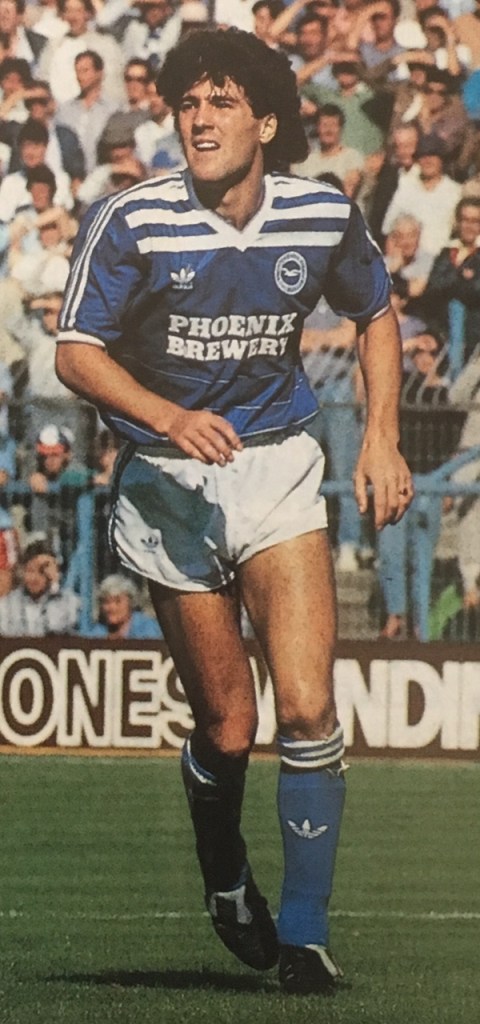
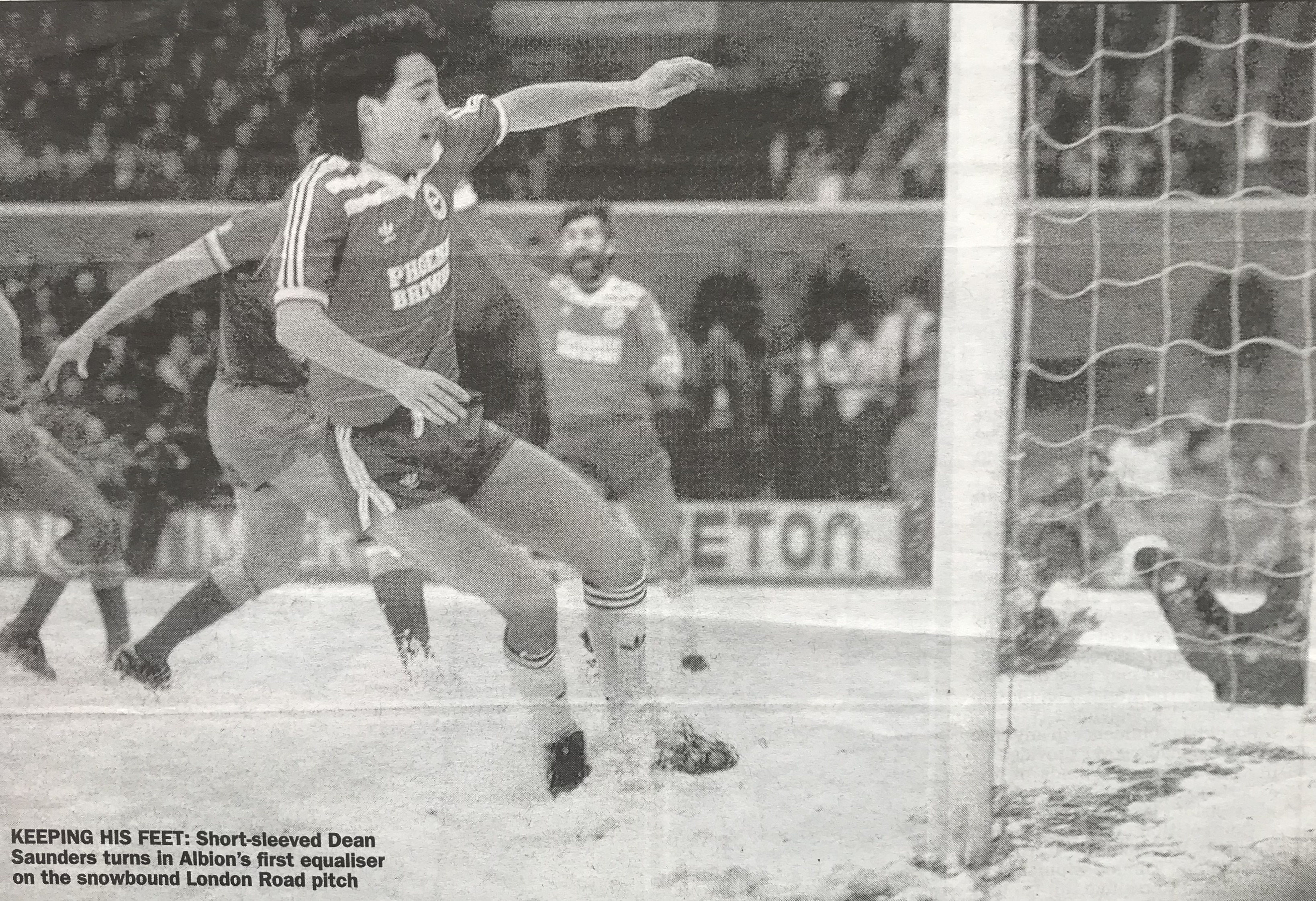
Dean Saunders raised cash for Brighton and Liverpool

IT’S NOT often Brighton and Liverpool have had something in common but, when it came to striker Dean Saunders, they both sold him to raise money. And they weren’t alone.

In the Albion’s case, it happened in 1987 when manager Barry Lloyd was forced to cash in on the free transfer signing to raise £60,000 to go towards players’ wages.

For their part, five years later, Liverpool let the Welsh international depart Anfield for £2.3m because boss Graeme Souness wanted the money to buy a central defender.

When Saunders was remarkably transferred for £1m from the Maxwell-owned Oxford United to the Maxwell-owned Derby County, it prompted former Brighton and Liverpool defender Mark Lawrenson to quit as boss at the Manor Ground after he’d been promised there would be no transfers likely to weaken his squad.

Saunders’ long and much-travelled career began in Swansea, the place where he was born on 21 June 1964, the son of former Swansea and Liverpool wing-half Roy Saunders.

He attended GwrossydJunior School and was soon appearing in the school football team on Saturday mornings and playing minor football in the afternoons. He went on to Penlan Comprehensive in Swansea and his career began to blossom, playing in the school team at all levels under sports master Lee Jones, a former British gymanstics champion. Saunders played for the Swansea Schools representative sides at under 11, 13 and 15 levels.

“I can remember enjoying watching the Swansea players train when I was a lad,” he told Tony Norman in an Albion matchday programme article. “I was lucky because my dad was the assistant manager, so I could go to pre-season training and things like that.

“I used to kick a ball around on the sidelines and dream of playing for Swansea.” That dream turned to reality after he joined the Swans in 1980 as an apprentice (when John Toshack was the manager), turned professional in 1982, and made his debut in the 1983-84 season. He scored 12 times in 49 appearances but in his final year had a goalless four-game loan at Cardiff City.

Manager John Bond released him on a free transfer after a turbulent season in which the Swans only narrowly avoided relegation to the basement division and Chris Cattlin, who’d been impressed when he saw Saunders playing for Swansea Reserves at the Goldstone Ground, snapped him up for Brighton.

“I was amazed when the Welsh club let him go for financial reasons,” Cattlin wrote in his matchday programme notes for the opening game of the season. “He is young, quick and, if he works hard, he has a great chance.”

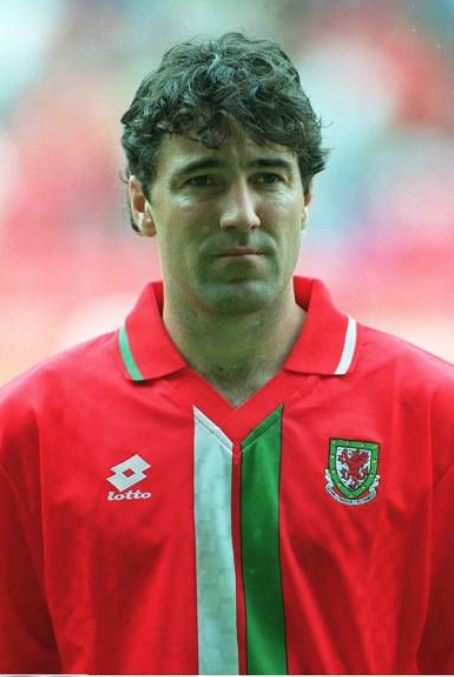
By the end of that season, Saunders had scored 19 goals in 48 league and cup games and was voted player of the season. His performances in the second tier for the Albion caught the eye of the Welsh national team manager, Mike England, and on 26 March 1986 Saunders made his full international debut for Wales as a substitute in a 1-0 win away to the Republic of Ireland. It was the first of 75 caps.

Saunders scored his first international goals when he netted twice in a 3-0 friendly win over Canada in Vancouver on 19 May 1986, after which England said: “He goes past defenders with his tremendous pace and his finishing against Canada was a revelation.

“The experience he gained at Brighton has done him the world of good. To finish top scorer in his first full season of Second Division football tells its own story.”

Saunders, who shared a house with Albion’s young Republic of Ireland international Kieran O’Regan, said being happy at home had helped him to settle down quickly.

“I liked Brighton from the day I arrived,” he said in a matchday programme article. “It reminds me of my home town of Swansea and I like living by the sea.”

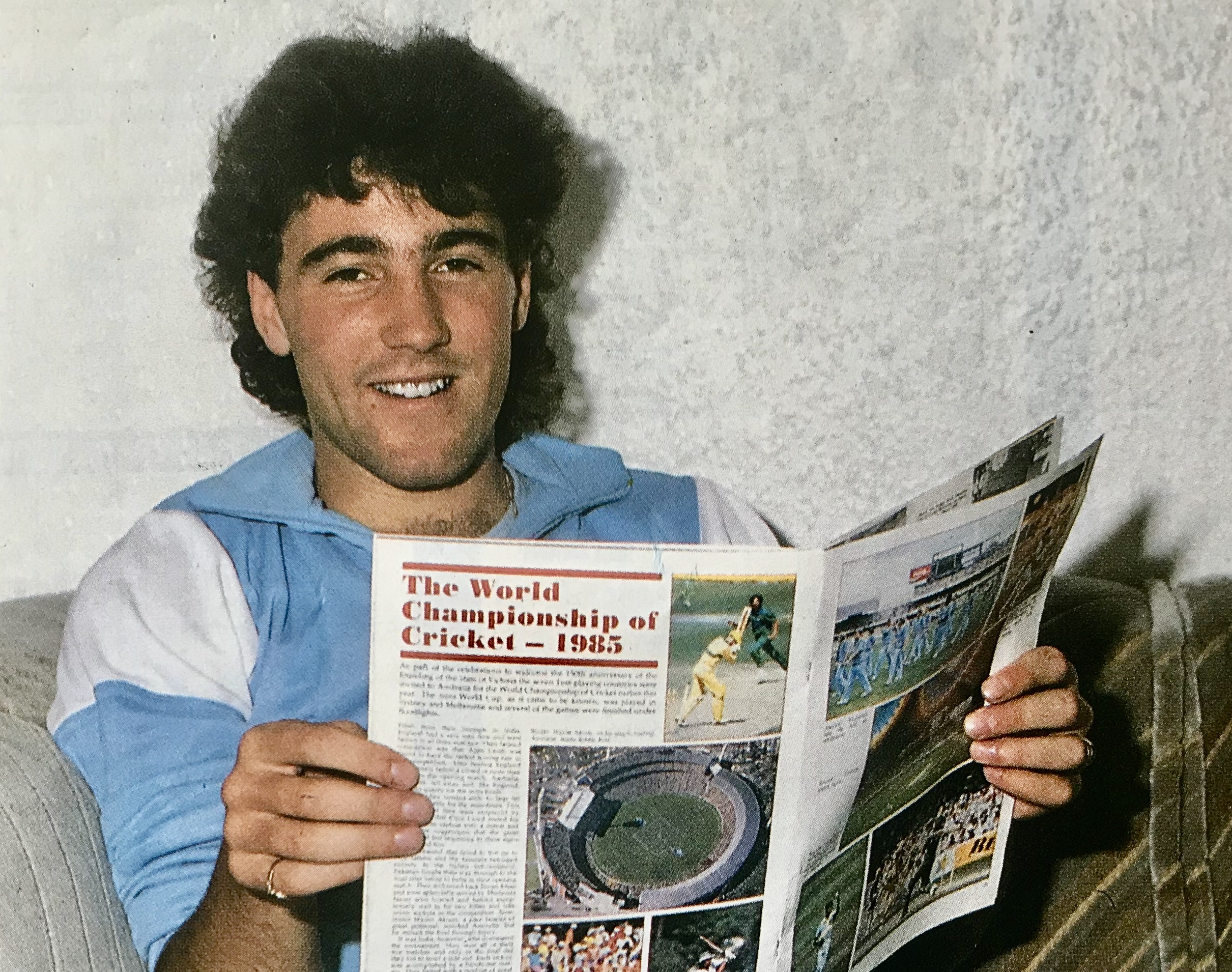
A lover of all sports, Saunders revealed how he liked to play cricket in the summer, when he turned out for Haywards Heath, and he played snooker with O’Regan and Steve Penney.

That summer, Saunders told Shoot! magazine: “I had both cartilages out of my left knee at 18 and had both Swansea and Cardiff turn me down. I’ve had my share of the downs. From the moment I joined Brighton, my career has turned for the better.”

The young striker continued: “Swansea just gave me away – despite the fact that I was top scorer in a team coming apart. Cardiff City gave me a few games but always seemed to have reasons for not playing me consistently when I was on loan there.

“So, I had every incentive to make the break from Welsh football and I joined Brighton. Brighton can go places.

“I was disappointed that we didn’t make the First Division first time around. But all the lads are convinced that we will get there next season. I’ve been given a three-year contract so there are tremendous incentives to do better.”

It didn’t work out that way, though. After only a mid-table finish, Cattlin was sacked and there were rumblings of financial issues beginning to reverberate around the corridors of the Goldstone. Alan Mullery returned as manager but had limited funds to invest in the team, and, with echoes of the Pat Saward era back in the early ‘70s, the club turned to fans for financial help to bring in players.

After Mullery’s unseemly swift departure halfway through the season, former Worthing boss Lloyd took over and fans were completely mystified as to how he could leave out Saunders in favour of Richard Tiltman, who Lloyd had plucked from local football. Since then, it has been suggested his omission was more to do with money than football ability.

There was great consternation that Albion collected only £60,000 when Lloyd sold Saunders to Oxford in early March 1987, especially as the Seagulls were fast hurtling back to a level of football they’d manage to avoid for ten years.

That was no longer a concern for Saunders who recovered the goalscoring touch he’d shown during his first season at the Goldstone Ground, scoring 33 goals in 73 games for Oxford before being sold to Derby for £1m against Lawrenson’s wishes 19 months after arriving at the Manor Ground.

Meanwhile, the goals kept flowing for Saunders as he netted 57 in 131 games for Derby. The side finished fifth in the old First Division by the end of Saunders’ first season with the Rams, and he’d contributed 14 goals. The Derby Telegraph noted: “From the moment ‘Deano’ arrived, the players were inspired and the crowd enthused. The signing also suited the post-war tradition of 5ft 8in goalscoring heroes at the Baseball Ground – Raich Carter, Bill Curry, Kevin Hector and Bobby Davison.

“Derby fans were too wise to comment on height. What mattered was Saunders’ speed, eel-like turn and persistence. He scored six in his first five games, starting with two against Wimbledon when he captured supporters’ hearts with the immediacy of a Kevin Hector. A close-in header and long-range right-footer were beautiful appetisers.”

Despite Saunders scoring 24 goals for Derby in 1990-91, the side was relegated and Saunders and teammate Mark Wright were snapped up by Liverpool. Reds paid £2.9m to take Saunders to Anfield, boss Souness believing he’d be an ideal strike partner for their established Welsh international striker, Ian Rush.

Saunders made his Liverpool debut on 17 August 1991 in a 2-1 win over Oldham Athletic (Mark Walters and defender Wright also played their first league games for Liverpool); Ray Houghton and John Barnes scored Liverpool’s goals.

Saunders scored his first goal for the Reds 10 days’ later in a 1-0 win over QPR at Anfield but a Liverpool history website reckons he struggled to adapt to Liverpool’s passing game. “He was used to Derby’s counter-attacking style, scoring many of his goals by using his exceptional pace,” it said. “Saunders wasn’t very prolific in the league with about one goal every four games but flourished in the UEFA Cup with nine goals in five matches that included a quadruple against Kuusysi Lahti.”

Saunders scored twice in Liverpool’s successful FA Cup campaign, which culminated in them lifting the trophy at Wembley after beating Sunderland.

Although he scored twice in seven games at the start of his second season at Anfield, a cashflow issue meant Souness was forced to sell him to raise funds to dip into the transfer market.

Saunders explained: “Graeme called me in one day and told me he needed a centre-half [Torben Piechnik], and that he could raise the money by selling me to Aston Villa.

“I couldn’t believe he was prepared to let me go, but he said he didn’t think my partnership with Ian Rush had worked out, and Rushy wouldn’t be the one going anywhere. That was it.” 

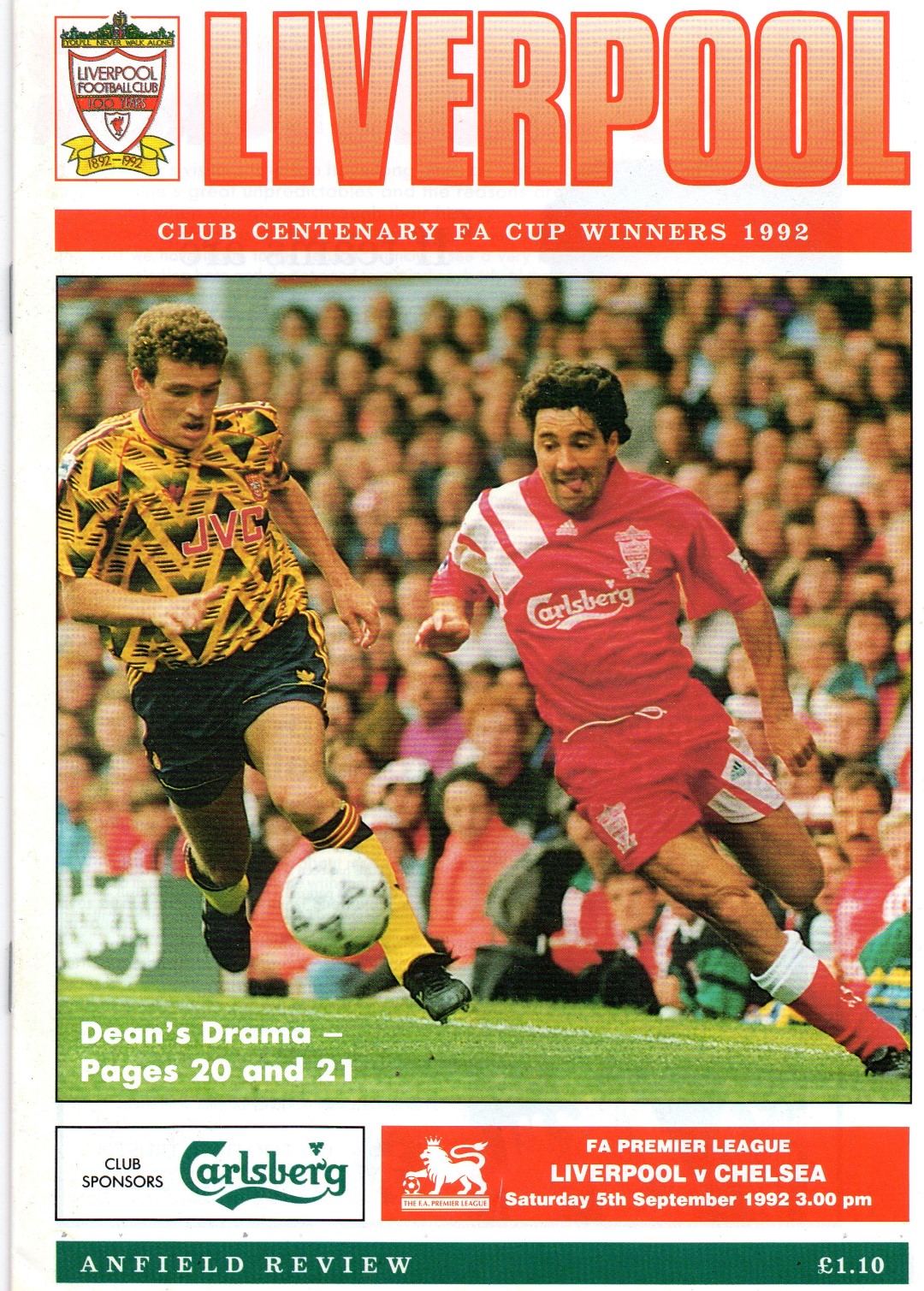
Saunders had scored 25 goals in 61 appearances for Liverpool, the last coming in a 2-1 home win over Chelsea (Jamie Redknapp scoring the other Liverpool goal) on 5 September 1992.

The Welshman had the last laugh, though, because only nine days after his departure from Liverpool he scored twice in Villa’s 4-2 victory over the Reds.

“Obviously I had a big incentive to do well today and I’m thrilled to have scored,” said Saunders. “Both my goals went through the goalkeeper’s legs.”

Signed by Ron Atkinson, Saunders spent three seasons at Villa, initially developing a formidable strike partnership with Dalian Atkinson, and then pairing up with Dwight Yorke. Saunders’ brace in the 1994 League Cup final helped beat Manchester United 3-1.

Villa history site lerwill-life.org.uk remembers him as “a spring-heeled attacker and very popular with the supporters” and adds: “Not big in size, he was very speedy and scored some spectacular goals including a 35-yard spectacular against Ipswich.”

His time at Villa Park came to an end when Brian Little took over as manager, and Saunders was reunited with his old Liverpool boss Souness in Turkey. A £2.35million fee took him to Galatasaray for the 1995-96 season and he netted 15 goals in 27 Turkish League matches.

Next stop for Saunders was back in the UK at Nottingham Forest, but the 1996-97 was an unhappy one as the manager who signed him, Frank Clark, was sacked in December after a bad run of defeats and Forest’s slide towards relegation continued under Stuart Pearce and Dave Bassett.

By the time Forest had bounced straight back up, Saunders had left the club, moving in December 1997 to second-tier Sheffield United for a year under Nigel Spackman and caretaker managers Russell Slade and Steve Thompson. United made the play-offs but lost out to Sunderland in the semi-finals. In December 1998, Saunders moved abroad again to link up with Souness a third time, at Benfica in Portugal.

The following summer, he returned to England and joined Bradford City, where his former Brighton teammate Chris Hutchings was assistant manager, then briefly manager. Saunders was a regular in his first season at Valley Parade, when the Bantams managed to narrowly avoid relegation from the Premier League, but he played only a handful of games in 2000-01, when they were relegated. Saunders retired as a player shortly before his 37th birthday and became a coach at Bradford before linking up with Souness again, this time as a coach.

He joined him at Blackburn Rovers and then Newcastle United, but when Newcastle sacked Souness early in 2006, Saunders lost his job as well.

In the following year he began taking the Certificate in Football Management course run by the University of Warwick; and this led to him being granted his UEFA Pro Licence coaching badge, a qualification that allowed him to be appointed as assistant to John Toshack with the Welsh national team. 

In October 2008, Saunders replaced Brian Little as manager of Wrexham, newly relegated to the Conference. He eventually managed to steer the north Wales outfit into the play-offs in the 2010-11 season, but they were knocked out by Luton Town and, in September 2011, Saunders was appointed manager of then Championship club Doncaster Rovers.

Unfortunately, he couldn’t save Rovers from relegation and they went back down to League One with only 36 points from their 46 League fixtures.

Having guided Rovers to second place in League One, Saunders was appointed manager of Wolverhampton Wanderers in January 2013, but he couldn’t prevent them being relegated from the Championship and he was sacked three days after relegation was confirmed courtesy of a 2-0 defeat at the hands of Gus Poyet’s Albion.

Saunders told the media after the game: “We have to get some players in who think like I’m thinking, who want to win, fresh minds, no damage done to them, no confidence issues, no ‘been here too long’ issues, no ‘I don’t know if the manager likes me’ issues. Once I get my own team on the pitch, imagine what the supporters will be like.”

Saunders, with only five wins from his 20 games in charge, didn’t get that chance and rather ruefully said of his opponents that day: “A few years ago they were bankrupt and without a stadium, but they’ve shown what is possible and, with the momentum, they have could well get into the Premier League.”

Just after Christmas 2014, Saunders was named as the interim manager of Crawley Town after the previous incumbent John Gregory stood down for health reasons.

Saunders then became manager of League One side Chesterfield on 13 May 2015 but his stay there lasted only five months.

In June 2016, Saunders was part of the BBC pundit team for their coverage of the Welsh national team’s games at Euro 2016 and made the headlines during the tournament when it was revealed that he had incurred parking charges of over £1,000 from Birmingham Airport’s short stay car park as he wasn’t expecting Wales to progress as far as they did. The charge was eventually waived by the airport who asked him to make a donation to charity instead.

His subsequent involvement in football has been as a pundit on BT Sport’s Saturday afternoon Score programme as well as on the radio with talkSPORT. He hit the headlines in 2019 when he was jailed for failing to comply with a roadside breath test but the initial punishment was quashed and changed to a suspended sentence. Via the League Managers’ Association, Saunders issued a statement in which he said: “I made a terrible error of judgment for which I have been rightly punished, and I wholeheartedly regret that it happened.”

Pictures from the Albion matchday programme and various online sources.

Boss weighed into ex Spurs teammate Joe Kinnear

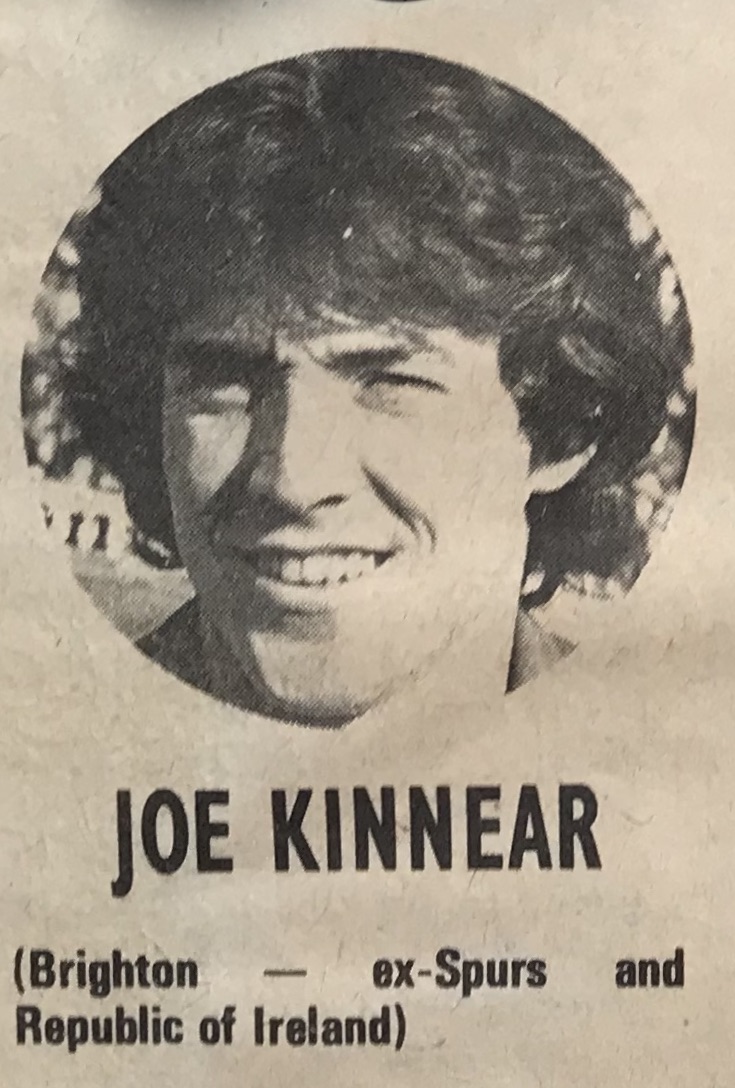
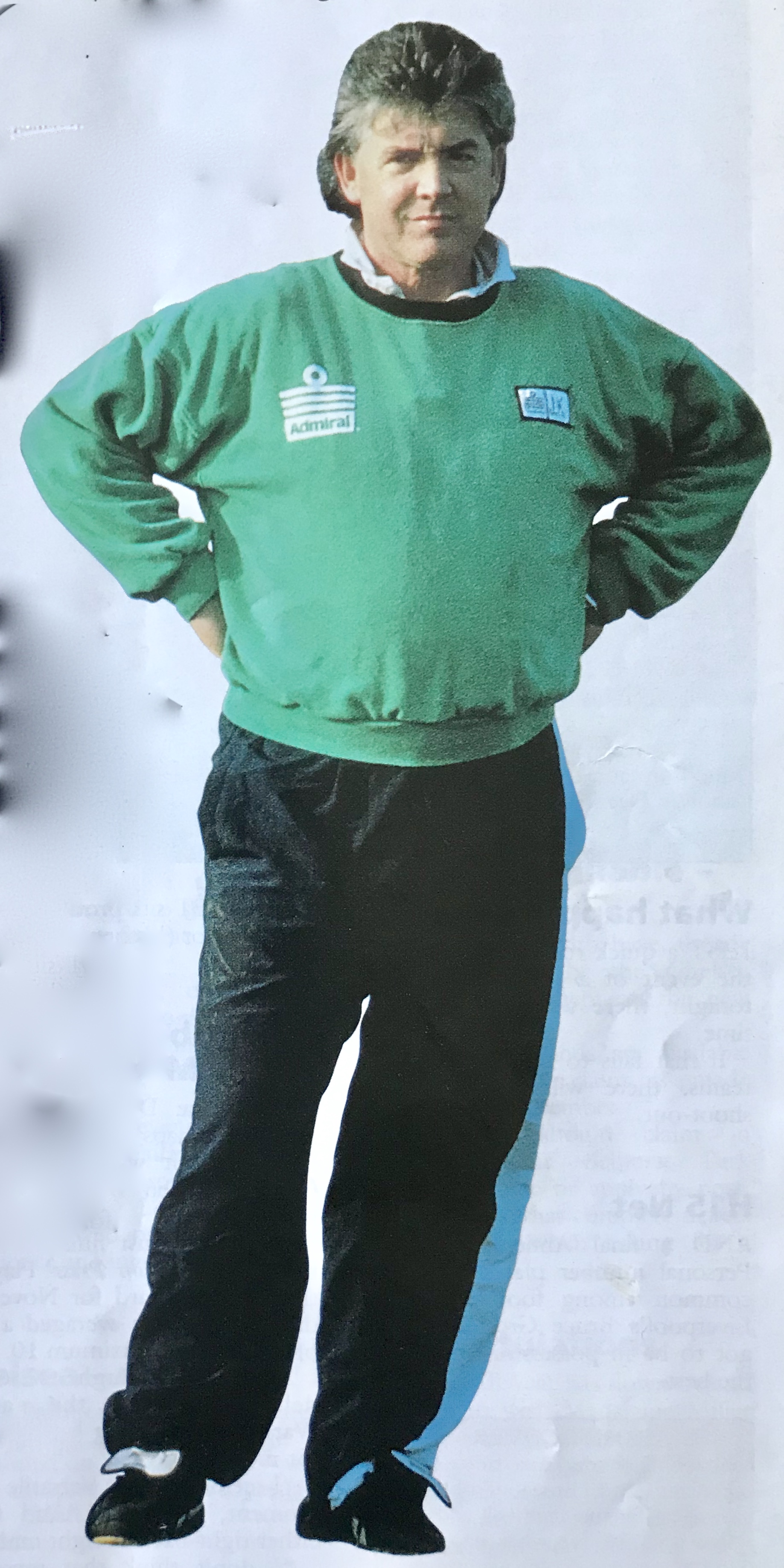
JOE KINNEAR was no stranger to expletive-filled rants so we can only imagine how he reacted when his former Tottenham Hotspur teammate Alan Mullery told him he was a stone overweight and shouldn’t expect any special treatment at Brighton.

The right-back who’d won silverware alongside the former Spurs skipper ended up leaving the Goldstone acrimoniously after his former colleague took over as Albion boss.

Having made 258 appearances in 10 years at White Hart Lane, Kinnear only played 18 games for Brighton after being signed by Mullery’s predecessor, Peter Taylor in August 1975.

He’d followed fellow former Spurs defender Phil Beal to third-tier Brighton, both having been eased out of the door as Tottenham’s new boss Terry Neill re-shaped the award-winning squad built up by the legendary Bill Nicholson and his faithful assistant, Eddie Baily.

Back when Taylor and Brian Clough were turning round the fortunes of Derby County, they had acquired the services of former Spurs hardman Dave Mackay, a friend of Kinnear’s, so he was no stranger to turning to experienced old pros.

“I left Tottenham because although I was good enough to hold down a regular first team place, manager Terry Neill didn’t think so,” Kinnear told Shoot! magazine. “I’m 28-years-of-age and have plenty of soccer at senior level left in me. Brighton have the potential to become as big-time as Spurs once were.”

Three days after signing, the Irishman made his Albion debut at right-back in a 1-0 home defeat to Cardiff City and, while he played in the following game too, previous regular right-back Ken Tiler was restored to the line-up for the next three months.

Nevertheless, his lack of involvement at Brighton didn’t stop the Republic of Ireland selecting him and he made what was his last and 26th appearance for his country as an 83rd minute substitute for Tony Dunne in a 4-0 win over Turkey at Dalymount Park, Dublin, on 29 October (Don Givens scored all four).

Kinnear was on Brighton’s bench a few times in the days of only one substitute, and he managed four consecutive starts in December, but he had to bide his time for his next starting spot, which only came when a bad injury in mid-March brought an end to Tiler’s involvement in Albion’s promotion push.

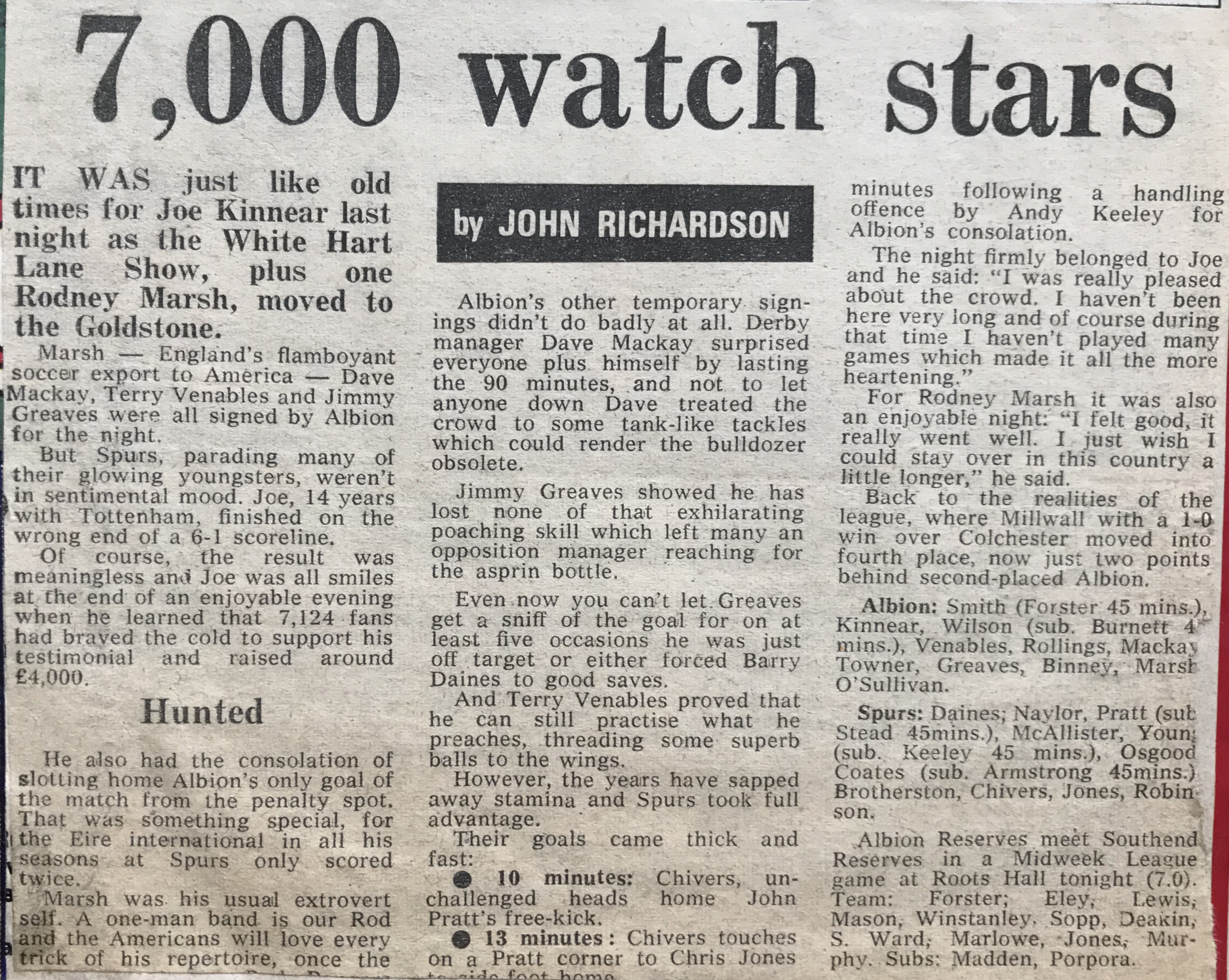
It was timely because on 23 March a testimonial match for him against Spurs took place at the Goldstone. It had been part of the arrangement made when he signed, and the Albion XI who took to the field in front of 7,124 fans included Kinnear’s old teammates Terry Venables, Mackay and Jimmy Greaves, along with guest star Rodney Marsh.

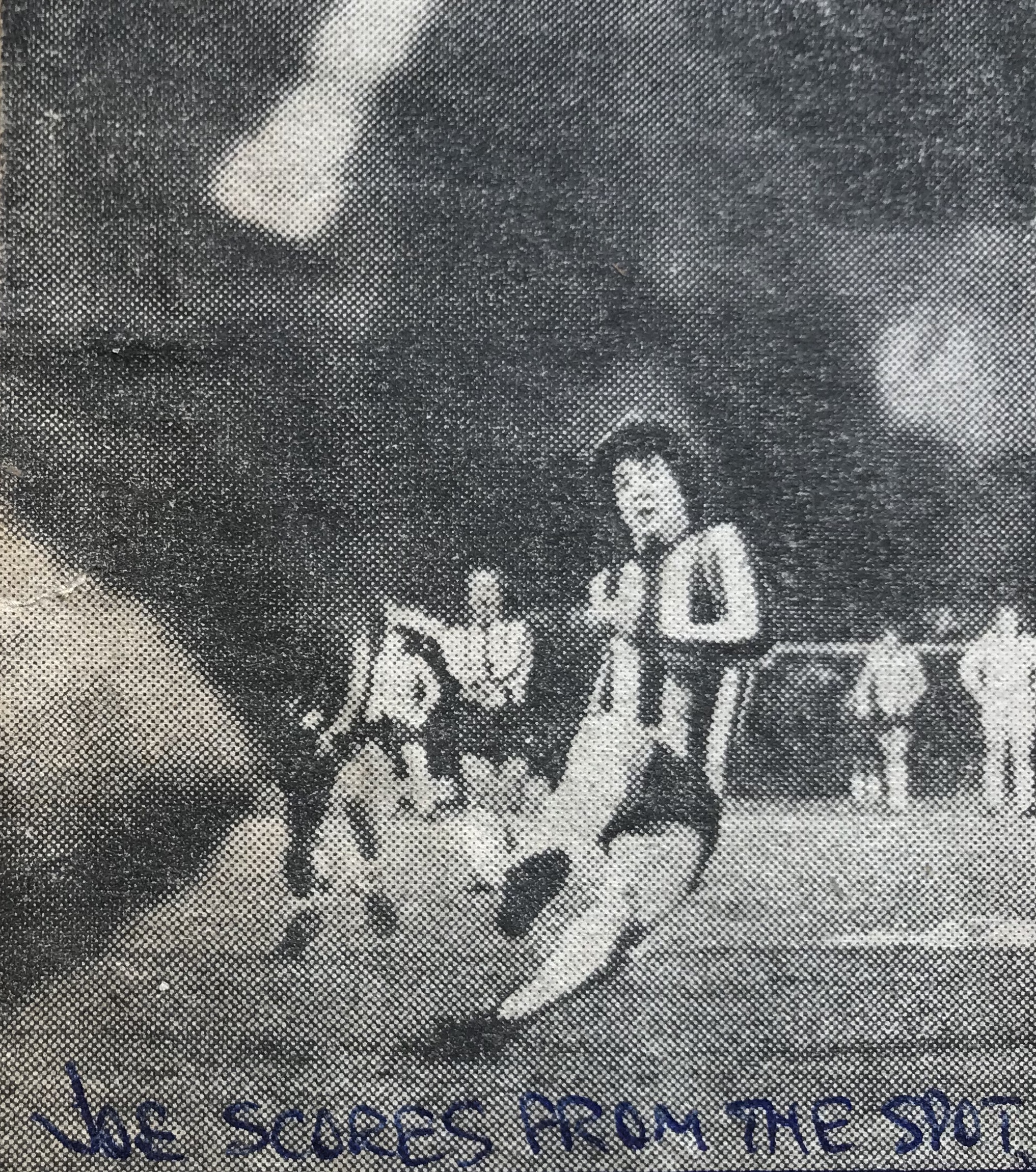
Spurs were in no mood for sentiment, though, and ran out 6-1 winners, with Kinnear scoring a consolation for Albion from the penalty spot.

As Albion’s promotion bid unravelled, Kinnear played in 10 league matches, only three of which were won. Although he was successful with another penalty, this time against Chesterfield, the Spireites won 2-1 with two penalties of their own.

Fingers were pointed at Kinnear for a gaffe in a decisive Easter game at promotion rivals Millwall which Albion ended up losing 3-1.

In his end-of-season summary, the Evening Argus Albion watcher John Vinicombe pointedly considered it was the injury ruling out Tiler that had been a key turning point in the failure to gain a promotion spot.

Kinnear himself suffered a serious knee injury in the penultimate game of the season, a 1-1 home draw against Gillingham, capping a dismal afternoon in which he also had a penalty saved. His departure on a stretcher on 19 April 1976 was his last appearance in an Albion shirt, other than being pictured kneeling on the end of the front row in the August pre-season team photo.

What happened next was covered in some detail in a 2013 blog post on thegoldstonewrap.com. In short, Mullery had arrived as manager following Taylor’s decision to quit and link up again with Clough, who’d taken over at Nottingham Forest.

Mullery was unimpressed by his former teammate’s level of fitness and attitude and called him out in front of the squad. Peter Ward, the new kid on the block at that point, thought it was the wrong approach and, in Matthew Horner’s book He Shot, He Scored, said: “It seemed that Mullery and Kinnear didn’t get on very well.”

Contractually, Albion still owed Kinnear money but it was evident he wasn’t going to feature while Mullery was in charge and a settlement had to be reached. Eventually Kinnear moved on to become player-manager of non-league Woodford Town, beginning a career in coaching and management that ultimately took him back to the top level of the game, albeit frequently attracting headlines for some extraordinary and controversial behaviour.

But let’s stick with Kinnear the player for the moment. Born in Kimmage, Dublin, on 27 December 1946, he moved to Watford at the age of seven. After leaving school, he became an apprentice machine minder in a print works and played amateur football for St Albans City. It was there he was spotted by the aforementioned Baily, who invited him to join Spurs’ pre-season training. He initially signed as an amateur in 1963, turning professional two years later.

His breakthrough season was 1966-67. He made his debut for the Republic of Ireland on 22 February 1967 in a 2-1 defeat to Turkey and won a regular place in the Spurs side when Phil Beal was sidelined with a broken arm. Kinnear performed well in Beal’s absence and he ended it as a member of the side which beat Chelsea 2-1 in the 1967 FA Cup Final.

“I was 20 when we played in the 1967 FA Cup Final and I got Man of the Match, so it was a great start for me,” Kinnear told tottenhamhotspur.com.

All was going well until January 1969 when in a home game against Leeds United he broke his right leg in two places, and he was out of the side for a long while.

Kinnear’s misfortune provided an opportunity for emerging youngster Ray Evans, as this Spurs archive website recalls: “When he got his chance through an injury to regular right back Joe Kinnear, Evans took over in that position and provided a threat with fast, over-lapping runs along with a notable fierce shot that chipped in with a few goals for the club.  Strong in the tackle and quick to recover his position, his height also helped him when teams tried to play diagonal passes in behind him.”

Evans had long spells in the side, especially in the 1973-74 season when Kinnear barely got a look-in, but the Irishman battled for his place and was first-choice right-back in Spurs’ League Cup winning sides of 1971 and 1973, and the UEFA Cup winning line-up in 1972.

The revered Nicholson had encouraged Kinnear to become a coach once his playing days were over, but he struggled to get a foot on the ladder in the UK. Ex-Derby boss Mackay, with whom he used to go to Walthamstow dogs after training, took him on as his assistant in the United Arab Emirates and Malaysia, then later at Doncaster Rovers after Kinnear had spent time in India and Nepal.

Eventually, in 1992, he got his chance at Wimbledon, defying the purists with a brand of football that saw them finish in sixth place in 1993-94 – and Kinnear won the League Managers’ Association Manager of the Year award.

Over seven years, The Dons played 364 games under him, winning 130, drawing 109 and losing 125. Despite not even playing at their own ground – they played home matches at Selhurst Park – Wimbledon continued to defy the critics with their resilience in the Premier League and progress in the cups but in 1999 Kinnear stood down as manager after suffering a minor heart attack.

He later enjoyed success in two years (2001-03) at Luton Town and had colourful spells as manager of Nottingham Forest (2004) and manager (2008-09) then director of football (2013-14) at Newcastle United.

Acres of newsprint and plenty of clips on YouTube record some extraordinary behaviour following his appointment by Mike Ashley at Newcastle. Perhaps one of the best summaries is on planetfootball.com, with reporter Benedict O’Neill saying: “Mike Ashley’s mismanagement of Newcastle has been a long-term affair with many bizarre decisions, but his appointment of the long-forgotten Joe Kinnear — twice! — may just be the strangest of all.”

Kinnear, who was diagnosed with dementia in 2015, died aged 77 on 7 April 2024.

Pictures from my personal scrapbook, matchday programmes and various online sources.

Steve Harper’s part in the Seagulls-Magpies goalkeeping ‘trade’

BRIGHTON and Newcastle United clearly have a similar eye for goalkeepers with a string of custodians having played for both clubs.

A few years before I started watching, Dave Hollins, older brother of ex-Chelsea midfielder John, moved to Tyneside in 1960 after three years with the Albion, and played twice as many games for Newcastle in the early part of that decade than he had for Brighton.

Back in the first Alan Mullery era, Eric Steele, who went through the Newcastle ranks without making the first team, arrived at Brighton to replace the injured Peter Grummitt in 1977 and was in the side that won promotion to the elite via a 3-1 win at St James’ Park in 1979.

Dave Beasant, who Newcastle bought from Wimbledon for £850,000 in 1988 – although he only played 20 games for the Magpies – was between the sticks for the Albion for 16 games in 2003.

More recently, Dutchman Tim Krul – who’d been at Newcastle a decade – spent a couple of seasons as back-up to Mat Ryan and would probably be disappointed he didn’t get more game time.

My post on this occasion, though, is about Steve Harper, United’s longest-ever serving player having been there 20 years. He later went back as one of the coaches working with Steve Bruce, as well as being goalkeeping coach to the Northern Ireland international side.

Harper is a qualified UEFA A coach and UEFA A goalkeeping coach, and holds a Masters degree in Sport Directorship.

Back in 2011, Harper was happy to lend his experience to the second tier Seagulls during Gus Poyet’s tenure as manager, a decision applauded by Alan Pardew, Toon boss at the time.

“He just wanted to play,” Pardew told the Chronicle. “Not all the top players in the country would have gone on loan – you’re vulnerable.

“You’re going down a division, but he was prepared to do that, and fair play to him.”

For his part, Harper told BBC Sport: “Everybody knows I haven’t played enough football until the last two-and-a-half years.

“I hadn’t played a competitive game for about six months so it was nice to blow the cobwebs out.”

In his first Seagulls match, unfortunately Albion lost against West Ham to a single goal from Harper’s former teammate Kevin Nolan, and he said: “It was disappointing to lose against West Ham with the possession we had.

“Now I’m here, it’s time to get stuck in. We want Brighton to consolidate and finish as high as we can. People tell me it’s a lovely city. I’m looking forward to seeing more of it.”

Harper recalled the time fondly in an interview for the Albion website in 2019.

He featured in five games for the Seagulls, keeping two clean sheets. While he conceded five goals, three came away to Southampton when the Seagulls were unjustly punished by referee Peter Walton.

Harper told journalist Nick Szczepanik: “I would have stayed longer given the opportunity. They made me feel very welcome.”

He even managed to give two of his new teammates a surprise when he started speaking to them in Spanish. Playing behind Spanish speakers Inigo Calderon and Gonzalo Jara Reyes, he explained to Andy Naylor, then of The Argus: “After five years of Bobby Robson and his multi-lingual team talks my Spanish is okay.

“Calde got quite a shock with how much Spanish I know, but I had Colocinni and Enrique in the team with me at Newcastle.”

After his brief spell with the Albion, Harper returned to Newcastle and played nine more games for them the following season before moving on to Hull City (at the time managed by current Toon boss Bruce), where he played alongside Liam Rosenior.

Born in Seaham on 14 March 1975, Harper grew up in the County Durham mining village of Easington and went to its local comprehensive school. Originally a striker at local Sunday league level, he only started playing in goal from the age of 17 and he turned out for Newcastle’s youth team while he was still at college doing A levels.

In fact he was offered a place at John Moores University in Liverpool to study for a Sports Science degree but he deferred it when Newcastle offered him a one-year contract. He signed in 1993 as a back-up for first choice Pavel Srnicek, later Shaka Hislop and subsequently Shay Given.

Much of his time at Newcastle was as a more than capable deputy to whoever was first choice although in United’s 2009-10 season in the Championship, under Chris Hughton, he was the main man and played 45 matches.

Harper had nothing but praise for Hughton, telling chroniclelive.co.uk: “He came in at an incredibly difficult, turbulent time after relegation.

“Chris was the man at the centre of a perfect storm who steered us through some very choppy waters.

“He did a wonderful job and I don’t think he got enough credit. It was no surprise to me to see him go on to do an excellent job at Birmingham City and then at Brighton.”

In total, Harper played 199 games for Newcastle, featuring under nine different managers – Kevin Keegan and Bobby Robson being his favourites.

Periodically over the years, he went out on loan to gain first-team action, appearing between the sticks for Bradford City, Gateshead, Stockport County, Hartlepool and Huddersfield. The Brighton move was his sixth spell out on loan.

Harper’s long service for Newcastle was rewarded with a testimonial against AC Milan in 2013 before he left the club to join Hull, where he spent two seasons.

Six months after his departure from Hull, he was taken on by then Premier League Sunderland as cover for Jordan Pickford and Vito Mannone, but he didn’t make a first-team appearance and was released at the end of the season.

Ups and downs of medal-laden Mark McGhee’s career

MARK McGHEE saw highs and lows as Brighton & Hove Albion manager after a medal-laden playing career that took him from his native Scotland to England and also to Germany.

McGhee was in charge when the Seagulls memorably won the 2004 play-off final to gain promotion from the third tier, beating Bristol City at the Millennium Stadium, Cardiff.

Play off final boss

Keeping the Seagulls up the following season was arguably an even greater achievement considering at the time playing home games at the crowd-restricted Withdean Stadium meant the club was at a huge disadvantage compared to most clubs in the division.

With the Amex still a distant dream, relegation came at the end of the 2005-06 season, and it wasn’t long into the following season that Dick Knight wielded the axe on the Glaswegian’s time in charge.

“It was hard to sack Mark, but we had to have a change,” Knight wrote in his autobiography, Mad Man: From the Gutter to the Stars. “Everyone recognised what he had done in taking up and keeping up a team that was not that great, to be honest. Hats off to him, he had done a terrific job. And he is a very intelligent, personable guy.”

Knight took decisive action when part of the crowd became vociferous in wanting McGhee out, and the chairman also felt some of the young players drafted into the team weren’t responding to him.

He was finally toppled over lunch at Topolino’s, and Knight admitted: “It was a difficult decision. There was strong vocal opposition to McGhee, but also a large, less noisy element who were behind him.”

McGhee liked Brighton so much he made it his home despite subsequently taking on a series of other roles the length and breadth of the country.

It’s probably fair to say the Scot has never been afraid to speak his mind, which his former Newcastle boss Bill McGarry mentioned to him. McGhee recounted in an interview with theleaguepaper.com: “I was managing Wolves at the time. He said ‘Mark, you talk too much. Tone it down a bit’. I tried to take his advice, give nothing away in media briefings. Then, somebody would say something interesting and I wasn’t able to stop myself.”

It’s probably what helped him gain a place on the Sky Sports Soccer Saturday panel when he was in between management jobs.

McGhee would most likely look back on some jobs he’d perhaps have been wiser to stay away from, for example taking temporary charge of Eastbourne Borough in 2018, although his enthusiasm was undimmed as he revealed in an interview with thenonleaguefootballpaper.com.

Born in Glasgow on 20 May 1957, his father was an electrical engineer and his mother a fertility consultant at Glasgow Royal Infirmary. McGhee was on the books of Bristol City at the start of his long career but he returned to Scotland and became a part-timer with Greenock Morton while also training to be an architect.

Aforementioned manager McGarry signed him for Newcastle for a £150,000 fee on 30 December 1977 and he made his debut on 2 January 1978.

His face didn’t fit after Arthur Cox took over as boss, but Alex Ferguson took a punt on him in March 1979 and signed him for Aberdeen, and it proved to be one of many shrewd decisions the esteemed Scot would make in his career.

McGhee was named Scottish PFA Players’ Player of the Year in 1982, and the following year was part of the Aberdeen side who beat Real Madrid 2–1 to lift the 1983 European Cup Winners’ Cup in Gothenburg.

mcg cup

He also scored the second goal as Aberdeen defeated Hamburg 2-0 to win the UEFA Super Cup in the same year.

Asked about the best goal he scored, he said: “Probably the winning goal in my last game for Aberdeen.”

McGhee reckoned his best moment in football came on 26 May 1984 when he scored against England at Hampden Park. He headed in a cross (as pictured) from his great pal Gordon Strachan past Peter Shilton.

McG v Eng

“It put us 1-0 up but Tony Woodcock equalised to make the final score 1-1.”

It was one of four caps he won for his country. Nearly two decades later, in January 2013, Strachan appointed him as his no.2 with the Scottish national side.

M McGhee Old Football PhotosBut back to those playing days, and with two Scottish league titles and three Cup wins behind him, McGhee tried his hand at European football and spent 16 months at Hamburg. The spell was probably more of an education than a success, with injuries limiting his game time.

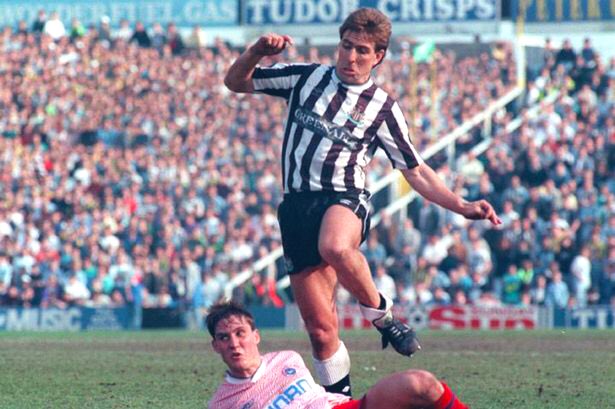
A £170,000 fee took him back to Scotland, to Celtic, where he had mixed fortunes during four years with the Glasgow giants. He was, though, part of the squad that won a League and Cup double in their centenary season.

After winning another Scottish Cup winners’ medal in 1989, he was on the move again, back to Newcastle.

Now with Jim Smith in charge, Newcastle paid £200,000 to take McGhee back to St James’ Park, where he formed an impressive strike partnership with the legendary Micky Quinn as Toon finished third in the old Division Two.

“We were good friends, but we didn’t blend on the pitch like Toshack and Keegan, Quinn told theleaguepaper.com. “Mark was a free spirit. He’d get the ball and drift left or right and drop deep.

“He’d turn defenders and drag them out of position. He would hold the ball up well for me to get into the box and score goals. He went where he wanted, but it worked.”

football back then McGhee

This Football Back Then picture shows McGhee in action for Newcastle against Albion’s Nicky Bissett.

His farewell performance came on 6 April 1991, not long after Ossie Ardiles had taken over as manager, and McGhee departed having scored a total of 36 goals in 115 appearances for the Magpies.

Next stop was Sweden, where he played briefly for IK Brage, but he seized the opportunity to try his hand at management by taking up the role of player-manager at Reading in the summer of 1991.

He’d been recommended for the role by his old boss Ferguson, and, after quitting playing through injury in 1993, he led the Royals to promotion from the third tier the following year.

A struggling Leicester City gave him a chance to manage in the Premier League but he was unable to keep them up and, less than a year after joining, decided to switch to Wolverhampton Wanderers, to succeed Graham Taylor.

Wolves just failed to gain promotion in 1996-97 (they lost in the play-off semi-finals) and were ninth the following campaign. Four months into the 1998-99 season, following a string of poor results, McGhee was fired.

It would be 20 months before he gained his next opportunity, this time at Millwall where he enjoyed initial success, leading them to promotion from the third tier, and then narrowly missing out on another promotion when they lost in the play-off semi-finals to Birmingham City.

McGhee apptWhen he parted company from Millwall in October 2003, he wasn’t out of work long because Brighton needed a replacement for Steve Coppell, who’d been wooed to take over at Reading (pictured above, with chairman Dick Knight, at his unveiling as Albion manager).

Those Albion fans who stuck by the team in the humble surroundings of the Withdean Stadium enjoyed some good moments during McGhee’s time as manager, in particular promotion via the play-off final in 2004.

He certainly found a formula to get the best out of certain players, as Adam Virgo, converted from defender to goalscorer, observed in that theleaguepaper.com article. “Mark is a very good communicator and very experienced,” he said. “He can make you feel ten feet tall. He’s very good at being honest, at analysing your game and telling you what you’re good at.”

After his departure from the Albion, McGhee was out of the game for nine months but got back in at Motherwell, turning them from near relegation candidates to qualifiers for European competition.

The lure of his old club, Aberdeen, proved too strong in the summer of 2009, but his tenure proved to be disastrous – and brief.

He spent the majority of 2012 as manager of Bristol Rovers, where one of the squad he inherited was former Brighton defender-turned-striker, Virgo. The following year, his old pal, Strachan, appointed him as assistant coach to the Scottish national side.

He later combined the role part-time when he returned to Motherwell but there were mixed fortunes second time round, and he left them again in early 2017. Towards the end of that year, he popped up at League Two Barnet, but the arrangement lasted only two months before he was moved to a ‘head of technical’ role, and then dismissed in March 2018.

McGhee was ‘slaughtered’ on Twitter when he took over as interim manager of National South side Eastbourne Borough in the spring of 2019, after being beaten 3-0 by Wealdstone in his first match in charge, his new side reduced to nine men after two players were sent off. Borough won just once in 11 matches.

When Albion under 23s coach Simon Rusk was appointed manager of Vanarama National League side Stockport County in January 2021, McGhee was appointed as one of his assistants.

His final managerial post was at Dundee in February 2022 when he took temporary charge of the Scottish Premiership side until the end of the season (with Rusk as his assistant), but they couldn’t avoid them being relegated, overseeing just one win in 13 matches.

McGhee finally announced his retirement from the game in September 2022 at the age of 65, telling the Sunday Post: “I won’t be pursuing any other managerial vacancies, and nor would I want to be a director of football or a head of recruitment. That’s not what I am – I’m a manager.

“I feel that players now deserve a young manager who can give them the energy I was able to when I started out. They don’t need a 65-year-old with a dodgy ankle.”

Goal-shy journeyman striker Leon Best drew derision

FOR SOMEONE purporting to be a striker, Leon Best fired blanks at a good many of the clubs he played for.

Such was his time at Brighton where he failed to get on the scoresheet in 13 games (six as a starter, seven as a substitute).

When he featured for AFC Bournemouth in the third tier, he fared slightly better. He managed three goals in 14 starts plus three as a substitute when on loan from Premier League Southampton during the 2006-07 season.

The somewhat derogatory phrase ‘journeyman’ was tailor-made for the likes of Best, who appeared for 13 different league clubs, failing to score for five of them and only registering double figure tallies at three.

Brighton supporters, on the whole, are normally supportive of anyone who appears for their team, but feelings boiled over at Best’s apparent lack of desire when pulling on the Seagulls stripes.

He was part of the struggling 2014-15 side which narrowly avoided the drop from the Championship, and I recall him being booed when he came on as a substitute at the Amex. On reflection, of course, such derision was unlikely to improve his demeanour.

The keyboard warriors of North Stand Chat weren’t slow to vent their anger, with one correspondent suggesting: “We’ve not seen much in the way of desire, endeavour, hunger or appetite from someone you would hope feels he has something to prove.”

Chris Hughton had not long been in the manager’s chair when he was casting around for players to help Albion climb away from the foot of the table.

Perhaps not unreasonably, he turned to a player who’d scored goals for him in the Premier League during his time at Newcastle United.

Hughton told the Argus: “I know Leon very well, having signed him during my time at Newcastle and I am delighted to have him here.

Screen Shot 2021-06-10 at 14.55.50“He is a strong, physical presence, he knows the Championship and knows the position we are in. We wanted new faces, to freshen up the squad, and Leon will add competition alongside our existing strikers.

“I signed him previously at Newcastle. I know he can be a very good player and he did very well for me both in the Championship and Premier League. He also had a very good spell with Newcastle after I left the club.”

Best scored 10 in 46 games for the Magpies but, at his next club, Blackburn Rovers, he managed only two in 16, hence them sending him out on loan.

While Best had scored five in 16 playing on loan at Sheffield Wednesday in 2013-14, he scored a big fat zero in 20 games for Derby County earlier in the 2014-15 season so perhaps expectations should not have been high when he arrived at Brighton on 20 January 2015.

Nevertheless, Hughton told Brian Owen: “I am very pleased he is here. He gives us another attacking option and I hope he can produce the same form he did for me when we worked together at Newcastle.” In short, he didn’t.

Born in Nottingham on 19 September 1986, his first steps into the professional game came with his local side Notts County. When international recognition came calling, he chose to represent his mother’s birth country, the Republic of Ireland, and was capped at under 17, under 19 and under 21 levels before gaining seven full caps in 2009-10.

Southampton snapped up Best in 2004 and gave him his league debut aged 18, ironically against his future employer, Newcastle.

But opportunities were limited with the Saints and over the course of three years on their books they loaned him out to QPR, Sheffield Wednesday, Bournemouth and Yeovil Town.

In 2007, Best transferred to then Championship side Coventry City for £650,000 and arguably his most successful goalscoring spell came during his time there, as he netted 23 goals in 104 appearances over three seasons.

It prompted Hughton to spend £1.5m of Mike Ashley’s money to take Best to Tyneside on 1 February 2010.

Maybe the warning bells should have been sounding in those first few months on Tyneside when he didn’t register a goal in 13 Championship appearances and fell behind Andy Carroll and Peter Lovenkrands in the pecking order.

Although he managed a couple of goals in pre-season matches, the early part of the 2010-11 season was marred by a cruciate knee ligament injury. Nevertheless, when he returned to action in the January, he did it in some style, bagging a hat-trick in a 5-0 win over West Ham. He got a further three goals before injury ruled him out once again.

3490663In the following season, he went 12 games without scoring but in the summer of 2012, Blackburn Rovers paid £3m to take him to Ewood Park – only for him to pick up an anterior cruciate knee injury one month into the season, ruling him out of action for six months.

The temporary move to Brighton was one of three loans away from Blackburn before they finally released him by mutual consent in July 2015.

It wasn’t until November 2015 he managed to find another club, pitching up for six months at Championship side Rotherham United. When he couldn’t agree terms on a new deal with the Millers, he instead moved to Ipswich Town, ostensibly as a replacement for Daryl Murphy.

He made six starts and six appearances as a substitute without scoring and, by January 2017, manager Mick McCarthy had lost patience with him and declared he wouldn’t play another game for the club.

Released by Town in the summer of 2017, Best managed to secure a two-month deal with Charlton Athletic in November 2017 but he sustained a knee injury on New Year’s Day 2018 and hasn’t played since.