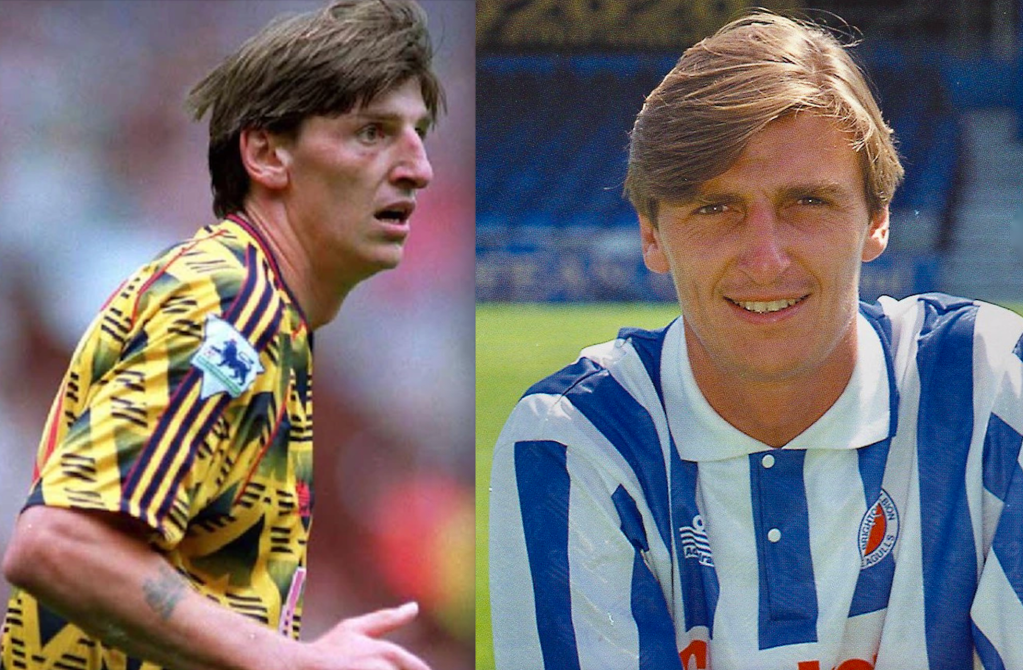
Why Colin Pates is forever grateful to Liam Brady

ONE-TIME Arsenal back-up defender Colin Pates had a Gunners legend to thank for persuading him to quit the game before he did any life-altering damage.

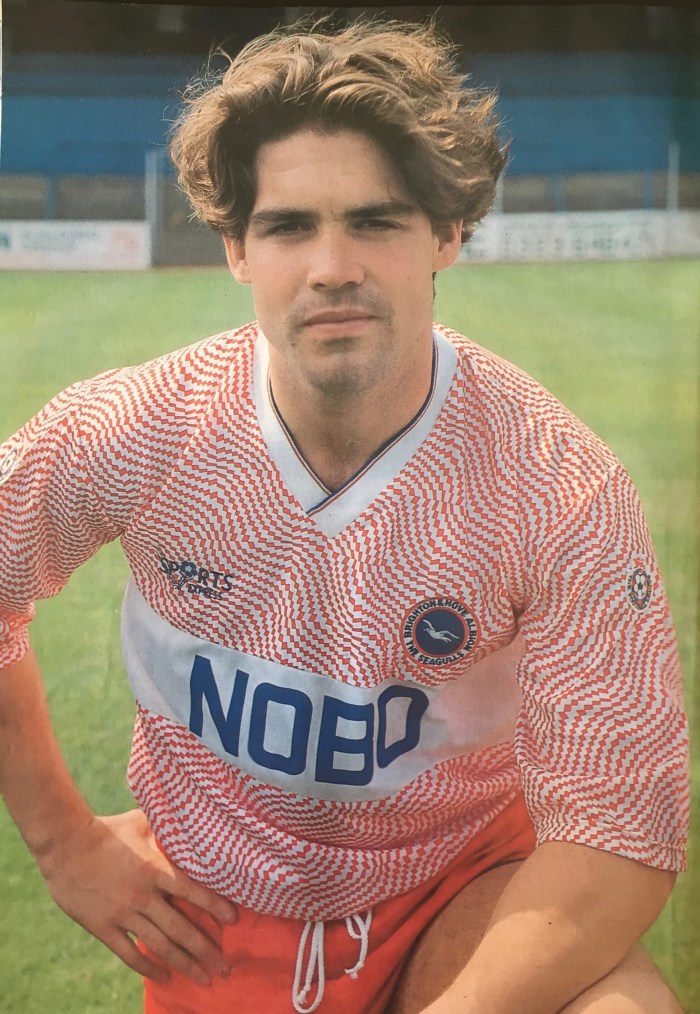
Thankfully, Pates took Liam Brady’s advice to bring his professional playing days to an end at Brighton in January 1995 and he went on to have a long and successful career coaching at an independent school in Croydon where he introduced football to what was previously a rugby-only establishment.

“Liam told me that I should think of my health before my playing career and that I would be a fool to myself if I carried on playing,” Pates told the Argus in a 2001 interview.

“My knee had fallen apart and it was the right advice. If I’d ignored it, I could well have ended up not being able to walk.

“Footballers need to be told when it is the end. I’ll always be grateful to Liam for that.”

Pates had played the last of 61 games in the stripes (a 0-0 home draw against Bournemouth) only six weeks after he was presented with a silver salver by former England manager Ron Greenwood to mark his 400th league appearance (on 24 September 1994, a 2-0 home win over Cambridge United).

In the matchday programme of 17 December, Brady confirmed that Pates and fellow defender Nicky Bissett, (who’d twice broken a leg and then sustained a knee injury) would be ruled out for the rest of the season. Neither played another game for the Seagulls.

It brought to an end Pates’ second spell with the Seagulls, having originally spent a most productive three months on loan in 1991 helping to propel the club to a Wembley play-off final. If Albion had beaten Notts County that May, Pates may well have made a permanent move to the south coast. As it was, he said: “Unfortunately, the club couldn’t meet Arsenal’s asking price for me that summer so I returned to Highbury.

“But when my contract expired in 1993, there was only one club I wanted to be at… Brighton.”
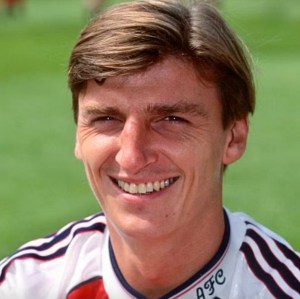
Pates had plenty of competition for the centre back berth at Arsenal

As if Tony Adams, Andy Linighan, David O’Leary and Steve Bould weren’t enough centre back competition at Arsenal, manager George Graham had also taken Martin Keown back to the club from Everton for £2m – six and a half years after selling him to Aston Villa for a tenth of that amount.

So, it was no surprise that Pates found himself surplus to requirements at Highbury and given a free transfer. Graham’s old Chelsea teammate, Barry Lloyd, eagerly snapped up the defender for a second time, this time on a permanent basis.

Goalkeeper Nicky Rust, still a month short of his 19th birthday, who’d also been given a free transfer by Arsenal, made his Albion league debut in the season-opener at Bradford City behind the returning Pates, who had just celebrated his 32nd birthday four days before the game.

After starting the first 10 matches alongside the aforementioned Bissett, Pates suffered an abductor muscle injury early on in a 5-0 drubbing away to Middlesbrough in the League Cup which necessitated a spell on the sidelines. He missed nine matches – only one of which was won.

These were the dying days of the seven-year Lloyd era and, even with Pates back in the side, one win, two draws and four defeats brought the sack for the manager.

Any doubts new manager Brady had about Steve Foster and Pates were swiftly dispelled, as he wrote about in his autobiography (Liam Brady: Born To Be A Footballer).

“Fossie was 36. I feared he might be going through the motions at this stage in his career and it would have been hard to blame him,” said Brady. “Colin Pates was a few years younger, but he’d been at Chelsea and Arsenal and could have been winding down.

“I appealed to them to give me a dig out, to lead this rescue mission. And they responded just as I hoped.”

Together with the even older Jimmy Case, who was brought back to the club from non-league Sittingbourne, they “brought on” the younger players in the new man’s first few weeks and months.

Under Brady, young Irish centre-back Paul McCarthy played alongside Foster in the middle, with Pates at left-back. And Pates saw the arrival of some familiar faces in the shape of young Arsenal loanees, first Mark Flatts and then Paul Dickov, whose successful spells helped Brady to steer the Seagulls to safety by the end of the season.

“I really enjoyed it, playing mainly at left-back,” said Pates. “It was a great family club and I made a lot of friends there along the way.”

At the time Pates had to call it a day, Albion were a third-tier side but the bulk of his career had been played at the top of the English game for two of its leading lights in Chelsea and Arsenal, and briefly Charlton Athletic.

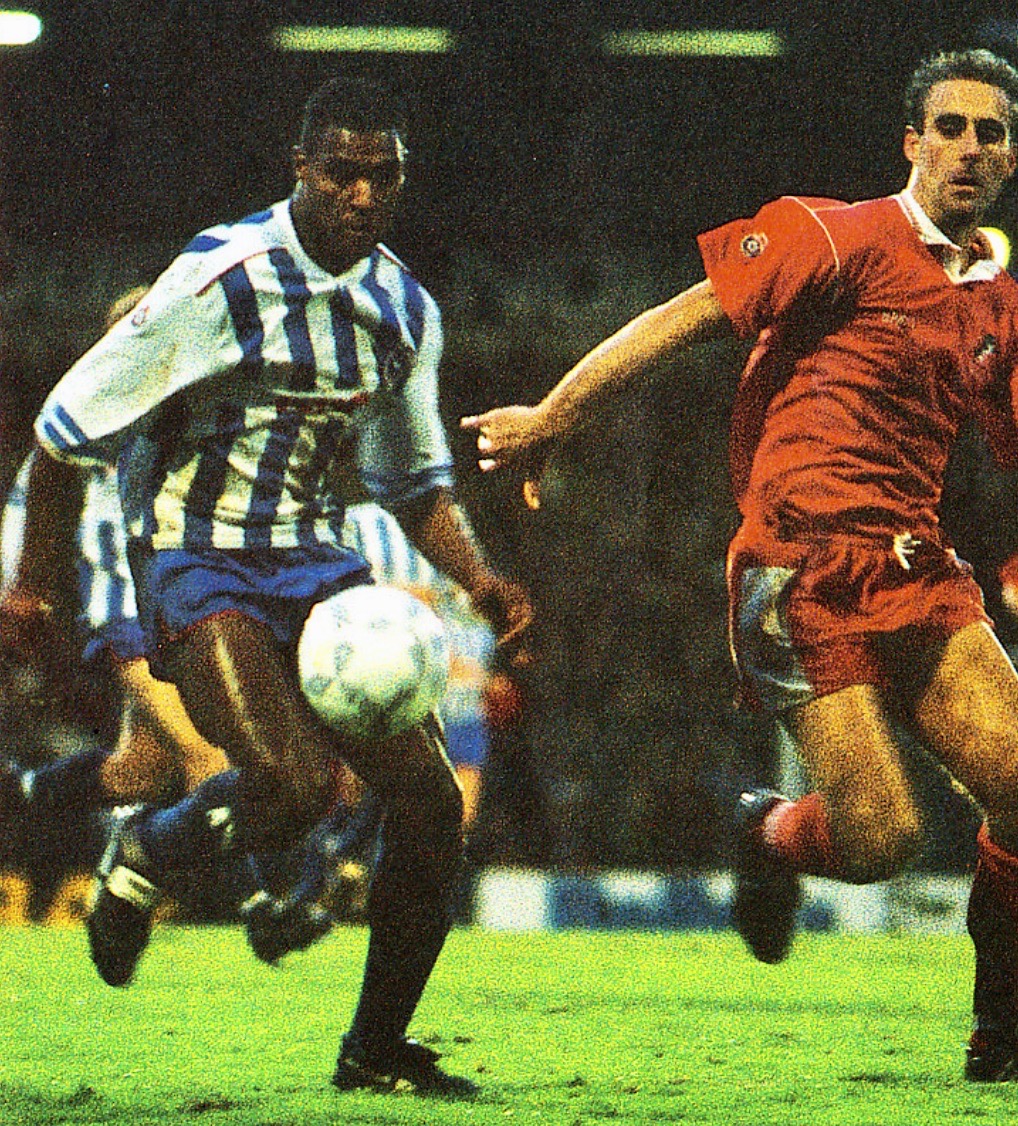
Albion’s ex-Arsenal trio Liam Brady, Raphael Meade and Colin Pates

The player’s move to Arsenal from Charlton for £500,000 in January 1990 raised more than a few eyebrows because he was 28 at the time and none of Arsenal’s back four – Lee Dixon, Bould, Adams and Nigel Winterburn – looked like giving way.

“People asked me why I went there,” said Pates. “But when a club is paying that money and that club is Arsenal who wouldn’t go and take the chance?

“I knew this was going to be the last opportunity to have a move like this in my career and although I knew I was only being signed as cover, I couldn’t turn it down.”

He continued: “I’d joined a team that had just won the league, that would do so again in 1990-91 and they had the fabled back four – the best defensive unit in world football at the time.”

The website upthearsenal.com acknowledged: “Pates had built a solid reputation at Chelsea as a dependable defender who was strong in the air and no slouch on the deck.”

Pates added: “When I first met George (Graham) in his office at Highbury, he was honest and straight talking. He told me I’d have to work hard to get into the side.”

However, within a month he made his Gunners debut at left back in place of the injured Nigel Winterburn in a 1-0 defeat to Sheffield Wednesday. It turned out to be his only first team appearance that season.

Although he found it difficult to motivate himself for reserve team football, he pointed out: “I still enjoyed the training sessions with the first team and I did learn a lot about defending from George, even at that late stage in my career.”

However, after his return from the loan spell at Brighton, he saw action as a sub in three pre-season friendlies ahead of the 1991-92 season and that autumn had his best run of games in the first team.

He featured in eight games on the trot between October and November 1991 and memorably scored his one and only goal for Arsenal in a European Cup match at Highbury against a Benfica side managed by Sven-Göran Eriksson. He also played in the February 1992 1-1 North London derby against Spurs and made two appearances off the bench that season.

It was a similar story in the 1992-93 campaign when he went off the bench on five occasions although he had two starts: in a 2-0 win at Anfield (Anders Limpar and Ian Wright the scorers) and a 3-2 defeat away to Wimbledon.

“I was a bit-part player but it was a good time to be at the club with the cup finals and being part of the squads,” said Pates.

On his release from Brighton, Pates had a spell as player-manager of Crawley, played a handful of games for non-league Romford, and coached youngsters in various places including Mumbai in India and the Arsenal School of Excellence.

Pates told The Guardian in a 2002 interview how a sense of history and continuity was the first thing he had noticed when he signed for Arsenal.

Brady, Paul Davis, Bould and other former Arsenal players were all invited to the Arsenal academy, and Pates told the newspaper. “Young players need people like Stevie Bould to tell them how proud they should be to pull the shirt on and to show them what’s expected of them. “When I joined Arsenal, everyone was kind and considerate. You were left in no doubt about how you were supposed to conduct yourself. For the way it’s run, it’s the best club in the country.”

By then though, Pates had begun a new career as a coach getting football off the ground at the independent Whitgift School in Croydon. He was to stay 24 years at the school having been invited to introduce football by its headmaster, Dr Christopher Barnett.

The story has been told in depth in several places, notably in London blog greatwen.com by Peter Watts, among others. Watts wrote: “A posh school in the suburbs is not where you’d expect to find a hard-bitten former pro, and Pates admits: ‘Whitgift is quite alien to some of us, because we had state school educations. It was intimidating, and not just for the boys.’ But he jumped at the opportunity.

At first, he took a sixth-form team on Wednesday afternoons, but there were no goalposts, pitches, teams or even footballs! “We didn’t have anything. So, we had to start from scratch, pretty much teach them the rules,” he said.

“They were rugby boys playing football, so these were quite aggressive games. But after three years we introduced fixtures and we’ve never looked back,” said Pates.

In an interview with the Argus in October 2001, Pates added: “We went over the local common for our first training session with some under-18s after finding a ball that looked like the dog had chewed it up.

“I had to go right back to basics. All they had known was rugby, so it was a case of going through the rules of football to start with, like the ball we use is round!

“I was told that in 300 years football had never been considered. But a lot of the boys and their parents expressed an interest.

“It might be an independent school but you can forget the black and white filmed images of public school kids. Most are from working class backgrounds and they love their football.

“It grew a lot quicker than the head thought and he told me I should take over as master in charge of football.”

As the sport grew, he recruited his former Charlton teammate (and ex-Brighton, Wolves and Palace full-back) John Humphrey and Steve Kember, the former Chelsea and Palace midfielder to help with the coaching.

Asked about it on the chelseafancast.com podcast Pates delighted in recounting how from time to time he would show Humphrey a video clip of a rare goal he scored for Chelsea against Wolves when he flicked the ball over Humphrey’s head in the build-up to it – however Chelsea lost that 1983 match 2-1!

More seriously, Pates spoke at length to Watts about the benefits of a good education in case things didn’t pan out.

“You have to be an exceptional footballer to make it these days. So, we want to give them the best opportunity to be a footballer, but also give them a magnificent education so if they don’t sign scholarship forms they have something to fall back on. It works for us, it works for the academies and it works for the families.”
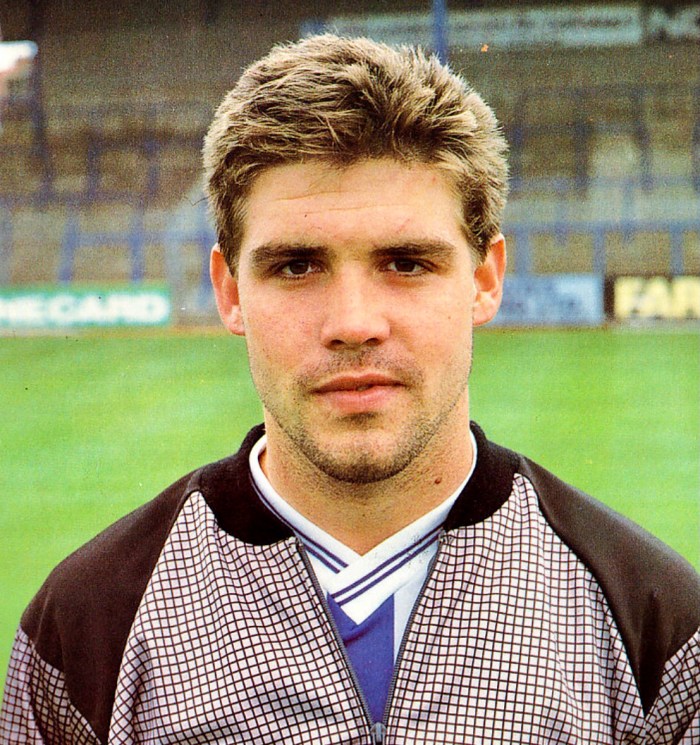
Isaac’s long, long wait for an Albion win

IT seems extraordinary to think Robert Isaac had to wait FOURTEEN MONTHS to experience a win as a Brighton player after joining the club from Chelsea.

The young defender who had realised every schoolboy’s dream by playing for the team he’d always supported left a disgruntled dressing room at Stamford Bridge only to join a side sliding inexorably toward the relegation trapdoor of what is now the Championship.

“I must admit it was a bit depressing at first because we just couldn’t do anything right,” Isaac told Dave Beckett in an Albion matchday programme article. “We just had no luck at all; if we had I think we might well have survived in Division Two.”

Isaac also appears to have gone out of the frying pan into the fire. Telling thegoldstonewrap.com how he’d left Chelsea because the management was losing support of the players and he wanted regular first team football, he added: “When I joined Brighton in February 1987 they were in freefall. The dressing room was even more at odds with the manager than at Chelsea.

Barry Lloyd dropped Dean Saunders, our only hope of surviving the drop. I found Barry rather rude. He’d blank me in the corridor and make me train on my own.”

The young defender made his Seagulls debut on 21 February 1987 in a 2-1 defeat at home to Oldham Athletic and featured in four draws and five defeats by the season’s dismal end.

Back at what was for so long Albion’s normal level of third tier football, Lloyd’s side did begin to pick up points – but Isaac wasn’t involved because of a groin strain and a troublesome hernia injury that sidelined him for months.

“I had stomach trouble quite a lot but no-one could put their finger on the problem until I saw a specialist in Harley Street,” he explained.

“After the operation, I was out of action for the best part of six months and at times I didn’t think I would get back to full fitness. I had around 40 internal stitches and even when I began playing again they would stretch and pull and I felt sick after games.”

It wasn’t until March 1988, with Albion in sixth spot, that Lloyd shook things up, initially drafting Isaac in at right-back in place of Kevan Brown, and then selecting him to replace suspended captain – and Isaac’s former Chelsea teammate – Doug Rougvie at centre back alongside Steve Gatting.

Isaac also stepped in when Rougvie missed a couple of games with a ‘flu virus and, although a win in Seagulls’ colours continued to elude him in his first three games back in the side (a defeat and two draws), he kept the no.5 shirt ahead of the rugged Scot. That elusive win finally came in a 2-1 away win at Notts County on 4 April.

Five wins and a draw followed and the successful run-in saw promotion gained as divisional runners-up behind Sunderland. Isaac was one of three former Chelsea players in that back four, with Gary Chivers (who’d arrived from Watford) at right-back and Keith Dublin at left-back.

Dublin had played for England under 19s with Isaac three years earlier. They both played four games in Dave Sexton’s side at the Toulon Tournament in the south of France in 1985 (England beat Cameroon 1-0 and Mexico 2-0, lost 2-0 to the USSR and succumbed 3-1 to France in the final at the Stade Mayol in Toulon).

Sadly, the subsequent fortunes of the two players went in opposite directions: Dublin went on to become such a success with the Seagulls that he was the 1989-90 Player of the Year and was sold to Watford for £275,000; the injury-beset Isaac had to quit the game after only 33 matches in a Brighton shirt.

After Albion bounced back to the second tier, the defender played in the first 11 matches of the 1988-89 season – eight of which were defeats – but his appearance in a 1-0 defeat away to Leicester turned out to be his last as an Albion player.

“I got injured at Leicester,” he recalled. “I didn’t feel it until the next day and then it really hit me. My knee just blew up. Come Monday morning I couldn’t even walk.”

He required an operation to repair the patella tendon in his left knee and, as he sought to regain fitness, spent a fortnight at the National Rehabilitation Centre at Lilleshall.

Meanwhile, Lloyd signed experienced central defender Larry May (whose own playing career would be ended by injury later that season) and, subsequently, Nicky Bissett.

A programme item in the 1989-90 season reminded supporters that Isaac was still around, although he hadn’t played at all throughout 1989.

Looking ahead to 1990, Isaac said: “I just hope I have a better year. I’d like to think that I deserve it after all the frustrations of the last few years with two major operations.”

Sadly, it didn’t happen and in August 1990, he was forced to quit football. After retiring, he worked as a chauffeur for the Maktoums, the ruling family in Dubai, before running his own vehicle business.

Born in Hackney on 30 November 1965, Isaac was Chelsea through and through from an early age.

“We lived in Chelsea and my great grandfather went to the first ever match at Stamford Bridge,” he told thegoldstonewrap.com. “My family have been going to matches home and away since. I went to see Chelsea play Stoke in the (1972) League Cup Final aged six.”

Isaac went on to join the club as a junior, made his reserve team debut at the tender age of 15 and was named Chelsea’s young player of the year in 1984.

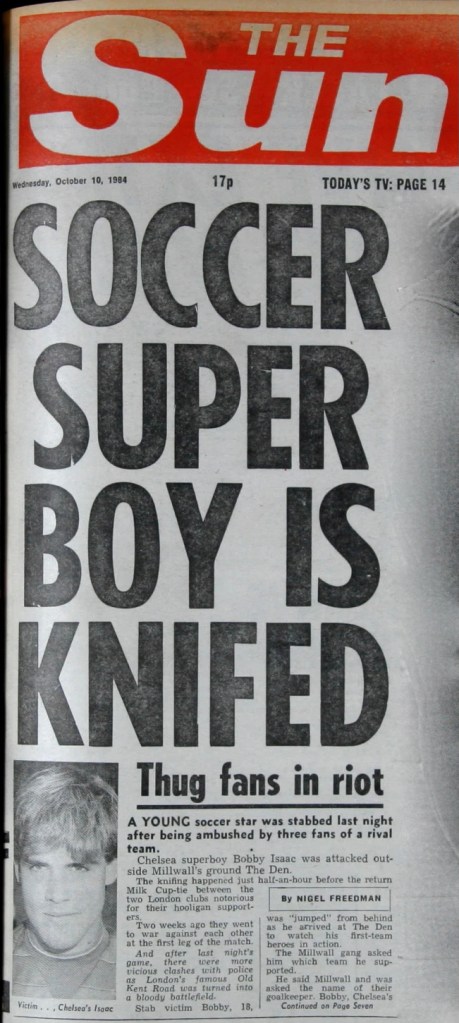
It was on 9 October 1984 that his promising career could have been snuffed out before it had even begun: it’s a horrifying tale, told the following day on the front page of The Sun, and covered in detail by that1980sportsblog.

Three knife-wielding Millwall thugs slashed his back from his shoulder to the base of his spine in a dark alley near the south London club’s notorious old stadium, The Den.

Isaac needed 55 stitches to repair the damage and only the thickness of a leather coat he was wearing prevented the wound being potentially life-threatening.

Remarkably, later the same season, in March, he had recovered well enough to make his Chelsea first team debut in a 3-1 win at Watford, although Eddie Niedzwiecki, a Chelsea coach who later worked with Mark Hughes for Wales and at several clubs, told Kelvin Barker’s Celery! Representing Chelsea in the 1980s: “He was a young, up-and-coming apprentice at the time and luckily he managed to pull through, although he never really recovered from it.”

In the 1985-86 season, Isaac played two league cup games for Chelsea and three times in the league. The following season saw him get a mini-run in the side, playing four consecutive league games in November, but his fifth match – a 4-0 home defeat by Wimbledon in which Rougvie was sent off in the first 10 minutes for headbutting John Fashanu – proved to be his last.

The website sporting-heroes.net said of him: “A steady, reliable centre-half and occasional full-back, Robert did little wrong during his time in the Chelsea first-team, but was unfortunate to play for the club at a time when Colin Pates, Joe McLaughlin and, a little later, Steve Wicks, were all demonstrating their considerable talents at the heart of the defence.”

Isaac asked for a transfer after a disagreement with manager John Hollins and his assistant Ernie Walley, and that led to his transfer to Brighton for a £50,000 fee.

‘Talent in his boots and balance sheets in his briefcase’

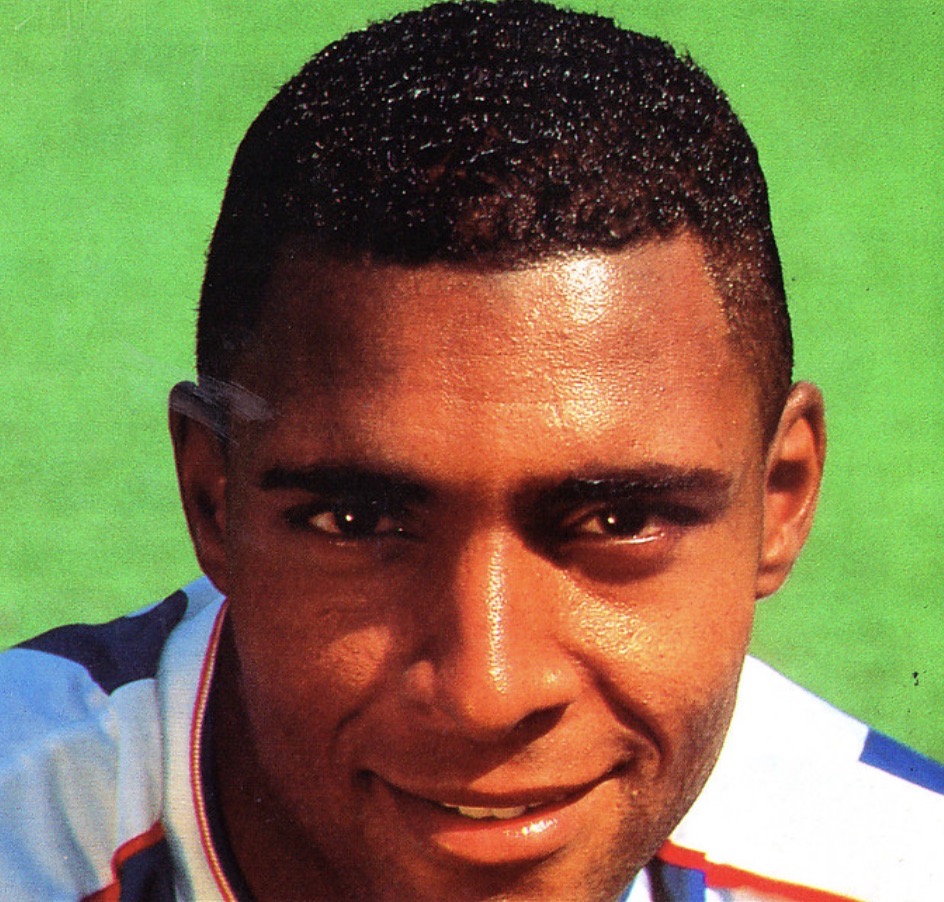
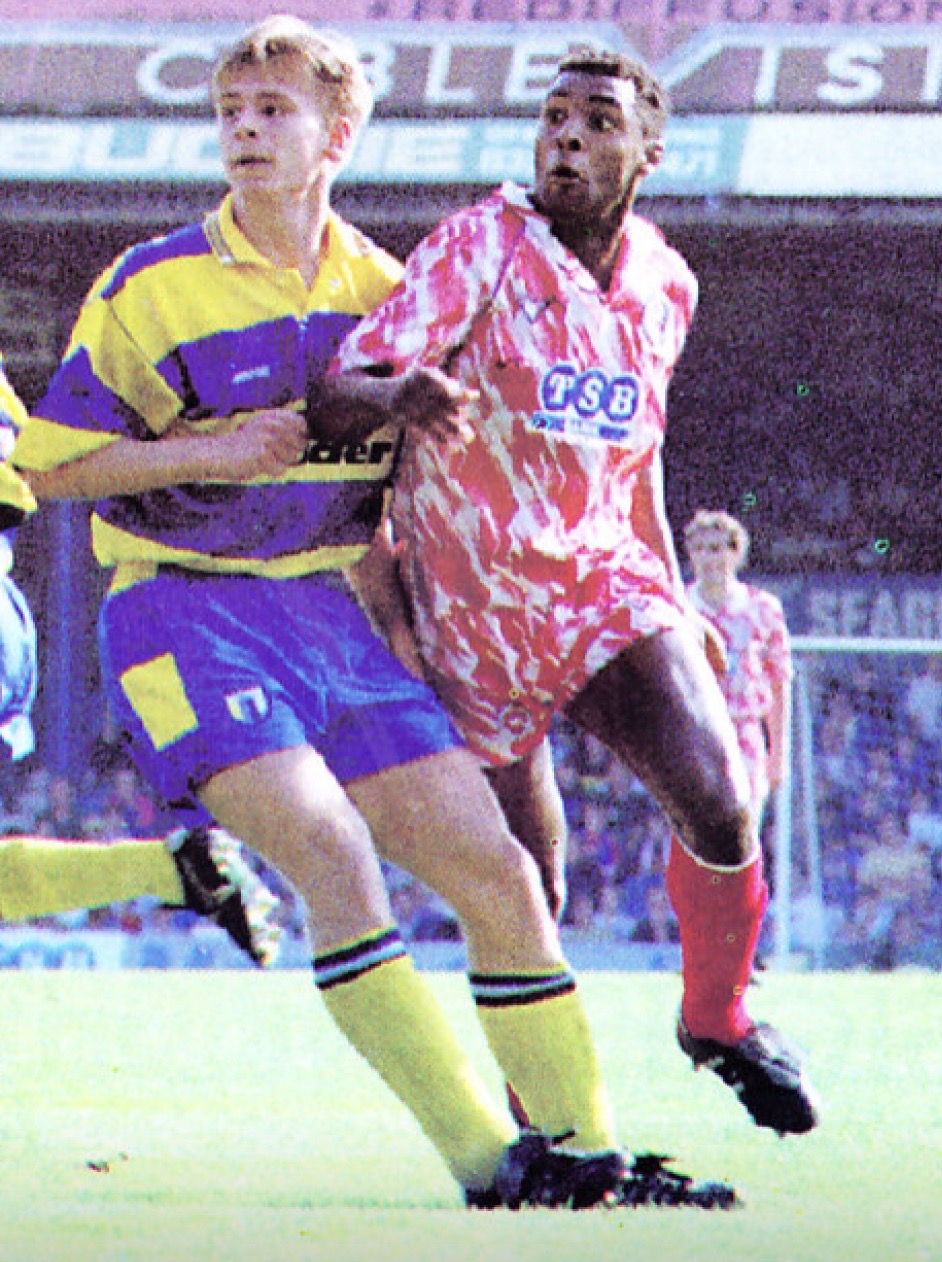
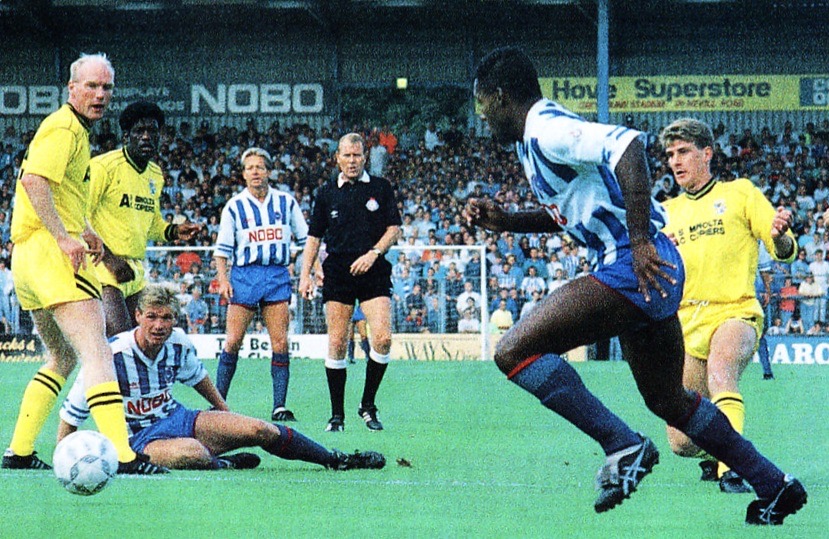
ROBERT CODNER, Brighton’s first black captain in the early ‘90s, was an enigma for plenty of managers throughout his playing days but, by his own admission, the much-maligned Barry Lloyd got the best out of him.

A dynamic midfielder with a terrific shot in his locker, Codner made way more appearances for the Albion than any other club he went to and his attachment to the Seagulls continued into the modern era when he was Solly March’s agent.

Of Lloyd, he told Albion’s matchday programme: “Barry Lloyd was good for me and I don’t think he gets the acknowledgement he deserves as he steered the club through some difficult times. I know I had my moments on and off the pitch, but he always stood by me and backed me all the way.”

Born in Walthamstow on 23 January 1965, nearby Tottenham Hotspur were Codner’s first club and, although he featured in their youth team alongside future first-teamers Ian Crook, Mark Bowen and Tony Parks, he didn’t take the next step with them.

“It is very difficult to come through at White Hart Lane, they always seemed keener to go and buy someone than risk a youngster,” Codner told Shoot! magazine.

And in a matchday programme interview with Dave Beckett, he said: “At 18, Tottenham told me that they wouldn’t put me on a professional contract, so I ended up at Leicester under Gordon Milne for about 18 months.

“I never managed to make a break into the first team which I thought I deserved, and that’s why I left in the end.”

In a slightly different telling of the story, he said: “At the end of my contract he (Milne) didn’t offer me another one which was a bitter disappointment. I felt let down and was disillusioned with the game.”

After a spell working on a building site, he tried to get fixed up with Luton Town but their manager, David Pleat, urged him to get experience playing non-League football while they kept tabs on him.

“That’s why I joined Dagenham for four or five months, but I didn’t particularly like it there, so when Barnet offered me a good deal and Luton said they couldn’t top it, I switched clubs,” he said.

His form for Barnet brought him selection for the England semi-professional side; Wimbledon showed some interest but in a pre-season game in August 1988, as a triallist for Millwall, he played against the Albion.

Brighton boss Lloyd was sufficiently impressed that he was prepared to fork out what at the time seemed like an amazing sum of £115,000 for a non-league player to give him another chance to make it as a professional. (Only a matter of days previously, Lloyd paid the same sum to secure the services of centre back Nicky Bissett from Barnet).

The ebullient Barry Fry, Barnet manager at the time, said: “Codner is a super athlete with two good feet, pace and an ability to score goals.”

The conundrum at the time was that away from football Codner had begun to pursue a successful career in the City, having turned the tables on a would-be finance salesman suggesting he could do a better job.

The salesman’s employers agreed and Codner was suddenly thrust into the world of advising on unit trusts, pensions, mortgages and insurance.

It prompted a description of him in that Shoot! article as the ‘City whizz-kid with talent in his boots and balance sheets in his briefcase’.

In an interview with John Vinicombe in the Argus, Codner denied he was not utterly dedicated to playing.

“That is not so,” he said. “I’m more dedicated because I choose to play. I always believed I would get a second chance after what happened at Leicester, and Brighton have given me that chance.

“Players have to look ahead, and, ten years from now, I want to be comfortably off.

“Of course, I’m ambitious. I want to be a millionaire as a footballer and be a millionaire financial consultant too.

“I’m lucky because I don’t have football as the be all and end all, I play because that’s what I enjoy doing.”

He added: “People may ridicule me sometimes for carrying on in business as well, but a lot of footballers end up on the scrapheap; I’m determined not to be one of them.

“Having been given a second bite of the cherry, I’ll make sure I don’t end up with nothing.”

His time with the Seagulls was certainly not a smooth ride, however, and even the club’s own mouthpiece – ie the matchday programme – said: “His time at the Goldstone has not been without controversy. Earlier this season he failed to report on time for the game at West Bromwich Albion.

“At the beginning of the season the manager said he was hoping that Robert would be one of those players who, having benefited from the experience of more than a season in the league, would play a prominent part in the club’s performances this campaign. However, he is still striving to reach a high level of consistency and his name has now been circulated to other clubs as being available for transfer.”

A retrospective article in a subsequent matchday programme also didn’t spare the midfielder’s feelings. “Codner made an immediate impact and went on to score some brilliant goals, but his relationship with the supporters, like his form, eventually blew hot and cold.

“Several clubs were interested in Codner during his time with the Albion, including West Ham, who were reported to have bid £500,000 for the player in 1991.”

Codner was almost a permanent fixture in the no.10 shirt as Albion reached the 1990-91 end-of-season play-offs with the chance to return to the top tier. He scored in both the home and away semi-final legs against Millwall as the Seagulls guaranteed a place in the Wembley final v Notts County with a 6-2 aggregate win.

After the disappointment of losing 3-1 to Neil Warnock’s County, Codner said: “We’d put in so much to get to the final and unfortunately we didn’t really turn up when it mattered most. We had phenomenal support that day at Wembley but it just didn’t happen for us.”

Albion began to implode financially and were relegated at the end of the next season. Codner was still a mainstay of the midfield, though, making more appearances than any other player, and it was a spot he shared with Mark Beeney and Gary Chivers in the 1992-93 campaign.

Perhaps it was fitting that both Codner and Bissett should be the scorers in the first game after Lloyd parted company with the Albion (Martin Hinshelwood was in temporary charge). Bissett’s 89th-minute goal salvaged a point in a 2-2 draw at Hartlepool on 11 December 1993 but Albion supporter The Groundhog remembered Codner’s 54th-minute goal for the Seagulls thus: “You can’t not love a guy who, at Hartlepool’s Victoria Ground in 1993, while the away fans were shielding themselves from freezing sideways daggers of rain blowing in off the North Sea onto the exposed corner terrace, unleashes a 35-yard thunderbolt thwang-er-wang-er-wanging off the underside of the bar to score. You just can’t.”

While Codner appeared in new manager Liam Brady’s first game in charge, a 1-0 defeat at home to Bradford City, his off-field demons caught up with him when he had to serve three weeks in Lewes Prison for driving offences.

Codner was restored to the side towards the end of January and retained his place through to the end of the season.

A subsequent matchday programme noted: “He emerged from prison a more focused player, but, after an alleged bust-up with (Liam) Brady, was dropped in early 1995 and then released at the end of the season.”

Although Codner had been a regular under Brady in the first half of the 1994-95 season, he didn’t play for the first team again after being part of the side thrashed 4-0 at Crewe Alexandra on 14 January. Brady maintained in his programme notes: “The attitude on the day was not what we were looking for and that’s what contributed largely to losing as badly as we did.”

After finally leaving the Albion with more than 260 appearances for the club under his belt, Codner popped up at a multitude of clubs subsequently (Wikipedia lists 17 he was associated with), playing a handful of games for Reading, Peterborough and Southend United, and having a slightly longer spell back at Barnet in the 1996-97 season.

Codner now operates his own Epsom-based football agency, RC Ballers Ltd.

Ups and downs of medal-laden Mark McGhee’s career

MARK McGHEE saw highs and lows as Brighton & Hove Albion manager after a medal-laden playing career that took him from his native Scotland to England and also to Germany.

McGhee was in charge when the Seagulls memorably won the 2004 play-off final to gain promotion from the third tier, beating Bristol City at the Millennium Stadium, Cardiff.

Play off final boss

Keeping the Seagulls up the following season was arguably an even greater achievement considering at the time playing home games at the crowd-restricted Withdean Stadium meant the club was at a huge disadvantage compared to most clubs in the division.

With the Amex still a distant dream, relegation came at the end of the 2005-06 season, and it wasn’t long into the following season that Dick Knight wielded the axe on the Glaswegian’s time in charge.

“It was hard to sack Mark, but we had to have a change,” Knight wrote in his autobiography, Mad Man: From the Gutter to the Stars. “Everyone recognised what he had done in taking up and keeping up a team that was not that great, to be honest. Hats off to him, he had done a terrific job. And he is a very intelligent, personable guy.”

Knight took decisive action when part of the crowd became vociferous in wanting McGhee out, and the chairman also felt some of the young players drafted into the team weren’t responding to him.

He was finally toppled over lunch at Topolino’s, and Knight admitted: “It was a difficult decision. There was strong vocal opposition to McGhee, but also a large, less noisy element who were behind him.”

McGhee liked Brighton so much he made it his home despite subsequently taking on a series of other roles the length and breadth of the country.

It’s probably fair to say the Scot has never been afraid to speak his mind, which his former Newcastle boss Bill McGarry mentioned to him. McGhee recounted in an interview with theleaguepaper.com: “I was managing Wolves at the time. He said ‘Mark, you talk too much. Tone it down a bit’. I tried to take his advice, give nothing away in media briefings. Then, somebody would say something interesting and I wasn’t able to stop myself.”

It’s probably what helped him gain a place on the Sky Sports Soccer Saturday panel when he was in between management jobs.

McGhee would most likely look back on some jobs he’d perhaps have been wiser to stay away from, for example taking temporary charge of Eastbourne Borough in 2018, although his enthusiasm was undimmed as he revealed in an interview with thenonleaguefootballpaper.com.

Born in Glasgow on 20 May 1957, his father was an electrical engineer and his mother a fertility consultant at Glasgow Royal Infirmary. McGhee was on the books of Bristol City at the start of his long career but he returned to Scotland and became a part-timer with Greenock Morton while also training to be an architect.

Aforementioned manager McGarry signed him for Newcastle for a £150,000 fee on 30 December 1977 and he made his debut on 2 January 1978.

His face didn’t fit after Arthur Cox took over as boss, but Alex Ferguson took a punt on him in March 1979 and signed him for Aberdeen, and it proved to be one of many shrewd decisions the esteemed Scot would make in his career.

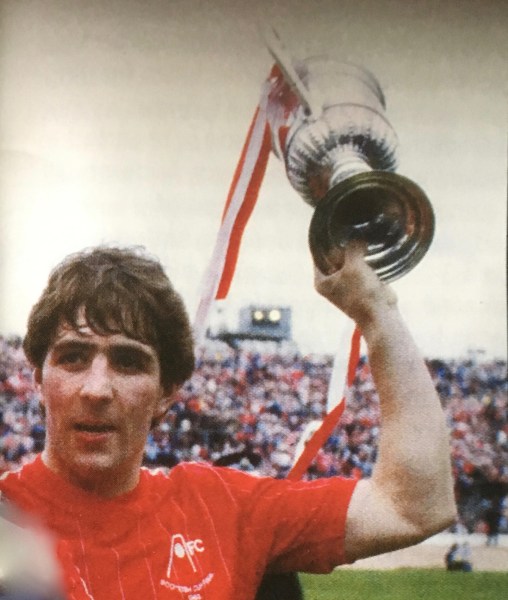
McGhee was named Scottish PFA Players’ Player of the Year in 1982, and the following year was part of the Aberdeen side who beat Real Madrid 2–1 to lift the 1983 European Cup Winners’ Cup in Gothenburg.

mcg cup

He also scored the second goal as Aberdeen defeated Hamburg 2-0 to win the UEFA Super Cup in the same year.

Asked about the best goal he scored, he said: “Probably the winning goal in my last game for Aberdeen.”

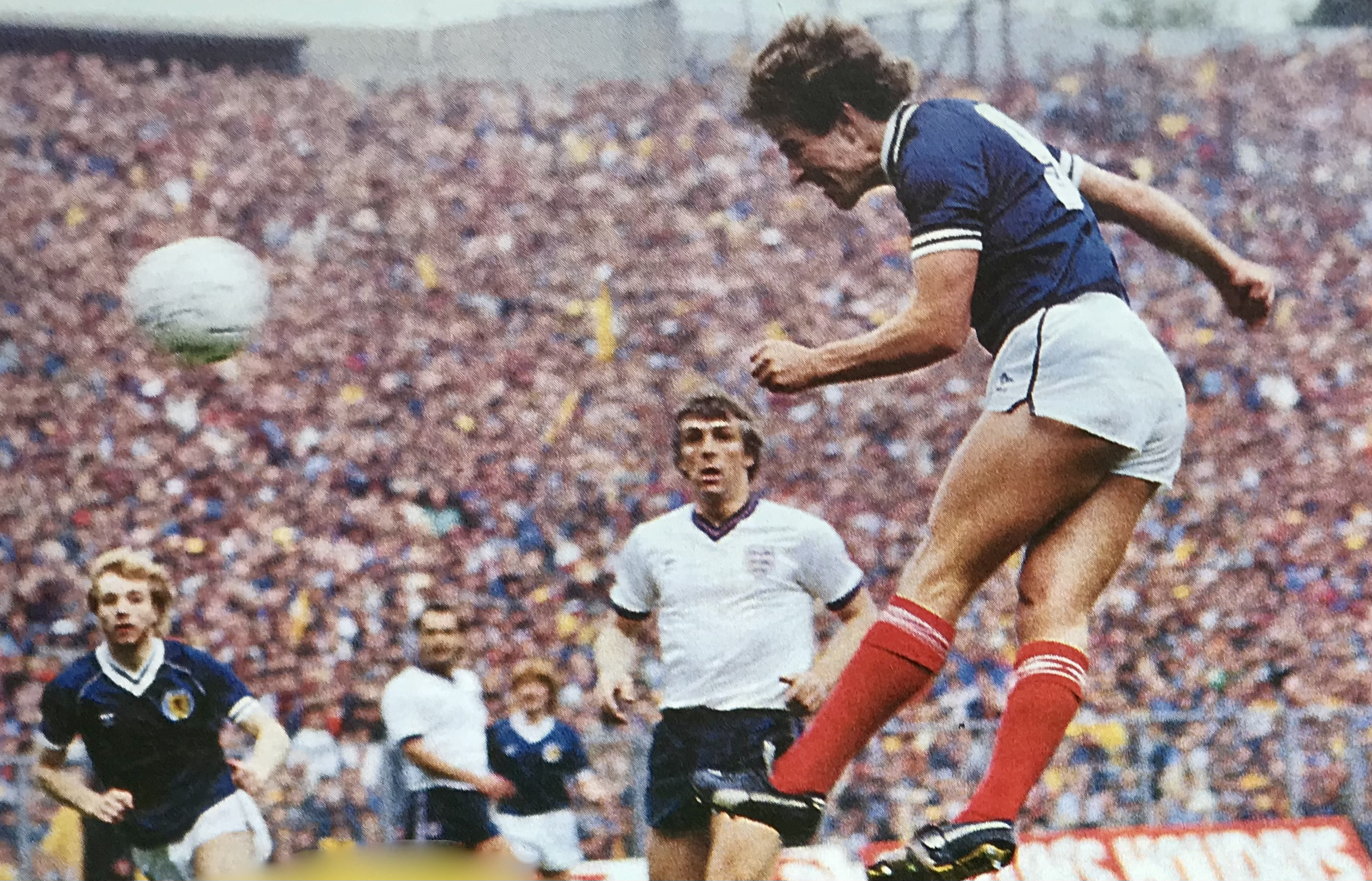
McGhee reckoned his best moment in football came on 26 May 1984 when he scored against England at Hampden Park. He headed in a cross (as pictured) from his great pal Gordon Strachan past Peter Shilton.

McG v Eng

“It put us 1-0 up but Tony Woodcock equalised to make the final score 1-1.”

It was one of four caps he won for his country. Nearly two decades later, in January 2013, Strachan appointed him as his no.2 with the Scottish national side.

M McGhee Old Football PhotosBut back to those playing days, and with two Scottish league titles and three Cup wins behind him, McGhee tried his hand at European football and spent 16 months at Hamburg. The spell was probably more of an education than a success, with injuries limiting his game time.

A £170,000 fee took him back to Scotland, to Celtic, where he had mixed fortunes during four years with the Glasgow giants. He was, though, part of the squad that won a League and Cup double in their centenary season.

After winning another Scottish Cup winners’ medal in 1989, he was on the move again, back to Newcastle.

Now with Jim Smith in charge, Newcastle paid £200,000 to take McGhee back to St James’ Park, where he formed an impressive strike partnership with the legendary Micky Quinn as Toon finished third in the old Division Two.

“We were good friends, but we didn’t blend on the pitch like Toshack and Keegan, Quinn told theleaguepaper.com. “Mark was a free spirit. He’d get the ball and drift left or right and drop deep.

“He’d turn defenders and drag them out of position. He would hold the ball up well for me to get into the box and score goals. He went where he wanted, but it worked.”

football back then McGhee

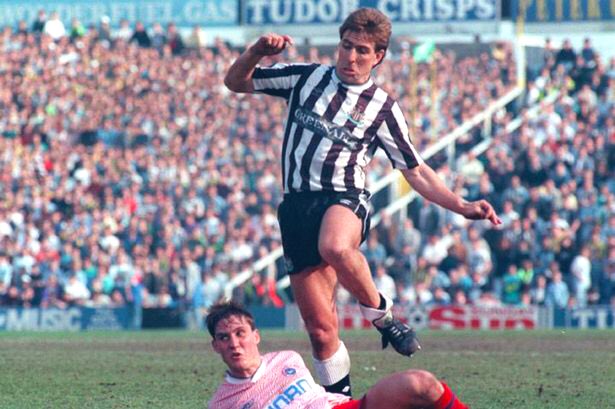
This Football Back Then picture shows McGhee in action for Newcastle against Albion’s Nicky Bissett.

His farewell performance came on 6 April 1991, not long after Ossie Ardiles had taken over as manager, and McGhee departed having scored a total of 36 goals in 115 appearances for the Magpies.

Next stop was Sweden, where he played briefly for IK Brage, but he seized the opportunity to try his hand at management by taking up the role of player-manager at Reading in the summer of 1991.

He’d been recommended for the role by his old boss Ferguson, and, after quitting playing through injury in 1993, he led the Royals to promotion from the third tier the following year.

A struggling Leicester City gave him a chance to manage in the Premier League but he was unable to keep them up and, less than a year after joining, decided to switch to Wolverhampton Wanderers, to succeed Graham Taylor.

Wolves just failed to gain promotion in 1996-97 (they lost in the play-off semi-finals) and were ninth the following campaign. Four months into the 1998-99 season, following a string of poor results, McGhee was fired.

It would be 20 months before he gained his next opportunity, this time at Millwall where he enjoyed initial success, leading them to promotion from the third tier, and then narrowly missing out on another promotion when they lost in the play-off semi-finals to Birmingham City.

McGhee apptWhen he parted company from Millwall in October 2003, he wasn’t out of work long because Brighton needed a replacement for Steve Coppell, who’d been wooed to take over at Reading (pictured above, with chairman Dick Knight, at his unveiling as Albion manager).

Those Albion fans who stuck by the team in the humble surroundings of the Withdean Stadium enjoyed some good moments during McGhee’s time as manager, in particular promotion via the play-off final in 2004.

He certainly found a formula to get the best out of certain players, as Adam Virgo, converted from defender to goalscorer, observed in that theleaguepaper.com article. “Mark is a very good communicator and very experienced,” he said. “He can make you feel ten feet tall. He’s very good at being honest, at analysing your game and telling you what you’re good at.”

After his departure from the Albion, McGhee was out of the game for nine months but got back in at Motherwell, turning them from near relegation candidates to qualifiers for European competition.

The lure of his old club, Aberdeen, proved too strong in the summer of 2009, but his tenure proved to be disastrous – and brief.

He spent the majority of 2012 as manager of Bristol Rovers, where one of the squad he inherited was former Brighton defender-turned-striker, Virgo. The following year, his old pal, Strachan, appointed him as assistant coach to the Scottish national side.

He later combined the role part-time when he returned to Motherwell but there were mixed fortunes second time round, and he left them again in early 2017. Towards the end of that year, he popped up at League Two Barnet, but the arrangement lasted only two months before he was moved to a ‘head of technical’ role, and then dismissed in March 2018.

McGhee was ‘slaughtered’ on Twitter when he took over as interim manager of National South side Eastbourne Borough in the spring of 2019, after being beaten 3-0 by Wealdstone in his first match in charge, his new side reduced to nine men after two players were sent off. Borough won just once in 11 matches.

When Albion under 23s coach Simon Rusk was appointed manager of Vanarama National League side Stockport County in January 2021, McGhee was appointed as one of his assistants.

His final managerial post was at Dundee in February 2022 when he took temporary charge of the Scottish Premiership side until the end of the season (with Rusk as his assistant), but they couldn’t avoid them being relegated, overseeing just one win in 13 matches.

McGhee finally announced his retirement from the game in September 2022 at the age of 65, telling the Sunday Post: “I won’t be pursuing any other managerial vacancies, and nor would I want to be a director of football or a head of recruitment. That’s not what I am – I’m a manager.

“I feel that players now deserve a young manager who can give them the energy I was able to when I started out. They don’t need a 65-year-old with a dodgy ankle.”