The Foxes hero who led Albion’s line in an hour of need

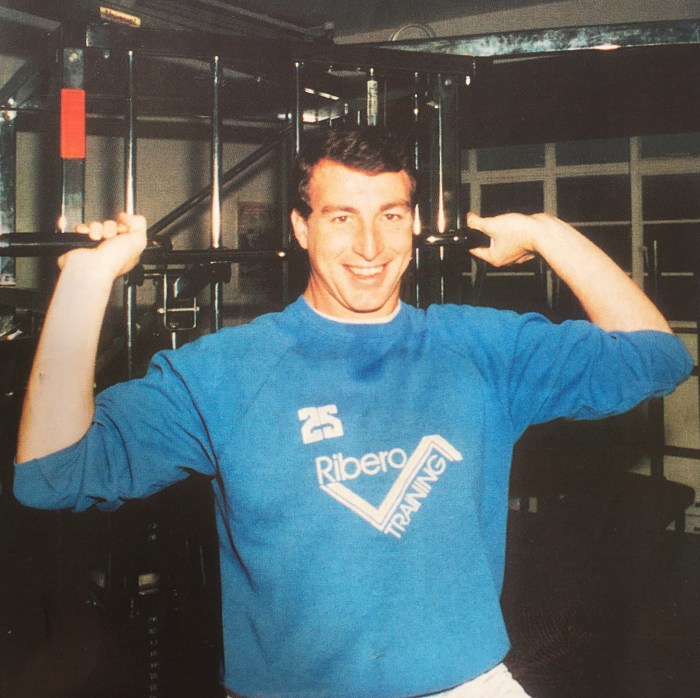
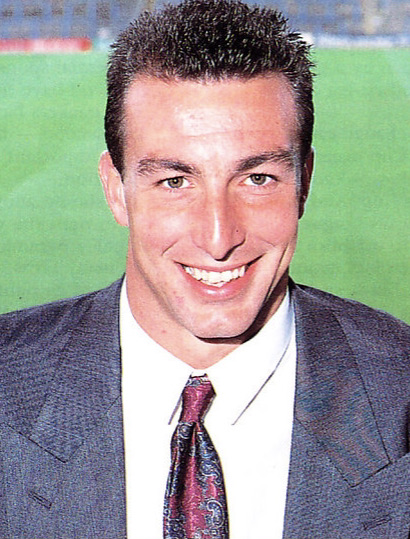
STEVE CLARIDGE became a Leicester City hero long before briefly coming to Brighton’s rescue.

He scored the winner in a play-off final at Wembley to take the Foxes up to the Premier League at the expense of Crystal Palace, who’d discarded him at an early age.

Both sides had been relegated from the top flight the year before and Claridge’s right-foot strike past Nigel Martyn in the 120th minute meant it was an immediate return for Martin O’Neill’s side.

“The high is not equal to anything,” Claridge told Leicestershire Live.
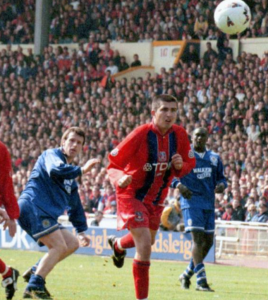
Scoring play-off winner v Palace

It came in 1996 and a year later he scored the only goal of the game (past Ben Roberts) in the 100th minute of a replay against Middlesbrough to win Leicester the League Cup, leading to him being named FourFourTwo’s ‘Cult Hero of 1997’.

Claridge had only completed a £1.2m move from Birmingham City two months before that play-off and he labelled it the most important goal of his life coming after a worrying period in which he wasn’t sure he’d ever be able to play again.

A mystery illness had ravaged his form and in only his fifth Leicester game he was taken off after 15 minutes. “Pins and needles from my knees down were so extreme, I could not even feel the ball,” he recalled.

It turned out a drug prescribed for a thyroid problem he’d had since the age of 12 was destroying his thyroid gland. “The main energy provider of my body was no longer functioning,” said Claridge.

However, once on the right medication, he made an almost unbelievable recovery, was restored to the side and helped to secure a play-off place.

After beating Stoke City in the semi-finals, they went a goal down to Palace in the final but pulled it back through a Garry Parker penalty before Claridge seized his chance in the dying moments of extra time.

Wembley winners for Leicester: Garry Parker and Steve Claridge

He collected a quick free kick from Parker and took aim, his shot from distance kissing the stanchion with goalkeeper Martyn motionless.

“The crowd is just really stunned in disbelief, I don’t know if that was because I’d hit it,” laughed Claridge. “It was so far out, and everybody was used to me scoring goals inside the six-yard box.”

He reflected: “To finish off after the lows I went through, the absolute lows where you’re thinking, ‘my career is over I can’t see a way out of this,’ to doing that and taking you to the ultimate high – winning that game of football. It’s unparalleled.”

Albion cover ‘boy’

Such experience was exactly what Championship strugglers Albion required when, on the back of three defeats, they faced the daunting prospect of promotion-seeking West Ham away on 13 November 2004.

Manager Mark McGhee, who’d previously signed Claridge when he was at Wolves and Millwall, was desperate to stem a tide which had seen eight goals conceded and no points on the board.

“He is one of the fittest players I’ve worked with and I had no doubt that after 18 months away from this level he would be able to perform,” said McGhee.

Claridge’s professional career looked to have run its course after he left Millwall in 2003 and became player-manager of Southern League side Weymouth.

But the disappointment of missing out on promotion had seen him and chairman Ian Ridley leave the club and Claridge, at the age of 38, was keen to give league football another go.

In what turned out to be a real backs-to-the-wall smash and grab raid, Albion earned the unlikeliest of 1-0 wins courtesy of a Guy Butters header from Richard Carpenter’s free kick.

Albion held firm despite a relentless wave of attacks by the home side and afterwards McGhee said: “We approached the game differently. Whereas before we thought we could win, today we did not, and played to make sure we didn’t get beaten.

“We kept the ball up front more which is important. Steve Claridge was key to that.”

Unfortunately, Brighton were not able to build on the win at the Boleyn Ground and there was only one more win (1-0 at home to Rotherham) during Claridge’s month with the club.

His fifth and final game for the Seagulls came away to his old club Millwall on 11 December 2004, when Albion lost 2-0.

In a programme feature about him that day, Claridge likened the circumstances of both clubs. “The club has no money and it is tough just to survive, but everyone is in it together,” he said. “At Millwall we had a great team spirit and togetherness, and that is very much the case here.”

McGhee’s tight budget prevented Claridge’s stay at Albion being extended and, after his deal was over, rather than it being one last hurrah, he went on to continue his league playing days at Brentford, Wycombe Wanderers, Gillingham, Bradford City and Walsall.

And, at the age of 40, and with him needing just one more game to fulfil the landmark of 1,000 professional games, his old club Bournemouth – where he’d started out as a professional in 1984 – gave him a match against Port Vale on 9 December 2006. No fairy tale, though, as they lost 4-0.

Born in Portsmouth on 10 April 1966, Claridge was brought up in Titchfield and began his football career at nearby Fareham Town in 1983. His initial foray into the pro game at Bournemouth only amounted to seven games before he moved to Weymouth for three years.

Crystal Palace offered him a route back to the full professional game in 1988 but he didn’t make their league side and after three months moved on to fourth tier Aldershot Town.

Two spells with Cambridge United followed between 1990 and 1994 for whom he scored 46 goals in 132 games. A falling out with manager John Beck saw him sold to Luton Town in 1992, but he was then bought back after Beck’s departure.

Birmingham City paid £350,000 to take Claridge to St Andrews and he became one of the club’s most prolific goalscorers, netting 35 in 88 games, and was top scorer with 25 goals when part of Barry Fry’s Blues side that won the Second Division title and the Auto Windscreens Shield (Football League Trophy) in the 1994-95 season.

After spending two years at Leicester, he went on a two-month loan to his hometown club, Portsmouth, but, in March 1998, McGhee signed him for the first time – and it didn’t go well.

The Scot, who had controversially left Leicester to take over at Wolves, took Claridge to Molineux for a £350,000 fee. But Wolves fans were not impressed, as Levelle revealed in this 2012 piece, and after just six games and no goals in the famous old gold shirt, he was sold to Portsmouth for £250,000 at the end of the season.

Even more galling for Wolves followers was that no sooner had Claridge made the switch to Portsmouth, he scored all three in a 3-1 win at Fratton Park!

David Miller in The Telegraph wrote: “The 34-year-old Steve Claridge, who had failed to score in five months when previously with Wolves, now gave sun-blessed Portsmouth a bank holiday funfair with a first- half hat-trick that was as easy as licking an ice-lolly.”

On the ball for Pompey

The goals and games came thick and fast for Claridge back on home turf – 34 in 104 – but his reign as player-manager at Fratton Park in 2000 was curtailed after just 25 games by the quirky chairman Milan Mandarić.

Remembering the player he’d seen only briefly a couple of years earlier, McGhee, by now in charge at Millwall, offered the striker a lifeline with the Lions, initially on loan and then as a permanent signing.

Going through the pain barrier at Millwall

Over two seasons in south east London, he became something of a fans’ favourite, scoring 26 in 85 matches, his efforts summed up by writer Mark Litchfield. “His style was unconventional, to say the least: shirt untucked, one sock down and no shin pads, any naïve defender probably thought they could eat him for breakfast. But hard work was a pre-requisite for Claridge – he wouldn’t give any opposition player a moment’s rest and would more often than not always get the better of them, too.”

Claridge had a less happy association with Millwall too when in July 2005 he was sacked after just 36 days as manager when the chairman who appointed him, Jeff Burnidge, was replaced by  Theo Paphitis, who wanted Colin Lee instead.

Even after achieving the 1,000-game landmark courtesy of Bournemouth, Claridge couldn’t resist the lure of another game, turning out for Worthing, Harrow Borough, Weymouth and Gosport Borough.

He was one of a group of five that formed Salisbury FC at the end of 2014, and as team manager was involved in gaining two promotions in the Southern League before leaving in October 2022.

Although he had officially hung up his boots in 2012 after helping Gosport to promotion to the Southern League Premier Division, in 2017 he played in a friendly defeat to Portsmouth in July and then put himself on against Paulton Rovers in the league a few weeks later.

His final ever game as a player came in a 3-2 victory over Fareham Town, when he was a remarkable 51, but he had to go off in the 71st-minute after picking up an injury. 
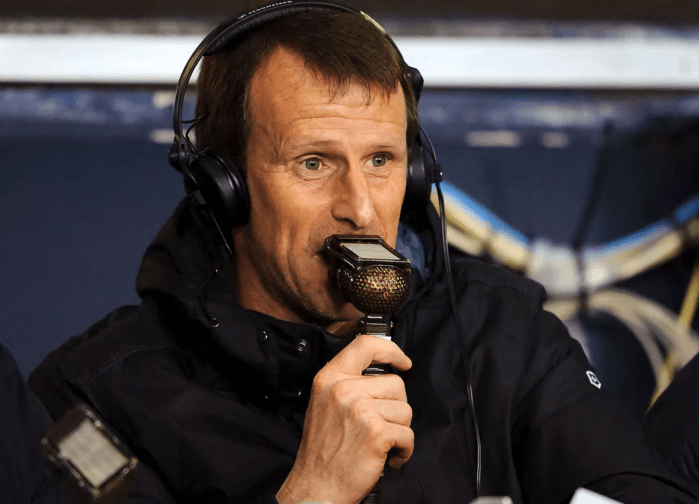
Pundit Claridge contributed his thoughts on radio and TV

Claridge also became a familiar face and voice working as a pundit for the BBC on TV at Football Focus and Final Score and on BBC Radio 5 Live. He also wrote scouting reports on promising players for The Guardian, numbering future Brighton signing Matt Sparrow among them.

“He is easy on the eye, links well with his forwards but also protects and helps his defenders by tackling from the wrong side and makes sure he tracks his runner whenever he threatens to get goal-side,” wrote Claridge of the then Scunthorpe United player in 2007.

Claridge later set up his own coaching scheme for youngsters in Salisbury and Warsash.

In 2023, he took over as manager of Gosport-based Wessex League Division One side Fleetlands FC for the 2023-24 season. In August 2024 they announced he was stepping down from the role “due to personal reasons”.  
On its website, a statement added: “The club would like to place on record our huge thanks to Steve for taking up the role in our hour of need and taking us to a fantastic 5th place finish last season.”

‘Polite, enthusiastic, dedicated – the model professional’

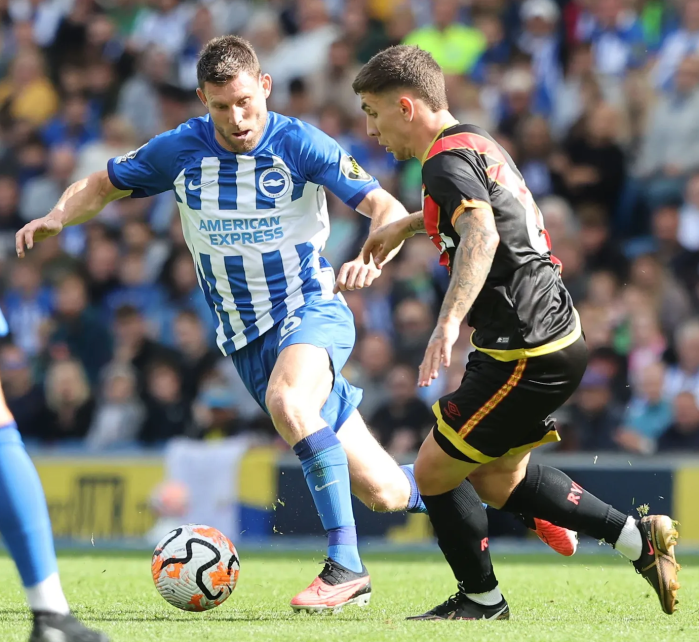
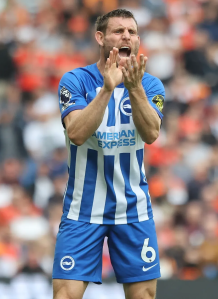
JAMES MILNER obviously has a thing about passionate Italian coaches called Roberto: It was Roberto Mancini who took him to City from Aston Villa for £26m in 2010 (with Stephen Ireland moving in the other direction as part of the deal).

He went on to win the Premier League title twice, the FA Cup and the League Cup in his five years at the club. In 203 appearances for City, he scored 19 goals and provided 45 assists.

Sadly, a sizeable number of City fans have quickly forgotten the success he was associated with and find it necessary to boo him if he returns to the Etihad in the colours of an opponent. They particularly resented him joining rivals Liverpool and thought it bad form that in 2016 he celebrated rather too exuberantly scoring for the Reds against them, especially because he’d previously not celebrated when he scored for City against his old club Villa.

They also claim not to like his desire to play in his preferred central position, and on more occasions, because they say he didn’t achieve either of those at Liverpool.

When he lined up as an emergency right-back for Albion’s visit in October 2023, sections of the City faithful revelled in his discomfort up against Jeremy Doku and Phil Foden (he was subbed off at half time).

Go back to the beginning of his time with their club and this is the same player who put in a man-of-the-match performance on his City debut – a 3-0 win over Liverpool!

On signing the player at the age of 25, Mancini said simply: “He is a good young player, who can play in every position in the middle and out wide.”

It’s worth checking in on a piece Paul Wilson wrote for The Observer in 2011 when Milner did a question-and-answer session with City supporters at the Mayfield Sports Club home of an amateur rugby league team in Rochdale.

“Milner seems polite, enthusiastic and dedicated, every inch the model professional,” writes Wilson. “Milner is unquestionably the real deal. Even on a night off such as this he does not drink, not even creamy pints of hand-pulled John Willie Lees.”

Milner explained: “I made that decision quite early on. I’ve always dreamt of being a footballer, you only get one shot at a career like this and I want to be the best professional I can.

“Anything I can do that means I can get the best out of my ability is what I’ll try and do. It’s not much of a sacrifice really, we are fortunate to be well paid for doing something that we love and enjoy doing and I want to play for as long as I can.

“As a professional you want to get as much as you can out of your career, play at the top level and win trophies. Playing with top players at Manchester City I’ve got a great chance of doing that, and I just want to keep improving.

“You just want to be able to look back on your career when it’s over, see what you’ve won and feel that you couldn’t have done any more, and that you’ve been the best player you possibly could have been.”

Wilson noted how Milner had showed strength of character to force his way back into the team when left out of the side in his first season with City. “I realised when I joined that competition for places would be intense at City, and I also knew the manager must rate me, because he brought me to the club,” said Milner.

“But if you are not playing you are not happy and you want to know why. So, I asked him what he thought, what I could do to improve to get into his team, then I went away and worked hard on it.”

Understandably, Milner enjoyed being part of the City side that won 6-1 at Old Trafford and acknowledged: “The fans will remember that for a long time, because they have been the underdogs in the city for so long, and it was great to be a part of that.

“But we now have to make sure we don’t get carried away. The fans can get as carried away as they want, good luck to them. It’s our job to carry on winning football matches and try not to get ahead of ourselves.”

Wise words but even then, in his mid-20s, he’d got 10 years’ experience behind him. “It’s all been a bit of a rush, but I think that happens when you make your debut so soon after leaving school,” he said. “You’ve had this dream and suddenly you’re doing it and everything happens very fast and hardly slows down.

“I remember Nigel Martyn joking with me at Leeds, saying he was old enough to be my father, which he certainly was. He said: ‘Make sure you enjoy your career because it will go past in a flash.’ And I was like: ‘Yeah, leave it out, Nige, I’m only 16. I’ve got all the time in the world.’

“Well, here we are 10 years later, and it’s flown. I can’t believe it. Nige is obviously wiser than he looks.”

In five years at City, Milner was in two Premier League title-winning sides (2012 and 2014), collected a FA Cup winners medal in 2011 and a League Cup winners medal in 2014 and was viewed as an integral part of their squad.

Mancini left City in the wake of losing the 2013 FA Cup final to Wigan Athletic and his successor, Chilean Manuel Pellegrini, was also a big fan of Milner and tried to convince him to stay as his contract came to an end in 2015.

Pellegrini told the Guardian: “Milner’s a phenomenon, a guy with big balls and a heart this big.

“Intelligent, great mentality, one of those players that when you leave him out you’re left with this feeling of injustice; it hurts because he should always play but sometimes you need a technical player with other characteristics.

“I hope he stays. If he doesn’t it will be because there’s an important offer.

“The club wants Milner to continue and he wants to stay but maybe he wants more games.

“I understand. I’m Milner’s No1 fan. Find me a more complete English player. There are players who’re better technically, yes. Quicker players, yes. Players who head better, yes. But show me one who does all the things Milner does well. There isn’t one.”

When he decided to move on a free transfer to Liverpool in 2015, teammate Vincent Kompany declared: “You’ll be missed at City brother, as a teammate and a friend! Your drive and passion were inspirational.”

Milner himself hasn’t taken the fan flak to heart and on tribuna.com spoke of his memories of his former side.

“I had a great time at Man City, and I was lucky enough to win every domestic trophy there, play with some great players and I became a better player there,” he said.

“I have nothing bad to say about the club. Obviously, now I think of them a bit differently because they’re big rivals but that good feeling is still there. They’re a big part of my career and a big part of my life as well.”

Football writer Alex Brotherton leapt to Milner’s defence in a piece for the Manchester Evening News in September 2021, declaring at the outset: “There are no two ways about it – Milner was an excellent servant to City during what was an extremely successful period for the club.”

Brotherton reckoned even though Milner didn’t set the world alight in sky blue, “that wasn’t what was expected of him” given he was playing alongside the likes of David Silva, Yaya Toure, Carlos Tevez and Sergio Aguero.

“It was during the unsuccessful title defences of 2012-13 and 2014-15, when City’s attack faltered and their backline creaked, that Milner really stood out,” wrote Brotherton. “He rarely put in less than a 7/10 performance and 100% effort was guaranteed, chasing down lost causes like his life depended on it.”

The journalist also cited “a brilliant battling performance” away at Bayern Munich in the Champions League in 2013-14, capped off by a stunning goal that sealed a come-from-behind 3-2 win. And he remembered Milner’s “tireless work on the left flank” when 10-man City earned a 1-1 draw at Chelsea.

“It was because of performances like this that Milner was a hugely popular figure among City fans, and rightfully so,” said Brotherton.

Describing the booing of Milner as petty, Brotherton added: “Of all the players that City fans could hate, the affable Yorkshireman shouldn’t really be one of them.”

The Mirror’s David McDonnell had presented a similar defence four years earlier, describing Milner as one of City’s “most efficient and reliable players” and “a grafter and one of the most inoffensive players in the money-saturated modern game”.

“There was never a whiff of controversy surrounding Milner during his time at City, as one of the most conscientious players around simply got on with the job of delivering for his team, a recurring theme throughout his career.”

How Shots stopper Mark Beeney’s move saved the Albion

MARK BEENEY has coached young goalkeepers at Chelsea for nearly 20 years, but Brighton fans who saw him play remember his most important ever save.

The proceeds from his sale to Leeds United for £350,000 on 20 April 1993 quite literally saved the Albion from being wound up by the Inland Revenue.

Beeney had played 55 league and cup games in the Albion goal that season (missing only one because of a suspension) and he didn’t have much say in what happened next, as he remembered in an interview with the Argus in 2001.

“Albion were at Plymouth and the night before the game manager Barry Lloyd told me that he had given Leeds permission to talk to me and that he wanted me to negotiate a deal otherwise the club were history,” he said.

“I didn’t really have much choice because if I’d have turned down the chance I’d have been unemployed anyway with the financial situation at Albion.”

Howard Wilkinson, the former Albion winger who had led Leeds to the old Division One title the previous season, had been looking for a ‘keeper to compete with the ageing John Lukic, and Beeney fitted the bill….as well as footing the bill for Brighton where the taxman was concerned.

The move was certainly an upheaval in terms of geographical location but it presented Beeney with the chance to leap from third tier football into the Premier League.

It didn’t quite pan out as he might have hoped – most of his action was for Leeds’ reserve side! – but over the course of six years he played 49 games in the Premiership and 68 first team games in total for the Elland Road outfit.

Born in Pembury, near Tunbridge Wells, on 30 December 1967, Beeney went to St Francis Primary School in Maidstone then to St Simon Stock, a Catholic secondary school.

He first came to the attention of talent spotters when playing for Ringlestone Colts, a successful Maidstone junior side, and he was invited to join Gillingham, Kent’s only professional side at the time, as an associate schoolboy.

He made sufficient progress to be taken on as an apprentice by the Gills and turned professional in August 1985. He only played two first team games, though, and was given a free transfer by manager Keith Peacock.

Beeney, circled, when with the Maidstone United squad who won promotion to the league

He joined Maidstone United in January 1987 and, although they were in the GM Vauxhall Conference at the time, he helped them to gain promotion to the Football League in 1989.

His form for Maidstone led to international recognition when he played as a second half substitute for the England C (semi-professional) side in a 1-1 draw away to Italy on 29 January 1989. The game at Stadio Alberto Picco in La Spezia saw Fabrizio Ravanelli, a Champions League winner with Juventus seven years later, score the Italians’ goal.

Back at Maidstone, it wasn’t the best news for Beeney when Peacock arrived as manager. He ended up going on loan to Aldershot, where he played seven games. On his return, Maidstone’s goalkeeping coach Joe Sullivan recommended him to Brighton boss Barry Lloyd and the Seagulls paid a £25,000 fee to take him to the Goldstone in March 1991 as back-up to Perry Digweed.

Wheeler-dealer Lloyd had sold John Keeley to Oldham Athletic for £238,000 a year before – not a bad return for a player who cost £1,500 – and with the inexperienced Brian McKenna not really a meaningful challenger for Digweed’s place, Beeney was ideally suited to the Seagulls.

However, he had a rather ignominious start when, on 20 April 1991, Albion lost 3-0 at home to Oxford United but he kept a clean sheet second time around when he was between the sticks for a 1-0 win at Hull City before Digweed returned to star in the end-of-season excitement that culminated in a trip to Wembley for the play-off final.

Beeney’s third senior Albion appearance couldn’t have come in stranger circumstances, and I was at close quarters to witness it. I was a guest in the directors’ box at The Den, Millwall, on the evening of 4 September and tracksuited Beeney was sat a couple of rows behind me, having travelled but not been included in what in those days was a 13-man squad.

During the warm-up, Digweed suddenly pulled up with an injury and, after physio Malcolm Stuart attended to him, it was evident he wouldn’t be able to take part in the game. But the referee was poised to start the match, so the ‘keeper’s jersey was handed to Gary Chivers to go between the posts to avoid delaying the kick-off.

A discussion between the managers and the officials gave the green light to allow Albion to replace Digweed with a recognised ‘keeper and, although he hadn’t been due to be involved, Beeney was summoned from the stand to enter the fray as an emergency substitute.

Eight minutes of play had elapsed by the time he’d managed to leg it down to the changing room and get himself ready for action. John Crumplin, who had started the game in Chivers’ right-back slot instead of being on the bench, was forced to come off without having broken into a sweat, and a relieved Chivers resumed his more traditional defensive position.

Into the bargain, the eventful evening saw the Seagulls come away with a 2-1 win – their second successive victory at The Den, having won 2-1 there in the second leg of the play-off semi-finals four months earlier.

Digweed’s injury meant Beeney then had his first extended run in the side, playing in 30 of the following 31 league and cup games (loan American goalkeeper Juergen Sommer deputising in a 0-0 away draw at Cambridge United) before Digweed was finally restored to the no.1 spot in early February. Only five of the remaining 16 games were won and Albion were relegated back to the third tier.

When the new season got under way, Beeney had stepped up to become first choice ‘keeper, and, when interviewed in a matchday programme article, said: “I came as second string ‘keeper as I knew Perry was the number one but I have always wanted to establish myself and this season I have had my chance.”

As referred to earlier, his final Albion appearance came away to Plymouth on 17 April, and Beeney left the club having featured in 87 games plus that one as sub. He told the Argus he retained great affection for the Seagulls. “I remember it as a friendly club even though they didn’t have much to be cheerful about with the taxman trying to shut them down and the players were wondering whether they would get paid.

“There was a good spirit in the dressing room with experienced types like Fozzie (Steve Foster) and Johnny Byrne around the place who had seen it all before.

“I spent the least time there but it is the one former club that makes me most welcome. I appreciate that.”

With Beeney transferred, Digweed returned for the final three games of the season, but the 3-2 home win over Chester turned out to be his last game for the club, and Albion began the following season with 18-year-old Nicky Rust as their first-team ‘keeper.

Because Beeney’s transfer had gone through outside of the window, Leeds gained special dispensation from the FA and their opponents, Coventry City, to allow him to make his debut in the final game of the 1992-93 season, there being nothing of consequence at stake with both sides comfortably sitting in mid-table.

Beeney conceded three in the game at Highfield Road but the game finished 3-3, diminutive Rod Wallace a hat-trick hero, rescuing a point for Leeds with goals in the 87th and 90th minutes to add to his first half strike.

In his first full season at Elland Road, Beeney shared the no.1 spot with Lukic, but the former Arsenal stopper had the upper hand in the following two seasons.

And just when Beeney thought he would make the breakthrough, Leeds signed Nigel Martyn from Crystal Palace to take over from Lukic.

Beeney told the Argus: “I thought I was going to be no. 1 and Paul Evans no. 2 in 1996 and both Paul and I were told a deal with Nigel was not going through. A couple of days later he had joined. I was disappointed. But I decided to buckle down as we were happy at the club and in the North with my family. I ended up playing more than 400 reserves games, I was hardly ever injured, and it was frustrating.”

Beeney handles ouotside the box at Old Trafford and is sent off

One time when he did get a start, against Manchester United at Old Trafford, on 14 April 1996, he was sent off after 16 minutes! Wilkinson never picked a sub keeper, so defender Lucas Radebe had to go in goal.

The excellent Leeds archive website ozwhitelufc.net.au remembers Beeney as:A big keeper, his meticulous planning left him well prepared as he keenly watched videos of potential penalty-takers. He proved a capable deputy for John Lukic, taking over from him when his form dipped. His contract was extended in June 1996 for a further two years, but he had to retire due to injuries sustained in a reserve game at Stoke City when he ruptured an Achilles tendon in March 1999.”

In fact, he ruptured it twice in the space of eight months, he told the Argus, and he quit playing professionally after taking the advice of Leeds’ boss at the time, David O’Leary, whose own career had ended with a similar injury.

“The medical people said the Achilles would not hold up to what was needed at the level I was at,” he said. “I sought a second opinion afterwards and was told the Achilles was strong but it’s so short it doesn’t give me the spring I need to play at the top.”

Beeney set up an executive chauffeur business – Victoria Beckham was among his clients – but a former playing colleague at Aldershot, Steve Wignall, had taken over as manager at Doncaster Rovers, and offered him a return to playing.

“I just wanted somewhere to train,” Beeney told the Argus. “He (Steve) said they needed cover as a goalkeeper so I might as well sign on. I played four reserve games and was substitute for the first team.”

Eventually, after eight years living in Yorkshire, Beeney moved the family back to Kent so sons Mitchell and Jordan could be nearer their grandparents. He linked up with Dover Athletic as a back-up ‘keeper and played in a couple of pre-season friendlies but was mainly standby to first choice Paul Hyde.

In October 2001, he switched to Sittingbourne as manager, and also began working two days a week with the young goalkeepers at Chelsea (under 21s, under 17s and under 16s).

He left Sittingbourne in 2004 when the role at Chelsea was made a permanent position, and he’s been coaching the Premier League club’s reserve and academy ‘keepers ever since, although he did work with the first team ‘keepers temporarily when Jose Mourinho was in charge in 2007.

Beeney the goalkeeping coach pictured in 2010

Both his sons went through the Chelsea academy as goalkeepers. Mitchell was at Chelsea from 2007 until 2018. He came close to first-team action as a non-playing substitute for a home 1-1 draw with Liverpool in May 2015, which he spoke about in an interview with the42.ie and he did get to play league football out on loan at Newport County and Crawley Town. When he finally left Chelsea, he moved to Ireland to play for Sligo Rovers and returned to the UK in 2019 to join Hartlepool United.

Younger son Jordan left Chelsea in 2014 after seven years and joined Charlton Athletic where he spent four years before being given a free transfer.

Pictures from Albion matchday programmes and online sources.