Managerial turnover played havoc with goalscorer Bent’s career

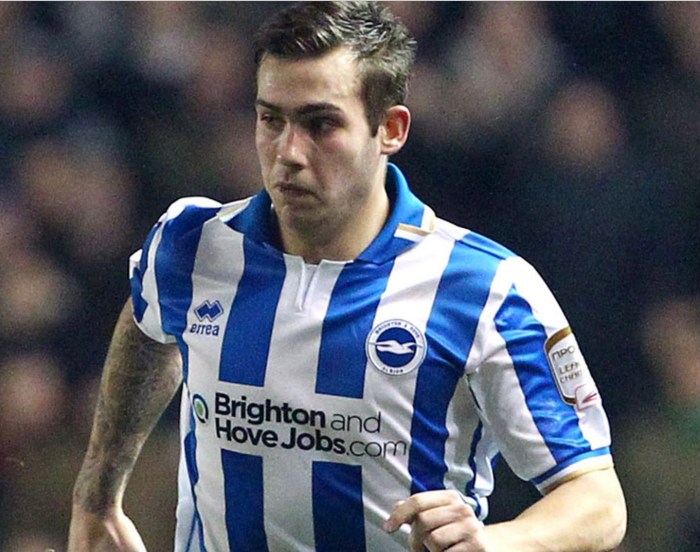
FORMER England striker Darren Bent, who now shares his opinion of the game with listeners to talkSPORT, was still only 30 when he pulled on the stripes of Brighton, one of nine clubs he represented in the Premier League and Championship.

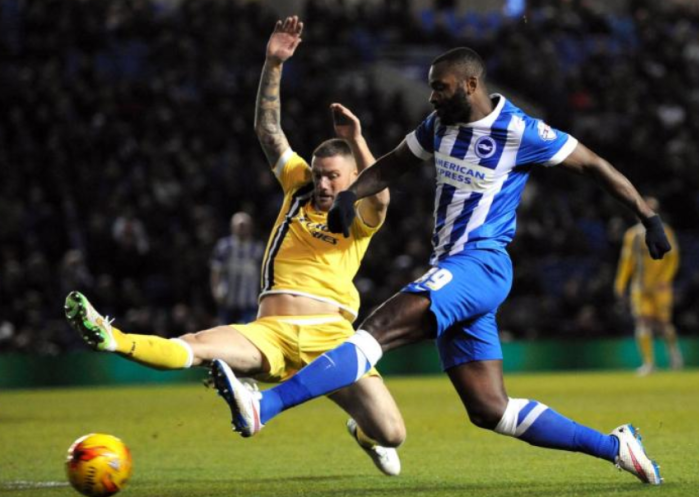
He couldn’t have got off to a better start when he scored on his debut at the Amex, netting against one of his former clubs, Fulham. Unfortunately, the visitors turned the game on its head and won 2-1.

Timing is everything in football and perhaps if Bent had joined the Albion in happier circumstances, there may have been a better story to tell. The Seagulls were about the ditch the manager who brought him to the club – an all-too-familiar scenario Bent encountered on many occasions throughout an 18-year playing career.

At Spurs he played under three different managers – he later described it as “the worst two years of my career” – and his temporary move from Aston Villa to Brighton came about because he’d been frozen out by Paul Lambert even though Gerard Houllier had smashed Villa’s transfer fee record to sign Bent from Sunderland for £18m in January 2011.

Bent arrived at the Amex in November 2014 with 184 goals in 464 career appearances behind him, and only three years earlier had won the last of 13 caps for England, for whom he scored four goals.

“His record speaks for itself,” said Albion boss Sami Hyypia. “He is a top-class striker with more than 100 Premier League goals with Charlton, Spurs, Sunderland and Aston Villa. I hope he will score plenty of goals for us during his time with us.

“There is no doubting his ability to score goals. He also wants to play regular games and that is evident in his willingness to step down from the Premier League to the Championship.”

The player himself told the matchday programme: “Anyone who knows me knows that all I care about is football.

“It has never been about money or anything like that. It has always been about playing football. I’m always at my happiest when I’m playing.”

Bent added: “Brighton felt like the perfect place to come and play football, especially for someone like Sami Hyypia, who I’ve played against many times over the years.

“As a manager, I think he is the right man. He is the kind of guy I want to play for.”

It was a generous assessment in the circumstances because Brighton had managed only two wins in 16 matches before Bent’s arrival.

The experienced striker’s second goal for the Albion looked like it might have earned the beleaguered coach a reprieve from the inevitable. He scored in the 10th minute away at Wolves, stooping to head Inigo Calderon’s first-time cross past goalkeeper Carl Ikeme. It was a lead that lasted until the 88th-minute but was cancelled out by a Danny Batth equaliser after Albion had played 30 second half minutes with 10 men following a red card shown to Bruno. Brighton parted company with the big Finn shortly afterwards.

Bent played one more game, under caretaker Nathan Jones, when Albion fought back from 2-0 down (both scored by on-loan Glenn Murray against his old club) to earn a home draw against Reading, but he was forced off injured after less than half an hour and the knock kept him out of the next game at Fulham, when Brighton won 2-0.

Hyypia’s replacement, Chris Hughton, spoke at his first press conference of trying to keep the player, but Bent had the chance to join a side at the opposite end of the Championship and he moved to promotion-seeking Derby County instead, scoring 12 times in 13 starts as the Rams missed out on a play-off spot by one point.

Released by Villa at the end of the season, he subsequently joined the Rams on a permanent basis in the summer of 2015. He saw even more managerial churn at Pride Park – Paul Clement and Darren Wassall in 2015-16 and three – Nigel Pearson, Steve McLaren and Gary Rowett – in 2016-17. Across the two seasons in the Championship, Bent scored 14 in 67 matches, but a hamstring injury sidelined him for the start of the 2017-18 season.

In January 2018 he went on loan to Championship strugglers Burton Albion under Nigel Clough where he scored twice in 14 appearances (nine starts + five off the bench) including netting the equaliser against his old club Sunderland when Burton’s 2-1 win relegated the Black Cats to the third tier of English football for only the second time in the club’s history. Burton also went down.

Released by Derby in the summer of 2018, he announced his retirement at 35 in July 2019.

Funny that he should end his career at Derby County because it was against them that he scored his first competitive goal for Tottenham in a 4–0 home victory in August 2007.

Bent had previously scored 37 goals in 79 matches over two seasons at Premier League Charlton Athletic before making what at the time was a record £16.5m move to White Hart Lane, where Dutch boss Martin Jol greeted him enthusiastically.

On target for Spurs

Although he already had Robbie Keane, Dimitar Berbatov, Jermain Defoe and Mido as forward options, Jol said of the new signing: “Darren’s strength is his stamina. Normally players will make runs three or four times in 45 minutes, he will do it all the time and if you manage to play balls behind the defence, he will be there.

“He has pace, he links play well and can see a pass – he can exploit the space and play as well.”

What happened subsequently is covered superbly in a 2019 article by Jack Beresford on Planet Football, but, to fast forward a little, Jol was shown the White Hart Lane exit and his replacement, Spaniard Juande Ramos (assisted by Gus Poyet) was a lot less enamoured by the big money signing.

Indeed, Beresford writes: “Bent later recalled how Tottenham became ‘a horrible place to be’ under Ramos, who regularly lambasted players over a lack of professionalism in regards to training and nutrition, demoting several senior figures to the reserves.”

Although Bent struggled to cement a regular starting spot in his first season at White Hart Lane, he was Spurs’ top scorer at the end of the 2008-09 campaign with 17 goals.

While things initially looked good under Bent’s third Spurs boss, Harry Redknapp, the manager’s decision to publicly humiliate the striker eventually brought an unhappy spell to an end.

Bent missed a golden chance to score in a match against Portsmouth and Redknapp told reporters after the game: “You will never get a better chance to win a match than that. My missus could have scored that one.

“Bent did not only have part of the goal to aim for, but he had the entire net – and he put it wide. Unbelievable. I was just so frustrated.”

Bent put in a transfer request and said: “No one goes out to deliberately miss. When you miss a chance and your manager comes out and supports you rather than criticises you, it’s a big help.”

Ironically, circumstances meant Bent went on to make 12 more appearances for Tottenham, scoring five times and his 12 league goals made him the club’s top scorer.

Although Redknapp said Bent had a future at the club, he signed Peter Crouch and Beresford reported Bent later said: “I didn’t feel Redknapp wanted me there. It’s massive to have the support of your manager and that’s not been the case for the last two years.

“My career stood still at Tottenham. There’s a lot of politics going on there. I scored a lot of goals, but it was the hardest two years of my life.”

In those two years, he scored 25 goals in 79 games for Tottenham, but 36 of those appearances had been as a substitute.

Born in Tooting, south London, on 6 February 1984, Bent seemed always destined to be a footballer because his dad Mervyn had been on the books of Wimbledon and Brentford as a youngster.

The family moved to Cambridgeshire when the young Bent was only 10 and his early football career was nurtured at Godmanchester Rovers.

Ipswich Town picked him up as a 14-year-old and nurtured him through their youth ranks until he signed his first professional deal on 2 July 2001. George Burley gave him his debut five months later as a sub in a 3-1 UEFA Cup win away to Helsingborgs IF.

He scored twice in seven league and cup appearances that first season but the Tractor Boys were relegated from the top flight. Burley was soon replaced, temporarily by Tony Mowbray, then Joe Royle, under whom he cemented a regular starting berth in the second tier over the next three seasons.

By the time he left Ipswich in 2005, he’d scored 56 goals in 141 appearances. Former Brighton midfielder Alan Curbishley was at the helm of the Addicks when they paid a fee of £2.5m to take him to The Valley.

He scored five goals in Charlton’s first four league games (including two in the opening day 3-1 win over future employer Sunderland), finished his first season with 22 league and cup goals and was named Charlton’s Player of the Year.

Bent top scored again the following season, with 15, but under three different managers – Iain Dowie, Les Reed and Alan Pardew – they were relegated to the Championship along with Watford and Sheffield United.

As described earlier, Spurs presented the opportunity for him to continue playing in the Premier League, and he continued playing at that level when Sunderland bought him for £16.5million in the summer of 2009. Demonstrating the knack he had at several clubs, he scored on his debut, giving the Black Cats a 1-0 win at Bolton.

Bent went on to score 24 league goals for the Black Cats in his debut season at the club – and you can only imagine how delighted he was (pictured below) to net two in a 3-1 win over Spurs at the Stadium of Light!

The first came after just 34 seconds of the game on 3 April 2010, and a 29th-minute penalty gave him his 23rd goal of the season, although incredibly Bent also saw two other penalties saved by Spurs ‘keeper Heurelho Gomes. He had also missed a penalty in the reverse fixture at White Hart Lane the previous November, when Spurs won 2-0.

He obviously wasn’t the most reliable from 12 yards: I witnessed a Bent penalty miss myself back in 2003 when he’d gone on as a sub for Ipswich against Brighton at Portman Road. With the score at 1-1, Richard Carpenter’s foul on Chris Makin gave Bent the chance to restore the home side’s advantage from the spot. But he blasted the ball over without goalkeeper Dave Beasant needing to make a save. Tony Rougier then put Albion ahead but a Martin Reuser thunderbolt evened it up.

Bent’s 18-month stay with Steve Bruce’s Sunderland proved to be his most prolific goalscoring spell in football, netting 38 goals in just 52 appearances.

In the first half of the 2010-11 season, his partner up front was young Manchester United loanee Danny Welbeck, but in the January 2011 transfer window Bent was on the move again, this time to Villa.
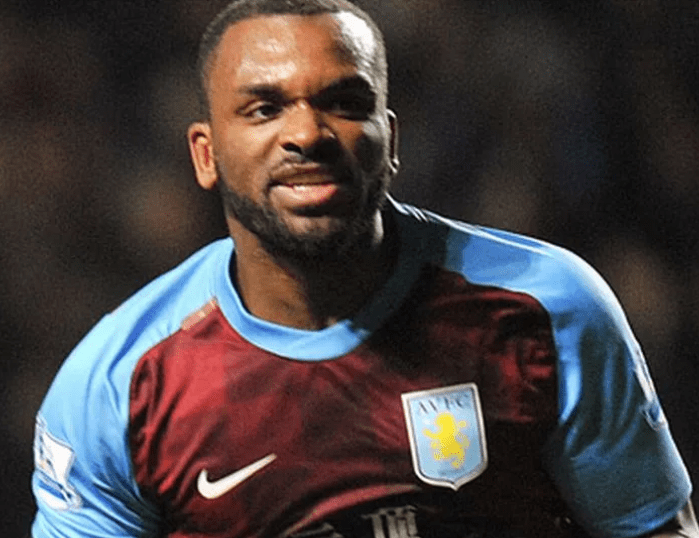
Once again, he got off to a great start for a new club, marking his debut with the only goal of the game in a win over Manchester City. It was the first of nine goals in 16 league appearances which put him joint top scorer with Ashley Young, even though he’d only arrived at the club in January.

After health issues forced Houllier to step down as Villa boss, Alex McLeish took over for what was a tumultuous and under-performing season when relegation was only avoided by two points, although Bent was top scorer with 10.

McLeish’s successor Lambert not only took the captaincy off Bent, he also froze him out, only selecting him for 13 Premier League appearances. If he thought it was difficult enough to have three different managers in three seasons at Villa, when he spent the whole of the 2013-14 season on loan to Fulham, they had three different managers in one season!

Bent’s old Spurs boss Jol was in charge as the campaign got under way but, with only two wins in 14, he was replaced by former Man Utd no.2 René Meulensteen in December before Felix Magath took over in February. All the upheaval saw Fulham relegated with a team that included David Stockdale, Steve Sidwell, Aaron Hughes and Dan Burn. Bent scored six in 14 starts + 15 sub appearances.

If Bent was used to managerial change at club level, it wasn’t much better with the England national team: he played under three different managers in five years!

He had previously earned selection for his country at under 15, 16, 19 and 21 levels – he scored nine in 14 matches for the under-21s – and he was first called up to the full squad by Sven-Goran Eriksson shortly after he’d made the move from Ipswich to Charlton, although he didn’t play in a 4-1 defeat to Denmark.

“Making my Premiership debut for a new club, scoring my first brace in the Premiership and then to get the England call-up on the back of that was just a dream come true,” he told the FA website.

It was another six months before he made his full England debut, in a 2-1 win over Uruguay but he didn’t do enough to stake a claim for a place in the World Cup squad.

His next cap came as an 80th minute substitute for Joe Cole in the 3-2 defeat to Croatia in November 2007 that cost Steve McLaren his job when England failed to qualify for the Euro 2008 tournament.

By the time he made his second start for England, on 14 November 2009, Fabio Capello was in charge. England lost 1-0 in a friendly to Brazil in Qatar when Bent’s teammates included Matthew Upson, Wayne Bridge and James Milner.

“Bent was struggling to make an impact as he attempted to convince Capello of his worth, not helped by a lack of service that rendered his task almost impossible,” reported the BBC’s Phil McNulty. “He had one opportunity, but could not direct a header on target from Milner’s cross.”

He didn’t make the cut for the 2010 World Cup squad but in September was back in the fold and scored his first England goal after going on as a 70th minute sub for Jermain Defoe as England beat Switzerland 3-1 in Basle.

By now at Villa, it was the first of three goals in three games (he also netted against Denmark and Wales) after which he told the Birmingham Mail: “I’d love to be No 9 for as long as possible, there are a lot of top strikers about but Fabio keeps picking me and hopefully I can keep producing the goods.

“Even when the goals weren’t going in, I always believed I was good enough to score at this level and hopefully it’s showing now. I’m finally getting my chance and getting a good run in the side. I’m delighted with it.

“It has been years since my first chance and it’s certainly been a long, long wait but it’s finally come.”

He started the 2-2 Euro 2012 qualifier with Montenegro in October 2011 and the following month was in the side that beat World Cup holders Spain 1-0 at Wembley; it was his header from Milner’s cross that rebounded off a post for Frank Lampard to nod in.

Three days later, he played what turned out to be his – and Capello’s – last game for England as a 70th minute sub for Bobby Zamora when England beat Sweden 1-0 at Wembley.

Yet another man was at the helm when it came to selection for the Euro 2012 tournament and Roy Hodgson didn’t reckon Bent had recovered sufficiently from an injury to merit inclusion.

For all the highs and lows of a lengthy playing career, nothing came close to what he suffered in front of a nation of TV quiz viewers: he scored only three points over two rounds of Celebrity Mastermind and admitted to talkSPORT listeners: “Honestly? It was probably the worst experience of my life!”

He explained: “As a footballer you get nervous before games, when you take a penalty in front of thousands of people, when you join a new club, but when you’re sitting in that chair opposite John Humphrys, it’s pitch black in there and all you can see is him, his eyes looking at you and he’s asking you questions and you just go blank.”
Anthony Knockaert: the ‘little magician’ with an eye for goal

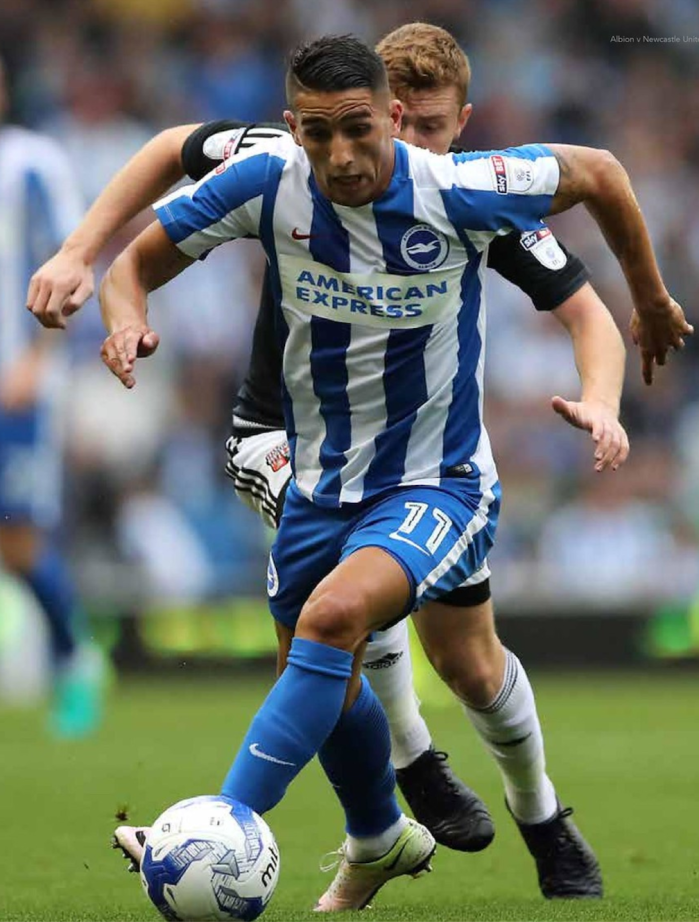
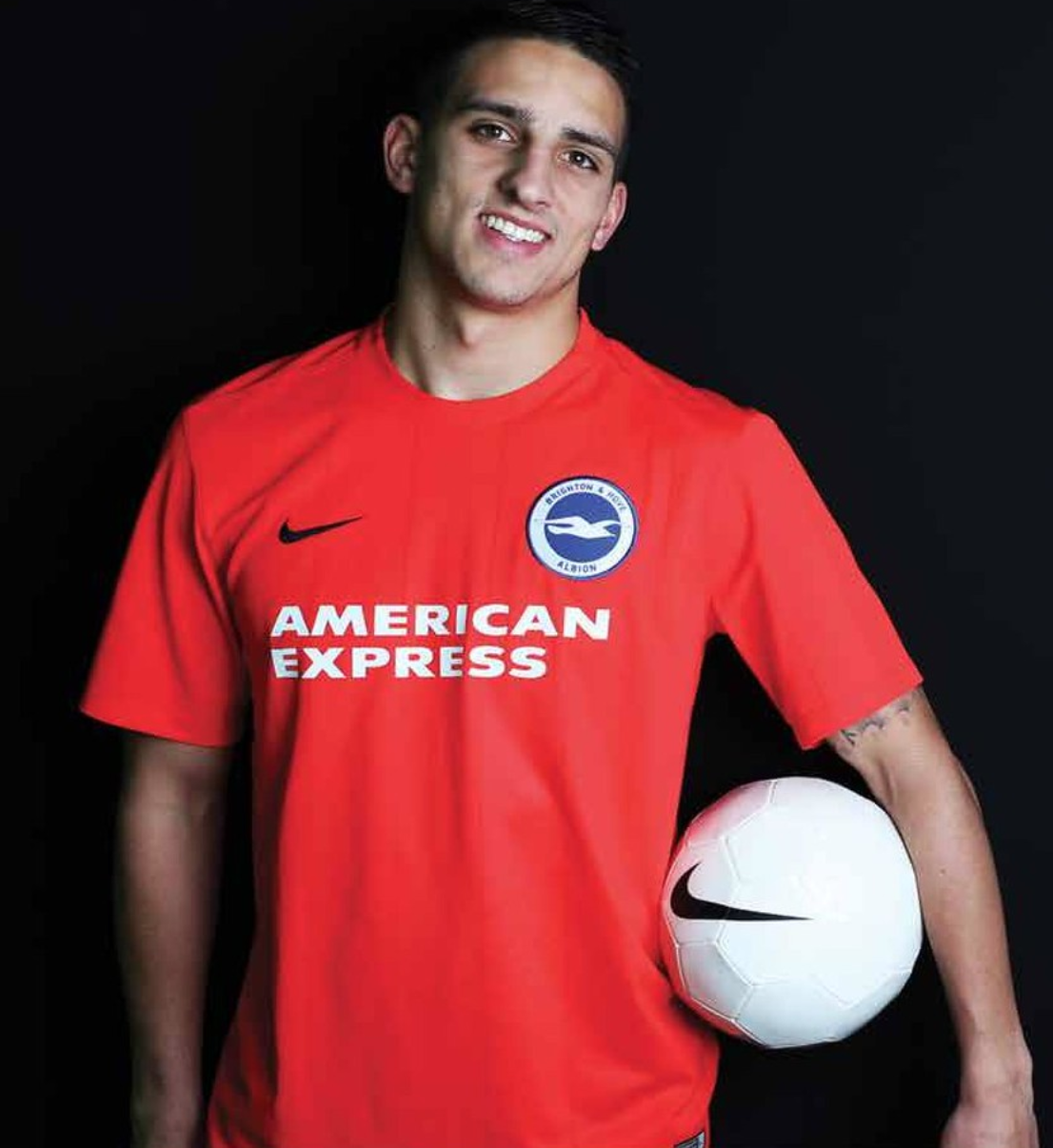
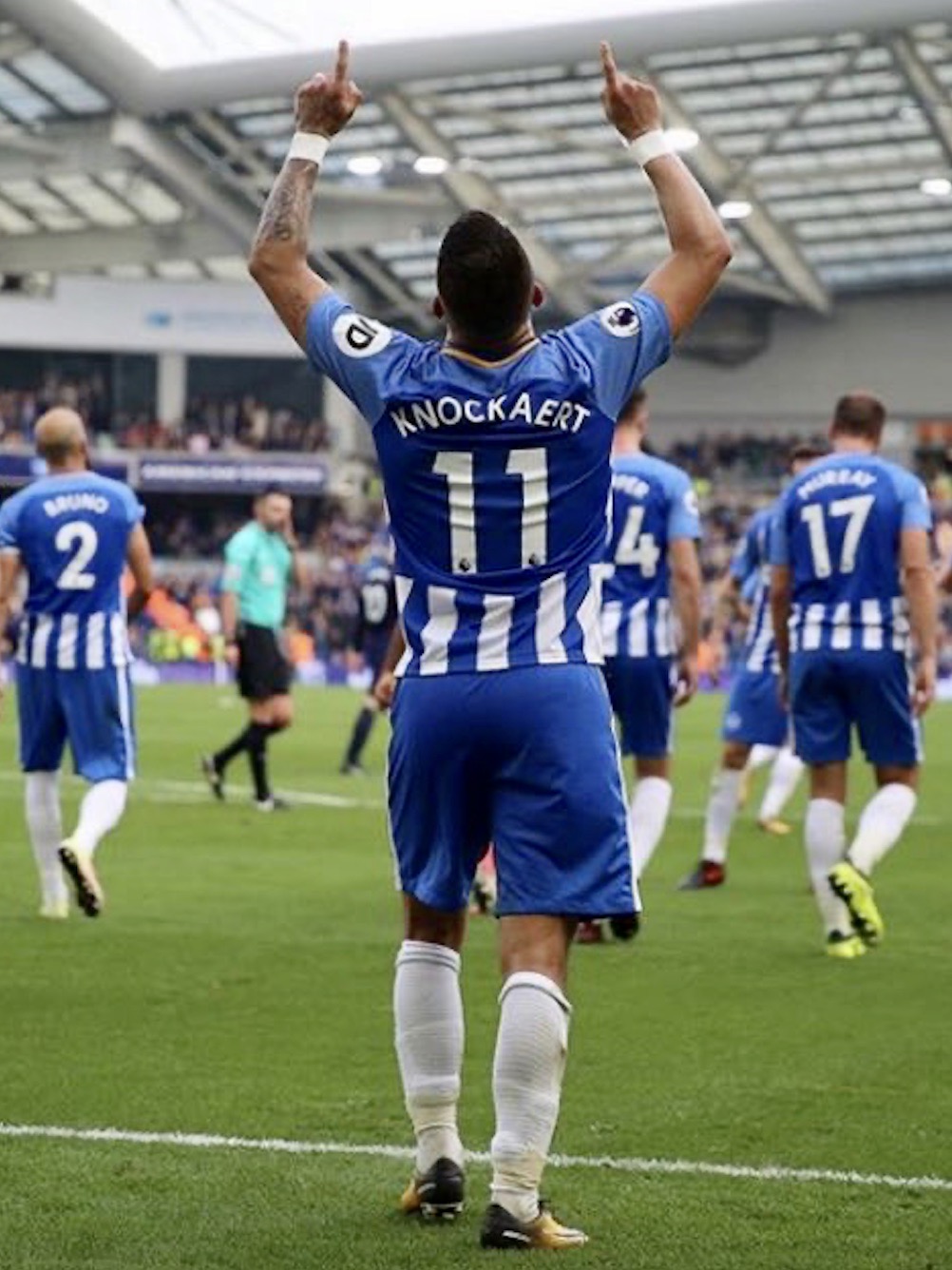
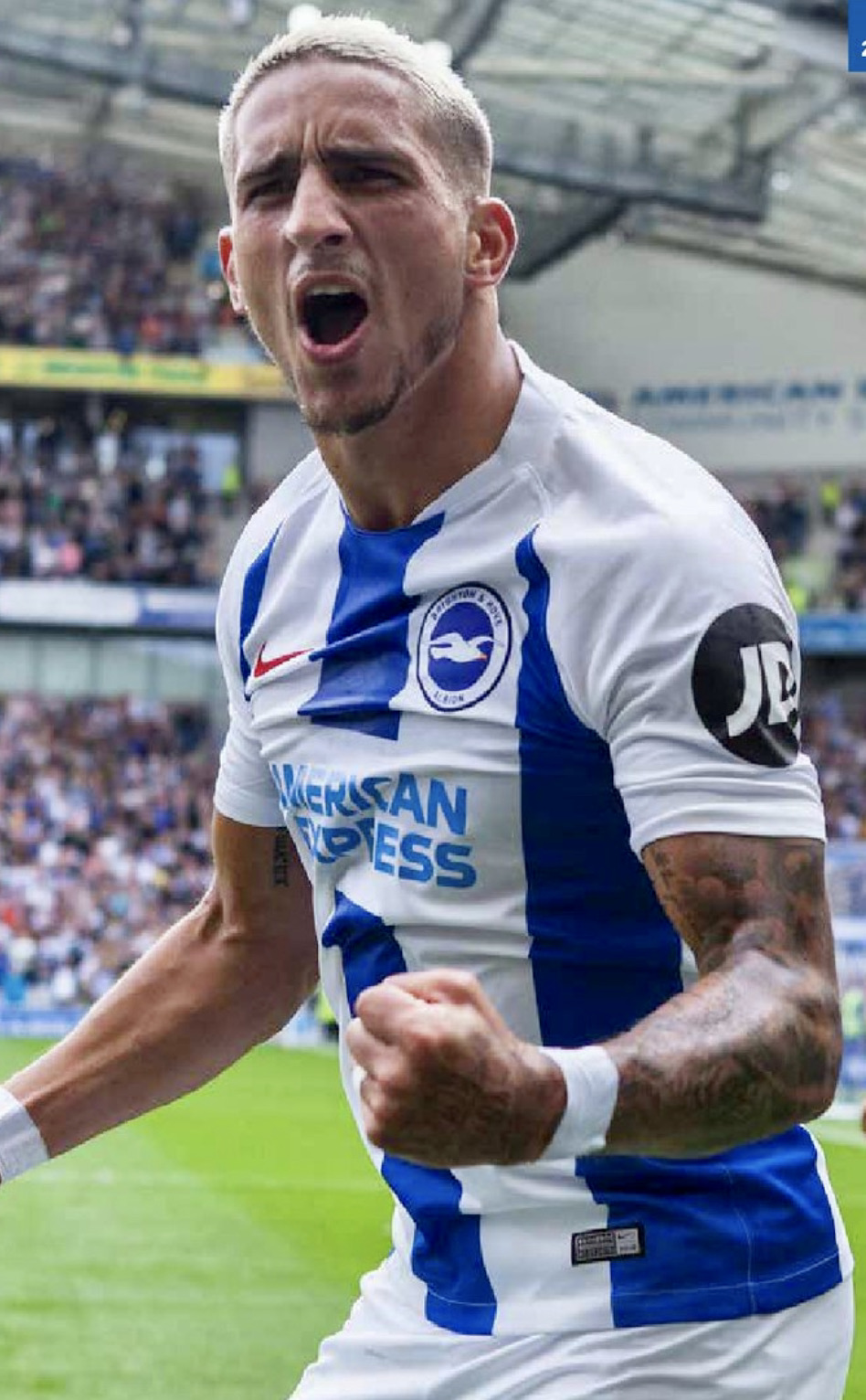
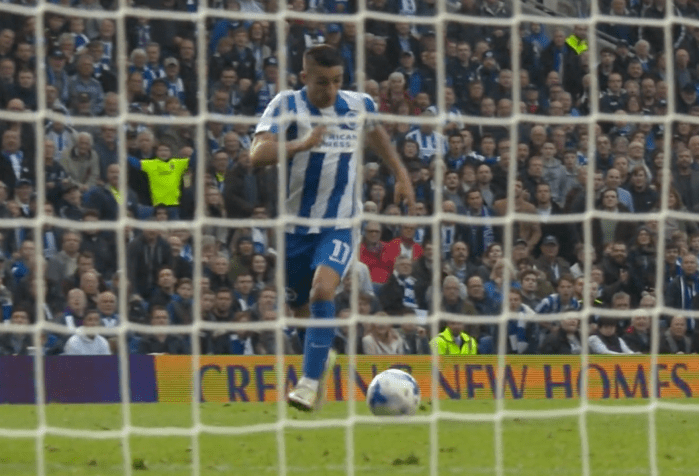
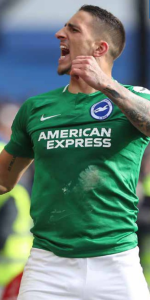
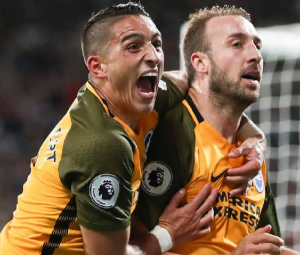
IT WAS a team effort that saw Brighton promoted to the Premier League in 2017 but one of the key components of that achievement was winger Anthony Knockaert.

Centre-forward Glenn Murray netted 23 times but the tricky, nimble-footed Frenchman wasn’t far behind with an impressive 15 goals and was rightly rewarded with both the Championship Player of the Year award and the Albion Player of the Season accolade.

When he announced his retirement from the game at the age of 32 in July 2024, he described his time with the Seagulls as the best years of his career.

He had previously been part of Leicester City’s rise from the Championship in 2014 and, although he was a less regular starter in his first season at Fulham, he was also part of Scott Parker’s play-off winning squad that won promotion back to the Premier League in August 2020.

Knockaert’s mazy dribbles along the right wing often had Albion fans on the edge of their seats and, invariably, in an around the penalty area, he would cut back onto his left foot and let fly with a goalbound shot.

When he left the club for Fulham, Albion chairman Tony Bloom said: “Anthony will always have a very special place in the history books of our club.

“He’s provided some wonderful moments, and on behalf of all Albion fans, I would like to thank him for the memories.”

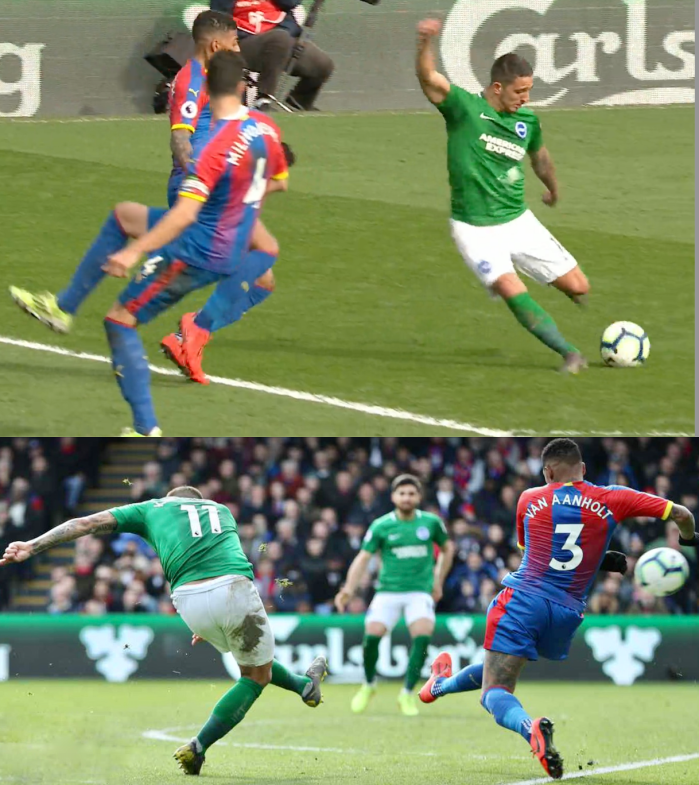
Perhaps it was fitting that his last goal for the Seagulls was one of the most spectacular – and was delivered in a 2-1 win against arch rivals Crystal Palace at Selhurst Park in March 2019.

Some observers felt Knockaert was lucky still to be on the pitch after he escaped with just a booking only 28 seconds into the match for cleaning out Palace captain Luka Milivojevic.

With the game level at 1-1, and 16 minutes of the match remaining, Sky Sports reporter Richard Morgan noted: “Brighton boss Chris Hughton was preparing to bring Knockaert off, but before the substitution could be made, the Frenchman put his team back ahead with a goal-of-the-season contender.

“The winger picked up possession down the right, before cutting inside and curling a sublime left-footed shot into the top corner of the net as Brighton scored from outside the area for the first time in the league this season.”

It certainly wasn’t the first time Knockaert had made the headlines for the Seagulls; his two goals at Molineux in a 2-0 win over Wolves in April 2017 virtually guaranteed Albion’s promotion from the Championship just ahead of the decisive win at home to Wigan and was accompanied by BBC Radio Sussex reporter Johnny Cantor’s memorable “simply box office” commentary on the Frenchman’s performance.

Born in Roubaix in north east France on 20 November 1991, Knockaert’s early football development happened at several clubs close to or over the Belgian border: Wasquehal (1997-99), Leers (1999-2001), Lens (2001-04), Mouscron (2004-07) and Lesquin (2007-09).

It took a move to Brittany, and Guingamp, to begin his professional career in 2009 and he helped the club win promotion from the third to the second tier of French football in 2011. Leicester paid a reported £750,000 for his services in the summer of 2012.

He revealed a flavour of his passion for the game in a City November 2013 matchday programme: “When I play for a team, I want to be able to give everything and that’s important if you want to forge a connection with the fans and everybody at a club. That’s my philosophy.

“Since I have come to Leicester, the staff, players and fans have been brilliant. Everyone in Leicester has been great with me and as a result I have been very happy.

“That’s why I give everything I have on the pitch, because simply, I love Leicester.”

Although Knockaert’s late goal against Nottingham Forest on the last day of the 2012-13 season had lifted City from eighth in the table into the last play-off spot, agony was to follow in the semi-finals.

While Brighton fans were enduring their own Championship play-off semi-final heartbreak at the hands of Crystal Palace, so the Foxes saw their hoped-for return to the Premier League cruelly taken away – and Knockaert was the fall guy.

With City’s play-off semi-final against Watford finely poised at 2-2, Leicester were awarded an injury time penalty. Knockaert stepped up to take it but the kick was saved by Manuel Almunia, the rebound shot then hit him in the chest, and the ball went straight down the other end where Troy Deeney buried a winner for the Hornets. But Foxes follower Jake Lawson of fosseposse.sbnation.com was keen to point out in 2017: “There’s so much more to the Frenchman’s time with Leicester than that.

“We signed him as a relatively unknown 21-year-old from Ligue 2 side Guingamp and he went straight into the side, featuring in 42 league matches during the 2012-13 campaign.

“He scored eight goals in the Championship and they weren’t exactly tap-ins, either. His brace against Huddersfield was, to my untrained eye, the most impressive pair of goals scored by any City player over the last 20 years.”

Regardless of that agonising play-off outcome, he observed: “Without the French under 21 international’s impressive range of passing, magical dribbling, and ability to score from (literally) any angle, we wouldn’t have even been in the hunt.”

Knockaert played in 42 league matches and scored five times in 2013-14, when Leicester romped to the Championship title, finishing with 102 points.

“Every time he was on the ball, you had the sense that something special could happen,” said Lawson. “It wasn’t always good, but it was always special.”

Unfortunately for Knockaert, Leicester discovered another winger from France’s Ligue 2. His name was Riyad Mahrez and boss Nigel Pearson picked the Algerian ahead of Knockaert, who only made five first team starts plus six appearances off the bench in the 2014-15 Premier League season.

When he left Leicester in June 2015, he’d made 82 starts and 24 substitute appearances for the Foxes and scored 13 goals.

He joined Belgian Pro League side Standard Liege on a free transfer, signing a four-year contract. But he ended up playing only 20 matches for Liege in the first half of the 2015-16 season before the Albion took him back to the UK.

Albion boss Hughton said at the time: “Once I knew that there was a possibility that Anthony was available, he was somebody I was interested in bringing to the club for a number of reasons.

“He is a different type of player to the wide players we have here. He can play in three positions – on the left, off the front man, but predominantly in his previous time here in England he played on the right side.

“He is a very good technical, offensive player and has experience of playing in the Championship in a team who played a 4-4-2 system and he is used to having a responsibility in the wide areas. But mostly it is what he can bring us offensively in terms of goals and assists.”

Knockaert obviously bought in to the manager’s way of playing, saying in a matchday programme interview: “When you are a creative player everyone expects the best from you in every game. You are always trying a lot of things: to dribble, to score goals, to give assists and to work hard defensively for the team.

“I try to give all of these things to the team – as do all the wingers at the club – and it’s a big responsibility on the pitch for us. However, it’s not always easy to do everything right.”

Explaining his occasional shows of frustration, he said: “It’s because I love football so much. I’ve always been like this and every game I play is a fight, and I give everything I’ve got.”

Promotion in 2017 was extra special for Knockaert because it was a promise he’d made to his dad, Patrick, who died of cancer aged 63 in the autumn of 2016. The player was grateful for the way in which he was supported in his bereavement by the management and his teammates.

Brighton players held aloft absent Knockaert’s shirt in tribute as they celebrated Steve Sidwell’s halfway line wonder goal at Bristol City. Hughton and several players attended his father’s funeral in France.

Thankfully it was a far happier Knockaert at the forefront of the celebrations when Albion achieved the promotion dream against Wigan at the Amex the following April.

Hopes of hitting the ground running in Albion’s debut season in the Premier League were dealt something of a blow when he sustained ankle ligament damage in a pre-season friendly against Fortuna Dusseldorf.

It was eight games before there was a glimpse of his return to fitness when Everton were the visitors. Man-of-the-match Knockaert put Albion ahead on 82 minutes but Everton took home a somewhat fortuitous point when Wayne Rooney equalised from the penalty spot.

“His trademark runs from deep and balls into the box led the Toffees’ defence a merry dance,” the matchday programme reported. As to the goal, Knockaert said: “It was a special moment for me. Obviously I thought about my dad because I know he would have loved to have seen that. It was really emotional.”

Sadly, apart from his father’s early death, Knockaert’s brother Steve had died of a heart attack aged 28 in 2010 and in 2018 the player revealed he’d had counselling for depression which had been compounded by the break-up of his marriage, that had led to limited contact with his four-year-old son Ilyan.

In an excellent piece of analysis after Albion’s new regime under Graham Potter allowed Knockaert to join Fulham on loan at the start of the 2019-20 season, The Athletic’s Andy Naylor spelled out the conundrum the club faced with a player who perhaps wore his heart on his sleeve a little too much.

Naylor noted that apart from Knockaert’s capacity to thrill supporters on the pitch, his series of personal misfortunes also tugged at their hearts.

Nonetheless, although he scored 20 goals in 64 Championship games for Brighton, he only registered five in 63 at the higher level.

In the harsh world of football, as Knockaert had previously experienced with the arrival of Mahrez at Leicester, it was Brighton’s signing of Leandro Trossard from Genk that finally signalled the Frenchman’s farewell to Sussex.

Believing Knockaert “too good for the Championship and good enough for the Premier League” Naylor said that winner at Palace and a man-of-the-match performance in the 2019 FA Cup semi-final defeat to Manchester City were certainly highlights. But…

“On the flip side, such good days are not frequent enough for Knockaert to be regarded as dependable, both in terms of his contribution to the team and the Gallic temperament which has let the side down.

“Displays of dissent were familiar if he got substituted or games were not going according to plan,” he said.

Naylor also referred to two sendings off – away to Everton for a jump tackle on Leighton Baines from a throw-in and “an outrageous lunging tackle” on Bournemouth’s Adam Smith when Albion were 2-0 down at home and ended up losing 5-0.  Match of the Day pundit Danny Murphy slammed the player, saying: “It’s dangerous and irresponsible and more importantly he’s let everyone down.”

Naylor concluded that the switch to London for a fee of up to £15 million – about four times what they paid for him – would be best for both club and player.

Fulham exercised their option to buy Knockaertpermanently in July 2020 and he agreed a three-year contract, although most of that time ended up being spent away from Craven Cottage on loan.

The signing certainly baffled Fulham fans, such as Marco De Novellis who wrote on fulhamish.co.uk: “The Knockaert signing strikes me as the decision of an out-of-touch director of football operations attuned more to the past reputation of players than the reality on the pitch.”

Another correspondent, Hugo Lloyd, on the same site, reckoned Knockaert had “hugely divided opinion” and said: “Aged 27 he should be coming into his prime, but he looks a shell of his former self.”

Lloyd reckoned the sort of flair Knockaert had expressed playing for Brighton was stifled by Scott Parker’s emphasis on possession. “Parker needs to show faith in Knockaert and let him play in the manner that has allowed him such success in previous seasons as it could be the perfect injection of risk needed in our style of play, rather than taking this out and keeping the ball for the sake of it,” he wrote. “He clearly has ability but has had to completely change his style of play which cannot be easy.

“Given time, Knockaert’s magic could be exactly what we need to rise up the table, whereas at the moment it seems a case of trying to fit a square peg in a round hole.”

By the season’s end, Knockaert had made 35 starts and 11 sub appearances in all competitions, scoring just four goals, as Fulham gained promotion back to the Premier League via a play-off final win over Brentford.

Although the club was back amongst the elite, Knockaert was frozen out and in October 2020 was instead reunited with former Albion boss Hughton at Championship side Nottingham Forest. He made 33 appearances and scored three times for Forest where he also teamed up with two former Seagulls teammates in Gaetan Bong and Murray.

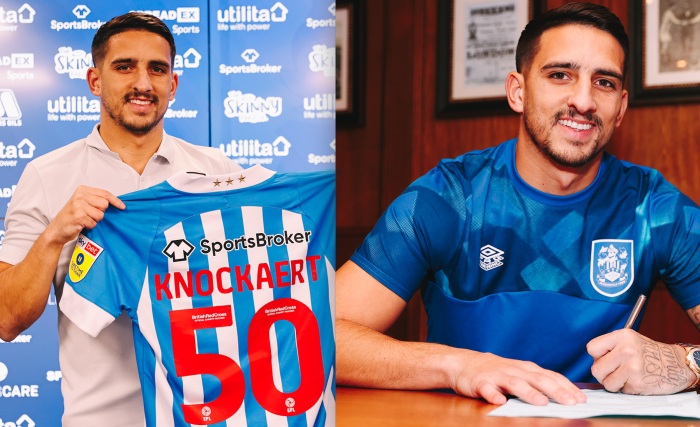
The following season began with Knockaert joining Greek Super League side Volos but he was back in the UK the following January, signing on loan at Huddersfield Town.

Amid a fair degree of hype, Town’s head of football operations Leigh Bromby told the club website: “Anthony possesses the type of individual talent that is a rare find, so we’re absolutely delighted to have him with us for the remainder of the season.

“He has a proven track record at this level and a real hunger to contribute in England again, so that ticks a lot of boxes for us.

“This is the type of signing we hope can give the club a real lift both on and off the field, with his high profile earned through countless memorable goals and performances that we hope will continue with our shirt on his back.

“He gives us something completely different in the final third whilst complimenting who we are and what we want to be as a team, so there is a real excitement to see how he can contribute between now and the end of the season.”

Sadly, against a backdrop of managerial upheaval, he only managed two starts and three appearances off the bench as Town narrowly avoided dropping out of the Championship.

In September 2023, Knockaert agreed to terminate his Fulham contract and he moved back close to his birthplace, signing for Ligue 2 side Valenciennes FC. He featured in 21 matches but couldn’t prevent the side from being relegated to France’s third tier.

Although he announced his decision to retire from professional football in July 2024, he didn’t plan to hang up his boots altogether and getfootballnewsbene.com reported that he would turn out in the lower reaches of Belgian football with Mouscron, where he’d once played as a boy.

Flipping winger Kazenga LuaLua followed brother to Toon

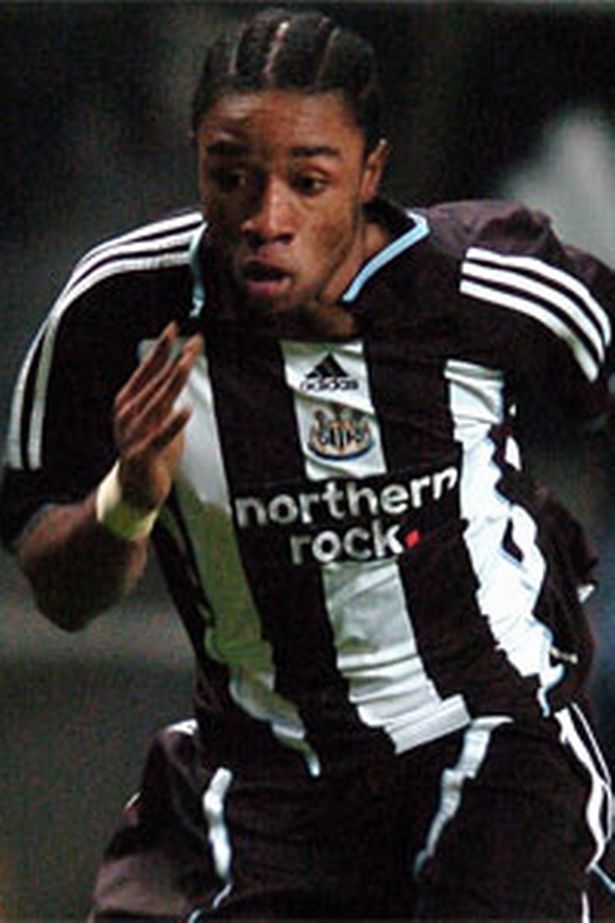
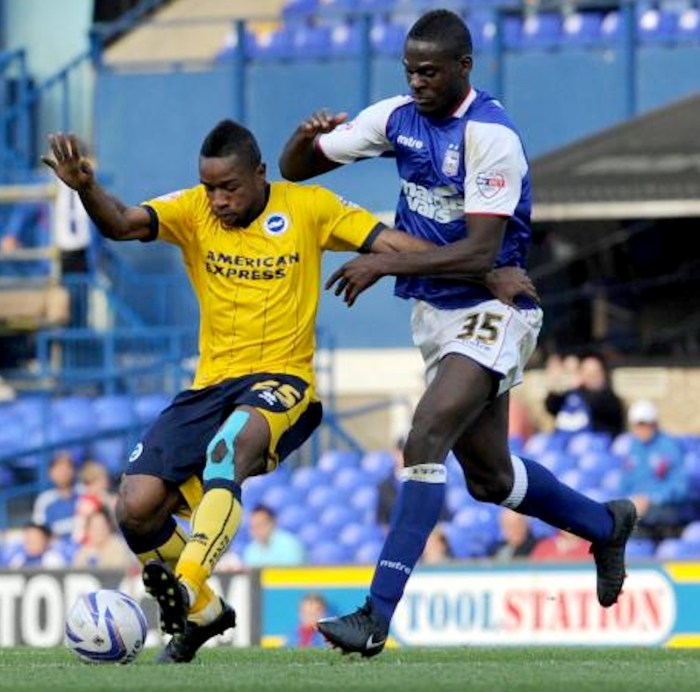
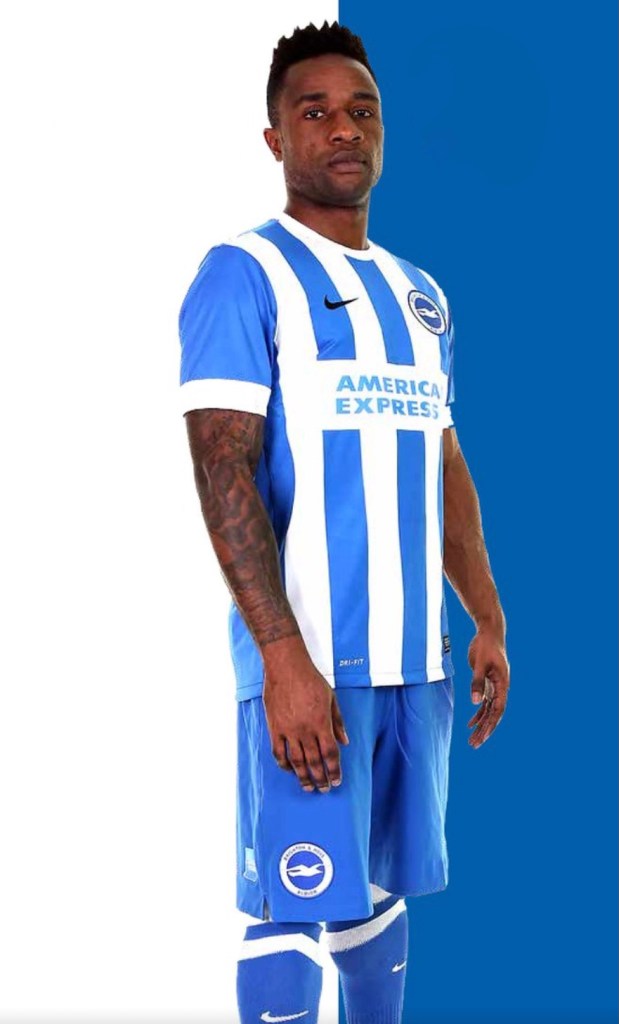
EXPLOSIVE pace, a feint of the shoulder, and a thunderbolt shot were trademarks of Kazenga LuaLua’s contribution to Brighton’s rise from the third tier.

Not to mention a somersault flipping goal celebration that delighted supporters but gave managers kittens as they could only see an injury in the making.

Sadly, that explosive pace came at a price — hamstrings that were all too often easily damaged, resulting in lengthy spells on the treatment table and in recovery. Ankle, knee and groin injuries also sidelined the pacy winger for long periods.

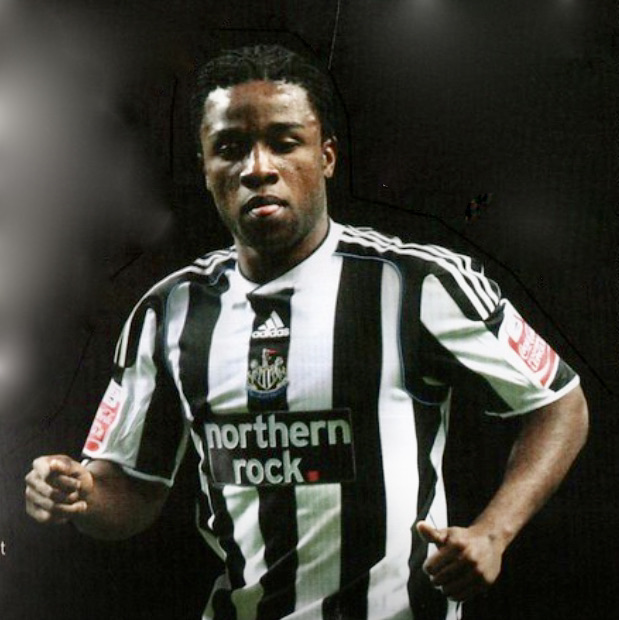
Left-sided LuaLua had three spells on loan to Brighton from Newcastle United before joining permanently, and his six seasons in Brighton colours were rarely dull. He was undoubtedly a crowd-pleaser when he was on top of his game, leaving full backs trailing in his wake to lay on chances or cutting inside and netting some memorable goals.

However, he invariably made most impact when entering the fray from the substitutes’ bench, although the ‘supersub’ moniker frustrated him.

“You don’t just want to come on as a sub,” he told the matchday programme. “Obviously it’s good in one respect as it means the team needs you, but as a footballer you want to be in the starting 11 in every game.

“I don’t view myself as just an impact player and I know that I can play 90 minutes of football.”

Albion fans first saw the Congolese game-changer in February 2010. Manager Gus Poyet had been tipped the wink about LuaLua by his former Swindon and Leeds managerial partner, Dennis Wise, who had been executive director at Newcastle.

Ashley Barnes celebrates with Albion’s speedy loanee winger

LuaLua started nine games (and went on as a sub twice) as Albion consolidated their position in League One. His impact on the side was appreciated by his teammates, as defender Tommy Elphick explained to the Argus in March 2010. After the 19-year-old winger had run Exeter full-back Steve Tully ragged, Elphick said: “He’s unbelievable for us. He really does stretch the game for you.

“It’s that raw pace and power which I personally think we have been missing for the last two years. Benno (Elliott Bennett) gives you something totally different. He is more technical. Kaz reminds me of Bas Savage in the sort of job he used to do for us in stretching the game and getting us up the pitch.

“It gives the defenders a chance to get to the halfway line and defend a bit higher.”

When Poyet secured his services for a second loan spell for the opening half of the 2010-11 season, he was delighted. “Kazenga is unique. He is pure power and speed,” said the manager. “That nowadays in football is very important and we didn’t have that.

“I don’t think there is another player like him in the division. He gives us something totally different.

“We are very pleased to have him. We know what we are getting and that is the key. He will fit in as a player, and in the dressing room.”

Poyet added: “He made a very big impact during his time here last season and I am hoping he can do the same and add a few goals to his game this time around.”

No sooner said than done; LuaLua marked his second debut with a 25-yard rocket of a free-kick to give Albion the lead in a 2-0 home win over MK Dons.

LuaLua departs the action injured

Sadly, after just seven starts plus four appearances off the bench, his involvement in that promotion season came to an end in November 2010 when a bad tackle in a 3-1 away defeat at Hartlepool left him with a broken ankle.

Born in Kinshasa, Zaire (now the Democratic Republic of the Congo), on 10 December 1990, LuaLua came to England as a small child with his father and famous older brother, Lomana.

It was from Lomana that he perfected the thunderbolt shot — and the celebratory somersault.

“I have always had a hard shot on me,” he told the Albion matchday programme. “I think a lot of it comes from when I was a boy back in Newcastle and I would play with my brother.

“He would always strike a ball hard and I would try to copy him.”

It was football all the way from a young age, LuaLua recalled. “When I was growing up in Kinshasa, I remember skipping school to play football with my friends,” he said. “We were football mad and, as my brother had already moved to England, I wanted to follow in his footsteps.

“Lomana got me in at Newcastle. He moved to London with our dad some time earlier, but once he’d broken into football and moved from Colchester United up to Newcastle, then the rest of the family came over from our homeland.

“I had only been in the country a couple of months when Lomana arranged for me to have a trial at Newcastle and I was taken on straight away. It was fantastic for me and also for him; we’d go into training together and he was always there for advice when I needed it. He has been a massive influence on my career.”

The winger continued: “It was tough to begin with; I was in a new country and had to go to a new school, which was hard in itself given where I’d come from, and then I was brought into a professional football club and one of the biggest in the country.

“But Newcastle were very helpful. All the coaching staff were great towards me, and helped me find my feet. I learned such a lot from them and I quickly made new friends. I was close to Nile Ranger, Sami Adjei, Sami Ameobi, many players, and I learnt so much in terms of coaching and how to conduct myself as a professional.”

Kazenga progressed through the Toon academy and was part of the Toon youth team that reached the semi-finals of the FA Youth Cup in 2005-06. He even earned a first-team squad call-up while still only 16, although he didn’t get to play.

LuaLua’s Newcastle chances were limited

Eventually, he got his first team chance as a substitute for Damien Duff in a 0-0 FA Cup third round match at Stoke in January 2008, right at the end of Sam Allardyce’s reign on Tyneside. It was Michael Owen’s first FA Cup game for Newcastle.

The game was being shown live on TV so LuaLua’s extended family back home in the DR Congo were able to see the moment. “I was one of the club’s youngest debutants at 17,” he said.

He also went on (for Charles N’Zogbia) in the replay at St James’s Park which Toon, under caretaker boss Nigel Pearson, won comfortably 4-1. “To play in front of 52,000 people took my breath away,” he said.

He made his Premier League debut three days later, going on as an 80th-minute sub for Duff at St James’s Park, in Kevin Keegan’s first match back in charge — a disappointing 0-0 draw with Bolton Wanderers.

Although a non-playing sub on other occasions, he got on in the last game of the season, replacing Jose Enrique in the 79th-minute as United went down 3-1 to Everton at Goodison Park.

Against the backdrop of the tumultuous 2008-09 season, when Toon were relegated from the Premier League after a veritable managerial merry-go-round, LuaLua made just four substitute appearances (three in the league and one in the FA Cup), and in January 2009 he was sent out on loan to Doncaster Rovers, then in the Championship, where he played four matches in six weeks under Sean O’Driscoll.

Once Toon settled on Chris Hughton to get them promoted from the Championship, LuaLua found chances hard to come by.

He started in a Carling Cup second round match at home to Huddersfield Town, when Toon edged it 4-3, but picked up a groin injury playing in the next round, a 2-0 defeat at Peterborough in September 2009 (future Brighton teammate Craig Mackail-Smith was one of the Posh scorers).

Three months later, with his fitness restored, he was itching to be given a first team chance and told the Chronicle: “I want to be part of this team. My aim has always been to play for the first team at Newcastle United.

“I’ve been here a long time, and last season I was involved in the first team before going out on loan.”

“I have been playing for the reserves for a while now, and I’m keen to play football at first team level.

“I would go out on loan if they let me.”

That opportunity finally came a couple of months later when Hughton sanctioned the move to Brighton. LuaLua told Albion matchday programme reporter Luke Nicoli: “They are a big club and are using a lot of experienced players at the moment, so it’s been difficult for me to break into the team.

“I’ve been playing reserve team football a lot and I just want to be playing games that mean something again. I want to be playing for points and I want to be learning all the time. I want to be in a position where I can return to Newcastle a better player.”

Immediately before re-joining the Seagulls for his second loan spell, LuaLua made only his second start for Newcastle in a 3-2 Carling Cup win over Accrington Stanley and was selected by Sky Sports as the Man of the Match.

After that broken ankle at Hartlepool had taken him back to Newcastle to recuperate, he recovered to make a Premier League appearance in the penultimate game of the season, a 2–2 draw away to Chelsea. Hughton’s successor, Alan Pardew, sent him on as a 69th minute substitute for Shane Ferguson and it was LuaLua’s run and cut inside around Branislav Ivanovic that won Toon a corner from which Steven Taylor scored a late equaliser.

Nevertheless, Poyet wasn’t giving up on taking LuaLua back to the Seagulls once more and, in July 2011, he took him on another six-month deal with a view to a permanent move.

Poyet told the club website at the time: “Kazenga was one of our main summer targets and I am delighted we have finally come to an agreement with Newcastle. I am sure the fans will be equally delighted to see him back at the club.”

The permanent move went through a month before the loan was due to expire and LuaLua told the club website: “Since I came to the club it has always been my intention to sign a permanent deal so this is a really happy day for me.

“When you are on loan you are never quite sure what the future will hold, but now I’ve signed this contract I can put my mind at rest and focus completely on my football.

“I have come here because I feel Brighton is the place where I can really kick on with my career. At Newcastle I wasn’t really involved in the first-team squad and at my age I want to start playing regular football.

“From the first day I came to the club on loan, everyone was so friendly and that helped me settle very quickly. Now I want to pay that back with my performances on the pitch.”

Albion famously suffered an ignominious 6-1 drubbing in the fifth round of the FA Cup at Anfield in February 2012, but it was LuaLua who temporarily gave the Seagulls parity after Martin Skrtel’s early opener for Liverpool.

LuaLua unleashed an unstoppable 25-yard shot past ‘keeper Pepe Reina and BBC Sport’s Neil Johnston said: “It was a goal worthy of winning a Wembley FA Cup Final.”

Few doubted LuaLua’s ability but inconsistency was one of his demons which often led to him being introduced as an impact substitute rather than starting games.

Poyet wasn’t afraid to explain his selection policy and in March 2012, when he gave the winger a start against high-flying Derby County, he was rewarded with a 2-0 win at the Amex.

“I thought it was the game for Kazenga,” Poyet told the Argus. “I know he played well in his first spell and my first season here, but I don’t remember a better performance from Kazenga for Brighton.

“It was his best performance against a team that has been in the Premier League and in the top ten in the Championship. That shows what he can do. It was his game and he’s a happy boy.

“He has probably been a little annoyed not to be playing, but that is natural and he is always very respectful and always talking to me.”

A troublesome knee affected LuaLua’s involvement

LuaLua ended up playing under four different Albion managers and Oscar Garcia quickly realised the limitations he faced when in September 2013 he told the Argus: “Kaz has a problem on his knee and he cannot play many minutes in all the games. We knew before if he had played for the whole game then maybe on Tuesday we cannot use him.

“Sometimes he has pain, sometimes not, but, if he plays many minutes, he has pain. He’s had this from the start of the season,” he said. “Sometimes he has to rest, he cannot train. We have to manage this.”

The following February, LuaLua was still troubled by knee tendon soreness but was contributing as a substitute.

For example, he went on to set up Leonardo Ulloa to score the only goal of the game at home to Leeds and Garcia told the Argus: “We thought in this game he could come off the bench and make an immediate impact and he did it.

“He is a player who can change a game. We are very happy with him, because every game when he has to come off the bench he comes on with the right attitude and plays really well.”

Happy days with Beram Kayal and Joe Bennett

Even though Sami Hyypia’s time in charge was short-lived, the winger impressed the new boss until a knee injury sidelined him in November 2014.

“He has the ability to hurt people one v one and maybe one v two as well sometimes,” said Hyypia. “He’s done well this season, he has been very concentrated all the time.”

By the time LuaLua returned to fitness, his old Newcastle coach and manager, Hughton, was at the helm.

LuaLua told the matchday programme: “It was difficult for me when he first came here because I was injured, but he was great with me, always stopping to talk to me about the injury, making sure I was okay, and he told me not to rush things. That’s what I’ve done and hopefully I can now show him what I can do on the pitch now that I’m fully fit.”

Although it was a few months before that happened, arguably LuaLua’s best spell with the club came at the start of the 2015-16 season, which coincided with a change of squad number for the player.

The returning Bobby Zamora resumed the no.25 that he’d worn during his first spell at Brighton, and at other clubs, and LuaLua admitted: “I had to give the number 25 to Bobby. There was no way I was going to refuse. He’s a legend at the club and it’s nice to have him back in the squad.”

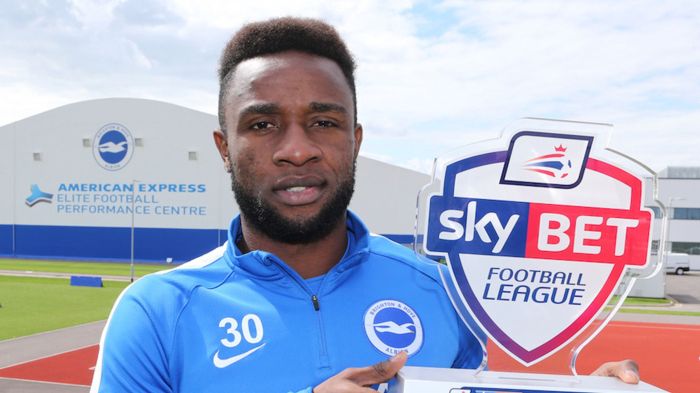
With 30 on his back, LuaLua scored four goals in the opening seven games and won the Championship Player of the Month award (above). Hughton was simultaneously Manager of the Month and said: “Kaz thoroughly deserves his award, he’s had a wonderful start. The area where he has excelled in his game is where he has got on the ball and provided an end product.”

Once again, though, injury brought the purple patch to an end. LuaLua sustained a groin injury in training that eventually needed surgery. Coach Nathan Jones told the Argus in December: “There is no real timescale on it because someone like Kazenga is so important to the squad and what we do. You can’t rush him and he is such a potent athlete, that’s the problem.”

Hughton also lost Solly March to injury that autumn but Rajiv van La Parra was brought in as a temporary solution. He already had Jamie Murphy as a wide option and then Anthony Knockaert and Jiri Skalak were added, so, by the time LuaLua had recovered, competition for places was intense.

The run-in to the end of the season saw him mainly in a watching brief from the bench, although he did play in successive matches in April – 2-1 wins away to Birmingham and Nottingham Forest.

LuaLua’s Albion days were clearly numbered as the 2016-17 season got under way. He started two League Cup games in August – the 4-0 win over Colchester United and the 4-2 victory over Oxford United, when he scored Albion’s second goal. But he only managed three league appearances as a substitute. By January, it was time for a change of scene, and he was sent on a half-season loan to QPR.

At least he got some games in Ian Holloway’s Championship side, appearing 11 times and scoring once. Having missed out on Albion’s promotion to the Premier League at the end of that season, it was no surprise that he returned on loan at Loftus Road at the start of the 2017-18 season.

However, he left west London at the beginning of December 2017, Rangers boss Holloway telling the Argus: “I don’t feel he was doing as well as some of my lads who I’ve brought here.

“Unless he rips it up and shows me – and he’s trying to – I think the loss of confidence and loss of his father has really hit him.”

In January 2018, LuaLua finally cut his ties with the Albion when he joined Chris Coleman’s Sunderland on a free transfer on a deal until the end of the season. By then 27, the winger told the Sunderland website: “I’m excited to be here and get back out on to the pitch because it’s been a long time without playing football.

“I know the North East well and I know Sunderland are one of the big clubs, not just in the North East but England, so I’m really excited to get started.”

An unfortunate turn of phrase because he didn’t start a game as Sunderland fell through the Championship trapdoor. He made just six substitute appearances.

Released at the end of that season, his former Brighton coach Jones revitalised what looked like a flagging career by signing him for promotion-chasing League One side Luton Town.

Jones told the club website: “He’s a fantastic talent. He has something that not many have, totally different from what we have here.

“He’s a quick, powerful, potent attacking player which is something that is in rare supply – and is something we felt we needed.

“The fact that we’ve been able to get him in and persuade him to come here is a good coup for us.”

And the player said: “I know Nathan from Brighton, and he’s a very good coach. He’s good at what he does, so it made it so easy for me to come in and train with the boys here.”

LuaLua spent three years at Kenilworth Road and clearly enjoyed a good relationship with their supporters. After he signed a new deal with the club following their promotion to the Championship, he told the club website: “The supporters have made me feel welcome since the moment I arrived here.

“When they get behind you, like they did since I have arrived, it gives you a massive buzz. It’s a really nice feeling. It was a really special season. I think they liked the way I play, they got behind me and I really appreciated it.”

Once again, though, his involvement was more as a substitute than a starter (37 starts plus 50 appearances off the bench) and when his contract came to an end in the summer of 2021, he decided to continue his career in Turkey, once again following in the footsteps of brother Lomana, who played for a number of Turkish clubs.

Kazenga signed a two-year deal with second tier side Gençlerbirliği in Ankara and, in November 2021, Argus reporter Brian Owen caught up with him.

“It was the right time for me to move on with my football career,” he said. “I always wanted to go abroad before I stopped playing football.

“Before signing, I was worried. I’ve never played abroad before. But it has been good. There’s a lot of boys here who speak English, including the manager, which helps a lot. I’m enjoying it.”

LuaLua then switched from Turkey to Greece and spent 18 months with Levadiakos before returning to the UK in March 2024 when Nathan Jones signed him for Charlton Athletic on a short-term deal, although he made just five substitute appearances for the League One side.

It was back to the north east for a third time in November 2024 when he signed for National League Hartlepool United under Brighton-born Lennie Lawrence, a former Luton and Charlton manager.

Binned off by Baggies, Mattock welcomed Seagulls chance

FOR A FEW seasons, it seemed Brighton’s left back spot would always be occupied by a player on loan.

In the second half of the 2011-12 season, it was Joe Mattock who slotted in there, having been edged out by a change of management at West Bromwich Albion.

“I am delighted to come and play where I am wanted and for a manager who feels I can do a job for him,” Mattock declared in a matchday programme.

Mattock made his debut as a substitute in Brighton’s 4 February 1-0 home win over his former club, Leicester City, and he subsequently made 14 starts after Gus Poyet borrowed him from the Baggies.

Mattock’s signing was largely to cover a long term hamstring injury to Marcos Painter after Romain Vincelot and Gus Poyet’s assistant, Mauricio Taricco, had been temporary stand-ins.

Mattock made his debut in Albion’s 2-1 win away to Leeds United on 11 February with fellow West Brom loanee Gonzalo Jara Reyes occupying the right-back spot.

Unfortunately, Albion only registered three more wins through to the end of the season, so it wasn’t a particularly successful period.

Mattock was on the scoresheet once, netting Albion’s only goal in a 3-1 defeat away to Blackpool, and the side finished 10th in the Championship.

Mattock was given a free transfer by the Baggies at the end of the season and, while Poyet viewed signing him permanently as an option, the defender went instead to Sheffield Wednesday, putting pen to paper on a three-year deal.

It would be something of an understatement to say he wasn’t missed, bearing in mind the next loanee left back through the door was Wayne Bridge!

Born in Leicester on 15 May 1990, Mattock was a successful graduate of his hometown club’s academy system, initially as a forward, then as a midfield player before settling as a left-back from the age of 16. He was named Leicester’s academy player of the year in 2006-07.

Leicester caretaker boss Nigel Worthington gave him his first team debut as a substitute in his first game in charge, a 2-1 Championship defeat to Norwich City.

He was chosen at left-back for three more matches at the end of that season, a 2-1 defeat at home to Birmingham and 1-0 wins away to Preston and Barnsley.

Current day BBC pundit Dion Dublin was something of a guiding light to him as he was progressing. “He was a good bloke who spoke to all the young players,” Mattock told the matchday programme. “He was playing centre-back at the time, so taught me a few things about how to defend and how to be a professional footballer.”

While the 2007-08 season saw a veritable merry-go-round of managers as the side eventually lost their Championship status, Mattock’s performances attracted attention and it was said West Ham and Aston Villa had bids to buy him rejected.

After gaining England under 17 and under 19 caps, Mattock went on to win five England under 21 caps, making his debut in a 2-0 home win over Bulgaria in November 2007 alongside the likes of Joe Hart, James Milner and Theo Walcott.

He also played in a 1-1 draw away to Portugal, a 3-0 win over Republic of Ireland, he went on as a sub in a 0-0 draw at home to Poland and his last international action saw him start in the 3-2 defeat away to Ecuador in February 2009.

Although he was selected for the squad, Kieran Gibbs and Ryan Bertrand subsequently got the nod ahead of him.

In August 2009, unsettled Mattock finally got to follow former teammate Richard Stearman away from the Foxes when West Brom, newly relegated from the Premiership, paid a £1m fee to take him to The Hawthorns.

The manner of his exit didn’t go down well with Leicester boss Nigel Pearson, who said: “I like to deal with people straight up. I don’t like it when the player rings the chairman when we are playing a pre-season game to ask to leave when he is out of the country on international duty.

“That gives you a taste of the situation and we’ll wait and see what happens.”

Mattock made 29 starts plus five substitute appearances in Roberto di Matteo’s side as the Baggies were promoted back to the Premier League in runners up spot.

But he didn’t feature in West Brom’s elite side and instead was sent out on loan to Sheffield United where he met up with another loanee from the Black Country, Sam Vokes, who was later on loan with him at the Albion.

Di Matteo’s eventual successor, Roy Hodgson, didn’t fancy the defender either and, before he moved to Brighton, he spent time on loan at Portsmouth who were managed by his former West Brom coach, Michael Appleton.

After choosing to join Wednesday, Mattock barely got a look-in during his first season, when Dave Jones was Owls boss, and supporters were convinced he would be shipped out.

But he was selected for around half of the 2013-14 season’s fixtures under Stuart Gray, and played in 25 games, plus three as a sub, the following season.

“I didn’t have a great start at Wednesday,” Mattock told the Rotherham Advertiser. “I didn’t get on with the manager.

“Then Stuart Gray came in and played me all the time. I was told they thought they were going to offer me a new deal, but I got injured six weeks before the end of my third year and it didn’t happen.”

In the summer of 2015, he was one of 11 Owls players released and the left-back made the short South Yorkshire journey to Rotherham United.

Being settled in the area, he was keen not to have to up sticks and he was persuaded to join by then boss Steve Evans.

Evans was soon on his way from the AESSEAL New York Stadium but Mattock remained and has subsequently played under Neil Warnock, Alan Stubbs, Kenny Jackett and Paul Warne.

He is now in his seventh season with the Millers and has played more than 200 games for them in the Championship and League One.

“I was promoted from League One with Leicester when I was 19. The year after, I was promoted to the Premier League with West Brom,” he told the Rotherham Advertiser.

“When you’re young you don’t realise how much it should mean to you. You do when you’re older, so when we went to Wembley last season (2017-18) and won in the play-off final (they beat Shrewsbury Town 2-1), in front of all the family, in front of all the fans, it was a perfect day, one of the big highlights of my entire career.”

Kiwi Chris Wood took off with the Seagulls

TWO former Chelsea teammates were instrumental in enabling fledgling Kiwi international striker Chris Wood to develop his goalscoring craft with the Seagulls.

Roberto di Matteo allowed Wood to leave West Brom on loan in the 2010-11 season to add attacking options to Gus Poyet’s promotion-seeking Seagulls.

It was a temporary move that not only bolstered Division 1 Brighton’s goalscoring threat that season but also sowed the seeds of a partnership with Ashley Barnes that Burnley have profited from in the Premier League.

The pair dovetailed well with Glenn Murray (during his first spell at the Albion) and it is testimony to just how good the third-tier trio were that they all went on to score goals at the highest level.

Wood, who only scored three times in 27 games for the Baggies, scored nine in 24 matches (plus seven as sub) for the Albion, who he joined after an expected 93-day loan stint with Barnsley had been cut short.

Described by The Argus as “a fresh-faced teenager in a man’s body”, towards the end of the season, Wood told Andy Naylor: “It has been a big experience. I have been playing week in and week out. That is something I needed to do at my age.

“You don’t know if you really want to drop down that many levels, but I thought I could start scoring some goals, kick on my season and hopefully push my career up. It’s worked out very well.”

He somewhat presciently added: “I want to play in the Premier League one day, hopefully consistently.”

While that time would still be a little way off, Wood’s role in Brighton’s promotion squad earned him a League One winners’ medal and Poyet reckoned he left the south coast a much better player than the one who arrived six months previously.

“We helped him a lot,” Poyet told The Argus. “When he was here, he was one type of player and, when he went back, he was in shape, he was quicker, more mature, he scored ten (sic) goals, he did well.”

Wood went on to become something of a nemesis for Brighton, often scoring against the club for various other sides he played for on loan or on a permanent basis.

After he scored twice against the Seagulls in December 2012 while on loan at Millwall, Poyet sang his praises to the media, declaring: “He is the kind of player we would like to bring in. He’s only 21 and I feel he will be a top, top player.

“When he was with us on loan, he was a baby but now he is maturing. He’s a man now.

“He’s clinical and brave and we have played a part in helping him on his way.”

Di Matteo’s successor at West Brom, Roy Hodgson, had also sent the young striker out on loan, the shorter distance to Midlands neighbours Birmingham City, during Chris Hughton’s tenure as manager. He scored 11 in 15 games (+ 14 as a sub) for the Blues before spending the second half of the 2011-12 season at Bristol City.

Next up was Millwall for the first half of the 2012-13 season but WBA curtailed that stay because they wanted to sell him, and he joined Leicester in a permanent deal.

At Leicester, Wood was mainly involved off the substitutes’ bench as Nigel Pearson’s Foxes won the Championship in 2014, but one of his most memorable goals was a stunning long-range volley against his future employers, Burnley, in a 2-0 win at Turf Moor. “That was a nice one,” he said. “It kind of clinched Leicester’s championship. It was a ‘make or break’ game for who was going to win the league that year.”

Wood found his chances of Premier League football stymied by the arrival of Leonardo Ulloa from Brighton and after only seven substitute appearances ended the season on loan at Ipswich Town. Before Leicester’s famous title-winning season was under way, Wood had moved on to Leeds for £3m.

Wood felt he wasn’t given a fair crack of the whip at the King Power Stadium, telling the Leicester Mercury: “I was disappointed that I didn’t get more of a chance.

“I did well and felt I deserved at least an opportunity with the way I had played. That’s football at the end of the day, managers make the decisions, you have to live by them and move on.

“I think that experience has made me into a better player. It helped me to adapt and do things in a different way. It helps you prepare mentally, to understand and control.

“Not everything is going to be rosy along the way in your career. You’ll always have your ups and downs and it’s about how you deal with the downs which helps you become so much better.

“I don’t like sitting in the stands. I just wanted to get out, play football and progress my career.”

Wood scored 27 goals in Leeds’ 2016-17 Championship season under Garry Monk but, after beating Brighton 2-0 on 18 March, they fluffed their lines in the run-in, winning only one of the remaining eight matches and missing out on the top six as Brighton went up with Newcastle. To rub salt in the Yorkshire wounds, Huddersfield were promoted via the play-offs.

Wood, though, had the chance finally to make it to the elite when Burnley dangled a £15m fee to take him to Turf Moor, where he was to be reunited with Barnes.

Explaining his decision to make the move, Wood told The Times: “It had been my dream since I was a kid to play in the Premier League.

“I had spent seven years in the Championship waiting to get that break and I couldn’t guarantee that I would get another chance.”

The success of the Wood-Barnes partnership was analysed in a 2019 article by Benedict O’Neill for planetfootball.com in which Murray harked back to the 2010-11 season.

“I was the older head when they came in as two young lads,” he said. “We forged quite a formidable trio. It was good because they were just young and learning their trade – they got valuable game time and scored plenty of goals in that season.

“They’ve both gone on to have fantastic careers.”

Wood ended the 2020-21 season as Burnley’s top goalscorer with 12 goals (his fourth consecutive season in double figures) and he also collected their Player of the Season and Players’ Player of the Season accolades.

After netting a hat-trick against Wolves in April 2021, Andy Jones, for The Athletic, purred: “Unstoppable, unplayable. This was Wood at his best.

“Burnley’s big No 9 epitomised all the key components of the display, setting the tempo, pressing with energy, intensity and importantly, intent. No ball was a lost cause, no pass was going to be easy for Wolves.”

Burnley boss Sean Dyche told the Burnley Express: “His hold up play is improving all the time, his physicality is improving – he can be a real handful as well as being a talented player.

“I’ve been very impressed with him over the season for sure.”

In January 2022, Wood made a £25m move to Newcastle United but after finding his first team starts limited moved on to Nottingham Forest a year later, initially on loan until the end of the season. The move was made permanent in the summer of 2023.

He was Forest’s top scorer with 15 goals in 35 appearances in the 2023-24 season and when he scored the winner in Forest’s 3-2 win over Manchester United at Old Trafford in December 2024, his header meant he became Forest’s record Premier League scorer, overtaking Bryan Roy, by moving to 25 in the competition.

Born in Auckland, New Zealand, on 7 December 1991, Wood swiftly showed great promise in his homeland before his coach over there, Roger Wilkinson, switched to West Brom and recommended the youngster be taken on at Albion’s academy.

Wood’s English mother, Julie, had been instrumental in him taking up football rather than the oval-shaped ball game Kiwis are more accustomed to.

“I came over and they liked what they saw and offered me a scholarship,” he told the Birmingham Mail.

After he proved successful at youth team and reserve level, Wood made his West Brom first-team debut in 2009 away to Portsmouth.

In the same year, he made his international debut and, aged just 18, was in the New Zealand squad at the 2010 World Cup in South Africa. He has gone on to play nearly 60 times for his country. He also became the youngest captain of New Zealand when he led the side for the first time in November 2014.

A goal by over-age Wood against South Korea helped New Zealand secure their first ever men’s football win at an Olympic Games in Tokyo but the host nation beat them in a penalty shoot-out to deny the striker the chance of a medal.

Saint Dean a sinner in some Albion fans’ eyes

HASTINGS-born Dean Hammond enjoyed two spells with the Albion having joined the club aged 11 and progressed from the school of excellence though the youth team and reserves to become a first team regular and captain of the side.

He also went on to captain Southampton as they rose from League One to the Premiership.

However, it’s a pretty surefire bet to say fans would be divided if asked to judge his contribution.

An over-the-top celebration in front of the Albion faithful after scoring for Southampton at Withdean made him public enemy number one in many people’s eyes.

The way he left the club under a cloud, suggesting they lacked ambition, was another catalyst for rancour.

Personally, I struggled with his penchant for missing some unbelievable, gilt-edged chances to score. There was one away at Leicester (one of his future employers) – a proverbial ‘easier to score than miss’ – that was particularly galling in a game that finished 0-0.

Putting all these things to one side, there is no denying that he ultimately enjoyed a decent career and, while his most successful years were spent in the second tier of English football, he also got to play at the highest level.

Albion have struggled for a good many years to bring through promising local talent from schoolboy level but Hammond was one of the few who made it.

Born a couple of months before Brighton’s 1983 FA Cup Final appearance, he made his Albion bow in December 2000 when former Saints full-back Micky Adams put him on as a substitute in a 2-0 Football League Trophy win over Cardiff, but it was only when former youth coach Martin Hinshelwood briefly held the first team manager’s role that he got his next chance.

That came as an 85th minute substitute for Nathan Jones in a 4-2 defeat at Gillingham in September 2002 and 10 days later he made his first start and scored his first Albion goal (celebrating below right) after only eight minutes in a 3-1 League Cup defeat to Ipswich.

When Hinshelwood was sacked, new boss Steve Coppell opted for experience over youth and Hammond’s next competitive action came during two spells out on loan in 2003 – at Aldershot (seven games) and Orient (eight games).

In an Argus interview in November 2006, Hammond said: “It’s been up and down for me at Brighton. I loved it when I came through the youth team and then broke into the first team at quite a young age.”

Hammond watched from the sidelines at the Millennium Stadium in May 2004 as the Albion won promotion to the Championship via play-off victory over Bristol City. A couple of months later, the Argus was reporting how he had been given three months to prove he had a future with the club.

He did enough in a handful of games to be offered a contract until the end of the season and, although he was mainly used from the bench between October and March, by the season’s end he was playing a pivotal role in helping to steer Albion clear of the drop zone, scoring the equaliser in a 1-1 draw away to Burnley and getting both goals in a vital 2-2 draw at home to West Ham.

Before the 2006-07 season got under way, manager Mark McGhee obviously felt players like Hammond needed toughening up and sent him and a few others to some boxing sessions with former world heavyweight title contender Scott Welch, from Shoreham, at his Hove gym.

Hammond told Andy Naylor of the Argus: “When the gaffer mentioned it, I think the boys were thinking ‘Boxing? How is that going to help us’. But he worked on the mental side, as well as the power and strength stuff.

“If we felt tired or felt we couldn’t go on, he was pushing us and he said it would help us in a game. I think he’s right. When we went back for pre-season training you tended to push yourself that bit more, so I think it will help in the long run.”

Unfortunately, it didn’t help enough because the season saw Albion relegated back to the third tier. It wasn’t long before former youth coach Dean Wilkins was installed as manager and youngsters were given a chance to flourish in the first team, with Hammond appointed captain.

“I would say it is the best time of my career and I am really enjoying it,” he told Naylor. “It’s brilliant at the moment.”

In the same interview, however, there were perhaps the first rumblings of his discontent with the progress of the club.

“I’ve been here since the age of 11. I’m like every other player. I’m ambitious and I want to do the best I can in my career and play as high as I can. Hopefully that will be with Brighton.”

A career-ending injury to Charlie Oatway and Richard Carpenter’s departure from the club in January 2007 led to Hammond taking over the captain’s armband and 2006-07 was undoubtedly his best Albion season. He finished with 11 goals from 39 appearances and the award of Player of the Season.

D Ham v W HamIt was in the 2007-08 season that it turned sour between player and club, even though before a ball had been kicked he told the Argus he thought Brighton had it in them to make the play-offs.

“We can beat anyone in the division. It’s just about being consistent. Realistically we can push for the play-offs,” he told Brian Owen.

Considering he had been at the club from such an early age, what happened next clearly rankled with chairman Dick Knight, who talked about it in his autobiography, Mad Man: From the Gutter to the Stars, the Ad Man who saved Brighton.

Knight accused Hammond’s agent, Tim Webb, of touting his client around Championship clubs while there was an offer on the table from the Albion that would have made him the highest paid player at the club.

“Hammond kept telling the local media that he wanted to stay and sign a contract, but I think he was being told to hold out for more money,” said Knight.

Because Hammond could have walked away from the club for nothing at the end of the season, the pressure was on to resolve the situation one way or another by the close of the January transfer window.
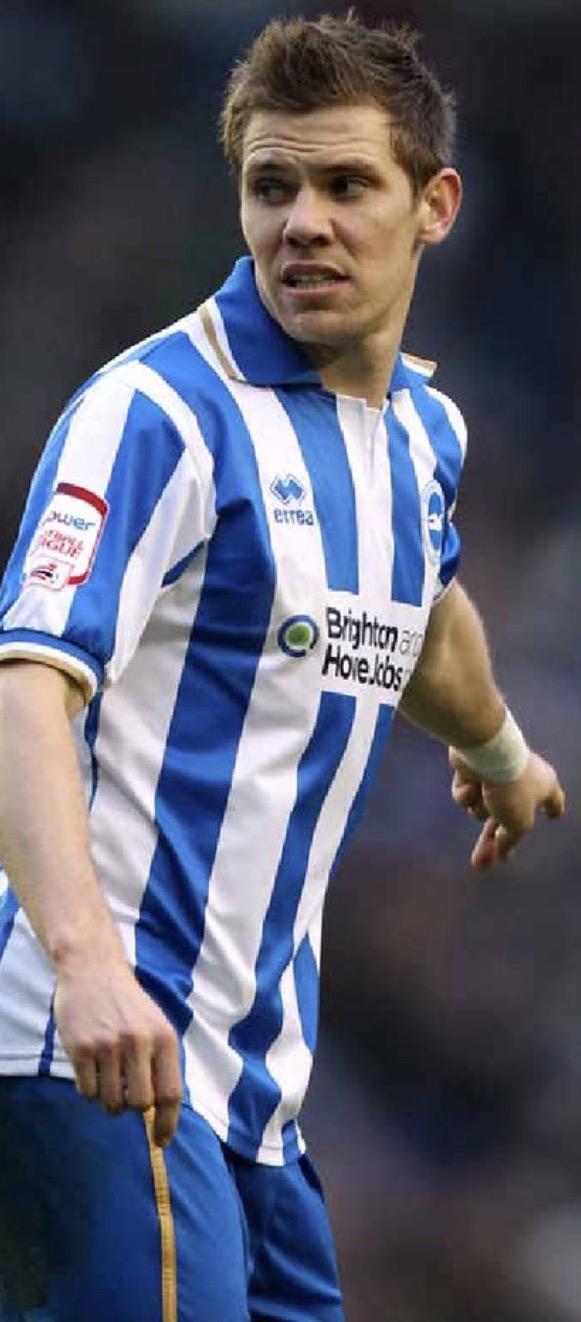
All the off-field stuff was clearly affecting Hammond’s head and I can remember a game at Oldham in the second week of January when he lunged into a reckless challenge after only nine minutes which certainly appeared to be a deliberate attempt to get himself sent off. That early dismissal was his last action for the Seagulls until his return to the club in 2012.

“I didn’t want to sell Dean but I was forced to,” said Knight, who persuaded Colchester United to buy him for £250,000, with a clause added in that Brighton would earn 20 per cent of any subsequent transfer involving the player. “In normal circumstances, I might have got more, but time was running out,” Knight added.

The move to Colchester wasn’t an unbridled success because his arrival couldn’t prevent them being relegated from the Championship, but, with Paul Lambert as manager, Hammond took over the captaincy in December 2008 and by the season’s end was voted Player of the Season.

Throughout the season there had been speculation that Southampton wanted to sign him and a deal duly went through in August 2009. At the time, Alan Pardew was the Saints manager and Hammond’s former Albion youth team coach and first team manager, Dean Wilkins, was Southampton first team coach, and played a part in him deciding to make the move. “His knowledge of the game and his passion for football is second to none and he was really good for Southampton – he had a good partnership there with Alan,” said Hammond.

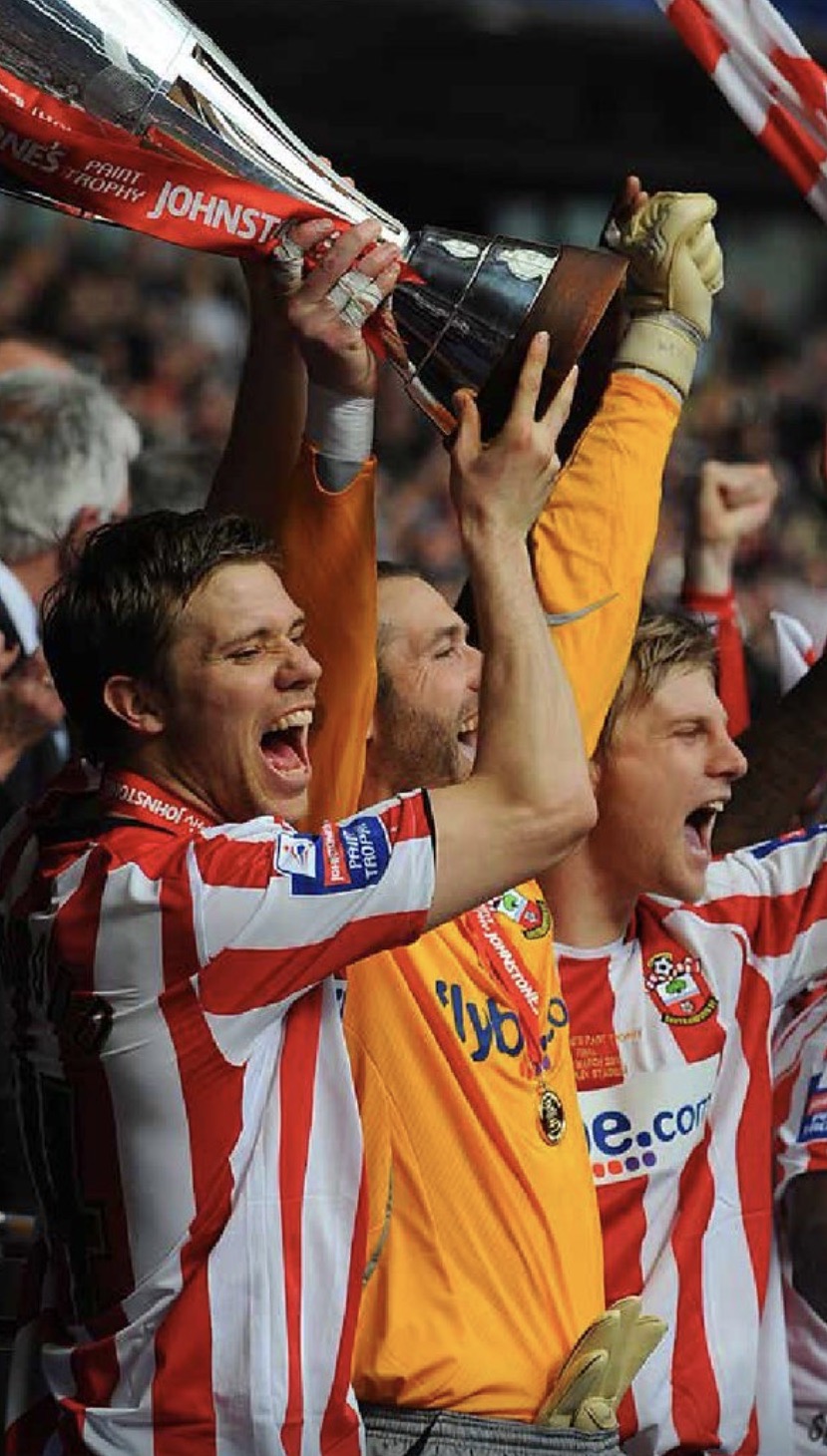
D hammo trophyAs had happened at his previous two clubs, it wasn’t long before Hammond was taking on the captaincy and he got to lift the Johnstone’s Paint Trophy at Wembley on 28 March 2010 (above) when Pardew’s team beat Carlisle United 4-1 – the first piece of silverware Saints had won since the 1976 FA Cup.
“I was really enjoying my football and it was like a new beginning for everyone connected with the club,” he said in an Albion matchday programme article. “Nicola Cortese came in off the field and a raft of new signings had been made, the likes of Rickie Lambert, Jason Puncheon, Lee Barnard, Radhi Jaidi, Dan Harding, Michail Antonio and Jose Fonte. When you add the likes of Morgan Schneiderlin and Adam Lallana, we had the makings of a really good team. It took us a little time to gel, but once we clicked we had a really good season.”

When Albion travelled to St Mary’s on 23 November 2010, the matchday programme inevitably featured their captain and former Seagull. It said: “Hammond was barely out of nappies when he first started supporting the Seagulls. He can even recall the days they played in front of 20,000 crowds at the old Goldstone Ground.

“The new Brighton stadium will hold just over 22,000 and the Saints midfielder said: ‘There’s no doubt they’ll fill it, certainly for their early games. That’s just about the size of their fan base and, if anyone deserved a bigger ground, it’s them’.”

Reflecting that he had certainly made the right career move, Hammond said: “I’ve developed as a player. I have a slightly deeper midfield role which means I pass the ball more and get involved in the game more.”

After two seasons in the third tier, Southampton famously finished runners up to Brighton in 2010-11 to regain their place in the Championship. Hammond was a regular throughout the 2011-12 season, although at times contributing from the bench, as Saints won promotion back to the Premier League, runners up behind Reading.

However, manager Nigel Adkins obviously didn’t see Hammond as top tier material and on transfer deadline day (31 August 2012) the midfielder agreed a season-long loan deal back at Brighton.

D Hammo 2By then 29, Hammond told the Argus: “It’s a different club now. The stadium is amazing and I can’t wait to get going.

“I saw the plans when I was 15 and it’s amazing to see it come to life. It will be a dream to play at this stadium as a Brighton player and I have been dreaming of that since a boy.”

Hammond made 33 appearances plus five as a sub during that season, alongside fellow loanees Wayne Bridge and Matt Upson, and said: “I loved my year back at the club. It was brilliant.

“I’d been sold the dream of the new stadium since I was 15 coming through the ranks, so to walk out of that tunnel for the first time as an Albion player was a fantastic feeling and one I’ll always cherish.”

Hammond reflected that the side did well to reach the play-offs but drew too many games. “We were only four points off automatic promotion and just didn’t do ourselves justice in that play-off game against Crystal Palace.

“Having drawn 0-0 at Selhurst Park, we really fancied finishing off the job at the Amex, but it just didn’t happen for us on the night. That has to rate as one of the biggest disappointments of my career.”

When manager Gus Poyet departed the Albion in the wake of the play-offs loss, Hammond returned to parent club Southampton, but, three months later he signed a two-year contract with Championship side Leicester City. Manager Nigel Pearson told the club’s website: “We’re really pleased to be able to add a player of Dean’s quality and experience to the squad.

“As well as having played a considerable number of games in his career, he also arrives with promotion credentials and will be a very positive influence on the squad both on and off the pitch.”

DHLCFC

Hammond added: “Once I knew of Leicester’s interest I wanted to come. My mind was made up. There was some interest from other clubs, but once Leicester was mentioned, and I spoke to the manager, I wanted to come here.

“It’s a massive football club. They came close last year in the play-offs and they’ve got a good history. It’s a club that’s going places and wants to push to the Premier League. It’s very exciting to be here.”

While facing midfield competition from Danny Drinkwater and Matty James, Hammond nevertheless played 29 games as Leicester were promoted and he finally got to play in the Premiership, albeit competition and injury restricted his number of appearances to 12.

Not all Saints fans felt it right that he had been abandoned as soon as the club reached the Premiership and, on the eve of his return to St Mary’s as a Leicester player, Saints’ fansnetwork.co.uk considered supporters might like to “thank him for his contribution to our resurgence in the game …. without Dean Hammond perhaps none of what they are enjoying in the Premier League would have been possible”.

Although Hammond earned a one-year extension to his contract in July 2015, he was not involved in the side that surprised the nation by winning the Premier League.

He had gone on loan to Sheffield United, then managed by his old Saints boss Adkins, and made 34 appearances for the Blades by the season’s end. However, he didn’t figure in new boss Chris Wilder’s plans and left the club in the summer of 2016.

Russell Slade gave him a trial at Coventry City in January 2017 but he didn’t get taken on and eventually he returned to Leicester to work with their under 23s. He later became loans manager for the Leicester City Academy.

Hammond opened up about his career, and some of the difficulties he’s faced since stopping playing, in an interview with James Rowe for The Secret Footballer.

  • Most photos from Argus cuttings; plus Southampton programme, Albion programme and Leicester City website.

Gary Lineker cleaned defender Larry May’s boots

larry may wednesINJURY cut short Larry May’s playing career at Brighton but, during a purple patch of his four-year spell at Barnsley, he impressed his peers to the extent he was in the 1986-87 PFA team of the year.
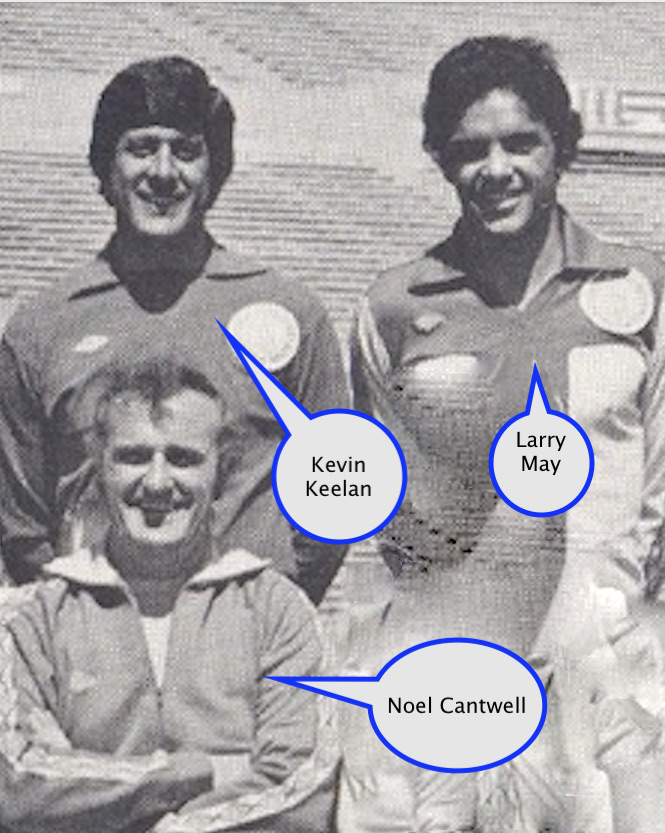
Alongside him in that selection were Lee Dixon, the ITV football pundit who in those days played for Stoke City prior to his move to Arsenal, and former Albion full back John Gregory, who was playing in midfield for Derby County at the time.

Centre back Larry began his career with Leicester City and played over 200 games for them between 1977 and 1983. When given a run in the first team by former Rangers manager Jock Wallace, Larry’s boots were looked after by none other than Gary Lineker: the Match of the Day host being a Filbert Street apprentice at the time.

Leicester’s club historian John Hutchinson – who said of May: “He was very strong in the air, a powerful tackler and had pace” – drove down to Brighton in 2015 to interview Larry about his time with the Foxes and published the story on foxestalk.co.uk.

Leicester had spotted him playing for a local youth team in Birmingham and invited him for a trial. Aged 17, he made his debut in the top division against Bristol City when one of his teammates was Frank Worthington, another who later played for the Albion.

In the following season, Jimmy Bloomfield, the manager who gave him his debut, departed and was replaced by Frank McLintock, who didn’t give May much of a look-in.

Screenshot
May played in front of ex-Norwich goalkeeper Kevin Keelan for the Tea Men

He went to play for New England Tea Men (a franchise owned by the Lipton tea company) in America under ex-Coventry manager Noel Cantwell to get some games but ruptured a cruciate ligament which some thought might end his career before it had even got off the ground.

Back at Leicester, McLintock was succeeded by Wallace and he paired May at the back with John O’Neill – a partnership that endured for the best part of five years.

In those early times, though, May admitted he had to play through pain and regularly ice his knee.

Not only was May ever-present in the 1979-80 side that won promotion from Division 2, he headed the only goal of the game at Leyton Orient on the last day of the season to clinch the title. Striker Alan Young, who played for Albion in the 1983-84 season, was another ever-present.

Leicester only survived a season in the top flight and following relegation Gordon Milne replaced Wallace as manager, guiding them to promotion in his first season. May, though, didn’t see eye to eye with the former Liverpool midfielder and ended up handing in a transfer request.

In an Albion matchday programme, May said: “”We fell out over something and nothing really but at 24 you think you know it all and there was no future for me once I’d asked for a transfer. “Thinking back, I realise that I should have got on with it.”

As it was, in August 1983 he dropped a division and joined Barnsley for a fee of £110,000, signed by the legendary former Leeds hard man, Norman Hunter.

larry may bw“For a man with a reputation of being one of the fiercest characters in football it was unbelievable – I’d say he was definitely the nicest fellow I’ve ever played for,” said May.
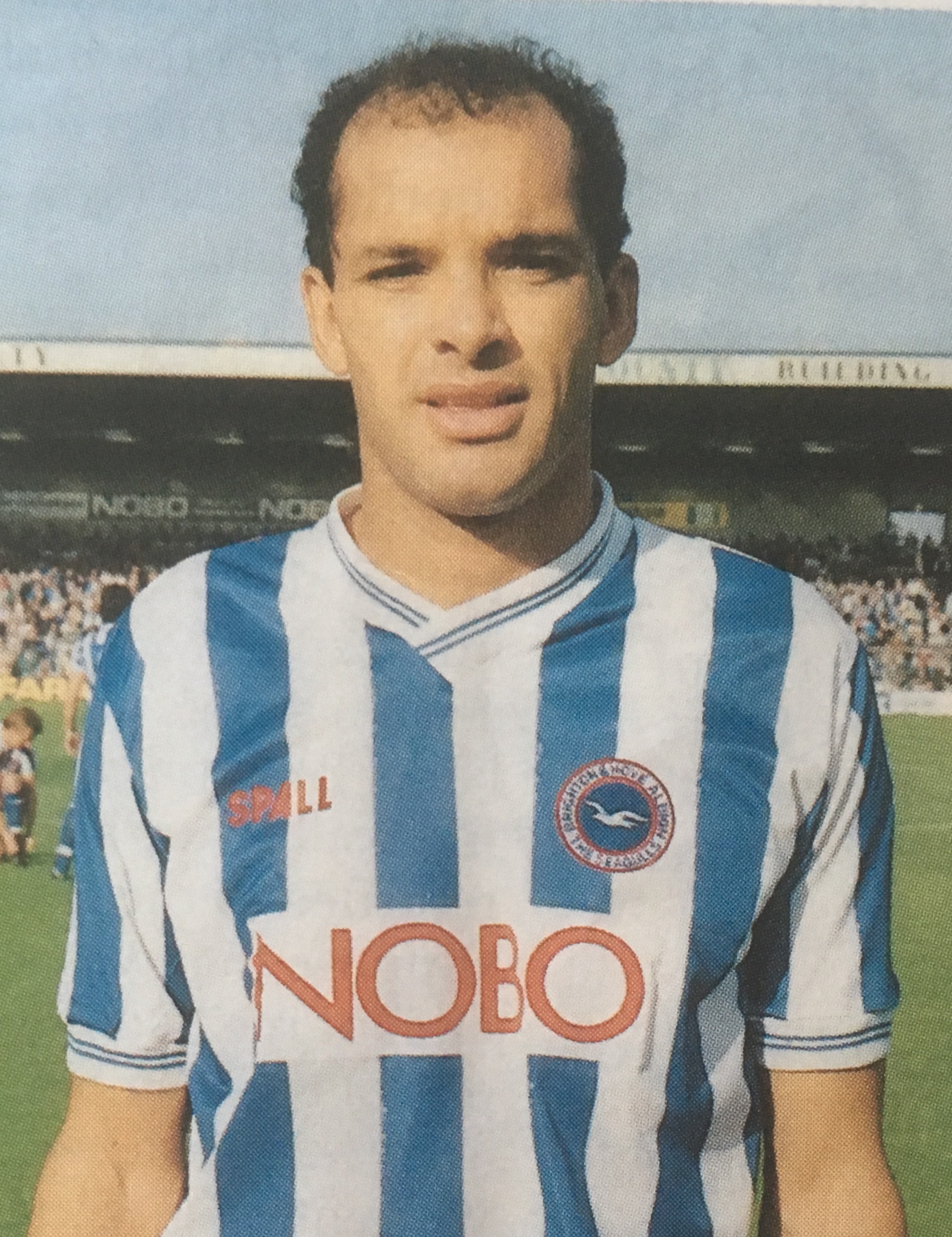
While on the books at Oakwell, with a nod towards a longer future in the game, May took his full FA coaching badge.

He told foxestalk.co.uk: “I was happy at Barnsley but, in retrospect, I should have bided my time and stayed at Leicester really. But I was a bit young and naïve. I loved it at Leicester. Leicester were the best club I ever played at. It was my best time in football and I loved it there.”

After three years with Barnsley, former Albion winger Howard Wilkinson took May to Sheffield Wednesday. He had just turned 28 and the move represented a step back up in standard.

“It was an important move at that stage in my career but looking back it was never brilliant for me at Hillsborough,” he said.

Amongst the competitors for his place was Nigel Pearson, later to be better known for some eccentricities in management with various clubs.

At the start of the 1988-89 season, a move south to Brighton was mooted but Wilkinson held onto him because of some early season injury problems. However, Barry Lloyd got his man towards the end of September 1988 and May joined Brighton for £200,000.

His debut in a 2-1 Goldstone win over Leeds brought to an end a run of eight defeats at the beginning of the season but it was back to losing ways – both 1-0 – in the following two games which, ironically, were against his former clubs, Barnsley, at home, and Leicester, away.

monoMay

The return fixture with Leicester was a happier outcome for May, though, because he was the sponsors’ man of the match in a 1-1 draw.

In his programme notes for the Barnsley game, manager Lloyd said: “I know he’ll have a big impact on the way we play….at 29, we know he has a lot of football left in him.”

Captain Steve Gatting had a programme column that season and he also welcomed the central defender, adding: “His experience in the top two divisions is bound to rub off onto some of younger players. When we’ve played against Larry in the past he’s tended to be the man of the match and I’m sure everyone at the Goldstone wishes him and his family every success.”

Understandable sentiments, of course, and such a shame that before the season’s end, after only 25 games, the cruciate ligament in his right knee was shattered in an accidental collision with teammate Paul Wood during a magnificent 2-1 home win over Man City.

“I knew straight away, having had knee trouble before, how serious it was,” he said. “It wasn’t Paul’s fault. It was just one of those things.” He was carried off on a stretcher and it was his last game for the club.

It was in the matchday programme for Albion’s game v Ipswich Town on 27 September 1989 that news of his forced retirement was announced.

“The sudden decision has stunned 30-year-old Larry and his family who were beginning to settle in the Brighton area after moving from Wakefield last year,” the announcement read. “In a 12-year career in the game, Larry has made more than 400 senior appearances, 364 in the league.”

A dejected May told the programme: “It hasn’t sunk in yet because I just don’t believe that I’m finished. I honestly thought that I could carry on playing at league level until I was 35. I’ve always been fit generally and never had a weight problem and this has really hit me.

“When the specialist told me that I shouldn’t play again my first reaction was that it had to be wrong. Now I’ve got to rethink and I’m not really sure about my future.”

Manager Lloyd added: “The announcement that Larry May had been forced to retire from playing was a particularly sad one. He performed very well for us last season and put heart and soul into everything around the club.”

Thankfully Larry was able to put that coaching badge to good use when Lloyd made him reserve team coach and, after a time working for the Surrey FA, he later returned to the club as Head of Sports Participation for Albion in the Community.

His links to the club also extended to his sons: Chris was a young goalkeeper who once had to replace the injured Michel Kuipers during a game and Steve was a centre-back who was in the youth set-up.

1-larrymaystripes2-argusmayintheface3-may-quits4-coach-may

Larry and his sons Steve (left) and Chris

Pictures include Larry May in matchday programmes; captured by an Evening Argus cameraman getting a hand in the face; the programme announcement of his retirement; in an Albion team line-up as a coach, and with his sons.