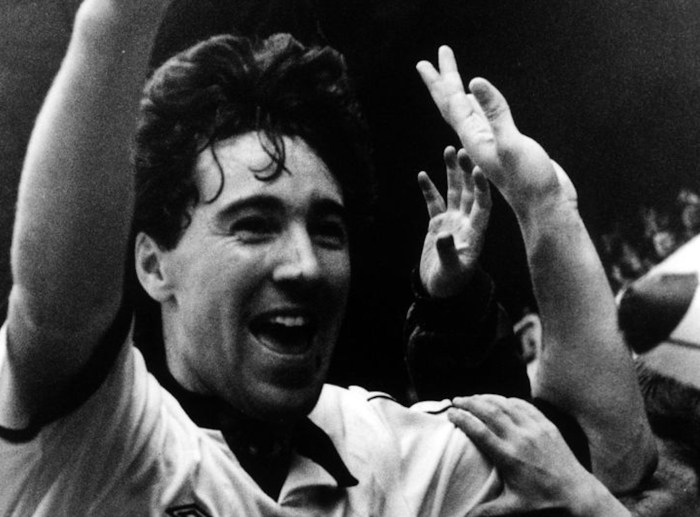
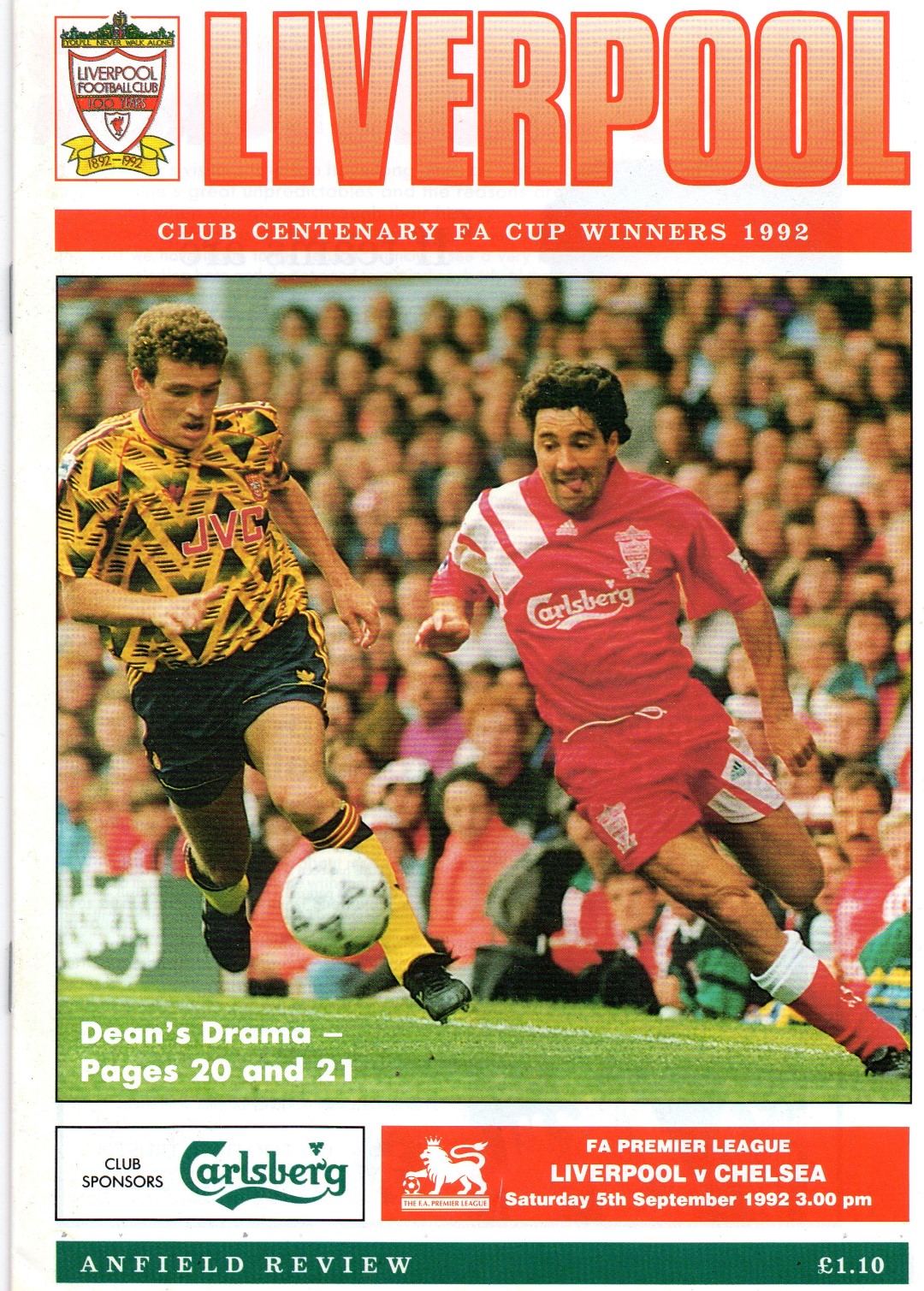
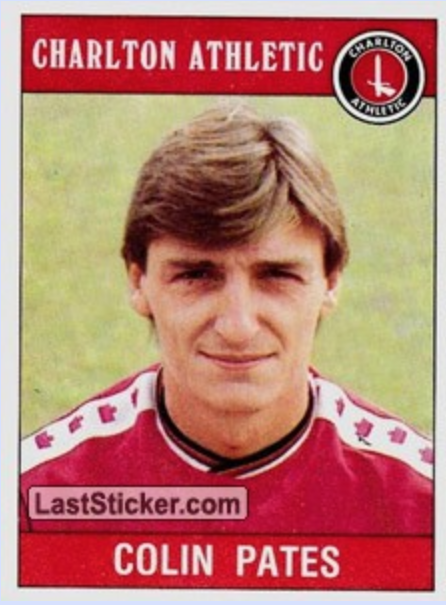
Ball-playing defender Colin Pates a captain at just 22

ENGLAND World Cup winning hat-trick hero Geoff Hurst gave Colin Pates his Chelsea debut as an 18-year-old – and what an extraordinary footballing baptism it was.

Replacing the injured Micky Droy for a visit across London in a second tier match against Orient, young Pates was involved in a madcap 10-goal match that saw Chelsea win 7-3.

“It was an amazing feeling to go out there but it was chaos, “ he told chelseafancast.com in a 2021 podcast.

And in another interview, he recalled: “It certainly wasn’t a good advertisement for defenders but as long as you come away with the win the fans are happy. It’s one of those days where you’re so fired up it just goes so quickly.

“You come off the pitch at the end and have no recollection of what happened really. I was up against some good, experienced pros and it was quite daunting, but I really enjoyed it.”

That game at Brisbane Road marked the start of a Chelsea first team career that spanned 346 matches, 137 of them as captain, in a turbulent period for the club.

Pates’ future Brighton teammates Gary Chivers and Clive Walker were also in that side at Orient and Walker scored two of Chelsea’s hatful (Lee Frost (3), Micky Fillery and Ian Britton the others).
Pates and Robert Codner celebrate reaching the Wembley final

Fast forward 12 years and Pates was reunited with Chivers and Walker when he joined Brighton on loan from Arsenal in February 1991 to help out after young Irish centre-back Paul McCarthy was sidelined by injury.

Manager Barry Lloyd pulled off something of a coup to persuade his old Chelsea teammate, George Graham, then manager of Arsenal, to loan Pates to the Seagulls for three months.

The Argus Albion reporter John Vinicombe described it as a “masterstroke” and doubted that Albion would have made it to the divisional play-off final at Wembley without him.

Match magazine pic of Pates at Wembley

Lloyd’s faithful no. 2, Martin Hinshelwood, said Pates got better and better over the three months, pointing out: “He has steadied us a little bit. He talks to players, he is a great trainer and he has brought a lot to our back four.”

The player himself told Luke Nicoli of the Albion website in a 2021 interview: “Although I was dropping down a division, it didn’t matter to me – I was just happy to be playing football.

“I immediately struck up a partnership at the back with Gary, and it was like the good old days at Chelsea again.

“I spent three months at the club and I loved every minute; I loved the area, the Goldstone, the club, the fans and, of course, we went all the way to Wembley that season in the play-offs – where the turnout from our fans in the final was incredible.

“We lost (3-1) to Notts County, which was one of those games where it just wasn’t meant to be.”

It has since emerged that Lloyd’s insistence on changing a successful formula by playing Romanian international Stefan Iovan as a sweeper in that match upset the players.

But Pates said: “I know we changed formation that day, and maybe that contributed to our defeat, but I didn’t look at it like that – it was just one of those games where it wasn’t meant to be.”

“We came with a fantastic late run in the league, but it proved to be a game too far for us,” he recalled in a matchday programme article. “We made a slow start to the game and that defeat still hurts, knowing what it meant to everyone connected with the club.”

In another interview, Pates said: “The result in the play-off final didn’t go our way but it was a fantastic experience for the team to play at Wembley, the side was so close to the Premiership, or First Division as it was called then.

“I’d been lucky to have played there before but to others it was the pinnacle of their careers.”

Indeed, the last time Pates had played there was five years previously when he made history by becoming the first-ever Chelsea player to lift a trophy – the Full Members Cup – at the iconic stadium (when Ron Harris lifted the FA Cup in 1970 it was at Old Trafford, where the replay had taken place after a 2-2 draw at Wembley). That was arguably the pinnacle of his career.

The Full Members Cup was a short-lived competition between North and South clubs from the top two divisions of the league, with the regional winners meeting in a national final. It was introduced after English clubs were banned from competing in Europe following the Heysel disaster. In truth, it struggled to be taken seriously and it was a surprise it lasted as long as seven seasons.

The most remarkable element of Chelsea’s win was that the game took place the day after they’d played a league game at Southampton – when Pates scored the only goal of the game with a deflected free kick past Peter Shilton in Southampton’s goal.

Chelsea beat Manchester City 5-4 but extraordinarily were cruising at 5-1 before City scored three in the last six minutes (one an 89th minute own goal by Doug Rougvie!).

“When the referee blew his whistle, was I relieved!” said Pates. “It’s great to play at Wembley with thousands of fans screaming their heads off, and once you’re on the pitch you don’t care what cup it is, you just want to win it.”

Born on 10 August 1961 in Wimbledon, Pates went to school only five miles from Stamford Bridge and was a Chelsea fan as a boy. He signed for the club aged 10, starting training with them in 1971, the year they won the European Cup Winners’ Cup having won the FA Cup the previous year. Pates worked his way through the different age levels and as an apprentice cleaned the boots of hardman defender Ron Harris.

He made that first team debut on 10 November 1979, by which time he had already played five times for England Youth that autumn. A further six appearances followed in 1980, alongside the likes of Micky Adams, Gary Mabbutt, Paul Walsh and Terry Gibson. Mark Barham, Steve Mackenzie and Terry Connor featured in the early 1980 games.   

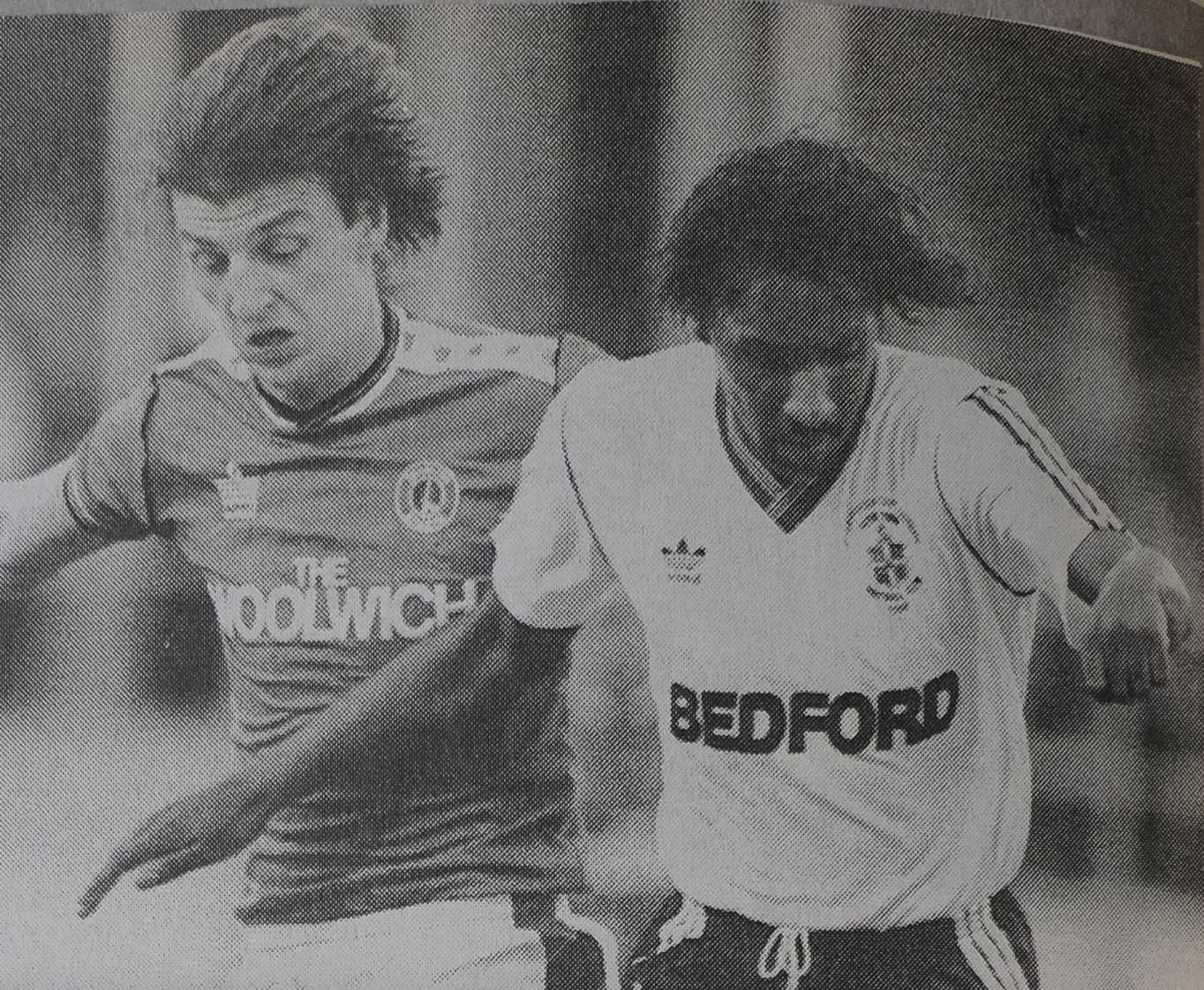
Pates in action for Chelsea against Albion’s Terry Connor, a former England Youth teammate

Simultaneously, Droy’s lack of fitness meant young Pates got an extended run in the side. However, because he was comfortable on the ball and could play in a number of positions, manager Hurst often used him as something of a utility player.

For example, in 1980-81, his 15 appearances were spread across all back four positions. But when John Neal took over for the 1981-82 season, Pates was ever present in the centre alongside Droy.

While the side’s league fortunes didn’t improve under the new man (they finished 12th), they had the consolation of reaching the quarter finals of the FA Cup after beating reigning European champions Liverpool 2-0 in the fifth round (Pates had the job of man-marking Graeme Souness).

Remarkably, Chelsea only narrowly avoided relegation to the old Third Division in 1983, and, as a result, manager Neal had a clear-out of the ‘old guard’ and Pates’ performances and attitude earned him the captain’s armband just before his 22nd birthday.

“I think he wanted someone who had come through the ranks and knew the club,” Pates said. “I was fortunate enough to be one of the few players – along with the likes of John Bumstead – who he kept on from before.”

Pates has nothing but praise for Neal and his assistant Ian McNeill (who played more than 100 games for Brighton between 1959 and 1962) and their eye for good players, like Pat Nevin, Joe McLaughlin, Nigel Spackman, David Speedie and Kerry Dixon, who were brought in to rebuild the club.

“I loved John Neal, he was a man of few words but when he said something you listened because it was going to be something poignant or important,” said Pates. “He was a good man-manager and would always take care of you if you had problems and be there for a chat. You wanted to play for him.”

Combined with the new arrivals, Pates and his pal Bumstead were part of a core of local lads Neal relied on (it included Dale Jasper, Chivers and Fillery): they all came from the same estate in Mitcham.

In his first season wearing the armband, “Pates stepped into the role with ease and led the team to the Second Division title” wrote Kelvin Barker.

“Colin’s classy displays in the top division catapulted him into the limelight, his impressive captaincy of a club on the up particularly catching the eye.

“A string of niggly injuries after Christmas led to him missing a handful of matches and his importance to the defence was highlighted when, in his absence, Chelsea slipped to consecutive defeats at Coventry and Ipswich.

“Pates made a total of 48 appearances during the 1984-85 campaign and scored once, the goal coming in a stunning 4-3 win at Goodison Park against the season’s champions, Everton.”

It had been a proud moment when Pates led Chelsea out at Highbury for the 1984-85 season-opener against Arsenal. The game finished 1-1, Paul Mariner opening the scoring for the Gunners on 35 minutes, Dixon equalising for the visitors four minutes later.

Chelsea made a decent fist of their return to the big time, finishing sixth. They also reached the semi-finals of the League Cup only to be knocked out over two legs by a Clive Walker-inspired Sunderland.

Chelsea did make it to Wembley the following year but it would be fair to say winning

that Full Members Cup final ultimately damaged their progress in the league. Chelsea were riding high in the top flight at the time and being spoken of as title contenders but immediately after that trophy win they were beaten 4-0 at home by West Ham on Easter Saturday and 6-0 by QPR at Loftus Road on Easter Monday.

Pates’ future Brighton teammate John Byrne scored twice for the Rs playing alongside Michael Robinson and Gary Bannister, who got a hat-trick. Substitute Leroy Rosenior (father of Liam) scored the other.

Byrne later remembered: “There were some big name players in the Chelsea line-up, including centre-back Doug Rougvie who seemed like he wanted to kill somebody when the score was 5-0! He was certainly looking for blood!

“We had the Milk Cup Final coming up and I remember saying to Banna with about 15 minutes to go ‘I ain’t going anywhere near Rougvie’. And Gary replied: ‘Neither am I!’ So we both ended up playing on the wings with no one in the middle!”

Pates and Doug Rougvie both played for Chelsea and Brighton

There was talk that Pates might force his way into the England squad for the Mexico World Cup that summer but Terry Butcher, Alvin Martin and Terry Fenwick were ahead of him.

Competition at club level emerged at the start of the following season when centre-half Steve Wicks was recruited and Pates was moved to left-back. However, injuries to Wicks meant Pates was soon back in the middle.

In his sporting-heroes.net piece, Barker continued: “As Chelsea’s farcical season went from bad to worse, he found himself being played in midfield again. With the Blues looking down the barrel of a drop into Division Two, Colin was returned to the centre of defence and relegation was averted.”

An injury-disrupted 1987-88 season also saw Pates have the captaincy taken off him and given to fellow defender Joe McLaughlin. Pates actually missed the start of the season having had a cartilage operation and when he returned in October the team were on something of a downward spiral. Injured again at the end of March, by the time he was fit to return, Chelsea were heading close to the relegation trapdoor.

At the time, as part of a restructuring plan to reduce the top division’s number of teams from 22 to 20, the team finishing fourth bottom of Division One had to play-off against the third, fourth and fifth-placed teams in Division Two. The top two in Division Two were promoted automatically and the bottom three in Division One went down.

Chelsea ended up fourth from bottom and had to play Middlesbrough (who’d finished third in Division Two) over two legs.

Boro won the first leg at Ayresome Park 2-0 but Chelsea only won their home leg 1-0, so they were relegated. However, history has since remembered the match more for the riotous behaviour of Chelsea supporters.

gazettelive.co.uk recalled: “There was trouble before, during and after the high-stakes game. Chelsea fans invaded the pitch on the whistle and stormed the away end sparking hand to hand fighting with barely a steward in sight.

“And it was only the intervention of mounted police that eventually cleared the pitch. The trouble didn’t stop there with more attacks outside the ground as Boro fans returned to their cars, coaches and the tube.”

Boro striker Bernie Slaven remembered: “We were locked in the dressing room celebrating promotion for maybe an hour while the police dealt with the trouble and cleared the pitch then we went out and celebrated again with the Boro fans who had been kept back in the stadium.

“The trouble and the ugly atmosphere was a real shame because it took all the headlines away from what we had achieved.”

John Hollins resigned as manager and was replaced by Bobby Campbell. One of his first moves was to sign the powerful central defender Graham Roberts who he made captain.

Pates was given a testimonial as part of the pre-season friendly fixtures (a 0-0 draw with Spurs) but the season was only three months old when he suddenly found himself unwanted at the Bridge.

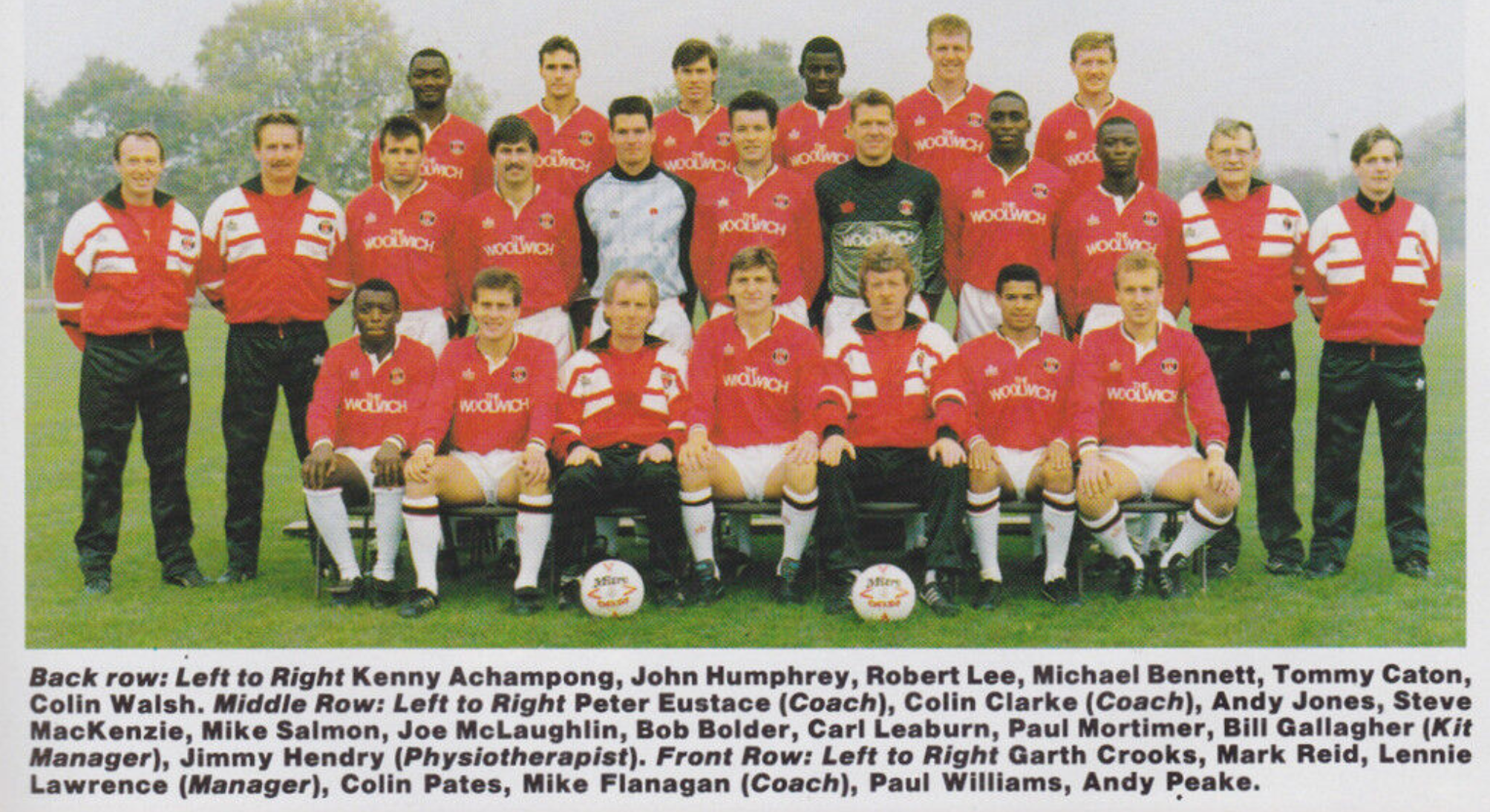
As Pates returned to the dressing room at the end of a 2-2 Littlewoods Cup home draw with Scunthorpe United, Campbell informed him Charlton Athletic manager Lennie Lawrence was upstairs waiting to sign him, the club having already agreed terms over the transfer (a £400,000 fee).

“It came right out of the blue,” said Pates. “At first, I was taken aback. I have been at Stamford Bridge since I was a schoolkid. Chelsea has become a way of life.”
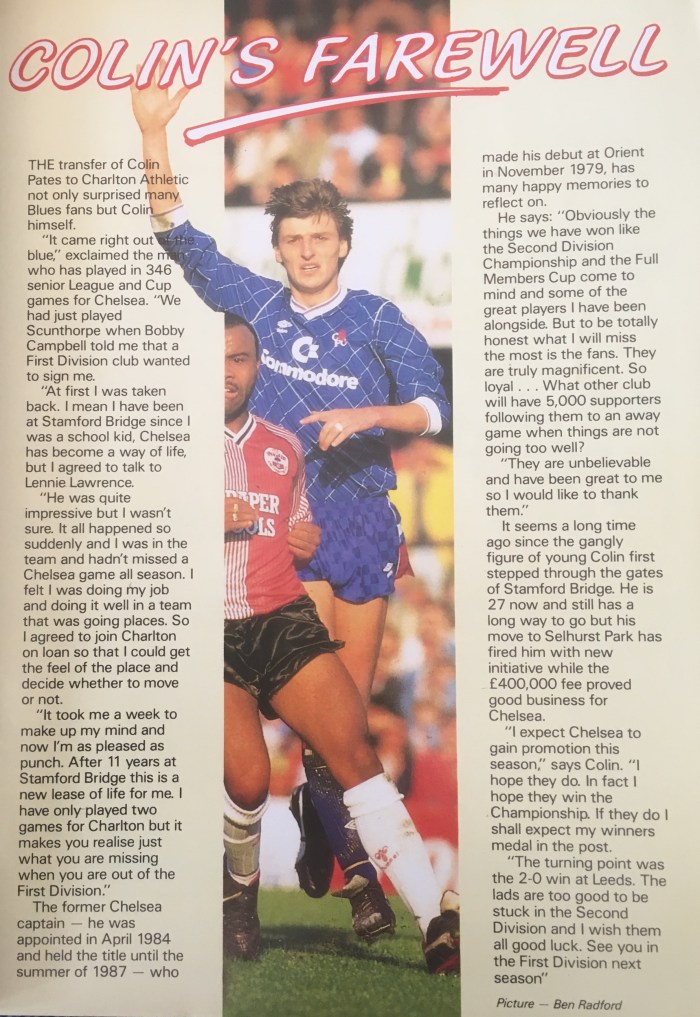
When the Albion visited Chelsea for a Division 2 league game on 29 October 1988, the matchday programme carried an article headlined ‘Colin’s farewell’, detailing the circumstances.

“The transfer of Colin Pates to Charlton Athletic not only surprised many Blues fans but Colin himself,” it began.

And reflecting on what happened many years later, Pates told Luke Nicoli: “I was allowed to leave and did so with a heavy heart as I wanted to stay.”
Nevertheless, the move at least presented the defender with the chance to return to playing in the top division, and he admitted: “After 11 years at Stamford Bridge, this is a new lease of life for me.”

Charlton, who had to play home matches at Crystal Palace’s Selhurst Park at the time, finished 14th by the end of that 1988-89 season, but Pates had left for Arsenal by the time the Addicks were relegated in 19th place at the end of the following season.

Despite those moves across London, and to the south coast, Chelsea hadn’t seen the last of Pates, though. He subsequently became head of football at the independent Whitgift School in South Croydon, where he coached most sports and was the first football coach in what had previously been a rugby-dominated school and pupils Victor Moses and Callum Hudson-Odoi both went on to play for the Blues.

Pates was also seen back at the Bridge on matchdays working in the hospitality lounges.

Ex-Blade Slade edged Albion to safety before the axe fell

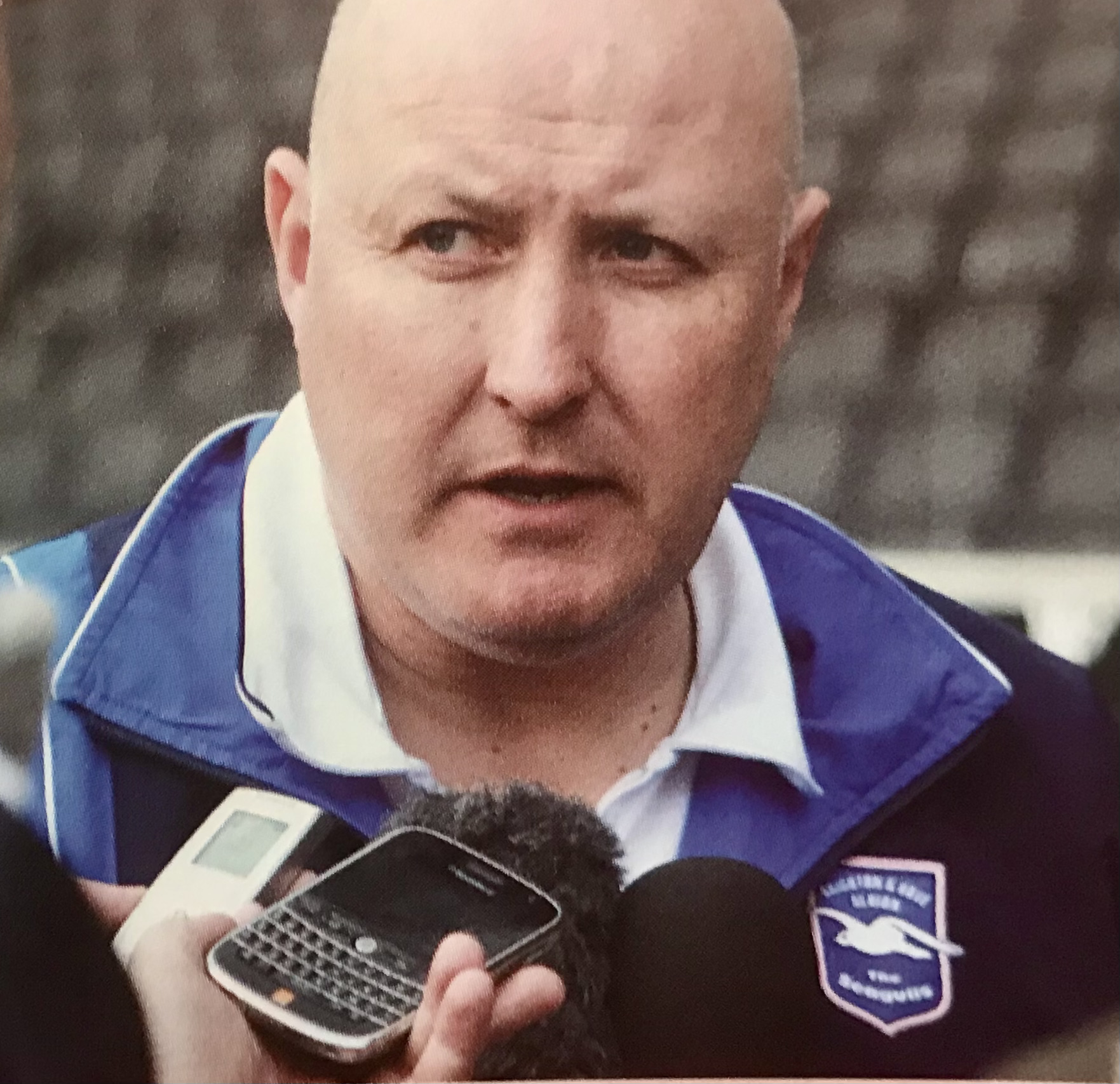
RUSSELL SLADE had an eye for picking up footballing gems for nothing and he worked an unlikely miracle to spare relegation-bound Albion from the drop.

The one-time PE teacher who never played professional football himself was only Brighton manager for eight months but keeping them in League One in an end-of-season nailbiter was a much-lauded achievement.

He did it with some astute forays into the loan market and snapping up free agent Lloyd Owusu who made a crucial contribution to Albion’s injury-hit misfiring forward line.

Some years earlier, when youth team manager at Sheffield United, Slade famously picked up three young players – Phil Jagielka, Nick Montgomery and Michael Tonge – discarded by other clubs who went on to become Blades stalwarts.

At Brighton, his summer re-shaping of the squad he inherited put down the foundations on which his successor Gus Poyet was able to build a successful side capable of promotion.

In particular, Slade took great pride in bringing Andrew Crofts to the Albion on a free transfer from Gillingham, the club later selling him on to Norwich City for what was believed to be £300,000.

Slade signing Elliott Bennett, bought from Wolverhampton Wanderers for £200,000, was later sold to the Canaries for a fee believed to be £1.5million.

“The majority of my player signings went on to play crucial roles in this promotion season,” Slade asserts on his LinkedIn profile. “During my closed season I began what proved to be an extremely successful transitional period.”

If Slade had failed to keep Albion up at the end of that 2008-09 season, it is doubtful Poyet would have been drawn to the task of lifting the side through the leagues and possibly there would have been a longer wait to see Championship football at the Amex.

Slade’s tenure at the Albion may well have been longer if Tony Bloom hadn’t taken over control of the club from Dick Knight, who was chairman at the time Slade was brought in to replace Micky Adams.

Adams reckoned he was a victim of the power struggle between the two and it seems clear that Bloom wanted to install his own man once he was fully in the driving seat of the club.

Although Slade’s achievement in keeping Albion up was rewarded with a permanent two-year deal in the summer of 2009, the new season got off to a terrible start with no wins in the first six games, one of which saw Albion on the wrong end of a 7-1 thumping at Huddersfield.

Time was up for Slade after rocky start to the season

With only three wins and three draws in the next 10 games, after a 3-3 home draw against Hartlepool at the end of October, Slade was sacked with the side only out of the relegation zone on goal difference.

Bloom said: “It is not a decision we have taken lightly and one taken with a heavy heart. Russell is a good man – which made it an even harder decision to take – but it is one which has been made in the club’s best interests.

“Like all Albion fans, I am extremely grateful for Russell’s achievements at the end of last season, as he kept us in League One against the odds.”

When he reflected on his tenure in the Albion book Match of My Life, Slade explained: “Despite the club’s perilous position, I felt it was a great opportunity. I signed on a short-term deal, with the incentive to keep the club in the division.

“I inherited a huge squad but it was decimated by injuries and many of the players were loan signings or youngsters, but, in spite of that, I still thought there was enough within the squad to keep Brighton up.”

With 14 games to save the club from the drop, the first two ended in defeats but when Slade’s previous employer Yeovil Town were thumped 5-0 at the Withdean, there was cause for optimism.

A 3-2 Withdean win for Swindon, for whom Gordon Greer and Billy Paynter scored, threatened Brighton’s survival but it turned out to be the only defeat in the last seven games.

Albion memorably lifted themselves out of the relegation zone three games from the end of the season when they won 2-1 at Bristol Rovers, long-serving Gary Hart teeing up goals for Owusu and Palace loanee Calvin Andrew. Both players were also on target to earn a point in a 2-2 draw at Huddersfield.

After safety was secured in the last game of the season courtesy of barely-fit substitute Nicky Forster’s goal against Stockport, fans invaded the pitch and Slade was carried shoulder high by the Albion faithful.

“My hat got nicked and my head scratched, but it didn’t really matter,” he said. “When I finally got back to the office, I sat there with Bob Booker and Dean White and was absolutely exhausted – both emotionally and physically.”

Born in Wokingham on 10 October 1960, Slade’s route into professional football didn’t follow the traditional path.

“At 18 I had a chance to go to Notts County but I got into university so I went away to get a degree in sport instead,” he said. After completing his degree over four years at Edge Hill University in Ormskirk, Lancashire, he became a PE teacher at Frank Wheldon Comprehensive School in Nottingham (it later became Carlton Academy).

“My experiences helped me be more prepared and organised,” he explained. “I took numerous coaching courses and it allows you to be really open minded and dealing with different situations.

“I had qualifications to be a coach in swimming, athletics, badminton, basketball, cricket and tennis. It not only broadens your horizons but allows you to look at things in different ways.”

While he was qualifying as a teacher, he joined Notts County as a non-contract amateur player, appearing in their reserves and manager Neil Warnock appointed him an assistant youth coach under youth team head coach Mick Walker.

When Warnock was sacked in January 1993, County were bottom of football’s second tier (having been relegated from the top flight in the final season before the Premier League started), and Walker and Slade took charge of the first team, keeping them up with three points to spare.

The pair almost took County to the play-offs the following season, only missing out by three points, and also reached the final of the Anglo-Italian Cup, where they lost 1-0 to Brescia at Wembley.

After only one win at the start of the 1994-95 season, Walker was sacked in September and Slade took over as caretaker manager.

After managing only six wins and five draws in 23 matches, Slade reverted to assistant when ex-Everton boss Howard Kendall was appointed manager.

Kendall only lasted three months at Meadow Lane and Slade left the club at the same time but he later acknowledged how much he had learned from Kendall, Warnock and Jimmy Sirrel (an ex-Albion player who was a Notts County legend as manager and general manager).

“I’ve had a good upbringing,” he said. “The one for player management and for talking to players was Howard Kendall, without a doubt.

“He was terrific – had something about him. He had that X factor and you would listen to Howard – and when he coached you took it on board as well.”

Slade told walesonline.co.uk: “Working with Howard was massive because of his man management and his ability to give a football club direction.

“Neil was the big motivator out of all the coaches and managers I have worked with over the years.

“He took County into the top flight and his best work came at 10 minutes to three. He was exceptional, able to get every last drop of effort and energy from his team.”

Slade dropped into non-league football as manager of Southern League Midland Division Armitage but when they finished bottom of the division and then went into liquidation, Slade followed the chairman Sid Osborn to his new club, Leicester United.

That side finished 16th in the Southern League Midland Division, but they too went out of business in August 1996.

Kendall, in charge of Sheffield United, recruited Slade as youth team coach at Bramall Lane and even tried to take him with him when he returned to Everton in June 1997, but Blades demanded a compensation payment the Toffees weren’t prepared to pay.

Kendall said some while later: “I wanted Russell, who I knew from Notts County, to come and coach my kids. He was at Sheffield United at the time, and they didn’t want to lose him. He’s a talented coach who would have been a popular figure at Goodison.”

Slade remained in Sheffield and, in an interview with The Guardian in October 2013, recalled: “My best three spots were when I was at Sheffield United [in 1998].

“At the time I was doing a lot of work on released players because we needed to strengthen our youth squad and in one evening I took Phil Jagielka, Nick Montgomery and Michael Tonge – all for nothing.”

Montgomery made just short of 400 appearances for United and Tonge and Jagielka both played more than 300 games for the club. Jagielka became one of the best defenders in the top flight (at Everton) and won 40 England international caps.

“That was my best night’s work ever,” said Slade. “You don’t half get a buzz when you see those. When we played Everton in the [Capital One] Cup last season Phil gave me a signed shirt with ‘Thanks very much, Russ’ written on it.”

It was in March 1998 that Slade found himself in caretaker charge of the United first team after the departure of Nigel Spackman, overseeing a draw and a defeat, and he also stepped in for two games in November 1999 when Adrian Heath left the club, again overseeing a draw and a defeat before Warnock arrived at Bramall Lane.

It was at Scarborough where Slade landed his first full-time job as a league manager in his own right. During a three-year spell, he helped rescue the club from relegation, resigned when they went into administration but withdrew it when a fans petition urged him to stay.

A highlight was guiding the side on an excellent FA Cup run, when they memorably played Premier League Chelsea in a televised home tie. The Seadogs were only defeated 1-0 by a Chelsea side that included a young Alexis Nicolas in their line-up.

Next up for Slade was the first of two spells as manager of Grimsby Town. Supporters were calling for his head when they only managed a mid-table finish in the 2004-05 season, but an upturn the following season saw them flirt with automatic promotion and have a good run in the League Cup, beating Derby County and Tottenham.

Slade’s Mariners beat a Spurs side that included Jermaine Jenas, Michael Carrick, Robbie Keane and Jermaine Defoe 1-0. In the next round they went down 1-0 at home to a Newcastle United side managed by Graeme Souness, a goal from Alan Shearer sealing it for the visitors.

Grimsby slipped into the play-offs on the last day of the season and beat local rivals Lincoln City in the semi-finals to reach the play-off final at the Millennium Stadium.

But they missed out on promotion when Cheltenham Town edged the tie 1-0, and Slade was on his way.

He might not have reached League One with Grimsby but he was taken on by Yeovil Town on a three-year contract, declaring when appointed: “It is a fantastic opportunity for me as I think Yeovil are a very progressive club. They are going through a period of transition and I am really looking forward to the challenges that are ahead.”

Slade once again found himself a play-off final loser when the Glovers, captained by Nathan Jones, lost 2-0 to Blackpool in the 2007 League One end-of-season decider at Wembley.

It was a heartbreaking finish especially after Yeovil pulled off one of the most remarkable comebacks in the history of play-off football by coming from 2-0 down to beat Nottingham Forest 5-4 on aggregate in the semi-finals.

“Russell Slade’s side gained many plaudits for an impressive campaign in which they almost went up despite being one of the pre-season favourites for relegation,” said somersetlive.co.uk.

Small consolation for Slade was to receive the League One Manager of the Year award, but disappointment followed in 2007-08 when they won only four games in the second half of the season to leave them only four points clear of relegation.

When things didn’t improve in 2008-09, a frustrated Slade reportedly fell out with Yeovil  chairman John Fry over a lack of transfer funds and he left Huish Park by mutual consent in February 2009.

The vacancy at the Albion was almost tailor-made for Slade, and chairman Dick Knight admitted he had spoken with the aforementioned former Seagull, Nathan Jones, about the managerial candidate.

“I had a long chat with Nathan and he told me some good stuff,” Knight told the Argus. “It was a very honest appraisal and I took that into account.

“When I met with Russell initially he impressed me greatly. His CV speaks for itself and his confidence and tactical shrewdness were obvious when I interviewed him.

“He has delivered at this level. He has an extremely competent track record at clubs who have punched above their weight, like Grimsby and Yeovil.

“His players like him. He will convey confidence to our squad and give them a lift.”

Stockport chief Jim Gannon had turned down the job and former England international Paul Ince didn’t even want to hold talks.

“The quality of applications was tremendous, even up to the last minute, from the top of the top league in Romania to one from Portugal which was very interesting but not appropriate at this time,” said Knight.

“By handing the mantle to Russell at this stage, the club is in good hands to address the task right now of staying in League One. We have got a very good and capable man.”

The rest, as they say, is history and, to borrow another familiar phrase, it was a case of not keeping a good man down after his departure from the Seagulls.

It wasn’t long before Barry Hearn, the sports promoter owner of Leyton Orient, was hiring Slade to try to improve the fortunes of the East London minnows.

It turned out to be a great move because Orient was where Slade had his longest ever spell as a manager, presiding over 241 matches with a 42 per cent win ratio.

Amongst the players he recruited were two who had played under him at Brighton: Andrew Whing and Dean Cox. Ex-Seagull from another era, Alex Revell, also joined and a certain Harry Kane took his first steps into competitive football on loan from Spurs on Slade’s watch.

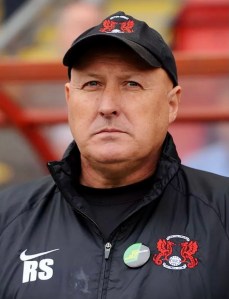
The manager’s trademark baseball cap that he could be seen wearing at each of the clubs he served even had its own sponsor at Orient. City of London tax advisory firm Westleton Drake put their logo on the headwear.

Slade repeated the magic touch he’d shown at Brighton to keep Orient in League One and in his first full season in charge took them to seventh place, only missing out on the play-offs by one place.

Along the way was a memorable fifth round FA Cup tie with Arsenal, forcing a 1-1 draw at home before succumbing 5-0 at the Emirates.

There was certainly no questioning Slade’s commitment to the Os’ cause, as Simon Johnson, writing for the Evening Standard on 23 September 2010, observed: “His wife Lisa and four children are living more than 200 miles away in Scarborough, meaning he is all alone most evenings to worry about the side’s plight.”

Slade lived in one of the flats next to the stadium and told Johnson: “Most people get the chance to get away from the office if they have a bad day, but I wouldn’t want it any other way.

“I come back from training and work in the office for a few hours and then go to my flat. I love my job and enjoy the fact my finger is on the pulse and I’m right on top of things.”

When Sheffield United sacked manager David Weir (later to become Albion’s director of football) in October 2013, there was speculation Slade might be in the running for the job, but the out of work Nigel Clough was appointed.

The following Spring, Slade once again found himself in charge of a team in the final of the League One play-offs. Although Orient drew 2-2 with Rotherham United, they missed their last two penalties in the shoot-out to decide the winner and once again he left Wembley disappointed. His only consolation was once again being named League One Manager of the Year.

Even though the club narrowly missed out on the step up to the Championship, Slade himself made it shortly into the new season. After a change of ownership at Orient, Slade resigned and was appointed manager at Cardiff City in October 2014, succeeding Ole Gunnar Solskjaer.

History records Slade’s reign being heavily hampered by a lack of finance and being forced to cut the wage bill significantly and cancelling the contracts of several highly paid players. There was even an embargo on new signings during his second season.

The Bluebirds finished mid-table in his first season and then missed out on the play-offs the following season, losing 3-0 at Sheffield Wednesday in the penultimate game of the season to dash hopes of a top six finish.

Slade was removed from his post to be replaced by his head coach Paul Trollope (later Albion assistant manager to Chris Hughton) but was retained as Head of Football.

Slade decided it wasn’t for him and switched to a more familiar dugout job at Charlton Athletic.

Given a three-year contract by unpopular owner Roland Duchatelet, Slade lasted just 16 matches before he was sacked, although a club statement said: “The club would like to thank Russell for his tireless work during his time at The Valley, particularly the processes and disciplines he has instilled at the training ground.”

He wasn’t out of work for long, though, because Coventry City, sitting 21st in League One and enduring their worst run of results for 43 years, appointed him.

On the wrong end of a 4-1 defeat at Bristol Rovers in his opening match, on Boxing Day, he oversaw just three wins in 16 games and was sacked on 5 March.

In circumstances similar to the atmosphere at The Valley, Sky Blues fans were in dispute with the club’s owners, and the Ricoh Stadium was empty week after week.

Surprisingly, he guided the club to a Checkatrade Trophy final – Coventry later won the competition in front of more than 40,000 of their supporters at Wembley – but by then Slade had been sacked, having equalled the record for the most games (nine) without a win for a City manager before winning at the tenth attempt.

Andy Turner, writing for the Coventry Evening Telegraph, pulled no punches when he said: “Russell Slade will go down in Coventry City history as arguably the worst manager to have taken charge of the club.”

Slade’s take on it was: “It was not a good decision for me to go there, I didn’t do my homework enough before going there.”

Once again, though, Slade was back in work just over a month later when he returned to one of his former clubs, Grimsby Town.

Succeeding Marcus Bignot, Slade took charge with Grimsby 14th in League Two and they won two and drew another of their remaining five matches to stay in that position by the season’s end.

After making an encouraging enough start to the 2017-18 season, the side’s form dipped badly over the festive period, and with no wins on the board the club sank like a stone towards a relegation battle. Slade was sacked after a run of 12 games without a win, including eight defeats.

There was no swift return to management after his Grimsby departure, though, and it was another 18 months before he next took charge of a side, National League North side Hereford United, with former Albion full-back Andrew Whing as his assistant.

Not long afterwards, though, Slade started up his own business, Global Sports Data and Technology, and his tenure with the Bulls lasted only five months, club chairman Andrew Graham saying: “Unfortunately the existing business commitments of Russell Slade do not meet with the current demands of this football club.” Hereford had recorded only one win in 18 games at the time.

The ever-resilient Slade was back in the game the following month when his former player, Alex Revell, appointed manager at Stevenage, invited him to join his staff as a managerial consultant.

Revell, who played under Slade at Orient and Cardiff, said: “I have always respected Russ and it will be a great boost to be able to use his experience around the training ground and on matchdays.”

Plenty of disgruntled fans from clubs where Slade had been less than successful took to social media to mock the appointment.

Nevertheless, Revell was certainly right about experience because Slade could reflect on a managerial career that saw him serve 11 different clubs, taking charge of 865 matches, winning 314, drawing 240 and losing 311.

In his new venture, Slade champions the cause of the way performance data information is handled, as described in a BBC news item in October 2021.

It focuses on companies who take data and process it without consent. “It’s making football – and all sports – aware of the implications and what needs to change,” he said.

Tony Burns handled the art of goalkeeping for decades

A GOALKEEPER with film star looks signed for Brighton from Arsenal just after England lifted the World Cup.

Tony Burns had kept goal for the Gunners in 31 top-flight matches and Albion boss Archie Macaulay, who had played for Arsenal himself, went back to his old club to sign a no.1 to challenge the emerging local lad, Brian Powney.

It wasn’t difficult for Burns to settle at the Goldstone because the dressing room included Northern Irish full-back Jimmy Magill and winger Brian Tawse, familiar faces from his time in north London who’d also made the switch to Brighton.

It also wasn’t long before female fans who admired his smouldering good looks were sending in letters to the office inquiring about his eligibility!

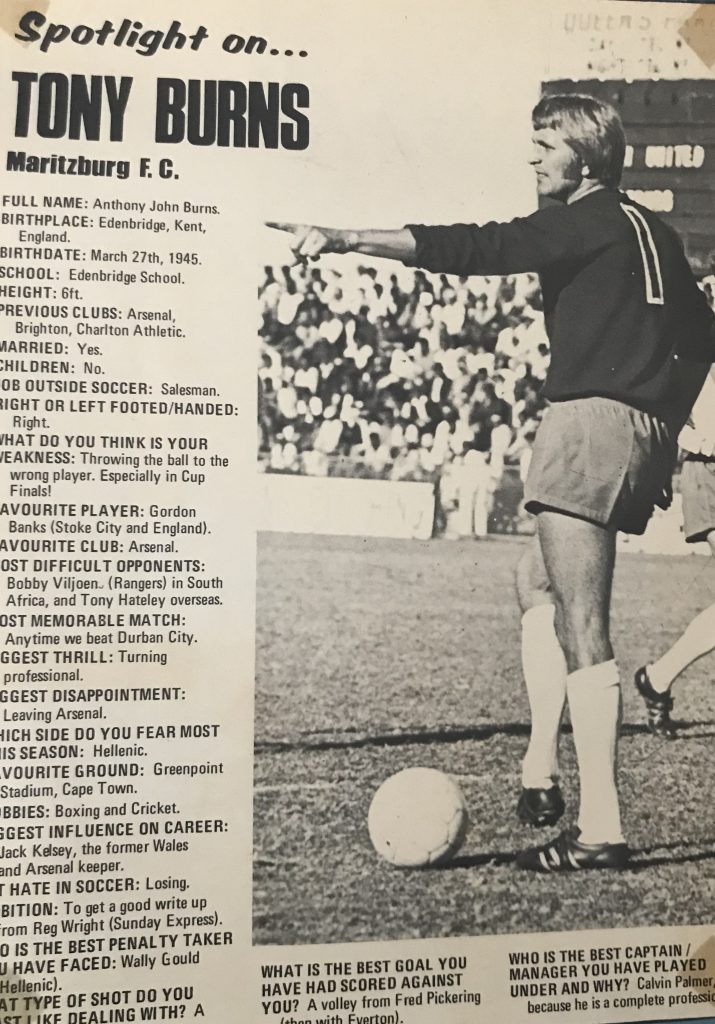
Burns relived his career in detail in 2020 when interviewed by 17-year-old would-be journalist Jed Vine, who watches games at the Amex with his mother, and games at the Emirates with his dad.

Born in Edenbridge, Kent, on 27 March 1944, Burns first showed his goalkeeping prowess during his schooldays in the town before he joined Southern League club Tonbridge (now Tonbridge Angels) who he returned to twice more and later managed three times.

He made his Southern League debut against Yiewsley (later to become Hillingdon Borough) in February 1963 and only his third game for Tonbridge was as an 18-year-old against Arsenal at Highbury.

With long term custodian Jack Kelsey retiring, Arsenal were looking around for likely successors and, liking what they saw of Burns, offered him a contract.

“In his early days at Highbury, he showed immense potential and, after benefitting from Kelsey`s coaching, made encouraging strides,” a 2020 Pitching In piece for the Southern League recalled.

Manager Billy Wright gave him his senior Arsenal debut in a friendly against Enschede in Holland in August 1963, with Magill in defence, and he got his first taste of South Africa on a five-game tour the following May when he was in goal for Arsenal’s 5-1 win over a Western Province XI and their 6-0 win over an Eastern Province XI.

But his big breakthrough came when he made his league debut in a 3-2 home win over Burnley in October 1964 (three days earlier he’d played in goal in a 7-0 friendly win over non-league Corinthian Casuals).

“I felt on top of the world. I had always wanted to play for the Gunners and here I was keeping goal for them, and on the winning side at that,” he told the Albion matchday programme. “There’s only one first match and I’ll never forget this one.”

Once he got the shirt, he had a run of 26 games (32 including friendlies) from October 1964 through to the end of March 1965.

He generally played in front of a defence featuring the likes of Don Howe, Frank McLintock and Ian Ure with John Radford and Joe Baker up front.

During the first half of the 1965-66 season, Burns appeared in seven league games and three friendlies, but his final Gunners first team appearance came on 27 December 1965 in a 4-0 defeat away to Sheffield Wednesday.

Jim Furnell was Wright’s preferred first choice, and, as the season wore on, the emerging Bob Wilson was getting the nod ahead of him as stand-in (although it wasn’t until 1968 that Wilson finally ousted Furnell).

Disappointed to leave, Burns nonetheless went in search of regular football by joining Third Division Brighton for £2,000 in July 1966.

He made his first appearance for the Albion on 17 September 1966, when he took over from the injured Powney, but Brighton went down 2-0 to Grimsby Town.

Powney returned the following week and Burns had to wait until January for his next games – two FA Cup ties against Aldershot.

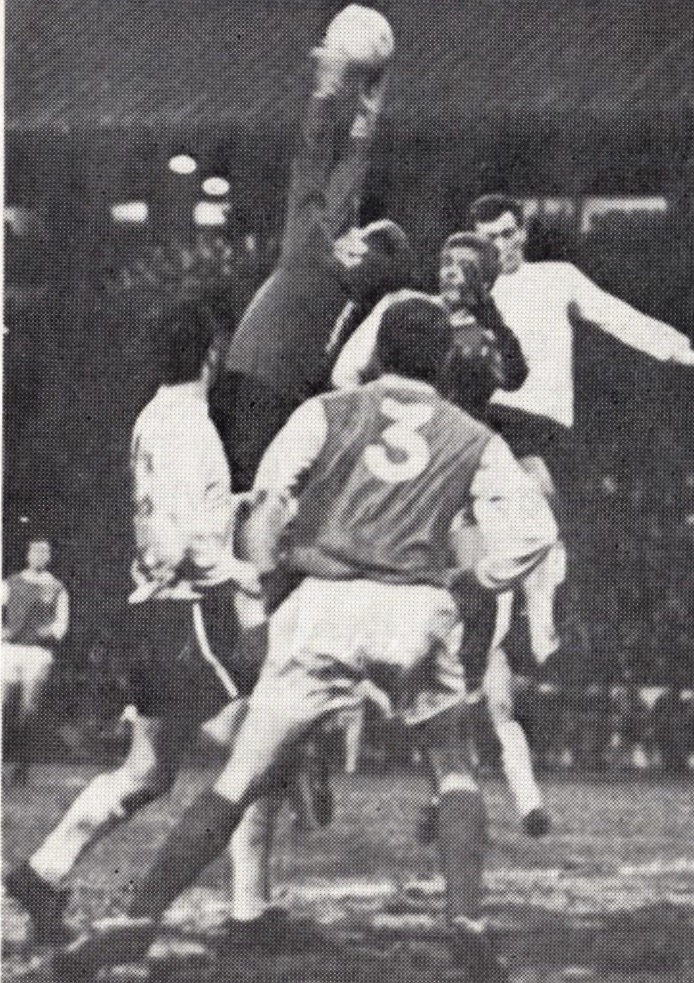
Burns in action versus Chelsea

He kept his place for the big fourth round FA Cup game against First Division Chelsea at the Goldstone which finished 1-1 when his former Arsenal teammate Tawse controversially had what he thought was a cracking late winner ruled out for a foul by Kit Napier.

Unfortunately, Burns conceded four in the replay at Stamford Bridge as the superior Chelsea side made the most of home advantage to ease their way through comfortably, 4-0. That was the season they went all the way to the final only to lose 2-1 to Tottenham Hotspur, whose ranks included Alan Mullery and Joe Kinnear.

By the end of the season, Burns had played 18 matches against Powney’s 37. But Burns had the upper hand in 1967-68 featuring in 29 games compared to Powney’s 21.

He also started the 1968-69 season as first choice but his 54th and final game for the Albion was in the 2-1 home defeat to Northampton in the second round of the FA Cup on 20 December 1968.

New manager Freddie Goodwin brought in former Wolves and Aston Villa ‘keeper Geoff Sidebottom to challenge Powney and let Burns leave on a free transfer in March 1969.

He joined Charlton Athletic, where he made 10 appearances in their unsuccessful tilt at promotion, but declined what he saw as a derisory contract offer. He returned to Tonbridge briefly and in January 1971 headed off to play in South Africa, initially for Durban United, and later, Maritzburg.

In his interview with Jed, he recalls playing in an English All Stars team managed by Malcolm Allison who invited him to return to England with Crystal Palace when his contract was up.

Burns made the move in October 1973 after previous Palace no.1 (and later Albion youth coach) John Jackson had moved to Orient.

He shared goalkeeping duties with Paul Hammond, playing a total of 90 matches between the sticks for Palace over the next four years under Allison and his successor Terry Venables.

In 1977, Burns played half a dozen games on loan for Brentford before heading off to the States like a lot of ageing players did at that time.

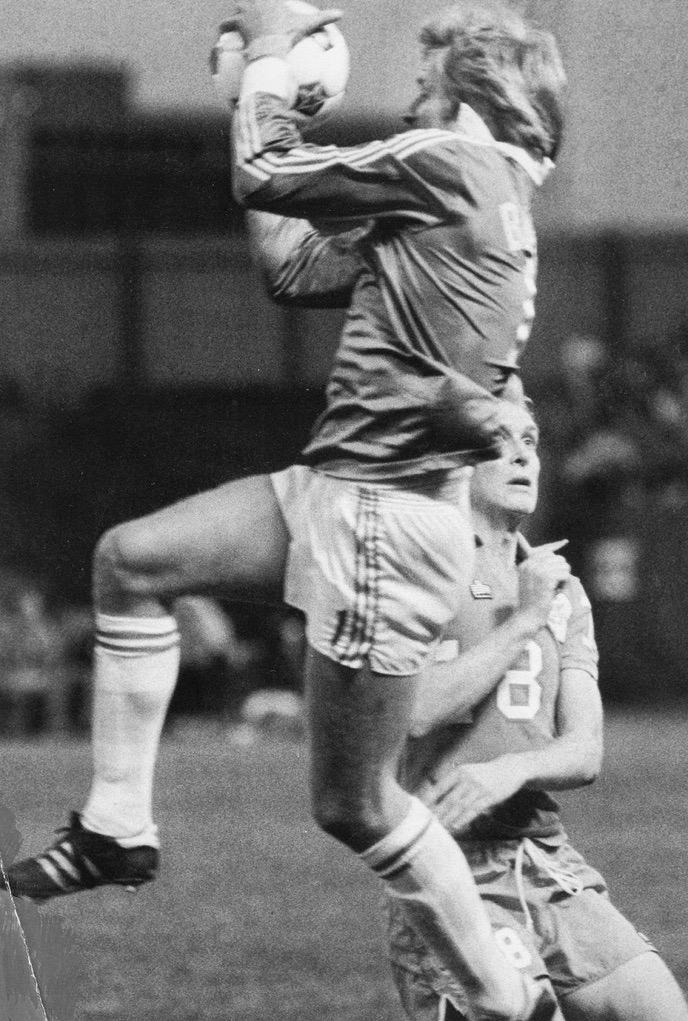
The ‘keeper played a dozen games for Memphis Rogues in the North American Football League. They were coached by former Chelsea defender and manager Eddie McCreadie although Burns had gone there to team up with former boss Allison who was sacked without a ball being kicked because he hadn’t signed enough players!

Burns played for Memphis Rogues in the USA

Among Burns’ teammates were a young Neil Smillie, who’d been struggling for games at Palace, Phil Beal, who had left Brighton the year before, John Faulkner, the one-time Leeds and Luton defender, and the flamboyant Alan Birchenall, beloved by Leicester City supporters of many generations.

Back in the UK in 1978, Burns joined Plymouth Argyle as cover for Martin Hodge, and ended his league playing days in this country appearing in 11 games in the first half of the 1978-79 season.

However, he left Home Park to rejoin Tonbridge Angels for a third time and he also played for Hastings United and Dartford.

After his playing days were over, Burns had three spells in charge of Tonbridge, from August 1980 to December 1982, August 1989 to May 1990, and in a caretaker role from November 2001 to May 2002 (by which time he was goalkeeping coach at Millwall, who he joined in 1992 under Mick McCarthy.

Burns served as goalkeeper coach under several Millwall managers.
Picture: Brian Tonks.

He also spent seven years as manager of Gravesend and Northfleet (who became Ebbsfleet United) between 1982 and 1989.

But it was at Millwall where he finally found a permanent home, working under no fewer than 18 different managers, including Steve Gritt and Mark McGhee.

He was even at the helm himself for a while, working as co-caretaker manager with former Lions boss Alan McLeary after Dave Tuttle’s departure in April 2006, when Millwall’s relegation had already been confirmed.

The appointment of Nigel Spackman the following month led to Burns’ departure in July 2006, when he took up a similar role at his old club Palace, working under former Albion boss Peter Taylor coaching Julian Speroni and Scott Flinders.

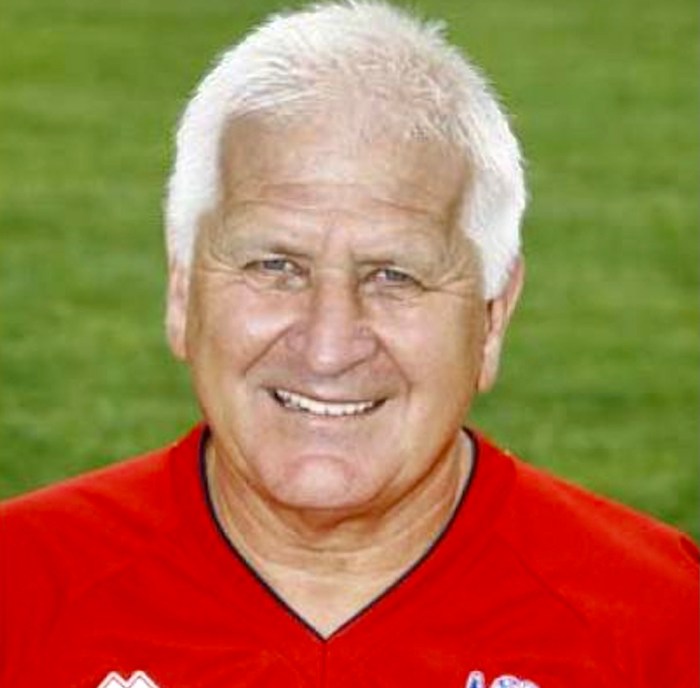
Goalkeeping coach at Palace under Peter Taylor

He left Selhurst in November 2007 when Taylor lost his job, and Speroni told yourlocalguardian.co.uk: “It was sad to lose Tony Burns because we worked well with him. During last season when I wasn’t playing regular football, Tony was the one who kept me going which was very important.”

Burns moved with Taylor to Conference side Stevenage Borough but later returned to Millwall under Kenny Jackett before stepping down in 2012, when he was succeeded by Kevin Pressman.

Still, he wasn’t finished with the game, though, and at the age of 70, in the summer of 2014, he teamed up with Taylor yet again to become goalkeeping coach at Gillingham. He joined them on a part-time non-contract basis as a replacement for Carl Muggleton.

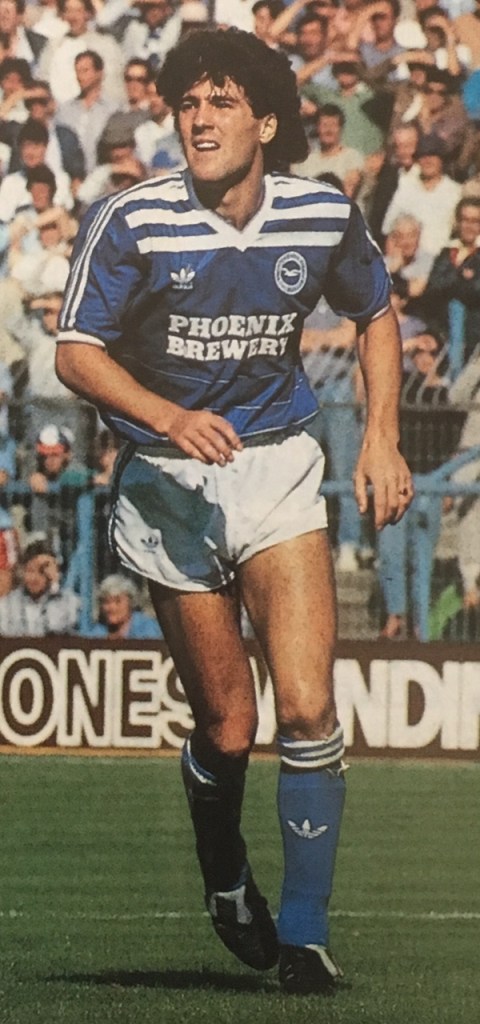
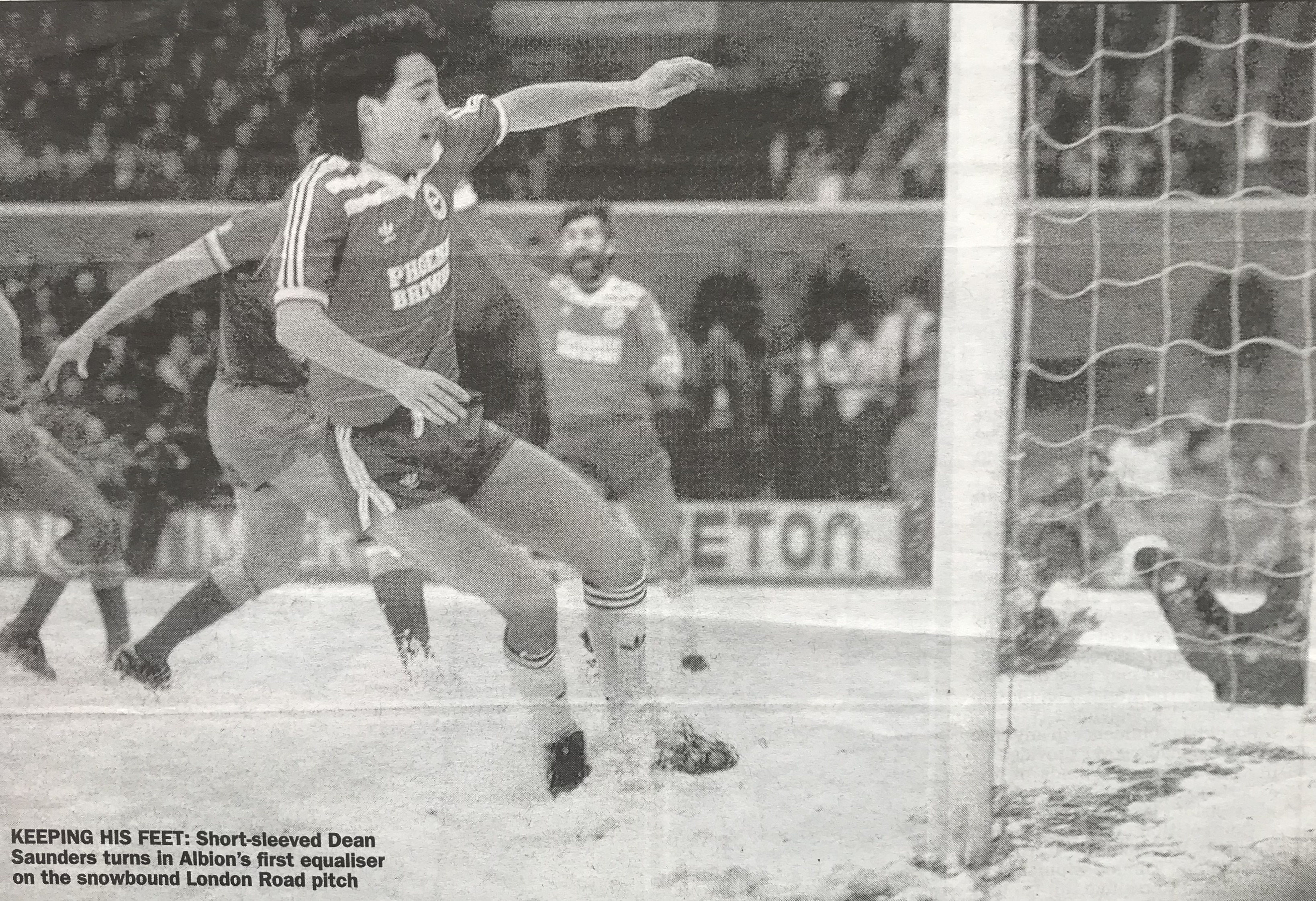
Dean Saunders raised cash for Brighton and Liverpool

IT’S NOT often Brighton and Liverpool have had something in common but, when it came to striker Dean Saunders, they both sold him to raise money. And they weren’t alone.

In the Albion’s case, it happened in 1987 when manager Barry Lloyd was forced to cash in on the free transfer signing to raise £60,000 to go towards players’ wages.

For their part, five years later, Liverpool let the Welsh international depart Anfield for £2.3m because boss Graeme Souness wanted the money to buy a central defender.

When Saunders was remarkably transferred for £1m from the Maxwell-owned Oxford United to the Maxwell-owned Derby County, it prompted former Brighton and Liverpool defender Mark Lawrenson to quit as boss at the Manor Ground after he’d been promised there would be no transfers likely to weaken his squad.

Saunders’ long and much-travelled career began in Swansea, the place where he was born on 21 June 1964, the son of former Swansea and Liverpool wing-half Roy Saunders.

He attended GwrossydJunior School and was soon appearing in the school football team on Saturday mornings and playing minor football in the afternoons. He went on to Penlan Comprehensive in Swansea and his career began to blossom, playing in the school team at all levels under sports master Lee Jones, a former British gymanstics champion. Saunders played for the Swansea Schools representative sides at under 11, 13 and 15 levels.

“I can remember enjoying watching the Swansea players train when I was a lad,” he told Tony Norman in an Albion matchday programme article. “I was lucky because my dad was the assistant manager, so I could go to pre-season training and things like that.

“I used to kick a ball around on the sidelines and dream of playing for Swansea.” That dream turned to reality after he joined the Swans in 1980 as an apprentice (when John Toshack was the manager), turned professional in 1982, and made his debut in the 1983-84 season. He scored 12 times in 49 appearances but in his final year had a goalless four-game loan at Cardiff City.

Manager John Bond released him on a free transfer after a turbulent season in which the Swans only narrowly avoided relegation to the basement division and Chris Cattlin, who’d been impressed when he saw Saunders playing for Swansea Reserves at the Goldstone Ground, snapped him up for Brighton.

“I was amazed when the Welsh club let him go for financial reasons,” Cattlin wrote in his matchday programme notes for the opening game of the season. “He is young, quick and, if he works hard, he has a great chance.”

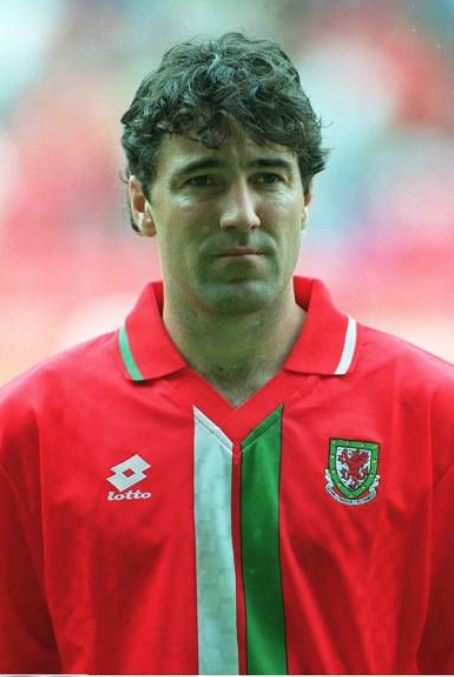
By the end of that season, Saunders had scored 19 goals in 48 league and cup games and was voted player of the season. His performances in the second tier for the Albion caught the eye of the Welsh national team manager, Mike England, and on 26 March 1986 Saunders made his full international debut for Wales as a substitute in a 1-0 win away to the Republic of Ireland. It was the first of 75 caps.

Saunders scored his first international goals when he netted twice in a 3-0 friendly win over Canada in Vancouver on 19 May 1986, after which England said: “He goes past defenders with his tremendous pace and his finishing against Canada was a revelation.

“The experience he gained at Brighton has done him the world of good. To finish top scorer in his first full season of Second Division football tells its own story.”

Saunders, who shared a house with Albion’s young Republic of Ireland international Kieran O’Regan, said being happy at home had helped him to settle down quickly.

“I liked Brighton from the day I arrived,” he said in a matchday programme article. “It reminds me of my home town of Swansea and I like living by the sea.”

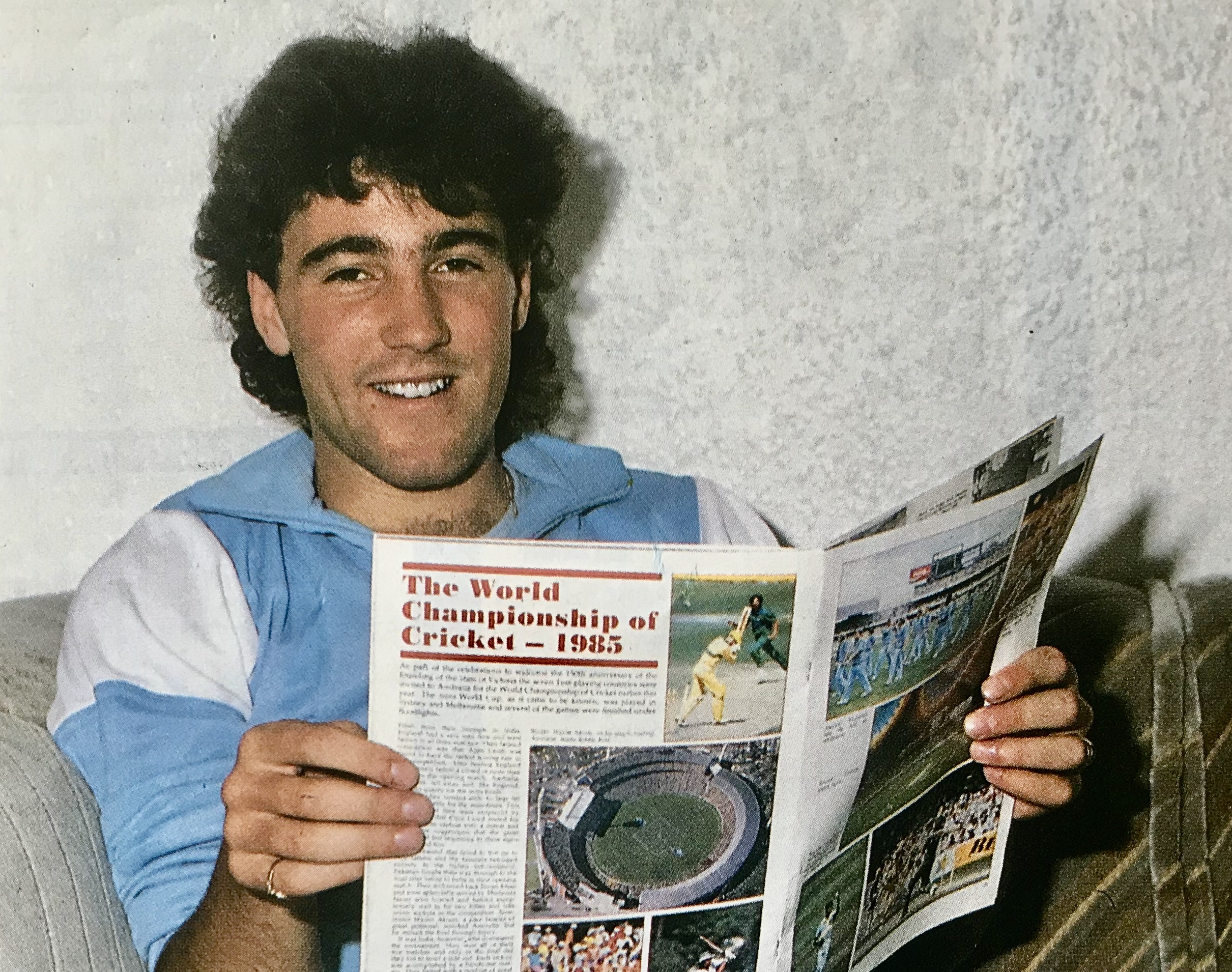
A lover of all sports, Saunders revealed how he liked to play cricket in the summer, when he turned out for Haywards Heath, and he played snooker with O’Regan and Steve Penney.

That summer, Saunders told Shoot! magazine: “I had both cartilages out of my left knee at 18 and had both Swansea and Cardiff turn me down. I’ve had my share of the downs. From the moment I joined Brighton, my career has turned for the better.”

The young striker continued: “Swansea just gave me away – despite the fact that I was top scorer in a team coming apart. Cardiff City gave me a few games but always seemed to have reasons for not playing me consistently when I was on loan there.

“So, I had every incentive to make the break from Welsh football and I joined Brighton. Brighton can go places.

“I was disappointed that we didn’t make the First Division first time around. But all the lads are convinced that we will get there next season. I’ve been given a three-year contract so there are tremendous incentives to do better.”

It didn’t work out that way, though. After only a mid-table finish, Cattlin was sacked and there were rumblings of financial issues beginning to reverberate around the corridors of the Goldstone. Alan Mullery returned as manager but had limited funds to invest in the team, and, with echoes of the Pat Saward era back in the early ‘70s, the club turned to fans for financial help to bring in players.

After Mullery’s unseemly swift departure halfway through the season, former Worthing boss Lloyd took over and fans were completely mystified as to how he could leave out Saunders in favour of Richard Tiltman, who Lloyd had plucked from local football. Since then, it has been suggested his omission was more to do with money than football ability.

There was great consternation that Albion collected only £60,000 when Lloyd sold Saunders to Oxford in early March 1987, especially as the Seagulls were fast hurtling back to a level of football they’d manage to avoid for ten years.

That was no longer a concern for Saunders who recovered the goalscoring touch he’d shown during his first season at the Goldstone Ground, scoring 33 goals in 73 games for Oxford before being sold to Derby for £1m against Lawrenson’s wishes 19 months after arriving at the Manor Ground.

Meanwhile, the goals kept flowing for Saunders as he netted 57 in 131 games for Derby. The side finished fifth in the old First Division by the end of Saunders’ first season with the Rams, and he’d contributed 14 goals. The Derby Telegraph noted: “From the moment ‘Deano’ arrived, the players were inspired and the crowd enthused. The signing also suited the post-war tradition of 5ft 8in goalscoring heroes at the Baseball Ground – Raich Carter, Bill Curry, Kevin Hector and Bobby Davison.

“Derby fans were too wise to comment on height. What mattered was Saunders’ speed, eel-like turn and persistence. He scored six in his first five games, starting with two against Wimbledon when he captured supporters’ hearts with the immediacy of a Kevin Hector. A close-in header and long-range right-footer were beautiful appetisers.”

Despite Saunders scoring 24 goals for Derby in 1990-91, the side was relegated and Saunders and teammate Mark Wright were snapped up by Liverpool. Reds paid £2.9m to take Saunders to Anfield, boss Souness believing he’d be an ideal strike partner for their established Welsh international striker, Ian Rush.

Saunders made his Liverpool debut on 17 August 1991 in a 2-1 win over Oldham Athletic (Mark Walters and defender Wright also played their first league games for Liverpool); Ray Houghton and John Barnes scored Liverpool’s goals.

Saunders scored his first goal for the Reds 10 days’ later in a 1-0 win over QPR at Anfield but a Liverpool history website reckons he struggled to adapt to Liverpool’s passing game. “He was used to Derby’s counter-attacking style, scoring many of his goals by using his exceptional pace,” it said. “Saunders wasn’t very prolific in the league with about one goal every four games but flourished in the UEFA Cup with nine goals in five matches that included a quadruple against Kuusysi Lahti.”

Saunders scored twice in Liverpool’s successful FA Cup campaign, which culminated in them lifting the trophy at Wembley after beating Sunderland.

Although he scored twice in seven games at the start of his second season at Anfield, a cashflow issue meant Souness was forced to sell him to raise funds to dip into the transfer market.

Saunders explained: “Graeme called me in one day and told me he needed a centre-half [Torben Piechnik], and that he could raise the money by selling me to Aston Villa.

“I couldn’t believe he was prepared to let me go, but he said he didn’t think my partnership with Ian Rush had worked out, and Rushy wouldn’t be the one going anywhere. That was it.” 

Saunders had scored 25 goals in 61 appearances for Liverpool, the last coming in a 2-1 home win over Chelsea (Jamie Redknapp scoring the other Liverpool goal) on 5 September 1992.

The Welshman had the last laugh, though, because only nine days after his departure from Liverpool he scored twice in Villa’s 4-2 victory over the Reds.

“Obviously I had a big incentive to do well today and I’m thrilled to have scored,” said Saunders. “Both my goals went through the goalkeeper’s legs.”

Signed by Ron Atkinson, Saunders spent three seasons at Villa, initially developing a formidable strike partnership with Dalian Atkinson, and then pairing up with Dwight Yorke. Saunders’ brace in the 1994 League Cup final helped beat Manchester United 3-1.

Villa history site lerwill-life.org.uk remembers him as “a spring-heeled attacker and very popular with the supporters” and adds: “Not big in size, he was very speedy and scored some spectacular goals including a 35-yard spectacular against Ipswich.”

His time at Villa Park came to an end when Brian Little took over as manager, and Saunders was reunited with his old Liverpool boss Souness in Turkey. A £2.35million fee took him to Galatasaray for the 1995-96 season and he netted 15 goals in 27 Turkish League matches.

Next stop for Saunders was back in the UK at Nottingham Forest, but the 1996-97 was an unhappy one as the manager who signed him, Frank Clark, was sacked in December after a bad run of defeats and Forest’s slide towards relegation continued under Stuart Pearce and Dave Bassett.

By the time Forest had bounced straight back up, Saunders had left the club, moving in December 1997 to second-tier Sheffield United for a year under Nigel Spackman and caretaker managers Russell Slade and Steve Thompson. United made the play-offs but lost out to Sunderland in the semi-finals. In December 1998, Saunders moved abroad again to link up with Souness a third time, at Benfica in Portugal.

The following summer, he returned to England and joined Bradford City, where his former Brighton teammate Chris Hutchings was assistant manager, then briefly manager. Saunders was a regular in his first season at Valley Parade, when the Bantams managed to narrowly avoid relegation from the Premier League, but he played only a handful of games in 2000-01, when they were relegated. Saunders retired as a player shortly before his 37th birthday and became a coach at Bradford before linking up with Souness again, this time as a coach.

He joined him at Blackburn Rovers and then Newcastle United, but when Newcastle sacked Souness early in 2006, Saunders lost his job as well.

In the following year he began taking the Certificate in Football Management course run by the University of Warwick; and this led to him being granted his UEFA Pro Licence coaching badge, a qualification that allowed him to be appointed as assistant to John Toshack with the Welsh national team. 

In October 2008, Saunders replaced Brian Little as manager of Wrexham, newly relegated to the Conference. He eventually managed to steer the north Wales outfit into the play-offs in the 2010-11 season, but they were knocked out by Luton Town and, in September 2011, Saunders was appointed manager of then Championship club Doncaster Rovers.

Unfortunately, he couldn’t save Rovers from relegation and they went back down to League One with only 36 points from their 46 League fixtures.

Having guided Rovers to second place in League One, Saunders was appointed manager of Wolverhampton Wanderers in January 2013, but he couldn’t prevent them being relegated from the Championship and he was sacked three days after relegation was confirmed courtesy of a 2-0 defeat at the hands of Gus Poyet’s Albion.

Saunders told the media after the game: “We have to get some players in who think like I’m thinking, who want to win, fresh minds, no damage done to them, no confidence issues, no ‘been here too long’ issues, no ‘I don’t know if the manager likes me’ issues. Once I get my own team on the pitch, imagine what the supporters will be like.”

Saunders, with only five wins from his 20 games in charge, didn’t get that chance and rather ruefully said of his opponents that day: “A few years ago they were bankrupt and without a stadium, but they’ve shown what is possible and, with the momentum, they have could well get into the Premier League.”

Just after Christmas 2014, Saunders was named as the interim manager of Crawley Town after the previous incumbent John Gregory stood down for health reasons.

Saunders then became manager of League One side Chesterfield on 13 May 2015 but his stay there lasted only five months.

In June 2016, Saunders was part of the BBC pundit team for their coverage of the Welsh national team’s games at Euro 2016 and made the headlines during the tournament when it was revealed that he had incurred parking charges of over £1,000 from Birmingham Airport’s short stay car park as he wasn’t expecting Wales to progress as far as they did. The charge was eventually waived by the airport who asked him to make a donation to charity instead.

His subsequent involvement in football has been as a pundit on BT Sport’s Saturday afternoon Score programme as well as on the radio with talkSPORT. He hit the headlines in 2019 when he was jailed for failing to comply with a roadside breath test but the initial punishment was quashed and changed to a suspended sentence. Via the League Managers’ Association, Saunders issued a statement in which he said: “I made a terrible error of judgment for which I have been rightly punished, and I wholeheartedly regret that it happened.”

Pictures from the Albion matchday programme and various online sources.