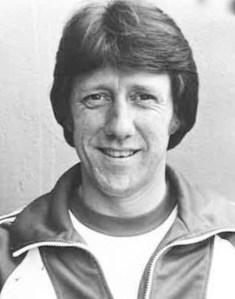
When football didn’t deliver the right break for Colin Dobson

THE architect of Brighton’s humiliating 8-2 home defeat to Bristol Rovers in 1973 was none other than a player who might have been wearing Albion’s stripes if injury hadn’t struck.

Goalscoring winger Colin Dobson turned goal provider the day Rovers were rampant at the Goldstone Ground. Twenty-one months earlier he’d left the same pitch on a stretcher, not certain that he’d ever be able to play again.

Dobson had joined Brighton on loan in January 1972, making his debut in a mid-season friendly against his parent club, Huddersfield Town, on 18 January.

Ironically, his first meaningful Albion action came against Rovers when he was a substitute in a 2-2 draw at Eastville on 22 January.

Dobson was also on the bench for the home 1-0 win over Swansea City the following Saturday. He was elevated to the starting line-up away to Wrexham on 5 February, when goals from Willie Irvine and Peter O’Sullivan sealed a vital 2-1 win.

It was during his full home debut against Walsall on 12 February that his short-lived Albion career came to a sudden halt. Albion lost 2-1 and Dobson suffered an ankle fracture.

It had been expected that Albion would sign him permanently, and he told the Evening Argus that he had been offered a good deal to do so, but the injury put paid to the transfer being completed.

With Pat Saward’s side heading towards promotion with Aston Villa, the Irish manager instead went back to Wolverhampton Wanderers to sign Bertie Lutton, who had been on loan earlier in the season.

Lutton duly played his part as the Seagulls acquired the necessary points to earn promotion, while Dobson nursed an injury which at the time threatened to end his playing days.

His six-year Huddersfield career at an end, in the summer of 1972 he accepted a role as player-coach at Bristol Rovers, working under his former Sheffield Wednesday teammate, Don Megson.

Dobson Rovers

Thus it was that he was part of a Rovers side who had gone 18 matches unbeaten when they showed up at the Goldstone on a cold winter’s day on the first day of December 1973 to tackle Brian Clough’s Albion in front of The Big Match television cameras.

The game was only five minutes old when Dobson played in Alan Warboys who beat Norman Gall before passing to his strike partner Bruce Bannister to open the scoring.

Seven minutes later, Dobson took Warboys’ pass and laid on a pinpoint centre for Gordon Fearnley to score with a header. The game was still six minutes short of half-time when another Dobson centre was met by Warboys to make the score 5-1 to the visitors.

John Vinicombe, Albion reporter for the Argus, declared in his summary: “To Colin Dobson, freed by Albion when a broken ankle looked like ending his career, the accolade for a thinking player.

“He masterminded the operation in unbelievably generous space. Bruce Bannister knifed through for the early, killing goals, and Alan Warboys, superbly balanced and fast on the slightly frozen pitch, looked the perfect striker, taking his four goals so cleanly.”

An incandescent Clough told the media: “I was ashamed for the town and the club that 11 players could play like that. I feel sick. We were pathetic. This side hasn’t got enough heart to fill a thimble.”

Rovers went on to win promotion to the second tier that season and Dobson eventually completed 63 league and cup games for them before retiring at the end of the 1975-76 season.

Born on 9 May 1940 in Eston, North Yorkshire, Dobson joined Sheffield Wednesday at 15, and made a name for himself with the Owls in the days when they played in the top tier of English football.

He earned a reputation as a goalscoring winger after making his debut in 1961 and scored 52 goals in 193 games over the next five years.

He was twice capped by England Under 23s: on 29 May 1963, he came on as a substitute for Alan Suddick as England beat Yugoslavia 4-2 in Belgrade. Alan Hinton scored a hat-trick for England and the other goal was a penalty by Graham Cross, then with Leicester but later a Brighton player. Future England World Cup winner George Cohen was the side’s right-back.

Four days later, with Ernie Hunt leading the line, Dobson started for England when they lost 1-0 to Romania in Bucharest.

In 1966, Dobson made the switch to second division Huddersfield for a £21,000 fee and he was Town’s top scorer in the 1967-68 season (with 14 goals) and 1968-69 (with 11).

Although full international honours eluded him, in the summer of 1968, he was selected for the Football Association Commonwealth tour of the USA, New Zealand, Malaysia and Hong Kong.

He was also part of the side Ian Greaves led to the 1969-70 Second Division title, but he only made a handful of top-flight appearances, and his last Huddersfield appearance was against Stoke City in an FA Cup fourth-round replay in January 1971.

Once his playing days were over, Dobson worked for a whole host of clubs in a coaching or scouting capacity, including Port Vale, Coventry City, Aston Villa, clubs in the Middle-East (Bahraini side West Riffa; Al Rayyan in Qatar; Kuwaiti side Al Arabi, and Oman’s Under-17s), Portugal’s Sporting Lisbon, Gillingham, Watford and Stoke, where he renewed his acquaintance with John Rudge, who he had known at Huddersfield and Bristol Rovers, who was director of football for the Potters.

It was during his time with Stoke that he discovered the future Manchester United and England goalkeeper Ben Foster, a chef playing part-time non-league football at the time.

Foster later told the Birmingham Mail: “There was a scout called Colin Dobson who worked for Stoke but was living in Warwick.

“One night he saw some floodlights, stopped off and had a watch of the game and I caught the eye. That was it. He made a note of it and came to watch me a few more times.

“I owe it all to him. Top man. Whether I’d still be working as a chef if he hadn’t spotted me, I don’t know.”

Dobson died in Middlesbrough aged 82 on 16 February 2023.

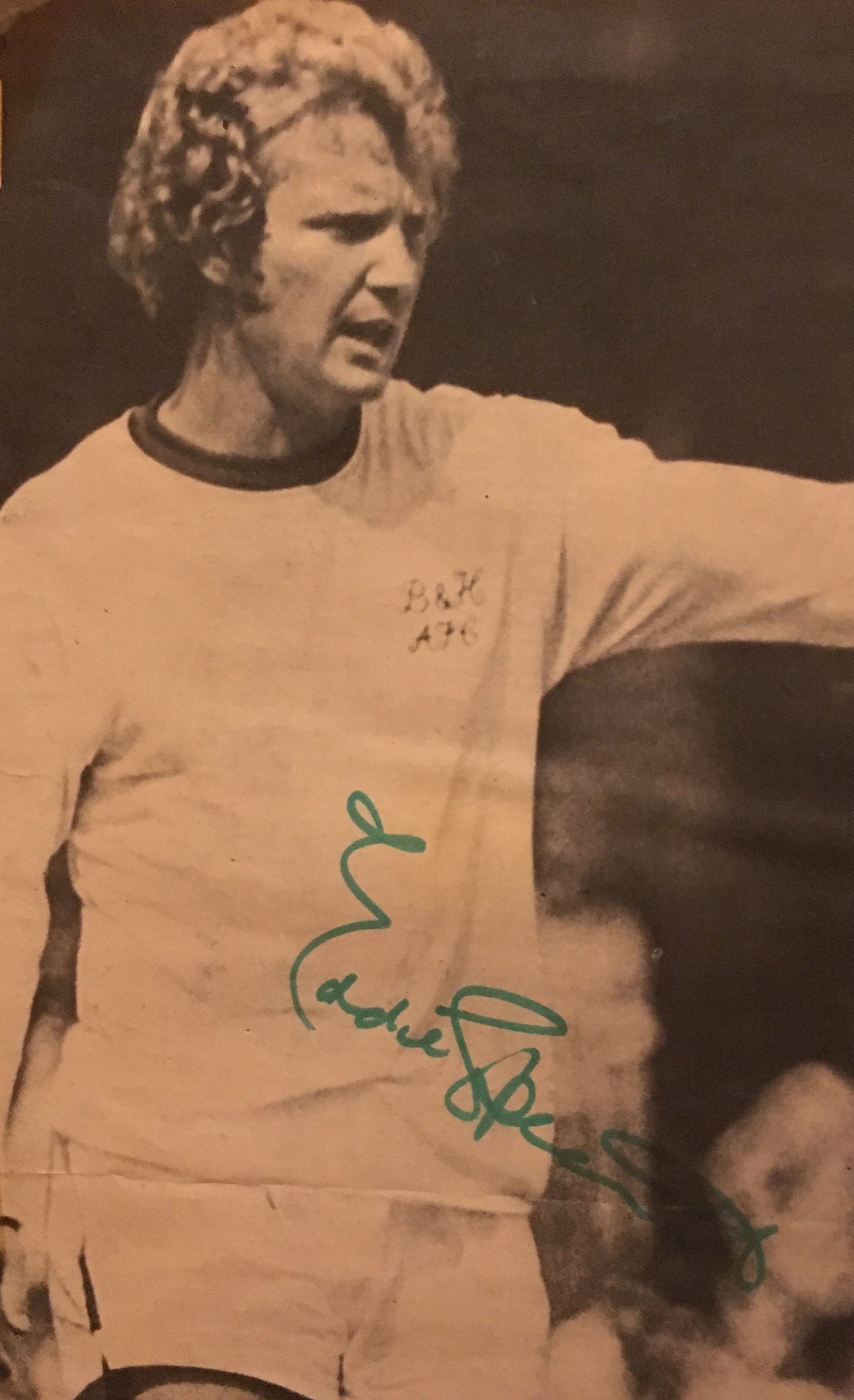
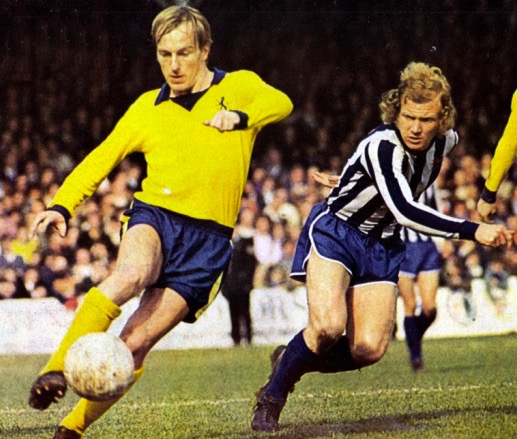
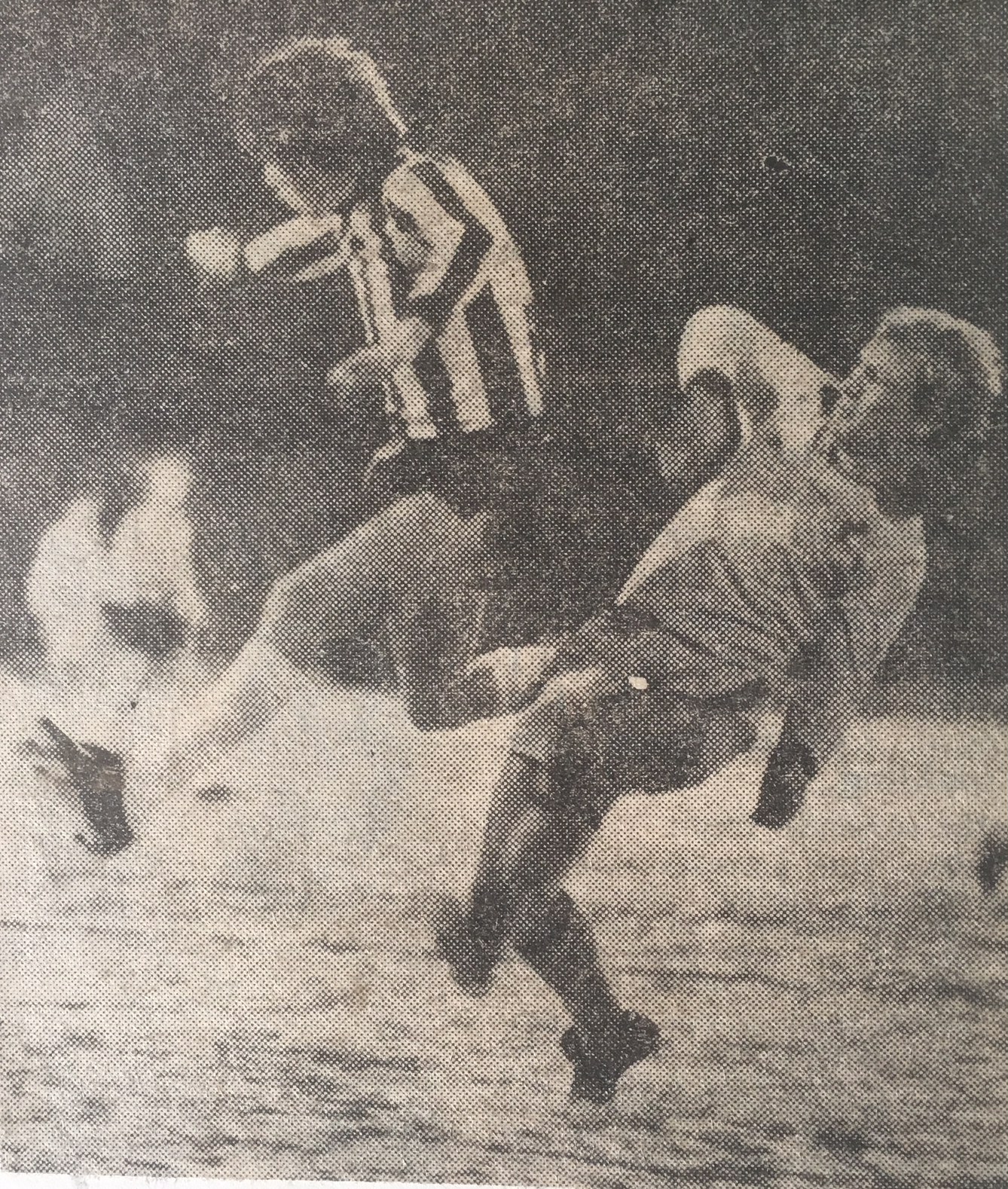
  • Pictures from my scrapbook. Originally sourced from the Evening Argus, Shoot! and Goal magazines.

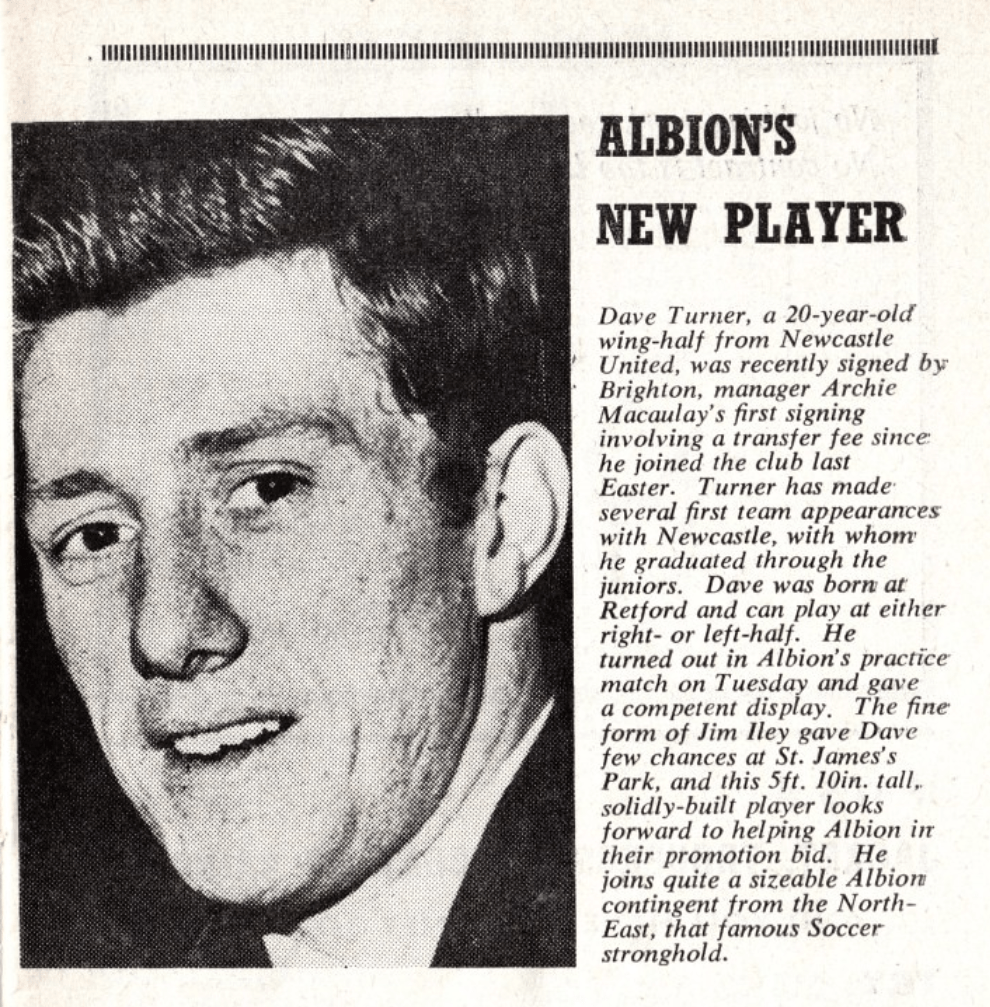
‘Unsung hero’ Dave Turner was Brighton captain at 22

3 Turner portrait

DAVE TURNER, one of Brighton & Hove Albion’s youngest ever captains in the 1960s, had already been at the Albion just over five years by the time I got to see my first game.

Over the course of eight and a half years with the club, he played 338 games, scoring 34 goals. In old-fashioned parlance, Turner was a wing half – what today would be known as a predominantly left-sided midfield player.

Born in Retford, Nottinghamshire, on 7 September 1943, as a youngster he played for Notts Boys and had two trials for England Boys before joining Second Division Newcastle United straight from school as an apprentice in 1960.

He was part of the Newcastle side which beat Wolves 2-1 in the 1962 FA Youth Cup, playing alongside Toon’s future legendary captain Bobby Moncur and long-serving Northern Irish full back David Craig.

Newcastleunited-mad.co.uk says he was “highly thought of when he helped Newcastle win the Youth Cup in 1962, but never broke into the first team”. In fact, that wasn’t quite true because he was given his first team debut in the very last game of the 1961-62 season, a 3-0 home defeat to Leeds United.

He made one more appearance for the Magpies under new manager Joe Harvey but became Archie Macaulay’s first signing for a fee when he headed to Sussex in December 1963 for the princely sum of £6,000.

Turner made his debut in a 2-0 home win over Darlington on 7 December 1963 and, in only his second season at the Goldstone Ground, he made 40 appearances and scored twice as Albion marched to the Fourth Division championship.

“That was a great season,” Turner told Goal magazine in 1970. “Bobby Smith (former Tottenham and England international) was with us then. I was very surprised he joined Brighton, but what an asset he was.

“We scored plenty of goals, the crowds flocked back, the atmosphere was great.”

The following year, Dave was appointed captain – the youngest Albion ever had.

Albion’s matchday programme introduces the new young captain

“I was surprised but very pleased,” Dave told the magazine. “There were several players older than I was, so it was a great honour to be made skipper.

“I was a bit frightened at first but after a game or two I realised that the rest of the team were backing me up, so everything was all right.”

It was only when the experienced former Preston North End skipper Nobby Lawton arrived in 1967 that Turner relinquished the job.

“He had a fine reputation and I asked to be relieved of the job, suggesting Nobby should take over,” he said.

Remarkably both Turner and Norman Gall, another player hailing from the North East, reached the milestone of their 285th Albion game at the same time.

Brighton were looking odds on for promotion under Freddie Goodwin in the 1969-70 season and it was rare for a Third Division team to get coverage in Goal, a popular national football magazine at the time.

The article began: “Dave Turner is one of the unsung heroes of Brighton. He has played nearly 300 games for the club, been involved in a Fourth Division Championship victory, and is now in the middle of another bid for glory.

“Brighton are fighting hard to get into the Second Division and the 26-year-old midfield star is a key man in their battle.

“Ever since he joined them from Newcastle in December 1963, Turner has played a vital role in the Brighton set-up.

“Stars like Rodney Marsh, Hugh Curran and Bruce Rioch, all of whom have gone on to better things, have played against (and been overshadowed by) Brighton’s non-stop wing half.

“It is Turner’s consistency which is helping Brighton in their promotion struggle. And he thinks they can do it.”

2 turner colour portrait

Turner told the magazine: “I’m pretty confident we can go up. But so can any of the top 10 at the moment. We’ve been playing well all season, but early on we just couldn’t get the right results. Everyone was getting a bit disappointed.

“Then everyone started getting stuck in a bit more – it began to pay off. We had a long undefeated run in the League after November and conceded only one goal in nine games. Even that was a penalty.

“The defence has been playing well and the whole team has been coming back and doing its share of the work. It would be nice to score a few more goals but if you don’t let any in it means you have at least one point before you start.”

Unfortunately although Brighton were top after a 2-0 win over Reading on 27 March 1970, they blew the chance of promotion with four defeats in the remaining five games and ended up fifth.

In the following two seasons under Pat Saward, Turner was hard hit by injuries and only made 19 appearances in the 1971-72 Third Division promotion campaign, appearing in his suit in the champagne-raising dressing room picture after promotion was achieved.

In its pen pictures of each of the members of the squad, the Argus said of him: “Turner never knows when he is beaten and few players have achieved greater popularity with the Goldstone crowd.”

The arrival of the cultured Brian Bromley to occupy his midfield berth meant Turner was given a free transfer in the summer of 1972 and, together with Kit Napier, he joined Ken Furphy’s Blackburn.

Turner made 25 appearances for Rovers but his injury issues returned and he was forced to retire in 1974. He followed his former boss Furphy to Bramall Lane where he was youth coach for a while. He then moved on to Aldershot before heading to Canada.

He coached at Toronto Blizzard under former Watford and Sheffield United midfielder Keith Eddy and stayed under Eddy’s successor, Bob Houghton, who was a former Brighton teammate. Houghton was at the Goldstone in 1969-70 although he didn’t feature in the first team. He famously managed Swedish side Malmo when they lost 1-0 to Nottingham Forest in the 1979 European Cup Final.

Turner stayed in Canada with Toronto Blizzard and had a season with Toronto Dinamo but he returned to the UK in 1990 and rejoined the coaching staff at Aldershot.

1 turnerleadsout
4 Turner promotion dressing room
  • Pictures from my scrapbook show Turner leading out the Albion at the Goldstone, as featured in Goal, part of a team line-up in 1969-70, a portrait from the Argus in the 1971-72 season, joining in the 1972 promotion celebrations alongside Ian Goodwin with Brian Bromley (front left) and physio Mike Yaxley.

Turner the coach: at Toronto Blizzard with Bob Houghton and some well-known English players, and at Sheffield United and Aldershot.

Steady Eddie Spearritt ‘Mr Versatility’ and a long throw specialist

2-signed-eddie-spearrittIN THE days before managers had a bench of substitutes, players who could slot into virtually any position were a major asset. One of my favourites was Eddie Spearritt.

A wholehearted, tough character, Spearritt was equally comfortable playing in midfield, at full back or sweeper, would occasionally get on the scoresheet, and even turned his hand to goalkeeping when necessary.

Long before anyone had heard of Rory Delap, Spearritt was a top exponent of the long throw which could sometimes be as effective as a free kick or corner. It was a skill which earned him a place in a Longest Throw competition staged by BBC’s sport show Grandstand in 1970-71, although he didn’t win it.

Born in Lowestoft on 31 January 1947, Spearritt started out at Arsenal but on failing to make the grade there, switched to Ipswich Town as an apprentice in August 1963.


On prideofanglia.com, Tim Hodge details Eddie’s Ipswich career. He made his league debut in the 1965-66 season in a 1-0 win away to Preston in the old Division Two.

Over the next two years, he made a total of 69 appearances (plus 10 as sub) for Bill McGarry’s side, scoring 14 goals along the way (Spearritt is pictured in Ipswich squad photos above, including the side who were Second Division winners).

A 1-0 home defeat to Spurs in October 1968 was his last for the Suffolk club and three months later, surplus to new manager Bobby Robson’s requirements, was one of Freddie Goodwin’s first signings, for £20,000, just a few weeks before my first ever Albion game.ES debut Crewe

He made his debut in a 3-1 home win over Crewe Alexandra (above with the superb backdrop of a packed EastTerrace at the Goldstone Ground) and kept the number 10 shirt to the end of the season, by which time he had scored five times, including both Albion’s goals in the 2-2 draw at home to Tranmere Rovers.

1-spearritt-v-wolves-69-copyIn the 1969-70 season, not only was he part of the Third Division Albion side who pushed his old manager McGarry’s First Division Wolverhampton Wanderers side all the way in a memorable third round League Cup tie, it was his header from Kit Napier’s free kick that put the Albion 2-1 ahead just before half-time (aftermath pictured above).

Scottish international Hugh Curran scored twice in eight second half minutes to clinch the win for Wolves but a bumper Goldstone Ground crowd of 32,539 witnessed a terrific effort by their side.

ES Shoot action

A few weeks’ later, in a marathon FA Cup second round tie with Walsall that required three replays before the Saddlers finally prevailed 2-1, Spearritt took over in goal during the second replay when a concussed Geoff Sidebottom was stretchered off on 65 minutes. Albion hung on for a 1-1 draw.


Spearritt was a midfield regular in his first two seasons but Goodwin’s successor, Pat Saward, switched him to left back halfway through the 1970-71 season and that’s where he stayed throughout the 1971-72 promotion campaign. Player-of-the-season Bert Murray generously declared the award could have gone to Eddie for his consistency that season.

In the close season after promotion, Spearritt tied the knot with Penelope Biddulph, “an accomplished professional dancer,” the matchday programme told us, and they moved into a new home in Kingston-by-Sea.

Spearritt started out at left back in Division Two but after ten games was ousted by the arrival of George Ley from Portsmouth. He then switched back into midfield, but by the end of that relegation season was playing sweeper alongside Norman Gall (for nine games) and Steve Piper (for two).

He scored, along with Barry Bridges, in a 2-0 win at Huddersfield on 14 October but the team went on a disastrous run of 16 games without a win, although Spearritt did get on the scoresheet three times, including notching two penalties.

When Albion went to that footballing outpost Carlisle on 16 December, they had lost five in a row without managing a single goal. Carlisle were 5-0 up, goalkeeper Brian Powney was carried off with a broken nose, replaced between the sticks by Bert Murray, then Albion won a penalty.

Spearritt took up the story in a subsequent matchday programme.

“I used to be the club’s penalty taker but, after I had missed an important one at Mansfield in 1970, I lost the job. Penalty-taking is really all about confidence,” he said. “After I had missed that one at Mansfield, which cost us a point, the players lost confidence in me and the job went first to John Napier and was then taken over by Bert Murray.

“Bert would have taken the penalty at Carlisle. He has already scored two this season. But he had gone in goal and it was decided it was too risky to fetch Bert out of goal to take the penalty.

“Nobody else seemed to want to take it so I just picked the ball up and put it on the spot. We were 5-0 down by then but I thought from a morale point of view that it was extremely important that I scored. You can understand my relief when I saw the ball hit the back of the net.

“Everybody was beginning to wonder when we would score again. I suppose with the run of bad luck we have been having it was almost inevitable that we should break our goal famine from the penalty spot.”

Albion finally returned to winning ways with a 2-0 win over Luton on 10 February, and then beat Huddersfield, Carlisle and Swindon, prompting Saward to refer to “some outstanding individual performances” and adding: “I have been particularly pleased with the way Eddie Spearritt has been playing in recent weeks.

“He has maintained a high level of consistency this season and his work in defence and in midfield has been invaluable as the side has plugged away trying to turn the tide of results.”

Spearritt was Saward’s captain at the start of the 1973-74 season back in Division Three and with the return of central defender Ian Goodwin and then the emergence of Steve Piper in the sweeping role, he was soon back in midfield.

When Saward was sensationally replaced by Brian Clough and Peter Taylor in October, Spearritt was part of the side who capitulated 4-0, 8-2 and 4-1 in successive games against Walton & Hersham, Bristol Rovers and Tranmere Rovers. He was dropped for six games, along with Ley (who never played for Albion again) as Clough went into the transfer market and brought in midfielder Ronnie Welch and left back Harry Wilson from Burnley.

Spearritt was restored to the team in mid January and had a run of seven games — including his 200th league game for Albion — but when he was subbed off in a home win over Hereford United on 10 March 1974, it was to be his last appearance in an Albion shirt.

In five years he’d played 225 games (plus seven as sub) and scored 25 goals.

In common with lots of players from the Saward era, Spearritt was a victim of the great Clough clear-out. Perhaps surprisingly, though, his next step was UP two divisions to play in the First Division with then newly-promoted Carlisle United.

One of his teammates there was defender Graham Winstanley, who later joined the Albion. The side was captained by Chris Balderstone, who was also a top cricketer. Journeyman striker Hugh McIlmoyle played up front while John Gorman, who later played for Spurs and became Glenn Hoddle’s managerial sidekick, was also in the team.

They memorably topped the division after three games….but predictably finished bottom of the pile by the end. In his two-year stay with the Cumbrians, Spearritt played 29 times, was sub twice and scored a single goal.

He moved back south in August 1976, signed by Gerry Summers at Gillingham, and made his debut against Reading, going on to make 22 appearances in his one season at the club, scoring once, from the spot, against Rotherham United at Priestfield.

One of those games was against the Albion on December 29 1976, when the home side won 2-0 on a slippery, snow-covered pitch.

Eddie emigrated to Australia the following summer and settled in Brisbane where he played for and managed the Brisbane Lions before retiring. He subsequently became estates manager for L’Oréal.

3-spearritt-graydon4-spear-pen-v-black5-gill-eddie-v-mellor-dec-76

  • Pictures from my scrapbook show him celebrating after scoring in the League Cup against Wolves; an autographed Goal action shot in the white with blue cuffs kit when I was an autograph hunter around the players’ tunnel before a game, Eddie was always happy to oblige; a Shoot colour shot of him in action against winger Ray Graydon in the famous 1972 televised win over Aston Villa; from a matchday programme, Eddie’s successful penalty kick in a 2-1- home defeat to Blackpool in December 1972 nestles in the back of the net, with ‘keeper John Burridge beaten, and, from the Argus, challenging Ian Mellor playing for Gillingham against the Albion in December 1976.