Admirable Crichton on standby for the Seagulls at 39

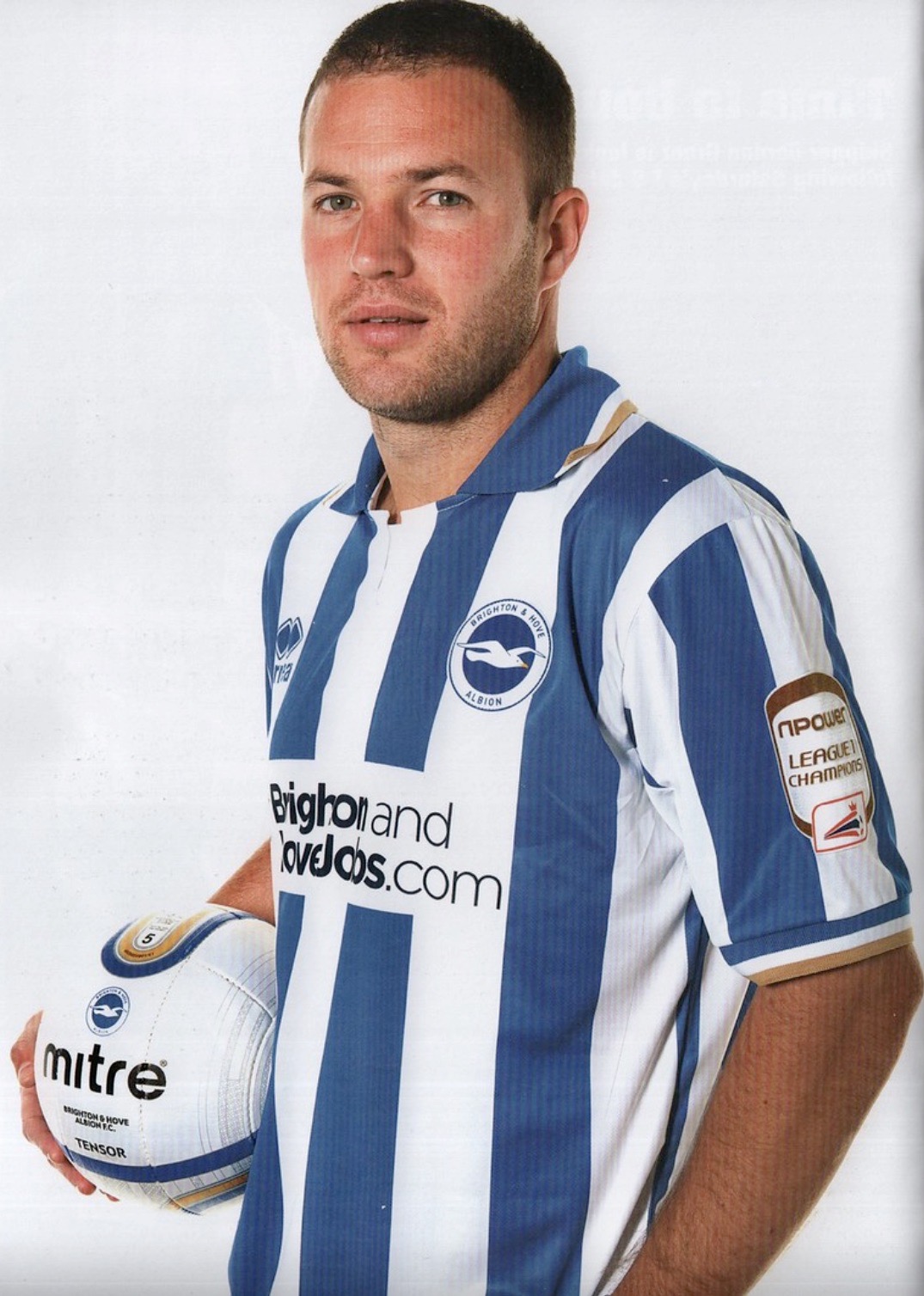
JOURNEYMAN goalkeeper Paul Crichton played 540 games in a 22-year career and, even at the age of 39, found himself on the Brighton subs bench ready to be called on in an emergency.

As things turned out, the former Burnley custodian’s time with the Seagulls remained in a coaching capacity, helping to develop youngster John Sullivan and improve no.1 Michel Kuipers.

However, he was registered as a player and when either Kuipers or Sullivan were unavailable, Crichton answered the call as stand-by ‘keeper, as well as making an appearance as a sub in a pre-season friendly.

Much of Crichton’s career was as a back-up no.1 but he stepped up as a coach, working with the likes of Rob Green and Fraser Forster, and obtained a UEFA A licence in outfield and goalkeeper coaching.

Crichton arrived at Withdean in July 2007 after previous goalkeeping coach John Keeley moved along the coast to take up a similar role with Portsmouth.

Manager Dean Wilkins told the club website: “Paul has impressive coaching qualifications and we have already seen him in action on the training ground.

“He also has a huge amount of experience from over 20 years playing professional football.”
No. 1 Kuipers certainly appreciated the influence the coach had on his game. He told an Albion matchday programme: “Paul approaches things from a different angle. He has given me extra information and a different opinion on how I can get the best out of myself.

“His input has improved me as a goalkeeper and my performances on the pitch have improved. We’ve worked on me playing more as a kind of sweeper, letting the defence sit a little higher up the pitch. It helps the defenders out as they don’t have to worry as much about the space behind them and allows them to go tighter on the strikers and gives them a better opportunity to win the ball or defend against strikers.”

Kuipers said he also felt more confident leaving his goal to claim crosses, and with his kicking. “It’s an aspect I feel has improved,” he said. “Paul and I have practised it on an almost daily basis in training, and the more I am doing it, the better I am getting at it.”

Sullivan was also grateful for Crichton’s input, telling the matchday programme: “Paul’s brought some great new ideas into the club – he’sa very, very good coach. Paul is not long retired so he’s well aware of how the modern game has changed so much for ‘keepers.”

Crichton remained in post until February 2009 when the lure of returning to Norwich City, one of his former clubs, four and a half years after leaving the club as a player, was too great and he went back to East Anglia, even though he had started to put down roots in Sussex.

“We’d just started to get settled in Eastbourne,” he told pinkun.com. “The manager, Micky Adams, and the backroom staff have been fantastic and I’m sad to leave. But I had three great years here, ending in the Championship winning season.

“I didn’t play many games, but I just wanted to return – it’s a great place.”

Adams told the Argus: “I am very disappointed to lose Paul. He was a hard-working and highly-valued member of the backroom staff and he has done a fantastic job with all the goalkeepers at the club.

“I have no doubt he is going to be one of the top goalkeeping coaches in years to come but, after he expressed a desire to go back to Norwich for both footballing and family reasons, it was not right for us to stand in his way.”

Crichton had been understudy to the aforementioned Green during his time as a player at Carrow Road, and boss Bryan Gunn (a former City goalkeeper himself) told the pinkun.com: “We want someone to continue to develop not only the first team goalkeepers but those in the academy and I know he’s looking forward to putting a development programme in place, which is important as we’ve had a good record in this position in recent years.”

Crichton had first moved to City on a two-year contract in June 2001, signed for £150,000 by former Burnley coach Nigel Worthington, who’d taken charge of the Canaries.

At Turf Moor, Crichton had been one of Stan Ternent’s first signings after he took over as manager from Chris Waddle in 1998. He made his debut on 8 August 1998 in a 2-1 win at home to Bristol Rovers and was a regular in their third-tier side, helping them to promotion in 2000.

Clarets fans have mixed opinions of his attributes, if a 2019 discussion on uptheclarets.com is anything to go by. For example, ‘jdrobbo’ said: “Used to be a big fan of his. Thought his kicking was excellent for a keeper at that level. Occasionally left stranded off his line. A key player in our 2000 promotion side, but not good enough for the next level up.”

‘ClaretTony’ reckoned: “A master of a goalkeeper at not being where he should be. Never known a goalkeeper out of position so much.”

Although ‘Lord Beamish’ said: “A key part of the last Burnley team to play in the third tier. He’ll always be fondly remembered by this Claret fan.”

Born in Pontefract, Yorkshire, on 3 October 1968, Crichton began his career with Nottingham Forest, turning professional in 1986. But with Hans Segers and Steve Sutton ahead of him, he didn’t break into the first team at the City Ground and went out on loan to six different league clubs to get games, making his debut across the Trent at Notts County.

Eventually he moved on permanently, in 1988, initially spending two years with Peterborough United, then three years with Doncaster Rovers.

Alan Buckley signed him on a free transfer for Grimsby Town, where he played the most games (133) for any of the clubs he represented. Mariners Memories on Facebook, noted: “Crichton was a good shot stopper…..he was made the Supporters Player of the Season in 1994”.

In September 1996, he followed Buckley to West Bromwich Albion for £250,000.

It was during his time at West Brom that he had two loan spells with Burnley in 1998 before joining them permanently for £100,000 in November that year.

His playing career following his departure from Carrow Road took him to eight different clubs, Gillingham and Cambridge United among them, together with some non-league outfits. During a brief and controversial spell at York City, when he was alleged to have clashed with supporters, he coached a young David Stockdale. He moved to the Albion from King’s Lynn.

His subsequent return to Carrow Road was briefer than expected when Paul Lambert took over from Gunn and brought in his own goalkeeping coach.

In March 2010, Crichton became goalkeeping coach at Northampton Town but, in the summer of 2010, he linked up with Danny Wilson at Sheffield United, where he was also registered as a player to provide emergency cover. He spent two seasons at Bramall Lane before becoming part of Simon Grayson’s management team at Huddersfield Town.

After two years with the Terriers, he switched to Blackpool and spent just over a year working as goalkeeper coach and interim assistant manager alongside Jose Riga.
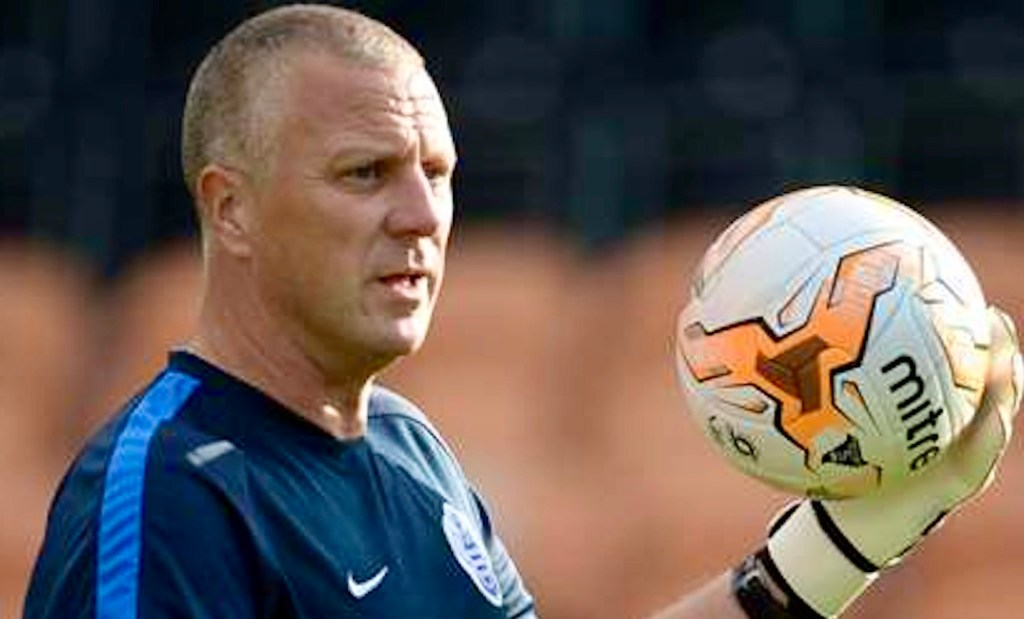
Next up was a brief spell in London, at QPR, where he was appointed by former Albion full-back Chris Ramsey to succeed Kevin Hitchcock.

After leaving the Hoops in early 2016, his next port of call was Swindon Town, to work under Luke Williams, Brighton’s former under-21s manager, but he left after only a couple of months to move to America.

He had several short spells coaching with different clubs in Florida before becoming assistant head coach at The Miami FC in January 2020, when head coach was Kenny Dalglish’s son, Paul.

He became goalkeeper and interim assistant coach for North American professional women’s team the Washington Spirit during the 2021 and 2022 seasons, helping lead goalkeeper Aubrey Kingsbury to the 2021 NWSL Goalkeeper of the Year award and guiding the club to the 2021 NWSL Championship.

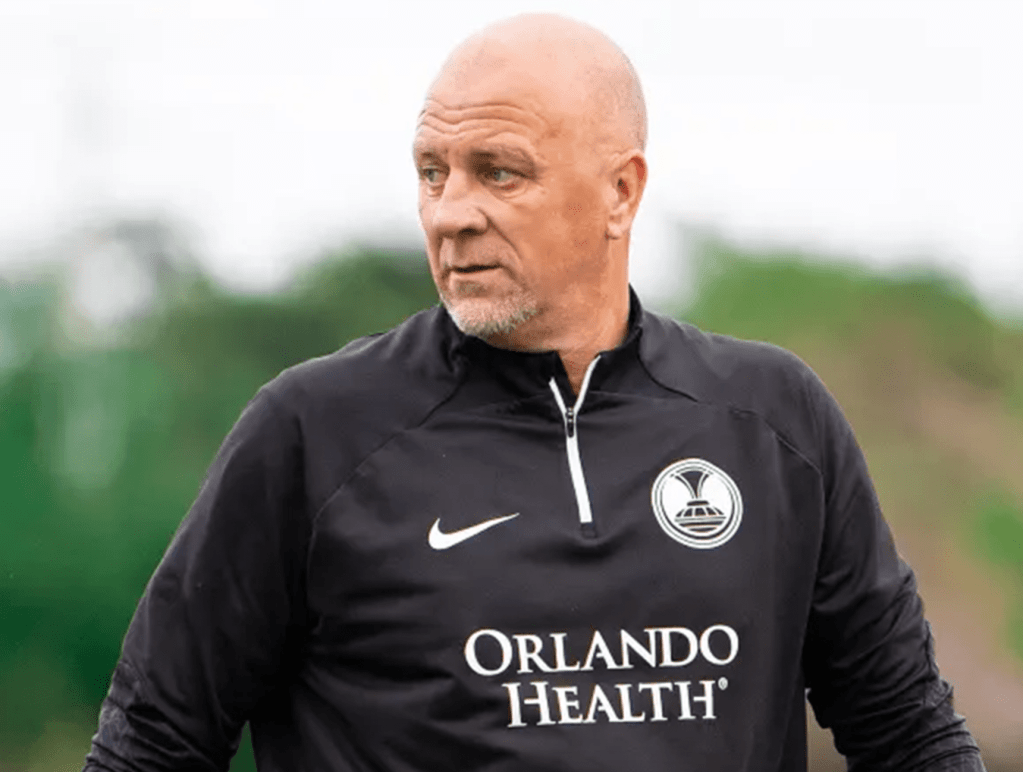
Then in April 2023 he switched in a similar role to Florida based women’s team Orlando Pride.
Injury-plagued Alan Navarro’s loyalties taken as Red

Nav v Suarez

A FORMER midfield partner of Steven Gerrard scored a memorable winner for the Seagulls at Elland Road, but it was a rare highlight in a promising career dogged by injuries.

Alan Navarro trained alongside Gerrard and played with him for Liverpool Reserves. While one went on to become a Liverpool legend and captain his country, the other had to forge a career mainly in the lower leagues.

Navarro talked to the Liverpool Echo about his former illustrious teammate when he prepared to return to Anfield with Brighton a decade after leaving the Merseyside giants.

“I came through as a full-back but then they decided to try me in midfield and I played with Steven a few times,” said Navarro. “It was a good thing but also a bad thing because you knew that you were going to be competing for a place with Steven.

“I trained with him every day for a few seasons….he was always head and shoulders above everyone else. His football, his brain, his pace, his strength, the way he tackles, everything about him was brilliant. He was the player you wanted to be.”

Navarro was talking in a preview to the FA Cup 5th round tie which saw Liverpool steamroller the Seagulls 6-1, courtesy of three own goals (two for Liam Bridcutt, one for Lewis Dunk).

Apart from the disastrous result, Navarro also picked up a booking on his return to Anfield. It was the second time the Liverpudlian had played against the side who nurtured him: he was also in the Albion side who lost 2-1 to the Reds in a League Cup game at the Amex in September 2011.

Nav stripesThe Scouser joined the Seagulls on a free transfer from MK Dons in the summer of 2009, and manager Russell Slade told the Argus: “Alan likes to get on the ball. He is the passer, the one that links you up and tries to make you play. He’s impressed us.”

After picking up an injury early on, he found it difficult to get back in the side until Gus Poyet arrived, and, with his ability to pick a pass for teammates to benefit from, slotted in well.

A cruciate ligament injury in his right knee, suffered in a League Cup game against Northampton Town at the beginning of the 2010-11 season, ruled him out for the season.

Having previously suffered a similar injury in his other knee eight years earlier, he knew what to expect, which he described to Andy Naylor in the Argus.

He later recalled how he feared it might have been the end of his career, but, after proving his fitness to Poyet, he went on to play 39 games for the Albion in the 2011-12 season – finally getting the chance to perform at a level he always felt he was capable of.

Navarro had previously had to contend with life in the bottom two tiers, but he enjoyed a new lease of life playing in the Championship, as he talked about in the Argus.

He played a total of 85 games for the Albion between 2009 and 2012 and only ever scored one goal. But what a memorable one!

Nav Leeds celeb

It came in the 90th minute of a Championship game at Elland Road on 11 February 2012, when his final touch after good work from Liam Bridcutt proved to be the winner as the Seagulls prevailed 2-1.

Craig Mackail-Smith (pictured above celebrating with Navarro and Craig Noone) had opened the scoring for the Seagulls but Luciano Becchio equalised and, just as it appeared the game would finish in a draw, up popped unlikely scorer Navarro.

Born in Liverpool on 31 May 1981, Navarro’s home was in Venmore Street, close to Anfield. “Funnily enough I was a Blue when I was younger,” he told the Albion matchday programme. “My family were Evertonians and a couple of cousins really drilled the club into me from an early age. But when I was 10 or 11, we moved to a house right next to Anfield and I fell in love with Liverpool.

“I loved watching John Barnes, Ronnie Whelan and then Robbie Fowler, even though he was not that much older than me. My mum still lives there, six doors away from The Kop.”

He joined the Reds in 1996, signed professional in 2000, and was a regular in the Reserves. He also had occasional travels with the first team, for example to Russia, Porto and Rome, as well as Chelsea, Newcastle and Sunderland for league games.

“It was strange going from fan to playing for the club, but an unbelievable experience,” he said. “From growing up on the club’s doorstep, I was in the youth team, then playing for the reserves and travelling with the first team to some big games.”

player_navarroIn the 1999-2000 season, Liverpool Reserves won the Premier Reserve League title with Navarro and Layton Maxwell pulling the strings in midfield.

Navarro only made it onto the first team substitutes’ bench twice but got his first taste of competitive action on loan at League One Crewe Alexandra.

He also went on loan to nearby Tranmere Rovers, whose manager, Dave Watson, told the Liverpool Echo: “Alan is a good quality player who has been in Liverpool’s reserves for a while now.

“I have seen him play several times and so have my assistant, Ray Mathias, and our chief scout, Dave Philpotts. (Anfield coach) Sammy Lee speaks very highly of the lad’s work at Liverpool and he’s certainly worth a look.”

After impressing on loan, Navarro made a permanent switch to Rovers in January 2002, signing a three-and-a-half-year contract. “It was difficult to leave because I love the club and a big part of my heart will always be there, but I needed to get my career up and running. I cherish my time there; I was taught the game by the best.”

Things didn’t go according to plan at Tranmere where he suffered a cruciate knee ligament injury and he went out on loan to Chester City and Macclesfield Town.

Navarro moved on from Tranmere in the summer of 2005, initially linking up with Conference National side Accrington Stanley for a month before Macclesfield boss Brian Horton secured his services on a permanent basis. Horton told the club website: “I’m delighted Alan has joined the team. I think he’s going to fit in extremely well.

“We had him here last season and couldn’t quite come to an agreement with Tranmere to sign him, so he went back there and we missed him badly.

“It was no coincidence that his departure came at the time when our form dipped so we’ve been keeping an eye on him for a long time and we’re delighted to have him.”

After his experience at Tranmere made him contemplate quitting the game altogether, it was Horton’s successor at Macclesfield, former Liverpool midfielder Paul Ince, who helped to reignite his passion for football.

“When he came to Macclesfield, he got me wanting to play football again,” he told the matchday programme. “He gave me the spark that helped me fall back in love with the game, and he took me from Macclesfield to MK Dons, where we had a lot of success.

“He remembered me from Liverpool, while his assistant Ray Mathias had me at Tranmere and knew me really well. It just clicked. I knew what Paul wanted from me and vice-versa.”

In August 2007, Navarro followed Ince to MK Dons, where he made 89 appearances over two seasons.

After his three years with the Seagulls, and following a season in which he played 33 matches, it was a little surprising that he was released in the summer of 2012, although supporter Alan Wares told thewashbag.com: “He will be remembered as a player who never gave less than 100 per cent every time he pulled on the shirt.

“It’s a shame to see such a quality player leave, but it shows how far Brighton have come as a club that Gus Poyet feels he can afford to release him.”

How ironic that his debut for new club Swindon should come in the League Cup against Brighton in August 2012 – Navarro scored twice and made the other in a 3-0 win!

However, that was pretty much as good as it got in his spell with the Robins. His Town career comprised only 15 starts plus five as a substitute, and a subsequent knee injury brought his career to an end.

Great strike rate at Brighton but journeyman Benjamin had 29 clubs!

T Benj BTNSELDOM in his remarkable 29-club career did Trevor Benjamin enjoy such a successful spell as the 10 games he spent on loan at Brighton.

The bustling striker who had thrived under Micky Adams at Leicester City the season before scored five times for Mark McGhee’s promotion-chasing side in 2004.

McGhee was keen to keep him through to the end of the season but because of the timing of the three-month deal he wouldn’t have been eligible to play in the play-offs.

As a result, he went back to Leicester and McGhee brought in Chris Iwelumo instead, and, with a goalscoring debut in an away win at Chesterfield, there was no looking back.

Born on 8 February 1979 in Kettering, Benjamin was brought up in Wellingborough, Northants, and, having done well for Wellingborough Colts, was picked up by Kettering Town, playing for their youth team and reserves.

Cambridge United took him on as a trainee and he made his first team debut aged only 16 against Gillingham and went on to score 46 goals in 146 appearances.

Such a scoring record caught the eye of Leicester boss Peter Taylor and, on 12 July 2000, Benjamin joined the Foxes for a fee of £1.3 million.

However, he managed only a single goal in the 2000-01 season and the following season was sent out on loan to Crystal Palace, Norwich City and West Bromwich Albion.

He returned to Leicester for the whole of the 2002-03 season, including playing against the Albion at Withdean.

He said in a matchday programme article for that season’s return match against Brighton on 19 April 2003: “Brighton are a very similar team to ourselves. They have got a good work ethic and never give up.

“I came on as a substitute for the last 10 minutes when we played against them at the Withdean Stadium just before Christmas and that was a tough night.

TBenj Lei action“The conditions were terrible and both sides had to work hard to beat the elements. But I think our quality shone through on the night.” (Leicester won 1-0).

The following season, Benjamin was back on his travels, initially to Gillingham, then Rushden & Diamonds and, in January 2004, to Brighton.

Benjamin’s first Brighton goal came after just 12 minutes of Albion’s home game against Plymouth Argyle, who were then top of the league table. Leon Knight added a second goal before a jubilant celebration in front of the Sky cameras and Albion prevailed 2-1.

He followed that up by netting Albion’s goal in a 1-1 draw away to Wycombe Wanderers, and was again on the scoresheet in the 2-1 away defeat to Grimsby Town.

A 3-0 home win over AFC Bournemouth saw Benjamin score the second of Albion’s three goals at Withdean. When Tranmere Rovers were dispatched by the same score, he once again scored the second goal.

Back at Leicester, when Craig Levein was installed as boss, he cancelled Benjamin’s contract in January 2005. Benjamin initially dropped down a couple of divisions to play for Northampton but, three months later, his old Leicester boss, Adams, took him to Championship side Coventry City. He helped to set up both goals on his debut for the Sky Blues as they beat Reading 2-1.

In Coventry’s matchday programme for their home game against Brighton on 2 April 2005, he talked about how he had been settling in and the efforts he’d been making to try to improve his game.

“I’ve been training quite hard with Alan Cork on my finishing since I got here and he’s great to work with. He’s trying to get me to focus on what I am best at and hopefully when the games start again the practice will pay off.”

Benjamin’s arrival at Coventry may have seen him make a leap of two divisions but he was by no means unfamiliar with football at that level having played with Leicester for five years in both the Premiership and the Championship.

David Antill wrote: ‘During his time with the Foxes he was loaned out to no fewer than seven clubs before eventually signing permanently with Northampton Town but he is delighted to be back in a league he enjoys playing, for a manager he believes can get the best out of him.

“I’ve always believed in my own ability and thought I could play at this level and it was great to be given the chance to return to this league with Coventry,” said Benjamin. “My confidence never really slipped – I never had a doubt about coming here and being able to deliver the goods.

“I know what Micky Adams is all about and he knows what I’m all about so I enjoy working with him. What he’s brought here is exactly what he brought to Leicester and that’s what brought him success there. He’s a hard-working manager and he wants exactly the same thing from all of his players and I think he’s getting that.”

After scoring only once for the Sky Blues, in the summer of 2005 the burly forward linked up with Peterborough United, where he signed a three-year deal. However, he was loaned out several times, appearing for Watford, Swindon Town, Boston United and Walsall.

There was some stability and a return to goalscoring when he moved to Hereford United. He scored 10 in 34 games for the Bulls but was released in May 2008 and ended up drifting across the non-league scene for the next four years, popping up at no fewer than 13 different clubs.

It was all a far cry from the heady days of 2001 and 2002 when he briefly reached the international arena.

He went on as a substitute for Howard Wilkinson’s England under 21s as they beat Mexico 3-0 in a friendly at Filbert Street on 24 May 2001. Because he hadn’t played in a competitive fixture, he was then able to swap allegiances and played two matches for the full Jamaica international side in 2002.

FA Youth Cup winner McPherson shored up leaky Seagulls defence

CENTRAL defender Keith McPherson made just one top division appearance for West Ham’s first team but went on to have a lengthy professional career, with a swansong at Brighton & Hove Albion.

Born of Jamaican parents in Greenwich on 11 September 1963, McPherson signed as an apprentice for the Hammers in 1980 and was a member of the FA Youth Cup winning side in 1981 (they beat Spurs 2-1 over two legs).

It was only the second time in the club’s history they had won the trophy and the excellent theyflysohigh.co.uk faithfully records the details on its website; headlined by the fact young Paul Allen had played in the Hammers FA Cup winning side the year before but was still eligible to play for the youth team.

WHU K McPMcPherson’s single first team appearance came at home to Liverpool on 20 May 1985, the last game of the season, which finished 3-0 to the visitors.

Unable to break through again, he had an 11-game loan spell with Cambridge United before a fee of £15,000 took him to Northampton Town in January 1986. He went on to play 216 times for the Cobblers over the next four and a half years.

In the summer of 1990, he joined then First Division Reading where he played for nine years.

Royals’ manager Ian Porterfield signed him having been impressed when the defender scored twice against Reading in previous visits to Elm Park.

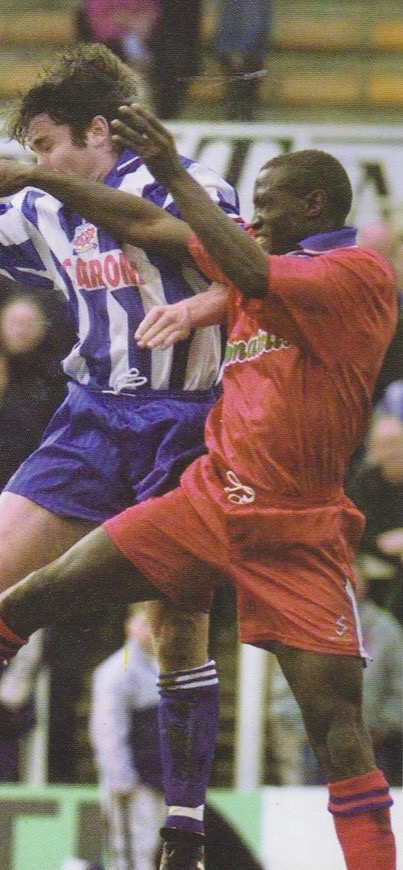
McPherson ReadMcPherson was a regular at the heart of the Royals defence at Elm Park and the Madejski Stadium, and was a key part of the Mark McGhee side that won the Division 2 Championship in 1994.

After spending nine years at Reading, many as captain, and making 317 league and cup appearances, he joined the Albion at the age of 35 shortly before the March transfer deadline in 1999 as beleaguered manager Jeff Wood tried to shore up the centre of a defence which had been leaking goals at an alarming rate.

He made his debut in a hard-fought 0-0 draw away to relegation-threatened Hartlepool which registered Albion’s first point for seven games and first clean sheet since the start of November.

King, McPherson, Doherty and trainee Duncan McArthur all made debuts at Hartlepool

The game also saw Wood give debuts to another experienced defender in former Swindon full-back Phil King together with young Charlton loanee Lee Doherty.

With Albion up against it in the league, McPherson even played with a broken nose, manager Wood telling the Argus: “He is happy to play. It doesn’t affect his breathing and his nose is not the prettiest anyway.

“He is very important to us. I brought him in for his experience and if he didn’t play it would weaken us considerably.”

Before the season was out, the experienced defender had played 10 games under three managers and ended up as captain!

Caretaker manager Martin Hinshelwood handed him the armband for his one match in charge, at Plymouth, and McPherson carried on as captain when Micky Adams took over as manager for the final five fixtures.

One of Adams’ first moves once the season had ended was to secure McPherson’s signature for the following season. Adams told the Argus: “Keith is an older and experienced professional who has still got a bit of life in him.”

For the veteran defender, it was all something of a whirlwind. He said: “It has been very eventful. Jeff brought me down and when the chairman decided he had to go that made my position precarious. When something like that happens, all you can do is play well.”

He continued: “I’m delighted. Micky Adams must have liked what he has seen.”

Having helped Reading to promotion from the old Fourth Division in 1987, McPherson pointed out: “I know all about the hustle and bustle at this level. It’s a matter of being organised. The gaffer has made it clear he wants promotion, which is good for the club and the fans.

“We are going to be playing back in Brighton next season and he wants winners.”

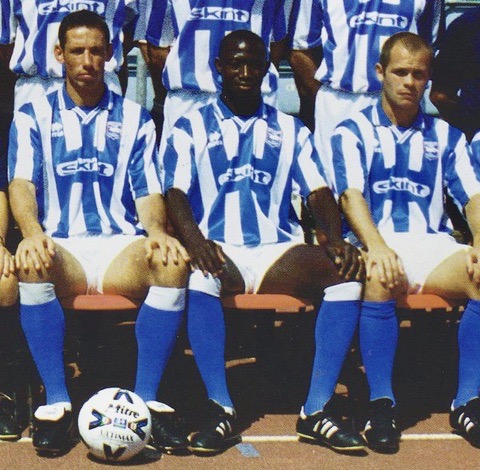
McPherson in the 1999-00 squad photo with Gary Hobson and Charlie Oatway

McPherson went on to play 25 times that season but, having turned 36, it was his last season in a professional career that saw him play more than 500 games.

The emergence of Danny Cullip curtailed his appearances but, when released on a free transfer at the end of the season, together with Warren Aspinall, Adams said: “The door is not closed on them. They have been good lads, model pros.

“They have done well for us this season, but their appearances have been restricted because of other people’s good form.”

When McPherson decided to move to non-league Slough Town to wind down his playing days, Adams told the Argus: “We are sorry to see him go. He is a good pro who always works hard and tries his best.”

After 75 appearances for Slough, McPherson went back to Reading as a coach.

According to getreading.co.uk, he now lives in Surrey and does computing at a private school.

McP in 2017

Pictures: various online sources, and Albion matchday programmes.

Leicester lad Matt Heath plugged Albion defensive gap

Heath celebratesDUCK-loving Matt Heath didn’t shirk a challenge and came to Brighton’s rescue in 2009 when injury and suspension decimated Albion’s available defenders.

Albion were fighting for their League One lives and were in between managers when Heath arrived in March to plug a gap caused by Tommy Elphick, Adam Hinshelwood and Adam Virgo all being sidelined.

Experienced former Leicester City central defender Heath joined on loan from Colchester United, signed at the same time as striker Lloyd Owusu, who undoubtedly made more of a noteworthy contribution with some vital goals and his famous ‘raising the roof’ goal celebration.

As well as defensive problems, Albion also had Nicky Forster, Glenn Murray and loan signing Calvin Andrew out injured as they approached a period of games vital to their chances of staying in the division.

On signing the pair, caretaker manager Dean White told the Argus: “The injury situation meant it was vital to bring players in and Matt and Lloyd are two good additions. They certainly strengthen the squad and both have good experience at this level and higher.”

The 6ft 4ins Heath had made 11 appearances for Colchester that season but only one start since the turn of the year.

He played in six games and scored on his debut away to Leyton Orient on 8 March, the game which marked the beginning of Russell Slade’s period in charge of the Seagulls. Ultimately a recurrence of groin trouble brought an end to his brief Albion career.

Ironically, it was Slade’s predecessor at the Withdean, Micky Adams, who’d been Heath’s manager at Leicester, Coventry City and Colchester.

Born in Leicester on 11 January 1981, Heath came through the Foxes academy, made his debut in the 2001-02 season and went on to play 60 first team games for the club, including 17 Premier League games alongside Ricardo Scimeca. During the 2003-04 season, he had an eight-game loan spell with Stockport County.

Heath scors 4 Leic

In 2005, Adams went back to his old club to take Heath to Coventry City for a £45,000 fee. He played 26 games for the Sky Blues in 2005-06 but only eight games the following season and, in November 2006, was loaned out to Leeds United who made the move permanent in January 2007.

Heath relished his time playing under manager Dennis Wise and his assistant Gus Poyet but after playing 50 games for Leeds, Wise’s successor Gary McAllister deemed him surplus to requirements at Elland Road and Heath once again went to play for Adams, this time at Colchester.

He initially joined on loan but then spent five seasons on the Us’ books, making a total of 106 appearances, albeit during his time with them he had a couple of spells out on loan.

One of those was that brief stint at Brighton and the following season he played four games for Southend United.

When his contract was up at Colchester, he switched to Northampton Town, where the manager was one of his old Colchester bosses, Aidy Boothroyd, but he didn’t make any first team appearances and left the club to join non-league Harrogate Town in January 2008 where he made 29 appearances. Next up was Harrogate Railway FC.

However, Heath simultaneously pursued an education role in sport, and he became a course manager and lecturer at Askham Bryan College in York having studied football coaching at the University of East Anglia.

In March 2019, Askham Bryan College announced it was becoming a sports hub for Leeds United, with Heath playing a prominent role.

Heath talked about the importance of former professional players having a plan for life after football in an interview with Non-League Yorkshire.

He said: “I’ve had so many good friends in the pro game and they’re all five years younger than me and I’ve told all of them to do something because you have so much time on your hands when you’re playing pro football.

“I’ve said: ‘Get a qualification or do something because when it all finishes, you either get lucky and fall into something like myself or you’ll be in a place where you’re not sure what to do’.

“I think most of the lads in the pro game don’t realise that it just stops like that.”

In 2015, Heath combined his day job with captaining Northern League – North West Division side Tadcaster Albion and then became assistant manager for two years, working under Billy Miller, who was his boss (head of sports and public services) at Askham before being promoted to a director.

Heath subsequently became a teacher-coach in Leeds’ education department, working with a group of would-be footballer students in Nottingham.

“The kids finish their GCSEs and want to carry on in education and the college provide a programme where they carry on with their education, get a Level 3 BTEC-extended Diploma and we link it alongside training every day and play in the National League as well, ” he explained to Jonathan Waldron of the Colchester Gazette, in a February 2021 interview.

“So the kids get the training, the education and luckily I’ve got a role there where I’m part of both of it, in the classroom and out on the training field as well and matchdays for our college.”

Telling the reporter that he still looks out for the results of all the clubs he used to play for, he added: “It’s nice to reminisce but my family just tell me to shut up if I go on about it!

“I was lucky; dedication and hard work gets you a long way in football and you have to have a bit of a rub of the green, along the way and managers and coaches who take an interest in you and see something and then roll with it a little bit.

“I’m proud of what I achieved.”

Heath college coach

An all-too-fleeting, injury-dogged career for the late Bernie Gallacher

WELL-known names from the football world paid their respects at the funeral of tenacious left-back Bernie Gallacher.

Gallacher, who played for Aston Villa and Brighton, died in Sutton Coldfield in August 2011, aged 44, after a short illness.

Ginger-haired Gallacher was born in Johnstone, near Paisley, in Scotland, on 22 March 1967 and he played football for his school teams, St Peter’s Primary and St Aelred’s High.

His brother John played for Scotland schoolboys but Bernie missed out because he broke a leg just before a big game. Nevertheless, scouts from Leicester City and Villa had been tracking him and, at 16, he chose to join Villa, who’d won the European Cup the year before.

“Football was his life and he often played two or three games a day when we were growing up in Johnstone,” his other brother Charlie told the Paisley Daily Express. “I’ll never forget his debut for Villa because it was against Manchester United at Old Trafford and I remember thinking it didn’t get any better than that.”

It was the final game of the 1986-87 season and Villa were already heading back down to the old Division Two (now Championship). In an Albion matchday programme article, Gallacher said: “The Old Trafford match was a great occasion, but a bit unnerving in front of a cpacity crowd.

“The crowd seemed to be breathing down my neck – at that time I was used to only a couple of hundred watching the reserve side.”

The opportunity came under Graham Taylor after Gallacher successfully made it through the apprentice ranks. Taylor told the Birmingham Mail: “Bernie was reliable, wanted to do well and was never going to cause any trouble. He was a manager’s dream.

“He wanted to do his best and he wasn’t going to cause me any problems on or off the pitch.

“There are a number of players who don’t get recognised in football and Bernie was one of those. He would come out and give us a seven out of ten performance every week.

“If he’d had more confidence and belief in himself we might have seen some nine out of ten performances.”

Gallacher made a total of 72 appearances for Villa between 1985 and 1990, but former Villa teammate, Pat Heard, recalled: “Bernie became a cult hero during the 1987-88 promotion season and never gave less than 100 per cent every game.”

That season he played in all but one of Villa’s league games as they earned automatic promotion back to the top tier. But he only played 13 more top-flight games for Villa, seven of which came in the 1989-90 season when the Midlands club were runners up behind Liverpool, seven points ahead of third-placed Tottenham Hotspur. His final appearance in a Villa shirt came against Chelsea at Stamford Bridge in November 1990.

He had a brief loan spell at Blackburn Rovers and also played a couple of games for Doncaster Rovers before heading south to join Barry Lloyd’s second tier Brighton in the autumn of 1991, having been released by Villa.

Gallacher took over the left-back slot when Sussex lad Ian Chapman was injured and made his debut in a 1-0 defeat away to Blackburn on 2 November.He kept his place through to the end of what proved to be a disastrous season with Albion relegated in 23rd spot. While defending was his no.1 priority, Gallacher got on the scoresheet in a 2-1 Boxing Day defeat at Leicester.

North Stand Chat contributor, Blue Seagull, recalled: “The ball was played to him on the left touchline right in front of me; he cut inside one, went past another, and unleashed a shot from the edge of the area. Great goal!”

Gallacher took over the captain’s armband when normal skipper Gary Chivers and club captain Dean Wilkins were both unavailable, but it wasn’t the first time he had led a side. At Villa he’d captained the youth and reserve sides.

“Captaining a side is a privilege and I’ll be happy to do it until either Deano or Chivs is back,” he said.

He played 45 games for Brighton in total but his career was cut short by a bad injury. “Unfortunately, he suffered a horrendous cruciate ligament injury which all but ended a fantastic career,” his brother recalled in 2011. “We were all extremely proud of Bernie, as he really did make a name for himself at Villa Park and is still remembered fondly for his time with the club.”

He made a couple of appearances for Northampton Town after he left Brighton, but he was forced to retire from the game aged just 27. He later worked in the probation service.

Gordon Cowans, Brian Little and Steve Staunton were among the former Villa heroes who paid tribute to him at his funeral.

Elite career eluded Darren Hughes after cup-winning start

HughesDARREN Hughes won the FA Youth Cup with Everton but it was lower down the league where he built a long career which included a season with second tier Brighton & Hove Albion.

Born in Prescot on Merseyside on 6 October 1965, left-back Hughes played for Everton in two successive FA Youth Cup finals.

He was on the losing side against Norwich City in 1983 (when among his Everton teammates was centre forward Mark Farrington, who later proved to be a disastrous signing for Barry Lloyd’s Brighton).

The tie went to a third game after it was 5-5 on aggregate over the first two legs. The Canaries won the decider 1-0 at Goodison Park. The following year, Hughes was a scorer, and collected a winners’ medal, as Everton beat Stoke City 4-2 on aggregate.

Meanwhile, the young Hughes had broken into Everton’s first team as an understudy to stalwart John Bailey, making his Everton debut two days after Christmas in 1983.

Unfortunately, the game ended in a 3-0 defeat away to Wolverhampton Wanderers, for whom former Albion winger Tony Towner was playing.

It wasn’t until May 1985 that Hughes next got a first team opportunity, featuring in a 4-1 defeat to Coventry City at Highfield Road and a 2-0 defeat to Luton Town – manager Howard Kendall resting some of the first-choice players after the League title had already been won and ahead of the European Cup Winners’ Cup Final against Rapid Vienna.

With the experienced Bailey and Pat Van Den Hauwe in front of Hughes in the pecking order, Kendall gave the youngster a free transfer at the end of the season, and he joined Second Division Shrewsbury Town, where he made 46 appearances.

Hughes played against Albion for Shrewsbury at Gay Meadow on 16 September 1986, and, two weeks’ later, Alan Mullery, back in charge of the Seagulls for a second spell, signed the 21-year-old for a £30,000 fee.

D Hughes blue

Not for the first time, hard-up Albion had devised a scheme to raise transfer funds from supporters, and the money for the purchase of Hughes came from the Lifeline fund which also helped Mullery to buy goalkeeper John Keeley for £1,500 from non-league Chelmsford and striker Gary Rowell, from Middlesbrough.

Hughes made his Albion debut in a 3-0 defeat at home to Birmingham in the Full Members Cup on 1 October 1986 and his first league match came in a 1—0 home win over Stoke City three days later.

“I was quite happy at Shrewsbury,” Hughes told matchday programme interviewer, Tony Norman. “But when the manager told me Brighton were interested in signing me I thought it would be another step up the ladder. It’s a bigger club with better prospects and it’s a nice town as well.”

The single lad, whose parents were living in Widnes, moved into digs in Hove run by Val and Dave Tillson. He was later joined there by Kevan Brown, another new signing, from Southampton.

Hughes said away from football he enjoyed golf and had played rounds with Steve Penney, Dean Saunders and Steve Gatting.

Brown, in a similar programme feature, said Hughes had been a big help in him settling into his new surroundings. “He has been showing me around the area and we’ve become good friends,” he said. “I’m glad I wasn’t put in a hotel on my own.”

Unfortunately for Hughes, life on the pitch didn’t go quite according to plan.

Mullery was somewhat controversially sacked on 5 January 1987 and, although Hughes played 16 games under successor Lloyd, those games yielded only two wins and the Albion finished the season rock bottom of the division.

The only consolation for Hughes was scoring in a 2-0 home win over Crystal Palace on 20 April. His final appearance in a Seagulls shirt came in a 1-0 home defeat to Leeds when he was subbed off in favour of youngster David Gipp.

Having played only 29 games, mostly in midfield, for Brighton, Hughes joined Third Division Port Vale in September 1987, initially on loan, before a £5,000 fee made the deal permanent.

It must have given him some satisfaction to score for his new employer in a 2-0 win against Brighton that very same month.

Hughes spent seven years with the Valiants, helping them to win promotion from the Third Division in 1989, making a total of 222 appearances, mainly as a left back.

His time with Vale was punctuated by two bad injuries – a hernia and a ruptured thigh muscle – and they released him in February 1994.

However, he gradually managed to restore his fitness and in 1995, between January and November, he played 22 games for Third Division Northampton Town.

He then moved to Exeter City, at the time managed by former goalkeeper Peter Fox, where he made a total of 67 appearances before leaving the West Country club at the end of the 1996-97 season.

He ended his career in non-league football with Morecambe and Newcastle Town but could look back on a total of 388 league and cup appearances for six clubs over a 14-year career.

After his playing days were over, according to Where Are They Now? he set up a construction business.

D hughes by tony gordon

Pictures: matchday programme.