Big Chiv’s Brighton cameo at the end of an illustrious career

FORMER England international Martin Chivers rose majestically to head home a goal in a 3-3 draw between Leyton Orient and Brighton & Hove Albion.

It was textbook Chivers – a replica of so many similar goals he’d scored for Spurs and England during his glory days – and it put Albion 2-1 up. It turned out to be his one and only goal for the Albion.

It came in one of just five games he played for the Seagulls as his illustrious playing career drew to a close. In Teddy Maybank’s absence through suspension just as Brighton inched closer to promotion to the elite for the first time ever, Chivers – once one of this country’s top centre forwards – was an ideal stand-in.

The game at Brisbane Road on 7 April 1979 saw former Spurs League Cup winning teammates Chivers and Ralph Coates on opposing sides and, a 3-3 thriller was a cracking match for ITV’s The Big Match to have chosen for showing the following Sunday afternoon.

A month later Albion would travel to St James’s Park, Newcastle and clinch that dream promotion.

John Vinicombe, faithful chronicler of Albion’s fortunes for the Evening Argus, declared: “Make no mistake, Albion are First Division bound after that tremendous match at Orient.”

Mike Calvin in the Sunday Mirror, said: “Chivers’ bullet like header became an instant candidate for ITV’s goal of the season.”

While Ian Jarrett in The Sun said: “Martin Chivers’ 32nd minute goal came straight out of the former England striker’s scrapbook. ‘It was a dream goal. I’d like to have it on tape so that I could watch it being played back again and again,’ Chivers told him.

In the days when strikers invariably hunted in pairs, Chivers had previously starred for Tottenham Hotspur alongside the late Scot, Alan Gilzean, as Spurs put silverware in the White Hart Lane trophy cabinet in three successive seasons.

The team captain during that successful period was Alan Mullery and after the midfielder had hung up his boots and taken charge of the Seagulls, he turned to his old teammate in his hour of need.

With regular striker Maybank facing a two-match suspension, Mullery bought the 34-year-old Chivers for £15,000 from Norwich City just before transfer deadline day in March 1979 and he made his debut in a home 0-0 draw against Notts County on 31 March.

Chiv v CharltonEven a crocked Chivers (by his own admission, a troublesome Achilles tendon restricted his fitness) could do a job for the Albion in an emergency, the young manager believed.

“I took a bit of a chance on him, but he was terrific for us,” Mullery recalled in a retrospective matchday programme article. “He was a proven goalscorer and helped us both on and off the pitch.”

Chivers explained exactly how it came about in his autobiography, Big Chiv – My Goals in Life, which he discussed in an interview with the Argus in 2009.

Maybank returned to the side for the successful promotion run-in and, during the summer, Chivers had an operation on his Achilles. The new season, amongst the elite for the first time, was 13 games old before Chivers saw action for the Seagulls.

He appeared as a substitute in a 2-1 defeat away to Coventry City on 20 October, and the national media singled him out for mention.

“When Chivers came on for Ward 11 minutes after the break, the game at last came to life. From then on, Brighton were more decisive in attack and played with more confidence,” said the Daily Telegraph.

Sunday Express reporter William Pierce added: “Martin Chivers went on as a substitute for the out-of-touch Peter Ward and the ex-England striker twice might have scored.”

That contribution earned Chivers a starting place at Maybank’s expense in the next game, a 4-2 home defeat to his old club Norwich, and he stayed up top, this time partnering Maybank, in a 0-0 home draw with Arsenal in the fourth round of the League Cup.

But that was the last time he appeared in the first team. Mullery turned instead to another former Spur, Ray Clarke, and he and Ward were the preferred front pairing for the rest of the season.

Chivers remained with the club, appearing regularly in the Reserves through to the end of the season, and doing some scouting work, but his top-flight career was finally over.

But let’s take a look back at what had gone before. It was an impressive rise to fame.

Born in Southampton on 27 April 1945, Chivers was a pupil at the city’s Taunton’s Grammar School and wrote to his local club asking for a trial. His prowess as a goalscorer grew rapidly.

chiv SaintAfter playing regularly for Southampton’s youth side, his breakthrough came in September 1962 when just 17. He made his first-team debut against Charlton Athletic and signed as a full-time professional in the same week. He became a first-team regular the following season.

In February 1964, Chivers and future teammate Mullery were called up (along with future Albion goalkeeper Peter Grummitt) by Alf Ramsey as Reserves for the England under 23 side for a 3-2 win over Scotland, played in front of 34,932 fans at St James’s Park, Newcastle.

Two months later, at Stade Robert Diochon in Rouen, shortly before his 19th birthday, Chivers made a goalscoring debut for the Under 23s when coming on as a substitute for Geoff Hurst as England drew 2-2 with France.

It was the start of a record-breaking Under 23 career; in four years he appeared 17 times.

Southampton skipper Terry Paine, who was part of England’s 1966 World Cup winning squad, played alongside Chivers as he developed. “The potential was always there, especially when he made the Southampton first team. But the one thing he may have lacked was determination,” he told Goal magazine.

On Saints’ promotion to the top division in 1966, Bates supplemented his attacking options with the addition of established international Ron Davies from Norwich.

Davies and Chivers proved a twin threat to opponents but Chivers was somewhat overshadowed by the Welshman, and Paine said: “They just weren’t compatible. It didn’t work having two big blokes up there together. Chivers was playing second fiddle. He was no match for Ron in the air, there was never any doubt about that.”

It eventually led to Chivers putting in a transfer request in December 1967 and, a month later, having scored 106 goals in 190 appearances for Southampton, he was transferred to Tottenham for £80,000 with winger Frank Saul, an FA Cup winner with Spurs in 1967, a £45,000 makeweight going in the opposite direction.

Saints fans had a new hero in the emerging Mike Channon and inevitably comparisons were drawn between the two. “Martin had more finesse on the ball when he was Mike’s age, without punching his weight,” said Southampton boss Ted Bates. “Mike, however, has more drive and desire, a ruthless approach which Martin never had.”

Indeed, even in the early days at Spurs, fans failed to see why Spurs had shelled out what at the time was the biggest ever transfer fee in the country for the striker, with the legendary Jimmy Greaves and Scot Alan Gilzean the preferred front pairing.

It didn’t help matters when he was sidelined for months by a serious knee injury, although Bates felt the spell out actually proved to be a turning point in his career.

“During that long spell out of action I think he must have taken a good, long look at the game and examined himself thoroughly,” said Bates. “The result is that he now uses the full range of his talents.”

Bates believed he lacked belief in his own power and seemed reluctant to use his size to his advantage. “We were always trying to get Martin to use his physique properly,” said Bates. “He knew he had to be more aggressive, but in those days a big, strong centre-half could swallow him.”

It looked as though Chivers was going to be an expensive flop and, in an interview with Ray Bradley for Goal magazine, he admitted he’d been through a crisis at Spurs and his career had been at a crossroads.

“It was a hell of a frustrating time for me,” he said. “No matter how hard I tried I just couldn’t strike form. I suppose I was really battling to regain confidence again after injury.

“The fans, disgruntled with the form we had been showing, were gunning for me and finally they got their way when I was dropped.

“Things looked black for me but I was determined to fight my way back into the side. The turning point for me, I think, came in a reserve game against Northampton at the end of the season.”

Reserve team manager, Eddie Baily, took him aside and had a private chat, telling him the only way he’d get back his confidence was to fight for it on the pitch.

“He instilled in me that I must be more aggressive, that I must put myself about more if I was to win back my first team place,” said Chivers. “That little pep talk seemed to do the trick. It was a wet pitch and I really gave it all I had and ended up by scoring five goals.

“His words of encouragement after the match made me realise that it was up to myself if I wanted to succeed.”

With Greaves having departed the club for West Ham, once Chivers was back in the first team he did well up against Jack Charlton and Norman Hunter of Leeds, and he began to recapture his form. A good start to the 1970-71 season saw everything start to slot into place.

“I’ve always liked scoring goals,” he said. “Ever since I was a boy I liked to see the ball hit the back of the net.”

After scoring twice to help Spurs beat Aston Villa in the 1971 League Cup Final, Chivers said: “I feel fabulous. That’s the only way to describe how I feel after scoring two goals in my first-ever appearance at Wembley.

“Spurs are back on the glory trail and those two goals have really sealed my comeback this season.”

In a series of Goal articles about Chivers in November 1971, writer Warwick Jordan declared: “There have been few more exciting centre forwards to grace the game and there is little reason to dispute the claim that the Tottenham striker could become one of the best ever,”

A whole raft of top division players and managers were happy to put on record their admiration for the centre-forward. Everton boss Harry Catterick described him as “the new John Charles” and claimed: “Chivers has emerged this year as the most talented centre-forward in Britain.”

Leeds manager Don Revie was a big admirer, saying: “Chivers is a better player than Geoff Hurst. The comparison is appropriate as both men possess a high degree of skill not normally found in strikers of their heavy build.

“It’s hard to choose between them, but I consider Chivers has the slight edge as he does not rely so much on the men around him. He has the ability to take the ball through on his own and create chances out of nothing.”

Manchester City team boss Malcolm Allison said: “This boy is the best all-round centre-forward in Britain. He’s big, strong, skilful and exciting. A tremendous player who will always get goals.”

Stoke midfielder Mike Bernard told the magazine: “Chivers has got guts, skill, aggression, ball control and tremendous determination. You can’t fault the guy.”

Teak-tough centre back John McGrath, who once had a brief spell on loan to the Albion from Southampton, added: “That bad injury has helped to make him a much more determined player. When your career is in the balance it gives you a greater determination to succeed. Chivers has come back to the game a different player.

“He’s a much more physical player now. A more confident player than he was before. He’s developed more character.

“People don’t realise how fast he is. He’s got a sort of loping run, a bit ungainly. But it’s deceptive because he is gathering speed all the time.”

Despite gaining that record number of England under 23 caps, it wasn’t until early 1971 that he got his chance on the full international stage. His reinvigorated Spurs form led to him making his full England debut away to Malta on 3 February 1971, when England gained a 1-0 win under the captaincy of his Spurs teammate Mullery.

He scored his first goal for England two months later in a 3-0 win against Greece at Wembley.

It was said Chivers really arrived as an international star after a powerful two-goal performance in a 3-1 win over Scotland at Wembley on 22 May 1971.

“This has been the greatest day of my life,” said Chivers, after that win. “I didn’t know I was playing until lunchtime on the same day. I was determined to show I was worth my place.

“I know a lot depended on my display in that game. I know I could have jeopardised my international future if I had not grabbed the opportunity.”

Afterwards, though, he declared: “Now I feel I have established myself as an England player.”

Fellow England striker Francis Lee told Goal’s Jordan: “He’s a football manager’s dream. At his present rate of progress, he could become the greatest centre-forward this country has seen.

“His tremendous potential blossomed during that game in Switzerland (scored in a 3-2 win in Basle, 13 October 1971) where his performance made the difference between victory and possible defeat.

“But his finest game for England so far was the one against Scotland. Today he is the hottest soccer property in the game. He’s going to be a big winner for England.”

In total, he scored 13 times in 22 starts plus two appearances from the subs bench, but, in less than three years, Chivers’ England career was over.

He never played for his country again after being subbed off in the crucial game that meant England wouldn’t qualify for the 1974 World Cup – a 1-1 draw with Poland at Wembley in 1973.

In eight years at Spurs, Chivers scored 174 goals in 367 games, his greatest success coming between 1970 and 1973, when he scored more than 20 goals in successive seasons, and was a key part of the side that won the 1971 and 1973 League Cups, finished third in the league in 1971, and picked up the 1972 UEFA Cup.

He had two seasons in Switzerland, playing for Servette, before returning to the English game with Norwich in 1979-80, before the move to Brighton.

On leaving Brighton, he went initially to Southern League Dorchester Town as player-manager, then Norwegian side Vard and finished playing 10 games for Barnet in 1982-83.

It was a phenomenal scoring record to notch 255 goals in 546 appearances.

After he’d finished playing, Chivers became a hotelier in Hertfordshire (during which time I got to speak to him in a professional capacity, helping to promote my client’s involvement in his business) and for several years he was a matchday host at White Hart Lane.

Chivers died at the age of 80 on 7 January 2025.

Pictures from a variety of sources, especially Goal and Shoot magazines and matchday programmes.


Much-travelled Ade Akinbiyi a big hit in brief Seagulls spell

A STRIKER with wildly differing fortunes in a varied and much-travelled career made a good early impression when joining Albion on loan from Norwich City back in the autumn of 1994.

Ade Akinbiyi had not long since broken through to the City team as a teenager and he scored four times in seven games on loan to the Seagulls.

Just turned 20, Akinbiyi arrived at a time when Liam Brady’s Albion hadn’t registered a win for 11 games and, although Albion lost the first game he played in, the remaining six produced three wins and three draws.

AA scores

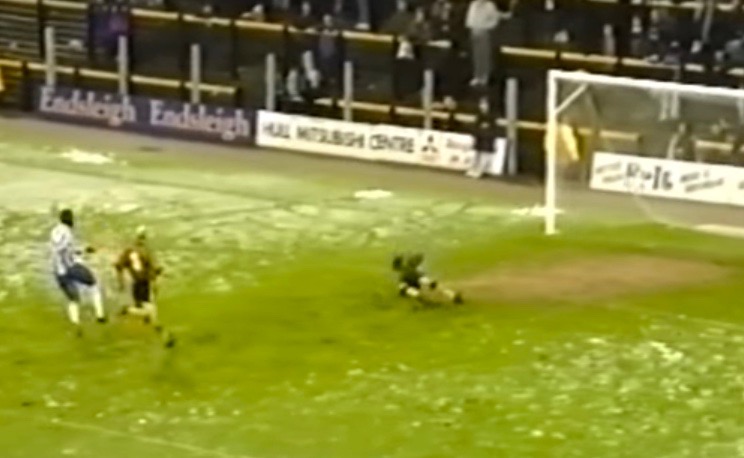
There is some YouTube footage of him scoring Albion’s second goal on a snowy pitch at Hull City’s old Boothferry Park ground in a game that finished 2-2.

“He is powerful and big and he can take knocks and we have missed having somebody in that mould,” Brady wrote in his matchday programme notes.

Later in his career Akinbiyi would prove to be a real handful for the Seagulls – I recall him shrugging off a powder-puff challenge from a young Dan Harding at Withdean and muscling his way to a winning goal for Stoke City. Manager Mark McGhee subbed Harding off and publicly lambasted him afterwards.

Born in Hackney on 10 October 1974, Akinbiyi was more interested in athletics at an early age, as he told the Lancashire Telegraph.

“I was interested in football but not massive on playing it,” he said. His school PE teacher persuaded him otherwise. “I went to play for my district team, Hackney, and it all started from there.”

From Hackney, Akinbiyi joined nearby Senrab, the team that blooded the likes of Bobby Zamora, Leon Knight, John Terry and Jermain Defoe.

His age group earned a place in a children’s tournament in Great Yarmouth called the ‘Canary Cup’ where he was spotted by a scout for nearby Norwich, who signed him as a schoolboy.

“The schoolboy and youth team system was second to none, as it still is now,” said Akinbiyi. But he found it hard living away from home, missing his mum’s native Nigerian cooking.

But after finding new digs with a few of his team-mates, he stuck at it and earned a dream debut as a substitute against Bayern Munich in the return leg of their UEFA Cup second round game, less than a month after his 19th birthday.

“I thought my debut would come in a cup game, perhaps against lower league opposition, not against Bayern Munich,” he said. “Not many people make their debut in a European cup competition.”

Although Akinbiyi made 51 league appearances for Norwich, his Canaries career never really took off, hence the Brighton loan spell and a similar move to Hereford United.

Eventually, though, a manager who believed in him, Tony Pulis, made him a record £250,000 buy for Gillingham in January 1997. Akinbiyi repaid Pulis’ faith in him with 29 goals in 67 starts, leading to Bristol City paying £1.2million for the striker following their promotion to the old Division One (now the Championship).

akinbiyi + colin lee

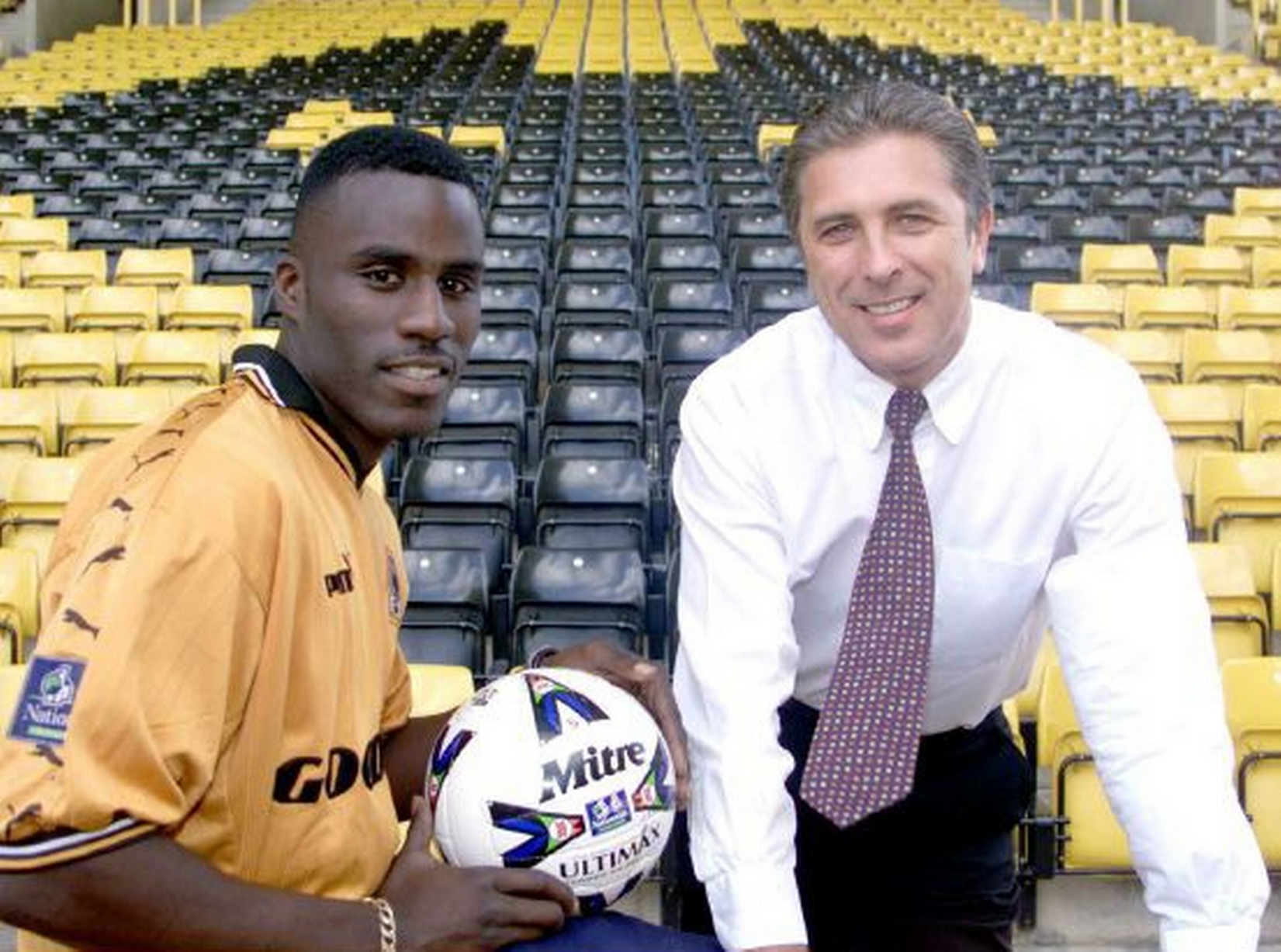
After scoring 21 goals in 47 league appearances for the Robins, in 1999 he completed a £3.5m move to Wolverhampton Wanderers. In the same year, he played his one and only game for Nigeria, in a friendly against Greece in Athens.

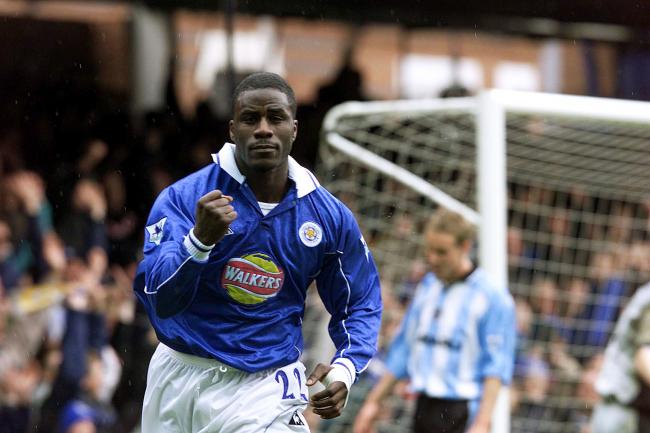
He made a great start at Wolves, scoring eight times in his first 12 games for Colin Lee’s side, but a year later, switched to Premier League Leicester City, after the Foxes’ boss Peter Taylor (later to replace Micky Adams at Brighton) paid out a £5m fee for the striker.

Ade A LeicesterAkinbiyi was brought in to replace Emile Heskey, a real Filbert Street hero who had been sold to Liverpool for £11m. However, his goal touch eluded him and he managed to score only 11 goals in 58 league appearances for the club – some Leicester fans dubbing him Ade Akin-Bad-Buy!

Akinbiyi looked back on it in an interview with Four Four Two magazine and said: “I came in as Emile Heskey’s replacement, but he is a different breed of footballer.

“He’s big, strong and scores goals, but, back then, if Heskey wasn’t scoring a lot he could get away with it. He was the local hero. I was a different player – I’d be running in behind and trying to cause people problems. But Leicester looked at my record in the Championship and thought I’d come and do the same thing.”

Eventually they cut their losses and sold him to Division One Crystal Palace for £2.2m. At Selhurst, he was rather ignominiously given the number 55 shirt! Having scored just one goal in 14 league and cup appearances, in 2003 he was loaned to Stoke City, under his old boss Pulis.

He scored twice – the second goal coming in the last game of the 2002-03 season, when the Potters won 1-0 against Reading to seal their Division One (now the Championship) status (the season Albion were relegated).

Akinibiyi discussed the events in an interview with another ex-Stoke, Burnley and Brighton striker, Chris Iwelumo, for Stoke City FC TV.

AA chat with CIIt led to Akinbiyi joining on a permanent basis, on a free transfer, and he became a cult hero with the Stoke City crowd.

In March 2005, Burnley signed him for £600,000 – and he was promptly sent off on his debut! The game was only two minutes old when he head-butted George McCartney of Sunderland, and was shown a straight red.

Less than a year later, he was on the move again, switching to Sheffield United in January 2006 for what was then a club record £1.75m fee.

He scored on his Blades debut against Derby County but by October that year he was in the news for his alleged involvement in a training ground bust-up with team-mate Claude Davis.

In all, Akinbiyi made only five appearances for the Blades in the Premiership in 2006 and, on New Year’s Day 2007 he returned to Burnley for a £650,000 fee, with add-ons.

He scored in his first game back, against Reading, but only notched three by the season’s end. Burnley fans have some good memories of him, particularly in a brief spell when he played alongside loan signing Andrew Cole, but on 2 April 2009, Burnley offloaded him to Houston Dynamo.

Dave Thomas, a prolific writer on all things Burnley, talked about Akinbiyi’s cult hero status among Burnley fans, telling thelongside.co.uk: “Ade certainly had a talent and that talent was scoring goals. The story that he was utterly bad at this is totally inaccurate, but that is the legend that developed, at one club in particular, Leicester City.

“In truth, at Burnley too, he missed sitters that Harry Redknapp might say his wife could have scored. But then so do all other players and, in many games, he displayed all the things that he was good at, and the attributes that he had in abundance.”

After he was released by Houston, back in the UK he played 10 games for Notts County, as they won the League Two title In 2009-10, and the following season pitched up in south Wales to play for then non-league Newport County.

In July 2013, Akinbiyi became a player-coach for Colwyn Bay, managed by his former Burnley teammate Frank Sinclair, but both resigned in January 2015 after a 5-0 defeat at Boston.

Akinbiyi now lives in Manchester and in 2015 was interviewed about work he has done as an ambassador for Prostate Cancer UK after his father died from the disease.

Liverpudlian Melia etched a never-to-be-forgotten place in Brighton’s history

IT WAS the stuff of dreams when Liverpool born and bred Jimmy Melia saw his underdog Seagulls side beat the mighty Merseyside giants en route to Brighton’s one and only FA Cup Final appearance.

In fact, it wasn’t the first time Melia had taken a side to Anfield to play in the competition. On 2 January 1971, as player-manager of lowly Aldershot, he returned to the ground where he’d been an inside forward under Bill Shankly and gave them a scare in the third round, the Fourth Division side only losing 1-0.

Even Liverpool’s wideman, Steve Heighway, admitted: “I suppose we were lucky to win. It was a frosty day and the ball was playing quite a few tricks. I don’t think we were in any danger of losing. But Aldershot were playing well that day. They could have sneaked a draw.”

How satisfying, then, to return in 1983 and pilot Albion’s unlikely 2-1 win, with a winning goal courtesy of that other former Anfield favourite, Jimmy Case.

In the run-up to the game, Melia, raised in Liverpool’s Scotland Road, told the Daily Mail: “I’ve got 11 brothers and sisters in the Liverpool area and they’ll all want to be there.”

He clearly didn’t fear the game, pointing out that Brighton had been the last team to win at Anfield, and telling the Argus: “It is a great tie for us. When I was manager at Aldershot we lost 1-0 to them and I think we will do better this time. Remember, the Cup is full of all sorts of upsets. It wouldn’t be the Cup otherwise.”

After the famous victory, Melia told Alex Montgomery of The Sun: “I’ve been involved in some great Liverpool victories but this is without doubt the greatest win.

“The great thing about it is that we didn’t just nick a win. We deserved what we got. A lot of people said that if we attacked them we would just set ourselves up for a hiding. That is not the way it worked out.”

It emerged after the game that John Manning, an old footballing friend of Melia’s, had been key to plotting the victory. Former Crewe, Bolton and Tranmere striker Manning, Albion’s scout in the north at the time, gave the players a pre-match rundown on what to expect.

“Best team talk we’ve ever had,” defender Gary Stevens told the Daily Mail. “Liverpool played exactly the way he said they would and he was even right about which side (Phil) Neal would send his penalty (which went wide of goalkeeper Perry Digweed’s post).”

Born in Liverpool on 1 November 1937, Melia attended the city’s St Anthony’s School and didn’t play his first organised football match until the age of 11. He quickly demonstrated a talent for the game and after shining for the school side was picked to play for Liverpool Boys.

At 14, he was selected for England Schoolboys but a broken collarbone meant he was unable to play. A year later, though, after captaining Liverpool Boys, he got another chance with the national schoolboy side, making his debut against Eire in a team that included Bobby Charlton and Wilf McGuinness.

Liverpool offered him a place on the groundstaff as soon as he left school and, at the age of 17, he was taken on as a professional by former Brighton manager Don Welsh, who took over as Liverpool boss in 1951. Ahead of a Brighton v Portsmouth game in 1983, Melia mentioned his closeness to their manager at the time, Bobby Campbell.

“We virtually grew up together in the same street in Liverpool and we both signed for Liverpool as youngsters on the same day,” he wrote in his matchday programme notes. “We literally have a lifelong friendship.”

Melia scored on his Liverpool debut against Nottingham Forest in a 5-2 win when the famous Billy Liddell scored a hat-trick, and he was making a name for himself at a national level too. Melia scored twice for the England Youth side as they romped home 9-2 winners over Denmark at Home Park, Plymouth, on 1 October 1955. The following month he was on target again as England beat the Netherlands 3-1 at Carrow Road, Norwich.

Between the 1955-56 and 1963-64 seasons, Melia played 287 games for Liverpool, scoring 78 goals. It might have been more but for the fact he had to do National Service although the consolation was that he got to play in the British Army side with the likes of Duncan Edwards, Bobby Charlton, Dave Mackay, Peter Swan, Cliff Jones and Alan Hodgkinson.

One of his Liverpool goals came in a home game against Brighton on 10 October 1959. Phil Taylor’s Liverpool were 2-1 down to the Albion that Saturday afternoon and, in the 85th minute, Melia stepped up to take a penalty…and missed. Nevertheless, he atoned for the mistake by slotting home a last-gasp equaliser. A month later, Shankly took over as manager.

In a series of profiles of the leading Liverpool players of the era, journalist Ivan Ponting said: “Jimmy Melia was the principal midfield ideas man as Liverpool rose from the second tier in 1961-62 and he was capped twice in 1963 ahead of sparkling creatively in the opening half of the Reds’ first title campaign under Bill Shankly.”

In only the second game of Alf Ramsey’s reign as England manager, he selected Melia to play for the national side in a 2-1 defeat to Scotland at Wembley on 6 April 1963.

Then on 5 June 1963, in Basle, he was one of the goalscorers in the side that hammered Switzerland 8-1; Bobby Charlton scored a hat-trick but remarkably Jimmy Greaves didn’t get on the scoresheet.

Although he didn’t win another full cap, he was in a FA squad Ramsey took to Gibraltar in May 1965 when the Rock’s representative XI were soundly beaten 7-1 on 22 May and 6-0 the following day.

In the 1963-64 season, when Melia was sidelined by a minor ankle injury, Shankly reshuffled his line-up, moved centre-forward Ian St John into a more deep lying role and put Alf Arrowsmith up top. The change worked so well that Melia never did regain his regular place in the team.

“It was a stunning blow and a surprise to the balding Merseysider whose flair, industry and intelligence had been so productive, with his through-passing an exquisite speciality, even if some fans disliked what they saw as over-elaboration on the ball,” Ponting wrote for Back Pass magazine.

Melia was sold to Wolves for a then record fee of £48,000 in March 1964, but because he had played a certain number of games for Liverpool earlier in the season, was awarded a medal when the Reds were crowned champions.

It was the legendary Stan Cullis who had taken him to Molineux and, Melia told Charlie Bamforth for wolvesheroes.com, it was with the intention of him subsequently moving into a coaching role. But, when Cullis was sacked before the end of the year, his replacement, Andy Beattie, swiftly dispensed with Melia’s services, offloading him to Southampton in December 1964 for £30,000.

At The Dell, Melia (pictured below in Saints’ famous stripes) joined forces with the likes of Terry Paine and Martin Chivers and, in 1965, helped Ted Bates’ side to promotion to the top division.

Melia Saints

He was an ever present in the side during their first top division campaign, notable as a provider of crosses for Ron Davies and Chivers.

Eventually, the emerging Mike Channon took his place and, in 1968, after making 152 Saints appearances, on the strength of a recommendation from his old boss Cullis (by then manager of Birmingham), Aldershot paid £9,000 for him to become player-coach. The following April he became player-manager.

When he was sacked in January 1972, having made 134 league appearances for the Shots, he moved back to the north west as player-manager of lowly Crewe Alexandra but finally hung up his boots in May that year to concentrate on the manager’s job.

As a lowly league manager, Melia seldom came to the wider public’s attention, but when the opportunity arose, he was quick to seize it. Before another FA Cup third round match, this time against Huddersfield, he told Goal magazine any success he’d had as a manager could be put down to the influence of Shankly and his managers at Wolves and Southampton, Cullis and Bates.

“I was lucky,” said Jimmy. “You can’t help but learn from men such as these and I consider myself very fortunate to have served under them.”

In his first season as manager of Crewe Alexandra, his inexperienced team finished bottom and had to seek re-election to the league (in those days relegation was not automatic).

“I believe some of the youngsters we have here are destined for great futures. But perhaps you need a little more than just skill and enthusiasm to be successful,” he told Goal in July 1973.

Melia was clearly scarred by his treatment at Crewe. He told Ian Jarrett of The Sun: “We finished in the bottom four and were in danger of getting kicked out of the league so I spent days ringing around all my mates to get the votes to save us at the annual (league) meeting.

“I succeeded and went away feeling pretty happy until a phone call from the chairman warned me that I had only narrowly survived a vote of confidence.

“The following September I was made manager of the month but the club called an extraordinary meeting, got rid of the chairman, and soon after that I was out on my ear.

“The experience taught me a lesson.”

In 1975, Melia had three months as manager of Southport, before ending the same year coaching in the Middle East.

He then moved to the USA and linked up with a former Wolves teammate Laurie Calloway to become his assistant coach at NSL side Southern California Lazers. In 1979, Melia moved to Ohio to become coach of Cleveland Cobras.

A window back into the English game opened in April 1980 when Brighton boss Alan Mullery appointed him as the club’s chief scout.

Looking back now, it seems a tad ironic that Albion chairman Mike Bamber was all for sacking him and other members of Mullery’s backroom staff in the summer of 1981 to save money. Mullery refused – and subsequently left the club himself.

Melia retained his position under Mullery’s successor, Mike Bailey, who, despite taking the Albion to their highest ever finishing position (13th) in 1982, failed to win over fans with a style of football that saw them stay away in their thousands.

A concerned Bamber finally brought down the curtain on the Bailey era in December 1982, handing the first team managerial reins on a caretaker basis jointly to Melia and loyal backroom ‘boy’ George Aitken (himself a former manager who, like Melia, had been a player under Shankly during his time at Workington).

From the outset, it was Melia who put himself forward to handle interviews with the press, TV and radio, and, as the club progressed in the FA Cup, so the spotlight began to shine brighter on the Liverpudlian, especially with that tie at Anfield.

Inevitably, the question kept arising as to whether Melia would land the manager’s job on a permanent basis and, in one of many interviews, he somewhat tellingly said: “I’d love the job and, if we stay up, that will improve my chances. But I’m not going to attempt to survive by playing boring, safety-first football.”

In a comment that was something of an oxymoron, Melia told Paul Weaver of the News of the World: “I don’t want to say anything against my predecessor, Mike Bailey, but I wouldn’t have paid money to watch Brighton in the first half of the season.”

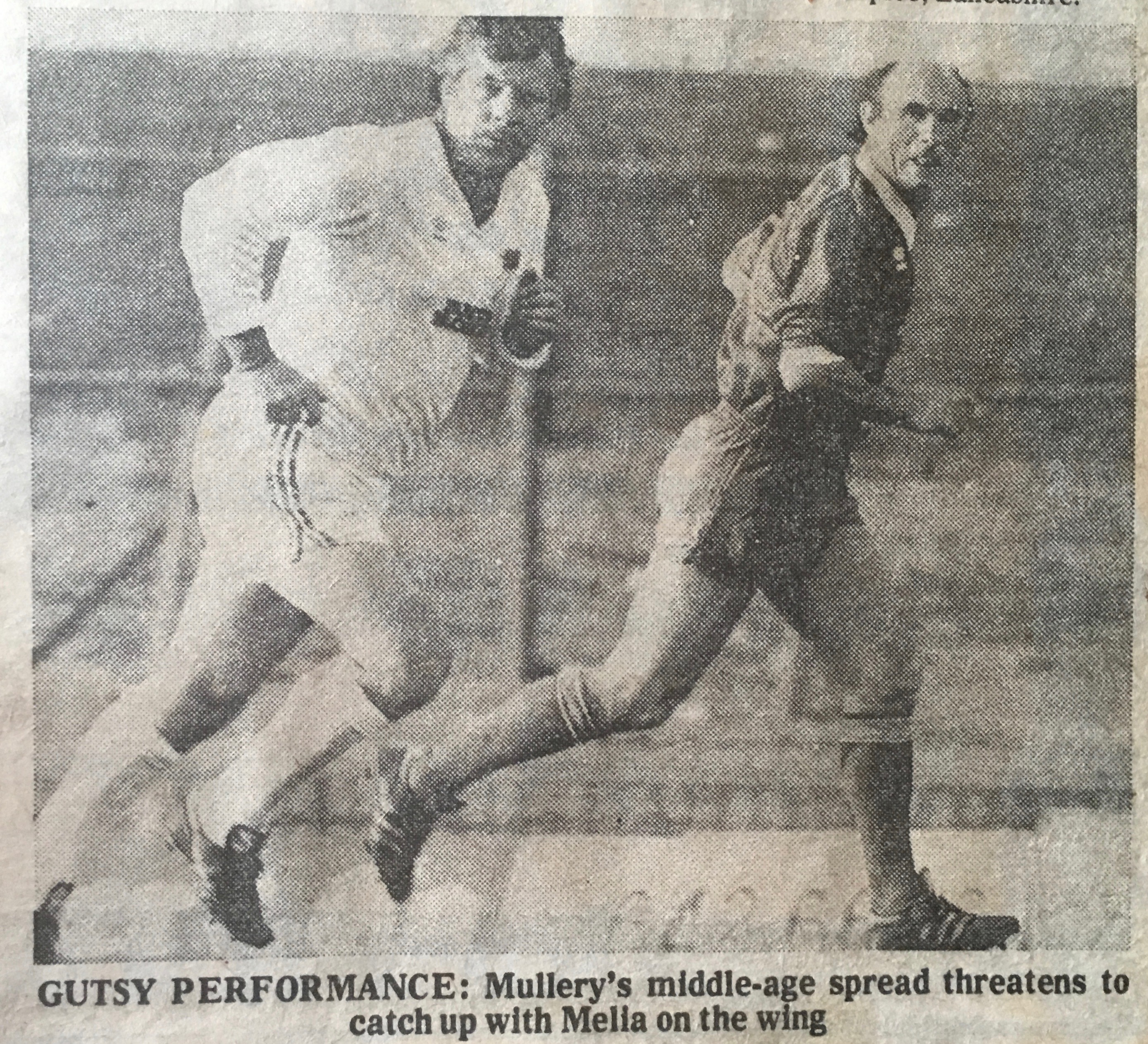
mullers + meia

Perhaps not surprising, then, that in a veterans’ charity match played at Selhurst Park just before the semi-final, Bailey refused a request to be photographed with Melia, albeit he was happy to pose alongside Mullery.

By then, Melia had indeed finally been given the manager’s role on a permanent basis (once Norwich had been defeated in the quarter final). On 16 March 1983, Bamber took him out to lunch at a Hove hotel to break the news.

In a front-page splash on the Argus, Melia said: “This is the happiest day of my life. It is a dream to be manager of a First Division club with also the possibility of taking them to Wembley.

“I am just pleased the chairman has given me the opportunity, and I hope to stay at the club for the next 20 years.” It would, of course, turn out to be closer to 20 weeks!

As excitement built in the run-up to the Cup Final, Bamber told Argus reporter Phil Mills: “Jimmy knows the game from A to Z but what I particularly like is that he’s always bubbling. He’s lively and looks on the positive side of things – even when we lose.

“The Jimmy Melia story is a fairy tale – three months ago he was our chief scout. Now he’s leading the Albion to Wembley for the FA Cup Final.

“You couldn’t get a better fairy tale than that.”

There’s no doubting Melia milked the moment, but who could blame him?

He told Ian Jarrett in The Sun: “I must make this situation count because I might never be involved in anything like it again.

“I have felt like the President of the United States in the past couple of weeks. Everyone has wanted to shake my hand and cars have beeped me in the street. It’s heaven to be in this position and I think everyone in the club should make the most of it.”

The Daily Mail even went as far as describing the opposing managers for the 1983 final as “Liberace meets Max Wall”, rather playing on the fact United’s Ron Atkinson had a penchant for bling and the follicly-challenged Melia bore something of a resemblance to the comedian and actor renowned for a silly walk. John  Roberts wrote: “Little Jim has given his usual 110 per cent in the discos, a chest-revealing Tom Jones shirt, black leather trousers, white dancing shoes and glamourous girlfriend offsetting a glistening dome that is just made for the Seagulls.”

The writer continued: “Brighton’s progress to Wembley for the first time in their history has made a relegation season tolerable and enabled the 46-year-old Melia to recapture a measure of the prestige he enjoyed as a player.

“As a nimble, intelligent inside forward he won Second and First Division championship medals with Liverpool and played for England. Some of his friends consider that he suffered to a degree for being a home-produced player rather than a fashionable big-money signing.”

Roberts even quoted comedian Jimmy Tarbuck, a boyhood friend of Melia’s, who said: “To use an old showbusiness saying, Jimmy’s been there and back.”

Who knows what might have happened had Albion actually won that Cup Final?

Melia will forever be associated with taking the club to what was then a globally-watched event and raising their profile to heights never previously achieved.

The cold, hard reality, though, was that Brighton’s brief stay among the elite of English football was over. Melia’s open, expansive style of play had been punished in the league, resulting in relegation and a loss of status that took 33 years to restore.

Melia had designs on boosting his coaching staff in the summer of 1983 with the introduction of the aforementioned Calloway, but Bamber had other ideas and, without consulting his manager, instead installed former Albion defender Chris Cattlin as first team coach.

From the outset, it was evident the two were not going to see eye to eye and it wasn’t long into the new season before it emerged publicly that Cattlin was actually picking the team.

Eventually Melia couldn’t continue with what was clearly an untenable position and resigned, but, in a rather tawdry denouement, appeared being carried shoulder-high on the north stand terrace at the next home game amid cries of ‘Bamber out, Melia in’.

At the time, there were rumblings of an Albion takeover from businessman Jeffrey Kruger and Bamber described Melia as “a disgrace” and claimed he had been operating as a mole for Kruger.

Nothing came of the takeover and the dust had not long settled on the end of Melia’s Albion association when he moved to Portugal and spent three years as boss of Belenenses, taking them to a top five finish.

Former Argus Albion reporter John Vinicombe reflected on Melia’s career in a wistful piece for the newspaper in 2001, and recalled: “Back in England Jimmy had a brief spell in charge at Stockport, then it was time to move on to Kuwait and Dubai, San Francisco, San Jose and Dallas.”

He subsequently settled in Dallas and became technical director for Liverpool’s academy in Texas.

Pictures from various sources including the Argus, The Sun, The News of the World, Shoot! and Goal magazines and the matchday programme.


Kieran O’Regan came close to dramatic FA Cup semi-final debut

OREGANWHEN just 19, unbeknown to thousands of expectant Brighton fans, Kieran O’Regan was on the brink of making a sensational debut for the Seagulls in the FA Cup semi-final.
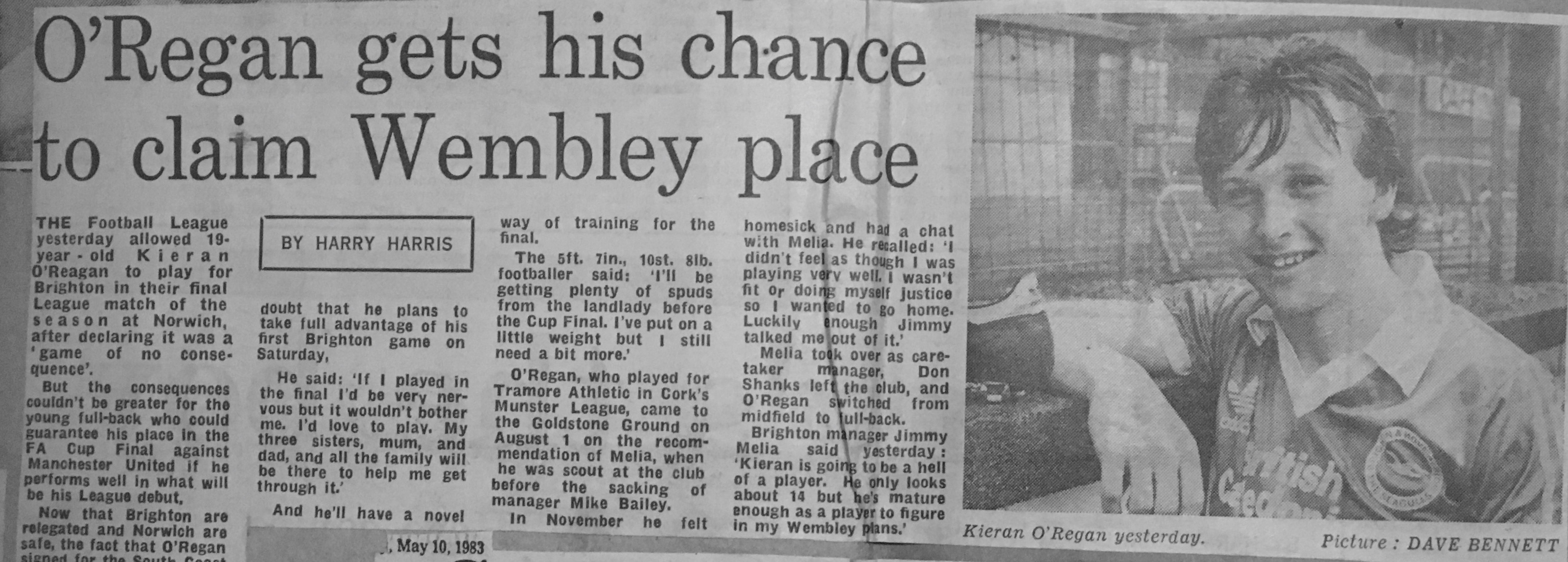
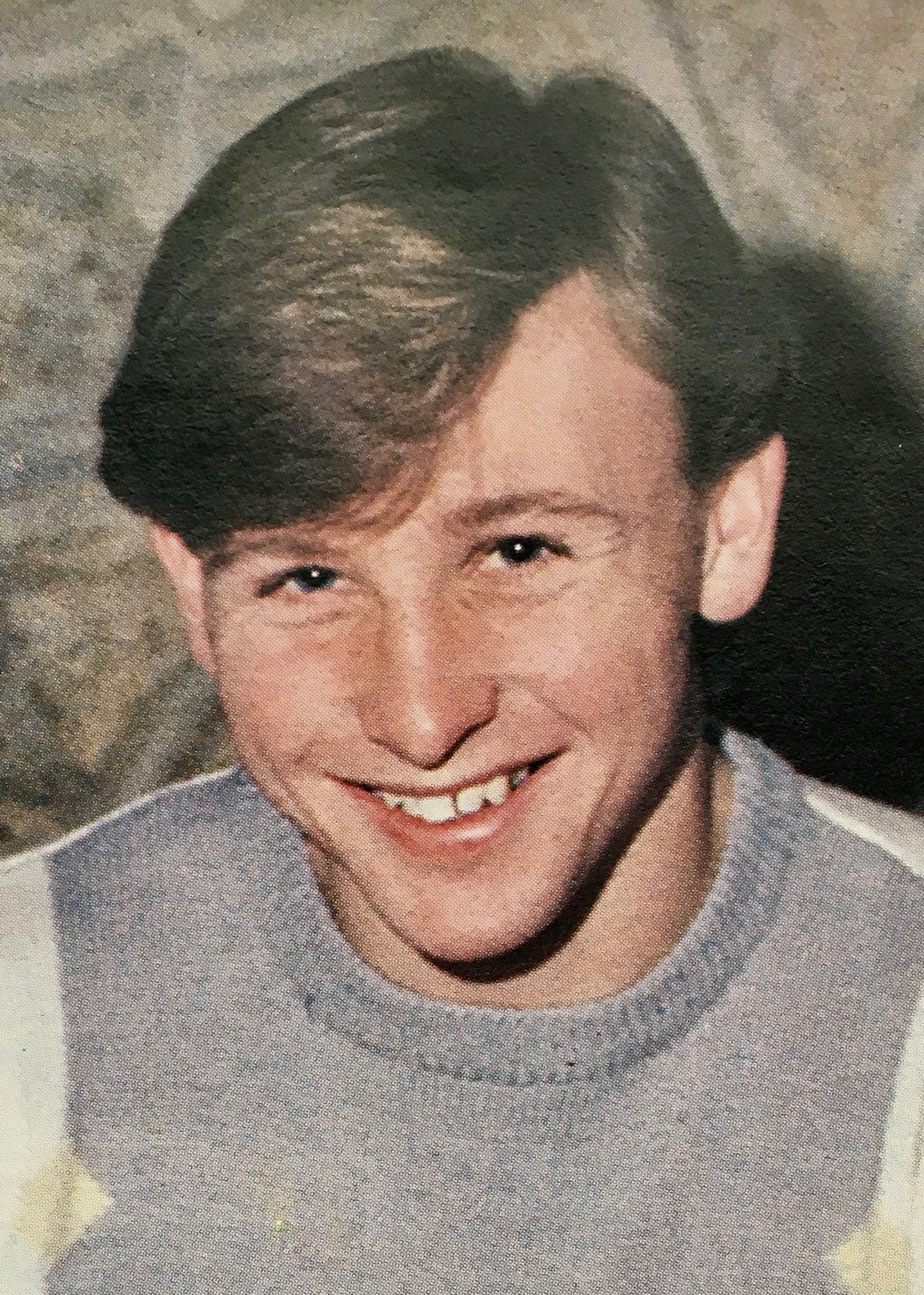
The versatile Irishman, who went on to play nearly 100 games for the Albion, and more than 200 for Huddersfield Town, was nearly drafted into Brighton’s back line for that momentous occasion against Sheffield Wednesday in front of a packed house at Highbury on 16 April 1983.

Only captain Steve Foster’s bravery and sterling work by the club’s medics prevented the youngster having to step in at the last minute.

The potential drama only came to light in the post-match analysis by Evening Argus reporter, John Vinicombe, who recounted: “On the morning of the tie, (Jimmy) Melia had problems that were wisely confined only to those with a need to know.

“A crisis arose when Steve Foster’s right elbow started to swell and hurt. A streptococcal infection was diagnosed, extremely painful, and dangerous.

“To not only get him fit to play, but counter the possibility of blood poisoning, he was pumped full of antibiotics, the elbow encased in plaster and, just before kick-off, a painkilling jab administered.

“Had it been a run-of-the-mill game, Foster would not have played, but to go into a semi-final without the lynchpin was unthinkable.

“If there had been no alternative, then Kieran O’Regan, who has yet to make his debut, would have been drafted in from the sub’s bench.”

As it was, O’Regan remained on the bench throughout the game; Michael Robinson’s winner in the 2-1 victory meaning manager Melia didn’t need to introduce the youngster on such a momentous occasion.

When he eventually made his first team debut a few weeks later, it was in a less pressurised situation, although only then with special dispensation from the Football League.

Melia was down to the bare bones because of injuries and suspensions so the youngster was needed, but he had not been signed as a pro before the deadline. The way the authorities saw it was, because Albion were already relegated and Norwich were safe, it was “a game of no consequence” and O’Regan got the green light to play.

cup cutting

Veteran football reporter Harry Harris interviewed the youngster and built a story (above) around the possibility that if he did well he might be in with a shout of a place in the Cup Final against Manchester United.

Ever the one for an eye to publicity, manager Melia kept those thoughts alive by saying: “Kieran is going to be a hell of a player. He only looks about 14 but he’s mature enough as a player to figure in my Wembley plans.”

KOR portIn the event, forward Gerry Ryan got the nod for the one substitute’s place on the day, and rather ironically had to come on and play right-back in place of the crocked Chris Ramsey.

Melia was certainly a big fan of O’Regan. In the summer of 1982, as Albion’s chief scout, he had recommended the youngster to manager Mike Bailey after seeing him go on as a second half substitute for the Republic of Ireland youth team against Welsh Schools and score two goals.

Born in Cork on 9 November 1963, O’Regan attended a secondary school noted for its prowess at Gaelic football but he was determined to pursue a soccer career instead. He had been playing for Tramore Athletic in County Cork’s Munster League when he got his call-up to the national youth team.

Brighton invited him over to England for a trial. “I’d gone to Brighton on a one week trial; that became two, then I was asked to stay for three months. That came and went, and I never went back,” he said.

He had come close to packing it all in because he was homesick, but the presence of fellow Irishmen Gary Howlett and Ryan helped him adapt, and the silver-tongued Melia managed to talk him round.

“I didn’t feel as though I was playing very well,” he told the Mirror’s Harris. “I wasn’t fit or doing myself justice so I wanted to go home. Luckily enough, Jimmy talked me out of it.”

When Melia took over as caretaker manager, he swiftly dispensed with the services of Bailey’s pick at right-back, Don Shanks, promoted Ramsey to the first-team and then converted O’Regan from a midfield player to a right-back to become Ramsey’s understudy.

On the eve of that Norwich game, Melia told the Argus: “I must bring on the youngsters because they are the long-term future of the club.

“They are a smashing bunch of lads and I would like to play some more of them at Norwich. But with the Cup Final coming up, I can’t for obvious reasons.”

In fact, he picked young striker Chris Rodon on the bench and he got on in place of Gordon Smith, but it was the one and only time he saw first team action.

In respect of O’Regan, though, Melia stuck to his word, and the youngster filled the right-back berth from the off at the start of the new season back in the second tier, keeping his place even after his mentor’s sacking.

Melia’s successor, Chris Cattlin, also gave him some games in midfield, and, by the season’s end, he’d played 33 games plus once as sub. He also notched his first goal, in a 2-1 defeat away to Sheffield Wednesday.

However, his biggest disappointment that season was when he and Howlett were both dropped for the televised FA Cup game against Liverpool at the Goldstone. He told Spencer Vignes in an interview published in a matchday programme of February 2005: “We’d thrashed Oldham at home 4-0 and played Carlisle away on an icy pitch and won 2-1, and me and Gary had played in both.

“The Liverpool game was on a Sunday so we all came in for training on the Saturday to find out what the team was. And Gary and I weren’t in it. We’d been dropped.

“Instead we were off to Highbury that afternoon to play for the reserves. That’s still probably the low point of my career. I really wanted to play. Cattlin said he was going for experience, and you can’t really fault him because the lads went out and beat Liverpool 2-0. But I was still gutted.”

Making the grade with Brighton caught the eye of the Republic of Ireland selectors and O’Regan was called up to play for his country on four occasions.
He made his debut in November 1983 in an 8-0 thrashing of Malta in Dublin, when Mark Lawrenson and future Albion manager Liam Brady each scored twice.

Against Poland, the following May, also at Dalymount Park, Dublin, O’Regan featured in a 0-0 draw, and three months later, same venue, same scoreline, against Mexico. His fourth and final cap came as a sub against Spain, in May 1985, which also ended goalless.

Meanwhile, his Albion game time in the 1984-85 season was a lot more restricted and, apart from a mid-season 10-game spell in midfield, he was on the sidelines, especially when a promising young defender called Martin Keown arrived on loan from Arsenal.

Vignes observed in that 2005 interview: “His ability to play at either right-back or midfield meant that when the likes of Chris Hutchings, Danny Wilson or Jimmy Case were unavailable, Albion always had a reliable deputy to call on.”

There was yet more benchwarming to be endured during the 1985-86 season but on Alan Mullery’s return to the manager’s chair, he found himself back in the first team on a more regular basis.

Indeed, he played under five managers in five years with Brighton, and told Vignes that Mullery was the best to work with. “He was great with everyone, but especially the young lads.”

By contrast he didn’t get on with Barry Lloyd who kept O’Regan in the dark when interest was shown in him by Swindon Town, where his former rival for the right-back spot, Ramsey, was assistant manager to Lou Macari.

In the end, in 1987, he did make the move to the County Ground having made 80 starts for the Albion, plus 19 substitute appearances.

After just a year at Swindon, he was on his way again, this time to join Huddersfield Town where the manager was Eoin Hand, who had been the Ireland manager when he won his four international caps.

O’Regan spent six seasons with Town, playing over 200 games in midfield, and it was an association which would reap its benefits after his playing days were over.

He spent two seasons at West Brom under former Spurs boss Keith Burkinshaw (and latterly Alan Buckley) but returned to West Yorkshire in 1995 as captain of Halifax Town, going on to become joint manager with George Mulhall for 18 months and then taking on the role alone in August 1998.

His tenure lasted less than a season and when the axe fell in April 1999, he turned his back on football and became warehouse manager at Brighouse Textiles, run by Halifax’s former chairman, and subsequently became a carpet salesman at a shop in Huddersfield.

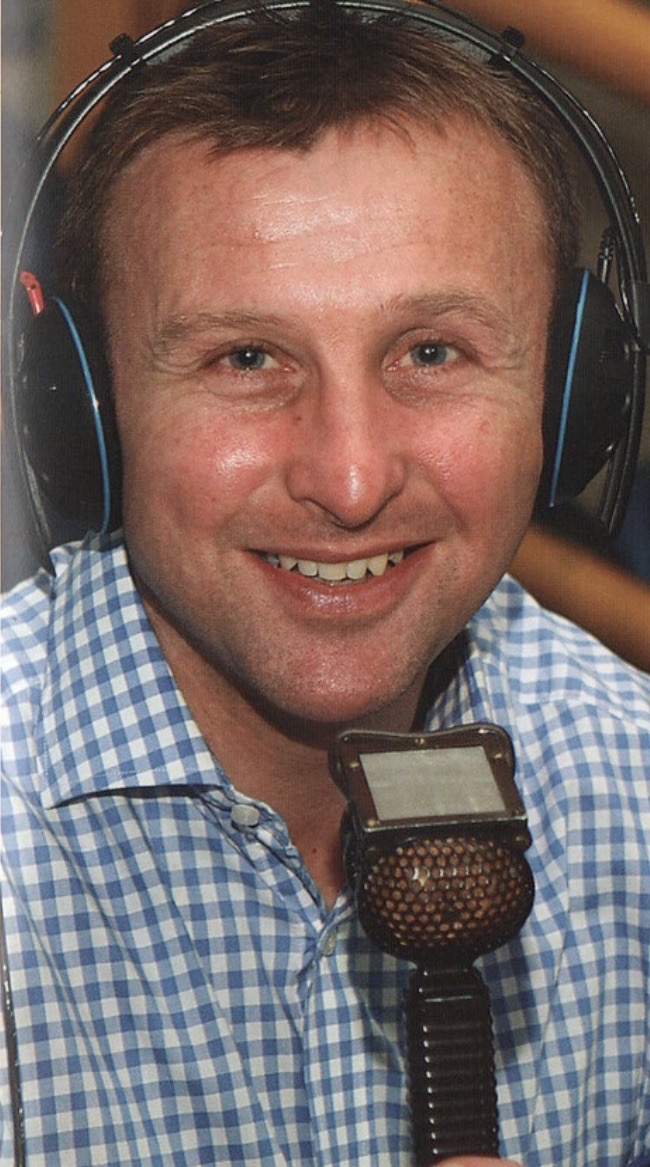
O'Regan mikeHowever, in 2001, he was offered the chance to be the expert summariser on Huddersfield games for BBC Radio Leeds, and he lined up alongside commentator Paul Ogden for the next 15 years, before hanging up the microphone in May 2016.

Pictures from the Albion matchday programme and my scrapbook.

Man City legend Joe Corrigan played the clown in Brighton

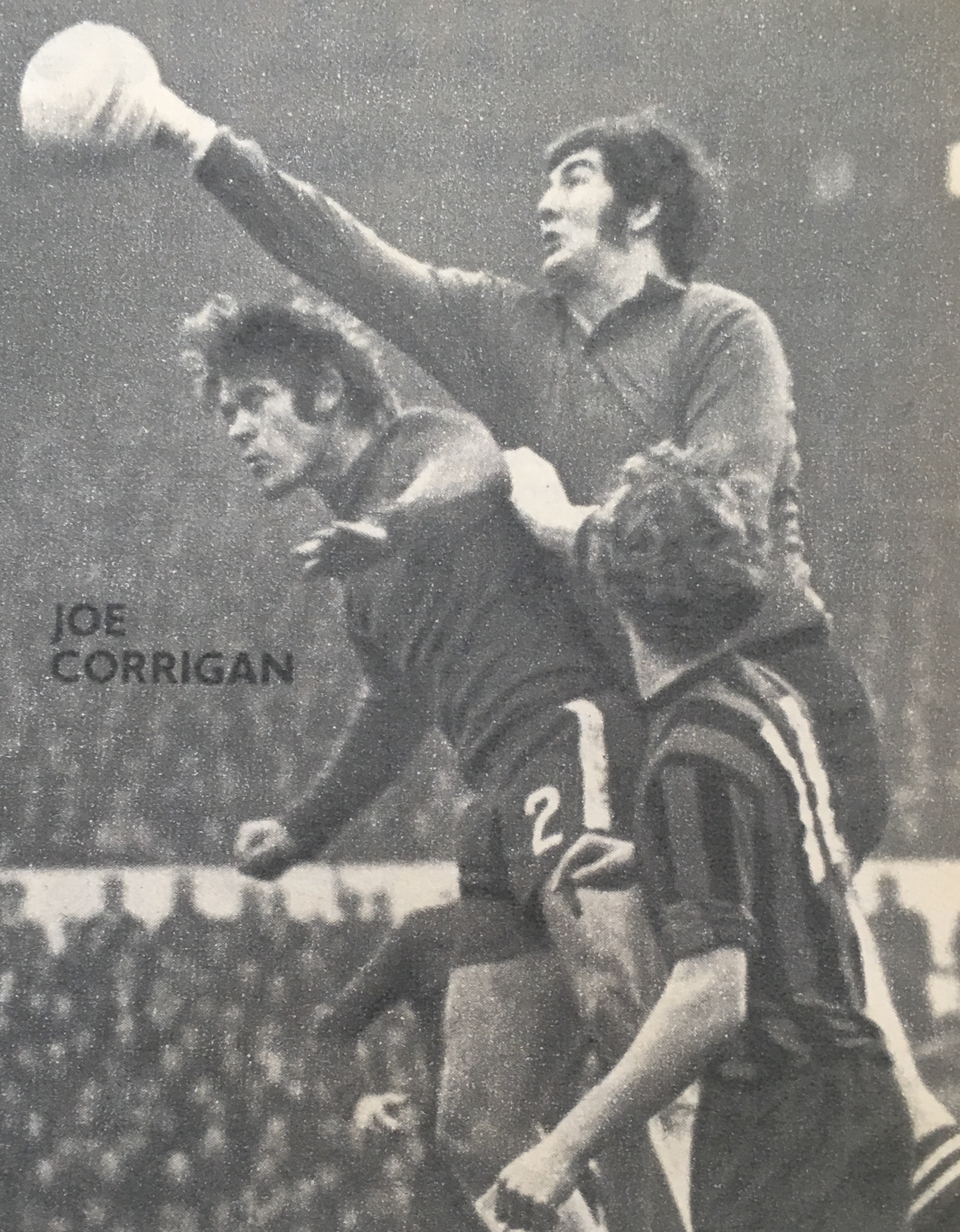
1 Joe punchingBRIGHTON fans often enter into a debate about the best goalkeeper ever to play for the club.
Although he was past his best when he joined the Seagulls, former England international Joe Corrigan would certainly be a contender.

Corrigan was, quite literally, at 6’4” a giant among goalkeepers and a colossus for Manchester City at the highest level before a second tier spell with Brighton towards the end of his playing career.

He subsequently became a top goalkeeping coach and amongst the ‘keepers he worked with was another former Seagulls favourite, Tomasz Kuszczak, when at West Brom.

After taking over from Harry Dowd, Corrigan was a near permanent fixture in goal for Manchester City between 1970 and 1983, winning a European Cup Winners’ Cup medal at the end of his debut season.

But for his career coinciding with Peter Shilton and Ray Clemence, he would surely have won more than the nine England caps he accumulated.

In total Corrigan made 592 appearances for City, a club record for a goalkeeper, and he was City’s Player of the Year three times.

In 1983, at the age of 34, Corrigan was sold to American club Seattle Sounders for £30,000, but he stayed in the US only a few months, and, in September that year, returned to England with Brighton.

Unfortunately for Joe it was at that turbulent time when, although Jimmy Melia was still the manager, chairman Mike Bamber had installed Chris Cattlin as first team coach behind Melia’s back.

Within a matter of weeks of the 1983-84 season starting, Melia was fired and Cattlin took over.

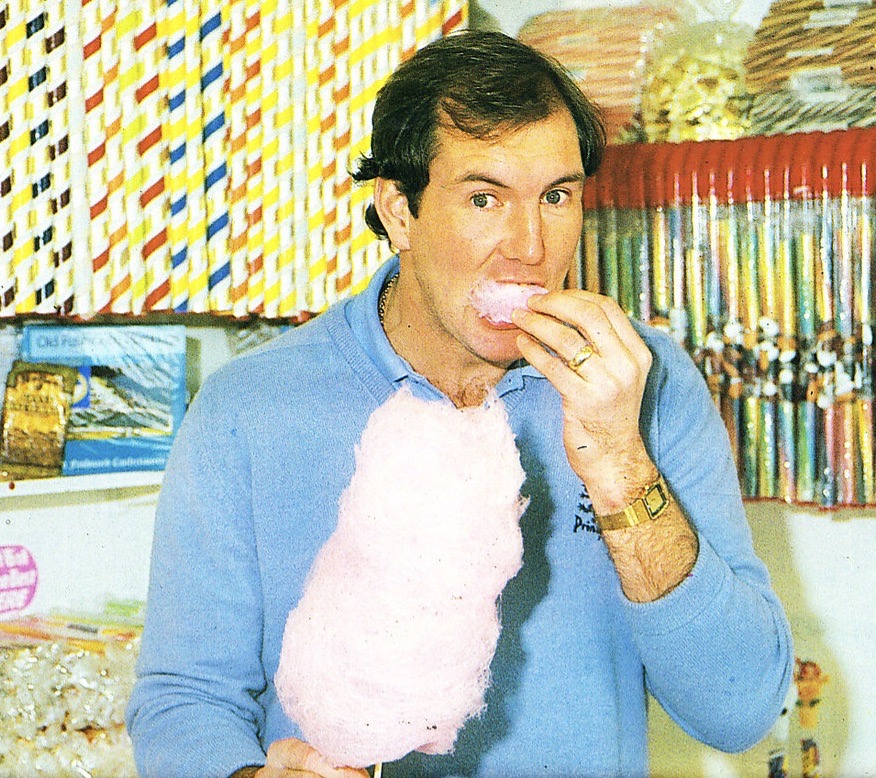
Corrigan was not impressed. In his 2008 autobiography (Big Joe, The Joe Corrigan Story) he declared Cattlin “the worst manager I’d ever played under” although he described his teammates as “a terrific bunch of lads” and he seemed to enjoy a decent social life on the south coast (pictured below for the matchday programme by Tony Norman, tucking into candy floss on the pier).

corrigan candyFor instance, at the annual players Christmas ‘do’ – if the account in Jimmy Case’s autobiography is anything to go by.

Corrigan became big pals with Case during his time at Brighton and the Scouse midfield favourite recounts in Hard Case (John Blake Publishing), a time the players went out on their Christmas ‘bash’ in Brighton wearing fancy dress.

Corrigan wore white tights and a tutu and at one point stood in the middle of the road directing traffic while his teammates crossed –  beckoning cars facing a red light to go and stopping cars that were on a green light. “I am still not sure how he survived that incident without having his collar felt,” said Case.

“Joe is a big, soft lad with a heart of gold but he has a painful way of showing it.”

One of his party pieces was to catch people off guard with a short jab in the ribs or arm. One playful punch landed on physio Mike Yaxley broke two of his ribs!

Case described Joe as “a star performer on the pitch and a bloody clown off it”.

Corrigan played 36 times for the Seagulls, including performing heroics in the famous 2-0 1984 FA Cup win over Liverpool, when goals by Terry Connor and Gerry Ryan meant the Seagulls dumped the mighty reds out of the cup two years in succession (following the 2-1 win at Anfield during the 1983 run to the cup final).

IMG_5197Sadly, as revealed in Big Joe, The Joe Corrigan Story, his time with Brighton ended on a sour note and when Cattlin opted for Perry Digweed as his first choice ‘keeper for the 1984-85 season, it all turned publicly ugly.
The club fined Corrigan for speaking out of turn to the press but Corrigan successfully got the fine overturned thanks to help from the PFA.

Under a heading ‘Truth’ Cattlin wrote in his matchday programme notes: “Our club made the papers this week for the wrong reasons, when a Football League tribunal upheld an appeal by Joe Corrigan against a club fine imposed upon him recently.

“Obviously I must accept the decision of the tribunal, just as I expect my players to accept a referee’s decision on the field. However, my dispute with Joe was not about his right to say anything to the press, but simply about what he said.

“At this club I don’t mind players speaking to the press in a responsible manner. I must though reiterate that I don’t want them slagging the staff, fellow players, fellow managers or the club.”

As it became clear he would never play for Brighton again, he went out on loan to Stoke City and Norwich but then back in Brighton Reserves sustained an injury to his neck that ended his career.

Corrigan retired from playing and initially helped to run a haulage business back in Manchester. But the lure of goalkeeping drew him into coaching at a number of clubs: City, Barnsley, Bradford, Tranmere and Stoke all on a part-time basis. Most notably, though, he spent 10 years at Liverpool, until the arrival of Rafa Benitez, then had spells at Celtic, Middlesbrough and West Brom.

The seeds for that part of his career were sown at Brighton, courtesy of John Jackson, the former Crystal Palace goalkeeper, who used to coach the Albion ‘keepers once a week.

Corrigan told the Manchester City matchday programme on 29 September 2018: “I got talking to him and it inspired me to look into doing something similar. So it was down to Brighton indirectly that I moved into the next phase of my career.”

When at 60 in 2009 he brought down the curtain on a 42-year career in the game, Tony Mowbray, manager of West Brom at the time, told the Birmingham Mail’s Chris Lepkowski: “Joe has been a pleasure to work with. His knowledge and experience have been a big help to me and I’ll be sorry to see him go.

“He’s a great character, a true gentleman and everyone at the club wishes him a long and happy retirement.”

Corrigan told the Mail: “Everyone says you know when the time is right to retire – and I feel this is mine.

“I’ve had just over four great years at this club and want to say a massive thank you to the Albion fans, who have always been very supportive of me and made me feel really welcome.

“The staff and players – particularly the keepers – have also been a pleasure to work with.

“Ironically, my final home game here will be against Liverpool, a club where I spent ten happy years, and we went to City two weeks ago, which obviously is always a special occasion for me.”

In the 2025 New Year’s honours list, Corrigan received an MBE for services to charitable fundraising.

2 Joe diving3 Joe shouting4 JC w GR SG EY

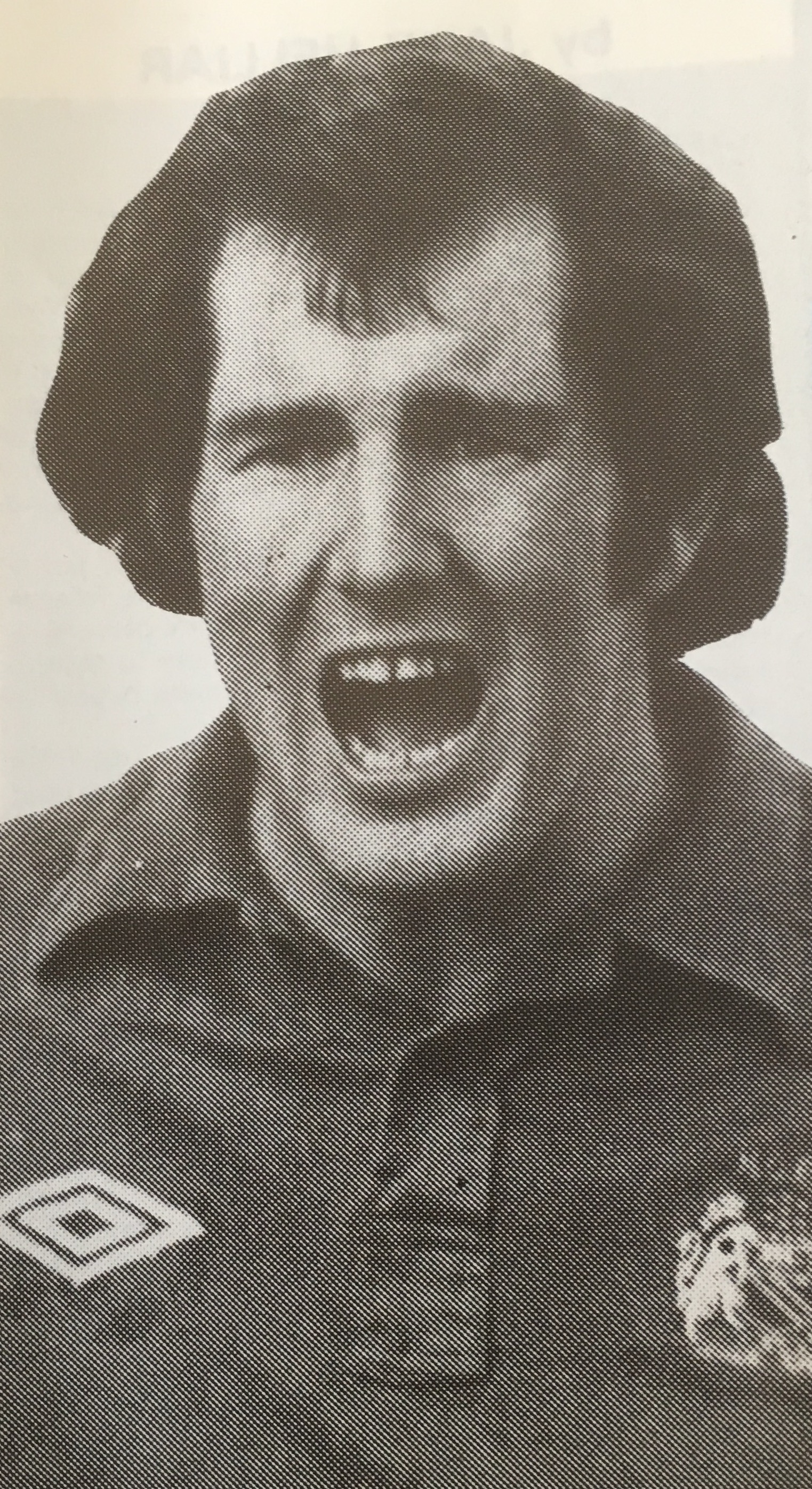
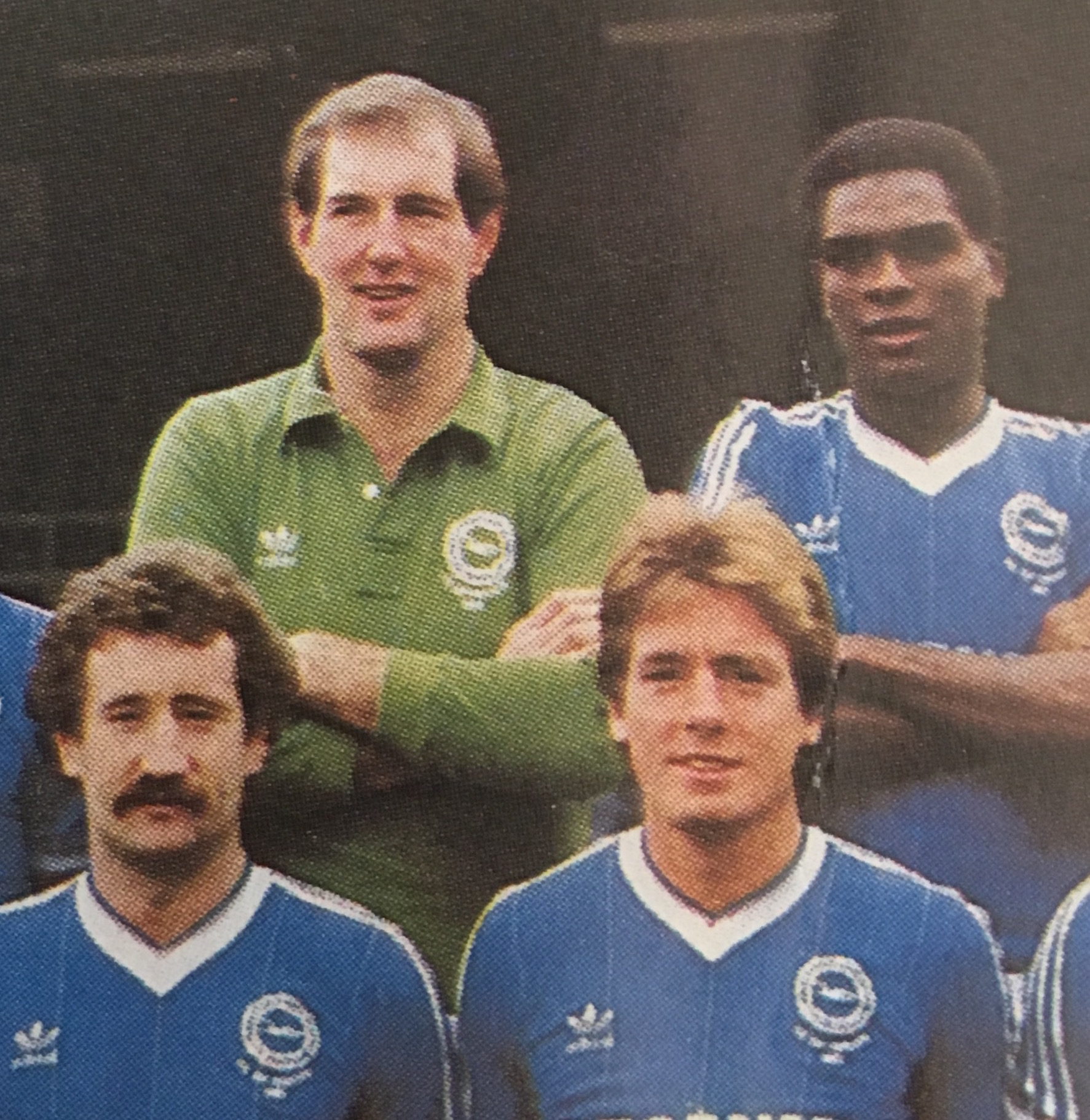
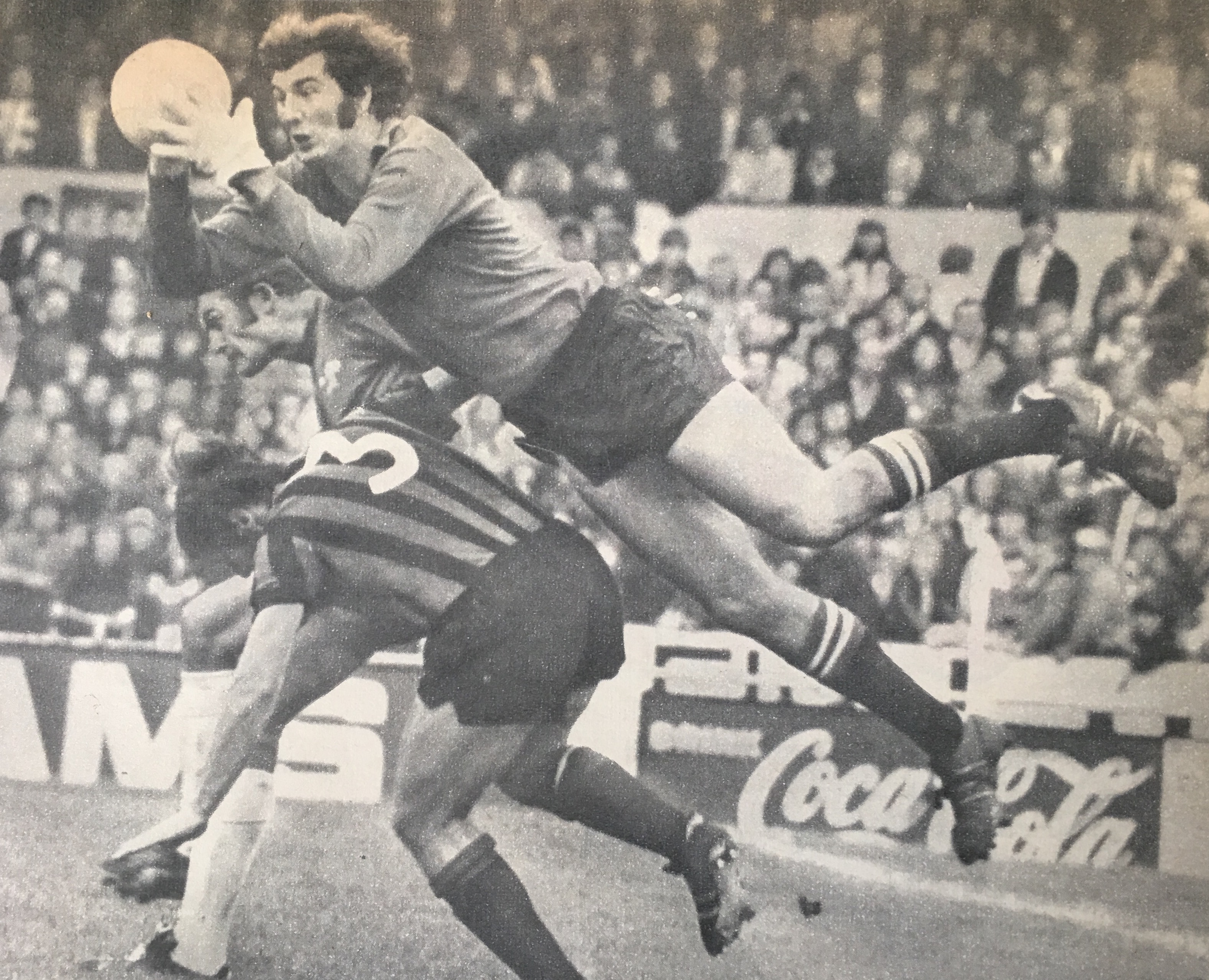
  • Pictures from my scrapbook show Corrigan punching clear of Chelsea’s David Webb, diving headlong to deny Chelsea’s Keith Weller, letting his teammates know his thoughts, and in an Albion squad line-up alongside Eric Young and behind Gerry Ryan and Steve Gatting.

J Cor sept 18

  • Joe pictured in the Man City matchday programme in September 2018.


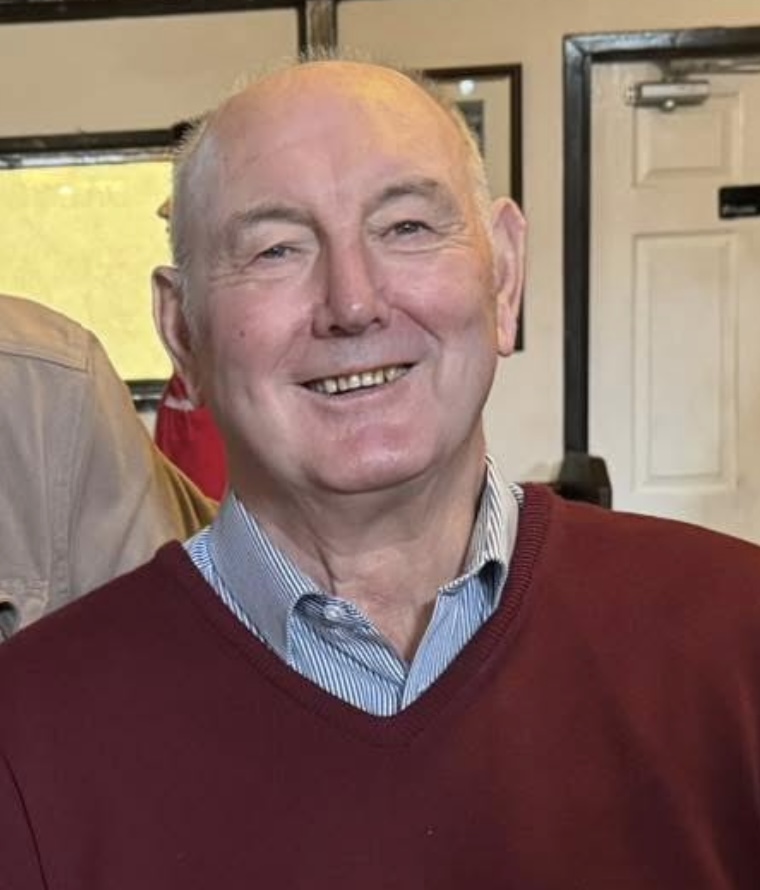
Corrigan in 2025

Winger Mark Barham was no stranger to Wembley

1 Barham progBRIGHTON’S wingers in the 1991 Division Two play-off final had previously been on opposing sides in a Wembley final.

Mark Barham was a winner with Norwich City as they beat Sunderland 1-0 in the 1985 League Cup Final and Clive Walker missed a penalty for the Wearsiders.

Six years on, Barham had levelled for Albion in the first leg of the semi-final at home to Millwall (more of which later) and Walker got the third when the Seagulls upturned the form book and beat Bruce Rioch’s side 4-1.

The 6-2 aggregate victory pitched the Albion against Neil Warnock’s Notts County under the shadow of the famous Twin Towers of Wembley.

Walker saw a Wembley post prevent him from scoring as Brighton’s dream of promotion was ended in a 3-1 defeat.

Folkestone-born Barham joined the Seagulls on a two-year contract after an initial trial and made his debut as a substitute for Kevin Bremner in a 1-0 home defeat to Oxford United on 30 December 1989.

He got his first start two days later in a 3-0 defeat at West Brom, who he’d played for briefly under ex-Ipswich and Arsenal midfielder Brian Talbot earlier that season.

On the second Saturday of the new decade he scored his first Albion goal in a 1-1 draw at home to Barnsley and had played 18 games by the end of the season.

Young John Robinson was beginning to get first team opportunities but Barham managed 42 appearances in 1990-91, culminating in that Wembley appearance against Notts County, although he was subbed off on 10 occasions.

That play-off first leg game against Millwall was Lloyd’s selection in Paul Camillin’s 2009 Match of My Life book (www.knowthescorebooks.com). He said: “Perry Digweed put in one of his incredibly long punts and the ball was about to bounce on the edge of the Millwall box when the centre half (David) Thompson ducked under it, I think intending to allow it to bounce through to Brian Horne in the visitors’ goal.

“But as he took his eye off the ball he also turned his back and the ball actually landed on the back of his head and squirted off right into Mark’s path. The little winger raced in and cracked the ball into the bottom corner. It really was a vital goal so close to the interval and the fans knew it.”

The goal also gave Barham much personal pleasure because he’d not seen eye-to-eye with Millwall boss Rioch when he’d been his manager at Middlesbrough.

With Robinson winning the shirt more frequently in the disastrous relegation season of 1991-92, Barham managed 25 appearances plus two as a sub but he was released at the end of the season and moved on to Shrewsbury Town.

Born on 12 July 1962, Barham’s football career began when he joined Norwich as an apprentice in 1978.

He was part of the City youth team that won the South East Counties League in 1979-80 and in the same season, at the tender age of just 17, manager John Bond gave him his first team debut. No fairytale start, though, as City lost 5-0 to Manchester United at Old Trafford.

However, he went on to make himself a regular in the City first team, making 213 appearances and scoring 25 goals for the Canaries.

Screenshot
Barham in action for England v Australia

He also won two full England caps on the 1983 tour of Australia in a side captained by Peter Shilton and also featuring Trevor Francis and Terry Butcher. Barham spoke warmly of Bond when he died in 2012 telling the local pinkun:

“When I first came up from Folkestone I had what you might call long hair. The first time he played me in a five-a-side in training he told me ‘I’m letting you play this one but if you don’t go out and get your hair cut you won’t be playing another one’.”

Barham continued: “He was my first manager, he gave me my debut at 17 and I went on to play for England so he must have done something right.

“He loved wingers but you had to adhere to certain rules. You had to play wide with your foot on the line, it was your responsibility to score goals, get crosses in and defend at the same time.”

A knee injury suffered in a match against Spurs was a major blow to Barham’s career. He ruptured cruciate ligaments in his left knee and he ended up in plaster for 14 months.

Although he remained at Carrow Road for four more seasons, Dale Gordon and Ruel Fox emerged as challengers for his place and eventually, in July 1987, Barham moved on to Huddersfield Town.

It was there that he teamed up with former Albion full back Chris Hutchings who spoke favourably about his time on the south coast with the Seagulls. Barham only played 27 games for the Terriers and, with former England striker Malcolm MacDonald replacing Steve Smith as manager, found himself released on a free transfer in 1988.

He joined Middlesbrough on an 18-month contract but as Rioch’s Middlesbrough were relegated he only played four games in eight months and was on the move again, ending up at non-league Hythe Town.

Determined he still had what it took to hold down a league career, Barham wrote to all 92 clubs. He joined Division Two West Brom and played four times for them but they didn’t keep him on.

Barham tight crop“I knew I hadn’t suddenly become a bad player and that I could succeed again,” Barham told the Albion matchday programme in March 1990. “So I wrote to all the clubs again and that’s when Barry (Lloyd) contacted me. His was only one of six replies.

“Since being here I’ve found that all Hutch said about the club and the area was right and now I want to prove myself, show that managers were wrong to ignore me and enjoy my time in Brighton in the hope that my two-year contract will be extended.”

After the disappointments elsewhere, Barham certainly got his career going again at Brighton.

He scored once in eight matches for the Shrews but his career was on the wane in 1992-93 and he had short spells in Hong Kong and played non-league with the likes of Sittingbourne, Southwick and Fakenham Town, who he managed for 20 months from April 1996.

According to Mike Davage’s excellent article Canaries Flown From The Nest in the 1998-99 club handbook, Barham joined Mulbarton in February 1998.

At a Norwich centenary dinner in 2002, Barham told Davage he’d had more than 20 operations on his knee. By the time he was interviewed by Spencer Vignes for Albion’s matchday programme in 2015, he’d had 38 operations on it!

After retiring from the game he ran a toolhire business in Norwich and according to his LinkedIn profile he’s now a business development manager with facilities management company, Mitie.

2 Barham stripesBarham 1

  • Pictures show Barham in Albion’s NOBO kit, from the Wembley play-offs programme, a portrait from a matchday programme and in a team line-up wearing the dreadful pyjama kit.

Ian Mellor – the postman who delivered for Peter Ward

Mellor BHATHE SONGS still sung today that immortalise Peter Ward sadly fail to recognise the man who laid on so many of the nimble striker’s goals.

But fans of a certain vintage will never forget the contribution of former postman Ian ‘Spider’ Mellor.

Nicknamed because of his long-legged build, the beanpole midfielder-turned-striker, scored 31 goals in 122 appearances for Albion between 1974 and 1978.

Born in Wythenshawe on 19 February 1950, Mellor grew up supporting Manchester City and dreamt of playing for them. He went to Sale Moor Secondary School in the city and, aged 15, he was offered a trial at Maine Road but he didn’t get taken on. Undeterred, two years later he got a second chance after bombarding the club with cuttings of his exploits playing Sunday league football in the area.

He lapped up the experience of being coached by Malcolm Allison. It was towards the end of the Bell, Summerbee, Lee era and Mellor managed 40 appearances for City. In March 1973, however, while Allison was ill, chairman Peter Swales sold him to Norwich City for £60,000.

“Malcolm said he left Maine Road because I’d been sold without his permission when he was ill in hospital,” Mellor told the Manchester Evening News.

“I didn’t really stop to think what I was letting myself in for,” he said. “I should have stayed at City and then, to make it even worse, soon after I’d left, Denis Law rejoined the club. I could have been playing in the same team as my idol.”

After Mellor scored the only goal of the game in Albion’s 1-0 win over Allison’s Crystal Palace at the start of the 1974-75 season, Allison said: “I remember Spider when I was at Manchester City.

“I didn’t want to see him leave for Norwich. Directors force you to do that sort of thing, then they sack you. Spider was a late developer, but his timing is so good now.”

Norwich were struggling at the wrong end of the old First Division when Mellor moved to Norfolk and although he agreed to the deal, he reflected years later that he regretted it.

Perhaps, therefore, it was no surprise when Brian Clough arrived at Carrow Road in the spring of 1974 with the promise of making him Brighton’s record signing for a fee of £40,000, he jumped at the chance to play for the league title-winning manager.

Mellor was part of a triple signing from Norwich as Clough persuaded him and centre backs Andy Rollings and Steve Govier to drop down a division to play for Brighton.

Ironically, he never played competitively under Clough because of ol’ Big Ed’s move to Leeds that summer but under Peter Taylor he played mainly in a left-sided midfield role.

It was Taylor’s successor, Alan Mullery, who changed him from a wide midfield player to a centre forward, a position from which he contributed so many ‘assists’ for Ward. Those in the know certainly recognised his contribution.

In Matthew Horner’s excellent biography of Ward, He shot, he scored, Mullery is quoted as saying: “Ian Mellor had the ability: he was a big tall lad and he had super pace and a great left foot. I thought that they would form a terrific partnership.

“In my opinion, Mellor was wasted in midfield. He could hold on to the ball and he’d learnt his skills from Malcolm Allison and Joe Mercer at Manchester City, who were both great coaches. He shouldn’t really have been playing at the level we were at – he was too good – but he was and that was great for us.

“Spider would get the ball to him and Peter would go on these mazy runs and, nine times out of 10, would knock the ball into the back of the net.

“The partnership is history now but they were absolutely fantastic together.”

Former Albion colleague, now BBC pundit, Mark Lawrenson said of him: “Playing Ian Mellor alongside Ward was the masterstroke really – Mellor was an out-and-out footballer and a perfect partner for Wardy.”

Club skipper at the time, Brian Horton, added: “In the first year Ward and Spider were unbelievable. We didn’t have a big target man but the movement with those two was fantastic. They got about 50 goals between them and I chipped in with about a dozen more.”

Ironically one of the stand-out games of his Albion career, on 3rd May 1977, came against Albion’s play-off opponents, Sheffield Wednesday, in front of 30,756 fans at the Goldstone.

Argus reporter John Vinicombe named him his Albion man-of-the-match as Wednesday were beaten 3-2 to earn promotion.

Not long into the following season, Mullery splashed £238,000 on centre forward Teddy Maybank from Fulham and he went straight into the team alongside Ward, which unsurprisingly didn’t go down well with Mellor.

“I knew I was better than him, but they had to justify his price and that’s why I got dropped,” Mellor maintained in a an Albion matchday programme interview with Spencer Vignes. Mellor requested a transfer in spite of chairman Mike Bamber urging him to stay.

“In hindsight, of course, I should have stayed,” said Mellor. “I was still good enough. I was 29, with two good seasons left in me.”

Instead, in February 1978, he moved back to his native north west from Brighton to play for Chester for two years but then had three years at Sheffield Wednesday where he managed 11 goals in 70 games and, like his spell alongside Ward, provided a perfect foil for Terry Curran to bang in the goals.

He ended his career at Bradford City and later worked as a commercial executive for the PFA. He also worked for football boot supplier Puma and was a representative for football kit supplier Pelada.

Younger readers will be more familiar with the former Liverpool striker Neil Mellor, who now works in the media, who was one of Ian’s sons.

Ian Mellor died aged 74 in Cheadle on 1 May 2024 after a long battle with amyloidosis.

  • Pictures from my scrapbook and Albion matchday programmes show headlines Mellor made and the player in action.

scrapbok mellor

A little less hirsuit than in his playing days…