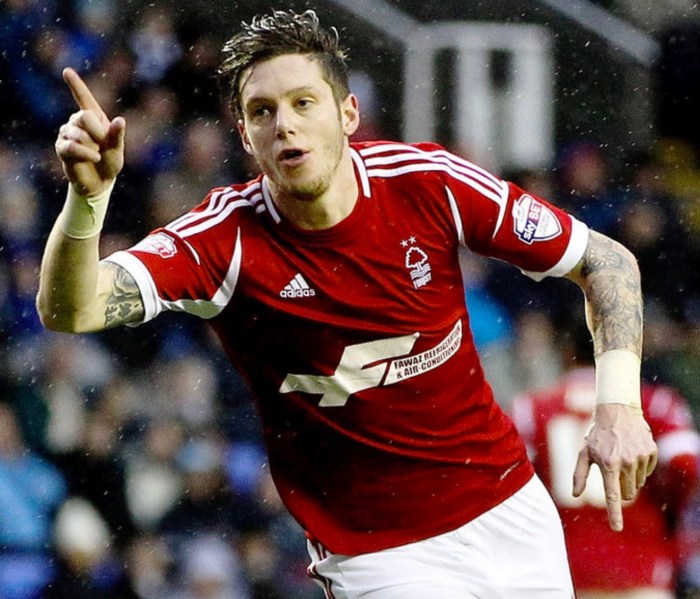
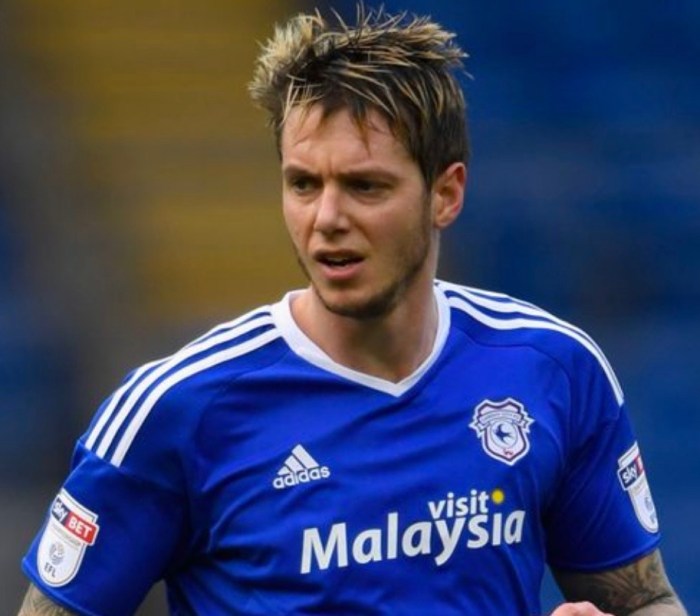
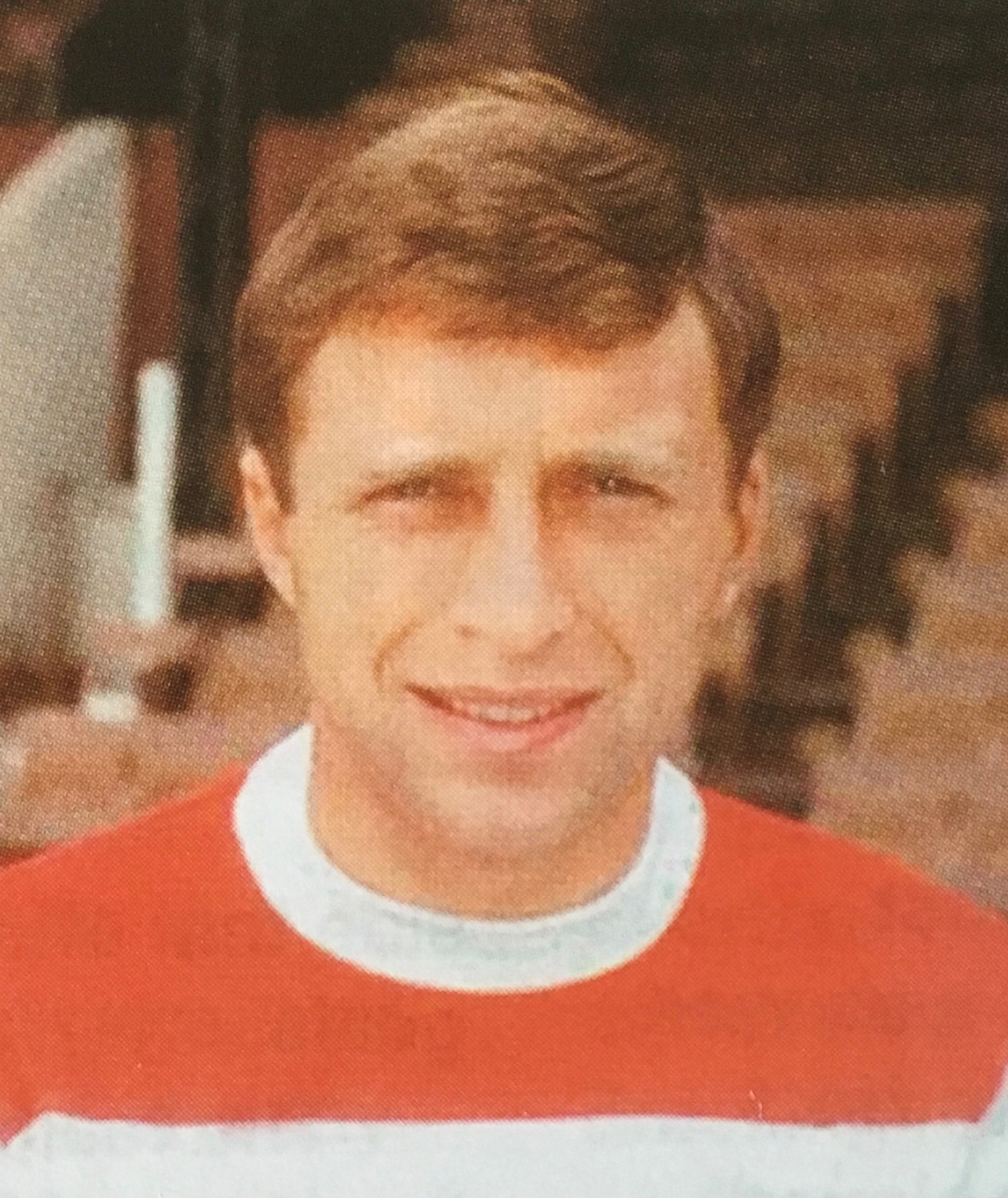
Brighton’s heroic captain Cullip clashed with Warnock

AFTER three promotions and one relegation in five years, Danny Cullip left Brighton for Sheffield United in December 2004.

Hard-up Albion needed the cash at the time and Cullip was keen to join a side who were pushing for promotion to the Premier League.

“They were a massive side and I felt that it was too good an opportunity to miss,” Cullip said in Match of My Life (knowthescorebooks.com), edited by Paul Camillin. “I felt if I didn’t take the opportunity, I would end up regretting it, and although things didn’t work out, I don’t regret it, as I would have lived the rest of my life wondering what might have happened.”

Cullip was virtually ever-present during his three months with the Blades but a clash of personalities with fiery manager Neil Warnock saw him offloaded on loan to Watford before the end of the season.

DC focusThe player who had been an inspirational captain for the Seagulls has chosen not to go into detail about what happened although Warnock had plenty to say in his autobiography, ghostwritten by journalist Oliver Holt.

“At Sheffield United I bought a centre-half, Danny Cullip, with a view to him being my leader on the pitch, my captain,” he said. “I thought he was a good talker. I realised within a week he talked a better game than he played. The only answer was to get shot of him quickly.”

Cullip swerved the controversy in an Albion matchday programme interview in 2019-20, saying instead: “We won my first three games in succession and ended up taking maximum points from five of the first six games.

“It was a great start and I was really enjoying my football but then, out of the blue, Neil said he wanted to bring in another striker, Danny Webber from Watford.

“Ray Lewington, who was coach at Watford at the time and knew me from out time together at Brentford, said they would only sanction it if they could get me in return. It was going to be a permanent move but ended up being a loan as Ray was sacked the following week, which wasn’t ideal.

“My Sheffield United career was over though before it had even begun, which was so disappointing because I’d been playing well and we’d been getting results.”

butts + DC Sheffield United’s Cullip gets to grips with ex- Albion teammate Guy Butters

Lee Connor on footballleagueworld.co.uk reckoned Cullip was one of the top 5 most pointless signings in Sheffield United’s history which seems a harsh assessment of a player who made 216 appearances for Brighton.

The £250,000 fee Brighton received for their captain was certainly much needed at the time and was a good return on the £50,000 they invested in signing him from Brentford for £50,000 on 13 October 1999.

Born on 17 September 1976 in Bracknell, Berkshire, Cullip was scouted by Oxford United while playing Sunday football and shone during a set of trial games. After getting into their under-16s, he then earned a two-year YTS apprenticeship where he was coached by future England manager Steve McLaren.

Oxford were managed by that redoubtable former centre half Denis Smith at the time and Cullip was given a one-year professional contract but faced stiff competition to make the breakthrough to the first team, where future Leicester City stalwart Matt Elliott was excelling.

“I went out on loan to Kettering Town in the Conference,” Cullip told fulhamfocus.com. “Gary Johnson was their manager and I learned a lot from him and played well there.”

Cullip had a trial at Shrewsbury and could have joined them or Kettering. But he chose to join then Fourth Division Fulham because his dad was a Fulham fan, he told fulhamfc.com in an April 2016 interview. Micky Adams had been newly appointed in his first managerial job and handed Cullip his league debut in the first game of the 1996-97 season.

It was a season fondly remembered by Fulham fans because they won promotion but the regime change the following year, when Mohammed Al Fayed took over, saw Adams dumped in favour of Kevin Keegan and Ray Wilkins and eventually Cullip rejoined Adams at Brentford in exchange for a £75,000 fee in February 1998.

Cullip found himself back in the basement division when the Bees were relegated and then on the treatment table for much of the season after suffering a cruciate knee ligament injury.

Having not played a first team game for 13 months because of the injury, Cullip was thrown a lifeline when Adams, by now in charge at Brighton, took him on a month’s loan in September 1999.

CullipHe impressed sufficiently for Adams to persuade chairman Dick Knight to make the transfer permanent, beginning an association with the club which continues to this day.

Cullip became a mainstay of the defence during the back-to-back promotions of 2001-02 and 2002-03 and famously scored the headed winner in a 1-0 win over Chesterfield at Withdean that clinched the third-tier championship.

Cullip took over the captaincy from Paul Rogers and recalls the “unbelievable day” he lifted the play-off final trophy at the Millennium Stadium, Cardiff, in 2004.

After his Blades spell was cut short, and his brief Watford loan came to an end, Cullip joined Nottingham Forest where his manager was Gary Megson. “I really liked him,” said Cullip. “He was an honest guy; what you see is what you get with him.

“Unfortunately, I missed my first pre-season with Forest due to what was ongoing at United, so I was playing catch-up with the rest of the lads and ended up suffering a hamstring injury. It was a problem that would dog me for the rest of my career.”

He was restricted to a handful of appearances in his first season with Forest but he eventually became a regular in a three-man defence alongside Wes Morgan and Ian Breckin.

DC Forest Cullip in action for Forest, marking Albion’s Alex Revell

In January 2007, he was on the move again, to Queens Park Rangers, where former Albion player John Gregory was in charge. But his 18-month deal was terminated early after one of their many managerial changes saw him surplus to requirements.

With his family based in Sussex, Cullip looked for an opening in the south and spent six weeks training with Millwall before linking up with Gillingham, where he played from February 2008 to the end of the 2007-08 season.

He then played non-league with Lewes but, after a season, the hamstring injury forced him to retire.

Alongside his former Albion centre half partner Guy Butters, Cullip is now a coach with the Albion in the Community scheme.

Brighton briefly on the trail of the ‘loansome’ Sam Vokes

‘LOANSOME’ Sam Vokes joined Brighton temporarily on the eve of transfer deadline day in January 2012.

He was 22 at the time and had already had five loan spells away from Molineux since joining Wolverhampton Wanderers in the summer of 2008. Vokes told BBC Sussex: “I need to settle down in my career and it’s a fantastic chance for me to come here and play some football.

“It’s a matter of playing games and, as a striker, scoring goals.”

Vokes had been troubled by injury and had found it difficult to establish himself in the Wolves side. The season before, he had been out on loan at Bristol City, Sheffield United and Norwich, and earlier in the 2011-12 season had scored two goals in nine appearances on loan at Burnley.

Eddie Howe, who’d managed Vokes during his first spell at Bournemouth, had taken him to Turf Moor to partner Jay Rodriguez. But when his deal with Burnley expired in mid-January, Albion boss Gus Poyet stepped in and persuaded him to join the Seagulls.

Vokes was invited to the Amex to watch the side’s FA Cup fourth round tie against Newcastle and, two days after the 1-0 win, put pen to the loan deal.

7188430“I don’t want to sit around – I love playing,” said Vokes. “Brighton have a great way of playing football that is different to a lot of teams in the Championship.”

The young striker told the Albion matchday programme: “I’m a southern boy. I know the area well, and I know what football means to people down here.

“It’s been difficult for me to settle anywhere, moving from place to place on loan, but now I just want to play football. I love the game. I need to play, it’s all I want to do.

“I would like to stay and if all goes well we will see what happens in the summer, but my main aim at the moment is to start playing football again and scoring goals.”

Poyet told the media: “Sam was one of the players we’ve been following for a long time but it’s been difficult to get him.

“The idea was to bring someone who will give us that presence and strength in the air that we don’t have.

“We’ve got the time to explain how we play, and what he needs to do for us. The quicker he adapts, the easier for us. I’m delighted to have him and I hope it works for him.

“He’s been trying to find that place that he can stay for a few years.”

As it turned out, Vokes struggled to dislodge incumbent strikers Ashley Barnes and Craig Mackail-Smith, and he made just seven starts plus five substitute appearances.

SV- BHA stripes

Although he scored on his full home debut in a 2-2 draw v Millwall, he only got two more goals, a last-minute equaliser in another 2-2 draw, at home to Cardiff City, and Albion’s lone strike in a 1-1 draw away to Nottingham Forest.

In July 2012, it was reported Wolves were demanding £500,000 for the player’s signature on a permanent basis, and that Brighton and Burnley were both keen to sign him.

Vokes burnley

Howe had always been keen to get the player back to Burnley and, although officially undisclosed, it’s believed a £350,000 fee took him to Turf Moor where he finally settled down and, over the next seven years, scored 62 goals in 258 appearances.

Born in Southampton on 21 October 1989, Vokes was brought up in Lymington and was a Southampton fan at an early age. He even had a trial with them when he was just 10 but wasn’t taken on.

It was when he was playing football for local sides in the New Forest that he was spotted by Bournemouth and joined them in 2005. He was only 17 when he made his first team debut in December 2006 (in a 2-0 win over Nottingham Forest) and although he scored 12 goals in the 2007-08 season, the Cherries were relegated from League One.

Vokes WolvesWolves stepped in to sign him that May and he came off the bench in the opening game of the following season to score an equaliser in a 2-2 draw at Plymouth Argyle. However, Chris Iwelumo and Sylvan Ebanks-Blake were the main men scoring goals as Wolves won the Championship that year, and Vokes’ involvement was mainly off the bench.
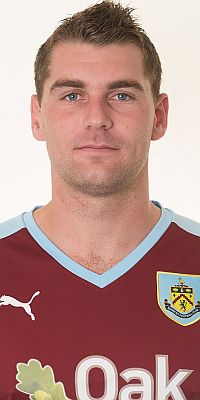
With his parent club in the Premier League, Vokes was loaned out to League One Leeds United on a three-month deal, although he only scored once in eight games. One of those matches was against the Albion at Withdean and Vokes recalled picking up his first footballing scar when an Adam El-Abd elbow caught him in the face.

Once Vokes finally settled down at Burnley after his various loan moves, it can’t have helped his cause when the man who signed him quit Turf Moor to return to Bournemouth.

Indeed, when Sean Dyche replaced Howe, his go-to centre forward at first was Charlie Austin, but when Austin was sold Vokes got more of a chance to show his worth alongside Danny Ings.

The partnership that began to evolve surprised Burnley fans who’d wondered whether Vokes was only ever destined to be a bit-part player.

“Everyone was concerned to be honest,” said Tony Scholes on uptheclarets.com. “We’d seen some potential in Ings but there wasn’t much confidence that Vokes could become a regular, goalscoring striker at Championship level.

Burnley Football Club_1st Team head Shots_30/7/15He went on: “Our shortage of strikers was highlighted by the fact that he played the full 90 minutes in all of the first 26 league games that season, but he wasn’t just filling in. He was turning in some outstanding performances, linking up really well with Ings and both were scoring goals aplenty.”

Unfortunately, a cruciate knee injury sidelined him for a lengthy spell and Burnley bought Ashley Barnes from Brighton as they sought to bolster their forward options.

A fit Vokes eventually reclaimed his place and formed a useful partnership with big money signing Andre Gray when Barnes himself was also hit by a cruciate injury.

In the early part of last season, Vokes often found himself on the bench, with Barnes and Chris Wood starting ahead of him, and, in January, he decided to drop back down to the Championship, joining Nathan Jones’ new regime at Stoke City, with former England international Peter Crouch going in the opposite direction.

As is often the way these days, the fee was ‘undisclosed’ but was rumoured to be in the order of £7m, and Stoke offered Vokes a three-and-a-half-year contract.

His popularity at Burnley was reflected in a thoughtful parting message thanking the club and the Clarets fans, in which he said: “You made the club a ‘home’ for myself and all my family and for that I’m eternally grateful.”

He added: “It’s been an incredible journey that we’ve been on over the past seven years, with promotions, relegation, survival and even European football through the Europa League.

“There have been so many highlights and every step along the way has been a joy, but now I am looking forward to a new challenge.”

Dyche, meanwhile, told the Stoke Sentinel: “Sam has been an absolutely fantastic servant, not just as a player but as a person.

“There was a bit of frustration that he hasn’t played as much as he’d like and this presents a fresh challenge, so, with all that factored in, it became a win-win deal.

“We feel we’ve got a good deal financially for the business and Sam has got a fresh chance somewhere different.”

Since July 2021, Vokes has been leading the line for League One Wycombe Wanderers.

Vokes Wales

Vokes may have been born and brought up in England but, thanks to having a grandfather born in Colwyn Bay, he became eligible to play for Wales and has earned more than 60 caps since making his debut in 2008, including their most recent game against Belarus.

A stand-out moment for his adopted country came during the Euro 2016 tournament when he came on as a substitute and (pictured above) sealed Wales’ 3-1 win over Belgium with an 85th-minute goal to reach the semi-finals.

  • Pictures from various online sources.

History-maker Joel Lynch went to Town after Brighton breakthrough

SUSSEX lad Joel Lynch made Brighton & Hove Albion history when he was made first team captain aged just 19 and 186 days.

The ‘youngest-ever Albion captain’ honour was a measure of the maturity the defender had displayed in Dean Wilkins’ young line-up in April 2007, even if it was a temporary appointment in the absence of the rested Guy Butters and the injured Dean Hammond.

“I wasn’t even captain of my school team,” Lynch told Argus reporter Andy Naylor. “I am 19 years old and it is a great honour. I am grateful to the gaffer for having so much faith in me and it will be good for my confidence.”

Unfortunately, the experience against Doncaster Rovers at Withdean was marred when Lynch missed a clearance, the player he was supposed to be marking, Graeme Lee, scored and Rovers went on to win 2-0.

It was a minor blip at the beginning of a career which saw Lynch become a consistent Championship defender for more than a decade after emerging from Brighton’s youth ranks in the ‘noughties’.

Born on 3 October 1987 in Eastbourne, Lynch made his way through the age group sides with the Albion, often alongside another local youngster who went on to have a good career, Tommy Elphick.

“We played all the way through the youth teams together since the age of about ten,” Lynch told Naylor of the Argus. “Both of our games really changed and we really grew up when we went to Bognor on loan. We did really well there for Bognor and ourselves.”

 Lynch pictured in the Argus alongside Tommy Elphick when they were together as under 14s in 2001, and still together a couple of years later.

As well as being part of the Brighton team which reached the quarter finals of the FA Youth Cup in 2006, the year couldn’t have begun better for Lynch when Wilkins’ predecessor, Mark McGhee, handed him his first team debut in a narrow 2-1 defeat away to Southampton on 2 January 2006.

He went on to play 16 times that season, and also registered his first goal for the club, which is a fond memory for me and my son, Rhys. It came on Easter Saturday 2006, and we made a last-minute decision on the day to travel up to Ipswich to watch the game.

Although Albion were destined to relinquish their Championship status, they had a new-found confidence in their play thanks to the belated arrival of much-needed hold-up centre forward, Gifton Noel-Williams (on loan from Burnley).

He’d scored on his debut in a home draw against Luton and got an assist by laying on a goal for Paul Reid in a 2-0 win at Millwall two weeks before.

At Portman Road, always a favourite away ground, Albion, wearing the stylish all-burgundy away strip, opened the scoring when Noel-Williams buried a cross from Colin Kazim-Richards.

To add to the unexpected delight, teenage defender Lynch made sure our trip was a memorable one. Ipswich failed to clear a corner properly and when Reid returned the ball to the penalty area, Kazim-Richards jumped simultaneously with ‘keeper Shane Supple and the ball broke for Lynch (above left) to prod it in.

Albion, never wanting to make life too easy for themselves or their fans, allowed Ipswich to pull a goal back when Alan Lee flicked on from former Seagull Darren Currie’s cross for substitute Nicky Forster – a future £75,000 signing for Albion – to score. But thankfully it was too late for Ipswich to salvage anything from the game.

It was all to turn pear-shaped on the Easter Monday at home to Sheffield Wednesday, but for a couple of days at least the Great Escape still seemed a possibility.

In December 2006, the matchday programme devoted a two-page article to Lynch’s progress in the first team, pointing out how he had begun at left-back, stepped in as a left-sided centre-back – his more natural position – and even played right-back in the 8-0 thrashing of Northwich Victoria in the FA Cup.

Lynch spoke of the experience he had gained playing alongside the veteran defender Guy Butters, telling the programme: “I learned a lot from him, Guy’s had a great career and he is still playing great football. Hopefully I will just slot in there when the time comes and, in the meantime, I will play wherever the manager wants me to play and hopefully stay in the team. I’ve still got a lot of years ahead of me to make the centre-half slot my own.”

Lynch confessed being handed the no.5 shirt at the start of the season had given him a massive boost. “So far, I have really enjoyed this season. I have had my ups and downs and missed a few games due to my performances,” he said. “There have been things that I have had to sort out within my game, but I think I have resolved them now and I am slowly regaining my confidence and my performances have been improving week by week since I regained my place in the team.

“I feel more confident and my self-belief has improved a lot. I want to keep improving and I think that I can help the team in a big way.”

Lynch said a lot of the younger players had been inspired by Bobby Zamora’s elevation to Premiership football and added: “Hopefully a few years down the line we all will be playing at a higher level with Brighton in a new stadium.”

Interviewed by the Argus on the eve of the 2006-07 season, Lynch said: “Last season was a season to just keep on progressing and doing well.

“This season is one where I really want to push on. I want to play a major part in getting the club promoted and express myself more so maybe more clubs are interested in me or I get called up for England.”

Pretty bold stuff from a 19-year-old player still aiming to establish himself, but, having been awarded a three-year contract, he certainly wasn’t short of confidence. “I’ve got to do something really big or something big should happen,” he continued.

“We’ll take it one game at a time but you’ve got to aim for promotion. You can’t aim for anything else.”

Lynch certainly made his mark across the League One season, playing in a total of 44 league and cup games.

The following season was only a matter of a few weeks old when Lynch was sidelined by a hairline fracture in his left leg and ligament damage when twisting to clear in a game against Millwall. Then when he returned sooner than expected, he suffered a hamstring problem.

Perhaps if Albion’s move to the Amex had come sooner, Lynch might have stuck around, but he clearly felt he needed to be playing at a higher level than the Seagulls could attain at the time and, in September 2008, having made 88 first-team appearances, forced through a loan move to Nottingham Forest, with various extensions taking the loan through to the end of the season.

In July 2009, the deal eventually became permanent, with Forest paying a £200,000 fee and offering Lynch a three-year contract. Albion obtained midfielder Matt Thornhill on a six-month loan from Forest as part of the arrangement.

The young defender initially found it difficult to break through as a regular at Forest, with most of his appearances coming as a stand-in left-back.

It was in the 2011-12 season that he began to get games in his preferred position, at first playing alongside Wes Morgan and then, after Morgan’s transfer to Leicester, pairing with Luke Chambers.

In November 2011, writer Peter Blackburn waxed lyrical about Lynch’s form at Forest via the seatpitch.co.uk platform, describing him as “a tough-tackling, committed, classy and agile defender”.

Blackburn added: “Capable of reading the game, nipping in front of the attacker to steal the ball and hold his own in the air, Lynch also seems to possess the sort of driven cross-field ball out of defence not seen on the fair shores of the Trent since prodigal son, Michael Dawson so entertained the crowd.”

No doubt it would have delighted Lynch that he scored a last-gasp equaliser for Forest at the Amex in March 2012.

Four months later, he rejected a new deal at Forest to become a fifth new signing made by Simon Grayson at Huddersfield Town, and in August the same year he got onto the international stage – not for England, though, but Wales. He qualified for Wales because his father came from Barry in South Wales, and he made his debut as a substitute in a friendly against Bosnia and Herzogovina.

HuddExam LynchLynch made 22 appearances in his first season with the Terriers; nine more the following season, and 35 in 2014-15. In January 2015, Lynch was winner of the Examiner Huddersfield Town Player of the Month award, with writer Doug Thomson saying: “He scored a stunning goal to help clinch a welcome 3-1 win over Watford. But Lynch, who stung the Hornets with an overhead kick, also excelled in the centre of defence.

“And the former Brighton and Hove Albion and Nottingham Forest man played a key role when Town finally ended their long wait for an away win, and kept a clean sheet to boot, at Wigan Athletic.

“Calm and composed both on the ground and in the air, the 27-year-old brings plenty of experience to the backline. Lynch also works well alongside skipper Mark Hudson.”

lynch qprAfter making 40 appearances for Town in 2015-16, he departed Yorkshire for London and signed a three-year deal with Championship side Queens Park Rangers.

The fee was undisclosed but was believed to be something of the order of £1.2 million and the QPR manager at the time, Jimmy Floyd Hasselbaink told bbc.co.uk: “He offers us something a little bit different. He’s left-sided, which will give us better balance, and has that ability to bring the ball out from the back.”

Hamstring and foot injuries hampered opportunities to show his worth to the Loftus Road faithful, a frustrating situation he talked about in January 2018, but he has since become a regular at the heart of the Rs’ defence.

Perhaps with an eye to the future, Lynch has a profile on the professional networking site LinkedIn.

Pictures sourced from The Argus (Simon Dack / Liz Finlayson), matchday programmes, Huddersfield Examiner and QPR websites.


Gerry Ryan – ‘a special player and one of football’s nice people’

THERE WAS no shortage of tributes paid to Gerry Ryan when the former Albion winger died at the age of 68 on 15 October 2023.

Fellow Irish international Liam Brady, who appointed Ryan as his assistant when he took charge of the Seagulls in 1996, said: “Gerry was a wonderful team-mate. He was a very quick winger, very brave, and he took people on.

“We had some great games together and then we ended up on opposite sides, for Brighton and Arsenal, in the old First Division.”

Although Ryan and Brady’s time in charge happened during a turbulent time off the pitch, Brady pointed out: “We did a pretty good job in what were, of course, difficult circumstances, and I could see then just what Brighton meant to him – he was in love with the club so much.

“Off the pitch, Gerry was just a really nice guy. He was affable, unassuming and got on with everyone he came in contact with.”

That sentiment was echoed by teammate Gordon Smith who told the Albion website: “Gerry was always fired up to play.

“He was not always first choice, but he was still a very good player. He had this ability to be able to turn games around because he was quick and he could score goals.

“He was so reliable – he could fit into any position with his levels of fitness, ability and positional play.

“We were a very close group; we socialised a lot, we played golf, went to the races and Gerry was a key part of that – he was a really good laugh.”

Turlough O’Connor, another former team-mate, from his early days playing for Bohemians in Dublin, told the Irish Independent: “He was the most easygoing guy you’d ever meet, very laidback and always in a happy mood, and a very good footballer as well.

“He was comfortable both left and right, very good on the ball, and very quick, which helped. A very good crosser, he went by people, and was always a threat. He helped so many times laying on goals for me.”

Ryan was one of the most likeable Albion players for a huge number of fans, and I was one of them.

A versatile trier who was good enough to represent the Republic of Ireland on 18 occasions, the wholehearted Ryan might not make it into the all-time best Brighton XI but, if it was judged on affability, his name would be first on the team sheet.

A cruel twist of fate saw his career ended in a tackle made by his Irish teammate (and former Albion boss) Chris Hughton’s brother, Henry. Typically, Ryan bore no grudges, as stressed by former Argus Albion reporter John Vinicombe in an article published in May 1986 when the genial Irishman finally accepted that his career was over.

Describing “the immense dignity and true manliness that Ryan displayed in refusing to condemn or indeed utter any harsh word against the player responsible,” he added: “Where others have sued and raged, slandered, cursed and threatened, Ryan said nothing.”

GR leg break

It was 2 April 1985 when his career was ended by that Hughton tackle in a 1-1 draw with Crystal Palace at Selhurst Park.

“Never in his life has he shirked a tackle and the one that ended his career so unfortunately at Crystal Palace was typical of many he faced in his career,” said Alan Mullery, the manager who signed him for the Seagulls.

“As a person, he is a lovely and typical Irish personality,” Mullery said in the programme for the player’s testimonial game against Spurs at the Goldstone on 8 August 1986. “I can honestly say that I have never met a player who dislikes him or has a bad word to say about him. I will remember Gerry Ryan as being a special player and one of football’s nice people.”

Mullery also referred to a Sunday lunch he and his family had with Ryan and his wife at the time he signed. “When Gerry ordered roast beef and chips I must have known then that I had a very special sort of player. At the time, I was a little dubious but afterwards I had no regrets.”

Mullery had been over in Dublin watching Albion’s Mark Lawrenson playing for the Republic of Ireland and Derby’s Ryan was playing in the same side. He had been having talks about moving to Stoke City but Mullers persuaded him to join Brighton instead, and, in a strange quirk of fate, he made his debut in a 2-2 draw away to Stoke.

After they’d become teammates, Lawrenson was among those players appreciative of Ryan’s “mercurial” qualities. He said in a matchday programme: “He wasn’t the most confident of players but he had loads of ability. For a wide player, he would come in and get goals for you.”

GR capsA week after joining the Seagulls, Ryan became an instant hit with Albion fans when he scored on his home debut in a 5-1 win over Preston. He notched a total of nine goals in 34 appearances in that first season and went on to score 39 in a total of 199 games.

Born in Dublin on 4 October 1955, Ryan was one of eight children. His early education was at the local convent in Walkinstown, a suburb to the south of Dublin where the family lived. At the age of eight he moved on to Drimnagh Castle School (it covered primary and secondary age groups).

At that stage, he was playing Gaelic football and hurling, at which he was capped at under-15 level by Dublin Schools. He didn’t play competitive football until he was 16 when he was introduced to a Dublin football club called Rangers AFC. He played alongside Kevin Moran, who later played for Manchester United, and Pat Byrne, who later played for Leicester City. Byrne and Ryan also played together for Bohemians, the oldest football club in Dublin.

Ryan joined the Dublin Corporation as a clerical officer on leaving school and played for Bohs as an amateur initially before becoming a part-timer on professional terms. By 18, Ryan was a first-team regular and, after collecting a League of Ireland Championship medal, was watched by Manchester United boss Tommy Docherty.

Docherty didn’t pounce then but, after Ryan had stayed four years with Bohemians, the ebullient Scot eventually returned to take him to England as his first signing for Derby County for a fee of £55,000.

The newly-appointed Docherty was determined to shake-up the club and while long-serving goalkeeper Colin Boulton was discarded along with striker Kevin Hector, Ryan, Scottish internationals Bruce Rioch and Don Masson, and Terry Curran and Steve Buckley were all introduced.

Ram Ryan

Ryan spoke about the way Docherty’s attitude towards him changed in an interview with Brian Owen of The Argus in 2016.

“One minute you were the blue-eyed boy, the next he wouldn’t even talk to you,” he said. Ryan made a hamstring injury worse by playing when Docherty insisted he was fit enough, and ended up sidelined for three months. “He didn’t like me then! That’s the way he was, he would turn on you, and he turned on me.”

Within a year, Docherty accepted Brighton’s £80,000 offer for Ryan and, as he was weighing up whether to choose the Seagulls or Stoke City, Ryan consulted the legendary Republic of Ireland and ex-Leeds midfielder Johnny Giles to ask his opinion.

“Gilesy said ‘Stoke have been in and out of the First Division forever but there is something going on down at Brighton. They get great crowds and it’s a beautiful place.’ I went to Brighton that weekend and absolutely loved it,” Ryan told Owen.

It was on 25 September 1978 winger Ryan arrived, prompting the departure of popular local lad Tony Towner after eight years at the Albion.

Five months before Ryan arrived at the Goldstone, he made his international debut, featuring for the first time in April 1978 in a 4-2 win over Turkey at Lansdowne Road. He only scored once for the Republic, but it was a cracking overhead kick in a 3-1 defeat against West Germany.

Ryan Eire

He was one of four regular Eire internationals playing for Albion at the time: Lawrenson, Tony Grealish and Michael Robinson the others.

His final appearance for his country came in a 0-0 draw against Mexico at Dalymount Park in 1984.

Ryan was part of some all-time history-making moments during his time with the Albion – scoring at St James’s Park in the 3-1 win over Newcastle on 5 May 1979 to clinch promotion to the top division for the first time, and burying the only goal of the game as unfancied Albion beat Brian Clough’s European champions Nottingham Forest, who’d previously not lost at home for two and a half years.

Ryan scoresMy personal favourite came on 29 December 1979 at the Goldstone when he ran virtually the entire length of a boggy, bobbly pitch to score past Joe Corrigan in the goal at the South Stand end to top off a 4-1 win over Manchester City. Ryan himself reckoned it was “the best goal I ever scored” as he recounted in a May 2020 BBC Sussex Sport interview with Johnny Cantor.

It was one of the most superb individual goals I saw scored and, when he was trying to recuperate from the horrific leg break which ultimately ended his career, I wrote to him in hospital to say what a special memory it held for me.

I was delighted to receive a grateful reply from him, and he has held a special place in my Albion memory bank ever since.

There were other stand-out occasions, two of which came against Liverpool:

in February 1983 at Anfield when he opened the scoring in Albion’s memorable 2-1 FA Cup triumph en route to the final, and, in the following season, at the Goldstone when he and Terry Connor were on target in Second Division Albion’s 2-0 win over the Reds in the same competition, the first-ever live FA Cup match (other than finals) to be shown (previously any television coverage of FA Cup ties was only ever recorded highlights).

If the modern-day reader can’t quite put the feat in perspective, it is worth pointing out that Liverpool, managed by Joe Fagan, went on to win the League Cup, the League title and the European Cup that season.

Danny Wilson hadn’t long since joined the Albion and, in an interview with the Seagull matchday programme in 2003, he recalled: “That has to be my favourite memory from all my time at the Goldstone. Back then, Liverpool were just awesome, and to beat them like we did was virtually unheard of.”

Ryan’s involvement in the 1983 Cup run was hampered by a hamstring injury which meant he missed out on the semi-final. But, in the days of only one substitute, he was on the bench for the final and, when the injured Chris Ramsey couldn’t continue, Ryan went on at Wembley and did a typically thorough job at right-back.

GR prog snow

Following Albion’s relegation, as the big-name players departed the Goldstone, Ryan’s versatility and play-anywhere attitude came to the fore and, in his last two seasons with the club he was often selected as a centre-forward, although he was not a prolific goalscorer from that position.

After he was forced to quit playing, Ryan took what was then quite a familiar route for ex-players and became a pub licensee, running the Witch Inn at Lindfield, near Haywards Heath. Ryan and goalkeeper Graham Moseley, who he’d known from his days at Derby, were neighbours in Haywards Heath.

GR pots

However, when another of his former Republic of Ireland teammates, Liam Brady, was appointed Albion manager in 1994, it was an inspired choice for him to appoint Ryan as his assistant.

When that all-too-brief managerial spell came to a messy close, Ryan returned to his pub, and then moved back to the family home in Walkinstown. Ryan’s son Darragh played 11 games for the Albion in the late 1990s.

Sadly, in August 2007, Ryan suffered a stroke, and three years later he was diagnosed with kidney cancer. On his death, his family paid tribute to the care he was given by the staff of Our Lady’s Hospice, Harold’s Cross and to the staff of Lisheen Nursing Home, Dr Brenda Griffin, the Beacon Renal Unit, Tallaght, and Tallaght Hospital Renal Unit “for the excellent care given to Gerry over the past number of years”.

Pictures from a variety of sources but mainly from my scrapbook, the matchday programme and The Argus.

Matthew Upson was a class act in Albion’s defence

ARTICULATE pundit Matthew Upson was deservedly player of the season after starring in Brighton & Hove Albion’s back line during the 2013-14 season.

Earlier, in a career spanning eleven clubs, he played more times (144 plus once as sub) for West Ham United than any of his other clubs. He also won 21 England caps.

Upson initially joined the Seagulls during the second half of the 2012-13 season, signing on loan from Premier League Stoke City, where, in two years, he’d only managed 21 games (plus four as sub) following four years with the Hammers.

On signing him for Brighton at the age of 33, manager Gus Poyet told seagulls.co.uk, “When we had the chance to bring a player with the quality of Matt until the end of the season we went for him.

“He’s experienced, he’s been a regular Premier League player and there were no doubts about it. He has presence, he’s a leader as well and it’s a good opportunity for us to use him the right way and for him to play football.”

Upson joined a side already blessed with the on-loan presence of another former England international in the shape of left-back Wayne Bridge, but unfortunately the side couldn’t get past arch rivals Crystal Palace in the play-offs to gain promotion from the Championship.

Although Poyet departed, Upson decided to make his move to Brighton permanent and played 41 games, mainly alongside skipper Gordon Greer. Unfortunately, Oscar Garcia’s squad also stumbled in the play-offs.

Hampered by an ankle injury towards the end of the season, although Upson played in the first leg 2-1 home defeat to Derby County – when he conceded a penalty with a clumsy foul – he was one of several players to miss out through injury in the away leg, when the Rams prevailed 4-1.

At the season’s end, Upson declined a new contract offer with the Albion and decided to seize the opportunity to return to Premier League football with newly-promoted Leicester City.

As it turned out, injury delayed his debut by seven months and he made just six appearances for the Foxes before ending his playing days with MK Dons, where he was limited to four full appearances plus three as a sub.

Upson is now a regular pundit on our TV screens, displaying verbally the sort of calm assuredness he demonstrated out on the pitch.

So where did it all begin? Born on 18 April 1979 in Eye, a small Suffolk market town, Upson went to Diss High School, over the border in Norfolk, and his football ability first shone at Diss Town FC. He went on to the Ipswich Town Centre of Excellence but it was Luton Town who took him on as a trainee after his Ipswich coach, Terry Westley, had switched to the Hatters.

It was to be a lucrative decision by Luton because, after signing him as a professional in April 1996, a year later they sold him to Arsenal for £2million. He only ever made one first team appearance for Luton and that was as an 88th minute substitute against Rotherham United in August 1996.

Unfortunately, his time with the Gunners was dogged by injury and lack of opportunity because of the solid form of the likes of Tony Adams, Steve Bould and Martin Keown.

Just as he was beginning to make a breakthrough in the 2001-02 season, taking the ageing Keown’s place, he broke his leg and missed out on the Gunners’ end-of-season League and FA Cup double, although he earned a league winners’ medal. At the season’s end, he’d made 16 appearances plus six as a sub.

While waiting for his chance at Arsenal, he had gone out on loan, to Nottingham Forest and Crystal Palace, then Reading after his return from the leg break. But after a total of 39 appearances, plus eight as a sub, for Arsenal spanning five and a half years, he made a £1m move to Birmingham City in January 2003.

City were halfway through their first season in the Premier League, under Steve Bruce, and Upson made 14 appearances as the side finished in 13th place.

Upson told the dailystar.co.uk: “I had a good four and a half years under him at Birmingham. We had quite a successful period there.”

It was during his time with the Blues, during which he made 127 appearances plus one as sub, that his form was recognised with a call up to the England squad.

He had played at youth level and 12 times for the under 21 side but his first call-up for the senior squad came in February 2003, when he was an unused sub for England’s 3-1 win over Australia.

Three months later, coach Sven-Göran Eriksson gave him his debut when he came on for the second half In England’s 2-1 win over South Africa in Durban on 22 May 2003.

His final international appearance also came in South Africa – when he scored in England’s 4-1 defeat to Germany which brought about their exit from the 2010 World Cup. His involvement in the tournament was keenly followed by relatives and the whole community back in Diss.

He was involved in the squad for two subsequent games in September that year, but didn’t get to play. In total, he won seven caps while with Birmingham and 14 under Fabio Capello, after he had moved to West Ham. Of his 21 England appearances, 16 were as a starter, five as a sub.

Birmingham boss Bruce was reluctant to lose him but, on the final day of the transfer window in January 2007, the recently appointed Hammers boss, Alan Curbishley, paid £6million to take him to Upton Park, where enjoyed the longest spell of his playing career.

As he’d experienced at previous clubs, injury hampered him early on but eventually he got a regular spot in the side and subsequently took on the captaincy after the departure of Lucas Neill in August 2009.

It was after relegation from the Premiership during Sam Allardyce’s tenure as manager that Upson finally left the Hammers at the end of the 2010-11 season.

studio upson

Gary Williams knew where the goal was – even from left back

A CARTILAGE operation when he was just 17 changed Gary Williams’ career, but, after success at Brighton, it eventually brought his playing days to a premature end at Crystal Palace.

Originally a winger, the operation, when he was an emerging player at Preston North End, took the edge of his pace and led to him converting into an overlapping left back.

Thankfully, as Brighton fans would witness, his ability to score important goals never left him.

Born in Litherland, Liverpool, on 8 March 1954, Gary Peter Williams had unsuccesful trials with Liverpool and Coventry City before starting his career with non-league Marine. He caught the eye of a scout who’d gone to watch a different player and ended up signing for Preston in April 1972.

Williams made his Preston debut in the final game of the 1971-72 season as Preston drew 2-2 at home to Swindon.

He then played in the opening match of the following season, against Aston Villa, but had to wait until the end of March at Brighton for his next appearance.

After his cartilage op, and just when he thought he was set to be released aged 18, Preston’s reserve team left-back got injured, Williams filled in, did a good job, and it was the platform he needed to launch his career.

“Because I used to be a winger, I knew which way to shepherd them to make it difficult to cut inside,” he told the journalist and author Spencer Vignes in his 2005 book, A Few Good Men.

It was the legendary Bobby Charlton, briefly trying out management at North End, who gave Williams his big break into first team football, selecting him at left back for the final eight games of the 1974-75 season.

Young Gary Williams with former England World Cup winner, Nobby Stiles, at Preston, and scoring the winner at Sunderland.

Former Everton boss Harry Catterick took over from Charlton and made Williams the first choice left back in 1975-76. The following season his outstanding performances earned him the Player of the Season award and on 22 March 1977, he made his 100th league appearance in a 1-0 defeat at Selhurst Park.

By then, Williams was catching the eye of clubs higher up the league and his final game for Preston was the season-ending fixture at Shrewsbury on 14 May, which North End won 2-1.

In July 1977, Preston accepted a £45,000 fee from Brighton to sign Williams shortly after his teammate Mark Lawrenson joined for £100,000. Albion’s Graham Cross and Harry Wilson moved in the opposite direction to fill the positions they’d vacated.

Williams told Vignes how he’d always enjoyed playing against Brighton because of the size of the crowds they got.

“To run out in Division 3 at the Goldstone in front of a full house was amazing. You knew you were in for a hard time but the atmosphere was just infectious,” he said.

Manager Alan Mullery had called him and asked him to get himself down to Brighton and the club booked a room in the Metropole Hotel, the sea view helping to make up his mind about the move.

“I wanted to better myself and get into the First Division but football is such an up and down game that it’s not too wise to look too far ahead,” Williams told Football Weekly News magazine in 1980.

The start to his Albion career was somewhat inauspicious. Although he came on as a substitute in the opening game, a league cup tie away to Cambridge United which finished 0-0, injury then prevented him making his league debut for two months.

It finally came in a 2-0 win away to Sunderland on 1 October 1977 and he then missed only one game through to the end of the season, appearing a total of 34 times as the Seagulls finished fourth, missing promotion on goal difference to Tottenham.

The following season saw Williams play every game, scoring twice, as Brighton were runners-up to Palace gaining promotion to Division One for the first time.

In Albion’s first season amongst the elite, Williams was again ever present – indeed, he remarkably played 146 consecutive games during his time at the club.

The Everton-supporting full-back got the chance to play against his boyhood side in December 1979 and three months later he scored the first of two cracking, memorable Brighton goals in the top division as the Seagulls finished in 16th position.

On 29 March 1980, at the Goldstone, he lashed a shot from 30 yards that flew past England goalkeeper Peter Shilton to earn Albion the double over European Cup holders Nottingham Forest.

Williams beats Nottingham Forest full back Viv Anderson at the Goldstone and, together with Gary Stevens, tries to thwart Liverpool’s Kenny Dalglish.

Williams admits he was about to pass it until skipper Brian Horton urged him to ‘hit the ****ing thing!’

“When you hit the ball that sweetly, you don’t even really feel a thing,” he recounted to Vignes, in that 2005 interview. “By the time I looked up, it was heading for the top corner.”

Although Forest boss Brian Clough declared it a fluke in a post-match interview, because the game took place in front of the TV cameras, it was selected as one of the goals of the season.

Thirteen months after that goal, Williams struck another beauty, this time to silence the Sunderland faithful at Roker Park.

It clinched Albion a 2-1 win and was part of a late flurry of good results which saw the Seagulls escape the clutches of relegation.

Describing it to Vignes, he said: “It was our last attack of the game. Gordon Smith knocks a good ball into the penalty area and I’ve just taken a gamble and gone up from the halfway line. I say so myself but it was a really good volley.

“It fell to me around 10 yards out and you hear the net ripple because the crowd went silent.”

While it contributed to Albion staying up, that summer saw the departure of Mullery, Lawrenson and Horton and the arrival of Mike Bailey into the manager’s chair. It was to signal the end of Williams’ Brighton career.

Bailey favoured a far more defensive approach to his predecessor and brought in the experienced Northern Ireland international Sammy Nelson, who had been displaced at Arsenal by the arrival of Kenny Sansom.

Williams only learned about the signing through The Argus and, when he confronted the manager about it, was told Nelson was only going to be a squad player.

“I’m thinking ‘bollocks’ but he didn’t play him straightaway,” Williams recounted. “He couldn’t drop me because I wasn’t doing anything wrong.”

Ironically, however, he lost his place after bombing forward and scoring in a 4-1 win over Manchester City. Astonishingly, Bailey was annoyed that he had been too adventurous!

With Nelson keen to carry on playing and earn a place in Northern Ireland’s 1982 World Cup squad, it meant Williams was left to languish in the reserves.

By the end of the season, though, Mullery, by now manager of Crystal Palace, came to Willams’ rescue and gave him a chance to resume first team football.

In a swap deal that saw winger Neil Smillie arrive at the Goldstone, Williams moved to Selhurst.

But after only 10 games he was forced to have an operation on his troublesome knee. Expert advice steered him towards a painful decision but he took it and retired from the game aged just 29.

Williams told the Argus: “The trouble with my knee is really wear and tear. I had a cartilage out at 17, and I was told after the operation last October a lot of harm might be caused if I went on playing.”

In A Few Good Men, Vignes gained a great insight into a northern lad who fell in love with the Albion and remains a fan to this day.

“I was very lucky in that I played right at the beginning of the era of overlapping full-backs,” Williams told him. “It was beginning to creep in when I first came onto the scene, and I had an advantage as I’d started my career as a left-winger. I knew all about coming forward.”

gwms quit cutting

Mike Bailey took the Seagulls to their highest-ever finish

ONE OF the all-time greats of Wolverhampton Wanderers led Brighton & Hove Albion to their highest-ever finish in football.

Midfield general Mike Bailey played for Wolves for 11 seasons between 1965 and 1976, leading the team to promotion from the Second Division in 1966-67, helping them to top-flight positions of fourth and fifth in 1971 and 1973, getting to the final of the UEFA Cup in 1972, and lifting the League Cup at Wembley in 1974.

MB WWFCLgeCupMike Bailey holds aloft the League Cup after Wolves beat Manchester City 2-1 at Wembley.

It was perhaps a hard act to follow Alan Mullery as manager of Brighton, particularly as the former Spurs and Fulham captain had led the club from Third Division obscurity to the pinnacle of English football within three years.

But Bailey had just got Charlton Athletic promoted from the Third Division and in the 1981-82 season led Albion to a 13th place finish, a record which was only threatened in 2017-18 by Chris Hughton’s side, who eventually ended up 15th.

Unfortunately, although Bailey’s team was relatively successful, the style of play he adopted to achieve that position was a turn-off to the fans who deserted the Albion in their hundreds and thousands.

Eventually, chairman Mike Bamber felt he had to address the slump in support by sacking Bailey in December 1982. “He’s a smashing bloke, I’m sorry to see him go, but it had to be done,” said Bamber. There are plenty – in particular Bailey! – who feel he acted a little too hastily.

Bailey shared his feelings in an interview he gave to the News of the World’s Reg Drury in the run-up to the 1983 FA Cup Final.

Mike Bailey talks to the News of the World; his often frank programme notes; his assistant, John Collins, a former Luton Town player.

“It seems that my team has been relegated from the First Division while Jimmy Melia’s team has reached the Cup Final,” he began.

Wanting to put the record straight having been hurt by some of the media coverage he’d seen since his departure, he explained: “I found the previous manager Alan Mullery had left me with a good squad, but, naturally I built on it and imposed my own style of play.”

Bailey resented accusations that his style had been dull and boring football, pointing out: “Nobody said that midway through last season when we were sixth and there was talk of Europe.

“We were organised and disciplined and getting results. John Collins, a great coach, was on the same wavelength as me. We wanted to lay the foundations of lasting success, just like Bill Shankly and Bob Paisley did at Liverpool.

“The only problem was that winning 1-0 and 2-0 didn’t satisfy everybody. I tried to change things too soon – that was a mistake.

“When I left, we were 18th with more than a point a game. I’ve never known a team go down when fifth from bottom.”

It was clear from the outset of Bailey’s reign that he didn’t suffer fools gladly and there were numerous clashes with players, notably Steve Foster, Michael Robinson and Neil McNab, the displaced Gordon Smith and Mickey Thomas, a Bailey signing who repeatedly went missing because his wife didn’t like it in the south.

Bailey would vent his feelings quite overtly in his matchday programme notes; he was not afraid to hit out at referees, the football authorities and the media, as well as trying to explain his decisions to supporters, urging them to get behind the team rather than criticise.

Happier times as Mike Bailey becomes Albion manager and signs Tony Grealish to replace outgoing stalwart midfielder and skipper, Brian Horton.

Attempting to shine a light on the comings and goings associated with his arrival, he explained: “The moves we have been making are designed to provide Brighton with a better football team and one that can consolidate its position in the First Division, rather than struggle, such as in the last two seasons.”

By Christmas, the team were comfortably in the top half of the table and in an interview with the Argus, Bailey said: “I must admit that as a player and captain of Wolves I was a bit of a bastard, slagging others off, and that sort of thing. But being a manager, one sees everything in a different light. I am still trying to learn as a manager, especially now that I am with a First Division club.”

Three months later, shortly after he had appeared at a fans forum at the Brighton Centre, he very pointedly said: “It is my job to select the team and to try to win matches.

“People are quite entitled to their opinion, but I am paid to get results for Brighton and that is my first priority.

“Building a successful team is a long-term business and I have recently spoken to many top people in the professional game who admire what we are doing here at Brighton and just how far we have come in a short space of time.

“We know we still have a long way to go, but we are all working towards a successful future.”

As he assessed his first season, he said: “Many good things have come out of our season. Our early results were encouraging and we quickly became an organised and efficient side. The lads got into their rhythm quickly and it was a nice ‘plus’ to get into a high league position so early on.”

He had special words of praise for Gary Stevens and said: “Although the youngest member of our first team squad, Gary is a perfect example to his fellow professionals. Whatever we ask of him he will always do his best, he is completely dedicated and sets a fine example to his fellow players.”

Meanwhile, in his own end of season summary, Argus Albion reporter John Vinicombe maintained: “It is Bailey’s chief regret that he changed his playing policy in response to public, and possibly private, pressure with the result that Albion finished the latter part of the season in most disappointing fashion.

“Accusations that Albion were the principal bores of the First Division at home were heaped on Bailey’s head, and, while he is a man not given to altering his mind for no good reason, certain instructions were issued to placate the rising tide of criticisms.”

Vinicombe recorded that the average home gate for 1981-82 was 18,241, fully 6,500 fewer than had supported the side during their first season amongst the elite.

“The Goldstone regulars, who are not typical of First Division crowds (but neither is the ground) grew restless at a series of frustrating home draws, and finally turned on their own players,” he said.

At the beginning of the following season, off-field matters brought disruption to the playing side. Arsenal’s former FA Cup winner Charlie George had trained with the Seagulls during pre-season and senior players Foster, Robinson and McNab publicly voiced their disappointment that the money wasn’t found to bring such a player on board permanently.

McNab in particular accused the club of lacking ambition and efforts were made to send him out on loan. Similarly, Robinson was lined up for a swap deal with Sunderland’s Stan Cummins, but it fell through.

Meanwhile, Albion couldn’t buy a win away from home and suffered two 5-0 defeats (against Luton and West Brom) and a 4-0 spanking at Nottingham Forest – all in September. Then, four defeats on the spin in November, going into December, finally cost Bailey his job. Perhaps the writing was on the wall when, in his final programme contribution, he blamed the run of poor results on bad luck and admitted: “I feel we are somehow in a rut.”

It would be fair to say Bailey the player enjoyed more success than Bailey the manager. So, where did it all begin?

Born on 27 February 1942 in Wisbech, Cambridgeshire, he went to the same school in Gorleston, Norfolk, as the former Arsenal centre back Peter Simpson. His career began with non-league Gorleston before Charlton Athletic snapped him up in 1958 and he spent eight years at The Valley.

M Bailey charltonDuring his time there, he was capped twice by England as manager Alf Ramsey explored options for his 1966 World Cup squad. Just a week after making his fifth appearance for England under 23s, Bailey, aged 22, was called up to make his full debut in a friendly against the USA on 27 May 1964.

He had broken into the under 23s only three months earlier, making his debut in a 3-2 win over Scotland at St James’ Park, Newcastle, on 5 February 1964.He retained his place against France, Hungary, Israel and Turkey, games in which his teammates included Graham Cross, Mullery and Martin Chivers.

England ran out 10-0 winners in New York with Roger Hunt scoring four, Fred Pickering three, Terry Paine two, and Bobby Charlton the other.

Eight of that England side made it to the 1966 World Cup squad two years later but a broken leg put paid to Bailey’s chances of joining them, even though he got one more chance to impress Ramsey.

Six months after the win in New York, he was in the England team who beat Wales 2-1 at Wembley in the Home Championship. Frank Wignall, who would later spend a season with Bailey at Wolves, scored both England’s goals. Many years later, Wignall was playing for Burton Albion when a certain Peter Ward began to shine!

In 1965, Bailey broke his leg in a FA Cup tie against Middlesbrough and that was at a time when such injuries could be career-threatening.

“I was worried that may have been it,” Bailey recalled in his autobiography, The Valley Wanderer: The Mike Bailey Story (published in November 2015). “In the end, I was out for six months. My leg got stronger and I never had problems with it again, so it was a blessing in disguise in that respect.

“Charlton had these (steep) terraces. I’d go up to them every day, I was getting fitter and fitter. But it was too late to get in the 1966 World Cup side – Alf Ramsey had got his team in place.”

 Bailey missed out on the 1966 England World Cup squad but he won Football League representative honours and enjoyed success as captain of Wolves.

During his time with the England under 23s, Bailey had become friends with Wolves’ Ernie Hunt (the striker who later played for Coventry City) and Hunt persuaded him to move to the Black Country club.

Thus began an association which saw him play a total of 436 games for Wolves over 11 seasons, leading a side with solid defenders like John McAlle, Francis Munro and Derek Parkin, combined with exciting players like forwards Derek Dougan and John Richards, plus winger Dave Wagstaffe.

However, when coach Sammy Chung stepped up to take over as manager, he selected Kenny Hibbitt ahead of Bailey so the former skipper chose to end his playing days in America, with the Minnesota Kicks, who were managed by the former Brighton boss Freddie Goodwin.

Nevertheless, Bailey’s contribution to the team famous for their old gold kit saw him inducted into the Wolves Hall of Fame in 2010.

On his return to the UK, Bailey became manager of Hereford United, then he returned to The Valley as manager of Charlton and, immediately after getting them promoted to the third tier, took over at Brighton in the summer of 1981.

A somewhat extraordinary stat I discovered about Bailey’s management career in England through managerstats.co.uk was that he managed each of those three clubs for just 65 games. At Hereford, his record was W 32, D 11, L 22; at Charlton W 21, D 17, L 27; at Brighton, W 20 D 17, L 28.

In 1984, he moved to Greece to manage OFI Crete, and he later worked as reserve team coach at Portsmouth. Later still, he did some scouting work for Wolves.

Pictures from various sources: Goal and Shoot! magazines; the Evening Argus, the News of the World, and the Albion matchday programme.

Goals dried up at Brighton for Pompey favourite Alan Biley

1 150th goal v Leeds (1-1)ALAN BILEY was a fans favourite at all six English league clubs he played for but the prolific goalscoring that made his name at Cambridge United and Portsmouth wasn’t replicated at Everton or Brighton.

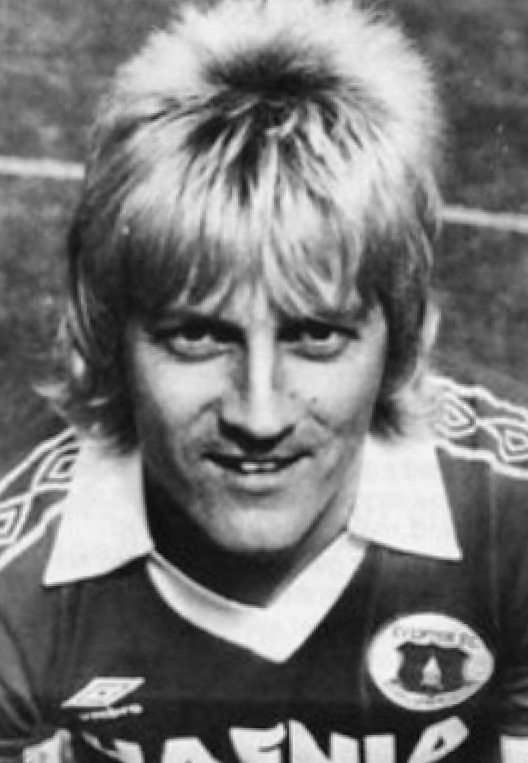
His spiky, long blond hair reflected his devotion to singer Rod Stewart and, on the pitch, the way he wore his football shirt outside his shorts, clutched the cuffs, and saluted a goal with a raised forefinger was a tribute to Scottish footballing legend Denis Law, another of his heroes, .

Biley was quite the hero at Portsmouth, with a goalscoring record of more than a goal every other game, having been signed by Bobby Campbell in 1982.

But when he fell out of favour with Campbell’s successor, Alan Ball, Brighton’s Chris Cattlin stepped in and paid £50,000 to take the striker along the coast in March 1985.

Within a month of the move, he was back at Fratton Park in Albion’s colours for an Easter Saturday south coast derby when honours were even in a 1-1 draw.

Biley had made his Seagulls debut as a substitute for Frank Worthington in a 0-0 draw away to Barnsley, then got his first start the following game (another goalless draw, at home to Oxford) and kept his place to the end of the season.

The first of four goals during that spell came in a 2-0 win at home to Oldham, and the goal he scored in a 1-1 home draw with Leeds on 20 April was his 150th in league football (top picture).  Although Albion finished with three wins, it wasn’t enough to reach the promotion places, and they finished sixth.

Biley made a great start to the 1985-86 campaign, scoring against First Division Nottingham Forest in a remarkable 5-1 pre-season friendly win, and then in the opening league fixture, a 2-2 home draw with Grimsby Town.

However, competition for places in Albion’s forward line had intensified. In addition to Terry Connor, £1m man Justin Fashanu arrived together with Dean Saunders, on a free transfer from Swansea, (Saunders went on to be named player of the season).

With the much-derided Mick Ferguson also managing a brief purple patch of scoring, it meant Biley struggled to hold down a regular spot, making 24 starts plus three appearances as a sub, and only managing to add three more goals to that season’s opener.

Cattlin’s dismissal as boss, to be replaced by the returning Alan Mullery, also spelled the end of Biley’s time at the club. He initially went back to Cambridge on loan, then tried his luck with New York Express in the States, had a spell in Greece before ending up in Ireland, playing for Waterford who were managed by his old Everton teammate, Andy King. He ended up back at Cambridge on a non-contract basis in November 1988 and made three more appearances for United before hanging up his boots.

But let’s go back to the beginning. Born in Leighton Buzzard on 26 February 1957, Biley was spotted by nearby Luton Town at the tender age of 10 and signed schoolboy forms aged 12. He was then offered an apprenticeship and professional forms as he worked his way through the different levels. But financial issues hit the club and when their chief scout left to link up with Cambridge, he recommended Biley to manager Ron Atkinson, and in 1975 he made the move to Fourth Division United.

Biley netted a total of 82 in 185 games as United rose from the Fourth Division to the Second between 1975 and 1979, when his eye for goal caught the attention of First Division Derby County, who paid £450,000 for his services.

Biley continued to find the net regularly in the top flight, scoring nine in 18 games for the Rams, but he couldn’t prevent them from being relegated. He stuck with them in the 1980-81 season and scored 10 playing in the second tier but was sidelined through injury for several months.

He recounted recently how he fell out with manager Colin Addison and there was talk of him being sold to West Brom, where his old boss Atkinson had moved, but instead, in July 1981, he became new Everton manager Howard Kendall’s first signing for a £300,000 fee. Everton fans who go back that far refer to the Magnificent Seven – because that’s how many players Kendall signed in a short space of time.

Biley EVEBiley was an instant hit, scoring on his Everton debut as Birmingham City were beaten 3-1. He scored again in his next game away to Leeds, but things quickly started to go wrong for him, as he explained in great detail to Everton fan website bluekipper.com.

“I was always appreciative of the Evertonians’ footballing knowledge and the support and gusto, particularly through the tough times,” said Biley. “They were very loyal through the tough times, and they are a different class.

“I would like to think they took to me but my only big regret was that I wasn’t there long enough to enjoy them.”

By October, Kendall had dropped his new signing and Biley was mystified.

“Years later, as I look back at it, I wasn’t Howard Kendall’s cup of tea. Whatever that was, I can’t put my finger on it because history tells you what I was and what I did and where I played, and he had a different opinion of that.

“I would have loved him to have had the faith in me he had in lots of other players.”

Eventually his lack of involvement in first team action saw him go out on loan to struggling Stoke City and in eight games he helped them to retain their status in the top division, but hopes of a permanent move fell through.

Instead he departed Goodison Park with just 18 appearances (plus three as sub) and three goals to his name and dropped down to the Third Division with Portsmouth.

The Pompey faithful had already had a taste of what they could expect when, at Christmas 1977, as a 20-year-old playing for Cambridge, Biley had scored twice for table-topping Cambridge at Fratton Park.

And, sure enough, when paired up front with Billy Rafferty, he became an instant hit and the duo scored 40 between them as Pompey won promotion. Biley’s performances earned him a place in the PFA select XI that included Gillingham’s Steve Bruce and Micky Adams, Portsmouth colleague Neil Webb and Kerry Dixon, then of Reading.

The following season saw Biley gain a new strike partner in the shape of Mark Hateley, who would go on to earn England international recognition. However, a series of 10 home defeats put paid to their promotion hopes and Campbell was sacked on the coach on the way back from the season’s penultimate game at Derby. In the final game of the season, with Alan Ball in temporary charge, Biley hit a hat-trick in a 5-0 demolition of Swansea.

Ball was installed as manager and Biley was very much a part of the side that began the 1984-85 season. He played in 22 games and came off the bench twice, scoring a total of 13 goals before Ball mysteriously sold him to Brighton in March.

Biley’s heart never left Fratton Park, though, and in 2015 he told Neil Allen, the author of a book Played Up Pompey: “Pompey was – and still is – my club.

“Pompey was a three-year box in time and if I could possibly open that box again and recover moments, a day even, then I would die happy. I fell in love with the club and it has never gone away.”

Biley has revelled in many opportunities to reminisce about his playing days, attending numerous reunions and enjoying all the memories.

In June 2017, he got together with other former players to talk about his goalscoring days at Cambridge and in October 2017, broadcaster and Albion fan Peter Brackley helped a number of former Pompey players, including Biley, recall a famous occasion when a fan ran on the pitch dressed as Santa Claus and, after the disruption, Biley scored two late goals to win a dramatic cup tie against Oxford.

But in all my research for this piece, I could find no loving references to his time with the Albion, although five years ago the excellent thegoldstonewrap.com brought together some footage of some of his best moments.

After his playing days were over, he moved back to his Bedfordshire roots and got involved in non-league football with various sides in and around the Home Counties, alongside running his own gym in Biggleswade.

  • Pictures from the Albion programme / Evening Argus and various online sources.

Cup Final hero Dave Beasant was Brighton’s oldest player

Beasant BHA

THE FIRST goalkeeper to save a penalty in an FA Cup Final – and the first to captain his team in the historic end of season finale – played between the sticks for Brighton at the ripe old age of 44.

Admittedly Dave Beasant is better known for his years playing for Wimbledon, during which time he laid down those FA Cup milestones in the 1988 final against Liverpool.

Nicknamed Lurch after the butler in The Addams family, Beasant’s heroics to keep out John Aldridge’s spot kick and preserve the 1-0 lead given to the humble south west London club by Lawrie Sanchez, led to the giant goalkeeper lifting the cup.

It also turned out to be the last ever game he played for Wimbledon. A month after that Wembley triumph, Newcastle paid £750,000 for his services – a transfer fee record for a goalkeeper at that time.

Not a bad return on Wimbledon’s £1,000 investment ten years earlier after he had impressed Dario Gradi playing for Edgware Town against the Dons in a pre-season friendly.

Beasant made his league debut against Blackpool in January 1979, and, remarkably, between August 1981 and the end of that 1987-88 season, made 304 consecutive league appearances for the Dons as they rose through the leagues.

When Newcastle sold Paul Gascoigne to Spurs for £2.2 million, they decided to splash £750,000 of it on the big Wimbledon goalkeeper.

Sadly, it was not money well spent. Beasant’s spell on Tyneside lasted just five months and certainly didn’t match the fairytale ending at Wimbledon.

Newcastle struggled at the foot of the table in 1988-89, and were relegated, but before the trapdoor opened Beasant had already departed after just 20 appearances.

He moved back to London in January 1989 to join Chelsea, where he played 193 times, initially under Ian Porterfield, until falling out of favour in 1992.

It was towards the end of 1989 that Beasant won two England caps, playing against Italy and Yugoslavia, and an injury to David Seaman saw Beasant selected for Bobby Robson’s 1990 England World Cup squad, although he didn’t play.

When Glenn Hoddle took over at Stamford Bridge, Beasant was relegated to number three ‘keeper behind Dmitri Kharine and Kevin Hitchcock, so he went out on loan for brief spells at Grimsby Town (six games) and Wolves (four games) before securing a £300,000 move to Southampton in 1993 to succeed Tim Flowers as their no.1.

He played 105 times for Saints but several managerial changes saw his fortunes fluctuate and, in 1997, he once again found himself third choice – this time behind Maik Taylor and Paul Jones – and he was on the move again.

By this time he was 38, but retirement was still not on his agenda. After joining on loan initially, Beasant moved permanently to Nottingham Forest in November 1997 and played 139 games in four years.

It was back to the south coast again in 2001, when Portsmouth needed a goalie following the death in a road accident of their regular ‘keeper, Aaron Flahavan. Beasant played 27 times for Pompey.

Emergency loan spells then followed successively at Tottenham, Bradford City and Wigan Athletic, although he didn’t play any first team games for any of them.

It was from Wigan, just a few weeks before his 44th birthday in 2003, that he once again headed south, this time to join Brighton’s brave but ultimately unsuccessful attempt under Steve Coppell to stave off relegation from Division One.

With Michel Kuipers out of the side with a thigh injury and loan replacement, Ben Roberts, suffering from ‘flu, Beasant was drafted in.

In the Bradford City v Brighton programme in February 2003, Colin Benson wrote almost poetically about the legendary goalkeeper.

Beasant landsc“The unmistakeable figure of Dave Beasant stood tall under the Brighton crossbar at the Bescot Stadium a fortnight ago marking his debut for his 11th club at 43 years of age by brilliantly saving from Leitao’s shot on the rebound after beating out an effort from Corica,” he wrote. “Unfortunately he could not crown the day with a match winning clean sheet for Walsall pinched a 1-0 victory but it amply demonstrated that after 20 years between the posts he has lost none of his technique or resilience.”

In a 2018 interview with Spencer Vignes, Beasant said: “Stevie Coppell gave me a bell. I think you’d lost 12 straight games. I remember looking at the table thinking ‘They’re going down’. But there was also something about it that I quite liked. It was a challenge.”

Beasant said that morale was good despite the league position, and he added: “Wherever I go, I can add something on the field and off it. And that’s what happened. We clicked really well together.”

He played 16 games through to the end of the season and although ultimately the bid to stay up was not successful, no blame could be laid at Beasant’s door for lack of effort.

Never was it more evident than in the final game of the season away to Grimsby. With the score 2-2 and all hope virtually extinct, Beasant was still giving his all when other players’ heads had dropped.

I chatted briefly to Beasant at the club’s end of season dinner and remarked how I had been impressed by his never-say-die attitude right to the very end of that game, even though it was a lost cause.

Obviously the consummate professional, he said to me that however unlikely a win would be, you had to continue to play in the hope things might change round.

What a pro and exactly the sort of attitude that meant Beasant endeared himself to the Albion faithful. In a prophetic assessment after the Grimsby game, he told the Argus:

“You feel for those fans because they have been superb. They are gearing themselves for next season already and hopefully the players can set the same target as the fans and, obviously, that is to bounce straight back.”

Beasant cemented his place in the record books as Albion’s oldest-ever player while Albion, of course, went on and did just as he thought they might on that glorious day at the Millennium Stadium in Cardiff.

Although Coppell offered Beasant the chance to stay on with the Seagulls, he didn’t want to drop down to the third tier and instead took up Chris Coleman’s offer to become a player-coach at Fulham. He was proud to say that on his 45th birthday he was on the bench when Fulham played Chelsea.

Beasant remained on the Fulham coaching staff after Coleman’s departure under his old Wimbledon teammate Lawrie Sanchez (he had already worked with Sanchez in his previous role as Northern Ireland manager). But when Sanchez was fired, Beasant went too.

He subsequently worked for his son, Sam, at Stevenage, and at the age of 55 was famously registered as part of the squad for the 2015 play-off final, even though he didn’t play.

Between 2015 and 2018, Beasant was goalkeeping coach at Reading.

100 goals in Scotland and England for Neil Martin

2 MartinSCOTTISH international Neil Martin remains a legend at one of his homeland clubs but his brief time at Brighton was more like a bad dream after a goalscoring start.

QoS Martin

The striker’s youthful picture can still be found on the legends section of Queen of the South FC’s website where it notes he was among the first players to score 100 league goals in both Scotland and England.

It was while playing for the Wearsiders that he gained three Scotland international caps, all in 1965.

IMG_5147Martin scored 28 goals in 119 games for Nottingham Forest having moved down from Scotland in the 1960s and begun his English league career with Sunderland.

Martin partnered the legendary Denis Law up front in World Cup qualifiers against Poland and Finland and his third and final cap was earned in a 1-0 win over Italy playing alongside Tottenham’s Alan Gilzean.

IMG_5146One of his most prolific spells was at Coventry City (above) where, in three years, between 1968 and 1971, he scored 40 goals in 106 appearances.

He was slightly less prolific for Forest (although he was on the scoresheet in Clough’s first game in charge) before Peter Taylor brought him to the Albion on 26 June 1975.

Four new players were presented to the assembled press that pre-season and standing alongside Martin was one Peter Ward.

Martin scored on his league debut for Brighton as Rotherham United were dispatched 3-0 but he didn’t stay in the side long because Taylor brought in loan signing Barry Butlin, also from Forest, for five games to play up front alongside Fred Binney and Gerry Fell.

Martin did get a run back in the side during the autumn, when he added to his goals tally. But Taylor obviously felt the attack needed something extra and the £30,000 arrival of Northern Ireland international Sammy Morgan from Aston Villa spelt the beginning of the end of Martin’s short spell at the club.

He scored eight league goals and one in the FA Cup in 18 starts (plus four substitute appearances) but it all ended somewhat acrimoniously.

The Argus reported on February 13 1976 that the 32-year-old former Scotland international had been transfer listed and banned from the Goldstone.

Words had evidently been exchanged after Martin had been subbed off in a reserves game and, try though he did, reporter John Vinicombe couldn’t find out exactly what had gone on.

Taylor was renowned for his tough stance with players. He suspended six players in the September that season and he had fallings out with Ian Mellor, Joe Kinnear and reserve ‘keeper Derek Forster.

Martin didn’t play for the club again, instead being moved on to Crystal Palace where he scored just the once in nine appearances.

At the end of the season, he joined what was a familiar exodus for ageing English league players at the time and played alongside England’s World Cup winning captain Bobby Moore, and ex-Arsenal full back Bob McNab, for San Antonio Thunder in America.

It wasn’t unfamiliar territory for Martin because, in the summer of 1967, he was part of the Sunderland contingent who played in the NASL as Vancouver Royal Canadians. The 16-man squad also included the above-mentioned Forster.

After Martin’s 1976 stint at San Antonio, he didn’t play in England again. His final playing days were in the Republic of Ireland, interestingly being given a lifeline by another former international striker who’d played for Brighton – Barry Bridges.

The former Chelsea, Birmingham, QPR and Millwall striker had a couple of seasons managing Dublin side St Patrick’s Athletic, where Martin joined him.

The Scot had a brief managerial foray with Walsall, mainly in tandem with Alan Buckley, but it didn’t end well and he left the club in 1982.

Born in Tranent, just east of Edinburgh, on 20 October 1940, Martin’s break into the professional game came at Alloa Athletic. His 25 league and cup goals in the 1960-61 season brought about a move to Queen of the South where he continued to score plenty of goals – 33 in 61 appearances.

A £7,500 transfer fee took him to Hibernian in 1963. He’d supported them as a boy and after Jock Stein took over as manager in 1964, Martin netted 29 league and cup goals in the 1964-65 season. He said later that Stein was the biggest influence on his career.

It was top-tier Sunderland who paid £45,000 to take Martin south of the border. His goalscoring in his first taste of English football wasn’t quite as prolific as it had been in Scotland, mainly due to the Wearsiders not being able to decide on the best strike partner for the Scot.

Eventually, in 1968, he moved on to Coventry City, newly-promoted to the old First Division. He spent three years at Highfield Road, developing good partnerships with Ernie Hunt and John O’Rourke, with the emerging talents of Willie Carr and Dennis Mortimer providing good service from midfield.

His switch to Nottingham Forest towards the end of the 1970-71 season helped them survive the drop, but they went down the following season and that was the last Martin saw of top-flight football.

1 Martin
3 Martin