Ex-Clarets boss Steve Cotterill not always ‘Mr Popular’

FORMER Burnley manager Steve Cotterill hasn’t always been popular during a nomadic football career that’s taken him the length and breadth of the country.

But he made a lasting connection with Brighton fans after impressing during an all-too-brief playing spell in 1992.

“I thoroughly enjoyed my time at Brighton and, whenever we’ve gone there, I’ve always had a great reception from their supporters. They’ve been terrific,” he wrote in his programme notes prior to a Cheltenham v Brighton fixture.

Injury curtailed Cotterill’s playing career – he endured 18 knee operations – but he made up for it by taking charge of nine different clubs over a period spanning more than 20 years.

His three years and seven months keeping Burnley in the second tier while seeing key players sold or injured was largely recognised as a decent achievement in the circumstances. Many of his other appointments were a lot shorter, and at times acrimonious.

Starting out as a player on the non-league circuit, it was Cotterill’s prolific scoring for Burton Albion (44 goals in 74 games) that prompted Wimbledon to snap him up in 1989.

Unfortunately, he sustained a serious cruciate ligament knee injury that halted his progress with the Dons and Albion boss Barry Lloyd gave him a lifeline to try to resurrect his career with the Seagulls.

Against a backdrop of financial instability, Lloyd had struggled to find adequate replacements for the prolific Mike Small and John Byrne in the 1991-92 season. Mark Gall, signed from Maidstone, offered a glimmer of hope, but Raphael Meade and Mark Farrington were disappointing to say the least, and Albion had been relegated back to the third tier a year after being one game from winning their place back amongst the elite in a play-off final against Notts County.

As the 1992-93 season got under way, Gall was unavailable due to a knee injury that eventually forced him to retire, Meade had departed and questions continued over Farrington, so Lloyd turned to loan signings Cotterill and Paul Moulden from Oldham Athletic.

It looked like he’d cracked it as the pair combined well and started scoring goals. Indeed, Cotterill scored four in 11 games, which was a promising start. Unfortunately, parent club Wimbledon wanted the sort of fee for him that cash-strapped Albion couldn’t afford, so he returned to south west London and eventually moved on to Bournemouth the following summer for £80,000.

In an interview with the Argus in October 2016, Moulden told Brian Owen: “One of the reasons I loved playing for Brighton was Mr Banter himself, Steve Cotterill. We met up like we had never been apart. I’d start the banter and he’d finish it or vice versa.

“We destroyed many a centre-half partnership during that three months. I was gutted to leave. I mean that very sincerely – absolutely gutted. I couldn’t believe nobody would have bought me and Steve as a pairing.

“We were both out of favour with our clubs and we hit it off so well. But it wasn’t to be – at Brighton or at any club.”

Born in Cheltenham on 20 July 1964, Cotterill’s injury-ravaged playing career came to a close at Dean Court. He’d won the player of the year title three times and scored 18 goals in 55 starts for the Cherries, but another knee injury finally put paid to his playing career, and he turned his attention to managing.

His first assignment was in Ireland where he succeeded his former Wimbledon teammate Lawrie Sanchez at League of Ireland’s Sligo Rovers. But his hometown club Cheltenham Town offered him a management opening back in England in 1997, and he steered them from Southern League football into the Conference and then into the bottom tier of the Football League. He twice won the Manager of the Year title and earned another promotion, to the third tier, via a play-off final victory over Rushden & Diamonds.

After leaving Cheltenham, Cotterill had a controversial five-month, 13 game stay as Stoke City boss at the start of the 2002-03 season before quitting to join Sunderland as Howard Wilkinson’s no.2. In May 2020, Cotterill endeavoured to explain to the Stoke Sentinel the circumstances surrounding his tenure, and the board interference regarding players.

The stay on Wearside was also short lived, with the pair being dismissed after only 27 games in March 2003.

The collapse of ITV Digital coincided with Cotterill taking over from Stan Ternent as Burnley manager in the summer of 2004. When he joined, they had only eight players on the books and, despite reassurances to the contrary, within six months Robbie Blake and Richard Chaplow, who he’d hoped to build a team around, had been sold.

When Blake’s replacement Ade Akinbiyi started scoring on a regular basis, he too was sold, and when he returned to the club later, he wasn’t the same player in front of goal.

Even after Cotterill had left, Burnley directors acknowledged the platform he’d provided for their eventual elevation to the Premier League under Owen Coyle.

The excellent uptheclarets.com, summed up his time at Turf Moor, thus: “He kept us in the second tier of English football for three years and that, looking back, was some achievement in, at times, difficult financial circumstances.”

It probably said something about the Championship that when Cotterill finally departed Turf Moor in the autumn of 2007, he’d been its longest serving manager at three years and seven months.

The following year, Cotterill was offered the opportunity to try his hand in America with Minnesota Thunder but work permit issues meant it never materialised. He didn’t resurface in the English game until 2010, when he enjoyed a short but successful reign – five months in charge of Notts County. He took charge on 23 February 2010 and they were crowned League Two champions on 27 April. A month later Cotterill was on his way, appointed in June 2010 as the manager of Portsmouth.
He helped to stabilise the then Championship club against a background of financial troubles and other clubs began to cast eyes on his achievements. The persistence of Nottingham Forest finally paid off and he moved there in October 2011, but a change of ownership of the club spelled the end of his time by the Trent.

In July 2012, he was only nine months into a three-and-a-half-year contract at Nottingham Forest when the owning Al-Hasawi family decided to relieve him of his duties and go in a different direction.

He was out of the game for six months but in January 2013 accepted Harry Redknapp’s offer to join the coaching team at Queens Park Rangers until the end of the season.

He turned down the chance to stay in post the following season and in December 2013 took charge of League One Bristol City, signing another three-and-a-half-year contract.

In his second season at Ashton Gate, he steered City to promotion from League One as champions and they won the Football League Trophy. It earned Cotterill the League One Manager of the Year award.

As with other times in his career, Cotterill found his club’s better players were sold, ultimately weakening the squads he was in charge of. For example, when Sam Baldock moved from Bristol City to Brighton. Cotterill told bcfc.com: “He was a very good captain and very good goalscorer; we were sorry to see him go…that happens in football.”

Ultimately, as City struggled to attain the same level of success in the Championship as they’d experienced in the division below, Cotterill was sacked in January 2016.

Perhaps to prove the point about Cotterill not always being everybody’s cup of tea, former Albion defender Adam El-Abd vented his feelings in September 2020, explaining why he fell out of love with football following a bust-up with the manager only a short time after he moved to Bristol City.

With only three matches of the 2016-17 season left to play, Cotterill once again was grateful to Redknapp, by now manager at Birmingham City, and he joined him there as first team coach.

He subsequently left in the close season in the hope of landing a manager’s role in his own right. Ironically, that opportunity arose back at St Andrews when Redknapp was sacked in October 2017.
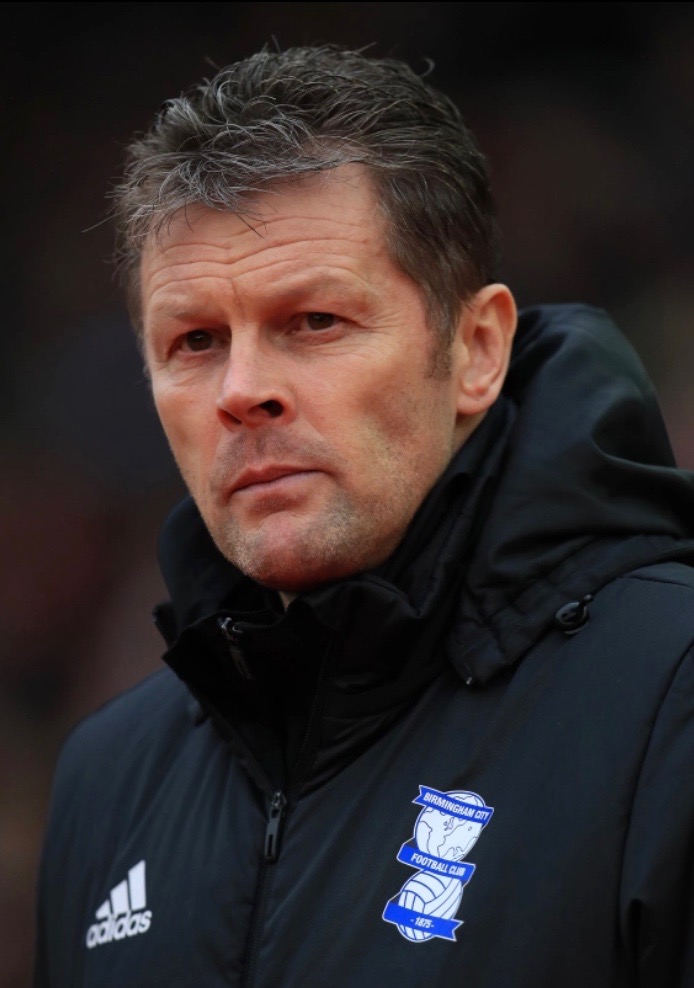
Cotterill told The Sun’s Graham Hill how he felt he had mellowed after 20 years in the hotseat at various clubs, although, at the time, he probably didn’t expect to be out of work again five months later.

After leaving Birmingham in March 2018, Cotterill ruptured a disc in his neck while trying to keep fit but in an interview with gloucestershirelive.co.uk declared himself fit and ready for the next challenge.

That challenge emerged in November 2020 when Cotterill took charge of League One Shrewsbury Town but he faced a bigger fight – to his health – after contracting Covid-19 and he was twice admitted to Bristol Royal Infirmary, spending some time in intensive care, suffering badly from the virus and pneumonia. He was released from hospital in March 2021 to recover at home.

He left the Shrews job in June 2023 and was out of work until January 2024, when he took charge of Forest Green Rovers.

He was unable to stave off relegation from the Football League, but he rebuilt the side during the summer of 2024 to push for promotion back to League Two. When Southend United visited The New Lawn on 15 March 2025, the 2-2 draw was Cotterill’s 1,000th game as a manager. At the time, Rovers were joint-second in the National League.
One-goal striker Craig Davies a Seagulls flop

THE PHRASE ‘journeyman striker’ sits perfectly with Welsh international Craig Davies who, despite success later in his career, fired blanks for Wolverhampton Wanderers and Brighton.

To use that rather amusing, though well-worn phrase, he couldn’t hit a cow’s arse with a banjo during his time with the Seagulls.

He arrived on the south coast in January 2009 during Micky Adams’ second, unsuccessful, spell in Albion’s managerial chair.

Oldham Athletic received a reported £150,000 for his signature and, in 23 games for Brighton, he managed just the one goal – on his debut!

That strike came at Withdean – the opening goal in what ended up a 4-2 defeat to Peterborough United (for whom a certain Craig Mackail-Smith equalised).

When a 4-0 home thrashing by Crewe Alexandra meant it had been six games on the trot without a win, Adams was fired by Dick Knight at a Little Chef on the A23. He’d managed just seven wins in 34 matches, and ‘fireman’ Russell Slade arrived just in time to rescue the Seagulls from the League One relegation trapdoor.

Many different striker permutations were tried that season, with main men Nicky Forster and Glenn Murray sidelined by injury, and Albion’s survival was largely due to the goals of loan arrival Lloyd Owusu. Davies huffed and puffed but simply couldn’t make a meaningful connection when the goal beckoned.

Typical of the fans’ eye view was this observation by wearebrighton.com: “That Adams actually paid money for Craig Davies remains one of the more startling moments of his reign of terror.

“Rarely has a Brighton player enraged the Seagulls support like Davies, a man who mixed incompetence – such as the ability to put the ball over the bar when faced with an open goal three yards away – with a complete lack of effort.”

There had been such promise on his arrival, with chairman Dick Knight telling the matchday programme: “Craig is an exciting player with loads of potential, he is lightning-quick and his direct approach can be a nightmare for defenders. This is a major career move for him and he has every chance to be a crucial part of our future.”

Davies himself clearly thought he’d finally found a place to further his career, saying: “I’ve had a few ups and downs through my career but hopefully now I can get settled at Brighton and start knocking in the goals here.

“The gaffer seems to have a bit of faith in me so hopefully I can repay that by putting in some performances and getting a few goals.”

Albion cut their losses on Davies and loaned him to Yeovil Town (he didn’t score in four games for them, either) and then Adams re-signed him, this time for League Two Port Vale, where he finally managed to find the back of the net again.

In the summer of 2010, Davies came to a mutual agreement to end his Brighton nightmare and he joined League Two Chesterfield, from where his career began an amazing upward trajectory.

Born in Burton-upon-Trent on 9 January 1986, Davies began his career as a schoolboy at Shrewsbury Town, but did his apprenticeship at Manchester City. In August 2004, he moved on to League Two Oxford United, where he made his league debut the same month in a 1-0 win at Notts County.

In two seasons with Oxford, managed by former Ipswich and Arsenal midfielder Brian Talbot, he scored eight times in 55 appearances. In the summer of 2005, he made his debut for Wales (qualifying because he had a Welsh grandfather) as a substitute in a 0-0 draw v Slovenia. Reports linked him with a move to Premier League Charlton Athletic, but nothing came of it and instead, in January 2006, he moved to Italy to join Hellas Verona for a £85,000 fee.

It proved to be too big a step for someone who was then only 20, and he referred to feelings of homesickness in an interview with the BBC.

Remarkably, Davies hit the headlines in May 2006, when in the sixth of seven games he played for the Wales under-21 side (which featured Gareth Bale, Andrew Crofts and Arron Davies) he scored a hat-trick in a 5-1 win over Estonia, and it earned him a recall to the full international side.

Wales under-21 manager Brian Flynn told the BBC: “Craig has sometimes been frustrating to watch, but he has skill and we will help him, and them all, to flourish.”

Davies hoped the international goals would attract a club to rescue him from Italy. “I have found it very hard to settle in Italy,” he told the BBC. “Verona want me to come back and have a year on loan somewhere and then they will look at the situation again when I have a bit more experience.”

It was Wolves, then in the Championship, who offered him a lifeline back in the UK and he moved to Molineux on loan, playing 23 games, mainly in the first half of the 2006-07 season.

The only goals he scored for Wolves both came in a FA Cup tie against Oldham Athletic who, ironically, turned out to be his next club. He joined them for an undisclosed fee from Hellas in June 2007.

Davies netted 13 times for a League One Latics side in 2007-08 but, after a 10-game barren spell the following season, he was sent on loan to Stockport County where he scored six times in 13 games, including bagging a hat-trick against Bristol Rovers, and scoring a penalty against Albion as County won 2-0.

When Adams rescued Davies from his Seagulls horror spell, he was rewarded with seven goals in 24 matches for League Two Port Vale between January 2010 and the end of the season.

Chesterfield stepped in to sign him on a one-year deal for the 2010-11 season – and he was promptly sent off in his first competitive game for the Spireites!

Things did get much better, though, and he ended the season with 25 goals to his name, Chesterfield were promoted, and Davies was chosen in the divisional PFA select team for the season.

Such success drew attention from other clubs and he opted to join Championship side Barnsley under Keith Hill. He struggled to find the net in the opening nine matches but eventually finished the season with 11 goals in 42 appearances.

In September 2012, Davies scored FOUR goals in the space of 19 minutes in a 5-0 demolition of Birmingham City at St Andrews and, with nine goals in 22 appearances to his name in the first half of the 2012-13 season, Bolton Wanderers came forward with a £300,000 bid to take him to the Reebok Stadium.

He scored four goals in 18 Championship games for Wanderers but another of his barren spells struck in the opening half of the following season. Wanderers loaned him to League One Preston and he got a goal on his debut as well as a hat-trick in a 6-1 thrashing of Carlisle United. North End reached the play-offs, and Davies made his way back to Bolton having scored five in 15 games.

Hamstring injury issues plagued him in 2014-15 and manager Neil Lennon released him at the end of the season.

He didn’t have far to travel for his next port of call when newly-relegated Wigan Athletic offered him a two-year contract. He only scored twice in 30 appearances, but Wigan won promotion as League One champions.

With just one goal in 14 Championship games in the first part of the 2016-17 season, Davies was on the move again, this time linking up with League One Scunthorpe United until the end of the season. Cue another barren spell: no goals in 21 games.

The 2017-18 season saw Davies return to his old club, Oldham Athletic, and despite scoring 14 goals in 44 appearances, could not prevent the club being relegated to League Two. Davies had strong views about the ownership of the club as he departed for Mansfield Town.

He signed a two-year deal with the Stags, but injury curtailed his involvement in 2018-19.

C Davies Wales

City cult hero Paul Dickov never forgot his Seagulls goals

A POCKET dynamo of a striker who became a Manchester City cult hero never forgot the goalscoring platform a short spell with Brighton provided him.

Paul Dickov is fondly remembered by the City faithful, particularly for his equalising goal (above) in the fifth minute of added on time in the League Two play-off final at Wembley in 1999 (City famously went on to win the penalty shoot-out in which Guy Butters missed a vital spot-kick for Gillingham).

The diminutive Dickov had wowed Brighton fans during the dark days of the 1993-94 season when Barry Lloyd’s replacement as manager, legendary Liam Brady, had secured the striker’s services on loan from his old club Arsenal.

Dickov had managed to break through to the Arsenal first team under George Graham in the latter stages of the 1992-93 season.  But his chances were limited by the manager’s preference for the more experienced Ian Wright and Kevin Campbell.Dickov south stand

Earlier in the 1993-94 season, the young forward left Highbury for a 15-game spell with League One Luton Town, but only managed one goal.

His goalscoring fortunes changed when Brady persuaded his former employers to let Dickov join the struggling Seagulls, who, at the time, were fighting to avoid relegation from League Two.

Dickov Sandtex

The tenacious Dickov relished the opportunity and scored on his debut in a 2-0 home win over Plymouth Argyle on 30 March 1994. It was the first of five goals in eight games to help Brighton avoid the drop. (Pictured below, Dickov scores from close range against Fulham).

“I had a great time there. I loved every minute of it, and it has stuck with me,” Dickov told the Argus some years later. “I’ve always looked out for Brighton since then and I want them to do well.”

Born in Livingston, Scotland, on 1 November 1972, Dickov came to the attention of the Gunners while playing for Scotland at the 1989 FIFA Under-16 World Championship.

Having shown his goalscoring potential in Arsenal’s reserve side, Dickov got his first team opportunity when Graham rested players ahead of the FA Cup Final (in which they beat Sheffield Wednesday after a replay).

Dickov made his Arsenal debut against Southampton on 20 March 1993, and he went on to score against Crystal Palace and Tottenham Hotspur at the end of the season.

Over the following three seasons, although on the fringes of the first team, he was competing against the likes of Dennis Bergkamp, Wright and John Hartson and he was restricted to just 17 appearances in which he scored once.

Despite the disappointment of not quite making it at Arsenal, he is still fondly remembered there, with their history recording: “He never gave anything less than his all in an Arsenal shirt and, despite question marks over his height, Dickov compensated for his 5’5” frame with heart and endeavour.

“He was quick, skilful and scurried around up front causing problems for defenders.”

On 23 August 1996, City paid £1m to take him to Maine Road.

Over six seasons with the club, he was involved in two promotions and two relegations, which saw him play in three different divisions.

For all their success in more recent times, that memorable play-off at Wembley in 1999 was still being talked about 20 years later.

In 2000, Dickov won his first full international cap for Scotland and he earned 10 caps between then and 2004.

By then, he had moved on from City to try to keep Dave Bassett’s Leicester City in the top division. He joined the Foxes in February 2002, and, although he scored four goals as Leicester valiantly tried to maintain their Premiership status, they were not enough to prevent them being relegated to the Championship.

When former Albion boss Micky Adams took over the following season, Dickov thrived up front, netting a career-high 20 goals as Leicester won an instant return to the top-flight, finishing second behind champions Portsmouth.

Dickov scored 13 goals in the Premier League the following season but once again the Foxes were relegated. Even so, Dickov almost had a dream final game of the season against the team who had first give him his chance in the English game.

Arsenal were unbeaten throughout the season going into the Highbury finale but Dickov gave Leicester a shock headed lead before Thierry Henry and Patrick Vieira turned the game back in the Gunners’ favour to earn them the ‘Invincibles’ crown for their achievement.

That season at Leicester was also blighted by a shocking series of events during a training camp in La Manga, Spain, when Dickov and teammates Keith Gillespie and Frank Sinclair were falsely accused of sexual assault.

PD BlackburnAt the season’s end, Dickov took up an option on his contract which allowed him to leave for a top-flight club and Graeme Souness signed him for Blackburn Rovers. It was not long before Mark Hughes took over and Dickov scored 10 goals in 35 games. Craig Bellamy was Rovers’ main man up front the following season and Dickov’s Premier League appearances were confined to 17 games plus four as a sub.
With his contract at an end, he rejoined Manchester City for the 2006-07 season but his time there was dogged by a series of injuries and he ended up having loan spells at Crystal Palace and Blackpool before returning to Leicester in 2008.

During that spell, when City were in League One, he was mainly back-up to Matty Fryatt and Steve Howard, but managed a further 20 appearances and scored two goals to help the club to promotion back to the Championship.

Eventually, he ended up going out on loan, this time to Derby County to help them out in an injury crisis. His Leicester contract was terminated in February 2010 and he took up a short-term deal to the end of the season with League One Leeds United, who ended the season earning promotion to the Championship.

Dickov’s next move, though, was into management. He initially joined Oldham Athletic as player-manager, before packing up playing in May 2011.

In Dickov’s first game as manager, a young Dale Stephens scored both goals as the Latics beat Tranmere Rovers 2-1. The highlight of his tenure at Oldham was leading the Latics to a shock 3-2 win over Liverpool in the FA Cup fourth round in January 2013, but he resigned a few weeks later because of the side’s poor league form.

Three months later, he took over at Doncaster Rovers, with former Albion captain and manager Brian Horton as his assistant.

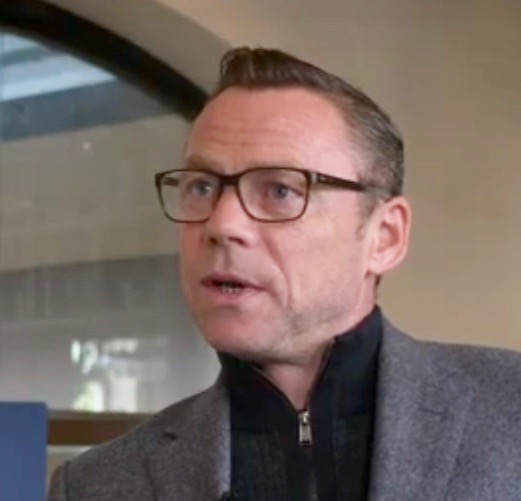
Since leaving Rovers in September 2015, Dickov has been on the football speakers circuit and is also a frequent eloquent contributor as a pundit.

pundit Dickov2019

Paul Moulden chipped in with goals for Bournemouth and Brighton before batter days

MouldyWORLD RECORD youth level goalscorer Paul Moulden now runs a successful chippy in Bolton but he was once in the firing – rather than frying – line for AFC Bournemouth and Brighton & Hove Albion.

The career of the prodigious goalscoring wonderkid tailed off early although it may have taken a new direction in Sussex if the cash-strapped Seagulls had been able to afford to buy him.

Born in Farnworth, near Bolton, on 6 September 1967, Moulden went to the town’s Thornleigh Salesian College where, having excelled for the school football team, he went on to play for England Schools. He also played for Bolton Lads Club under-15s: his staggering personal goal tally of 289 goals in 40 games in a single season earned him a place in the Guinness Book of Records.

He was snapped up by Manchester City as an associate schoolboy during John Bond’s reign as manager and signed on as an apprentice before turning professional on his 17th birthday. He was part of City’s FA Youth Cup winning side in 1986, although manager Billy McNeill had already blooded him in the first team on New Year’s Day that year in a 1-0 home win over Aston Villa.

Moulden CityHe made two further substitute appearances for the first team that season and finished top scorer for City’s reserves. By late 1986, he had earned a regular place but a broken leg sustained in training restricted him to just three appearances in 1987-88.

In the 1988-89 season, Moulden was City’s top scorer with 13 goals as they won promotion from the old First Division back to the elite. But the young striker elected not to take up the offer of a new contract in the summer of 1989 and ended up joining Bournemouth, where Harry Redknapp was beginning his managerial career. Moulden was valued at £160,000 as the makeweight in a deal which saw Bournemouth’s Ian Bishop move to Maine Road.

City boss Mel Machin, himself something of a legend at Bournemouth (a Cherries player, manager and director of football) spelled the end of Moulden’s career at City.

Moulden told FourFourTwo magazine: “Machin just didn’t fancy me. I was offered a contract but it was a contract you’d have been a fool to sign, so I didn’t sign it and I became for sale. All the backroom staff and everyone else concerned was upset that I was going but to have tied yourself down for three years on the contract they were offering, you would have been a fool. That was the lever to get me out.” The Lancashire lad’s move to Dorset proved to be a success on the pitch – but was brief.

He scored six goals in his first three home league matches, including a hat-trick in a 5-4 win over Hull and both goals in a 2-1 win over Newcastle. “I remember the two goals against Newcastle,” Moulden told the Bournemouth Echo in 2016. “One was a three-inch tap-in and the other was a run from the halfway line.”

While he said in the Echo interview how much he enjoyed his time with the Cherries, he told efl.com: “Moving to Bournemouth was a huge move for me. At the time, I was single and it was exciting, but the novelty soon wore off and I found it hard to settle.

“It was a lovely club but I was delighted to return home and back to Oldham.”

Moulden told FourFourTwo: “Bournemouth had some good players, like Luther Blissett, Paul Miller and goalkeeper Gerry Peyton. The thing that struck me was how many old players they had – I was 22 at the time – but Harry was just starting out and I suppose for his first job he wanted security around himself.

“It was a small club and I’d imagine he had to get success quickly. Harry was a nice guy, a decent manager.”

SOCCER
PAUL MOULDEN – OLDHAM ATHLETIC

After just seven months at Bournemouth, and with 13 goals in 37 starts to his name, he was snapped up by Oldham Athletic on transfer deadline day in March 1990.

A £225,000 fee meant a decent profit for Bournemouth but, with Oldham flying high at the time, and Moulden struggling with injuries, he only managed 19 games for the Latics in two and a half seasons. He spent two months at Molde in Norway restoring his match fitness and when Oldham manager Joe Royle suggested he look for a new club, the move to Brighton looked like the ideal opportunity to resurrect his career.

Newly-relegated back to the third tier, Albion desperately needed some inspiration up front and manager Barry Lloyd thought he’d hit the jackpot in securing on loan the services of strike pairing Moulden and Steve Cotterill, from Wimbledon.

Each got themselves a goal in an opening 3-2 defeat to Orient so the signs were promising and the new men duly delivered the goods on the pitch.

The two goals Moulden scored as Albion beat Preston North End 2-0 in September 1992 were especially sweet, as he explained to Brian Owen of the Argus in 2016.

In total, Moulden scored five goals in 11 league appearances and Cotterill four, but the Albion couldn’t afford to sign either of them permanently.

The void was ultimately filled by the arrival of free transfer Kurt Nogan, who subsequently became a prolific goalscorer for the Seagulls. Moulden, meanwhile, ended up being sold to Birmingham later the same season for £150,000 and Cotterill, also deemed too expensive for Albion, was sold to Bournemouth for £80,000 the following summer.

In an interview with Howard Griggs of the Argus, in January 2011, Moulden explained how he would dearly have liked to have made the move to Brighton permanent.

“I played at Bournemouth two seasons before,” he said. “I liked the south coast and I had the chance to go to either Brighton or Plymouth. I jumped at the chance to go to Brighton and I thoroughly enjoyed my time there. I struck up a good understanding with Steve Cotterill.”

Moulden spoke particularly highly of assistant manager Martin Hinshelwood – “he was different class, absolutely brilliant” – and said: “It felt just right from the start. I did well with Steve Cotterill. We both scored goals for the team.”

As an ex-City player, Moulden was particularly miffed that Oldham boss Joe Royle would not let the outcast striker play for Albion against Manchester United in the League Cup that autumn, and he added: “If Brighton had had the money I certainly would have signed.”

He told Griggs: “Manchester City was certainly good, and I enjoyed my time at Birmingham under Terry Cooper, but there were plenty of good times and I can honestly say my two months at Brighton was up there.”

One of Moulden’s best games came in a 2-1 home win over Huddersfield as Albion won 2-1. Steve Foster, back at the club for a second spell, put Albion ahead on 17 minutes with a header from a John Robinson corner. Although Huddersfield equalised through a Iwan Roberts penalty, livewire Moulden popped up with the winner six minutes from time.

The Terriers would ultimately be Moulden’s next destination after leaving Birmingham in 1995 but he made only two appearances before switching to nearby Rochdale where he played 16 times in the 1995-96 season.

In total, Moulden suffered four broken legs and his league career came to a premature end at 28, although he played non-league with Accrington Stanley and Bacup Borough.

He later coached at his old boys’ club and also spent three years with the Manchester City academy but sensibly he had an eye for a career outside of football too and followed in his mum and dad’s footsteps by opening up Paul’s Chippy in Bolton.

Pictures: Albion matchday programme and online sources.

The never forgotten miss by FA Cup Final scorer Gordon Smith

3 and smith must score“NEVER in my wildest dreams – or should that be nightmares? – did I think that, more than 20 years later, that miss in front of goal would still be getting replayed on television and mentioned in the media wherever I go.”
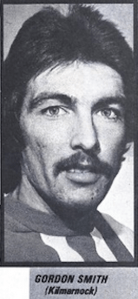
The words could only have been said by one man and they appear in the autobiography…And Smith Did Score (Black and White Publishing, 2005).

Gordon Smith’s football career included being a treble trophy winner with Glasgow giants Rangers, top scorer of the season for Manchester City, and becoming chief executive of the Scottish FA.

But it is what happened in the final seconds of extra time in the 1983 FA Cup Final that he is most remembered for.

Gordon Duffield Smith was born in Kilwinning (20 miles south of Glasgow) on 29 December 1954 and followed in his grandfather Mattha’s footsteps in becoming a pro footballer.

He was at Kilmarnock for five years, scoring 36 goals in 161 appearances, during which time he earned international honours with Scotland’s under-23 side, twice starting and three times going on as a substitute.

“It’s always a tremendous thrill to be selected in a squad for my country,” Smith said in a 1976  Shoot / Goal! magazine article. “It’s great to think Mr (Willie) Ormond considers me good enough for selection. I always do my very best for Scotland. I don’t need any further incentive other than pulling on that dark blue jersey.”

The item was highly complimentary of the player, saying: “The Kilmarnock dazzler is a player of poise and balance. He is one of the swiftest in Scotland and is certainly one of the most gifted. He has the talent to show the ball to the full-back then leave him helpless with astonishing acceleration.

“Smith can make and take goals. Some of his scores have been in the ‘unbelievable’ category. The flash down the wing, the cut-in, the race along the bye-line and then, with the ‘keeper expecting the cut-back, the explosive shot to finish the move in grandstand fashion – the ball zipping between the ‘keeper and the near post.”

In 1977, having joined Rangers for a fee of £65,000, he also collected an under-21 cap as an overage player, in a 1-0 defeat to Wales, but he was never selected for the full international side.

In his first season at Rangers, they won the domestic treble and he scored 27 goals from midfield. To cap it off he scored the winning goal in the 1978 Scottish League Cup Final against Celtic.

Alan Mullery paid £400,000 to take him to Brighton in 1980, and talked about the deal in his autobiography. “Sadly, Gordon Smith is remembered as the man who missed the last-minute chance to win the FA Cup in 1983,” said Mullers. “That’s a shame because he was one of the best players I ever worked with. He reminded me of Trevor Brooking. A midfield player with silky skills who could read the game perfectly.”

Smith played 38 games in his first season at Brighton and scored 10 goals. “I couldn’t ask for more than that,” said Mullery. But when Mullery quit the club in the summer of 1981, the rest of Smith’s time at the Goldstone could at best be described as turbulent.

He didn’t get on with Mullery’s replacement, Mike Bailey, or his assistant John Collins, mainly because of their more defensive style of play. In March 1982, the Argus reported Smith was pondering his future having been left out of the side, with Gerry Ryan and Giles Stille being selected ahead of him.

“I am just wondering what is happening now that I’m not even travelling with the team. I don’t know what my standing is at all,” he told reporter John Vinicombe.

Bailey accused some players of lacking commitment following a 4-1 reverse at Notts County, and Smith was dropped for the following game.

Smith voiced his displeasure at being made a scapegoat and told the Argus: “It seems that every time we lose, I get dropped. Then I read the manager’s remarks about lack of commitment. What other inference can I draw?

“He asked me to play defensively at Notts and I don’t think I let him or the team down. Throughout my career, I have never shown any lack of effort.”

In the 1981-82 season, Smith played 27 matches plus four as sub. He started 15 of the first 16 games of the 1982-83 season but, as Bailey and Collins tried to find the right formula, he lost his place to summer signing Neil Smillie and decided to take the opportunity to return to Rangers on loan.

He only played three matches, but one of them happened to be a League Cup Final defeat against Celtic at Hampden Park!

Almost as soon as Bailey and Collins had left, on Smith’s return to the south coast Jimmy Melia restored him to the first team, hence his subsequent involvement in the 1983 FA Cup Final.

“I had said I would never kick another ball for Brighton, but that was because I had been told there was no place for me as a regular first team player,” Smith said in the run-up to the big game.

“The change of manager altered that and obviously now I am looking forward to playing at Wembley within six months of taking part at Hampden Park. I just hope the result is different.”

Interestingly, the Express said: “The Wembley stage may just suit Smith’s style of game; he’s a studious player with a capacity to drift past people and quite capable of producing telling passes from the bye-line.”

It didn’t help Brighton’s striker options that Brian Clough had refused to allow Peter Ward’s loan from Nottingham Forest to continue until the end of the season, nor that Melia had organised a deal that saw striker Andy Ritchie swap places with Leeds United’s Terry Connor – who was already cup-tied, thus ineligible to play cup games for the Seagulls.

But, in an amazingly prescient pre-match comment, Melia said: “Gordon can be a matchwinner in his own right…he can play a very key part in this final.”

As the title of Smith’s autobiography reflects, the Scot silenced Manchester United followers the world over by opening the scoring for Brighton on that memorable May afternoon in 1983.

In only the 13th minute of the game, young midfield player Gary Howlett found Smith with a delightful chipped diagonal pass over United centre back Kevin Moran and Smith arched a header past Gary Bailey to put the Seagulls in dreamland (below, Smith celebrates the goal with Michael Robinson).

After United had taken the lead, and Gary Stevens had equalised for Brighton, the game went into extra time and the stage was set for one of the most talked about moments in the club’s history.

Interestingly, United ‘keeper Bailey believes Smith has been given a raw deal over the years.

He told the Argus: “It was not the best save I ever made and not the greatest ever seen in English football, but it was a decent one because of my reaction after I’d blocked it.

“I managed to keep my eyes open to make sure I got to the loose ball before Gordon. Often in those 50-50 situations your eyes close and the forward just taps it in but I watched and reacted quickly that time. I want to take credit for it because it came at such a vital time.

“Gordon has taken a lot of stick for what happened, and it was a crucial moment in Brighton’s history, but he shouldn’t get the blame. It is not justified at all. He didn’t score, but he didn’t miss the target.”

On the 25th anniversary of the 1983 final, Argus reporter Andy Naylor interviewed Smith at The Grand Hotel, Brighton, and asked if he ever got sick and tired of being asked about the incident.

“Not really. In life, you have to be able to get over things and deal with them,” Smith explained. “If you become famous for something you don’t do, a lot of people throw it in your face and take the mickey out of you, so you have to show a bit of character and I think I’ve done that.

“I am able to handle it and talk about it and I have no problem at all in taking full responsibility.

“I should have scored. I would love to have scored. I am sorry for the fans, my teammates, the management, everybody who suffered as a result. I suffered greatly too because I’m a perfectionist and I always wanted to be at my best. Everybody else’s disappointment can’t match my own.

“You just have to live with it. There are two choices, either hide away or come out and deal with it. I have put it into perspective. I swapped shirts with Alan Davies after the game. He got a winner’s medal and I didn’t. He’s dead now. He committed suicide. So winning didn’t change his life for the better.”

And, with the benefit of hindsight, would he have done anything differently? “I would have delayed my shot,” said Smith. “I thought Gary would come to me to shut me down. That is why I took a touch and hit it early, hard and low to his side, which meant he would never have got down to it. I scored a few goals in my time like that.

“For some strange reason, I don’t know why, Gary decided to dive. He dived the wrong way and it stuck in his legs. If I had delayed my shot for another split second, he was going down and I would have just chipped it over him.”

To personalise the situation just for a few short moments: Smith’s parents were travelling back to Sussex on the same coach as me that day, and I’ll never forget what happened. We had all gradually drifted back to our seats on the coach and there was understandably an excited hubbub of chatter mixed with the disappointment of seeing Brighton come so close and yet so far from winning the fabled trophy. As Gordon’s parents boarded the coach, an almighty silence descended. You could hear a pin drop. No-one quite knew what to say.

Of course, no-one would have known it at the time, but less than a year later, Smith was no longer with the club.

The new season back in the second tier of English football was barely a couple of months old before manager Melia was on his way, succeeded by Chris Cattlin, the former player who had been drafted in as coach by the chairman, Mike Bamber.

G Smith cover

Smith fell out with Cattlin and was ostracised for five months – ordered to train with the youth team and banned from anything to do with the first team and reserve team.

Looking back many years later, Smith told journalist Spencer Vignes: “He (Cattlin) told me one day that I wasn’t passionate about football and I just found that unacceptable…and I told him so.He just misread me totally.”

During that time, I can remember travelling by coach to Brighton’s FA Cup tie at Watford on 18 February 1984 and, as we were headed along the motorway, Smith was sitting in the front seat of a minibus of fans heading in the same direction.

Nine months earlier, he had scored – and missed – for the Seagulls at Wembley, and, here he was, reduced to a minibus passenger travelling to watch his pals because the club wouldn’t allow him to use any of their official transport.

His first team exile was suddenly lifted unexpectedly for just one more game, and he scored in a 3-0 away win at Derby County on 17 March 1984. But, within days, he was sold to then second-tier Manchester City for just £45,000.

A tad ironically for an ex-Rangers player, it was legendary Celtic captain Billy McNeill who took him to Maine Road. He made his debut in a home game against Cardiff City on 24 March 1984.

Thirty-eight of his 46 appearances for City came in the 1984-85 season, when he was top scorer with 14 goals.

Smith recalls the details of his spell at the club in the autobiography but, in short, he fell out with McNeill and made his last appearance for City on 4 November 1985, at home to Sunderland. He eventually moved to nearby Oldham Athletic, where he played nine games.

In 1987, he had the chance to play for Austrian side Admira Wacker, where he featured in 38 games, and the following season he switched to FC Basel in Switzerland, playing 25 games.

Eventually, in 1988, he returned to Scotland and finished his playing career at Stirling Albion.

Smith subsequently became an agent, representing the likes of Paul Lambert and Kenny Miller, but relinquished that work when he was appointed the chief executive of the Scottish FA, a job he held for three years. He was later director of football at Rangers during the 2011-12 season.

In June 2018, the Daily Record reported Smith’s daughter Libby had given birth to a baby boy and she’d taken on board her dad’s suggestion to call him Edson Thunder after the legendary Pele!!

‘Save of the season’ one of few bouquets for goalkeeping florist Alan Blayney

blayney intenseGOALKEEPER Alan Blayney only played 15 games on loan to Brighton from Southampton but if finances had been better at the time he could have signed permanently and his career may have taken a different turn.
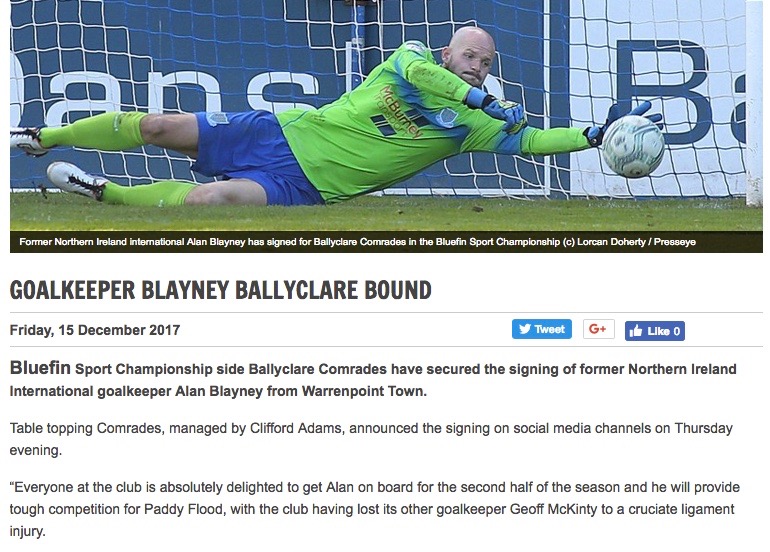
Blayney is still playing, nifootballleague.com reporting only in December 2017 a move to Ballyclare Comrades from Warrenpoint Town. He also runs a florist business with his wife Laura in Newtownabbey.

Only a month earlier he opened his heart to the belfasttelegraph.co.uk and talked about the demons he’s had to face during a career that rarely hit the heights in England but has seen him represent his country and enjoy success in his native Northern Ireland.

Born in Belfast on 9 October 1981, Blayney was picked up by the city’s Irish league side Glentoran at 16 before moving to the UK aged 19 to join Premier League Southampton.

Blayney was initially loaned out to Stockport County, but his time there was cut short by a broken finger.

He also had a couple of games along the coast at Bournemouth when he suffered one of his most embarrassing goalkeeping moments. In a Q and A for the Albion programme, Blayney told interviewer Dan Tester: “I’d rolled the ball outside the 18-yard box in readiness to kick it up field. The Rochdale striker, my former Northern Ireland under 21 teammate Lee McEvilly, was running away and it hit him on the head and flew over mine into the back of the net.”

Back at Southampton, the young ‘keeper finally got a first team chance in May 2004, a couple of months after Paul Sturrock had replaced Gordon Strachan as manager.

It was some debut because the game against Newcastle United finished 3-3 and a save Blayney made from an Alan Shearer header won him the accolade of Sky Sports save of the season.

The young Irishman kept his place for the following game, a 2-1 defeat at Charlton and he played twice more the following season, in a 2-2 league draw against West Bromwich Albion and a 5-2 League Cup defeat to Watford.

With future Albion goalkeeping coach Antti Niemi and Paul Smith ahead of him in the pecking order, Blayney went on loan to Rushden & Diamonds, where he played four games, before securing the first loan to Brighton in early 2005.

Albion’s regular ‘keeper Michel Kuipers had sustained a horrific shoulder injury in a home game against Nottingham Forest and the no.2 at the time, Chris May, had no experience so manager Mark McGhee needed emergency reinforcements.

Initially he obtained David Yeldell from Blackburn Rovers and also brought in Rami Shabaan from Arsenal, but Blayney, no doubt recommended by McGhee’s old pal Strachan, became the preferred option and played seven games at the end of the season.

Amongst several impressive displays was a game I went to with my son, Rhys, at Burnley, on 16 April 2005.

Against the odds, it finished 1-1 but the media was keener to focus on the post-match news that striker Mark McCammon had been ordered off the team bus by McGhee for his reaction to being substituted at half time.

Reporter Peter Gardner, on telegraph.co.uk, said: “The incident overshadowed a rousing second-half comeback to a game Brighton might ultimately have won, not least through the contribution of Jake Robinson, McCammon’s half-time replacement.

“However, McGhee’s men were equally fortunate not to have been overwhelmed by the home side in the opening 45 minutes when only splendid saves by Alan Blayney from Graham Branch (twice) and Mo Camara, plus Burnley’s own profligacy, prevented an avalanche of goals.”

Blayney was also between the sticks for the nail-biting final game of the season when a 1-1 draw with Ipswich Town kept the Seagulls in the Championship by the skin of their teeth.

Such had been Blayney’s contribution that McGhee was keen to sign him permanently, the manager telling skysports.com: “Alan did absolutely brilliantly here for us. We have to see how realistic an option that is, and whether they’re even prepared to consider letting him go, and what the conditions would be.”

The answer was that Brighton couldn’t afford the fee Southampton wanted so at the start of the following season Wayne Henderson was brought in instead on a three-month loan from Aston Villa.

When Henderson returned to Villa, McGhee was keen to buy him outright but in the meantime brought Blayney back for an eight-game stint.

Blayney told BBC Southern Counties Radio: “If I don’t perform they’ll end up going for Wayne instead of me. I have to come in and show I’m as good as Wayne, if not better. This first game at Stoke is really important.”

Unfortunately, the game at Stoke ended in a 3-0 defeat and a 3-2 reverse at home to Crystal Palace followed.

After a point was gained away at Cardiff City, Blayney saved a penalty from Inigo Idiakez in a 0-0 draw with Derby at Withdean on 26 November 2005, and the following week he helped earn another point, repeating the feat against Watford’s Marlon King.

The Watford Observer reported: “King passed up a glorious chance to fire Watford ahead on 58 minutes when he saw his penalty saved. King’s tame penalty was parried by Blayney, who dived low to his left, and the keeper then gathered the rebound.”

After a 5-1 hammering away to Reading, Blayney returned to Southampton in mid-December and within a matter of weeks Southampton’s technical support director, Sir Clive Woodward, informed him he had been sold to Doncaster Rovers for £50,000.

Blayney told the Belfast Telegraph in November 2017: “My response was, ‘Do I not have any say in this?’ He said the deal was done but I didn’t want to live in Doncaster. I loved it in Southampton. I didn’t settle in Doncaster, they gave me an apartment, but it was a tip. If I was getting those wages now I would bite your arm off but then it felt I wasn’t getting much and it was a terrible time.”

Although he started out as no.1, and made 24 appearances for Rovers, following an ankle injury he slipped to third choice behind Ben Smith and Jan Budtz, and came to an agreement to terminate his two and a half year contract early.

Blayney admitted in his Belfast Telegraph interview: “I do regret going out and drinking in my later career in England when I was at Doncaster. I was getting injuries and was a bit disillusioned with the game. I regret it because people had opinions of me at that club which is not the real me. They only saw me behave like that for a few months.”

He wasn’t quite done with England, though, and in February 2007 joined League One Oldham Athletic until the end of the season, after impressing in a reserve team match. However, he only played one first team game, in a 1-2 home defeat against Bournemouth.

There had been the possibility of a return to Brighton to replace Henderson, who had been sold to Preston, but the Argus reported on 2 February 2007: “Albion are not re-signing goalkeeper Alan Blayney after all. They have not been able to agree a length of contract with the former loan signing.”

On his return to Northern Ireland, he initially managed just three games as an understudy at Bohemians, but then he played 32 times for Ballymena United in 2008-09 as a prelude to what would turn out to be the most successful period of his career.

In five seasons with NIFL premiership side Linfield, he played 164 games and, in 2010-11, when Linfield won the league and cup double, he was named Ulster Footballer of the Year.

His form for Linfield also earned him a recall to the Northern Ireland squad. He had initially made his debut in 2006 under Lawrie Sanchez on a summer tour of the United States.

An appearance from the bench in a drawn friendly against Morocco in November 2010 saw Blayney concede an embarrassing goal as his clearance rebounded off Marouane Chamakh, then of Arsenal, to give the Africans the lead.

Manager Nigel Worthington put the incident into context after the game, telling the media Blayney had travelled to the ground just hours after his partner had given birth to a son.

“I was disappointed for Alan but it has been a terrific day for him and we have come out of the game unbeaten,” said Worthington. “He’s fine and I have given him every encouragement. It is one of those you learn from. You cannot take a split second to delay.”

Blayney said it was the worst moment of his career. He told the Belfast Telegraph: “I came on at half-time for Jonny Tuffey but took a terrible touch and Chamakh came in to challenge me. I kicked the ball off him and it went into the net.

“Everybody had welcomed me onto the pitch and you don’t forget moments like that. You aren’t used to playing against players who are as quick as that. I looked up and he was there. I wanted the ground to swallow me up but earlier that same day Phoenix was born. It was a bittersweet day.”

In May 2011 Blayney shared goalkeeping duties with Tuffey as an inexperienced Northern Ireland team endured an embarrassing Carling Nations Cup defeat to the Republic of Ireland. Although left exposed by a threadbare defence, Blayney was culpable in at least two of the goals in a 5-0 hammering, one of which was scored by debut-making Stephen Ward, a future left back loanee for the Seagulls. bbc.co.uk reported: “Blayney was badly at fault six minutes later as he spilled a tame Treacy cross which allowed Ward to poke home from close range.”

With Linfield, Blayney continued to rack up honours until they signed Tuffey in 2013, and he was no longer first choice. In January 2014, he joined Ards on loan but couldn’t help them avoid relegation.

After spending 2014-15 with Glenavon, he returned to Ballymena where he had two successful seasons, before losing his place. In January 2017, he dropped down to the Premier Intermediate League with Dundela. At the start of this season, he returned to the higher division with Warrenpoint Town but, in December, moved to be closer to home, with semi-professional Ballyclare.

Blayney savedec 17 blay cutBlayney cover

Further reading

https://www.not606.com/threads/whatever-happened-to-alan-blayney-part-5-of-many.126334/

https://www.belfasttelegraph.co.uk/sport/football/irish-league/footballers-lives-with-alan-blayney-why-ive-been-gripped-by-selfdoubt-and-how-i-almost-died-after-training-36284956.html

http://news.bbc.co.uk/sport1/hi/football/teams/b/brighton/4102810.stm

http://nifootball.blogspot.co.uk/2006/08/alan-blayney.html

Twelve goals in 26 games for Scottish striker Alan Young

GARY LINEKER’S former strike partner at Leicester City had a good goals to appearances ratio for Brighton & Hove Albion.

Sadly, Scotsman Alan Young only managed 26 appearances in his one season (1983-84) with the Albion, although his 12 goals meant he finished second top goalscorer behind Terry Connor.

His brief Brighton career got off to a great start with a memorable debut goal, an overhead kick to net against Chelsea at the Goldstone. Young twice scored braces for the Seagulls but his season was injury-hit and, with manager Chris Cattlin bringing in his old pal Frank Worthington for the 1984-85 season, Young was sold to Notts County.

In more recent times, Young courted controversy as a radio pundit sharing his opinions about Leicester, and in 2014 BBC Radio Leicester dropped him from his role supporting commentator Ian Stringer.

alanyoung6 2

Back in September 2013, Young was berated online for his criticism of winger Anthony Knockaert. Foxello, on ja606.co.uk, wrote: “If there’s one thing that annoys me more than just about anything else at this football club, it is that grumpy, nasty egotist Alan Young and his never-ending agenda against certain members of the football club.”

The correspondent bemoaned: “Knocky is now the butt of every joke, and the object of every jibe Young throws out…. It’s almost as if he doesn’t want us to have skilful players who occasionally misplace a pass due to their advanced vision, and just have hoofers and cloggers like in his day.”

So let’s take a look back at ‘his day’. Born in Kirkcaldy on 26 October 1955, Young was football-daft and showed sufficient promise to earn Scottish schoolboy international honours.

His boyhood favourite team was Raith Rovers, whose star player at the time was Ian Porterfield, who famously scored the winning goal when Second Division Sunderland beat Leeds in the 1973 FA Cup Final.

Surprisingly overlooked by Scottish professional clubs, Young also experienced early disappointment in England when Nottingham Forest rejected him. “Nottingham Forert didn’t want me and I left there thinking I was no good,” he told Shoot! magazine.

Nonetheless, when he was playing as an unattached player for Scotland Schoolboys against England at Old Trafford, Oldham Athletic scout Colin McDonald, a former Burnley and England international goalkeeper, noted his promise and persuaded the young forward to head south of the border to begin his professional career.

In five years at Boundary Park he scored 30 goals in 122 games, and, to a large extent, learned his trade from old pro Andy Lochhead, a prolific goalscorer in his day for Burnley, Leicester and Aston Villa.

In the 1978-79 season, Young netted a hat-trick against Leicester which caught the eye of fellow Scot and former Rangers boss, Jock Wallace, who had taken over at Filbert Street and was building a team with his fellow countrymen at its core.

When Young joined Leicester, and played alongside his boyhood pal Martin Henderson, it began a love affair with Leicester that endures to this day.

In three years at Leicester, Young scored 26 times in 104 games, eventually forming a partnership with the emerging Lineker. TV’s favourite football frontman was generous enough to pen the foreword to Young’s 2013 autobiography, Youn9y (written in conjunction with Simon Kimber and published by the historypress.co.uk) and said of him: “He was an old-fashioned, aggressive centre forward. He possessed, though, a delicate touch and finesse that belied his big target man status – the perfect partner for a nippy little goalhanger trying to make a name for himself.”

Screenshot
Leicester strike partner for Gary Lineker

Young scored on his full debut for City in a league cup game v Rotherham and followed it up with two on his league debut at home to Watford.

The only time Young was sent off while playing for Leicester was, ironically, at the Goldstone Ground in 1981, at Easter, which was the second of four games at the end of the season that Albion won to stay in the top division.

Young was dismissed for two bookable offences, the first for clattering into goalkeeper Graham Moseley and the other a clash with Steve Foster, although, in his autobiography, he says Foster play-acted a knee injury, which the referee bought. Foster even teased him about it when he joined the Seagulls two years later. In that Easter 1981 fixture, Young’s teammate Kevin McDonald was also sent off, Brighton won 2-1 – and Leicester ended up being relegated together with Norwich and bottom-placed Crystal Palace.

Back in the old Second Division, Young did his cartilage in a game on QPR’s plastic pitch which he says was the beginning of the end of his career, because his knee was never the same afterwards (years later he had a knee replacement).

He also had the disappointment of losing to Spurs in the 1982 FA Cup semi final, although he maintains if a certain Chris Hughton had been sent off for two fouls on Lineker, it might all have been a different story.

Before the next season kicked off, Jock Wallace, the manager he idolised, decided to move back to Scotland to manage Motherwell and his successor at Filbert Street, Gordon Milne, swiftly chose to pair the emerging Alan Smith up front with Lineker, signalling the exit for Young.

Managerial upheaval was to become a familiar cause of Young’s departures in the years that followed, too. But I am getting ahead of myself.

Ian Porterfield, his footballing hero from yesteryear, had taken over as manager at Fourth Division Sheffield United and, although he didn’t really want to drop down the leagues, the Blades were a big club so Young moved to Bramall Lane.

A year later, though, after Brighton’s relegation from the elite in 1983, striker Michael Robinson was sold to Liverpool so there was a centre forward vacancy – and manager Jimmy Melia chose Young to fill it.

The fee was either £140,000 or £150,000 depending on which account you believe, but Young was happy because he pocketed a £20,000 signing on fee (four times what he had received only a year earlier when moving to Sheffield).

His first involvement with the squad was on a close-season tour of the Balearic Islands (with associated eye-opening tales recalled by thegoldstonewrap.com) but he also picked up an injury that was to dog his season on the south coast.

While Young had a lot of time for Melia, when Cattlin took over it was a different story and, in his book, there are plenty of colourful expletives used to describe exactly what he thought! He also castigates physio Mike Yaxley – “the most useless physio I have ever worked with” – although he says the team spirit was very good…seemingly fuelled by long post-training ‘sessions’ in Woody’s wine bar.

A youngHe said: “The football was very enjoyable there and never more so than when Jimmy Case and I were playing together; I loved playing with Jimmy.”

For a short time in that 1983-84 season, Albion had three Youngs in their squad, none of whom were related. Along with Young the forward, there were centre backs Eric Young and on-loan Willie Young.

When Cattlin decided to bring in his old Huddersfield teammate Worthington the following season, Young was on his way, this time to Notts County. The manager who signed him was the former Liverpool and Nottingham Forest defender Larry Lloyd, but his tenure in the managerial chair was very short so, once again, Young found himself playing for a manager who hadn’t chosen him.

In two years at Meadow Lane, Young scored 12 in 43 games for County. He moved on to Rochdale where the Leeds legend Eddie Gray was in charge, but injury took its toll and he only scored twice in 28 games in the 1986-87 season before retiring at 31. He had scored a career total of 89 goals in 349 appearances.

While there were a few non-league appearances, he eventually landed a job back at Notts County in the early days of community football schemes. He made a success of the job, obtained his coaching qualifications and eventually they combined the community scheme with the centre of excellence.

Brighton fans will be interested to know that among the young lads who emerged during Young’s time there were Will Hoskins and Leon Best. The star player, though, was Jermaine Pennant.

Young has fond memories of Neil Warnock’s time as County manager, because of his interest in the work being done at grassroots level. However, the mood changed when Sam Allardyce took over.

Allardyce initially cut Young’s salary and then showed him the door. “I can’t and I never will forgive Sam Allardyce,” he said.

Away from football, Young has had a tempestuous love life – read the book to gather the detail – and has three sons and a daughter. While he also had spells working for Chesterfield and Leeds, he dropped out of the game and then had a very dark period dominated by heavy drinking in isolation, including a time living alone in a caravan on the banks of Loch Lomond.

Eventually a return to England and his break into radio punditry brought him back from the brink.

In 2013, his autobiography Youn9y was published, the sleeve notes describing the story of “a talented, brave striker who played at the highest level of the domestic game but also experienced human misery at its lowest once his playing career was over”.

The notes add: “Youngy doesn’t just recount the good times of his playing career; he also offers valuable insight and moments of perception and understanding of some of the darkest days of his life.”

After four years as match summariser, in 2014 BBC Radio Leicester dispensed with his services and replaced him with another former Fox, Gerry Taggart.

However, Young still gives his opinions about Leicester on the community radio station Hermitage FM.

Pictures show a shot of Alan on Brighton seafront from an Albion matchday programme; the front cover of his autobiography; other matchday programme action shots, and in the Hermitage FM radio studio from Twitter.