
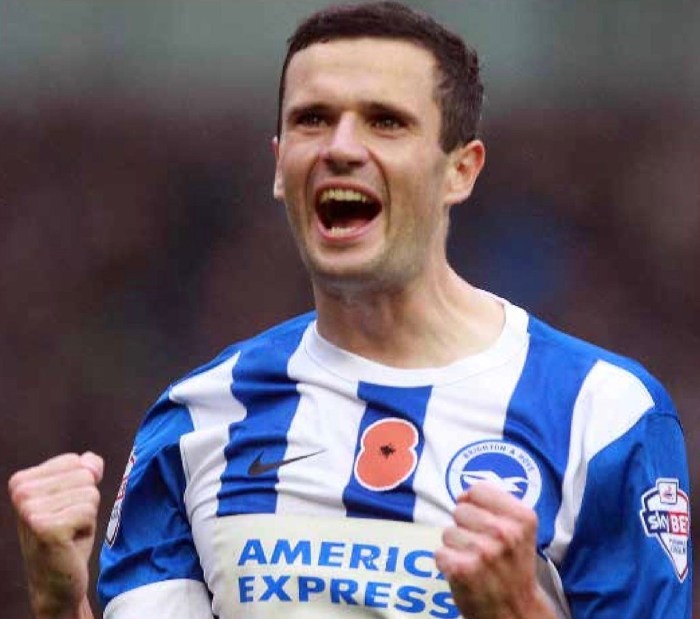
BRIGHTON provided a step up in class for Jamie Murphy when they bought the Scottish winger from League One Sheffield United in August 2015.
“I feel like I’ve been able to play in the Championship but I’ve never been given the opportunity,” he said. “It’s thanks to the club for giving me that opportunity.”
Murphy was 25 when he joined the Albion on a four-year deal. The fee was undisclosed but was reported to be £1.8m.

He was Albion’s ninth summer signing and his arrival was somewhat overshadowed by the return of Bobby Zamora to the Albion. But boss Chris Hughton said at the time: “He is somebody we monitored very closely last season and he was one of Sheffield United’s most influential and creative players.
“He’s a winger who can play on either flank and he will give us extra options in both wide positions. He’s a very good age, an age where he can continue to develop as a player and build on his experience.”
Murphy quickly settled at the club, finding a few familiar voices in the likes of captain Gordon Greer (he discovered their respective parents lived round the corner from each other in Glasgow and even drank in the same pub!), sports therapist Antony Stuart who Murphy knew at his first club, Motherwell, and assistant manager Colin Calderwood, whose Hibernian side he had played against.

He scored his first goal for the club in a 2-2 draw at Bolton on 26 September 2015 – but was later sent off in the same match. Zamora, making his first Albion start since returning to the club, set up Dale Stephens to put Albion ahead and Murphy increased the lead after a surging run into the penalty area by Liam Rosenior.
Neil Danns pulled one back before half time and Murphy saw red for a heavy tackle on Danns in the 75th minute. Albion had to settle for a point when Gary Madine headed an injury-time equaliser.
Impressive displays and another goal, against MK Dons, helped to earn him the November player of the month award – and, courtesy of the sponsor, the opportunity to drive a Porsche for 48 hours.

Murphy scored four more goals in a season’s total of 31 starts plus six appearances off the bench and he revealed in a matchday programme article how his eye for a goal stemmed from playing as a striker earlier in his career.
“When I was a kid, I was always the quickest so I always scored a lot of goals but as I got older and then turned professional with Motherwell it got harder and harder. I’m not the biggest player in the world, so I got moved out to the wing, but I still think like a striker when I’m in front of goal.”
Unfortunately, the campaign ended in disappointment when Albion missed out on promotion from the Championship. Hughton’s side finished third and Murphy’s form for Brighton earned him a call-up to the Scotland squad for two friendlies in March 2016, although he remained an unused sub.

When Albion lost in the two-legged Championship play-off semi-final to Sheffield Wednesday, Murphy was an unused sub (Anthony Knockaert and Jiri Skalak got the nod) but it was a familiar feeling for Murphy who had experienced semi-final heartache in two League One play-offs (2013 and 2015) for Wednesday’s fierce city rivals.
Hughton had plenty of competition for the wide spots in Albion’s 2016-17 promotion challenge, reducing Murphy’s starts to 20 plus 15 appearances off the bench.
He tried hard to seize his chance when it was presented. He scored twice in a 4-0 League Cup win over Colchester United at the start of the season and was the ‘other’ scorer in the Bonfire Night 2-0 win at Bristol City when Steve Sidwell scored a worldy from the halfway line.
A 3-0 home win over Reading at the end of February saw Murphy put in a man-of-the-match performance and he scored his first goal in 16 matches (Sam Baldock and Knockaert the other scorers).
He was praised for his pace on the break and excellent decision-making and later told the matchday programme: “It was one of my best performances. I always feel as if I’ve given 100 per cent – but sometimes things go for you, sometimes they don’t.
“I was delighted to get the goal; it’s been coming these past couple of weeks. But all across the team we’ve played well, done our jobs and obviously come away with a great win. It was a big game and we put in a very professional performance.”
Expanding on the whole-squad approach, Murphy said: “Anyone can come in and do a job. When I was on the bench I always felt there was a chance for me coming and I’m sure the boys on the bench feel that as well.
“We’re in this as a squad, it’s not just about the starting 11.” And he also spoke about the part the Amex crowd played. “It’s great as a player when you know you’ve got that backing of the fans behind you.
“When this place is rocking it really makes a big difference to us as a team. The fans get right behind us home and away.”

Murphy was certainly at the heart of the celebrations (above) when the Seagulls finally made it over the promotion finishing line, via a 2-1 win over Wigan Athletic, and he fondly recalled crowdsurfing (together with teammates Ollie Norwood and Skalak) on a happy, packed train from Falmer to the centre of Brighton as players joined with fans to celebrate the achievement.
The players were headed to a party in central Brighton laid on by chairman Tony Bloom and Murphy told The Athletic’s Andy Naylor in 2021: “There was no other way to get from the stadium to the party. The train station is 100 yards away, so we thought, ‘Why not just jump on a train?’.
“I don’t know what we were thinking, or if we thought it was going to be empty. Obviously, it wasn’t!
“It’s one of the best memories I have of that day. I’ve still got the video on my phone of us crowdsurfing and then coming off the train and getting carried down on someone’s shoulders, all the way down to the party.”
Once the Albion were in the Premier League, Murphy’s playing time was virtually non-existent (one start and three sub appearances in the league; one League Cup outing), and although speculation arose about a possible move, Hughton tried to play it down.
In December 2017, he told the Argus: “At this moment, if I am looking at the options I have in the wide areas, it’s been unfortunate for Jamie because of what we’ve had and no injuries in that area.
“He is still very much part of our plans. It only takes a lack of form, an injury or a couple of injuries and then he is very much back in the squad.”

Within weeks, though, the winger joined Glasgow Rangers (the team he supported as a boy), initially on loan until the end of the season, before making the move permanent in the summer of 2018.
Hughton told the club website: “Jamie is a great lad, a fantastic professional and has a desire to play – and while we were in no hurry to see him leave, we do understand his desire to play for his boyhood team and one of the biggest clubs in Scotland.
“He’s been excellent for the club, ever since we signed him from Sheffield United, and wrote himself into club folklore as a crucial part of our promotion-winning side last season.”
Murphy played 18 league and cup matches (plus one as a sub) as Graeme Murty’s reign came to an end and during that initial time back in Scotland earned two full caps to go with his previous under 21 honours. They came in friendlies against Costa Rica and Peru: going on as an 87th minute sub for Matt Ritchie in a 1-0 win over Costa Rica and starting in a May 2018 2-0 defeat in Peru ((he was replaced by Oli McBurnie in the 67th minute).
Murphy signed a three-year contract with Rangers and was the club’s first goalscorer under new manager Steven Gerrard, netting the opener in front of a crowd of 49,309 at Ibrox in a Europa League qualifying match against North Macedonian side Shkupi.
He had played in just five Europa League games and two Scottish Premiership games before suffering a career-changing injury in a League Cup tie at Kilmarnock in late August.
The anterior cruciate ligament tear in his left knee, sustained on the astroturf pitch at Rugby Park in an innocuous coming-together with an opponent, put him out of action for 14 months.
Gerrard told the Glasgow Times: “Jamie’s coming to terms with it. He’s found it tough. He was upset at the beginning and understandably so.
“It is a tough one to take as a footballer. But we will give him every bit of help and support off the pitch that he needs. We will make sure that he sees the right specialists and gets the job done properly.
“Then as a team we will rally around him and make sure he is in good spirits. He is here for the long term. He is a big player for us.
“What Jamie has to do now and what we have to help him do is make sure he does everything in his powers to come back strong and doesn’t have any setbacks.
“He has got an opportunity to work on his whole body and make sure he comes back really strong.”
“It is a big blow. He found consistency straight away. He was on a big buzz from signing long-term for the club.
“He knows the league, he knows the club, he is very well-liked in the dressing room. We have had a big cog, a big piece of the jigsaw, taken away from us.
“We are still coming to terms with it. I know Jamie is as well. I’m not going to try and play it down. It’s a big blow.”
As it turned out, Murphy played only two more matches for Rangers after returning to fitness in October 2019 and in January 2020 linked up once again with his former Sheffield United boss Nigel Clough on a six-month loan at League One Burton Albion.

“I have worked with Nigel Clough before and had some of my greatest moments as a footballer under him, so it was an easy one to pick,” he said. “I want to be back enjoying football again. It has been a nightmare time with my knee but I’m now just looking forward to playing again.
Clough said: “To get a player from Rangers of Jamie’s quality is brilliant. The fact that we have worked with him before and that we get on well with his agent has helped.
“He wants to get out and play some football. He was out for a while with a knee injury, which is one of the reasons he’s coming out, but he’s fully fit now. What he did for us at Sheffield United and how he played there means we are very excited to have him on board.
“He plays wide mainly but can play up the middle as well. He carries the ball very well, makes goals and scores goals. He will be a great asset as we try and push for a place in the top six.”
He scored seven goals in 10 matches but then returned to Scotland and joined Hibernian, initially on loan and then permanently.
After making a total of 50 league and cup appearances for Hibs, he linked up with Clough for a third time in February 2022, signing on loan at League Two Mansfield Town. He scored once in 16 appearances for the Stags.
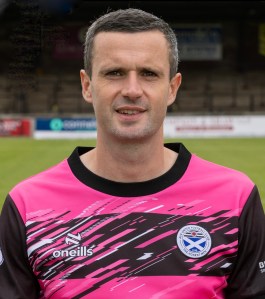
When he left Hibs at the end of his contract in June 2022, he switched to Perth for a year to play for St Johnstone where he scored five times in 29 appearances and in June 2023 was on the move again, this time to Scottish Championship side Ayr United.
Born in Glasgow on 28 August 1989, Murphy was inspired by Rangers strikers Ally McCoist and Mark Hateley as a boy and played junior football at Westwood Rovers and Drumchapel Thistle before linking up with Clyde. He joined Motherwell aged 11 and broke through to the first team at 17 in 2006 under former Albion boss Mark McGhee.
He said of McGhee: “He was the first man to give me a real chance in the first team. I played a good run of games, played in Europe and played well so he was big for me at the time.”
In 11 years at Fir Park, Murphy helped the club reach a Scottish Cup Final and regularly qualify for European football.
Having scored 50 goals in 215 games for Motherwell, he was then bought in January 2013 by former Albion captain Danny Wilson, who had switched allegiance in Sheffield to manage United.
It was Stuart McCall who sold Murphy to a club he had served as a player and a manager, and he believed at a reported fee of £106,000 they were getting a bargain for the 23-year-old.
McCall told the Daily Record: “We are not getting anywhere near what he is worth but he has given this club great service over the years. He is a great kid and goes with our blessing.

“It is probably the right time for Jamie to move on and flourish elsewhere.
“I would love to have kept him until the summer and it is disappointing for us. But Jamie is a talented boy and can force himself into the Sheffield United team.
“Sheffield United may be a League One side now but they are a great club for him to go to.
“I am hopeful they will be in the Championship next season and they are a Premiership club in the making as they have that status.”
McCall added: “I told Jamie they have a great fanbase, fantastic set-up and good manager in Danny Wilson.” However, Wilson’s two-year tenure at Bramall Lane came to an end in May that year. He was replaced by David Weir (now Albion’s technical director) and Murphy’s third United boss was Clough, who, on awarding Murphy a two-year contract extension in January 2015 said: “Jamie has caused Premier League defenders countless problems in our cup runs.”
With his playing days now winding down, Murphy has an eye on the future and on X (formerly Twitter) in October 2023 he posted that he had successfully passed the UEFA A coaching licence.
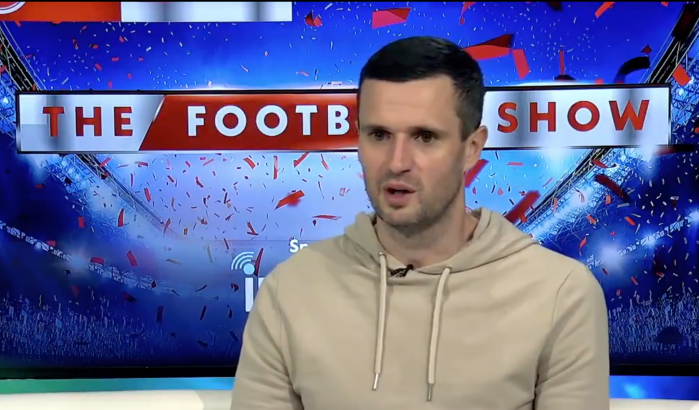
In an extended interview with the Hibernian club website in January 2021, he spoke about his desire to become a manager. “That’s something I definitely want to try,” he said. “I like the problem-solving aspect of it, being able to watch a game and pick apart a team’s strengths and weaknesses.
“I probably watch games in a different way now and it started when I was injured. I wasn’t able to train for the best part of a year, so I found myself taking down notes in a journal whenever I’d watch a game – about how teams would play, how they won or lost the game.”
 In parallel lines