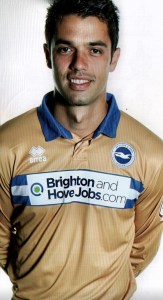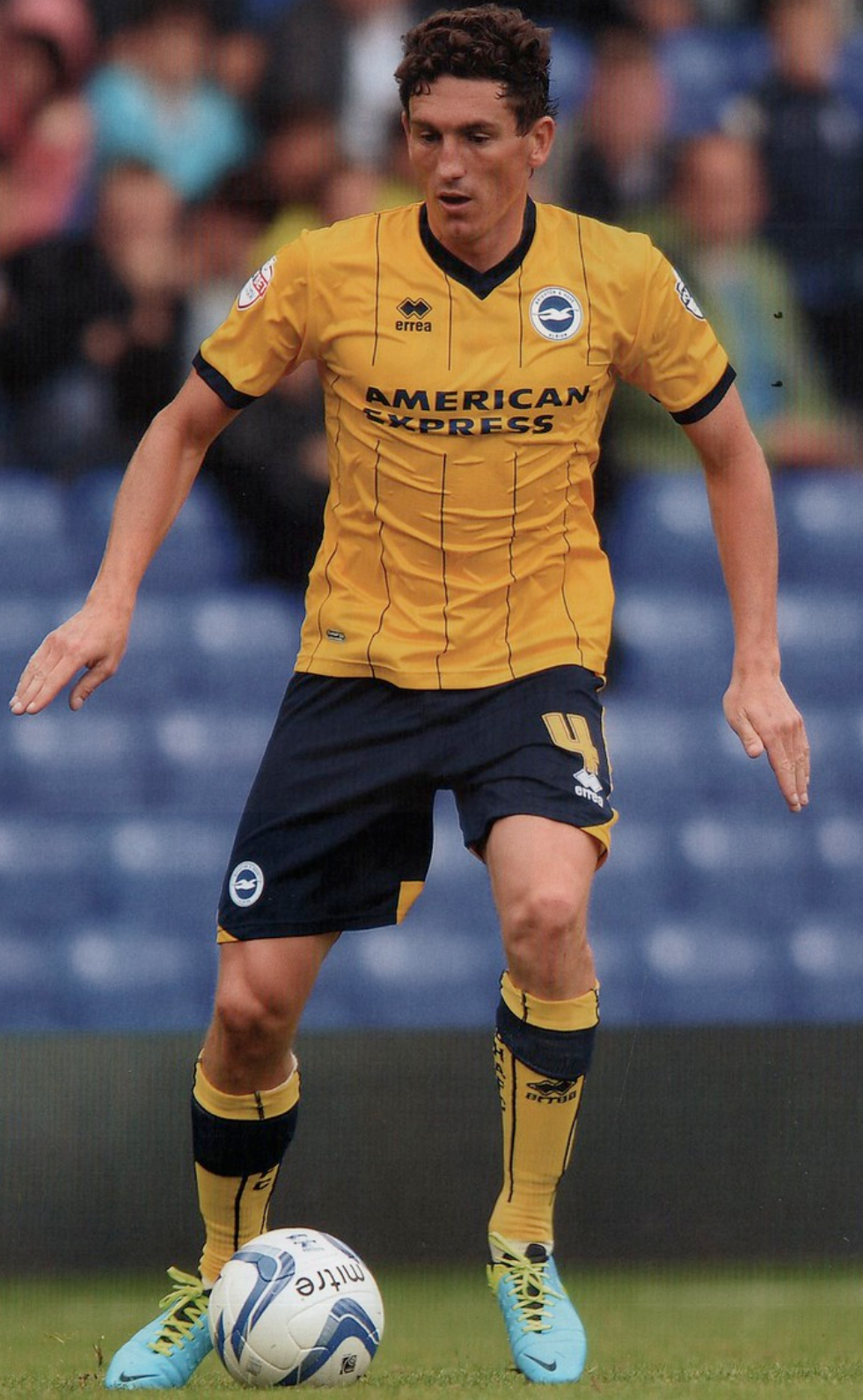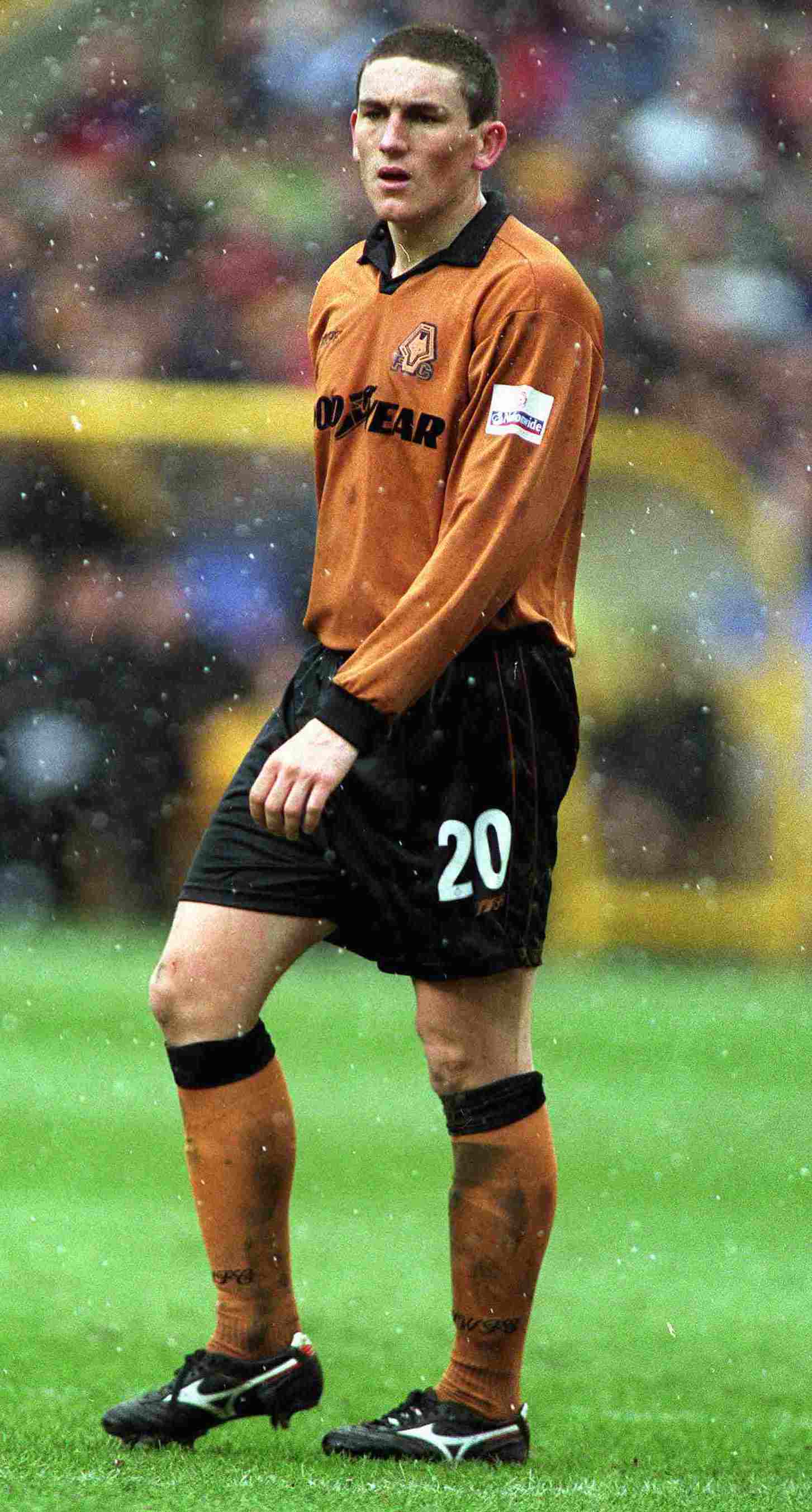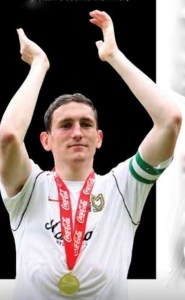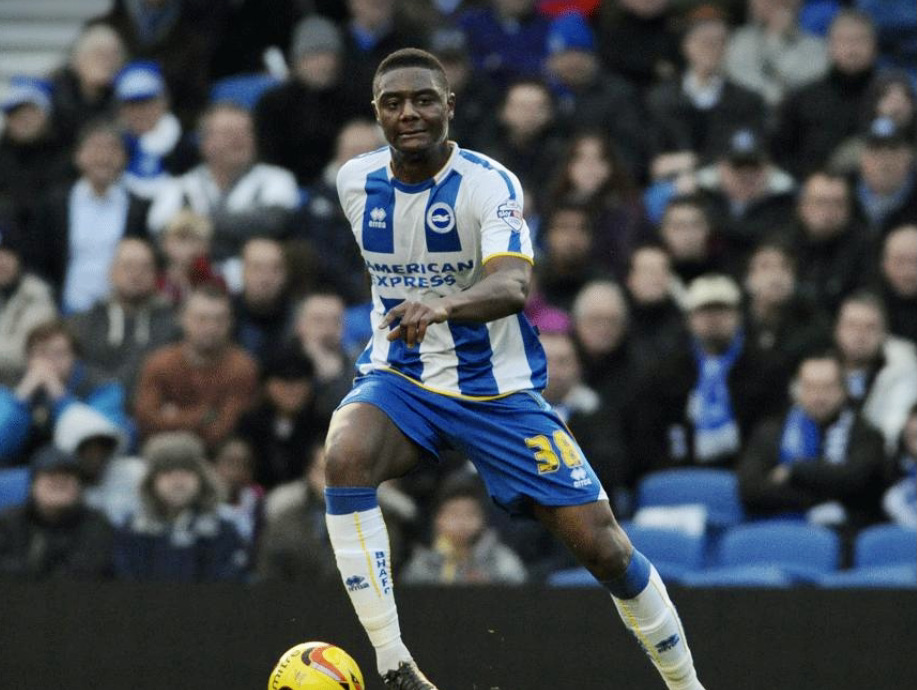
STEPHEN WARD’S view from the bench as Brighton sealed Wolves’ relegation fate at the Amex on 4 May 2013 was enough to convince him it was a place he’d like to get to know better.
Rather than drop down to the third tier with Kenny Jackett’s side, Ward switched from Molineux to the Albion to join Oscar Garcia’s promotion hopefuls.
Having won the Championship with Wolves in 2009, Republic of Ireland international left-back Ward brought ideal experience to a Brighton set-up looking to mount another tilt at promotion after missing out at the play-off semi-finals stage the season before.
The defender made 47 appearances, chipped in with four goals, and was runner-up in the player of the season awards as Albion once again fell at the play-off semi-finals hurdle.
Nonetheless, it looked like Ward would make his stay permanent – until newly-promoted Burnley stepped in and offered him a more immediate return to Premier League football.
Convinced that Brighton had clinched the deal for Ward, boss Jackett told the local press: “The clubs have agreed and now it’s down to Brighton and the player. It is a good move for him, he did well last year, they got into the top six and he was part of it. They have wanted him all along.
“All of us thank him for what he’s done and wish him all the best. He got a club reasonably quickly last season which shows the standard of the player.
“He didn’t let them down. He’s got a good reputation in the Championship and has been professional here. He had been good enough to get a good move last year and he has got a good one now.”
According to the player’s agent, if Albion’s head of football David Burke hadn’t dithered over a deal, Ward would have signed on the dotted line for the Seagulls.
But his prevarication opened the door to Sean Dyche’s Clarets and Ward headed to Turf Moor instead, returning to play at the elite level at which he’d previously made 94 appearances for Wolves between 2009 and 2012.
Ward had also played 128 times at Championship level for Wanderers having joined them aged 21 in 2007, moving over from his native Ireland, where he had spent four years with League of Ireland side Bohemians.
After making his Albion debut in a 1-0 win at Birmingham, Ward told BBC Radio Sussex: “From watching them last year and playing against them, it is a team I admire for how they play the game.
“Every footballer wants to play in a team that likes to pass the ball and keeps the ball. On the last day of the season, they played us (Wolves) off the park. It was one of the reasons I was really excited about the move.”
Although he had enjoyed success at Wolves, he had also been part of back-to-back relegations and he said: “I felt I needed a fresh start and I am thankful Brighton gave me that. I hope I can repay their faith. Hopefully I can help the team go one better than last year.”
Reflecting on his time with the Albion in a matchday programme article, Ward was complimentary about Garcia, saying: “I loved the mentality of the manager, the environment, and I learnt a lot as a result.
“He wanted to play out from the back, he wanted us to be really expansive, and that allowed me to get forward, which I really enjoyed doing.
“I learnt a lot from the manager and would speak to him about his time at Barcelona.
“I was lucky that I also had experienced players around me in defence like Matty Upson, who was great for me, and Bruno. He’s one of the best guys I’ve met in football – he was so welcoming to me and my family.”
Although principally in the side to defend, Ward also scored four times for the Seagulls, one coming in the impressive 4-1 win at Leicester and another in the crucial 2-1 win at Nottingham Forest that helped to clinch a spot in the play-offs.
“Going to Brighton was great for me; I had a fantastic year, a really enjoyable time, and I don’t have a single bad word to say about the club or the city,” he said. “I enjoyed every minute.”
After five years at Turf Moor, Ward went on to play for Stoke City (when Nathan Jones was boss), Ipswich Town and Walsall, hanging up his boots in 2022. He also made 50 appearances for Republic of Ireland, playing for the national side at the Euro 2012 and 2016 finals.
At the end of a 19-year playing career, Ward had clocked up 570 senior appearances.
Disappointed to see the player retire, Walsall manager Michael Flynn told BBC Radio WM: “He’s somebody I’d love to have worked with for a longer period. He’s a breath of fresh air. But, unfortunately, he’s at the age where he thinks his body’s had enough.
“I’ve got nothing but praise for Stephen Ward. He’s had a fantastic career and is still working hard day in, day out and he’s a model professional.
“The way he’s handled himself has been exemplary and I don’t expect anything else from someone who’s had the career he’s had because it’s been an unbelievable career.”
During the 2022-23 season, Ward was part-time assistant manager to former Wolves teammate Roger Johnson at National League North side Brackley Town.
His next steps were in football administration and he achieved a Masters degree in sports directorship through the University of East London while serving as director of football at National League side Solihull Moors. Head coach from June 2023 to January 2025 was Andrew Whing, who played more than 100 games for the Albion between 2006 and 2011.
Stepping down from the role in August 2025 to spend more time with his family, Ward said: “We shared some great moments together most notably watching our club appear at Wembley Stadium in the play-off final.”
Moors missed out on the chance to gain a first ever promotion to the Football League in May 2024, beaten in a penalty shootout by Bromley after twice coming from behind to take the game to extra time and then penalties.
Agonisingly, a week later, Moors lost on penalties again, this time in the FA Trophy final at Wembley, Gateshead edging it 5-4 after the sides were level on 2-2.
“It’s a brilliant club and a very special place to work but it’s time to step away and recharge the batteries,” said Ward. “Football is a fast-moving industry and it can be tough to find the right balance.”
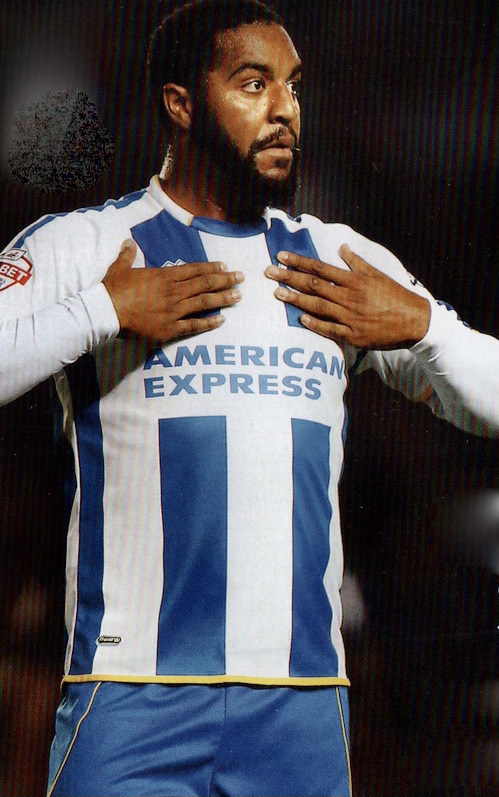
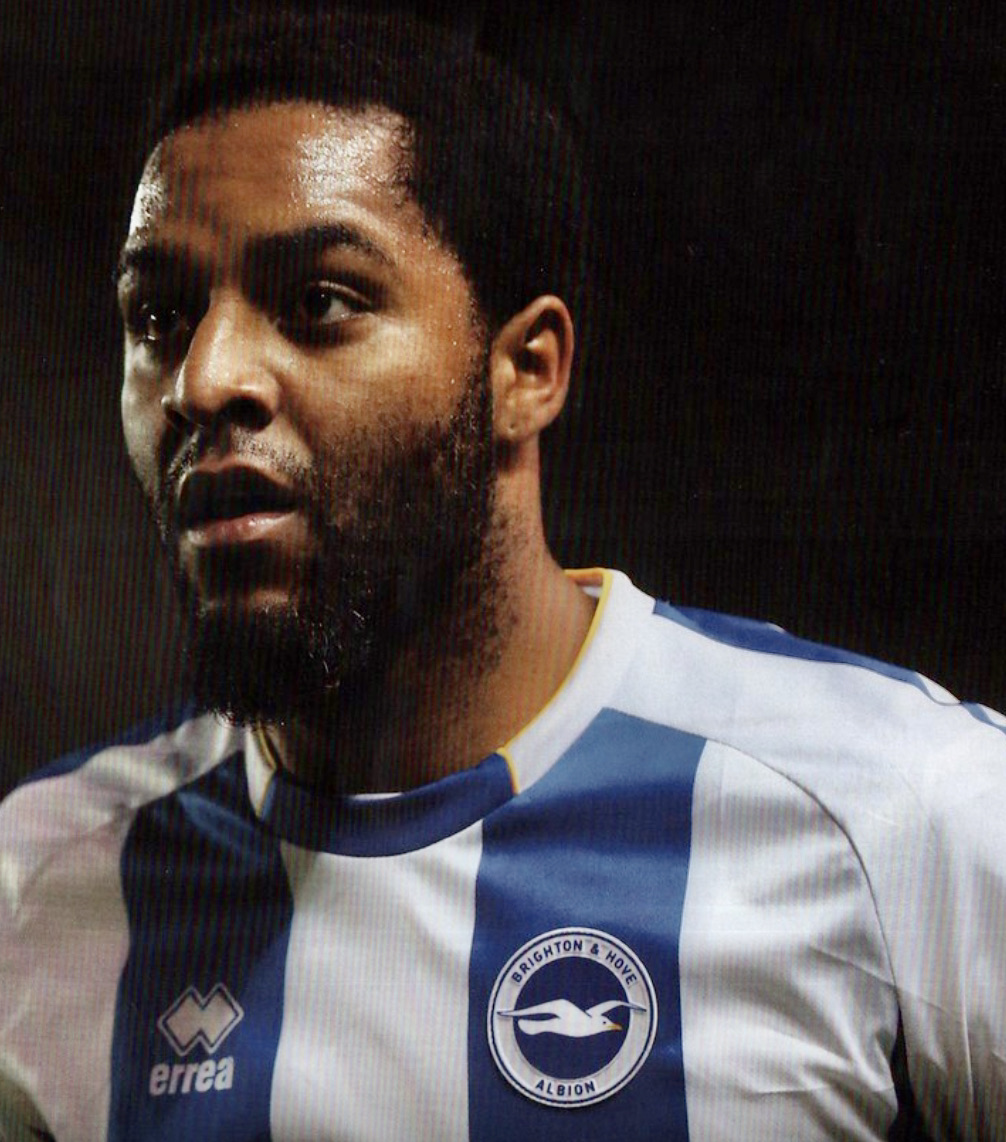
PADDY McCourt put a dent in Brighton’s promotion hopes when he scored for managerless Barnsley at the Amex. Eight months later he joined the Albion’s renewed attempts to lift themselves out of the Championship.
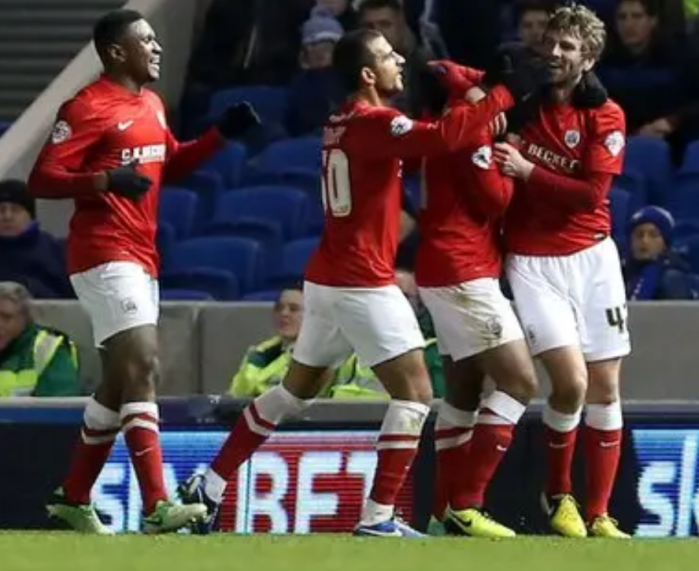
The mazy dribbler from Derry lit up the evening of Tuesday 3 December 2013 when he gave the bottom-of-the-table Tykes an unlikely first-half lead.
Barnsley arrived at Falmer having just sacked manager David Flitcroft and when McCourt teased and tormented the retreating Seagulls defenders to net in the 35th minute it ended a sequence of nearly five hours without a goal.
McCourt celebrates scoring for Barnsley at the Amex
Recalling what was something of a trademark finish by the bearded Irishman in a 2018 post wearebrighton.com described howMcCourt picked up a loose ball 40 yards out from goal, dribbled round Liam Bridcutt and Andrew Crofts, drifted past Matt Upson with a quick step-over, nutmegged Gordon Greer before playing a quick one-two with Worthing-born Marcus Tudgay, then ghosted round Stephen Ward before slotting the ball into the bottom corner of the goal past Tomasz Kuszczak in Albion’s goal.
Five minutes after the restart, the visitors went further ahead through Jacob Mellis before Upson pulled a goal back with a header from a Craig Conway corner. Barnsley had on-loan goalkeeper Jack Butland to thank for ensuring they left with all three points, making notable saves from subs Will Buckley and Leroy Lita (who moved to Barnsley the following year).
While Albion went on to finish sixth under Oscar Garcia but failed to get further than the play-off semi-final for the second year running, Barnsley, who’d appointed former Albion captain Danny Wilson as Flitcroft’s successor, exited the division the wrong way, finishing in 23rd place.
Barnsley’s top scorer, Chris O’Grady, stayed in the division by signing for the Albion and a month later his former teammate, 30-year-old McCourt, released on a free transfer at the end of the season, joined him in Sussex after impressing new Seagulls boss Sami Hyypia in a trial period.
“We have seen enough of Paddy in the last week or so to know that he is a player who has quality going forward,” said Hyypia. “He is the type of player who can pick a pass and create a chance.”
That said, Hyypia only gave McCourt starts in two League Cup games (v Burton Albion and Tottenham Hotspur); his 11 other Albion appearances were all as a substitute.
When he did start, away to Burton, he set up goals for Rohan Ince and Craig Mackail-Smith in Albion’s 3-0 win and he told the matchday programme: “There’s nothing like playing games for your fitness and I’m sure that the more I play the better I will feel.”
Hyypia kept his feet on the ground, though, pointing out: “He needs to realise what he needs to do to improve and to be a very important player for the team defensively as well.”
Often described as a ‘maverick’, McCourt’s response was: “I like to get on the ball and be creative; that’s always been part of my game and something I’ve always been good at. I love taking on players, creating chances and now I just hope I can get a run in the team and show what I can do on a regular basis.”
He certainly couldn’t have been accused of lacking ambition, maintaining: “I still have aspirations to play in the Premier League and hopefully that will happen in my time here.
“I’ve played international football, I’ve played Champions League and Europa League football with Celtic, so the next step for me would be to play at the highest level in England – I would love that to happen.”
That international career was as strange as much of his career. There were 13 years between the first and last of 18 caps for Northern Ireland: he made his debut under Sammy McIlroy in 2002 (a 5-0 defeat against Spain) then had to wait seven years before he was selected again. That was in a 3-0 World Cup qualifier win over San Marino, when he went on as an 81st minute sub for future Albion teammate Aaron Hughes.
He scored twice in Northern Ireland’s 4-0 win over the Faroe Islands in a Euro 2012 qualifier in August 2011 (when Hughes scored his first goal for his country in his 77th appearance!).
McCourt’s second goal that day was reckoned to be one of the best ever goals seen at Windsor Park. According to the Belfast Telegraph, he “collected the ball just inside the opposition half and left three defenders in his wake with magical dribbling skills and impeccable close control before outfoxing another… then to cap it off he produced a stunning left foot chip over the bemused goalkeeper which floated into the net.”
McCourt helped manager Michael O’Neill’s side reach the Euro 2016 finals, but was not available for the finals in France because his wife Laura was seriously ill (more of which later).
“I really enjoyed it,” he told BBC Northern Ireland’s Mark Sterling in a lockdown interview in 2020. “Any time I was picked I turned up, and to be involved in the Euros qualifying campaign was fantastic.
“Everybody wants to play international football, The fans took to me straight away, were always singing my name and I hope I gave them some good memories.”
Born in Derry on 16 December 1983, McCourt’s early footballing promise was nurtured by Eunan O’Donnell, his PE teacher at Steelstown Primary School. At the club he joined as a youngster, Derry-based Foyle Harps, it was club chairman Gerry Doherty “who deserves more credit than anyone else” according to McCourt’s brother Leroy (who was his agent).
However, McCourt reckoned: “The street is where I learnt how to play football.”
In that lockdown interview with BBC’s Sterling, he said: “When I was younger there was more emphasis on players to develop themselves. We trained once a week for an hour with our clubs, when you might only get 40 or 50 touches of the ball at most, with 20 kids in a session.
“It was up to you to go out into the streets with your mates and practice your skills in small-sided games. We’d play for six or seven hours, there might only be four of you and you’d get thousands of touches.
“You were probably playing with older kids and on concrete as well, so that would improve your balance.”
Although given the moniker of the greatest Brazilian footballer of all time, McCourt’s boyhood hero was Robbie Fowler. “I’m a Liverpool and Celtic fan, and for some reason he was a player I just absolutely adored growing up,” he said.
“My memories are of seeing Fowler scoring – left foot, right foot, header – it didn’t seem to matter to him. He just had this unbelievable talent for putting the ball in the back of the net.”
McCourt’s first taste of professional football in England came at Third Division Rochdale, joining them in 2000 aged 17. But in an open and honest question and answer session in March 2018 at the Talent Development Academy Elite Soccer Coaching event, at the Magee Campus of the Ulster University, the player spoke about how youthful wrong lifestyle choices meant he blew the opportunity.
“I was nowhere near ready for it and the events that transpired in the next couple of years proved that. It’s very hard to know the situation you’re going into when you’re not prepared for it.
“I was coming from Foyle Harps, playing junior football and then going into a professional environment. It wasn’t that big of a jump in terms of what you did differently because Rochdale was a small club and you went in and trained and were home for 1pm living in digs and I didn’t drive at the time.
“You had so much spare time on your hands and as a young lad, you do daft stuff and make mistakes and I admit I made plenty. It was basic stuff like going out too much and not eating the right food.”
Although he made 94 appearances for Rochdale, around half were as a substitute and after unsuccessful trials with Motherwell and Norwich City he was eventually released in February 2005 and returned to the League of Ireland with Shamrock Rovers.
“Initially when I was at Rochdale I did quite well and broke into the first team quite early but when I came back I took stock. I made mistakes and wasn’t really living my life to be a professional footballer.
“I had six months with Shamrock Rovers where I didn’t make many changes to my lifestyle but I was doing quite well on the pitch.”
It was only when he returned to his home town and played at Derry City where things began to change under the positive influence of future Republic of Ireland manager Stephen Kenny.
“I learned what it takes to become a proper athlete because you need to live a clean lifestyle to make it as a footballer and I wish I knew back then what I know now,” he said.
“There was a bit of sports science starting to come in at Derry in terms of what to do leading up to a game, and then your recovery sessions on a Saturday morning after a game. It was tiny, basic stuff but it started to kick in then and that helped me because I was getting information I didn’t have before. It was up to yourself to buy into it and I started to buy into it a bit more and started to see the benefit.”
Between 2005 and 2008 with Derry, McCourt won an FAI Cup, three League Cups, was involved in a league runners-up spot (2005) and was part of a UEFA Cup run in 2006.
He then got the chance to join Celtic, the side he’d supported as a boy, signing for a fee of £200,000 in June 2008. Hoops boss Gordon Strachan told the Derry Daily: “Paddy is as gifted a footballer as I’ve ever seen. Some players can pass but can’t dribble. Others can dribble but can’t pass. Paddy can do both.”
It wasn’t until the 2009-10 season that he forced his way into the first team and his first goal for the club was in a 4-0 League Cup win at Falkirk in September 2009 when he skipped past five defenders before chipping the goalkeeper.
His own favourite was his first goal at Parkhead in a 3-0 win over Hearts on 11 September 2010 which realised a lifetime ambition.
“I actually had dreams of scoring at Celtic Park,” he said. “I felt I had let that go when I had that setback at Rochdale. Self-doubt creeps in but I remember the night. It was Hearts at home and it was a very proud moment.
“It might never have happened if I hadn’t made the sacrifices I made and I have a lot of people to thank for that.”
When Aiden McGeady left Celtic for Spartak Moscow in August 2010, Celtic manager Neil Lennon challenged McCourt to step into his shoes and said: “He’s wonderful to watch. He’s beautifully balanced and he’s got great vision and great feet and that’s why we decided to get him on a longer-term contract. He’s pleased and we’re pleased.”
In his five years in Glasgow, McCourt scored 10 goals in 88 appearances for the Hoops although he actually only made 20 starts. He collected medals for his part in Scottish Premier League title wins in 2011-12 and 2012-13 as well as Scottish Cup wins in 2011 and 2013.
That 3-0 2013 final win over Hibernian was his last game for Celtic before he joined English Championship Barnsley, who were managed by his former Rochdale teammate David Flitcroft.
The goal against Brighton in December 2013 was one of only two he scored for the Tykes in 15 starts plus eight appearances off the bench and Barnsley fans certainly had mixed views about his contribution.
Online chat group contributor ‘Jay’ posted: “At his best he was as good as I’ve ever seen. Be nice if he can produce that sort of form consistently, even if it’s not for us. All that talent shouldn’t go to waste.”
Another, ‘JLWBigLil’ reckoned: “One of the most skilful players I’ve ever seen play for Barnsley in all my years of going down to Oakwell. Possibly the right player at the wrong time for us.”
Whereas ‘MarioKempes’ opined: “There was no doubting his ability but the other key aspects such as workrate, fitness, stamina and heart were sadly lacking from his game.”
It almost certainly didn’t help McCourt’s cause at Brighton that new boss Hyypia struggled to get to grips with the task in hand and chopped and changed the line-up. The addition of several loan players didn’t help matters either.
Frustrated Albion fans reckoned McCourt should have had a bigger involvement than his few cameos off the bench, citing his influence in helping to salvage a point away at Watford, and planting the ball on Gordon Greer’s head to score a consolation goal from his corner kick at Middlesbrough.
After Hyypia left the club before Christmas, McCourt’s last Albion appearance was as a sub in the home Boxing Day 2-2 draw with Reading (on loan Glenn Murray scored twice for the visitors; Jake Forster-Caskey and Inigo Calderon for the Albion), going on for Danny Holla.
Nathan Jones was in caretaker charge that day and the pair were subsequently reunited at Luton Town the following season.
Before then, unable to get games under Albion’s new boss Chris Hughton, McCourt dropped into League One on loan at relegation-bound Notts County.
He scored County’s winner in their 1-0 win at Colchester on 3 March 2015 but they went on an 11-game winless run after that and went down with Crawley Town and Leyton Orient.
Released by Brighton that summer, McCourt joined the League Two Hatters under John Still in July 2015 and was followed there a month later by Mackail-Smith.
After a run of three starts in September, when Town won all three matches, McCourt played in a 1-1 draw with Leyton Orient on 20 October, before being restricted to a role on the bench.
On his return to the starting line-up in January 2016, away to Mansfield, he scored his fist Luton goal after just seven minutes in a 2-0 win. He told Luton Today: “It was great, all players want to play from the start and it’s been disappointing to sit on the sidelines.
“It was very frustrating because we’d just won three or four games in a row, then I came back from an international double header, was on the bench, played in the draw against Leyton Orient and that was it, I didn’t play again.
“I don’t know why, I didn’t ask the manager and he ended up getting the sack, but it was very disappointing as I felt that although I wasn’t where I wanted to be in terms of performance, I was playing, we were winning games.”
In action for Luton Town
When former Brighton coach Jones was appointed as Still’s successor, McCourt told Luton Today: “He’s a coach who wants to play football, ball from the back, get between the lines, bring a wee bit of flair and creativity back to Luton, so hopefully I can play a big part in that.”
Unfortunately, he cut short his stay at Kenilworth Road after 16 starts and nine appearances off the bench to return to Ireland because his wife Laura had to undergo treatment for a brain tumour. She recovered after a successful operation and O’Court resumed playing at Glenavon.
According to the Belfast Telegraph: “It ended up being a disappointing half-season at Mourneview Park and was followed by a move to Finn Harps, where he was able to roll back the years, not least when he ghosted past a whole host of Sligo players and dinked home the finish with his inimitable swagger.”
That was in 2018 before he retired from playing and began coaching academy players at Derry City. He later became the club’s technical director and left in January 2024 before taking up a role as assistant to manager Declan Devine at Irish Premiership side Glentoran.
Perhaps the last words should go to reporter Daniel McDonnell, who wrote in the Irish Independent: “Football is nothing without entertainers. Punters paying cash to watch a game want to see individuals capable of doing things that the ordinary player could only daydream about. McCourt could do things that top pros were unable to manage.”
While recognising McCourt’s CV might have glittered more brightly, he declared: “There are players who will retire with more medals and more money that will never garner a comparable level of affection.
“Mention McCourt’s name to those who had the pleasure of watching him in full flight and responses will be delivered with a smile.”
‘I’VE STARTED so I’ll Finnish’ could have summed up Antti Niemi’s season coaching Brighton’s goalkeepers.
Even though the fellow countryman who appointed the former Southampton and Fulham ‘keeper left in ignominy less than halfway through the 2014-15 season, Niemi stuck it out to the end before returning to his native Finland.
Niemi joined Albion in the summer of 2014 as part of the new backroom team put together by former Liverpool and Finland international Sami Hyypia.
“This wasn’t planned and, when Sami called me, I was working in Finland for a few years with two different clubs on a part-time basis,” he told the matchday programme. “It was a surprise.”
Seeing it as a “great opportunity” he added: “I thought about it for a couple of days, but it was not a difficult decision to make in the end. I’m obviously already familiar with the south coast.
Niemi enjoyed Albion coaching environment
“If you look at the surroundings at the training ground and the stadium, it’s a fantastic place to work each day. I seriously love the job.”
At Brighton, Niemi was responsible for the form of newly-arrived David Stockdale, emerging youngster Christian Walton and back-up ‘keeper Casper Ankergren.
Stockdale admitted it was the presence of Niemi — a former team-mate at Craven Cottage — as goalkeeping coach that was a big reason in his making the move to Sussex (as well as a chat with Bobby Zamora).
“Antti looked after me at Fulham when I first went in as a young keeper,” he said. “I know what he is about, what his training is like and what kind of person he is.”
Niemi was also the reason fellow countryman and Finland international Niki Mäenpää joined the Seagulls, although their paths ultimately didn’t cross on the training ground in Sussex because Niemi decided to return home for family reasons.
Mäenpää had been coached by Niemi back in Finland and he was first linked with the Albion when Hyypia was appointed. Although a move from Dutch second division club VVV-Venlo didn’t go through then, it eventually happened in the summer of 2015.
“Seeing as his contract is ending, he is looking forward to a new adventure and Antti has explained to him about Brighton and everything,” the player’s agent, Richinel Bryson, told The Argus.
Born on 31 May 1972 in Oulu, the northern Finnish city where there is no darkness during summer nights, Niemi remembered going to school when the temperature was –42°Cone winter.
He completed compulsory military service in his homeland, explaining in a 2003 interview with The Guardian that he found life tough for much of his 11 months at a sports military school.
“I didn’t realise this at the time but, if I wasn’t in football, I would probably be in the army,” he told reporter Joe Brodkin. “I’m very patriotic. It was fun and it’s something I would have considered, although I’m too old now.
“In some ways it’s similar to what we have in the dressing room: being together and having fun, giving stick and taking stick. In the army it was a similar situation. We had something like 20 footballers in there and it was fun. Not at the time but looking back.”
Niemi began his football journey with local side Oulun Luistinseura before moving on to Rauman Pallo and then to the country’s biggest club, HJK Helsinki, where he eventually became first choice ‘keeper and made 101 appearances over four years.
He then swapped from Finland’s capital to Denmark’s fortuitously because the Finland FA president at the time had played in Denmark as a goalkeeper and FC Copenhagen asked him for a name.
“He mentioned me and everything happened in two days,” Niemi recalled in an interview with fulhamfc.com. “I was inconsistent in my first six months in Denmark but did well in my first full season.
“I learned that Rangers had sent a scout to watch someone on the pitch when we played in a league cup semi-final; it was one of those games where I just saved everything and we won. That 90 minutes made them choose to sign me, so it was all about luck really.”
That was luck he would come to rue, subsequently, though, because he had actually agreed to sign for Gordon Strachan at then Premier League Coventry City. Rangers stepped in at the last minute to clinch his signature in 1997 but it was a period of his career that would prove to be frustrating.
Andy Goram was first choice ‘keeper and Theo Snelders was also ahead of him.
He did win the Scottish League Cup (beating St Johnstone 2-1 in 1998) but he only played in one Old Firm game and that ended in a 5-1 defeat, so he didn’t have happy memories of his time at Ibrox where Walter Smith’s successor, Dick Advocaat, was unconvinced of the Finn’s ability under pressure and suggested he needed to move on to prove himself.
Highly regarded at Heart of Midlothian
He switched from Glasgow to Edinburgh to join Hearts for £350,000 in December 1999, manager Jim Jefferies telling The Herald: “Niemi is a fine keeper and is very highly regarded by everyone.”
Niemi reflected: “They were the third best team in the country behind Celtic and Rangers, but I said to myself that sometimes you have to take a step backwards to go forward.
“That was maybe the best decision that I ever made; it felt a bit of a downgrade at the time, but I wasn’t playing and I knew it would be good for me in the long run.”
In two-and-a-half years at Hearts, he became first choice and made a name for himself as a penalty stopper.
The keeper said of himself in a 2021 interview with the Edinburgh Evening News: “The biggest strength I had in my game was quick hands and quick reactions.”
Looking back on his 106 appearances for the Jam Tarts, he revealed: “Hearts have always been THE club for me.”
In an interview with CoffeeFriend.co.uk, he said: “Don’t get me wrong. I was very lucky to play in the English Premier League with Southampton and Fulham but there was something romantic about the place.
“I went there from Rangers where I was second or third keeper and suddenly got the chance to be No.1 and be a big part of the team.
“We finished third, had some European football, memorable derbies. I hope it doesn’t sound cocky but I really can’t remember too many games I let the team down.
“I loved my time there and it’s definitely one of those places I miss now and then.”
Saint Antti
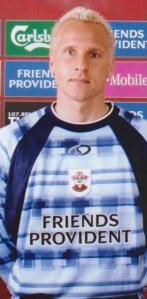
It was Strachan who persuaded Niemi, by then 30, to try his luck in the Premier League at Southampton.
“My decision to move was purely on a football basis,” he said. “I hardly get any more money than I did in Scotland. I was there for five years and for two and half years I was playing regularly. Sometimes I felt I was playing against the same teams and the same players the whole time.”
Saints paid a fee of £2m to secure his services and he made his debut against Charlton Athletic, where he had spent a month on loan before his move to Hearts.
Strachan quickly installed Niemi as his preferred ‘keeper over Paul Jones and at the end of his first season with the Saints he appeared in the FA Cup final against Arsenal at the Millennium Stadium, Cardiff – a game which I watched with my friend Andrew Setten, sitting in front of Geoff Hurst in the best seats in the house!
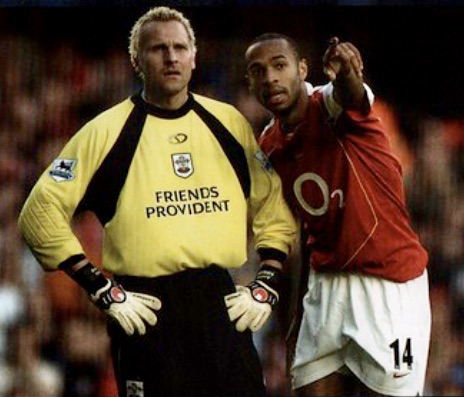
Arsenal’s Thierry Henry points things out to Niemi
With Arsenal retaining a 1-0 first half lead, Niemi unfortunately tore a calf muscle midway through the second half and, when replaced by Jones, became the first goalkeeper to be substituted in a FA Cup final.
In spite of losing to that solitary goal, Niemi didn’t want to miss the lap of appreciation and took a ride on a team-mate’s shoulders as they trooped around the stadium.
A series of injuries and a couple of operations limited him to 28 Premier League games in each of the next two seasons but in the opinion of goalkeeping coach David Coles (who once played on loan for Brighton), he was among the world’s top five ’keepers and he was the Saints player of the year in 2003-04.
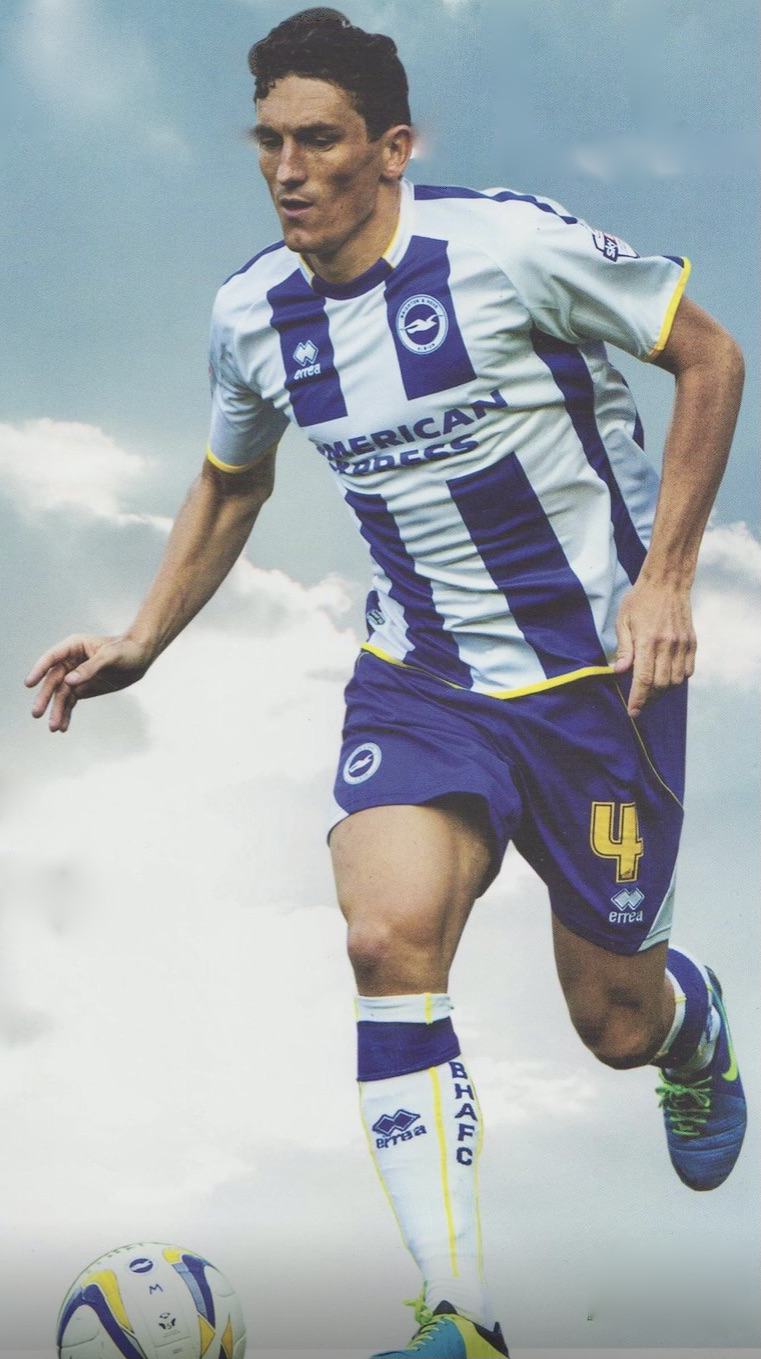
“The Premiership has been every bit as good as I expected and even more,” Niemi said in that Guardian interview. “Everywhere you go it’s a full stadium and the pitches are perfect. It’s a fantastic league.
“I was making some good saves in Scottish football but the spotlight in the Premiership is so much bigger. There are so many cameras and every single game and situation is highlighted, so it’s easier to shine.”
Niemi’s reputation was certainly enhanced after he kept 17 clean sheets in his first two top flight seasons under Strachan at St Mary’s.
But he was also part of the Southampton side that was relegated in 2005, bringing to an end 27 years in English football’s top tier.
“The longer the season went on, the worse the results got and the more it started to affect the dressing room,” he told hampshirelive. “But overall, I can only look into the mirror and blame myself.
“My first two seasons at Saints were great, but during the third one, I just couldn’t get up to that standard any more. It was average at best.”
Niemi saw influential team-mates leave without being properly replaced and he said: “I remember looking around myself at the beginning of the campaign and thinking ‘things here aren’t as well as they should be’. The team had weakened and the contrast was huge.”
After the relegation, Niemi said: “I felt ashamed, simple as. It just felt embarrassing as hell.”
He stayed half a season after Saints playing in the Championship but returned to the Premier League in January 2006 when he moved to Fulham under Chris Coleman.
“Living in London was a big attraction.,” he told fulhamfc.com. “My wife was delighted to get a chance to move to West London and, as I’d played against them many times, I knew that it was a nice club too.”
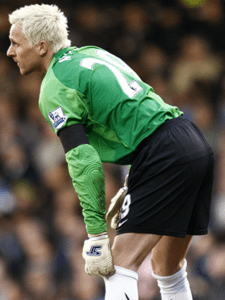
Niemi switched to Craven Cottage in January 2006
A hamstring injury limited him to nine appearances in those first few months at Craven Cottage but he established himself as first choice the following season and went on to make 63 appearances before a wrist injury led to him calling it a day at the start of the 2008-09 season.
However, at the age of 37, he was persuaded to come out of retirement and followed his former Saints coach Coles to south coast rivals Portsmouth as back-up to first choice David James.
He left Pompey in March 2010 having earned around £450,000 over the course of eight months without having made an appearance, the Daily Mirror reported.
The newspaper said the Finn earned £14,000 a week during his time at Fratton Park and played just twice for the reserves and spent one Premier League match on the subs’ bench.
Having won 67 caps playing in goal for Finland, Niemi became his country’s goalkeeping coach from 2010 as well as working with the Finnish FA in developing the quality of goalkeeper coaching in the country. Alongside those responsibilities, he slotted in club goalkeeper coaching in various locations – including back at his old club HJK Helsinki, at another Finnish side, FC Honka, and the season at Brighton.
Joaquin Gómez, a coach he first met during that season with the Albion, subsequently called on his services at Finnish side HIFK in 2021.
Gómez, originally an academy coach with the Seagulls, stayed on as part of the first team management set-up having worked under Hyypia’s successor, Oscar Garcia., but then left to become head of tactical analysis at Derby County before teaming up with Nathan Jones at Luton Town, and then Stoke City.
In May 2019, on Niemi’s recommendation, he also started coaching Finland’s under 21 team. After leaving Stoke, he was assistant manager at Spanish Second Division side FC Cartagena, assistant coach at Finland’s SJK Seinäjoki and spent a season at Al-Qadsiah in Saudi Arabia.
On persuading Niemi to join him at HIFK, Gómez said: “He’s an outstanding goalkeeping coach and will now also assist me in other areas.
“Antti is the best Finnish goalkeeper of all time, and he has done great work in coaching after his retirement from playing. At HIFK he’ll have a more versatile role than previously, as he’ll be working more with outfield players as well.”
In the summer of 2024, Gómez persuaded Niemi to join him at Greek Super League club Volos and the Finn spoke to Tribalfootball.com about those days spent in Lancing.
“I have seen a lot of passionate people in my lifetime in football but this guy is something else; he has dedicated his life to football.
“He moved from Spain (to England) without knowing any English, he just wanted to work in English football. He was working as a waiter, he was cleaning the toilets at Brighton, he was coaching kids and eventually somebody saw that this guy is really passionate and he can coach so he got in the first team.”
Niemi continued: “He called me in the summer, he said I had a few days to decide. He is very temperamental; he is very passionate and I am the boring, steady guy who always tells him to calm down! You need that sort of personality; you don’t need a similar sort of personality as you need to balance each other out
“He offered me the job to be the assistant manager which is different as I have always been a goalkeeping coach and I still am with the Finnish national team but I took it as a challenge, as an adventure. It is going to be a learning curve for me and I am really enjoying it so far.”
Unfortunately, Gómez was sacked after only five league matches and his next appointment, in January 2025, was as the new coach of Indonesian Liga 1 club Borneo Samarinda.
LANKY Slovakian stopper Peter Brezovan, who saved penalties on his Albion and Swindon Town debuts, once came close to a dream move to Everton.
The Merseyside outfit had him on a five-day trial with a view to signing him on a permanent basis from Swindon.
“It was very rewarding just to train alongside Tim Howard and face all these international players,” he said. “It was an experience I’ll never forget.”
Former Man Utd ‘keeper Howard was Everton’s no.1 in 2007 and, having released Richard Wright that summer, manager David Moyes had only new signing Stefan Wessels and the little-used Iain Turner as back-up ‘keepers. Everton’s goalkeeper coach was the former England international Chris Woods.
While Everton didn’t follow up their interest in Brezovan with an offer (three years later they did sign a Slovakian goalkeeper, Jan Mucha), it sounded like Swindon rather over-egged their expectations of a big payday.
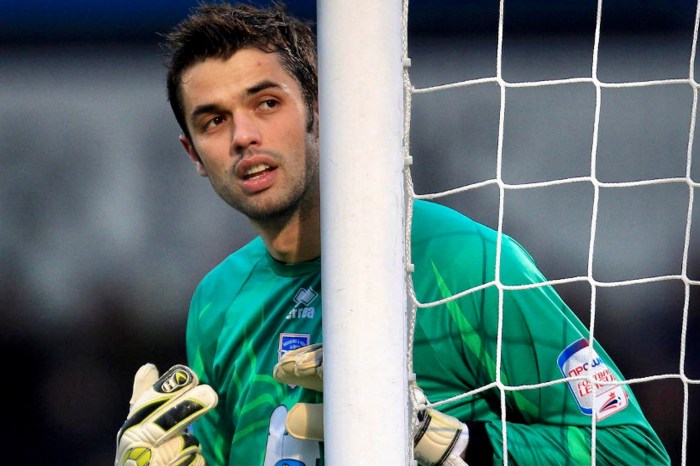
Robins stopper
The Wiltshire Gazette and Herald reckoned a £300,000 eve of deadline day offer from Wolverhampton Wanderers had been rejected, saying: “Town will be asking for a substantial amount more.”
The newspaper added: “If the price is right, Town are ready to cash in on their number two keeper.” And manager at the time, Paul Sturrock reportedly told the Mirror: “If I was offered something like £2m, Brez would be an Everton player.”
The Toffees had originally taken an interest in Brezovan and invited him for a trial when he made an eye-catching start in English football in 2006. Not only did he save two penalties in his first game for Swindon, he conceded only five goals as Town won six of their opening seven matches and won the PFA Player of the Month award for September. Unluckily, a badly broken arm put him out of the game for nine months but Everton revived their invitation when Brezovan was fit again.
It probably didn’t help the ‘keeper’s progress at Swindon that successive managers came and went during his time at the club. It was Dennis Wise who signed him on a year’s loan from Czech side 1.FC Brno shortly after he’d taken over as Swindon manager, assisted by his former Chelsea teammate Gus Poyet, but by October the pair (along with goalkeeper coach Andy Beasley, who later spent a year at Brighton) left Wiltshire to take over at Leeds United.
County Ground caretaker managers David Tuttle and Ady Williams were followed by Sturrock for a year; David Byrne twice held the fort temporarily and Maurice Malpas was in charge for 11 months in 2008. When he left in November that year, Danny Wilson arrived the following month.
Born on 9 December 1979 in Bratislava, Brezovan’s first football memories were playing at right-back. In a matchday programme article, he explained: “In the first game of the season our ‘keeper got injured, so the biggest kid had to go in goal – and I’ve been there ever since. I’ve always been tall so looked upon to go in goal but, unlike a lot of kids, I enjoyed it.”
Brezovan spent his youth career at the city’s MŠK Iskra Petržalka and also played for Devin in the city before spending two years in the Czech Republic with FC Slovan Břeclav and HFK Olomouc. He then spent four years at FC Brno in South Moravia, although it was while he was on loan back in Bratislava, playing for FK Inter Bratislava, that he was spotted by Swindon and subsequently made the move to England.
In spite of his spectacular start for the Robins, when he couldn’t speak a word of English, it would be fair to say Swindon have mixed memories of his time at the County Ground, chronicled in detail on swindon-town-fc.co.uk. After former Albion captain Wilson released him at the end of the 2008-09 season, he was without a club for six months.
He had an unsuccessful trial at Crewe Alexandra in October 2009 but Poyet, not long after succeeding Russell Slade as Albion boss, signed him for a month at the beginning of December to cover a mini goalkeeper crisis he inherited.
Regular no.1 Michel Kuipers was injured and Slade’s misfit summer signing Graeme Smith had conceded 11 goals in three defeats and one win.
Handed his debut on a drizzly, grey December afternoon at Exeter (I know, because I was there, getting wet on the uncovered terrace behind the goal!), Brezovan went from zero to hero, according to writer Richie Morris, after upending former Albion loanee Stuart Fleetwood in the penalty area and then impressively saving Marcus Stewart’s spot kick.
“The former Slovakian under 21 international pulled off a string of comfortable, but reassuring saves,” wrote Morris. “True, he did nearly gift the home side a goal with a wayward clearance, but, considering how long he has been out of first team football, he can be happy with a solid performance.”
A somewhat modest Brezovan attributed his penalty save to goalkeeper coach Tony Godden’s homework. “He told me where Marcus Stewart puts his penalties and I dived the right way but it was a great feeling to help the team to victory,” he said.
Penalty-saver!
On another occasion, Brezovan expanded on his technique with penalties, telling the matchday programme: “It’s mainly instinct on the day. You get the stats guys who help you with your preparation – they will tell you where certain players tend to put the ball but sometimes you just have to go with how you feel in that moment and go for it.
“I don’t get the lads to take penalties at me after training either – I hate doing that. It’s all about how you are on the day.”
Brezovan’s arrival signalled the departure of the hapless Smith who ended his six-month nightmare in English football by returning to Scotland, moving on a free transfer to Hibernian. And the Slovakian’s short-term arrangement ultimately extended into a four-and-a-half-year spell as a Brighton player.
There were occasions when he was tempted to move on for more regular game time, but he confessed to loving the area and stayed put even though first team opportunities were few and far between.
In that first season, fans’ favourite Kuipers, not for the first time, found his place under threat because of the 6’6” Brezovan’s form. But a blunder by the new man in a game at home to Wycombe prompted Poyet to bring back the former Dutch marine (chef) at the start of the new year.
Kuipers had an eight-game run in the starting line-up but then broke a finger. Brezovan, having had his contract extended, seized his chance and kept his place through to the end of the season.
Brezovan told the matchday programme: “We are good friends, we train well together, and so I really feel for him. We don’t feel like rivals at all in that respect but I know that while I am in the team I will be giving my all to make sure I maintain my place.”
It paid off because Poyet offered him a two-year contract at the end of the season, saying: “Peter has earned his new contract. Initially he came to play and help us out but I expected he would prove he was worth a longer deal and he has done that.
“He has been a very important part of our turnaround since Christmas and now his challenge is to make the position his own for next season and beyond.”
And the ‘keeper told the Argus: “Together with my girlfriend, I’ve really settled here. I think that Brighton is the nicest city in England and we’re really happy here.
“I owe a lot to the manager because he brought me to the club and I’m glad he wants me to stay. That’s why it was so easy to sign the deal. The manager will no doubt bring in more good players in the summer so it’s going to be an exciting season.”
He was right about the excitement because Albion went on to win the League One championship title; what he might not have anticipated was that because he was nursing a wrist injury on the eve of the season opener against his old club Swindon, Poyet moved quickly to sign another ‘keeper who he’d worked with at a previous club: Casper Ankergren.
The Dane, released by Leeds, instantly became first choice ‘keeper and Brezovan spent most of the season watching from the bench, making just seven starts in the FA Cup (the first and second round matches both went to replays). Close to the end of the season he went on as a sub for the injured Ankergren in the 18th minute of the 25 April league game at Colchester United, making important saves from Ian Henderson and David Mooney as the Albion salvaged a point in a 1-1 draw.
Brezovan was also in goal for the penultimate game of the season, and the last ever played at the Withdean, when Huddersfield won 3-2. A defensive gaffe by Inigo Calderon, who left Brezovan stranded by chesting the ball down inside the area, let in Benik Afobe to put Town 2-1 ahead; sub Matt Sparrow equalised for the Seagulls and, although Brezovan twice made excellent saves to deny defender Jamie McCombe, sub Danny Ward scored a last-minute winner.
Brezovan resumed his place on the bench as 2011-12 got under way with Ankergren once again Poyet’s first choice no.1, although, after he’d shipped 13 goals in eight games in the autumn, the manager brought experienced Newcastle custodian Steve Harper on loan for five games.
Brezovan preferred to see the positive side of it, though, telling the matchday programme: “That was a good experience for all the goalkeepers. He is a vastly experienced ‘keeper and we have learned from his time here.”
After Albion went through a four-game losing streak in December, Brezovan got the call to take over from Ankergren in the new year match at home to Southampton when an injury-hit Albion sprung a surprise, winning 3-0 with a memorable brace from midfielder Sparrow.
It was only after the game that Poyet revealed how his plan to change ‘keepers nearly didn’t come to fruition. “For the last week Peter has been waiting for his wife to have a baby, every day,” Poyet told the Argus. “I needed to wait until 1.30 to tell him he was playing. The baby was due three or four days ago, so we were all thinking ‘come on girl, go on’!”
Later the same month, Brezovan was hailed a hero when he saved a crucial spot-kick in a penalty shoot-out in a third round FA Cup replay at Wrexham and he told Brian Owen of the Argus: “I enjoyed it. The pressure is all on the strikers at penalties because they can just mess it up. You have nothing to lose, you are practically without pressure.
“I knew one player and where he goes and I saved his penalty so we could have a laugh in the end.”
Nevertheless, Poyet was obviously still unsure about the goalkeeping situation. He let third choice Michael Poke go on loan to Bristol Rovers but brought in Columbian David Gonzalez, who’d been with Man City for two years, to put pressure on Brezovan and Ankergren.
“The gaffer wanted to bring in another keeper. You have to face it, with Casper, and keep working to keep our positions,” said Brezovan.“I’ve got another year. If you want to stay at a club for a long time, you have to play. You can’t be just like a useless second or third choice. This is my opportunity and I am going to do everything to stay in goal.”
He did indeed stay in goal but on two occasions let in six! The first drubbing was handed out by Liverpool in the fifth round of the FA Cup at Anfield (with Albion famously conceding three own goals in a 6-1 defeat).
After Brezovan shipped another six against West Ham at the Boleyn Ground, Poyet had seen enough. The patient Gonzalez replaced Brezovan in goal for the following game, one of six changes to the side that capitulated to the Hammers.
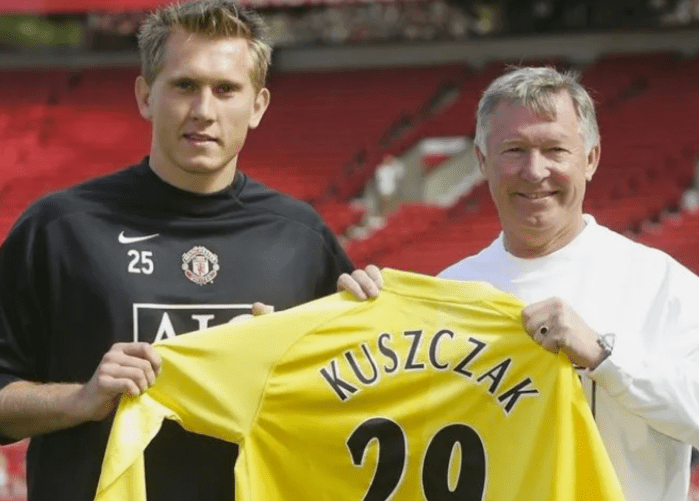
Come the new season, Brezovan and Ankergren had even more of a challenge on their hands when experienced Polish international and former Manchester United ‘keeper Tomasz Kuszczak arrived at the Amex.
It pushed Brezovan down the pecking order to third choice ‘keeper and he played only once all season, in a 2-1 win at Huddersfield when Kuszczak had a finger infection that ruled him out and Ankergren picked up an injury in training two days before the game.
Brezovan stayed at the club as no.3 ‘keeper for the 2013-14 season and once again injuries to the first and second choices in Oscar Garcia’s side presented him with a rare opportunity. He ended up playing eight games, four in the league and four in the FA Cup.
He made his first appearance for 13 months in the 7 December 3-1 win at home to Leicester after Kuszczak pulled out in the warm-up with a stomach muscle strain, with Ankergren already sidelined with a wrist injury. In an interview with the Argus, on his 34th birthday, Brezovan spoke openly about possibly moving on to get more games.
“It’s hard because Brighton is a beautiful place and I love the people around here. It’s not easy to go.
“If there was an offer from the same level, I would probably try it. Going to a lower division, getting injured and then to be there on the bench is risky.”
And of his sudden chance back in the Albion goal, he reflected: “That’s football. Things can happen quickly and it’s beautiful. It shows how everyone is important. When you don’t play for a long time, even in training, you start to think it’s hard to motivate yourself.
“That’s why you need good lads around you. I love the guys here. They always help you to be motivated. When you play and your contract is running out you need to find that motivation.”
His appearance in the fifth round FA Cup replay defeat (1-2) at Hull City on 24 February turned out to be his last first team game and he was released at the end of his contract that summer having featured 62 times for the Seagulls.
He trained with Oxford United during pre-season and at the start of the next season joined Portsmouth for a month as cover for Paul Jones. On transfer deadline day, he signed a one-year contract with Tranmere Rovers.
Although he played seven games for Rovers, he lost his place to regular ‘keeper Owain Fon Williams. He had a loan stint at Southport in early 2015 but at the end of the season, following Rovers’ relegation from League Two, he was released.
Interviewed by the Argus in December 2015, Brezovan had returned to Brno in the Czech Republic, quit football and turned to publishing music online.
“I lost a little bit of motivation,” he said. “The football wasn’t going anywhere and I’d had enough. I’m focusing on this now.”
ONE OF BRIGHTON’S more successful season-long loan signings spent six years at Wolverhampton Wanderers having arrived as a 15-year-old from Dublin.
Keith Andrews signed on at Molineux on the same day as another Irish youngster, Robbie Keane, although he didn’t hit quite the same heights as the prolific goalscorer.
Nonetheless, Andrews eventually represented his country on no fewer than 35 occasions – not a bad achievement considering he had to wait until he was 28 before winning his first cap.
The self-styled ‘Guvnor’ Paul Ince, who Andrews had first encountered at Wolves, ultimately took the Irishman’s career onto a different level, initially when manager at MK Dons and then with Blackburn Rovers in the Premier League.
“I picked up so much from him, although probably a whole lot more when he managed me later on and I wasn’t in direct competition for a place in the team,” he said.
“I needn’t have been concerned when he came to MK, because he made me feel like a million dollars from the first conversation we had on the phone.
“He pretty much based the team around me, let me lead the dressing room like he had at Wolves, and I think that working relationship was mutually beneficial for both of us.
“He coached me and nurtured me and gave me some of his pearls of wisdom, and ultimately gave me the confidence to go and show I could become the player he felt I could become.
“Offers started coming in for me, but Incey asked me to stay, and said that if he got a job in the Premier League, he would take me with him.
“That happened with Blackburn, and I know he had to fight to get me there as the club weren’t keen on bringing in a player from League One.
“But he wanted me there, he knew what I was like and how he could trust me, and I would like to think that even though unfortunately Incey wasn’t there anywhere near as long as he would have liked, I vindicated his decision and desire to get me there.”
However, it was from Bolton Wanderers that Andrews joined the Seagulls for the 2013-14 season and he played a pivotal role – literally – taking over from the initially-injured, then transfer-seeking Liam Bridcutt as Albion’s defensive midfielder.
I covered head coach Oscar Garcia’s view of his signing in a previous blog post about the player in January 2019. Andrews featured in 35 matches for the Seagulls and scored once as Garcia steered Albion to a second successive tilt at the Championship play-offs, only for the team to lose out to Derby County in the two-legged semi-final.
Burnden Aces, a Wanderers fans website, interviewed Albion fan Chris Field to ask his opinion of Andrews and his summary was “good” but inconsistent.
Field couldn’t understand why neither Bolton nor Blackburn fans had rated the Irishman, saying:
“He’s come into our midfield and held it together fantastically well. We needed a bit more Premier League/Championship experience in our midfield and he’s fitted that bill superbly.
“Possibly he wasn’t used in the right way with Dougie Freedman’s style of football. In our free-flowing passing game, he’s fantastic in the holding role. A change of scenery has done him good.”
When Garcia quit the club after the play-offs defeat, it also marked the end of Andrews’ time with the Seagulls, although he later expressed his gratitude for the time he spent at the club.
“Although I was only at the Amex for one season, I have a lot of affection for the club as I think they try to do things in the right manner for the club to evolve with real sustainability for years to come,” he wrote in a Sky Sports blog.
“There are good people involved behind the scenes there, none more so than in the academy. Last season I worked closely with the academy manager John Morling and the development coach Ian Buckman as I was in the middle of my UEFA ‘A’ Licence, and they couldn’t have done any more to help me.
“It was a great experience to work with them as they prepared weekly and monthly schedules with the rest of the coaches and sports scientists to ensure the young lads had the best chance of developing their games, both technically and physically.”
He added: “I was amazed at the schedule a 14-year-old at the club had and a little envious to be honest as it certainly wasn’t like that in my day!”
Born in Dublin on 13 September 1980, Andrews went to Ardscoil Ris secondary school in Dublin and his football reputation grew in the schoolboys sides of Stella Maris and Elm Mount.
“Most young players are playing at quite a high level in Ireland,” Andrews told the Wolves website. “I played in the DDSL – the Dublin District Schoolboy League – and trials at English clubs became quite frequent for a lot of us.
“I must have gone on trial to about 10 or 12 clubs and then you just have to start narrowing it down to who you like, who likes you. I then started to visit Wolves more frequently and just got a good feeling about it.
“I felt very at home in Wolverhampton, I was very well looked after from the moment that I went over as an under-14 at the time. I had a few contract offers from different clubs, but Wolves just felt right and I felt the club would offer me the best chance of playing first-team football at a high level.”
Andrews reflected that he probably started out too young although he said: “I relished playing football full-time and I enjoyed the environment that I went into. I enjoyed living in Wolverhampton, I enjoyed the family I was living with; they looked after me.
“There were some tough times, some teary phone calls home, and you go through some really difficult moments, but that was all part of the journey of building your character and trying to forge a career in the professional game, which isn’t easy.”
He went through the Wolves academy alongside the likes of Keane, Matt Murray, Joleon Lescott and Lee Naylor and said it was a “proper apprenticeship” adding: “The structure must have been in a good place. It was a well-run football club with the Hayward family in charge of it.”
Appreciating the values that were drilled into him from an early age, he said the academy was where he learned how to approach the game and how to do things the right way. He then progressed under youth team coach Terry Connor before turning professional in September 1997.
He made his first team debut under Colin Lee as a substitute on 18 March 2000 in a 2-1 win at Swindon. He also went on in a 2-0 home win over Crewe but, when further openings didn’t follow, he went on loan to Oxford and scored the winner on his full league debut away at Swansea.
Under Lee’s successor, Dave Jones, in the last game of the 2000-01 season, he was Wolves’ youngest ever captain aged 21 in a 1-1 draw at home to QPR.
“I looked around the dressing room and saw some really experienced players, players whose boots I had cleaned as an apprentice, and so to be chosen as captain was a huge day in my career,” says Andrews. “The game was fairly forgetful but certainly not for me!”
Managers came and went, some giving Andrews a chance, others sending him out on loan. In 2005, after just 24 starts for Wolves, plus no fewer than 47 appearances as a sub, he moved on to Hull City, where injury blighted his only season with them.
Promotion winner at MK Dons
He then had a two-year spell with Milton Keynes Dons, where he had a productive midfield partnership with Alan Navarro, and he assumed the captaincy of Ince’s side.
In his second season, the Dons won promotion to League One; Andrews scoring the goal which secured the success. He also scored in the club’s 2-0 win over Grimsby Town in the Football League Trophy at Wembley.
Andrews was chosen in the PFA Team of the Year, won the League Two player of the Year Award and was listed 38th of FourFourTwo magazine’s top 50 Football League players.
It was in September 2008 that he followed old boss Ince to Blackburn Rovers. He stayed for three years although during his time at Ewood Park he was subjected to barracking from a small section of supporters.
Some fans didn’t believe he merited a starting berth but injuries meant he got a chance and made 37 appearances in his first season at the club, scoring four goals in Rovers’ battle for survival.
Under Sam Allardyce, an approach from Fulham to sign him in 2009 was rebuffed and he was rewarded with a new four-year deal instead. In March 2011, an Andy Cryer exclusive in the Lancashire Telegraph said Allardyce’s successor Steve Kean backed the player and still saw him as a key member of his first team squad even though the player had been sidelined by a groin injury for five months.
The player’s agent, Will Salthouse, told Cryer: “Keith loves the club. He has a contract for two more years at the club and he wants to stay. Keith is not looking to go anywhere.
“There has been interest from other clubs but Keith has not even spoken to them. The club have said they want him to stay and I can dismiss the rumours that he will be leaving.”
Nonetheless, at the start of the following season, Andrews joined Championship side Ipswich Town on a half-season loan.
Instead of moving to Suffolk permanently, on deadline day in January 2012 he joined Wolves’ Black Country rivals West Brom, under Roy Hodgson, on a six-month deal.
Into the bargain, Andrews, making his debut for West Brom, scored the fourth goal in a 5-1 rout of their neighbours that sealed the fate of Mick McCarthy’s reign in charge at Molineux.
“I joined Wolves at the age of 15 and, having then lived in the Midlands for a few years, I knew all about this derby,” Andrews told the Express & Star.
“I was a fan who had been to games and to different derbies like Celtic against Rangers, and I was well aware of games which had more significance growing up even playing schoolboy football and Gaelic football as well.
“Once I had been in Wolverhampton for a while it was made pretty clear to me that Wolves against Albion was a big deal.
“Sometimes people try to throw derbies and rivalries at you at certain clubs when they don’t really exist but Wolves and Albion is proper, it’s fierce.
“At Wolves everyone would be telling you much they hated the Baggies and how important those two games of the season were – so yes, I was well aware of it!”
Although personally delighted to score, Andrews said: “I also had a lot of friends on the Wolves team that day – Ireland team-mates – and my overriding emotion as I walked off the pitch as I looked at Mick and Terry Connor was sadness.
“I knew where Wolves were in the league, the pressure they were under, and what might happen after such a result.
“I knew Terry from the help he had given me when I was at Wolves, and while I didn’t know Mick personally, he is someone I have always looked up to and have the utmost respect for with what he has achieved in the game.
“Wolves at the time were struggling, and that was something that carried on after the decision was made for Mick to leave.”
On the expiry of his Baggies contract, Andrews joined newly relegated Bolton on a free transfer, and, although he made 26 Championship appearances, he struggled with an achilles problem and then a thigh injury which eventually required surgery.
It was Bolton’s signing of Jay Spearing from Liverpool at the start of the 2013-14 season that made him surplus to requirements for the Trotters and opened the door to him joining the Seagulls.
A year later, Andrews joined Watford on loan while Brighton struggled under Sami Hyypia but after half a season returned to MK Dons where he eventually began coaching.
He later appeared frequently on Sky Sports as a pundit and became a coach to the Republic of Ireland side under Stephen Kenny. In December 2023, he was appointed a first team coach at Sheffield United following the return of Chris Wilder to Bramall Lane.
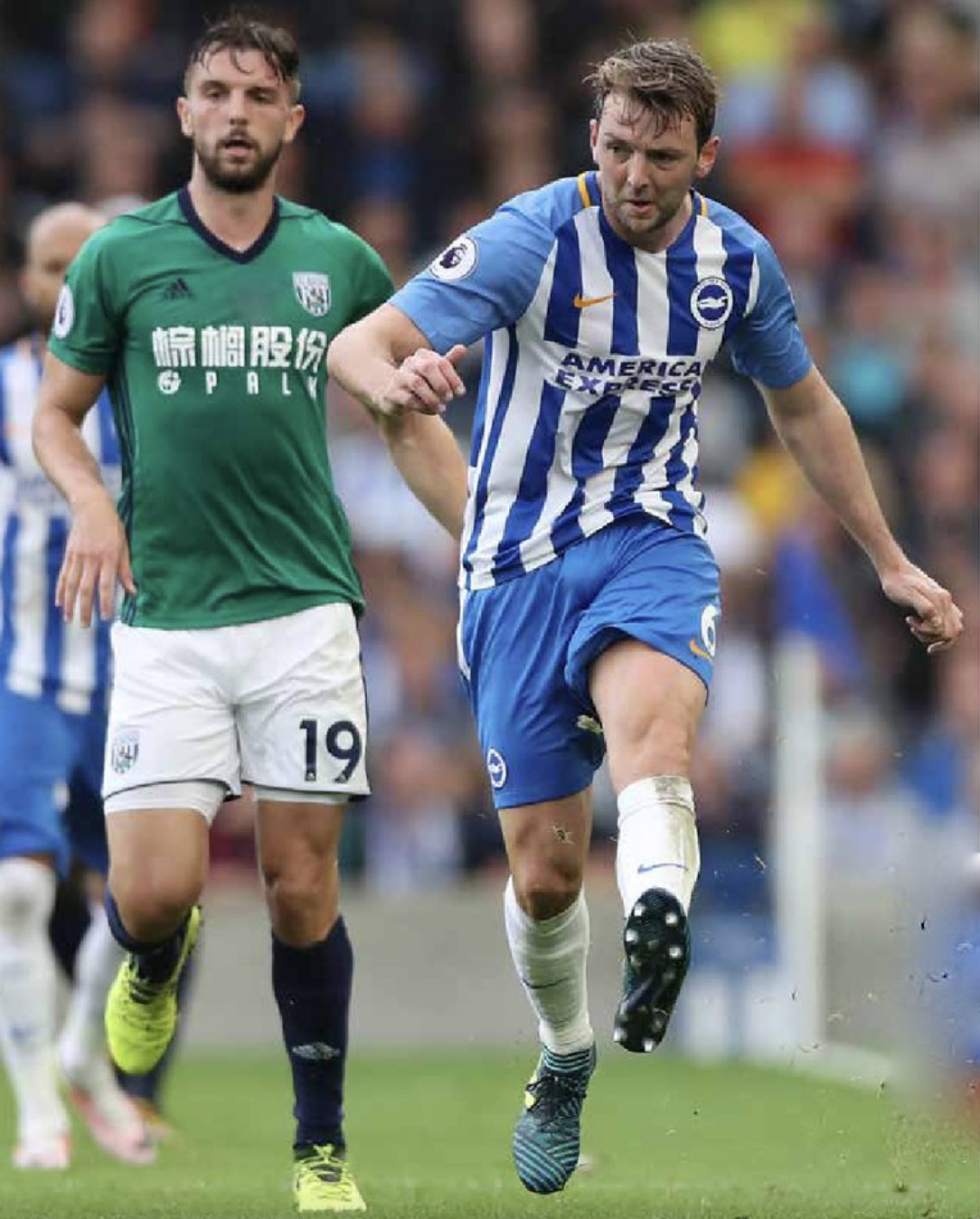
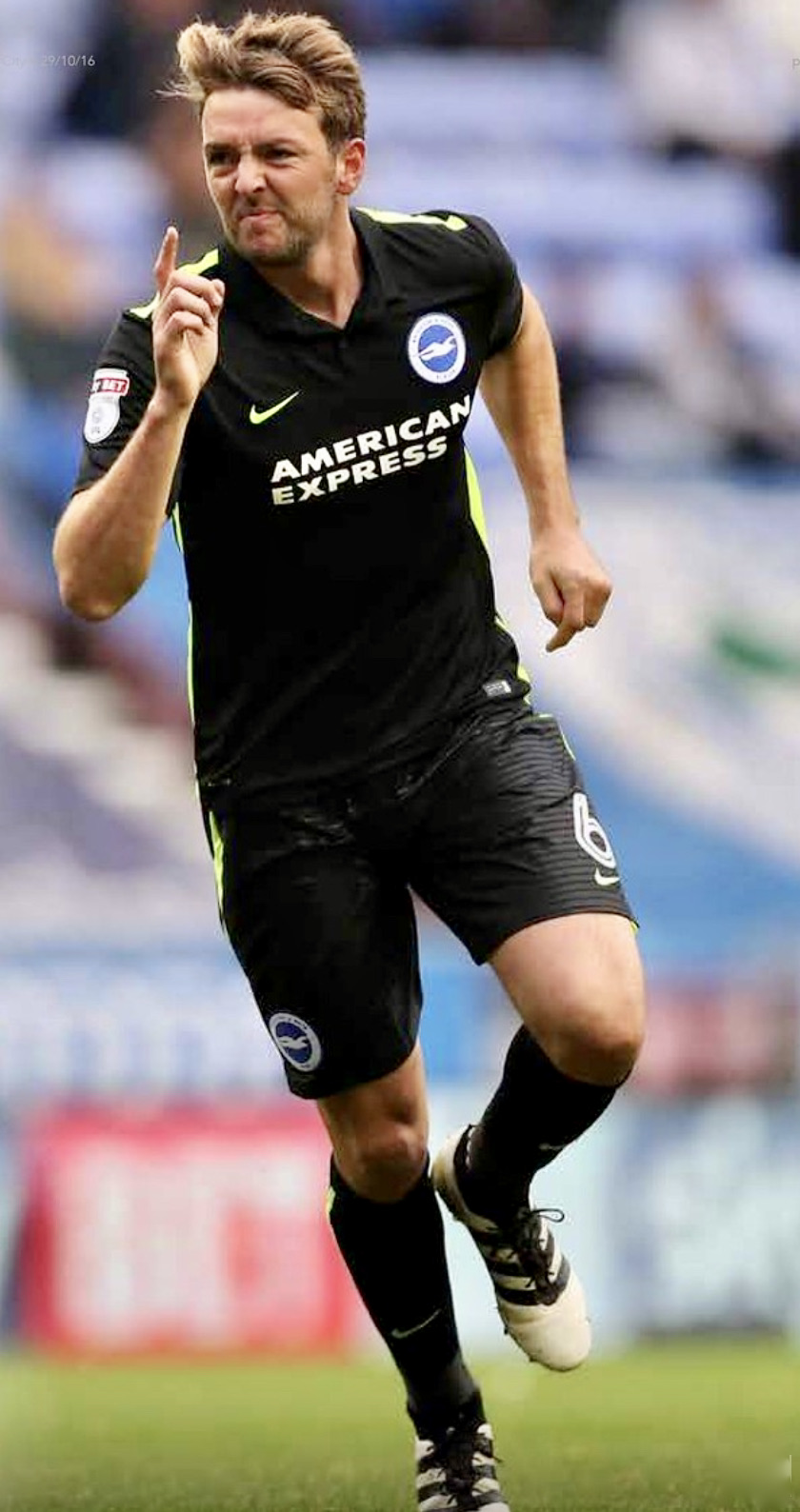
DALE STEPHENS spent nearly seven years at the Albion and was a pivotal cog in the club’s rise from the Championship to the Premier League.
He got his first taste of life at a big club playing alongside Adam Lallana and Dean Hammond….for Southampton!
That was back in 2011 when Saints won promotion from League One as runners up behind the Albion although he was an unused sub when Saints left Withdean on St George’s Day with all three points from a last gasp 2-1 win.
Stephens had gone on loan at St Mary’s from Oldham Athletic to cover an injury to Morgan Sneiderlin. “It was a strange one actually, there were only six or seven weeks left of the season,” he told the Albion matchday programme.
“Oldham weren’t really in any fear of going down or making the play-offs, so when Southampton came in for me, I was allowed to leave.”
The loanee played in six of the final 10 games of the season, making his debut against future employer Charlton Athletic alongside Lallana and Hammond.
“I looked at it almost as a trial period for being at a big club,” he said. “It was a chance for me to showcase myself. Playing for a club like Southampton at that level, with the players they had, was good for my experience and I really enjoyed being in a big-club environment.
“It was a good experience but just a shame that it was cut short by the season coming to an end.”
Explaining that everything was a level above what he’d previously been used to, Stephens added: “I didn’t feel out of place, though. I felt comfortable in that environment and it gave me the belief and the confidence that I could reach the next level.”
That didn’t turn out to be with Southampton, because his next club turned out to be the Addicks, where Chris Powell was building a side to try to get back into the Championship. Stephens found them to be similar to Saints, and like in his stint in Hampshire, he once again became a League One promotion-winner.
“I had a great first season there, helping the club win the League One title,” he recalled.
He then established himself as a Championship player before switching to the Albion in January 2014 when Andrew Crofts was ruled out by injury.
It was Nathan Jones, the former Albion player who had returned to assist Oscar Garcia, who recommended the move for Stephens, having seen him close-up when working as a coach at Charlton.
“Dale was one I recommended very strongly to the club and staked my reputation on, really,” he told the Argus. “When I was at Charlton, I saw Dale in probably three or four training sessions and a friendly at Welling and I knew then he could play at the highest level.”
Garcia needed little convincing and told the newspaper: “He’s a midfielder who can do everything and he does it all well. He’s got great physical capacity, a very good strike, he gets into the opposition box, and he is aggressive without the ball.”
It would be fair to say he was something of a Marmite player for many fans, often accused of being too slow and favouring a sideways pass. I’d say I wasn’t a fan at first but grew to appreciate his importance to the way the side played.
By his own admission, Stephens said: “With the sort of player I am, I’m not going to get fans on the edge of their seat. I’m not going to be a crowd pleaser, but I know my job and the levels I need to hit.”
Credit to him that his time at the club actually spanned the reigns of four different managers: Garcia; Sami Hyypia – although injuries prevented him appearing under him; Chris Hughton, who successfully paired him with Beram Kayal, and the early part of the Graham Potter era which saw him partner Dutchman Davy Pröpper.
Stephens’ arrival pretty much put the tin hat on the progress Rohan Ince had been making as a defensive midfielder with the Albion and, together with Kayal, he formed the key midfield duo as Albion sought to climb from the Championship under Chris Hughton.
A rare goal from Dale Stephens, this one away to West Ham
Once the promised land had been reached, Pröpper took over from Kayal but Stephens retained his place, proving a few doubters wrong about his ability to play at the higher level.
It was only with the emergence of Yves Bissouma as the consummate holding midfielder that Stephens found himself gradually edged out.
Born in Bolton on 12 June 1989, Stephens was football daft from an early age and although he had a try-out at Manchester City when he was 12, nothing further came of it.
After his final year at Ladybridge High School, he went onto a building site to do plastering and joinery.
But the coach of North Walkden, the local side for whom he was playing weekend football, wrote to Bury asking if they would take him on trial. After impressing in a work-out involving 28 triallists in front of youth team coach Chris Casper, he was invited back on a six-week trial basis.
Young Dale at Bury
“After two weeks, I played for the reserves and was offered a two-year scholarship,” Stephens explained. “I then became a first-year pro, making my debut as a sub against Peterborough, and never looked back. I was actually a striker when I joined but was quickly converted to a midfielder and I went on to play 12 first team games.”
Out of contract in 2008, he had the opportunity to step up a league and join Oldham Athletic. When game time was limited in his first season with them, he had loan spells with Droylsden, Hyde United and Rochdale, where he played alongside Will Buckley.
Back at Boundary Park, he became a regular for 18 months, in a side managed by former Brighton loanee striker Paul Dickov, and when Oldham visited Withdean in the 2010-11 season, a matchday programme article drew attention to him. “He is a big player for us in midfield,” wrote contributor Gavin Browne, sports editor of the Oldham Advertiser. “He has a great range of passing and has the ability to play at a higher level.”
A serious ankle ligament injury sustained when Albion beat bottom-of-the-table Yeovil 2-0 on 25 April 2014 sidelined him for 10 months but he returned to play a part in helping Hughton’s relegation-threatened side maintain their Championship status in 2015.
The promotion-deciding match at Middlesbrough in May 2016 will live long in the memory of those who saw it and witnessed referee Mike Dean’s controversial dismissal of Stephens four minutes after he’d brought the Albion back level with a narrow-angled header.
Once Brighton finally got to show what they could do amongst the elite, Stephens declared: “I was always confident of competing at this level but the more you play the more confident you become and the more belief you get.”
He ended up playing 99 Premier League games for the Seagulls out of a total of 223 appearances and perhaps as a mark of respect when he finally left the club for Burnley in September 2020, chairman Tony Bloom said: “He was key in both our promotion from the Championship and in establishing the club in the Premier League.
“Albion fans will have great memories of Dale as a regular in the midfield in that promotion-winning campaign, and also for the way he comfortably adapted to life in the Premier League – where he has been a model of consistency.”
His last game for Brighton saw him wear the captain’s armband in a 4-0 Carabao Cup win over Portsmouth.
Things didn’t pan out as expected when he moved to Burnley. Due to injury, he was limited to 14 appearances in two seasons, and he told talkSPORT’s Sunday Session programme: “It was disappointing on both sides. When I initially went there I was excited for the challenge, but for whatever reason it didn’t work for me or the football club.
“It probably sums my time up there, but I found out on Twitter, of all places, that I wouldn’t be getting a new contract.”
Stephens expected to find a new club, probably at Championship level, who would be interested in using his experience, and although he came close to joining Middlesbrough, and there was some interest from Watford and West Brom, nothing materialised.
“I’d played in the Premier League for the last five years, but I understood I hadn’t played much for two,” he told Andy Naylor of The Athletic. “I thought people would see the reasons behind it and that I’d get the opportunity to play at a club that wants to try to get promoted.”
Apart from being allowed to join in pre-season training at Brighton and spending six weeks with his former Bury captain Dave Challinor at Bury, he trained alone to keep up his fitness level, but, when he was unable to get fixed up with a club, in March 2023 he announced his retirement from playing.
Ongoing problems with the ankle injury suffered during his time at Brighton also contributed to his decision to retire.
In his interview with Naylor, he said he aimed to take the UEFA B licence course to try to become a coach, having spent time out following ankle surgery watching Sean Dyche’s managerial methods, as well as opposing bosses.
THERE WAS a time it looked like Brighton had rescued a gem of a player in Rohan Ince.
After 13 years on Chelsea’s books, he was picked up at 20 by the Seagulls and quickly earned a place in the first team.
He progressed from a development squad triallist to first-team midfielder in little over six months, getting his chance because of an injury to Liam Bridcutt, another former Chelsea youngster who had been an inspiration for his move to the Albion.
“Liam is older than me but I knew he was a good lad who was always having a laugh,” Ince told the matchday programme. “It was only later when we were training with the reserves that I played with him.
“He is doing well at Brighton and I have great respect for him because it is not easy to find that success after leaving a club like Chelsea.
“He is a great example for young Chelsea boys that have been released, and to all young footballers who don’t get offered contracts.
“Liam has shown it is not the end of the world and if you keep fighting you can get there.”
Ince knew about Brighton from his uncle, Eric Young, a centre-half who played for Brighton in the 1980s.
“When I told him I was signing for the club, he was really happy for me,” he said. “He told me it was a good club and good area to live in. He’s an accountant these days, doing really well for himself.”
Ince arrived at the club towards the end of Gus Poyet’s reign but it was under successor Oscar Garcia’s direction that he thrived. Garcia switched him from a central defender into a defensive midfield player.
“For me he is a player who will have a better professional career as a midfielder than as a defender,” said the head coach. “He positions himself well, he is very alert to second balls, he doesn’t lose possession, he can move the ball quickly.
“I think these are all physical and technical characteristics that are better suited to the midfield role.”
And Garcia demonstrated that it wasn’t always a case of either/or between Bridcutt and Ince when the pair combined successfully in a 3-1 home win over Leicester City at the Amex in early December 2013.
He told The Argus: “All good players can play together. It’s up to the manager to try to find the best position for them.
“Rohan is young but when we are watching him he seems an experienced player. He has to improve a lot of things but he wants to do it and this for me is the most important thing.”
Such was Ince’s progress that in January 2014, a year after he joined the club, he was offered a new two-and-a-half-year contract and was being touted as the natural successor to Bridcutt, who, at the end of that month, made a much-predicted move to follow Poyet to Sunderland.
“He has earned this contract with the way he has trained and played ever since I came to the club,” said Garcia. “He has an excellent attitude every day, he looks after himself and works hard in training; and we are all seeing the benefit of that with his performances on the pitch.
“It is nice for the club to reward that hard work and professionalism with this new contract and I am very pleased for him.”
Ince topped off the first of his two seasons playing in the Championship by being crowned Brighton’s Young Player of the Year. He was probably sadder than most to see Garcia depart immediately after the play-off semi-final defeat to Derby County.
He told The Argus: “I started off as a midfielder at Chelsea up until I was 16, then I was changed to a centre-back because of my height and physical attributes.
“I went back and forwards between midfield and defence in my Chelsea career but I came here as a centre-back because that’s where I thought my career would be best.
“Oscar didn’t believe that and I am happy he didn’t believe it either, because midfield is my preferred position.
“He has given me the opportunity to play first team football, in my preferred role as well, so I couldn’t be more grateful.”
After winning the Young Player of the Year award, Ince said: “The gaffer is a really calm character who doesn’t go about shouting, so is my type of person. The senior pros have also been a massive help, talking to me on the pitch and in training. I couldn’t have won this award without them all.”
Sadly, Ince’s progress seemed to peter away after Garcia left. He made only 11 starts in 26 games for Sami Hyypia, and the player told The Argus: “It was quite hard for me, quite a setback, coming off the back of a good season I had previously.
“I had to keep my head up, keep training well, not get too down or depressed about it. I felt I did that and when the opportunity came I felt I did well.”
It looked like his fortunes had changed after Chris Hughton had taken charge. He was a frequent starter under Hughton initially and the player himself felt bold enough to tell The Argus: “I feel I’ve been playing quite well recently, bringing good competition for the gaffer in the midfield area. I’m giving him quite a tough decision to drop me, in my opinion.”
Hughton clearly felt differently, though. He had already signed Beram Kayal and, in the summer of 2015, added Dale Stephens. They became Hughton’s go-to central midfield pairing.
Another promising young midfielder, Jake Forster-Caskey, found himself sent on loan to MK Dons and, on the last day of the transfer window in early 2016, after Hughton acquired the services of the experienced Steve Sidwell, Ince joined Fulham on loan until the end of the season.
At least it was still Championship level, although Ince didn’t get into Slavisa Jokanovic’s struggling side straight away. It wasn’t until 19 March he was handed a start away to Birmingham City when he obliged with a goal in a 1-1 draw.
“It was a frustrating and a confusing period,” admitted Ince in Fulham’s official matchday programme. “I could have easily given up, but I continued to train hard and kept knocking on the gaffer’s door to make sure he didn’t forget about me. It’s starting to pay off.
“He just said it was tactical why I wasn’t playing but then he decided he wanted to try something different at Birmingham. I think he wanted a more solid midfield with me and Scott Parker in there and I’ve been back in ever since. Long may it continue.”
Ince made eight starts and two sub appearances as Fulham narrowly avoided the drop.
Back at the Albion, Ince only got three first-team starts in the League Cup and was an unused sub for a handful of league games. It was no surprise, therefore, that in January 2017 he was once again sent out on loan, this time to Swindon Town, whose head coach was Luke Williams, who had been in charge of Albion’s development squad when Ince first joined the Seagulls.
Robins fans would have remembered Ince for a wonder strike for Brighton at the County Ground during a Capital One Cup tie in August 2014. It opened the scoring in a 4-2 Albion win, that went to extra-time.
Ince scored twice in 14 games in a squad with some familiar faces: Bradley Barry, Yaser Kasim, Anton Rodgers and Jonathan Obika.
As Albion began life in the Premier League, Ince once again found his only outlet for first-team football was in the League Cup and his display in a 1-0 win over Barnet proved to be a shop window.
Within days, League One Bury signed him on a season-long loan, their manager Lee Clark, saying: “Rohan is a player that has been on the radar for a while. The chairman, Alan Thompson and I went down to Brighton on Tuesday to watch him play for Brighton and he was very impressive for them.
“He will bring a presence to the team and is a very good footballer. He plays it simple and plays it effectively and I believe he will be a big player for us in every sense of the word, both in his physicality and in his play.
“He is an established Championship player and unfortunately for him, Brighton have gone to the next level. Once we found out he was available, we went for him. I am more than delighted to get him in.”
Ince made 22 appearances for Bury in what turned out to be a disastrous season for them because they finished bottom of the table and were relegated. Clark only lasted as manager until the end of October, Chris Lucketti was in charge for two months and caretaker Ryan Lowe was in the hotseat for the remainder of the season.
The loanee played his last match for Bury in April 2018 and was released by the Albion in June that year.
Let’s rewind for a moment, though. Born in Whitechapel, London, on 8 November 1992, Ince was picked up by Chelsea as a promising young player when he was only eight years old.
Football was clearly in the Ince family genes; as well as Uncle Eric, a less close relation is former England international Paul Ince, his dad’s second cousin.
Rohan progressed through Chelsea’s academy and joined the club after completing his formal education at Thamesmead School in Shepperton.
In a detailed pen picture on cfcnet.co.uk in July 2009, Philip Rolfe said: “Look at Rohan from a distance and you could mistake him for a younger John Obi Mikel. His tall, gangly stature and his head of spiky black hair brings about the comparison, and although he’s a centre-back by trade, his laid-back and composed style is very much in the mould of the Nigerian international.
“Ince has most often played in the heart of the under 16s defence alongside Danny Mills, especially in 2007-08. Previously he could also have been found in defensive midfield when Jack Saville was a regular in the under 16s team, and it’s in that position where he might be at his best.
“Much taller and stronger than most opponents his age, he can bring the ball out in the style of the much sought after footballing centre-back. At centre back his somewhat lethargic style can result in a loss of possession, and he is often found to hit a long pass rather than pick out a shorter option.
“In midfield he has more options and more freedom, but as a regular in the under-18s already, he’s honing his craft.”
In 2010, Ince was a member of Dermot Drummy’s FA Youth Cup-winning side that beat Aston Villa 3-2 on aggregate (Ben Sampayo and Anton Rodgers, who also later joined Brighton, were Chelsea subs). Ince signed professional for Chelsea in July 2010 and went on to play regularly for the reserves but didn’t make it to the first-team.
In July 2012, he signed a six-month deal to go on loan to Yeovil. But he made only one start and three substitute appearances for Gary Johnson’s side before returning to Stamford Bridge with a recurring ankle injury.
After finally leaving Chelsea in January 2013, he said: “Chelsea said they couldn’t see me breaking into the first team, which is probably true.
“It is very difficult to get into their first team because they can go out and buy the best players in the world.
“When I was told I wouldn’t get a new deal, I decided to go on a series of trials and Brighton was the club I identified as the best place to go to.
“I travelled to Bournemouth for a friendly on the second day of my trial and felt I had performed well, but then the weather had a dramatic impact on my hopes. There was loads of snow so I was limited to what I could show as we were training indoors, but from what I did show, Luke Williams liked it and extended my trial.”
On being released by Brighton, Ince played a couple of pre-season friendly matches for Charlton Athletic but he didn’t get taken on because of a knee injury. Caretaker boss Lee Bowyer told londonnewsonline: “He’s got something wrong with his knee. He came with it. How he’s been training and playing in the games I don’t know, because he’s injured.”
It led to Ince spending the whole of 2018-19 without a club trying to heal and recover his fitness. Eventually, he was taken on by League Two Cheltenham Town in July 2019, with manager Michael Duff telling the club website: “He’s had a good schooling where he’s come from at Chelsea and had 80 or 90 games for Brighton in the Championship. “When I played against him, he was the next big thing coming through. He’s been a bit unfortunate with his injury last year. We’ve done all the due diligence with regards to testing, seeing specialists, scanning — we think we’ve found a very good player.
Michael Duff greets Rohan Ince
“He’s 6’4”, powerful, but he can play as well. We’re hoping he can add physicality and quality into our midfield.”
Unfortunately, it wasn’t a great start for Ince, when the Robins travelled to east London to take on Leyton Orient on the opening day of the season. In a mad five minutes midway through the second half, Josh Wright scored past Scott Flinders to put Orient ahead, Town striker Luke Varney saw a second yellow for alleged simulation in what the visitors contended was a clear penalty shout.
Frustrated by the decision, Ince, who’d taken a drink of water during the halt in proceedings, threw the empty plastic bottle to the sidelines, but it hit the fourth official. Referee Michael Salisbury deemed it to be violent conduct and showed him a straight red card.
“He seems to think he did it intentionally,” manager Duff explained to gloucestershirelive.co.uk afterwards. “I am not sure Rohan’s aim is that good that he can hit someone five or six yards away, walking the other way. There is not a lot I can do about that one, but I think it’s very soft, particularly after what’s gone on in the 60 minutes before that.”
To make matters worse, the FA charged Ince with breaching an FA rule and, instead of the statutory three-match ban, he was banned for five matches.
Then, just when it looked like he would return to the side in a game at Crawley, he injured his hamstring in a pre-match warm-up and had to pull-out of Cheltenham’s starting line-up.
He ended up making only nine League Two appearances and was released at the end of his one-year deal.
It was only when he linked up with fifth-tier Maidenhead United for the 2020-21 season that he finally got a decent run of games, featuring 31 times for the National League side, and helping the club finish 13th, the second-best finish in the club’s history.
In 2021 he was called up for the first time to play for the national football team of Montserrat, which is coached by Willie Donachie, the former Manchester City, Oldham and Scotland defender, who had been Joe Royle’s managerial no.2 at various clubs.
The tiny Caribbean nation, a British overseas territory of less than 5,000 inhabitants, is trying to rebuild after half the island was destroyed by a volcanic eruption in 1995, forcing thousands to flee to Britain. Most of the British-born semi-professionals who play for Montserrat are related to those island residents who came to the UK.
Ince featured in qualifying matches for the 2022 FIFA World Cup and scored his first goal in a 4-0 win over the U.S. Virgin Islands.
Although they did not advance from their World Cup qualifying preliminary group, the ‘Emerald Boys’ finished unbeaten with eight points and earned draws against El Salvador and Antigua and Barbuda.
On his return, for the 2021-22 season, Ince switched to another National League side, Woking, and is described on the club website as “an integral player at the base of the Woking midfield”.
Adding that he had “quickly became a firm fan favourite”, it says of him: “A tough-tackling defensive midfielder also capable of pushing further forward, he made 37 appearances during his debut season with the Cards, whilst chipping in with two goals and four assists.”
A MIDFIELD player who helped keep Crystal Palace in the Championship frustrated Brighton fans in an injury-plagued two seasons with the Seagulls.
Kemi Agustien, who hailed from the Dutch Caribbean island of Curaçao, wasn’t fully fit when he joined Oscar Garcia’s Seagulls from Swansea City in the summer of 2013, and injuries he picked up restricted him to just 10 starts and seven appearances off the bench.
Albion’s ‘keyboard warrior’ followers were not at all impressed and poured out their vitriol, accusing the player of being overweight and not being committed to the cause.
The main gripe seemed to be frustration that a player who had played 31 games in the Premier League only fleetingly showed his capabilities in the division below.
It seems remarkable that Agustien once scooped the official man of the match award for a powerful display in Swansea’s midfield in a 1-1 top flight draw against Manchester United.
As Brighton fans would later discover for themselves, Agustien wasn’t shy at singing his own praises, saying after that United match in March 2013: “I put out a statement to the manager, the staff and for myself and my family.
“There were doubts over my fitness or if I had the ability to play in the Premier League but hopefully everybody who watched the game against Manchester United will have seen what I can do.
“I always put pressure on myself, I’ve been in and out of the team and, like every footballer, I want to play and start every week. It was my first start for such a long time and I thought I did well.
“I am not the sort of player who likes to talk about himself, but I think I can be proud with how I played.”
As so often seemed to be the case in his career, an injury stopped any hoped-for progress in its tracks and by the end of the season boss Michael Laudrup dispensed with his services on a free transfer, even though he still had a year left on his contract.
There was a sense of irony that the midfield slot Agustien took on at the Albion had become vacant when the Seagulls managed to offload Ryan Harley, another ex-Swansea player who had been a disappointment. Harley was allowed to join Swindon Town after a settlement was agreed on the remaining 11 months of his contract.
What Albion were getting in return was, on the face of it, an upgrade, and Agustien’s agent, Wessel Weezenberg, somewhat bullishly told the Argus: “Brighton are getting an excellent, all-round midfielder. He is a very technical player, physically good and strong, and will fit in well with their type of football due to his Dutch background.”
Head coach Garcia seemed to buy into it, too, saying: “He has experience in the Premier League with Swansea and his technical level, experience and confidence with the ball will help us a lot with the way we want to play.
“We will work with him, because he is not fit enough to play 90 minutes at the moment, but he wants to be fit as soon as possible and, with our fitness coaches, I don’t think it will take much time.”
Somewhat immodestly, Agustien reckoned he could fill any of the Albion’s midfield positions, explaining: “I feel I can play box-to-box, I have the power and the ability to do that. I can be dangerous in the final third, but if I need to hold I can do that as well.
“I think I’ve got all the strengths to do both but I know I can still improve. There is more to come from me.”
When he was sidelined with calf injury issues not long into his time at Brighton, he told the matchday programme: “I want to be an important part of this team, but the only way I can do that is when I’m fully fit.
“I can’t do myself justice on 80 or 90 per cent. I know when I’m 100 per cent I can bring quality to this team.”
Reflecting on his ill-fated spell at the Albion in a March 2020 interview with Tom Coleman of Wales Online, Agustien admitted: “It started all wrong. There was a certain pressure coming out of Swansea and going to Brighton.
“I had a meeting with the manager back then, and he told me how he wanted to play a certain way and that he wanted me to play in a certain position, as a number 10.
“For me, to start in that position was like adapting to a new style, and I wasn’t really fit because I didn’t really have a pre-season because of what happened with Swansea. I came quite late and I was overweight.”
Over the course of the 2013-14 season, Agustien made just eight starts plus six appearances off the bench in Garcia’s side, and he was an unused substitute on eight other occasions. Rohan Ince, Jake Forster-Caskey, Andrew Crofts and loan signing Keith Andrews formed the mainstay of the midfield before the arrival of Dale Stephens.
Albion supporters were, it would be fair to say, divided in their opinions about Agustien’s contribution. For example, ‘Clean Sheet’ on the Argus comment section said: “This guy has the potential to be a game-changer. He needs to get fit and motivated. If this happens, then he could be like a major new signing.”
But ‘Steveg1958’ reckoned: “This guy is unbelievable. He needs firing now and kicking out. What a joke. If any of the rest of us worked like him, we would be given the push. How he has got away with this for so long at Albion is nothing short of scandalous.”
On the popular fans forum North Stand Chat, ‘BensGrandad’ said: “He shows great skill and some brilliant passes but he appears to be lazy and not prepared to tackle back when required, or when he loses the ball. Perhaps that is where the problem lies.”
‘Stumpy Tim’ maintained: “He’s not mobile enough to play centre-mid. Wouldn’t mind seeing him in one of the forward positions as he’s definitely one of the more creative players in the team.”
If Agustien thought his Albion fortunes might change when Sami Hyypia replaced Garcia, he was to be disappointed. He made just two starts under the former Liverpool man, plus one substitute appearance, all at the start of the season.
He was sent on as a sub for Forster-Caskey in the opening day 1-0 home defeat to Sheffield Wednesday that got Hyypia’s reign off to an ignominious start.
I do recall him putting in a decent shift away to Leeds United later the same month, contributing to a fine 2-0 win which saw Albion leave Elland Road with all three points, although he had to go off after twisting an ankle.
He started in a 2-0 League Cup win over Cheltenham Town but was replaced by Kazenga LuaLua on 68 minutes and wasn’t seen in first team action again.
He underwent surgery for a persistent thigh muscle injury, and Hyypia’s successor Chris Hughton didn’t rule him out altogether, but he said at the end of February 2015: “At this moment he is quite a way from being fit and ready to play.
“He hasn’t been fit for most of the season. If he is able to get fit and available for any part of the season we’d be delighted.” But he left the club without reappearing in the first team.
It wasn’t that he hadn’t done OK at that level, either, because he had already played 18 games for Birmingham City in the Championship during the 2008-09 season, and, in the 2010-11 season, three starts for Swansea under Brendan Rodgers and, when he hadn’t been able to win his City place back after injury, six starts and two appearances off the bench on loan at Dougie Freedman’s Crystal Palace as they fought to avoid the drop at the end of the season.
Explaining the Palace loan, Rodgers told Sky Sports News: “I felt Kemy needed games. He has found it difficult this season. I brought him in and he is a good lad, but some players are all right if they are not playing and others are not.
“Kemy is the type who wants to play. He came here injured and the players in his position have done very, very well.
“He has another season on his contract with us and, while it hasn’t quite happened for him here as he would have wanted, I want to see him getting games. Hopefully, come the start of pre-season, he will be fully fit.”
He got off to a decent start under Freedman when Palace won 2-1 against a Barnsley side which had former Brighton loanees Paul McShane in defence and Diego Arismendi, who went on as a substitute.
The Palace website reported Agustien impressed with his distribution on his debut, combining well with James Vaughan, and in a 2-1 defeat at Ipswich, it was an Agustien free kick that found skipper Paddy McCarthy who scored the visitors’ goal.
The loanee was in the starting line-up for Palace’s crucial away trip to Hull City when both sides needed a point to be sure of staying up. It finished 1-1. And his last game in Palace colours was in the final game of the season when the home side succumbed 3-0 to Nottingham Forest.
FORMER Liverpool player and assistant manager Sammy Lee took an unpalatable u-turn after agreeing to become no.2 to Sami Hyypia at Brighton.
When in 2014 a second successive bid to reach the Premier League via the Championship play-offs had faltered at the semi-final stage, Oscar Garcia quit the Seagulls and Albion installed the inexperienced Hyypia as his successor.
The Finnish international former Liverpool centre back had earmarked Lee to bring valuable nous to his backroom team having already been turned down for the job by his first choice, Jan Moritze Lichte, from Bayer Leverkusen, where Hyypia had made his managerial bow.
Lee agreed to take on the role on 25 June 2014 and a formal announcement was made the following day. But by the morning of Monday 29 June, the bombshell news dropped that Lee was moving elsewhere on the south coast instead.
Rather than help to guide the fledgling managerial career of a player he had coached at Liverpool, Lee opted to join Dutchman Ronald Koeman at Southampton.
“I’m let down because I thought that I knew him,” Hyypia told Sky Sports, when interviewed at Lancing. “Everything was sorted and everything was agreed and he should have been here today. The way it happened was very disappointing and I couldn’t actually believe it.”
An apologetic Lee said: “I was thrilled to be offered the job at Brighton and I was excited at the prospect of working with Sami Hyypia again – but, totally unexpectedly, I have been given an opportunity to work in the Premier League.
“I fully appreciate that this is not an ideal set of circumstances and I am very sorry for the inconvenience, and any embarrassment, my change of mind, after the announcement was made, has caused.
“However, at this stage of my coaching career the opportunity to work again at the very top level of English football was not something I felt I could turn down.”
Some might argue Lee’s decision ultimately brought about the swift demise of Hyypia’s reign in the Albion hotseat: the efforts he made to implement a specific style of play have since been lauded, but a dismal set of results told a different story, and there was a parting of the ways with more than half the season still to be played.
If Albion fans hadn’t been overly impressed by Lee’s decision to leave Hyypia in the lurch that summer, they weren’t the only supporters not to be enamoured by the little man’s involvement in their club.
In a retrospective look at Lee’s brief tenure as manager of Bolton Wanderers, Marc Iles, chief football writer for the Bolton Evening News, wrote: “Lee’s frenetic 170 days in charge contained 14 games, three victories, 12 signings and the complete disintegration of the structure which had helped Wanderers secure four top-eight finishes in four years.
“The stormy period was characterised by dressing room upheaval, boardroom bitterness and the sad fall from grace of an honourable man who had the club at heart.”
Lee, previously Sam Allardyce’s assistant at the Reebok Stadium, had been handed the reins just 24 hours after Allardyce quit on 29 April 29 2007 to take over at Newcastle.
Lee was always better suited to a supporting role and, as well as at Bolton, he’s worked under Allardyce at Crystal Palace, Everton and West Brom (and during Allardyce’s brief England spell).
He rose through the coaching ranks at Liverpool after Graeme Souness took him back to Anfield at the end of his playing days.
He became a first team coach under Gerard Houllier and between 2008 and 2011 was assistant manager to Rafa Benitez.
Born in Liverpool on 7 February 1959, Lee made his way through the Reds’ youth ranks and made his first team debut in April 1978.
Sammy Lee in action for Liverpool up against Albion’s Steve Foster
As chronicled on lfchistory.net, he earned a regular spot in the 1980-81 season, pretty much taking over the midfield berth previously occupied by Jimmy Case, who, at the end of that season, Bob Paisley sold to Brighton.
Albion fans of a certain generation will surely not fail to be moved by the story of Lee’s close friendship with Michael Robinson, the former Albion striker who was the midfielder’s former team-mate at Liverpool and Osasuna.
Robinson and Lee were together in a Liverpool side that in 1983-84 did the treble of the league, the League Cup and the European Cup.
Ahead of an August 2021 friendly match between the two sides to honour Robinson after his untimely death from cancer aged 61 in April 2020, Lee told The Athletic: “It is a fitting tribute and a fitting venue to have the game at, in front of the Kop.
“Michael did fantastic for Liverpool while he was there. It will be a very emotional night for everybody, particularly for Michael’s wife Chris and their children.
“He was not only a fantastic guy, a great colleague, but I consider him a brother, to be honest, I can’t put it any higher than that.”
Lee told reporter Dermot Corrigan: “Michael was very important for my professional life after Liverpool.
“You tend to think you will stay at Liverpool forever, you know, but it doesn’t happen. Michael had gone to Queens Park Rangers and he helped me to go there, and I had a nice time there. Subsequently he moved on to Osasuna, and he got me to go there. So he had a massive influence on my professional career.”
Injury eventually brought Lee’s Spanish playing days to an end and although he managed three games for Southampton and four for Third Division Bolton, it was coaching where his future lay.
In 2001, Lee became a part-time coach to the England national side under Sven-Goran Eriksson and three years later left Liverpool to join the national set up full time.
Liverpool chief executive Rick Parry said at the time: “We are very sorry that Sammy has decided to leave, but he goes with all our very best wishes for the future.
“Sammy’s been a wonderful servant to Liverpool as both player and coach. He should be proud of his contribution to the successes achieved at the club in recent years.”
PROLIFIC second tier goalscorer Leroy Lita was a Gareth Southgate free transfer signing for Middlesbrough where he scored 20 in 82 games.
Two years after Boro cashed in and sold him for £1.75m to newly promoted Premier League side Swansea City, Lita joined an injury-hit Brighton side three months into Oscar Garcia’s reign.
Goals had been harder to come by for Lita after Brendan Rodgers had signed him for the Swans and he was sent out on loan, spending time back in the Championship with Birmingham City and Sheffield Wednesday.
It was a familiar story for Lita who had been Reading’s first £1m player when Steve Coppell signed him from Bristol City in 2005.
He netted a goal every three games for the Royals, but towards the end of his four years at the Madejski Stadium, he’d gone on loan to Charlton Athletic and Norwich City.
By the autumn of 2013, Lita had become something of a footballing nomad, fed up with a lack of first team action under Michael Laudrup.
With Albion’s leading striker Leo Ulloa out for two months with a broken foot, and Craig Mackail-Smith and Will Hoskins also sidelined, Garcia brought the diminutive striker to Brighton on a three-month loan arrangement.
“He is strong, fast and direct, and he has shown he can score goals in the Championship,” Garcia told the club website. “He offers us something different going forward.”
I can remember being at the Keepmoat Stadium, Doncaster, when he scored his only goal for the club two minutes after going on as a substitute for Jake Forster-Caskey (he’d played with his stepdad Nicky Forster at Reading).
Forster-Caskey had scored a wonder goal with his left foot from 35 yards before Rovers equalised but visiting Albion went on to collect three points in a 3-1 win (David Lopez scored the other with a long range free kick).
Lita had made his debut in a 0-0 draw at Yeovil on 11 October, going on as a sub for Ashley Barnes and his home debut saw him replacing another loanee, Craig Conway, in a 1-1 draw with Watford.
The eager striker made a public plea via the Argus to be given a start but Garcia only ever used Lita off the bench for the Seagulls (he went on as a sub on five occasions and was an unused sub for three games).
“The staff have a bit of doubt but I feel fine,” Lita said. “When I am on the pitch my mind just takes over anyway. “I don’t ever feel tired or not match fit. I know you still need your match fitness, but you have to get that at some point, so hopefully this week.”
Having got off the mark for the fifth Championship club he had served on loan, he added: “Once you get that first goal you are thinking about the next one and the next one. I am just looking forward to scoring plenty of goals.
“I know I can score goals wherever I go so I’ve never had that doubt. Whoever has doubted me it’s up to them. My belief in myself is not going to end until I am 50 years old and can’t move!”
But with Ulloa’s fitness restored, Lita’s final appearance in an Albion shirt was on 3 December when he went on for Barnes at the Amex as the Seagulls succumbed 2-1 to Barnsley.
Maybe Lita’s Albion spell was cursed from the start when he was handed squad number 44 (all the fours, droopy drawers)?
He was still only 28 when he arrived at the Amex with an impressive record of 101 goals in 330 league and cup games, 14 of which had been in Reading’s 2006-07 Premier League season.
“I know the Championship well,” Lita said in the matchday programme. “Consistency is the main thing at this level because everyone beats everyone; some teams start well and drop off, while others start badly then pick up a run of results. So, it’s all about putting a good run together then you never know what might happen.”
Lita followed in the footsteps of former Swansea teammates Kemy Agustien and Andrea Orlandi to the Amex, but he also knew Liam Bridcutt and Andrew Crofts from his time as a youngster at Chelsea.
He recalled summer training camps at Horsham with Bridcutt and he played in the same Chelsea junior side as Crofts. “They have both gone on to become really good players,” he said.
“It helps when you go to a club and know a few people but I think the style of play here will also suit me.
“It is similar to Swansea and the club only signs players here who know the system.
“I played against Brighton last season, scoring on my home debut for Sheffield Wednesday, and although we won that day, I was still impressed by the way the team played.” He had also played at the Amex before when he was on loan at Birmingham and (below right) was the subject of a page feature in the matchday programme.
Born in Kinshasa in the Democratic Republic of Congo on 28 December 1984, it was as a teenager on Chelsea’s books that he couldn’t believe his luck to be sharing a training pitch with Jimmy Floyd Hasselbaink and Eidur Gudjohnsen.
“I would go home and see them on TV and the next day I would be training with them,” he told The Guardian. “It was unbelievable.”
Reporter Jon Brodkin wrote: “Chelsea broke his heart by releasing him but his three years at the club he supports were hardly wasted. The thrill of being a ballboy was surpassed by training with the first team’s front two.”
Lita told him: “I was 15 and the academy director said he had spoken to my school and I could have a couple of days off a week to train with the first team and the ressies [reserves]. It was a great opportunity and I learned a lot from it.
“Hasselbaink’s finishing was unbelievable, he didn’t mess about. He could place it and smash it. I mainly did finishing with them, not much else, but I could see as well how professional they were and how they looked after themselves.”
After Lita’s release, he contacted a few clubs – Fulham were interested but didn’t offer a contract – and he was aware that after leaving Arsenal Andy Cole had made a new start to his successful career at Bristol City.
It was the Robins who gave Lita an opportunity and former Albion skipper Danny Wilson handed him his first team debut at the beginning of the 2002-03 season when he was still only 17.
His first league goal was a late winner on 28 September 2002 to secure a 3-2 victory after going on as a substitute at Port Vale (for whom an 18-year-old Billy Paynter had scored).
“The striker hit a glorious goal to end Vale’s hopes of a point after they had fought back to level matters just a minute earlier,” said the BBC report of the game.
It wasn’t until the following season that he was given a professional contract and it was only after Brian Tinnion succeeded Wilson as manager in 2004-05 that Lita established himself in the City side. He scored 29 goals in all competitions and that form earned him a call-up to the England under-21s, Lita having decided not to play for his birth country.
He scored on his debut on 8 February 2005 when he went on as a sub for Justin Hoyte in a 2-1 defeat against the Netherlands at Derby’s Pride Park.
Those goals also earned him a £1m move to Reading, even though Tinnion advised him against the move, believing a Premiership club would come in for him.
“Once I got down here, I knew it was right,” Lita told The Guardian. “I want to go a step at a time. Reading are a good club, they’re looking to get into the Premiership and that’s where I want to be.”
He went on to score 15 goals in 25 league and cup games (+ seven as a sub) as Reading topped the Championship, and he returned to the England under-21 fold in February 2006.
He was on home turf at the Madejski Stadium when he earned his second cap, again as a sub, replacing David Nugent in a 3-1 win over Norway (future Albion loanee Liam Ridgewell was among his teammates).
A year later, after finding the net in the Premier League with Reading, Lita got a third cap as a substitute (for James Milner) and scored again in a 2-2 draw against Spain at Pride Park. Liam Rosenior was also a substitute that day.
Lita’s first start for the under 21s came the following month, on 24 March, in a 3-3 draw with Italy in the first game played at the new Wembley Stadium, in front of 55,700. On 5 June the same year, Lita scored England’s fifth goal in a 5-0 win over Slovakia at Carrow Road after he’d gone on as a sub for Nigel Reo-Coker.
Lita was an overage player in the 2007 UEFA European Under 21 Championship: he missed an 88th minute penalty after going on as a sub in a 0-0 draw with the Czech Republic but scored in each of the three games he started: 2-2 v Italy, 2-0 v Serbia and 1-1 v the Netherlands (who won the tie 13-12 on penalties). But a full cap eluded him.
Lita was a regular throughout Reading’s first top-flight campaign. In a side that include Ivar Ingimarsson and Steve Sidwell, Lita scored 14 times in 26 league and cup starts plus 12 appearances off the bench.
But with Kevin Doyle and Dave Kitson the preferred strike duo in 2007-08, Lita’s game time was much reduced and he went on loan to Charlton in March 2008.
It was a similar story the following season when he scored seven times in 16 games during a three-month loan at Norwich City – the haul included a hat-trick against eventual champions Wolves.
The excellent Flown From The Nest website, that profiles former Norwich players, recalled how that treble attracted the interest of plenty of other clubs, but City boss Glenn Roeder said: “It’s a better problem to have than him not scoring and playing rubbish – then none of us want him. What can you do?
“He was brought here to score goals. He was a little bit rusty in his first game which was understandable. He did better in the second game against Bristol City when he had a couple of chances which unfortunately never went in, and then in the third game on Tuesday night, we saw the real Leroy Lita and what he is all about.”
Lita returned to Reading and played in a FA Cup third round defeat at Cardiff and although Sheffield United made a bid for him, he preferred to stay with the Royals.
Nevertheless, at the end of the season, he finally left the Madejski and headed to Teesside on a three-year deal.
On signing for Boro, Lita said: “The manager has been after me for about a year, it’s great to feel wanted. I have a lot of respect for the gaffer and I want to do well for him and the club.
“I aim to repay him for his faith in me with goals. That’s the main strength to my game and I’m looking forward to scoring goals for Middlesbrough.”
He told the Northern Echo: “I’m raring to go. I haven’t enjoyed the last two seasons one bit, but this is a fresh start and I’m excited about the challenge.
“Other clubs were interested in signing me, but there was only once place I wanted to go and that was Middlesbrough.”
Southgate added: “Leroy has a hunger to score goals and his goalscoring record in the Championship in particular is very strong.
“His record says he gets one in two at this level so that will be important for us. I think he has a point to prove and, when he’s fully fit, he will relish the challenge.”
It wasn’t long before Southgate was succeeded by Gordon Strachan but Lita made the second highest number of appearances (41) in that season’s squad and scored nine goals as Boro finished mid-table.
There was yet another managerial change the following season, with the return of former player Tony Mowbray, but Boro once again finished mid-table with a side that featured Joe Bennett at left back and Jason Steele in goal.
Lita scored 11 times in 40 matches, which was enough to attract newly-promoted Swansea. “I’ve had a good chat with Leroy,” said Mowbray. “He has a chance to play in the Premier League and good on him. His talent has earned him that chance.”
But he only scored twice in six starts (+ 12 appearances off the bench) all season and in September 2012, Lee Clark signed him on a three-month loan for Birmingham.
“I know Leroy very well having worked with him at Norwich during a loan spell in which he scored seven goals in 16 games,” said Clark. “He’s a proven goalscorer who has power and pace and there’s no doubt that he’ll add quality to my squad.”
Lita scored three goals in 10 games for Birmingham before being recalled early, but in late January 2013, he joined Sheffield Wednesday on loan until the end of the season.
Wednesday manager Dave Jones told BBC Radio Sheffield: “Leroy has a lot of experience at this level and the one above. It could be with a view to a permanent deal. This lets us have a look at him and he can have a look at us.” But he only scored twice in nine appearances for the Owls.
Released by Swansea at the end of the 2013-14 season, Lita was then reunited with Danny Wilson, manager at newly relegated League One Barnsley.
“He was my first manager and I like the way he works,” said Lita. “He’s got a lot of trust in me and I’ve got a lot of trust in him.
“I enjoyed my time under him as a youngster. He helped me a lot and helped me progress in my career so far. I just want to get back to playing football regularly again and I’m going to get that opportunity here.”
He scored in his first two league games but didn’t register again for 21 games. When Wilson was replaced by Lee Johnson in February 2015, within a matter of weeks Lita joined lowly Notts County on loan until the end of the season but was unable to prevent their relegation.
On expiry of his Barnsley contract, Lita moved to Crete side AO Chania in August 2015 but was back in England the following March, signing a short term deal with League Two Yeovil Town, where he scored once in eight games. That was his last league club in England.
He scored five goals in 21 games for Thai Premier League side Sisaket in 2017 and on his return to the UK turned out for a number of non-league clubs: Margate, Haverhill Rovers, Salisbury and Chelmsford City.
In May 2020, the Coventry Evening Telegraph hailed his signing for Nuneaton Borough, whose manager Jimmy Ginnelly told the newspaper: “His partner is from Nuneaton and they’ve recently moved into a house on The Longshoot, which is just five minutes from the ground, so this is a win-win situation for both parties.
“These sorts of players don’t come onto Nuneaton’s radar very often so we moved quickly and obviously all of us here at the Boro are very excited.”
He scored eight goals in 33 appearances for Nuneaton, went on to play for Southern League Premier Division Central rivals Stratford Town before moving on to Hednesford Town, where he’s still playing.
In March 2022, the Express and Star reported: “Lita lit up Keys Park last night as he smashed a debut hat-trick to help Hednesford to a 3-1 victory over Stourbridge.”