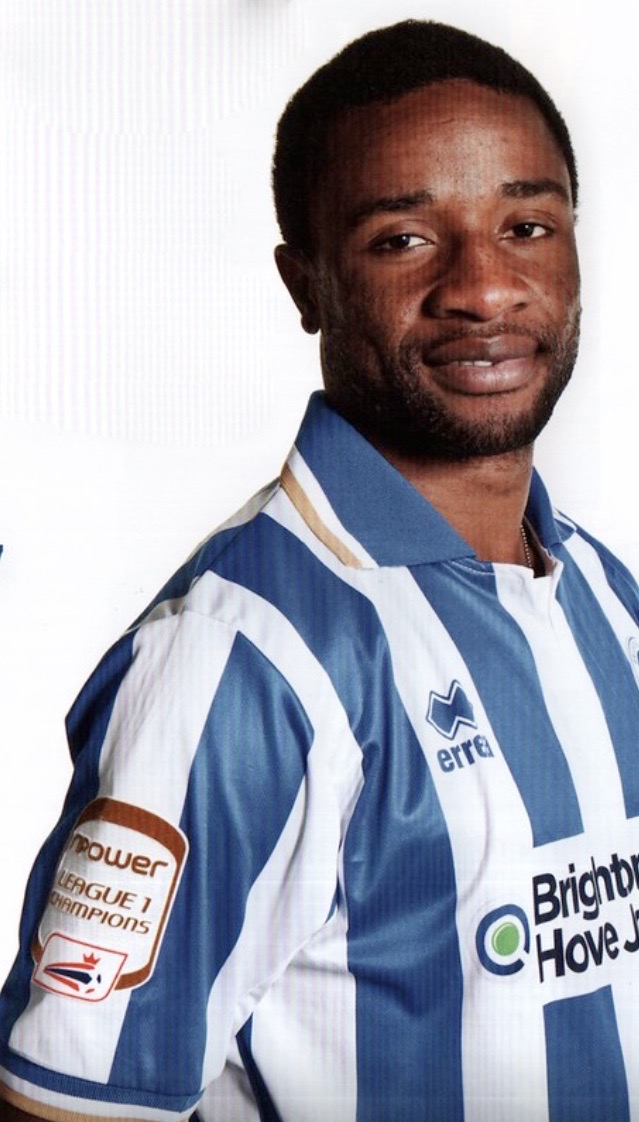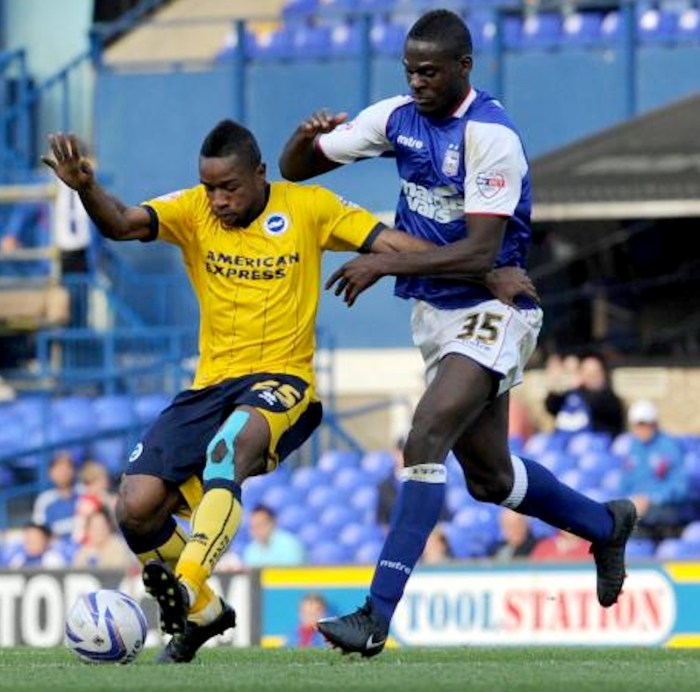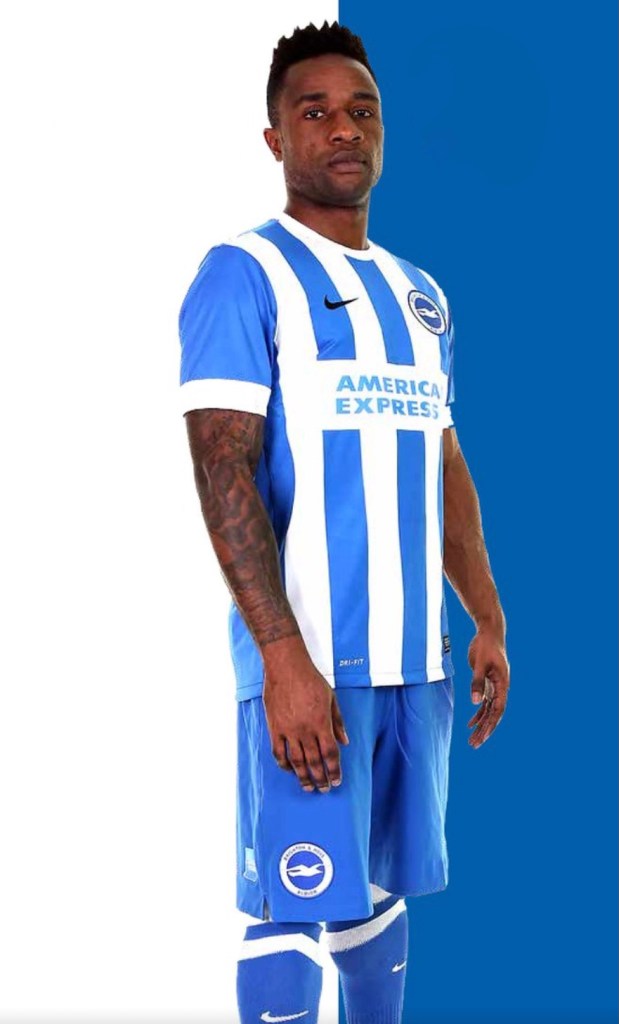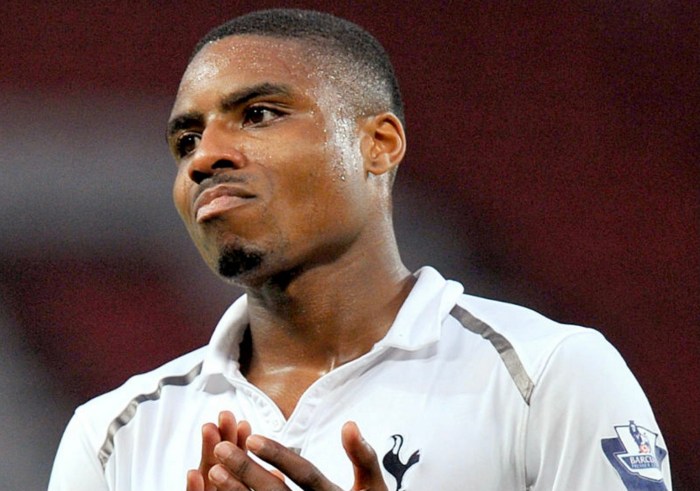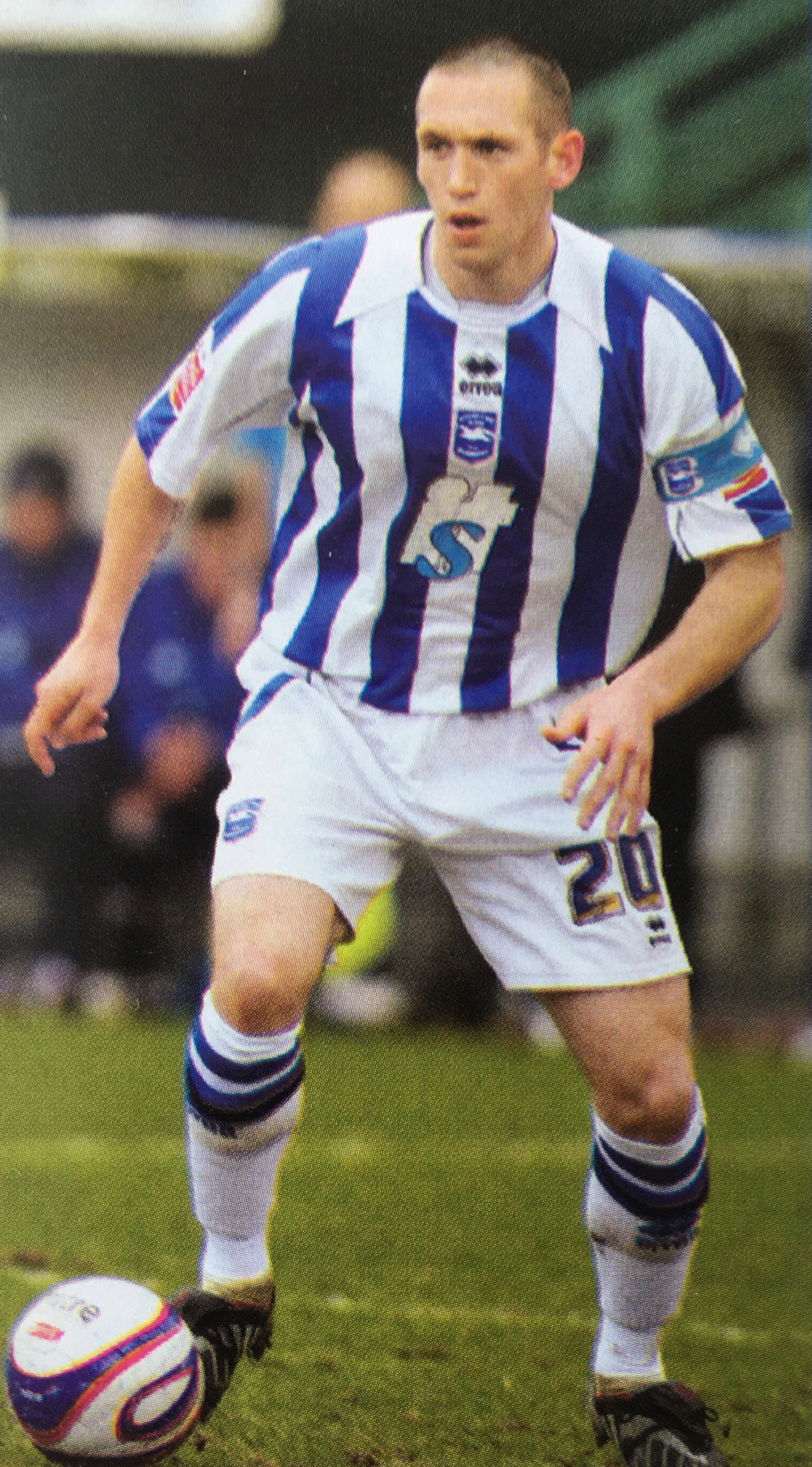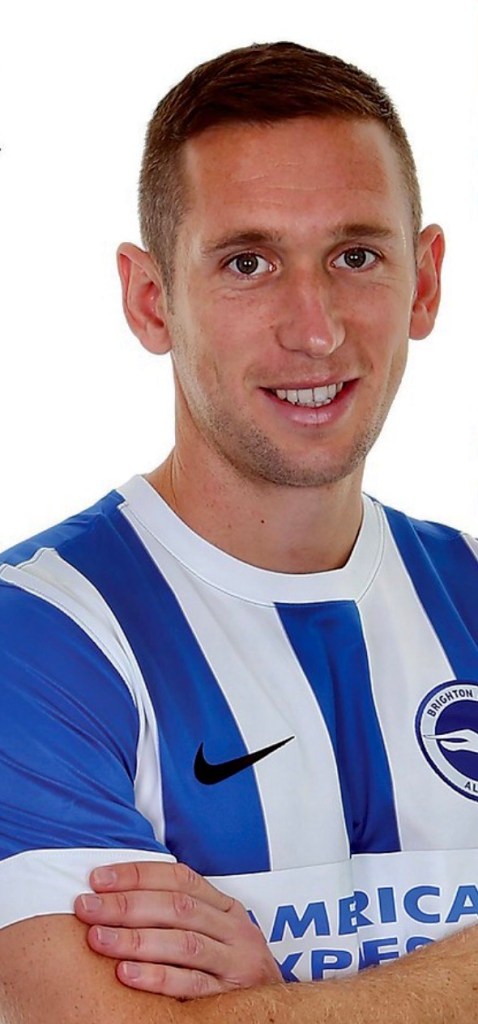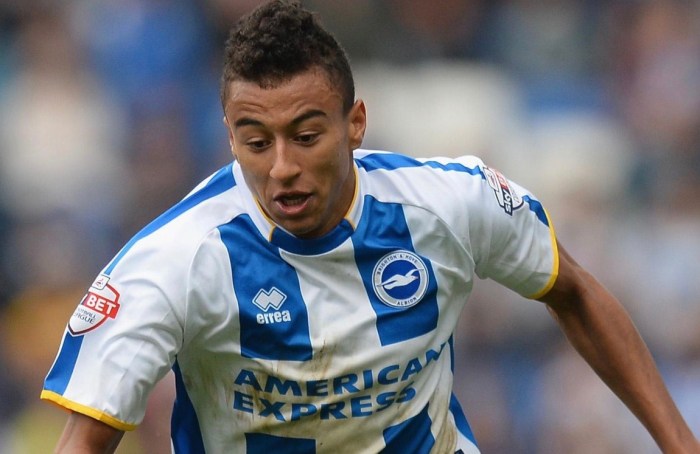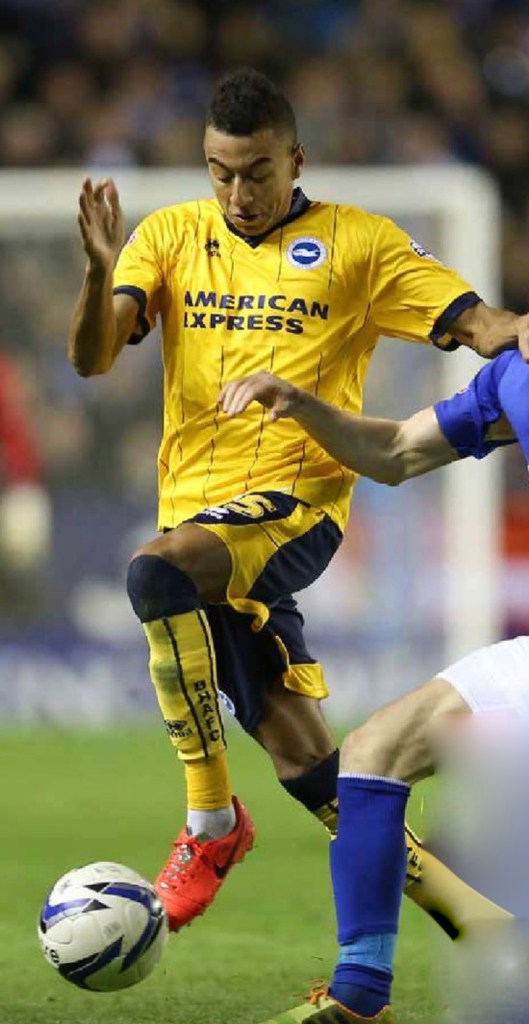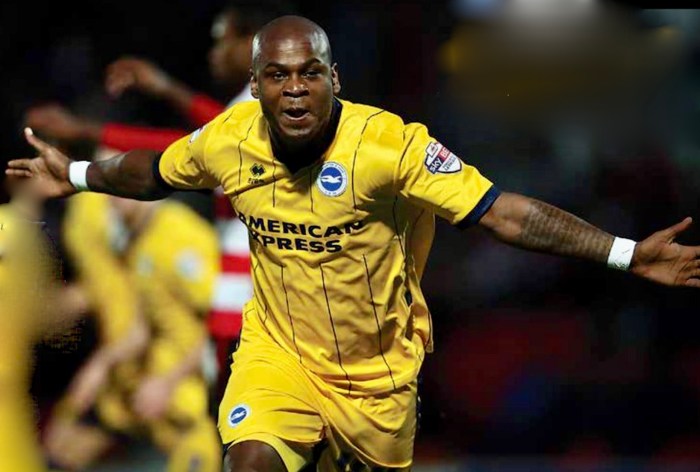
Did Albion fans only get to see half a Lita?

PROLIFIC second tier goalscorer Leroy Lita was a Gareth Southgate free transfer signing for Middlesbrough where he scored 20 in 82 games.

Two years after Boro cashed in and sold him for £1.75m to newly promoted Premier League side Swansea City, Lita joined an injury-hit Brighton side three months into Oscar Garcia’s reign.

Goals had been harder to come by for Lita after Brendan Rodgers had signed him for the Swans and he was sent out on loan, spending time back in the Championship with Birmingham City and Sheffield Wednesday.

It was a familiar story for Lita who had been Reading’s first £1m player when Steve Coppell signed him from Bristol City in 2005.

He netted a goal every three games for the Royals, but towards the end of his four years at the Madejski Stadium, he’d gone on loan to Charlton Athletic and Norwich City.

By the autumn of 2013, Lita had become something of a footballing nomad, fed up with a lack of first team action under Michael Laudrup.

With Albion’s leading striker Leo Ulloa out for two months with a broken foot, and Craig Mackail-Smith and Will Hoskins also sidelined, Garcia brought the diminutive striker to Brighton on a three-month loan arrangement.

“He is strong, fast and direct, and he has shown he can score goals in the Championship,” Garcia told the club website. “He offers us something different going forward.”
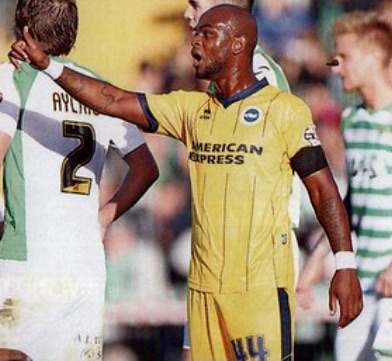
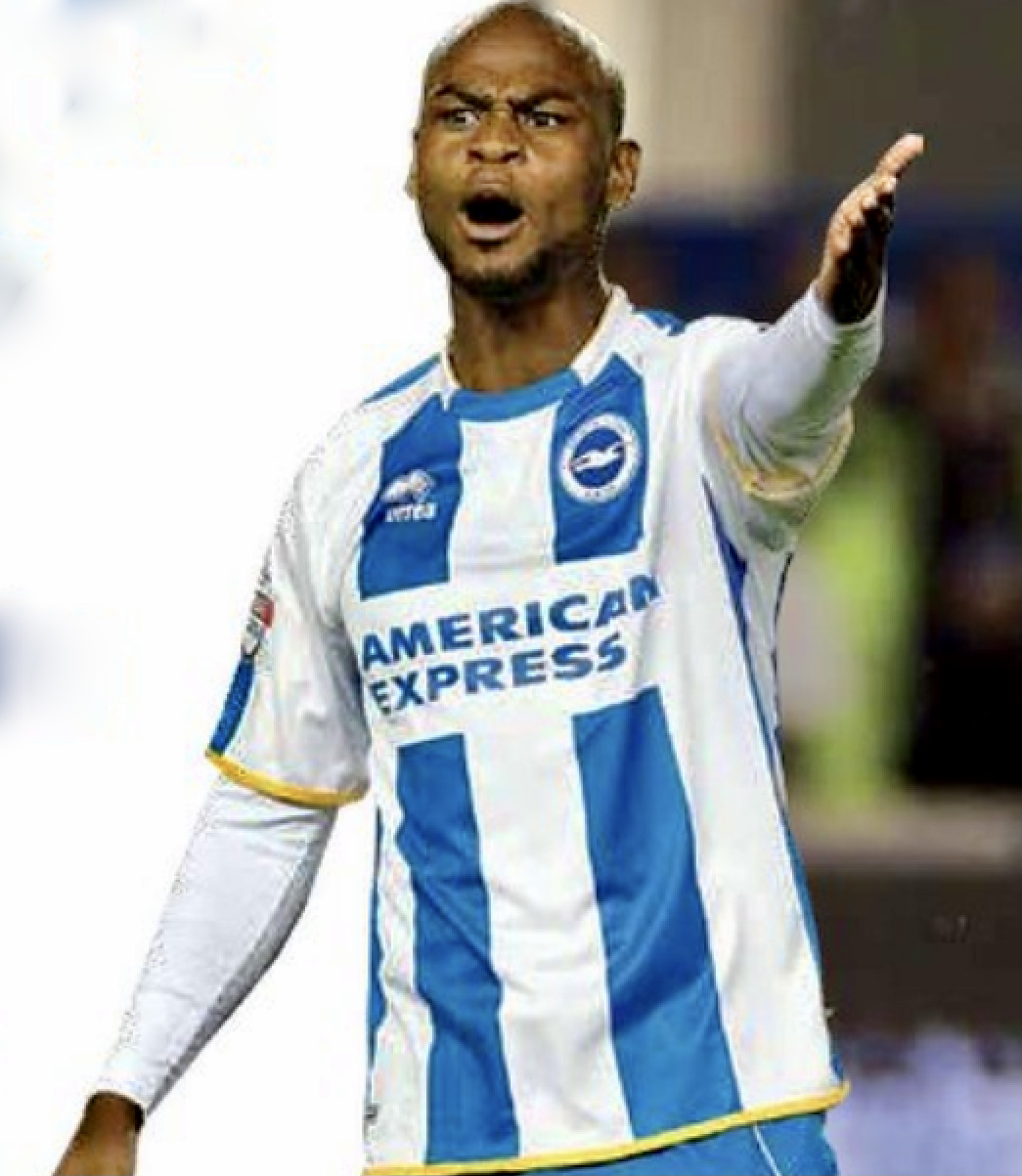
I can remember being at the Keepmoat Stadium, Doncaster, when he scored his only goal for the club two minutes after going on as a substitute for Jake Forster-Caskey (he’d played with his stepdad Nicky Forster at Reading).

Forster-Caskey had scored a wonder goal with his left foot from 35 yards before Rovers equalised but visiting Albion went on to collect three points in a 3-1 win (David Lopez scored the other with a long range free kick).

Lita had made his debut in a 0-0 draw at Yeovil on 11 October, going on as a sub for Ashley Barnes and his home debut saw him replacing another loanee, Craig Conway, in a 1-1 draw with Watford.

The eager striker made a public plea via the Argus to be given a start but Garcia only ever used Lita off the bench for the Seagulls (he went on as a sub on five occasions and was an unused sub for three games).

“The staff have a bit of doubt but I feel fine,” Lita said. “When I am on the pitch my mind just takes over anyway.
“I don’t ever feel tired or not match fit. I know you still need your match fitness, but you have to get that at some point, so hopefully this week.”

Having got off the mark for the fifth Championship club he had served on loan, he added: “Once you get that first goal you are thinking about the next one and the next one. I am just looking forward to scoring plenty of goals.

“I know I can score goals wherever I go so I’ve never had that doubt. Whoever has doubted me it’s up to them. My belief in myself is not going to end until I am 50 years old and can’t move!”

But with Ulloa’s fitness restored, Lita’s final appearance in an Albion shirt was on 3 December when he went on for Barnes at the Amex as the Seagulls succumbed 2-1 to Barnsley.

Maybe Lita’s Albion spell was cursed from the start when he was handed squad number 44 (all the fours, droopy drawers)?

He was still only 28 when he arrived at the Amex with an impressive record of 101 goals in 330 league and cup games, 14 of which had been in Reading’s 2006-07 Premier League season.

“I know the Championship well,” Lita said in the matchday programme. “Consistency is the main thing at this level because everyone beats everyone; some teams start well and drop off, while others start badly then pick up a run of results. So, it’s all about putting a good run together then you never know what might happen.”

Lita followed in the footsteps of former Swansea teammates Kemy Agustien and Andrea Orlandi to the Amex, but he also knew Liam Bridcutt and Andrew Crofts from his time as a youngster at Chelsea.

He recalled summer training camps at Horsham with Bridcutt and he played in the same Chelsea junior side as Crofts. “They have both gone on to become really good players,” he said.

“It helps when you go to a club and know a few people but I think the style of play here will also suit me.

“It is similar to Swansea and the club only signs players here who know the system.

“I played against Brighton last season, scoring on my home debut for Sheffield Wednesday, and although we won that day, I was still impressed by the way the team played.” He had also played at the Amex before when he was on loan at Birmingham and (below right) was the subject of a page feature in the matchday programme.

Born in Kinshasa in the Democratic Republic of Congo on 28 December 1984, it was as a teenager on Chelsea’s books that he couldn’t believe his luck to be sharing a training pitch with Jimmy Floyd Hasselbaink and Eidur Gudjohnsen.

“I would go home and see them on TV and the next day I would be training with them,” he told The Guardian. “It was unbelievable.”

Reporter Jon Brodkin wrote: “Chelsea broke his heart by releasing him but his three years at the club he supports were hardly wasted. The thrill of being a ballboy was surpassed by training with the first team’s front two.”

Lita told him: “I was 15 and the academy director said he had spoken to my school and I could have a couple of days off a week to train with the first team and the ressies [reserves]. It was a great opportunity and I learned a lot from it.

“Hasselbaink’s finishing was unbelievable, he didn’t mess about. He could place it and smash it. I mainly did finishing with them, not much else, but I could see as well how professional they were and how they looked after themselves.”

After Lita’s release, he contacted a few clubs – Fulham were interested but didn’t offer a contract – and he was aware that after leaving Arsenal Andy Cole had made a new start to his successful career at Bristol City.

It was the Robins who gave Lita an opportunity and former Albion skipper Danny Wilson handed him his first team debut at the beginning of the 2002-03 season when he was still only 17.
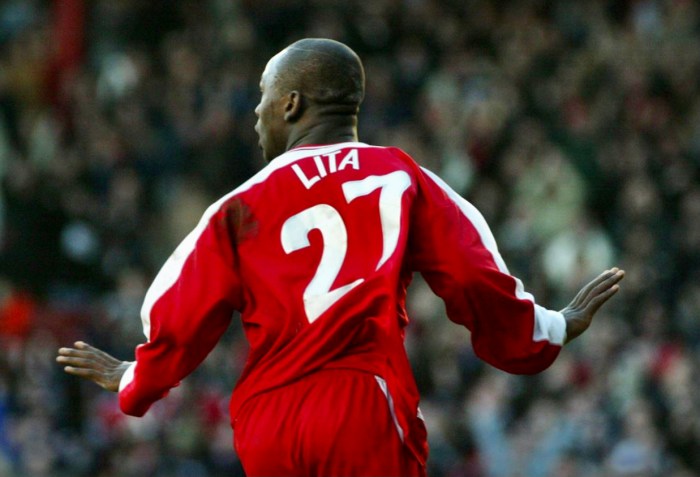
His first league goal was a late winner on 28 September 2002 to secure a 3-2 victory after going on as a substitute at Port Vale (for whom an 18-year-old Billy Paynter had scored).

“The striker hit a glorious goal to end Vale’s hopes of a point after they had fought back to level matters just a minute earlier,” said the BBC report of the game.

It wasn’t until the following season that he was given a professional contract and it was only after Brian Tinnion succeeded Wilson as manager in 2004-05 that Lita established himself in the City side. He scored 29 goals in all competitions and that form earned him a call-up to the England under-21s, Lita having decided not to play for his birth country.

He scored on his debut on 8 February 2005 when he went on as a sub for Justin Hoyte in a 2-1 defeat against the Netherlands at Derby’s Pride Park.

Those goals also earned him a £1m move to Reading, even though Tinnion advised him against the move, believing a Premiership club would come in for him.

“Once I got down here, I knew it was right,” Lita told The Guardian. “I want to go a step at a time. Reading are a good club, they’re looking to get into the Premiership and that’s where I want to be.”

He went on to score 15 goals in 25 league and cup games (+ seven as a sub) as Reading topped the Championship, and he returned to the England under-21 fold in February 2006.

He was on home turf at the Madejski Stadium when he earned his second cap, again as a sub, replacing David Nugent in a 3-1 win over Norway (future Albion loanee Liam Ridgewell was among his teammates).

A year later, after finding the net in the Premier League with Reading, Lita got a third cap as a substitute (for James Milner) and scored again in a 2-2 draw against Spain at Pride Park. Liam Rosenior was also a substitute that day.

Lita’s first start for the under 21s came the following month, on 24 March, in a 3-3 draw with Italy in the first game played at the new Wembley Stadium, in front of 55,700. On 5 June the same year, Lita scored England’s fifth goal in a 5-0 win over Slovakia at Carrow Road after he’d gone on as a sub for Nigel Reo-Coker.

Lita was an overage player in the 2007 UEFA European Under 21 Championship: he missed an 88th minute penalty after going on as a sub in a 0-0 draw with the Czech Republic but scored in each of the three games he started: 2-2 v Italy, 2-0 v Serbia and 1-1 v the Netherlands (who won the tie 13-12 on penalties). But a full cap eluded him.

Lita was a regular throughout Reading’s first top-flight campaign. In a side that include Ivar Ingimarsson and Steve Sidwell, Lita scored 14 times in 26 league and cup starts plus 12 appearances off the bench.

But with Kevin Doyle and Dave Kitson the preferred strike duo in 2007-08, Lita’s game time was much reduced and he went on loan to Charlton in March 2008.

It was a similar story the following season when he scored seven times in 16 games during a three-month loan at Norwich City – the haul included a hat-trick against eventual champions Wolves.

The excellent Flown From The Nest website, that profiles former Norwich players, recalled how that treble attracted the interest of plenty of other clubs, but City boss Glenn Roeder said: “It’s a better problem to have than him not scoring and playing rubbish – then none of us want him. What can you do?

“He was brought here to score goals. He was a little bit rusty in his first game which was understandable. He did better in the second game against Bristol City when he had a couple of chances which unfortunately never went in, and then in the third game on Tuesday night, we saw the real Leroy Lita and what he is all about.”

Lita returned to Reading and played in a FA Cup third round defeat at Cardiff and although Sheffield United made a bid for him, he preferred to stay with the Royals.

Nevertheless, at the end of the season, he finally left the Madejski and headed to Teesside on a three-year deal.

On signing for Boro, Lita said: “The manager has been after me for about a year, it’s great to feel wanted. I have a lot of respect for the gaffer and I want to do well for him and the club.

“I aim to repay him for his faith in me with goals. That’s the main strength to my game and I’m looking forward to scoring goals for Middlesbrough.”

He told the Northern Echo: “I’m raring to go. I haven’t enjoyed the last two seasons one bit, but this is a fresh start and I’m excited about the challenge.

“Other clubs were interested in signing me, but there was only once place I wanted to go and that was Middlesbrough.”

Southgate added: “Leroy has a hunger to score goals and his goalscoring record in the Championship in particular is very strong.

“His record says he gets one in two at this level so that will be important for us. I think he has a point to prove and, when he’s fully fit, he will relish the challenge.”

It wasn’t long before Southgate was succeeded by Gordon Strachan but Lita made the second highest number of appearances (41) in that season’s squad and scored nine goals as Boro finished mid-table.

There was yet another managerial change the following season, with the return of former player Tony Mowbray, but Boro once again finished mid-table with a side that featured Joe Bennett at left back and Jason Steele in goal.

Lita scored 11 times in 40 matches, which was enough to attract newly-promoted Swansea. “I’ve had a good chat with Leroy,” said Mowbray. “He has a chance to play in the Premier League and good on him. His talent has earned him that chance.”

But he only scored twice in six starts (+ 12 appearances off the bench) all season and in September 2012, Lee Clark signed him on a three-month loan for Birmingham.

“I know Leroy very well having worked with him at Norwich during a loan spell in which he scored seven goals in 16 games,” said Clark. “He’s a proven goalscorer who has power and pace and there’s no doubt that he’ll add quality to my squad.”

Lita scored three goals in 10 games for Birmingham before being recalled early, but in late January 2013, he joined Sheffield Wednesday on loan until the end of the season.

Wednesday manager Dave Jones told BBC Radio Sheffield: “Leroy has a lot of experience at this level and the one above. It could be with a view to a permanent deal. This lets us have a look at him and he can have a look at us.” But he only scored twice in nine appearances for the Owls.

Released by Swansea at the end of the 2013-14 season, Lita was then reunited with Danny Wilson, manager at newly relegated League One Barnsley.

“He was my first manager and I like the way he works,” said Lita. “He’s got a lot of trust in me and I’ve got a lot of trust in him.

“I enjoyed my time under him as a youngster. He helped me a lot and helped me progress in my career so far. I just want to get back to playing football regularly again and I’m going to get that opportunity here.”

He scored in his first two league games but didn’t register again for 21 games. When Wilson was replaced by Lee Johnson in February 2015, within a matter of weeks Lita joined lowly Notts County on loan until the end of the season but was unable to prevent their relegation.

On expiry of his Barnsley contract, Lita moved to Crete side AO Chania in August 2015 but was back in England the following March, signing a short term deal with League Two Yeovil Town, where he scored once in eight games. That was his last league club in England.

He scored five goals in 21 games for Thai Premier League side Sisaket in 2017 and on his return to the UK turned out for a number of non-league clubs: Margate, Haverhill Rovers, Salisbury and Chelmsford City.

In May 2020, the Coventry Evening Telegraph hailed his signing for Nuneaton Borough, whose manager Jimmy Ginnelly told the newspaper: “His partner is from Nuneaton and they’ve recently moved into a house on The Longshoot, which is just five minutes from the ground, so this is a win-win situation for both parties.

“These sorts of players don’t come onto Nuneaton’s radar very often so we moved quickly and obviously all of us here at the Boro are very excited.”

He scored eight goals in 33 appearances for Nuneaton, went on to play for Southern League Premier Division Central rivals Stratford Town before moving on to Hednesford Town, where he’s still playing.

In March 2022, the Express and Star reported: “Lita lit up Keys Park last night as he smashed a debut hat-trick to help Hednesford to a 3-1 victory over Stourbridge.”
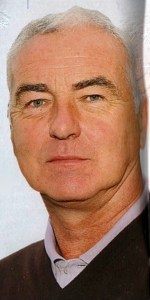
Day of reckoning beckoned for talent spotter Mervyn

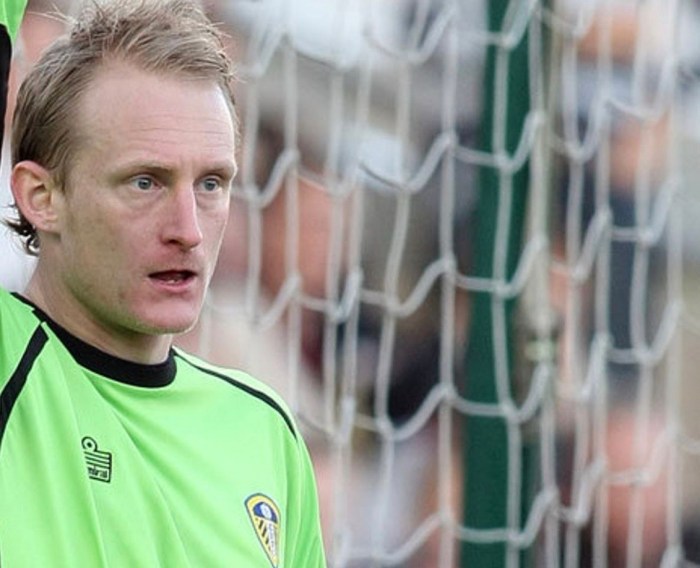
THE YOUNGEST goalkeeper to appear in a FA Cup final spent 20 months picking out future players for Brighton.

It was one of several different post-playing roles Mervyn Day filled for various clubs.

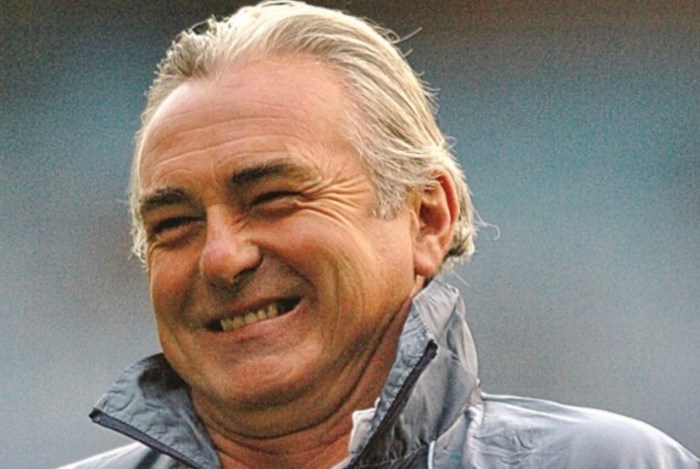
Day, who at 19 won a winners’ medal with West Ham in 1975, was Albion’s head of scouting and recruitment between November 2012 and the end of the 2013-2014 season under head of football operations David Burke.

At the time, his appointment was another indicator of the gear change taking place at the club as it built on the move to the Amex Stadium and sought to gain promotion from the Championship.

Day said in a matchday programme interview: “This club has come such a long way in such a short space of time.

“When you think of the debacle of the Goldstone, the wilderness of Gillingham, then Withdean, you only have to get a player through the front door at this wonderful stadium to have a chance of signing them.

“Hopefully, within the next year or so, the new training ground will be up and running and, when you’ve got that as well, you’ve got the perfect opportunity not only to encourage kids to sign but top quality players as well.

“If we are fortunate enough to get ourselves into the Premier League at some point, we’ll be able to attract top, top players.”

It was a case of ‘the goalkeepers union’ that led to him joining the Albion. Day explained he’d been chatting to Andy Beasley, Albion’s goalkeeping coach at the time, who had been a colleague when Day was chief scout at Elland Road. Beasley wondered if he’d like to help coach Albion’s academy goalkeepers but Burke, who he also knew, stepped in and offered something more substantial: the job of scouting and talent identification manager.

He certainly brought a wealth of experience to the task. He had previously been assistant manager to former Albion midfielder Alan Curbishley at Charlton and West Ham; manager and assistant manager at Carlisle United, a scout for Fulham and the FA (when Steve McClaren was England manager) and chief scout at Leeds until Neil Warnock took charge.

In addition to that background, in the days before full-time goalkeeper coaches, Day had worked at Southampton under David Jones, Chris Kamara at Bradford City and John Aldridge at Tranmere Rovers. Then in 1997 Everton came along and he joined Howard Kendall’s backroom team alongside Adrian Heath and Viv Busby. “I was living in Leeds at that time, so distance wasn’t an issue, but it was an interesting trip across the M62 in the winter months,” Day recalled in an October 2021 interview with efcheritagesociety.com.

Brighton made Day redundant at the end of the 2013-14 season following a reshuffle of the recruitment department amid criticism of the quality of signings brought in.

That assessment might have been rather harsh because during his time at the club there was a change in manager (Oscar Garcia taking over from Gus Poyet) and, although the season ended in play-off disappointment, the likes of former Hammer Matthew Upson (who’d played under Day when he was at West Ham) had signed permanently on a free transfer (having been on loan from Stoke City for half the previous season).

The experienced Keith Andrews and Stephen Ward also joined on season-long loan deals and played prominent roles in Garcia’s play-off reaching side.

It was under Day’s watch that the promising young goalkeeper Christian Walton was signed after a tip-off from Warren Aspinall. Aspinall told the Argus in 2015: “I went to Plymouth to do a match report. I set off early and took in a youth team game off my own back. He was outstanding, commanding his box. I reported straight back to Gus (Poyet). He told Mervyn Day. He went to see him, Mervyn liked him.”

It wasn’t the first time Day had played a role in securing a goalkeeper for the Albion. As far back as 2003 he had an influence on Ben Roberts’ arrival at the Albion. Manager Steve Coppell revealed: “He is one of three goalkeepers at Charlton and at the moment nearly all the Premiership clubs are very protective about their goalkeepers.

“I have seen him play a number of times, although I certainly haven’t seen him play recently. I spoke with Mervyn Day (Charlton coach) and he says Ben is in good form. It’s a little bit of a chance and it will certainly be a testing start for him, but he is looking forward to the challenge.”
Day was also sniffing around another future Albion ‘keeper when he was chief scout for Bristol City (between 2017 and 2019).  According to Sky Sports commentator Martin Tyler, Mat Ryan was on their radar in the summer of 2017 when he swapped Belgium for England. In an interview with Socceroos.com, Tyler reveals he was asked by City’s ‘head of recruitment’ (thought to be Day) to glean the opinions of Gary and Phil Neville (manager and coach of Valencia at the time) on Ryan and whether he’d be suitable for the English game.

“I got a text saying, ‘Can you find out from the Nevilles whether they rate Mat Ryan’,” Tyler said. “It wasn’t my opinion they were looking for – quite rightly – it was Gary and Phil’s. I was able to do that and both Gary and Phil gave Mat the thumbs up.”

After leaving Brighton, Day moved straight into a similar role with West Brom, where he worked under technical director Terry Burton and first team manager Alan Irvine, but he was only there a year before linking up with the Robins. He has since been first team domestic scout for Glasgow Rangers, although based in his home town of Chelmsford.

Day was born in Chelmsford on 26 June 1955 and educated at Kings Road Primary School, the same school that England and West Ham World Cup hero Geoff Hurst attended. He moved on to the town’s King Edward VI Grammar School and represented Essex Schools at all levels. He joined the Hammers under Ron Greenwood on a youth contract in 1971.

“On my first day as an associate schoolboy I got taken by goalkeeping coach Ernie Gregory into the little gym behind the Upton Park dressing room and he had Martin Peters, an England World Cup winner, firing shots at me,” Day later recounted. “As a 15-year-old that was incredible.

“The bond got even closer when my father died when I was 17. I was an apprentice but Ron signed me as a full pro within a very short space of time to enable me to earn a little more money to help out at home. A short while later he gave me another increase. He was almost a surrogate father to me.”

In the early part of 1971, Day played in the same England Youth side as Alan Boorn, a Coventry City apprentice Pat Saward took from his old club to the Albion in August 1971.

The goalkeeper was just 18 when he made his West Ham United debut, on 27 August 1973, in a 3-3 home draw with Ipswich Town.

He went on to play 33 matches in his first season and only missed one game in the following three.

Tony Hanna, for West Ham Till I Die, wrote: “In only his eleventh game for the Hammers he received a standing ovation from the Liverpool Kop in a 0-1 defeat that could have been a cricket score but for his fine display and, in his next visit to Anfield, he saved a penalty in a 2-2 draw.”

Day recalled: “As a kid, I had no fear, I took to playing in the first team really, really well. At West Ham, the ‘keeper always had lots to do as we were an entertaining team. We had forward-thinking centre-backs in Bobby Moore and Tommy Taylor, and then after Bobby came Kevin Lock.”

Mervyn Day in action for West Ham against Brighton at the Goldstone Ground, Hove.

In 1974, Day progressed to England’s Under-23 side. He won four caps that year and a fifth in 1975 but it was a golden era for England goalkeepers at the time and he didn’t progress to the full international side, despite being touted for a call-up.

By the time Day won that last cap, he had been voted PFA Young Player of the Year and, at 19, had become the youngest goalkeeper to appear in a FA Cup Final, keeping a clean sheet as West Ham beat Fulham 2-0 at Wembley.

Hanna continued: “At times he was performing heroics in the West Ham goal and he was fast becoming a fans favourite. Tall and agile, he was a brilliant shot stopper and he was playing like a ‘keeper well beyond his years.”

However, by the 1977-78 season Day’s form had tapered off as the Hammers were relegated. “His confidence was so bad he was eventually dropped and he only played 23 games that season,” said Hanna. “There are several theories to what triggered the loss of form, but one thing that did not help the lad was the stick he was getting from the Hammers supporters.

“In hindsight Mervyn said that he was ill prepared for such a tough run of form. The early seasons had gone so well that he had only known the good times and when the bad ones came he struggled to come to terms with the pressure.”

In 1979, West Ham smashed the world record transfer fee for a goalkeeper to bring in Phil Parkes from QPR and Day was sold to Leyton Orient, where he replaced long-standing stopper John Jackson, who later became a goalkeeper coach and youth team coach at Brighton.

Day spent four years at Brisbane Road before moving to Aston Villa as back-up ‘keeper to Nigel Spink. After a falling-out with Villa boss Graham Turner, he switched to Leeds under Eddie Gray and then Billy Bremner. During Bremner’s reign, he had the humiliation of conceding six at Stoke City at the start of the 1985-86 season and, in spite of vowing it wouldn’t happen again, let in seven in the repeat fixture the following season. Amongst his Leeds teammates that day were Andy Ritchie and Ian Baird.

Nevertheless, he ended up playing more games (268) for Leeds than any of his other clubs. He rarely missed a game up to the end of 1989-90, the season when was he was named Player of the Year and collected a Second Division championship medal.

Howard Wilkinson offered him a post as goalkeeping coach for United’s first season back in the elite, having lined up a £1m move for John Lukic from Arsenal. Day had a couple of loans spells – at Luton Town and Sheffield United in 1992 – but was otherwise back-up for Lukic, alongside his coaching duties, until Wilkinson saved Brighton’s future by signing Mark Beeney from the Seagulls.

After eight years at Elland Road, Day moved to the Cumbrian outpost of Carlisle in 1993. When he moved into the manager’s chair at Brunton Park, he not only led them to promotion from the Second Division in 1997, but they also won the (Auto Windscreens Shield) Football League Trophy. United beat Colchester 4-3 on penalties at Wembley after a goalless draw; one of the scorers being the aforementioned Warren Aspinall, later of Brighton and Radio Sussex.

Day worked under Curbishley at Charlton for eight years between 1998 and 2006, helping the club stabilise in the Premier League.

And, in December 2006, he followed Curbishley as his No.2 to West Ham, where the duo spent almost two years.

It was in 2010 that he returned to Leeds as chief scout, working under technical director Gwyn Williams. United manager Simon Grayson said at the time: “We’re restructuring the scouting department under Gwyn and Mervyn will be both producing match reports and watching our opposition and working on the recruitment of players.

“Merv’s knowledge and experience will prove important to the football club as we look to progress and develop what we are doing.”

Flipping winger Kazenga LuaLua followed brother to Toon

EXPLOSIVE pace, a feint of the shoulder, and a thunderbolt shot were trademarks of Kazenga LuaLua’s contribution to Brighton’s rise from the third tier.

Not to mention a somersault flipping goal celebration that delighted supporters but gave managers kittens as they could only see an injury in the making.

Sadly, that explosive pace came at a price — hamstrings that were all too often easily damaged, resulting in lengthy spells on the treatment table and in recovery. Ankle, knee and groin injuries also sidelined the pacy winger for long periods.

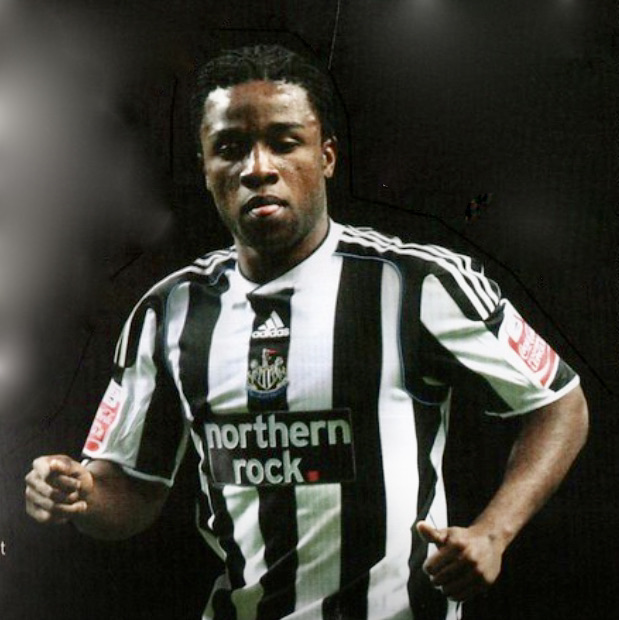
Left-sided LuaLua had three spells on loan to Brighton from Newcastle United before joining permanently, and his six seasons in Brighton colours were rarely dull. He was undoubtedly a crowd-pleaser when he was on top of his game, leaving full backs trailing in his wake to lay on chances or cutting inside and netting some memorable goals.

However, he invariably made most impact when entering the fray from the substitutes’ bench, although the ‘supersub’ moniker frustrated him.

“You don’t just want to come on as a sub,” he told the matchday programme. “Obviously it’s good in one respect as it means the team needs you, but as a footballer you want to be in the starting 11 in every game.

“I don’t view myself as just an impact player and I know that I can play 90 minutes of football.”

Albion fans first saw the Congolese game-changer in February 2010. Manager Gus Poyet had been tipped the wink about LuaLua by his former Swindon and Leeds managerial partner, Dennis Wise, who had been executive director at Newcastle.

Ashley Barnes celebrates with Albion’s speedy loanee winger

LuaLua started nine games (and went on as a sub twice) as Albion consolidated their position in League One. His impact on the side was appreciated by his teammates, as defender Tommy Elphick explained to the Argus in March 2010. After the 19-year-old winger had run Exeter full-back Steve Tully ragged, Elphick said: “He’s unbelievable for us. He really does stretch the game for you.

“It’s that raw pace and power which I personally think we have been missing for the last two years. Benno (Elliott Bennett) gives you something totally different. He is more technical. Kaz reminds me of Bas Savage in the sort of job he used to do for us in stretching the game and getting us up the pitch.

“It gives the defenders a chance to get to the halfway line and defend a bit higher.”

When Poyet secured his services for a second loan spell for the opening half of the 2010-11 season, he was delighted. “Kazenga is unique. He is pure power and speed,” said the manager. “That nowadays in football is very important and we didn’t have that.

“I don’t think there is another player like him in the division. He gives us something totally different.

“We are very pleased to have him. We know what we are getting and that is the key. He will fit in as a player, and in the dressing room.”

Poyet added: “He made a very big impact during his time here last season and I am hoping he can do the same and add a few goals to his game this time around.”

No sooner said than done; LuaLua marked his second debut with a 25-yard rocket of a free-kick to give Albion the lead in a 2-0 home win over MK Dons.

LuaLua departs the action injured

Sadly, after just seven starts plus four appearances off the bench, his involvement in that promotion season came to an end in November 2010 when a bad tackle in a 3-1 away defeat at Hartlepool left him with a broken ankle.

Born in Kinshasa, Zaire (now the Democratic Republic of the Congo), on 10 December 1990, LuaLua came to England as a small child with his father and famous older brother, Lomana.

It was from Lomana that he perfected the thunderbolt shot — and the celebratory somersault.

“I have always had a hard shot on me,” he told the Albion matchday programme. “I think a lot of it comes from when I was a boy back in Newcastle and I would play with my brother.

“He would always strike a ball hard and I would try to copy him.”

It was football all the way from a young age, LuaLua recalled. “When I was growing up in Kinshasa, I remember skipping school to play football with my friends,” he said. “We were football mad and, as my brother had already moved to England, I wanted to follow in his footsteps.

“Lomana got me in at Newcastle. He moved to London with our dad some time earlier, but once he’d broken into football and moved from Colchester United up to Newcastle, then the rest of the family came over from our homeland.

“I had only been in the country a couple of months when Lomana arranged for me to have a trial at Newcastle and I was taken on straight away. It was fantastic for me and also for him; we’d go into training together and he was always there for advice when I needed it. He has been a massive influence on my career.”

The winger continued: “It was tough to begin with; I was in a new country and had to go to a new school, which was hard in itself given where I’d come from, and then I was brought into a professional football club and one of the biggest in the country.

“But Newcastle were very helpful. All the coaching staff were great towards me, and helped me find my feet. I learned such a lot from them and I quickly made new friends. I was close to Nile Ranger, Sami Adjei, Sami Ameobi, many players, and I learnt so much in terms of coaching and how to conduct myself as a professional.”

Kazenga progressed through the Toon academy and was part of the Toon youth team that reached the semi-finals of the FA Youth Cup in 2005-06. He even earned a first-team squad call-up while still only 16, although he didn’t get to play.

LuaLua’s Newcastle chances were limited

Eventually, he got his first team chance as a substitute for Damien Duff in a 0-0 FA Cup third round match at Stoke in January 2008, right at the end of Sam Allardyce’s reign on Tyneside. It was Michael Owen’s first FA Cup game for Newcastle.

The game was being shown live on TV so LuaLua’s extended family back home in the DR Congo were able to see the moment. “I was one of the club’s youngest debutants at 17,” he said.

He also went on (for Charles N’Zogbia) in the replay at St James’s Park which Toon, under caretaker boss Nigel Pearson, won comfortably 4-1. “To play in front of 52,000 people took my breath away,” he said.

He made his Premier League debut three days later, going on as an 80th-minute sub for Duff at St James’s Park, in Kevin Keegan’s first match back in charge — a disappointing 0-0 draw with Bolton Wanderers.

Although a non-playing sub on other occasions, he got on in the last game of the season, replacing Jose Enrique in the 79th-minute as United went down 3-1 to Everton at Goodison Park.

Against the backdrop of the tumultuous 2008-09 season, when Toon were relegated from the Premier League after a veritable managerial merry-go-round, LuaLua made just four substitute appearances (three in the league and one in the FA Cup), and in January 2009 he was sent out on loan to Doncaster Rovers, then in the Championship, where he played four matches in six weeks under Sean O’Driscoll.

Once Toon settled on Chris Hughton to get them promoted from the Championship, LuaLua found chances hard to come by.

He started in a Carling Cup second round match at home to Huddersfield Town, when Toon edged it 4-3, but picked up a groin injury playing in the next round, a 2-0 defeat at Peterborough in September 2009 (future Brighton teammate Craig Mackail-Smith was one of the Posh scorers).

Three months later, with his fitness restored, he was itching to be given a first team chance and told the Chronicle: “I want to be part of this team. My aim has always been to play for the first team at Newcastle United.

“I’ve been here a long time, and last season I was involved in the first team before going out on loan.”

“I have been playing for the reserves for a while now, and I’m keen to play football at first team level.

“I would go out on loan if they let me.”

That opportunity finally came a couple of months later when Hughton sanctioned the move to Brighton. LuaLua told Albion matchday programme reporter Luke Nicoli: “They are a big club and are using a lot of experienced players at the moment, so it’s been difficult for me to break into the team.

“I’ve been playing reserve team football a lot and I just want to be playing games that mean something again. I want to be playing for points and I want to be learning all the time. I want to be in a position where I can return to Newcastle a better player.”

Immediately before re-joining the Seagulls for his second loan spell, LuaLua made only his second start for Newcastle in a 3-2 Carling Cup win over Accrington Stanley and was selected by Sky Sports as the Man of the Match.

After that broken ankle at Hartlepool had taken him back to Newcastle to recuperate, he recovered to make a Premier League appearance in the penultimate game of the season, a 2–2 draw away to Chelsea. Hughton’s successor, Alan Pardew, sent him on as a 69th minute substitute for Shane Ferguson and it was LuaLua’s run and cut inside around Branislav Ivanovic that won Toon a corner from which Steven Taylor scored a late equaliser.

Nevertheless, Poyet wasn’t giving up on taking LuaLua back to the Seagulls once more and, in July 2011, he took him on another six-month deal with a view to a permanent move.

Poyet told the club website at the time: “Kazenga was one of our main summer targets and I am delighted we have finally come to an agreement with Newcastle. I am sure the fans will be equally delighted to see him back at the club.”

The permanent move went through a month before the loan was due to expire and LuaLua told the club website: “Since I came to the club it has always been my intention to sign a permanent deal so this is a really happy day for me.

“When you are on loan you are never quite sure what the future will hold, but now I’ve signed this contract I can put my mind at rest and focus completely on my football.

“I have come here because I feel Brighton is the place where I can really kick on with my career. At Newcastle I wasn’t really involved in the first-team squad and at my age I want to start playing regular football.

“From the first day I came to the club on loan, everyone was so friendly and that helped me settle very quickly. Now I want to pay that back with my performances on the pitch.”

Albion famously suffered an ignominious 6-1 drubbing in the fifth round of the FA Cup at Anfield in February 2012, but it was LuaLua who temporarily gave the Seagulls parity after Martin Skrtel’s early opener for Liverpool.

LuaLua unleashed an unstoppable 25-yard shot past ‘keeper Pepe Reina and BBC Sport’s Neil Johnston said: “It was a goal worthy of winning a Wembley FA Cup Final.”

Few doubted LuaLua’s ability but inconsistency was one of his demons which often led to him being introduced as an impact substitute rather than starting games.

Poyet wasn’t afraid to explain his selection policy and in March 2012, when he gave the winger a start against high-flying Derby County, he was rewarded with a 2-0 win at the Amex.

“I thought it was the game for Kazenga,” Poyet told the Argus. “I know he played well in his first spell and my first season here, but I don’t remember a better performance from Kazenga for Brighton.

“It was his best performance against a team that has been in the Premier League and in the top ten in the Championship. That shows what he can do. It was his game and he’s a happy boy.

“He has probably been a little annoyed not to be playing, but that is natural and he is always very respectful and always talking to me.”

A troublesome knee affected LuaLua’s involvement

LuaLua ended up playing under four different Albion managers and Oscar Garcia quickly realised the limitations he faced when in September 2013 he told the Argus: “Kaz has a problem on his knee and he cannot play many minutes in all the games. We knew before if he had played for the whole game then maybe on Tuesday we cannot use him.

“Sometimes he has pain, sometimes not, but, if he plays many minutes, he has pain. He’s had this from the start of the season,” he said. “Sometimes he has to rest, he cannot train. We have to manage this.”

The following February, LuaLua was still troubled by knee tendon soreness but was contributing as a substitute.

For example, he went on to set up Leonardo Ulloa to score the only goal of the game at home to Leeds and Garcia told the Argus: “We thought in this game he could come off the bench and make an immediate impact and he did it.

“He is a player who can change a game. We are very happy with him, because every game when he has to come off the bench he comes on with the right attitude and plays really well.”

Happy days with Beram Kayal and Joe Bennett

Even though Sami Hyypia’s time in charge was short-lived, the winger impressed the new boss until a knee injury sidelined him in November 2014.

“He has the ability to hurt people one v one and maybe one v two as well sometimes,” said Hyypia. “He’s done well this season, he has been very concentrated all the time.”

By the time LuaLua returned to fitness, his old Newcastle coach and manager, Hughton, was at the helm.

LuaLua told the matchday programme: “It was difficult for me when he first came here because I was injured, but he was great with me, always stopping to talk to me about the injury, making sure I was okay, and he told me not to rush things. That’s what I’ve done and hopefully I can now show him what I can do on the pitch now that I’m fully fit.”

Although it was a few months before that happened, arguably LuaLua’s best spell with the club came at the start of the 2015-16 season, which coincided with a change of squad number for the player.

The returning Bobby Zamora resumed the no.25 that he’d worn during his first spell at Brighton, and at other clubs, and LuaLua admitted: “I had to give the number 25 to Bobby. There was no way I was going to refuse. He’s a legend at the club and it’s nice to have him back in the squad.”

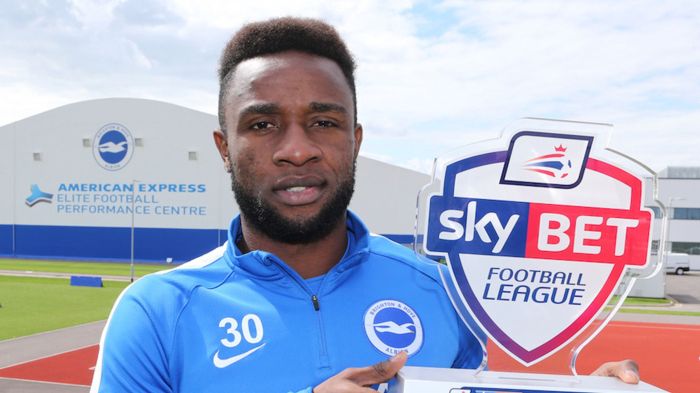
With 30 on his back, LuaLua scored four goals in the opening seven games and won the Championship Player of the Month award (above). Hughton was simultaneously Manager of the Month and said: “Kaz thoroughly deserves his award, he’s had a wonderful start. The area where he has excelled in his game is where he has got on the ball and provided an end product.”

Once again, though, injury brought the purple patch to an end. LuaLua sustained a groin injury in training that eventually needed surgery. Coach Nathan Jones told the Argus in December: “There is no real timescale on it because someone like Kazenga is so important to the squad and what we do. You can’t rush him and he is such a potent athlete, that’s the problem.”

Hughton also lost Solly March to injury that autumn but Rajiv van La Parra was brought in as a temporary solution. He already had Jamie Murphy as a wide option and then Anthony Knockaert and Jiri Skalak were added, so, by the time LuaLua had recovered, competition for places was intense.

The run-in to the end of the season saw him mainly in a watching brief from the bench, although he did play in successive matches in April – 2-1 wins away to Birmingham and Nottingham Forest.

LuaLua’s Albion days were clearly numbered as the 2016-17 season got under way. He started two League Cup games in August – the 4-0 win over Colchester United and the 4-2 victory over Oxford United, when he scored Albion’s second goal. But he only managed three league appearances as a substitute. By January, it was time for a change of scene, and he was sent on a half-season loan to QPR.

At least he got some games in Ian Holloway’s Championship side, appearing 11 times and scoring once. Having missed out on Albion’s promotion to the Premier League at the end of that season, it was no surprise that he returned on loan at Loftus Road at the start of the 2017-18 season.

However, he left west London at the beginning of December 2017, Rangers boss Holloway telling the Argus: “I don’t feel he was doing as well as some of my lads who I’ve brought here.

“Unless he rips it up and shows me – and he’s trying to – I think the loss of confidence and loss of his father has really hit him.”

In January 2018, LuaLua finally cut his ties with the Albion when he joined Chris Coleman’s Sunderland on a free transfer on a deal until the end of the season. By then 27, the winger told the Sunderland website: “I’m excited to be here and get back out on to the pitch because it’s been a long time without playing football.

“I know the North East well and I know Sunderland are one of the big clubs, not just in the North East but England, so I’m really excited to get started.”

An unfortunate turn of phrase because he didn’t start a game as Sunderland fell through the Championship trapdoor. He made just six substitute appearances.

Released at the end of that season, his former Brighton coach Jones revitalised what looked like a flagging career by signing him for promotion-chasing League One side Luton Town.

Jones told the club website: “He’s a fantastic talent. He has something that not many have, totally different from what we have here.

“He’s a quick, powerful, potent attacking player which is something that is in rare supply – and is something we felt we needed.

“The fact that we’ve been able to get him in and persuade him to come here is a good coup for us.”

And the player said: “I know Nathan from Brighton, and he’s a very good coach. He’s good at what he does, so it made it so easy for me to come in and train with the boys here.”

LuaLua spent three years at Kenilworth Road and clearly enjoyed a good relationship with their supporters. After he signed a new deal with the club following their promotion to the Championship, he told the club website: “The supporters have made me feel welcome since the moment I arrived here.

“When they get behind you, like they did since I have arrived, it gives you a massive buzz. It’s a really nice feeling. It was a really special season. I think they liked the way I play, they got behind me and I really appreciated it.”

Once again, though, his involvement was more as a substitute than a starter (37 starts plus 50 appearances off the bench) and when his contract came to an end in the summer of 2021, he decided to continue his career in Turkey, once again following in the footsteps of brother Lomana, who played for a number of Turkish clubs.

Kazenga signed a two-year deal with second tier side Gençlerbirliği in Ankara and, in November 2021, Argus reporter Brian Owen caught up with him.

“It was the right time for me to move on with my football career,” he said. “I always wanted to go abroad before I stopped playing football.

“Before signing, I was worried. I’ve never played abroad before. But it has been good. There’s a lot of boys here who speak English, including the manager, which helps a lot. I’m enjoying it.”

LuaLua then switched from Turkey to Greece and spent 18 months with Levadiakos before returning to the UK in March 2024 when Nathan Jones signed him for Charlton Athletic on a short-term deal, although he made just five substitute appearances for the League One side.

It was back to the north east for a third time in November 2024 when he signed for National League Hartlepool United under Brighton-born Lennie Lawrence, a former Luton and Charlton manager.

The Harry Hotspur youngster who went west

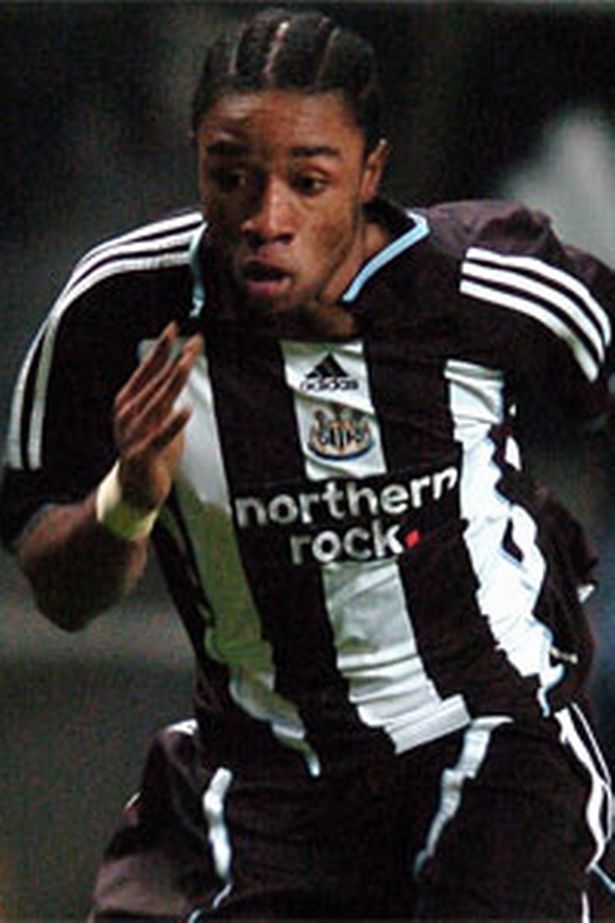
MULTIPLE loans away from parent club Tottenham Hotspur didn’t succeed in laying a path to a top level football career for striker Jonathan Obika.

One of the last such arrangements saw the young forward spend three months with the Seagulls in the 2013-14 season.

Nathan Jones, no.2 to Brighton head coach Oscar Garcia, had seen what Obika could do when the young striker had been under him as a coach on loan at Yeovil and Charlton Athletic.

Unfortunately, his impact with the Seagulls was underwhelming even though he scored on his first (and, ultimately, only) full start in a 3-1 win away to Port Vale in the fourth round of the FA Cup.

Obika salutes his one and only goal for Brighton

Albion’s other goals that day, from Rohan Ince and Solly March, were also their first for the club – generating the statistic that it was the first Albion game in 110 years in which three players had scored their first goal in the same league or cup match.

It had been an amazing goalscoring performance for Spurs reserves that prompted Albion to make a move for Obika as cover for first choice Leonardo Ulloa, especially with Craig Mackail-Smith and Will Hoskins sidelined by injury and Ashley Barnes on the brink of a move to Burnley.

The Argus reported that Obika had previously been a target but a move had been put on ice because he’d been injured. His return to fitness saw him net a double hat-trick in a friendly for Tottenham against Charlton’s under-21s, watched by Jones.

“The report coming back on him after the game was one word – lethal!” former Seagulls goalkeeper Ben Roberts, then on the coaching staff at Charlton, told the Argus.

“Like Nathan, I worked with Jon at Yeovil and then at Charlton and he’s a really good pro,” said Roberts. “He is guaranteed to score goals. He is a real predator around the box.

Obika in action for Yeovil

“I’ve been waiting for his career to really kick off. When he came to us at Charlton it took him a couple of weeks to get up to speed. But he was brilliant for us. The end of the season came too soon for us.

“He is a great signing for Brighton and he will suit the way they play.”

However, Garcia also brought in Spaniard David Rodriguez at the same time and Obika found himself down the pecking order, especially when Manchester United loanee Jesse Lingard was added to the forward options.

The Vale cup game aside, Obika made just seven appearances as a substitute but didn’t add to the lone goal and was eventually recalled by Spurs and sent out on loan to Charlton again until the end of the season.

Nevertheless, Garcia said: “He came in to give us forward cover and, while he may not have played as much as he would have liked, he has been a great professional and a pleasure to work with.”

Obika’s long association with Tottenham finally came to an end in September that year when he headed west to League One Swindon Town, where he played for three years, scoring 28 times in 108 games for the Robins.

In 2017, he switched to Town’s rivals Oxford United on a two-year deal before then trying his luck in Scotland, playing in the Scottish Premier League for St Mirren.

On the expiry of that contract, Obika moved to League One Morecambe and, in January 2022, found himself back in the news ahead of this year’s FA Cup third round when Morecambe travelled to North London to take on the club who nurtured his early career for 13 years.

Although Morecambe took a shock first half lead against Spurs through defender Antony O’Connor, it wasn’t a fairytale ending as the Premier League side eventually won the tie 3-1 with three goals in the last 16 minutes of the game.

Obika had to watch from the bench until the 58th minute when he replaced Jonah Ayunga – a Brighton reserve player between 2016 and 2018 – with Morecambe still clinging on to their slim lead.

Born in Enfield on 12 September 1990, of Nigerian parents, Obika grew up in Edmonton and it was while playing football for his primary school, St Paul’s & All Hallows, that he was scouted by Tottenham.

“I lived five minutes from the stadium, so I used to walk to training as a 10, 11-year-old,” he said. “That was my only focus back then.” He later attended Bishop Stopford School in Enfield and left with seven GCSEs.

Originally a left winger, Spurs’ under 18s coach Alex Inglethorpe was responsible for moving him to play as a central striker and in the 2007-08 season he was top scorer for the Spurs academy side.

Those goals caught the attention of first team boss Harry Redknapp and he signed his first professional contract at 18, while a second-year trainee in the academy, and earned a call-up to the first team squad.

Wearing the number 80, he made his debut off the bench in a UEFA Cup game in Holland against NEC Nijmegen on 28 November 2008. A few weeks later, he made his first senior start in front of the White Hart Lane faithful, playing against Shakhtar Donetsk in the same competition.

“I didn’t know I was starting at the beginning of the game, there were a few injuries so a lot of the youth team players trained that week and we were in the squad,” Obika remembered.

When announcing the team, Redknapp actually read out his name as John Utaka, his former player at Portsmouth, amid much hilarity. “That broke the ice,” said Obika. “I was less nervous after that. I was more relaxed and actually ended up having a good game. To play at the Lane, having grown up down the road, was a great feeling and I had all my family and friends there that night.”

Along with Inglethorpe, the coaches who most influenced his development at Spurs were John McDermott and, when he progressed to the reserves, Tim Sherwood, Les Ferdinand and former Albion full-back Chris Ramsey.

Obika and fellow Spurs youngster Andros Townsend were sent out on loan to Yeovil – it was the first of four loan spells there for Obika – as recalled by Jones in an interview with coachesvoice.com: “A host of other clubs wanted them, but I think Harry saw two young kids who wanted to play, and he saw something in us as a coaching team.

“Townsend clearly had huge drive and ambition, and Obika scored the goals that kept us in League One that season – so we will always be thankful to Harry for that.”

Obika recalled: “While I was at Yeovil, Nathan Jones was my coach and I built up a good relationship with him. He would stay behind with me while I did extra shooting: he didn’t need to, I could have done it with other teammates, but he wanted to be there and help me progress and I really appreciated that. He is a good man. He also took me to Charlton for a loan spell and, of course, to Brighton.”

Obika also had loan stints at Millwall, Crystal Palace, Peterborough and Swindon although in the 2012-13 season he did manage to get two more games for the Spurs first team, featuring in the League Cup and the FA Cup.

He went on as a 75th minute substitute for Clint Dempsey when André Villas-Boas’ Spurs side beat Carlisle United 3-0 in the League Cup in September 2012, and was a 59th-minute substitute for Gylfi Sigurdsson when Leeds dumped Spurs out of the FA Cup 2-1 in a fourth round tie at Elland Road in January 2013.

Casper Ankergren – the ‘Great Dane’ between the sticks

DANISH goalkeeper Casper Ankergren earned the League One player of the month award four times – twice with Leeds United and twice with Brighton.

When the Yorkshire club dumped him after he’d played 143 games for them, Gus Poyet, his former assistant manager at Elland Road, gave him the chance to revive his English football career. He spent seven years as a player at Brighton and between 2017 and 2021 assisted Ben Roberts with coaching Albion’s goalkeepers.

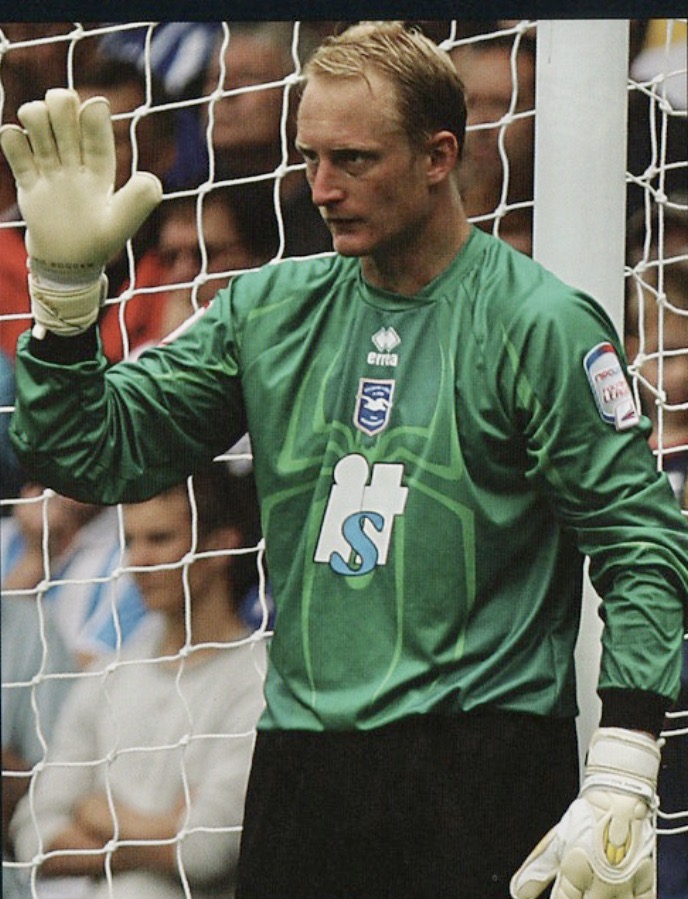
The Dane was only truly Albion no.1 for a season and a half, and fans were often divided about his capabilities. But his ability with the ball at his feet suited the way Poyet wanted the Albion to play, and as a coach chimes perfectly with the expectations placed on today’s Albion goalkeepers.

“He really is key to the way we pass it out from the back,” observed ‘Murraymint’ on North Stand Chat, noting his ball playing and vision for a pass as “excellent”.

Ankergren himself explained in a podcast on the club website in 2020: “I was always quite comfortable with the ball at my feet, probably because I played outfield as a kid.

“At Leeds I wasn’t supposed to play it to the centre backs but under Gus you had to play it short; he would go mental if you didn’t. That was his philosophy. I’ve always been a big fan of possession-based football.”

On the eve of the 2010-11 season, Poyet’s goalkeeping options were narrowed when first-choice Peter Brezovan was nursing a wrist injury and he wasn’t happy to start the campaign with either of the inexperienced understudies, Michael Poke or Mitch Walker.

Poyet told the club’s official website: “Goalkeeper is a key position in the team, and with Brezovan injured, we wanted to bring some experience to that position.

“Casper brings that experience and has played at this level and higher. I have worked with him at Leeds United, and know exactly what he is capable of, he also knows what it takes to get promoted from League One.”

Ankergren hadn’t even had time to get to know his new teammates when he made his Albion debut in a 2-1 win in the season-opener away to Swindon Town the day after signing.

Unfortunately, he didn’t cover himself in glory on his home debut when a mistimed punch helped Rochdale to get a last-gasp equaliser in a 2-2 draw at Withdean.

The ’keeper admitted he later hid himself away in his Jury’s Inn hotel feeling dreadful about the mistake. “I was devastated, but that’s football. As a keeper you can do well for 90 minutes but if you cock up in the 91st minute that’s all people remember you for,” he said in a matchday programme article. “It’s part of the game as a goalkeeper and you have to accept it.”

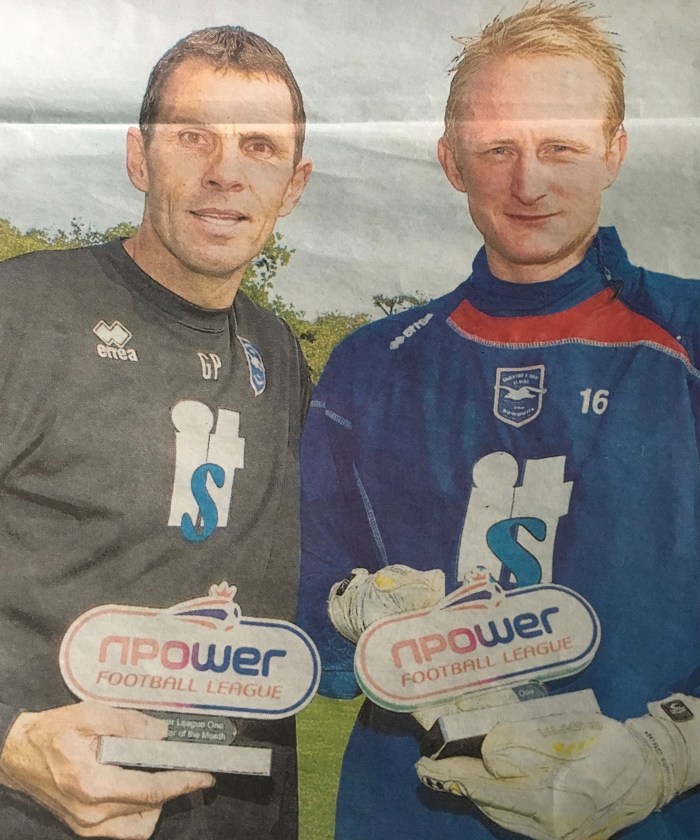
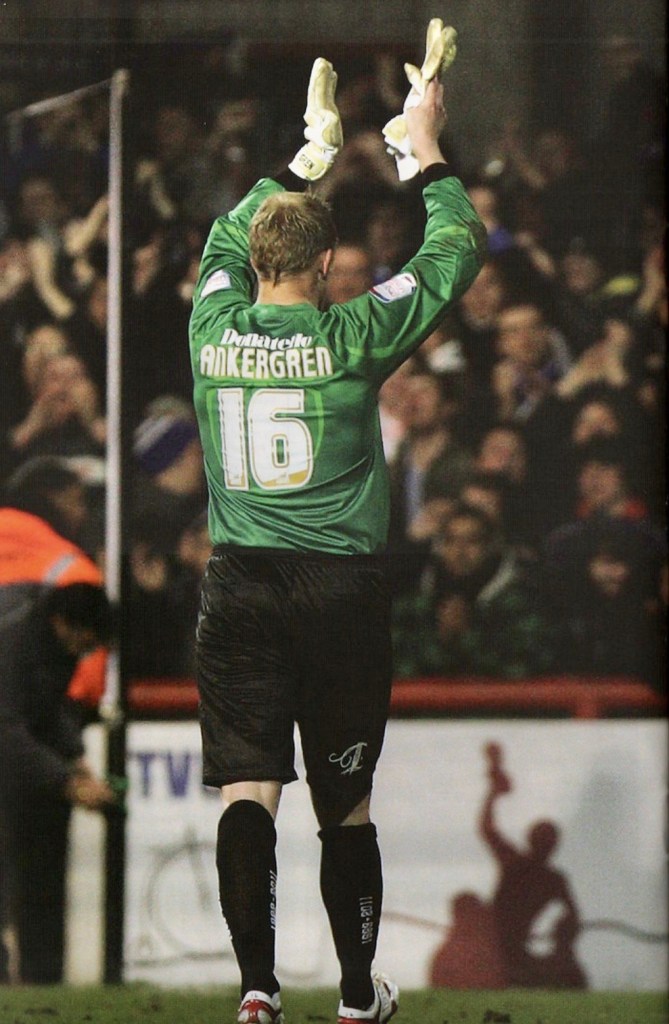
He certainly made up for it to the extent that he won the first of two nPower League One Player of the Month awards that season for his displays the following month, when he only conceded once in five matches as Albion secured 13 out of 15 points.

Ankergren won the award again in March 2011 when the Seagulls won eight matches out of eight – with six clean sheets for Ankergren – to consolidate their gallop towards the League One title.

In April 2011, Ankergren, speaking at the PFA awards in London, said: “He [Gus] was asking us to be perfect and although there’s no such thing in football, we were close, the way we did it, the way we played – he’s very, very pleased. He couldn’t ask for much more, I think.

“At the beginning of the season I had a chat with him and he said he thought a top six finish would be possible. But no, we finished first – an amazing season.”

The promotion with Brighton was more personally satisfying for Ankergren because he was involved from the beginning to the end of the season.

“I played a lot of games for Leeds last season when we went up but I didn’t play the last eight or nine games and that was a big blow for me,” he said. “I’ve played every game in the league this season and obviously it’s great, that’s what you want to do as a footballer; you want to play every game and win and achieve something.”

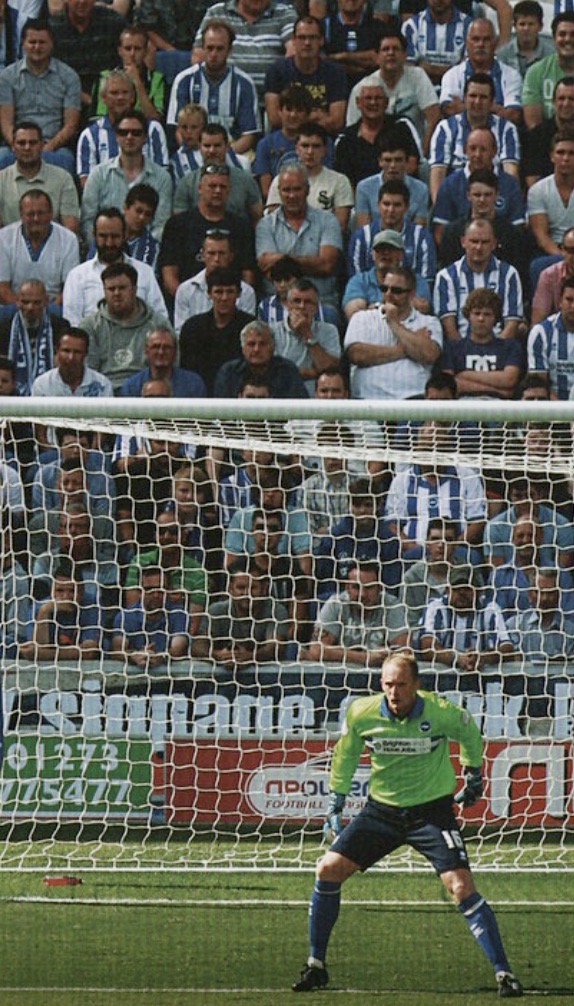
He was in goal for the memorable first Amex league fixture against Doncaster and kept the shirt for the first 15 games of the 2011-12 Championship season. But after a seven-game winless run, Steve Harper came in on loan from Newcastle United.

When Harper returned to the North East, he got back in the side for seven more matches, but after four successive defeats in December, Poyet rang the changes for the New Year’s Day match at home to Southampton. Brezovan started in Albion’s surprise 3-0 win and stayed in goal through to the end of the season.

Fan Bradley Stratton later observed: “Brighton’s return to the Championship at the Amex highlighted the need for another change in goal. Ankergren and Brezovan, whilst competent in League One, were regularly found out at the higher level.

“They inspired little confidence in fans, and there was no doubt Poyet would use the summer window in 2012 to bring in a new man who could galvanise the Albion back line and restore confidence to a defence that had conceded six goals at both West Ham and Liverpool that year.”

After Tomasz Kuszczak arrived to become the senior goalkeeper, Ankergren’s first team action in 2012-13 was limited to four starts plus one as a sub.

Two of those were in the FA Cup against Premier League opposition. The third round FA Cup win over Newcastle United was his first appearance in the first team for 13 months and he said: “Although I have not been playing for the first team, I’ve always trained as hard as ever because you never know what’s round the corner and you want to push the other keepers hard, so I was ready. It’s still hard to be thrown straight back into action because you need to play regularly to get into the rhythm of things, but I was pretty happy with my performance against Newcastle.”

And there was nothing he could do to prevent Theo Walcott’s late deflected winner as Arsenal won the fourth round tie 3-2 at the Amex, when Leo Ulloa scored on his debut.

As if to emphasise his point about memorable howlers, one of his two league games that season was at Nottingham Forest, when he fumbled a last-minute equaliser at the City Ground, allowing Henri Lansbury’s long-range effort to earn the home side a point in a 2-2 draw.

Poyet was quick to sympathise with the goalkeeper and said: “To begin with I thought the shot must have taken a deflection but when I’ve seen it again I nearly killed myself!

“When you are a keeper you pay the price and Casper has done that today. He was having a very, very good game, making two or three good saves, coming for crosses and kicking very well. And in training he will save 1,000 shots like that, but we wanted him to save it today.

“Goalkeeper is a terrible position to play but we lose together and we win together – at least we got a point.”

In Oscar Garcia’s only season in charge, Ankergren played only two first team matches but he was kept on under Sami Hyypia and, with the arrival of David Stockdale and the emergence of youngster Christian Walton limiting his likely involvement even further, he made just the one appearance in the 2014-15 season, in Albion’s 4-2 League Cup win away to Swindon Town.

He confessed on the podcast that he struggled to get his head round the situation and contemplated quitting the game but was talked out of it by goalkeeping coach Andy Beasley.

With the arrival of Niki Maenpaa as back-up to Stockdale, Ankergren could have been forgiven for thinking his chances of ever playing first team football again had gone, but in a bizarre set of circumstances during a FA Cup tie at Lincoln City on 28 January 2017, Ankergren had to come off the bench in the 56th minute when Maenpaa went off injured.

The Finn had injured his shoulder in the melee that resulted after Glenn Murray had committed a foul in the penalty area and the first thing Ankergren had to do was to face the resultant penalty, which was scored.

Five minutes later he was picking the ball out of the back of the net again after inexperienced Chelsea loanee Fikayo Tomori had skewed a shot past the beleaguered ‘keeper. To rub salt in the wound, Albion lost 3-1, enabling City to reach the last 16 of the competition for the first time in their 115-year history. The consolation for Albion, of course, was that they were able to concentrate on the league, and they went on finally to win promotion to the elite level they’d left in 1983.

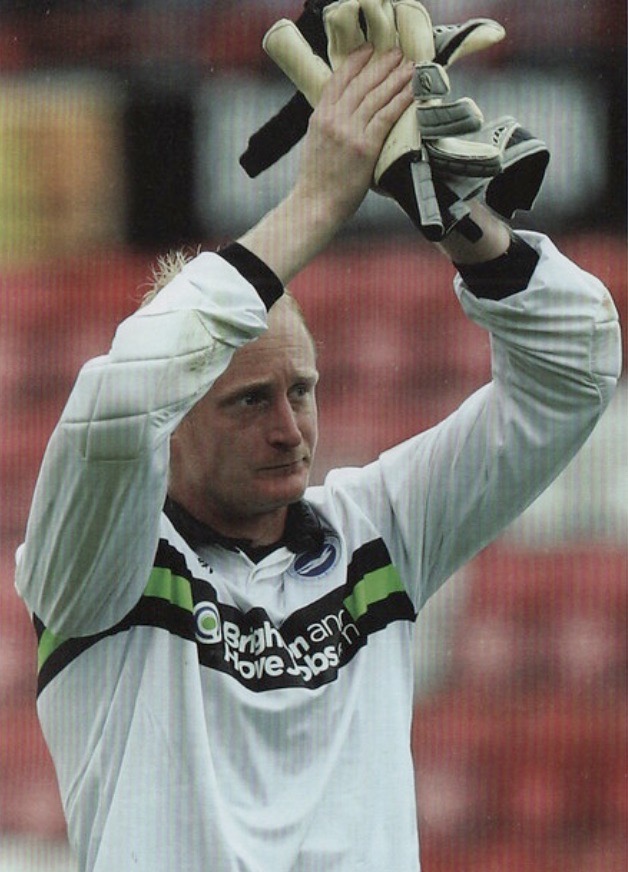
That promotion signalled the end of Ankergren’s playing days but the start of a career as a goalkeeping coach which he admitted in the podcast he’s enjoying immensely.

Born in the Danish coastal seaport of Køge on 9 November 1979, Ankergren played football with his mates from an early age on a pitch close to his home. He also played handball in the winter – it’s a big sport in Denmark – and it got to the point where he had to decide which one to pursue seriously because his parents said he couldn’t do both. He chose football because he enjoyed it a bit more, although he reckoned the hand-eye coordination involved in handball was an asset as he pursued his career as a goalkeeper.

When he started out playing organised football with Solrød FC, he switched from centre half to midfielder to striker and only went in goal when their keeper got injured.

He was only 12 when he was signed by his hometown’s local professional club, HB Køge. Before he became a full professional, he worked for a pizzeria delivering pizzas and at an after-school club. After leaving school, he continued his education at college for a further two years because he wanted to be a policeman if football didn’t work out.

But having broken into the Køge first team, he caught the attention of Brondby, who were probably the biggest club in Denmark at the time.

He joined them in May 2000 and started full-time the following January. “It was a big, big step for me,” he told the podcast. “I didn’t really enjoy it at first. It was a bigger step than I expected it to be.”

Their first-choice keeper, Morgens Krogh, had won Euro ‘92 with the national team so it was tough to compete with him. But the youngster made his debut when Krogh was injured and eventually took the no.1 spot. As well as winning one championship, he topped it by winning the league and cup double in 2005-06.

Ankergren also gained experience playing in the Europa League against teams like Locomotiv Moscow, Espanol and Palermo.

Shortly after he signed a new three-year contract with Brondby, unbeknown to him they signed Stephan Andersen from Charlton Athletic, and Ankergren wasn’t assured he’d still be first choice. “I’d had enough and wanted to try something different so while I was away with the national team (the B side) in Asia, I got a call from my agent saying Leeds were interested.”

Ankergren just missed out on a full international cap, although he was on the bench for games against Luxembourg and the Czech Repubic. He did win a handful of under 21 caps, and he said: “I’ve represented my country at various junior levels and remember making my under 16 debut against England. On the other side that days was Wes Brown and Michael Owen – you could tell both would have successful careers. Owen looked something special and he scored against me in a 4-1 defeat. I didn’t have my best game.”

Ankergren joined Leeds on loan initially, making his debut aged 27 in a 2-1 home win over Crystal Palace on 19 February 2007. Although it panned out to be one of the most turbulent times in the club’s history, Ankergren found life at Leeds more relaxed under Dennis Wise and Poyet than he had in Denmark.

His 14 games at the bottom of the Championship couldn’t halt the slide towards relegation which was confirmed emphatically with a points deduction when the club went into administration.

“I saved a couple of penalties early on, which won over the fans, including an important one against fellow strugglers Luton,” he said. He denied Dean Morgan from 12 yards with only four minutes left of a tense afternoon, and he told a supporter’s blog: “There were a few minutes, plus stoppage time to go against Luton so I had to stay focused as they were down there with us, so the win was vital.

“I had also saved a penalty away at Cardiff City but unfortunately we still lost the game.”

After signing on permanently, Ankergren was first choice as Leeds acclimatised to third tier football in 2007-08. He made 54 appearances in all competitions and, having conceded only one goal in five league games in September 2007, won his first League One Player of the Month award.

It wasn’t always plain sailing at Elland Road, though, and he was sad to see Poyet depart to become assistant manager to Juande Ramos at Spurs in November 2007, followed early in the new year by Wise, who became director of football at Newcastle.

“Gus was really, really respected up in Leeds. It was a big loss when he went to Tottenham – we really missed him, but I kept in touch after he left,” said Ankergren.

“I liked his style. If you do well, he’ll let you know – but if you don’t do well, he’ll also let you know. There’s none of this going behind your back; he’ll say it to your face, which is what I like.”

He also felt a sense of loss with Wise’s departure. “It was a massive disappointment for me personally,” he said. “Wisey is a good man, he had given me the chance to play in England and I will always be grateful to him.”

In March 2008, the goalkeeper faced an “improper conduct” charge brought by the FA for allegedly throwing a missile into the crowd at the County Ground, Swindon. He was fined £750 but not banned.

Gary McAllister was installed as manager and steered the club to the end of season play-offs against Doncaster Rovers and, despite some important saves by Ankergren, they lost. “I don’t know why but we never turned up at Wembley,” said Ankergren. “It was a strange feeling which let me flat, and it took a long time to get over that. We came so near, yet so far.”

Ankergren admitted to sheridan-dictates.com that he did not particularly enjoy the 2008-09 season. “It appeared that McAllister didn’t know his best team. I was in the side one week then the next he would pick Dave Lucas. Goalkeepers need games to stay sharp and focused and the thought of being dropped played on me and I did not perform to the standards I expected from myself.

“McAllister had been an outstanding midfielder but he was a League One manager with a League One squad. I think he expected too much from a group who didn’t have the ability that he had been blessed with as a player.

“The atmosphere was not great around the club and I thought that McAllister made some very strange decisions.

“Although I did not have any real issues with the manager, I have to be honest and say that I was not too disappointed when he was sacked and Simon Grayson was brought in.”

Grayson’s reign started on Boxing Day 2008 and he put Ankergren back into his team to play Leicester City. Leeds had fallen into mid-table but turned things around to earn a place in the play offs against Millwall who won the two-legged semi-final.

“Looking back, could we handle the favourites tag?” Ankergren asked. “It was another horrible feeling, but we were all determined to come back for pre-season training and go one better.”

However, although Lucas had left the club, Ankergren faced new competition in Shane Higgs and Grayson went with him at the start of the 2009-10 season.

But when Higgs was injured at MK Dons on 26 September 2009, Ankergren appeared as a substitute and eventually won his place back, even though United brought in Frank Fielding and David Martin as loan goalkeepers, and he had the feeling Grayson didn’t really rate him.

Ankergren re-established himself with a string of impressive performances and clean sheets and was the last line of defence in a memorable 1-0 FA Cup third round win for Leeds at Old Trafford in January 2010, including pulling off a terrific save to deny Danny Welbeck.

He was also in goal against Spurs in the next round when it took a replay at Elland Road before the north London club finally won through.

However, the beginning of the end of his time at Elland Road came when he made a mistake in a 2-0 home defeat against Millwall on 22 March 2010, and he didn’t return to the side for the remaining nine games as they went on to win promotion to the Championship as runners up behind Norwich City.

“I remember sitting with Paul Dickov in the dressing room having a beer and reflecting on what we had achieved,” Ankergren told sheridan-dictates.com. “We went over to the Centenary Pavilion for the end of season dinner and on to a nightclub, It was a great night but deep down I knew that I had played my last game for the club as my contract was up.”

Ironically, his replacement at Leeds was fellow Dane, Kasper Schmeichel, son of Ankergren’s goalkeeping idol, Peter, who also played for Brondby before going on to achieve fame at Manchester United.

Ankergren’s 11-year association with the Seagulls came to an end in September 2021 when he returned to his home country as head goalkeeping coach at Brondby.

Pictures from various online sources, matchday programmes and the Argus

That man from Argentina scored goals in the UK and Spain

LEONARDO ULLOA brought down the curtain on his playing career in Madrid, netting six goals in 20 appearances (plus 12 off the bench) for Rayo Vallecano in the Spanish second division.

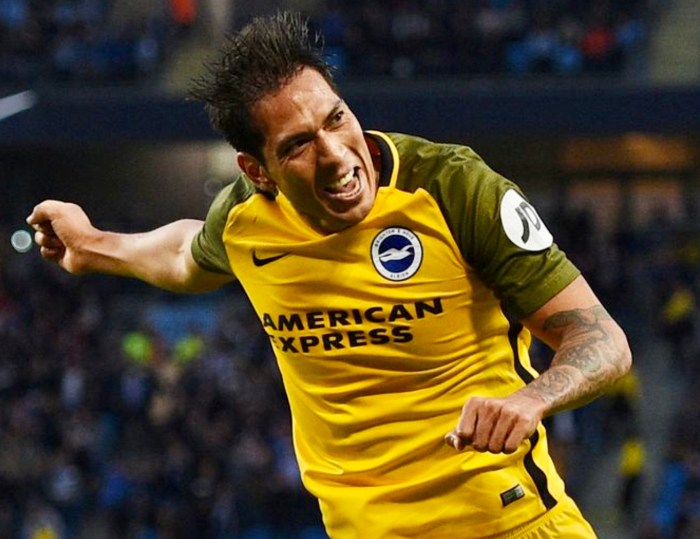
It was to the delight of Brighton fans that 28 of his career 148 goals were scored for the Albion, where he quickly established himself as a fans favourite by scoring on his debut against Arsenal in the FA Cup.

Previously virtually unknown in England, Ulloa’s arrival in January 2013 provided the tall, goalscoring presence up front Brighton had been craving since Glenn Murray headed to Crystal Palace in the summer of 2011.

Within two months, Ulloa was cementing his place in Albion history by scoring the first ever hat-trick at the Amex, in a 4-1 win over Huddersfield Town, and it wasn’t long before fans were serenading him with his own terrace song: “Who’s that man from Argentina, who’s that man we all adore…..”

His efforts in the stripes got even better when he scored twice in a memorable 3-0 win over Palace that March giving the Seagulls their first home win over their bitter rivals for 25 years.

After the game, manager Gus Poyet told BBC Radio Sussex: “Leonardo Ulloa is making the difference. I am pleased for him. If he had been here for the first six months I can’t imagine where we would be right now.

“What a prize for him, scoring two goals against our biggest rivals. I am very happy for him.” By the season’s end, Ulloa had scored 11 goals in 16 starts (plus one substitute appearance).

While Poyet departed acrimoniously after defeat in the play-off semi-finals, Ulloa continued to thrive under new boss Oscar Garcia. Top-scoring with 16 goals, he’ll always most memorably be known for nodding in a last-gasp header from Craig Mackail-Smith’s left-wing cross to secure a 2-1 win at the City Ground, Nottingham on 3 May 2014.

It earned Albion another play-offs place in the bid to secure promotion to the Premier League, although a 6-2 aggregate defeat at the hands of Derby County meant it didn’t end well.

Sadly, not only did it mark the end of Garcia’s reign, it also led to Ulloa’s exit from the club, but the £8m record fee newly-promoted Leicester City paid for his services was difficult to resist, quite apart from the player’s desire to play at the top level.

Switching to the East Midlands was a short hop compared to the journey he had to make when he was starting out in the game.

Born on 26 July 1986 in General Roca, a city in Argentina’s northern Patagonian province of Rio Negro, Ulloa moved 700 miles from home at the age of 15 to pursue his footballing dream, as he told Brian Owen of The Argus in a 2013 interview.

It was only when he wasn’t getting much playing time in Argentina that he took the opportunity to move to Spain, initially with Spanish second-tier side Castellon in the Valencia region.

When they were relegated in 2010, he stayed in the second tier by moving to the south east of the country to join Almeria, where he scored 39 times in 90 appearances. It was from there Albion bought him for an undisclosed sum, widely thought to be £2m.

The subsequent move to Leicester couldn’t have got off to a better start when Ulloa scored Leicester’s first Premier League goal for a decade in August 2014, hitting the net on his debut against Everton at the King Power Stadium. He also scored a brace of goals in a famous 5-3 victory over Manchester United.

Indeed at the end of that 2014-15 season, Ulloa was Leicester’s top scorer with 13 goals in 31 appearances (plus nine as a sub).

Few could have imagined it was going to get a whole lot better the following season, but as Claudio Ranieri’s City shocked the football world by climbing to the summit of the Premier League and staying there, Ulloa collected a title winners medal for his contribution.

Although he made just nine starts, as Jamie Vardy and Shinji Okazaki took centre stage, he appeared 22 times as a substitute and, in his supporting role, chipped in with six – often vital – goals.

He scored an 89th minute winner to earn a 1-0 win over Norwich City after entering the fray as a 78th minute sub and, when defeat at home to West Ham looked on the cards after Vardy had been sent off, he coolly netted a penalty in the fifth minute of added on time to secure a 2-2 draw.

With Vardy suspended for the following game, Ulloa stepped up with two goals in a 4-0 win at home to Swansea City.

Phil McNulty, BBC Sport’s chief football writer, said Ulloa had fully repaid the faith shown in him by Ranieri. “When Ulloa earned the Foxes a vital point with a stoppage-time penalty last weekend against West Ham, he showed he was not a man to be perturbed by pressure – and he relished the responsibility put on his shoulders against Swansea,” he wrote, describing how Ulloa “ran selflessly all afternoon to compensate for the darting, pacy threat of Vardy, and most importantly contributed two goals that eventually made this a stroll for Leicester City”.

It all turned sour for him at the King Power Stadium the following season and with a lack of involvement his frustration went public as he sought a move away. Sunderland, fighting (ultimately in vain) relegation from the Premiership, reportedly had three bids to sign him turned down in the January 2017 transfer window.

Ulloa told Sky Sports News reporter Rob Dorsett: “I’m a bit sad about the current situation. It’s been two wonderful years at the club but now, given my situation – not playing and not being part of the team’s plans – I feel that the best way forward is I leave and I can be happy somewhere else.”

He added: “They know I am not going to be used. The best thing for both parties is they sell me to another club and I can continue playing my football somewhere else.”

However, when Ranieri was sacked the following month, Ulloa found a path to first team football re-opened under new boss Craig Shakespeare. He only made four starts but he appeared off the bench 19 times, and, in August 2017, signed a new two-year contract with the Foxes.

Speaking to LCFC TV, Ulloa said: “I am so happy because I have lived massive moments with this club and it makes me happy to stay here and fight, to help the team and increase the club’s history. That is so important and I am so happy for this two-year contract. Now I have to fight to play. I will train and give my best. I appreciate it a lot to stay here and I am so happy here now. For that, I want to continue in this in the same way by working hard and working my best for the club.”

Shakespeare added: “Leo’s goals and performances have been key to some wonderful moments for this football club since he first joined and I’m delighted to have him with us for another two years. He’s a popular member of the squad and gives us an excellent option in attack.”

All of the words came to nought however, because Ulloa was barely involved, other than sitting on the subs bench and only getting on once. So, in January 2018, he was happy to return to Brighton on loan to supplement the striking options in Chris Hughton’s squad.

But with Glenn Murray in top form and Sam Baldock and Tomer Hemed as other striker options, Ulloa only made four starts plus eight appearances as a sub. He scored twice, including opening the scoring against Manchester City at the Etihad, but Albion didn’t share the striker’s enthusiasm for a permanent return to the Seagulls.

Instead of moving back to the south coast, Ulloa headed to Mexico to join Pachucha, and a year later he headed back to Europe, and back to Spain, to sign for Rayo Vallecano.

The striker spent eight months sidelined by a serious knee injury in 2020 but returned to action in October 2020 before retiring at the end of the 2020-21 season. Ulloa received a warm reception from Albion fans when he was interviewed on the Amex pitch in March 2023 when West Ham were the visitors.

Pictures from various online sources.

Andrew Crofts just couldn’t stay away from the Seagulls

ANDREW Crofts is one of that rare breed of player who had three separate spells at Brighton, although the latter time was only as player-coach with the under-23s.

The Welsh international midfielder returned to the Seagulls after only a month as player-coach at Yeovil Town when Liam Rosenior left the Albion to move to Derby County.

His signing as an over-age player as well as a coach was explained by technical director Dan Ashworth, who hailed the “innovative step” and told the club website: “The thinking behind the playing role is to have someone of his experience out there on the pitch alongside our younger players, and to impart that crucial knowledge he has gained from his time in the game.

“To have that experience out on the field, in the pressure situation of a game, will be of enormous benefit to our young players and have a positive impact on their collective and individual development.”

Crofts first joined the club in the summer of 2009 during Russell Slade’s managerial reign and, when Gus Poyet took over the managerial chair, he appointed Crofts as captain for his first game in charge.

The midfielder repaid the faith in that televised away game at St Mary’s on 15 November by scoring in Albion’s memorable 3-1 win. Crofts retained the armband through to the end of the season and his form had caught the attention of Championship side Norwich City.

Crofts made the switch to Carrow Road and played 44 games as Paul Lambert’s outfit won promotion to the Premier League in runners up spot.

In the top-flight, though, Crofts was no longer a mainstay of the midfield, starting just 15 matches in 2011-12, and coming off the bench on 10 occasions.

“Towards the end of the season I was in and out,” he told the Albion matchday programme in 2019. “Paul then went to Aston Villa and when the chance came up to return to the Albion I jumped at it.”

“It felt like coming home and I wanted to replicate what we had done with Norwich. It was a completely different club compared to the one I’d left, with the Amex Stadium and plans for the new training ground.”

Poyet wasted no time in seizing the chance to re-sign him, telling the club website: “When we knew about the possibility to bring him back we worked very hard to do that.

“I am delighted to have him back. He is going to be a very important player.

“He is coming back to a club that he knows and he was happy to come back – that shows his commitment,” said Poyet. “He leads by example and we want players like that on the pitch.”

Unfortunately, that season his playing time was limited by two long-term spells out injured, and the following season it got worse. After sustaining a serious cruciate knee ligament injury in January 2014, he was sidelined by an almost identical injury again in October 2014.

When the player suffered the first injury in an away game at Birmingham, Poyet’s successor, Oscar Garcia, said: “He will be a big loss and I feel sorry for Crofty. He has been excellent and has been a key player.”

Crofts battled over many months to regain fitness only to suffer a partial tear of his anterior cruciate ligament and a tear to the meniscus in a match against Watford in October 2014, putting paid to any involvement in the rest of the 2014-15 season.

Head coach Sami Hyypia told the club website: “We are all devastated for Crofty. He is an important member of our squad and worked incredibly hard to get back to full fitness after last season’s knee injury.

“Crofty is a very strong character and he will continue to receive the best possible care and treatment from our medical staff throughout his rehabilitation.”

Unfortunately for him, by the time he was fit again, another new manager was in place and Dale Stephens and Beram Kayal were firmly established as Chris Hughton’s preferred midfield pairing. So, in March 2016, Albion loaned him back to his first club, Gillingham, until the end of the season.

On leaving the Seagulls that summer, he moved to Charlton Athletic under his former Albion boss Slade, on a one-year contract, and made a total of 54 appearances for the Addicks.

Although born in Chatham, Kent, Crofts qualified to play for Wales because his grandfather hailed from the principality. He earned a total of 29 caps, spread over 13 seasons, initially under John Toshack, most coming under Gary Speed, before making his final appearance against Panama in November 2017, in Chris Coleman’s last game as Wales manager.

Crofts v Rooney in a Wales v England match
Welsh international

Crofts was on Chelsea’s books from the age of 10 to 15, going through the ranks with John Terry, with whom he shared digs. One of his coaches was ex-Albion and Chelsea defender Gary Chivers. After being released by Chelsea, he linked up with Gillingham as a trainee and worked his way through the youth and reserve sides, making a surprise first team debut against Watford in May 2001 when only 16.

It wasn’t until 2004 and 2005 that he became a first team regular. His first Gills goal was scored in the Championship clash at the Withdean Stadium on Boxing Day 2004 when the Seagulls won 2-1.

Crofts eventually took over the captaincy at Gillingham but, after the side were relegated to League One, manager Mark Stimson believed the role was too much of a burden on the player. After more than 200 appearances for the Gills, he was made available for transfer and, in 2008-09, went out on loan to Peterborough United and then Conference side Wrexham under former Albion striker Dean Saunders.

When he joined Albion on a free transfer in June 2009, boss Slade said: “He’s an international player so that’s not bad for a start. He’s got good pedigree and was an important player for a good Gillingham team at the time.

“He can sit in for you defensively or he can get forward. He has got a good work ethic and I’m pleased to get him.”

Towards the end of his league playing days, Crofts had spells at Scunthorpe United in 2017-18 then Newport County for the 2018-19 season, playing under his former Gillingham teammate Michael Flynn, who he played alongside at Priestfield between 2005 and 2007,

Flynn made his old pal captain and said: “He’s a gentleman and he’s somebody I trust a lot. So signing him was really a no-brainer.

“Andrew coming in is a massive signing for the club. He’s the ultimate professional and he’s in fantastic condition.”

Crofts himself said: “I played with Michael Flynn at Gillingham and he was a winner. I loved playing with him and I can’t wait to play for him now with him being my gaffer.”

Unfortunately, injury issues restricted Crofts to just 12 appearances for Newport and he was released at the end of the season.

On leaving County, Crofts moved to Yeovil Town as player-coach with manager Darren Sarll saying: “To bring a player of Andrew’s experience into the club at this time is a great coup.

“He still has a thirst and hunger for playing and winning promotions and it’s refreshing to be part of the very early stages of his coaching career.

“He’ll be a valuable asset to the squad both as a player and in terms of passing on his experience and knowledge to the younger members of the squad.”

But then the opening arose with the Albion and he didn’t hesitate to return. When Graham Potter left the Albion, Crofts temporarily took on the head coach position and was retained as a first team coach under Roberto De Zerbi and his successor, Fabian Hurzeler.

• In an interview with Andy Naylor of The Athletic in December 2020, Crofts talked at length about his career, his coaching ambitions and some of the big names he played alongside.

Jesse Lingard took steps to stardom at Brighton

MANCHESTER United youngster Jesse Lingard scored four goals in 17 appearances for Brighton in their 2013-14 Championship season.

As well as helping the Seagulls to reach the play-offs, the move proved a useful development step for Lingard, who later become a regular at United and played for England at the 2018 World Cup.

Former United boss Jose Mourinho spoke about the value of the experience in an interview with manutd.com ahead of a Brighton v Man Utd Premier League game in May 2018.

Although Sir Alex Ferguson involved him in the first team squad a couple of times in the 2011-12 season, his real senior football education began during a three-month loan to Leicester City (he was sent with Michael Keane) in November 2012.

And, although Lingard went on United’s pre-season tour Down Under in the summer of 2013, he joined Birmingham City on loan in September 2013.

He scored a total of six goals in 13 games for the Blues, including a debut four goals at home to Sheffield Wednesday.

Birmingham hoped to keep Lingard

They’d been hoping to re-sign him for the rest of the season but Albion nipped in at the end of February 2014 and he headed south to join Oscar Garcia’s promotion-chasing side until the end of the season.

Garcia told the club website: “We are delighted we have finally secured Jesse until the end of the season. He is one of the most exciting young English players and has already created a lot of interest following his successful loan spell at Birmingham.

“We worked hard to secure a talent who has already shown that he can play at Championship level, and I am very pleased to have added Jesse to our striking options.

“He has an excellent pedigree, having come through the academy at Old Trafford, and there is no doubt that he has a lot of talent and ability. I am really looking forward to working with him.”

Lingard got on the scoresheet in the 4-1 away win at already-crowned champions Leicester City, and four days later also found the net in a 3-0 win over Charlton.

In the third minute of added on time at home to Yeovil Town, Lingard added to Kazenga LuaLua’s opener to secure a 2-0 win in the last home league fixture.

He then scored Albion’s goal in the play-off first leg at home to Derby, but, with Albion losing the game 2-1, they were always on the back foot going into the second leg when County ran riot against the injury-ravaged Seagulls to win 4-1.

Lingard went back to United and got his first competitive first team start under Louis van Gaal in the season-opener against Swansea at Old Trafford, but the occasion was marred by him having to go off with a knee injury after only 24 minutes – and United lost 2-1.

The injury set his career back six months and, on his recovery, Lingard was sent out on loan again in February 2015 when former United assistant manager Steve McLaren took him to Derby County.

Back at Old Trafford the following season, he got his first United goal in November 2015 when United beat West Brom 2-0, and he began to establish himself, making a total of 40 appearances by the season’s end.

In fact, that season ended on a particularly high note for Lingard when he came off the bench to score the winning goal for United in the 2016 FA Cup Final against Crystal Palace.

The 2017-18 season saw him involved even more, when he made 48 appearances, and, even through managerial upheaval, he continued to be a regular member of the United first-team squad.

Born in Warrington on 15 December 1992, Lingard went to the town’s William Beaumont Community High School and was on United’s books from the age of seven.

He progressed through the different age groups but, as a slow developer physically, was still playing at under 16s level when he was 18.

Nevertheless, as a youth player at Manchester United, he helped them to win the FA Youth Cup in 2010-11.

An extended feature on Lingard’s development appeared in the matchday programme for Albion’s game at Old Trafford in November 2017.

One of the coaches involved in his development, academy advisor Tony Whelan, said: “Jesse has had to be patient throughout his career. As a younger player, he was physically under-developed so he had to play a younger age group. That wasn’t easy, but he had the patience, intelligence and trust in the coaching staff to know that those decisions were made in his best interests, that we knew at some point he was going to grow. At some point, all that ability would be able to come out.

“He’s got a wonderful mindset, so his ability to come on and make an impact on the game is down to the fact he’s resilient, he has a wonderful mentality, and he is a great observer of the game. That comes out all the time in the way he deals with things. And on top of that, he has his excellent technical ability.”

Whelan added: “He’s only of slight build, so he’s developed great technical ability, good passing, dribbling, he’s a really good mover – very fluid, a wonderful mover – and he’s athletic without looking that athletic.”

The coach said: “You don’t get in our first-team squad without being a very accomplished player. He’s also playing for the national team fairly regularly. That’s testimony to Jesse’s abilities as an all-round footballer now.”

Lingard was 23 when he made his full England debut, at Wembley against Malta, on 8 October 2016, and he went on to become part of the England squad that reached the World Cup semi-finals in 2018.

He scored his first England goal in a 1-0 win away to the Netherlands in March 2018, and has since scored three more times in 24 matches; against Panama at the World Cup, against the USA at Wembley in November 2018 and three days later also at home against Croatia.

He’d already appeared on the international stage earlier in his career, playing three times for England under 17s in 2008 and scoring twice in 11 games for the under 21s between 2013 and 2015.

Coach Whelan summed up Lingard thus: “From the day he first walked into this football club at seven years of age, he always had a smile on his face. He’s always loved playing, always loved the game, always had wonderful enthusiasm, and in some ways he’s inspired the coaches with his love of the game and love of the ball.

“You never had to ask him to work hard, he was always running around, always energetic, always mischievous, and those are the qualities he brought.”

In an interview with the Albion matchday programme for Brighton’s home game with United in 2017-18, Lingard reflected on his loan spell with the Seagulls and said: “I wanted to go to the club because I knew they were a good club with a great stadium and great fans – it was the perfect club to go on loan to.”

He added: “The stadium, the staff, the fans, you could see the ambition of the club. I always knew that the club would make it into the Premier League. It was heading in that direction for a couple of seasons.”

The 2019-20 season saw a marked decline in Lingard’s fortunes with his starts for United under double figures, and most of his involvement coming off the bench. He also lost his place in the England squad.

It was revealed a business venture had performed badly and, sadly, trying to cope with personal issues involving his family impacted Lingard’s form and demeanour.

After United boss Ole Gunnar Solskjaer challenged him publicly over his declining performances, he decided to talk about the problems publicly.

After the curtain came down on the season, Lingard told his 6.6 million Instagram followers: “This season has been difficult for so many reasons. I lost who I was as a player and person, but I never wanted to give up.

“I knew who I really was on and off the pitch and knew that having been there before I could get there again.”

“This meant working harder than I’d ever done before and trusting in those around me that they knew how to best help me achieve that.

“I know the fans have been frustrated but in all this time my love for this club and everyone connected to it has never left me.”

“This team, this club is my family and I will continue to keep working harder than ever to help this team achieve its goals.”

However, with several new faces arriving at Old Trafford prior to the start of the 2020-21 season, football’s rumour mill was busy suggesting Solskaer was looking to offload Lingard.

In January 2021, Lingard joined West Ham on a half-season loan and the change of scene seemed to give his career a boost. He scored twice on his debut in a 3-1 win over Aston Villa and finished the season with nine goals in 16 appearances for the Hammers.

He returned to Man Utd for the 2021-22 season, playing in 22 league and cup games but only scoring twice.

When his contract wasn’t renewed at Old Trafford, in the summer of 2022, Lingard signed a one-year deal with newly promoted Nottingham Forest on a reported £200,000 a week.

‘Dynamic and energetic’ international Keith Andrews wanted longer Brighton stay

15486REPUBLIC of Ireland international midfielder Keith Andrews was something of a revelation during a season-long loan at Brighton & Hove Albion.

Now plying his trade as a pundit for Sky Sports, Andrews had previously played for the other Albion as well – West Bromwich – although his stay there was even briefer than his time with the Seagulls.

With the looming expectation that back-to-back Player of the Season Liam Bridcutt would shortly follow old boss Gus Poyet to Sunderland (which eventually happened in January 2014), Brighton turned to Andrews to cover the defensive midfield slot in 2013-14.

Arriving at the Amex in August 2013 just short of his 33rd birthday on a season-long loan from Bolton Wanderers, Andrews was not at all happy with the way the Trotters ‘disposed’ of him, telling bbc.co.uk: “Nobody really had the decency to even phone me as I was leaving.

“I think I deserve a little bit more respect than that, I suppose. I always felt I’d done things well at that club, been very professional and treated people like I like to be treated.

“To end on that note was a bit sour but you can’t be surprised by anything in football.”

Even if Seagulls supporters viewed his signing as somewhat underwhelming, Andrews himself was delighted and excited, saying: “If it wasn’t the right move, I certainly wouldn’t have gone and I didn’t feel any pressure to leave.

“It was a move that genuinely excited me. To come to a club that plays in the fashion and style that Brighton do was something that really appealed to me.

“I have still got a huge appetite for the game and I feel I can have a big impact here. I have come into a squad that has a wealth of experience and ability that will make me be the player I know I can be.”

And boss Oscar Garcia sought to dispel any doubts, telling bbc.co.uk: “He is a player with experience at the top level of the English game and international football – including World Cups and European Championships.

“Keith is a player who I know will enjoy the way we like to play. He is a dynamic and energetic player.”

It wasn’t long before supporters began to be pleasantly surprised by Andrews’ contribution on the pitch, and off it the new signing also began to show his aptitude for handling the media.

As early as September 2013, Andrews was speaking eloquently about his teammates, for example telling BBC Radio Sussex his views about striker Leonardo Ulloa.

“He is a handful and has got a bit of everything,” he said. “He is a big player for us at the moment as he is really leading the line on his own. He allows us to bring other players, such as Bucko [Will Buckley] and Ashley Barnes, into play.

“He is very effective and I’ve seen first hand in training how strong he is and what a handful he is to deal with. I have only been here a few weeks but I have been very impressed by the mix we have got in the dressing room. We’ve got experience, youth, foreign, English and Irish.

“It is a good atmosphere and if we hold onto what we have got I am more than confident we can have a very successful season.”

As the months progressed, Andrews became an established part of the side which Garcia ultimately led to the play-offs. In December 2013, Andrews made use of the platform offered by the Daily Mail’s Footballers’ Football Column to expand on his enjoyment of his time at the Amex.

“The club made a big impression on me when I played against them for Bolton last season, in terms of their style of football and their new stadium, and when they came in for me it was a very easy decision in footballing terms,” he said. “It’s not an easy decision, moving 250 miles away from your home in the north-west, but Brighton made it very clear they wanted me and Bolton made it clear they didn’t.

“It came out of the blue, but I felt it was a chance to be a part of something really exciting.”

Garcia’s decision to quit after the failure to get past Derby County in the play-off semi-finals was the catalyst for a number of changes in the playing personnel, although Andrews hankered to make his move to Sussex permanent having been involved in 37 appearances since his temporary move.

keith ands v sheff wedHe registered one goal during that time, an 89th minute equaliser at home to Sheffield Wednesday in October.
In a May 2014 interview with the Bolton News, he said: “It would be something I’d be interested in. When the people are so good to you and make you feel so welcome, the fans have been fantastic, it’s a one-club town.

“No-one supports anyone else and the attendances are something that I haven’t experienced in football for a long, long time. We’ve got the best attendances in the whole league although other clubs in the league are supposedly bigger.

“It’s a club I would like to stay involved in but contract-wise I’m contracted to a different club next season, I’m only here on loan. These things are not always in your hands and you can’t always dictate where you go and how your career pans out.

“But I would certainly like to stay on at Brighton into the future because I have thoroughly enjoyed it this year.”

The midfielder also reflected positively on his time at the Amex in a blog post for Sky Sports, pointing out: “Although I was only at the Amex for one season I have a lot of affection for the club as I think they try to do things in the right manner for the club to evolve with real sustainability for years to come.

“There are good people involved behind the scenes there, none more so than in the academy. Last season I worked closely with the academy manager John Morling and the development coach Ian Buckman as I was in the middle of my UEFA ‘A’ licence and they couldn’t have done any more to help me.

“It was a great experience to work with them as they prepared weekly and monthly schedules with the rest of the coaches and sports scientists to ensure the young lads had the best chance of developing their games, both technically and physically.

“I was amazed at the schedule a 14-year-old at the club had and a little envious to be honest as it certainly wasn’t like that in my day!”

Born in Dublin on 13 September 1980, Andrews came through the ranks of Drumcondra side Stella Maris before being picked up as a junior by Wolverhampton Wanderers, where he stayed for six years.

He made his first team debut on 18 March 2000 in a 2-1 win at Swindon and at 21 was Wolves’ youngest ever captain in a game against QPR, but he was sent out on loan on three separate occasions, playing briefly for Oxford United, Stoke City and Walsall.

After 72 appearances for the Molineux side, in 2005 he moved on to Hull City, where injury blighted his only season with them He then had a two-year spell with Milton Keynes Dons, where he had a productive midfield partnership with Alan Navarro, and he assumed the captaincy of Paul Ince’s side.

His second season was a huge success as the Dons won promotion to League One; Andrews scoring the goal which secured the success. He also scored in the club’s 2-0 win over Grimsby Town in the Football League Trophy at Wembley.

Andrews was chosen in the PFA Team of the Year, won the League Two player of the Year Award and was listed 38th of FourFourTwo magazine’s top 50 Football League players.

The Irishman followed his old Dons boss Ince to Premier League Blackburn Rovers in September 2008 and, two months later, at the comparatively late age of 28, made it onto the international scene with Ireland, making his debut as a substitute in a 3-2 friendly defeat against Poland.

It was the first of 35 international caps. He was involved in Ireland’s 2010 World Cup qualifying campaign and although the country was winless at the 2012 European Championship in Poland and Ukraine, Andrews was named FAI Player of the Year for 2012.

Meanwhile, Andrews’ third season at Blackburn (2010-11) had been curtailed by injury, restricting him to just five Premier League appearances, and in August 2011 he went on a half-season loan to Ipswich Town.

A permanent switch looked on the cards but on deadline day of the January 2012 transfer window he ended up joining West Brom on a six-month deal. After 14 Premier League appearances for the Baggies, his contract came to an end and his next port of call was newly-relegated Bolton Wanderers, who he joined on a three-year contract in the summer of 2012.

Owen Coyle was the manager at that time but his tenure came to an abrupt end in October that year. Although Andrews played 25 times under his successor, Dougie Freedman, the following season he was edged out by the signing from Liverpool of Jay Spearing.

After his loan season with Brighton, Andrews had a similar arrangement at Watford but he didn’t enjoy the same success there and ended up curtailing the deal and going back to MK Dons on loan for the latter part of the season.

When the curtain came down on his playing career at the end of the 2014-15 season, he’d completed 413 career appearances and scored 49 goals.

He became first team coach at MK Dons and harboured ambitions of becoming manager when Karl Robinson departed, but he was overlooked and began working as a coach with the junior Irish international teams, and turned to punditry with Sky Sports.

ipanews_045350c2-6dc7-4ca9-82e8-cb2036cb6b94_1

Matthew Upson was a class act in Albion’s defence

ARTICULATE pundit Matthew Upson was deservedly player of the season after starring in Brighton & Hove Albion’s back line during the 2013-14 season.

Earlier, in a career spanning eleven clubs, he played more times (144 plus once as sub) for West Ham United than any of his other clubs. He also won 21 England caps.

Upson initially joined the Seagulls during the second half of the 2012-13 season, signing on loan from Premier League Stoke City, where, in two years, he’d only managed 21 games (plus four as sub) following four years with the Hammers.

On signing him for Brighton at the age of 33, manager Gus Poyet told seagulls.co.uk, “When we had the chance to bring a player with the quality of Matt until the end of the season we went for him.

“He’s experienced, he’s been a regular Premier League player and there were no doubts about it. He has presence, he’s a leader as well and it’s a good opportunity for us to use him the right way and for him to play football.”

Upson joined a side already blessed with the on-loan presence of another former England international in the shape of left-back Wayne Bridge, but unfortunately the side couldn’t get past arch rivals Crystal Palace in the play-offs to gain promotion from the Championship.

Although Poyet departed, Upson decided to make his move to Brighton permanent and played 41 games, mainly alongside skipper Gordon Greer. Unfortunately, Oscar Garcia’s squad also stumbled in the play-offs.

Hampered by an ankle injury towards the end of the season, although Upson played in the first leg 2-1 home defeat to Derby County – when he conceded a penalty with a clumsy foul – he was one of several players to miss out through injury in the away leg, when the Rams prevailed 4-1.

At the season’s end, Upson declined a new contract offer with the Albion and decided to seize the opportunity to return to Premier League football with newly-promoted Leicester City.

As it turned out, injury delayed his debut by seven months and he made just six appearances for the Foxes before ending his playing days with MK Dons, where he was limited to four full appearances plus three as a sub.

Upson is now a regular pundit on our TV screens, displaying verbally the sort of calm assuredness he demonstrated out on the pitch.

So where did it all begin? Born on 18 April 1979 in Eye, a small Suffolk market town, Upson went to Diss High School, over the border in Norfolk, and his football ability first shone at Diss Town FC. He went on to the Ipswich Town Centre of Excellence but it was Luton Town who took him on as a trainee after his Ipswich coach, Terry Westley, had switched to the Hatters.

It was to be a lucrative decision by Luton because, after signing him as a professional in April 1996, a year later they sold him to Arsenal for £2million. He only ever made one first team appearance for Luton and that was as an 88th minute substitute against Rotherham United in August 1996.

Unfortunately, his time with the Gunners was dogged by injury and lack of opportunity because of the solid form of the likes of Tony Adams, Steve Bould and Martin Keown.

Just as he was beginning to make a breakthrough in the 2001-02 season, taking the ageing Keown’s place, he broke his leg and missed out on the Gunners’ end-of-season League and FA Cup double, although he earned a league winners’ medal. At the season’s end, he’d made 16 appearances plus six as a sub.

While waiting for his chance at Arsenal, he had gone out on loan, to Nottingham Forest and Crystal Palace, then Reading after his return from the leg break. But after a total of 39 appearances, plus eight as a sub, for Arsenal spanning five and a half years, he made a £1m move to Birmingham City in January 2003.

City were halfway through their first season in the Premier League, under Steve Bruce, and Upson made 14 appearances as the side finished in 13th place.

Upson told the dailystar.co.uk: “I had a good four and a half years under him at Birmingham. We had quite a successful period there.”

It was during his time with the Blues, during which he made 127 appearances plus one as sub, that his form was recognised with a call up to the England squad.

He had played at youth level and 12 times for the under 21 side but his first call-up for the senior squad came in February 2003, when he was an unused sub for England’s 3-1 win over Australia.

Three months later, coach Sven-Göran Eriksson gave him his debut when he came on for the second half In England’s 2-1 win over South Africa in Durban on 22 May 2003.

His final international appearance also came in South Africa – when he scored in England’s 4-1 defeat to Germany which brought about their exit from the 2010 World Cup. His involvement in the tournament was keenly followed by relatives and the whole community back in Diss.

He was involved in the squad for two subsequent games in September that year, but didn’t get to play. In total, he won seven caps while with Birmingham and 14 under Fabio Capello, after he had moved to West Ham. Of his 21 England appearances, 16 were as a starter, five as a sub.

Birmingham boss Bruce was reluctant to lose him but, on the final day of the transfer window in January 2007, the recently appointed Hammers boss, Alan Curbishley, paid £6million to take him to Upton Park, where enjoyed the longest spell of his playing career.

As he’d experienced at previous clubs, injury hampered him early on but eventually he got a regular spot in the side and subsequently took on the captaincy after the departure of Lucas Neill in August 2009.

It was after relegation from the Premiership during Sam Allardyce’s tenure as manager that Upson finally left the Hammers at the end of the 2010-11 season.

studio upson